A bedraggled sort of day

Carolina wren IMG_4876© Maria de Bruyn resFirst, let this lovely Carolina wren (Thryothorus ludovicianus) and me wish you – fellow nature lovers and blog readers – all the best as we look to the future in this year of 2015! May your minor disappointments (life is not always rosy) be compensated by love, laughter, health and happiness in abundance!


Yesterday may have been a minor disappointment for the wildlife here.Hermit thrush IMG_3106© Maria de Bruyn res On Sunday, it was very cold for North Carolina standards. Together with two other Audubon Society volunteers, I was standing at a local lake in 15°F (-9.4°C) weather waiting to see if any bald eagles flew by for inclusion in the quarterly Eagle Count. We didn’t see any, although this lovely hermit thrush (Catharus guttatus) was nearby eating berries.

Monday was warmer but EXTREMELY wet! Two of my cats awakened me at 5 a.m. and I could hear the rain coming down in a veritable deluge. I wondered if I would be able to see the road to drive for an appointment later that morning (it did let up, thank goodness) and also wondered how the birds and animals were keeping in this unpleasant weather.

Northern cardinal IMG_4462© Maria de Bruyn res

Northern cardinal IMG_4049© Maria de Bruyn res


When it’s cold, the birds fluff up their feathers to trap air pockets by their bodies; this helps they retain body heat and stay warmer. Heavier wet feathers don’t seem to fluff well, though. On the other hand, birds’ feathers are covered with an oily or waxy substance that helps water run off, thereby keeping their bodies drier. Those feathers don’t necessarily look pretty though. Many of the birds were indeed looking bedraggled, some to a greater degree and others just a bit like these Northern cardinals (Cardinalis cardinalis).

red-bellied woodpecker IMG_5005© Maria de Bruyn resIt didn’t seem that many birds were hiding in vegetation to get out from under the downpour. Nope – they all appeared to be very hungry and anxious red-bellied woodpecker IMG_4948© Maria de Bruyn resfor a meal like this red-bellied woodpecker (Melanerpes carolinus), who was scolding me for being so close to the feeders!

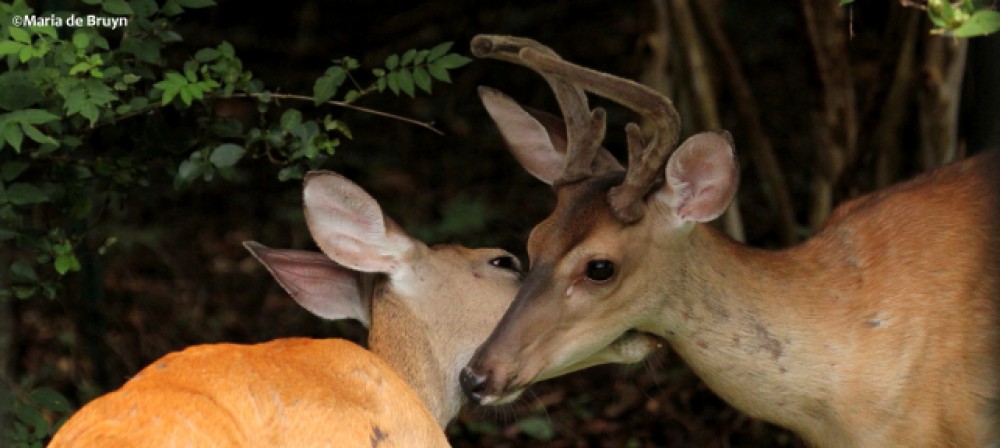
white-tailed deer IMG_4092© Maria de Bruyn resA few white-tailed deer (Odocoileus virginianus) were also wet and hungry, including two visitors to my yard that I had not seen before. They were two bucks, one of whom must have been hit by a car. One of his antlers was broken off and he was hopping along holding up his left hind leg, which had obviously been injured.


white-tailed deer IMG_4063© Maria de Bruyn res white-tailed deer IMG_4001© Maria de Bruyn res

white-tailed deer IMG_4055© Maria de Bruyn resA young doe, who visits regularly, stopped for some bird seed, as did the other buck whose antlers had been shed. Their thick hair was coated in raindrops.

The Eastern gray squirrels (Sciurus carolinensis) can curl their tails up over their backs as a kind of natural umbrella, both on the ground and in trees. This individual, who may have been injured by a predator and escaped, enjoyed some apple – first on the ground and then later in the tree away from the blue jays that were hopping around it.

Eastern gray squirrel IMG_4325© Maria de Bruyn res Eastern gray squirrel IMG_4334© Maria de Bruyn res

Some of the birds definitely looked more presentable than other. The three visiting mockingbirds (Mimus polyglottos) were sleek and beautiful, one using its long tail tobalance as it plucked meal worms from a feeder designed for somewhat smaller birds.

Northern mockingbird IMG_4503© Maria de Bruyn res Northern mockingbird IMG_4467© Maria de Bruyn res

The dark-eyed juncos (Junco hyemalis), Eastern towhees (Pipilo erythrophthalmus) and chipping sparrows (Spizella passerina) looked in fine shape, too.

dark-eyed junco IMG_4802© Maria de Bruyn res dark-eyed junco IMG_4729© Maria de Bruyn res

Eastern towhee IMG_4924© Maria de Bruyn res chipping sparrow IMG_4817© Maria de Bruyn res

The bluebirds (Sialia sialis) varied in appearance; a couple looked groomed but wet, while a couple others looked a bit disheveled.

Eastern bluebird IMG_4587© Maria de Bruyn res Eastern bluebird IMG_4588© Maria de Bruyn res

pine warbler IMG_4569© Maria de Bruyn resThe pine warbler (Setophaga pinus) – usually among the more handsome garden birds – unfortunately looked a sorry sight. Fortunately, when the rain ends, he’ll be able to shake that water off and get back to looking like one of the handsome fellas of the avian neighborhood!

pine warbler IMG_4618© Maria de Bruyn


pine warbler IMG_4842© Maria de Bruyn res

ruby-crowned kinglet IMG_4777© Maria de BruynThe ruby-crowned kinglet’s (Regulus calendulabrown-headed nuthatch IMG_4409© Maria de Bruyn res) oily feather covering seemed to do well in keeping the rainwater at bay, while the brown-headed nuthatch (Sitta pusilla) looked a bit more water-logged.ruby-crowned kinglet IMG_4741© Maria de Bruyn res

The tufted titmouse (Baeolophus bicolor) and Carolina chickadee (Poecile carolinensis) join me in looking forward to dryer and sunnier weather in a few days’ time!

tufted titmouse IMG_4350© Maria de Bruyn resCarolina chickadee IMG_4386© Maria de Bruyn res

A fruity buffet for the birds!

summer tanager profile IMG_4040©Maria de BruynIn front of a dog park in the small town of Carrboro, NC, there stands a small serviceberry tree, also known as a shadbush or sarvisberry (Amelanchier). This particular specimen has several trunks and was heavily laden with pretty white flowers in the early spring. These turned into bright red berries in late spring, forming a very bountiful buffet for the resident birds and some other wildlife, too!

The variety of species visiting this tree was delightful and led me to go back on several mornings and evenings to observe.

cedar waxwing IMG_1675©Maria de Bruyn2 rescedar waxwing IMG_2159©Maria de Bruyn res

The cedar waxwings (Bombycilla cedrorum) were there in pairs and groups, some of them sweetly feeding one another!

Northern cardinal IMG_4073©Maria de Bruyn2 resNorthern cardinal IMG_2078©Maria de Bruyn2 res

The male and female Northern cardinals (Cardinalis cardinalis) were also huge fans of this tree, returning over and over to have their fill.

Eastern bluebird IMG_4543©Maria de Bruyn reschipping sparrow IMG_2268©Maria de Bruyn2 res

A couple birds seemed only to alight in the tree, not really partaking, like the Eastern bluebirds (Sialia sialis) and chipping sparrows (Spizella passerina). However, those sparrows, like the American robin (Turdus migratorius), might have been just checking out the wares before they dropped to the ground under the tree to enjoy a few berries. That surprised me – especially, the robins whom I have considered to be mainly insectivores and worm-eaters.

chipping sparrow IMG_1626©Maria de Bruyn2 res American robin IMG_4531©Maria de Bruyn res

One day, a trio of Eastern gray squirrels (Sciurus carolinensis) arrived. I thought for sure that they would be stripping the branches clean but they hopped around the tree, sampling here and there. During several visits to the serviceberry, that was the only time I saw them climb into the tree for a snack.

Eastern gray squirrel IMG_2191©Maria de Bruyn2 resEastern gray squirrel IMG_2116©Maria de Bruyn2 res

Other birds seemed to visit only briefly, like the Northern mockingbird (Mimus polyglottos) and the tufted titmouse (Baeolophus bicolor).

Northern mockingbird IMG_4164©Maria de Bruyn2 res tufted titnouse IMG_2122©Maria de Bruyn res

red-bellied woodpecker IMG_1633©Maria de Bruyn2 resThe red-bellied woodpecker (Melanerpes carolinus), on the other hand, was a very frequent visitor – coloring oh so nicely with the host tree! This bird seemed to be also storing some berries for later consumption in the bark of a tree?

red-bellied woodpecker IMG_2094©Maria de Bruyn2 res

red-bellied woodpecker IMG_2007©Maria de Bruyn2 res

Serviceberries are promoted for gardens as a source of delicious fruit for human beings. They are said to be wonderful in jam, pies, ice cream, syrup for pancakes and or in alcoholic drinks. Raw, they taste a little like blueberries with a nice sweet tang.


They were obviously a great hit with a pair of summer tanagers (Piranga rubra). The male colored nicely with the fruit he was eating; he is an example of the only bird in North America that is entirely red!

Summer tanager IMG_1643©Maria de Bruyn res summer tanager IMG_4112©Maria de Bruyn res

The yellow female stood out as she ate berry after berry.

Summer tanager IMG_1955©Maria de Bruyn res summer tanager IMG_4041©Maria de Bruyn res


Cedar apple rust IMG_9380© Maria de BruynAfter watching this spectacle, I have now decided to find one of these shrubs for my own yard. They are unfortunately susceptible to cedar apple rust (Gymnosporangium juniperi-virginianae) which I have in neighboring cedar trees; it doesn’t seem to hurt the cedars but may account for the fact that the apples in my apple tree stay very small even if I haven’t seen signs of the rust on the apple tree leaves. Hopefully, it won’t be a problem as it would be really nice to see the birds at a serviceberry buffet here at home in years to come!


The squatter family: those cute – and seemingly precocious – little Carolina chickadees!

Carolina chickadee IMG_3138©Maria de BruynresI have two bird boxes in my yard designed to attract brown-headed nuthatches (Sitta pusilla). While I do have these birds at my feeders, they have not deigned to create nests in the boxes; one is still empty and the other was occupied by a family of squatters – darling little Carolina chickadees (Poecile carolinensis). I don’t know if this pair had had kids together before, but sometimes these birds retain their bonds for several years.

In addition to the nuthatch boxes, I have five bluebird boxes and cCarolina chickadee eggs IMG_4429©Maria de Bruynhickadees had begun nests in two others. It is not uncommon for them to begin a couple nests and then finally settle on one. On 12 April, I discovered that Mom had laid five white with brown-specked eggs in a nice soft nest made of moss, soft grasses and some down, even using a bit of pillow stuffing I had left out for interested nest-builders.

Ten days later, 22 April, I opened the box to see if everything was ok and surprised her sitting on the nest. (I had tapped on the box beforehand in case she would want to leave for a bit; didn’t happen!) She gazed at me in alarm and then began dipping her head and beating her wings against the nest; this is called a snake display to warn off predators.

Carolina chickadee IMG_4623©Maria de BruynCarolina chickadee IMG_4624©Maria de Bruynres

Carolina chickadee nestlings IMG_4680©Maria de BruynresTwo days later, I opened the box and discovered the eggs had hatched – I think she had been brooding them two days earlier since the babies didn’t seem quite as naked as I expected. That would mean they hatched after only about 10 days (and the average seems to be 12-15 days of incubation according to websites).

Both parents take on feeding their offspring. In warmer weather, they search for insects among foliage and under tree bark, sometimes hanging upside down to get a meal. This pair also visited the nearby feeders, obviously intent on teaching their young that suet, dried meal worms and seeds are also good to eat.

carolina chickadee IMG_6507©Maria de BruynCarolina chickadee IMG_3021©Maria de Bruyncarolina chickadee IMG_6378©Maria de Bruyn

Carolina chickadee IMG_3129©Maria de Bruyncarolina chickadee IMG_6702©Maria de Bruyn

Like the nuthatches and robins, the parents were also fastidious about cleaning the nest; and these almost full-grown young seemed to be pooping a lot!

Carolina chickadee IMG_6420©Maria de BruynCarolina chickadee IMG_6430©Maria de Bruynrescarolina chickadee IMG_6380©Maria de Bruyn
The young usually fledge about 16-19 days after hatching. If these birdlets had hatched on 22 April, I figured they would be ready to leave the nest around 7 May. Despite being sick with an infection that was keeping me mostly supine, I couldn’t let the opportunity for observation go by. So on the 5th of May, I roused myself for a sit-down in the yard in the early afternoon. I first waited until the parents had both left and carefully lifted the bird box door to see a bright-eyed, pretty much full-grown chick staring at me. S/he scooted back and it looked like there were only two others – so the other two siblings had already fledged. This did seem to be a very precocious family!

Carolina chickadee nestling IMG_4820©Maria de BruynresCarolina chickadee nestling IMG_4824©Maria de Bruynres

Carolina chickadee IMG_6407©Maria de BruynThis might be one of the chicks that fledged earlier. When a fledgling is begging for food, it quivers its wings rapidly. Females also do this before the young leave the nest when they want the male to feed them.

Because I was feeling fairly ill, I had to stop watching the parents go to and fro after a couple hours. On 6 May, I ventured outside in the early afternoon, hoping against hope that I might just be lucky enough to see the last chicks fledge. And I did!

Each chickcarolina chickadee IMG_6817©Maria de Bruyn spent time looking out of the box before venturing out. One took a flying leap and swerved up into a tree.


No. 2 spent some time calling (the parents were still coming in regularly with meals!), then launched itself and landed on some nearby branches.

carolina chickadee IMG_6810©Maria de Bruyncarolina chickadee IMG_6831©Maria de Bruyn

No. 3 spent time flexing its wings before venturing forth.

carolina chickadee IMG_6894©Maria de Bruyncarolina chickadee IMG_6939©Maria de Bruyn
I did check the box to be sure they were all out and then watched as the parents called to them as they flitted about the various trees behind the nest box. If I’d felt better, I would have stayed to observe a bit longer but I was pretty satisfied with having seen the fledging!.

carolina chickadee IMG_6951©Maria de Bruynres

The next morning, a pair of Carolina wrens was already bringing in twigs and placing them atop the chicarolina chickadee IMG_7357©Maria de Bruynresckadees’ nest (after removing some remaining fecal matter). One chickadee ventured back to peer into the box but the wren pair loudly chased the original owner away.


All in all, some very cool days, with some mental delight balancing out the physical distress for me.

If you liked this blog, please let me know by liking or leaving a comment here on the blog page. Thanks!

And for those who want more details on chickadees’ lives, see:
http://animaldiversity.ummz.umich.edu/accounts/Parus_carolinensis/

Brown-headed nuthatches – examples of conscientious and industrious parenthood!

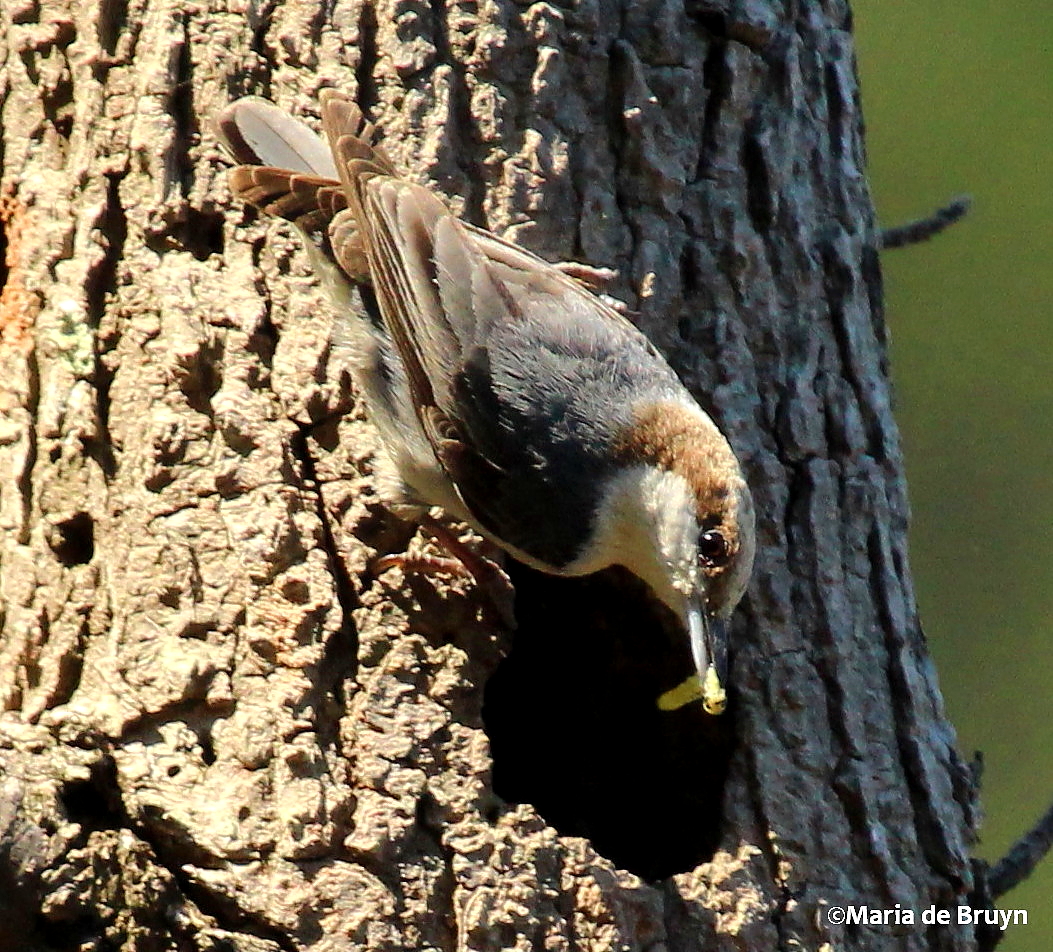
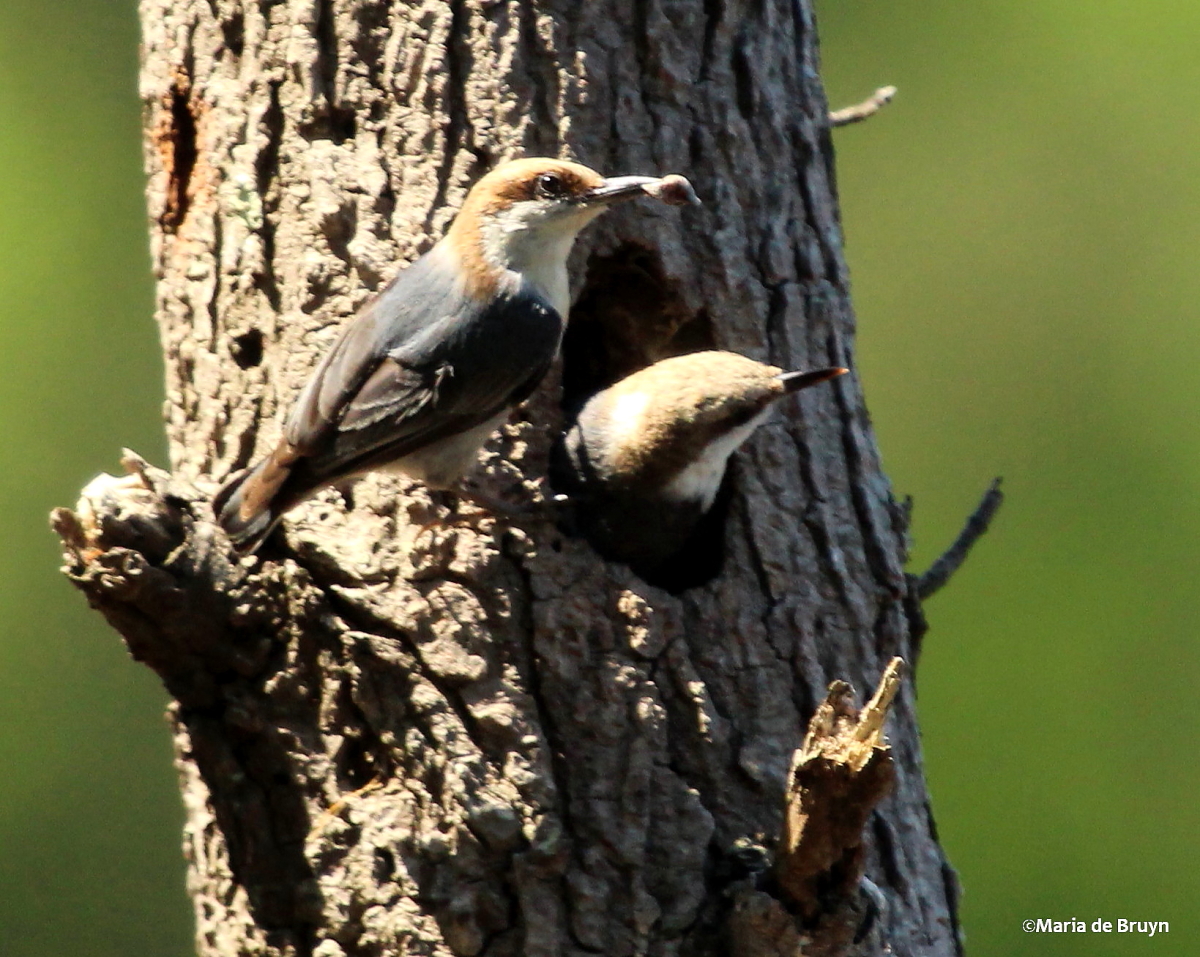
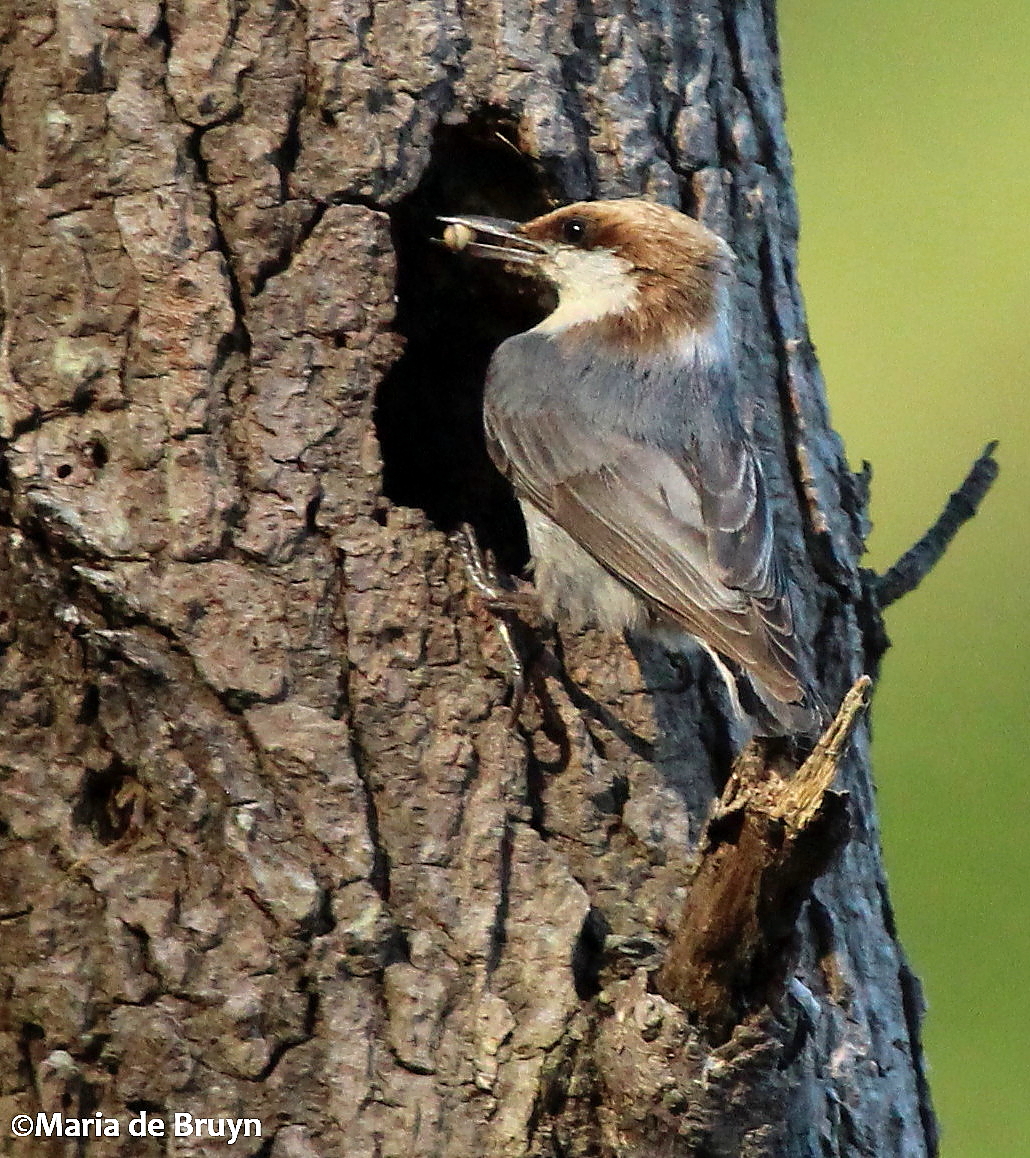
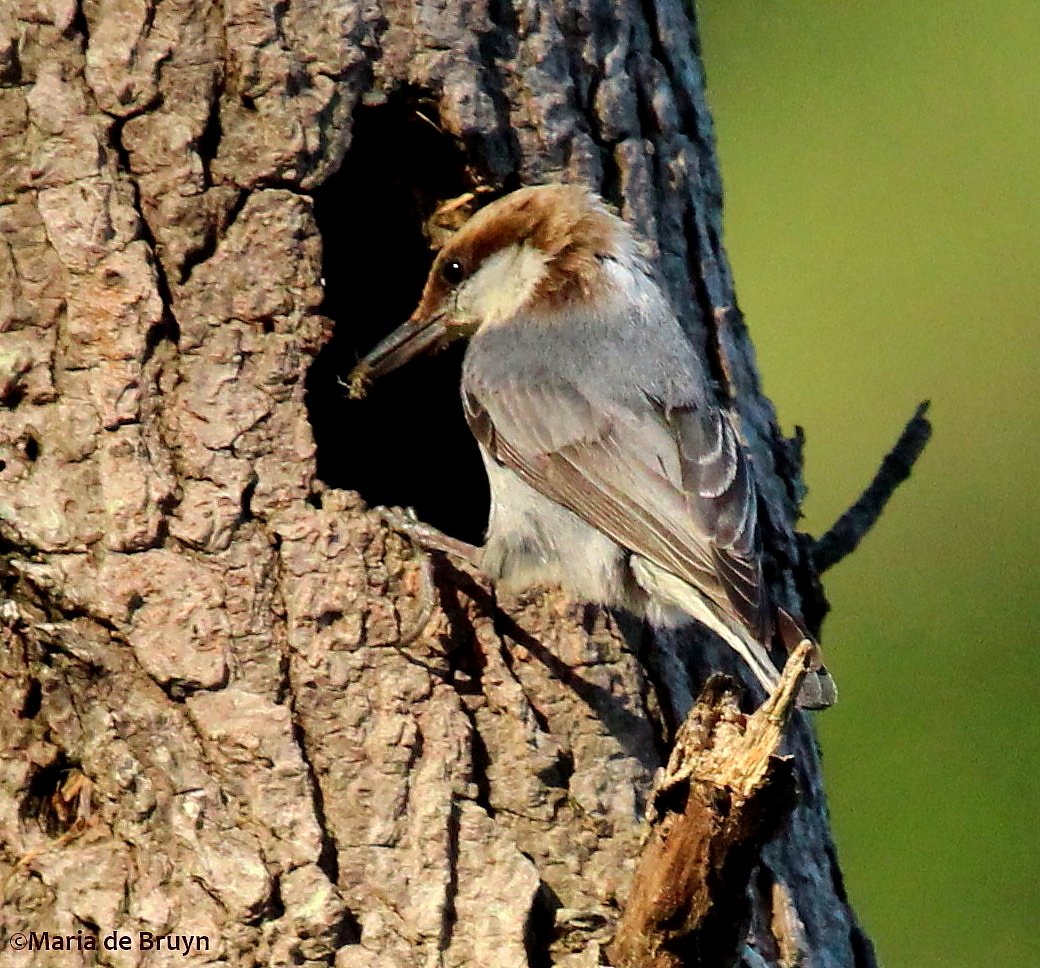
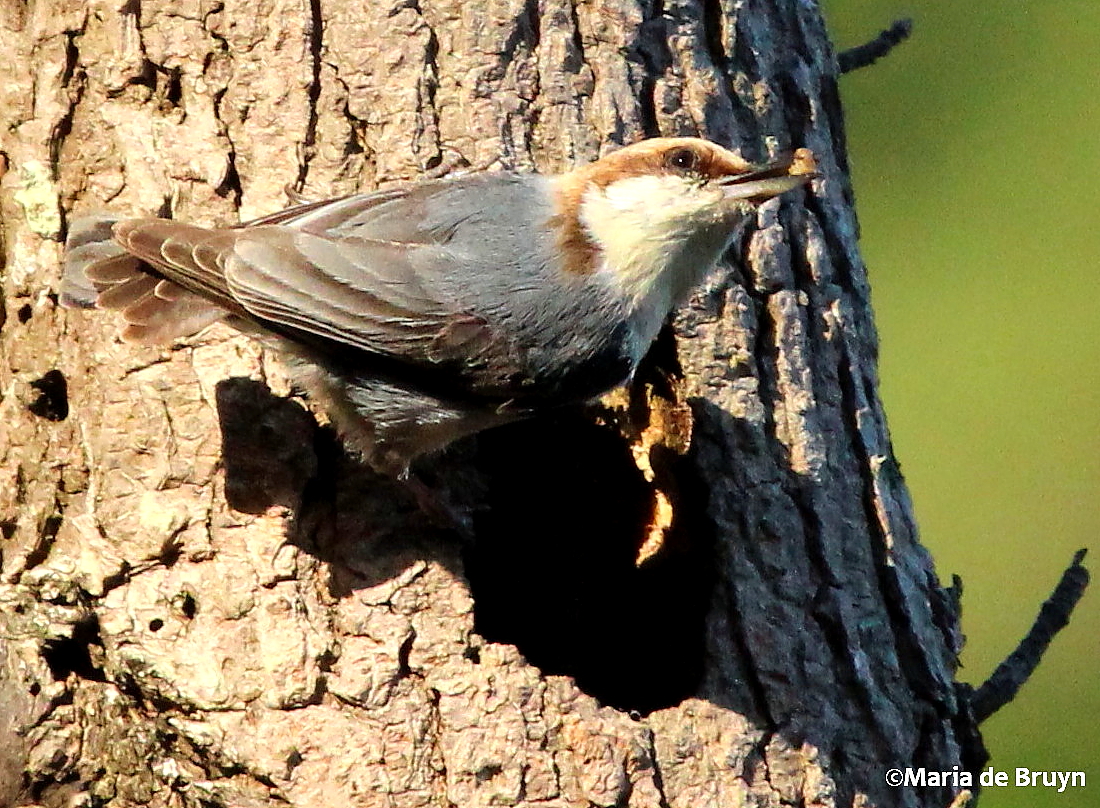
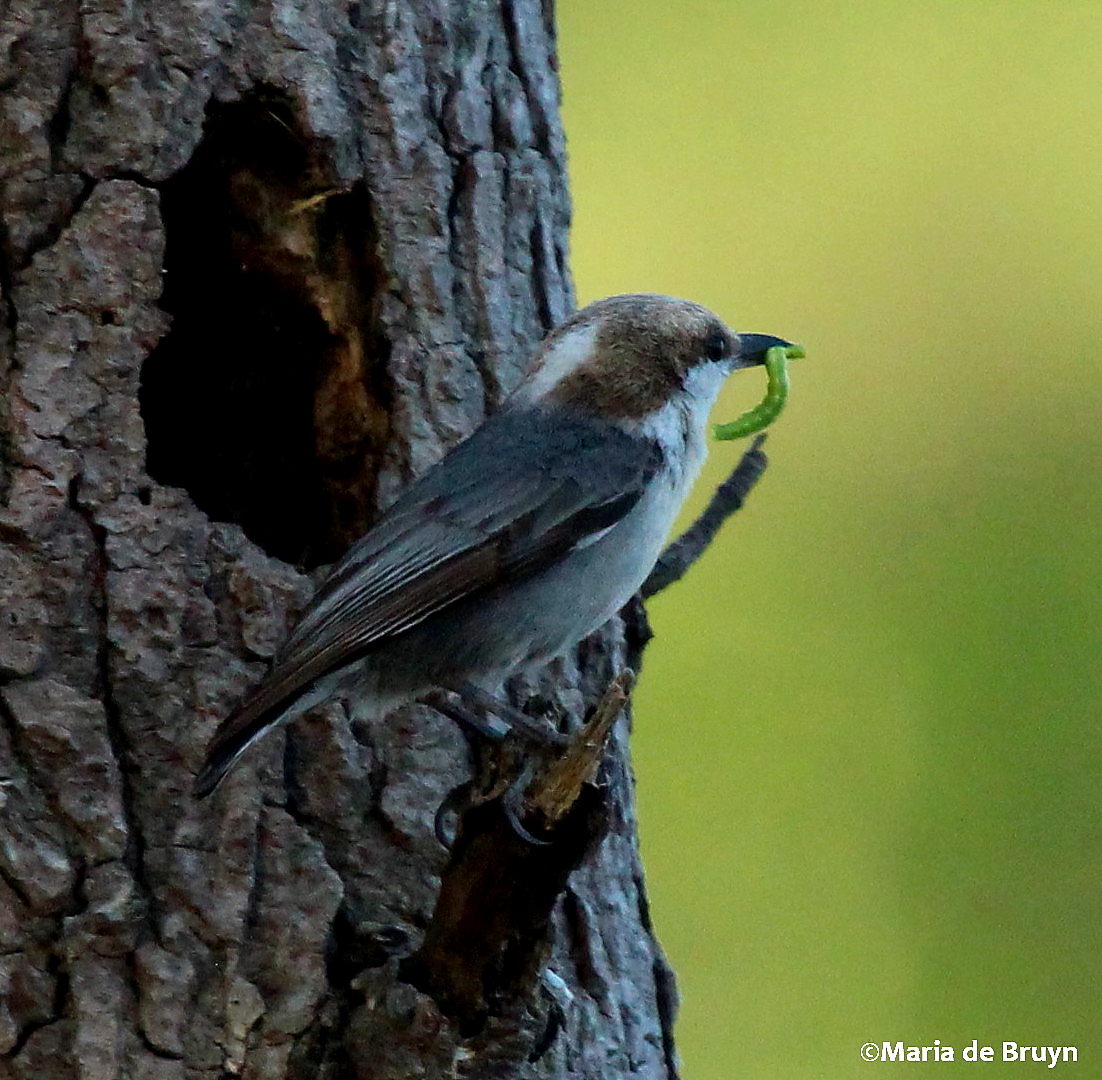
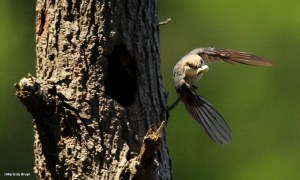
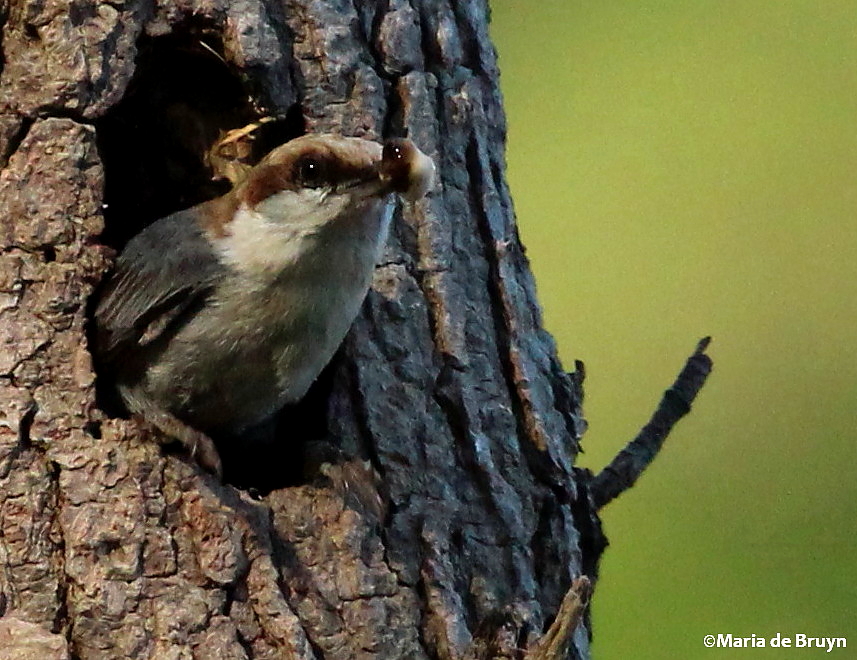
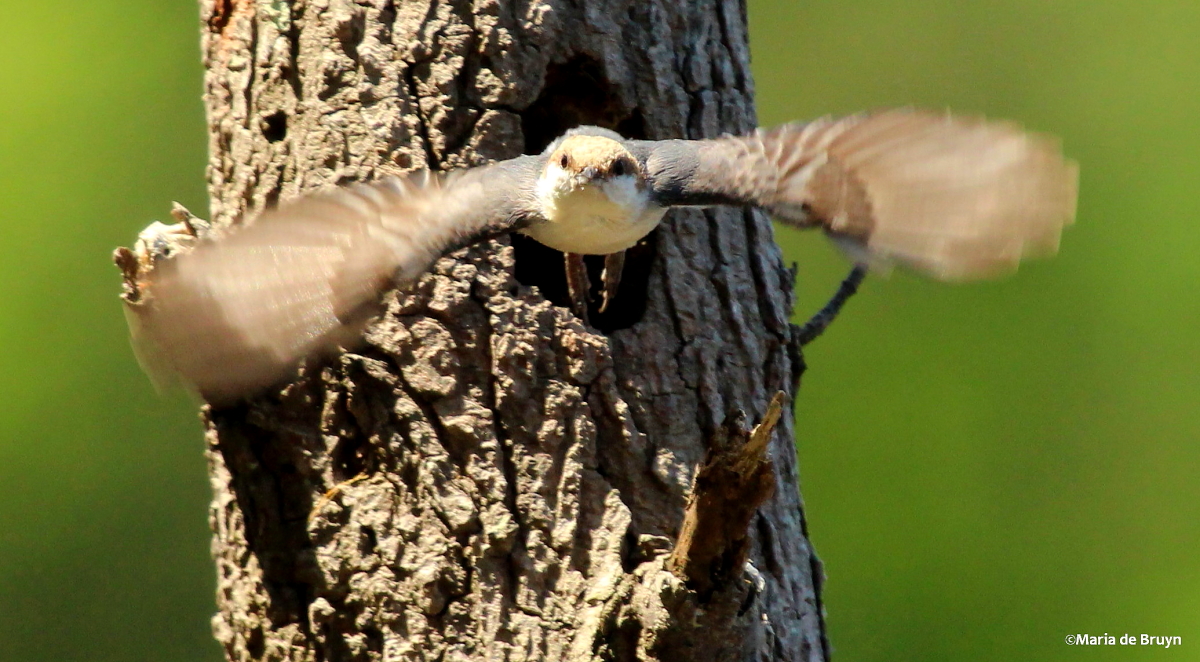
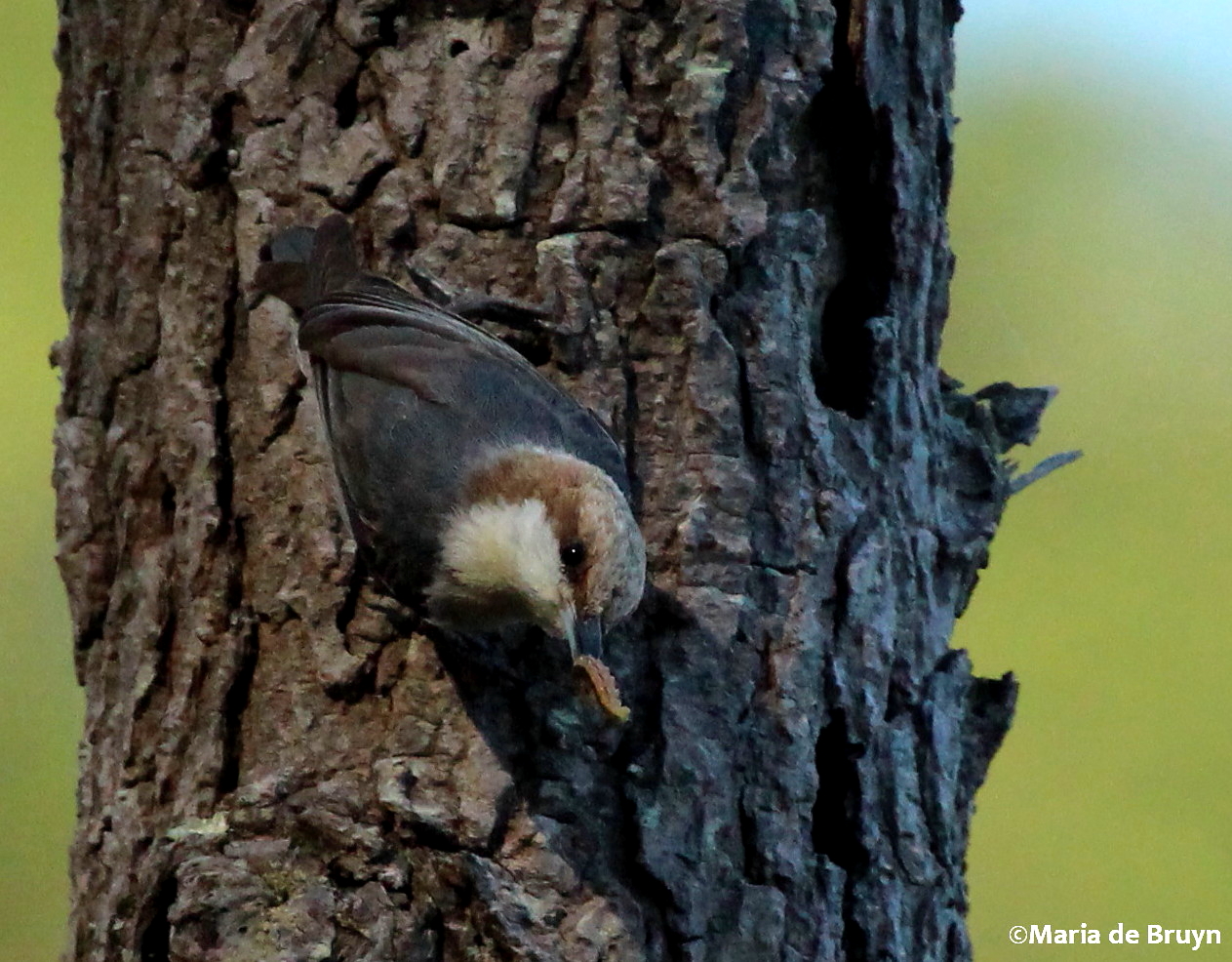
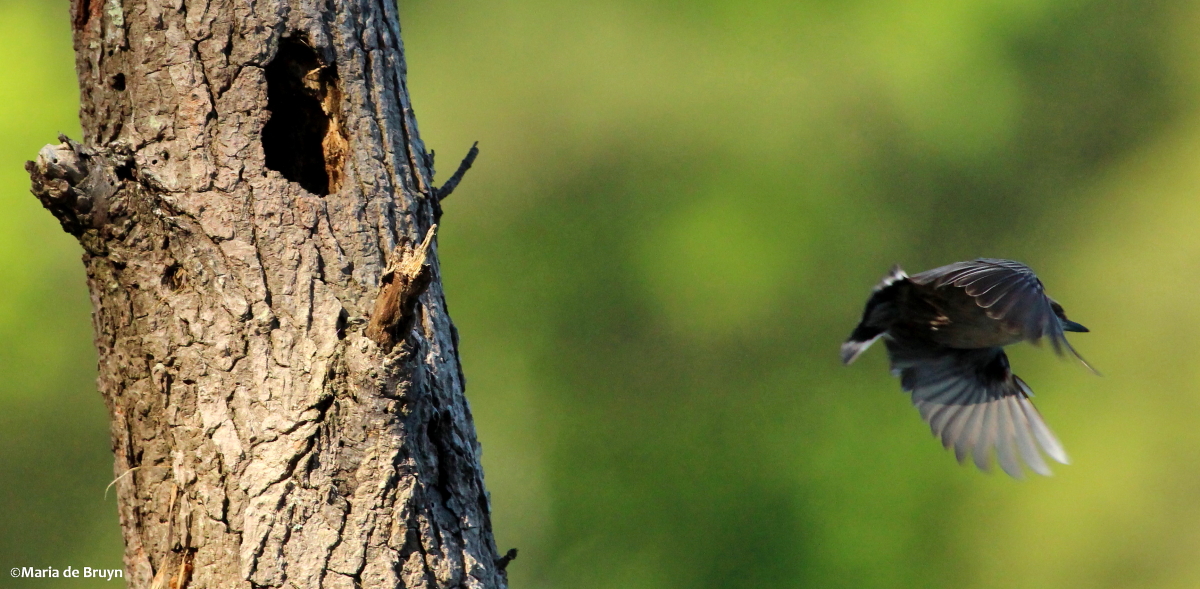
IMG_3634©Maria de BruynLast weekend, when walking the woods along Jordan Lake in order to write a blog for the NC Audubon Society, I happened upon a thin dead tree standing in the water at the shore’s edge. Just then as I was looking it up and down, a brown-headed nuthatch (Sitta pusilla) flew up and made its way down the trunk to a hole where it obviously had a nest. That was a treat and I watched the mom and dad fly to and fro with provisions for the brood.

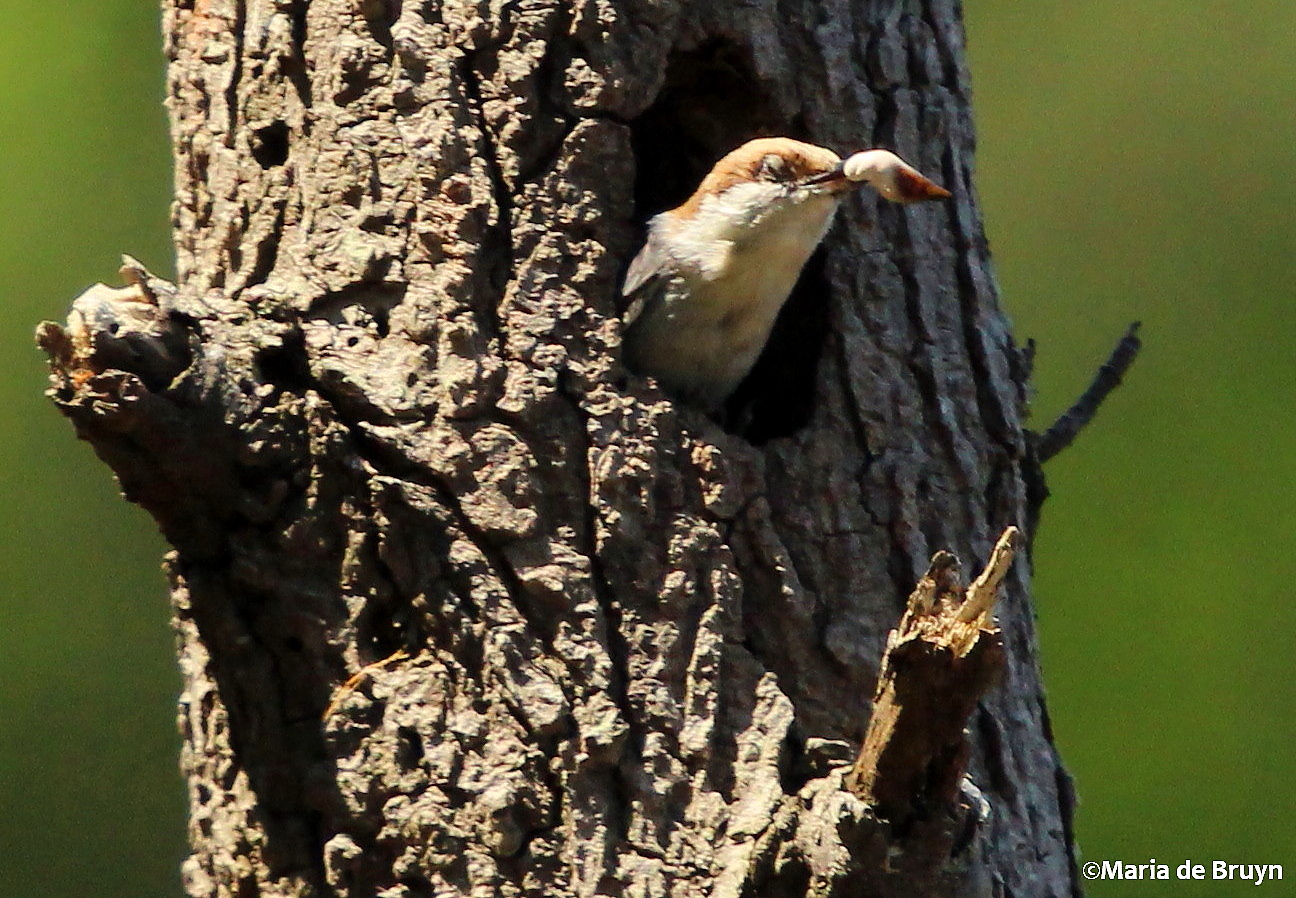
Yesterday, I decided to return and see if the industrious pair was still working on meals for their brood. They were indeed and I watched for quite a long time, wondering how they could see anything down in the nest where it has to be pretty dark.

brown-headed nuthatch IMG_3690©Maria de BruynresThese lovely little birds are native to the Southeastern US and there is a small population in the Bahamas; they don’t live in any other countries so they really are kind of special. In addition, since 1966, the population has declined by 45% because they are losing nesting habitats (dead and pine trees) to deforestation and urbanization.

IMG_4116©Maria de Bruyn IMG_4031©Maria de Bruyn brown-headed nuthatch IMG_4136©Maria de Bruyn res

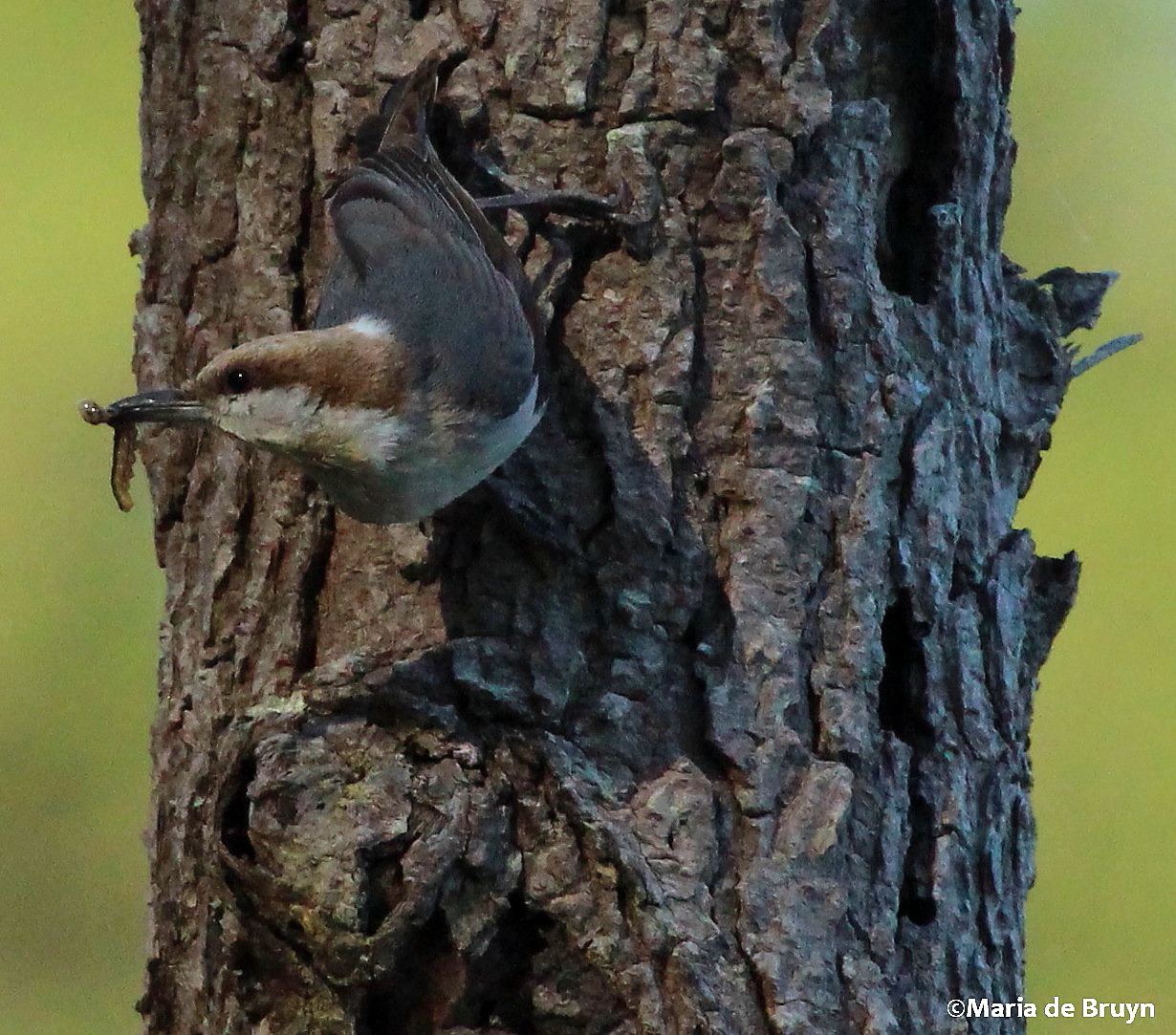
The parents were most often alternating their meal runs, but occasionally they would arrive simultaneously or very close in time. They would usually alight on the trunk above the nest hole and then work their way down – they can descend head-first, which is a handy trait.

IMG_3726©Maria de Bruyn IMG_3684©Maria de Bruyn IMG_3669©Maria de Bruyn

Occasionally, though, they would alight right by the hole or work their way upwards from a little further down the tree trunk. They seemed very concentrated on their task but I learned that they were definitely keeping an eye on me because when I took up a position a bit closer to the tree for some better shots, they just hopped about in other trees waiting for me to step back again. Which I did, of course.

IMG_3639©Maria de Bruyn IMG_3627©Maria de Bruyn

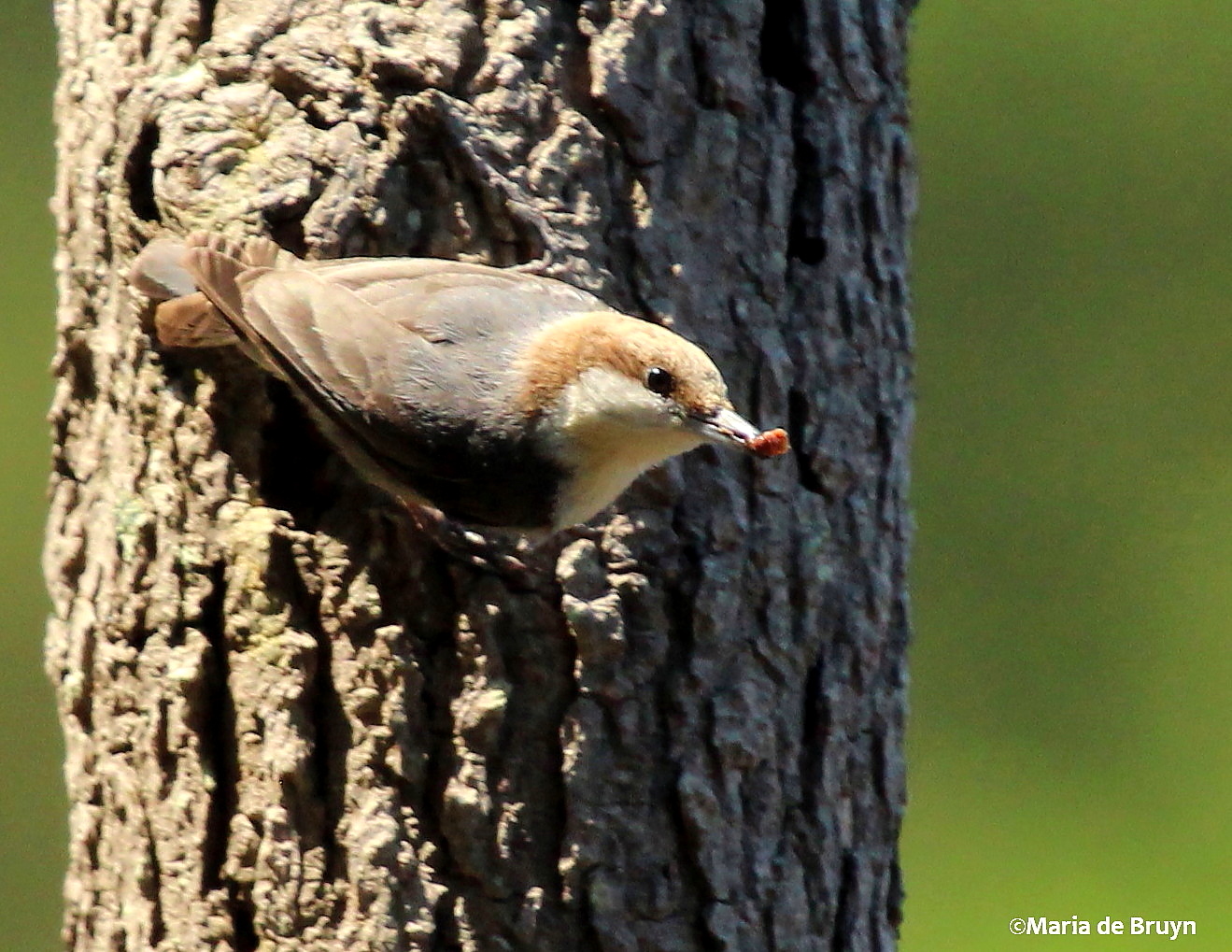
Though I didn’t witness it, these small birds are tool-users, sometimes using a piece of bark to pry up tree bark in search of insects; they may even carry the tool with them. They certainly were bringing their babies varied meals, including moth caterpillars and insects of various kinds.

IMG_4164©Maria de BruynThese parents were fastidious, too, removing fecal sacs from the nest with some regularity. I had hoped to see these birds in action when using a nuthatch box I put up in my yard, but a pair of Carolina chickadees (Poecile carolinensis) are currently raising a brood there.


brown-headed nuthatch IMG_4197©Maria de Bruyn resIMG_3658©Maria de Bruyn

The nestlings fledge after about 18 days so I may be too late to see anything when I return sometime this coming week, but it sure would be cool to see them leave the nest!

brown-headed nuthatch IMG_4149©Maria de Bruyn res

So, you may ask – what happened to the blog on springtime creatures I announced last time? Well, the various birds species are working so hard and demonstrating their parenting skills so nicely right now, I decided to focus on that for a little while! Next time – those squatter Chickadees in my yard!

Birds braving winter

American goldfinch IMG_1955©Maria de Bruyn

It’s not unheard to have snow in central North Carolina, but it also isn’t what you’d call a commonplace occurrence. It is a BIG deal when it snows here; if a couple inches of snow or some icing on the roads is expected, schools and businesses close. This is a cause of hilarity among people who originated from points north, but when they realize that many drivers here are not accustomed to winter-weather driving and that the Department of Transportation and towns are not equipped so well to deal with the conditions, they also will often stay inside and not go out on the road.

Carolina wren IMG_0424©Maria de BruynAmerican robin IMG_0326©Maria de Bruyn

When we had two days of snow and ice storms last week, it wasn’t only people who were unhappy. The birds also didn’t seem enamored with the climate change, like the American goldfinch up above (Spinus tristis). They had had a taste of snow at the end of January, but it wasn’t such a strong storm then.  The Carolina chickadee (Poecile carolinensis) was scurrying about looking for food under the snow and the American robin (Turdus migratorius) was enjoying some berries.  The February storm was a bit different though

Mourning dove IMG_2478©Maria de Bruyn

On the first day, when it didn’t snow heavily all at once (it was more a matter of lightly falling snow much of the day), I had a multitude of birds at my feeders – including some that I don’t usually see there. This mourning dove (Zenaida macroura), for example, didn’t scrounge around on the ground in the snow but landed on a feeder to see if there were seeds there.

Other birds flew back and forth between the trees and feeders, like the yellow-rumped warblers (Setophaga coronata), who weren’t always happy to have others sharing the feeders), and the tufted titmice (Baeolophus bicolor).

Yellow-rumped warbler IMG_2618©Maria de BruynTufted titmouse IMG_2355©Maria de Bruyn

When out walking in a furious flurry of fat snowflakes, I ran into a neighbor who does research on bird survival. I mentioned that on the first day of the storm, I had a multitude of birds at my feeders (probably a 100 or so) but now, with this heavier snowfall, not a bird was to be seen. He noted that, given bird’s short lifespans in some cases and the fact that many would be younger, they were likely hunkering down as this was their first encounter with these weather conditions.

Brown thrasher IMG_2127©Maria de Bruyn

Northern cardinal IMG_2375©Maria de Bruyn

Another neighbor down the road and I kept our feeders filled so that our avian friends could rev up their energy stores, like the brown thrasher (Toxostoma rufum) and the Northern cardinals (Cardinalis cardinalis). The birds did their part by fluffing up their feathers to help keep body warmth as much as possible.  And they posed for some nice photos – albeit not with enthusiastic expressions, like this warbler and Northern mockingbird (Mimus polyglottos).

Yellow-rumped warbler IMG_2684©Maria de BruynNorthern mockingbird IMG_3455©Maria de Bruyn

Today, they should all be happy though – we’re expecting temperatures well in the upper 60s F! That should make for happy white-throated sparrows (Zonotrichia albicollis), Eastern towhees (Pipilo erythrophthalmus) and all the other birds visiting my yard!

white-throated sparrow IMG_2564©Maria de BruynEastern towhee IMG_0670©Maria de Bruyn