Birdie beauty – hummingbird preening and grooming

ruby-throated hummingbird DK7A6865© Maria de Bruyn res

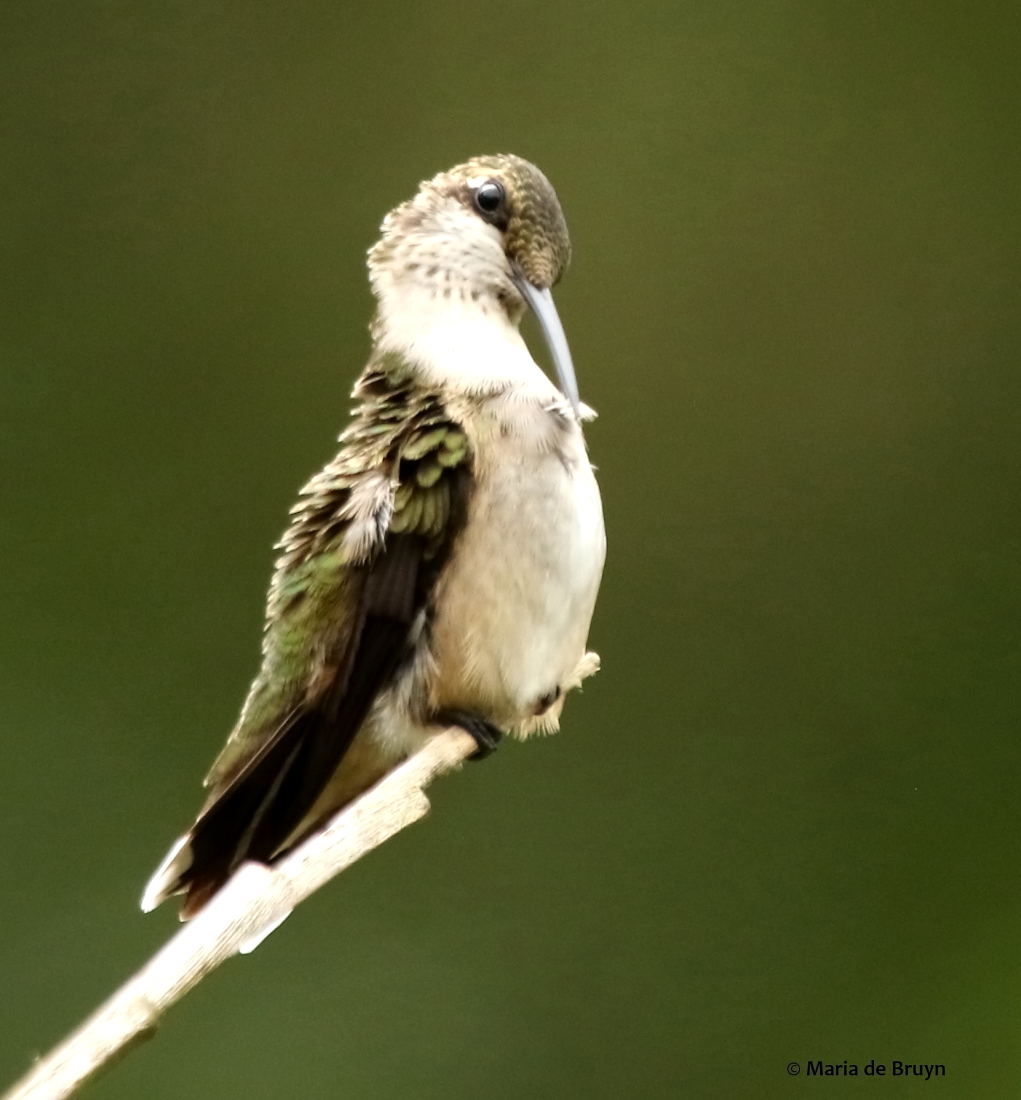
ruby-throated hummingbird DK7A1226© Maria de Bruyn resIt has been great to welcome back the sun and dispel some of the gloom resulting from the record number of rainy days we’ve had. Watching the ruby-throated hummingbirds (Archilochus colubris) in my yard and at nature reserves is also a day brightener and has taught me that these tiny avians are quite fastidious, grooming often and at length.


They cannot use their feet to hop or walk; they only cling to perches and shuffle a bit.

ruby-throated hummingbird DK7A0497© Maria de Bruyn resruby-throated hummingbird DK7A0499© Maria de Bruyn (2) res

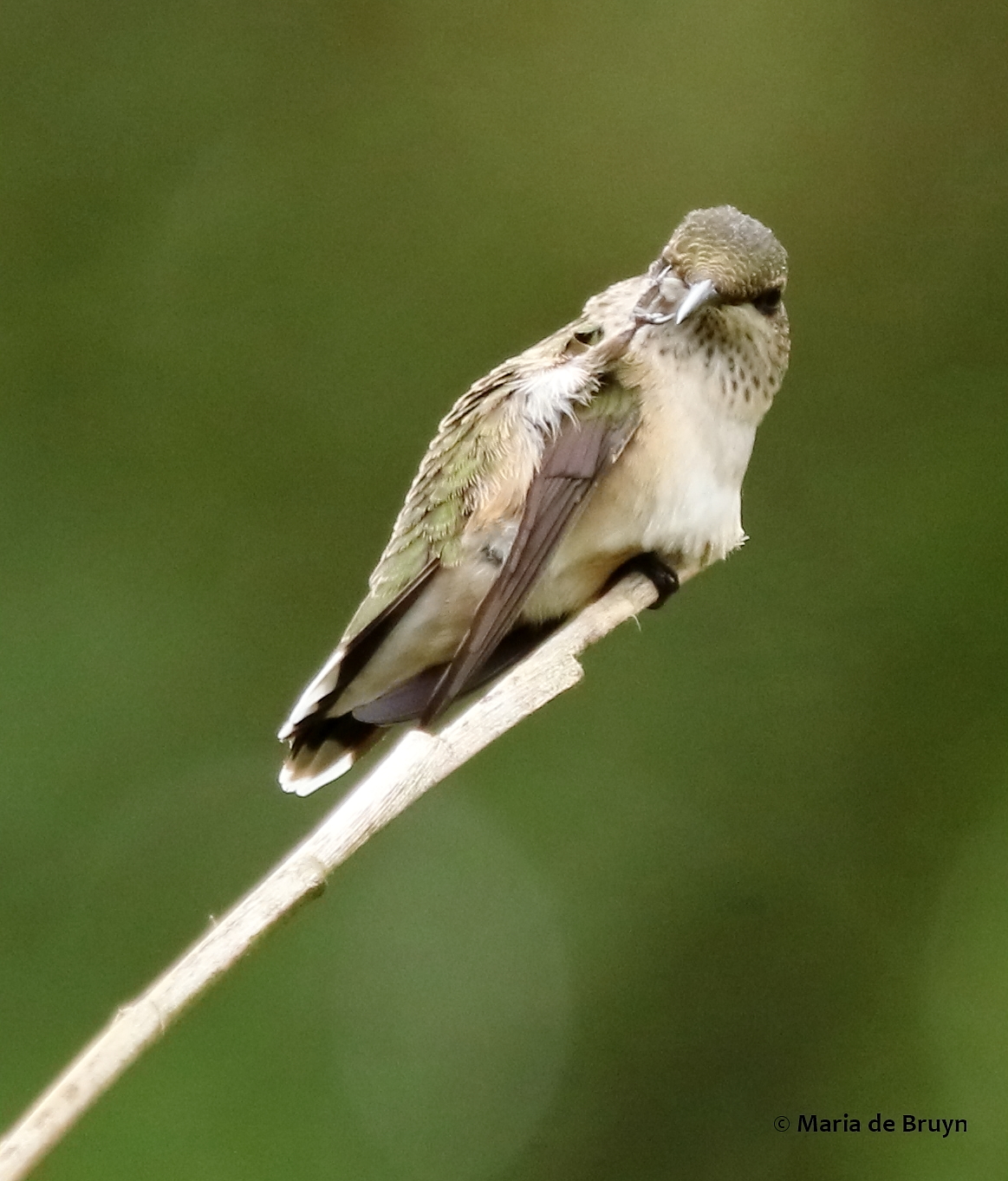
They do use their claws as a “comb” to groom their heads and necks and to scratch itches.

ruby-throated hummingbird DK7A7454© Maria de Bruyn resruby-throated hummingbird DK7A1811© Maria de Bruyn res

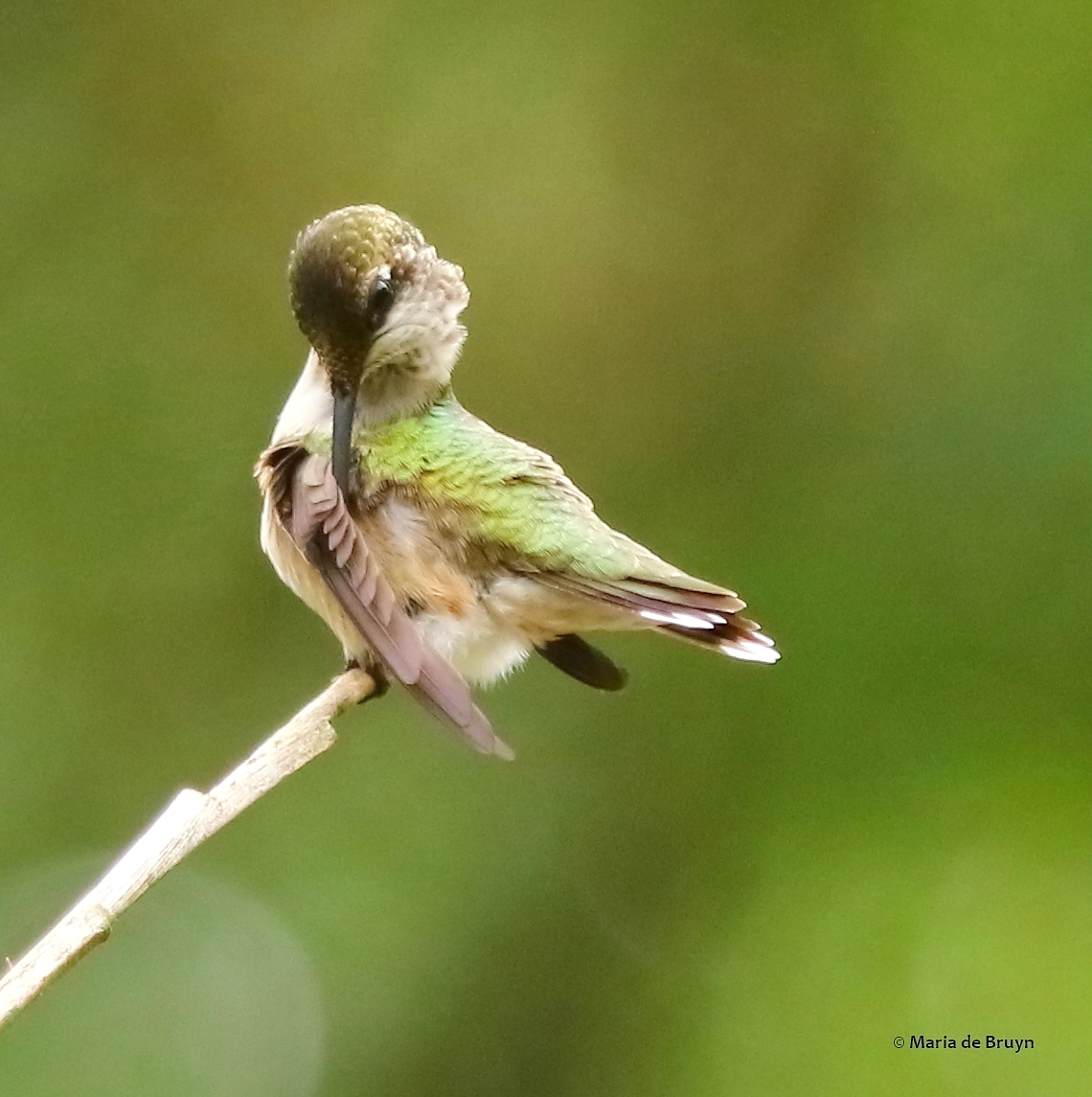
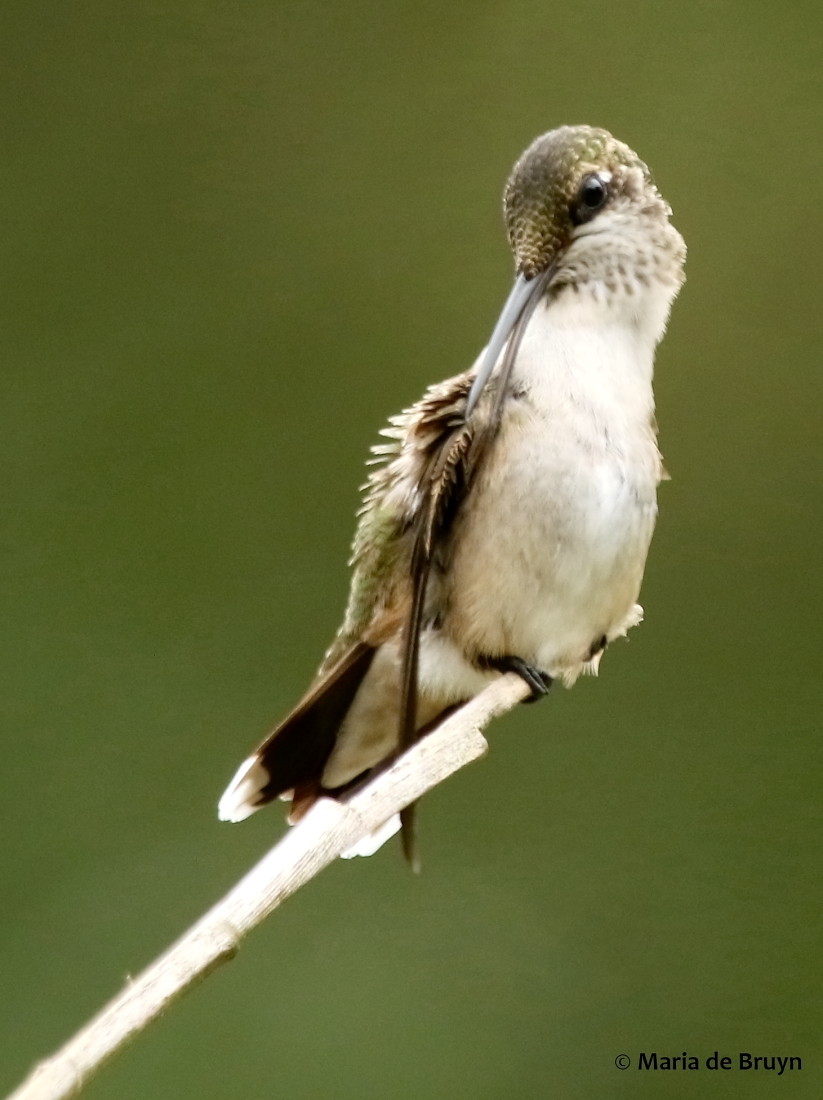
Using oil from a gland near their tail, they cover their iridescent feathers with the oil to help clean them.

ruby-throated hummingbird DK7A1112© Maria de Bruyn resruby-throated hummingbird DK7A1230© Maria de Bruyn res

ruby-throated hummingbird DK7A1754© Maria de Bruyn res ruby-throated hummingbird DK7A1756© Maria de Bruyn res

When you see them rubbing their long beaks on a twig, they are wiping off debris and pollen.

ruby-throated hummingbird DK7A7094© Maria de Bruyn res

The youngest birds have a groove in their beak but this smooths out by the winter.

ruby-throated hummingbird DK7A5627© Maria de Bruyn res ruby-throated hummingbird DK7A7105© Maria de Bruyn res

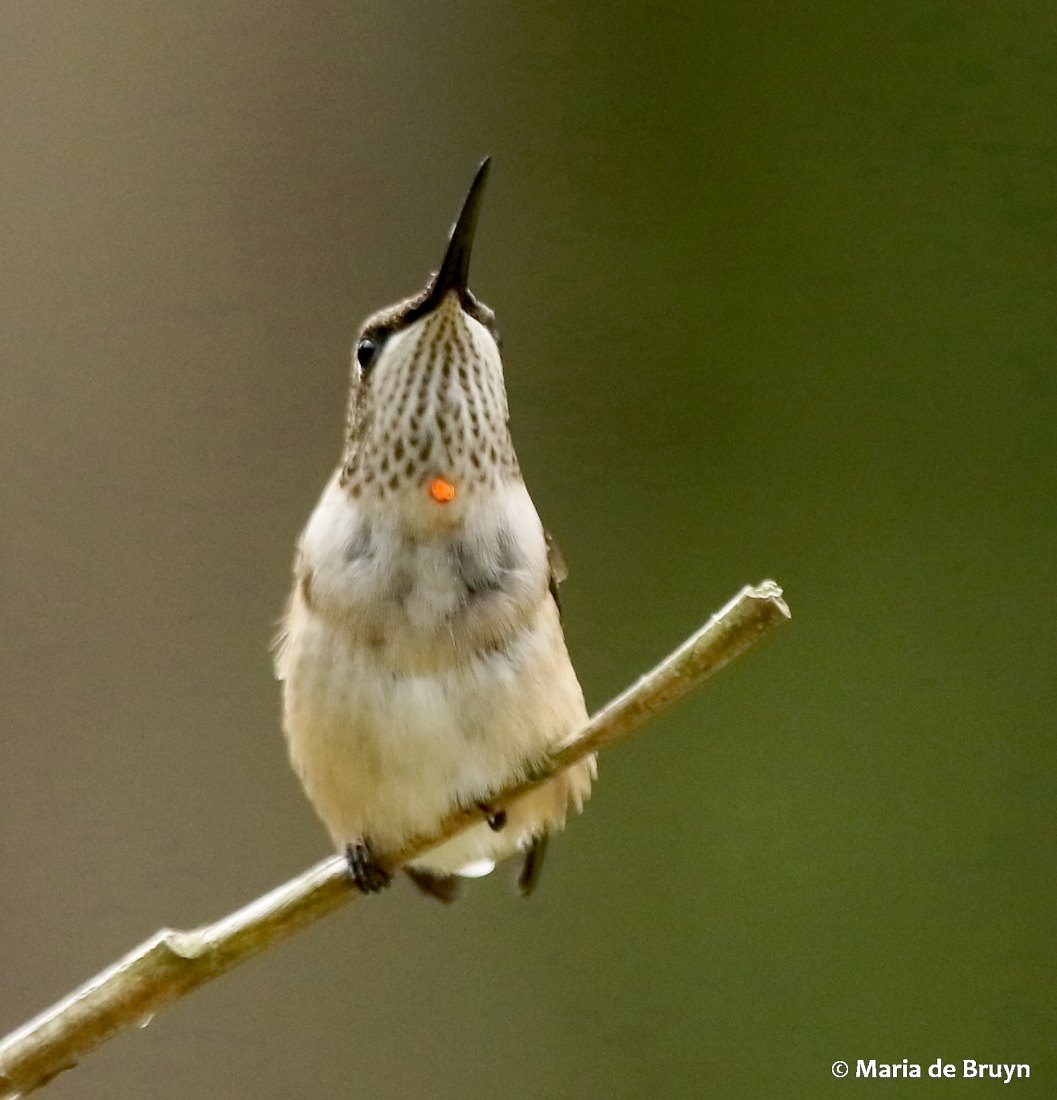
When the hummers look up in the sky, while sitting all puffed up on a branch, they may be taking a sun bath.

ruby-throated hummingbird DK7A7969© Maria de Bruyn res ruby-throated hummingbird DK7A7804© Maria de Bruyn res

A tiny catnap – or hummer nap – can also be observed now and then. This is understandable since their little hearts beat at 1220 times per minute while they fly; this lessens to about 250 times per minute when they are at rest.

ruby-throated hummingbird DK7A0060© Maria de Bruyn resruby-throated hummingbird DK7A7319© Maria de Bruyn res

ruby-throated hummingbird DK7A0389© Maria de Bruyn res

ruby-throated hummingbird DK7A7355© Maria de Bruyn res


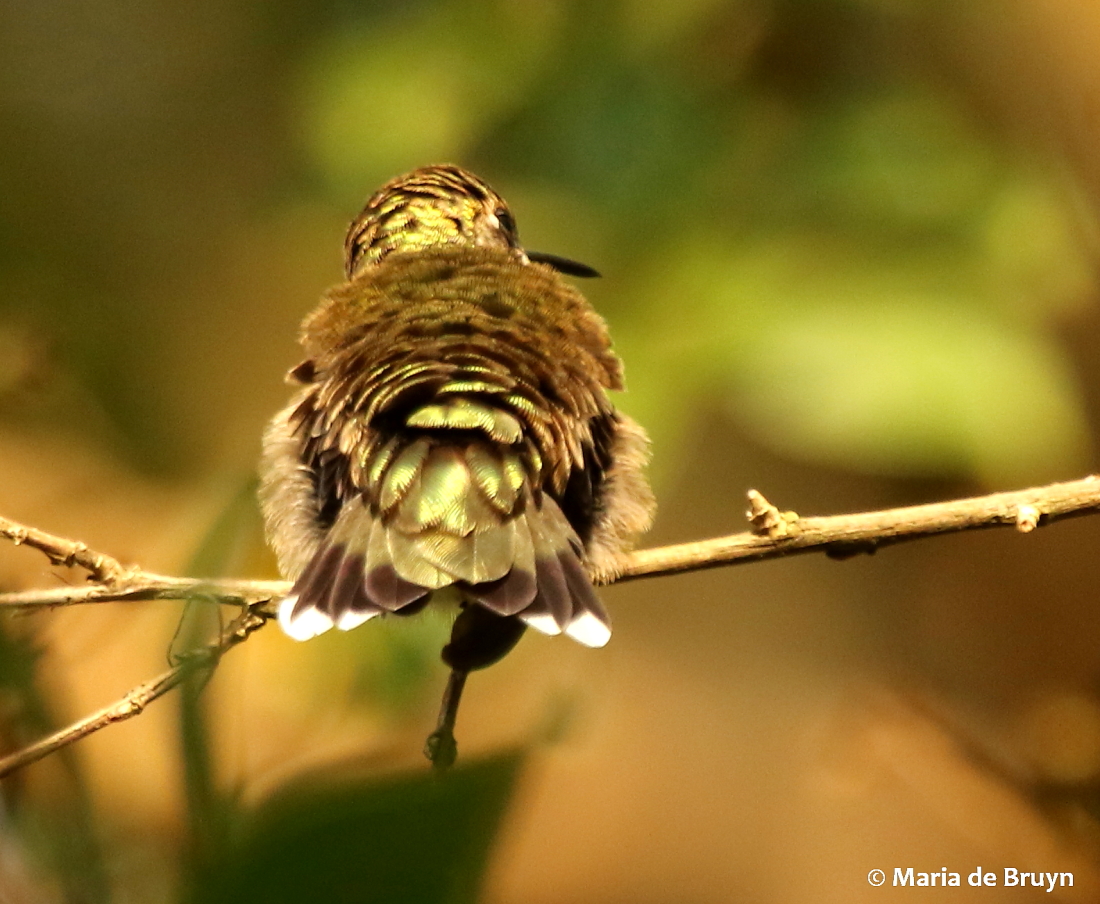
You can sometimes tell the sex of the hummingbird by its tail feathers. The tips are white and rounded in both females and first-year males, who do not yet have fully colored throats

.
ruby-throated hummingbird DK7A2031© Maria de Bruyn


In the adult males, the tail feathers have sharp black points.

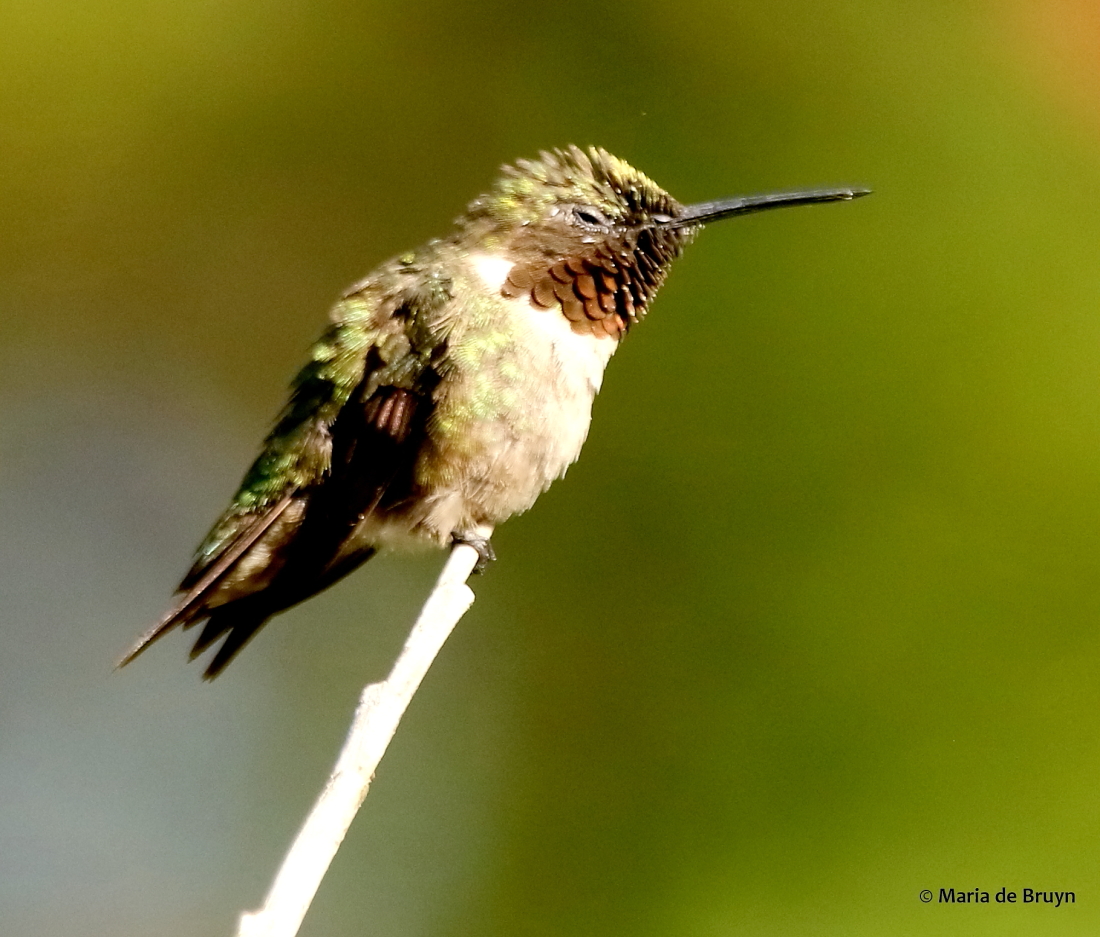
The red gorget (throat) feathers that give this species its common name are seen in the adult males. Very occasionally, a female will have one or two black or one red feather there, but it is generally a young male that has one red throat feather.

ruby-throated hummingbird DK7A6577© Maria de Bruynruby-throated hummingbird DK7A0610© Maria de Bruyn res

ruby-throated hummingbird DK7A2084© Maria de Bruyn res


After nesting, females may look somewhat tattered and molt their feathers, like this one in July. The regular molting period is autumn through about March and that is when the juvenile males develop their their red throats.


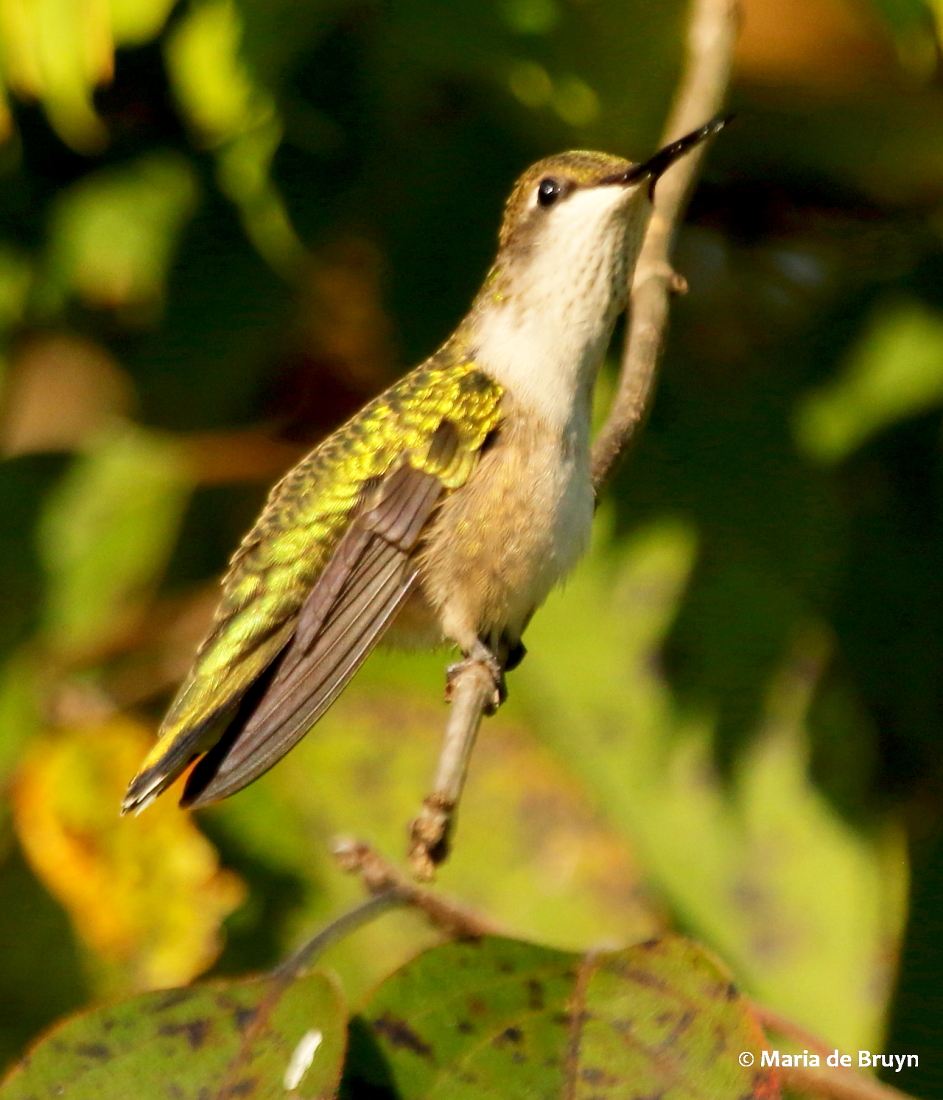
Both female and male ruby-throated hummers have a small patch of white feathers behind their dark eyes.

ruby-throated hummingbird DK7A8123© Maria de Bruynruby-throated hummingbird DK7A2409© Maria de Bruyn res

One thing is for sure – all these little avians are beautiful to see and watch!

More information:

http://www.hummingbirdworld.com/h/behavior.htm

Russet-colored shorebird beauties – feminists among the waders!

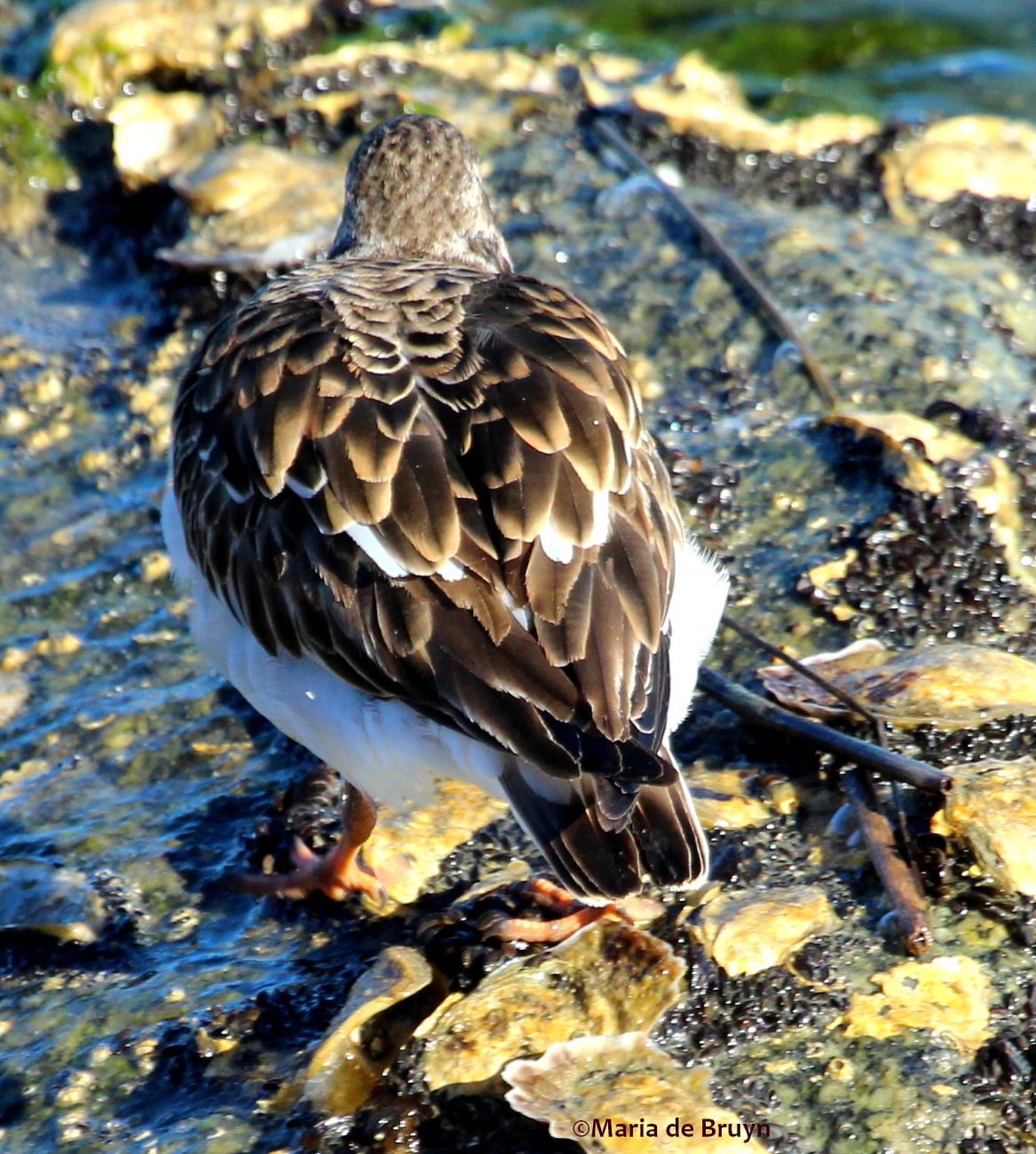
ruddy turnstone IMG_8605©Maria de Bruyn resOne of my favorite shorebirds is the small sandpiper called a ruddy turnstone (Arenaria interpres). Their coloring is a mix of black, white and reddish colors, with adults being more brightly colored when mating and breeding.

These birds are very territorial during the breeding season; they recognize variations in plumage patterns and can identify individuals, which helps them chase away intruders into their territories. Pairs are monogamous when breeding and may mate for several years.

ruddy turnstone IMG_0329©Maria de Bruyn resruddy turnstone IMG_8596©Maria de Bruyn res

ruddy turnstone IMG_8651©Maria de Bruyn resWhen they fly, a stunning pattern is revealed in their spread wings, with striking white patches and bars.

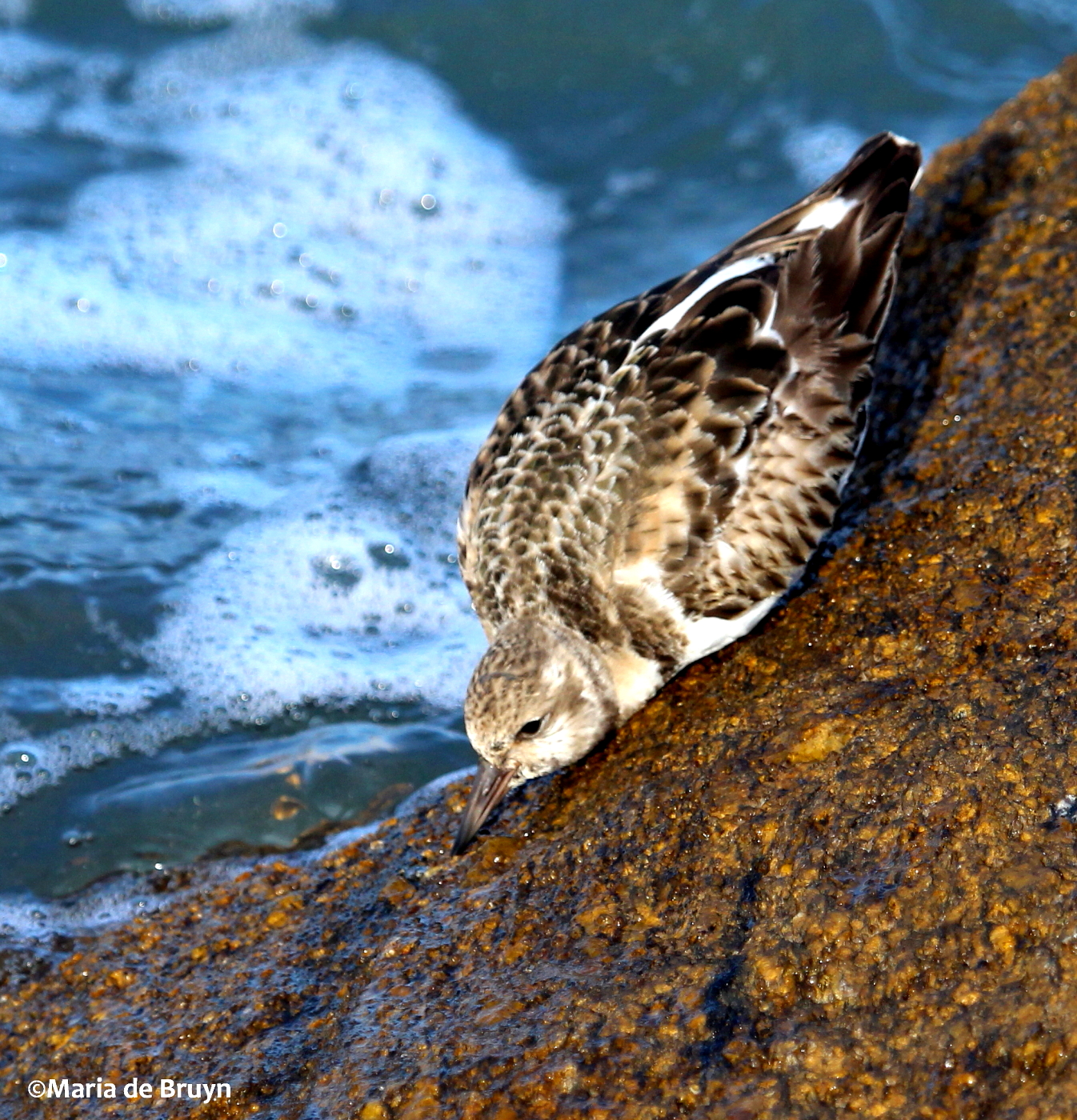
The name turnstone comes from the fact that the birds tend to turn over stones while foraging for insects, crustaceans, worms and mollusks. Several birds may cooperate to overturn larger rocks. This carnivorous diet is supplemented with moss, fruit and berries. Occasionally, the turnstones have also been seen to prey on the eggs of other birds but this behavior appears to be uncommon.

ruddy turnstone IMG_0337©Maria de Bruyn resruddy turnstone IMG_8654©Maria de Bruyn res

They search for their food on rocky outcroppings, among stones, in sand and the ground, inserting their bills into the earth or flipping over seaweed to find meals hidden there.

ruddy turnstone IMG_8629©Maria de Bruyn res ruddy turnstone IMG_8619©Maria de Bruyn res

ruddy turnstone IMG_8782©Maria de BruynThese small birds breed in Northern arctic and tundra regions and then migrate South in the winter, quite often returning to the same wintering grounds each year. Their chicks leave the nest within hours after hatching and abandon the nest within a day. It is the males who take on the major childrearing tasks, guarding the territorial perimeters and warning the female when predators (owls, merlins, gulls, foxes) are near. They also show the young fledglings where to find food after the females have left to pursue other activities.

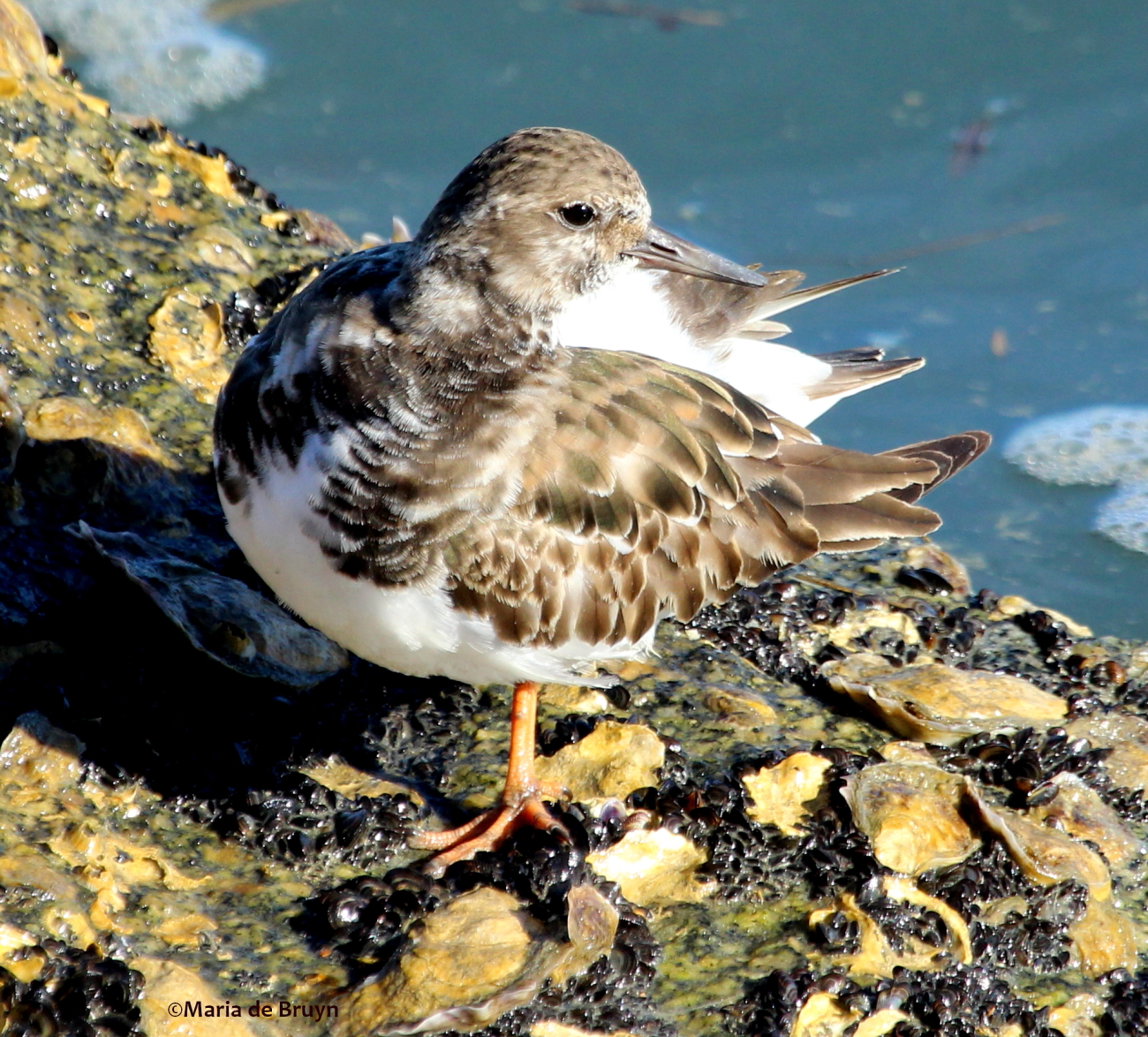
Outside breeding season and during winter migration, the birds are quite sociable. They have been seen preening and grooming for long periods.

ruddy turnstone IMG_0284©Maria de Bruyn res ruddy turnstone IMG_0305©Maria de Bruyn res

ruddy turnstone IMG_0278©Maria de Bruyn resruddy turnstone IMG_0317©Maria de Bruyn resruddy turnstone IMG_0206©Maria de Bruyn res

The populations of ruddy turnstones are fairly stable and they are not threatened at this time – good news for the bird lovers among us!