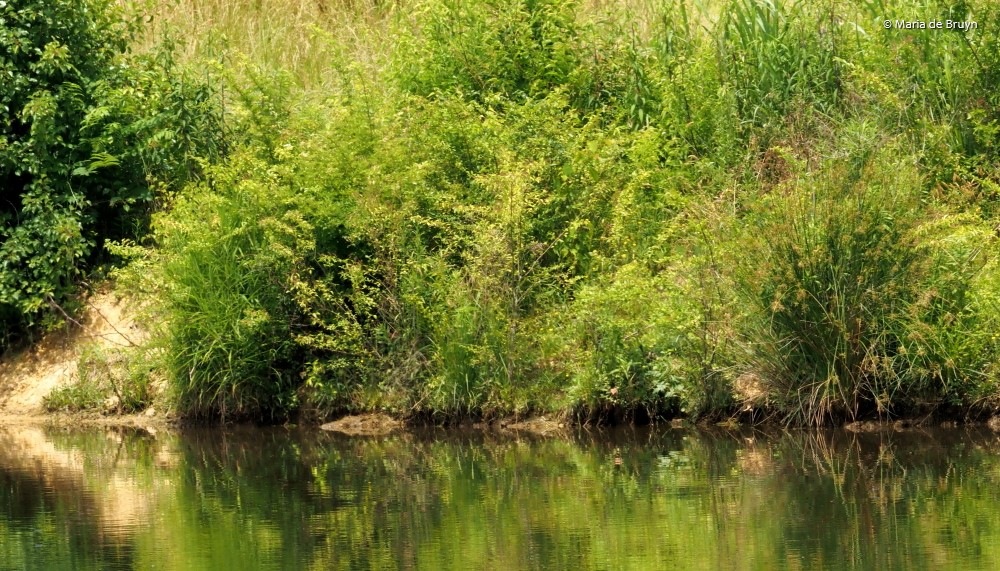
An hour at a local pond

There is a pond in the county where I live that used to be a real hot spot for birds and other wildlife. The dairy farm fields around it had lots of native vegetation, which was very welcoming to avian wildlife.

A couple years ago, the farmers retired, and the property was purchased by a vineyard owner to expand his holdings. He cut down most of the vegetation around the pond and along the road bordering the fields. He has turned most of the fields into vineyards, keeping only small portions untouched where birds can still find some refuge.
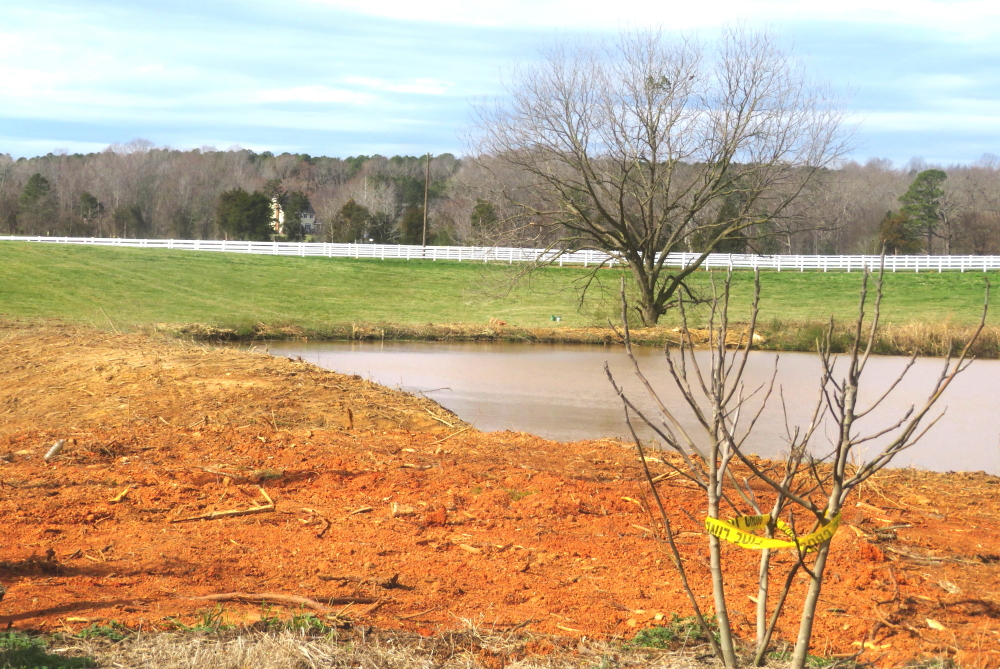
I used to see a yellow-billed cuckoo return from migration to a small patch of trees there every spring. This now is a thing of the past. However, some pond-edge vegetation had been regenerated, and a little bit was planted, so some birds are hanging in there. They still make for some interesting birding. Here is what I saw on a recent visit.
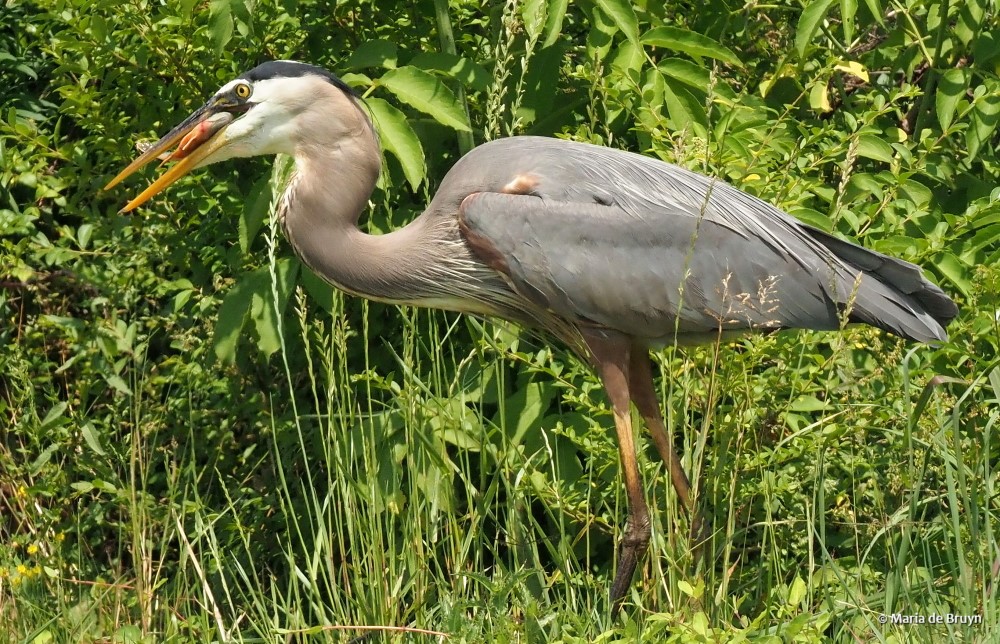
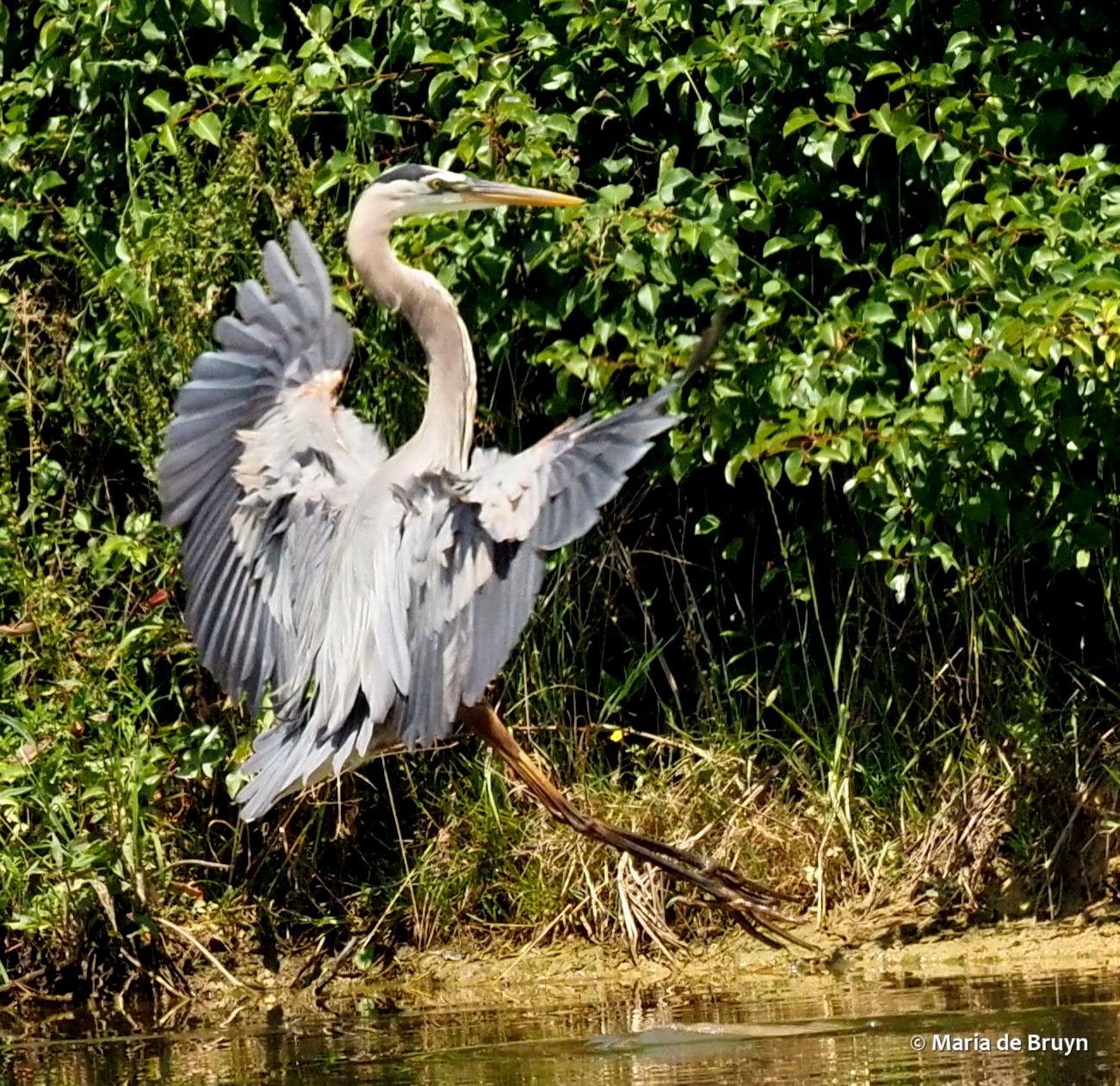
The largest birds that keep returning to the pond are the great blue herons. Sometimes there is one; other times there are two or three. Occasionally a green heron flies in or over but none stopped by on this occasion.

The heron often has good days fishing there. I often see him/her snag at least one fish and often more than one.

The heron stalks along the pond and frequently flies across to the other side for a change of venue. Perhaps the fish manage to hide well once they realize s/he is stalking them.
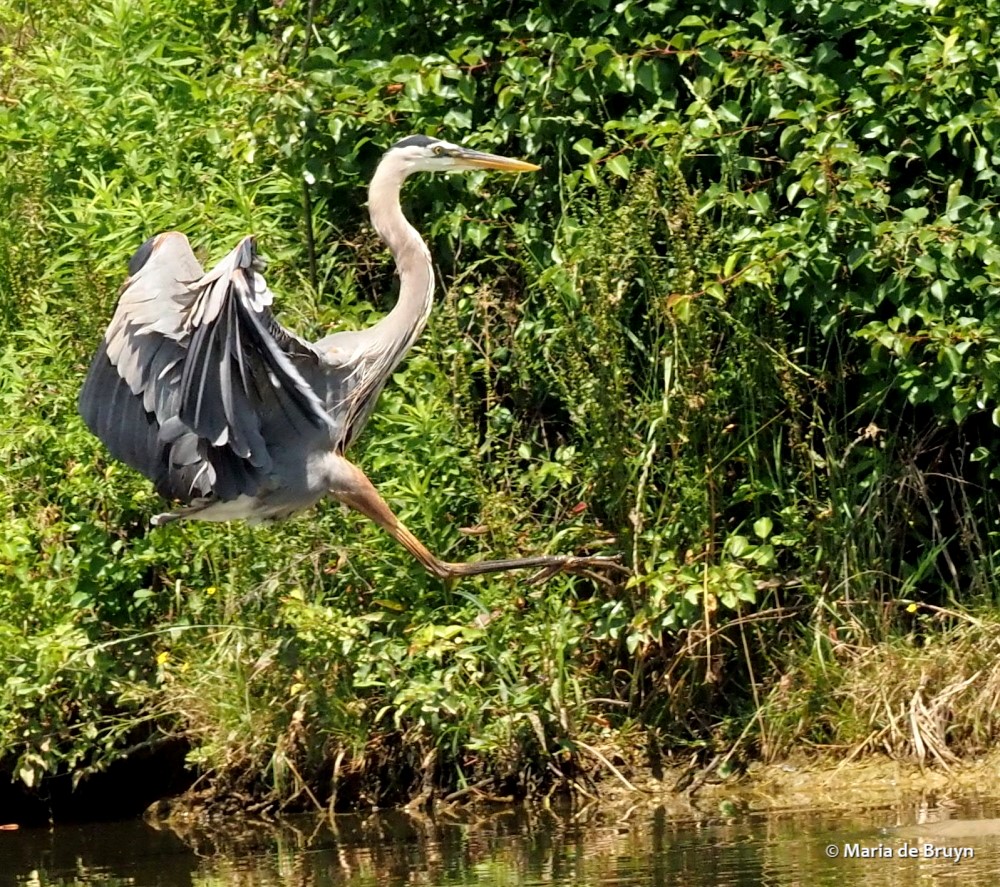
It’s wonderful to see the heron’s wings spread as the bird alights and then begins stalking again.

Eastern bluebirds had taken advantage of an electrical installation next to the pond (which also serves as a resource for the local fire department as needed). They not only used it as a perch for bug seeking but also built a nest inside it. I wondered what the new owner would do.
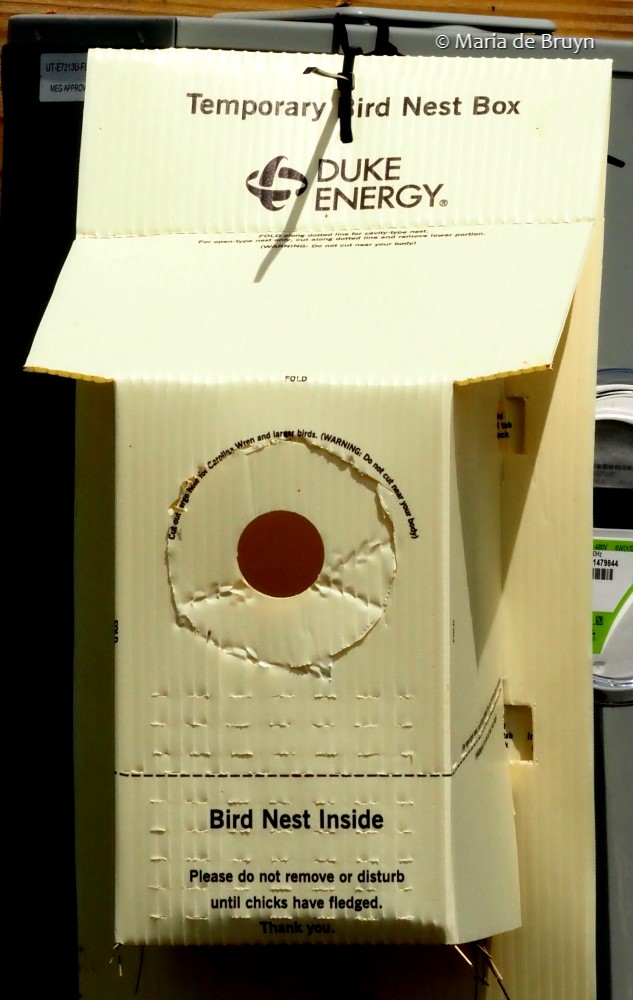


To my great surprise, his problem was solved by the local electricity company. They removed the birds’ original nest and put it into a temporary nest box!
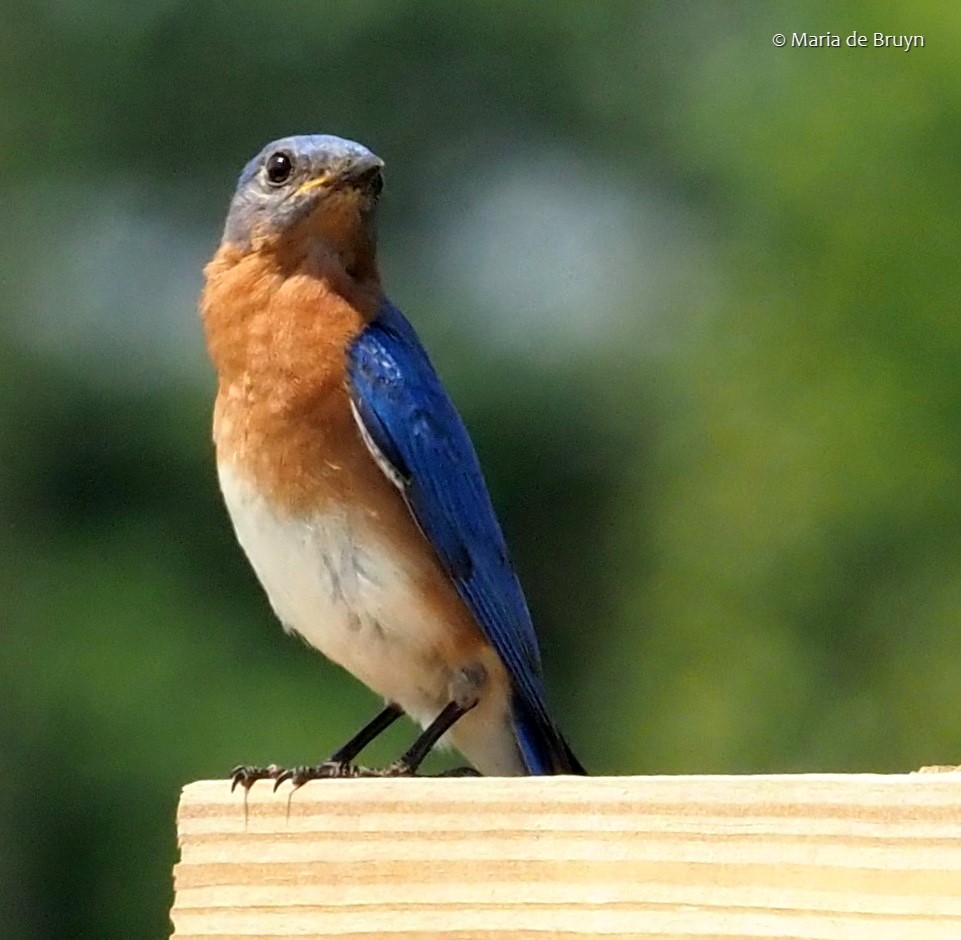
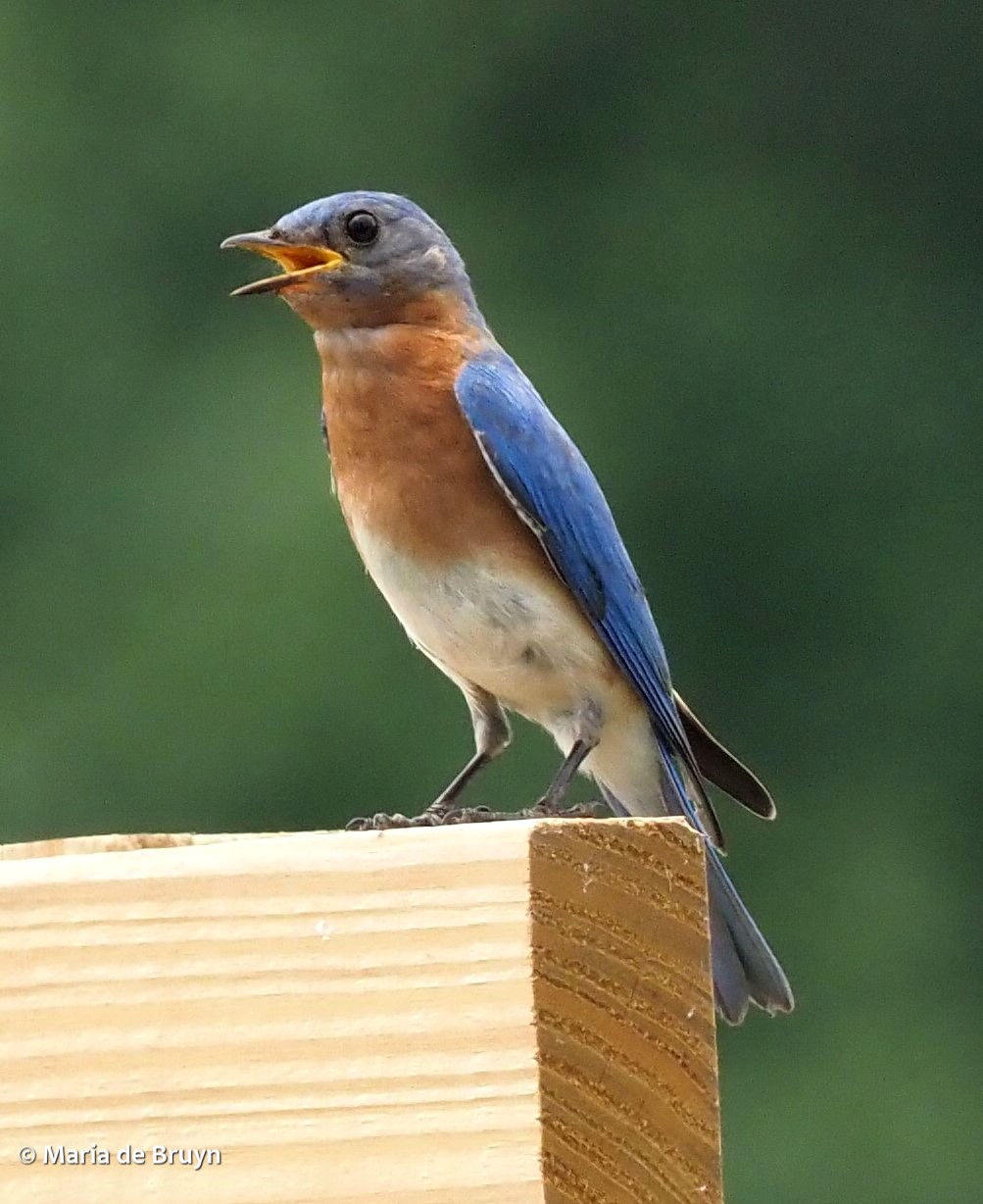
    

Mom and Dad bluebird were guarding the nest space, but it looked like they were still getting used to the new digs.

While watching the bluebirds, I suddenly heard a commotion in front of me, but I couldn’t see what was happening behind the bushes at the pond’s edge (I’m short!). However, I could tell that a bird was in distress. I wondered if one of the huge snapping turtles had caught a duckling. I walked further along and saw one of the two resident female wood ducks (above) swimming away from the area.
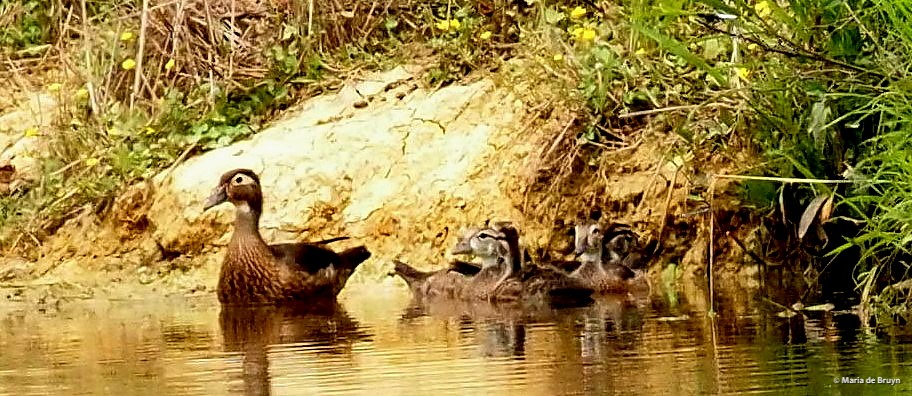
No ducklings followed and I feared the worst. One mother had five ducklings (above) while the one swimming away had lost one a few weeks before. Now I wondered if she had lost others, too. Luckily, I later saw her return to the area and shepherd four ducklings across the water to the other side.


In the small bit of meadow immediately adjacent to the pond, red-winged blackbirds are now nesting. One pair has a nest close to the road and they are warning visitors away with constant flights along the pond’s edge, while the male calls repeatedly.


The female was taking breaks from warning-off flights to enjoy an occasional meal, at this time consisting of one of the remaining periodical cicadas that emerged recently.

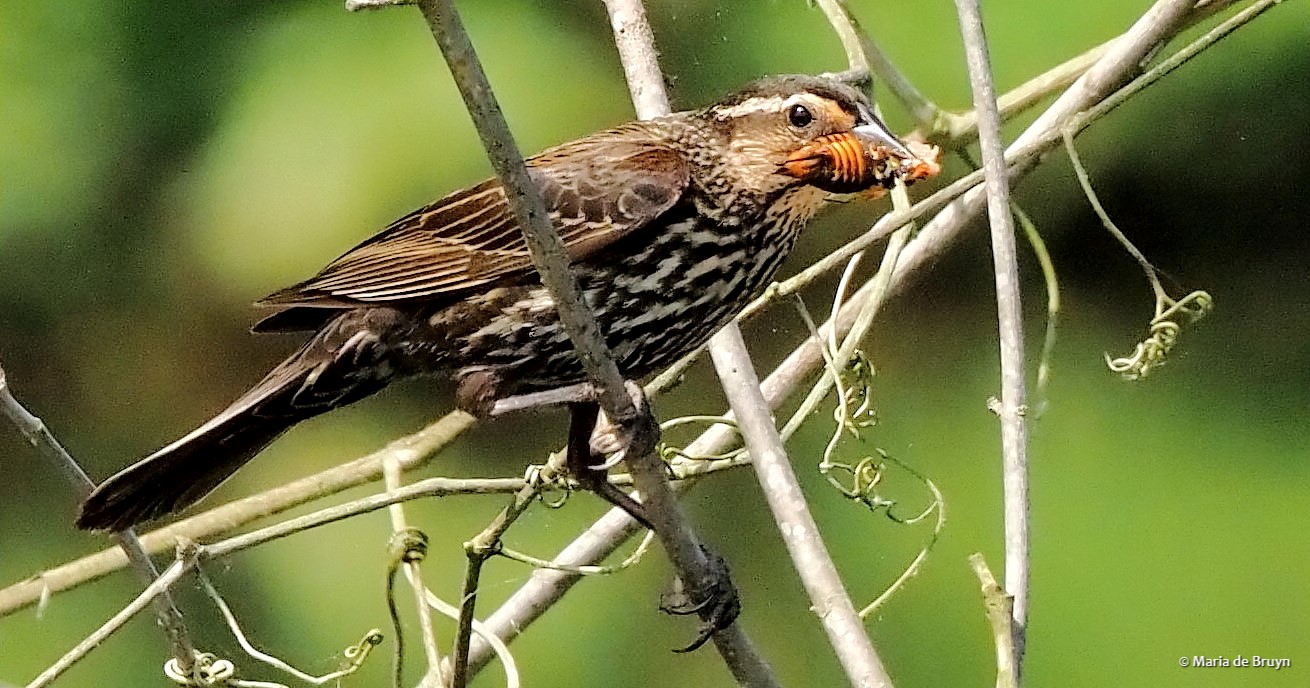
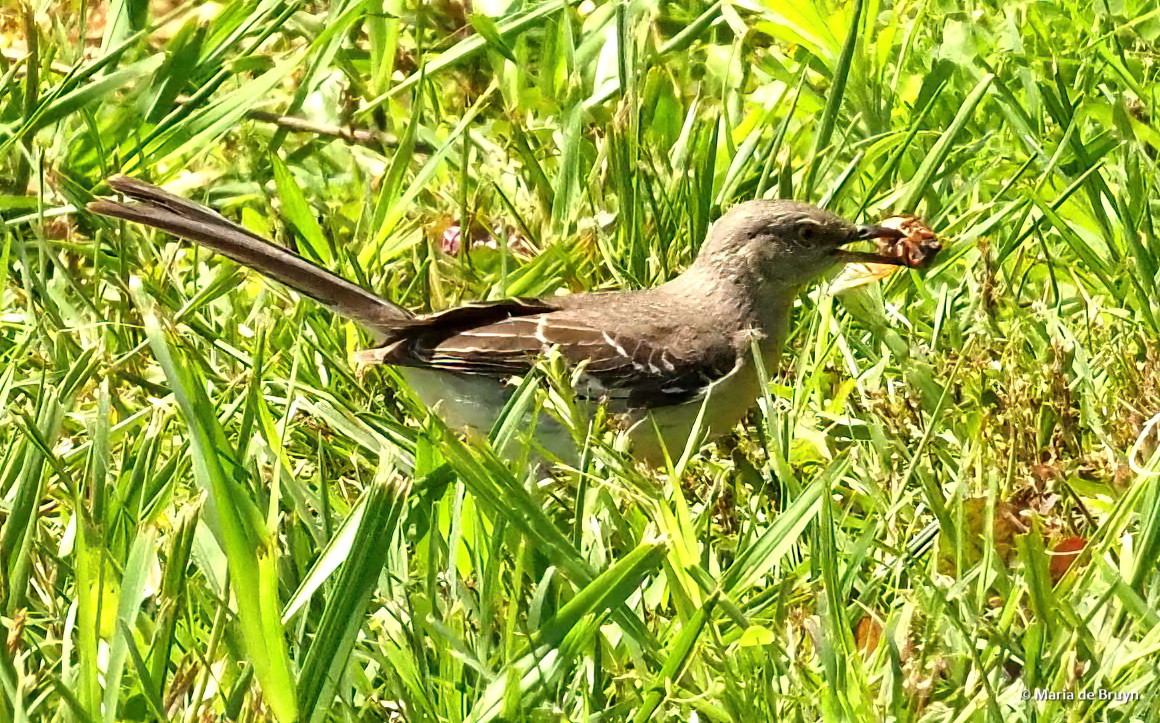
She wasn’t the only one seeking these insect delicacies. Two Northern mockingbirds were also intently examining the area under a tree for them. One finally had success in snagging a cicada. (For more about the cicadas, see my previous two blogs!)


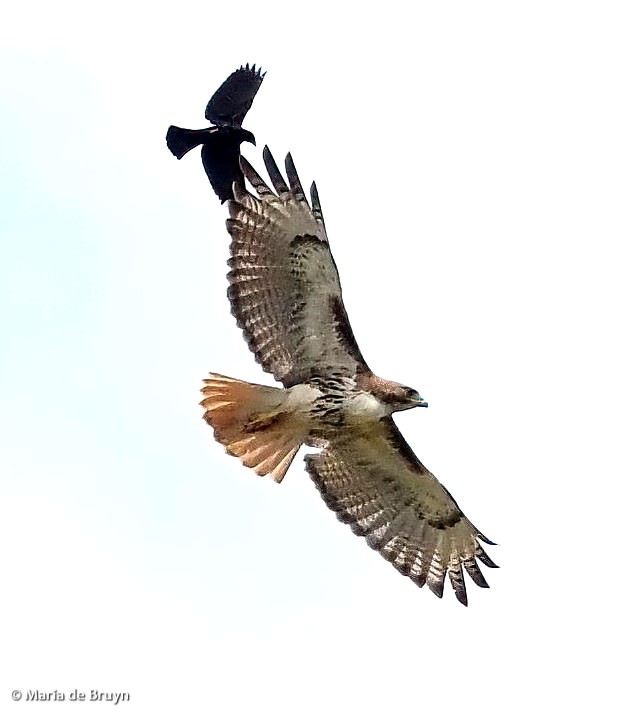
The male red-winged blackbird was very busy keeping “intruders” as far as away as possible from their nest. He warned off the great blue heron, who was actually pretty far away. (He is flying away from the heron on the left side of the photo.)

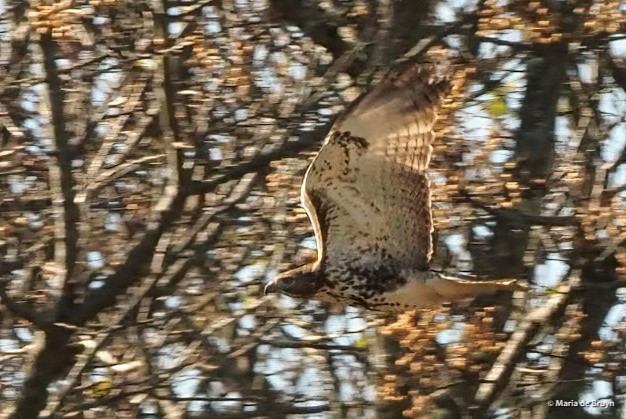
He also went after a red-tailed hawk, who appeared soaring overhead.
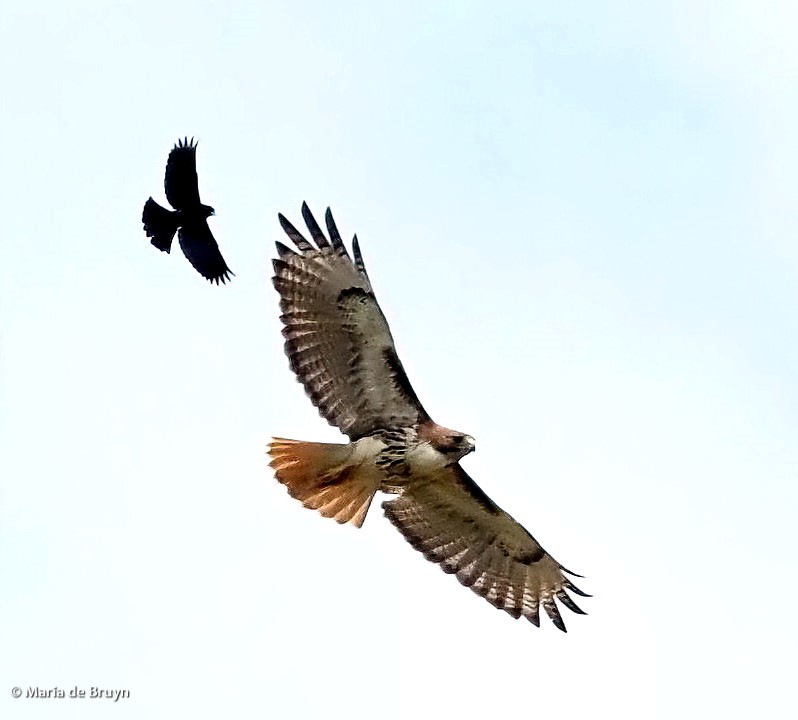
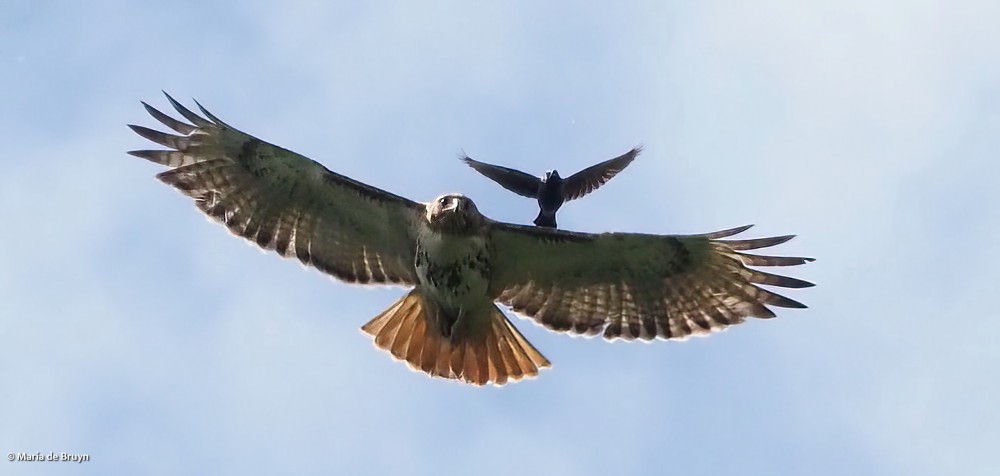
Common grackles, often present at this pond, will also chase away these hawks. There weren’t any around to join in the foray this time, but the photos below taken at another pond show how they go after the red-tails.

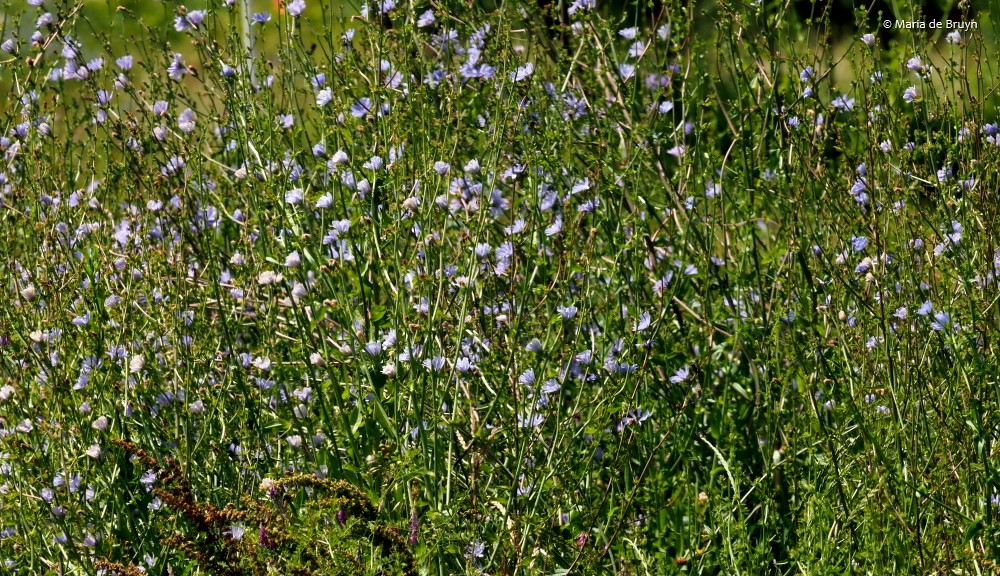
I looked at a small patch of chicory across the road to see if any bobolinks, grosbeaks or meadowlarks were around. I love this plant and planted some seeds in my own yard, hoping to attract more pollinators and birds. So far, they have not sprouted.
 

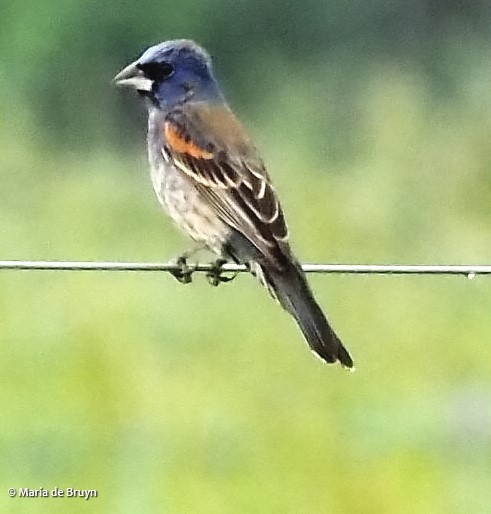
Below you see a young blue grosbeak and a pair of Eastern meadowlarks who were in the patchy field spots another time.
 

Usually, several types of swallows frequent the pond, including purple martins, tree swallows, barn swallows and Northern rough-winged swallows. I only saw a couple of the latter this day and only got poor flight photos as my camera began acting up, refusing to focus.

Staring hard across the pond, I did manage to spot three killdeer, four least sandpipers and a couple other sandpipers that I couldn’t immediately identify. I later learned that they were semipalmated sandpipers, which I hadn’t seen there yet. (If you click on the photo, you see it larger; then go back to the blog.)

That hour at the pond didn’t turn out to be a super one for capturing stellar photos, but it was definitely a great one for relaxing, observing the action and appreciating nature again!

Love me some hawks

3 red-tailed hawk PB074118© Maria de Bruyn res

After focusing mostly on the genus accipiter hawks in my last blog (especially the Cooper’s), I’d like to share a few more photos of buteo hawks that are common where I live. Taken over the past 4 years or so, the photos will vary and show them in various seasons.

The buteos are larger birds than the accipiters and somehow seem a bit more relaxed to me than the feisty accipiters.

1 red-tailed hawk P9199892 © Maria de Bruyn res

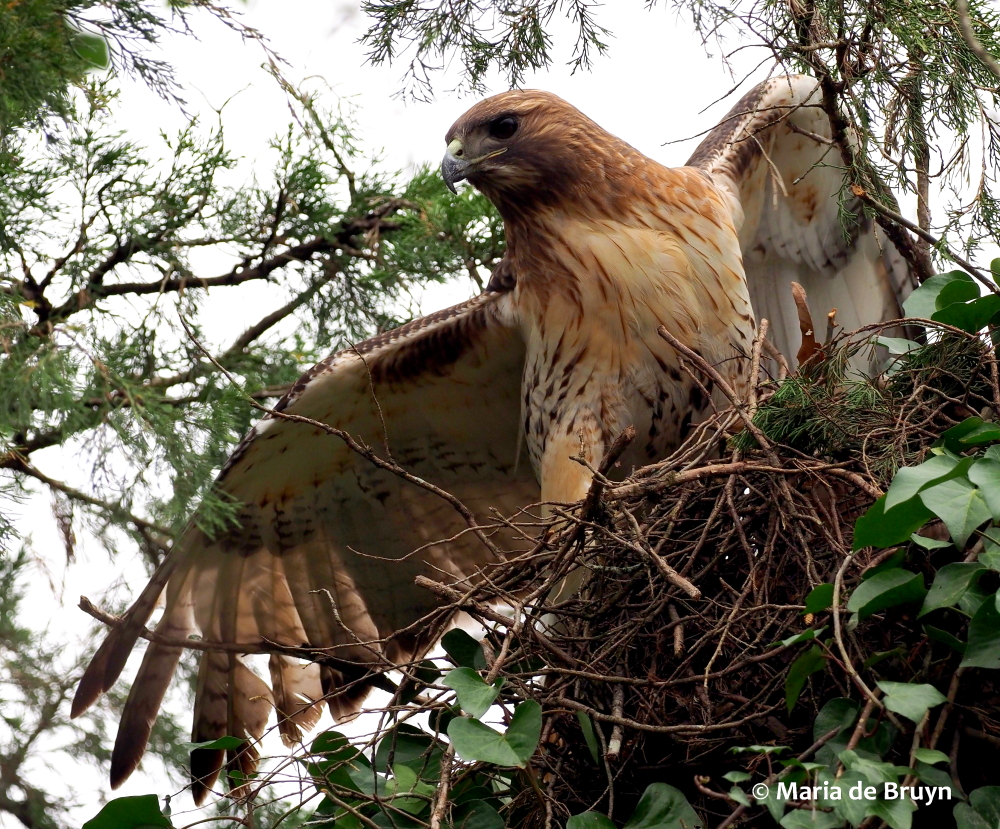
The red-tailed hawks (Buteo jamaicensis, above) are beauties as adults with dark red tail feathers. I tend to see them most often when I am away from home, visiting fields and natural areas. Frequently, I spot them when they are hunting. Their diets are rich and varied since they see almost any small animal as a potential meal. That includes rodents, rabbits, reptiles, fish, amphibians, invertebrates and other birds.

2 red-tailed hawk P9199889 © Maria de Bruyn res (2)


Those dietary choices mean that I regularly see them being chased by other birds, especially in the spring when the other birds want to protect their nestlings from the predatory beaks of the red-tails. Crows especially can get very raucous and angry when red-tailed hawks are near their nests.

8 red-tailed hawk P4159552© Maria de Bruyn res

9 red-tailed hawk P4159557 © Maria de Bruyn res


The red-tailed hawk below was being chased away as s/he flew away with a squirrel.

11 red-tailed hawk P5134700© Maria de Bruyn res

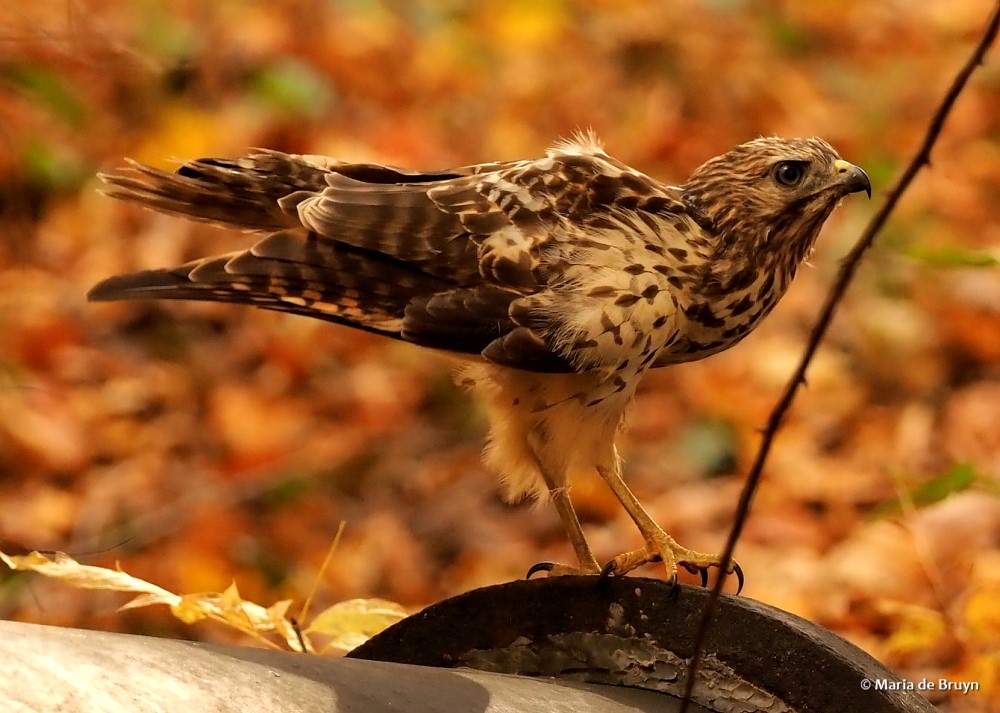
There are 14 recognized sub-species of red-tailed hawks, which vary in color and range. In the area where I live, we have many Eastern red-tailed hawks, but last year I spotted another type flying over farmland. I asked experts from a raptor identification group for some assistance in describing it.

4 red-tailed hawk PB243087© Maria de Bruyn ed

One expert remarked: “This is a juvenile by the monochromatic brown tones, spotted bellyband and lack of dark terminal band on the wings….As a juvenile there is more overlap in phenotype than in adults, and often we cannot identify them to subspecies level.” She went on: “…this bird could be either a slightly heavier marked Eastern (borealis) or a Northern (abieticola). To me it is not heavily enough marked to be a slam dunk abieticola and I would probably not assign a subspecies to it.”

5 red-tailed hawk PB243137© Maria de Bruyn ed sgd

I asked if that meant that a Northern red-tailed hawk could be found in North Carolina and not just the Eastern sub-species, so I could start watching for those distinctions. She responded: “only in winter and probably not overly often that far south, but certainly worth keeping a look out for them.” I haven’t seen this hawk again to my knowledge.

OLYMPUS DIGITAL CAMERA

One of my favorite portrait photos (below) is of a red-tailed hawk. Taken in 2015, the bird flew across a field to perch in a tree right next to the path on which I and four other people were walking. S/he had seen a hispid cotton rat crawl into the vegetation underneath the tree. My birding companions walked on but I stayed and after 20 minutes or so, the hawk suddenly dropped down and snagged the rat, which must have had a terrifying wait at the end of its life. The hawk was very handsome though.

13 Red-tailed hawk DK7A6468.© Maria de Bruyn res

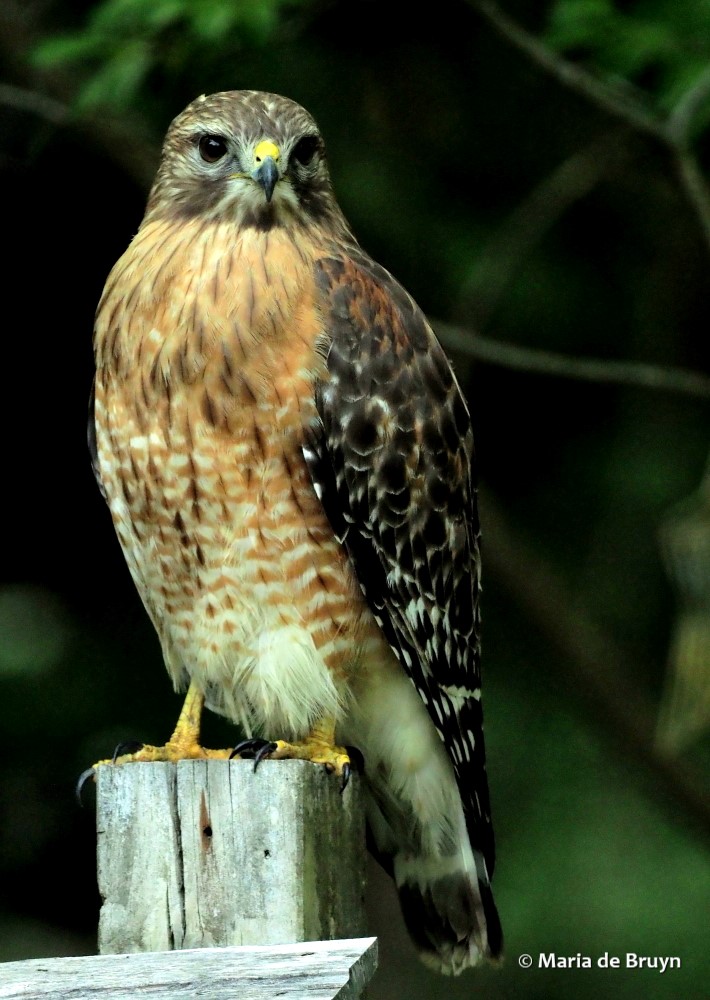
While the red-tailed hawks are impressive, I have a softer spot for the red-shouldered hawks (Buteo lineatus). Somehow they look less fierce and a bit sweeter to me.42 red-shouldered hawk P1280192© Maria de Bruyn res

I see them carrying out all kinds of behaviors. Sometimes, they are just flying overhead, showing off their red shoulders as they travel aloft.

14 red-shouldered hawk PC089000 © Maria de Bruyn res

They often perch high in trees to survey their territory.

15 red-shouldered hawk P2032292 © Maria de Bruyn

16 red-shouldered hawk PB148090© Maria de Bruyn sgd res

 17 red-shouldered hawk PB148081 © Maria de Bruyn res

18 red-shouldered hawk P4256997© Maria de Bruyn res     19 red-shouldered hawk P4256970 © Maria de Bruyn res

Tree tops often serve as a place to cuddle up when it is cold.

20 red-shouldered hawk P1128630© Maria de Bruyn res sgd

21 red-shouldered hawk P1128629 © Maria de Bruyn res sgd

They seem to enjoy preening when high up on snags at all times of year.

23 red-shouldered hawk PB043026 © Maria de Bruyn res

22 red-shouldered hawk PB043004 © Maria de Bruyn res

24 red-shouldered hawk PC103338© Maria de Bruyn res

A snag can be a place to call out to mates.

25 red-shouldered hawk PA074393© Maria de Bruyn res


And a level branch is a good place to mate.

26 red-shouldered hawk P3118052© Maria de Bruyn

Sitting very still, they scan the ground to spot prey, which they often capture by dropping straight down to kill it in a fast strike. Their diet is varied, including many types of rodents and mammals such as squirrels, mice, chipmunks, voles. They also attack birds up to the size of jays, grouse or pheasants.

28A red-shouldered hawk PC204514 © Maria de Bruyn


When I’ve seen them snag prey, it has usually been smaller prey such as frogs, lizards, snakes and other reptiles and amphibians. A pair of red-shouldered hawks living at an urban park in a nearby city must really enjoy the crayfish that are abundant in the wetlands.

28 red-shouldered hawk PC204381 © Maria de Bruyn res

These hawks will perch on many handy lookout posts when surveying the ground for prey. This one sat on a feeder at the local public library, suddenly flew a short way to drop down into the leaves and brush under nearby trees and seemed to be wrestling with a rodent of some kind. S/he left without the prey, however.

29 red-shouldered hawk P1300684© Maria de Bruyn. res

30 Red-shouldered hawk P1300812 © Maria de Bruyn res

 31 red-shouldered hawk P1300816 © Maria de Bruyn res

In my yard, a resident red-shouldered hawk not only sits on branches but occasionally on a nest box, to the dismay of nearby songbirds. One ate all the large green frogs in my pond.

32 red-shouldered hawk P4257137 © Maria de Bruyn res

At a small public park in a neighboring town, I watched a red-shouldered scan the field below intently for quite some time. The raptor then surprised me by dropping swiftly down, snagging something small and flying up to another tree to eat.

33 red-shouldered hawk P4106575 © Maria de Bruyn res

It wasn’t until I enlarged the photos I took that I saw the bird had gotten a large worm. (When I posted the photo on facebook, a witty commentator remarked that he was collecting bait to go fishing!)

34 red-shouldered hawk P4106576© Maria de Bruyn (2)

35 red-shouldered hawk PB180186© Maria de Bruyn (2)

Occasionally, they may be injured. This young hawk was perched in an out-of-the-way spot in a park and when I posted these photos, a commentator remarked that the bird looked injured with a wing out of place. She suggested I contact a rehabilitator but the bird eventually flew away seeming to be ok.


36 red-shouldered hawk PB180215© Maria de Bruyn res

37 red-shouldered hawk PB180192 © Maria de Bruyn res (2)

While I know these raptors can be just as fierce as the other hawks, I do tend to think of the red-shouldered hawks as having sweet faces. Having watched them tend to their young, I know they can be very devoted parents and I always enjoy seeing them!
43 red-shouldered hawk P1280223© Maria de Bruyn res

Final note: “I love me some hawks” is not a title I would have chosen some years ago, but I liked it for this blog as it indicates —to me —enjoyment of something. I decided to look up where the phrase came from and ended up with several explanations: 1) an ungrammatical expression that might be associated with African American vernacular or with the rural areas of the southern US states; 2) an annoying phrase usually used by the middle-class; 3) a slang way of saying ‘I really love’; 4) a novel grammatical structure indicating “I always like” something. Kinda like the middle voice in ancient Greek. Well….at least I learned something new today. 😊

39 red-shouldered hawk PC100502© Maria de Bruyn (2)

Next blog – no birds but interesting creatures nonetheless!

The porch as a place of peril

It’s been quite a while since my last blog; other things keep getting in the way of my writing! In any case, I’d promised you a tale of a close encounter with a hawk; here it finally is!

1 Cooper's hawk P5034652© Maria de Bruyn res

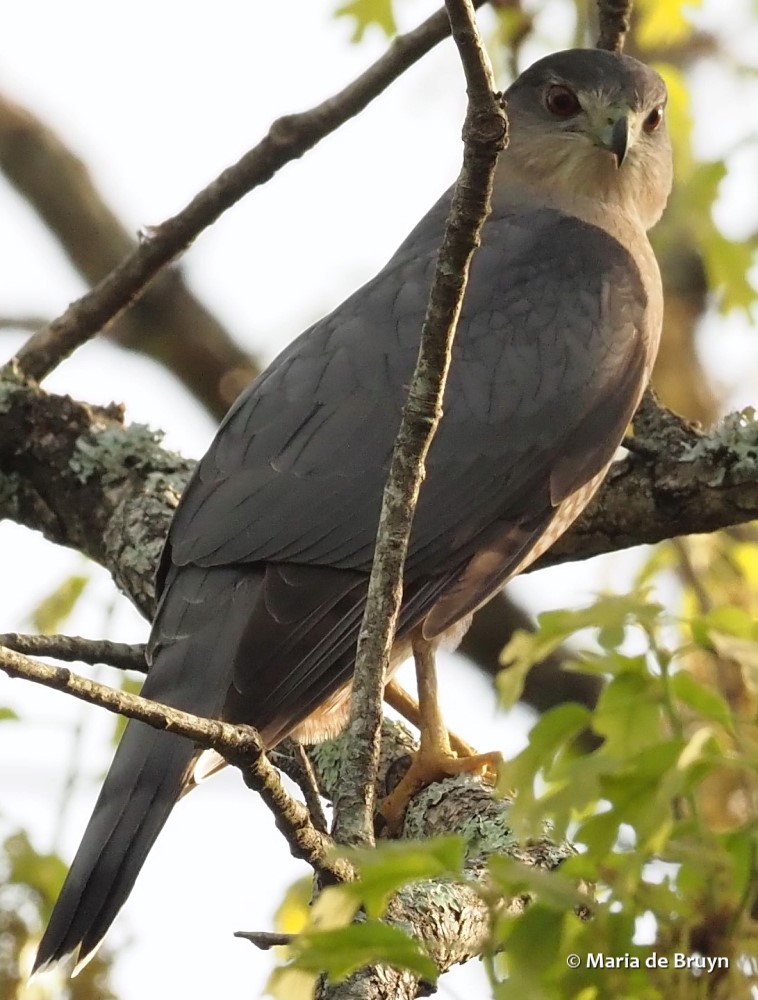
Immature Cooper’s hawk

I really enjoy watching raptors and, fortunately, I see them regularly on my nature walks. While I can spend quite a while just watching them soar, build nests and care for their young, I admittedly don’t always enjoy seeing them eat.

2 barred owl P4137980© Maria de Bruyn res sgd

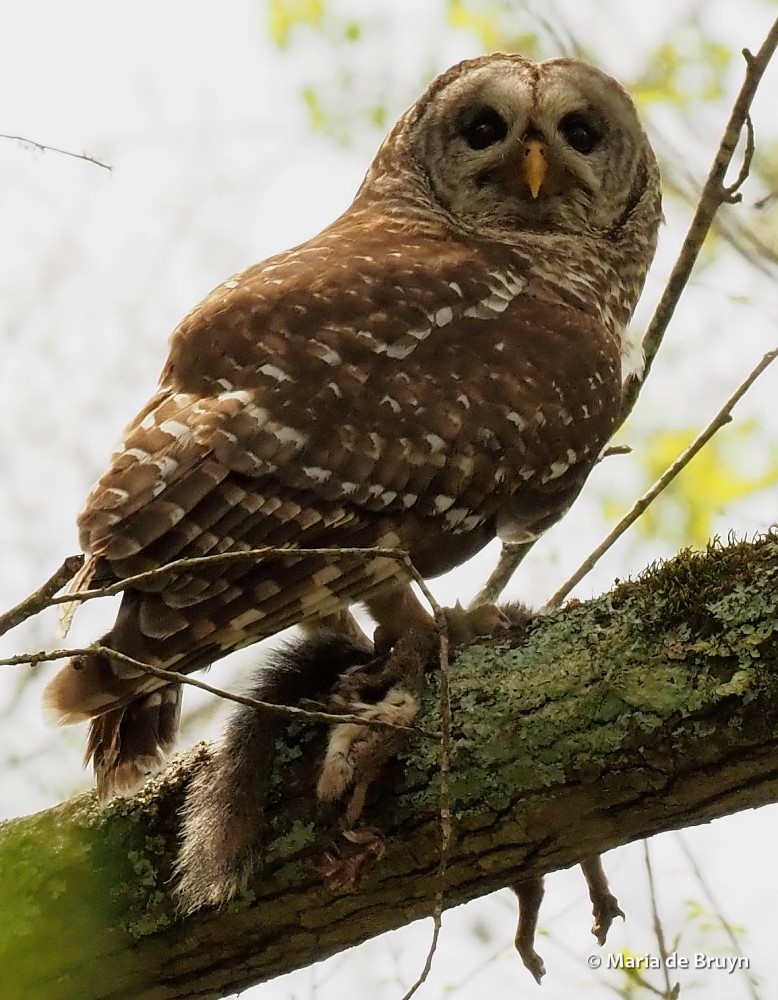
When songbirds eat insects, they dismantle and swallow them fairly quickly. When raptors dine, they rarely gulp down their food. Meals can last quite some time while they dismember their prey, as was the case for the barred owl above (Strix varia) who was eating a squirrel.

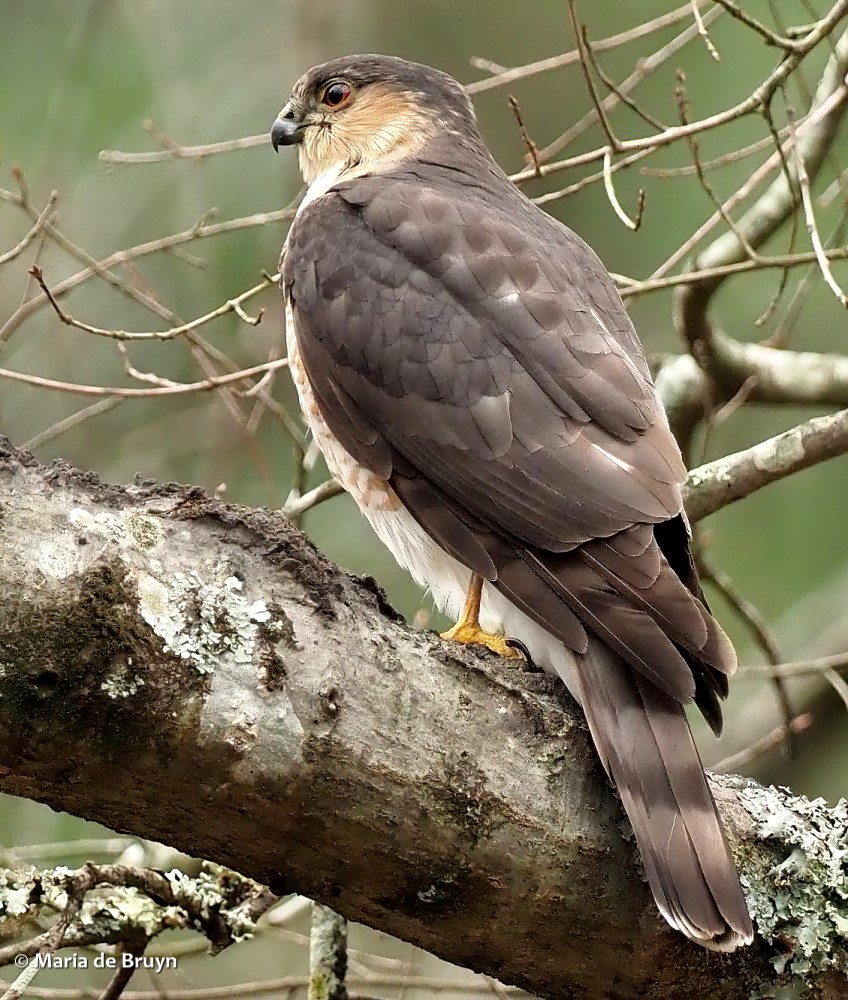
The hawks whom I see often include four species that frequent my neighborhood, including my yard — the red-shouldered hawk (Buteo lineatus), the red-tailed hawk (Buteo jamaicensis), the Cooper’s hawk (Accipiter cooperii) and the sharp-shinned hawk (Accipiter striatus).

3 sharp-shinned hawk P2121916 © Maria de Bruyn res ed      4 sharp-shinned hawk P2121932 © Maria de Bruyn-res ed

The Cooper’s and sharp-shinned hawks are the most frequent visitors. To inexperienced birders, they look very similar. Size is one clue to identity with a sharp-shinned hawk averaging 10-14 inches in length (jay- or dove-sized, 25-35 cm), and a Cooper’s hawk being about crow-sized, averaging 15-20 inches long (38-51 cm). The sharp-shinned hawks (seen above and below) don’t seem to visit as often as the Cooper’s hawks.

5 sharp-shinned hawk P2121946© Maria de Bruyn-res ed

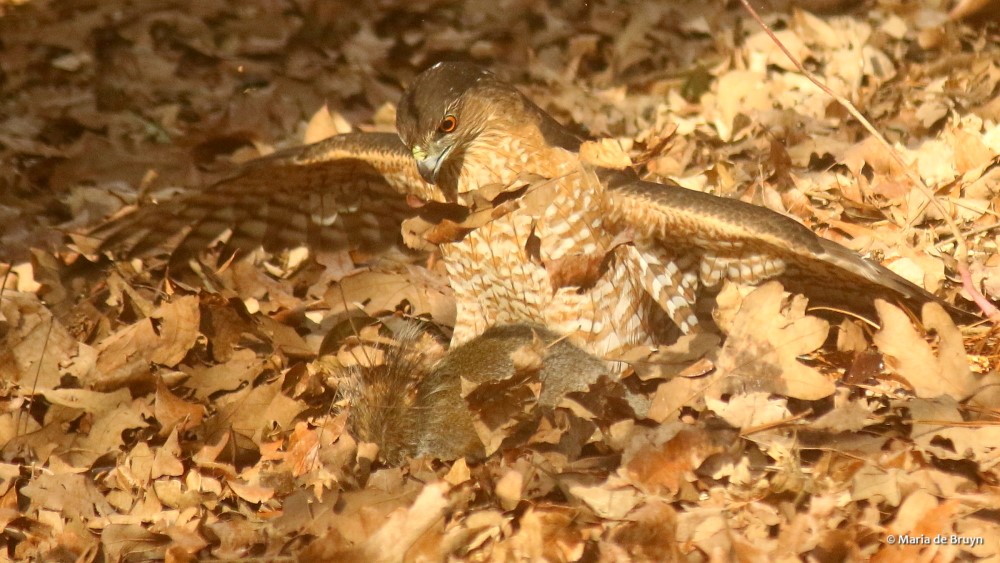
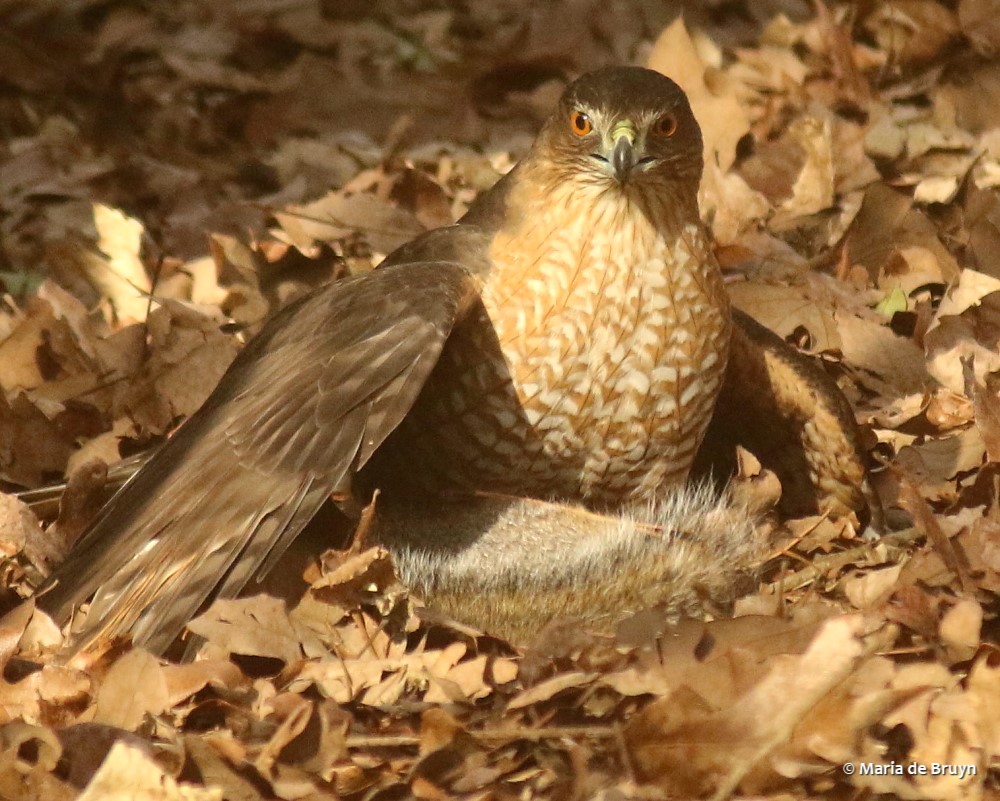
In 2019, a hawk caught a squirrel in my yard. Until recently, I was convinced that she was a red-shouldered hawk, but I decided to ask for confirmation from a raptor ID group on Facebook.

6 Cooper's hawk 2G0A3950© Maria de Bruyn res (2)

The experts informed me that she was an exceptionally large Cooper’s hawk. One commented: “Largest female Cooper’s are around 21 ounces; obese Eastern Gray Squirrels are around that but most we see are little more than half that. And even cargo helicopters strain to lift much more than their own weight. So unless I see rocket assists on a Sharp-shinned (maxing out at around 7 ounces) they can’t lift the full carcass of an adult EG Squirrel.”

7 Cooper's hawk 2G0A3959© Maria de Bruyn res (2)

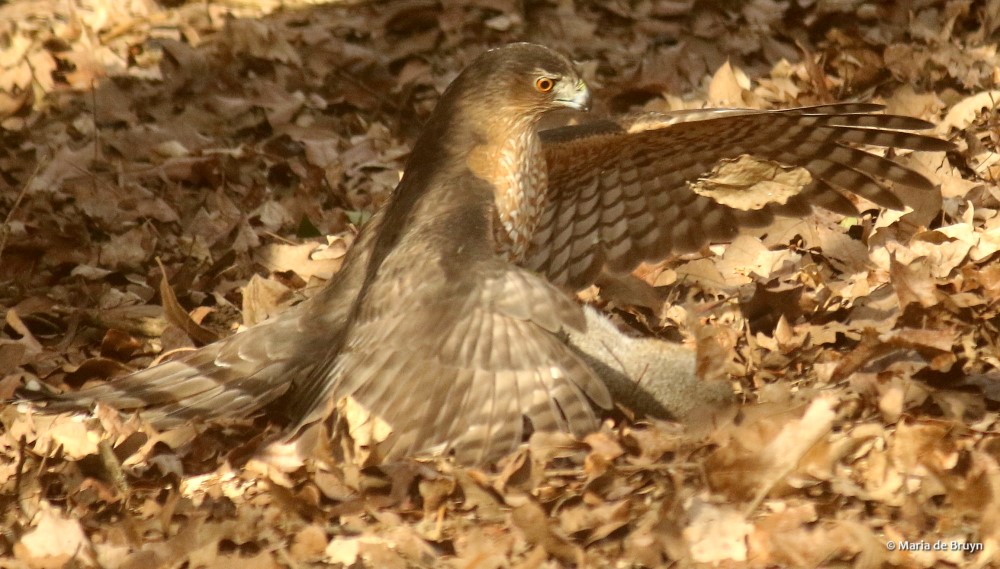
The female Cooper’s hawks are up to one-third larger in size than the males and she was a hefty individual. Nevertheless, she had her work cut out in subduing the squirrel.

8 Cooper's hawk 2G0A3949© Maria de Bruyn res (2)

While she was trying to hold onto and kill the rodent, a pair of crows began harassing her, but she held her ground.

9 Cooper's hawk 2G0A3963© Maria de Bruyn res (2)

Ultimately, she was able to put the squirrel out of its misery and she finally flew off with it to consume her meal elsewhere.

10 Cooper's hawk 2G0A4002© Maria de Bruyn res (2)

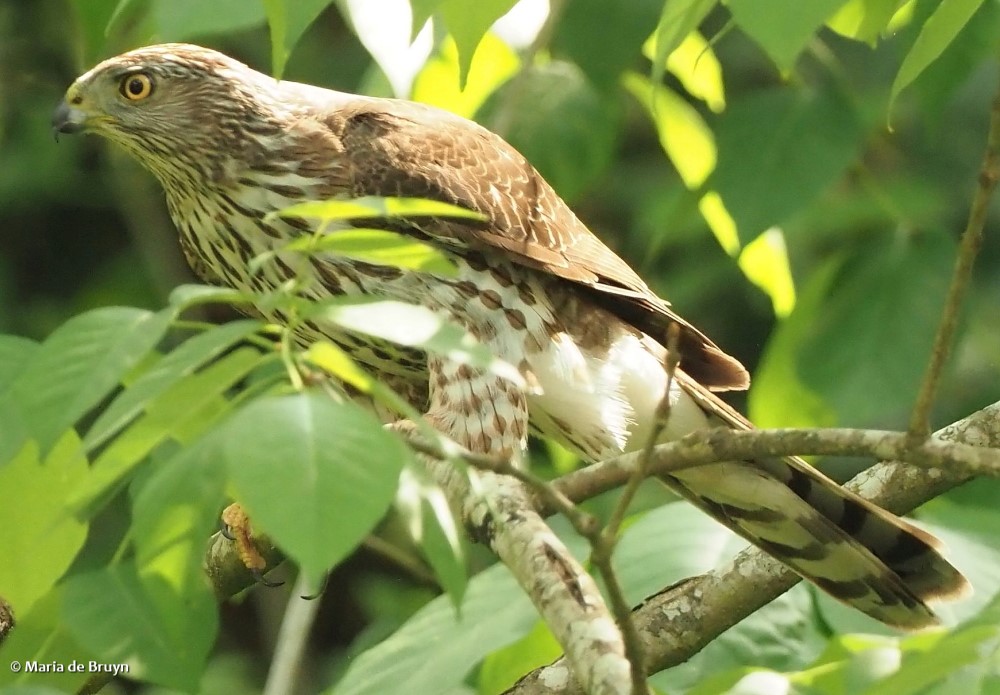
This year, I’ve had a young Cooper’s hawk come by; she was born in 2021 and seemed to be searching for something to make her day.

11 Cooper's hawk P5034613© Maria de Bruyn ed res

12 Cooper's hawk P5034638 © Maria de Bruyn res

13 Cooper's hawk P5034654 res

Above you see her eye covered by the nictitating membrane

My most surprising — and definitely hair-raising — encounter with a hawk occurred this past April. I was sitting in a porch chair in front of my living room window. As I looked down to record bird species for an online birding site, I heard a hard collision into the window right next to my head. A male brown-headed cowbird (Molothrus ater) fell into my lap.15 brown-headed cowbird PB137591© Maria de Bruyn res

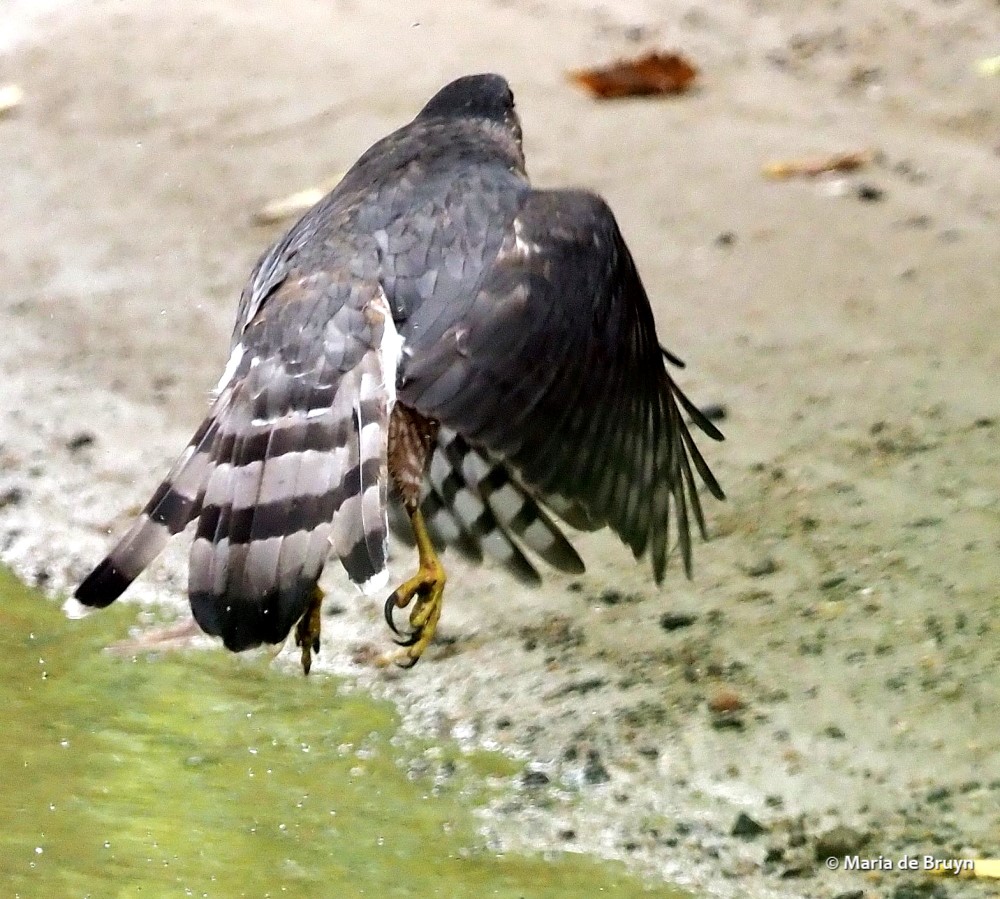
He was completely stunned, and as I looked down, he slid off my lap. Then I looked up to see if he was being chased. That was indeed the case — a large Cooper’s hawk was coming right toward my face with his/her legs extended in front with widely-spread claws ready to grab prey. Of course, I had no time to take a photo, but the photo below of another Cooper’s hawk shows a bit what those claws are like. Their enlarged rear talons are about 0.67-0.85 in long (17-21.7 mm) in males and 0.78-1.05 in (19.8-26.7 mm) in female hawks. 

16 Cooper's hawk PA064226© Maria de Bruyn res (2)

My amazement at the proximity of the incoming raptor so stunned me that I waited a second or two before waving my arm and yelling to the bird to stop — s/he was only about 3 feet from me! The bird had been so focused on the prey, that my shout made the raptor try to “backpedal” in mid-air.

17 Cooper's hawk P3105244© Maria de Bruyn res ed

The hawk tumbled a bit, righted herself (I assume the size indicated a female) and then she shot up over the porch and house. The cowbird died and I laid him in the front yard, thinking she or another predator might take him. The next day, the cowbird was untouched, so I buried him.

18 Cooper's hawk P4138413 © Maria de Bruyn res (2)

The encounter occupied my thoughts for quite a long time afterwards. I felt incredibly lucky those claws had not reached my face or head with terrible results. It had not occurred to me that my front porch could be a place of potential avian-caused peril, but I learned a good lesson that day — always pay attention to your surroundings and stay alert when predators could be nearby!

Next blog: a few shots of some red-tailed and red-shouldered hawks that I’ve enjoyed taking over the past couple years.


Late-morning hawk-watching – Part 1

North Carolina is known among birders as a destination for “hawk watches,” i.e., gatherings of people to see groups of hawks that are migrating south (for winter) or north (for summer). The Blue Ridge and Smoky mountains offer wind currents that birds can use to speed their journeys and many raptor fans travel to Grandfather Mountain’s Linville Peak to see the spectacle in autumn. Some also go to the hawk watch at Pilot Mountain State Park. The birds on view at the two sites include bald and golden eagles, peregrine falcons, kestrels, merlins, broad-winged hawks, Northern harriers, sharp-shinned and red-tailed hawks (Buteo jamaicensis) like the one below.

red-tailed hawk P9199890 © Maria de Bruyn res

As October progresses and migration is winding down, however, we continue to see resident raptors roaming in our area.

The red-shouldered hawks (Buteo lineatus) are looking for easy meals. Their favored foods, in addition to smaller birds and mammals, include amphibians. My yard contains a couple small ponds, which have become favored habitats for local bullfrogs and green frogs (Lithobates clamitans).

green frogs IMG_0021© Maria de Bruyn res

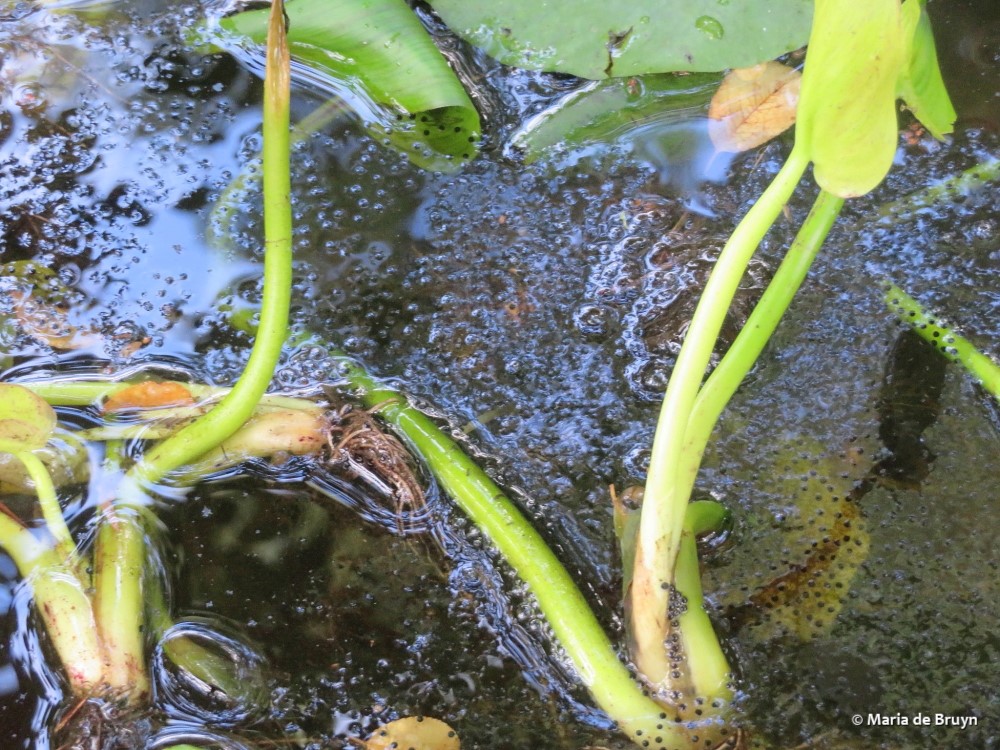
This year, the green frogs predominated; the largest ones especially drew my attention with their loud croaking. In between vocalizations, they looked like they were wrestling. Together they contributed to a bounty of frog eggs.

frog eggs IMG_0040© Maria de Bruyn res

red-shouldered hawk P6271585© Maria de Bruyn res

Their amorous calling also attracted one of the neighborhood red-shouldered hawks, whom I spotted sitting on a tree branch overhanging the smaller pond. S/he was patient in watching and a couple days later I noticed a lack of croaking and then found a hawk feather in the water.

belted kingfisher PA147080© Maria de BruynSome weeks later, I saw a belted kingfisher (Megaceryle alcyon) fly by quickly with a frog dangling from its beak at a city park, but the bird was too far away for a good photo. I had had better photographic luck on another morning when I happened upon a red-shouldered hawk pursuing frogs at nature reserve pond.

At first, I didn’t realize what the bird was doing. I saw the raptor intently peering down at the muddy pond’s edge and walking back and forth along the water.

red-shouldered hawk P8317401© Maria de Bruyn

red-shouldered hawk P8317412© Maria de Bruyn res

red-shouldered hawk P8317413 © Maria de Bruyn res

Then, suddenly, I saw the hawk plunging its claws into the ground, apparently trying to dig something up.

red-shouldered hawk P8317244© Maria de Bruyn res

It used its wings for balance as it clawed at the wet sand.
red-shouldered hawk P8317253© Maria de Bruyn res

red-shouldered hawk P8317252© Maria de Bruyn res

I felt sorry for the frogs that were caught. Their final life moments must have been spent in terror and pain as they were dismembered.
red-shouldered hawk P8317470© Maria de Bruyn res

red-shouldered hawk P8317604 © Maria de Bruyn

It seems to me that the great blue heron’s propensity to swallow its food whole must ultimately be a quicker death for the prey.
red-shouldered hawk P8317589© Maria de Bruyn res

red-shouldered hawk P8317535 res

The hawks must also eat, however, and this is the poor frogs’ fate in many cases.

red-shouldered hawk P8317506© Maria de Bruyn res

And I must admit that it was interesting – if also rather uncomfortable – for me to see how the hawk was hunting.

red-shouldered hawk P8317511 © Maria de Bruyn res

Next up – another local raptor keeps me watching in fascination.

Marvelous mammals, part 1 – at the homestead

Judging from how many blogs I’ve written about birds, you might assume that I’m mainly a devotee of avian wildlife but that is certainly not the case. Without a doubt, I do love birds, but I really enjoy observing, learning about and photographing all kinds of other wildlife.  Fortunately, my own yard provides me with some opportunities for that as I have a number of regular mammalian visitors. Sometimes, their visits entail a bit of drama but often their presence is quite peaceful.

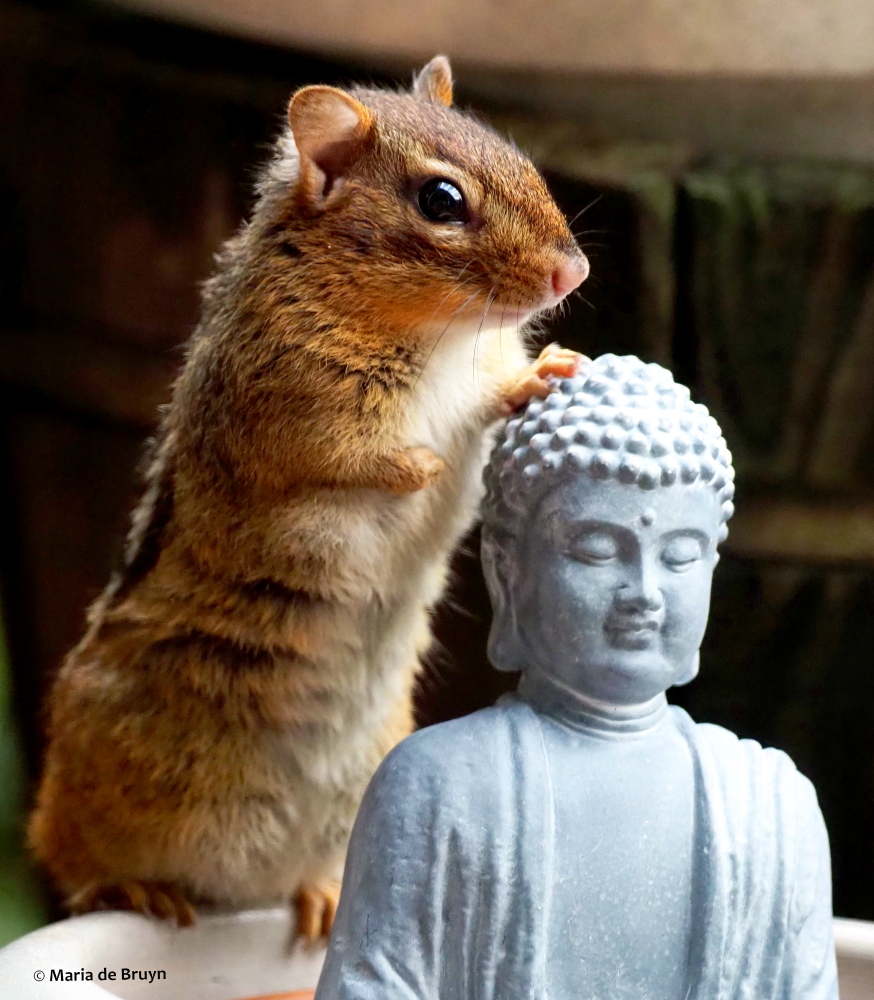
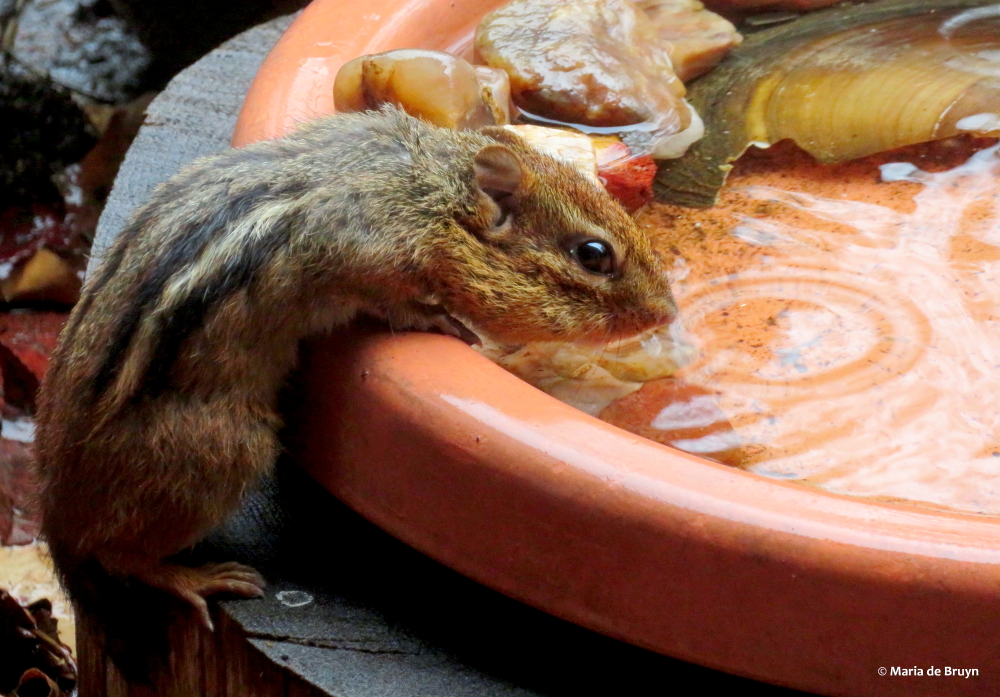
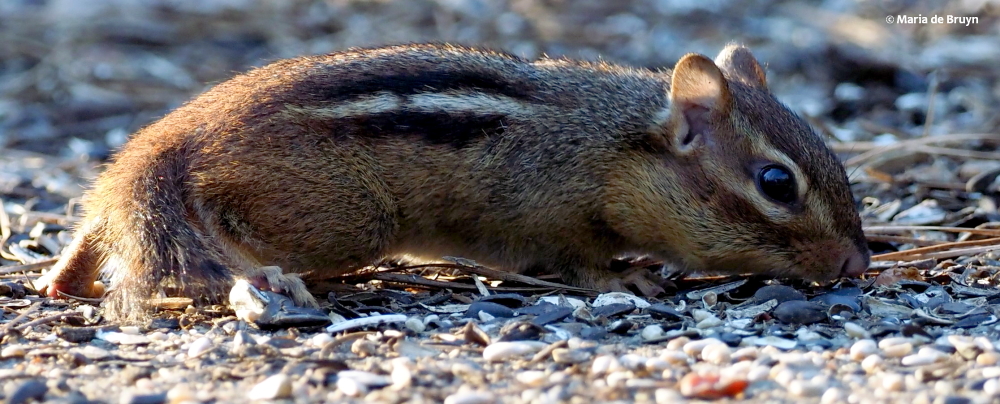
The Eastern chipmunks (Tamias striatus) like to visit the front porch to see if there’s something of interest among the potted plants or to take a drink from a water source.

These cute little rodents are more than willing to mingle with the ground-feeding birds looking for seed under the feeders. They scurry away as fast as their little legs will carry them when birds of prey appear – and they can certainly run quickly!


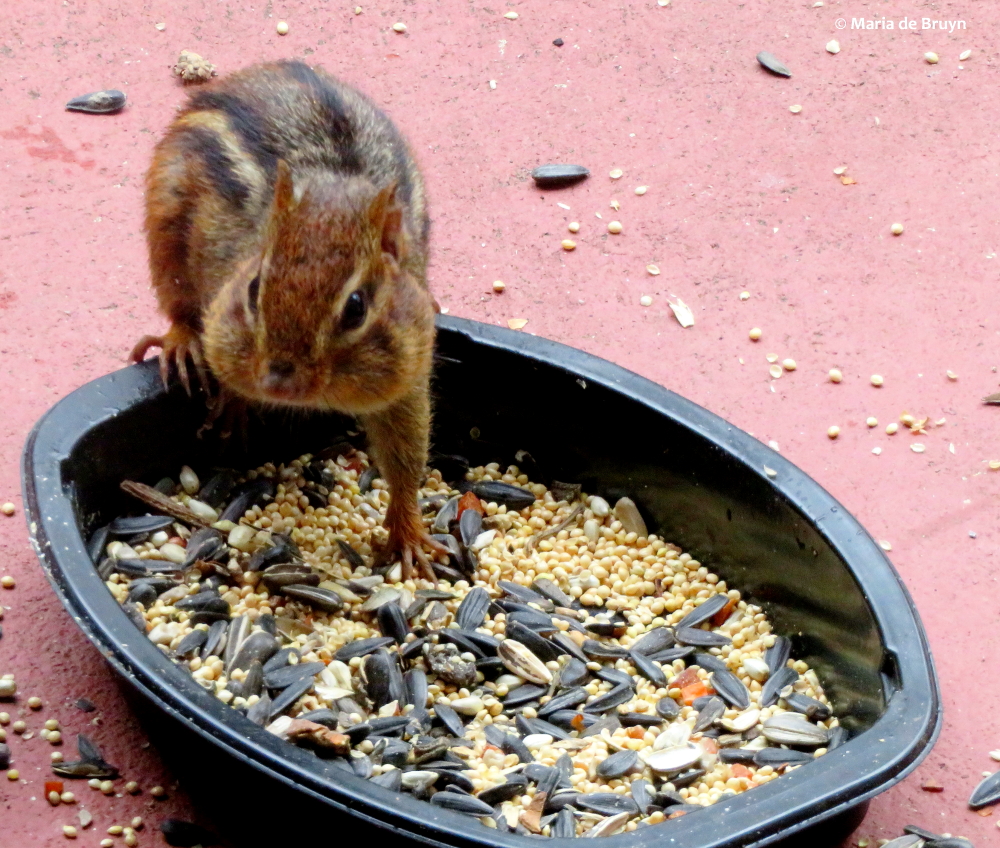
When it’s very cold, I sometimes offer them a small tray of seed just for themselves on the porch. They scarf down the goodies, filling their cheek pouches to what seems like almost bursting before dashing away to store the goodies for later consumption.


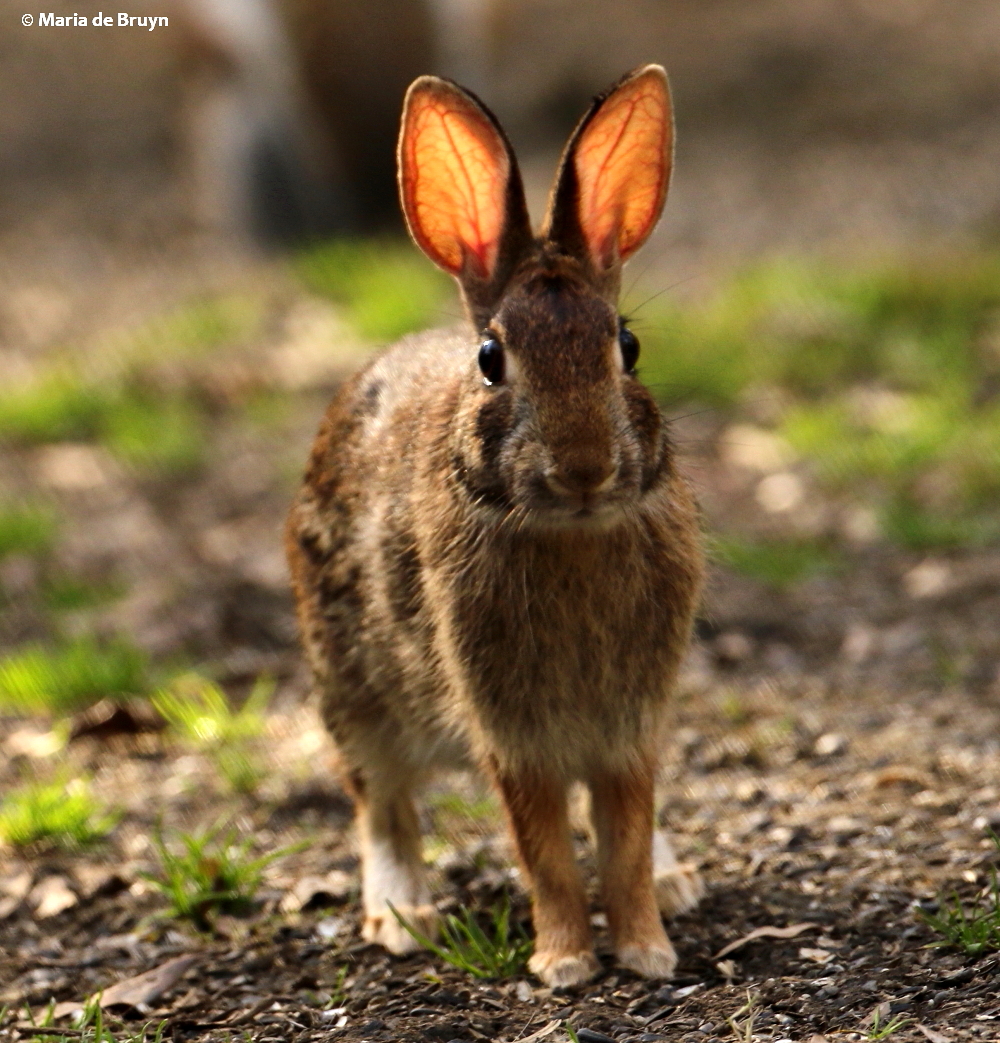
A pair of Eastern cottontail rabbits (Sylvilagus floridanus) lives in my yard and both mom and dad are very good about taking care of their young. I don’t see them much in the winter but expect they will be out and about again in the spring, doing their “leapfrogging” courtship ritual.

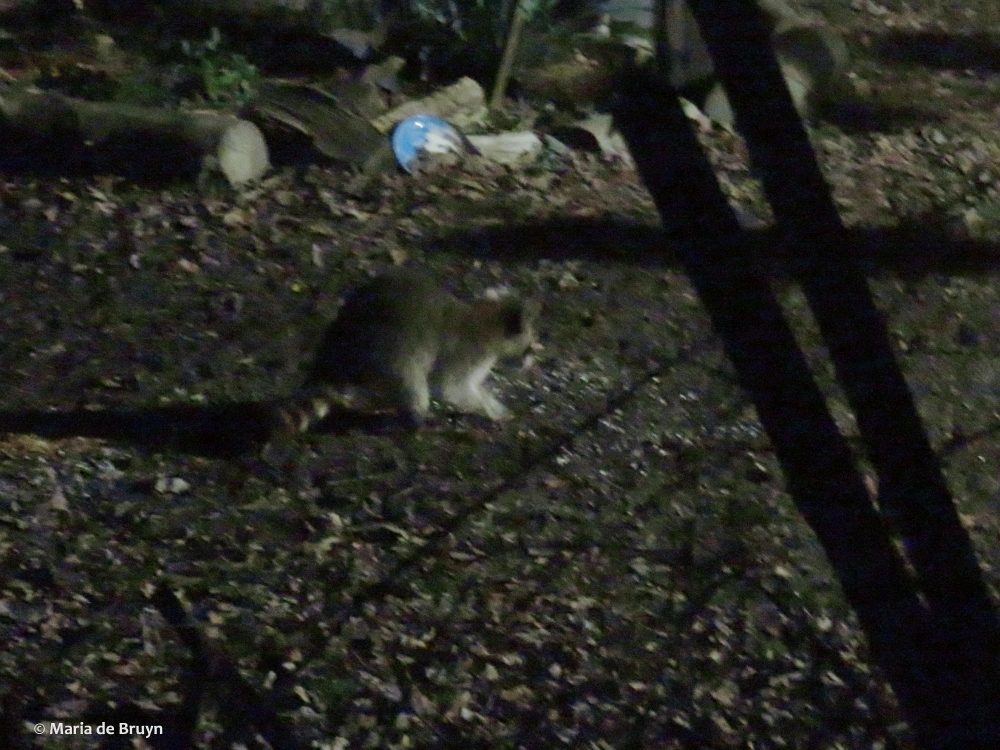
When it’s breeding season, I may see raccoons (Procyon lotor) in the daytime but lately they have been coming to the yard at night to pick up whatever seed is left on the ground from the daytime visitors. My wildlife cam caught a not-so-clear photo of this happening.

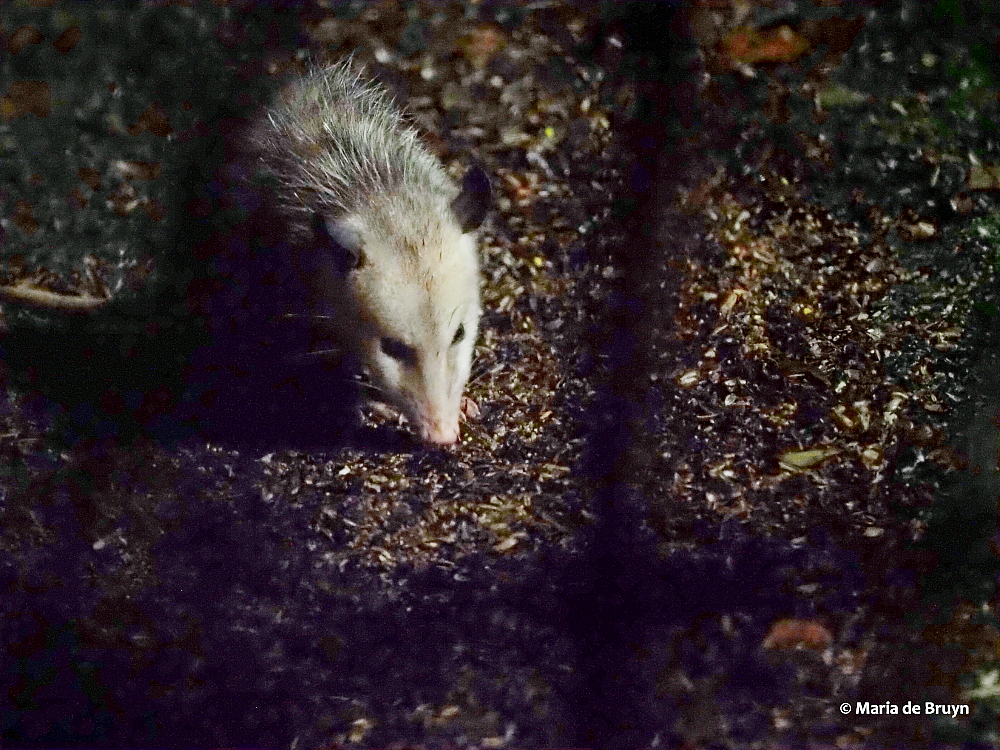
Another visitor who mostly comes at night is the opossum (Didelphis virginiana), one of my favorites given their propensity to eat lots and lots of ticks! Many people seem to think that they are ugly or scary, but I actually think they are kind of cute.

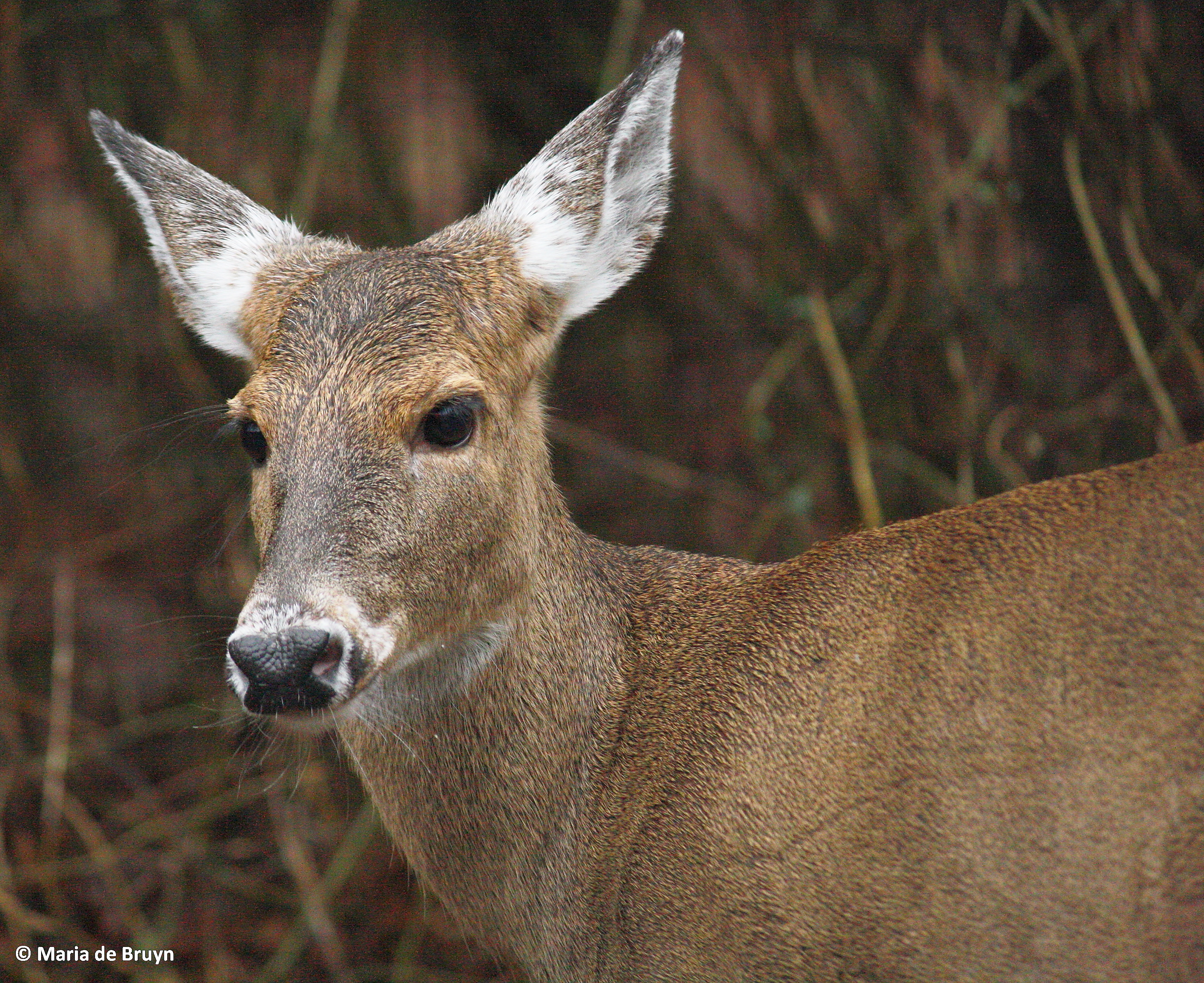
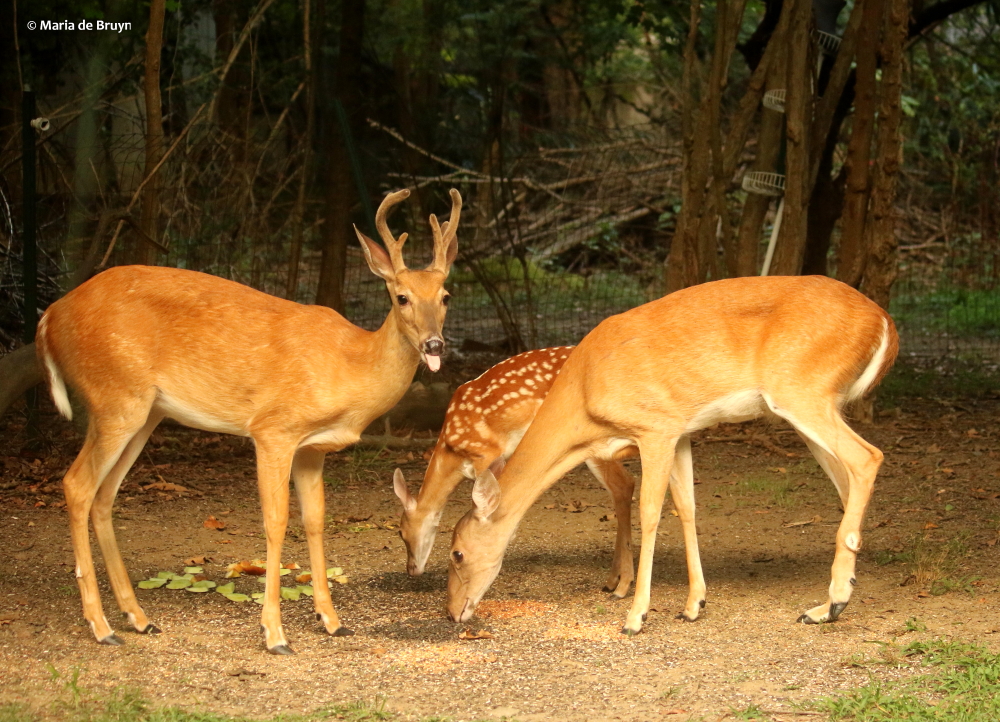
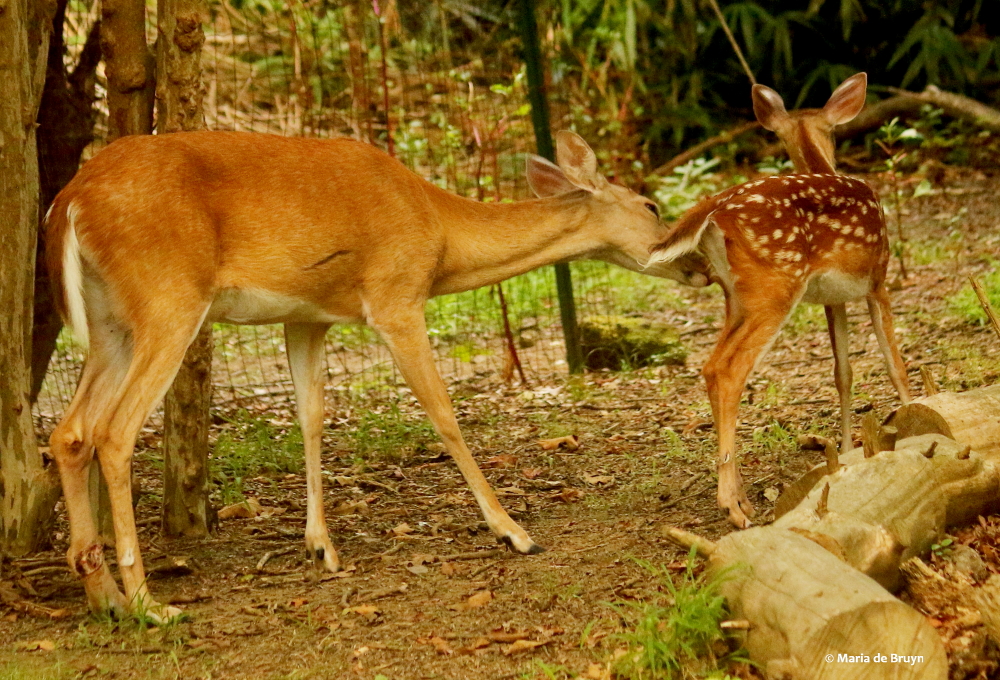
The largest mammalian visitors I see daily are the white-tailed deer (Odocoileus virginianus). I’ve loved them ever since I got to know a particular individual, whom I named Schatje (Dutch for “dear”). She approached me when she was a yearling and made friends with me, sitting next to me in the grass and thereafter bringing her newborn fawns to the yard right after their births. She unfortunately died in a car accident after some years, but through her I learned to really appreciate these mammals.

Some people dislike deer intensely because they eat their flowers and prized shrubs. But I’ve found that consistent application of a deer repellent on my plants keeps them off the vegetation that I want to preserve. Also, I let them eat bird seed and sometimes apple slices that I put out for the ground-feeding birds like white-throated sparrows, Eastern towhees, dark-sided juncos, American crows (the apple lovers) and brown thrashers.

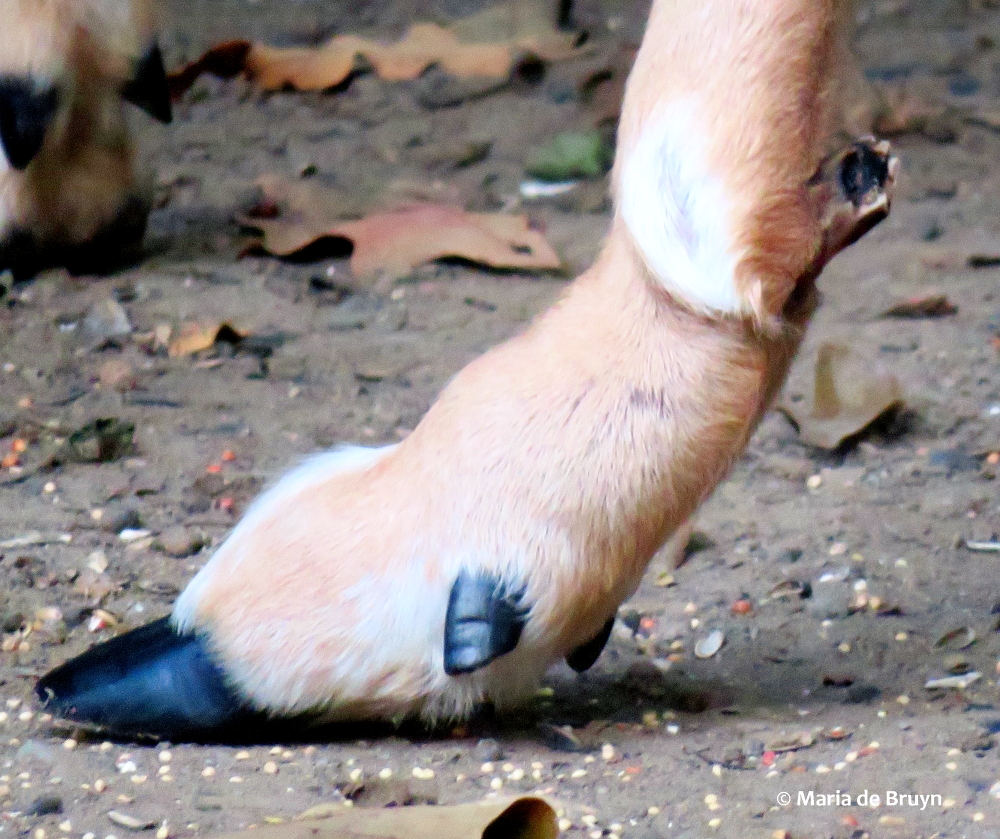
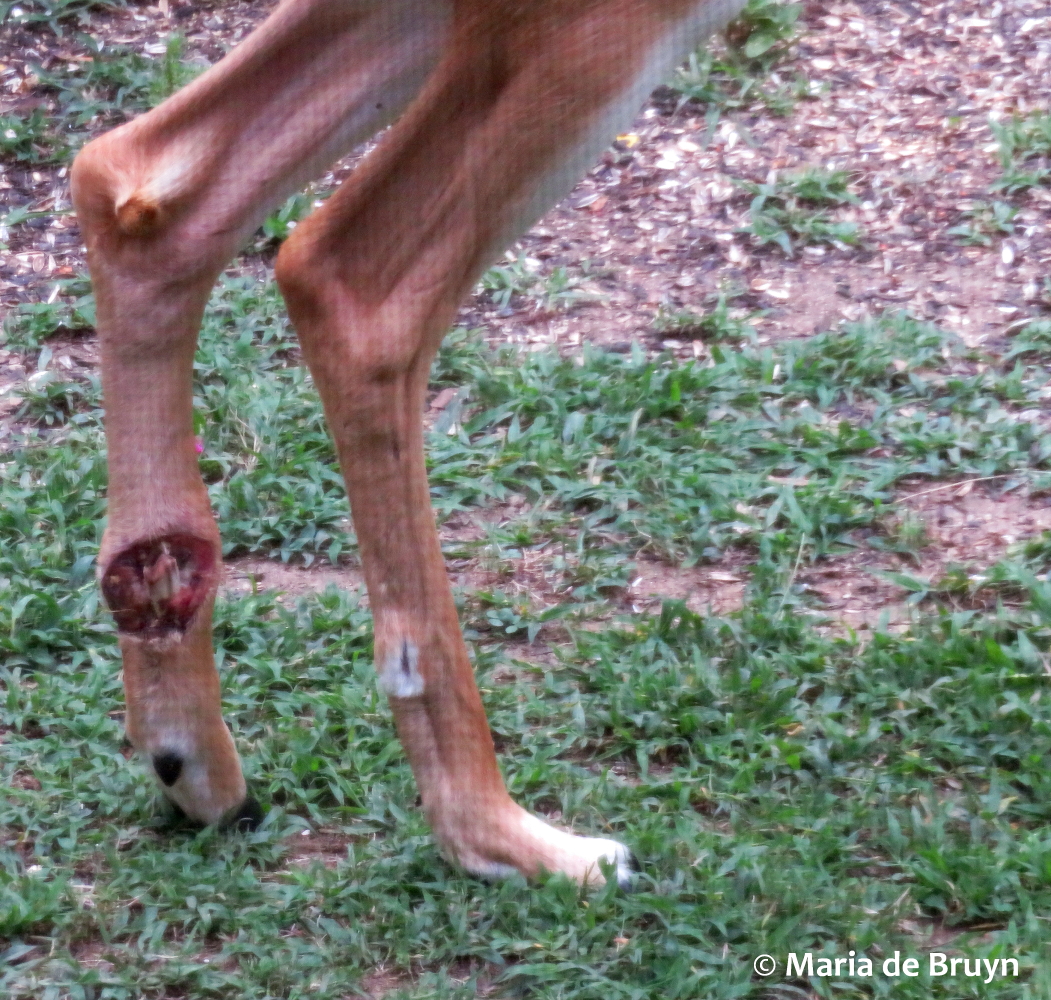
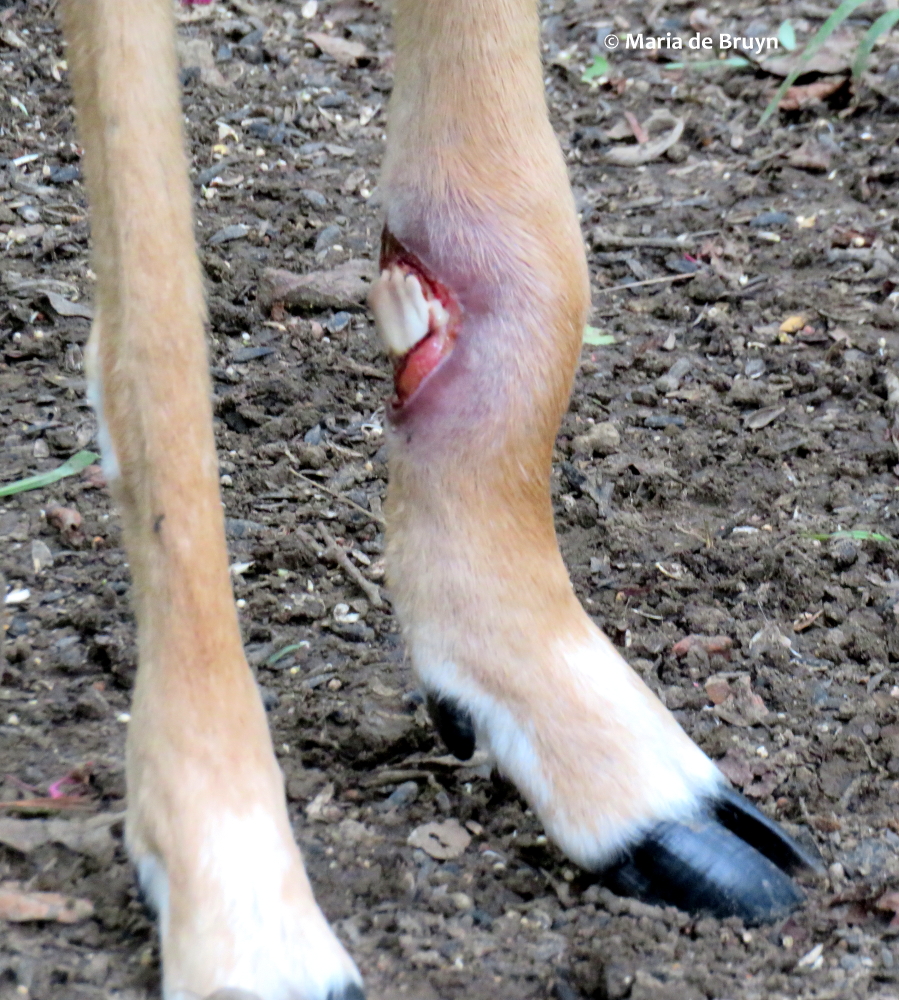
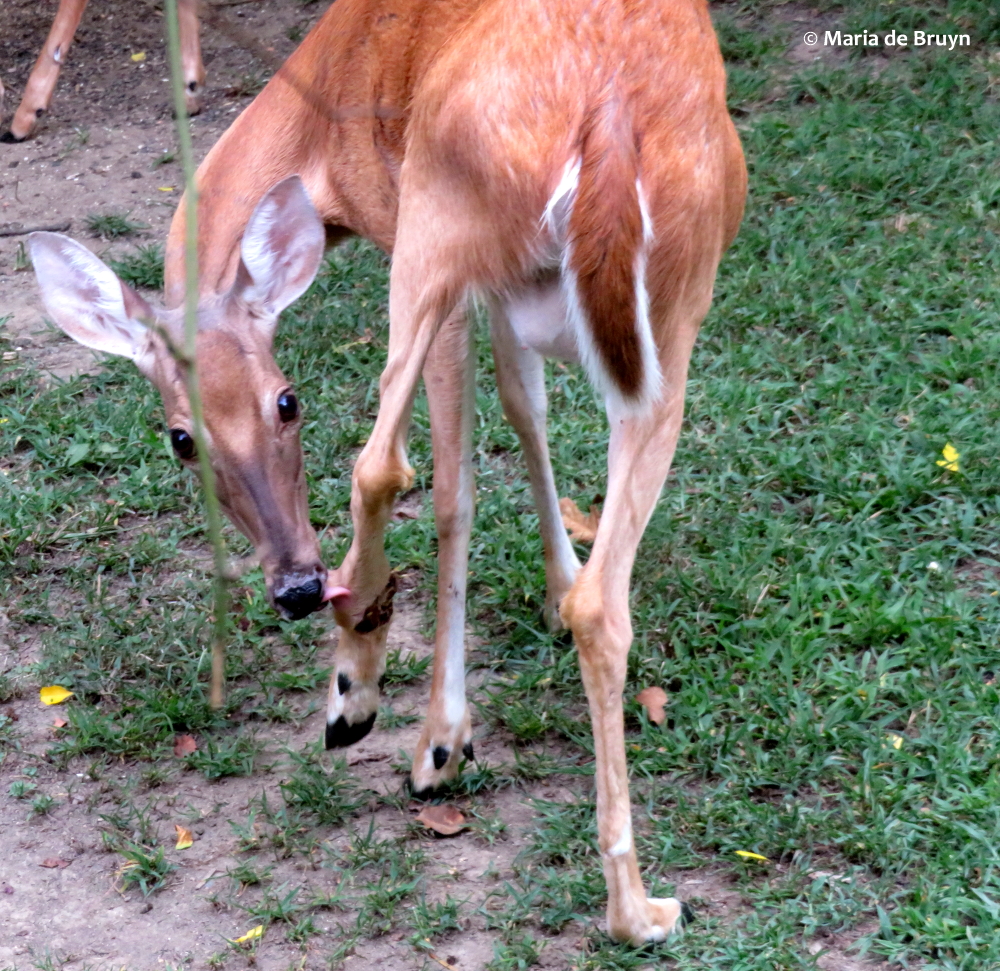
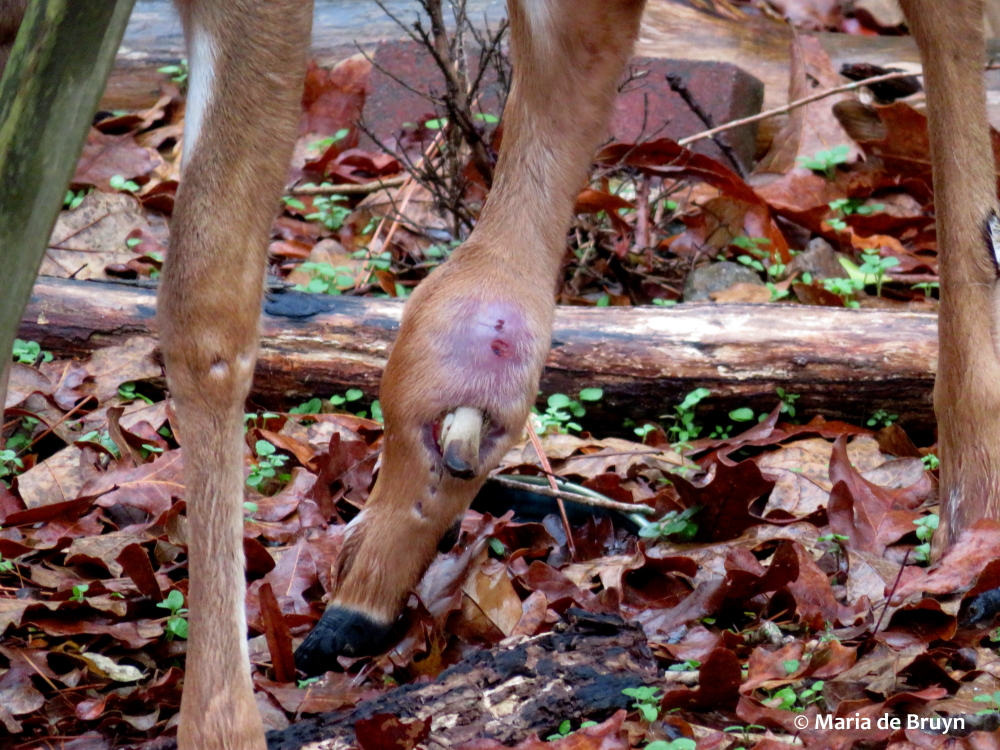
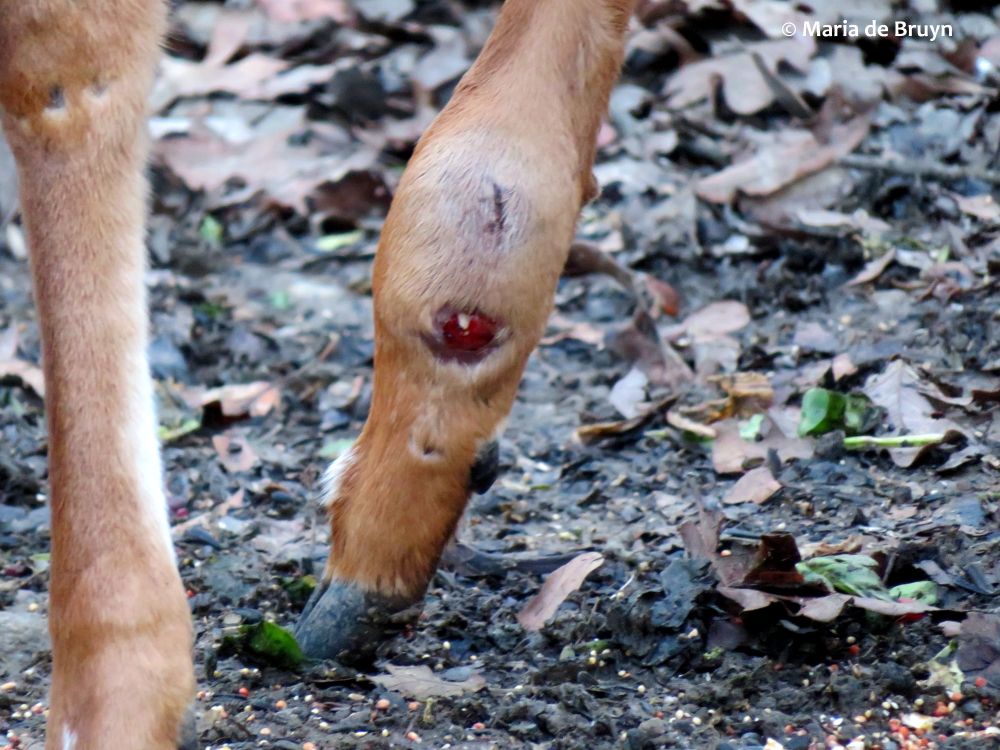
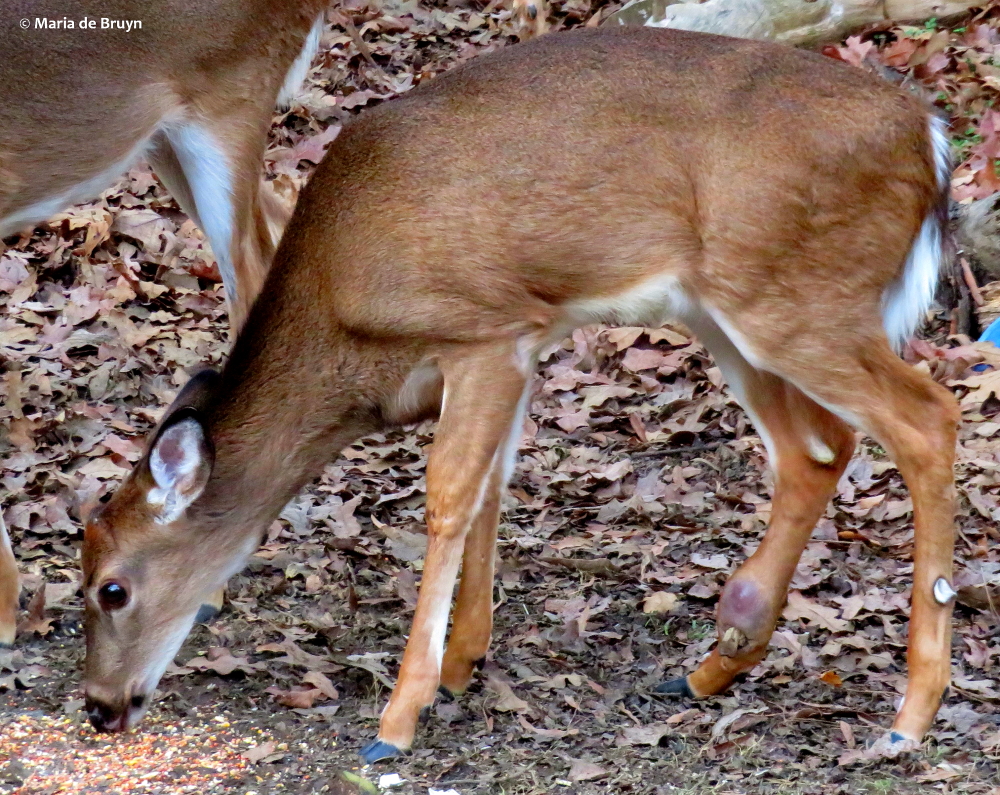
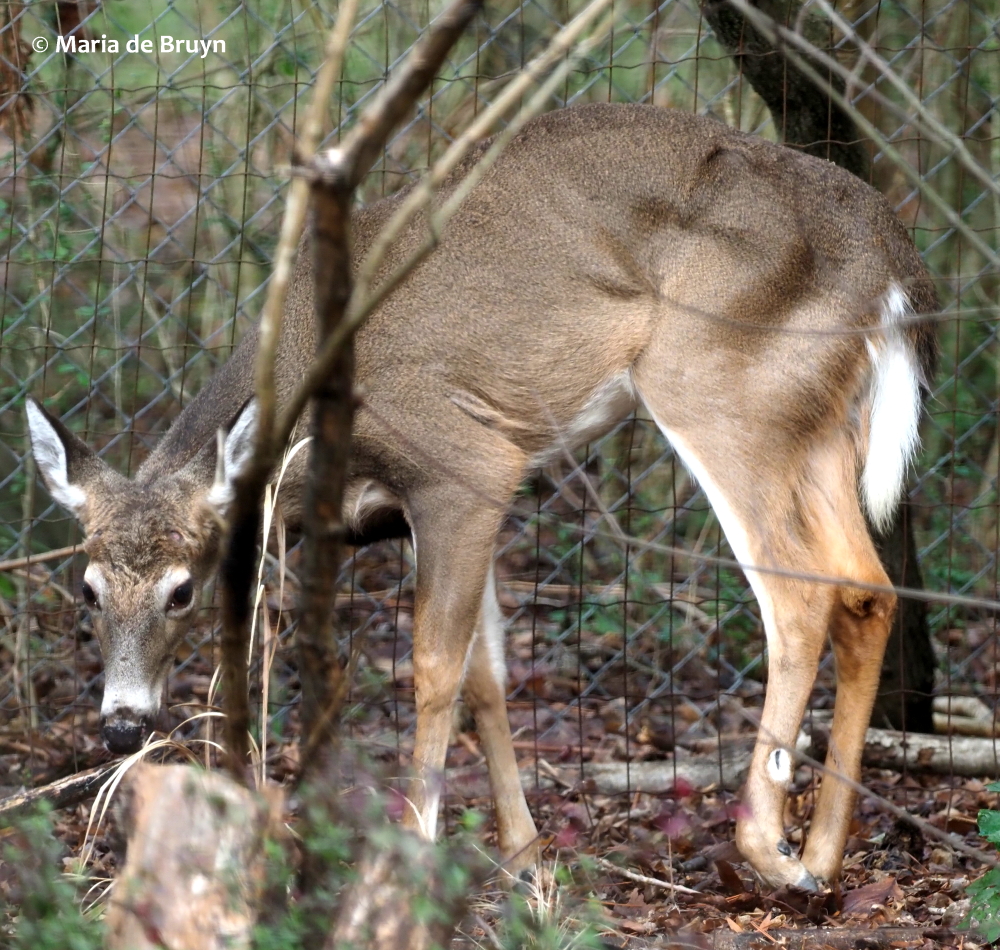
So I’ve been watching the deer for many years now and a very odd occurrence happened over the past half year. At least four deer have appeared with broken hind legs or feet. When “Mama”, a doe with twins, showed up with a terrible break on her leg, I wondered if it happened when she jumped a fence. The bone was jutting out and it was obviously very painful. She hobbled on three legs.

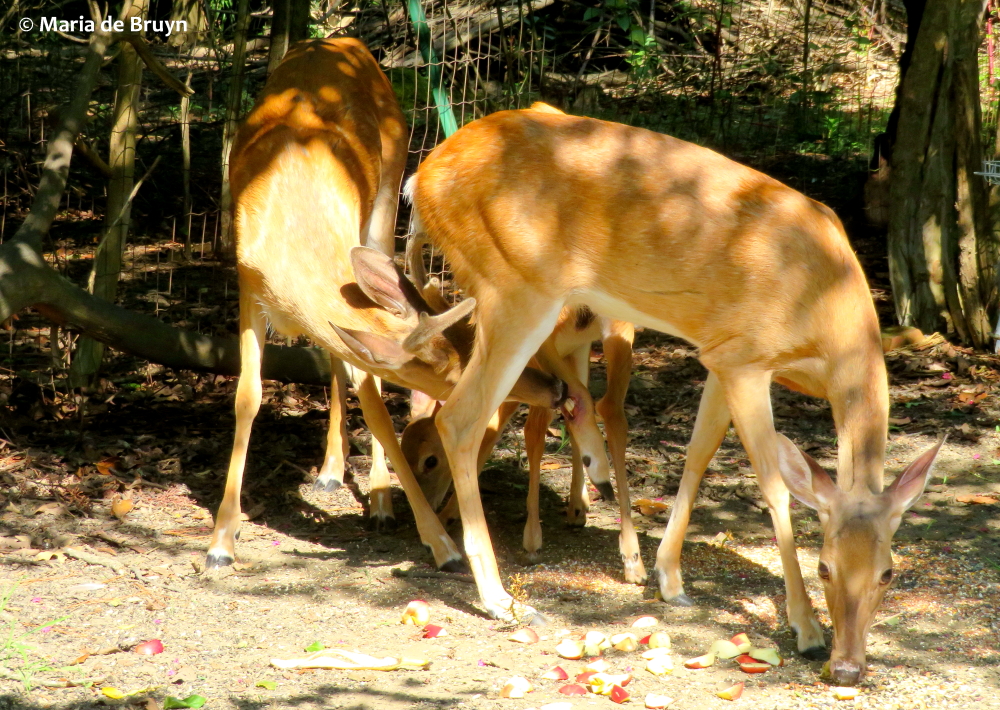
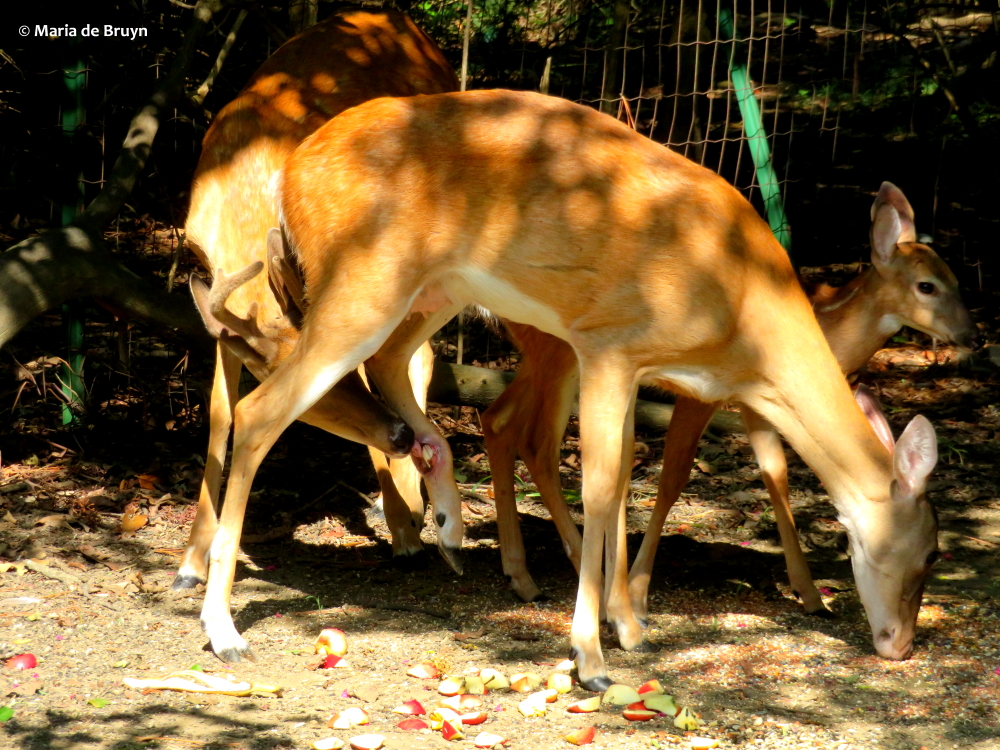
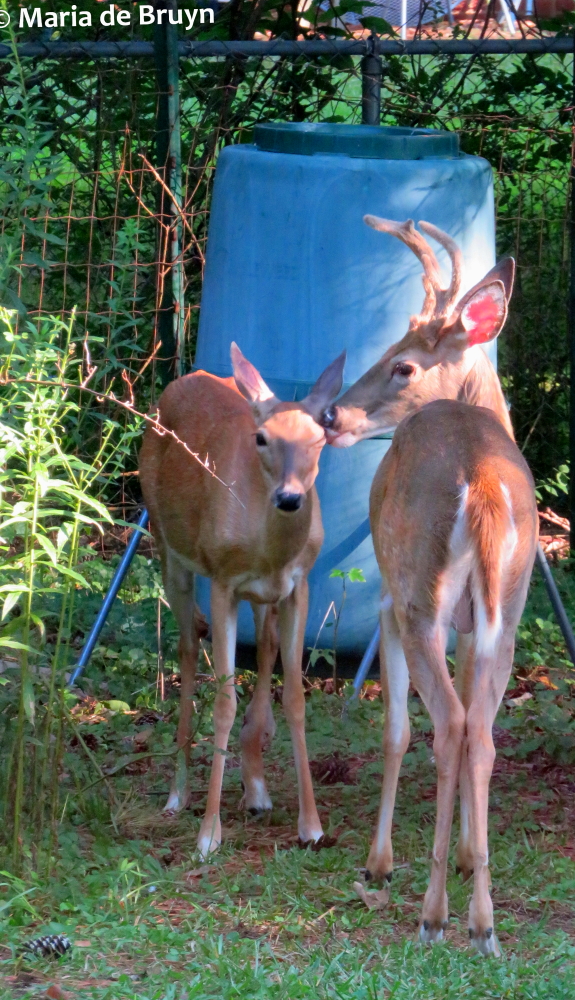
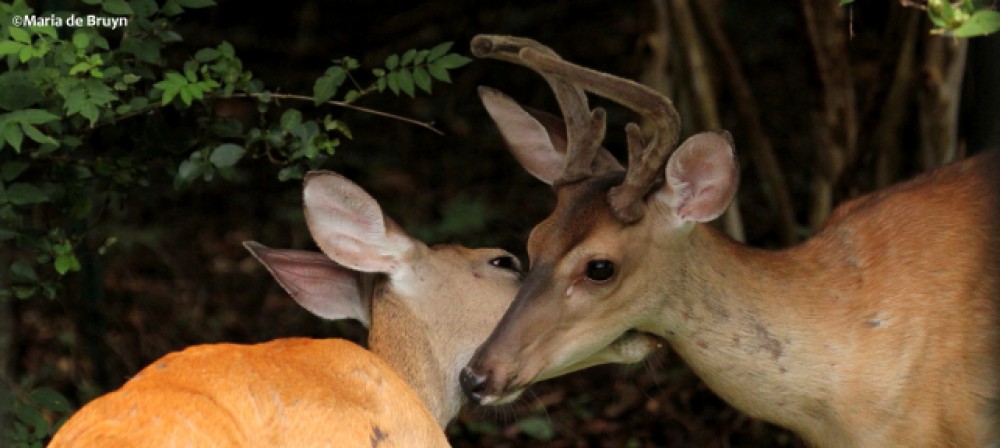
What was amazing was the fact that her two-year-old son began caring for her. He already had a nice set of antlers and by rights should have left to join the stag group in the neighborhood, but he stayed with her and tended the wound, licking it, and also grooming her! I had not heard of a stag doing that before, so I named him Sweetie. He stayed with her for months!

Mama kept caring for her twins (a male and female). (The past couple years, she had only had male offspring so that cut down on the number of deer we might otherwise have had). And she tended her wound on her own as well.

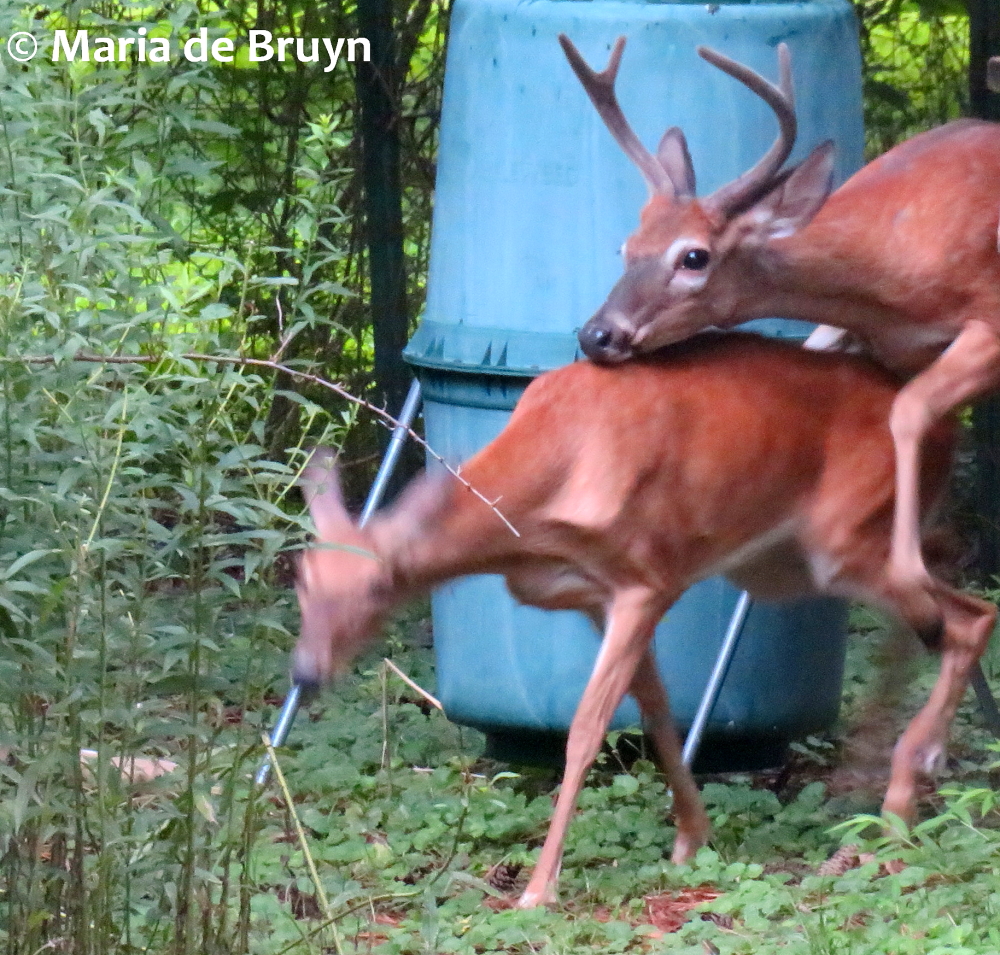
Mama also had to withstand the advances of the dominant neighborhood stag, who was intent on mating with her. Sweetie tried to be there to fend off the interloper, but he had to give in and move off as he was no match for the big buck. Mama tried to get away, but he kept trying to mount her – unsuccessfully, since her back quarters would collapse as she could not bear any weight on the broken leg. She finally got away and ran, which must have been terribly painful for her.


Mama could not stand up for herself with the hurt leg so she began being bullied by another doe who showed up. That deer, who I called Bossy, was ill-tempered and a bit nasty; she even would chase her own son away from seed on the ground, even when her son also got a broken leg!

Then two adult males turned up with breaks – one had a broken foot. I wondered if someone was feeding them deer corn, which can be bad for their health and affect their hooves so that perhaps leg breaks would happen more easily. Or was someone taking potshots at them? It remains a mystery, but I’ve learned that the deer can overcome something like this although the healing takes months.

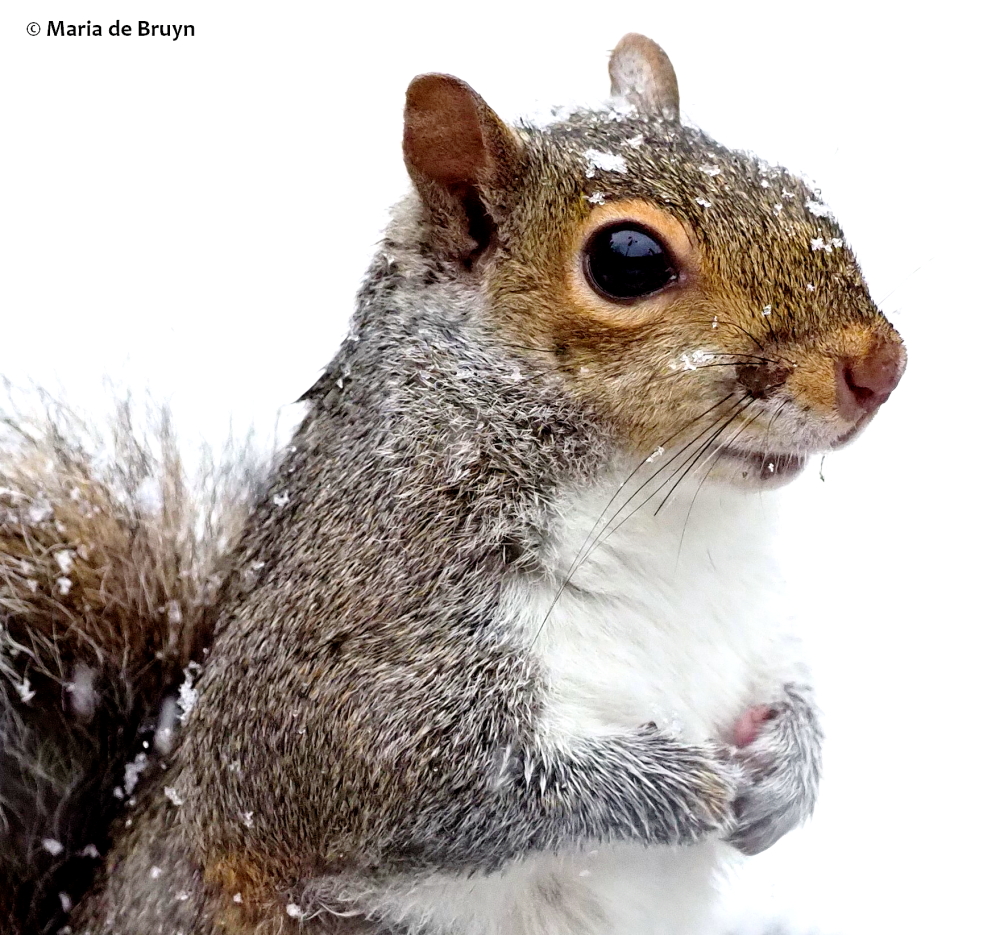
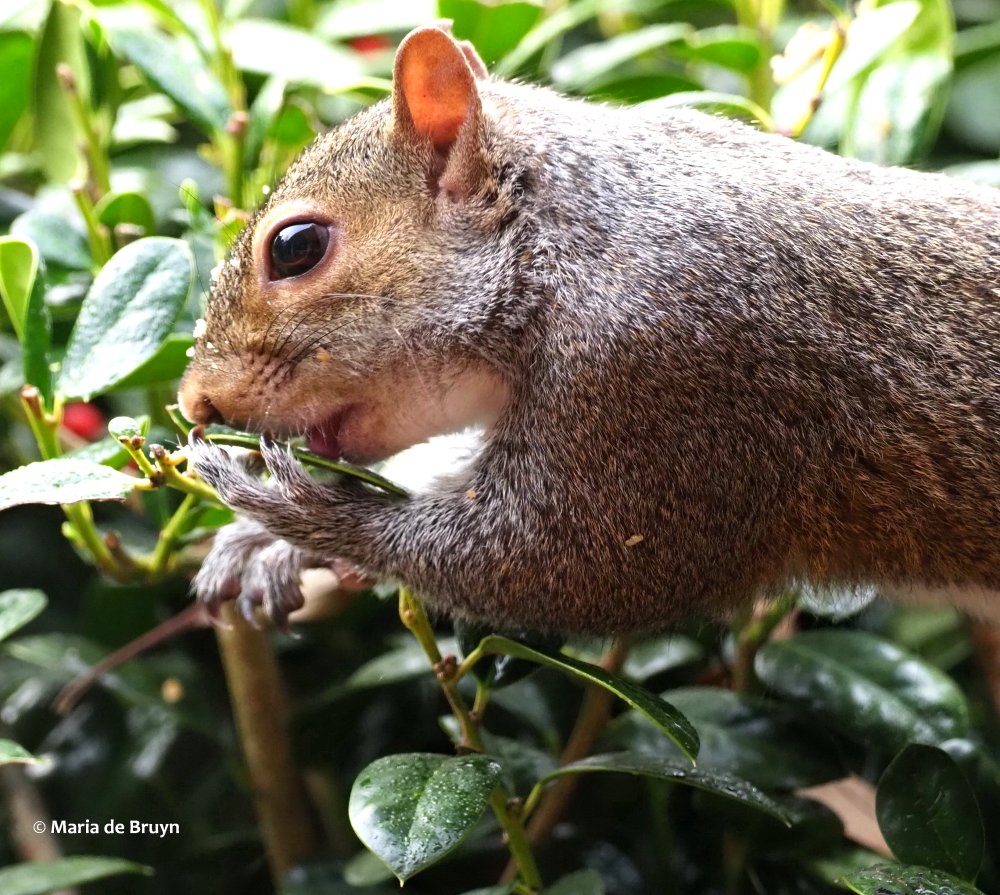
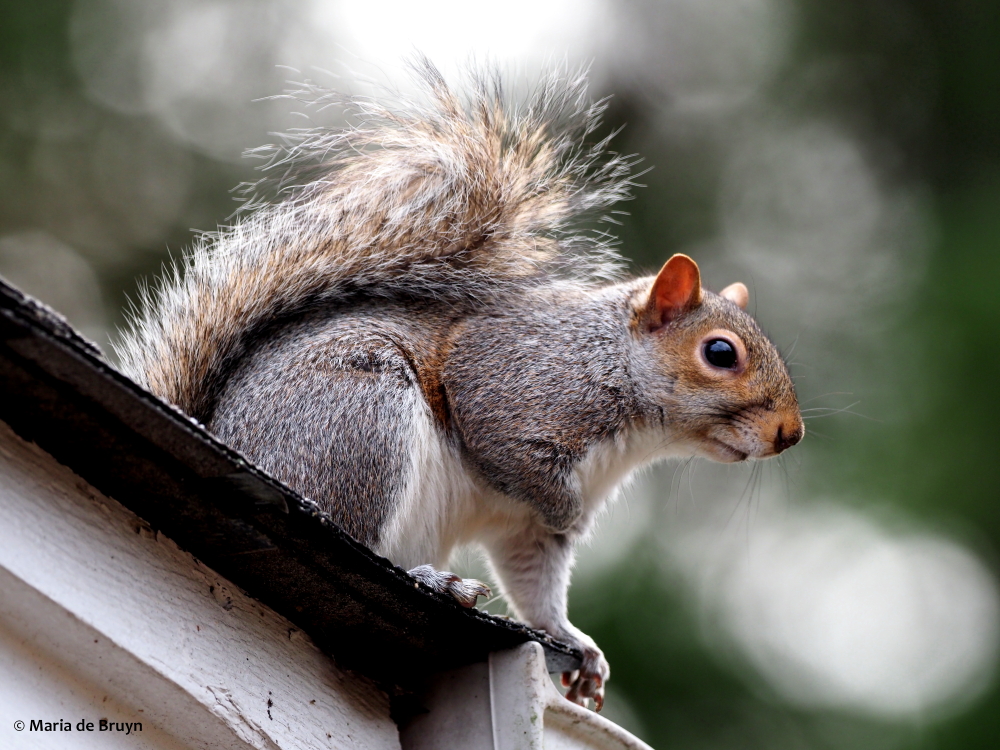
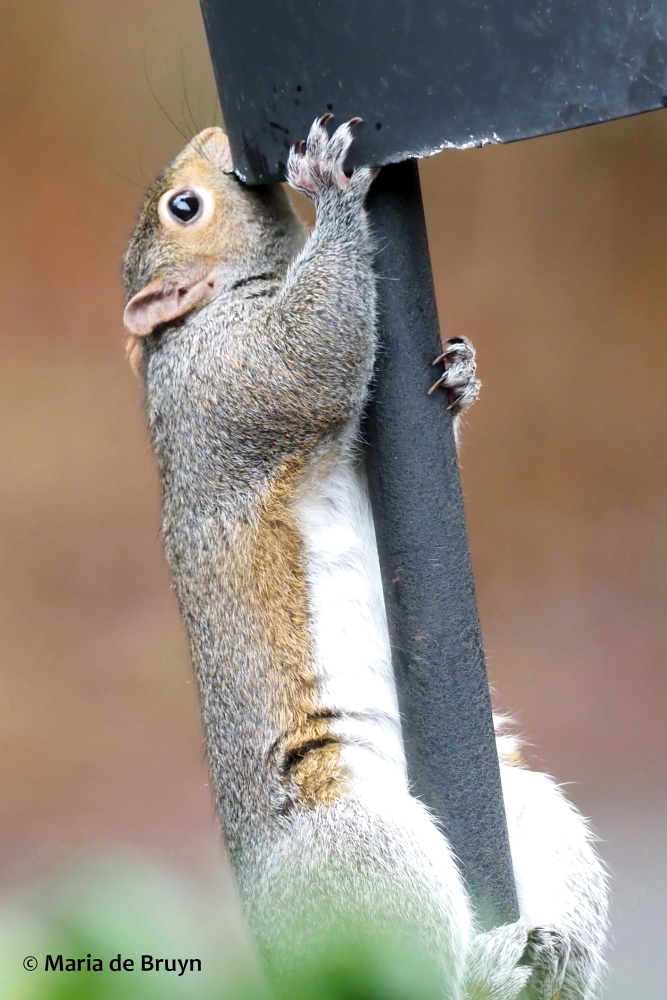
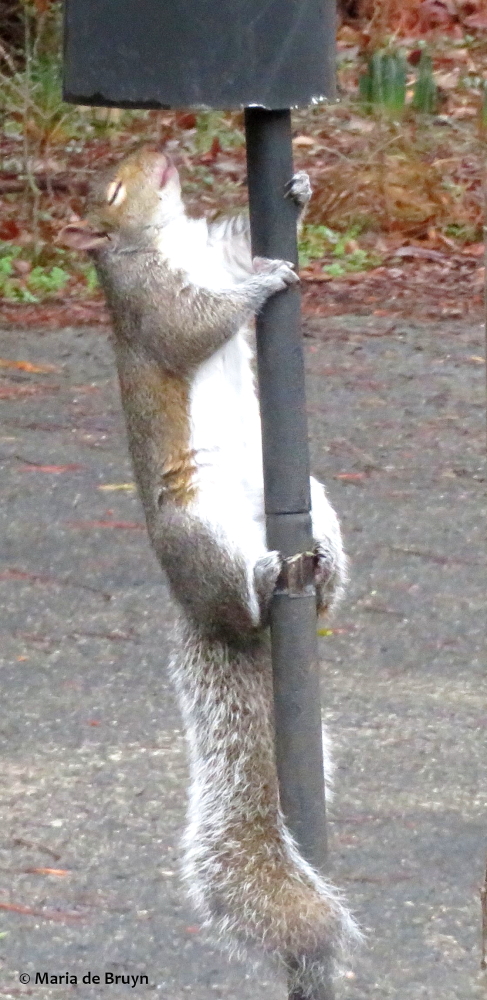
And then we come to my “nemesis” yard mammal, the Eastern gray squirrel (Sciurus carolinensis). As all bird-feeding people know, squirrels will do their utmost to eat all and any bird food that is put out — this has generated an industry devoted to producing squirrel baffles and “squirrel-proof” feeders. Even when I had smeared a bit of suet on a holly bush for the ruby-crowned kinglet who was sometimes crowded away from the feeder, a squirrel discovered the treat there and consumed what s/he could.

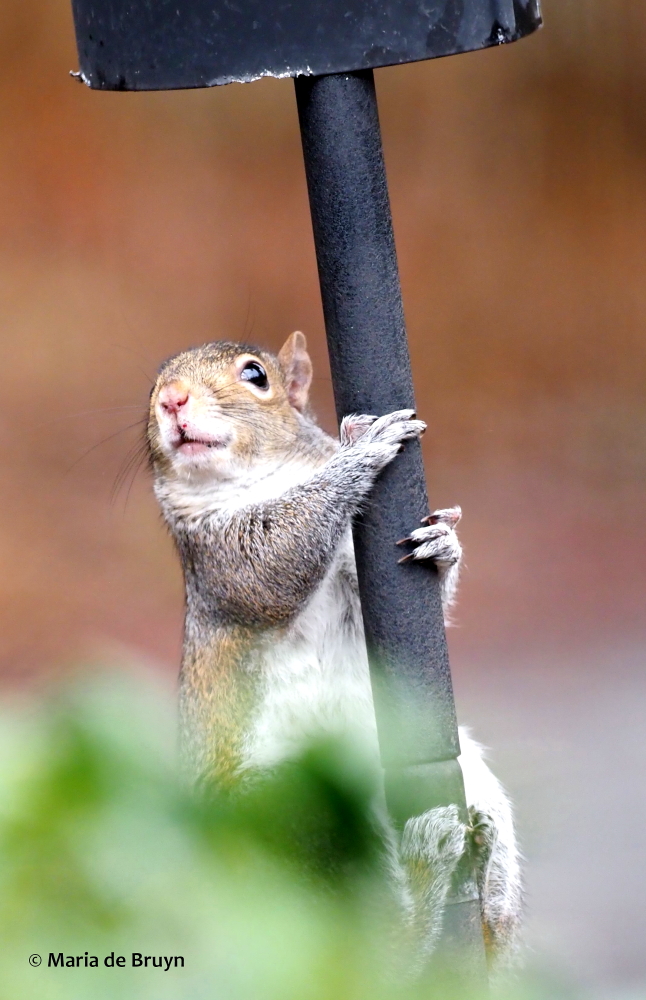
I’ve been fairly fortunate in having the baffles work until recently, when a couple squirrels used their little brains to figure out ways to get around them. It was my belief that I had put the feeder poles sufficiently far from the roof or large tree branches so that the squirrel couldn’t make the leap. One kept trying over and over and finally succeeded in lengthening his/her “long jump”!

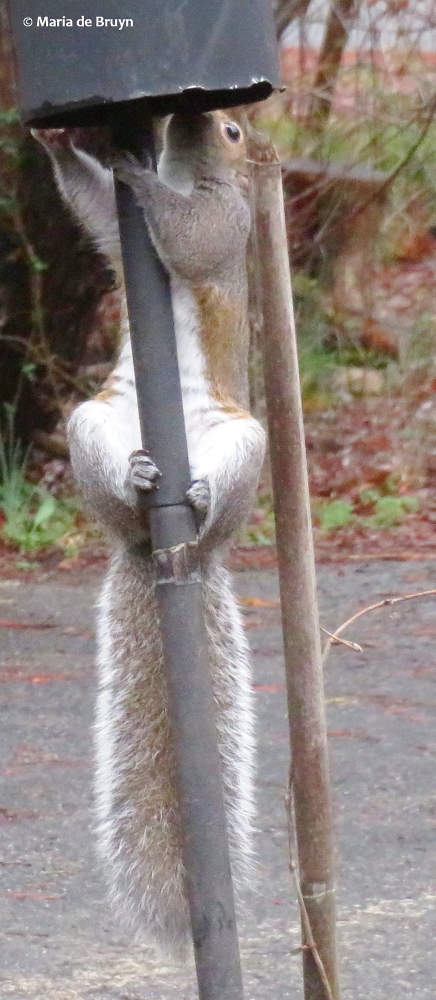
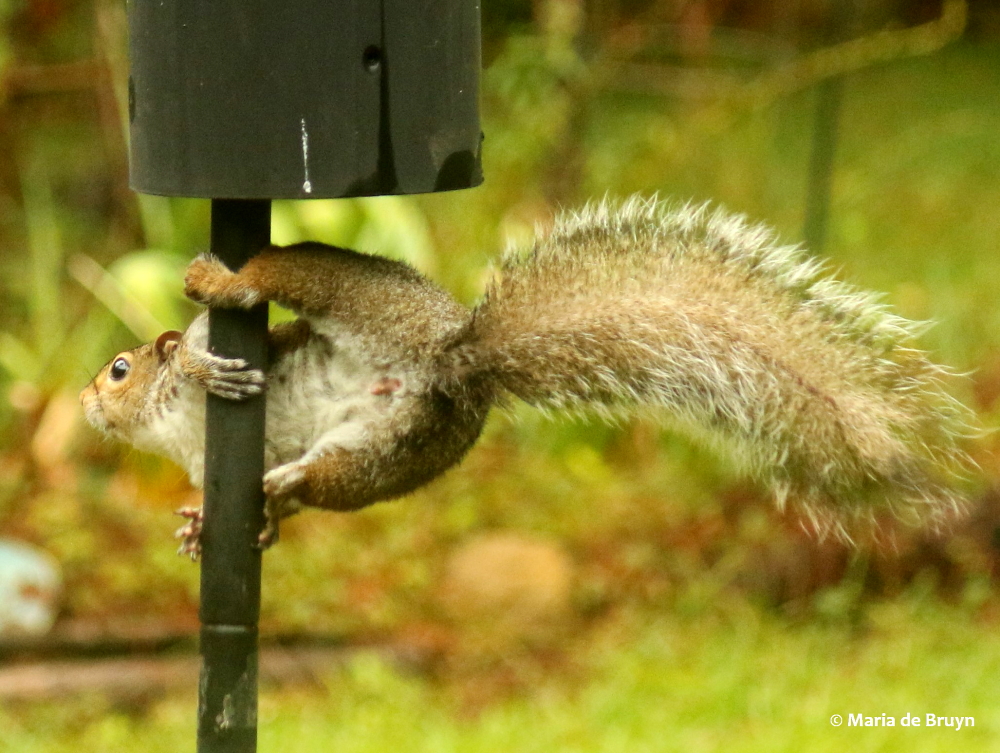
I moved the poles further away. But two poles were about five feet apart and I then saw a squirrel use a strategy that really looked very clever to me. S/he would take a run at one pole, launch him/herself onto the pole at high velocity just under the baffle and then turn to vault from that height up and over the baffles on the neighboring pole! I really did admire the creature’s ingenuity and gained a new respect for their intelligence.

After moving the feeder poles further apart, I then noticed that a couple feeders on one pole were being emptied quickly. Looking out my window one day, I saw a squirrel perched atop the pole, enjoying seed after having managed to move the baffles down the pole. How was s/he doing that?


I set aside time to watch and discovered the squirrel’s secret.


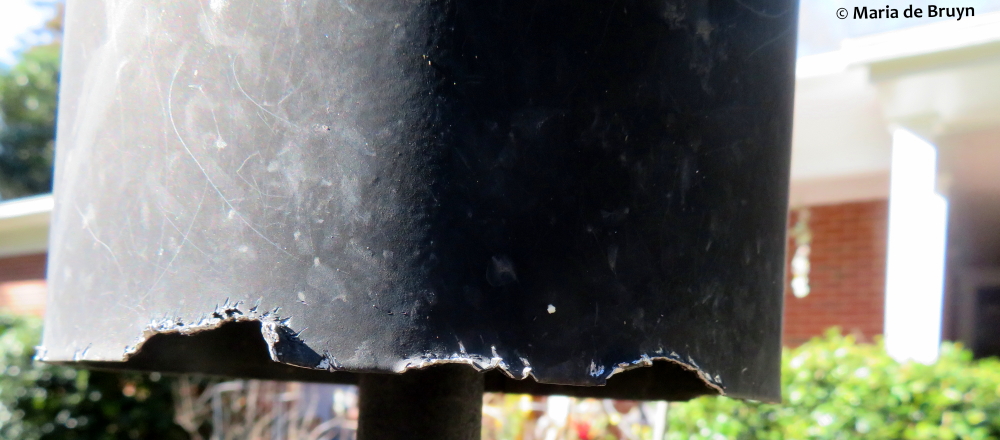
The animal was hanging onto the raccoon baffle, biting it and jerking down at the same time. This eventually loosened the screws in the apparatus on which the baffle rested so that the baffle finally slid down the pole!


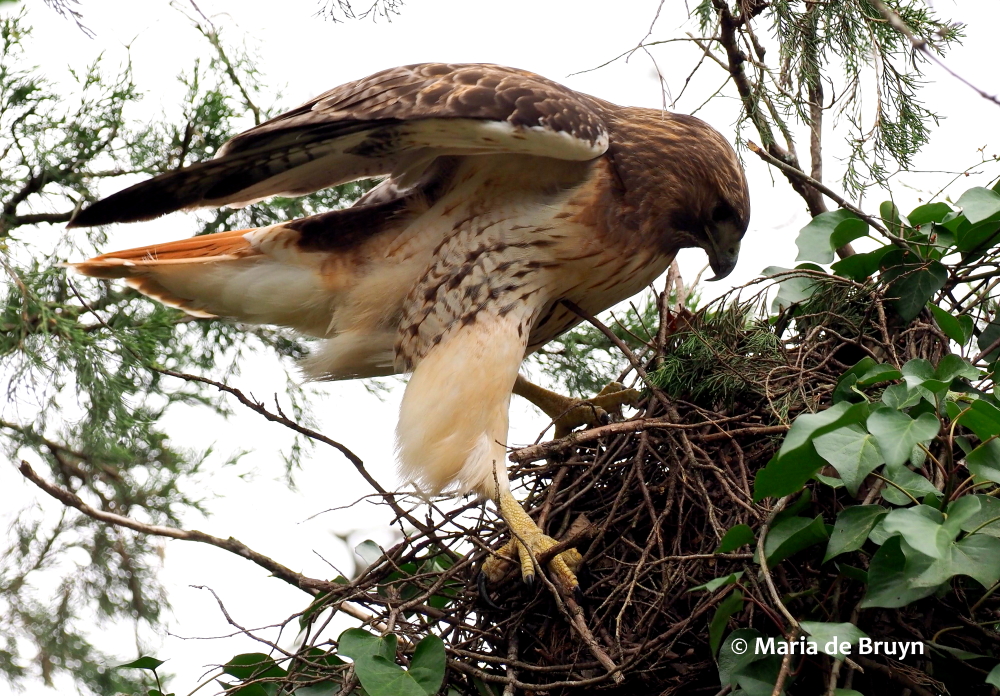
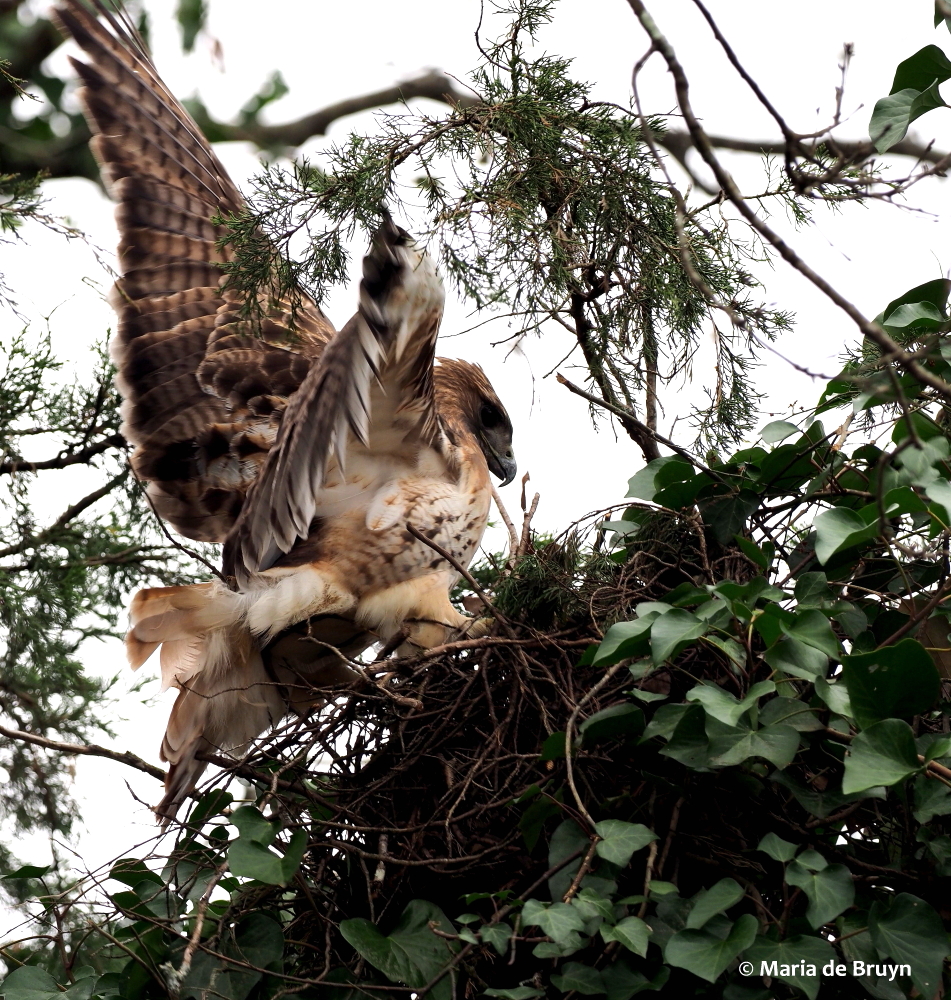
The screws have now been tightened and the next move is up to the squirrels. They are clever and tenacious. This was further brought home to me when a red-tailed hawk (Buteo jamaicensis) recently landed on a squirrel nest and did its best to extricate the mammal with its claws. The hawk eventually had to leave without its envisioned meal.

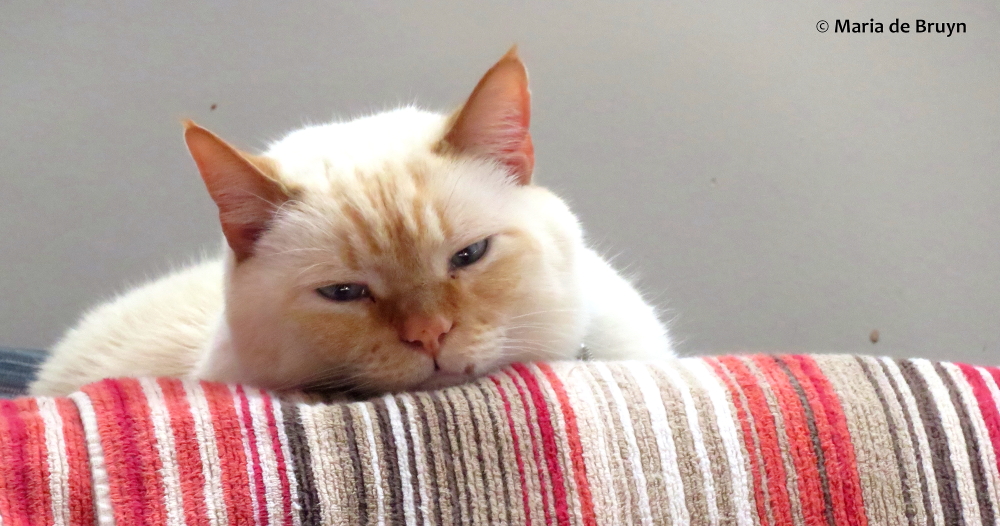
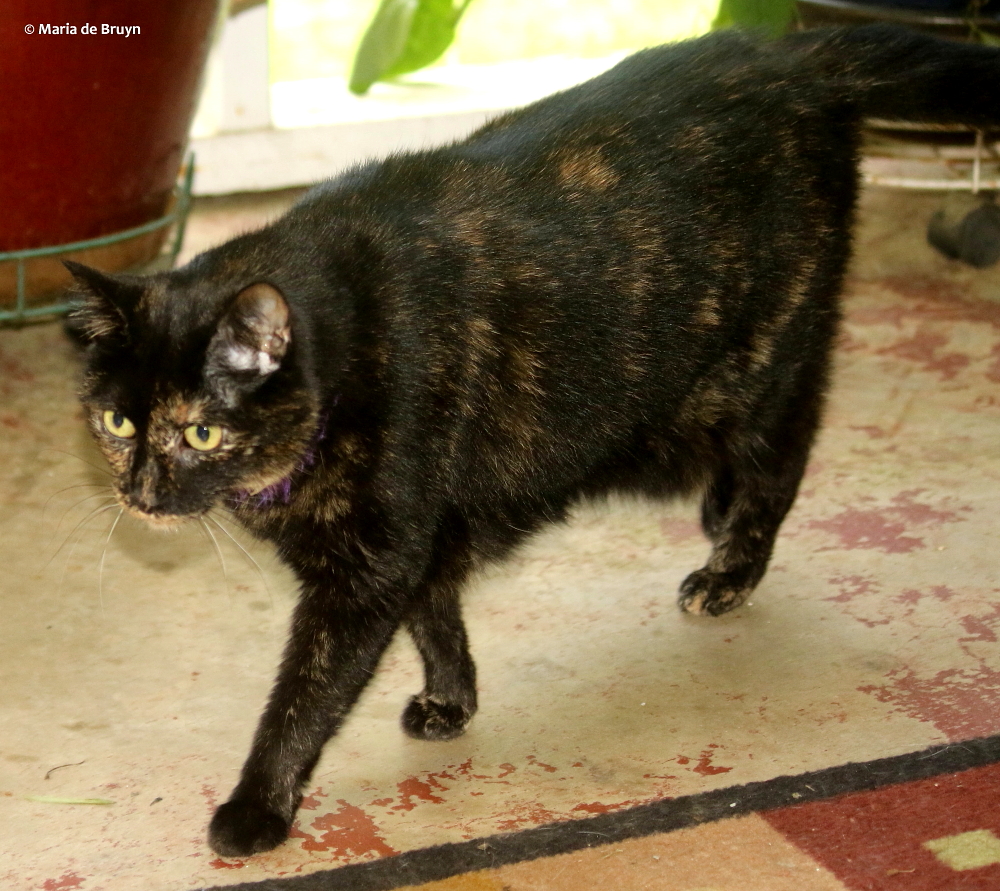
The yard mammals are certainly entertaining. If any of you readers have had interesting experiences with them, I’d love to hear about them in comments on this blog’s page! (Except for cats running free outside – goodbye from my two indoor cats, Ogi and Moasi!)