A morning at Cane Creek Reservoir

The Orange County water authority maintains two recreational areas where it manages water supplies for our area’s drinking and sewage water. One is the Cane Creek Reservoir, where people can boat, fish, bird and relax. When my morning began yesterday with a distressing family situation, for which I would need to wait for news, I decided to visit the reservoir since getting out into nature always helps me handle stress. My foray was rewarding, both in terms of handling the emotional tension and appreciating the marvelous diversity that nature offers for our appreciation.

marbled orbweaver DK7A5291© Maria de Bruyn resMy walk began with a need to wipe spider webs from my face as our arachnid brethren were busy spinning their webs across walking paths. The marbled orbweaver (Araneus marmoreus) was in the process of building a web, climbing up and down and leaving new silken strands behind as they emerged from the spinneret.

marbled orbweaver DK7A5288© Maria de Bruyn

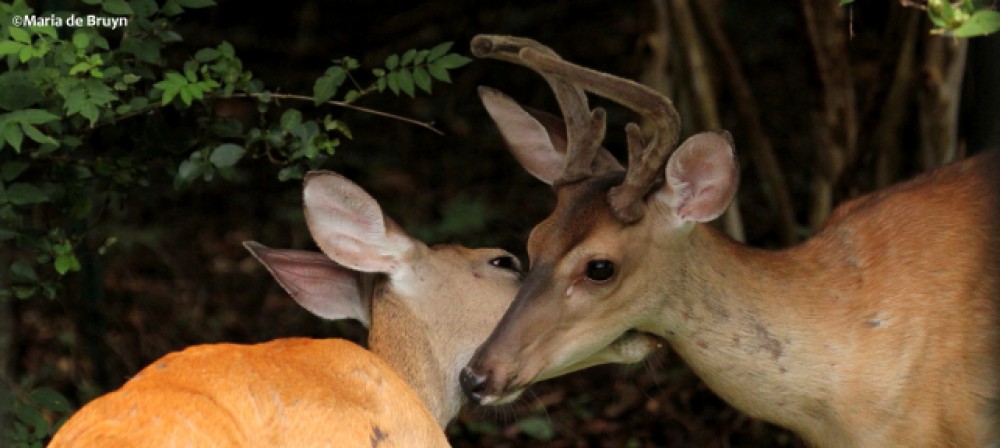
The walking path also held evidence of the passing of a young white-tailed fawn (Odocoileus virginianus). A Carolina satyr butterfly (Hermeuptychia sosybius) was moving from grass blade to grass stem as I proceeded up a hill.

white-tailed deer DK7A5276© Maria de Bruyn resCarolina Satyr DK7A5279 © Maria de Bruyn res

Eastern bluebird DK7A5392© Maria de BruynFirst birds of the day as I left the woods — a pair of Eastern bluebirds (Sialia sialis) that were roosting on a wire. When a pine warbler (Setophaga pinus) wanted to join them, he was given to understand that his proximity was not appreciated.


pine warbler DK7A5383© Maria de Bruyn res

Next, I caught sight of a Northern mockingbird (Mimus polyglottos polyglottos), very busy grooming near the top of a small tree.

Northern mockingbird DK7A5449© Maria de Bruyn res Northern mockingbird DK7A5443© Maria de Bruyn

Southern magnolia DK7A5439© Maria de Bruyn resA nearby Southern magnolia (Magnolia grandiflora) was mostly laden with rose-colored fruit but one large bloom was still vibrant and visited by smaller and larger bees.

A number of birds were singing but I didn’t recognize their calls and I saw some birds flit from one tree to another but then I caught sight of one that was dipping into the grass to pick up insects and then sitting still on a branch for a while. It was a lovely Eastern phoebe (Sayornis phoebe), a type of flycatcher with a yellow hue.

Eastern phoebe DK7A5586© Maria de BruynEastern phoebe DK7A5722© Maria de Bruyn

This bird flew around a bit, perching in trees, on ropes and barbed wire, providing some nice views of its lovely self.

Eastern phoebe DK7A5670© Maria de Bruyn resEastern phoebe DK7A5825© Maria de Bruyn res

A blue-gray gnatcatcher (Polioptila caerulea), busy as these small birds always seem to be, was gleaning insects from twigs and branches.

blue-gray gnatcatcher DK7A5924© Maria de Bruyn Blue-gray gnatcatcher DK7A5920© Maria de Bruyn blue-gray gnatcatcher 1-de Bruyn, Maria DK7A5944 Supported on the balance beam

Coming up on the shoreline of the reservoir, I first spotted some least sandpipers (Calidris minutilla) foraging at the water’s edge. This is the smallest species of sandpiper and they are also the smallest shorebirds in North America. They looked very pretty in flight.

least sandpiper DK7A6073© Maria de Bruynleast sandpiper DK7A6081© Maria de Bruyn

The sandpipers landed near some killdeer (Charadrius vociferous), who looked very large next to them.

killdeer DK7A6103© Maria de Bruyn res

red-spotted purple DK7A6143© Maria de Bruyn resA red-spotted purple butterfly (Limenitis arthemis astyanax) was mud-puddling on the shore, as was a Sachem skipper butterfly (Atalopedes campestris). A trio of American goldfinches (Spinus tristis) also dropped onto the wet mud for a brief time.


sachem skipper DK7A6355© Maria de Bruynsachem skipper DK7A6368© Maria de Bruyn

american goldfinch DK7A6323© Maria de Bruyn res

Several flocks of Canada geese (Branta canadensis) came in to the little lake. One group surprised me by suddenly veering in my direction and flying right in front of me, so close that they more than filled the screen of my zoom lens.

Canada goose DK7A6472© Maria de Bruyn res Canada goose DK7A6195© Maria de Bruyn res

Canada goose DK7A6205© Maria de Bruyn resCanada goose DK7A6207© Maria de Bruyn res

Near the end of my visit, a fellow birder kindly pointed out two green herons (Butorides virescens) to me. (Having binoculars is a definite advantage for this pursuit!). One was rather far away but another within walking distance so I snuck up on it in stages.

green heron DK7A6717© Maria de Bruyngreen heron DK7A6575© Maria de Bruyn

In the left-hand photo, you can imagine the dinosaur ancestor of this stalker.

At one point, the bird stretched and stared at the sky, moving its head from side to side obviously watching something – it turned out to be a juvenile red-tailed hawk (Buteo jamaicensis).

red-tailed hawk DK7A6633© Maria de Bruyn red-tailed hawk DK7A6631© Maria de Bruyn

My sneaking ever closer to the heron was rewarded when I saw the short bird catch and eat a rather large frog for its brunch. It was sad for the frog, but that is the cycle of life.

green heron DK7A6826© Maria de Bruyn resgreen heron DK7A6850© Maria de Bruyn res

And when I returned home a short while later, I learned that the family emergency had been handled for the time being. Like the fauna, our own cycles of life are also unpredictable.

A life and death drama on a nature walk

ice DK7A6116©Maria de BruynFrost was sparkling on the grass, dried shrubs and grasses as our small group set out on a birding walk in the local nature preserve. Water in the creeks and bog was frozen in pretty patterns and the air felt crisp (and cold).


ice DK7A6094©Maria de Bruyn

Eastern towhee DK7A5990©Maria de BruynAt first, not many birds seemed to be aroblue jay DK7A5949©Maria de Bruynund but soon we spotted Eastern towhees (Pipilo erythrophthalmus) and numerous sparrow species in the meadows — none really close by but still visible to those with binoculars and a zoom lens. Blue jays (Cyanocitta cristata) were flying from very high treetop to treetop.

After seeing my familiar red-headed woodpecker (Melanerpes erythrocephalus), to whom I’ve given the name “young’un” as I’ve been following her/his progress since s/he was a brown and white juvenile, we saw some Eastern phoebes (Sayornis phoebe) and more sparrows.

Eastern phoebe DK7A6061©Maria de Bruynred-headed woodpecker DK7A6013©Maria de Bruyn

hairy woodpecker DK7A6163©Maria de BruynIn the woods, we saw a ruby-crowned kinglet and a yellow-bellied sapsucker (Sphyrapicus varius). It was when we emerged from the woods into another meadow that we had our most spectacular encounter, however. I spotted a young red-tailed hawk (Buteo jamaicensis) perched in a tree at the meadow’s edge gazing ahead.


red-tailed hawk DK7A6229©Maria de Bruyn red-tailed hawk DK7A6245©Maria de Bruyn

red-tailed hawk DK7A6246©Maria de BruynSuddenly, the bird flew across the field (perhaps 150 feet in a fellow birder’s estimate) to land on a branch in a tree right next to our walking path.

red-tailed hawk DK7A6397©Maria de Bruyn res

After alighting, the bird began staring downwards very intently. We walked a little closer and stopped. The bird didn’t even look in our direction but continued to stare down with great concentration, occasionally looking out ahead.

red-tailed hawk DK7A6380©Maria de Bruyn res red-tailed hawk DK7A6370©Maria de Bruyn res

We came closer and stopped again. Finally, we got right up even with the bird and looked directly at it from about 6-10 feet. It acknowledged our presence but continued to stare down and we couldn’t figure out what it was tracking. Other birds fluttered in nearby branches but it paid them no mind.

red-tailed hawk DK7A6411©Maria de Bruyn red-tailed hawk DK7A6414©Maria de Bruyn

red-tailed hawk DK7A6425©Maria de Bruyn red-tailed hawk DK7A6432©Maria de Bruyn res

When our group began to walk on after taking many photos and admiring the bird’s sharp eyes and even sharper looking talons, I looked intently under the tree, too. And then I spotted the prey — a hispid cotton rat (Sigmodon hispidus), holding still as a statue on a log.

hispid cotton rat DK7A6463©Maria de Bruyn res hispid cotton rat DK7A6449©Maria de Bruyn res

The hawk looked at us, yet kept the rodent in sight. On looking at the photos afterwards, I’m glad that the hawk didn’t decide to fly at us with those talons extended in order to drive us away. After looking at the rat, our group walked on as it looked to be quite a standoff; the rat had several smaller branches between it and the hawk which might make capture difficult.

red-tailed hawk DK7A6509©Maria de Bruyn resred-tailed hawk DK7A6488©Maria de Bruyn res

As my fellow birders tried to spot winter wrens and purple finches, which they had heard, I couldn’t get the hawk and rat out of my mind. So as they went on, I returned to the dramatic scene. As I arrived, the hawk had risen on the branch and was crouching as it looked at me and the rat. It turned on the branch and I just knew that it was getting ready for an attack. Part of me wanted the rat to make it out of there and part of me felt the hawk deserved a meal after such stellar spotting from a distance and patience in watching the prey.

red-tailed hawk DK7A6496©Maria de Bruyn resThe hawk looked at me, crouched again and then dropped down with great fluttering of wings.

red-tailed hawk DK7A6525©Maria de Bruyn red-tailed hawk DK7A6531©Maria de Bruyn res

red-tailed hawk DK7A6532©Maria de Bruyn res red--tailed hawk DK7A6548©Maria de Bruyn res

Those large wings were somewhat caught up in the small branches but it got the rat. It flapped about, perhaps securing a tighter hold on its meal-to-be and then flew up to a nearby branch (behind lots of vegetation so that I couldn’t get a good photo). It sat for a minute or so and then flew back over the meadow into the woods, leaving me with a few blurry photos as testaments of the final act in the drama.

red-tailed hawk DK7A6574©Maria de Bruyn res red-tailed hawk DK7A6585©Maria de Bruyn res

red-tailed hawk DK7A6599©Maria de Bruyn resMy sympathy was certainly with the rat, whose last 30 minutes of life must have been filled with terror as it froze in the hope of escaping the predator. I had to admire the hawk’s concentration and focus, though — that bird was not going to let anything deter it from getting a meal, not even four humans standing a few feet away aiming cameras and phones at it as it perched on that branch. The hawk certainly gave us an unforgettable experience as we may never come so closely eye-to-eye with a wild raptor again.

If you liked this post and/or the photos, could you please “like” it so that I know people enjoyed this posting? Thanks in advance!