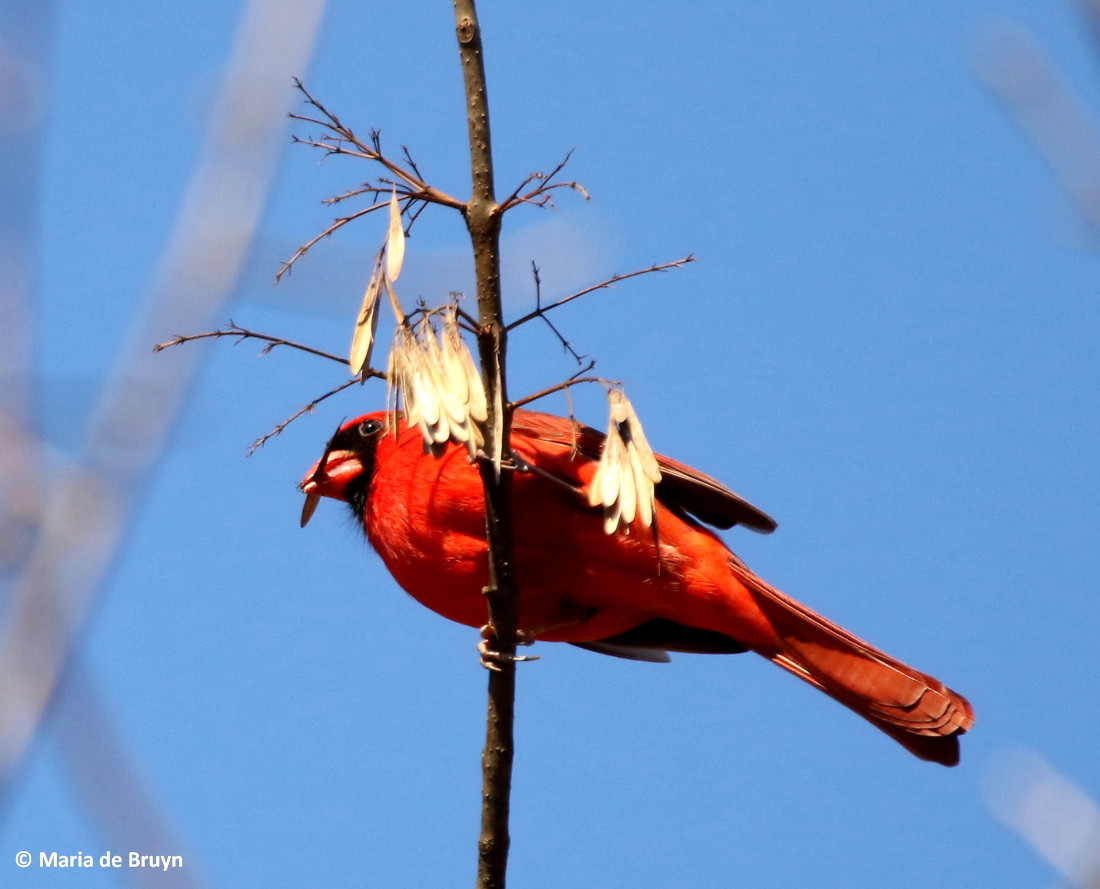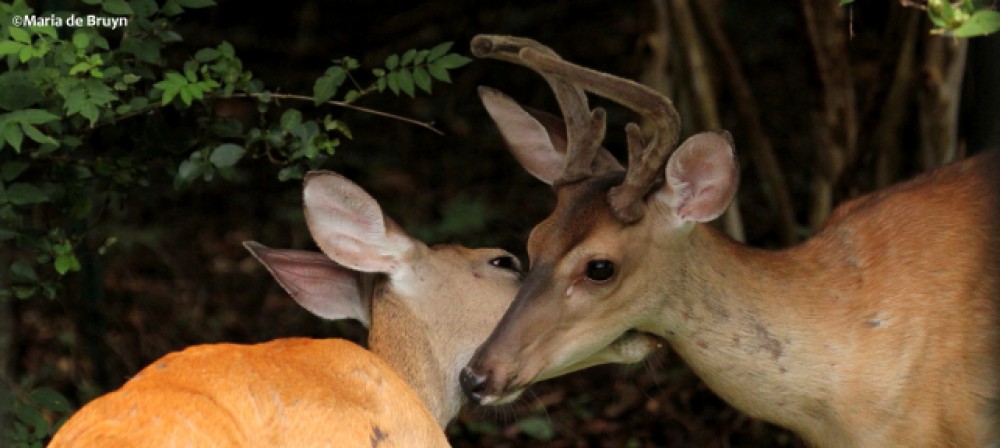
My nemesis birds!

european-starling-dk7a5386-maria-de-bruyn-resIn the birding world, a “nemesis bird” often refers to a species of bird that is eluding a birder intent on adding to their life list of bird species seen in person. For me, however, a nemesis bird is one that is emptying my feeders and depriving other birds of their bit of nutritional goodness because it descends in such great numbers that no one else has a chance. Which bird is this? It’s the European starling (Sturnus vulgaris), a bird which I admittedly find visually beautiful but rather unattractive as far as temperament goes.

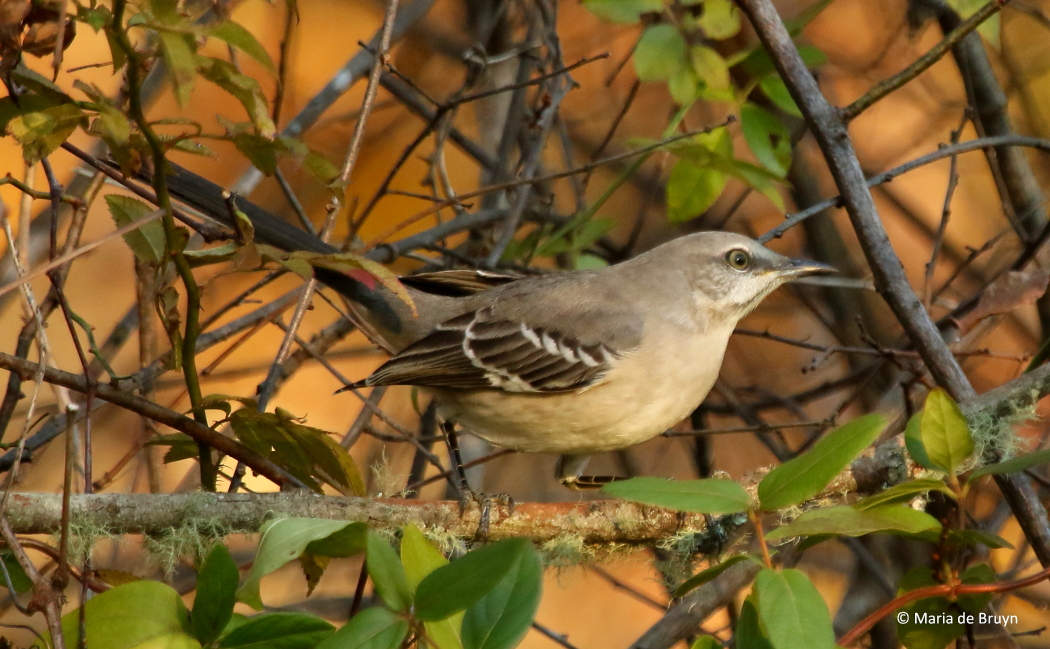
northern-mockingbird-i77a9648-maria-de-bruyn-resOther birders who spend time attracting birds to their yards often comment on how Northern mockingbirds (Mimus polyglottos) chase other birds away – those in my yard feed quite happily alongside other species, however, and even wait their turn for the suet feeders. Another large bird, the brown thrasher (Toxostoma rufum), does the same. In fact, most of the species that visit my yard are content to share feeder space and/or wait their turn.

brown-thrasher-img_9913-maria-de-bruyn-res     sharing-feeders-i77a9154-maria-de-bruyn-res

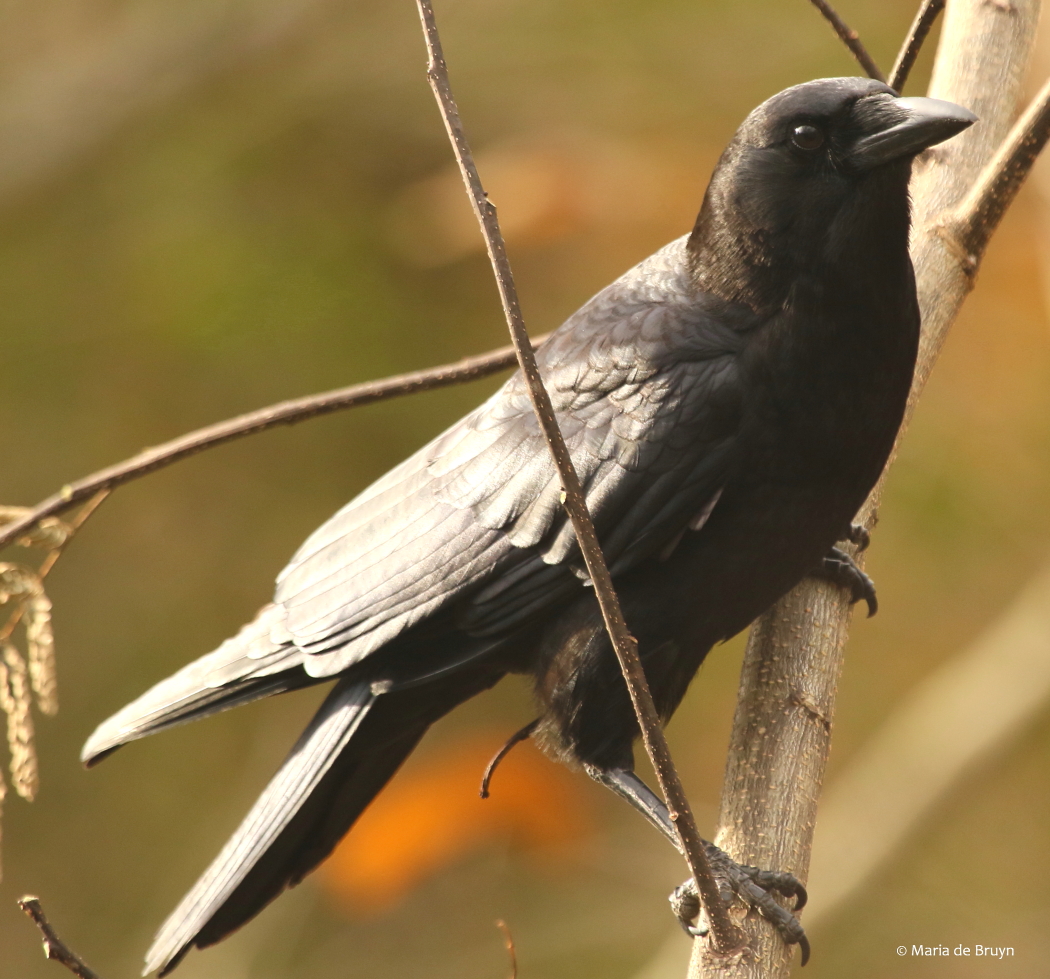
american-crow-dk7a2281-maria-de-bruyn-resOther species that are called “bully birds” include common grackles (Quiscalus quiscula, below), who can look quite beautiful with iridescent feathers, blackbird species and house sparrows. The grackles and red-winged blackbirds (Agelaius phoeniceus) in my yard have not been too dominant; they do sometimes come in numbers but let other birds near. I haven’t had crowds of grackles lately and when they’ve come, their main concern was to attempt to drive away the American crows (Corvus brachyrhynchos, above), so my main foe has been the starlings.

common-grackle-dk7a2236-maria-de-bruyn-res   common-grackle-i77a1447-maria-de-bruyn-res

They discovered my yard as a buffet about a year ago and introduced their young to the feasting area this past summer.

european-starling-dk7a3396-maria-de-bruyn-res  european-starling-dk7a3404-maria-de-bruyn-res


european-starling-dk7a5233-maria-de-bruyn-res


What is striking to me is the fact that they not only will “yell” at other species to go away but also compete vigorously with one another for a spot at the platform and other feeders, indicating a rather nasty disposition.

european-starling-dk7a5130-maria-de-bruyn-res   european-starling-dk7a0871-maria-de-bruyn-res

european-starling-i77a7396-maria-de-bruyn-res

The young starlings pick up on this behavior quickly.

If I come outside, they quickly fly off and roost high up in the tallest trees; sometimes, they will actually fly off to another place in the neighborhood. Clapping my hands and banging on the window will also get them to leave. However, they stick around to assess whether I will appear and if I don’t come out, they are back in short order.

european-starling-i77a1048maria-de-bruyn-res

pine-warbler-dk7a0358-maria-de-bruyn-res


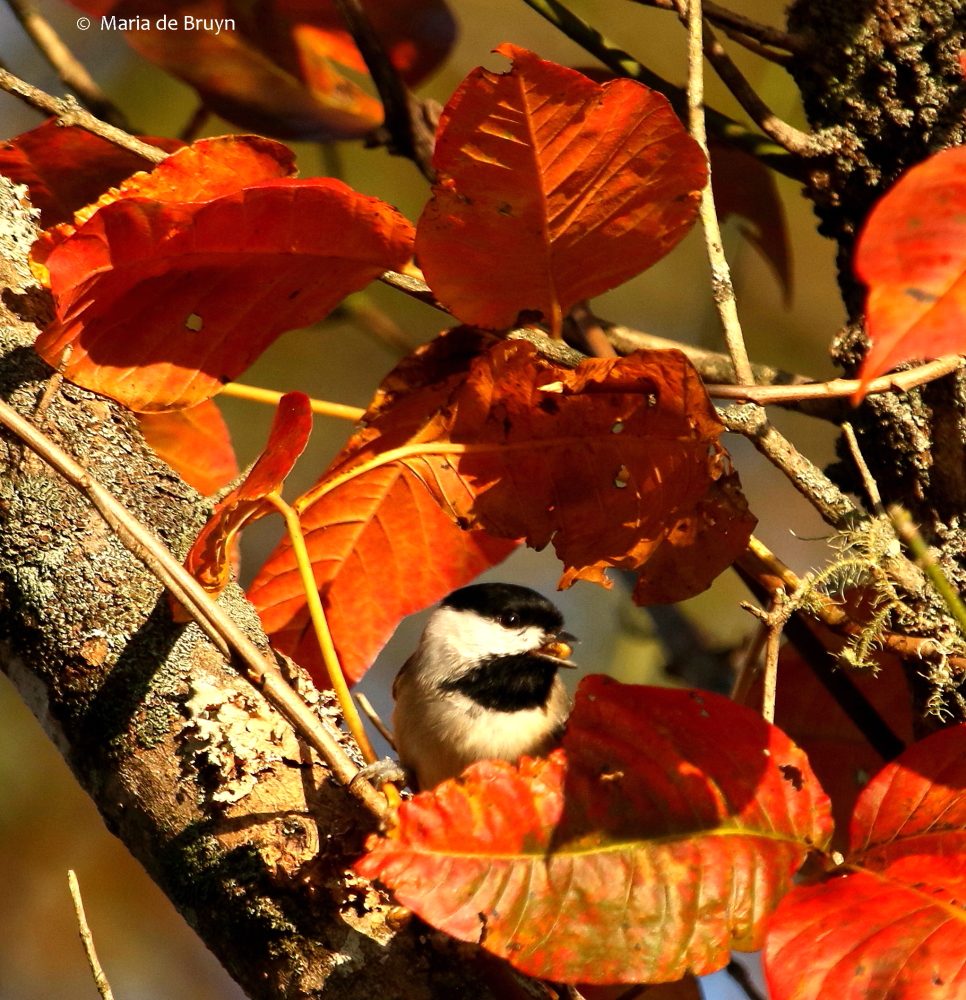
Their first love turned out to be the dried mealworms, which are a big hit with the Eastern bluebirds (Sialia sialis), tufted titmice (Baeolophus bicolor), Carolina chickadees (Poecile carolinensis), Carolina wrens (Thryothorus ludovicianus) and pine warblers (Setophaga pinus, left) among other species.

eastern-bluebird-i77a6862-maria-de-bruyn-res  eastern-bluebird-i77a9596-maria-de-bruyn-res

tufted-titmouse-img_4143-maria-de-bruyn-res   tufted-titmouse-i77a9678-maria-de-bruyn-res

carolina-chickadee-i77a9738-maria-de-bruyn-res   carolina-wren-i77a7312-maria-de-bruyn-res

It’s always a pleasure to see the banded birds return, like the Carolina wren below.

carolina-wren-i77a9548-maria-de-bruyn-res   carolina-wren-i77a9547-maria-de-bruyn-res

When five or more starlings gather around a feeder, they literally gulp the mealworms down, making short shrift of a good-sized supply.

european-starling-dk7a0937-maria-de-bruyn-res   european-starling-dk7a2433-maria-de-bruyn-res

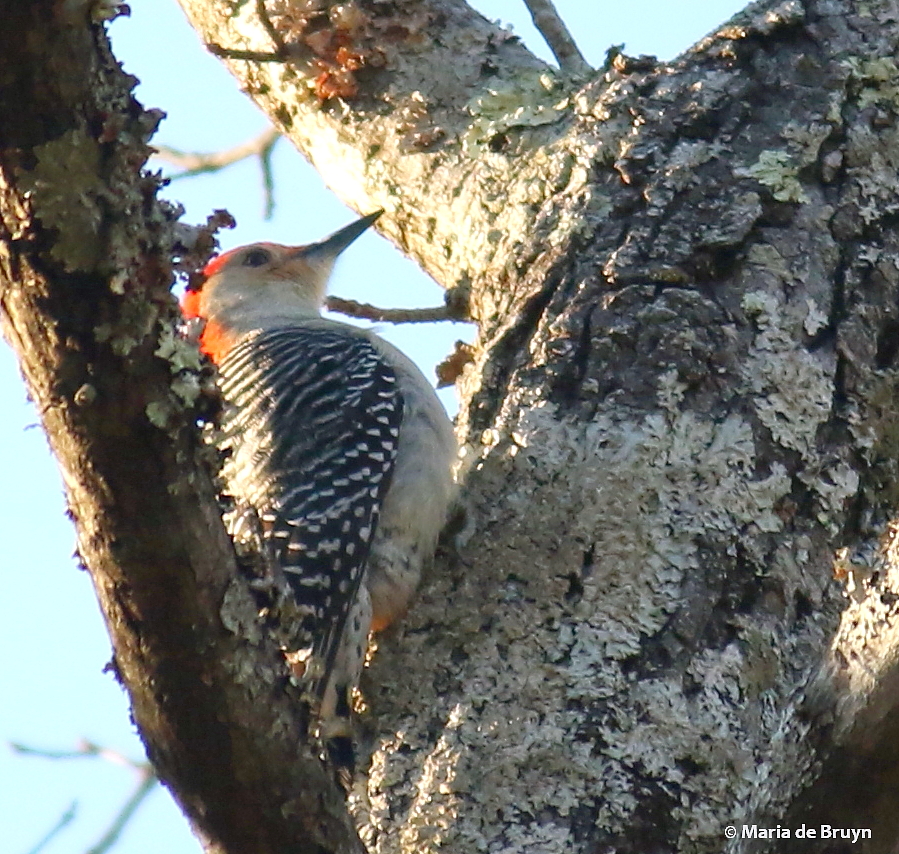
northern-cardinal-i77a2061-maria-de-bruyn-resI began putting out only mixed seed, sunflower seeds (Helianthus annuus) and my home-made vegetarian suet, the latter being a favorite for many species: the bluebirds, chickadees, wrens, titmice, yellow-rumped warblers (Setophaga coronata), brown-headed nuthatches (Sitta pusilla), Northern cardinals (Cardinalis cardinalis, left), and downy and red-bellied woodpeckers (Picoides pubescens and Melanerpes carolinus).

yellow-rumped-warbler-i77a9778-maria-de-bruyn-res

brown-headed-nuthatch-i77a6423-maria-de-bruyn-res

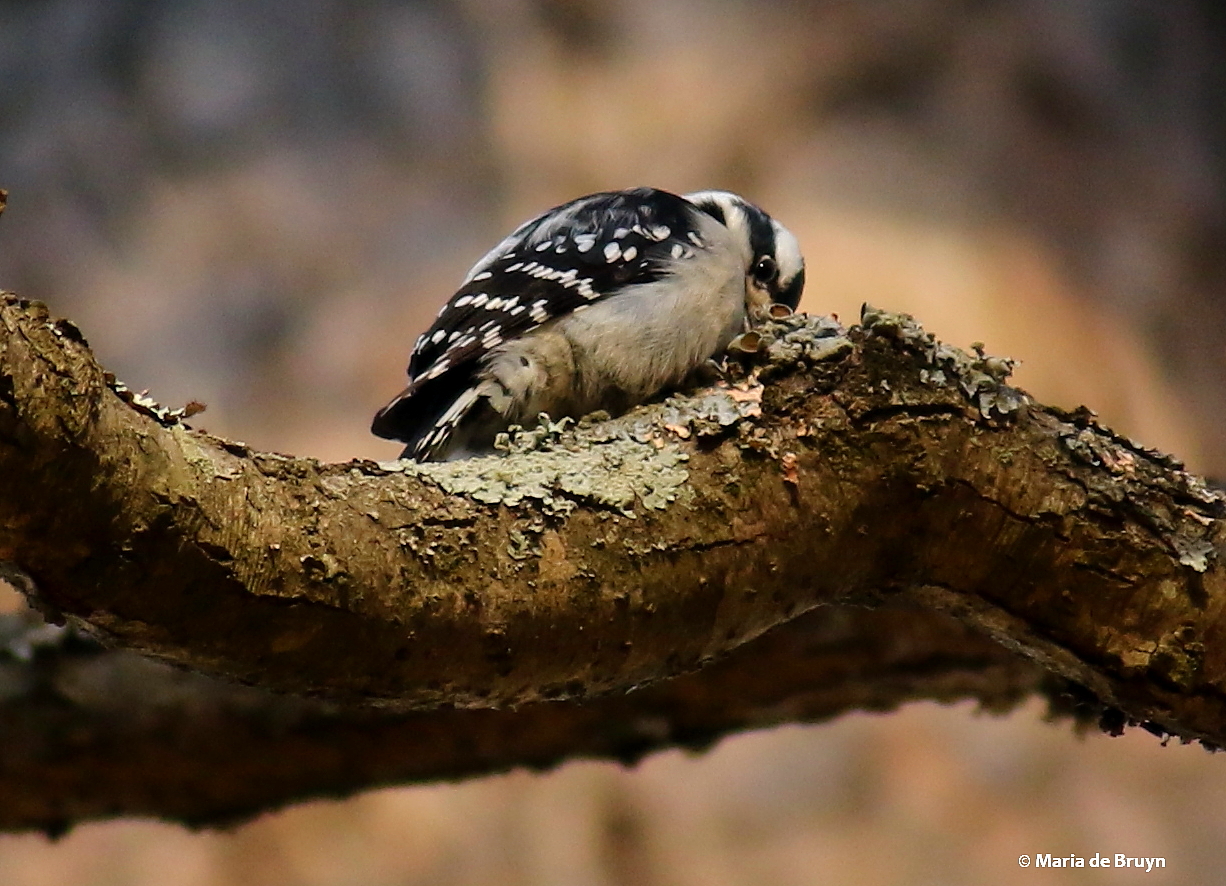
downy-woodpecker-dk7a1967-maria-de-bruyn-res   downy-woodpecker-dk7a1961-maria-de-bruyn-res

red-bellied-woodpecker-i77a4258maria-de-bruyn-res red-bellied-woodpecker-dk7a0440-maria-de-bruyn-res

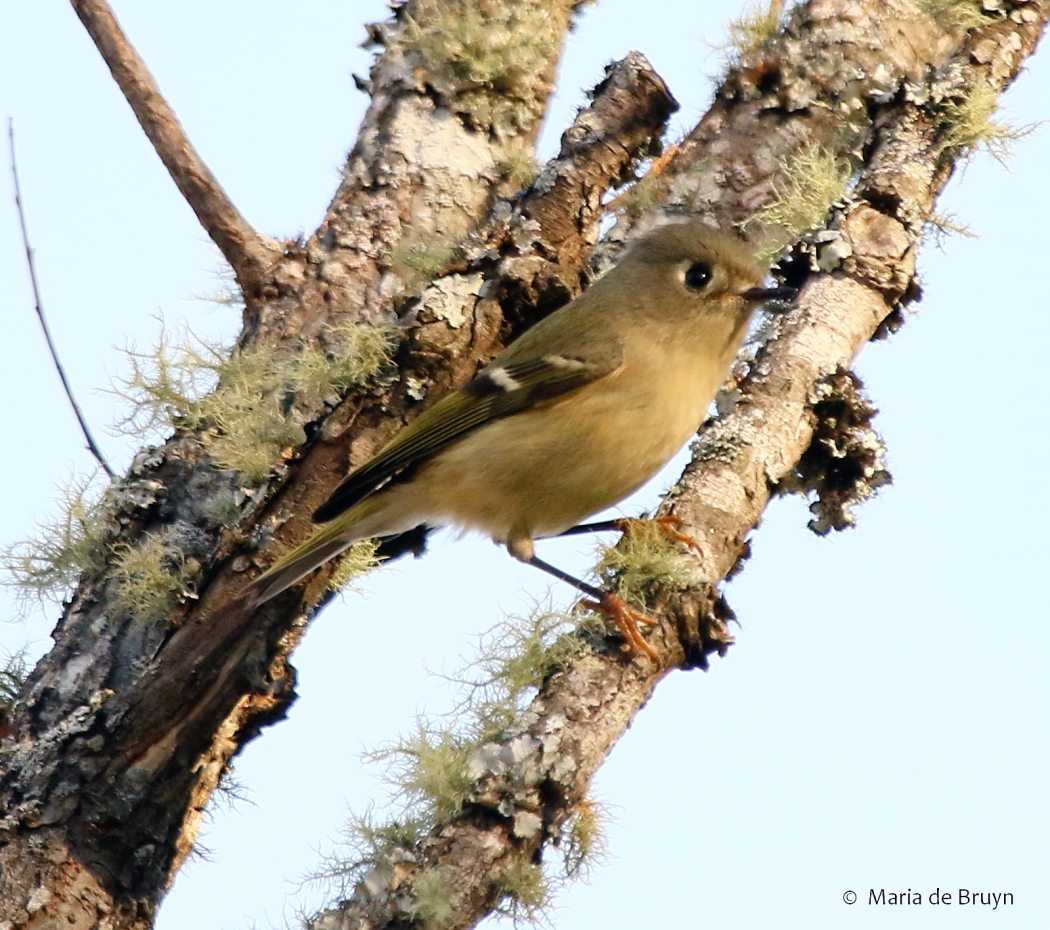
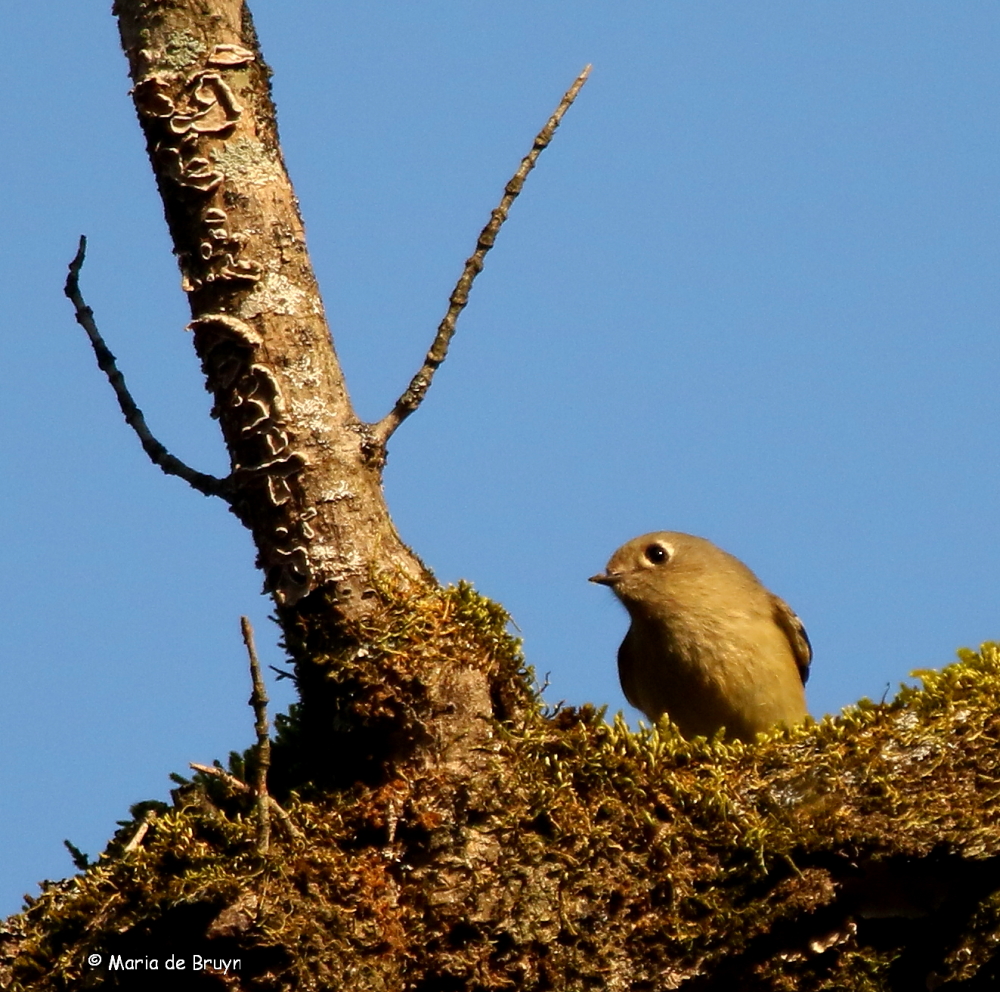
My resident ruby-crowned kinglet (Regulus calendula) hasn’t returned this winter (though I hope he is just late), so he doesn’t have to compete with the much, much larger starlings for his beloved meals.

ruby-crowned-kinglet-img_1776-maria-de-bruyn-res  ruby-crowned-kinglet-dk7a0538-maria-de-bruyn-res

european-starling-dk7a5647-maria-de-bruyn-resTo my dismay, when the starlings discovered no mealworms were available, they decided that suet could be a nice substitute. Oy vey! They manage to empty the suet holders in record time.

I waited to put out the suet until I saw no starlings in any of the tall trees surrounding the yard.

european-starling-img_0035-maria-de-bruyn-res

european-starling-i77a7189-maria-de-bruyn-resThe smaller birds came but this lasted only a little while. Soon the starlings showed up, leading me to think that either “scout” or “watch birds” were left behind to warn the flock when preferred food arrived, or they had a tremendous sense of smell that led them to my yard. It does turn out that starlings use their sense of smell to identify plants for their nests, so who’s to say they don’t use it to find food, too?


red-bellied-woodpecker-dk7a1833-maria-de-bruyn-resOne bird advice website recommends avoiding sunflower seeds as “bully birds” prefer them. Well, so far, the starlings have assiduously avoided any seeds. So a couple days ago, I filled all the feeders with seed except for the suet feeders – and I stood outside next to them so that the songbirds could have a go at the suet without their bigger avian neighbors chasing them away. It was gratifying to see the little ones enjoy a bit of suet while the starlings perched high above, unwilling to come down in my presence. Today, it was raining persistently but the songbirds were flying to and fro among the feeders so I put suet in three holders and some mealworms in one.

For an hour or so, they had the dried worms and peanut butter-based treat to themselves; then a starling appeared. I went outside but this particular bird didn’t seem to mind. When three of its compatriots arrived and saw me, they swooped away so the little birds still could grab some suet and mealworms.

european-starling-i77a9669-maria-de-bruyn-res

Now I’ll wait to see if the starlings begin eating the seed or finally move on or stay away for longer periods. I’m guessing as long as there is occasional suet, they will leave their scouts in place to warn them when a tasty meal is available. And I do want to put out some mealworms now and again so I don’t disappoint the chickadees and wrens who greet me with loud twittering when I approach empty feeders. Non-birders probably think that’s silly (to put it mildly) but I think bird lovers will understand….
Soothing my spirit, seeking solace for the soul

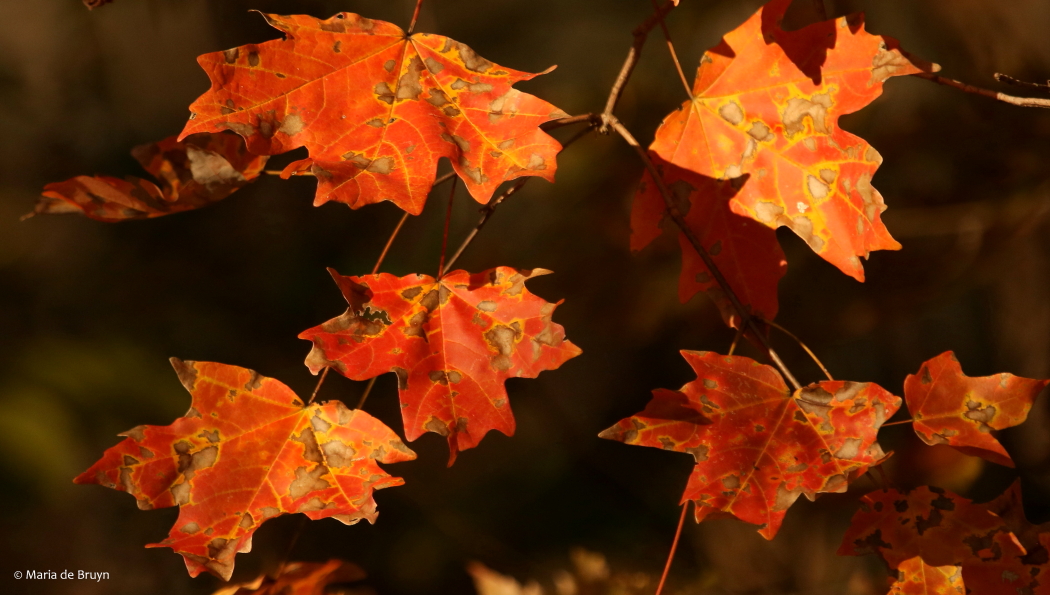
leaf-i77a2875-maria-de-bruyn-resAlthough more people in the USA voted for the Democratic ticket than the Republican one, the electoral college system will likely lead to the installation of a Republican presidency unless election re-counts affect those designated votes. This distresses me greatly given the persons who have been announced as top administration advisers and cabinet members. My work on social issues and on behalf of vulnerable people will continue and is increasing. But in the meantime, to keep from going into a 100% depressed mode, I have sought solace in nature walks and spiritual strengthening in the flora and fauna I see.
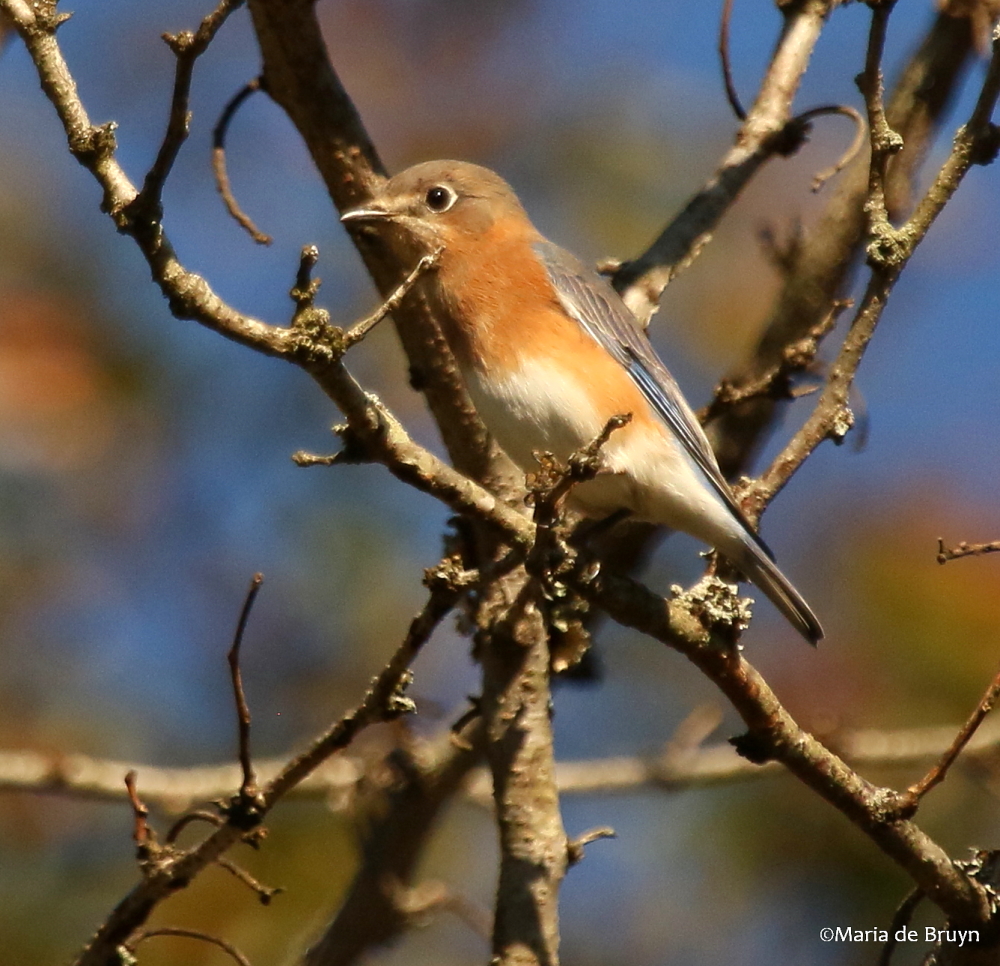
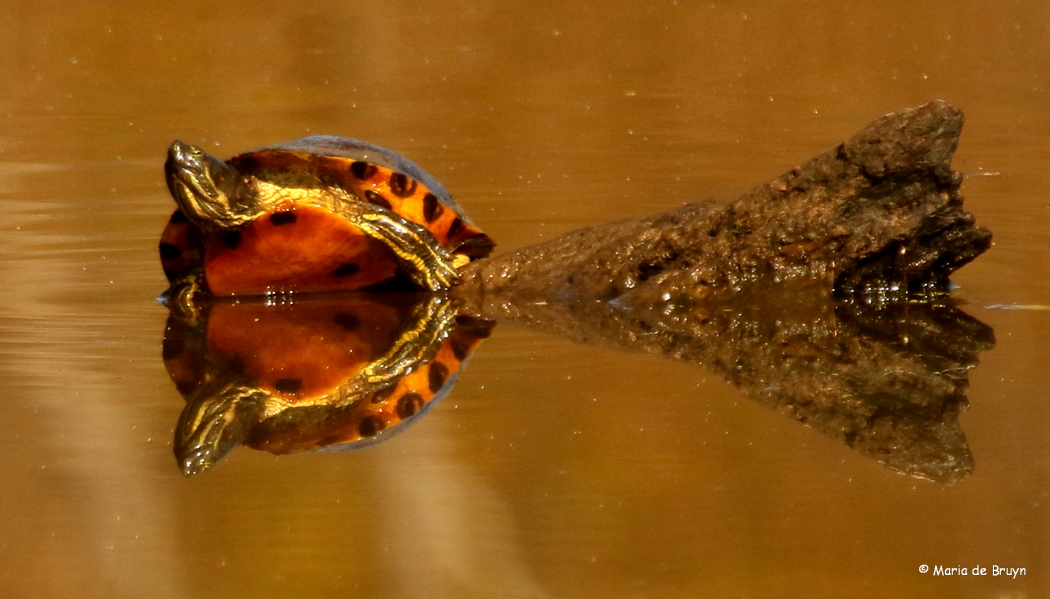
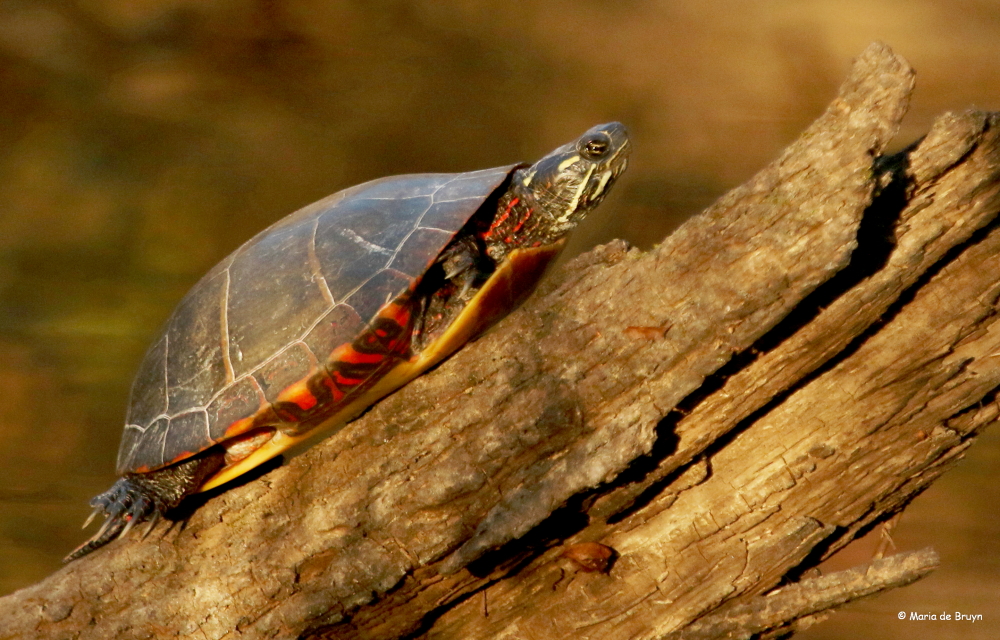
painted-turtle-i77a2277-maria-de-bruyn-resToday, I will share some of words of wisdom from a conscientious spiritual leader with you, along with some photos of nature’s beauties seen during my walks at the Cane Creek Reservoir, Sandy Creek Park and Mason Farm Biological Reserve just before and since the November election. It’s a bit of a long blog but offers some visual sustenance to ponder, like the painted turtle (Chrysemys picta, above) at Mason Farm and the yellow-bellied slider (Trachemys scripta scripta) at Sandy Creek sunning in the morning sun despite chilly temperatures. (From a distance, the slider looked a bit as if there was something with open jaws in the pond!)

yellow-bellied-slider-i77a2954-maria-de-bruyn-res

flower-77a1303maria-de-bruyn-res


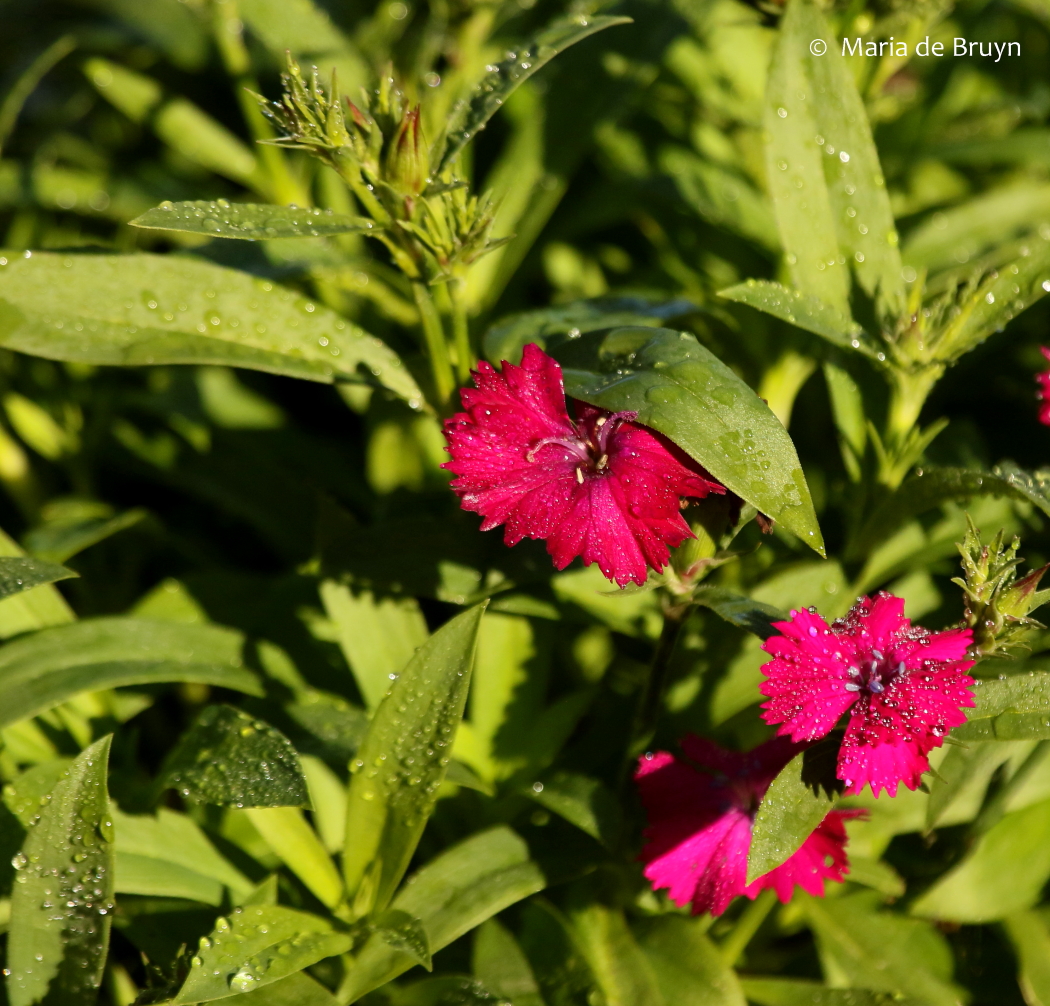
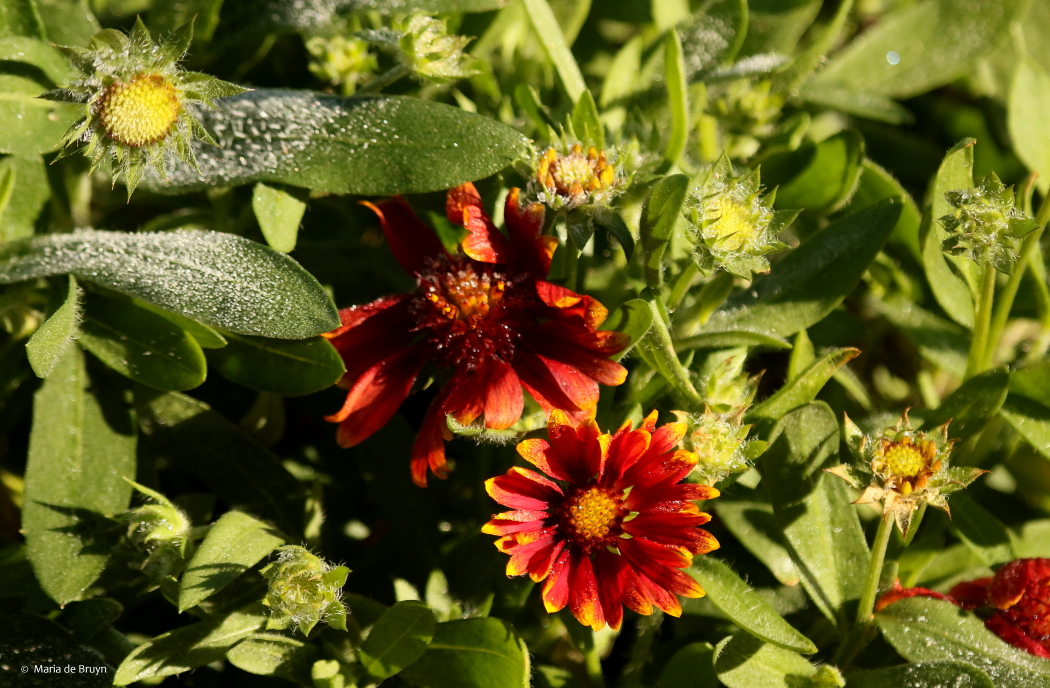
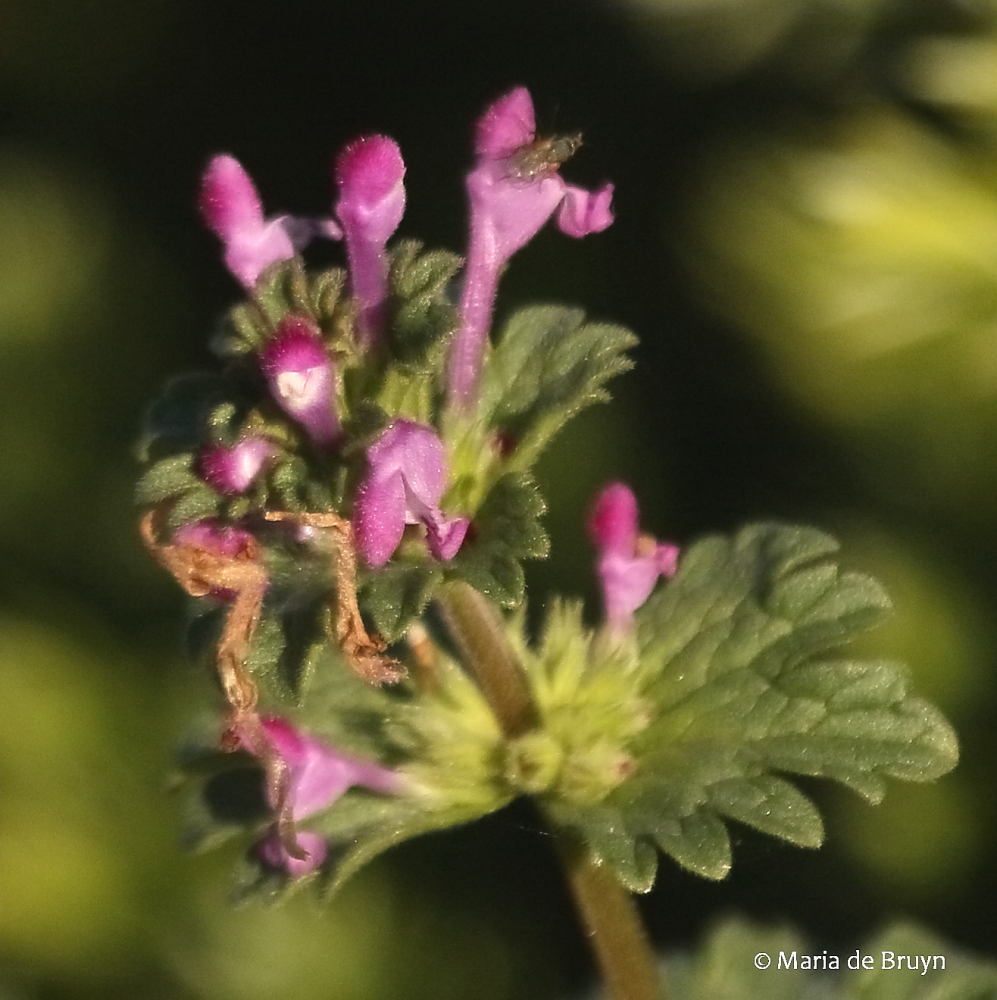
Early in the morning, you can find frost- and dew-covered plants and a few remaining flowers glistening in the sun.


blanket-flower-i77a1309maria-de-bruyn-res  henbit-i77a0825maria-de-bruyn-res

Blanket flower (Gaillardia)                           Henbit (Lamium amplexicaule)

leaf-bird-i77a2906-maria-de-bruyn-res


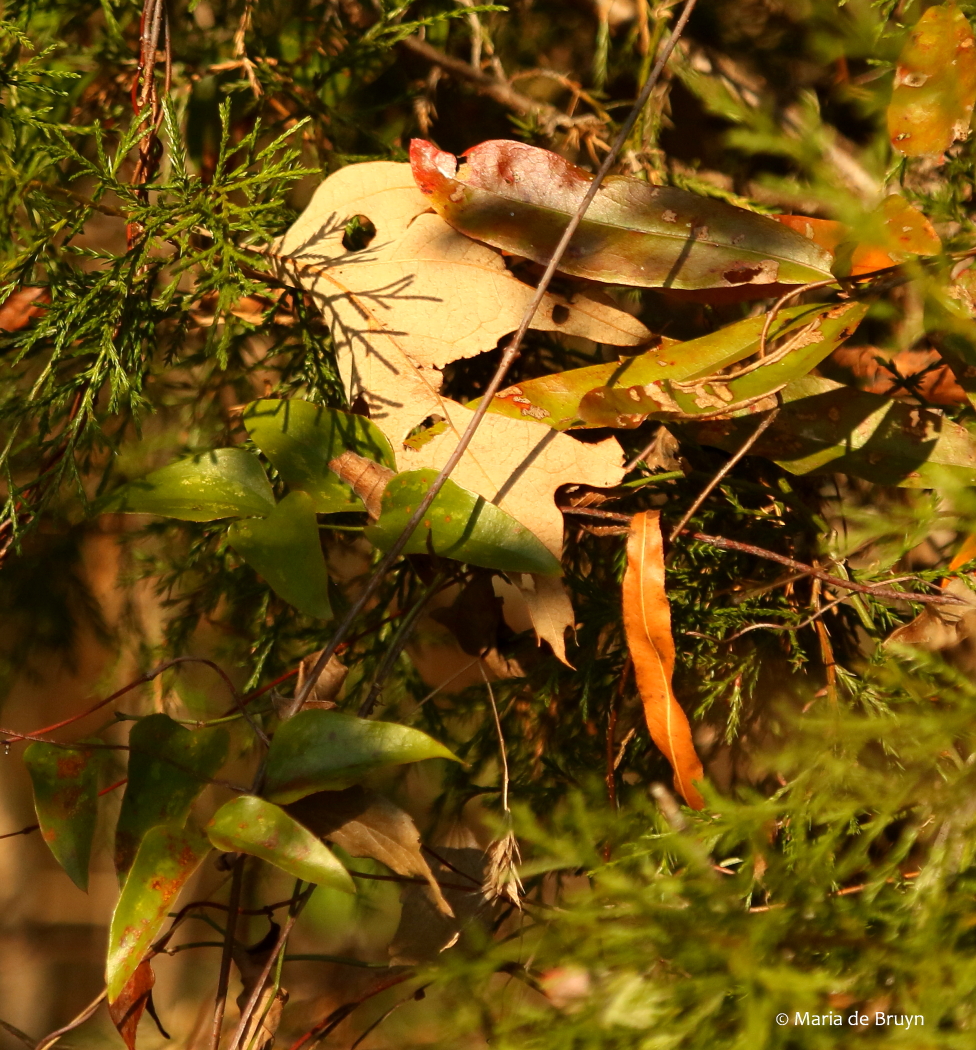
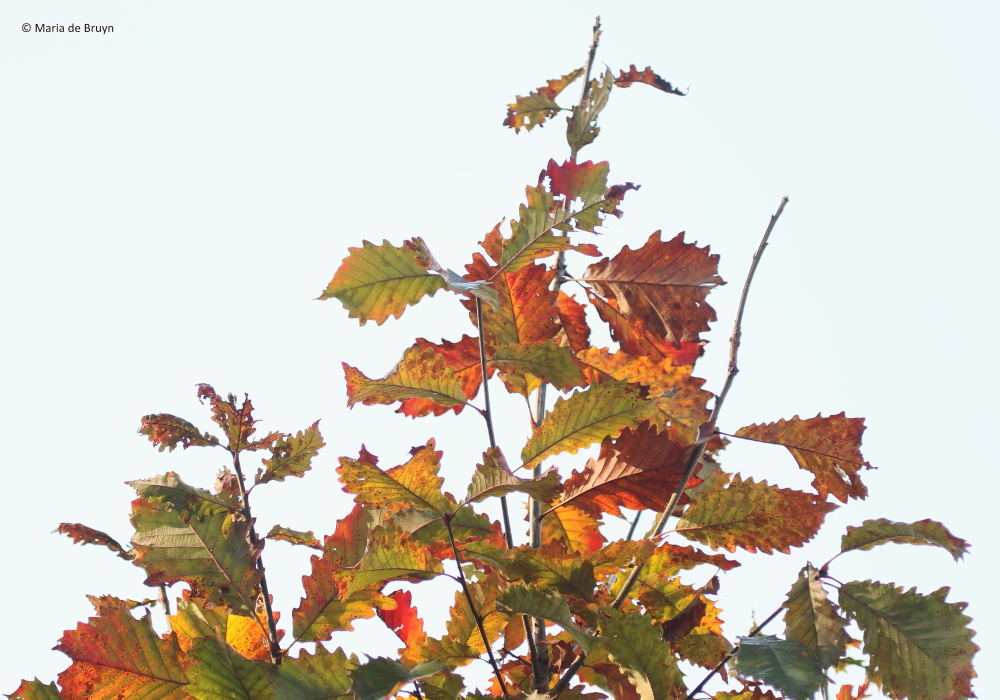
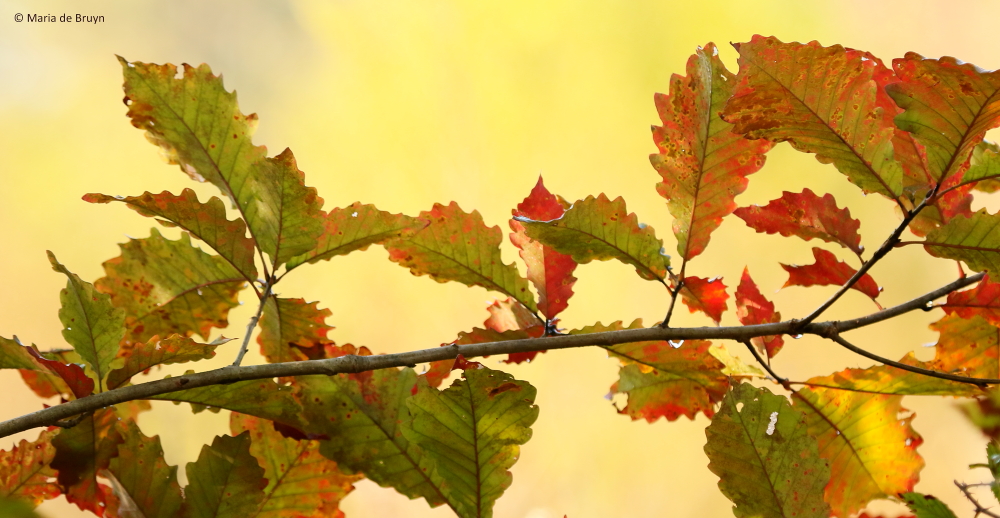
Later in the morning, the autumn-colored leaves make nice patterns as you search for birds high and low. And occasionally you get to see the fabled “leaf bird”.


leaves-i77a2893-maria-de-bruyn-res   leaves-i77a2882-maria-de-bruyn-res

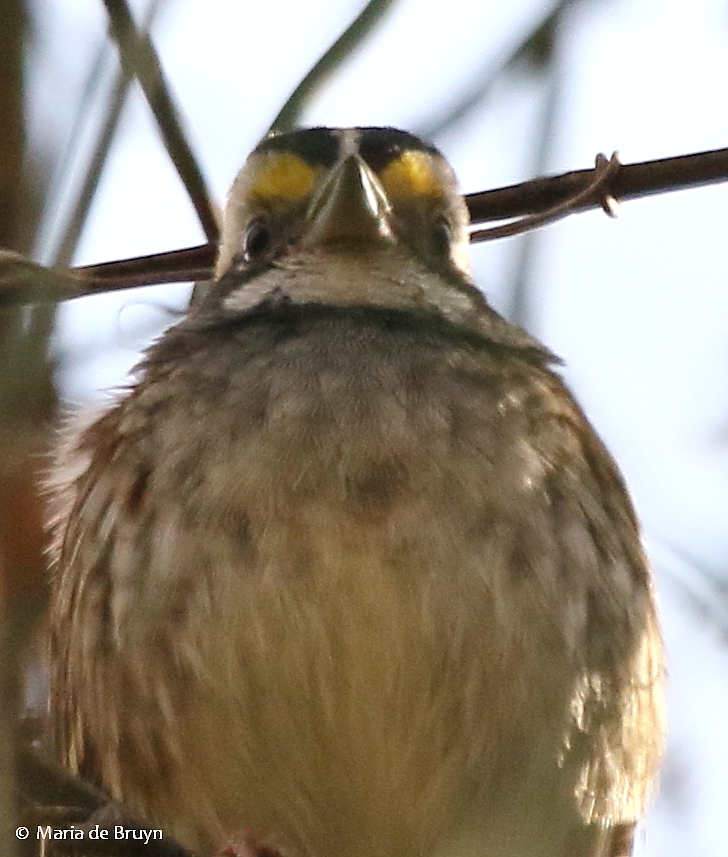
When looking high, you may find the birds looking down on you; face-level stares as you gaze straight ahead may also occur!

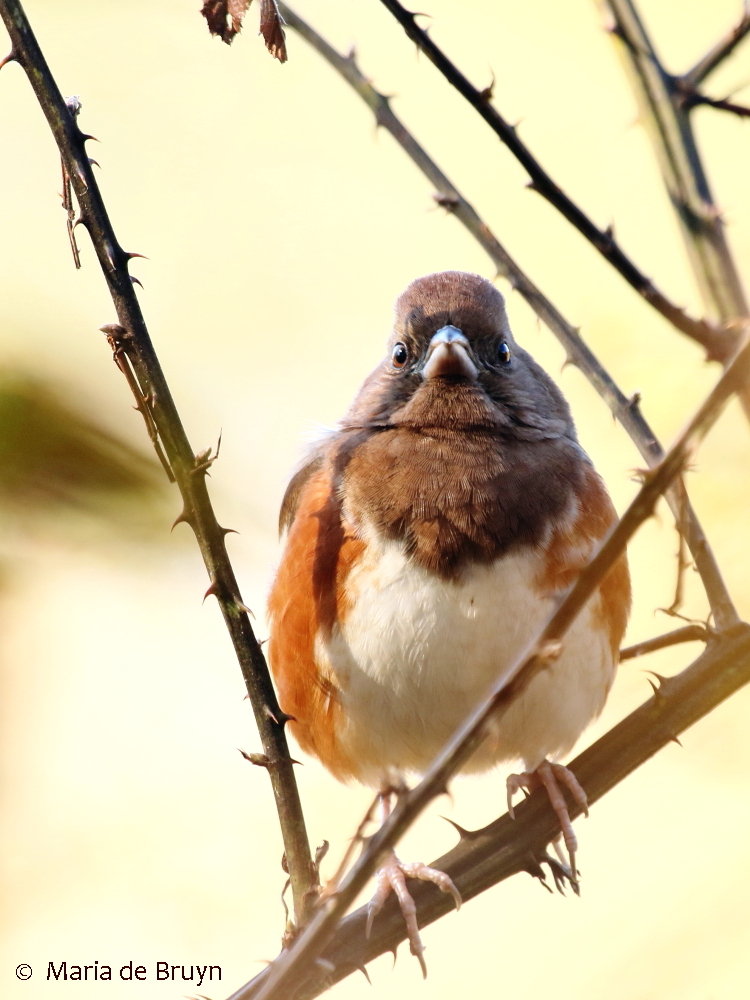
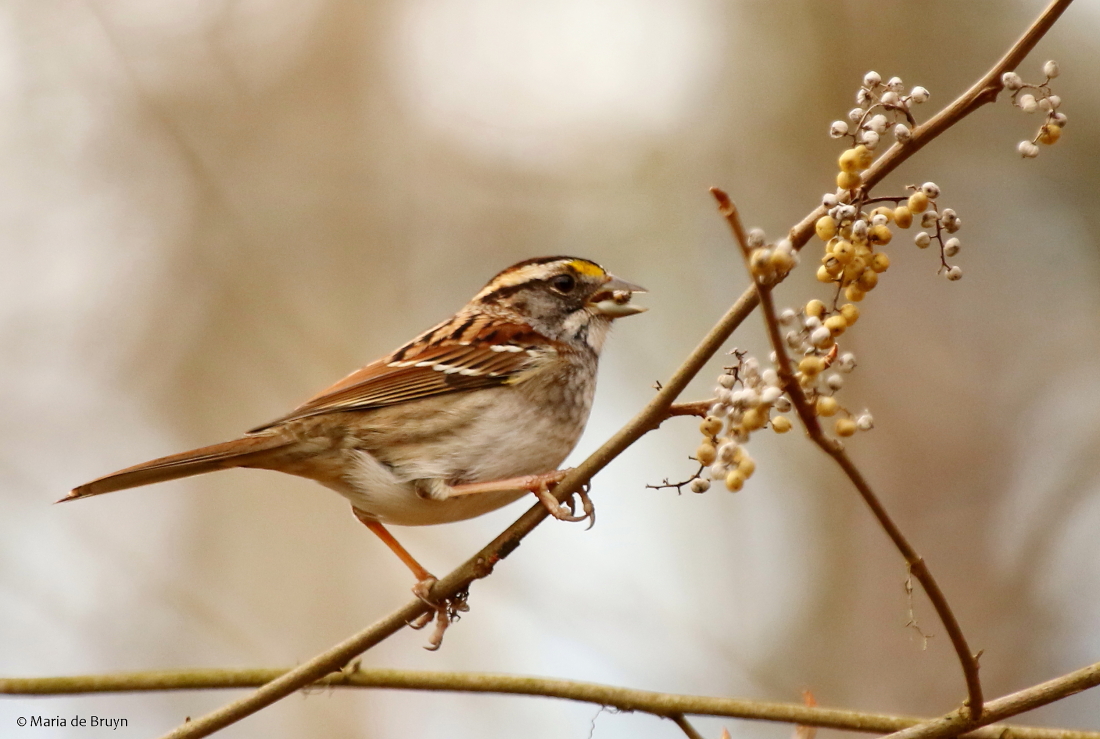
white-throated-sparrow-i77a6365-maria-de-bruyn-res                     eastern-towhee-i77a1659maria-de-bruyn-res

White-throated sparrow (Zonotrichia albicollis)  Eastern towhee (Pipilo erythrophthalmus)

killdeer-i77a0916maria-de-bruyn-res


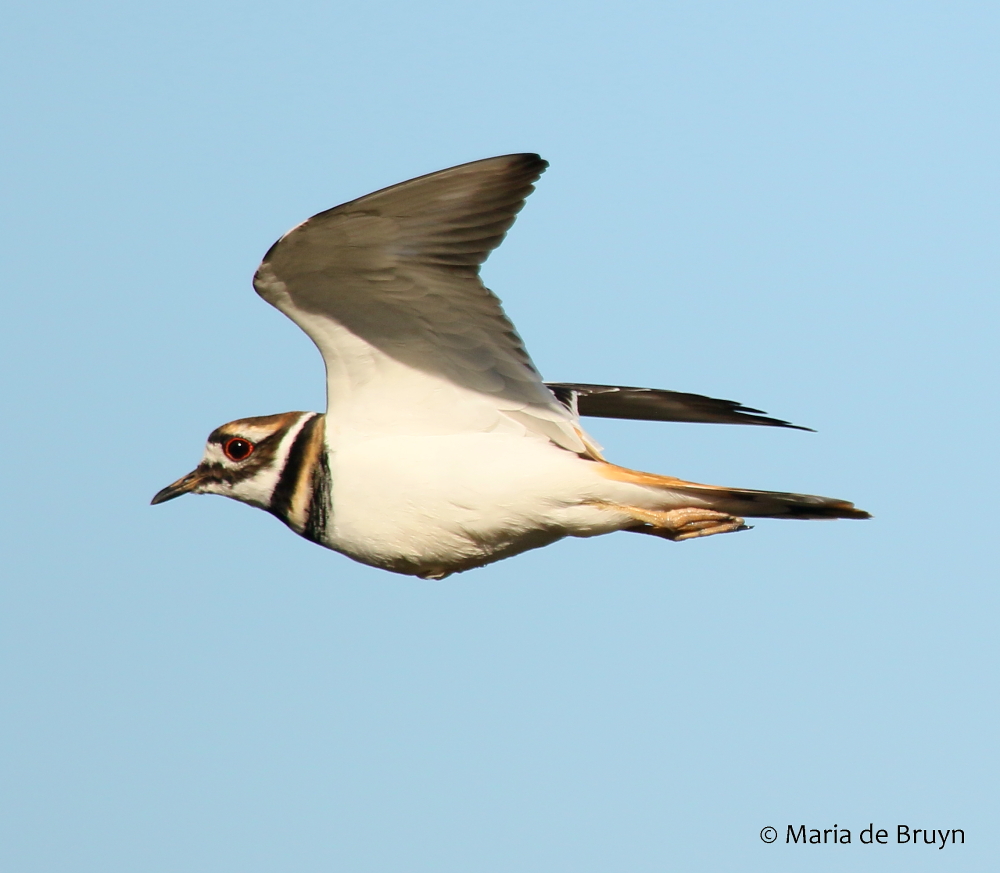
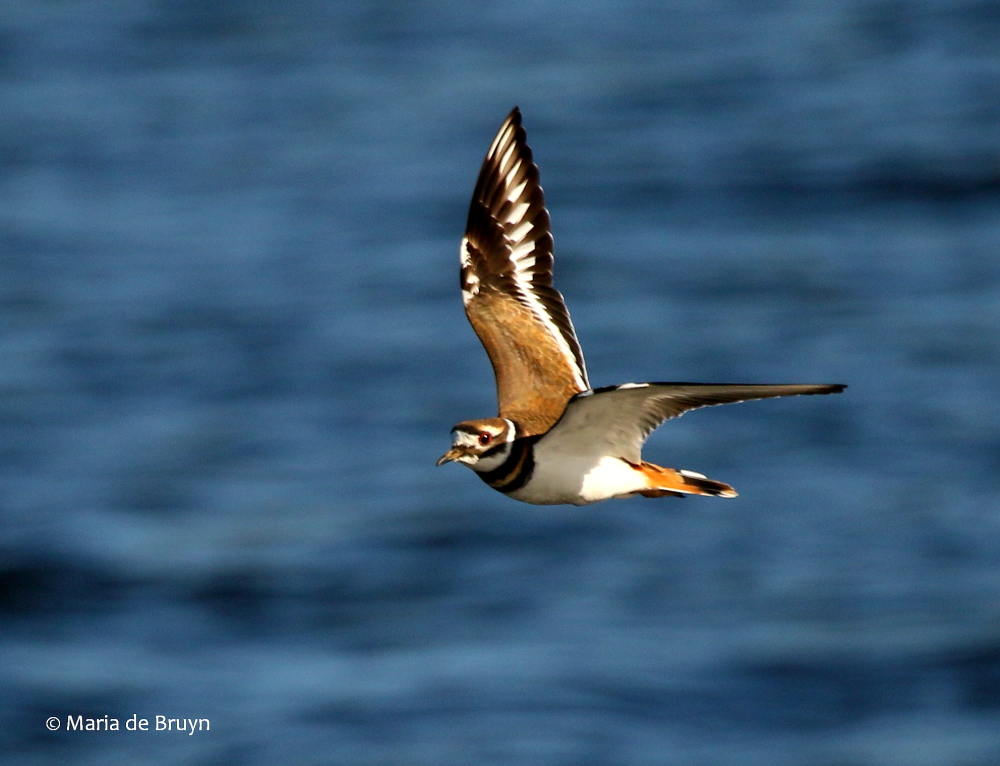
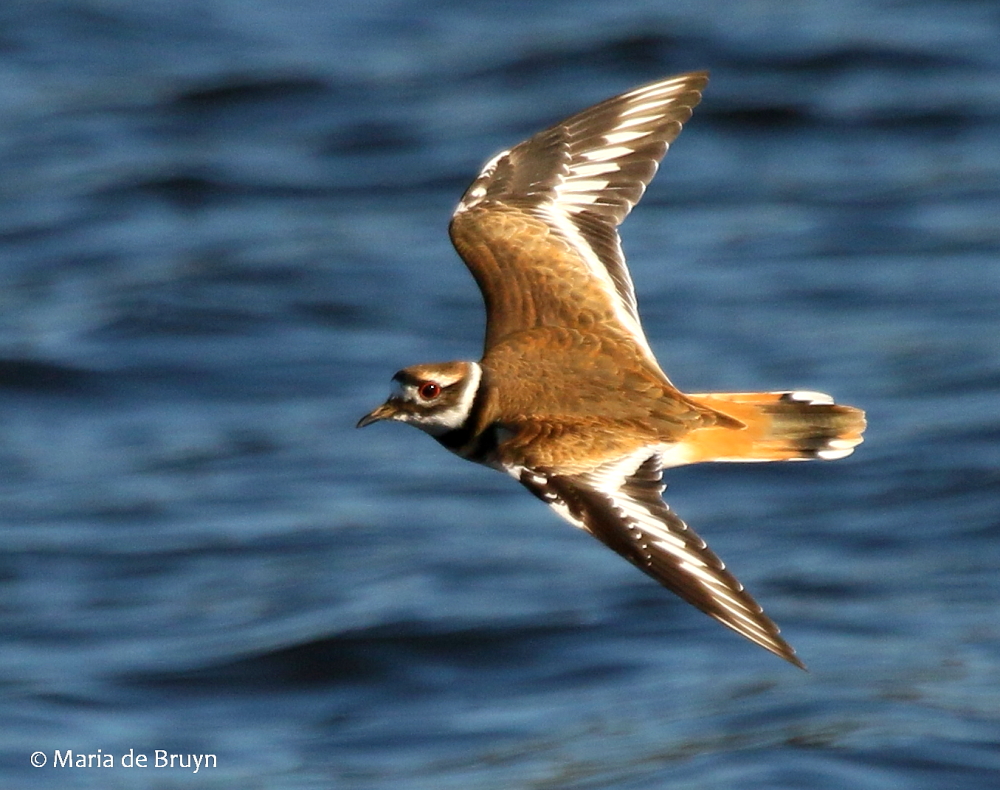
At Cane Creek, the killdeer (Charadrius vociferous) make their presence known by their distinctive calls and you can enjoy their gorgeous appearance as they fly over the lake.


killdeer-i77a0913maria-de-bruyn-res  killdeer-i77a0911maria-de-bruyn-res

Taking care of our planet is like taking care of our houses. Since we human beings come from Nature, there is no point in our going against Nature, which is why I say the environment is not a matter of religion or ethics or morality. These are luxuries, since we can survive without them. But we will not survive if we continue to go against Nature.  – Dalai Lama

red-bellied-woodpecker-i77a2988maria-de-bruyn-res


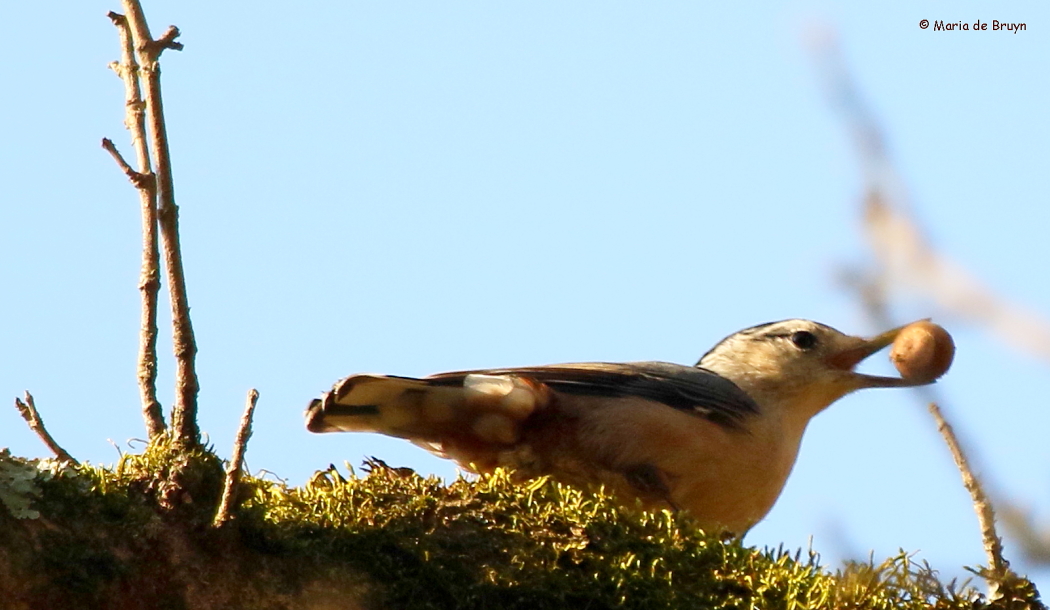
Many birds, like this red-bellied woodpecker (Melanerpes carolinus), are busy finding seeds and nuts for their meals.


tufted-titmouse-i77a1965maria-de-bruyn-res  white-breasted-nuthatch-i77a2671maria-de-bruyn-res

Tufted titmouse (Baeolophus bicolor)          White-breasted nuthatch (Sitta carolinensis)

song-sparrow-i77a1499maria-de-bruyn-res   carolina-chickadee-i77a8444-maria-de-bruyn-res

Song sparrow (Melospiza melodia)                 Carolina chickadee (Poecile carolinensis)

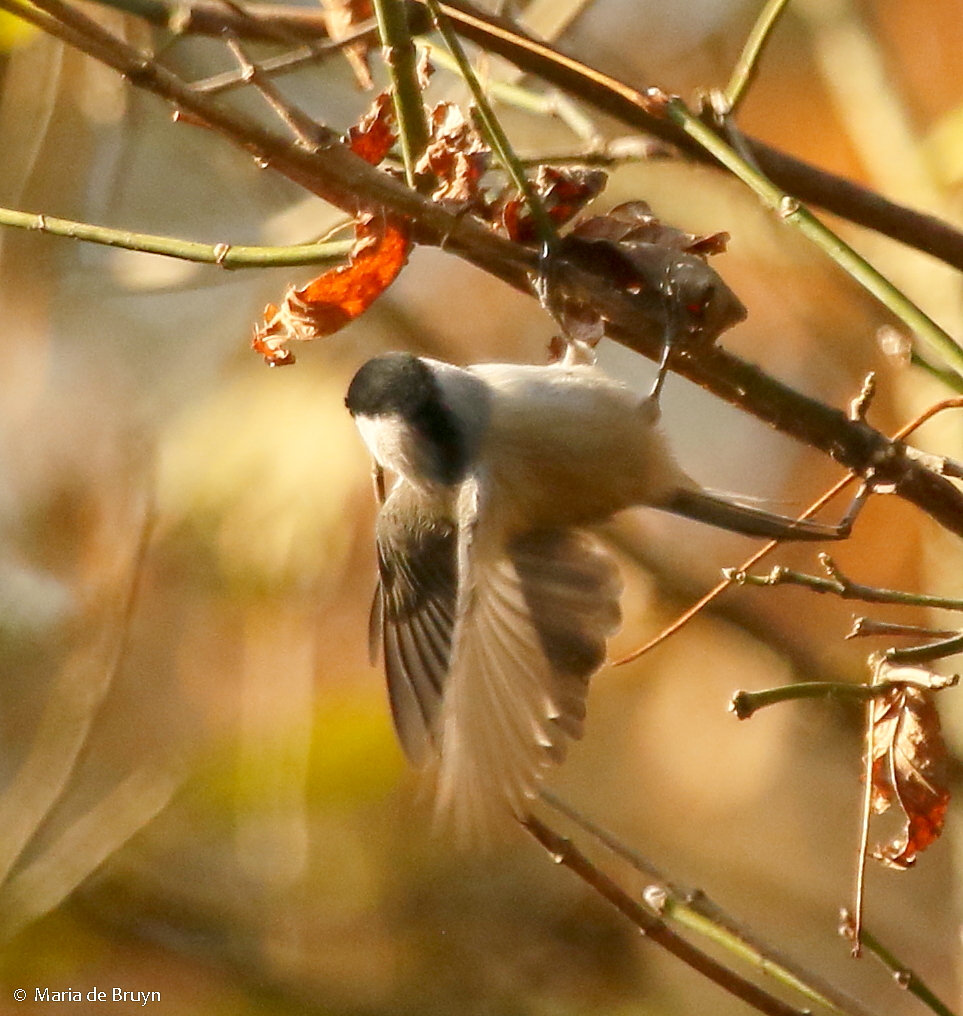
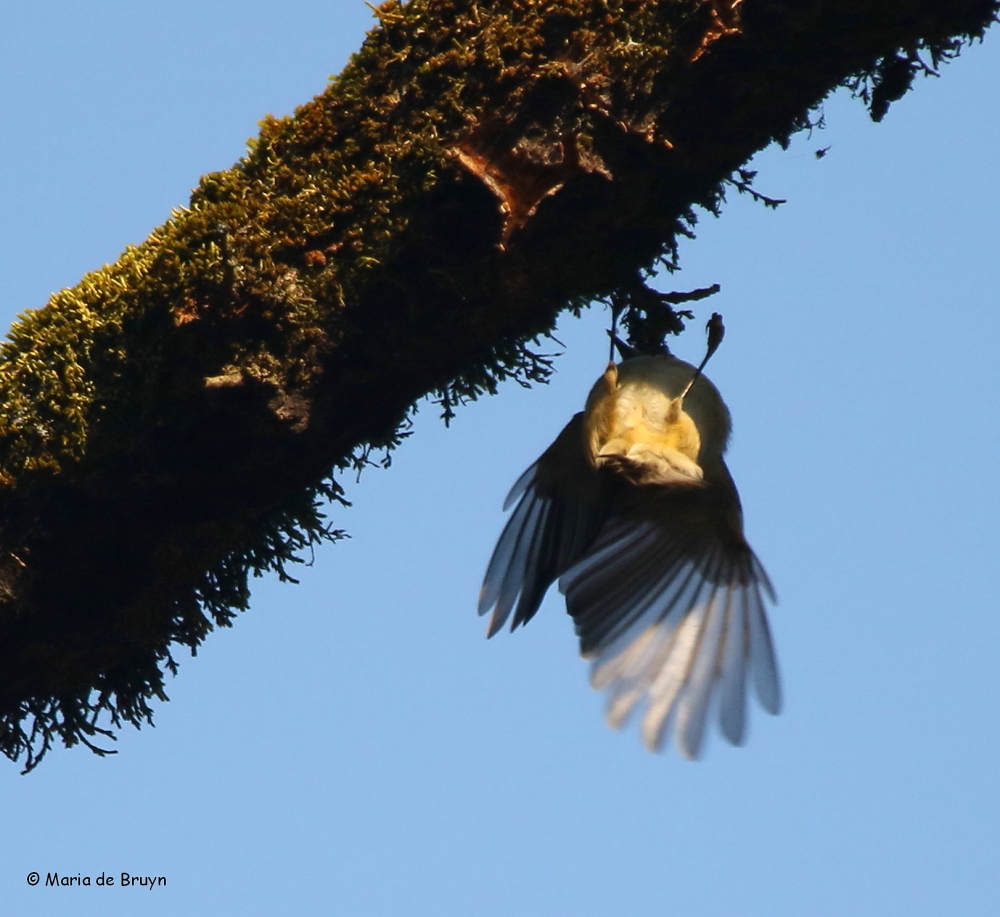
Sometimes, it involves hanging upside down to snag a tasty morsel and their wings help in balancing.

carolina-chickadee-i77a2699maria-de-bruyn    ruby-crowned-kinglet-i77a2565-maria-de-bruyn-res

Carolina chickadee                                    Ruby-crowned kinglet (Regulus calendula)

If we unbalance Nature, humankind will suffer. Furthermore, as people alive today, we must consider future generations: a clean environment is a human right like any other. It is therefore part of our responsibility towards others to ensure that the world we pass on is as healthy, if not healthier, than when we found it. – Dalai Lama

american-crow-i77a6327-maria-de-bruyn-res


At Sandy Creek, a group of American crows (Corvus brachyrhynchos) flew down to investigate what had dropped to the ground from an overflowing garbage can but they soon flew off to seek more normal food elsewhere.


great-blue-heron-i77a1936maria-de-bruyn-res


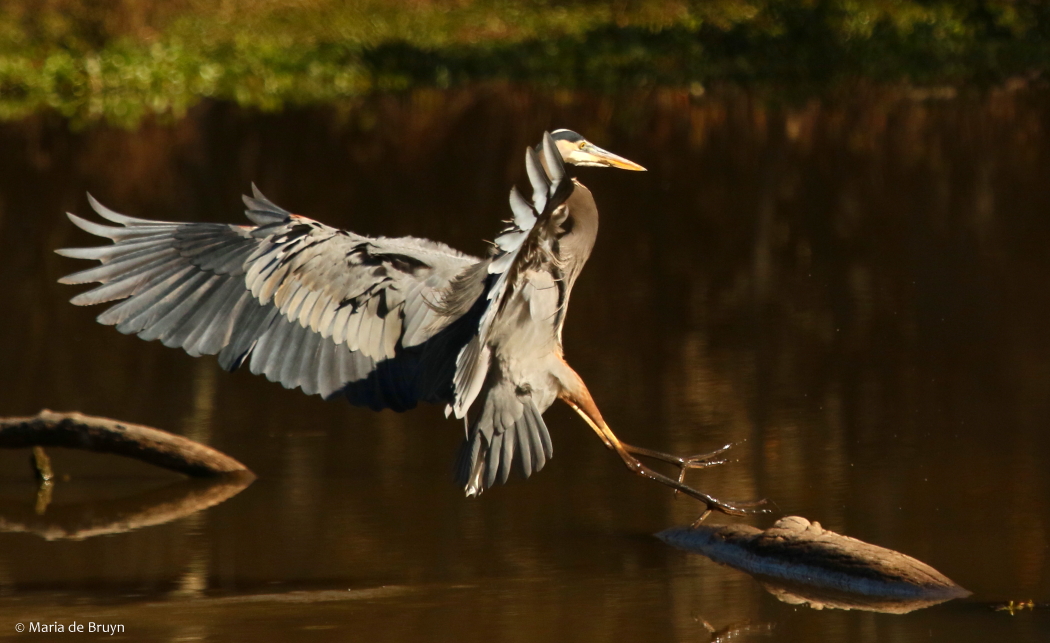
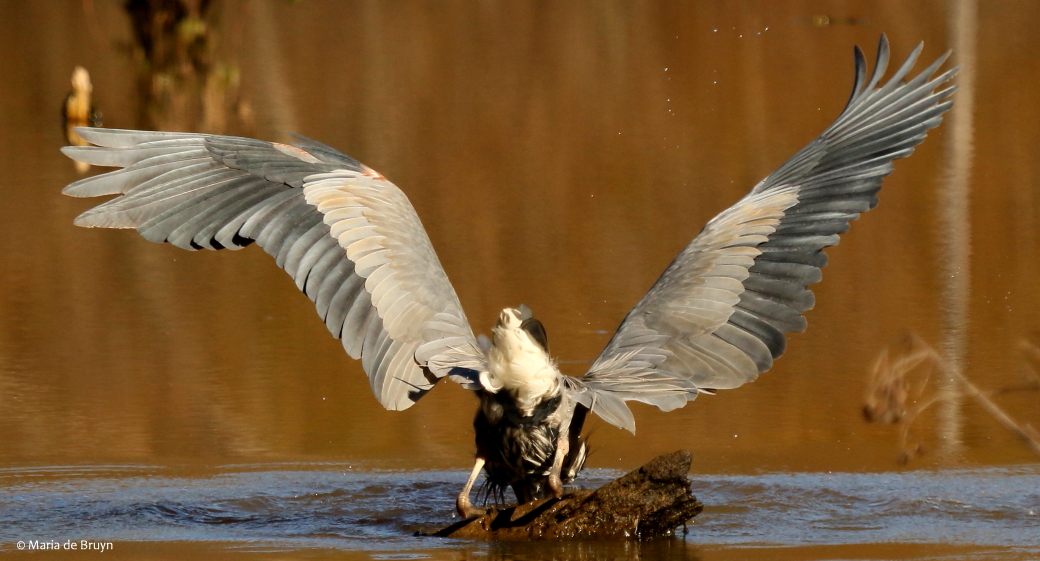
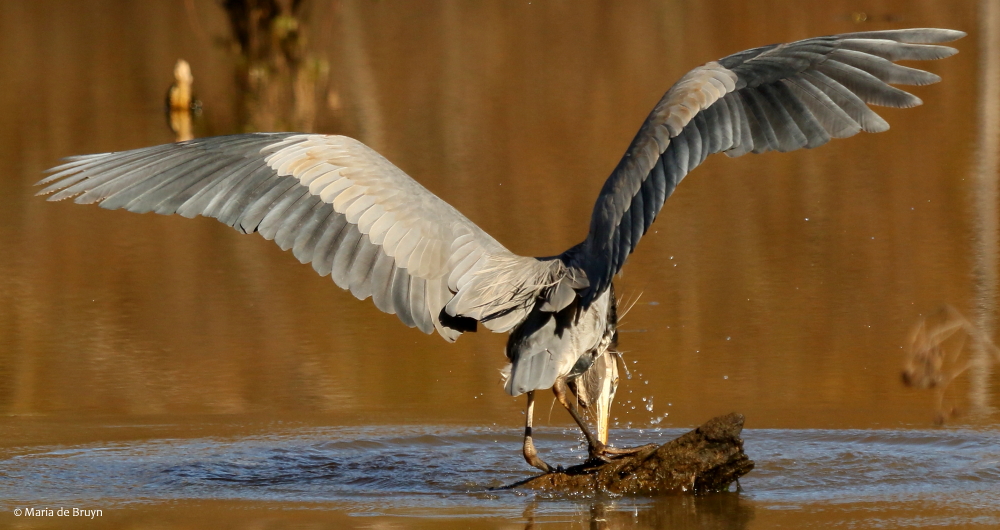
A great blue heron (Ardea herodias) was stalking the pond for fish; after I saw him (or her) snag a medium-sized fish, he turned his back so I saw the fishing technique from the rear.

great-blue-heron-i77a1438maria-de-bruyn-2-res  great-blue-heron-i77a1440maria-de-bruyn-res

flowering-dogwood-i77a0882maria-de-bruyn-res


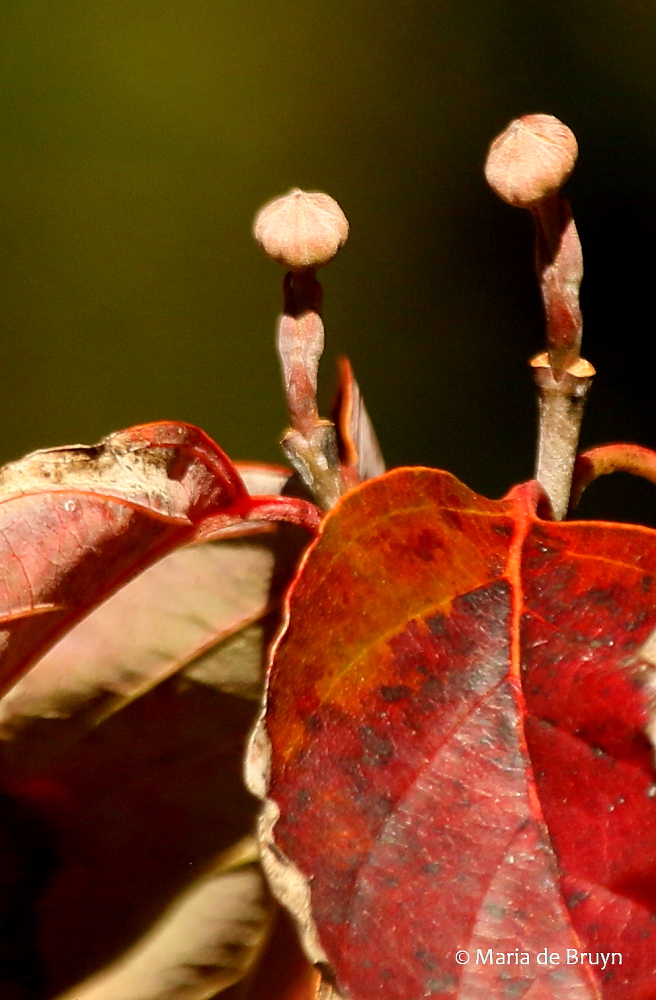
The flowering dogwoods (Cornus florida) at Cane Creek still had a few blossoms; at Sandy Creek and Mason Farm, they offered bright berries. On one tree, they made me think of a movie-inspired alien peeking out of the branches with eyes on stalks.


flowering-dogwood-i77a5820-maria-de-bruyn-res       flowering-dogwood-i77a1012maria-de-bruyn-res

Destruction of nature and nature resources results from ignorance, greed and lack of respect for the earth’s living things. – Dalai Lama

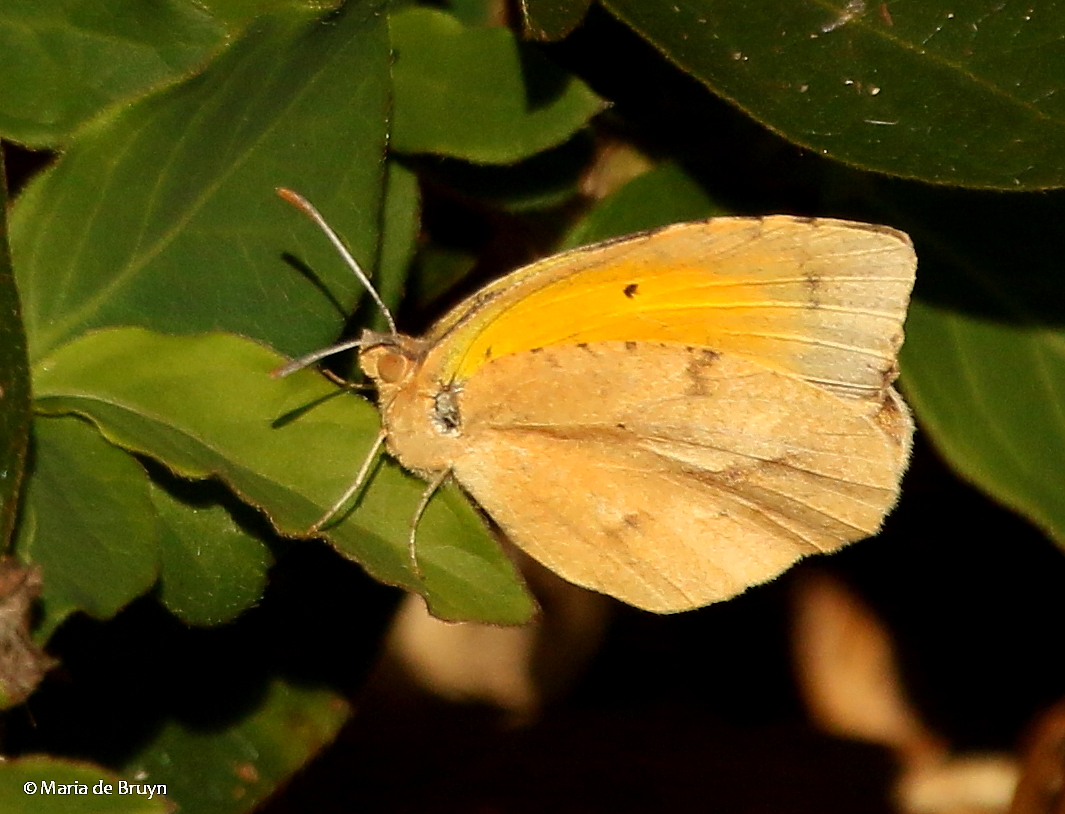
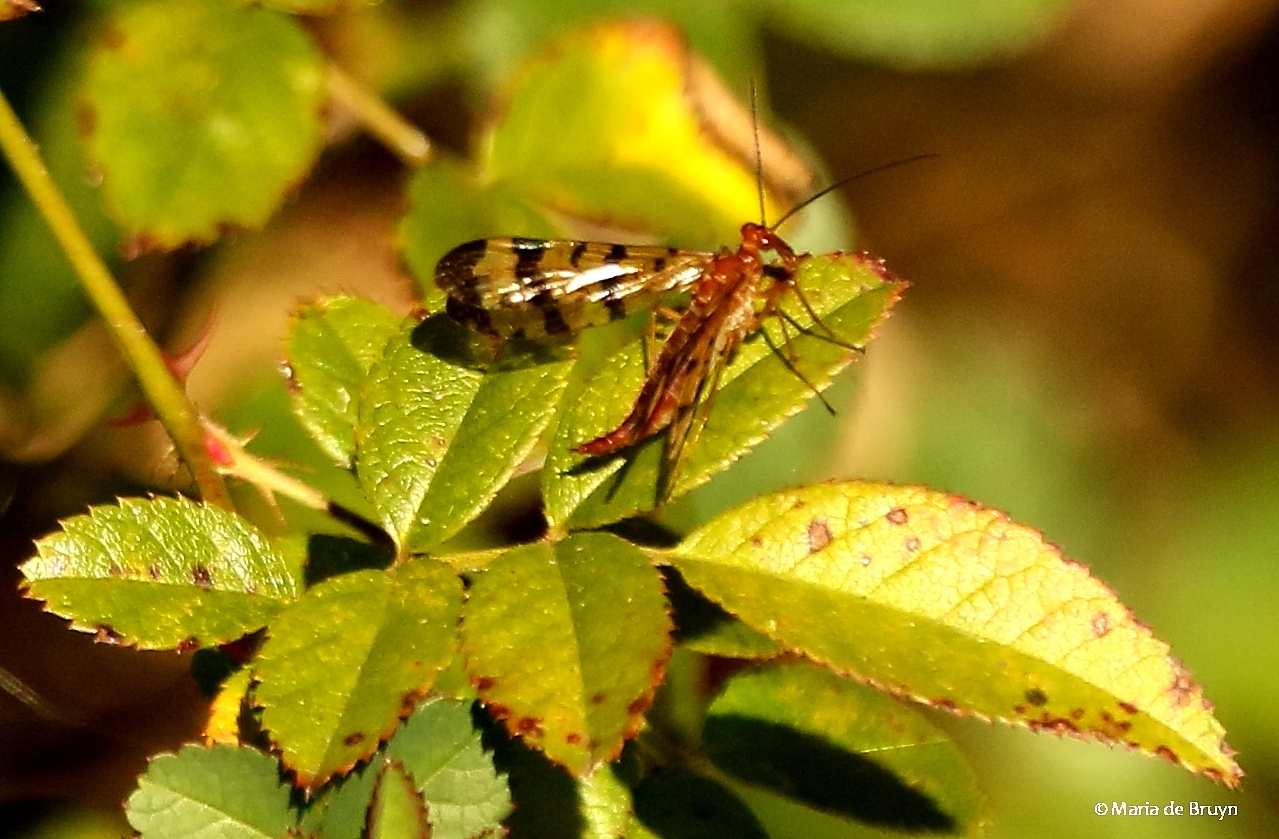
Up until the first morning frost this autumn, butterflies were still around, like this sleepy orange (Eurema nicippe); now that we have had several mornings of below-freezing temperatures, the butterflies are mostly gone as are the majority of bees. A scorpion fly (Panorpa) was in evidence at Cane Creek to my surprise.

sleepy-orange-i77a1003maria-de-bruyn-res  scorpion-fly-i77a0991maria-de-bruyn-res

eastern-gray-squirrel-i77a2505-maria-de-bruyn-res


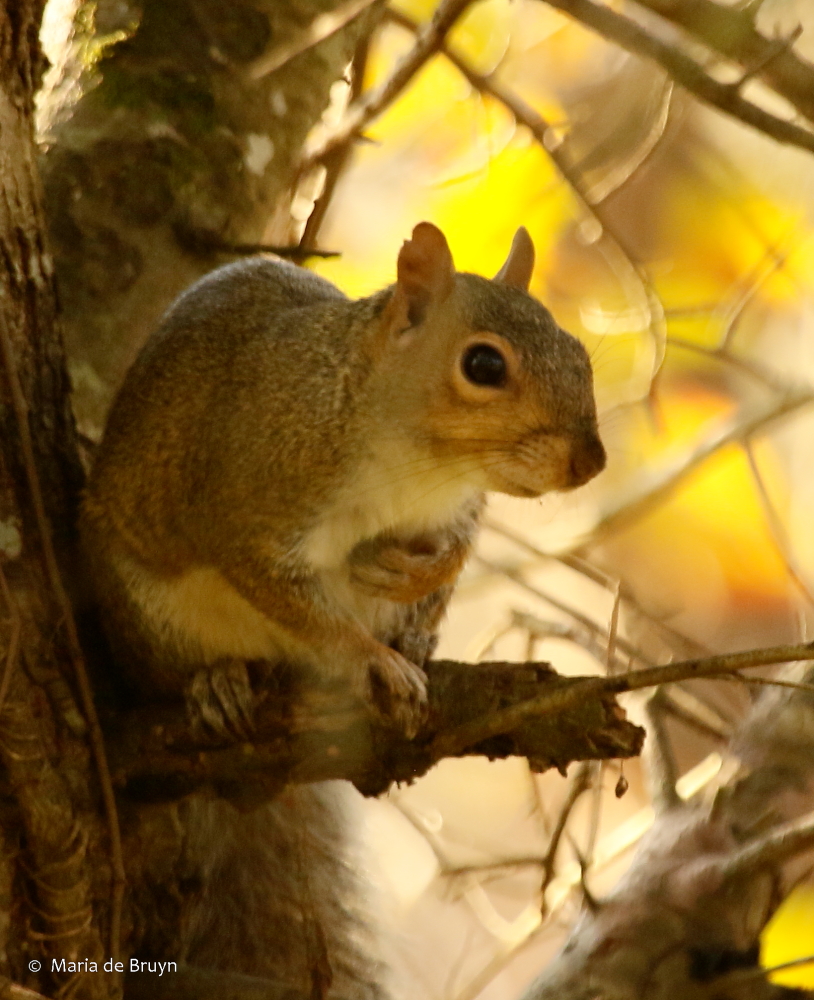
In between bird spottings, Eastern gray squirrels (Sciurus carolinensis) chittered at me at all three parks. And I was pleased to see some ruby-crowned kinglets since the one that has enjoyed the suet at my house the past three years hasn’t appeared yet.


ruby-crowned-kinglet-i77a6241-maria-de-bruyn-res     ruby-crowned-kinglet-i77a2574-maria-de-bruyn-res

…until now, Mother Earth has been able to tolerate our sloppy house habits. However, the stage has now been reached where she can no longer accept our behaviour in silence. The problems caused by environmental disasters can be seen as her response to our irresponsible behaviour. She is warning us that there are limits even to her tolerance. –  Dalai Lama

Some of the birds common in my yard are welcome sights at the nature reserves, too.

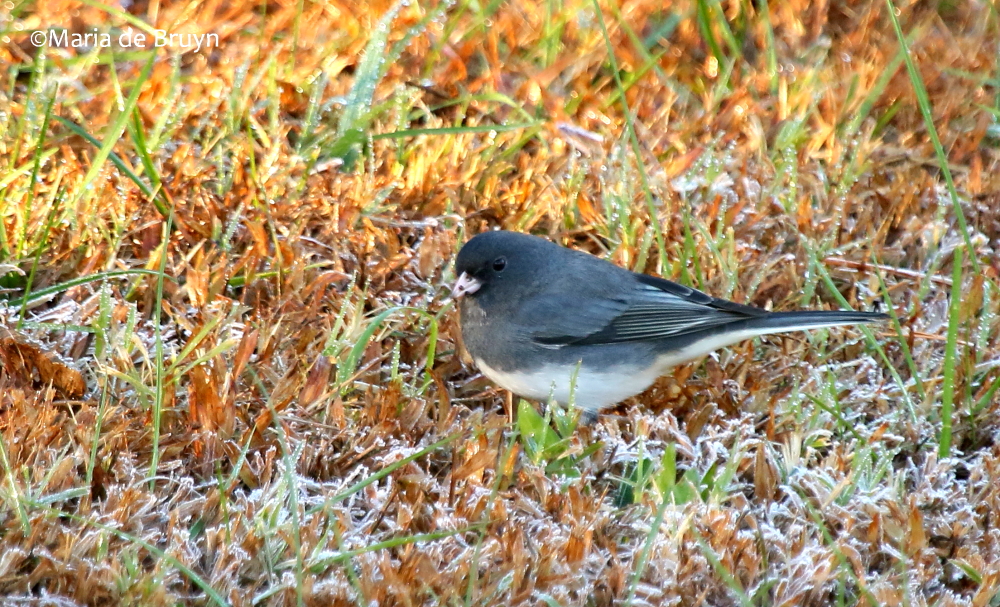
northern-mockingbird-i77a2312-maria-de-bruyn-res    dark-eyed-junco-i77a0624maria-de-bruyn-res

Northern mockingbird (Mimus polyglottos)         Dark-eyed junco (Junco hyemalis)

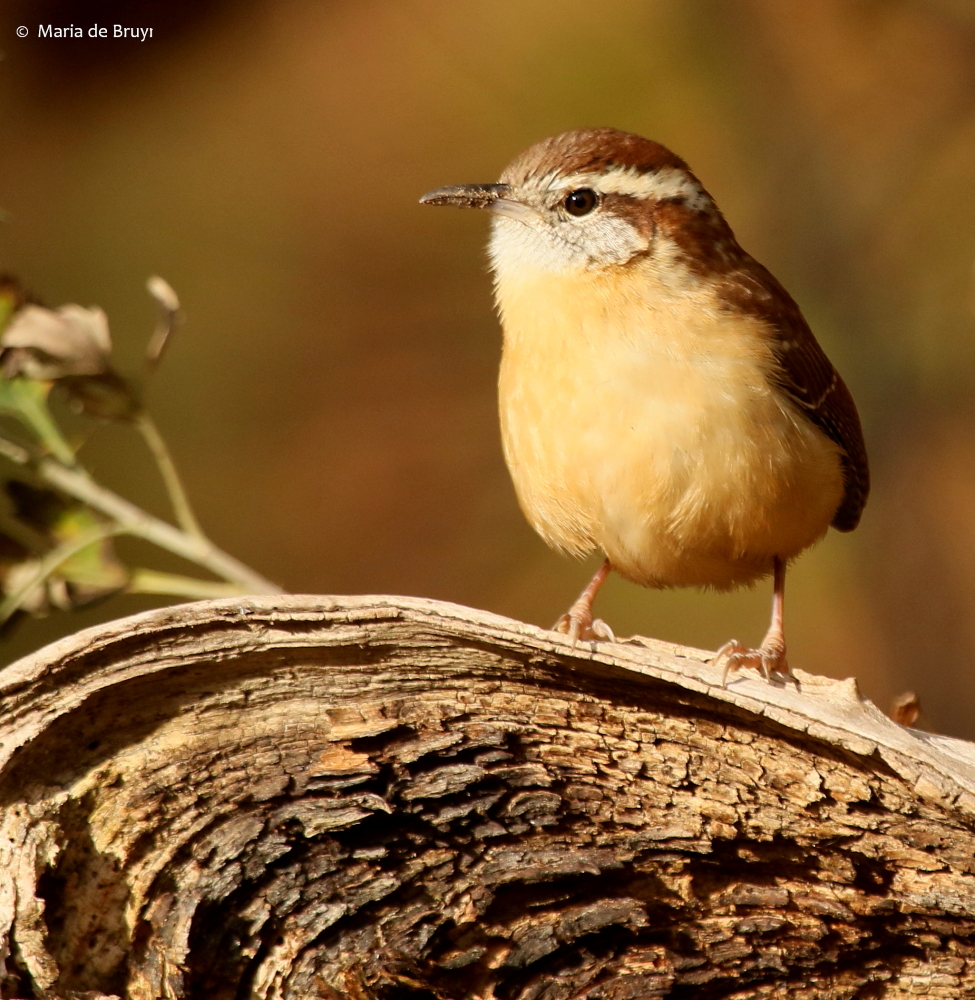
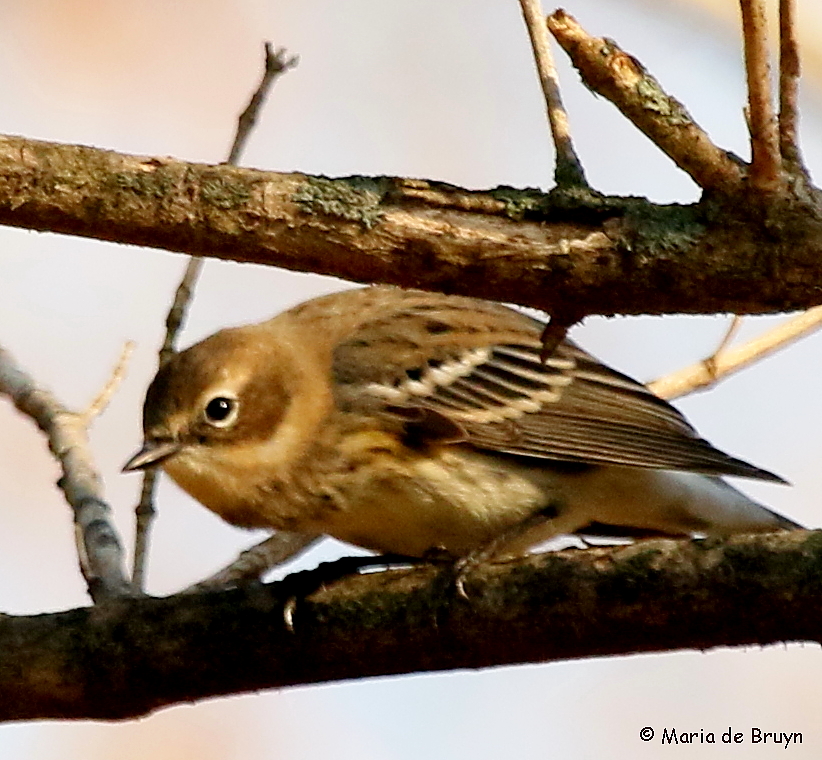
carolina-wren-i77a6358-maria-de-bruyn-res   yellow-rumped-warbler-i77a2780maria-de-bruyn-res

Carolina wren (Thryothorus ludovicianus)   Yellow-rumped warbler (Setophaga coronata)

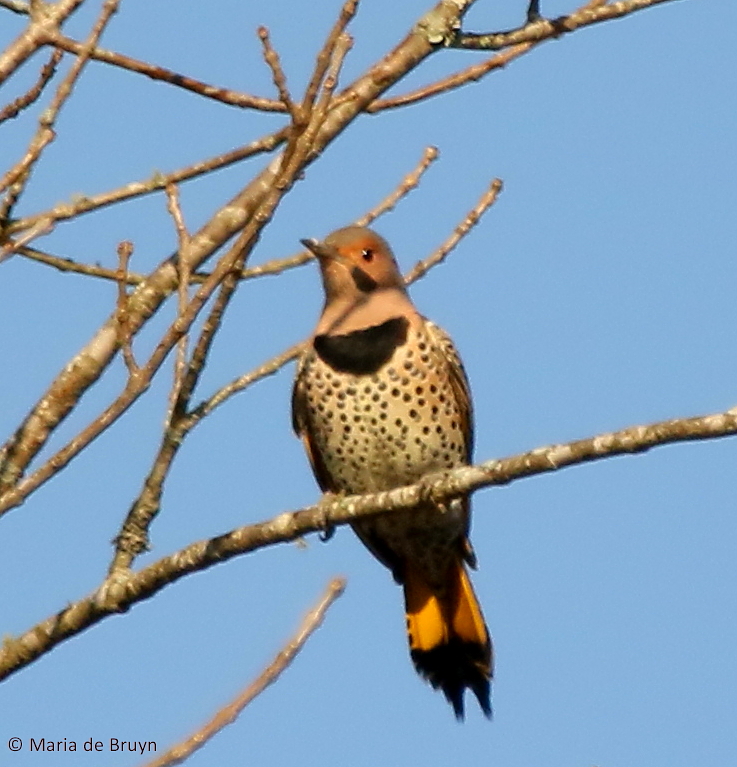
northern-flicker-i77a2485-maria-de-bruyn-res          eastern-bluebird-i77a0688maria-de-bruyn-res

Northern flicker (Colaptes auratus)               Eastern bluebird (Sialia sialis)

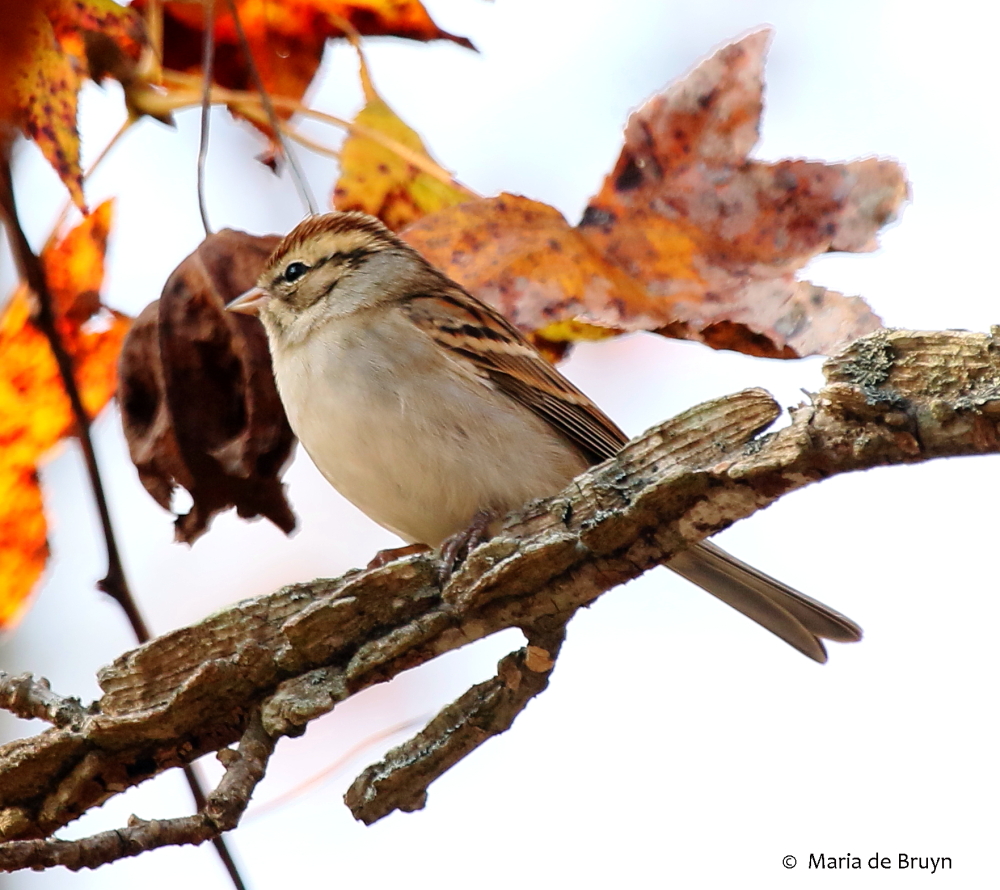
chipping-sparrow-i77a2915-maria-de-bruyn-res    chipping-sparrow-i77a2925-maria-de-bruyn-res

Chipping sparrow (Spizella passerina)

Many of the earth’s habitats, animals, plants, insects, and even microorganisms that we know of as rare or endangered, may not be known at all by future generations. We have the capacity, and the responsibility. We must act before it is too late.    Dalai Lama

And the occasional or rare visitors to my yard are appreciated in the woods and fields, too!

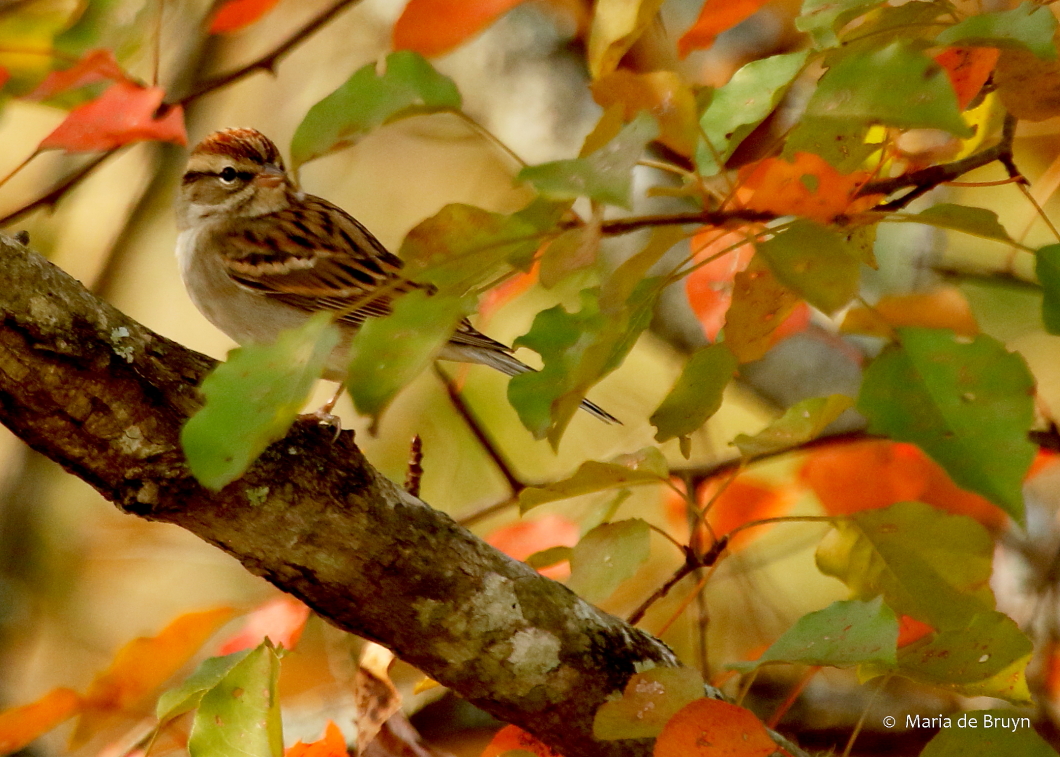
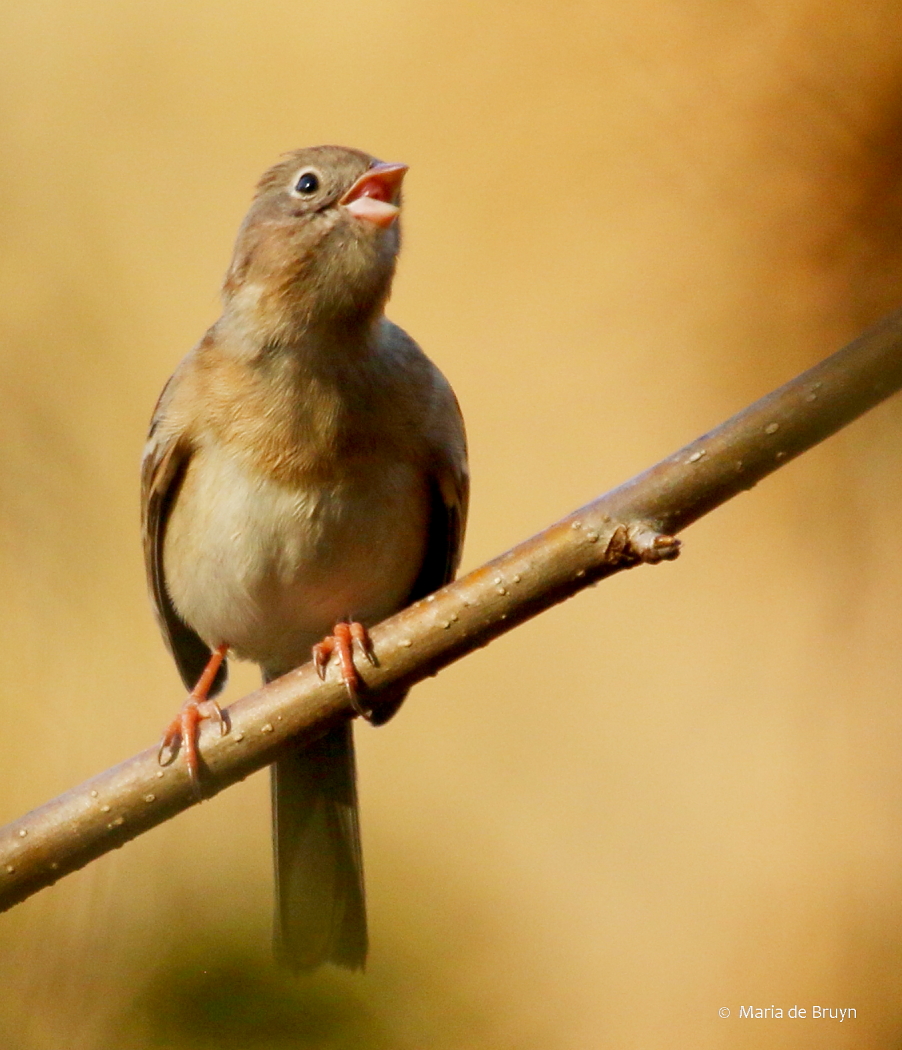
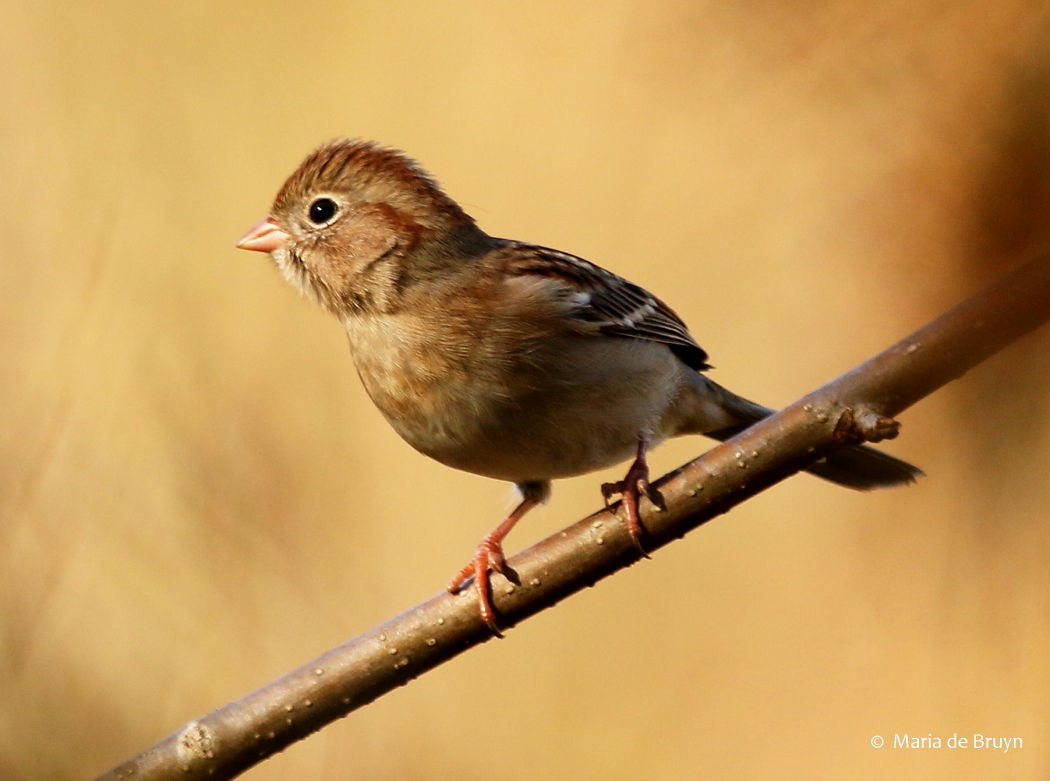
field-sparrow-i77a1587maria-de-bruyn-res      field-sparrow-i77a1634maria-de-bruyn-res

Field sparrow (Spizella pusilla)

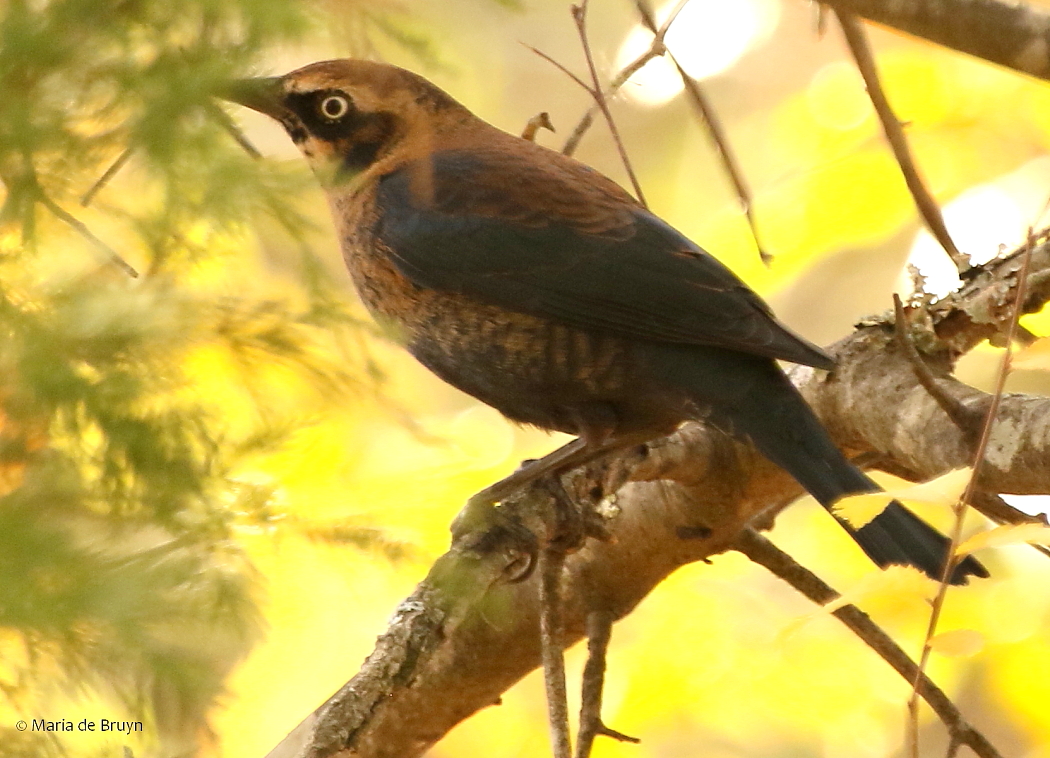
rusty-blackbird-i77a3199-maria-de-bruyn-res rusty-blackbird-i77a3110maria-de-bruyn-res

Rusty blackbird (Euphagus carolinus)

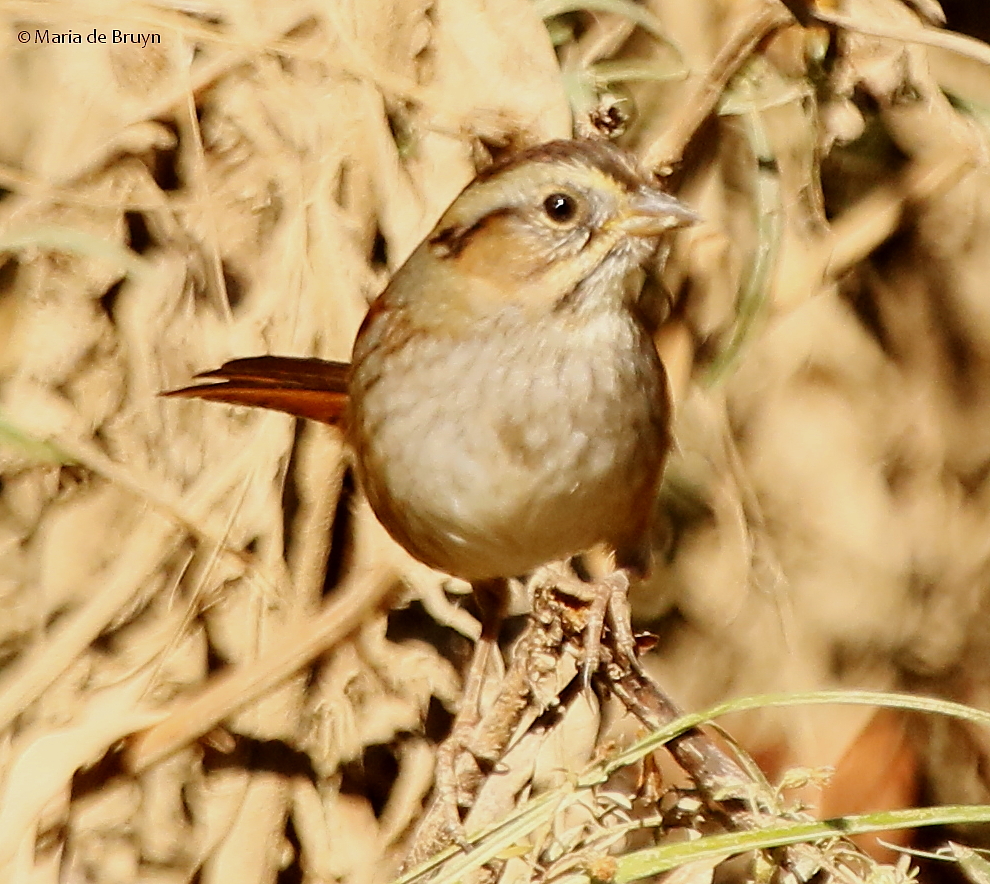
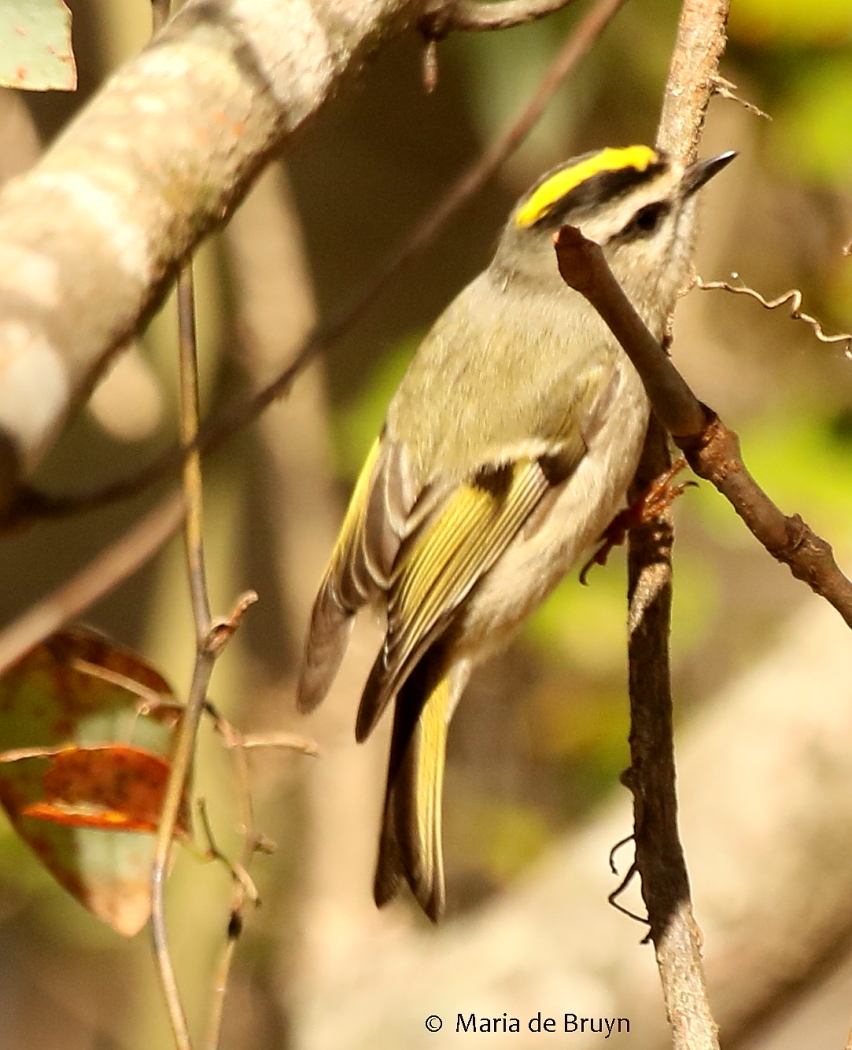
swamp-sparrow-i77a6063-maria-de-bruyn-res      golden-crowned-kinglet-maria-de-bruyn-i77a1711maria-de-bruyn-res

Swamp sparrow (Melospiza georgiana)             Golden-crowned kinglet (Regulus satrapa)

I feel that it is extremely important that each individual realize their responsibility for preserving the environment, to make it a part of daily life, create the same attitude in their families, and spread it to the community. – Dalai Lama

hermit-thrush-i77a6034-maria-de-bruyn-res  cedar-waxwing-i77a5945-maria-de-bruyn-res

Hermit thrush (Catharus guttatus)                          Cedar waxwing (Bombycilla cedrorum)

white-throated-sparrow-i77a1564maria-de-bruyn-res


What a great quote and slogan material:


Preserve the environment, make it part of your daily life and spread it to the community!

Winter mornings at Jordan Lake

Mist on the lake I77A5266© Maria de BruynSpending two cold early mornings at Jordan Lake the past couple weeks reinforced my conviction that getting out into nature is a restorative and calming activity. And it doesn’t need to be warm. Although a doctor pronounced me healed after my recent hospitalization and home treatment, it turns out that I’m not completely healthy after all. Starting a new treatment was a bit stressful, but seeing the birds at the lake was a joy.

snag I77A6203© Maria de Bruyn res

Mind you, I’d love to see other wildlife there, but the mammals, reptiles and amphibians have been hiding out or keeping away from areas frequented by people. The fact that it is still hunting season probably makes some of them somewhat shy, too. I did manage to see a fly on one morning though.

fly I77A2979© Maria de Bruyn

The animals do leave behind signs of their presence, however. Tracks in the sand is one give-away that they passed by.

animal tracks I77A2998© Maria de Bruyn res

The beavers (Castor canadensis) leave behind distinctively gnawed tree stumps – and here you can also see one tree that they haven’t quite finished felling yet.

beaver tree I77A2933© Maria de Bruyn res beaver tree I77A2950© Maria de Bruyn res

The shoreline vegetation was decorated with gull feathers in various areas of the lake.

bird feather I77A2711© Maria de Bruyn res bird feather I77A2697© Maria de Bruyn res

heron track I77A2924© Maria de Bruyn res


A sandy track of what I assumed was a great blue heron (Ardea herodias) didn’t produce a bird at that site, but I saw these beauties in flight at two other sites.


great blue heron I77A3926© Maria de Bruyn res

great blue heron I77A2558© Maria de Bruyn res

At one area, I spotted a bird that seemed unfamiliar just as it was turning to take off. Friendly birders online identified it as an American pipit (Anthus rubescens), the first time I had seen this species (known as a “lifer” among the birding crowd). The next week I saw a killdeer (Charadrius vociferous) in the same spot but got a better shot.

American pipit I77A2526© Maria de Bruynkilldeer I77A5908© Maria de Bruyn

The killdeer didn’t hang around too long either, but I was able to get a couple of nice flight photos this time.

killdeer I77A5933© Maria de Bruyn res killdeer I77A5931© Maria de Bruyn res

American crow I77A2810© Maria de Bruyn res


The American crows (Corvus brachyrhynchos) were foraging in the shoreline woods, while the song sparrow was looking for food among the woody detritus left at lakeside.


song sparrow I77A5877© Maria de Bruyn res song sparrow I77A5866© Maria de Bruyn res

In another place, the crows were very loudly making their presence known – it turned out that a red-tailed hawk (Buteo jamaicensis) was perched nearby and they were making sure everyone knew the hawk was there.

red-tailed hawk I77A3850© Maria de Bruyn resAmerican crow I77A3878© Maria de Bruyn res

In the trees near the lake, various birds could be seen: the ruby-crowned kinglet (Regulus calendula) was very busy as usual, flying from a sweet gum (Liquidambar styraciflua) to other trees in rapid succession.

ruby-crowned kinglet I77A5662© Maria de Bruyn ruby-crowned kinglet I77A6049© Maria de Bruyn

At one site, there were many dark-eyed juncos foraging on the ground and taking pauses in the trees and shrubs around. Juncos are actually a type of sparrow and a group of sparrows is known by several names: a crew, a flutter, a meinie, a quarrel and an ubiquity.

dark-eyed junco I77A2838© Maria de Bruyn dark-eyed junco I77A2379© Maria de Bruyn

The downy woodpeckers (Dryobates pubescens) and red-bellied woodpeckers (Melanerpes carolinus) were in evidence at various lake sites.

downy woodpecker I77A2504© Maria de Bruyn resRed-bellied woodpecker I77A5384© Maria de Bruyn res

Overhead, the double-crested cormorants (Phalacrocorax auritus) flew by; they would land and share space with the ring-billed gulls (Larus delawarensis).


double-crested cormorant I77A2731© Maria de Bruyn resring-billed gull I77A3558© Maria de Bruyn res

ring-billed gull I77A2389© Maria de Bruyn res


The ring-billed gulls were numerous and occasionally one swooped down to fish not too far from shore.

ring-billed gull I77A5489© Maria de Bruyn resring-billed gull I77A5497© Maria de Bruyn res

While I was watching, the horned grebes (Odiceps auritus) were more successful in getting meals as they dove into the cold water.

Horned grebe I77A3662© Maria de Bruynhorned grebe I77A3094© Maria de Bruyn

belted kingfisher I77A4014© Maria de BruynA couple times I was very surprised by a bird that suddenly seemed to emerge out of nowhere to fly over my head or just in front of me. That was the case with a beautiful male wood duck (Aix sponsa) and a belted kingfisher (Megaceryle alcyon).


wood duck I77A3719© Maria de Bruyn res wood duck I77A3718© Maria de Bruyn res

bald eagle I77A3030© Maria de BruynAn adult bald eagle (Haliaeetus leucocephalus) soared by just as I was approaching an observation platform in one area; the distance and height were considerable but I managed a shot. A Bonaparte’s gull (Chroicocephalus philadelphia) flew by a little lower, while a Carolina chickadee (Poecile carolinensis) sat still for a portrait.


Bonaparte's gull I77A3962© Maria de Bruyn


Carolina chickadee I77A5806© Maria de Bruyn res

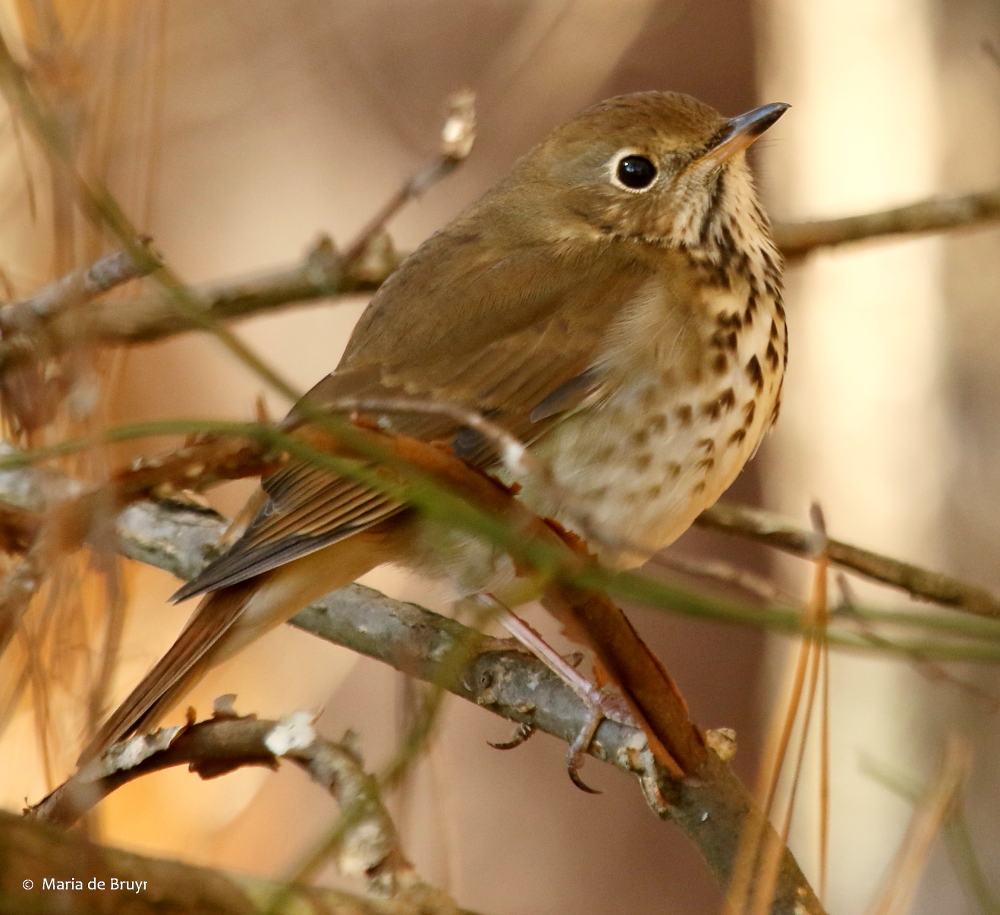
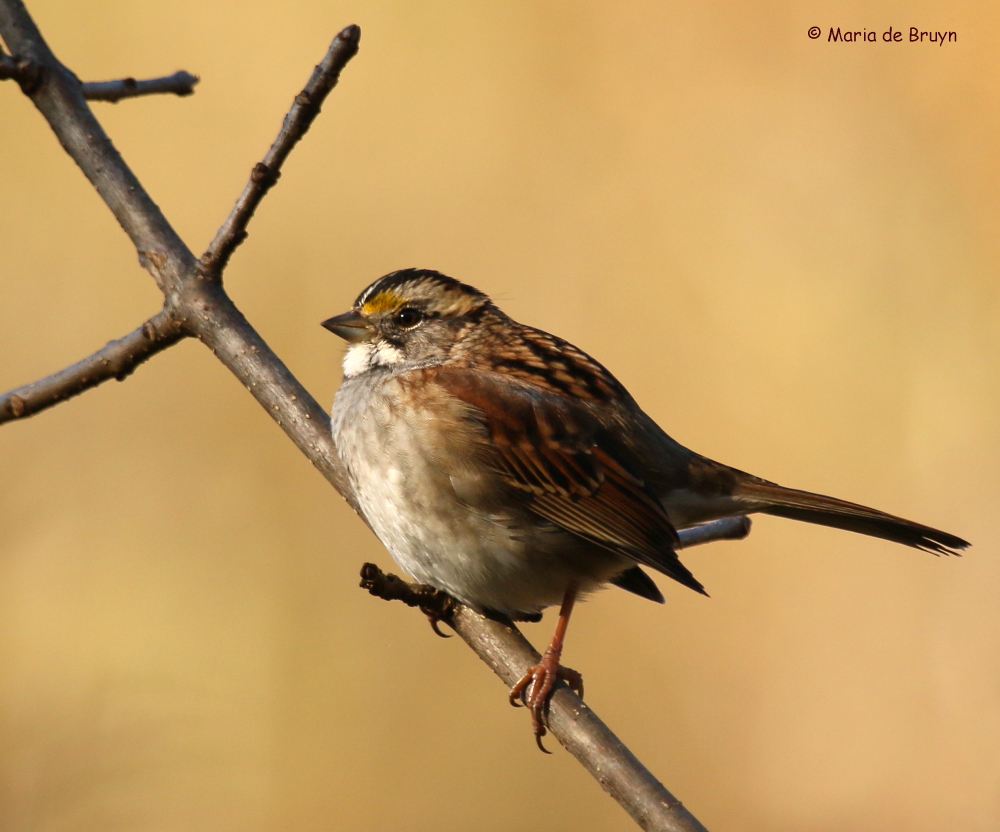
My last avian companions during my latest lake walk were a white-throated sparrow (Zonotrichia albicollis) and a lovely hermit thrush (Catharus guttatus).

white-throated sparrow I77A6115© Maria de Bruynhermit thrush I77A6165© Maria de Bruyn

I returned home on both occasions a satisfied birder!


Woodpecker welcome!

My celebration for the arrival of 2016 happened on 21 January, when I had my first nature walk of the year. It was delayed by a hospitalization at the start of the year and home treatments for a couple weeks after that. When a relatively warm and sunny day arrived, I just had to get out there despite still dealing with some recovery-related issues. I chose the North Carolina Botanical Garden as my venue since it has plenty of benches for short rests in between walking. It was simply lovely.

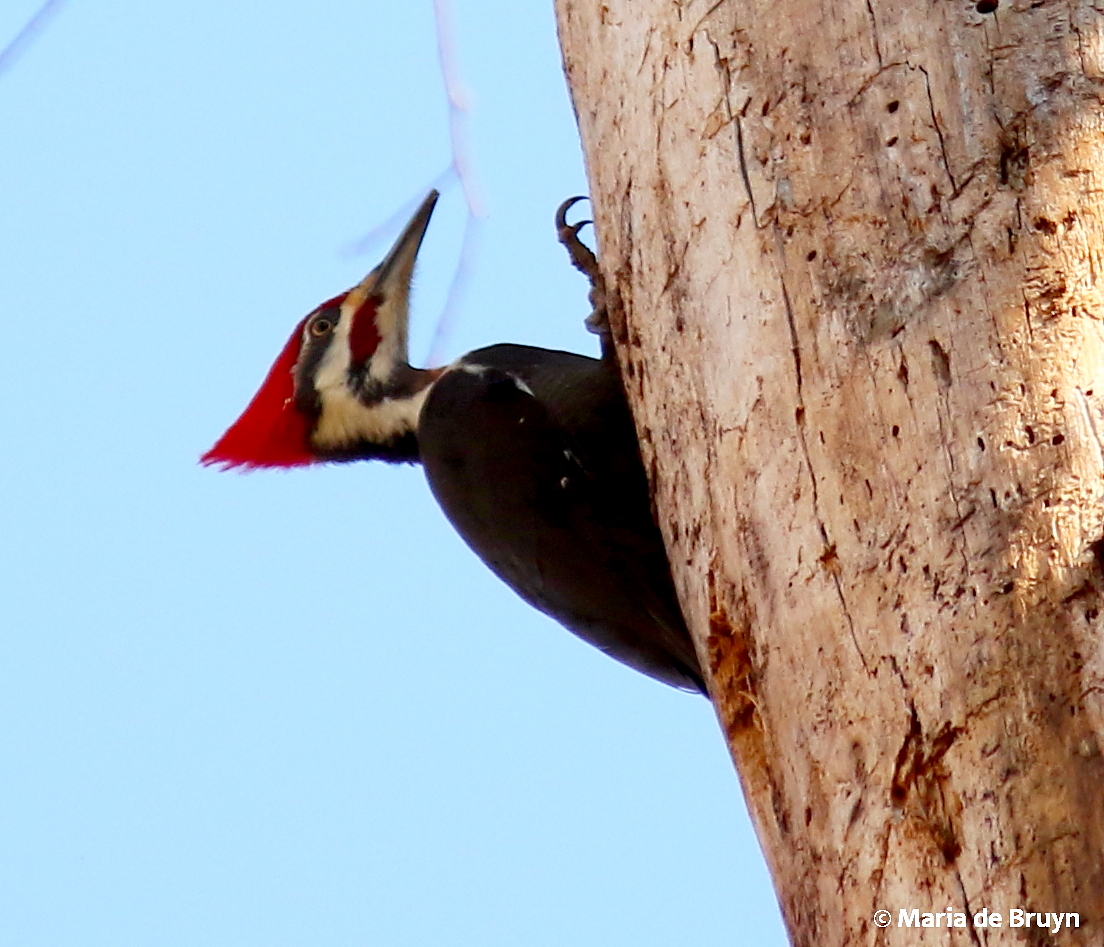
pileated woodpecker I77A7321© Maria de BruynMy first bird of the day was a beautiful male pileated woodpecker (Dryocopus pileatus), a harbinger of the day’s theme – the woodpeckers were my welcome committee!

Loud rhythmic hammering had me searching the snags among the tall trees for the next greeter – it reminded me of the facts I had learned about woodpeckers and their adaptations to a pecking life.

downy woodpecker I77A7372© Maria de BruynIt turned out to be a diminutive downy woodpecker (Dryobates pubescens), whose hammering sounds were enhanced by the hollow stem with which he was busy.
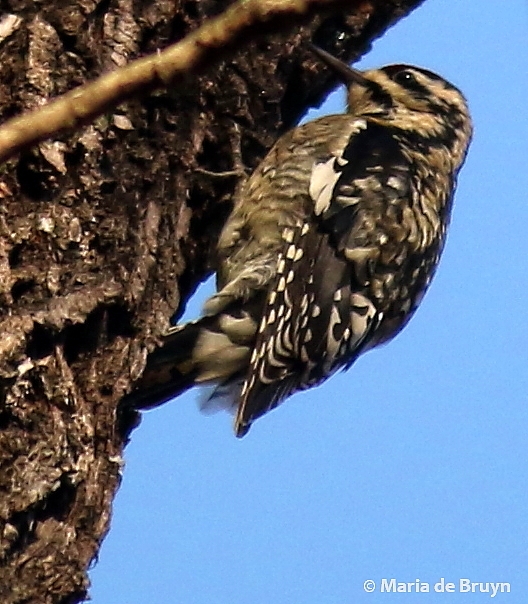
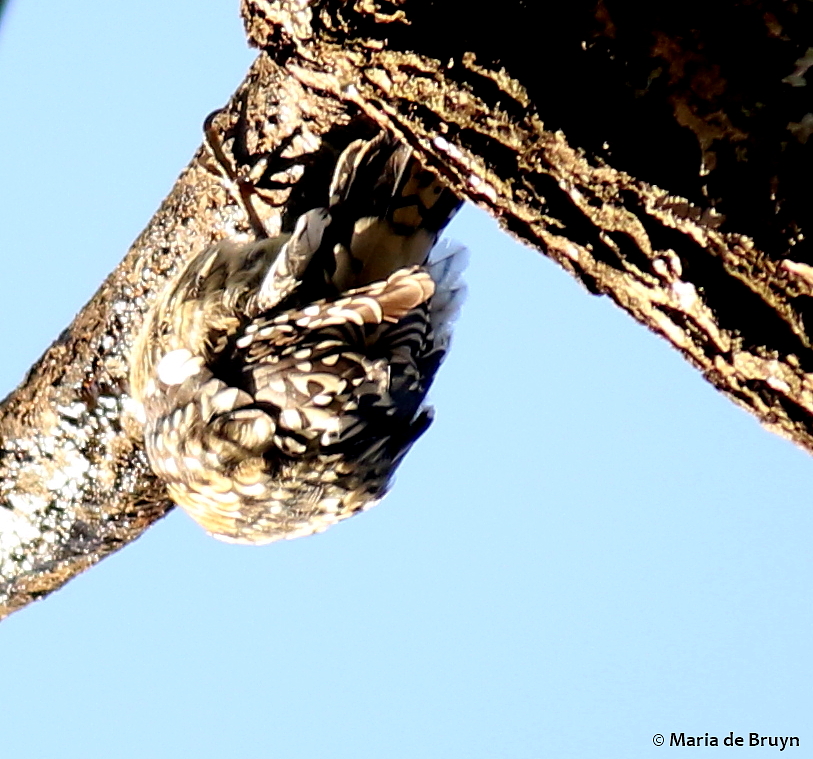
Next up was a lovely female yellow-bellied sapsucker (Sphyrapicus varius) who was very industriously flitting from branch to branch in search of sustenance.

yellow-bellied sapsucker I77A7419© Maria de Bruynyellow-bellied sapsucker I77A7582© Maria de Bruyn

When flattened against tree trunks, she demonstrated how well camouflaged her back feathers make her. A male sapsucker showed it, too.

yellow-bellied sapsucker I77A7476© Maria de Bruyn

yellow-bellied sapsucker I77A7860© Maria de Bruyn res

red-bellied woodpecker I77A8242© Maria de BruynA red-bellied woodpecker (Melanerpes carolinus) rounded out the welcoming committee.

The other birds didn’t disappoint. Several species were in the woods and at the feeders near the Garden’s bird blind. A lovely Carolina chickadee (Poecile carolinensis) flitted about. A tufted titmouse (Baeolophus bicolor) was singing.


Carolina chickadee I77A7639© Maria de Bruyn tufted titmouse I77A7388© Maria de Bruyn


white-breasted nuthatch I77A8203© Maria de Bruyn


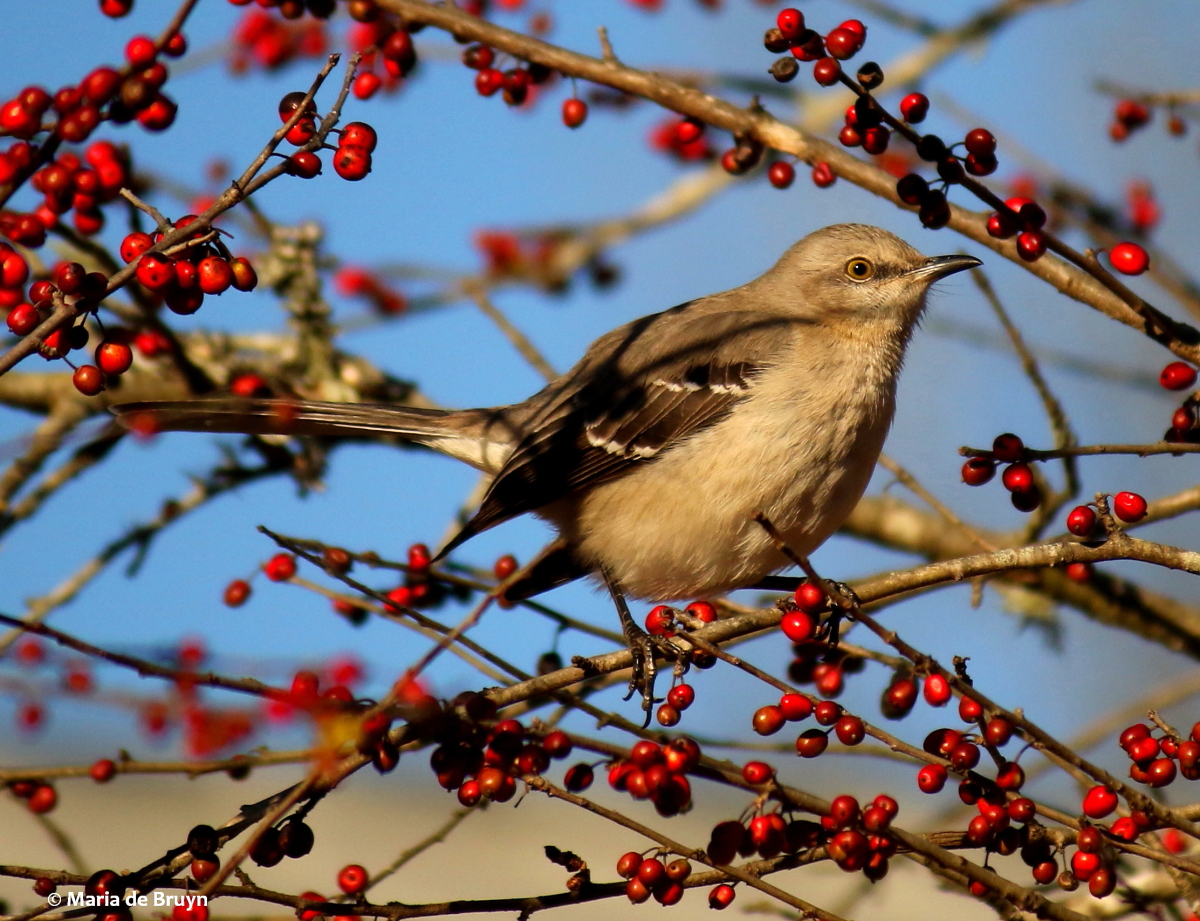
A white-breasted nuthatch (Sitta carolinensis) foraged on tree trunks overhead. A Northern mockingbird (Mimus polyglottos polyglottos) posed among red winter berries.


Northern mockingbird I77A7737© Maria de Bruyn res

hermit thrush I77A7658© Maria de Bruyn


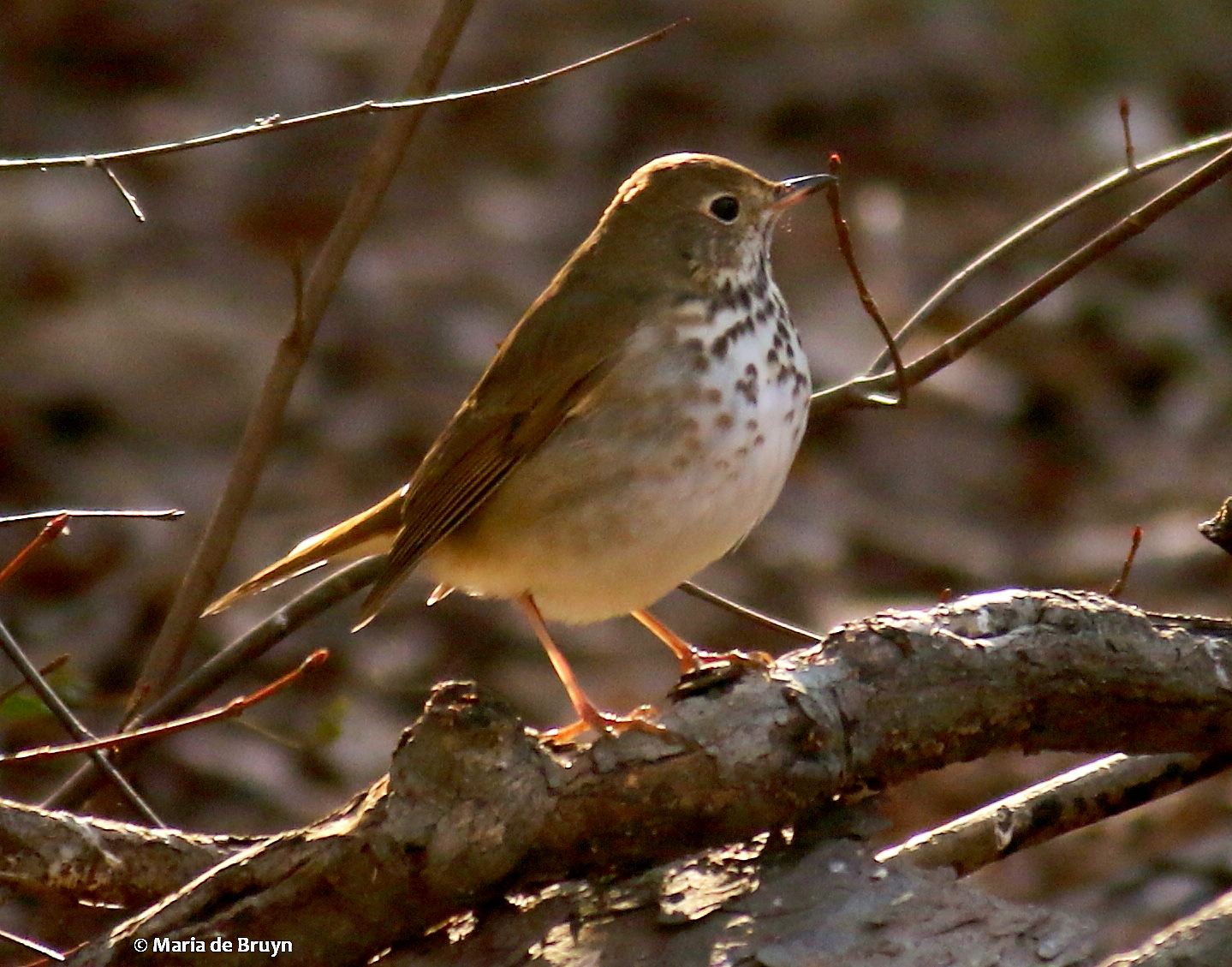
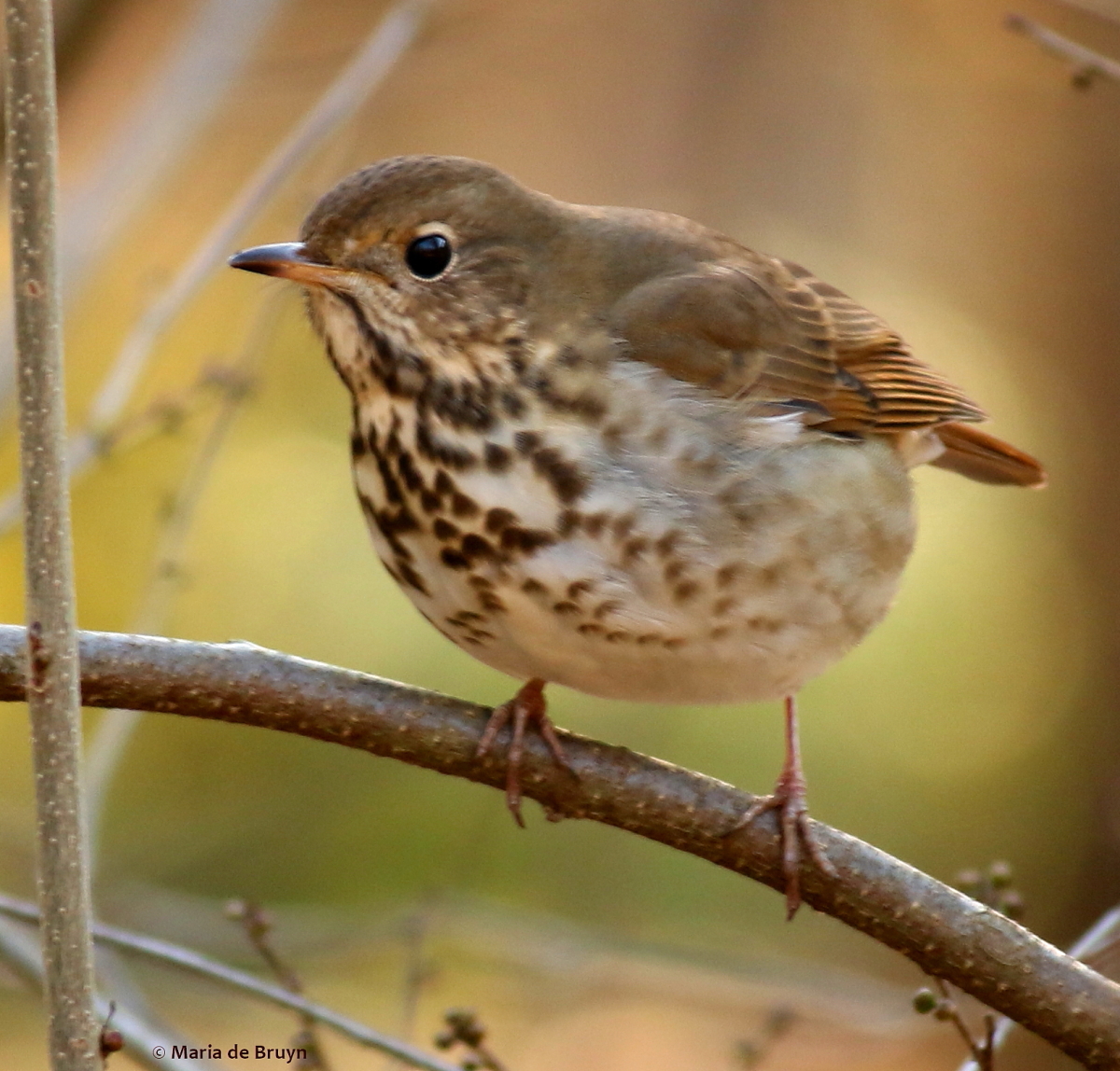
A hermit thrush (Catharus guttatus) emerged near the bird blind, and then the same bird or another seemed to accompany me as I walked another part of the native habitats garden.


hermit thrush I77A7818© Maria de Bruyn

hermit thrush I77A7788© Maria de Bruyn res

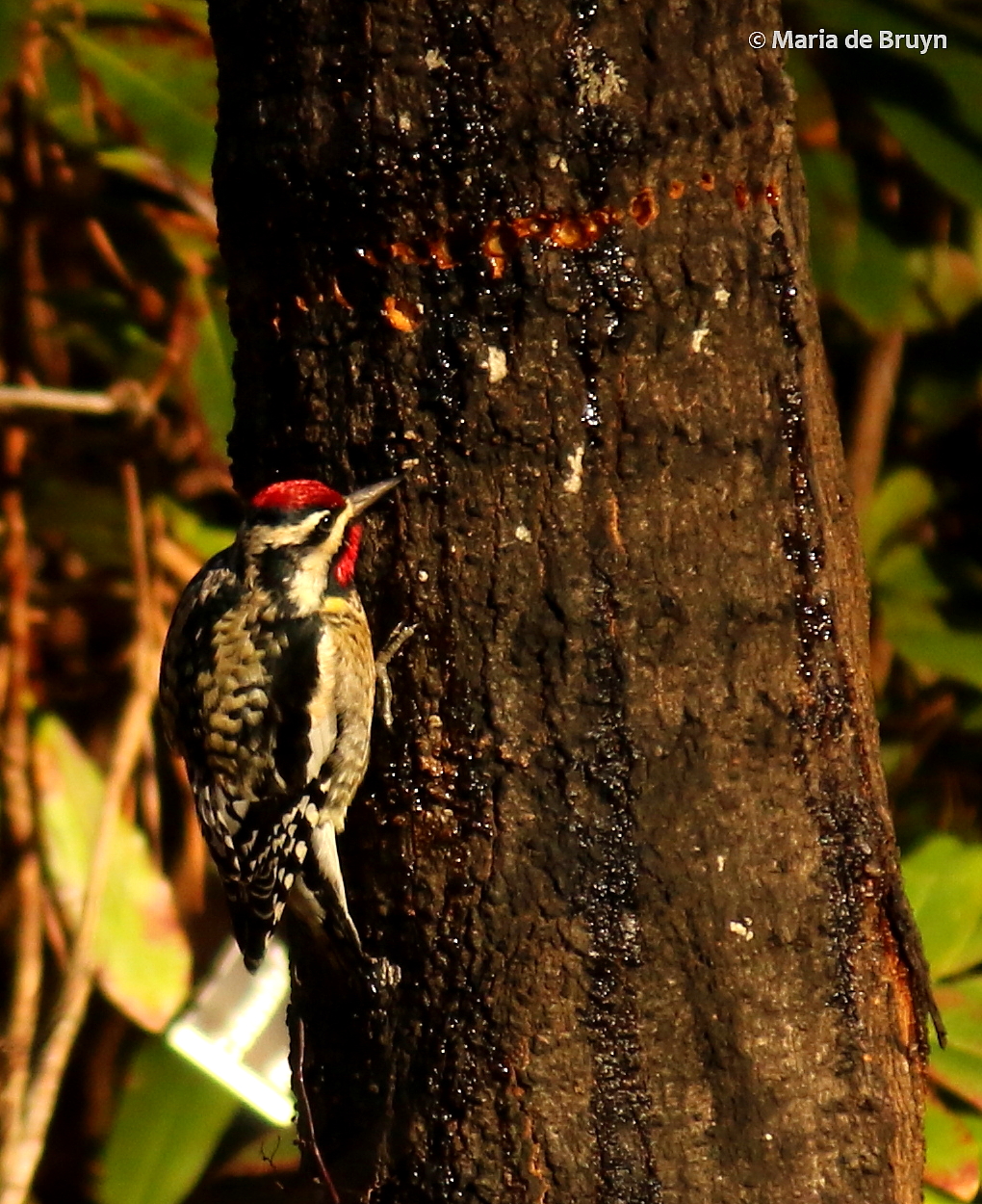
Later, a male sapsucker (identifiable by his red throat) appeared near the Paul Green cabin, where he had been busy working on his sapwells.

yellow-bellied sapsucker I77A7858© Maria de Bruyn res yellow-bellied sapsucker I77A7854© Maria de Bruyn res

Shortly thereafter a downy woodpecker came to the same spot and sampled sap (or something else) from the row of holes left by the sapsucker! That was a nice example of how what one animal does can benefit another, too.

downy woodpecker I77A7912© Maria de Bruyn

downy woodpecker I77A7921© Maria de Bruyn res

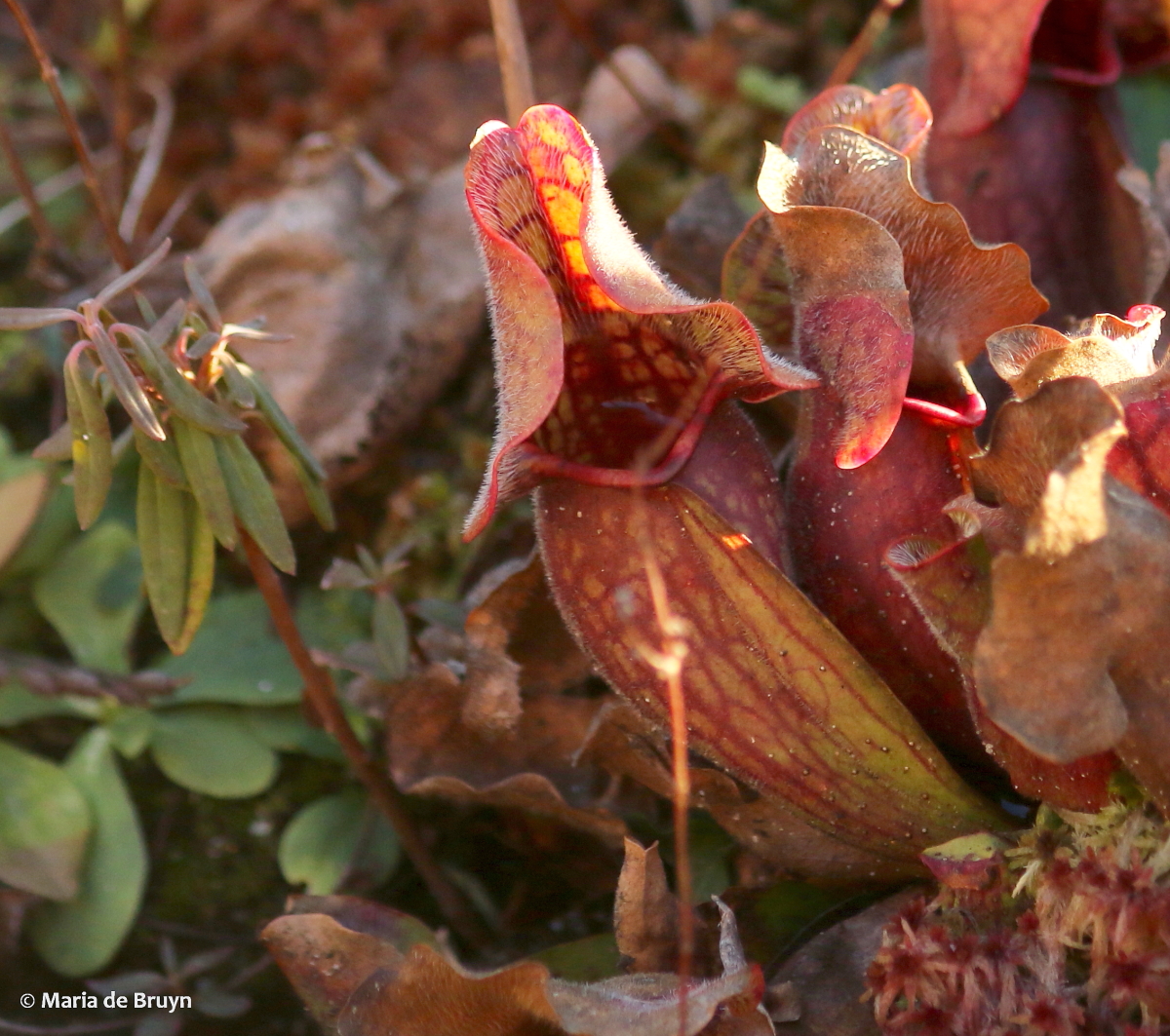
During a plant interlude, I was surprised to see some Southern purple pitcher plants (Sarracenia purpurea) that had not yet shriveled up in the cold.

Southern purple pitcher plant I77A8086© Maria de Bruyn Southern purple pitcher plant I77A8081© Maria de Bruyn res


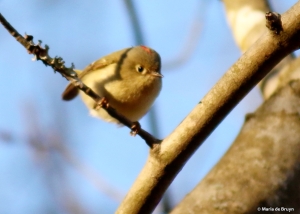
When, I was leaving, a ruby-crowned kinglet (Regulus calendula) alighted overhead,

ruby-crowned kinglet I77A8165© Maria de Bruyn ruby-crowned kinglet I77A8164© Maria de Bruyn

a red-bellied woodpecker arrived, and one more woodpecker made an appearance – a Northern flicker (Colaptes auratus) high up behind some branches in a tall tree. I was using my small zoom lens so the photo quality isn’t great, but you can see that s/he was there.

red-bellied wooodpecker I77A8234© Maria de Bruyn Northern flicker I77A8154© Maria de Bruyn

downy woodpecker I77A8006© Maria de BruynThe only woodpeckers that are common in our town that I missed were the red-headed and hairy woodpeckers – it was truly a woodpecker welcome and a really lovely start to my wildlife photography outings for this year!

Birds, berries, nuts and seeds – enjoyment of nature’s bounty

So this wasn’t my last blog of 2015 after all. An unexpected hospital admission on 30 December brought about quite a delay in my blogging efforts. But I managed to complete this in instalments over the past days and hope you enjoy the final version, which I am happily able to post on my second day at home in 2016!

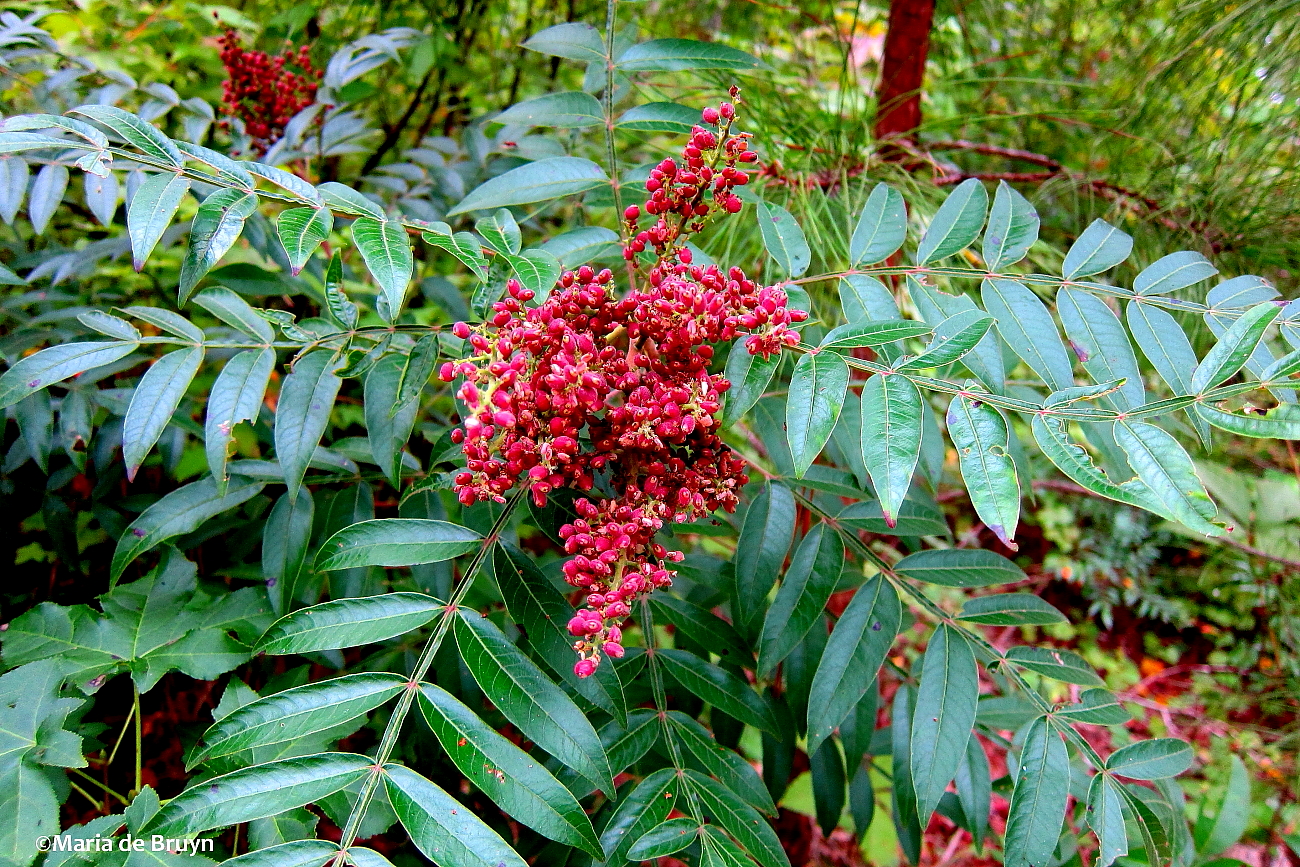
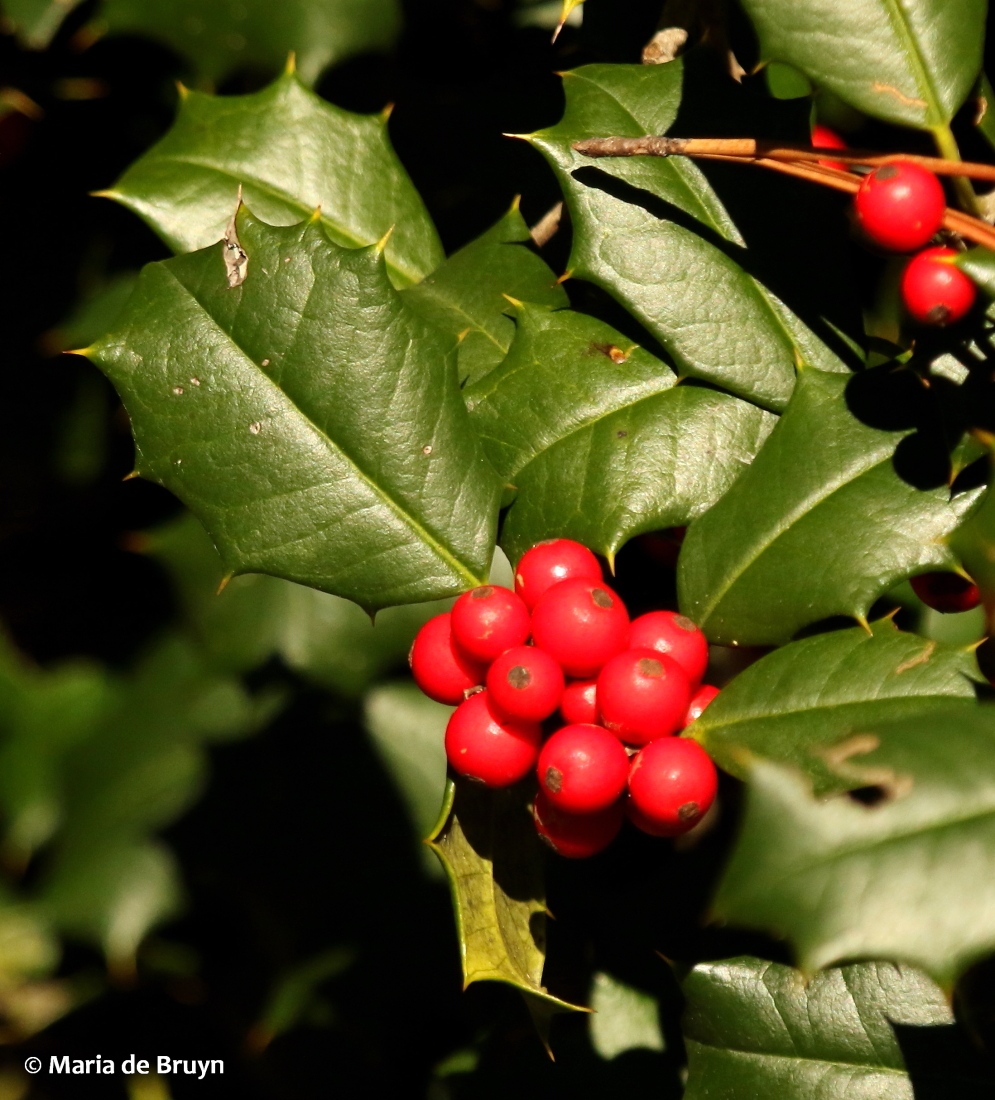
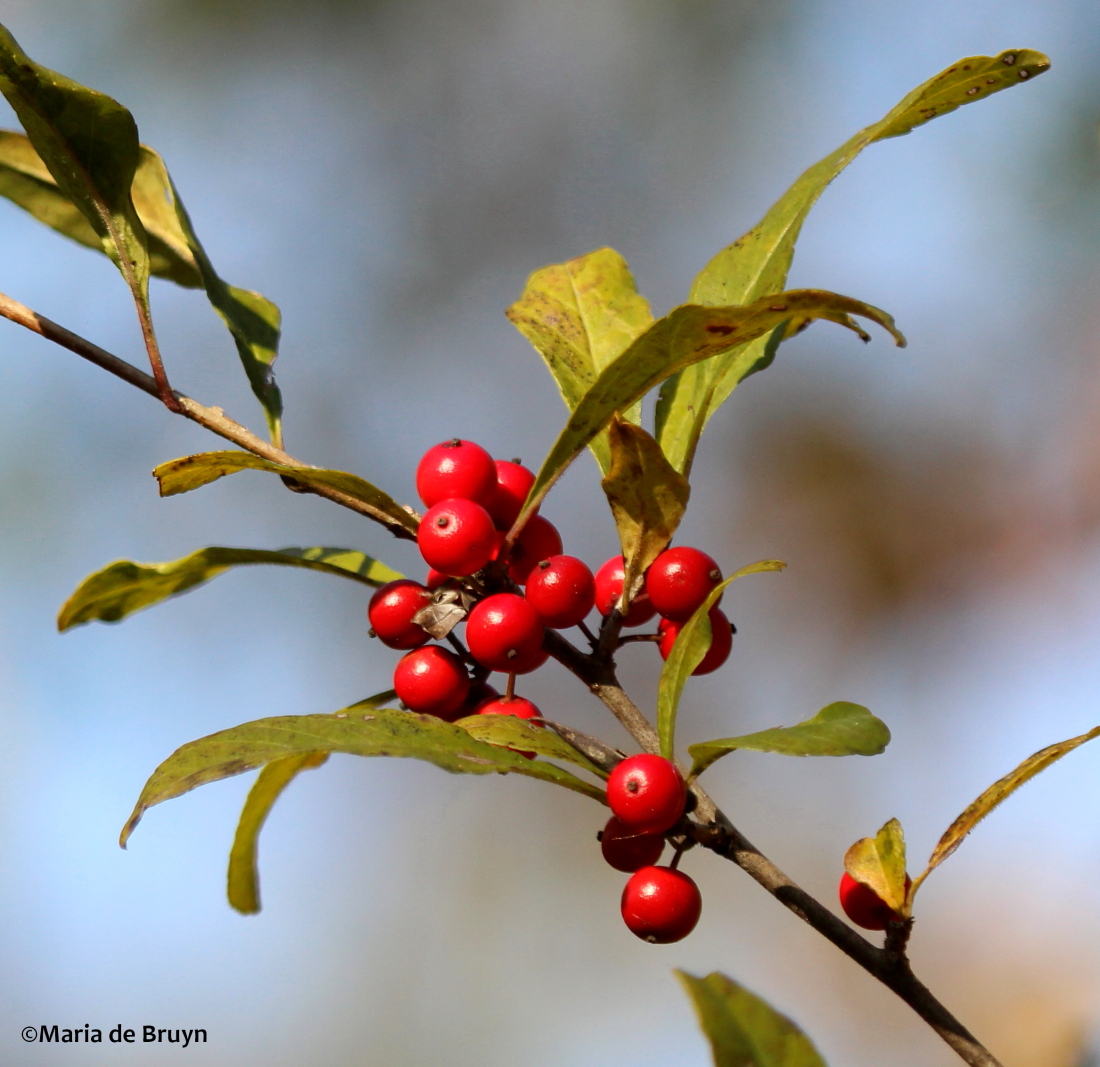
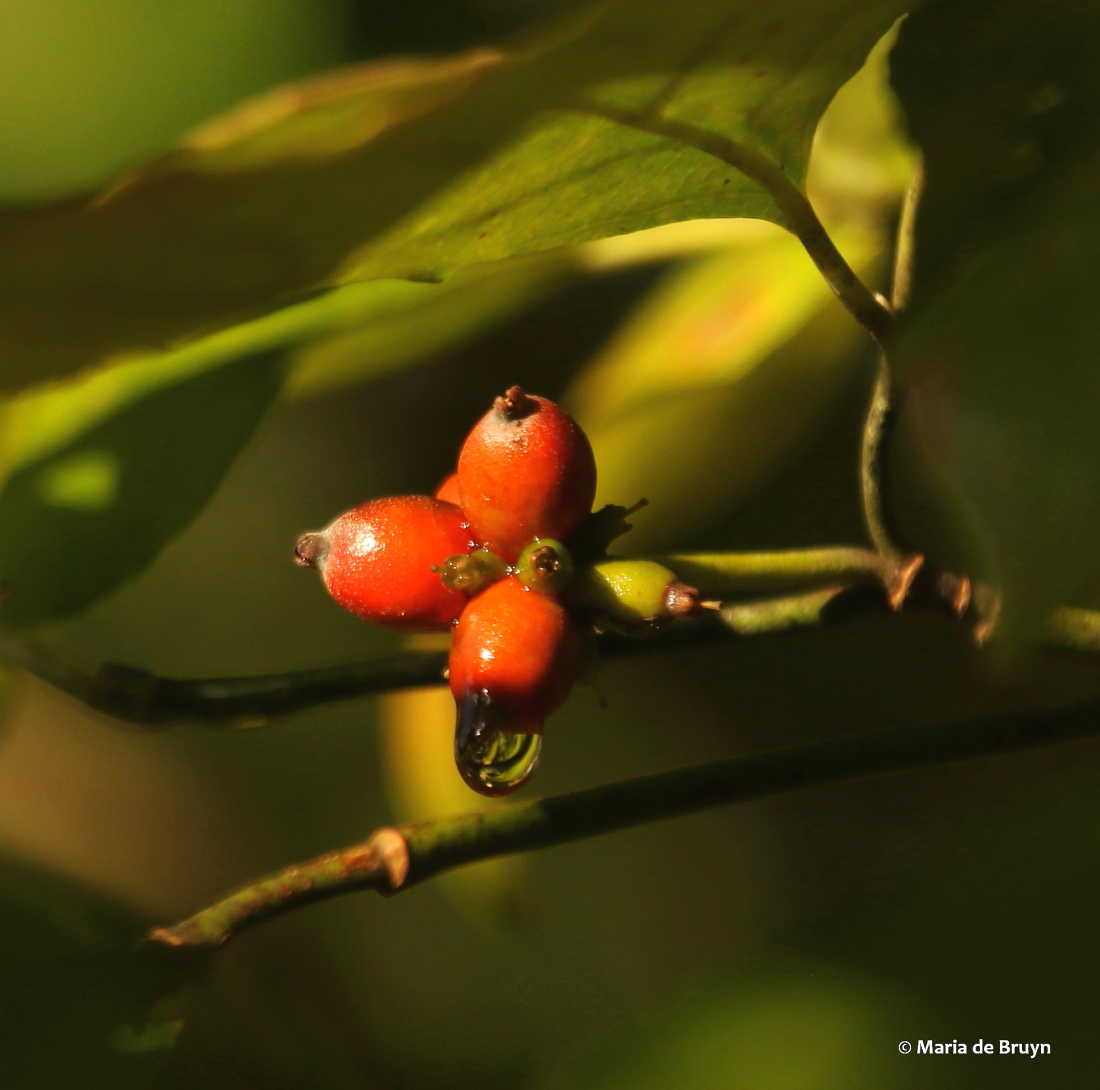
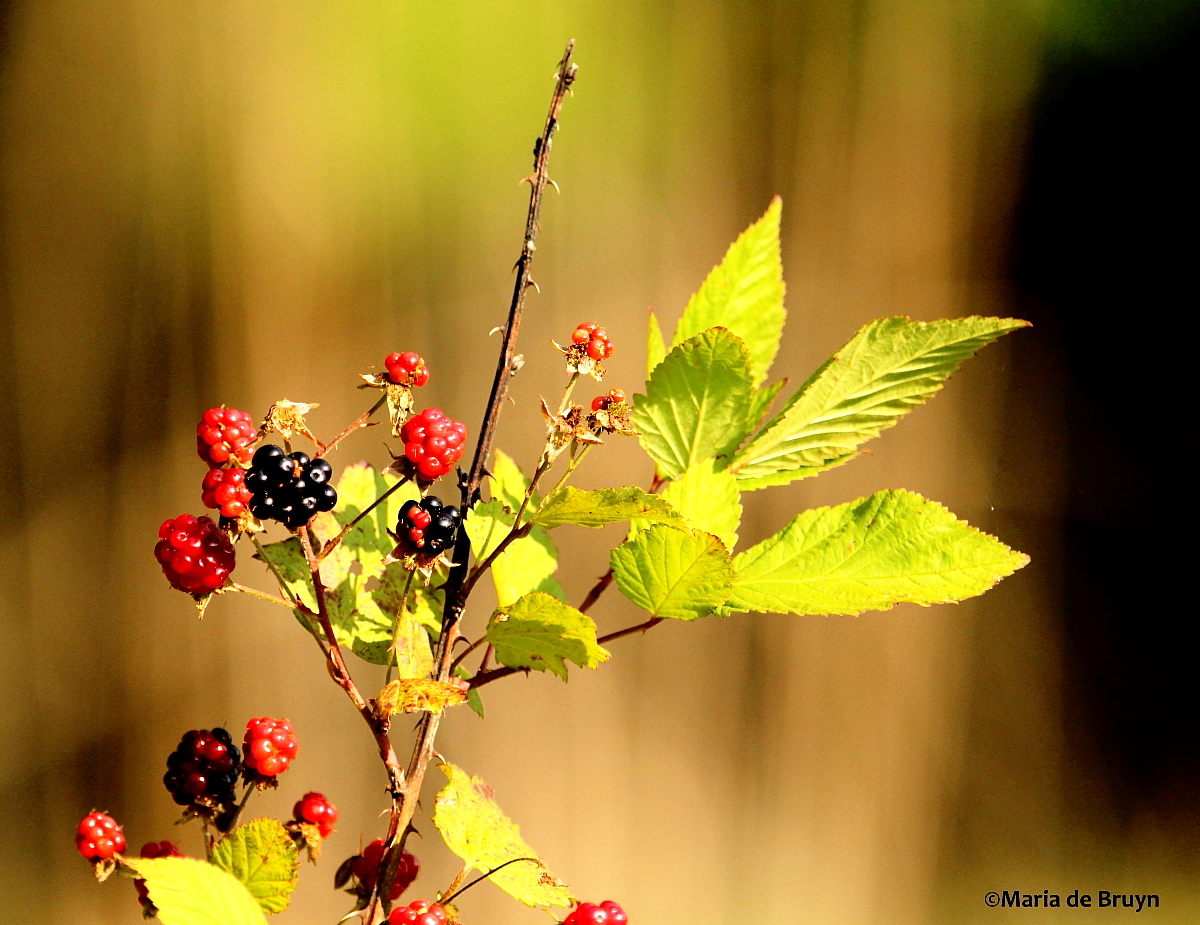
During late summer, when various plants have or start developing fruit, the birds begin to enjoy nature’s bounty. Here in North Carolina, they will eat the berries of native plants such as American beautyberry (Callicarpa americana), winged sumac (Rhus copallinum), American holly (Ilex opaca), possumhaw (deciduous holly, Ilex decidua), flowering dogwood (Cornus florida) and wild blackberries (Rubus).
American beautyberry IMG_7637© Maria de Bruyn resWinged sumac IMG_5377©Maria de Bruyn res

American holly I77A3150© Maria de Bruyn resDeciduous holly IMG_4428© Maria de Bruyn res

Flowering dogwood DK7A7731© Maria de Bruyn reswild blackberryIMG_2588©Maria de Bruyn res


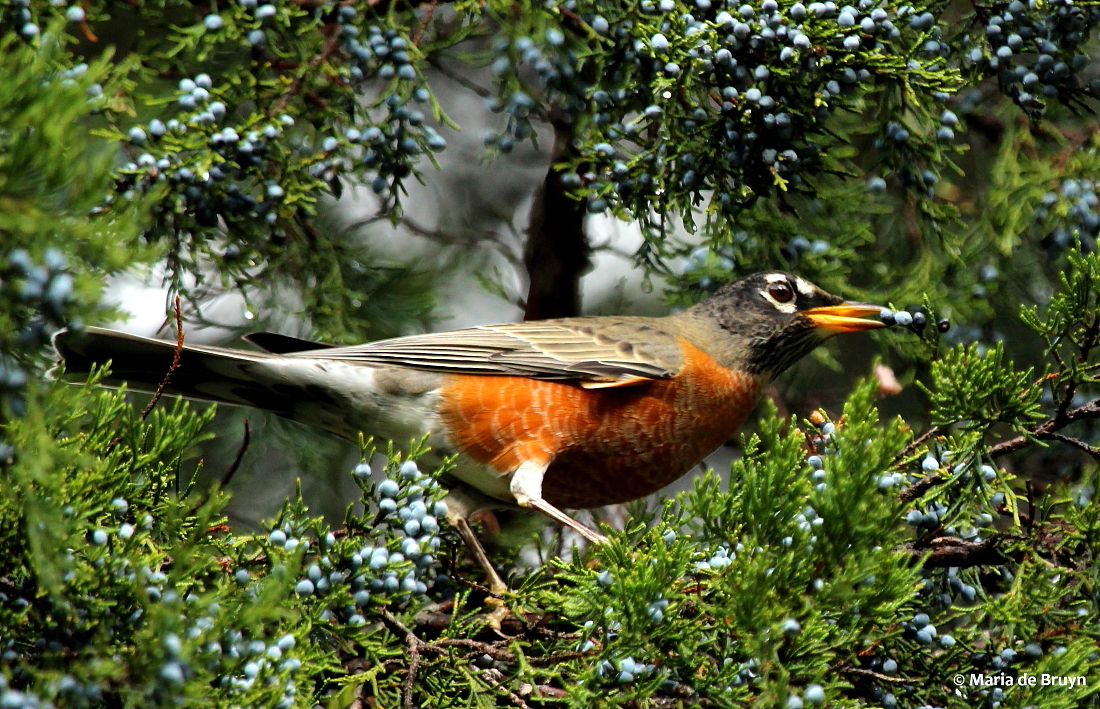
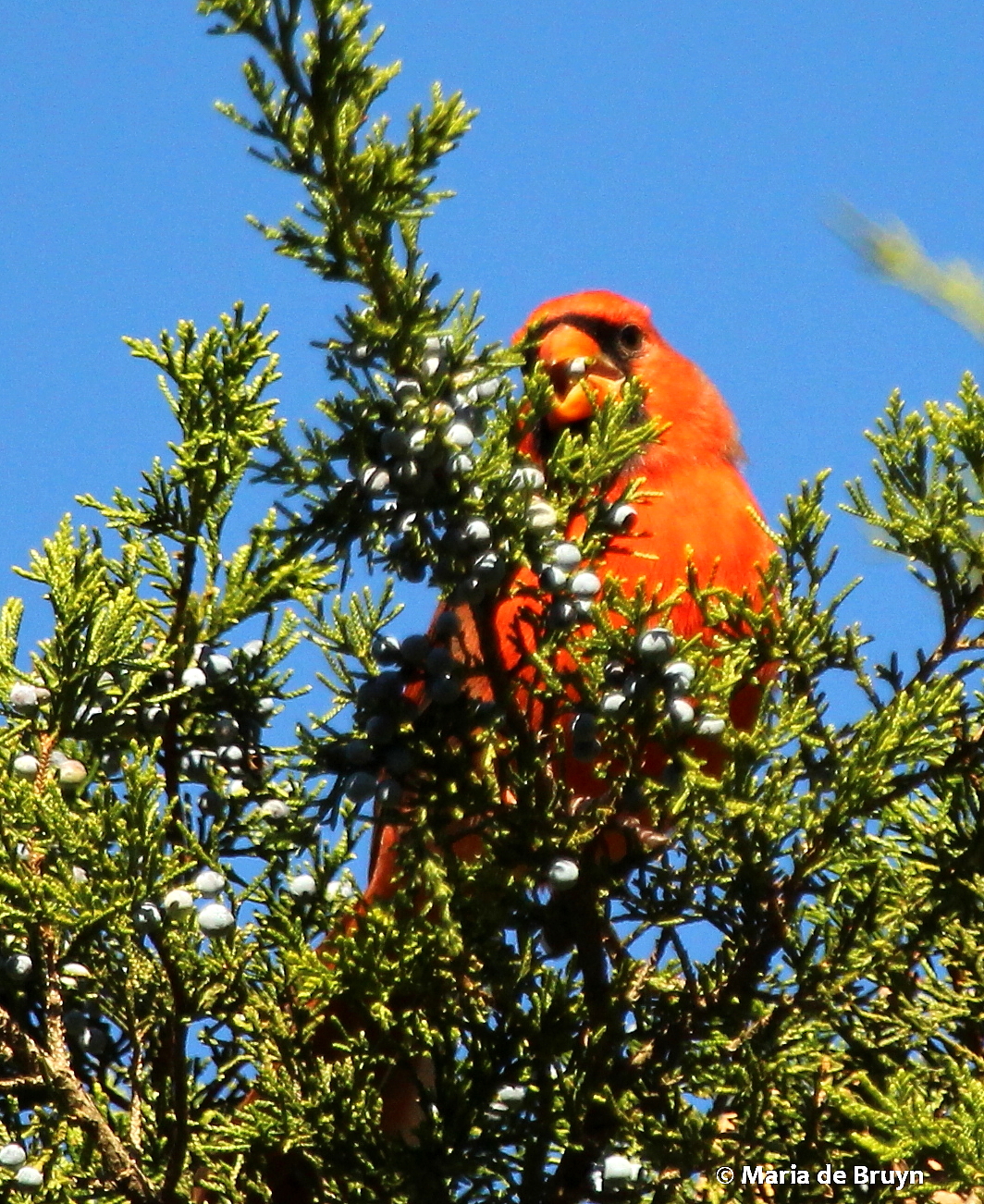
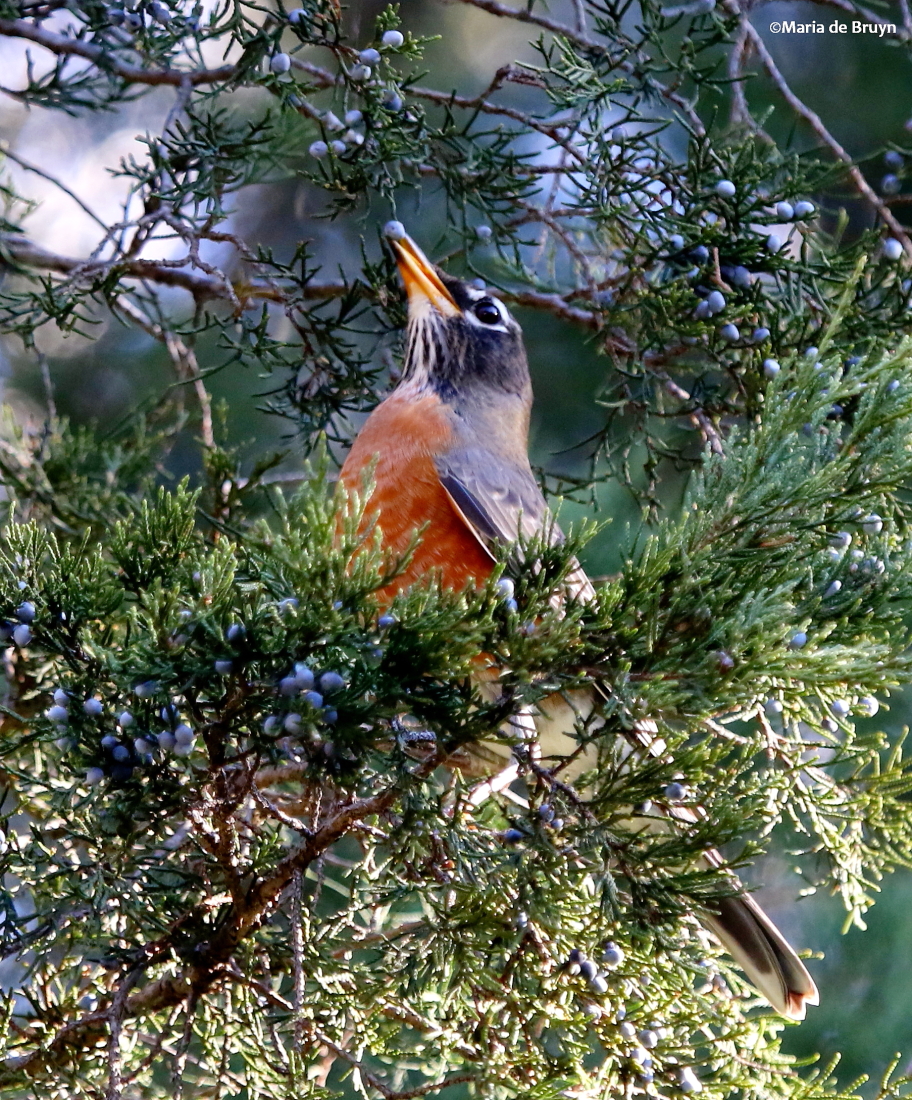
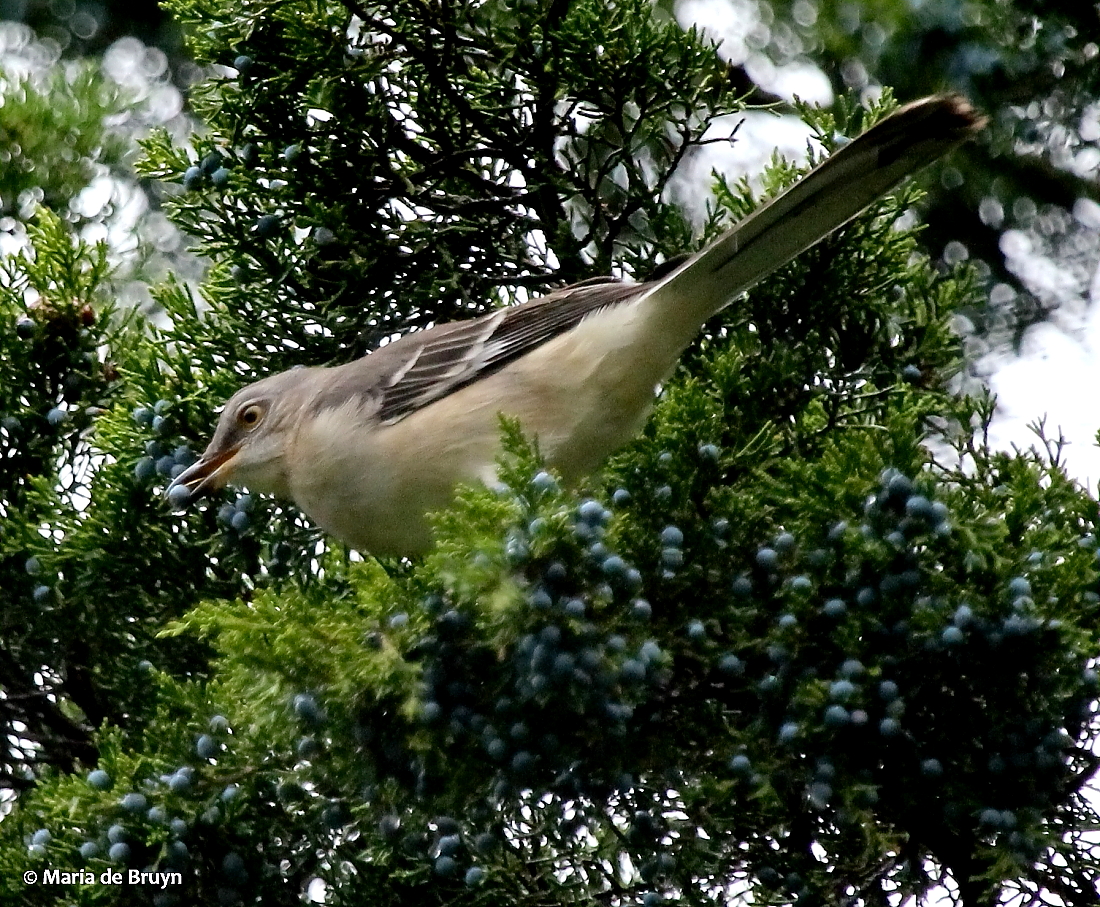
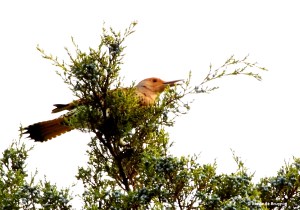
This year, the juniper berries were a real crowd pleaser. The American robins (Turdus migratorius) went for them first, soon followed by Northern cardinals (cardinalis cardinalis), Eastern bluebirds (Sialia sialis), Northern mockingbirds (Mimus polyglottos polyglottos) and Northern flickers (Colaptes auratus).

American robin IMG_6567© Maria de Bruyn res

Northern cardinal IMG_3653© Maria de BruynAmerican robin I77A0801©Maria de Bruyn res

Eastern bluebird I77A0913©Maria de Bruyn resNorthern mockingbird 2 IMG_6308© Maria de Bruyn res

Northern flicker IMG_5853© Maria de Bruyn res

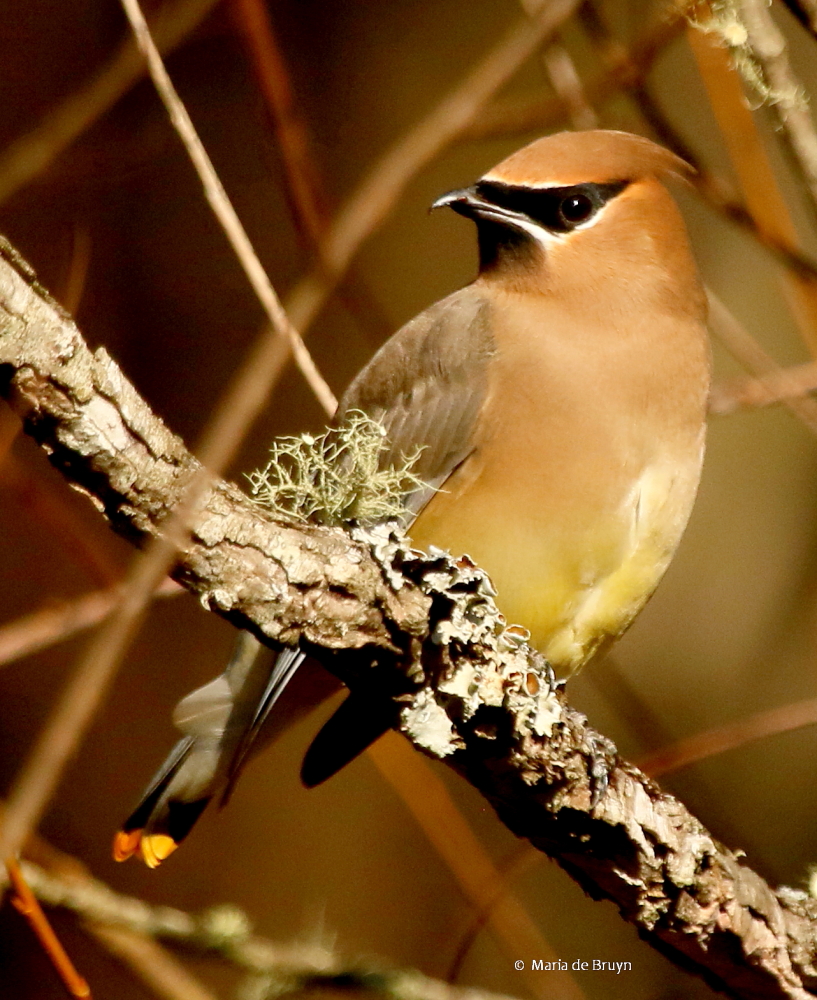
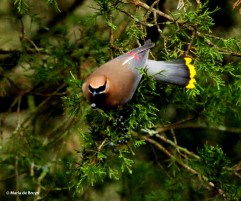
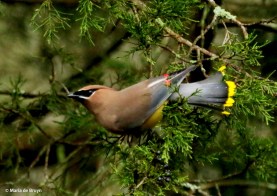
The beautiful cedar waxwings (Bombycilla cedrorum) enjoyed the cedar berries, too.

cedar waxwing I77A4266© Maria de Bruyn res

cedar waxwing I77A4293© Maria de Bruyn res

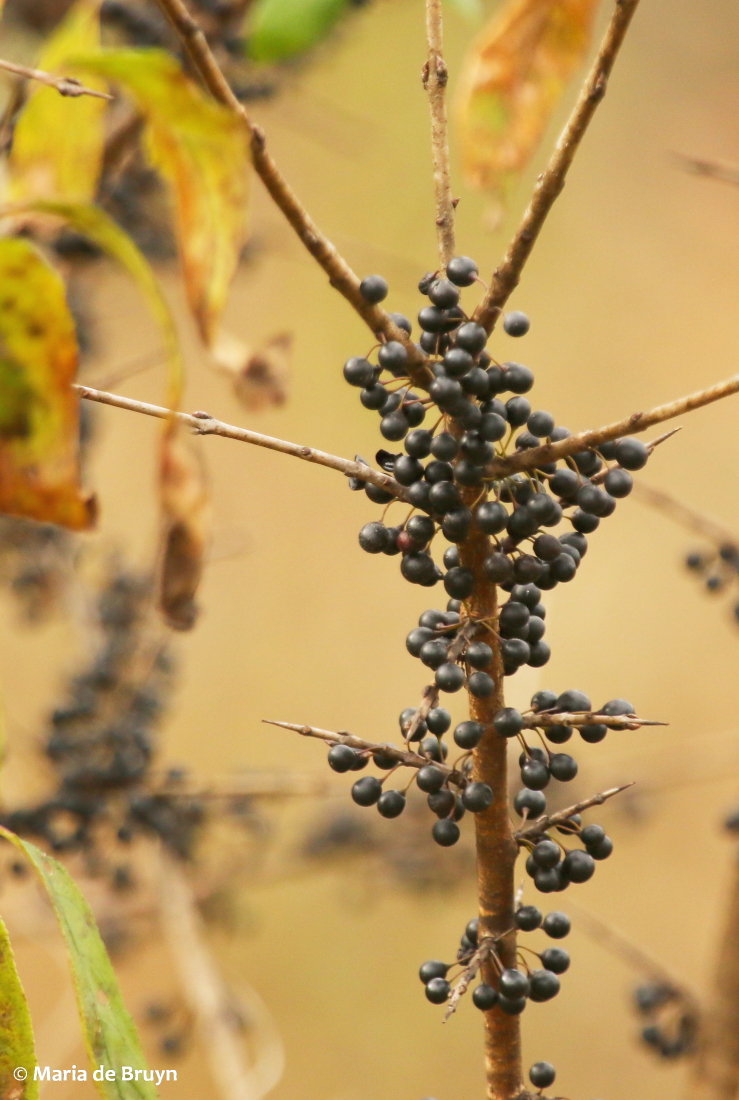
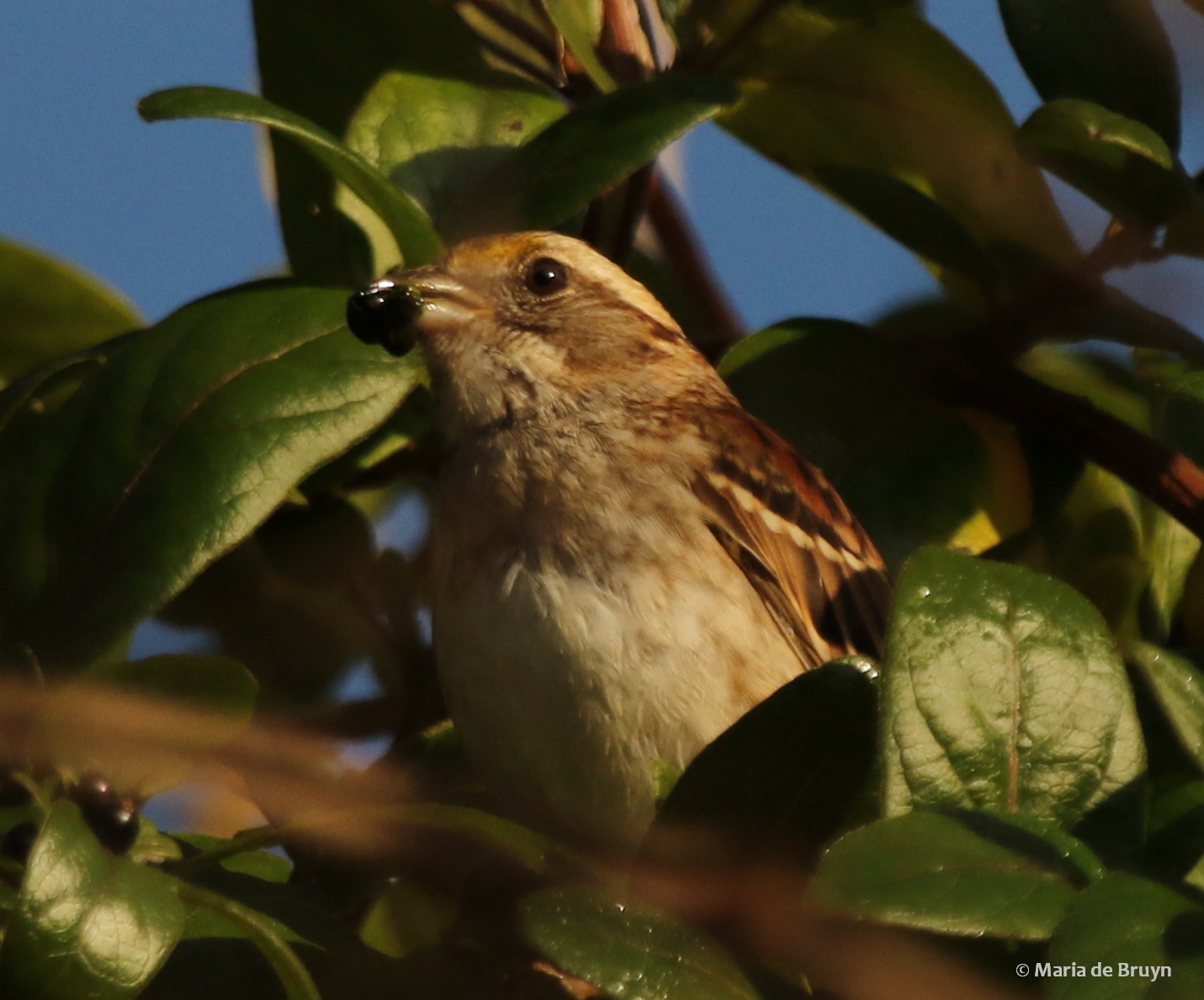
Birds like thbuckthorn I77A2455© Maria de Bruyn signed rese Northern mockingbird and white-throated sparrow (Zonotrichia albicollis) also enjoy the berries of invasive plants such as privet (Ligustrum), common buckthorn (Rhamnus cathartica. left), Chinaberry (Melia azedarach) and autumn olive (Eleagnus umbellata).

Northern mockingbird I77A2924© Maria de Bruyn res
white-throated sparrow I77A8188© Maria de Bruyn 2 reswhite-throated sparrow I77A4714© Maria de Bruyn signed

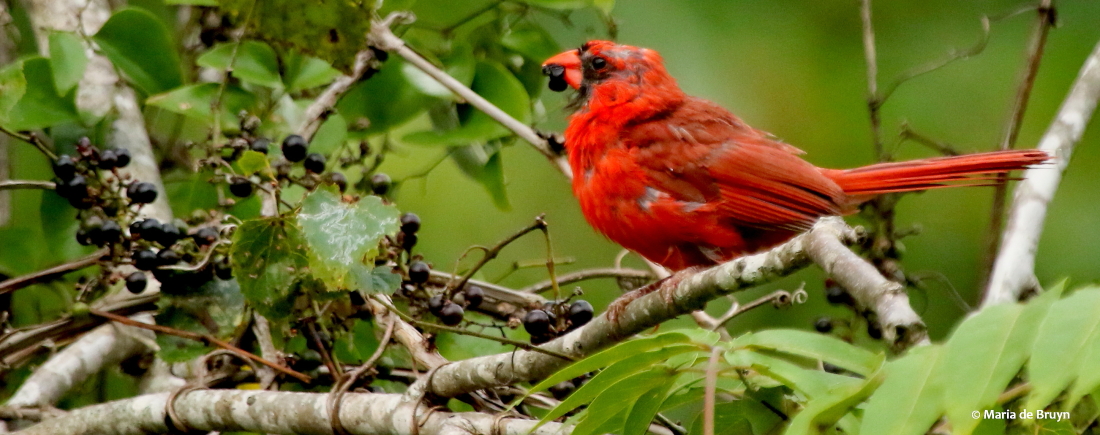
Watching our avian friends enjoy snapping up berries from vines can create enjoyment for the birdwatcher, too!

Northern cardinal DK7A8841© Maria de Bruyn signed res

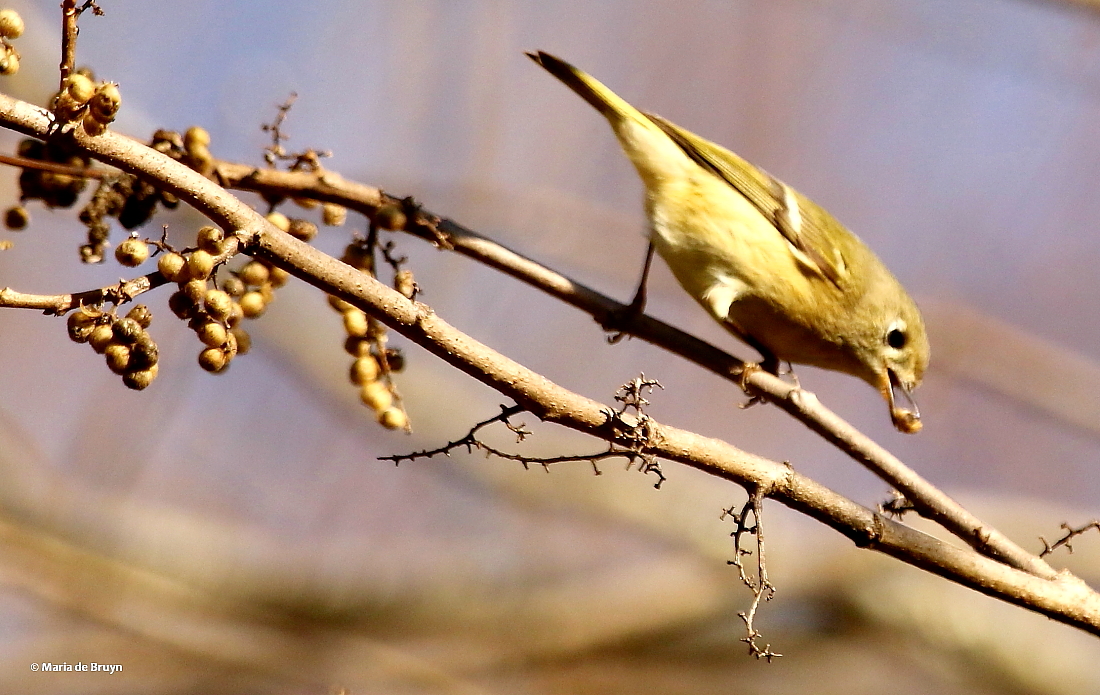
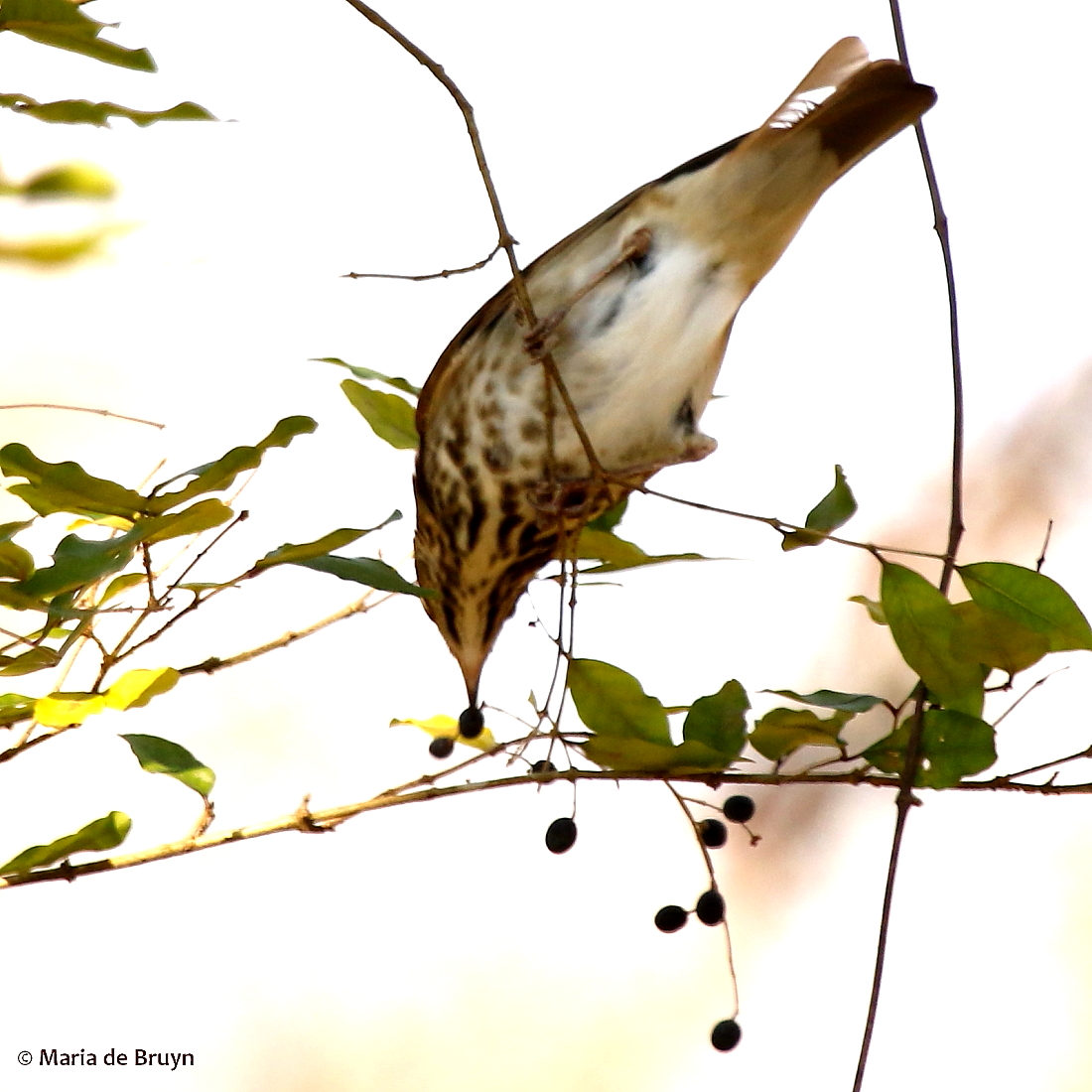
ruby-crowned kinglet I77A5319© Maria de Bruyn reshermit thrush I77A5816© Maria de Bruyn signed res

Ruby-crowned kinglet (Regulus calendula)

Hermit thrush (Catharus guttatus)


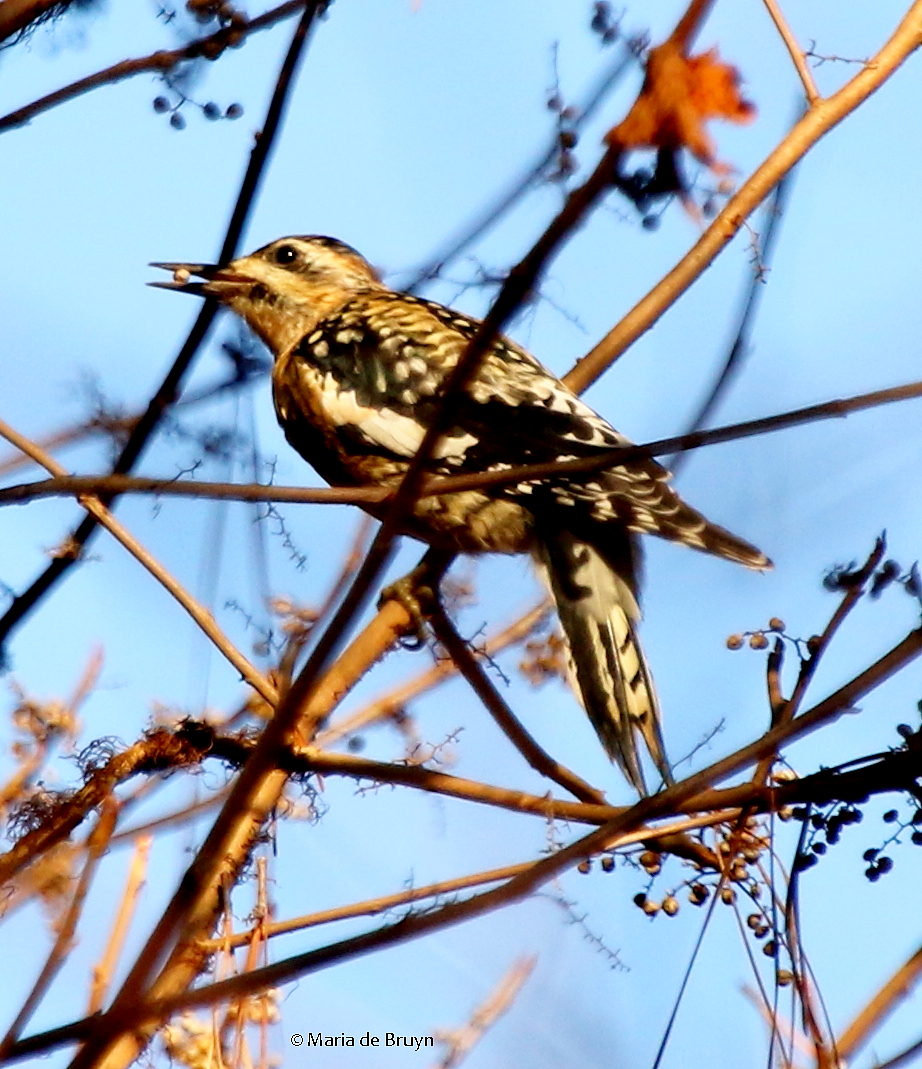
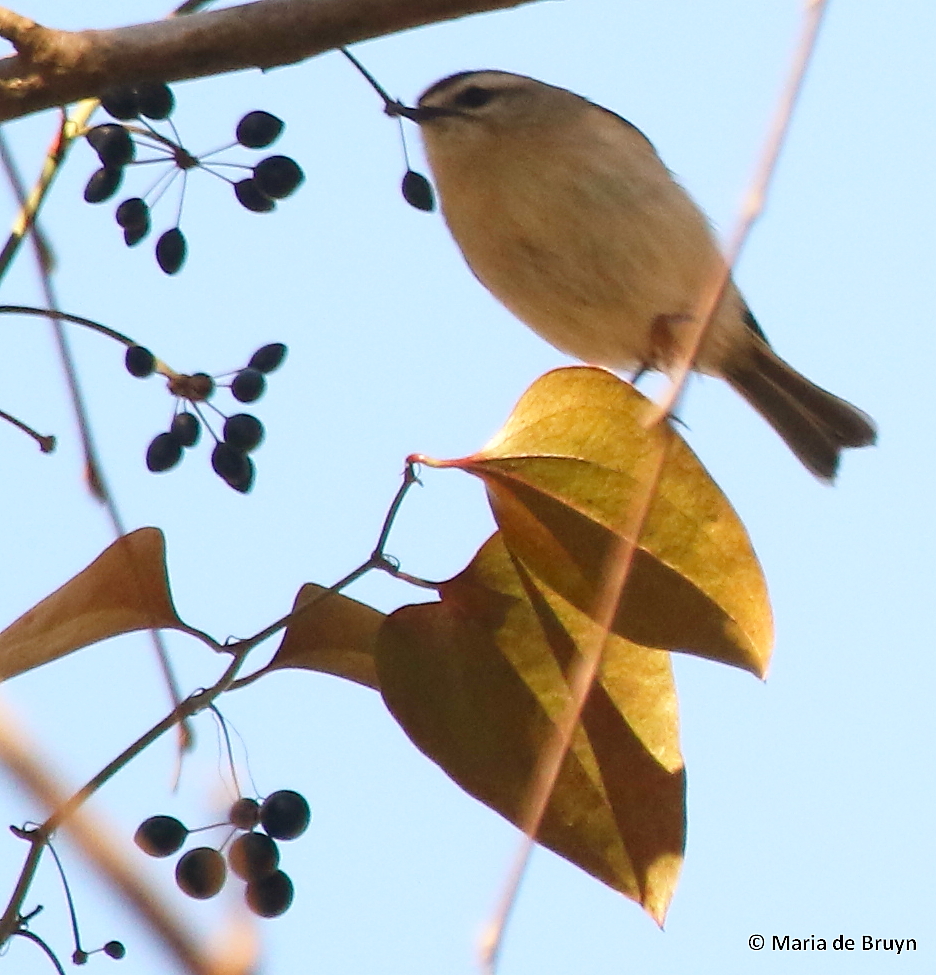
In some cases, they may also be seeking insects along with the berries, as this yellow-bellied sapsucker (Sphyrapicus varius) and tiny golden-crowned kinglet (Melanerpes erythrocephalus) may have been doing.

Yellow-bellied sapsucker I77A9133© Maria de Bruyngolden-crowned kinglet I77A1918© Maria de Bruyn

American goldfinch DK7A4411© Maria de Bruyn signed


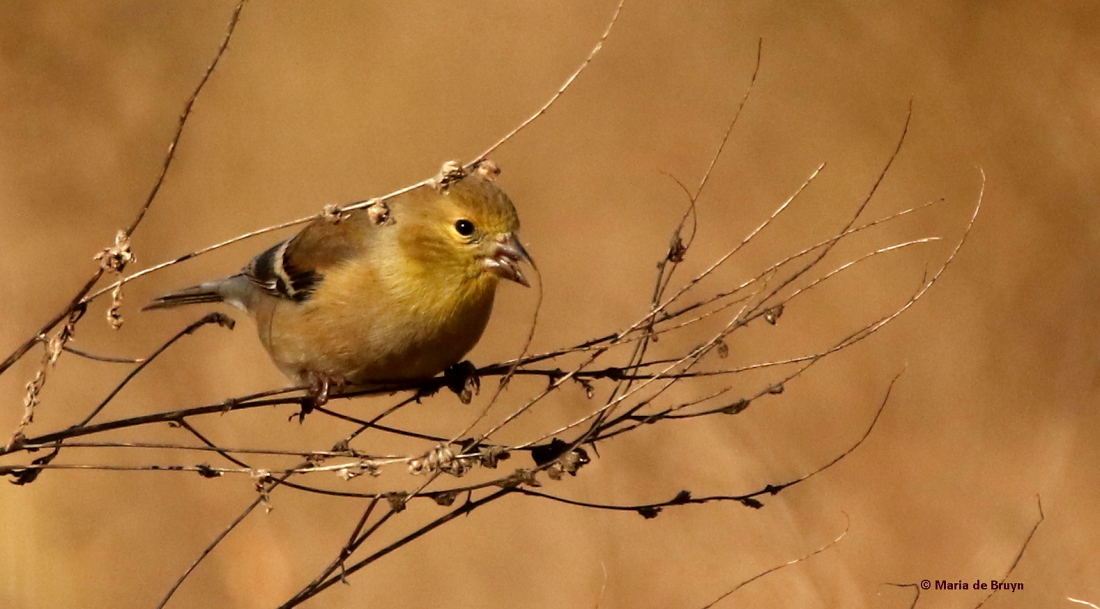
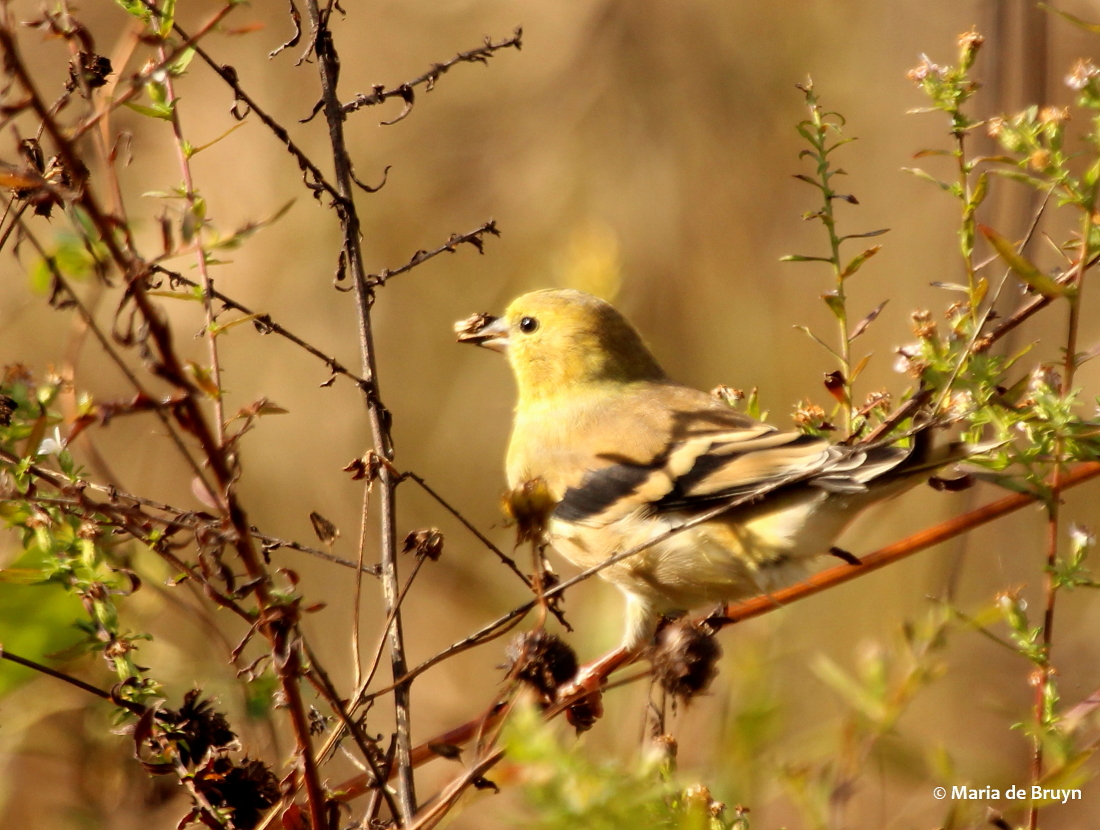
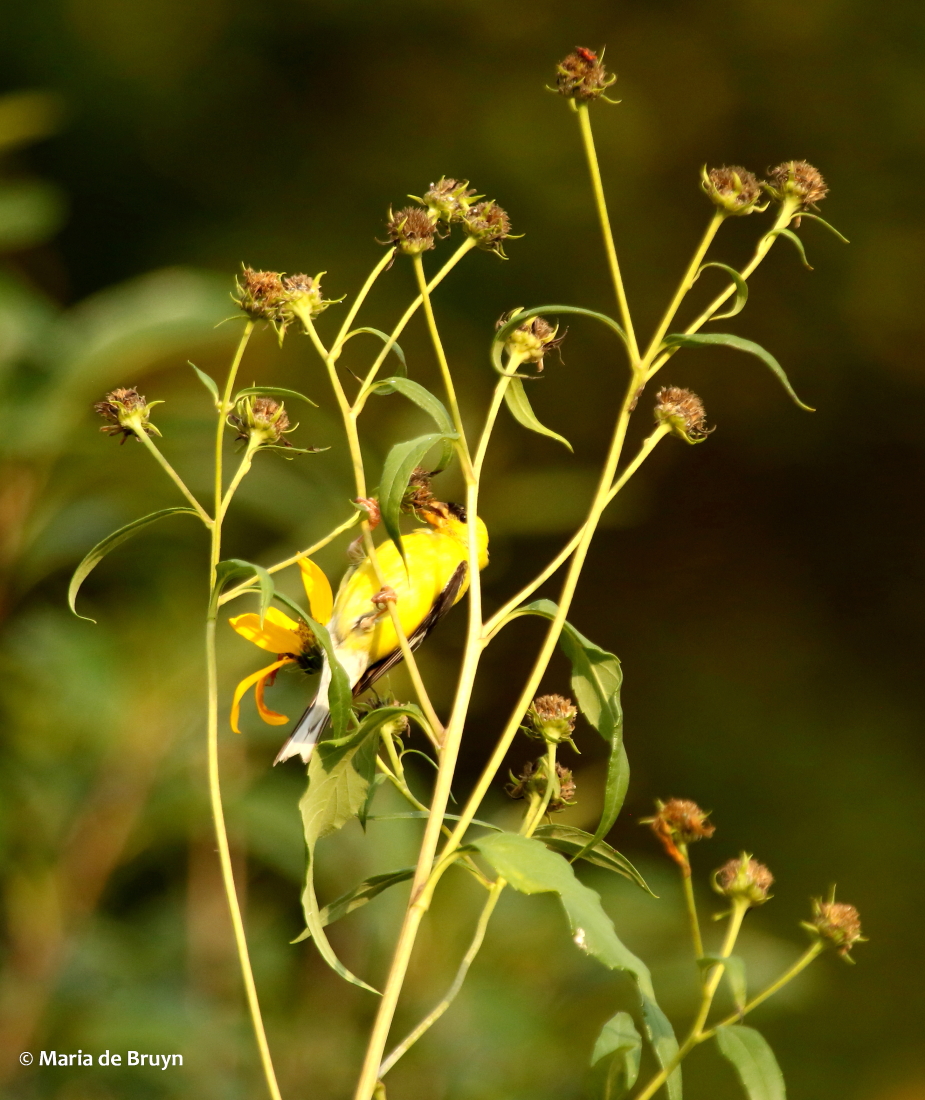
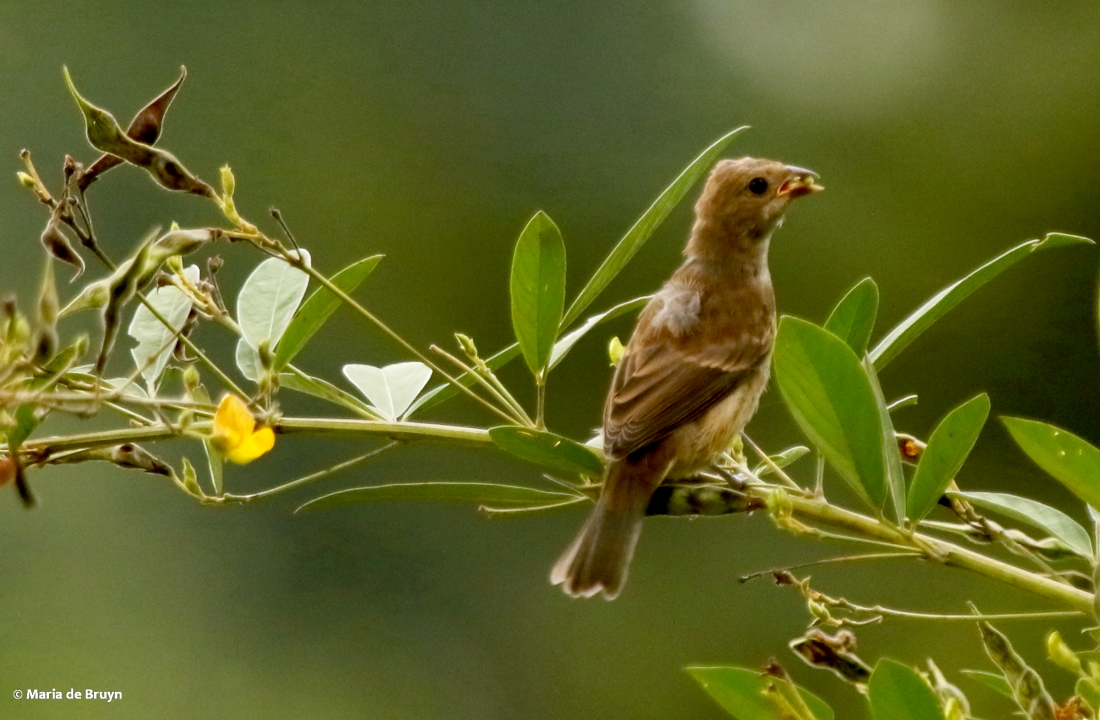
It’s not only the fruit that draws them away from the bird feeders in the autumn though. Sunflower seeds (Helianthus) are a big hit with the American goldfinches (Spinus tristis), who also seek out different kinds of seed pods.


American goldfinch I77A2510© Maria de Bruyn res American goldfinch IMG_7947© Maria de Bruyn signed res

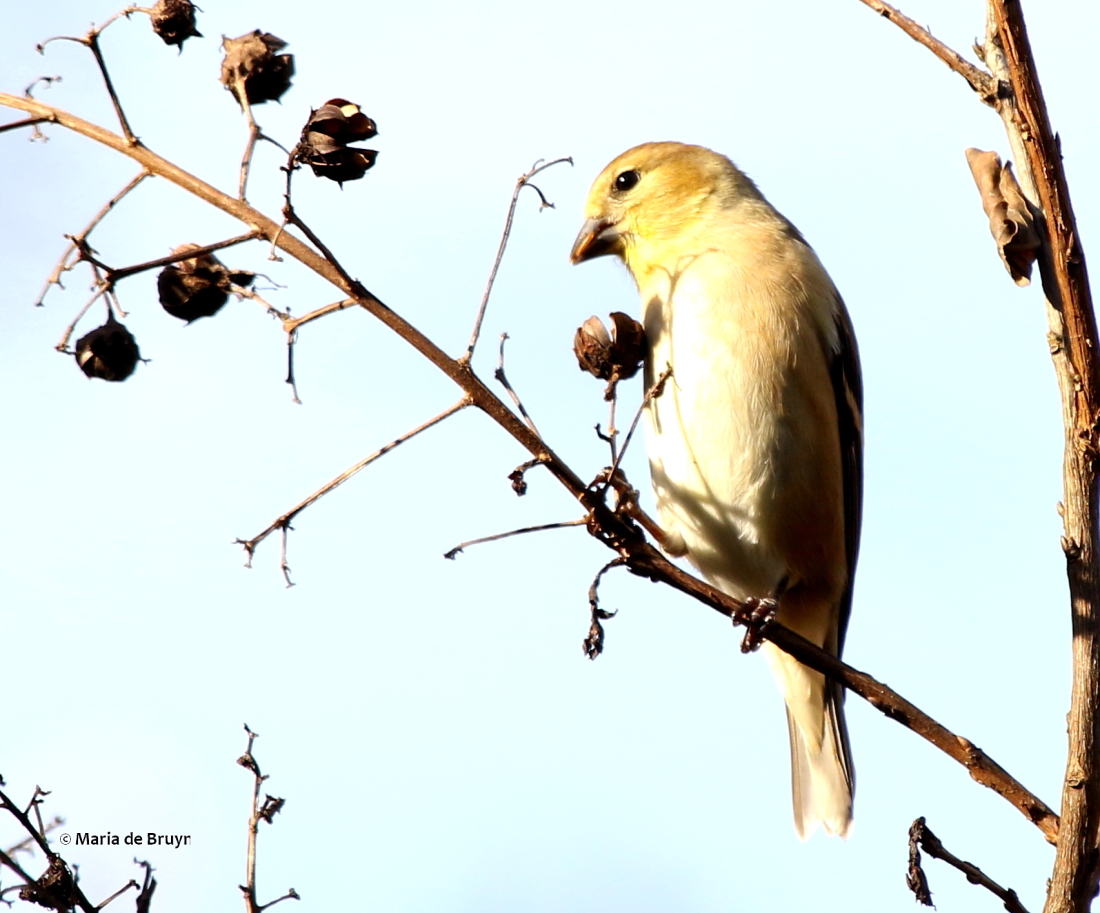
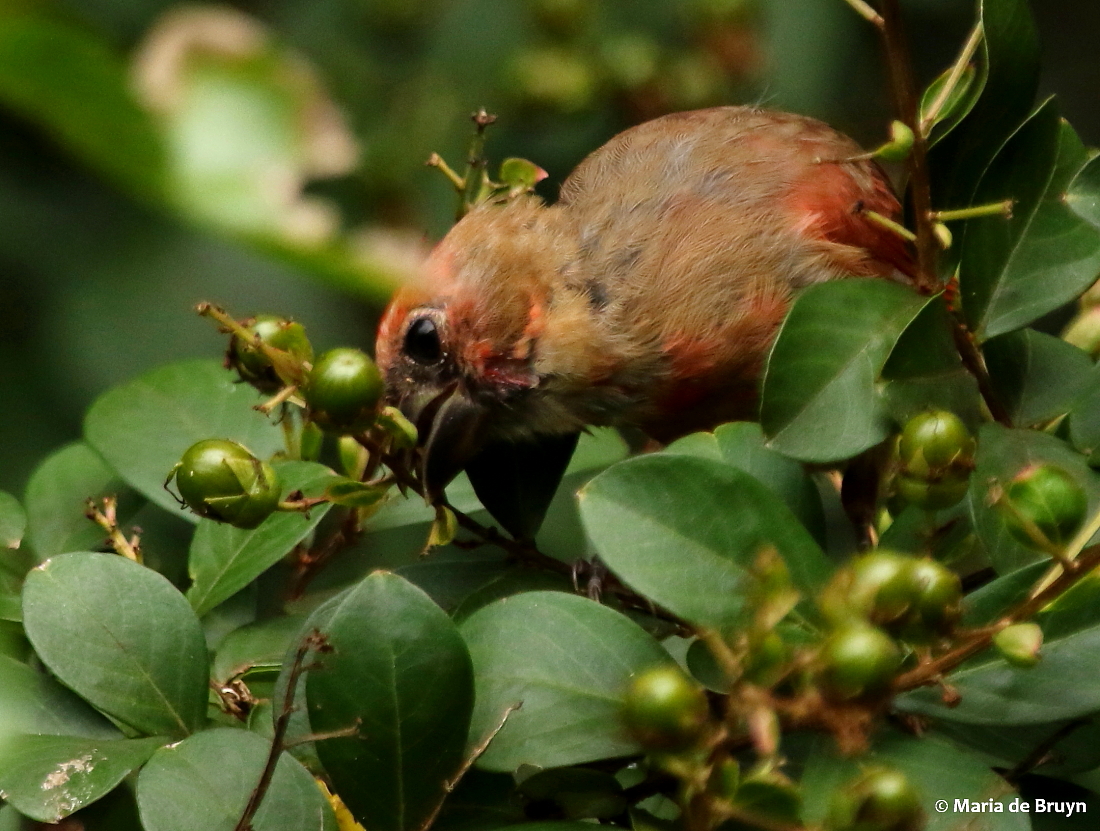
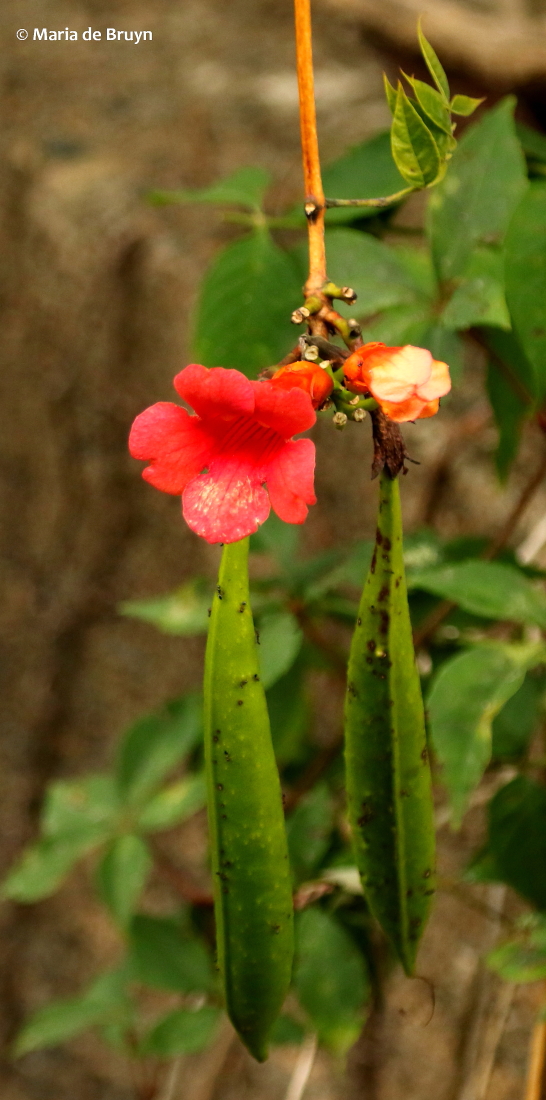
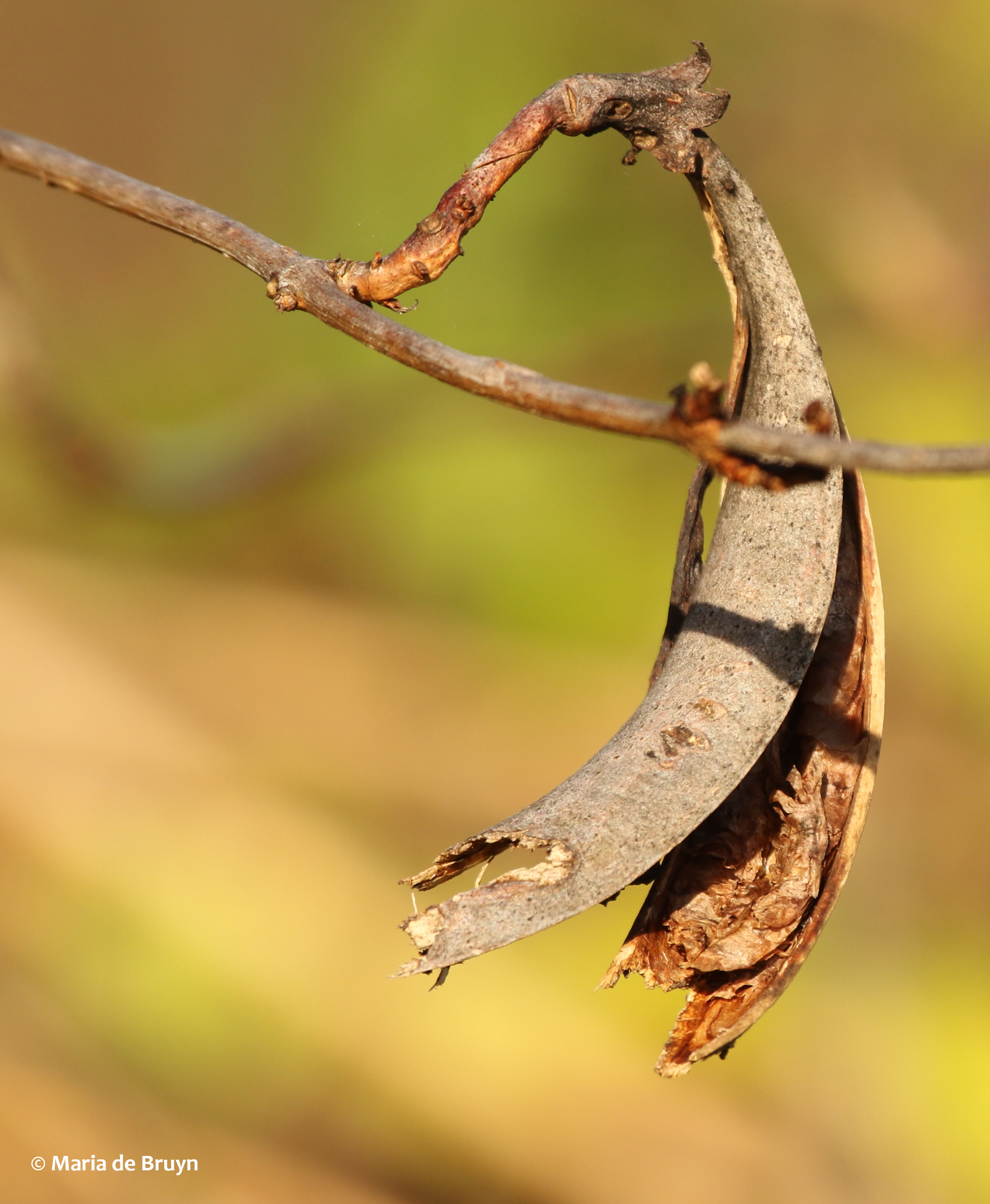
Pods on trees, like the crepe myrtle (Lagerstroemia fauriei), and on vines such as the trumpet creeper (Campsis radicans) offer attractive meals, too.

goldfinch I77A2097© Maria de Bruyn resNorthern cardinal DK7A1206© Maria de Bruyn signed res

American goldfinch and Northern cardinal both eating crepe myrtle

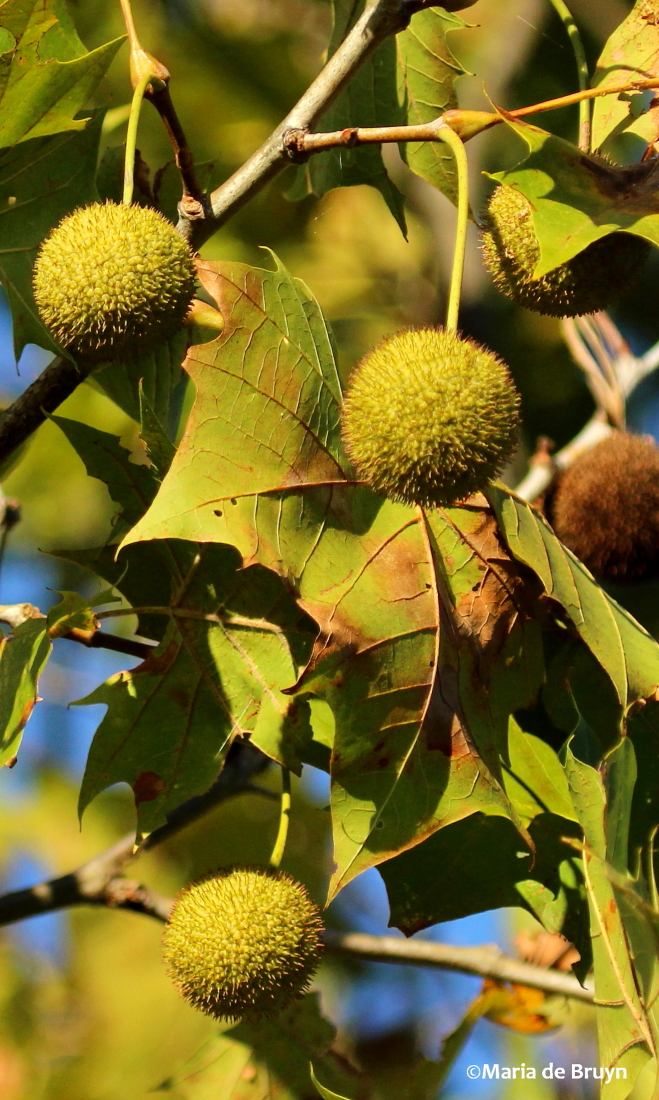
Trumpet vine DK7A9266© Maria de Bruyn signed restrumpet vine I77A1487© Maria de Bruyn ressycamore IMG_2339©Maria de Bruyn res

Trumpet vine                                         American sycamore (Platanus occidentalis)

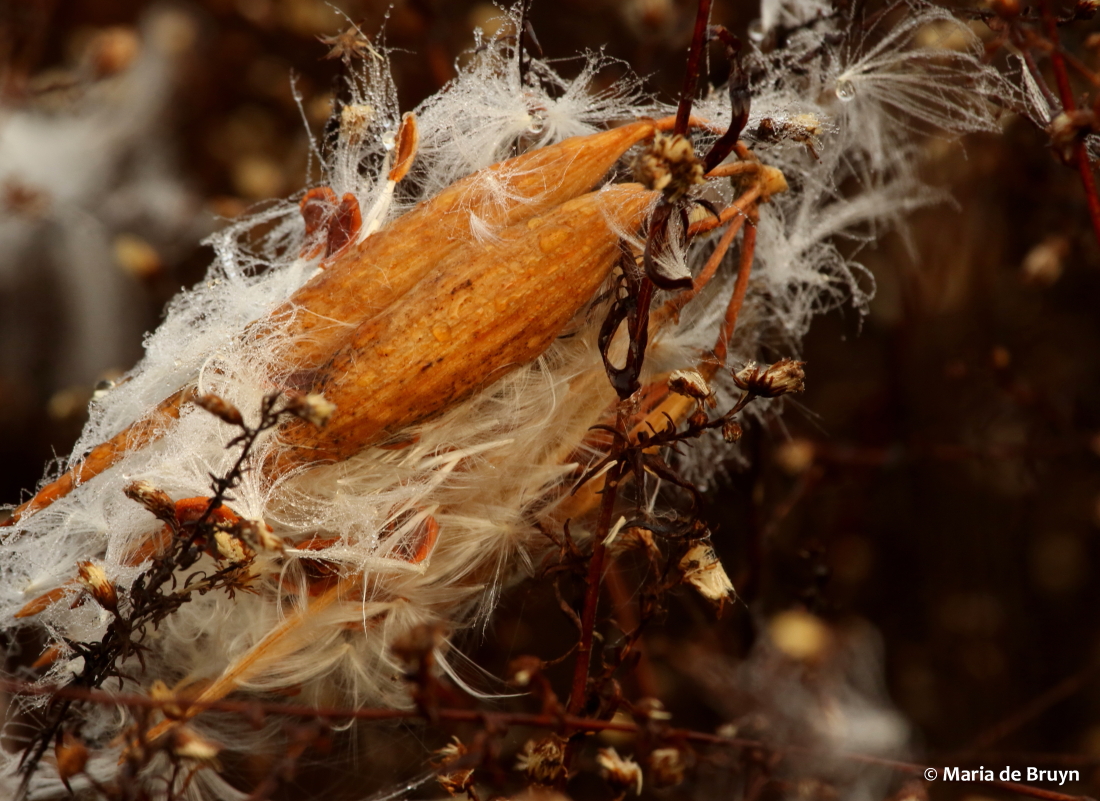
milkweed I77A7144© Maria de Bruyn signed resCarolina wren I77A8006©Maria de Bruyn res

Milkweed (Asclepius) and Carolina chickadee (Poecile carolinensis)

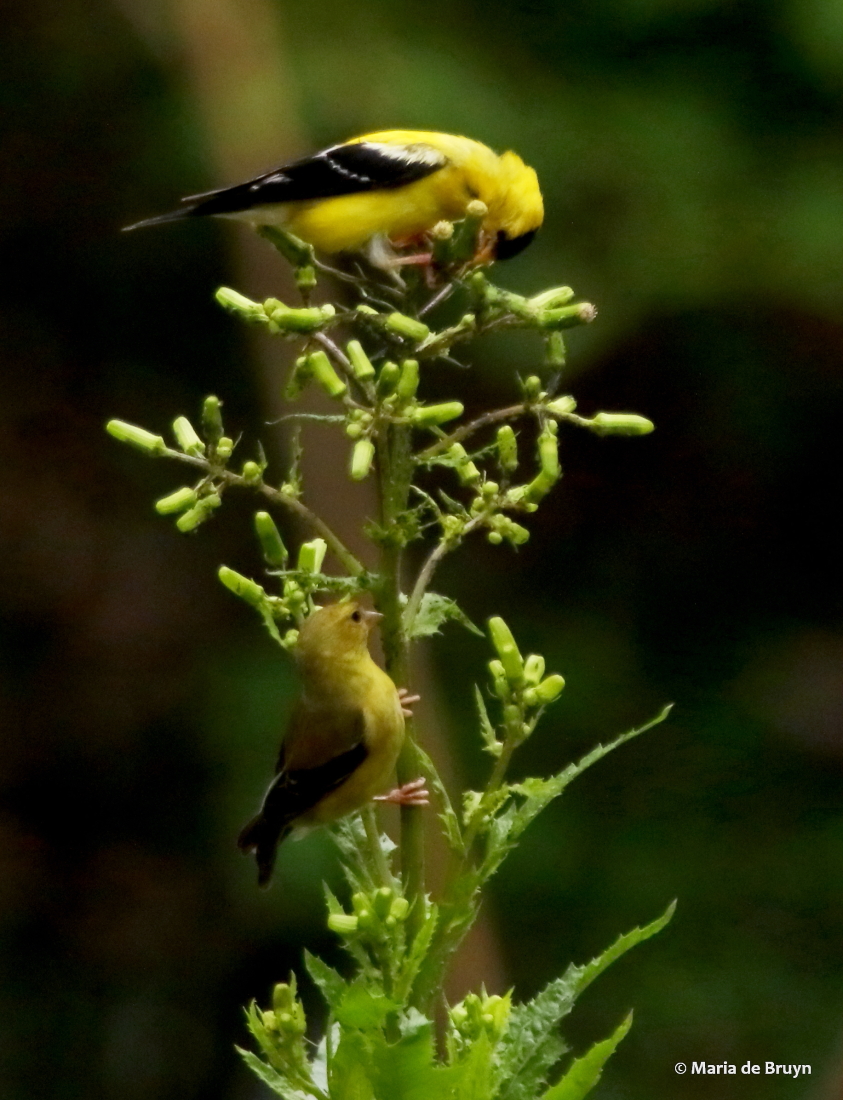
American goldfinch DK7A1355© Maria de Bruyn SIGNED RESamerican goldfinch DK7A7127© Maria de Bruyn signed res

American goldfinches

Indigo bunting DK7A7525© Maria de Bruyn signed res

Indigo bunting ( Passerina cyanea)

Scarlet tanager IMG_7415© Maria de Bruyn signed

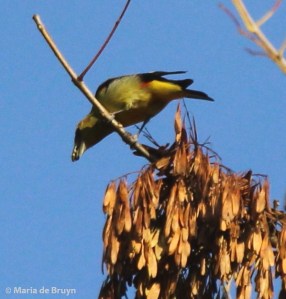
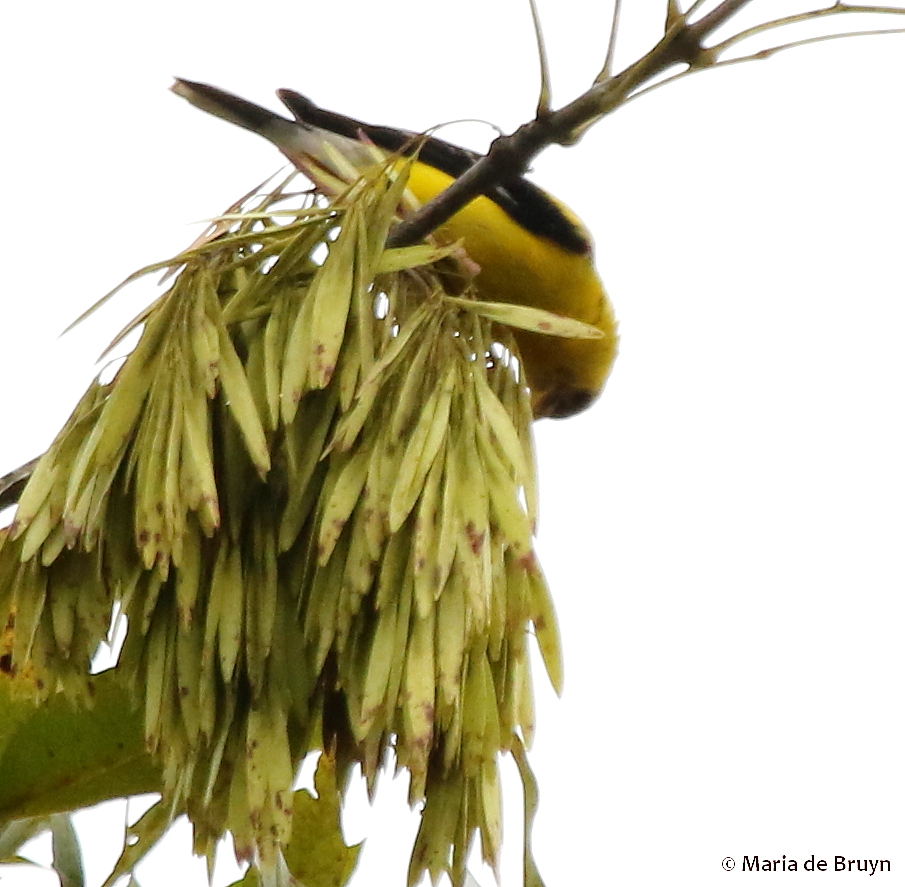
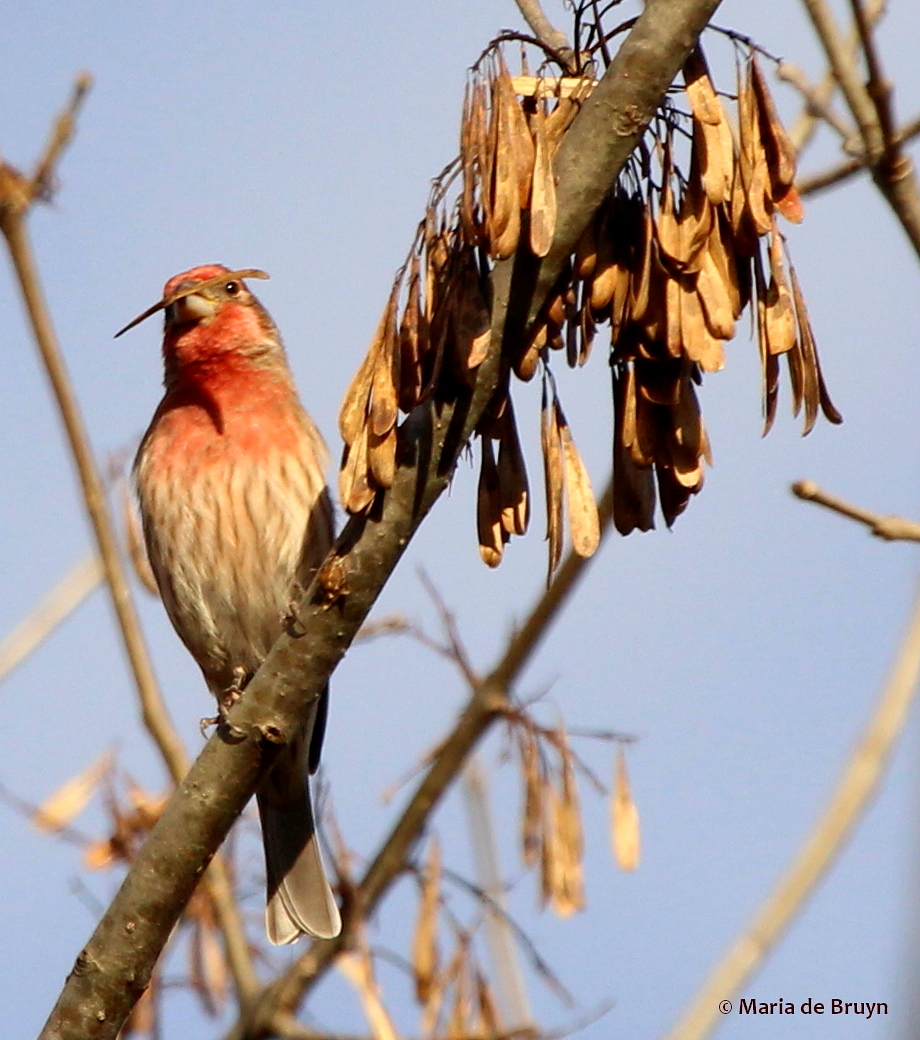
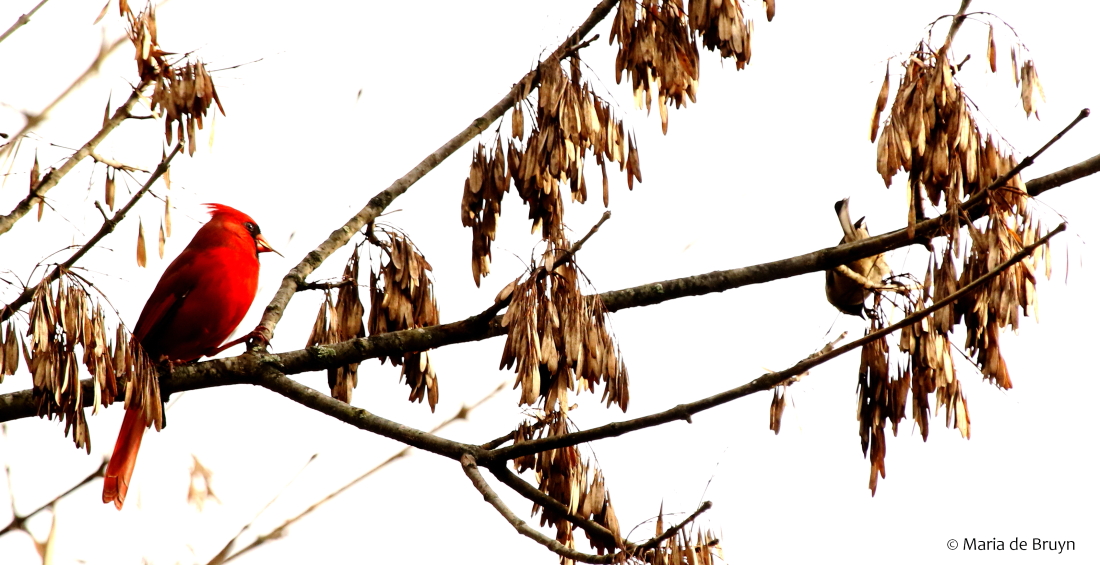
Some trees like maples have samara seed pods, in which a single seed is surrounded by a paper-like tissue that is dispersed by the wind. Ash trees have samaras that grow in clusters. Here a young scarlet tanager (Piranga olivacea) is dining. Below are an American goldfinch, house finch (Haemorhous mexicanus) and Northern cardinal, all of them males.


American goldfinch DK7A5026© Maria de Bruyn signedHouse finch IMG_7718© Maria de Bruyn signed


Northern cardinal I77A8006© Maria de Bruyn res


cedar waxwing I77A6594© Maria de Bruyn signed res

Cedar waxwing (left) with samara of the tulip tree (Liriodendron tulipifera)


blue jay IMG_7806© Maria de Bruyn signed


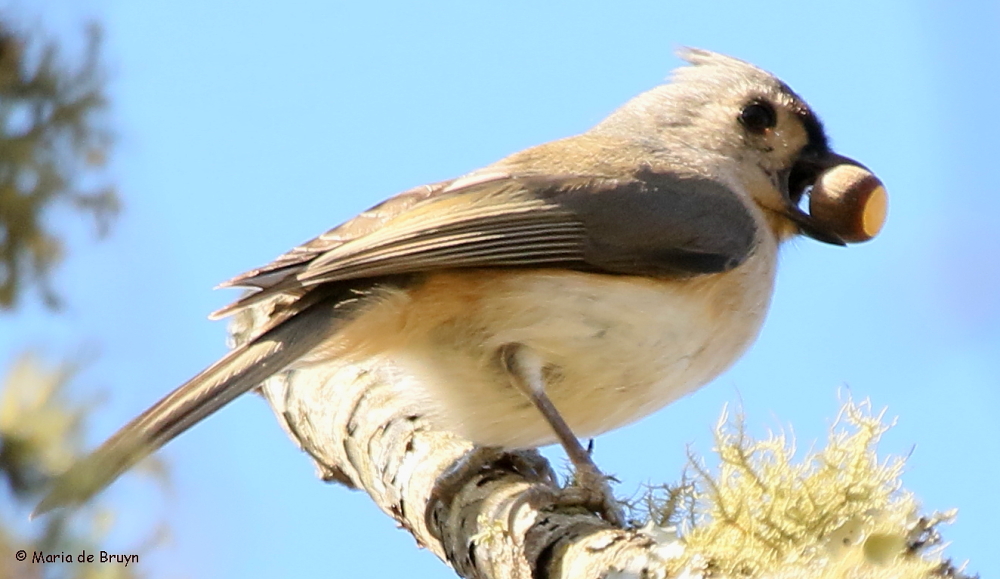
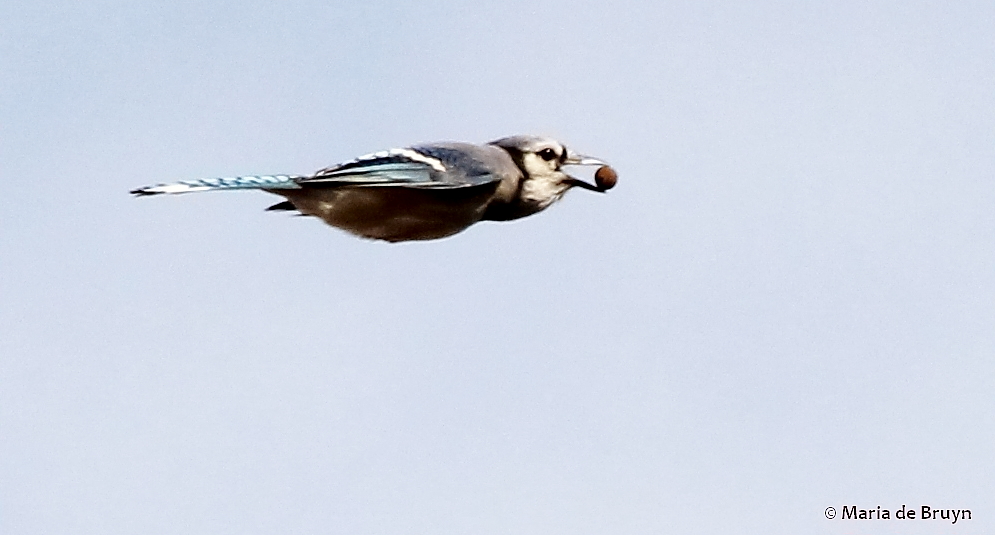
Blue jays (Cyanocitta cristata, above) like nuts a great deal and can often be seen flying away with a prize.

red-bellied woodpecker IMG_5780© Maria de Bruyn (2)


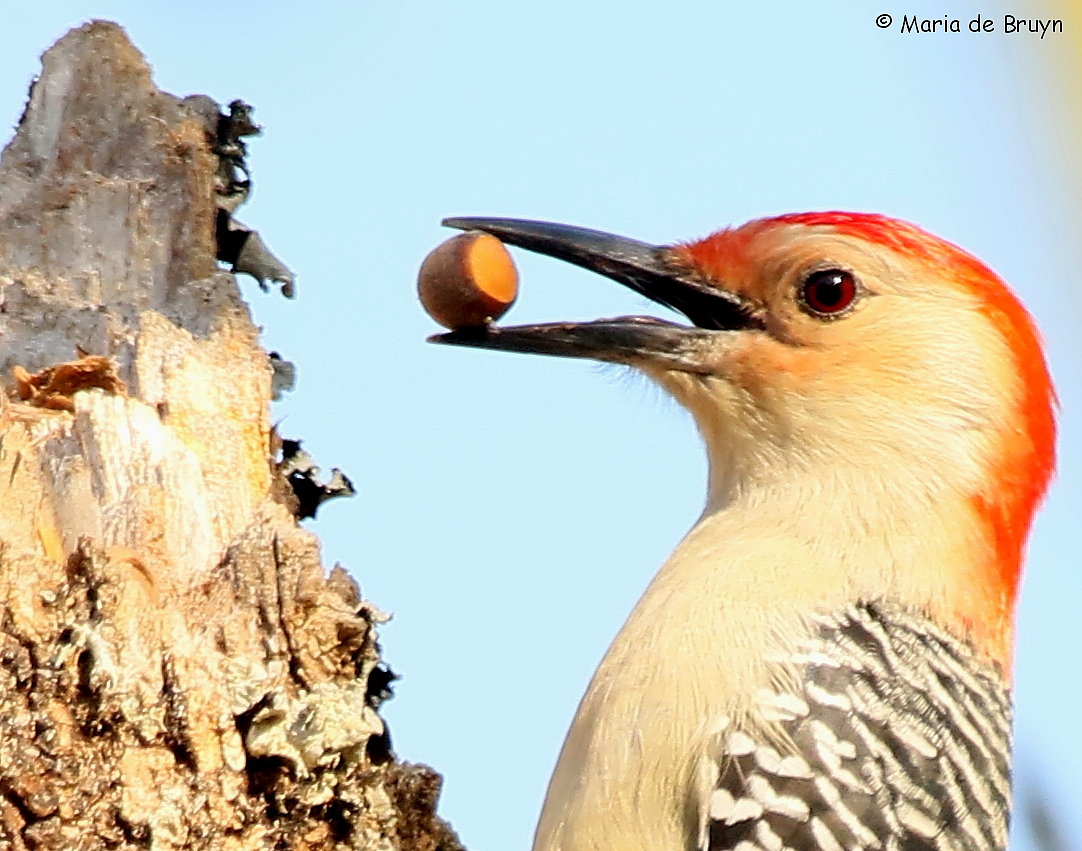
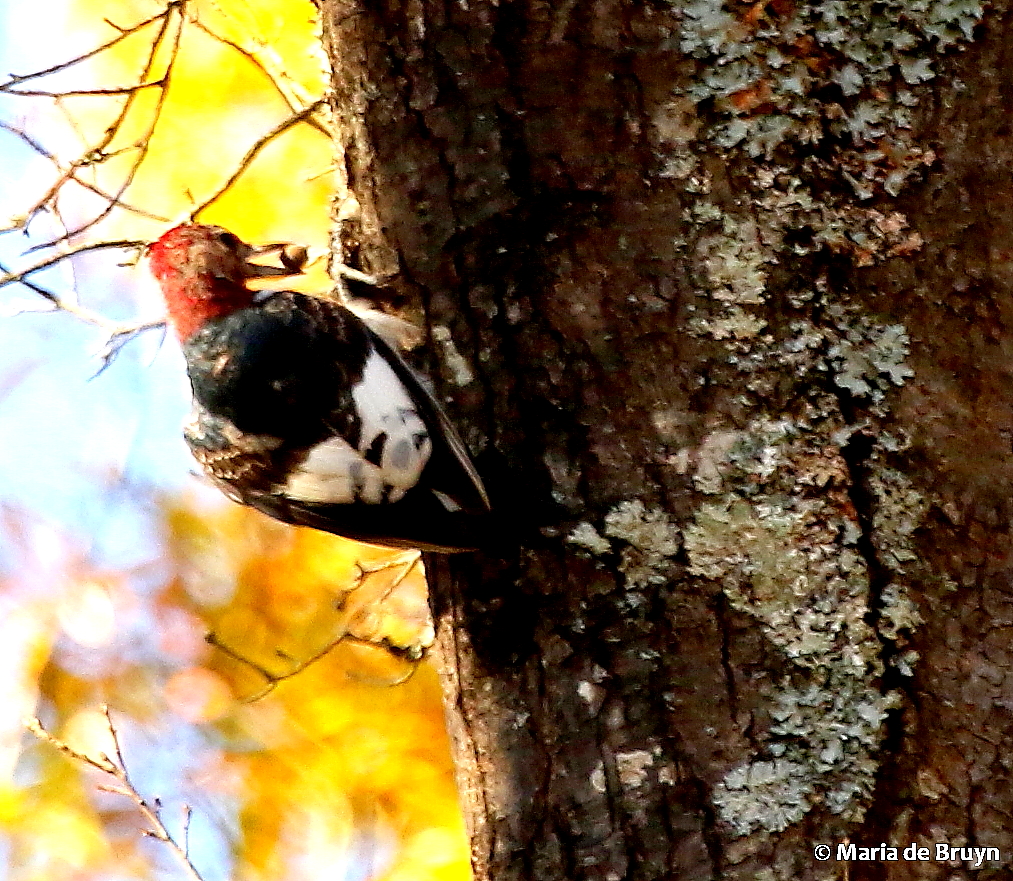
The red-bellied woodpeckers (Melanerpes carolinus) and red-headed woodpeckers (Melanerpes erythrocephalus) don’t turn away from nuts either.


Red-headed woodpecker I77A7844© Maria de Bruyn signed       red-headed woodpecker I77A5149© Maria de Bruyn res

Northern cardinal I77A2153© Maria de Bruyn res

It may feel a bit sad when activity dies down at the feeders for a time, but if you can manage to have nut-, seed- and fruit-bearing vegetation around your home, you can still enjoy watching your avian friends forage – and the natural surroundings can make for lovelier photos, too!