Corvid courtship – something to crow about

American crow DK7A7017©Maria de Bruyn res

American crow DK7A5544© Maria de Bruyn resAs I was sorting out photos of birds in our recent snow and sleet storm, my attention was drawn by the raucous cawing of one of our neighborhood crows. He had found some apple slices that I had put out with the bird seed and was one happy bird. He spent a lot of time calling, presumably to alert family members to the presence of this desired food source. And his enthusiasm made me decide to post a blog about corvid courtship now, since this late winter/early springtime ritual may be coming sooner than I thought.

Depending on geographic location and weather conditions, some birds begin nest building quite early in the year and American crows (Corvus brachyrhynchos) are among the early mating pairs and nest builders. Last year, a male crow who visited my home discovered and enjoyed both grape jelly and apple slices around early March.American crow DK7A7423©Maria de Bruyn res

American crow DK7A0779© Maria de Bruyn


American crow DK7A5569© Maria de Bruyn resHe even tried to add the homemade suet to his diet but he was a bit large to balance well on the small feeder.

Last year, he only had to visit my yard a few times before he was accompanied by his mate. She would sit on a branch or on the ground and caw loudly like him, but she was demanding that he feed her.

American crow DK7A7678©Maria de Bruyn res

He met her demands but was not about to just give up his treats. He would often grab a piece of apple, fly up to a branch near her but then first eat about half of it himself as she continued her raucous cries for food.

American crow DK7A7321©Maria de Bruyn res

American crow DK7A4616© Maria de Bruyn res

American crow DK7A7022©Maria de Bruyn res


She could have easily flown down to the ground to grab a piece of apple but refused. On a few occasions, she did fly down but just refused to pick up the apple herself, waiting for him to stuff it down her throat.


American crow DK7A8031© Maria de Bruyn res


He fed her in the trees and on the ground, pushing the food way down her throat.


American crow DK7A7655©Maria de Bruyn (2) res

American crow DK7A7672©Maria de Bruyn res

Some preening went on as they perched in the backyard oak tree, too.

American crow DK7A8104© Maria de Bruyn res

American crow DK7A7504©Maria de Bruyn (2) resAmerican crow DK7A7530©Maria de Bruyn res


.I learned that offspring will remain with their parents up to five years. These “helpers” will assist in feeding the female as she incubates eggs and also bring food to their new siblings.

American crow DK7A5642© Maria de Bruyn res

It seems that our warm days in December and January this year may be getting my faithful crow in a romantic mood a bit sooner this year.The crows are loud, especially when three or more show up at a time, but I do enjoy their visits and look forward to watching the corvid courtship again this spring.

American crow DK7A8461©Maria de Bruyn res

Woodpecker welcome!

My celebration for the arrival of 2016 happened on 21 January, when I had my first nature walk of the year. It was delayed by a hospitalization at the start of the year and home treatments for a couple weeks after that. When a relatively warm and sunny day arrived, I just had to get out there despite still dealing with some recovery-related issues. I chose the North Carolina Botanical Garden as my venue since it has plenty of benches for short rests in between walking. It was simply lovely.

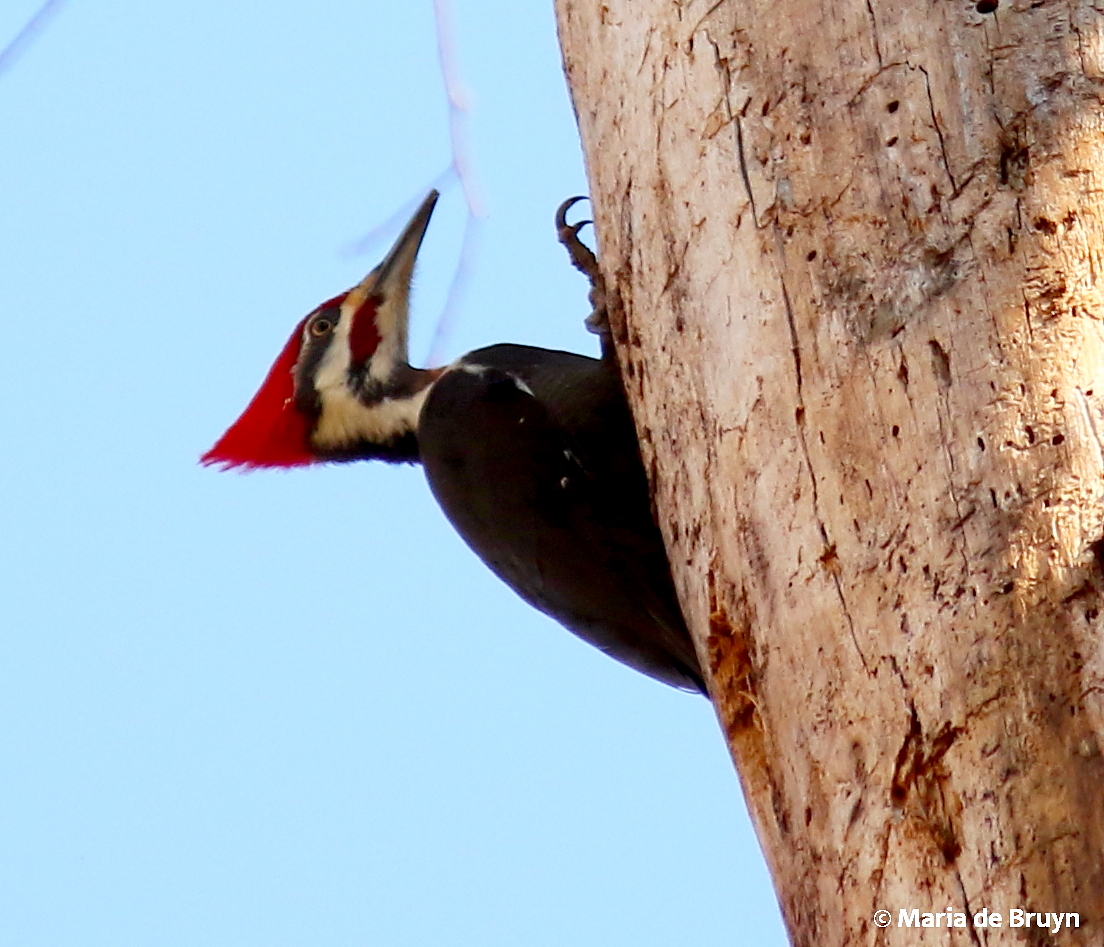
pileated woodpecker I77A7321© Maria de BruynMy first bird of the day was a beautiful male pileated woodpecker (Dryocopus pileatus), a harbinger of the day’s theme – the woodpeckers were my welcome committee!

Loud rhythmic hammering had me searching the snags among the tall trees for the next greeter – it reminded me of the facts I had learned about woodpeckers and their adaptations to a pecking life.

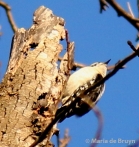
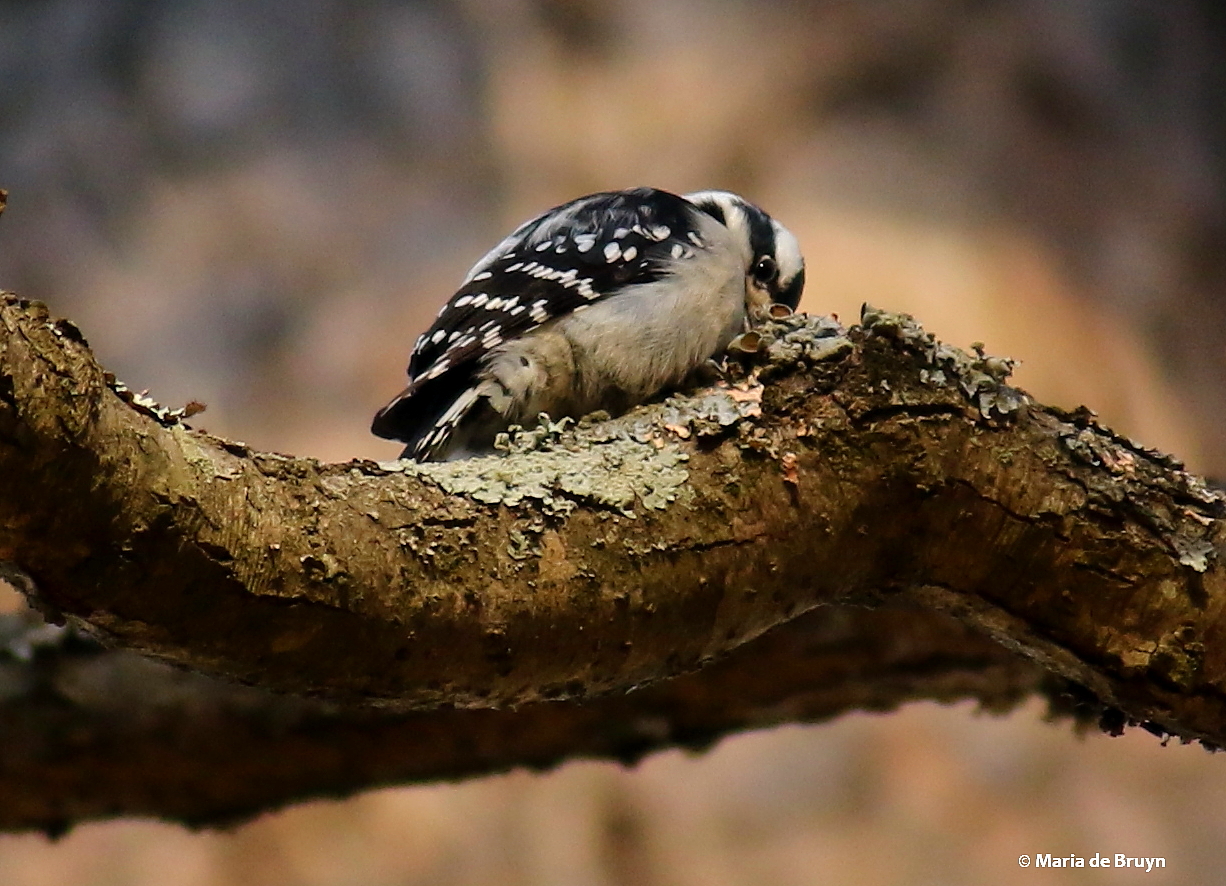
downy woodpecker I77A7372© Maria de BruynIt turned out to be a diminutive downy woodpecker (Dryobates pubescens), whose hammering sounds were enhanced by the hollow stem with which he was busy.
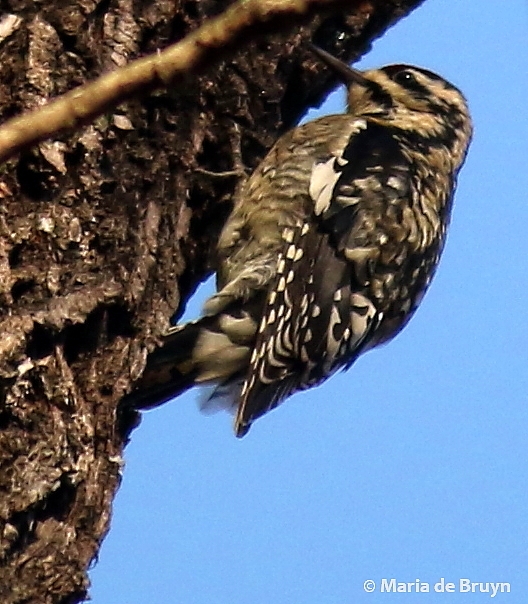
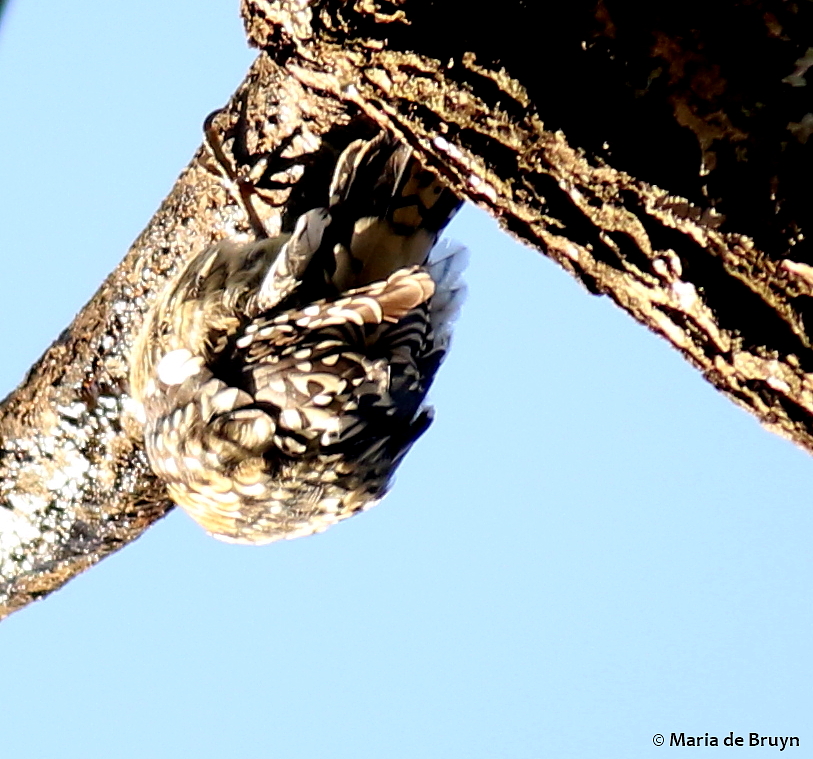
Next up was a lovely female yellow-bellied sapsucker (Sphyrapicus varius) who was very industriously flitting from branch to branch in search of sustenance.

yellow-bellied sapsucker I77A7419© Maria de Bruynyellow-bellied sapsucker I77A7582© Maria de Bruyn

When flattened against tree trunks, she demonstrated how well camouflaged her back feathers make her. A male sapsucker showed it, too.

yellow-bellied sapsucker I77A7476© Maria de Bruyn

yellow-bellied sapsucker I77A7860© Maria de Bruyn res

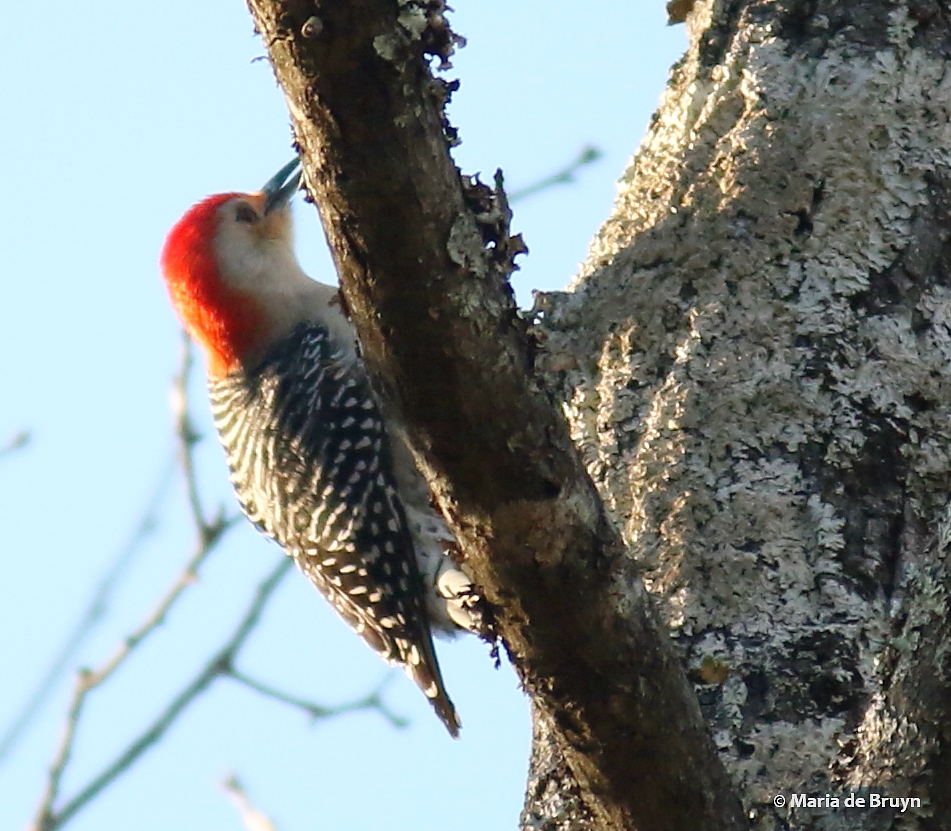
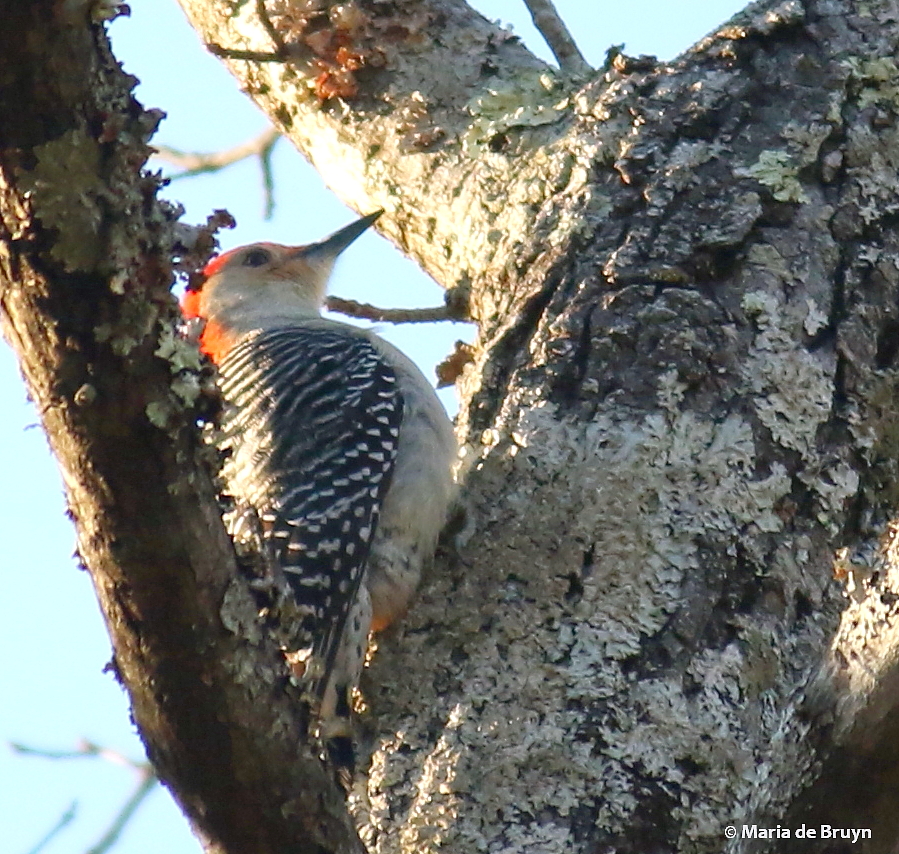
red-bellied woodpecker I77A8242© Maria de BruynA red-bellied woodpecker (Melanerpes carolinus) rounded out the welcoming committee.

The other birds didn’t disappoint. Several species were in the woods and at the feeders near the Garden’s bird blind. A lovely Carolina chickadee (Poecile carolinensis) flitted about. A tufted titmouse (Baeolophus bicolor) was singing.


Carolina chickadee I77A7639© Maria de Bruyn tufted titmouse I77A7388© Maria de Bruyn


white-breasted nuthatch I77A8203© Maria de Bruyn


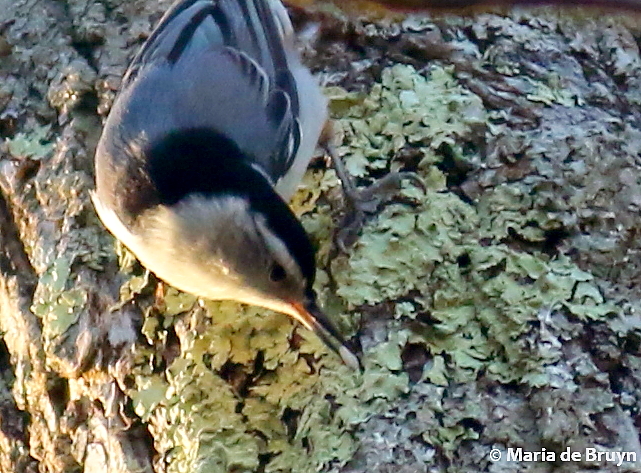
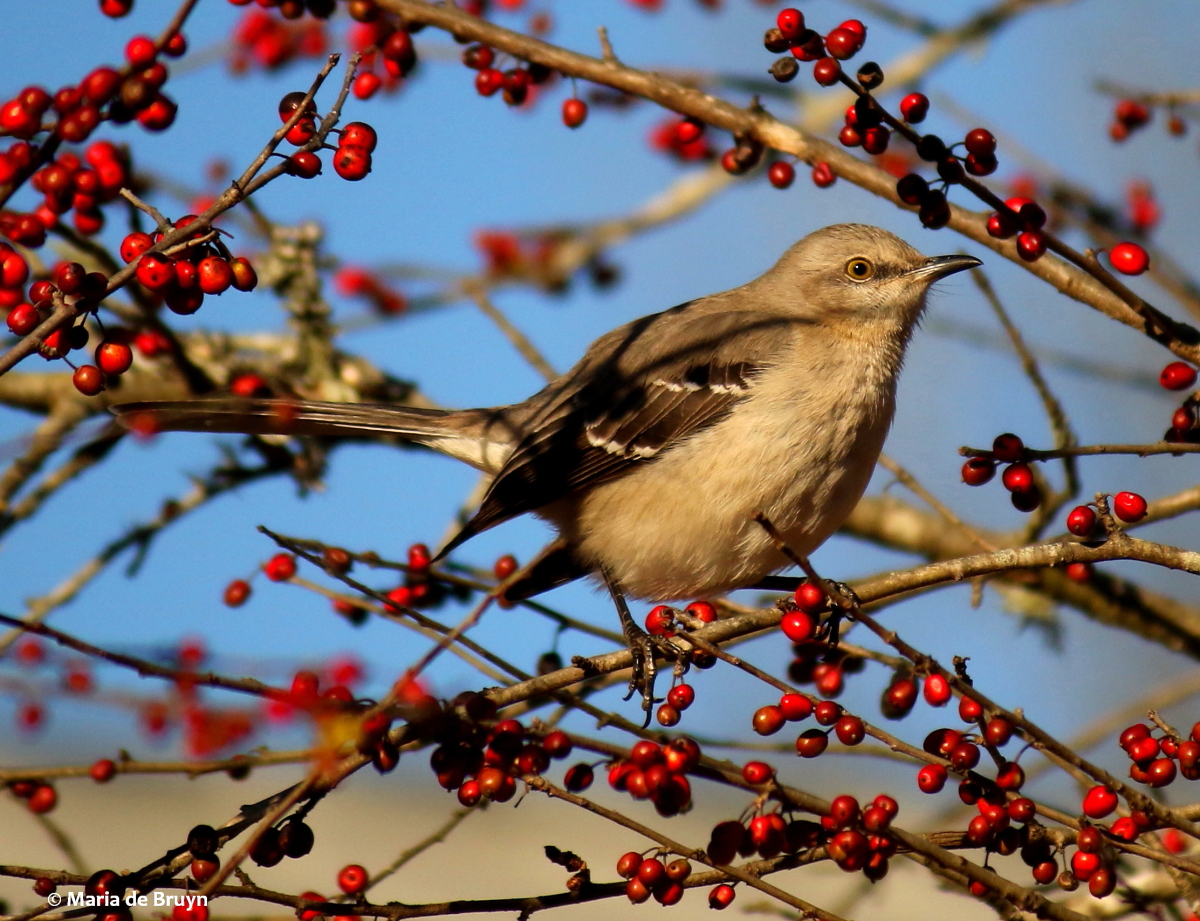
A white-breasted nuthatch (Sitta carolinensis) foraged on tree trunks overhead. A Northern mockingbird (Mimus polyglottos polyglottos) posed among red winter berries.


Northern mockingbird I77A7737© Maria de Bruyn res

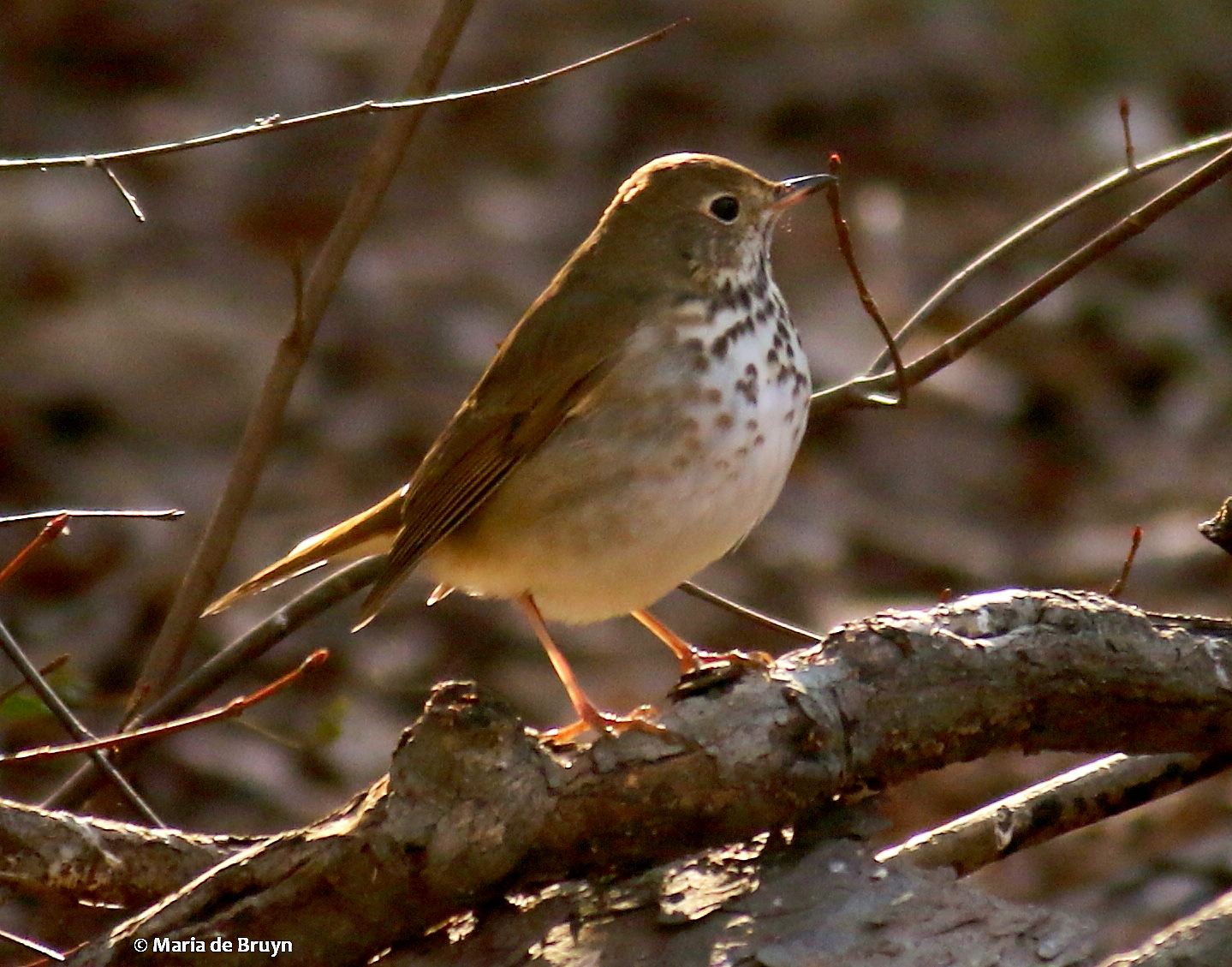
hermit thrush I77A7658© Maria de Bruyn


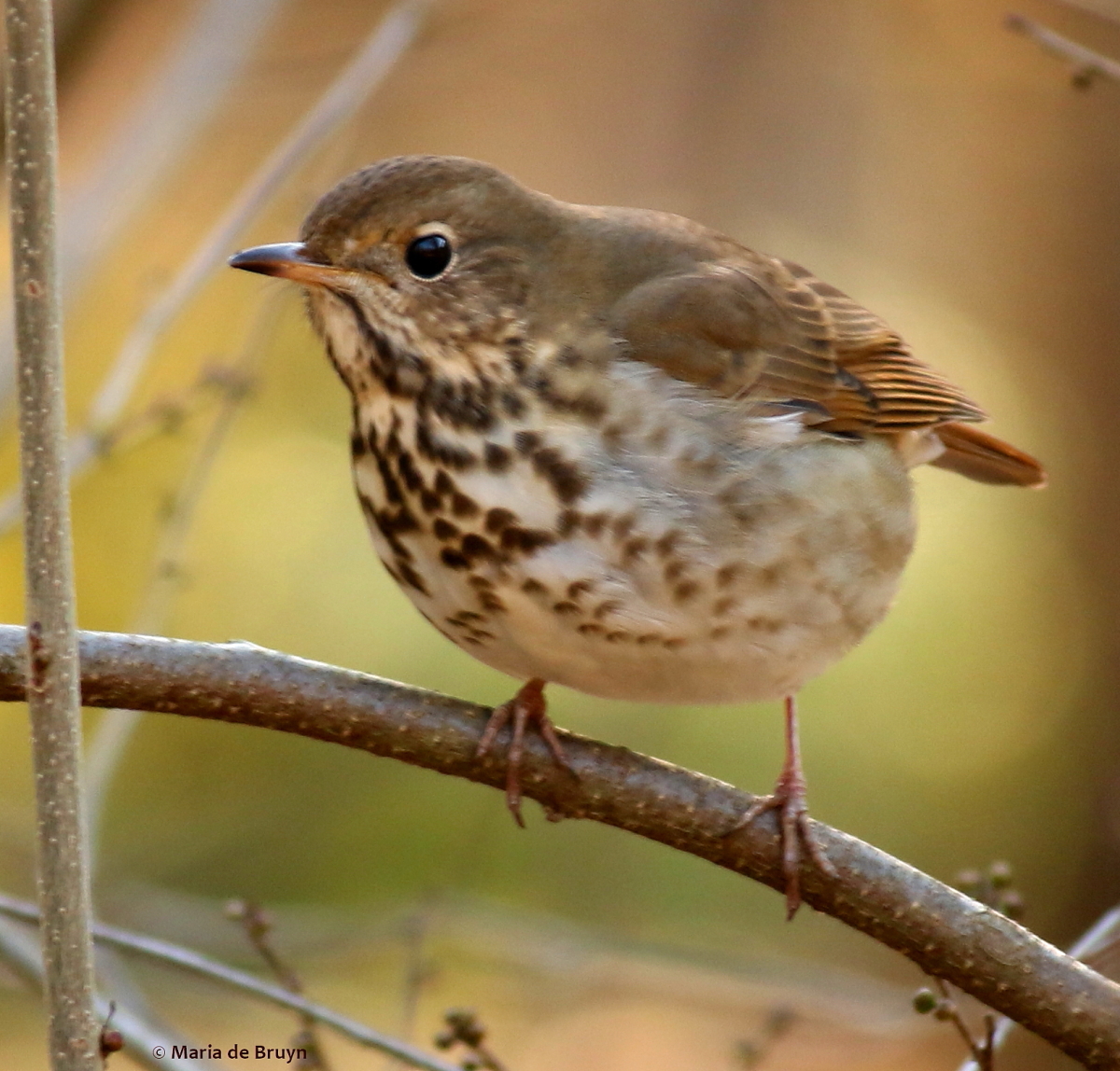
A hermit thrush (Catharus guttatus) emerged near the bird blind, and then the same bird or another seemed to accompany me as I walked another part of the native habitats garden.


hermit thrush I77A7818© Maria de Bruyn

hermit thrush I77A7788© Maria de Bruyn res

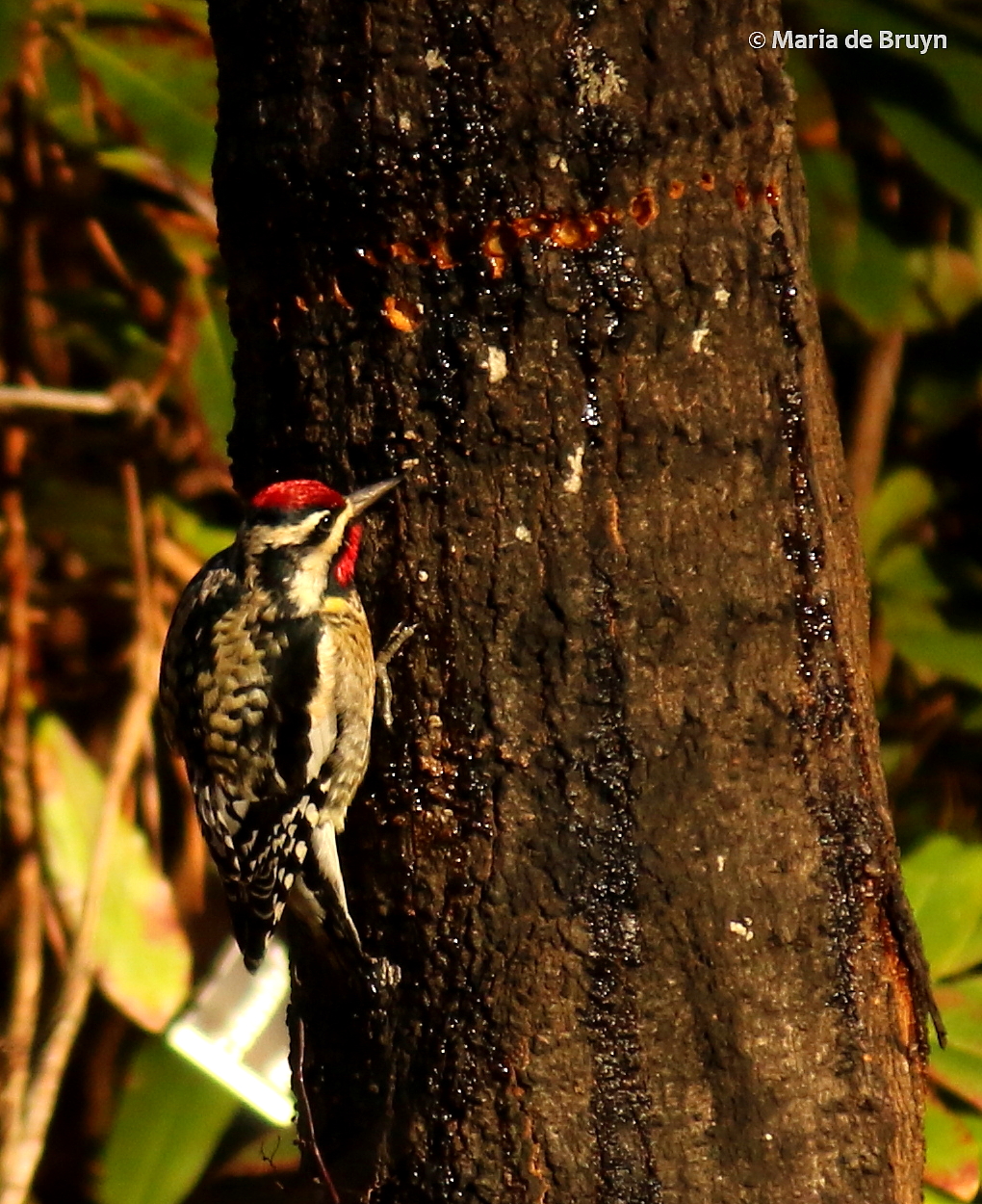
Later, a male sapsucker (identifiable by his red throat) appeared near the Paul Green cabin, where he had been busy working on his sapwells.

yellow-bellied sapsucker I77A7858© Maria de Bruyn res yellow-bellied sapsucker I77A7854© Maria de Bruyn res

Shortly thereafter a downy woodpecker came to the same spot and sampled sap (or something else) from the row of holes left by the sapsucker! That was a nice example of how what one animal does can benefit another, too.

downy woodpecker I77A7912© Maria de Bruyn

downy woodpecker I77A7921© Maria de Bruyn res

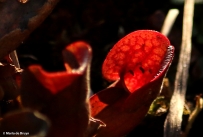
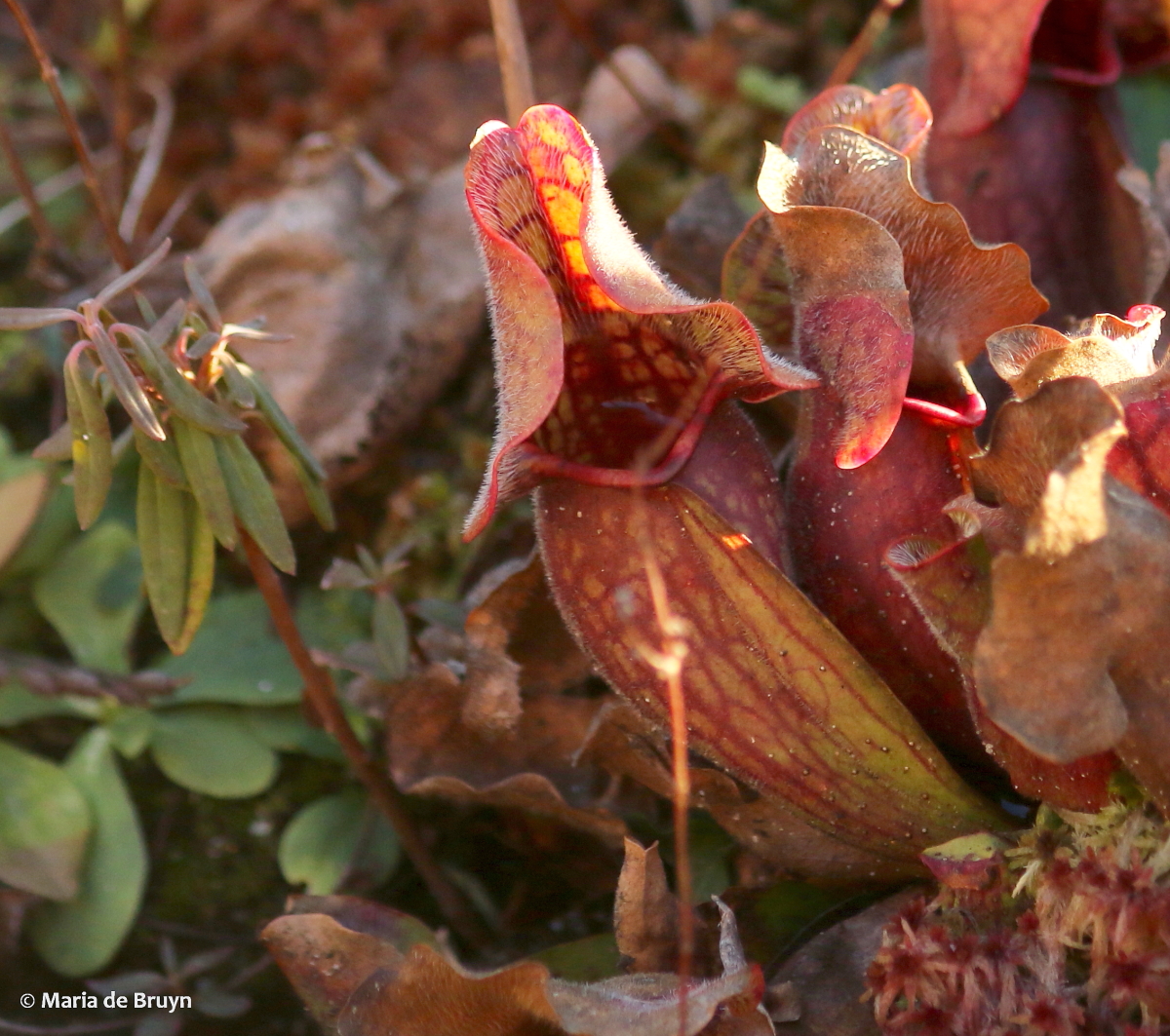
During a plant interlude, I was surprised to see some Southern purple pitcher plants (Sarracenia purpurea) that had not yet shriveled up in the cold.

Southern purple pitcher plant I77A8086© Maria de Bruyn Southern purple pitcher plant I77A8081© Maria de Bruyn res


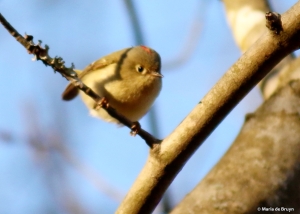
When, I was leaving, a ruby-crowned kinglet (Regulus calendula) alighted overhead,

ruby-crowned kinglet I77A8165© Maria de Bruyn ruby-crowned kinglet I77A8164© Maria de Bruyn

a red-bellied woodpecker arrived, and one more woodpecker made an appearance – a Northern flicker (Colaptes auratus) high up behind some branches in a tall tree. I was using my small zoom lens so the photo quality isn’t great, but you can see that s/he was there.

red-bellied wooodpecker I77A8234© Maria de Bruyn Northern flicker I77A8154© Maria de Bruyn

downy woodpecker I77A8006© Maria de BruynThe only woodpeckers that are common in our town that I missed were the red-headed and hairy woodpeckers – it was truly a woodpecker welcome and a really lovely start to my wildlife photography outings for this year!

“Regal” members of the bird world

ruby-crowned kinglet IMG_2027©Maria de BruynWe usually don’t know who gave a bird species its common name and sometimes may scratch our heads wondering how and why someone ended up choosing a particular name. But birders faithfully learn to identify birds with those names, even when they may seem illogical. For example, many people would have chosen to call red-bellied woodpeckers red-headed woodpeckers since the reddish belly feathers are much less obvious than the red on the back of their heads.

Sometimes we can guess at why a bird got a certain name, however. The species with some form of “king” in their names were apparently felt to have something regal in their bearing or behavior. These birds don’t look similar though.

Some are quite small, like the ruby-crowned kinglet (Regulus calendula). This tiny bird, which weighs only 5-10 g (0.2-0.4 oz), is a bit dull in color except for the ruby crown that the males occasionally display. They are very active and very cute and having them leave the forest and woody areas to visit your bird feeders is a real treat.

Ruby-crowned kinglet IMG_9834©Maria de Bruyn res - Copy ruby-crowned kinglet IMG_2762 MdB (2)
The golden-crowned kinglet (Regulus satrapa) is even smaller, weighing on average 4-7.8 g (0.14-0.28 oz). The males and females both have crowns, although the males can have an orange patch in the middle of their crowns.

Golden-crowned kinglet IMG_7486© Maria de BruynGolden-crowned kinglet IMG_5785II
The tropical kingbird (Tyrannus melancholicus) is larger and has a crown stripe that is less obvious than the kinglet crowns.

Tropical kingbird IMG_8081X mdbTropical kingbird IMG_8113Z mdb

The belted kingfisher is larger still (Megaceryle alcyon) weighing 113-178 g (4-6.3 oz). The females are more brightly colored than the males, showing a reddish band across their breasts (both male and female juveniles have the reddish bands but adult males lose theirs).

Belted kingfisher IMG_5329©Maria de BruynresBelted kingfisher  IMG_9360f© Maria de Bruyn

Some birds don’t have regal names in English but do so in other languages. For example, in Dutch and German, wrens are called kinglets; in North Carolina, we talk about Carolina wrens (Thryothorus ludovicianus).

Carolina wren IMG_7891©Maria de BruynresCarolina wren IMG_8909© Maria de Bruyn

And then we have the large raptor (weighing in at 0.9–2.1 kg (2.0–4.6 lb) whose regal background is expressed in its scientific name, Pandion haliaetus. Pandion was the name of the Greek king of Athens who was grandfather to Theseus, who was transformed into an eagle. Haliaetus comes from the Greek word for sea eagle. We call this regal eagle by the simpler name osprey.

osprey IMG_0230©Maria de Bruyn resosprey IMG_9909©Maria de Bruyn

So these kingly birds are all quite different, ranging from the tiny kinglets to the robust osprey. What they do have in common is their loveliness, displayed in diverse size, color and plumage, and our appreciation for their beauty.

ruby-crowned kinglet IMG_8787©Maria de Bruyn signed