Learning to love an over-protective bird

When house wrens (Troglodytes aedon) first began visiting my yard some years ago, I was not aware that they are extremely protective parents. I didn’t see them as often as birds of other species since they don’t come to my feeders and were not using nest boxes.


The past couple years, however, they have become more comfortable in my yard and began building their nests in boxes after all. This became problematic for me and especially the other species who use the boxes — Eastern bluebirds, Carolina chickadees and brown-headed nuthatches. The reason?

House wrens do their utmost to drive other birds out of their territory so that there is no competition for food needed by their nestlings and fledglings. This protectiveness makes them go so far as to peck other birds’ eggs, which they have done with chickadees and bluebirds in my yard.

Very unfortunately (and upsetting to me), they even killed two nestling nuthatches one year. The other two nuthatch babies managed to fledge. This behavior led a birder, Althea Sherman, to launch a crusade against house wrens in scientific journals in the early 1900s. Now, there are instructions online on how the wrens can be discouraged, for example, on a website devoted to bluebirds.

This year, Eastern bluebirds (Sialia sialis) were tending four eggs in one box and a house wren tried to invade. The parents were very protective and successfully drove the wren away (photo below). Another pair of bluebirds had nested early and managed to guide their young to fledging. They then abandoned my backyard for nesting and the house wrens had no rivals for nest boxes in that area for the rest of breeding season.

House wrens are one of the bird species banded in my yard each year for the Smithsonian Institution’s Neighborhood Nestwatch program. This year the bird bander noticed their nest with babies in a backyard nest box, so she upped the chances of catching one by counting on their extremely protective nature.

A net was put up not far from the box and the bird bander played the call of another house wren. This resulted in both mama and papa wren getting inadvertently caught up in the net while trying to drive away the intruder. They were both banded and then immediately let go so they could resume feeding their babies.

The four woodpiles in my backyard were like a larder for them because they host a plethora of insects.


And the house wrens are obviously not that choosy about which insects they eat. Mama and Papa brought a large variety to their ever-hungry nestlings.


The parents were also very good at keeping the nest clean.

The three nestlings appeared to be producing numerous fecal sacs so that mom and dad were constantly checking the nest for them and flying them away.


At one point, it was interesting that when the male wren brought a large insect to the nest, he handed it over to the female, who was waiting a bit after having just given the babies food.


Eventually, the large meal was delivered to the nestlings.


As the days went by, the nestlings became louder and more insistent on being fed and the parents scarcely paused in their efforts to keep the meals coming and the nest clean. It must have been a relief for the parents when the babies finally left the nest box because they could now take a breather now and then.


Right after fledging, the parents were still busy. The fledglings had not yet flown far so I could see the first post-fledging feeding session for one young wren.

I had learned that house wrens sometimes incorporate spider egg sacs into the nests they build because the hatched spiders eat nest parasites and thereby help protect the developing nestlings! The parents also fed mother spiders and egg sacs to their young. Just after fledging I caught a circle-of-life moment when a parental wren fed a mother spider with her attached egg sac to a fledgling – the death of the poor insect furthered the life of the new bird.

I could see and hear the parent house wrens continuing to feed the fledglings that afternoon. But after a while they appear to have moved to another yard, where they likely weren’t dealing with humans closely watching.


The Eastern bluebirds have a new nest in my front yard now with four eggs, so my nest watching can continue for a while. And the juvenile birds of other species coming to the feeders are entertaining, too.

Life on late winter-early spring farmlands

Although it’s taken me some time to process photos taken earlier this year, I’d still like to share what I was seeing in late winter and early spring when stopping at farm fields. These sometimes muddy and stubble-covered parcels of land can offer wildlife watchers nice views of birds and occasionally other animals, unobstructed by a lot of foliage. So visits to roadside farms and ponds were on my early 2019 nature-walk itineraries.

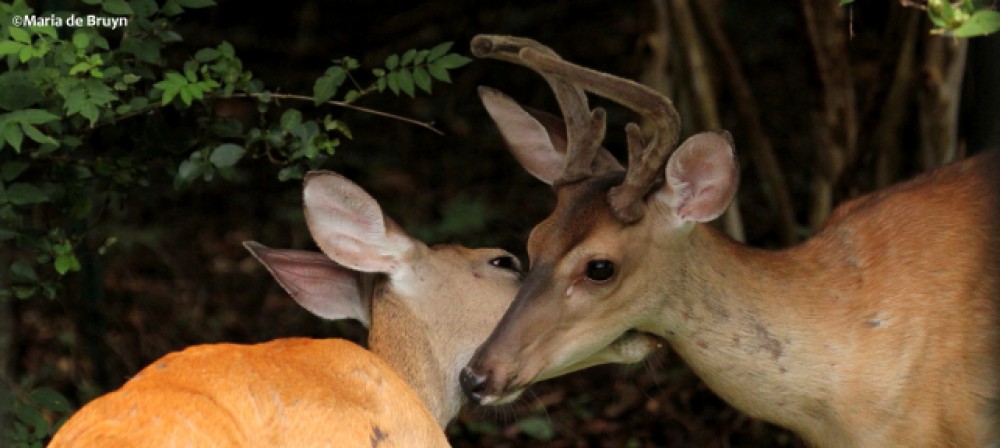
Farm fields are often bordered by stands of trees where animals can retreat if they become disturbed by humans standing around aiming long camera lenses at them. The white-tailed deer (Odocoileus virginianus) above were browsing one morning and seemed unconcerned as I photographed nearby birds. When I turned to watch them specifically though, they decided to move back into the woods bordering the field.

Many farmers put out bird boxes on fences bordering their fields; in early March, the Eastern bluebirds (Sialia sialis) were already checking out and starting to furnish potential nest sites. Here a male was flying away from a nest box while his mate was gathering pine needles.

The fences offer other birds a good vantage point for observation, too. A Northern flicker (Colaptes auratus) perched on a fence post to look around and then flew to a branch high above me.


A bird present in large numbers was the brown-headed cowbird (Molothrus ater). One morning, a friend and I counted some 200 birds in one small group of trees. Many people think they are an invasive species and dislike these birds intensely because they evolved a behavior that can endanger other birds. The cowbirds, who are native to America, were originally present in prairies where they followed the buffalo. This meant they did not stay in one place long enough to tend a nest, so they began laying their eggs in other birds’ nests. The young cowbirds hatch first and then may throw out the other eggs or hatchlings or they eat so ravenously that the other nest mates don’t get enough.

It certainly is disconcerting to see a small warbler feeding a large cowbird fledgling and a couple bird species have been endangered by the behavior. But I don’t dislike the cowbird because of this – they did not choose how to evolve and the behavior developed as an adaptation, not an “evil” practice. They are attractive birds. And the sounds they make are lovely, akin to water droplets falling into a pool.


The American robins (Turdus migratorius) were also present in abundance; they tend to flock together in the winter and early spring. One farm had a boggy area with some cyprus trees and the robins were busy looking for insects among the cyprus “knees” (Taxodium distichum). These woody structures that grow out of the roots may help stabilize the trees when they are standing in water but scientists have not yet definitively identified their purpose.

There were other trees near the cypresses; in one, the cocoon of a Polyphemus moth (Antheraea polyphemus) was hanging high overhead. It also pays to look around to see who is flying u[ ahigh above those trees and fields. It’s not uncommon to see Canada geese (Branta canadensis) flying from one farm pond to another.

Red-tailed hawks (Buteo jamaicensis) soared over different fields I visited.

Red-shouldered hawks (Buteo lineatus) also made an appearance.

And one of my favorite raptors often eluded my efforts to capture a portrait. Only a couple times was I able to catch a beautiful kestrel (Falco sparverius) speeding by in flight.

The robins were feeding in the fields as were several other bird species.


Yellow-rumped warbler (Setophaga coronata)

Savannah sparrow (Passerculus sandwichensis)

Pine warbler (Setophaga pinus)

A pair of Northern mockingbirds (Mimus polyglottos) was taking advantage of numerous cow patties left behind on one farm field in their search for insects. They were flashing their wings repeatedly; I’m convinced that this was behavior designed to scare up bugs so they can catch them easily.


Other birds were following them around in the field, apparently taking advantage of the insect smorgasbord. Two of them were a song sparrow (Melospiza melodia) and a field sparrow (Spizella pusilla).

This year, it was also my good fortune to see a bird new to me in one farm field, the lovely horned lark (Eremophila alpestris). Although these birds are not considered endangered, their numbers declined by 71% between 1966 and 2015.

I couldn’t get close to the larks but one day I did catch a bird taking a dust bath in a gravel and dirt road next to their preferred field. On a second visit to that farm, I again saw a lark in the road and then another lark joined it.

It turns out that female larks perform a courting display that looks very similar to actually taking a dust bath, so I got to see a mating behavior that I hadn’t expected!

Reading about the behavior, I discovered that if male larks see a female who is dust bathing, he may mistake what she’s doing and try to mate with her when she’s not ready.

So reproductive life is a bit difficult for those males, who look so adorable when they raise those head feathers to project two little black horns.I will leave you here with a few more views of a horned lark who was singing and foraging not too very far from the road.


Spring is in the air…. Uh, I mean water!

It was the sound that first attracted my attention. Initially, I thought that it sounded like a flock of birds, but as I approached a pond, I realized that was not the case. The almost chirruping sound didn’t fit with any frogs I had heard before. As I scanned the scene before, my roving vision finally alit on a small section of brownish water dappled with green algae and stalks of dead reeds – there were moving bumps there. When I came closer, I finally realized that it was a mass of writhing and continually moving toads, engaged in what resembled a bit of a battle. It was actually what could be called a mating contest. (Click on a photo to see it larger; then arrow back to return to blog.)

The sound made by the male Eastern American toad (Anaxyrus americanus americanus) when he is ready to breed has been likened to an old-fashioned ringing telephone. It can last from 6 to 30 seconds and when multiple toads are calling at the same time, they create a very loud and penetrating “concert”. It doesn’t sound like a phone to me; you can judge by listening to the video.

I only saw a couple of the toads with inflated throat sacs. The sound was very loud, however, and the water was roiling with moving heads topped by periscope eyes, warty bodies and thrashing legs.
Before examining how the toads were going about their reproductive endeavor, a little biology lesson. Toads are a sub-group of frogs; while most frogs have moist skin, toads generally have drier and wartier skins. They vary greatly in color, including shades of yellow, brown, black and red, and may be speckled or have solid hues. The skin color can also change in response to stress, temperature, humidity and habitat.


American toads have two glands at the top of their head behind the eye crest. These are parotid glands that produce a neurotoxin, bufotoxin, which can sicken and even kill a predator. The milky substance can produce skin irritation in human beings and can be dangerous to smaller mammals (like dogs).


Like birds, toads have nictitating membranes, transparent eyelids that help protect the eye. They sometimes raise the nictitating membrane half-way so that they retain sharper vision.


Toads actually spend a lot of their lives on dry land, eating insects as well as worms, slugs and other small invertebrates. A particularly fascinating fact is that they use their eyeballs to help swallow food – when they ingest their prey, the eyeballs sink down into their mouth and help push the food down their throats!!!

At times, they created little whirlpools as they bumped up against one another or tried to mount a neighbor.


Sometimes, a large female with a smaller male atop her would rest quietly under water, apparently trying to avoid notice. This strategy did not always work, however, and sometimes one or more other males would try to join the pair already in amplexus (i.e., when the male grasps the female with his front legs and fertilizes the eggs as she releases them from her body)..

The female toad ejects her eggs in two strings, which are immediately fertilized by a nearby male spurting out a stream of sperm. (Frogs lay their eggs in clusters.) Tadpoles will emerge from the eggs within 2–14 days and reach adulthood within 50–65 days. They become sexually mature at 2-3 years.

In one case, I developed a real sympathy for a particularly large female. She had a small male astride her who resembled her in coloring and they looked to be peacefully joined. Then another male spotted them and he launched a sneak attack, trying to usurp the position of her already-present suitor. The first male clung on tightly.

No. 1 pushed No. 2 away with a hind leg again and again.

In the meantime, a great blue heron (Ardea herodius) who had been feeding on the other side of the pond, made its way over to the site of toad frenzy. S/he had been eating small fish and amphibians.

I thought the heron would plunge into the midst of the numerous toads for an easy meal, but instead the bird looked around and then skirted the group, veering away to the shoreline. Perhaps some instinct made the heron avoid the group during a reproductive event? Or s/he was put off by the vigorous activity of the potential prey?

A second rival toad then joined the first, who was still trying to get the original mating male out of the way. Eventually, a third, fourth and yet another male joined the group and the poor female was weighted down by 5 – FIVE! – male toads all vying for the prime spot on her back. Often her head was pushed down under water.

The first male clung on with great determination, often being pushed down under water as well as the other males piled on. He was NOT going to give up.

Ms Toad did not like this state of affairs. She laboriously began moving from a deeper spot in the pond to the pond’s edge. This was a slow process, made difficult by the clinging crowd who must have weighed a good deal as a group.

I thought she might be trying to get to more shallow water so the toad “knot” would not keep her submerged. Toads can breathe under water like frogs because they can absorb oxygen through their skin. They do have lungs, however, and if these fill with water, they can drown. A fellow Facebook nature lover told me that she had seen expired female toads with males still clinging to them. A toad knot can therefore unfortunately result in maternal mortality – the demise of a mother giving birth (to several thousand eggs; most of the tadpoles do not survive).

I soon left the scene after Ms Toad had reached the side of the pond and could keep her head above water. It was noticeable that her throat pouch was inflating and deflating – perhaps she was breathing deeply to compensate for lack of oxygen when she had to suffer a submerged head due to the over-amorous males.


Inhale!                                                                  Exhale!

I know I am anthropomorphizing, but I do believe that she likely felt the amphibian equivalent of relief and was looking forward to the end of that day!

The sad spring saga of Sassy squirrel

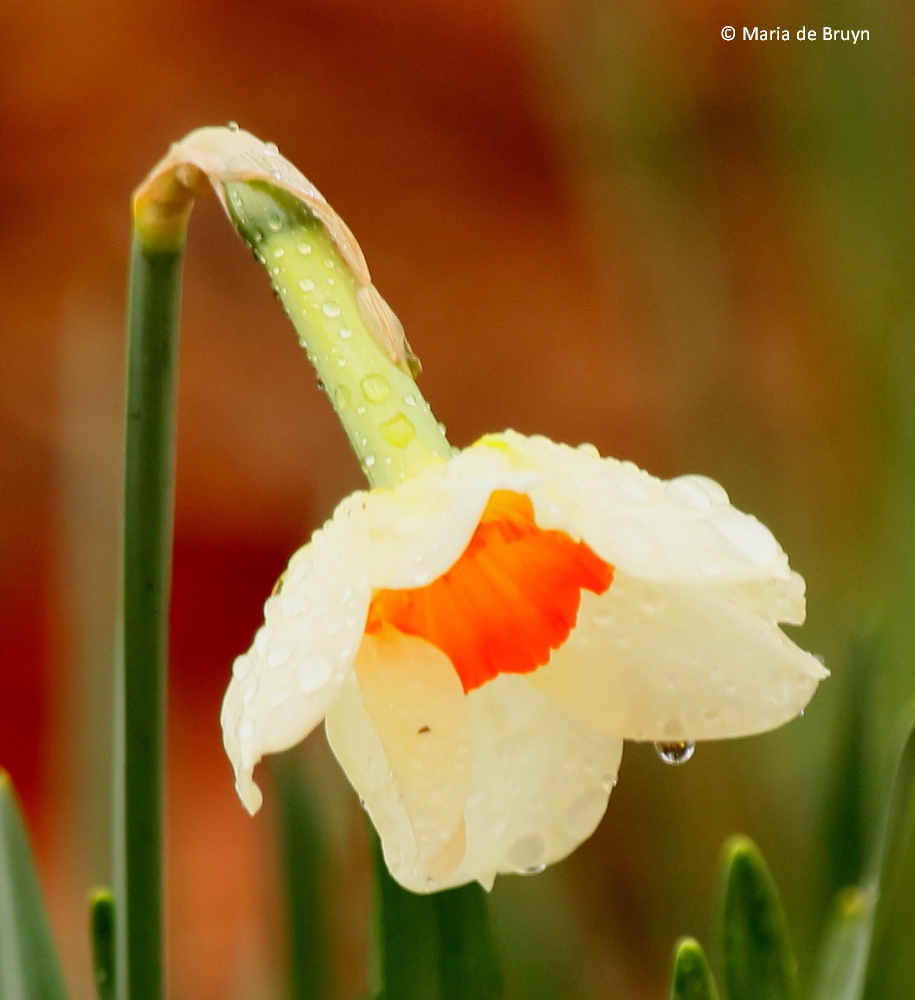
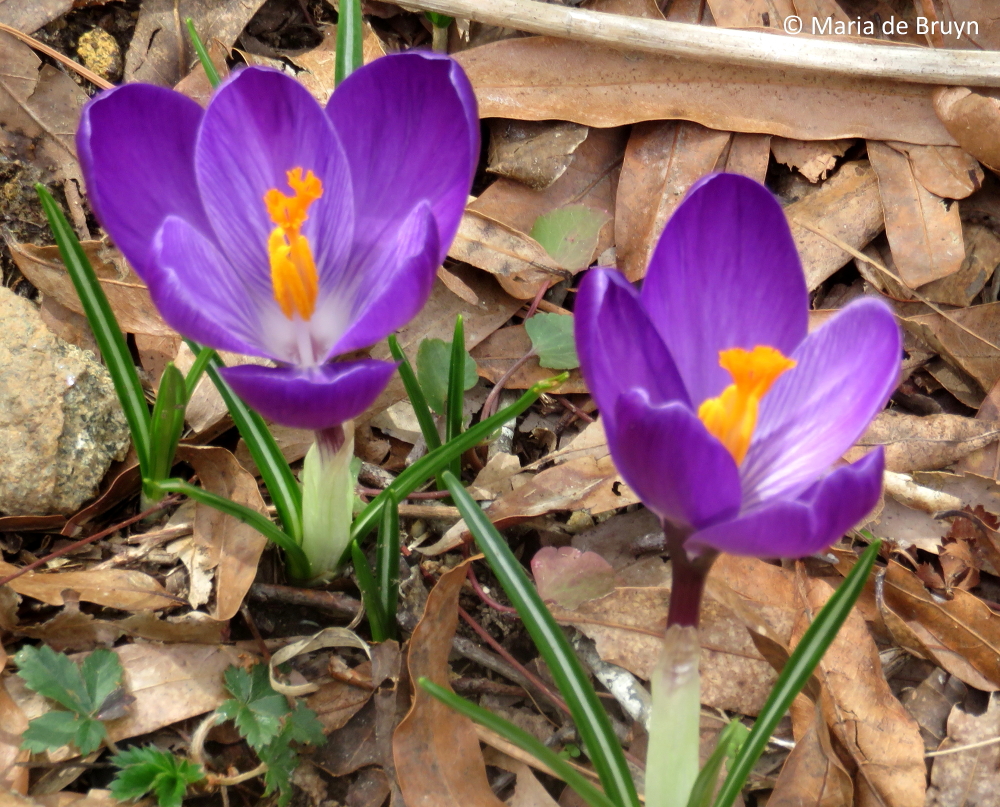
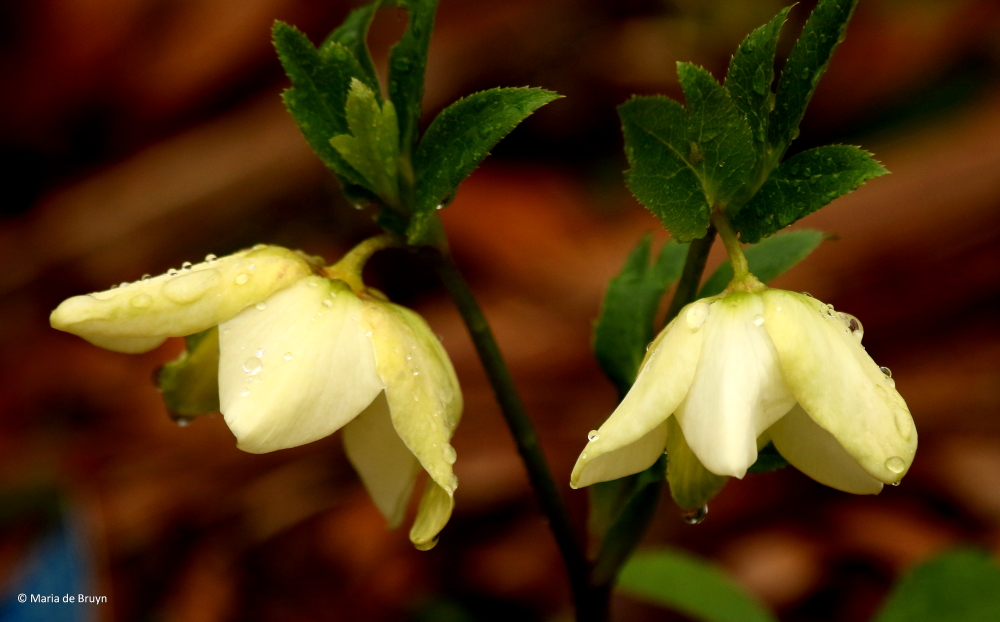
cape-may-warbler-i77a5989-maria-de-bruyn-2resSpring has come early to North Carolina, leading to some early bird migration (like this Cape May warbler, Setophaga tigrina, on its way North), avian courtship and nest building, as well as spring blossoms already emerging in profusion. My garden has seen some lovely flowers, both cultivated and wild: daffodils (Narcissus), crocuses (Crocus), winter jasmine (Jasminum nudiflorum), henbit (Lamium amplexicaule) and lenten rose (Helleborus orientalis).

daffodil-i77a2964-maria-de-bruyn-res    daffodil-i77a2325-maria-de-bruyn-res

crocus-img_1813-maria-de-bruyn-res   crocus-img_1790-maria-de-bruyn-res

winter-jasmine-i77a0793-maria-de-bruyn-res    henbit-i77a1155-maria-de-bruyn-res

lenten-rose-i77a2951-maria-de-bruyn-res lenten-rose-i77a1903-maria-de-bruyn-res

lenten-rose-i77a2970-maria-de-bruyn-res

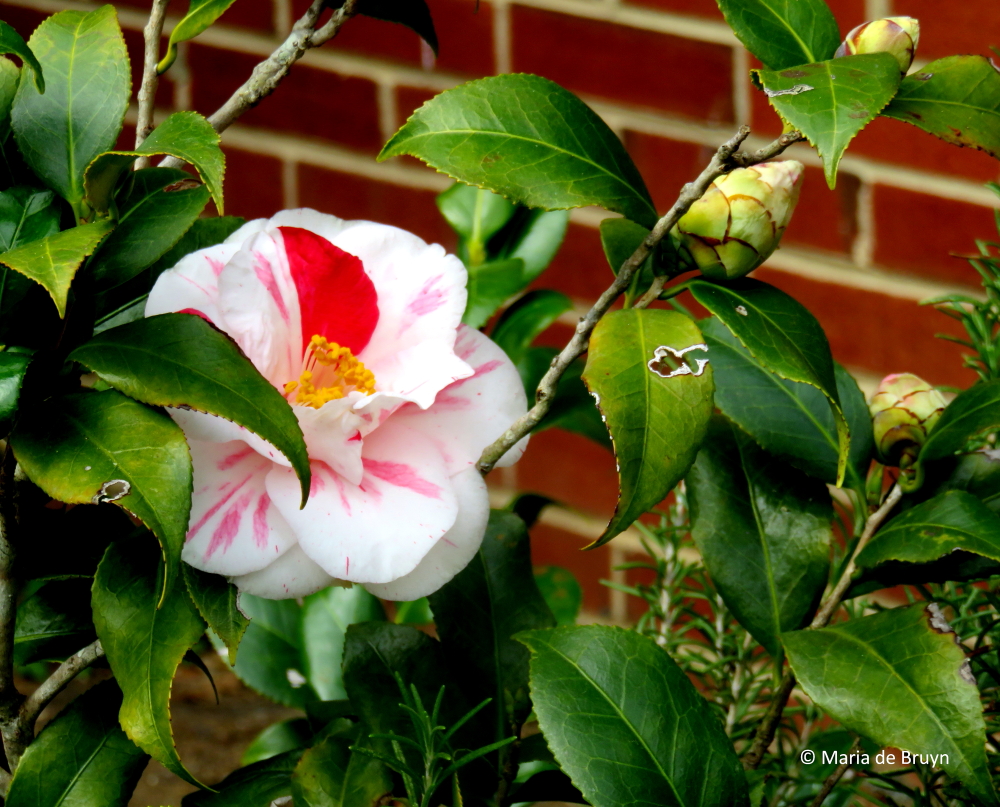
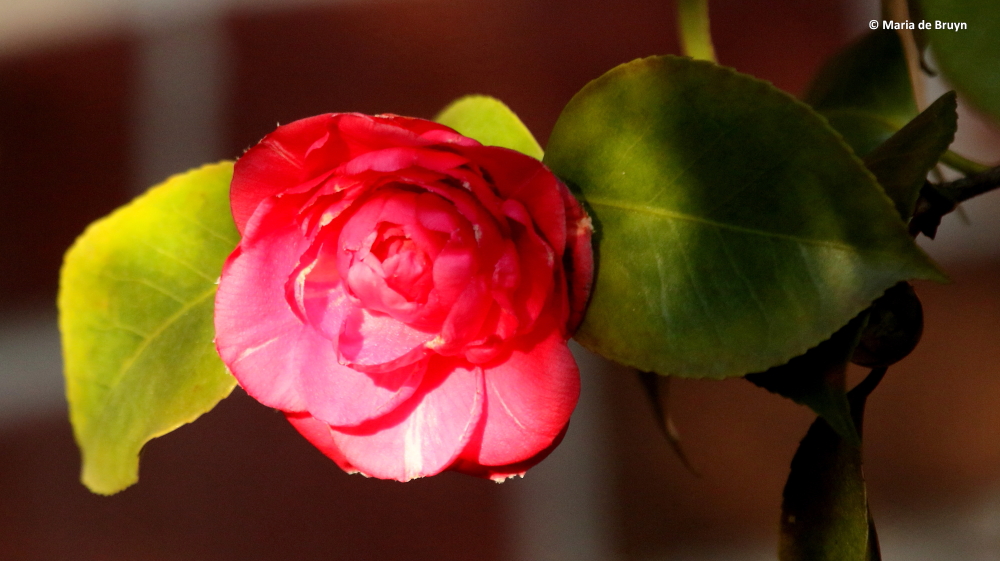
My camellias ( Camellia) bloomed in much greater profusion than ever before.

camellia-img_1816-maria-de-bruyn-res    camellia-i77a1922-maria-de-bruyn-res

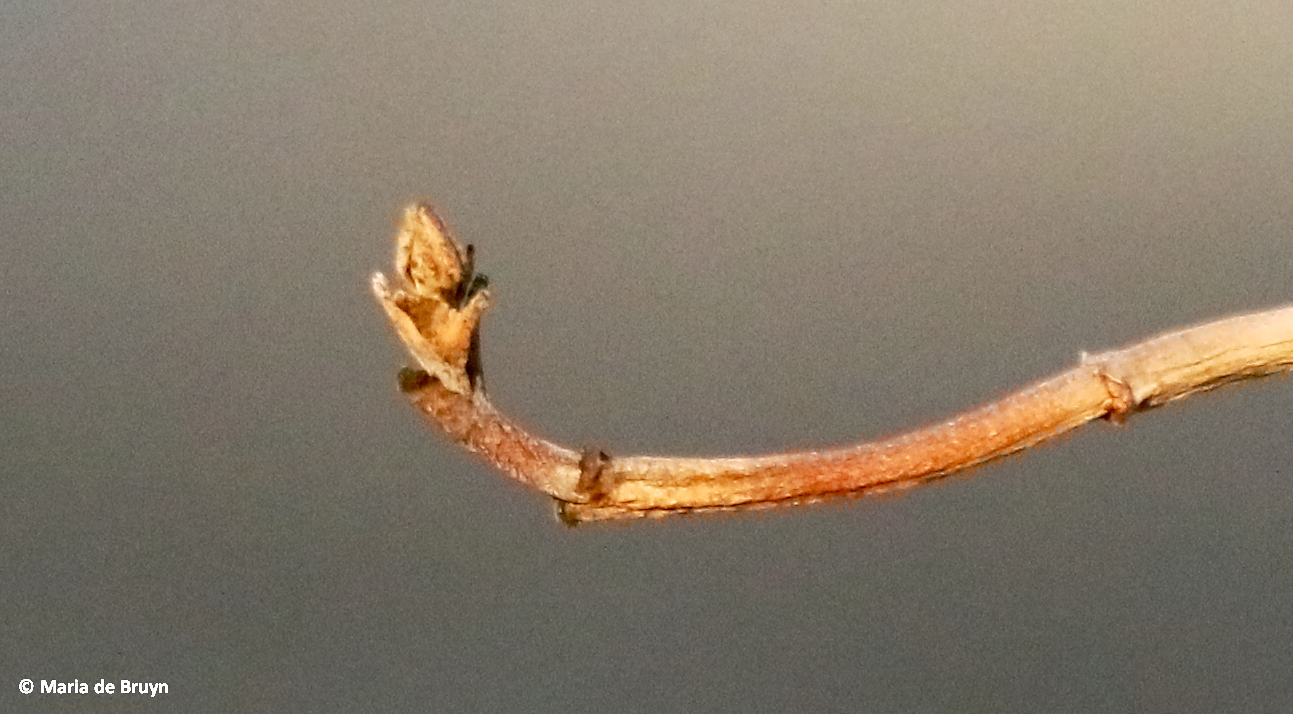
The shrubs and trees also sent out their buds weeks “ahead of schedule” – since the past month was the warmest recorded February in this area, my plants advanced their springtime blossoming, including the serviceberry (Amelanchier arborea), viburnums, dogwoods (Cornus kousa and Cornus florida) and common elderberry (Sambucus nigra).

serviceberry-i77a1965-maria-de-bruyn-res  tree-i77a1949-maria-de-bruyn-res

tree-i77a1963-maria-de-bruyn-res tree-i77a1950-maria-de-bruyn-res

My new blueberry bushes burgeoned with delicate little flowers, but the past two nights I had to cover them up so that they wouldn’t shrivel up as the temperatures dropped below freezing.

eastern-gray-squirrel-i77a0079-maria-de-bruyn-res


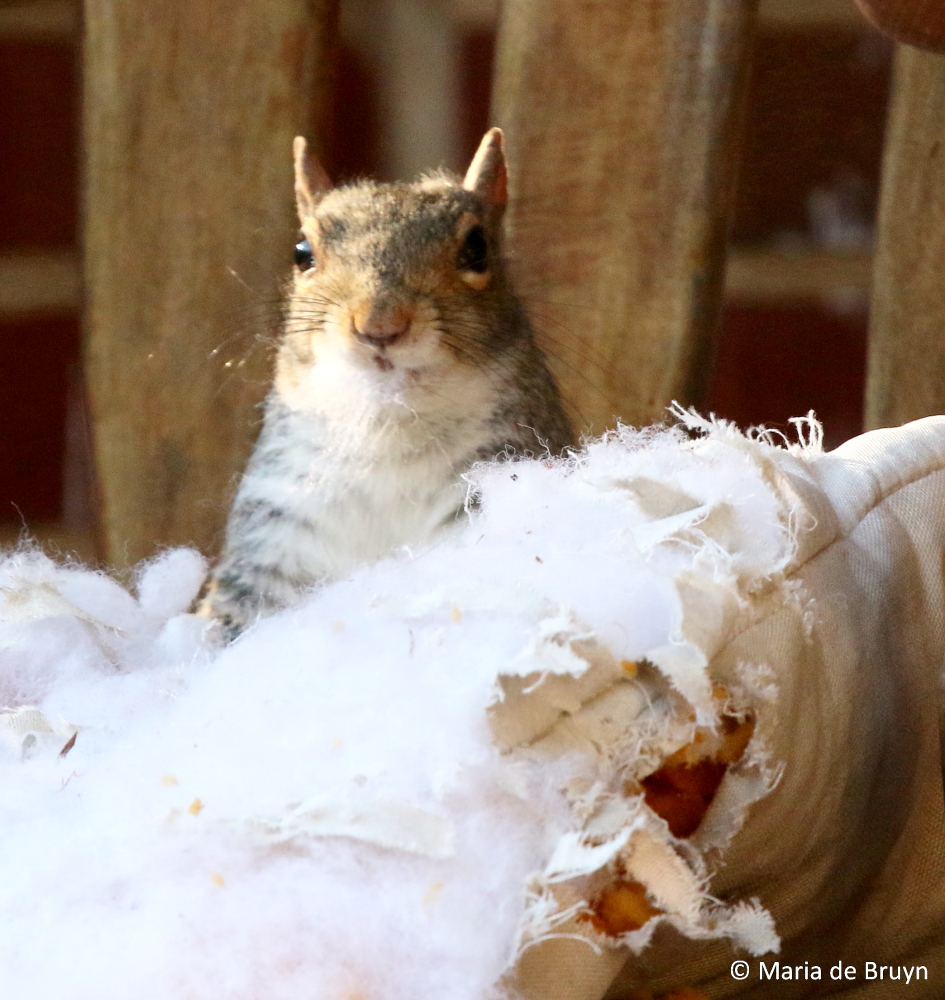
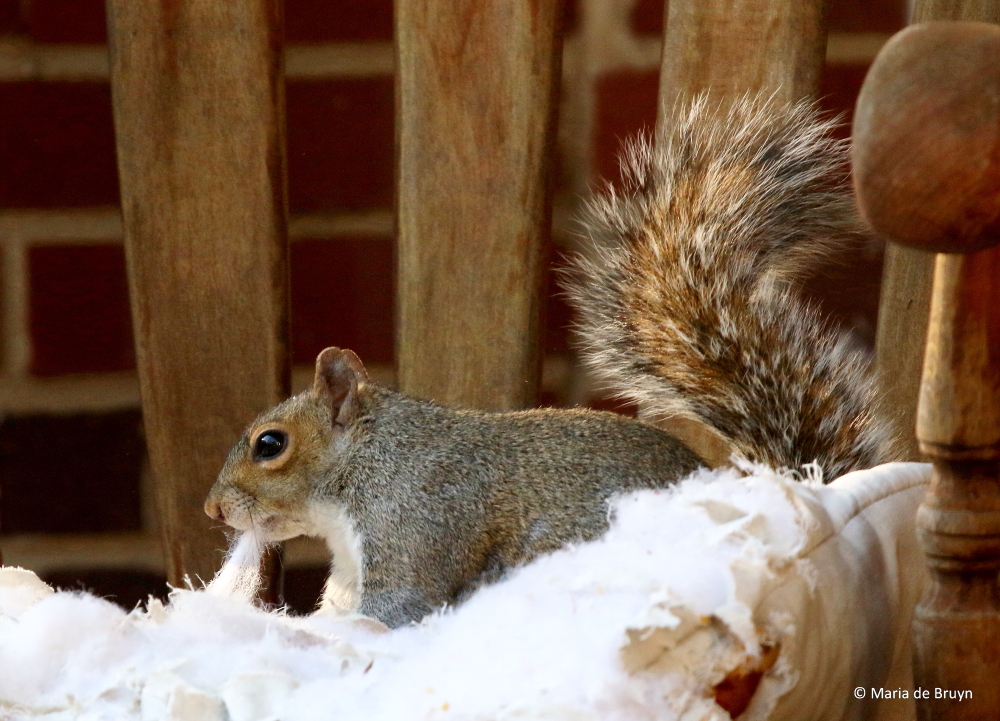
It wasn’t only the plant and bird life responding to the unusually changing season, though, as I discovered when I finally noticed the altered pillow on my front porch rocking chair. I first saw that the cloth covering the pillow had been torn; upon closer examination, I saw that the pillow had been opened up with its filling tufting up in places.


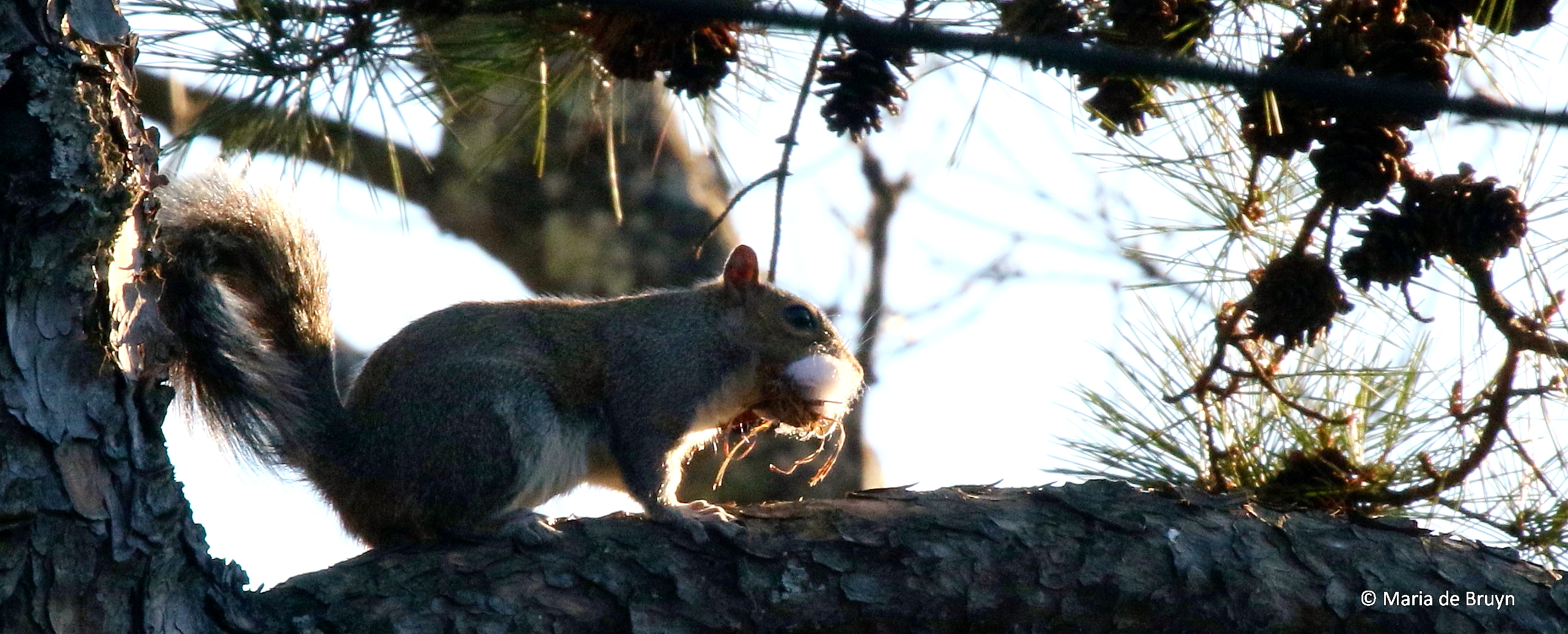
eastern-gray-squirrel-i77a0093-maria-de-bruyn-resWhen I began watching the rocker in addition to the bird feeders, I discovered the culprit – an industrious Eastern gray squirrel (Sciurus carolinensis), whom I named Sassy as she shows no fear, just a little caution.

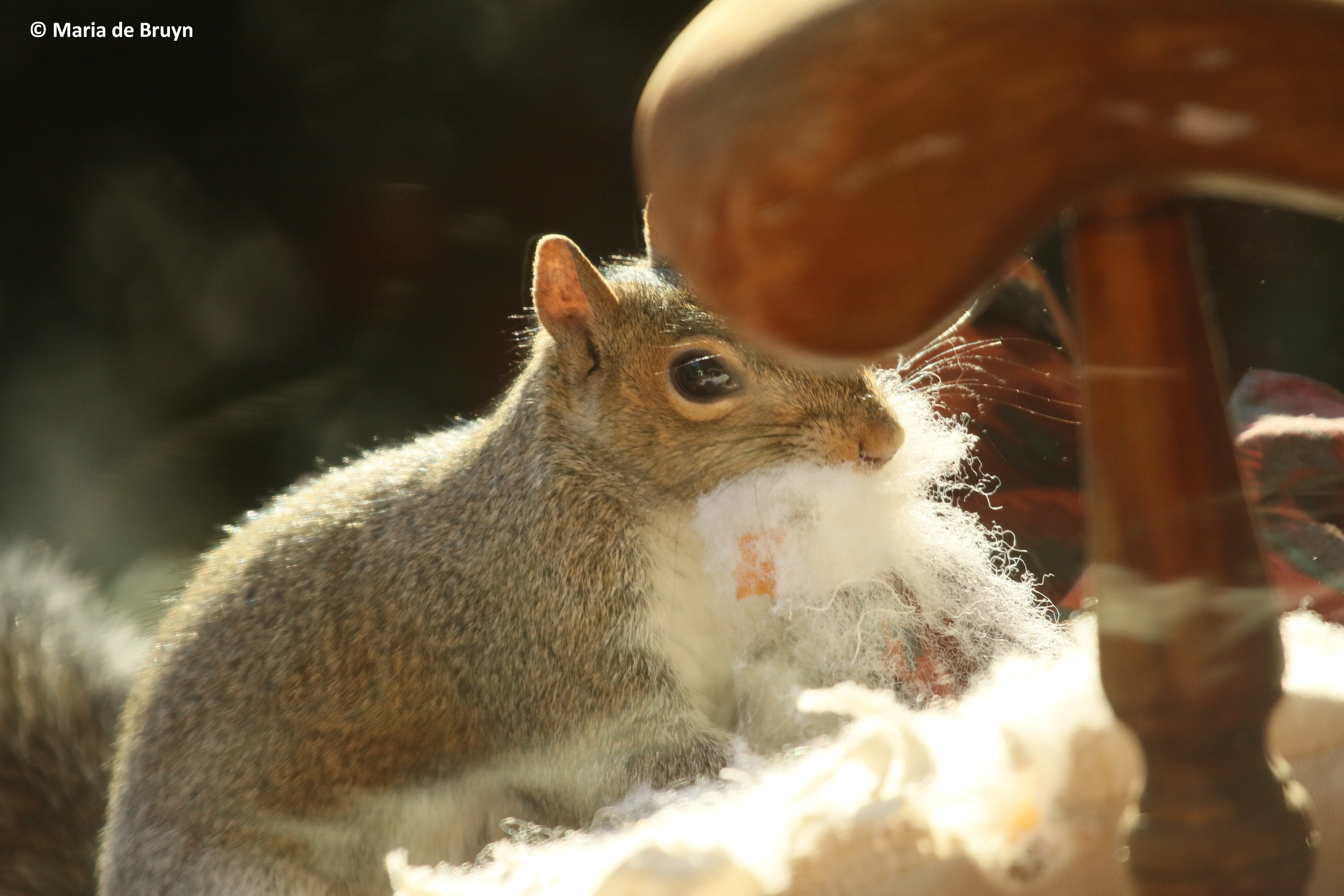
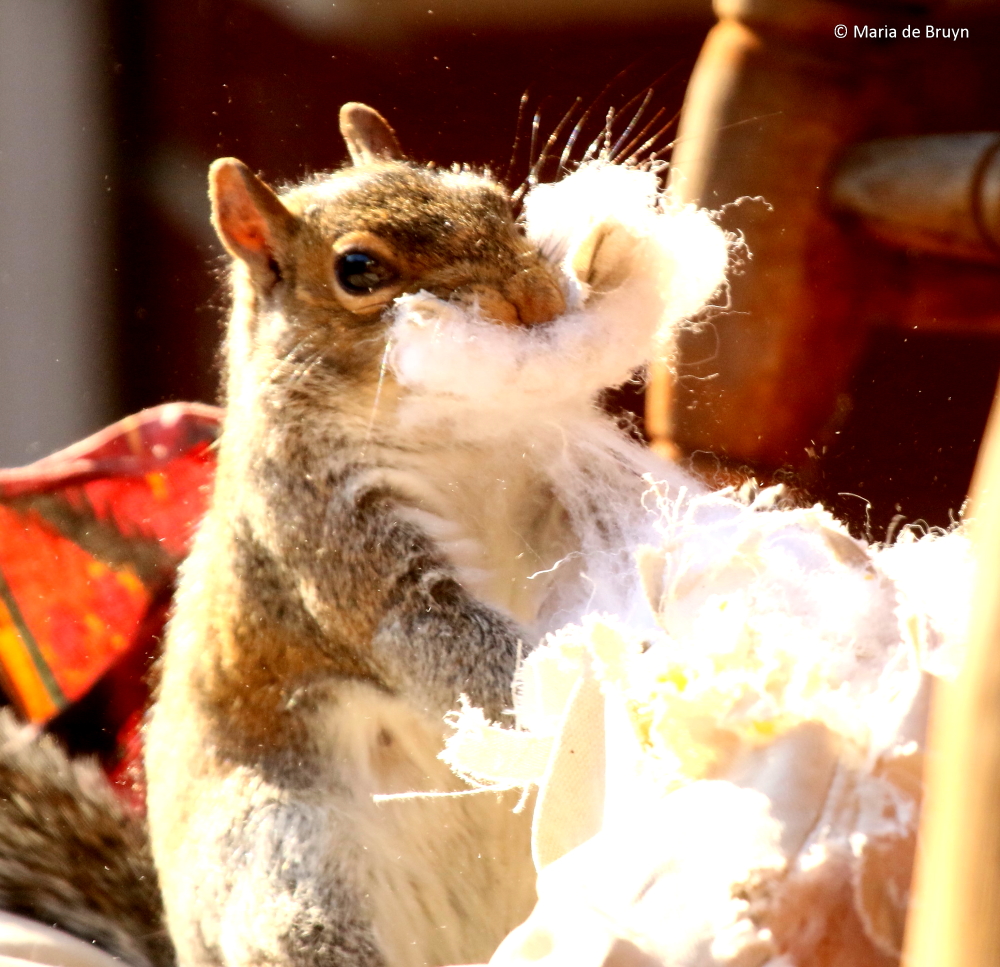
Sassy is quite bold, coming up onto the porch even when I’m seated there. She keeps an eye on me but goes about her business in a calm and confident mood. This was also the case for her nest building activities. She perched on the pillow and used her teeth to tear out the insides.

eastern-gray-squirrel-i77a9708-maria-de-bruyn  eastern-gray-squirrel-i77a0073-maria-de-bruyn-res

She then manipulated the tufts with her paws and teeth to form them into neat little oblong packages that she could easily transport in her mouth.

eastern-gray-squirrel-i77a9795-maria-de-bruyn-res eastern-gray-squirrel-i77a9796-maria-de-bruyn-res

eastern-gray-squirrel-i77a9801-maria-de-bruyn-res eastern-gray-squirrel-i77a9802-maria-de-bruyn-res

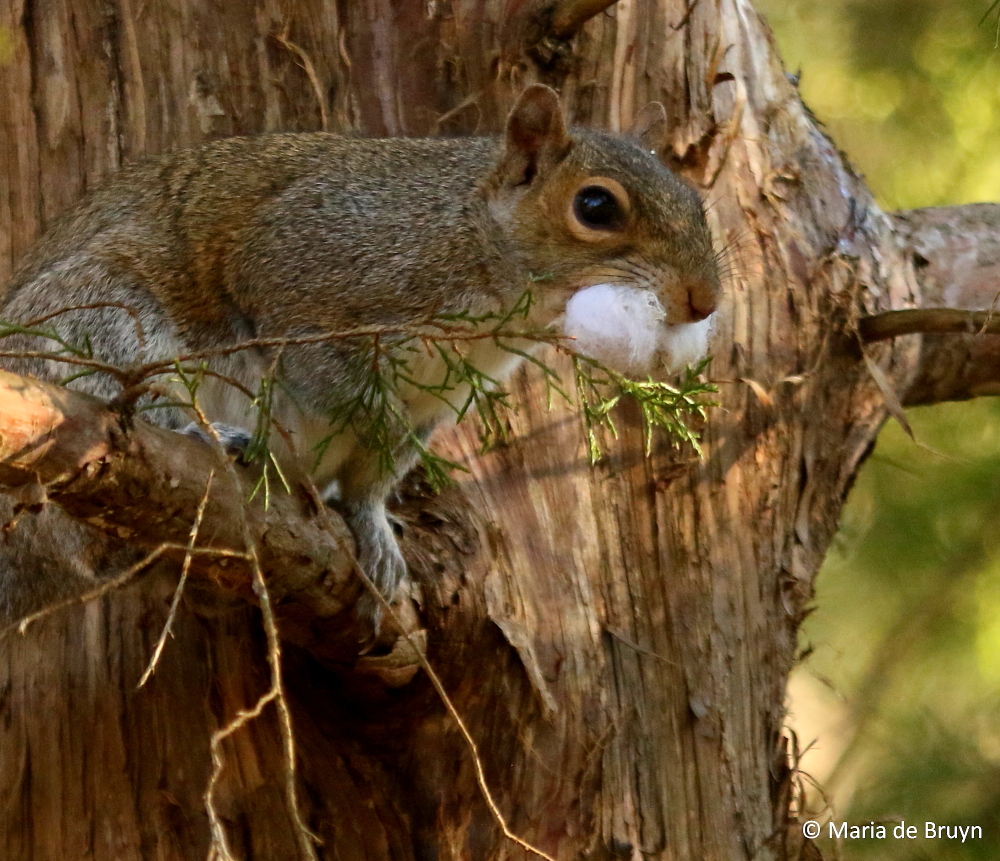
Sometimes, she added some dried leaves to the mixture.

eastern-gray-squirrel-i77a1995-maria-de-bruyn-res

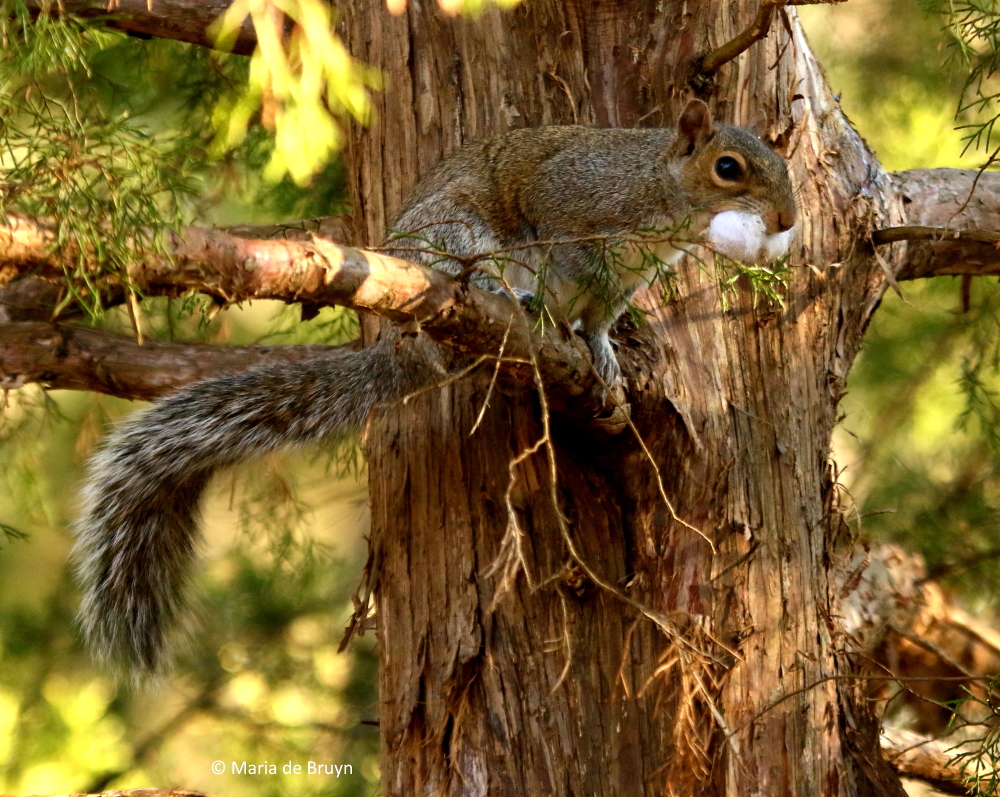
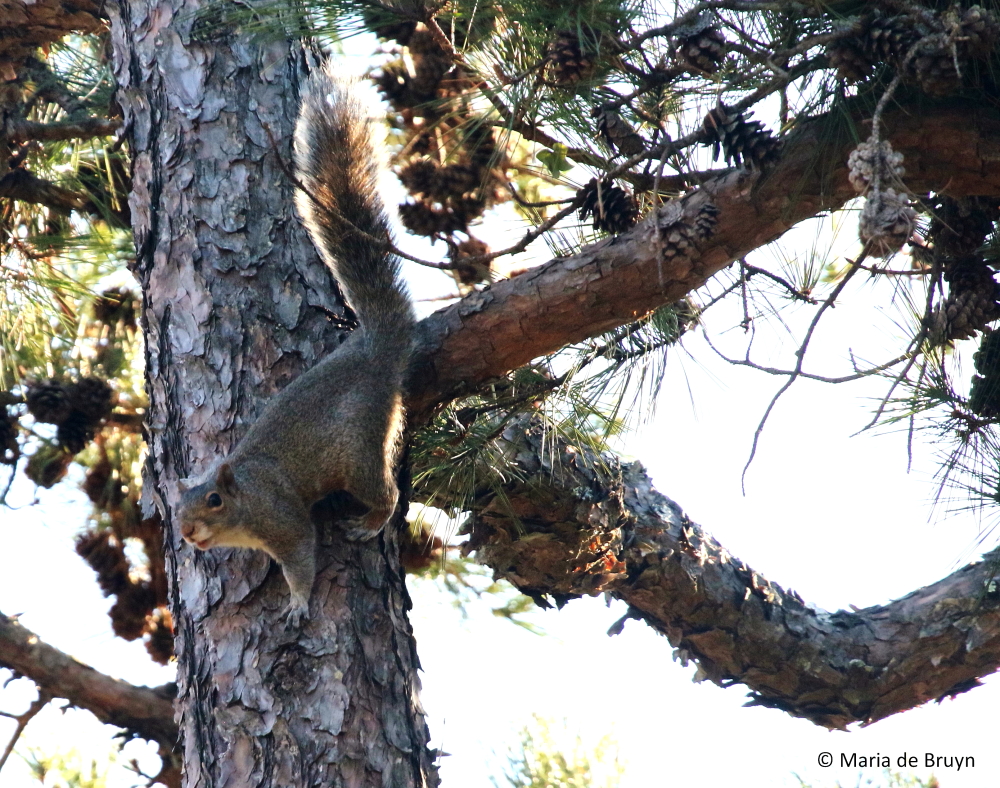
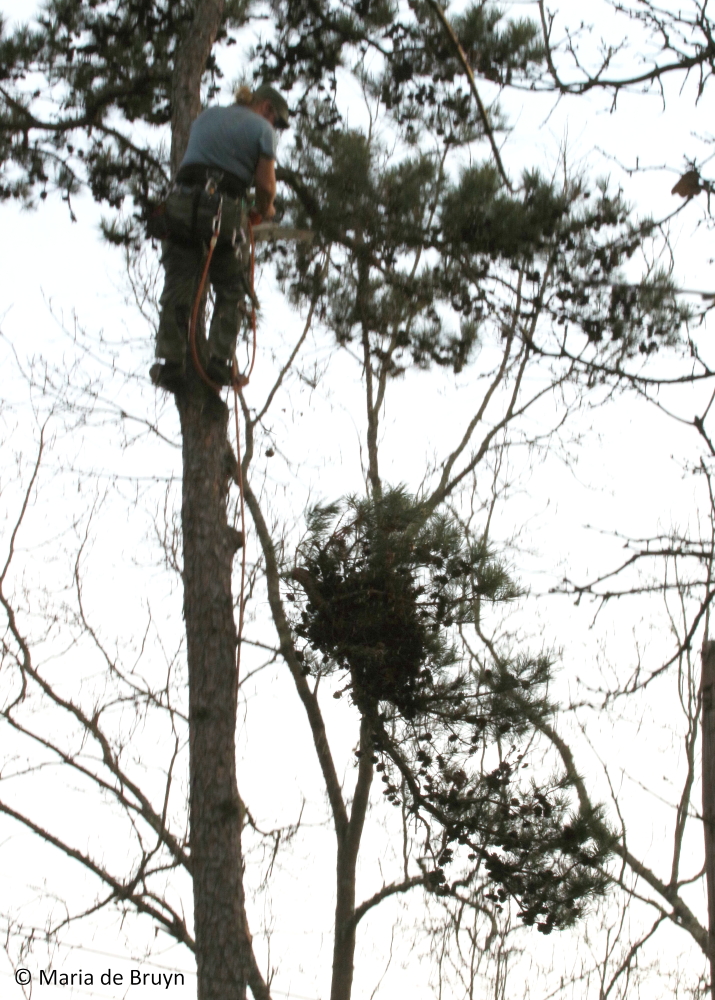
When her mouth was filled with enough material, she left to transport it to the nest that she was constructing – as it turned out, high in a loblolly pine (Pinus taeda) in a neighbor’s front yard. As I followed behind her, she stayed aware of my movements.

eastern-gray-squirrel-i77a0107-maria-de-bruyn-reseastern-gray-squirrel-i77a0108-maria-de-bruyn-res

Then she crossed the street and scurried up the tree, where she deposited her “mattress stuffing” among the leaves and other materials lining the nest.

eastern-gray-squirrel-i77a0125-maria-de-bruyn-res  eastern-gray-squirrel-i77a0139-maria-de-bruyn

Since Sassy was so very industrious and the pillow was no longer salvageable, I left it out for her. She returned for several days, systematically dismantling her found source of nest material and carrying off her little woolly trophies.

eastern-gray-squirrel-i77a0099-maria-de-bruyn-res eastern-gray-squirrel-i77a0093-maria-de-bruyn-res

When the stuffing began to disperse with the wind, I finally gathered it up and threw out what was left, figuring she had had plenty of manmade contributions to her home.

eastern-gray-squirrel-i77a0142-maria-de-bruyn-res eastern-gray-squirrel-i77a9817-maria-de-bruyn-res

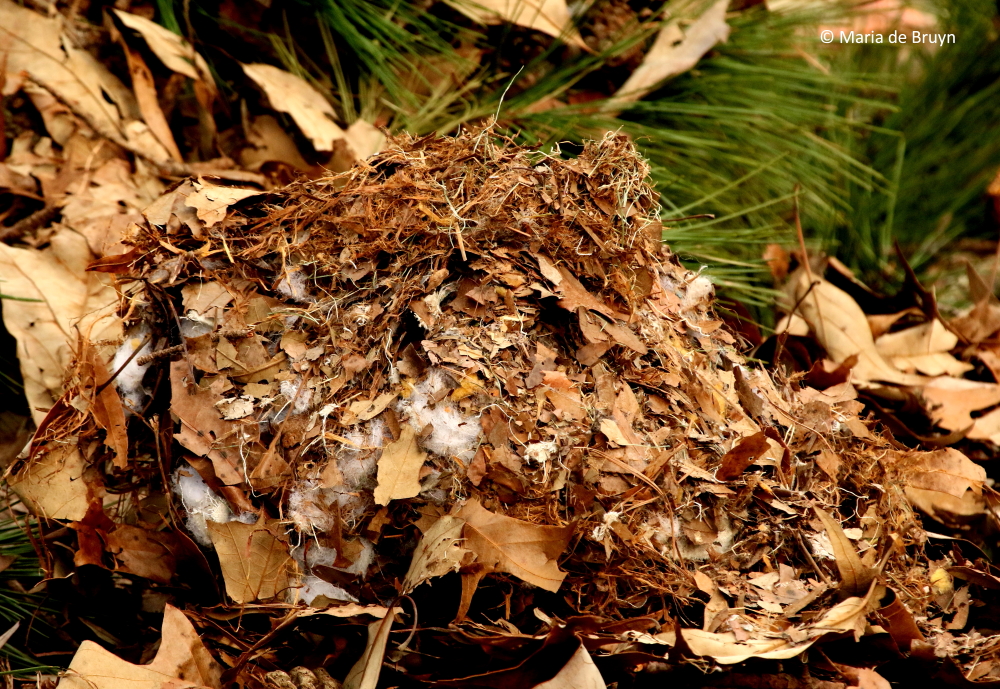
Then a couple days later, I was dismayed on her behalf to see that the new neighbors had decided to remove the tree where her nest was located. The landscapers said Sassy’s nest was not a factor in their decision; they just thought the tree was in the way. I watched with sadness as Sassy’s tree was dismantled and her nest plunged to the ground.

squirrel-nest-i77a9820-maria-de-bruyn-res  squirrel-nest-i77a2239-maria-de-bruyn-res

squirrel-nest-i77a2248-maria-de-bruyn-res

I didn’t see where Sassy was during this event but am sure she was watching from some other vantage point. I felt badly for her – all her innovative and dedicated work was destroyed. Of course, people lose their homes, too, to flooding, fires, tornadoes, etc.  and that is horrible. But I still regretted that this hard-working mammal had lost her home as well.

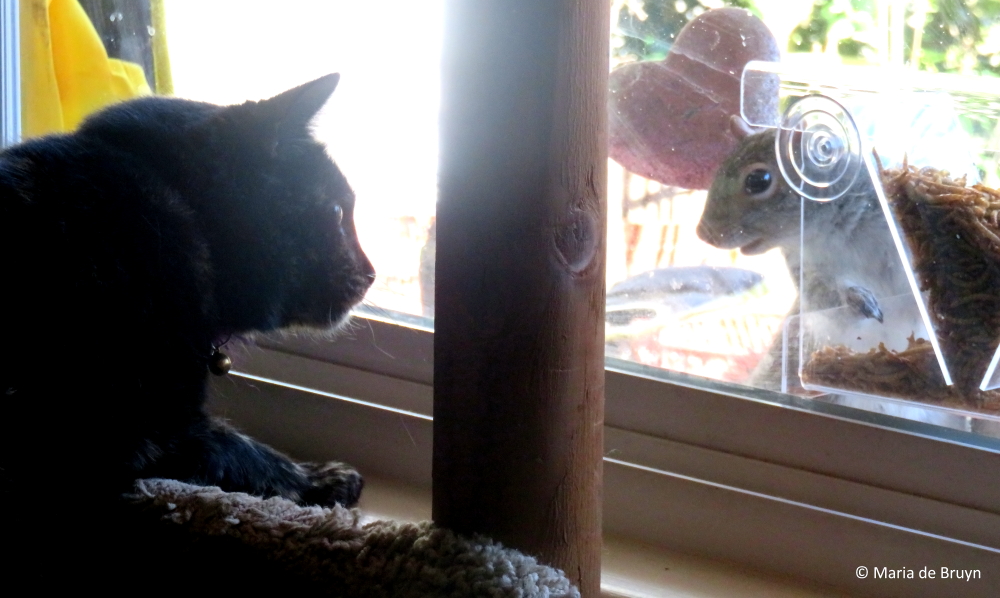
I presume Sassy has been building a new nest elsewhere. And given her boldness, I’m fairly certain that she was the squirrel I saw yesterday afternoon who had decided that she likes dried mealworms.

eastern-gray-squirrel-img_1911-maria-de-bruyn-res

As my feline companion Moasi watched from her cat tree perch in the living room, Sassy was busy on the other side of the window chowing down on the worms in a new window feeder that I had actually bought for the Carolina wrens and chickadees, who often perch on the chair in front of the window.

eastern-gray-squirrel-img_1920-maria-de-bruyn-res

flower-i77a3037maria-de-bruyn-res


Sassy didn’t seem to mind Moasi watching her and she wasn’t fazed when I approached either. It was only when I knocked on the window that she finally descended to the porch and then left for the yard. I like to think that Sassy has made a new home and is now busy getting extra nutrition for the babies to come. And spring continues to unfold with temperatures varying from 24 to 70 degrees and above!