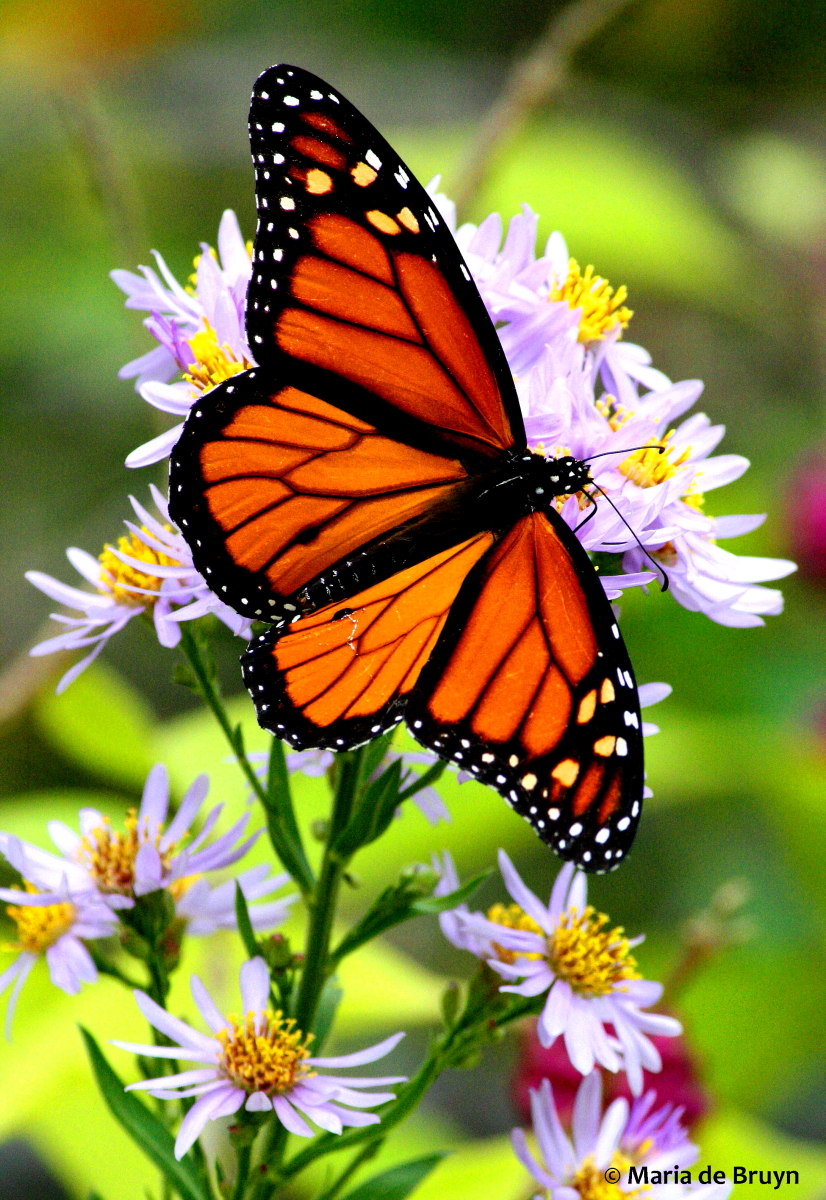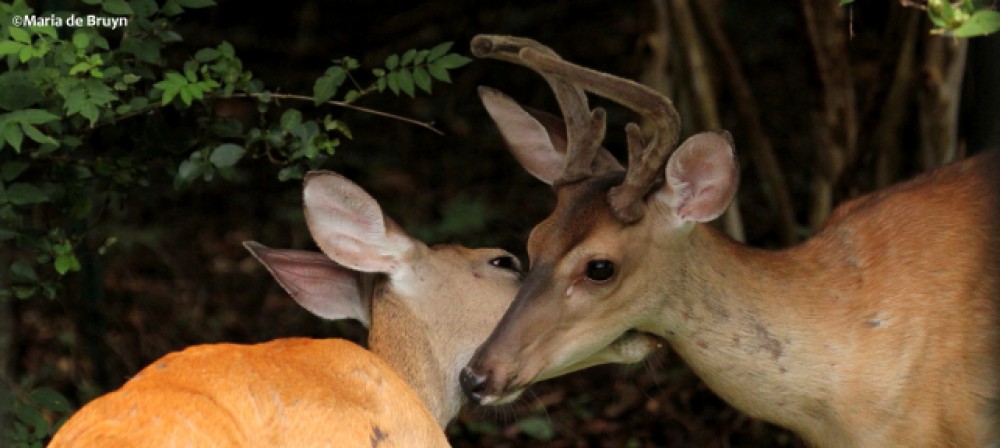
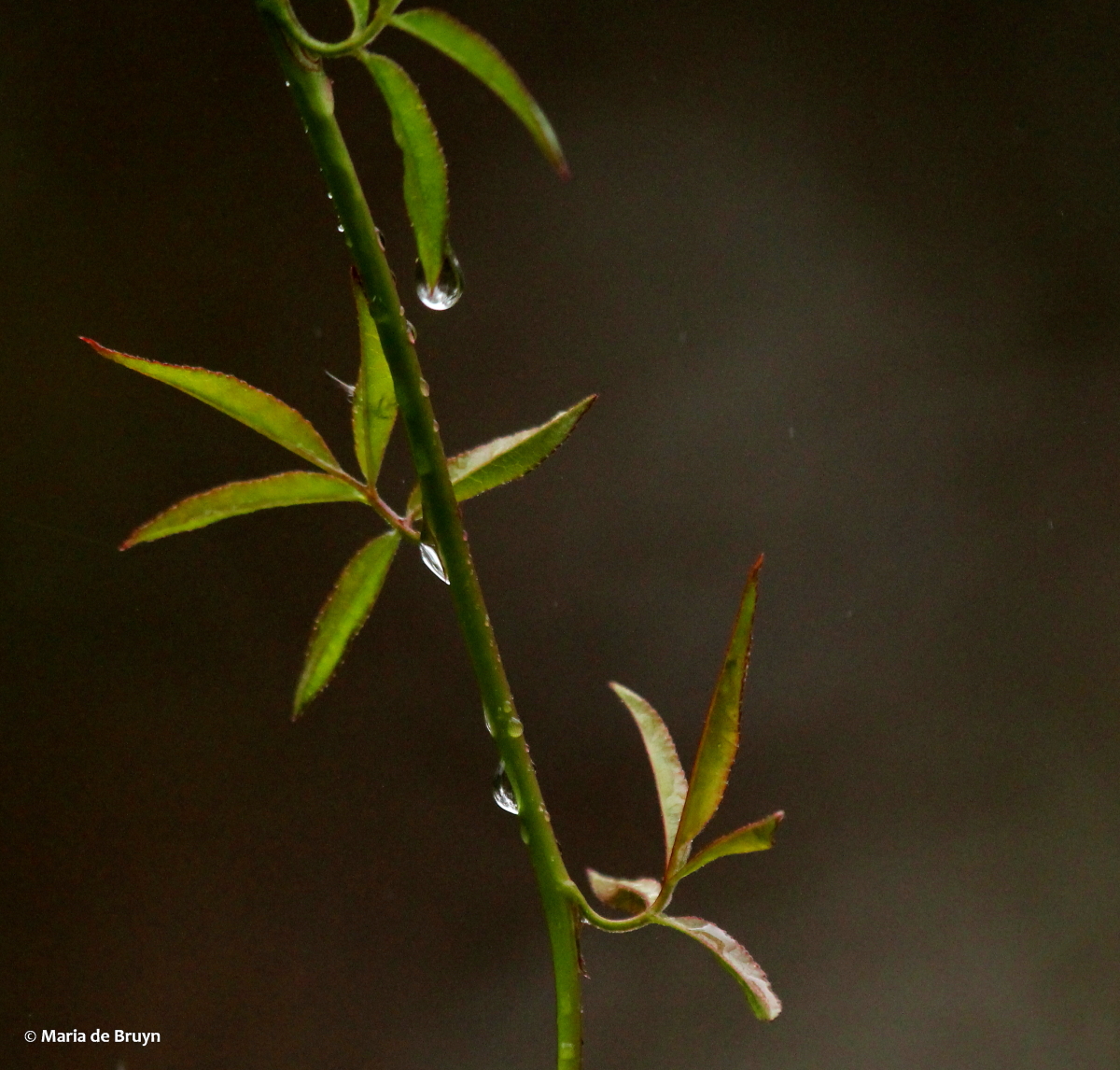
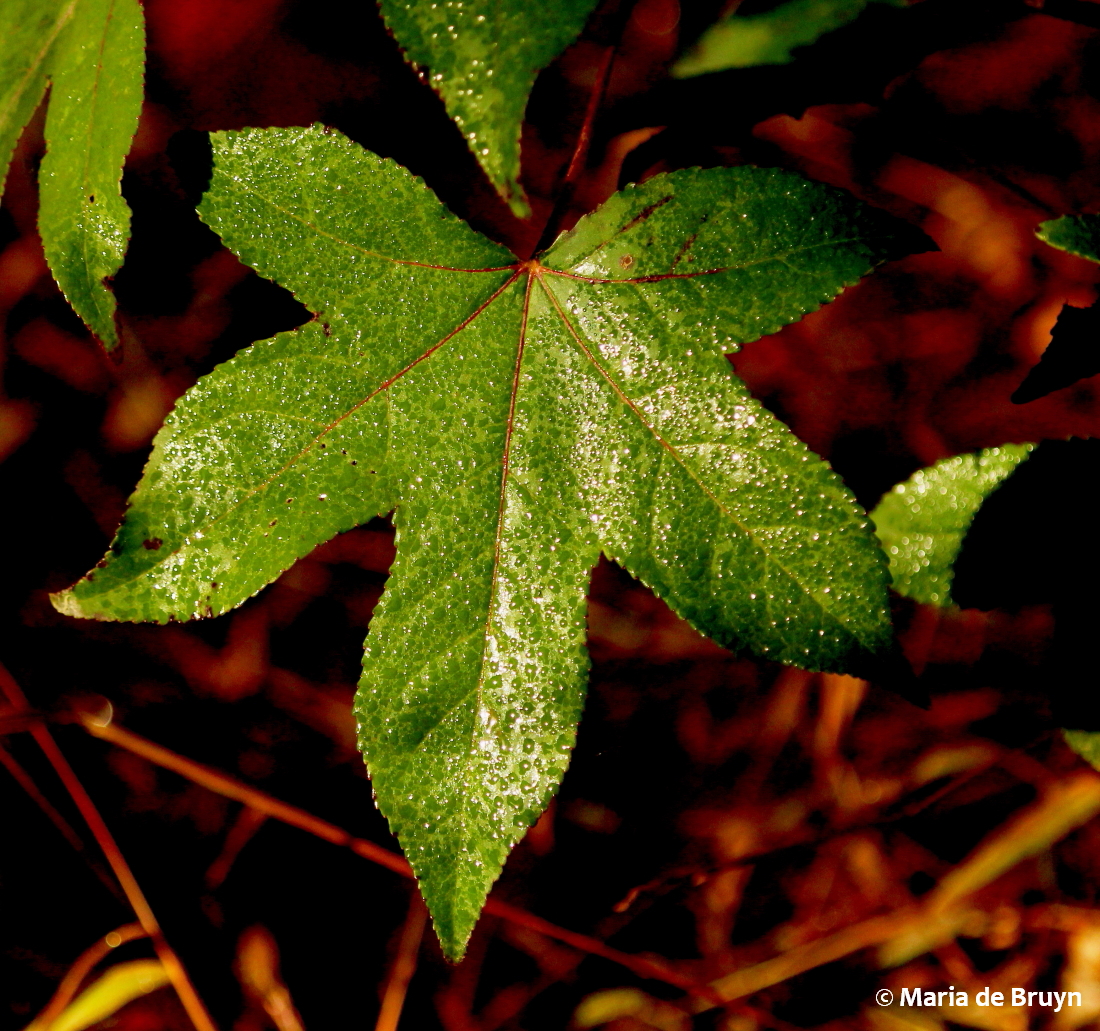
Rain drops, dewdrops and frost – Mother Nature’s adornments

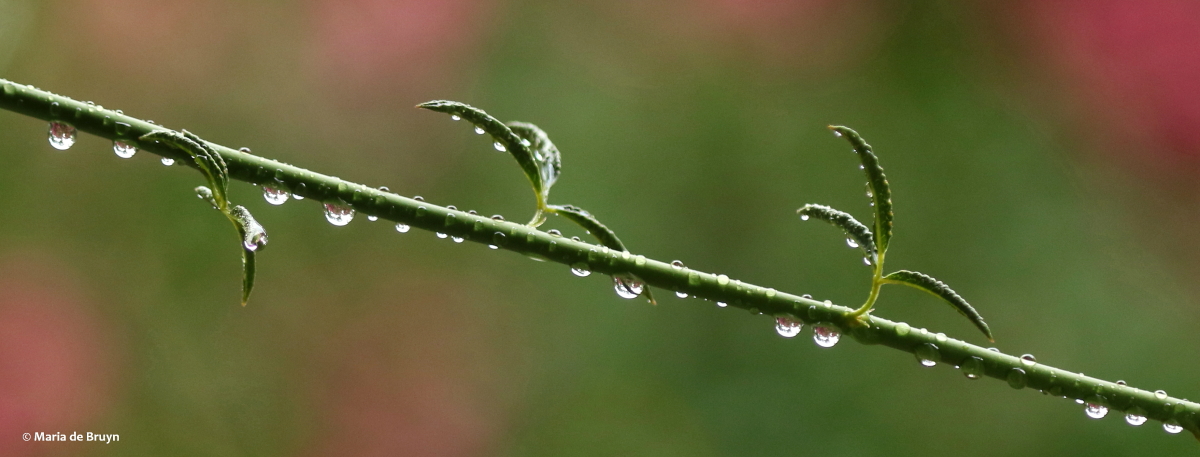
rain drops IMG_8843© Maria de Bruyn resDewdrops in the early morning, raindrops during the day, and frost covering everything outdoors can be seen merely as various manifestations of heavenly water on earth, but another way of looking at them can be as nature’s jewels. When light and sunshine illuminate the drops and crystals, they lend an air of elegance and beauty to whatever they have covered.

When it rains, leaves and blooms may look uniformly slick with moisture but we often see them covered in rain drops. Have you ever wondered why the rain drops are of different sizes?
dewdrops IMG_7571© Maria de Bruyn res day lily with rain drops IMG_5259© Maria de Bruyn res

The US Geological Survey’s Water Science School reports that water vapor wraps around particles in the air (salt, smoke, dust) which are of different sizes; then when the drops begin falling to earth, they bump into other drops and merge. The drops that merge with more “neighbors” become larger. Rain drops suspended from branches and leaves are quite lovely.
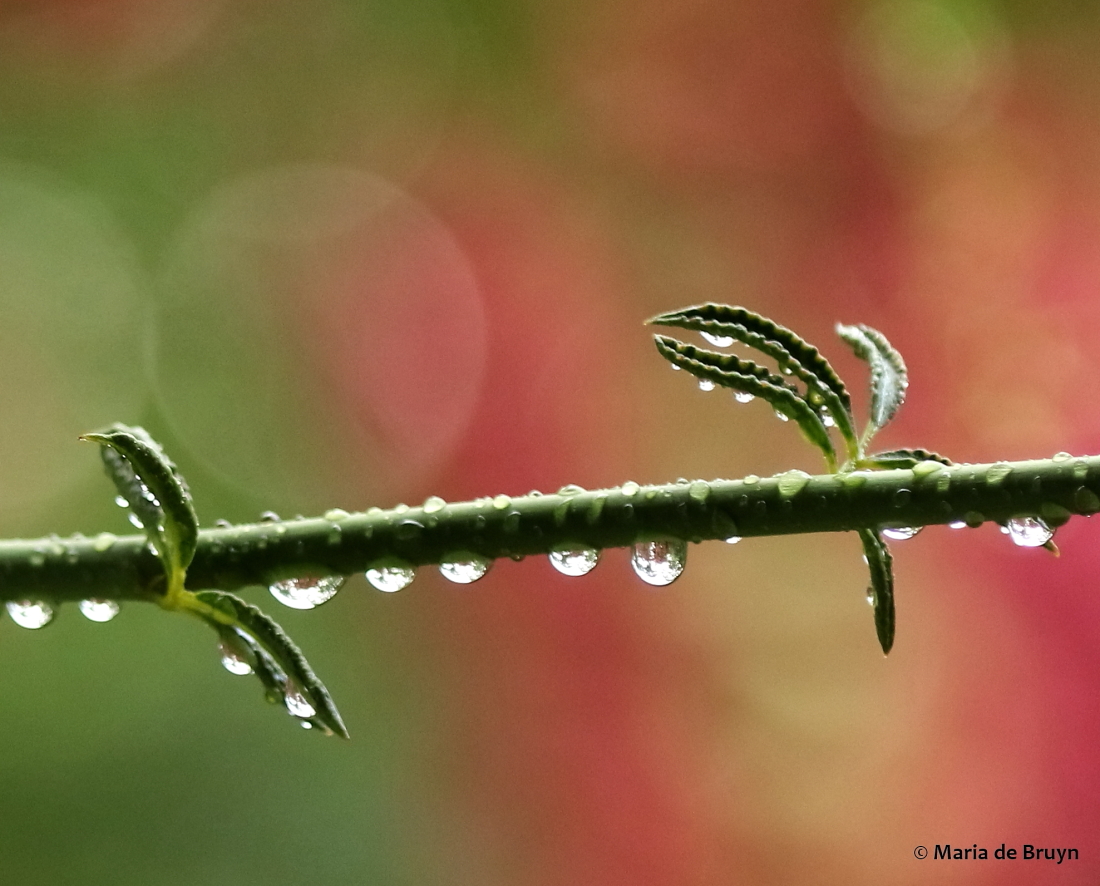
rain drops DK7A8019© Maria de Bruyn res rain drops DK7A8052© Maria de Bruyn 2 res

rain drops DK7A8020© Maria de Bruyn resruby-throated hummingbird DK7A8190© Maria de Bruyn resThey often roll right off birds’ feathers but occasionally adhere, as was the case for this ruby-throated hummingbird (Archilochus colubris) at a feeder sheltered by a roof overhang.

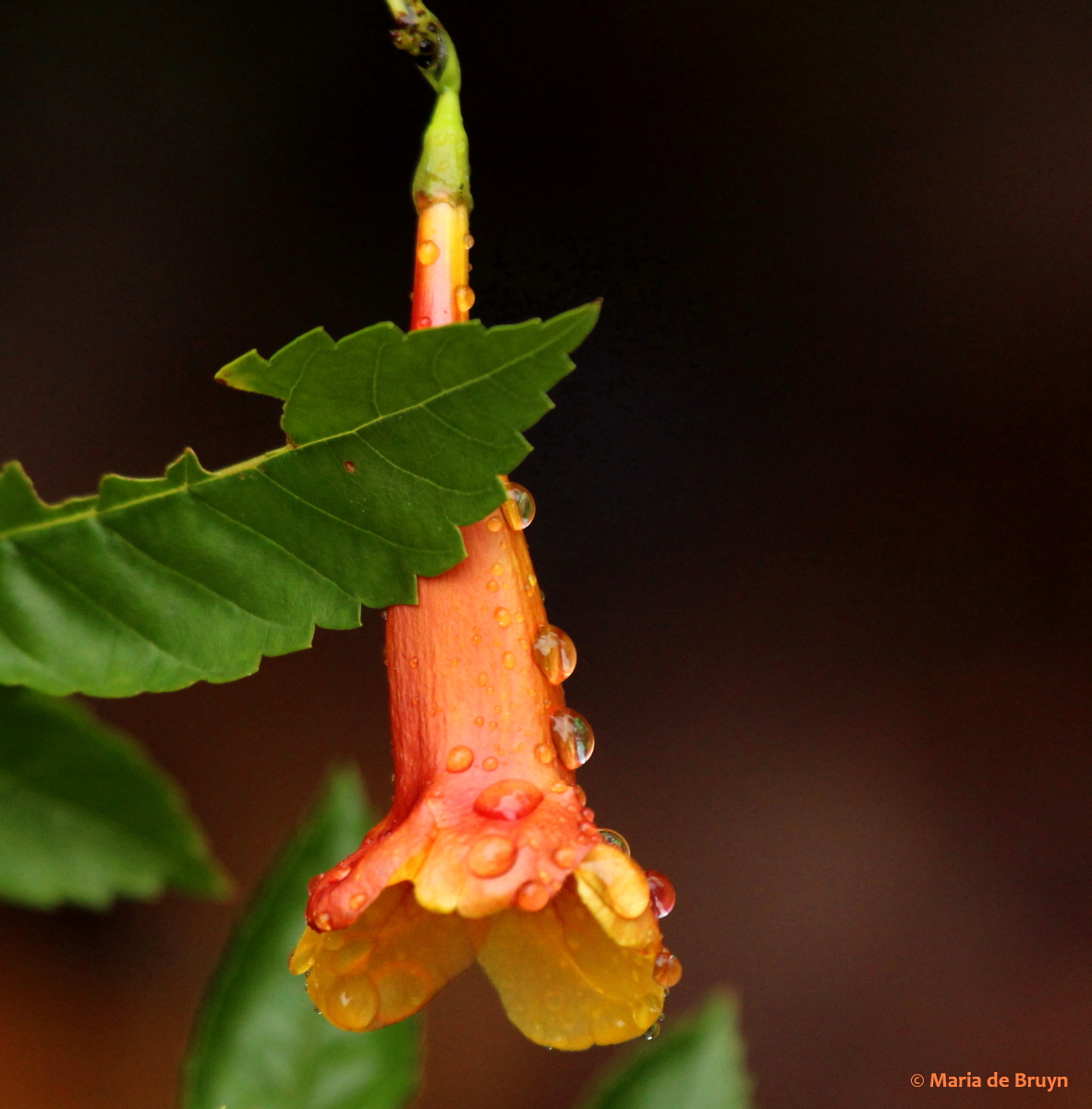
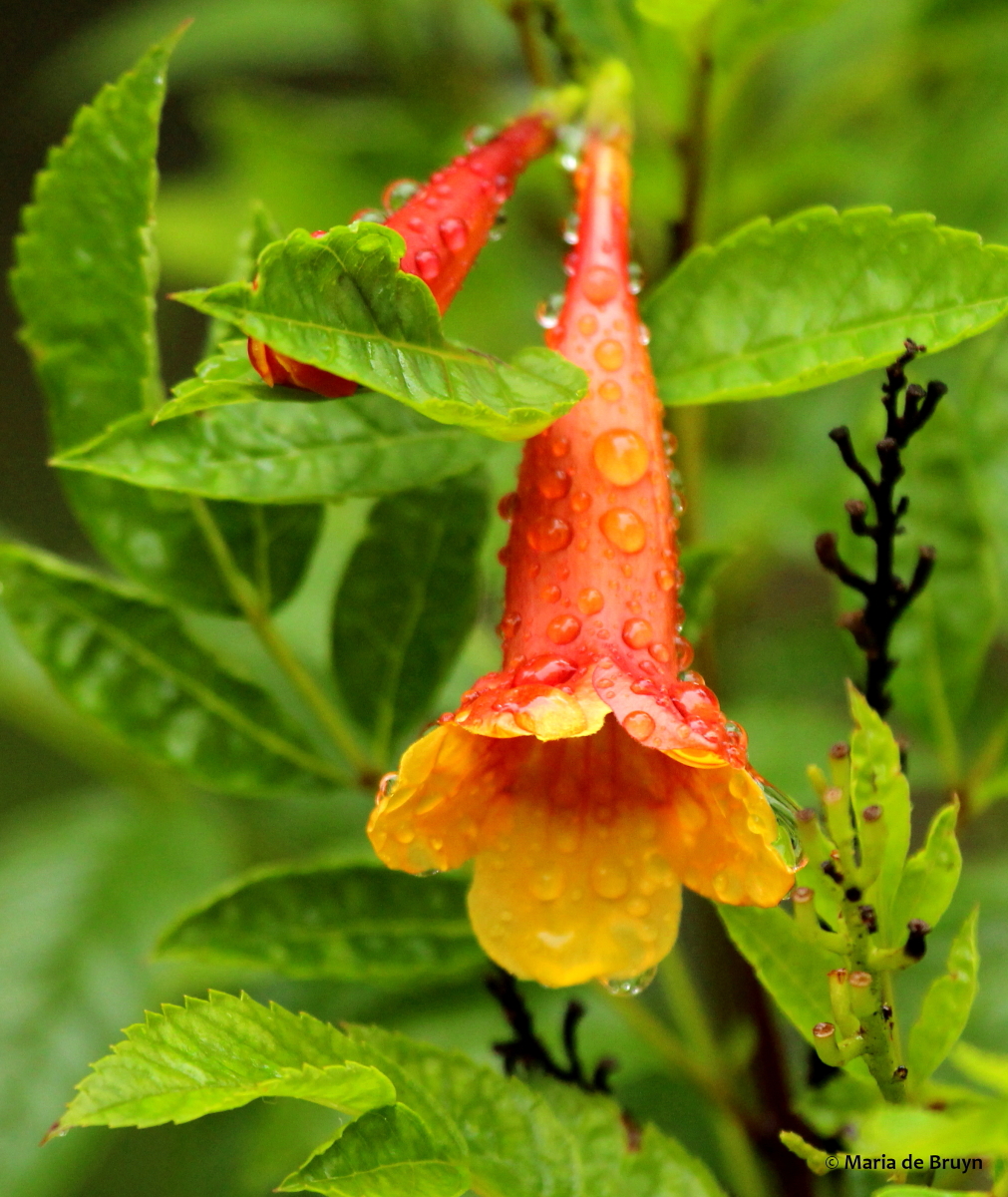
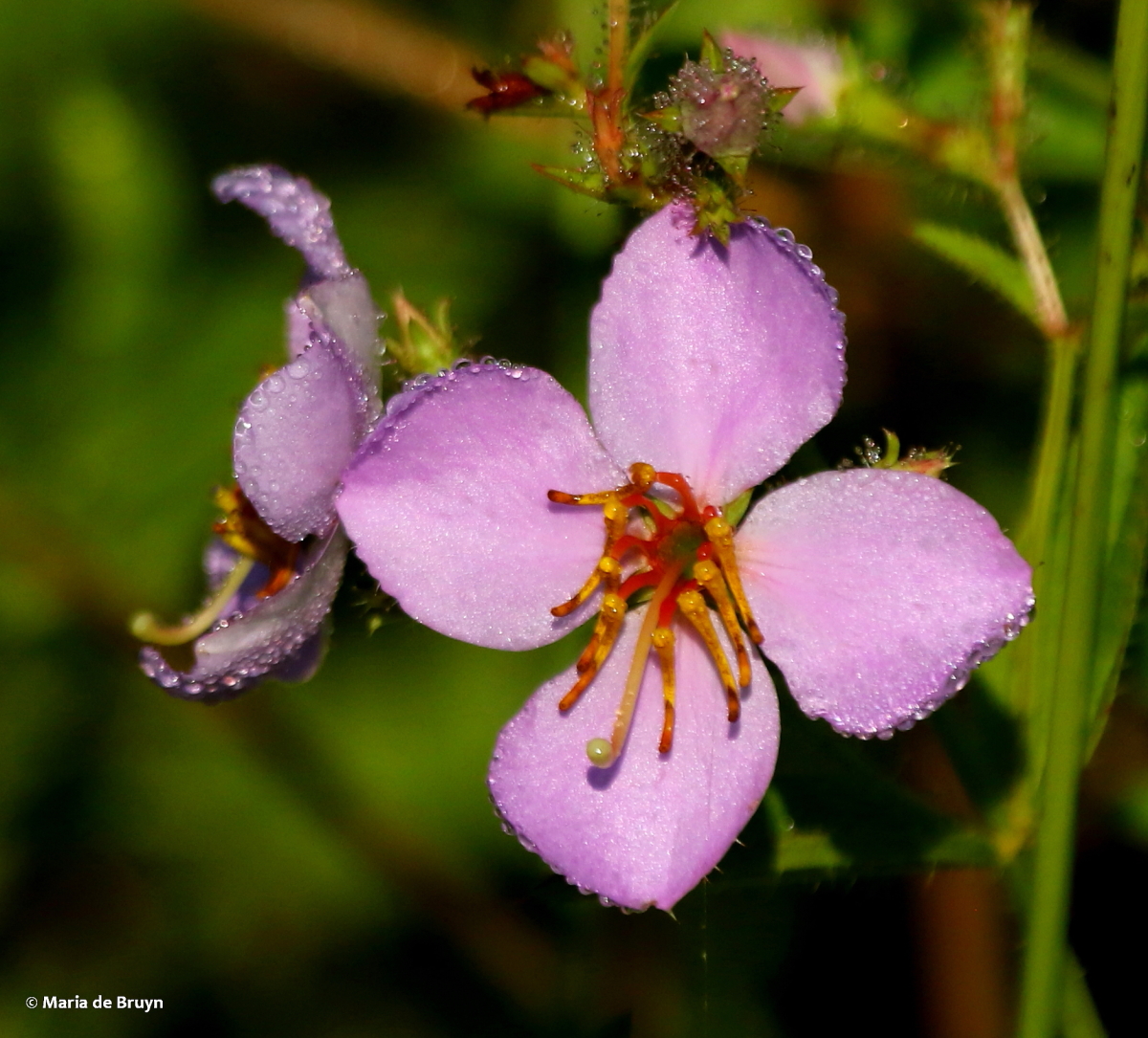
Dew – water droplets on surfaces of objects and vegetation – forms when an exposed surface cools down by radiating its heat and the moisture in the atmosphere then condenses faster than it evaporates. It looks beautiful on flowers and other plants, such as these grasses, the Virginia meadow beauty (Rhexia virginica) and the Orange mahogany esperanza (Tecoma stans “Orange Mahogany”).
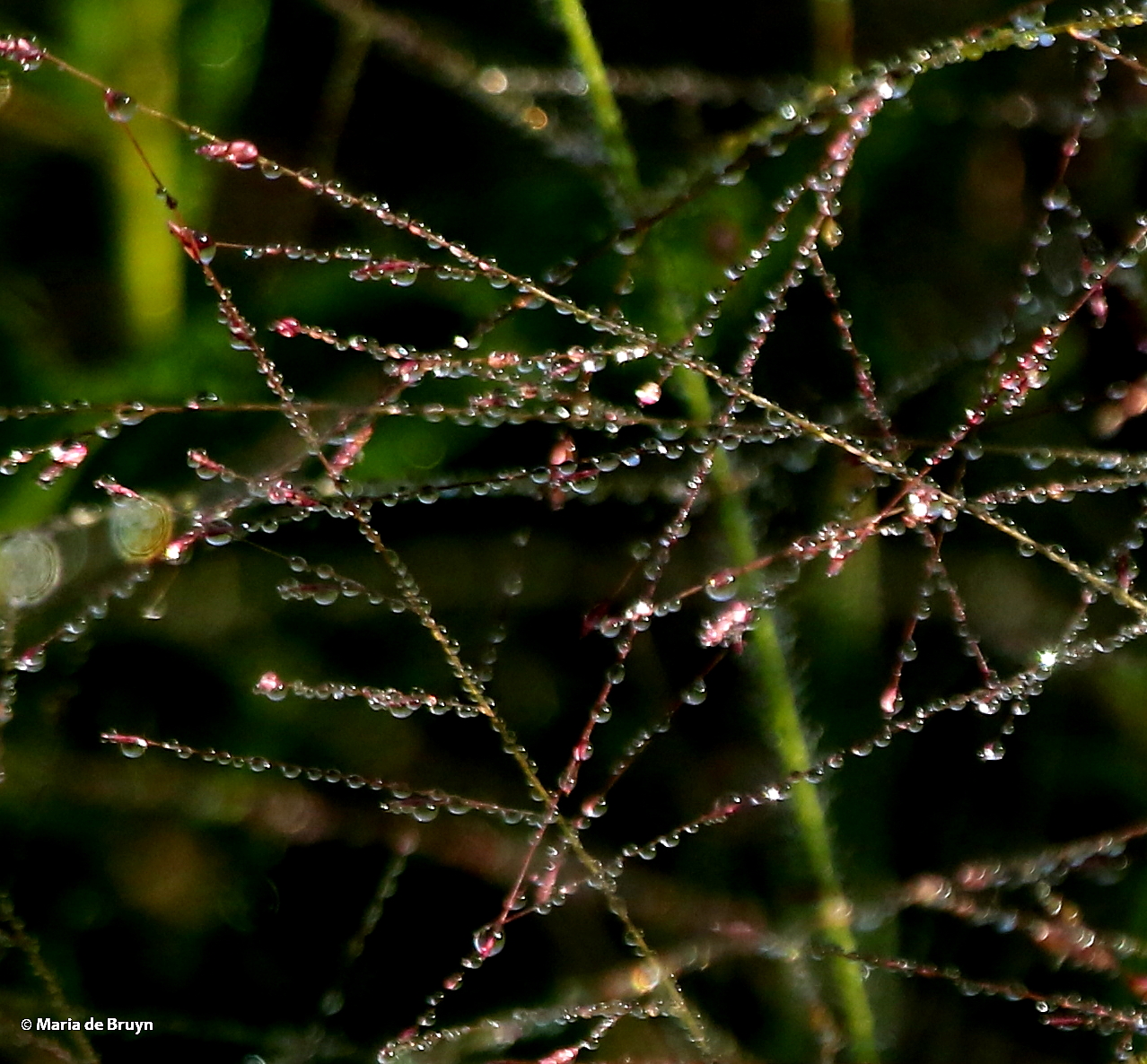
dewdrops DK7A2989© Maria de Bruyngrass dewdrops DK7A3012© Maria de Bruyn res

Virginia meadow beauty DK7A3083© Maria de Bruyn res

Orange mahagony esperanza IMG_6425© Maria de Bruyn res Orange mahagony esperanza IMG_6414© Maria de Bruyn res

Some plants actually mimic dewdrops, like Tracey’s sundew.
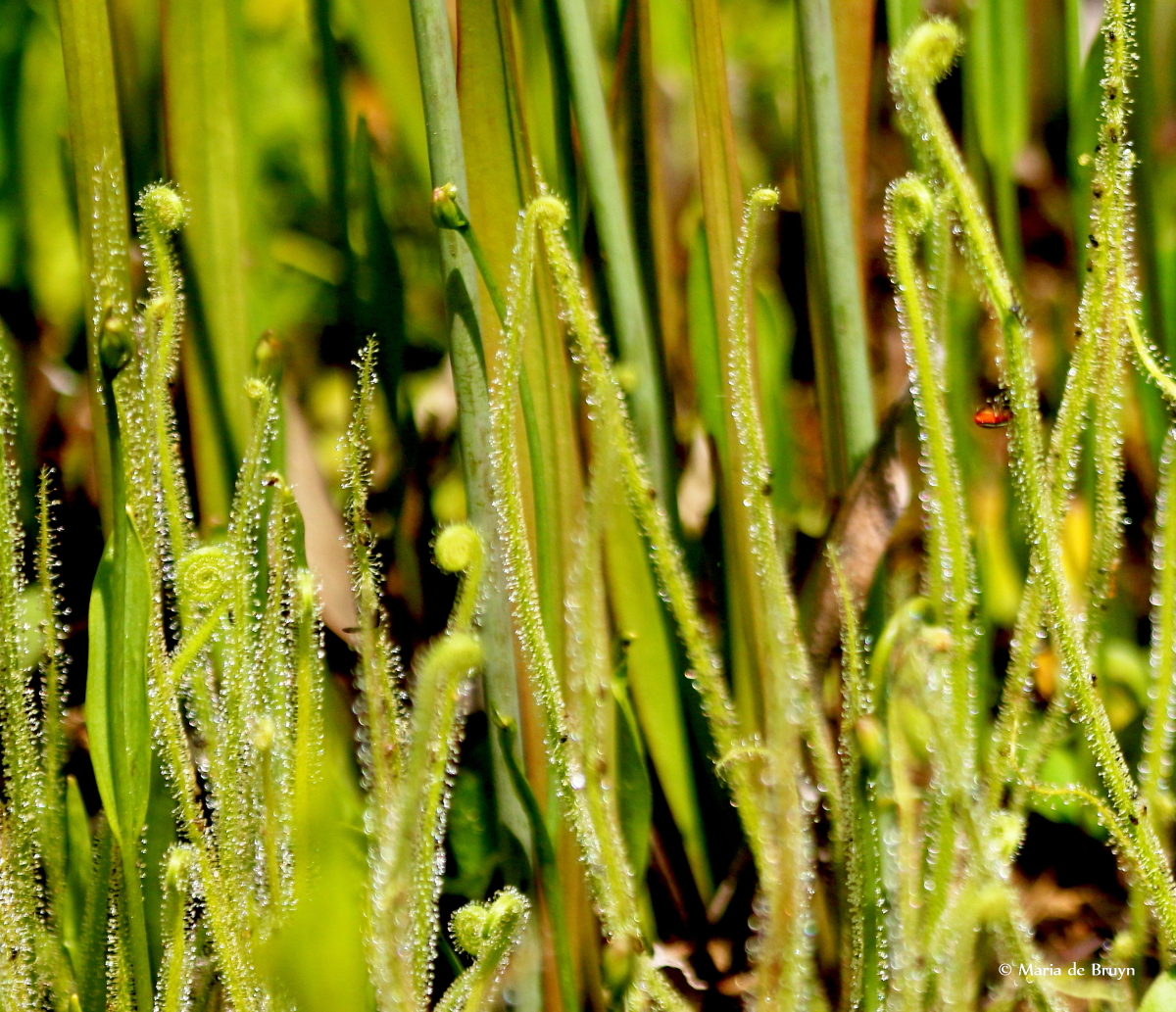
Tracy's sundew DK7A5228© Maria de Bruyn res Tracy's sundew IMG_4952© Maria de Bruyn

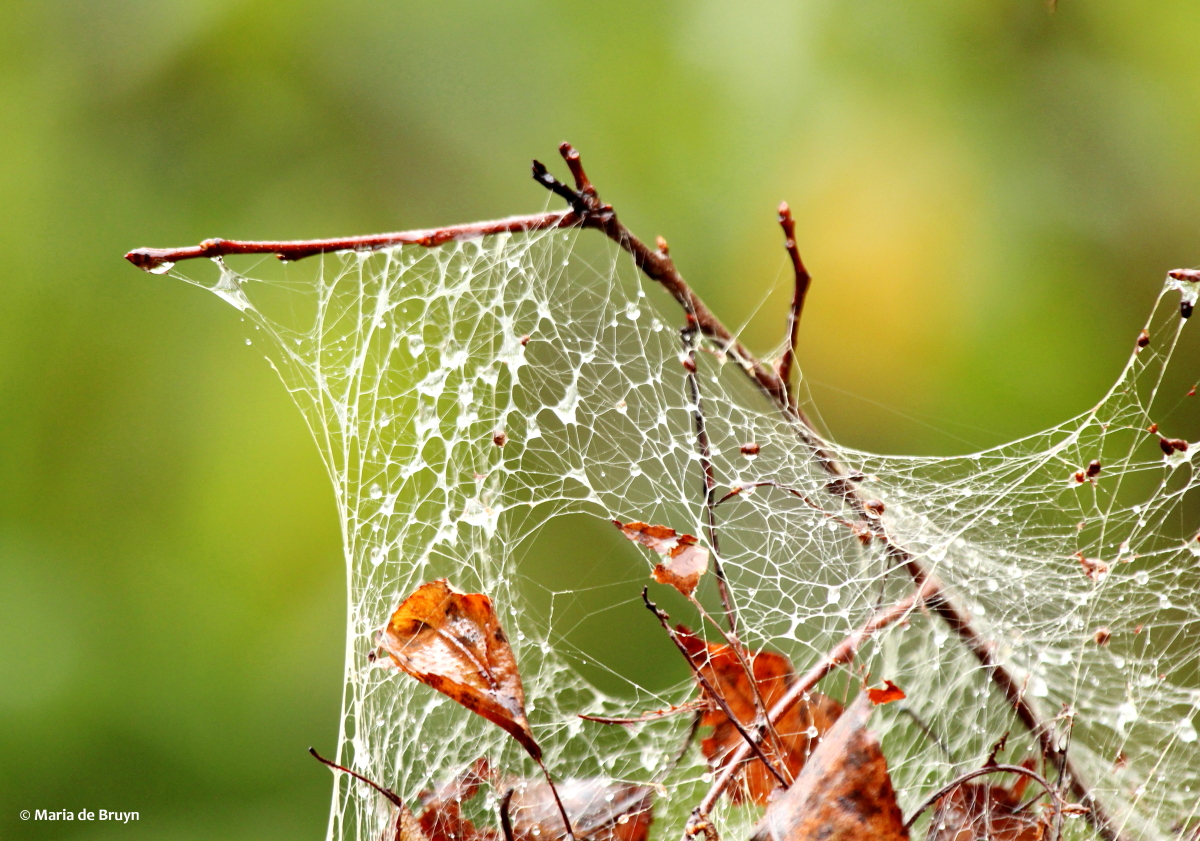
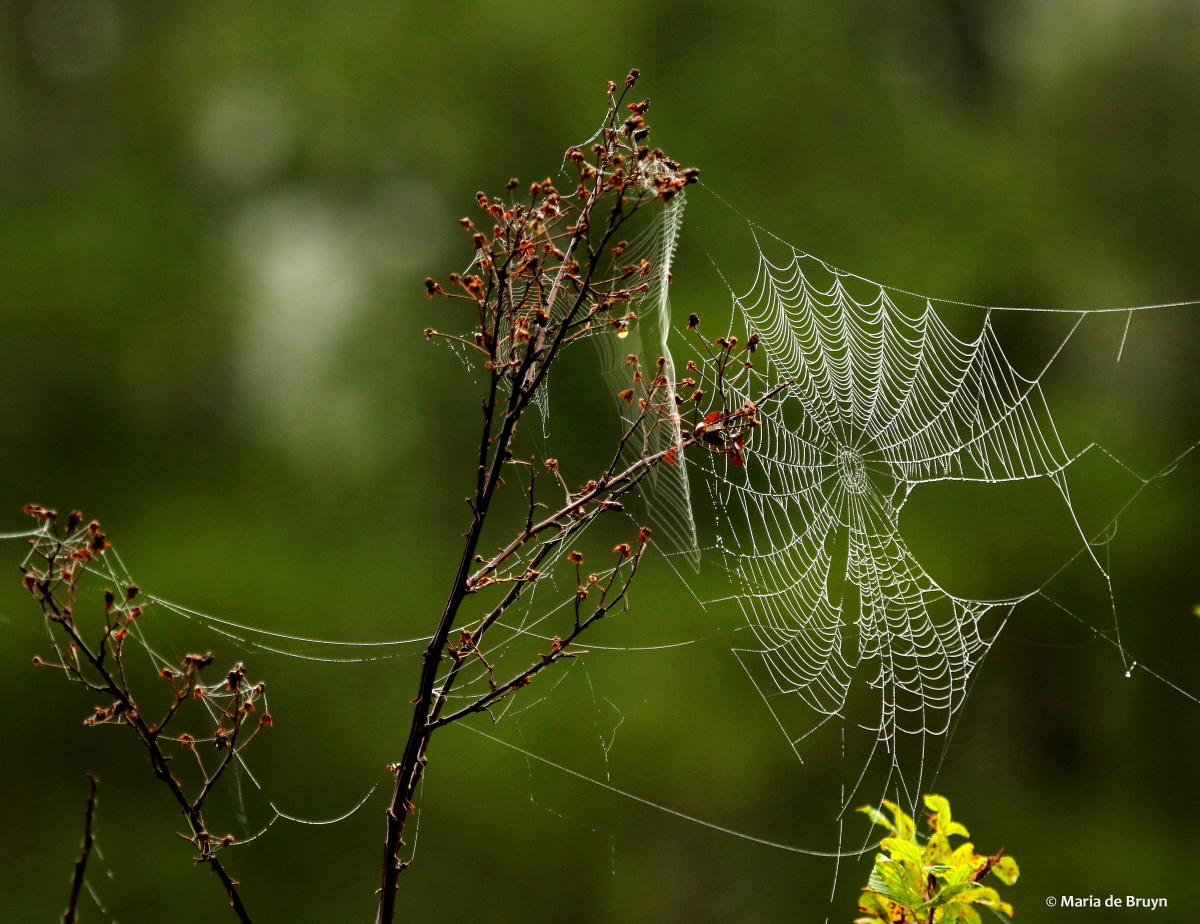
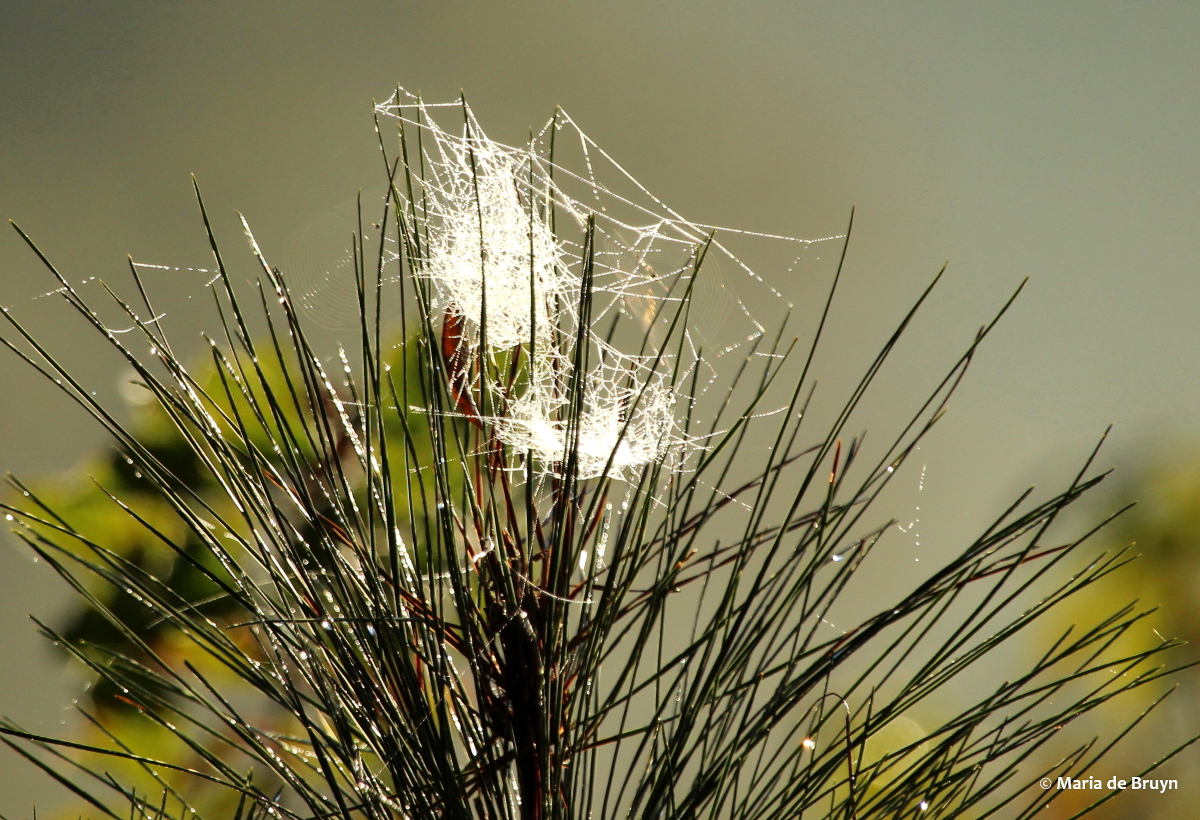
On spider webs, water and ice droplets outline the architecture created by the arachnids, showing off the symmetry and beauty of the lines.
spider web DK7A6479© Maria de Bruyn res spider web with dewdrops IMG_2683©Maria de Bruyn res

spider web with dewdrops IMG_6438© Maria de Bruyn res spider web with dewdrops IMG_6396© Maria de Bruyn res

sheetweb dwarf spider IMG_0959©Maria de Bruynsigned


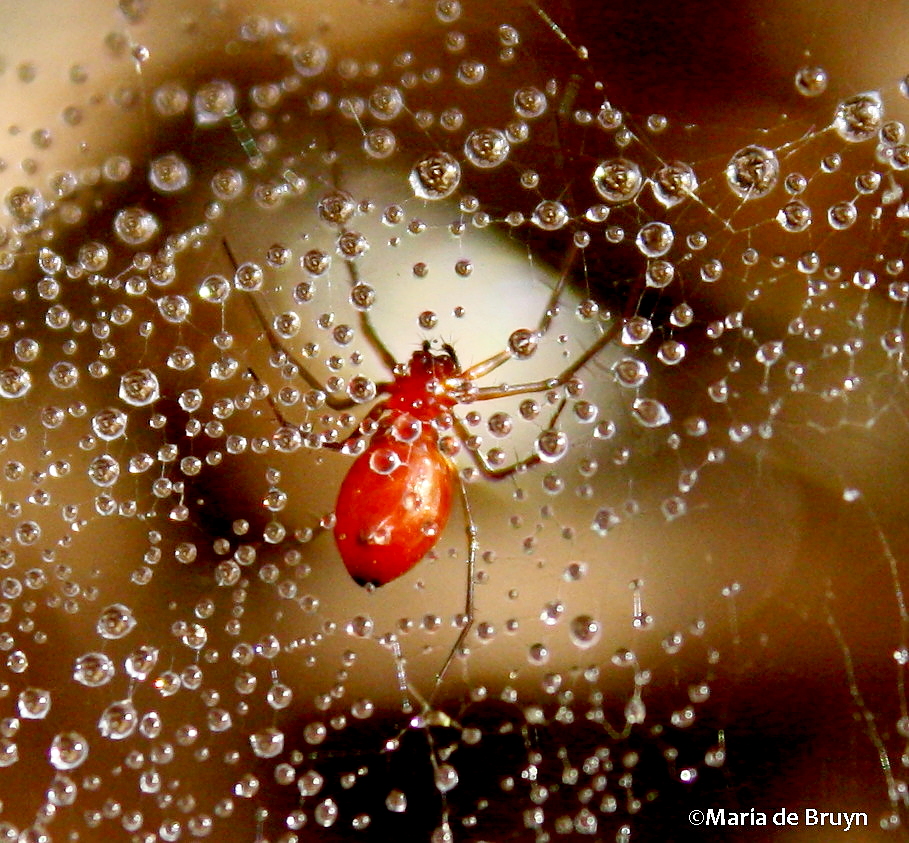
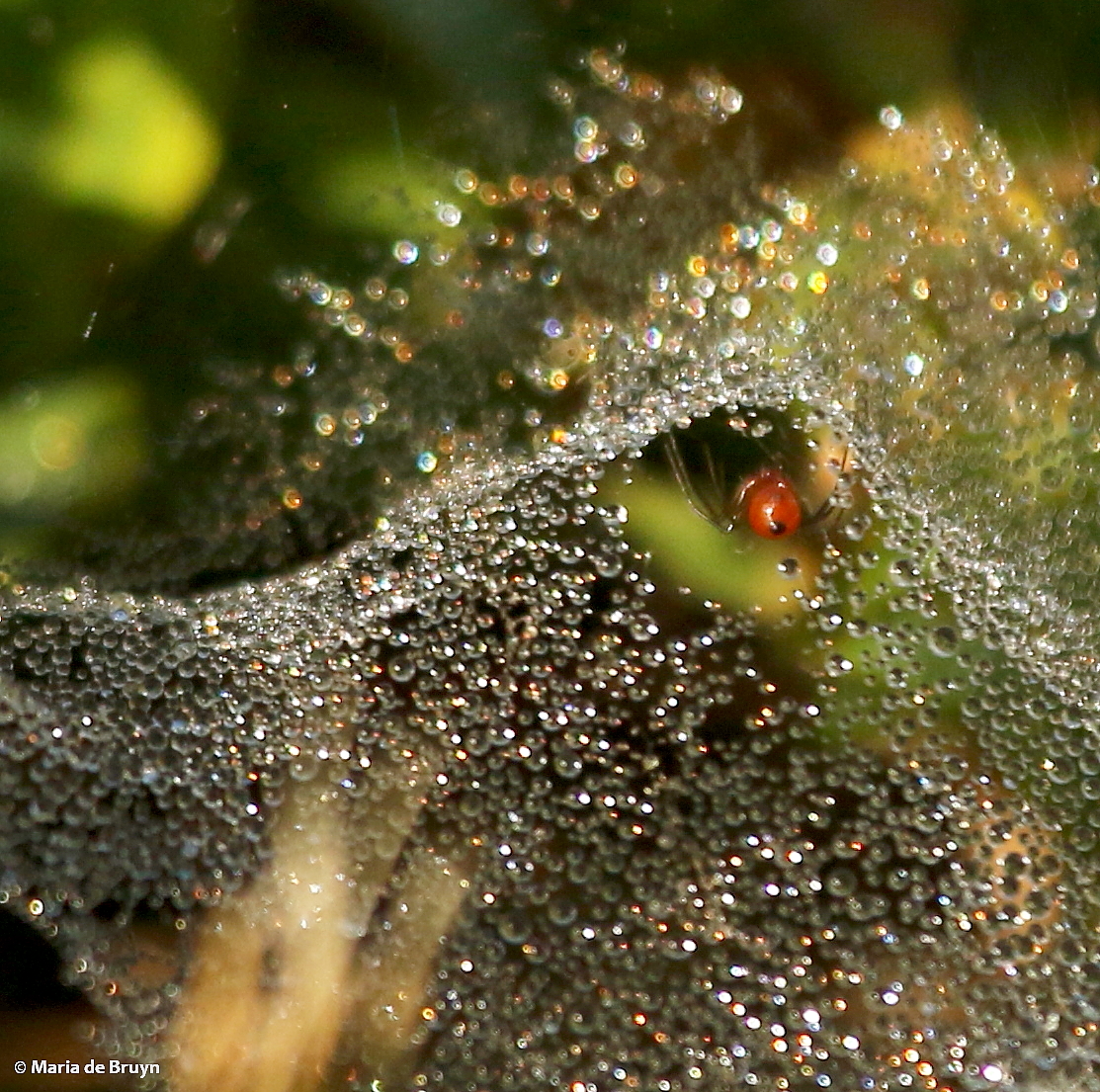
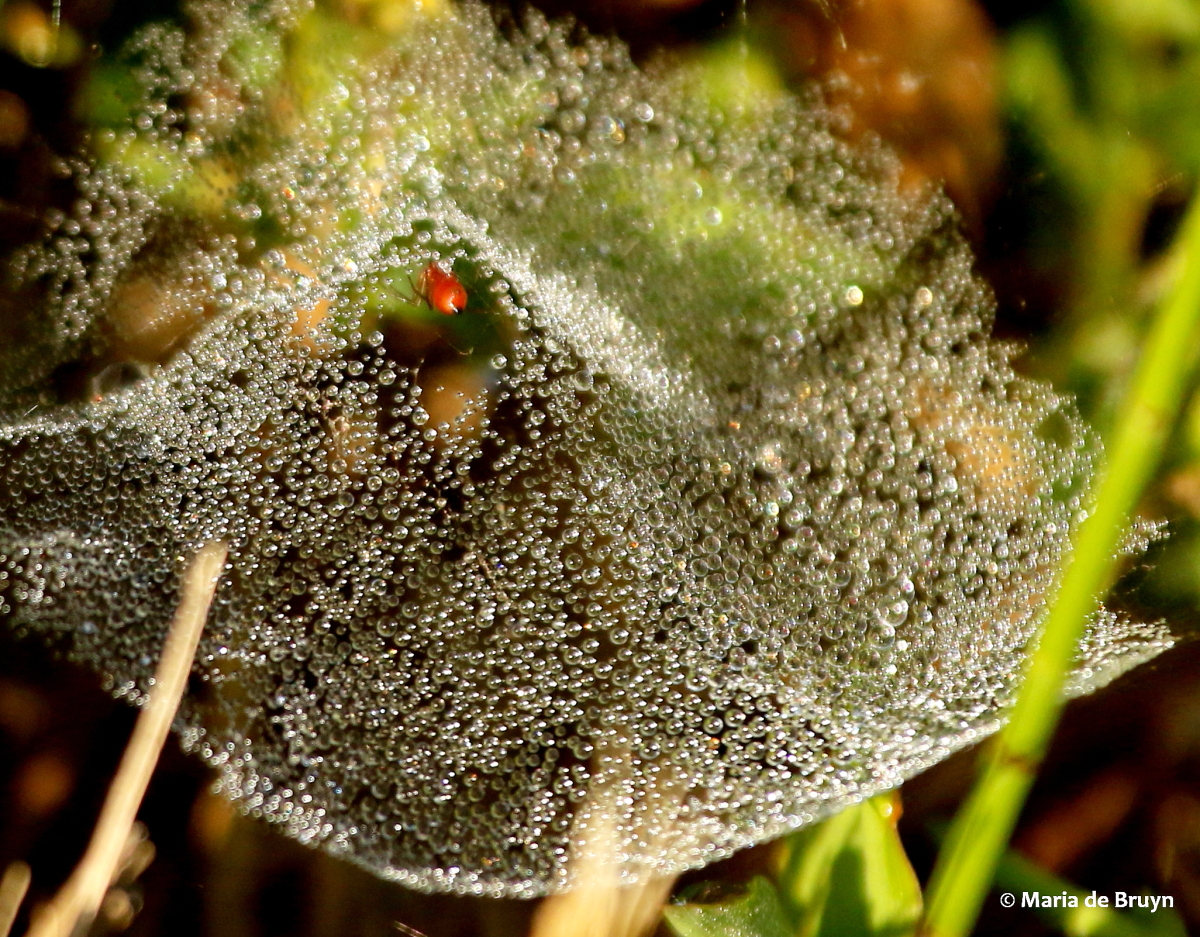
The webs of sheetweb dwarf spiders (Florinda coccinea), often not so visible in the grass, become quite noticeable when covered in dewdrops and then you can often spot the little red spider hanging underneath waiting for its prey.
sheetweb spider DK7A4086© Maria de Bruyn sheetweb dwarf spider DK7A4076© Maria de Bruyn res

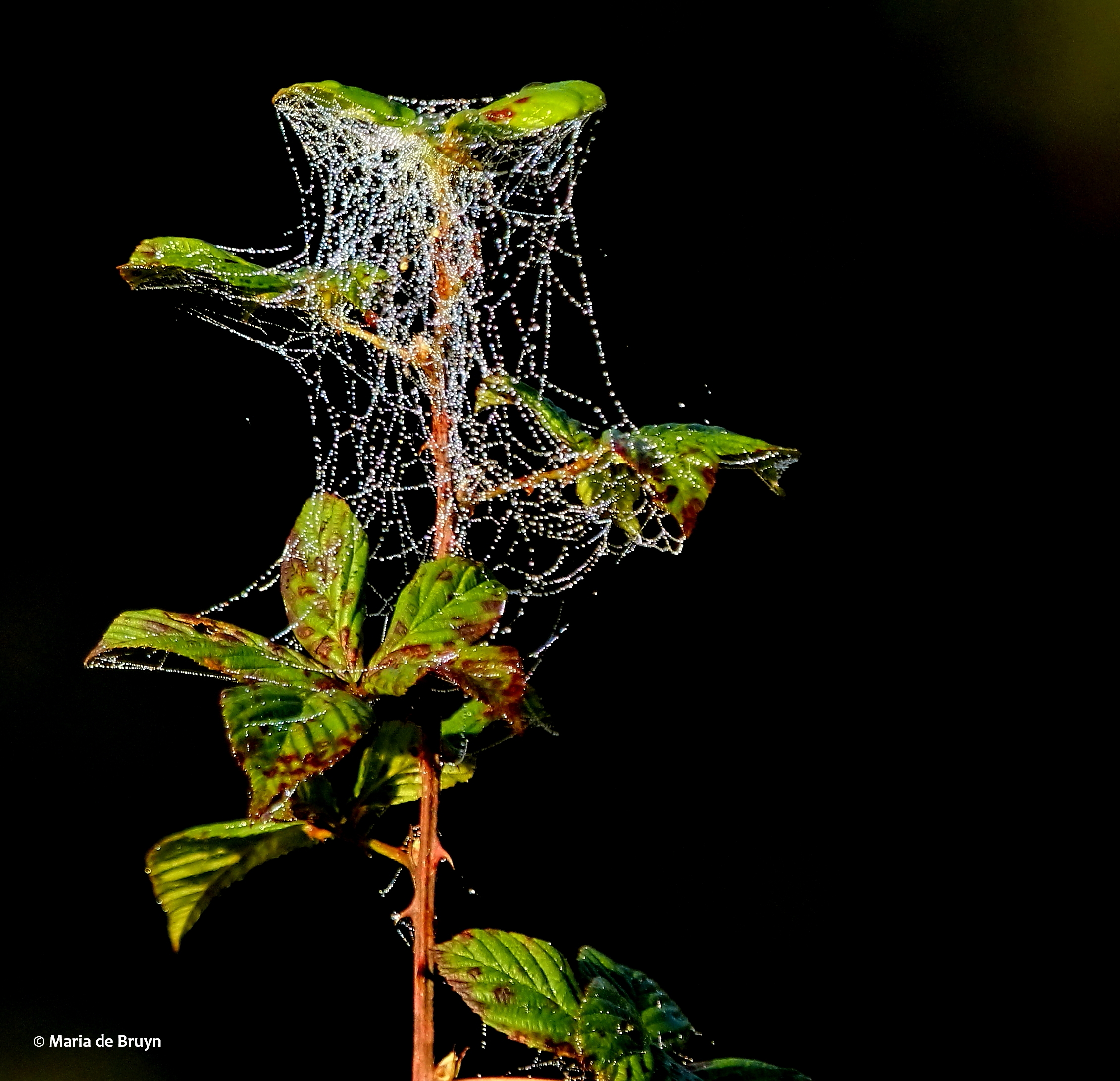
spider web splendor IMG_2727©Maria de Bruyn res


In this case, the plant looked like a natural jewelry stand for strings of glass or diamond beads.

It was interesting for me to learn that the Indian Institute of Management Ahmedabad (IIMA) and the International Organisation for Dew Utilization (OPUR) created a dew harvesting system for a semi-arid area in India. Their condensers can collect more than 200 liters of dew each night from October through May and could provide an additional water source for people in arid coastal regions.

Leaves and flowers, like this coral honeysuckle (Lonicera sempervirens) can seem bedecked with glistening jewels when the ice crystals of frozen dewdrops adhere to their surfaces and edges.

Coral honeysuckle DK7A6792© Maria de Bruyn resCoral honeysuckle DK7A6805© Maria de Bruyn res

frosty morning leaves IMG_7351©Maria de Bruyn Nat GeoFrost may appear to be translucent or crystal clear; when a mass of crystals are together, they look white in color because they scatter light in all directions. The ice crystals of wind frost (also known as advection frost) arise when a very cold wind blows over tree branches, leaves and flowers; they can form gorgeous borders on these surfaces.

Early morning can be a great time for nature walks – beautiful sunrises, brisk (or cooler) temperatures and awakening wildlife make for interesting viewing. And raindrops, dew and frost can add extra scenes of beauty for us to appreciate!

A varied palate – hummingbirds’ choice of foods

DK7A2925© Maria de Bruyn res

As promised, one more blog on hummingbirds before I move to another topic; their presence always brings me enjoyment and I know other people who are enamored with these tiny birds, too. Also, although autumn has come, I still have a couple ruby-throated hummingbirds (Archilochus colubris) at my feeders. And a couple days ago I had the privilege of seeing a species new to me, the buff-bellied hummingbird (Amazilia yucatanensis), which has only visited the state of North Carolina once before (at least as far as human witnesses are concerned)!

DK7A2528© Maria de Bruyn resThe hummers have a varied diet, including mainly insects (mosquitoes, gnats, fruit flies, small bees), spiders, tree sap and sweet nectar (or sugar water). They tend to feed about 5-10 times per hour during the day and need about 10 calories of nutrition each day.


It is a lot easier to catch them drinking nectar than catching insects (apologies for the blurred photos)!

DK7A0749© Maria de Bruyn (2) res

DK7A7171© Maria de BruynDK7A2814© Maria de Bruyn

DK7A7808© Maria de Bruyn


Hummingbirds use their long tubular tongues as elastic micro-pumps to obtain nectar. This enables them to lick a flower up to 20 times per second as they gather food. And although we can’t see it when just looking at them, they have forked tongues (like snakes)!


DK7A0391© Maria de Bruyn res ruby-throated hummingbird DK7A1076© Maria de Bruyn res

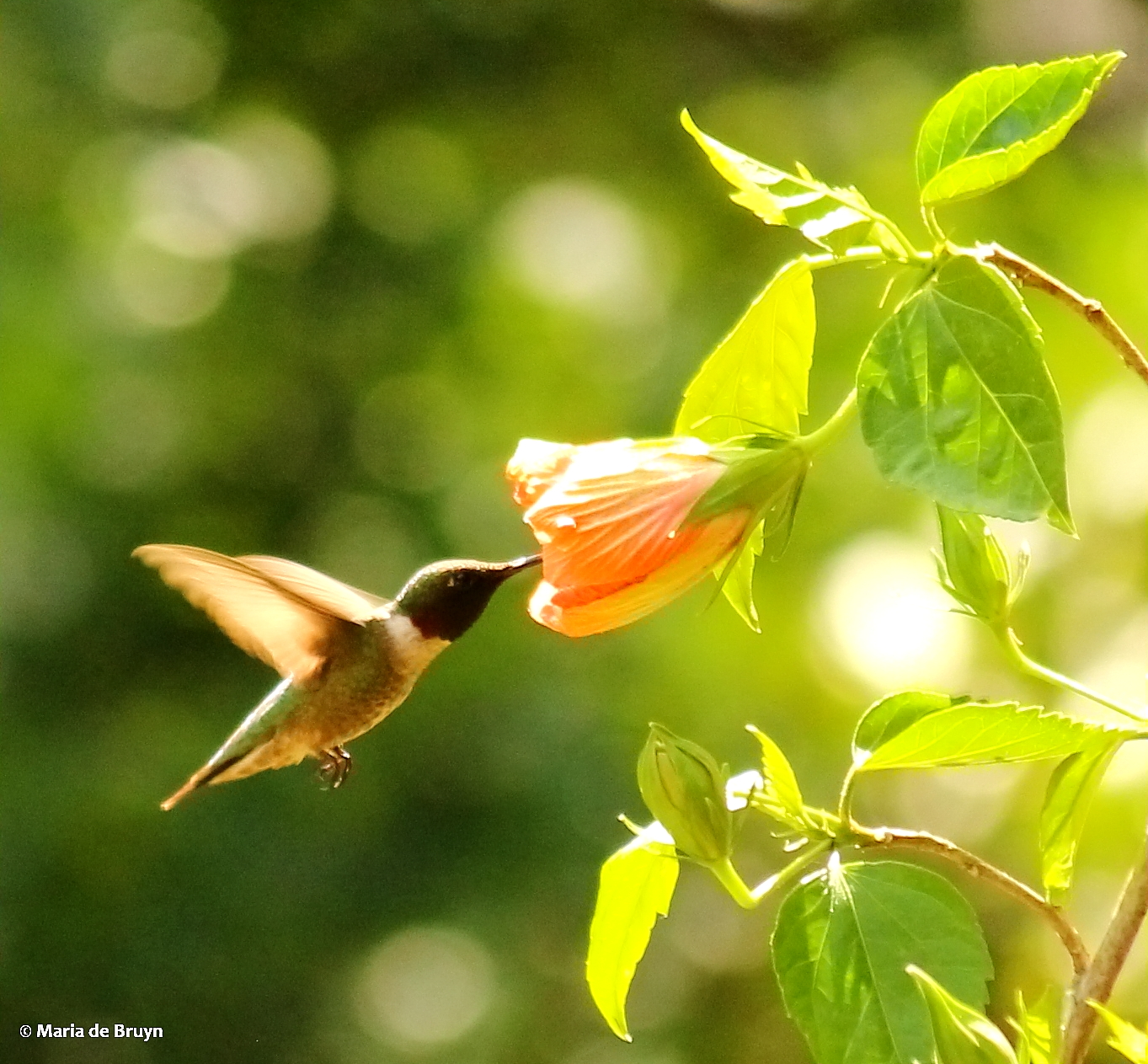
DK7A4497© Maria de Bruyn2The hummers visit a variety of flowers to drink their sweet nectar, often preferring orange or red flowers but certainly not avoiding others.In my garden, this includes cardinal flowers (Lobelia cardinalis), hollyhocks (Alcea), yellow passionflower (Passiflora lutea) and lantana (Lantana).

ruby-throated hummingbird DK7A0820© Maria de BruynDK7A0555© Maria de Bruyn res

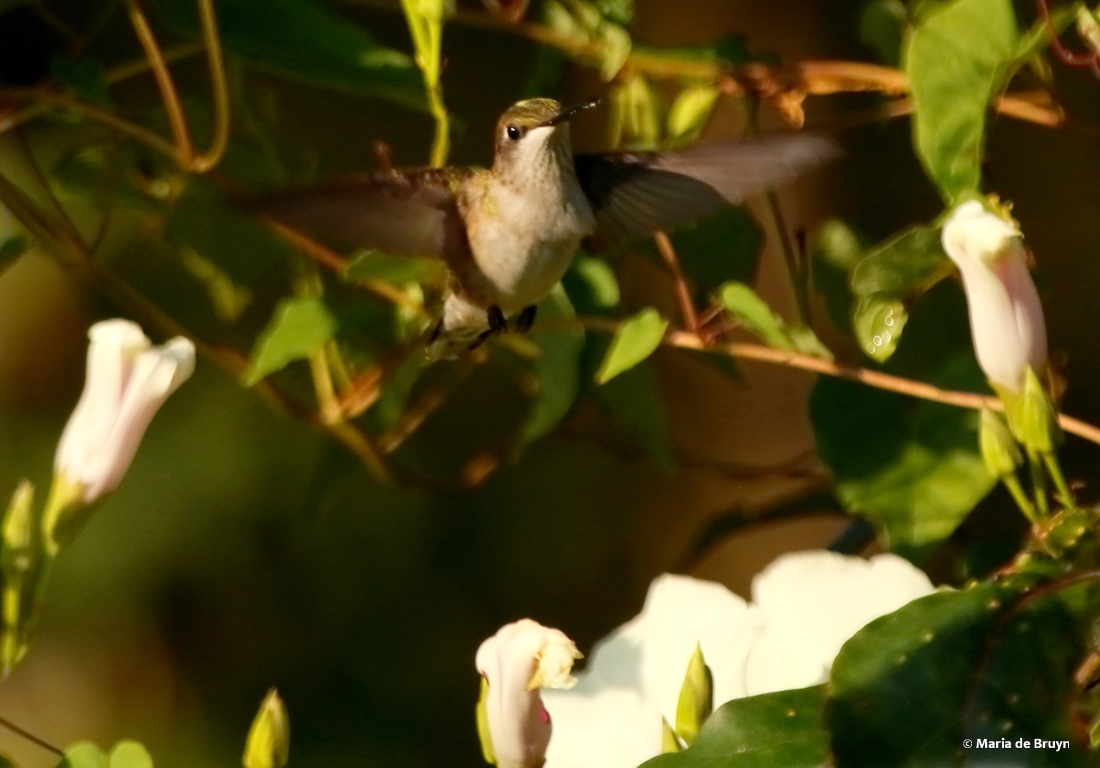
In nature reserves, I’ve seen them visiting morning glories (Ipomoea), ironweed (Vernonia) and trumpet vines (Campsis radicans).

DK7A2213© Maria de Bruyn resDK7A3392© Maria de Bruyn res

DK7A2289© Maria de Bruyn res


Their long bills, tubular tongues and slim bodies make it easy for them to drink from long flowers, but sometimes they will simply pierce the base of a flower to obtain nectar, or use a hole already made there by an insect.

DK7A2915© Maria de Bruyn resDK7A2428© Maria de Bruyn res

Light-colored flowers are not shunned as food sources, however!

DK7A7178© Maria de Bruyn (2) resDK7A7142© Maria de Bruyn res

DK7A7165© Maria de Bruyn res

Bean plants and gerbera daisies (Gerbera)  were on the menu at the Translating Traditions farm.

DK7A7360© Maria de Bruyn resDK7A7381© Maria de Bruyn res

At my house, the hummers visit the nectar feeders with great regularity, presumably because the food is very easily available there. A little known fact about the hummingbirds is that, compared to all other birds, their brains are the largest in comparison to body size. They remember where feeders are from year to year and also can recognize the people who fill the feeders. When the nectar is low and I appear, a hummer will sometimes hover and chitter in my direction at length; I really do think it is warning me that it’s time to prepare another serving.

ruby-throated hummingbird DK7A8190© Maria de Bruyn res

The buff-bellied hummingbird breeds in Mexico and south Texas. When they migrate, it is in a north-eastern direction, but the only previous recorded visit of one to North Carolina was in 2007. Now there is one hanging out at a couple’s home in the town of Winston-Salem, so I accompanied three fellow birders to go see it. Our 90-minute drive there was rewarded by a view of the bird within about 15 minutes and we stayed for almost two hours watching it come and go along with some ruby-throated hummingbirds.

buff-bellied hummingbird DK7A1131© Maria de Bruynbuff-bellied hummingbird DK7A1171© Maria de Bruyn

These hummingbirds have bellies with a light orange-yellow hue, brighter orange tail feathers and a bright green back and head. In contrast to the ruby-throated hummingbird’s straight dark bill, they have a reddish, curved bill. These lovely little birds appear to be the least studied species among the hummingbirds in the USA.

rufous hummingbird IMG_1789 M de Bruyn


Two years ago, I had a rufous hummingbird (Selasphorus rufus) visit my nectar feeder after he had migrated here in winter from the far North. This year, I’ll leave at least one feeder up again after the ruby-throats take off for warmer climes in case some wintering hummers need food. And I’ll look forward to seeing my regular residents again next summer!


More information:

http://www.livescience.com/51904-hummingbird-tongue-pump.html

http://www.nytimes.com/2015/09/08/science/the-hummingbirds-tongue-how-it-works.html?_r=0

Birdie beauty – hummingbird preening and grooming

ruby-throated hummingbird DK7A6865© Maria de Bruyn res

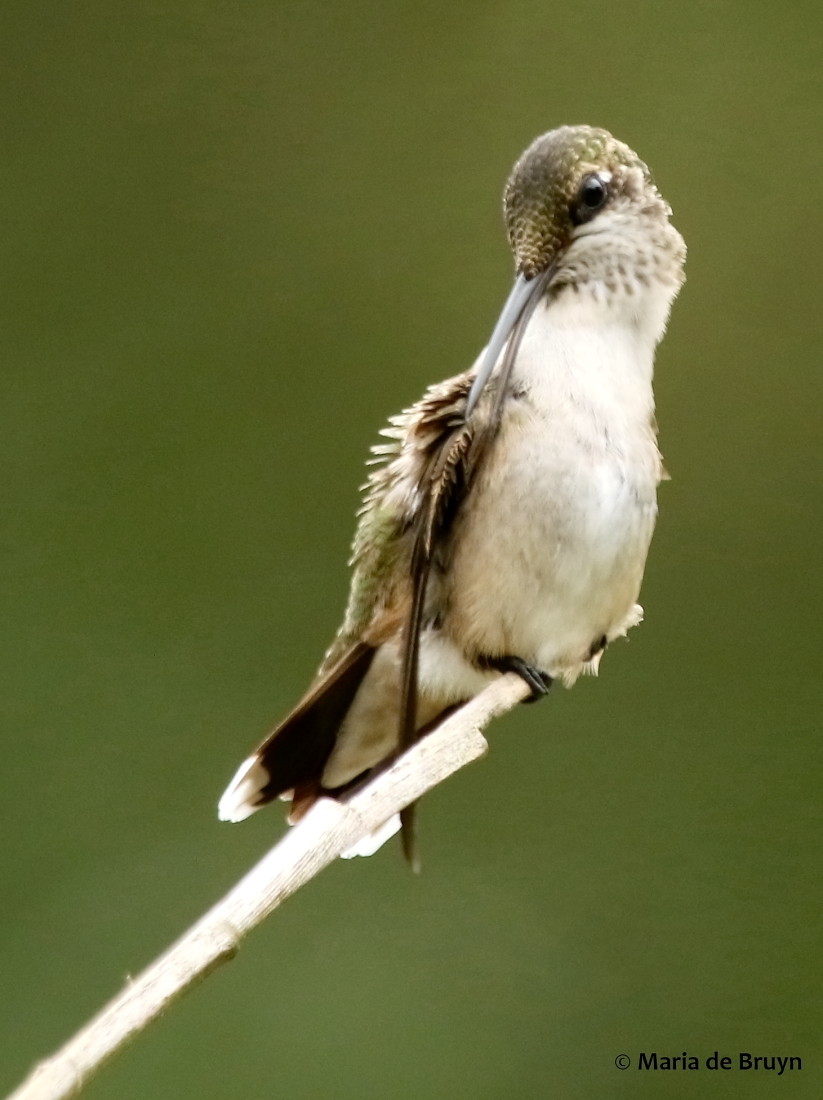
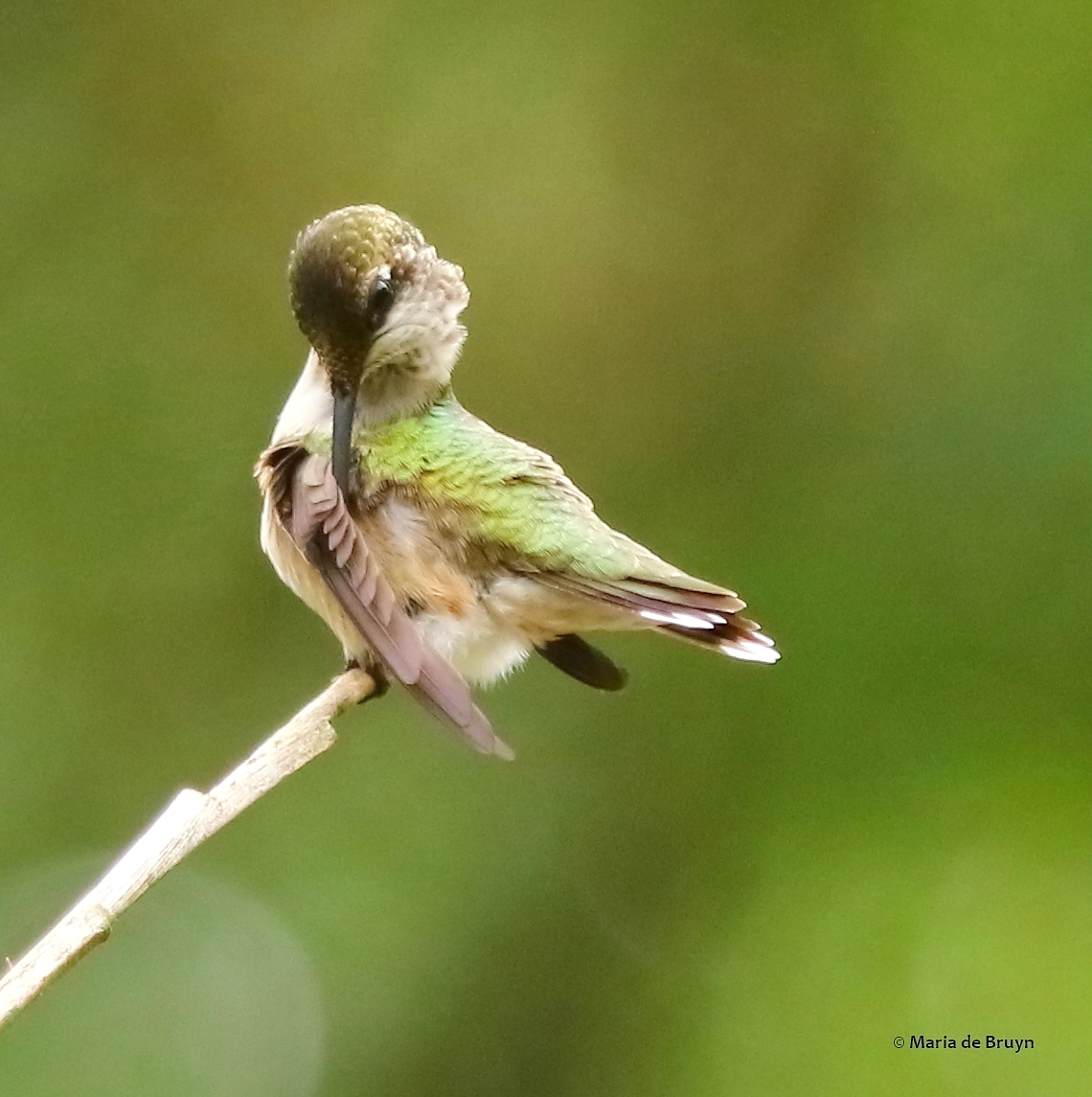
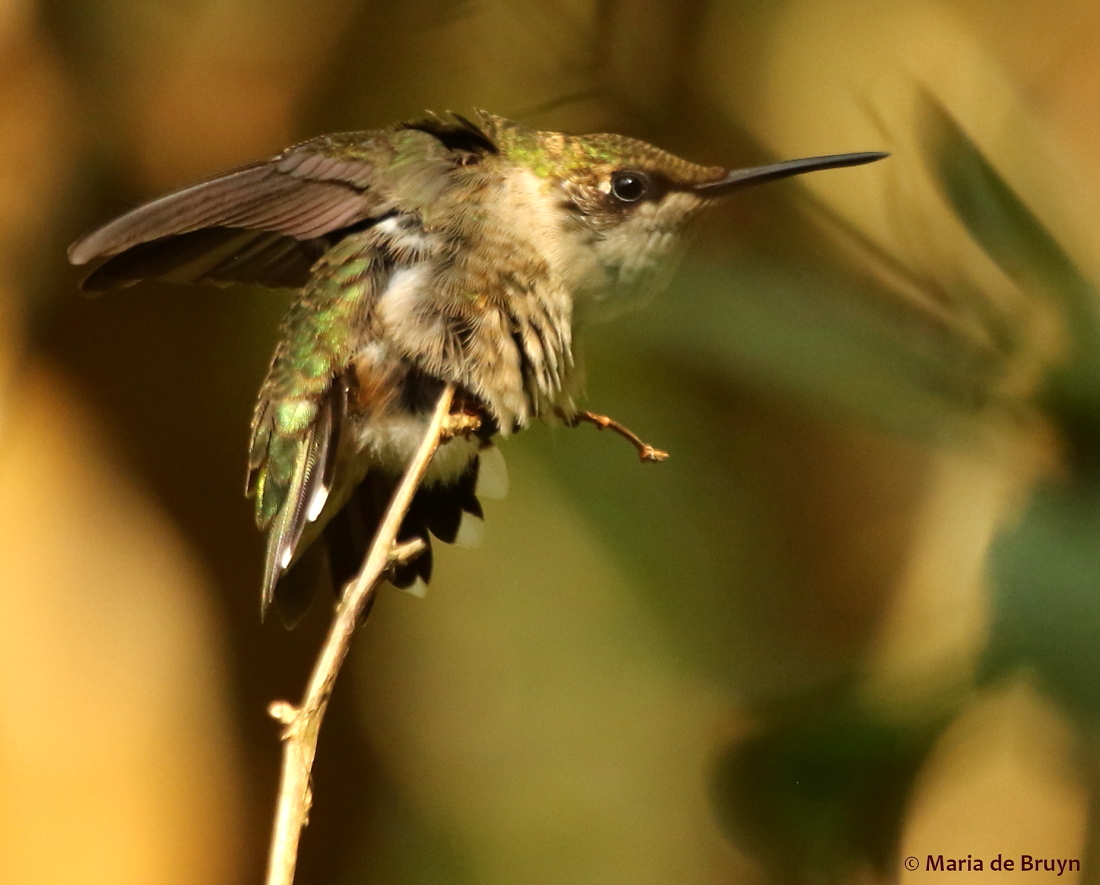
ruby-throated hummingbird DK7A1226© Maria de Bruyn resIt has been great to welcome back the sun and dispel some of the gloom resulting from the record number of rainy days we’ve had. Watching the ruby-throated hummingbirds (Archilochus colubris) in my yard and at nature reserves is also a day brightener and has taught me that these tiny avians are quite fastidious, grooming often and at length.


They cannot use their feet to hop or walk; they only cling to perches and shuffle a bit.

ruby-throated hummingbird DK7A0497© Maria de Bruyn resruby-throated hummingbird DK7A0499© Maria de Bruyn (2) res

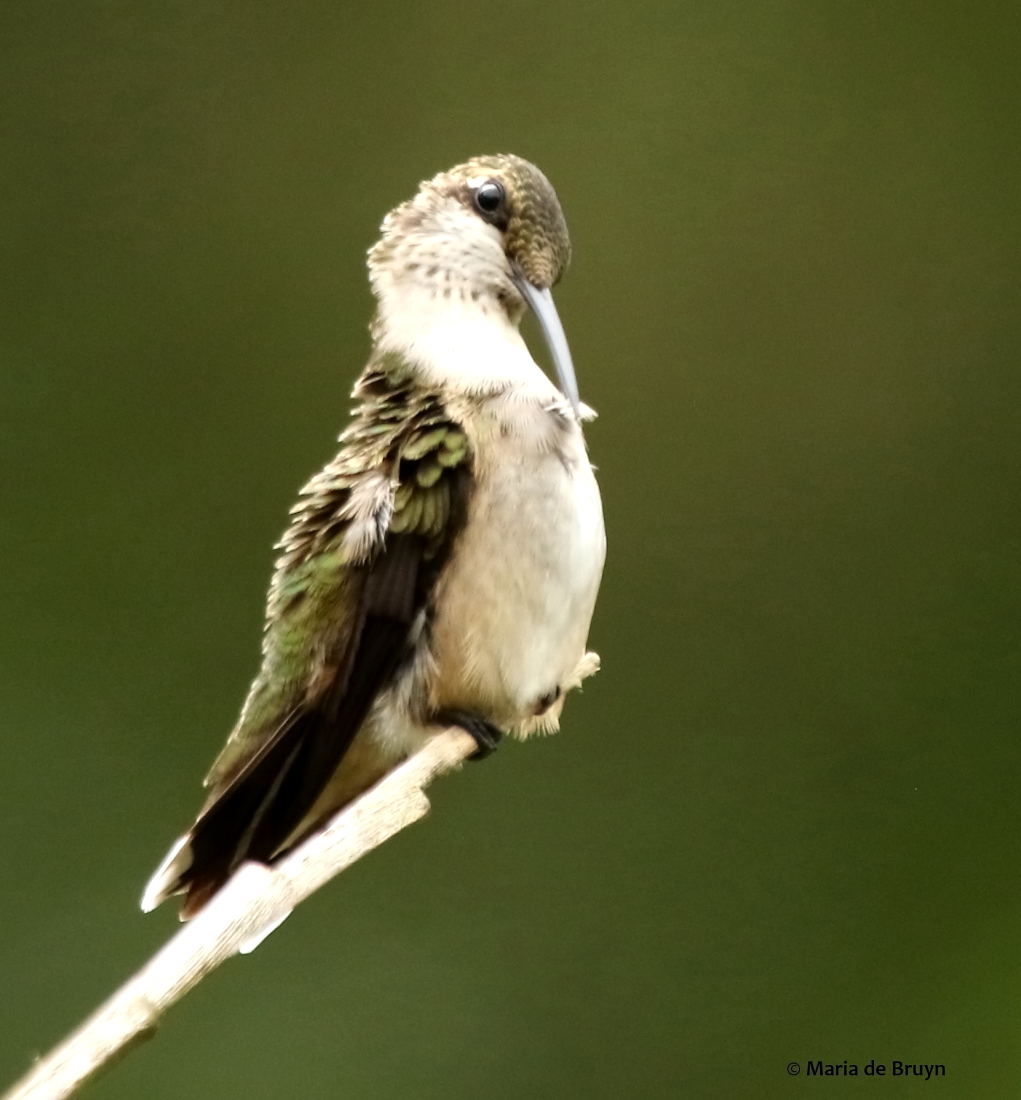
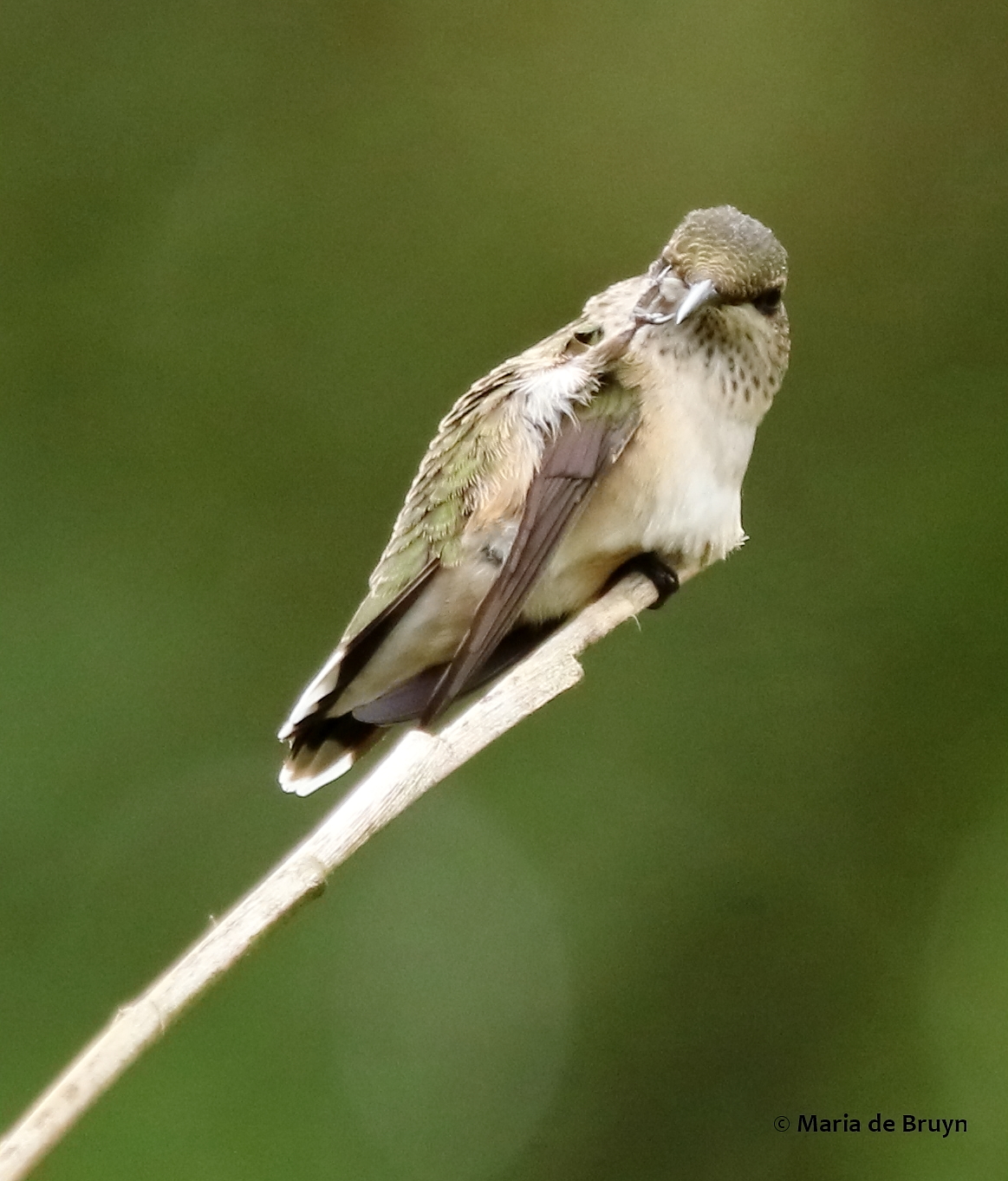
They do use their claws as a “comb” to groom their heads and necks and to scratch itches.

ruby-throated hummingbird DK7A7454© Maria de Bruyn resruby-throated hummingbird DK7A1811© Maria de Bruyn res

Using oil from a gland near their tail, they cover their iridescent feathers with the oil to help clean them.

ruby-throated hummingbird DK7A1112© Maria de Bruyn resruby-throated hummingbird DK7A1230© Maria de Bruyn res

ruby-throated hummingbird DK7A1754© Maria de Bruyn res ruby-throated hummingbird DK7A1756© Maria de Bruyn res

When you see them rubbing their long beaks on a twig, they are wiping off debris and pollen.

ruby-throated hummingbird DK7A7094© Maria de Bruyn res

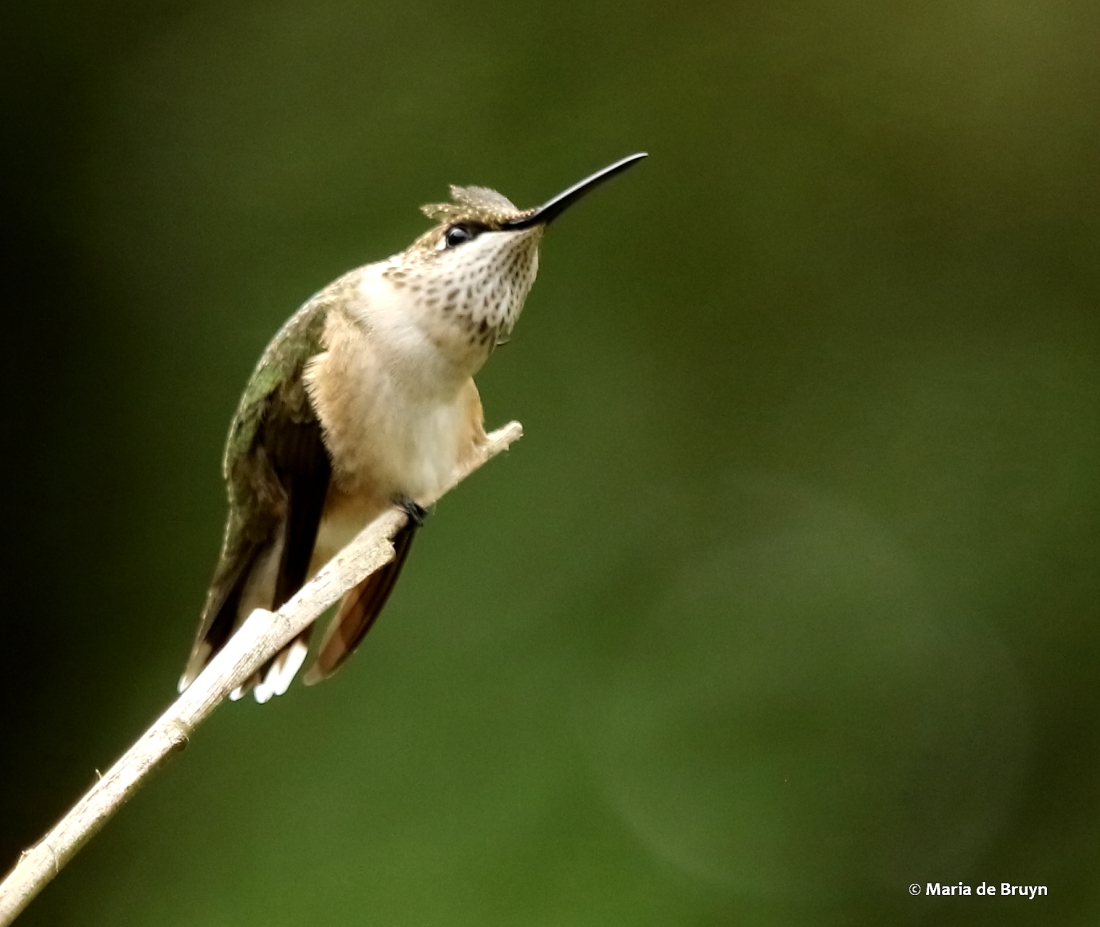
The youngest birds have a groove in their beak but this smooths out by the winter.

ruby-throated hummingbird DK7A5627© Maria de Bruyn res ruby-throated hummingbird DK7A7105© Maria de Bruyn res

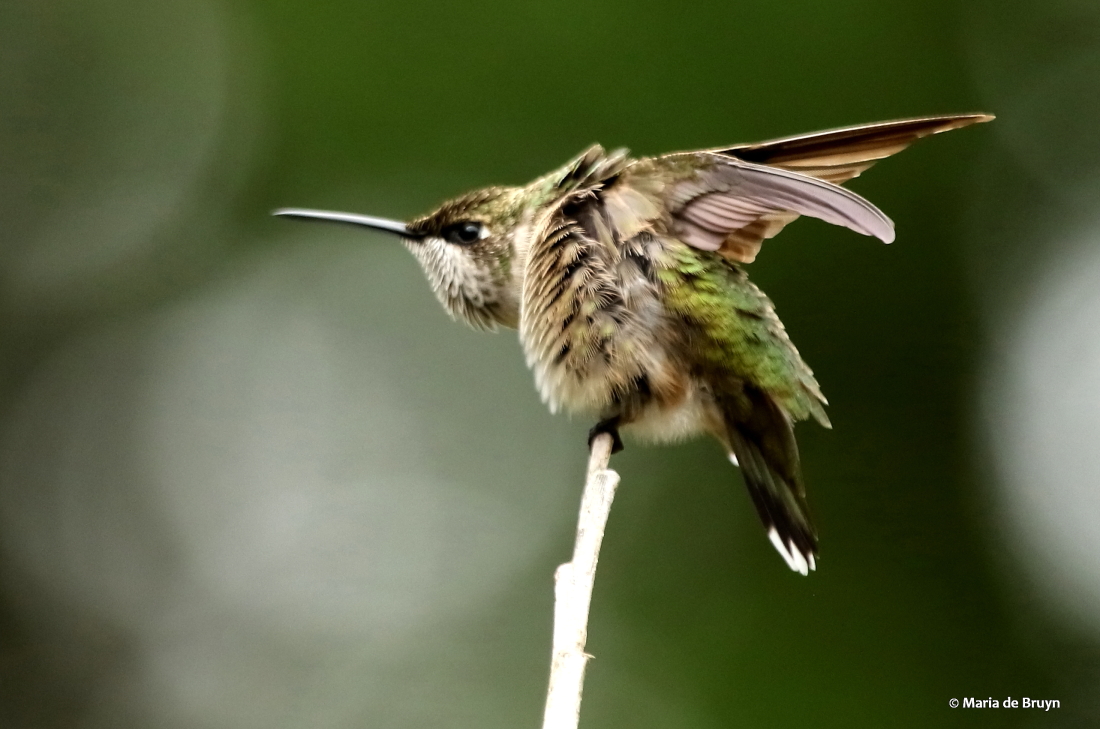
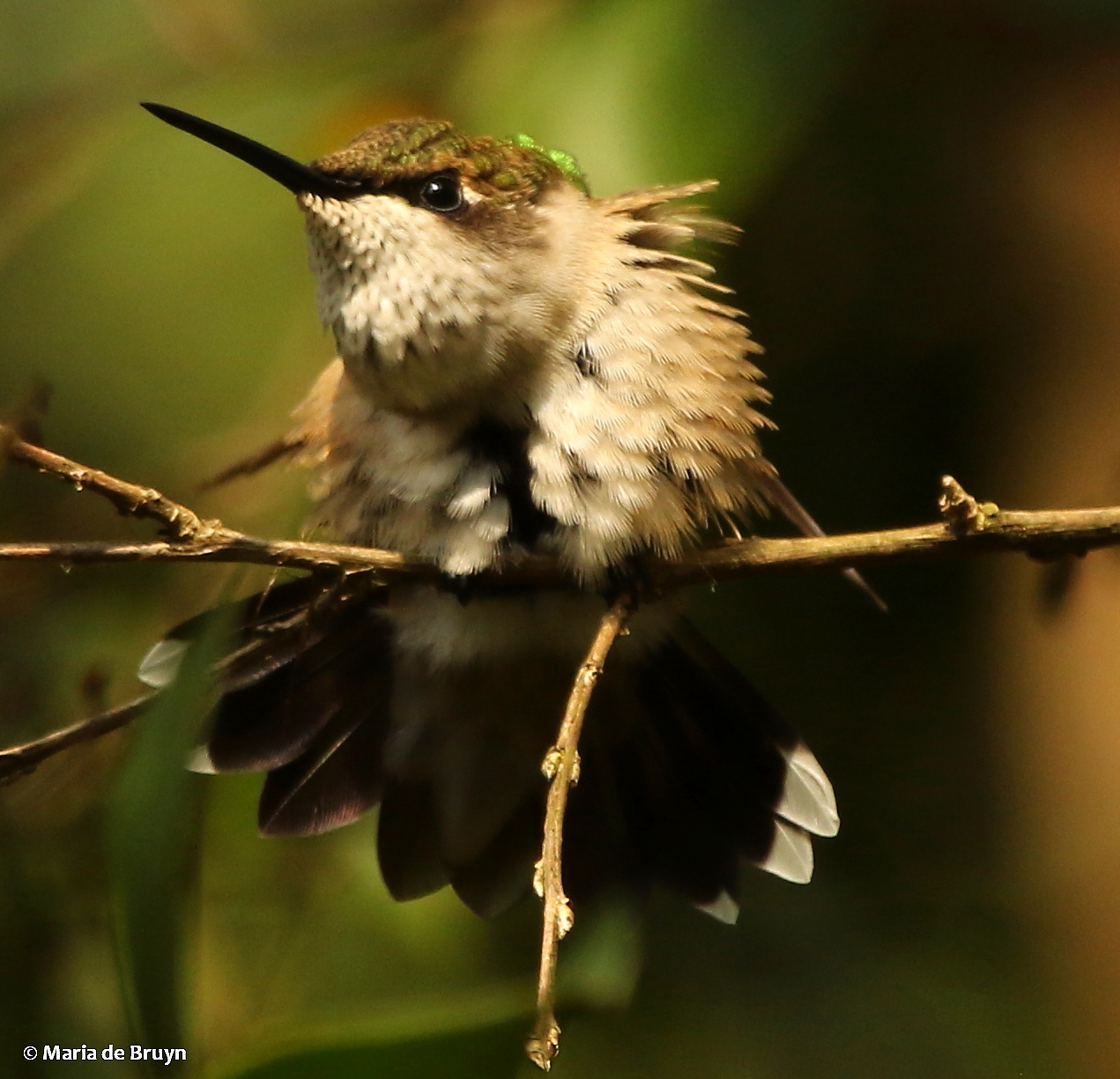
When the hummers look up in the sky, while sitting all puffed up on a branch, they may be taking a sun bath.

ruby-throated hummingbird DK7A7969© Maria de Bruyn res ruby-throated hummingbird DK7A7804© Maria de Bruyn res

A tiny catnap – or hummer nap – can also be observed now and then. This is understandable since their little hearts beat at 1220 times per minute while they fly; this lessens to about 250 times per minute when they are at rest.

ruby-throated hummingbird DK7A0060© Maria de Bruyn resruby-throated hummingbird DK7A7319© Maria de Bruyn res

ruby-throated hummingbird DK7A0389© Maria de Bruyn res

ruby-throated hummingbird DK7A7355© Maria de Bruyn res


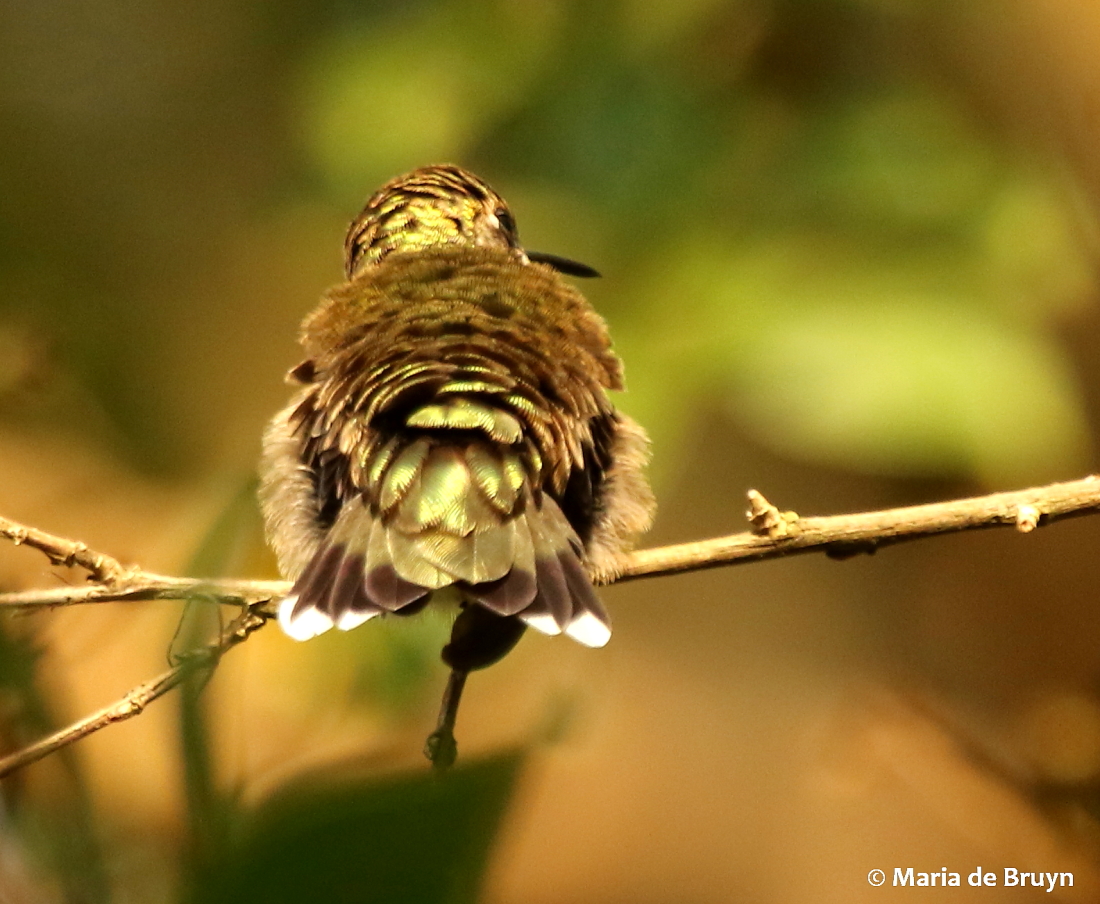
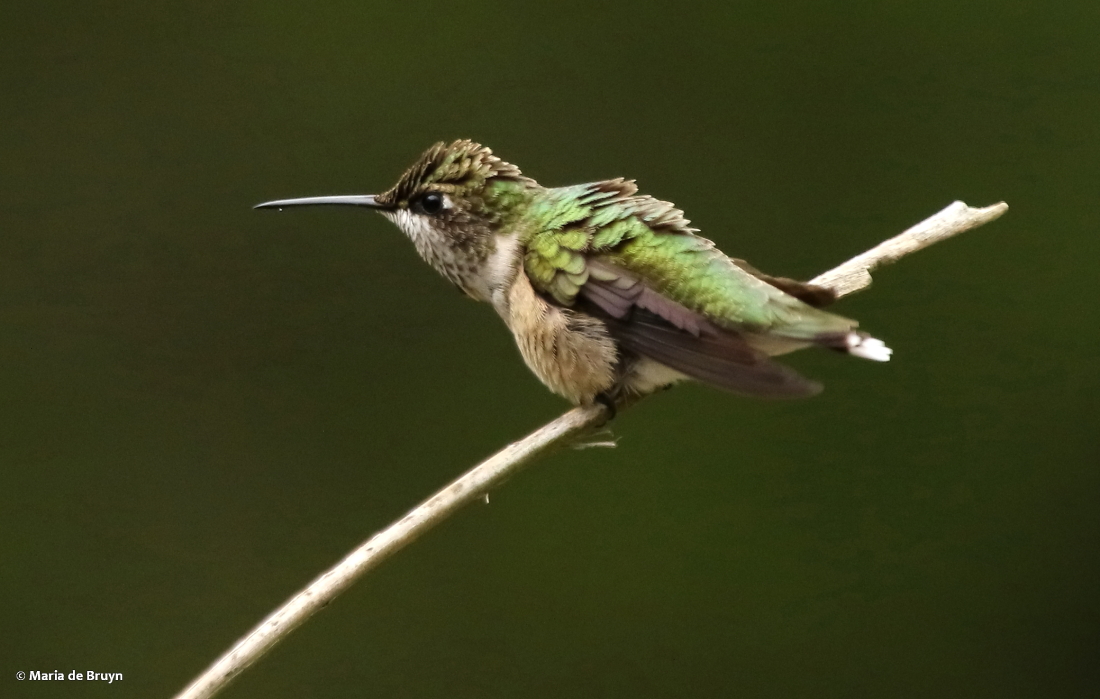
You can sometimes tell the sex of the hummingbird by its tail feathers. The tips are white and rounded in both females and first-year males, who do not yet have fully colored throats

.
ruby-throated hummingbird DK7A2031© Maria de Bruyn


In the adult males, the tail feathers have sharp black points.

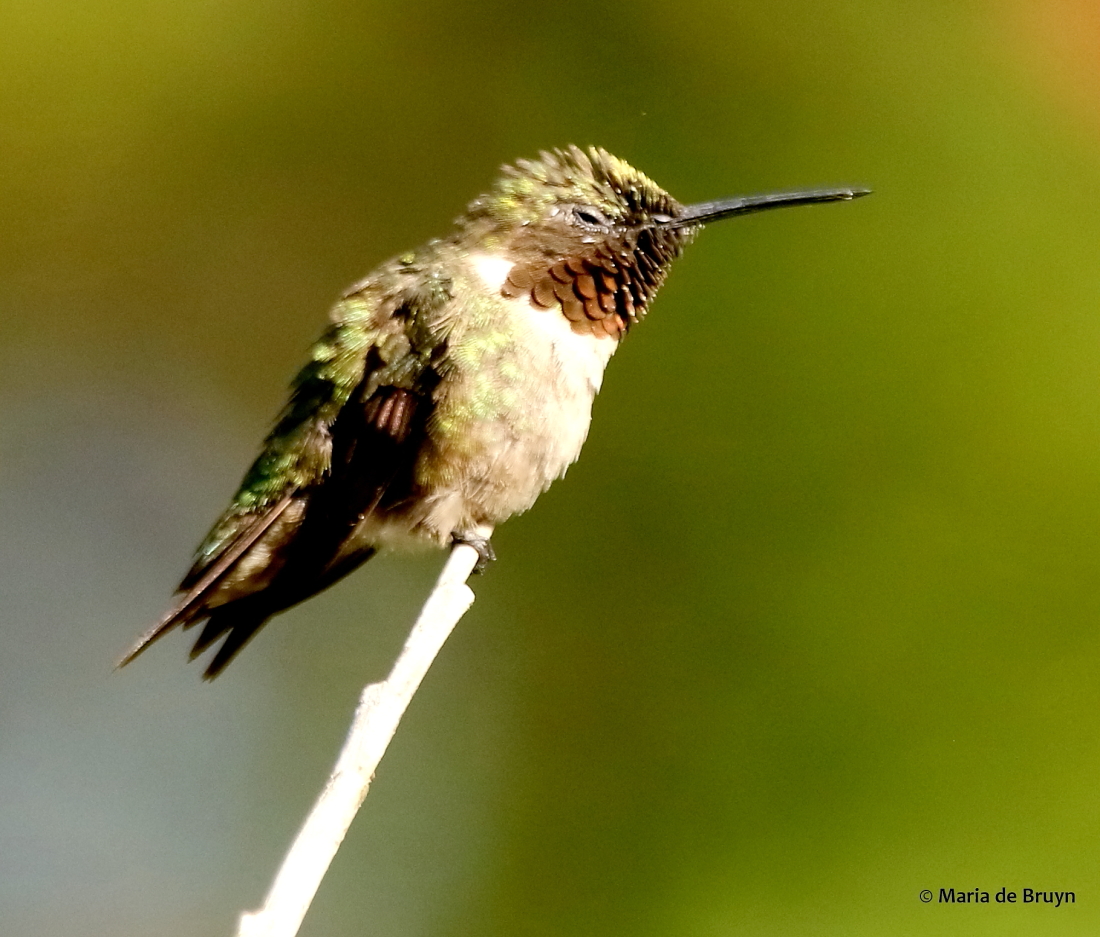
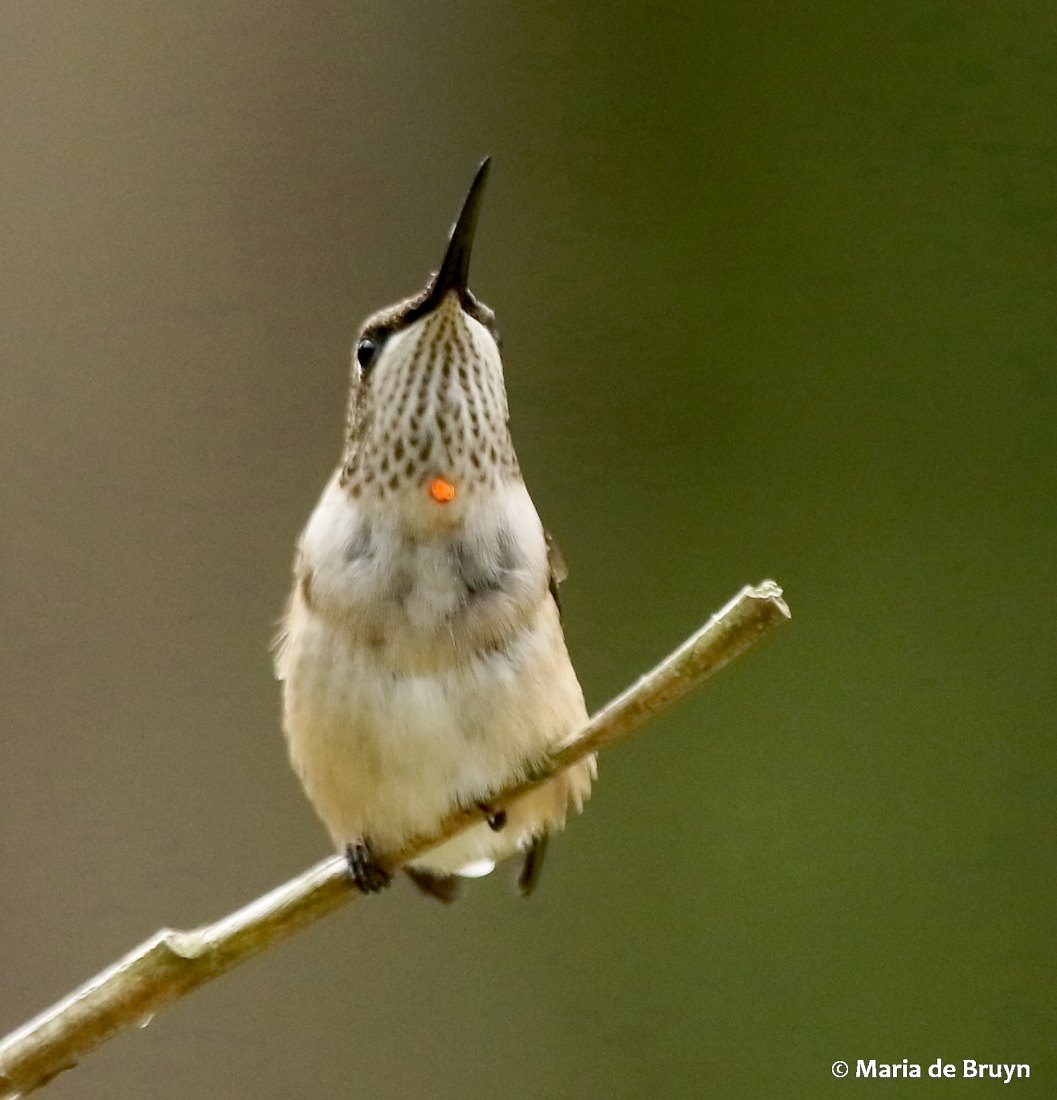
The red gorget (throat) feathers that give this species its common name are seen in the adult males. Very occasionally, a female will have one or two black or one red feather there, but it is generally a young male that has one red throat feather.

ruby-throated hummingbird DK7A6577© Maria de Bruynruby-throated hummingbird DK7A0610© Maria de Bruyn res

ruby-throated hummingbird DK7A2084© Maria de Bruyn res


After nesting, females may look somewhat tattered and molt their feathers, like this one in July. The regular molting period is autumn through about March and that is when the juvenile males develop their their red throats.


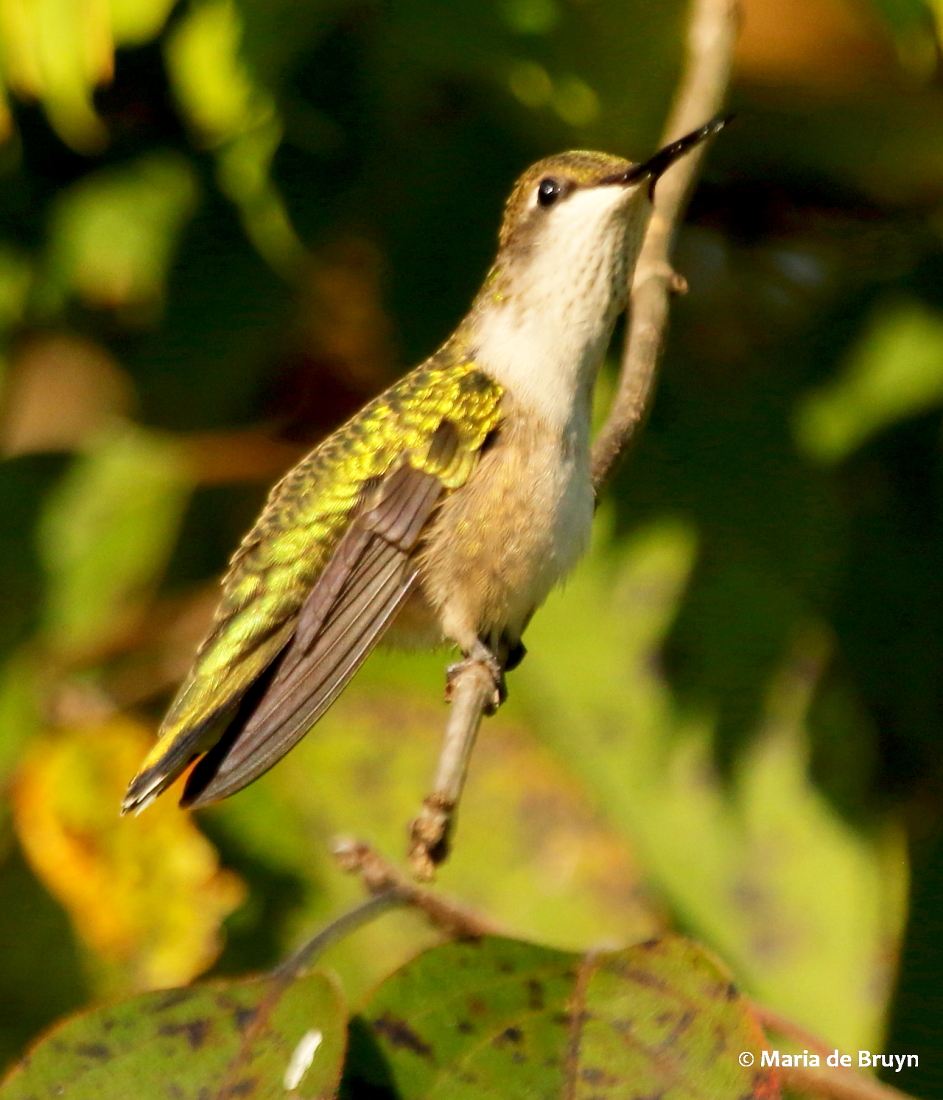
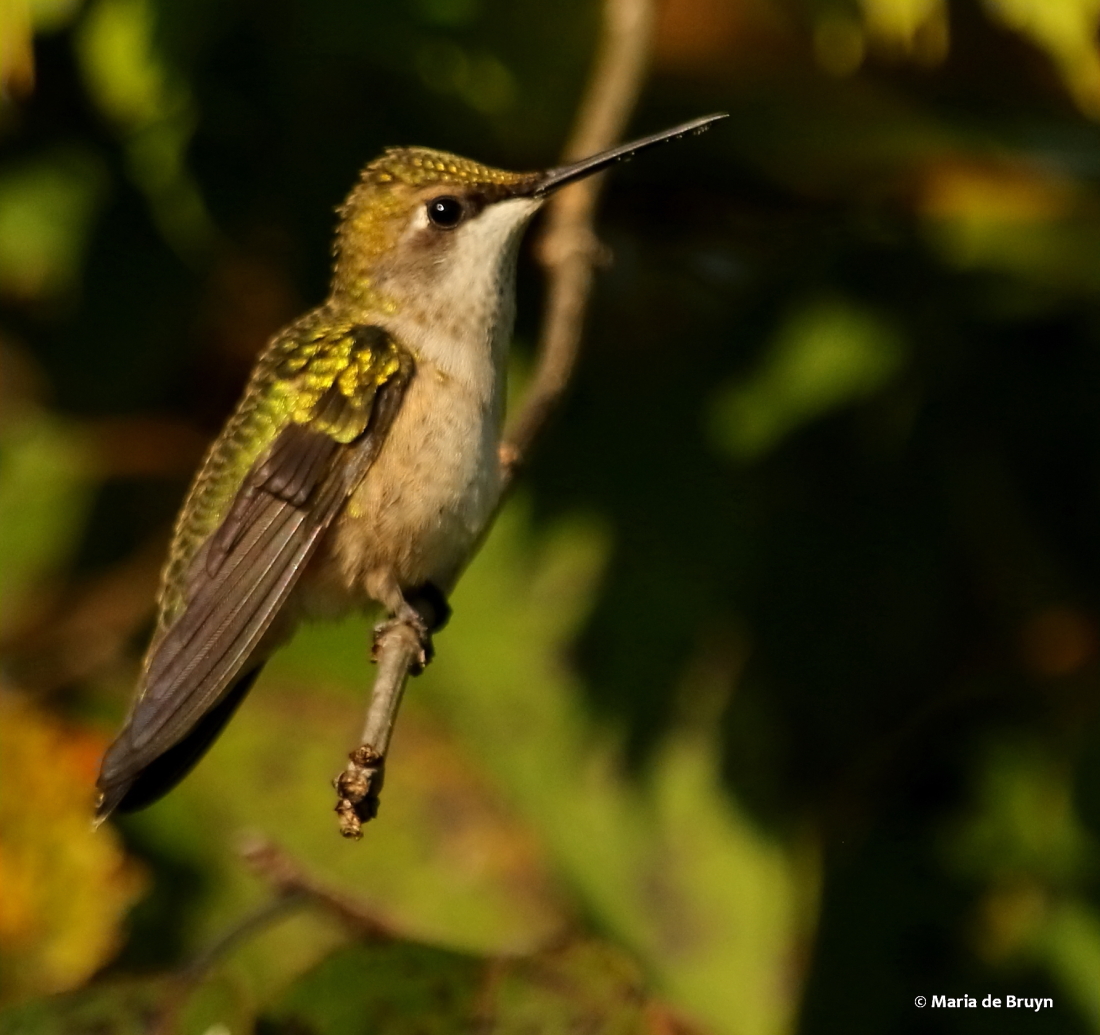
Both female and male ruby-throated hummers have a small patch of white feathers behind their dark eyes.

ruby-throated hummingbird DK7A8123© Maria de Bruynruby-throated hummingbird DK7A2409© Maria de Bruyn res

One thing is for sure – all these little avians are beautiful to see and watch!

More information:

http://www.hummingbirdworld.com/h/behavior.htm

Hummers haranguing – feistiness in small packages!

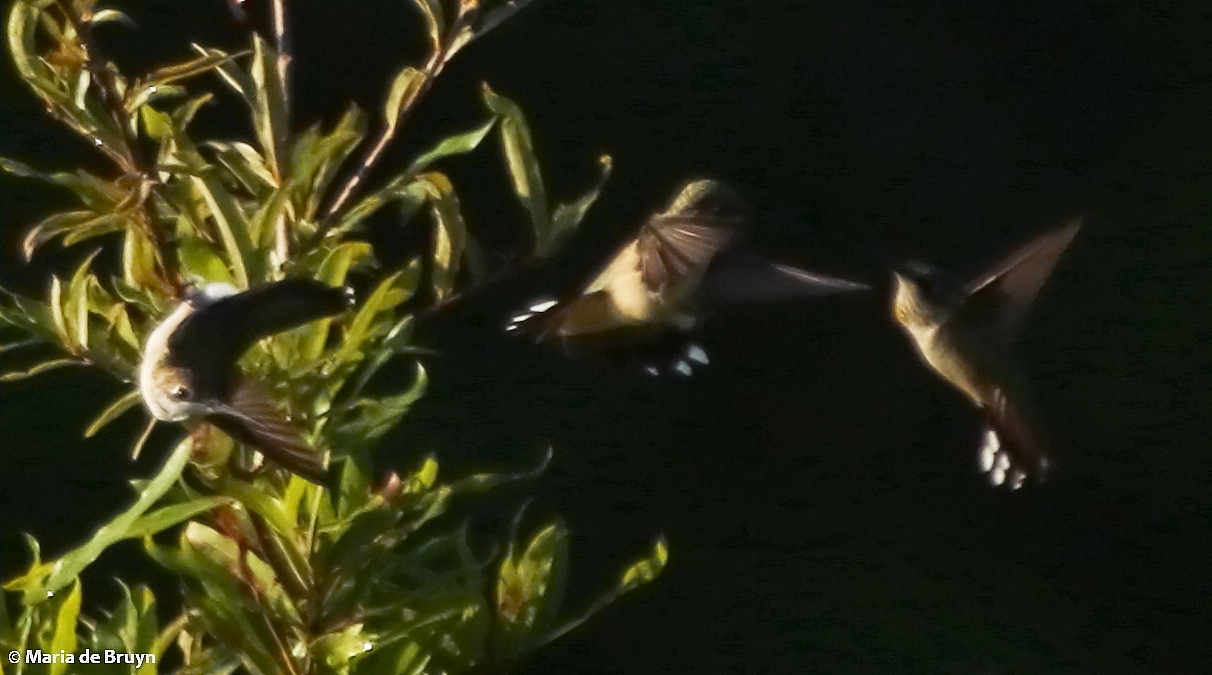
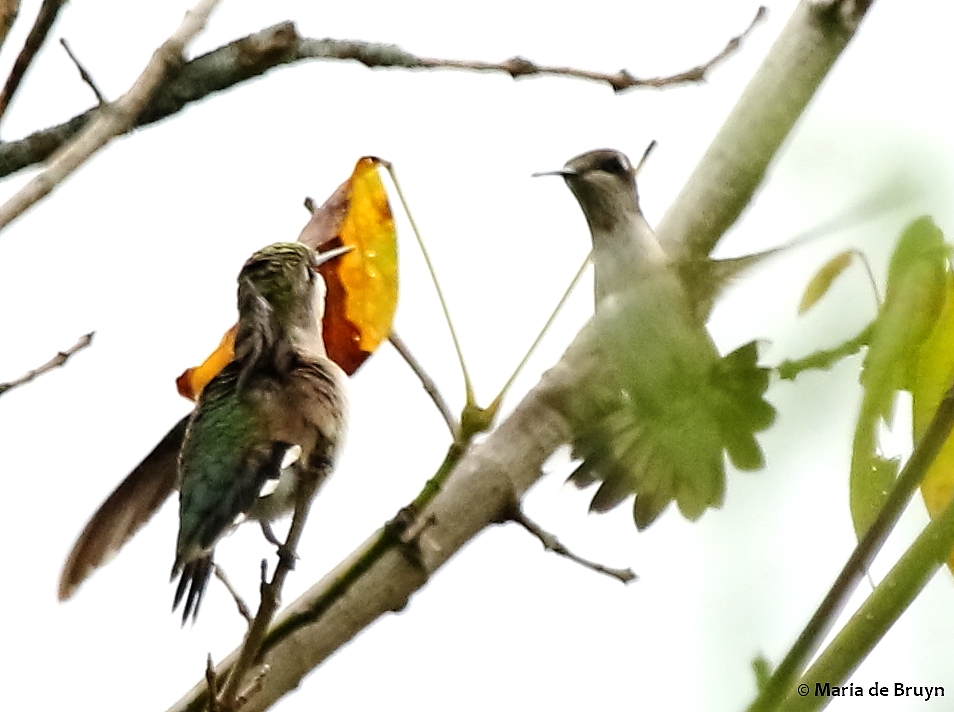
ruby-throated hummingbird DK7A0498© Maria de Bruyn (2) resAt times, we may see on Facebook or the Internet a photo or video of hummingbird nectar feeders surrounded by at least 6 and sometimes dozens of these small birds, sharing space as they take turns at imbibing some of the sweet water. Here in my part of North Carolina, however, it seems that the ruby-throated hummingbirds (Archilochus colubris) are just NOT interested in having their territory host family members or neighbors. This species is known for being territorial and those in my vicinity live up to that reputation for sure.

Both at home and in nature reserves, I’ve watched these tiny birds stake out a claim to a feeder or some choice blooms. They drink a little and then will take up a post on a vantage point where they can keep an eye out for other birds. Occasionally, the waiting spot is out in the open and often it is in a nearby shrub or tree.

ruby-throated hummingbird DK7A2402© Maria de Bruyn res ruby-throated hummingbird DK7A2298© Maria de Bruyn

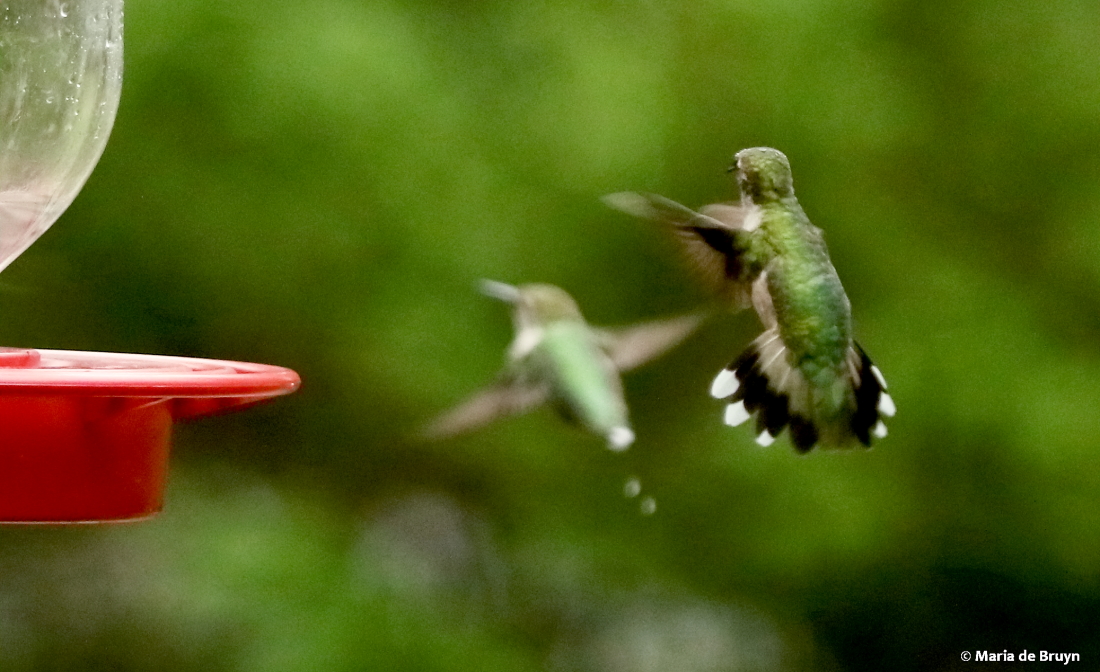
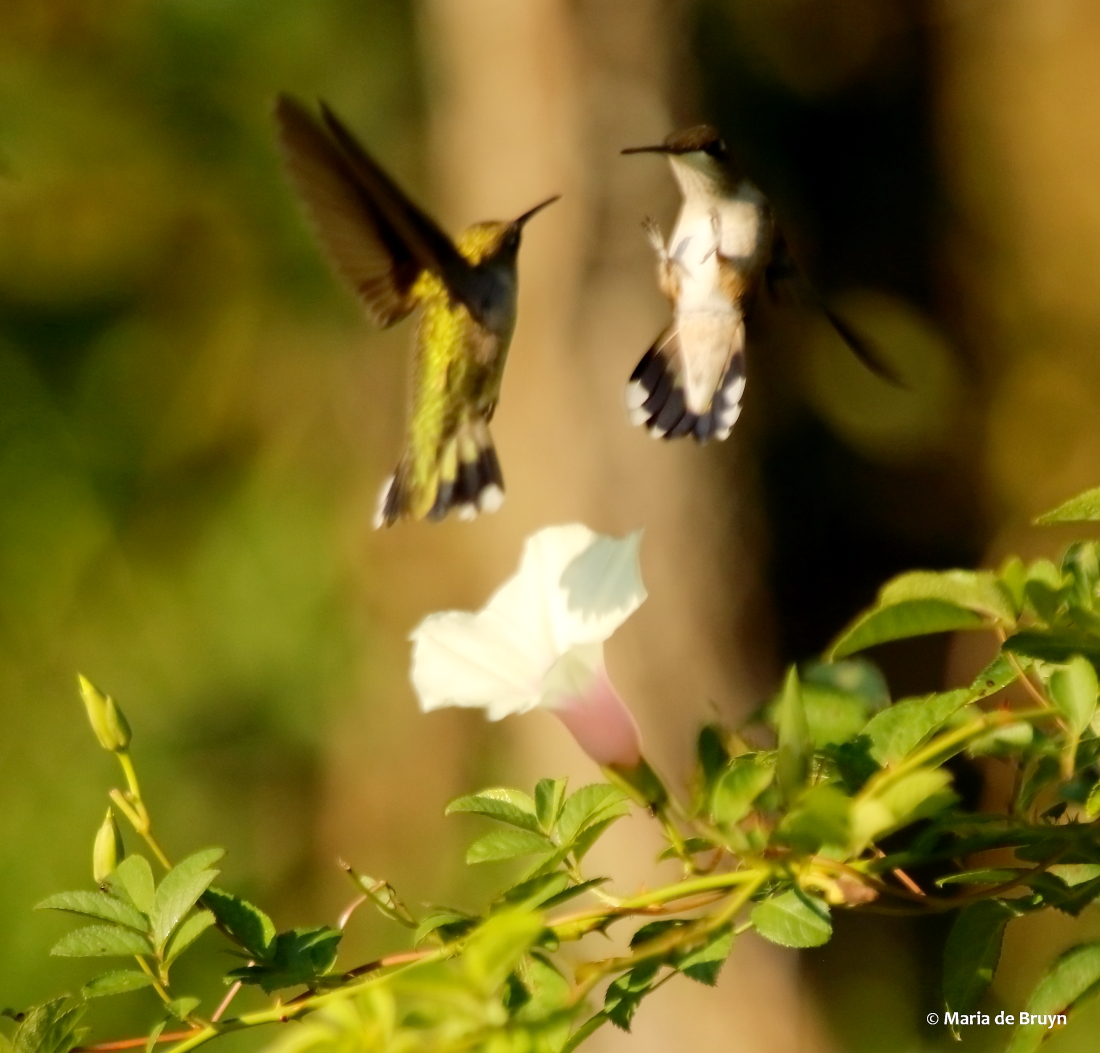
When they spot a rival approaching the food source, they may either immediately give chase or first engage in a threat display.

ruby-throated hummingbird DK7A2376© Maria de Bruyn resruby-throated hummingbird DK7A1568© Maria de Bruyn res

Their displays include both posturing and sound. To warn off other birds, they may chirp both quickly and loudly. Their threat postures aim to frighten away intruders by displaying size and strength and include pointing their long bills at the other bird(s), puffing up their throats, spreading and raising their wings, and flaring their tail feathers, .

ruby-throated hummingbird DK7A0712© Maria de Bruyn resruby-throated hummingbird DK7A0492© Maria de Bruyn res


ruby-throated hummingbird DK7A7307© Maria de Bruyn resruby-throated hummingbird DK7A0499© Maria de Bruyn res

ruby-throated hummingbird DK7A7353© Maria de Bruyn resruby-throated hummingbird DK7A7928© Maria de Bruyn

ruby-throated hummingbird DK7A2247© Maria de Bruyn resThey don’t really use their bills to battle as they need to protect this body part but they can fly into each other. On one occasion, in my front yard, I heard a loud thump when the two birds actually collided during a high-speed chase.

The drive to protect territory is not for lack of food. My yard has three nectar feeders out back and one in the front and three of them have at least four feeding holes. This year, a brightly colored male laid claim to the yard while the female was caring for her brood. When the female and young birds began coming to the feeders, “Red” was not pleased. Later, the young males also vied with one another.

ruby-throated hummingbird DK7A1562© Maria de Bruyn res

Chittering loudly, they sweep in to make the other birds take off; occasionally they do get a chance to have a short drink before another hummer shows up. At my house, the birds can feed because they have to patrol both the front and back yards and can’t be in two places at once.

ruby-throated hummingbird IMG_0379© Maria de Bruynruby-throated hummingbird DK7A0866© Maria de Bruyn res

I witnessed a similar scenario at the Mason Farm Biological Reserve. There was a spot with plenty of blooming trumpet vines (Campsis radicans) and morning glories (Ipomoea pandurata), which were attracting a variety of pollinators. Three hummingbirds were also visiting and, again, chasing one another from the site as soon as they caught sight of their rivals.

ruby-throated hummingbird DK7A2117© Maria de Bruyn

ruby-throated hummingbird DK7A2116© Maria de Bruyn

In an area near the Haw River where many wildflowers bloom, a similar scenario took place.

ruby-throated hummingbird DK7A9401© Maria de Bruynruby-throated hummingbird DK7A9403© Maria de Bruyn

This is the time of year when the ruby-throated hummingbirds undertake their migration to Central America, a distance of at least 1000 miles. They need to store energy for this and may double their body mass while feeding during the preparatory phase. However, it seems to me that chasing away other birds from their preferred feeding sites must take an enormous amount of energy and it seems to be an endless activity. In my yard, it goes on all day long!

ruby-throated hummingbird DK7A1828© Maria de Bruyn resThese birds’ flight muscles take up 25% of their weight; when they rest, their hearts beat at a rate of 250 beats per minute but during flight, their hearts speed up to 1220, so the zipping back and forth and up and down in hot pursuits must use lots of calories and energy. They also may hover mid-air for a while rather than sitting on an outpost twig; the other day, one of Red’s rivals spent a quarter minute suspended about 18 inches from my face, looking me over until Red dive-bombed him.

ruby-throated hummingbird DK7A2213© Maria de Bruyn resThis summer I’ve been lucky to see the hummers in several places, including Sandy Creek Park, near the Haw River and a farm cultivated by refugees from Myanmar. In all cases, the birds appeared unwilling to share their dining areas. Once in a while, though, one would have the space to him- or herself for a while and I could watch them feed, afterwards flicking out their long tongues.


ruby-throated hummingbird DK7A7940© Maria de Bruyn resruby-throated hummingbird DK7A0181© Maria de Bruyn res

When they return next year, I hope to learn more about these wonderful little birds through daily observation in my garden habitat.

ruby-throated hummingbird DK7A1673© Maria de Bruyn (2) res

More interesting information on ruby-throated hummingbirds can be found here:

http://www.rubythroat.org/rthufactsmain.html

http://www.allaboutbirds.org/guide/ruby-throated_hummingbird/lifehistory

http://www.worldofhummingbirds.com/behavior.php

A lucky, lucky day with monarch guardian angels!

Yesterday my day turned out quite differently from my modest expectations – it was very lucky and truly a day for gratitude.

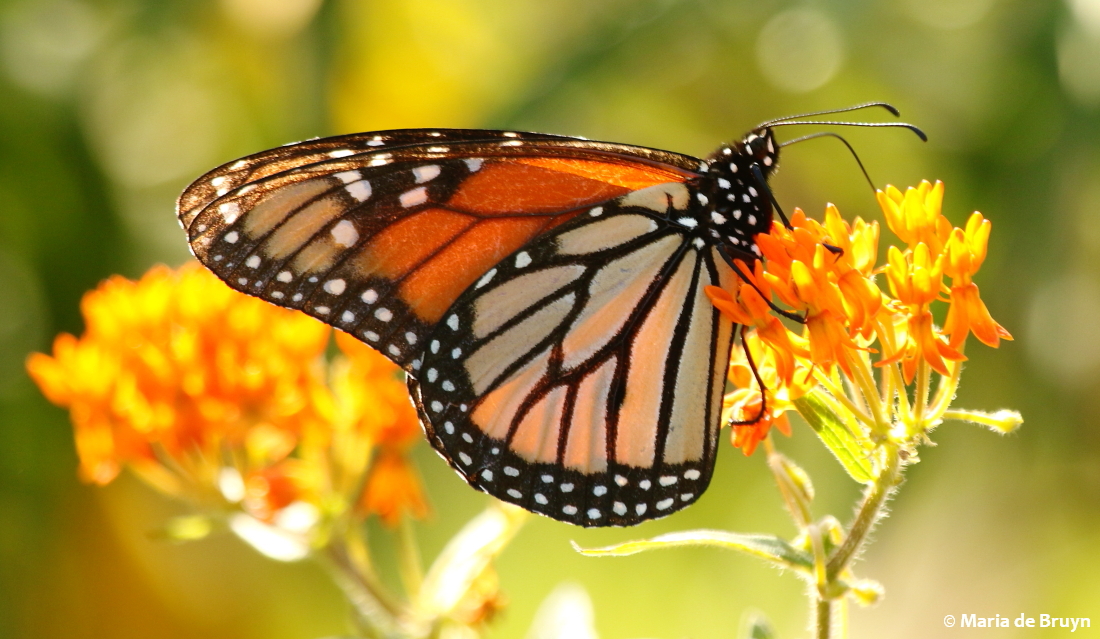
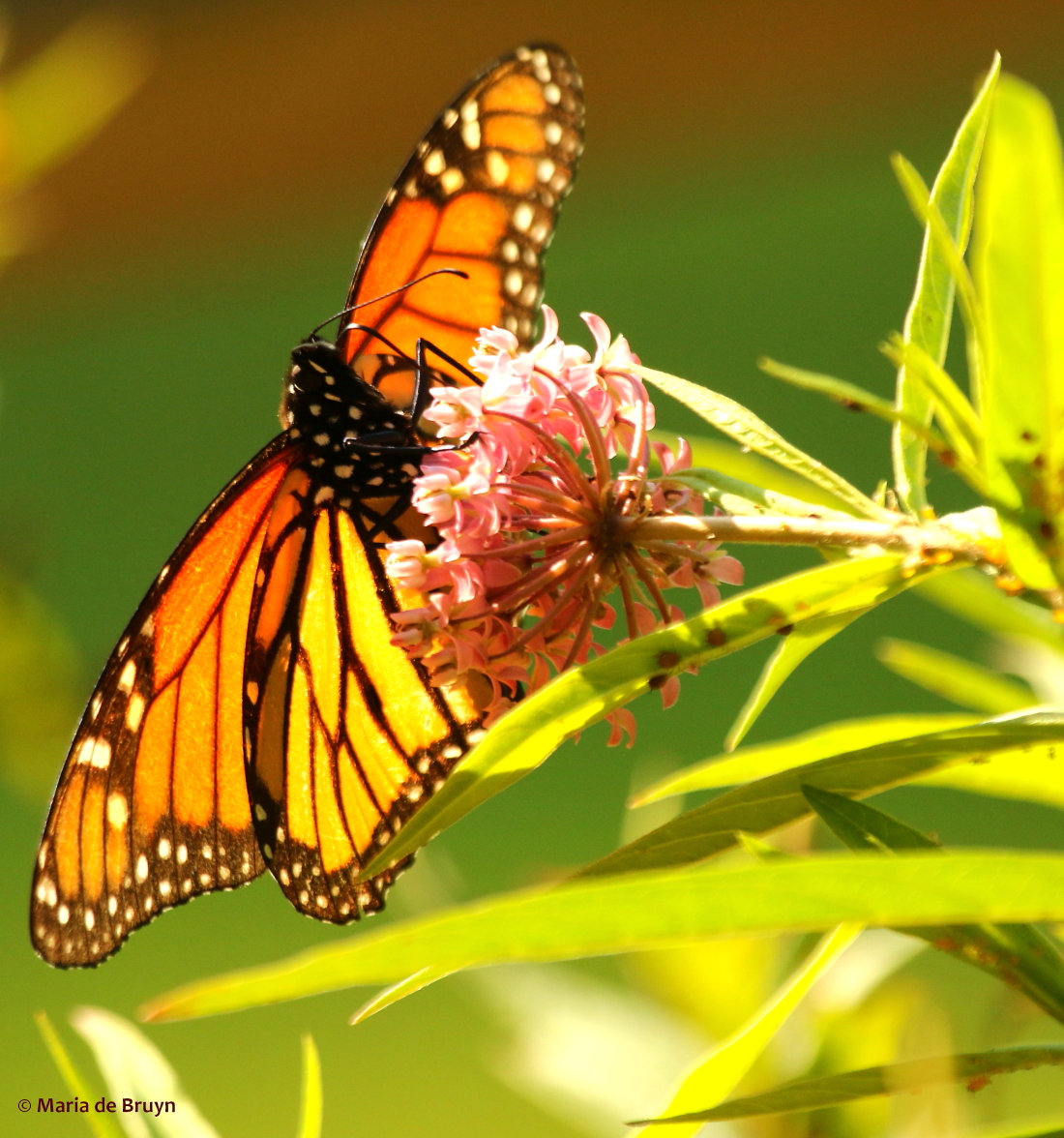
In mid-August, I had seen a female monarch butterfly (Danaus plexippus) at Sandy Creek Park, an exciting find and testimony to the usefulness of planting milkweed there. John Goebel, Sandy Creek patron, manager and care-taker extraordinaire, had planted about five types of milkweed in anticipation of welcoming these guests and it had paid off.

monarch DK7A7941© Maria de Bruyn res monarch DK7A7842© Maria de Bruyn res

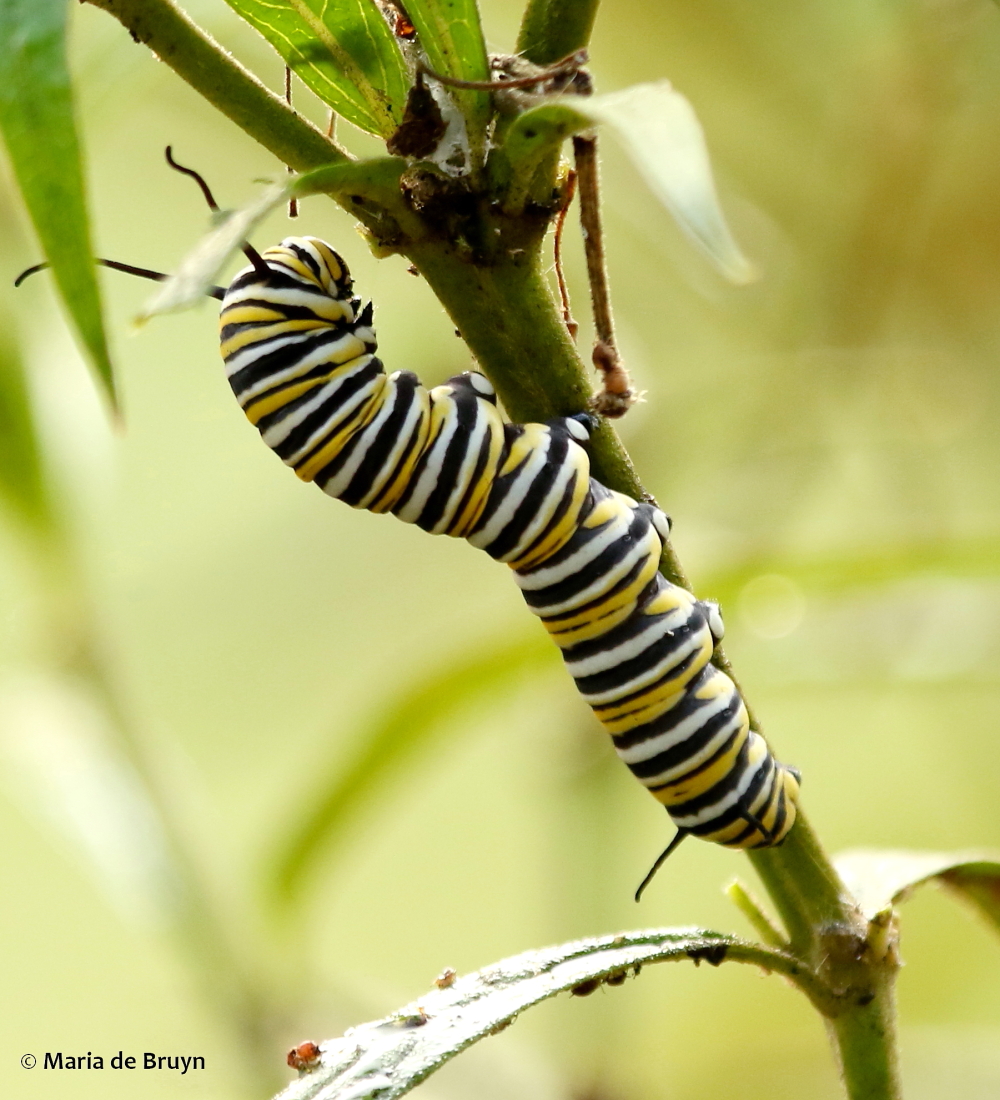
A few days ago, on Facebook, the Friends of Sandy Creek Park group announced that the one male and two female monarch butterflies spotted in the butterfly garden had left behind quite a few offspring. As I had not seen a monarch caterpillar in person before, I took off early for the park, where I found three people assembled to count them.  John Goebel kindly told me something about the monarch life cycle.

monarch DK7A6427© Maria de Bruyn resmonarch DK7A6518© Maria de Bruyn res

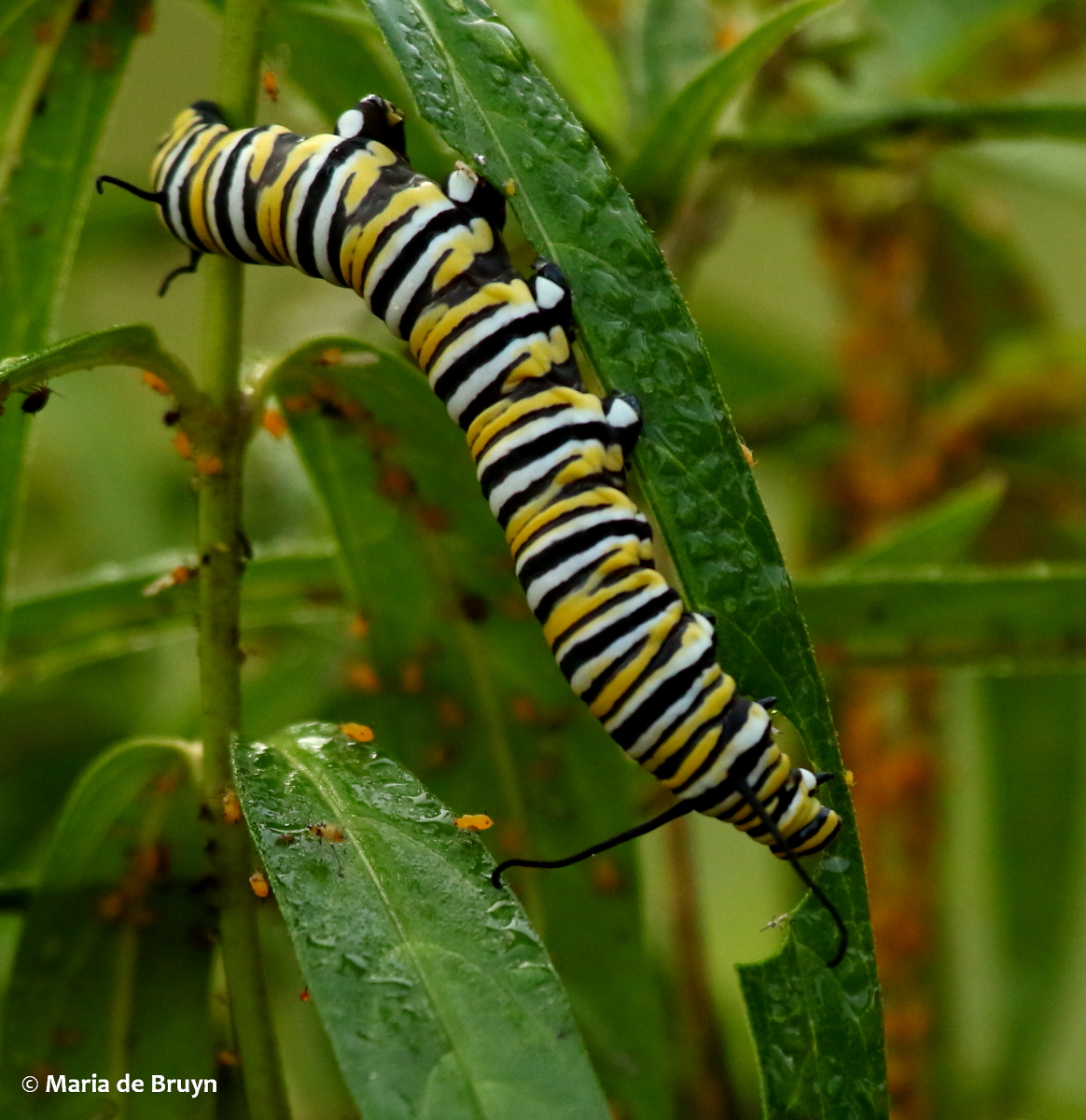
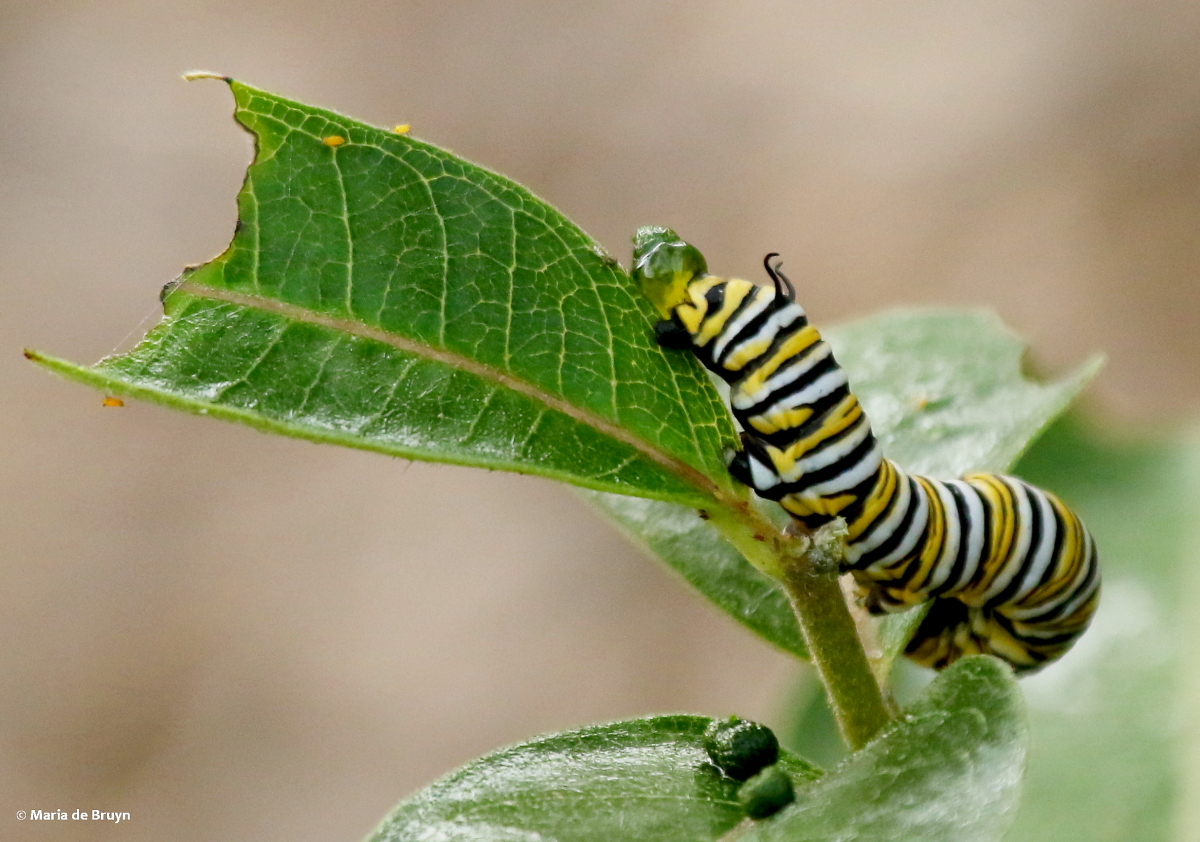
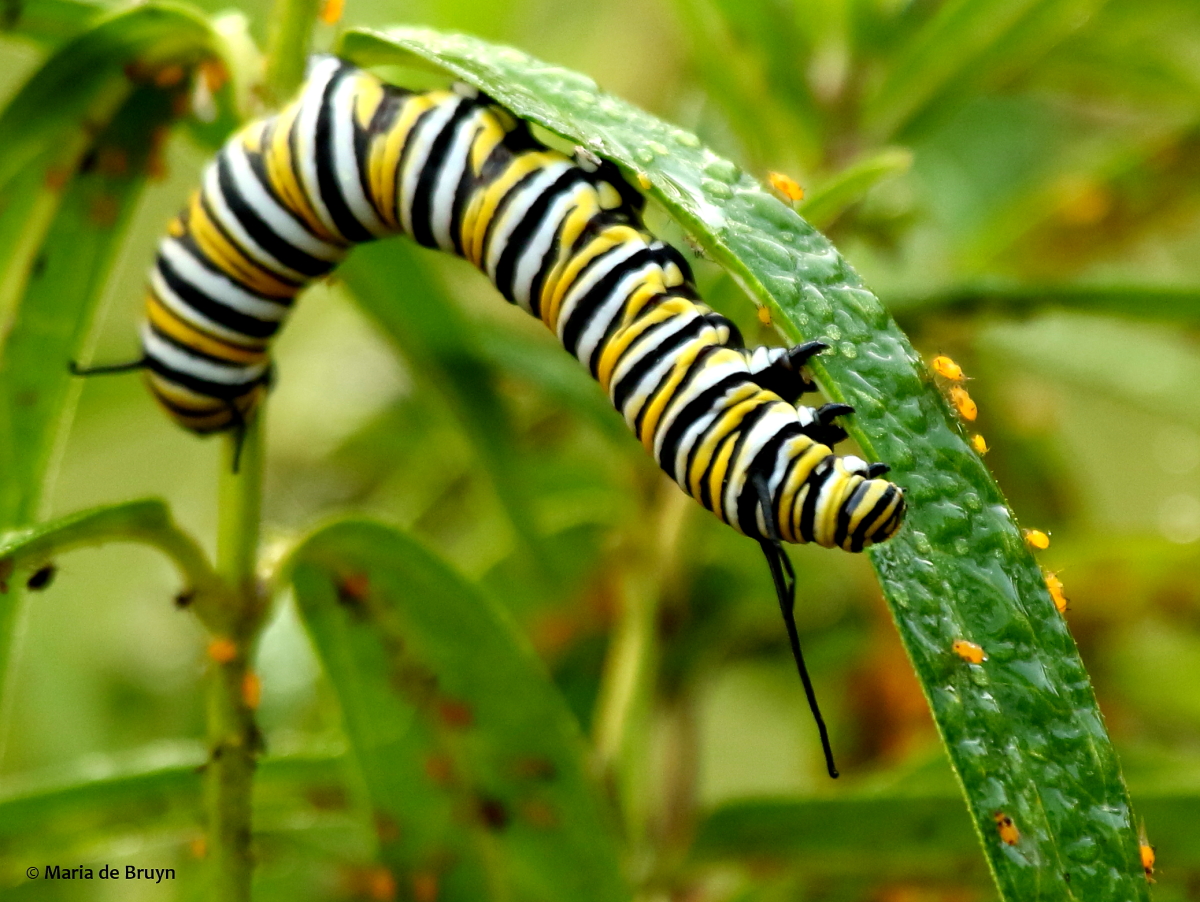
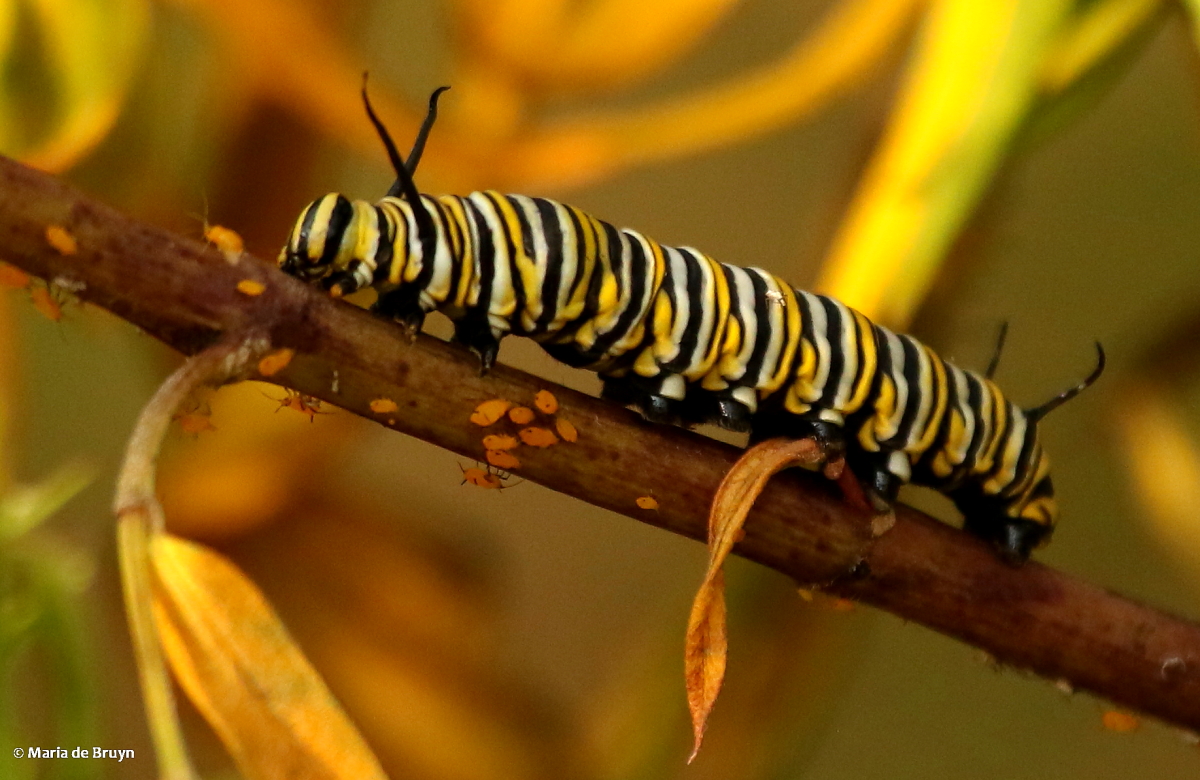
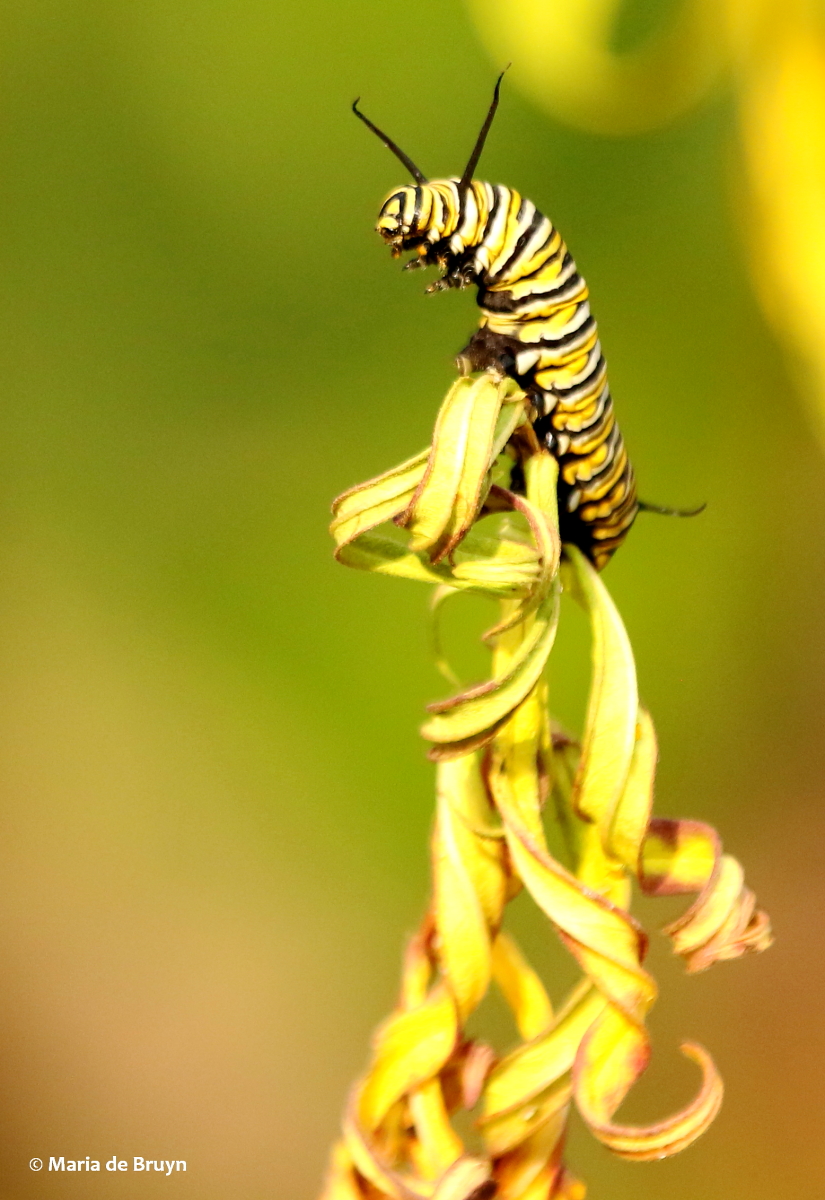
He pointed out several larger caterpillars, noting that they were stage 4 or 5 larva. The eggs hatch about 4 days after being laid. The larvae eat the plant on which they were born, shedding their skins four times as they grow, a process taking 10 to 14 days. These stages of growth are called instars.

monarch munching © Maria de Bruyn res monarch DK7A6460© Maria de Bruyn res

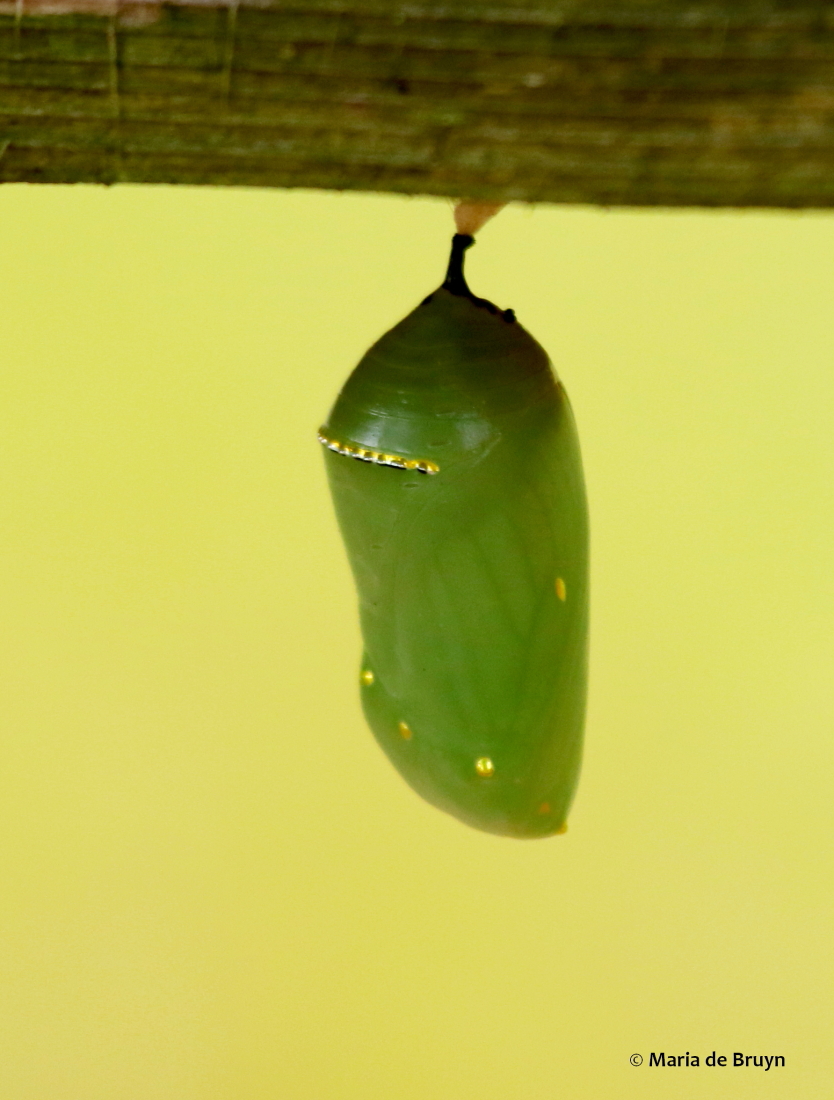
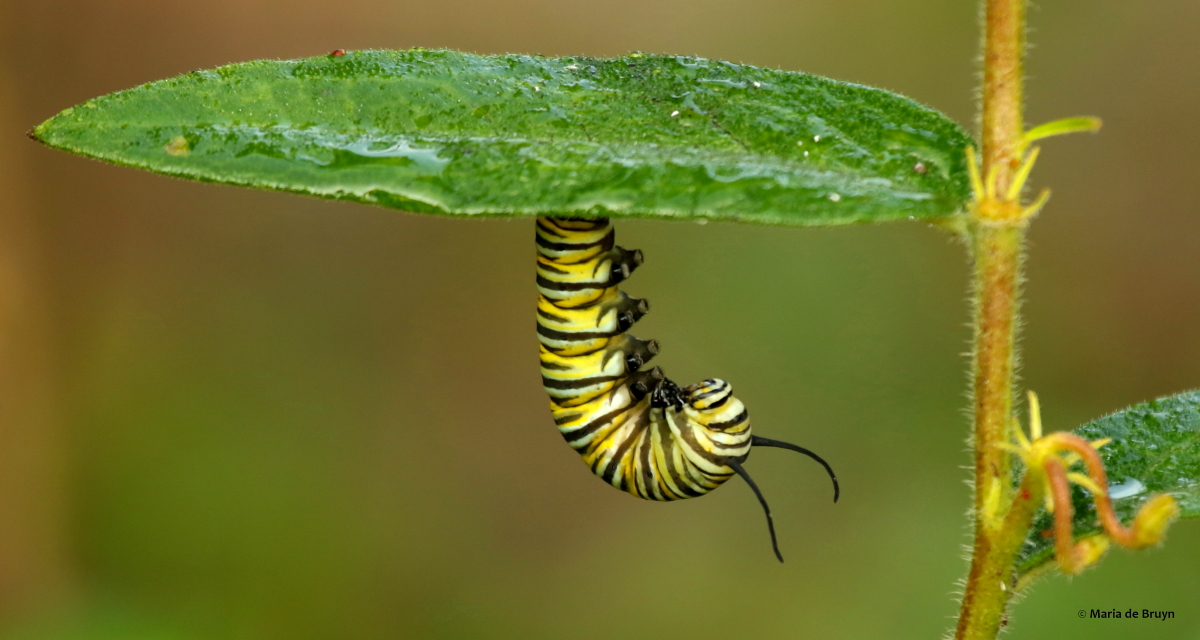
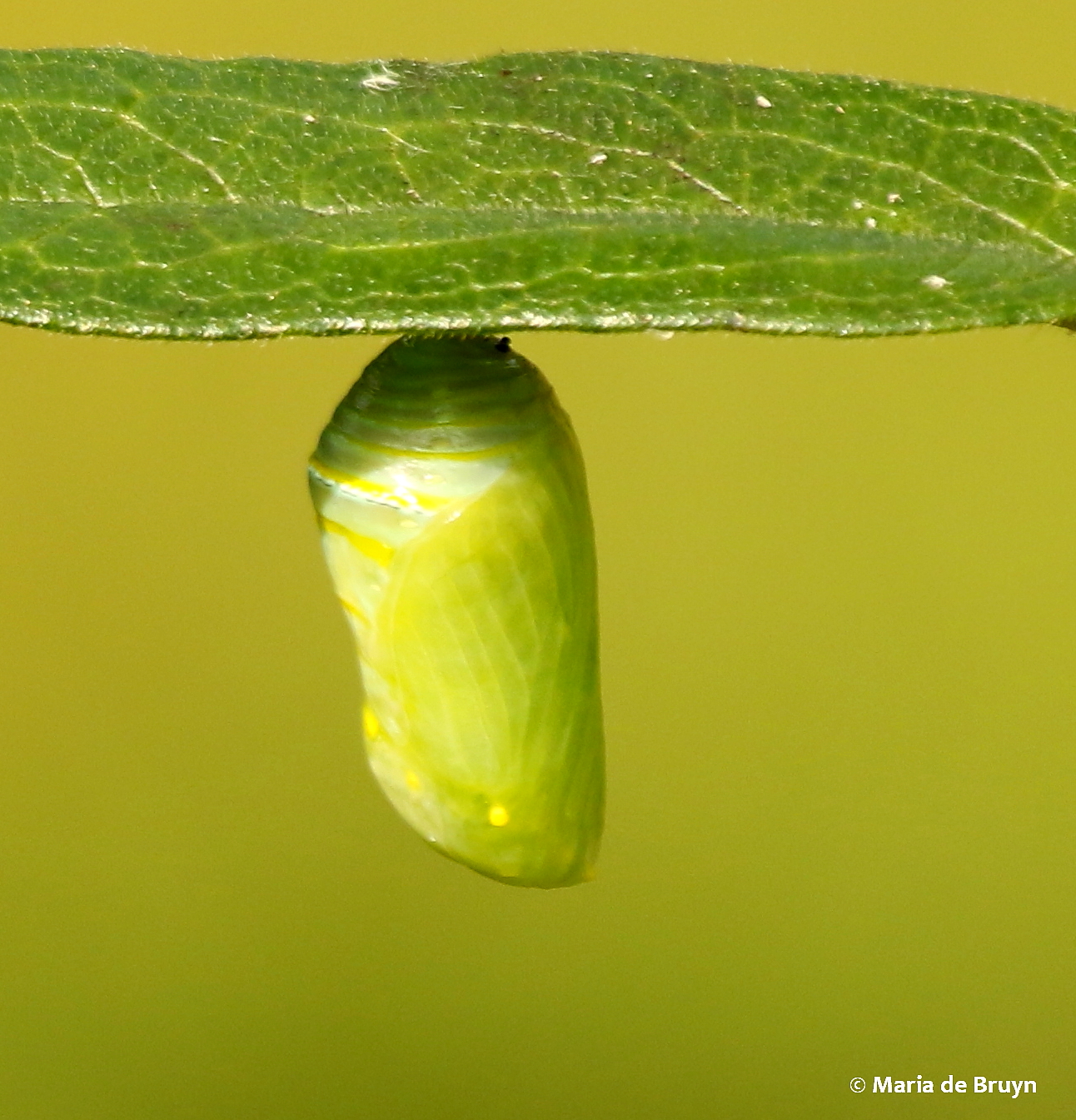
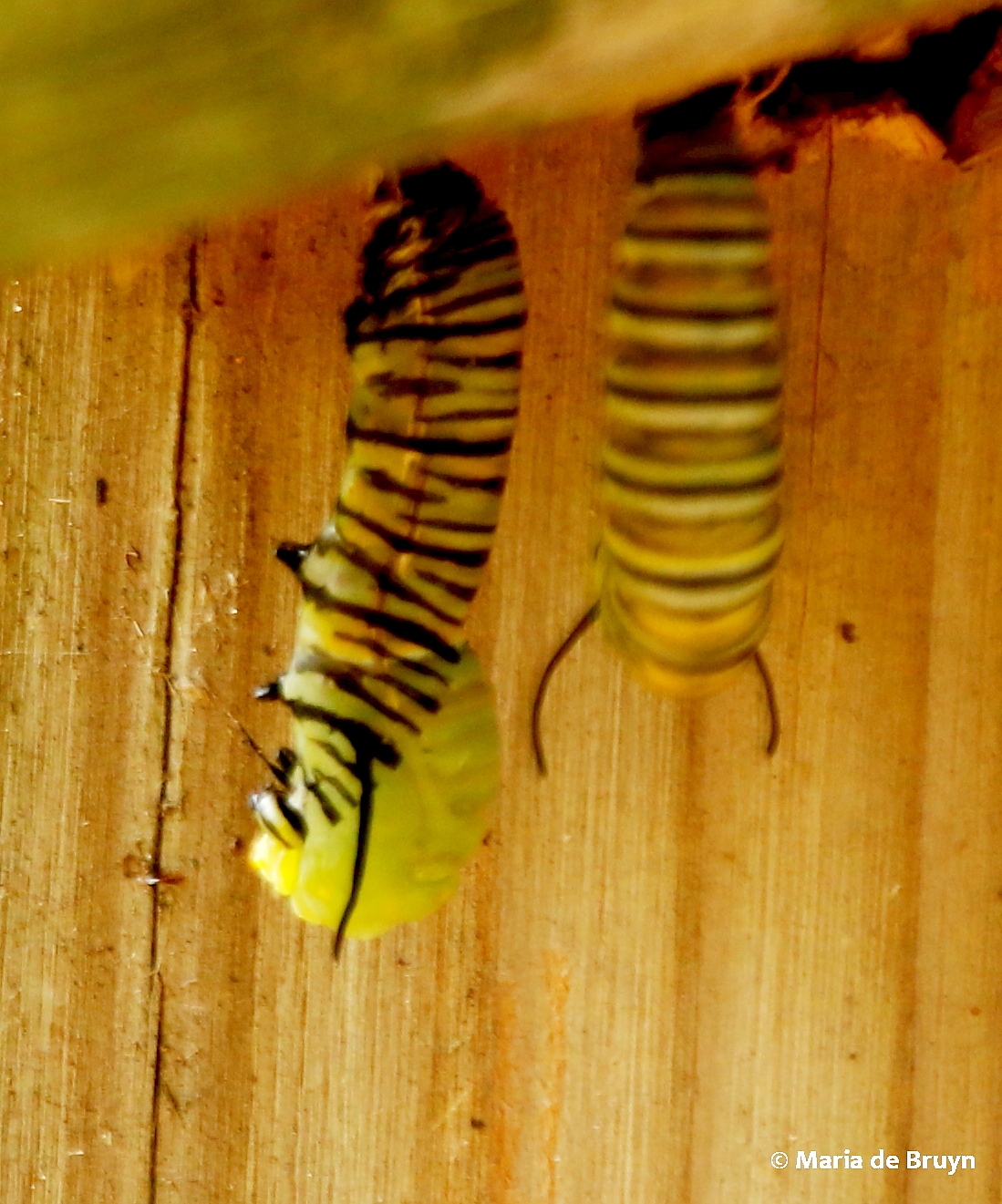
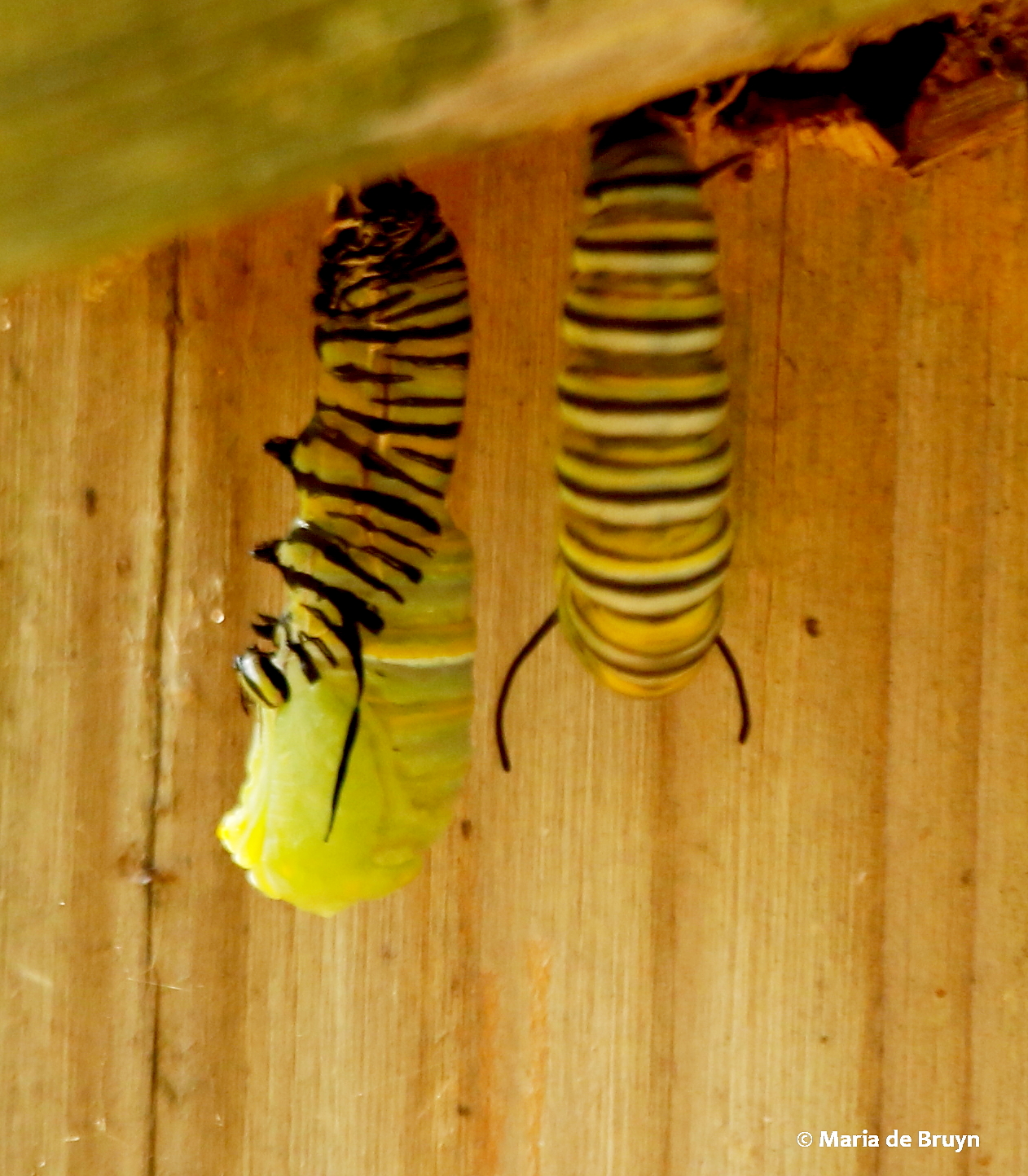
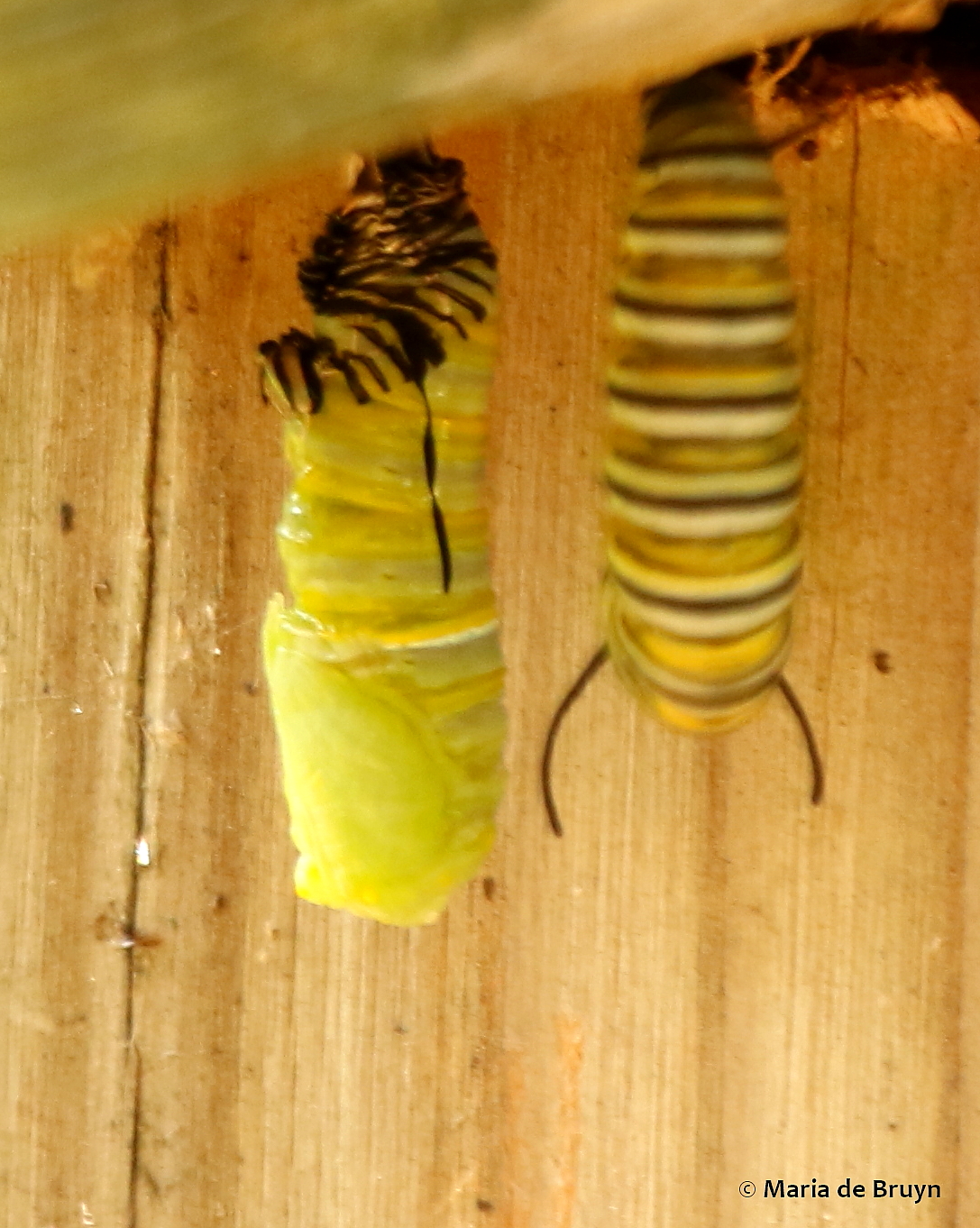
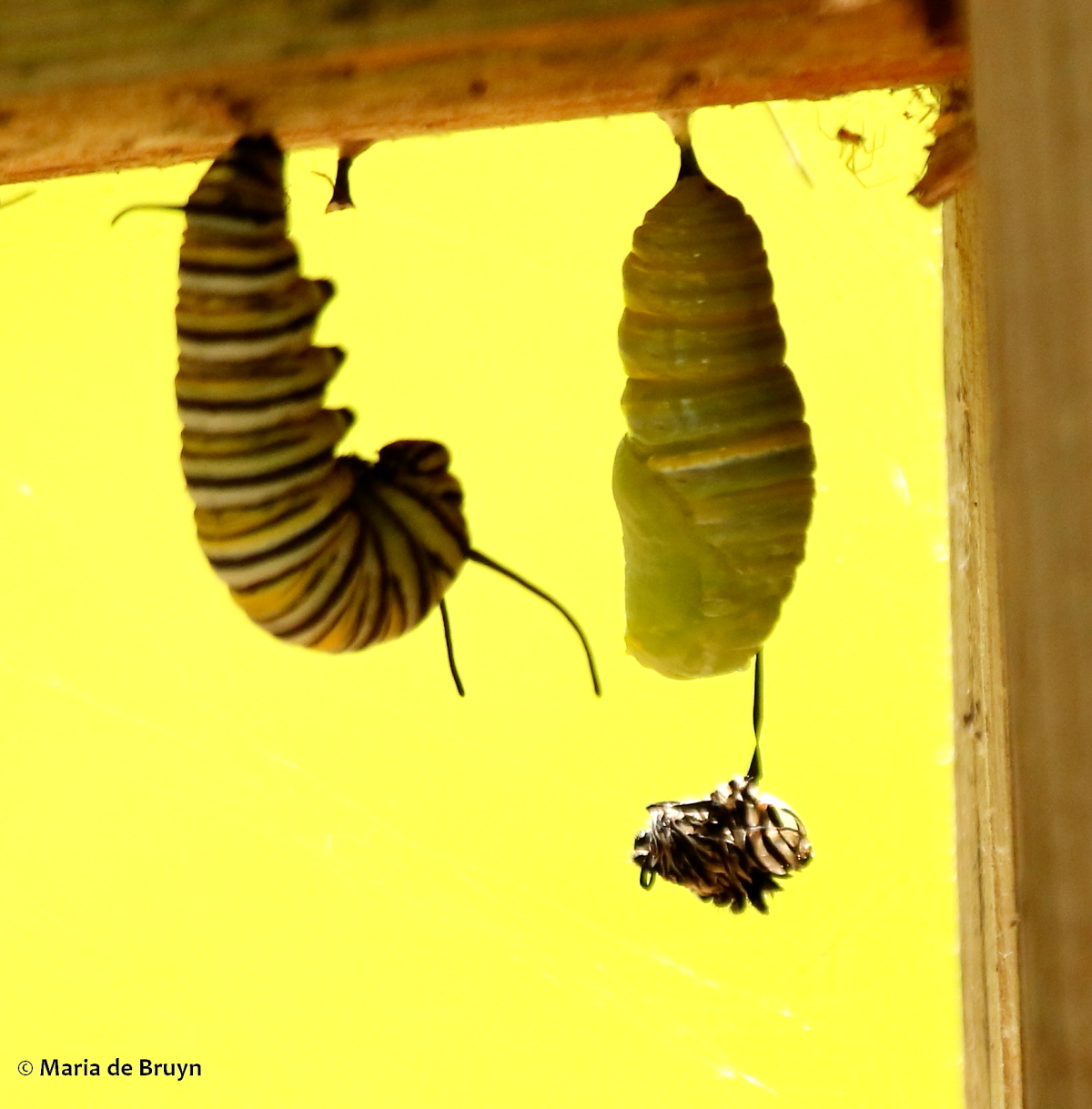
monarch DK7A6441© Maria de Bruyn resIn stage 5, the large larvae look for a protected and hidden spot where they can attach themselves vertically. They use their spinneret (not only spiders have them!) to make a silk pad from which they then suspend themselves, hanging down in the form of a letter J. The culmination of this procedure occurs when they straighten out, a sign, John told me, that pupation was imminent, with the caterpillar turning into a bright green chrysalis. There was already one chrysalis when I arrived with two other caterpillars hanging nearby.


The milkweed plants were attracting plenty of insect action. Many stems were yellow and orange as they were covered with milkweed bug nymphs and aphids. I photographed several of the 43 caterpillars counted, including a small early-stage newbie, and a number of large specimens that were very busy munching on leaves.

monarch DK7A6489© Maria de Bruyn res

After a while, I moved on to photographing caterpillars of moth species and looked around for birds or other interesting insects. Then an unexpected and unfortunate event arose and I had to high-tail it to the bathroom (thank goodness Sandy Creek has one that is open much of the year!).

Emerging from the bathroom and walking down the path to my car to go home, I felt chagrin that my nature walk had to be cut short. But if it hadn’t been for the bathroom visit near the milkweed plants necessitated by my gastrointestinal emergency, I would have missed a first-time experience. As I strolled to my car, I glanced again at the hanging caterpillars and noticed one had straightened out. I balanced the need to go home to shower and change clothes with the desire to see a caterpillar become a chrysalis. I had cleaned myself as well as possible and no one else was around, so I stayed.

monarch DK7A7327© Maria de Bruyn resmonarch DK7A6569© Maria de Bruyn res

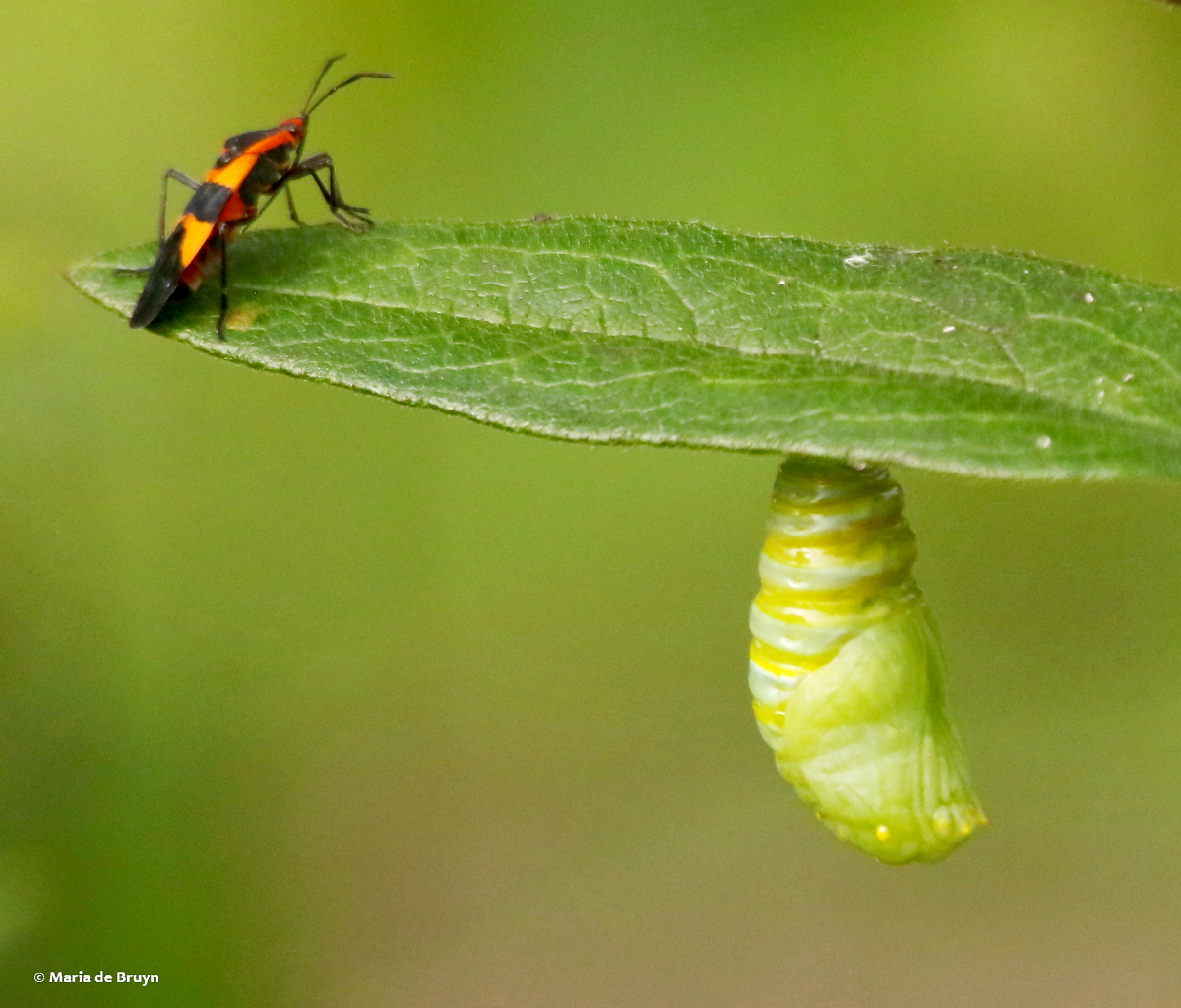
The caterpillar that I was watching was hanging quietly on a leaf; the only action came from a small milkweed bug (Lygaeus kalmia) and a large milkweed bug (Oncopeltus fasciatus) that marched back and forth on top, so I turned to the side to photograph an adventurous sibling that had climbed to the top of a nearby plant.

monarch DK7A7265© Maria de Bruyn resmonarch DK7A7357© Maria de Bruyn res

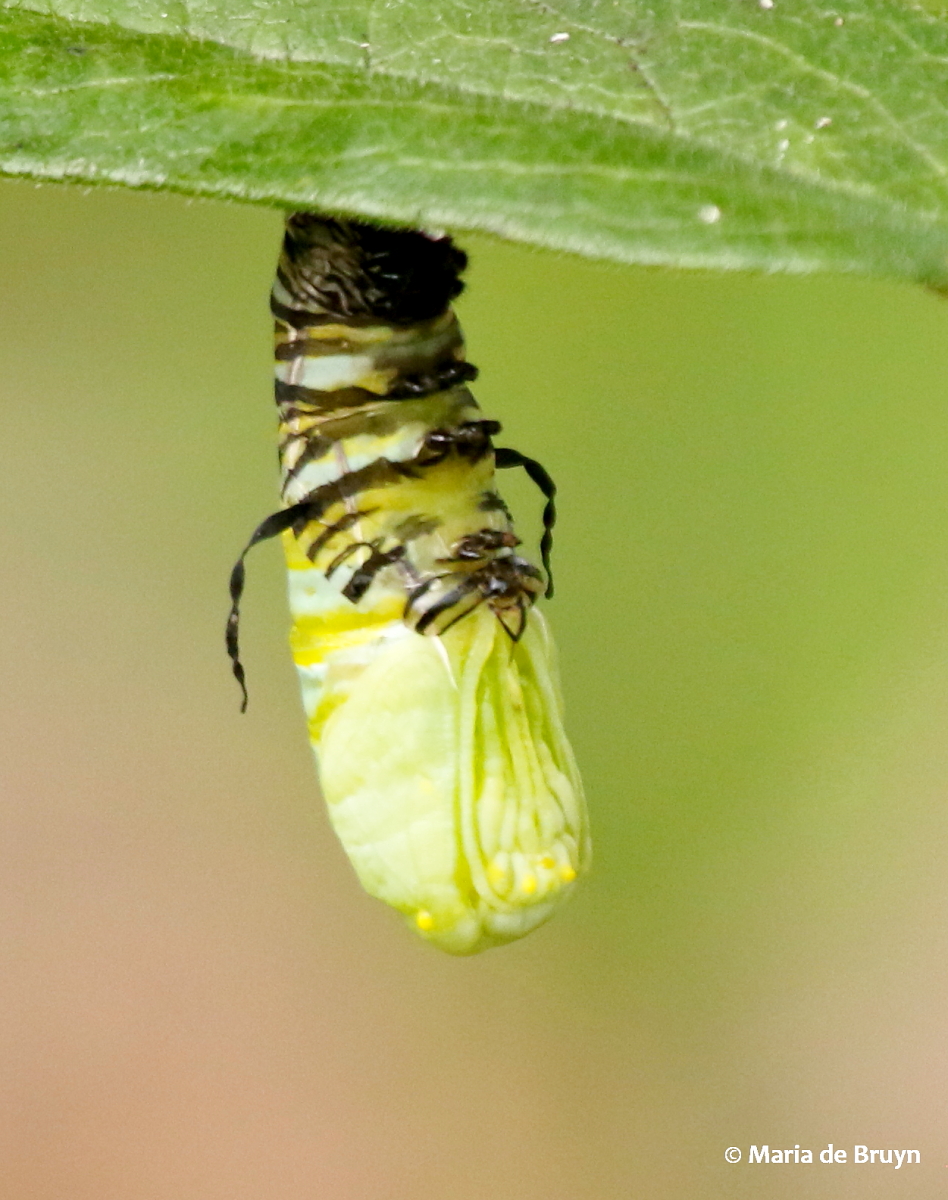
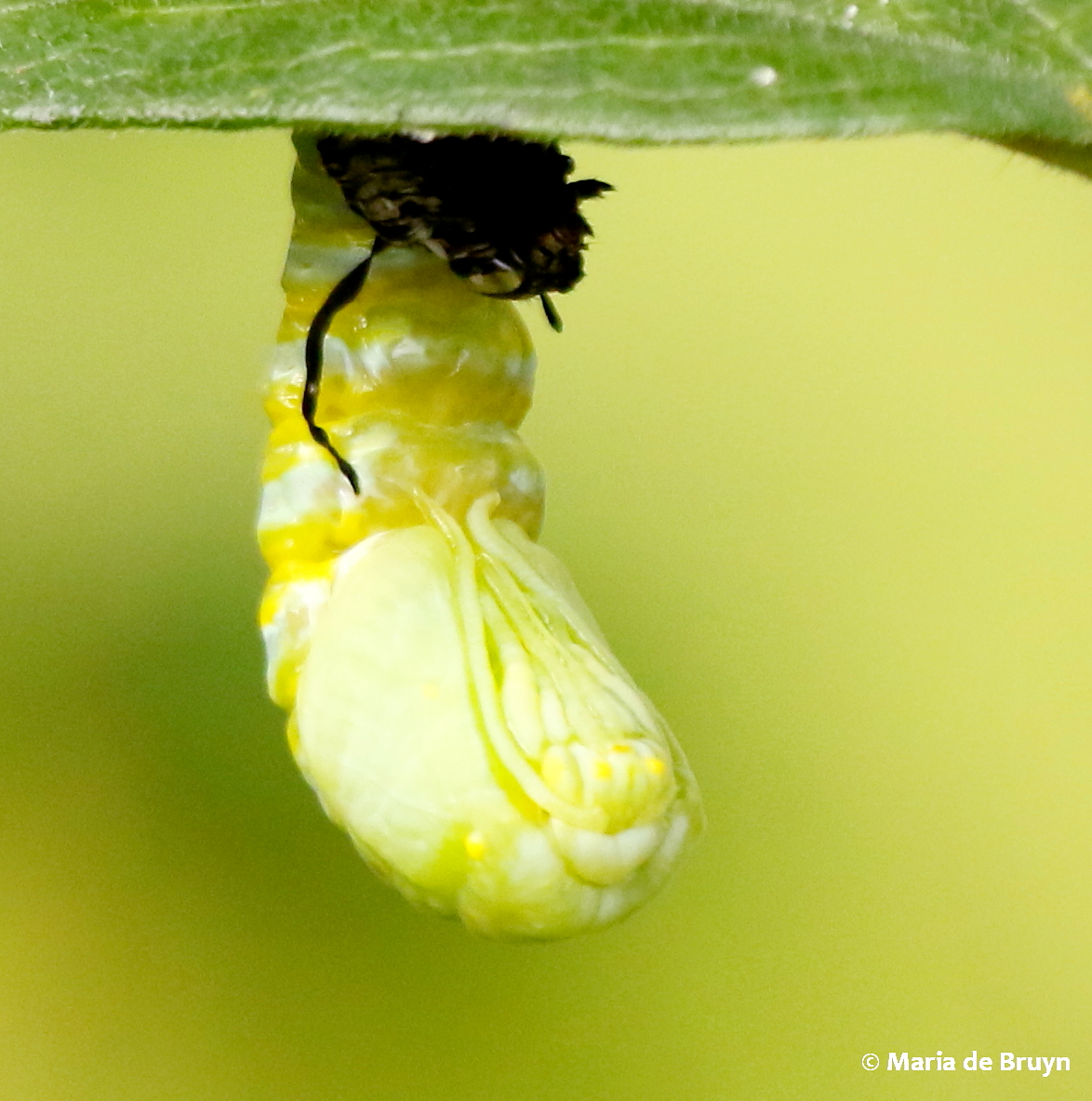
When I looked back, the pupation had already begun and was progressing apace.

monarch DK7A7391© Maria de Bruyn resmonarch DK7A7447© Maria de Bruyn

monarch DK7A7467© Maria de Bruyn resmonarch DK7A7526© Maria de Bruyn

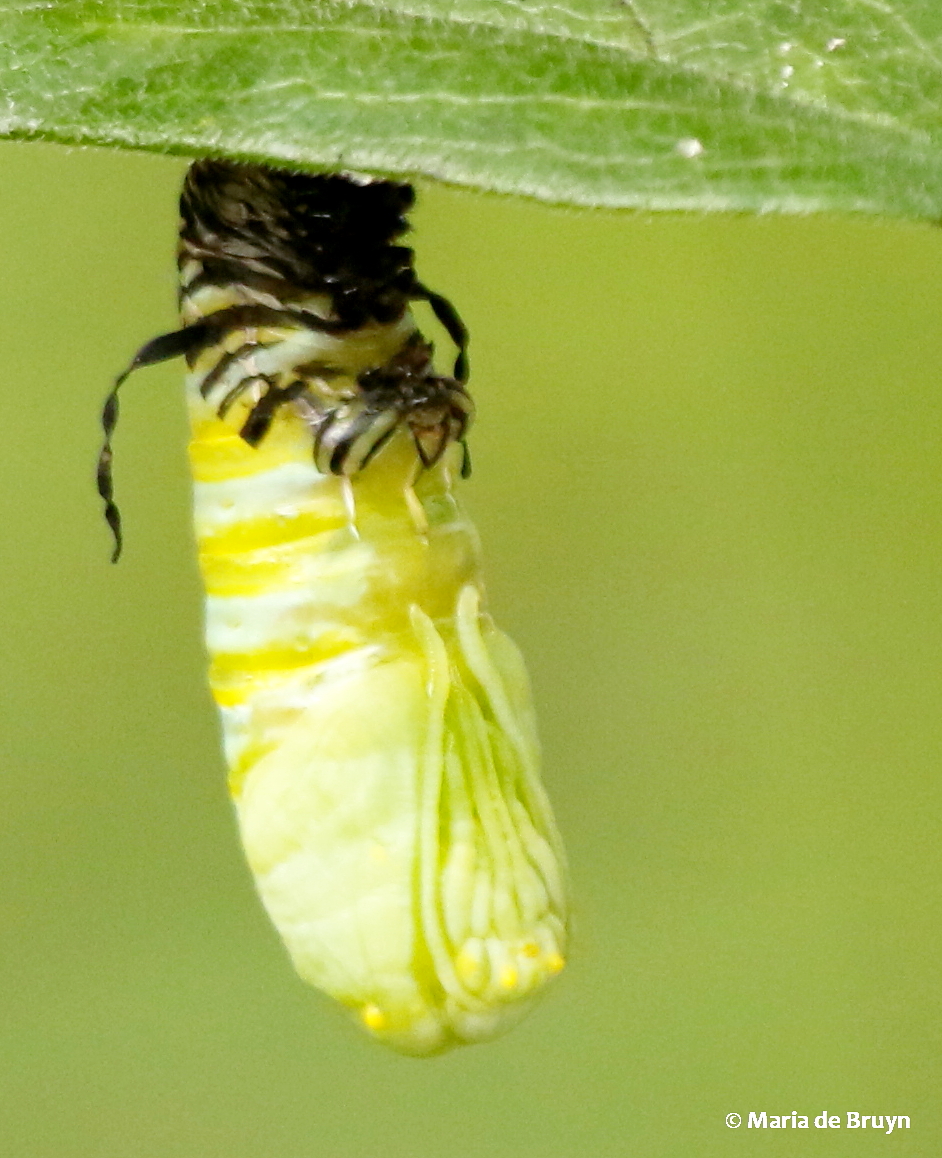
John had mentioned that it could take under a minute; this caterpillar was a little bit slower but the transformation was quick indeed. I’d seen videos of this before but seeing it live in the wild was awesome. And I got my own bit of video showing the last bit of larval skin dropping off the chrysalis.

monarch DK7A7623© Maria de Bruyn resThe large milkweed bug came back to perch over the chrysalis. Later, John moved this chrysalis because the leaf of the plant could fall off before the 10- to 14-day pupation period is over – everyone wants all the larvae to become full-grown adult butterflies who can undertake the long migration to Florida or, more likely, Mexico. Their loss of habitat in both the United States and Mexico is devastating to the species and action to prevent further losses is still needed.

monarch DK7A8180© Maria de Bruyn

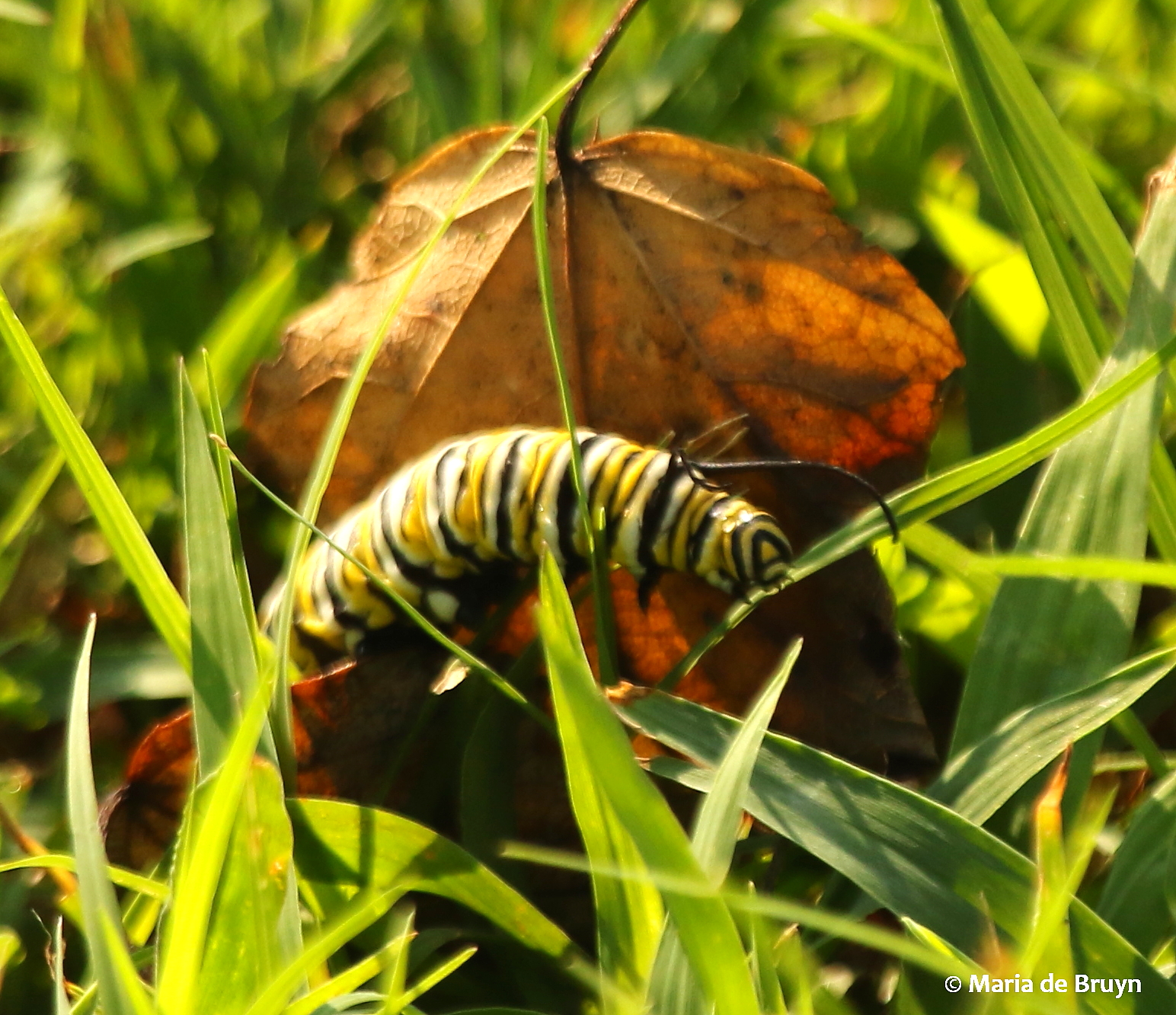
As I again prepared to leave, I noticed that one of the other hanging caterpillars was straightening out, so I decided to wait a little while in the hope I would see a second pupation. After watching one caterpillar approach and climb a nearby tree and seeing another trundling through the grass toward the parking lot (presumably headed for a tree further away), I focused on the hanging caterpillar.

monarch DK7A8532© Maria de Bruynmonarch DK7A8481© Maria de Bruyn res

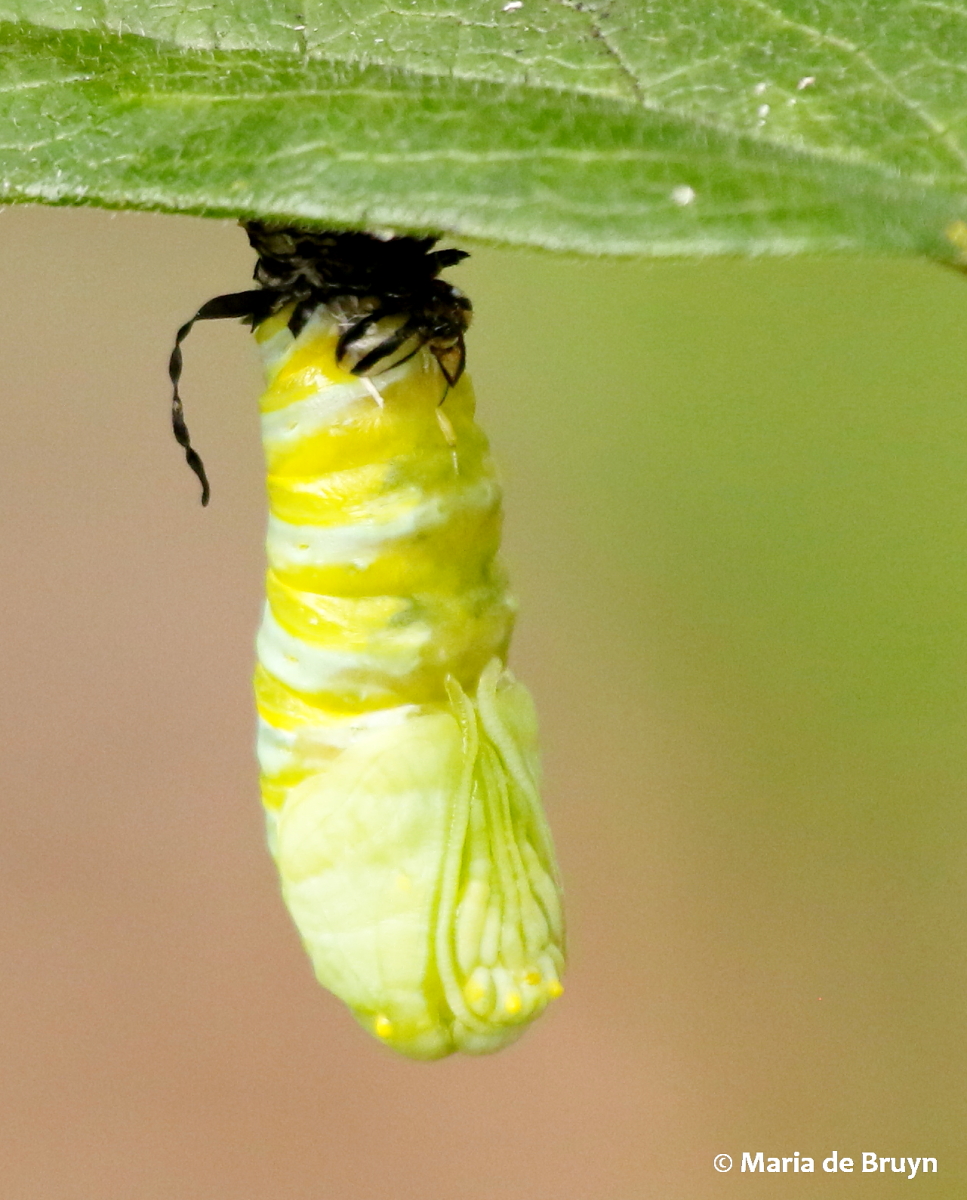
Sure enough, the pupation began – in this case, even more rapidly than the first one I witnessed.

monarch DK7A8552© Maria de Bruynmonarch DK7A8588© Maria de Bruyn

monarch DK7A8642© Maria de Bruynmonarch DK7A8961© Maria de Bruyn res

A difference with this transformation was that the last little bit of caterpillar did not drop off but remained suspended at the bottom of the chrysalis. Most likely, it will fall off later, which is important; if it remains attached, it could damage the emerging butterfly.

MONARCH buttterfly 1© Maria de Bruyn resWatching this part of the butterflies’ metamorphosis was an exciting event. I didn’t wait fora third pupation, however, as I really did need to get home. On the way back, I nearly had a collision with another car – perhaps leading the other driver to need a shower, too. At home, I later almost fell on my face as one of my cats wound himself through my legs as I walked so that I came very close to tripping. Both accidents in the making didn’t happen, thank goodness, so maybe the monarch pupae had become my guardian angels for the day. In any event, I did have lots to be thankful for!


For more information:

http://monarchlab.org/biology-and-research/biology-and-natural-history/breeding-life-cycle/life-cycle

http://www.learner.org/jnorth/tm/monarch/ChrysalisFormationLPB.html