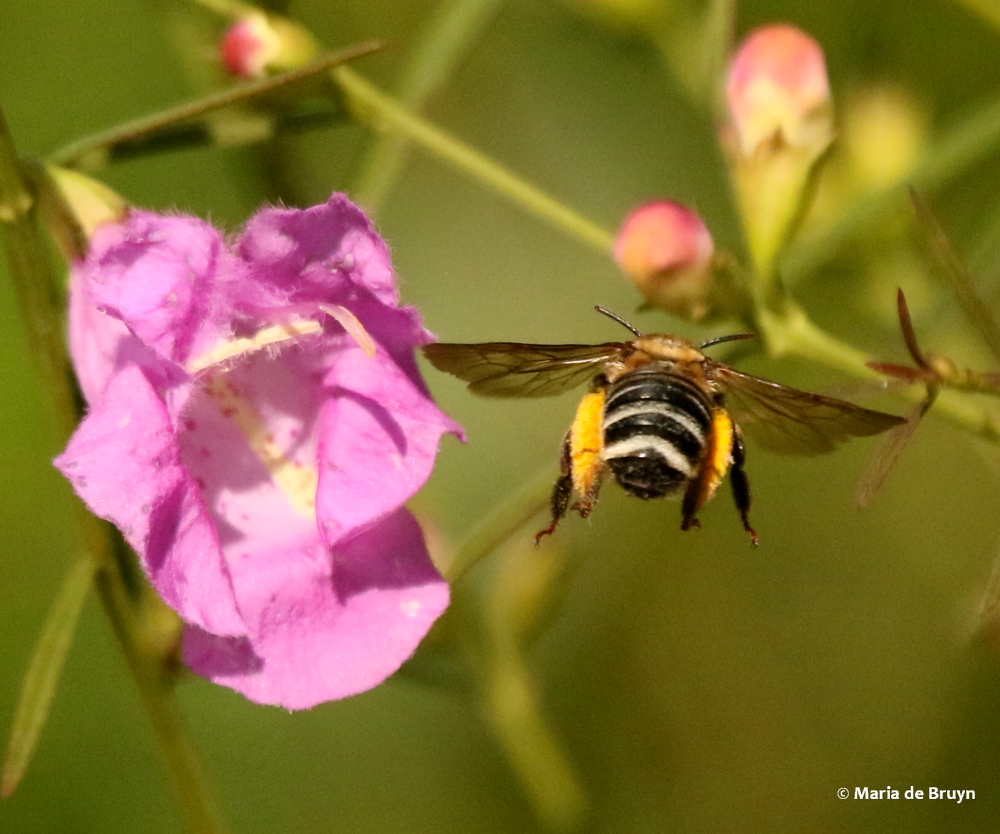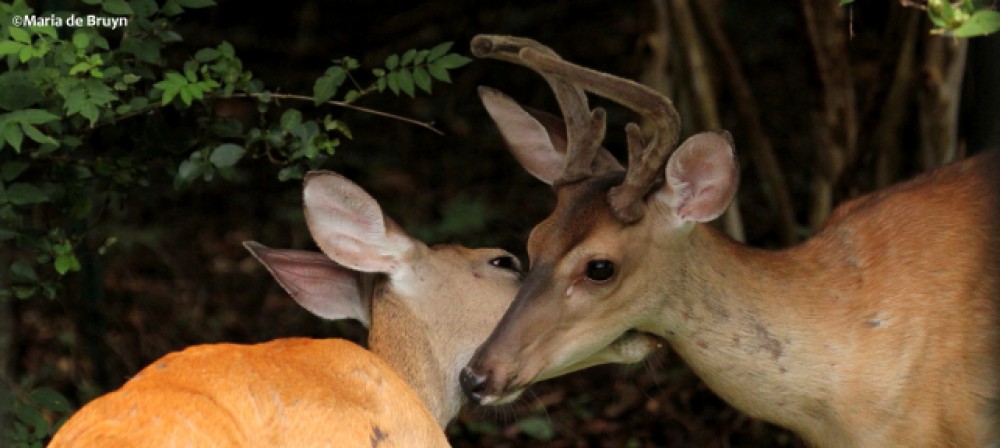
Busy as a bee is no joke! Our hardworking pollinators – pretty and persevering!

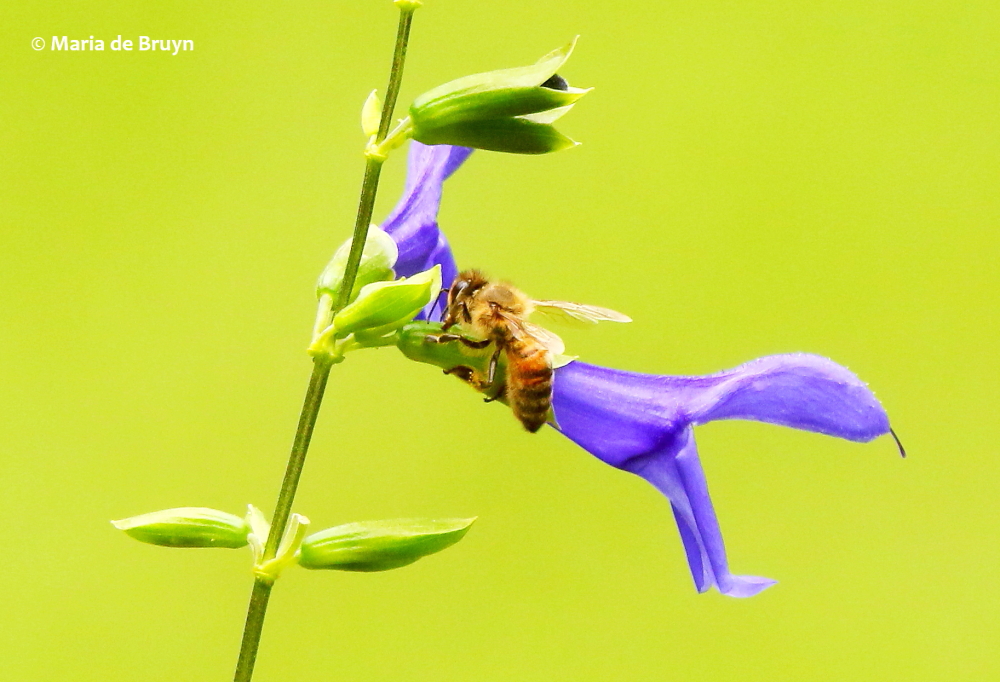
honey-bee-brazilian-sage-i77a1269-maria-de-bruyn-resHere it is, 7 November, and the honey bees were still busily working over the Brazilian sage, lantana and chrysanthemums in my garden. The Eastern carpenter bees were absent today, perhaps because of the cold night we had, but a few butterflies were flying among the flowers. We know that some of our pollinators are in serious trouble, but my garden has nevertheless been blessed this year with a steady stream of pollinating visitors who were to be seen on the varied blooms morning, noon and almost night.
bees02fin02



I’d enjoyed seeing the bees, butterflies and syrphid flies in the past, but started paying even more attention to them as pollinators this year as I worked on the “Healthy Bee, Healthy Me” project initiated by the non-profit organization Keep Durham Healthy.
 

eastern-tiger-swallowtail-i77a8131-maria-de-bruyn-res


The project expresses its goal as follows: “…to establish educational pollinator gardens in proximity to pre-existing community gardens to ensure the sustainability of nectar and pollen sources for our honey bees, native bees, butterflies and other pollinators throughout the year, and to increase the yield of the food crops grown within the community gardens.” Some of my photos were used in one of their interpretive garden signs and next year more community gardens will join the project.
hummingbird-clearwing-moth-i77a3130maria-de-bruyn-res

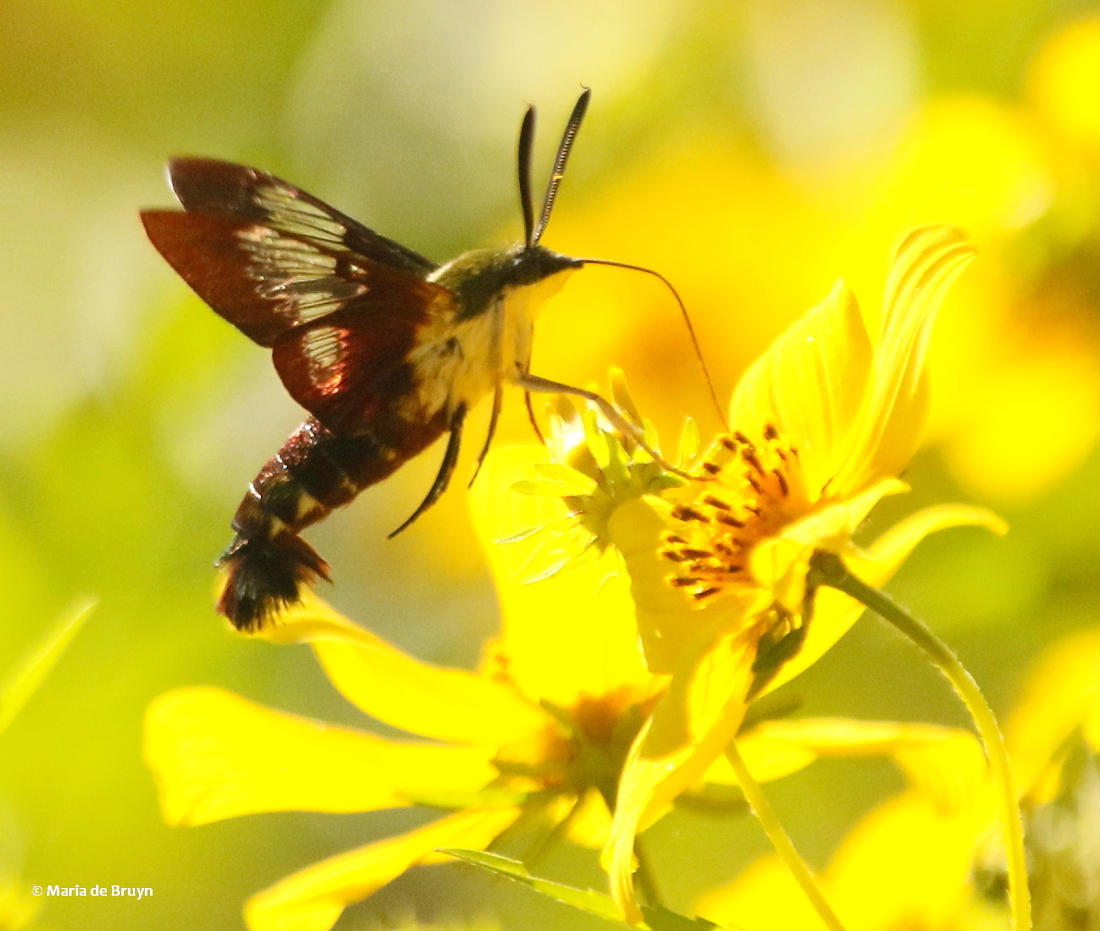
Science knows that more than 250,000 plants are pollinated by over 100,000 different types of animals, but not all plants require assistance from pollinators for fertilization. In abiotic pollination, fertilization occurs without another organism as an intermediary – for example, through movement of pollen from male vegetative anthers to female stigma by the wind (called anemophily) or water (called hydrophily). However, much fertilization occurs with assistance from biotic vectors, which not only include bees, butterflies and flies but also moths, birds and mammals (e.g., lemurs, squirrels, opossums, monkeys and bats; here you see a hummingbird clearwing moth – Hemaris thysbe – getting nectar.) How cool is that!
honey-bee-i77a5677-maria-de-bruyn-res


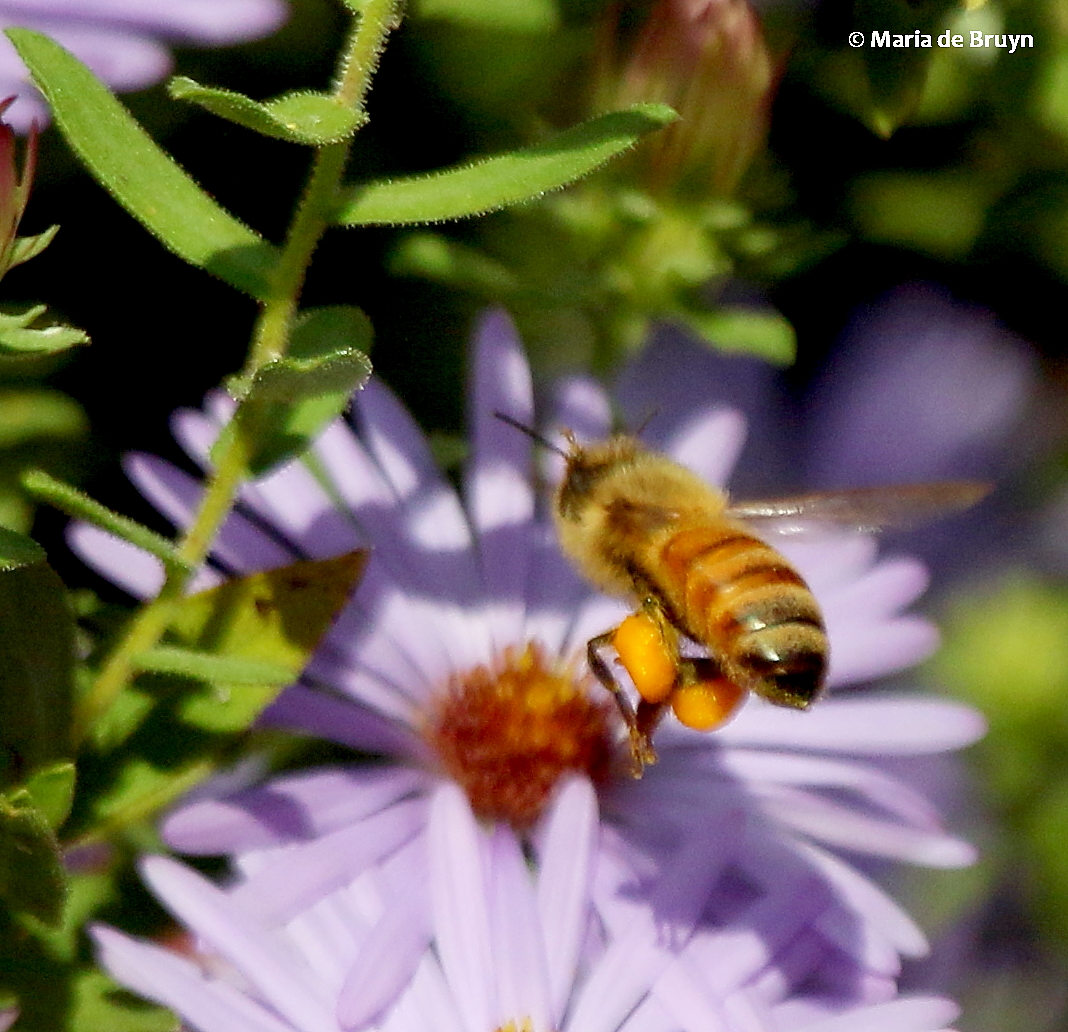
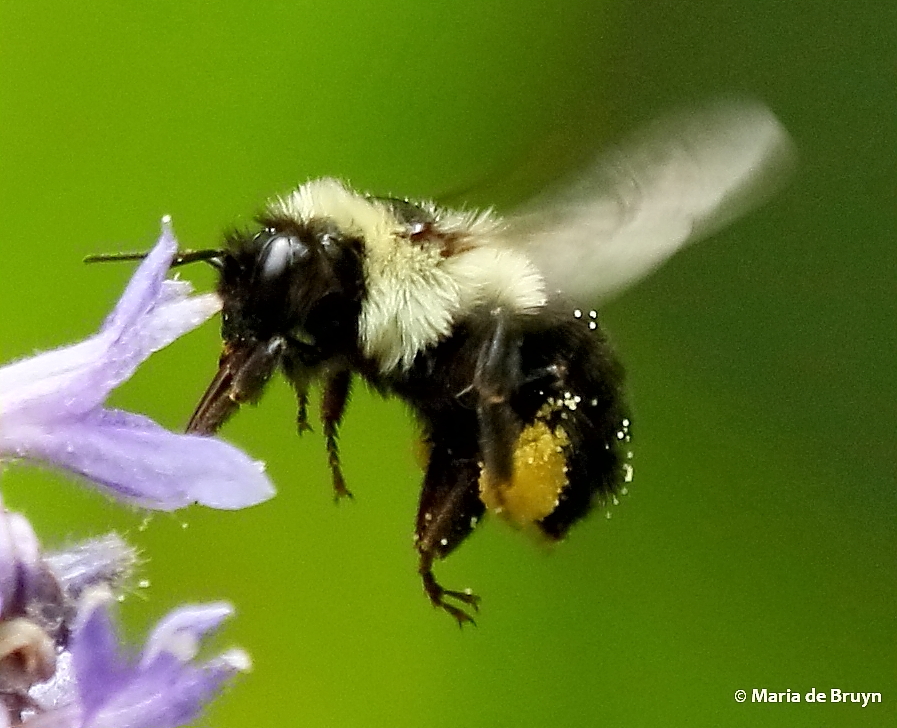
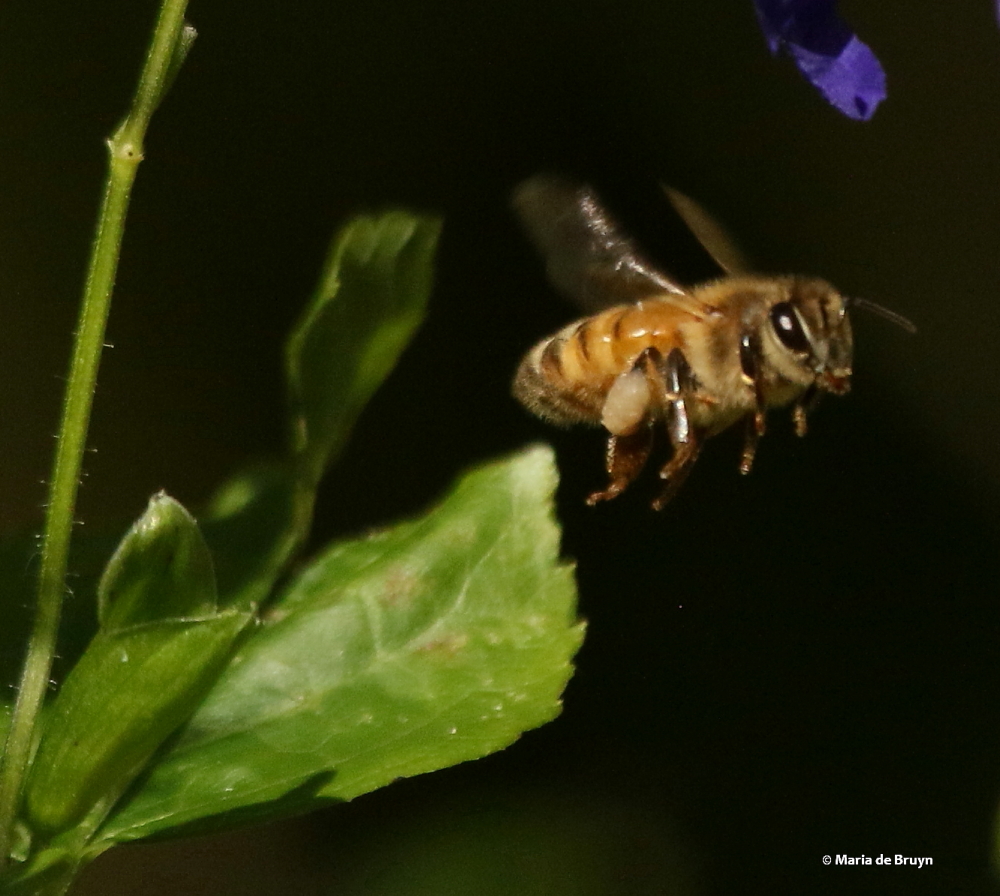
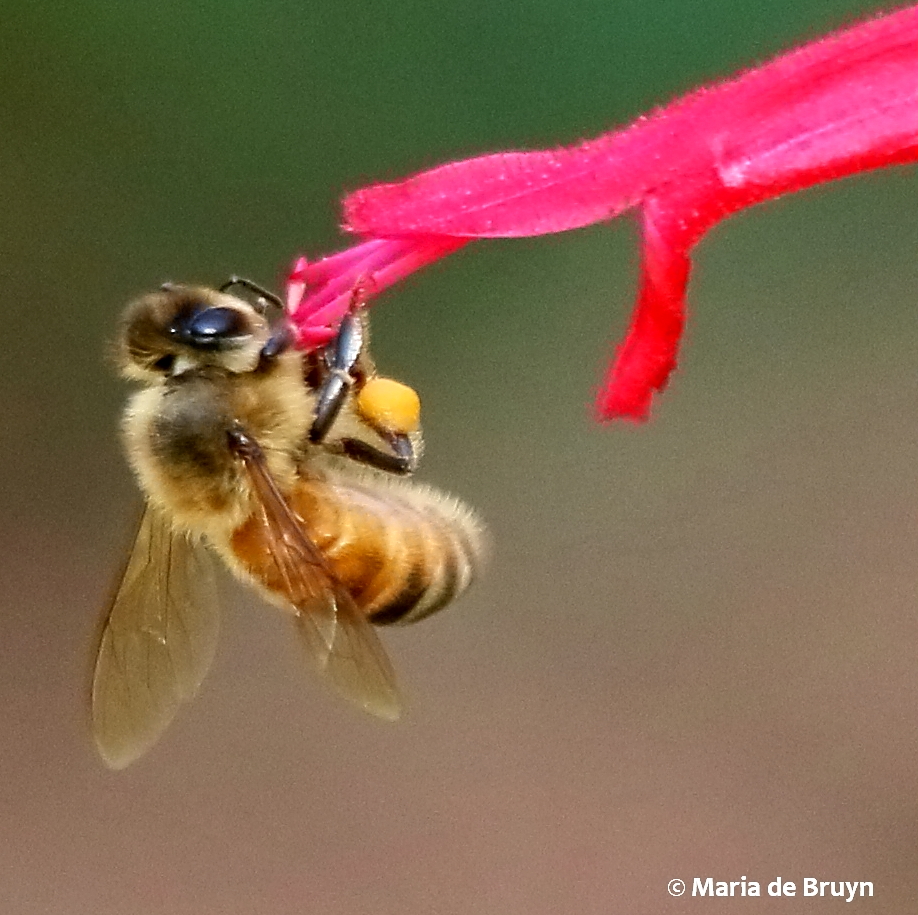
The most efficient pollinators are the bees. Some species like honey bees (Apis mellifera) and bumble bees have pollen baskets (corbiculae) on their legs – a concave portion of their hind leg in which pollen can be stored as a ball. It starts out small but eventually gets fairly big so their little tibia begin to look like barbells. The color of the pollen can differ from bright yellow to brown to red to white, depending on the pollen of the flowers visited most often.
 

american-bumble-bee-i77a0763-maria-de-bruyn2-res    american-bumble-bee-male-img_5492-maria-de-bruyn-bg

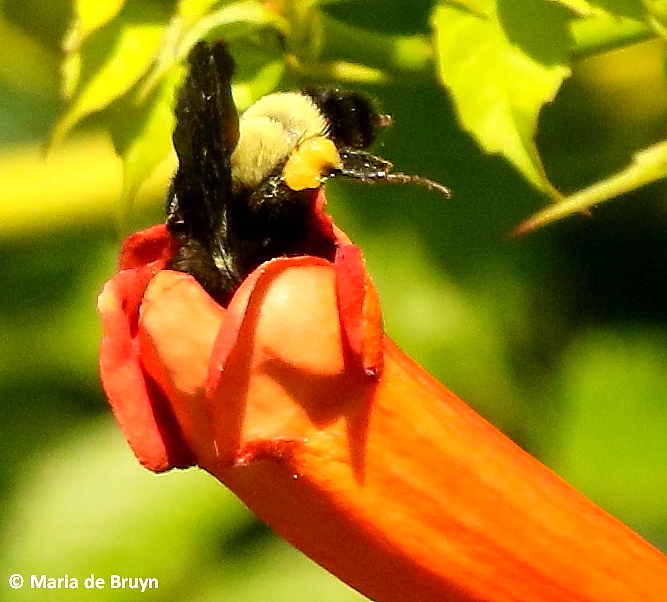
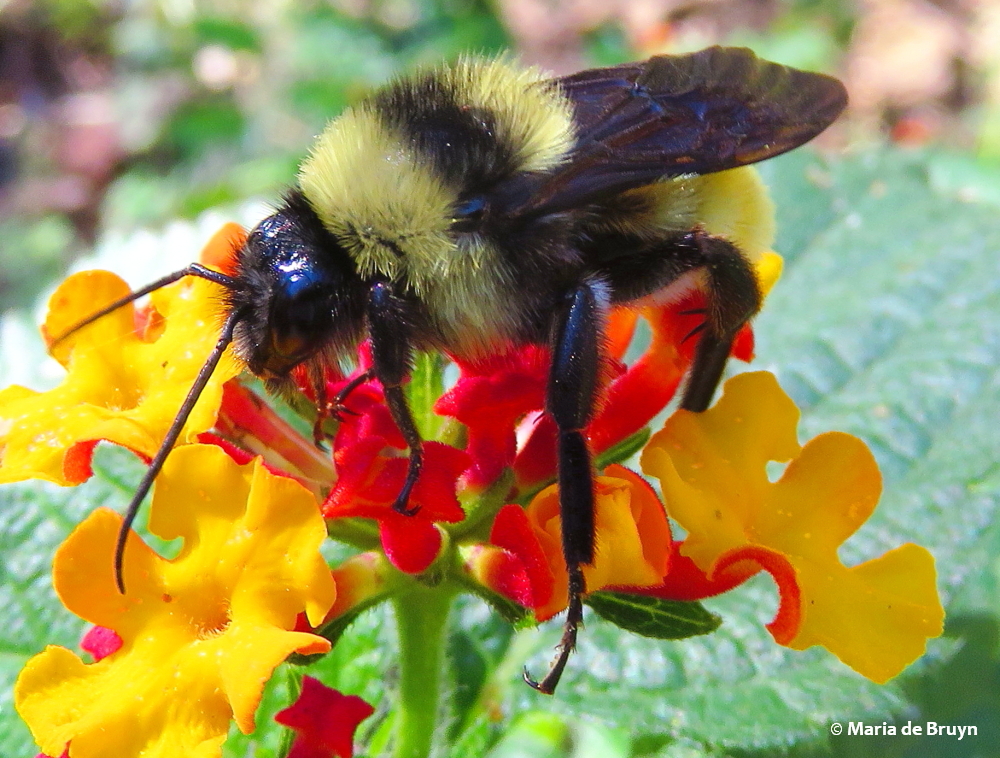
American bumble bee (Bombus pensylvanicus)
common-eastern-bumble-bee-bombus-impatiens-i77a9625-maria-de-bruyn-bg

Common Eastern bumble bee (Bombus impatiens)
honey-bee-i77a8142-maria-de-bruyn-res      honey-bee-i77a2099-maria-de-bruyn

Honey bees

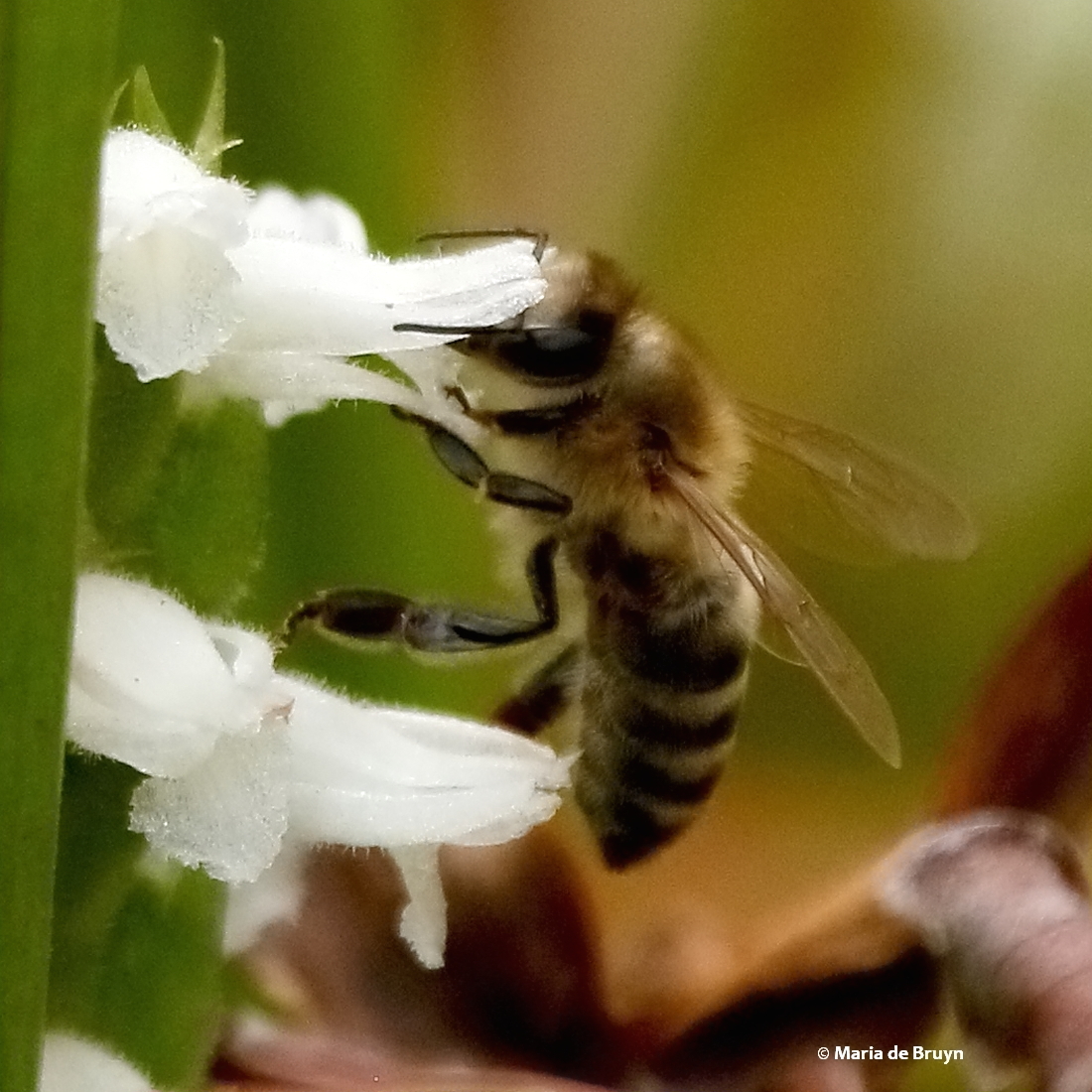
The attractive little honey bees, which vary in their coloring, are known to pollinate about one-third of the popular foods eaten by humans, including items such as tomatoes, peas, beans and other fruit.
honey-bee-i77a7652-maria-de-bruyn-res    honey-bee-i77a6542-maria-de-bruyn-res

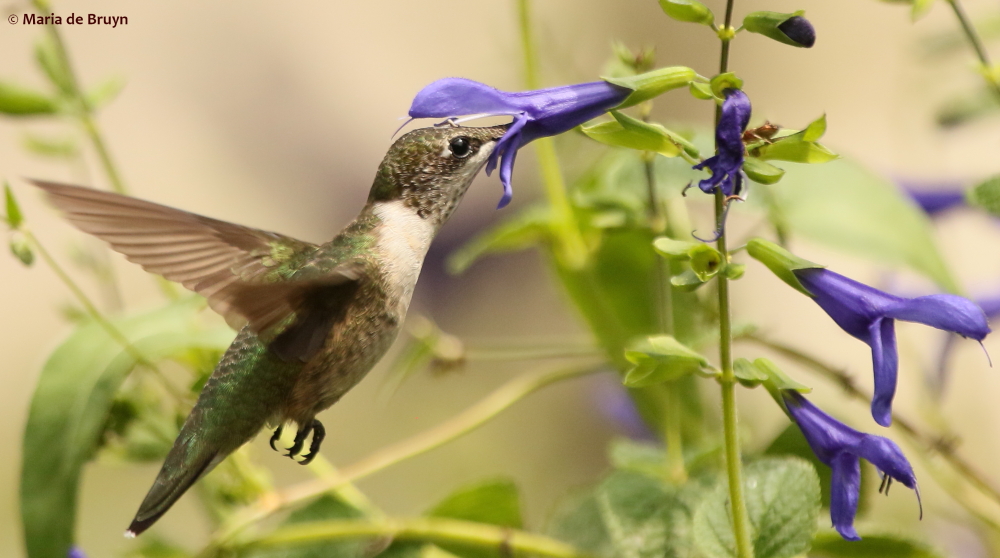
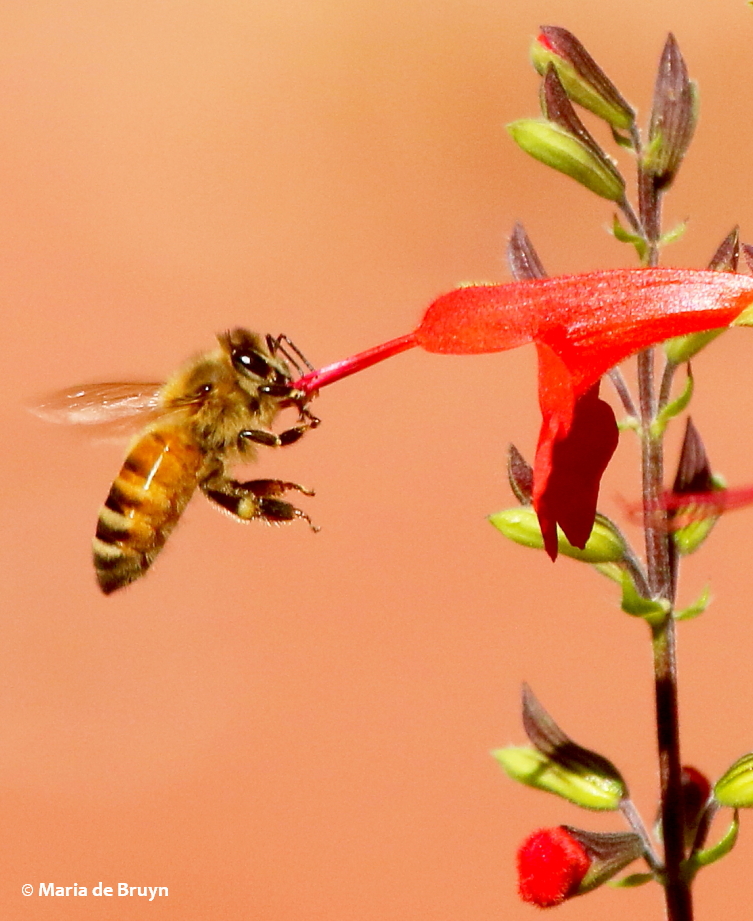
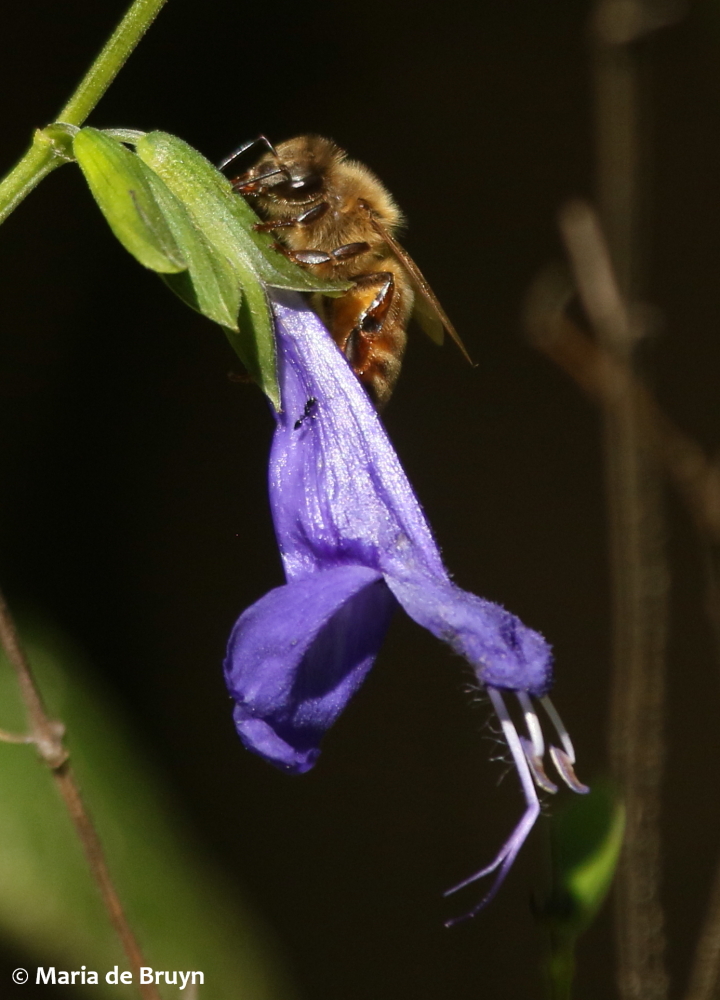
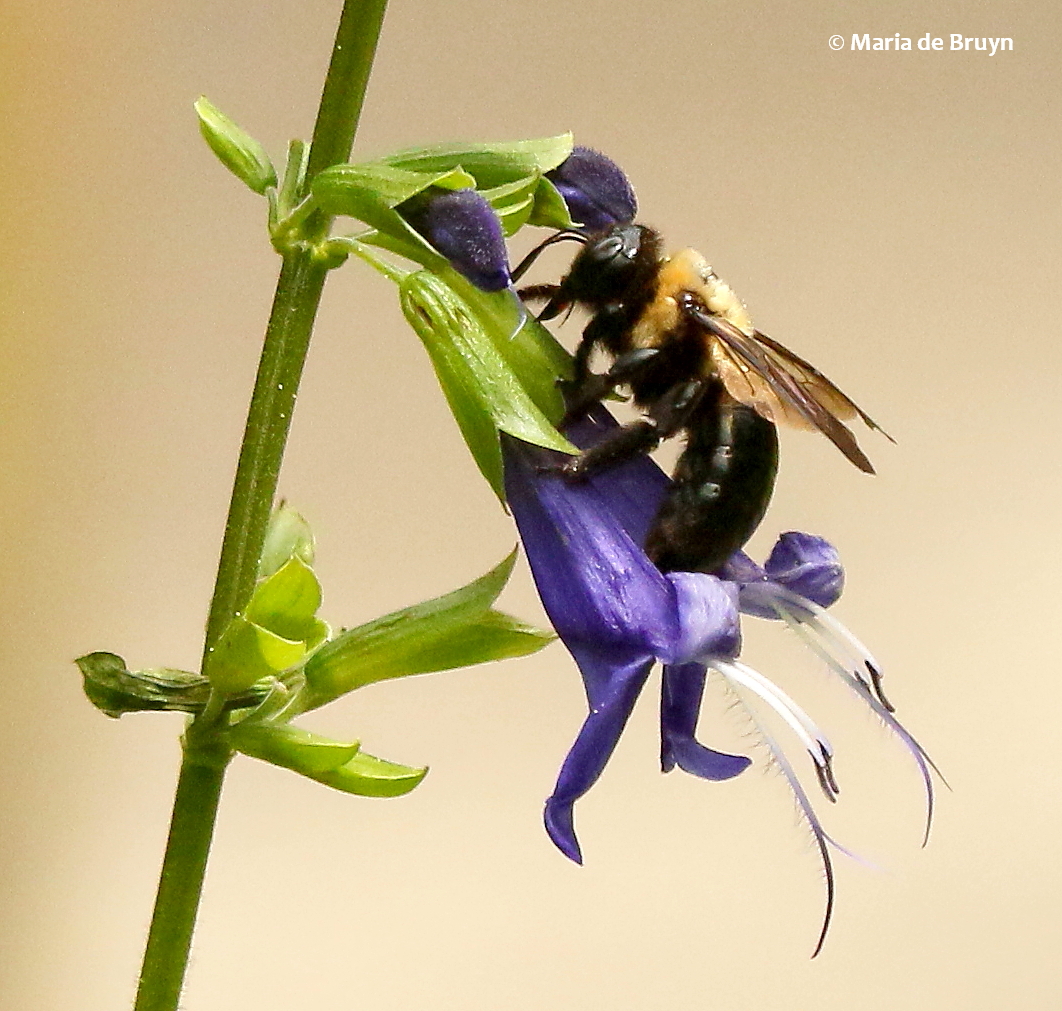
ruby-throated-hummingbird-i77a1315-maria-de-bruyn-resWhen visiting tubular flowers, like the Brazilian sage (Salvia guaranitica), the bees don’t look for nectar by entering the flower as do the ruby-throated hummingbirds (Archilochus colubris) with their long bills. Rather, they alight on the base of the corolla tube so that they can drill down into the flower to extract the nectar at the source.
honey-bee-i77a7849-maria-de-bruyn-res       de-bruyn-maria-carpenter-bee-brazilian-sage-2-i77a7250

Honey bee                                                  Eastern carpenter bee (Xylocopa virginica)

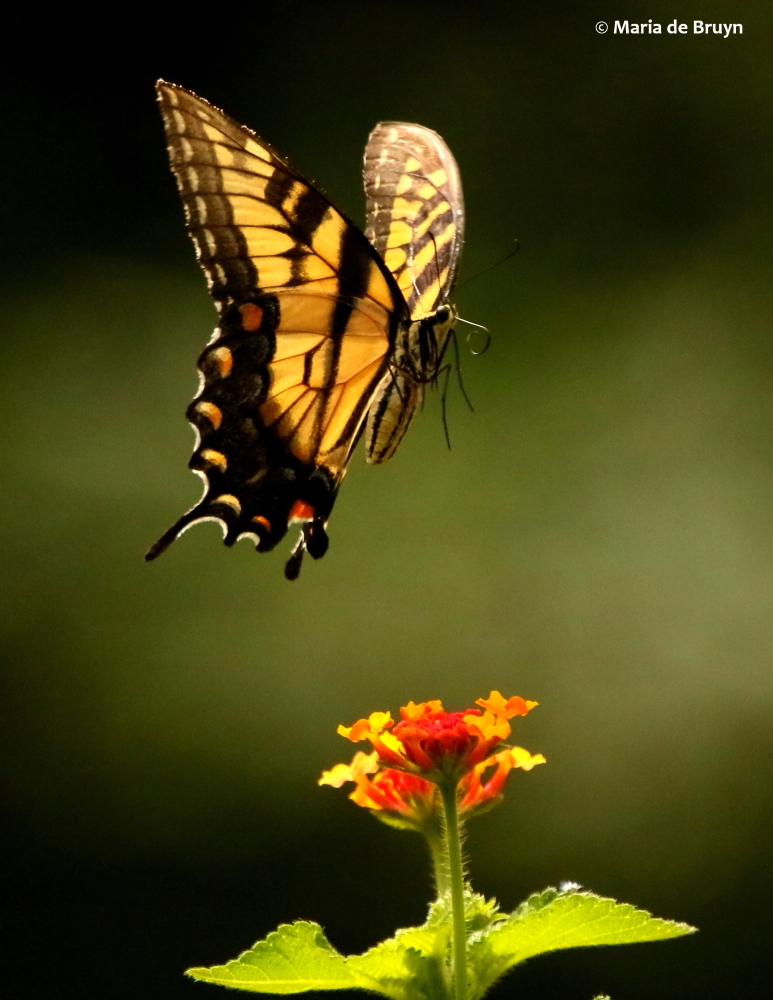
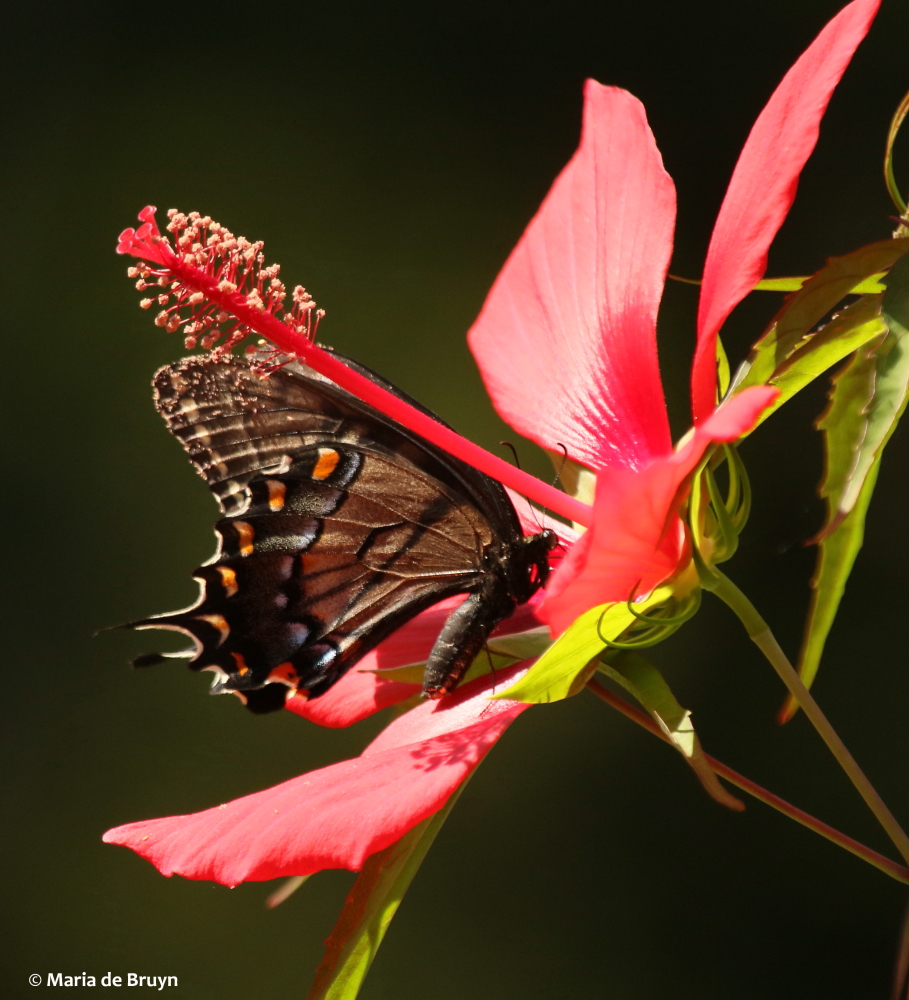
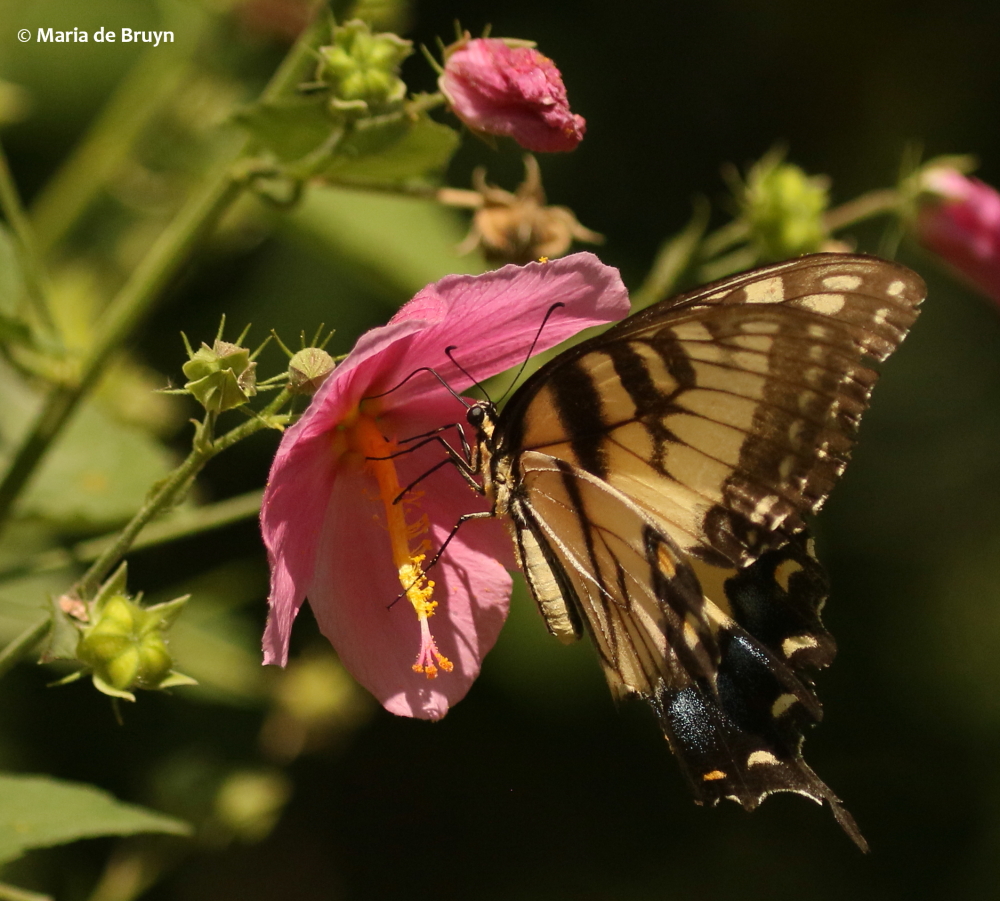
The clearwing moths and butterflies, like the Eastern tiger swallowtails (Papilio glaucus), have long tongues that they use to probe the flowers as they hover. Nevertheless, they can get pollen on their legs or bodies and transport it to another plant, although they are not as efficient at this as, for example, the sweat bees and carpenter bees.
eastern-tiger-swallowtail-pollen-i77a5259-maria-de-bruyn-res    eastern-tiger-swallowtail-i77a3693maria-de-bruyn-res

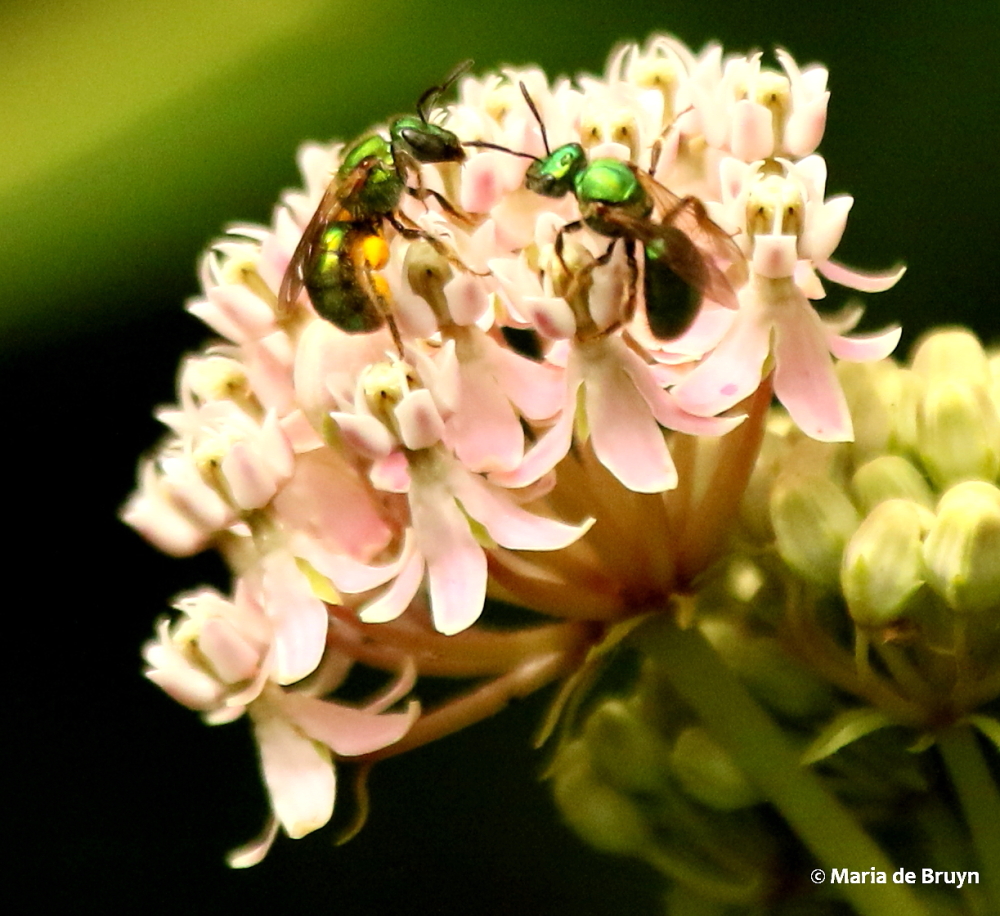
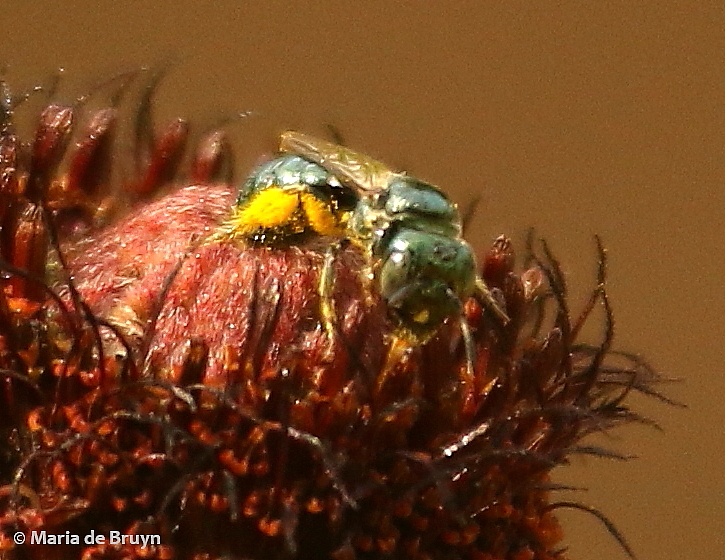
These bees have scopae rather than pollen baskets on their legs, i.e., structures comprising dense masses of compressed hairs into which pollen grains are pressed.
small-carpenter-bee-ceratina-dk7a0015-maria-de-bruyn-res-signed

Small carpenter bee (Ceratina)

sweat-bee-on-milkweed-i77a7861-maria-de-bruyn-res

Female sweat bees (Augochlorella)

long-horned-bee-melissodes-i77a3343-maria-de-bruyn-res   long-horned-bee-melissodes-i77a3428-maria-de-bruyn-res

Long-horned bee (Melissodes)

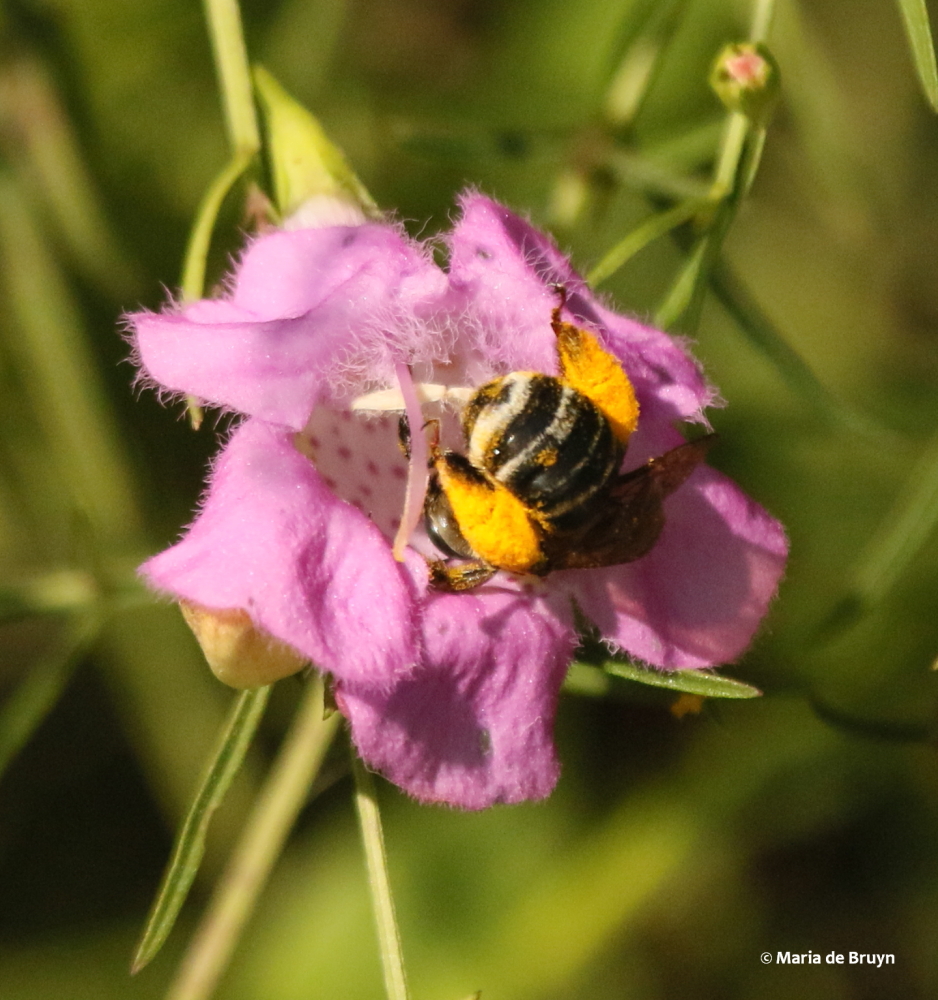
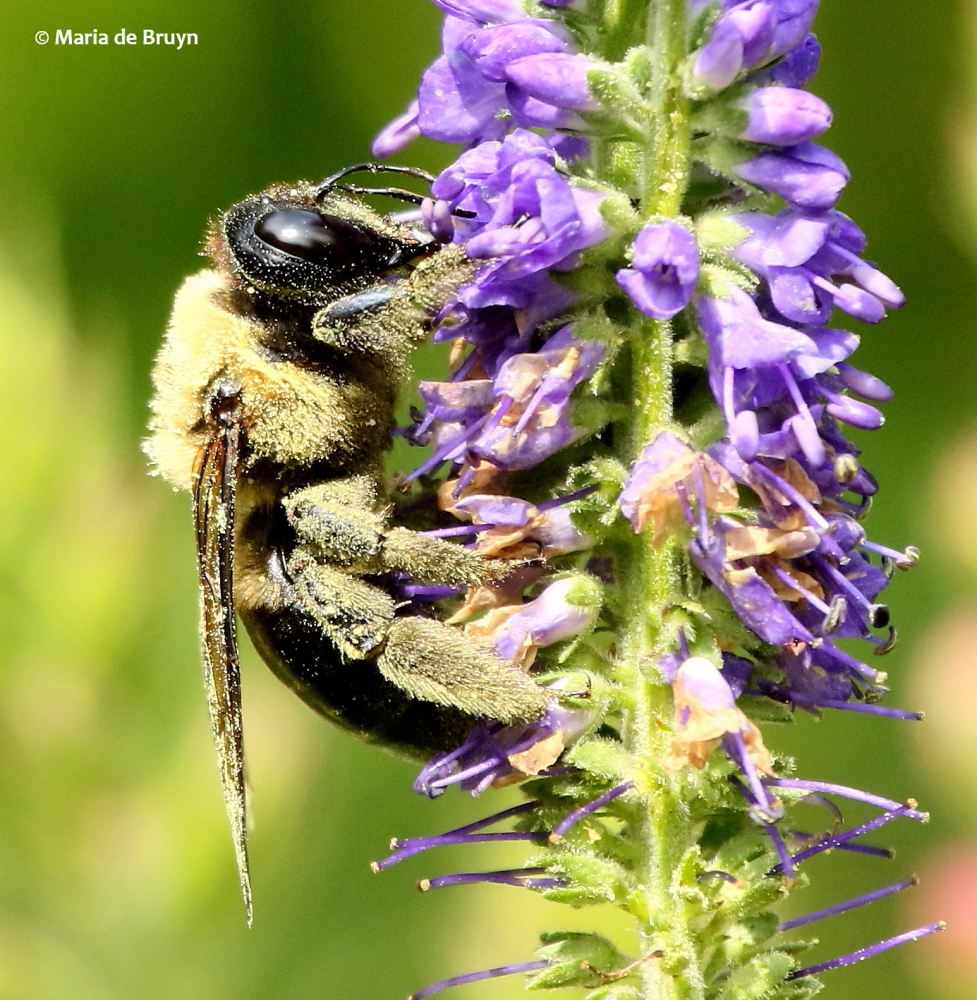
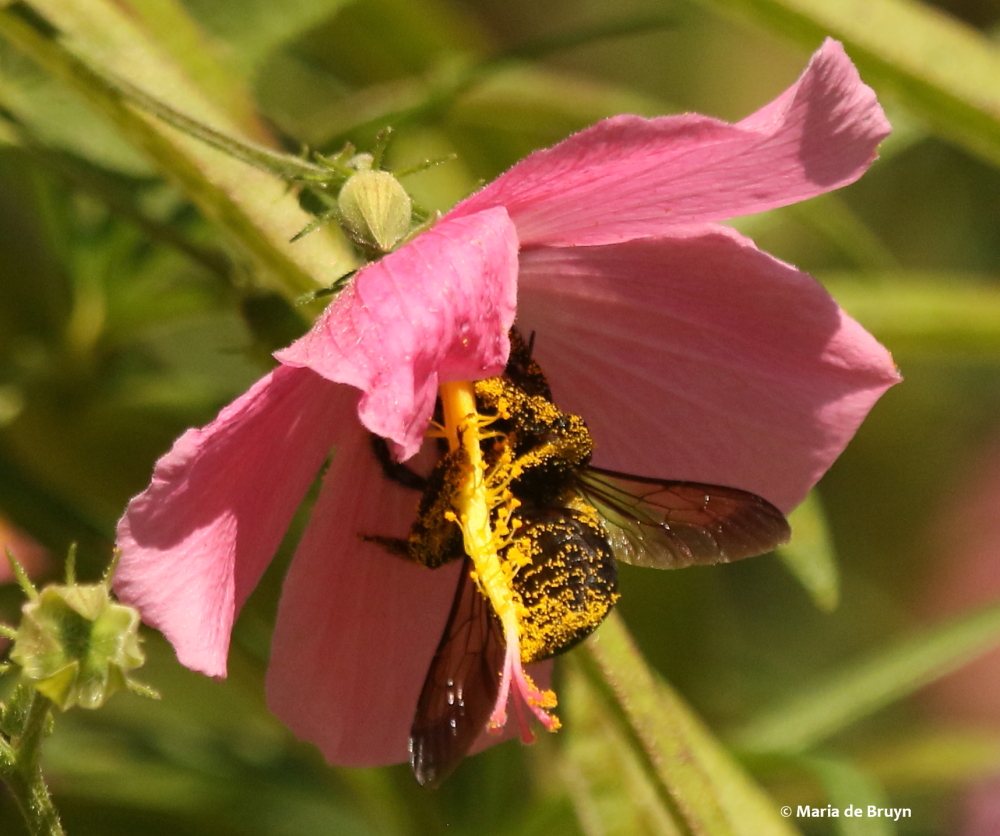
Sometimes the bees manage to get their whole bodies covered with pollen, which can make species identification more difficult but creates some interesting views.
eastern-carpenter-bee-i77a2601-maria-de-bruyn-res    eastern-carpenter-bee-i77a3750maria-de-bruyn-res

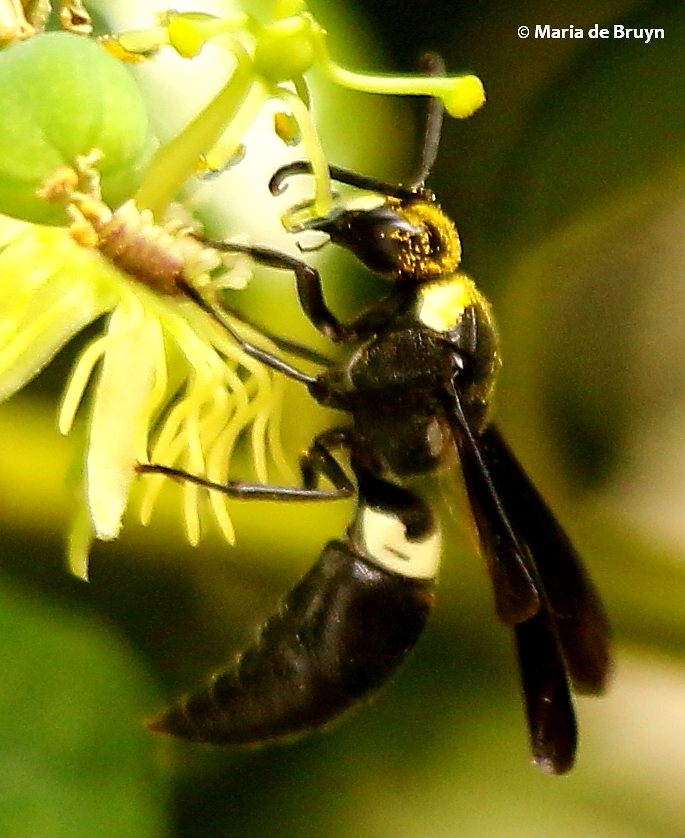
four-toothed-mason-wasp-monobia-quadridens-i77a2039-maria-de-bruyn-bgWasps can carry pollen as I saw almost daily when the four-toothed mason wasps (Monobia quadridens) visited my yellow passionflowers (Passiflora lutea). Here you can see the pollen collecting on the head of a male, whose sex can be determined by the fact he has 7 abdominal segments and curved antennae (females have straight antennae and 6 abdominal segments). How’s that for a bit of obscure information for the non-entomologist?

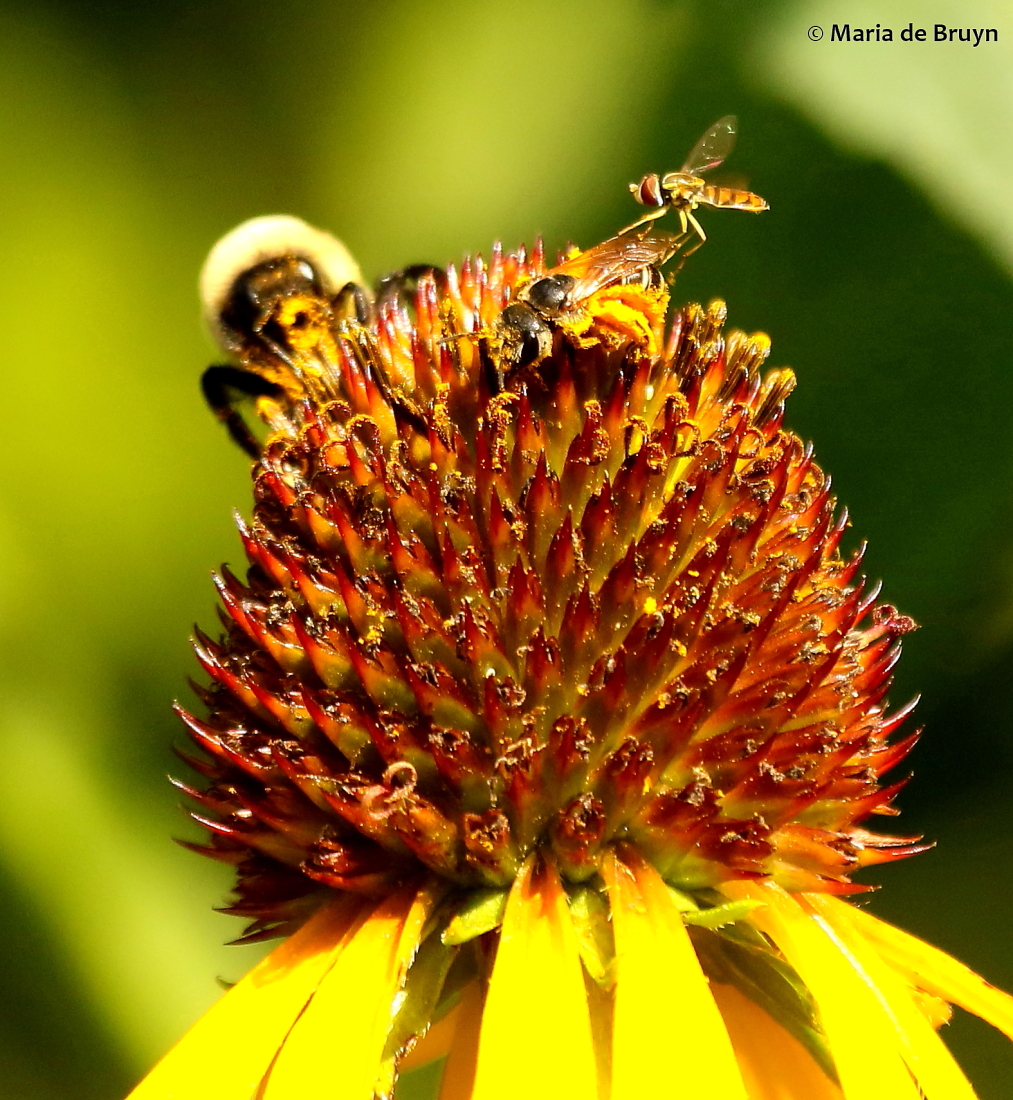
The syrphid flies, often known as bee mimics, help pollinate, too. A number of these flies are honey-bee size and can be confused with the bees easily.
flat-tailed-leaf-cutter-bee-i77a4043-maria-de-bruyn-res

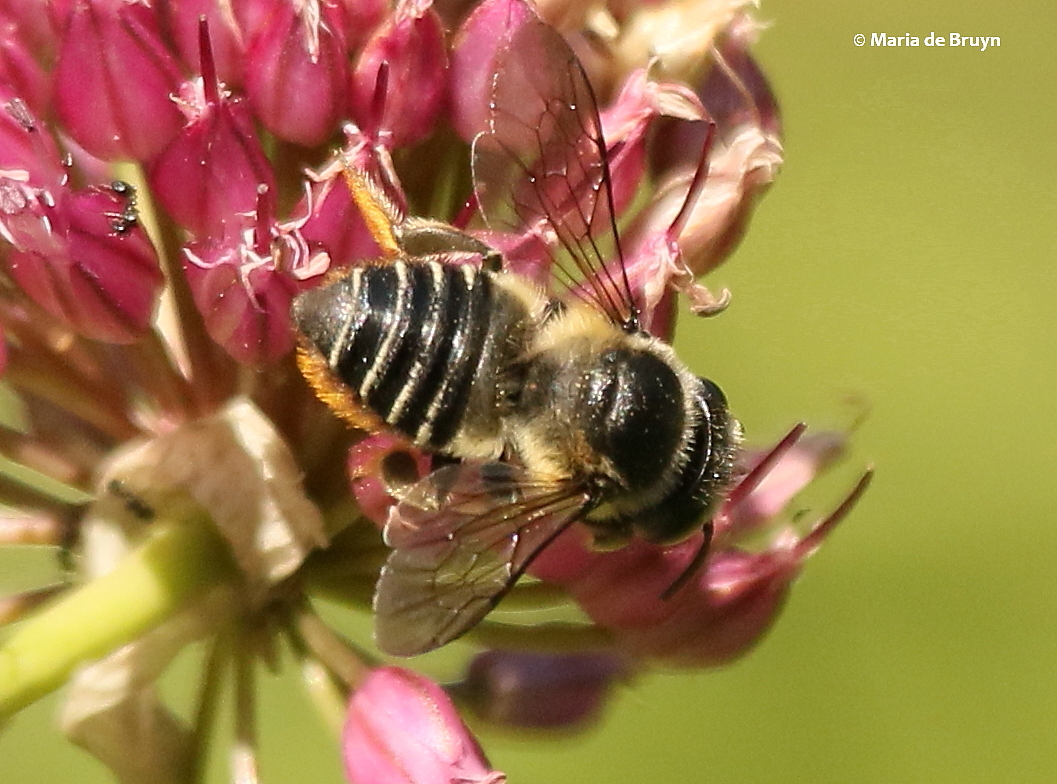
Flat-tailed leaf-cutter bee (Megachile mendica)
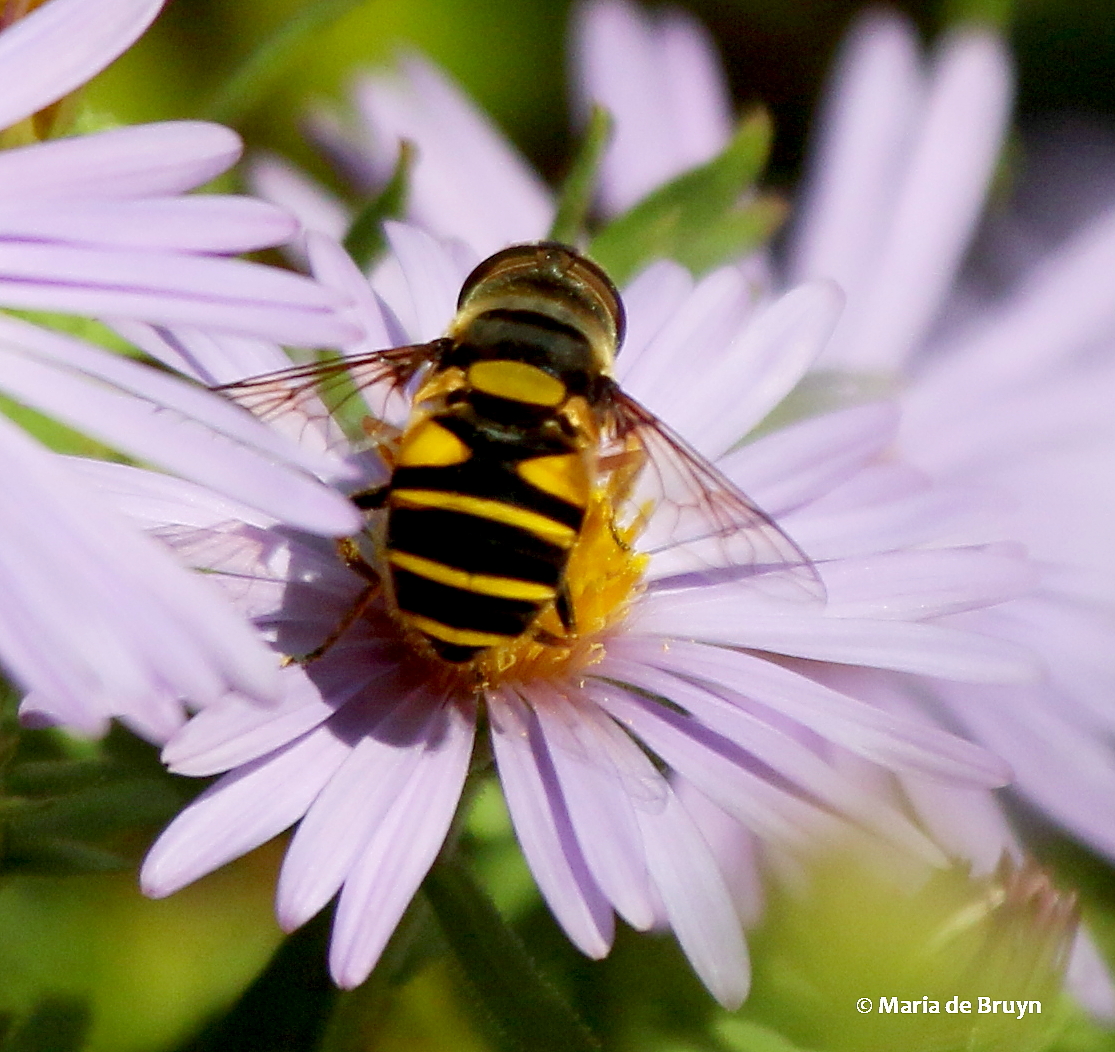
transverse-flower-fly-eristalis-transversa-i77a2116-maria-de-bruyn

Transverse flower fly (Eristalis transversa)
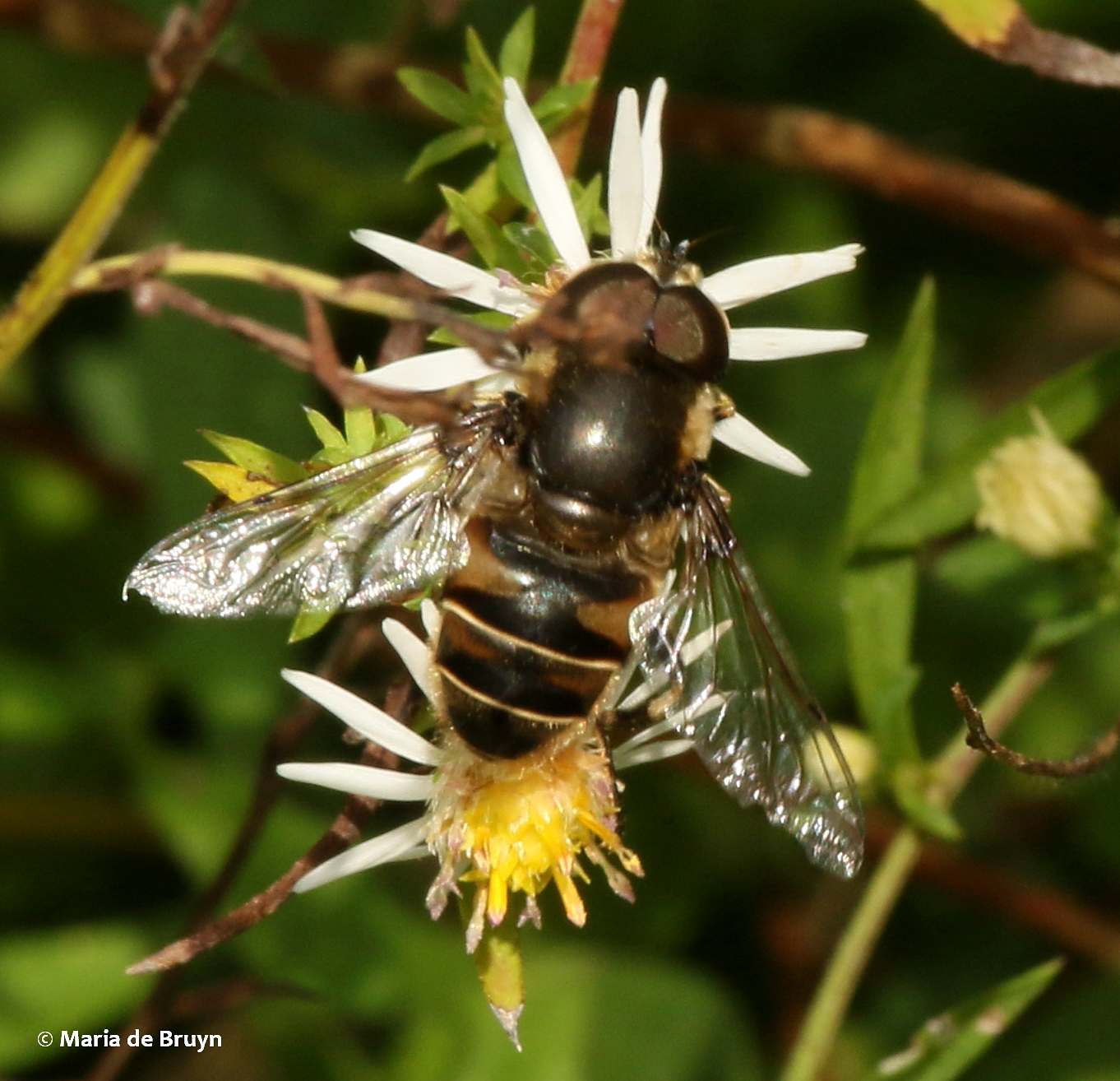
syrphid-fly-eristalis-dimidiata-i77a2060-maria-de-bruyn

Syrphid fly (Eristalis dimidiata)

Others are itsy bitsy, tiny flyers that can have pretty interesting abdominal patterns. I couldn’t see the patterns even with my glasses on; enlarging the photos revealed their beauty, which could make for interesting fabric patterns in my opinion.
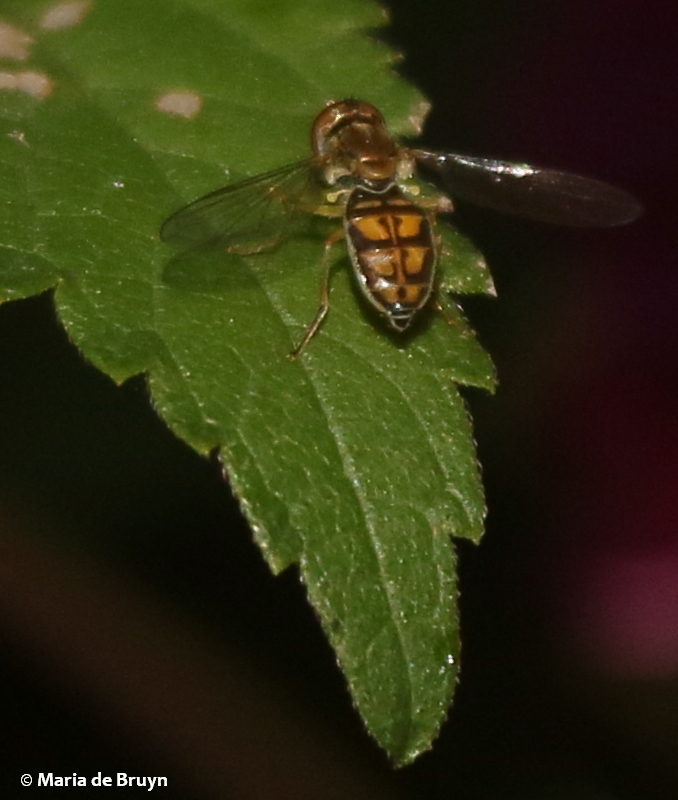
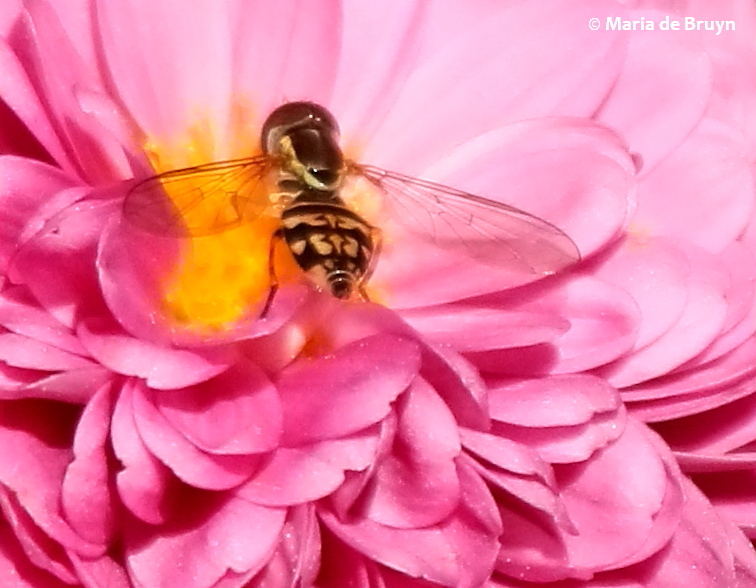
syrphid-fly-toxomerus-marginatus-i77a5952-maria-de-bruyn-res   syrphid-fly-toxomerus-geminatus-i77a5943-maria-de-bruyn-res

Syrphid fly (Toxomerus marginatus)                      Syrphid fly (Toxomerus geminatus)
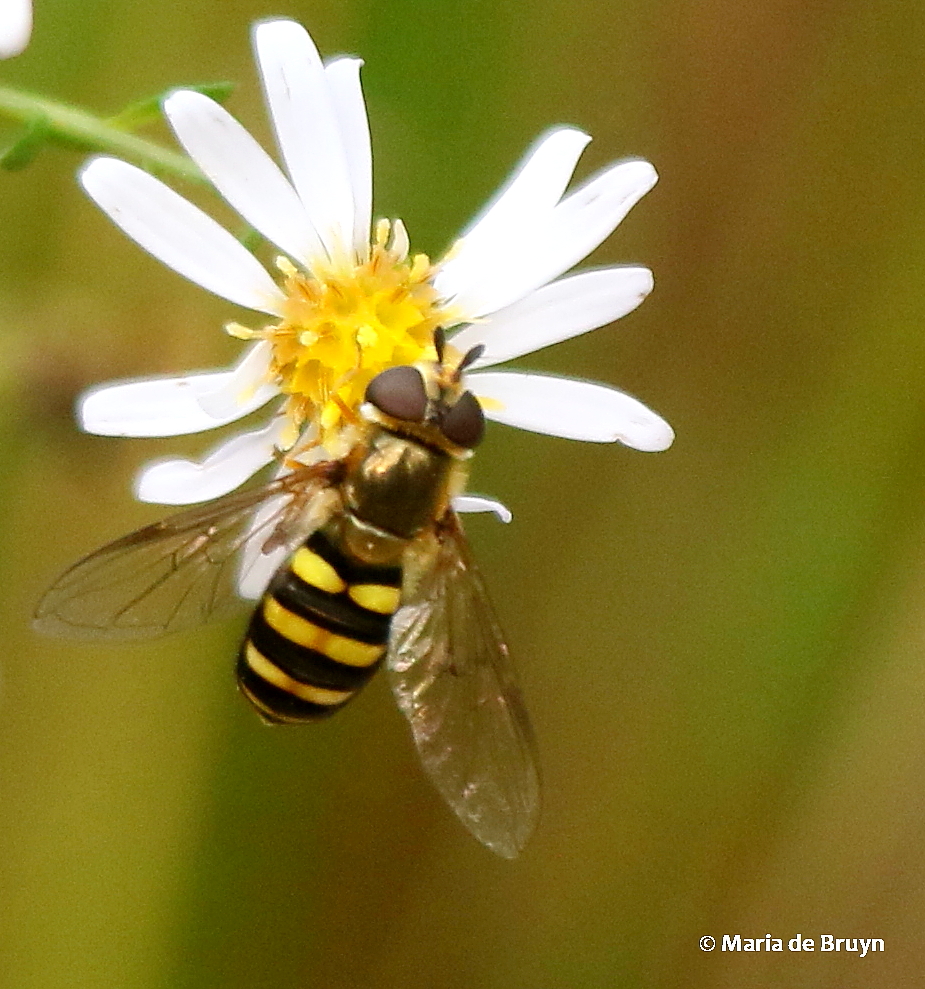
syrphid-fly-eupeodes-subgenus-metasyrphus-i77a6061-maria-de-bruyn

Syrphid fly with a lovely golden sheen (Eupeodes subgenus Metasyrphus)

The pollinators don’t appear to begrudge one another nectar – different species will share space on particularly popular plants.
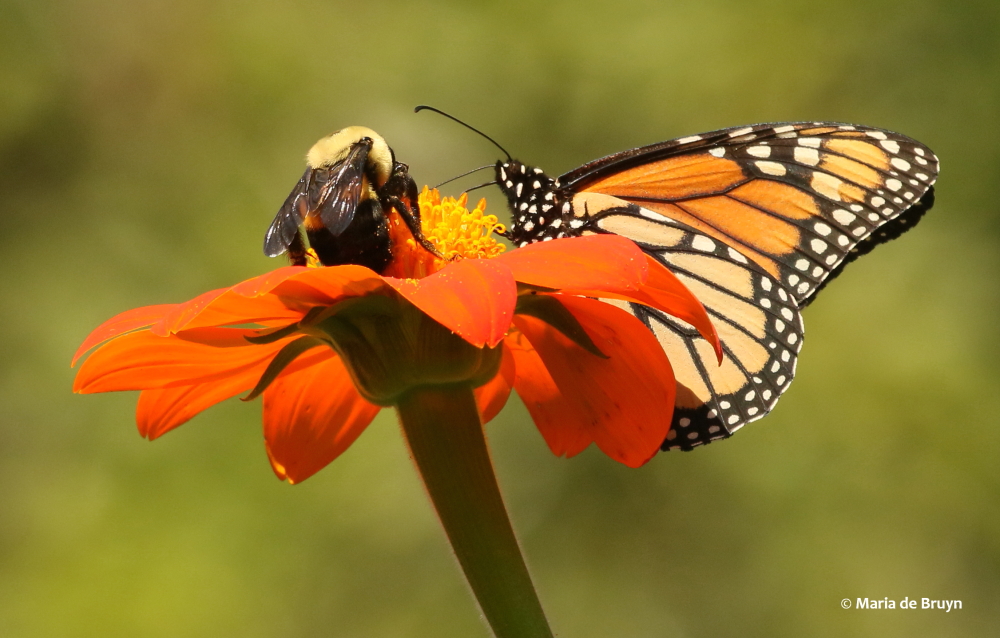
monarch-and-eastern-carpenter-bee-i77a4010maria-de-bruyn-res

Eastern carpenter bee and monarch butterfly (Danaus plexippus)
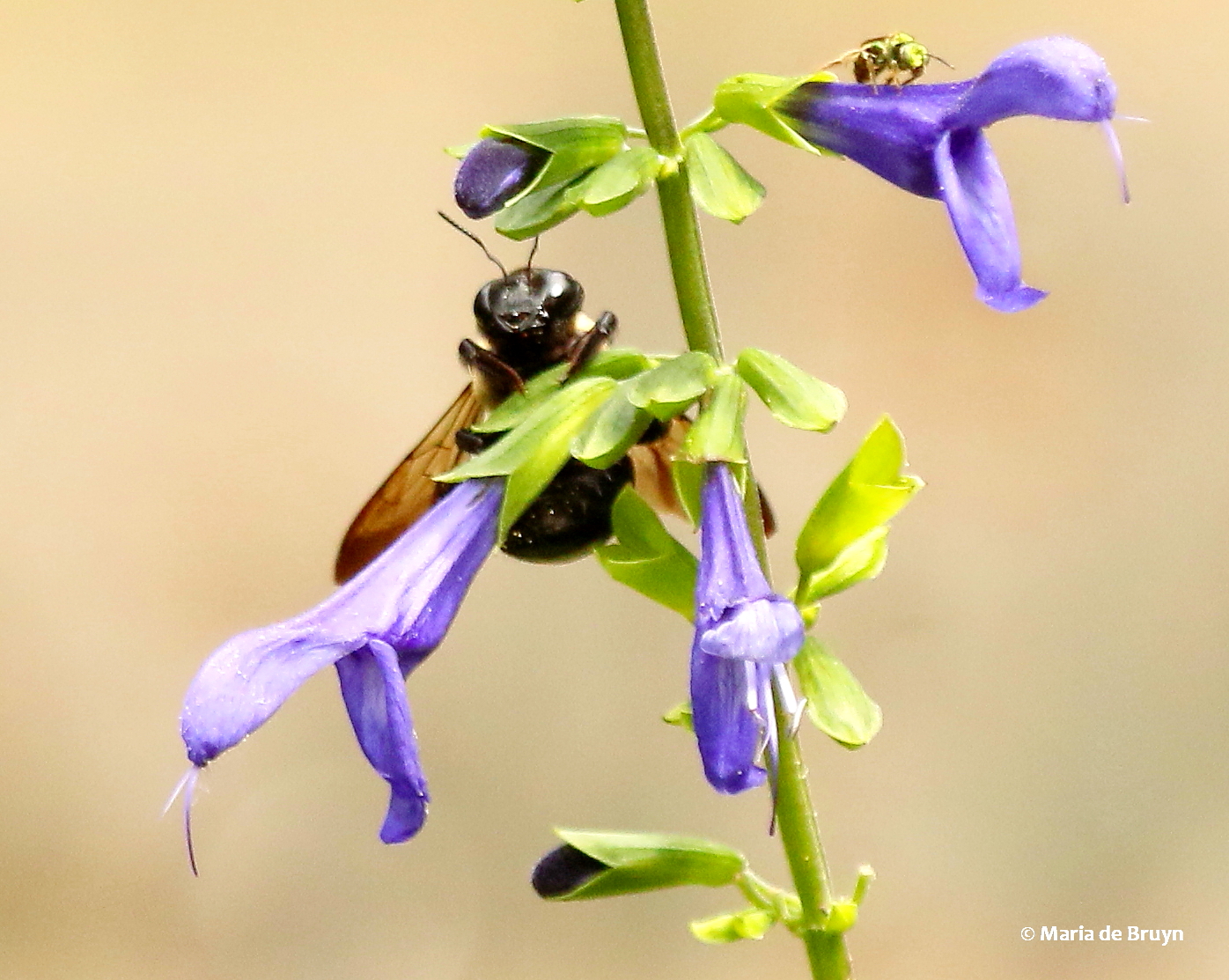
bumble-bee-brazilian-sage-i77a7263-maria-de-bruyn-res

Eastern carpenter bee and sweat bee

bumble-bee-halictus-sweat-bee-toxomerus-marginatus-i77a6296-maria-de-bruyn-res

Eastern carpenter bee, sweat bee and syrphid fly

Occasionally, the pollinators do not live out their usual short lifespans as predators catch them for food. This Chinese mantis (Tenodera sinensis) had been eyeing a bumble bee and was slowly moving toward it but the bee flew off before the mantis could complete its lunge. Later the mantis managed to snag a honey bee, however.
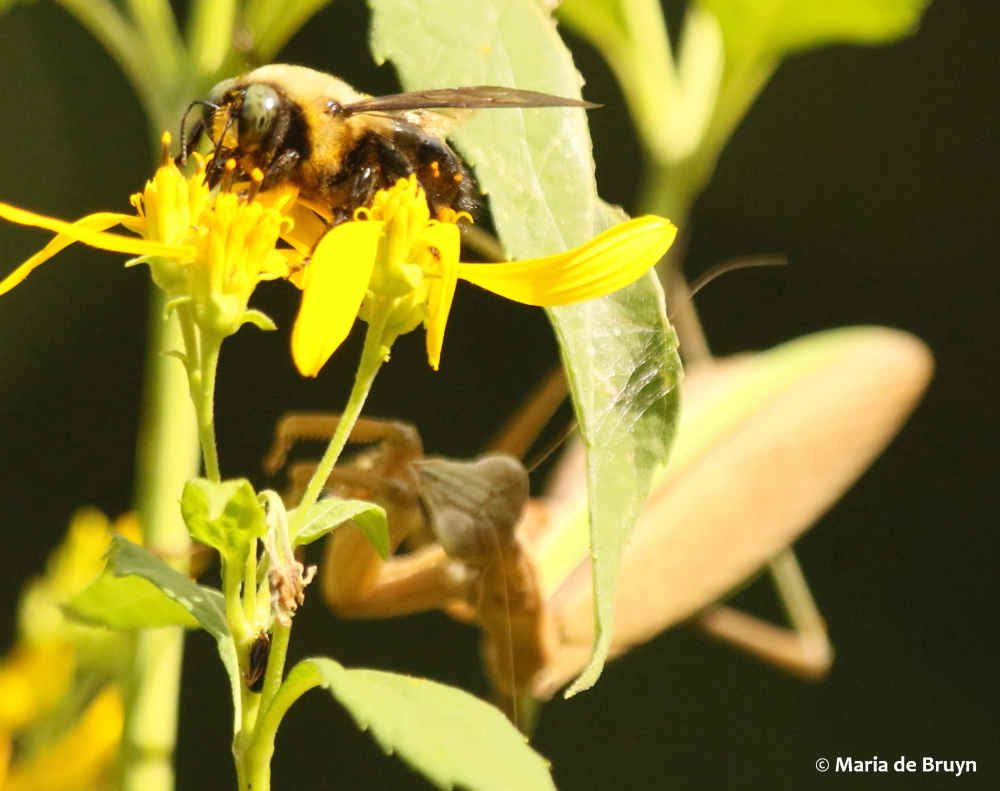
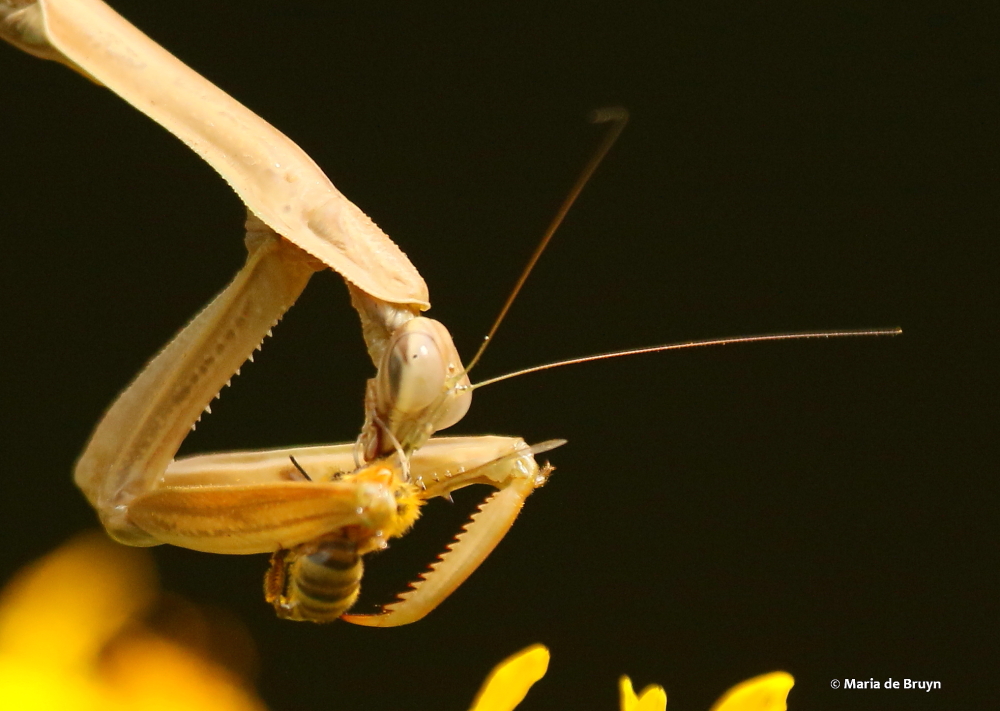
chinese-mantis-eastern-carpenter-bee-i77a4937maria-de-bruyn-res   chinese-mantis-and-honey-bee-i77a4795maria-de-bruyn-res

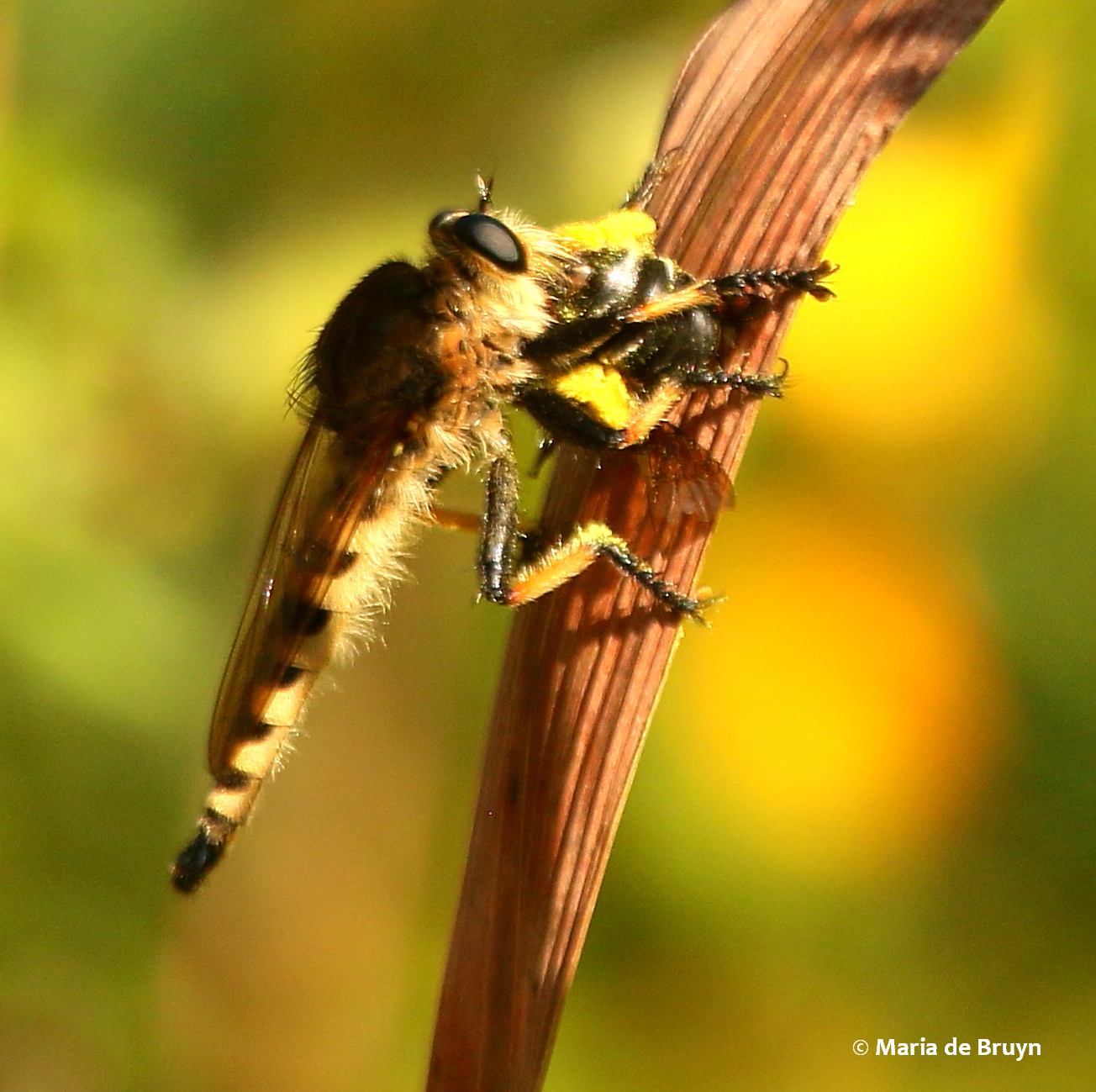
robber-fly-bumblebee-77a2813maria-de-bruyn


While on a walk one day, I suddenly was startled by the loudest buzzing I had ever heard, coming up behind me. It sounded angry, intense and was rather piercing for a buzz. I turned just in time to witness a giant robber fly (Promachus) settle on a grass stem with a bumble bee that it had just caught. The buzzing stopped fairly quickly as the fly proceeded to ingest its meal.
 

eastern-carpenter-bee-i77a7906-maria-de-bruyn-signed-res

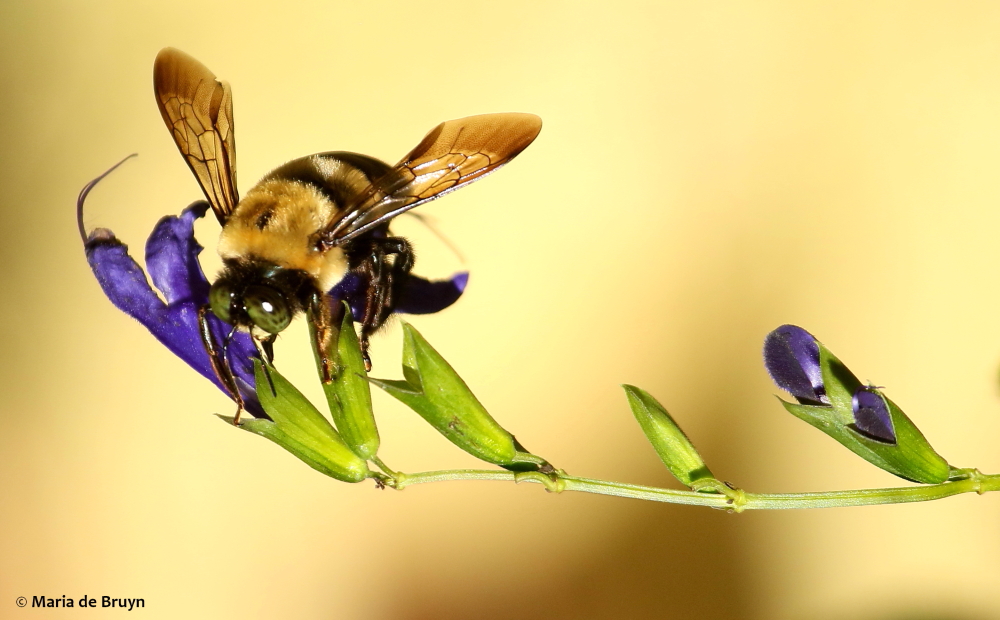
Various organizations and agencies, including the US Fish and Wildlife Service, are drawing attention to the endangerment of pollinator species. The main threats include loss and degradation of habitat as we pave over an increasing amount of natural space and plant lawns instead of native plants in yards. Using pesticides in landscaping areas is further threatening many of the insects on which pollination depends.
eastern-carpenter-bee-i77a6424-maria-de-bruyn-res3


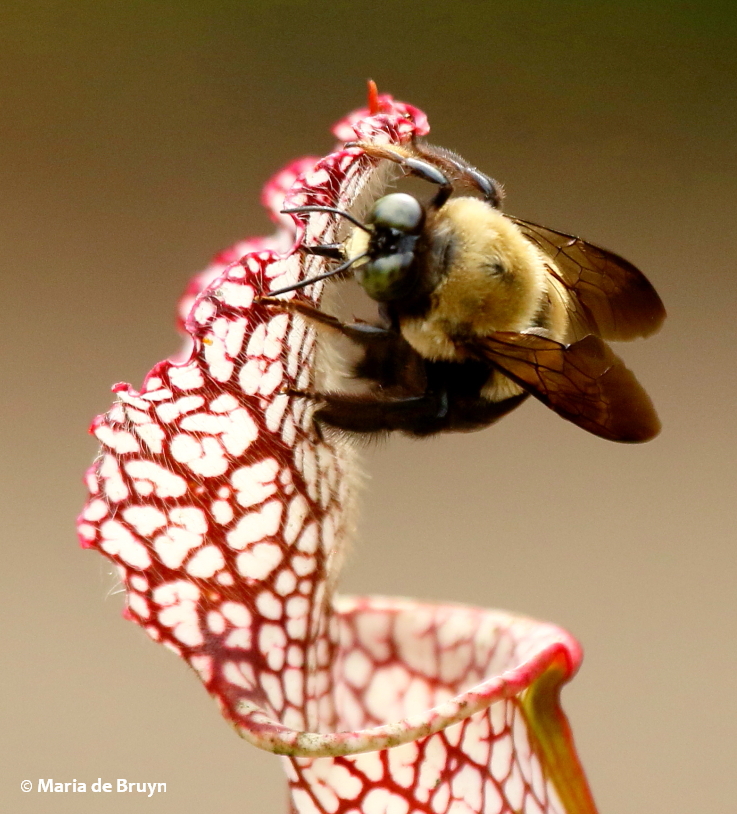
Planting pollinator gardens is a way in which we all can contribute to saving our pollinators; if you don’t have your own yard, you can volunteer with a project to create a community garden. And then you can watch these fascinating insects with appreciation for their contributions to us!

Warbler watching and migration – a shared pleasure for birders!

black-and-white-warbler-i77a3458-maria-de-bruynAutumn migration in North America has been underway for some weeks and our bird populations in North Carolina are changing in composition. Some birds stay year-round – for example, I see robins, blue jays, Carolina wrens, Carolina chickadees and tufted titmice in all seasons to my great delight. However, other birds who have been here since spring are now getting ready to leave for a southerly jaunt to a place that will be warmer for them in winter – most of the ruby-throated hummingbirds and some gray catbirds have departed already. (I have had a catbird stay year-round but others leave.) Many black and white warblers (Mniotilta varia) will be leaving, too.

american-redstart-i77a4367maria-de-bruyn-resThe Nature Conservancy has noted that the autumn songbird migration is one of the top four migrations in this state. The Audubon Society has even published a guide to this migration and when certain species usually begin their travels. (Left: American redstart male)


This seasonal event means that dedicated birders make special efforts to visit places where it’s likely we’ll see warblers. Many of North America’s 50 species don’t eat seed or suet, so you won’t find them visiting your feeders often. I have found, however, that pine warblers (Setophaga pinus) and yellow-rumped warblers (Setophaga coronata) are pretty social and those who are here for the winter are already joining my “regular” birds at feeding stations. The pine warblers especially like suet (female left, male right below).

pine-warbler-i77a0184-maria-de-bruyn-res        pine-warbler-i77a0409-maria-de-bruyn-8-x-10

The yellow rumps are still looking around a lot for insects; this one snagged a skipper butterfly.

yellow-rumped-warbler-i77a5552-maria-de-bruyn-res

In the autumn, many of these songbirds no longer have their beautiful breeding plumage, which is often so distinctive that you can identify them easily, especially the males. I was lucky enough to see some of those beauties during spring migration as well as in the summer for the ones that spend the warmer months here.

prothonotary-warbler-i77a2854-maria-de-bruyn-res   prothonotary-warbler-i77a9933-maria-de-bruyn-res

Prothonotary warbler male (Protonotaria citrea)

yellow-throated-warbler-img_0418-maria-de-bruyn        prairie-warbler-i77a1622-maria-de-bruyn-res

Yellow-throated (Setophaga dominica) & prairie warblers (Setophaga discolor)

american-redstart-i77a7811-maria-de-bruyn-res


The warblers’ non-breeding coloration is frequently duller and drabber than their breeding plumage. Often only experienced birders can tell some species apart on first sight. Added to that is the fact that young birds don’t yet have their adult plumage and the immature males often look just like adult females. So it is a challenging time for identification, especially for me, but an exciting time for discoveries.


blackpoll-warbler-i77a1289-maria-de-bruyn-resGetting photos of these lovely birds can be tricky since they move about a lot in search of their insect meals. It is ultimately the pursuit of those culinary delights that leads the warblers to migrate South, since the insect population declines dramatically in areas with cold weather.

Nature photographer Mary had discovered a spot where the warblers could bathe in a relatively protected fashion; she kindly shared the location with some of us and a number of avid birders sat with her for hours waiting for the birds to appear. Some of our more “common” avian friends used the site, too, including a gray catbird (Dumetella carolinensis) and a brown thrasher (Toxostoma rufum).

gray-catbird-i77a4922maria-de-bruyn-res    brown-thrasher-i77a4880maria-de-bruyn-res

northern-waterthrush-i77a5013maria-de-bruyn-res


A Northern waterthrush (also a warbler, Parkesia noveboracensis) found the spot enticing.

The trees around the water hosted birds as they looked for insects, like the black-throated blue warblers below (Setophaga caerulescens), seen a few weeks apart.


black-throated-blue-warbler-i77a8117-maria-de-bruyn-res  black-throated-blue-i77a4426maria-de-bruyn-res

A female American redstart (Setophaga ruticilla) spent time working the shrubs surrounding the creek with some success.

american-redstart-i77a4981maria-de-bruyn-res    american-redstart-i77a4996maria-de-bruyn-res

The male redstarts hopped about the branches and rocks hanging over the creek for a while before venturing below to bathe.

american-redstart-i77a7628-maria-de-bruyn-res american-redstart-i77a4217-maria-de-bruyn-res

american-redstart-i77a4477maria-de-bruyn-res  american-redstart-i77a4480maria-de-bruyn-res

The birds appeared to enjoy their bathing spot immensely, sometimes dipping under water over and over again.

american-redstart-i77a4685-maria-de-bruyn-res  american-redstart-i77a4693-maria-de-bruyn-res

american-redstart-i77a4658-maria-de-bruyn   american-redstart-i77a4629-maria-de-bruyn-res

american-redstart-i77a4710-maria-de-bruyn-res


They also didn’t mind sharing the space with each other (or sometimes other species)..

magnolia-warbler-i77a2250-maria-de-bruyn-res


The Magnolia warblers (Setophaga magnolia) did the same, giving me some good looks and making my first in-person sighting of this species (lifer!) quite special.


magnolia-warbler-i77a5161-maria-de-bruyn-res    magnolia-warbler-i77a5184-maria-de-bruyn-res

chestnut-sided-warbler-i77a5210-maria-de-bruyn-res


The chestnut-sided warbler (Setophaga pensylvanica)was a very vigorous bather!

chestnut-sided-warbler-i77a5230-maria-de-bruyn-res

chestnut-sided-warbler-i77a5207-maria-de-bruyn-res    chestnut-sided-warbler-i77a5203-maria-de-bruyn-res

hooded-warbler-i77a4728-maria-de-bruyn-res


A male hooded warbler (Setophaga citrina) made a brief appearance one day, followed by some female and male common yellowthroats (Geothlypis trichas).


common-yellowthroat-i77a4431maria-de-bruyn-2common-yellowthroat-i77a4316maria-de-bruyn-res

Another water body that provided me with some excellent views of warblers was the Haw River. In the small town of Bynum, a bridge crosses the river and gives birders a great vantage point to see birds in the tree canopy close to eye level. There I was able to see two more lifers a couple weeks ago – the first was a bay-breasted warbler (Setophaga castanea).

bay-breasted-warbler-i77a1004-maria-de-bruyn-res    bay-breasted-warbler-i77a1003-maria-de-bruyn-res

blackpoll-warbler-i77a1315-maria-de-bruyn-resThis beauty was followed by another that had me confused. At first, I thought I was seeing a kinglet but this bird was a bit large and then as I got closer looks, I realized it looked like a bay-breasted warbler but had yellow feet. A search on the Internet showed I had seen a blackpoll warbler (Setophaga striata), likely a non-breeding male. Experts on an American Birding Association Internet site confirmed the ID for me.

blackpoll-warbler-i77a1320-maria-de-bruyn-res    blackpoll-warbler-i77a1329-maria-de-bruyn-res

black-and-white-warbler-i77a7204-maria-de-bruyn-resMy migration warbler watching culminated with some exciting finds in my own yard. I was surprised by several I hadn’t seen at home before, including common yellowthroats, a black and white warbler looking for insects in my willow oak and a gorgeous Northern parula (Setophaga americana), who even came to my feeders before pursuing a caterpillar in a Rose of Sharon nearby.

northern-parula-i77a7131-maria-de-bruyn-res   northern-parula-i77a7117-maria-de-bruyn-res

northern-parula-i77a7076-maria-de-bruyn-res


I’m now hoping to see some birds that breed further North during the summer arrive here for their late fall/winter/early spring sojourn, such as a ruby-crowned kinglet who has spent time with me each winter for the last three years. Next time I’ll share some of my pollinator sightings with you, in the hope you find them as fascinating as me. Have a nice day!

My hummer summer, part 2 — beauty in flight, beauty at rest

ruby-throated-hummingbird-i77a8438-maria-de-bruynIn my previous blog, I mentioned that the ruby-throated hummingbirds (Archilocus colubris) had a greater variety of flowering plants to visit in my yard this year and that increased the size and diversity of their nectar buffet. The availability of multiple food sources also meant that they spent a bit more time visiting – they didn’t just dash to a feeder, perch or hover for a drink and then take off. They visited feeders, different blooms and took little rests between meals, giving me numerous chances to watch them and practice my hummingbird photography – a win-win for both us!

ruby-throated-hummingbird-i77a7246-maria-de-bruyn-res


One of their favorite flowers were the lantanas (Lantana), which are also a favorite of mine as they attract many smaller pollinators such as bees and butterflies and are still profusely blooming in the latter half of October.


ruby-throated-hummingbird-i77a6866-maria-de-bruyn-res

ruby-throated-hummingbird-i77a7168-maria-de-bruyn-res

ruby-throated-hummingbird-i77a1023-maria-de-bruyn-res


This year, several types of sage brightened my gardens. Some deep blue Brazilian sage plants (Salvia guaranitica), kindly donated to me by Gail, a fellow birder, added color and provided the hummers with deep blooms into which they could insert their long bills.


ruby-throated-hummingbird-i77a1315-maria-de-bruyn-res

ruby-throated-hummingbird-i77a7519-maria-de-bruyn-resA small-leaf sage (also known as Festival or little-leaf sage, Salvia microphylla “San Carlos Festival”) provided an ongoing splash of deep red blooms that attracted the hummers over and over again. This plant not only graced the garden in the summer but is still blooming profusely now, making it another one of my favorites. A couple other different red sages and a red beebalm (Monarda didyma) were good nectar choices but they didn’t bloom as long or in such abundance. Perhaps next year, they will have gained strength.

ruby-throated-hummingbird-i77a7782-maria-de-bruyn-res

ruby-throated-hummingbird-i77a1160-maria-de-bruyn-resThe two stonecrop plants (Hylotelephium Autumn joy), in my front garden, with their rounded bunches of little pink flowers, had hummer visitors on a few occasions, but these are not one of their preferred blooms. The milkweed plants (Asclepias syriaca) also only had a few visits as far as I could tell.


ruby-throated-hummingbird-i77a1086-maria-de-bruyn-res


And it was the same story for the blue balloon flower (Platycodon grandiflorus), which does get its fair share of bees.


ruby-throated-hummingbird-i77a2198-maria-de-bruyn-resI had planted cardinal flowers (Lobelia cardinalis), which unfortunately didn’t get any flowers. I did see a bird visiting this plant species near Bolin Creek, however. The same happened with a trumpet vine (Campsis radicans), but at a vine cluster near the Haw River I saw how they inserted their heads entirely into the tubular blooms.

ruby-throated-hummingbird-i77a5851-maria-de-bruyn-res

ruby-throated-hummingbird-i77a6177-maria-de-bruyn-res


In between feedings, the hummingbirds will perch to watch for intruders into “their space”. But they also will take sun-baths, pointing their faces upward and puffing themselves up.

ruby-throated-hummingbird-i77a8401-maria-de-bruyn-res


They will then change shape, stretching their necks and spreading their wings and tail feathers to expose as much of their bodies as possible to the sunlight.

ruby-throated-hummingbird-i77a6885maria-de-bruyn-res   ruby-throated-hummingbird-i77a6891maria-de-bruyn-res

They may relieve themselves while they are in flight and then later take a little power nap of a few seconds.

ruby-throated-hummingbird-i77a1170-maria-de-bruyn-res       ruby-throated-hummingbird-i77a0553-maria-de-bruyn-res

ruby-throated-hummingbird-i77a7826-maria-de-bruyn-res

Grooming is also a frequent activity – these little avians make sure that they stay just as beautiful as the sweet flowers that they frequent!

ruby-throated-hummingbird-i77a6905-maria-de-bruyn-res   ruby-throated-hummingbird-i77a8283-maria-de-bruyn

When the males turn their heads so that the light hits them in different ways, they do a nice job of demonstrating that their bright gorget colors are not in the feathers themselves but the result of prism cells in their feathers that change how the light is reflected depending on the angle we see.

ruby-throated-hummingbird-i77a1126-maria-de-bruyn-res    ruby-throated-hummingbird-i77a1120-maria-de-bruyn-res

ruby-throated-hummingbird-i77a6366-maria-de-bruyn-resWhen they’re done sun bathing, grooming and resting, the hummingbirds need to take off again. However, their feet are so tiny that they can’t walk and, when they lift off, they also don’t have the foot strength to push.  So they rise into the air using the power of their wings, quickly flapping as they set off and rapidly reaching their usual rate of about 50-53 beats per second.

ruby-throated-hummingbird-2-i77a5105-maria-de-bruyn-res

ruby-throated-hummingbird-i77a9703-maria-de-bruyn-res

ruby-throated-hummingbird-i77a7167-maria-de-bruyn-resMy last summer hummingbird residents appear to have left for their Central American wintering grounds on 7 October, just before Hurricane Matthew arrived in North Carolina. I really hope that they were able to get through the windy environment without problems as they began their long migratory journeys and I am already looking forward to seeing them arrive next spring. In the meantime, I’m keeping a couple feeders up in case another hummer species decides to over-winter here – and the Carolina chickadees (Poecile carolinensis), Northern cardinals (Cardinalis cardinalis) and tufted titmice (Baeolophus bicolor) can continue to use the ant guards over the feeders as their preferred watering holes.


My hummer summer, part 1 – guarding the home front!

ruby-throated-hummingbird-i77a2165-maria-de-bruyn-res


Just like human beings, some birds like to hang out in groups, while others are more solitary in nature, coming together mainly to reproduce. A prime example of the latter group are the ruby-throated hummingbirds (Archilochus colubris).


ruby-throated-hummingbird-i77a7336-maria-de-bruyn-res2This past summer, some health and other problems led to my spending a good deal of time at home. The upside was that being a bit home-bound gave me plenty of opportunities to observe the comings and goings of these gorgeous little flyers and to learn more about their behavior towards one another.

I had at least four ruby-throats – and probably more as I couldn’t distinguish them all – visiting my feeders and yard regularly. A couple had a distinctive trait that helped me identify them, like some white feathers on top of their heads or at the bottom part of their gorgets.

ruby-throated-hummingbird-i77a1237-maria-de-bruyn-res   ruby-throated-hummingbird-i77a9185-maria-de-bruyn-res

ruby-throated-hummingbird-i77a0810-maria-de-bruyn-res


I usually had three or four nectar feeders up in my back yard and two in my front yard. In addition, as the summer progressed, the gardens were filled with increasing numbers of nectar-filled flowers so my home site was a fairly well-stocked larder for them.

The ruby-throats are among the more competitive hummingbirds and don’t really like to share their feeding space with others, although a friend and I visited a birder in a nearby town who had more than a dozen feeders up and many dozens of hummers visiting his back yard every day, feeding right next to one another. At my house, I suppose guarding their food source is an instinctual imperative, since they do consume half their own weight in nectar each day.

ruby-throated-hummingbird-i77a0514-maria-de-bruyn-res

ruby-throated-hummingbird-i77a8255-maria-de-bruyn-resThe tiny birds were quite intent on protecting their territory from intruders. Only thing was, several of them considered my feeders THEIR territory, so there was a continual rotation of birds perched in nearby trees and shrubs to watch for “invaders”. Once spotted, the newly arrived hummers would have the current “resident” bird swoop down on them (at up to 60 miles per hour!), frequently chittering like mad as a warning to “get out of here.”

Sometimes, they would have a little “challenge flight ballet” as they confronted one another, until one gave up and flew off – sometimes across the street, sometimes to the yard on the other side of the house, and sometimes to a nearby tree or shrub at the side of the house.

ruby-throated-hummingbird-i77a8257-maria-de-bruyn-res   ruby-throated-hummingbird-i77a8256-maria-de-bruyn-res

ruby-throated-hummingbird-i77a9443-maria-de-bruyn-resThere was one particular male hummer who seemed particularly aggressive – or perhaps possessive is a better term as I never saw him body slam a rival; he just made sure that the other bird would leave. I recognized him as he often chose exactly the same spots on a nearby Rose of Sharon, a willow oak and a cedar as his watching posts,

Some of those who were run off didn’t travel far, however. They would fly to a nearby tree or shrub and wait to see if Hummer No. 1 would leave.

ruby-throated-hummingbird-i77a0290-maria-de-bruyn-res       ruby-throated-hummingbird-i77a1099-maria-de-bruyn-res

ruby-throated-hummingbird-i77a5725-maria-de-bruyn-resScientists have determined that the brain section responsible for memory and learning – the hippocampus – is five times larger in hummingbirds than in woodpeckers, seabirds and songbirds. They memorize where feeders and nectar flowers are and can remember when they last fed there. They can even estimate how long it will take each flower to fill up with nectar again.

ruby-throated-hummingbird-i77a6553-maria-de-bruyn-res


The hummers’ memory is long-term, too – they recall not only where feeders are placed in their breeding territories but also in places along their yearly migration routes! Wouldn’t it be nice if we had such great memories making GPS and maps less of a necessity?


ruby-throated-hummingbird-i77a7716-maria-de-bruyn-resAnother behavior I observed several times was a hummer hovering in front of me, especially when the nectar feeders were getting low. Scientists have determined that they can recognize the people who replenish their food sources, which makes for a delightful encounter as one chirps at you while suspended in front of your face with its wings flapping at 60 beats per second!

While guarding their home turf, they may stick out their tongues briefly after feeding.

ruby-throated-hummingbird-i77a5099-maria-de-bruyn-res   ruby-throated-hummingbird-i77a2353-maria-de-bruyn-res

ruby-throated-hummingbird-i77a9404-maria-de-bruyn-res


However, if you see one with its tongue stuck out permanently, this can be a sign of a fungal infection (often acquired from dirty feeders). Their tongues swell with the infection and they can no longer drink with these anatomical, elastic micro-pumps.


ruby-throated-hummingbird-i77a8243-maria-de-bruyn-res


Often death ensues, so it’s important to keep the nectar feeders clean!


Coming up in part 2: the beauty of the hummingbirds at rest and in flight


Can you go home again? Apparently so!

brown-headed-nuthatch-i77a3736-maria-de-bruyn-res


This year, I had the good fortune to see both brown-headed nuthatches (Sitta pusilla) and Eastern bluebirds (Sialia sialis) raise broods in some of my nest boxes. I saw the babies fledge, which was truly an enjoyable event.


eastern-bluebird-i77a7134-maria-de-bruyn-res

For some time, the parents continued feeding their babies after they left home, but eventually they got to the point that they could catch or find their own food. As summer progressed, the parents and children both visited my feeders and it was gratifying to see the families thrive. Then during September and October, I saw a behavior that I don’t remember from years past.

brown-headed-nuthatch-i77a7426-maria-de-bruyn-resbrown-headed-nuthatch-i77a7439-maria-de-bruyn-res

The nuthatches started to return to their nest box almost daily. They didn’t check out nearby boxes but went to their original home and today they are still visiting there, sitting on top, fluttering around it and looking inside.

tufted-titmouse-i77a7417-maria-de-bruyn-res

Their frequent visits seem to have intrigued a local tufted titmouse (Baeolophus bicolor) who decided to take a look in their box, too,but that was only a one-time visit as far as I could see.

It’s not only the parents doing this, but also one or more of their offspring. So how true is the saying “you can never go home again” (origin a novel by Thomas Wolfe)? It originally meant that you can’t recapture exactly how things were in your youth because changes take place in situations and places. But people do often journey back to the places where they grew up and apparently birds do, too! Maybe they are wondering if their nest box is still the same good place for a home.

brown-headed-nuthatch-i77a7459-maria-de-bruyn-resbrown-headed-nuthatch-i77a7441-maria-de-bruyn-res

i77a0203-maria-de-bruyn-res


The bluebirds began doing the same with their home nest box as well. They take turns flying from nearby branches to cling to the box and investigate the now empty dwelling. While the nuthatches just lean and peer inside, the bluebirds eventually go inside for a bit.


eastern-bluebird-i77a9732-maria-de-bruyn-res brown-headed-nuthatch-i77a9653-maria-de-bruyn-res


Oddly, there seems to be some contention involved. For example, when this pair was investigating, they had a little tiff for some reason.

eastern-bluebird-i77a9722-maria-de-bruyn-res eastern-bluebird-i77a9725-maria-de-bruyn-res

eastern-bluebird-i77a9723-maria-de-bruyn-res eastern-bluebird-i77a9726-maria-de-bruyn-res

I can only guess that the birds are checking out the nest boxes in anticipation of next year’s nesting season. The nuthatches and bluebirds will begin breeding again around March, although nuthatches might already begin building a new nest as early as December. It will also be interesting to see if they end up roosting in the boxes during the colder winter nights.

brown-headed-nuthatch-i77a4527-maria-de-bruyn-resWatching the nuthatches and bluebirds nest, fledge and feed is an enjoyable pastime and I’m looking forward to seeing them repeat the process next year. In the meantime, perhaps I’ll continue seeing them around the nest boxes this winter – as Pliny the Elder said, “Home is where the heart is” and something is sure attracting them back! (And yes, I know, that is a bit of anthropomorphizing.)