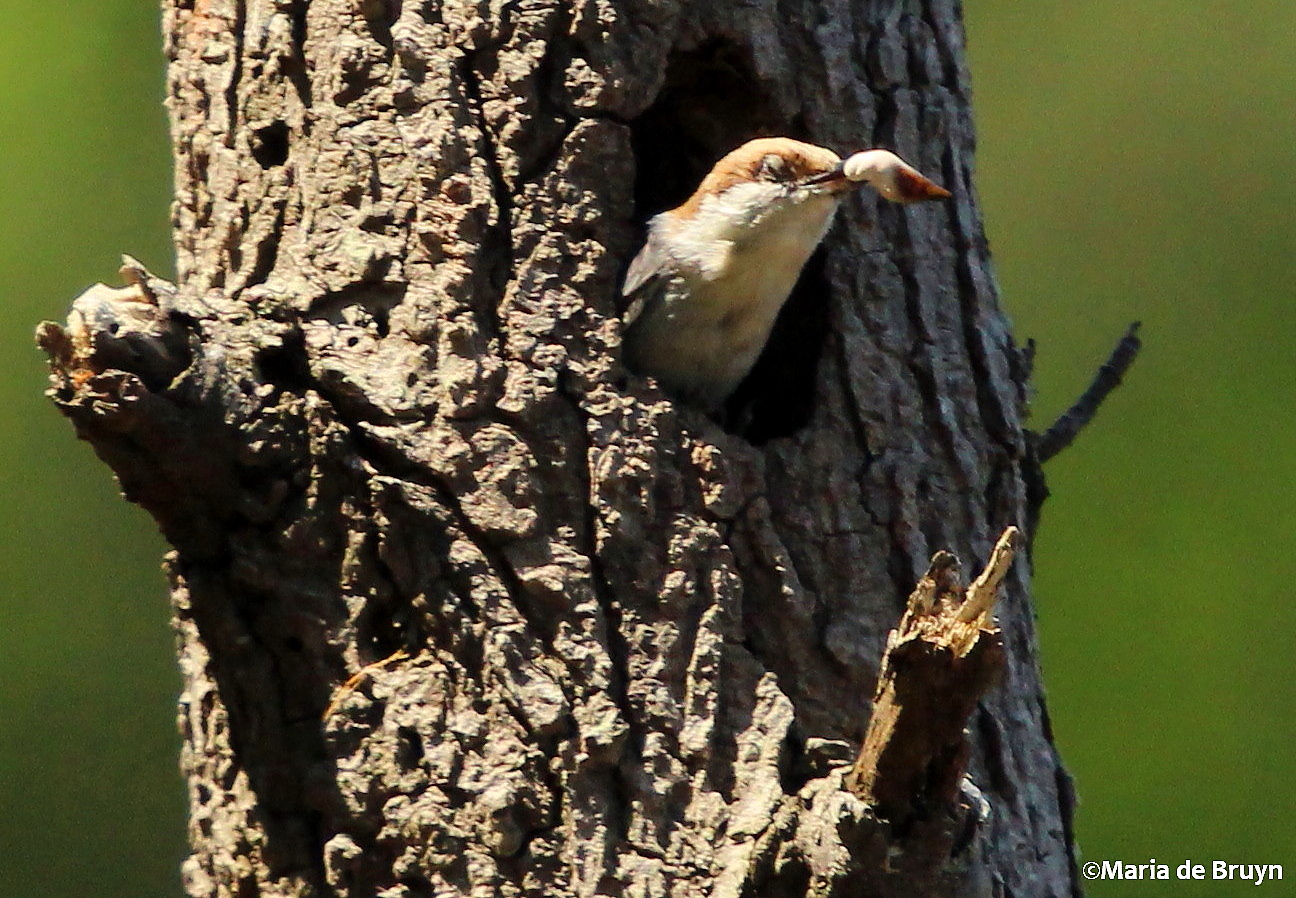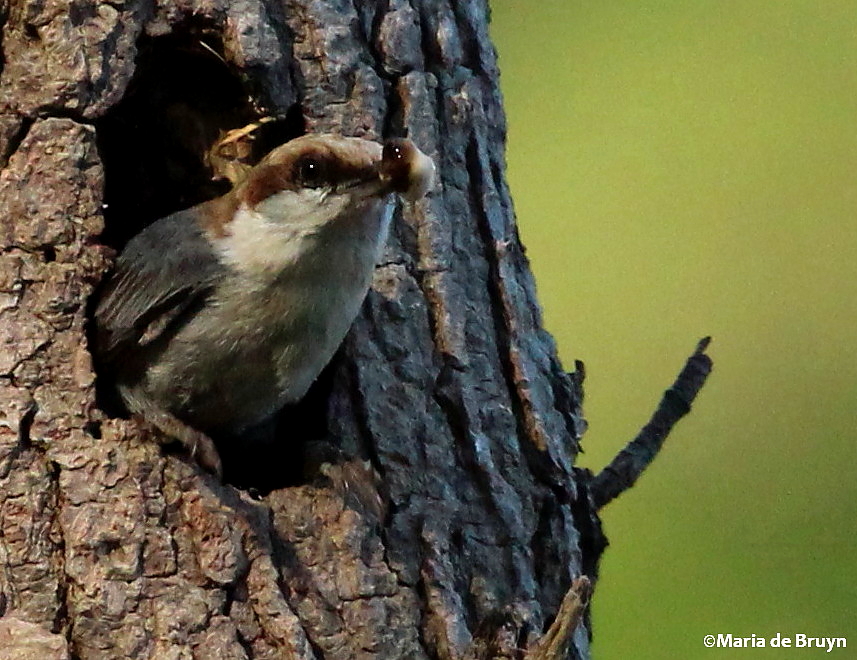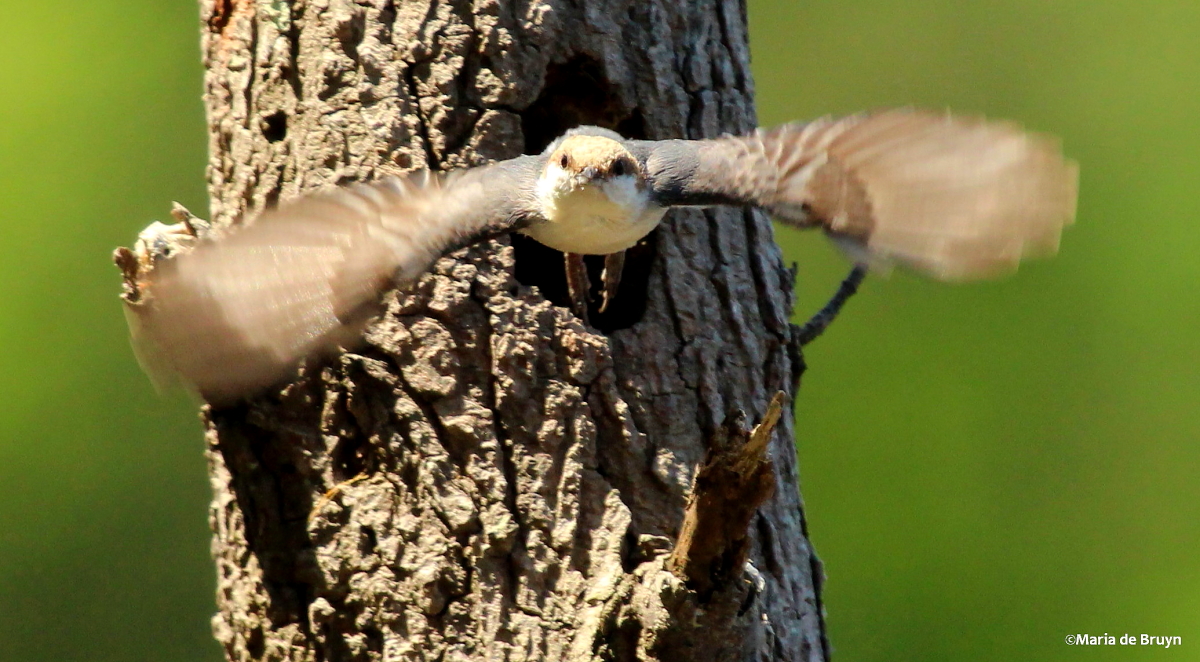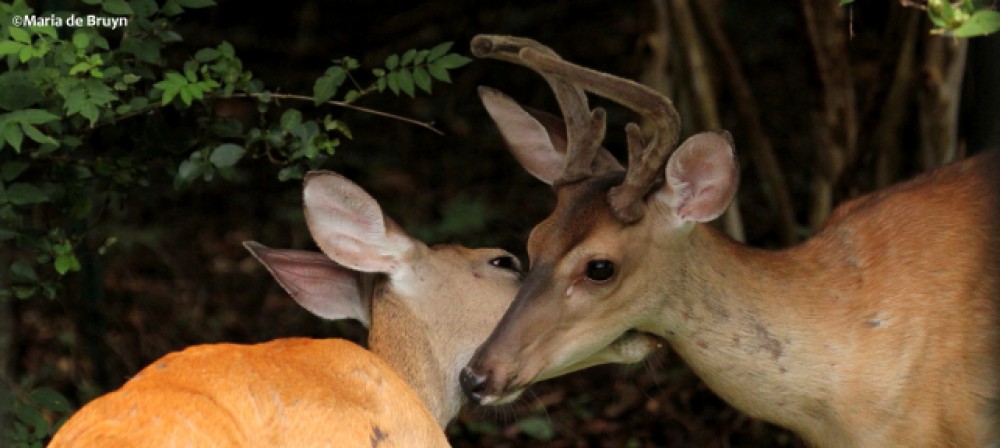
The squatter family: those cute – and seemingly precocious – little Carolina chickadees!

Carolina chickadee IMG_3138©Maria de BruynresI have two bird boxes in my yard designed to attract brown-headed nuthatches (Sitta pusilla). While I do have these birds at my feeders, they have not deigned to create nests in the boxes; one is still empty and the other was occupied by a family of squatters – darling little Carolina chickadees (Poecile carolinensis). I don’t know if this pair had had kids together before, but sometimes these birds retain their bonds for several years.

In addition to the nuthatch boxes, I have five bluebird boxes and cCarolina chickadee eggs IMG_4429©Maria de Bruynhickadees had begun nests in two others. It is not uncommon for them to begin a couple nests and then finally settle on one. On 12 April, I discovered that Mom had laid five white with brown-specked eggs in a nice soft nest made of moss, soft grasses and some down, even using a bit of pillow stuffing I had left out for interested nest-builders.

Ten days later, 22 April, I opened the box to see if everything was ok and surprised her sitting on the nest. (I had tapped on the box beforehand in case she would want to leave for a bit; didn’t happen!) She gazed at me in alarm and then began dipping her head and beating her wings against the nest; this is called a snake display to warn off predators.

Carolina chickadee IMG_4623©Maria de BruynCarolina chickadee IMG_4624©Maria de Bruynres

Carolina chickadee nestlings IMG_4680©Maria de BruynresTwo days later, I opened the box and discovered the eggs had hatched – I think she had been brooding them two days earlier since the babies didn’t seem quite as naked as I expected. That would mean they hatched after only about 10 days (and the average seems to be 12-15 days of incubation according to websites).

Both parents take on feeding their offspring. In warmer weather, they search for insects among foliage and under tree bark, sometimes hanging upside down to get a meal. This pair also visited the nearby feeders, obviously intent on teaching their young that suet, dried meal worms and seeds are also good to eat.

carolina chickadee IMG_6507©Maria de BruynCarolina chickadee IMG_3021©Maria de Bruyncarolina chickadee IMG_6378©Maria de Bruyn

Carolina chickadee IMG_3129©Maria de Bruyncarolina chickadee IMG_6702©Maria de Bruyn

Like the nuthatches and robins, the parents were also fastidious about cleaning the nest; and these almost full-grown young seemed to be pooping a lot!

Carolina chickadee IMG_6420©Maria de BruynCarolina chickadee IMG_6430©Maria de Bruynrescarolina chickadee IMG_6380©Maria de Bruyn
The young usually fledge about 16-19 days after hatching. If these birdlets had hatched on 22 April, I figured they would be ready to leave the nest around 7 May. Despite being sick with an infection that was keeping me mostly supine, I couldn’t let the opportunity for observation go by. So on the 5th of May, I roused myself for a sit-down in the yard in the early afternoon. I first waited until the parents had both left and carefully lifted the bird box door to see a bright-eyed, pretty much full-grown chick staring at me. S/he scooted back and it looked like there were only two others – so the other two siblings had already fledged. This did seem to be a very precocious family!

Carolina chickadee nestling IMG_4820©Maria de BruynresCarolina chickadee nestling IMG_4824©Maria de Bruynres

Carolina chickadee IMG_6407©Maria de BruynThis might be one of the chicks that fledged earlier. When a fledgling is begging for food, it quivers its wings rapidly. Females also do this before the young leave the nest when they want the male to feed them.

Because I was feeling fairly ill, I had to stop watching the parents go to and fro after a couple hours. On 6 May, I ventured outside in the early afternoon, hoping against hope that I might just be lucky enough to see the last chicks fledge. And I did!

Each chickcarolina chickadee IMG_6817©Maria de Bruyn spent time looking out of the box before venturing out. One took a flying leap and swerved up into a tree.


No. 2 spent some time calling (the parents were still coming in regularly with meals!), then launched itself and landed on some nearby branches.

carolina chickadee IMG_6810©Maria de Bruyncarolina chickadee IMG_6831©Maria de Bruyn

No. 3 spent time flexing its wings before venturing forth.

carolina chickadee IMG_6894©Maria de Bruyncarolina chickadee IMG_6939©Maria de Bruyn
I did check the box to be sure they were all out and then watched as the parents called to them as they flitted about the various trees behind the nest box. If I’d felt better, I would have stayed to observe a bit longer but I was pretty satisfied with having seen the fledging!.

carolina chickadee IMG_6951©Maria de Bruynres

The next morning, a pair of Carolina wrens was already bringing in twigs and placing them atop the chicarolina chickadee IMG_7357©Maria de Bruynresckadees’ nest (after removing some remaining fecal matter). One chickadee ventured back to peer into the box but the wren pair loudly chased the original owner away.


All in all, some very cool days, with some mental delight balancing out the physical distress for me.

If you liked this blog, please let me know by liking or leaving a comment here on the blog page. Thanks!

And for those who want more details on chickadees’ lives, see:
http://animaldiversity.ummz.umich.edu/accounts/Parus_carolinensis/
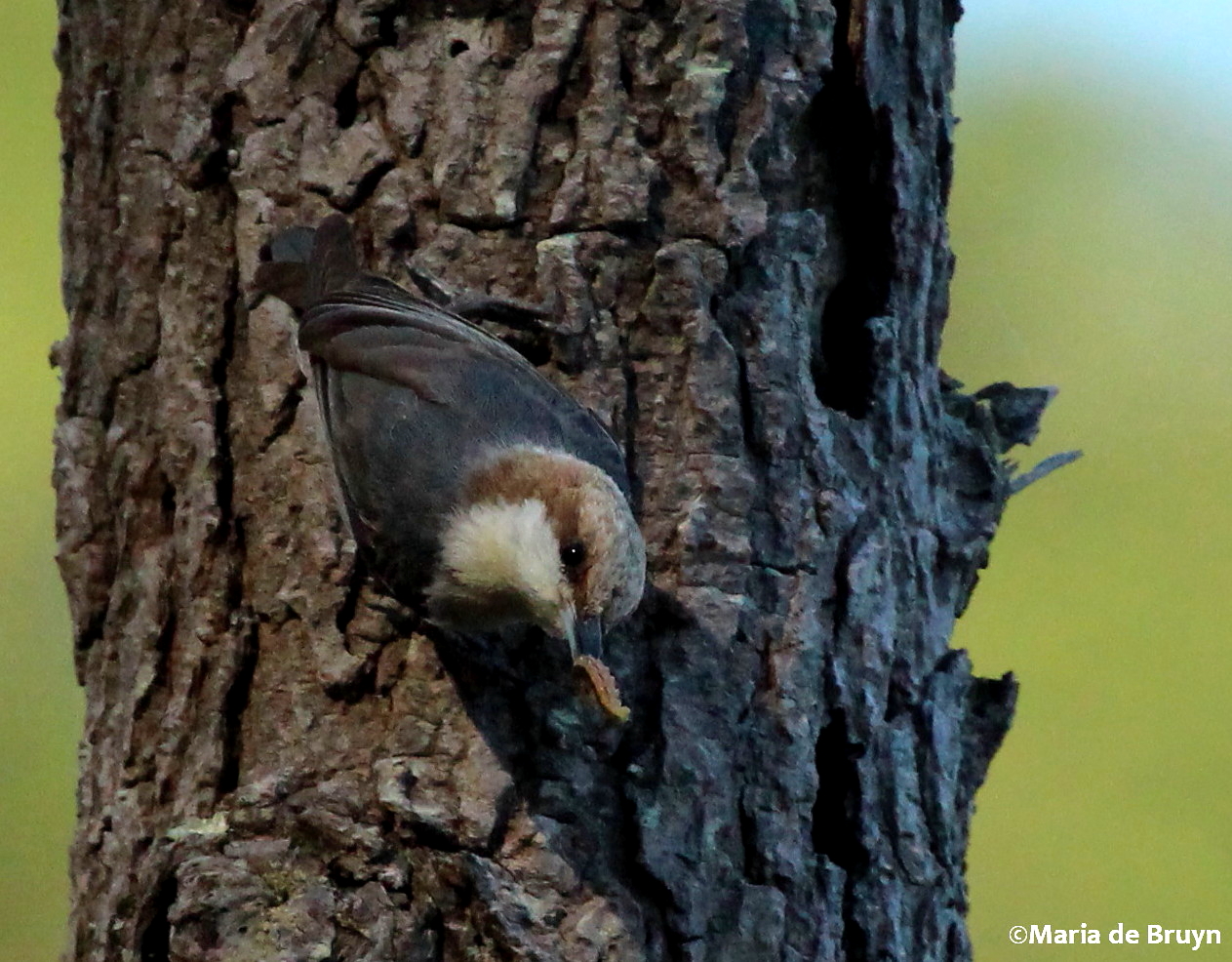
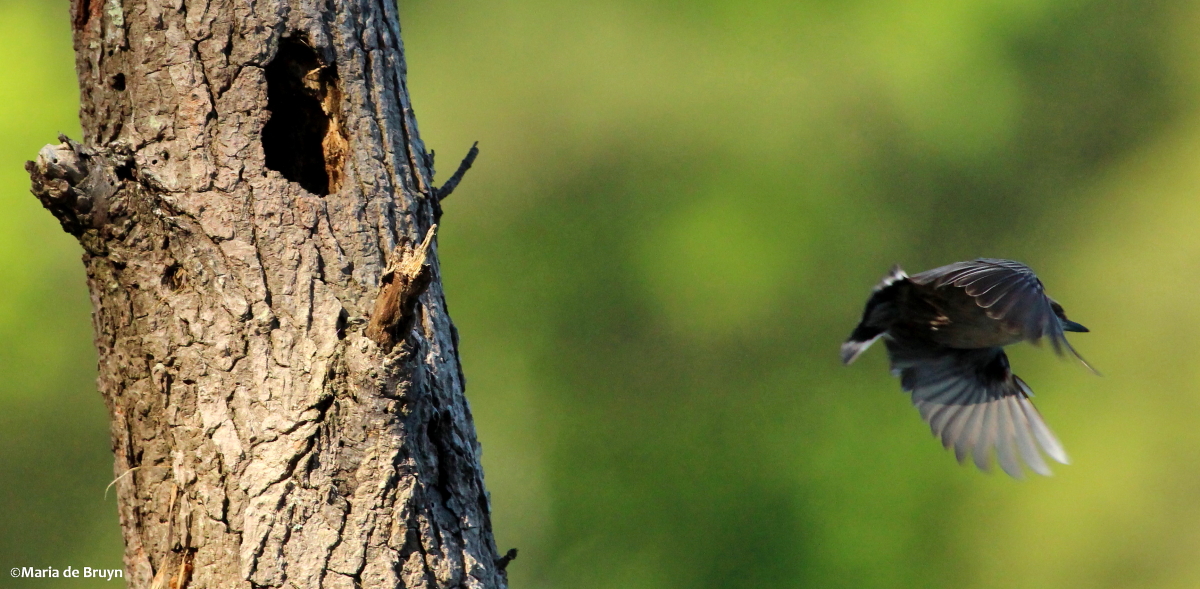
Brown-headed nuthatches – examples of conscientious and industrious parenthood!

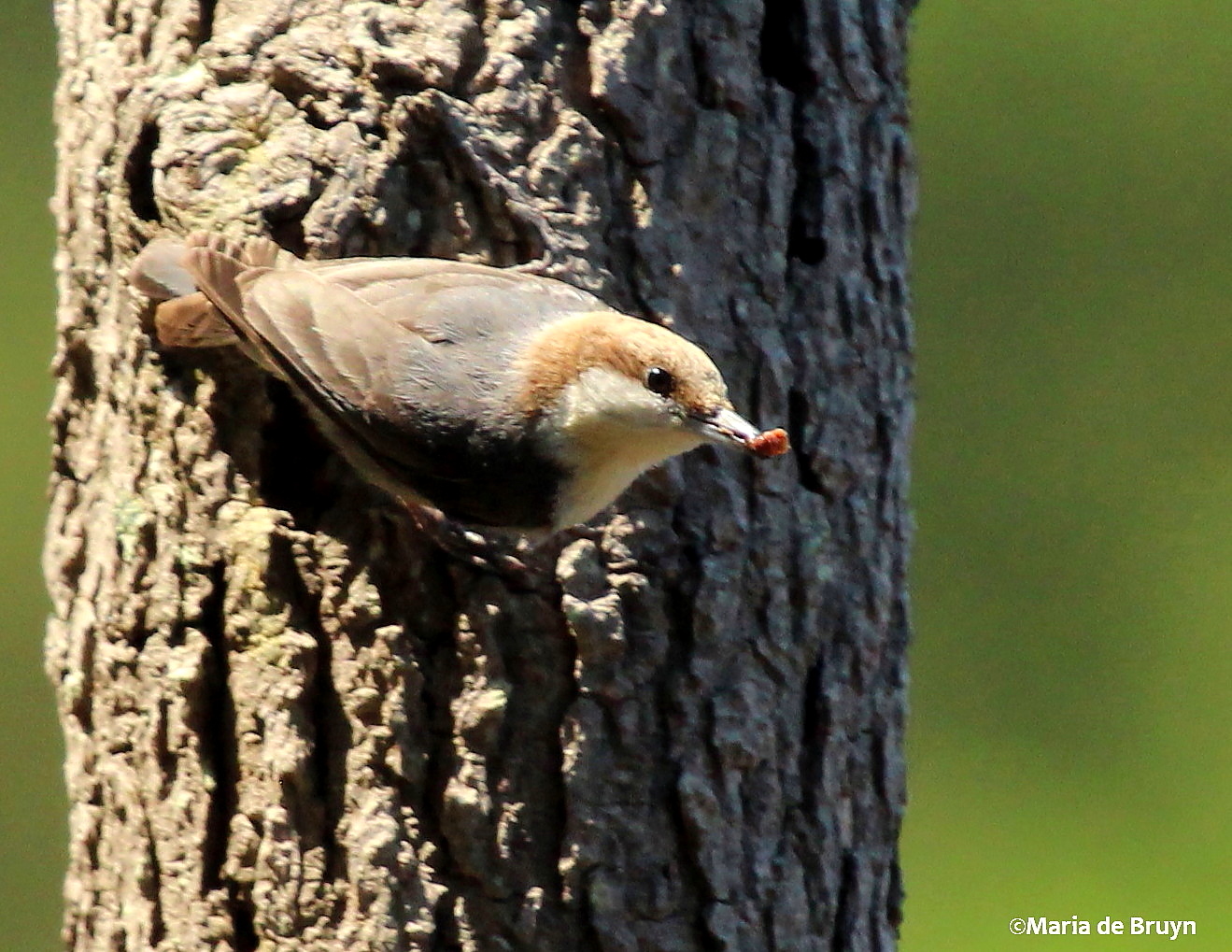
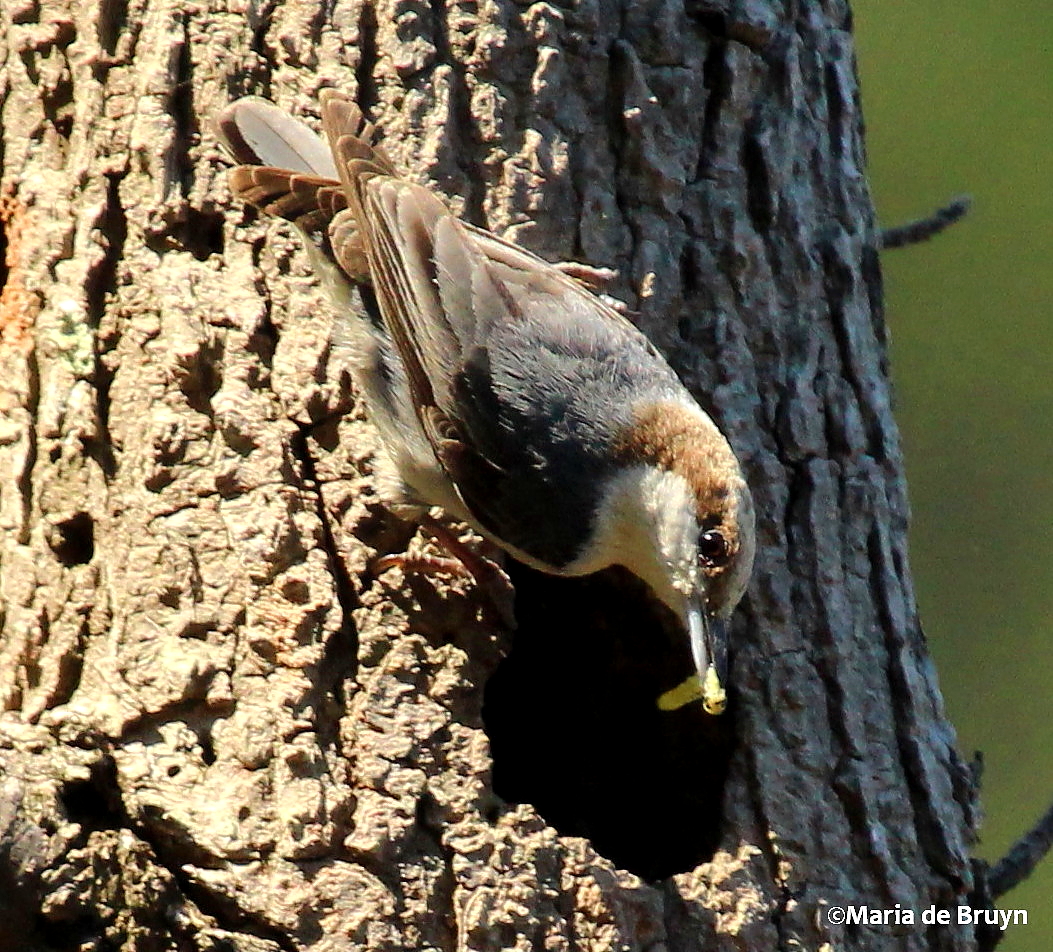
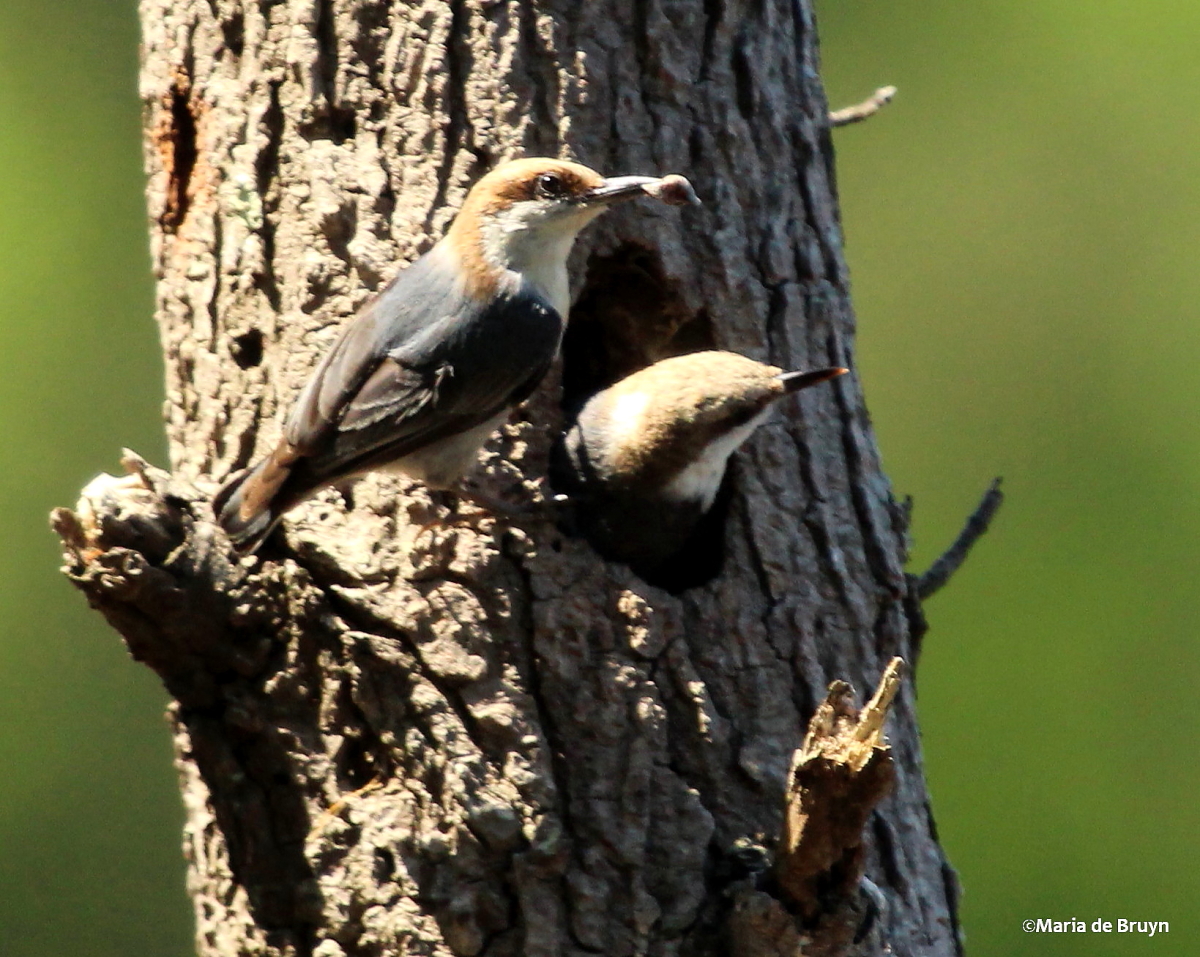
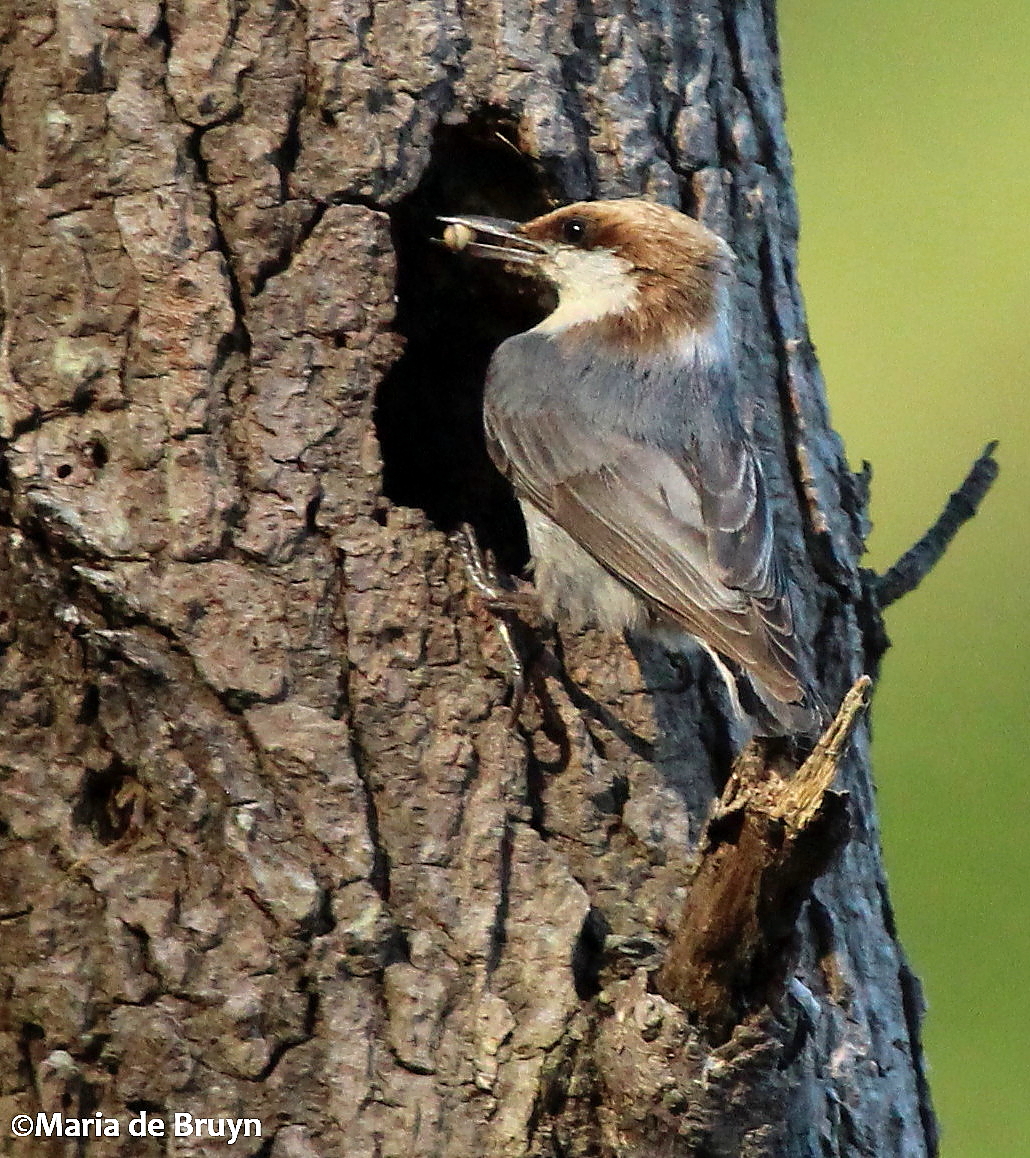
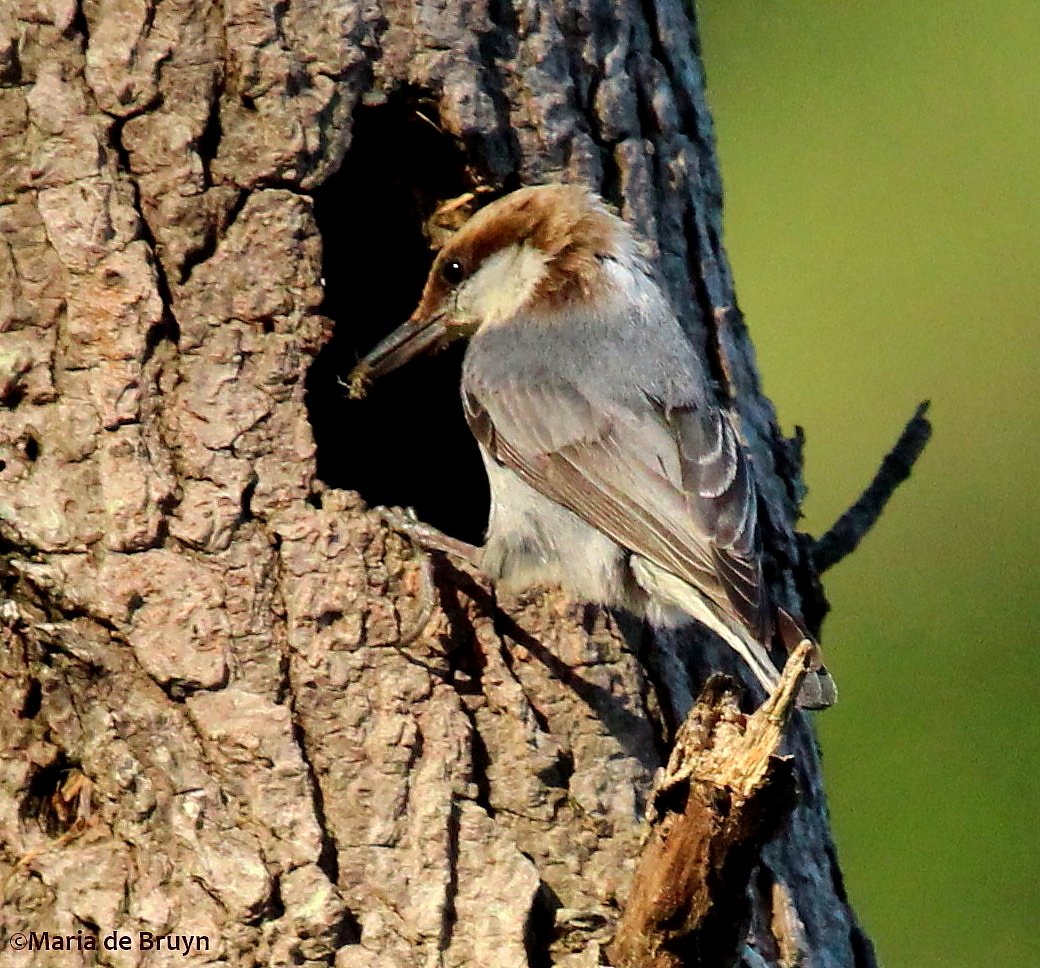
IMG_3634©Maria de BruynLast weekend, when walking the woods along Jordan Lake in order to write a blog for the NC Audubon Society, I happened upon a thin dead tree standing in the water at the shore’s edge. Just then as I was looking it up and down, a brown-headed nuthatch (Sitta pusilla) flew up and made its way down the trunk to a hole where it obviously had a nest. That was a treat and I watched the mom and dad fly to and fro with provisions for the brood.

Yesterday, I decided to return and see if the industrious pair was still working on meals for their brood. They were indeed and I watched for quite a long time, wondering how they could see anything down in the nest where it has to be pretty dark.

brown-headed nuthatch IMG_3690©Maria de BruynresThese lovely little birds are native to the Southeastern US and there is a small population in the Bahamas; they don’t live in any other countries so they really are kind of special. In addition, since 1966, the population has declined by 45% because they are losing nesting habitats (dead and pine trees) to deforestation and urbanization.

IMG_4116©Maria de Bruyn IMG_4031©Maria de Bruyn brown-headed nuthatch IMG_4136©Maria de Bruyn res

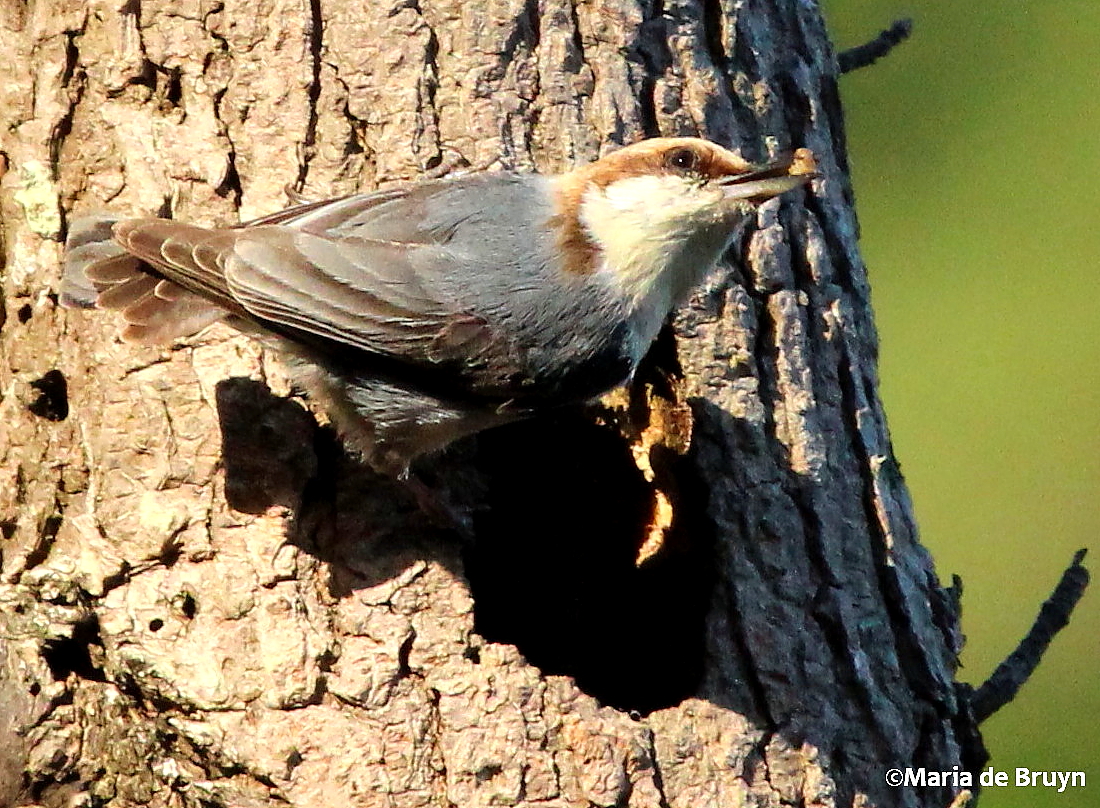
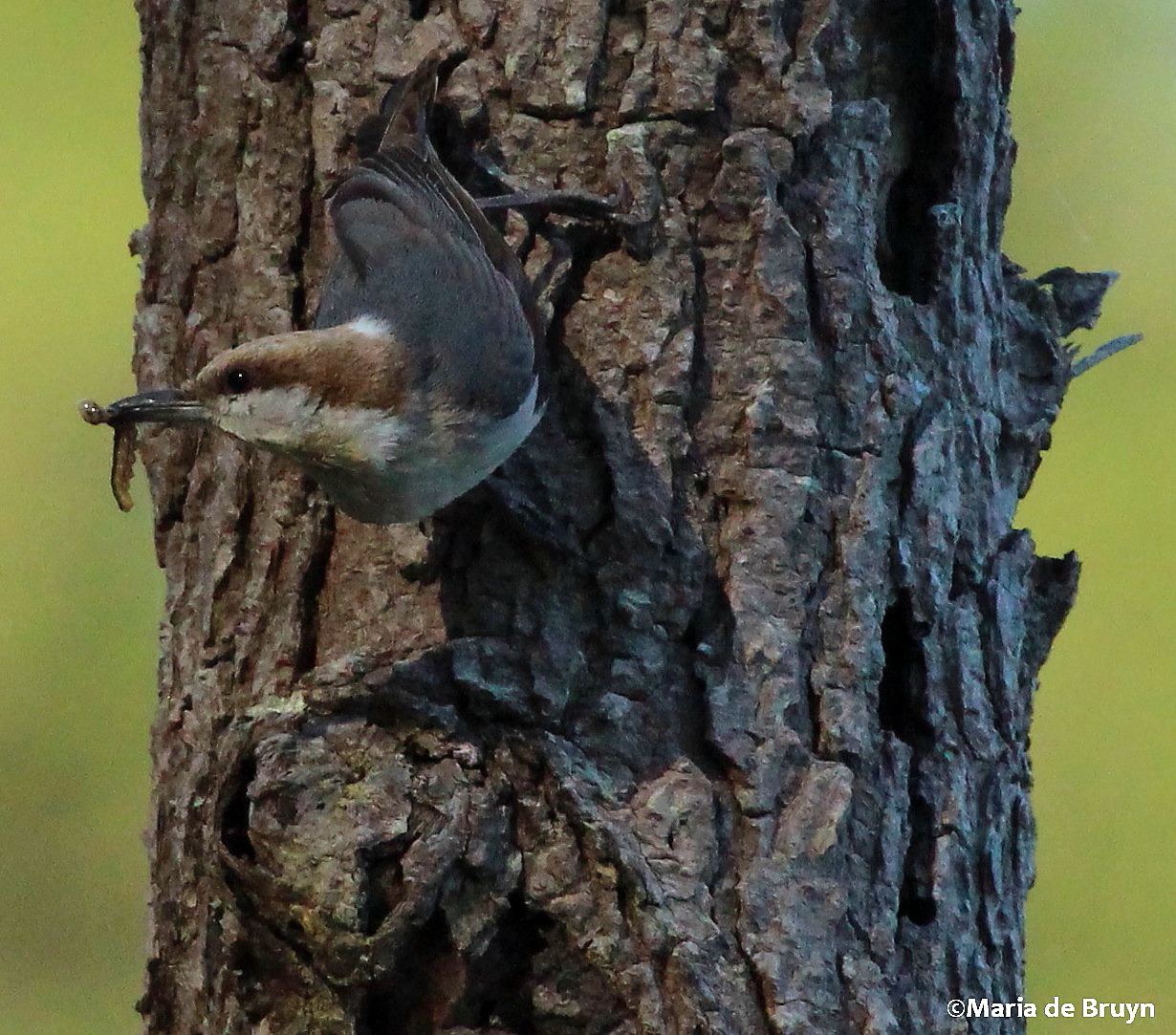
The parents were most often alternating their meal runs, but occasionally they would arrive simultaneously or very close in time. They would usually alight on the trunk above the nest hole and then work their way down – they can descend head-first, which is a handy trait.

IMG_3726©Maria de Bruyn IMG_3684©Maria de Bruyn IMG_3669©Maria de Bruyn

Occasionally, though, they would alight right by the hole or work their way upwards from a little further down the tree trunk. They seemed very concentrated on their task but I learned that they were definitely keeping an eye on me because when I took up a position a bit closer to the tree for some better shots, they just hopped about in other trees waiting for me to step back again. Which I did, of course.

IMG_3639©Maria de Bruyn IMG_3627©Maria de Bruyn

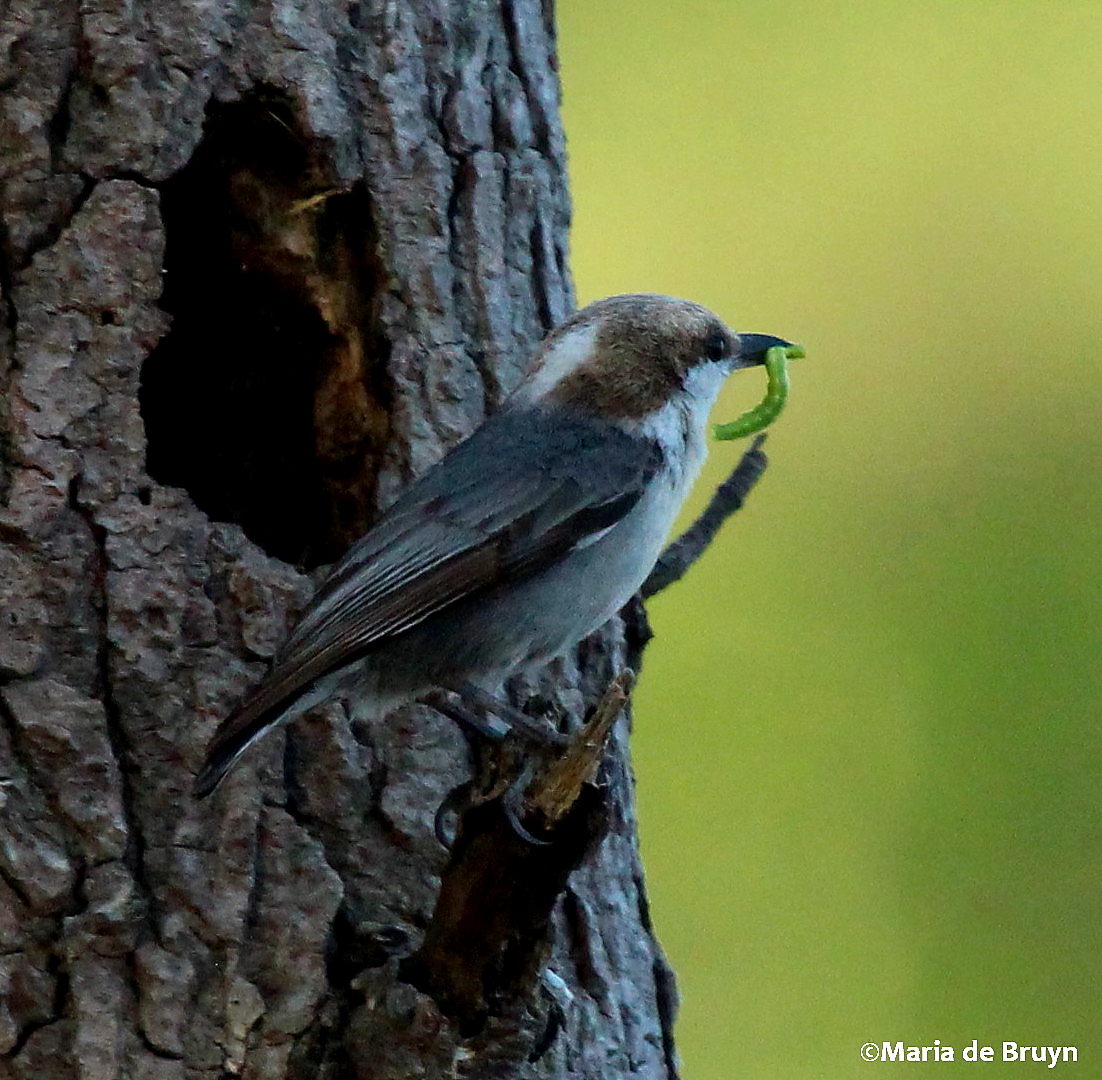
Though I didn’t witness it, these small birds are tool-users, sometimes using a piece of bark to pry up tree bark in search of insects; they may even carry the tool with them. They certainly were bringing their babies varied meals, including moth caterpillars and insects of various kinds.

IMG_4164©Maria de BruynThese parents were fastidious, too, removing fecal sacs from the nest with some regularity. I had hoped to see these birds in action when using a nuthatch box I put up in my yard, but a pair of Carolina chickadees (Poecile carolinensis) are currently raising a brood there.


brown-headed nuthatch IMG_4197©Maria de Bruyn resIMG_3658©Maria de Bruyn

The nestlings fledge after about 18 days so I may be too late to see anything when I return sometime this coming week, but it sure would be cool to see them leave the nest!

brown-headed nuthatch IMG_4149©Maria de Bruyn res

So, you may ask – what happened to the blog on springtime creatures I announced last time? Well, the various birds species are working so hard and demonstrating their parenting skills so nicely right now, I decided to focus on that for a little while! Next time – those squatter Chickadees in my yard!

Moths to rival butterflies!

Friendly probole moth IMG_9681©Maria de BruynresThe past week has been incredibly busy with work and the next couple weeks will be so as well. But I hope to stick somewhat to my weekly schedule of (hopefully) entertaining and perhaps educating you a bit on the wonderful wildlife around us!

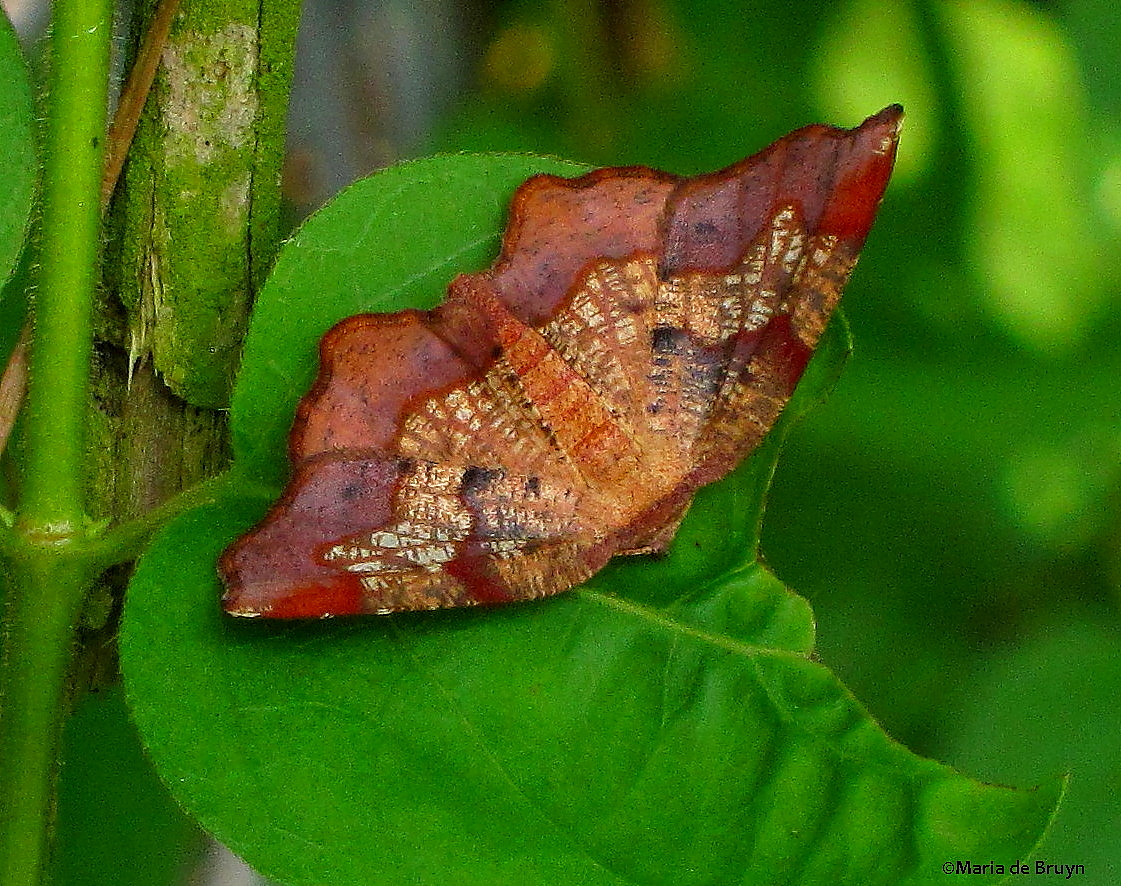
Today, I was pleasantly surprised to find that a fellow Project Noah member, Jacob Gorneau, had mentioned me in his article about National Moth Week (http://nationalmothweek.org/2014/02/23/project-noah-hosts-the-second-annual-national-moth-week/), What he quoted me as saying – “I really did think of butterflies as being the beauties and moths as the plain cousins. It’s great to have learned so much about the beauty of moths!” – was  a result of having participated in that annual week. Just like birders do bird counts, “moth-ers” do moth counts. And it was through my joining in on that activity that I learned to appreciate just how gorgeous moths can be – like that Friendly Probole Moth (Probole amicaria) at the top of this blog! Here are a few more beauties I’ve seen over time.

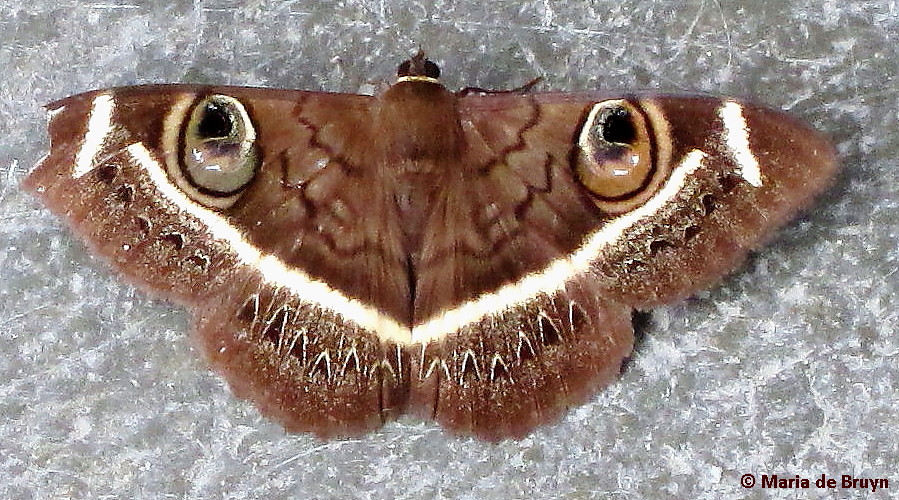
Polka-dot wasp moth IMG_0107VThis polka dot wasp moth (Syntomeida epimoth, Cream-striped owl IMG_6548© Maria de Bruynlais) was visiting a plant in Mexico. And this is a cream-striped owl moth (Cyligramma latona), which was a welcome surprise in Namibia.

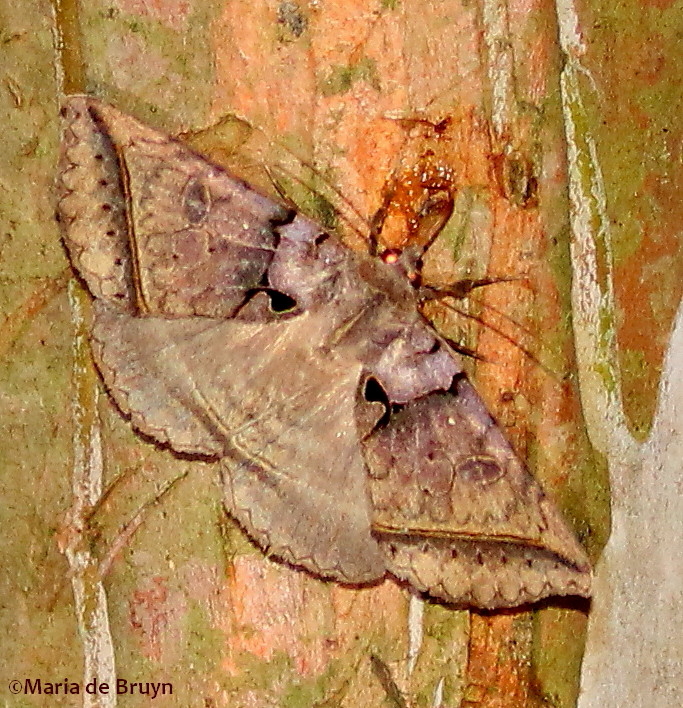
Zale moth IMG_4866©Maria de BruynMy backyard also reveals some interesting specimens. Moth Week induced me to go outside at night with a flashlight and I found these beauties on my crepe myrtle trees. Left is a Zale moth and below a black bit moth (Celiptera frustulum).

Black bit moth IMG_4867©Maria de Bruyn2

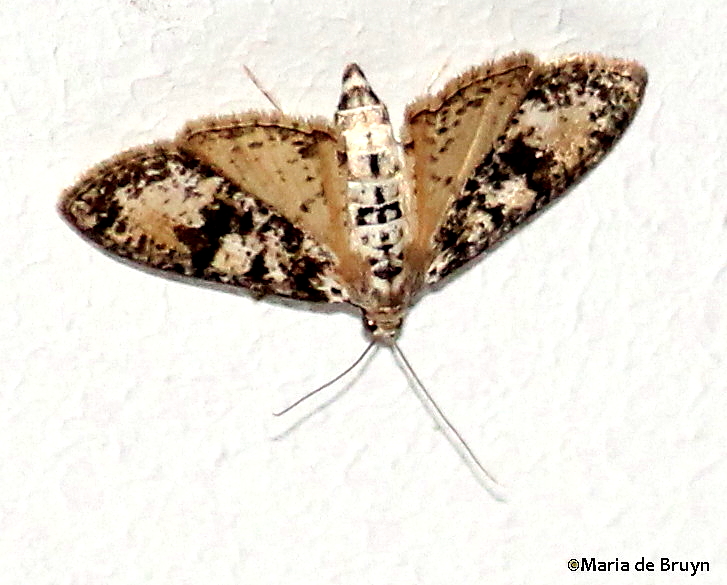
Splendid palpita moth IMG_4696©Maria de BruynThis splendid palpita moth (Palpita magniferalis) was on the ceiling of the roof overhanging my front porch. Gorgeous pattern, don’t you think?

Next week, I’ll share a few more of these beauties!

Birds braving winter

American goldfinch IMG_1955©Maria de Bruyn

It’s not unheard to have snow in central North Carolina, but it also isn’t what you’d call a commonplace occurrence. It is a BIG deal when it snows here; if a couple inches of snow or some icing on the roads is expected, schools and businesses close. This is a cause of hilarity among people who originated from points north, but when they realize that many drivers here are not accustomed to winter-weather driving and that the Department of Transportation and towns are not equipped so well to deal with the conditions, they also will often stay inside and not go out on the road.

Carolina wren IMG_0424©Maria de BruynAmerican robin IMG_0326©Maria de Bruyn

When we had two days of snow and ice storms last week, it wasn’t only people who were unhappy. The birds also didn’t seem enamored with the climate change, like the American goldfinch up above (Spinus tristis). They had had a taste of snow at the end of January, but it wasn’t such a strong storm then.  The Carolina chickadee (Poecile carolinensis) was scurrying about looking for food under the snow and the American robin (Turdus migratorius) was enjoying some berries.  The February storm was a bit different though

Mourning dove IMG_2478©Maria de Bruyn

On the first day, when it didn’t snow heavily all at once (it was more a matter of lightly falling snow much of the day), I had a multitude of birds at my feeders – including some that I don’t usually see there. This mourning dove (Zenaida macroura), for example, didn’t scrounge around on the ground in the snow but landed on a feeder to see if there were seeds there.

Other birds flew back and forth between the trees and feeders, like the yellow-rumped warblers (Setophaga coronata), who weren’t always happy to have others sharing the feeders), and the tufted titmice (Baeolophus bicolor).

Yellow-rumped warbler IMG_2618©Maria de BruynTufted titmouse IMG_2355©Maria de Bruyn

When out walking in a furious flurry of fat snowflakes, I ran into a neighbor who does research on bird survival. I mentioned that on the first day of the storm, I had a multitude of birds at my feeders (probably a 100 or so) but now, with this heavier snowfall, not a bird was to be seen. He noted that, given bird’s short lifespans in some cases and the fact that many would be younger, they were likely hunkering down as this was their first encounter with these weather conditions.

Brown thrasher IMG_2127©Maria de Bruyn

Northern cardinal IMG_2375©Maria de Bruyn

Another neighbor down the road and I kept our feeders filled so that our avian friends could rev up their energy stores, like the brown thrasher (Toxostoma rufum) and the Northern cardinals (Cardinalis cardinalis). The birds did their part by fluffing up their feathers to help keep body warmth as much as possible.  And they posed for some nice photos – albeit not with enthusiastic expressions, like this warbler and Northern mockingbird (Mimus polyglottos).

Yellow-rumped warbler IMG_2684©Maria de BruynNorthern mockingbird IMG_3455©Maria de Bruyn

Today, they should all be happy though – we’re expecting temperatures well in the upper 60s F! That should make for happy white-throated sparrows (Zonotrichia albicollis), Eastern towhees (Pipilo erythrophthalmus) and all the other birds visiting my yard!

white-throated sparrow IMG_2564©Maria de BruynEastern towhee IMG_0670©Maria de Bruyn

Tundra swans, snow geese and Canada geese, too – beauty by the tens of thousands

Tundra swans IMG_8442©Maria de Bruyn

When the tundra swans (Cygnus columbianus) and snow geese (Chen caerulescens) leave the Arctic and sub-Arctic tundras and climes of northern North America to over-winter along the coasts of the United States, those of us who live further south get to enjoy the marvelous spectacle of tens of thousands of these birds gathering together. They appear in huge masses and smaller family groups to feed and then swirl through the skies in an aerial ballet as they settle down to feed again or spend the night in a marsh or on a lake or pond. Witnessing these enormous conglomerations of birds really is an unforgettable experience.

Tundra swans IMG_8440©Maria de BruynThe tundra swan – also known as the whistling swan in North America – is a large, graceful bird. Its diet is varied, ranging from aquatic plants and some molluscs (mostly during the summer) to seeds, grains and tubers like potatoes in the winter. In North Carolina, where they migrate during winter, you can find immense flocks foraging in open agricultural fields before they settle for the night (in winter, these birds sleep mostly on the water; during the breeding season, these monogamous birds sleep mainly on land).

tundra swan IMG_8676©Maria de Bruyn signed res

The adult swans are entirely white except for a black bill, while the immature birds are first a dusty gray color that eventually turns white; the young swans also have a pinkish bill.

Tundra swans IMG_6457©Maria de Bruyn signed res

During a birding trip to the Outer Banks of North Carolina, our Audubon group was privileged to witness the tundra swans returning to a lake in the Pocosin Lakes National Wildlife Refuge one night.

Tundra swans IMG_6446©Maria de Bruyn res

It was like watching a black wave moving back and forth across the orange sky at dusk, while being surrounded by a tremendous volume of honking (not whistling!). Afterwards, I and others regretted that we hadn’t thought to film this so we had a record of the sound. I think we were just so mesmerized that it didn’t occur to us to do that. Here you can hear what their calls are like. For us, it was impressive as we were listening to the sounds of a flock of about 20,000 strong! http://www.allaboutbirds.org/guide/tundra_swan/sounds

Tundra swans IMG_6439©Maria de Bruyn signed res

The snow goose, like the tundra swan, migrates in the winter to North Carolina from the uppermost parts of North America; like the swans, they forage in winter agricultural fields in large groups. There are two color variations: some are almost entirely white, while the “blue morph” variation has a white head but blue-gray body feathers. Our birding group was lucky to see another aerial ballet at Pocosin Lake National Wildlife Refuge put on by the snow geese.

Snow goose IMG_6334©Maria de Bruyn2 res

As a member of our group excitedly called, “They’re rising!” an enormous flock surged up from the lake, flew back and forth just a little and then settled.

Snow goose IMG_6330©Maria de Bruyn signed res

A minute later, they repeated the process and we watched as the swirling cloud rose and fell, just moving side to side a bit. They were very far across the lake from us, so it wasn’t possible to get great shots but at least I had evidence of the sighting!

Snow goose IMG_6341©Maria de Bruyn signed res

The other birds that we saw in some numbers were the more familiar Canadian geese (Branta canadensis). They are commonly seen in our area so it didn’t seem quite so special to spot them at the coast, but they passed by in flocks and beautiful formations that were well worth watching.

Canada goose IMG_5955©Maria de Bruyn signed resCanada goose IMG_6041©Maria de Bruyn res

Canada goose IMG_8306©Maria de Bruyn signed res 2These were the only geese that we were able to see up close a bit; here you see a pair at Lake Mattamuskeet National Wildlife Refuge.

I had seen starling murmurations before and was quite impressed with those. Witnessing the gigantic flocks of tundra swans and snow geese was equally fascinating – if you get a chance to see such large groups, do stop to watch them!