A wildflower walk with surprises!

owl IMG_3036© Maria de Bruyn resThis past Saturday morning, we awoke to water streaming from the heavens in quite a heavy downpour. A local conservation group, Friends of Bolin Creek, had scheduled a wildflower walk to see some of our ephemeral spring blooms but the wet conditions were not inviting. A decision to postpone the walk to early afternoon was taken – and the weather-people had gotten it right – the sun began shining at mid-day and the temperature rose, creating lovely conditions for a walk after all. A large owl (later revealed to be granddaughter Kate of the group’s president) greeted the small group of intrepid walkers and we set off to see what we could find.

Southern arrowwood IMG_3039© Maria de Bruyn res

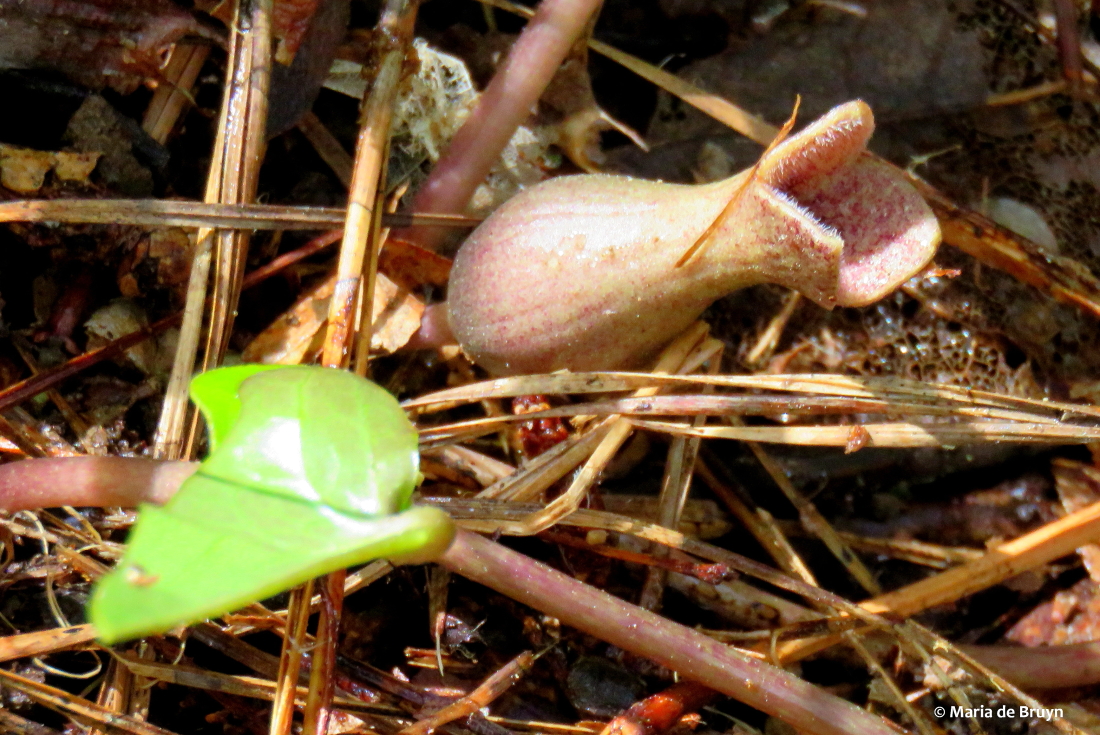
Our first flowers were the not-yet-open blooms of a Southern arrowwood (Viburnum dentatum). We passed numerous black and yellow millipedes on the paths and then found another millipede species (Narceus americanus) curled up next to a little brown jug (also known as arrowleaf heartleaf, Hextastylis arifolia var arifolia).

millipede IMG_3052© Maria de Bruynlittle brown jug IMG_3048© Maria de Bruyn

We came across other nice specimens of the plant, including one with four small flowers.

little brown jug IMG_3138© Maria de Bruynlittle brown jug IMG_3141© Maria de Bruyn

The painted buckeye trees (Aesculus sylvatica) were blooming profusely with their greenish-yellow flowers.

painted buckeye IMG_3070© Maria de Bruynpainted buckeye IMG_3492© Maria de Bruyn


Eastern spring beauty IMG_3089© Maria de Bruyn


Clusters of Eastern spring beauties (Claytonia virginica) were in their vicinity.
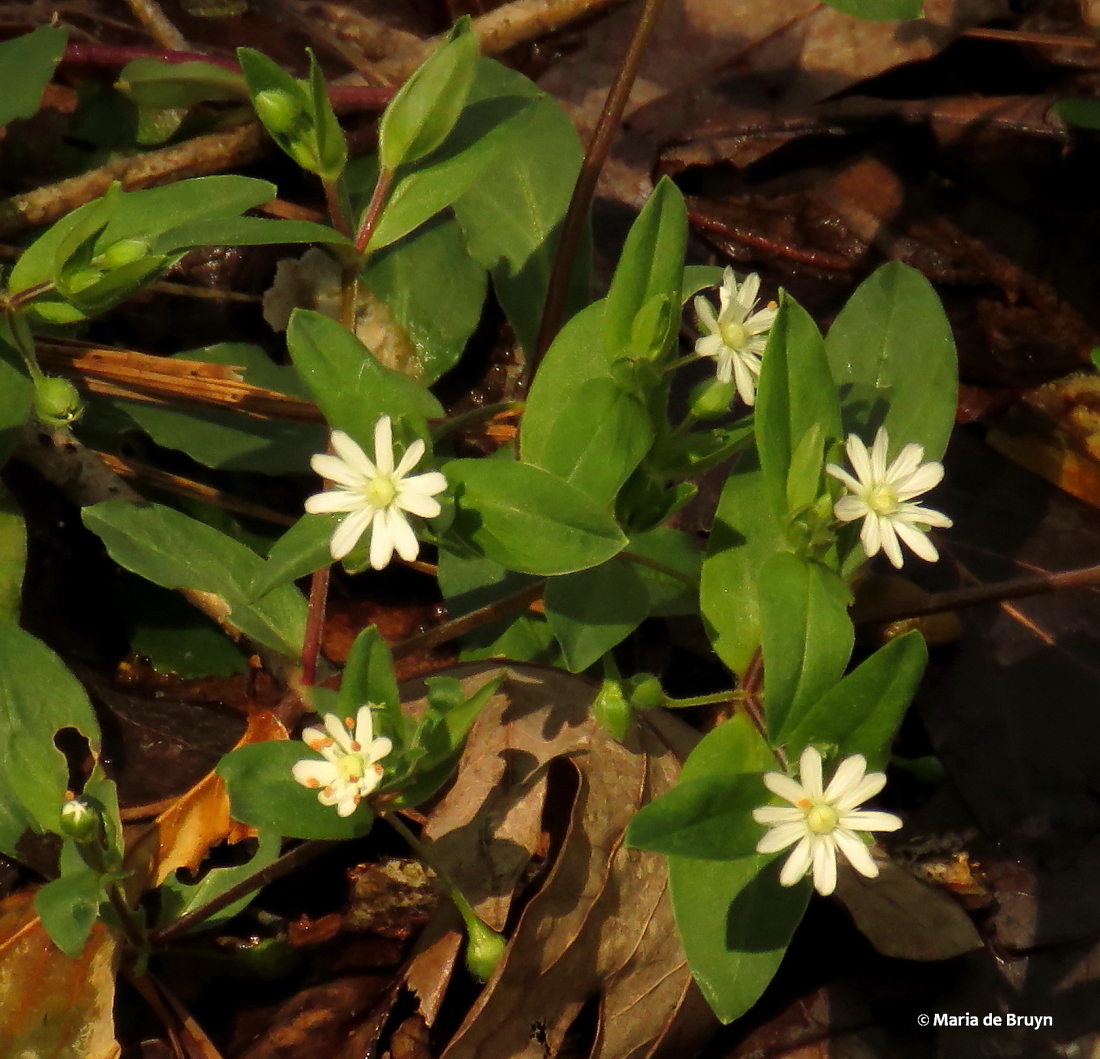


star chickweed IMG_3095© Maria de Bruyn


Some of the star chickweeds (Stellaria pubera) were near another white bloom, the rue anemones (Thalictrum thalictroides).


rue anemone IMG_3110© Maria de Bruyn rue anemone IMG_3109© Maria de Bruyn

Both the trout lilies (Erythronium americanum) and cranefly orchids (Tipularia discolor) had already bloomed, the trout lilies about 7-10 days ago and the orchids in the winter (when there are no leaves). One orchid had left behind its brown stalk as a witness to the flower that had seen the light.
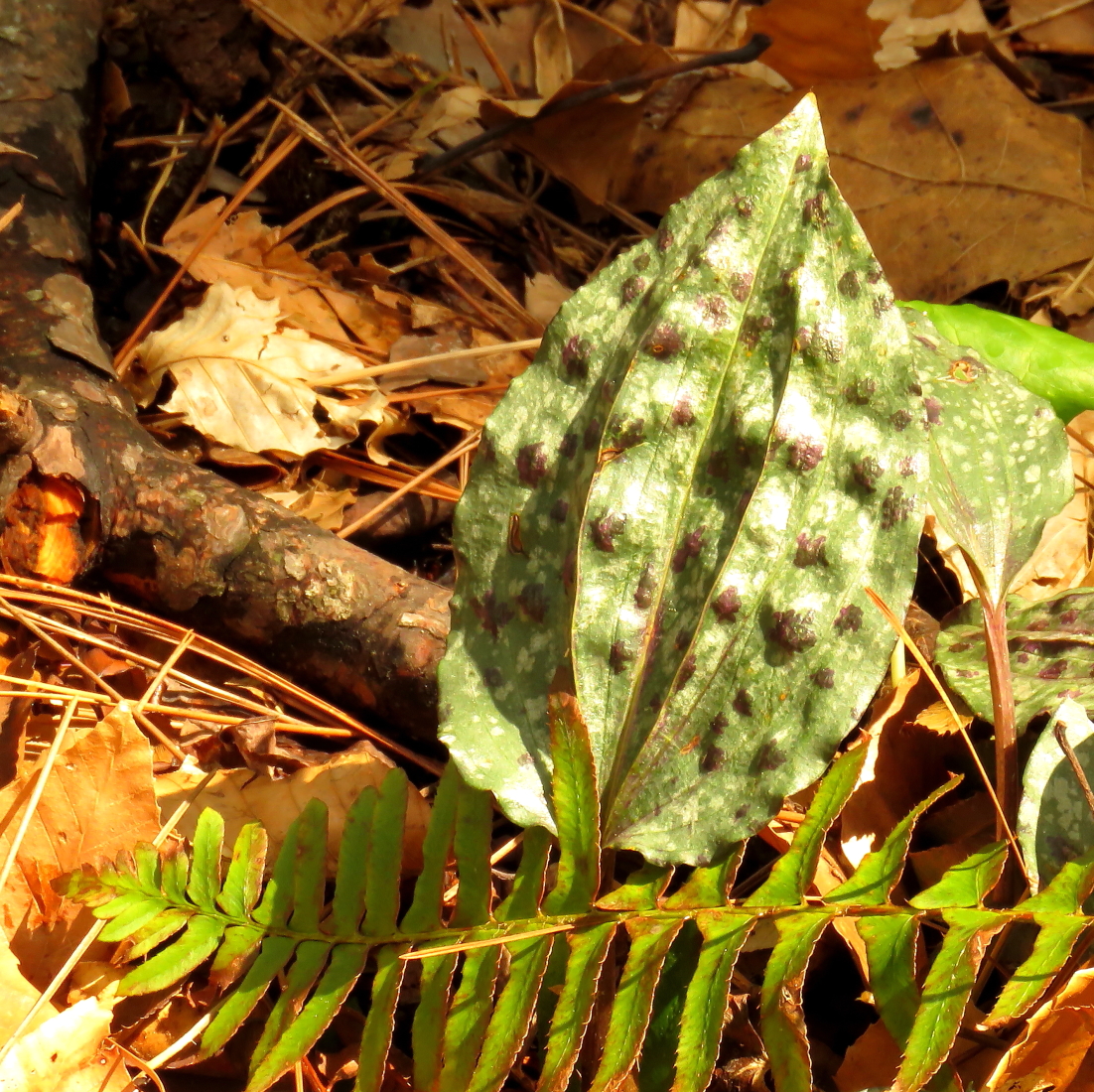
trout lily IMG_3156© Maria de Bruyncranefly orchid IMG_3148© Maria de Bruyn

Tiny bluets (Houstonia pusilla) in clusters here and there provided some variation from the ubiquitous white blooms that we were seeing. The mayapples (Podophyllum peltatum) were just emerging and it will be a little while before we see their flowers emerge underneath the leafy umbrellas.

tiny bluet IMG_3118© Maria de Bruynmayapple IMG_3196© Maria de Bruyn


Bolin creek IMG_3165© Maria de BruynThe creek was running high and fast and we debated on crossing it at the first branch. Only two of us had wellingtons (and one lady found that her boots leaked); others were wearing running and walking shoes but everyone made it across by using stones, canes and walking sticks that some of our group had brought along. Our immediate reward was a view of a gorgeous pinxterbloom wild azalea (Rhododendron periclymenoides).

pinxterbloom azalea IMG_3174© Maria de Bruyn

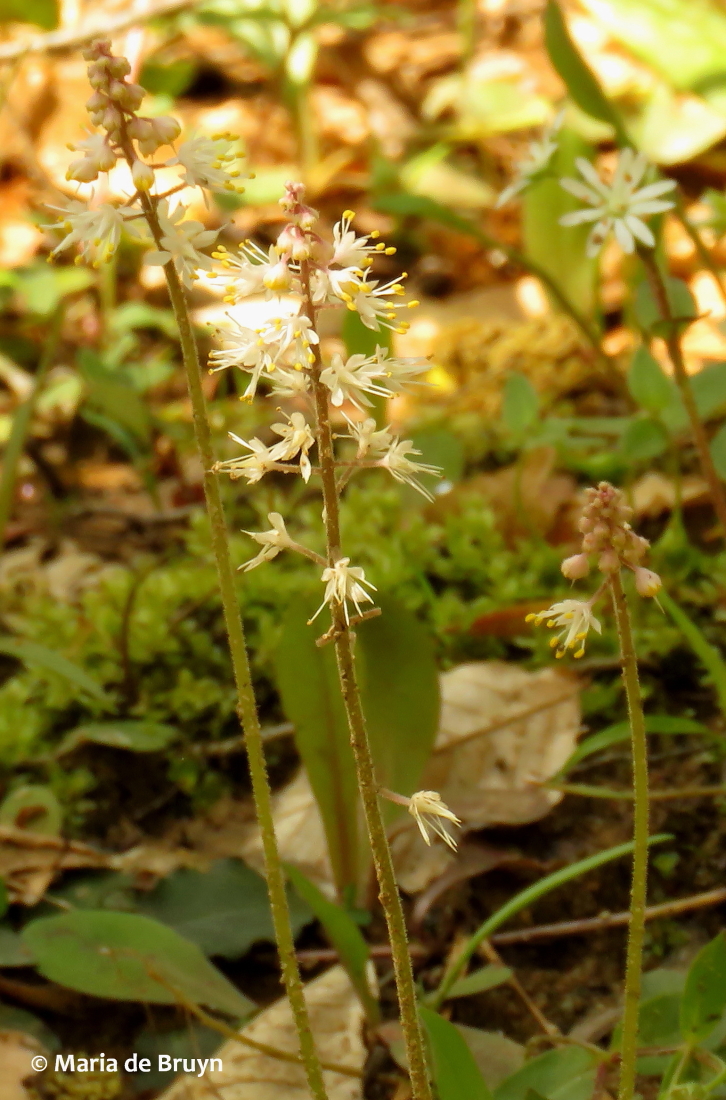
foamflower IMG_3180© Maria de Bruyn


A sighting of a foamflower (Tiarella cordifolia), followed by a cutleaf toothwort (Cardamine concatenata) provided a bit more color, as did the littleleaf buttercup (Ranunculus abortivus), although its blooms were not fully expanded yet.
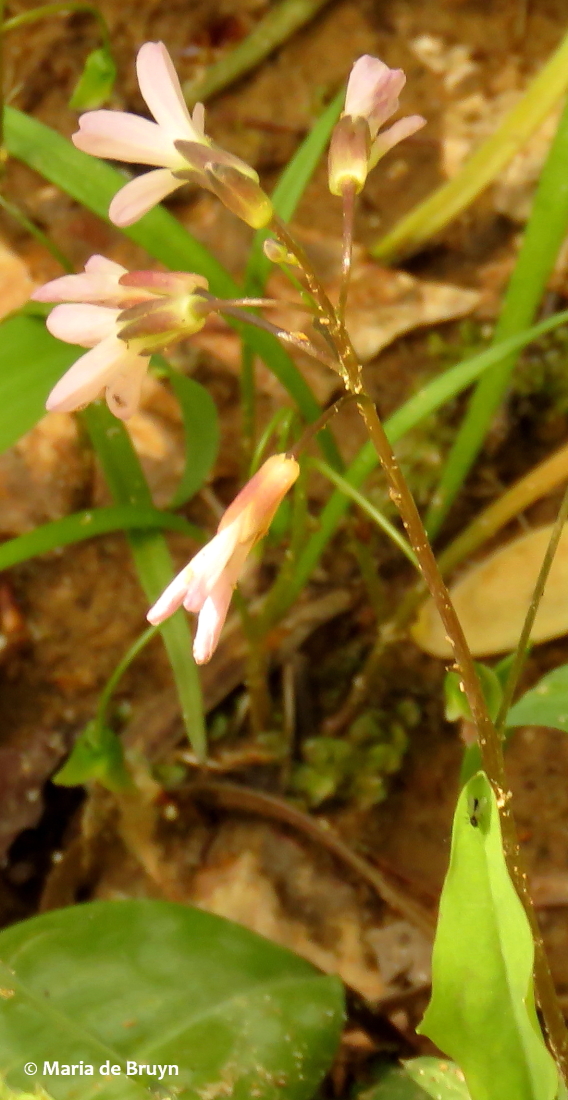
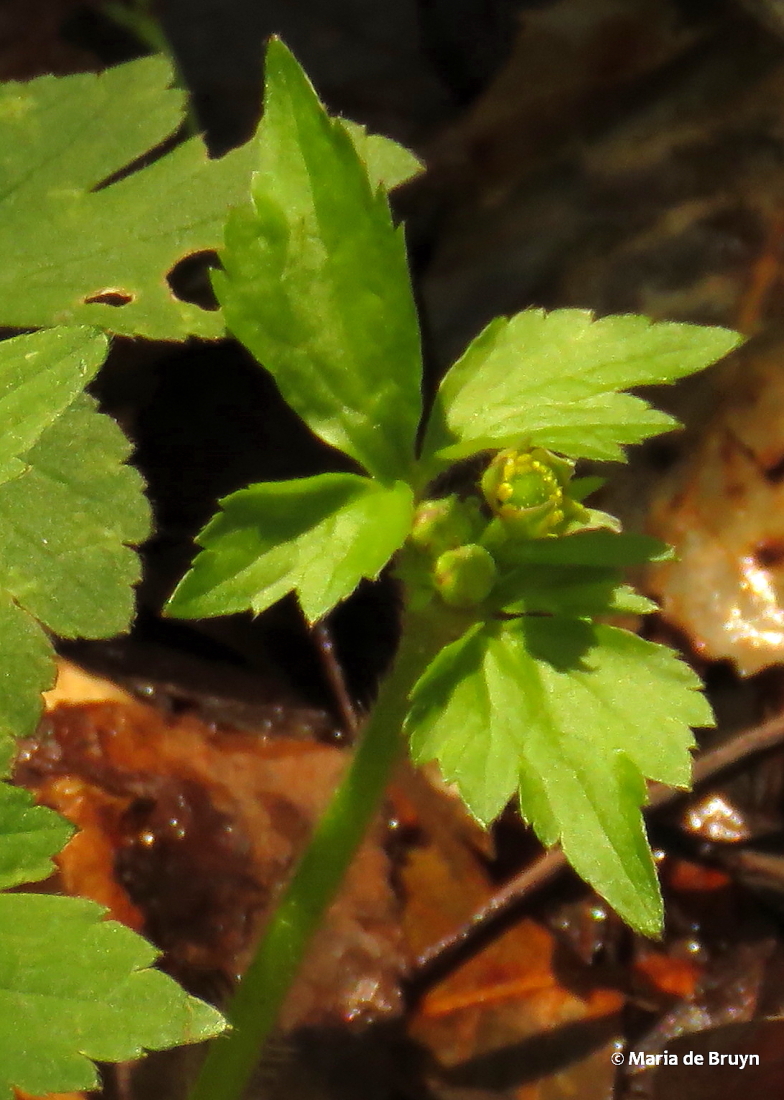
 

cutleaf toothwort IMG_3187© Maria de Bruynlittle leaf buttercup IMG_3092© Maria de Bruyn

Only the jigsaw puzzle-like leaves of the bloodroot (Sanguinaria canadensis) were in evidence as that flower had stopped blooming already. A tufted titmouse singing overhead (Baeolophus bicolor) gave us a nice little concert as compensation.

bloodroot IMG_3198© Maria de Bruyn tufted titmouse IMG_3201© Maria de Bruyn

Eastern tiger swallowtail IMG_3428© Maria de Bruyn resAnd then we came across our three surprises of the walk. We had already seen several Eastern tiger swallowtail butterflies (Papilio glaucus) fluttering by in one’s and two’s and we remarked how welcome they were because of the paucity of butterflies we had had the past couple years. But then across another branch of the creek, we spotted some 12-20 butterflies congregating over some delicacy of unknown (to us) origin.
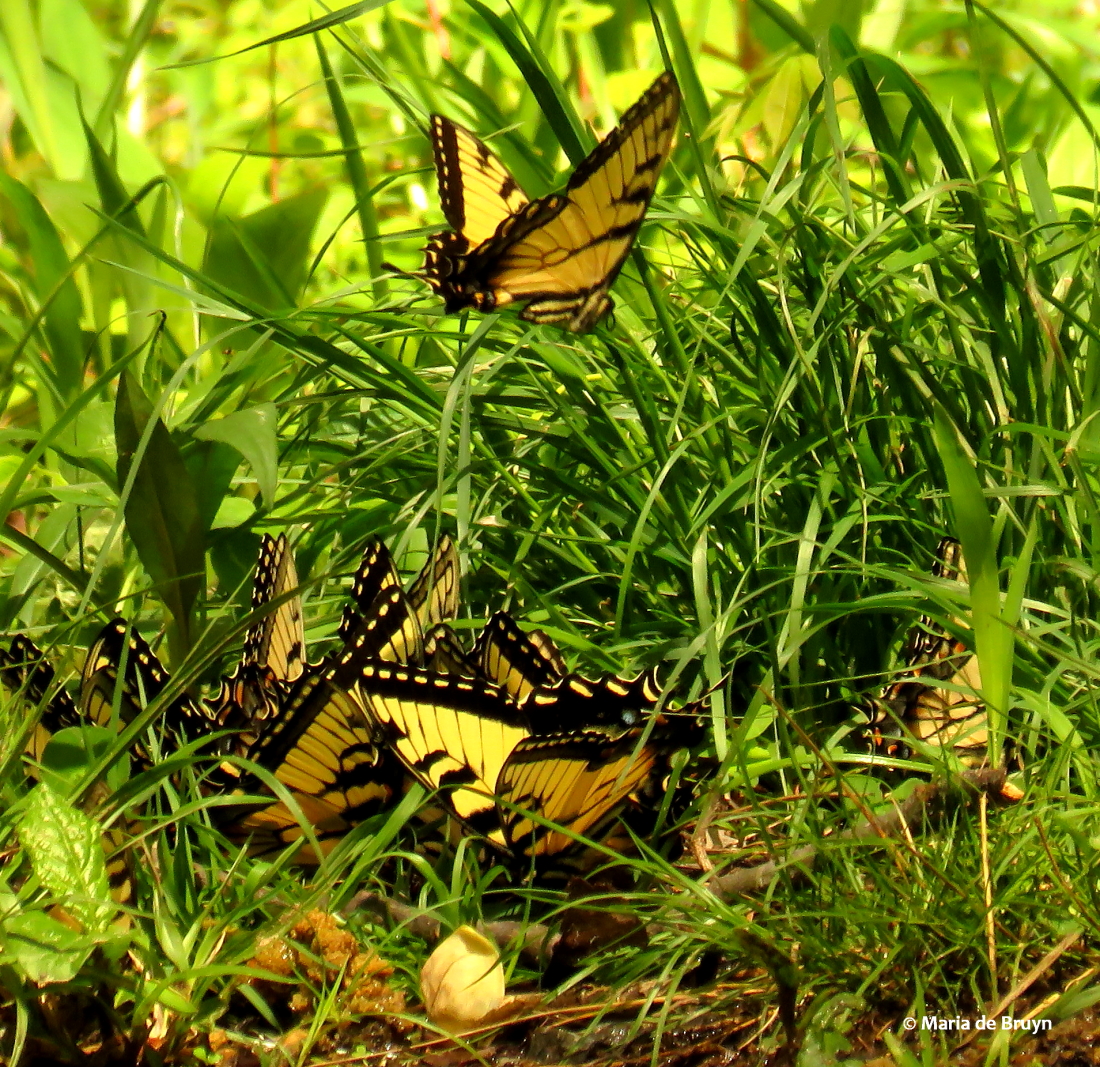
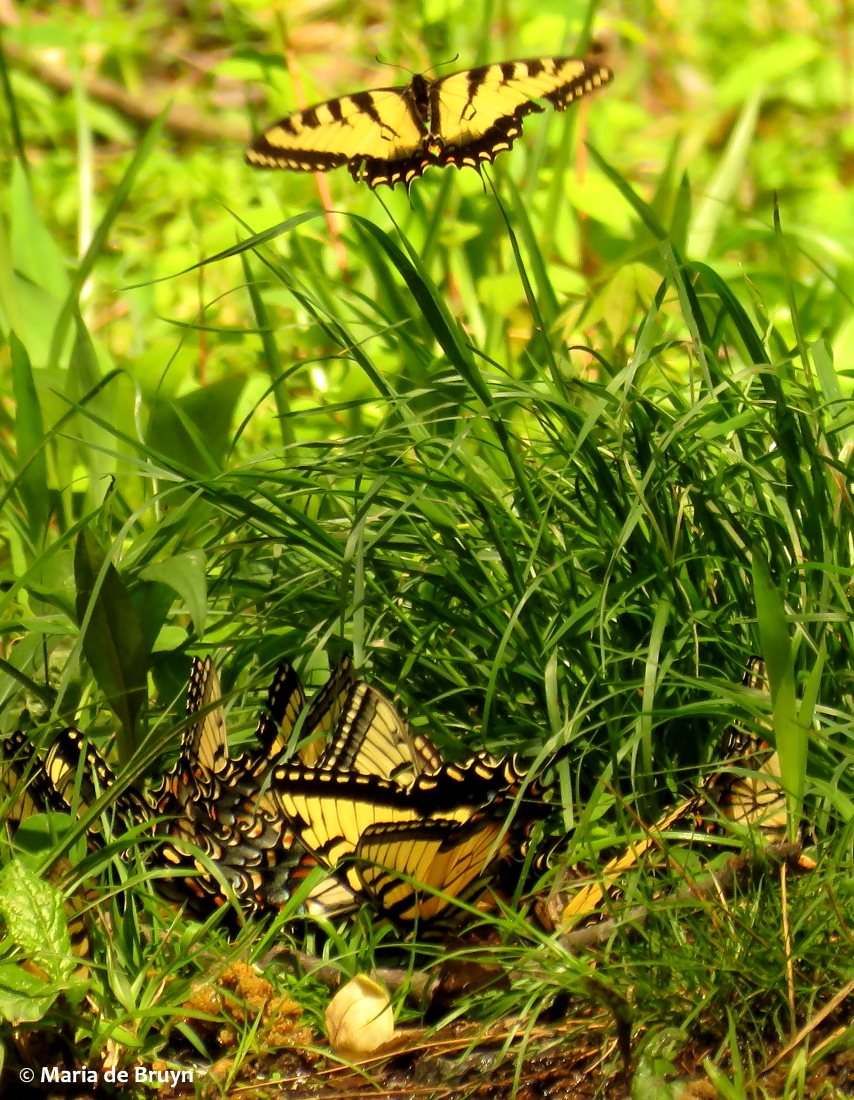
Eastern tiger swallowtail IMG_3259© Maria de Bruyn res Eastern tiger swallowtail IMG_3263© Maria de Bruyn res

The water was fairly deep and flowing fast, so we did not cross but we surmised that someone’s dog had left a pile of poo to provide a mud-puddling butterfly feast.

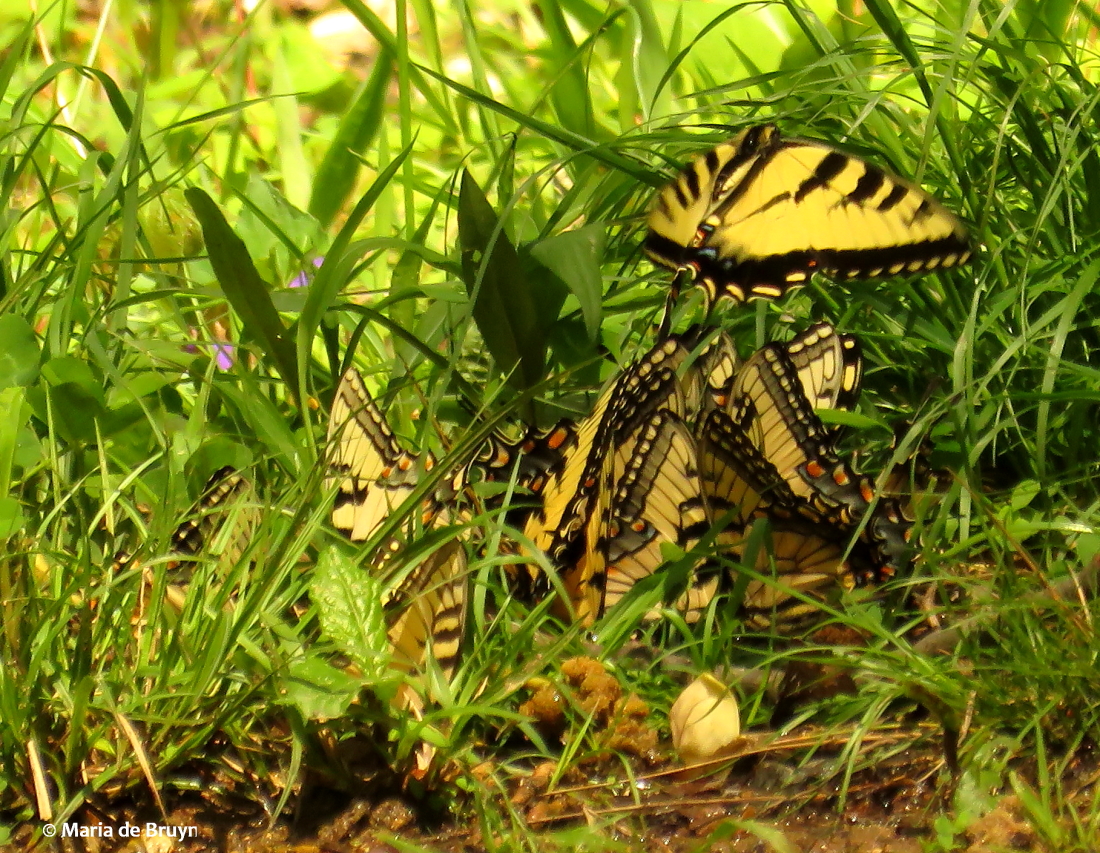
Eastern tiger swallowtail IMG_3443© Maria de Bruyn res Eastern tiger swallowtail IMG_3447© Maria de Bruyn res

Then we noticed on a rock just below the bank under the butterflies where two Northern watersnakes (Nerodia sipedon) were having a little rest.
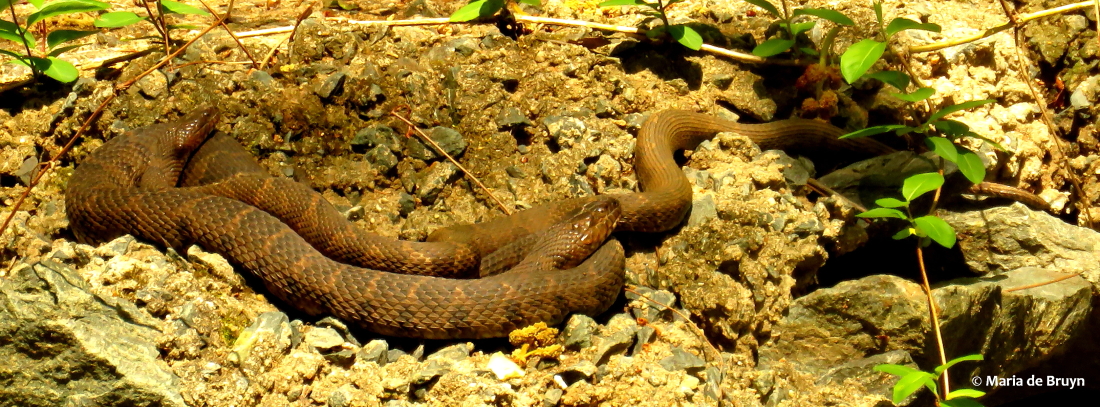
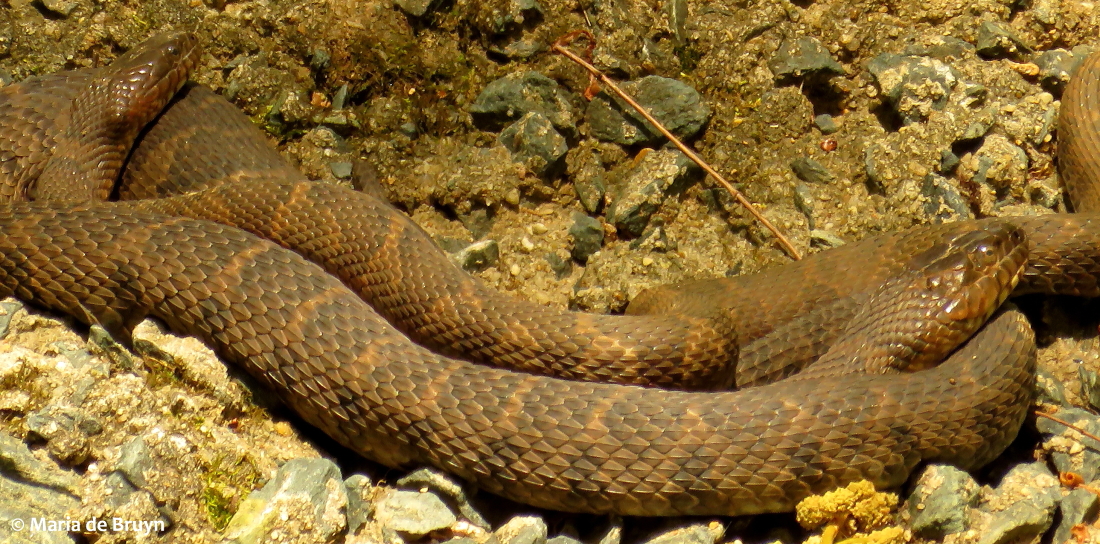
northern watersnake IMG_3406© Maria de Bruyn

northern watersnake IMG_3408© Maria de BruynThey were a bit dull in color, which became quite obvious when compared to a third northern watersnake that we spotted on a rock closer to the creek – perhaps a younger individual who had decided that a sunbath was just the thing for a Saturday afternoon.
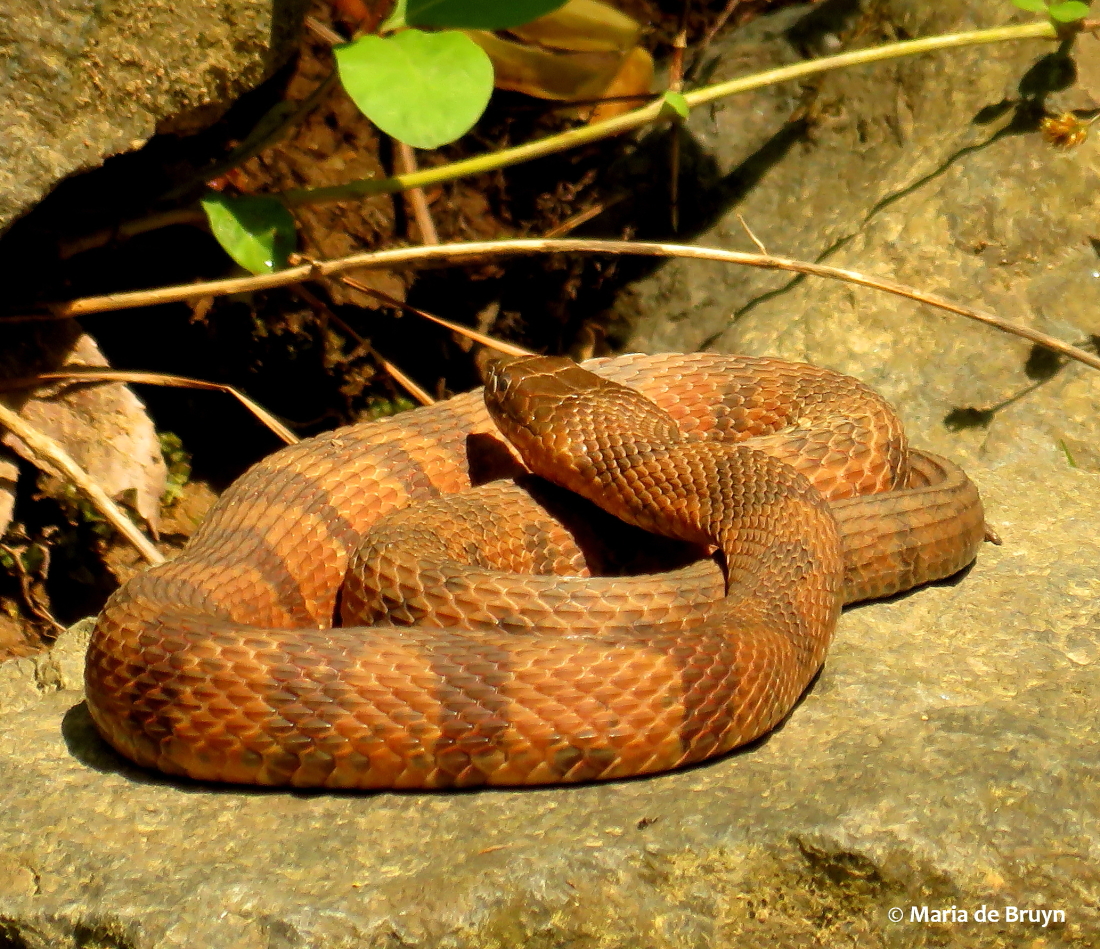
northern watersnake IMG_3241© Maria de Bruyn northern watersnake IMG_3349© Maria de Bruyn

While we were all enamored with the flowers we’d seen, the butterflies and snakes gave our walk a special feel.
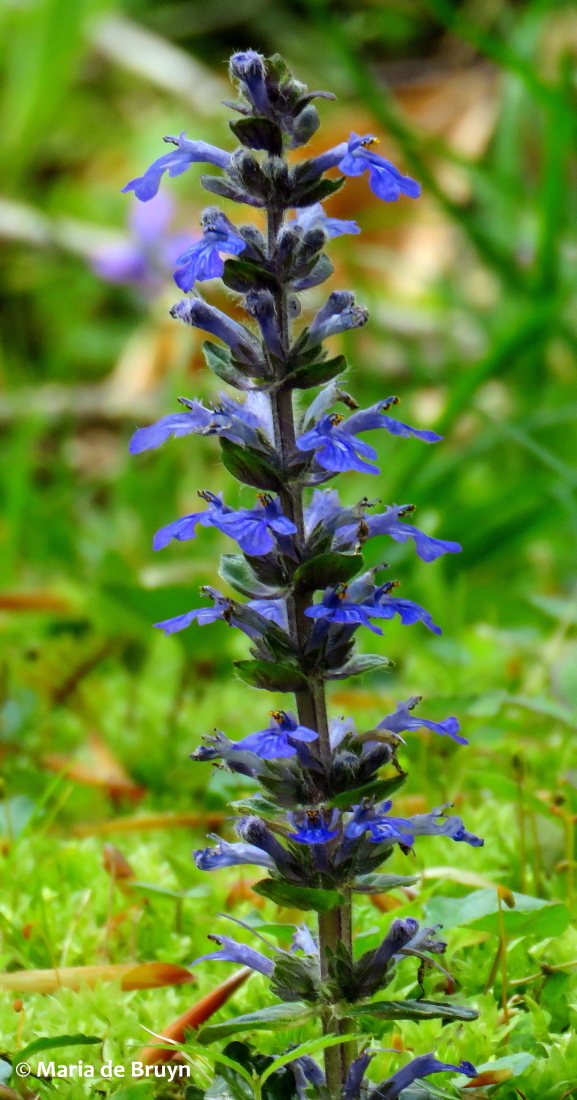
bugleweed IMG_3501© Maria de Bruyn


On our return trip through the woods to reach our transportation, we came across an invasive plant, the bugleweed (Ajuga reptans). We had already seen plenty of Japanese wisteria, mahonia, privet and autumn olive and agreed that another volunteer day to weed out some invasives would be a good contribution to the preserve. But that is for the future – right now, we are happy to think back to our surprise spottings!
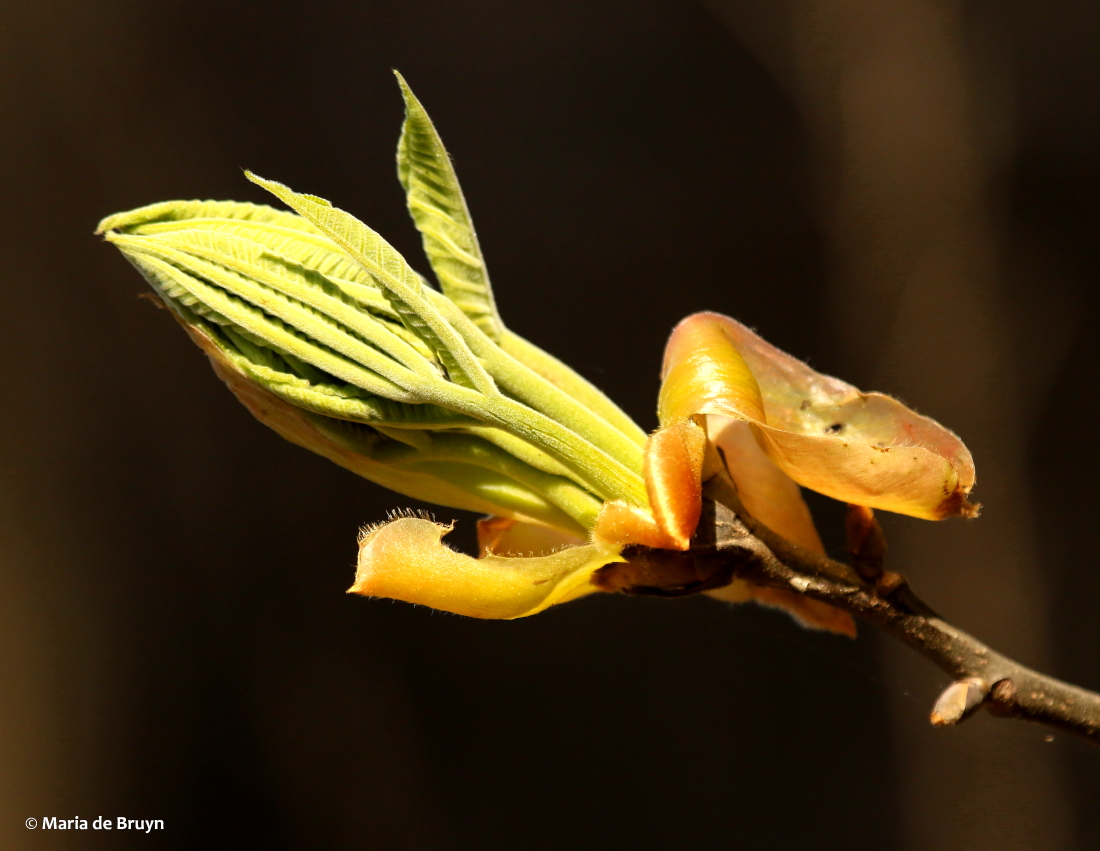
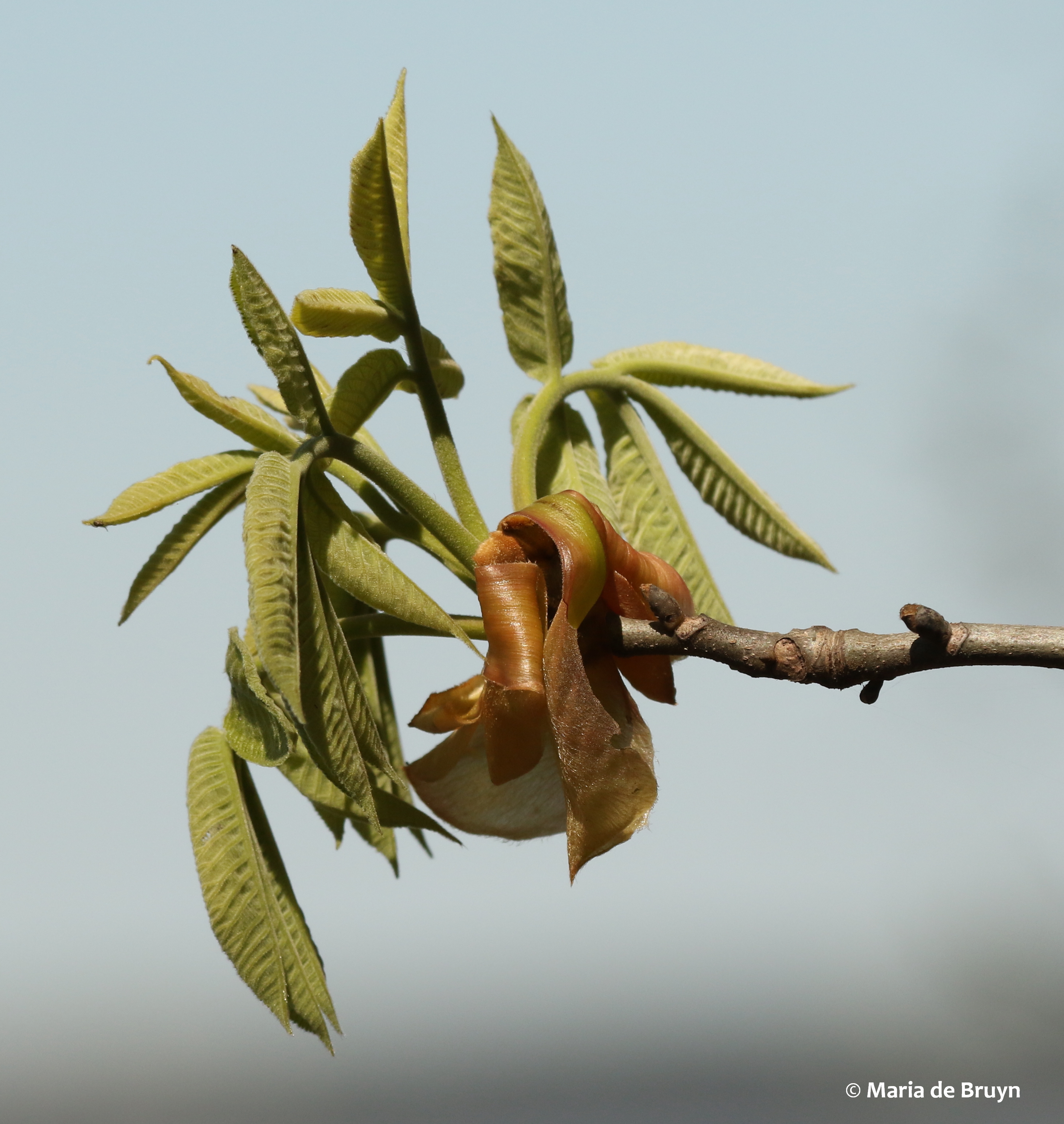
April’s fool – this is NOT a flower!


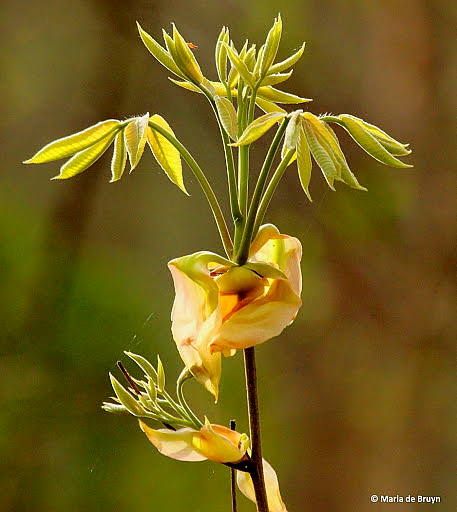
shagbark hickory I77A7704© Maria de Bruyn resDuring North Carolina’s early spring weeks, visitors to wooded areas may be delighted by newly emerging shagbark hickory saplings (Carya ovata).

shagbark hickory I77A7683© Maria de Bruyn

The slender young trees show off their new leaves at the ends of branching twigs, creating lovely patterns against the sky and other foliage. Eventually, they may reach a height of some 100 feet (30 meters) and, if not felled by storms, floods or other means, they may get as old as 350 years.

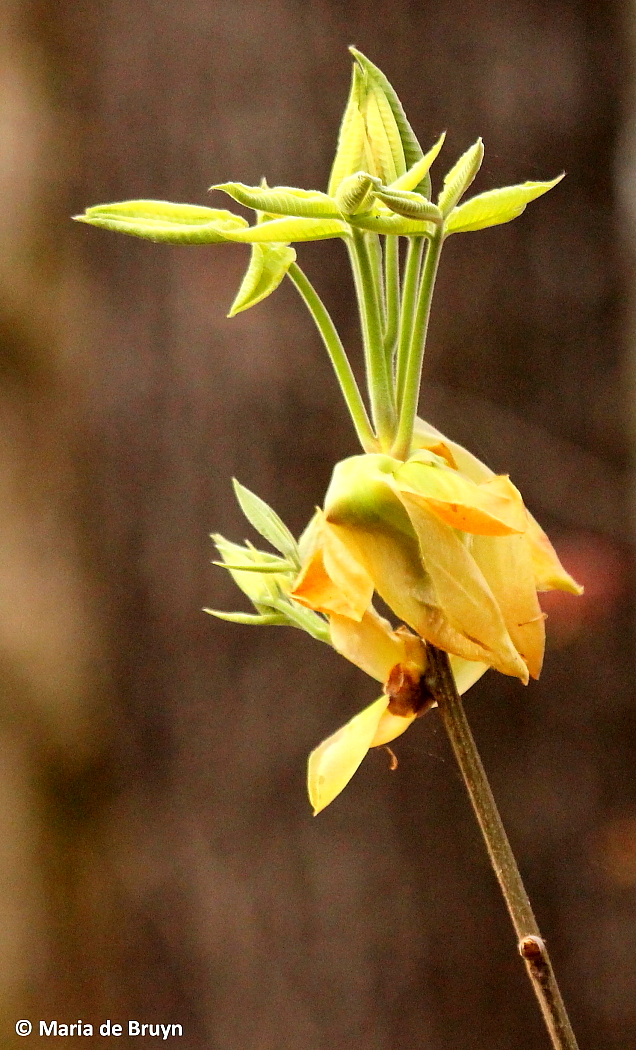
When I first saw these little beauties, I thought that they had wonderful spring flowers in hues of orange, rose and yellow. The “flowers” were at the base of clusters of pinnate leaves and they were often quite lovely.

shagbark Noah Shagbark hickory tree IMG_0185© Maria de Bruyn

It turns out that I had been fooled not only on April 1st, but the whole spring season in past years. Only recently did I find out that the shagbarks don’t have spring flowers at all – the curling petals are actually the scales of the buds from which the leaves emerge! The male and female flowers appear in late summer and early fall.

shagbark hickory I77A7708© Maria de Bruyn res

When the shagbark reaches the age of about 10 years, it begins to produce hickory nuts, reaching its full nut-bearing potential around the age of 40 and continuing to produce until about 100 years. The nuts are eaten by many species, including humans, squirrels, raccoons, chipmunks, black bears, mice, foxes and birds.

shagbark hickory I77A7679© Maria de Bruyn res

The shaggy bark, found in mature but not young trees, is used to help flavor syrups. I must admit that these trees attract my attention much more in the spring than other times of year – those flower-like bud scales are gorgeous!


Shades of brown at the end of winter

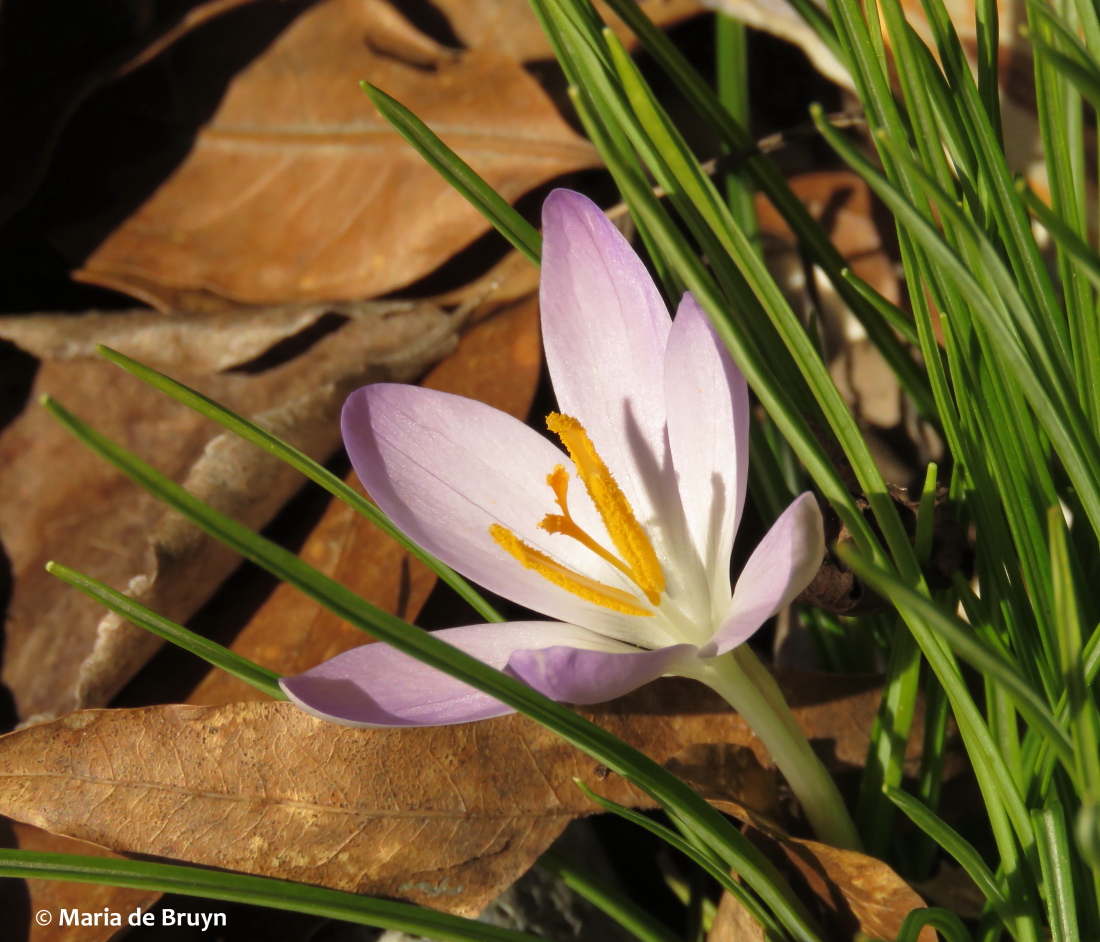
As this crocus (Crocuscrocus IMG_2199© Maria de Bruyn) shows, spring is coming to our part of North Carolina and the last days of winter have not infrequently been warm and sunny. This led me to take a break a couple weeks ago for a walk in our neighborhood woods.

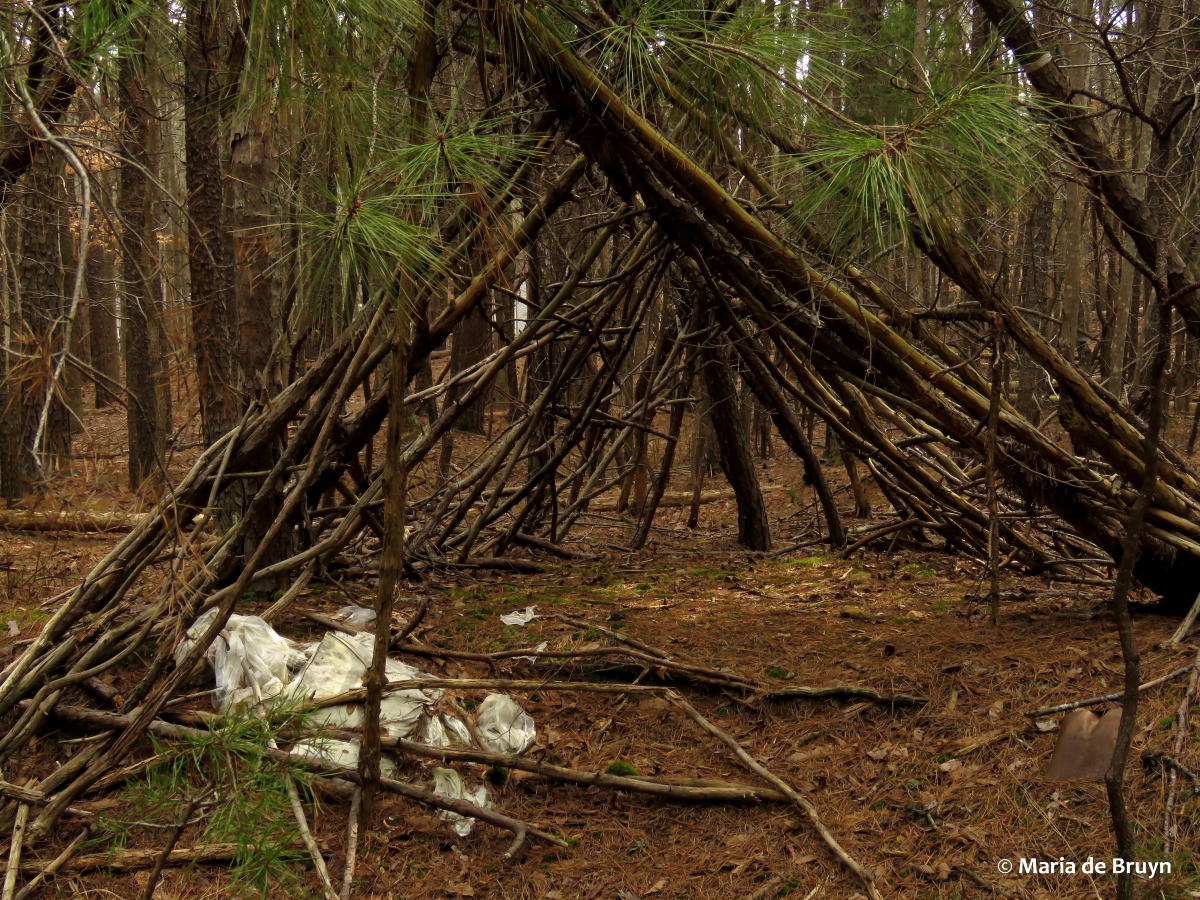
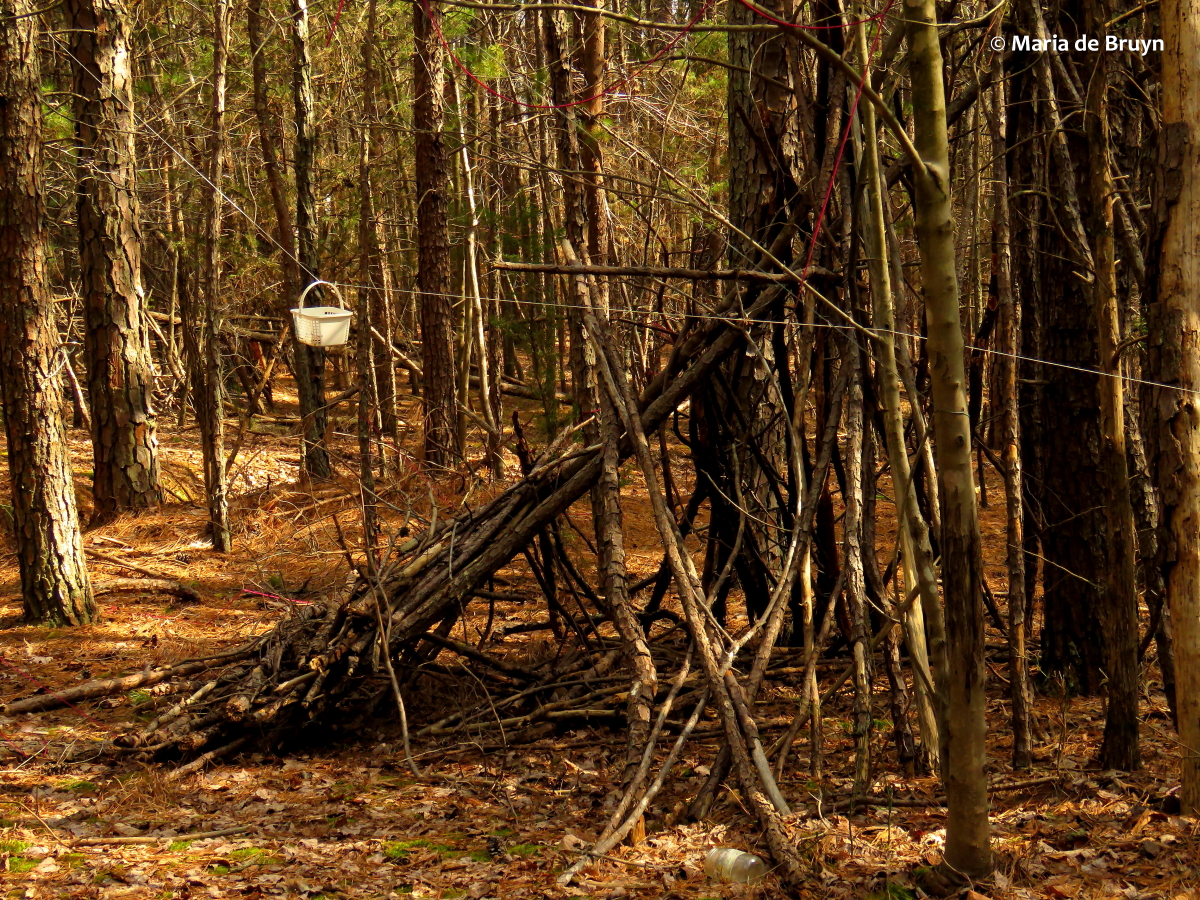
The sunlight filtered through the trees, creating lots of shadows and sunlit patches on the forest floor. I was looking to see if the natural shelters constructed by homeless people still were up and found three. None appeared to have been made or used recently.

homeless shelter IMG_2360© Maria de Bruyn res     homeless shelter IMG_2351© Maria de Bruyn res

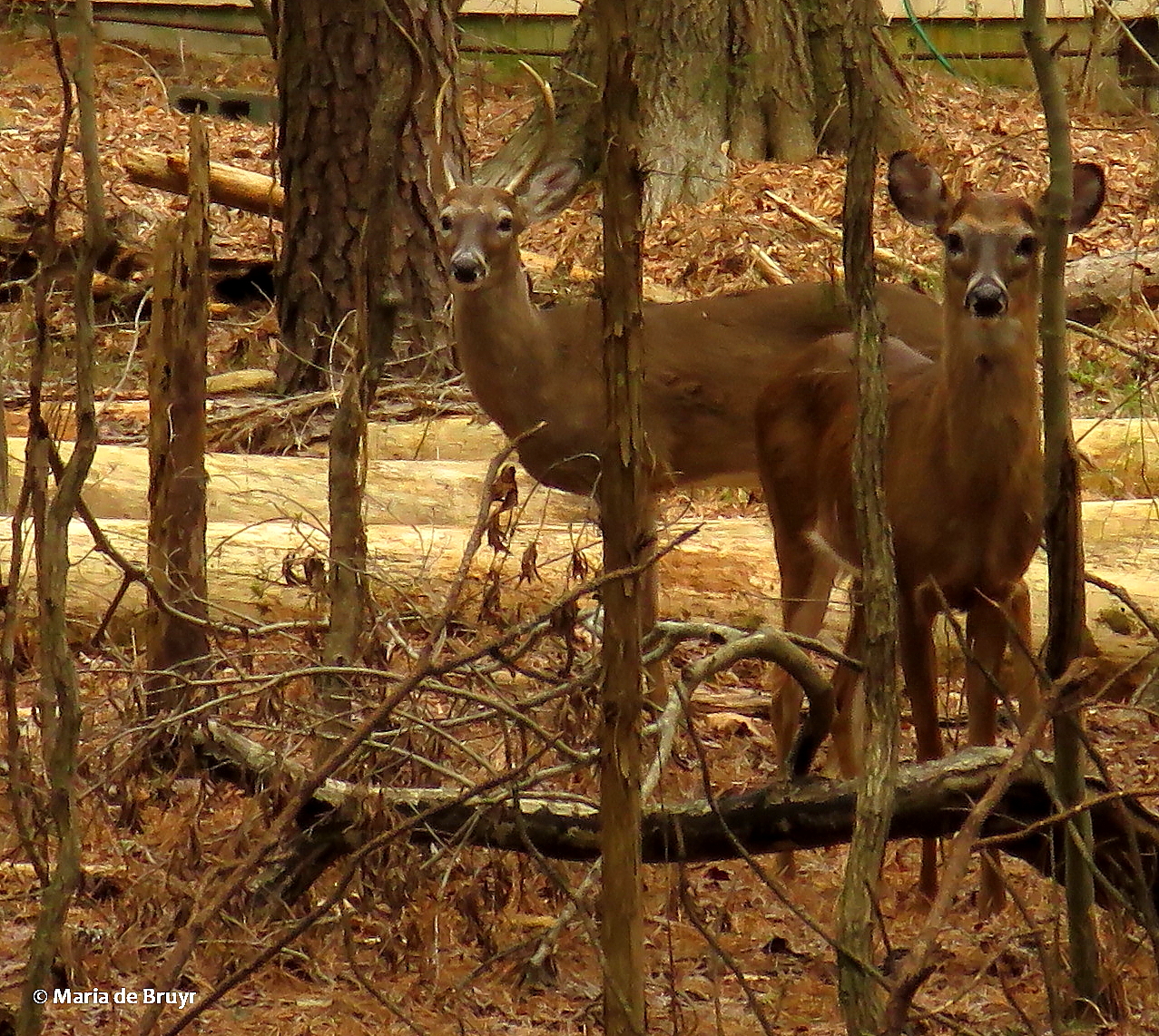
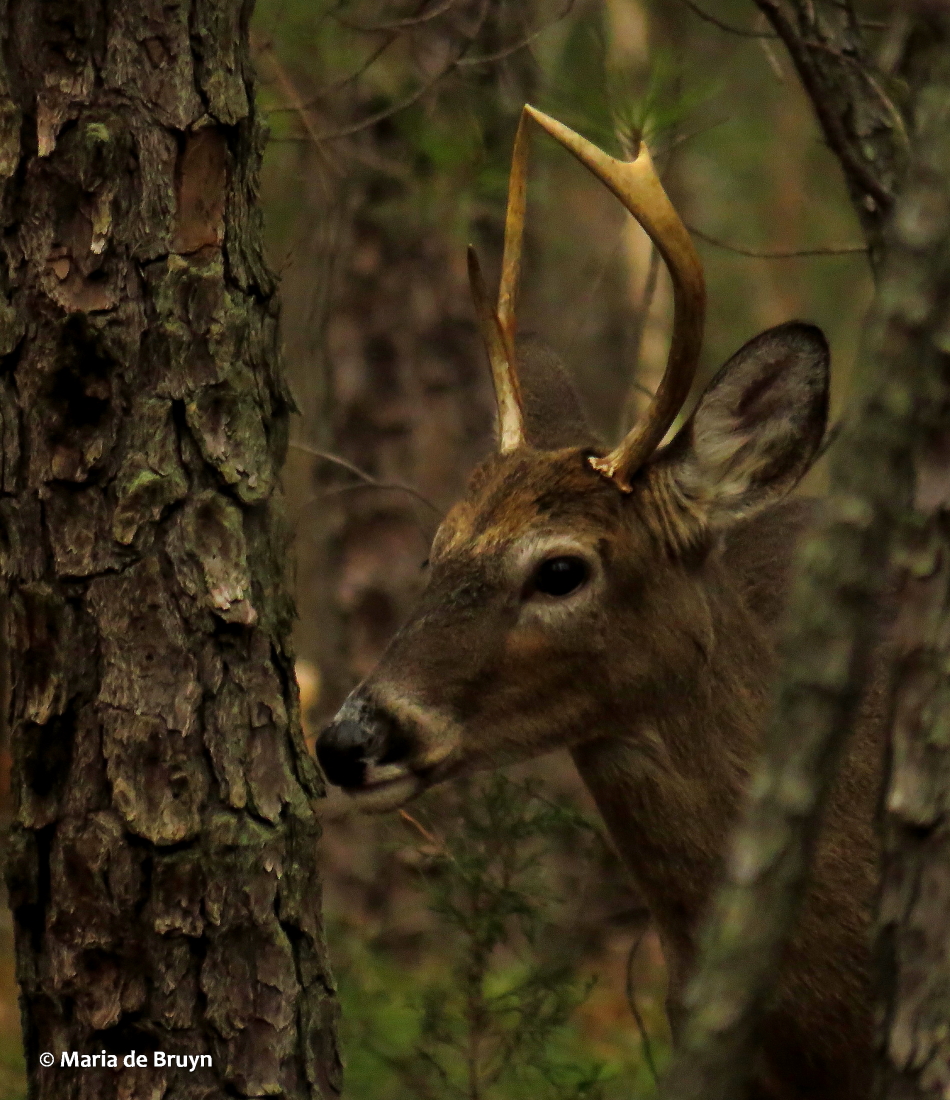
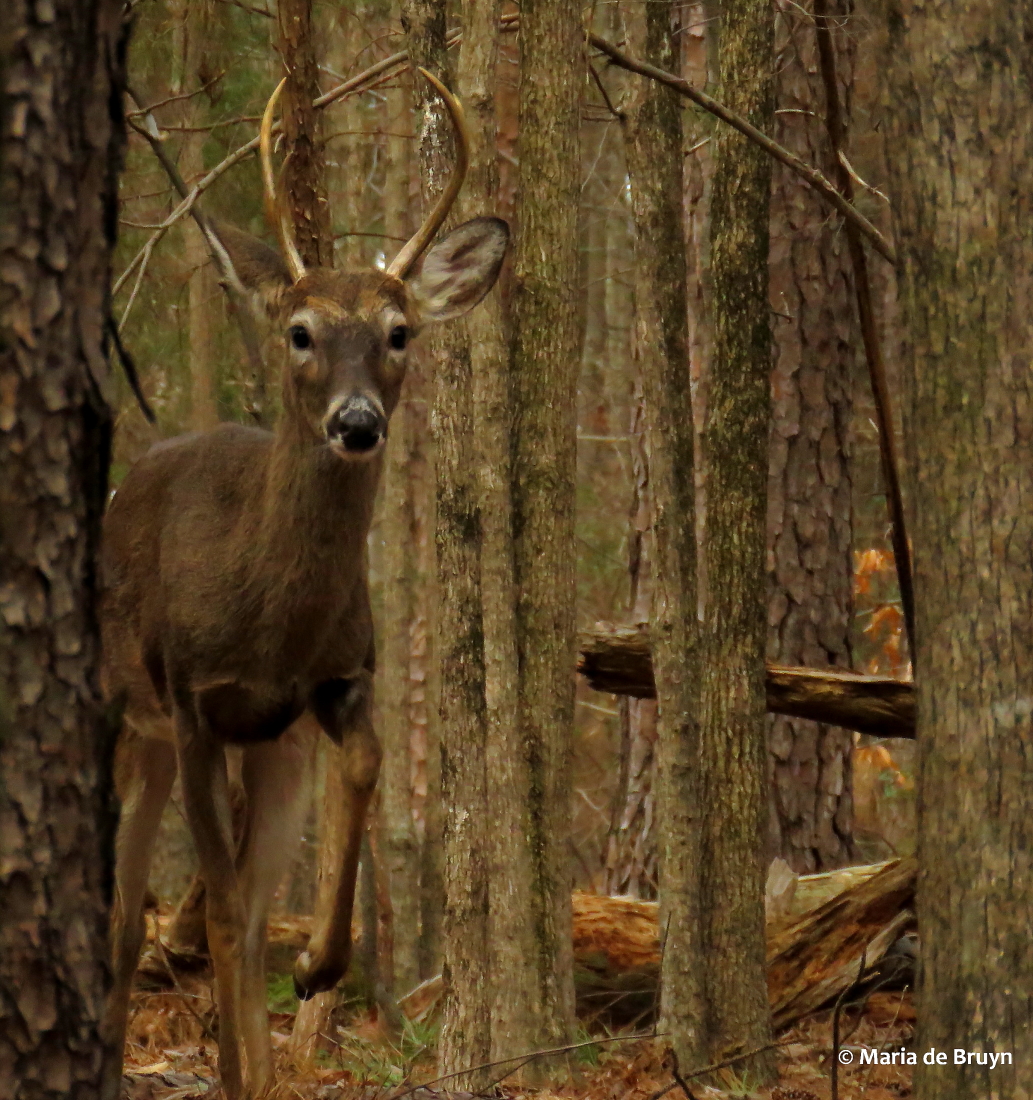
white-tailed deer IMG_2374© Maria de BruynAs I was walking around one to photograph it, my footsteps and movement rustled up some other neighborhood residents, who had been taking a rest at the edge of the woods. Four white-tailed deer (Odocoileus virginianus) got to their feet and gave me some looks of irritation at having disturbed their R&R.

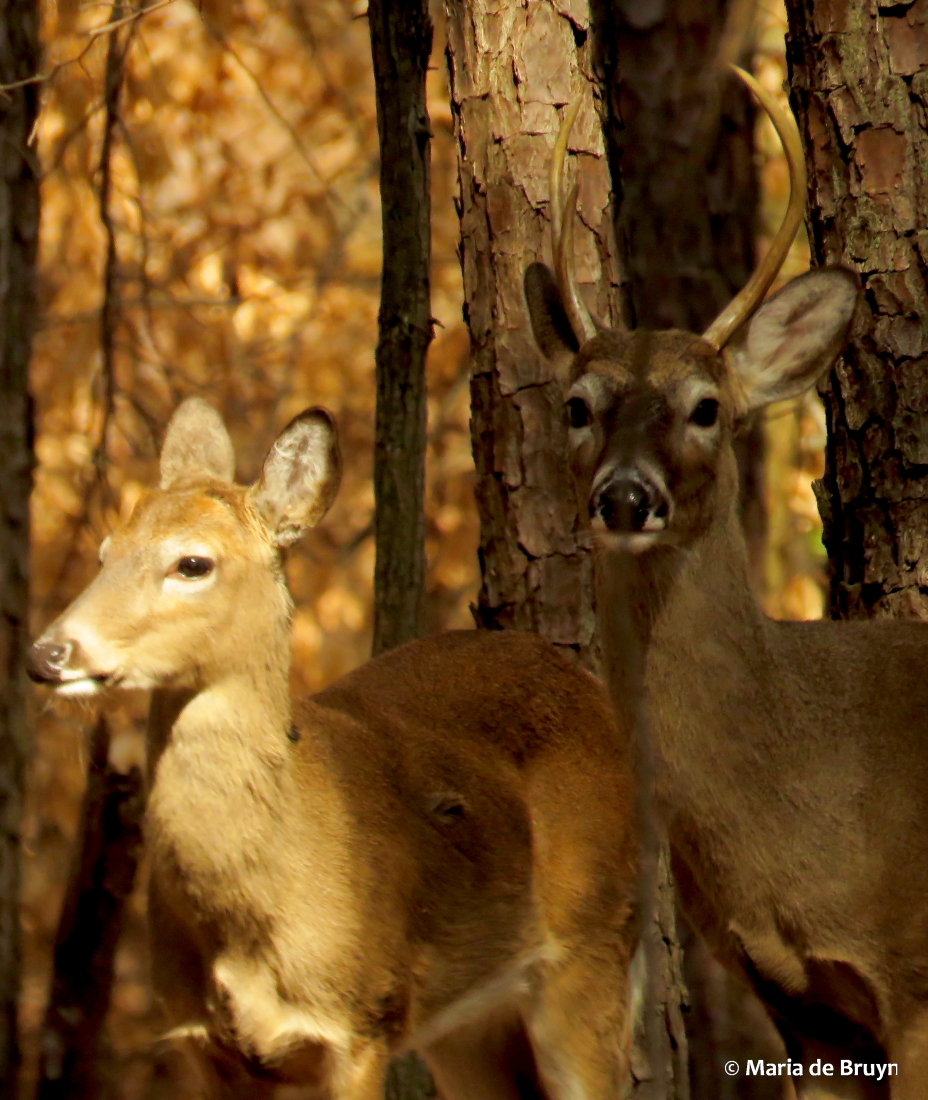
As I walked another way, they began keeping pace with me at a distance. I thought they would just choose another patch to lie in but, for some reason, they decided to see where I was going. At first, I thought it was a buck and some does.

white-tailed deer IMG_2440© Maria de Bruynwhite-tailed deer IMG_2413© Maria de Bruyn


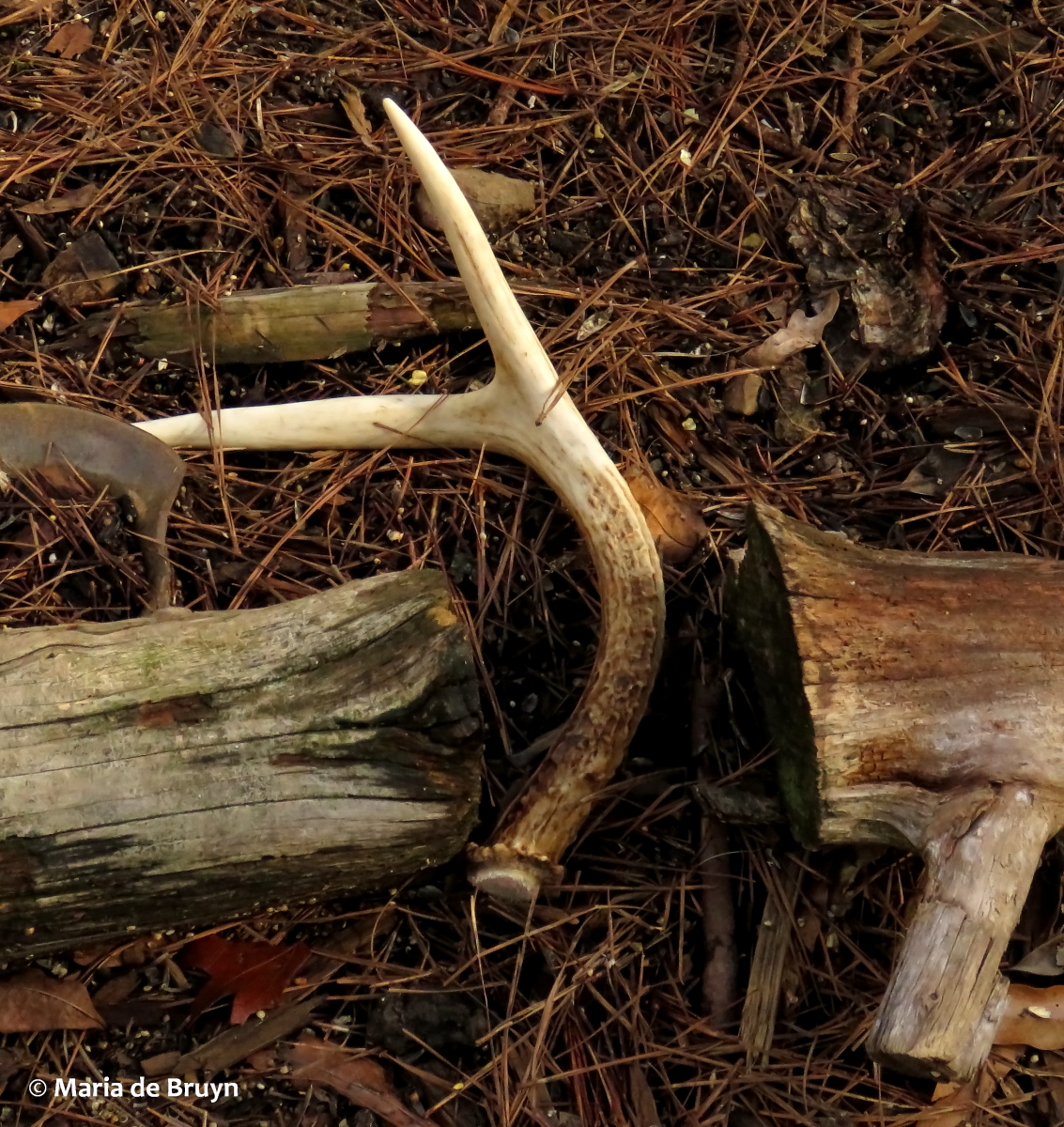
deer antler IMG_1211© Maria de Bruyn resLater, I realized it was a group of bucks, some of whom had already shed their antlers. I kept a lookout for antlers but didn’t see any. However, one local buck had gifted me with one in my front yard recently.

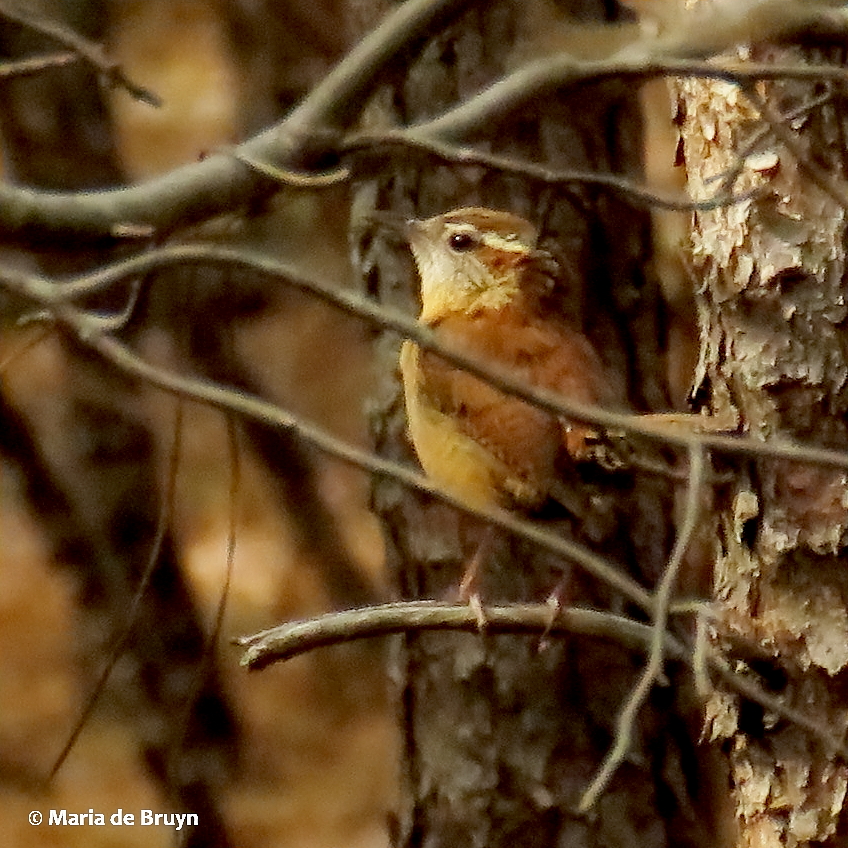
For some odd reason, I rarely see or hear birds in this particular woodsy area, but that day I encountered a Carolina chickadee (Poecile carolinensis) singing away.

Carolina chickadee IMG_2469© Maria de Bruyn


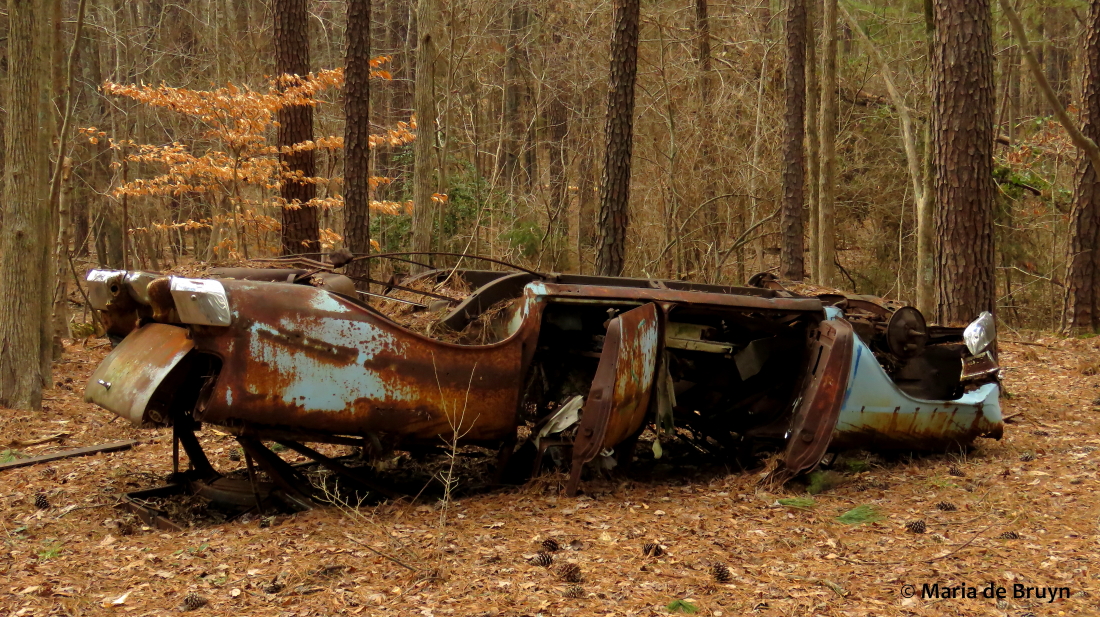
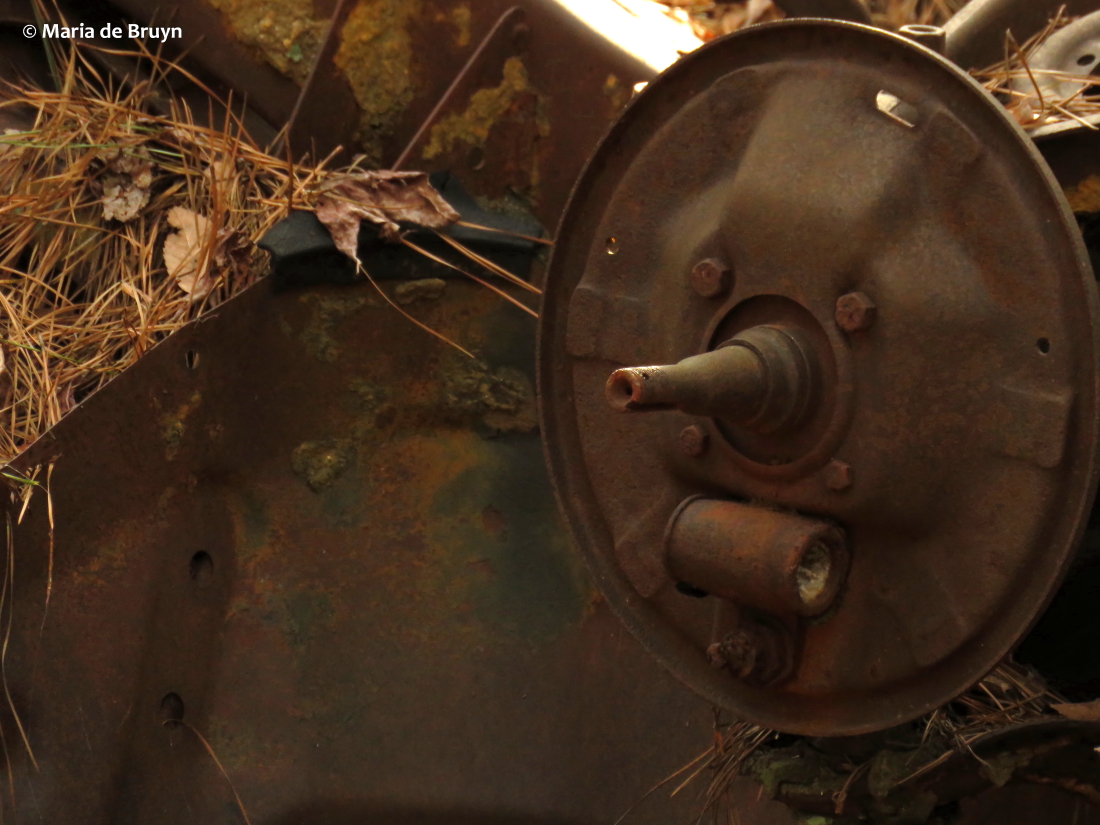
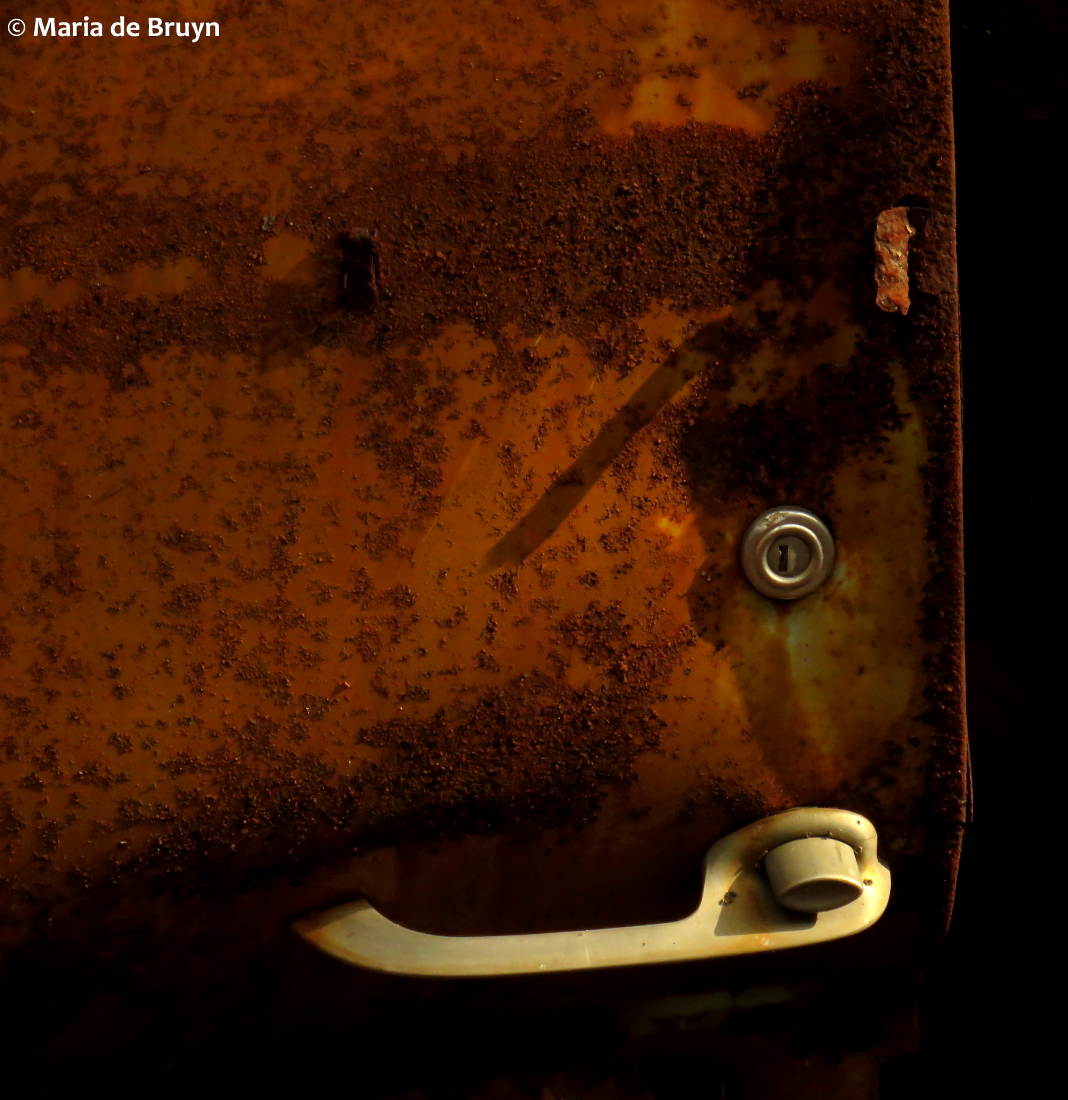
My next stop was to see how the two abandoned cars in these woods were faring. They must have been left here decades ago and have been like evolving metal sculptures as the scouring winds, sun, rain and ice change their appearance.


car IMG_2525 © Maria de Bruyn

car IMG_2558© Maria de Bruyn RES  car IMG_2582© Maria de Bruyn

white-tailed deer IMG_2496 © Maria de BruynAs I was taking photos of the cars, I heard movement behind me and there was the group of deer, still keeping tabs on me. The big male who still had antlers stamped his foot to warn me off, even though I hadn’t turned in their direction. Given his wariness, I certainly wasn’t going to go charging up to them for close-ups!white-tailed deer IMG_2489© Maria de Bruyn

hermit thrush IMG_2614© Maria de Bruyn


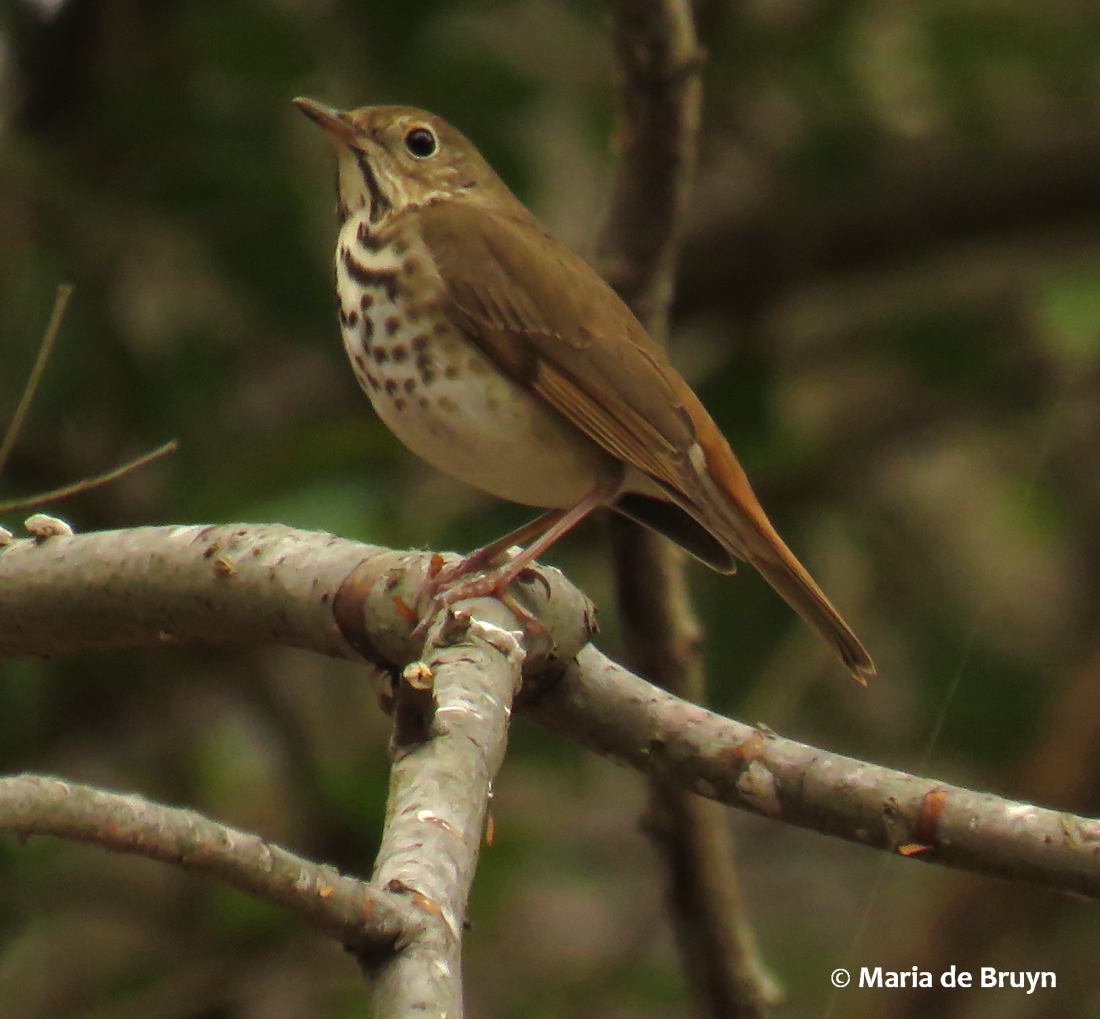
My walk ended with some surprising good views of a hermit thrush (Catharus guttatus). They rarely come to my yard so it was lovely to see one in the woods that day. They will likely be migrating soon and we will have new birds to welcome as spring arrives in her full glory. It was a very pleasant winter walk!
Chasing Joseph – excitement evoked by an effervescent bird!


Calliope hummingbird I77A6799© Maria de Bruyn

Birders can be quite enamored with their pursuit of avian species, some making special trips just to see one bird that they haven’t seen before. Such trips may be within an hour or two of their homes, but there are plenty of birders who travel to other (even distant) regions within their own or another country as well. Some people might say they are a bit crazy, but birding is actually one of the sanest ways to appreciate nature.

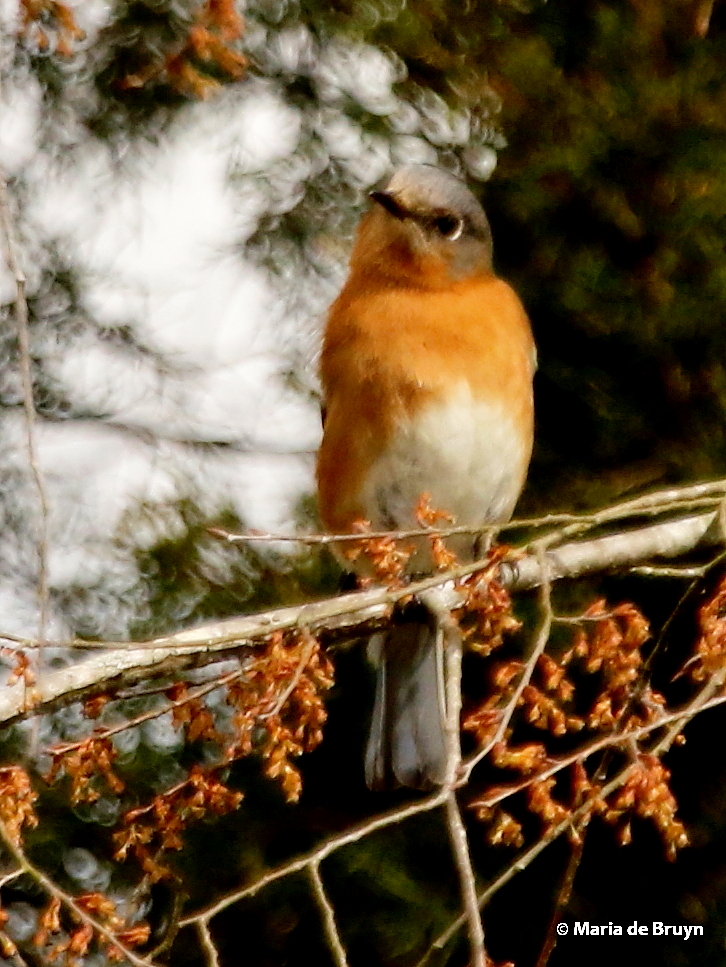
Eastern bluebird I77A6750© Maria de Bruyn cardIt generates knowledge, provides rest and relaxation (well, mostly) and many birders contribute to environmental protection and conservation, even if they restrict themselves to observing local species like Eastern bluebirds (Sialia sialis). In addition, while much is made of the money that hunting fees provide for environmental programs, birders also make economic contributions to society – through donations to environmental protection groups and expenditures on birding supplies, ecotourism, etc. The Audubon Society reports that birders and other wildlife observers spend $916 million in the US state of North Carolina alone each year!

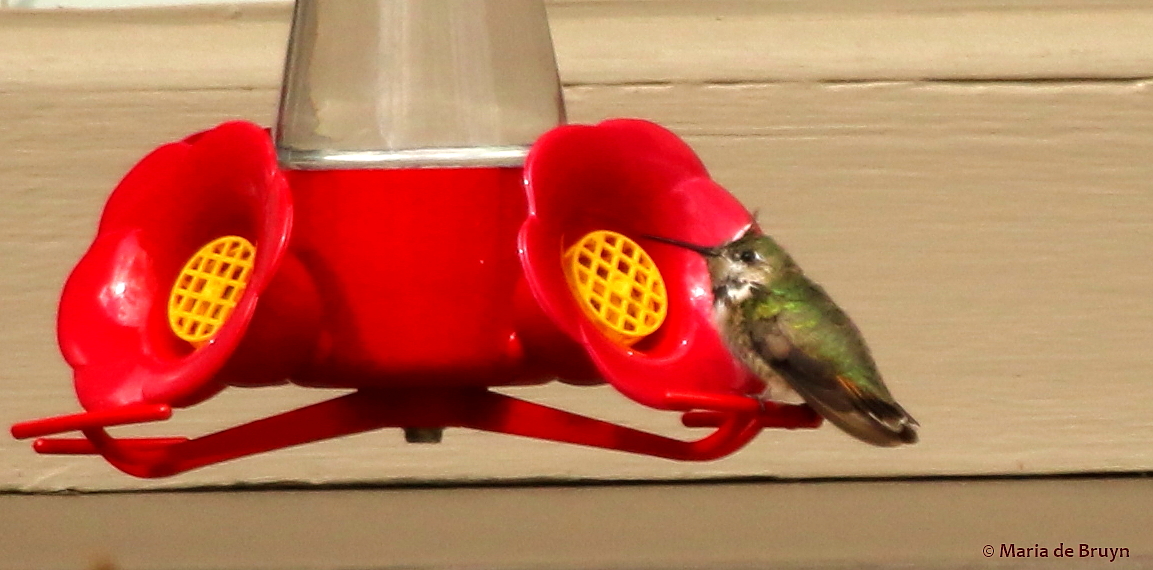
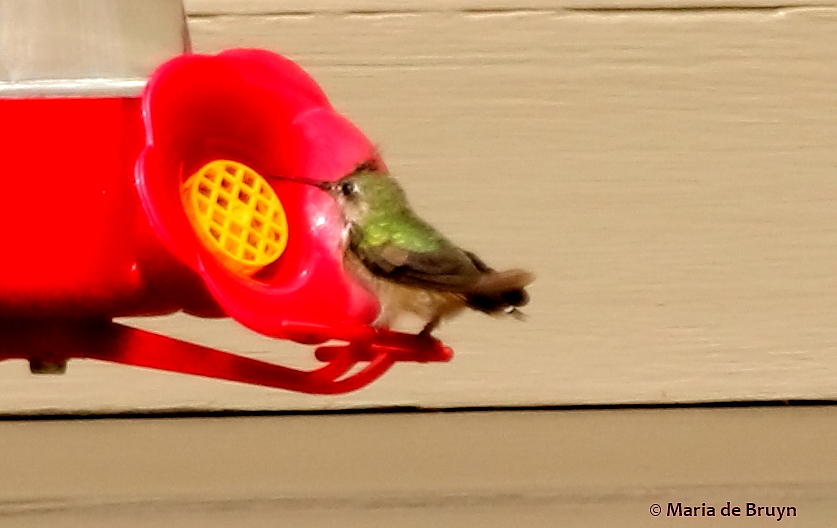
Calliope hummingbird I77A6939© Maria de Bruyn resSo, in the last half year, I’ve become a birder who will make a special trip to see a particular bird. In October last year, I traveled 77 miles with friends to see a buff-bellied hummingbird (Amazilia yucatanensis). This year, a shorter distance (22 miles) led me twice to the calliope hummingbird (left, Selasphorus calliope), which is the smallest bird species in North America outside Mexico.

The first visit was pure serendipity; two other birders (Lucretia and Lorentz) and I met birding guide Jan at a reservoir and he mentioned having seen the calliope the previous day. It was only a 10-minute drive from where we were, he said, and the couple hosting the bird was very nice. So we jumped in Lorentz’s car and headed over to the next county in pursuit of our lifer (a bird that one sees for the first time in one’s life).

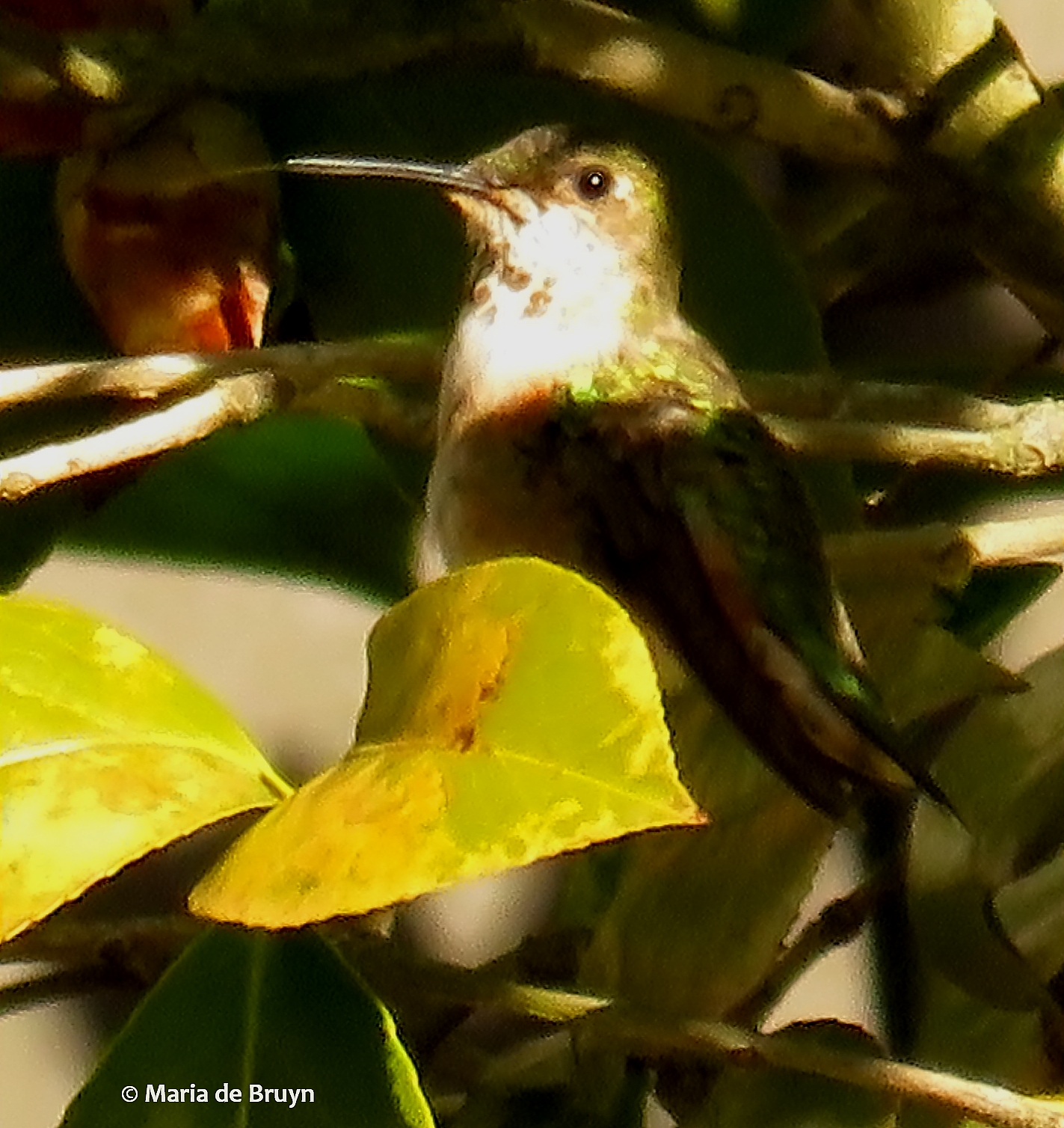
Calliope hummingbird I77A6897© Maria de BruynThe calliope hummers are the tiniest long-distance migrants of all the world’s birds, traveling from the mountains of the Northwest USA and Canada to Mexico and a few spots in the southern United States in winter. This year, however, a young male landed in the Malinski’s yard; they named him Joseph.

Some other instances of calliope hummingbirds in the Southeastern USA have been noted but they are still fairly unusual. However, it’s speculated that they may become more frequent winter visitors because of environmental changes associated with human activity.

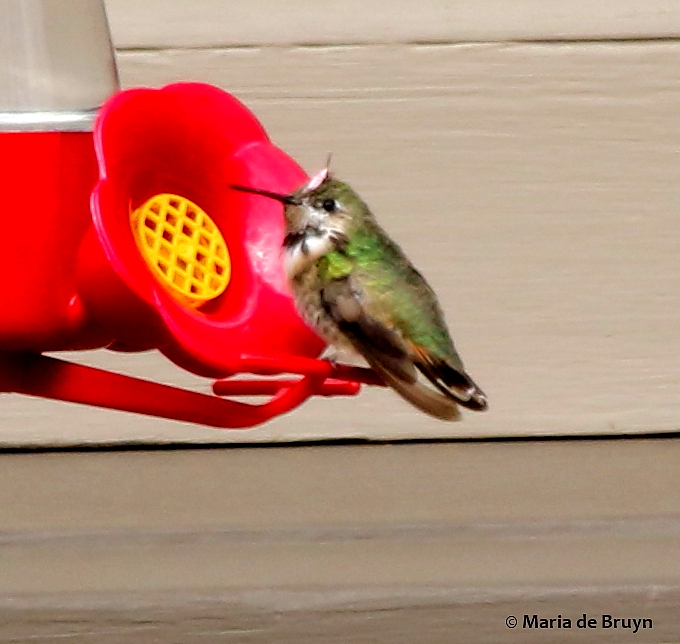
At the Malinski’s home, the calliope is keeping company with another winter migrant, a female rufous hummingbird (below, Selasphorus rufus). Mrs. Malinski has seen the rufous chasing the calliope away from the feeders, living up to that species’ reputation for being feisty. However, the calliope hummers are brave, too, even chasing red-tailed hawks (Buteo jamaicensis) away from their territories during breeding season!

Rufous hummingbird IMG_2657© Maria de Bruyn       Rufous hummingbird IMG_2669© Maria de Bruyn

Calliope hummingbird I77A6756© Maria de BruynJoseph is currently molting and can be identified for the time being with a little topknot atop his head. Susan Campbell, North Carolina’s well-known hummingbird bander, gave him his bracelet at the Malinski home, which should make it possible to identify him if he returns next year.

Calliope banding Campbell IMG_0646


In this photo kindly provided by Susan, you can clearly see that he is developing the bright purple feathers that will grace his throat and give him a beautiful appearance in full maturity. They are just a little visible when he zips in to land at the feeder.


yellow-bellied sapsucker I77A7858© Maria de Bruyn res


Both Joseph and the female rufous enjoy the nectar provided by the Malinski’s. These birds will also eat insects and calliopes are known to drink from yellow-bellied sapsucker (Sphyrapicus varius) sapwells like those shown here.


Many people have traveled to the couple’s home to observe Joseph. During my two visits, I encountered 10 other birders and I know of more who paid a visit. The Malinski’s are most gracious, allowing us to stay in their front yard for hours.

Calliope hummingbird I77A6566© Maria de Bruyn       Calliope hummingbird I77A7075© Maria de Bruyn

loggerhead shrike I77A7328© Maria de Bruyn


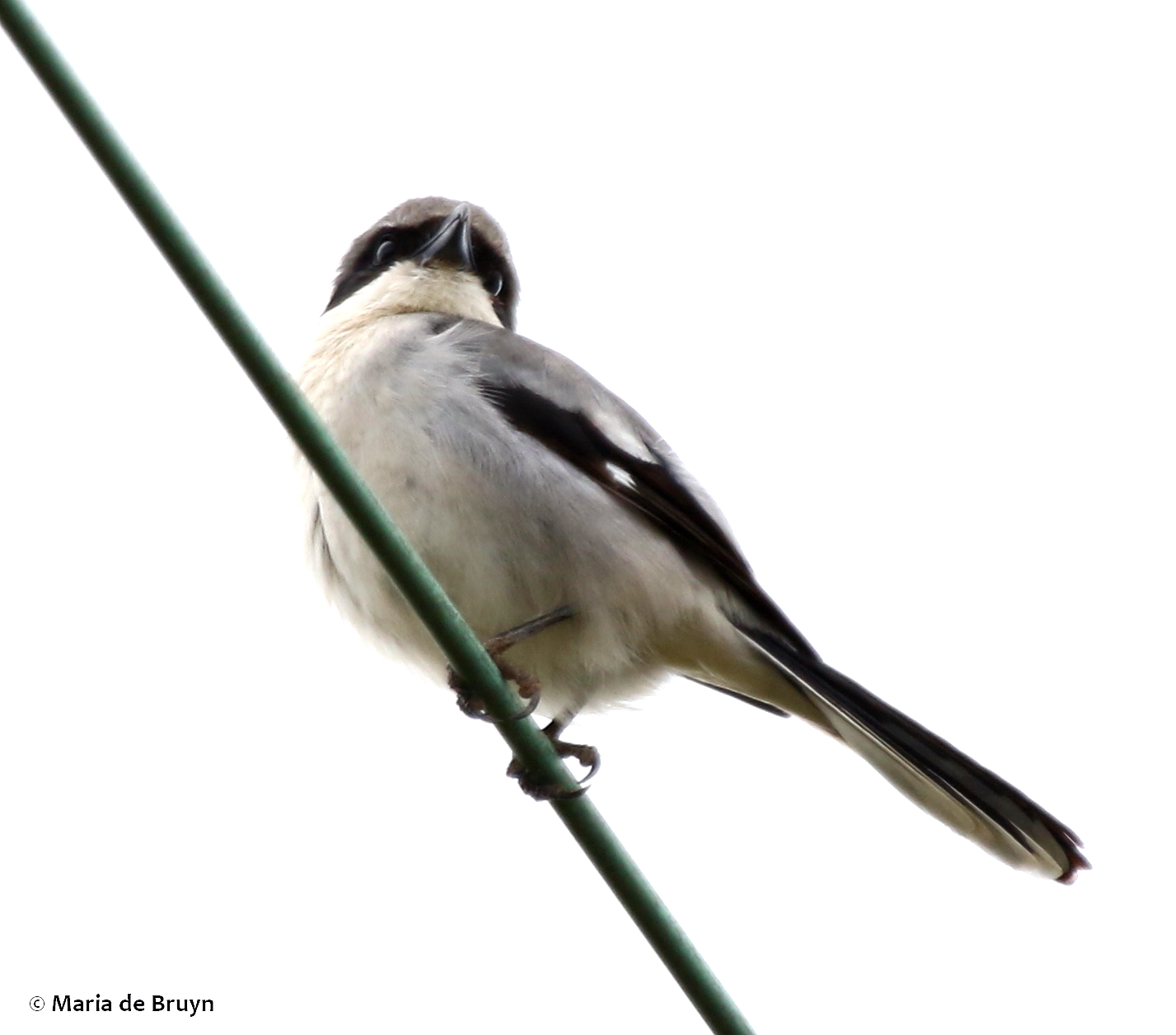
After I left them with Joseph buzzing back and forth between the front and back yards, I stopped at a rural road known as a spot for white-crowned sparrows. I didn’t see them but did get to see a loggerhead shrike (Lanius ludovicianus).


loggerhead shrike I77A7301© Maria de Bruyn            loggerhead shrike I77A7280© Maria de Bruyn

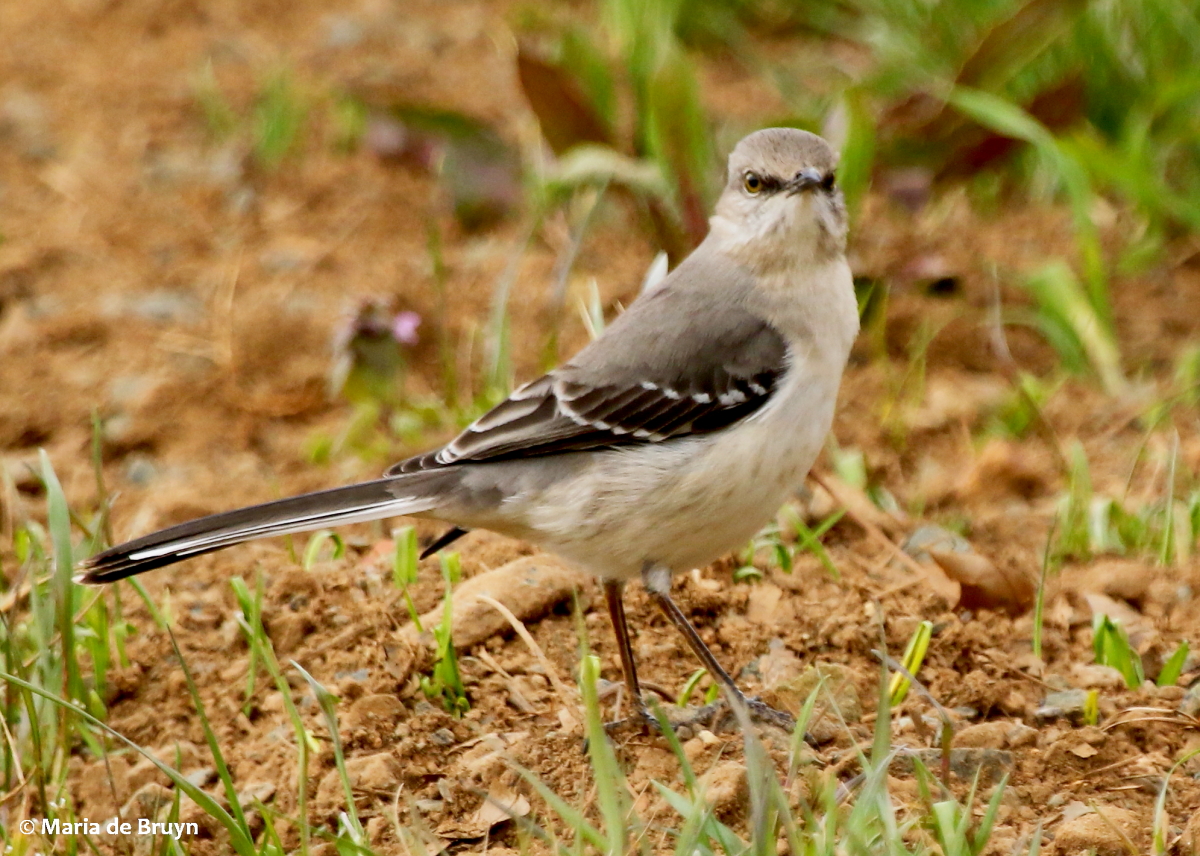
The Northern mockingbirds (Mimus polyglottos) were courting and chasing each other, making a fair bit of noise and flashing their lovely feathers.

Northern mockingbird I77A7172© Maria de Bruyn    Northern mockingbird I77A7425© Maria de Bruyn

Northern mockingbird I77A7118© Maria de Bruyn res

Even though mockingbirds live around my yard, I always enjoy seeing them again. I likely never will become a birder who goes off to exotic lands just to chase down one species I haven’t seen before. But I certainly am paying even more attention to the birds around me wherever I am and making some shorter forays as time permits (just yesterday, I joined friends Beth, Carol and Nan to go see a Wilson’s snipe (Gallinago delicata) at a farm in the next county – another lifer!). But it’s not only birds that will get me to travel – bears are on my list of animals that I am still hoping to see and photograph in the wild. When I get to that point, you’ll read about them here, too!

Mammal merriment, misery and markings

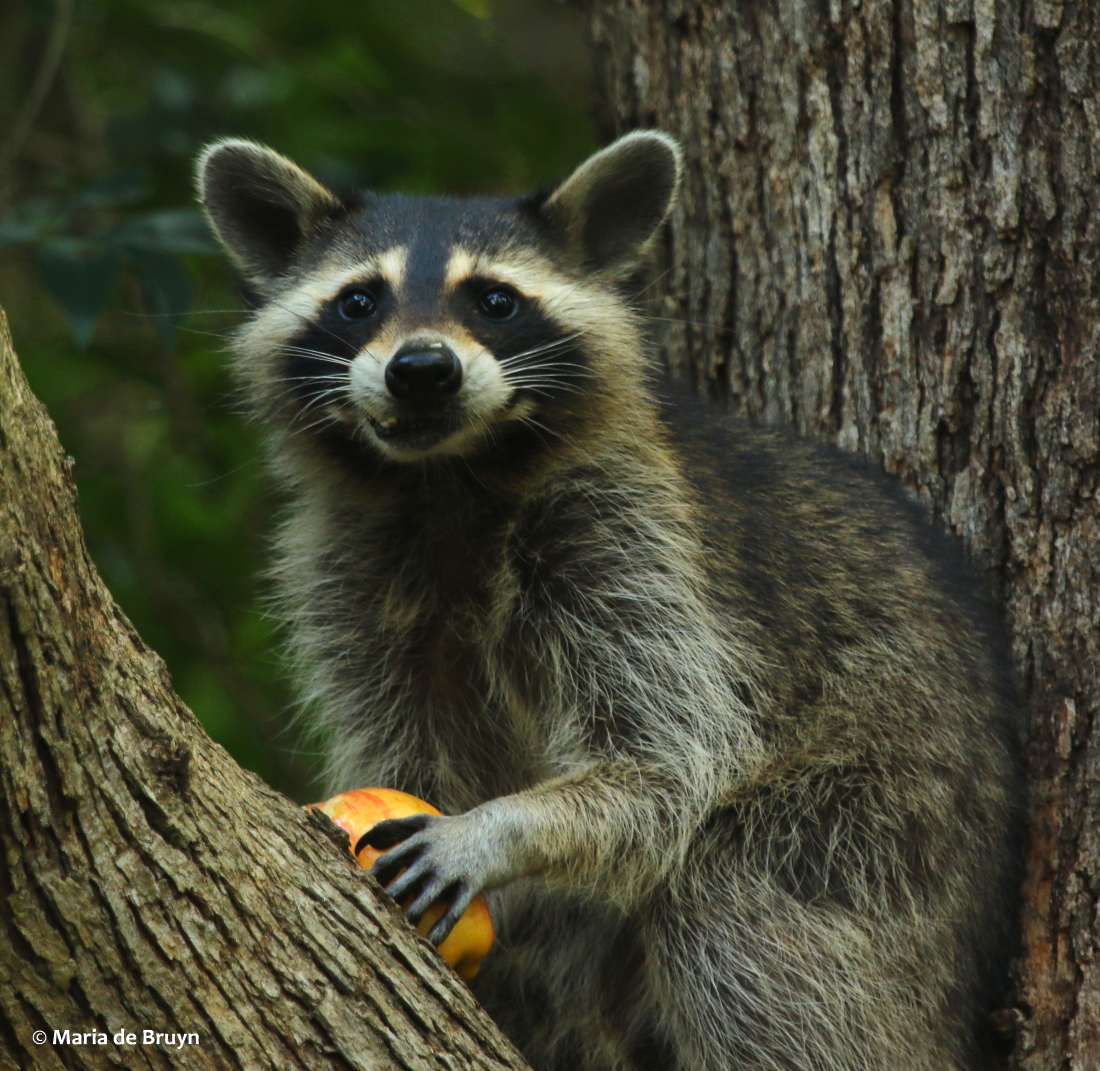
Lately, many of my blogs have been about birds, mostly because they have been the easiest wildlife to photograph during the colder months. The mammals – and insects, reptiles and amphibians – have not been around much and likely have often visited when I’m not watching. I’m fairly certain that raccoons (Procyon lotor) and opossums (Didelphis virginiana) come to my yard after dark; perhaps the odd fox or coyote does as well. Nevertheless, after she stopped weaning her young and since summer ended, I haven’t seen Raquel raccoon all winter.

raccoon DK7A4351© Maria de Bruyn   raccoon DK7A4248© Maria de Bruyn res

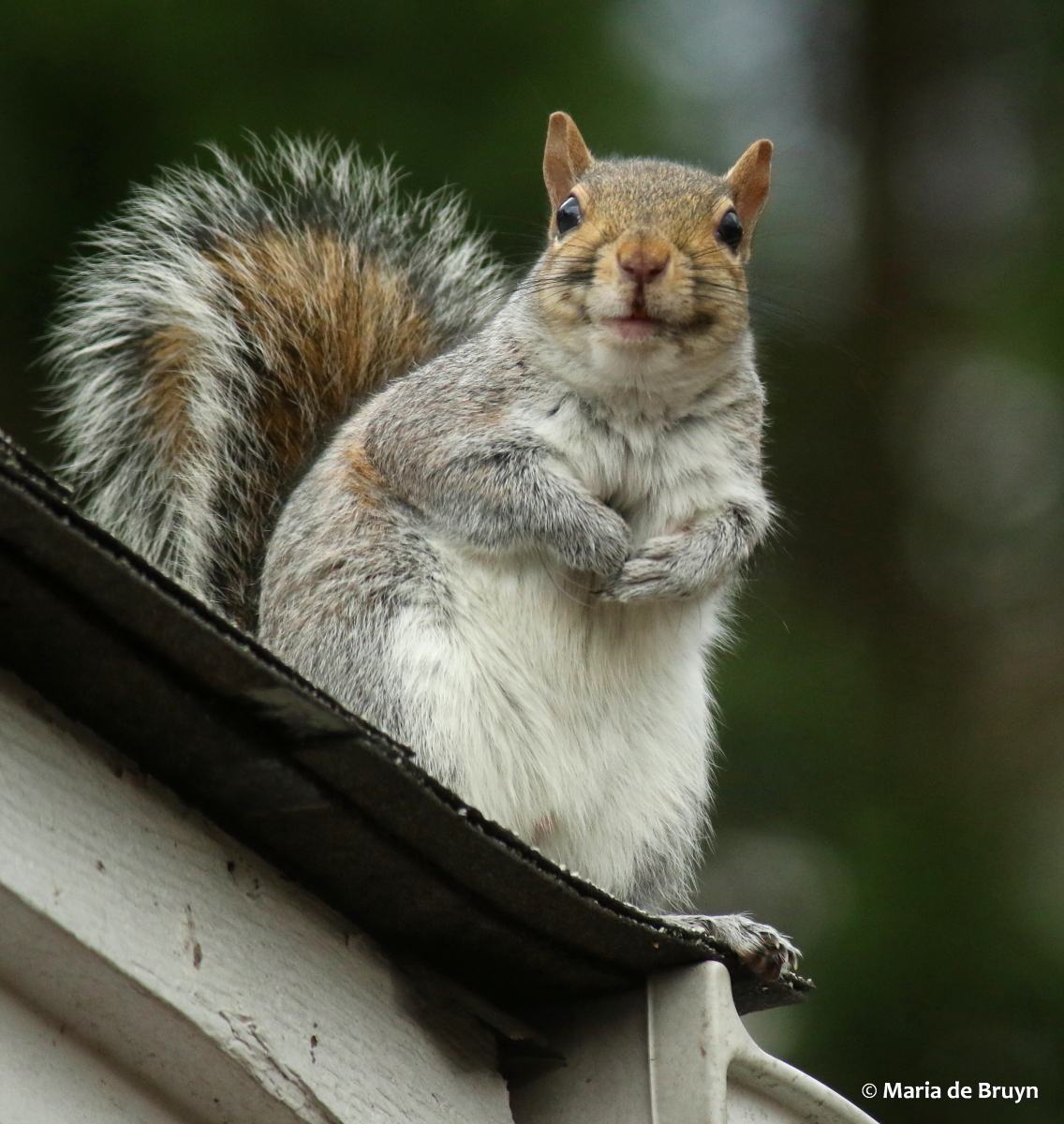
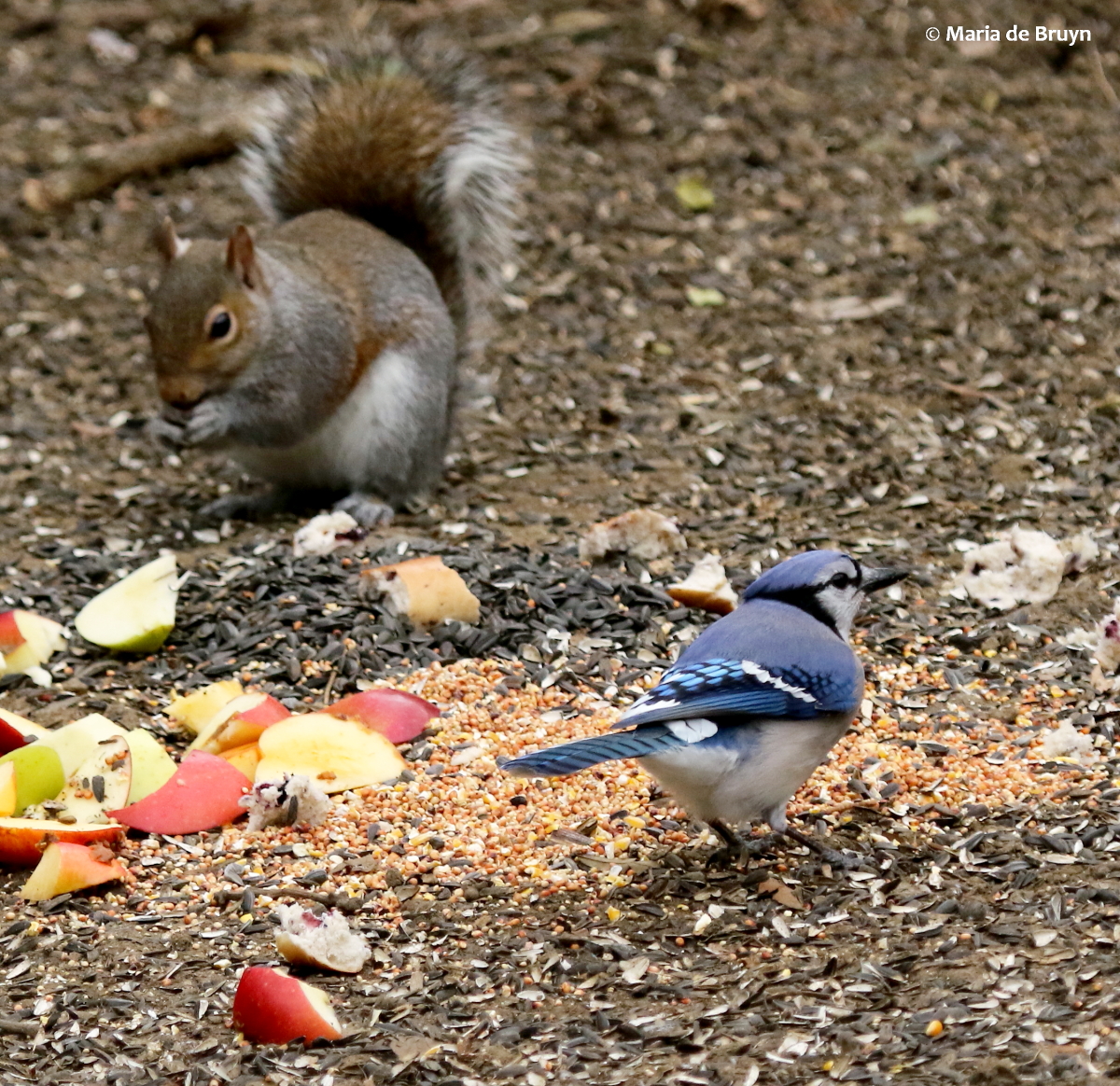
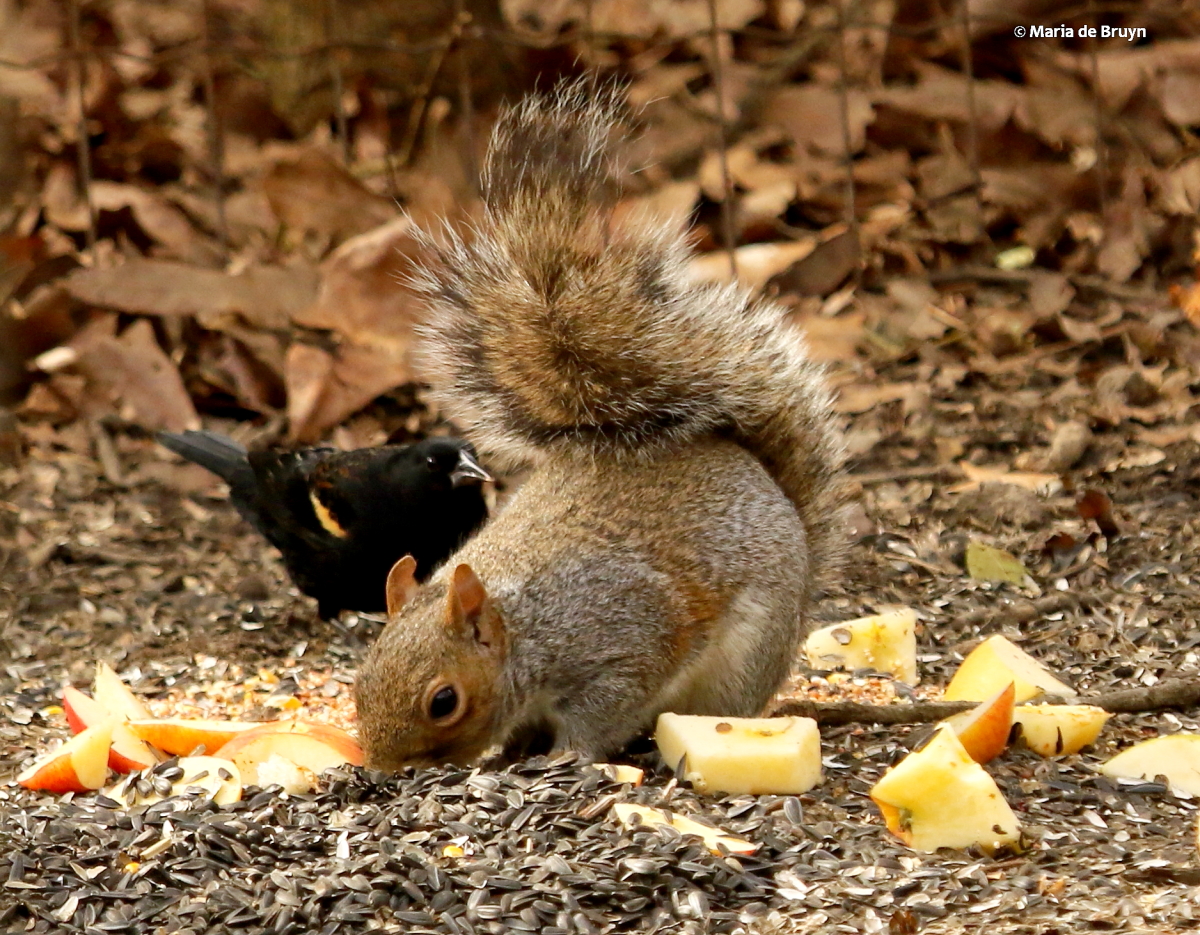
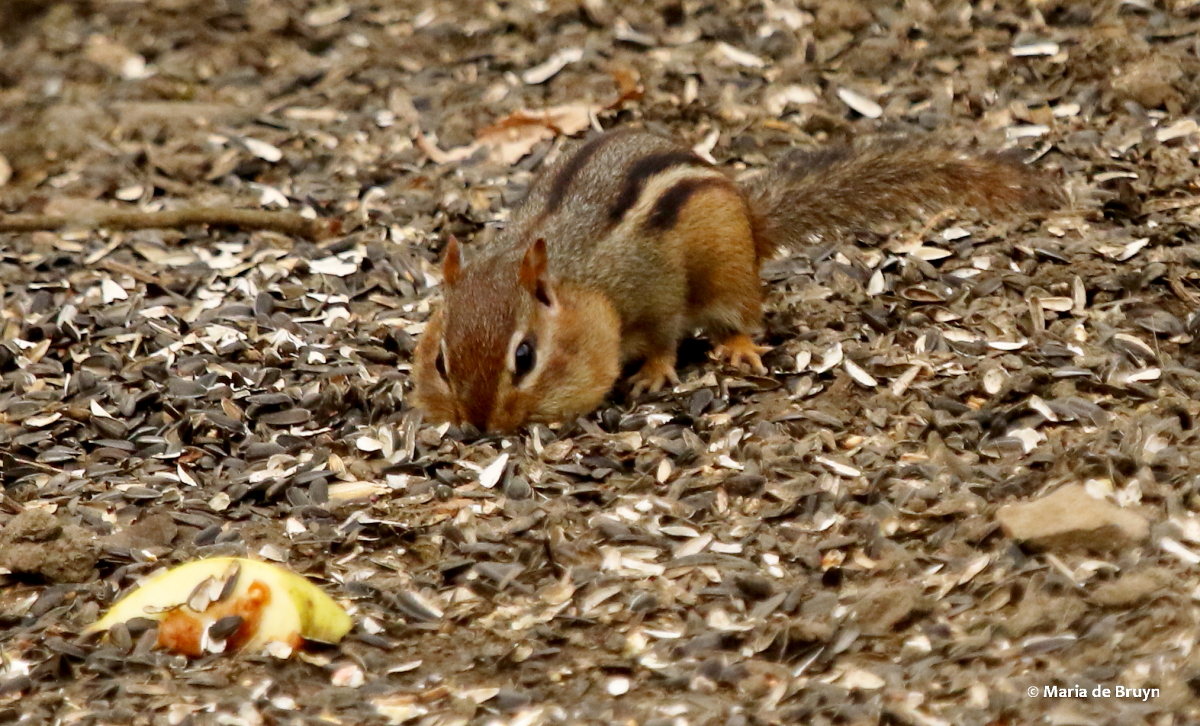
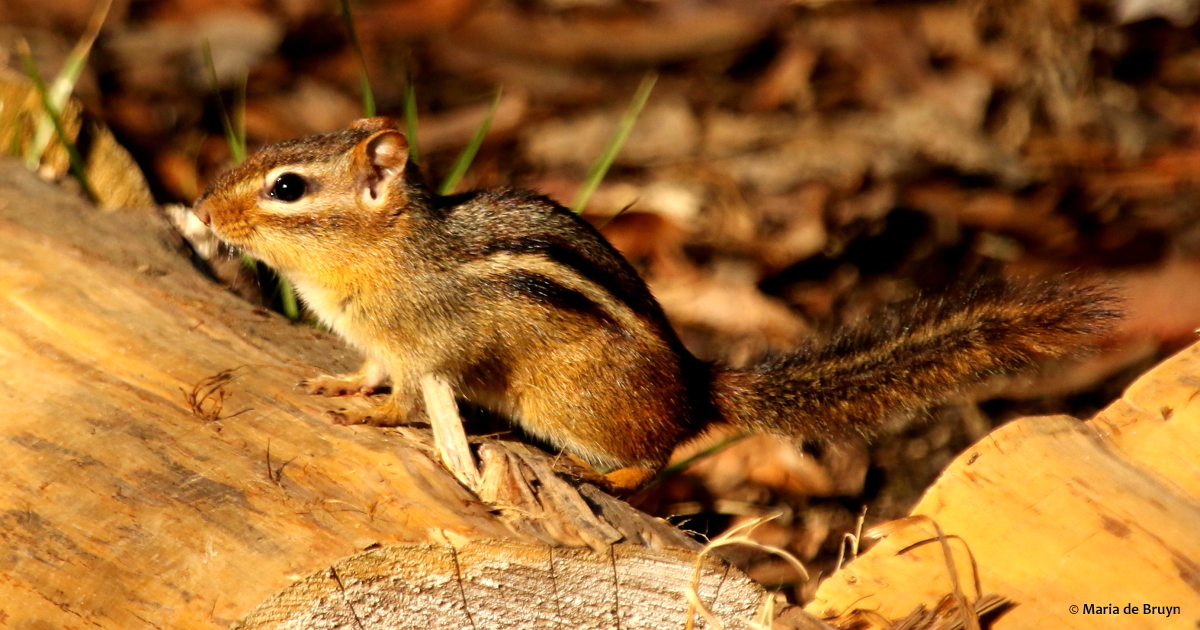
Eastern chipmunk I77A8790© Maria de Bruyn resThere a couple mammals, however, that I can count on to see every day because they have grown accustomed to having a food source at my house. Fallen bird seed (and seed and apples put out deliberately for ground feeders) does not get entirely gobbled up by the avian visitors, leaving pickings for the Eastern gray squirrels (Sciurus carolinensis), Eastern chipmunks (Tamias striatus) and white-tailed deer (Odocoileus virginianus).

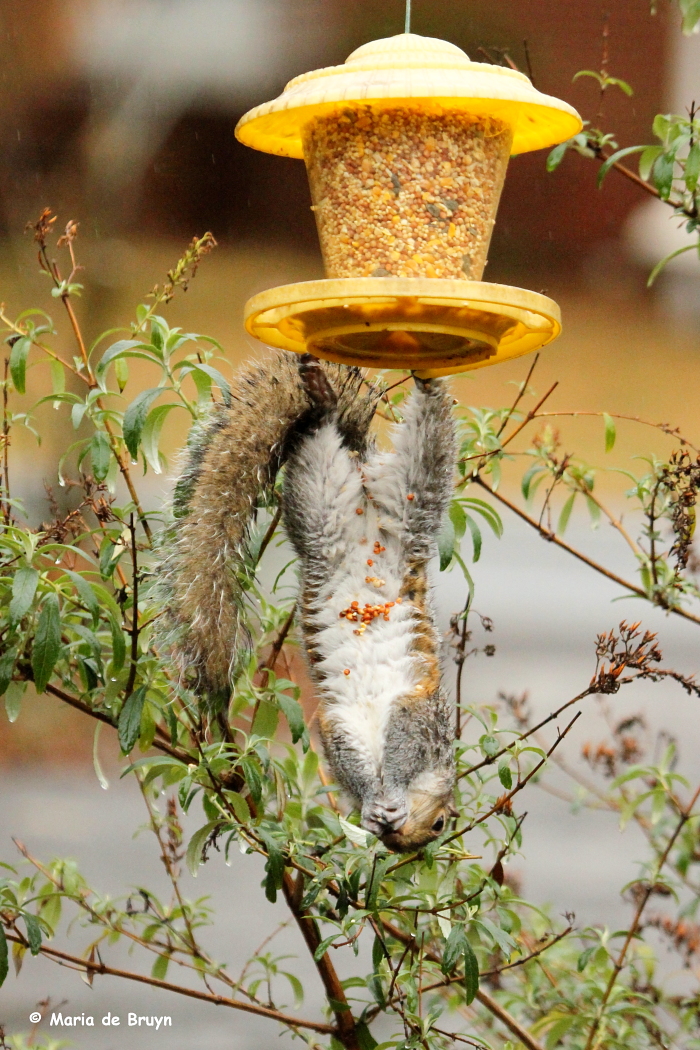
The squirrels keep a watch from the trees and underbrush and appear very quickly after the bird seed is replenished. My combined squirrel and raccoon baffles – and placing the feeder poles at least 10 feet away from any structures from which they launch themselves onto the poles – have proved successful in keeping them from the feeders. But they continue to look for vantage points from which they can attempt a jump to the feeders.

Eastern gray squirrel I77A5504© Maria de Bruyn res  Eastern gray squirrel I77A5494© Maria de Bruyn res

Eastern gray squirrel IMG_3643 mdb


Before I learned how to thwart them, they made off with plenty of seed and suet – one squirrel even carrying off the entire suet feeder when s/he couldn’t get it open. I saw it happening and chased that squirrel, but they were faster than me!

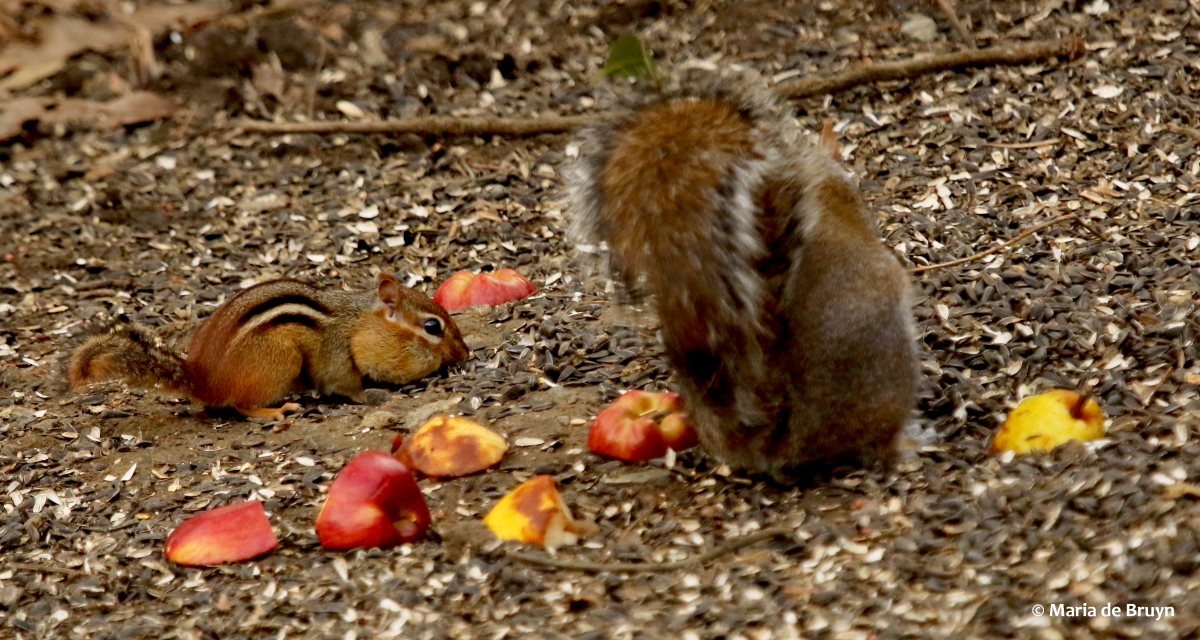
They will share space happily with birds but don’t always want to share with other squirrels or chipmunks.


Eastern gray squirrel I77A8350© Maria de Bruyn Eastern gray squirrel I77A0711© Maria de Bruyn res

The chipmunks don’t let that selfish attitude deter them; they just keep a sharp eye out for when a squirrel might turn on them. They wolf down seed after seed, giving themselves a very fat-cheeked countenance!

Eastern chipmunk I77A3326© Maria de Bruyn  Eastern chipmunk I77A3335© Maria de Bruyn

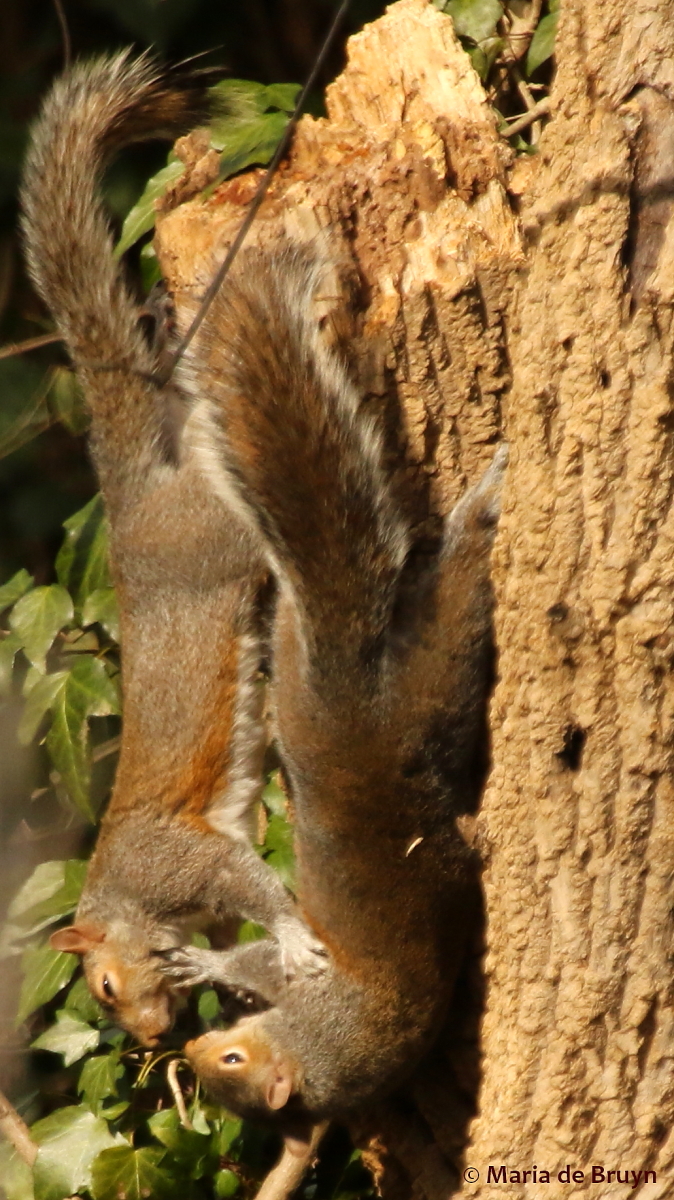
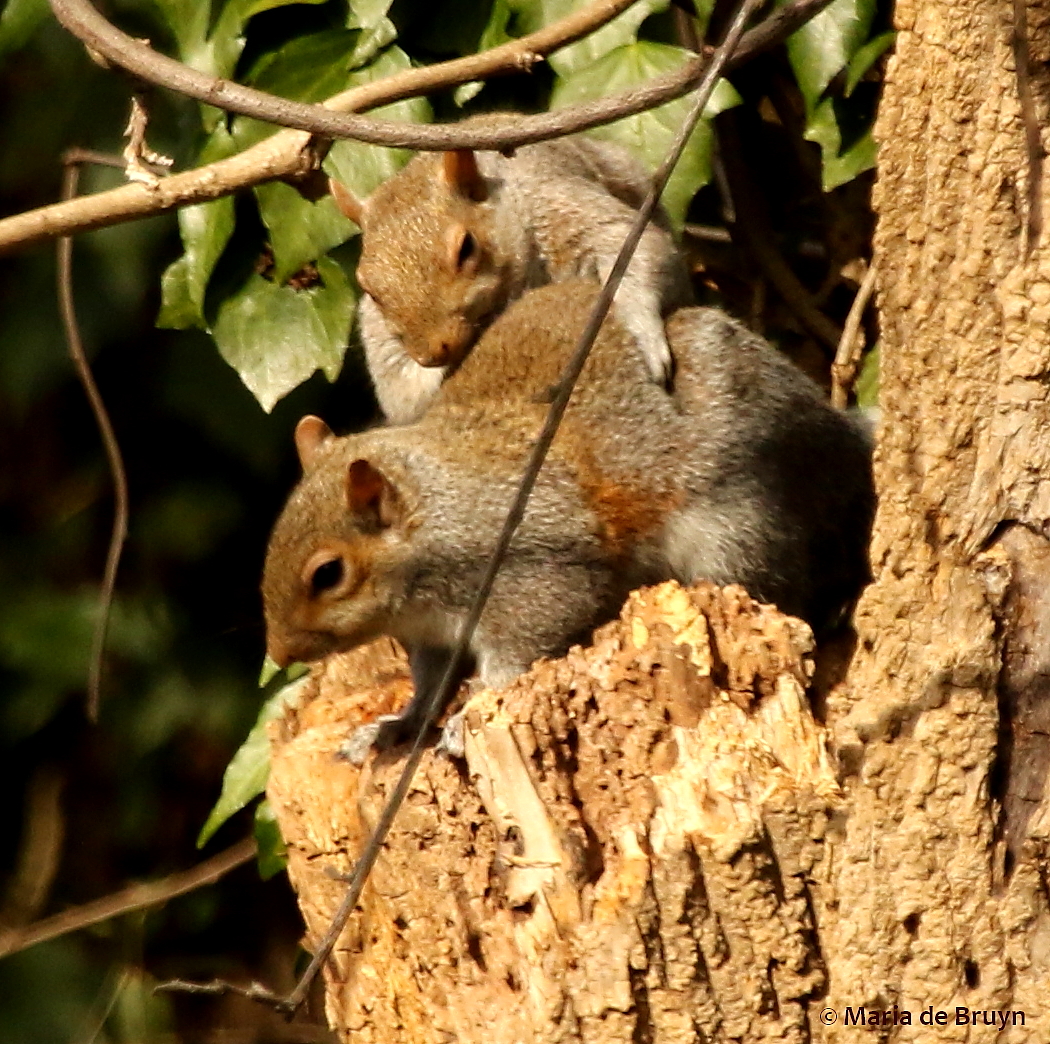
The past few days, the squirrels have continued their chasing, but now it is not always in rivalry or play. Instead, their romantic side is showing and the merriment goes on for a good length of time. They appear to have designated a particular tree stump/snag in my back yard as their trysting spot.

Eastern gray squirrel I77A1104© Maria de Bruyn res              Eastern gray squirrel I77A0980© Maria de Bruyn

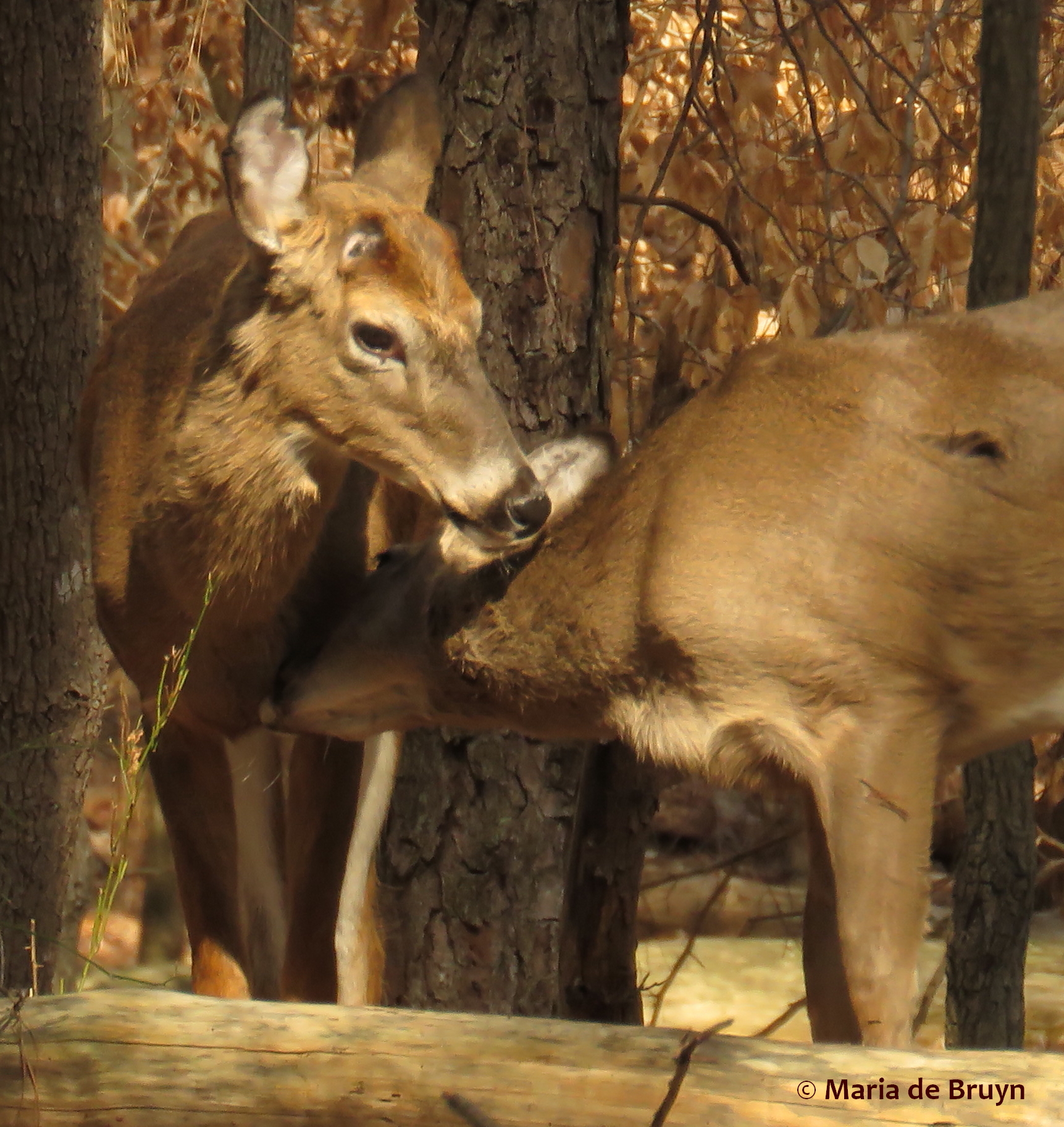
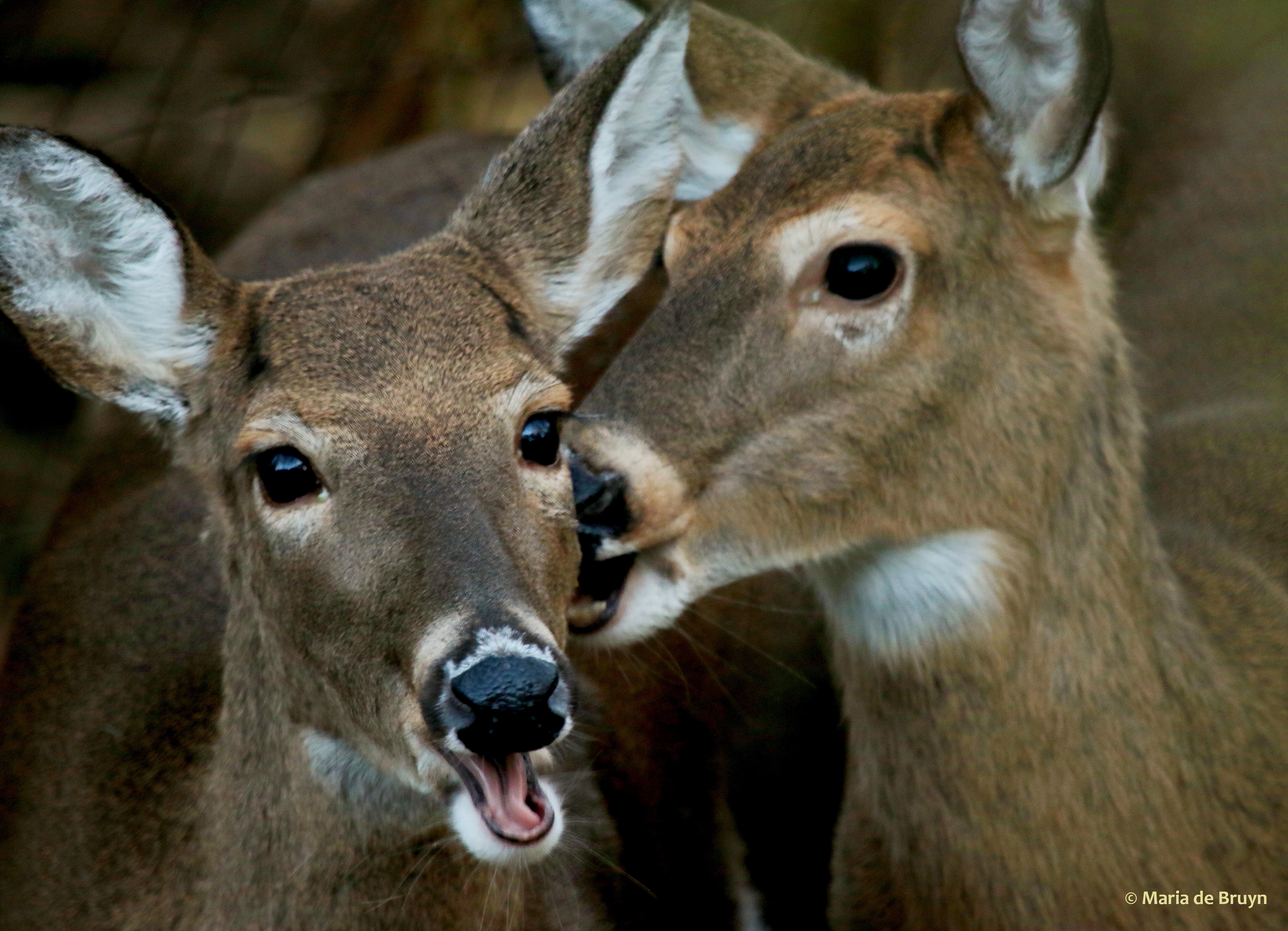
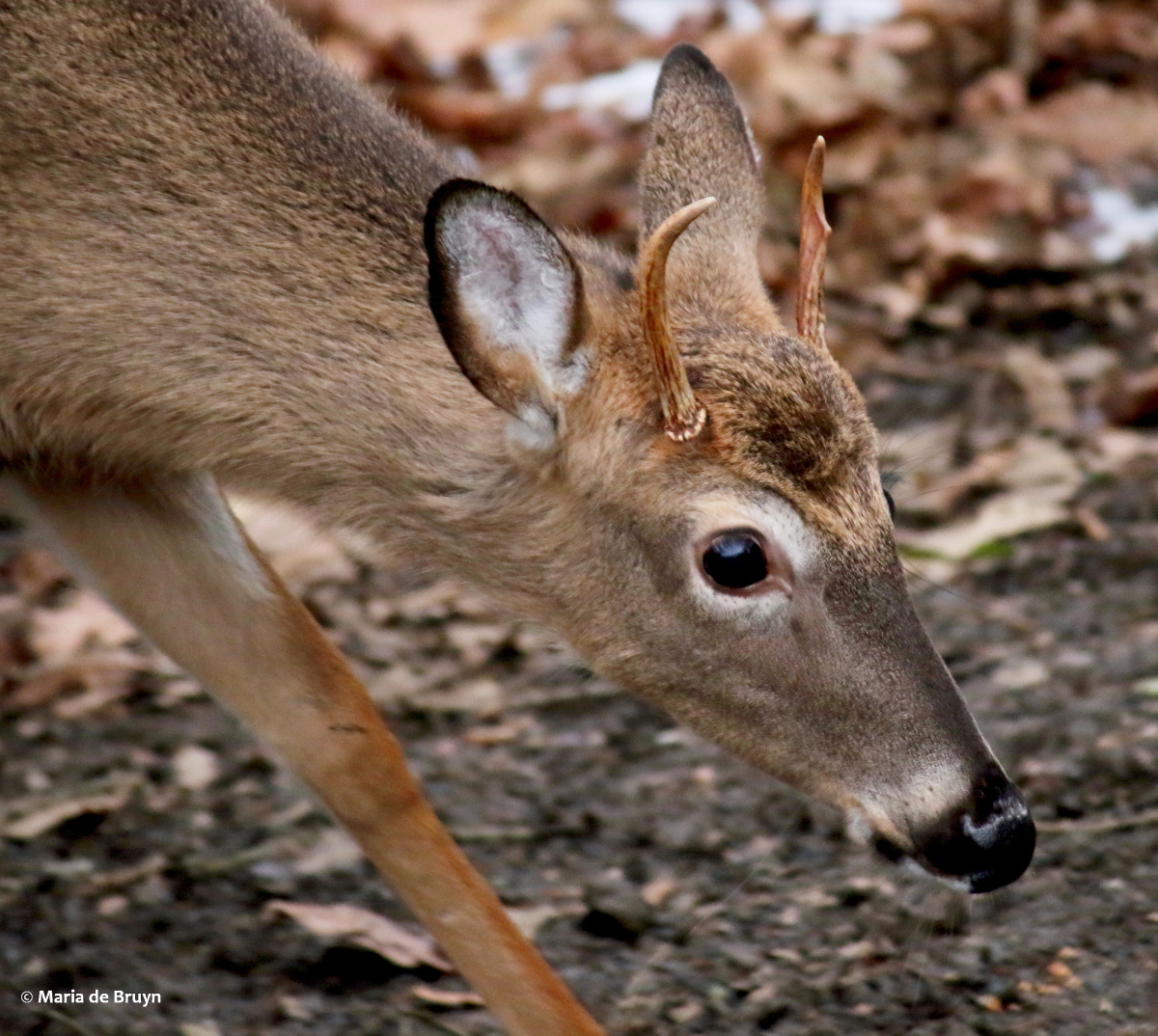
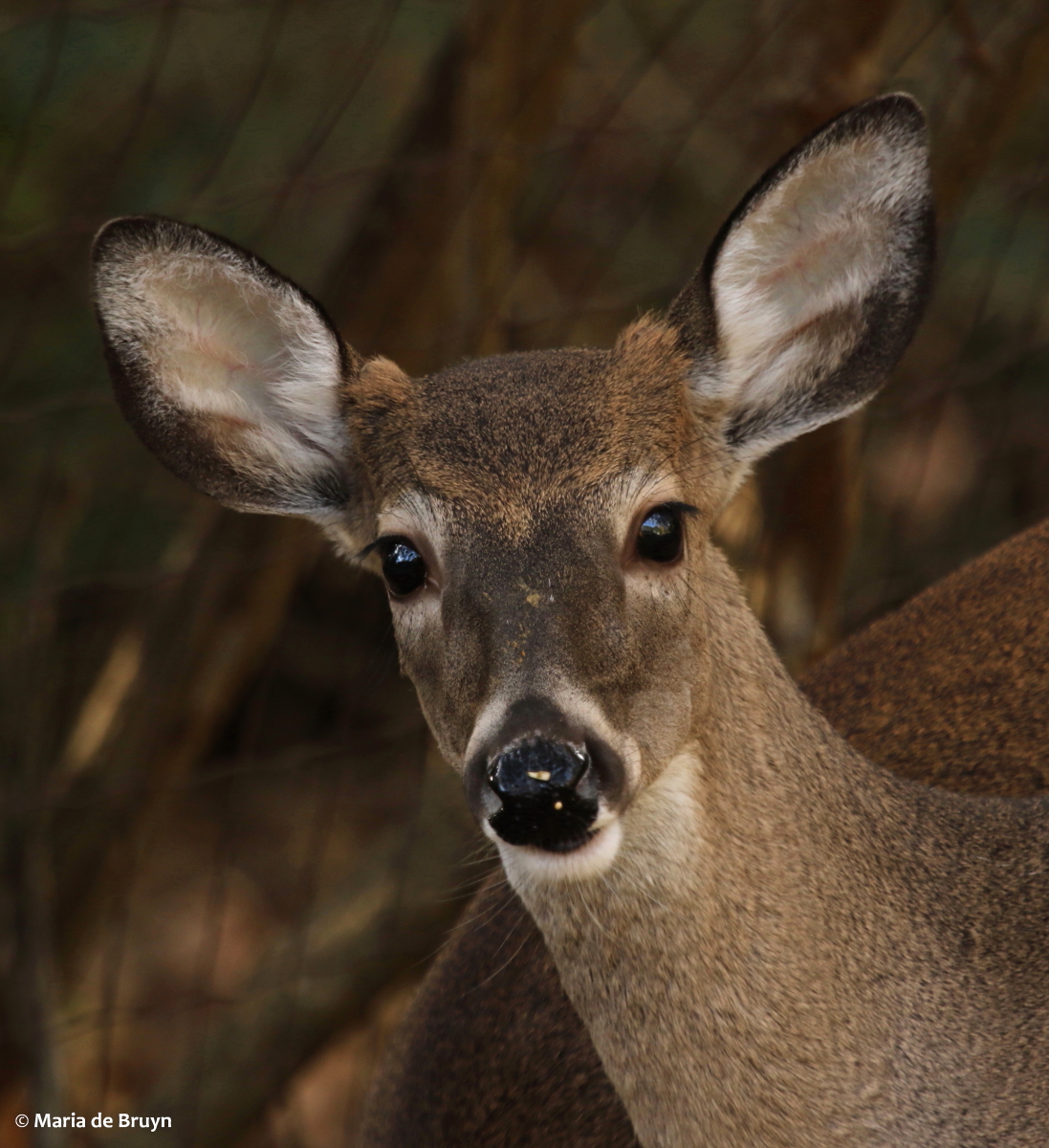
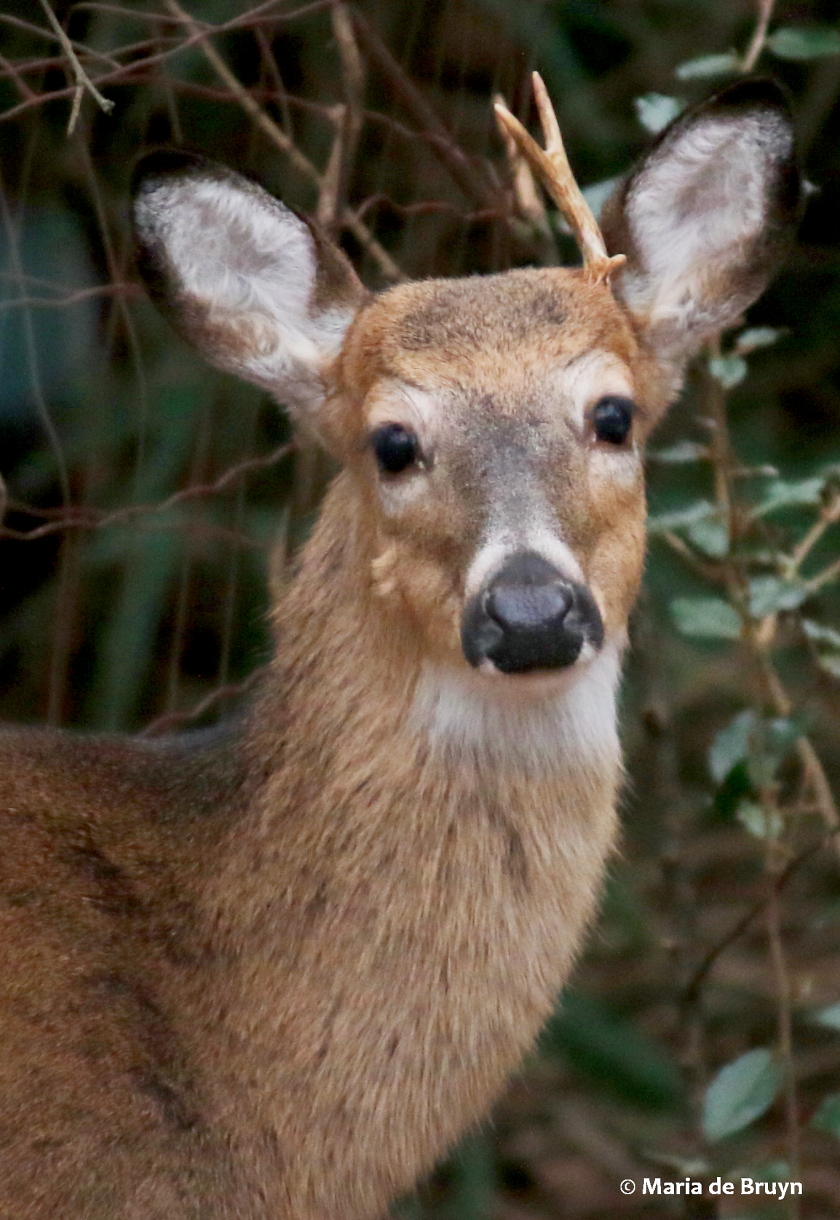
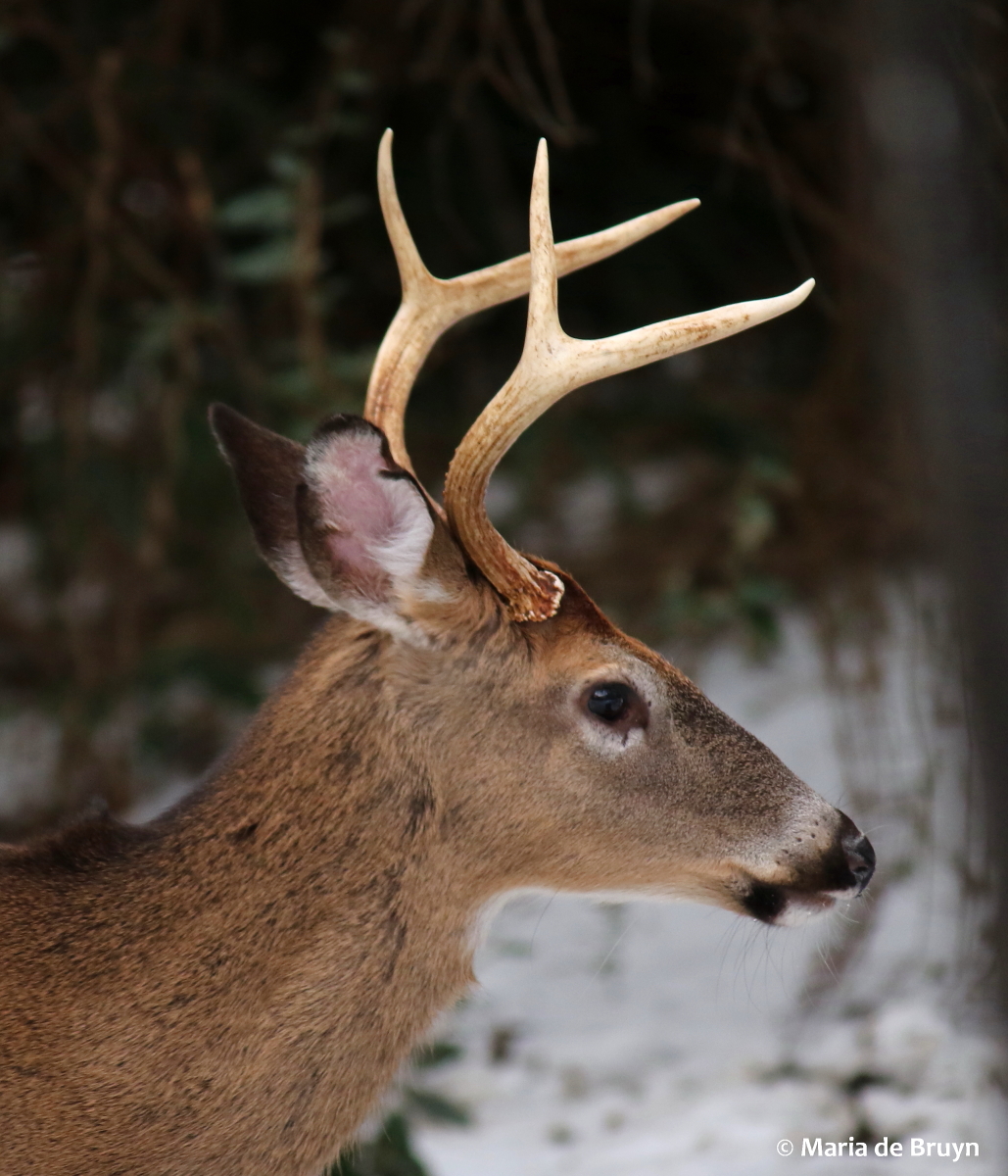
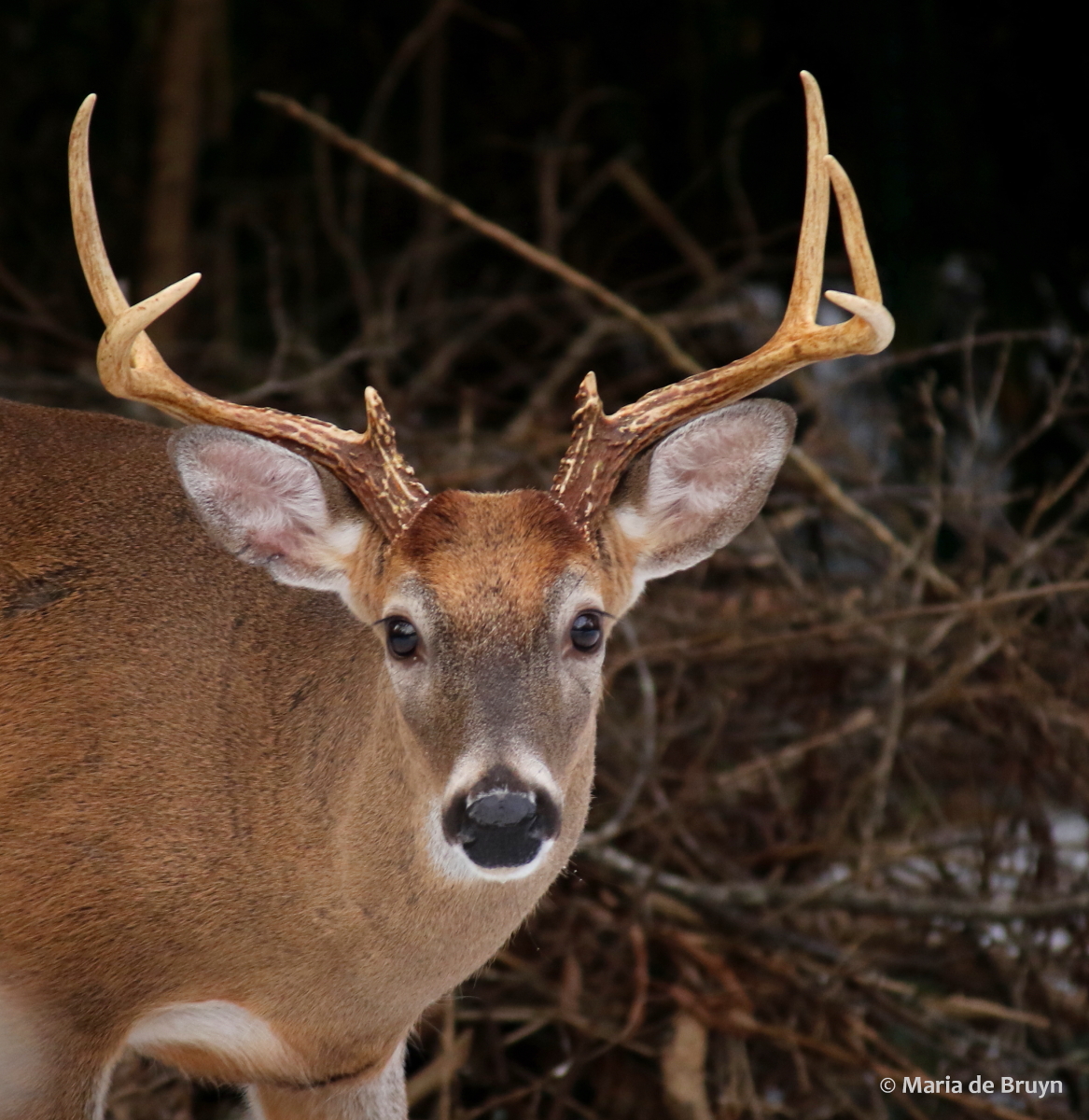
white-tailed deer I77A0963© Maria de Bruyn resThe white-tailed deer carry on their mating elsewhere but I know it’s happening as the males are evidence. Usually, one small family group comes to my home – mom, her one-year-old daughter and one-year-old son (a button buck, so-called for his tiny little antler nubs). They were occasionally accompanied by a couple second-year bucks with little antlers – I suspect mama’s sons from the previous year.

white-tailed deer I77A1367© Maria de Bruyn res    white-tailed deer I77A2025© Maria de Bruyn res

white-tailed deer I77A1366© Maria de Bruyn res


One of them lost one of his antlers early, but whether this was the result of a fight or accident is unknown to me. It seems that mama has allowed an orphaned button buck to join their group occasionally, too.

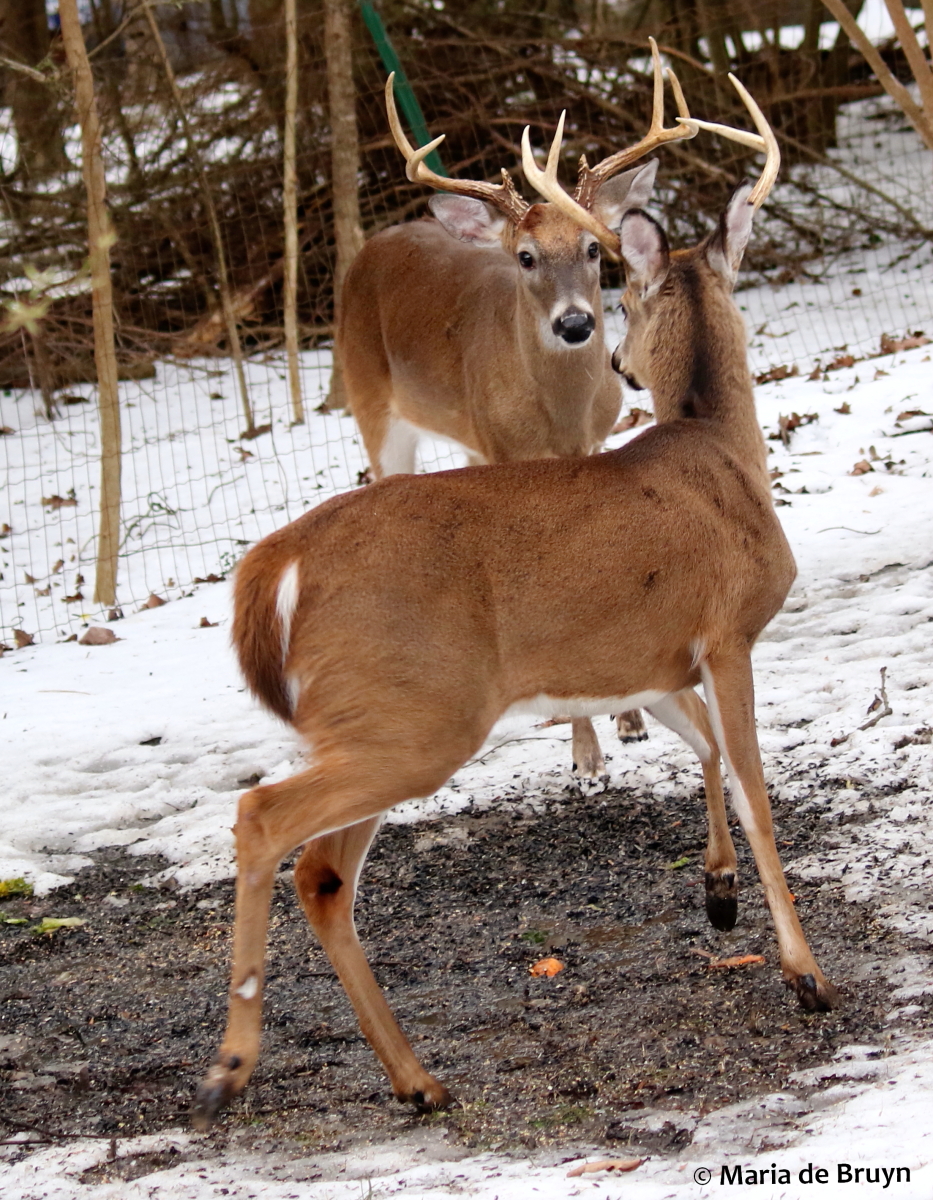
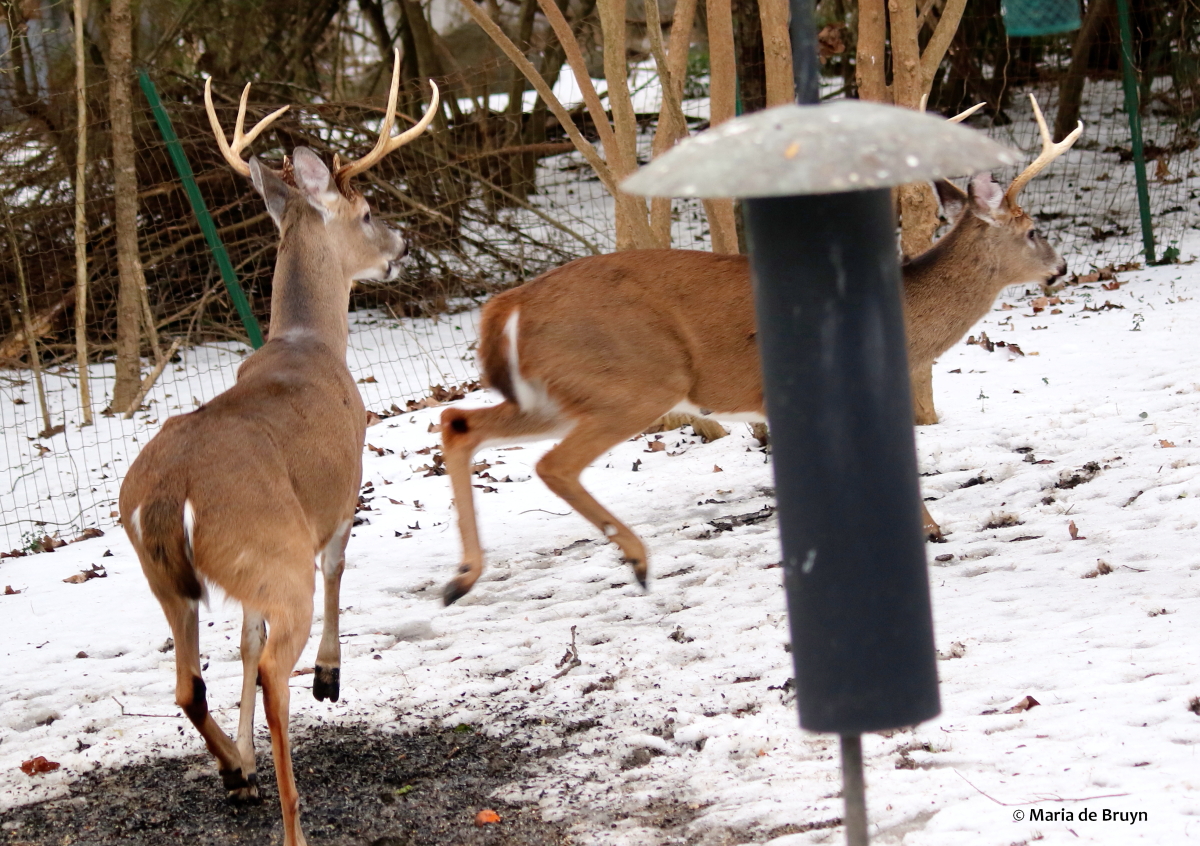
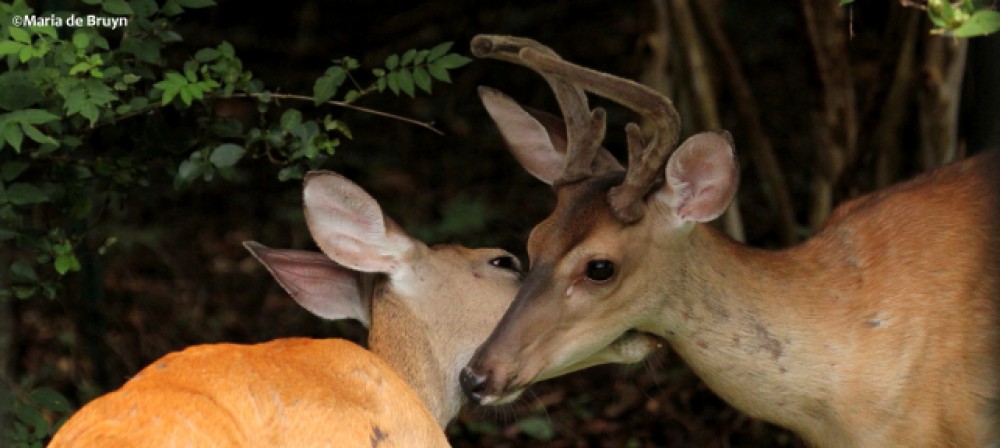
A couple weeks ago, two of the older males came down from the woods in search of does and food in the cold weather. This pair was traveling together but that didn’t stop some rivalry where first-access to the available food was concerned.


white-tailed deer I77A1061© Maria de Bruyn res white-tailed deer I77A1005© Maria de Bruyn res


white-tailed deer I77A1127© Maria de Bruyn res  white-tailed deer I77A1150© Maria de Bruyn res

white-tailed deer I77A1893© Maria de Bruyn res


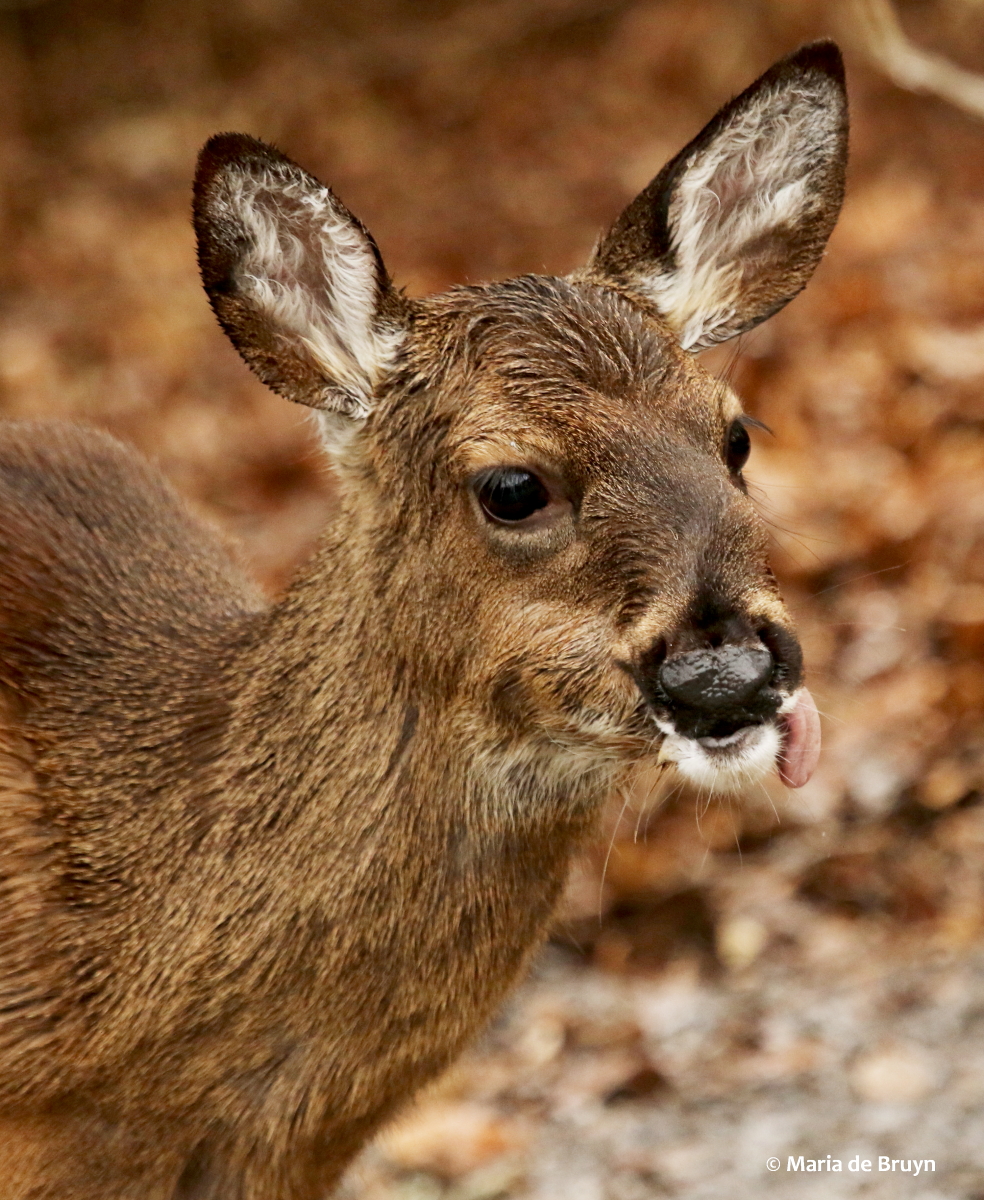
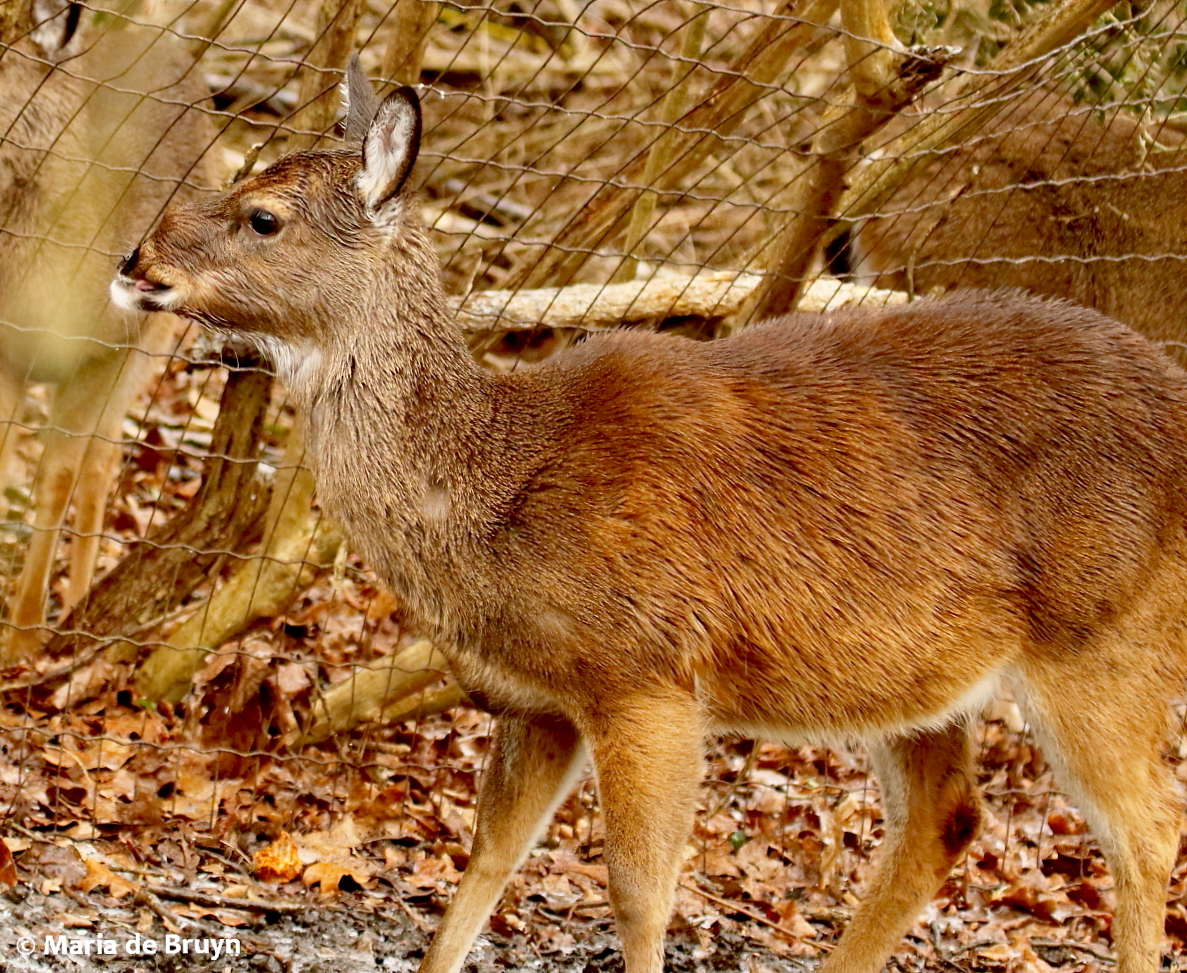
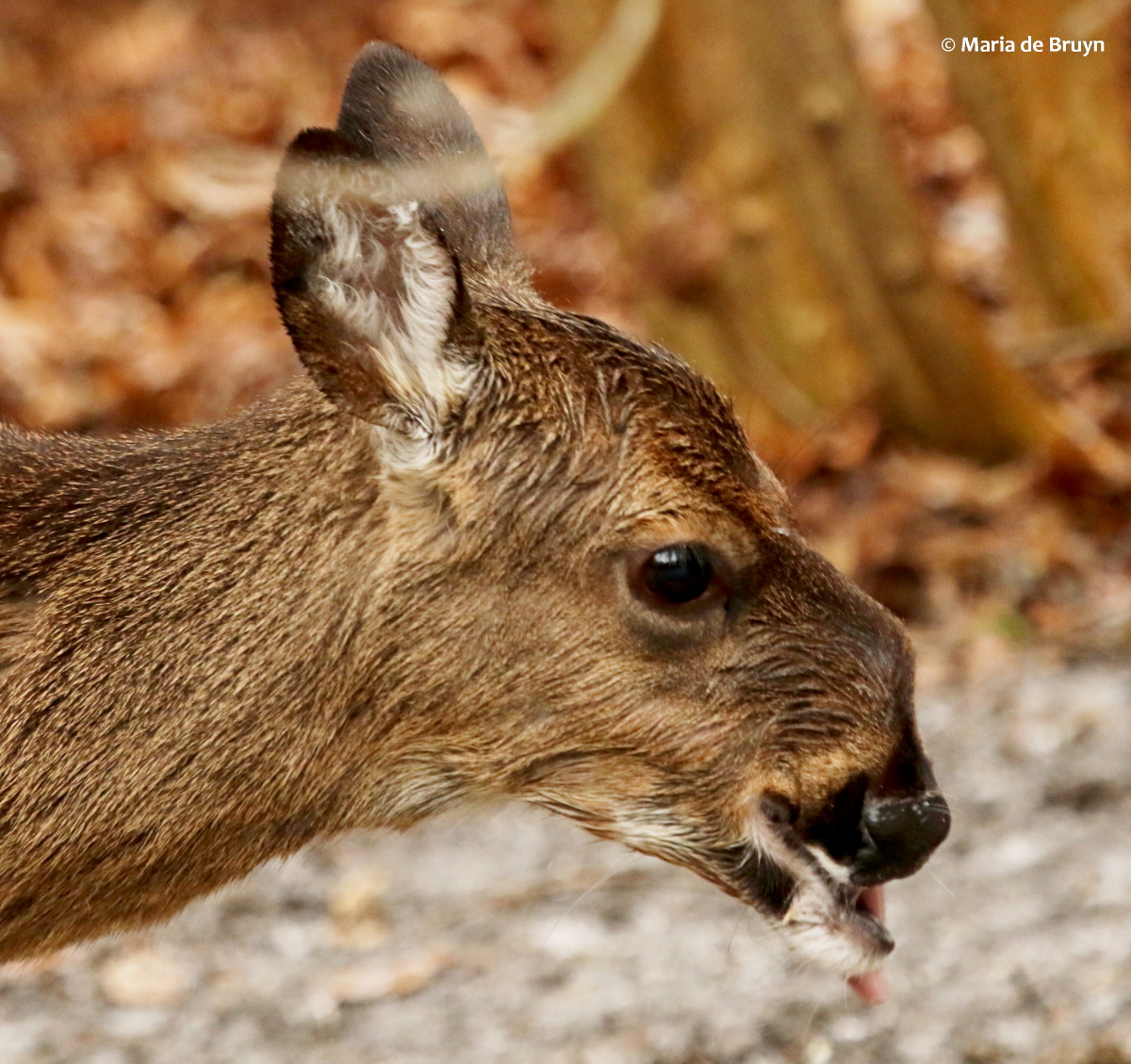
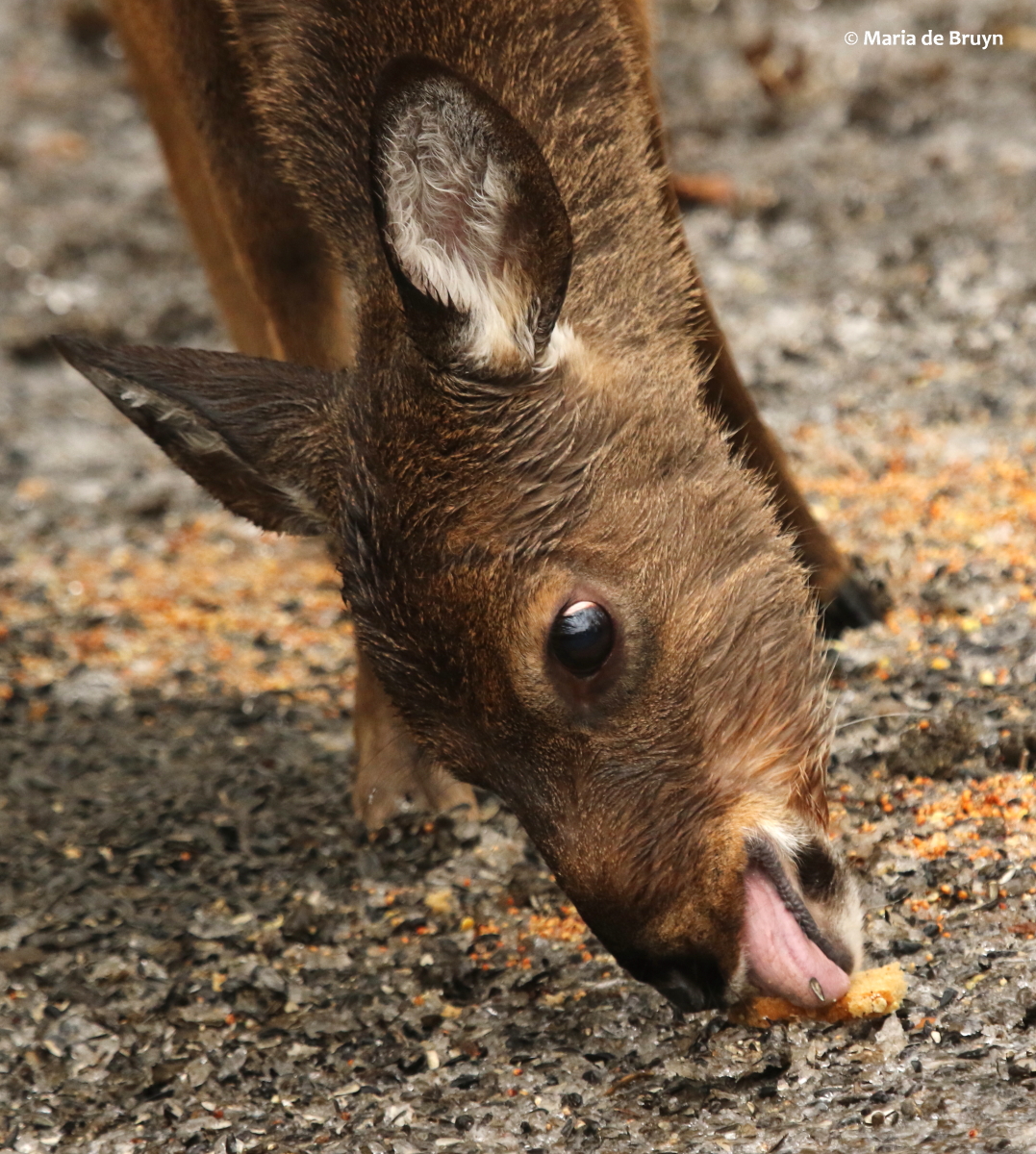
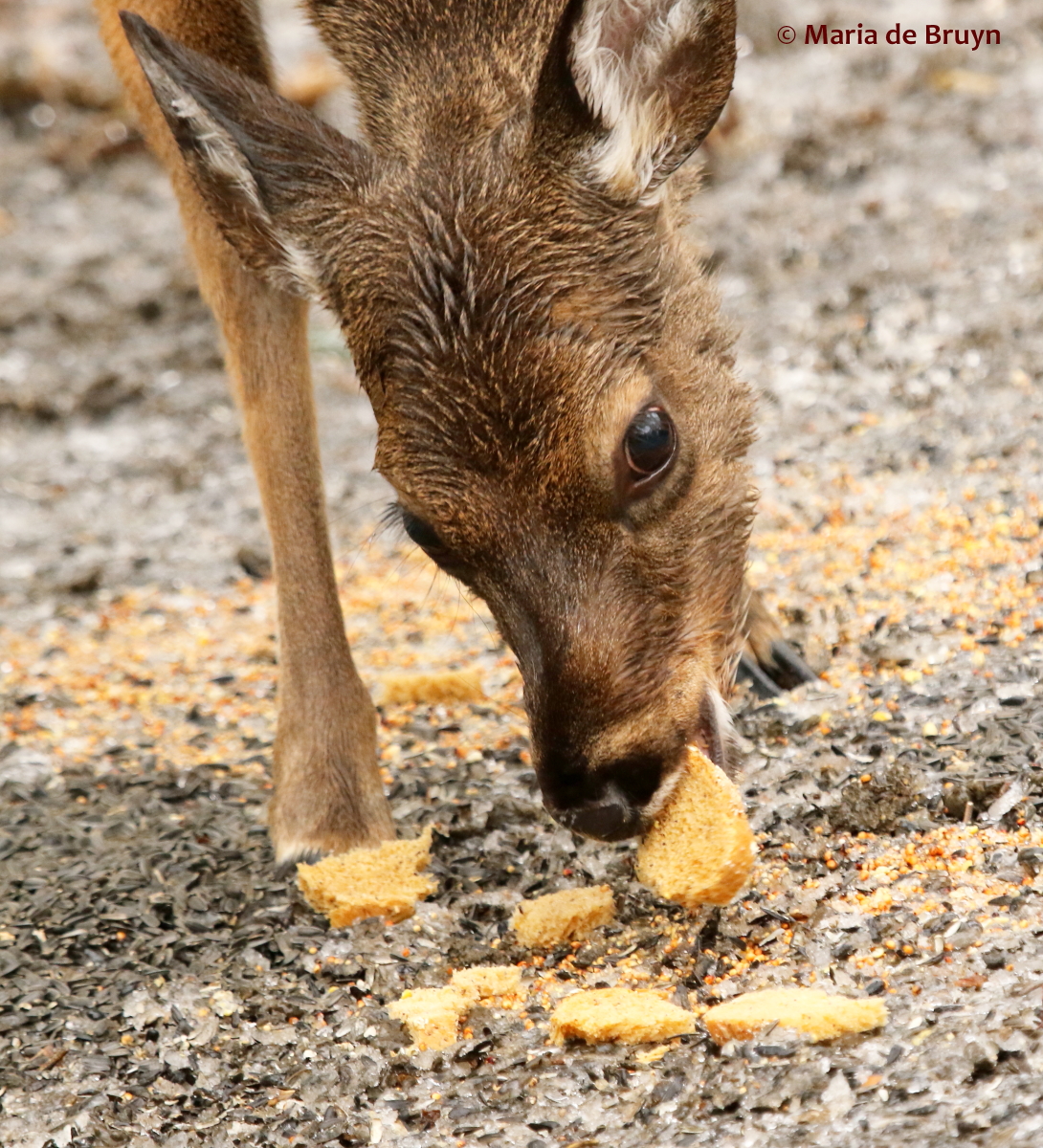
Then one day about a week ago when we had some very icy weather, I was surprised by a new and unfamiliar family group for a day. I didn’t mind them eating some seed and the resident family wasn’t around to chase them away. But then I felt immensely sad as I saw that one of them had been injured. Her tongue was lolling out but it was only when she came into the yard that I saw she must have been in an accident.


I felt miserable for her, seeing her face had been smashed in but after watching for a while, I realized the accident must have happened some time ago as she had no open wounds.

white-tailed deer I77A1917© Maria de Bruyn res white-tailed deer I77A1869© Maria de Bruyn

It must have been terribly painful though. I decided to call her Camelia as her profile reminded me of a camel.

white-tailed deer I77A1932© Maria de Bruyn res   white-tailed deer I77A1906© Maria de Bruyn res

white-tailed deer I77A1887© Maria de Bruyn res

I put out some soft bread for her because I don’t know how easily she can eat. She does seem well-fed, however, so perhaps her disability is not hampering her nutritional intake. I haven’t seen her or her family again and don’t know if they will ever return, but it reminded me of how many deer are hurt and killed in accidents. I continue to think it would be worthwhile for research to continue on reducing deer populations through contraceptive use.


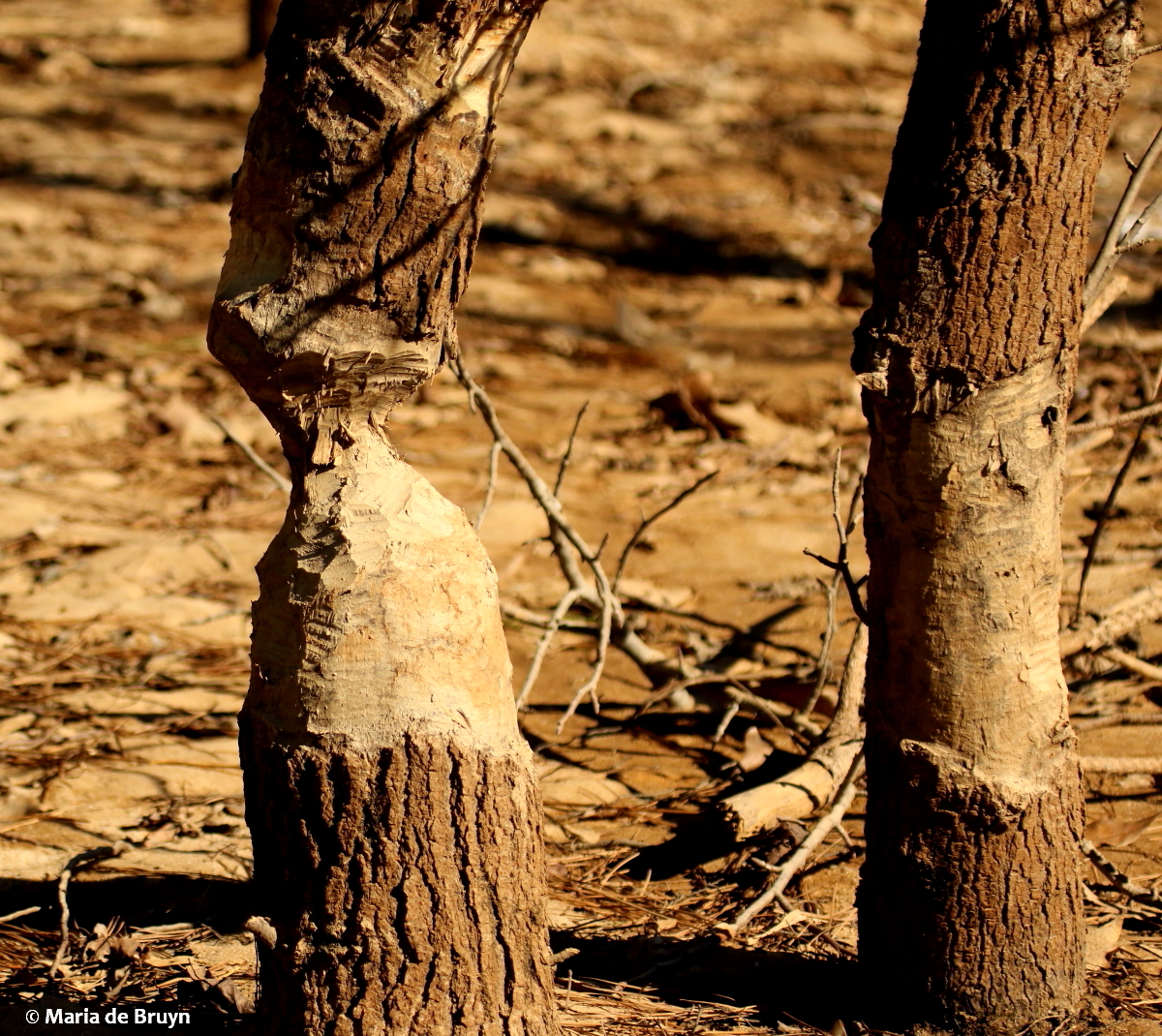
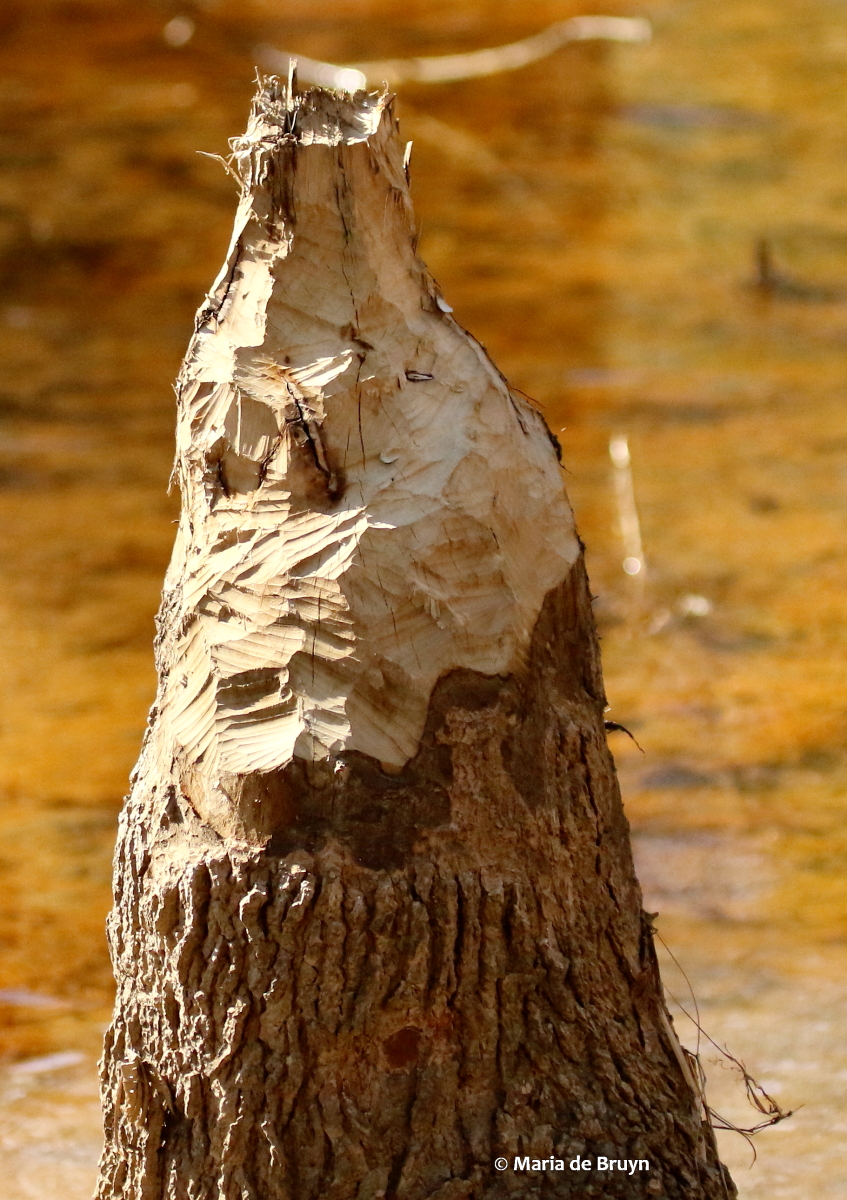
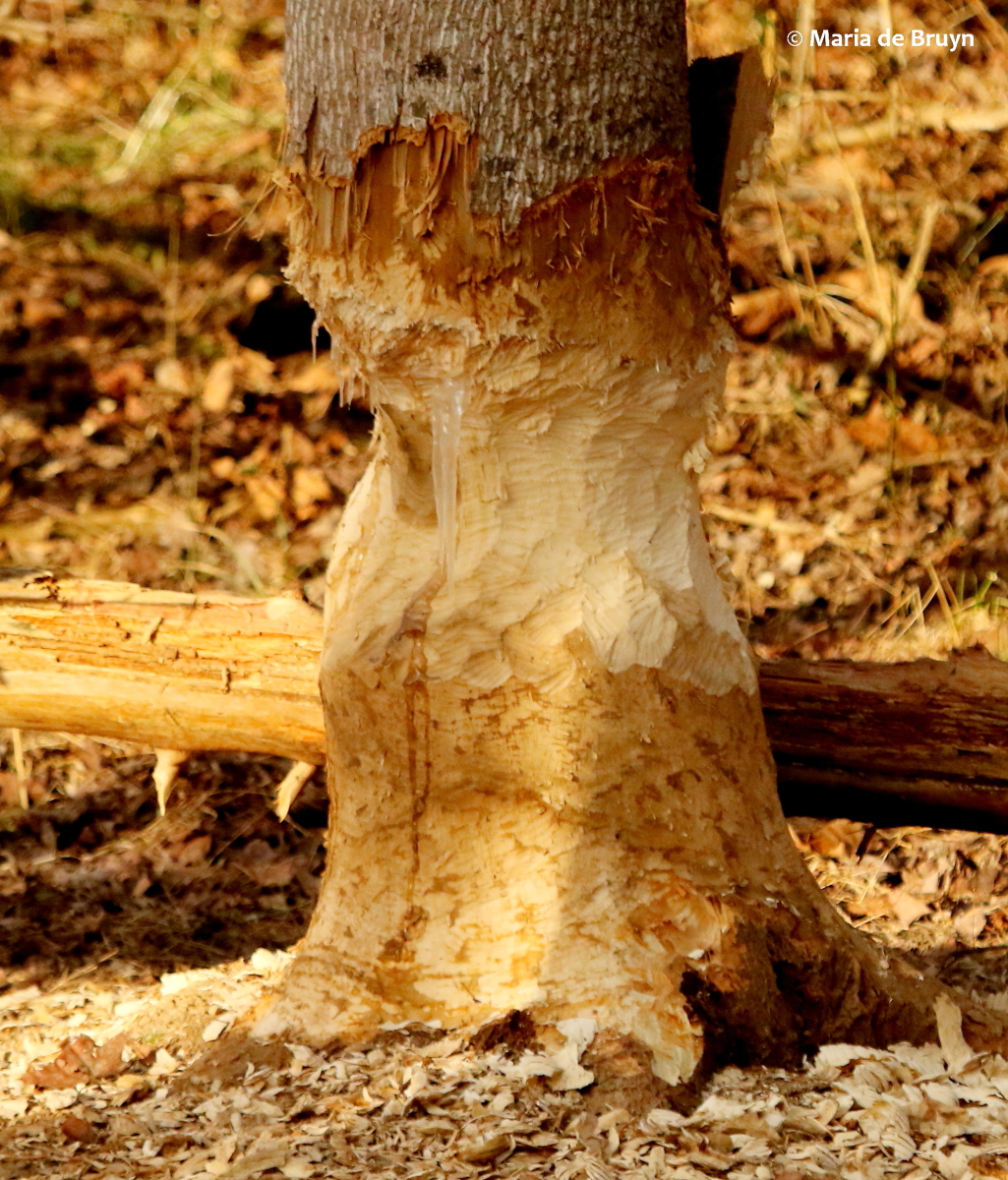
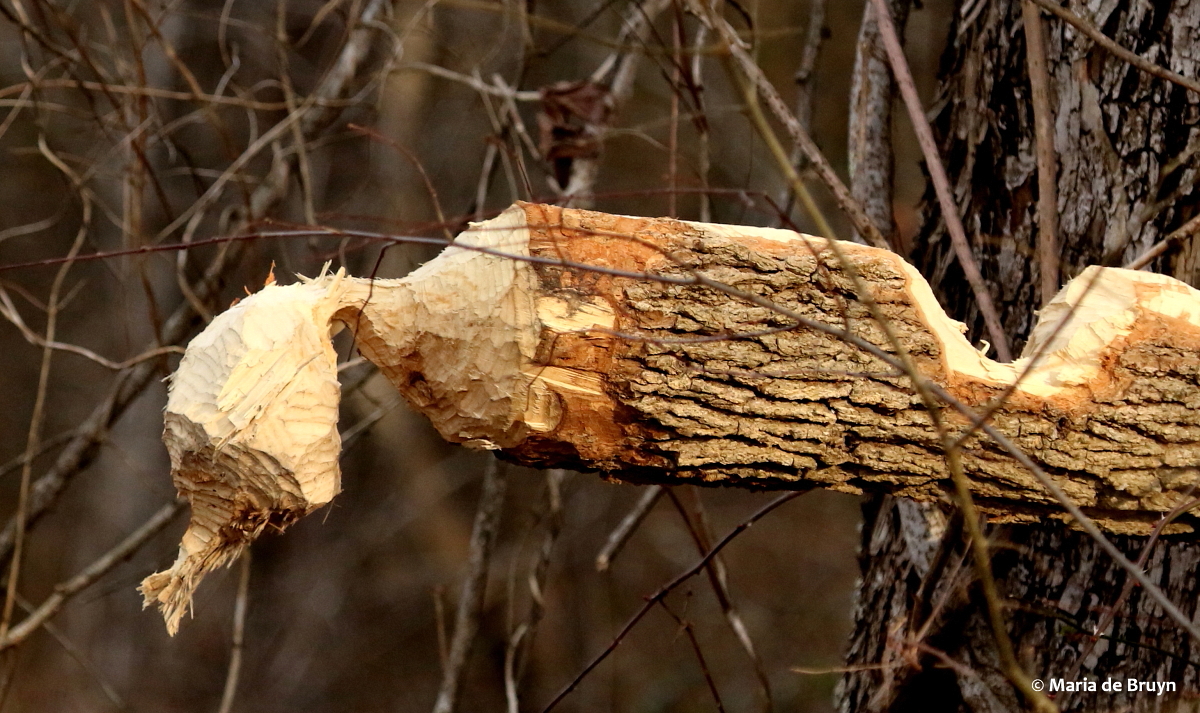
Beaver DK7A4173©Maria de Bruyn resOutside my yard, I’ve been seeing many signs of beavers (Castor canadensis) in the parks and reserves I visit. Their teeth are strong and I recently learned why their teeth are reddish brown – the enamel contains iron!


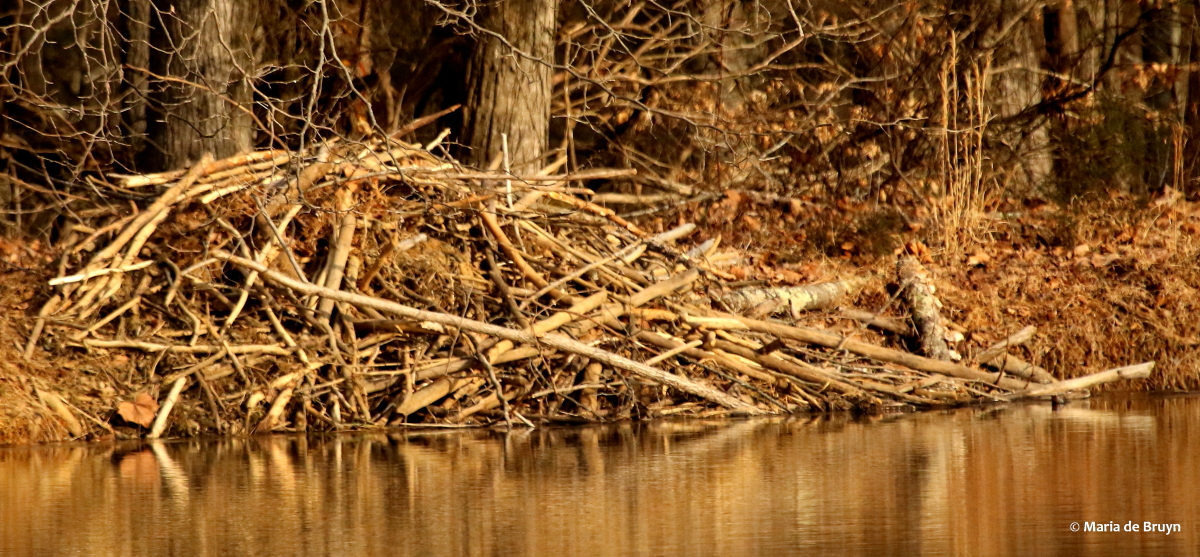
They have left tree stumps, half-gnawed trees and detached trees that they have apparently not yet been able to drag over to their dams and dens.

beaver tree I77A2950© Maria de Bruyn res  beaver I77A0313© Maria de Bruyn res

beaver I77A0125© Maria de Bruyn res  beaver I77A0098© Maria de Bruyn res

One downed tree in particular looked to me like they had been working on a bird sculpture!

beaver I77A0090© Maria de Bruyn res


Eastern chipmunk I77A6221© Maria de Bruyn resI’m guessing that some of the other animals will be coming out in the daytime soon around my home – at the very least, the frogs and rabbits, whom I have seen only very occasionally. Spring is coming and while I enjoy seasonal variety, I will welcome it with open arms!