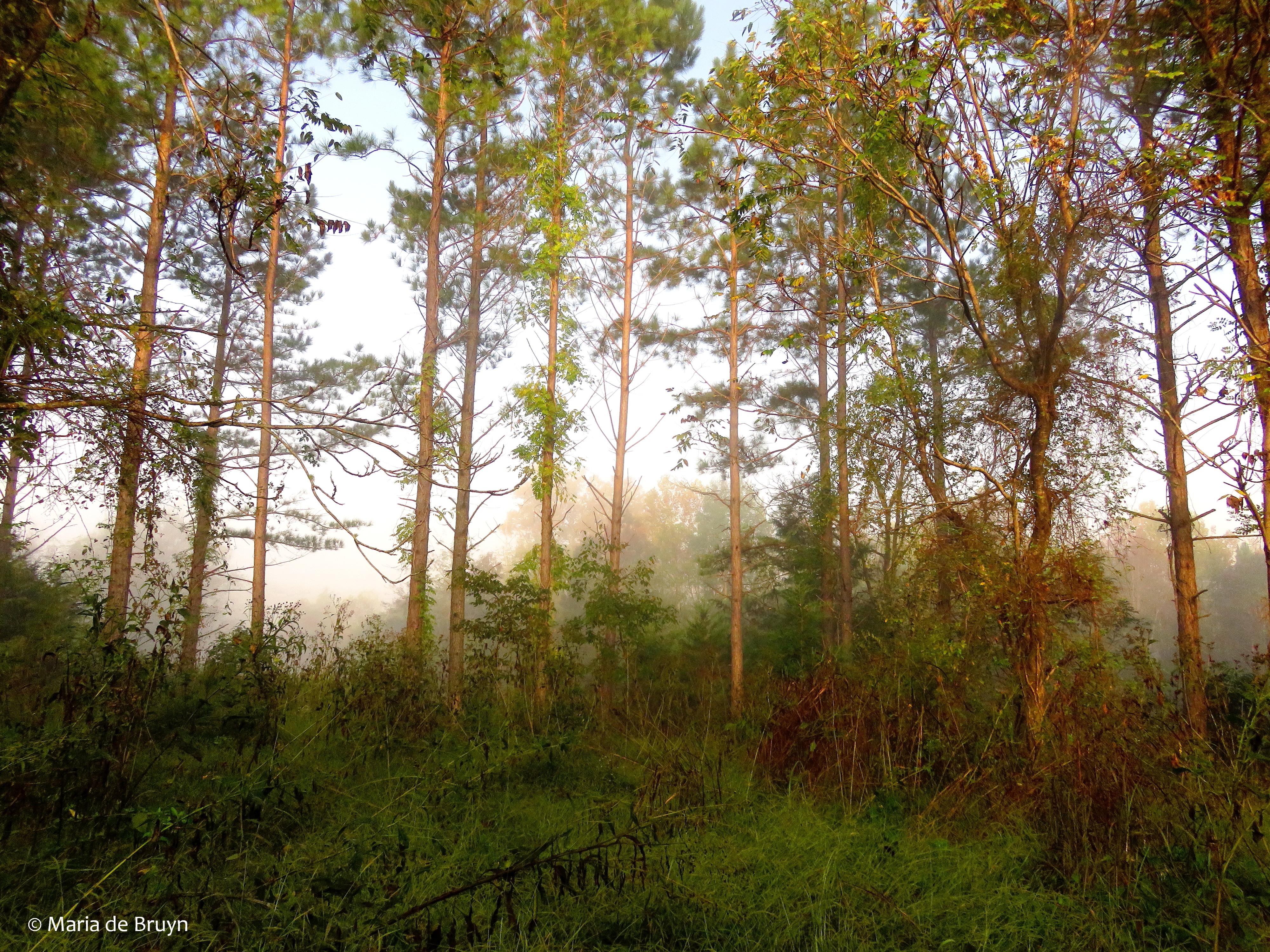
Autumn amblings — seeing insects, birds, a snake and two surprises

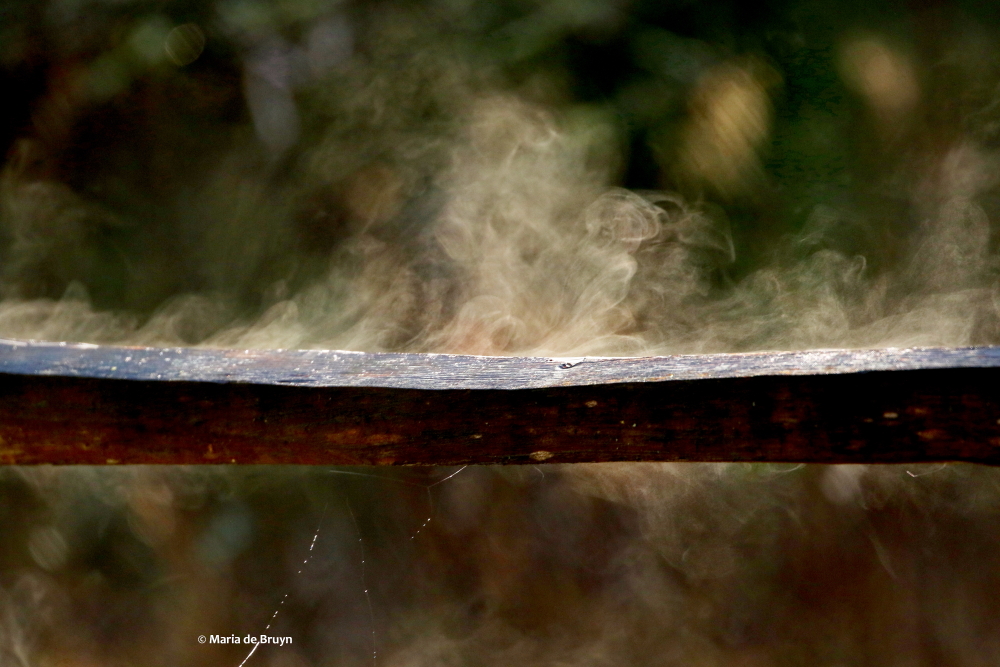
It’s been challenging lately to know what to expect as far as weather goes in our area. Following tropical storms Florence and Michael, we’ve had several more episodes of drenching downpours that caused local flooding and closed off some natural areas. The temperatures have gone down to freezing or below in the morning and then have risen to 50-60s F (10-16C); this has sometimes led to steam rising from fence posts and some flowers still blooming which usually would have died by now. This morning, I skipped my walk as the temperature was below freezing with wind, so I re-lived some visits this past month to the Brumley Nature Preserve North. If you, too, are inside sheltering from the weather, perhaps you’ll have the time to amble photographically through this long Brumley walk with me.
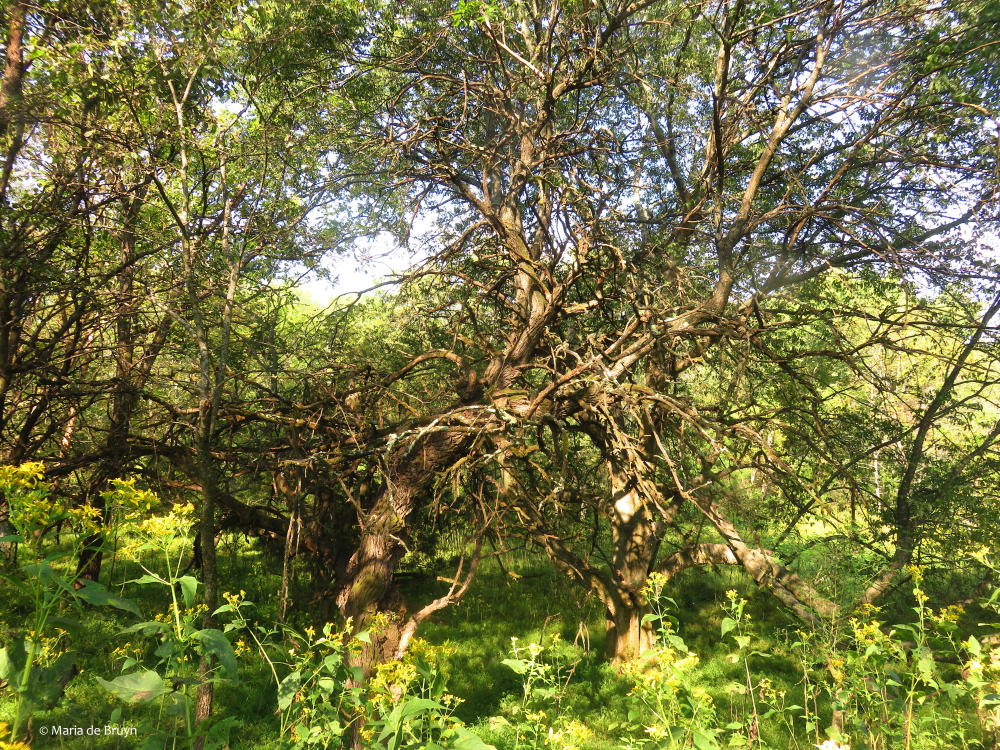
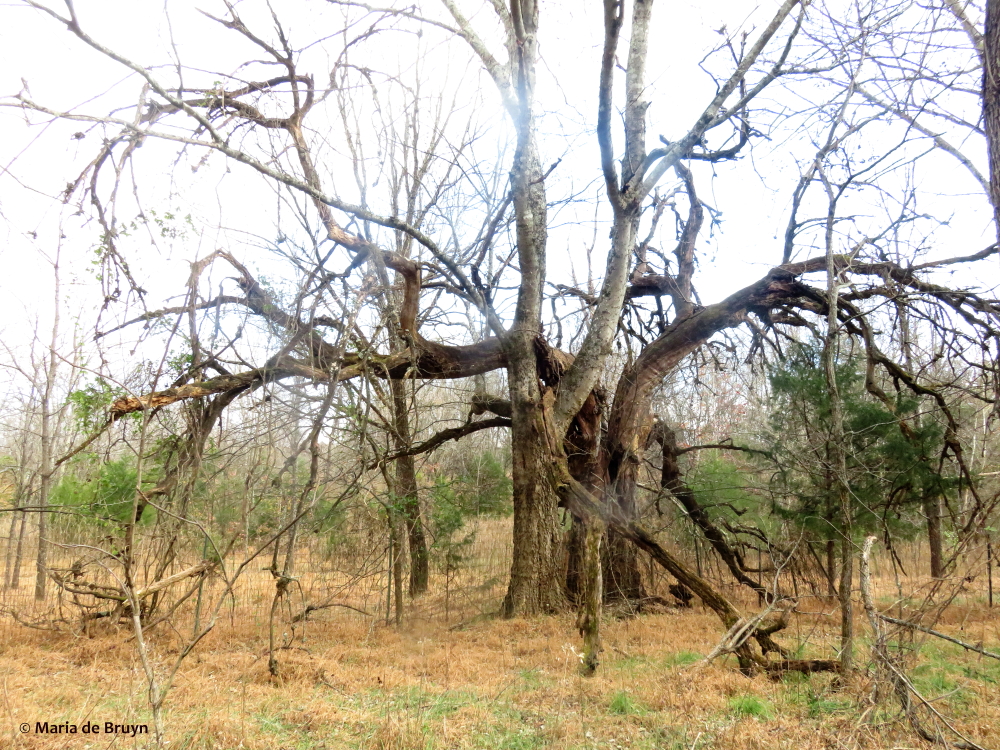
Some parts of the reserve are still fairly green, which creates a lovely ambience for leisurely strolling and nature observations. In other cases, we can see the arrival of late autumn and approaching winter. This picturesque tree, one of three near a pond that harbor various bird species, was still very green in late September; now these forest denizens are showing off their gnarly “bare bones”.
     

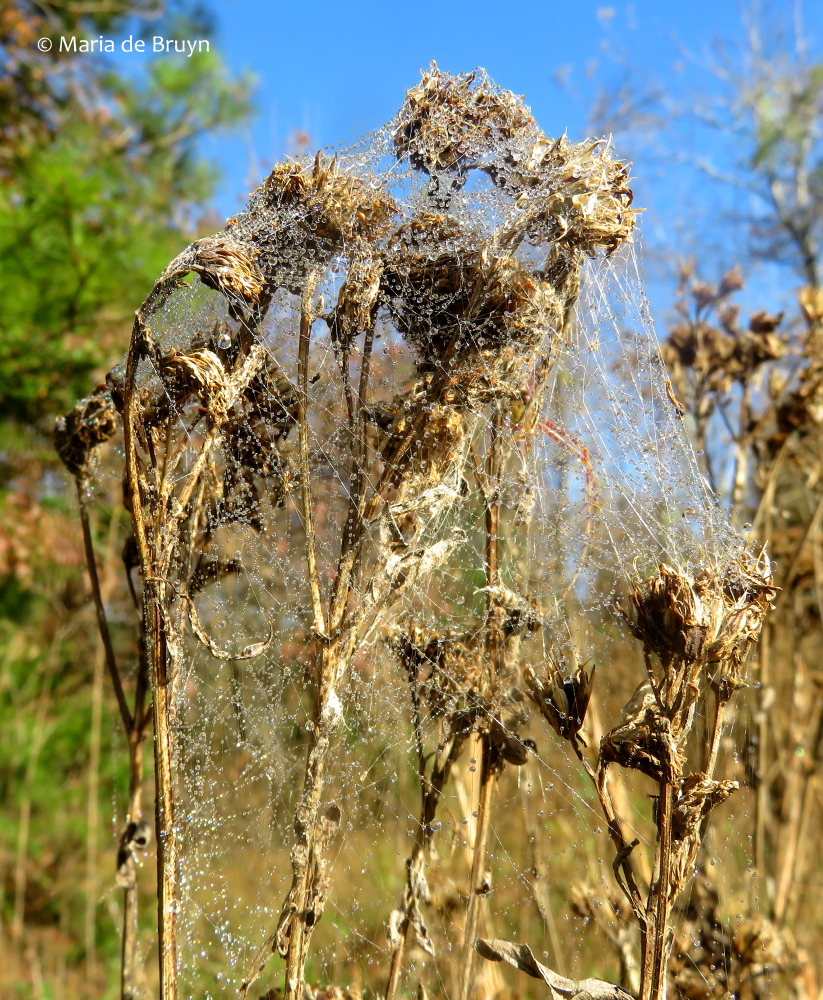
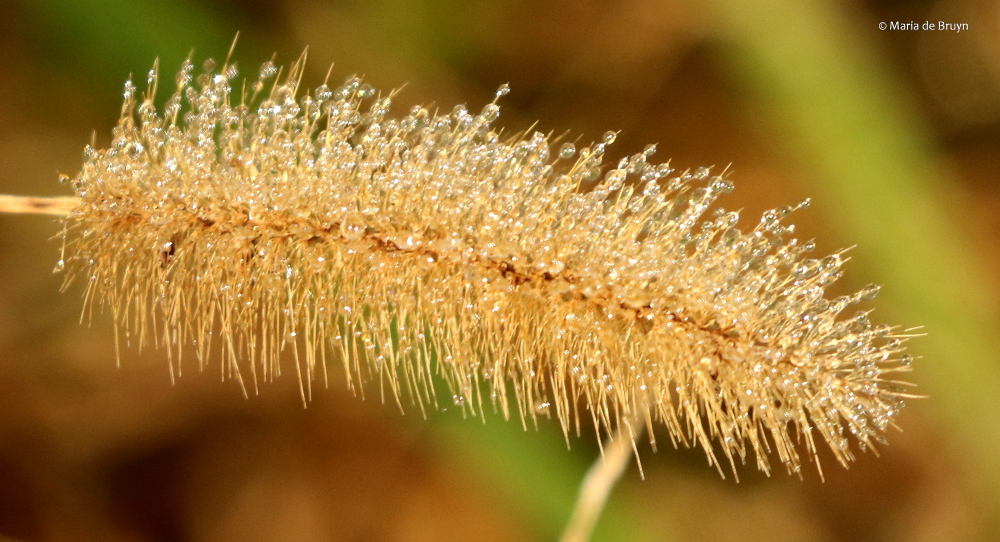
So some early mornings are quite nippy and others a bit milder, with dried plants glistening with spider webs and dew drops that sparkle in the sun.
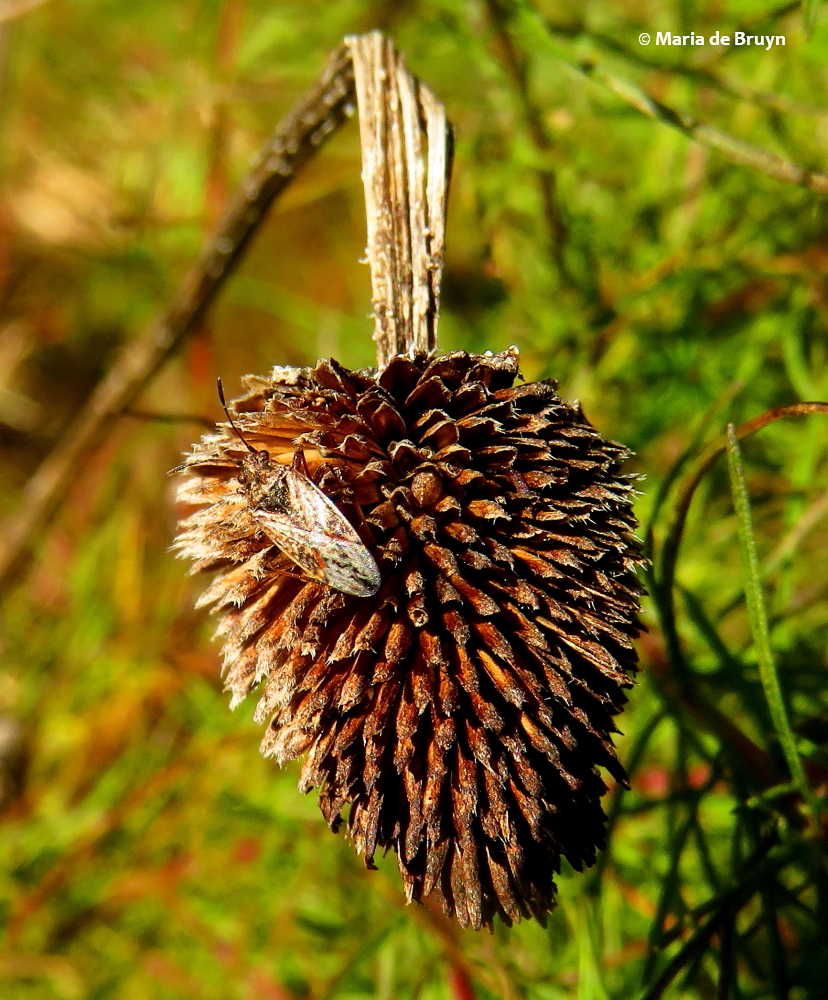
 

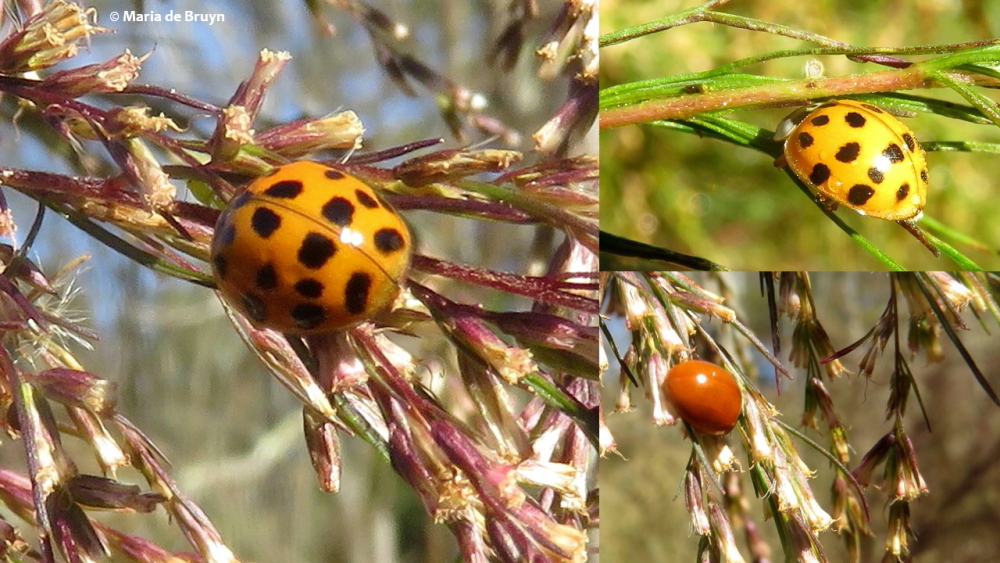
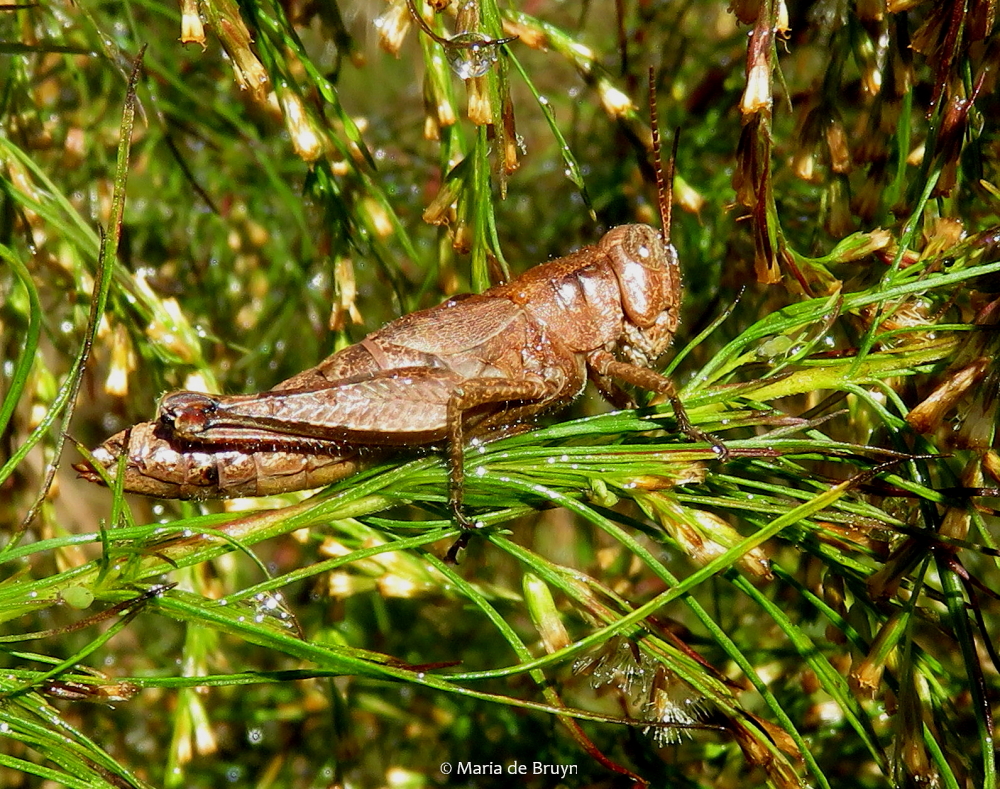
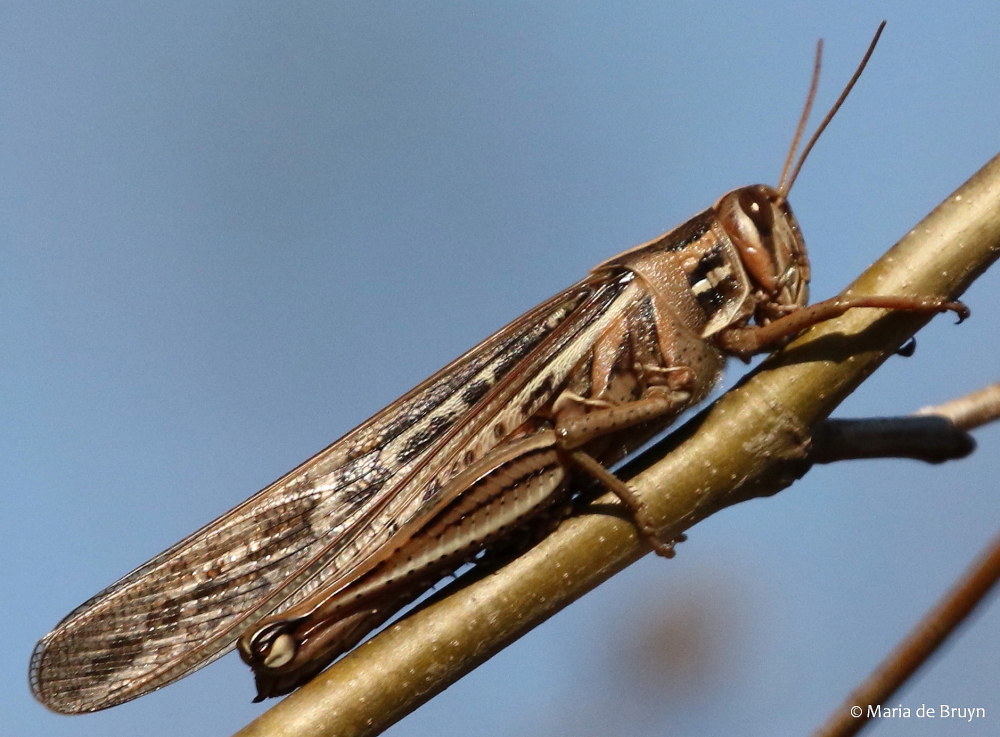
Some of the insects emerge with the sun to bask in the golden light, like this seed bug (Orsellinae, left), whose coloring camouflages it well against the seed heads, short-horned grasshopper, American bird grasshopper (Schistocerca americana) and different color variations of Asian lady beetles (Harmonia axyridis) who were hanging out on the dog fennel (Eupatorium capillifolium).


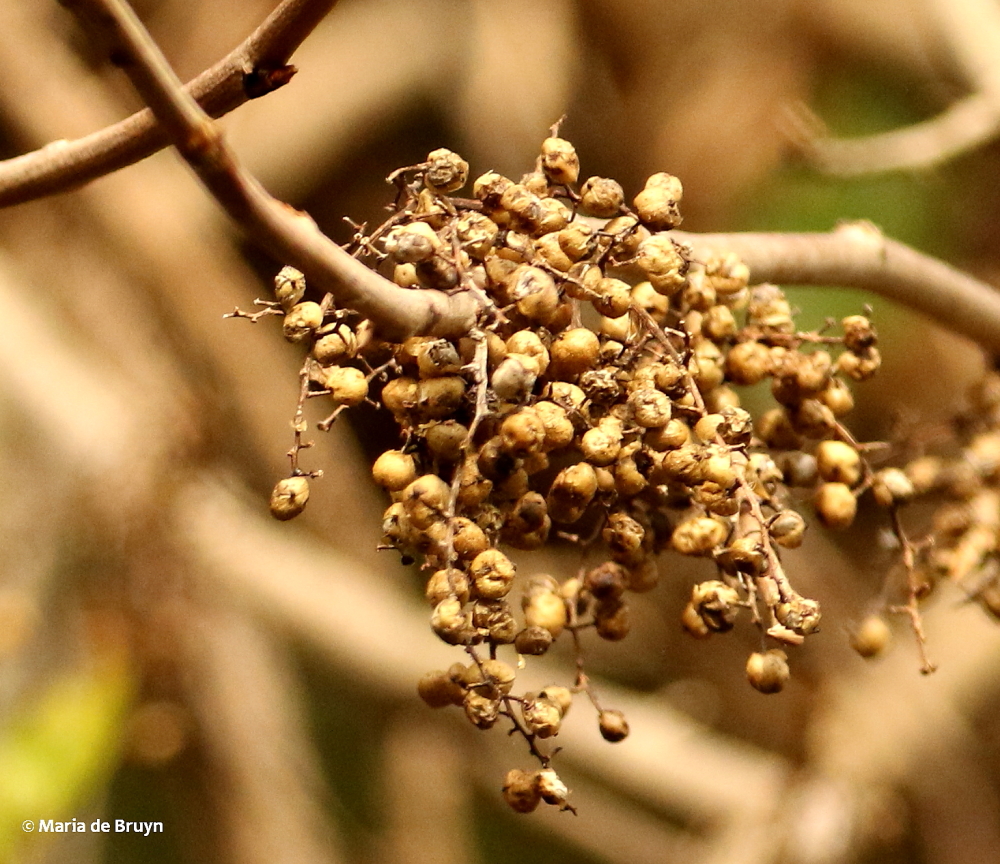
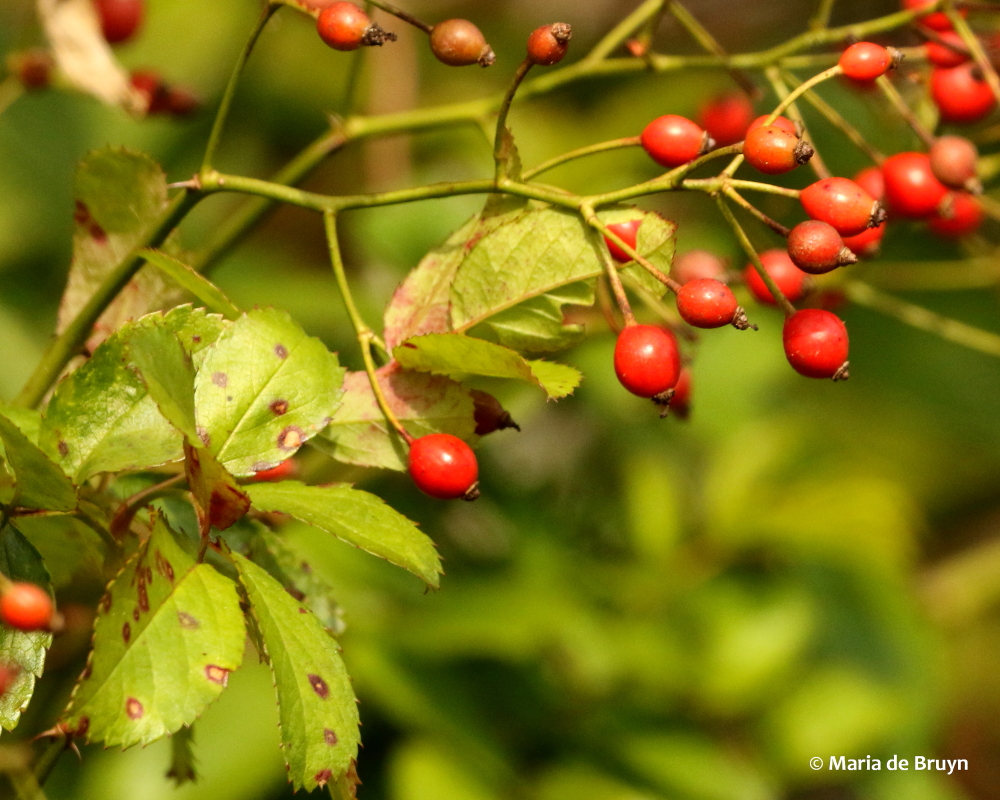
Various birds have been enjoying the winter seeds and especially the winter berries, like the red multiflora rose (Rosa multiflora) and beige poison ivy (Toxicodendron radicans).    
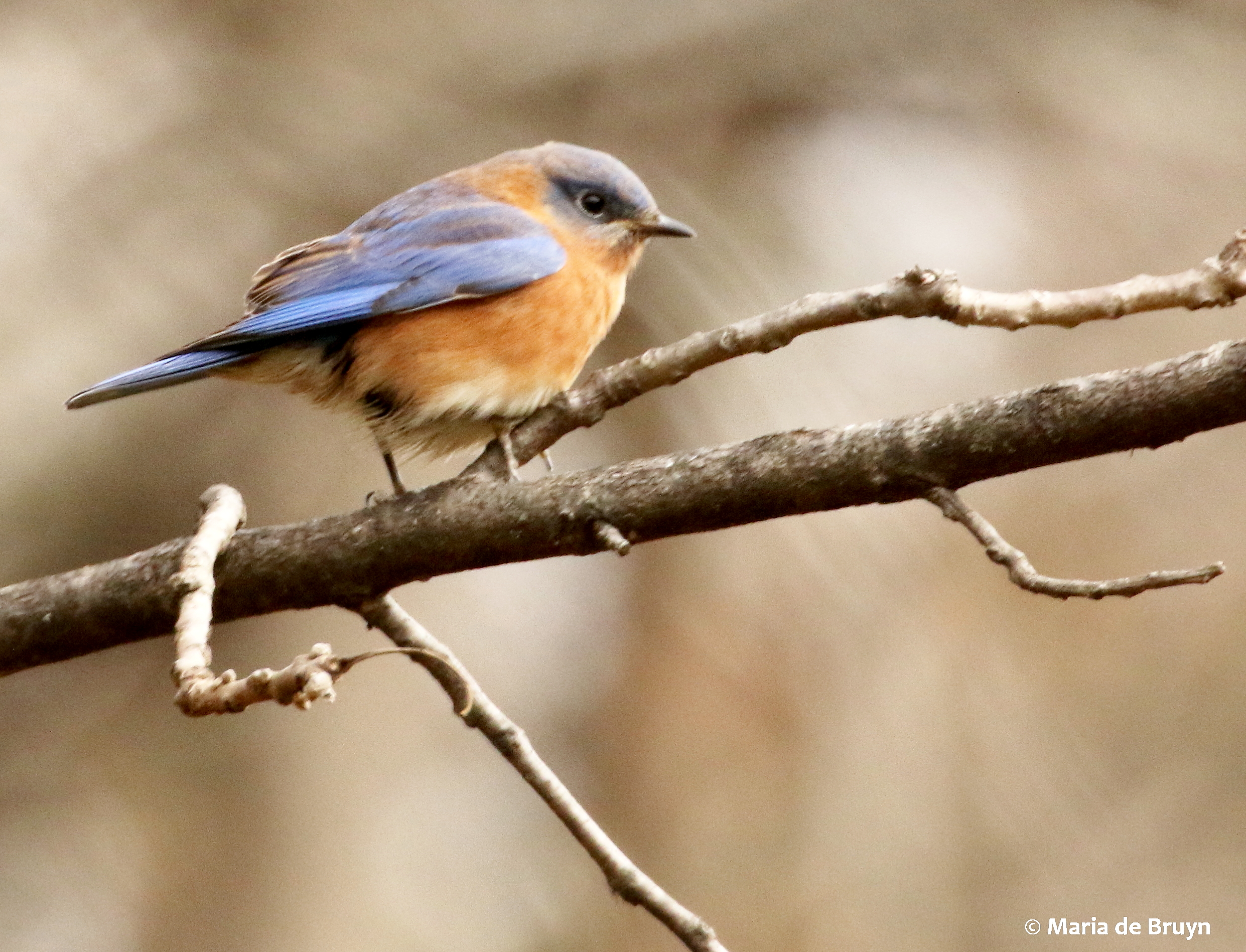
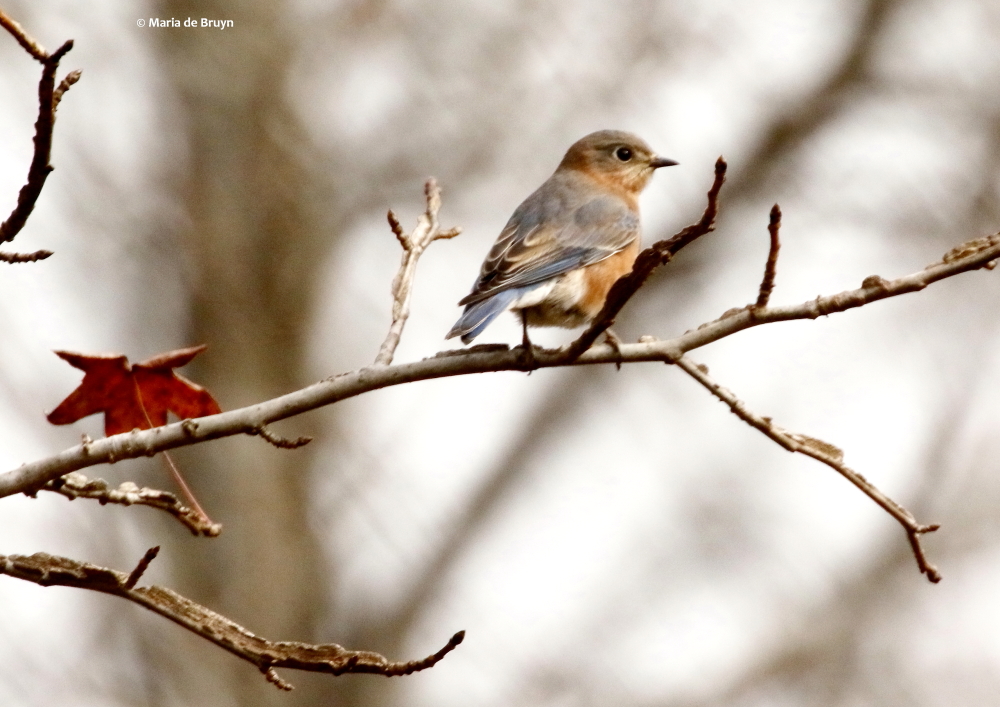
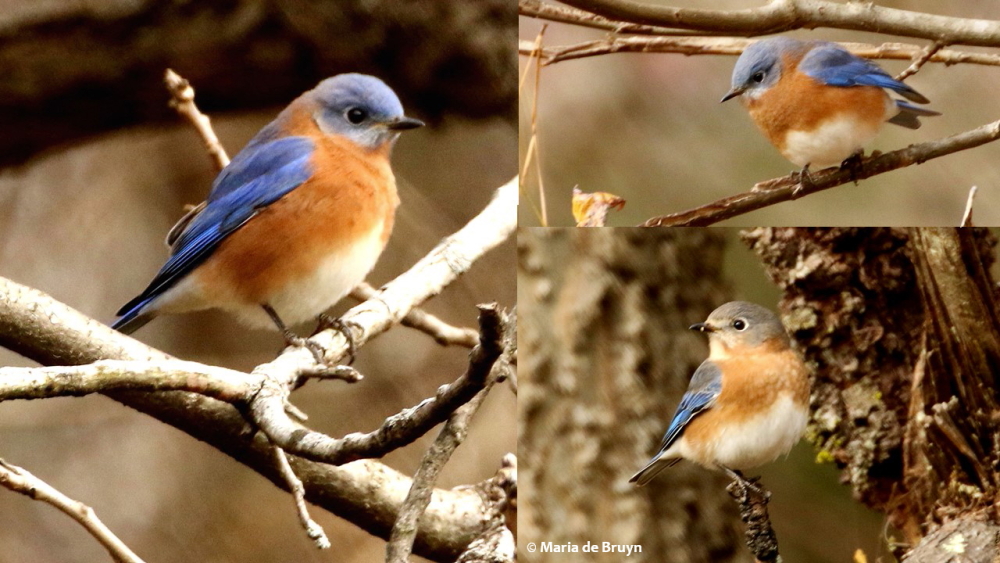
The Eastern bluebirds (Sialia sialis) are quite fond of berries.
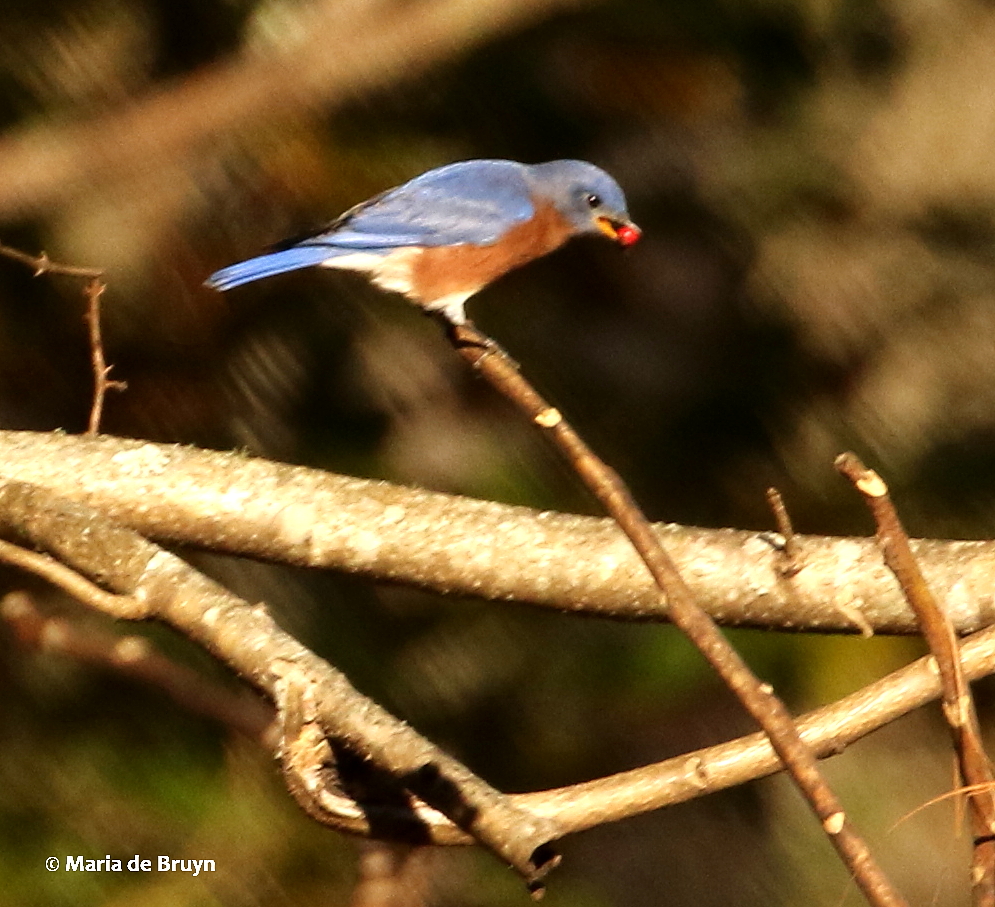
They travel back and forth between fruit-laden trees and dried grass seedheads, occasionally stopping on paths to find worms and insects.
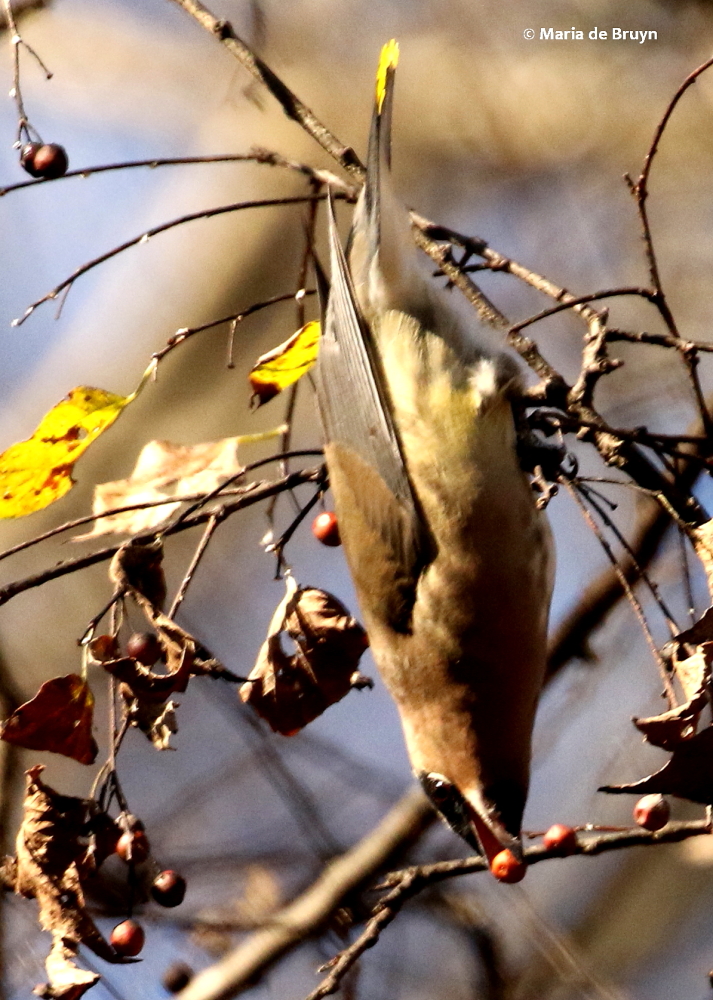
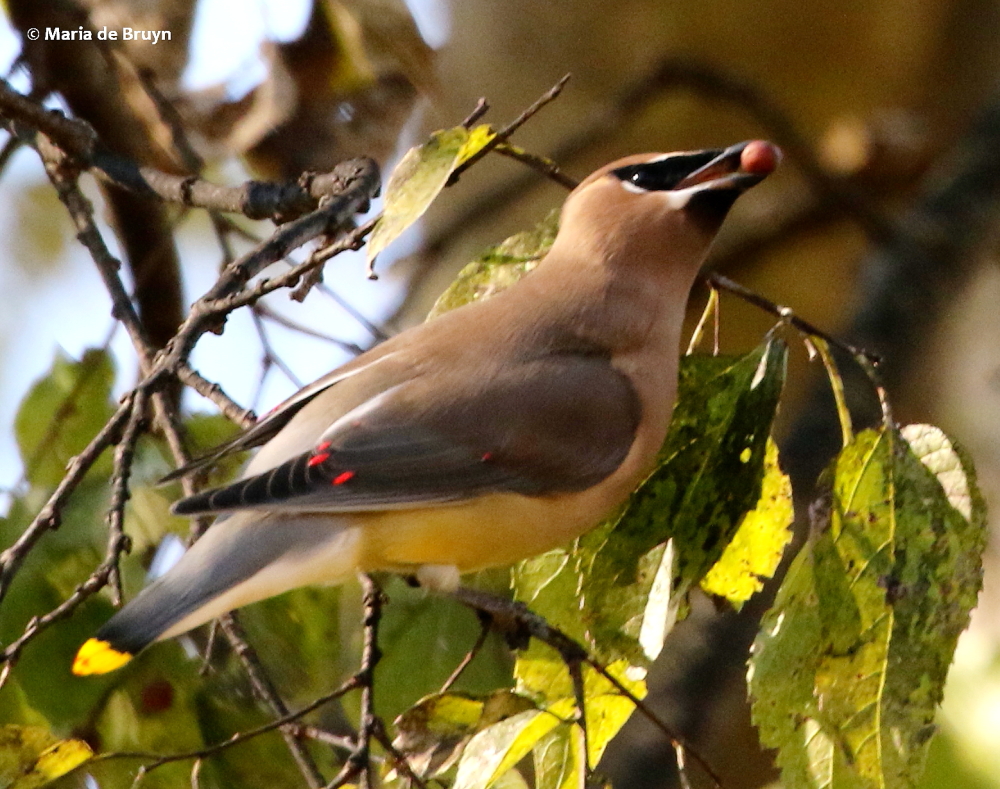
The cedar waxwings (Bombycilla cedrorum) also like to gorge on berries, often sharing trees with American robins who enjoy the same meal. Sometimes snagging a berry involves some acrobatic moves.
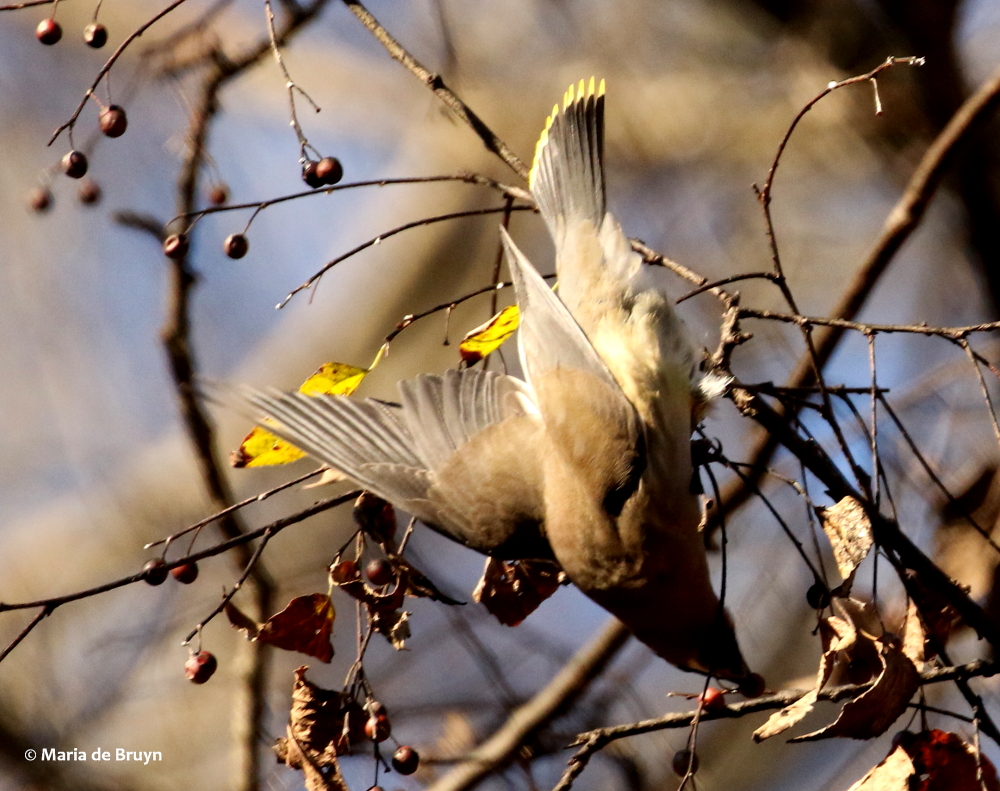
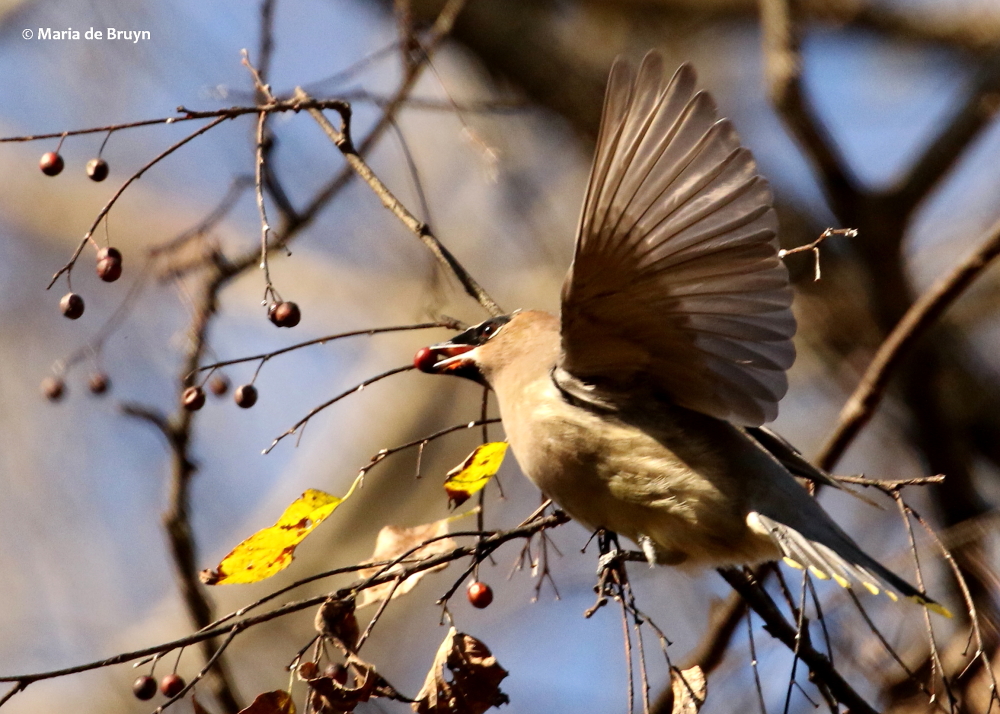
  

The waxwings are adept at these moves and I only occasionally saw one drop a fruit. They are such elegant birds with their black masks and subtle touches of red on the wings and yellow on the tail feathers.
 

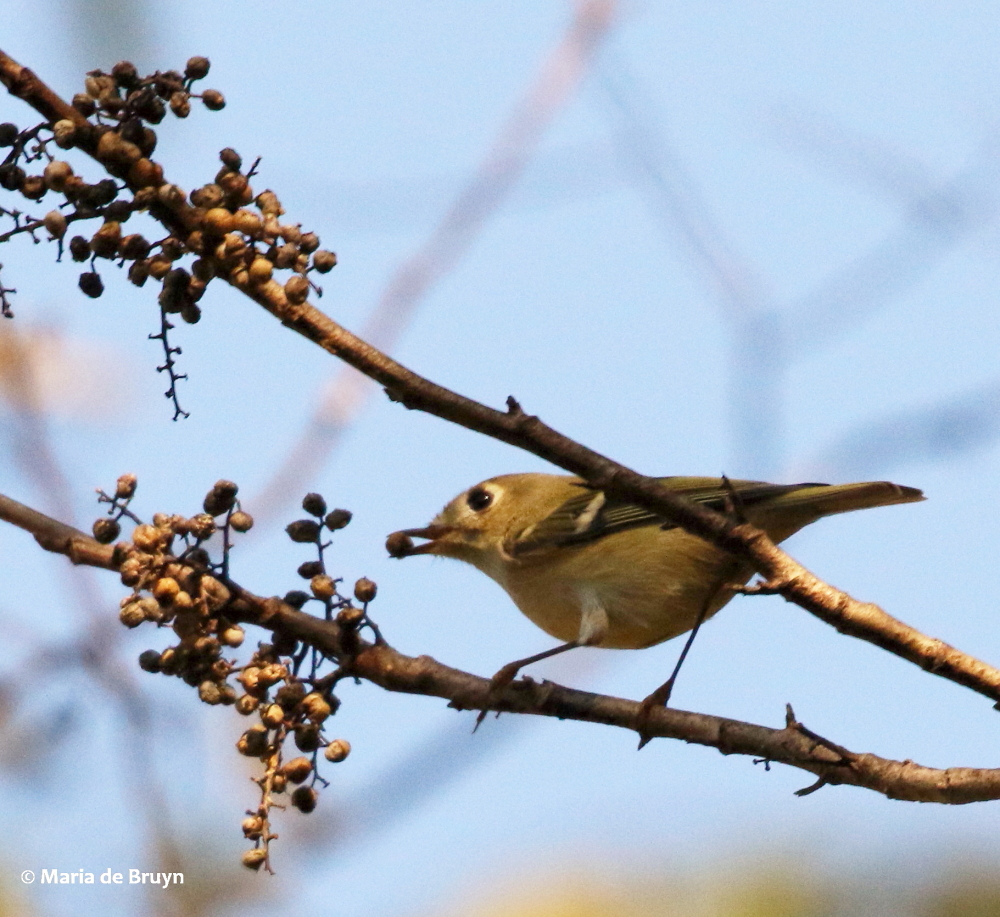
One of my favorite bird species, the ruby-crowned kinglets (Regulus calendula), are also fond of berries. They like suet in gardens but no suet feeders are found in the reserve.
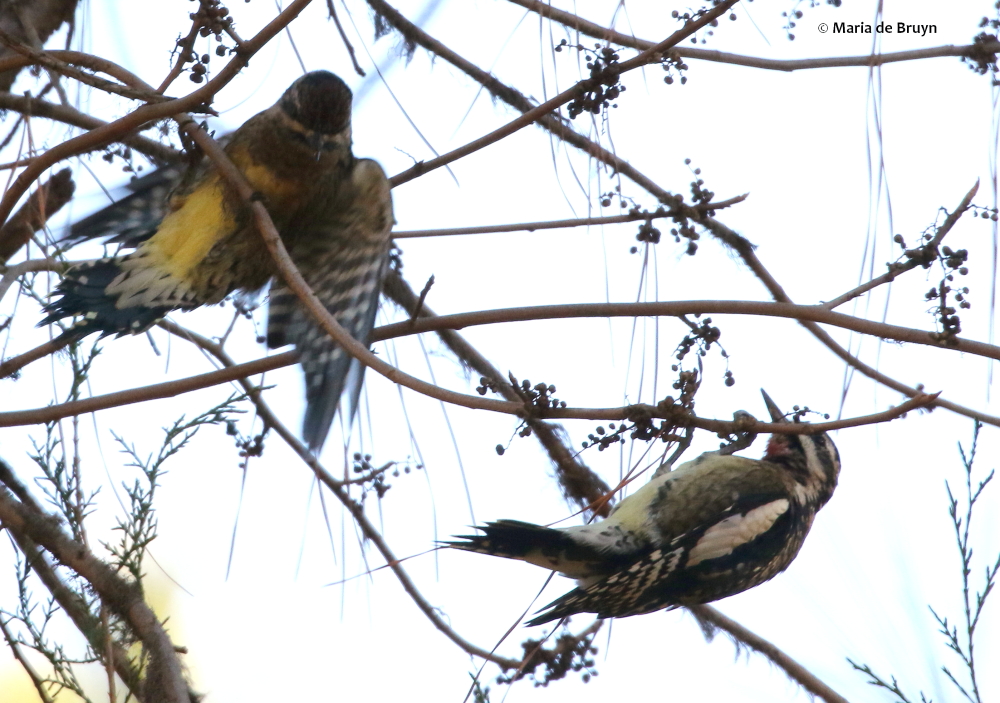
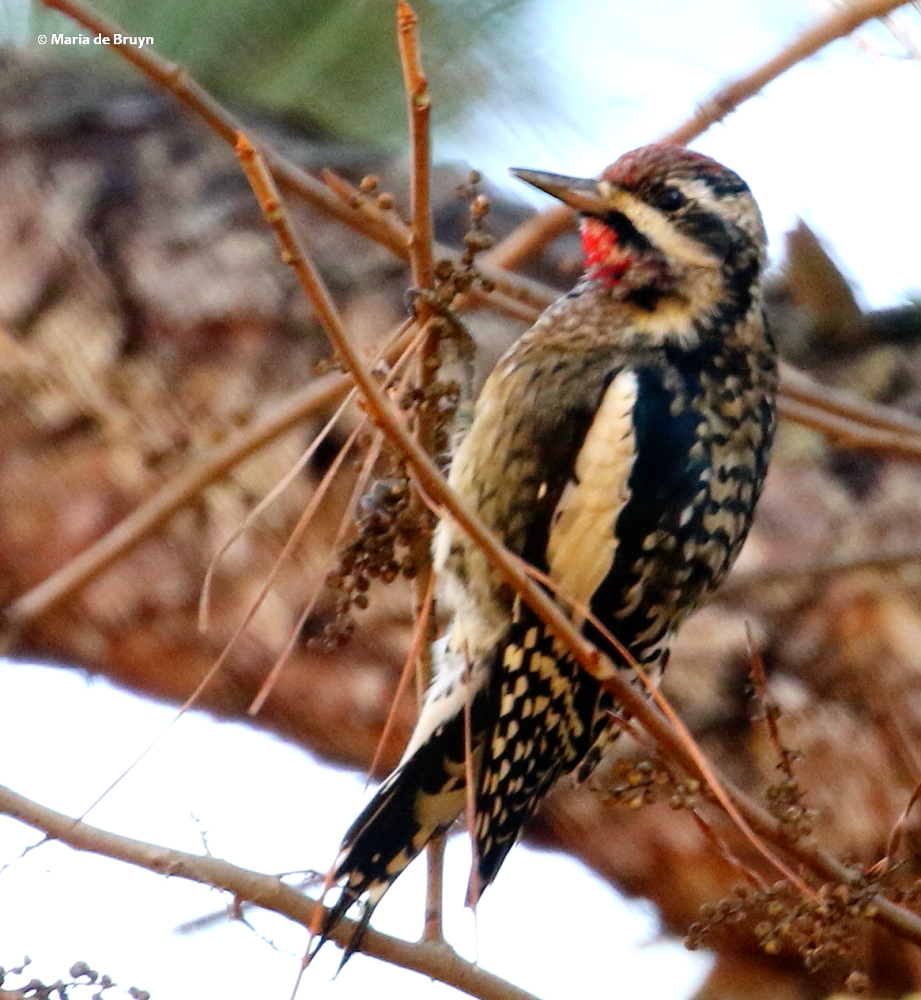
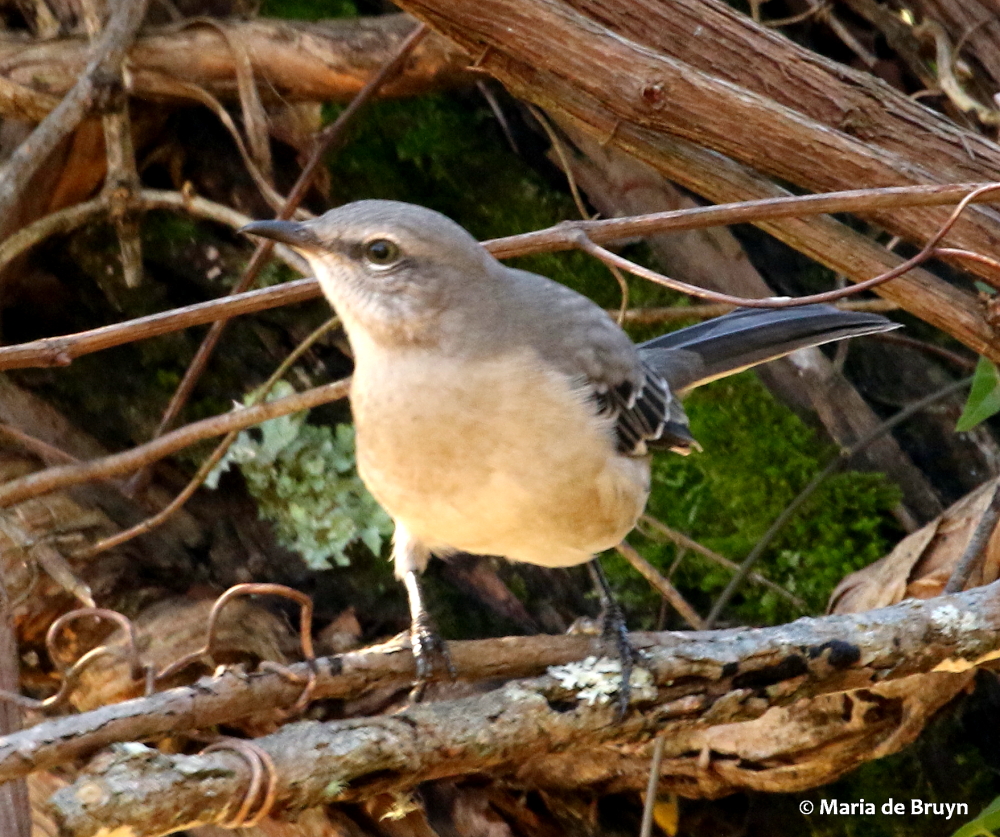
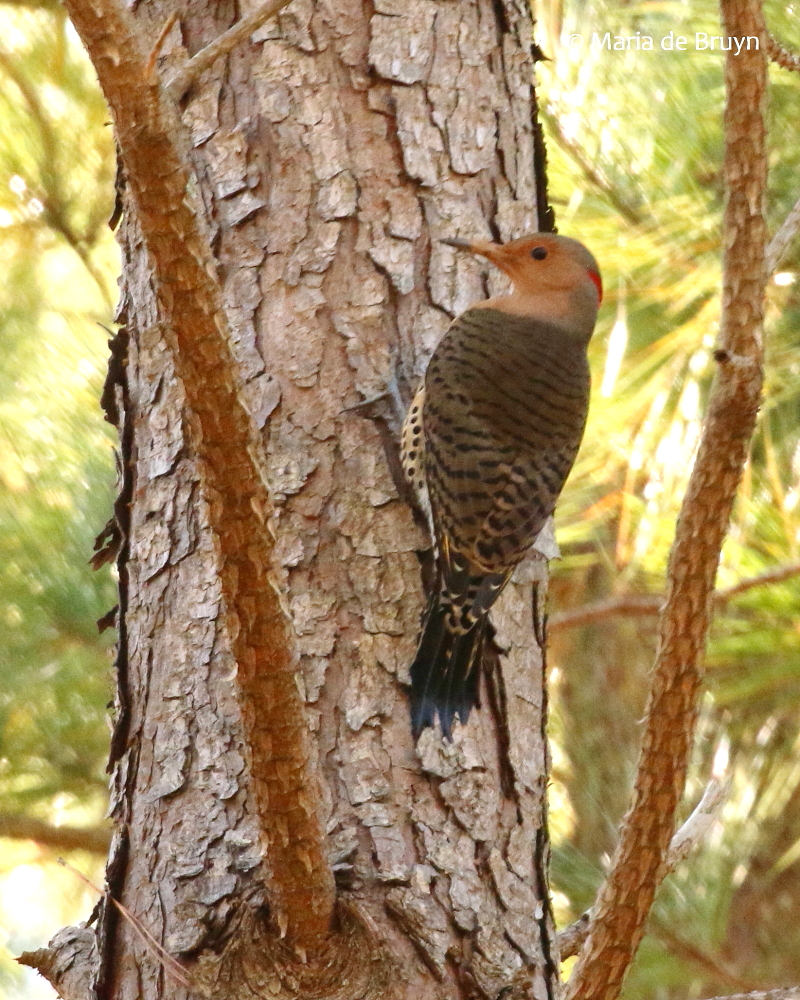
Some of the larger birds, like the Northern mockingbird (Mimus polyglottos), Northern flicker (Colaptes auratus) and yellow-bellied sapsuckers (Sphyrapicus varius), also look for berries and insects as they mostly stay high up in the trees.
 

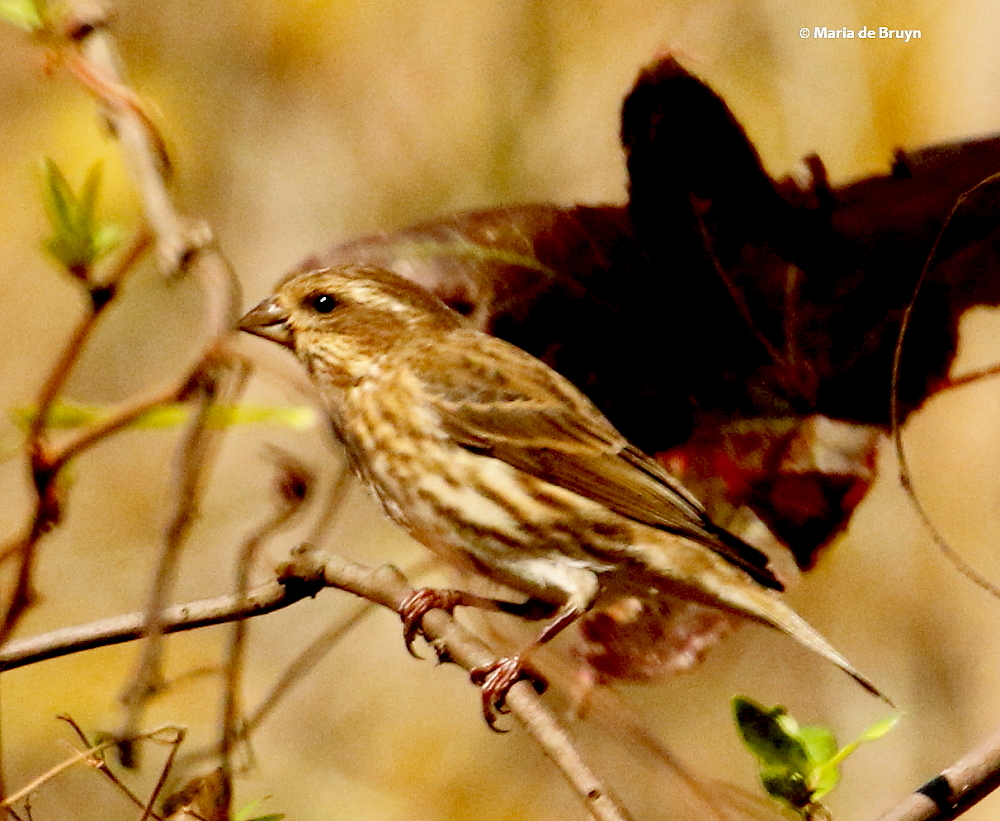
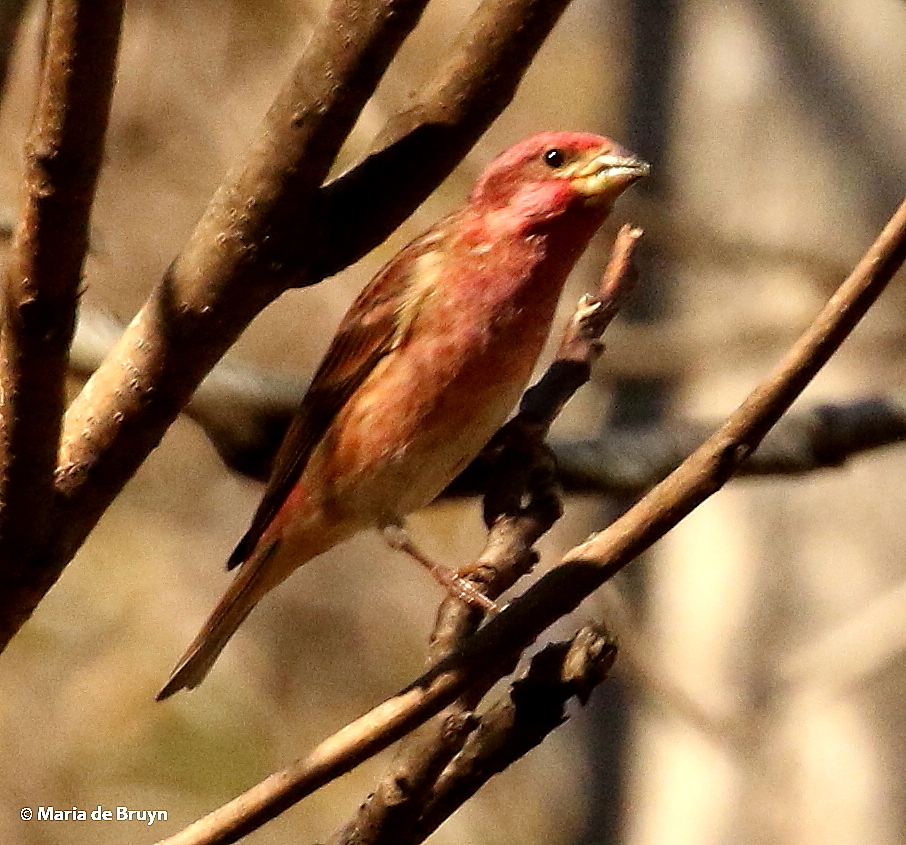
Purple finches (Haemorhous purpureus) are another species that enjoy late autumn fruit.
  

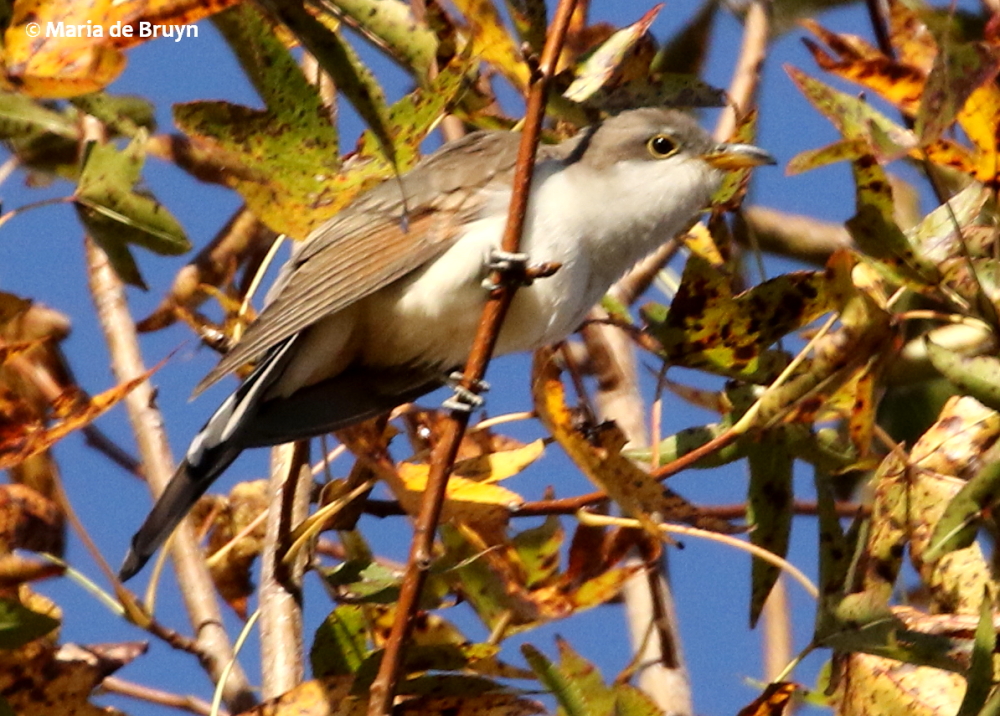
In early November, I had my first of two delightful surprises at Brumley. It was early morning and as I glanced up at some very tall trees, I spotted movement among the earth-toned leaves. My lens revealed a yellow-billed cuckoo (Coccyzus americanus) – and when I entered it into my bird list for the day, eBird asked me to justify having seen it as it was a rarity this late in the year.

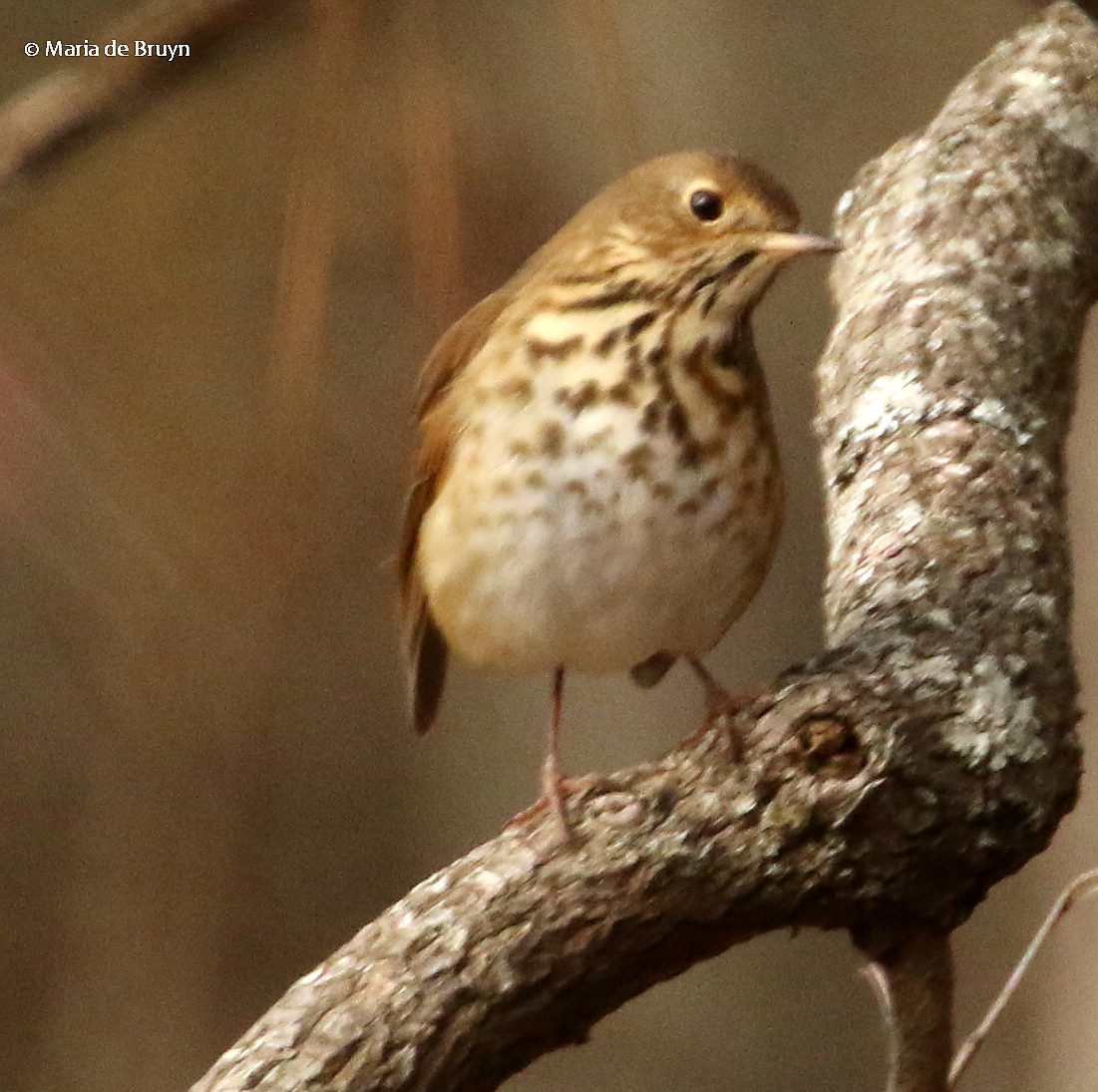
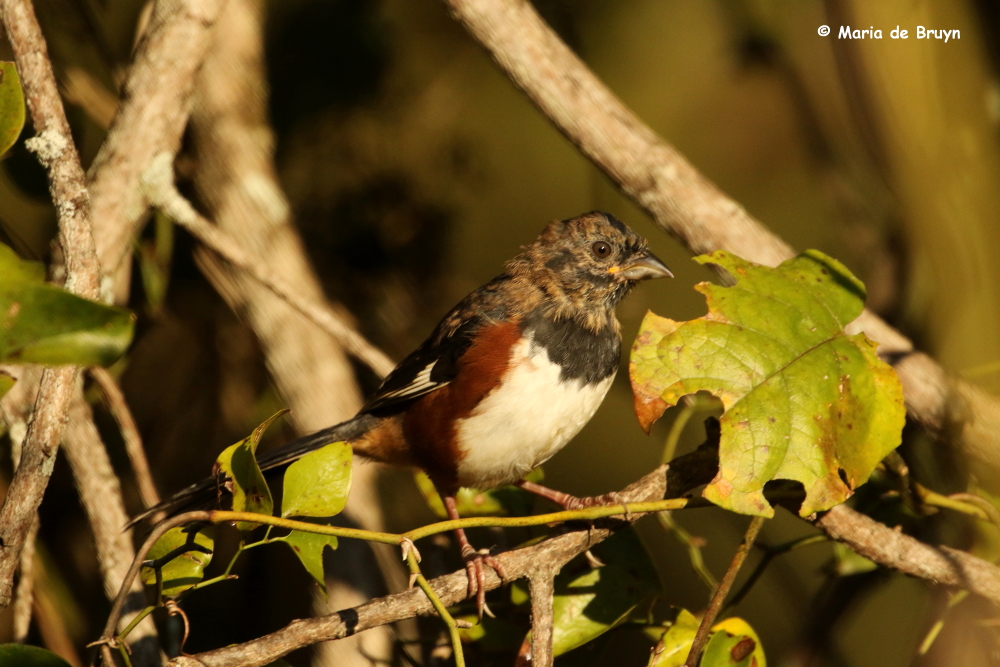
Two other birds that are not surprises but also a joy to see are the hermit thrush (Catharus guttatus) and colorful Eastern towhee (Pipilo erythrophthalmus).
  

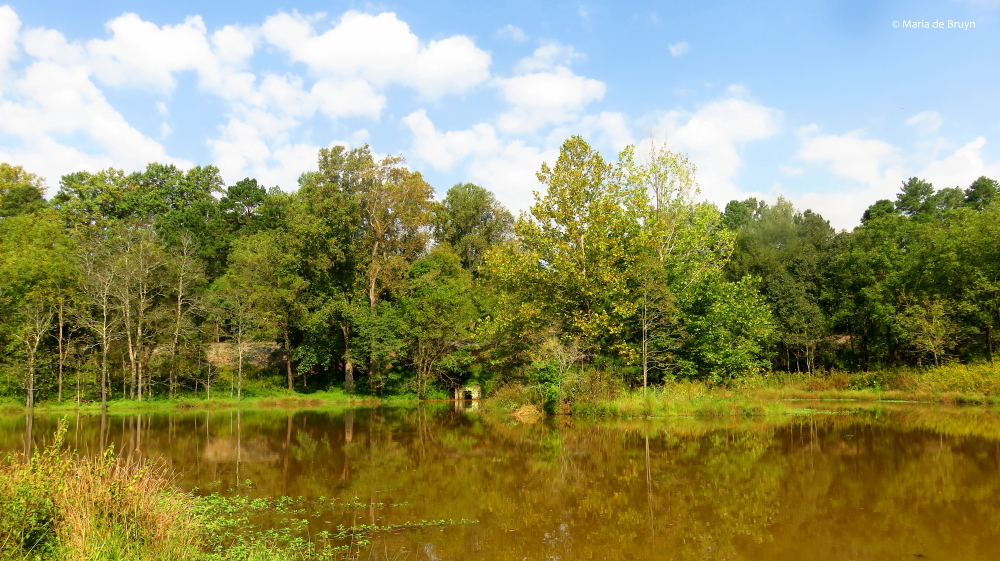
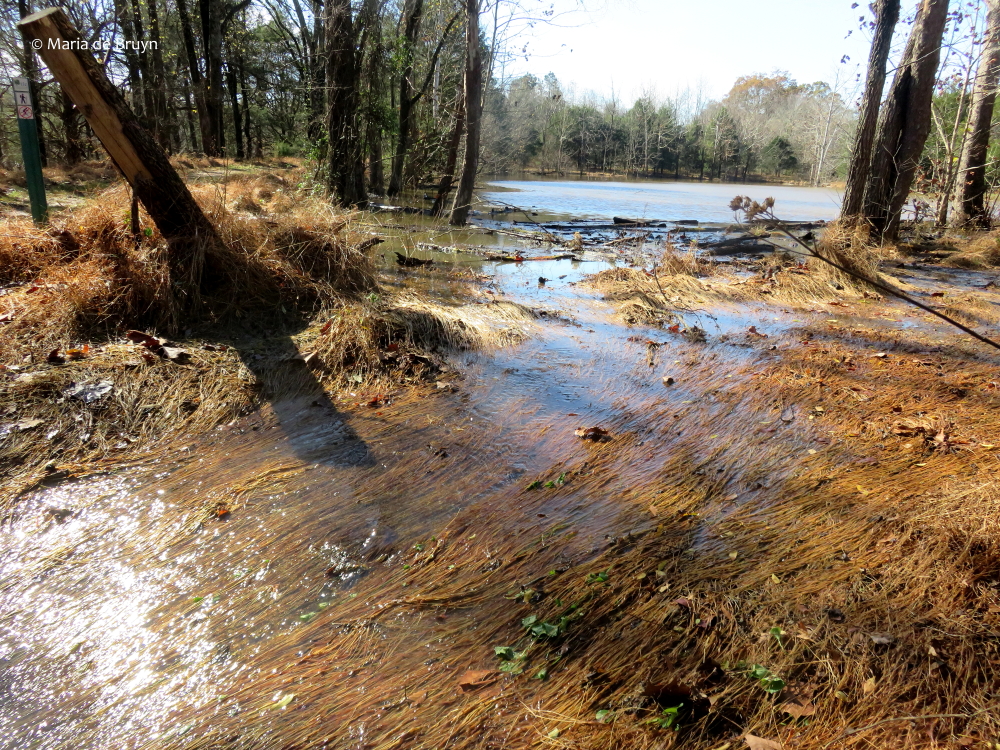
It’s always worthwhile to look all around when you walk, not only up at trees if you are a birder or at eye level if you like mammals. I take a lot of bird photos, because I love birds and because they are often easier to see than other wildlife species. But I consider myself more a “wildlifer” than a “birder” since I really am interested in all kinds of animals. That now stands me in good stead during the high-precipitation events we’ve been having. The ponds are filled to capacity and then some, with water flowing over the banks and onto paths.
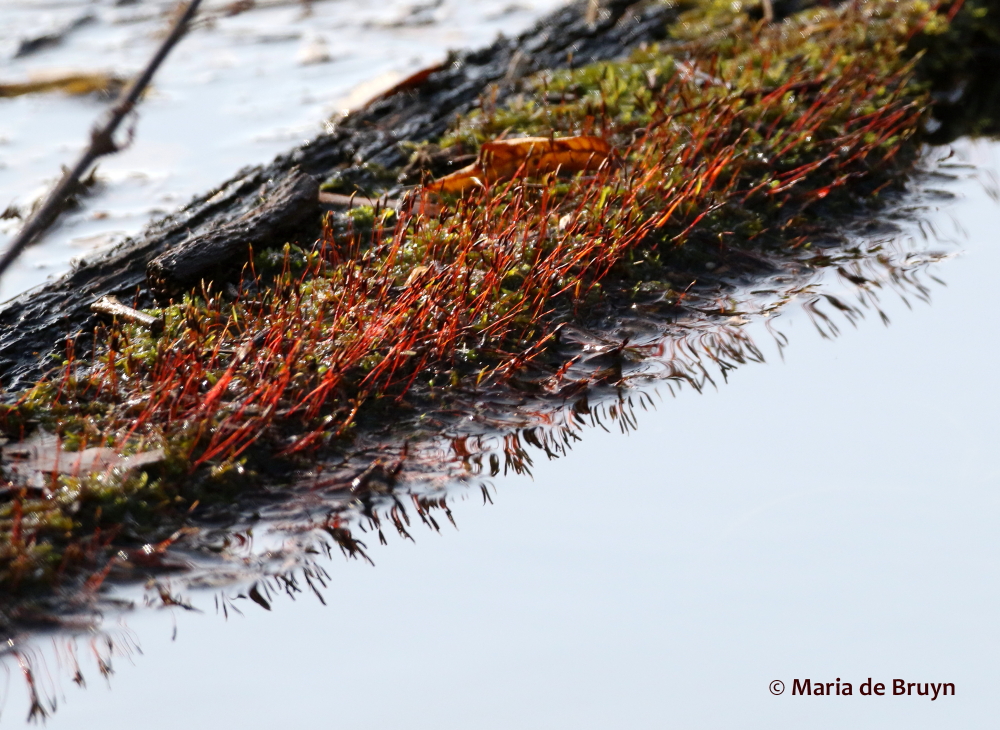
In some cases, the high humidity has been great for plants; bryophytes are shooting up sporophytes which carry their reproductive spores. As there are over 600 mosses, liverworts and hornworts in North Carolina, I didn’t get the scientific ID for this species.

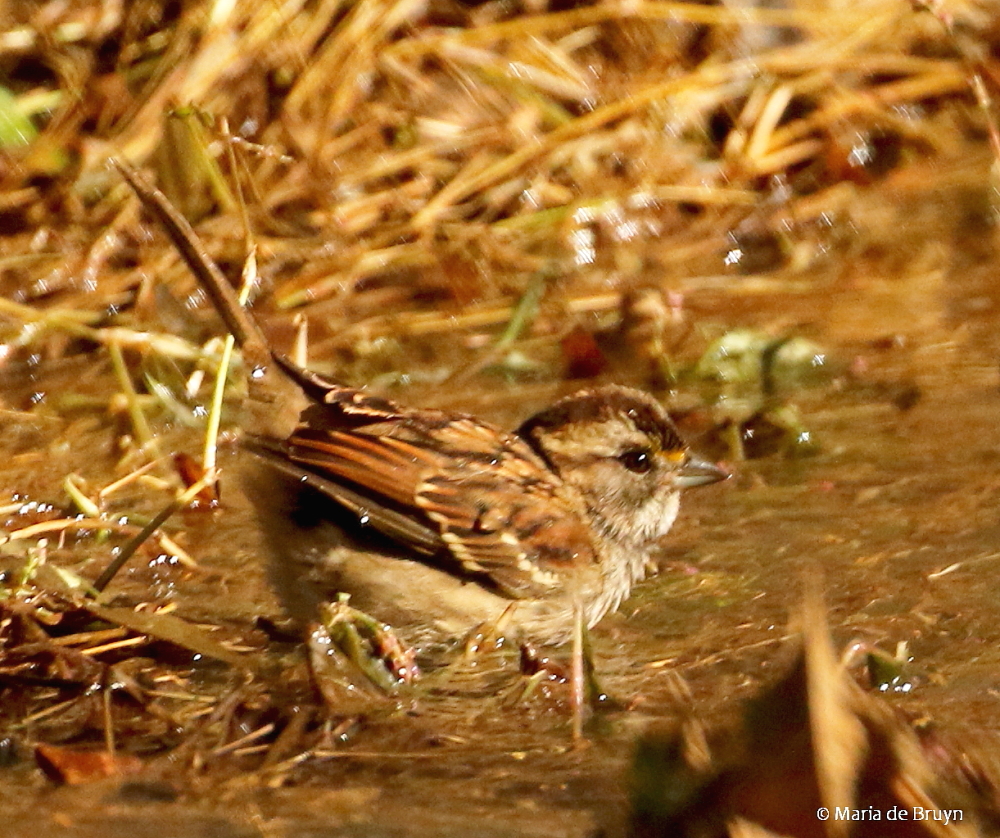
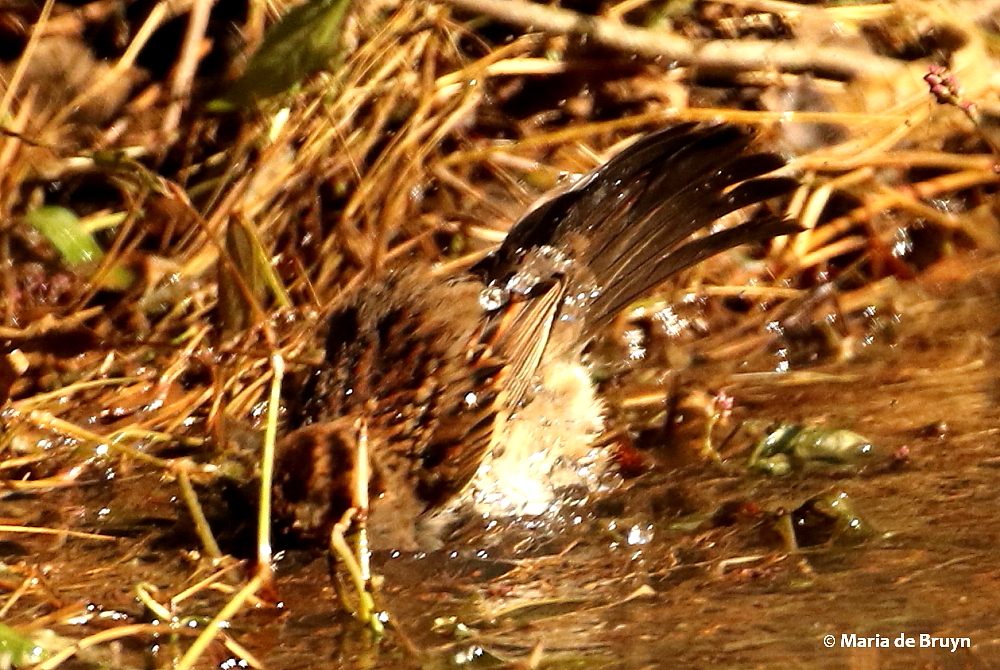
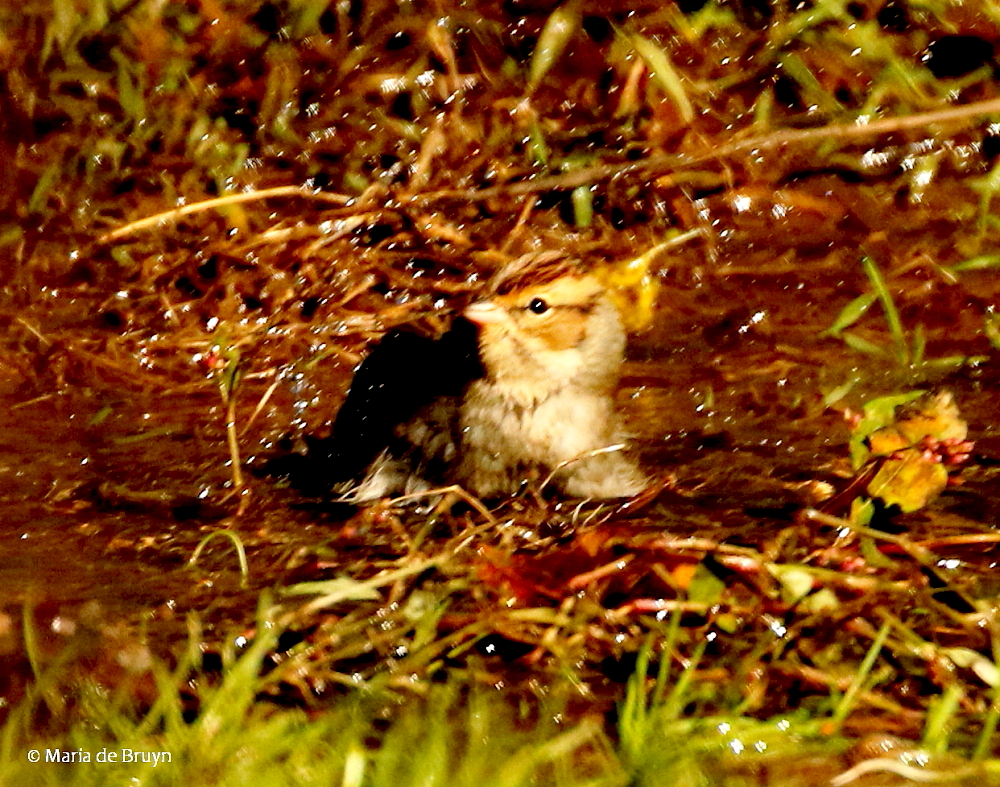
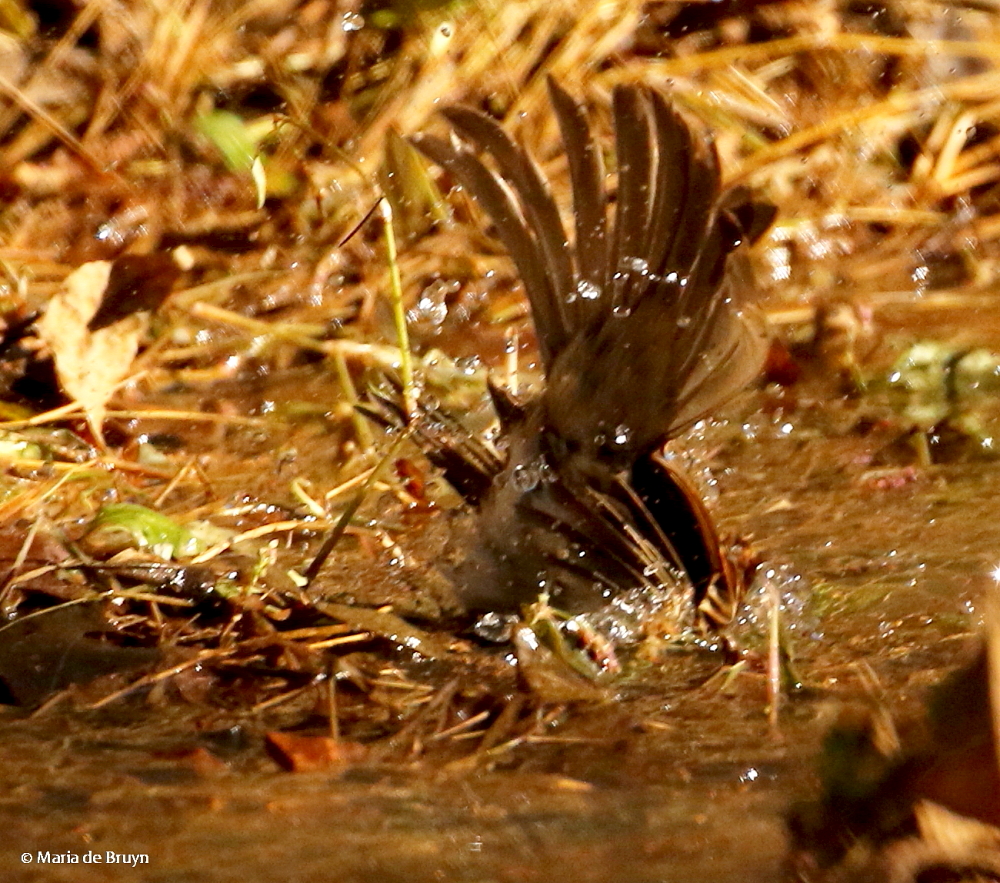
The rains created new temporary water-filled gullies, where chipping sparrows (Spizella passerina) and white-throated sparrows (Zonotrichia albicollis) have been enjoying baths along with other birds.


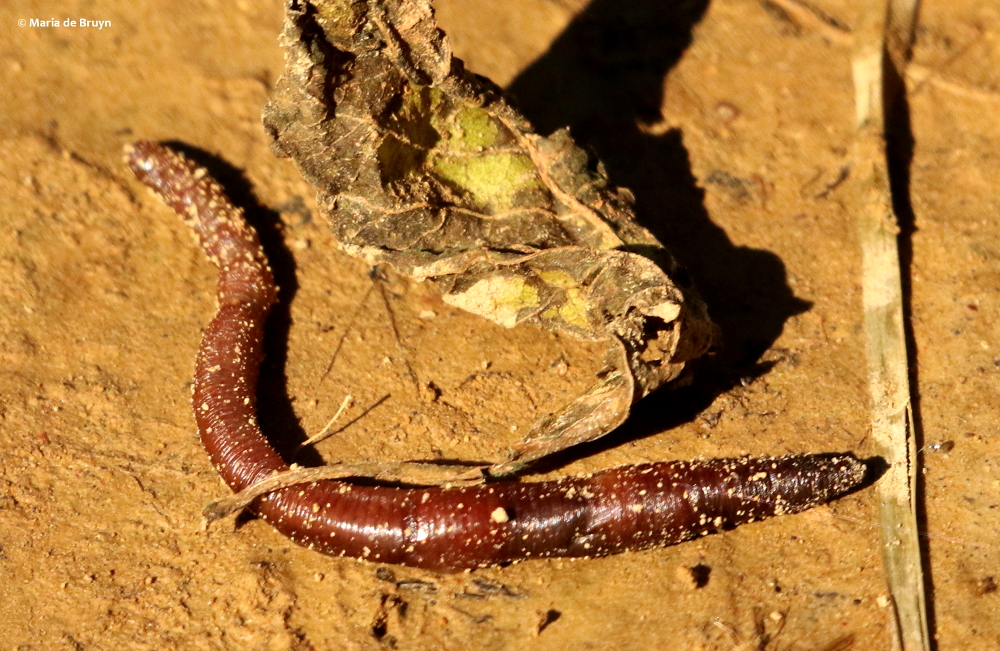
This earthworm (Lumbricina) obviously decided it had to get out of the water-logged earth for a while and I was glad not to have squashed it as I walked along. Its slow progress along the path may not have aided it, though, because there were plenty of robins and other worm-eaters in the vicinity.


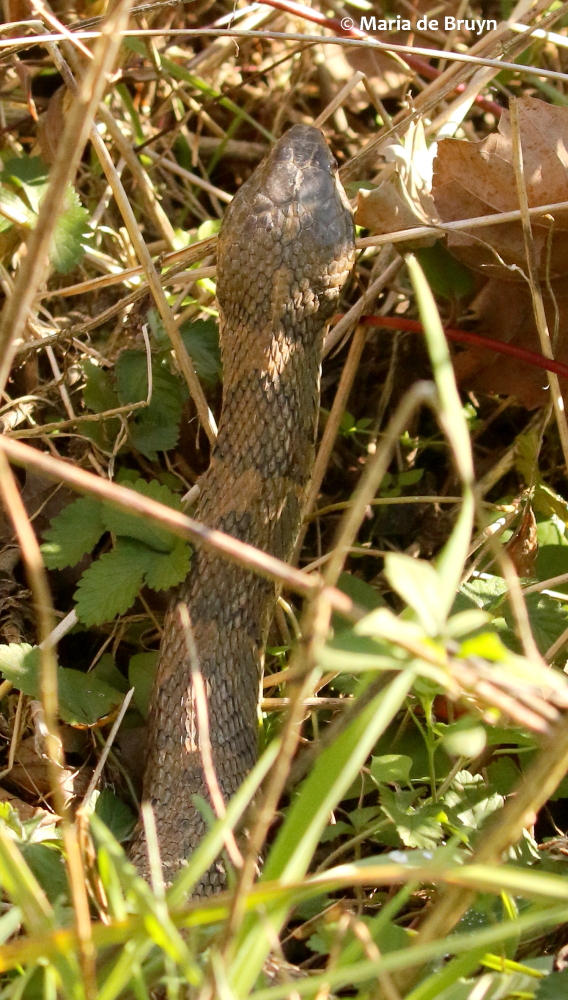
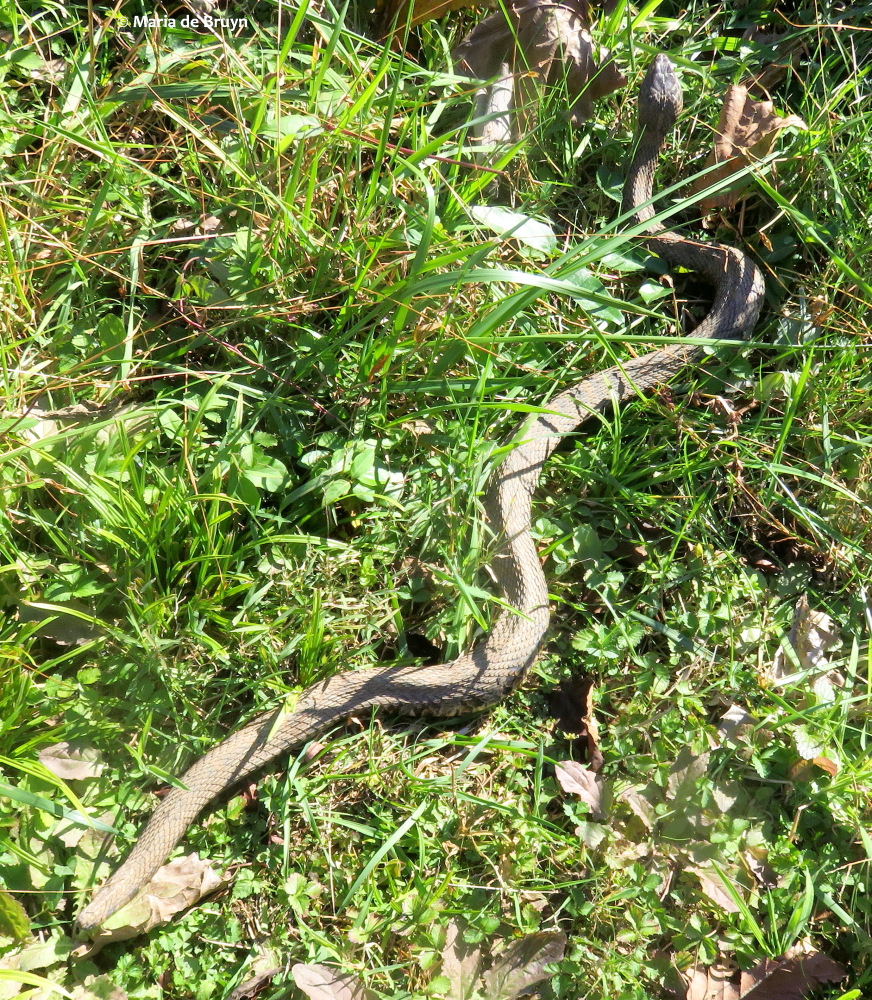
A large Northern water snake (Nerodia sipedon) was sunning next to a path after the rains as well.
   

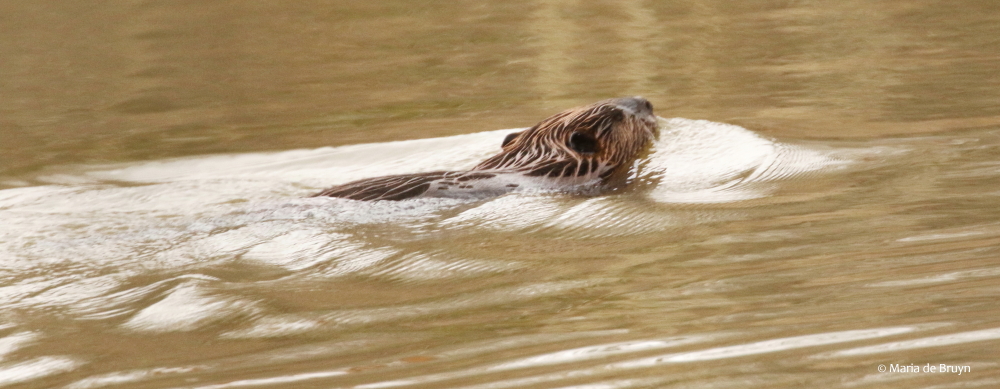
So my last visit to Brumley, when I was hoping to capture a golden-crowned kinglet digitally, did not fulfill that hope but ended by giving me a great surprise – my first sighting of a beaver (Castor canadensis) at this reserve. A colleague had seen one there, I’d noted the gnawed tree near the pond, and I had figured out where the lodge was, but I had not yet seen the mammal in the early mornings. Shortly before reaching the pond, I’d stopped to chat with dog owners and mentioned that a beaver was there but I hadn’t seen it yet. Ten minutes later – at 2 p.m. in the afternoon, there s/he was!
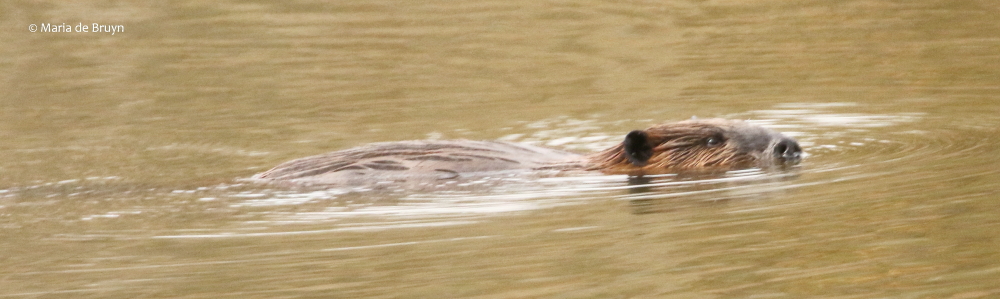
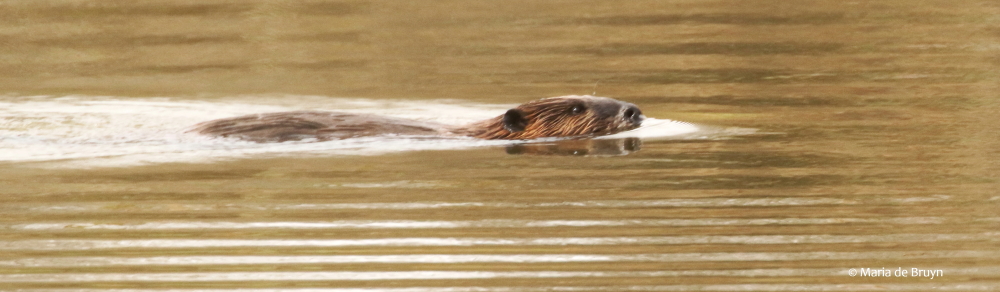
It was so surprising to see the aquatic mammal cruising the pond, swimming in large and small circles. As it created small waves and wakes with its head, I pondered why this largely (but not solely!) crepuscular animal was out in the open with people walking by. S/he must have just really wanted to have a good long swim because the animal was out and about for a few hours.
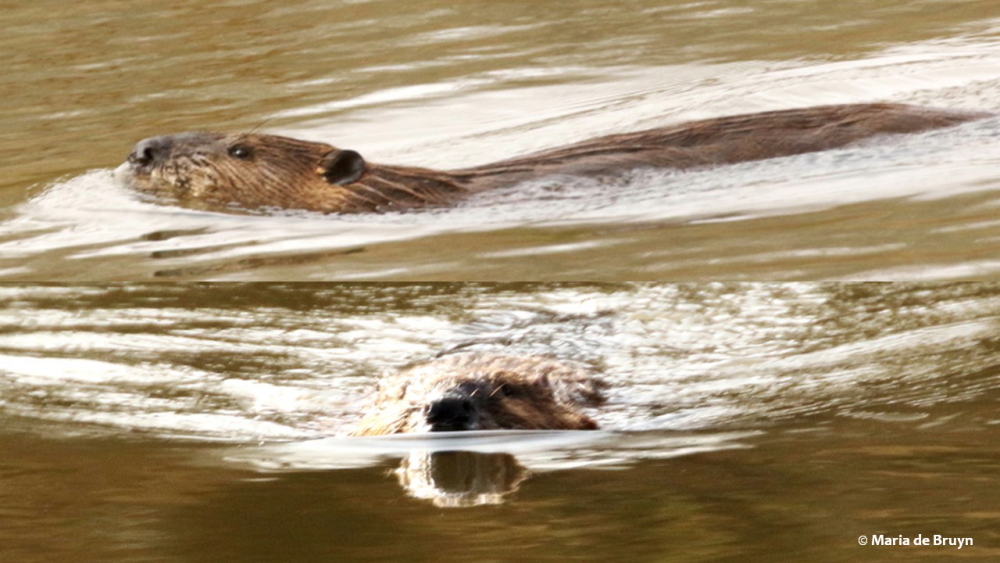
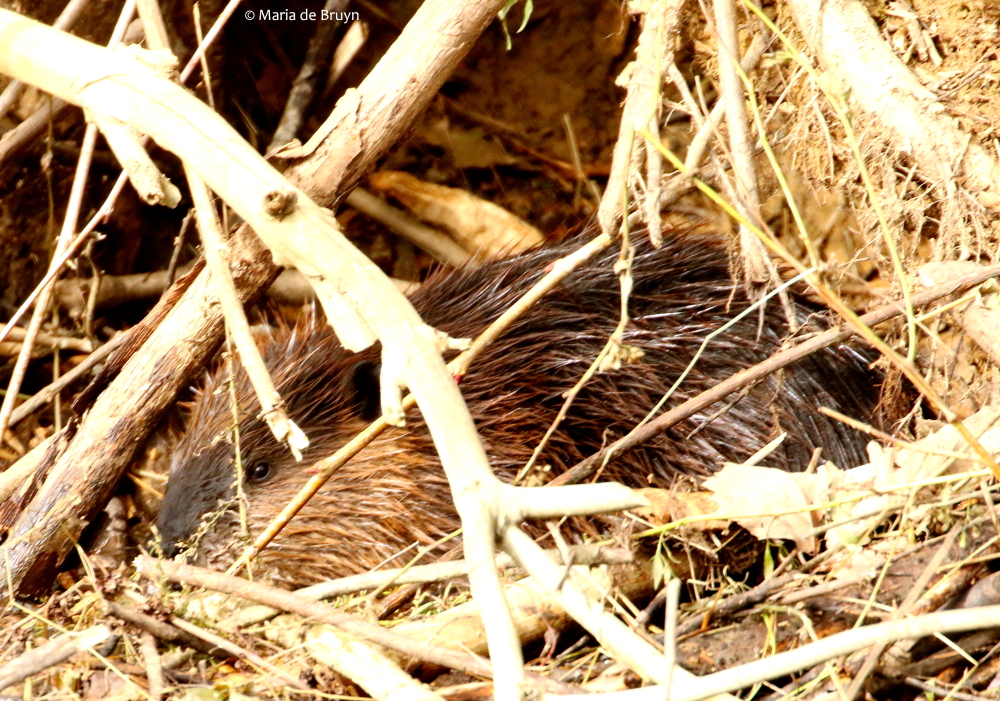
 

Three times, the beaver slapped its tail and dove under with a huge splash when people with dogs strolled by – three times, I missed getting that shot but I did manage to get a photo when the beaver took a time out at the entrance to the lodge.

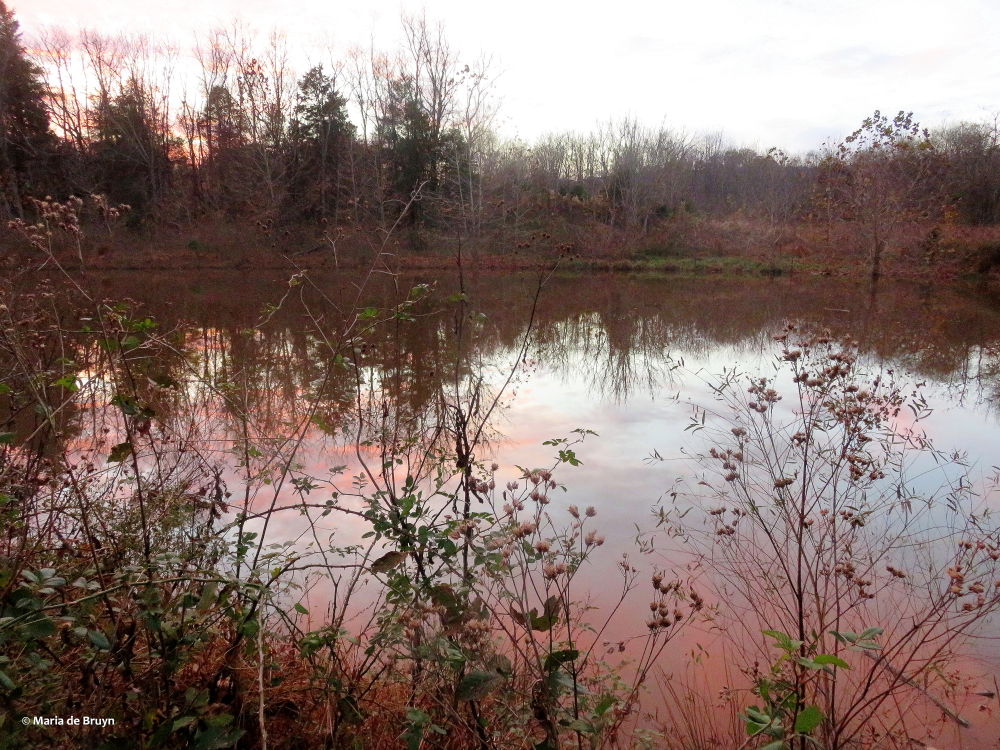
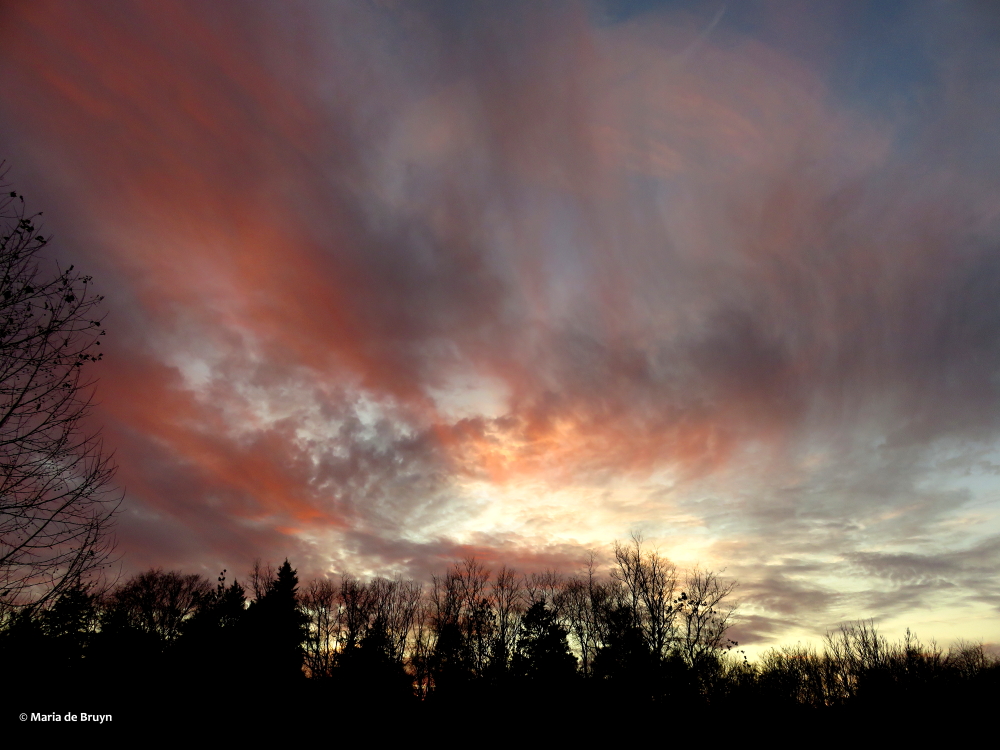
That was an exciting wildlife spotting – not only did I get to see an animal I rarely see but it was also exhibiting a behavior that I witnessed for the first time. (Previously, I’d seen them harvesting and transporting food to the lodge, chewing bark and felling trees.) As I often go to Brumley in the mornings, being there in the afternoon had another advantage as well – I got to witness a spectacular autumn sunset with the sky almost seeming like a kaleidoscope as the clouds and sun’s rays created rapidly changing skies. I’m looking forward already to my next foray to this reserve!
The gorgeous grebes when aggrieved and grumpy!

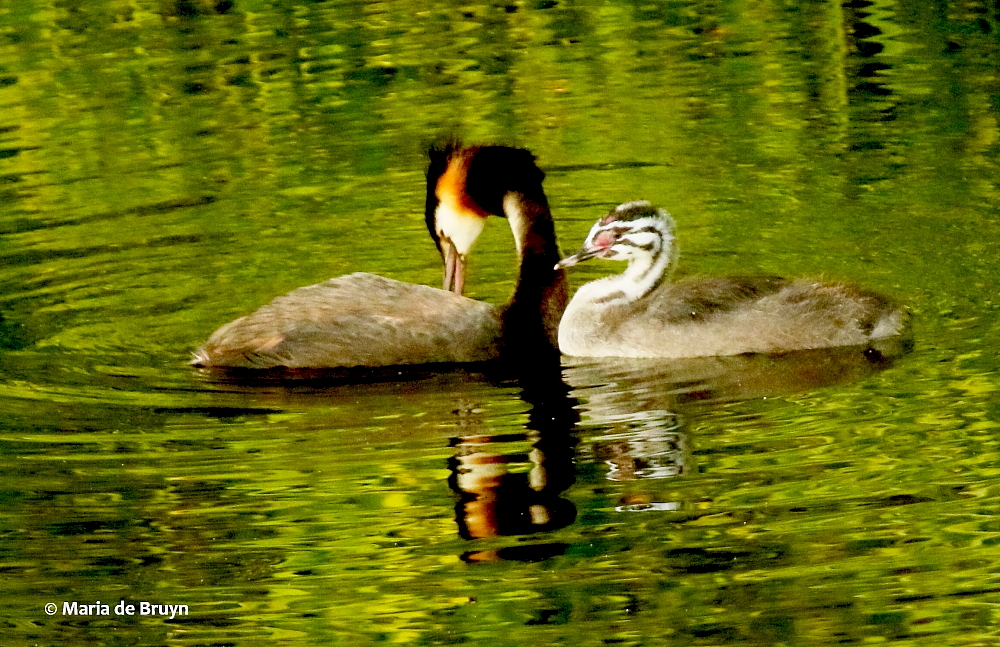
During my great-crested grebe (Podiceps cristatus) observations at the Gouwzee in July 2018, it became apparent that they don’t mind swimming about amid groups of Eurasian coots (Fulica atra).

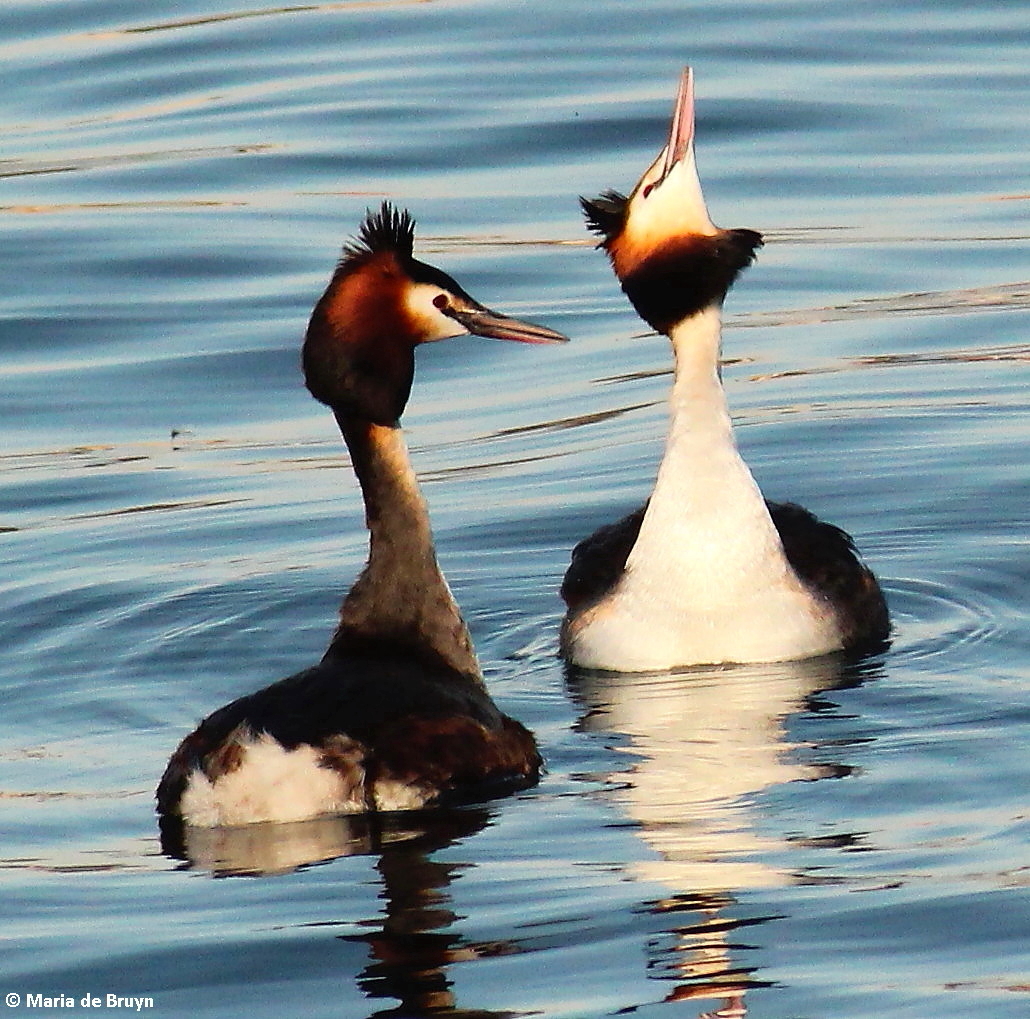
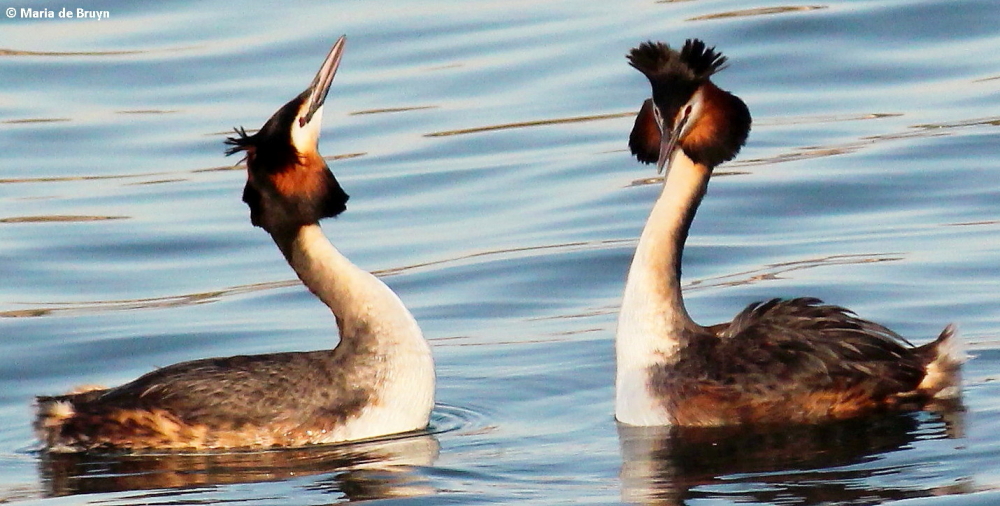
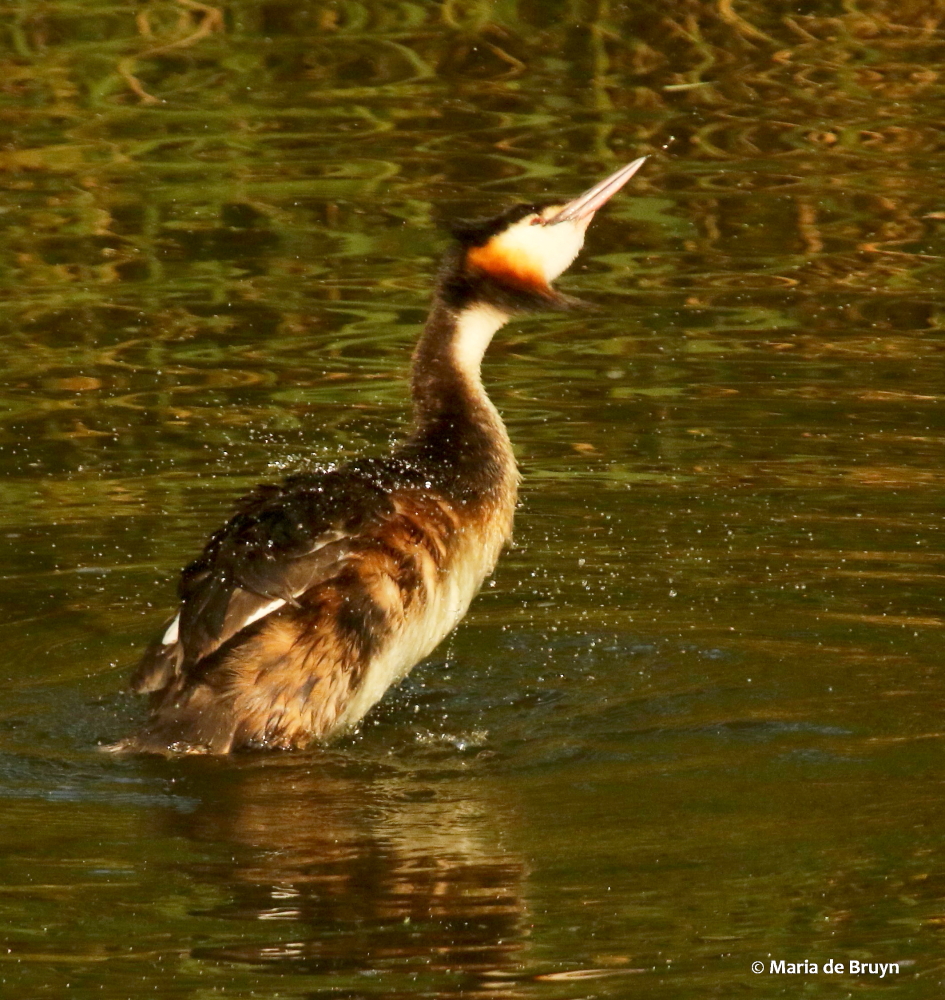
It turned out, however, that the grebes can also be quite aggressive and one morning these birds treated me to a stunning display as they had six years earlier. This time it was not a peaceful event like their mating dance, however, but apparently a territorial dispute. Two pairs were each tending a young one near reeds in a cove on the Gouwzee side of a dike. It appeared that one adult had ventured into space that the other pair considered their own. An epic battle ensued – I wish I’d had the presence of mind to change my camera settings to get better photos, but it was so sudden and exciting that I was just glad to be able to get some shots. The whole dispute only lasted about three minutes but seemed to last much longer!

References I found in the literature online appear to indicate that researchers believe territorial aggression mostly takes place when the grebes are building nests and tending eggs. They mention that it stops once the young are born. This was obviously not the case for the two pairs that I observed; their young appeared to be several weeks past fledging age.

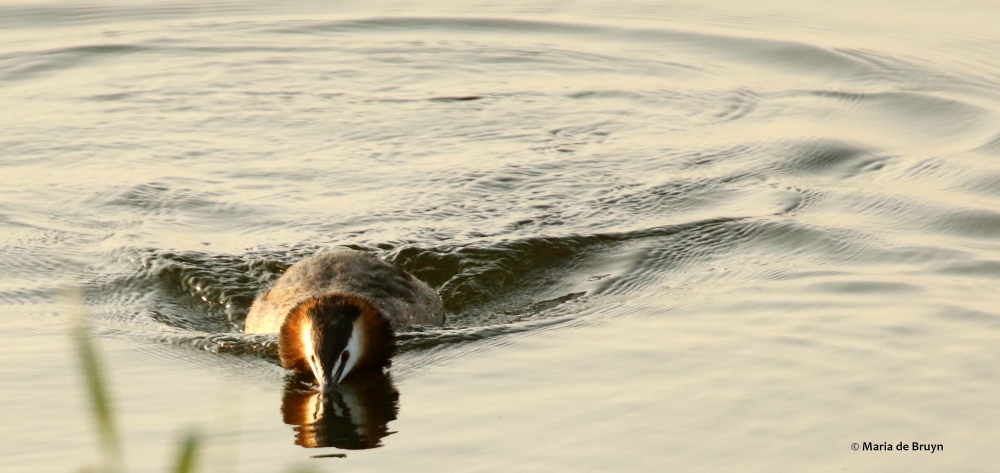
The birds first caught my eye when they faced one another, lying low in the water. This is said to be a common aggressive posture.

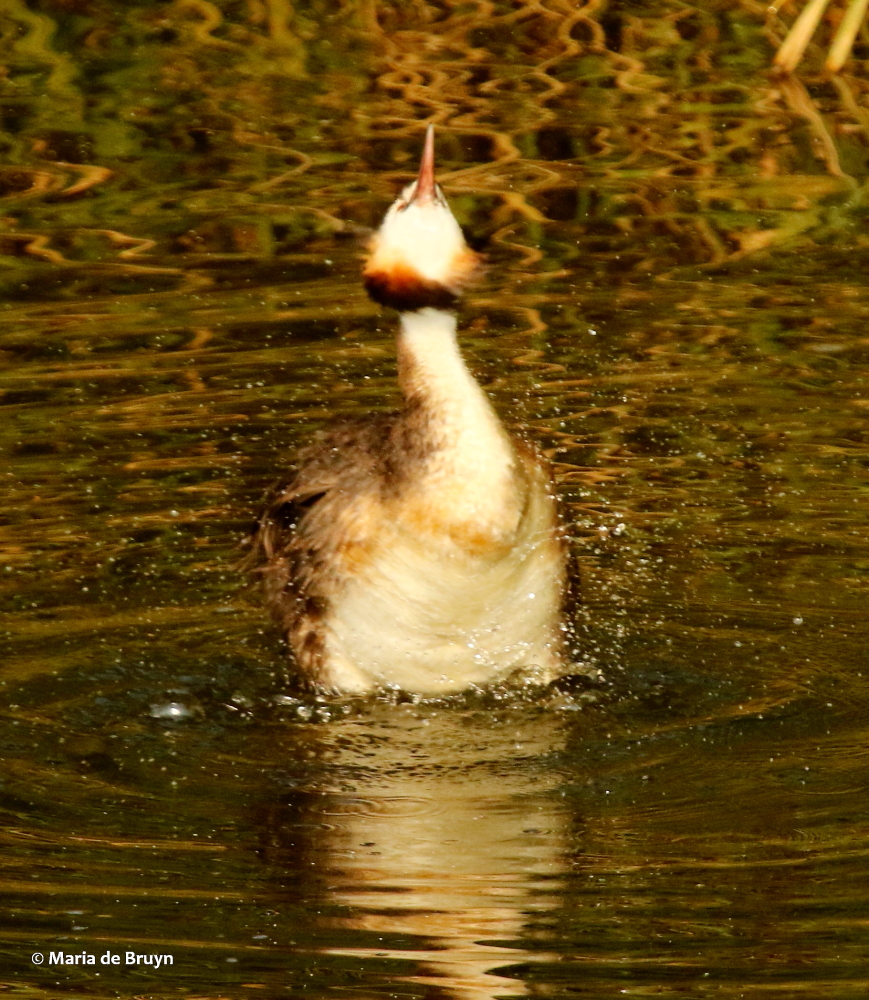
Suddenly, they erupted upwards, calling loudly and flapping their wings strongly to intimidate one another. (You can see larger versions of photos by clicking on them.)


A couple times, they surged upwards from the water to clash their chests together.


One appeared to have dunked his opponent in the water, although this happened so quickly that I didn’t really see how it occurred.

They would take a few second pause, making their mutual displeasure apparent.

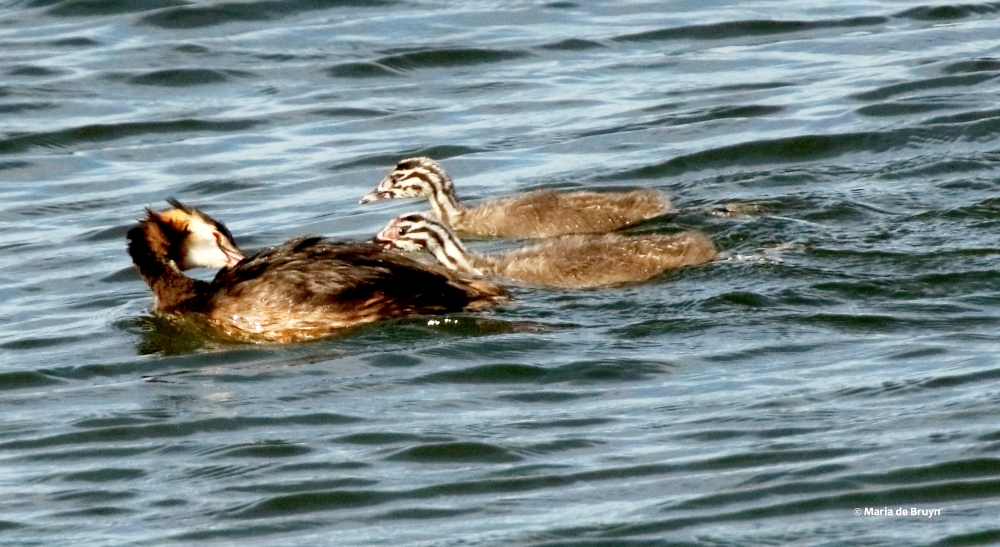
This would be followed by another bout of confrontation. At one point, one grebe’s mate and young one swam closer to the action.

Finally, after a couple minutes, one “combatant” was driven off by his opponent.

He was joined by his mate and offspring and peace returned. And I walked away elated at having witnessed the behavioral exhibition, glad that no injuries had been sustained. 😊


Gracious and gorgeous grebes nurturing newborns

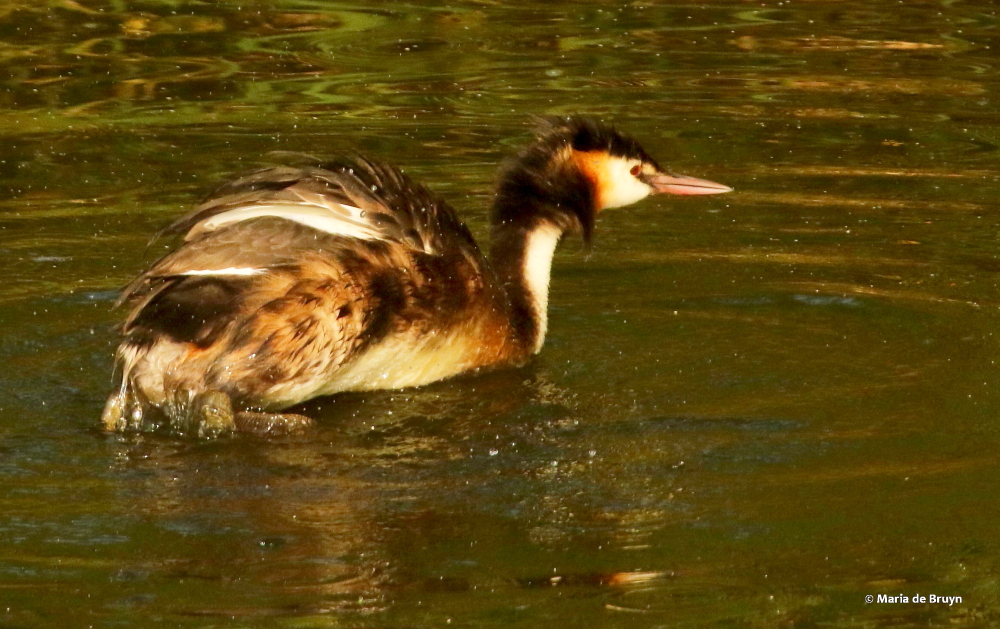
After birding now for some six or seven years, I’ve come to appreciate all birds since each species can be fascinating to watch. I do have some favorites though that have captured my interest. In 2012, I fell in love with great-crested grebes (Podiceps cristatus), whom I first noticed during a trip to Switzerland. A pair was engaged in their courtship dance, which was simply delightful to see. They circled one another, stretched out their necks, ruffled their feathers and arose on the water facing one another. Their beauty enchanted me, and I felt that I had witnessed something very special.

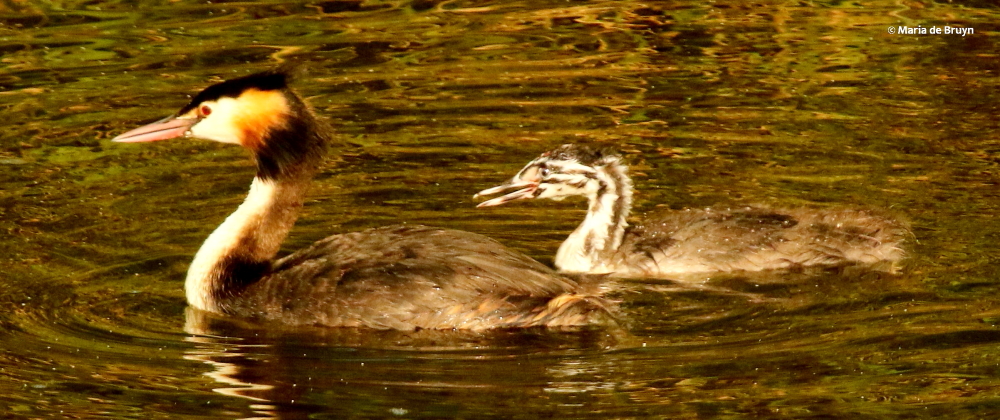
The rust and black-tinted head plumes and ruff are gorgeous, making these birds very attractive indeed. This led to their being hunted almost to extinction during the 1800s in the United Kingdom because the feathers were desired as decorations or hats. This led to the establishment of the Royal Society for the Protection of Birds in that country and their numbers fortunately rebounded.

Fast forward six years to this past July, and I discovered that these birds are quite common in my land of birth, where I just had not noticed them before. Granted, I was not a birder while living in The Netherlands (I currently live in the USA), but I had managed to take note of house sparrows, mute swans, Eurasian coots and moorhens when walking along canals and ditches. Now, as a much more observant wildlife observer, it was thrilling to see many grebes along the dike bordering the Gouwzee (a body of water bordering Monnickendam that is part of the larger Markermeer nature area). And even better – they were all tending young ones at different stages of development.

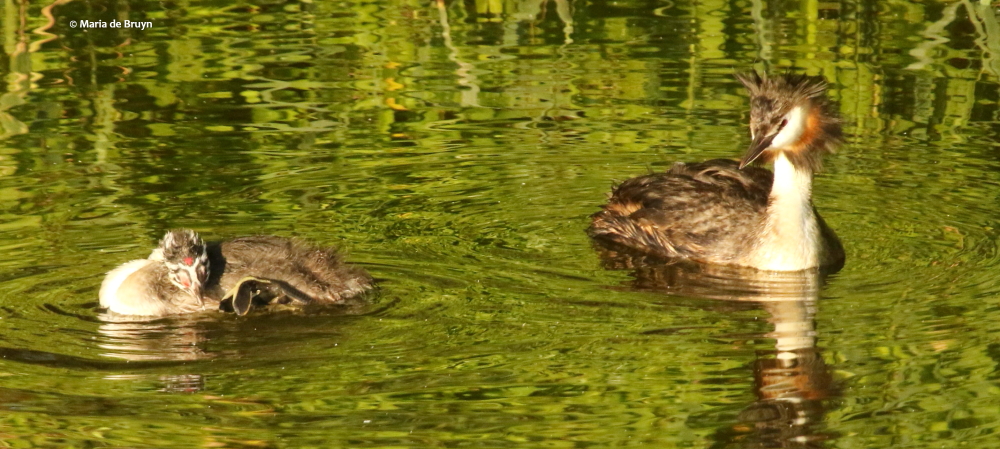
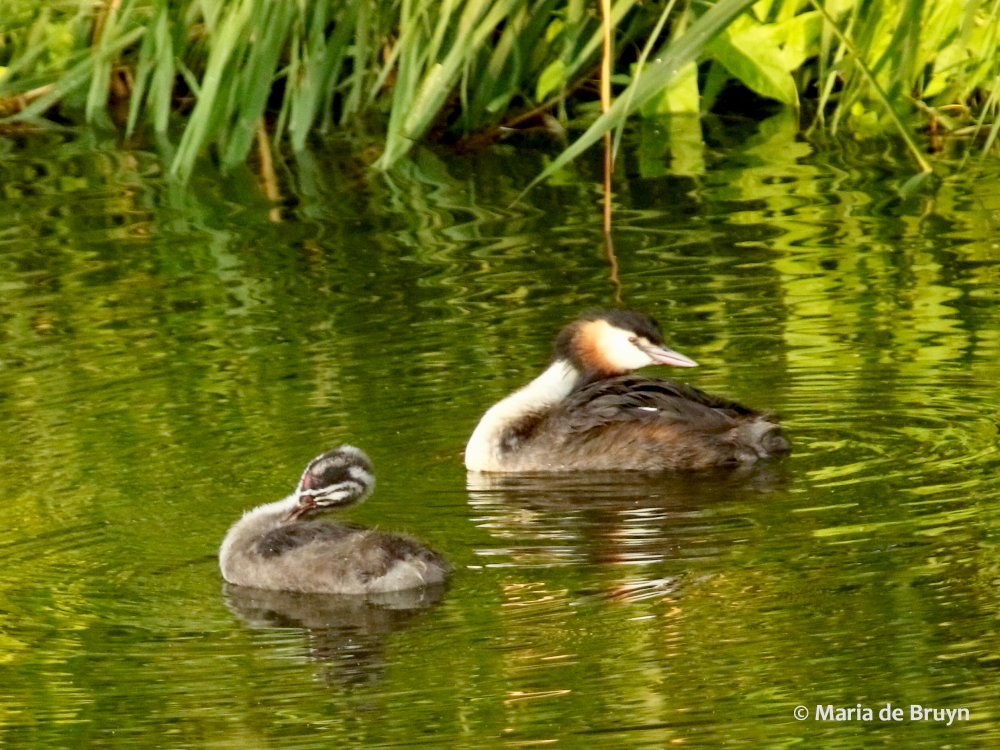
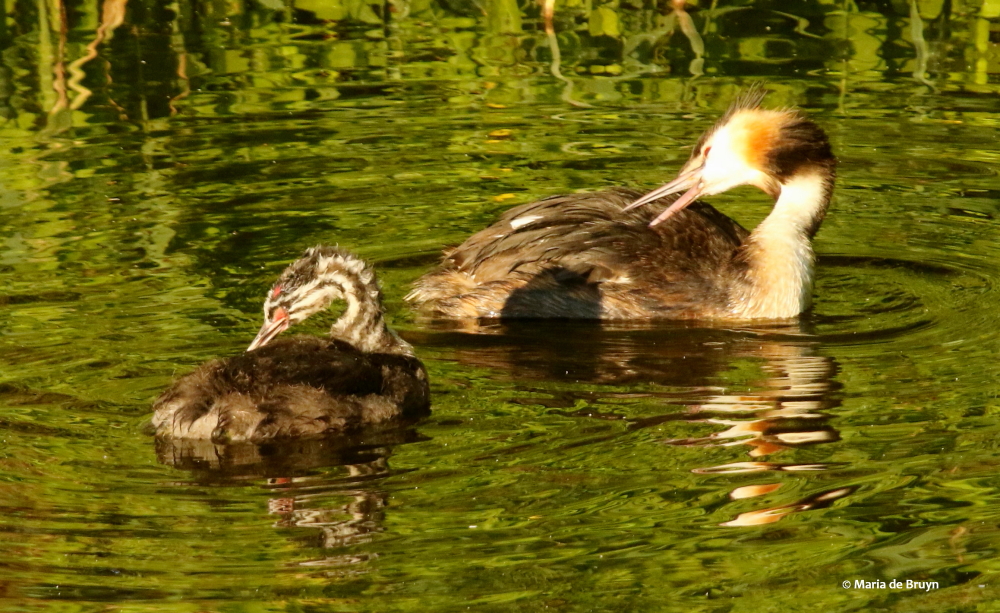
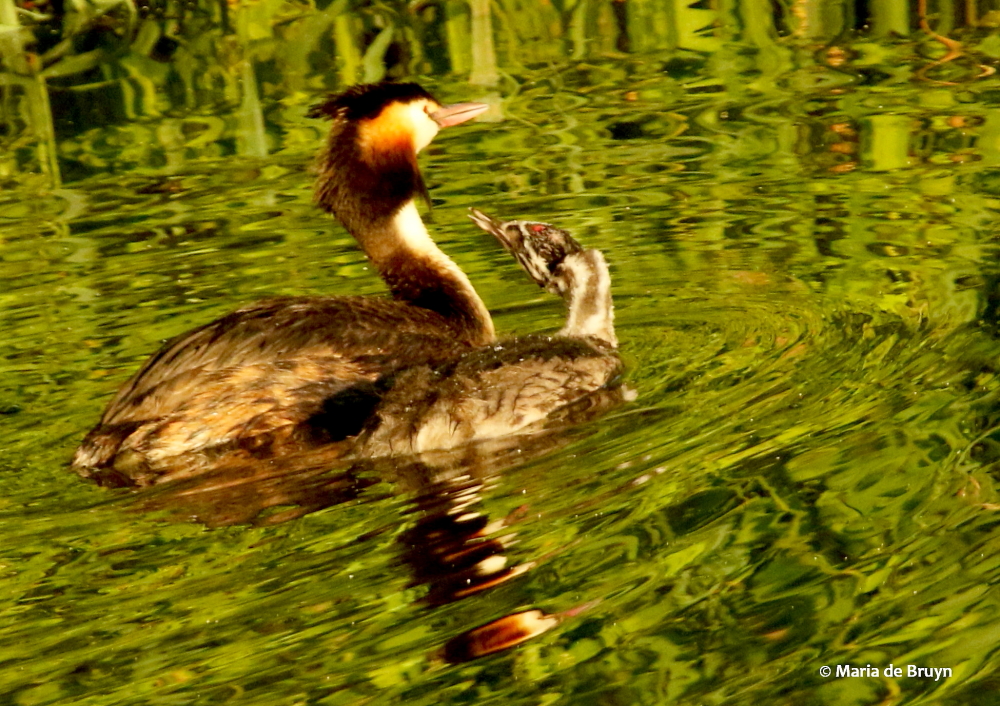
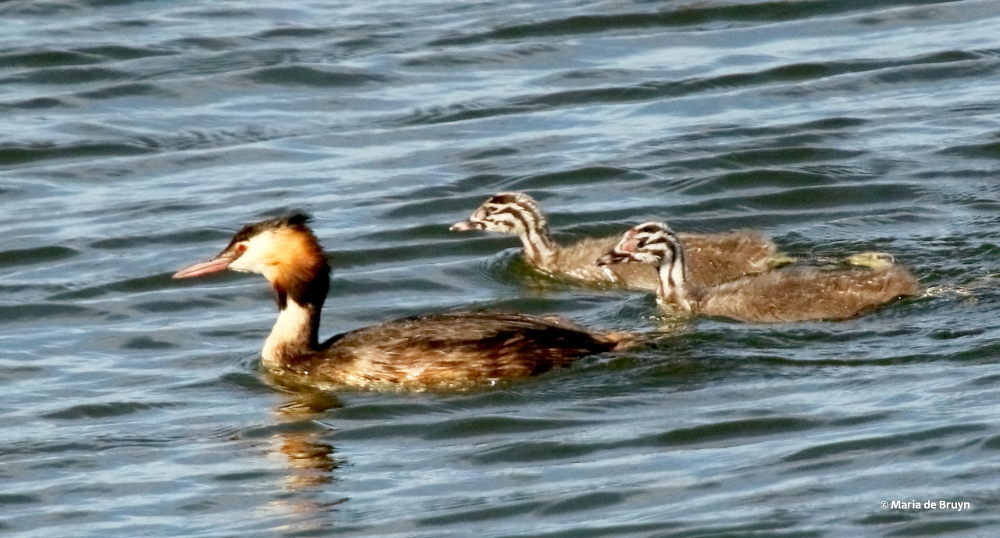
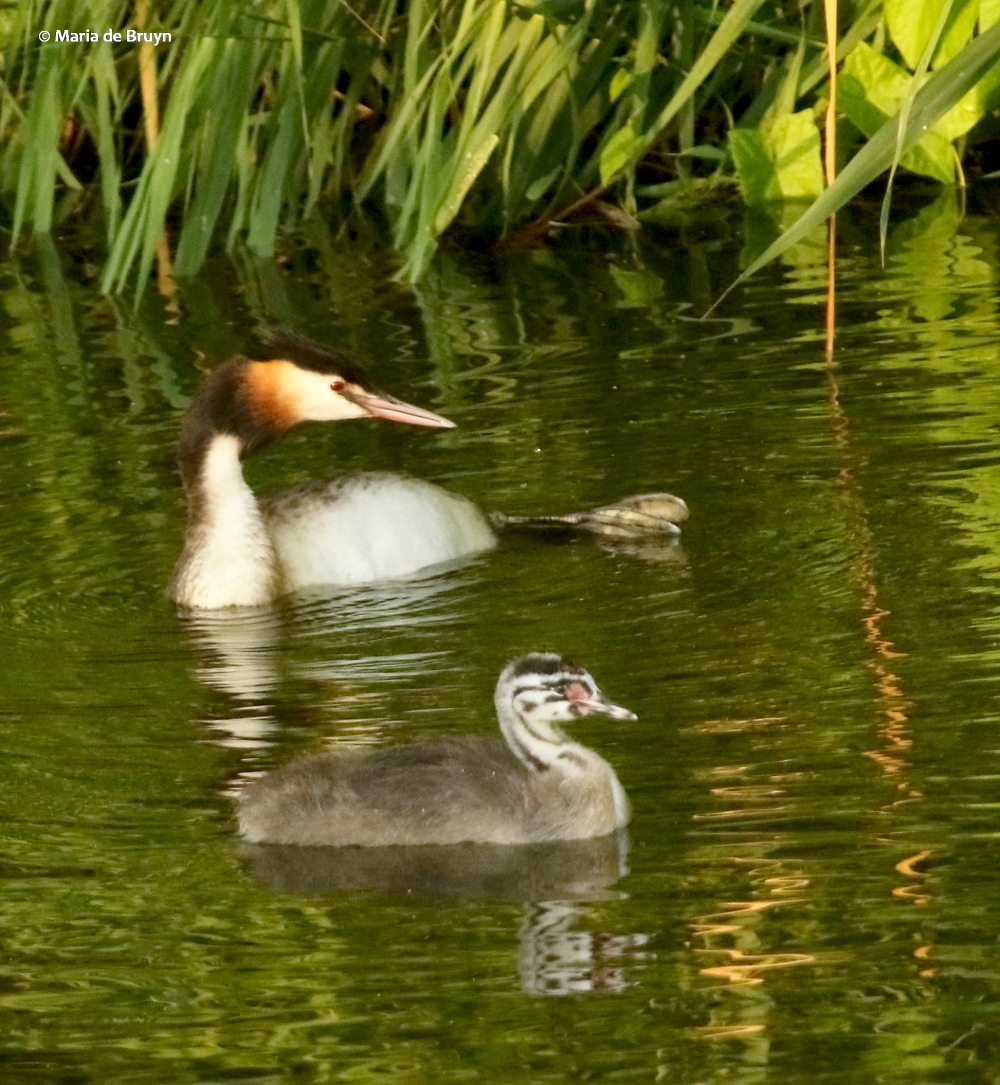
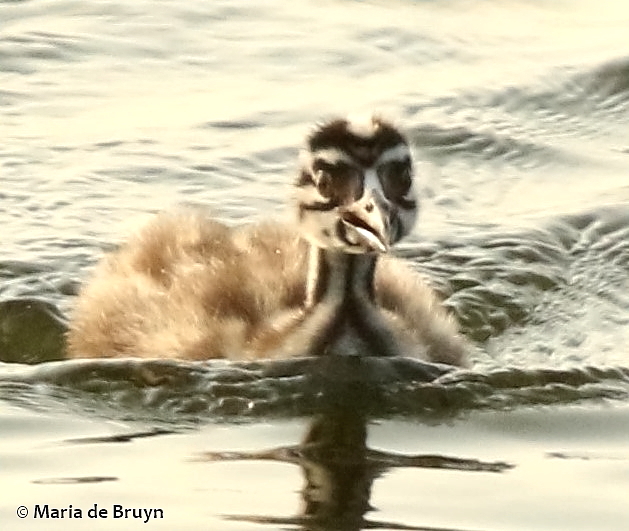
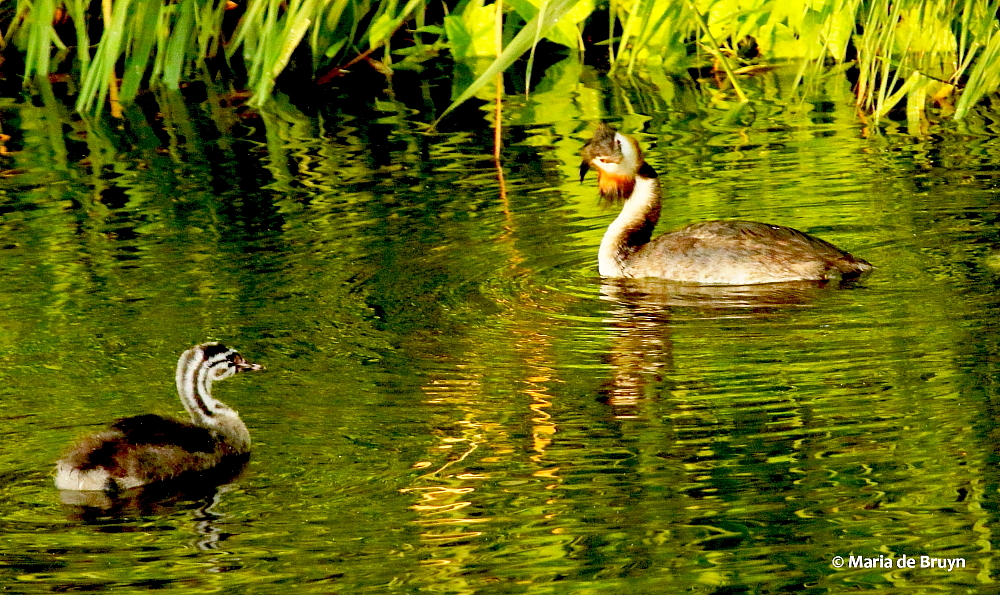
The great-crested is Europe’s largest grebe species and the adults are stunning with their reddish-orange head plumes. (They are also found in Australia, New Zealand and African countries.) I discovered that the young look quite different – mostly light in color with black stripes on their heads and pink markings near the eyes.

Their floating nests are often found along reed beds, which were abundant along the dike and a ditch across a road from the dike. A couple mothers had chosen the ditch as their home area and the early morning light made for some nice photos in my opinion as they preened and relaxed.


The water in the lake on the other side of the dike was less calm but the young ones managed to swim well in the waves; they can already dive shortly after leaving the nest.

Their feet are set back far along their bodies and they cannot walk well. I did not ever see one on land during the week that I was observing them.

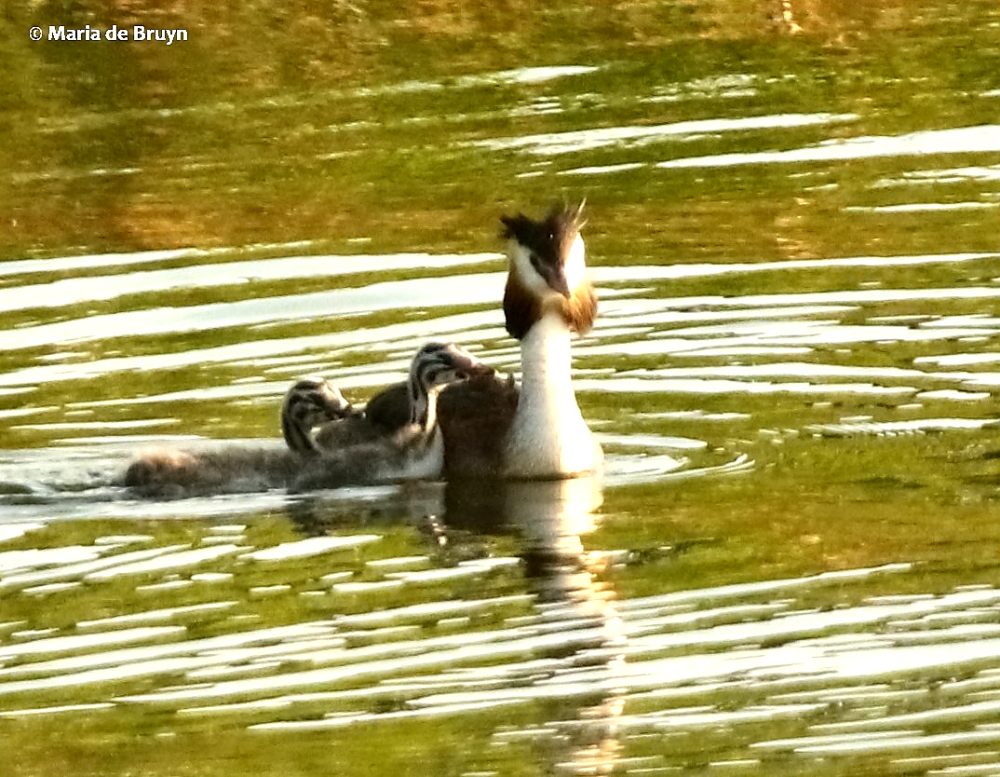
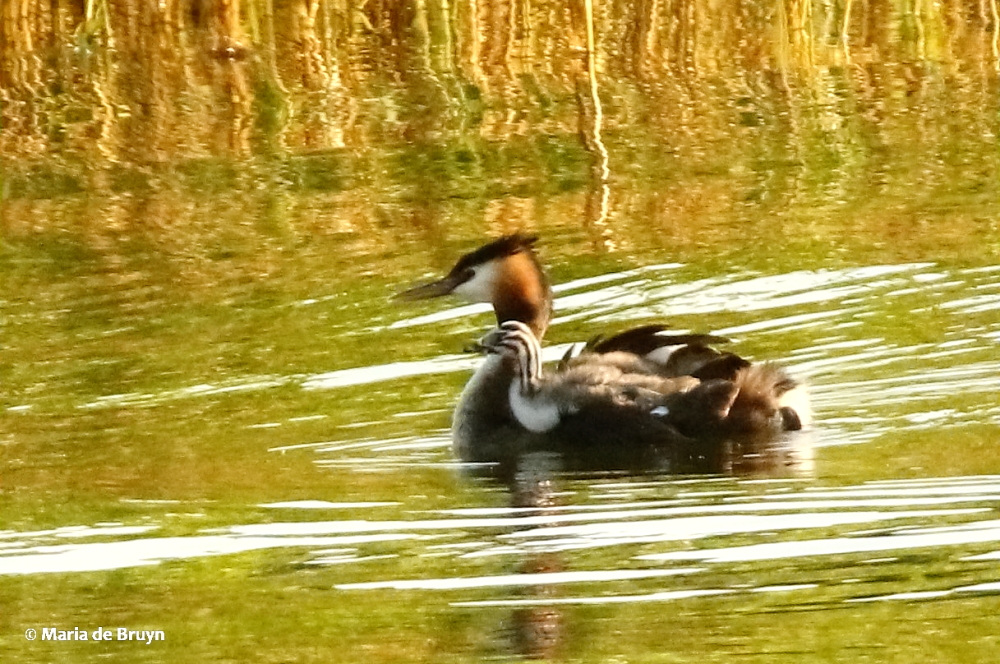
According to the literature, pairs tend 1-9 eggs, which hatch after about 27-29 days. The mothers carry newborns on their backs as they swim along, offering a safe perch for sightseeing in safety. The babies fledge after 71-79 days. I did not see any pairs with more than two young, so some were probably lost during the previous weeks.

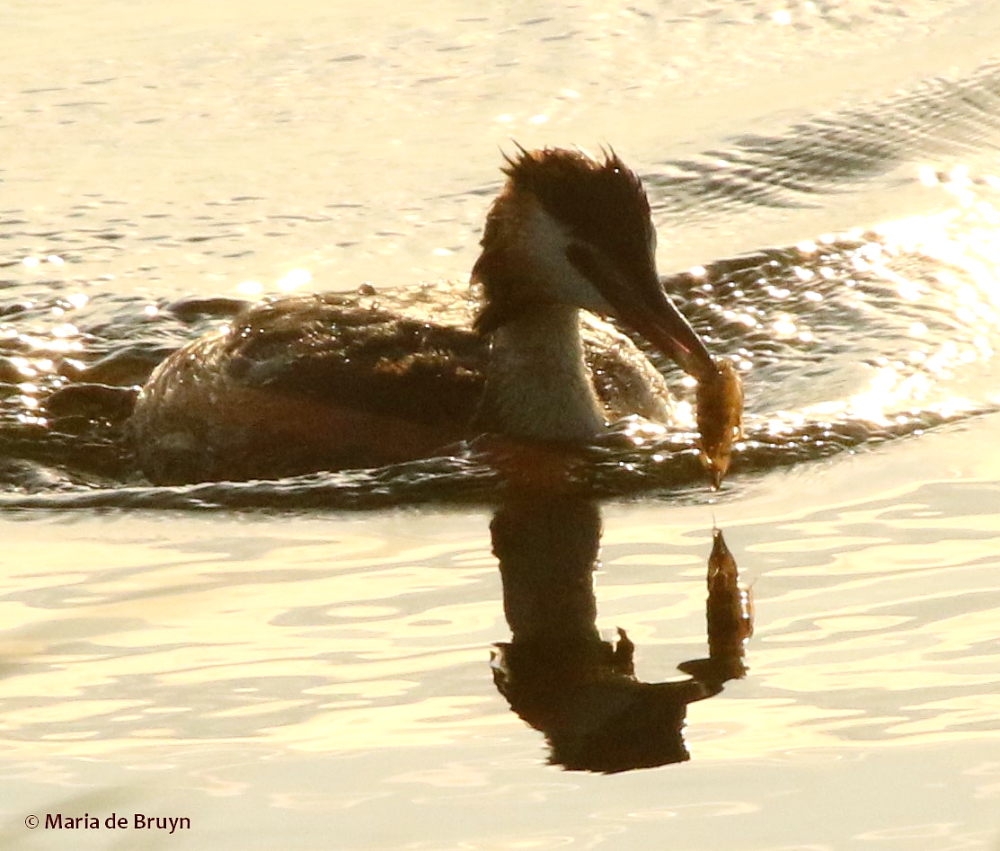
The grebes eat fish, crustaceans, mollusks, amphibians and insects. Their fishing technique, which was more in evidence in the open water of the Gouwzee, includes skimming the water with outstretched necks and diving underwater. (The neck-to-the-water pose is also used to show aggression but in these cases no other birds were near and they would subsequently dive under to come up with some food.)

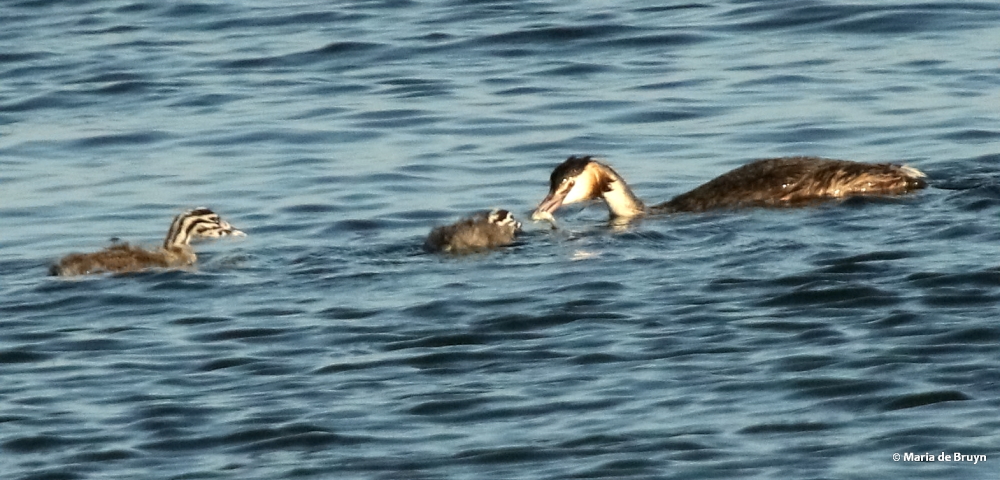
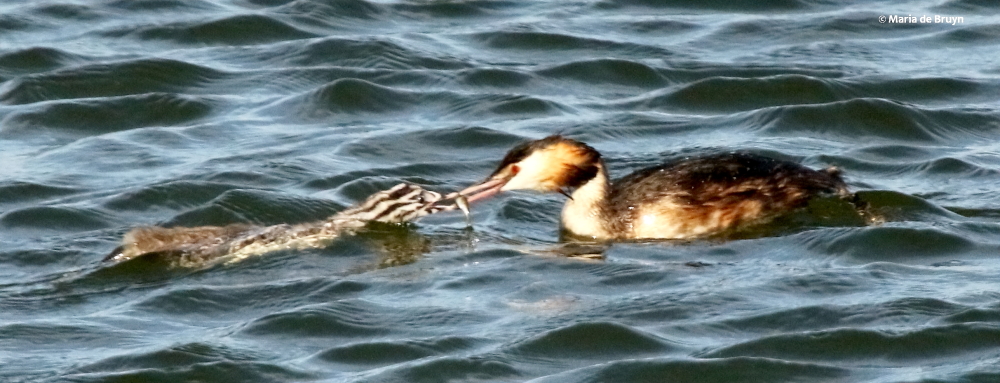
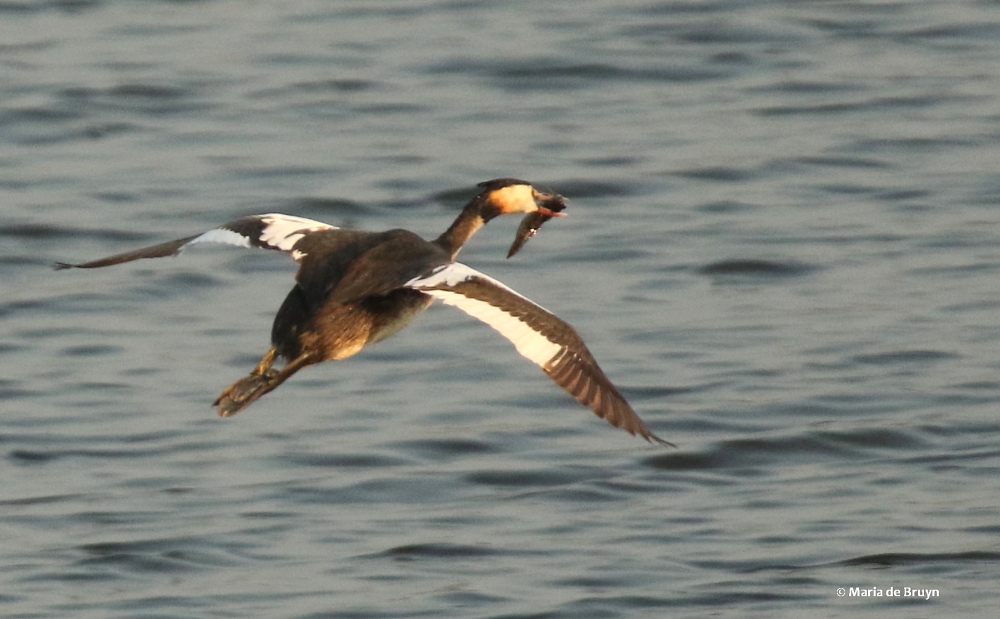
The parents demonstrate and the young imitate them, mostly coming up empty-beaked. Occasionally, a parent would fly away and return later with food. The babies eagerly grab the meals offered by both mama and papa.

After breeding, the adults gather together during a molting period, during which they do not fly. Perhaps one day, I’ll be able to watch them in winter and find out new things about them. In the meantime, if you’d like see what happens when they are feeling perturbed, check out my next blog on “The gorgeous grebes when aggrieved and grumpy!”

When those loving instincts leave you dangling

This was not a planned blog, but I recently observed something that simultaneously intrigued, amazed and astounded me, so I wanted to share it with those of you who may not have witnessed this either.

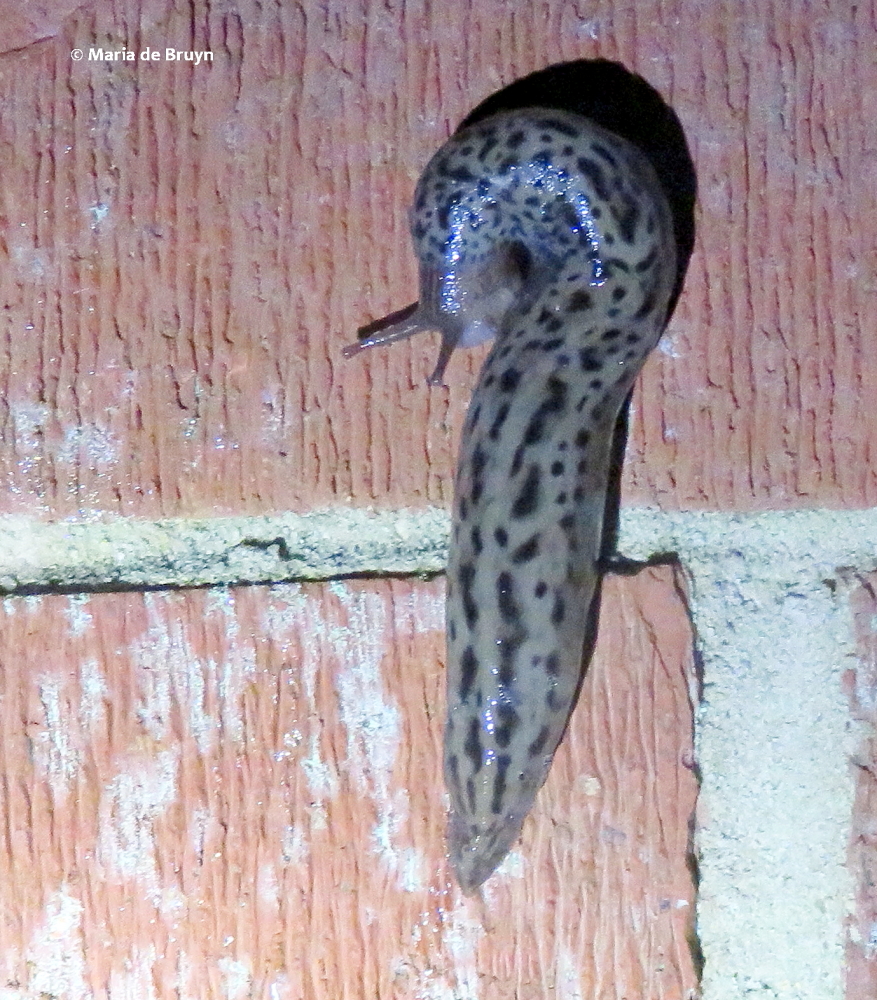
Like many gardens in my neighborhood, my yard has its fair share of leopard slugs (Limax maximus), but they don’t bother me as they do some other people who complain about them eating their vegetables. Until recently, I never thought about the slugs much and certainly didn’t wonder about their life cycle. Then my friend Mary posted a lovely photo of two intertwined leopard slugs mating and my interest and curiosity were piqued.

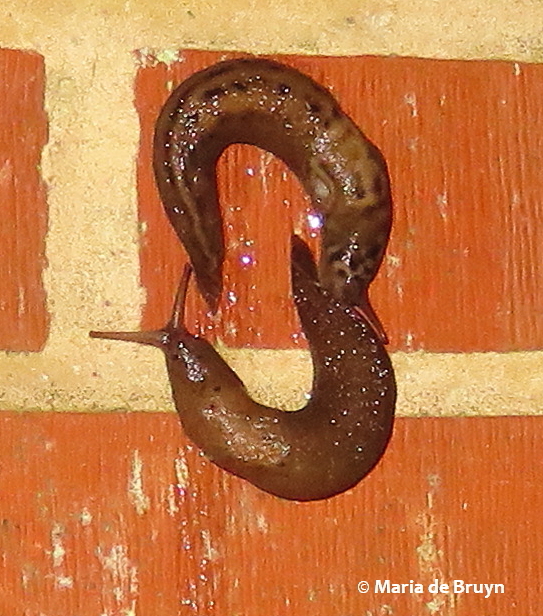
A few days later, a fellow nature lover, Ace, reported that he had a cool photo to show me – and there on his iPhone was a photo of mating leopard slugs. It turns out that their anatomy makes for a somewhat bizarre spectacle – at least to a human being if not a fellow slug. Now I really wanted to see this phenomenon, too, and I followed Ace’s recommendation, going out into my yard at night with a flashlight to see if I could find some amorous mollusks. Lo and behold – as I rounded the corner of my house, there were three pairs of large slugs getting ready to reproduce! They were leaving glistening slime trails on the brick wall as they slowly got into position.
The slime that the slugs exude has multiple purposes – they can leave a trail behind them as a signpost to the way home, they can numb the mouth of a potential predator with the mucus as a means of defense, and they can broadcast their interest in some reproductive behavior by emitting pheromones to attract a potential mate.

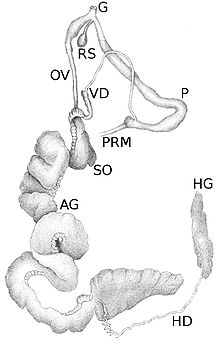
They don’t actually need to mate to reproduce – each slug is a hermaphrodite and can fertilize its own eggs with no need of outside assistance. Slugs have an organ called a spermoviduct (SO), which has two parts – one for the sperm (vas deferens, VD) and one for the ova (oviduct, OV), as seen as this drawing from the Wikipedia page.

Some slugs apparently like reproductive acrobatics, however, and seek out a partner. The mating begins with a pair of slugs following one another around and nudging and licking one another. (A couple photos look browner – I took those with a flash but most were taken with one hand holding a small camera and the other shining a flashlight near the slugs.)


They then begin to curl up together and suspend themselves from a long mucus rope, which is somewhat stronger than the slime that they usually exude. They form a kind of writhing ball as they intertwine their elongated bodies (see this video for an example).

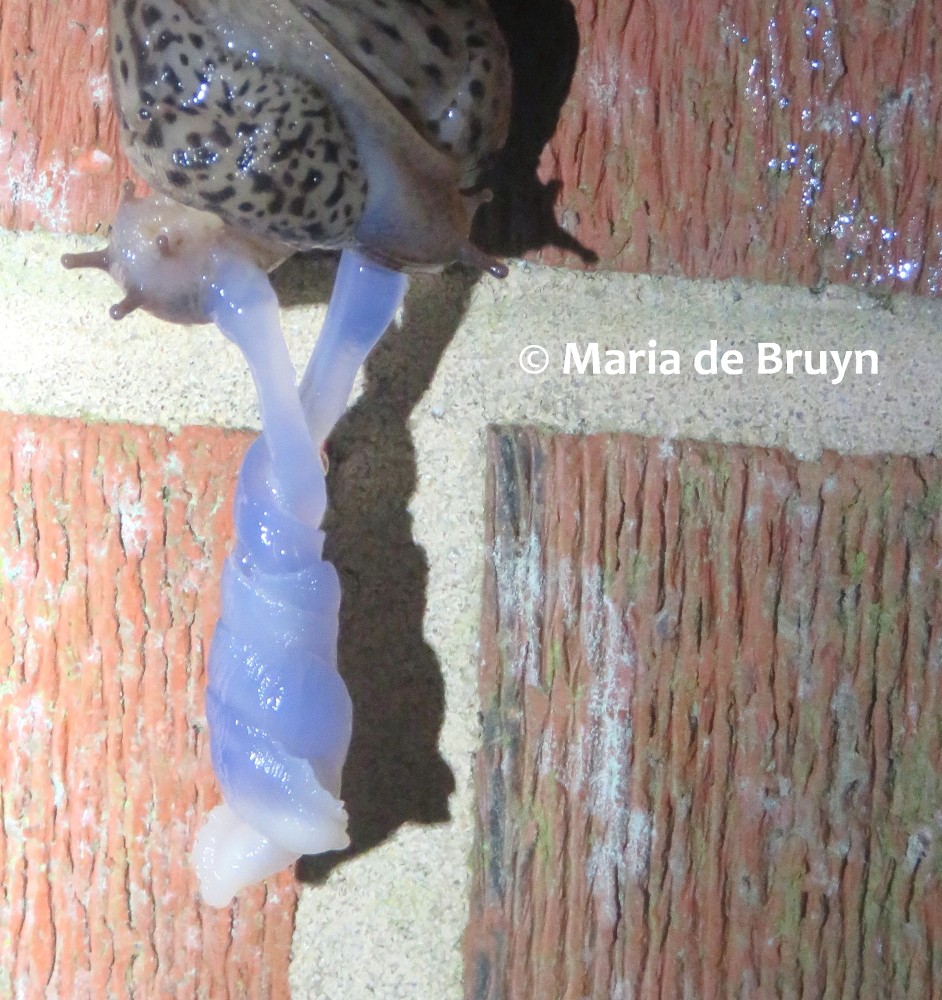
Next comes the awesomely weird part – out of a gonopore on the right side of their heads (the elongated tentacles are for vision) come their translucent mating organs (penises)! This video, which is shown in a horizontal position, lets you see how this happens.
Wouldn’t this interesting anatomy and reproductive behavior make an interesting plotline for an SF novel about a genderless society?


Because the slugs are hanging upside down, gravity helps pull down their reproductive organs, which are pumped full of body fluids until they are as long as the slugs’ entire bodies! Their penises are everted (turned inside out) and the two mollusks intertwine these just like their bodies. They take a while to exchange spermatophores as the penises twirl, intertwine, elongate and pull back to look a bit like a chandelier.


When the creatures have been joined at the neck for some time, they begin to slowly withdraw their reproductive organs, which are now carrying genes from another parent.


After they separate, one of the pair usually consumes the mucus rope from which they dangled in love as it carries extra nutrients which they can use after their vigorous efforts.


Each slug may spend some time examining its gonopore (above) – and perhaps they are helping push back in the penis when they do this, too. After watching the process for two pairs of slugs, I decided to give the third pair some privacy during their mating tryst. On the wall beneath my screened porch, I discovered another slug with a mucus rope dangling from its tail – leaving me with a little mystery as to why this might have happened. A partner slug was not in evidence except for a much smaller slug – perhaps the big one tried to mate but the younger one was not ready. These mollusks with a life span of 2.5-3 years don’t become sexually mature until they are 2 years old.


I do know that at least three and perhaps six slugs will each be laying up to 200 eggs somewhere in the yard. And when I see them in the future, I will undoubtedly always be picturing them in my head doing their dangling dance with intertwined translucent blue tubes that will help promote their future generations. My discovery of their life cycle has also reinforced my support for scientist Hope Jahren’s (Lab Girl) observation: “…being able to derive happiness from discovery is a recipe for a beautiful life.”

Winter wonderland – sharing and spats at the feeders

I thought I had published this blog in early February and just discovered that I had only saved a draft. Since we had snowflakes last night (in April!), I’m going to go ahead and post this now – a break in the series about Costa Rica! When the snow began falling during our day of one-foot accumulation, the feeders were inundated by some of the dark-colored bird species who tend to come in crowds. At first, they were peacefully sharing space.


Although I sometimes have a couple dozen red-winged blackbirds (Agelaius phoeniceus) at the feeders, during the storm only one pair showed up for a brief visit and the other birds left them alone.


The mourning doves (Zenaida macroura) often share feeder space with other birds, including those that are smaller than they are.

The common grackles (Quiscalus quiscula) are known to other people as domineering birds at the feeder, but those in my yard have always been polite, even though they seem to have a permanent expression that expresses anger.


The brown-headed cowbirds (Molothrus ater) sometimes share space nicely and sometimes fuss at one another as they vie for a good perch. They don’t try to chase off other species though and are not apt to “yell” at other birds.

The birds who do “yell” are the European starlings (Sturnus vulgaris). Young ones yell at their parents after fledging, begging to be fed. Adults yell at each other when they are trying to all crowd together onto a feeder. And adults yell at other species to drive them away so they can have all the space for themselves.

At my feeders, however, they have found their match in the male red-bellied woodpecker (Melanerpes carolinus). One day, I watched as they managed to intimidate him for a few minutes, but he then returned to the feeder and refused to give up. Now he is no longer frightened of them and stands his ground when a starling does its best to make him move.


It turns out that studies have shown that the red-bellied woodpeckers are the birds most apt to resist attempts by other birds to displace them from feeders.

The red-bellied woodpecker also was not intimidated by me at one point. He doesn’t like it when he flies in and notices at the last moment that I am sitting or standing on the porch; often he will swerve away and wait for me to leave. During the snow storm, however, he decided to display his displeasure with my close presence, both from a frontal and dorsal view!


I guess that the little bird spats do make for sometimes more interesting birding observations. Seeing the tiny ruby-crowned kinglet (Regulus calendula) warning off a rival a few days before and after the snow melted did show off a gorgeous and brave little bird.


I’m looking forward to seeing what the springtime observations of animal behavior will reveal.