
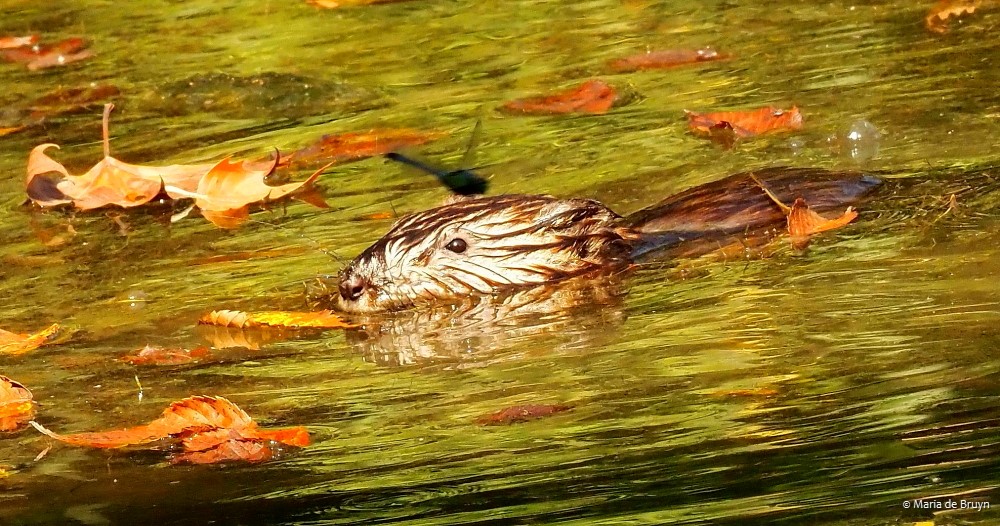
While I love all wildlife, many of my blogs feature birds because my chances of seeing them are greater than seeing other animals. Mammals are a favorite of mine, however, and aquatic mammals are always a pleasure to see since spotting them is not always easy. That is certainly the case for the cute river otters (Lontra canadensis) like the one above.

These river and pond residents are among the most elusive mammalian water residents for me. At one pond that I visit regularly, they appear to have adopted an abandoned beaver lodge as their home. There, it is usually movement caught out of the corner of my eye that alerts me to their presence.
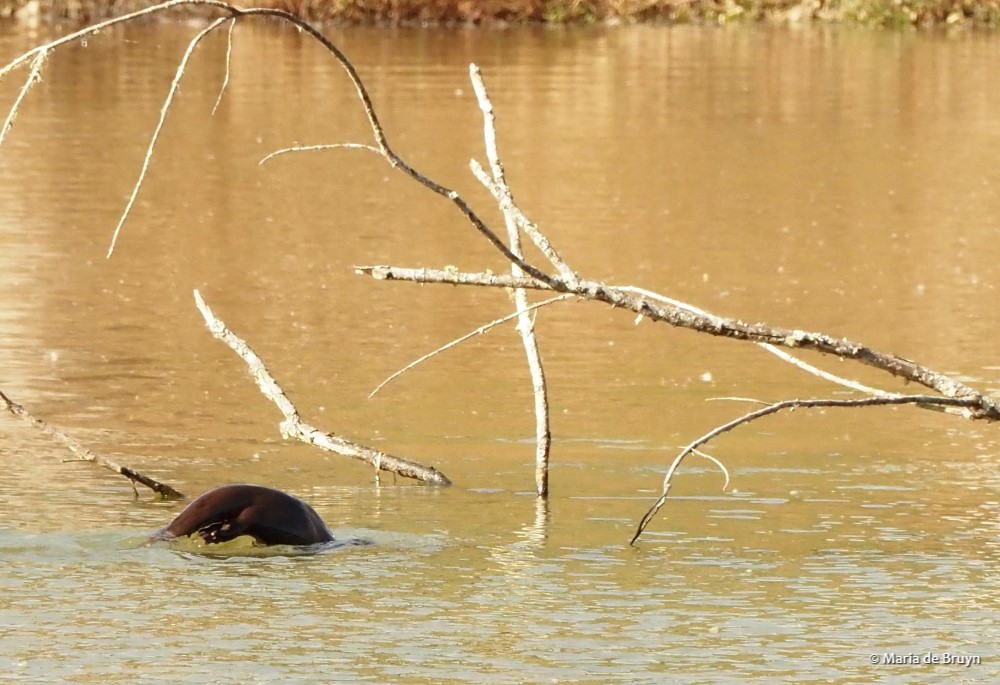
Sometimes a view of the rump and tail is all I get as they barely lift their heads out of the water. It’s interesting to know, however, that their tail comprises up to 40% of their body length, helps speed them up to 8 mph (13 Km/h) in the water, and helps them dive up to 36 feet (11 m).

 The otters don’t always appreciate spectators. Sometimes, they emerge from the water briefly and give me a view shrouded by vegetation before they dive back down. That’s frustrating when you’re trying to get a nice photo, but at least I’ve never scared them enough for them to sound their alarm scream, which apparently can be heard up to 1.5 m/2.4 km away!
 The other day at another pond, I was lucky enough to see a pair close to shore. They were foraging and when they finally disappeared, they appeared to have entered a beaver lodge located next to a walking path (seen here). The beavers may have abandoned this lodge as they have at least two others in this park.
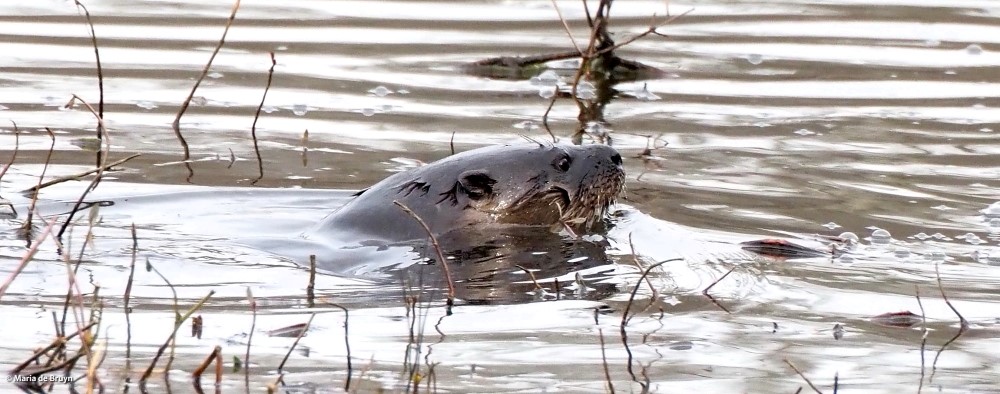
Researchers have not yet agreed on when otters enter their breeding season; it could be winter, late spring or summertime according to different studies. In any case, it seemed to me like this might be a mated pair.
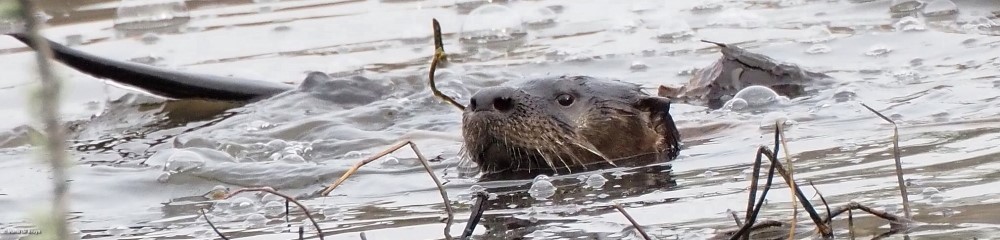
As they swam around, the couple would occasionally come together.
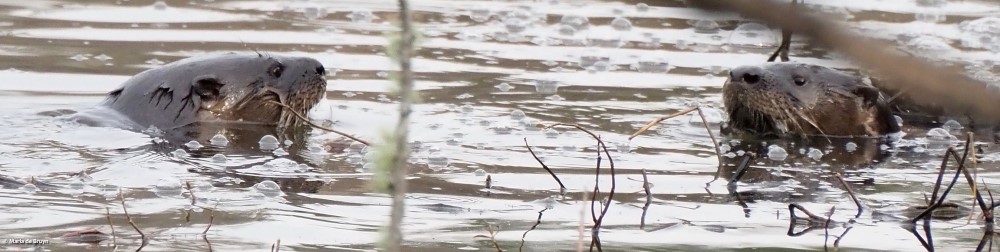

They didn’t stop to frolic, however, even though otters are known for their playfulness. They did blow some bubbles and I’ve learned that they can close their nostrils during dives to keep water out of their noses. Seeing them was a real treat! And their presence should indicate good fortune for the Sandy Creek Park since river otters are considered an indicator species that signal good water quality.

In September, I wrote about seeing muskrats (Ondatra zibethicus) and North American beavers at a third reserve. Since then, I’ve had the good fortune to see both species there several times. The muskrats have especially graced me with their presence.
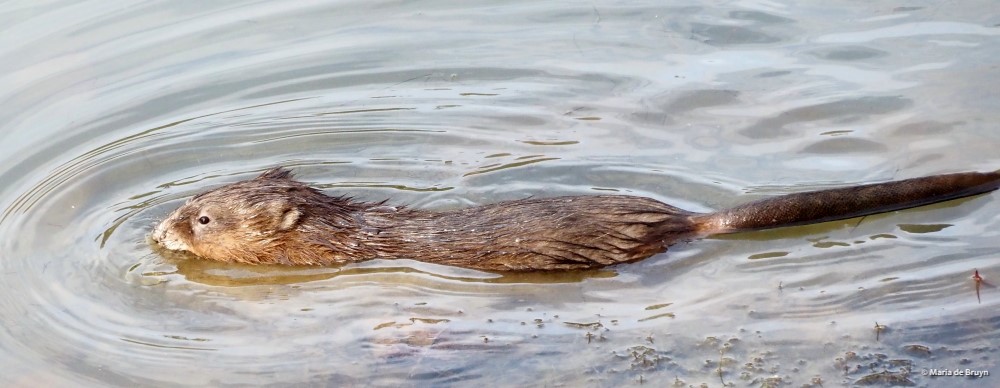
 That’s lucky because last year our county had its 12th driest December month on record over the past 128 years. This was quite evident at the pond, which appeared to have shrunk by at least 30-40% during the autumn and early winter drought (my estimate). I’ve been surprised to see these animals still living there.
Because muskrats don’t tolerate dry heat well, they’ve been designated an indicator species for the effects of long-term climactic drying. Recent research has shown that their numbers and response to this phenomenon should be taken into account in scientific and environmental policy-making.

To deal with dry heat, these mammals regulate blood flow to their feet and tail through a mechanism called regional heterothermia. This enables them to keep these appendages cooler than their body’s core. Another interesting anatomical feature is the muskrats’ specialized nostrils, which they can use to trap and recycle air after removing more oxygen before exhalation.

At this particular pond, I’ve discovered that if I wait patiently for at least 20 minutes or so without other people walking by, it’s likely that one of the resident muskrats will surface to go for a swim and/or to forage for weedy food. (They can stay submerged for up to 15-17 minutes, so patience is warranted.) It’s often the appearance of small bubbles that alerts me to their presence and location.

Sometimes they emerge with their tails held high as if waving a signal flag – “I’m here!”
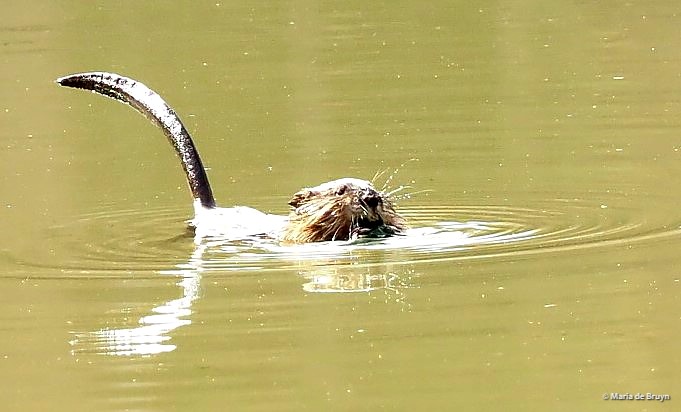
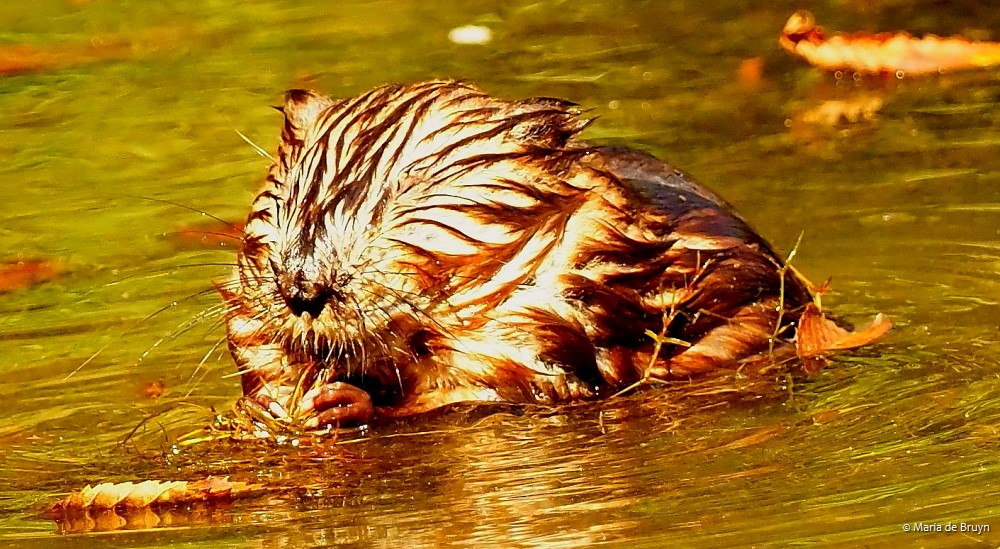
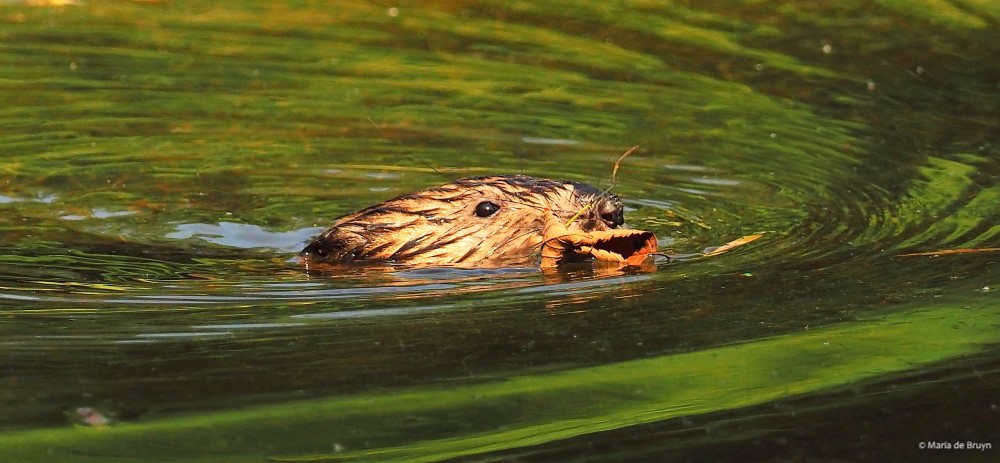
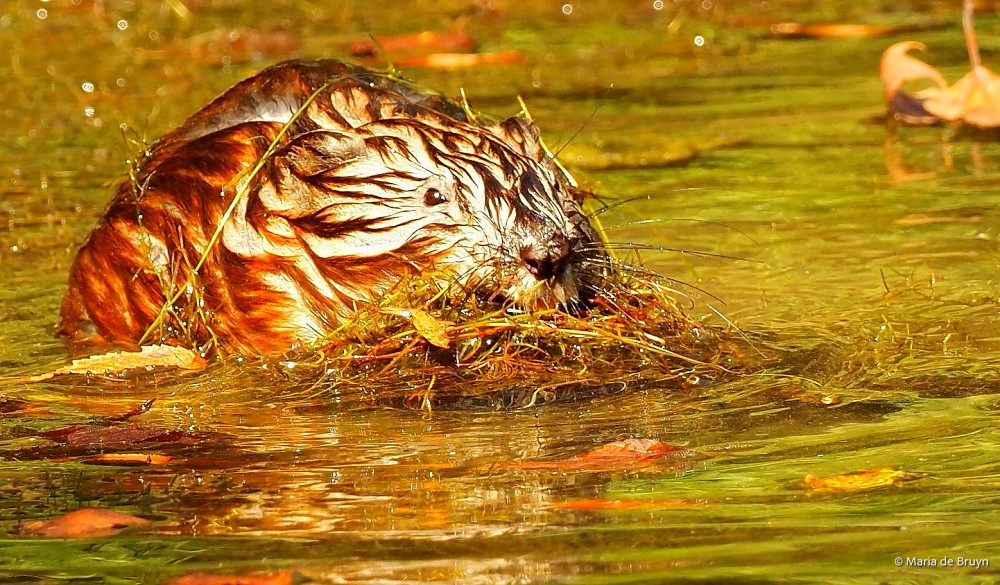
The muskrats dive down and come up with a mouth full of vegetation which they chew while swimming or sitting near the shore. They can also eat underwater since they’re able to chew with their mouth closed because they can close their lips behind their incisors.
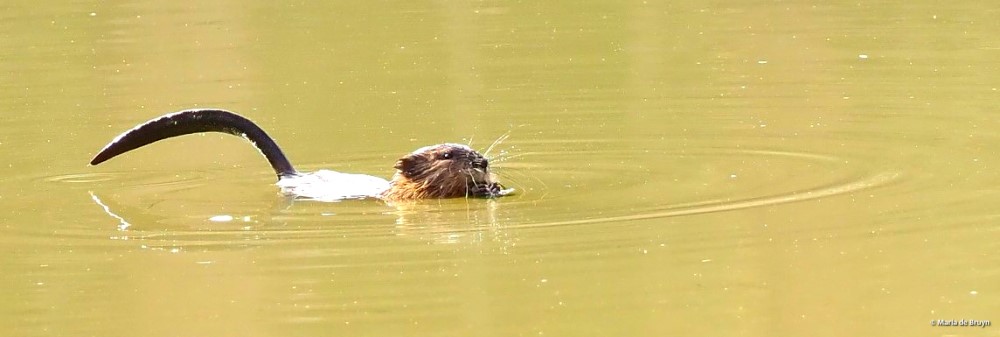
Muskrats prefer to live in areas with at least 4-6 ft (1.2-1.8 m) of water where they build tunnels that lead from the pond or marsh bottom into burrows dug into banks. I now know approximately where their burrow is located as I’ve seen them emerge and submerge in a particular spot.
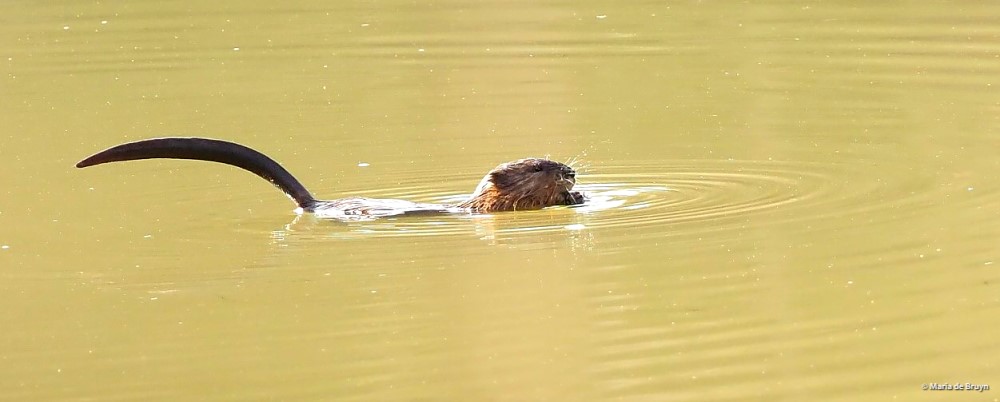
Our area just had a snowfall of 2.3 inches (5.8 cm) which will be melting in the coming days. Hopefully, the next time I visit this pond it will be fuller, and the muskrat residents will have a more spacious swimming and eating area. And then they will have good reason to wave their tails in celebration! (Apologies for the less than stellar photos as I’ve had to use a short lens lately. Hope to have my long lens back soon. The photos in part 2 of this aquatic mammal series are better!)
 When facing unpleasant challenges, it’s helpful to have an interest to help put them mentally aside while you find enjoyment doing something else. Observing and connecting with wildlife and plant life does that for me. For at least a while, I can think, “I don’t give a shit,” and instead focus on what’s going on immediately around me, like the red-shouldered hawk (Buteo lineatus) above actually giving a shit. 😊
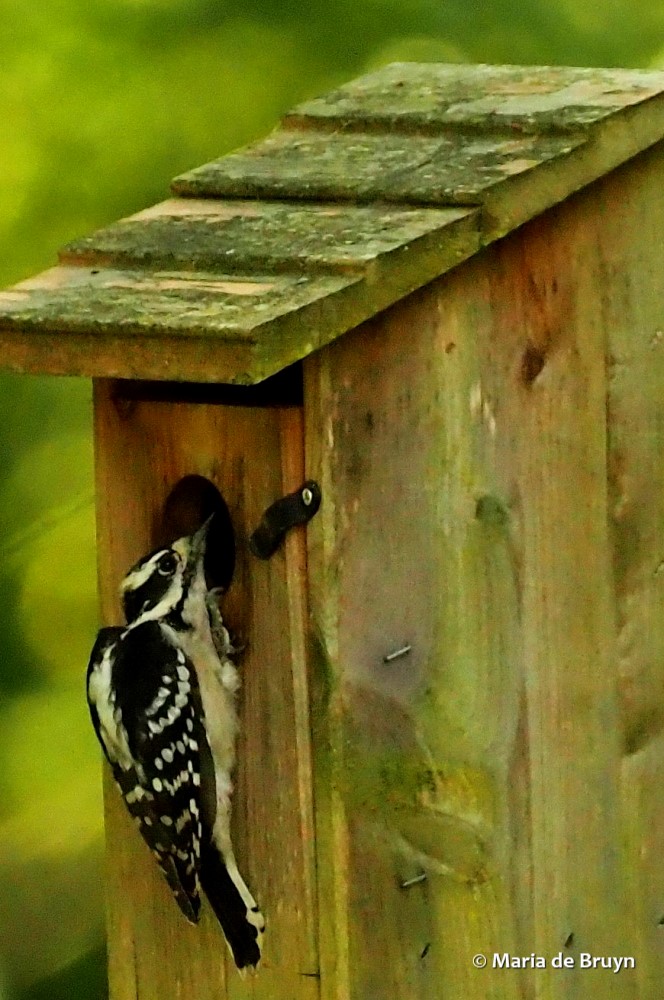 It’s my good fortune to live in a home with sizeable front and backyards where I can entice birds to spend time. Nest boxes border the yards and nesting gourds hang on the front porch, so that attracts pairs who raise young ones here in the spring. They also use these nesting sites to spend the night during cold autumn and winter nights. Downy woodpeckers (Dryobates pubescens) seem especially fond of one nest box next to the driveway.
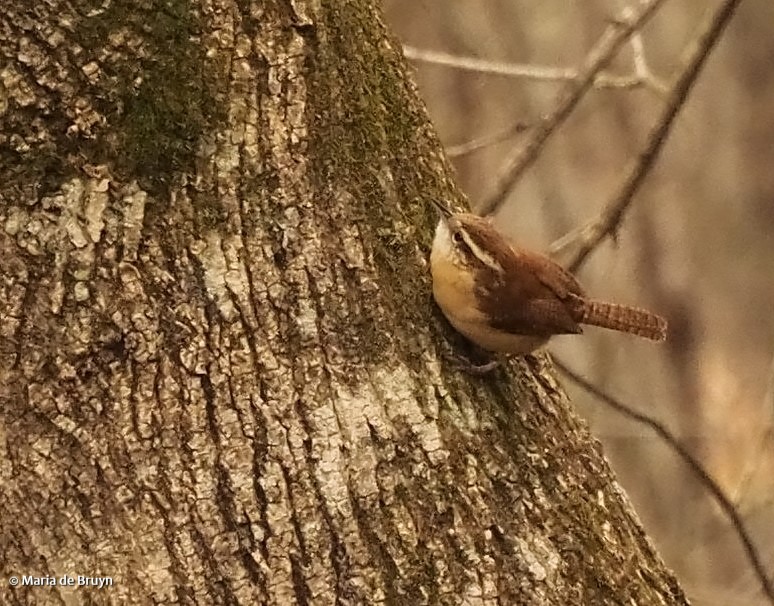 Since converting much of my front yard lawn into flower gardens (and I’m working on that in the back, although there I’ve planted more flowering and berry-bearing trees), the insect population has increased. That has helped the pollination of my flowers and provided the resident birds with meals, like one of the 6 or so Carolina wrens (Thryothorus ludovicianus) who occupy specific niches. One pair hangs out near a water-filled tub; another pair hangs out near a brush pile out back and the third pair hops in and out of a brush pile in the front yard.
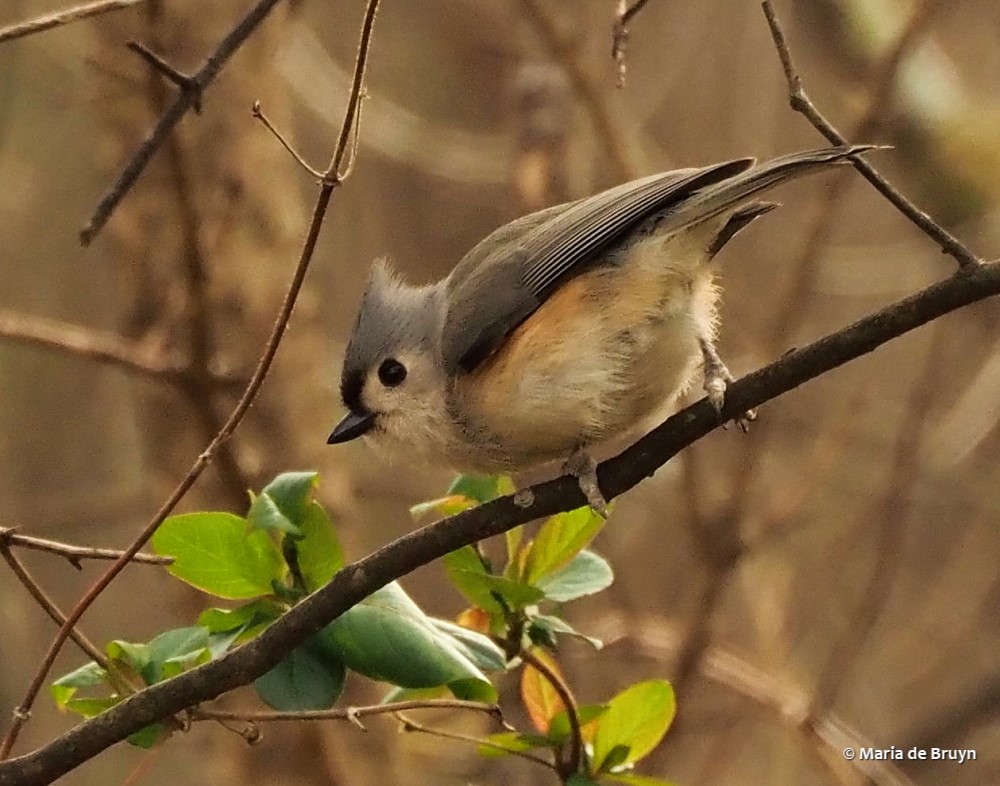
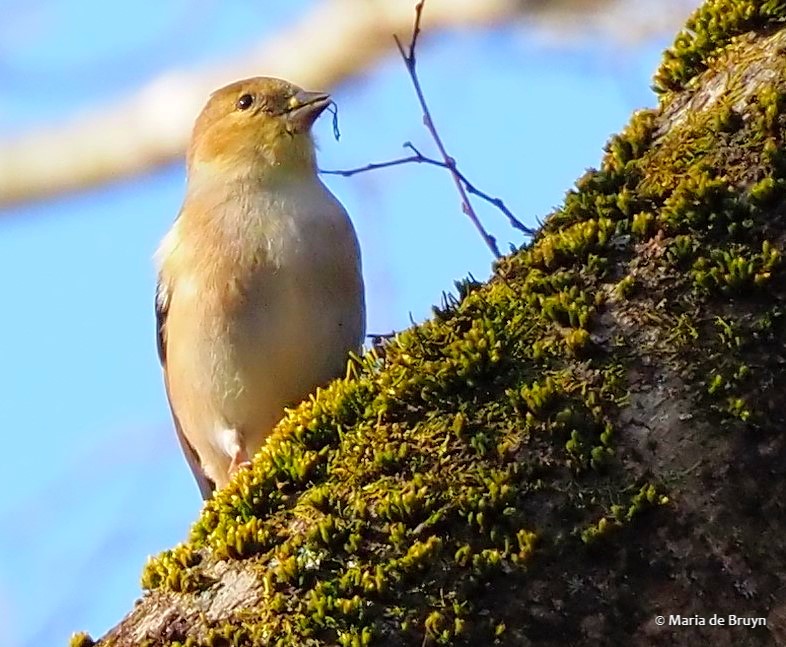
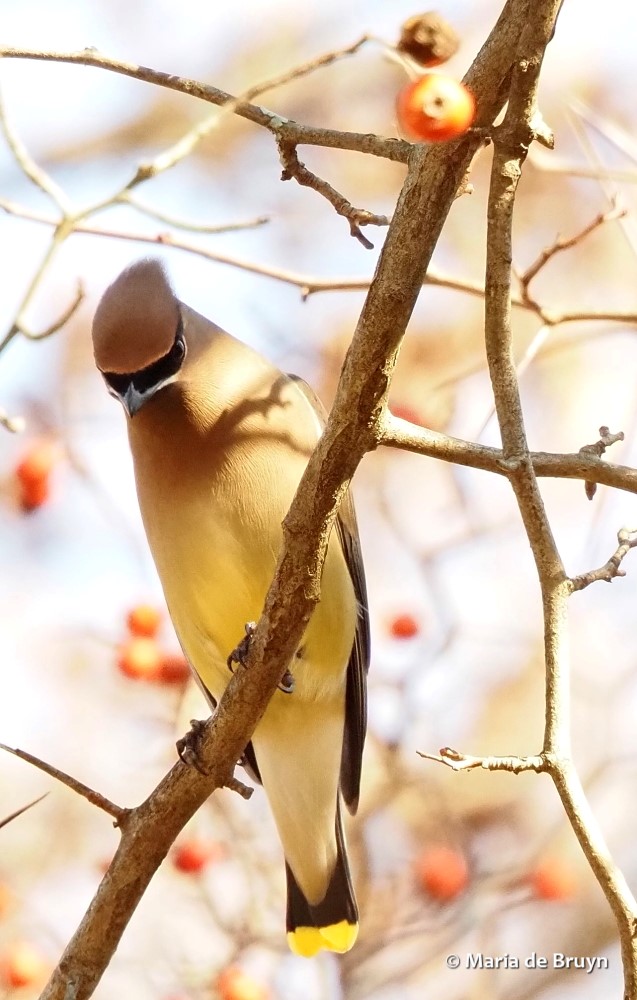 The cedar waxwings (Bombycilla cedrorum) are picky eaters. The American robins in my yard ate a lot of the juniper berries they prefer and there weren’t many other berries around (as was the case at the local arboretum). At my house, they’ve mostly been using the small ponds to drink and bathe.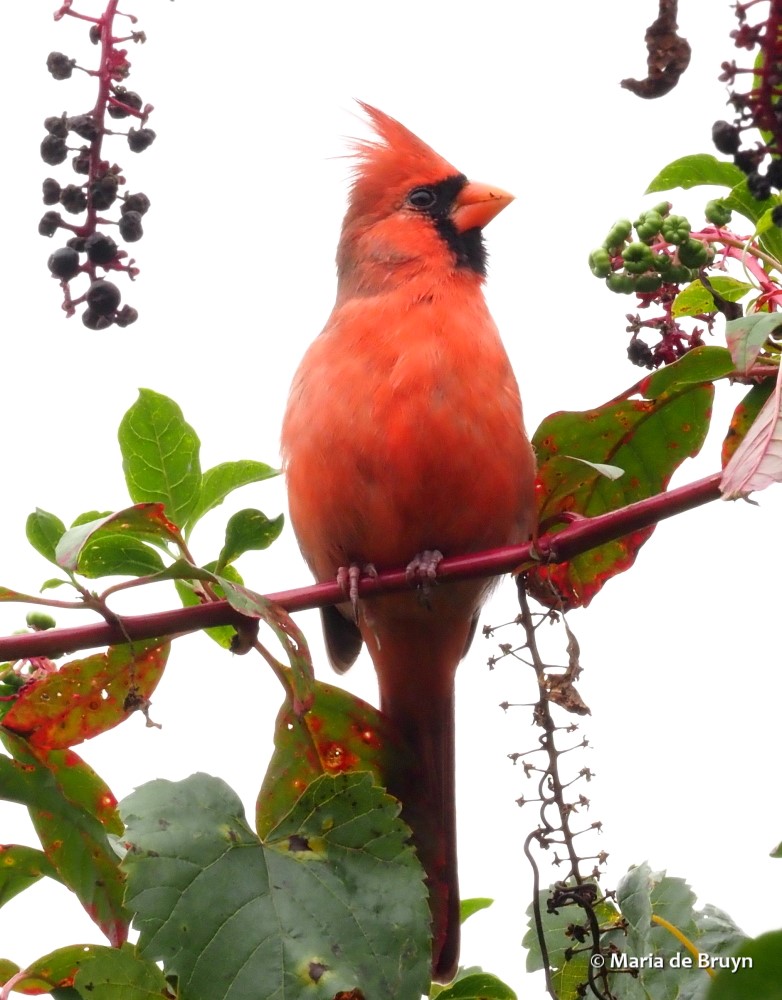
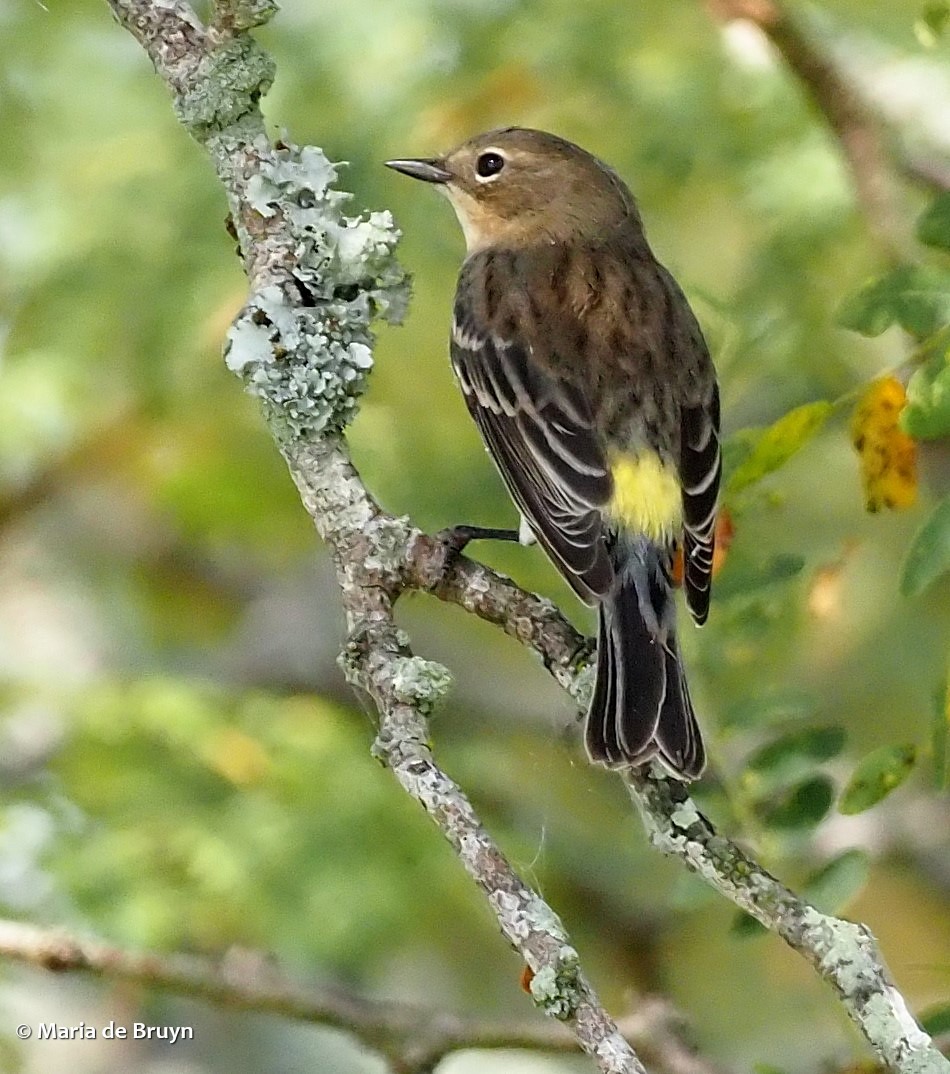
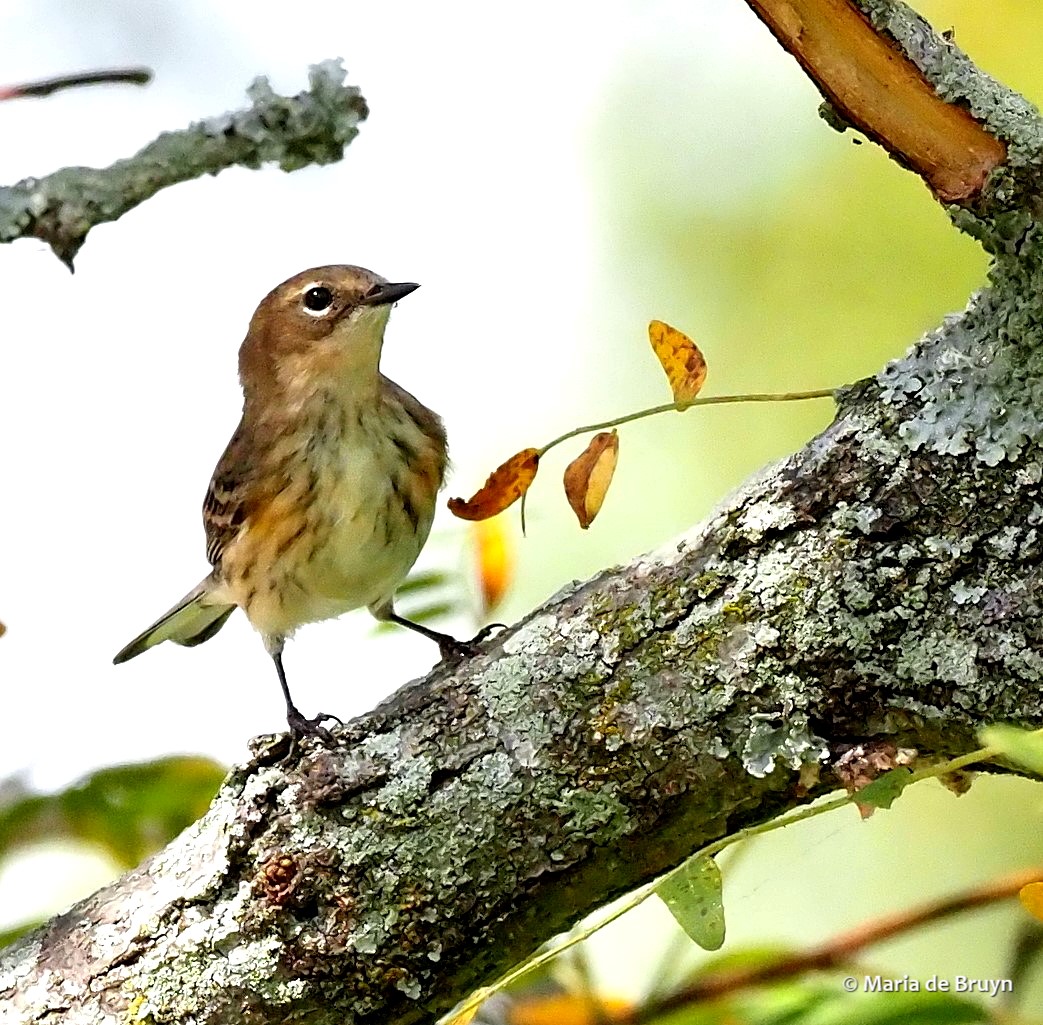 In past years, the visiting yellow-rumped warblers (Setophaga coronata) have lived peacefully with one another. This year, however, I have two birds who seem to be quite incensed when they spy each other. If one is at a feeder, the other zooms in to chase it off and often they flutter upward in a tangle with wings spread. So far, I’ve always been a couple seconds too late to capture the mid-air tussle – it is one of my goals for yard birding this year.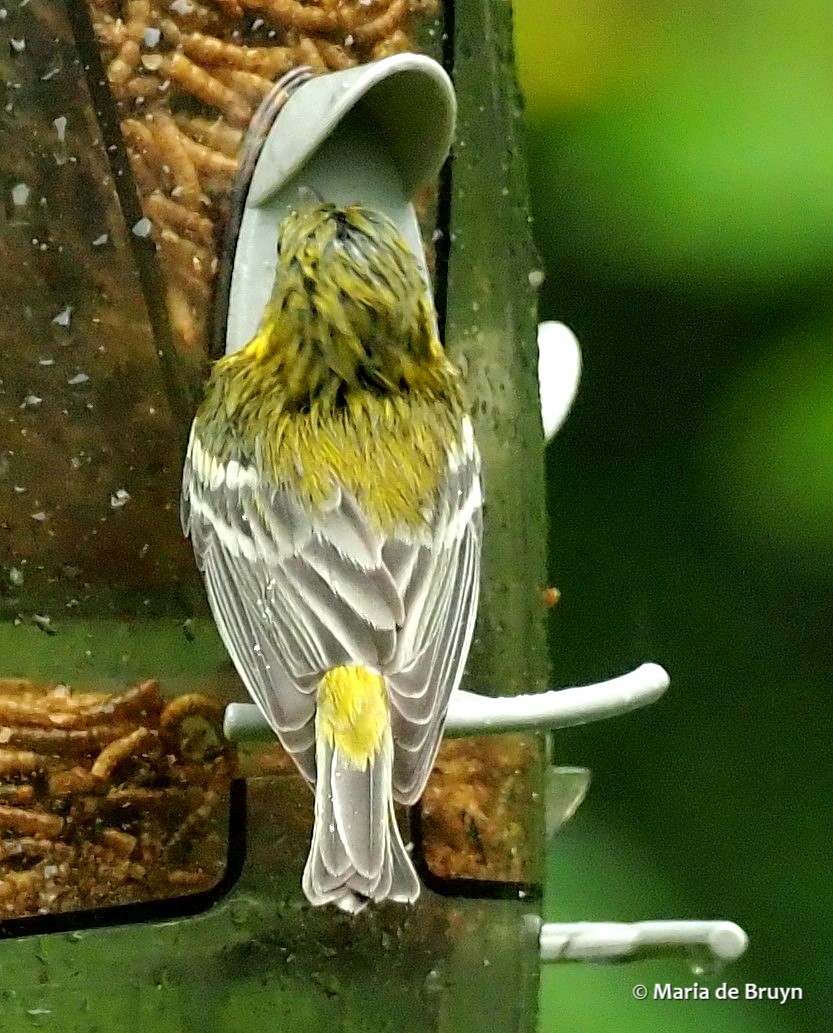
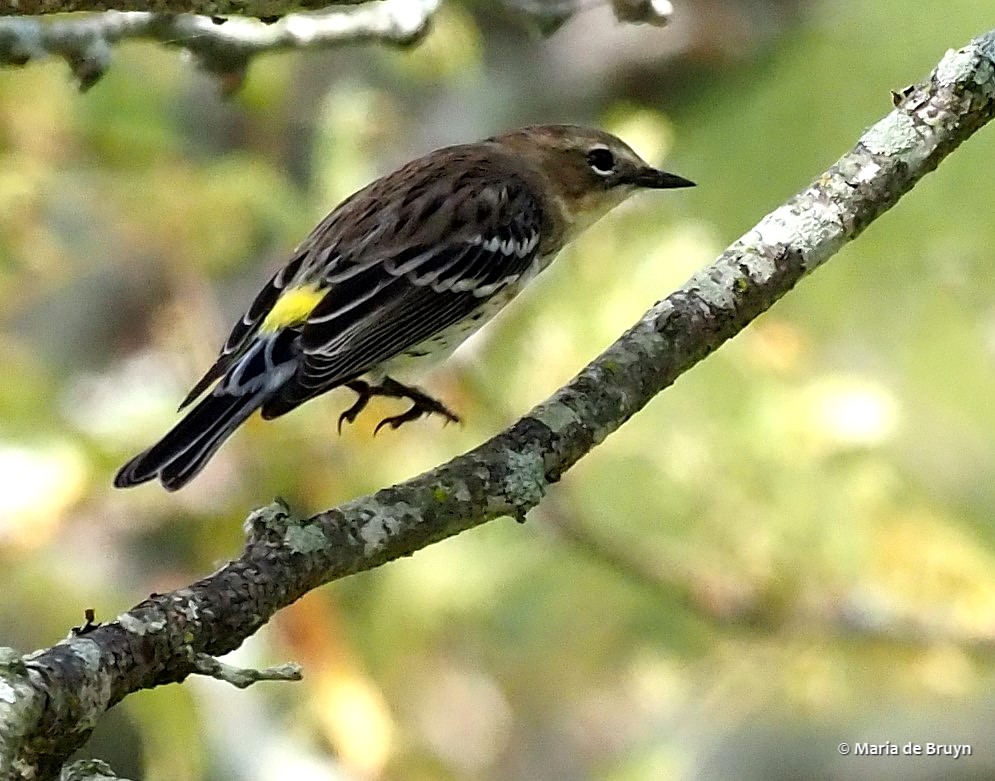
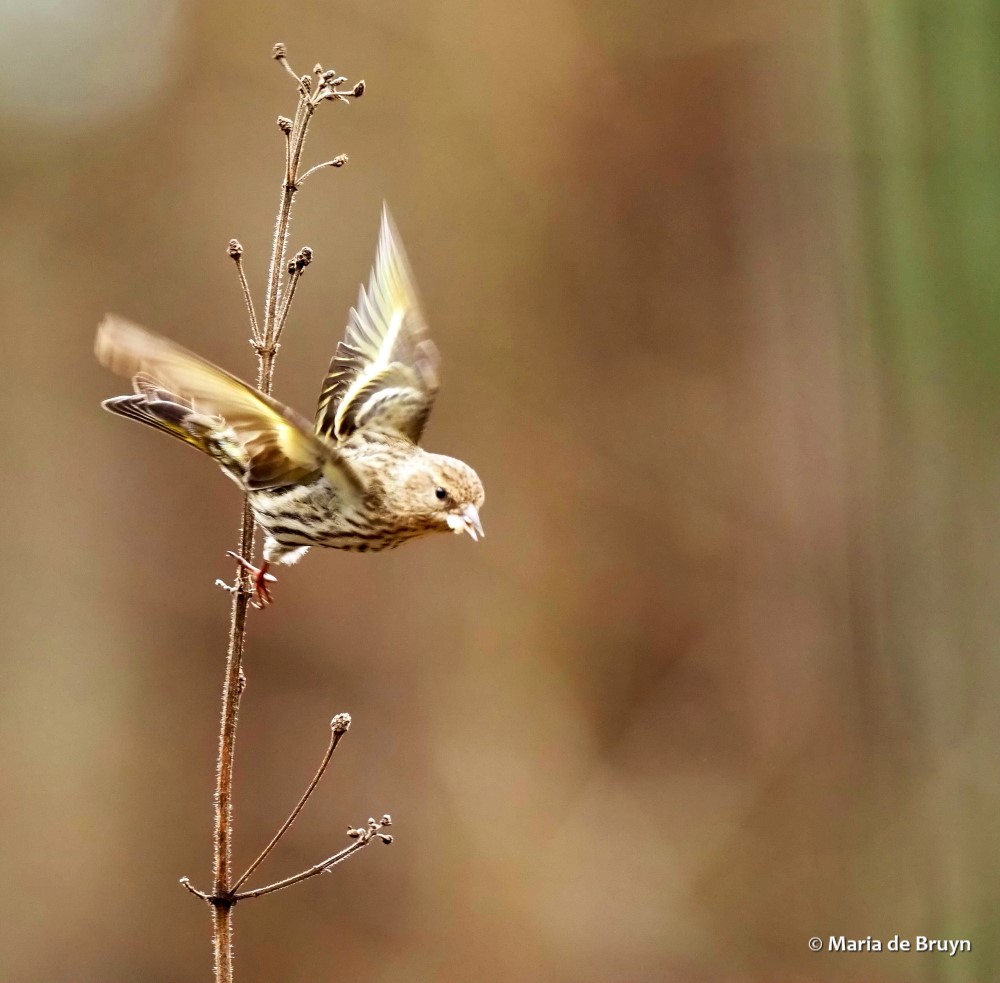
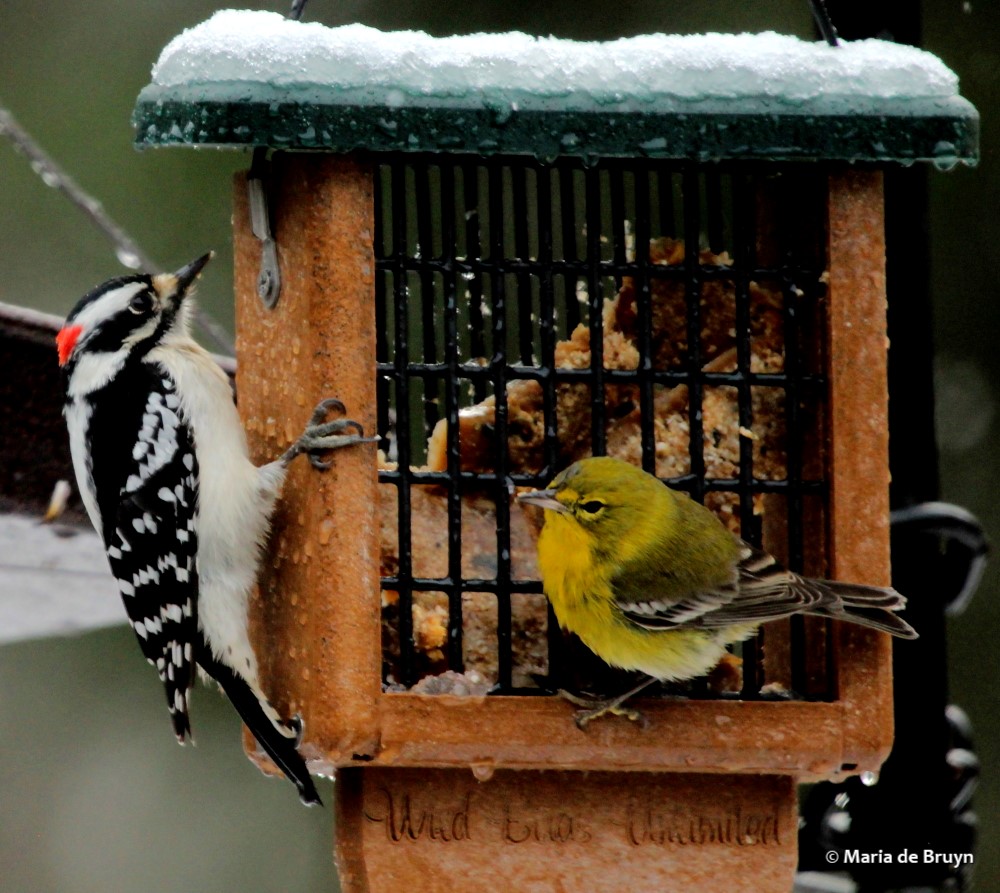 The pine warblers (Setophaga pinus) in my yard are quite tolerant and polite.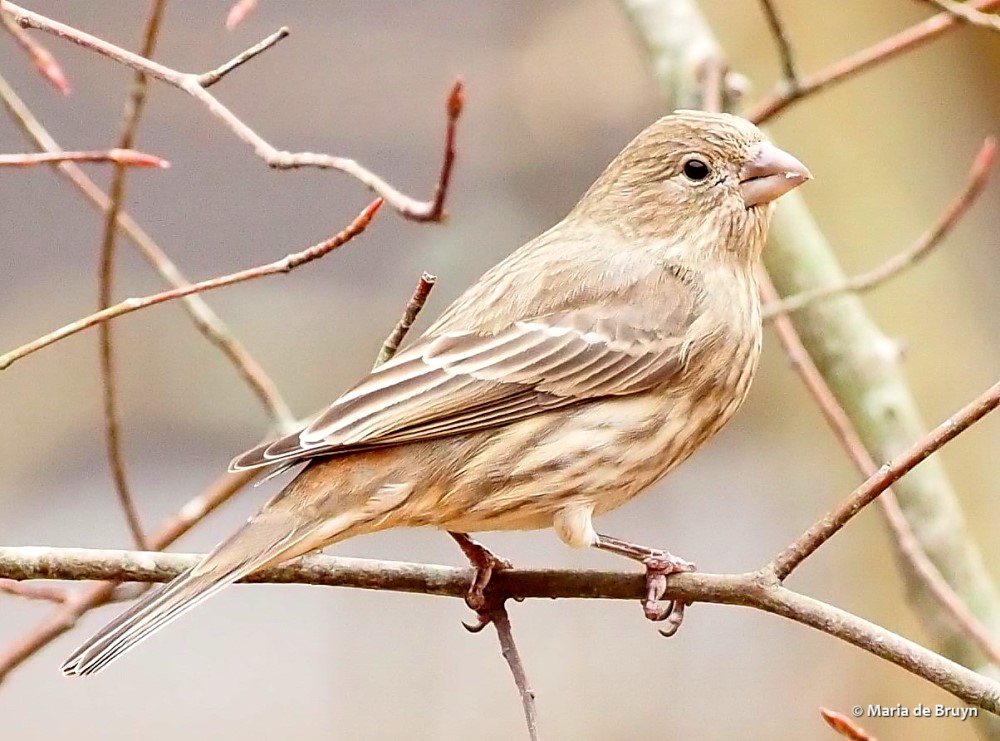

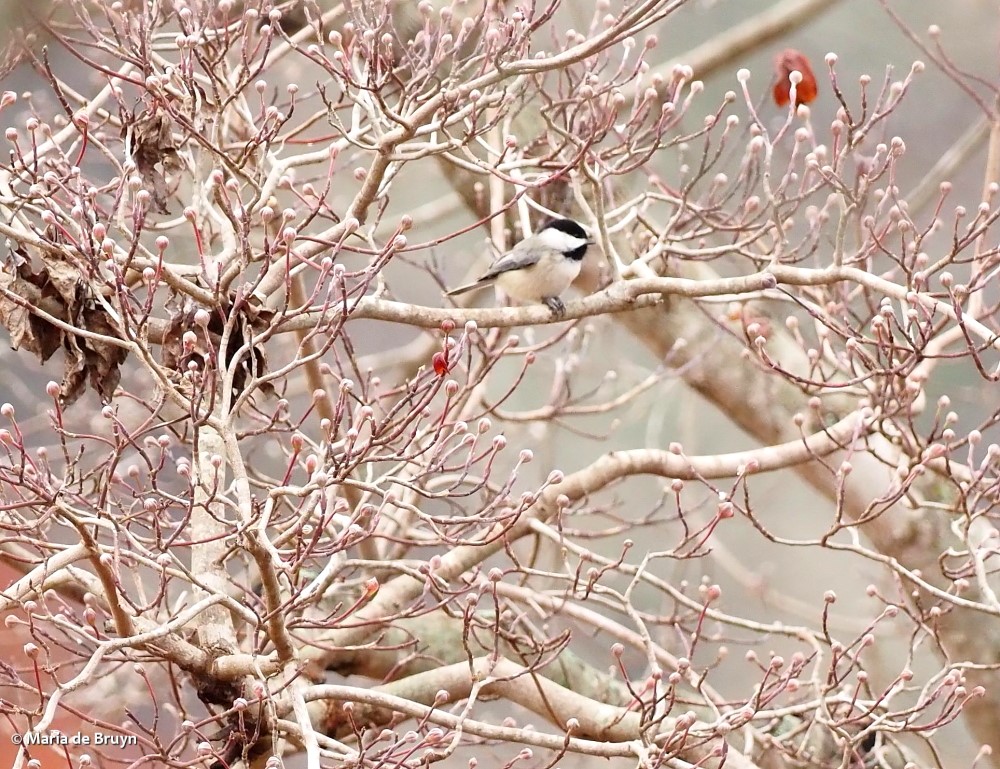
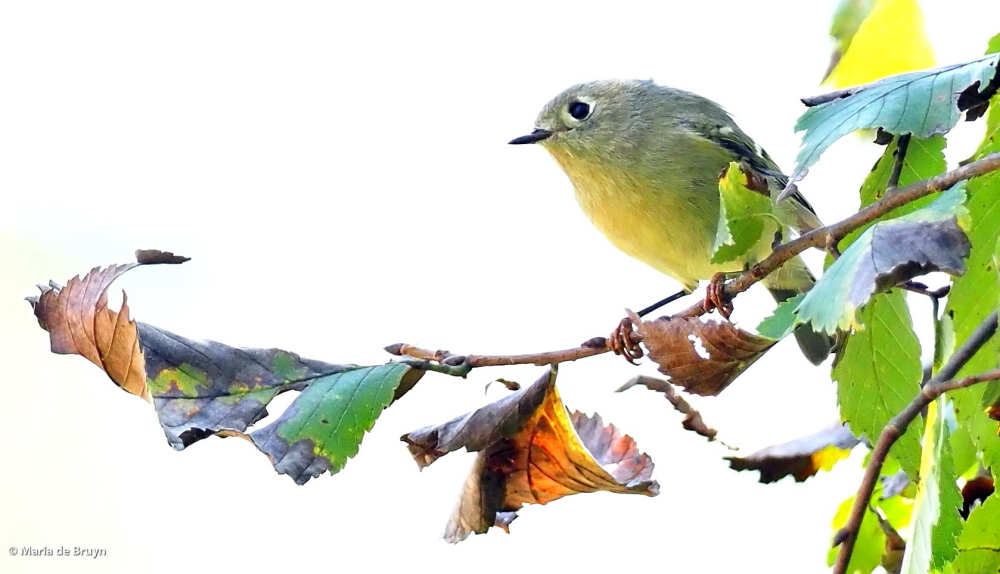
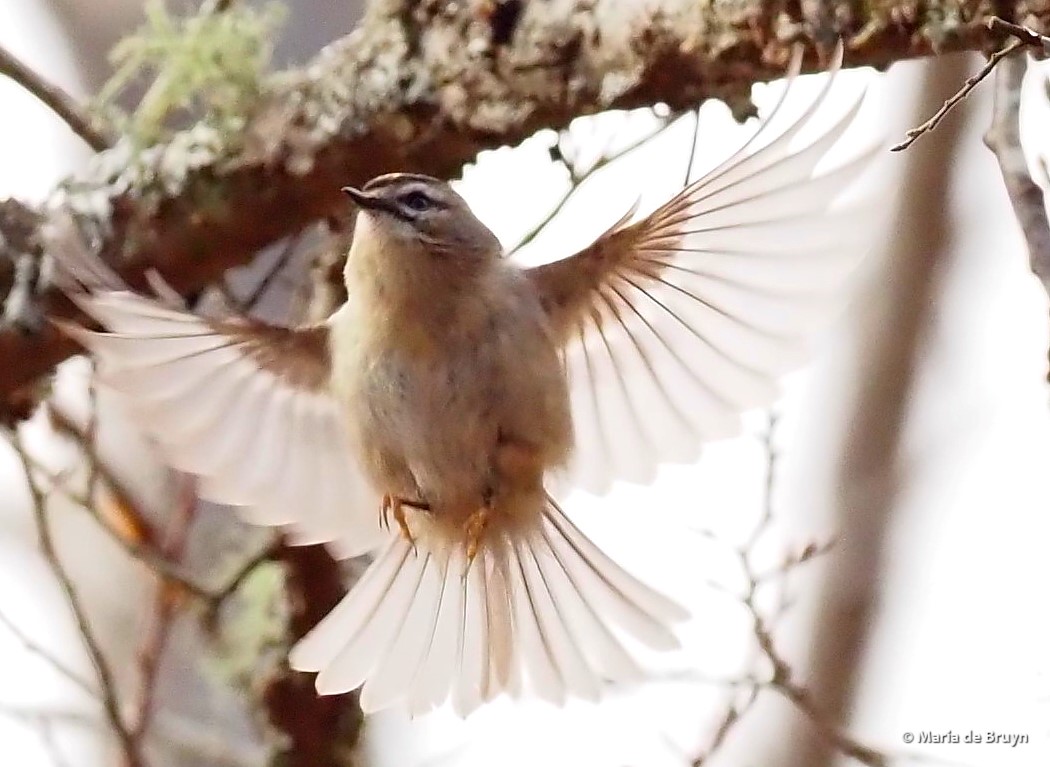
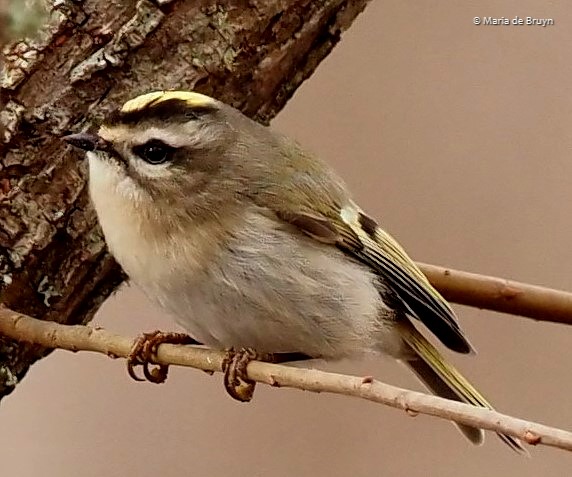 I hadn’t had golden-crowned kinglets (Regulus satrapa) in my yard much before this year; now I have at least one living here but s/he never comes to the feeders. Because this bird stays very high and I haven’t had access to my long camera lens for some time, it’s been difficult to get photos at home. I’ve had somewhat more success on walks.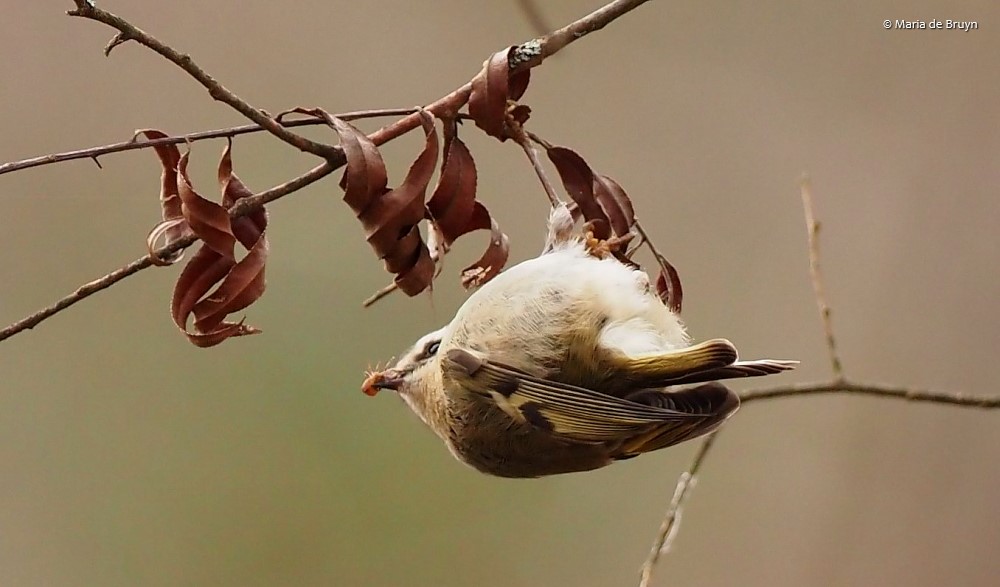







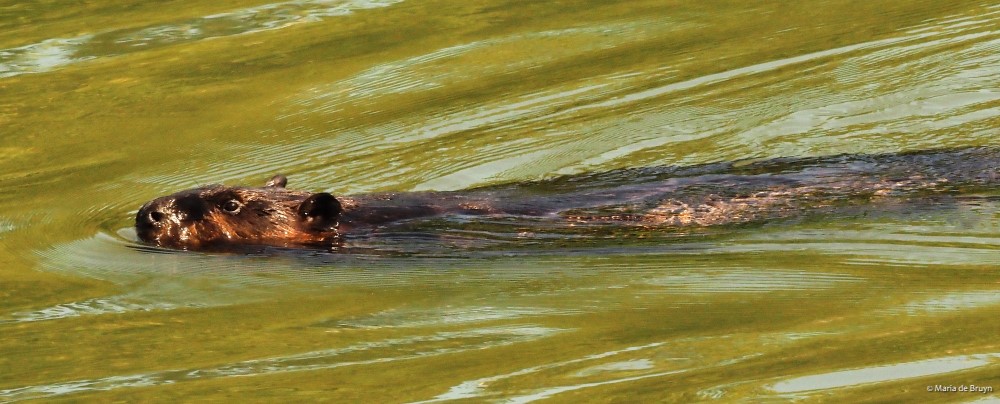
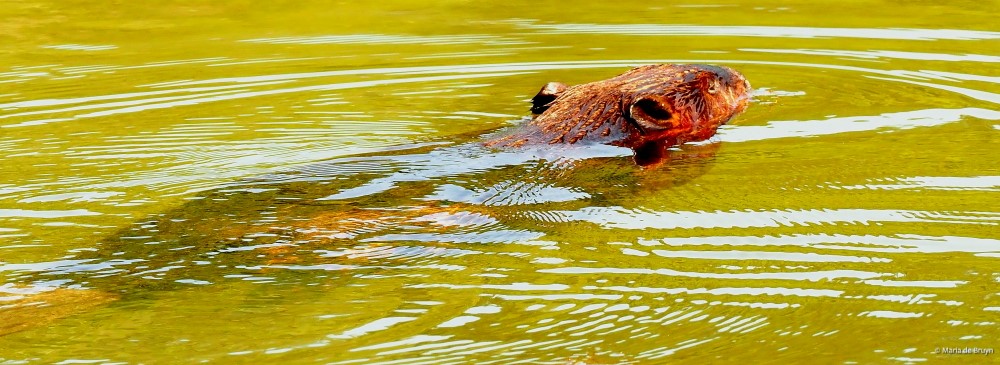
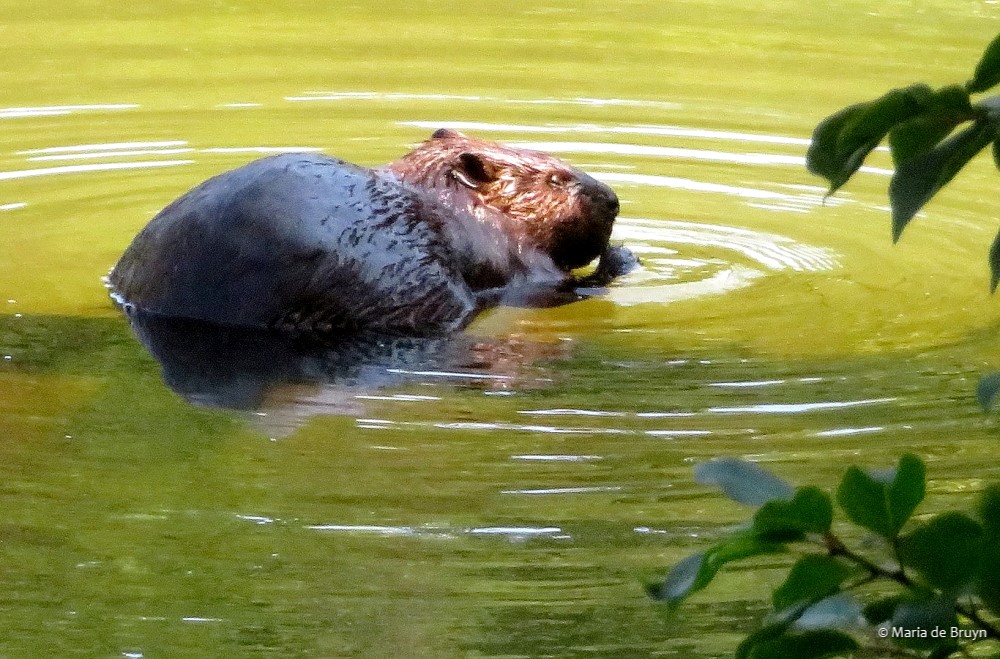

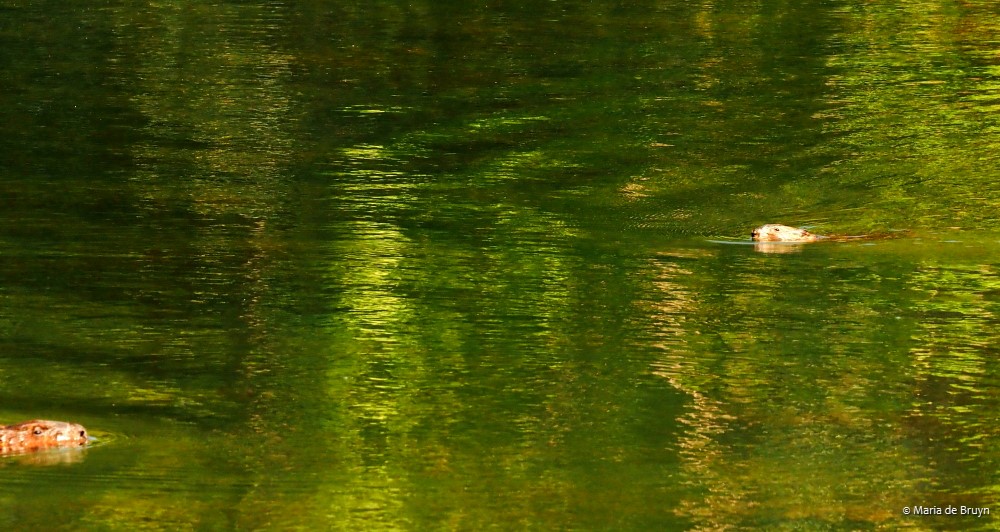

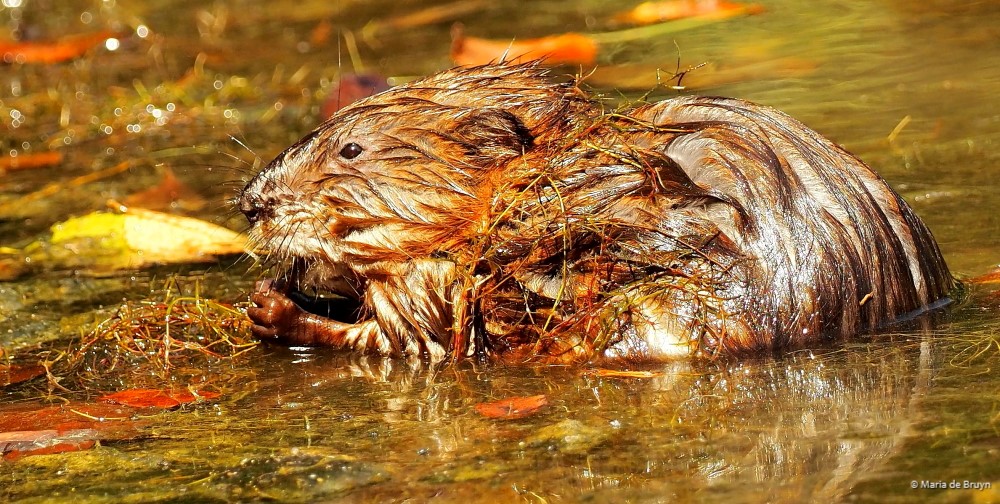
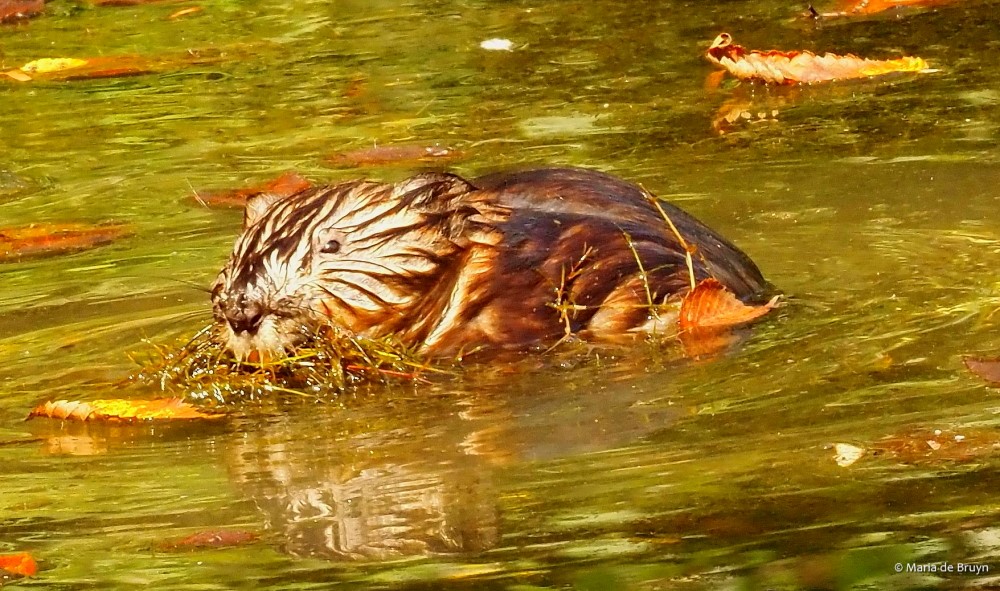
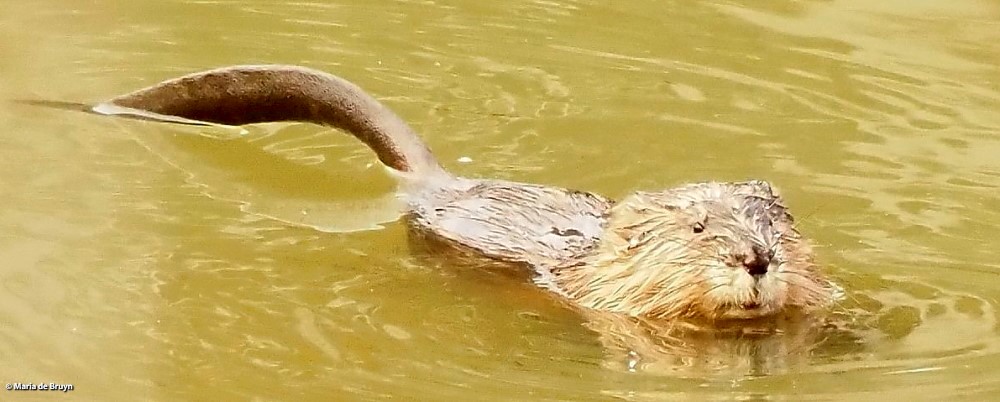
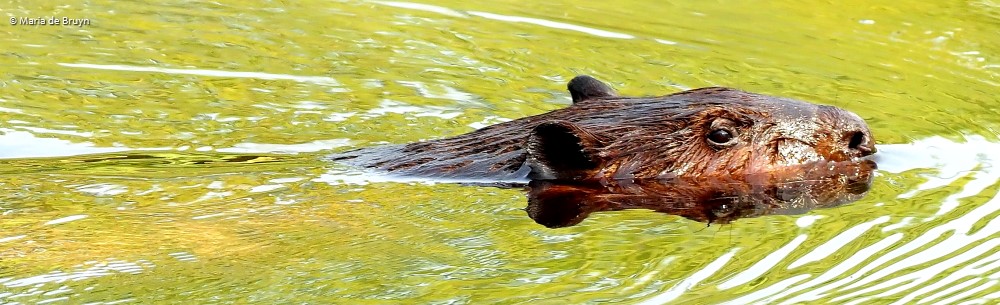
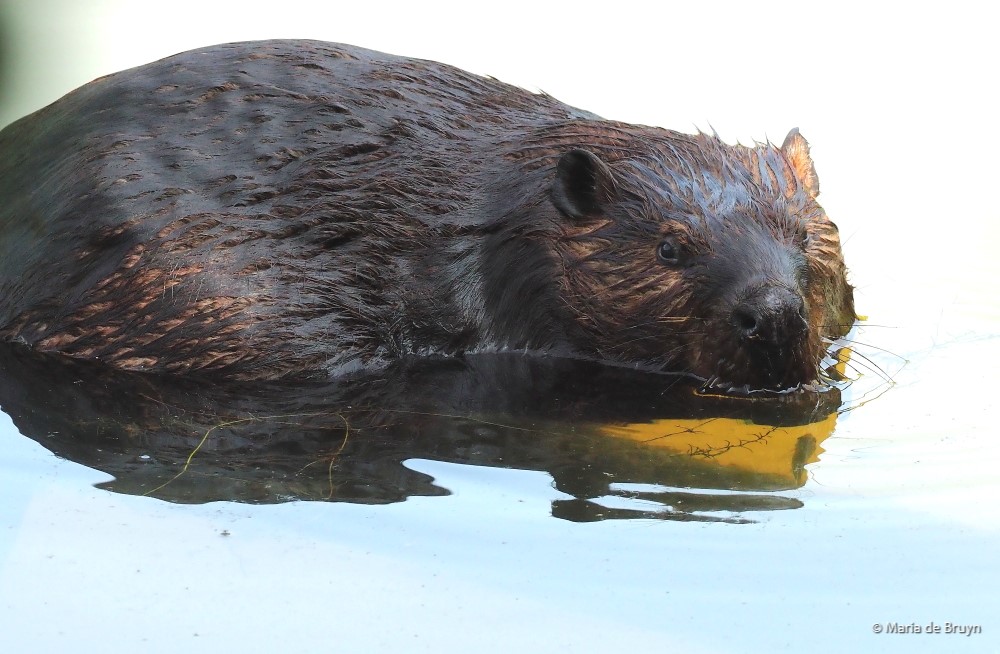
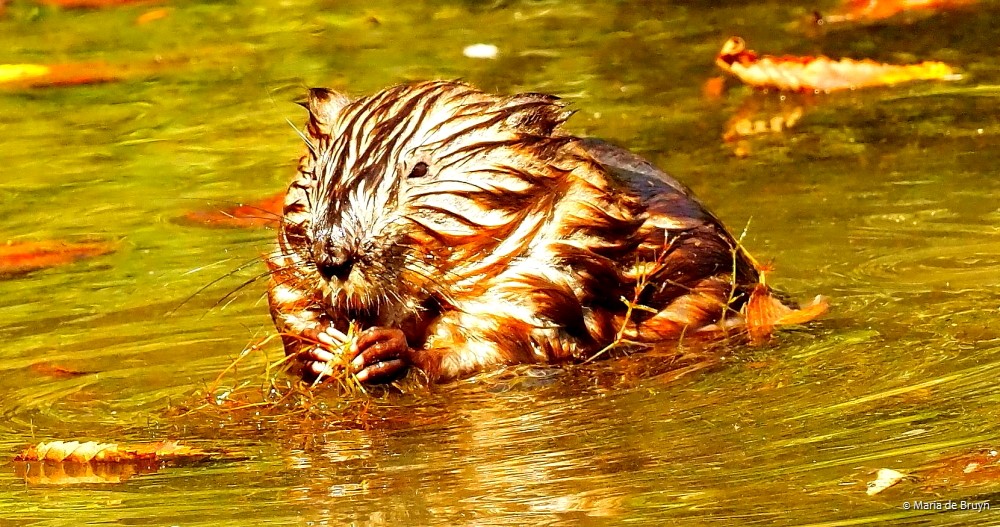 While the beaver’s fur remained sleek on its head and back after being submerged a while, the little one’s fur stuck together in clumps all over its head and body. To me it looked a bit like a punk teenager — an analogy that undoubtedly came to mind because I was thinking of it as a baby or adolescent beaver.


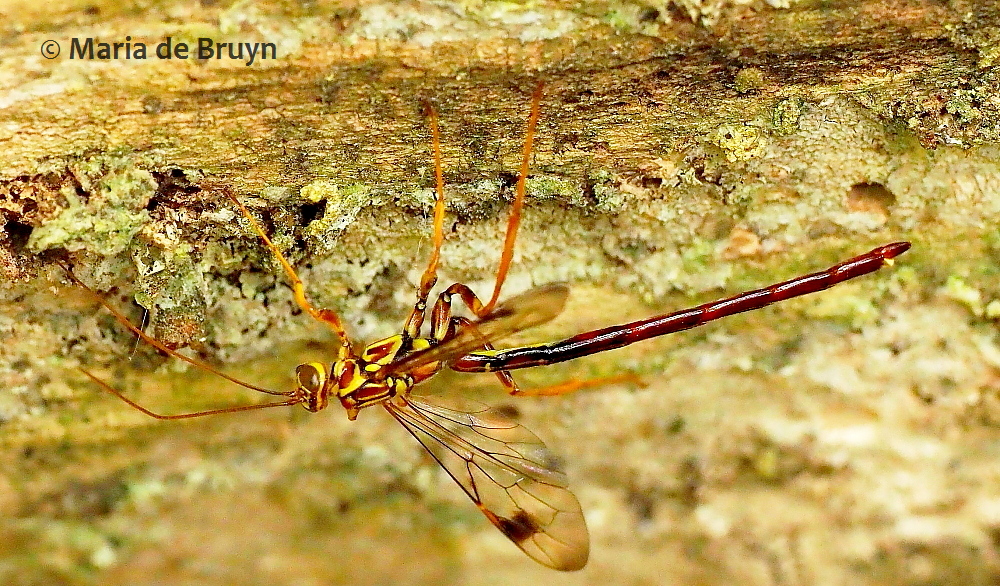
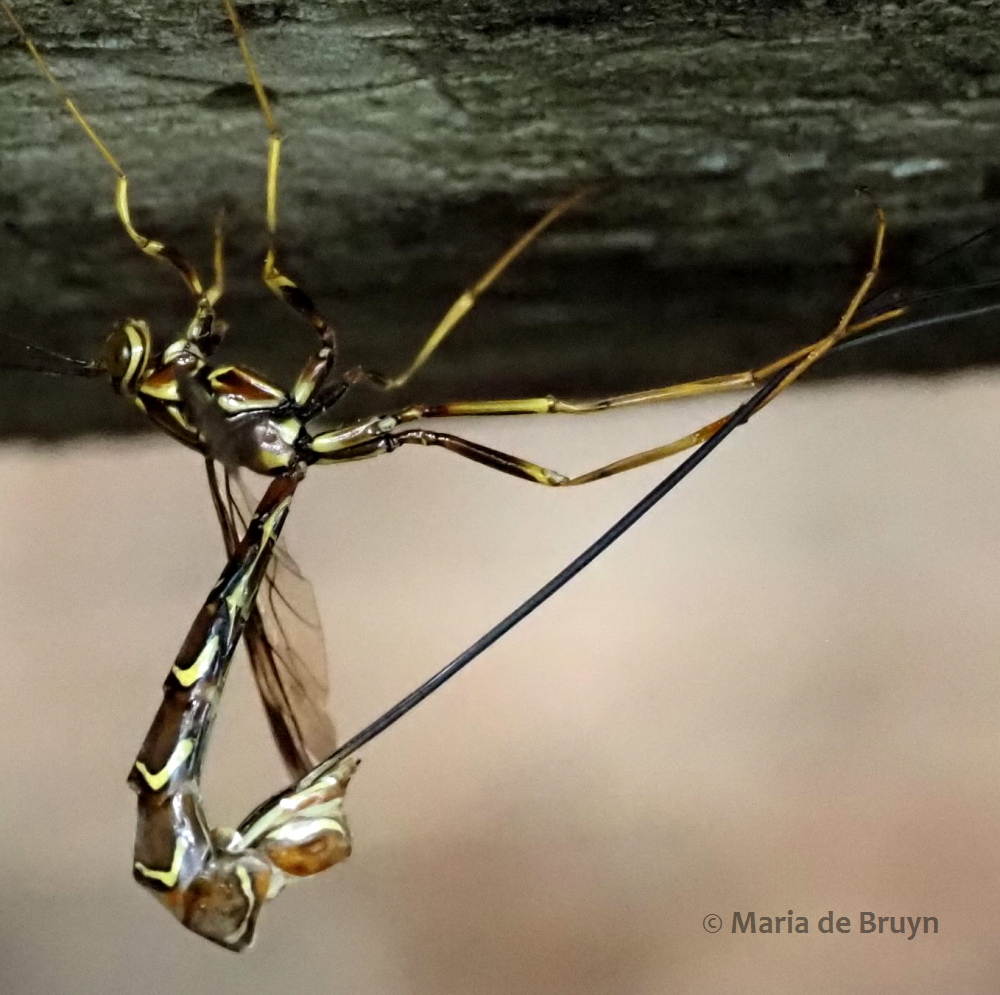
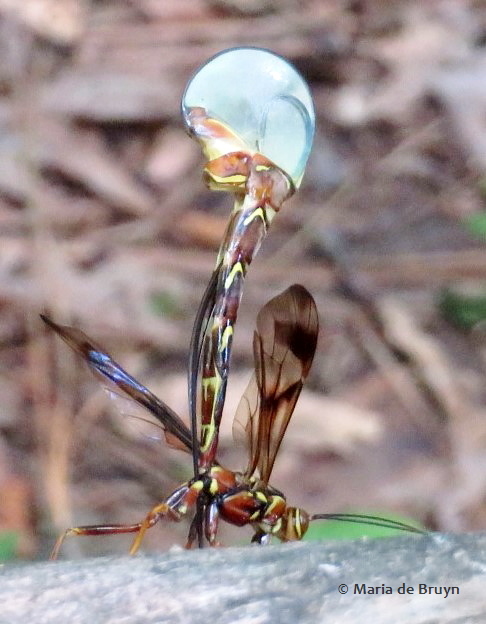
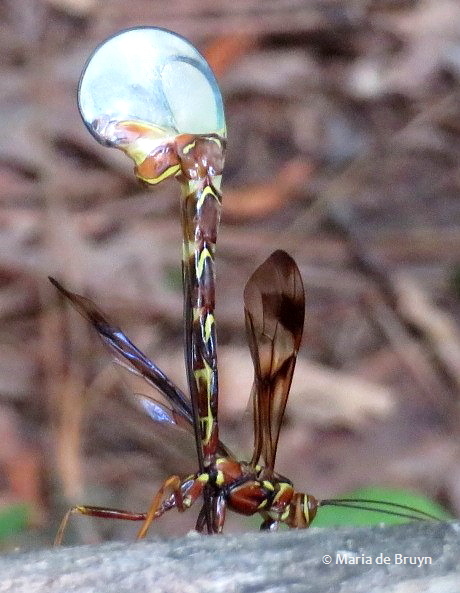
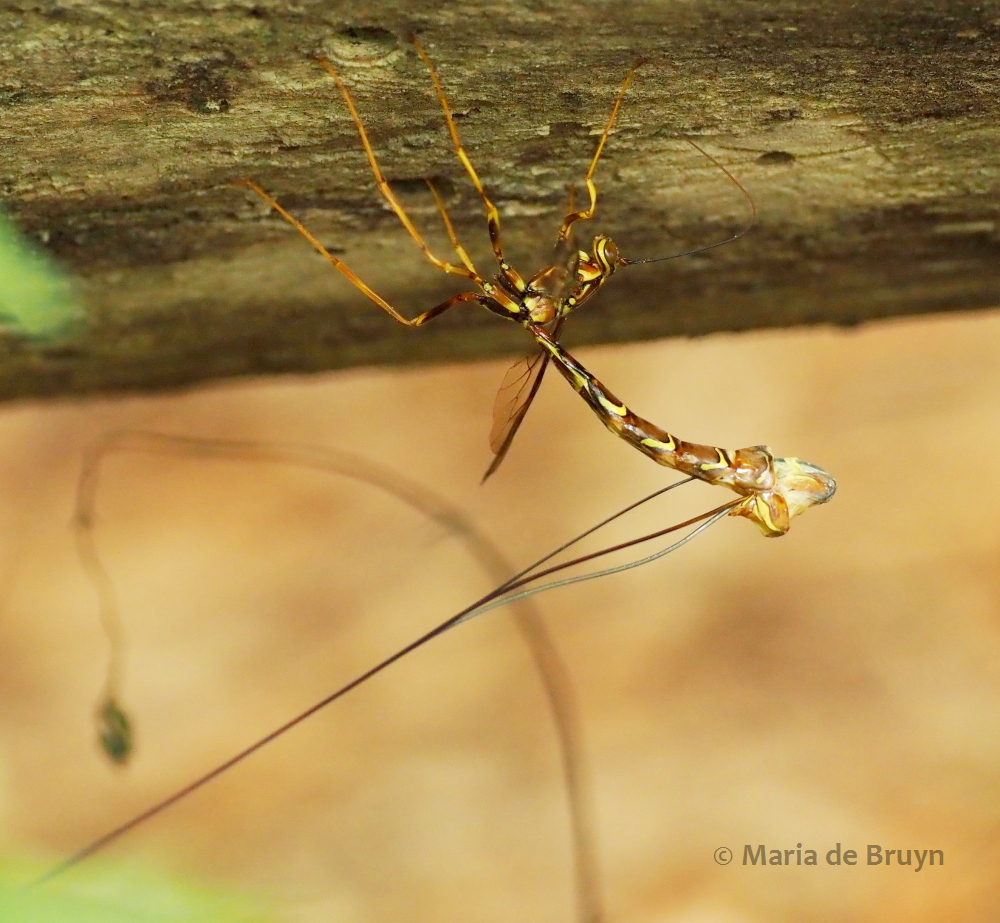
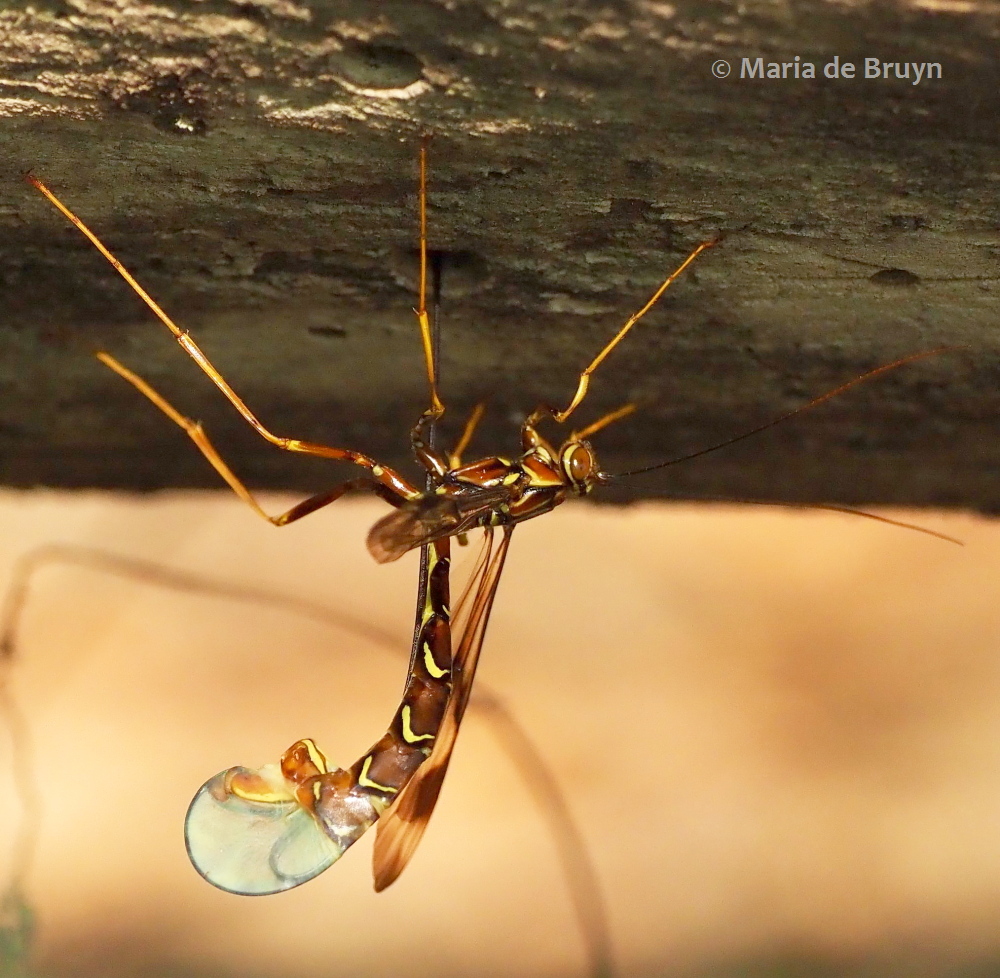
 The month of May brought me two especially awe-inspiring events. The first was seeing long-tailed giant ichneumon wasps (Megarhyssa macrurus) preparing for reproduction on a nature trail in Chatham County. It was easy to distinguish the females (right) from the males (above) because they had very long ovipositors (a tubular organ through which a female insect lays stored eggs). In the species I saw, the ovipositor can be 4 inches long!’




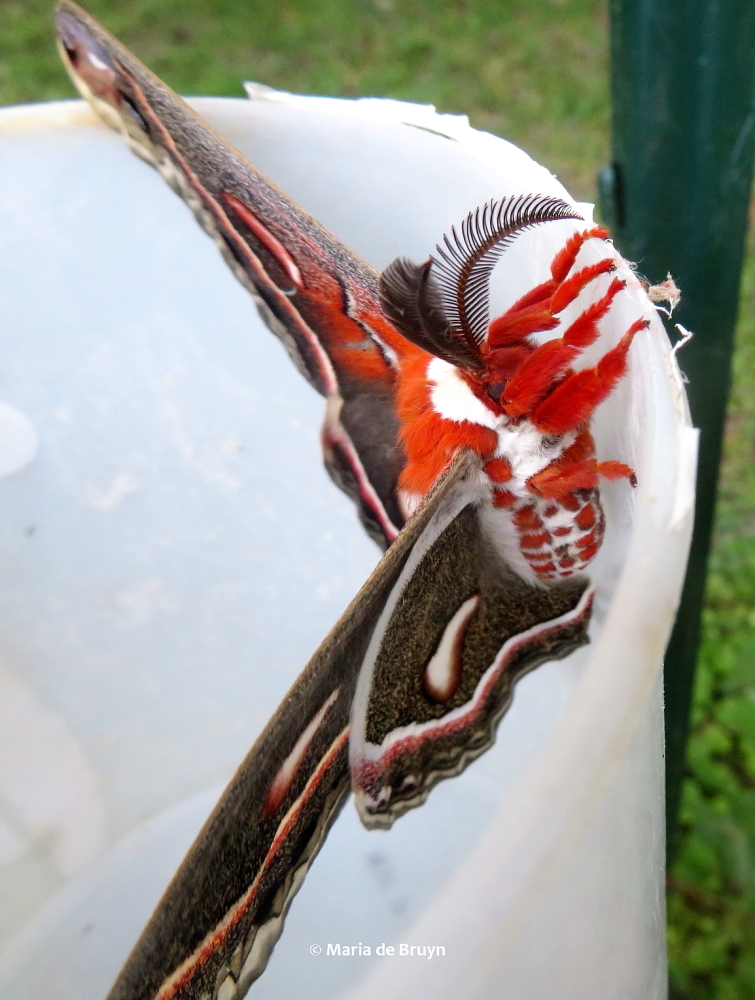
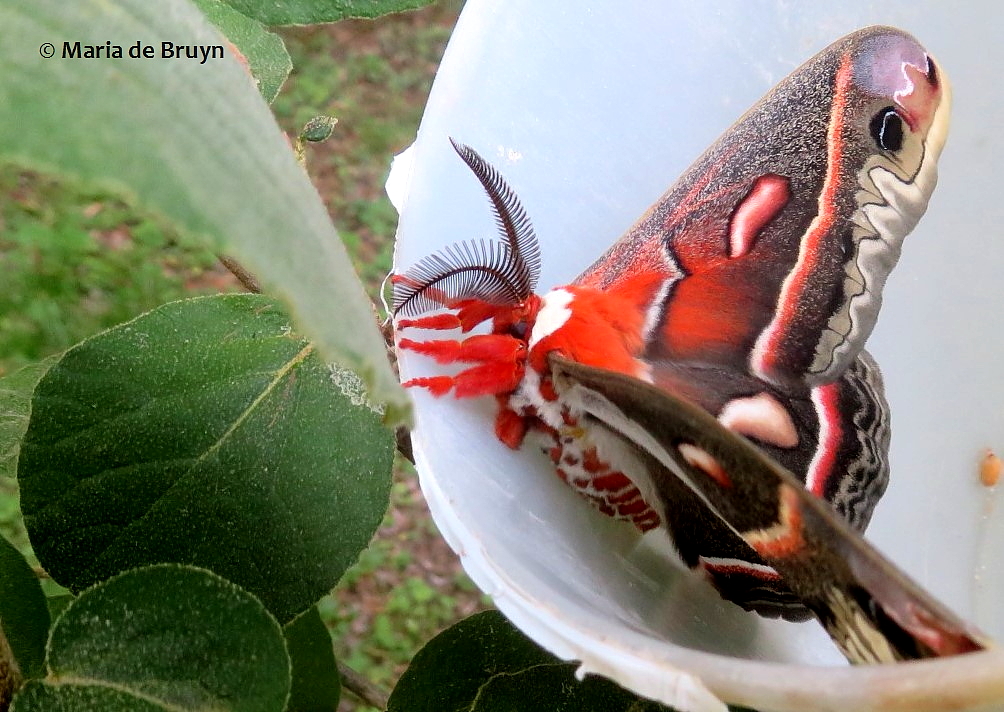
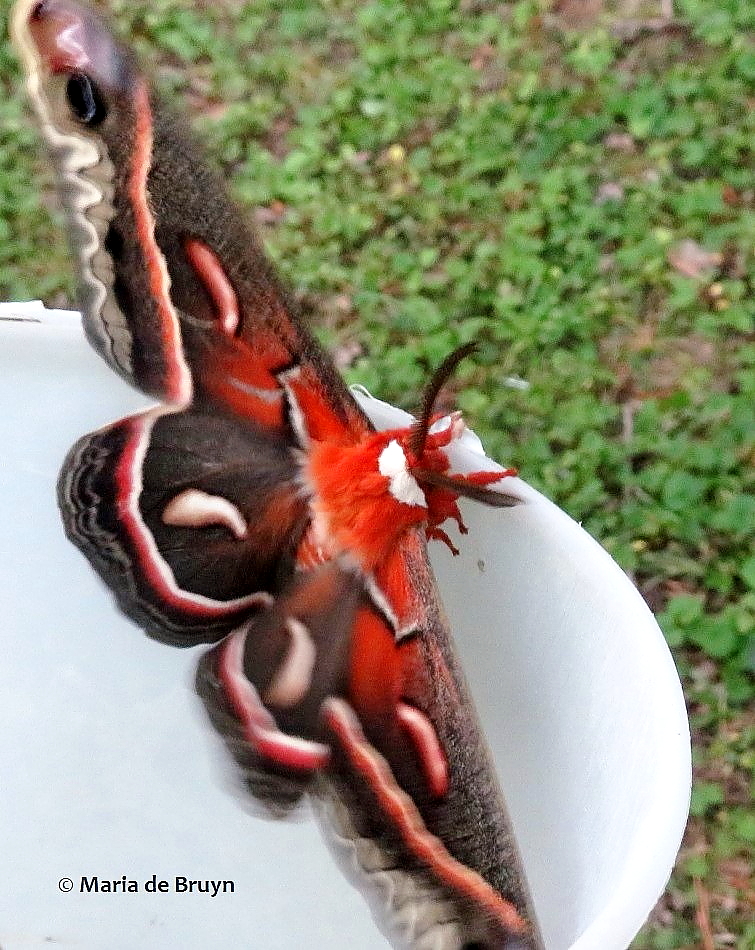
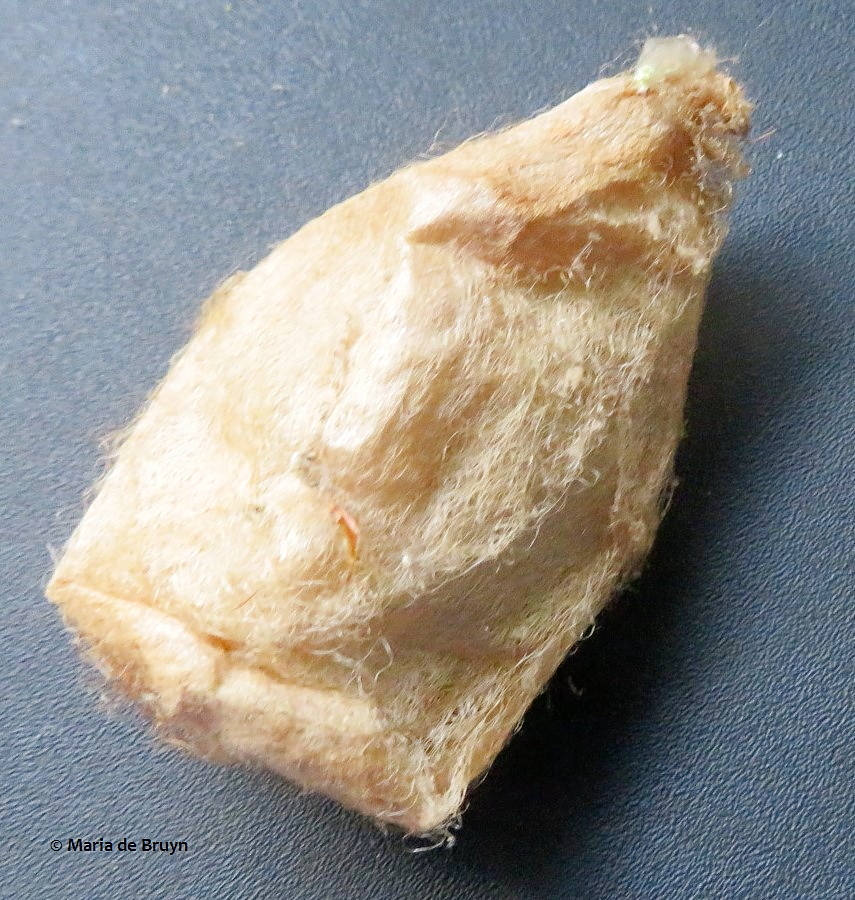 My other exciting insect event involved a moth. Last fall, a cecropia moth (Hyalophora cecropia) positioned its cocoon on the door jamb of the women’s restroom at Cane Creek Reservoir. The reservoir’s manager feared that it would be damaged there and asked if I would be willing to care for it over the winter. I took the cocoon home and kept it safe during the fall, winter and much of this spring.
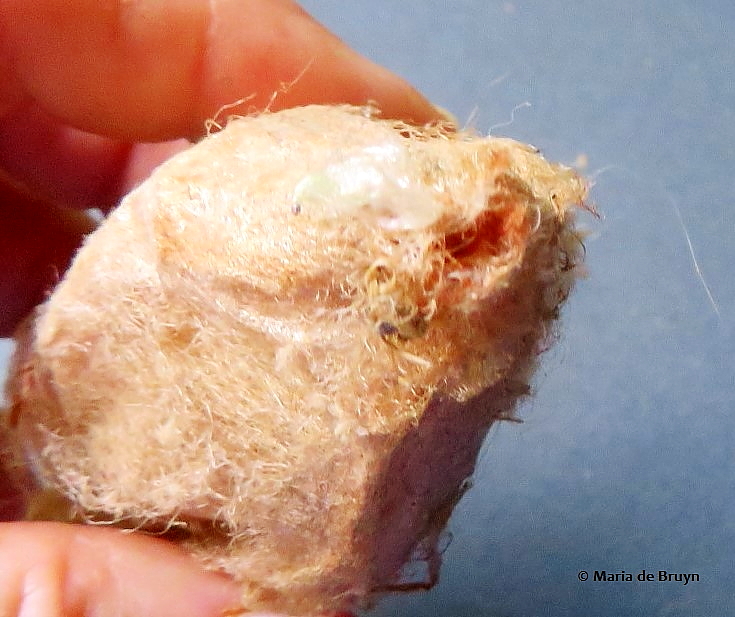 Periodically, I would check on it and it seemed to be ok. This was important as these moths are “univoltine” — they only have one generation of offspring per year. Out in nature, the caterpillars may fall victim to parasitic wasps and flies that lay their eggs on them. So it was fortunate that we were able to “rescue” this cocoon.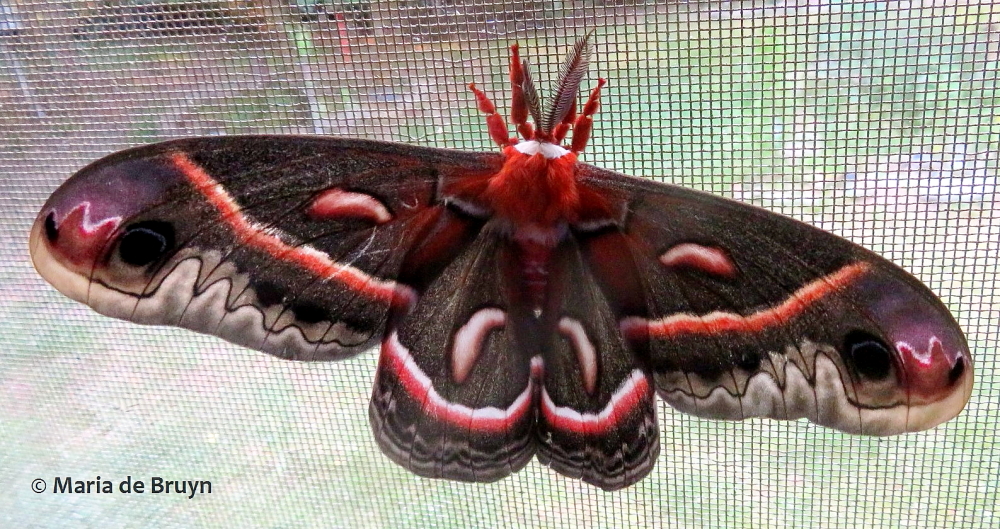



 My beautiful world