The birdy breeding cycle 2020 – 1: courtship and mating

Although we in the Northern hemisphere are already a little more than a month into summer, many species among our avian friends have not yet completed their breeding cycle. In my yard, many parents are still feeding begging (sometimes almost adult) children. Others are feeding young ones in the nest and some appear to be busy constructing new nests for a second or third brood. So, after a long hiatus in blogging, I decided to feature some of my bird friends, including the American goldfinch pair below (Spinus tristis) as they have worked on their new family lives in 2020.

American goldfinch P7130178 © Maria de Bruyn resSome of these photos go back to early spring. A series of misfortunes (including a crash of my laptop hard drive, a broken camera, loss of Internet) meant that I had a backlog of photos to process and then suddenly a large gap in photos taken. But I managed to recuperate some of the work and hope you enjoy the coming series of posts about the birds’ breeding and family life!
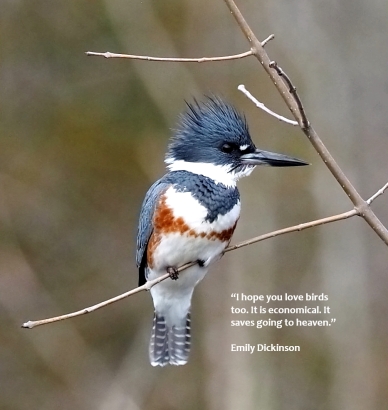
belted kingfisher

Breeding season is heralded by increasing bird song in the meadows, forests, fields and our yards. Males especially sing to attract mates and establish territories, but females treat us to songs and calls, too. This makes it easier to spot birds as the tree foliage gets thicker, especially if you have good hearing!
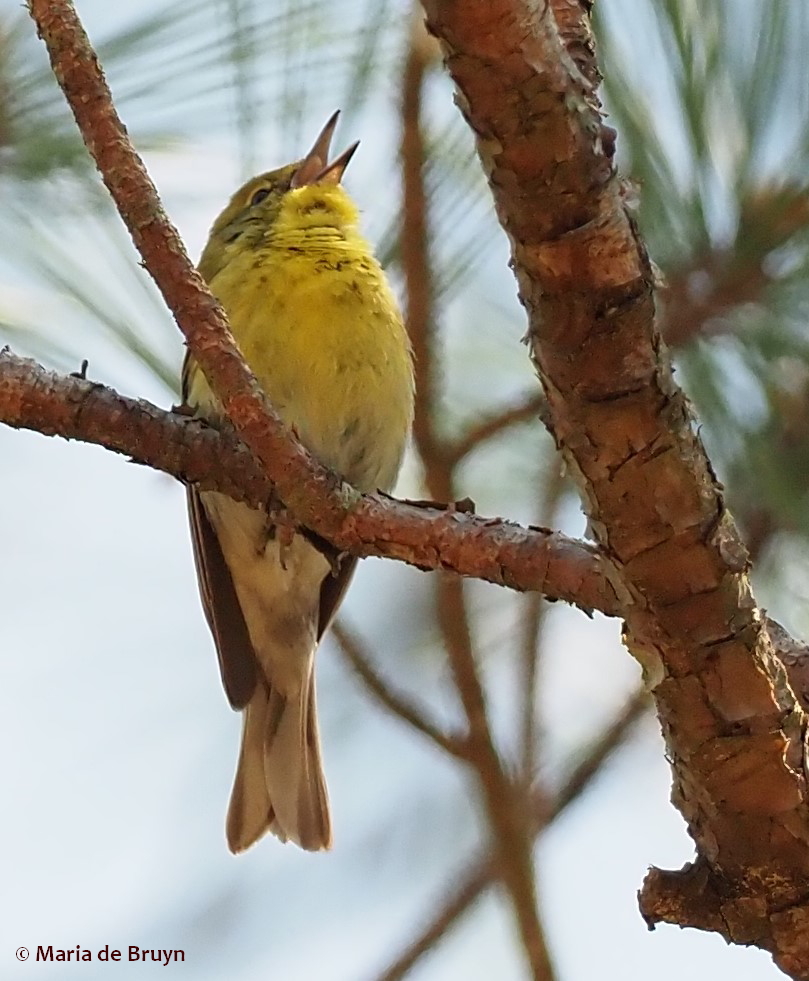
pine warbler P4175086© Maria de Bruyn                     white-eyed vireo P4123164 © Maria de Bruyn res

Pine warbler (Setophaga pinus)            White-eyed vireo (Vireo griseus)

Eastern meadowlark P4279816© Maria de Bruyn res            Orchard oriole P4279889© Maria de Bruyn res

Eastern meadowlark (Sturnella magna)     Orchard oriole (Icterus spurius)

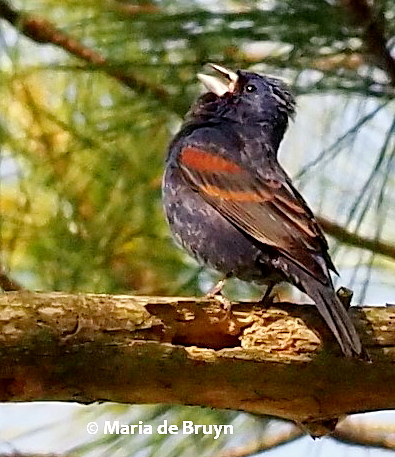
Carolina wren P3316544 © Maria de Bruyn res                 blue grosbeak P4291500© Maria de Bruyn res

Carolina wren (Thryothorus ludovicianus)      Blue grosbeak (Passerina caerulea)

summer tanager P4291520© Maria de Bruyn res

Summer tanager (Piranga rubra)

Indigo bunting P6308502© Maria de Bruyn

Indigo bunting (Passerina cyanea)

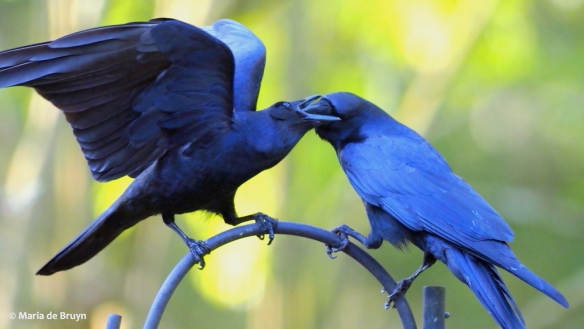
Courtship is usually a sweet behavior to watch in my view. The male Northern cardinals (Cardinalis cardinalis) are especially devoted suitors, seeking out nice morsels to present to their intended mates, while among the American crows (Corvus brachyrhynchos), it’s the females who loudly call to their mates for some tasty bites.

Northern cardinal P4164873© Maria de Bruyn res

American crow P4080661 © Maria de Bruyn res

A fact that perhaps many bird lovers do not know is that few male birds have a penis. Like the female birds, most species’ males have a cloaca, a cavity externally located just under the bird’s tail and internally at the end of the digestive tract. Feces, urine, sperm and ova are all deposited in the cloaca. Birds who reproduce with this organ briefly rub their cloacae together (an activity called the “cloacal kiss”) whereby sperm from the male bird’s testes are transferred into the female’s cavity to unite with her eggs. During breeding season, the cloaca is slightly swollen and protrudes a bit from the bird’s body, facilitating the transfer. In the photo of this Carolina wren, you can see a slightly darker area under the tail indicating where the cloaca is found.

Carolina wren P7059955 © Maria de Bruyn res

red-headed woodpecker P4217162© Maria de Bruyn res

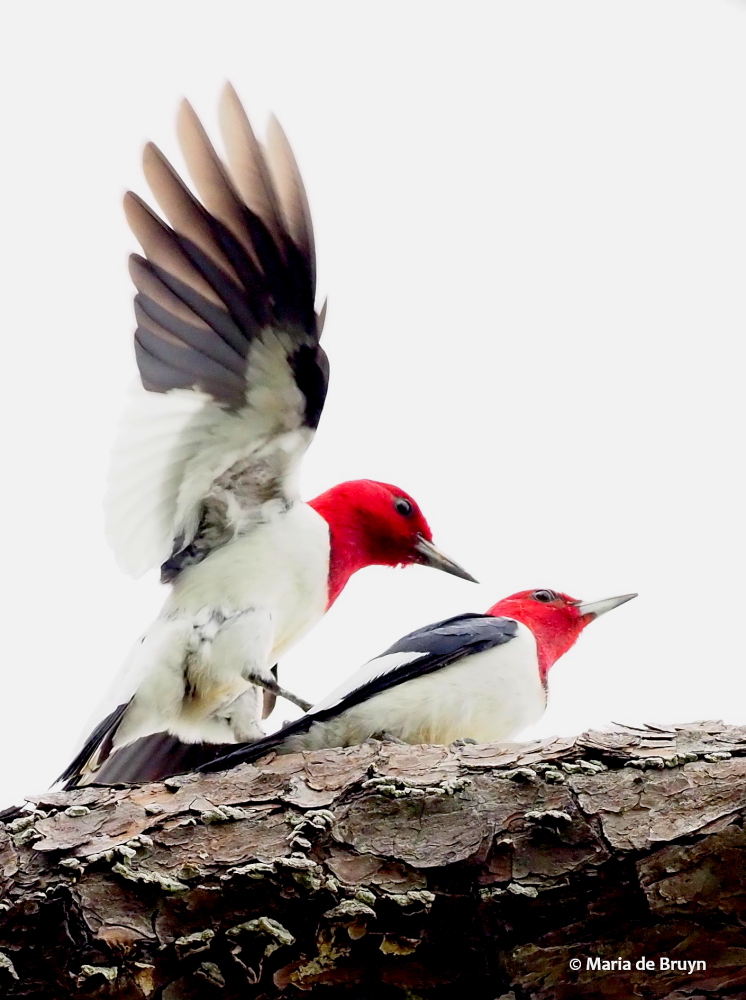
When ready for mating, the red-headed woodpeckers (Melanerpes erythrocephalus) seem to focus mainly on chasing away rivals and then snatching a quick mating session. The female woodpecker then takes a break from the chase to rest and have a bite to eat.

Some cliff swallow males (Petrochelidon pyrrhonota) seem to take advantage of females who are preoccupied with gathering mud for their nests for a quick tryst.

cliff swallows 2G0A3283© Maria de Bruyn res

The brown-headed cowbirds (Molothrus ater) seem to take their time for mating. This pair was occupied for at least 5-10 minutes in preparing for the upcoming production of eggs. At times, it seemed like the male was giving the female instructions on what to do once “the deed” was done!

brown-headed cowbird P5097676 © Maria de Bruyn res   brown-headed cowbird P5097677 © Maria de Bruyn res

Many birders do not like the cowbirds because they are parasitic nesters, i.e., they lay an egg in another bird’s nest so that the other bird will raise the young. Since the cowbird baby usually hatches before the other eggs, they either monopolize the food that the foster parents bring or they may even destroy the eggs laid by their foster mother.

brown-headed cowbird P5097682 © Maria de Bruyn res      brown-headed cowbird P5097686© Maria de Bruyn res

It’s been posited that the cowbirds evolved to use this strategy because they followed the bison in migration and therefore couldn’t stay in one place to raise their young. Others believe, however, that the birds developed the practice because dispersing their eggs over several nests gave their young a better chance of reaching adulthood.
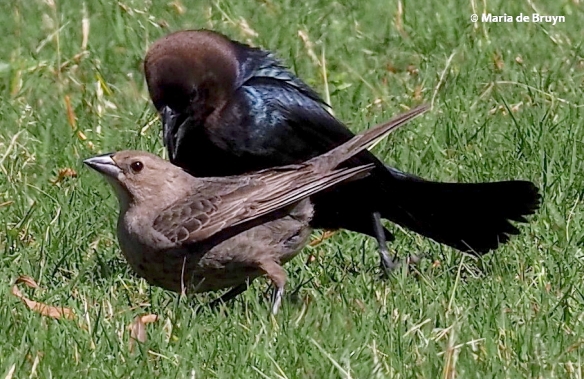
brown-headed cowbird P5097689© Maria de Bruyn res

chipping sparrow P6256620© Maria de Bruyn sgd resThe quickest mating scenario I’ve witnessed came from a pair of sweet little chipping sparrows (Spizella passerina). I’d seen the two fluttering together at the feeders and had noted one sparrow chasing another away – which I now think was the victorious suitor driving away a rival. Then one July afternoon, the two flew to a dying cedar and sat close to one another on a branch. Suddenly, Mr. Victory mounted his mate but for what only seemed a few seconds – really very quick work indeed! She sat there with her rear end elevated for a bit and then the two went back to feeding – and soon after I saw them collecting nesting materials.

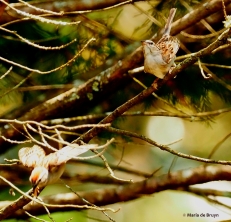
chipping sparrow P6256622© Maria de Bruyn res    chipping sparrow P6256623© Maria de Bruyn res

The birds in which the males do have a penis include some duck and swan species, ostriches, cassowaries, kiwi and geese. They differ from other birds in that development of the penis is NOT stopped in the male bird embryos during development (the case in cloacal birds).

The mallard males (Anas platyrhynchos), like some other ducks, unfortunately do not treat their partners well. They may mount the female very roughly. During a mating, she may be dunked underwater repeatedly and at length; occasionally, this results in her drowning. This behavior has been the subject of various studies and some newspaper articles with sensationalistic headlines (e.g., “The horrible thing you never knew about ducks)”.

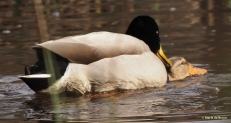
Mallard duck P1232837 © Maria de Bruyn

Mallard duck P1232839 © Maria de Bruyn     Mallard duck P1232840© Maria de Bruyn

Once the actual mating is over, the birds devote most of their energy toward building a nest. While female ruby-throated hummingbirds (Archilochus colubris) must construct her nest and tend her babies alone, many other birds cooperate in the venture, like the Eastern bluebirds. Their efforts are featured in the next blog. (And if you’d like to see a previous post on courtship, it is here.)

ruby-throated hummingbird 2G0A4084© Maria de Bruyn res

Finding joy in troubled times

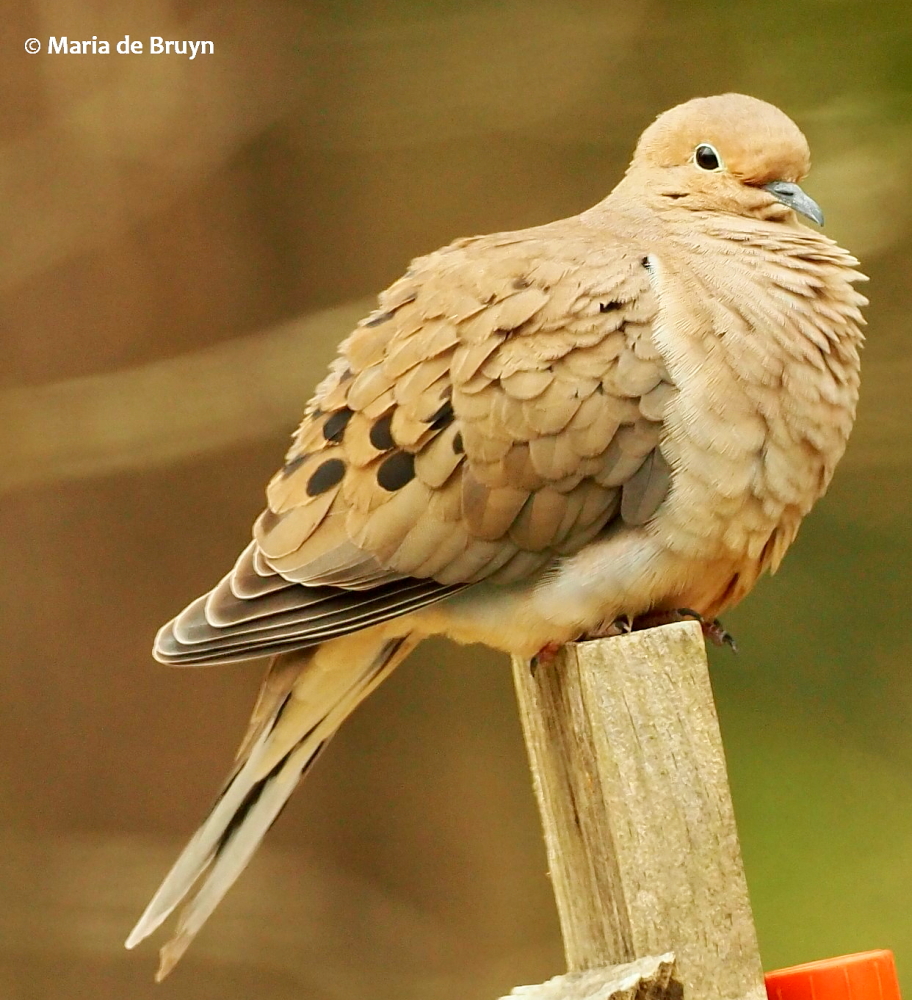
While working on photos for other blogs, it occurred to me that it might be more productive right now to focus on what we, everywhere, are facing with the current pandemic. It’s my hope that as many of us as possible will survive, thrive and overcome the distress we are facing. As we hunker down, like this beautiful mourning dove (Zenaida macroura), we can intensify our nature observations – or begin paying more attention to the wildlife around us when we do go for walks.


Practicing social quarantine and distancing is essential –- even if we live somewhere where authorities are not yet requiring this. Keeping away physically from those outside our households can protect them as well as ourselves. In most places, social distancing rules still allow us to get outside for walks in the fresh air and nature. I have never seen so many people, including families with children, in the local nature reserves and that is a welcome sight. Hopefully, a side effect of this will be much more social support and advocacy for environmental conservation and expansion of natural areas, parks and reserves now and in the future -– that would be an unexpected positive outcome to the measures we are taking to get through these troubled times! (Yellow trout lily above, Erythronium americanum).

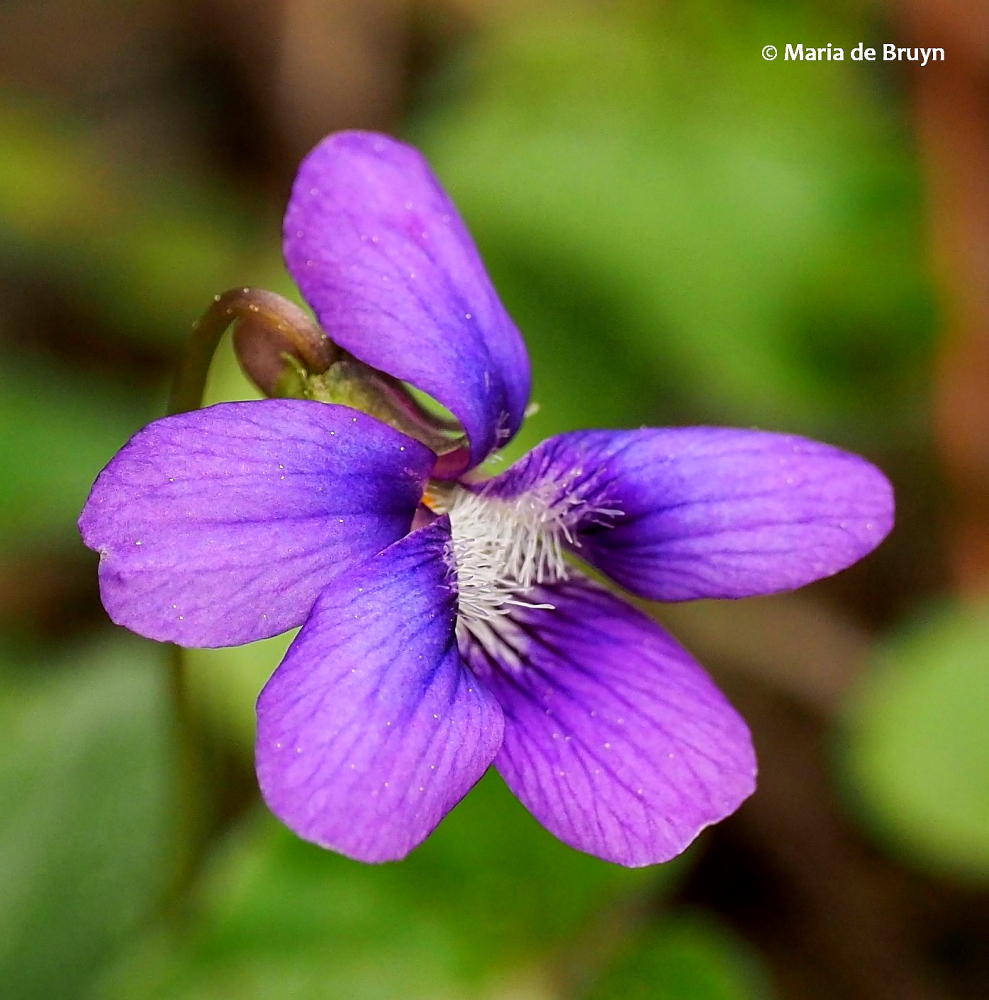
For people who haven’t had the pleasure of getting out much on walks, I wanted to share something about how to possibly enjoy nature even more. From my perspective, a key element is learning to practice patience and to stop, wait, watch and explore frequently. Here are some examples of what you might find. (Common Blue Violet, Viola sororia)

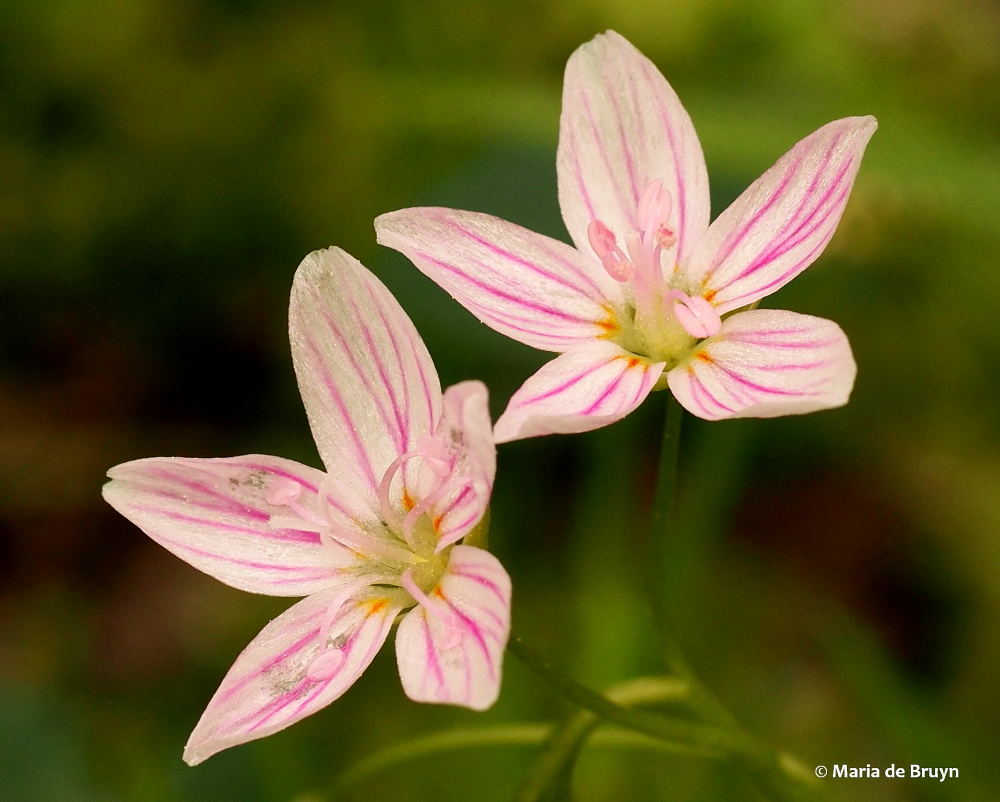
Looking down at the ground can be a fruitful exercise, especially in spring. Fresh new blooms are emerging and can delight us with their beauty (like the Eastern spring beauties, Claytonia virginica).

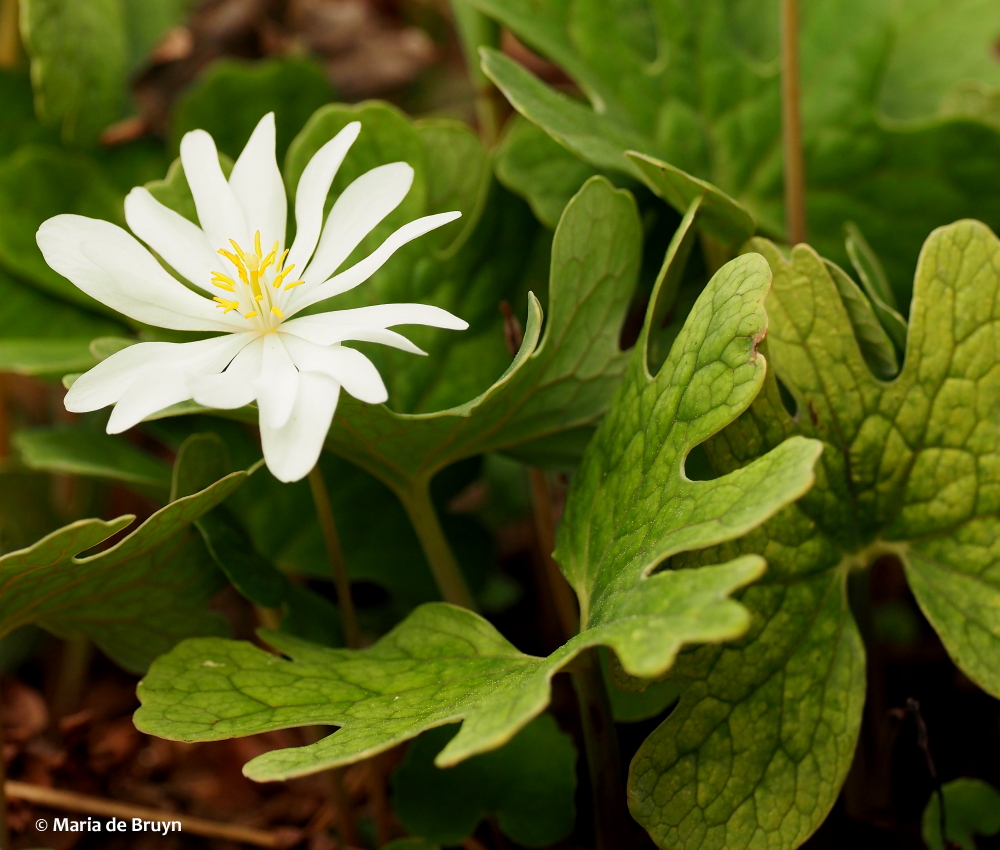
Bloodroot (Sanguinaria canadensis) – the leaves look like jigsaw puzzle pieces

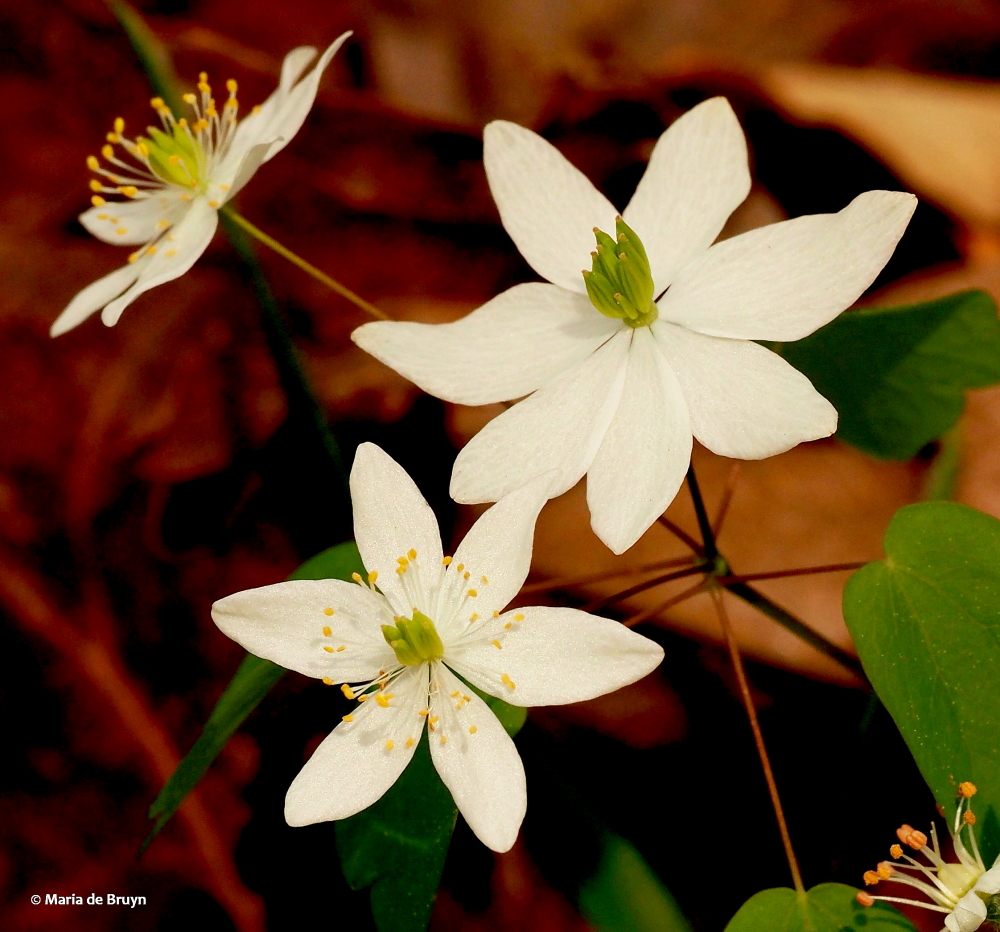
Rue anemone (Thalictrum thalictroides)                  Tiny bluet (Houstonia pusilla)

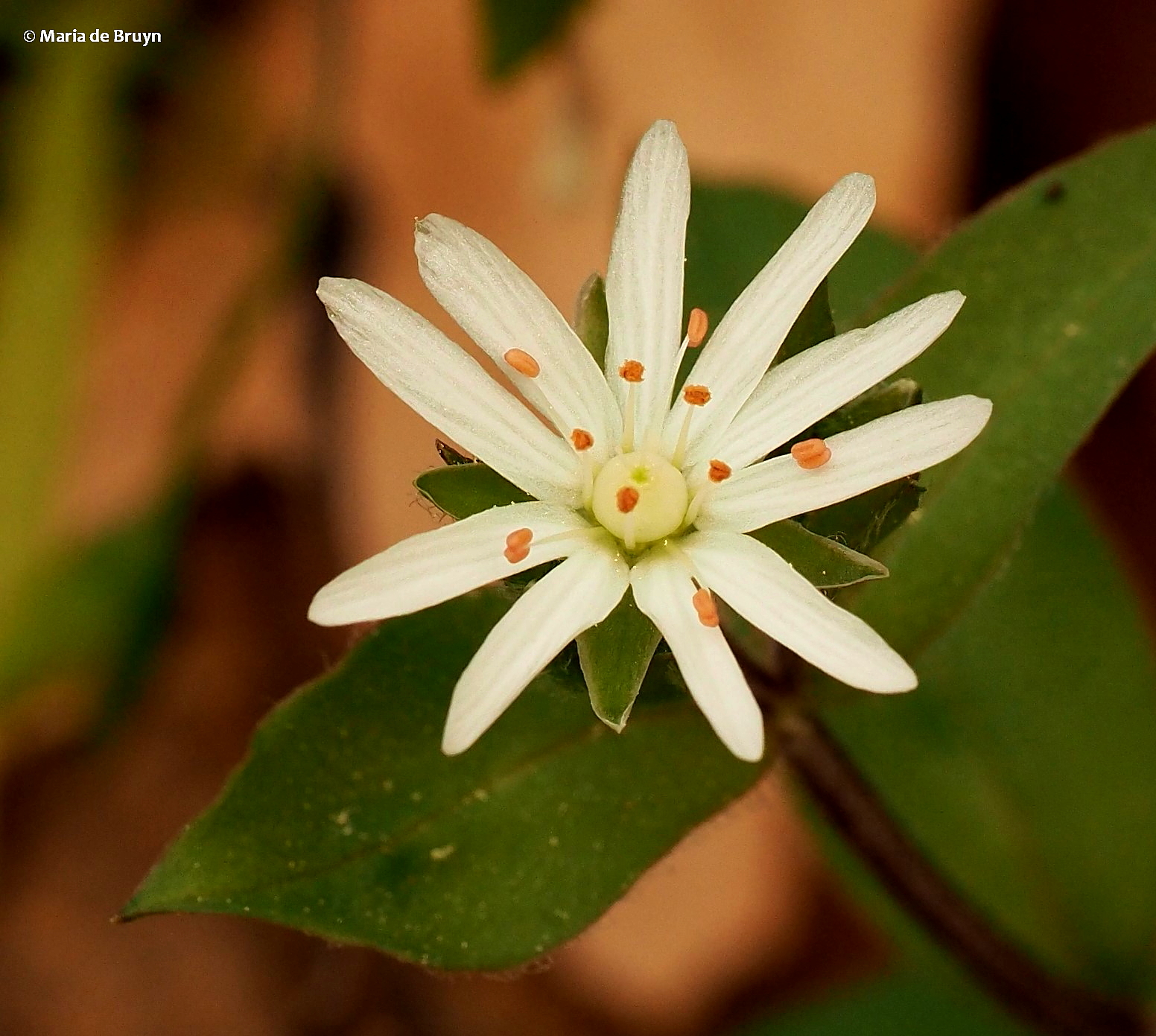
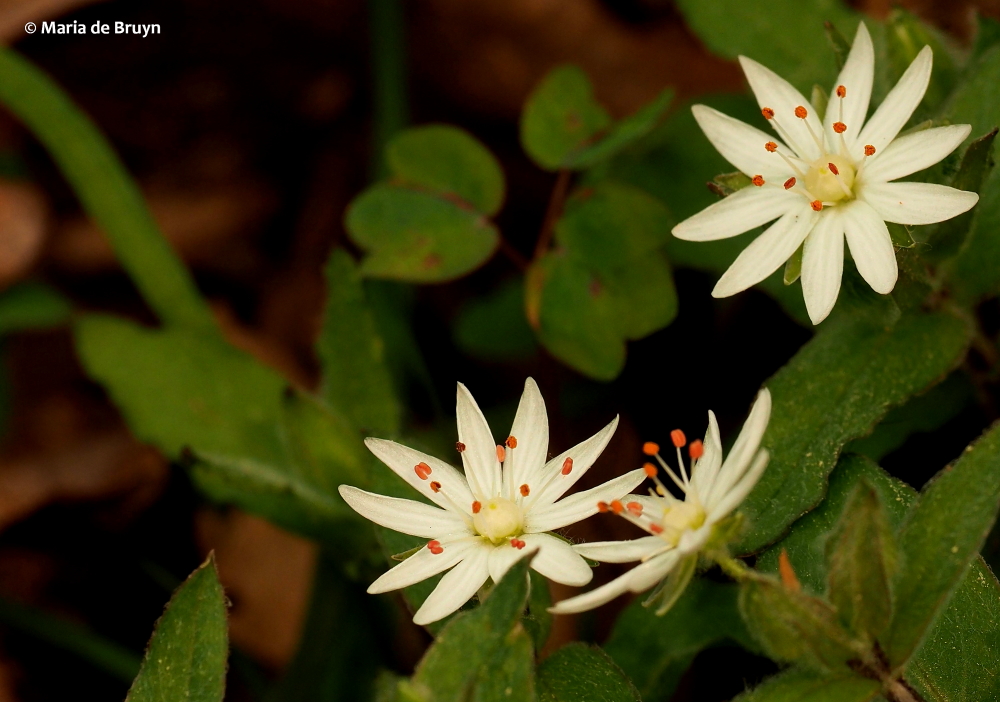
Common chickweed (Stellaria media)


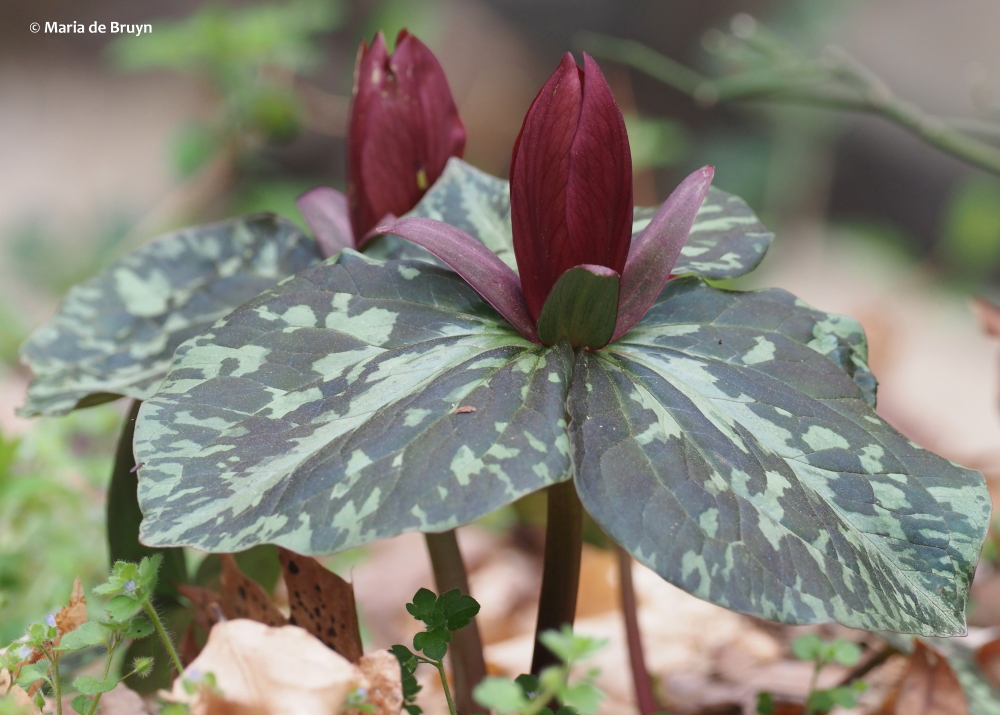
Little sweet Betsy (Trillium cuneatum)


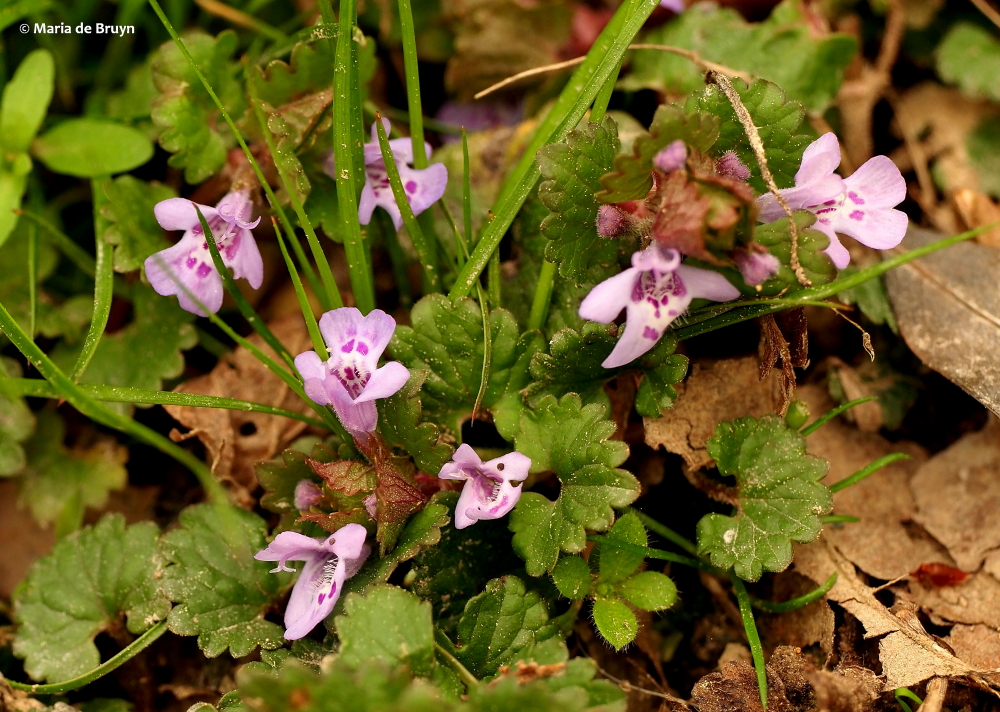
Ground ivy – also known as creeping Charlie (Glechoma hederacea)

Henbit (Lamium amplexicaule) and purple deadnettle (Lamium purpureum)

If you are out with kids, you can pay more attention to the plants –- take photos of them (most reserves and parks don’t want people to dig up and pick flowers) and then look them up at home and learn about them. Or make a game out of fallen leaves –- find three with very different shapes and identify the trees.

If you look closely at the flowers, you might glimpse small bugs flitting around the blooms. If you have a camera or phone camera, try to get a photo. When you enlarge it, you might find that you have actually seen a beautiful fly, bee or other insect whose shape and colors you couldn’t see with the naked eye. If you want to identify it, post the photo to the site BugGuide.net, where entomologists can perhaps tell you what species you saw.

Parasitic fly (Goninii, above)


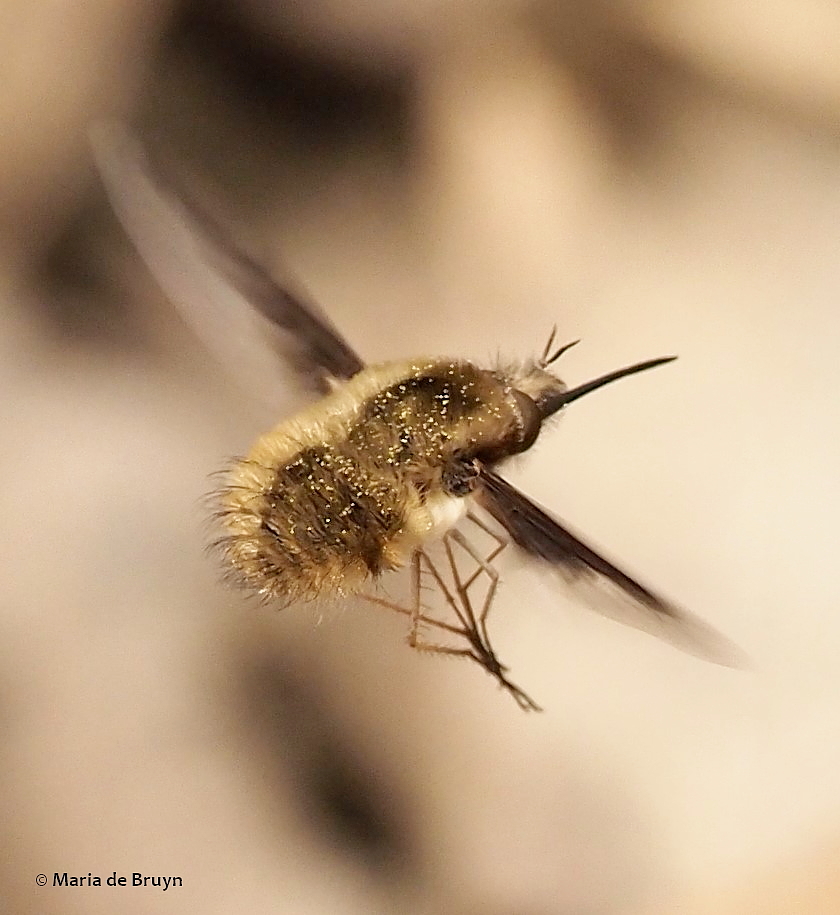
Greater bee fly (Bombylius major)

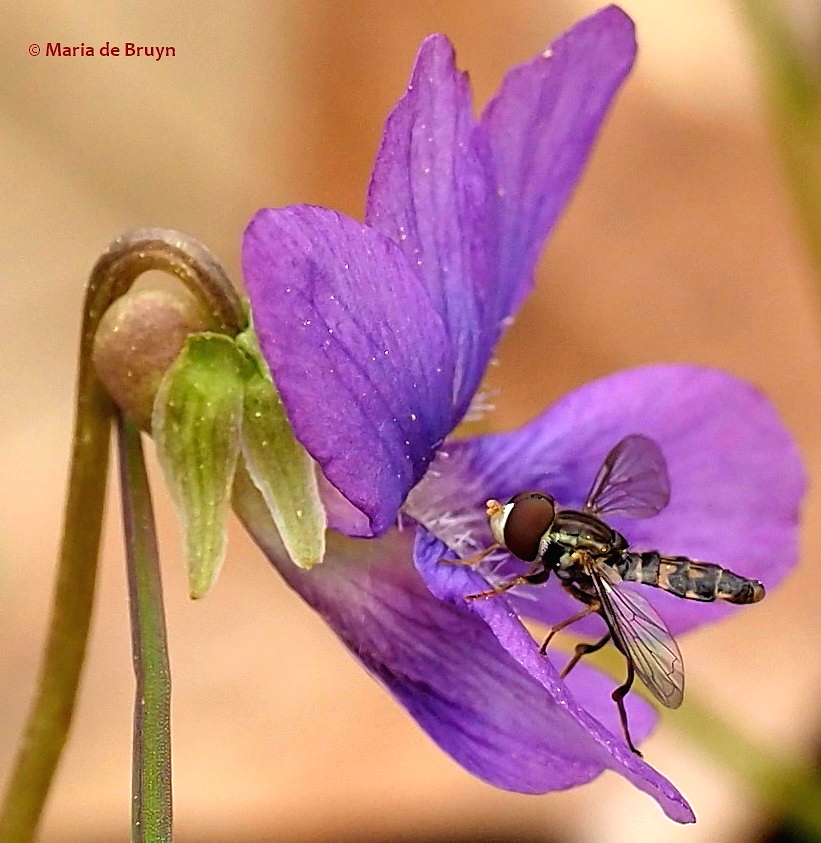
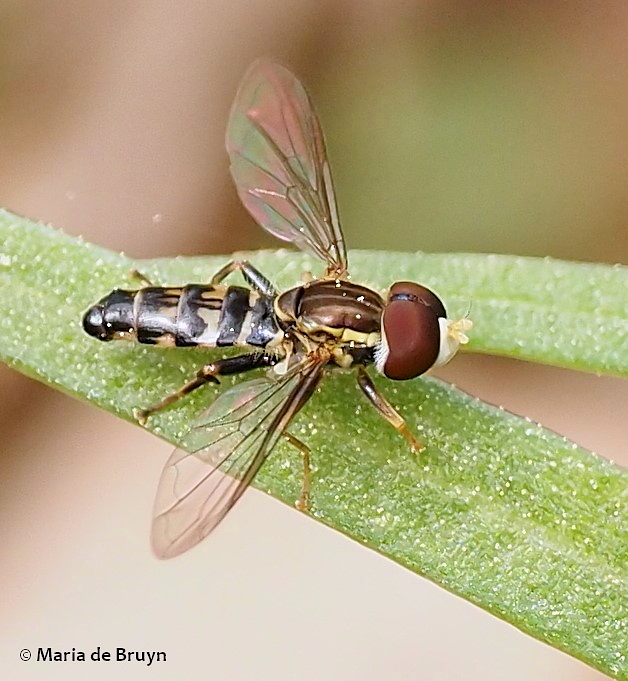
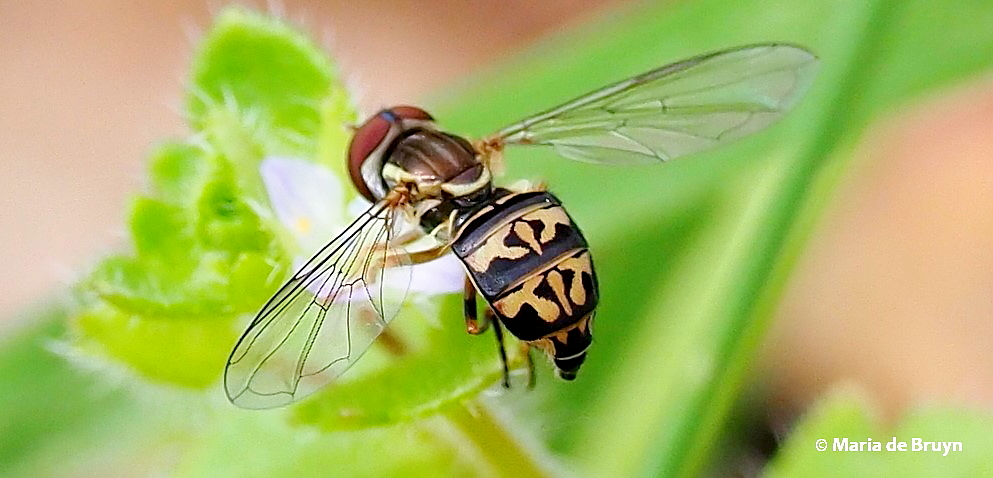
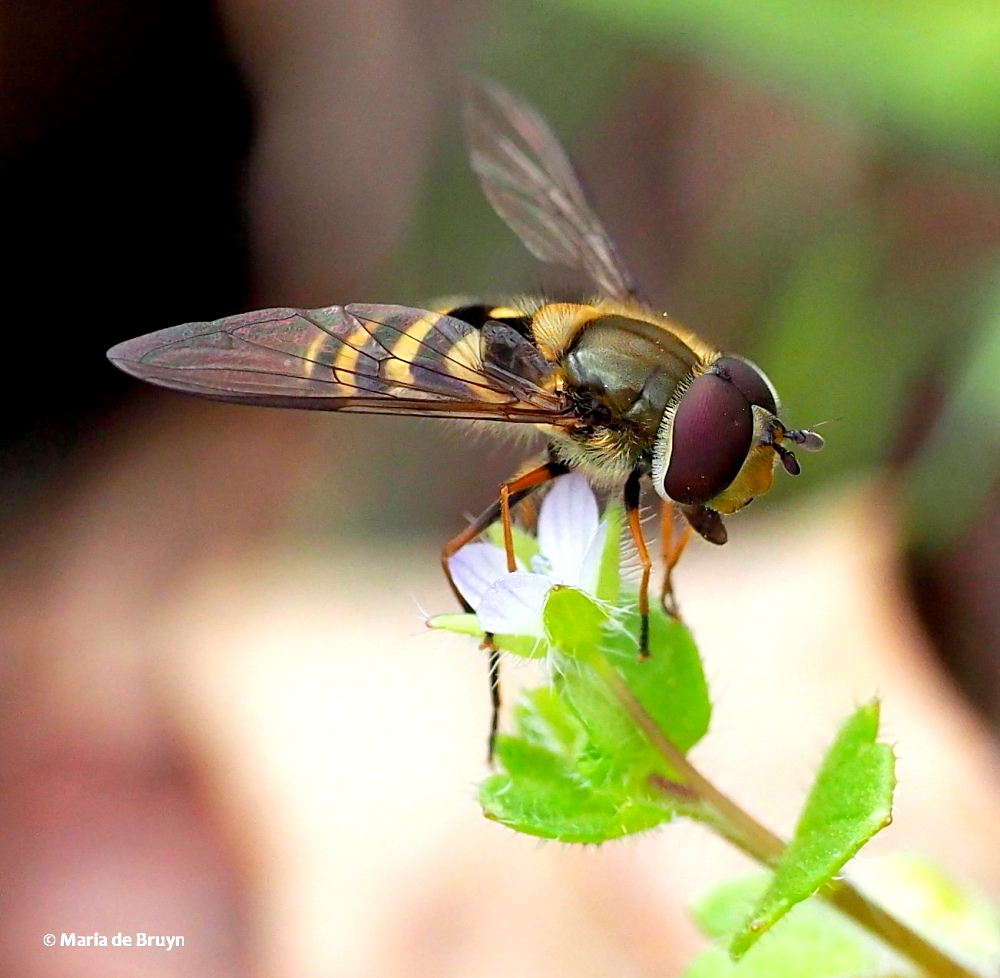
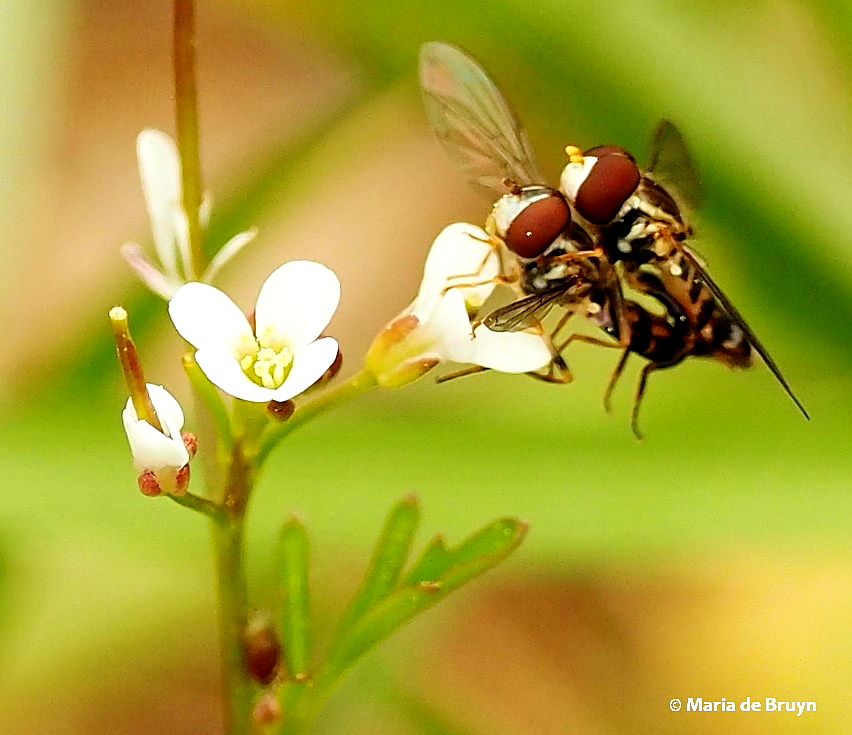
Various species of syrphid flies are shown below; they are often mistaken for small bees. The first photos are all of the species Toxomerus geminatus.


Male                                                               Female

And below the male and female together.


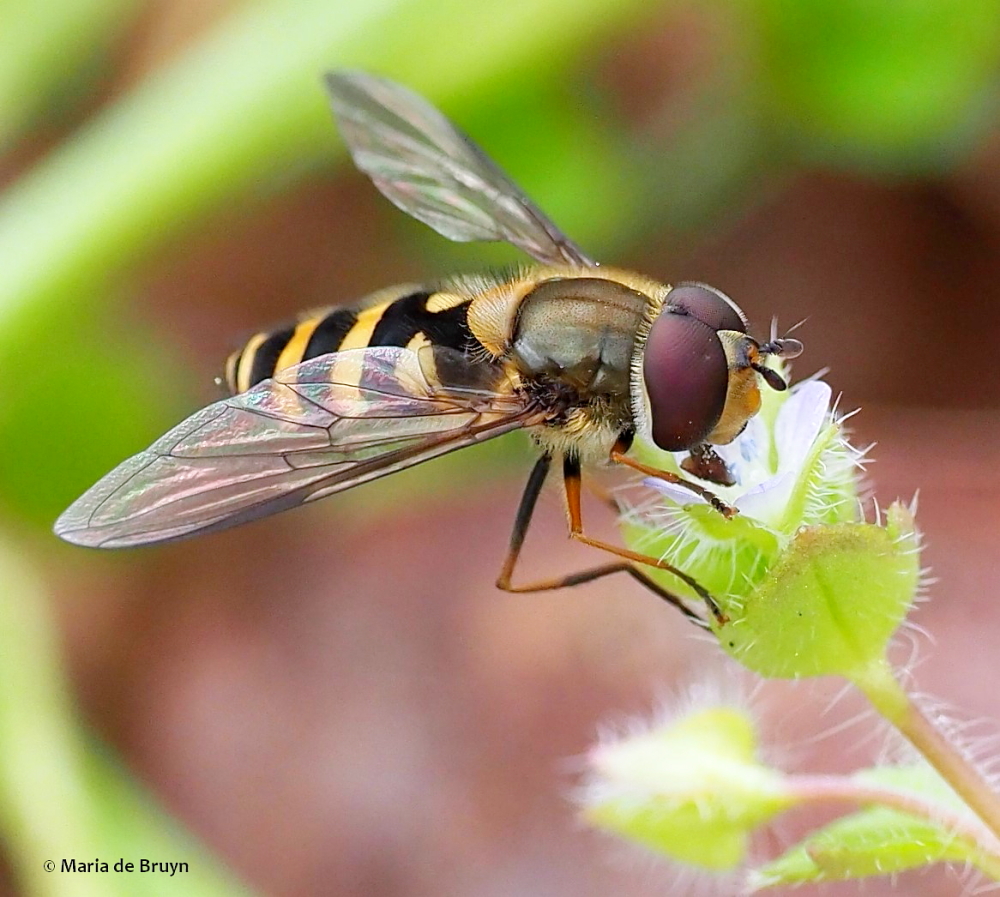
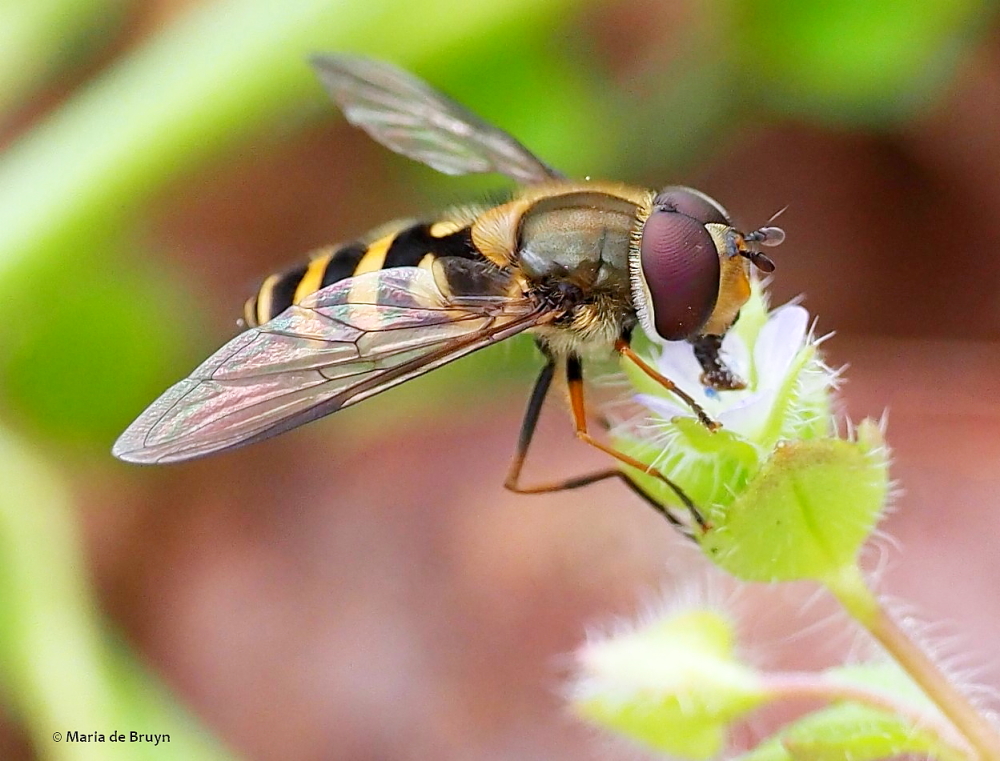
A species of syrphid fly with a striped abdomen (Syrphus torvus) is characterized by “hairy” eyes (more so in males, like this one). Click to enlarge and see the hairs.

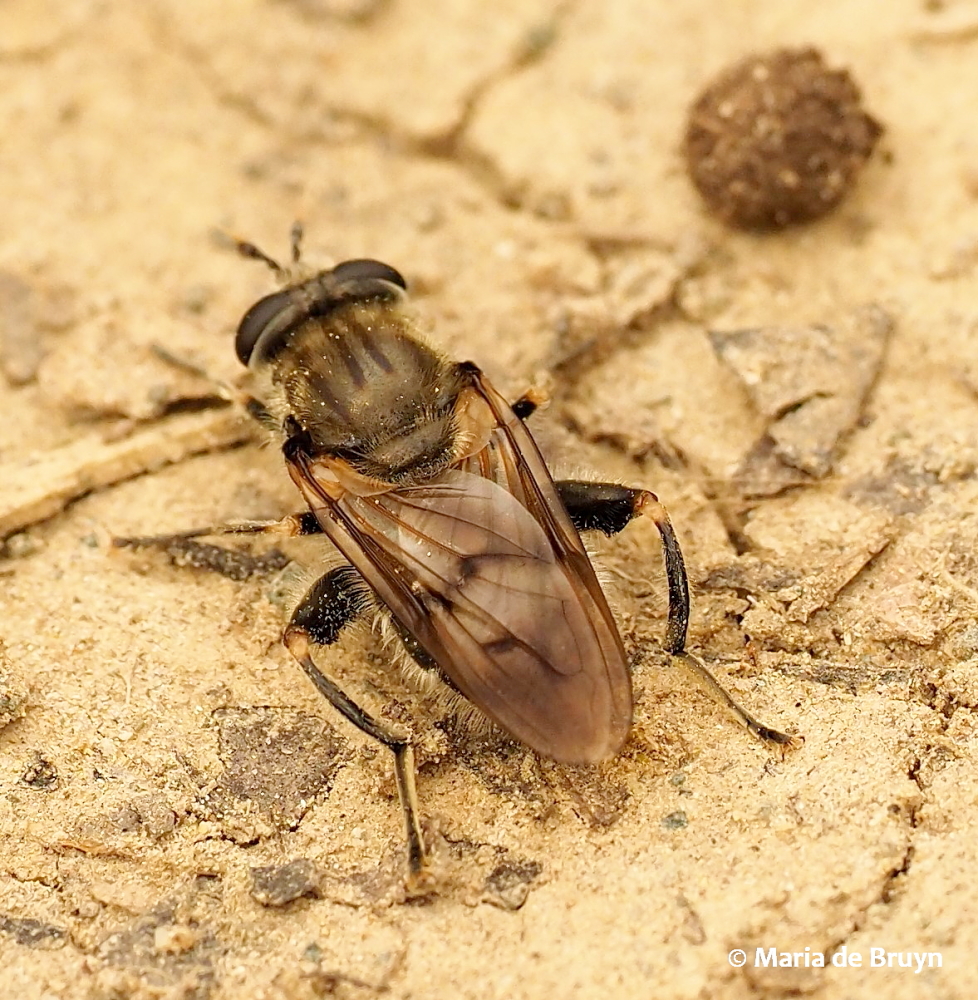
A larger species, Brachypalpus oarus, is not so colorful.

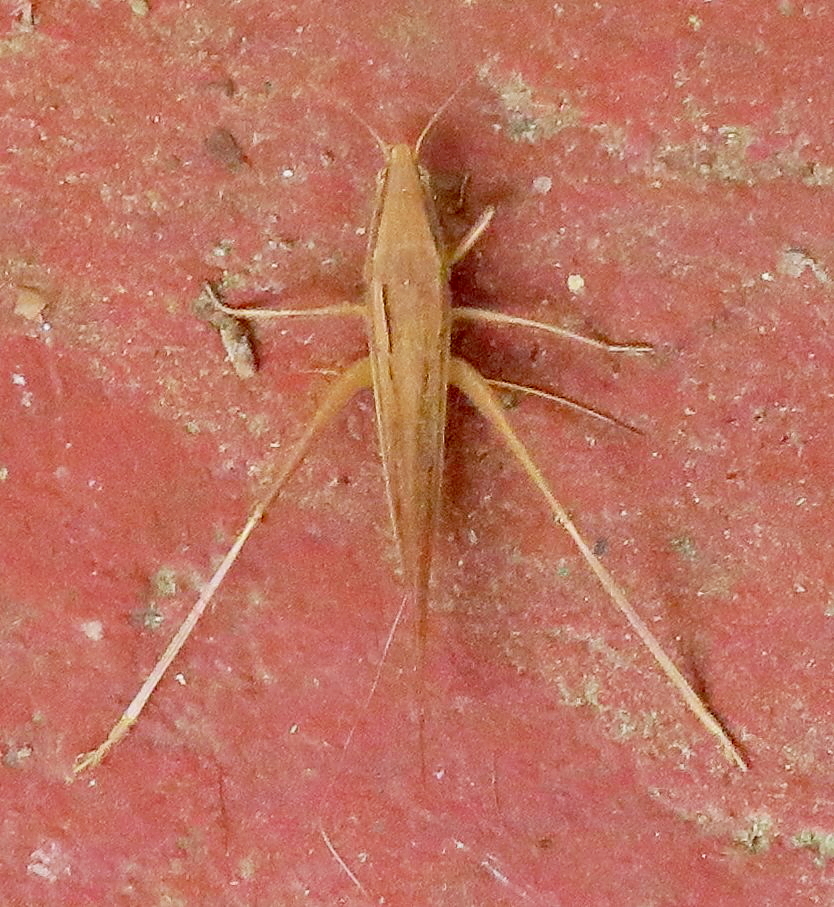
Even if you can’t get outside much, you might see an interesting insect around your house. For example, this male brown-tipped conehead katydid (Neoconocephalus triops) appeared on my porch when I was sweeping.

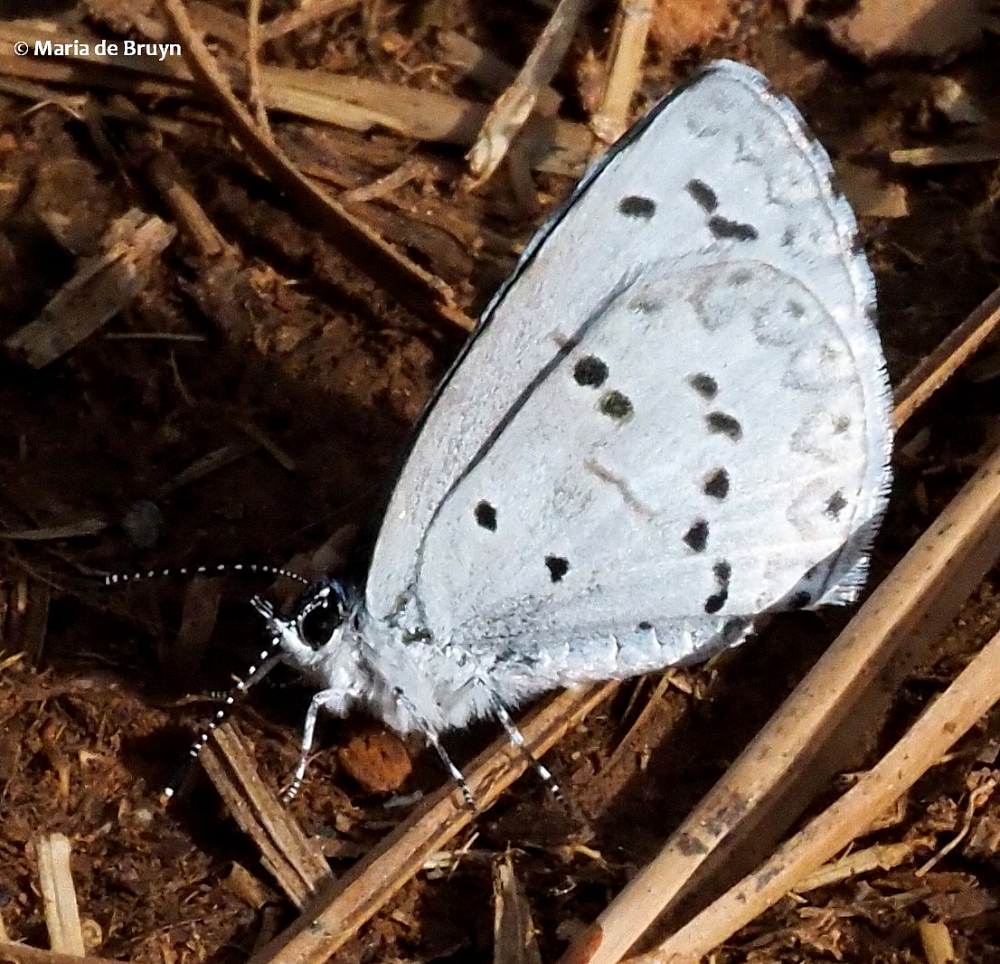
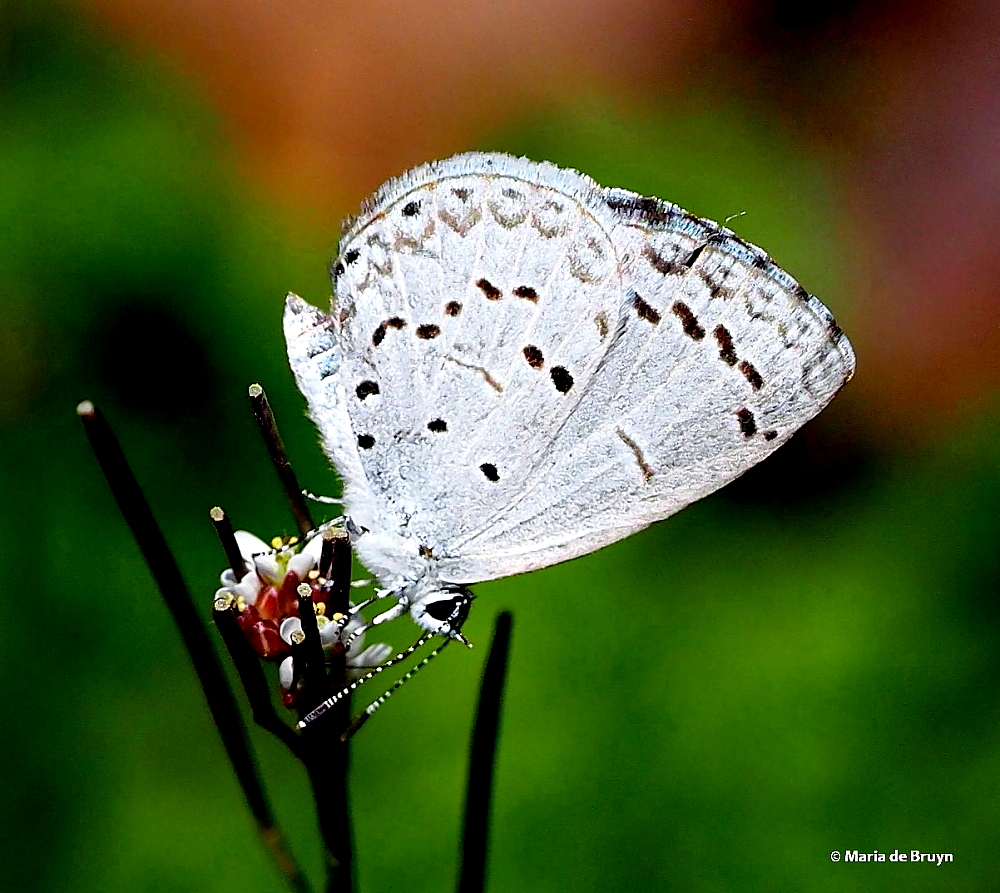
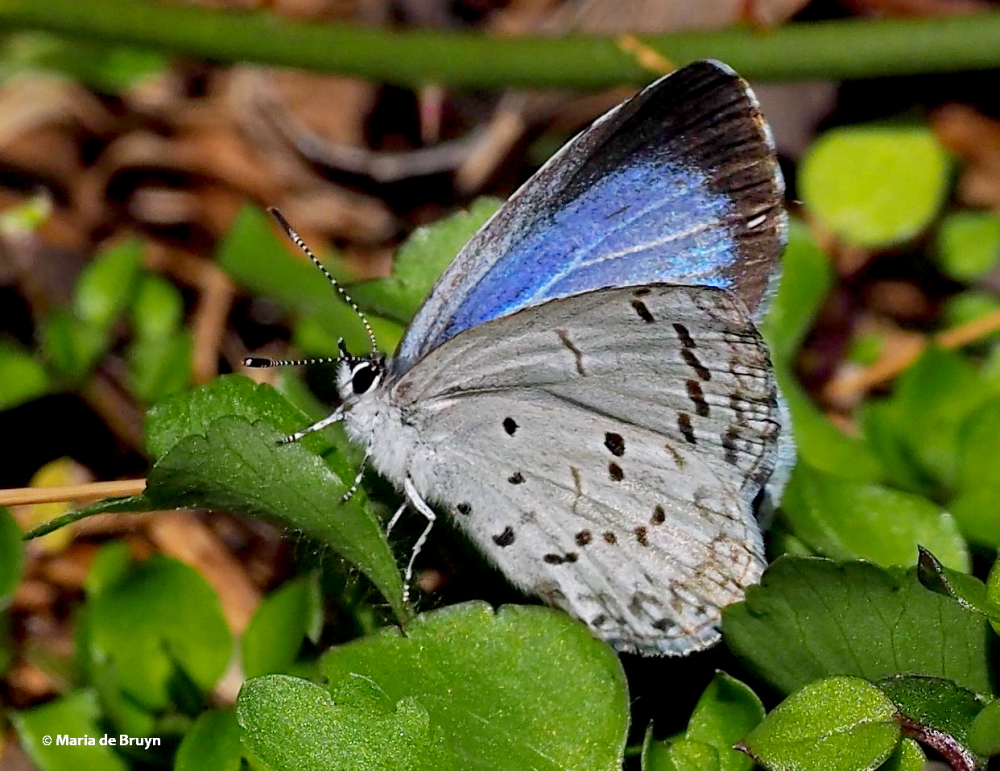
Butterflies are really starting to fly around now. The bluish spring azures (Celastrina ladon) are abundant right now.

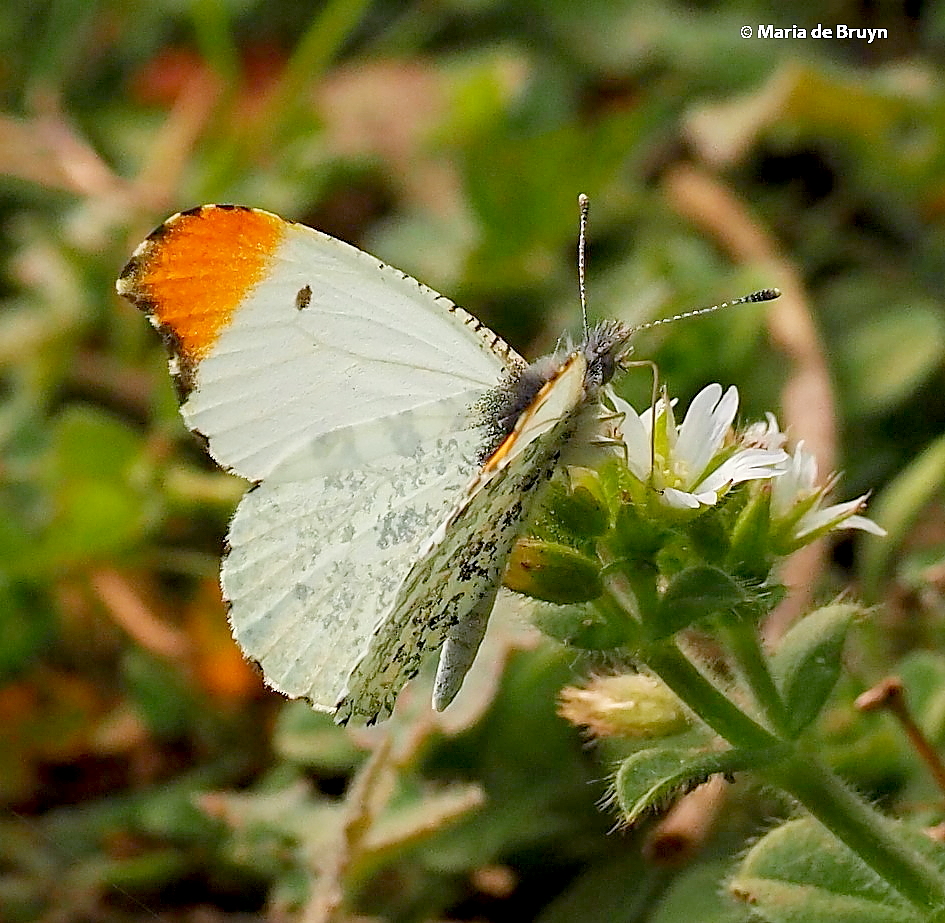
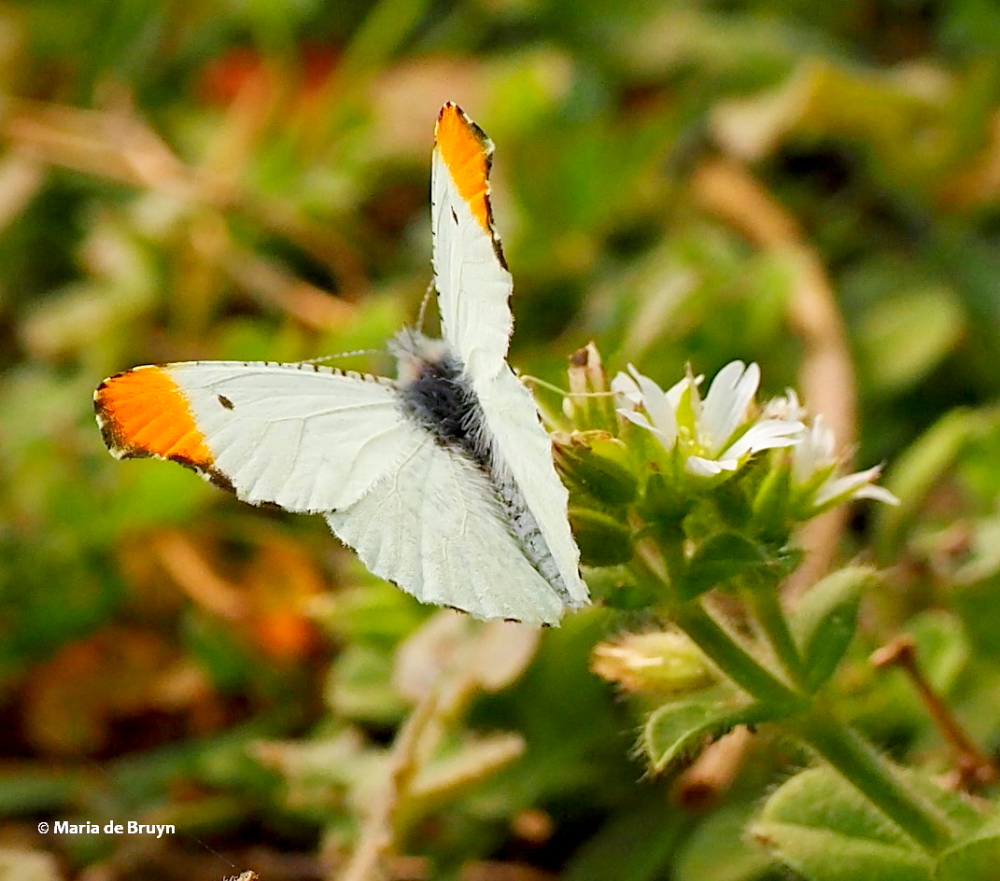
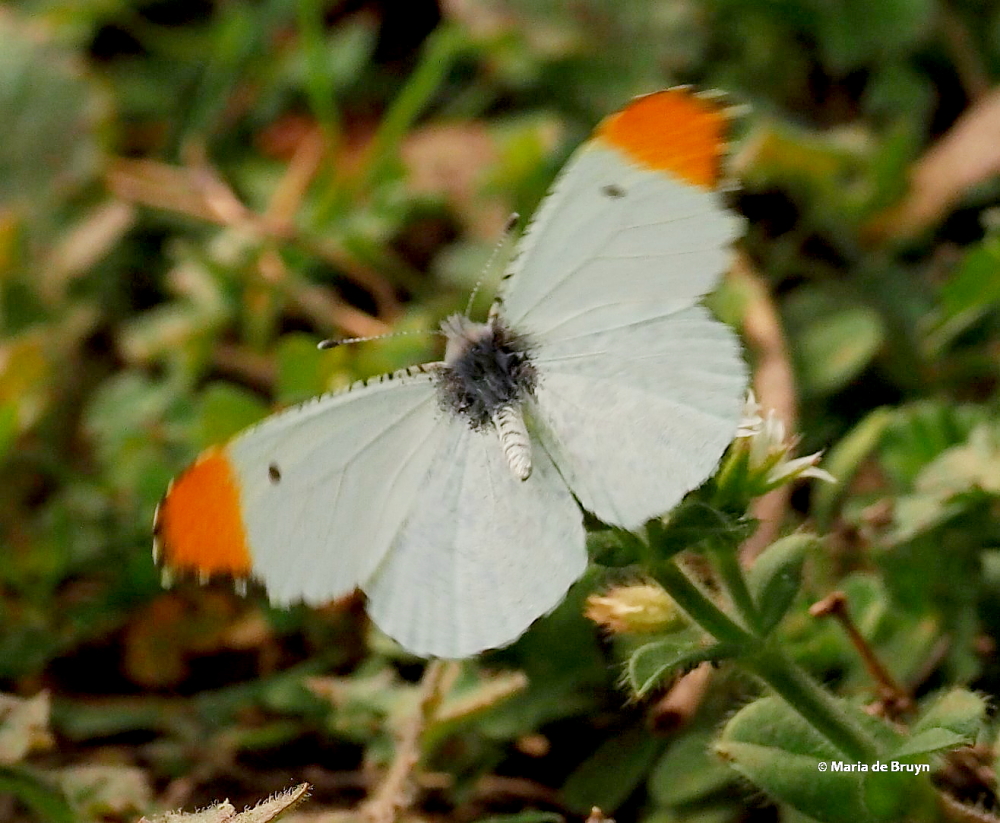
I’ve been seeing falcate orangetips (Anthocharis midea), too.

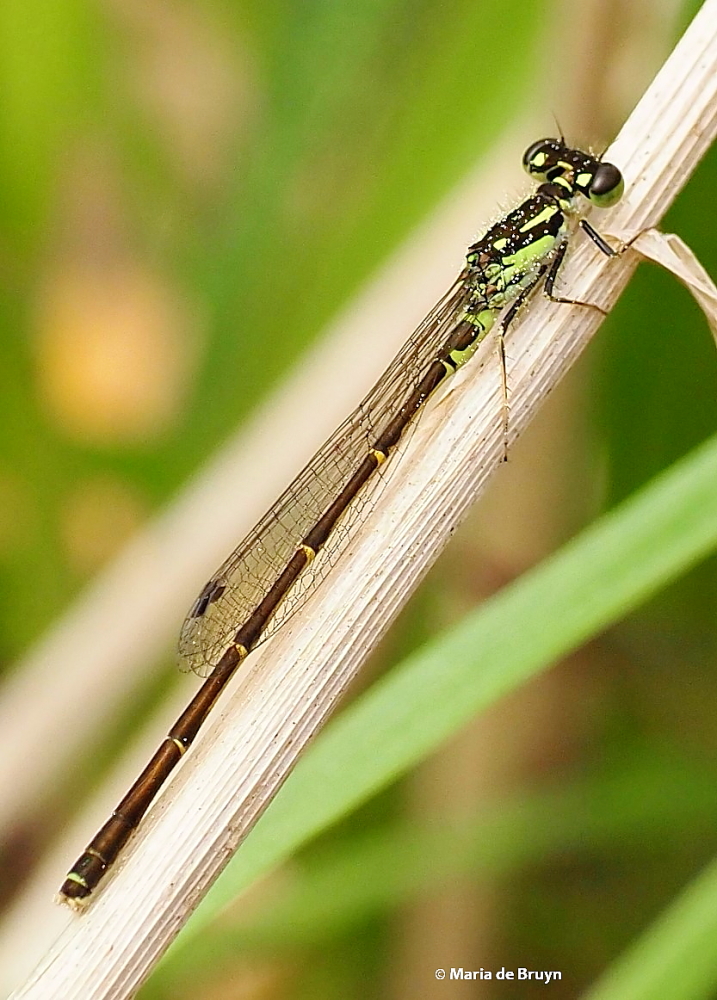
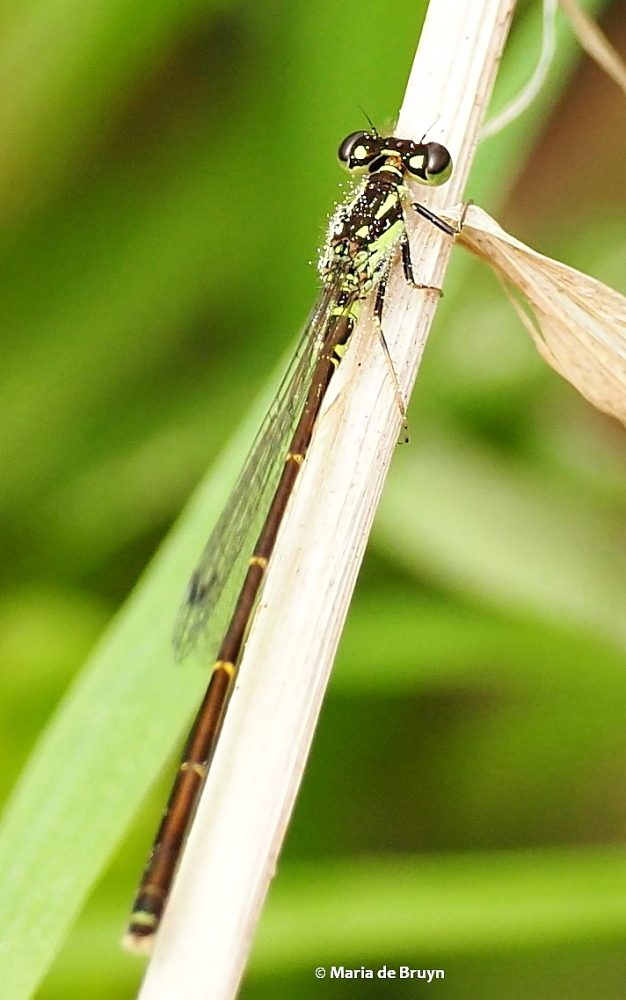
Damselflies are also starting to appear; we tend to see them earlier than the dragonflies, who spread their wings horizontally when they alight on vegetation. This fragile forktail damselfly (Ischnura posita) was getting covered in yellow pine pollen –- much of North Carolina’s Piedmont region is bedecked in yellow dust during the spring weeks when the pine trees emit clouds of pollen.


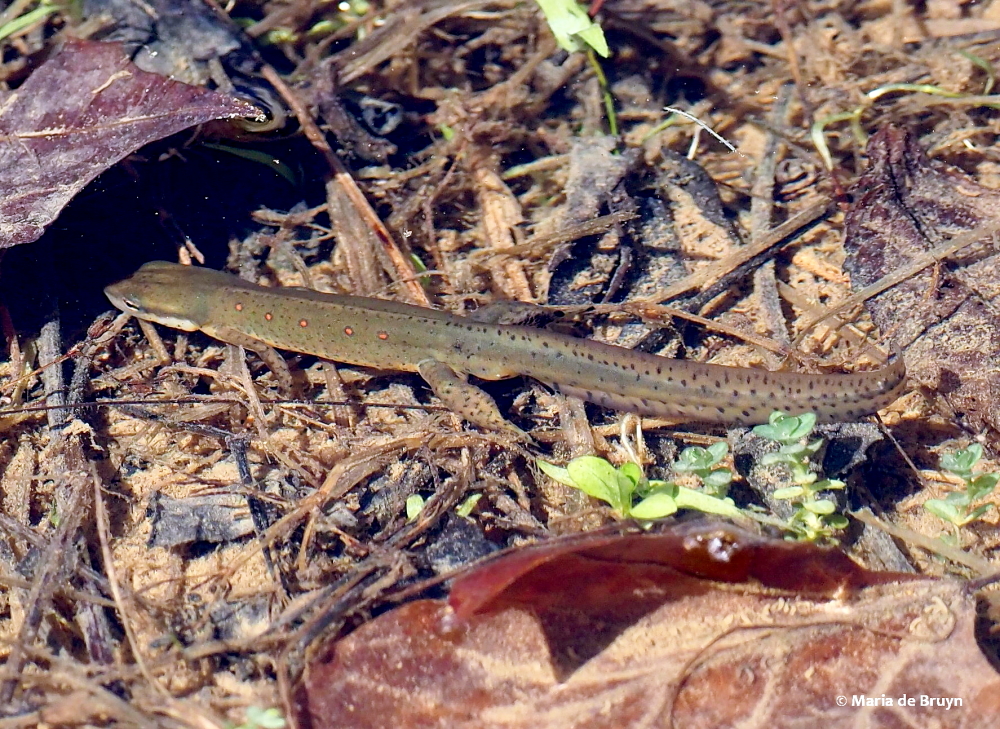
Looking in the water can be productive, too. One day, I spent some time scanning the edge of a pond where the water was shallow enough to see the bottom. As I watched little fish darting to and fro, I suddenly noticed something larger moving about quickly. I looked more intently and discovered Eastern newts (also called red-spotted newts, Notophthalmus viridescens) down there – the first time I had seen these amphibians!!

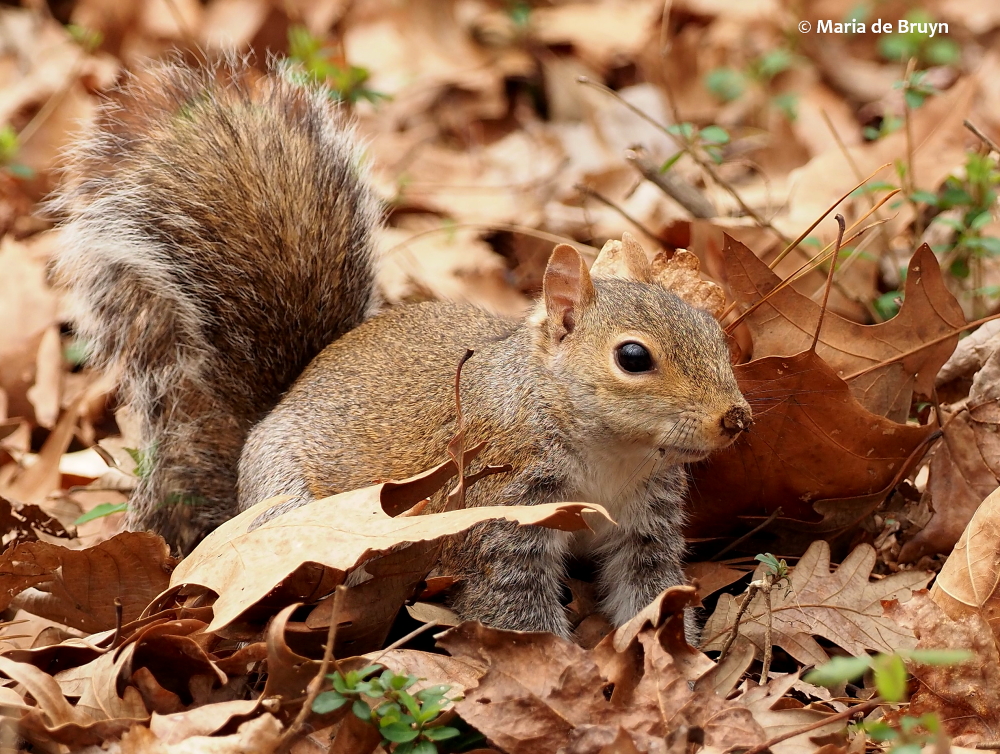
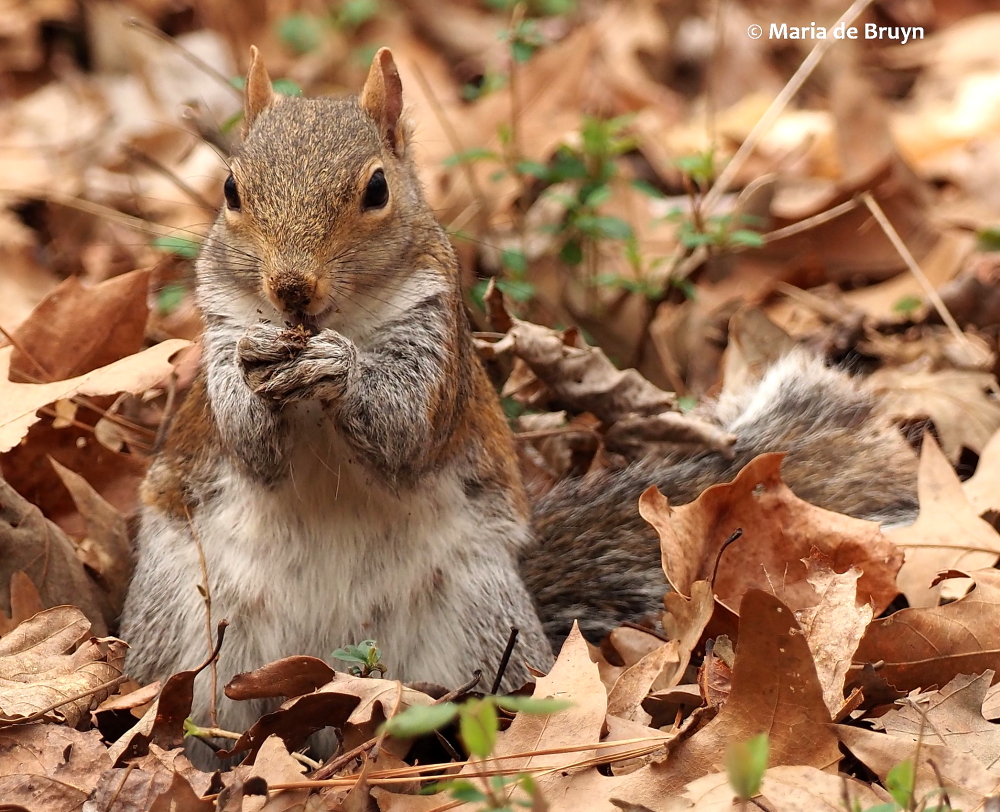
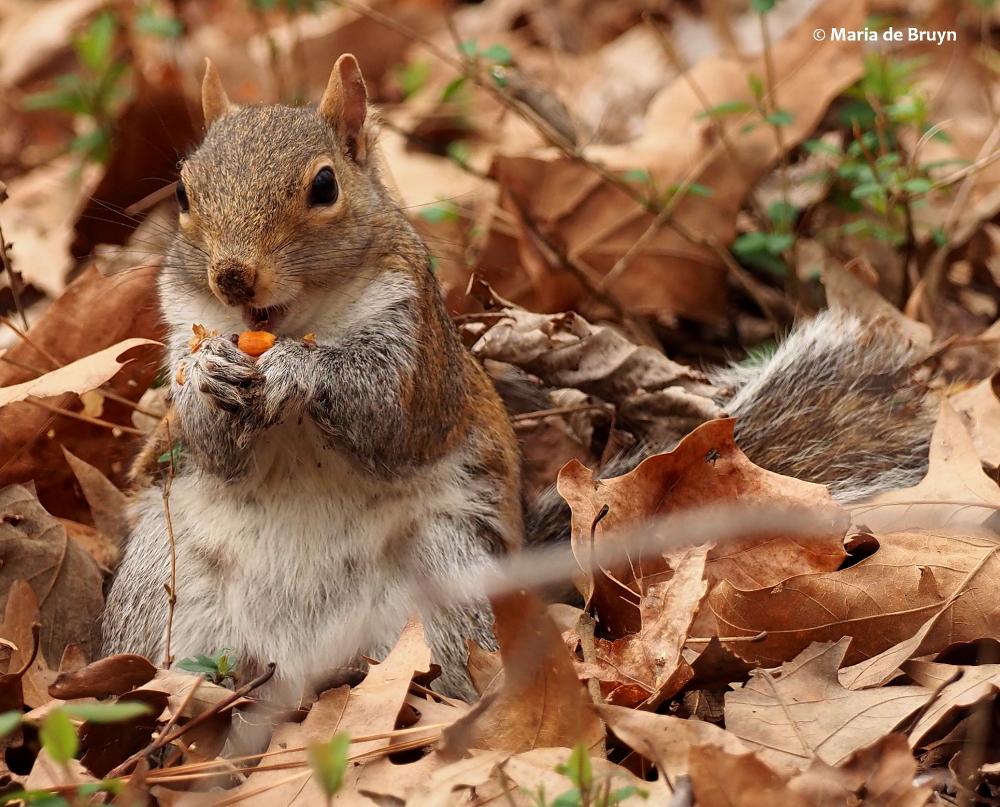
When you see an Eastern gray squirrel (Sciurus carolinensis) scurrying across the leaves in the forest or even alongside a road, stop and watch a bit. I did the other day and saw the mammal locate a winter stash and dig up some food it had stored. This article describes their storage process and reveals that they can probably remember where up to 95% of their stashes are hidden!

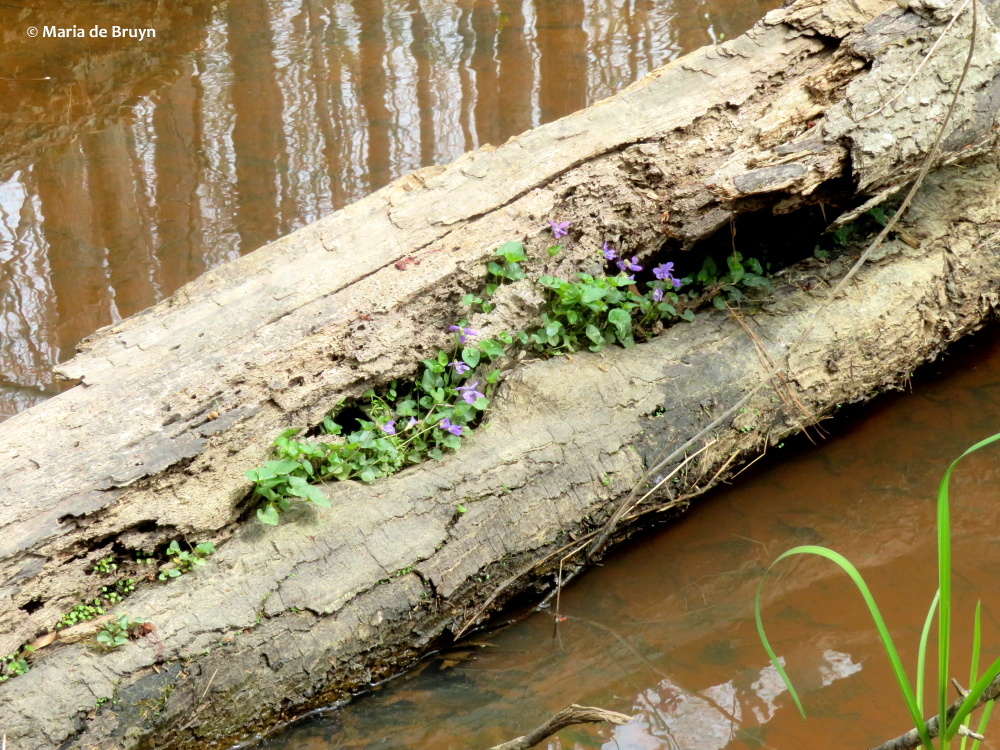
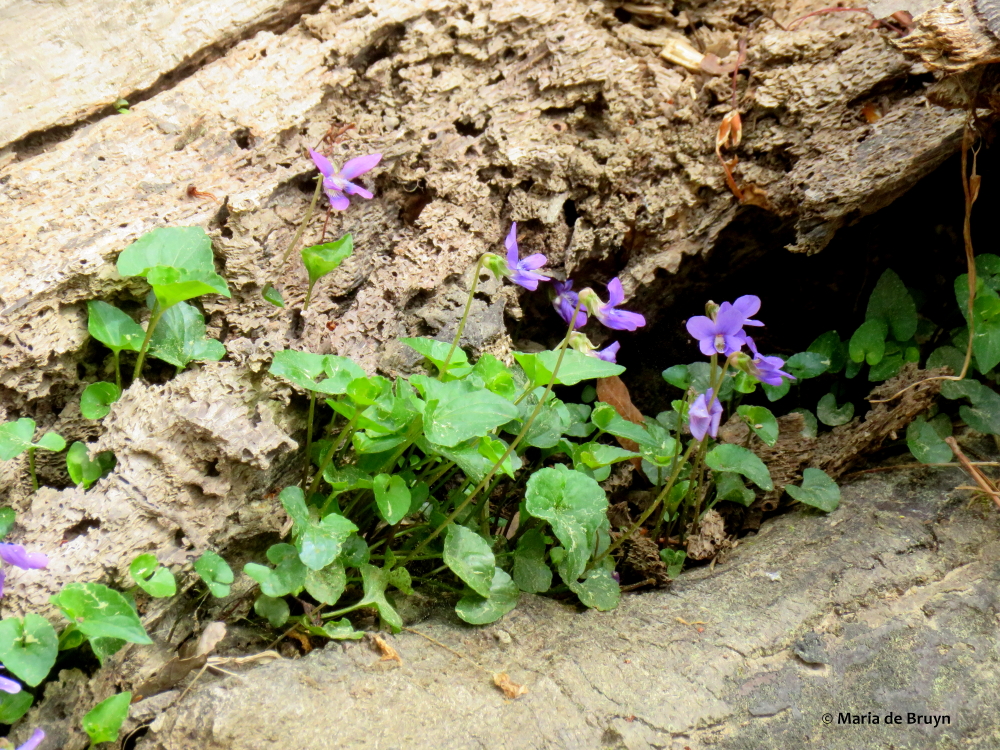
Paying attention to fallen logs can reveal beauty, too. This tree that fell across a creek ended up providing a growing place for common blue violets (Viola sororia).

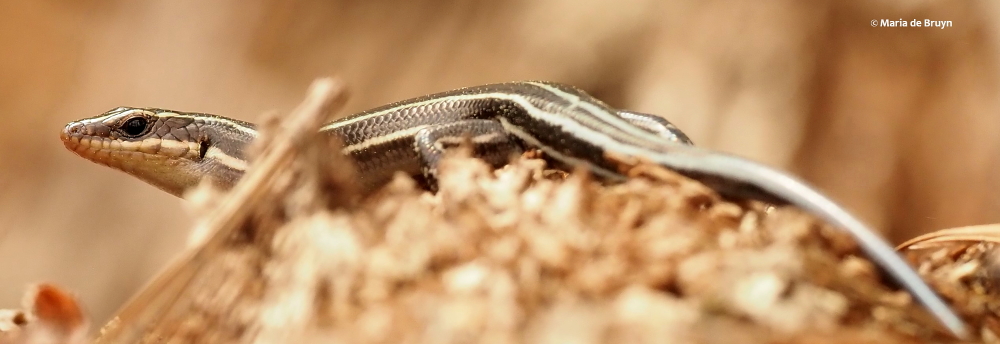
As I walked by some other fallen trees, a common five-lined skink (Plestiodon fasciatus) popped briefly into view, gave me a pensive look and then disappeared into the leaf and twig litter.

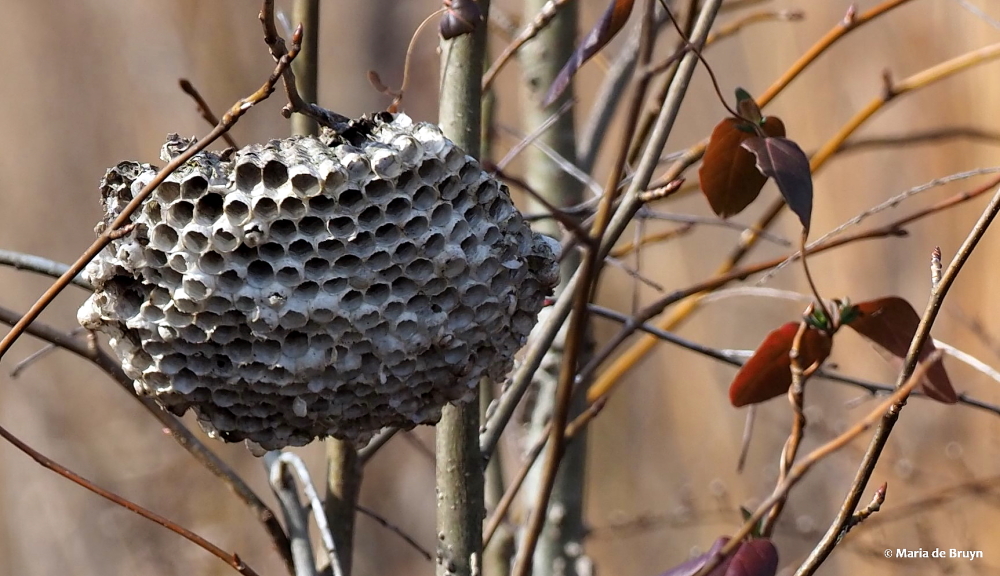
Looking up at the trees, you might be lucky to see a wasp nest. The paper wasps (Polistes) make compartmentalized nests, with a place for each individual egg.

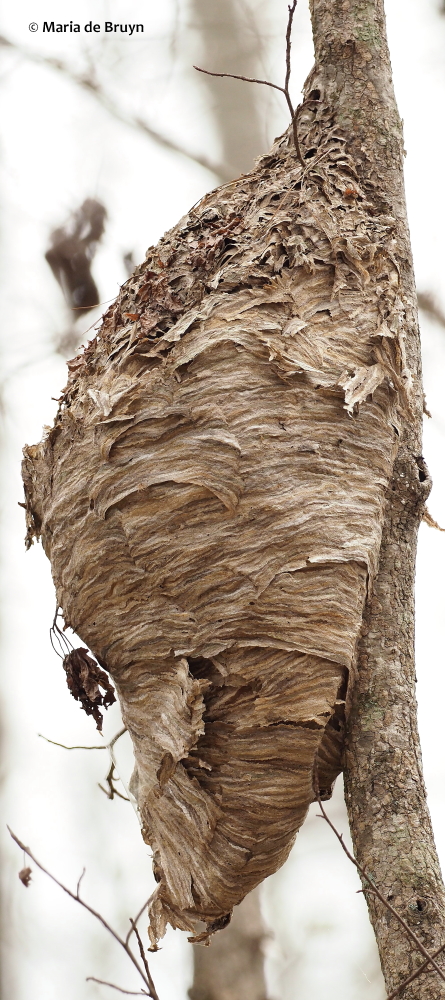
Or you may see a large bald-faced hornet’s nest (Dolichovespula maculata).


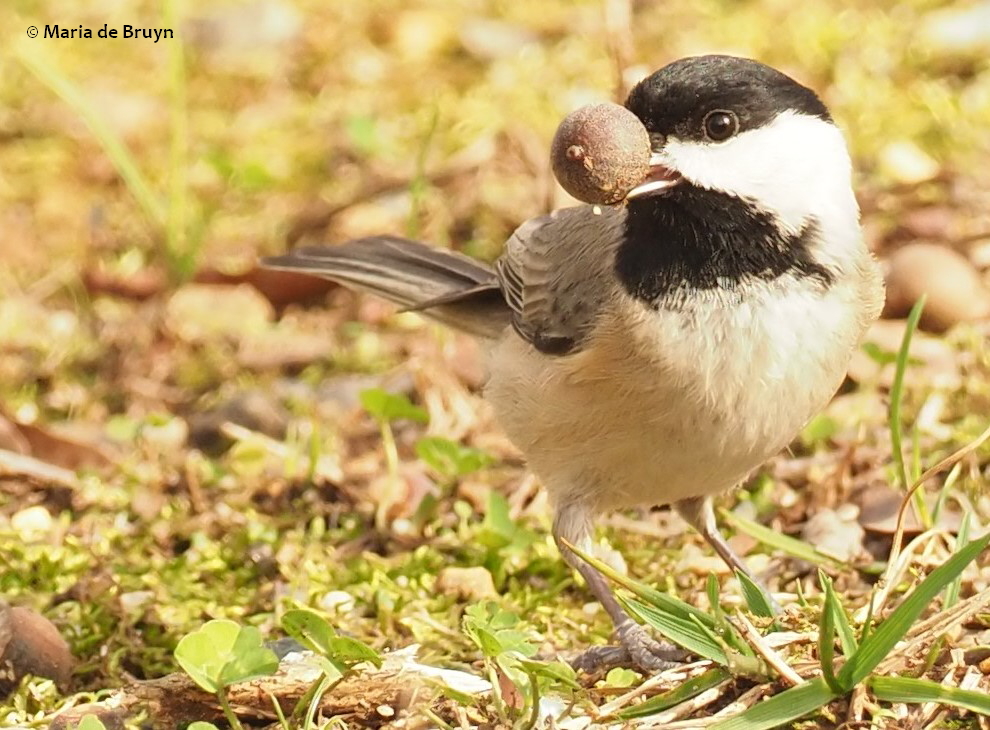
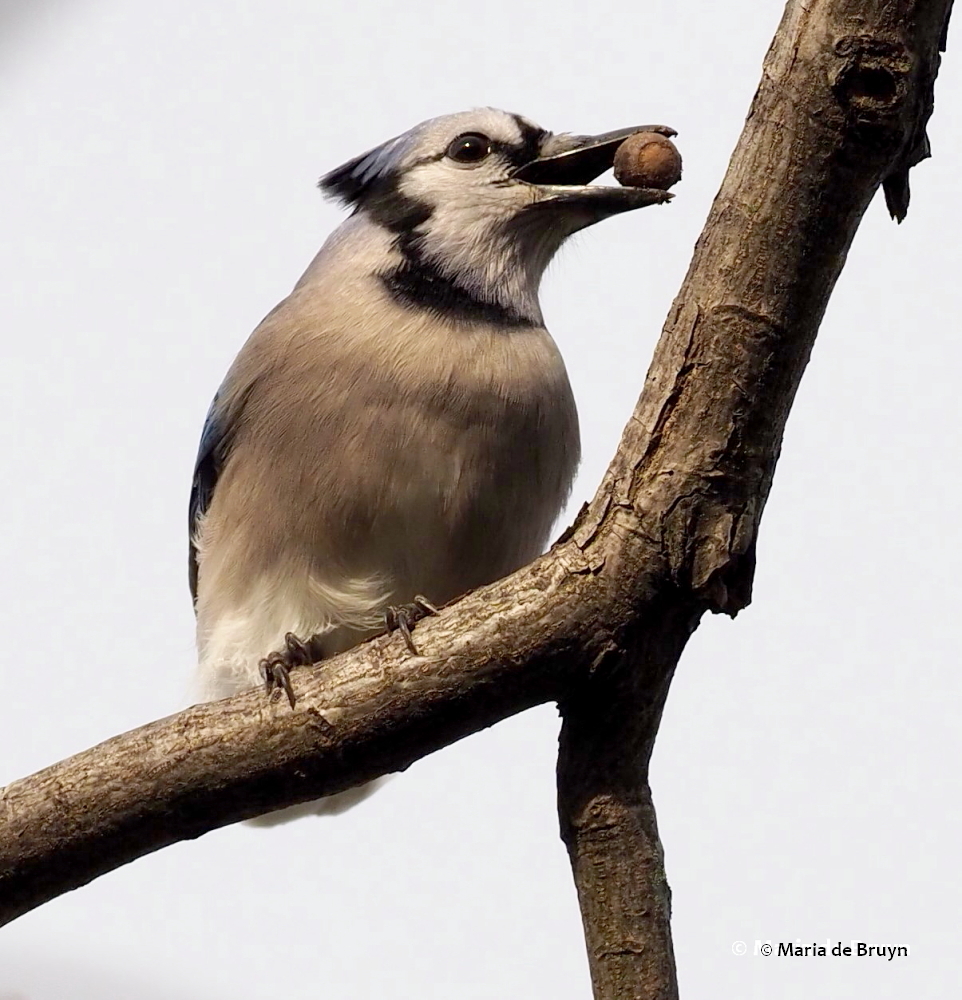
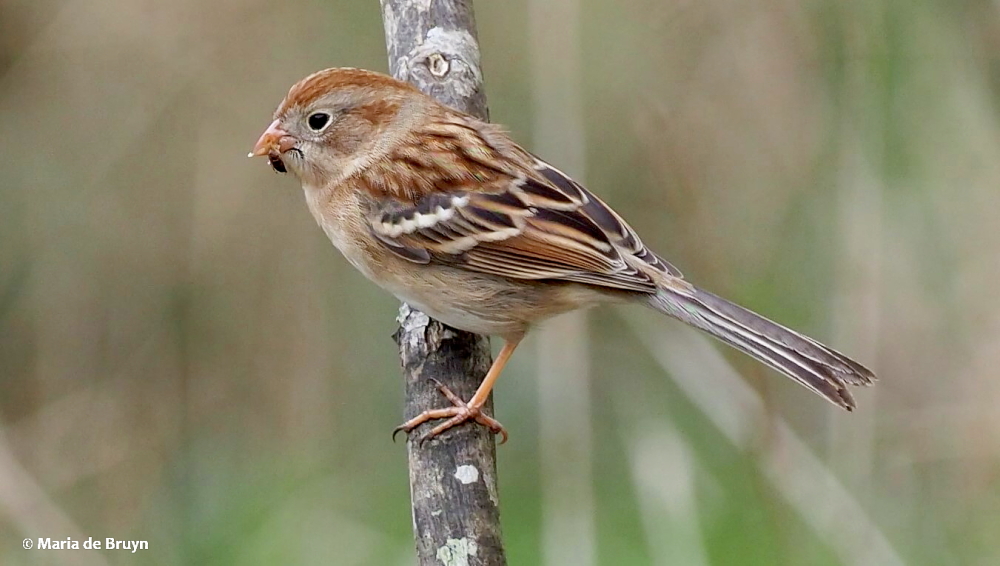
If you take the time to watch birds, you may see them engaged in looking for food (like insects, nuts, berries and seeds).

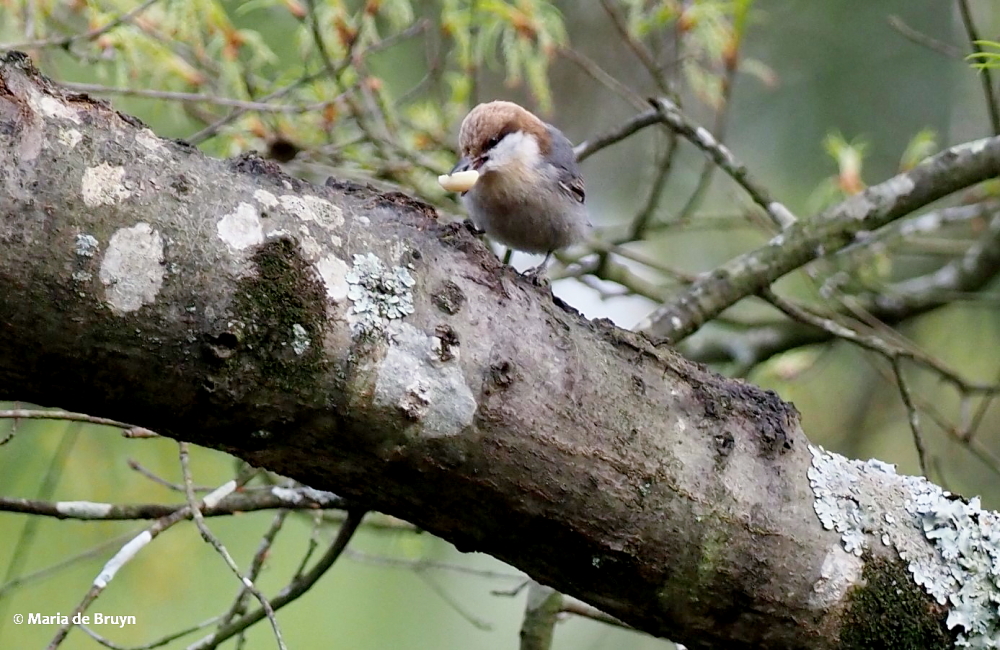
Tufted titmouse (Baeolophus bicolor)         Brown-headed nuthatch (Sitta pusilla)

Carolina chickadee (Poecile carolinensis) White-throated sparrow (Zonotrichia albicollis)

Blue jay (Cyanocitta cristata)                          Cedar waxwing (Bombycilla cedrorum)


Black & white warbler (Mniotilta varia)    Field sparrow (Spizella pusilla)

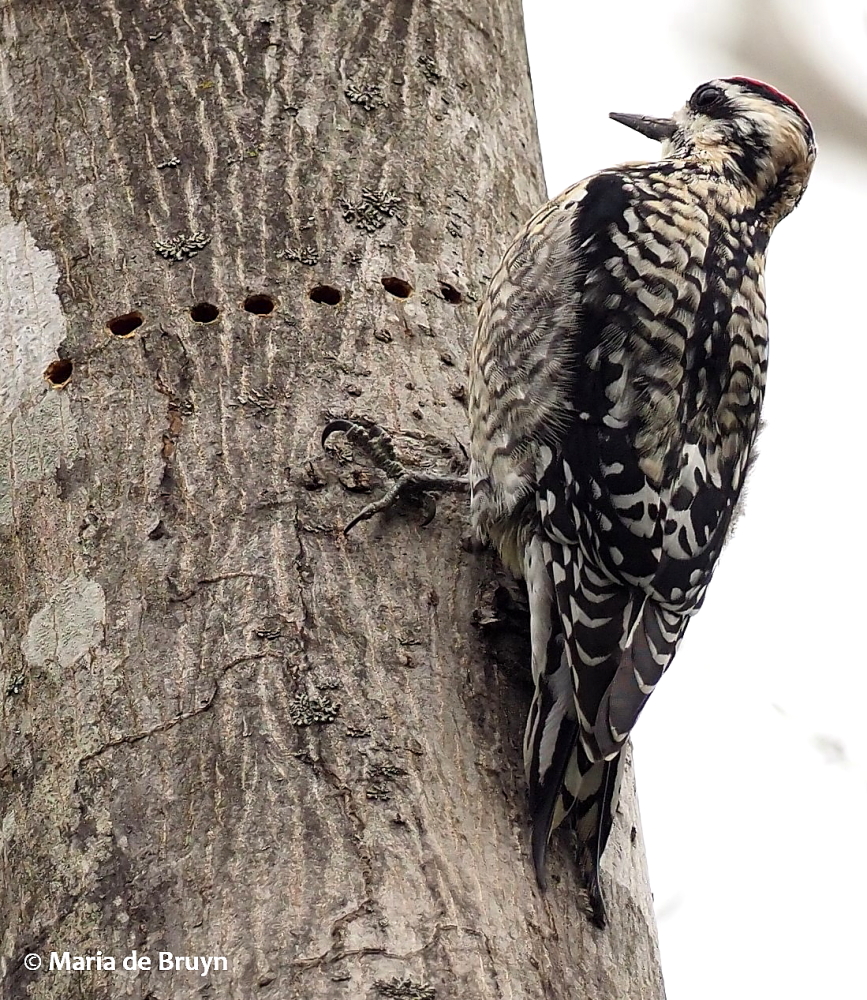
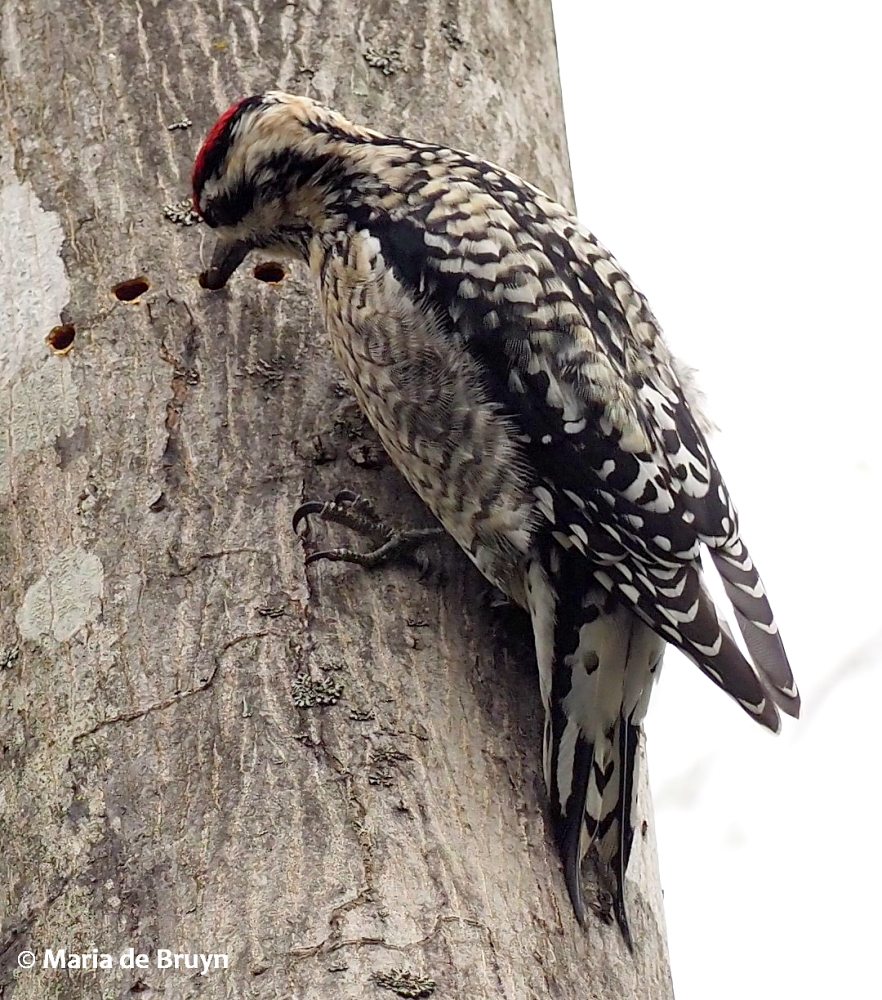
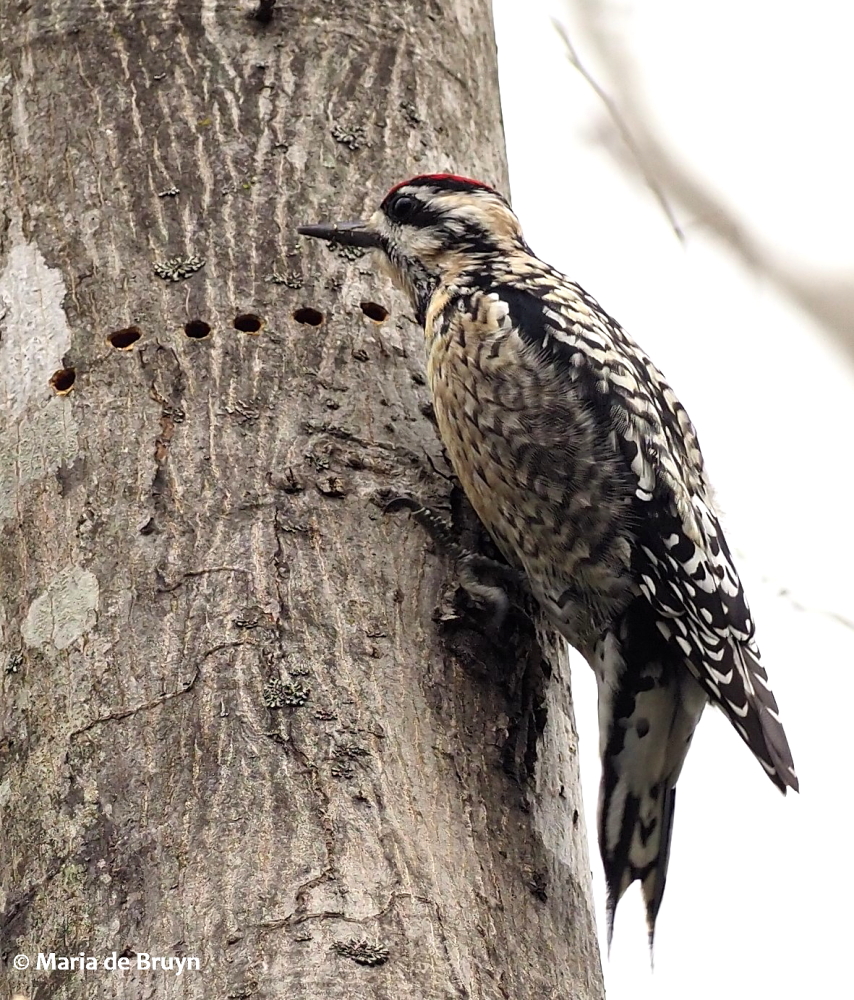
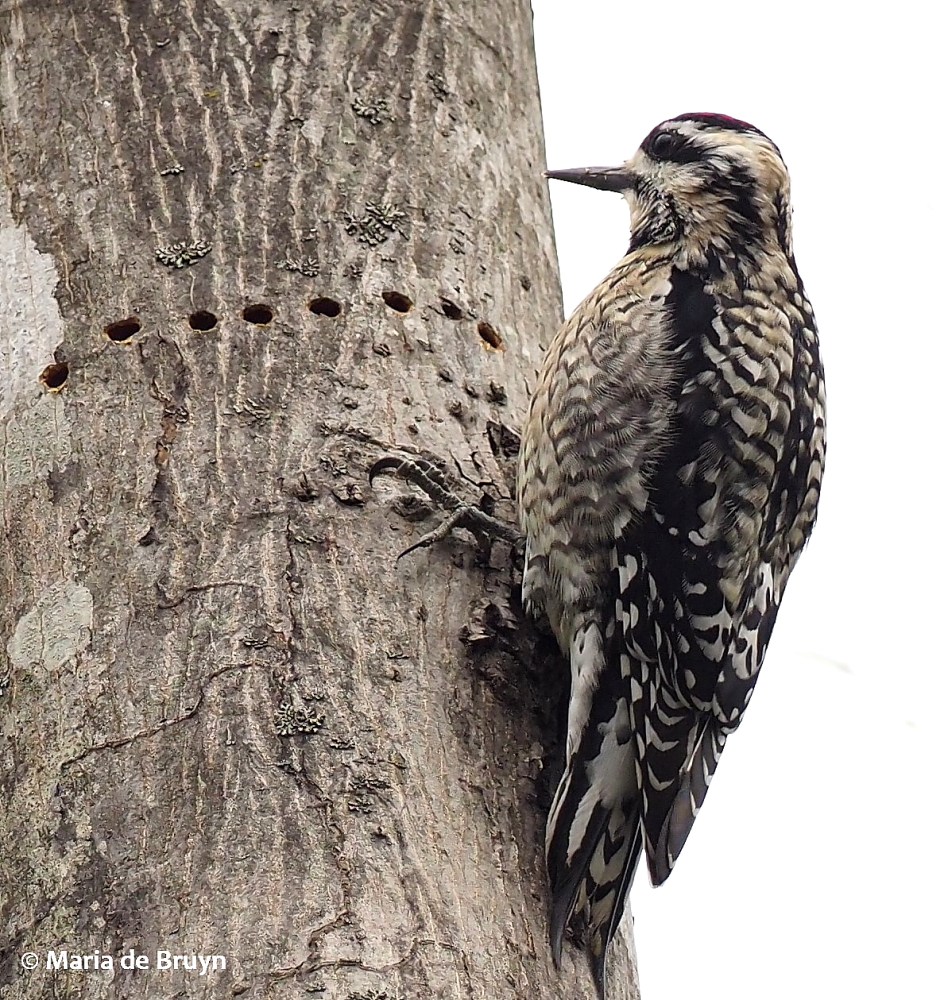
On one of my latest walks, I heard rapid knocking and was able to watch a yellow-bellied sapsucker (Sphyrapicus varius) engaged in beginning a new series of sap holes, which provide sweet drinking spots for themselves and other birds.

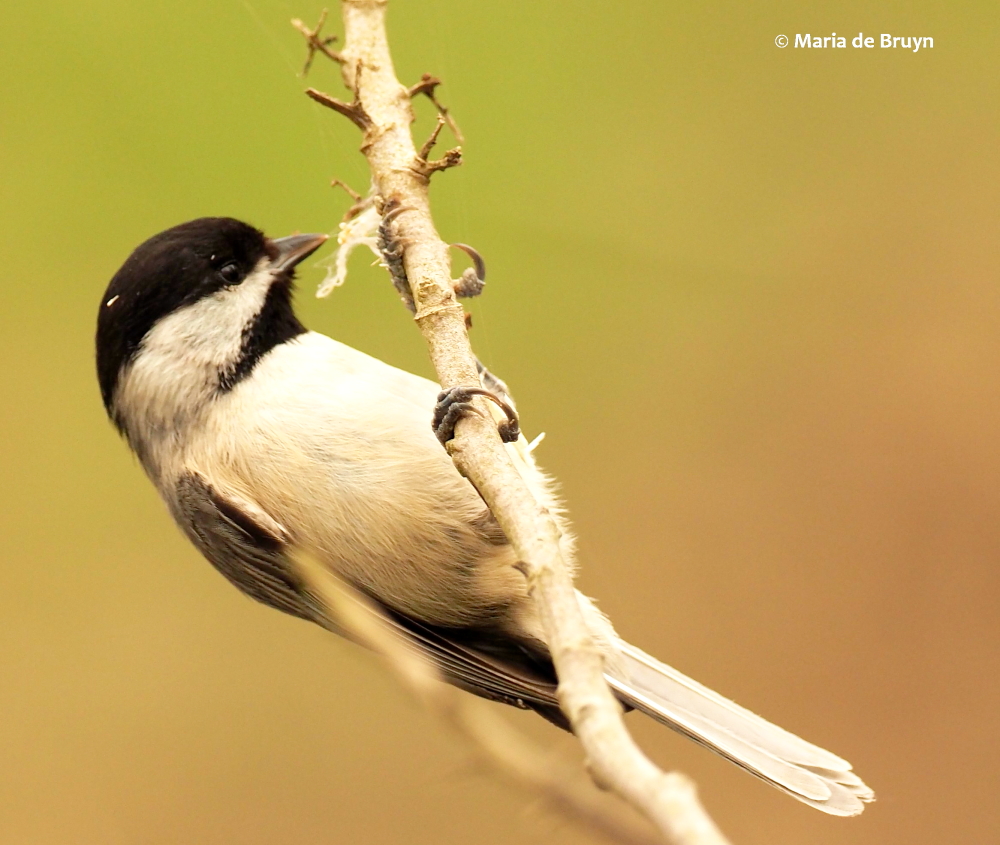
If you’re able to look at trees, bushes or nest boxes during walks or from your windows, you might catch birds collecting materials for their nests. Just the other day, I saw a Carolina chickadee gathering up some spider web to use in a nest.

If you find a nest, be sure to maintain a good distance, but then watch the parents bringing food to their nestlings after they hatch. If you’re lucky, you may even see the babies fledge! And if you are not near any trees, watch some birds at their nests through webcams online: https://www.allaboutbirds.org/cams/ – https://www.audubon.org/birdcamshttps://birdwatchinghq.com/live-bird-cams/
https://birdcams.live/

If, at some point, we are “stuck” inside, we can follow this link to international wildlife days. If we find one to celebrate during our quarantine, we can spend some time learning about that animal and drawing or painting it. And we can do the same for other environmental days as well at this link.

To end, I’d like to share some resources with free online nature activities – for children and adults! Not all the sites require having a yard; even readers living in apartments could get out for a short walk and find something to see, investigate, etc.  Enjoy!!


Beautiful birds of prey – Costa Rica

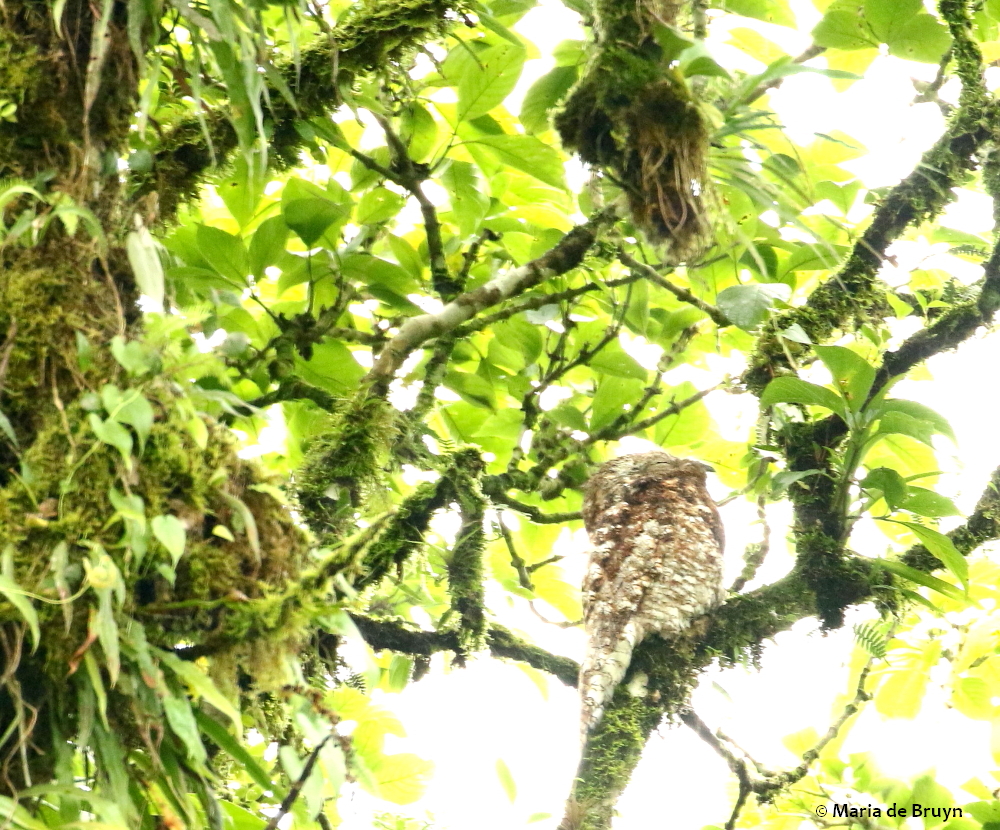
During my two trips to Costa Rica in 2018 and 2019, it was a pleasure to see the varied birds of prey flying by and sitting near roads. Unfortunately, both years my photography was not at its best so a good number of the following shots aren’t that great, but they give you an idea of the beauties that can be seen there. My favorite was this gorgeous baby spectacled owl (Pulsatrix perspicillata) who was staring through the rain forest foliage at us from a distance last year. This photo was taken with my phone through a scope.


But first let me explain which types of birds constitute the birds of prey as there are some slightly differing definitions. One explanation focuses on birds that mostly hunt vertebrates that are large in relation to their own size. It doesn’t seem quite specific enough as sometimes a great blue heron will eat a relatively big mammal such as a gopher, while I’ve had red-shouldered hawks in my yard fishing the pond for frogs that are fairly small in relation to them. This photo of a double-toothed kite (Harpagus bidentatus) in Costa Rica carrying a small lizard shows that they will feed on smaller prey as well, however.

Another definition is more specific, focusing on physical traits of these birds: relatively large, hooked bills with which they can tear flesh, powerful feet with sharp talons for catching prey animals, keen binocular vision for detecting prey at a distance, and good hearing. This roadside hawk (Rupornis magnirostris), seen in 2018 in the first photo below and in 2019 in the other two photos, illustrates these features.

The raptors are further divided into two major groups: the diurnal species that hunt in the daytime (e.g., eagles, falcons, hawks, vultures) and the nocturnal species that are mainly active at night (the owls). We’ll start with the owls, of which I’ve seen four species now in Costa Rica. I already mentioned the lovely spectacled owl. The immature owl is fuzzy and white with huge eyes; the adults have dark heads and backs but retain their striking yellow eyes. I only saw the young owl, which we observed thanks to our local guide, Cope.


Cope is not only a guide but also an artist and I couldn’t resist buying a print of his lovely portrait of the young spectacled owl.


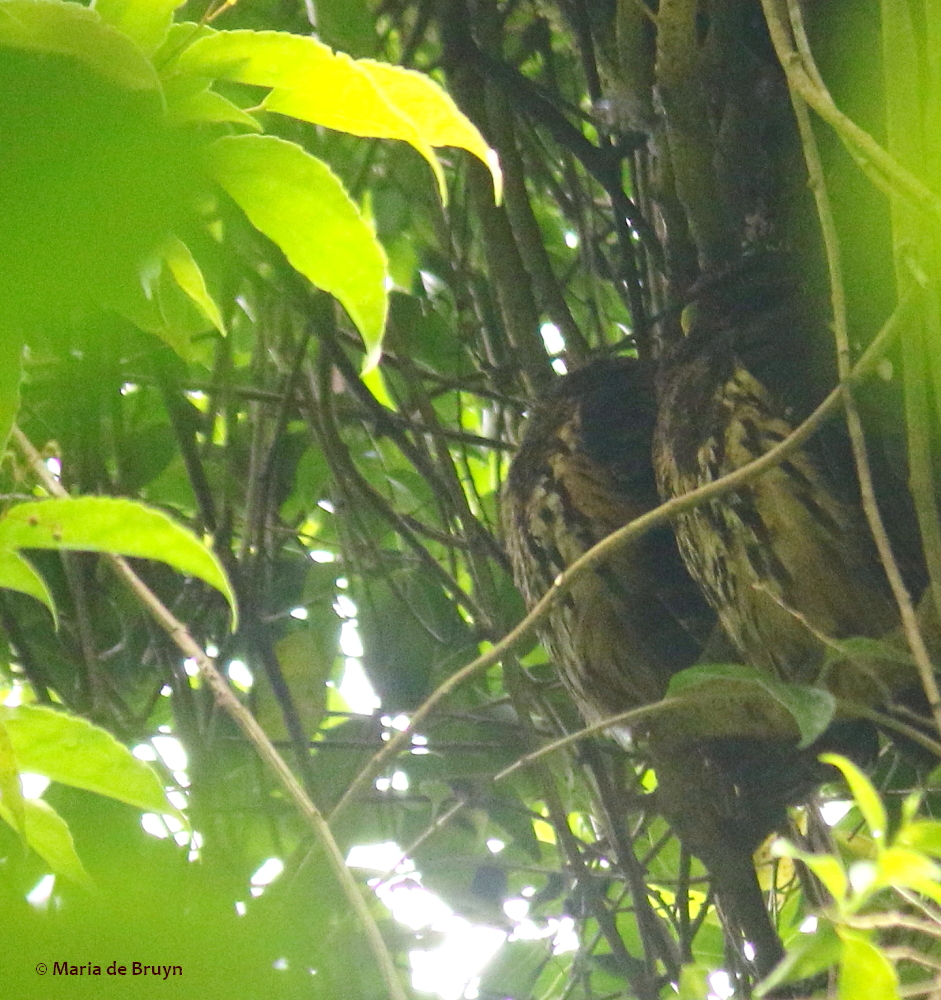
Our trip guide, Steve, had heard at one reserve that a pair of mottled owls (Ciccaba virgata) were perched in a tree near a trail. They were exactly where predicted and though the heavy, dark vegetation made for a difficult view, we could see the two resting comfortably. These medium-sized owls lack ear tufts.

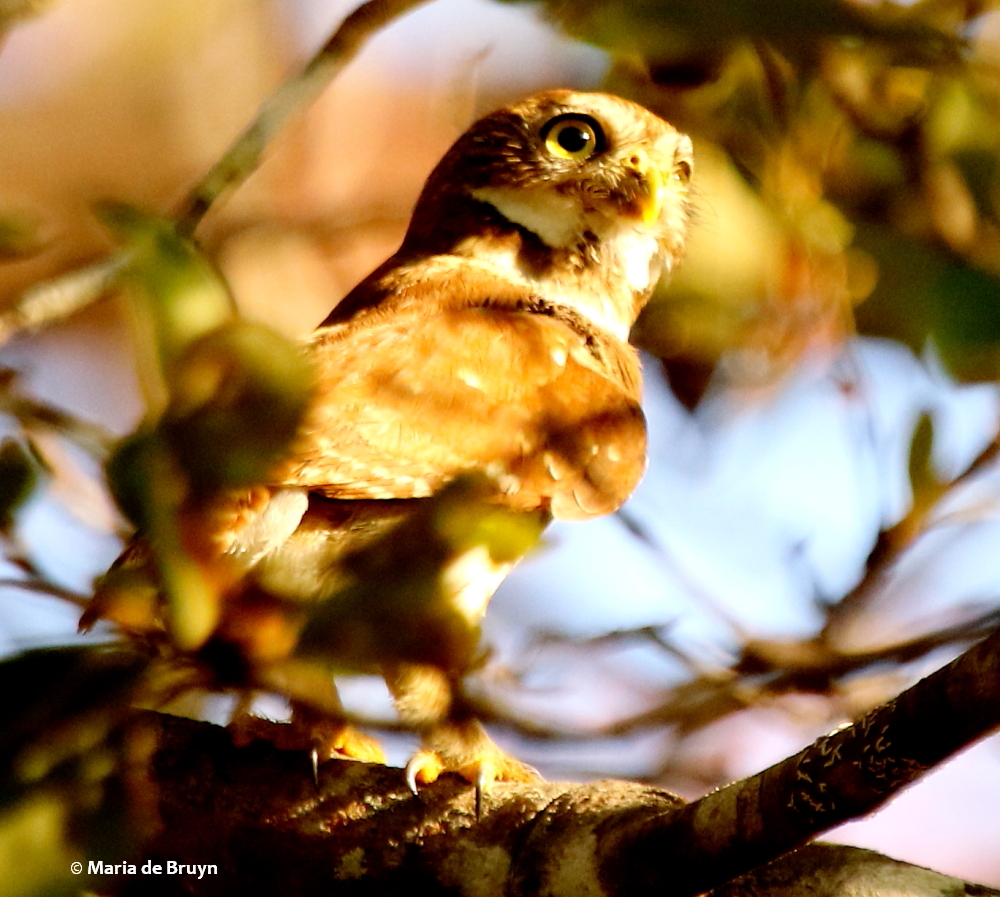
Last August, Steve spotted a ferruginous pygmy owl (Glaucidium brasilianum) for us near a creek but it was fairly far off, partly obscured by leaves from where I stood. We had seen one closer up in 2018, perched in trees near the road. This owl is crepuscular (mostly active at dawn and dusk) but they also hunt during the day, which may help account for its willingness to be out in the afternoon so we could get a good look at it.

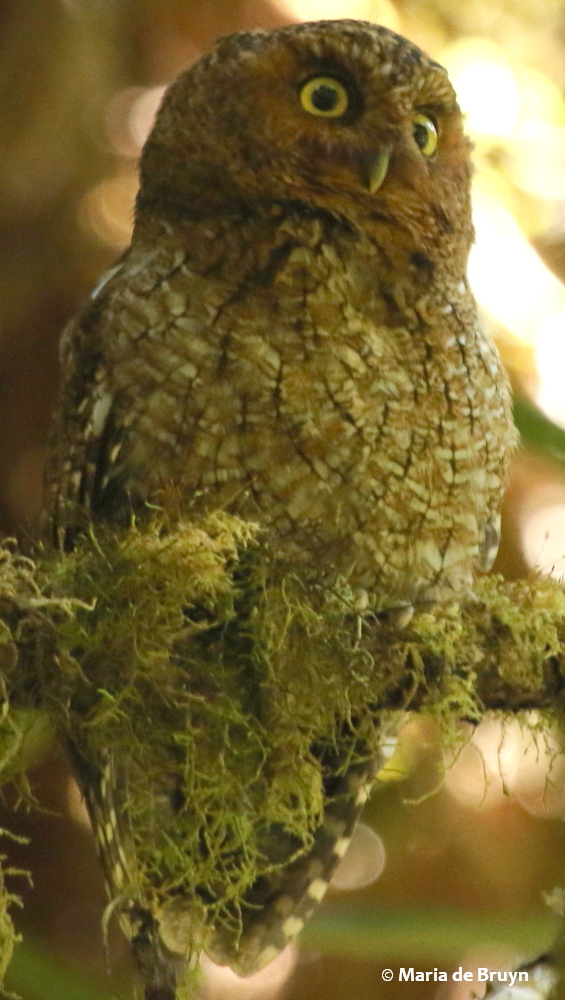
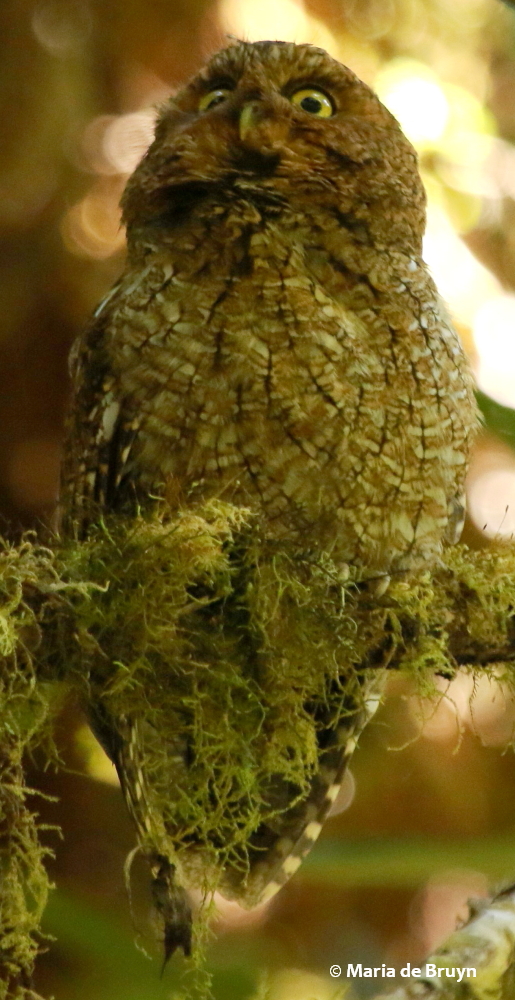
An owl that I did not see last August was the bare-shanked screech owl (Megascops clarkia). One had been spotted at the top of a hill, but it was raining that day, the path was very muddy and slippery and my arthritic knees and ankles were not cooperating in pathway navigation. The rest of my group ascended while I birded below. But my disappointment was not too great as I had had some good looks at one in 2018. Steve had played the owl’s call, not expecting the bird to appear but thinking it might flush another bird that would be investigating if the owl was near. In flew the lovely little screech owl, perching nicely in view amid the forest foliage!


Some scientists now think that the owls may be more closely aligned with the birds of the nightjar group than with diurnal raptors. The nightjars have small feet and don’t walk much. These nocturnal birds, which have quite short bills, feed on insects found on the ground or caught while flying. We saw a member of this family, the common paraque (Nyctidromus albicollis), resting on a pathway one evening; this one was likely a female as the male has more white on its wings and tail. Their plumage is quite mottled so that they blend in well with their backgrounds; these two photos were taken with different amounts of light illuminating the bird.

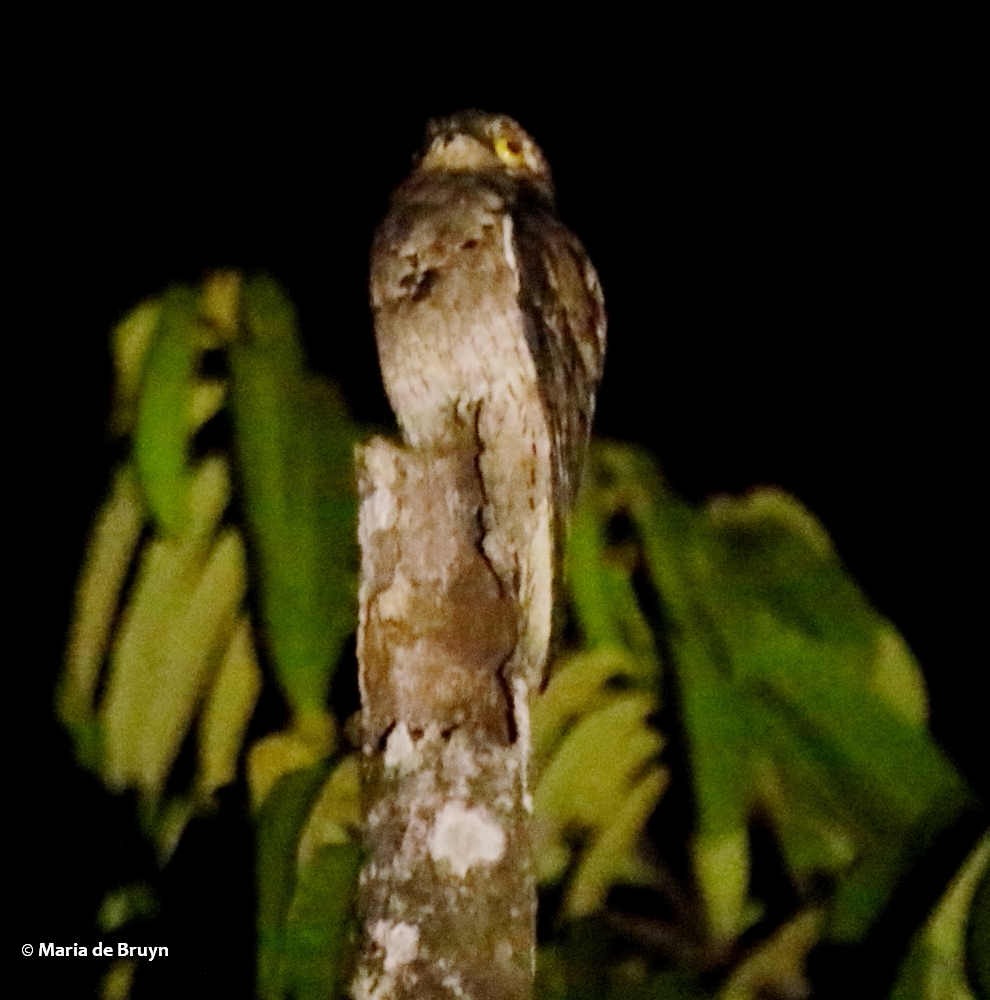
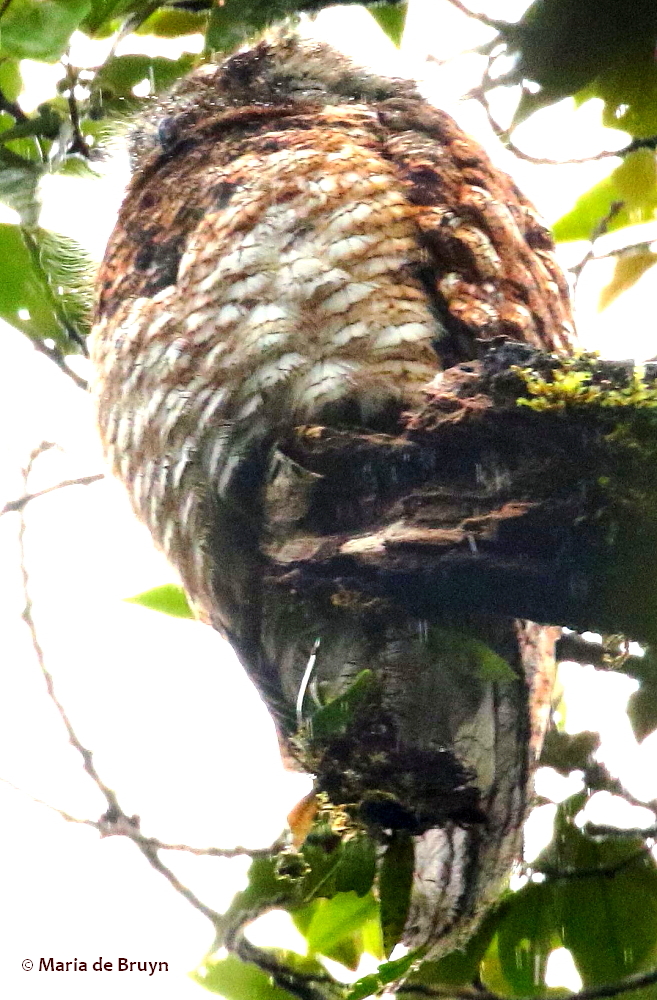
Another type of nocturnal bird related to nightjars (but also not considered a raptor) is the potoo. In 2018, Steve found us a common potoo (Nyctibius griseus) perched atop a snag along a very dark, unlit country road. This past August, we saw one perched high above us in a tree during the daytime. When this insectivore perches on a snag during the day, it often blends in so well and remains so completely motionless, people often don’t see it because it looks like it is part of the stump or snag!

This past year we also got to see a great potoo (Nyctibius grandis) as well. They eat not only insects but also small vertebrates with their short-beaked but very broad mouths.


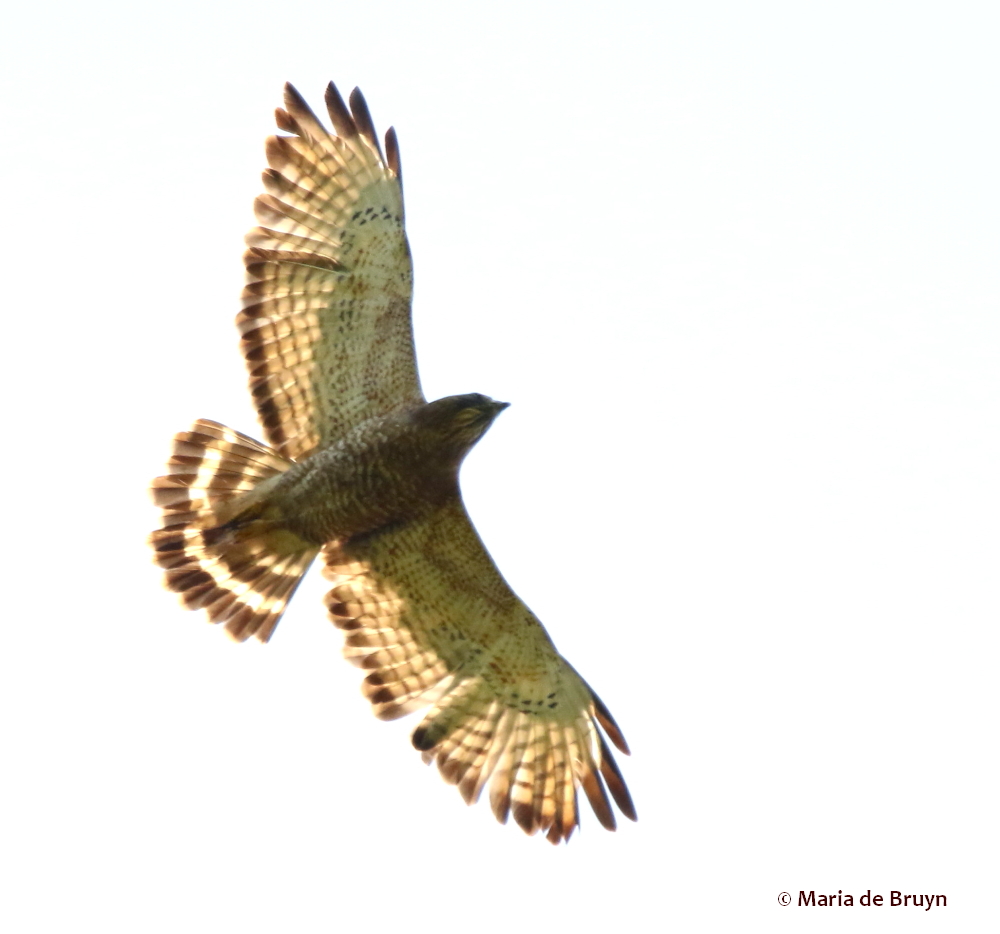
The diurnal birds of prey that I’ve seen in Costa Rica include a hawk that I’ve also seen in North Carolina – the broad-winged hawk (Buteo platypterus). Some of these have quite long migratory paths but there are also five sub-species that are endemic to the Caribbean region that don’t migrate.


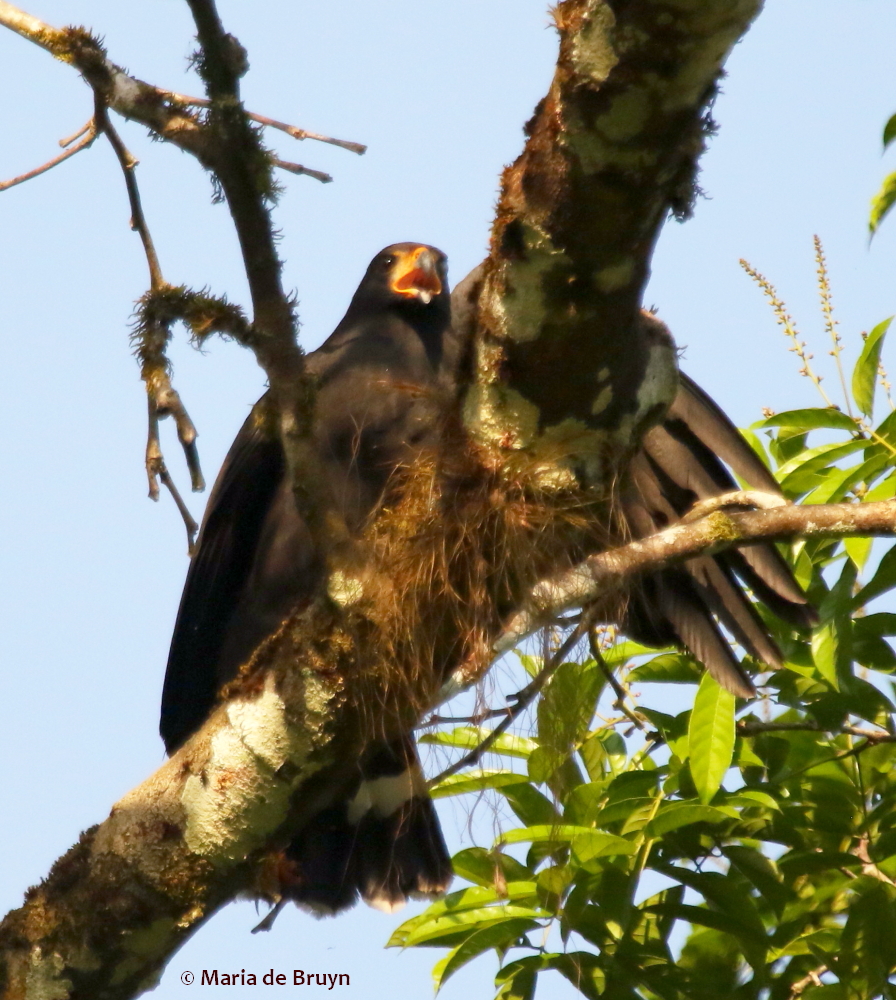
There are both white hawks (Pseudastur albicollis, seen flying very high overhead) and common black hawks (Buteogallus anthracinus) in Costa Rica. The white hawks prey on insects, mammals and reptiles. The black hawks mainly eat crabs, supplemented with eggs and small vertebrates. The one we saw was quite vocal.


Two other species of beautiful hawks are the gray (Buteo plagiatus) and gray-lined hawks (Buteo nitidus). We saw the gray hawk in roadside trees last August; this is a common perch from which they swoop down on prey animals, including lizards, snakes, frogs, birds and small mammals.


In 2018, we were able to admire a beautiful gray-lined hawk (Buteo nitidus) sitting atop a snag. These raptors are seen mainly in southern Costa Rica; their hunting style and favored prey are similar to those of the gray hawks.

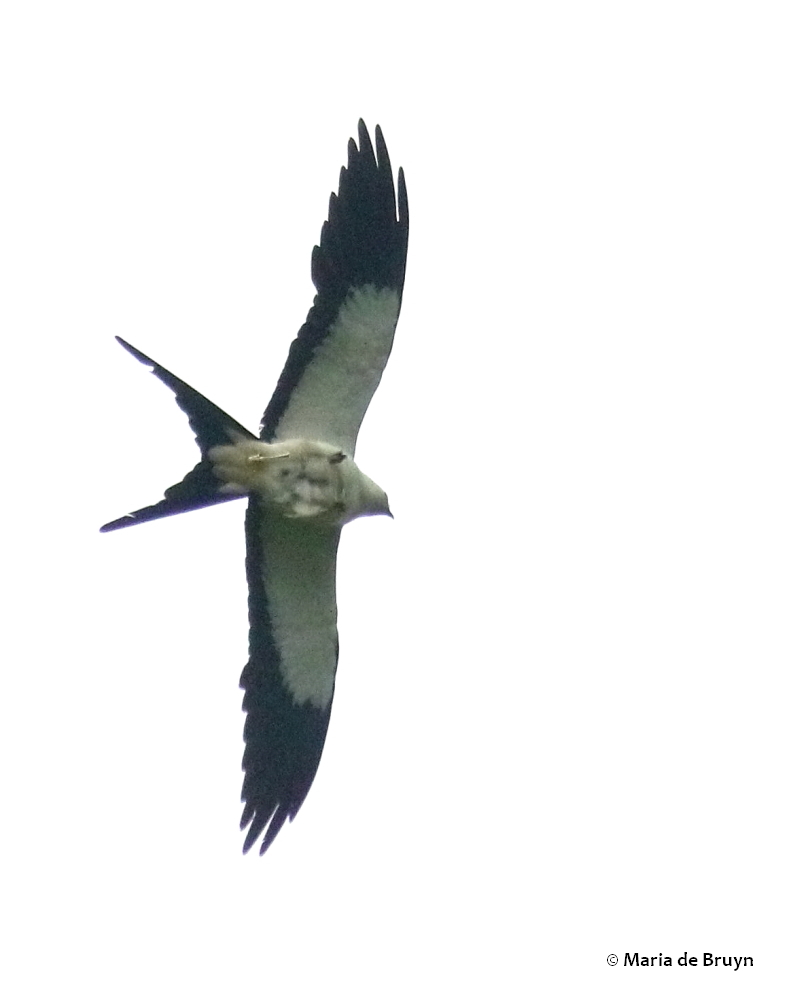
The swallow-tailed kite (Elanoides forficatus) seems to be a bird of prey that is seen throughout Costa Rica. Adults feed their young frogs, lizards, snakes and small birds, while they mostly eat insects while flying about themselves.


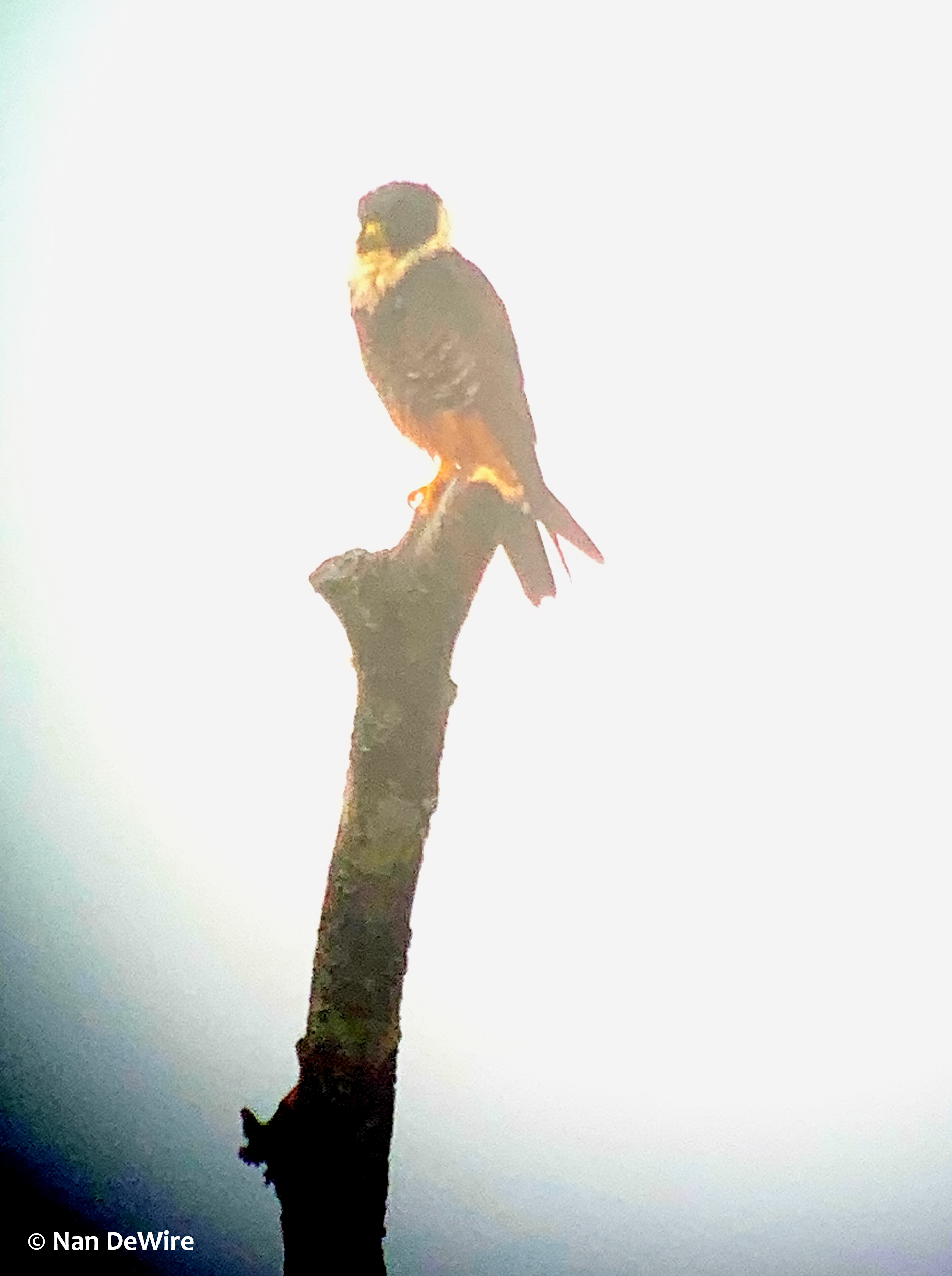
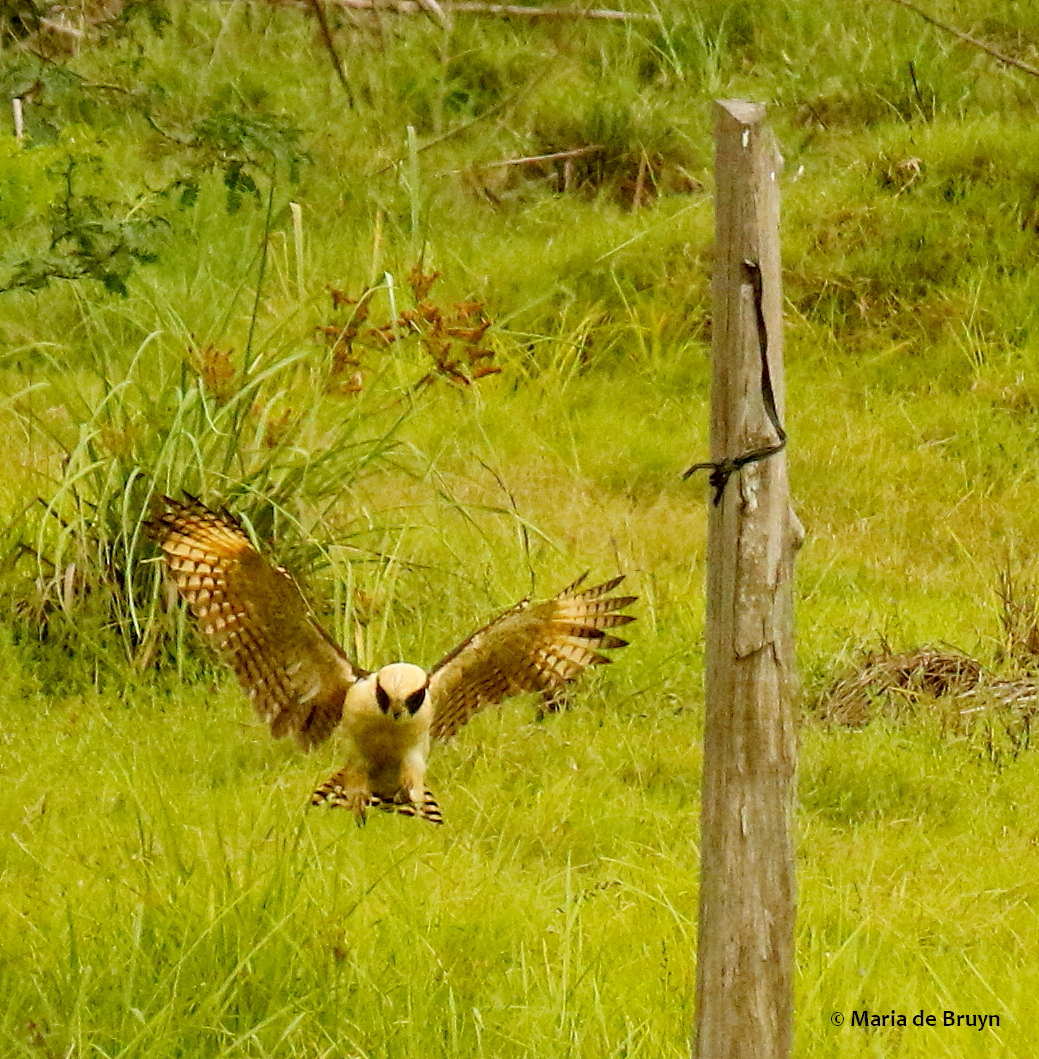
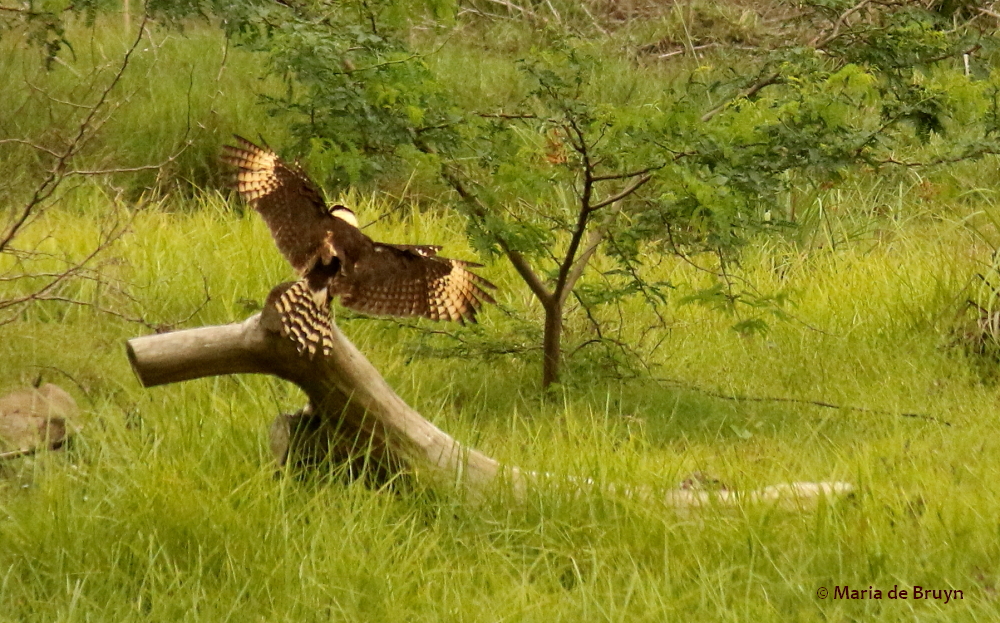
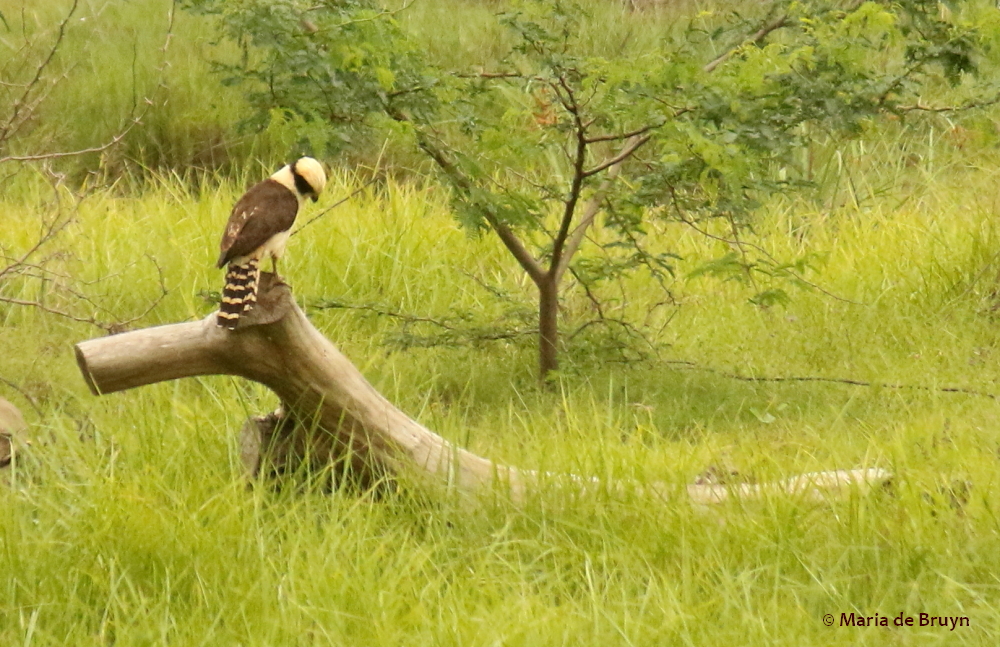
Our guide, Steve, spotted a bat falcon for us (Falco rufiularis) but it was so far away that we had to get a reasonable view mostly through a scope (left). Here is a much better view. We had much better luck watching a laughing falcon (Herpetotheres cachinnans), which was also one of my favorite raptors.


We had been driving down a mountain road when this gorgeous bird flew from a stand of trees to a snag in a field.


This handsome avian is a raptor with a specialized diet – they mainly eat snakes, giving rise to the erroneous common name of snake hawk. They supplement this dietary preference with lizards, rodents, bats and centipedes.

I didn’t hear this bird but they can vocalize for up to 5 minutes at a time.


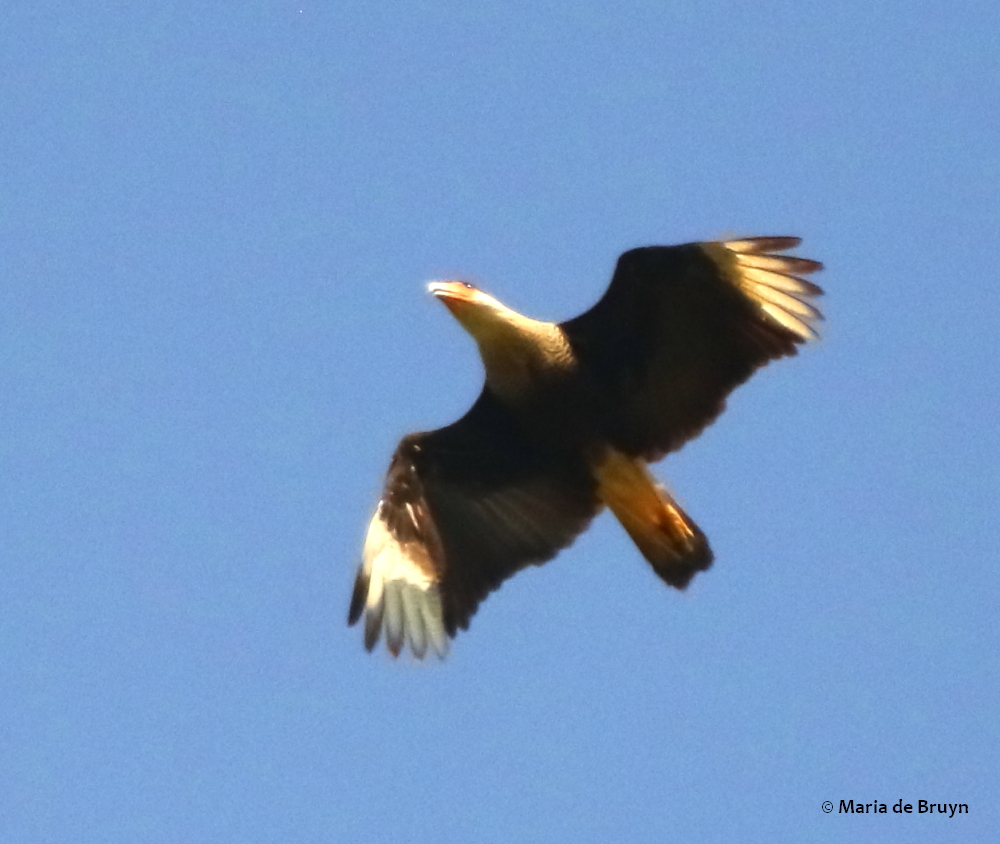
The next two birds I saw only in flight and only in 2018. The caracaras are members of the falcon family but, interestingly, they are among the few raptors that hunt for food on foot. The crested caracara (Caracara cheriway) has a widely varied diet, including: rabbits, ground squirrels, skunks, birds, frogs, snakes, lizards, turtles, young alligators, fish and large insects. Also of interest is the fact that they not only hunt live prey but also eat carrion.


The yellow-headed caracara (Milvago chimachima) does not eat birds but also hunts reptiles, amphibians and small animals. In some places, it is called the tickbird as it will take ticks from cattle. It, too, will eat carrion.


And then the final bird in this line-up – a much better known carrion eater, the king vulture (Sarcoramphus papa). This mainly white-colored vulture tends to soar much higher than other vultures and often does so without flapping its wings. They are the second-largest vultures in the Western hemisphere (only the condors are larger).


A North Carolina-based blog is next and then back to Costa Rica for some more “exotic” animals.

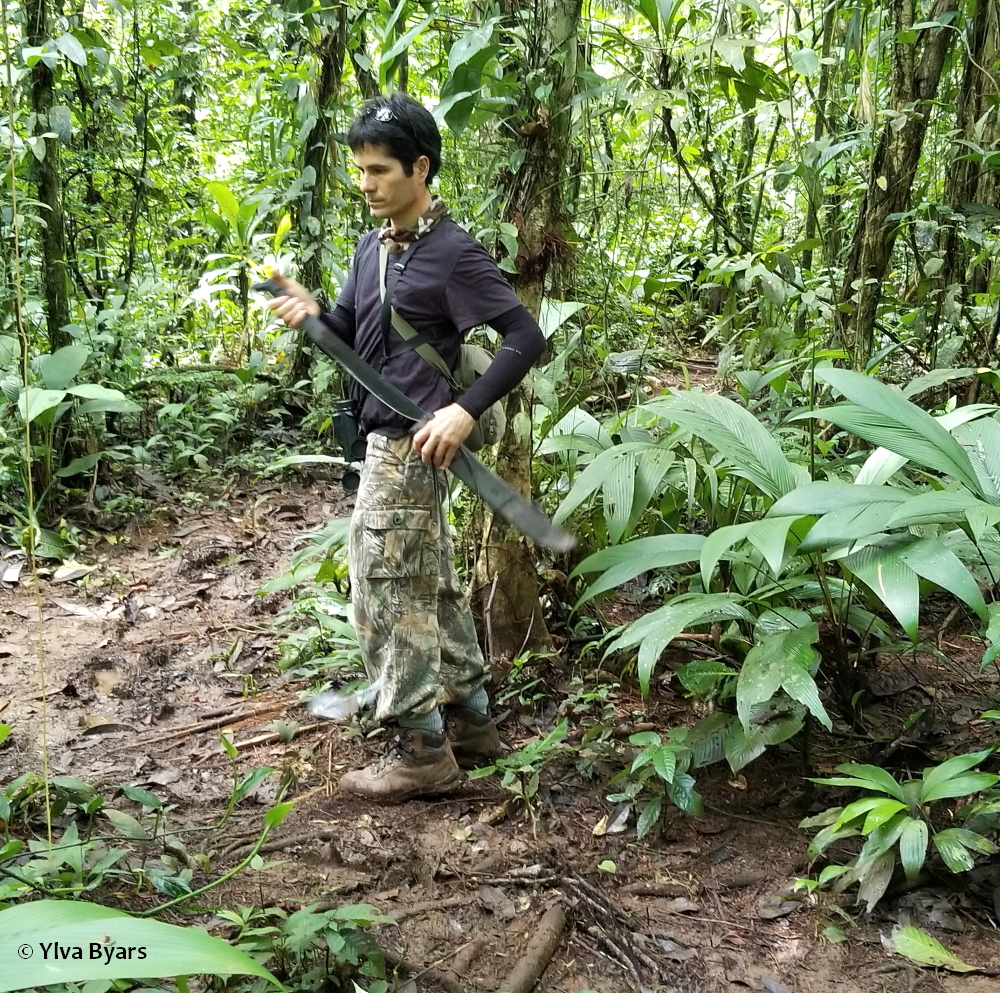
Thanks to fellow travelers, Ylva Byars and Nan DeWire for photos that they provided!

Local beauties in the woodpecker family

My first blog on this website, written in October 2013, focused on woodpeckers; my first blog of 2020 was also about these birds (I know, the blog prior to that says 1 January but I posted it on 31 December; WordPress time is ahead of mine. 😊) Obviously, they are one of the bird species that I enjoy watching so to follow up my last blog, I’d like to share just a few more photos of three species that it’s my privilege to see locally. They are quite different from one another in appearance but equally beautiful and it’s always a delight to see them. (And no, it’s not snowing where I am; this is a photo from January 2018; we are supposed to have 70⁰ F/21⁰ C in a couple days!)

The Northern flicker (Colaptes auratus) is found in the Western hemisphere and looks quite different from many other woodpecker species. In the US, there are two sub-species. In the West, there is the red-shafted and in the East the yellow-shafted variant. The “shaft” refers to the undertail feathers. When the bird flies, however, you can also see the beautiful, otherwise hidden, yellow hues on the underside of other feathers.


Those yellow feathers also come into view when the flicker is upset, like this one was with a brown thrasher who came to the feeder pole where it was taking a brief rest. (This is pretty unusual; they don’t come to the feeders often.)
The flickers have some interesting distinguishing features: they are one of the few woodpeckers that migrate; they are the only woodpeckers that primarily searches for food on the ground, rather than in trees; and they probably eat more ants than any other North American bird!

And, depending on the weather (overcast, cloudy but light, sunlight), their coloring can look different – this is not only because the photos were with different cameras).


They also eat berries and seeds in the autumn and winter.


Like other birds, the flickers do nest in tree cavities.


You can distinguish males from females by the black moustache stripe, which the females lack.


The yellow-bellied sapsuckers (Sphyrapicus varius) is a woodpecker that can blend in quite well with the trees on which it seeks its food. Their mottled feather coloring often provides a good camouflage and you might not see one if it is sitting still.

The males have red crowns and red throats; the females have a white throat and the juvenile birds lack the reddish hues.


These woodpeckers may be followed around by other birds. For example, last year I saw ruby-crowned kinglets following sapsuckers at one reserve. Why would they do this? It’s because the sapsuckers drill shallow holes into trees which will then ooze out sap on which the woodpeckers and other birds feed. And the kinglets will find insects around the sweet sap. (At a children’s workshop on trees that I conducted last fall, one young boy asked me if humans could also drink the sap from their holes. I hadn’t researched that but answered that perhaps we would like the sap from a maple tree but not from an oak.)
 

The sapsuckers eat insects, berries and fruit like other birds.


Last in my line-up of local woodpeckers is the red-headed woodpecker (Melanerpes erythrocephalus). The adult males and females look alike but adults and immature birds look very different indeed. While the mature birds are characterized by a deep red head, solid black back and white rump and belly, the juvenile and immature youngsters have brownish heads and bodies and black and brown striped rumps.


When they are transitioning to adult plumage, they will have mottled red heads and begin losing the brownish hues.


They have one of the most identifiable (for me) calls of the woodpeckers. Listen to this recording (Arkansas, 22 March 2005); it almost has a warbling quality to my ear, which many websites describe as a “churring” sound.

I’ve been lucky lately as there is an immature red-head reliably patrolling a certain territory in a forest that I visit so that I can be fairly certain of always seeing her/him sooner or later. This is a boisterous bird who loves to call and make its presence well known.

S/he doesn’t peck too loudly but if some vigorous drilling is required, this bird is up to the task. They have sturdy and powerful spike-like bills. The woodpecker beaks have three layers: the rhamphotheca (outer layer) is made of keratin; the middle layer is porous bone and the inner layer is made of mineralized collagen and contains a large cavity. The tongue bone (hyoid) winds around the bird’s skull and functions like a safety belt that helps cushion the brain when they are engaged in high-velocity and impact drumming and drilling. On the whole, however, these woodpeckers tend to drill less but fly out often into the air to catch insects on the wing.

They eat insects, fruit, berries, eggs of other birds but also really enjoy nuts, especially acorns and beechnuts. They make stashes of nuts in tree cavities, crevices and under bark for later consumption.

When depositing or withdrawing from holes in trees, they will use their tails like other woodpeckers to help them balance as they perch.


A surprise for me was that they also occasionally eat cambium and tree bark.


If climate change continues and results in an overall warming trend of plus 2 degrees, these birds could lose up to 64% of their range. Yet another reason to do what we can to decrease our energy consumption and advocate for policies and regulations to reduce global warming due to human actions.


One more interesting note about woodpeckers (for the time being): did you know that there are no woodpeckers (including flickers and sapsuckers) in the polar regions, Australia, New Zealand, New Guinea and Madagascar?


I’ll end with a quote from an interesting book that I am currently reading. The author, Robert Macfarlane, describes research into the “wood wide web” and then muses on what it could mean for humans:


“If there is human meaning to be made of the wood wide web, it is surely that what might save us as we move forwards into the precarious, unsettled centuries ahead is collaboration: mutualism, symbiosis, the inclusive human work of collective decision-making extended to more-than-human communities.” (Underland; my emphasis)


Creepers and peckers who attract our attention (but these are good guys!)

No, I’m not referring to plants, humans or an anatomical feature but rather avian woodcreepers, tree creepers and woodpeckers! During our nature outings in Costa Rica in August 2019, they were definitely crowd-pleasers and reminded me of how much these birds are appreciated elsewhere, too. So today I’ll share with you some of my photos of these species in Costa Rica, The Netherlands, South Africa and the USA.


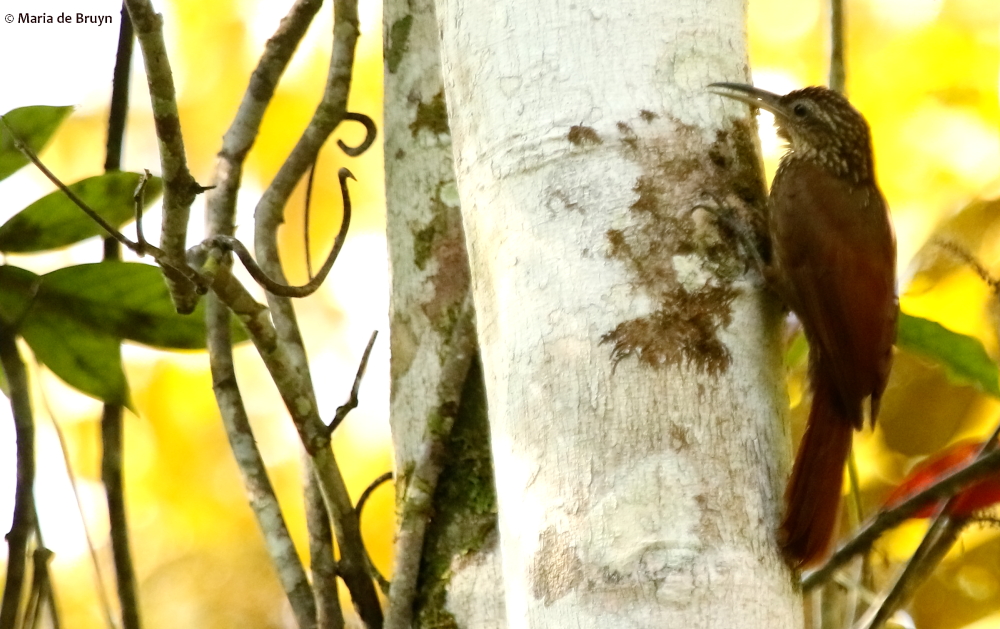
The insectivorous woodcreepers are endemic to the neotropical regions where there are some 57 different species. They tend to be brown in color and look similar, making identification a challenge at times. They hold their bodies upright, using a stiff tail (a similarity to how woodpeckers maintain a vertical position). Although they mainly look for insects in tree bark, they also will eat army ants. They have strongly clawed toes to help them cling to tree trunks.


Research has shown that the woodcreepers may use one of two techniques to capture insects. The “probers” look behind bark, mosses, lichens, leaves, etc. to find their prey. Those who engage in “sallying” launch themselves into the air to catch insects in flight after their movement up a tree has flushed them.


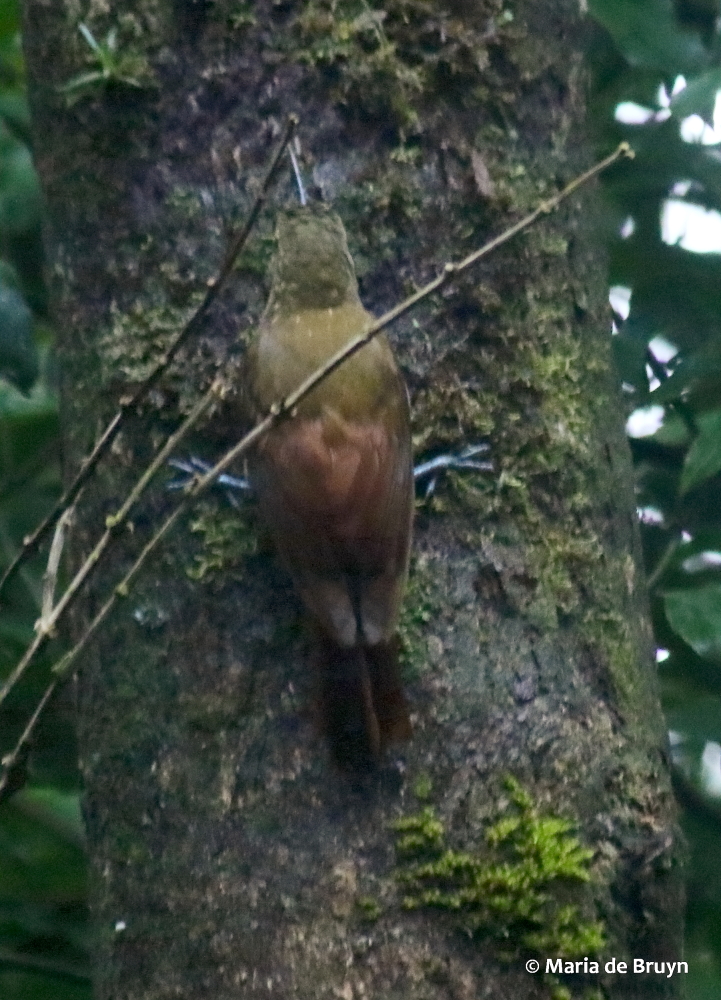
The plain brown woodcreeper (Dendrocincla fuliginosa) is distinguished from other woodcreepers by its lack of streaking or stripes.


The cocoa woodcreeper (Xiphorhynchus susurrans) tends to be a more solitary feeder that looks for insects in bark.

The streak-headed woodcreeper (Lepidocolaptes souleyetii) was aptly named. It tends to be a solitary probing feeder.


The wedge-billed woodcreeper (Glyphorynchus spirurus) is the smallest species of woodcreepers; it also has a shorter bill, which helps in identification. Research has shown they tend to favor ants, beetles, spiders and pseudo-scorpions for their meals.


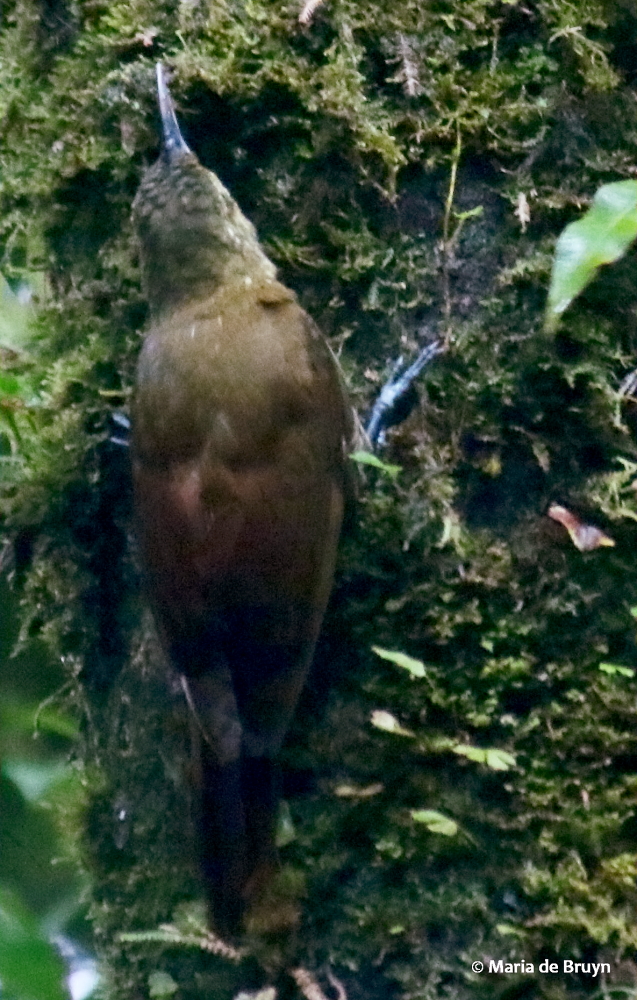
The brown-billed scythebill (Campylorhamphus pusillus) is obviously distinguished by its very long, curved bill. It was raining and the bird was not sitting still so my photo isn’t great; I really wish I’d gotten better photos of this species (a goal for the future).

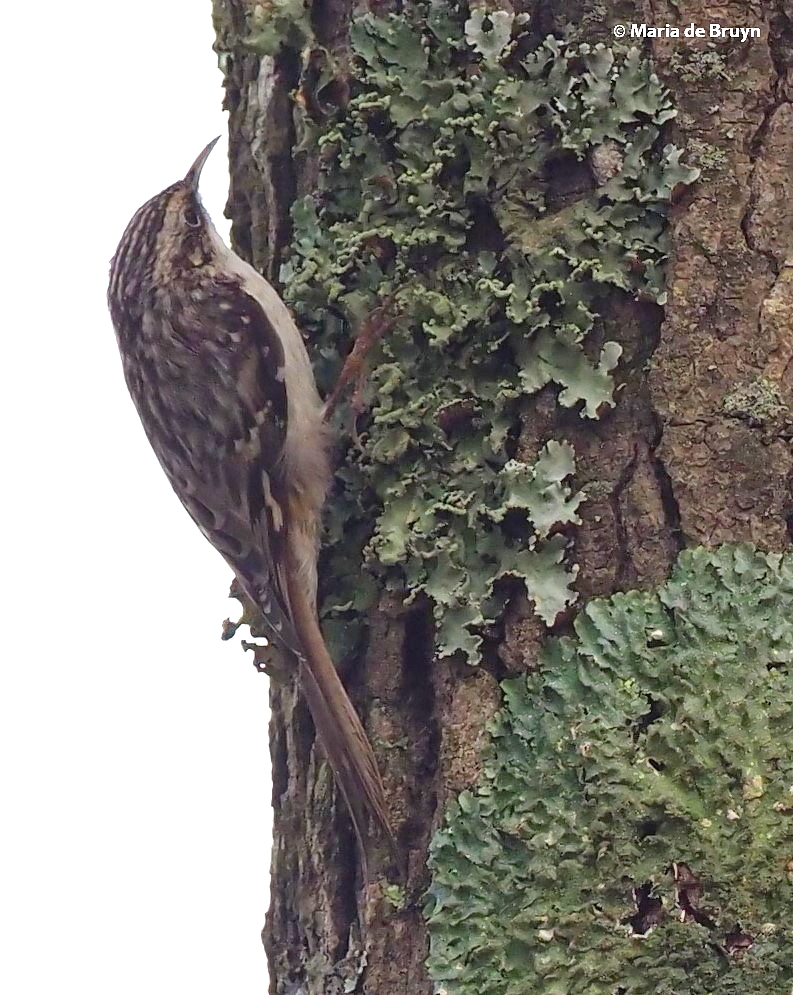
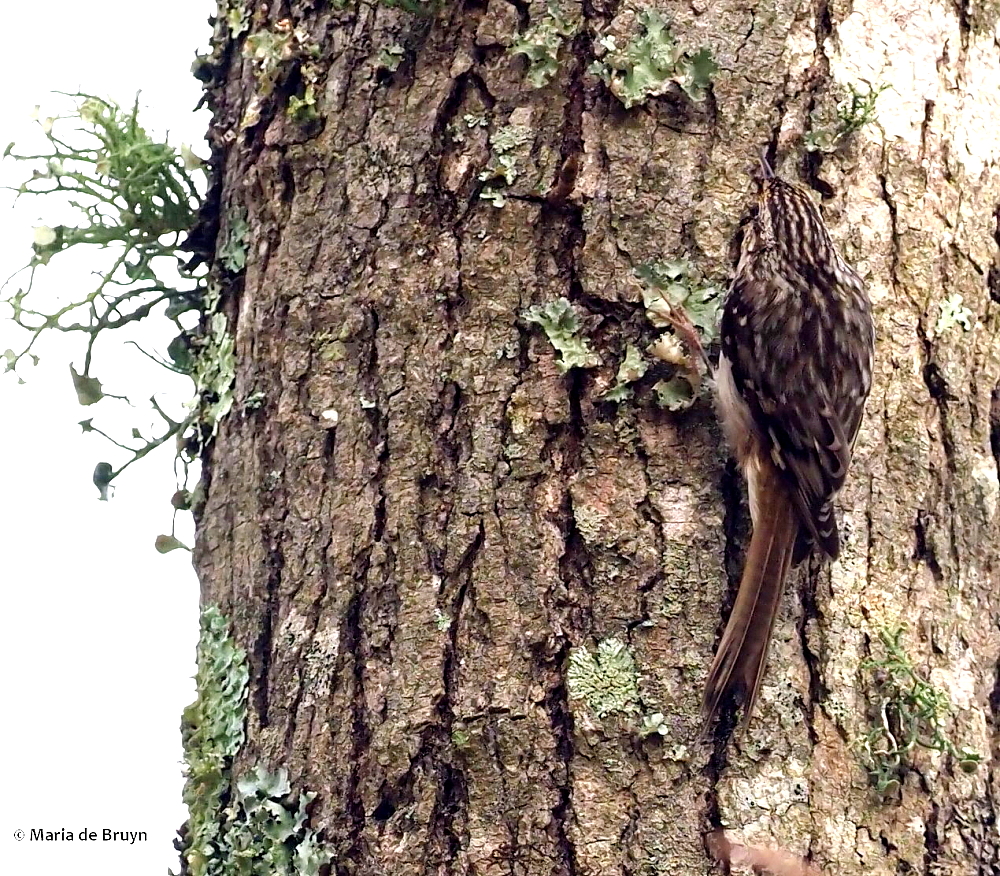
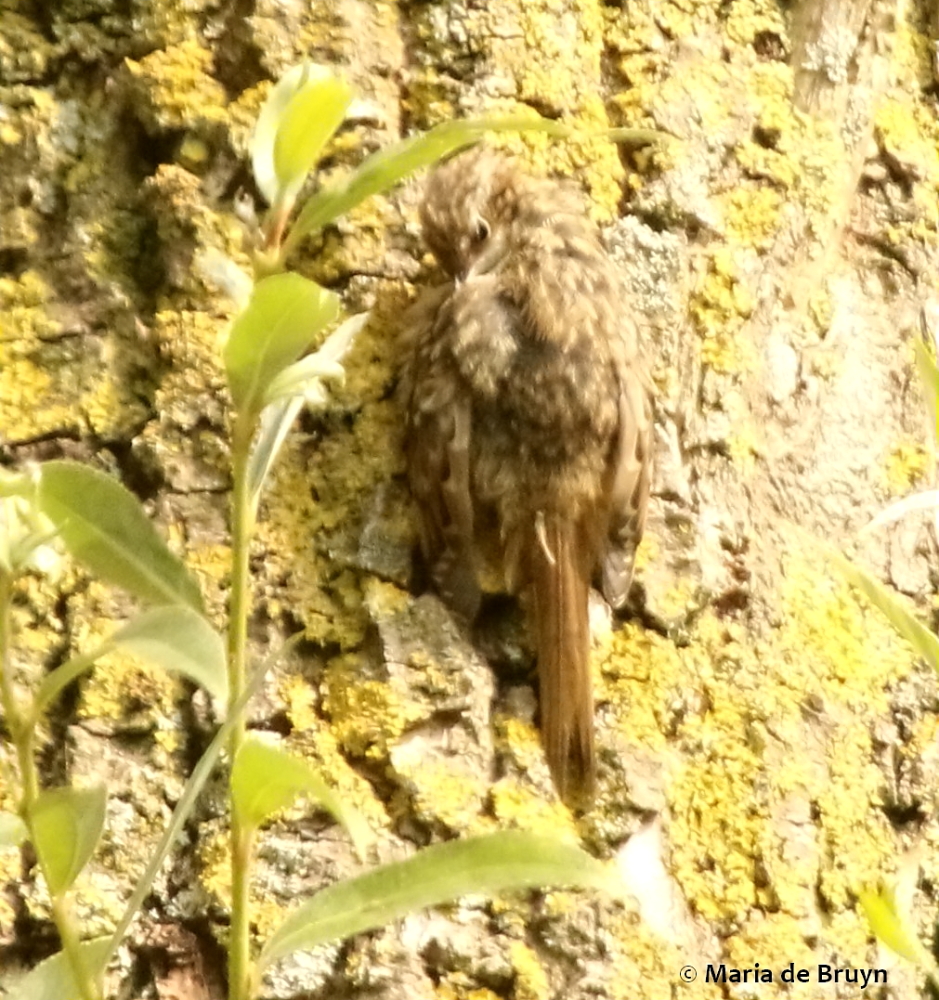
In North Carolina, we have a similar type of bird – the brown creeper (Certhia americana). I cannot hear their high-pitched call and therefore must rely on noticing movement to catch sight of them.


Watching them demands some concentration as they are continually on the move as they probe the bark and lichen. They really blend in well with the bark of their trees of choice. It’s a challenge to keep them in view.


They tend to nest in hardwood trees but prefer conifers for foraging. Like the neotropical woodcreepers, they have impressive claws to help them cling to the vertical tree trunks. An interesting fact: “By eating a single spider, a creeper gains enough energy to climb nearly 200 feet vertically.”


The short-toed treecreeper (Certhia brachydactyla) that I saw in the Hemmeland nature reserve in The Netherlands in 2018 is a similar bird. Like the brown creeper, it flies to the base of a tree and then works its way up the trunk as it searches for insects to eat. (It looks almost identical to the Eurasian treecreeper, so I hope it is identified correctly!)


The woodpeckers I’ve been able to see in Central America include several species that have similar-looking cousins further north. The golden-fronted woodpecker (Melanerpes aurifrons) has a yellow nape and patch at the base of the bill in much of its range. However, there is a Velasquez’s variant of this species that has a red cap and nape. I saw this one in a botanical garden in Quintana Roo, Mexico, in 2012.

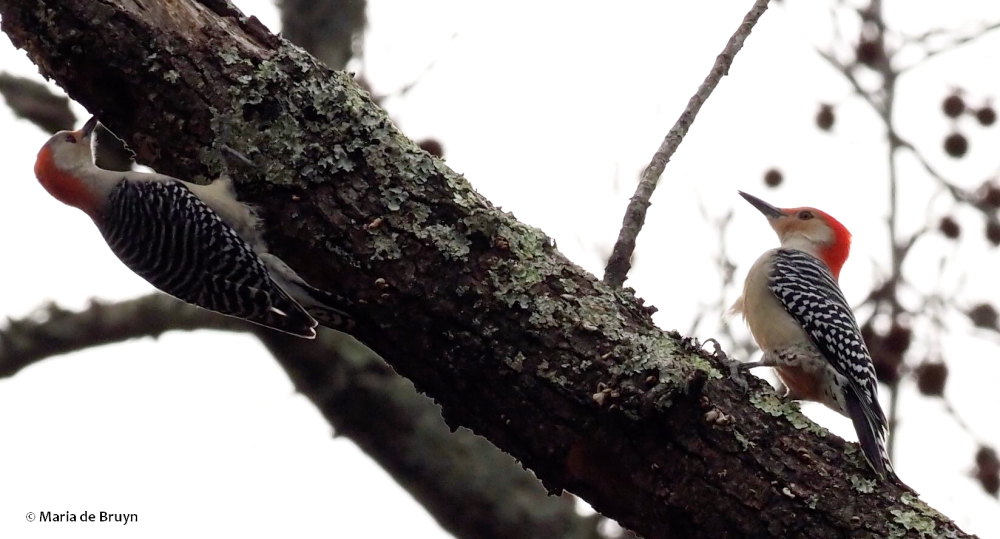
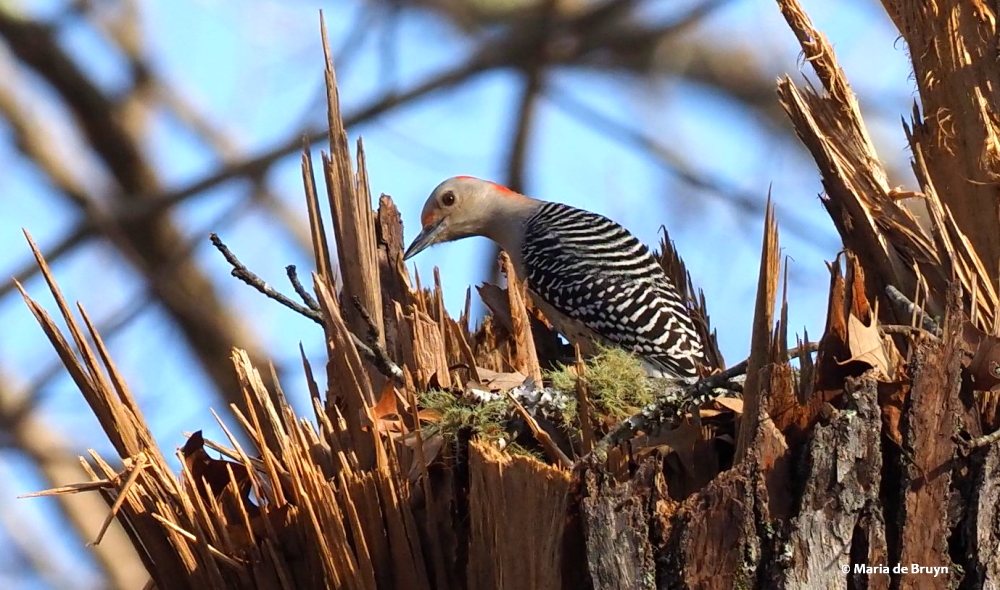
If you look at the red-bellied woodpecker (Melanerpes carolinus), which we see a lot in North Carolina, they look quite similar.


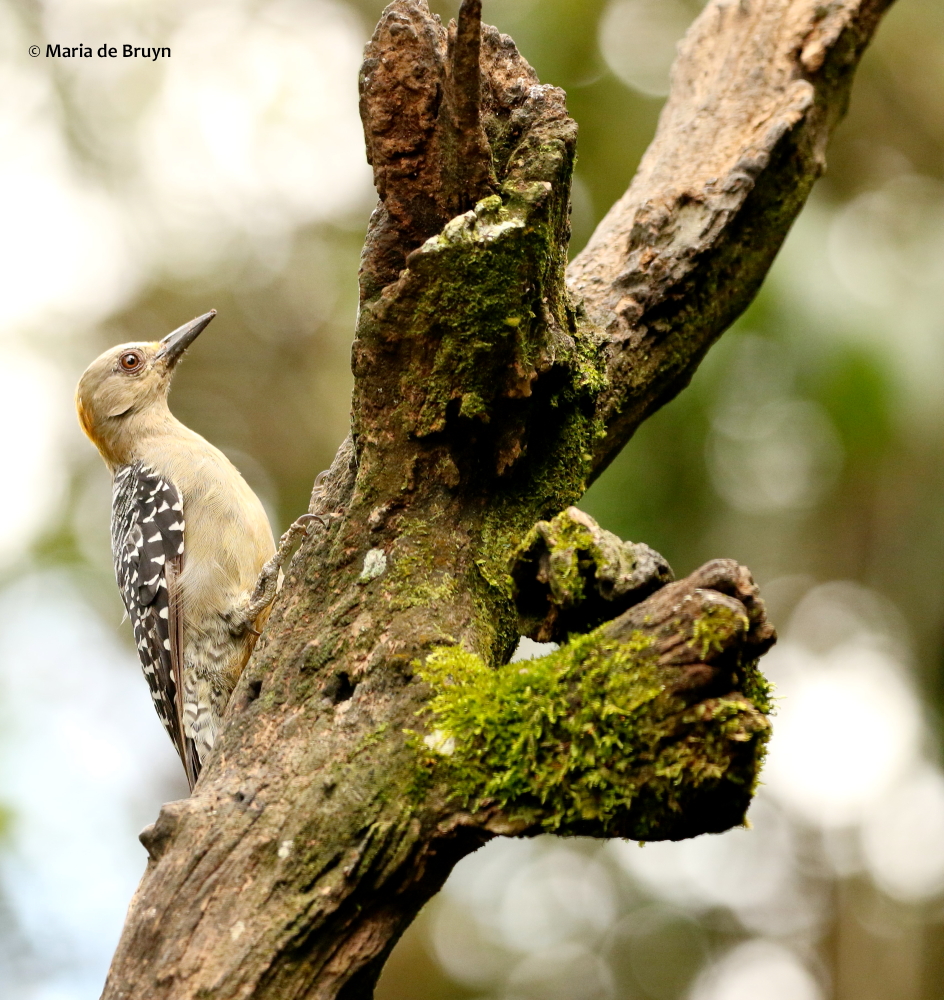
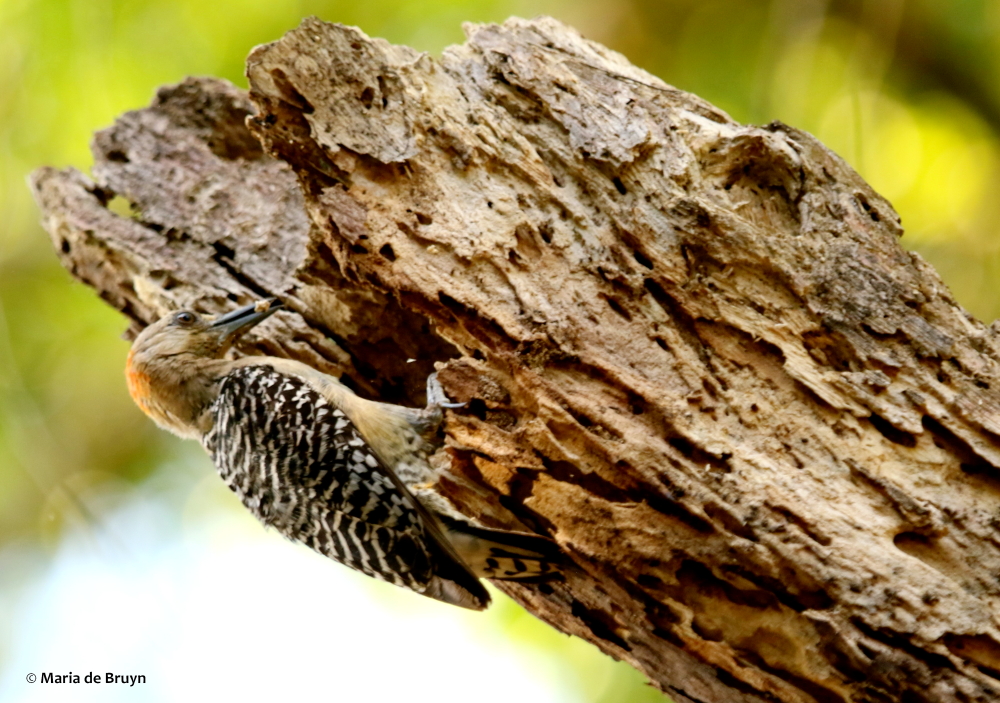
The Hoffmann’s woodpecker (Melanerpes hoffmannii) reminds me of the red-bellied species. The males have a red crown; the females do not. With their pale yellow napes, these birds look like a “pastel” version of the red-bellied species to me.

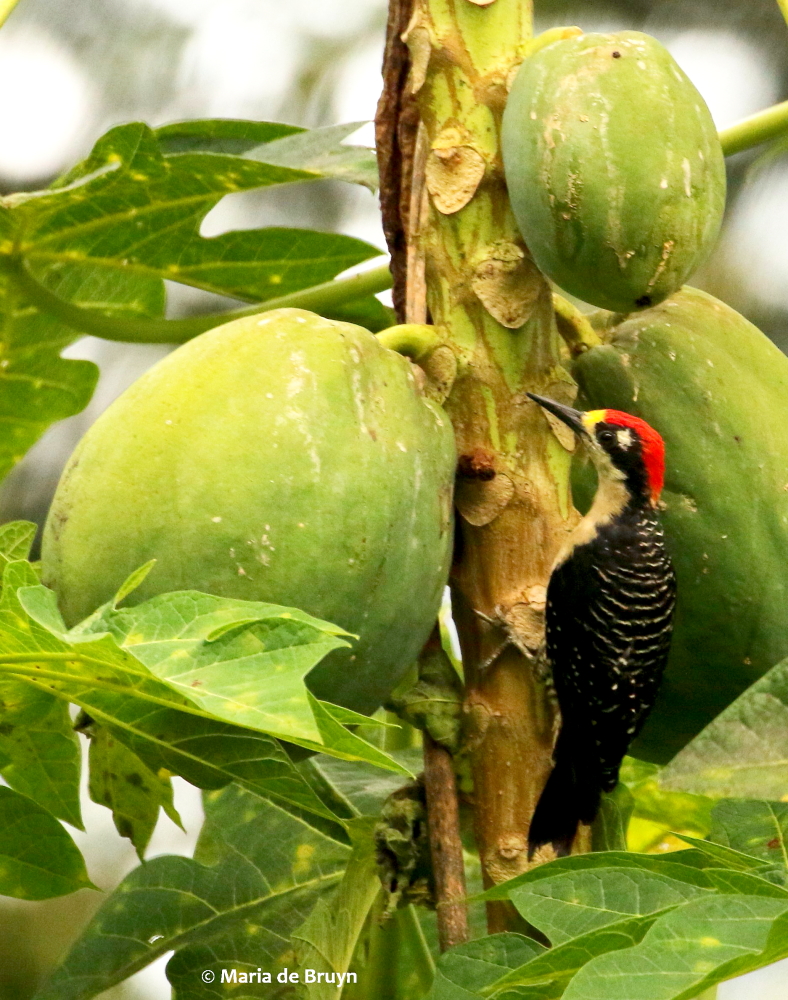
Red heads seem to be a popular “accoutrement” for the woodpeckers. The black-cheeked species (Melanerpes pucherani), seen in Arenal, Costa Rica, this past August has a red nape but a yellow forehead.


The acorn woodpecker (Melanerpes formicivorus) has a white forehead but also sports a red patch on the back of its head. Fewer than 9% of birds engage in cooperative breeding (where several related or unrelated adults cooperate in raising broods) – the acorn woodpeckers do this through coalitions of adults who nest together.


Another woodpecker with yellow hues that I’ve had the privilege to see is the golden-tailed woodpecker (Campethera abingoni), which I saw in Kruger National Park in South Africa in 2009. Like the above-mentioned woodpeckers, in this species the male also has red hues on its head.


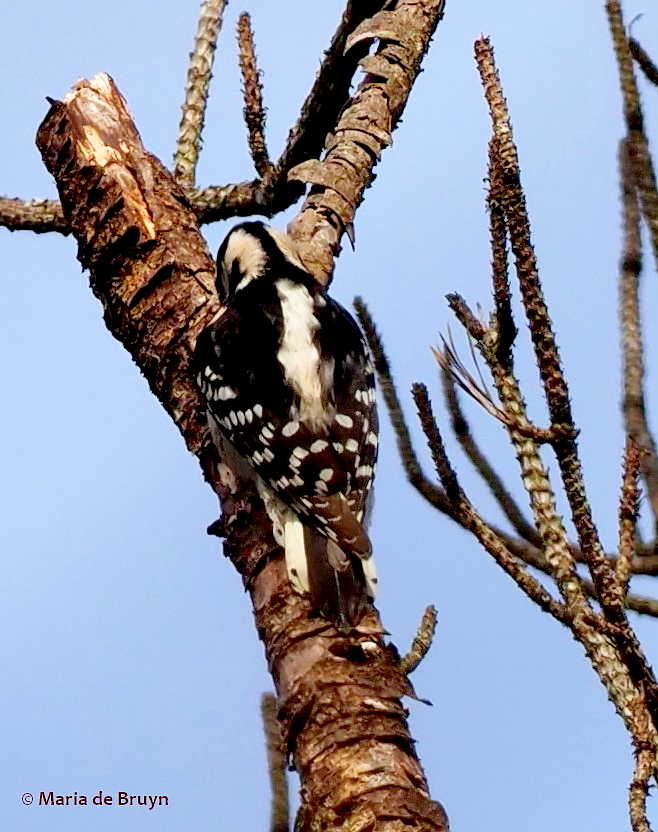
In North Carolina, two very similar smaller woodpeckers are characterized by males who sport a small red patch on the back of the head and females who lack the red coloring. The hairy woodpecker (Leuconotopicus villosus, below left) is the larger of the two species; the downy (Picoides pubescens) looks almost identical except that it is slightly smaller, has a shorter bill and no white spots on the outside tail feathers.


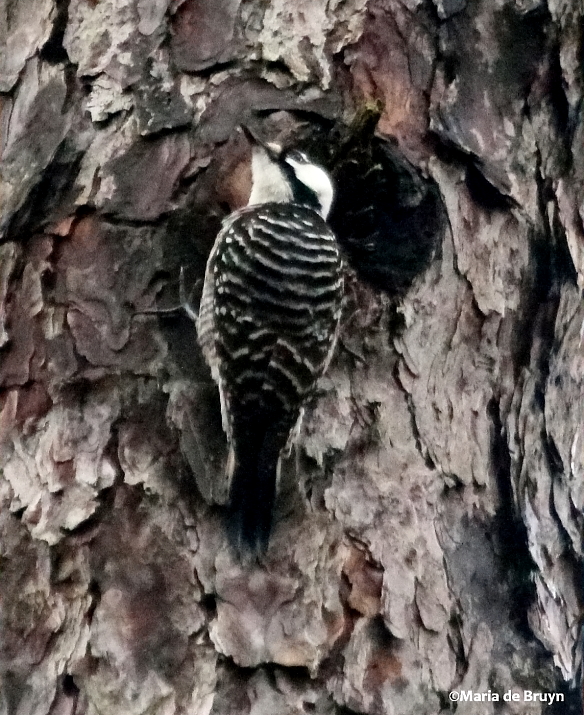
The endangered red-cockaded woodpecker (Dryobates borealis) looks like a larger version of the hairy and downy birds but it lacks any red patches anywhere on the head. Their common name refers to an almost invisible red streak (“cockade”) at the top of white cheek where it meets the black feathers atop the head. Unfortunately, this species (the only woodpeckers to make their nest holes in living trees) is under increased threat as the US Fish and Wildlife Service may remove some of the protective measures that have helped increase the population.


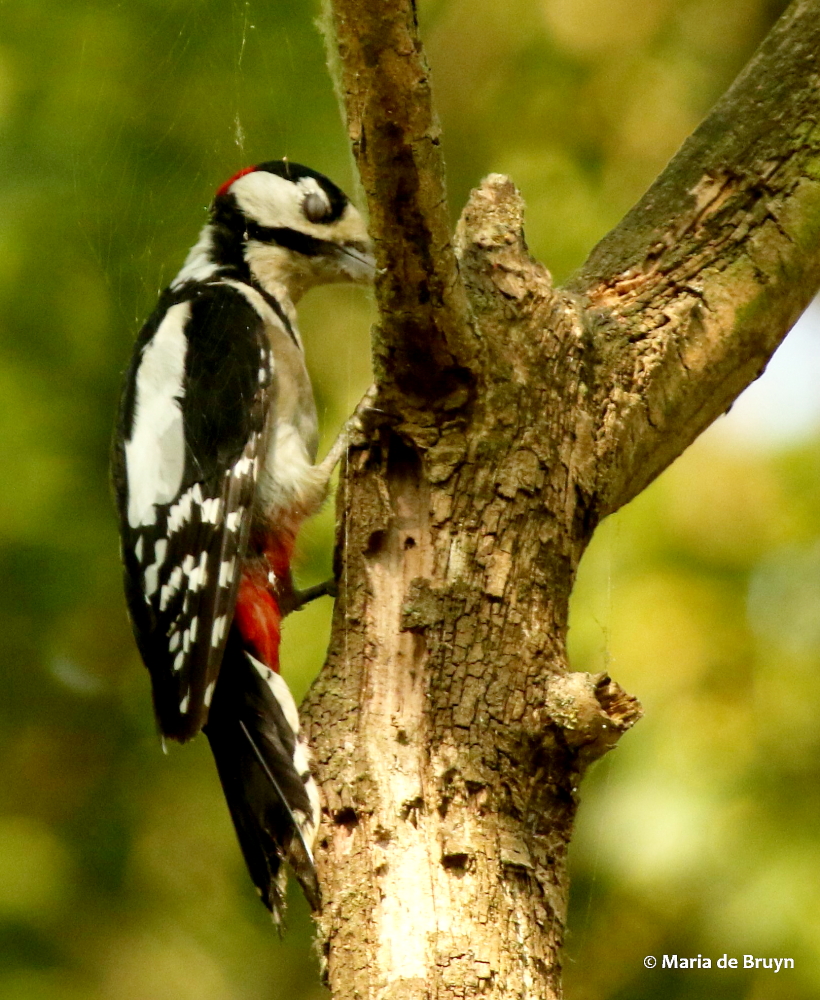
The great spotted woodpecker male (Dendrocopos major) that I saw in The Netherlands in 2018 does have a red patch on the back of its head; as in other woodpecker species, the females lack the red spot. This species also sports an obvious red belly (much more so than the red-bellied woodpecker!). An interesting feature of this woodpecker is that they undergo a complete moult after breeding that lasts up to 120 days.


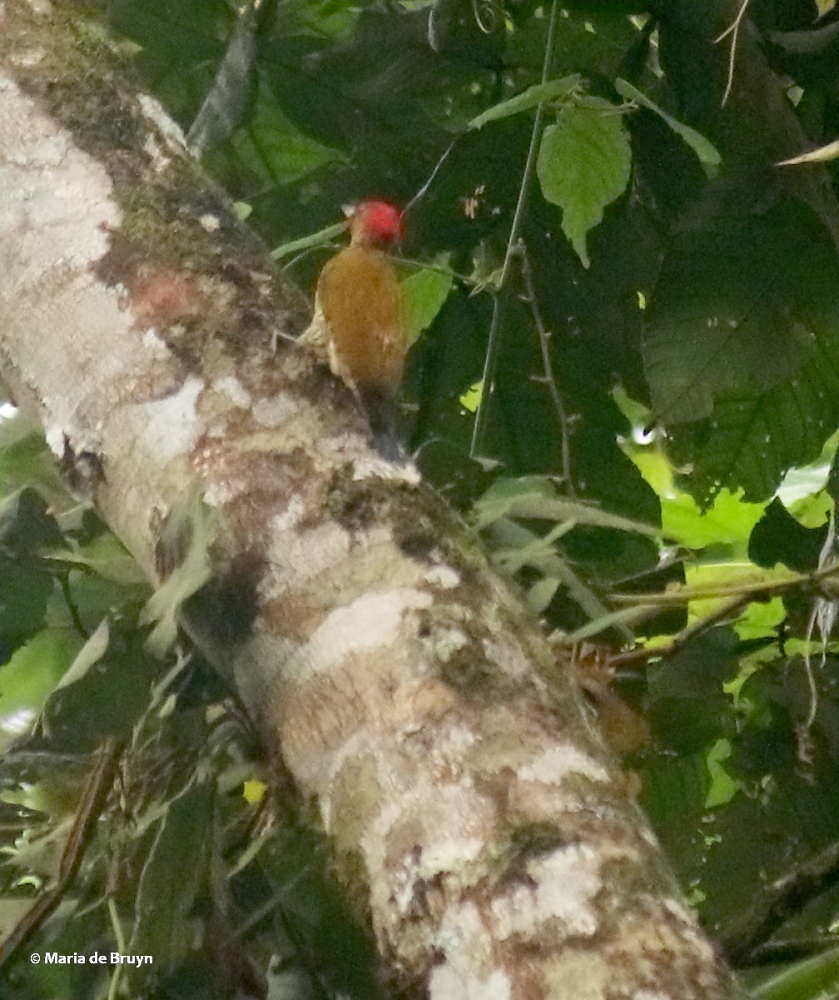
The rufous-winged woodpecker (Piculus simplex, right) only put in a very brief appearance this past August, but made it obvious that they, too, have a red crown. The golden-olive woodpecker (Colaptes rubiginosus) continued the red accented plumage – the males complement their crimson crown with a red “moustachial” stripe. There are 19 sub-species with slightly different coloration.


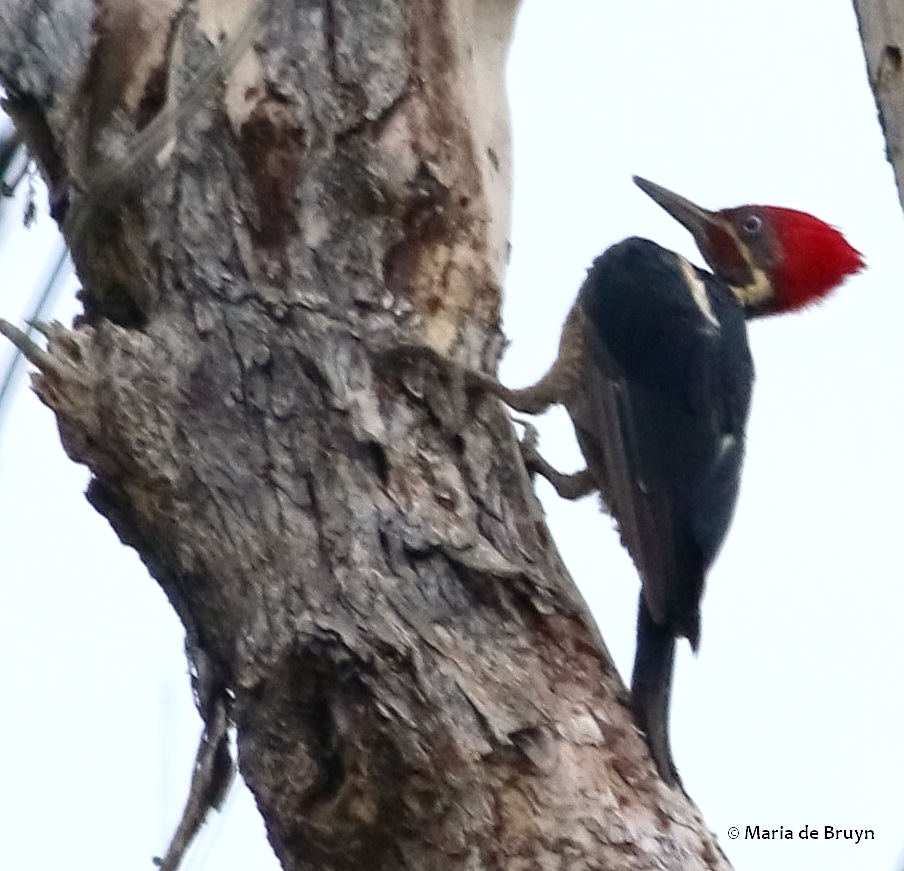
The large lineated woodpecker (Dryocopus lineatus, left) in Costa Rica closely resembles the pileated woodpeckers (Dryocopus pileatus, right) that we have in North Carolina. The males of both species can be distinguished by the red stripe going down their faces and both types of woodpeckers are known for their drumming.

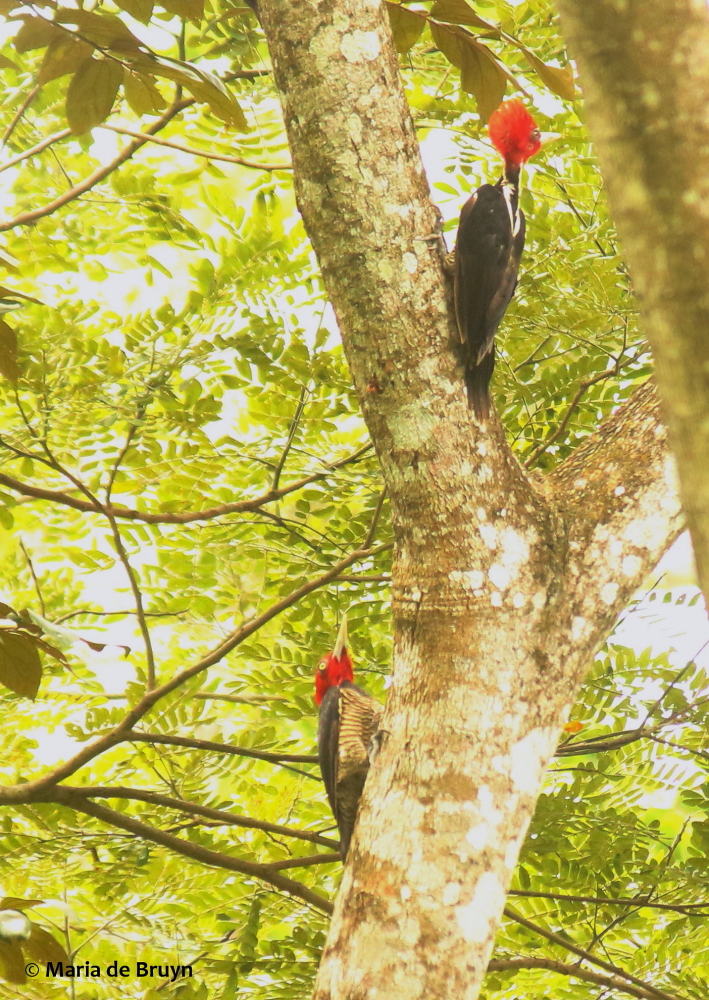
The pale-billed woodpeckers (Campephilus guatemalensis) looks a bit like the lineated and pileated species but they are even larger birds that feature an entirely red head. The adults have a light-colored beak that gives them their common name; immature birds have darker bills that lighten with age. The females can be distinguished by their black instead of red throats.

We were lucky to see a pair of these birds foraging along a large stream, accompanied by a third bird – perhaps one of their young from the previous breeding season? This species has not been studied thoroughly – for example, the incubation period and time from hatching to fledging are still both unknown.


Finally, I’ll end this long blog with two more woodpeckers that we saw in Costa Rica. There were smoky brown woodpeckers (Dryobates fumigatus) in a couple places we visited but it was difficult for me to get a good photo in the overcast rainy conditions. They are rather plain birds but again the males are distinguished by a red cap. These were in a tree with black-cheeked woodpeckers.

I had a bit more luck photographing the chestnut-colored woodpecker (Celeus castaneus). This attractive bird has reddish brown plumage and a shaggy crest. Its head feathers may be lighter in color and the males have bright red cheeks.


As there are a couple more woodpecker species where I live that I also enjoy seeing, I’ll feature them in the next blog (a shorter one!) Have a nice day!