Juneteenth, historic Stagville and wildlife at Horton Grove

volunteer IMG_3788© Maria de Bruyn resSeveral weeks ago, in honor of Juneteenth, the local Triangle Land Conservancy partnered with the Stagville Foundation to inform people about the remnants of a former plantation and its surrounding meadows and forest. I attended and was indeed educated and enlightened about the local history and excited by the local wildlife.

Juneteenth (June 19th) is the oldest celebration commemorating the end of slavery in the United States. “Historic Stagville” was once the largest plantation in the state of North Carolina. The almost 30,000 acres were tended by some 900 slaves, most of whom lived in family groups as the plantation owner families tended not to sell the laborers they “owned”.
Stagville IMG_3824© Maria de Bruyn res Stagville IMG_3747© Maria de Bruyn res

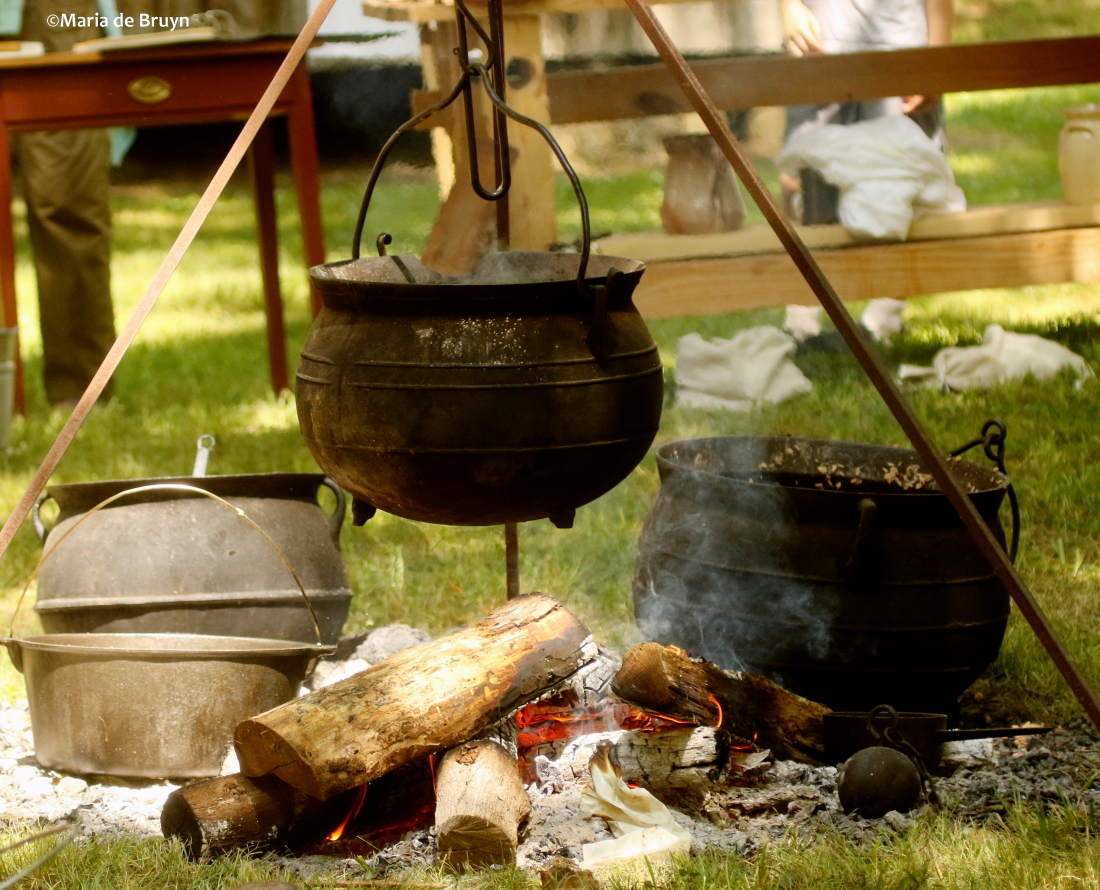
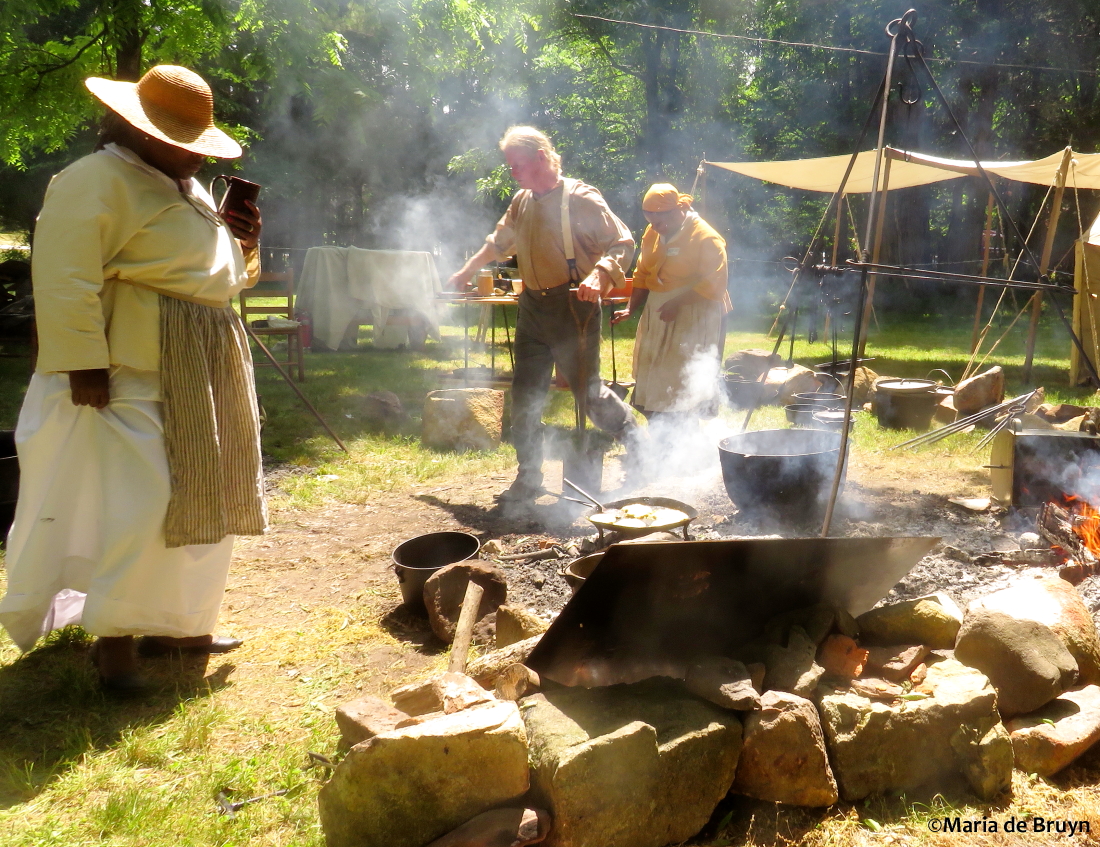
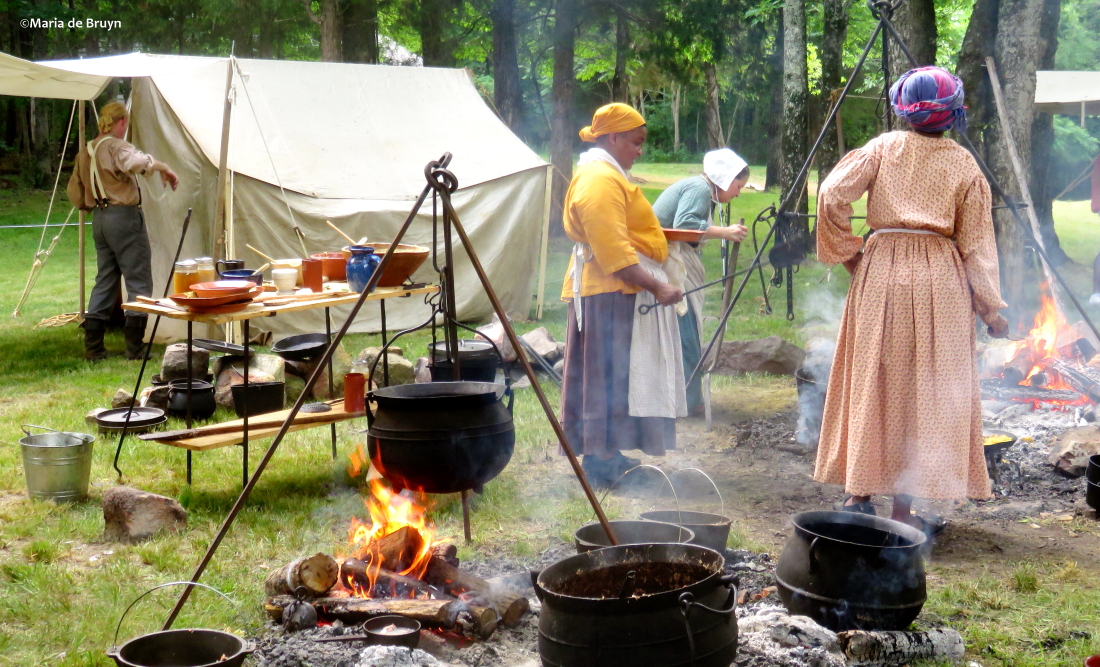
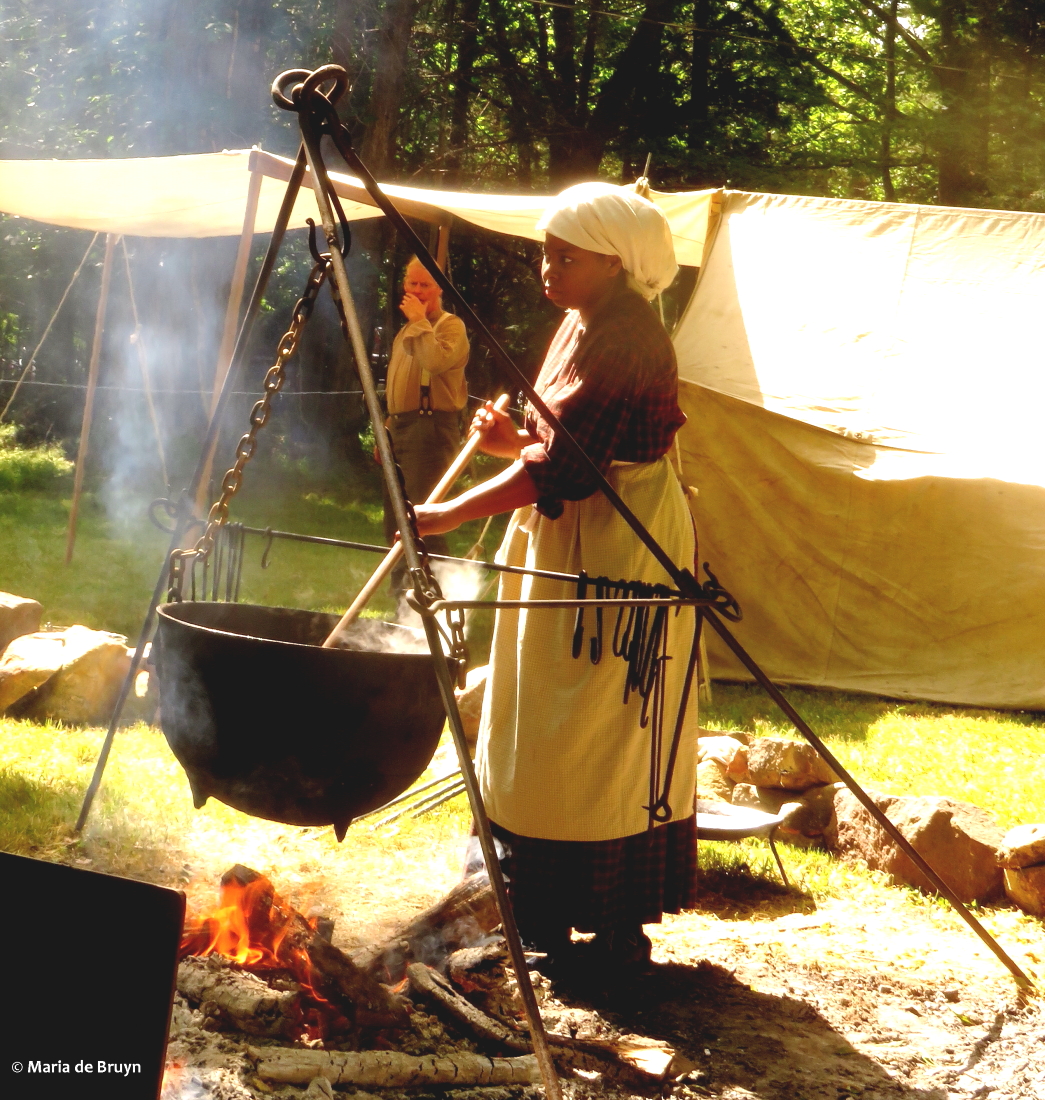
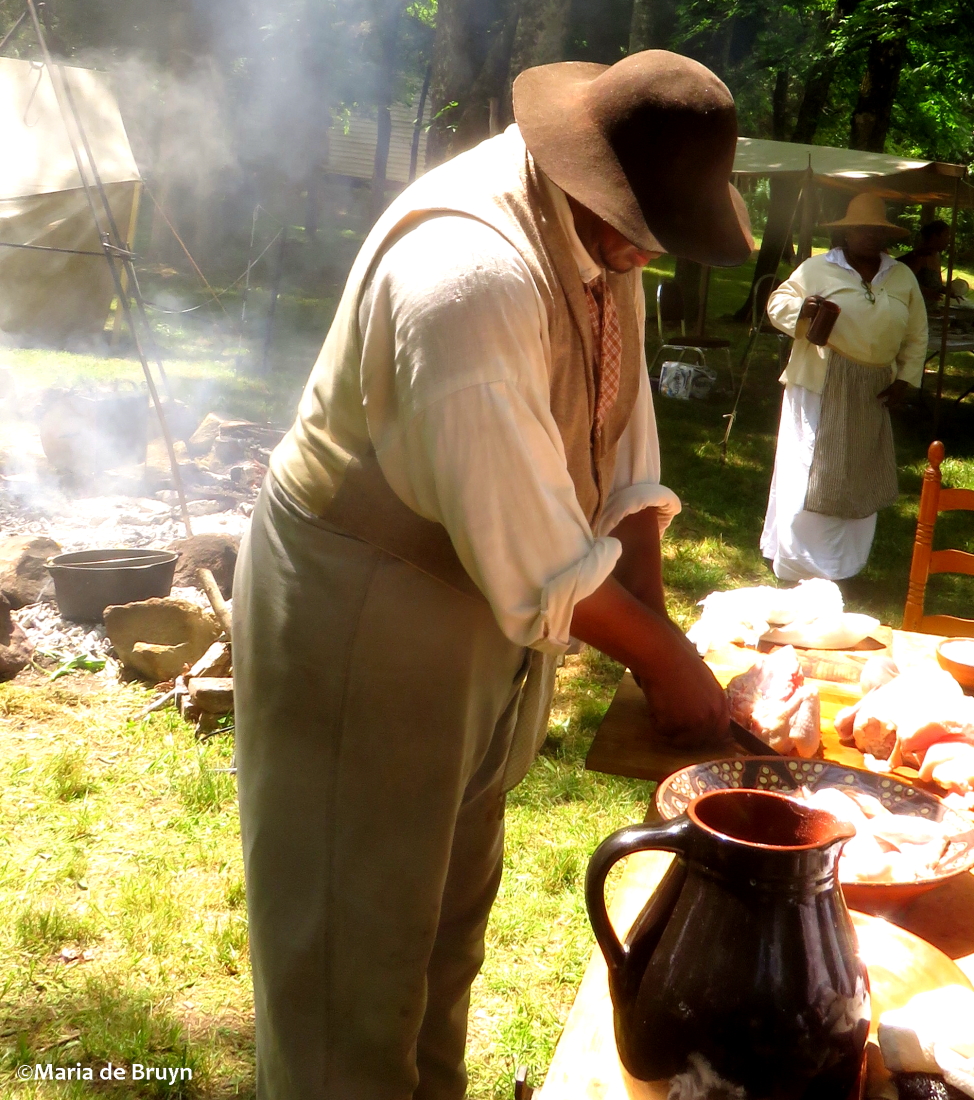
Local volunteers were dressed in period costume and demonstrated Southern cooking as they prepared a one-pot (non-vegetarian) meal for visitors and a more sumptuous traditional dinner to be served to all the volunteers at the end of the festivities.

Stagville IMG_3813© Maria de Bruyn res Stagville IMG_3810© Maria de Bruyn res

Stagville DK7A4791© Maria de Bruyn resThey cooked over open fires and explained which local vegetables they were using to prepare the dishes.

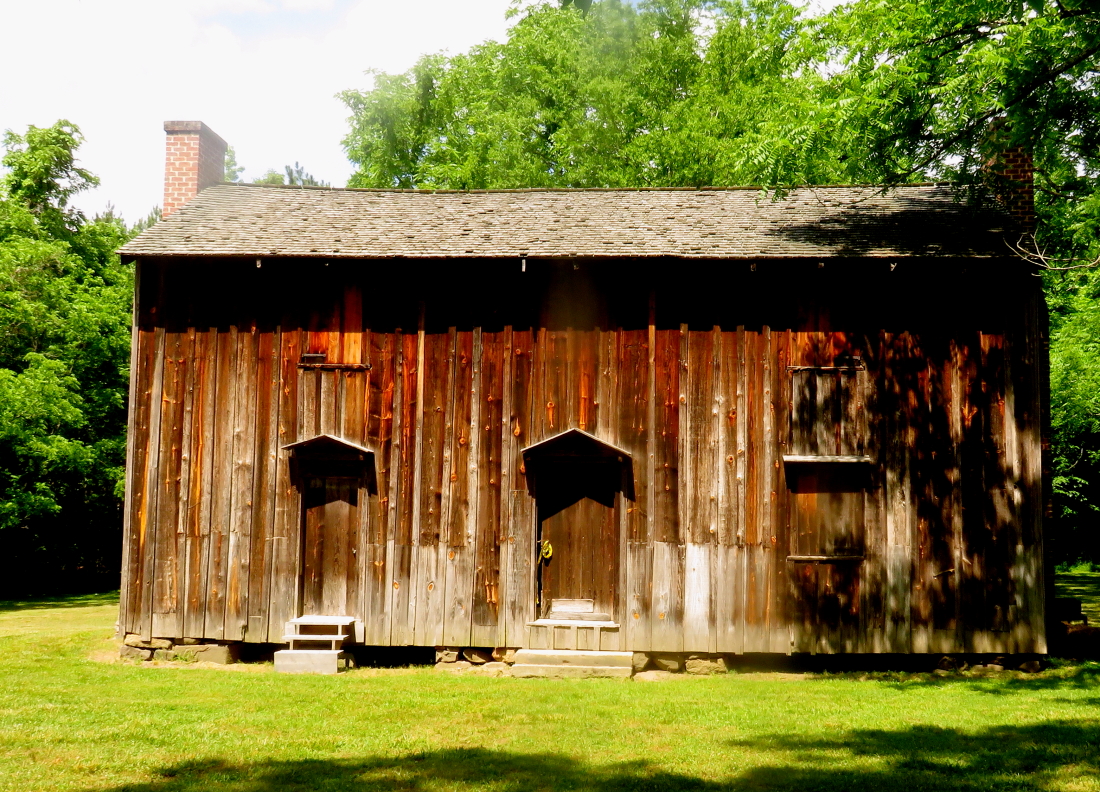
Meanwhile, other volunteers gave us some history about Stagville as we visited the Great Barn, one of the multifamily houses built for slaves and another home constructed by freed slaves who became sharecroppers after the US Civil War ended. The structures were produced by the slaves, who included a number of skilled craftsmen.
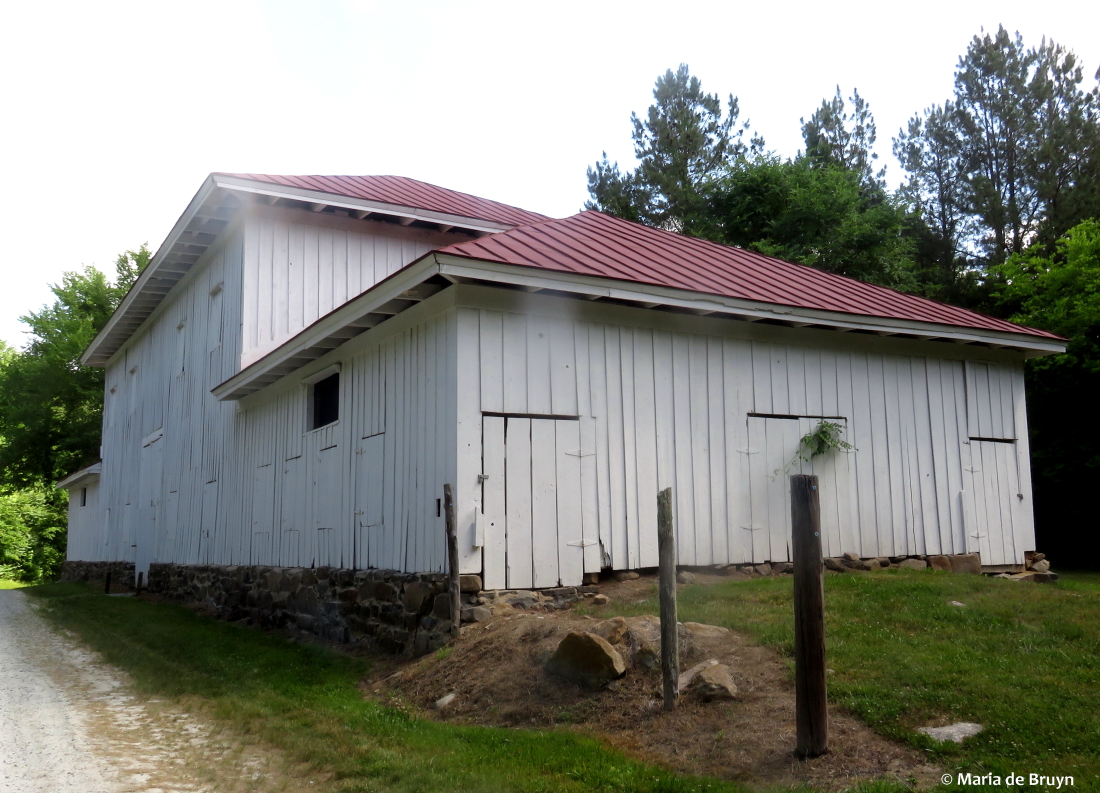
great barn IMG_3759© Maria de Bruyn resThe 3-story Great Barn was the largest structure of its kind when it was built in the space of five months in 1860, housing some farming tools and equipment but primarily serving as an enclosure for 75 mules.

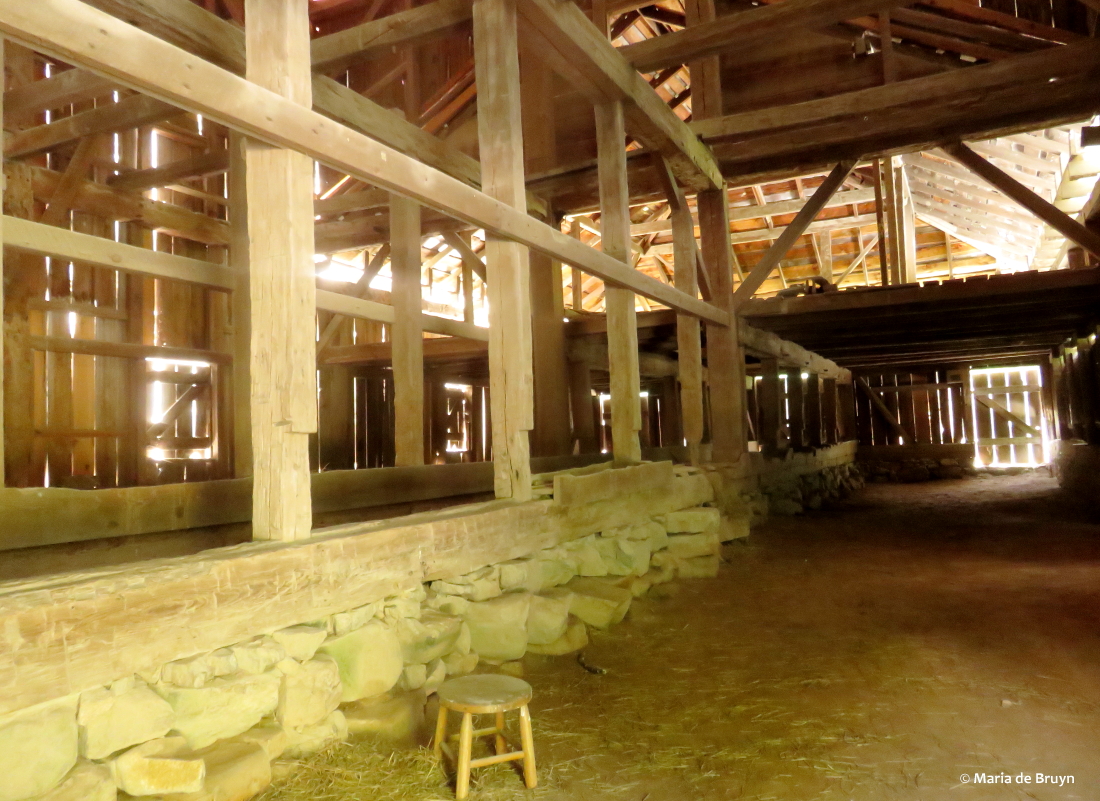


Great barn IMG_3721© Maria de Bruyn resGreat barn IMG_3728© Maria de Bruyn res Great barn  IMG_3720© Maria de Bruyn res

slave house IMG_3791© Maria de Bruyn resThe houses for the slave families were well built with wooden floors and fireplaces. This was not benevolence on the part of the plantation owners but done from an economic perspective – it would cost less to have the workers housed a bit decently rather than to have to pay medical bills to keep them healthy enough for labor.

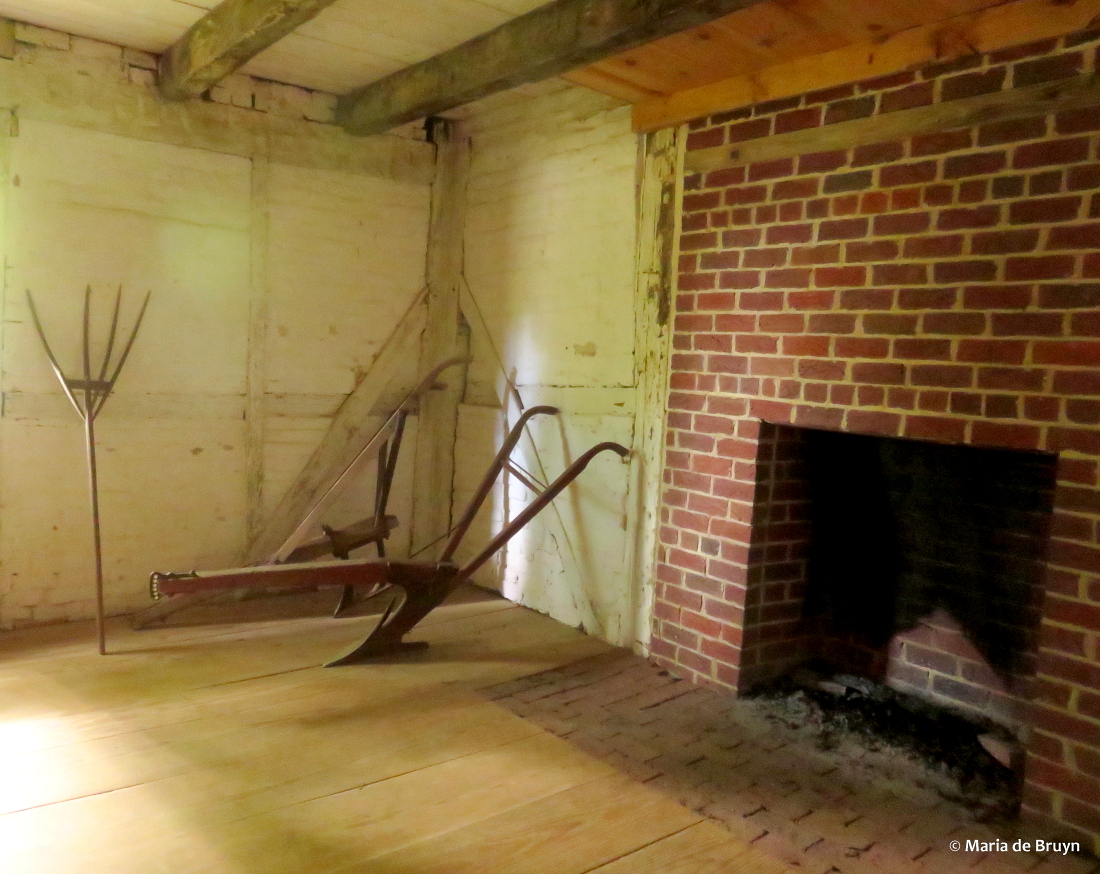
Slave house IMG_3750© Maria de Bruyn res sharecropper house IMG_3752© Maria de Bruyn res

A couple slaves were freed before emancipation and a very few escaped. In North Carolina, some slaves were taught to read and write and letters written by two individuals who left Stagville provide some written history about the conditions there. Today, some descendants of freed Stagville slaves still live in this area.
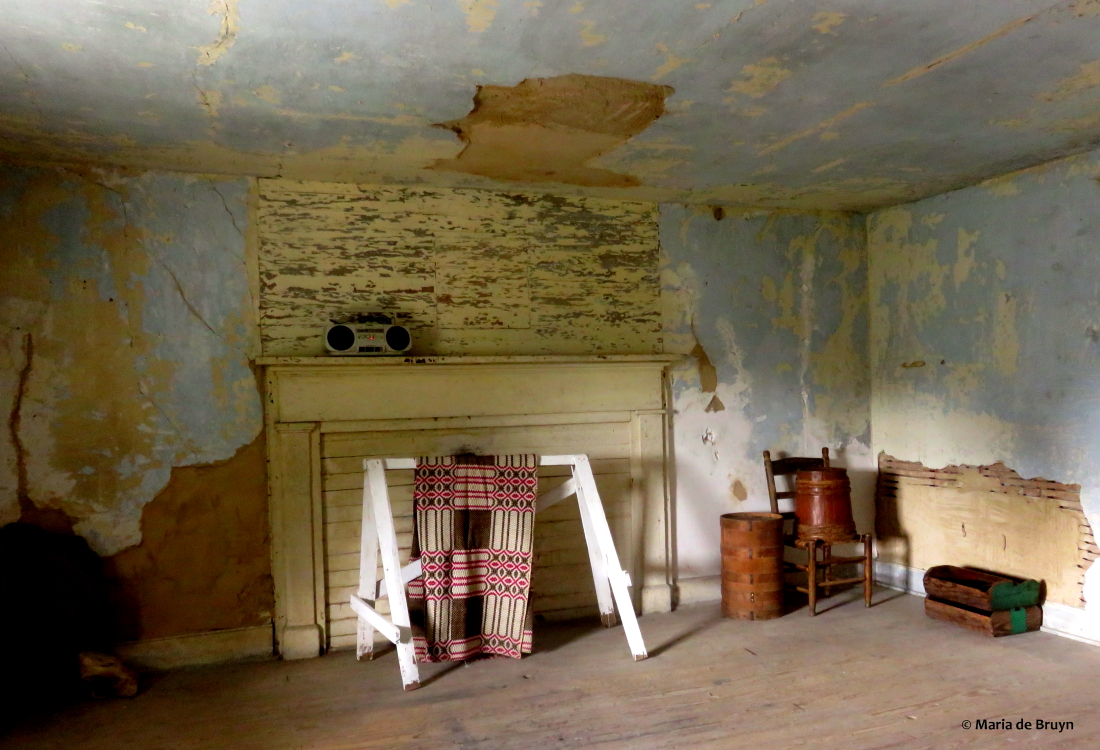
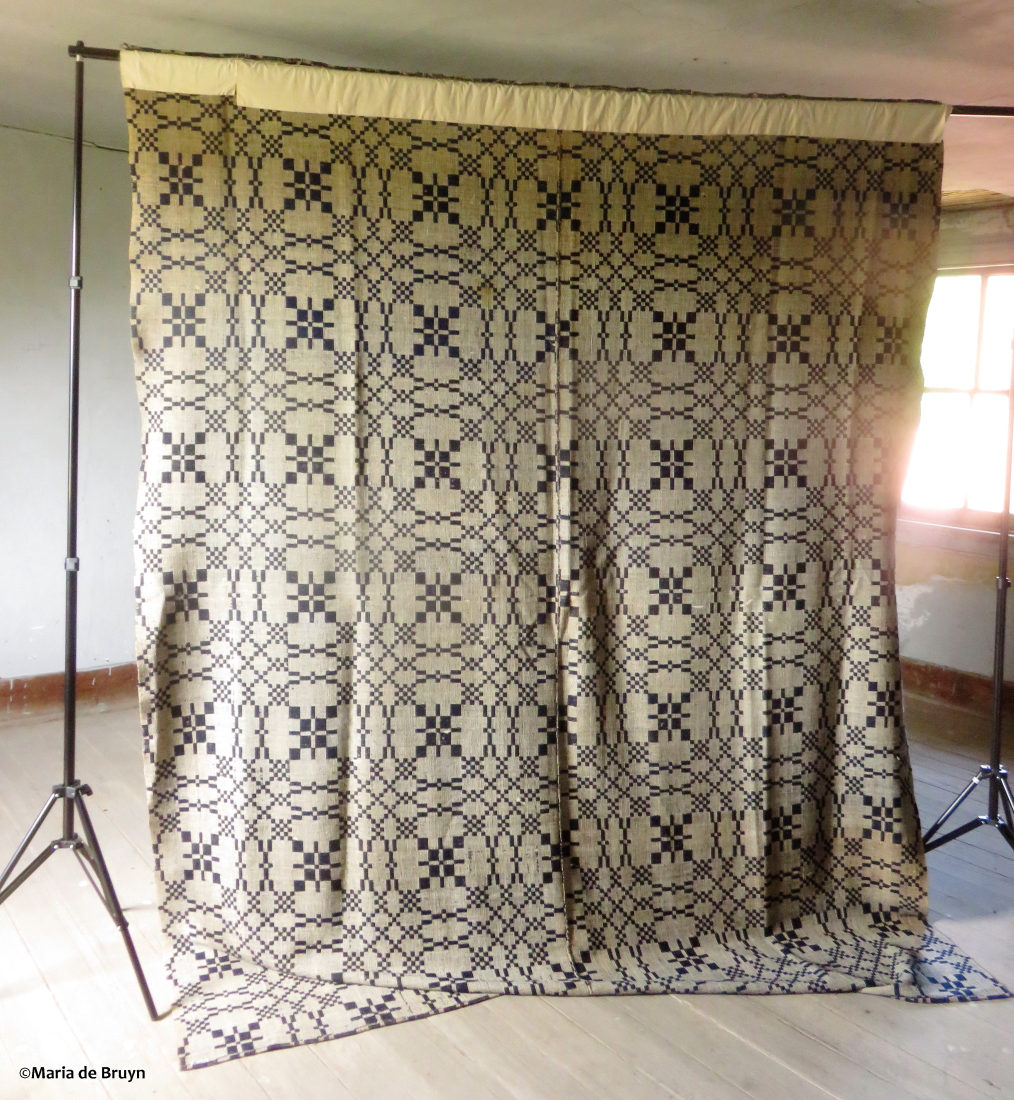
slave house IMG_3771© Maria de Bruyn res quilt IMG_3779© Maria de Bruyn resquilt IMG_3780© Maria de  res

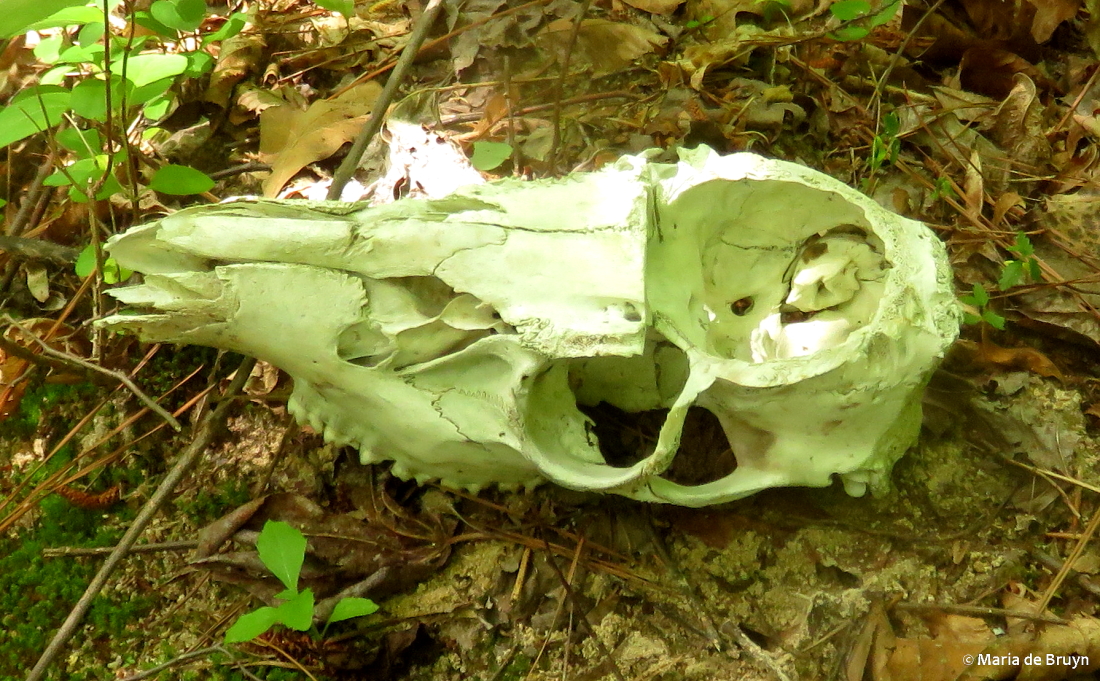
deer skull IMG_3770© Maria de Bruyn resAfter the tour of the remaining buildings and seeing two quilts on display in the sharecropper home open to the public, I joined a few others for a walk through the surrounding forest. We came across the skull of a white-tailed deer (Odocoileus virginianus) with an odd shape – the Conservancy tour guide explained that the top of the deer’s head had been sawed off so a hunter could take home its antlers.
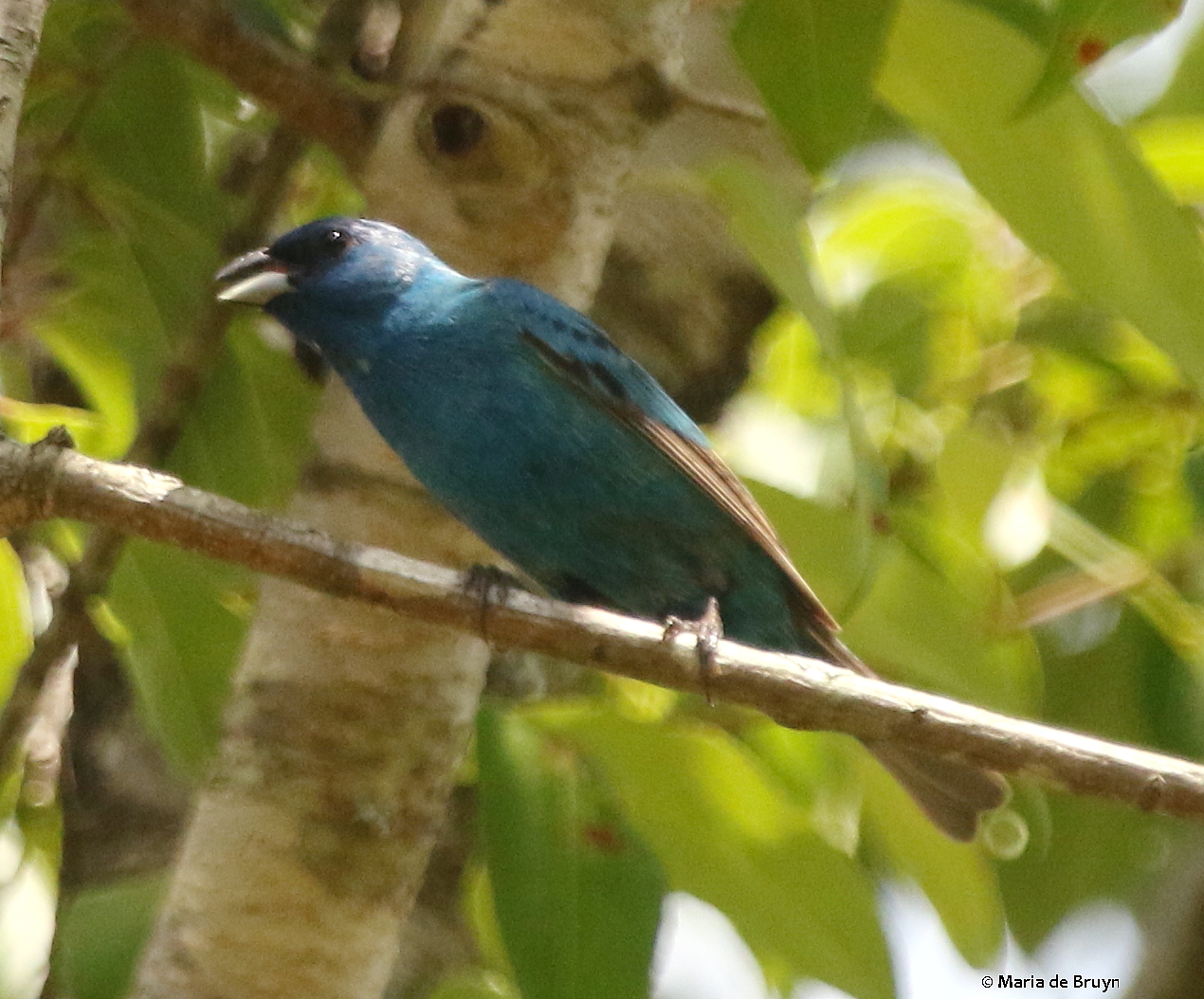
Indigo bunting DK7A4816© Maria de BruynAfter the walk, I went on to the Horton Grove Nature Preserve, up the road from Stagville. The walking and hiking trails are all named after slave families that lived on the plantation.  For example, the Justice trail commemorates a family that included a man who was interviewed for a slave narrative project in 1937. I saw some indigo buntings (Passerina cyanea), who sang loudly, a couple red-eyed vireos (Vireo olivaceus) who were collecting nest materials, and a male common yellowthroat (Geothlypis trichas) who was having a meal.
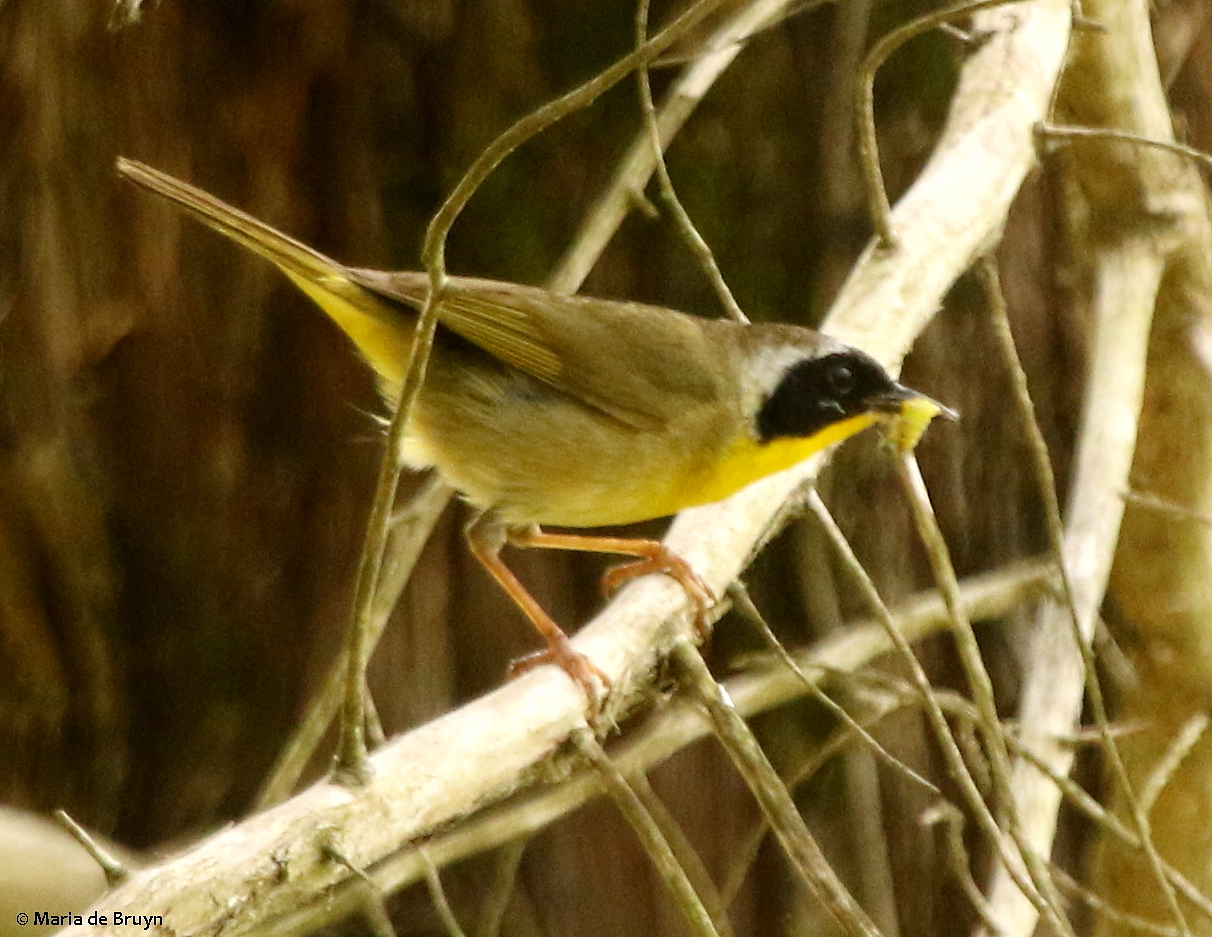
red-eyed vireo DK7A4922© Maria de BruynCommon yellowthroat DK7A5611© Maria de Bruyn

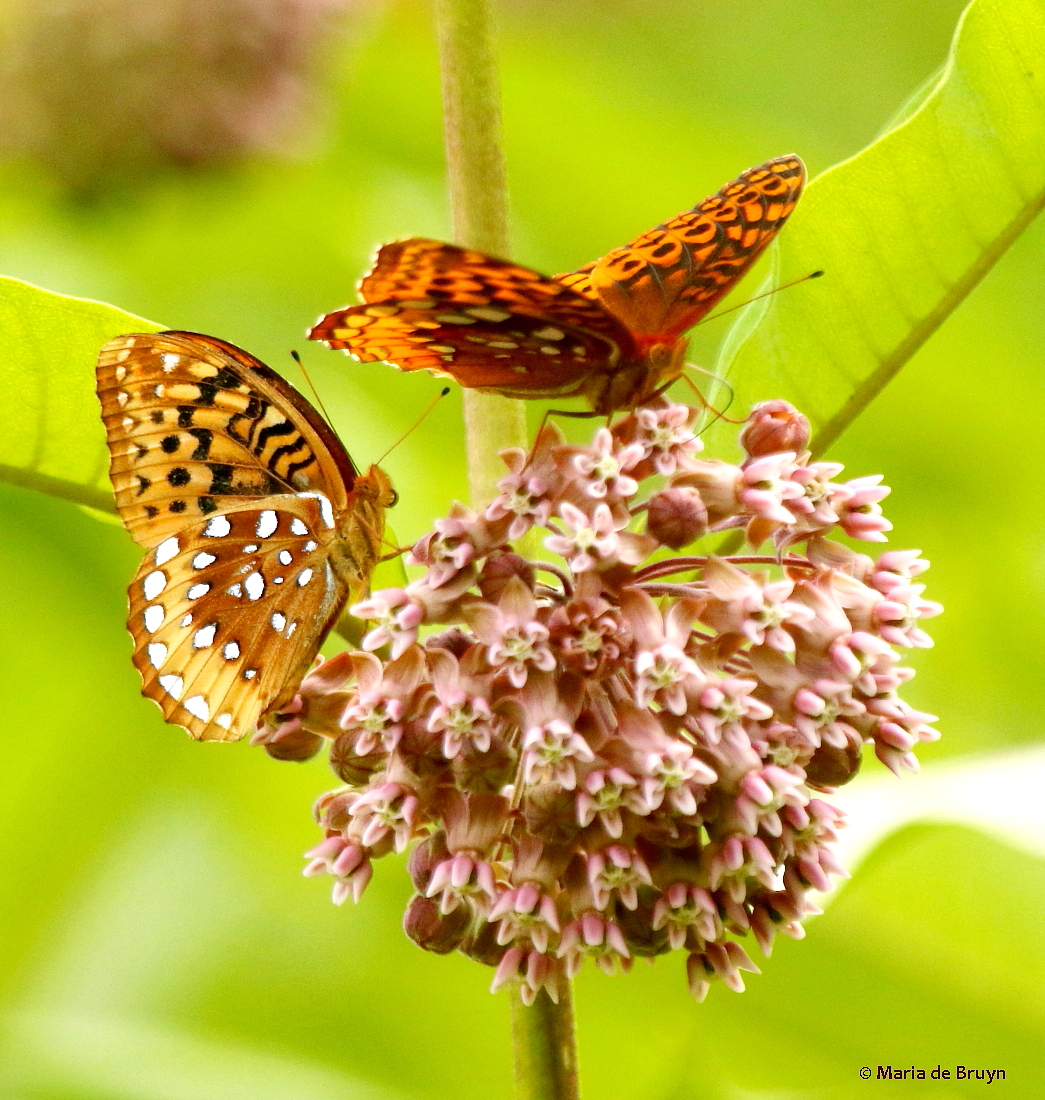
Some great spangled fritillary butterflies (Speyeria cybele) were very busy feeding in a part of the meadow that was crowded with common milkweed flowers (Asclepias syriaca) in full bloom.
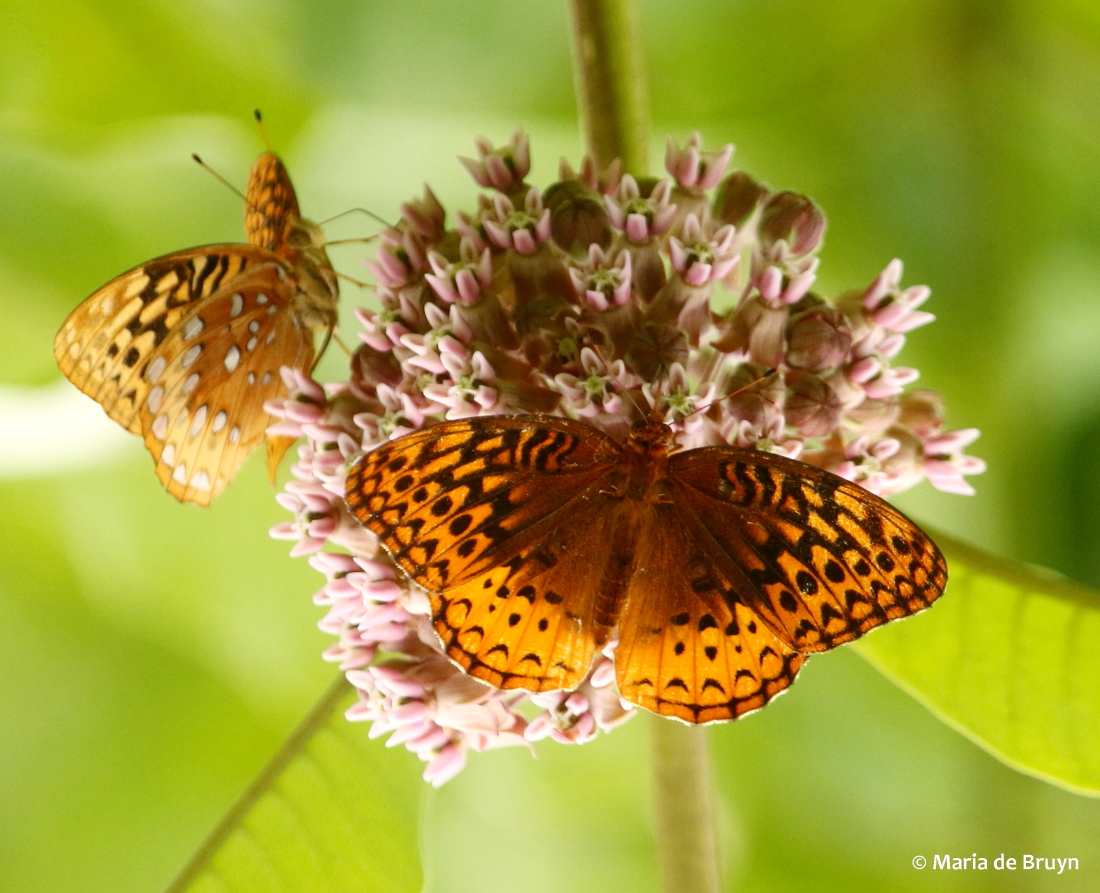
great spangled fritillary DK7A5377© Maria de Bruyn res great spangled fritillary DK7A5350© Maria de Bruyn res


great spangled fritillary DK7A5011© Maria de Bruyn resGreat spangled fritillary DK7A5052© Maria de Bruyn res

The dogbane beetles (Chrysochus auratus) were numerous and looking for mates as they trundled around on the dogbane plants (Apoynum cannabinum).
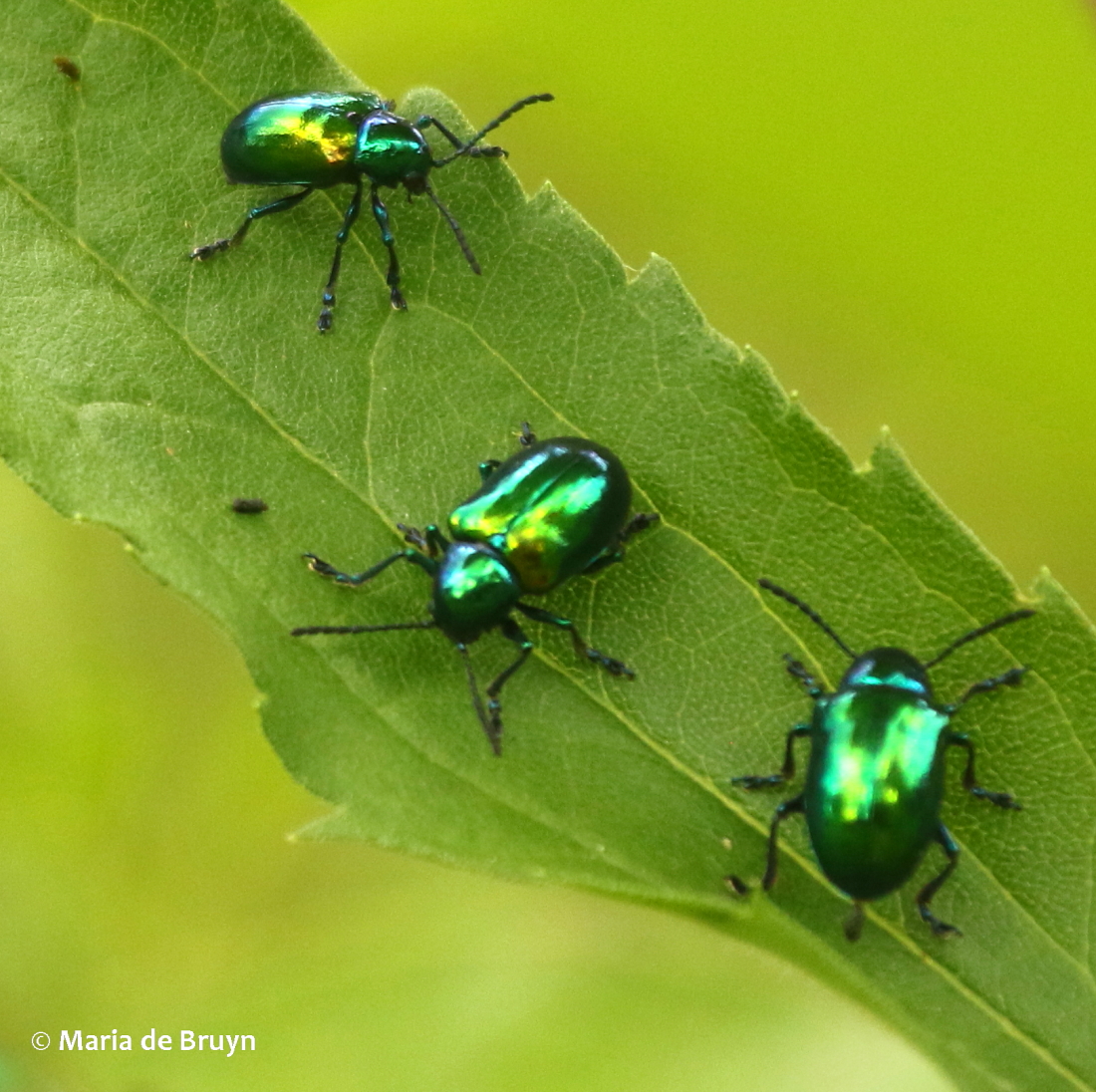
dogbane beetle DK7A5209© Maria de Bruyn resdogbane beetle DK7A5441© Maria de Bruyn

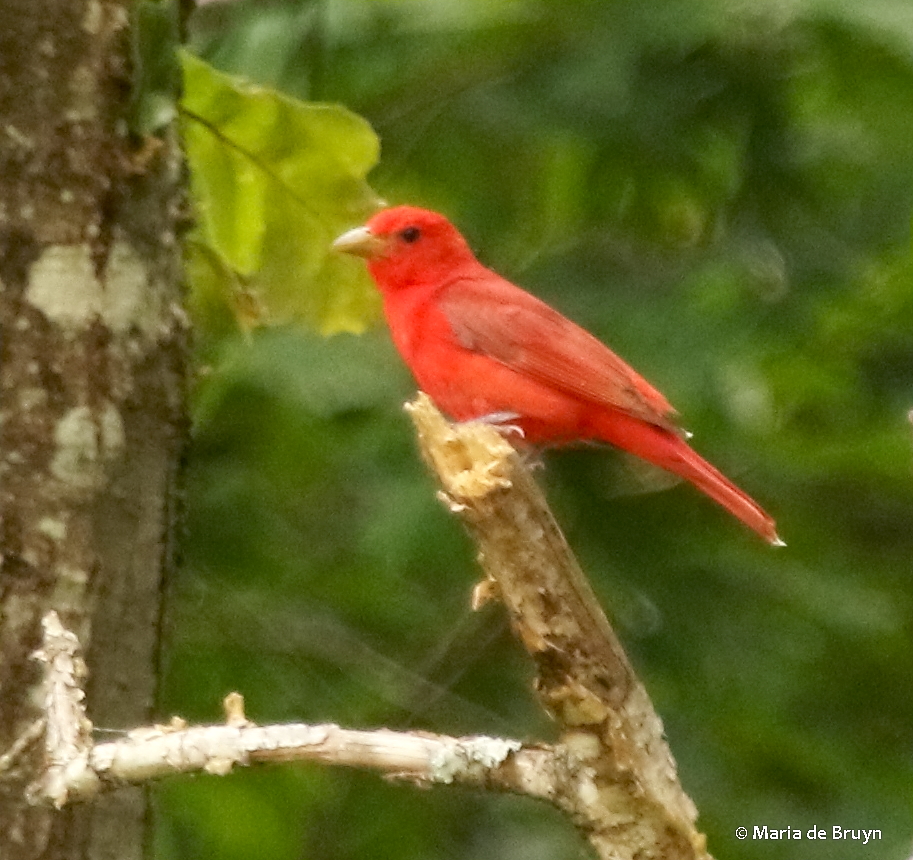
summer tanager DK7A5572© Maria de Bruyn


The morning ended with a brief glimpse of a male summer tanager (Piranga rubra) in the distance, a bright note to end the outing.
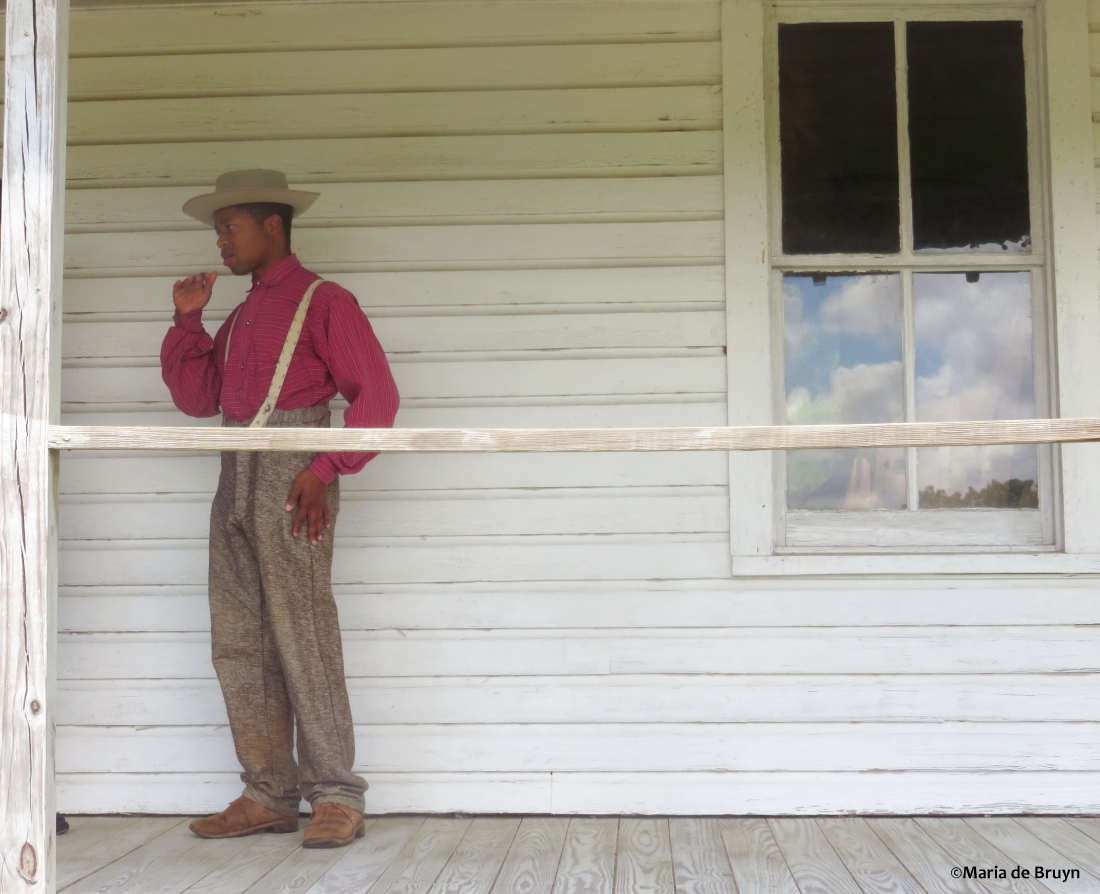
 

volunteer IMG_3782© Maria de Bruyn resUnfortunately, recent events in Charleston have emphasized once again that the racism underlying the system that created Stagville still exists and still leads to violence against non-Caucasian people. This blog does not intend to imply that the Stagville plantation and its heritage contribute to making my world more beautiful – what IS beautiful is the way in which the Stagville Foundation volunteers work to inform and educate others about the history that affects our current society.

We must all continue to address the aberrations of hatred and discrimination based on race (and other culturally assigned characteristics such as gender and ethnicity) and work to educate ourselves, our fellow adults and young people on the need to simply treat everyone as we personally wish to be treated — we are all part of the human race and no other “races” (should) matter.

 

Nesting perils – or not?

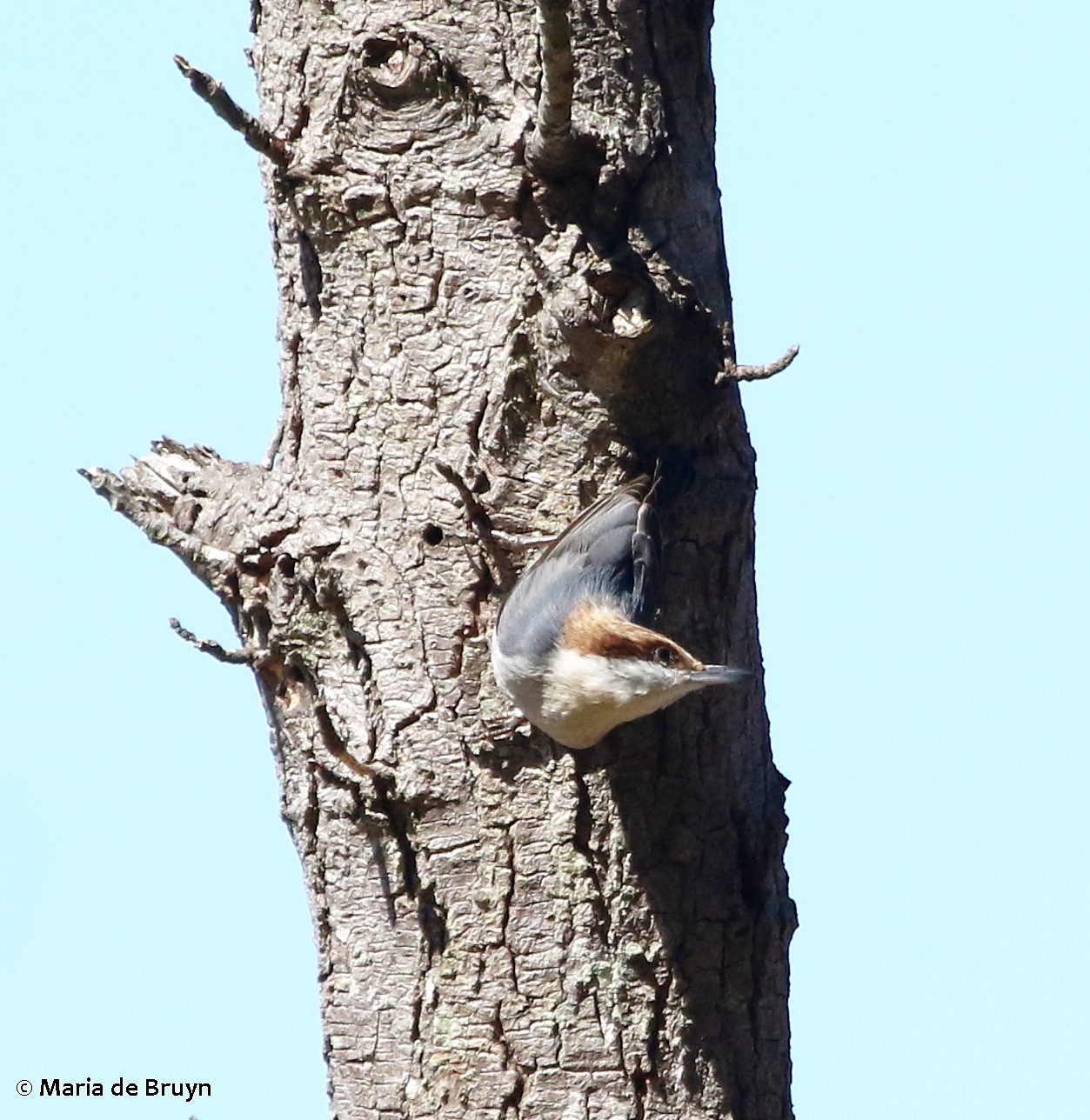
brown-headed nuthatch DK7A5128© Maria de Bruyn resLast year, I had the good fortune to come upon a snag (a dead standing tree) near the shore of Jordan Lake in which brown-headed nuthatches (Sitta pusilla) were tending a nest. This year, thinking back to those delightful visits, I decided to go investigate the tree again. My first visit revealed no nuthatches in the vicinity, but a second visit a few days later on 15 March revealed they had a nest in the same place again. As these birds may keep mates for several years, I just assumed it was the same pair as in 2014, so it was like seeing old friends!


brown-headed nuthatch DK7A0438© Maria de Bruyn brown-headed nuthatch DK7A0467© Maria de Bruyn

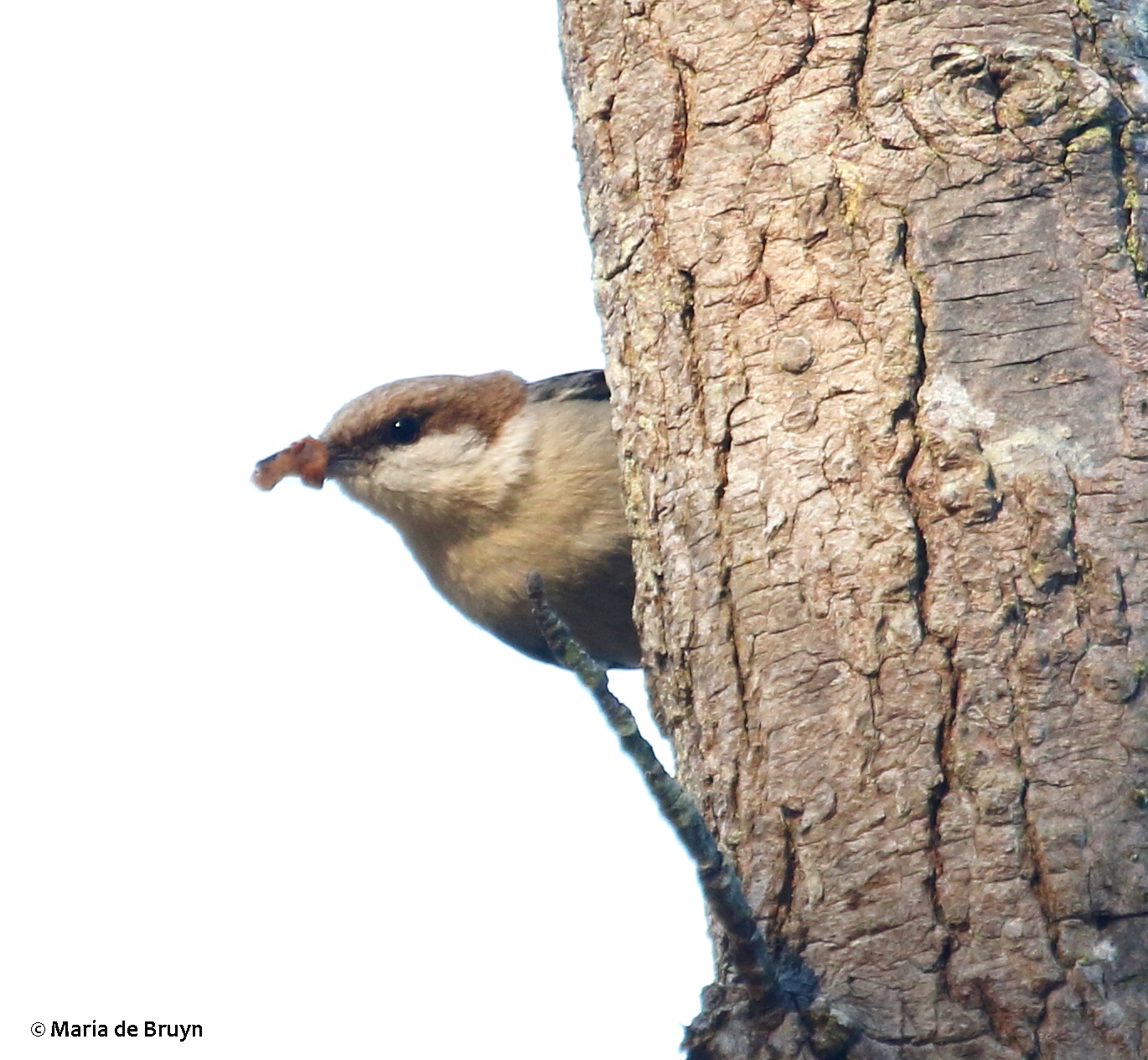
brown-headed nuthatch DK7A9987©Maria de BruynOn 29 March, it looked like the birds were bringing food to the nest. One might also have had a piece of bark in its mouth; these nuthatches may use bark pieces as tools to help dig for insects. If the female had by chance laid her eggs around 15 March, the eggs would have just been hatching now. Usually, it then takes 18-19 days for the babies to fledge, so they could have been ready to fly around 15 April, but the egg-laying and hatching could have been earlier.

brown-headed nuthatch DK7A9990©Maria de Bruyn resbrown-headed nuthatch DK7A9994©Maria de Bruyn res

On 4 April, the birds were still bringing food to the nest.

brown-headed nuthatch DK7A4943© Maria de Bruynbrown-headed nuthatch DK7A5264© Maria de Bruyn

brown-headed nuthatch DK7A4649© Maria de Bruyn res

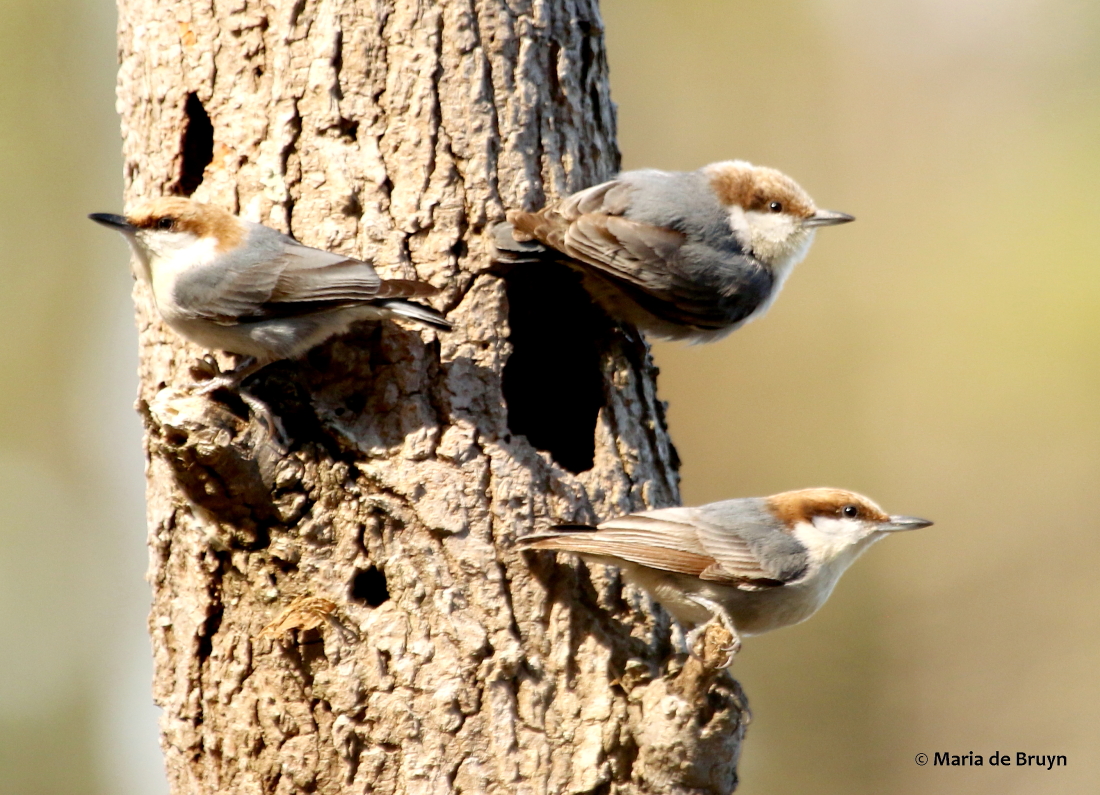
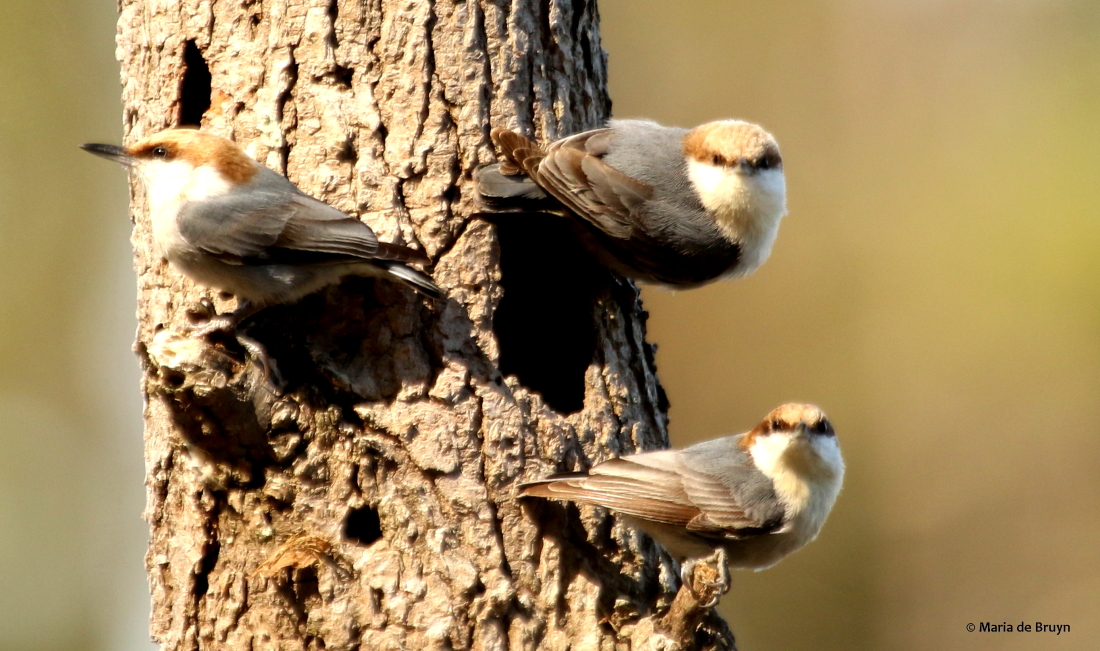
brown-headed nuthatch DK7A5331© Maria de Bruyn resI was photographing the birds and wondering which one might be the male and which the female. Suddenly, I was surprised to see three birds, all about the same size.

Reading up on the species taught me that not only the mating pair but also other individuals, usually young males, help attend the nests. Scientists don’t yet know whether these helpers are older offspring, but it seems to me that it might be similar to the older son helpmates among the American crows.

brown-headed nuthatch DK7A5353© Maria de Bruyn resbrown-headed nuthatch DK7A5351© Maria de Bruyn res

brown-headed nuthatch DK7A5366© Maria de Bruyn res brown-headed nuthatch DK7A5364© Maria de Bruyn res

brown-headed nuthatch DK7A8333© Maria de BruynOn the other hand, perhaps the rather fuzzy bird was a baby, which lacks the white neck spot seen in the adults. The babies also tend to have more gray and less brown coloring than adults. On 12 April, I didn’t see any nuthatches, but on 27 April, I saw a bird peeping out of the nest, well past the fledging period I think.

As I mentioned in a previous blog, since 1966, the population of brown-headed nuthatches has declined by 45% because they are losing nesting habitats (dead and pine trees) to deforestation and urbanization. Apparently, they also lose nests to predation.

brown-headed nuthatch 2 DK7A5128© Maria de Bruynbrown-headed nuthatch DK7A9709© Maria de Bruyn res

brown-headed nuthatch DK7A9827© Maria de Bruyn resOn 9 May, when I returned to Jordan Lake to see if nuthatches were still around the nest, I found their home tree decapitated, precisely at the spot where the hole had been for their nest. I imagine that a raccoon might have gotten up there, although I suppose some other predator could have wreaked havoc as well. In any event, it means I won’t be able to count on visiting the nuthatches there next spring.

The mysteries of the third bird’s identity and what took down the nest will likely remain unknowns. But at least I have my photos of the lovely little birds’ last nest at that site!

The banded birds are back!

gray catbird DK7A2255© Maria de Bruyn resIn a previous blog, I described how six birds were banded in my backyard so I could track them over time. Bird banding has been done for decades, indicating that it is a practice that truly works for monitoring lifespans and locations of individual birds. But it still seemed to me that being caught in a net, having someone hold you as they extricated your legs and wings from the clinging threads, then putting rings on your legs and sticking you into a container (for weighing) would be a traumatic enough experience for you to decide that this geographical area was not where you wanted to be. Anthropomorphizing the banded birds’ reactions meant that I wouldn’t have been surprised (albeit very disappointed) if I had not seen the six birds again.

gray catbird DK7A2210© Maria de Bruyn resMy expectation was almost immediately proved wrong, however, confirming that birds do not stay away from sites where they were given their ankle bracelets. Corey, my tail-less gray catbird (Dumetella carolinensis) was the first one I spotted again, the very next day after the banding. He has an aluminum band on one leg and 2 red bands on the other.

Since the bands are such different colors, I decided to name the birds as that is easier to note down for sightings. The gray catbird with an aluminum band (they all have this color as it contains their registration number) and white and purple bands became Camden. The catbird with the lovely yellow and green bands was dubbed Clarissa. All three have been very regular visitors to the feeders, proving that a little discomfort was not enough to dissuade them from visiting the always available buffet of mealworms and other delights.

gray catbird Camden DK7A2085© Maria de Bruyn res gray catbird Clarissa DK7A2091© Maria de Bruyn res

The catbirds have a fondness for sweets and like both apples and blueberries. Grape jelly is a real treat, for which they will return again and again.

gray catbird Clarissa DK7A2647© Maria de Bruyn resgray catbird Camden DK7A2198© Maria de Bruy resn gray catbird Camden DK7A1965© Maria de Bruyn resCorey’s return visits have shown how his tail feathers grew in again nicely over time. gray catbird Corey DK7A2472© Maria de Bruyn resI named the Northern cardinal (Cardinalis cardinalis) Clancy and I first spotted him again 2 days after the banding. He has not been a regular visitor, however – or I just haven’t caught sight of him among the bevy of other male cardinals that flit around the trees. However, a few days ago he turned up among the apples!

Northern cardinal Clancy  DK7A7771© Maria de Bruyn res northern cardinal Clancy  DK7A7753© Maria de Bruyn res

Carolina wren Willow DK7A2608© Maria de Bruyn resWillow, the Carolina wren (Thryothorus ludovicianus), has been a very infrequent returnee. When he comes, he tries to stay out of sight, choosing the side of the feeder away from me and only lingering a short while in plain sight. At least I know he is ok.

The one bird I have not yet seen is Rusty, the American robin (Turdus migratorius). I’ve been staring at the legs of every robin that hops around the yard but have yet to see one with leg jewelry. Perhaps he was just a stray visitor the day of the banding? I will certainly keep a look-out for him.

My first re-sighting data were entered into the Nestwatch site on 1 June 2015; it will be interesting to see how long I can maintain this input. Clarissa is a very frequent visitor so I think she will be in many entries. Or perhaps she is just busy right now feeding young ones.

gray catbird Clarissa DK7A2504© Maria de Bruyn res gray catbird Clarissa DK7A2503© Maria de Bruyn res gray catbird Clarissa DK7A2498© Maria de BruynEastern bluebird IMG_3881© Maria de Bruyn resIn the meantime, I am monitoring two nests for data entry; one for Eastern bluebirds (Sialia sialis), who have babies in a nest box, and one for gray catbirds, who have a nest in the middle of a shrub next to my carport.

The catbird parents are ever so vigilant and call out warnings to me whenever I approach the shrub. They hesitate to go into the shrub with food when I am near, even though those babies must be hungry. I finally got a view of them through the twigs when they were close to fledging. They are now hopping around on twigs in the shrub near the nest. Yesterday, when I came too close, Mama catbird dive-bombed, actually grazing my head!

Gray catbird IMG_3887© Maria de Bruyn res gray catbird IMG_3873© Maria de Bruyn

The parents in both pairs are very diligent about bringing the babies meals, working as a team. One catbird parent seems to be good at collecting a variety of foods, in one case bringing three different insects at once (presumably one for each baby). I will look forward to seeing the young ones out and about and sincerely hope my neighbor’s cat doesn’t get them.

gray catbird DK7A2939© Maria de Bruyn res gray catbird DK7A2937© Maria de Bruyn res

Bird watching is an enjoyable way to spend time; doing it and contributing to scientific data collection is even cooler!

Backyard citizen science – take 2

As I mentioned a few weeks ago, as part of an eMammal citizen science project, a motion trap camera was placed in my yard for three weeks. I am used to a variety of wildlife passing through and living here, including: white-tailed deer (Odocoileus virginianus), Eastern chipmunks, Eastern cottontail rabbits (Sylvilagus floridanus), opossums, raccoons, Eastern gray squirrels (Sciurus carolinensis), field and house mice and the occasional vole. My hope was that the camera would capture the gray fox that has been wandering our neighborhood lately or maybe even a coyote visiting at night.

The project started with the placement of a camera at knee level on a crepe myrtle tree facing a path through which animals enter and leave my back yard. The objective was to record all the mammal species that visit (or at least those passing in front of the camera) for three weeks.

Jonahay eMammal camera IMG_2971© Maria de Bruyn resAs neighborhood cats come to the yard, I was sure to get some photos of them, if nothing else. My senior deaf cat, who is now suffering from some dementia, only goes out when I accompany him (the other two family cats must stay inside). He checked out the camera right away and I wondered if he was going to pee on it to mark it as a new part of his territory. Instead, he went off to mark another part of the yard.

It was with great anticipation that I looked at the photos on the card after it was taken down, only to discover that the camera may have been aimed too high.

Eastern gray squirrel EK000016© Maria de Bruyn It seems that a squirrel may have been captured one evening, and in another case, it seems an opossum was entering the yard. However, the main captures (and there were not that many) were glimpses of deer.

A rabbit had decided to have a lie-down in front of the camera one day, perhaps 1½ feet away. It was not photographed and the project coordinator told me that the camera has a large blind spot right in front of it extending out roughly 3 feet.

Eastern cottontail DK7A2749© Maria de Bruyn res

unknown EK000547© NCSU


Staring at the night shots made me think in a few instances that some creature had been photographed but I wasn’t really sure if that was it or just my imagination running amok.


white-tailed deer EK000425© Maria de Bruyn res


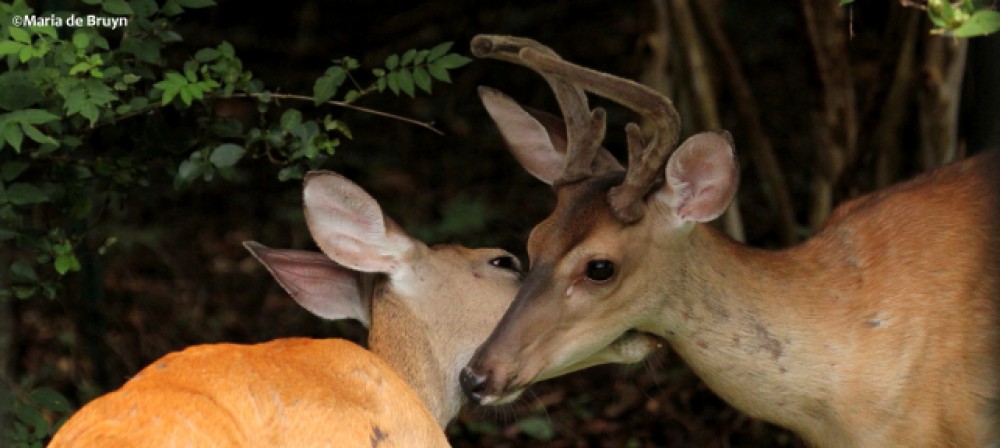
A few times a deer stopped and the camera got a portrait shot, occasionally with a gesture that in humans might equate to thumbing their noses at something.


white-tailed deer DK7A1403© Maria de Bruyn reswhite-tailed deer EK000212© Maria de Bruyn res

white-tailed deer EK000514© Maria de Bruyn res


A few shots were close-ups.

Other times, we see an ear or the deer’s behind as she moves out of range.


white-tailed deer EK000548© Maria de Bruyn res white-tailed deer EK000073© Maria de Bruyn res

One day, I caught a doe giving the camera a good look; this led to a few blank photos as her face or tongue covered the lens area.

white-tailed deer DK7A3136© Maria de Bruyn res white-tailed deer DK7A3120© Maria de Bruyn resdoe EK000010© NCSUwhite-tailed deer EK000472© Maria de Bruyn res

Despite the paucity of cool camera captures, I enjoyed participating in the project and will consider taking their 30-minute course so I can have a camera placed here for a longer period. And if it is aimed lower, who knows what we may see then!

Citizen science in my backyard!

Gray-headed catbird DK7A8986© Maria de Bruyn resIt’s been a while since I’ve blogged – not for lack of ideas and photos but due to a dearth of time and energy that was absorbed by multiple troubles with a few cool happenings in between. But now I’m back with some new observations about the beauty and happenings of interest in my natural world and I hope to share some wildlife sightings on a regular basis again.

One activity that I have managed to fit in amid the other goings-on was enrollment in two new (for me) citizen science projects for the Smithsonian Institute. I’m participating in an eMammal project run by the North Carolina Museum of Natural Science and in a multi-year observational study of some common birds. The mammal project is time-limited, so I will report on that in about a month’s time.

Northern mockingbird DK7A8859©Maria de BruynThe bird project will involve tracking visits to my yard by banded birds for several years to come. The target species include American robins (Turdus migratorius), Carolina chickadees (Poecile carolinensis), Carolina wrens (Thryothorus ludovicianus), house wrens (Troglodytes aedon), gray-headed catbirds (Dumetella carolinensis), Northern cardinals (Cardinalis cardinalis) and Northern mockingbirds (Mimus polyglottos, at the right), all of which come to my yard. Song sparrows are the 8th target species but I haven’t seen them at my house. However, I discovered that there is a great crested flycatcher in my trees, although I’ve never seen him (or her) either, so who knows if one will come in the future? In any case, the target birds can live from about 6-10 years on average, so I’ll have an ongoing activity for as long as my eyesight remains reasonable!

bird banding IMG_3291© Maria de Bruyn resmist net IMG_3290© Maria de Bruyn

So how does the bird banding proceed? We (the bird bander and I) set up one 12-foot and one 6-foot mist net in two parts of the yard, after the bander laid out her equipment for the banding process. Within a very short time, we caught three birds in the large net! The first was a gray-headed catbird that I recognized (photo above), because he had molted all his tail feathers at once and looks a bit odd with no tail. This bird, whom I have named Corey, has been the most vocal catbird at my feeders and he was extremely vocal about having been caught as well.

gray-headed catbird IMG_3294© Maria de Bruyn bird banding IMG_3295© Maria de Bruyn

After being disentangled – very carefully – from the net, he was put in a bag while the bander got the other two birds out of the net. Corey was measured, weighed, and banded with a combination of aluminum and colored bands. Sex was determined (I now know he is a he!) and then he was let go.

gray-headed catbird IMG_3301© Maria de Bruyn bird banding IMG_3304© Maria de Bruyn res

Northern cardinal IMG_3311© Maria de Bruyn resBird 2 was a beautiful male Northern cardinal, who appeared to have good fat reserves. He was a bit vocal and bit the bander to show his displeasure at the treatment he was receiving.

Bird 3 was a male American robin. Sex was determined partly by looking at the cloacal region (outside breeding season, other markers besides brood patches and this area are examined). If a bander is unsure of the sex, this is also marked on the data sheet. The robin was more sedate during handling than his predecessors.


American robin IMG_3314 © Maria de Bruyn resAmerican robin IMG_3315© Maria de Bruyn res

The house wrens had been calling loudly during the banding and flitted about in the trees and to the feeders,but they always flew just above the nets and were not caught. A male Carolina wren with a nice eye stripe did not escape.

house wren DK7A4794© Maria de Bruyn Carolina wren IMG_3316© Maria de Bruyn

American crow IMG_3359© Maria de BruynThe chickadees and Northern mockingbird flew about but did not really come too close to the nets. Non-target species were at or near the feeders, too, such as courting bluejays, an American crow (Corvus brachyrhynchos, right) who came to eat jelly and take some apple to his mate, downy woodpeckers, white-breasted and brown-headed nuthatches, a house finch, Eastern towhees and a male cowbird.

red-bellied woodpecker IMG_3344© Maria de Bruyn resOther non-target birds flew into the large mist net, however, such as a brown thrasher, a tufted titmouse, a red-bellied woodpecker (Melanerpes carolinus, right), a chipping sparrow (Spizella passerina), a female common yellowthroat (Geothlypis trichas, below) and a common grackle. I’d not seen these birds up so close before, so that was really a nice experience.

Common yellowthroat IMG_3339© Maria de Bruyn res


bird banding IMG_3340© Maria de Bruyn resTo get more target species, a loudspeaker that played bird calls and some model birds were placed in the grass by the largest net. Eventually, two more catbirds were caught – with other catbirds in a nearby tree puffing themselves up to show their shared distress. These were the first catbirds banded for the project so far, so that was a nice way to end the exercise.

Cope's tree frog IMG_3293© Maria de Bruyn resA tour of the yard to see if there were any nests that could be followed for the Nest Watch project revealed a couple wren nests in boxes that were built up so high it was not possible to see if they had eggs in them. The bluebirds’ nest has five eggs that I will follow through fledging (hopefully); a catbird nest is too high up for me to see how many eggs she is sitting on but I will watch for her fledglings, too. And a Cope’s tree frog (Hyla chrysoscelis) had taken up residence in the nest box that the downy woodpecker uses to rest at night. The wrens had begun building a nest in that box last night and the frog was gone this afternoon.

The banding took place yesterday in the morning and in the afternoon, the banded birds had not returned. I wonder how long it will take most of these individuals to come again. Corey already returned this afternoon, instantly recognizable not only because of his very short tail feathers growing in but because of the red and silver bands on his little legs. I was so glad to see he was none the worse for wear!