
Our whale-watching tour set off from a dock in the village of Tadoussac. A naturalist was on board, but she stood only at the front of the boat and her electronically-enhanced voice was difficult to understand with some static and heavy winds interfering. Our group stationed itself at the back of the boat so we would have unobstructed views of the birds and any possible whales. To our enormous delight, a fellow passenger called out a view of the first whale to swim near – a minke whale (Balaenoptera acutorostrata), which is a type of baleen whale.

illustration credit: International Whaling Commission; https://wwhandbook.iwc.int/en/species/minke-whale
These smaller whales, which feed on krill and smaller schooling fish, are known for frequently breaching but that didn’t happen during our tour. It was cool to see this one swimming along though. We are unsure if we saw it again as they appeared somewhat similar to the fin whales, but the other whales we saw on the tour were a pair and minkes tend to be more solitary. Unfortunately, the minke is now the most numerous whale species worldwide and therefore a main target of the whaling industry.


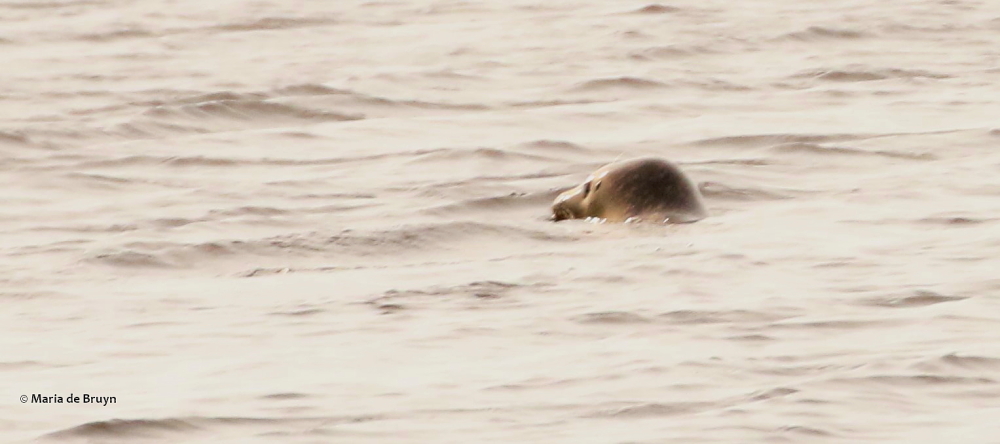
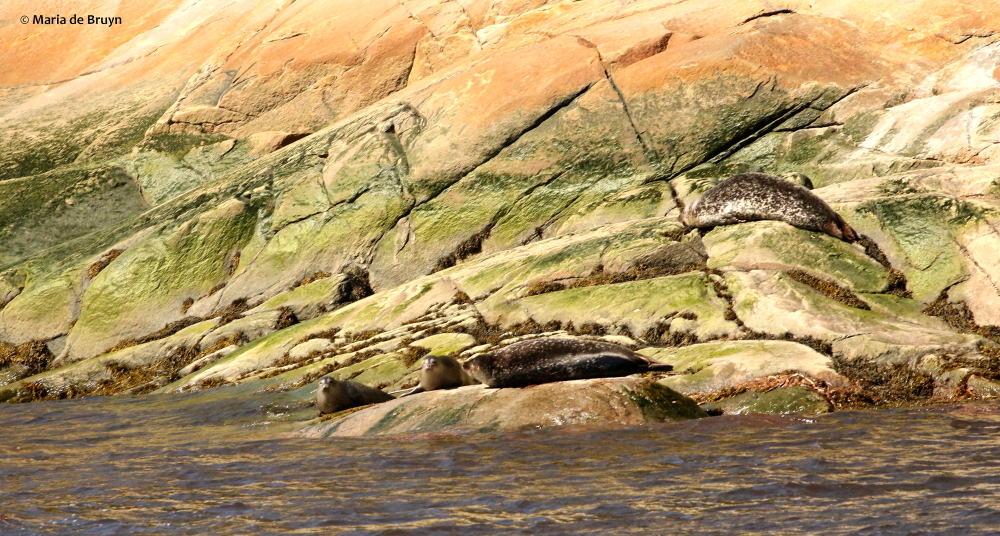
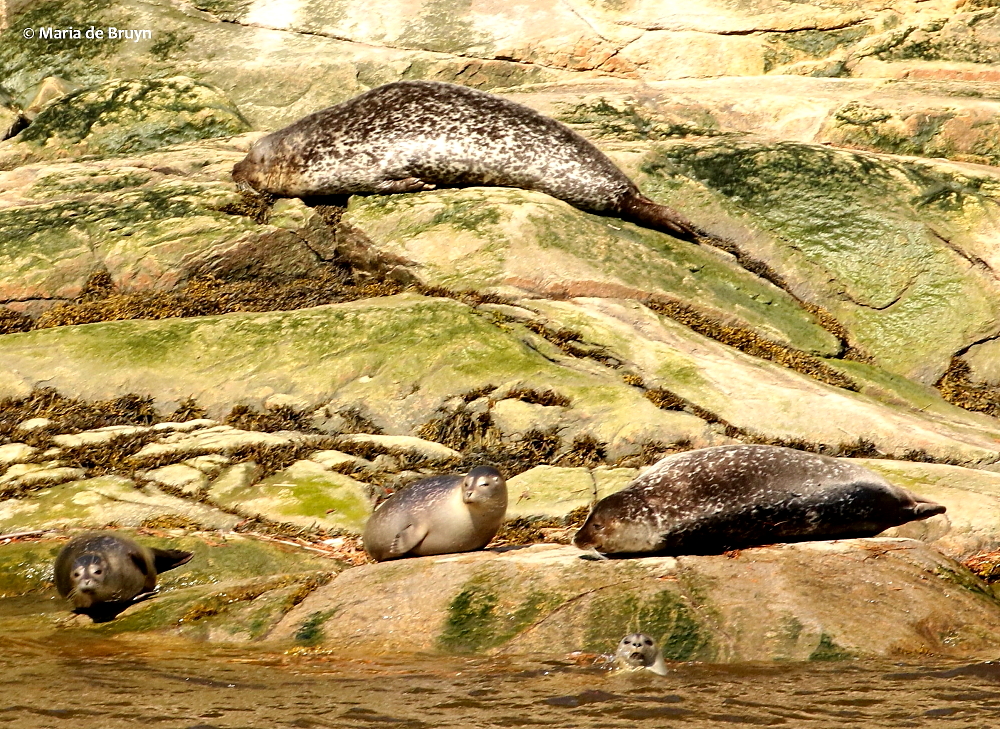
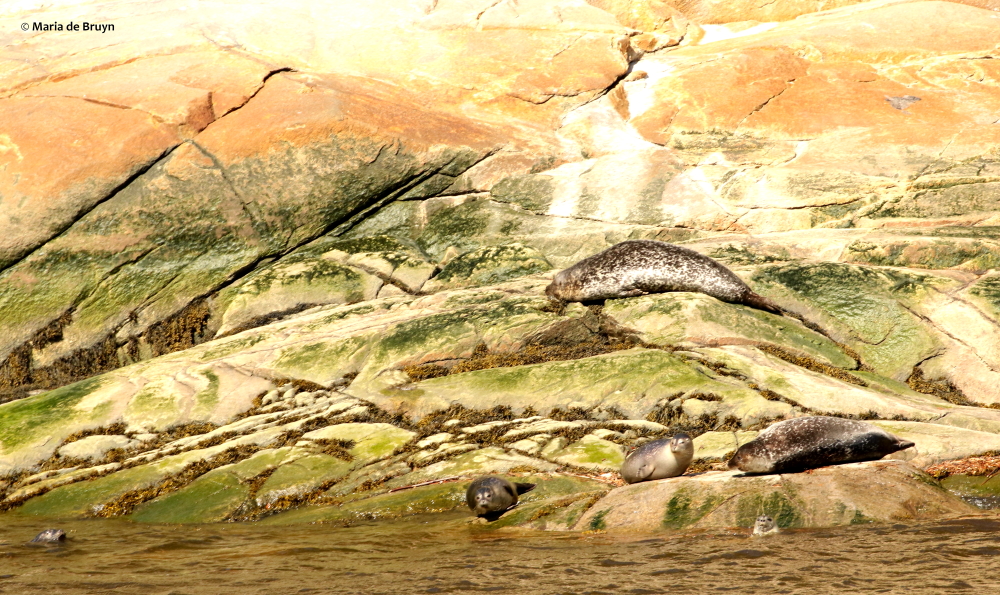
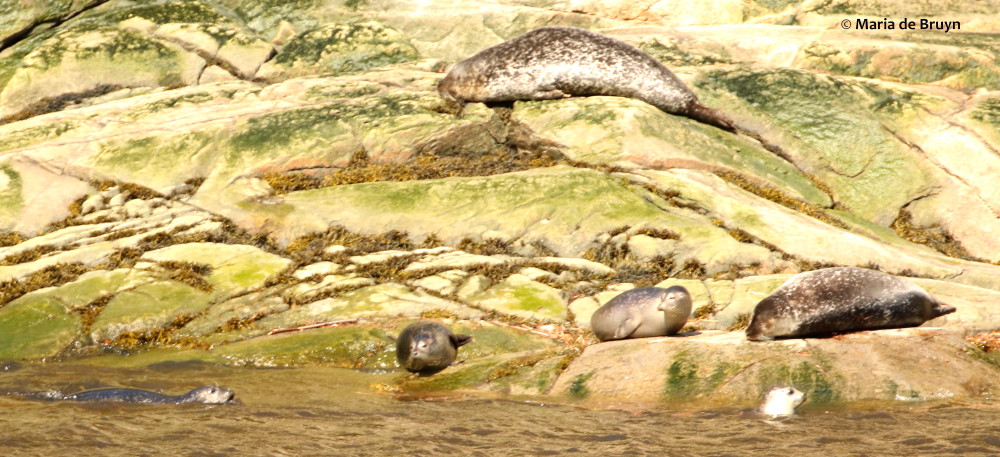
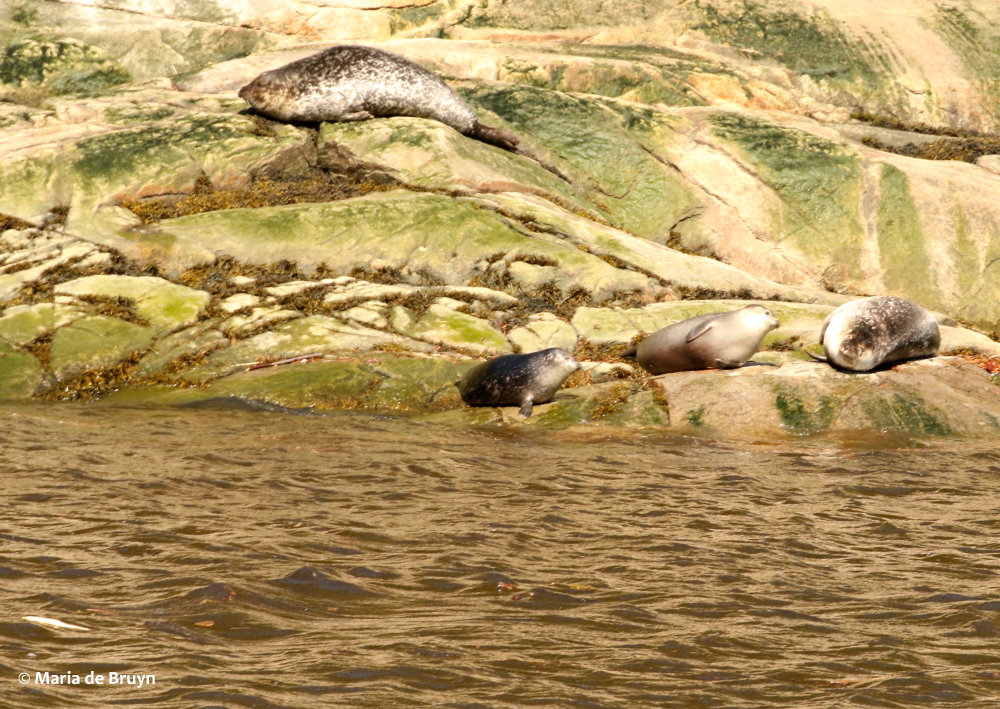
 Our next sighting way out on the river was a pair of harbor seals (Phoca vitulina), whose heads bobbed on the surface as we passed by. Then we were thrilled to see a “blow”, a whale spouting water into the air.

A pair of fin whales (Balaenoptera physalus) was swimming around in our vicinity and though they did not breach, they did rise to the surface multiple times – once quite close to our boat.


Illustration credit: International Whaling Commission; https://wwhandbook.iwc.int/en/species/fin-whale
These whales, considered an endangered species, are the second largest mammals in the world and have been nicknamed the greyhounds of the sea because of their swimming speed.

They have sleek bodies that can grow to 80 feet in length. Sometimes, you could spot where they might partly surface due to a bit of turbulence in the water.


Their diet consists of krill, crustaceans and small schooling fish. If they get enough to eat, can avoid predators (e.g., orcas) and man-made threats, they can live to be 100 or more years old! (The minke whales live 30-60 years.)


A scientific group has been collecting photo IDs of fin whales since 1986; they now have some 100 identified individuals who have received names such as Capitaine Crochet, Triangle, Caïman and Zipper. Another group has a catalogue that has identified 450 fin whales since 1980.


 While we were thrilled to have seen the minke and fin whales, a beluga sighting remained a wish. That evening after the boat trip, Chloe and I were talking about whales as we gazed out at the St. Lawrence Seaway from the balcony of our rental house. I was of the opinion that if we really made it our intention to see a beluga, we would (Illusions is one of my very favorite books!). Fleeta joined us a little later on the balcony and then excitedly called out – “Beluga!!!”
 Everyone came running out from inside the house and a few of us ran for cameras, despite the fact that all we could really see was a white splotch against the blue water. Those with binoculars likely had a much better view, but I didn’t care – we had our elusive sighting! The following photos, taken on our last evening and the next morning when it was raining, are admittedly not good ones but do give you an idea of what we saw.

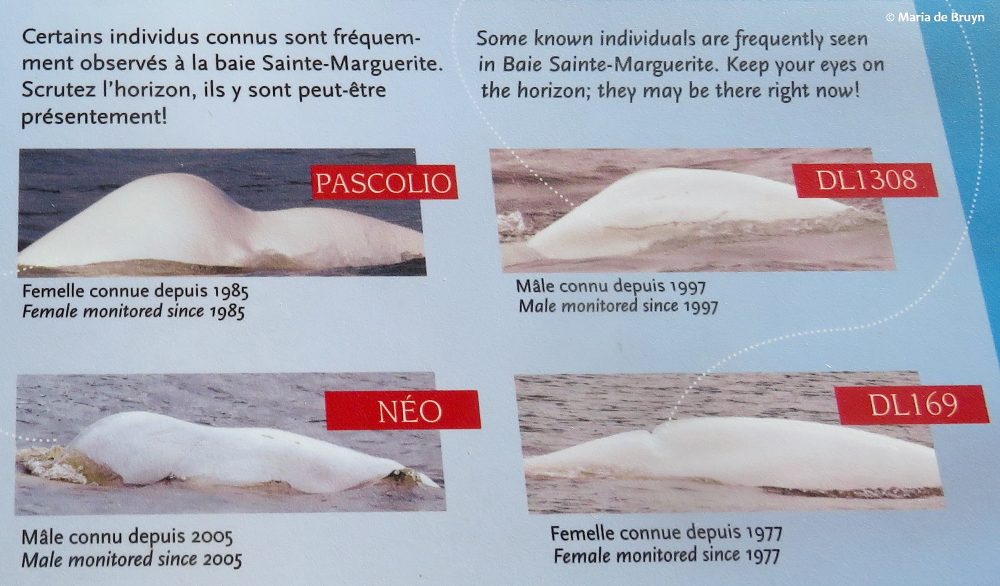
 The beluga (Delphinapterus leucas) is the only white whale and is known as the canary of the sea for its broad range of vocalizations. This trait, combined with the species’ curiosity which causes it to surface near boats to look at humans, unfortunately has led to it being one of the aquatic mammals that are hunted and captured (and sometimes bred) for the entertainment industry.
In contrast to the fin and minke whales, the belugas are social mammals, often traveling in groups and also moving from one group to another. On our last evening in St. Irénée, we probably saw about 12-15 of them! If you look closely at the white spots, you will see there were seven in this photo.

Males tend to associate with other males and females and their calves (born about every three years) hang out together. The young belugas are born gray and turn white between 5-12 years. Another interesting fact is that these whales molt in the summertime!

 The St. Lawrence Seaway belugas, the southernmost beluga population in the world, are protected under Canada’s Species at Risk Act. This became necessary to multiple threats, a main one being massive hunting of the species. From 1880 to 1950, about 15,000 of these whales were killed, being blamed as “white demons” for threatening commercial fishing (which proved to be false). The latest estimate of how many now remain in this area is a paltry 889 individuals.
Hunting of belugas was outlawed in Canada in 1979 but other threats to the species persist. Besides chemical and plastics pollution, they succumb to getting hit by boats, being ensnared in fishing nets, and falling prey to predators (e.g., orcas). They may also be facing competition for their food sources, including the sardine-like capelin fish; here you see a couple that washed ashore.


 Wildlife conservationists have been alarmed by a large number of female and baby belugas washing up on shore along the Seaway since 2008. Many of the mothers have died in the neonatal period and researchers are asking whether the mammals are lacking sufficient energy and failing to find sufficient food.
 It is thought that the Seaway habitat may be changing with damming of rivers that flow into it. Noise pollution from whale-watching, boating, military sonar, oil and gas drilling may also be making life difficult for the whales as it disrupts their navigation. On the day we went out, a couple zodiacs zoomed a bit close to a pair of fin whales, even though they are supposed to observe the same distance rules as the larger boats. Hopefully, the authorities will be closely monitoring this.This is now being studied by Fisheries and Oceans Canada. In 2019, the Groupe de recherche et d’éducation sur les mammifères marins (GREMM) received a grant from the Prince Albert II of Monaco Foundation to study the increased mortality among the female and young belugas.
 It would be great if the Beluga Whale Health Project could discover what is harming the belugas in the Seaway since these mammals can live more than 100 years of age in favorable circumstances. That is important for the species because it was recently documented that belugas have their own cultures in groups that stay together for generations; one researcher Greg O’Corry-Crowe, commented: “”We have compelling evidence, in our view, for the evolution of culturally inherited migration knowledge and behaviour.” This also has led to the intriguing question of whether their ability to learn from one another might help them cope with changing climatic conditions.


Hopefully, something can be done in the shorter term to help all the whales cope with the challenges and threats facing them. Outside the whaling and marine entertainment industries, many people would like to see them survive and thrive in the wild. They inspire artists as well, as shown by the metal beluga sculptures on display down the road from where we stayed.


 At the Domaine le Forget in Charlevoix, another sculpture was called the Song of the Whales by Peter Lundberg.
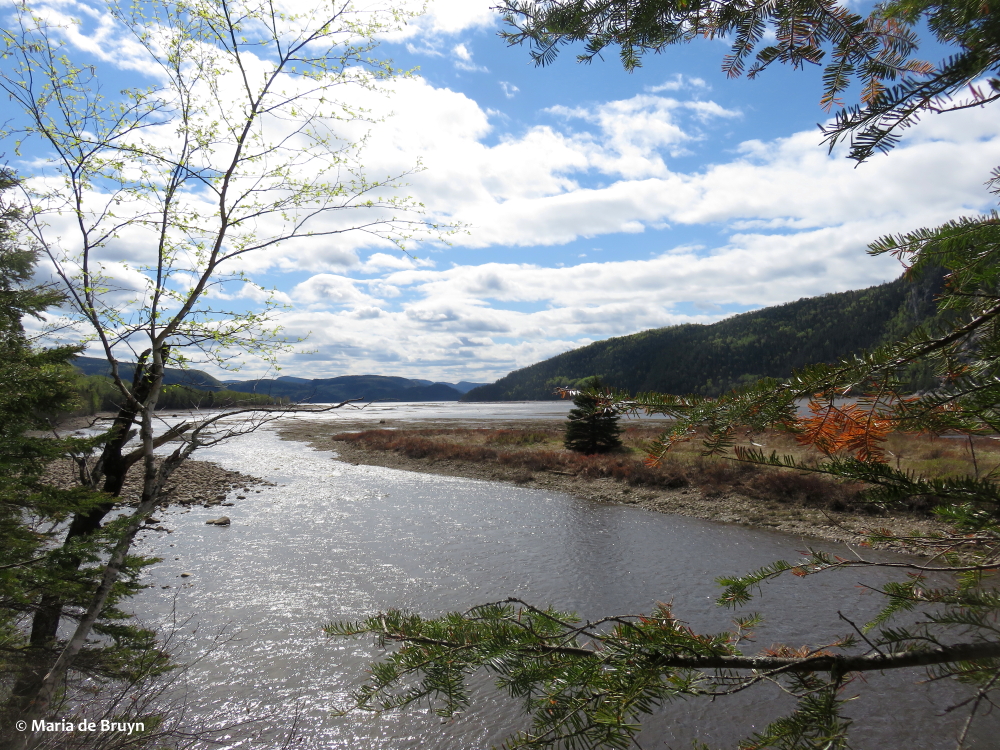
It was a joy to see the whales during our trip, especially given the threats to which all the aquatic mammals are subject: hunting, getting caught in fishing nets, poisoning due to toxic chemicals from litter and oil spills, and ingestion of the ever-increasing plastic trash that is floating into our oceans. I would love to return to the area in warmer weather in the hope of getting closer to the belugas to see them better. I would again go on one of the large whale-watching boats because it appears that the smaller boats might be getting too close to the marine mammals. If we want to see the cetaceans in person, we need to think about how we can do it most responsibly while protecting them. The St. Lawrence Seaway is quite beautiful and will hopefully continue to offer a home to the southernmost belugas.




 Their hind feet have plantar pad scent glands which are used to mark various areas. Biologists believe that the otters transmit messages about identity, reproductive and social status by leaving glandular scents as well as anal secretion deposits on scent mounds that can be used for years.


 One day, after I had visited several times, their curiosity seemed to get the better of them.
 decided to chill out by a nearby stump in the water, perhaps waiting to see if I would get in the pond with them. When I just stayed still and watched, they finally regrouped and began fishing again closer to a weedy section of the pond.








 My beautiful world