A walk in the woods with a bit of local history

Ken Moore IMG_6384© Maria de Bruyn resOn a sunny afternoon in mid-April, volunteers at the North Carolina Botanical Garden (NCBG) had the chance to learn about Bill Hunt, a horticultural expert who donated hundreds of acres of land for environmental conservation to the University of North Carolina. Hunt’s work laid the foundations for the expansion of the Garden with the Hunt Arboretum and the Piedmont Nature Trails in woods behind the cultivated gardens. The trails were “re-dedicated” during a walk to commemorate the Garden’s first public offering, which was originally dedicated on 10 April 1966. A walk in the woods was quite a nice way to help celebrate the NCBG’s 50th birthday.

Ken Moore IMG_6398© Maria de Bruyn resWe learned about how the Nature Trails were created and maintained from Ken Moore, retired assistant director of the NCBG and the Garden’s first employee.

Moore was accompanied by other Garden staff who offered other interesting tidbits of information. For example, Johnny Randall, NCBG Director of Conservation, told us about how Mr. Hunt visited his rhododendron bushes along Morgan Creek and invited friends to swim at Elephant Rock and to forest picnics at his personal grill located creekside, all the while wearing a suit and tie in his beloved woods.

elephant rock IMG_6443© Maria de Bruyn resHunt barbecue IMG_6436© Maria de Bruyn res

Staff pointed out some of the lovely native plants seen in the springtime woods, including plants that were rescued from other sites such as the trilliums.

Sweet Betsy IMG_6405© Maria de Bruyn res Virginia pennywort IMG_6411© Maria de Bruyn res

Sweet Betsy (Trillium cuneatum)                 Virginia pennywort (Obolaria virginica)

The woodsorrels have three-lobed, clover-like leaves.

Common yellow woodsorrelIMG_6429© Maria de Bruyn   Violet woodsorrel IMG_6423© Maria de Bruyn res

.Common yellow woodsorrel (Oxalis stricta)   Violet woodsorrel (Oxalis violacea)

Indian plantain IMG_6439© Maria de Bruyn res         Spotted wintergreen IMG_6434© Maria de Bruyn res

Indian plantain (Arnoglossum plantagineum)   Spotted wintergreen (Chimaphila maculata)

We also heard about the non-native and invasive plants that were planted along the Nature Trails before conservationists were aware of how they out-competed native plants for space and nutrients. They pointed out that we should remove such vegetation during our volunteer hours and from our own gardens at home, such as Oriental false hawksbeard (Youngia japonica (L.)), which I realized is nestling in in my yard, too.

Special attention was given to the plant with the delightful name of Italian lords-and-ladies (Arum italicum). There were many clumps of these large-leaved flowers and numerous specimens were blooming. While Ken told us how to identify male and female plants so we could eradicate them, other staff demonstrated how to uproot them with gusto.

Italian lords-and-ladies IMG_6481© Maria de Bruyn res          Italian lords-and-ladies IMG_6494© Maria de Bruyn res

Listening IMG_6499© Maria de Bruyn res

As we climbed out of the woods after a couple hours, some last words were said about invasive plants and then Ken sped ahead to greet everyone as we re-entered the demonstration gardens. He kindly offered participants a small booklet about Bill Hunt’s life, a nice gift to commemorate 50 years of the Garden. It will be interesting to think about what the next 50 years might bring.

Ken Moore Ed Harrison IMG_6524© Maria de Bruyn resrue anemone windflower IMG_6450© Maria de Bruyn res                       IMG_6466© Maria de Bruyn res

IMG_6468© Maria de Bruyn res                   IMG_6458© Maria de Bruyn res Wild comfrey (right, Cynoglossum virginianum)
Chasing Joseph – excitement evoked by an effervescent bird!


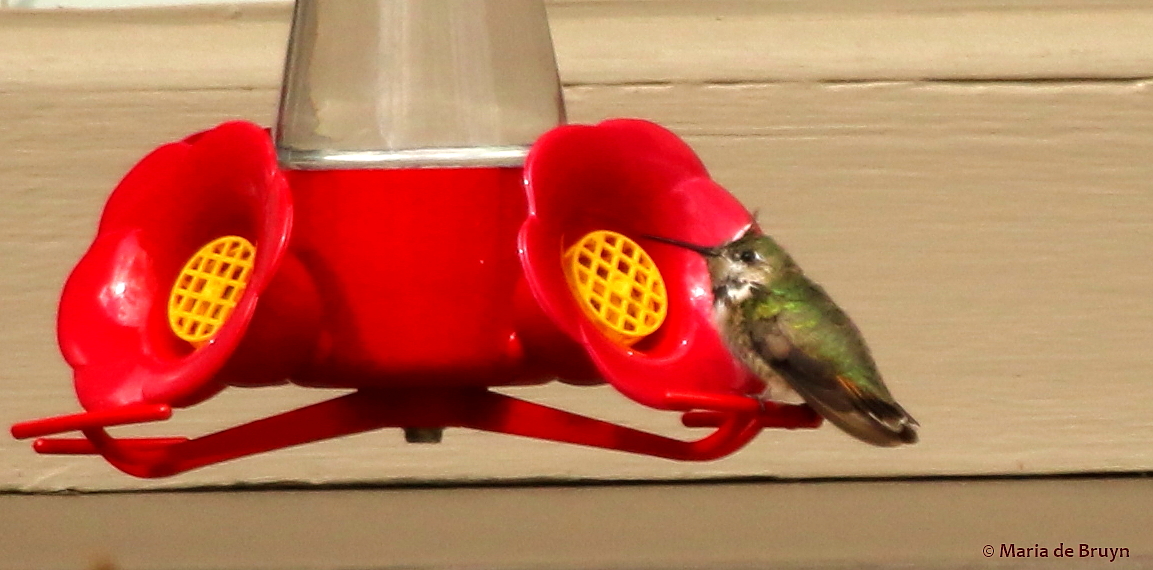
Calliope hummingbird I77A6799© Maria de Bruyn

Birders can be quite enamored with their pursuit of avian species, some making special trips just to see one bird that they haven’t seen before. Such trips may be within an hour or two of their homes, but there are plenty of birders who travel to other (even distant) regions within their own or another country as well. Some people might say they are a bit crazy, but birding is actually one of the sanest ways to appreciate nature.

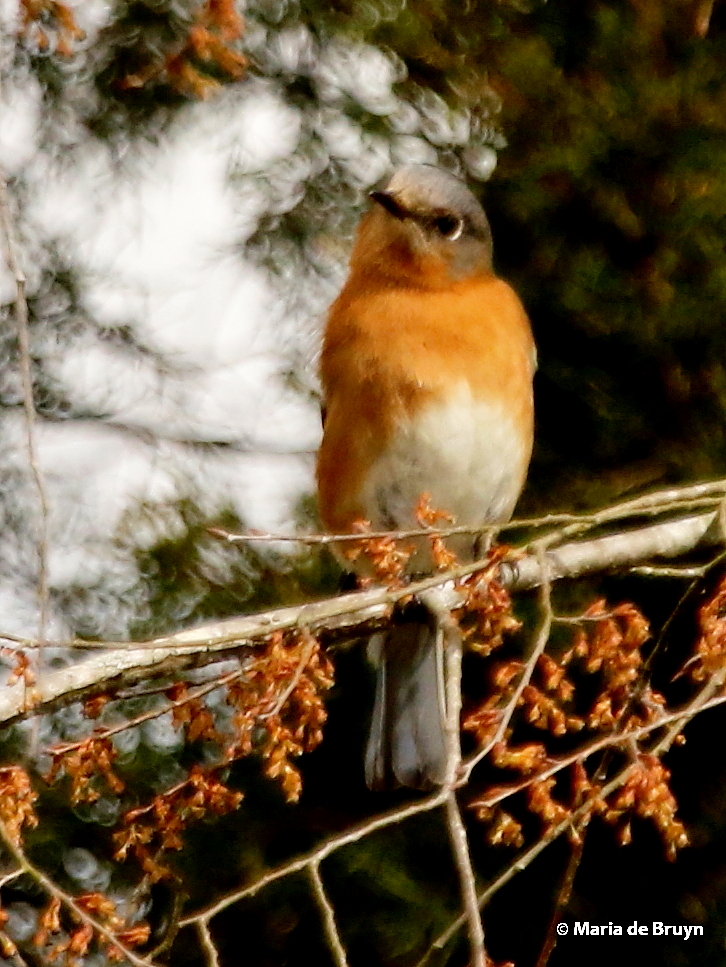
Eastern bluebird I77A6750© Maria de Bruyn cardIt generates knowledge, provides rest and relaxation (well, mostly) and many birders contribute to environmental protection and conservation, even if they restrict themselves to observing local species like Eastern bluebirds (Sialia sialis). In addition, while much is made of the money that hunting fees provide for environmental programs, birders also make economic contributions to society – through donations to environmental protection groups and expenditures on birding supplies, ecotourism, etc. The Audubon Society reports that birders and other wildlife observers spend $916 million in the US state of North Carolina alone each year!

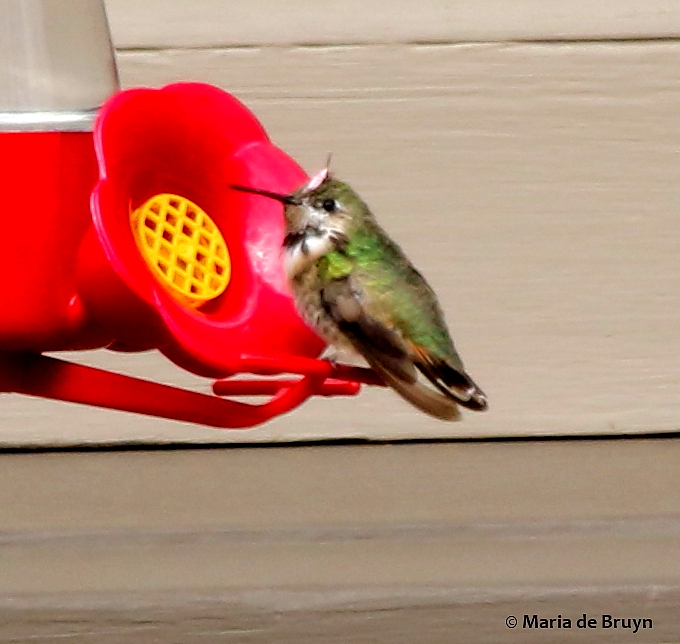
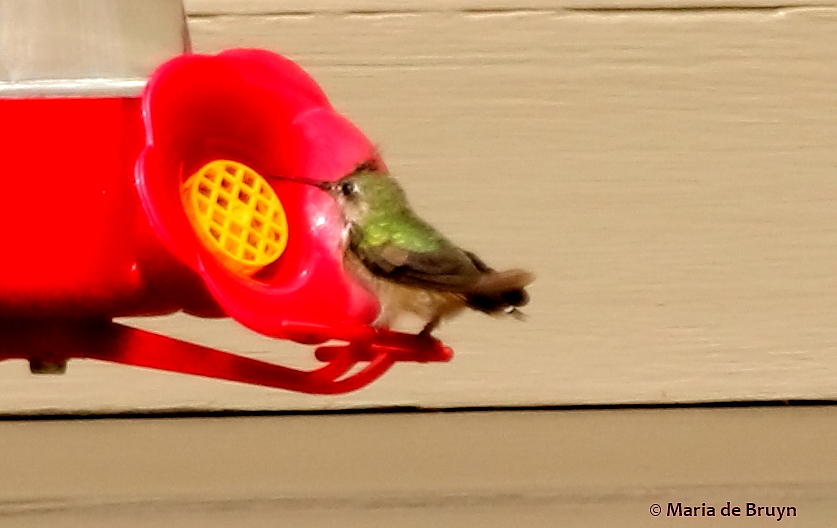
Calliope hummingbird I77A6939© Maria de Bruyn resSo, in the last half year, I’ve become a birder who will make a special trip to see a particular bird. In October last year, I traveled 77 miles with friends to see a buff-bellied hummingbird (Amazilia yucatanensis). This year, a shorter distance (22 miles) led me twice to the calliope hummingbird (left, Selasphorus calliope), which is the smallest bird species in North America outside Mexico.

The first visit was pure serendipity; two other birders (Lucretia and Lorentz) and I met birding guide Jan at a reservoir and he mentioned having seen the calliope the previous day. It was only a 10-minute drive from where we were, he said, and the couple hosting the bird was very nice. So we jumped in Lorentz’s car and headed over to the next county in pursuit of our lifer (a bird that one sees for the first time in one’s life).

Calliope hummingbird I77A6897© Maria de BruynThe calliope hummers are the tiniest long-distance migrants of all the world’s birds, traveling from the mountains of the Northwest USA and Canada to Mexico and a few spots in the southern United States in winter. This year, however, a young male landed in the Malinski’s yard; they named him Joseph.

Some other instances of calliope hummingbirds in the Southeastern USA have been noted but they are still fairly unusual. However, it’s speculated that they may become more frequent winter visitors because of environmental changes associated with human activity.

At the Malinski’s home, the calliope is keeping company with another winter migrant, a female rufous hummingbird (below, Selasphorus rufus). Mrs. Malinski has seen the rufous chasing the calliope away from the feeders, living up to that species’ reputation for being feisty. However, the calliope hummers are brave, too, even chasing red-tailed hawks (Buteo jamaicensis) away from their territories during breeding season!

Rufous hummingbird IMG_2657© Maria de Bruyn       Rufous hummingbird IMG_2669© Maria de Bruyn

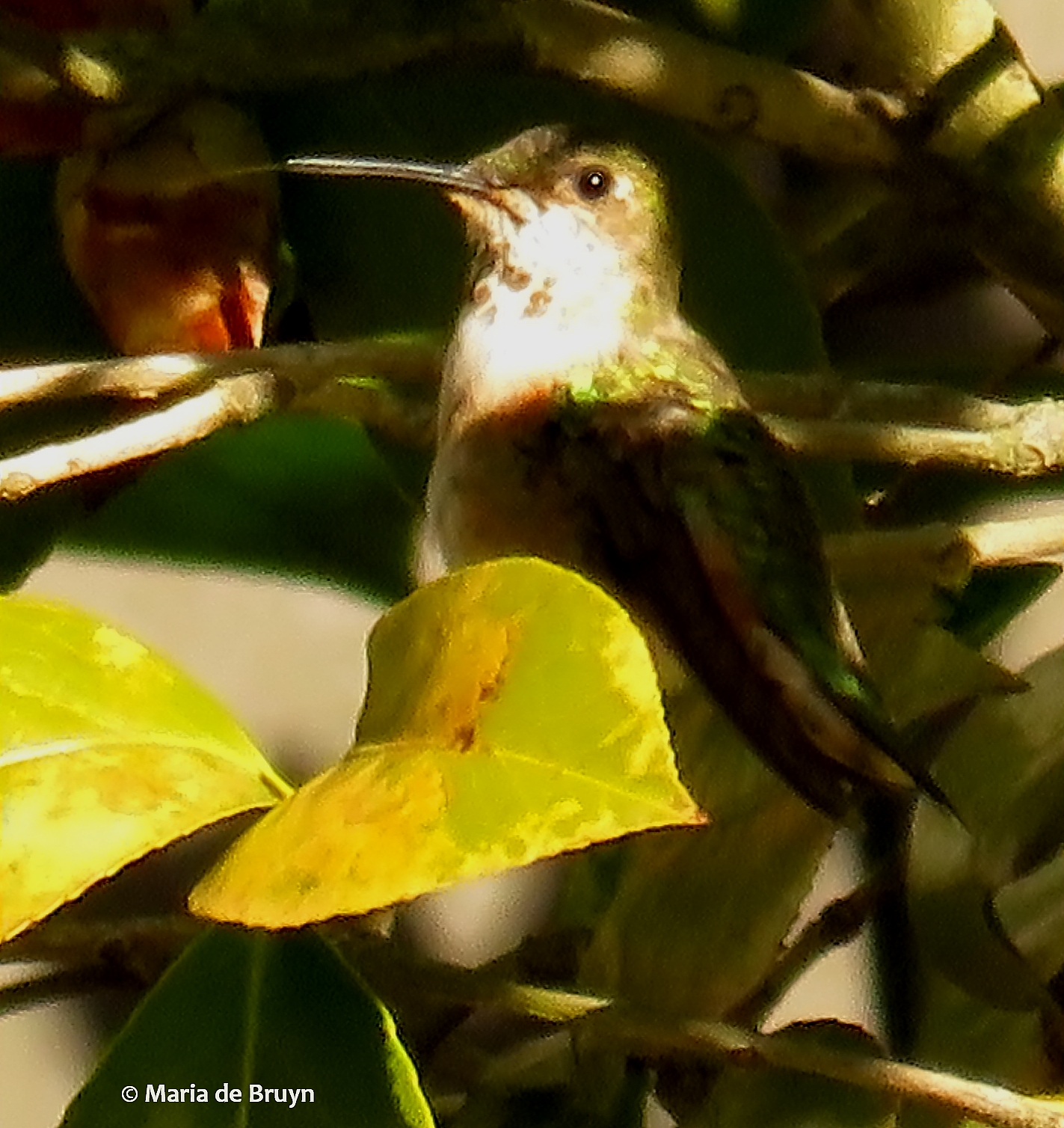
Calliope hummingbird I77A6756© Maria de BruynJoseph is currently molting and can be identified for the time being with a little topknot atop his head. Susan Campbell, North Carolina’s well-known hummingbird bander, gave him his bracelet at the Malinski home, which should make it possible to identify him if he returns next year.

Calliope banding Campbell IMG_0646


In this photo kindly provided by Susan, you can clearly see that he is developing the bright purple feathers that will grace his throat and give him a beautiful appearance in full maturity. They are just a little visible when he zips in to land at the feeder.


yellow-bellied sapsucker I77A7858© Maria de Bruyn res


Both Joseph and the female rufous enjoy the nectar provided by the Malinski’s. These birds will also eat insects and calliopes are known to drink from yellow-bellied sapsucker (Sphyrapicus varius) sapwells like those shown here.


Many people have traveled to the couple’s home to observe Joseph. During my two visits, I encountered 10 other birders and I know of more who paid a visit. The Malinski’s are most gracious, allowing us to stay in their front yard for hours.

Calliope hummingbird I77A6566© Maria de Bruyn       Calliope hummingbird I77A7075© Maria de Bruyn

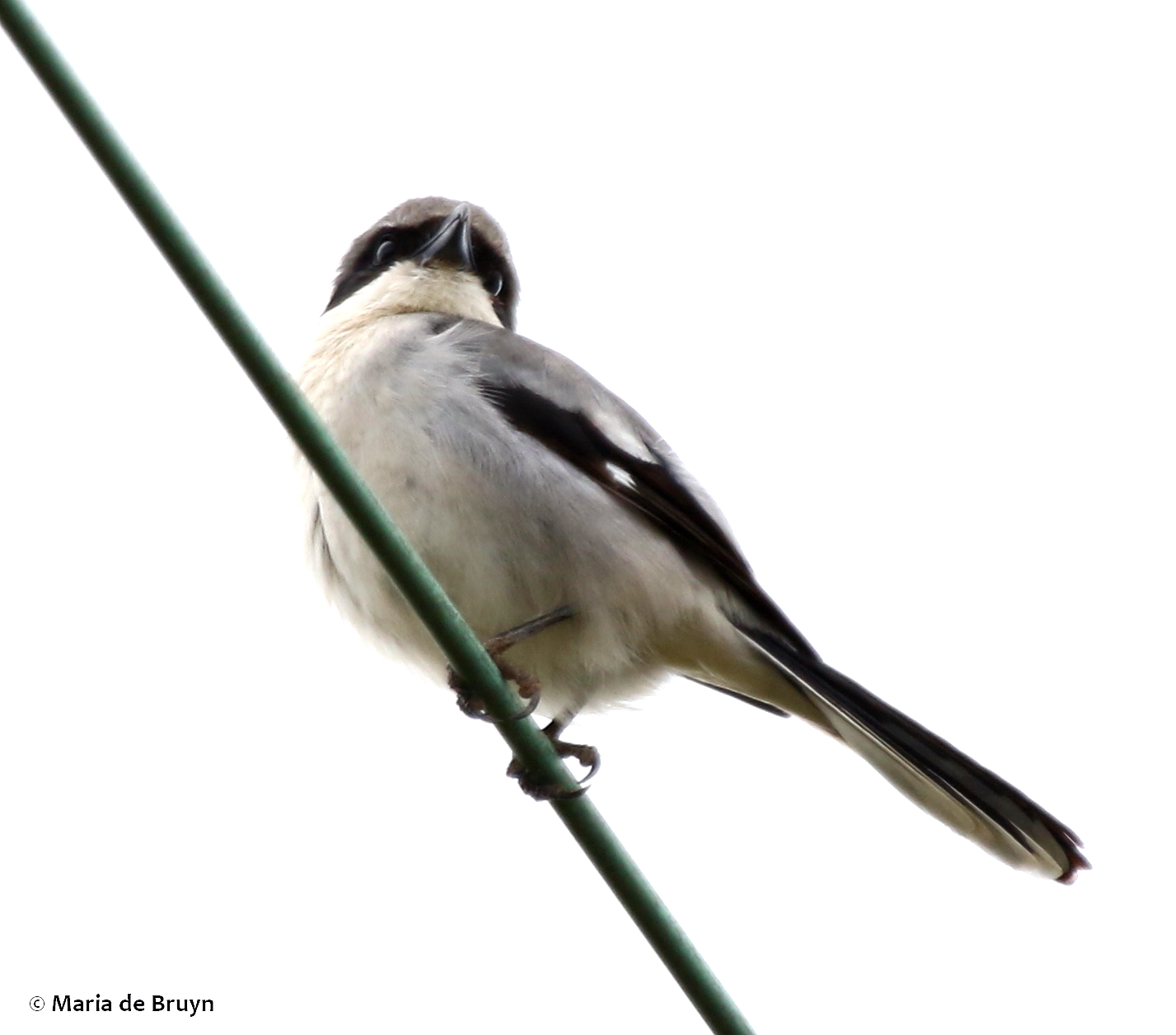
loggerhead shrike I77A7328© Maria de Bruyn


After I left them with Joseph buzzing back and forth between the front and back yards, I stopped at a rural road known as a spot for white-crowned sparrows. I didn’t see them but did get to see a loggerhead shrike (Lanius ludovicianus).


loggerhead shrike I77A7301© Maria de Bruyn            loggerhead shrike I77A7280© Maria de Bruyn

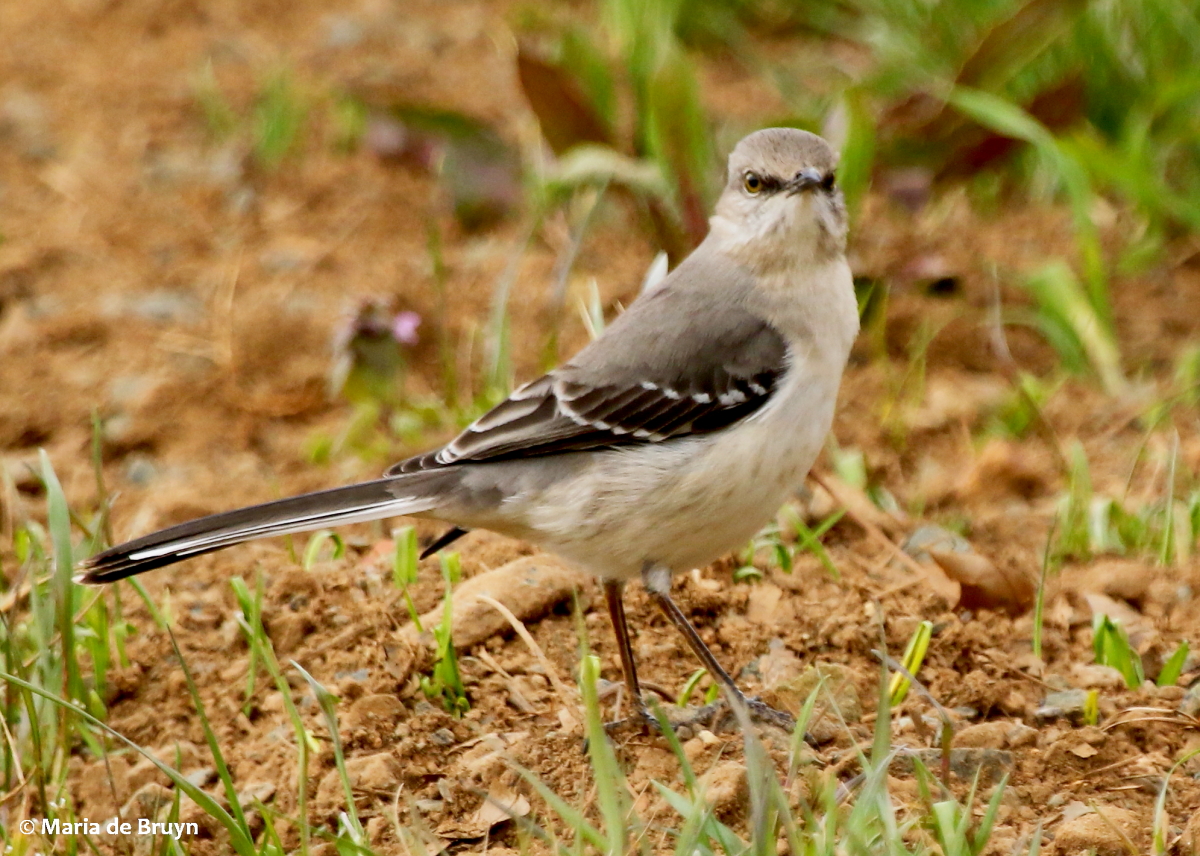
The Northern mockingbirds (Mimus polyglottos) were courting and chasing each other, making a fair bit of noise and flashing their lovely feathers.

Northern mockingbird I77A7172© Maria de Bruyn    Northern mockingbird I77A7425© Maria de Bruyn

Northern mockingbird I77A7118© Maria de Bruyn res

Even though mockingbirds live around my yard, I always enjoy seeing them again. I likely never will become a birder who goes off to exotic lands just to chase down one species I haven’t seen before. But I certainly am paying even more attention to the birds around me wherever I am and making some shorter forays as time permits (just yesterday, I joined friends Beth, Carol and Nan to go see a Wilson’s snipe (Gallinago delicata) at a farm in the next county – another lifer!). But it’s not only birds that will get me to travel – bears are on my list of animals that I am still hoping to see and photograph in the wild. When I get to that point, you’ll read about them here, too!

Birds, berries, nuts and seeds – enjoyment of nature’s bounty

So this wasn’t my last blog of 2015 after all. An unexpected hospital admission on 30 December brought about quite a delay in my blogging efforts. But I managed to complete this in instalments over the past days and hope you enjoy the final version, which I am happily able to post on my second day at home in 2016!

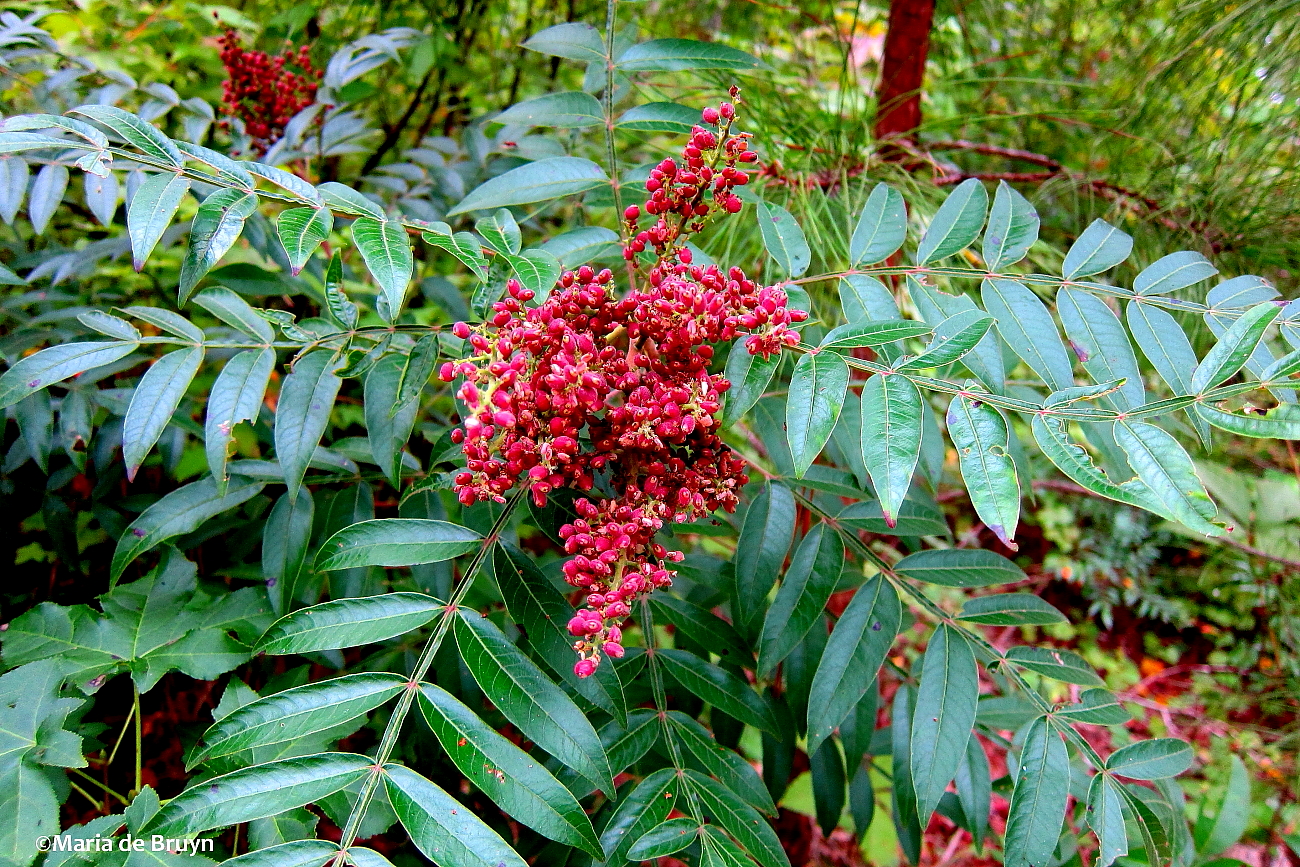
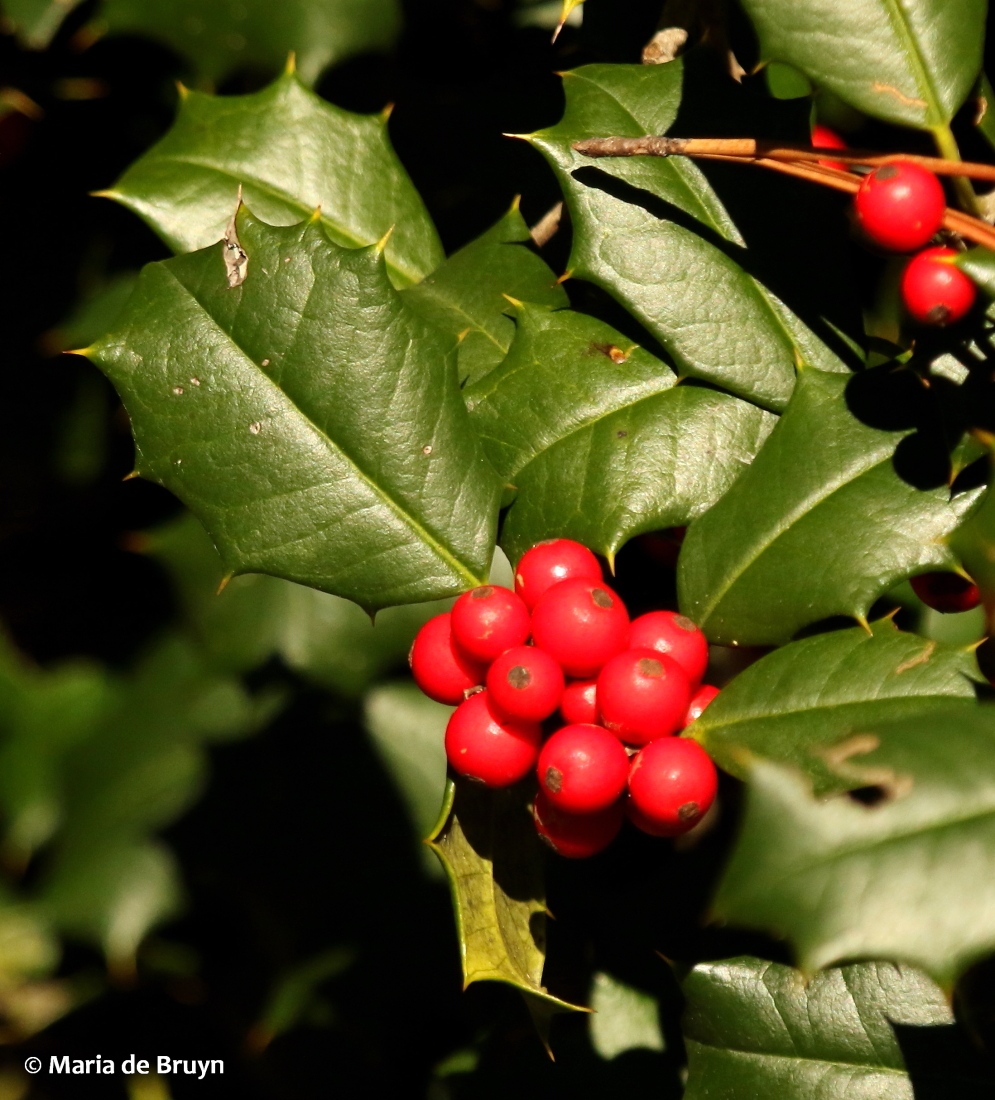
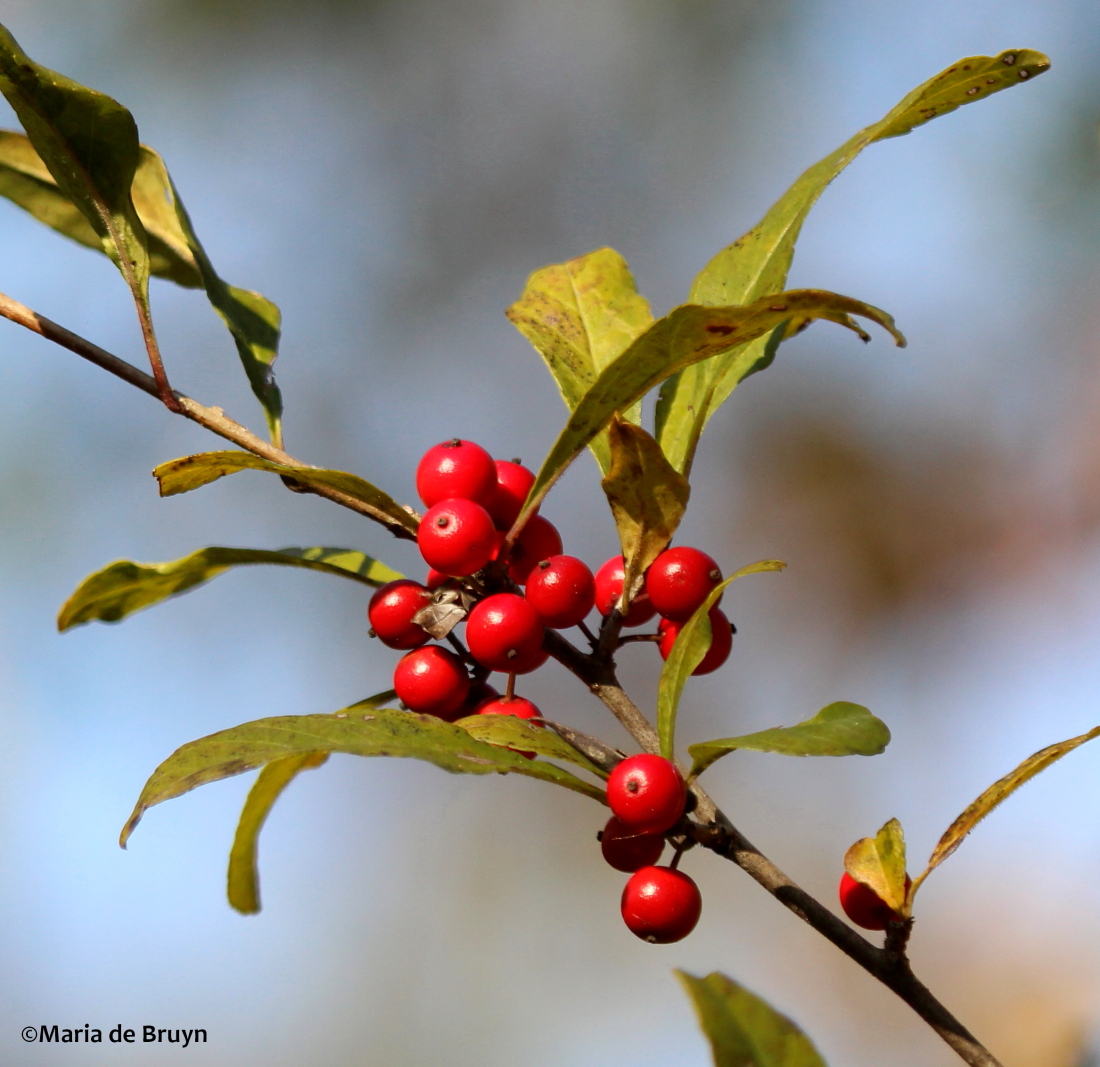
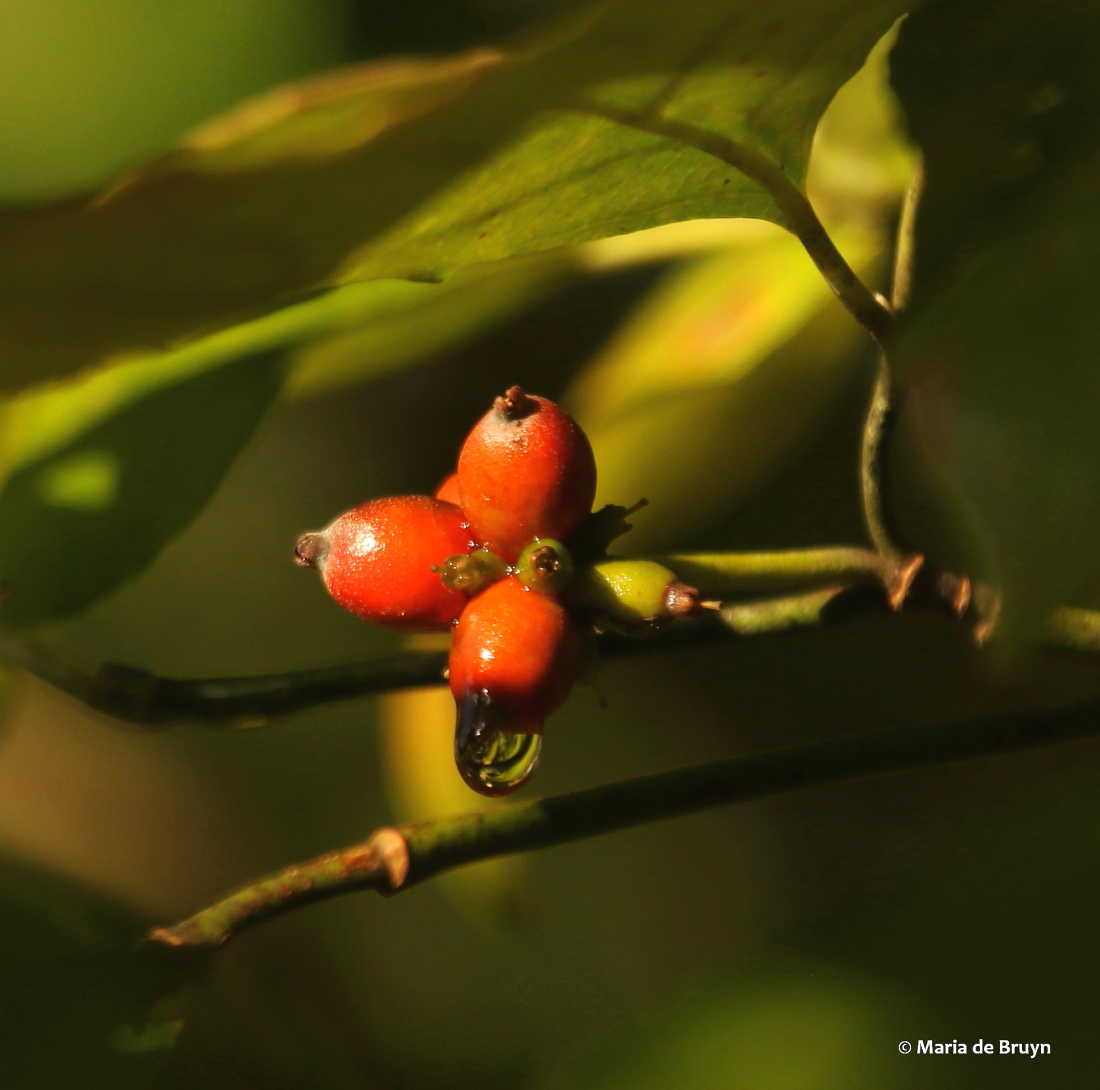
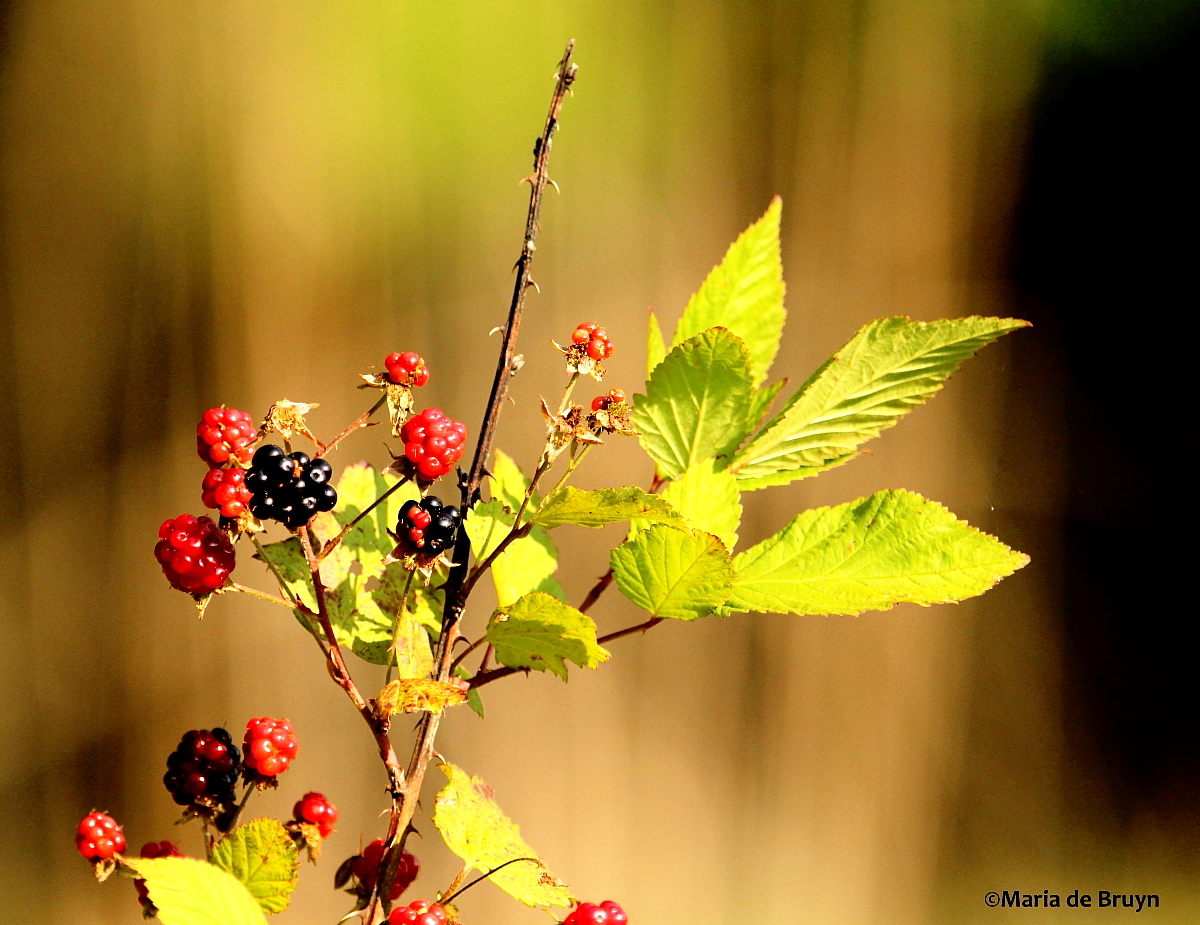
During late summer, when various plants have or start developing fruit, the birds begin to enjoy nature’s bounty. Here in North Carolina, they will eat the berries of native plants such as American beautyberry (Callicarpa americana), winged sumac (Rhus copallinum), American holly (Ilex opaca), possumhaw (deciduous holly, Ilex decidua), flowering dogwood (Cornus florida) and wild blackberries (Rubus).

American beautyberry IMG_7637© Maria de Bruyn resWinged sumac IMG_5377©Maria de Bruyn res

American holly I77A3150© Maria de Bruyn resDeciduous holly IMG_4428© Maria de Bruyn res

Flowering dogwood DK7A7731© Maria de Bruyn reswild blackberryIMG_2588©Maria de Bruyn res


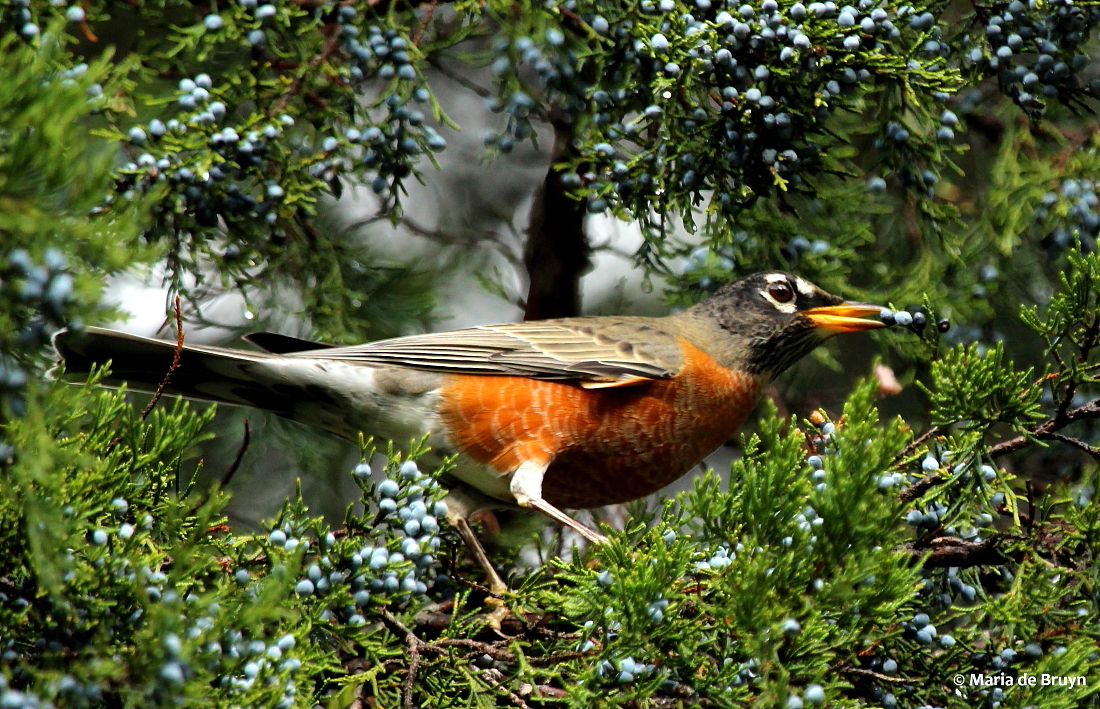
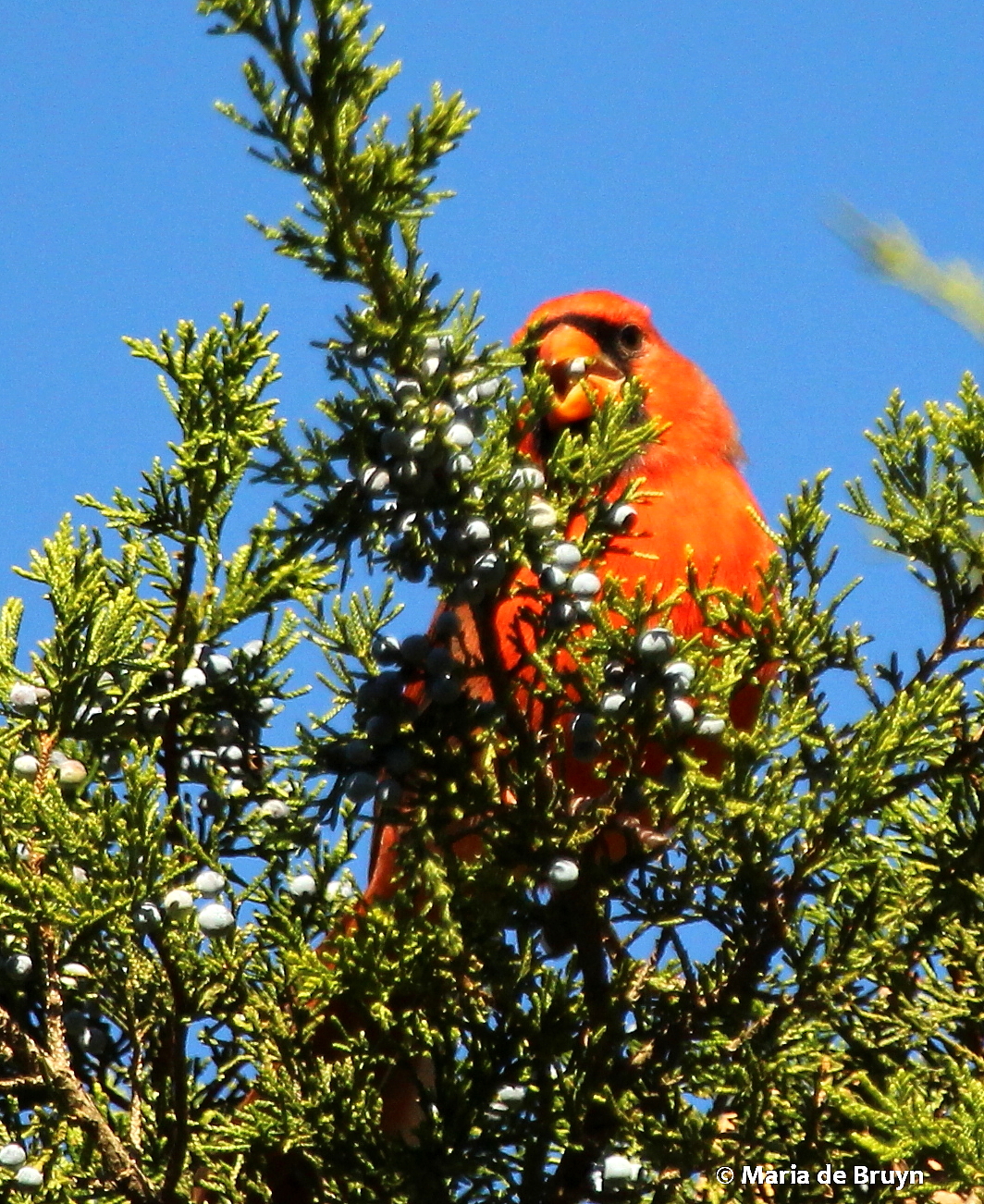
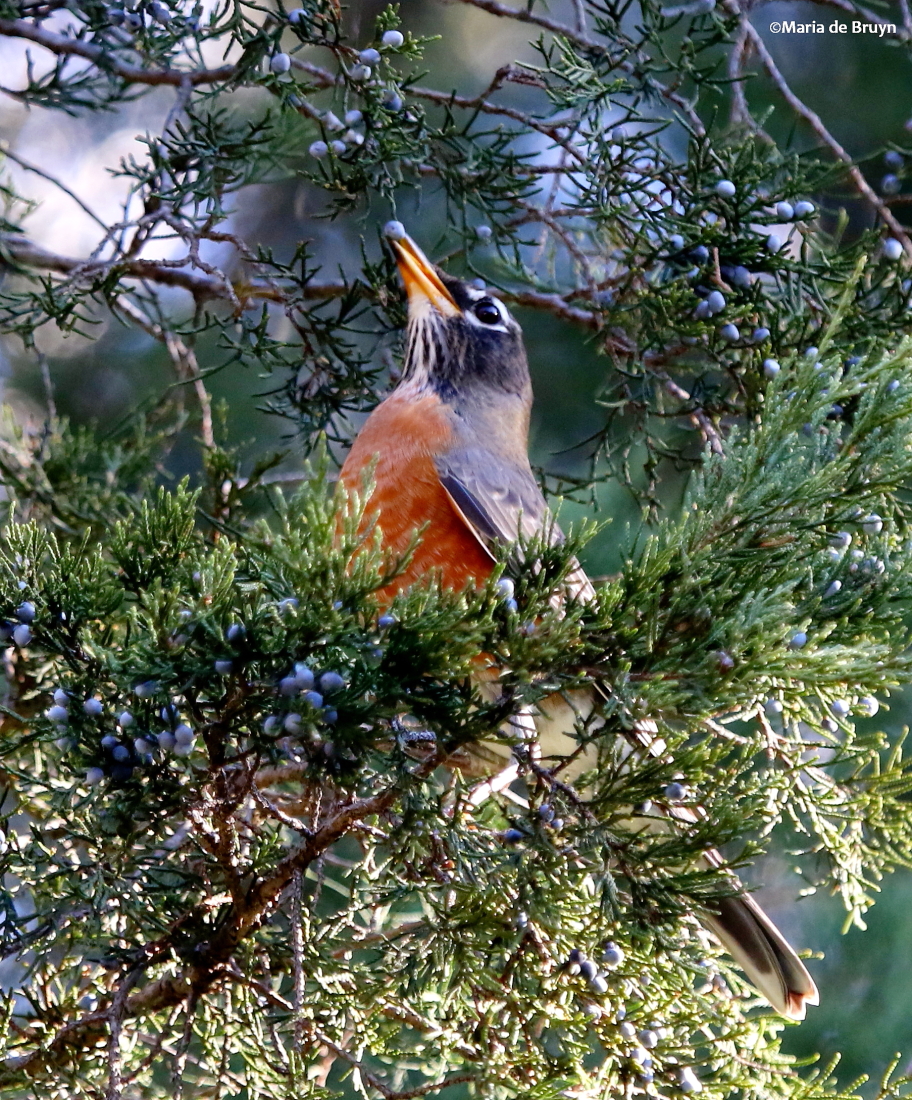
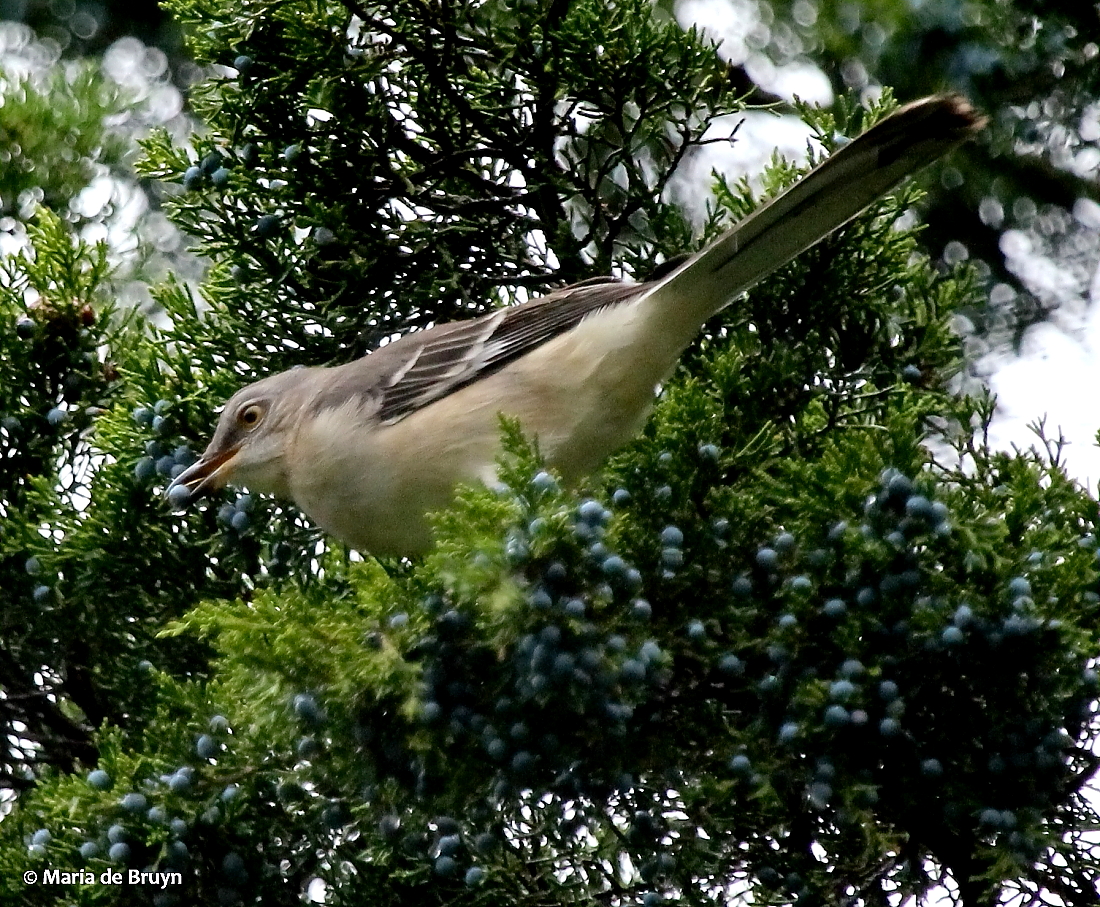
This year, the juniper berries were a real crowd pleaser. The American robins (Turdus migratorius) went for them first, soon followed by Northern cardinals (cardinalis cardinalis), Eastern bluebirds (Sialia sialis), Northern mockingbirds (Mimus polyglottos polyglottos) and Northern flickers (Colaptes auratus).

American robin IMG_6567© Maria de Bruyn res

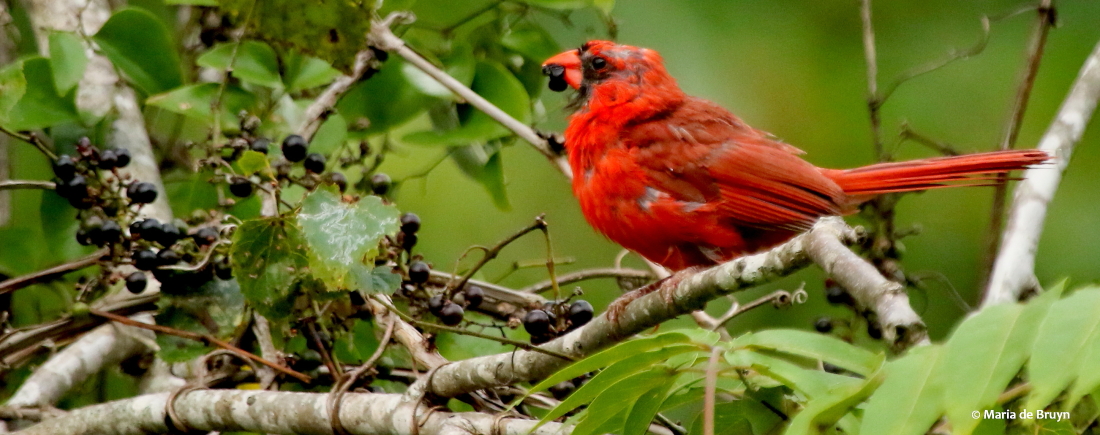
Northern cardinal IMG_3653© Maria de BruynAmerican robin I77A0801©Maria de Bruyn res

Eastern bluebird I77A0913©Maria de Bruyn resNorthern mockingbird 2 IMG_6308© Maria de Bruyn res

Northern flicker IMG_5853© Maria de Bruyn res

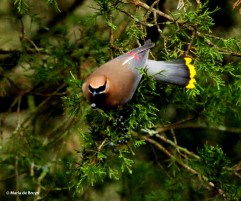
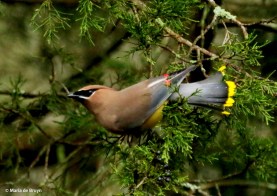
The beautiful cedar waxwings (Bombycilla cedrorum) enjoyed the cedar berries, too.
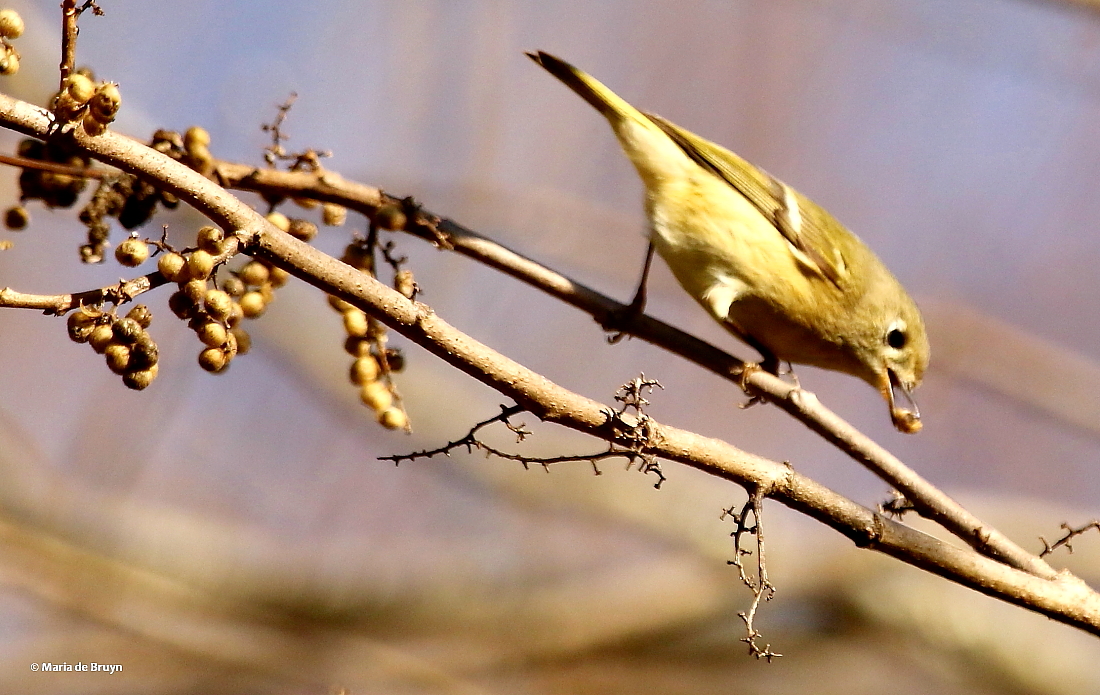
cedar waxwing I77A4266© Maria de Bruyn res

cedar waxwing I77A4293© Maria de Bruyn res

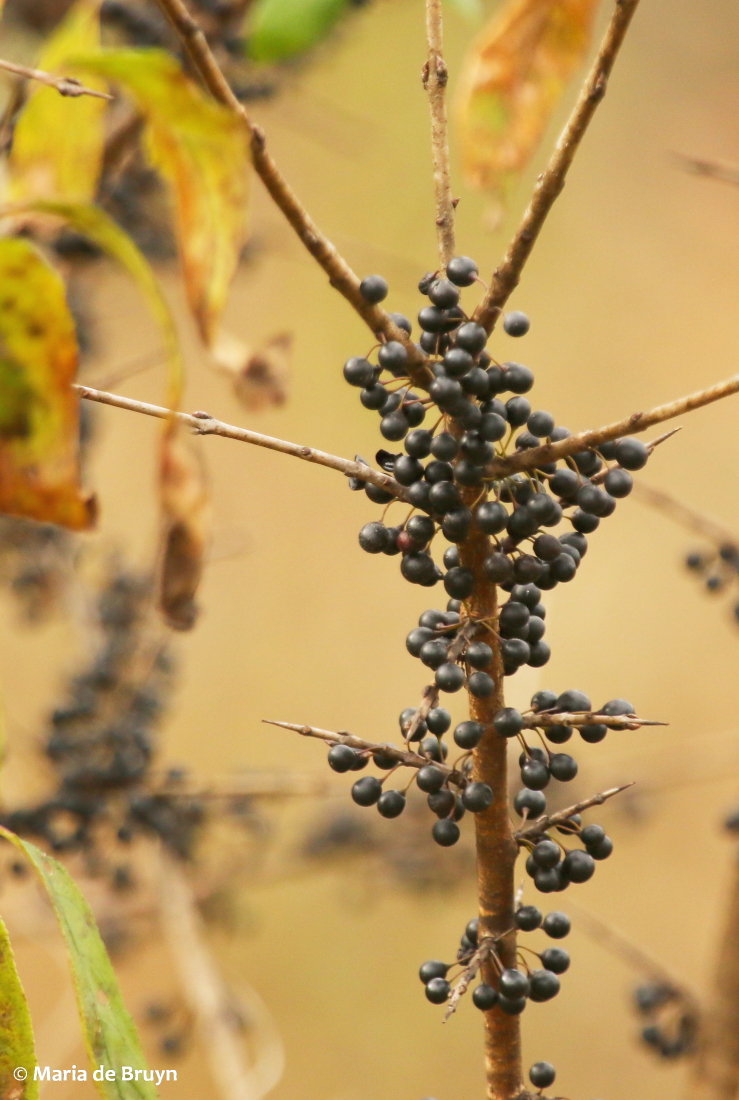
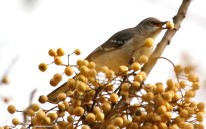
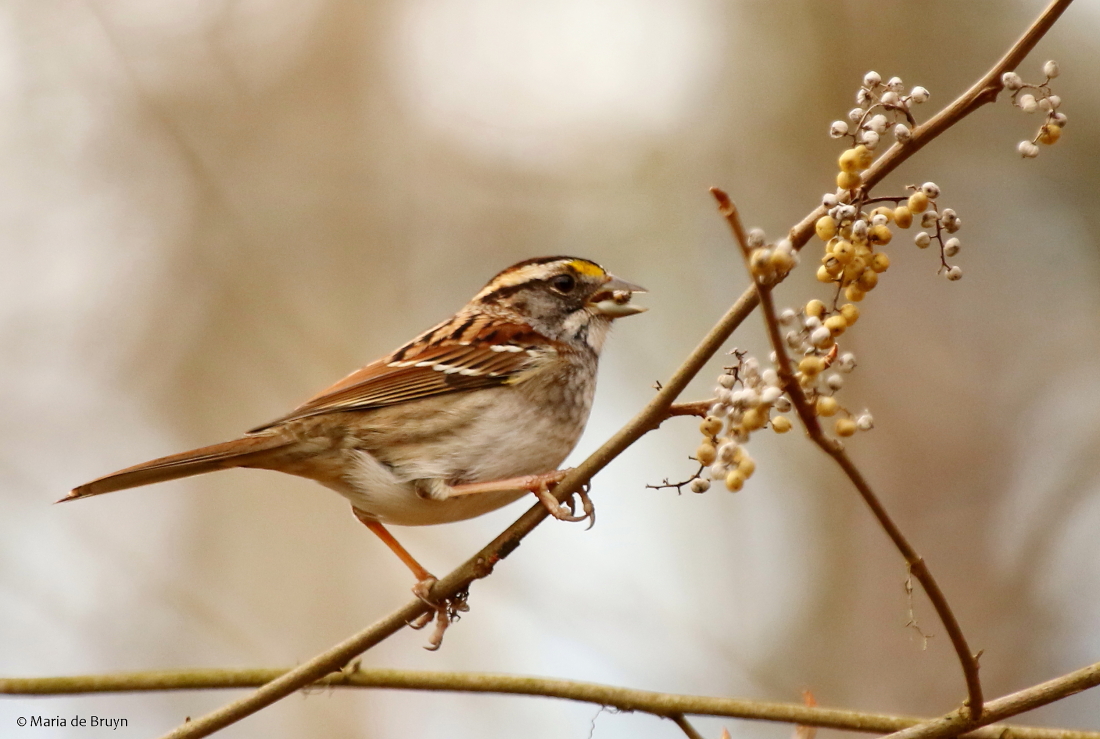
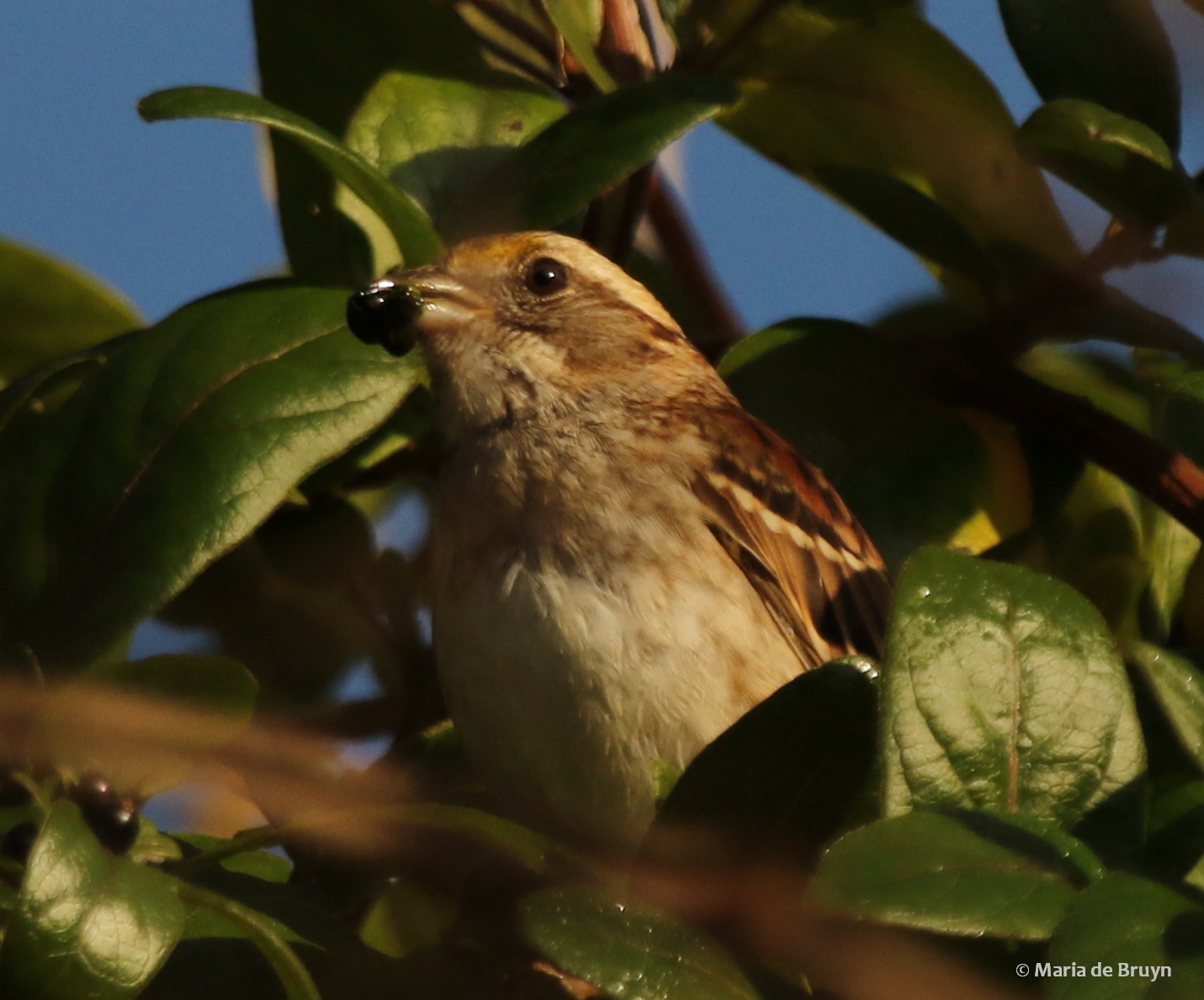
Birds like thbuckthorn I77A2455© Maria de Bruyn signed rese Northern mockingbird and white-throated sparrow (Zonotrichia albicollis) also enjoy the berries of invasive plants such as privet (Ligustrum), common buckthorn (Rhamnus cathartica. left), Chinaberry (Melia azedarach) and autumn olive (Eleagnus umbellata).
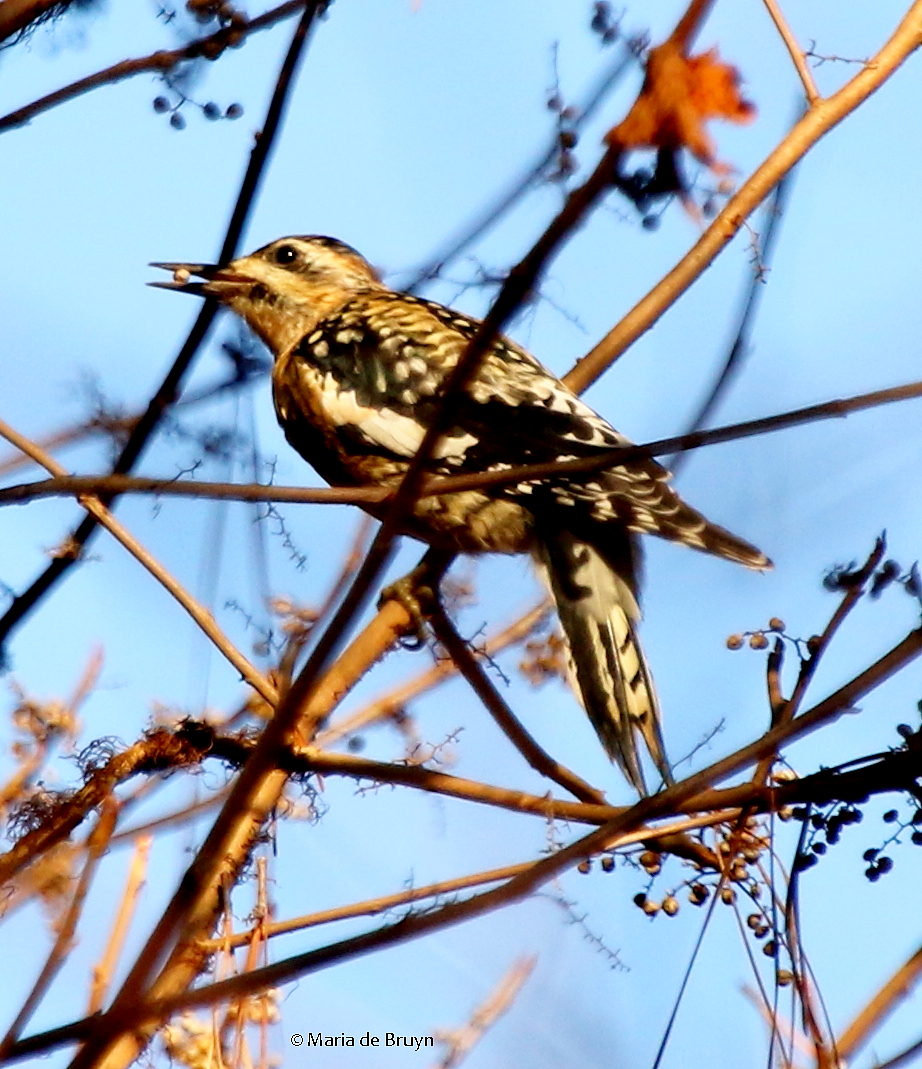
Northern mockingbird I77A2924© Maria de Bruyn res
white-throated sparrow I77A8188© Maria de Bruyn 2 reswhite-throated sparrow I77A4714© Maria de Bruyn signed

Watching our avian friends enjoy snapping up berries from vines can create enjoyment for the birdwatcher, too!

Northern cardinal DK7A8841© Maria de Bruyn signed res

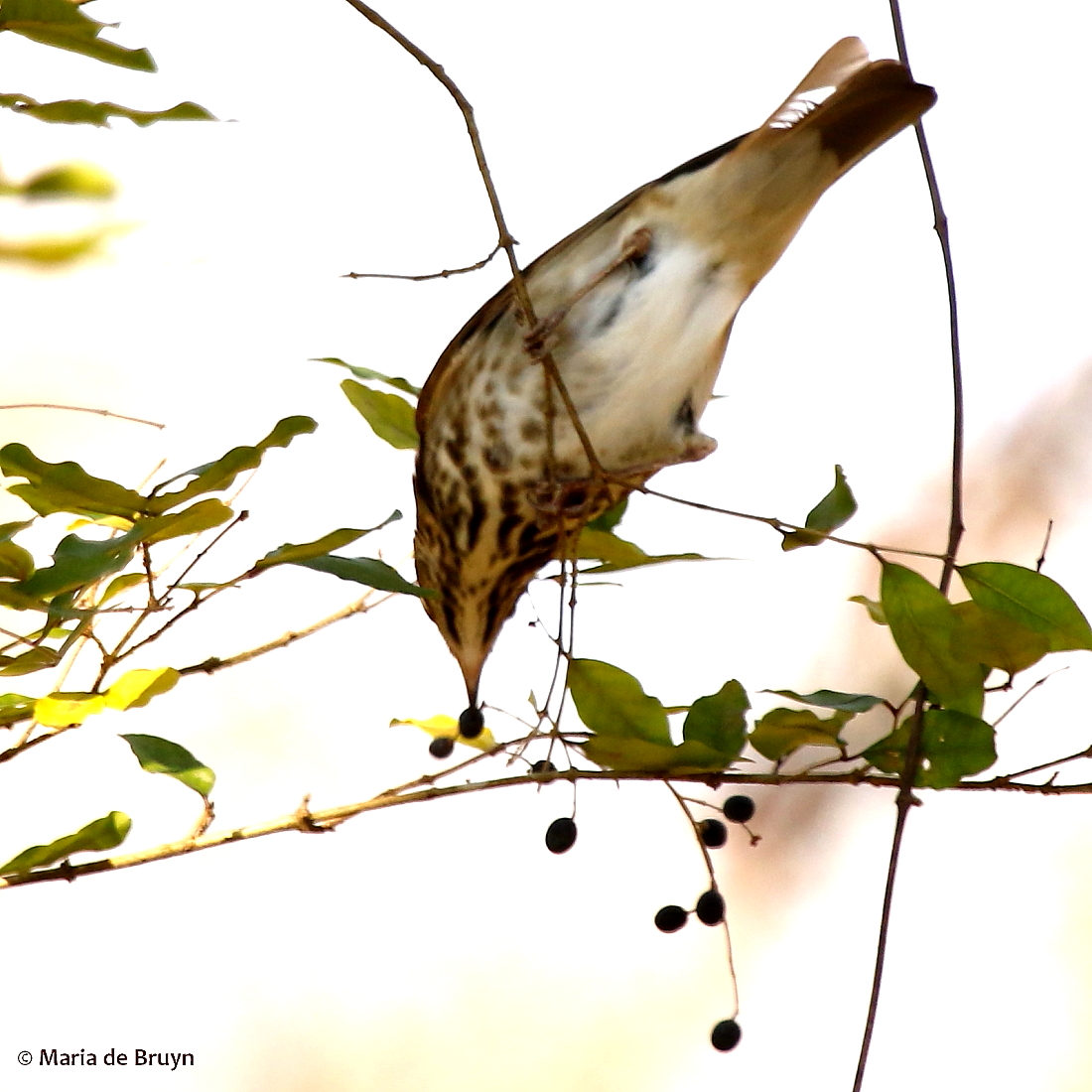
ruby-crowned kinglet I77A5319© Maria de Bruyn reshermit thrush I77A5816© Maria de Bruyn signed res

Ruby-crowned kinglet (Regulus calendula)

Hermit thrush (Catharus guttatus)


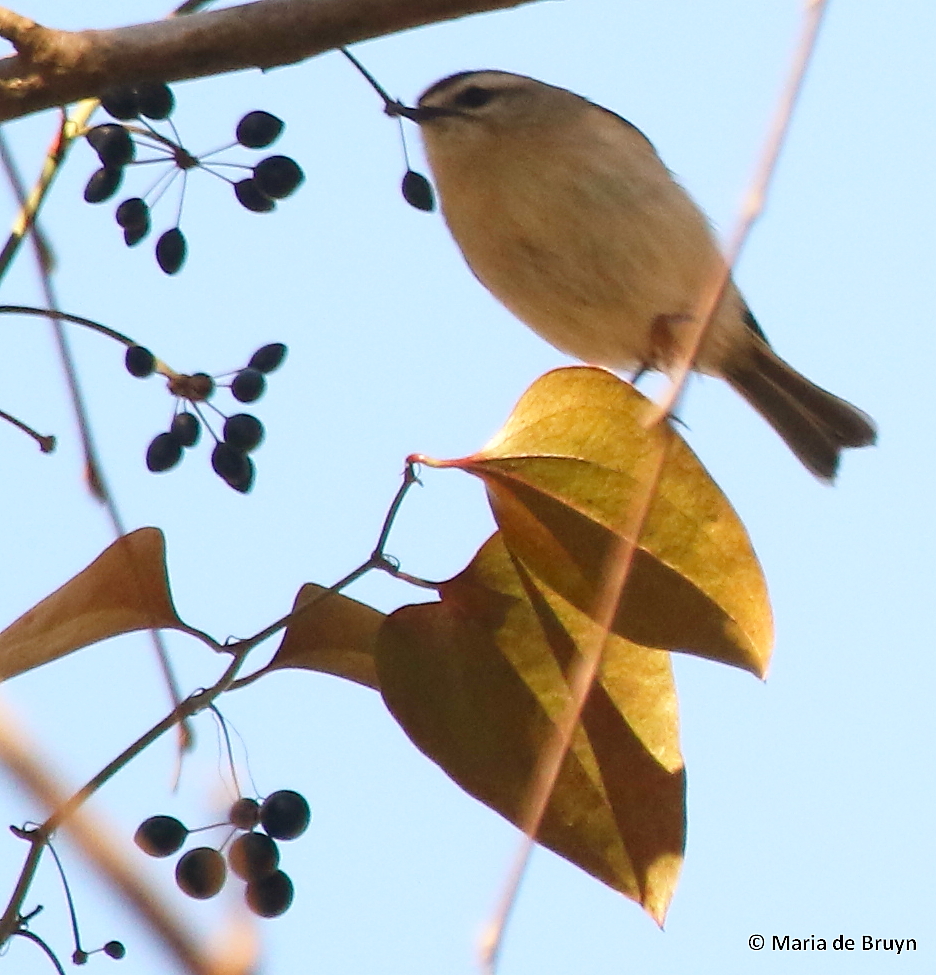
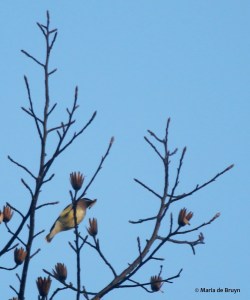
In some cases, they may also be seeking insects along with the berries, as this yellow-bellied sapsucker (Sphyrapicus varius) and tiny golden-crowned kinglet (Melanerpes erythrocephalus) may have been doing.

Yellow-bellied sapsucker I77A9133© Maria de Bruyngolden-crowned kinglet I77A1918© Maria de Bruyn

American goldfinch DK7A4411© Maria de Bruyn signed


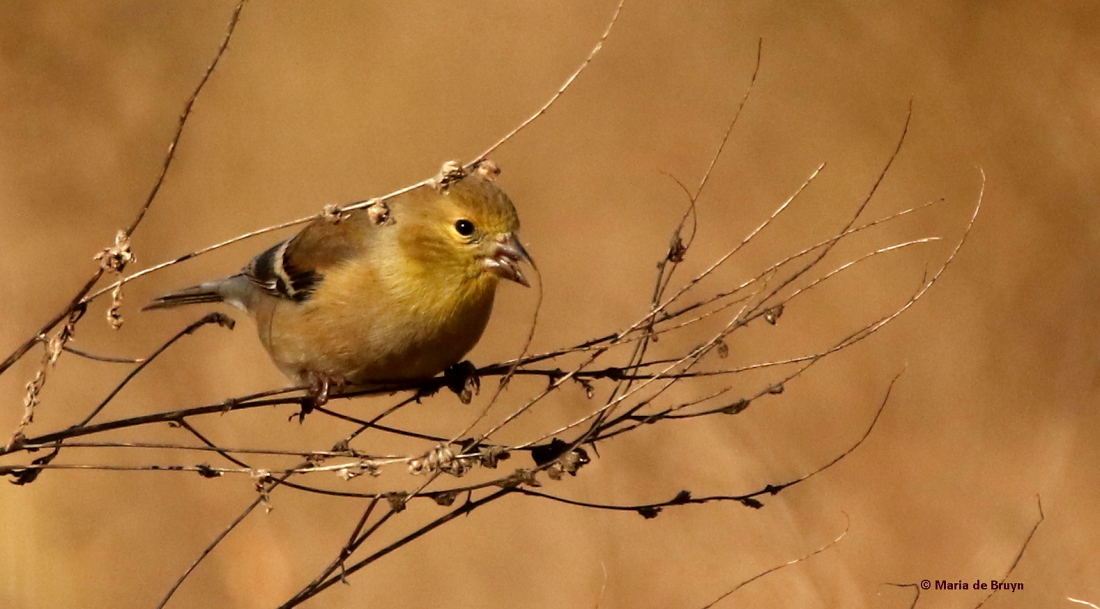
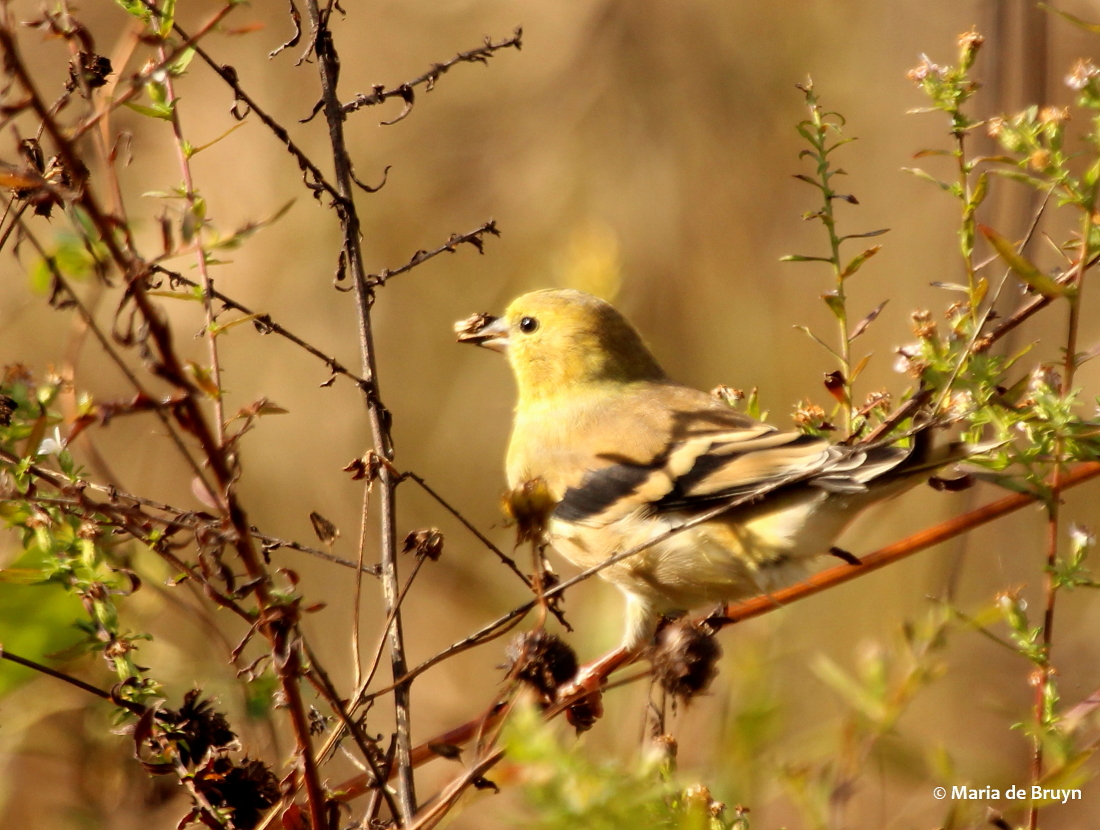
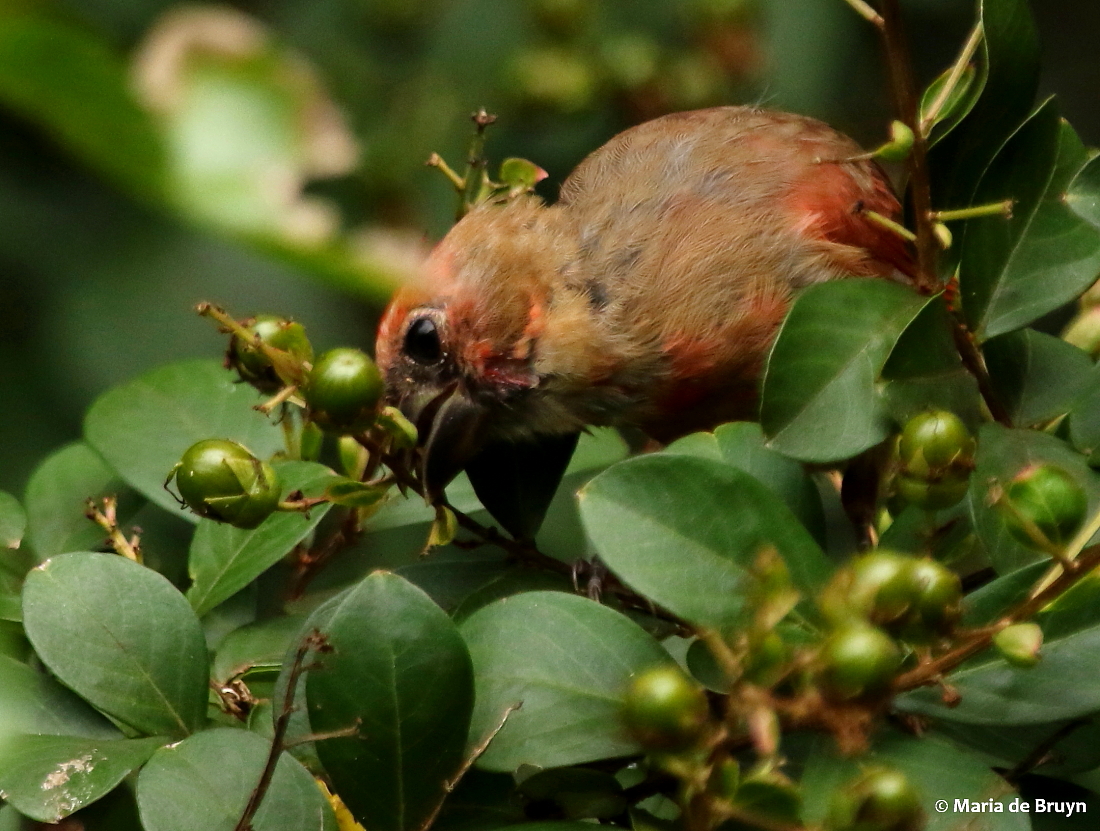
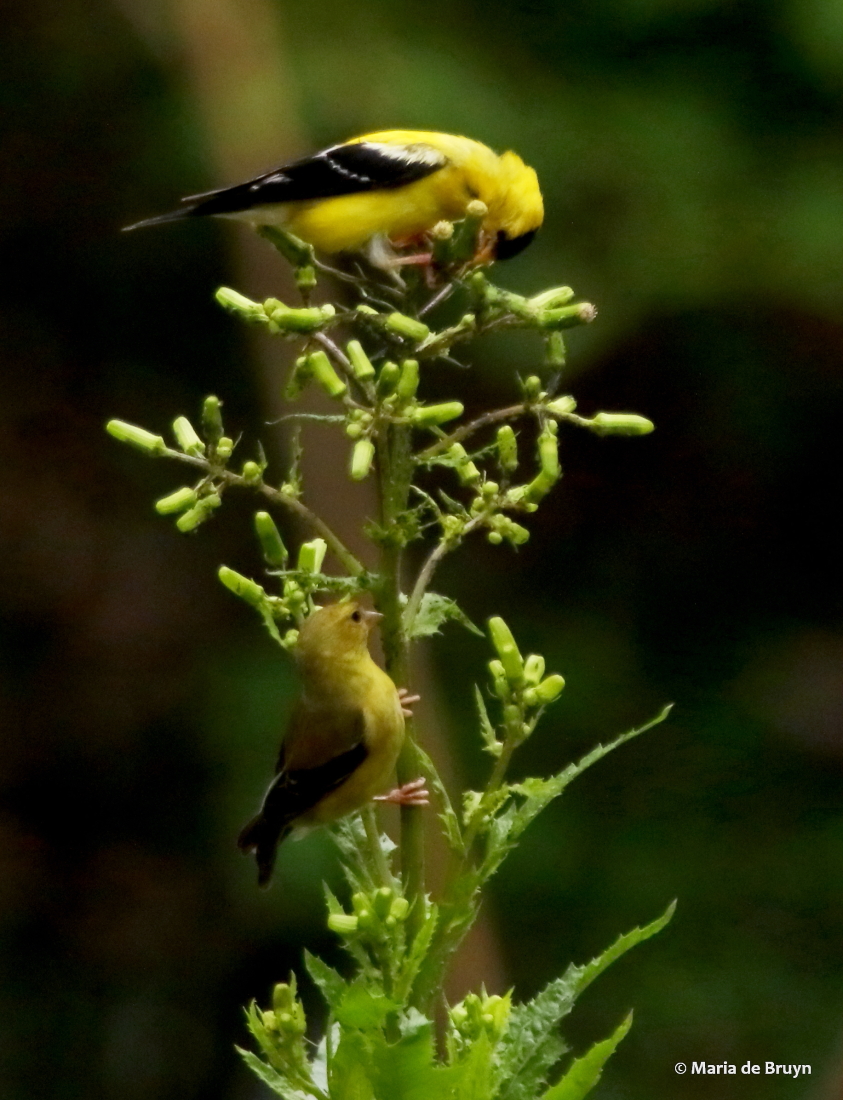
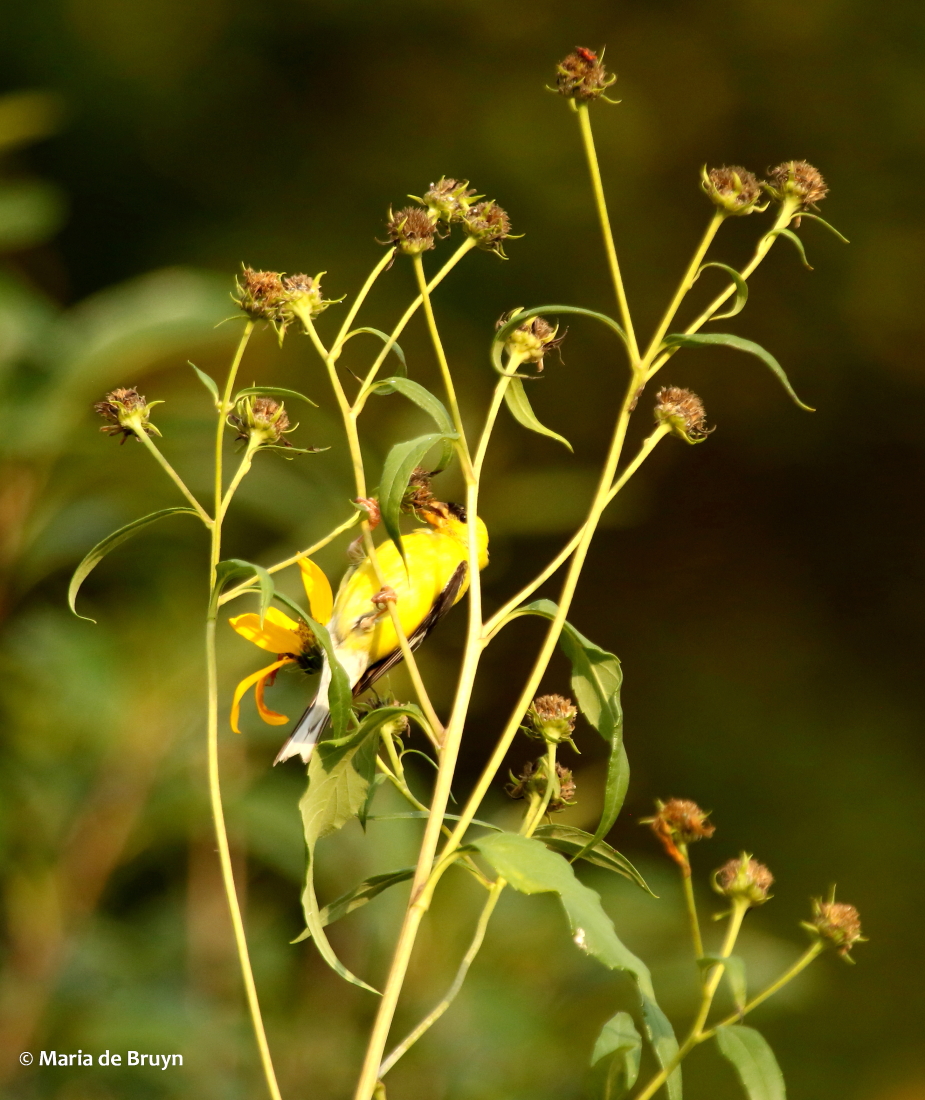
It’s not only the fruit that draws them away from the bird feeders in the autumn though. Sunflower seeds (Helianthus) are a big hit with the American goldfinches (Spinus tristis), who also seek out different kinds of seed pods.


American goldfinch I77A2510© Maria de Bruyn res American goldfinch IMG_7947© Maria de Bruyn signed res

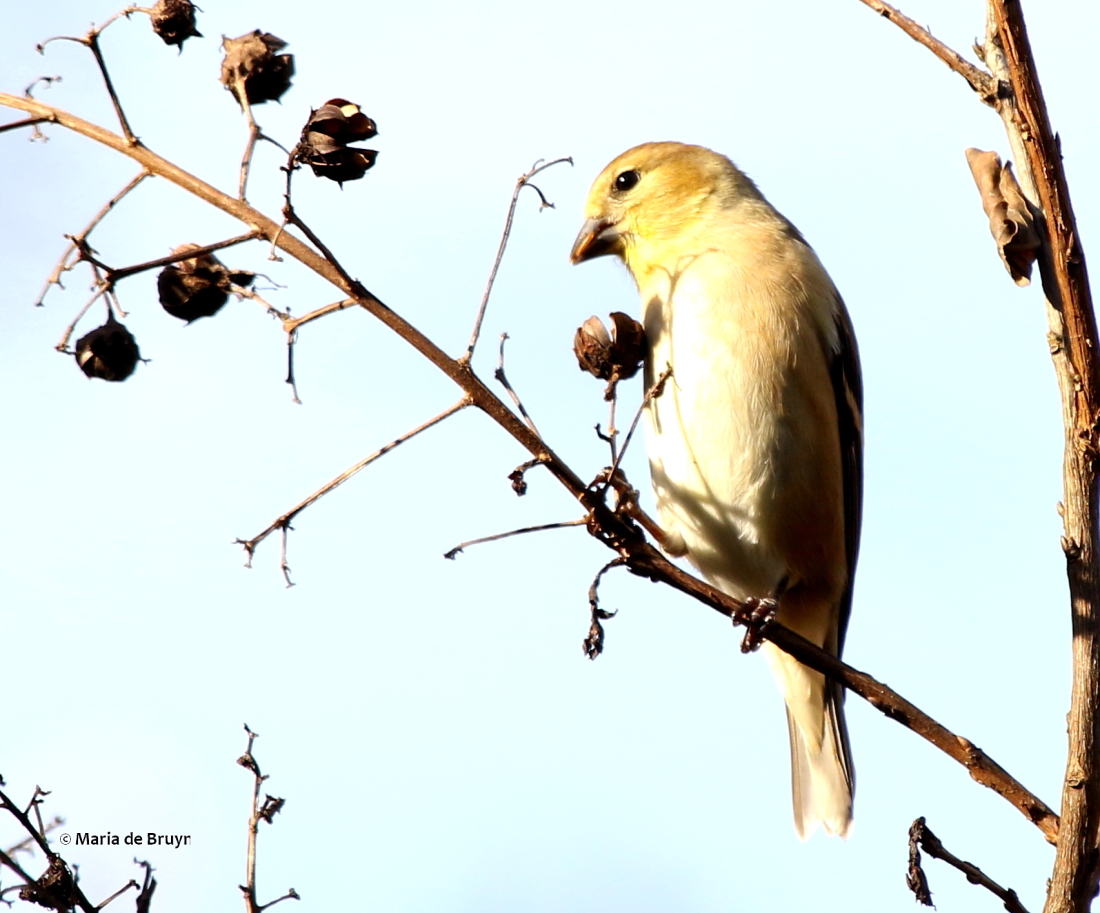
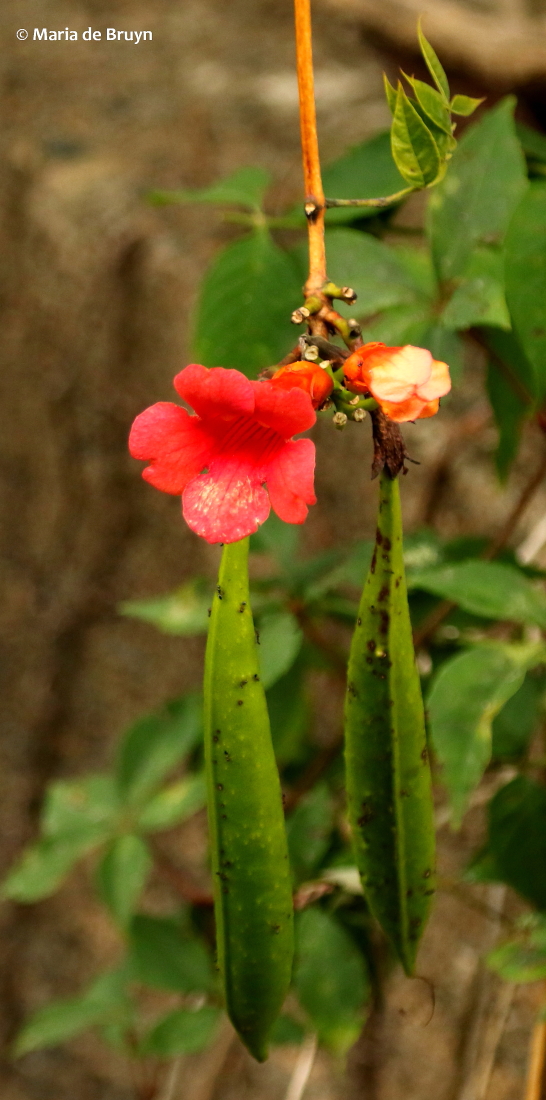
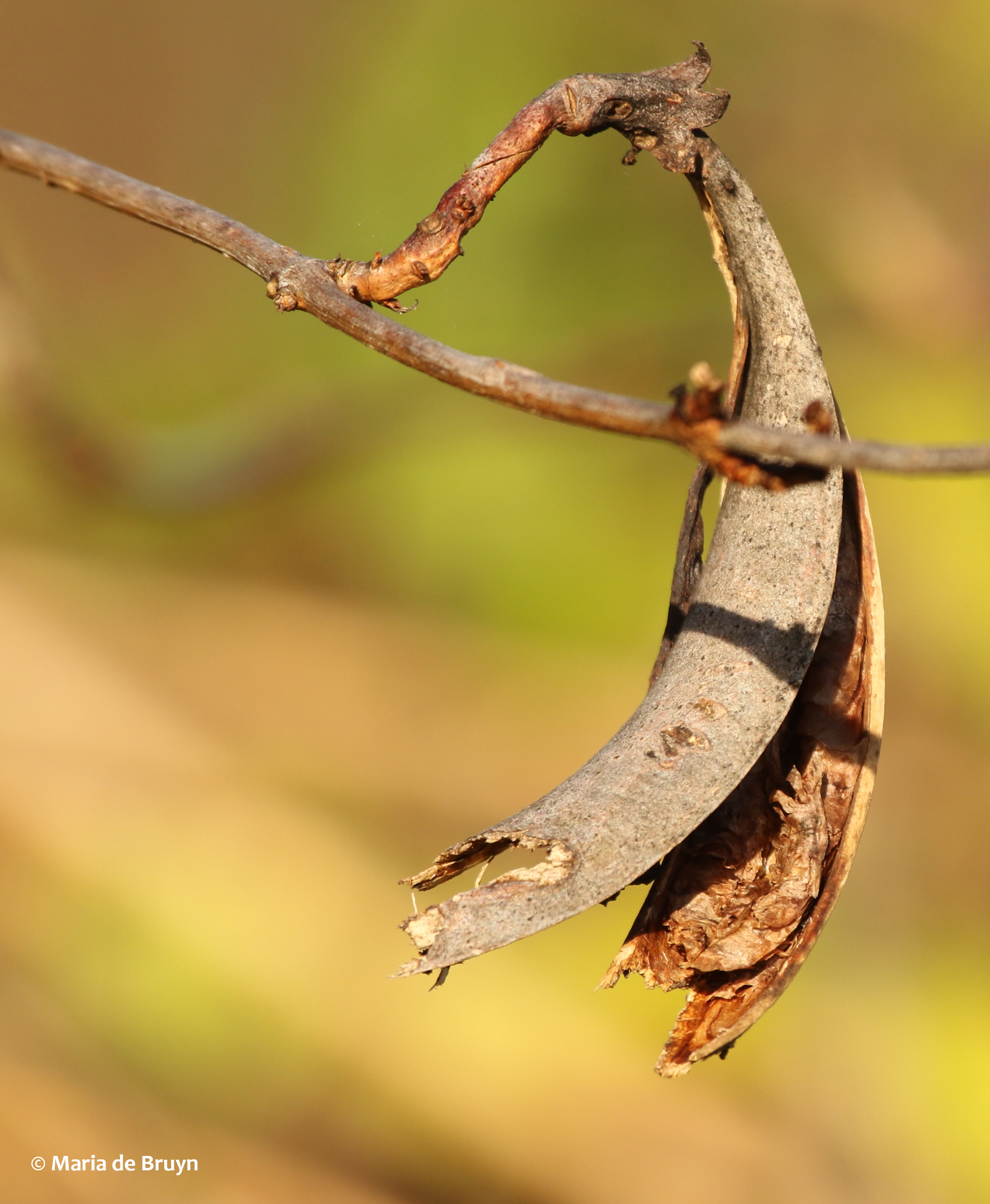
Pods on trees, like the crepe myrtle (Lagerstroemia fauriei), and on vines such as the trumpet creeper (Campsis radicans) offer attractive meals, too.

goldfinch I77A2097© Maria de Bruyn resNorthern cardinal DK7A1206© Maria de Bruyn signed res

American goldfinch and Northern cardinal both eating crepe myrtle

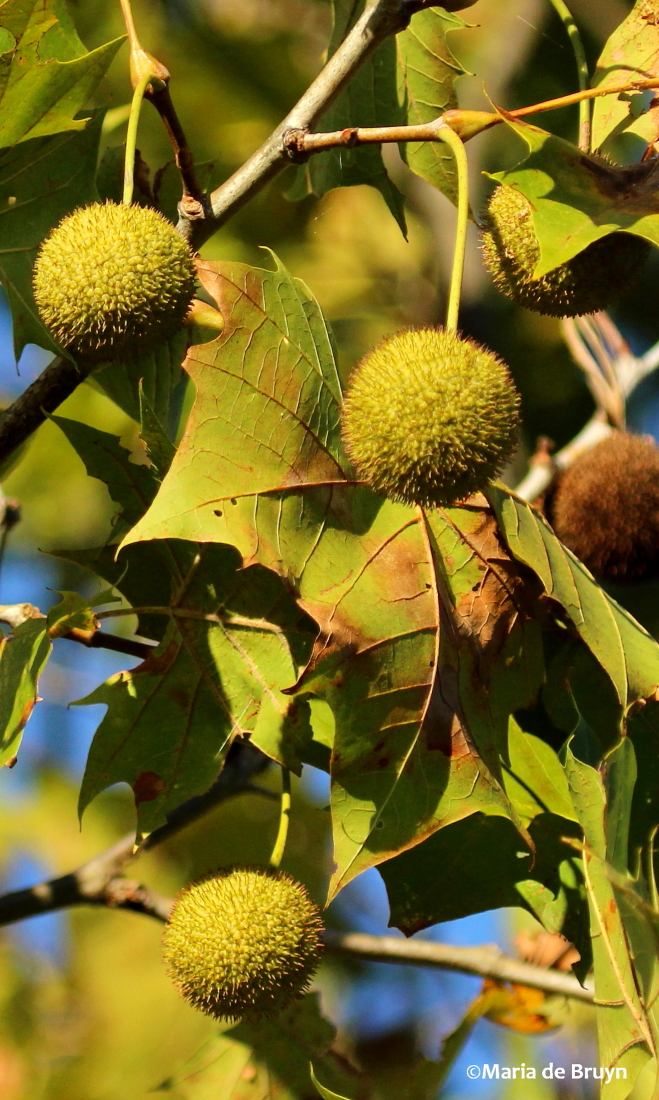
Trumpet vine DK7A9266© Maria de Bruyn signed restrumpet vine I77A1487© Maria de Bruyn ressycamore IMG_2339©Maria de Bruyn res

Trumpet vine                                         American sycamore (Platanus occidentalis)

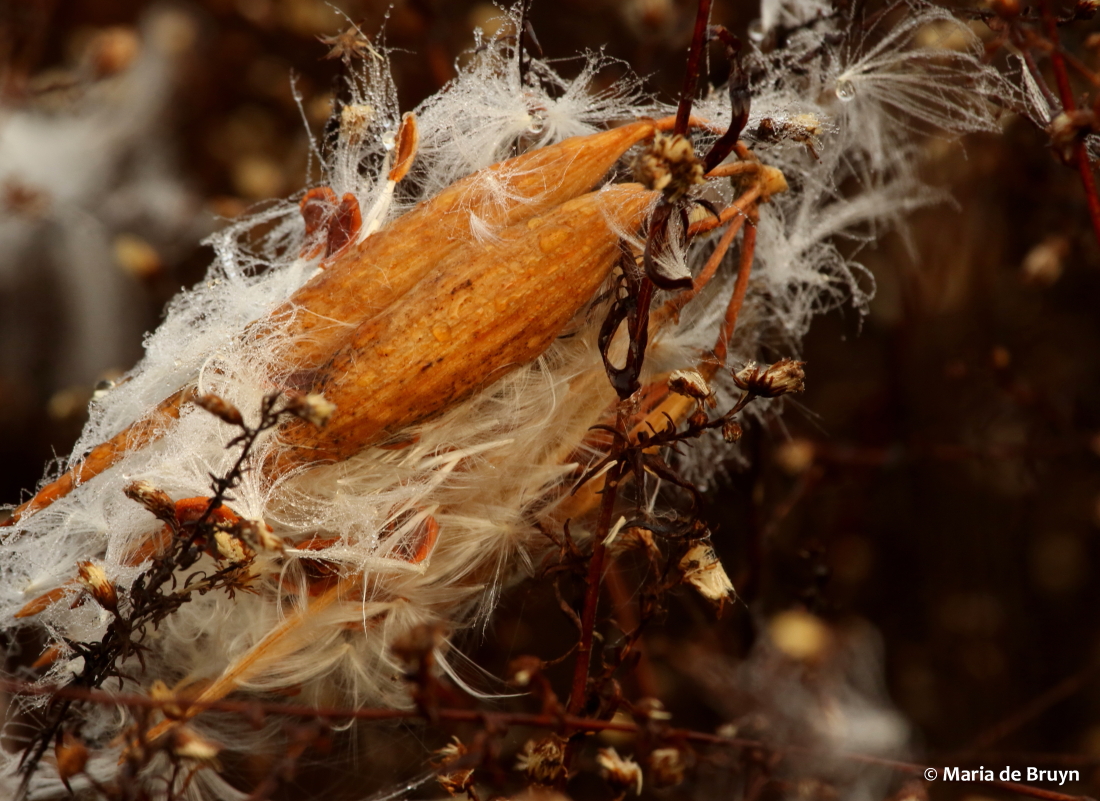
milkweed I77A7144© Maria de Bruyn signed resCarolina wren I77A8006©Maria de Bruyn res

Milkweed (Asclepius) and Carolina chickadee (Poecile carolinensis)

American goldfinch DK7A1355© Maria de Bruyn SIGNED RESamerican goldfinch DK7A7127© Maria de Bruyn signed res

American goldfinches

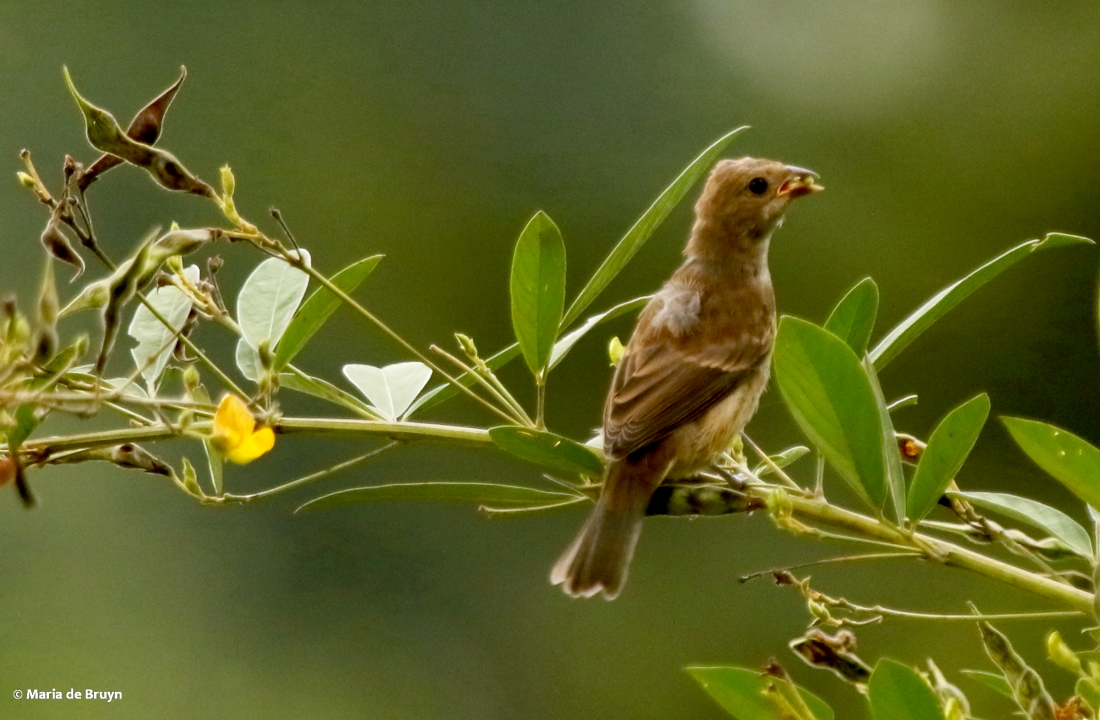
Indigo bunting DK7A7525© Maria de Bruyn signed res

Indigo bunting ( Passerina cyanea)

Scarlet tanager IMG_7415© Maria de Bruyn signed

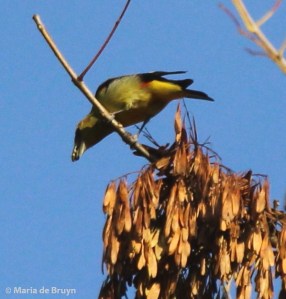
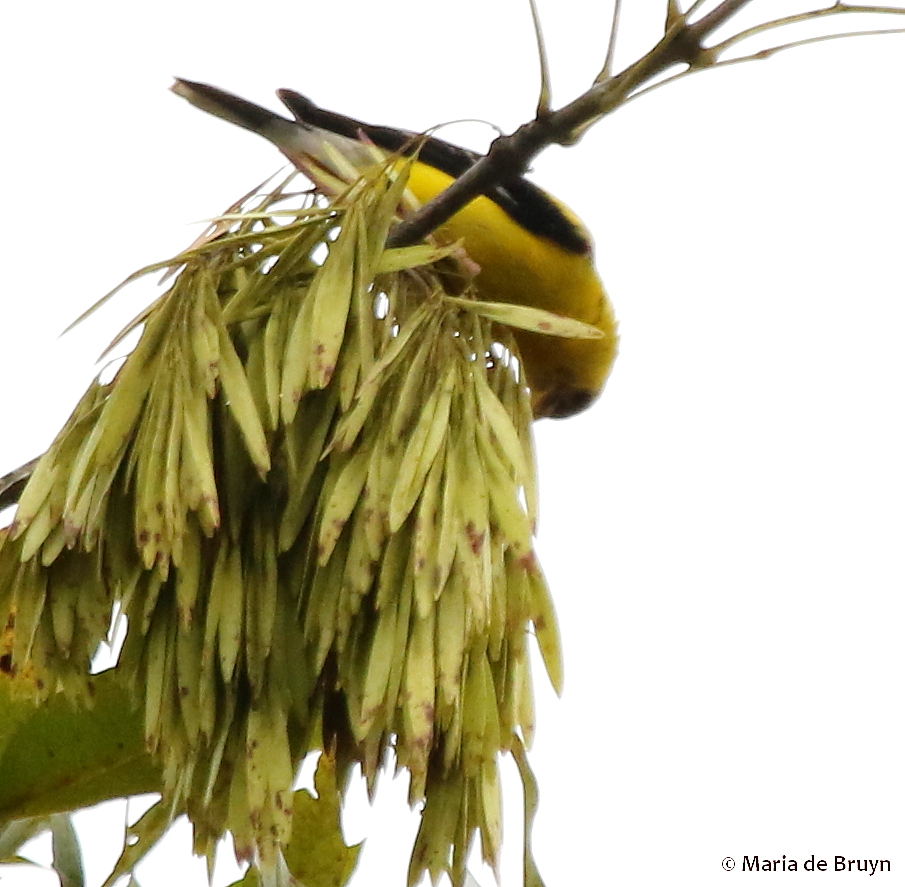
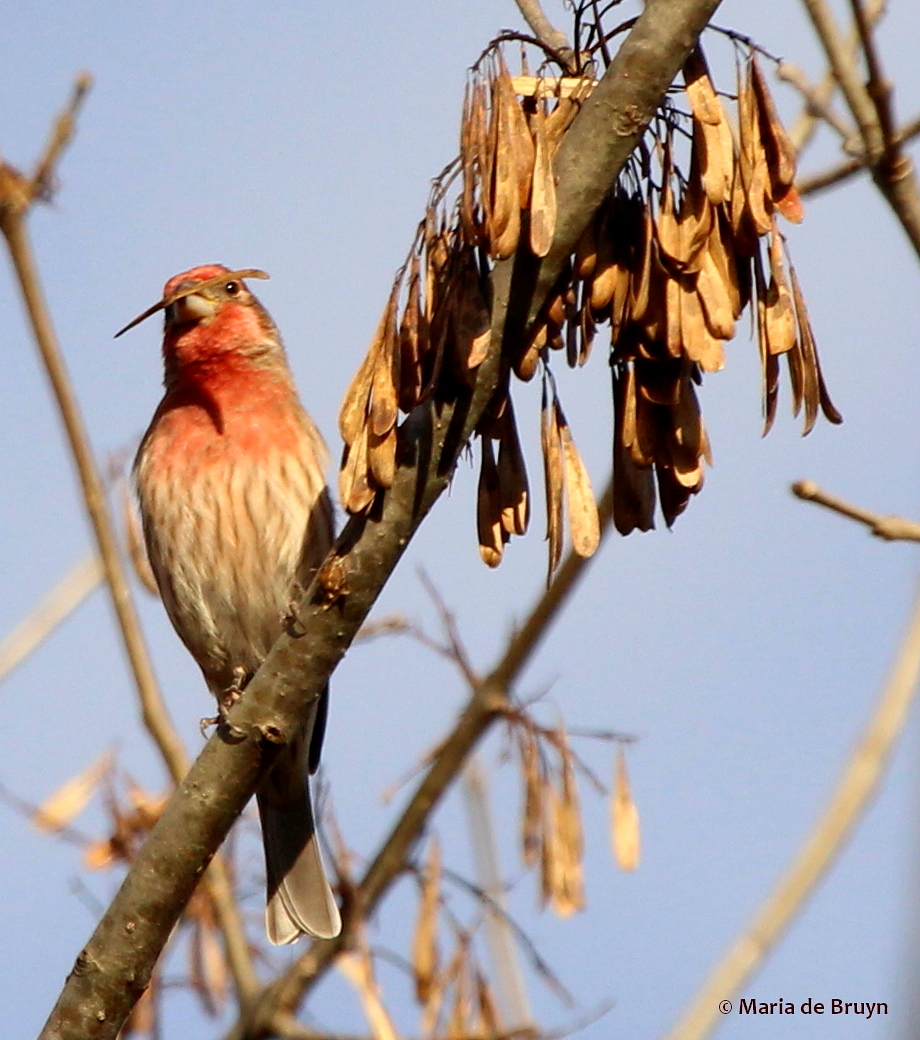
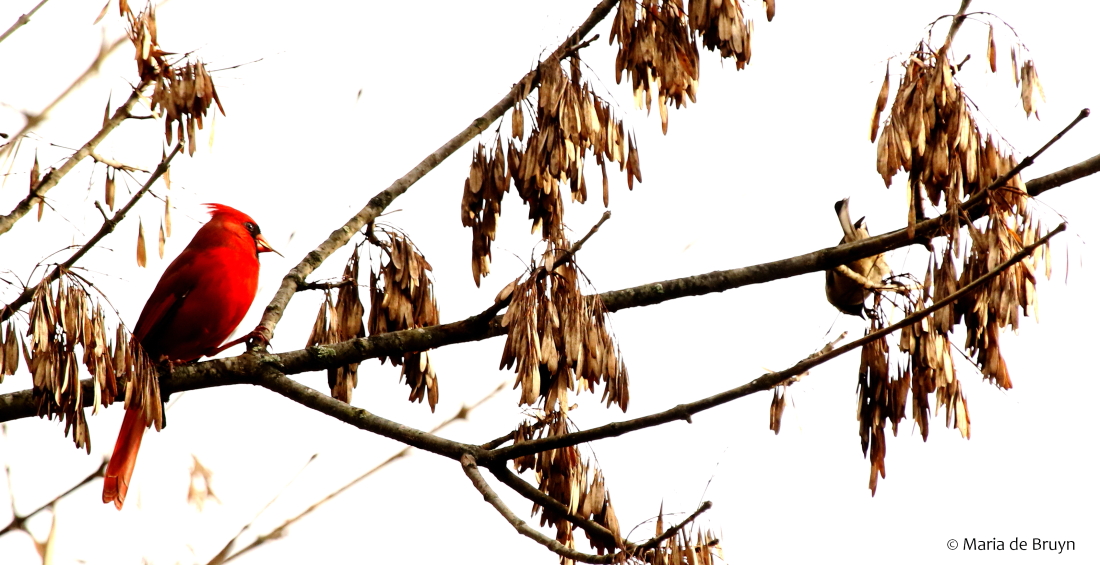
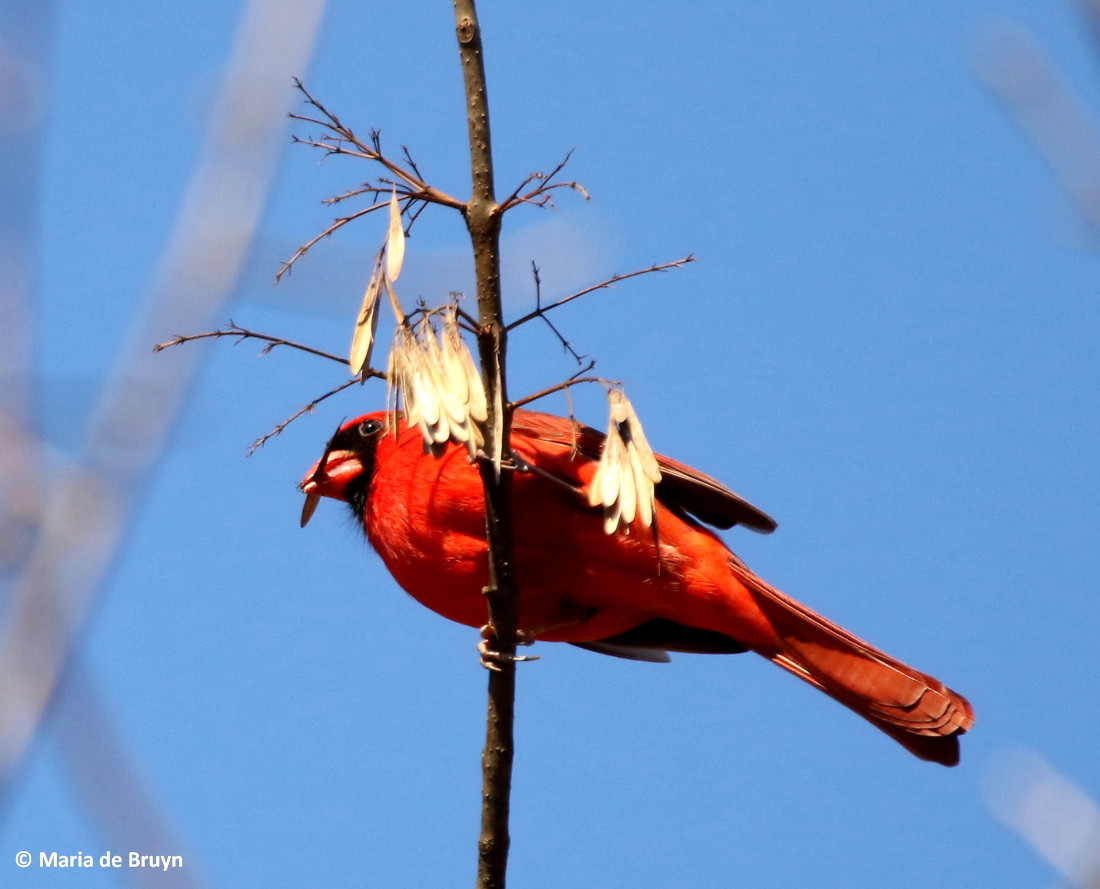
Some trees like maples have samara seed pods, in which a single seed is surrounded by a paper-like tissue that is dispersed by the wind. Ash trees have samaras that grow in clusters. Here a young scarlet tanager (Piranga olivacea) is dining. Below are an American goldfinch, house finch (Haemorhous mexicanus) and Northern cardinal, all of them males.


American goldfinch DK7A5026© Maria de Bruyn signedHouse finch IMG_7718© Maria de Bruyn signed


Northern cardinal I77A8006© Maria de Bruyn res


cedar waxwing I77A6594© Maria de Bruyn signed res

Cedar waxwing (left) with samara of the tulip tree (Liriodendron tulipifera)


blue jay IMG_7806© Maria de Bruyn signed


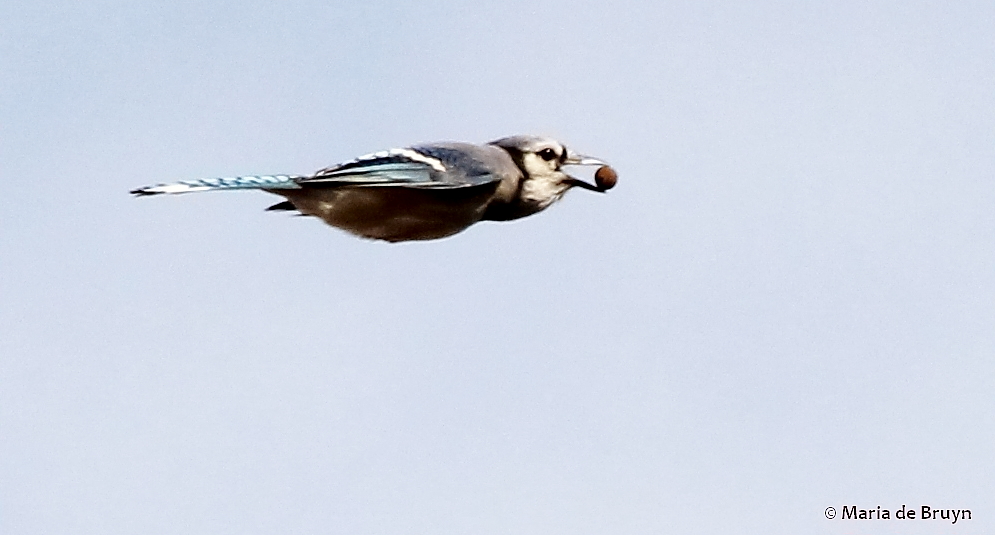
Blue jays (Cyanocitta cristata, above) like nuts a great deal and can often be seen flying away with a prize.

red-bellied woodpecker IMG_5780© Maria de Bruyn (2)


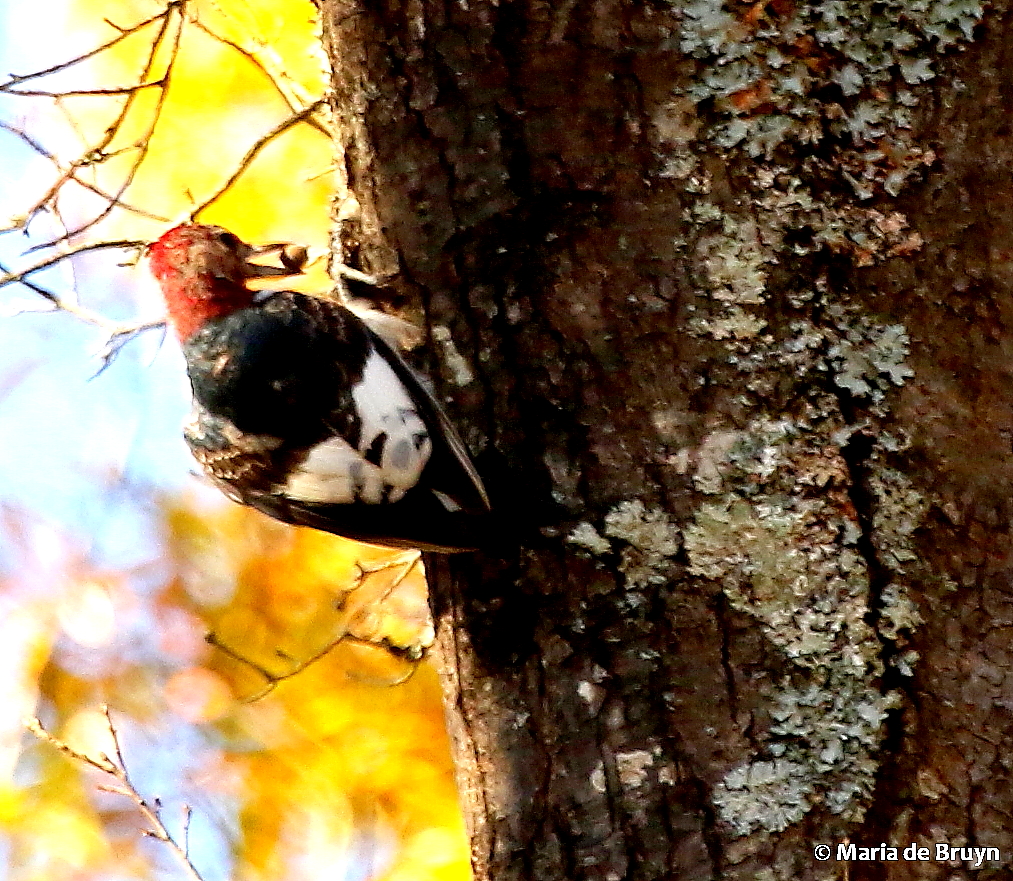
The red-bellied woodpeckers (Melanerpes carolinus) and red-headed woodpeckers (Melanerpes erythrocephalus) don’t turn away from nuts either.


Red-headed woodpecker I77A7844© Maria de Bruyn signed       red-headed woodpecker I77A5149© Maria de Bruyn res

Northern cardinal I77A2153© Maria de Bruyn res

It may feel a bit sad when activity dies down at the feeders for a time, but if you can manage to have nut-, seed- and fruit-bearing vegetation around your home, you can still enjoy watching your avian friends forage – and the natural surroundings can make for lovelier photos, too!

Birdie beauty – hummingbird preening and grooming

ruby-throated hummingbird DK7A6865© Maria de Bruyn res

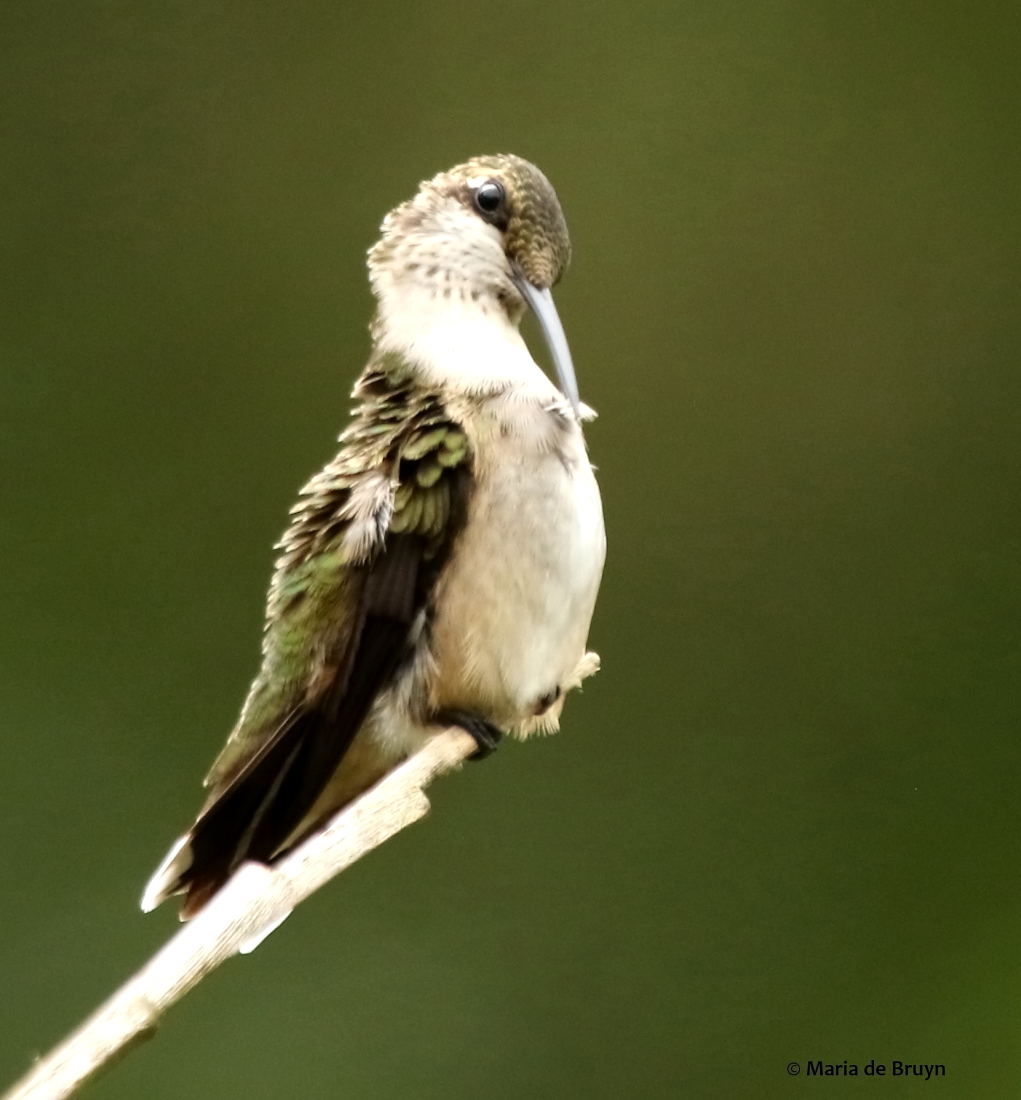
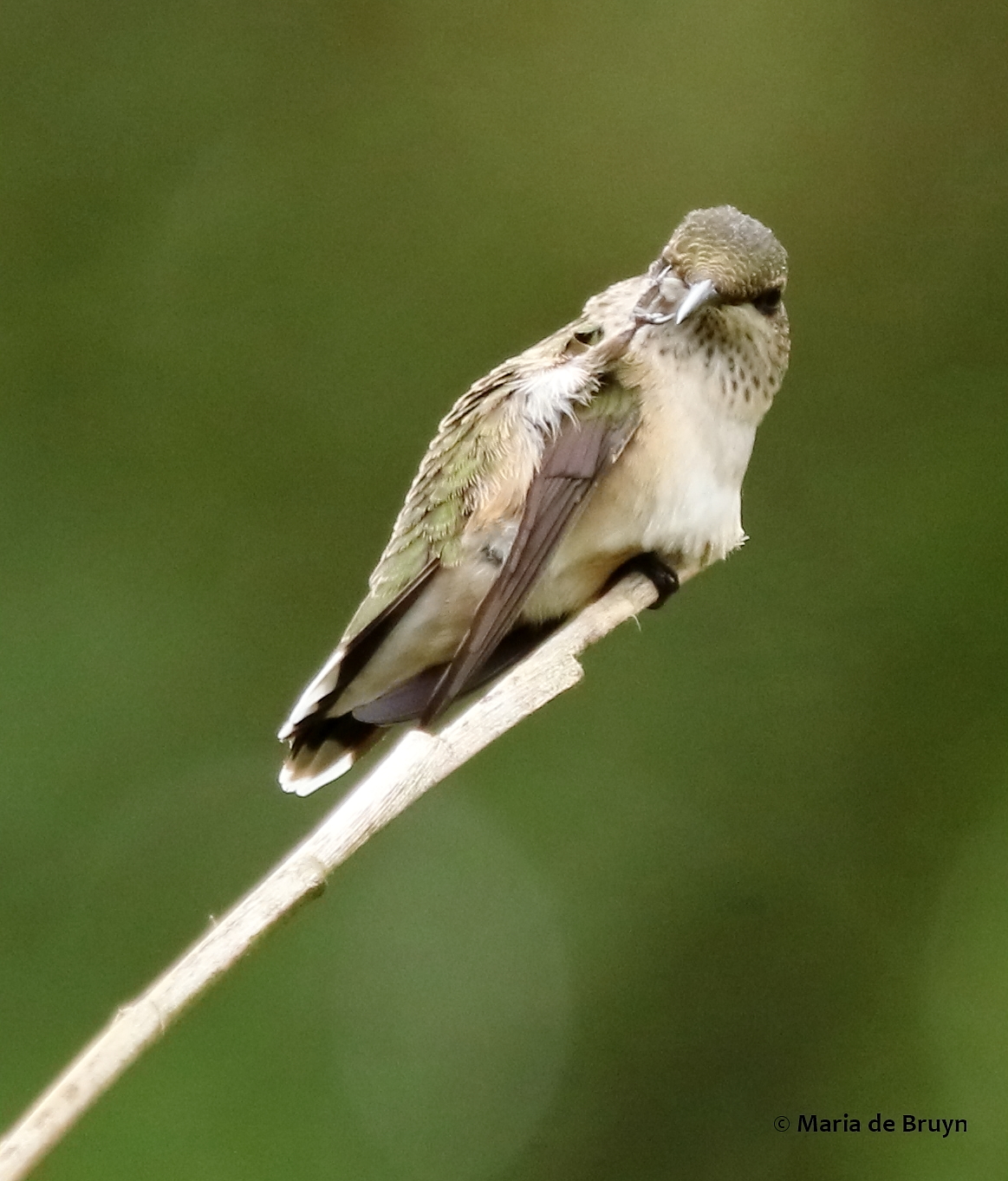
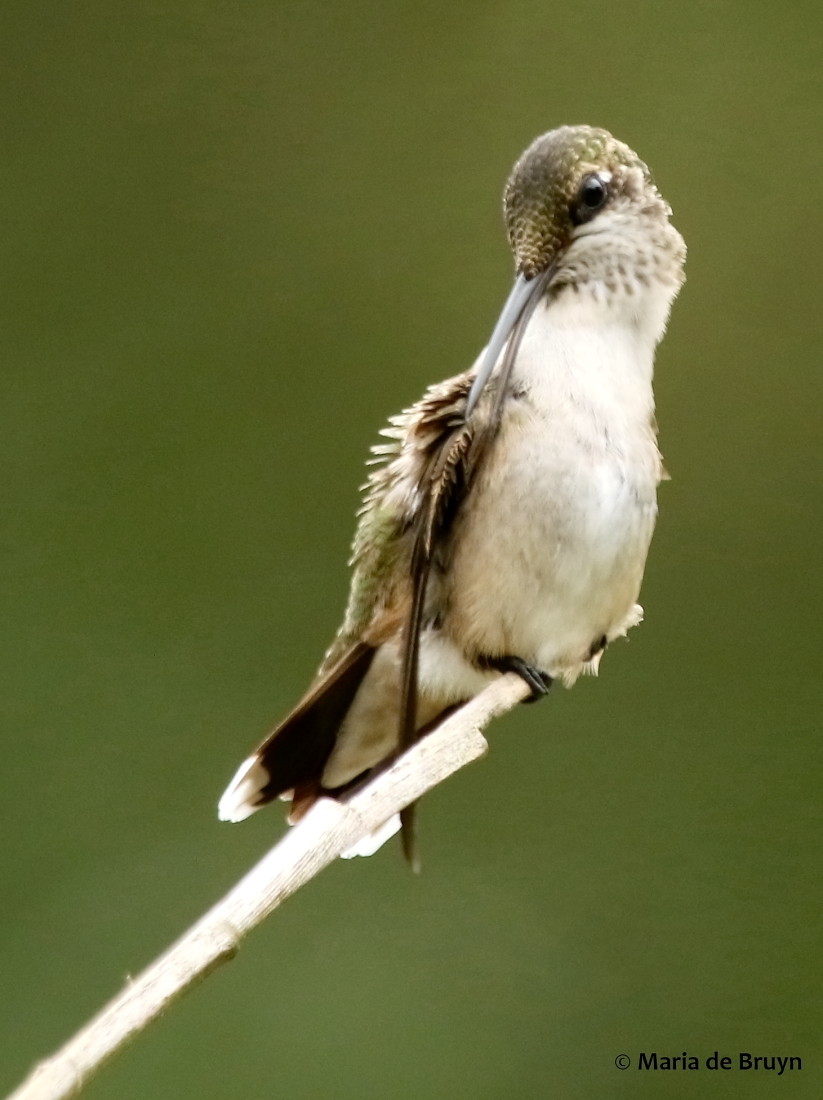
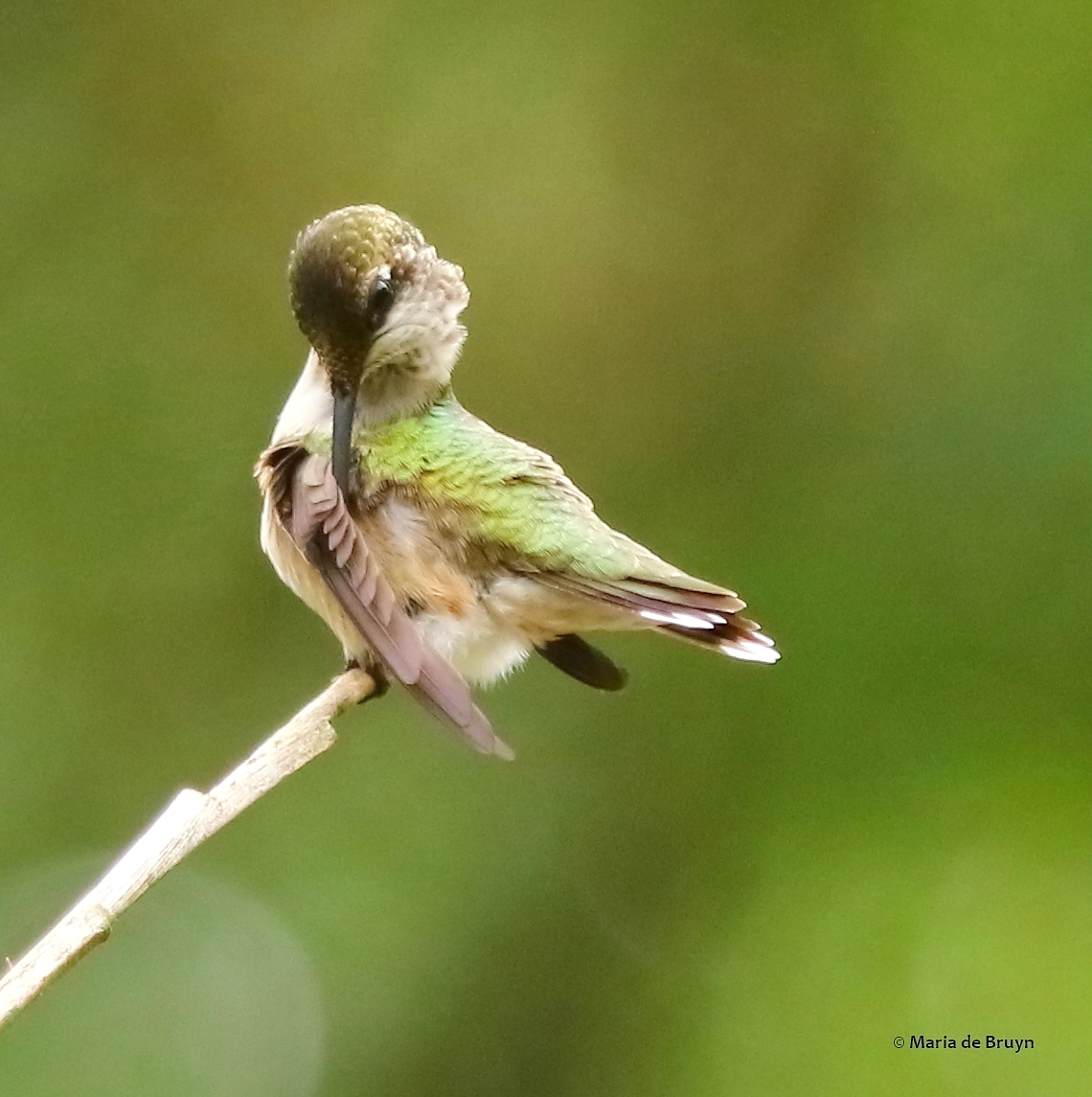
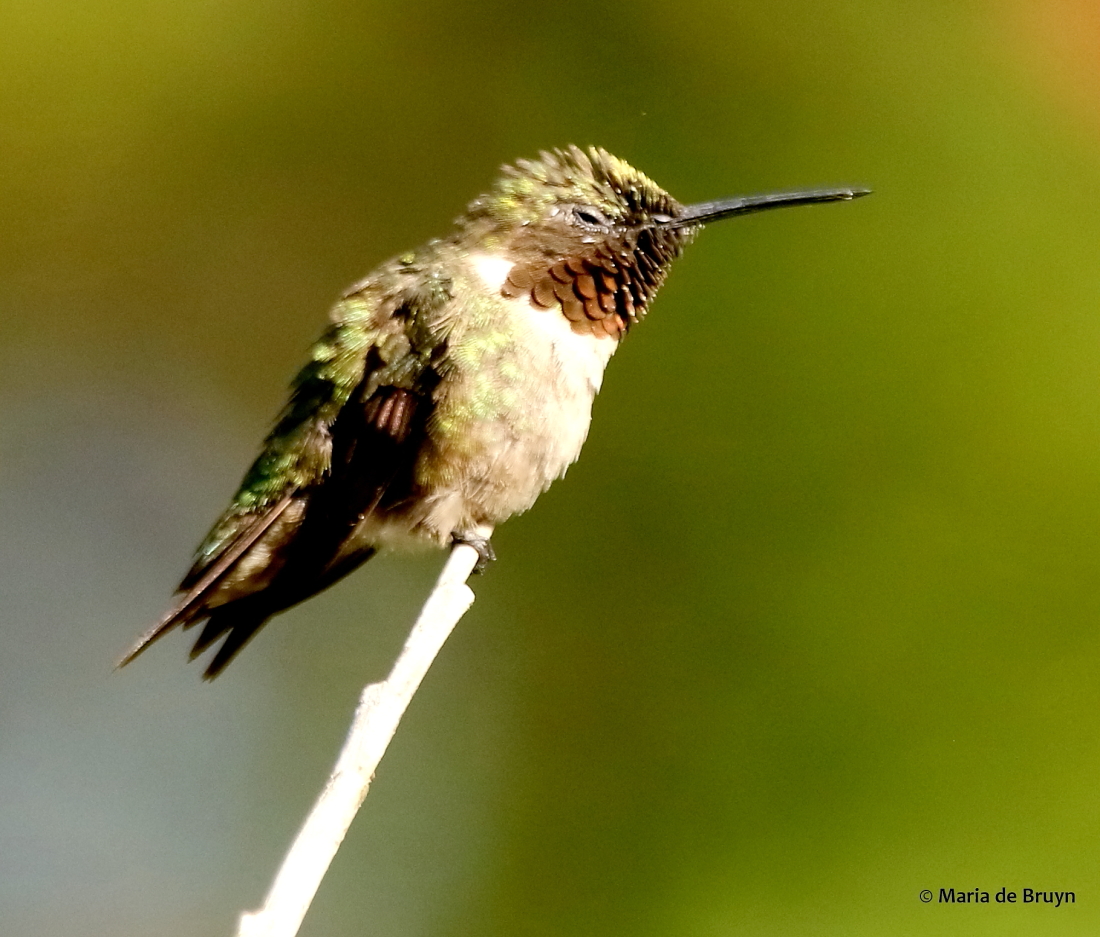
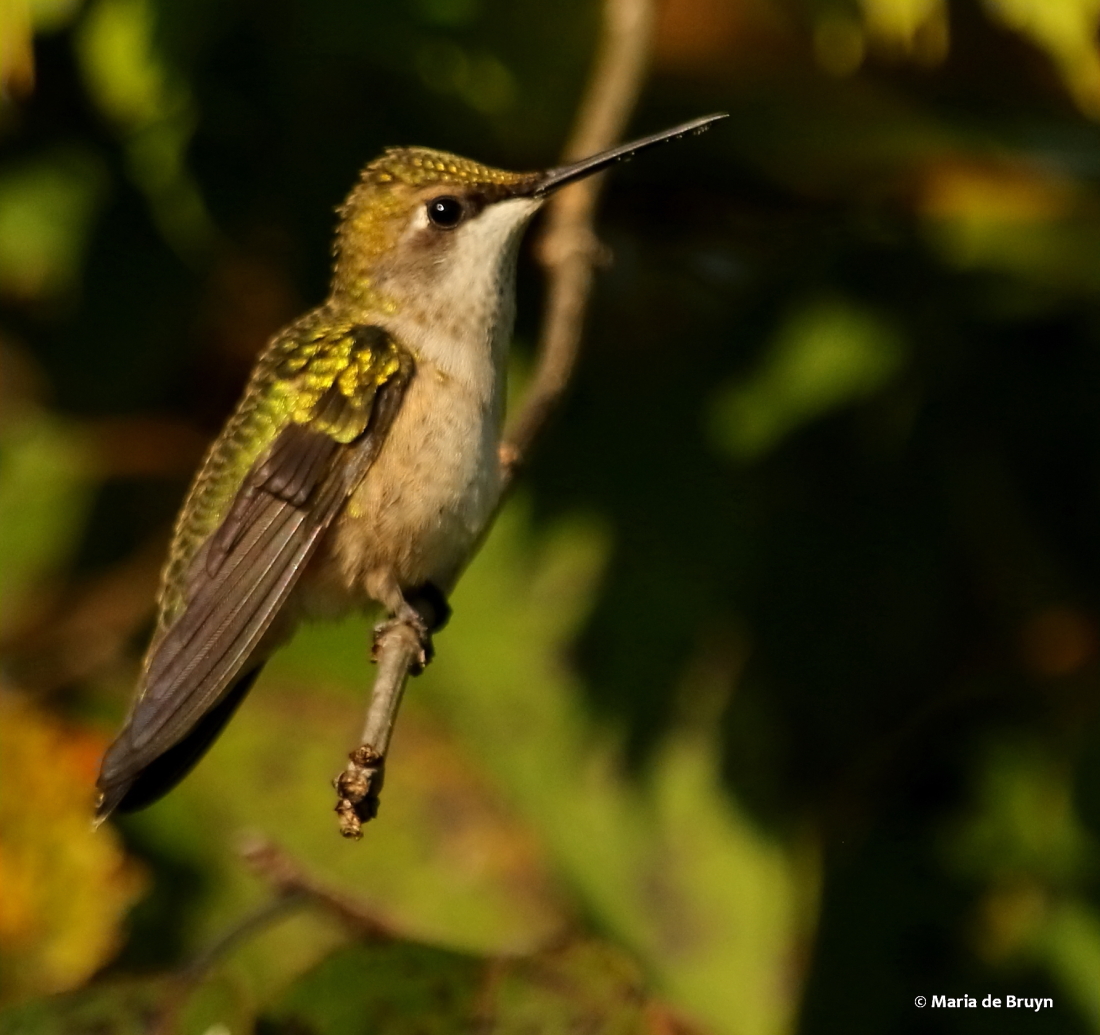
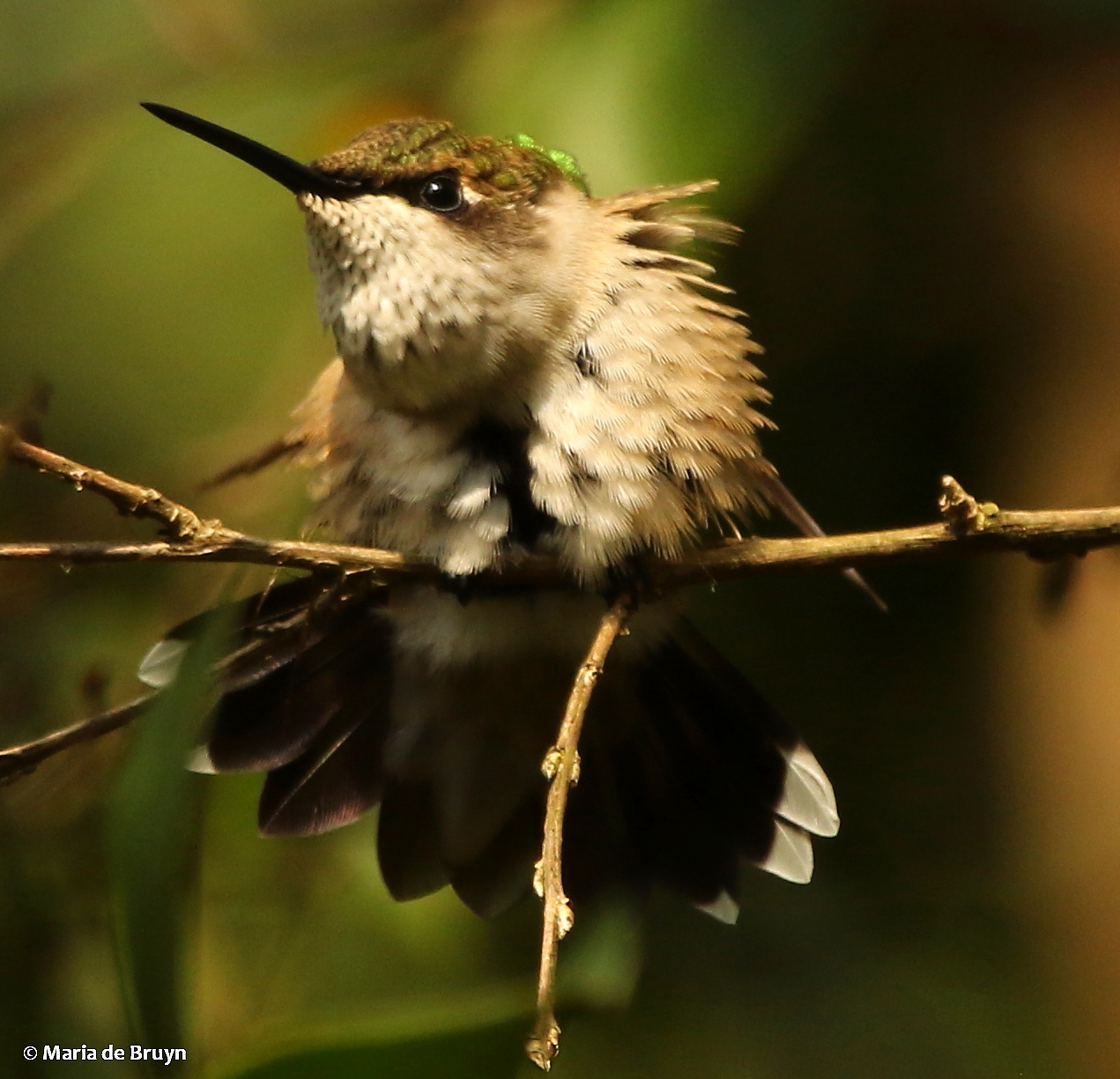
ruby-throated hummingbird DK7A1226© Maria de Bruyn resIt has been great to welcome back the sun and dispel some of the gloom resulting from the record number of rainy days we’ve had. Watching the ruby-throated hummingbirds (Archilochus colubris) in my yard and at nature reserves is also a day brightener and has taught me that these tiny avians are quite fastidious, grooming often and at length.


They cannot use their feet to hop or walk; they only cling to perches and shuffle a bit.

ruby-throated hummingbird DK7A0497© Maria de Bruyn resruby-throated hummingbird DK7A0499© Maria de Bruyn (2) res

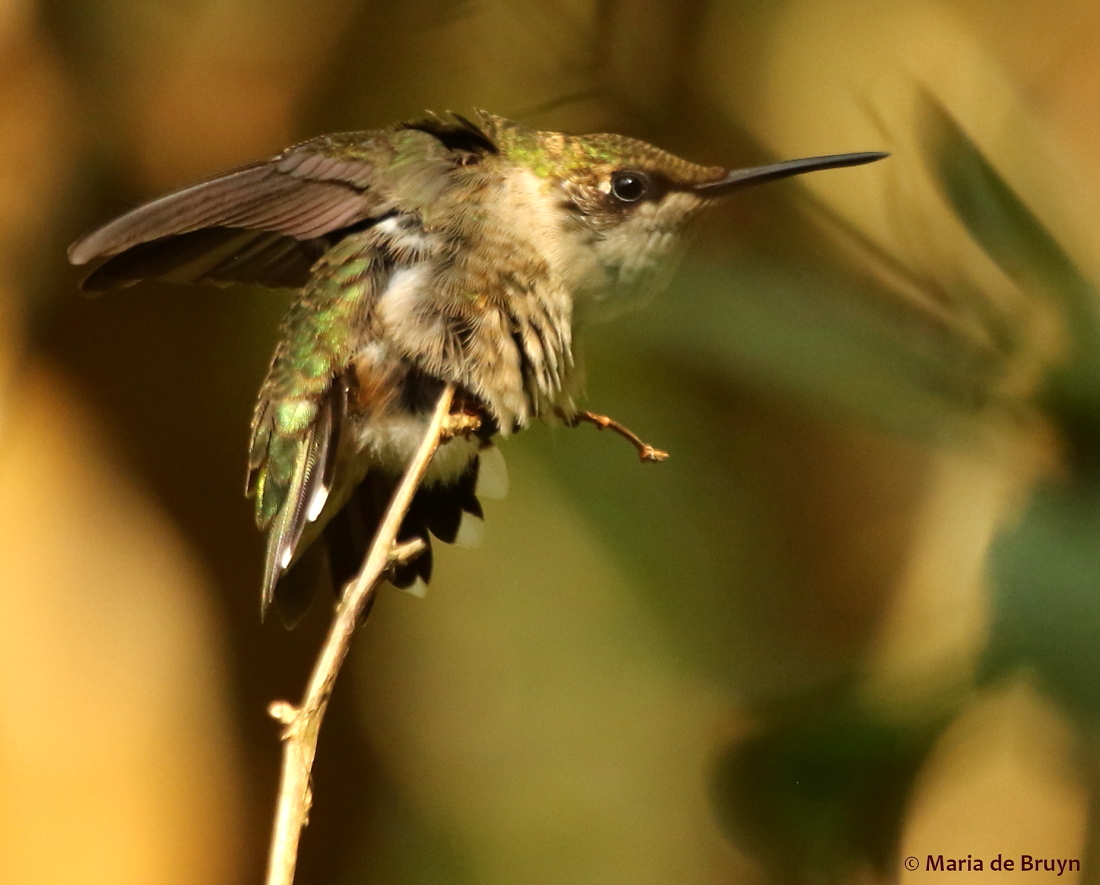
They do use their claws as a “comb” to groom their heads and necks and to scratch itches.

ruby-throated hummingbird DK7A7454© Maria de Bruyn resruby-throated hummingbird DK7A1811© Maria de Bruyn res

Using oil from a gland near their tail, they cover their iridescent feathers with the oil to help clean them.

ruby-throated hummingbird DK7A1112© Maria de Bruyn resruby-throated hummingbird DK7A1230© Maria de Bruyn res

ruby-throated hummingbird DK7A1754© Maria de Bruyn res ruby-throated hummingbird DK7A1756© Maria de Bruyn res

When you see them rubbing their long beaks on a twig, they are wiping off debris and pollen.

ruby-throated hummingbird DK7A7094© Maria de Bruyn res

The youngest birds have a groove in their beak but this smooths out by the winter.

ruby-throated hummingbird DK7A5627© Maria de Bruyn res ruby-throated hummingbird DK7A7105© Maria de Bruyn res

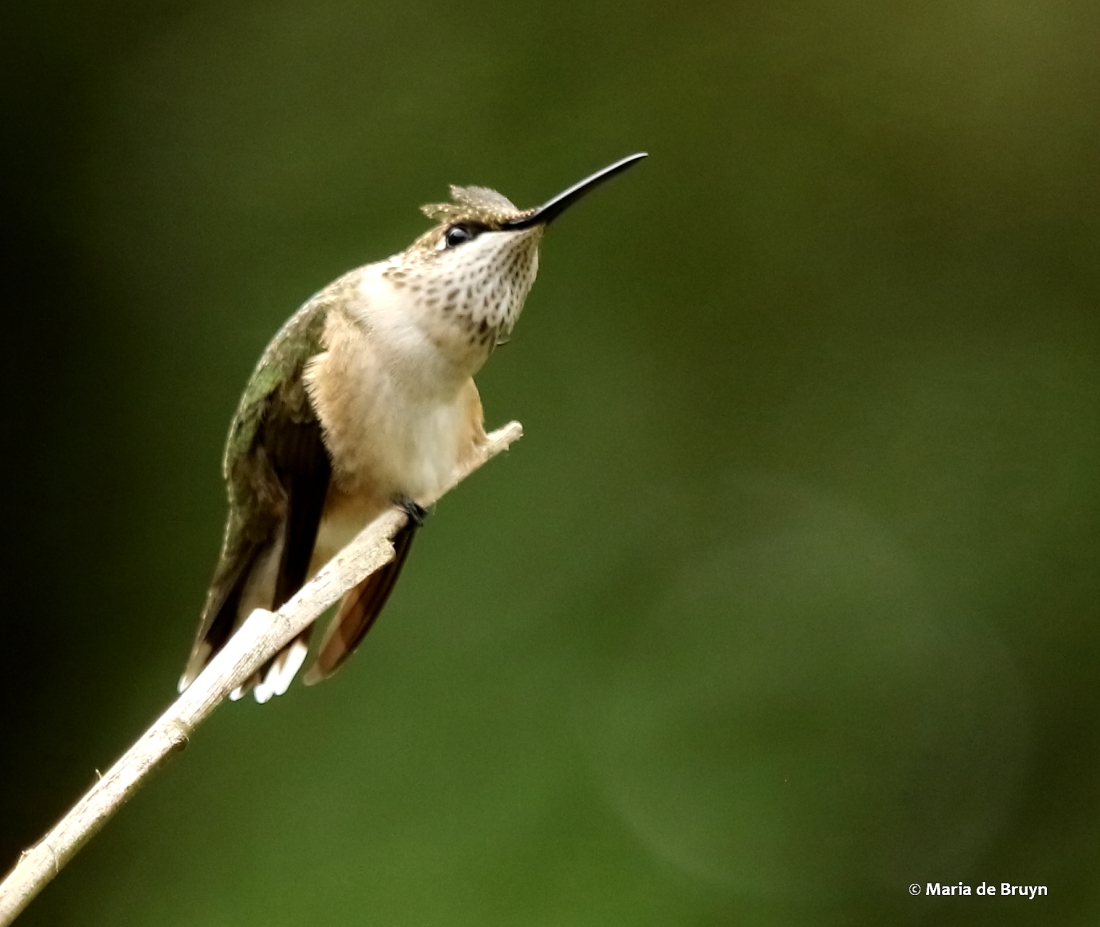
When the hummers look up in the sky, while sitting all puffed up on a branch, they may be taking a sun bath.

ruby-throated hummingbird DK7A7969© Maria de Bruyn res ruby-throated hummingbird DK7A7804© Maria de Bruyn res

A tiny catnap – or hummer nap – can also be observed now and then. This is understandable since their little hearts beat at 1220 times per minute while they fly; this lessens to about 250 times per minute when they are at rest.

ruby-throated hummingbird DK7A0060© Maria de Bruyn resruby-throated hummingbird DK7A7319© Maria de Bruyn res

ruby-throated hummingbird DK7A0389© Maria de Bruyn res

ruby-throated hummingbird DK7A7355© Maria de Bruyn res


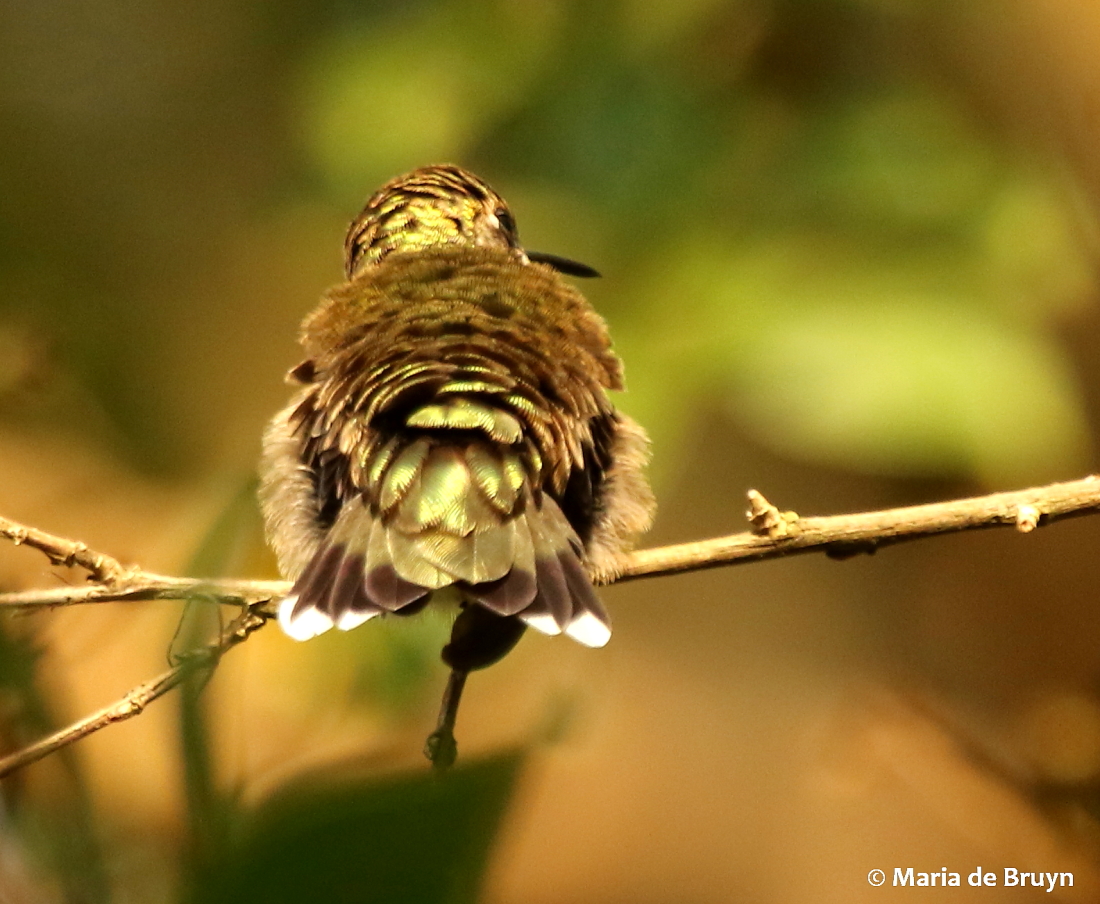
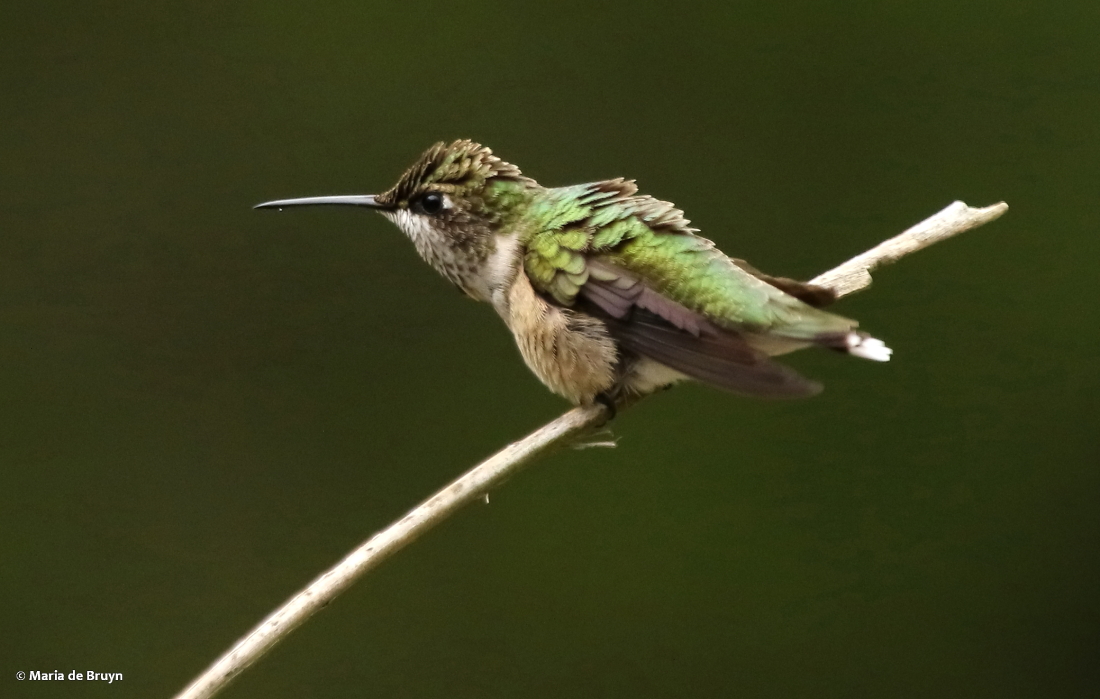
You can sometimes tell the sex of the hummingbird by its tail feathers. The tips are white and rounded in both females and first-year males, who do not yet have fully colored throats

.
ruby-throated hummingbird DK7A2031© Maria de Bruyn


In the adult males, the tail feathers have sharp black points.

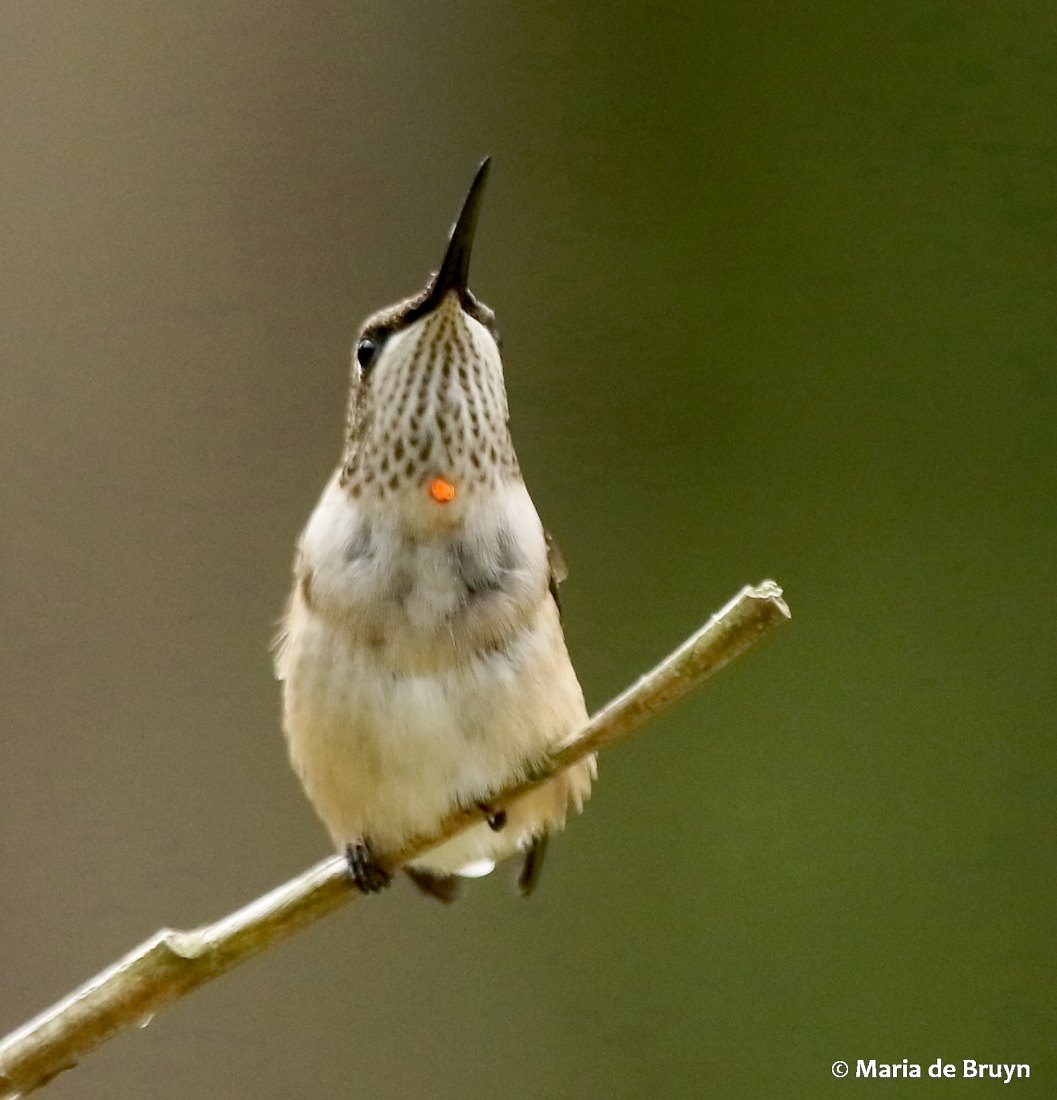
The red gorget (throat) feathers that give this species its common name are seen in the adult males. Very occasionally, a female will have one or two black or one red feather there, but it is generally a young male that has one red throat feather.

ruby-throated hummingbird DK7A6577© Maria de Bruynruby-throated hummingbird DK7A0610© Maria de Bruyn res

ruby-throated hummingbird DK7A2084© Maria de Bruyn res


After nesting, females may look somewhat tattered and molt their feathers, like this one in July. The regular molting period is autumn through about March and that is when the juvenile males develop their their red throats.


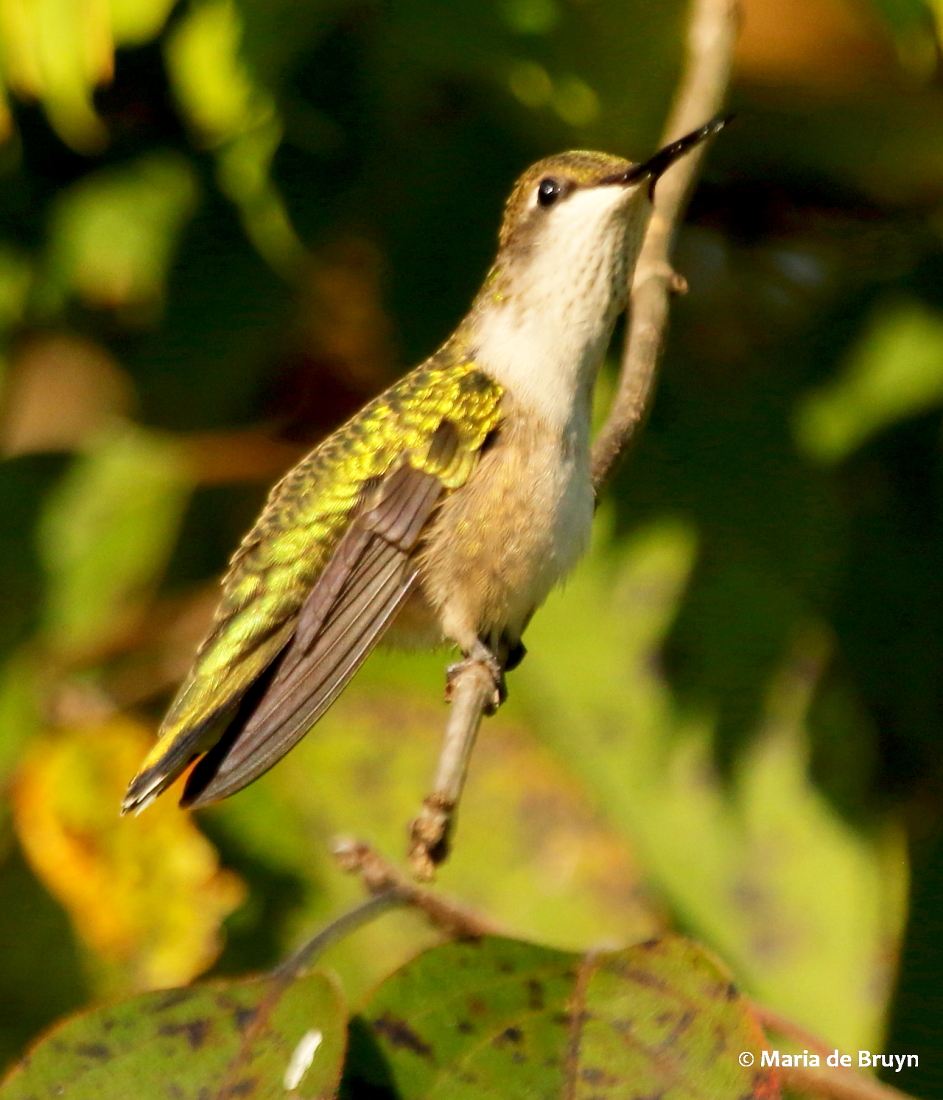
Both female and male ruby-throated hummers have a small patch of white feathers behind their dark eyes.

ruby-throated hummingbird DK7A8123© Maria de Bruynruby-throated hummingbird DK7A2409© Maria de Bruyn res

One thing is for sure – all these little avians are beautiful to see and watch!

More information:

http://www.hummingbirdworld.com/h/behavior.htm

Hummers haranguing – feistiness in small packages!

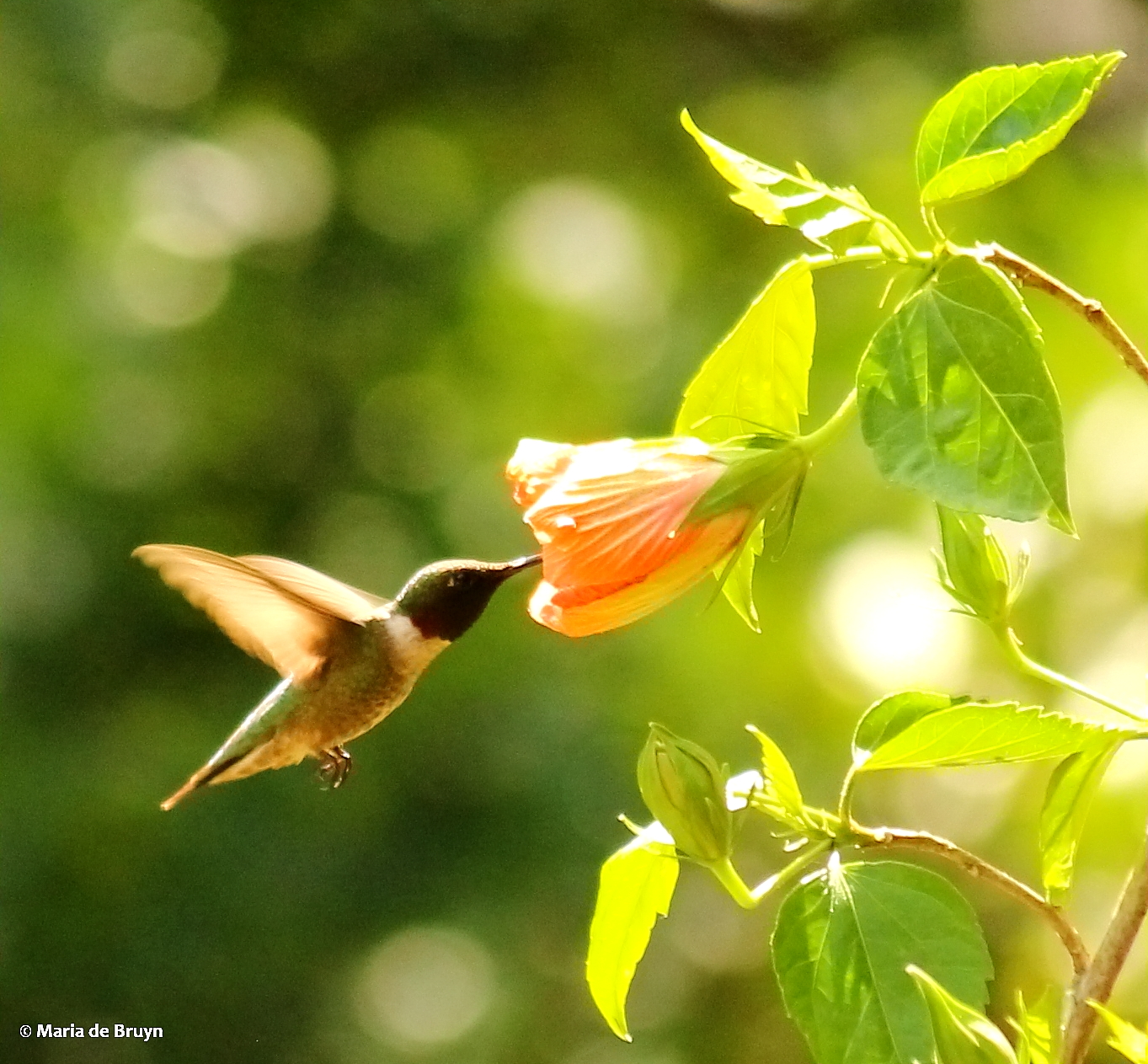
ruby-throated hummingbird DK7A0498© Maria de Bruyn (2) resAt times, we may see on Facebook or the Internet a photo or video of hummingbird nectar feeders surrounded by at least 6 and sometimes dozens of these small birds, sharing space as they take turns at imbibing some of the sweet water. Here in my part of North Carolina, however, it seems that the ruby-throated hummingbirds (Archilochus colubris) are just NOT interested in having their territory host family members or neighbors. This species is known for being territorial and those in my vicinity live up to that reputation for sure.

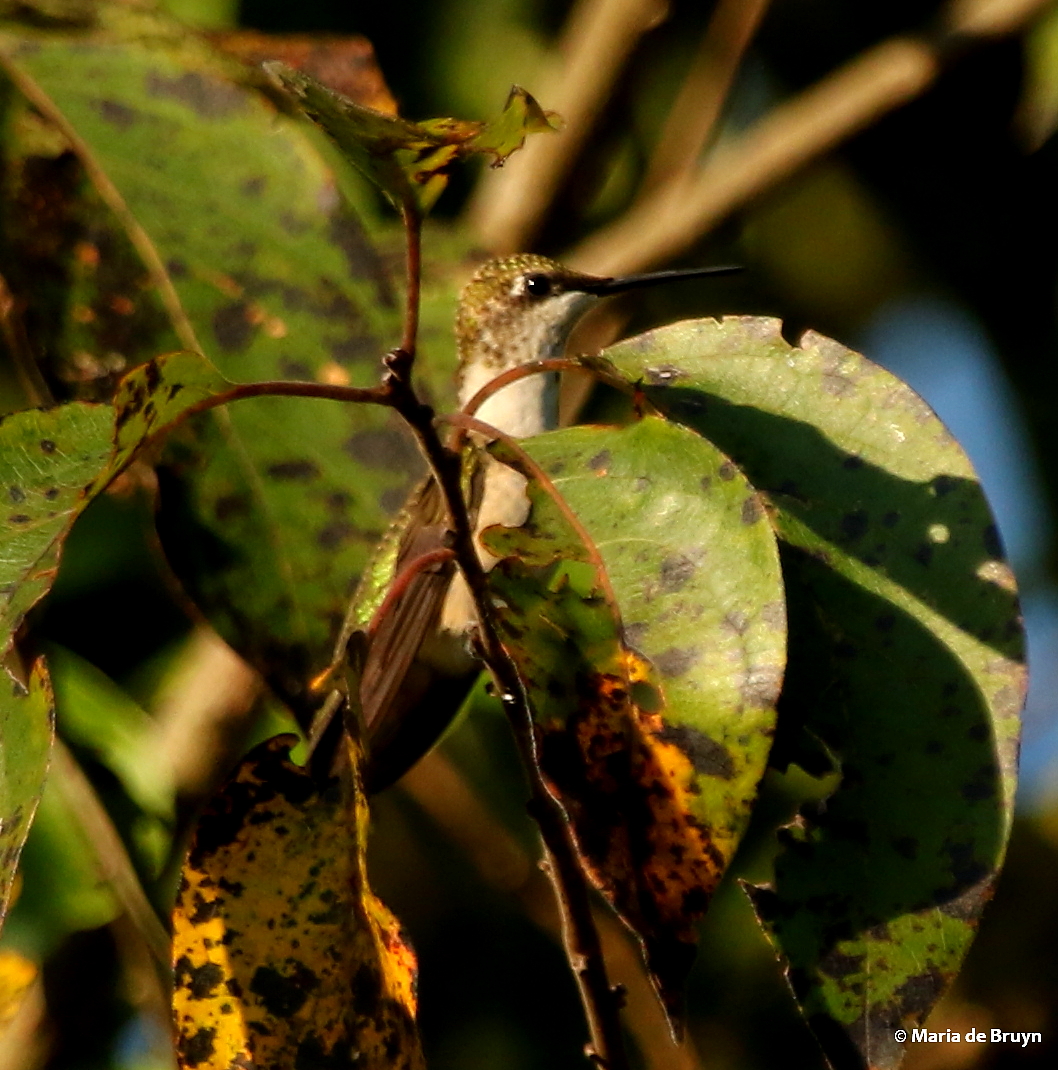
Both at home and in nature reserves, I’ve watched these tiny birds stake out a claim to a feeder or some choice blooms. They drink a little and then will take up a post on a vantage point where they can keep an eye out for other birds. Occasionally, the waiting spot is out in the open and often it is in a nearby shrub or tree.

ruby-throated hummingbird DK7A2402© Maria de Bruyn res ruby-throated hummingbird DK7A2298© Maria de Bruyn

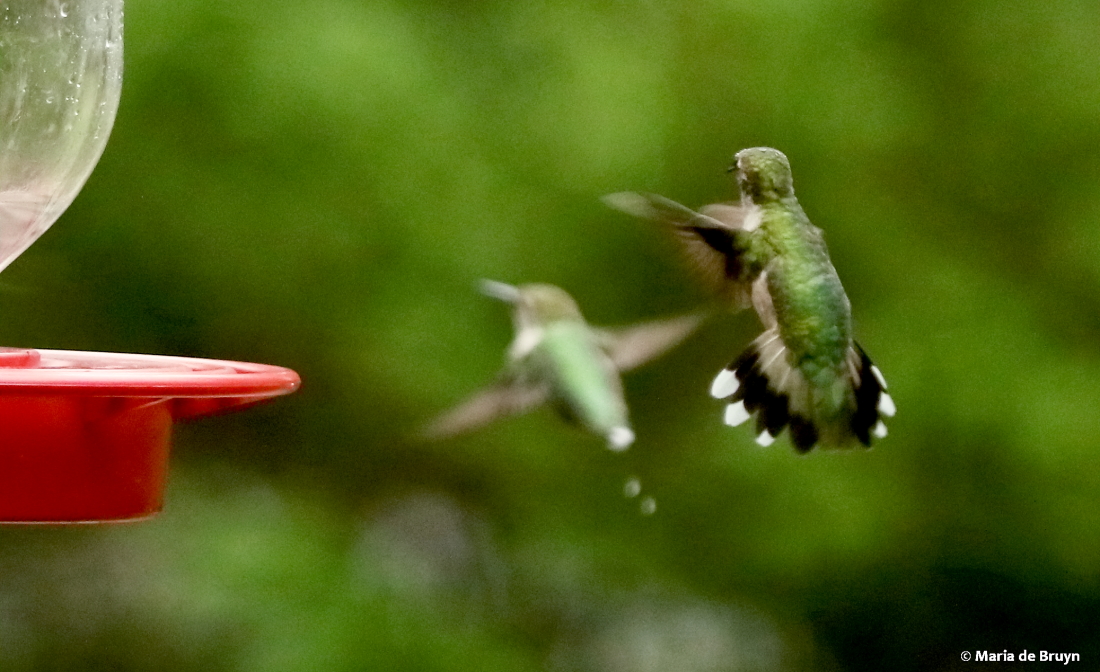
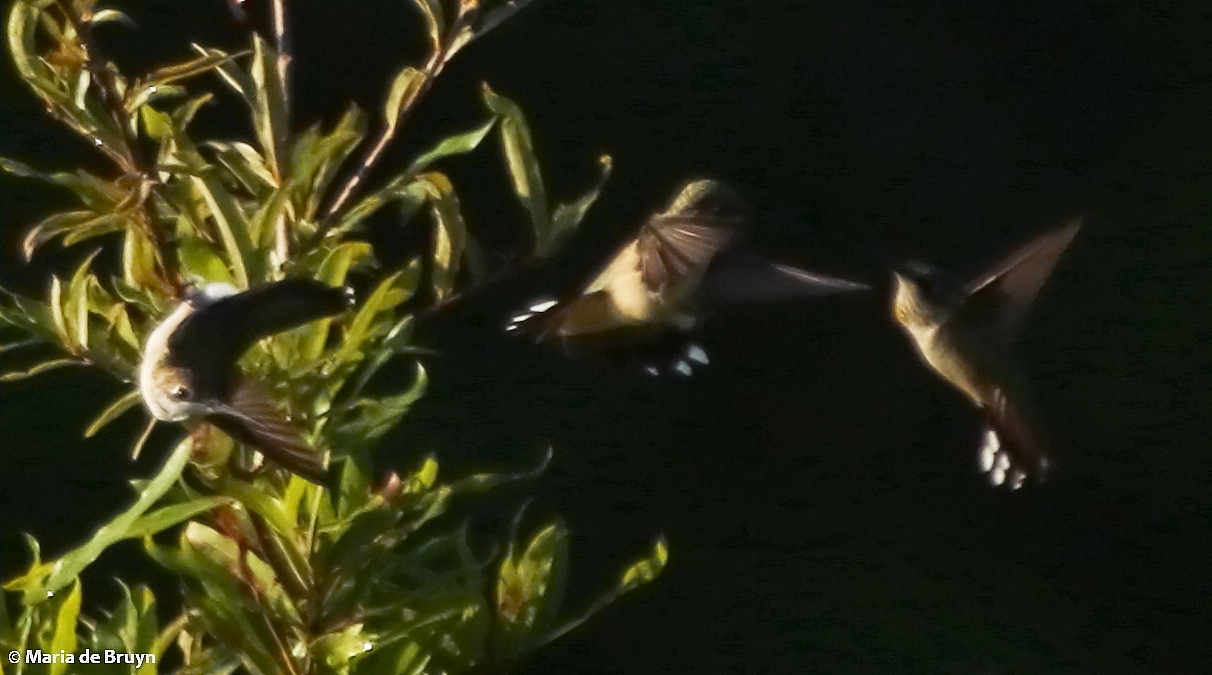
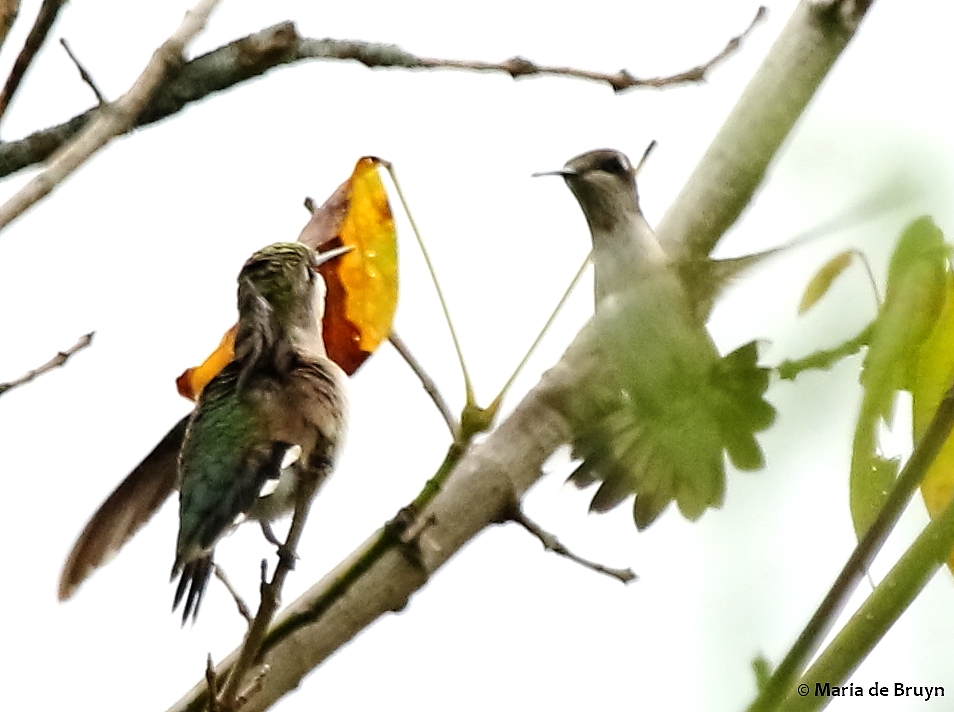
When they spot a rival approaching the food source, they may either immediately give chase or first engage in a threat display.

ruby-throated hummingbird DK7A2376© Maria de Bruyn resruby-throated hummingbird DK7A1568© Maria de Bruyn res

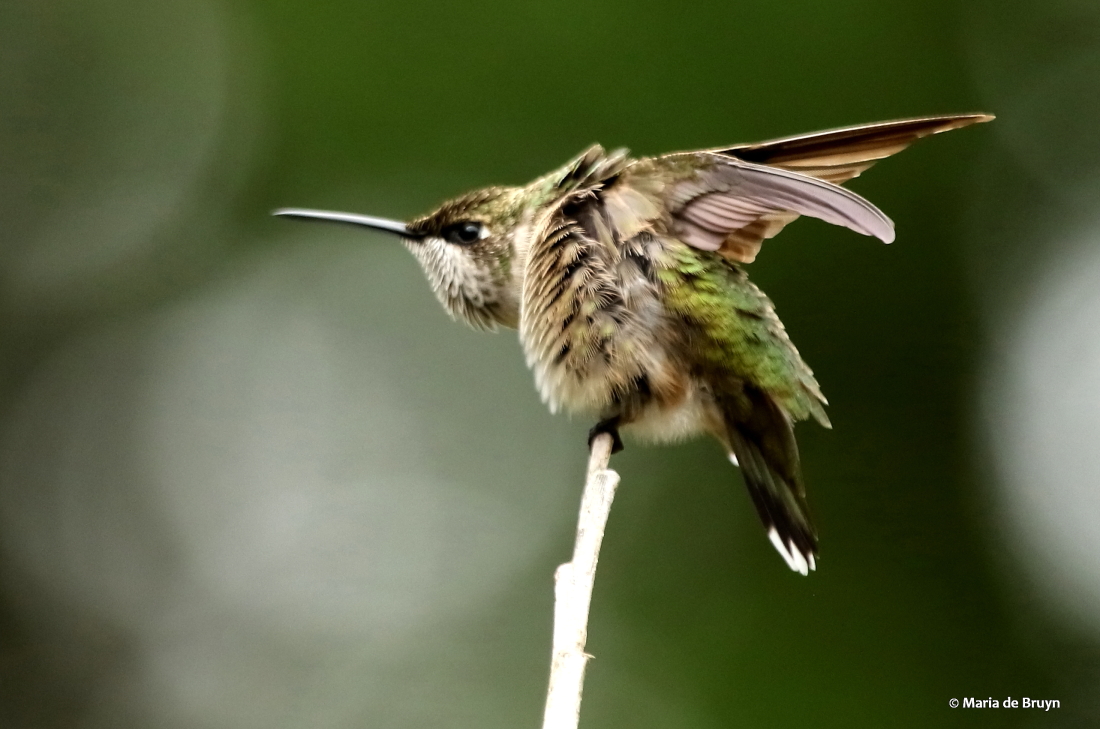
Their displays include both posturing and sound. To warn off other birds, they may chirp both quickly and loudly. Their threat postures aim to frighten away intruders by displaying size and strength and include pointing their long bills at the other bird(s), puffing up their throats, spreading and raising their wings, and flaring their tail feathers, .

ruby-throated hummingbird DK7A0712© Maria de Bruyn resruby-throated hummingbird DK7A0492© Maria de Bruyn res


ruby-throated hummingbird DK7A7307© Maria de Bruyn resruby-throated hummingbird DK7A0499© Maria de Bruyn res

ruby-throated hummingbird DK7A7353© Maria de Bruyn resruby-throated hummingbird DK7A7928© Maria de Bruyn

ruby-throated hummingbird DK7A2247© Maria de Bruyn resThey don’t really use their bills to battle as they need to protect this body part but they can fly into each other. On one occasion, in my front yard, I heard a loud thump when the two birds actually collided during a high-speed chase.

The drive to protect territory is not for lack of food. My yard has three nectar feeders out back and one in the front and three of them have at least four feeding holes. This year, a brightly colored male laid claim to the yard while the female was caring for her brood. When the female and young birds began coming to the feeders, “Red” was not pleased. Later, the young males also vied with one another.

ruby-throated hummingbird DK7A1562© Maria de Bruyn res

Chittering loudly, they sweep in to make the other birds take off; occasionally they do get a chance to have a short drink before another hummer shows up. At my house, the birds can feed because they have to patrol both the front and back yards and can’t be in two places at once.

ruby-throated hummingbird IMG_0379© Maria de Bruynruby-throated hummingbird DK7A0866© Maria de Bruyn res

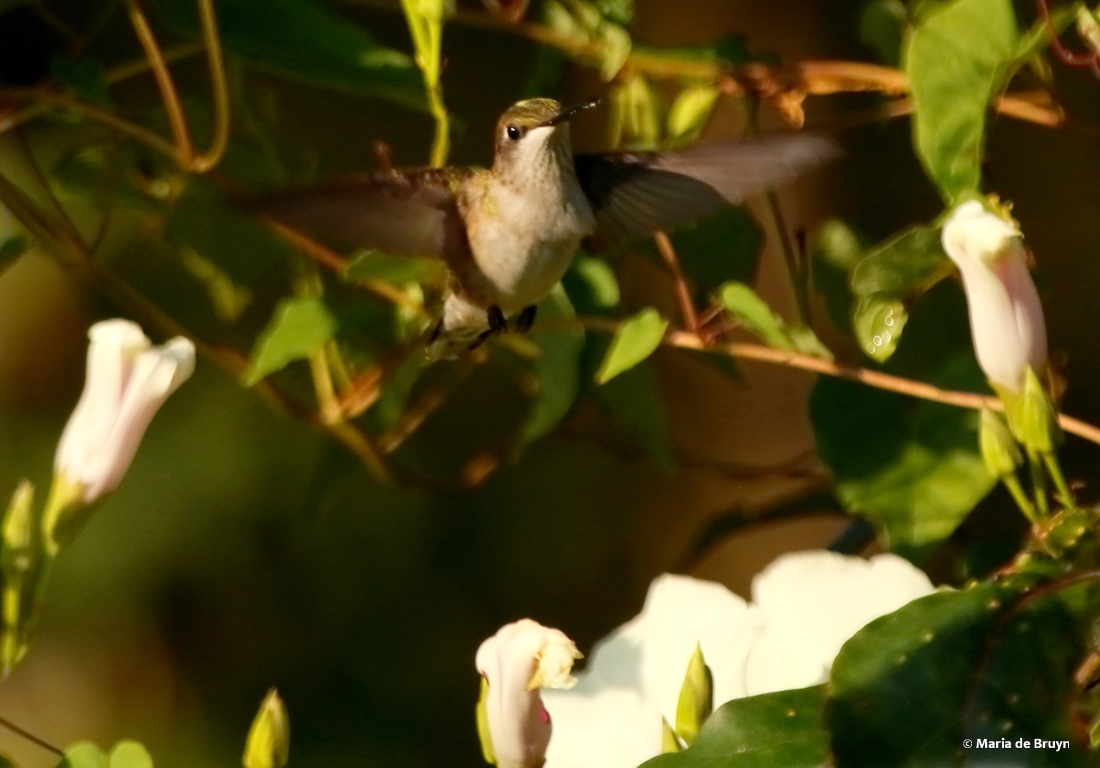
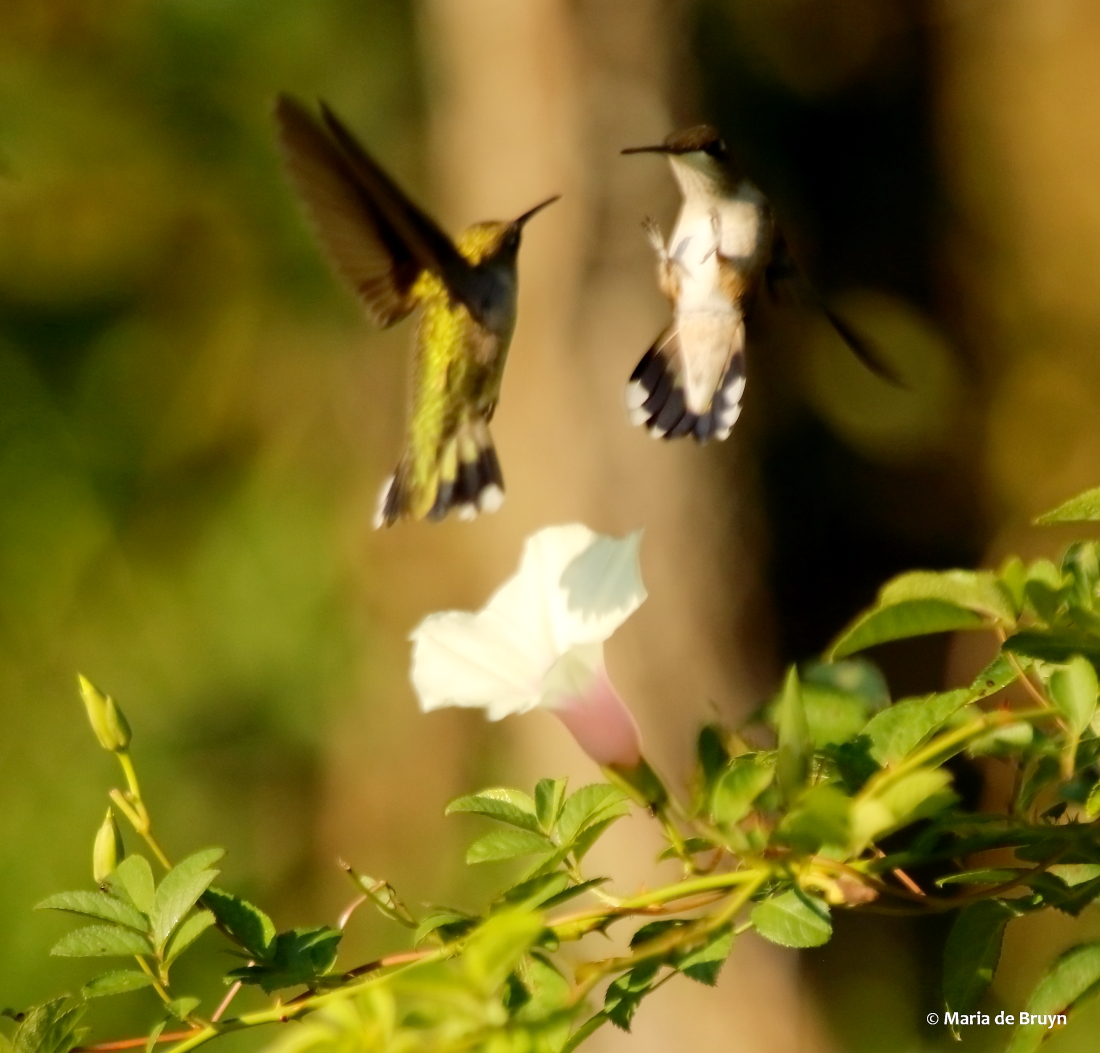
I witnessed a similar scenario at the Mason Farm Biological Reserve. There was a spot with plenty of blooming trumpet vines (Campsis radicans) and morning glories (Ipomoea pandurata), which were attracting a variety of pollinators. Three hummingbirds were also visiting and, again, chasing one another from the site as soon as they caught sight of their rivals.

ruby-throated hummingbird DK7A2117© Maria de Bruyn

ruby-throated hummingbird DK7A2116© Maria de Bruyn

In an area near the Haw River where many wildflowers bloom, a similar scenario took place.

ruby-throated hummingbird DK7A9401© Maria de Bruynruby-throated hummingbird DK7A9403© Maria de Bruyn

This is the time of year when the ruby-throated hummingbirds undertake their migration to Central America, a distance of at least 1000 miles. They need to store energy for this and may double their body mass while feeding during the preparatory phase. However, it seems to me that chasing away other birds from their preferred feeding sites must take an enormous amount of energy and it seems to be an endless activity. In my yard, it goes on all day long!

ruby-throated hummingbird DK7A1828© Maria de Bruyn resThese birds’ flight muscles take up 25% of their weight; when they rest, their hearts beat at a rate of 250 beats per minute but during flight, their hearts speed up to 1220, so the zipping back and forth and up and down in hot pursuits must use lots of calories and energy. They also may hover mid-air for a while rather than sitting on an outpost twig; the other day, one of Red’s rivals spent a quarter minute suspended about 18 inches from my face, looking me over until Red dive-bombed him.

ruby-throated hummingbird DK7A2213© Maria de Bruyn resThis summer I’ve been lucky to see the hummers in several places, including Sandy Creek Park, near the Haw River and a farm cultivated by refugees from Myanmar. In all cases, the birds appeared unwilling to share their dining areas. Once in a while, though, one would have the space to him- or herself for a while and I could watch them feed, afterwards flicking out their long tongues.


ruby-throated hummingbird DK7A7940© Maria de Bruyn resruby-throated hummingbird DK7A0181© Maria de Bruyn res

When they return next year, I hope to learn more about these wonderful little birds through daily observation in my garden habitat.

ruby-throated hummingbird DK7A1673© Maria de Bruyn (2) res

More interesting information on ruby-throated hummingbirds can be found here:

http://www.rubythroat.org/rthufactsmain.html

http://www.allaboutbirds.org/guide/ruby-throated_hummingbird/lifehistory

http://www.worldofhummingbirds.com/behavior.php