Nature Photo Challenge – Wild Animals

While I edit photos for my next “regular” blog, I was inspired by Denzil’s 28th Nature Photo Challenge to post a few photos of wild animals I’ve encountered. While I could have chosen to show some of the more exotic ones (e.g., rhinos, elephants, lions, etc.), I thought I’d introduce you to some species that live in my general area.

Among the insects that I enjoy watching are the snowberry clearwing moths (Hemaris diffinis). The first time I saw a clearwing moth at some distance, I wondered if there was a tiny hummingbird with which I was totally unfamiliar. When I got closer, I realized it was no hummer but some amazing kind of flying insect. I still find them fascinating creatures.

The saddleback moth caterpillar (Acharia stimulea) is another favorite from the insect world. Fortunately, I found out that they have a painful sting before I ever touched one. This past week, I was lucky to see one twice. The first time was when John, an odonate expert of my acquaintance, called me over to see one he had found. He had unfortunately been stung but said the pain was tolerable: I hope he didn’t suffer for long. Several days later, I spotted another saddleback while on another nature walk.

 The bright golden color of a common sawfly caught my eye after having seen the first saddleback. It was quite a striking fly with its black and white “decorative” highlights.

Shortly afterwards, my day was made when I spotted one of my favorite spiders, an adorable jumping spider that had caught itself a sizeable meal.

A couple days ago I startled an Eastern rat snake (Pantherophis alleghaniensis) as I passed by it on a path. I hadn’t realized it was there until the herp reared up and quickly crossed the path in front of me. I think we were both startled and I didn’t manage to get a photo. Today I did a U-turn to hop out of my car to carry an Eastern box turtle  (Terrapene carolina Carolina) to safety as it began crossing a busy road. One woman stopped to thank me, while another driver gave me a somewhat irritated look. The turtle above was not the rescue but had similar colors to the turtle today.

My pond is quite alive with lots of tadpoles and small frogs. This green frog (Lithobates clamitans) is one of the larger aquatic yard denizens.

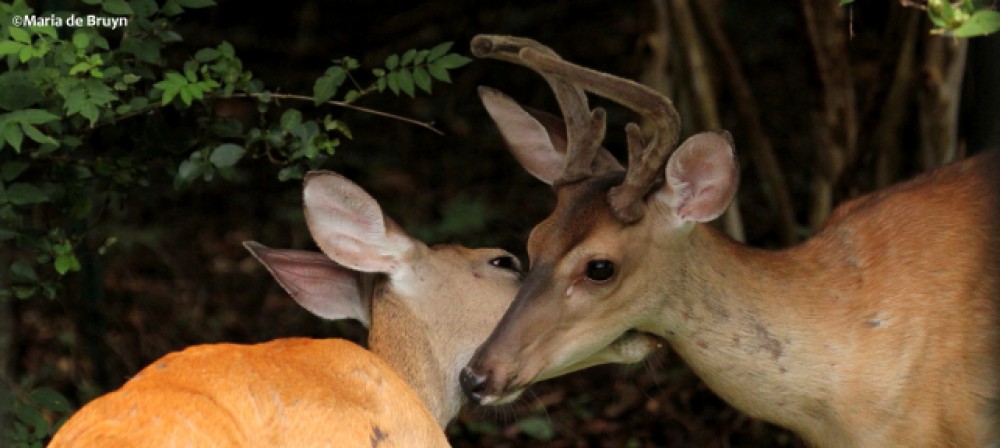
I haven’t seen a wide variety of mammals lately except for the ubiquitous Eastern chipmunks, gray squirrels, Eastern cottontail rabbits and Eastern white-tailed deer in my yard. It’s always a treat for me to see some of the aquatic ones when out on walks, such as the river otters (Lontra canadensis) and the North American beaver (Castor canadensis).

I’ve seen the hispid cotton rats (Sigmodon hispidus) in three different North Carolina nature reserves. To my surprise, this year I also spotted one in my backyard, but I only saw it once. They are known to scurry away quickly when spotted.

And then there are the birds — they are by far the order of animals that I see most often and most easily. They are also delightful because of their great variety. Just recently, I saw a rare avian visitor to my yard, the black-and-white warbler (Mniotilta varia). I usually see them in nature reserves.

In contrast, the lovely little chipping sparrows (Spizella passerina) are birds that I often see in my yard and at my feeders. This pair was resting in a tree top near a former dairy farm, which is now being turned into a vast vineyard. Much of the birds’ habitat has been removed during this changeover to my great disappointment.

One bird that still remains in that area is the solitary sandpiper (Tringa solitaria), which is easily recognizable by its habit of bobbing its rear end as it walks along shores looking for food.

The sandpiper is not the only shorebird currently drawing birders in our area. Many varied species have been turning up at local lakes, giving birders the opportunity to see “lifers” (birds seen in person for the first time). The limpkin (Aramus guarauna) is one such bird for me — it was a treat to see it looking for clams and molluscs at a local lake.

Next blog: making acquaintance with a bird I’d like to imitate!


Springtime with awesome, beautiful and awe-inspiring insects

This spring of 2021 has offered some delightful chances to see interesting insect species, some of which I’ve noticed before and some that were new or gave me my first opportunity to observe them up close. While not many people aside from entomologists pay much attention to the “creepy crawlies,” they are certainly well worth watching in my view. Including insects in my nature observations greatly enhances my experience of appreciating the natural world.

male giant ichneumon wasp P5068000© Maria de Bruyn res (4)

ichneumon wasp P5067996© Maria de Bruyn res (2)

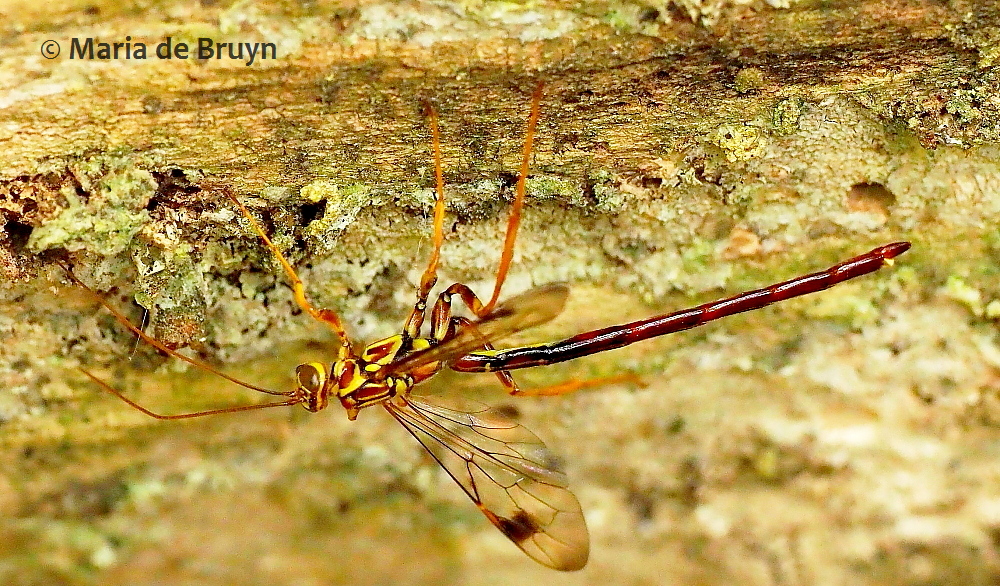
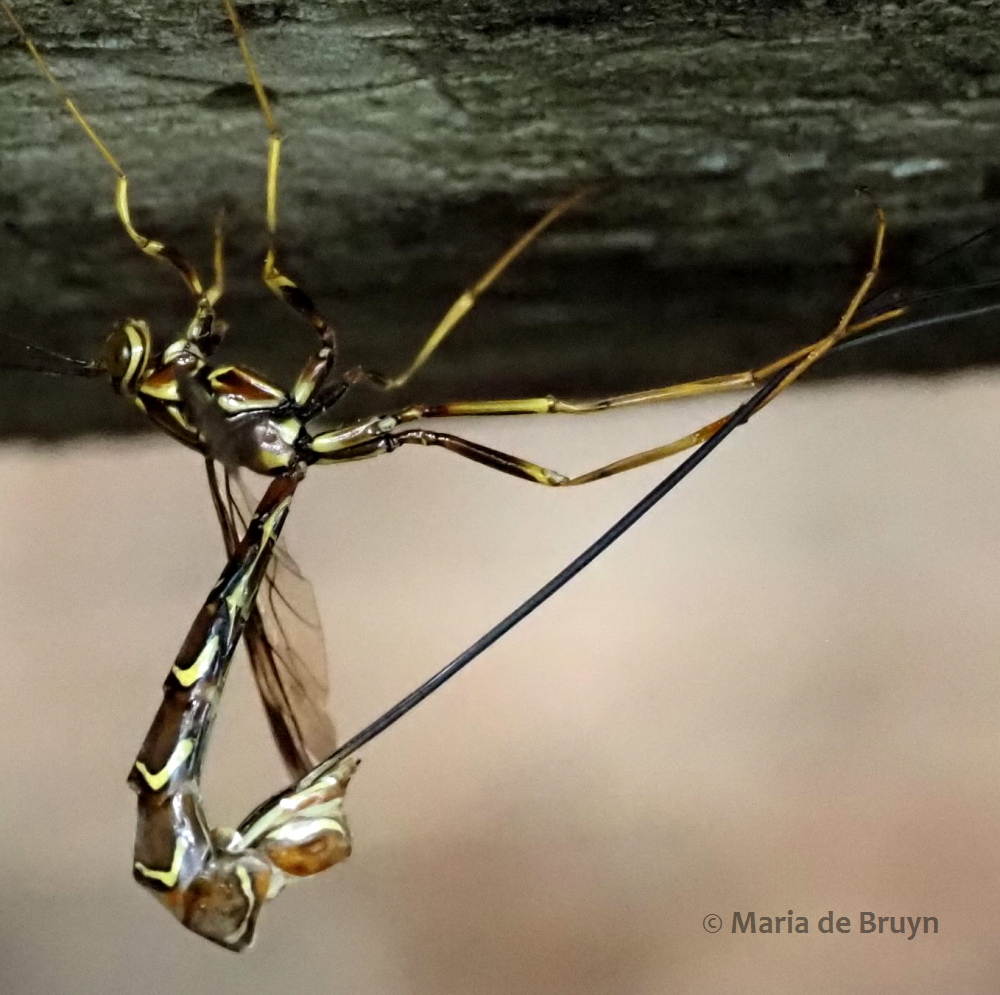
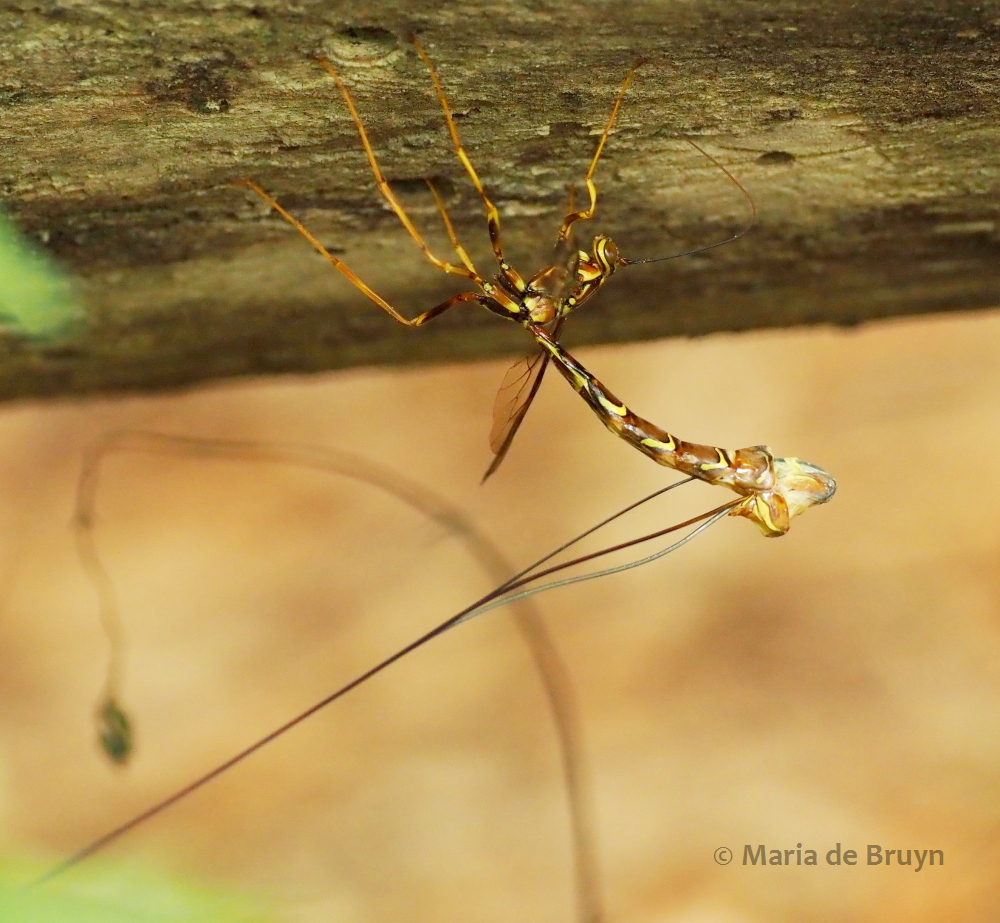
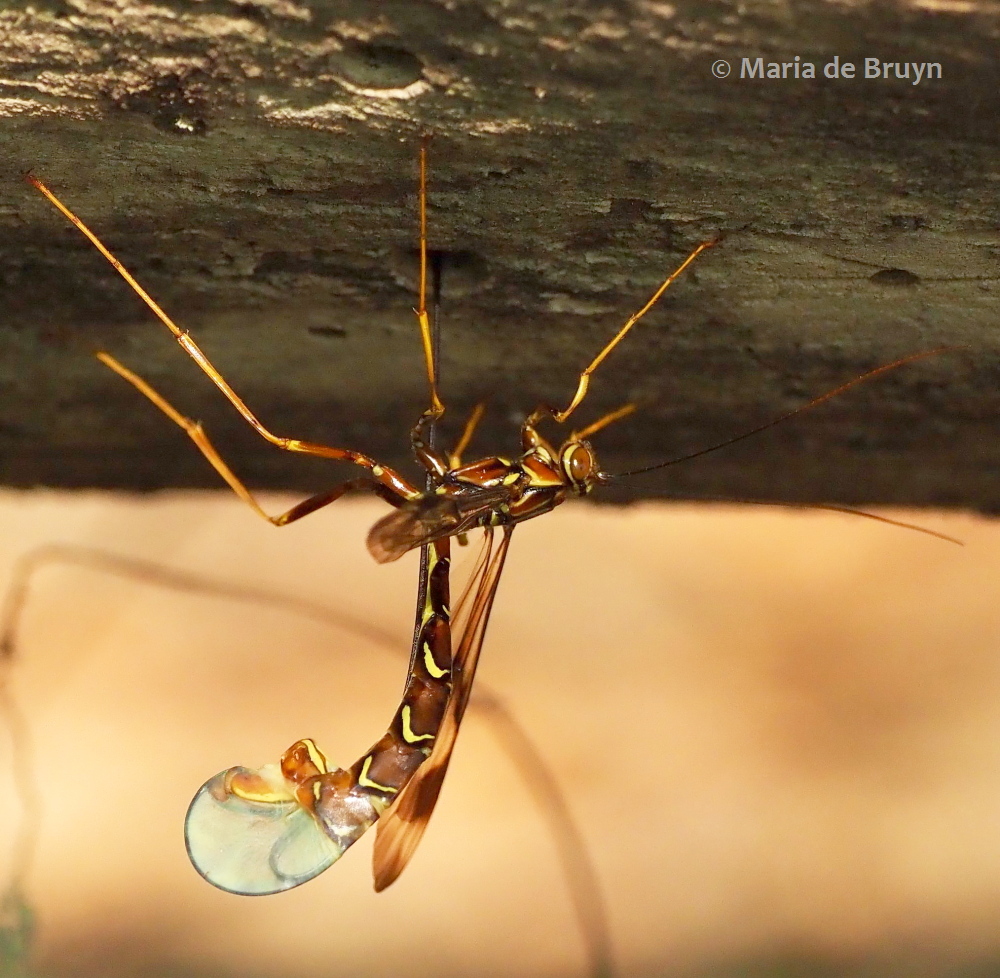
female giant ichneumon wasp P5068007 © Maria de Bruyn res (2)The month of May brought me two especially awe-inspiring events. The first was seeing long-tailed giant ichneumon wasps (Megarhyssa macrurus) preparing for reproduction on a nature trail in Chatham County. It was easy to distinguish the females (right) from the males (above) because they had very long ovipositors (a tubular organ through which a female insect lays stored eggs). In the species I saw, the ovipositor can be 4 inches long!’

female giant ichneumon wasp P5068028© Maria de Bruyn res (2)

There were several male and three female wasps flying about. None of them showed the slightest interest in the large human looming overhead. Even if they had, I needn’t have worried since these wasps don’t sting people. The females were busy pressing their antennae against a disintegrating hardwood log’s bark, aiming to detect vibrations inside.

ichneumon wasp P5068180© Maria de Bruyn res (2)

The mothers-to-be were “listening” for the best spots to lay their eggs by identifying where the larvae of the pigeon tremex horntail wasp (Tremex columba) were buried. Why you ask? The mother ichneumon paralyzes a horntail larva before laying an egg next to it. When her own offspring emerge from the eggs, they will eat those unfortunate horntail larvae while they prepare to overwinter until they emerge as full-grown ichneumon wasps in the spring.

ichneumon wasp P5068058 © Maria de Bruyn res (2)


The giant ichneumon’s ovipositor has three components. In the middle is the ovipositor proper, a filament with two interlocking parts that slide against one another; it is tipped with a cutting edge that can drill through wood. Some researchers have data indicating that the cutting edge may contain some ionized zinc or manganese.

ichneumon wasp P5068164© Maria de Bruyn res (2)

Two other thin filaments called valvulae sheath the central structure and their function is to protect the egg-laying organ. During egg-laying, they arc away from the ovipositor.

ichneumon wasp P5068171© Maria de Bruyn res (2)

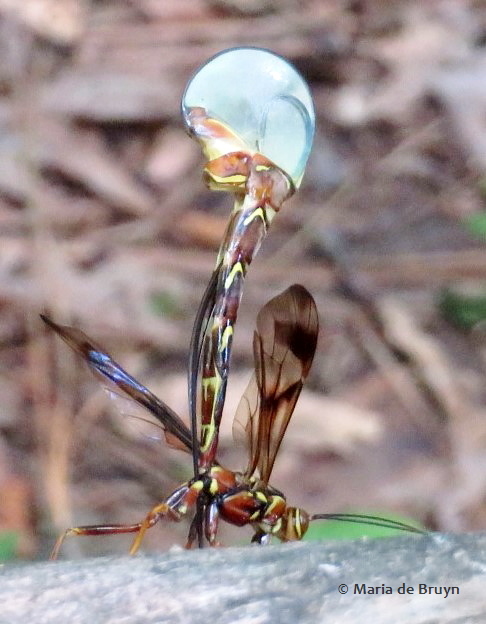
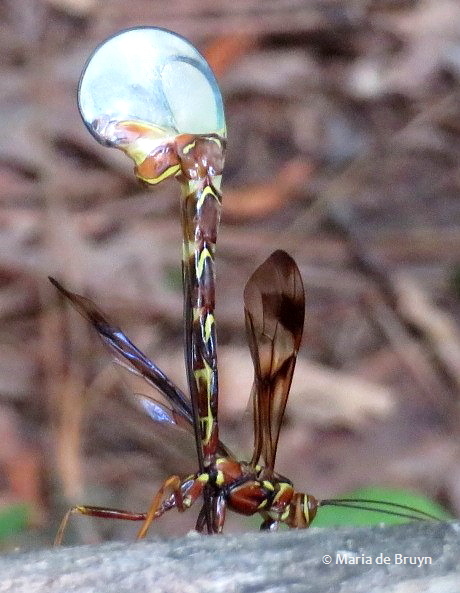
While I watched one female wasp in particular, she sometimes had part of her ovipositor coiled up in a transparent expandable pouch at the end of her abdomen.

ichneumon wasp IMG_2003© Maria de Bruyn res (2) ichneumon wasp IMG_2002 © Maria de Bruyn res (2)

She would push out the ovipositor and appeared to smooth it out with her legs. The literature I read about the wasps did not explain this movement, but I thought she might be pushing eggs down the tube. Watch the video to see what you think! 

When she finished this smoothing movement and had found the right spots for her offspring, the protective lining filaments separated from the ovipositor itself and she inserted it into the log. It was a fascinating process to witness.


female giant ichneumon wasp P5068170 © Maria de Bruyn res (2)

female giant ichneumon wasp P5068109 (© Maria de Bruyn res (2)

Although ichneumon wasps are parasitic, various species are beneficial insects since their larvae feed on insects that harm food crops such as boll weevils, codling moths and asparagus beetles. The adults usually only live about 27 days and may only drink during that time. Their adult goal is to find a mate and then reproduce.

ichneumon wasp P5068014 © Maria de Bruyn res (2)

Another way in which the ichneumon wasps have contributed to human society is by serving as an example for the medical community. The STING Project at the Imperial College in London is investigating options for Minimally Invasive Surgery (MIS) to diagnose and treat various medical pathologies. The research team is now developing a flexible steerable probe that was inspired by the ichneumon wasp’s ovipositor!

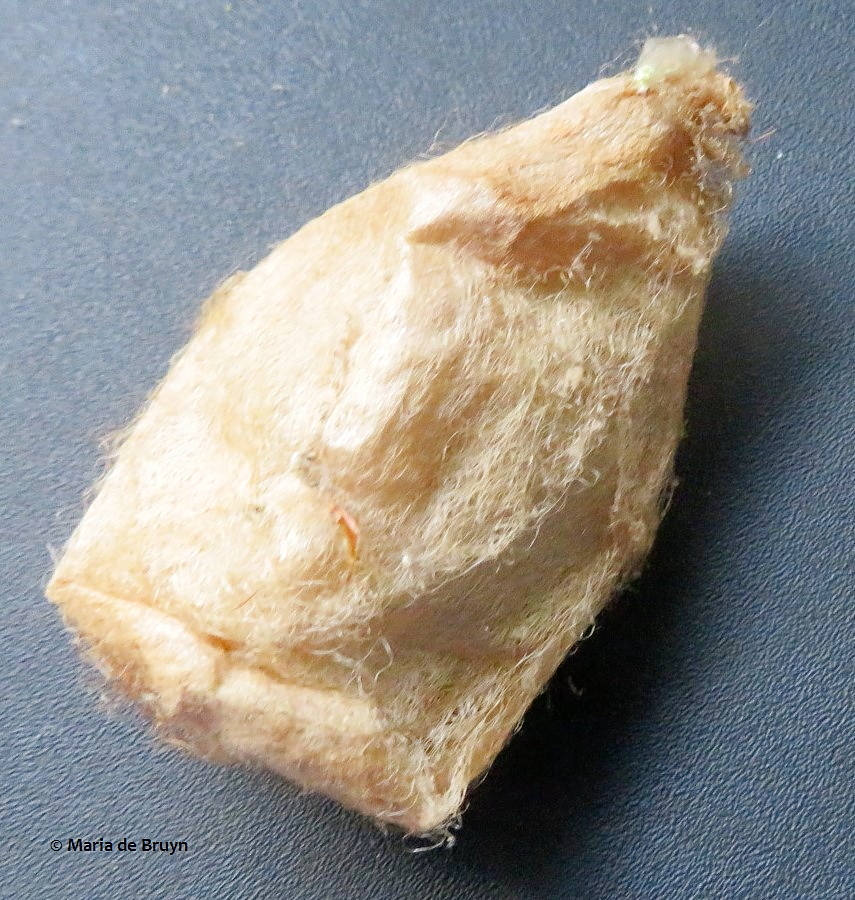
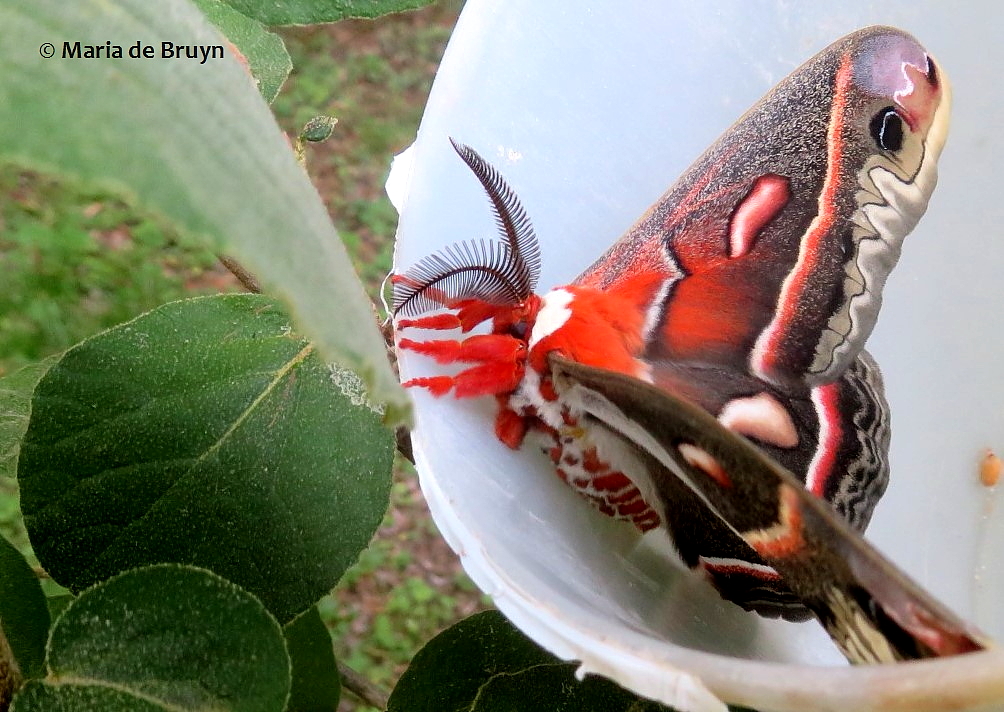
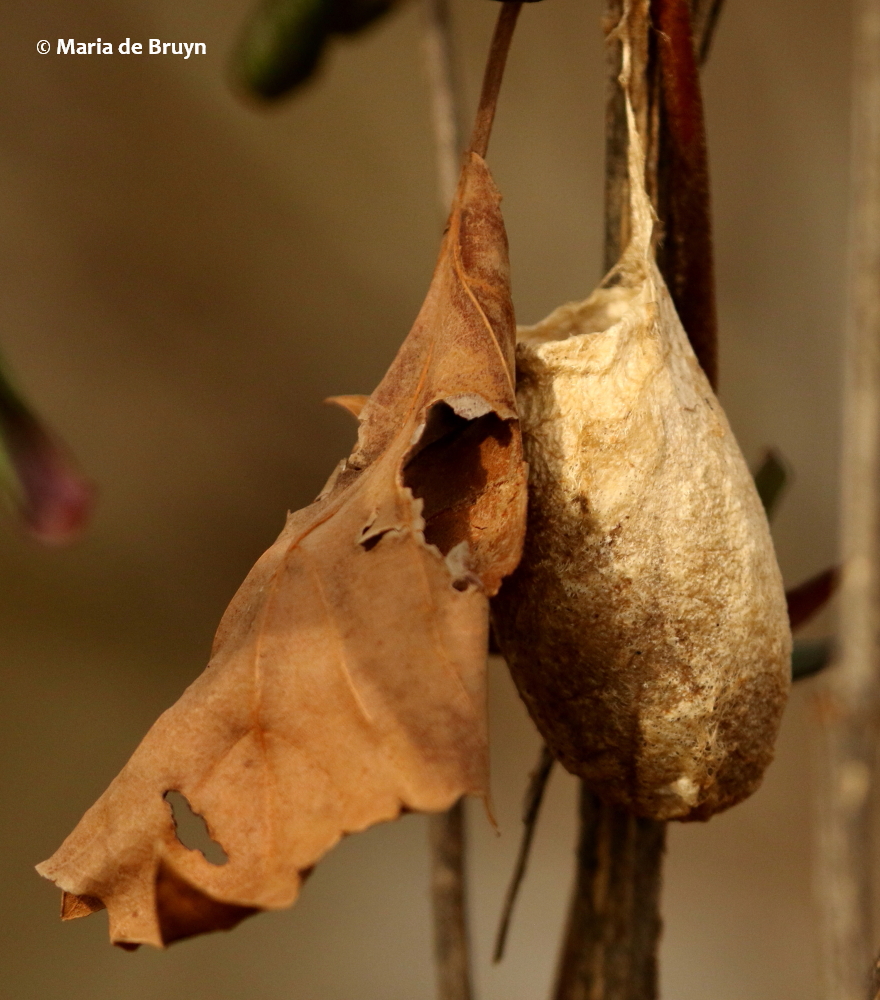
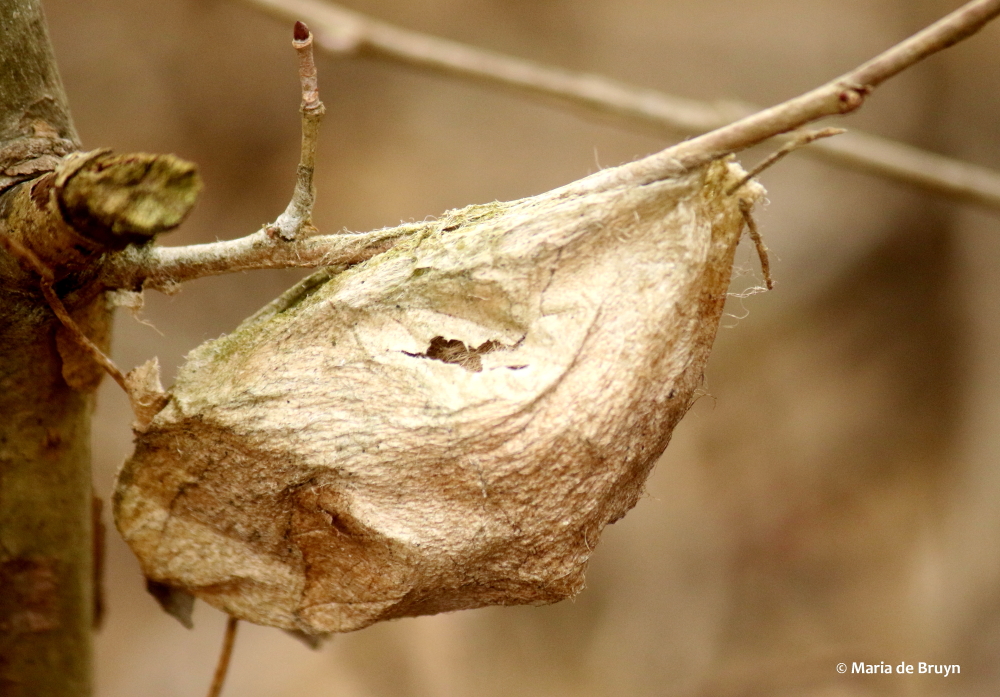
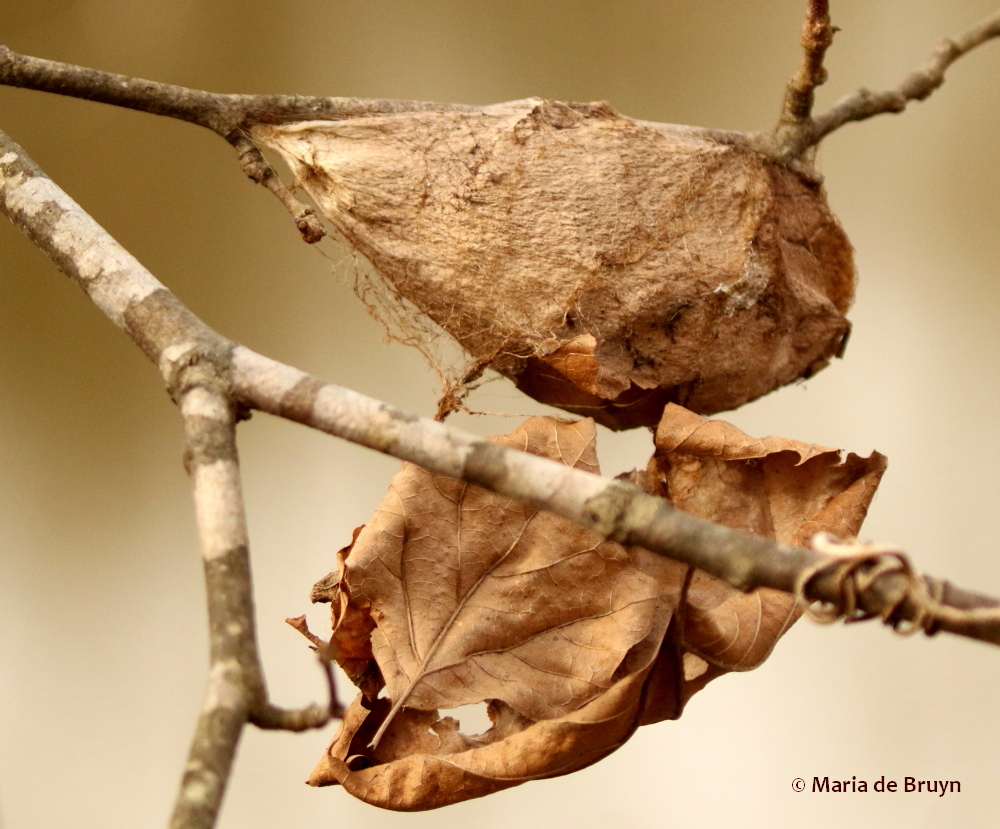
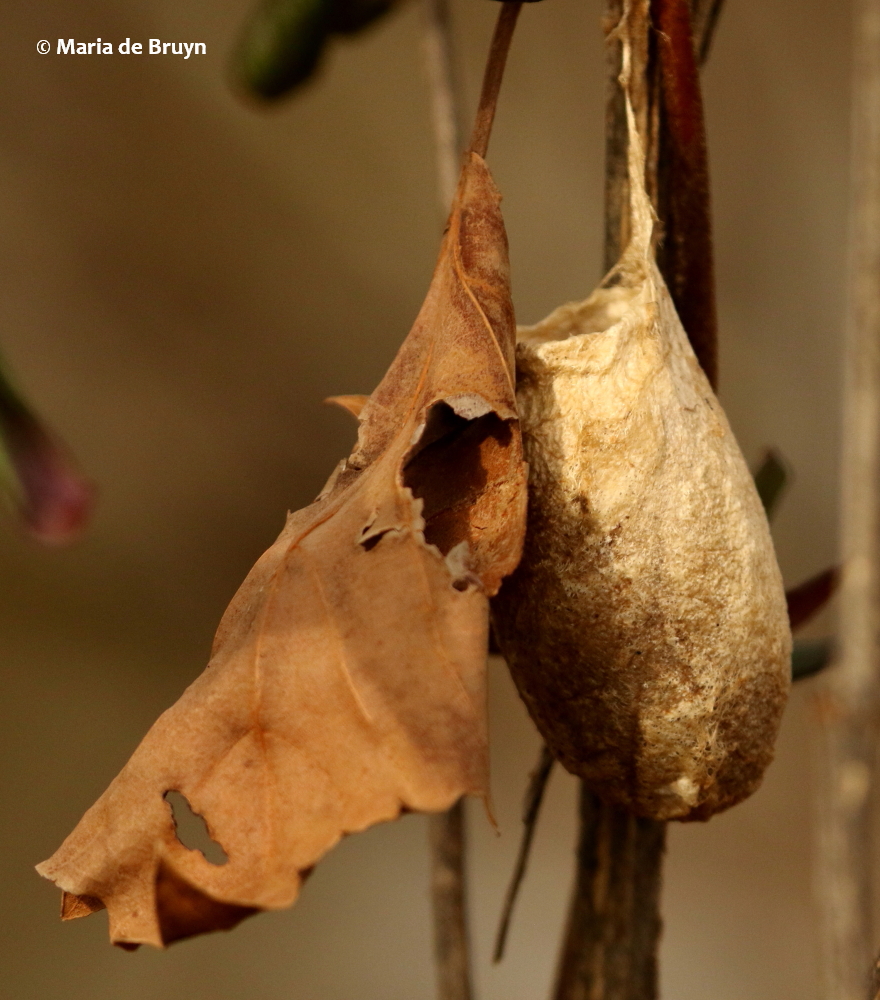
cecropia moth IMG_0019 © Maria de Bruyn (2)My other exciting insect event involved a moth. Last fall, a cecropia moth (Hyalophora cecropia) positioned its cocoon on the door jamb of the women’s restroom at Cane Creek Reservoir. The reservoir’s manager feared that it would be damaged there and asked if I would be willing to care for it over the winter. I took the cocoon home and kept it safe during the fall, winter and much of this spring.
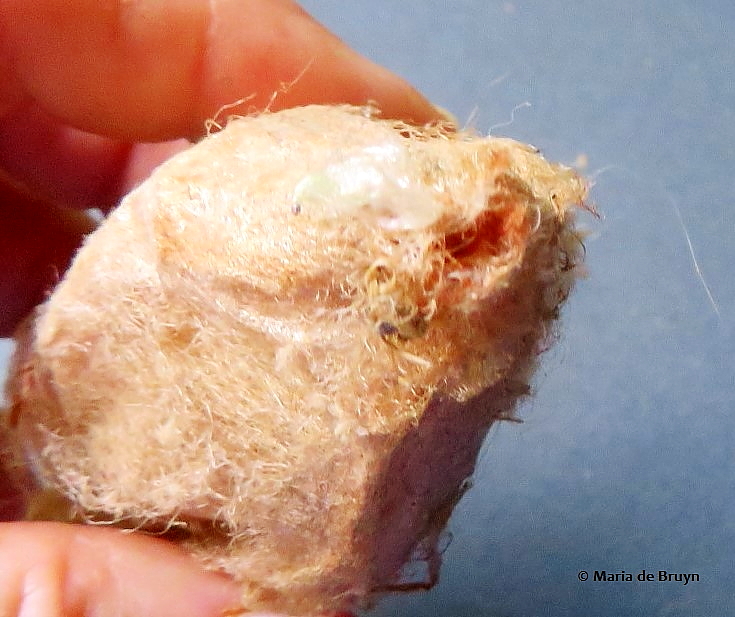
Cecropia moth larvae (caterpillars) are often found on maple, cherry and birch trees. Why this one chose a building as an overwintering site is a bit of a mystery. Since the pupa was going to be dormant all winter, I placed it upright in a large plastic container with a grate over the top and kept it on my screened-in porch.

cecropia moth IMG_0020© Maria de Bruyn (2)Periodically, I would check on it and it seemed to be ok. This was important as these moths are “univoltine” — they only have one generation of offspring per year. Out in nature, the caterpillars may fall victim to parasitic wasps and flies that lay their eggs on them. So it was fortunate that we were able to “rescue” this cocoon.
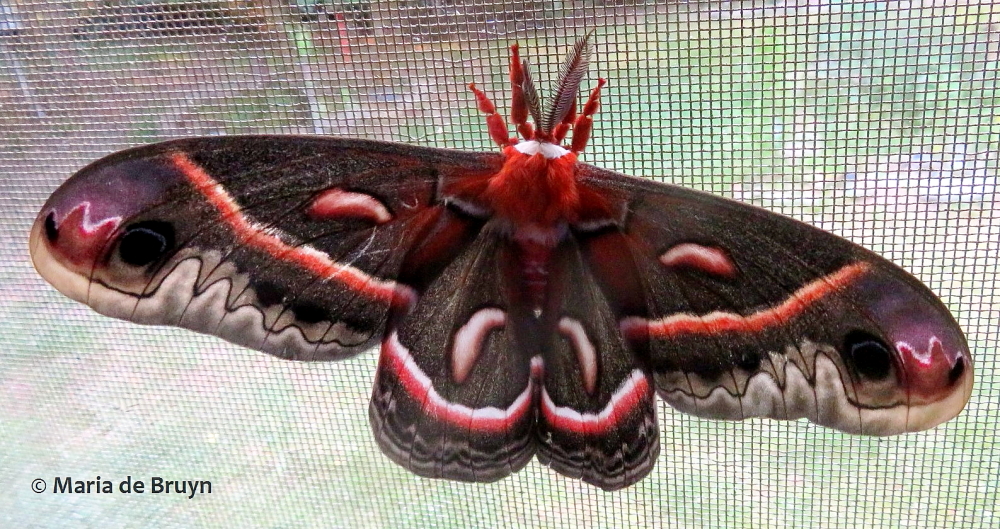
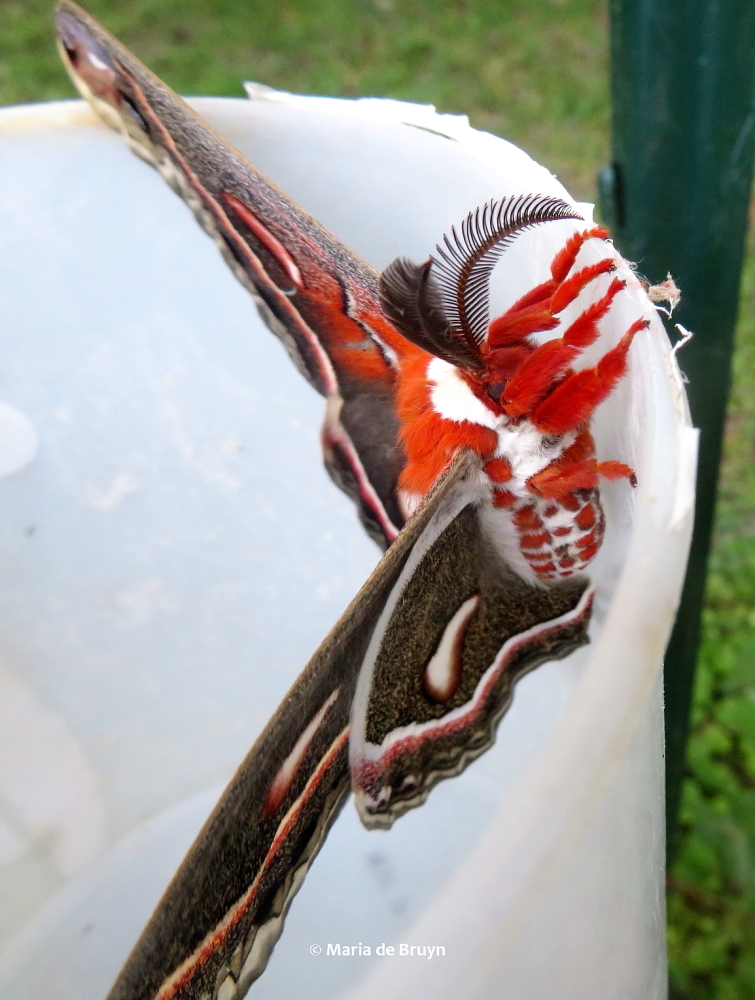
One evening at the end of May, I stopped working on my porch to go inside to watch the news. When I came back after about 20 minutes, I spotted a brilliant large moth on the screen. My youngest cat spotted it at the same time, so I shooed her inside. The cocoon scarcely had a hole in it; I really wish I’d seen how the huge moth got out.

cecropia moth IMG_0006© Maria de Bruyn (2) res

cecropia moth IMG_0003© Maria de Bruyn 2 res

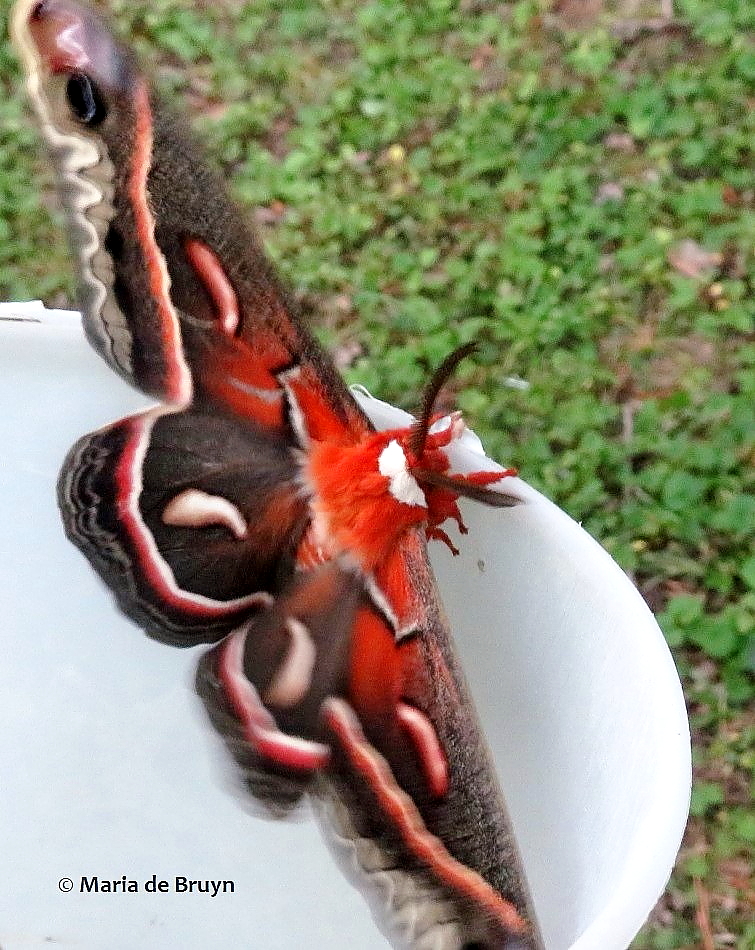
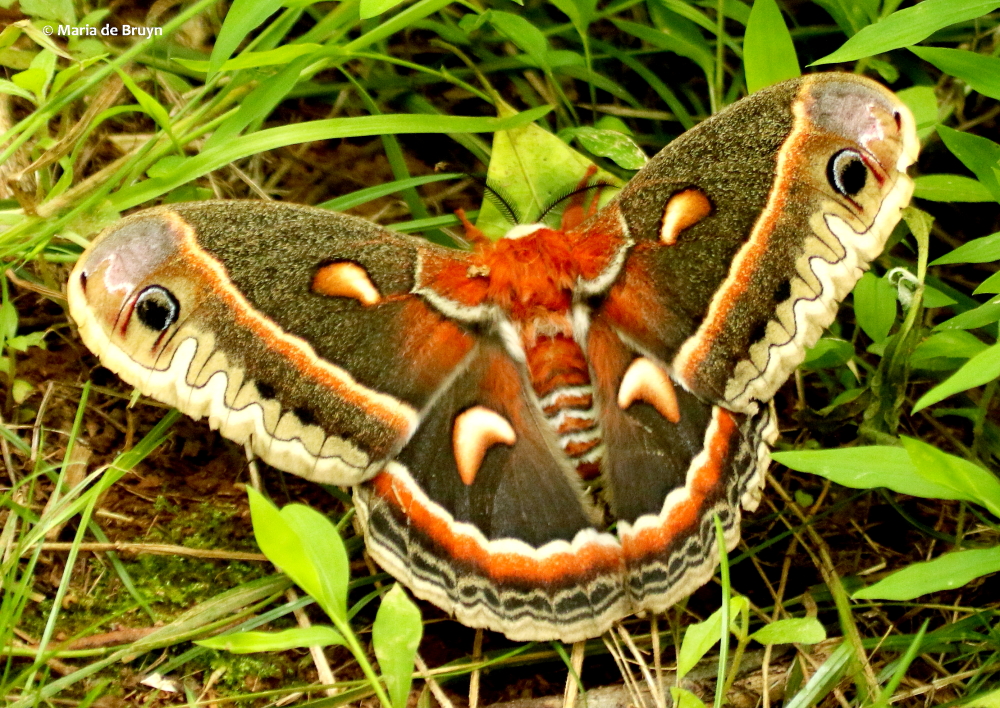
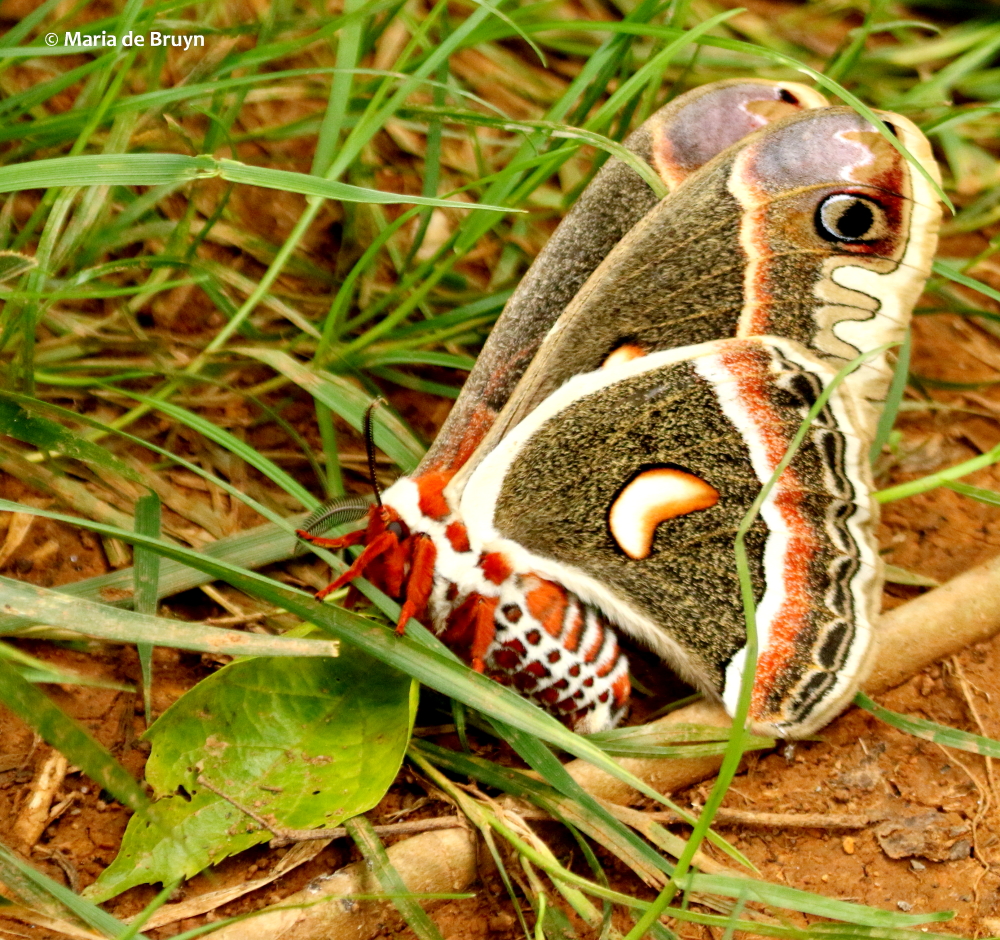
The cecropia moth is North America’s largest moth with a wingspan up to 7 inches. The males and females look similar but the males like this one have larger, more feathery antennae.

cecropia moth IMG_0012© Maria de Bruyn (2) res

Female moths emit pheromones that the males can detect from up to a mile away. After mating, the female lays up to 100 eggs. Both sexes die after about two weeks as they lack functioning mouths and digestive systems and don’t eat.

cecropia moth IMG_0014 © Maria de Bruyn (2) res


The moth’s short adult lifespan must have made this guy anxious to get underway. Or seeing my cat and I hastened his development. One website reported that it takes the moth a few hours to dry before they can open their wings and fly.

cecropia moth IMG_0011© Maria de Bruyn (2) res


However, very soon (perhaps 10 minutes) after I removed him from my porch and took him outside (never touching him with my hands), he began vibrating his wings. In less than a minute, he launched himself upwards and flew towards the top of the nearby tall pine trees, setting off on his quest for a mate.

cecropia moth IMG_0016© Maria de Bruyn (2a) res

I suppose it is possible that the moth had emerged earlier and had crawled away to hide but that seemed unlikely. In any event, he looked like he could fly just fine, and I sincerely hope that he found a mate and that they were able to collaborate in ensuring a new generation of this stunningly beautiful species! And I was grateful for having agreed to overwinter the cocoon as it enabled me to contribute to the propagation of this wonderful moth. In any event, I was enthralled to see what a gorgeous creature he was. These moths are generally nocturnal so seeing him was a treat!

cecropia moth IMG_0017 © Maria de Bruyn (2) res

, , , , , ,

Moth marvels

Some of the large moths, like the polyphemus (Antheraea polyphemus) and cecropia (Hyalophora cecropia, below) moths, definitely rival butterflies in their beauty and splendor. Before launching into a series on some Central American wildlife, I thought I’d share a couple recent moth-related spottings that I had.

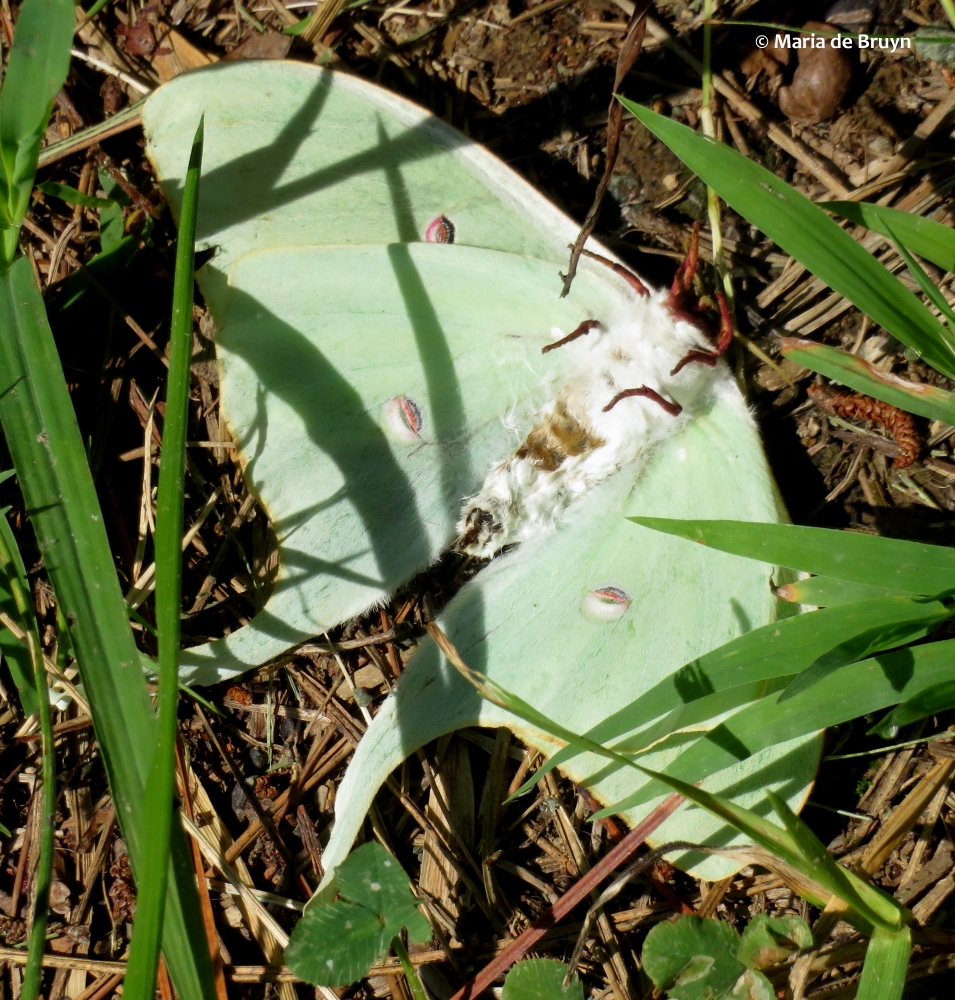
The luna moth (Actias luna) is a large lepidopteran that entrances people and I recently saw one along a path in the Mason Farm Biological Reserve. Unfortunately, the insect had died but the cause was not apparent. Perhaps it was a parasitic fly that was originally introduced to help control invasive gypsy moths or perhaps it had simply reached the end of its life span.

This past year, I was fortunate enough to see the cocoons of both the polyphemus (left) and cecropia moths but I had not seen the large caterpillars associated with some large moths.


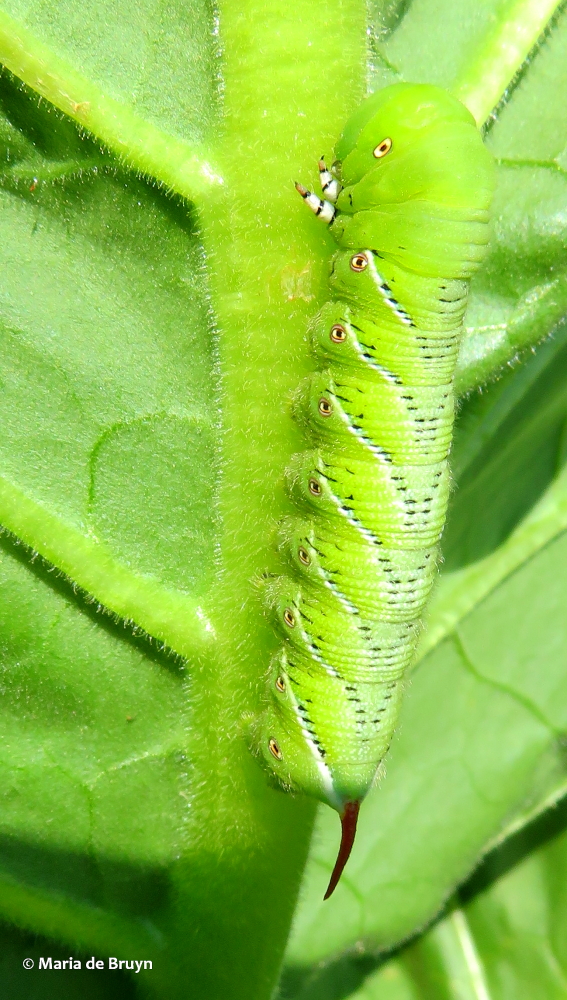
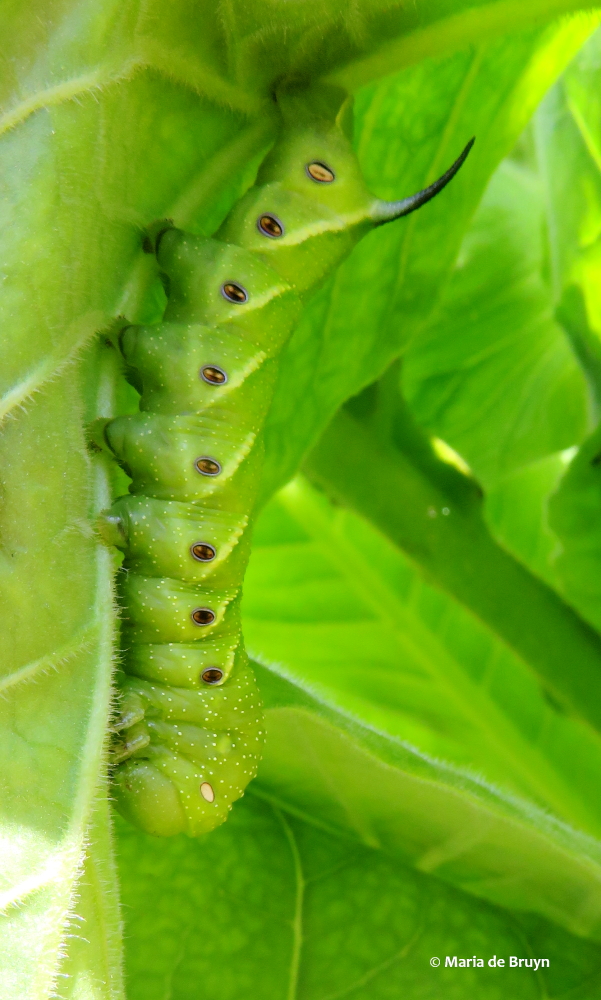
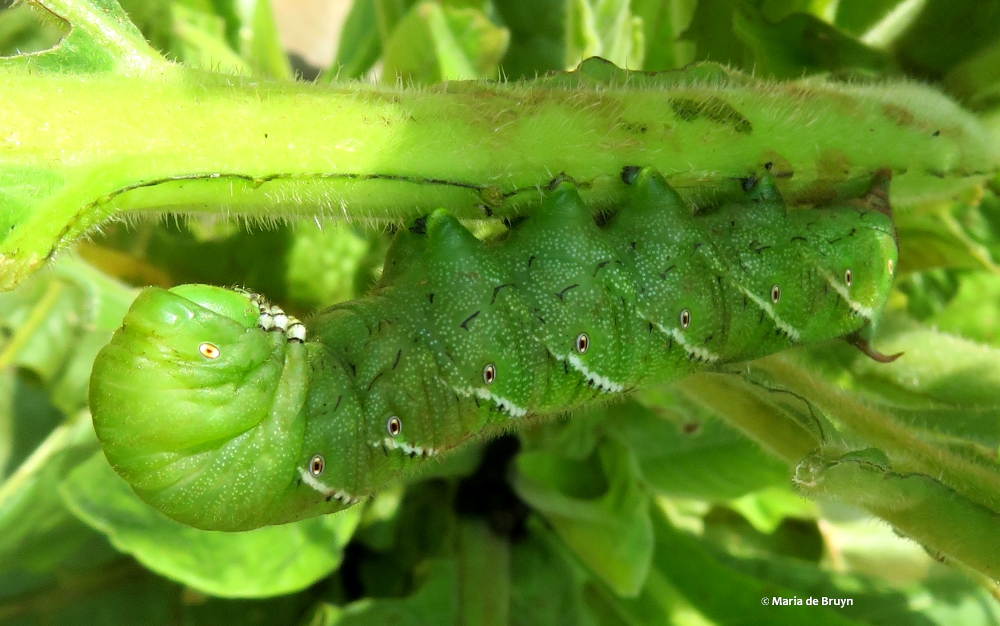
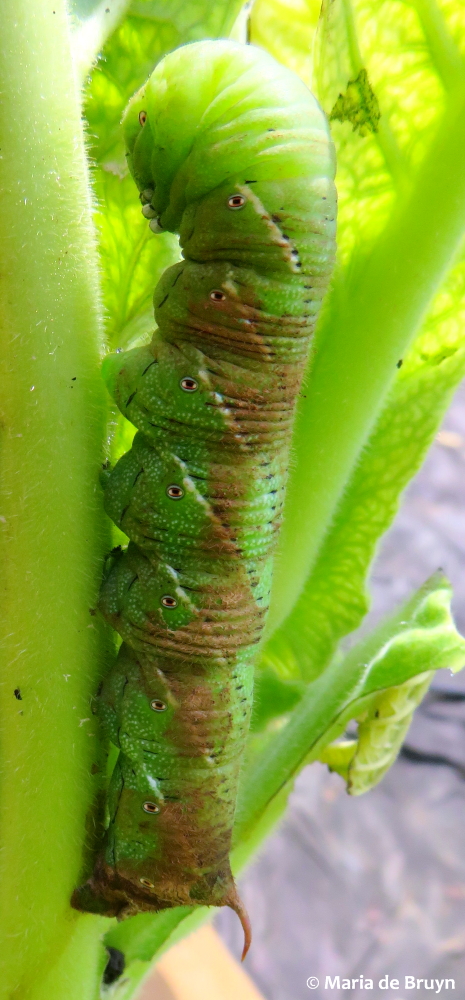
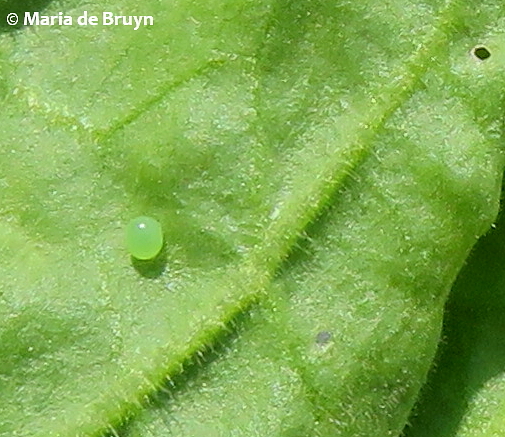
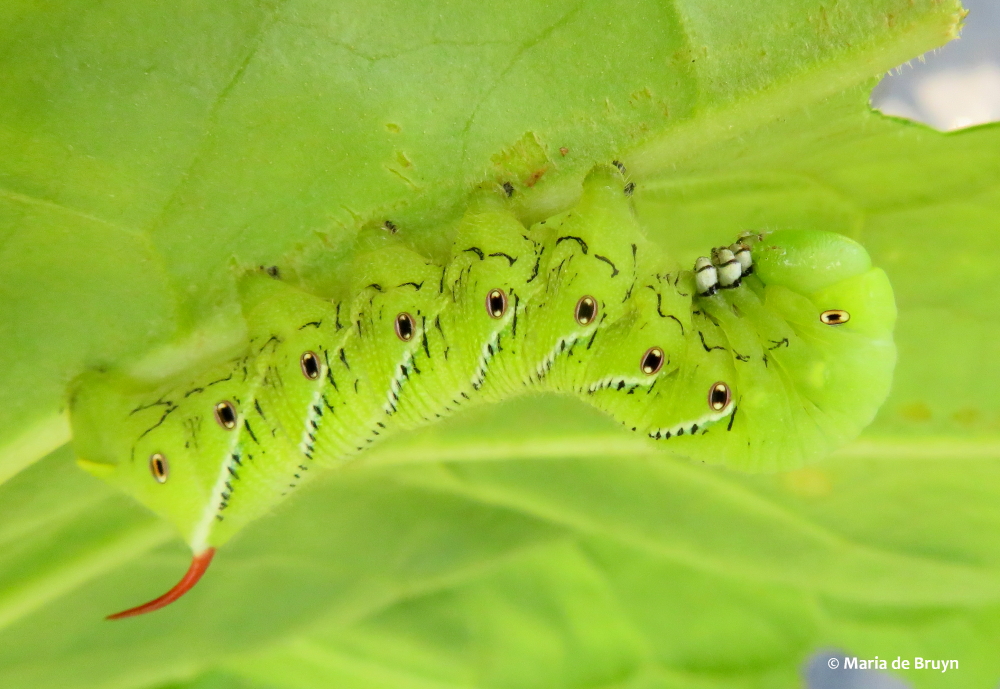
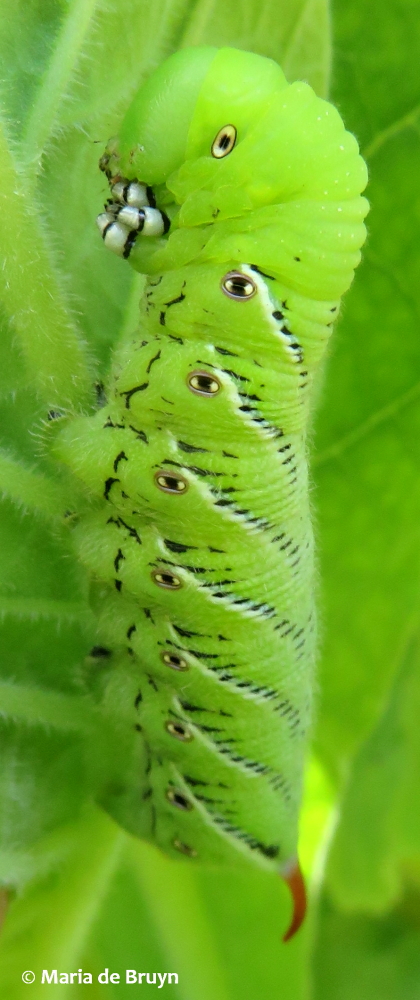
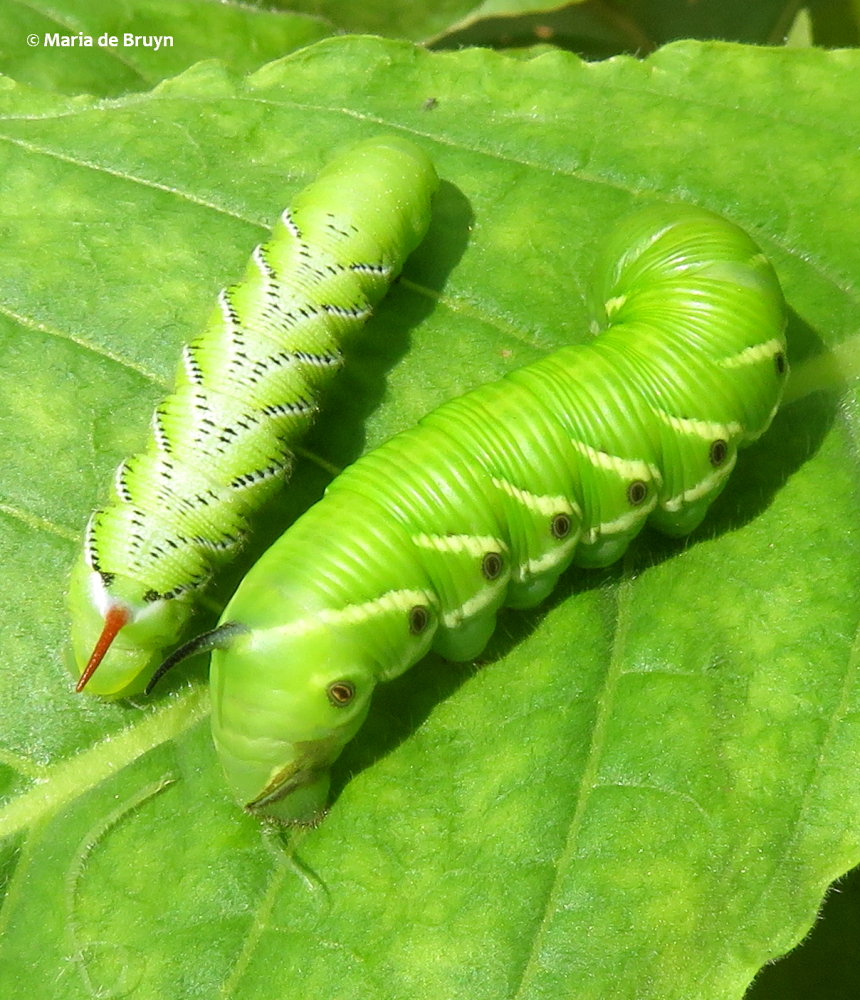
Then, just a few days before departing for a trip to Costa Rica, it was my good fortune to visit a garden that had two species of large hornworms. The tobacco hornworm is the immature form of the Carolina sphinx moth (also known as the tobacco hawkmoth; Manduca sexta). The tomato hornworm, the caterpillar of the brown and gray five-spotted hawkmoth (Manduca quinquemaculata) looks very similar except that it has a black or dark blue horn instead of the orange one sported by the tobacco hornworm.

The tomato hornworm is distinguished by v-shaped marks (right) while the tobacco hornworm has beautiful black-bordered straight white lines on its body. I find both species attractive but particularly like the tobacco hornworm caterpillars.


They are so cute with their rounded heads and little suction-cup-like feet.

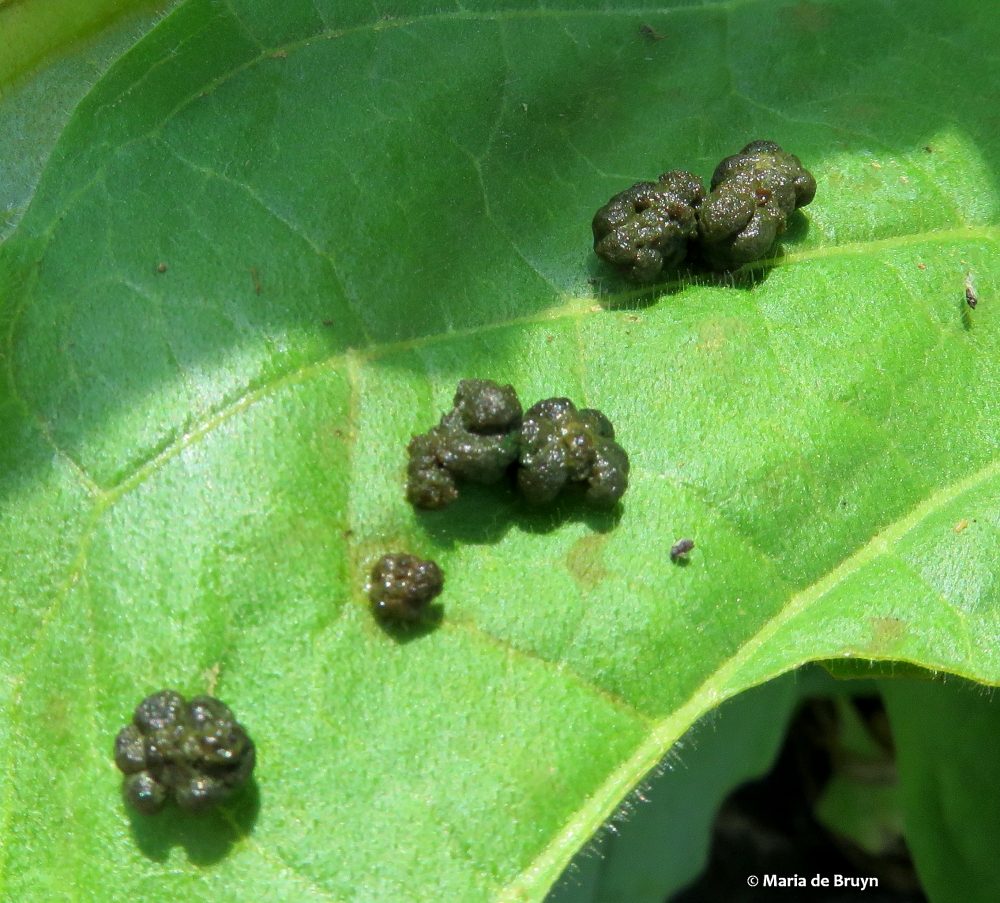
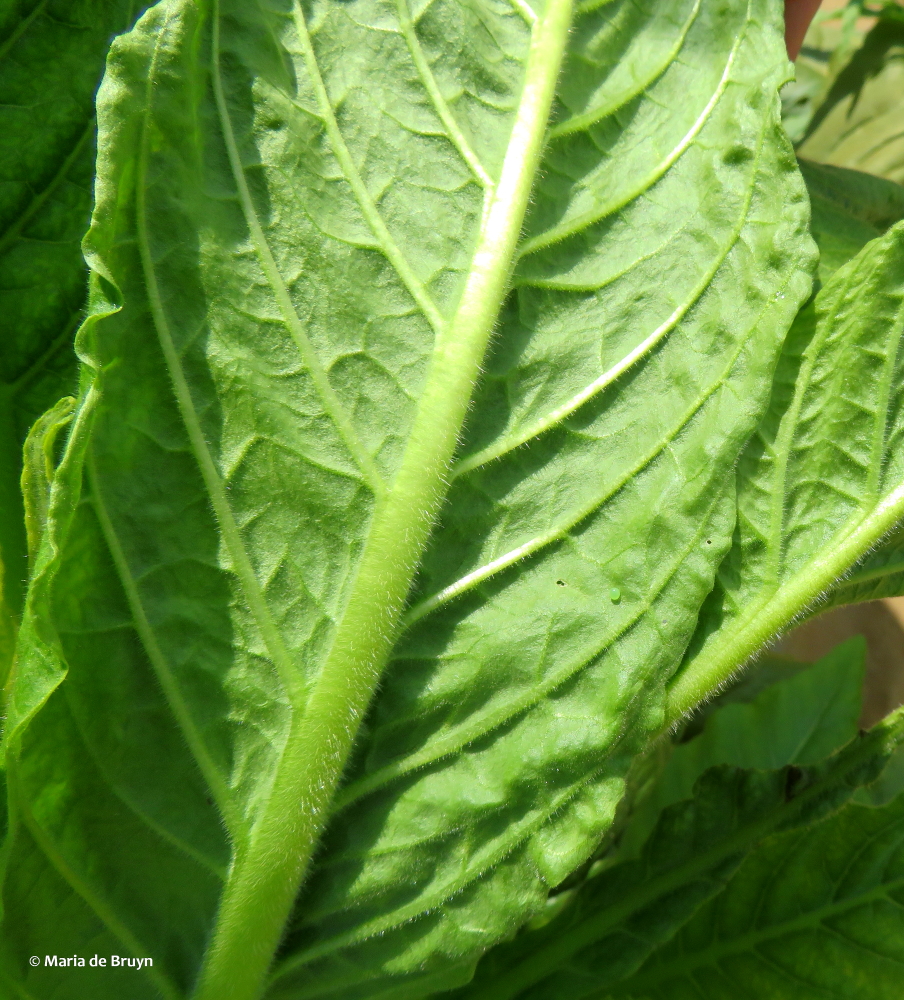
Both species of caterpillar can be found on either tomato or tobacco plants as they consume the foliage of various plants in the nightshade family. The presence of frass (insect larvae poop) alerts you to which plants may be hosting the hornworms.

These moth species originated in Central America and are now considered by some people to be garden pests, especially when they eat tomatoes. It seems that planting marigolds next to the fruit can repel the caterpillars, who eventually pupate and then overwinter underground where they have fallen off plants.


There are parasitic wasps that also prey on the hornworms. One species attacks the tiny hornworm eggs, which are laid on leaves; another wasp lays its eggs in the body of the caterpillars.


The Kingsolver Lab at the University of North Carolina (UNC) is researching the hornworms among other insects, examining how environmental changes caused by humans (agro-ecosystems, introduction of invasive species, climate change) are evoking responses in the caterpillars. It was a treat to see lots of these caterpillars at different stages of their development.


Next up: a blog on one bird species I’ve watched frequently this summer in NC and then a virtual trip to Costa Rica. 🙂


Quebec chronicles – brown and white beauties in abundance!

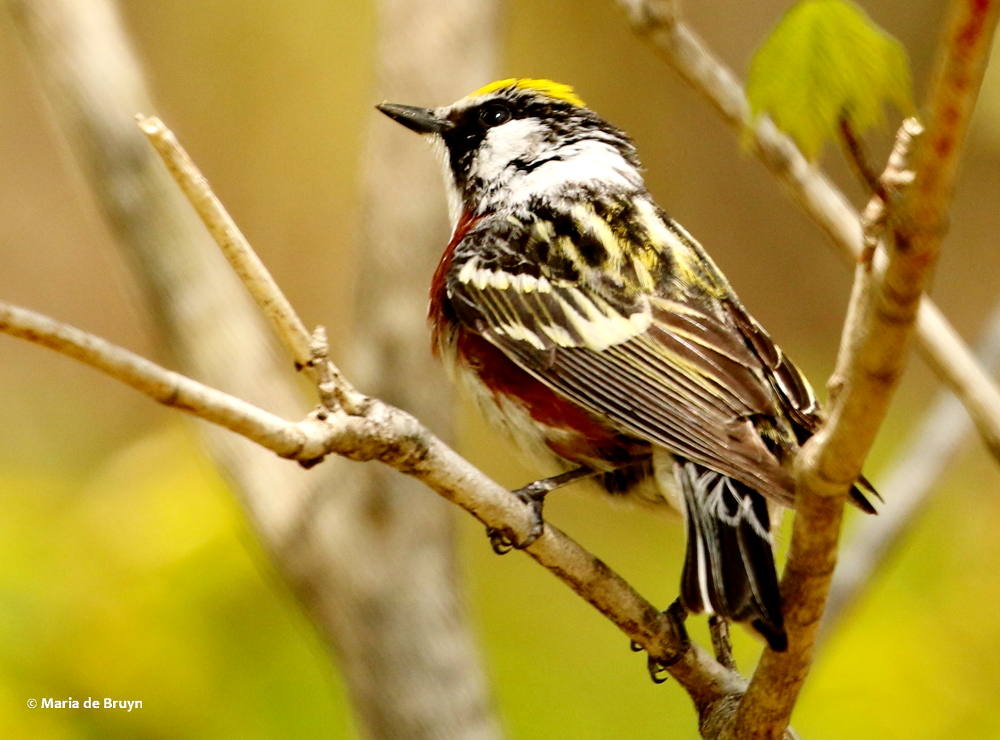
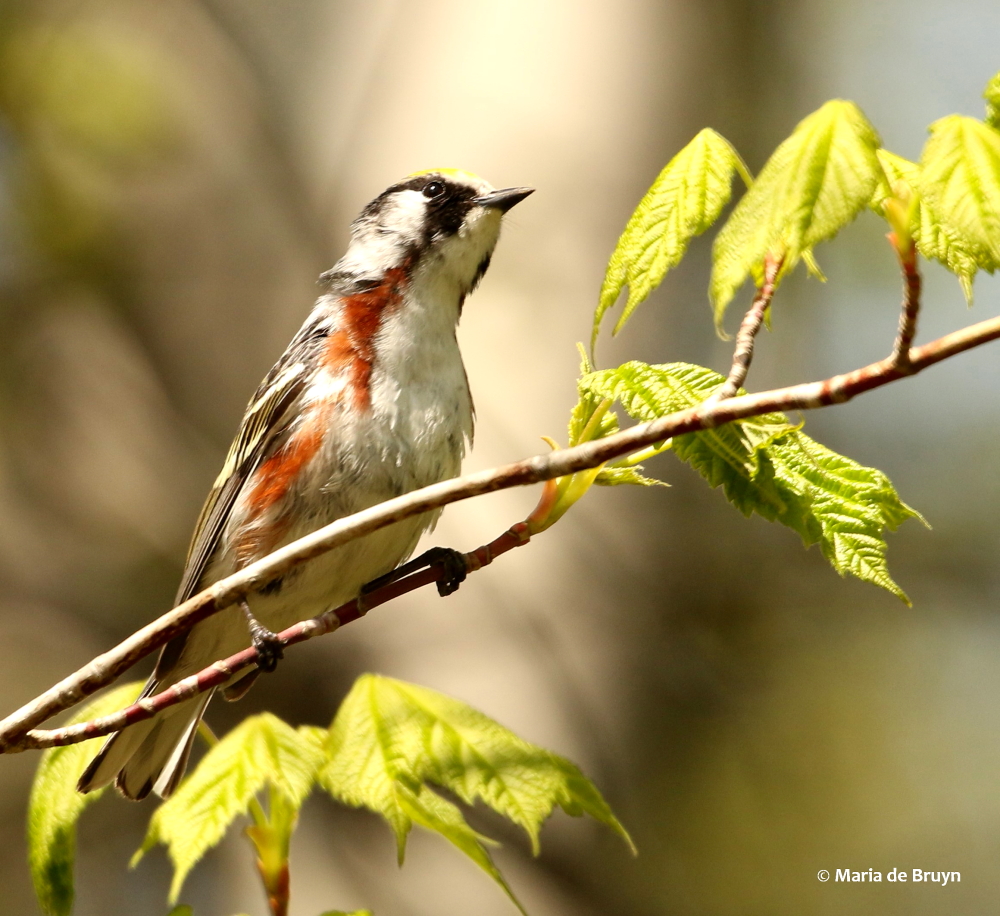
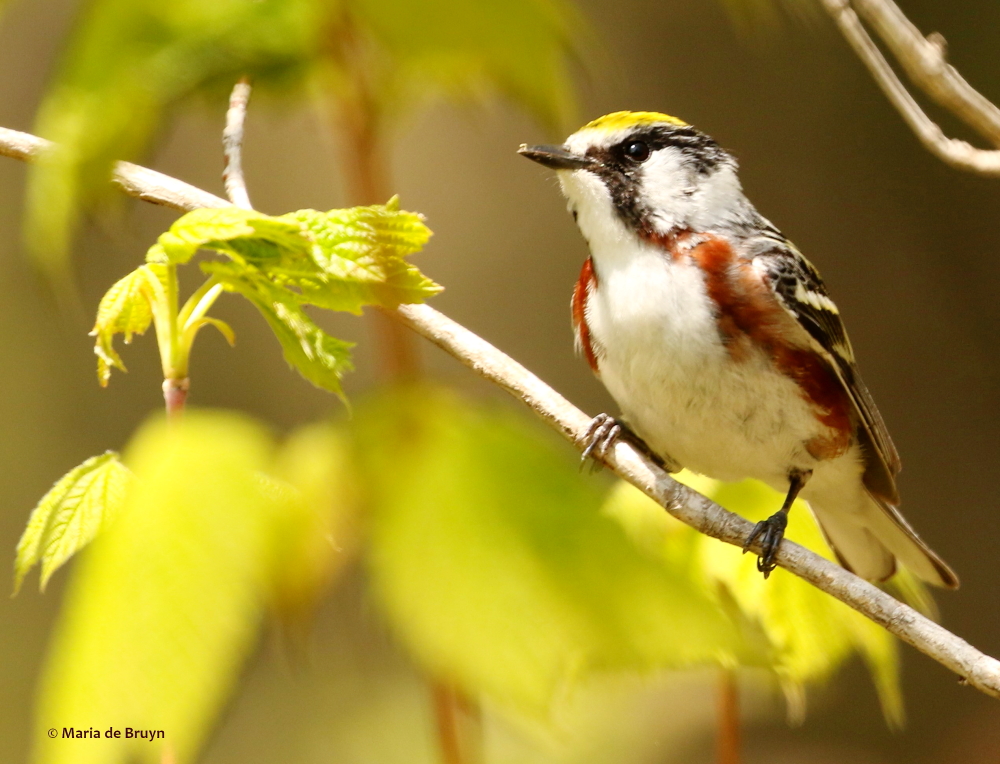
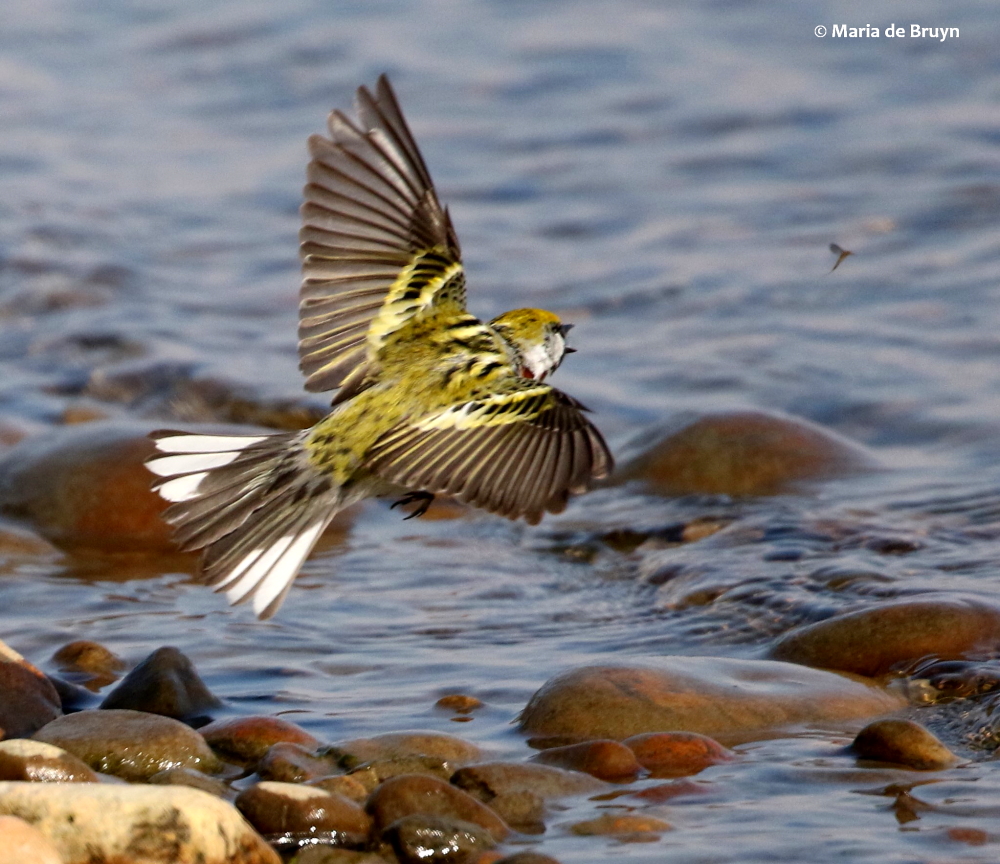
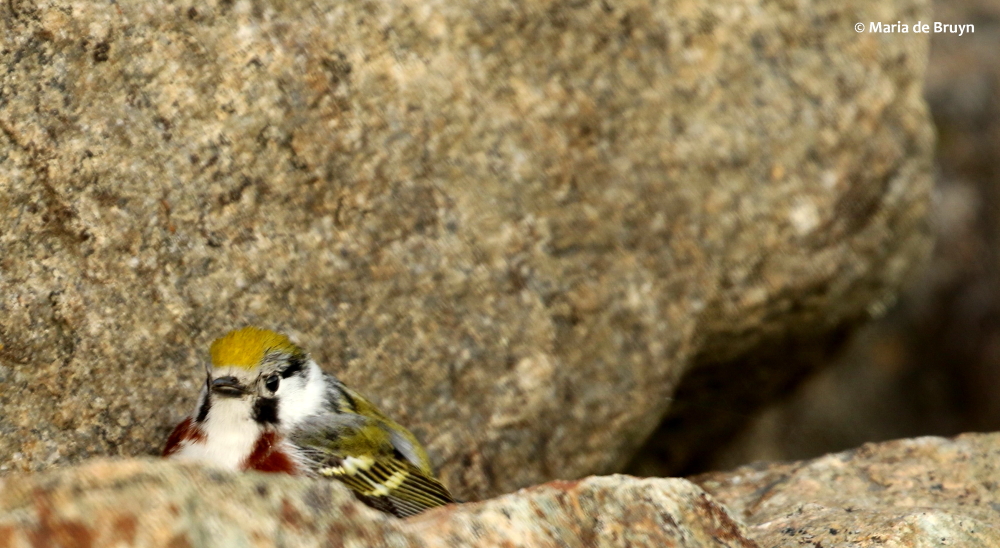
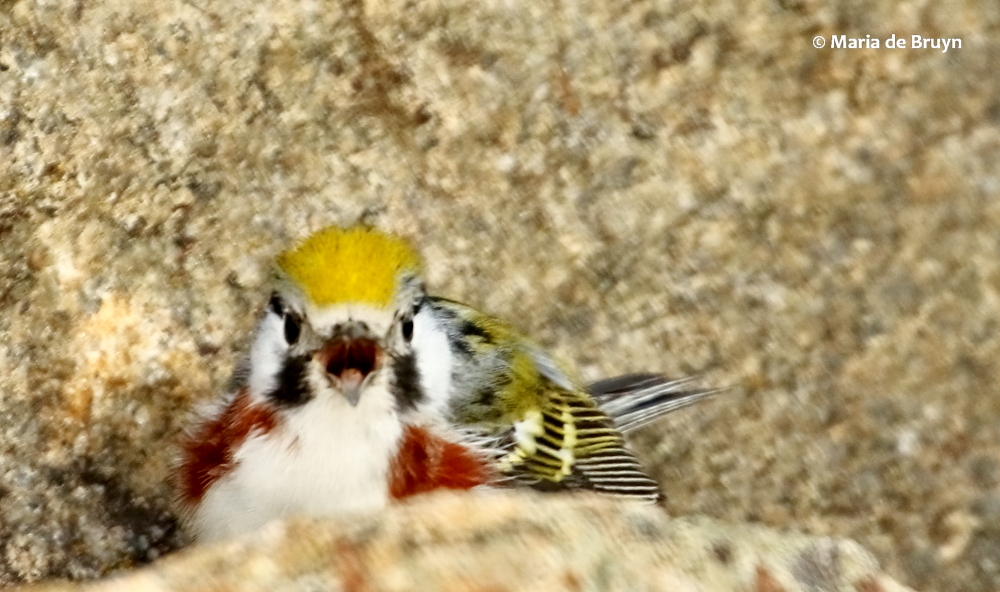
Several years ago, I saw my first chestnut-sided warbler (Setophaga pensylvanica) during breeding season in the mountains of North Carolina. It was a somewhat fleeting sighting but long enough for me to recognize the male’s beauty. My next sighting was a couple years ago when a pair stopped by a local creek during their south-bound migration in the fall. They were still attractive, but I had fallen for their mating season colors. What I didn’t know then was that when they reached their winter destination in some Central American area, they would be likely associating with the same birds with whom they had spent previous winters foraging.

Lucky me, therefore, when I noted that many chestnut-sided warblers were part of the spring migratory crowd in Quebec a couple weeks ago. I saw them in at least five sites and was able to get some nice photos of these beauties.

The Cornell Lab’s All About Birds website advises: “Stay around clearings, road edges, or other disturbed sites with young deciduous trees to find Chestnut-sided Warblers.” They did indeed appear in such places, looking for insects.


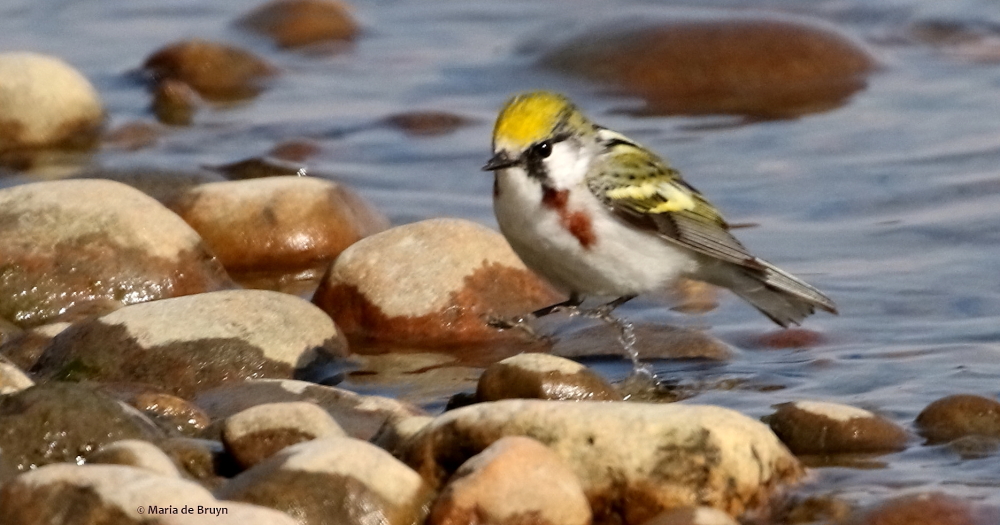
They appear to really like early successional deciduous habitats, e.g., terrains affected by logging, fire, storms and flooding. Clearing of people’s land around their houses may also qualify as a habitat-forming place for these little birds. We also discovered that these colorful warblers look for food among stones, rocks and boulders along bodies of water.


At a small park alongside an inlet of the St. Lawrence Seaway, a chestnut-sided warbler was hopping along the rocky shore seeking caterpillars.


He also flew out over the water from time to time in order to catch insects on the fly.

At the St. Irénée quay, a species mate was popping in and out among the large boulders on either side of the pier.

Seeing these beautifully colored birds as they hunted for insects was quite enjoyable. The Rev. Leander S. Keyser, who attended the 1896 World Congress on Ornithology, remarked that the chestnut-sided and blackburnian warblers were like “a sonnet in feathers – lightness of air and sunshine embodied – rhythm caught in a living form” – what a beautiful way of describing them!


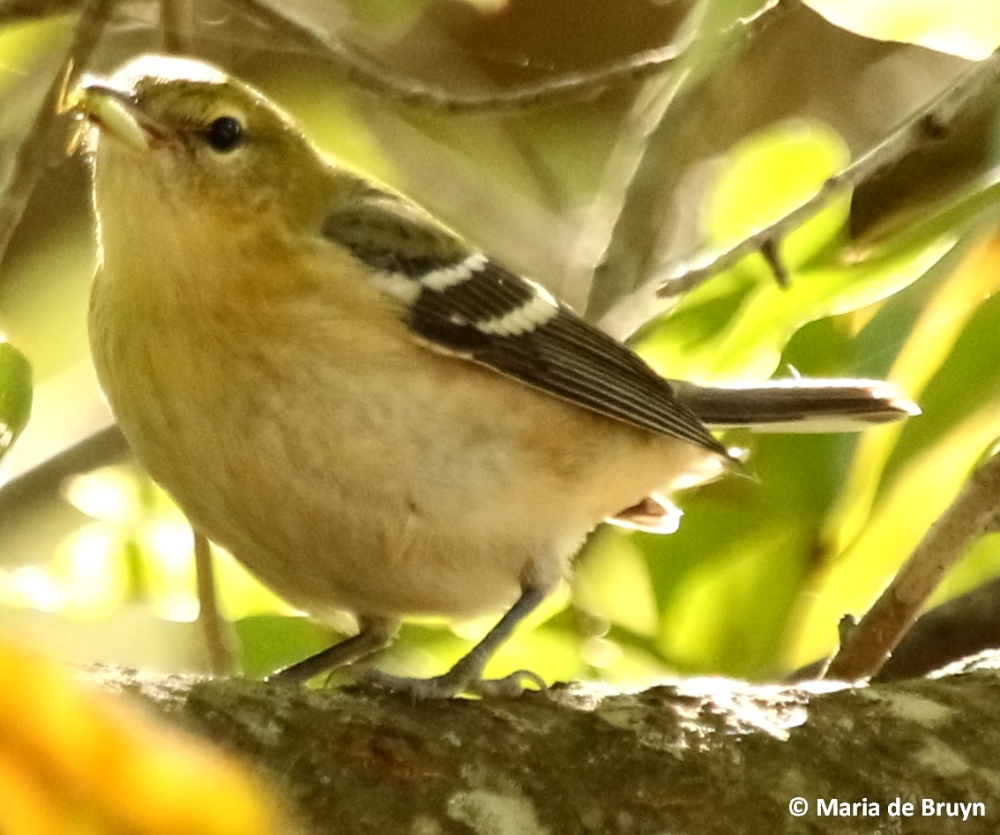
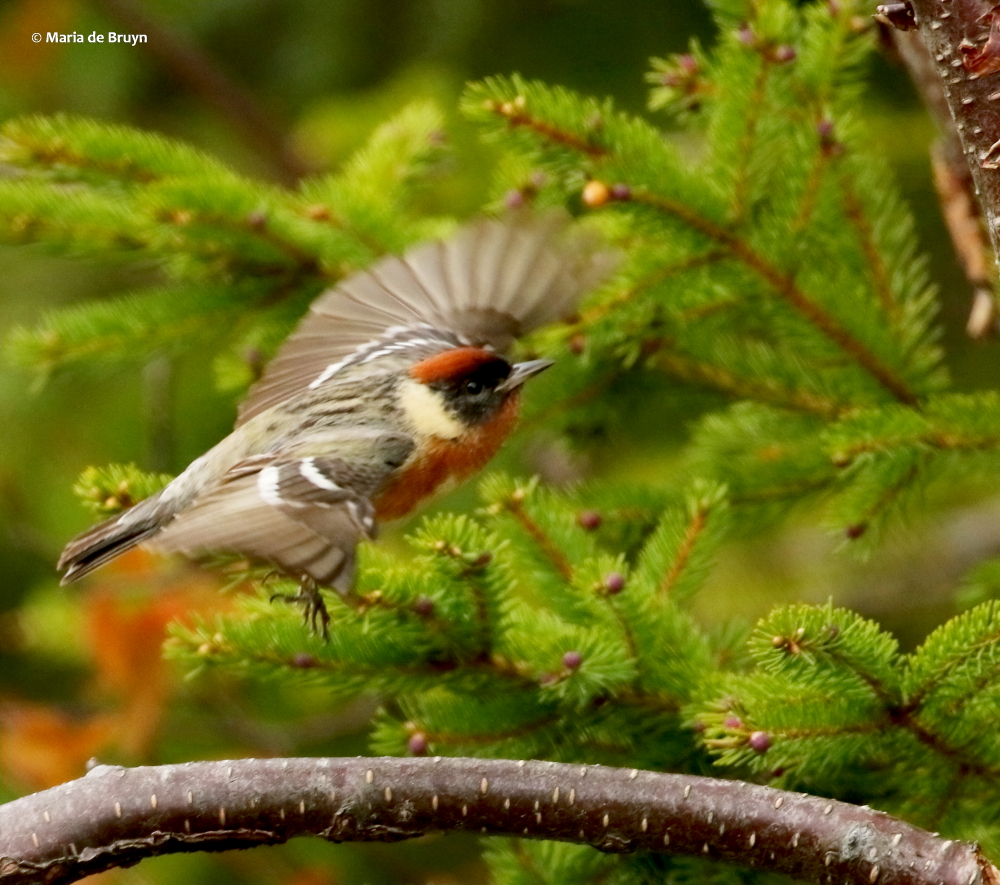
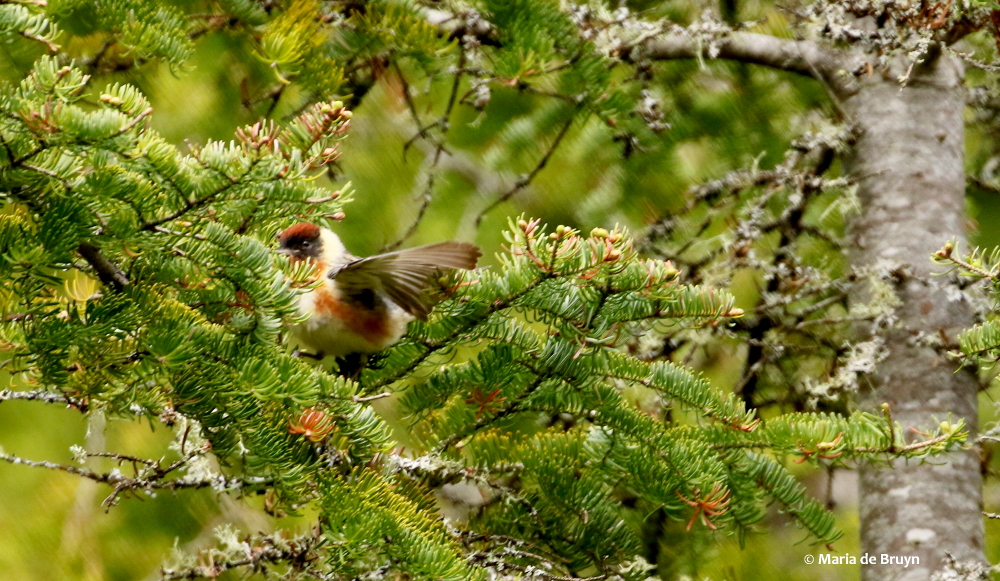
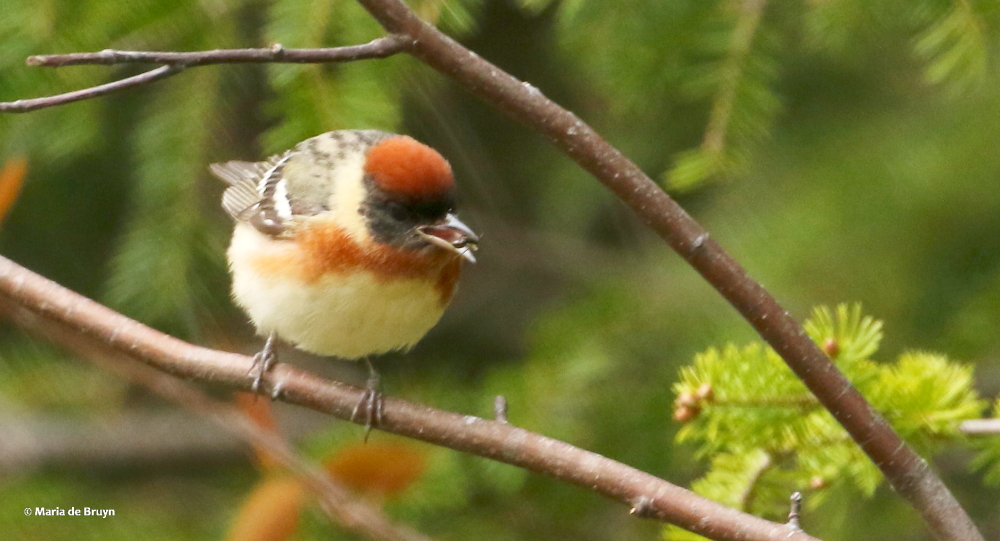
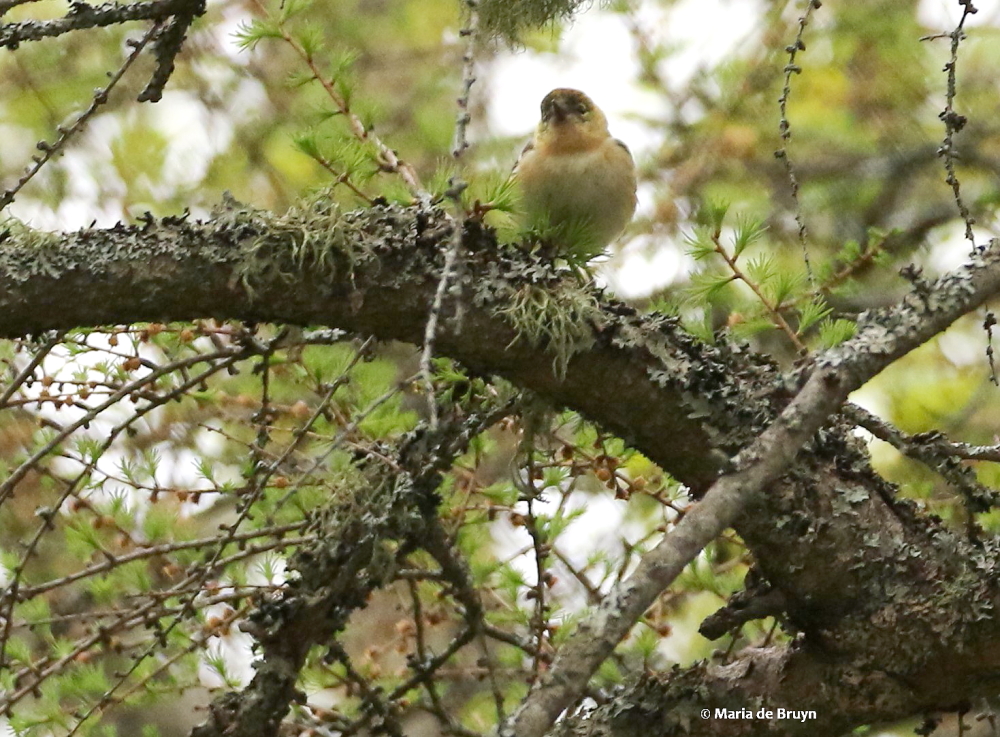
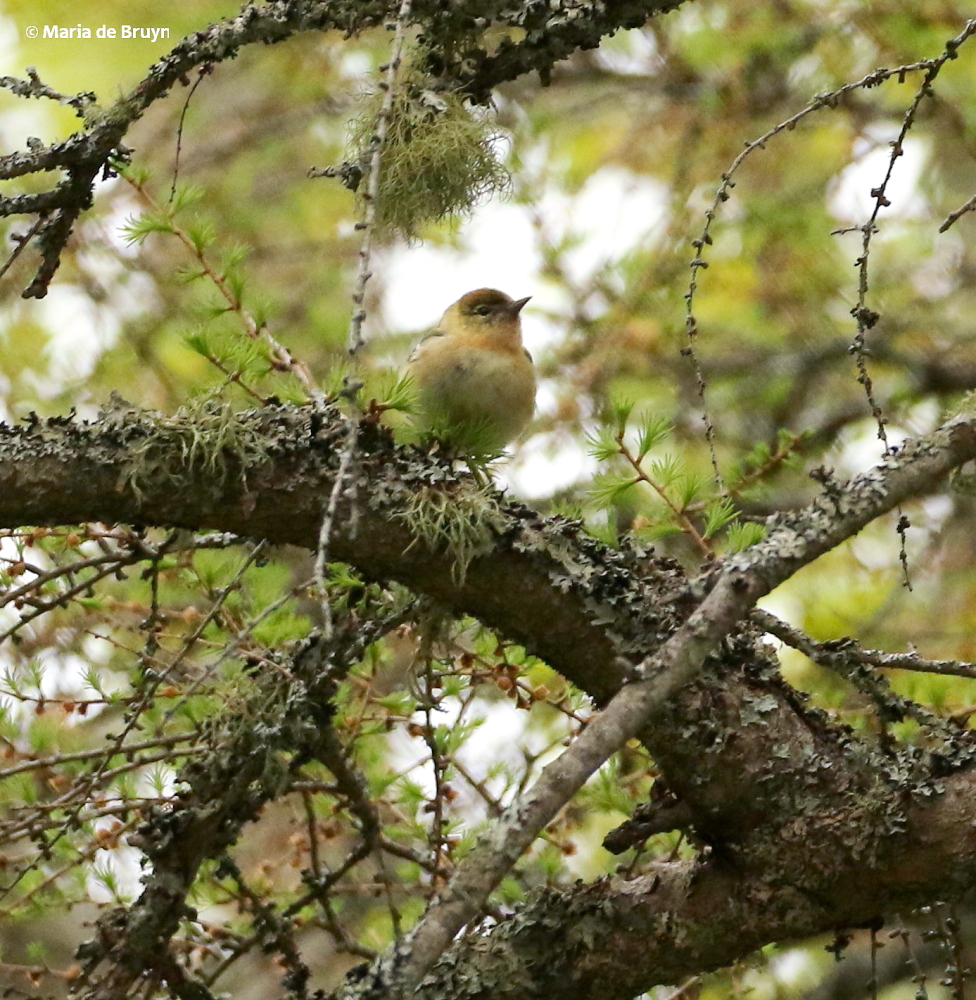
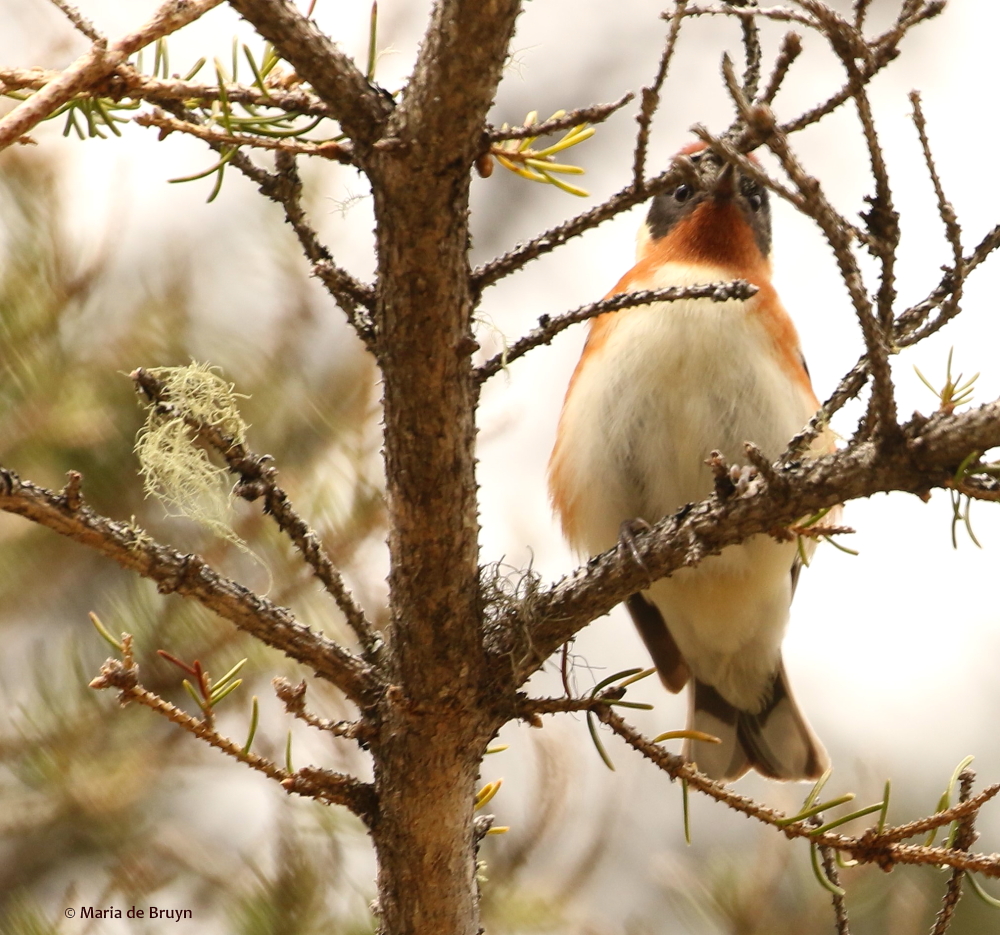
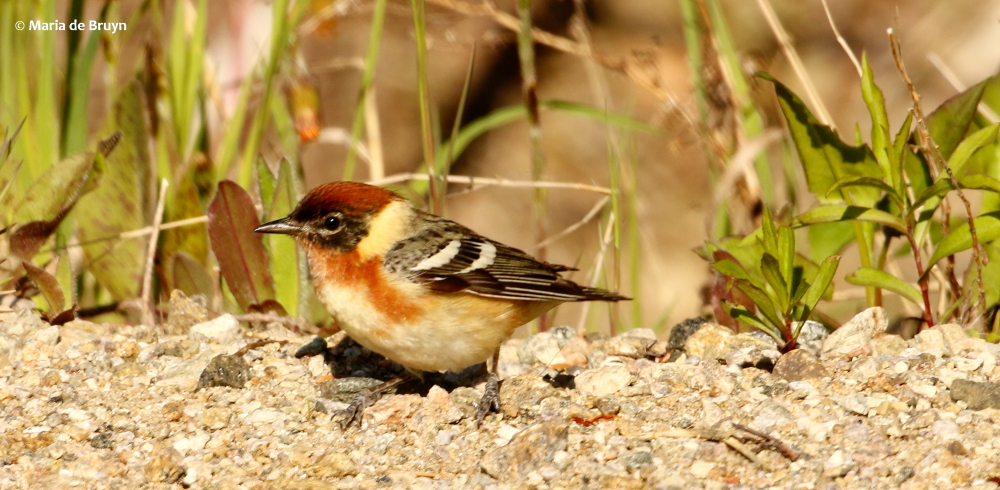
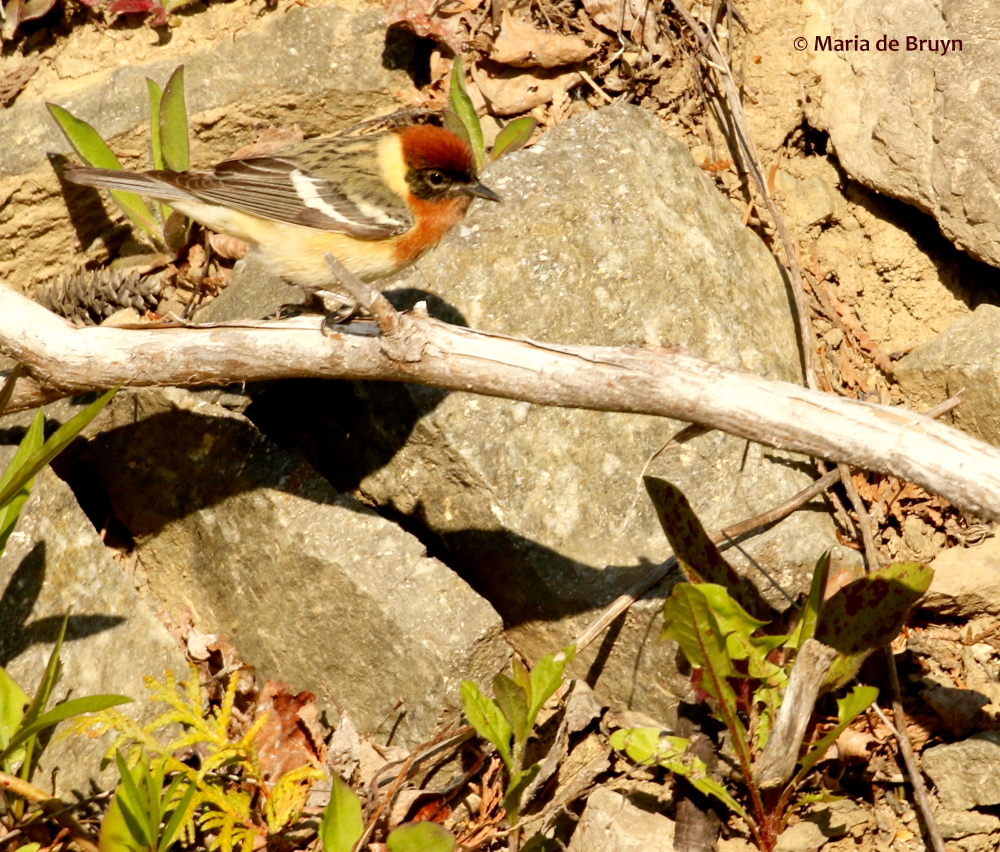
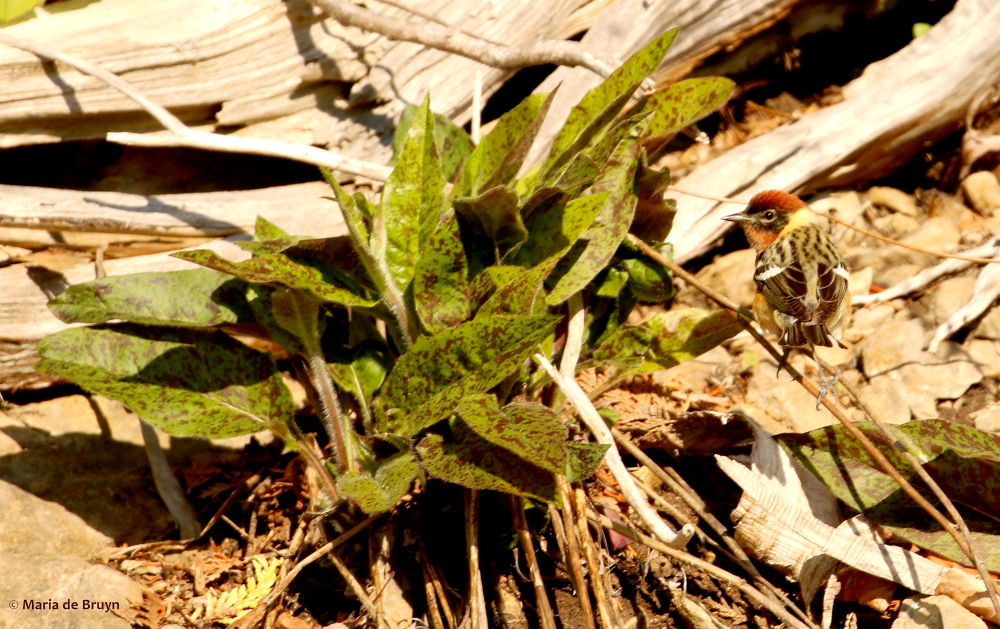
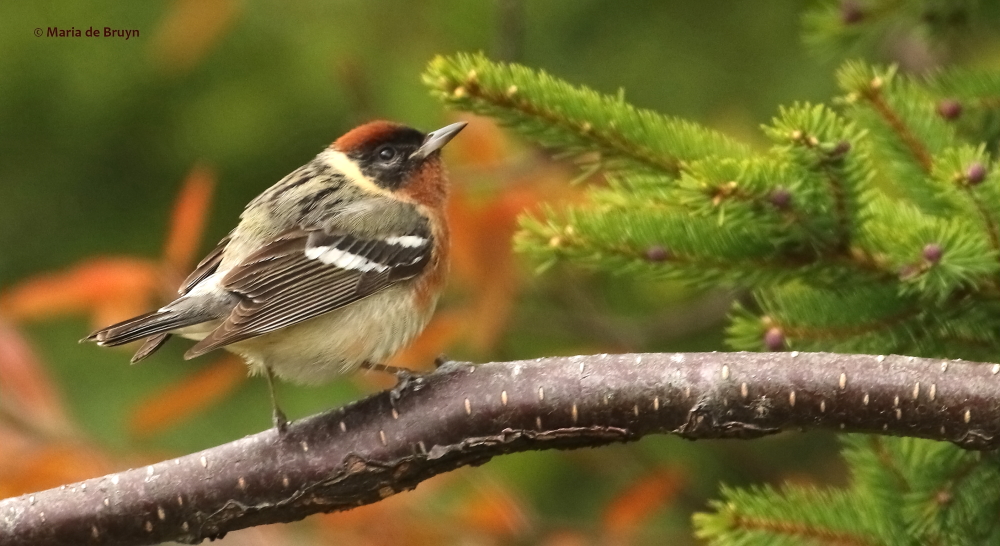
Besides the chestnut-sided warbler, I saw another species which I’d seen with more muted colors in North Carolina – the bay-breasted warbler (Setophaga castanea). In the autumn, they have a yellow-green head and only slight chestnut-colored wash on their flanks; they look very similar to blackpoll warblers during that season and winter.


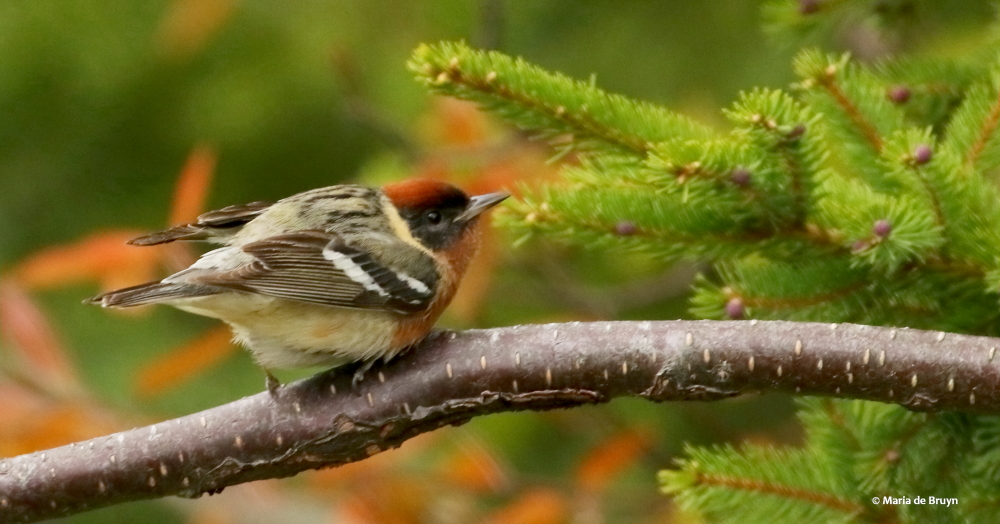
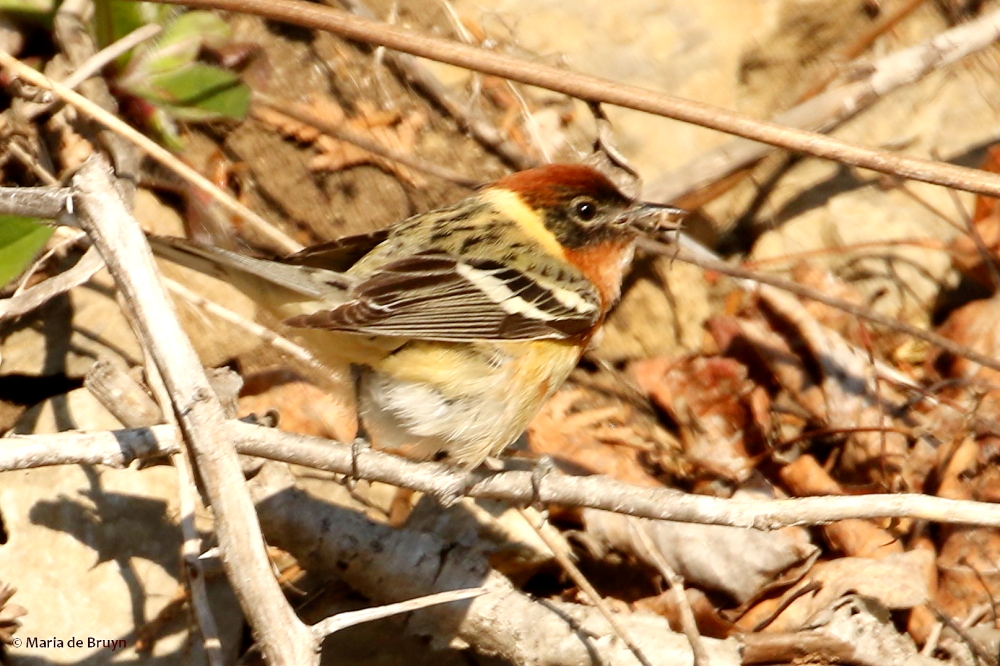
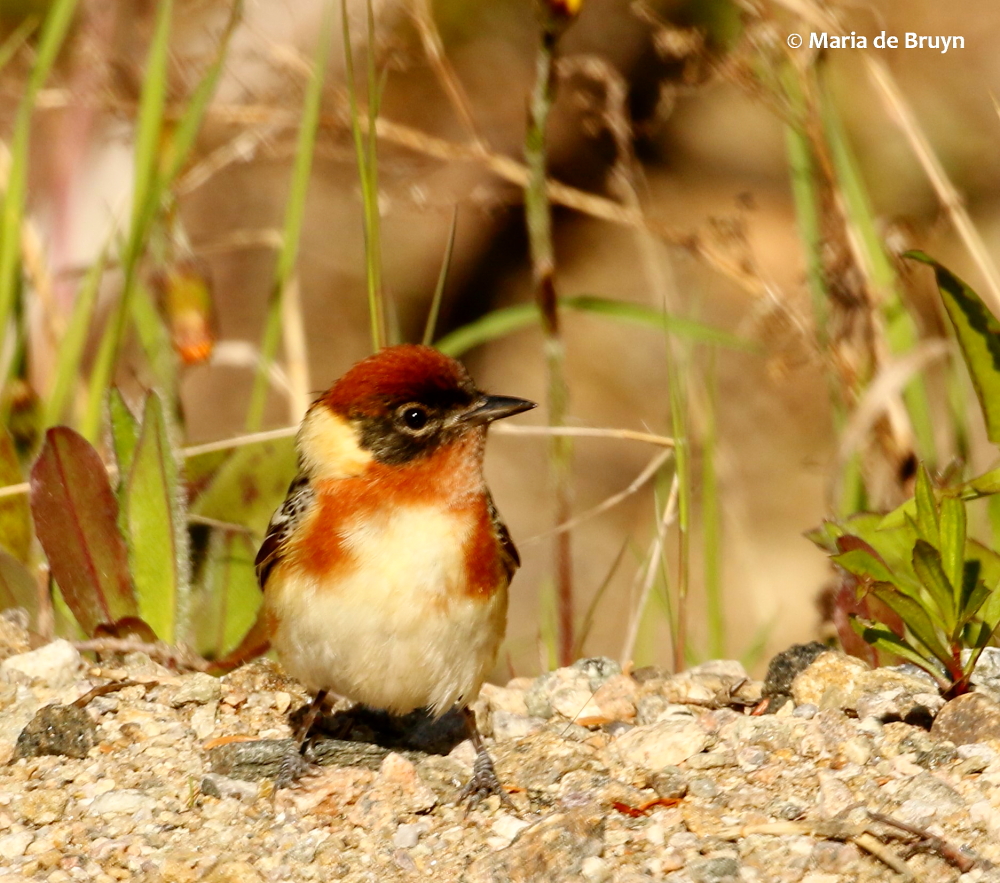
When I saw their breeding plumage in Quebec, it was a real surprise – and a most pleasant one! The bay-breasted warblers immediately became one of the birds I’ve most enjoyed seeing. And as I saw more and more during the week, I never tired of watching (and photographing) them!


During breeding season, these birds eat many more insects than fruit and they were very busy gleaning in the conifers.

In the spring, they specialize in seeking out spruce budworm moth (Choristoneura fumiferana) caterpillars. It was shown in one study that the bay-breasted warblers ate more than 13,000 budworms per 2.5 acres (one hectare) in a period of 41 days. These moths produce larvae that can decimate spruce and fir forests in Canada when their numbers increase greatly. The populations of bay-breasted warblers then fluctuate in conjunction with those of the budworms, which have an “outbreak” every 30-40 years.

In 2004, Boulanger and Arseneault studied this phenomenon and concluded that: “data suggest that outbreak frequency has remained quite stable, with a mean interval of about 40 years between the midpoint of successive outbreaks since the mid-16th century.” It would be interesting if another study could be done to see if the outbreak frequency is changing with climate change. The current population explosion of the budworms began in 2006 and could last until 2021; the government of Quebec is spending $30 million this year to eradicate the moth so the warblers may lose a food source. Their numbers may therefore also decline as a result.

While the fluctuations in their numbers have risen and fallen together with the spruce budworms, their summer habitats may be affected by human interventions. It is estimated that only 4% of these areas are stable so conservation efforts should take this into consideration, especially because their global population numbers have fallen about 74% since 1966.

As these birds forage on tree branches, they tend to move more slowly than some of the other warbler species, taking their time to seek out juicy tidbits. In addition to caterpillars, they eat beetles, flies, moths, leafhoppers and grasshoppers.

The female bay-breasted warblers can be distinguished from their male counterparts by the fact that they lack the black face mask and have lighter bay coloring.

Both sexes seemed to be fairly comfortable with me watching them. They seemed much less shy than some other species of birds. To my complete delight, of course!


An interesting observation is that they tend to like foraging on lichen-covered branches.

In contrast to some of the other warblers, they tend to build their nests in the mid-level tree canopy; that is also where they do a lot of their food hunting. However, as my walks in St. Irénée showed, they are not averse to foraging on the ground!


Since they mostly breed in Canada and spend their winters in Central and South America, seeing them in North Carolina during migration is a treat. Interestingly, the adults tend to migrate along routes west of the Appalachian mountain range and immature birds often migrate along the Eastern US seaboard and coastal areas.


These birds of waxing and waning populations have inspired poets and I can see why. Seeing them in their breeding plumage in Quebec was a wonderful gift. I hope to see them there again one day as they have joined my list of special species that I love. 😊

Surprise gifts from Mother Nature in 2018 – part 2: non-avian wildlife!

Birding is an activity I enjoy, especially since I can usually spot at least one bird during my outdoor excursions. I’d prefer to call myself a “wildlifer” rather than a “birder”, however, since all kinds of other wildlife also fascinate me. Here is a selection of some wildlife surprises and new species I saw last year, including a new plant – the honeyvine milkweed (Cynanchum laeve).


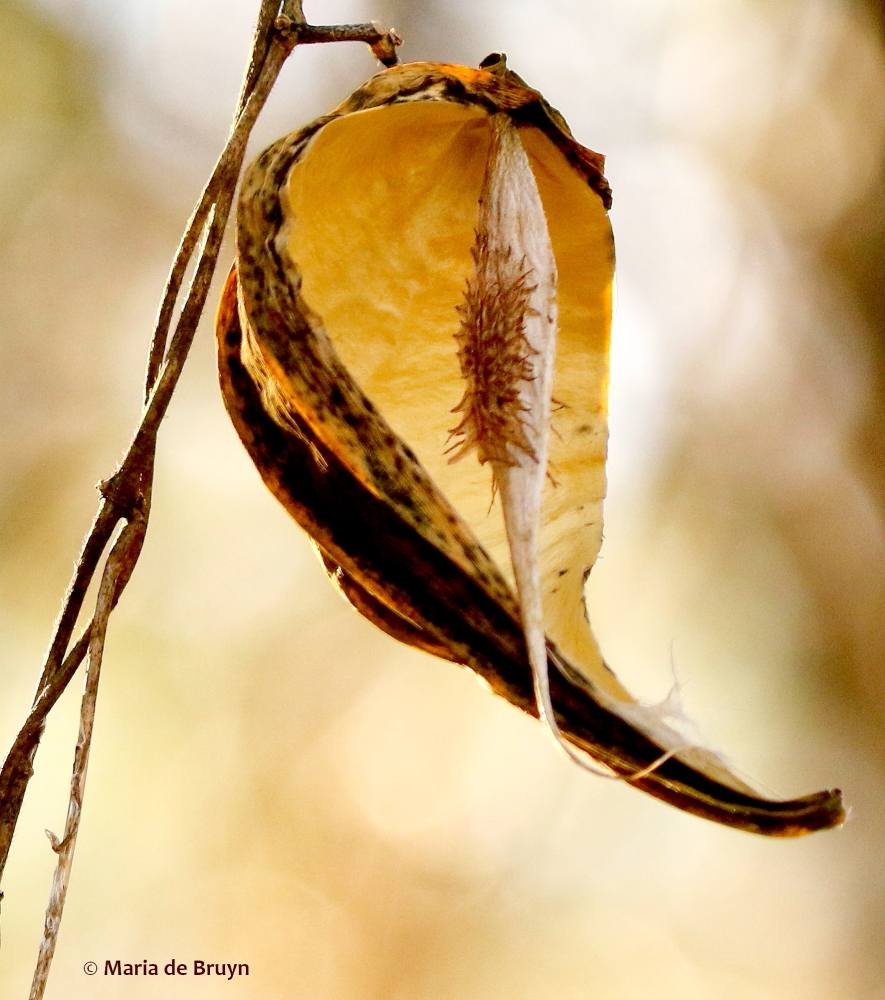
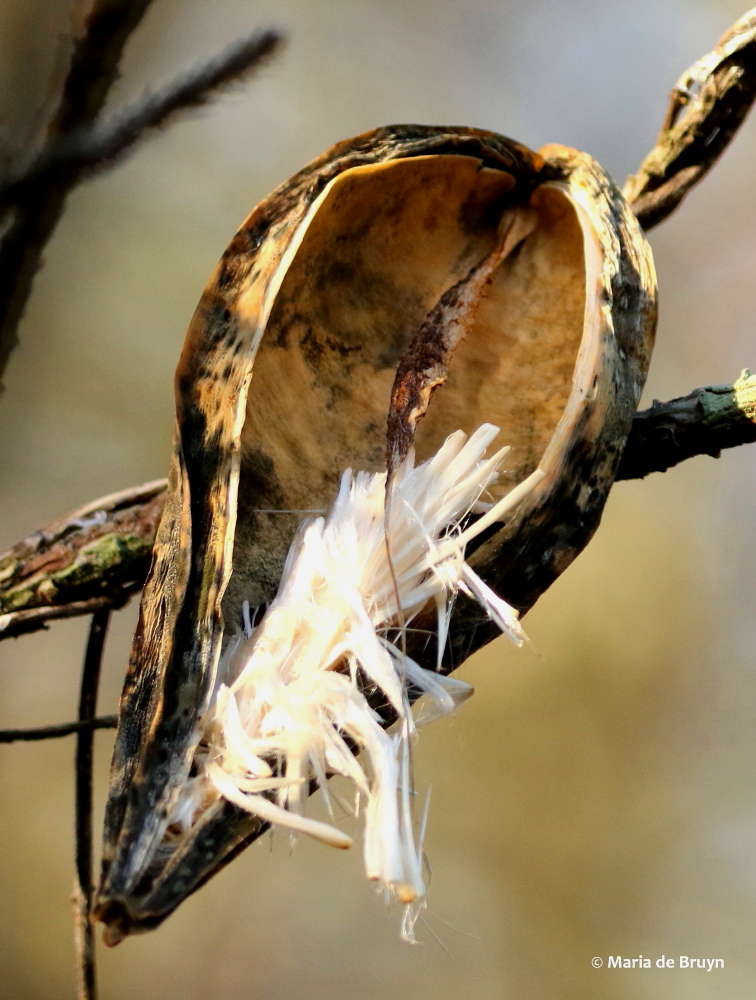
This vine is sometimes described simply as a native plant that spreads by seed and long roots; other websites call it a noxious weed. It does perhaps spread quickly but it is also a food source for monarch butterfly caterpillars so it seems like a desirable plant to me.

This mushroom was another one of my favorite vegetation spottings last year – it looks to me as if it is an animal with large ears.

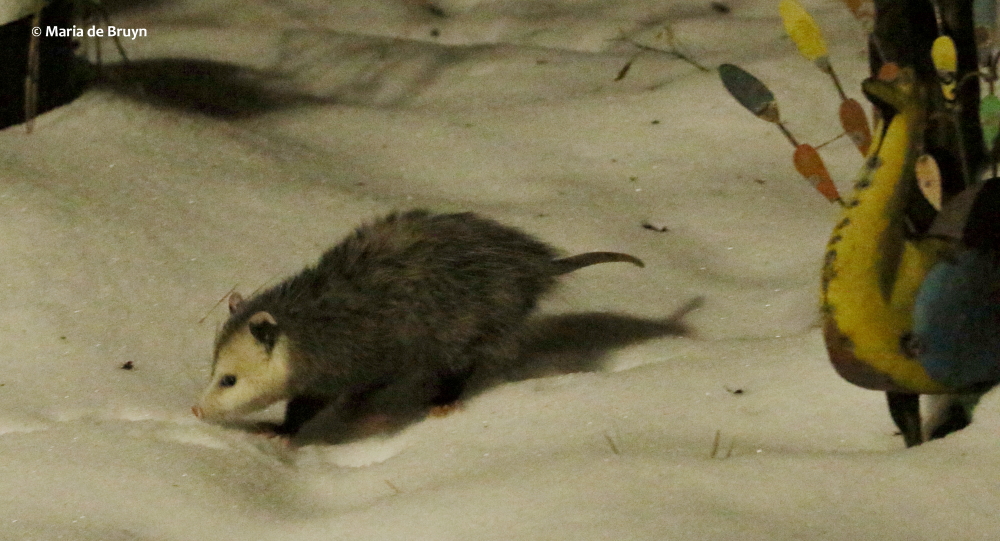
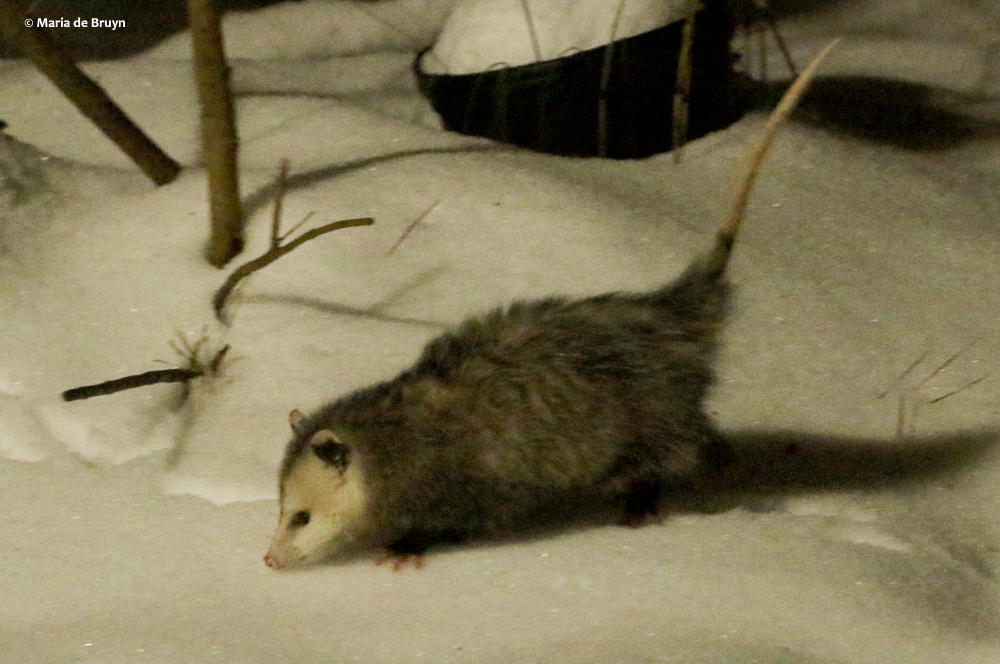
Mammals are favorites of mine but I only see a restricted number regularly – white-tailed deer, Eastern squirrels, raccoons, Eastern chipmunks. When I get to see an opossum (Didelphis virginiana) – like one who visited the yard at night during our early December snowstorm, it was a treat. It seems many people dislike North Carolina’s state marsupial (and the only marsupial in North America) but it is a valuable neighbor since it eats up to 4000 ticks a week. There likely weren’t many ticks around for it to eat but I hope it found something for a meal!


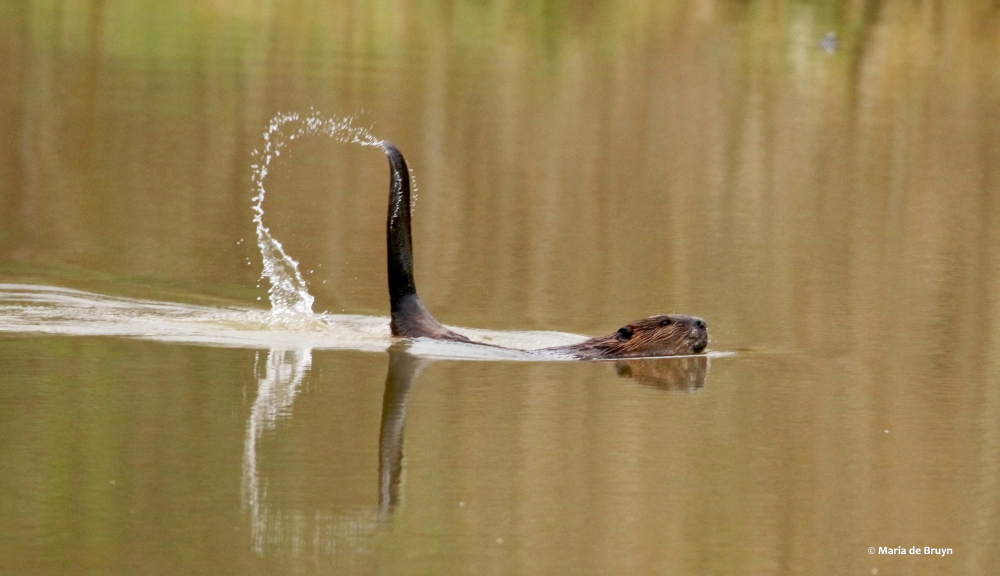
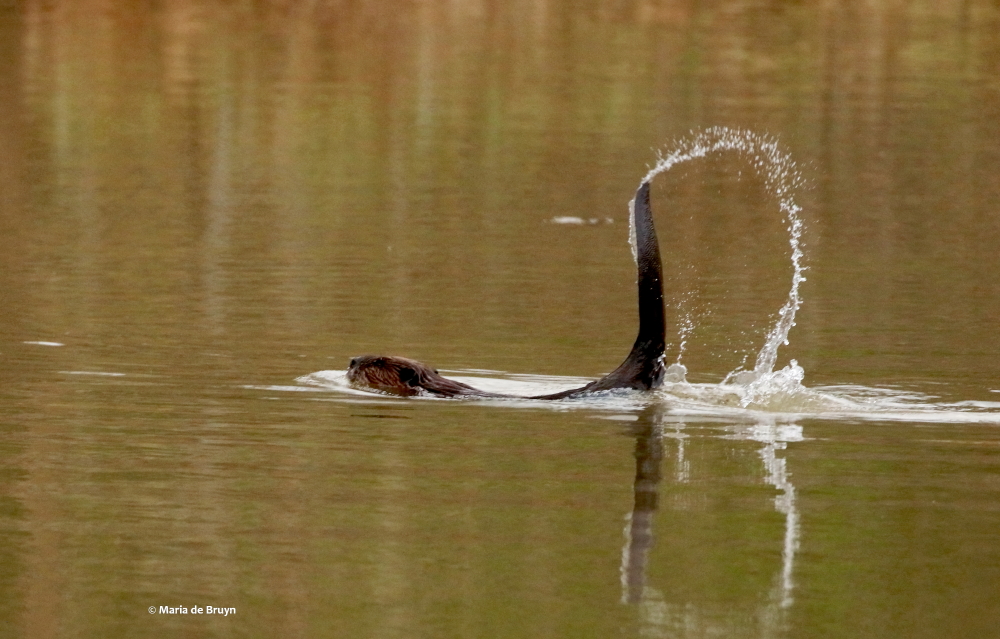
This past year was my “year of the beavers” as I had a chance to follow these nature landscape architects in three different places. And as mentioned in a previous blog, I was so thrilled to get a shot of the warning tail-slapping behavior.


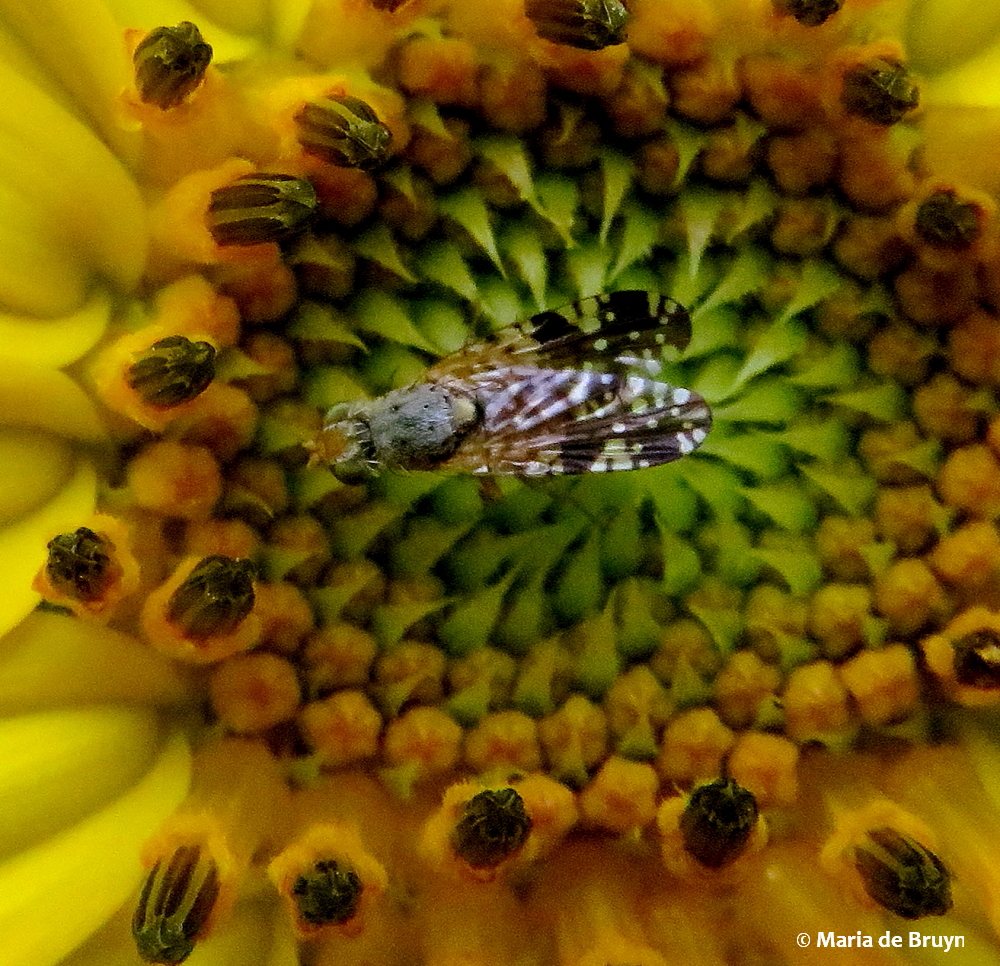
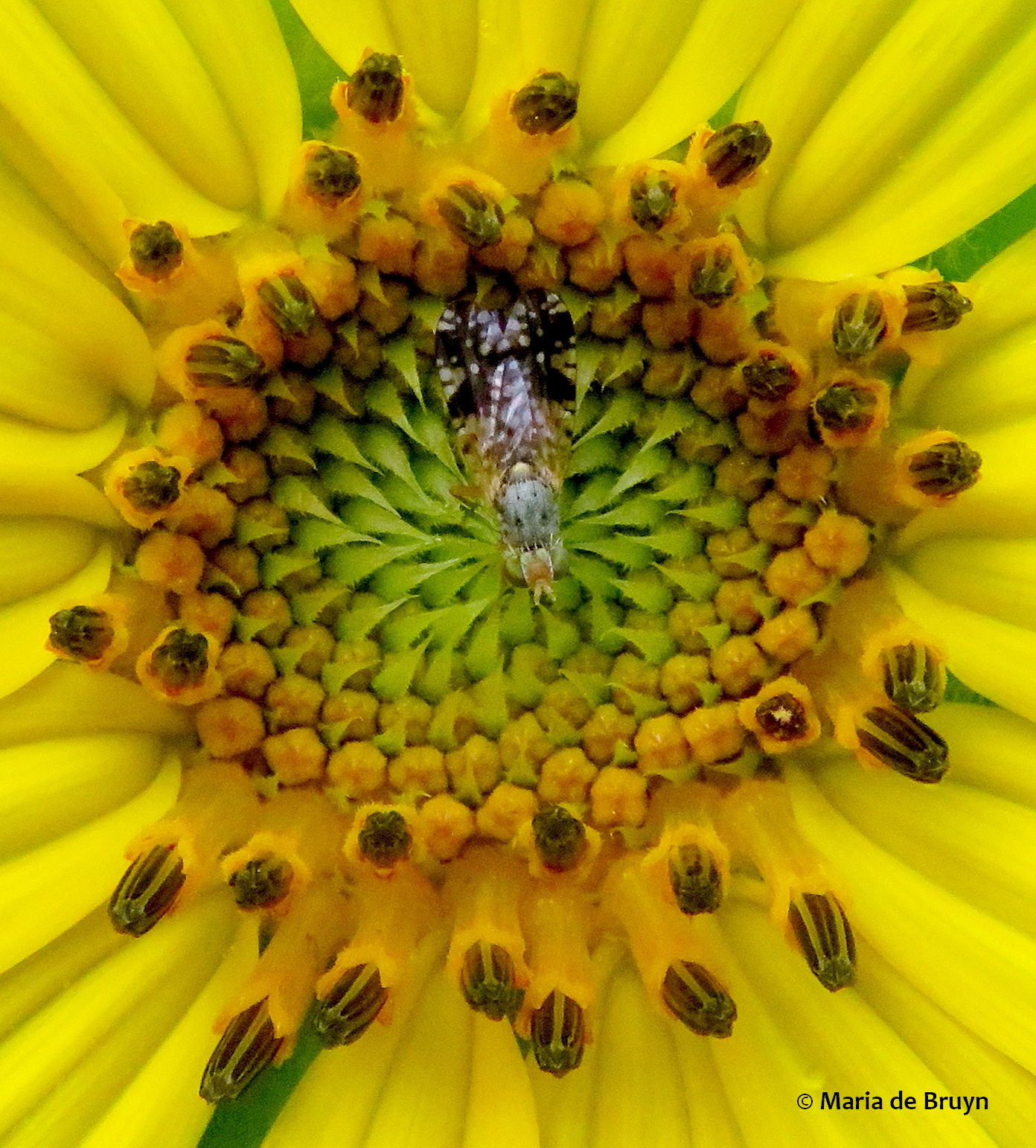
2018 was a good year for seeing new insects. Some are so tiny that you can’t really see their body patterns without magnification. Here are a few of my “discoveries”. The flies can be very interesting.

Sunflower seed maggot fruit fly (Neotephritis finalis)


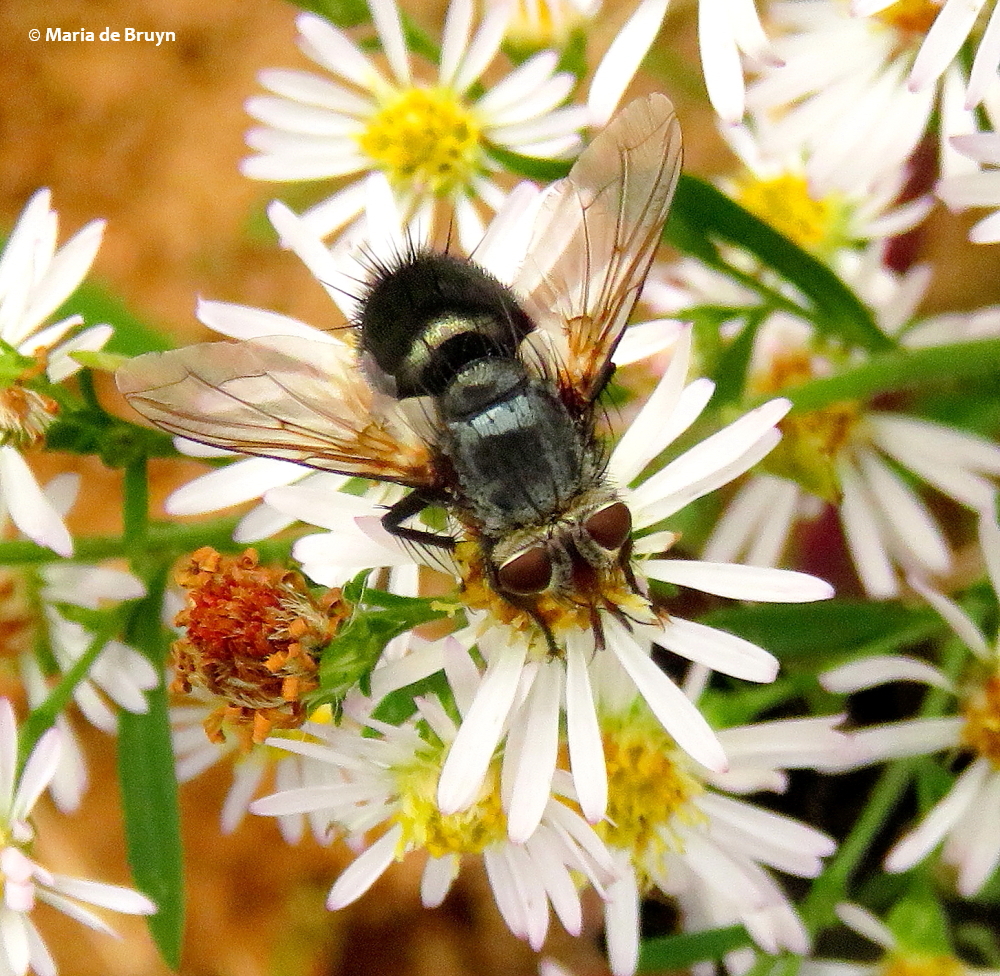
Parasitic fly (Archytas)

2018 was a year for learning about reproduction among the bugs; not only did I see caterpillars but also chrysalids and arthropod parents caring for offspring. The green lynx spider (Peucetia viridans) is a very attentive mother; she often hangs her egg sac from a grass stalk and then encircles it with her body to keep predators away.

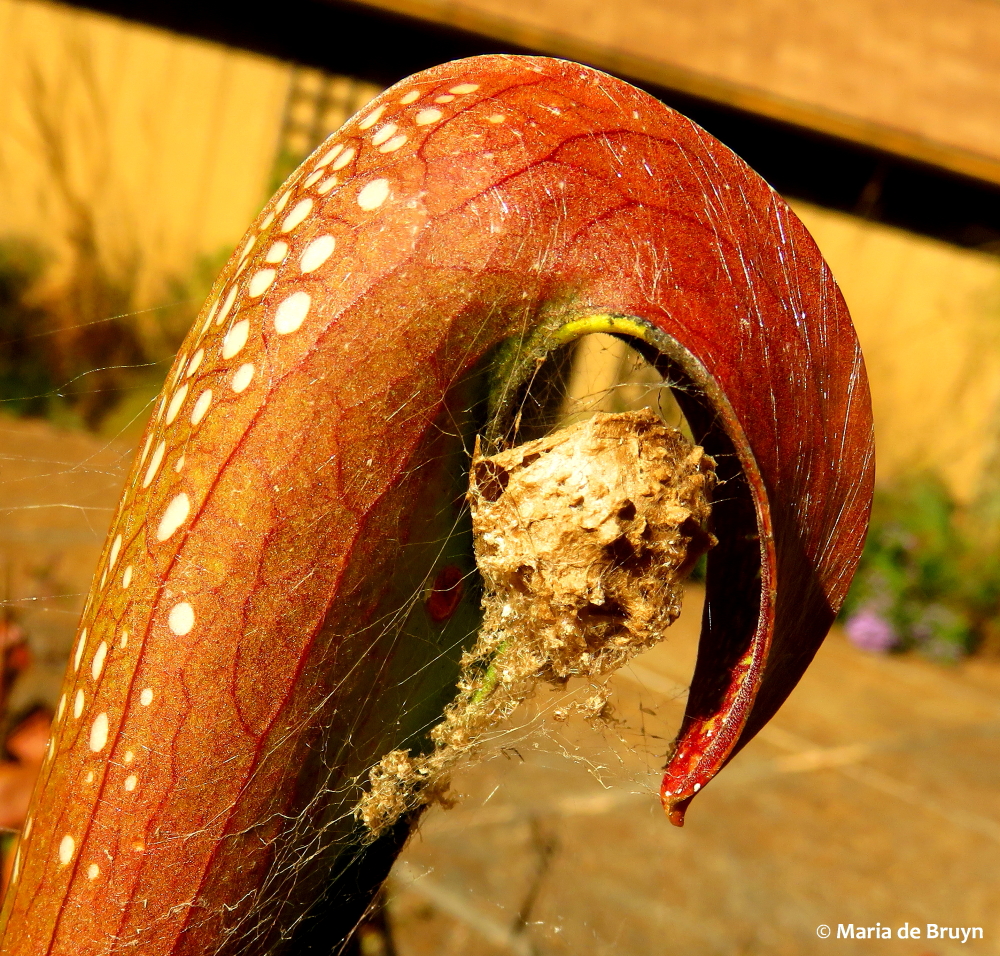
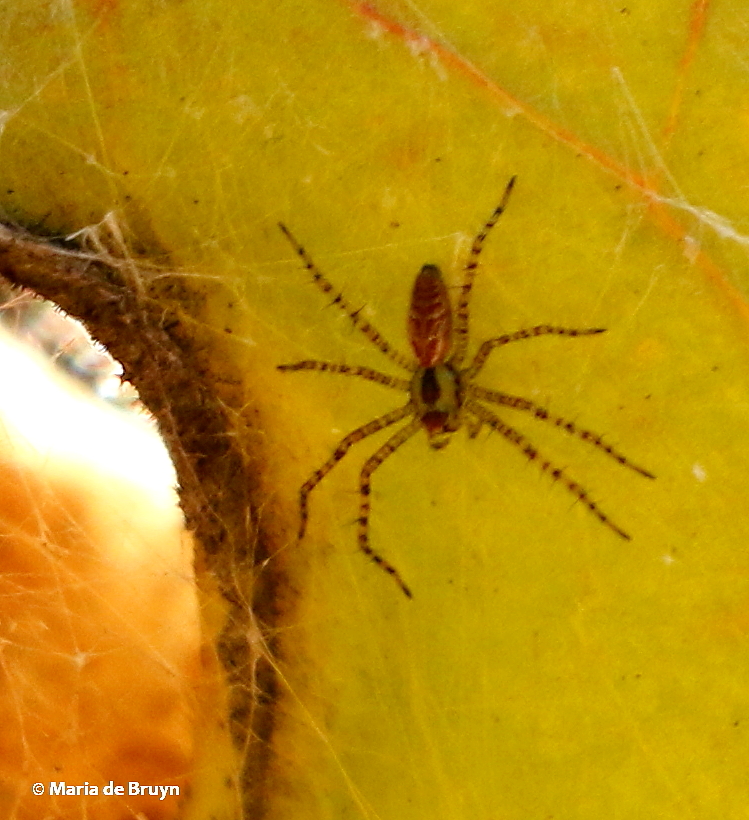
One green lynx at the NC Botanical Garden placed her egg sac underneath the “lid” of a pitcher plant and then hung out on that and neighboring plants to keep an eye on the sac. I was lucky to see one of the babies after it hatched.

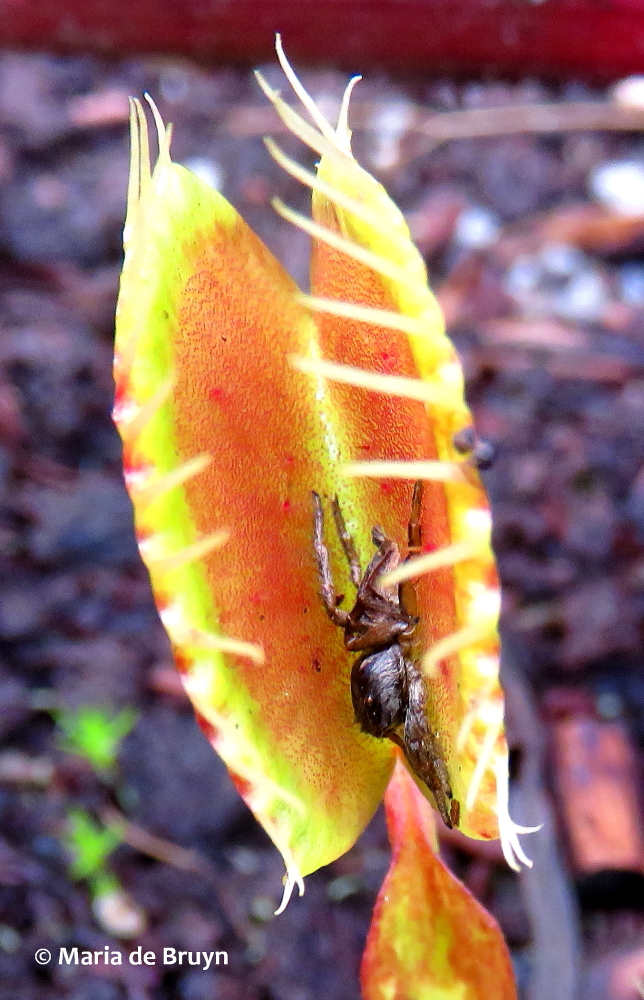
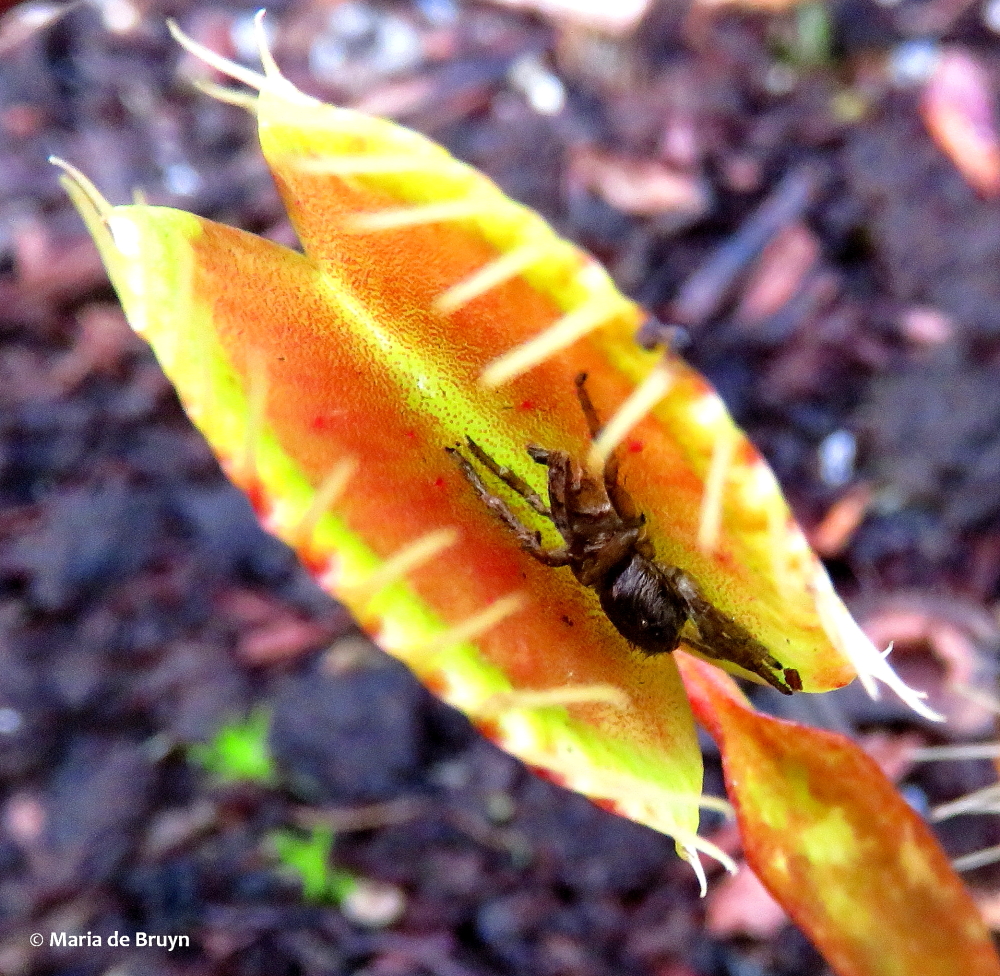
Another spider was not so lucky – it became a meal for one of North Carolina’s endemic “special plants”, the Venus flytrap (Dionaea muscipula).

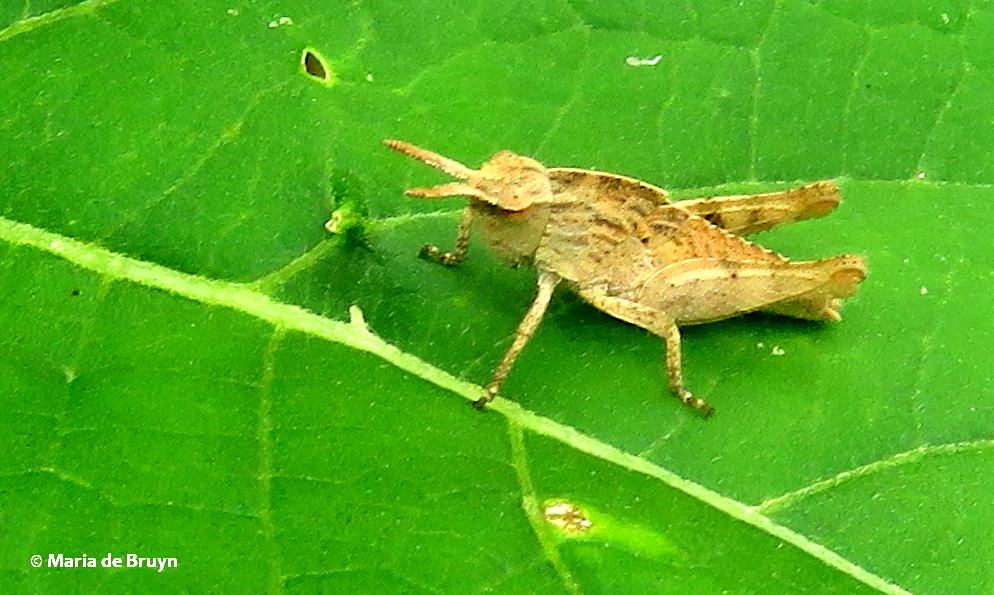
North Carolina has many species of grasshoppers; I saw several species this past year, including several mating pairs. Here is a young short-horned grasshopper.

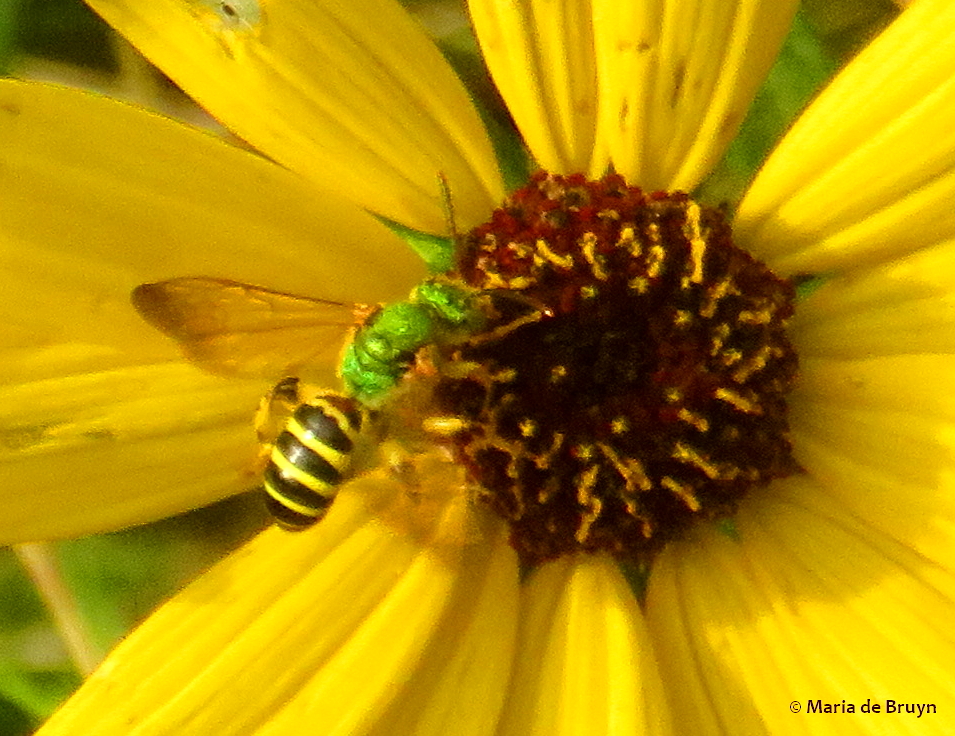
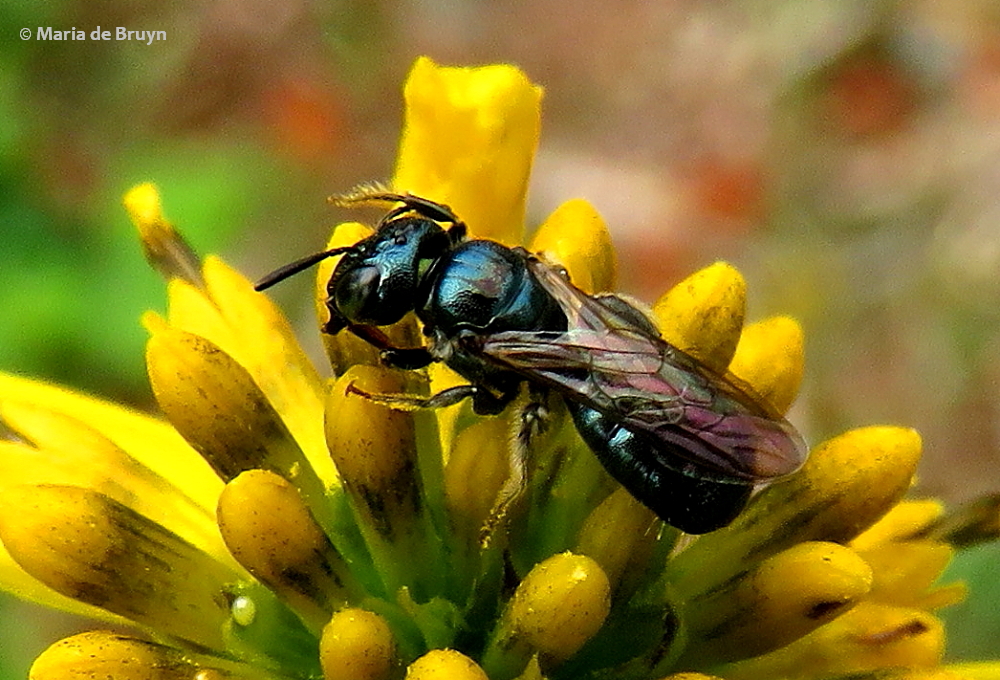
It’s always nice to see some pollinators.


Brown-winged striped sweat bee                        Small carpenter bee                                (Agapostemon splendens)                                   (Ceratina)


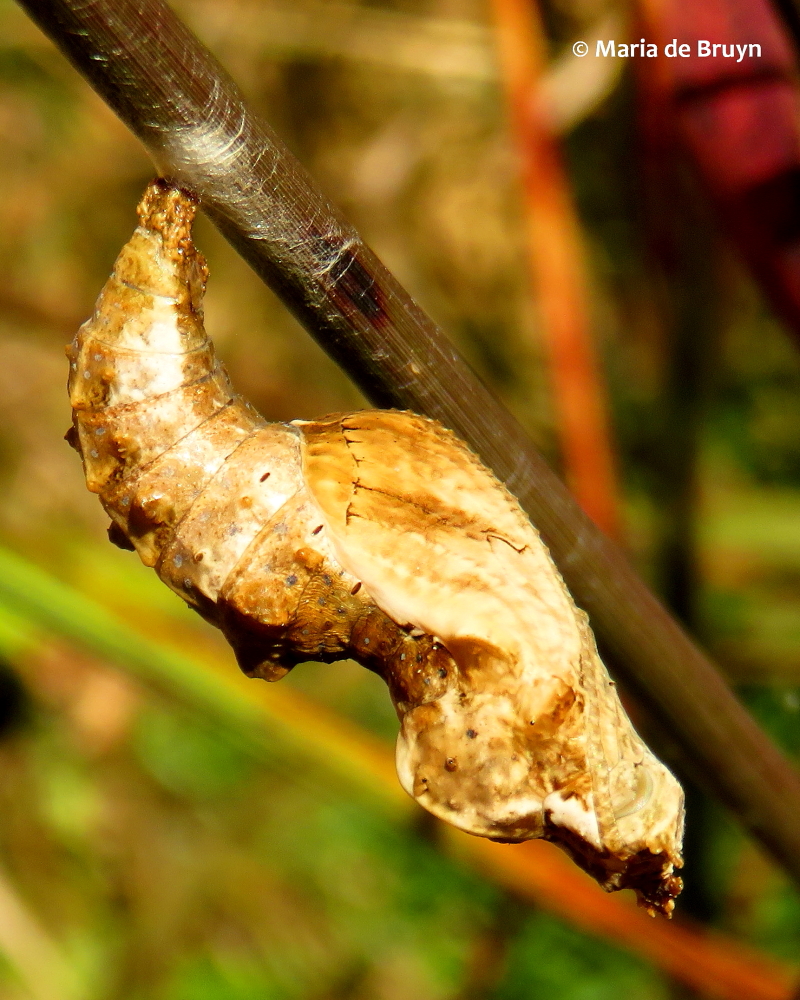
I got to see the chrysalids of two fritillary butterfly species, the variegated fritillary (Euptoieta Claudia, left) and the gulf fritillary (Agraulis vanilla, below).

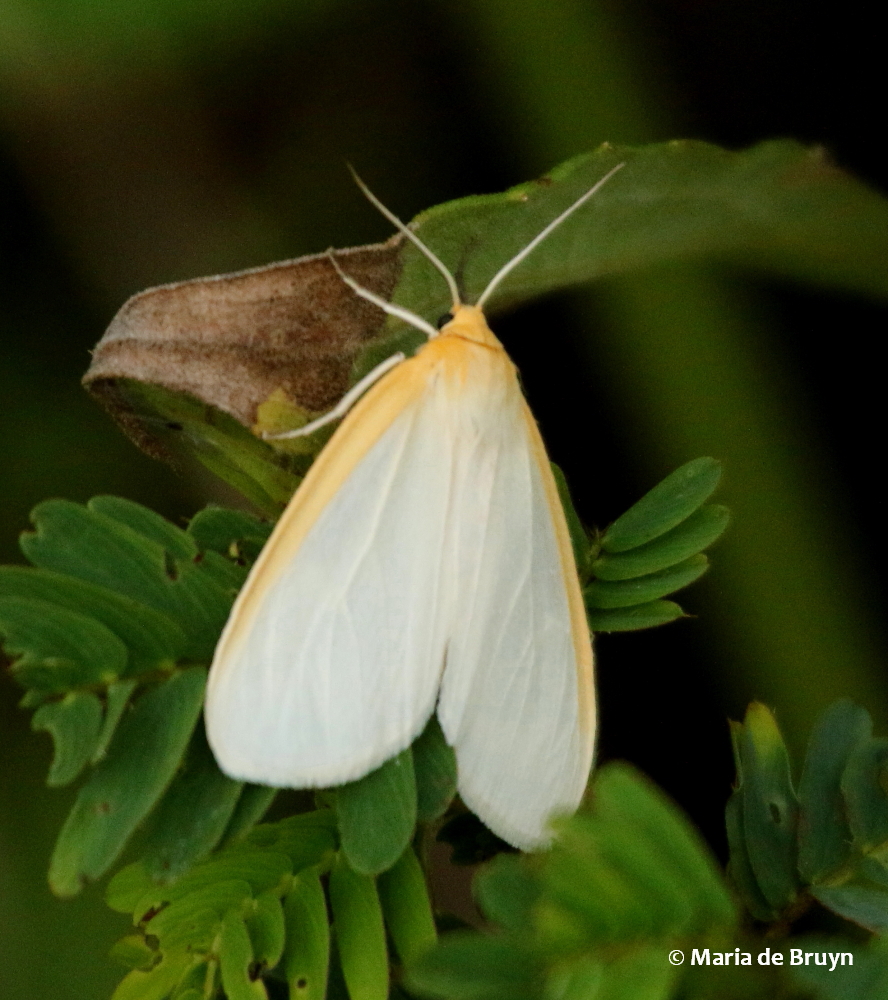
Sometimes, I think the moths get a bum rap, being seen as poor cousins to the “beautiful butterflies”. But there are many really beautiful moths, like the lunate zale moth (Zale lunata) and delicate cycnia moth (Cycnia tenera).


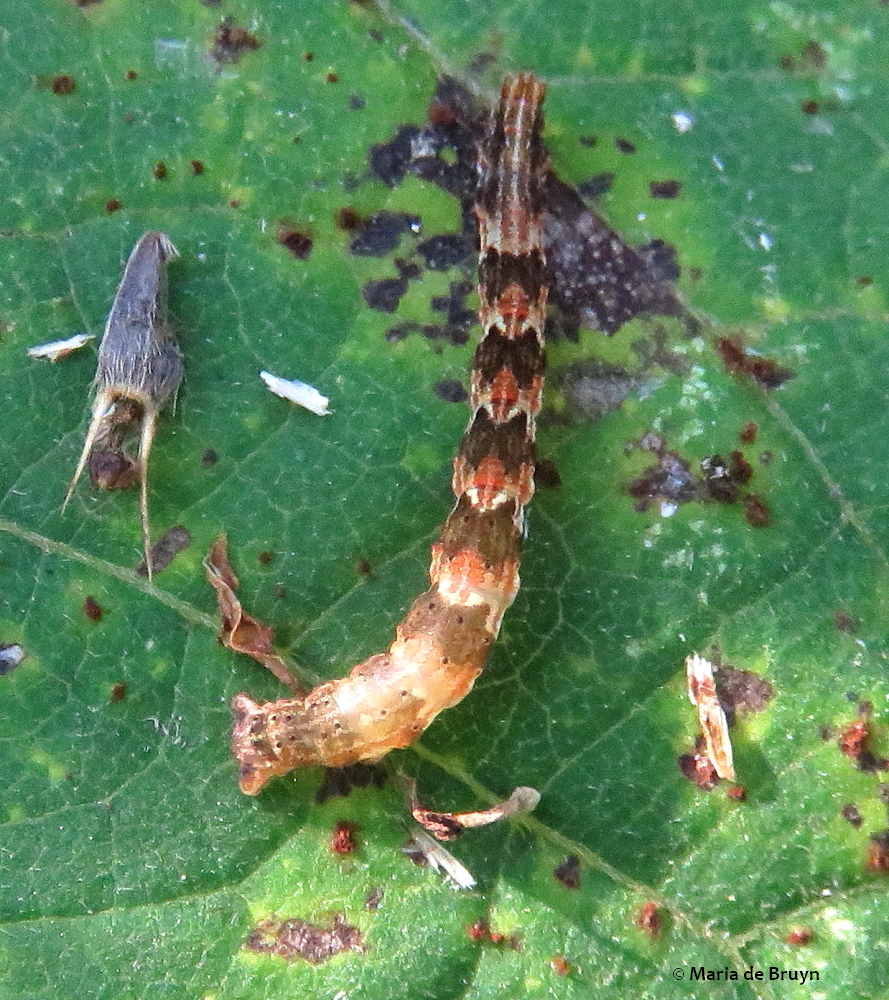
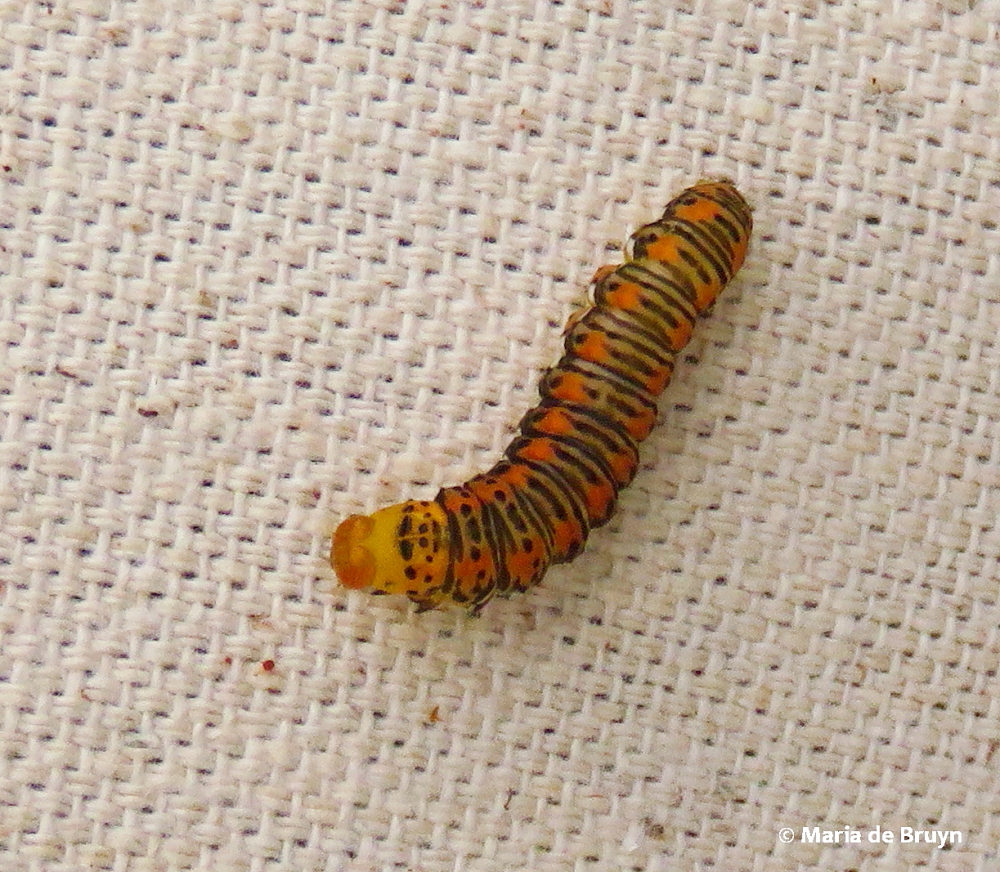
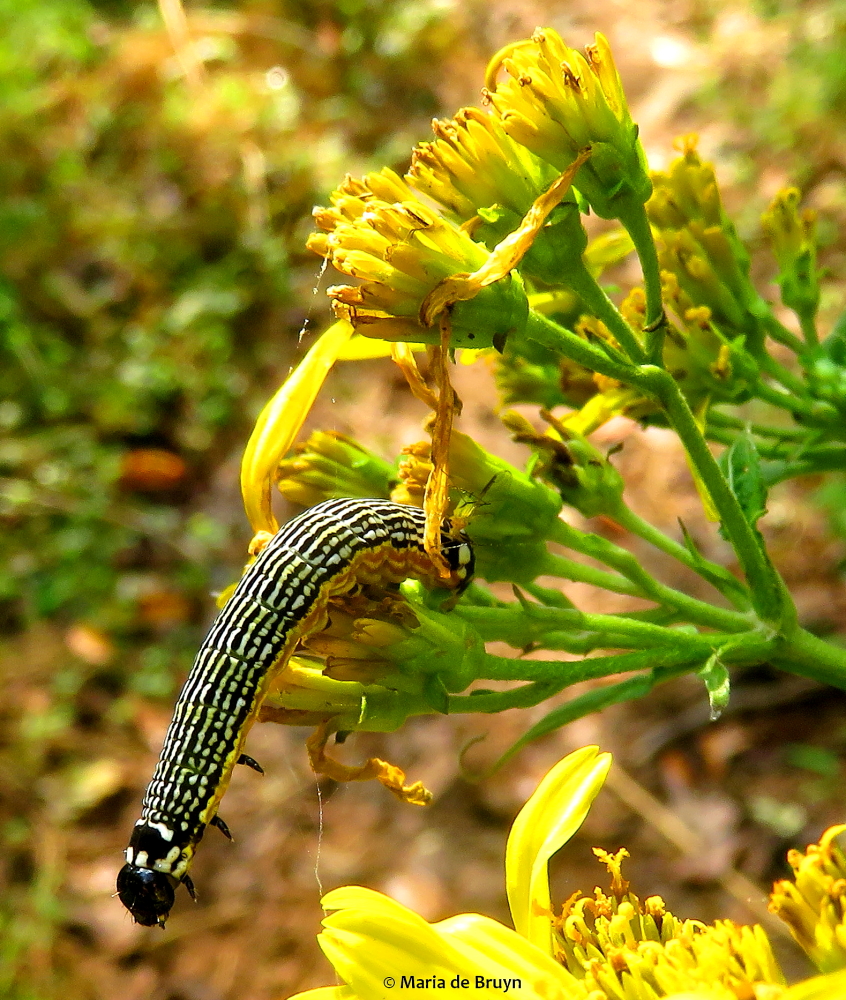
I got to see several moth caterpillars this year; the experts at BugGuide were very helpful in identifying them for me.


Common tan wave moth                           Gold moth caterpillar  (Basilodes pepita)          (Pleuroprucha insulsaria)

 
Turbulent phosphila moth caterpillar (Phosphila turbulenta)

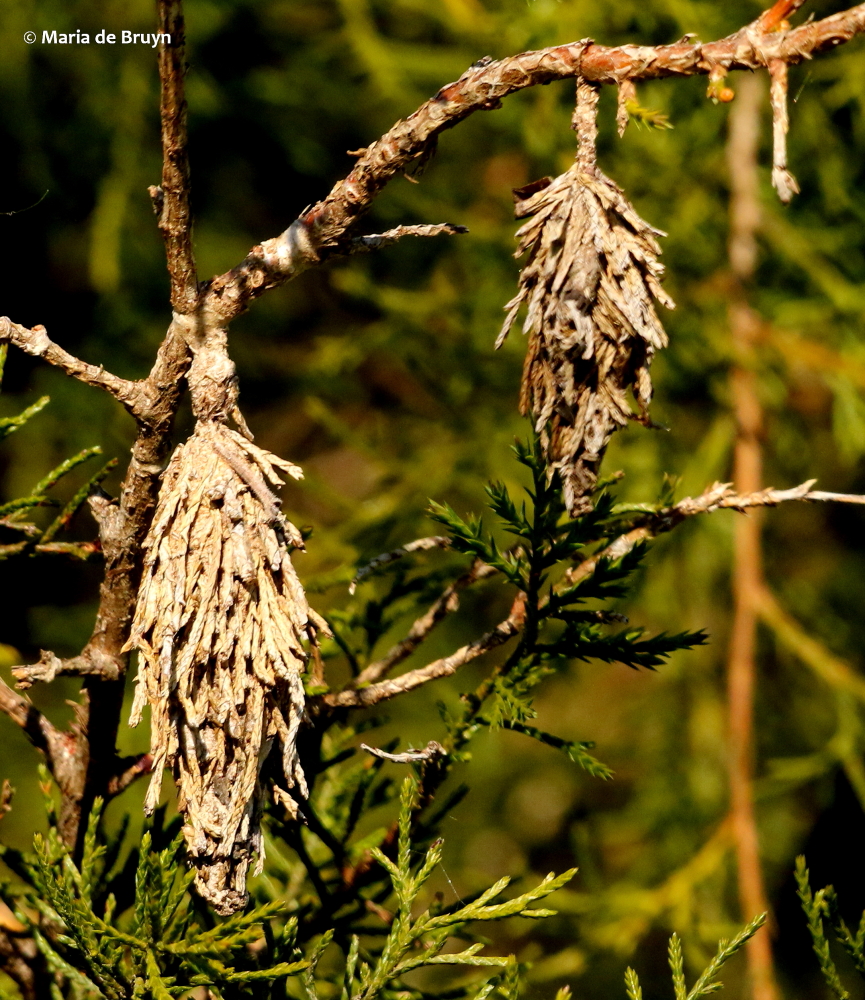
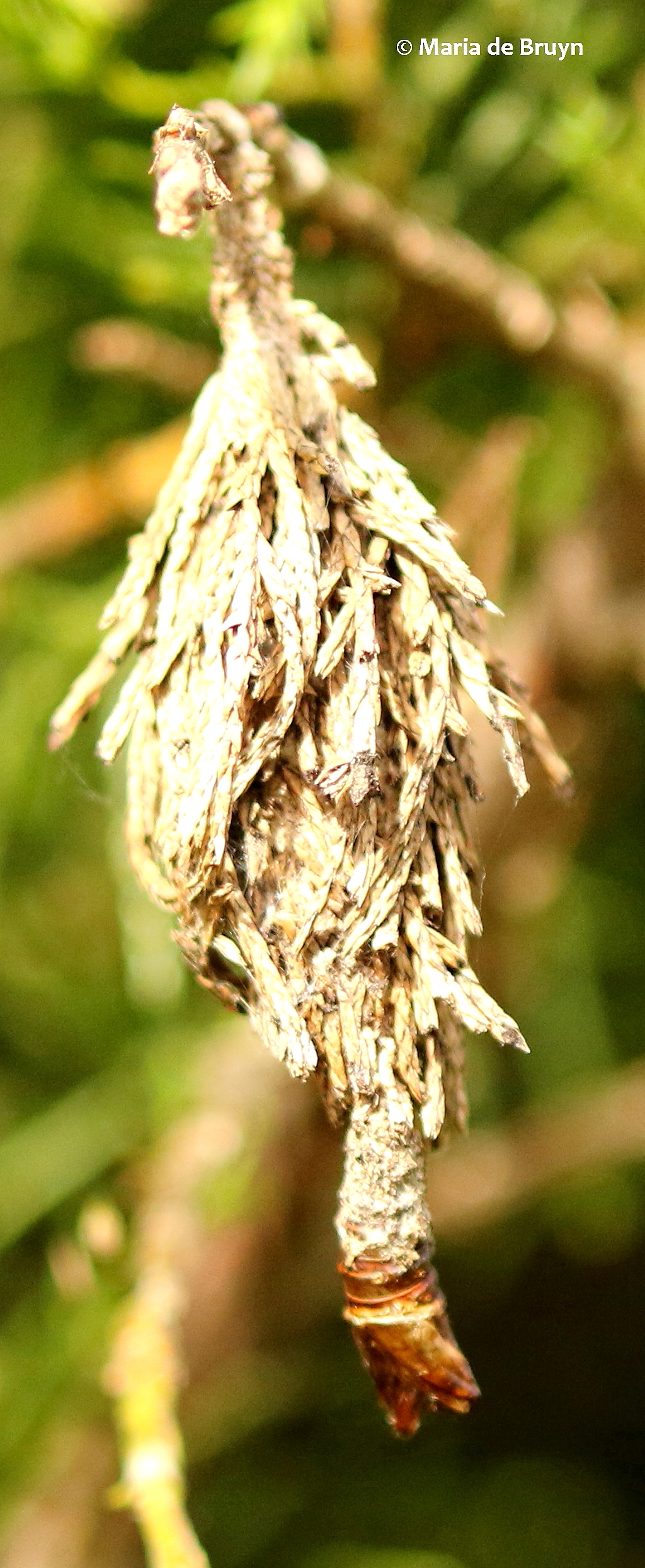
For the first time, I got to see an evergreen bagworm moth (Thyridopteryx ephemeraeformis). There were several hanging out in trees next to a rural farm pond – they did not restrict themselves to an evergreen tree but hung themselves from a persimmon, privet and cedar tree. I think the last photo shows the caterpillar as it was completing the “bag” into which it would insert itself.


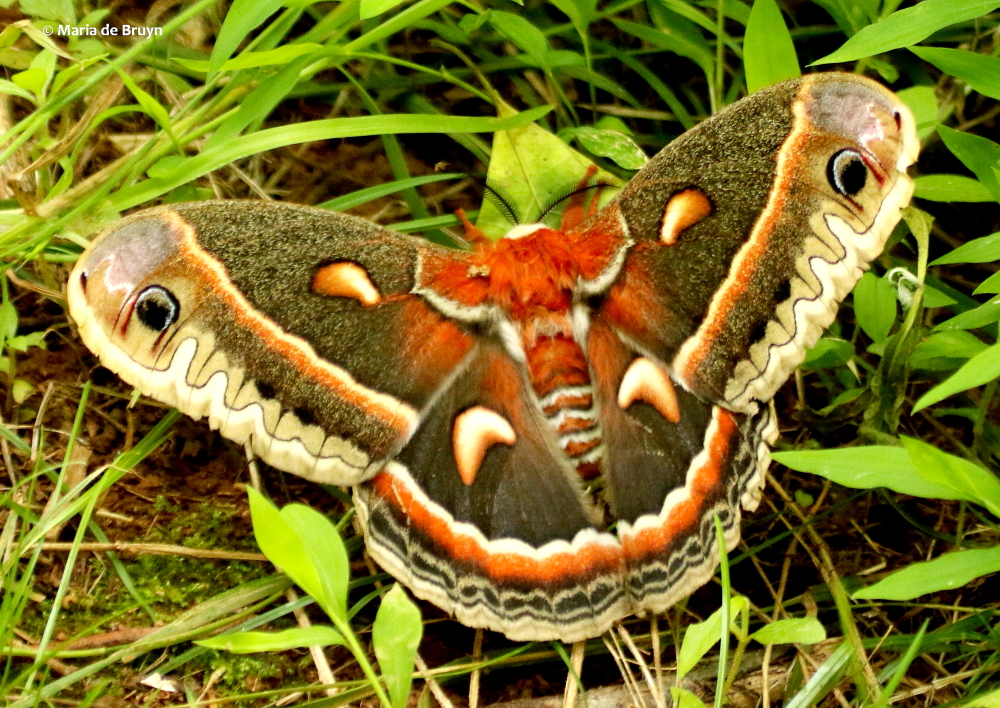
In the summer, I was lucky to see a cecropia moth (Hyalophora cecropia).


In December, I discovered two cecropia chrysalids, as well as the cup-like chrysalis of a polyphemus moth (Antheraea Polyphemus, which was empty).


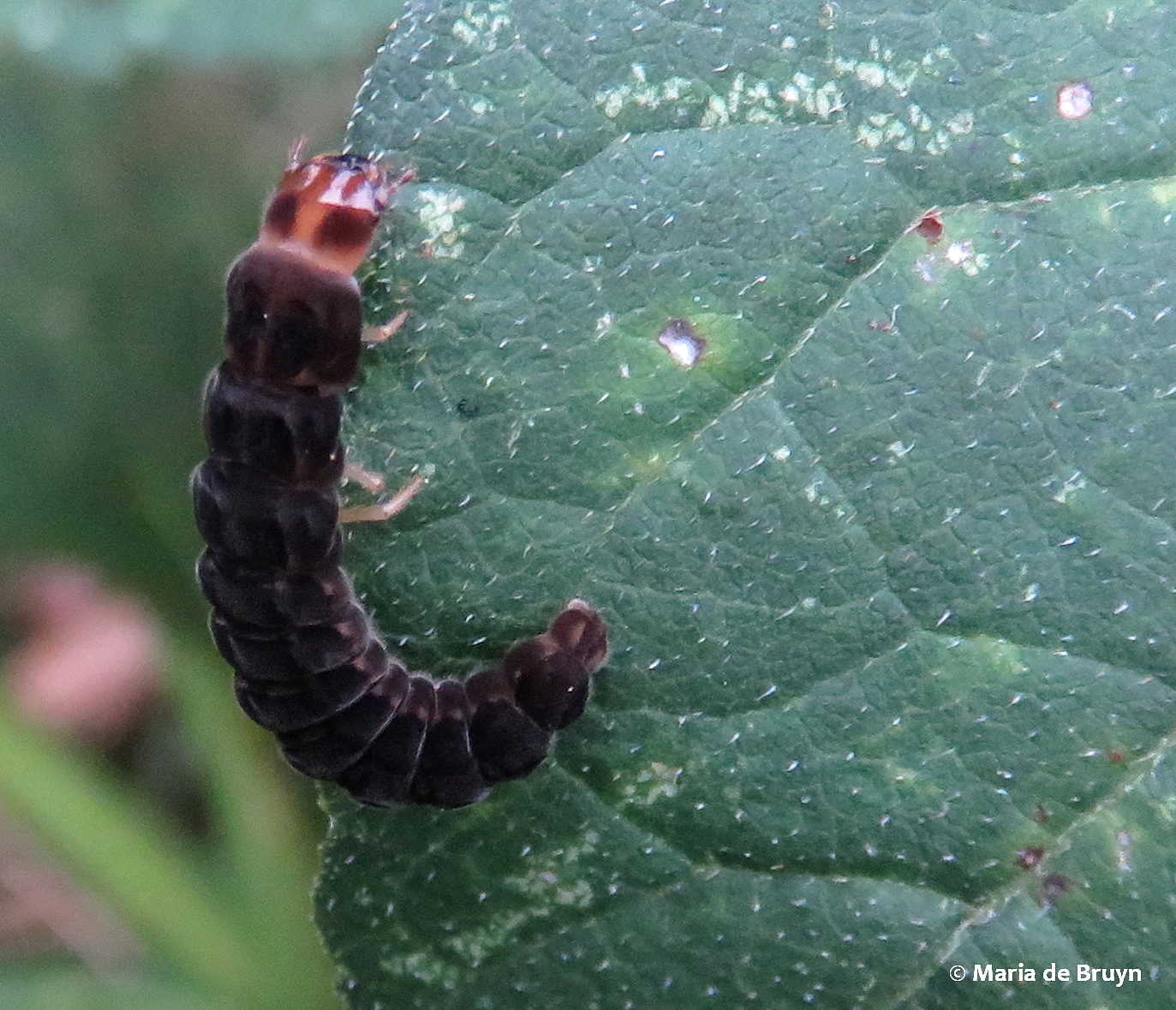
Another discovery was that the larvae of soldier beetles look like some type of caterpillar as well.

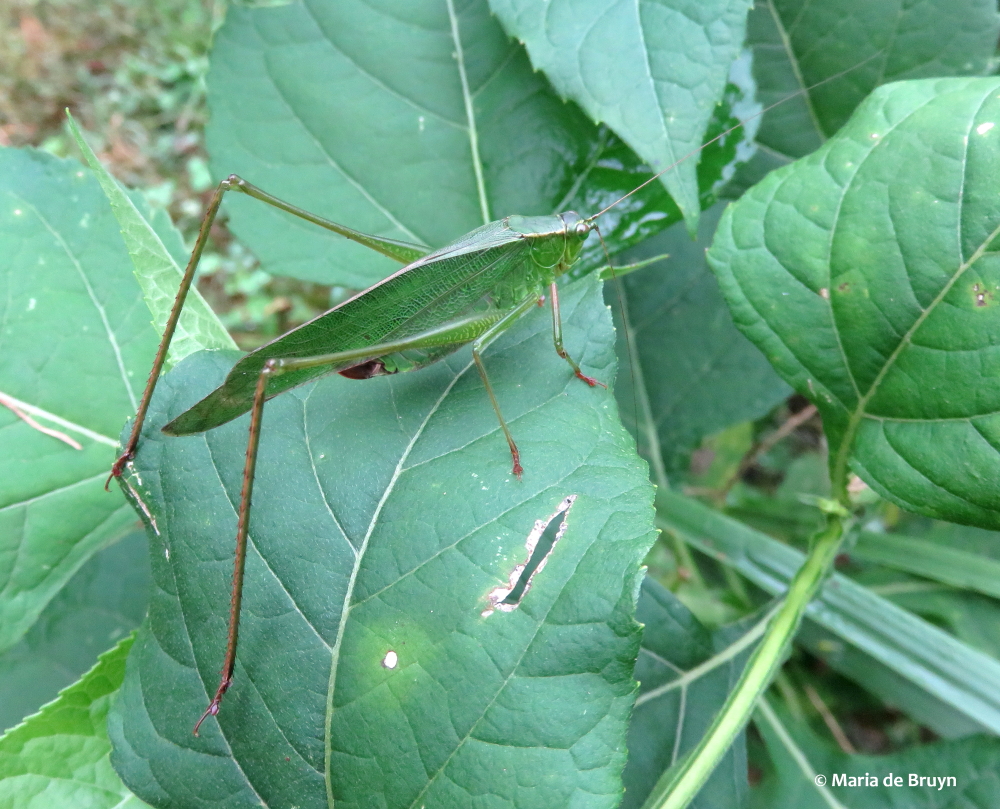
There were lots of katydids around, including the slender straight-lanced katydid (Conocephalus strictus) and the stockier Scudderia bush katydid.


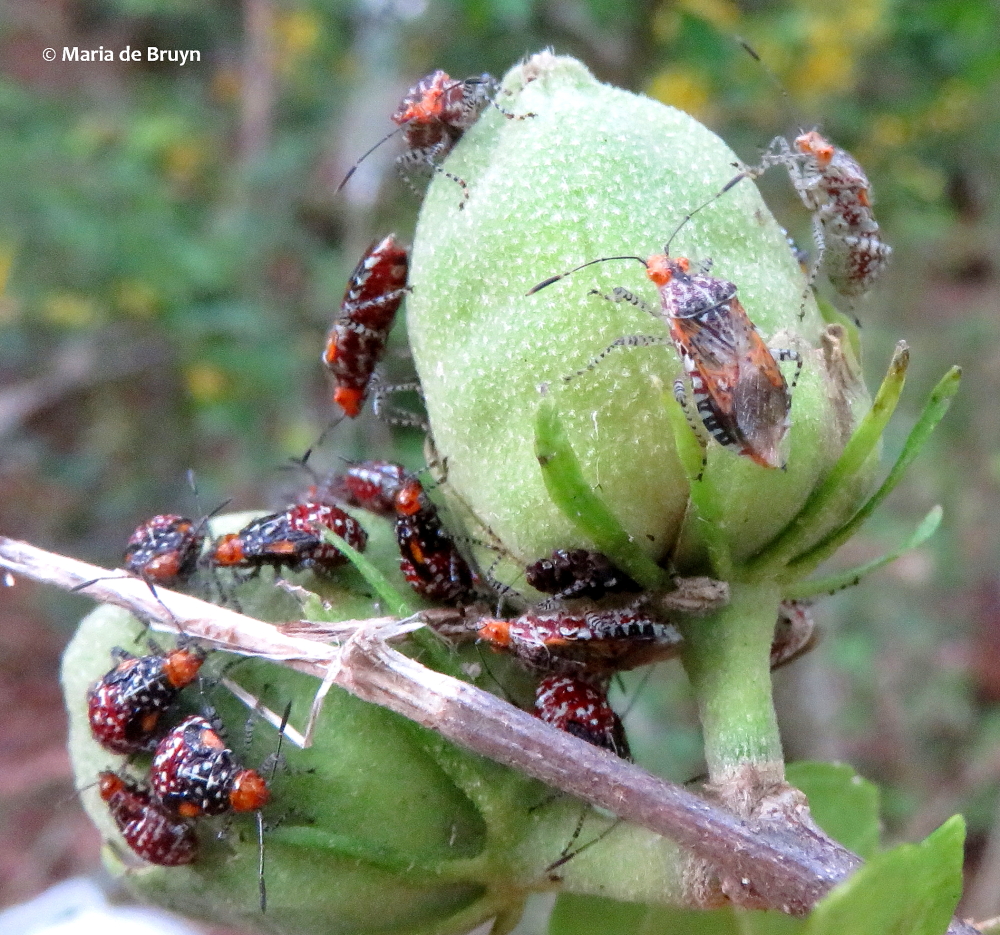
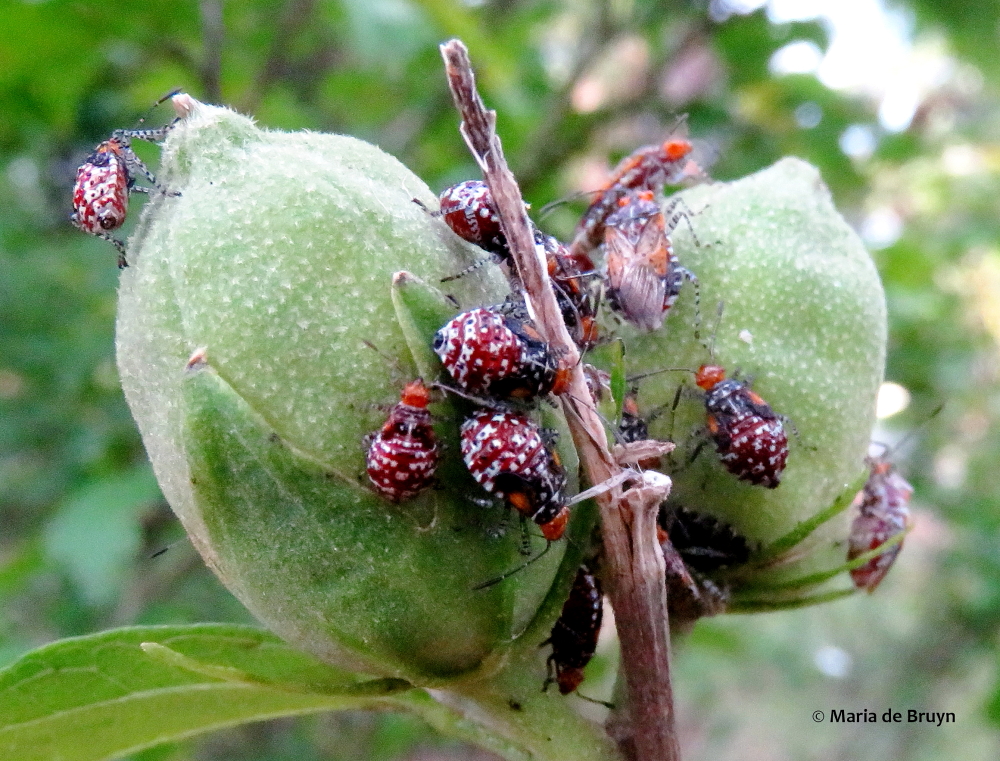
Some new bugs appeared in my yard, including a plant bug with muted colors (not yet identified to species) and some more colorful scentless plant bugs (Niesthrea louisianica) on my Rose of Sharon shrubs.


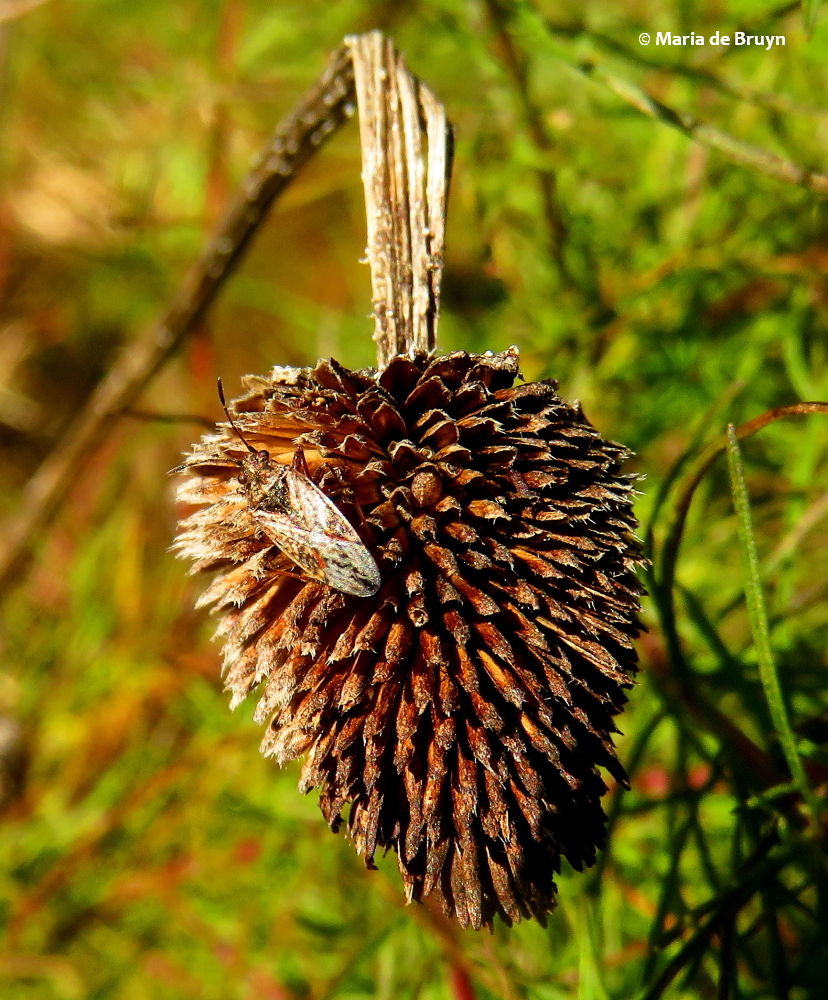
A seed bug on a seed pod and a head-on photo of a millipede (Narceus americanus-annularis-complex) were cool sightings, too.


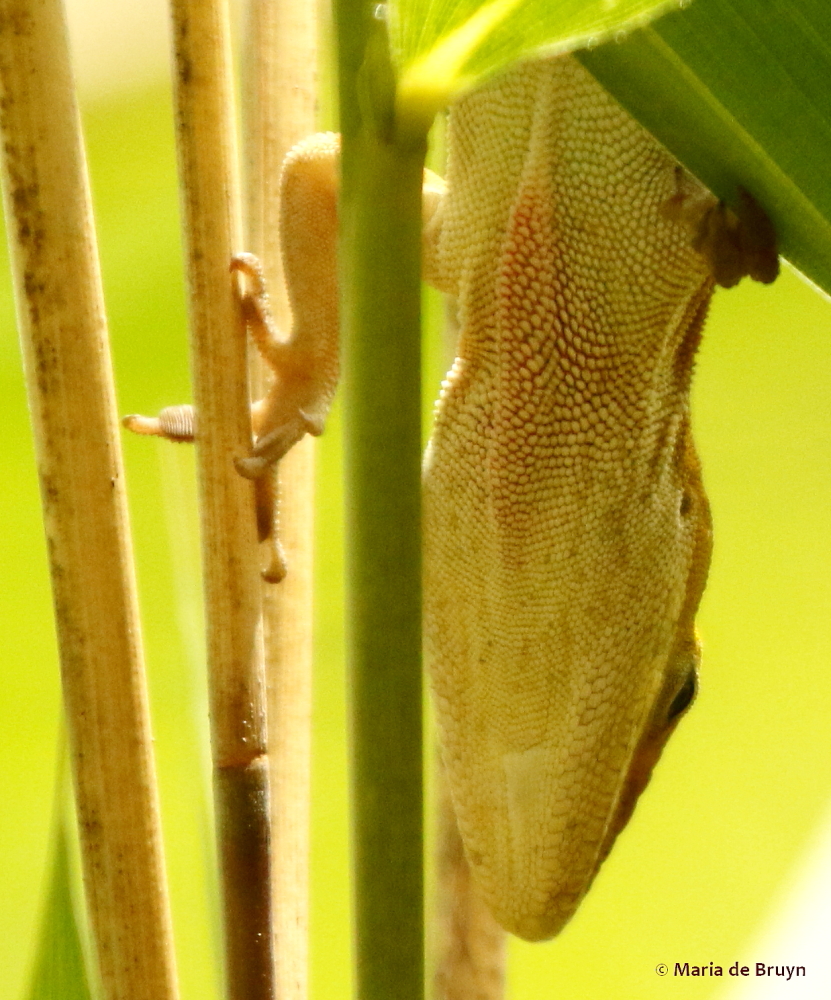
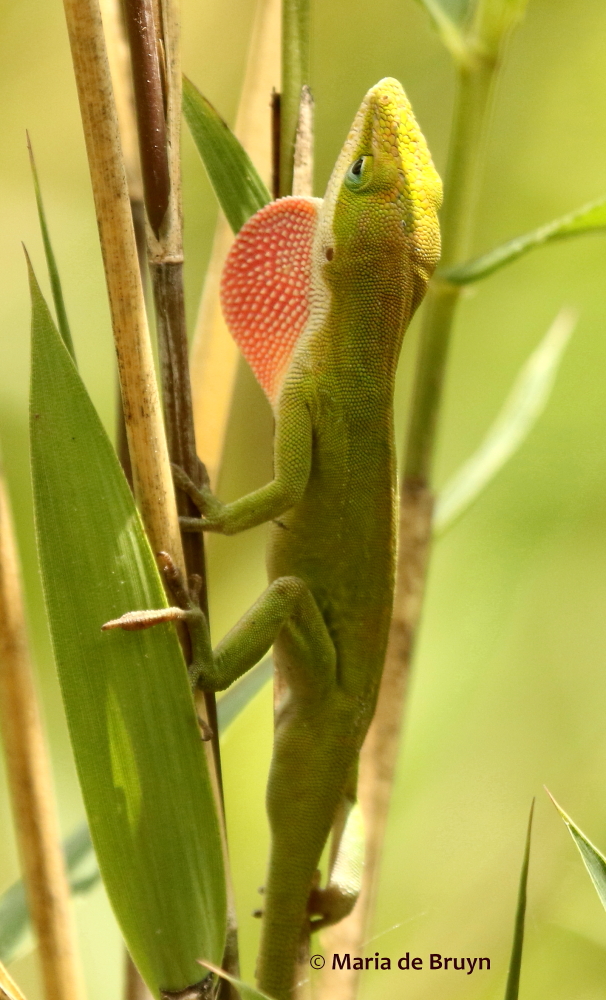
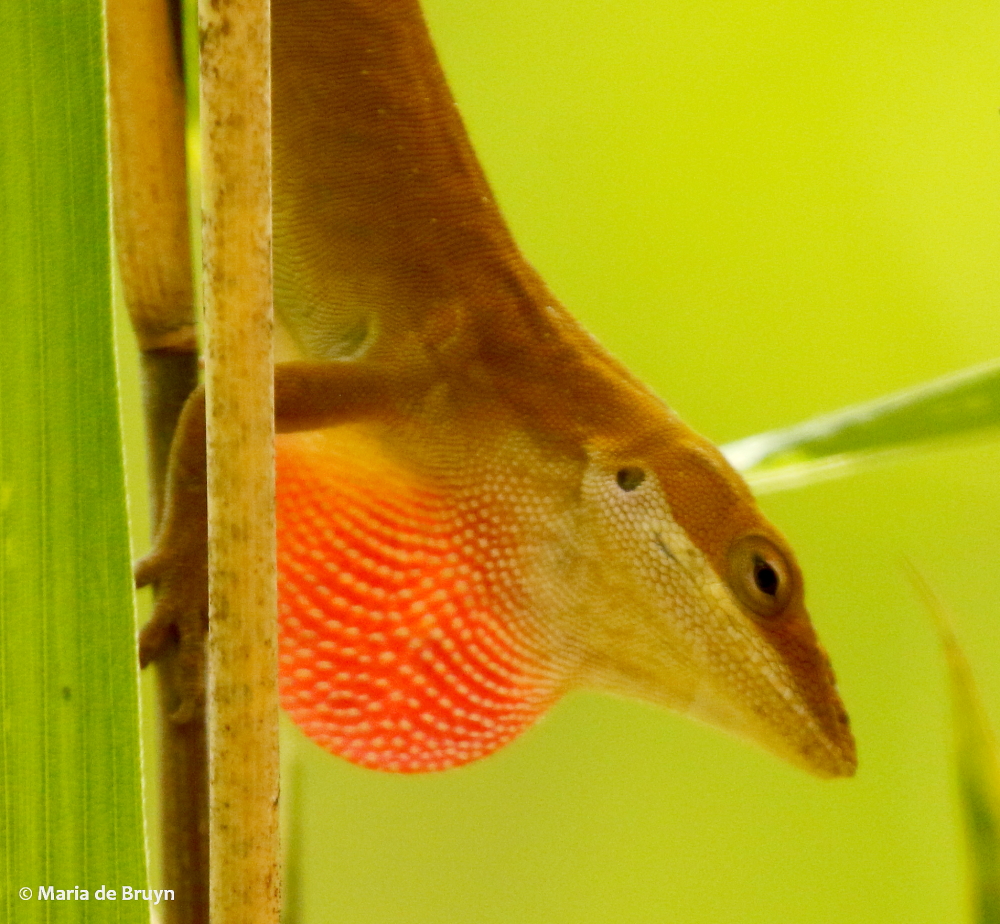
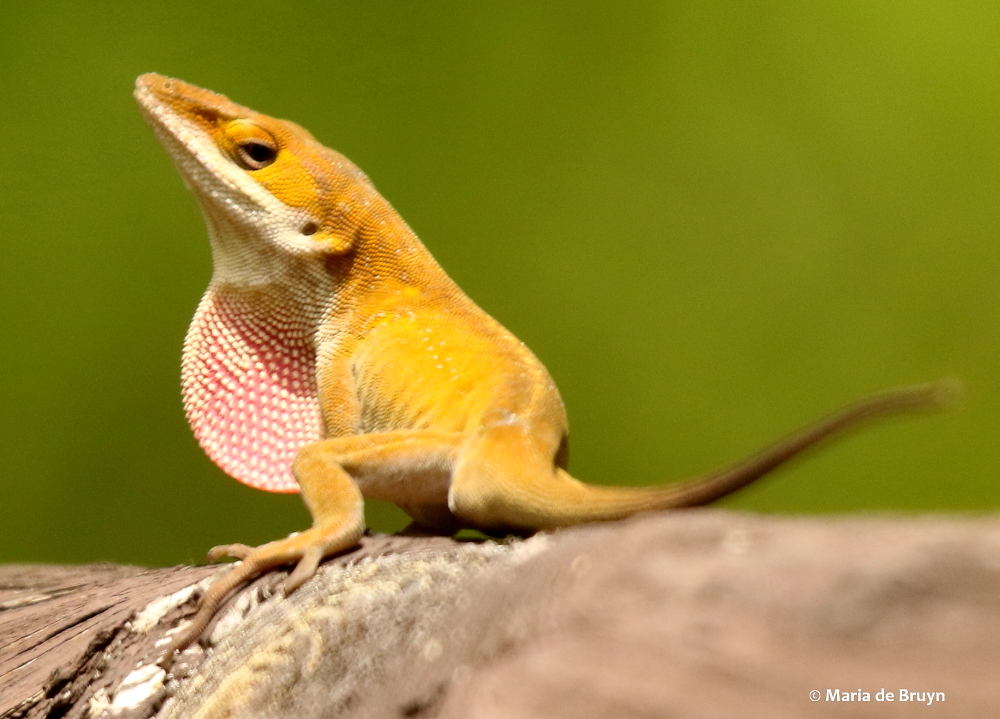
2018 was a good year for my observations of reptiles, too. Seeing a Carolina anole (Anolis carolinensis) flash its red dewlap (also known as a throat fan) was not a new experience but the fact that it was only a foot away from me doing it was a surprise.


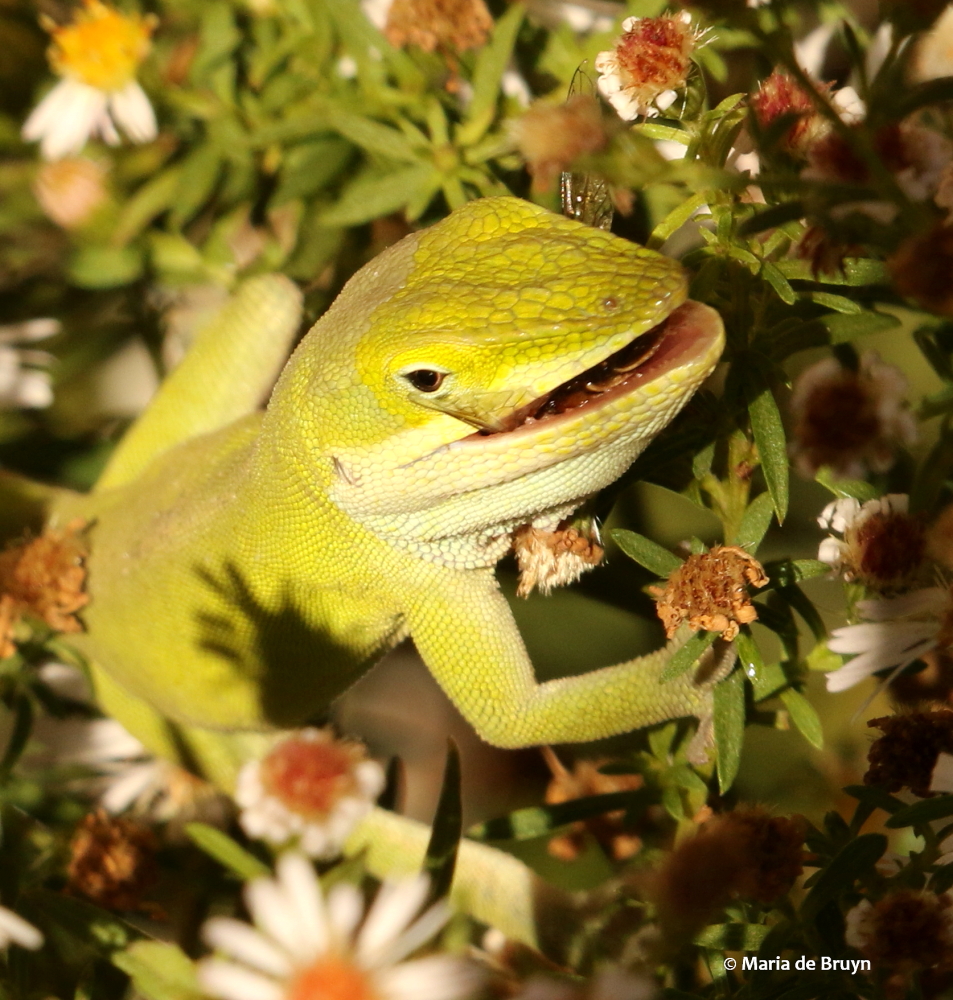
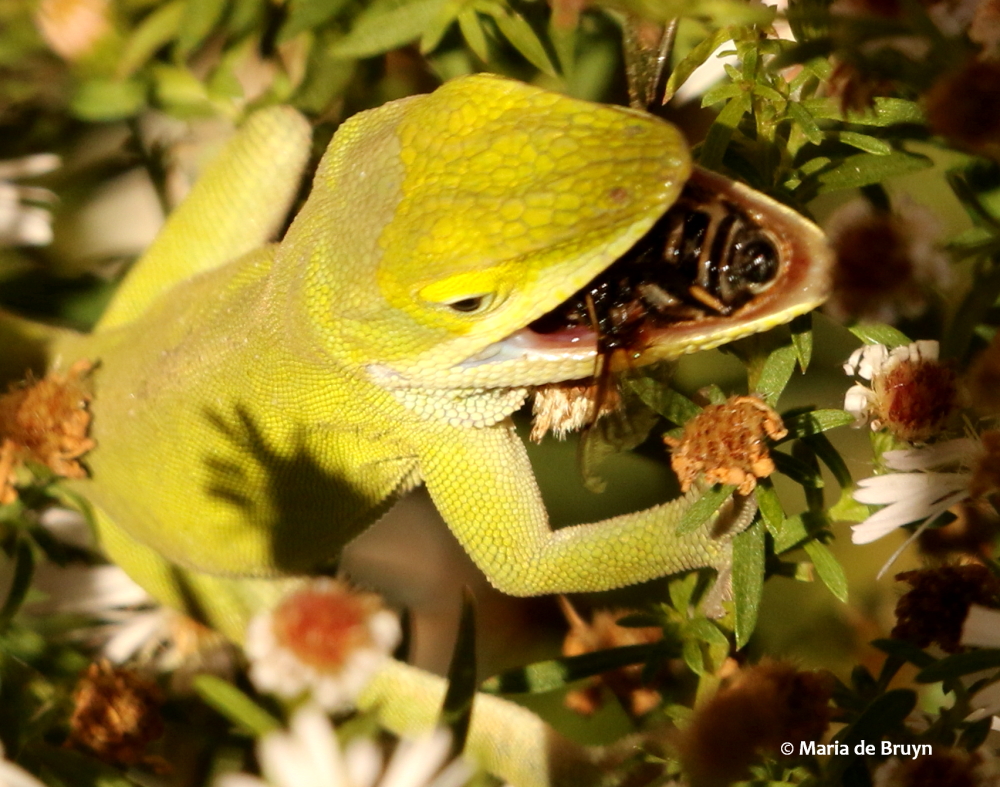
Seeing one of these anoles jump from one small flower twig to another in order to catch a bee for supper was a surprise – I didn’t know they eat bees. I felt a little sad that we lost a pollinator that way, but the anoles have to eat, too.


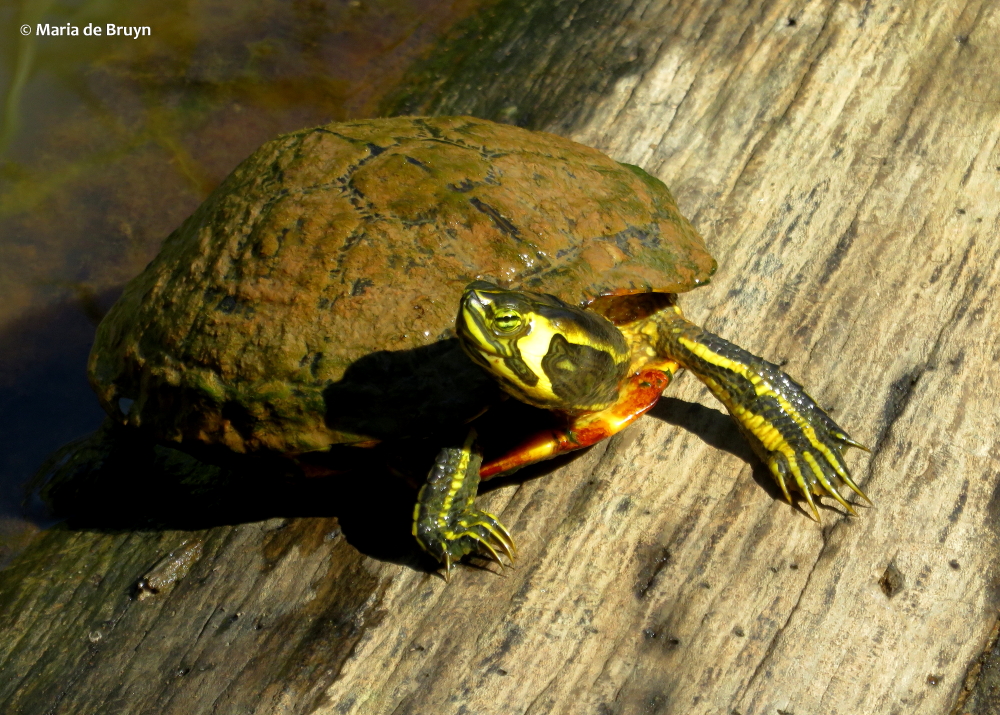
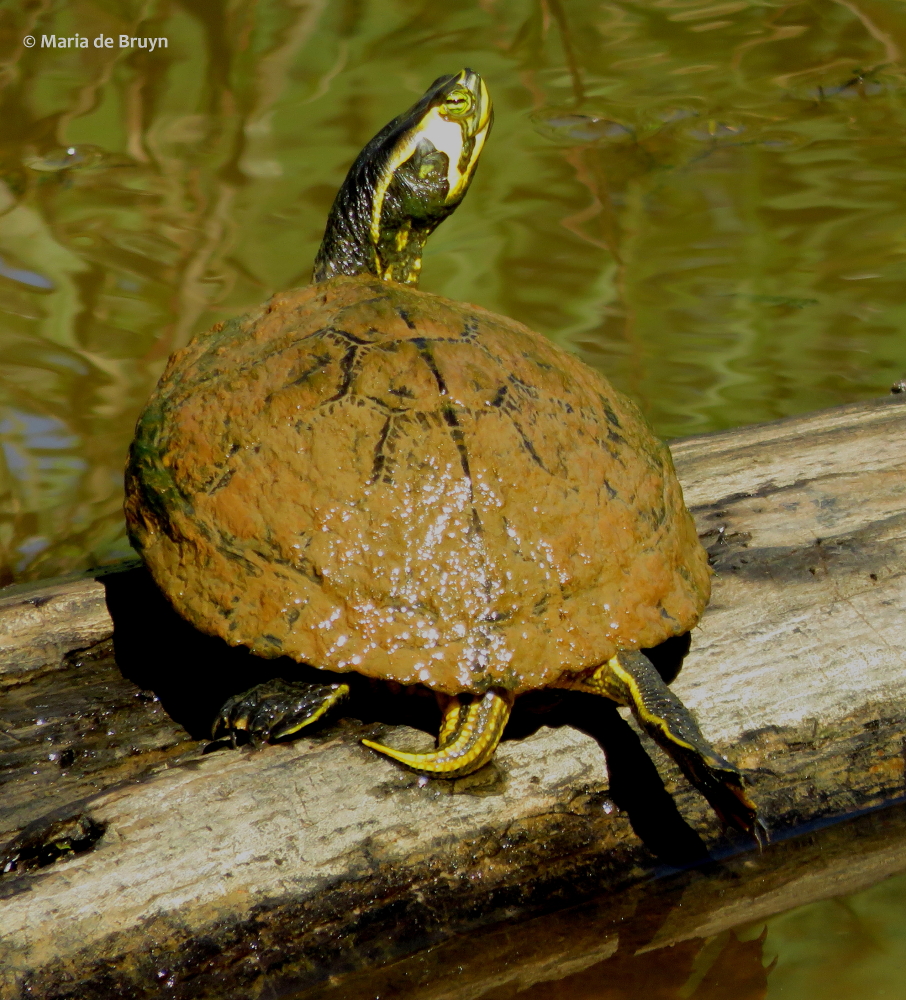
One day, when walking at the same wetlands where the anole hung out I came across some beautifully colored turtles. The yellow-bellied slider (Trachemys scripta) had a beautiful pattern on its face.


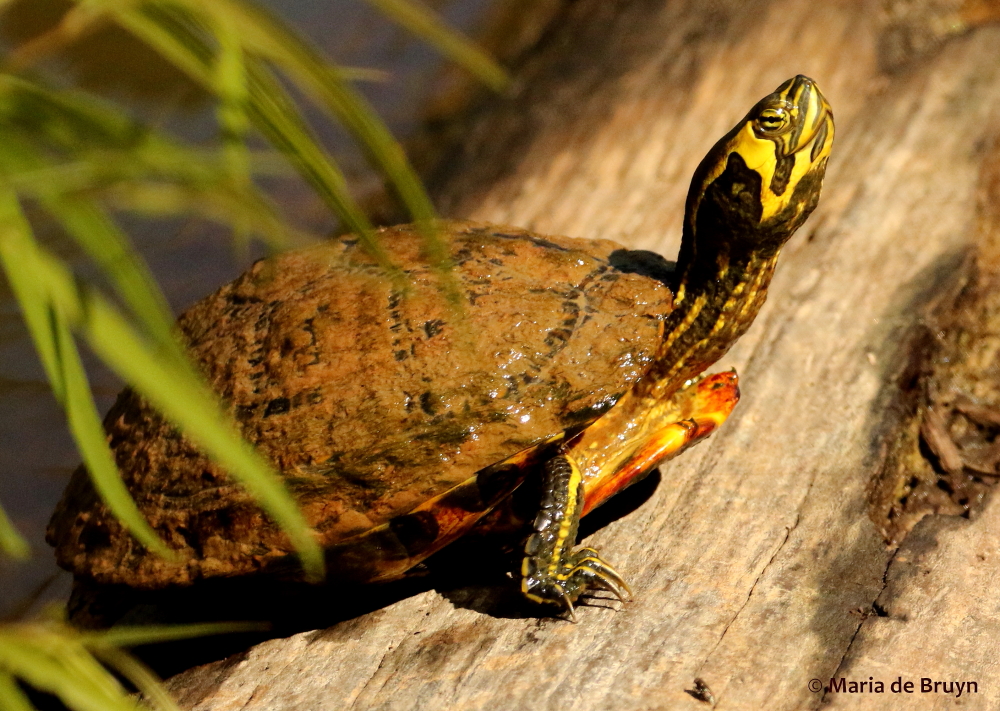
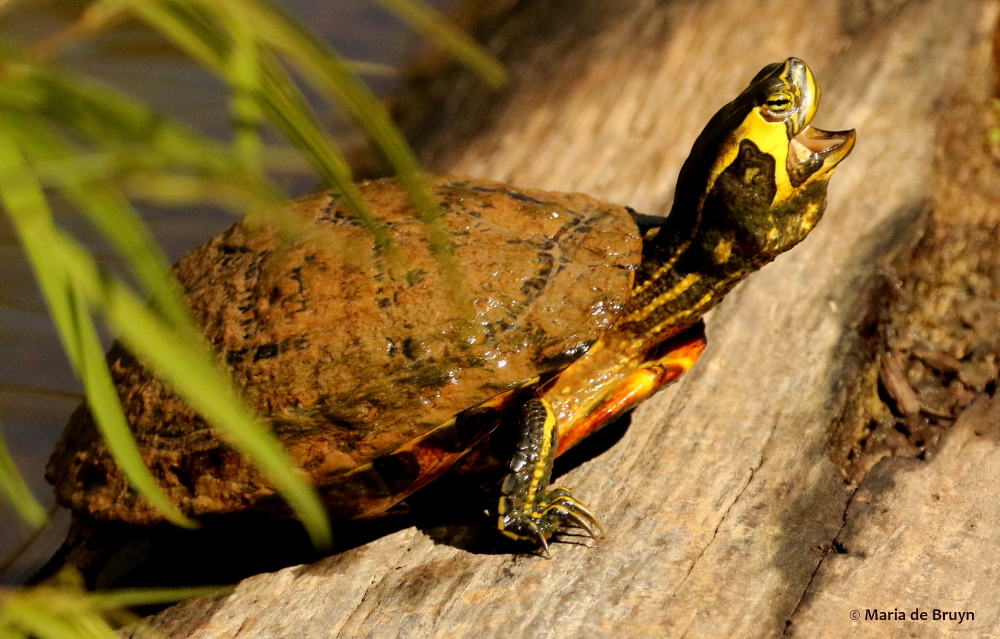
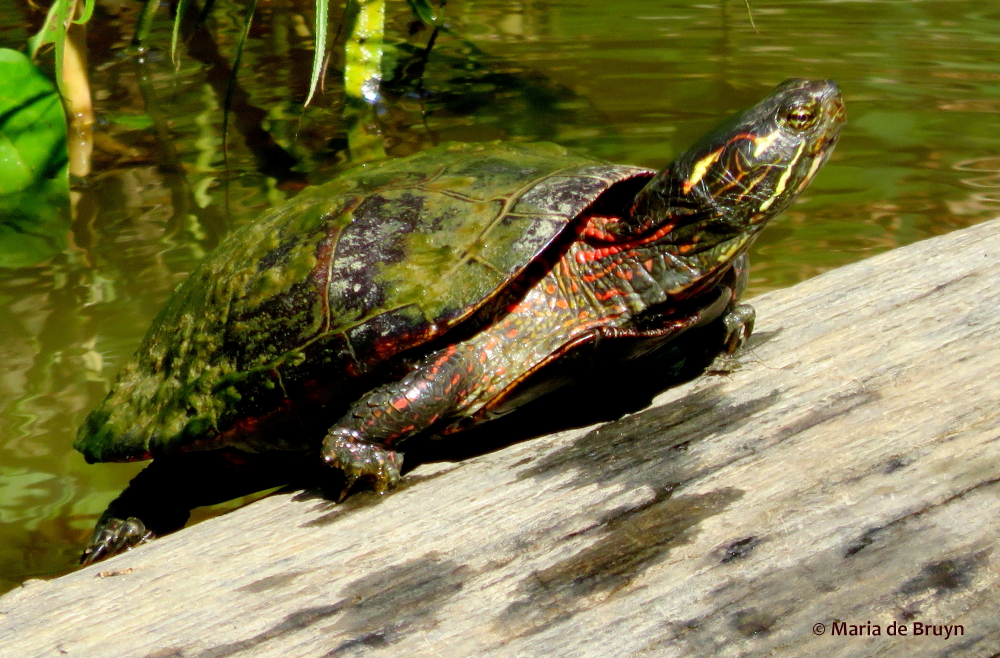
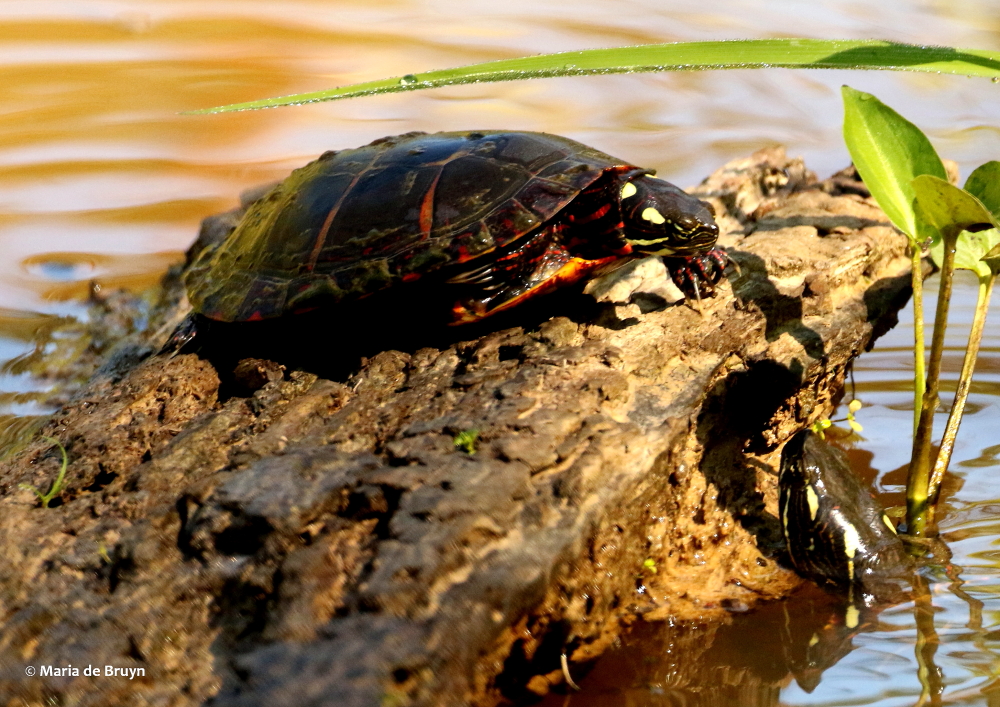
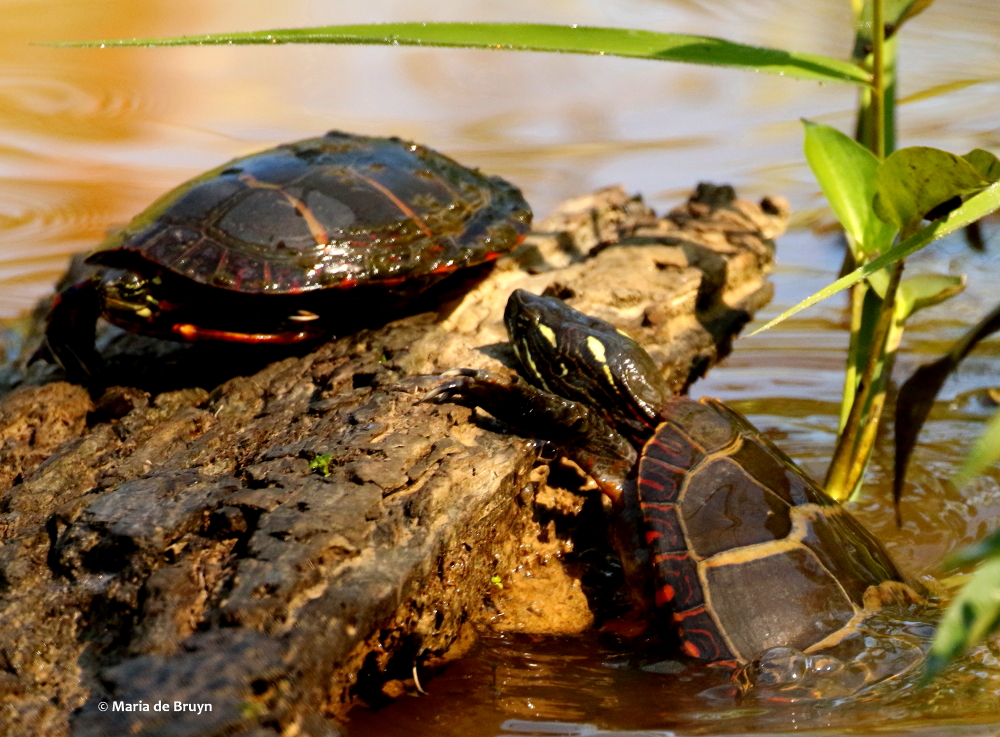
The painted turtle (Chrysemys picta picta) with its long claws had some beautiful bright red striping. It had gotten a prime sunning spot on a log that another turtle wanted for itself; the first turtle held it off.


The second turtle circled around and tried to get on board from the other side but turtle No. 1 kept it at bay.


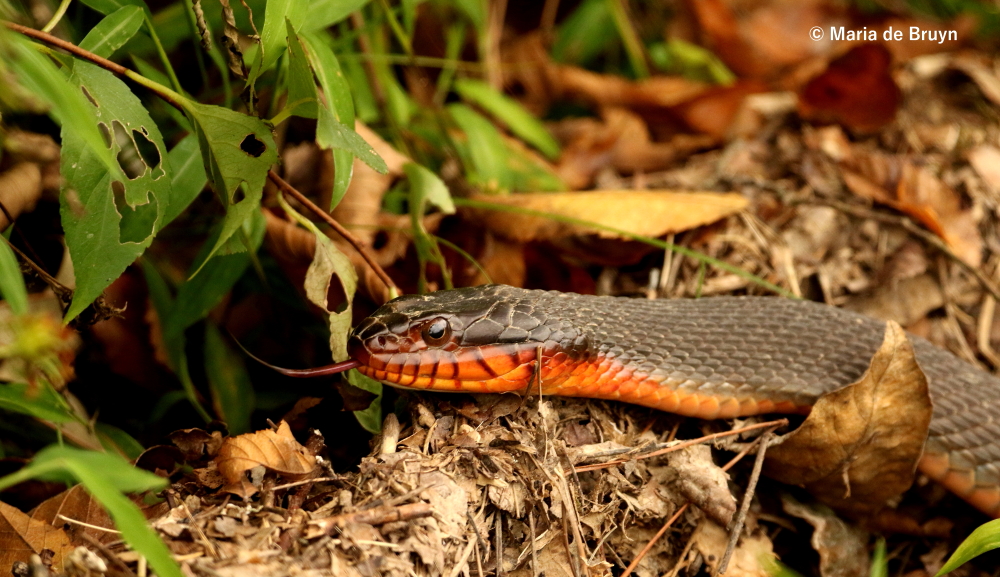
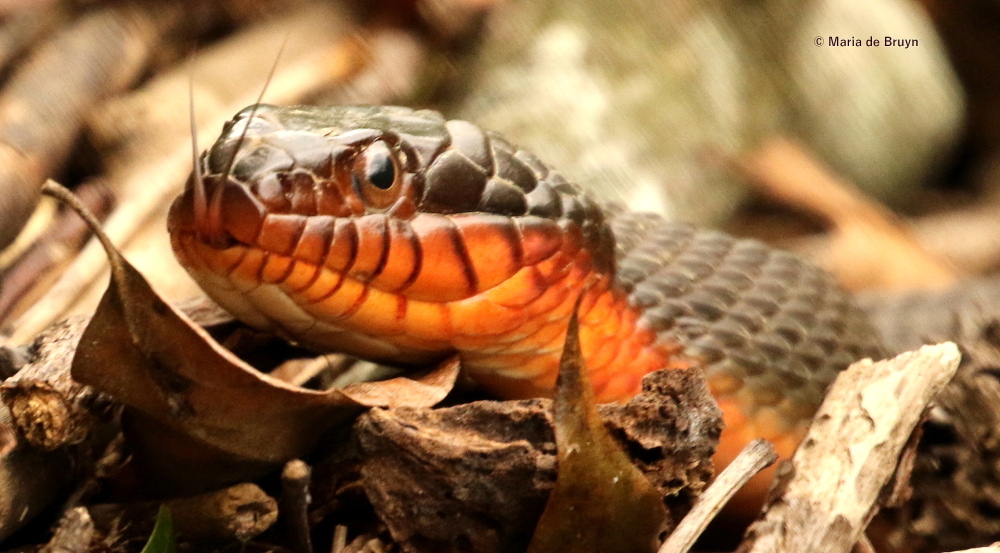
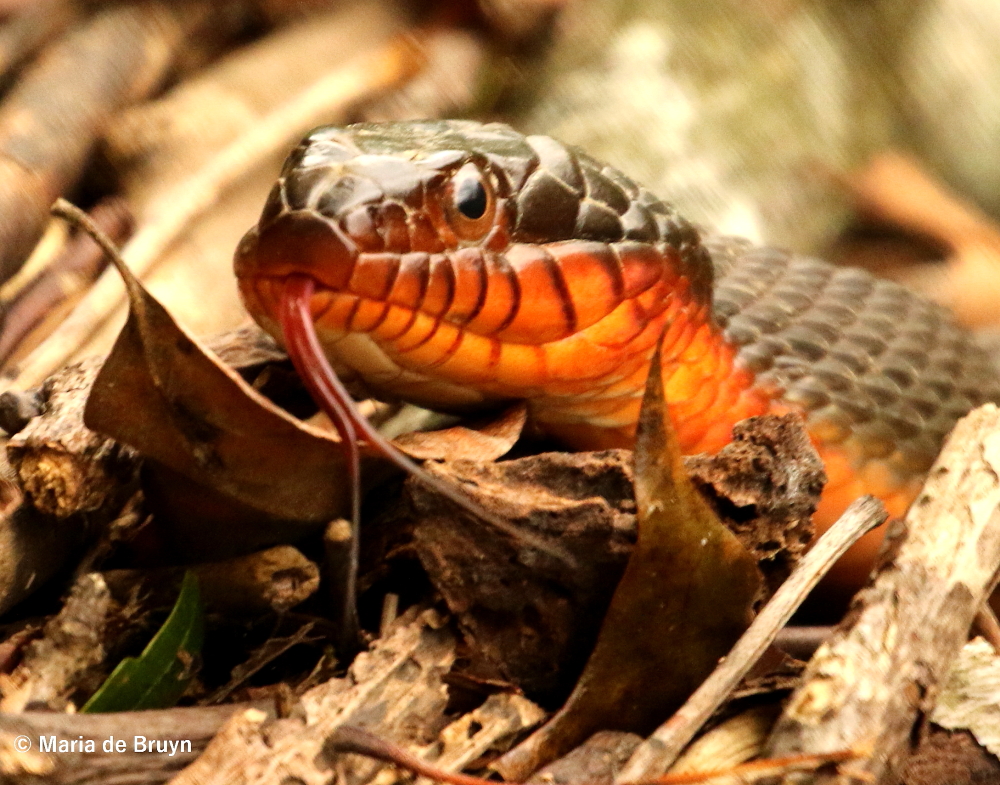
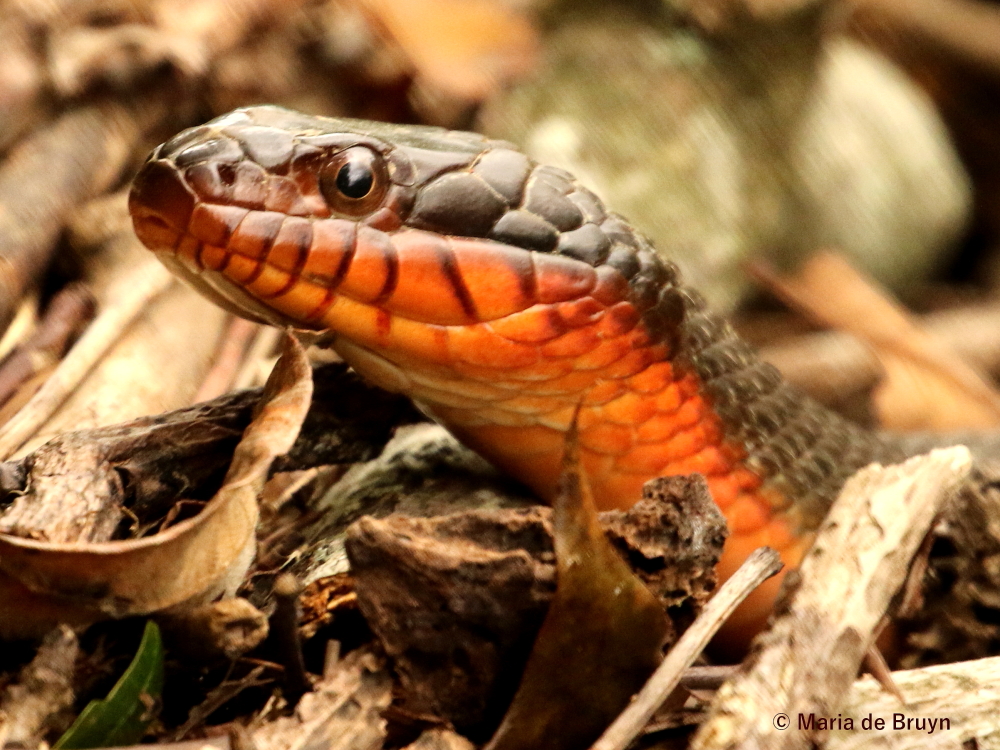
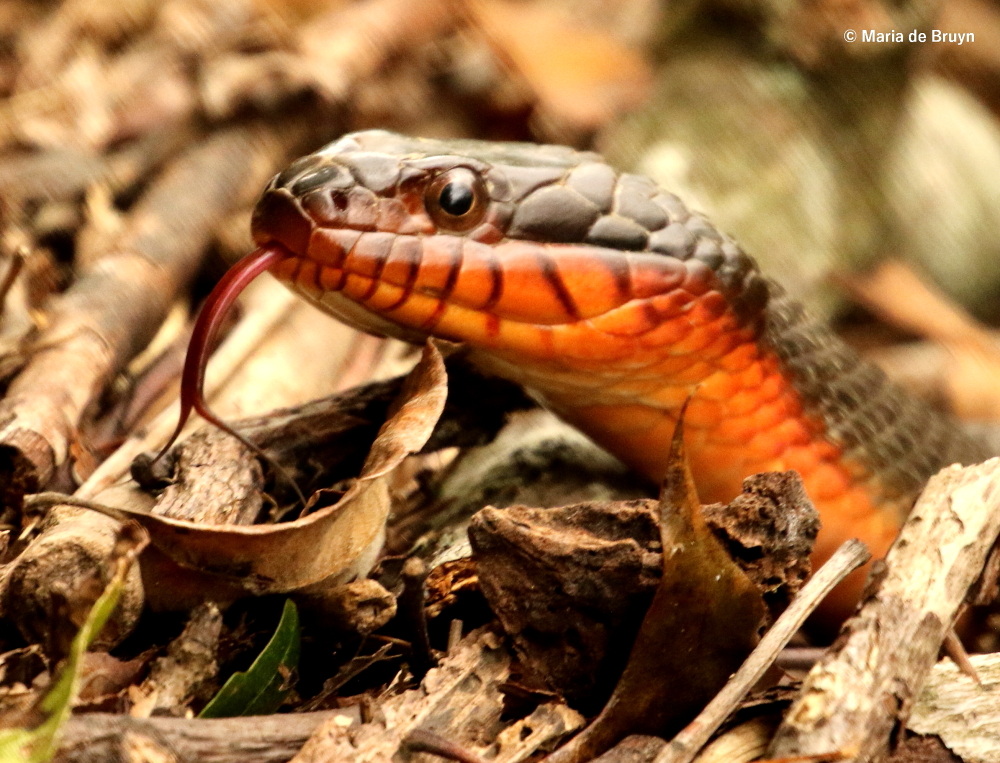
My snake encounters included seeing Northern water snakes and rat snakes. It was a beautiful red-bellied water snake (Nerodia erythrogaster) that caught me by surprise when it suddenly veered off its course toward me. I backed up and the reptile stopped approaching, flicking its tongue out as it explored what was going on.

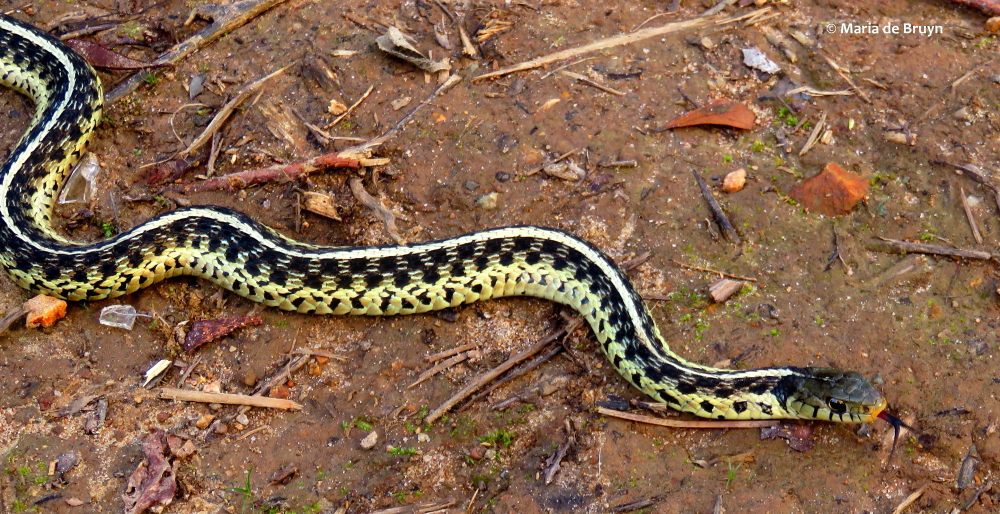
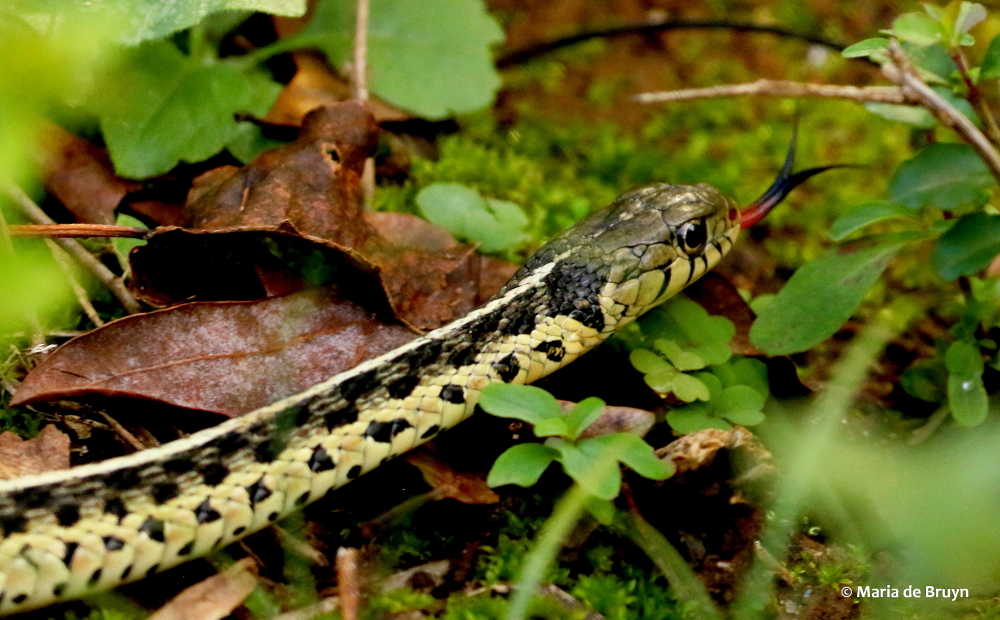
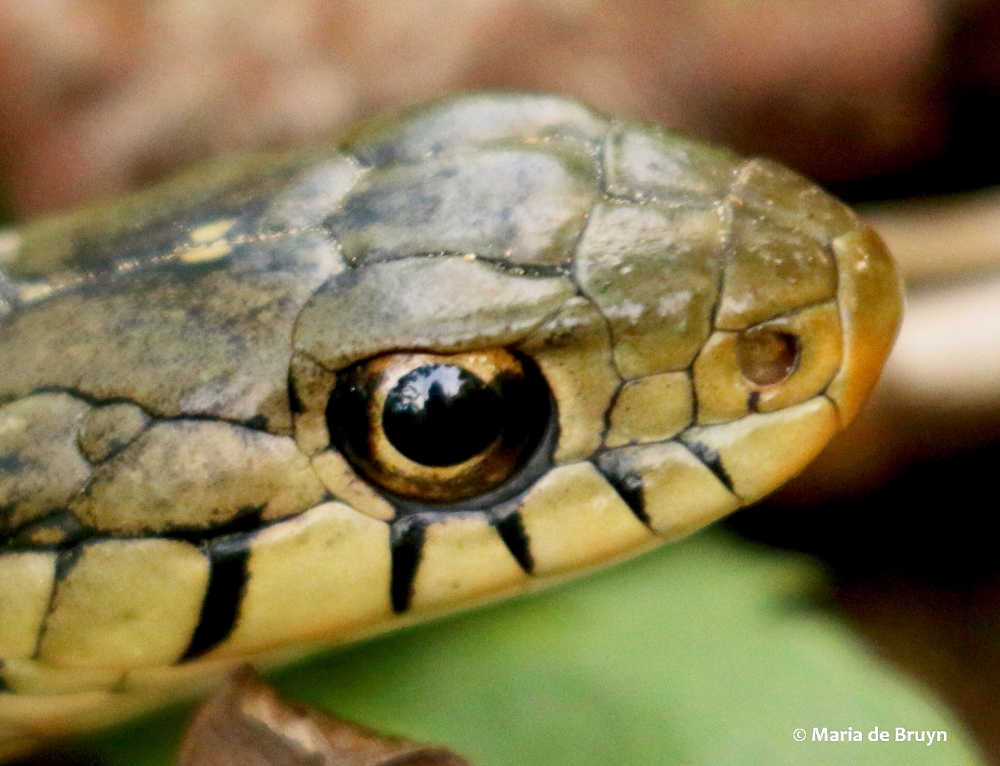
My final spotting to share with you today is another gorgeous snake – a common garter snake (Thamnophis sirtalis). It had been a long time since I had encountered one and this individual had quite vivid colors.
Next up – some beautiful raptors.