Turtles as stepping stones

Northern mockingbird IMG_3689©Maria de Bruyn resOne day when I was at a beautiful nature park in the neighboring city of Durham, I was – of course – looking for wildlife. For a while I watched a Northern mockingbird (Mimus polyglottos) pecking along the path in a quest for insects. It wasn’t until I got to the pond, however, that a scene unfolded which kept me occupied for a while.

 

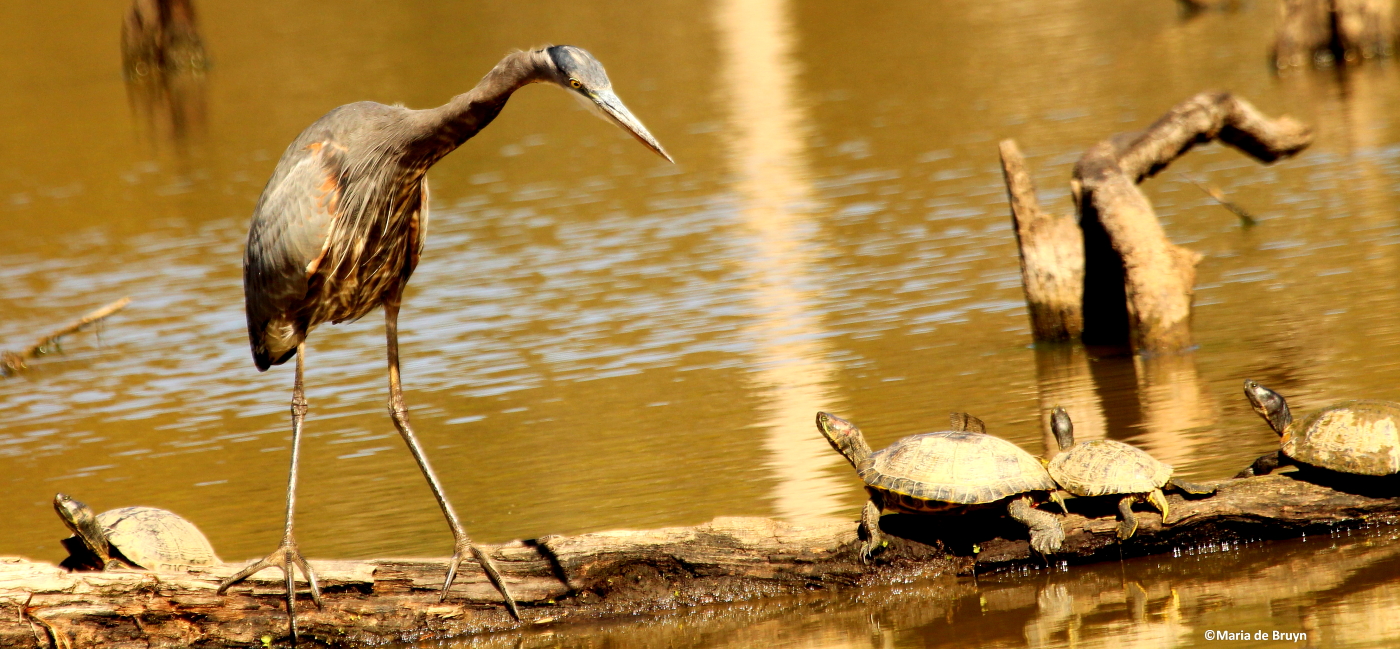
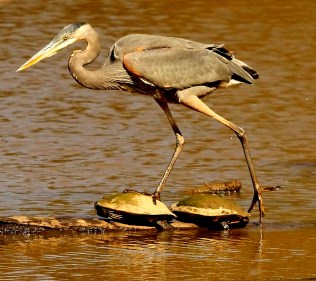
great blue heron IMG_4099©Maria de Bruyn resgreat blue heron IMG_3905©Maria de Bruyn resThe resident great blue heron (Ardea herodias) had stationed him (or her) self at the end of a log on which several pond slider turtles (Trachemys scripta) were basking. He seemed to be staring in their direction, so I wondered if he was considering eating one. After seeing a video of a heron swallowing a groundhog whole, I knew that they can consume quite large meals. After a time, though, it seemed that the bird wasn’t interested in the turtles but in the fish swimming in front of them. After patiently waiting for a time, the heron stabbed and had success!
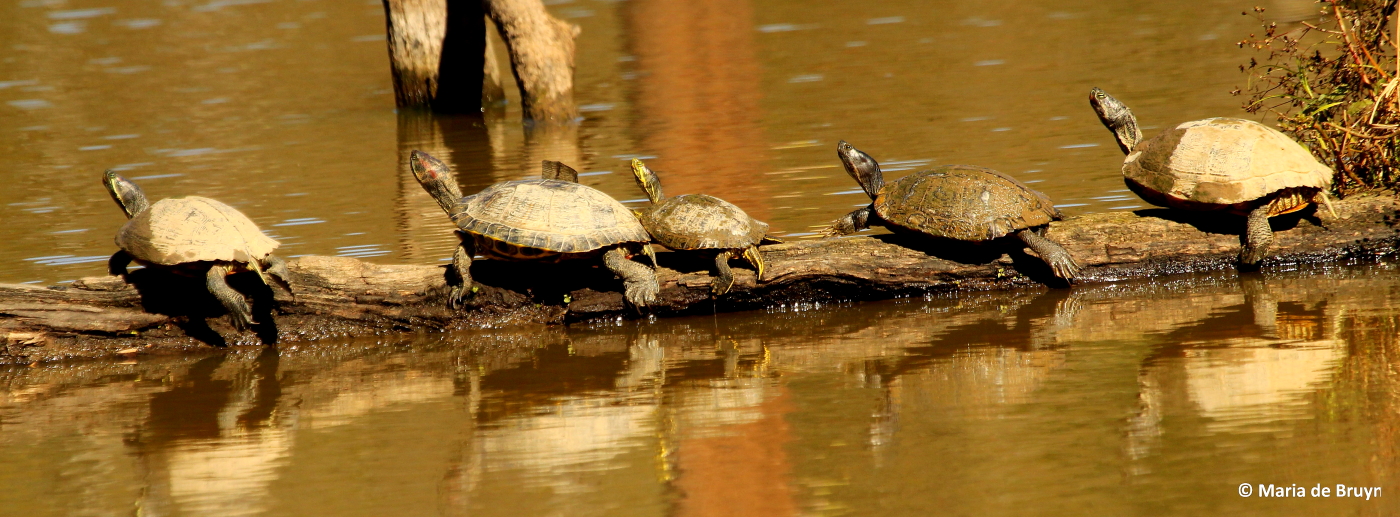
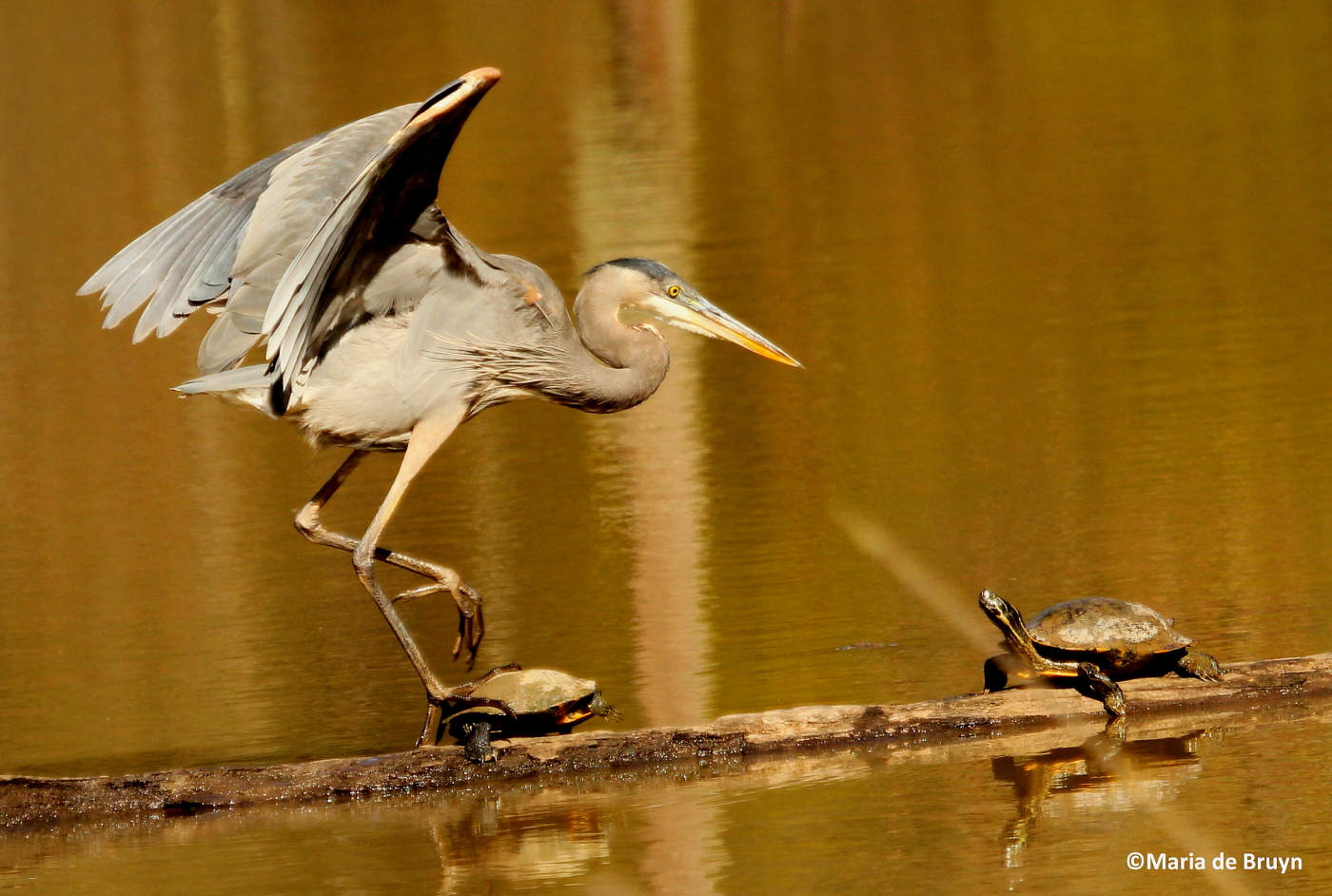
painted turtle IMG_3815© Maria de Bruyn resThe heron decided to move to a new spot, down near the other end of the log. The sun was bright and the pond was filled with many dozens of turtles enjoying the warmth. Whereas red-eared sliders and painted turtles at Mason Farm Biological Reserve will often plop into the water in haste when they sense people nearby, these turtles didn’t seem to care if they were watched from the pond’s edge. But I did think they would move as the heron neared them.
great blue heron IMG_3987©Maria de Bruyn resgreat blue heron IMG_4142©Maria de Bruyn res


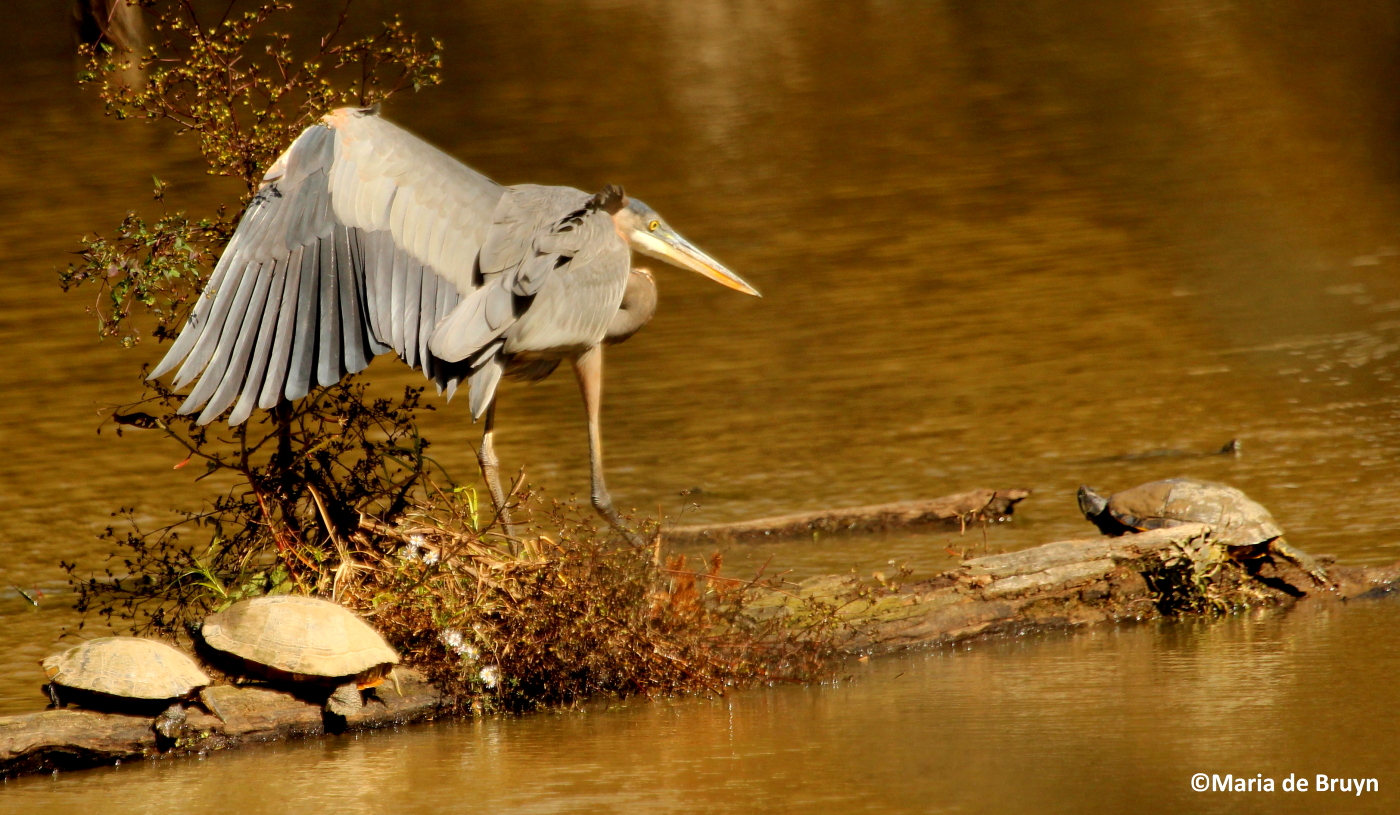
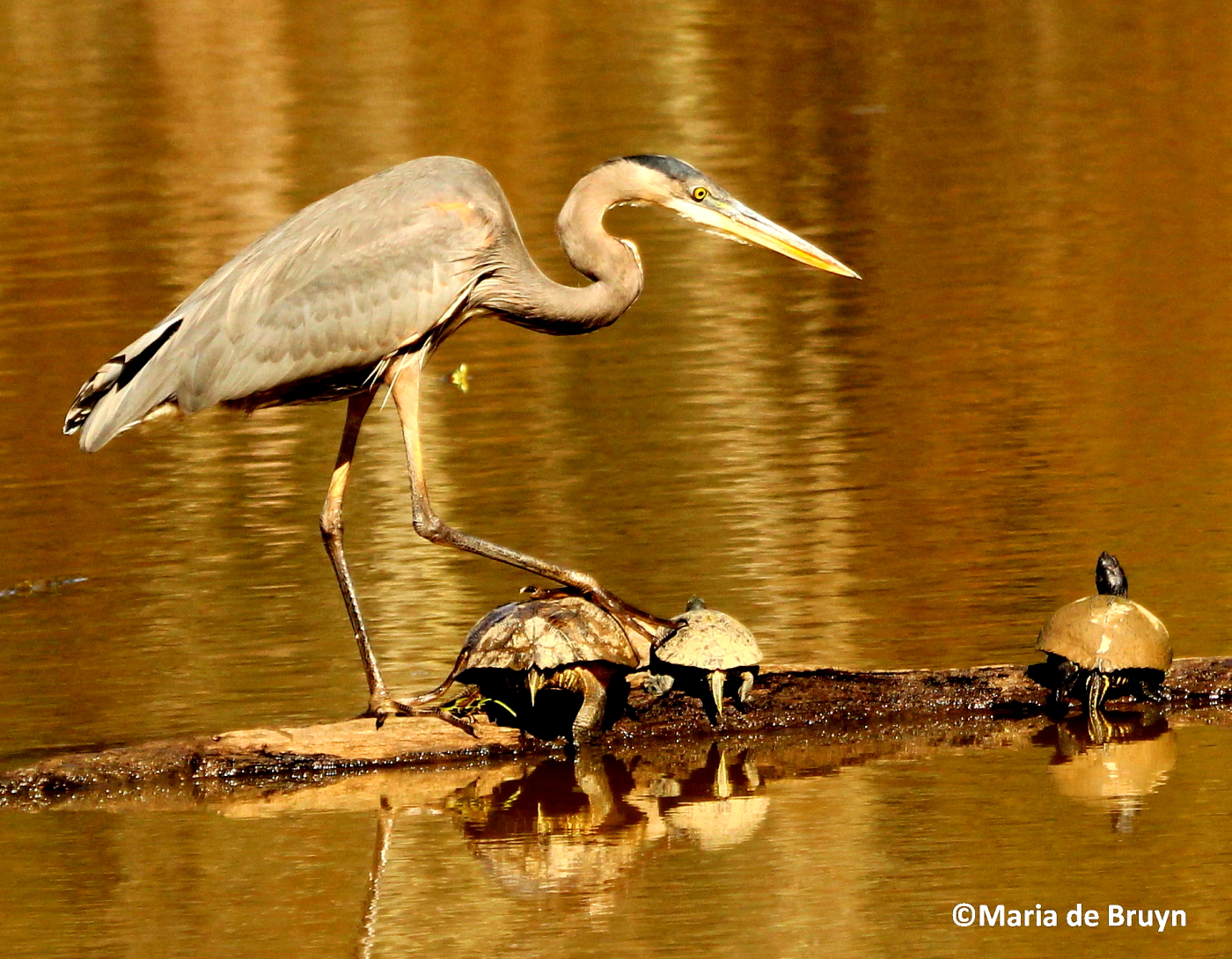
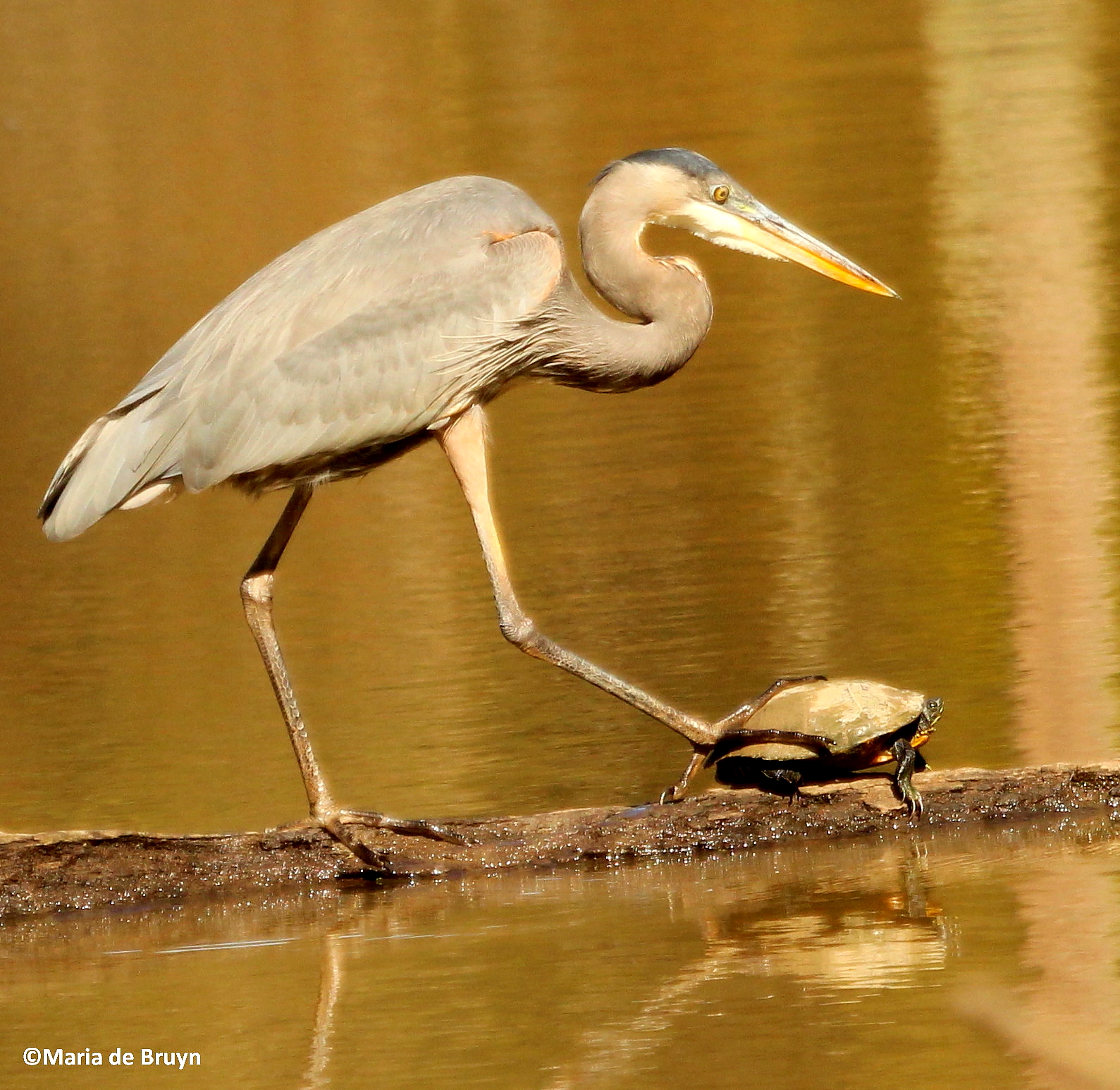
How wrong I was! The turtles saw him coming but they just let the huge bird use their backs as stepping stones!
 

great blue heron IMG_4160©Maria de Bruyn res   great blue heron IMG_4166©Maria de Bruyn res

great blue heron IMG_4302©Maria de Bruyn res

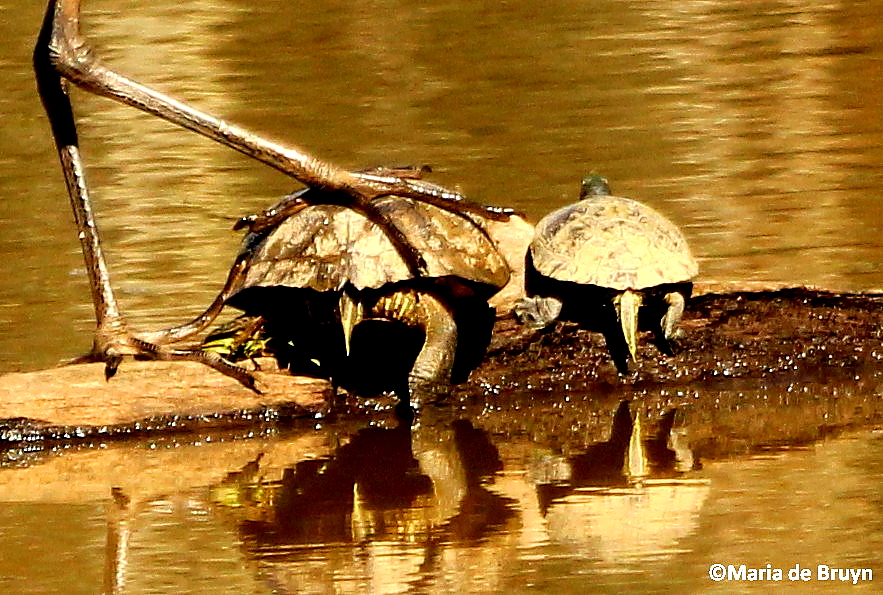
The bird’s claws completely encircled some turtles as it moved along, occasionally balancing on one leg.
great blue heron IMG_4224©Maria de Bruyn res  painted turtle IMG_4217©Maria de Bruyn 2

I noticed a few turtles with scutes bent up into the air. (Scutes are sections of the carapace.) I began to wonder if this was the result of the heron’s claws snagging on their shells as the bird proceeded.

IMG_3808© Maria de Bruyn 2great blue heron IMG_4297©Maria de Bruyn

If that was true, though, why didn’t the turtles skedaddle out of there when the heron came near? I only saw one turtle plunge into the pond.

great blue heron IMG_4304©Maria de Bruyn respainted turtle IMG_3815© Maria de BruynAt home, I did an Internet search and found out that turtles shed their scutes from time to time and that was apparently what I was seeing. So I learned that turtles shed! Turtles’ shells are extensions of their rib cage and attached to their spine; terrestrial turtles don’t shed but aquatic turtles do shed scutes, which are made of keratin (like the material of horns or fingernails).
5-MdB great blue heron IMG_4339

The heron kept moving along as he wasn’t having much success in the different spots he chose. He did get a couple fish but smaller than his first catch. Eventually, I found that I wasn’t quite as patient as the heron so I finally left after a very entertaining hour of observation. I do so love watching the natural world!
Flashing wings as a hunting technique

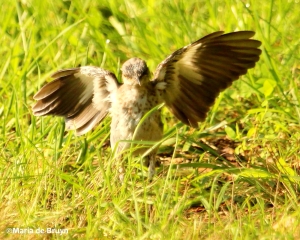
Northern mockingbird IMG_2475©Maria de Bruyn resLast year, during a nature walk, I witnessed young Northern mockingbirds (Mimus polyglottos) displaying odd behavior as they strutted around on the ground. They would walk and hop a bit and then suddenly spread their wings wide and wider still, then close them and continue pecking on the ground.
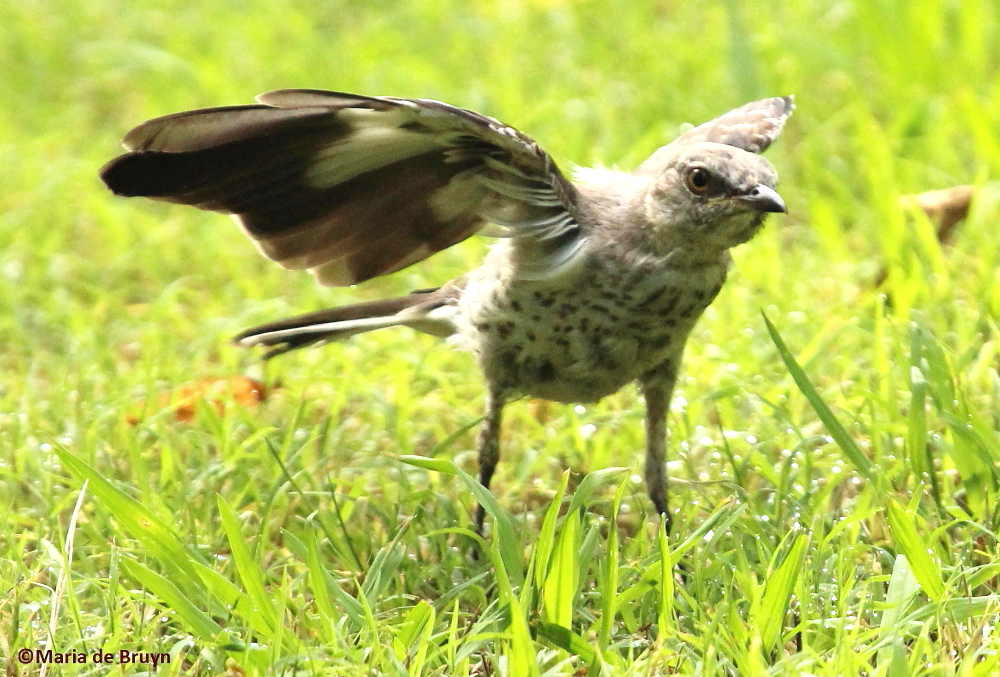
Some research on the Internet revealed that they were engaged in a phenomenon known as wing flashing. There are various theories about why mockingbirds flash their wings -– to startle insects, ward off predators, attract a mate. So far, there is no scientific consensus on why they do this.

Northern mockingbird IMG_8889©Maria de BruynresNorthern mockingbird IMG_8904©Maria de Bruynres

Having seen both adult and juvenile birds performing this behavior again this year, however, I’ve become convinced it is part of their hunting technique. Those who promote this idea have suggested that the sudden appearance of the bird’s white wing-bars startles insects, but others argue that insects are not alarmed by the color white.

Northern mockingbird IMG_2816©Maria de Bruyn res

Northern mockingbird IMG_2604©Maria de Bruyn res

My own theory is that when the mockingbirds flash their wings, it creates air currents and disturbs the grasses, thereby uncovering and rustling up bugs. This year I clearly saw the birds catching and consuming insects just after a completed wing flash.

snowy egret IMG_3610© Maria de Bruyn

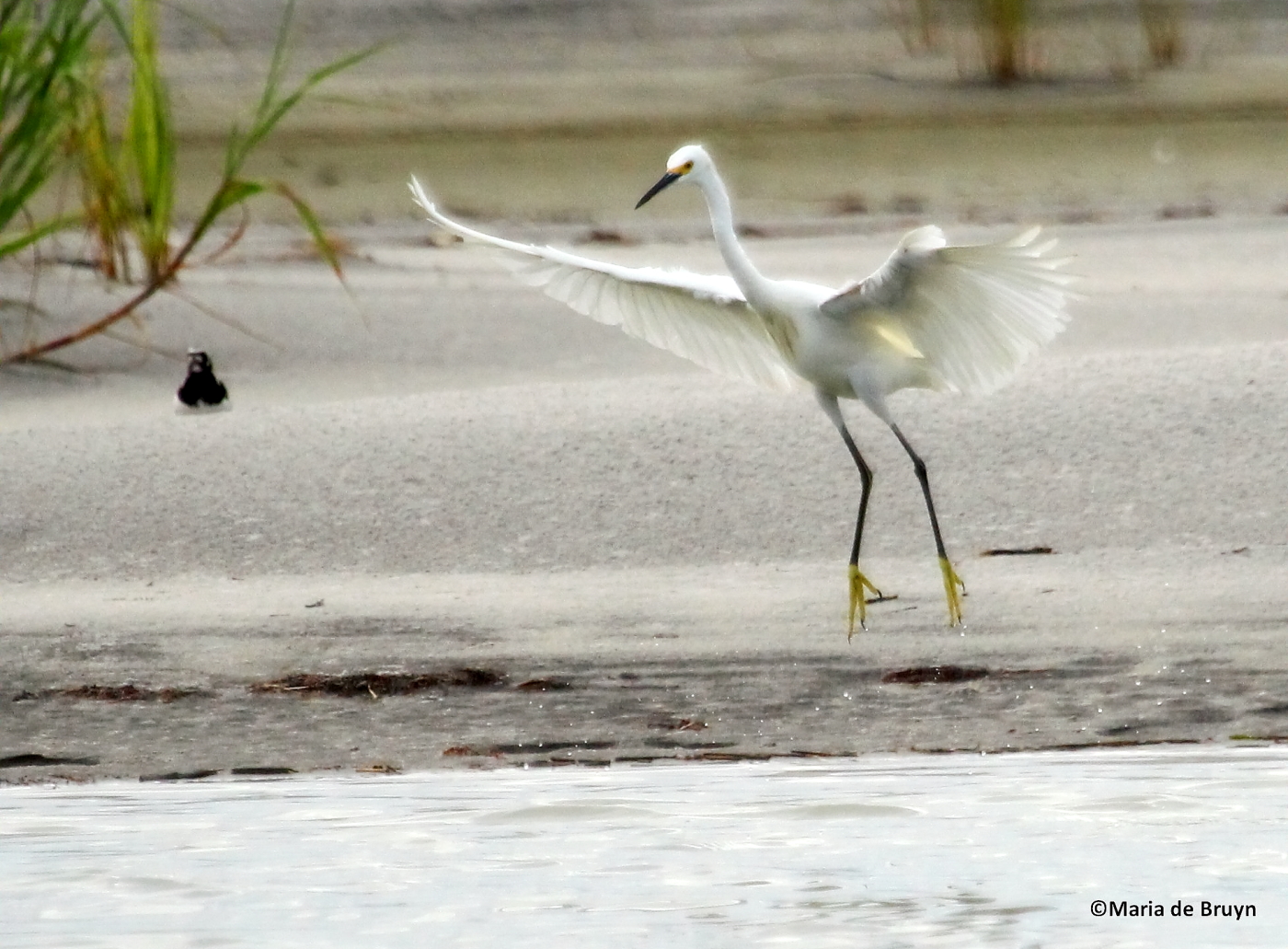
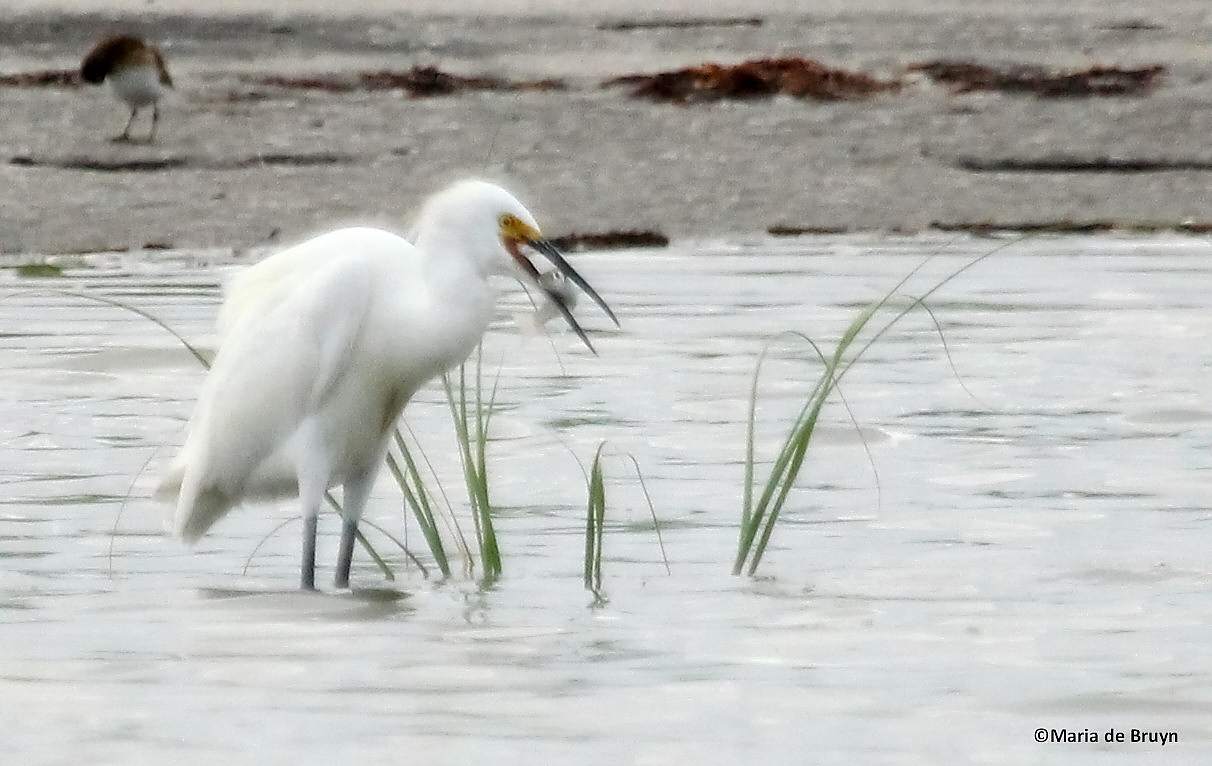
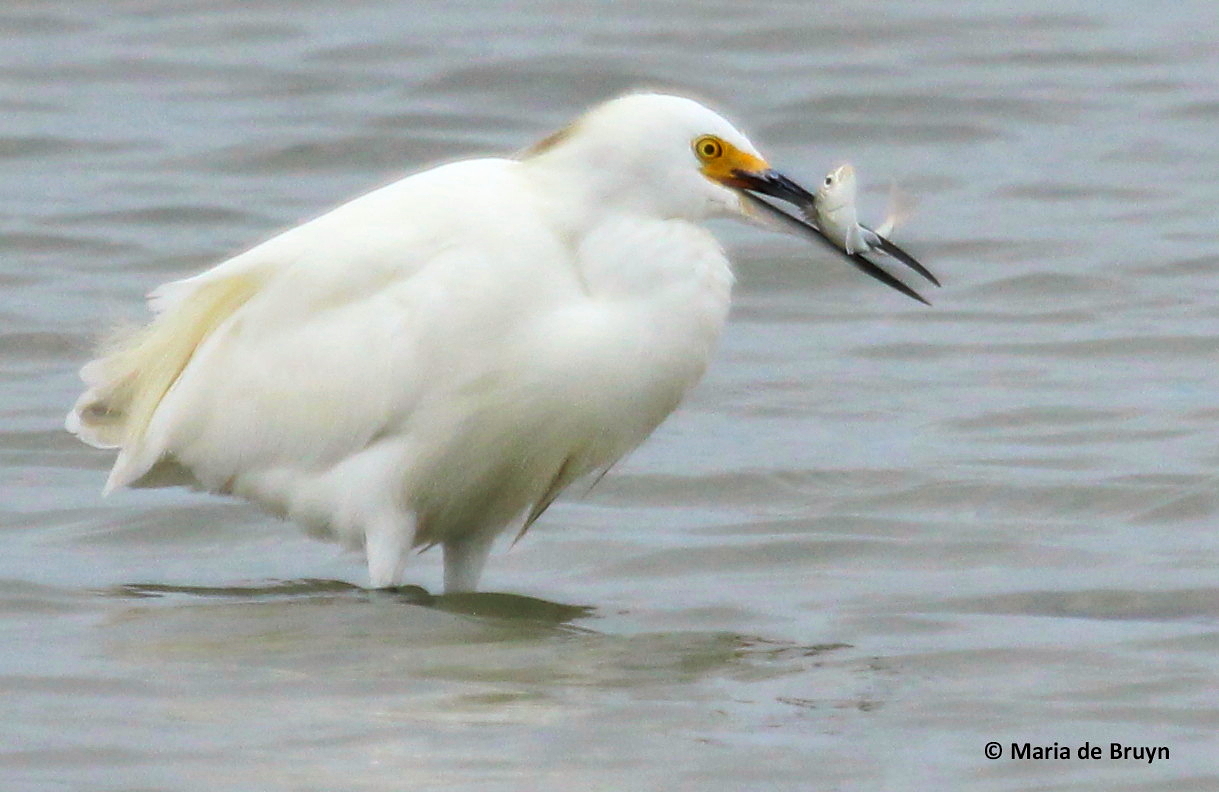
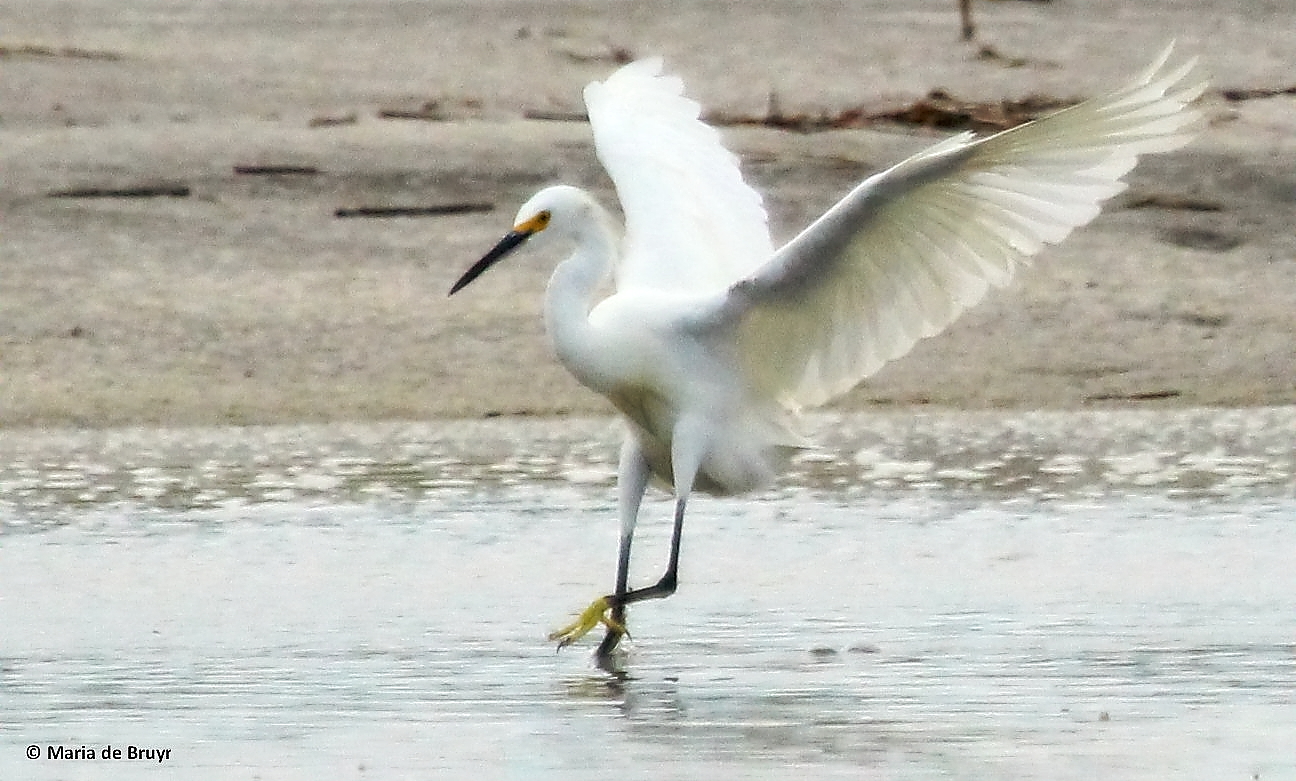
Later in the summer, I witnessed a similar kind of wing flashing used as a hunting technique by an entirely different species, the snowy egret (Egretta thula). These elegant white birds have long black legs ending in feet that look like they are covered with yellow rubber gloves. They stalk the shallows of waterways such as marshes and ponds looking for prey. The bird I saw was fishing in tidal pools along the Atlantic Ocean shore.

snowy egret IMG_3286© Maria de Bruyn

snowy egret IMG_3270© Maria de Bruyn

It is thought that the egrets use their large feet to stir up the sand underwater so that they can more easily see potential food as they forage. Part of the time, they will simply stand like statues, waiting for a fish to swim nearby so that they can suddenly plunge their long beaks into the water to get their meal.

snowy egret IMG_3313©Maria de BruynThis worked at least part of the time for this particular bird, as s/he got a few fish down. It required a lot of patience, however.
snowy egret IMG_3423© Maria de Bruyn res

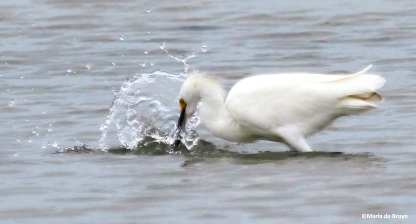
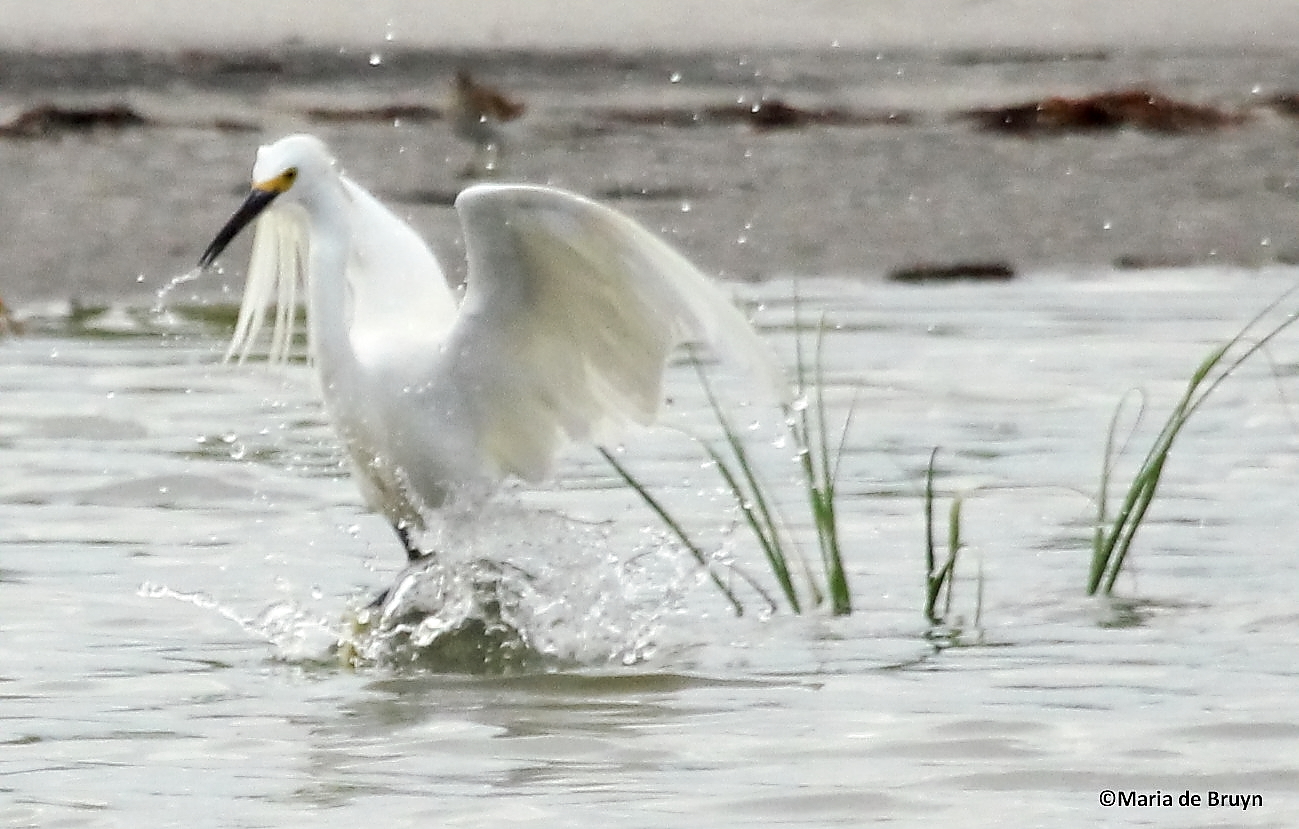
At a certain point, the bird decided on a more active approach. S/he flew to another tidal pool and then began running to and fro in the water, flapping his/her wings open and closed.

snowy egret IMG_3575© Maria de Bruynsnowy egret IMG_3574© Maria de Bruyn

Occasionally, this was complemented by a leap into the air and plunge into the water – obviously behavior calculated to startle and scare up the fish lurking below the water’s surface.

snowy egret IMG_3606© Maria de Bruynsnowy egret IMG_3617© Maria de Bruyn

snowy egret IMG_3623© Maria de BruynThe tactic worked.

It was fascinating for me to see two such different bird species using their wings in a similar fashion as a hunting method. One of the things I love about wildlife watching -– you can always see and learn something new!

snowy egret IMG_3659© Maria de Bruyn

Sea-side supper (and breakfast and lunch)

Often when we visit the seashore, we either see the birds flying overhead or resting on the sand. But we also get to see them hunting for food, either through their own means or taking advantage of the opportunities afforded by others – be they other animals or human beings.

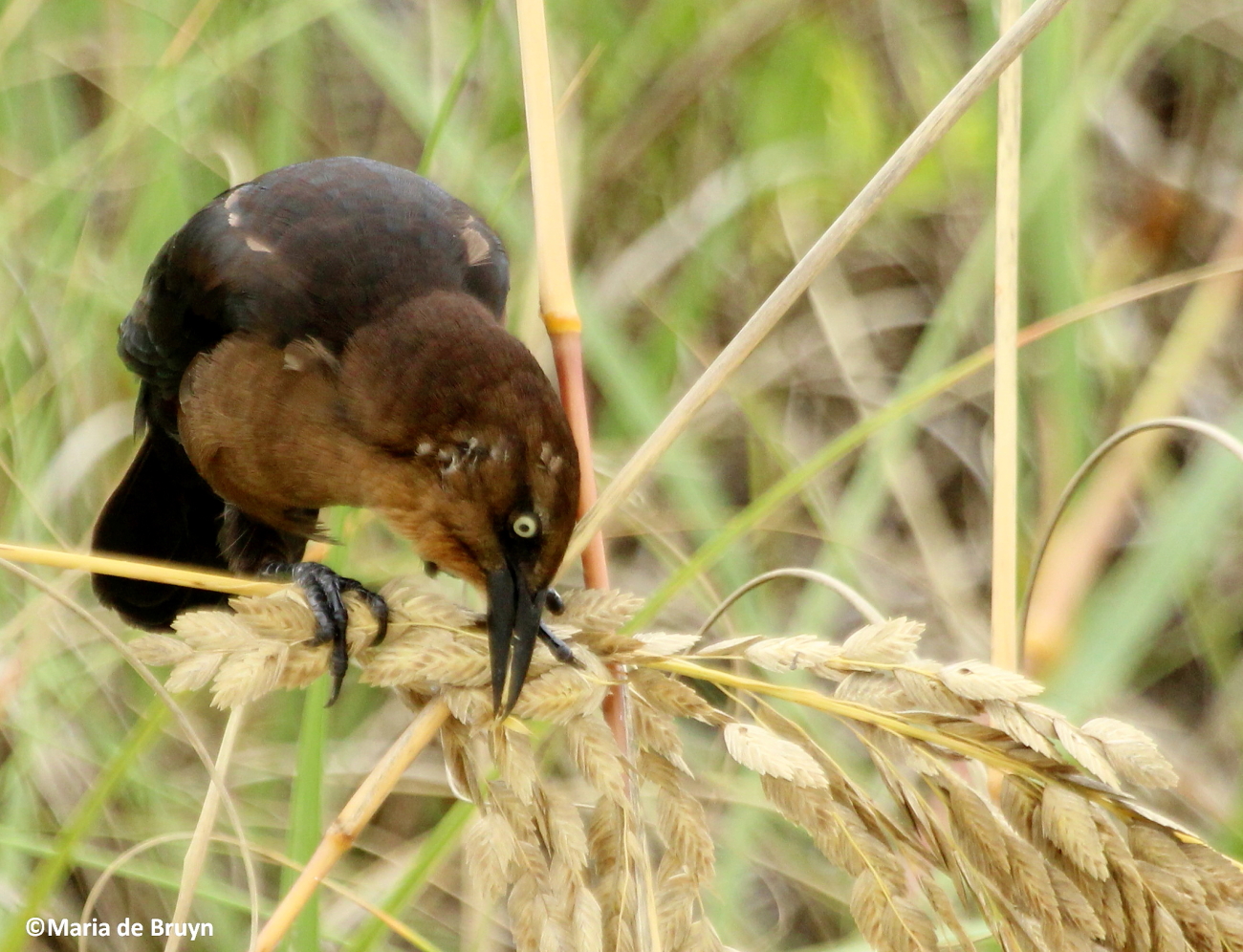
Crabs are a favorite food for various birds, including boat-tailed grackles (Quiscalus major) and sanderlings (Calidris alba).

boat-tailed grackle IMG_6386©Maria de Bruyn resSanderling IMG_5024© Maria de Bruyn resSanderling IMG_5025© Maria de Bruyn res

Grackles also snack on sea oats – including the adult males, adult females and juveniles.

Boat-tailed grackle IMG_1361©Maria de Bruyn resBoat-tailed grackle IMG_1400©Maria de Bruyn res

fish IMG_5688 (2)© Maria de Bruyn


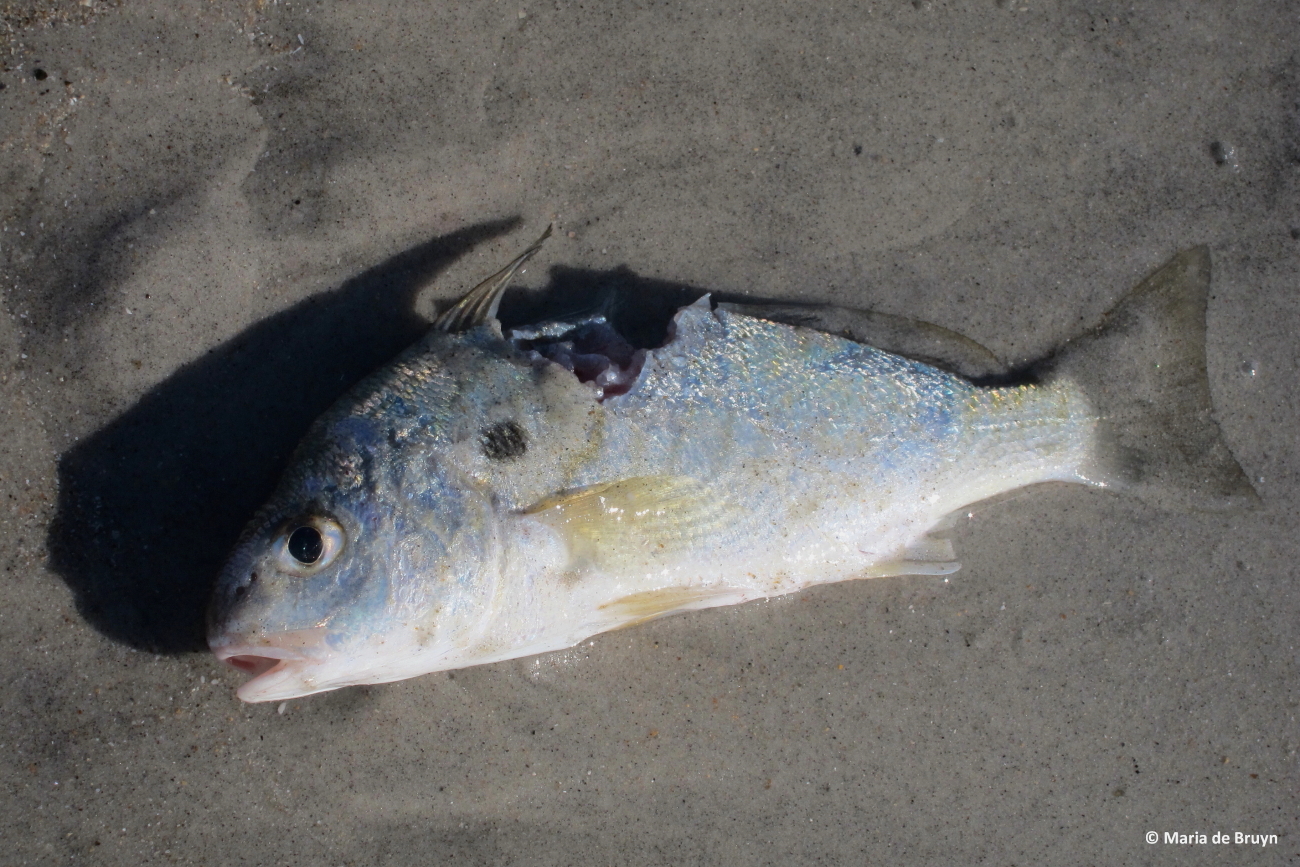
One afternoon on Topsail Island, I came across a fish on shore that had been abandoned.

ring-billed gull IMG_5190© Maria de Bruyn

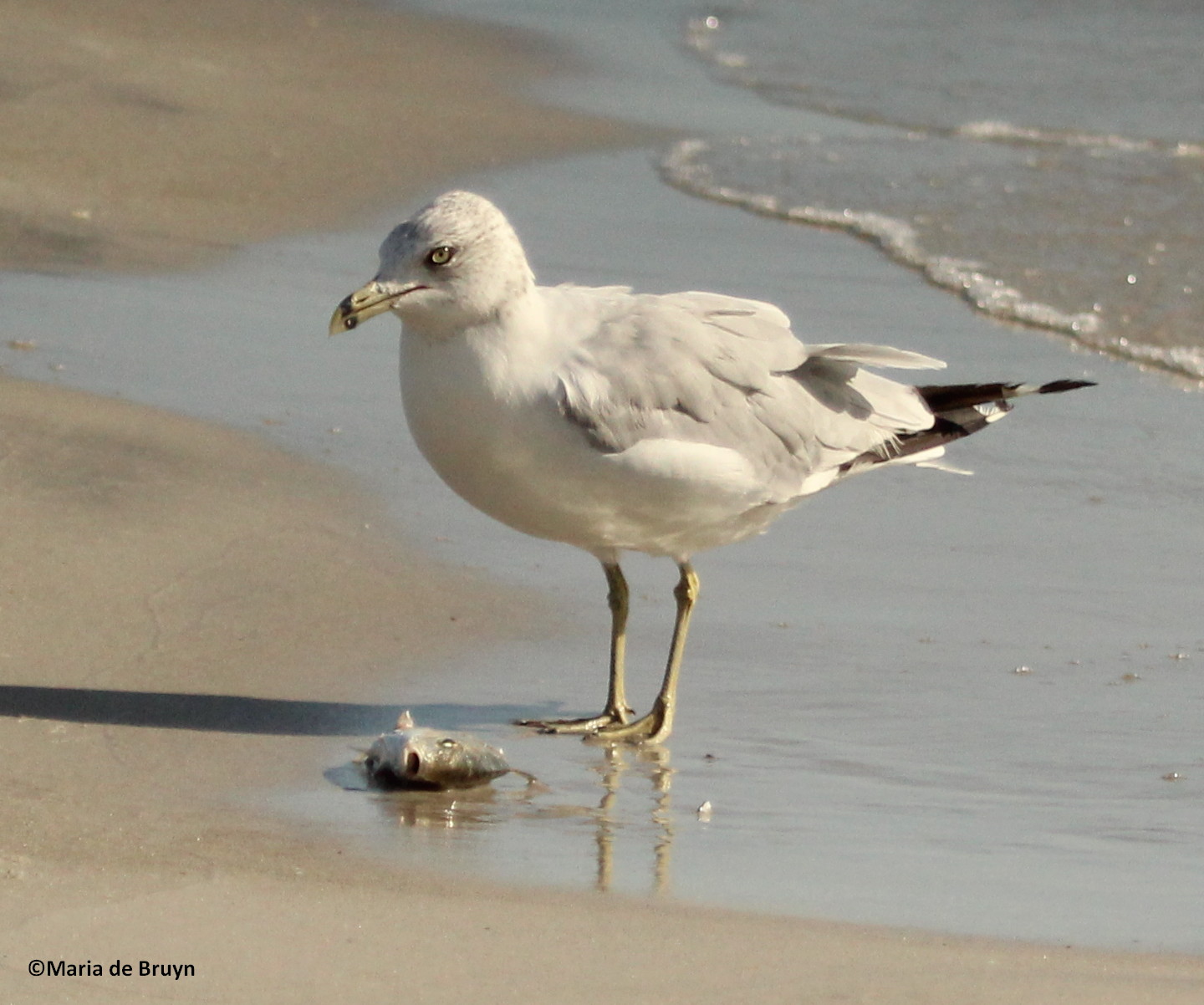
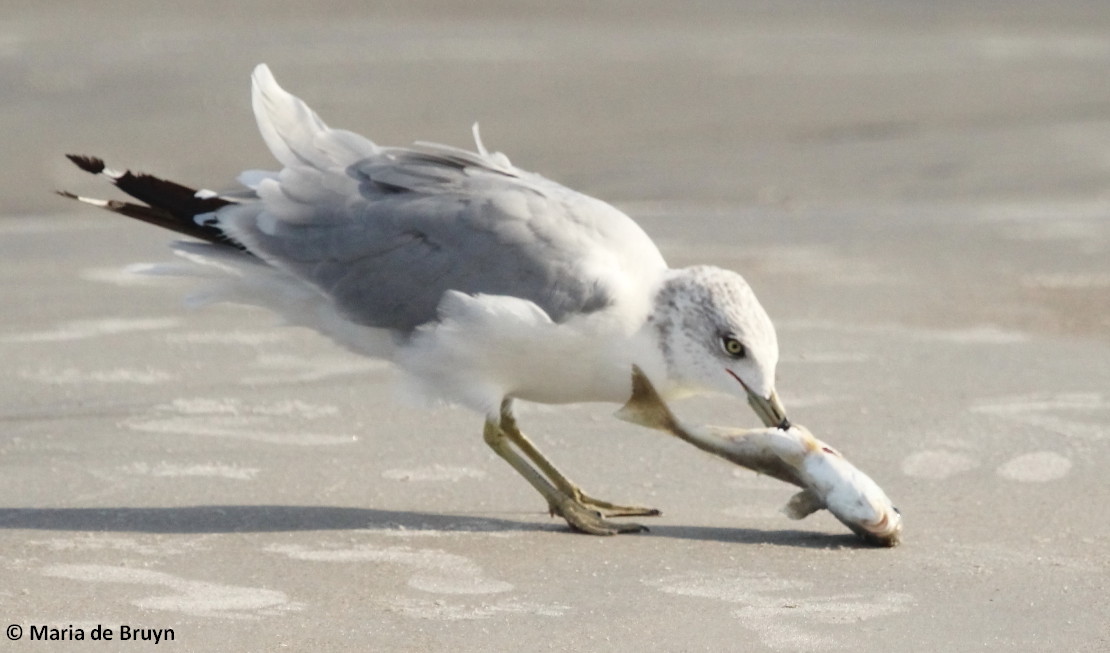
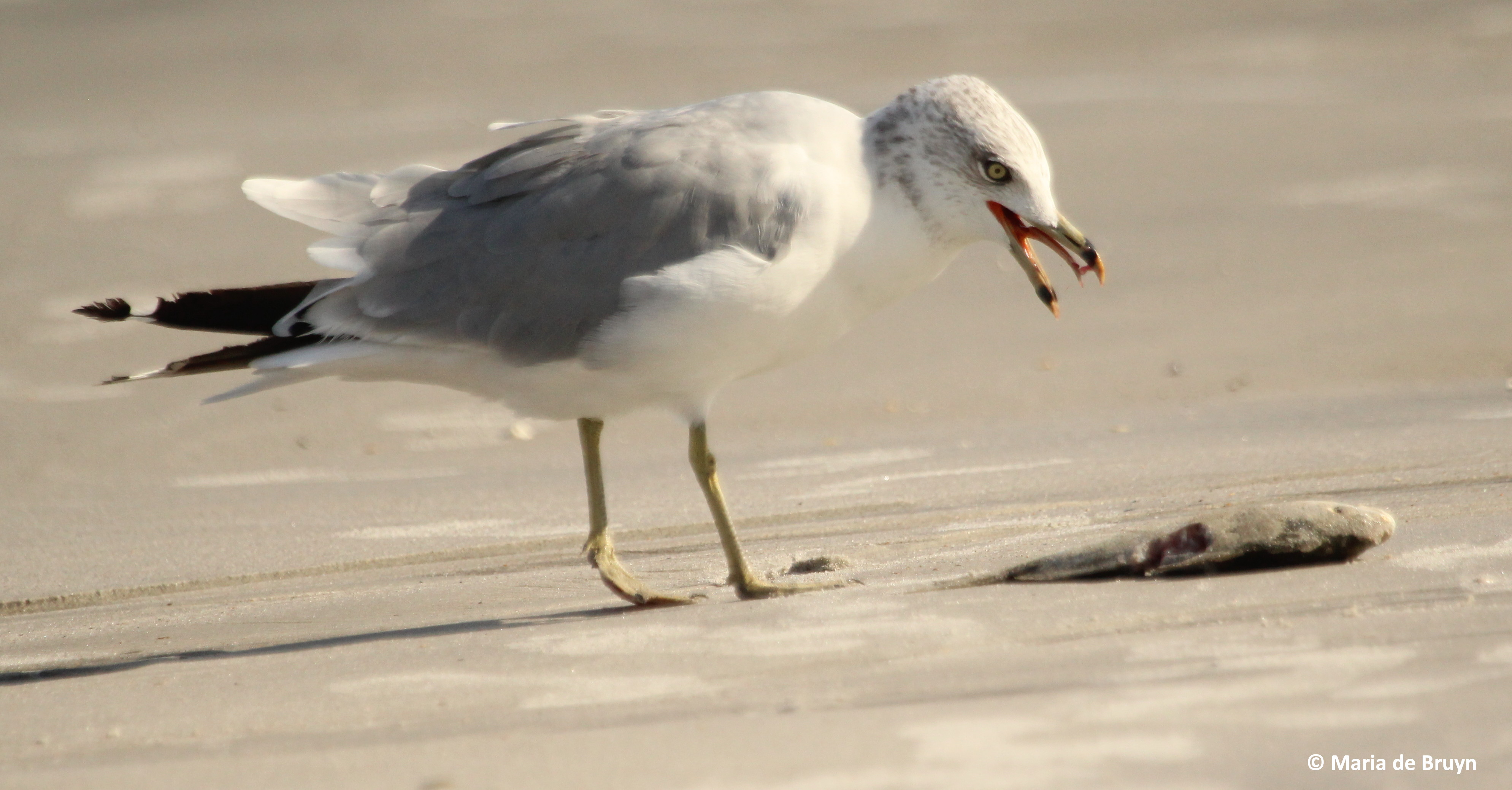
Just after passing it, I turned to see a ring-billed gull (Larus delawarensis) fly in, obviously with the intention of making that fish its supper.

The gull was eating delicately, plucking bits of the fish off and eating at its leisure.

Unfortunately, the feast didn’t last long for the gull because a thief in the form of a large great black-backed gull (Larus marinus) swooped in. The ring-billed gull was not happy but couldn’t do much about it (click on the link to the video).

ring-billed gull IMG_5224© Maria de Bruyn resRing-billed gull IMG_5255© Maria de Bruyn

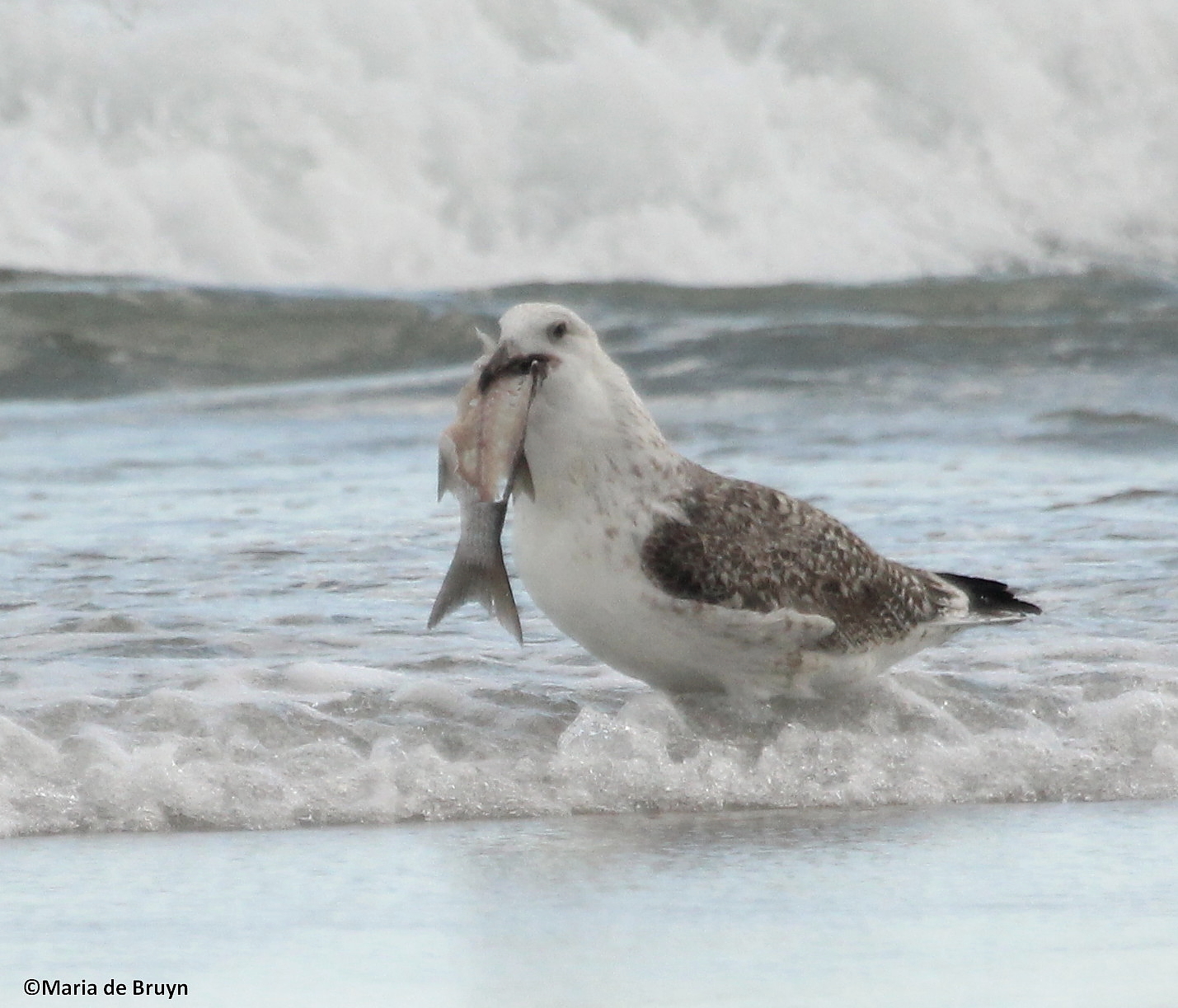
The people fishing from the shoreline frequently have a group of birds waiting nearby. This can definitely be to their benefit, as was the case for this juvenile great black-backed gull that was tossed a fish by a man wrapping up his activities for the day. He told me that he shared fish with the birds on a regular basis.

great black-backed gull IMG_4978© Maria de Bruyngreat black-backed gull IMG_4985© Maria de Bruyn res

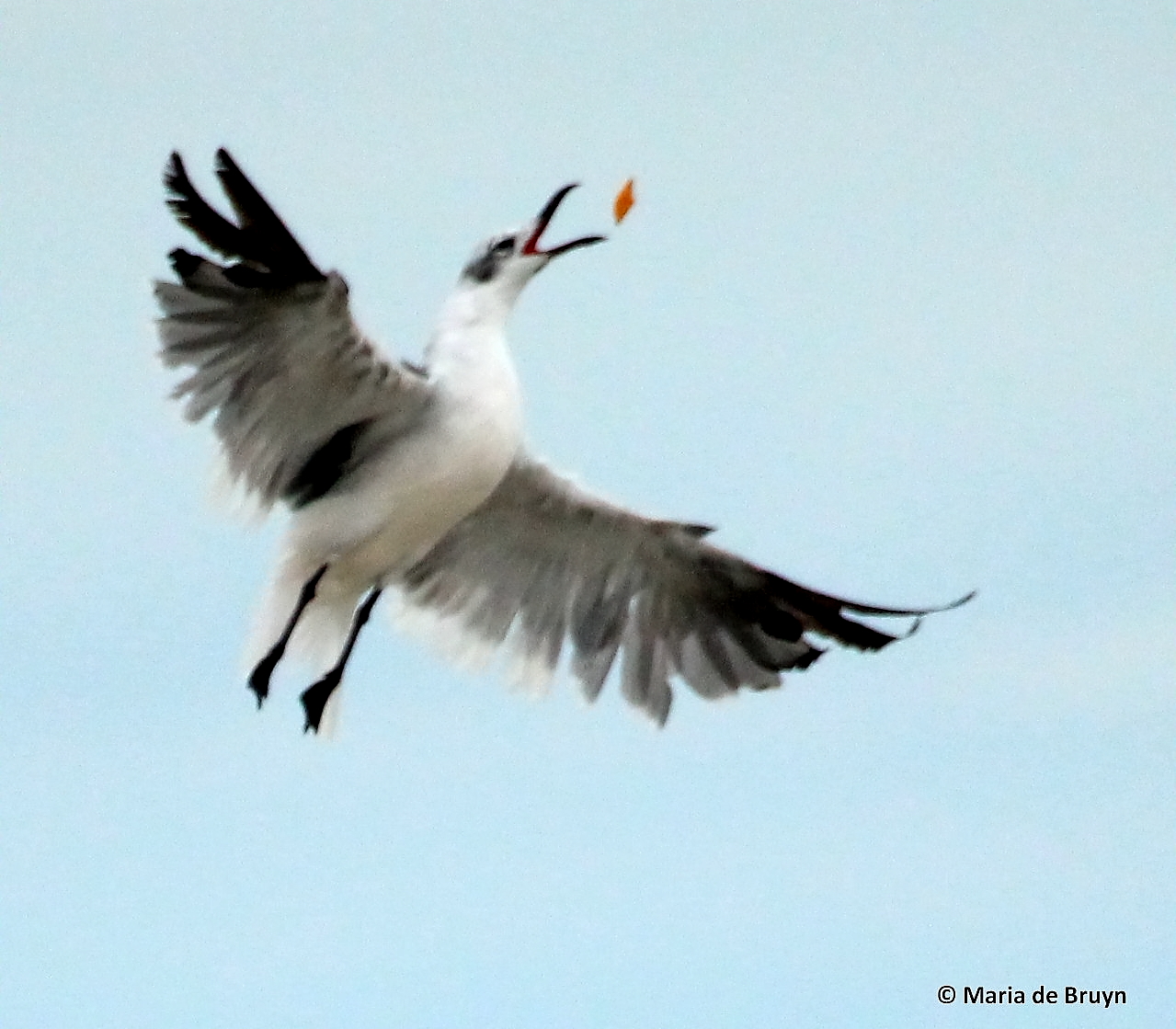
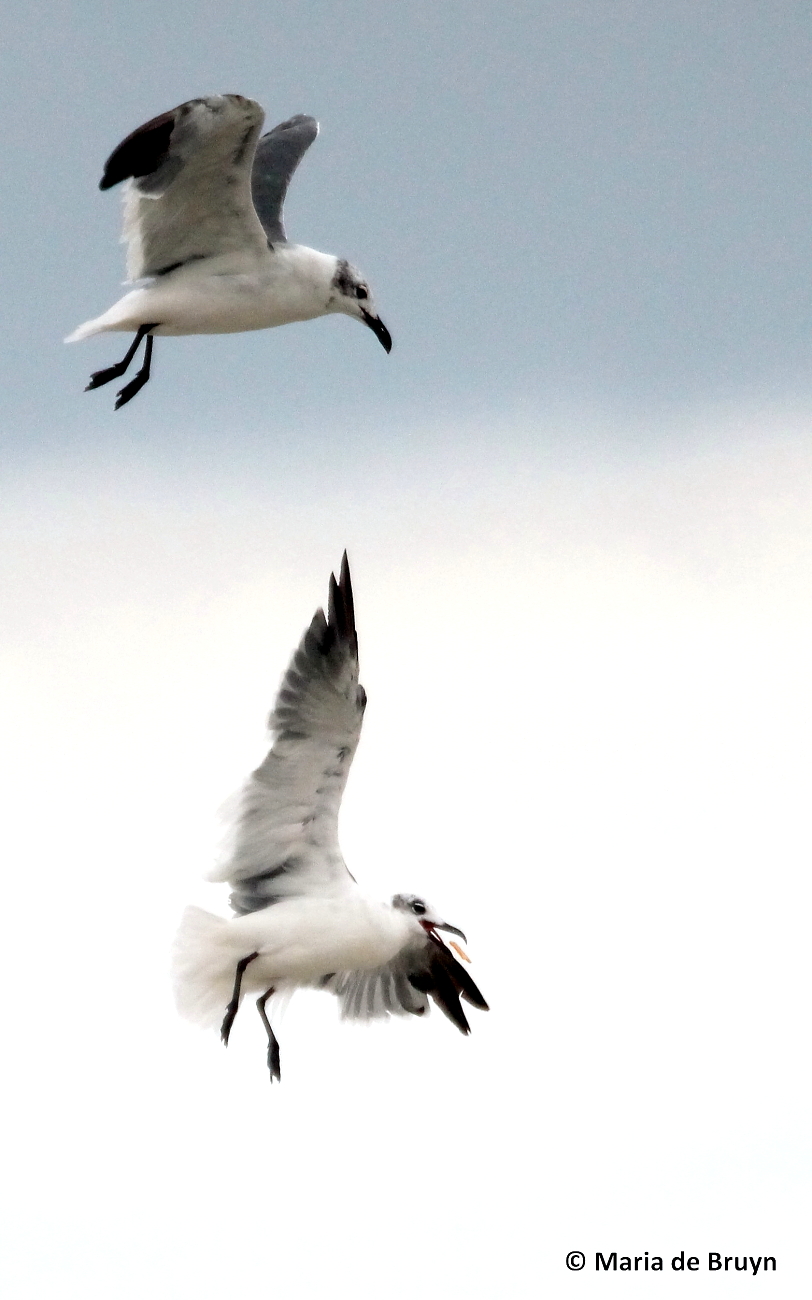
Laughing gull  IMG_1150© Maria de BruynOther people also offer the seabirds food, but not always of the nutritious kind. Two days running, I saw Laughing gull  IMG_1194© Maria de Bruyn resa young man throwing orange-colored morsels into the air, which were snapped up eagerly by laughing gulls (Leucophaeus atricilla) and common terns (Sterna hirundo). Unfortunately, it appears that he was feeding them cheetohs or some kind of cracker with lots of food coloring. The birds seemed to be really anxious to snag a piece; obviously human beings aren’t the only species prone to eating junk food.


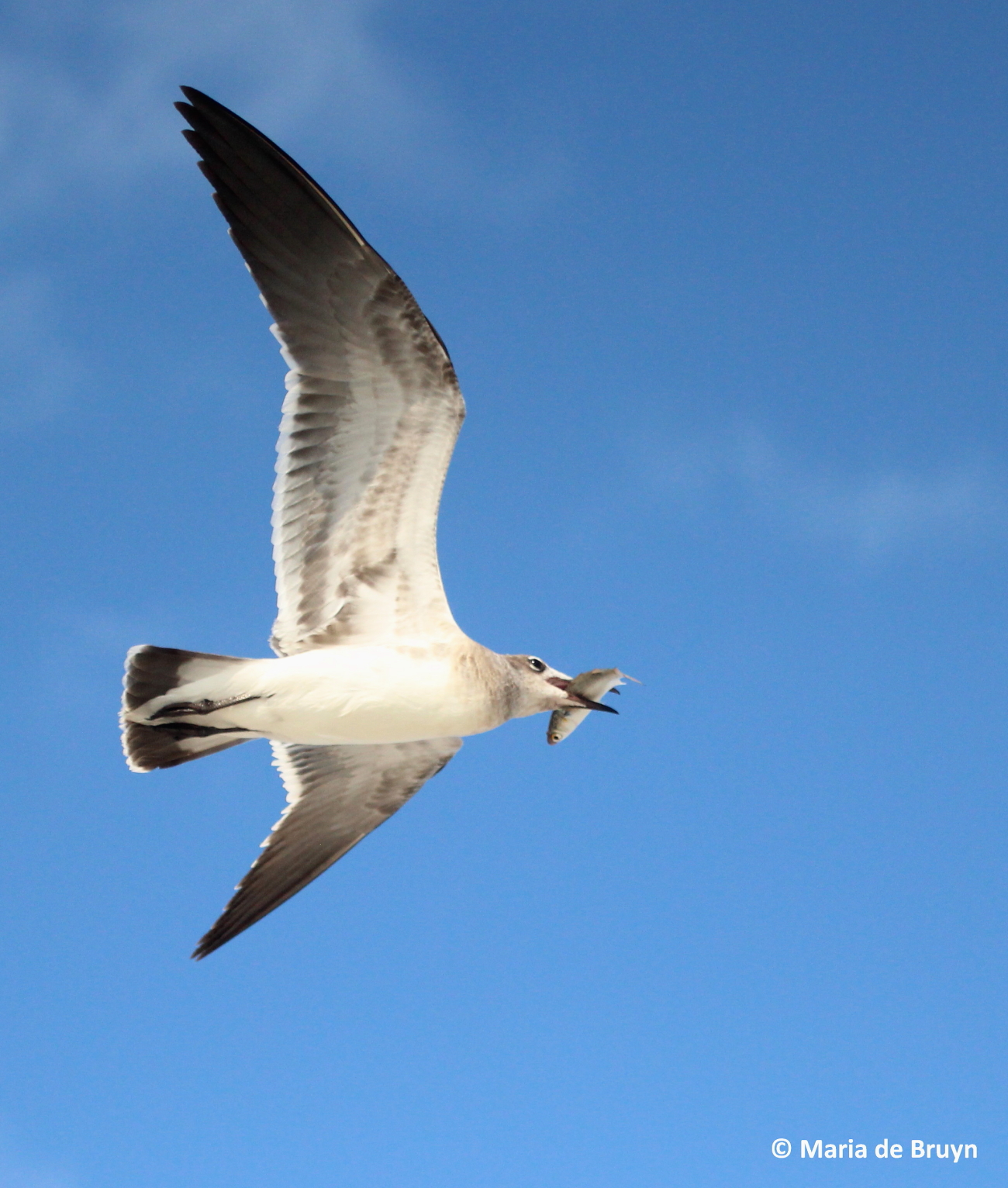
Other birds, like this laughing gull and snowy egret (Egretta thula) were more successful in finding their own food. And that is as it should be!

laughing gull IMG_5050©Maria de Bruynsnowy egret IMG_3329© Maria de Bruyn

My love affair, take 2

osprey IMG_0689© Maria de Bruyn res

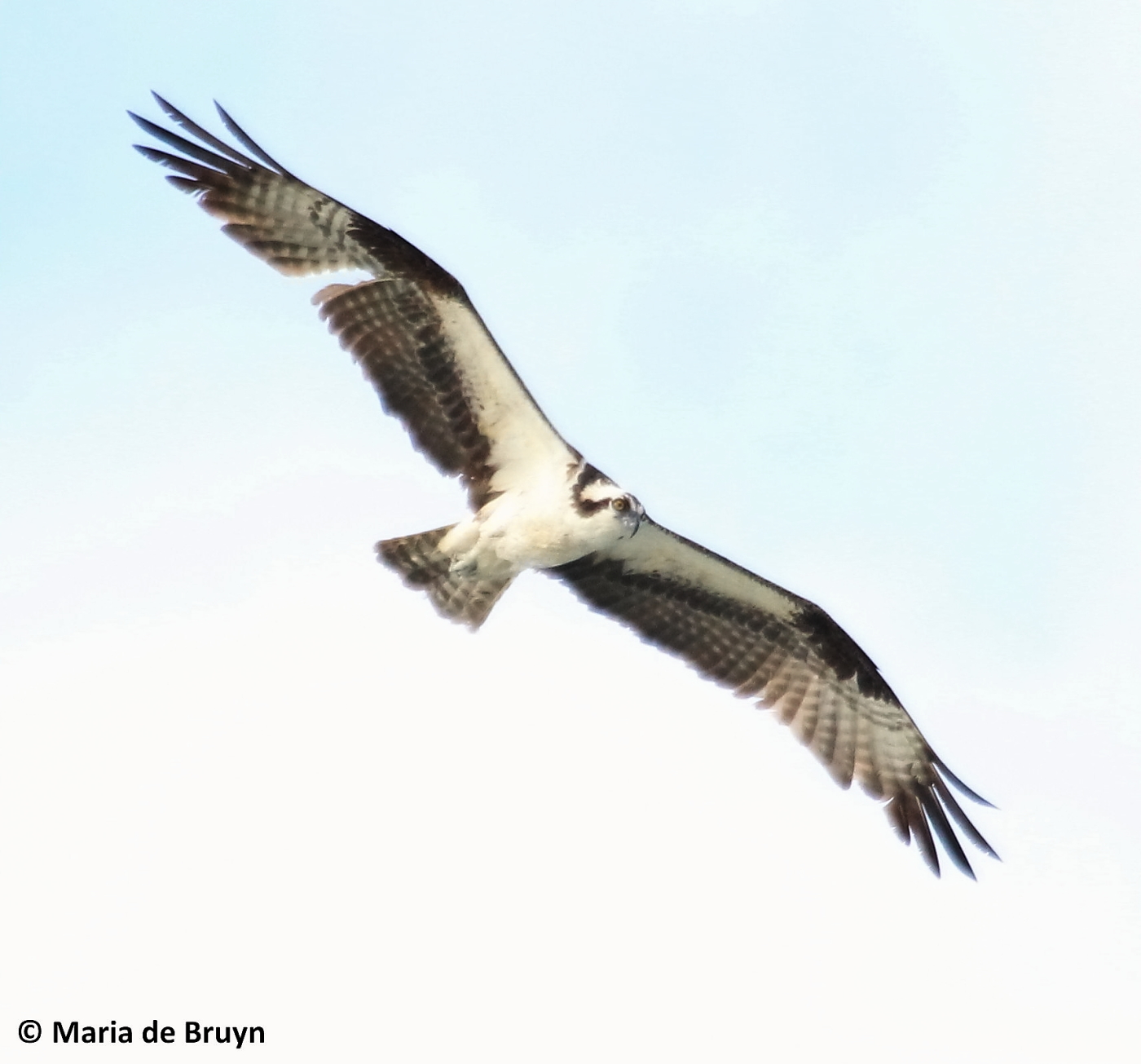
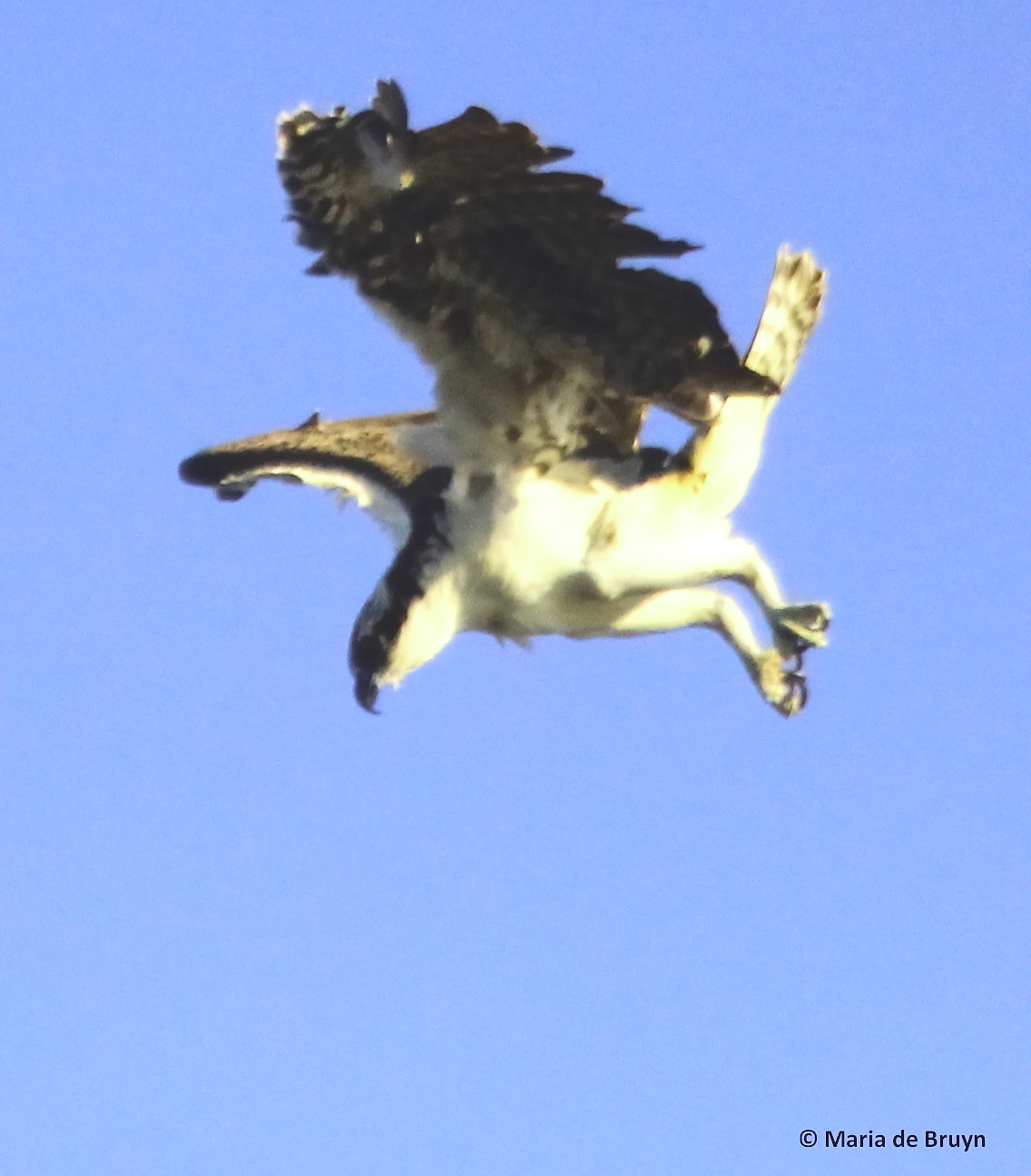
The ospreys (Pandion haliaetus) continue to capture my heart, even though my numerous forays to lakes and ponds to get some excellent photos of them have not yet paid off. I finished the book on osprey migration, Soaring with Fidel, and thoroughly enjoyed it.

Reading about different birds’ personalities and choices for migration was really interesting; learning about the different people who dedicate their lives to learning and sharing information about ospreys kept my interest, too. The ospreys definitely have a devoted fan base.

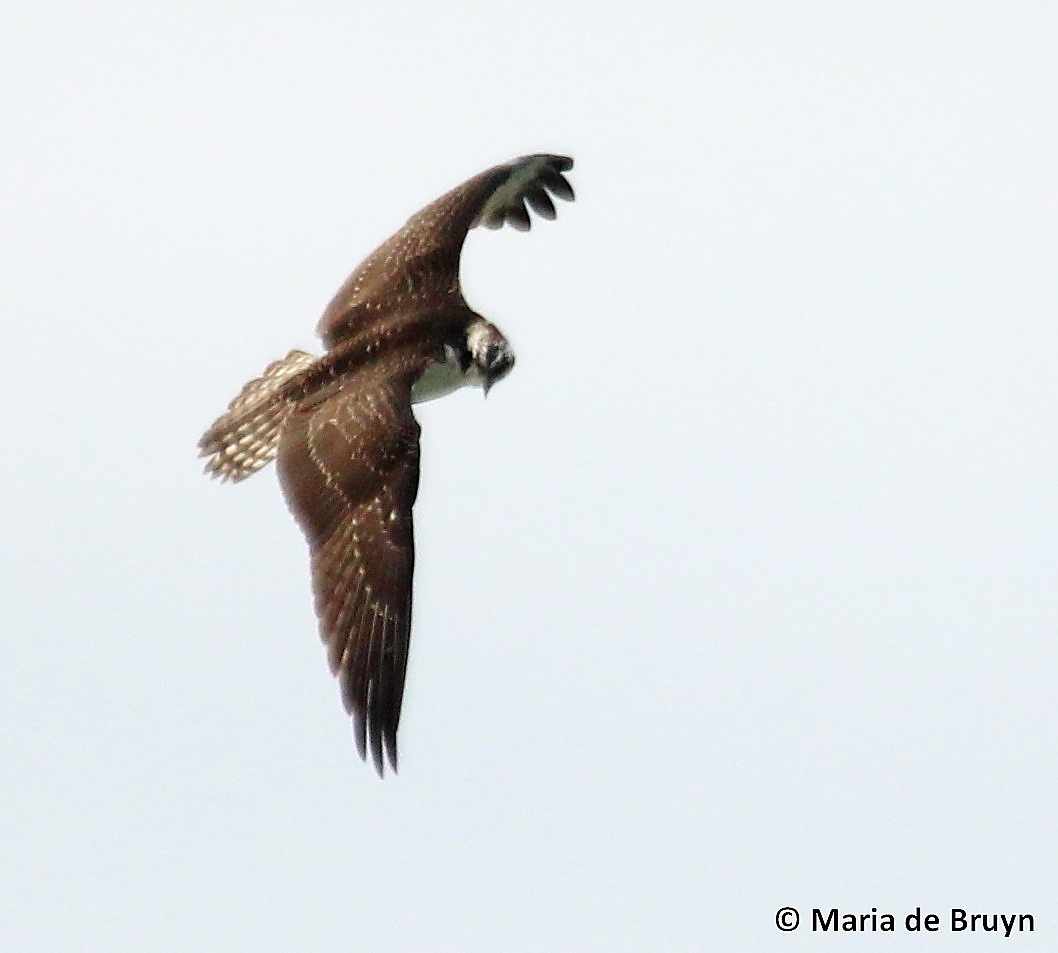
It’s quite amazing to think of these birds flying several thousand miles within a short period of time so that they can spend the winters in warmer Caribbean and South American climes. When I was at Topsail Island, I was lucky to see a few ospreys that were apparently on their migratory journeys. They flew very far overhead, but I did see one drop down into the ocean and come up with a meal.

osprey IMG_4103© Maria de Bruyn resosprey IMG_3810© Maria de Bruyn


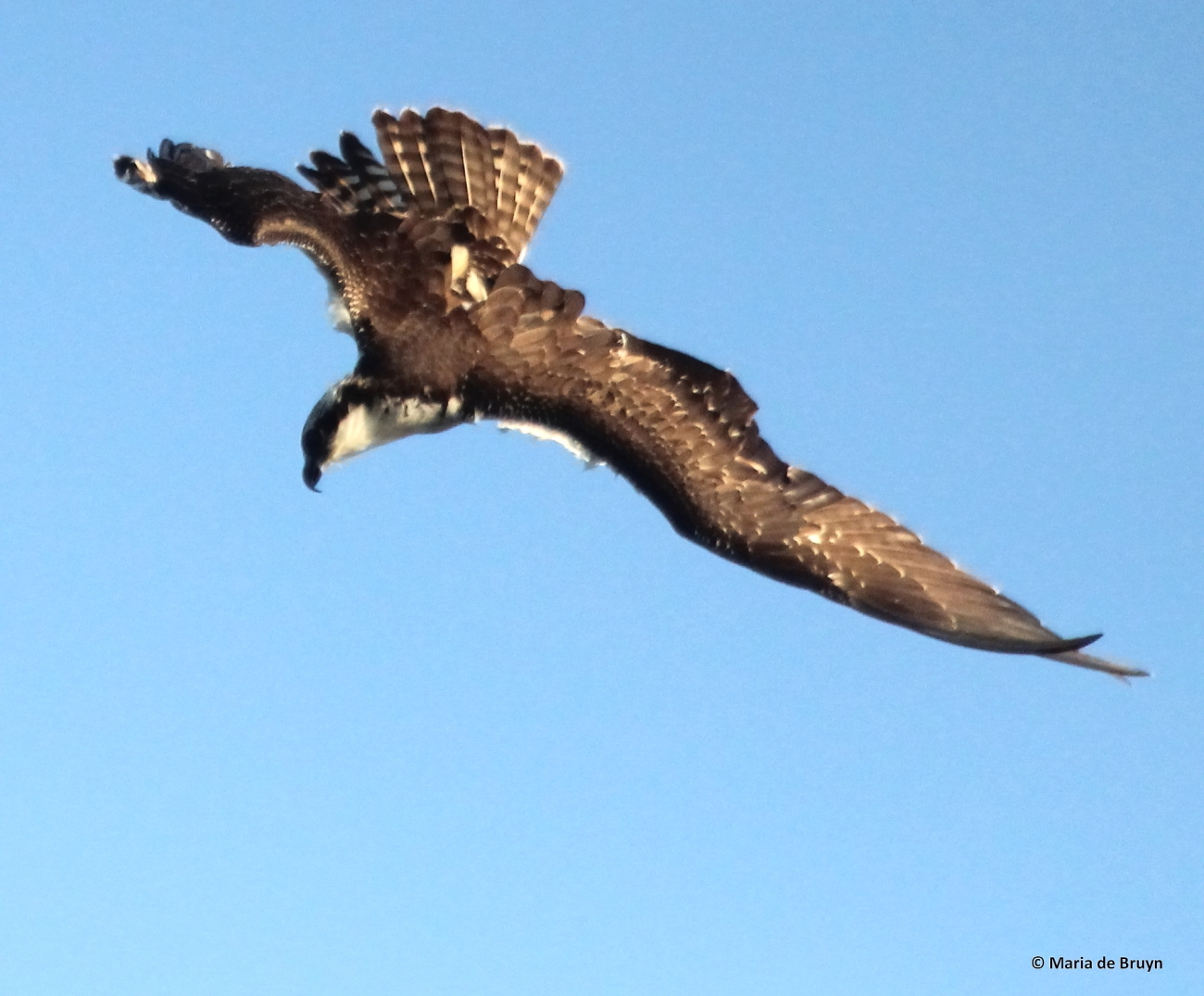
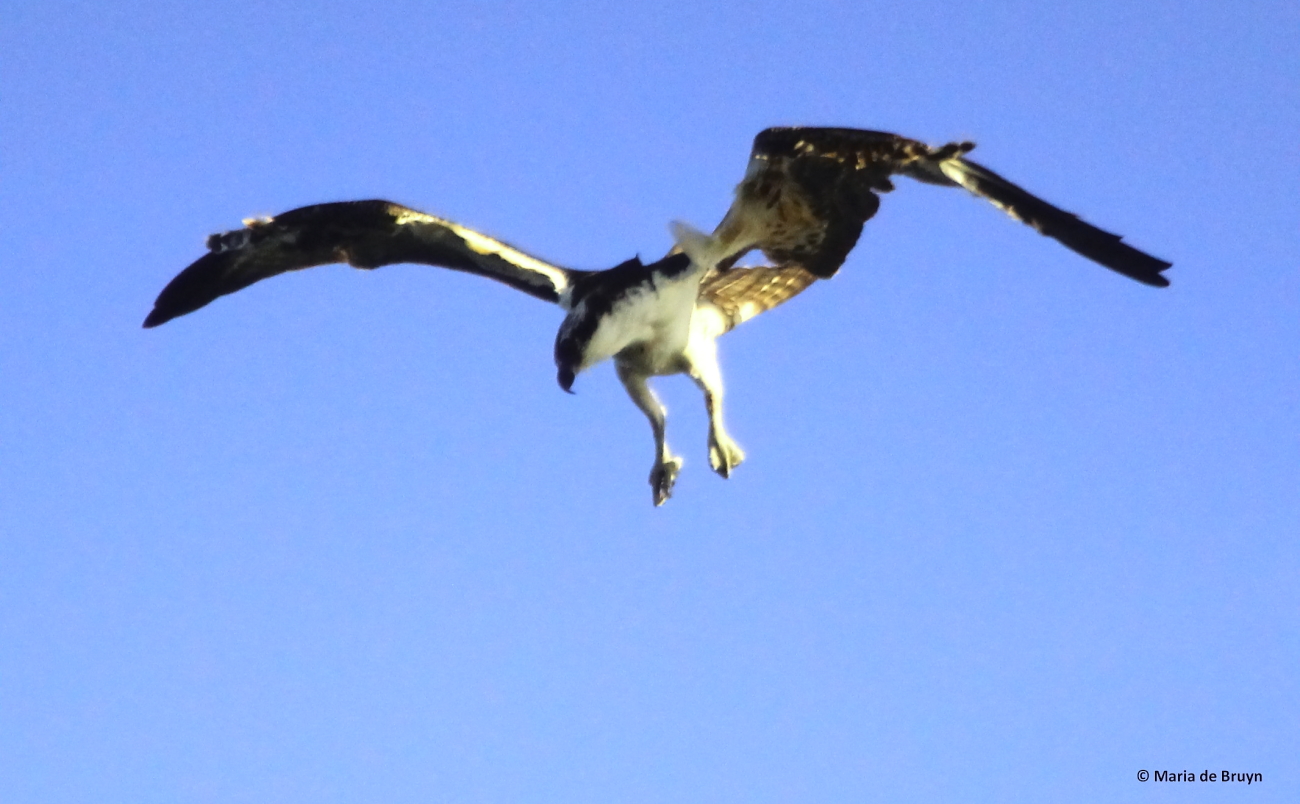
One day when I was at North Carolina’s largest man-made lake, Jordan Lake, I was lucky to see an osprey begin a predatory dive that was a bit nearer to me than usual.

osprey IMG_0805© Maria de Bruyn res

The bird’s wings and claws were spread as it readied itself to grasp the fish that was in sight down below.

osprey IMG_0803© Maria de Bruynosprey IMG_0802© Maria de Bruyn

osprey IMG_0806© Maria de Bruyn resSometimes the birds will face forward to dive down and then flip upwards at the last minute so they enter the water feet first. This bird did most of the dive with its feet down in the clutching position, ready to strike.
osprey IMG_0812©Maria de Bruyn res

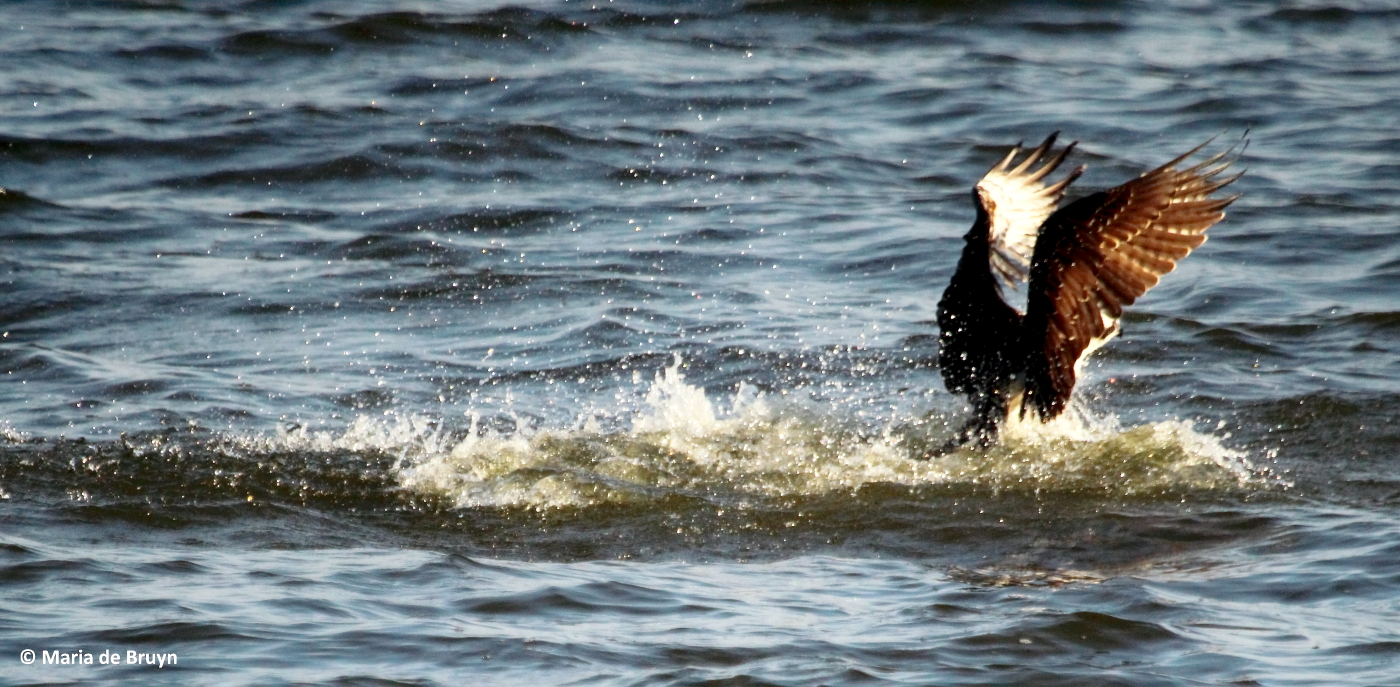
A mighty plunge!

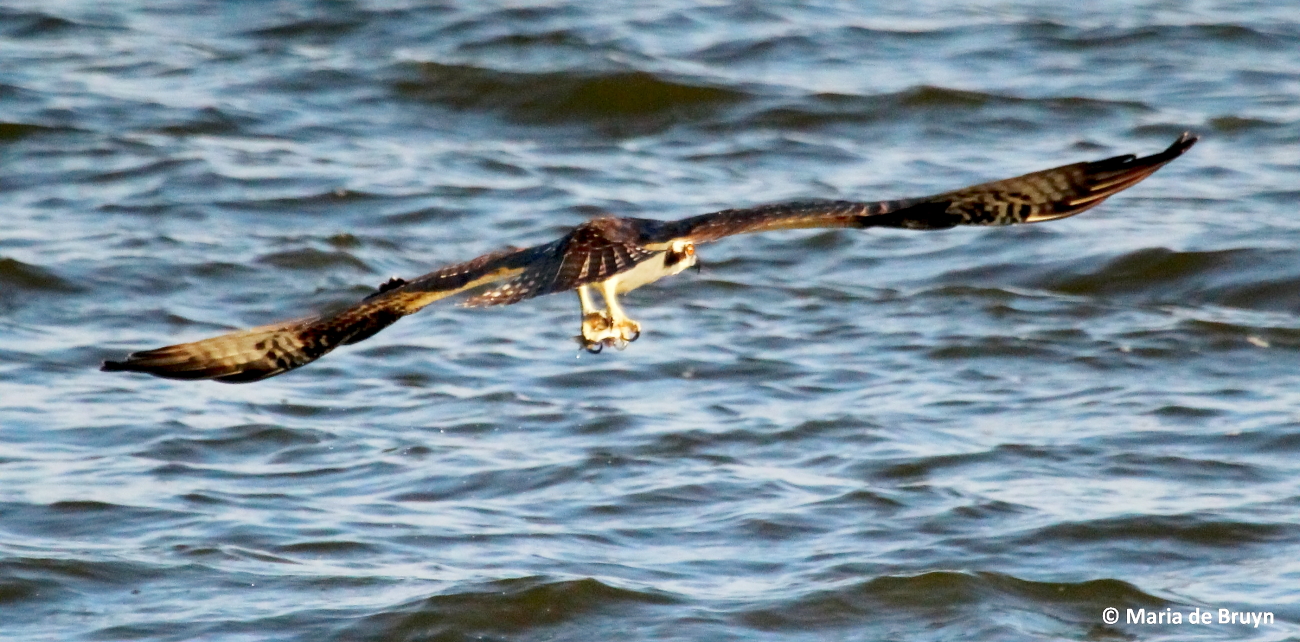
osprey IMG_0813© Maria de Bruyn resAnd then emergence with a meal caught in those feet with unique reversible back toes to help the osprey hold on to the slippery fish.

osprey IMG_0815© Maria de Bruyn resThis was a happy bird. And when another (or the same?) bird suddenly flew right over my head to grace me with a piercing gaze, I was a happy birder!

osprey IMG_0736© Maria de Bruyn res

Danger on the beach!

great black-backed gull IMG_4207© Maria de Bruyn resDuring a recent visit to Topsail Island, one of my favorite get-away sites, the various gulls, terns and other birds were very busy: resting, eating and investigating beach debris such as twigs, like this great black-backed gull (Larus marinus).

When I looked through my zoom lens and saw two juveniles of the species picking up and dropping items into the sand, I decided to photograph them. Given some deterioration in my eyesight, even through the zoom lens, I thought one of them was examining a large black twig so I shot away. Imagine my surprise when I downloaded the photos to my computer and enlarged them to see what the gull was actually carrying around!

great black-backed gull IMG_4297© Maria de Bruyn

Most of the time, s/he appeared to be grasping the knife by the blade rather than the handle end, which totally amazed me.

great black-backed gull IMG_4277© Maria de Bruyn res bgreat black-backed gull IMG_4306© Maria de Bruyn

The bird would drop the paring knife and then pick it up again.

great black-backed gull IMG_4292© Maria de Bruyn resgreat black-backed gull IMG_4280© Maria de Bruyn res

One time it was by the handle.

great black-backed gull IMG_4284© Maria de Bruyn resgreat black=backed gull IMG_4288© Maria de Bruyn res

I wish I had realized what the gull was doing when I was there so that I could have picked up the utensil but at the time, I was convinced it was a twig and after shooting the series, I turned to other birds.

great black-backed gull IMG_4297© Maria de Bruyn res b

I posted the photo on a Facebook birding group page with the remark that: “Beach-goers and fishermen need to pay a lot more attention to what they leave behind onshore!” The responses that came were interesting:

– wow…scary the things people leave behind
– I hope he dropped it when he realized how sharp it was!
– Smelled like fish most likely….
– Sometimes they ‘steal’ from us while our backs are turned on a fishing pier!
– Maybe he’s in a gang?
– Considering it’s Topsail, more likely one of Blackbeard’s crew. Nice image of the gull.

And then one person apparently doubted that the photo I had posted was real: “The size of the gull and the size of the knife looks fishy. The knife is only a bit longer than the beak. That must be one big gull. It’s all in the perspective, I guess.” Since I don’t own Photoshop or some other program with which I can combine photos or insert things into photos, I can assure you that the series shows what happened.

While the respondent who mentioned birds stealing items from people is stating a fact, this site was at the end of the island very far from any piers. So I can only assume that some careless human left the knife behind on the beach (like the cell phone cover and plastic that I collected for the garbage that day).

It is well known that the trash on beaches often ends up in the sea, harming animals that ingest it and contributing to large floating garbage piles.great black-backed gull IMG_4311© Maria de Bruyn resOn 20 September 2014, the Ocean Conservancy is sponsoring the International Coastal Cleanup — the world’s largest volunteer effort to clean up waterways and the ocean. I don’t live near an ocean but will pick up trash near a large lake in my area. And I urge you all to participate in some way if you can! It may be a drop in the ocean/waterways bucket but the drops add up!