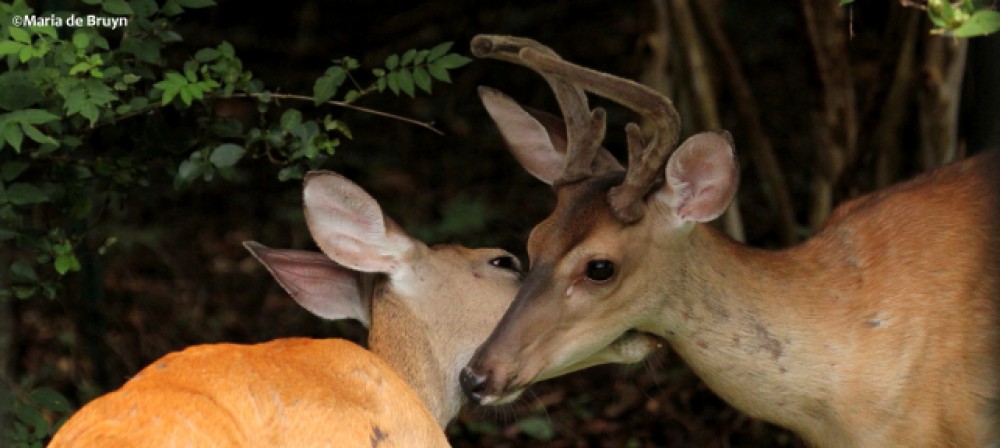
Costa Rican rambles 5A: the Talari Mountain Lodge

This edition of Costa Rican rambles will be a two-parter. Remember that you can click on a photo to see it larger and then click the back arrow to go back to the blog. The Talari Mountain Lodge, located in the El General Valley next to the Chirripo River, became our pied-à-terre for two nights. We had lush surroundings, as you can see from our view looking out of the dining area.


Several of the signs were made of old tires that had been artistically cut and painted – beautifully and colorfully done! Some hanging plant holders had also had a previous life as tires.
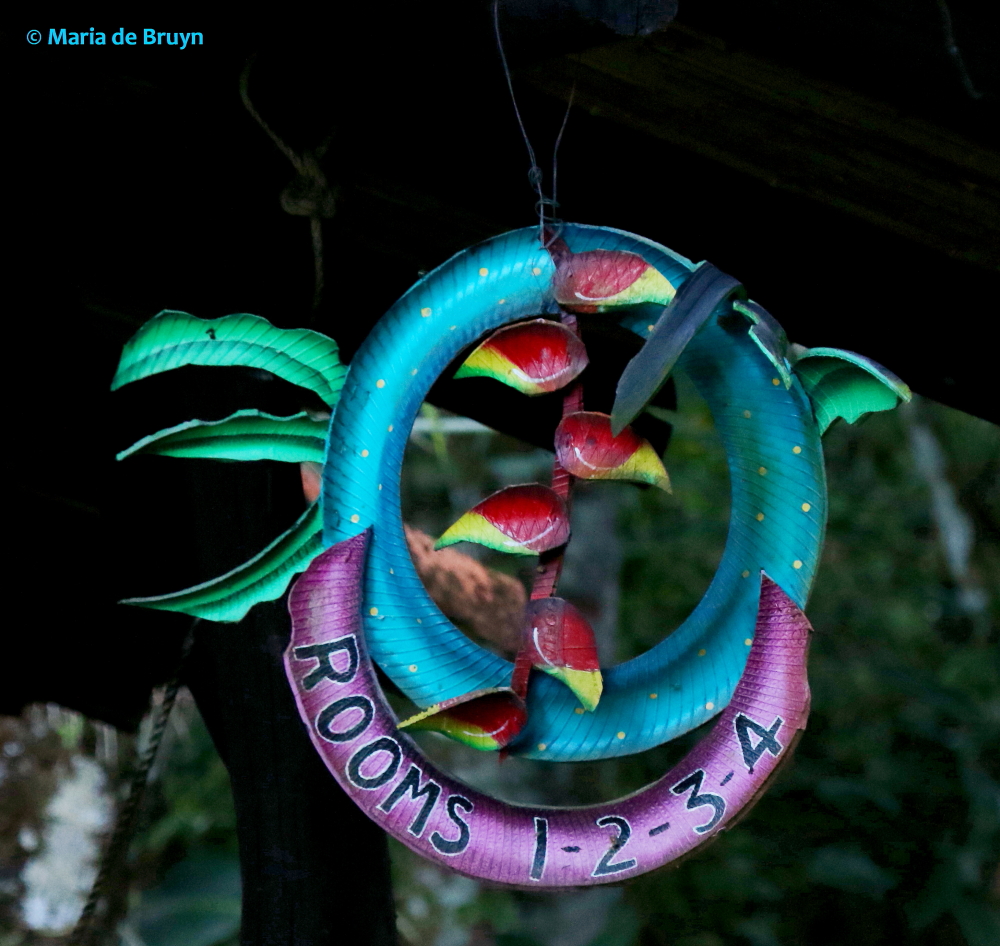
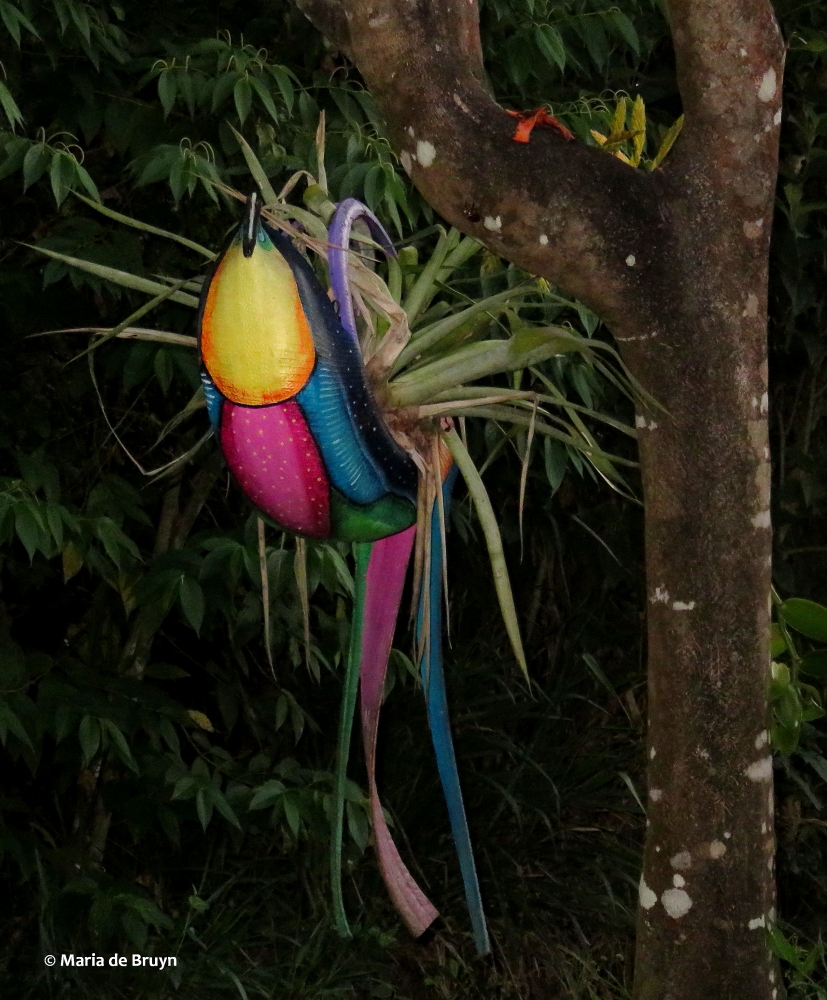
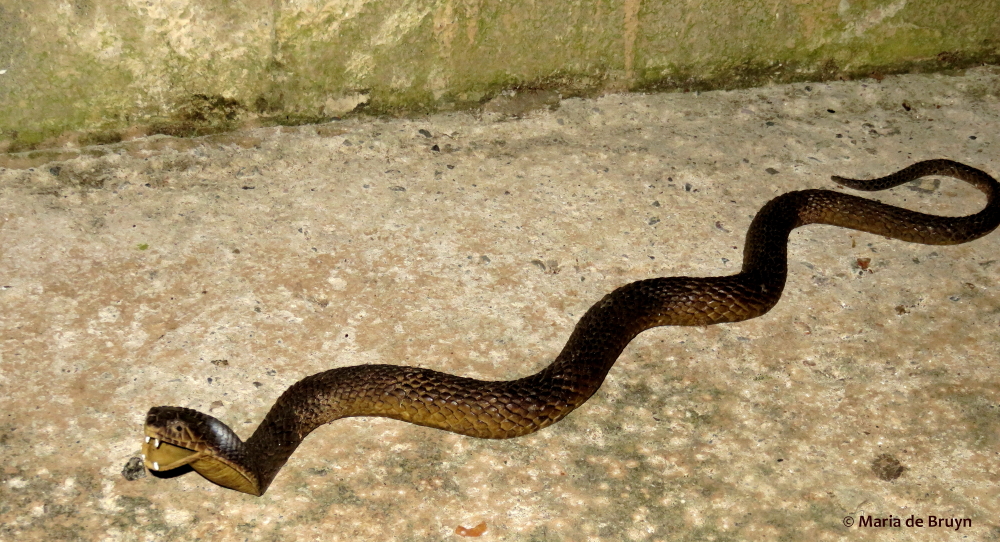
There were some other decorations, too – a brightly painted cart and some snakes (we only saw one real one during the trip).

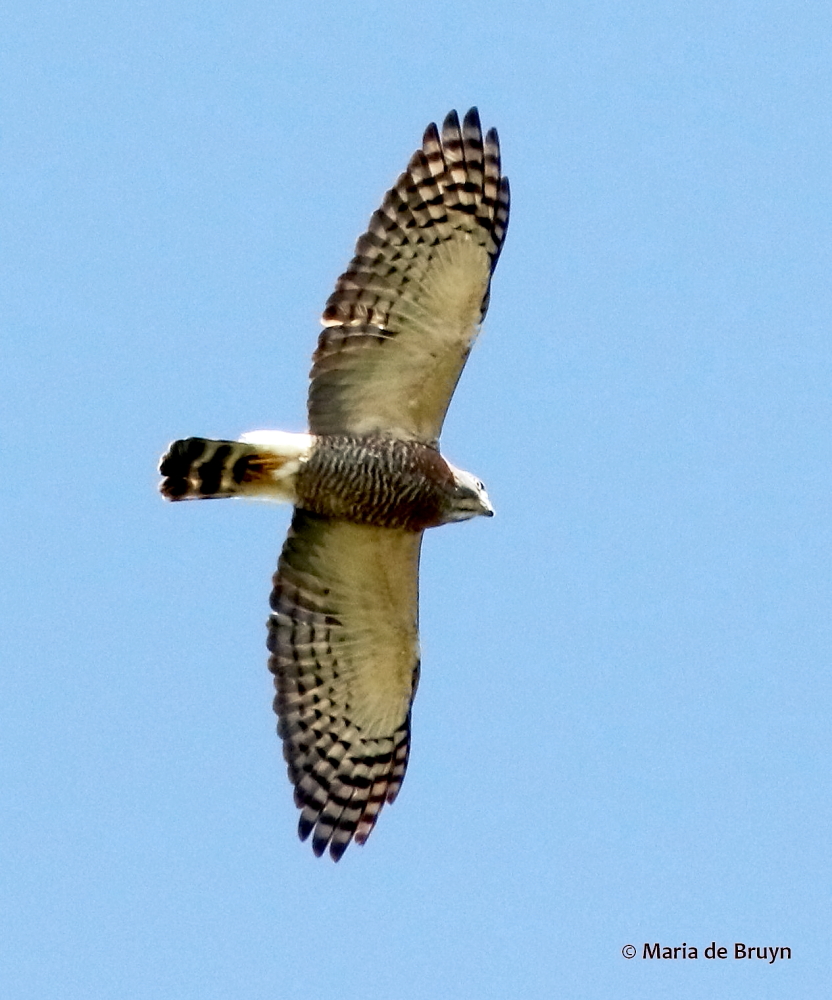
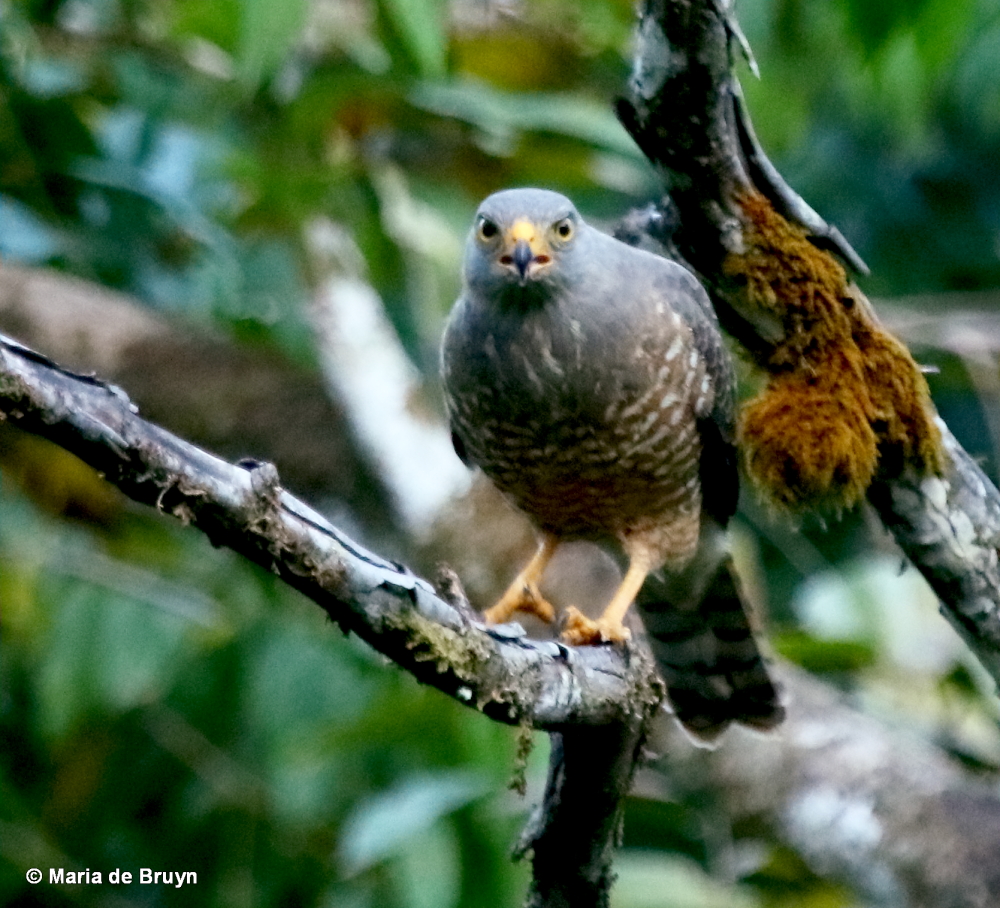
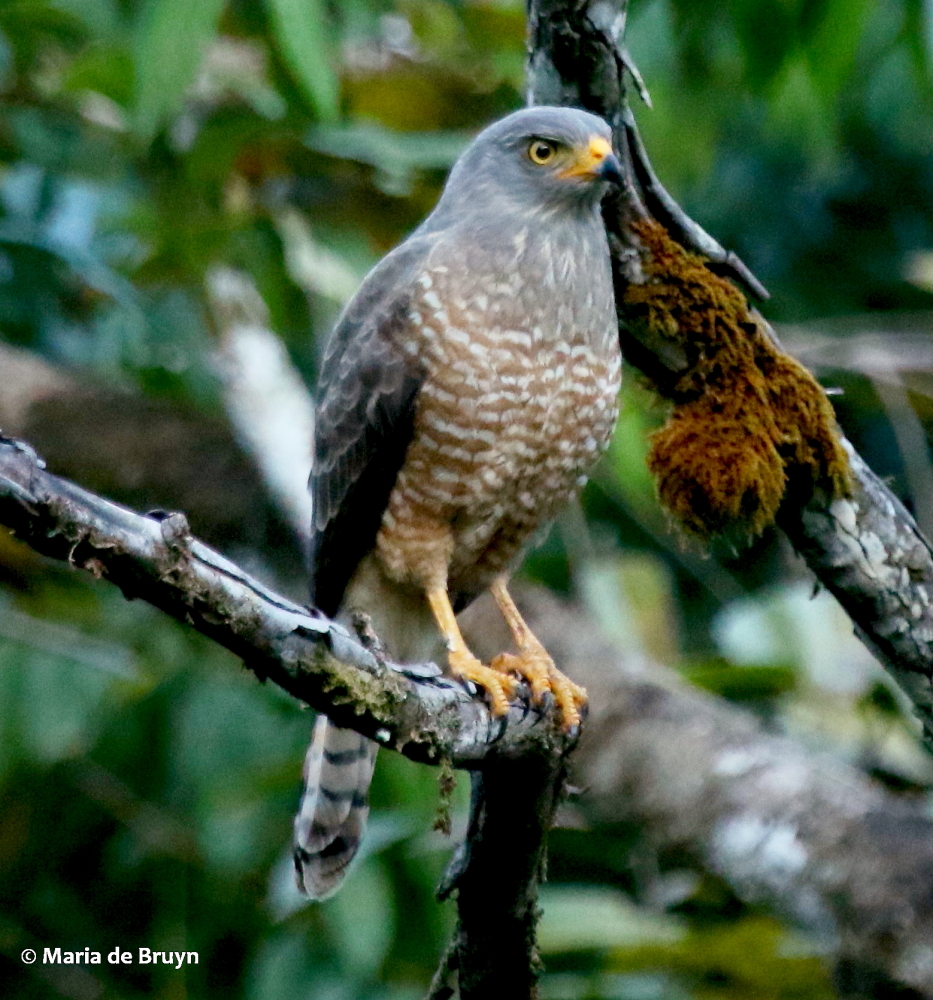
Having gotten some coffee and tea, we set out to see the lodge surroundings before breakfast. After passing a strangler-fig covered tree (Ficus aurea), we stopped by the rooms in which some of our group were staying. There we were welcomed by a very handsome roadside hawk (Rupornis magnirostris).
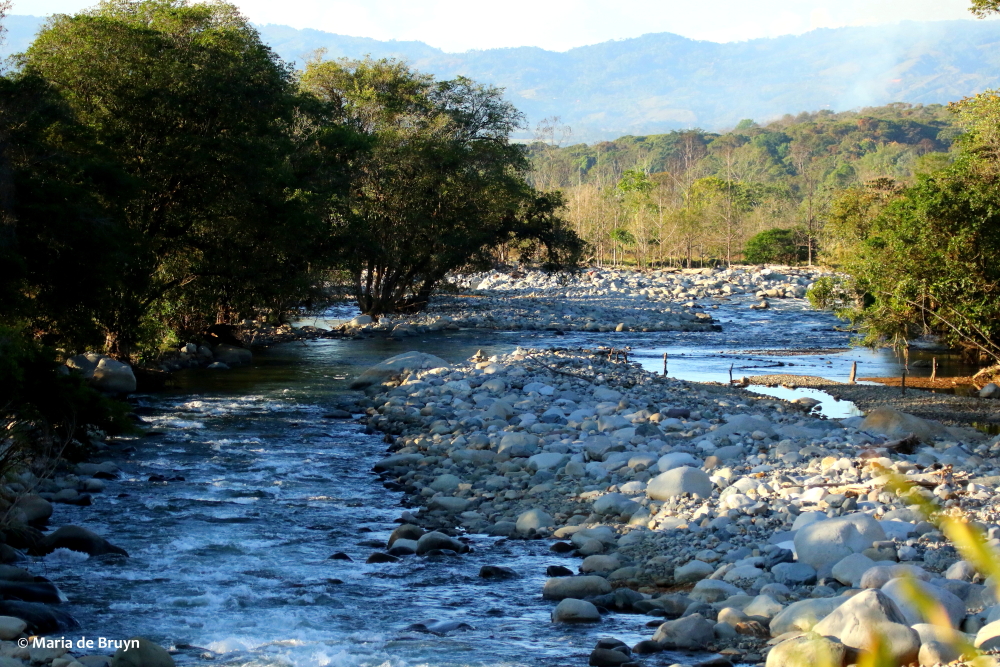
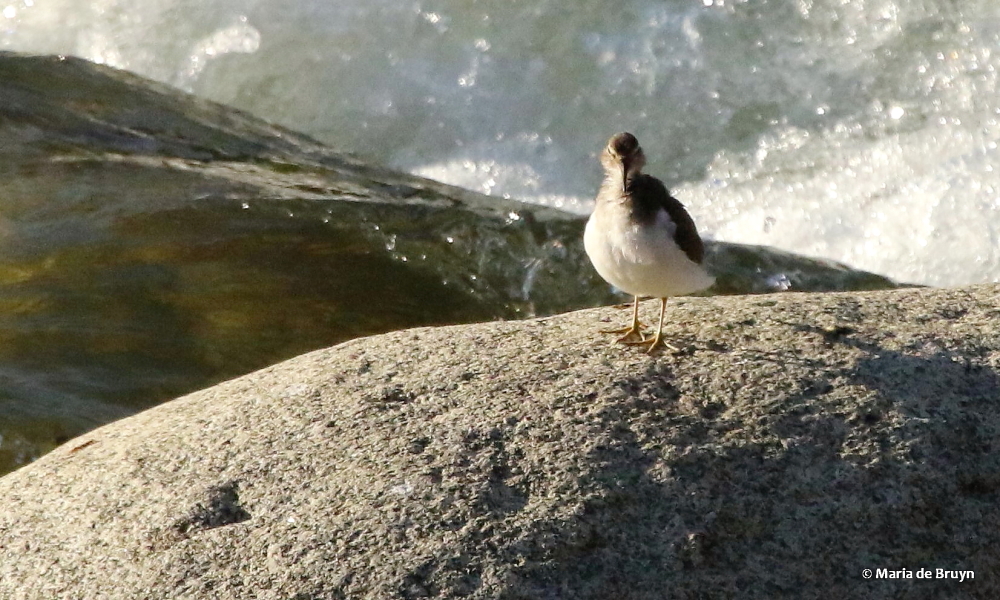
We neared the river, which was rather low. Some of our group members managed to catch sight of an otter there a few times but I never had that sighting. I did see a sandpiper on a rock in the river, which our guide said was a spotted sandpiper but it looked like a solitary sandpiper (Tringa solitaria) to me.
 

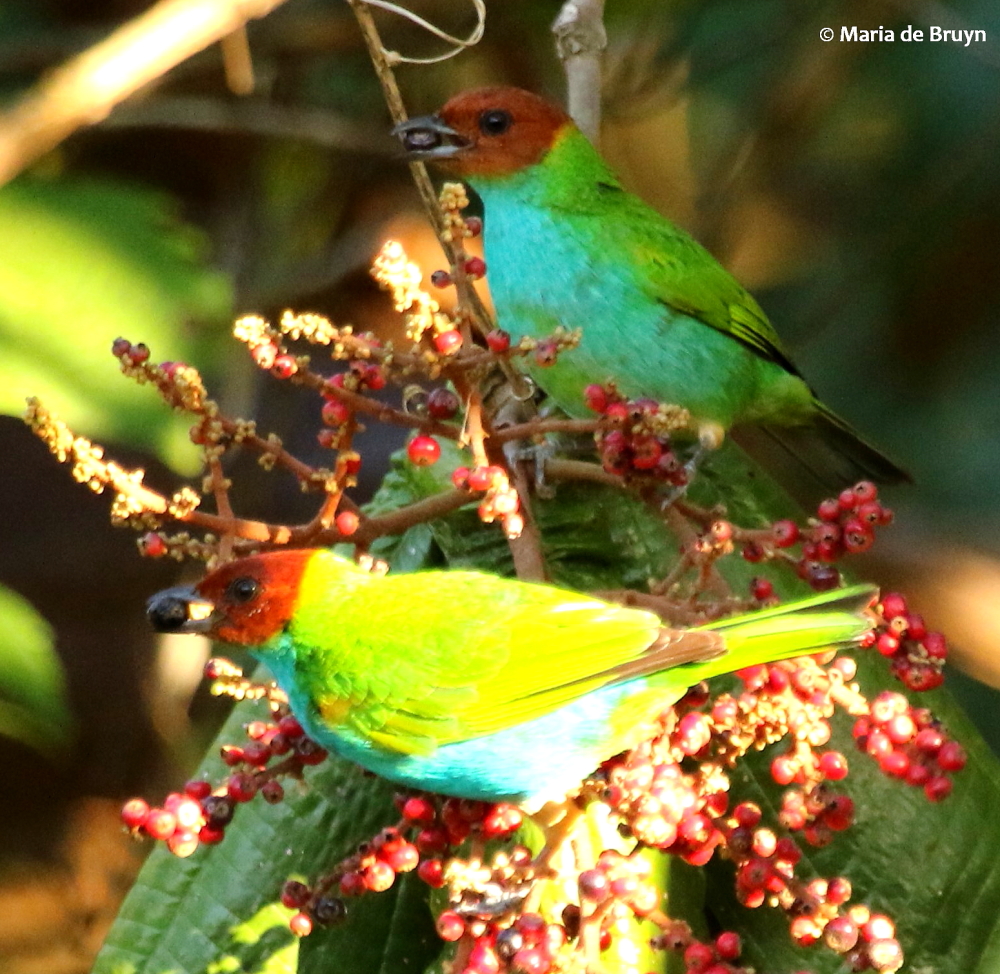
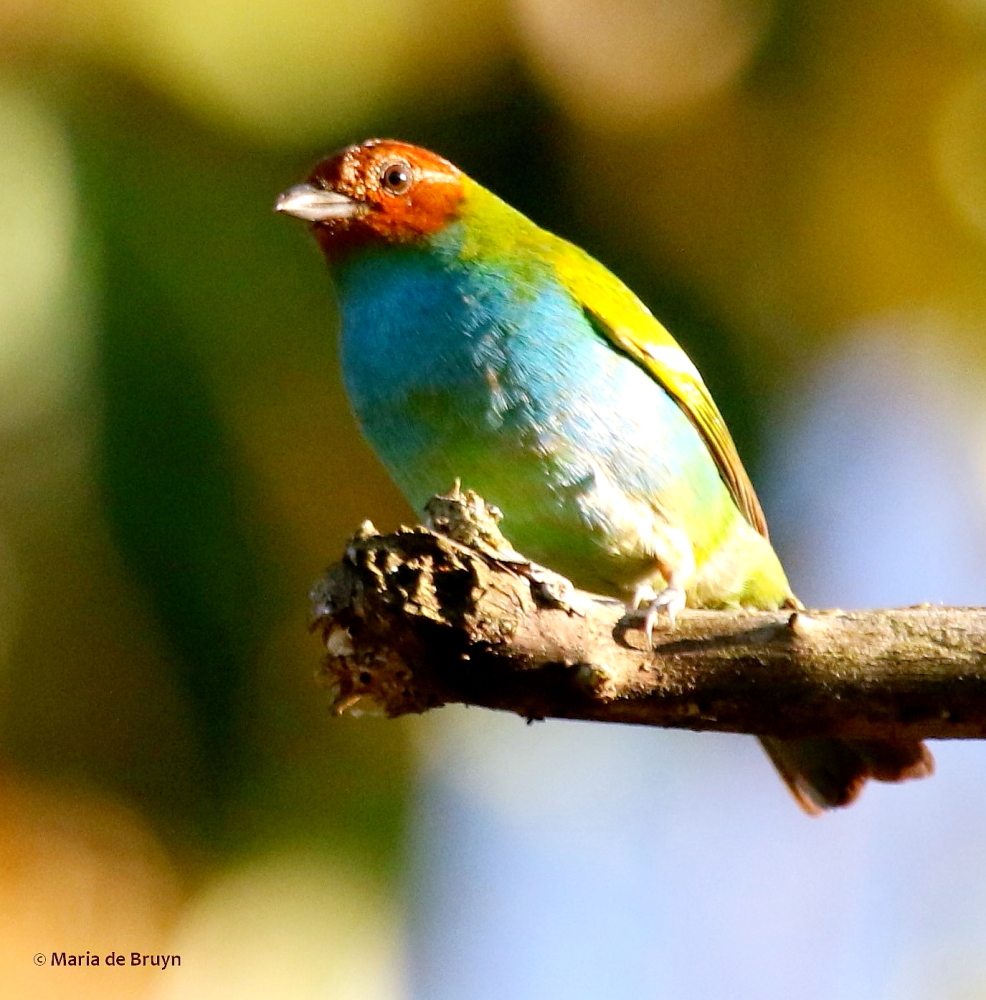
The trees along the banks were filled with birds. One of the first that really caught my eye was the bay-headed tanager (Tangara gyrola). I would have given it a different common name, but its distinct head color really did set off its beautiful blue and green feathers, which looked almost neon in the bright sunlight  .


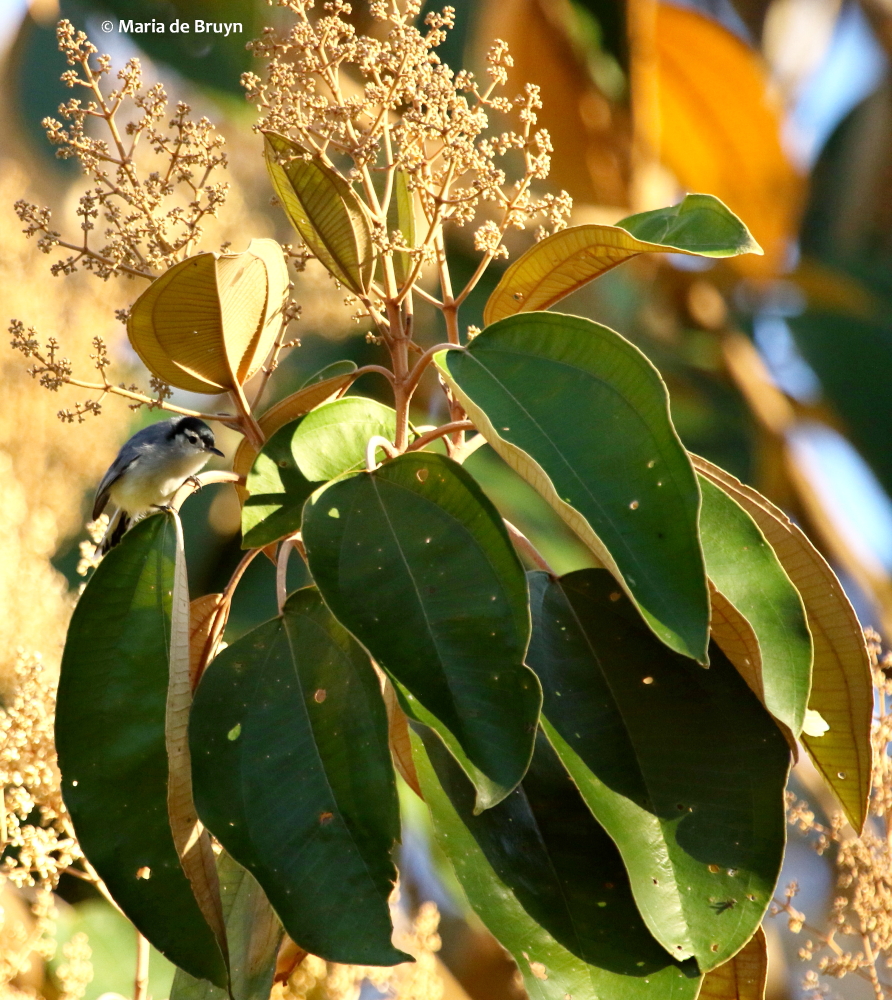
Now that spring has come to North Carolina, I’ve been having fun watching the blue-gray gnatcatchers building their nests. They have a counterpart in Costa Rica, called the tropical gnatcatcher (Polioptila plumbea). It seems to be about the same size as our gnatcatcher, with its gray feathers and tendency to move about a lot, but its head reminds me more of a Carolina chickadee. Perhaps this is what a hybrid blue-gray gnatcatcher/Carolina chickadee would look like.


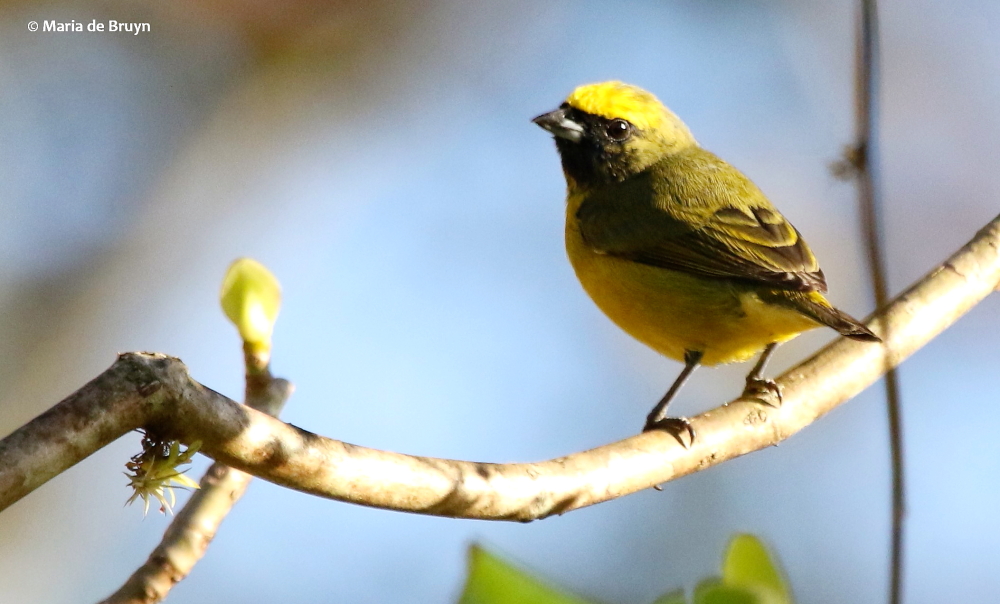
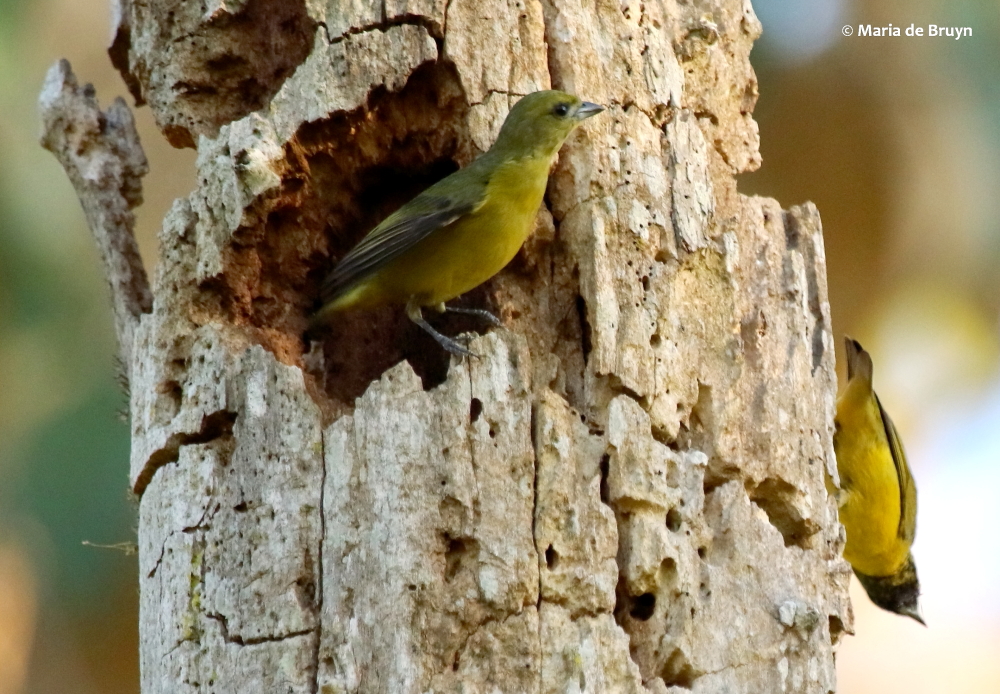
The next bright bird to occupy my attention, while my fellow birders peered through their binoculars at other species, was the yellow-crowned euphonia (Euphonia luteicapilla). The adult males have bright yellow and blue plumage; I only saw younger males and a female who seemed to be checking out a nesting cavity.       
 

A scaly-breasted hummingbird (Phaeochroa cuvierii) put in a brief appearance, while several species of swifts were circling overhead.

On our way back to breakfast, I admired the lodge’s stone bird bath and noted they have an invasive plant that we have in North Carolina, too, the Asiatic dayflower (Commelina communis).


Then I got some photos of a banded peacock (Anartia fatima) and a Cucullina ringlet butterfly (Hermeuptychia cucullina).
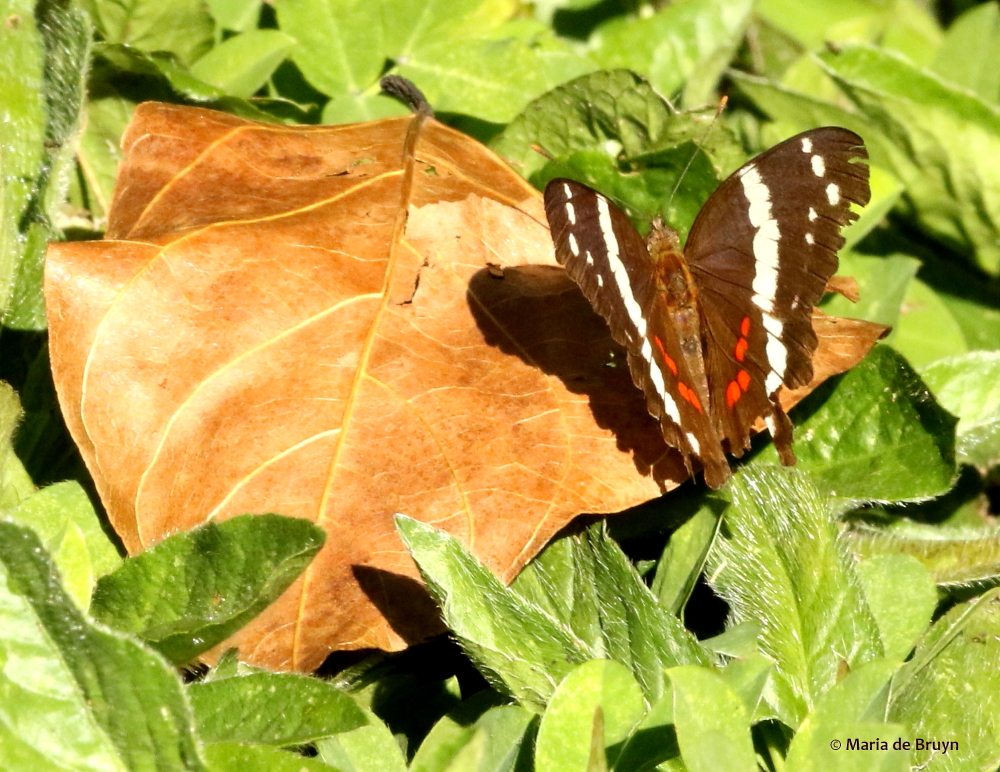
 

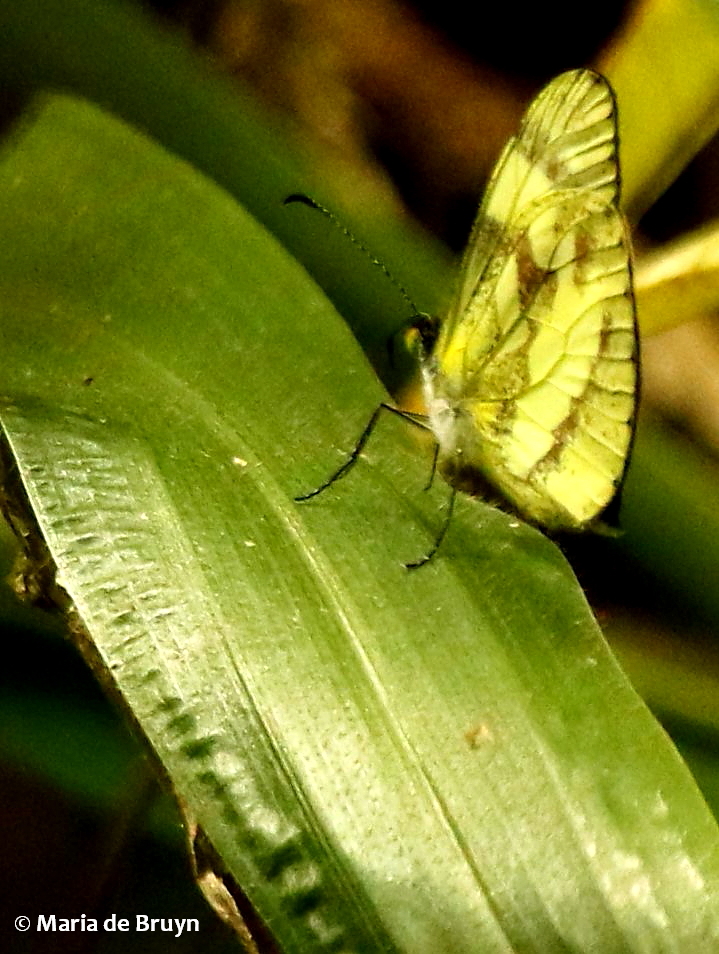
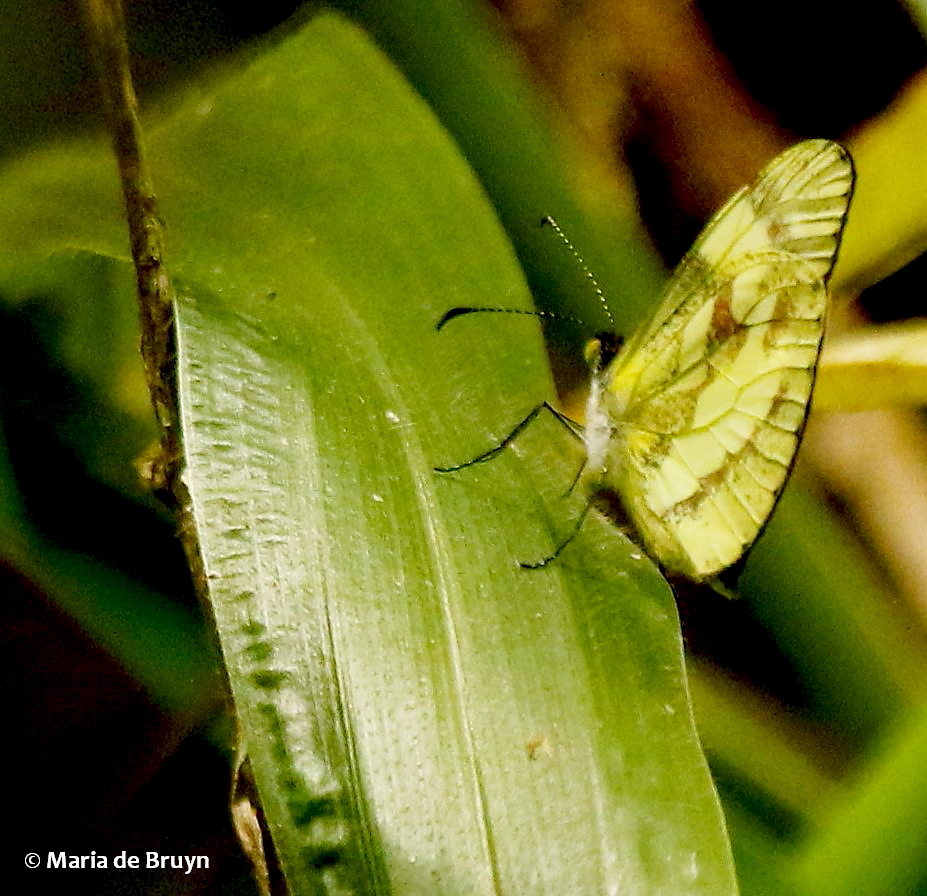
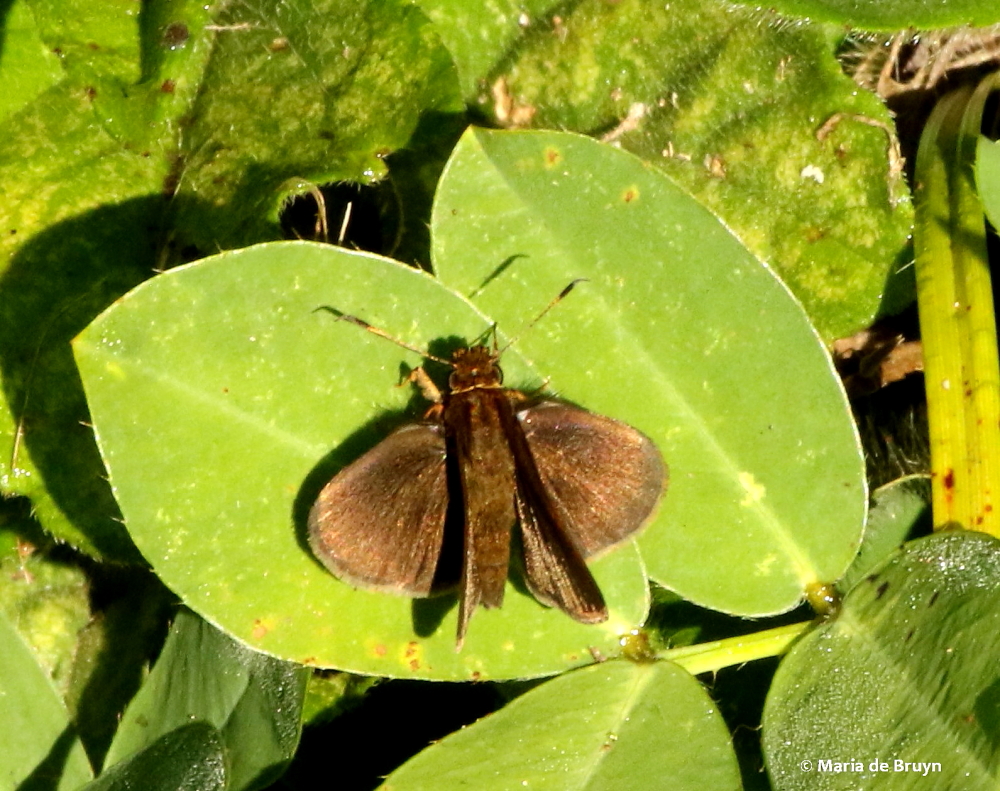
I was not able to find out the species (yet) for a brown skipper, a white moth and another pretty butterfly.
 

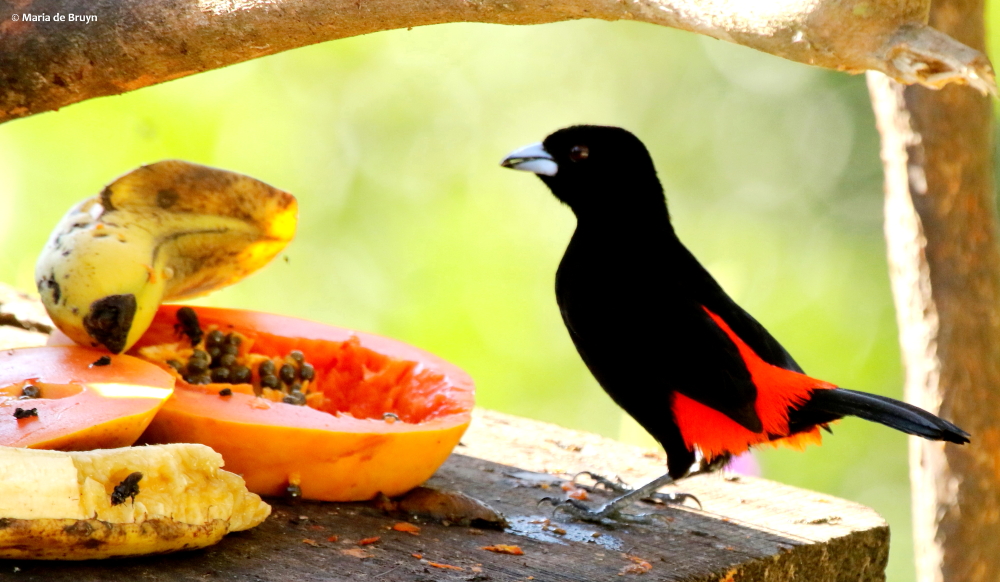
The feeders at the lodge had a black-headed male green honeycreeper (Chlorophanes spiza) visiting along with a lovely male Cherrie’s tanager (Ramphocelus costaricensis) whose red feathers looked like a fringed shawl covering his lower back. The next morning the female honeycreeper came by as well.


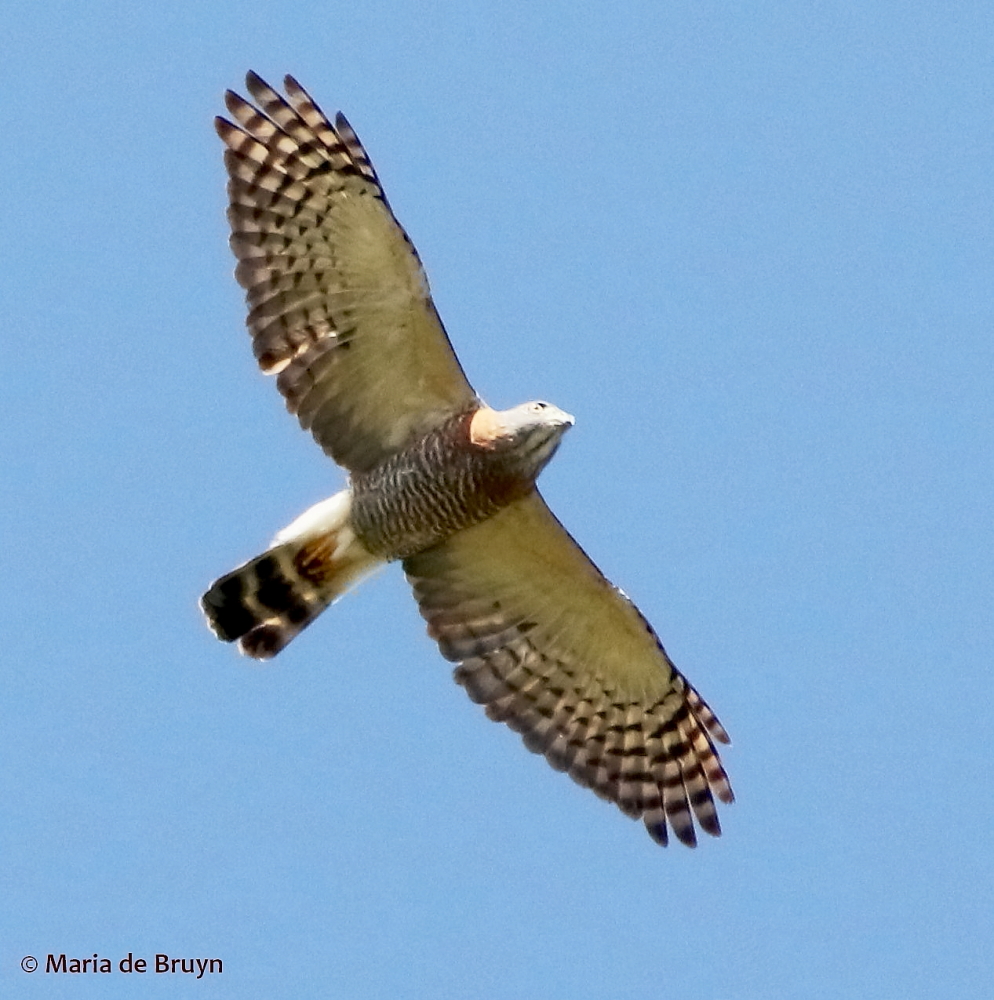
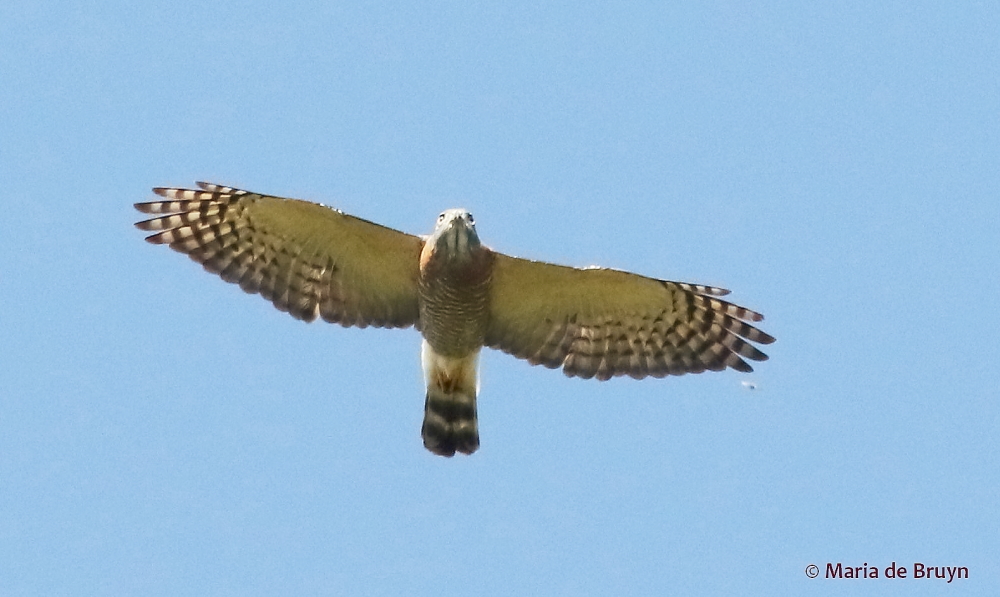
Our first trip of the day involved a visit to the UNA (Universidad Nacional) campus, where I had my first views of a double-toothed kite (Harpagus bidentatus). The stripe underneath its chin, along with its coloring, made it a very attractive bird for me.


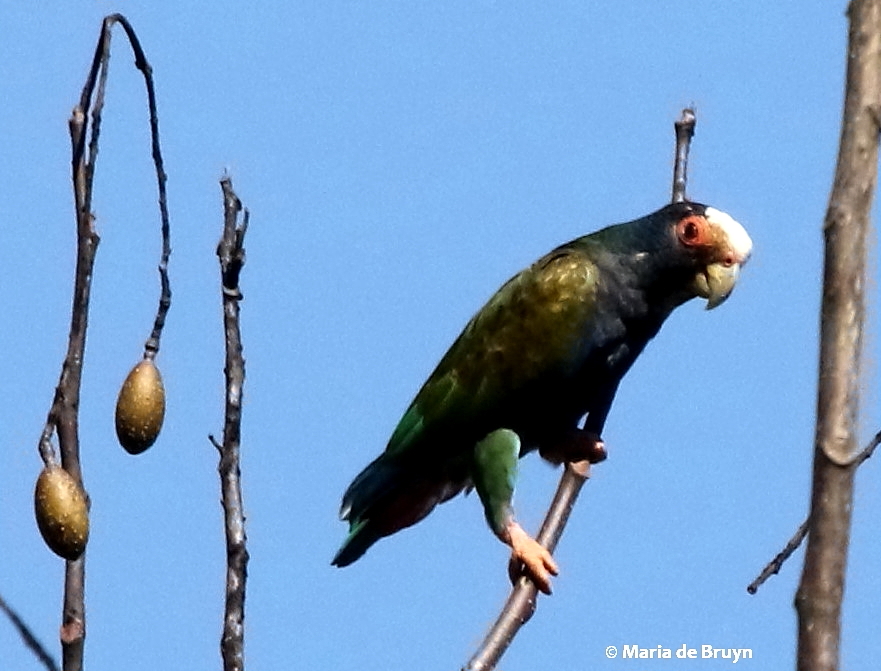
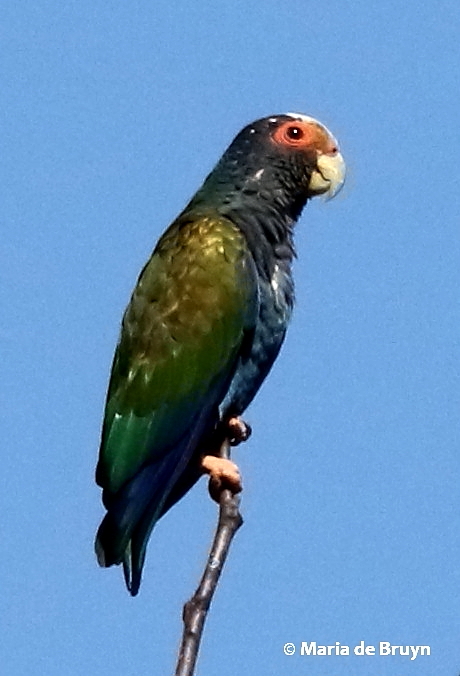
We then drove to another university campus site, stopping along a road where we saw a white-crowned parrot (Pionus senilis) in the distance.



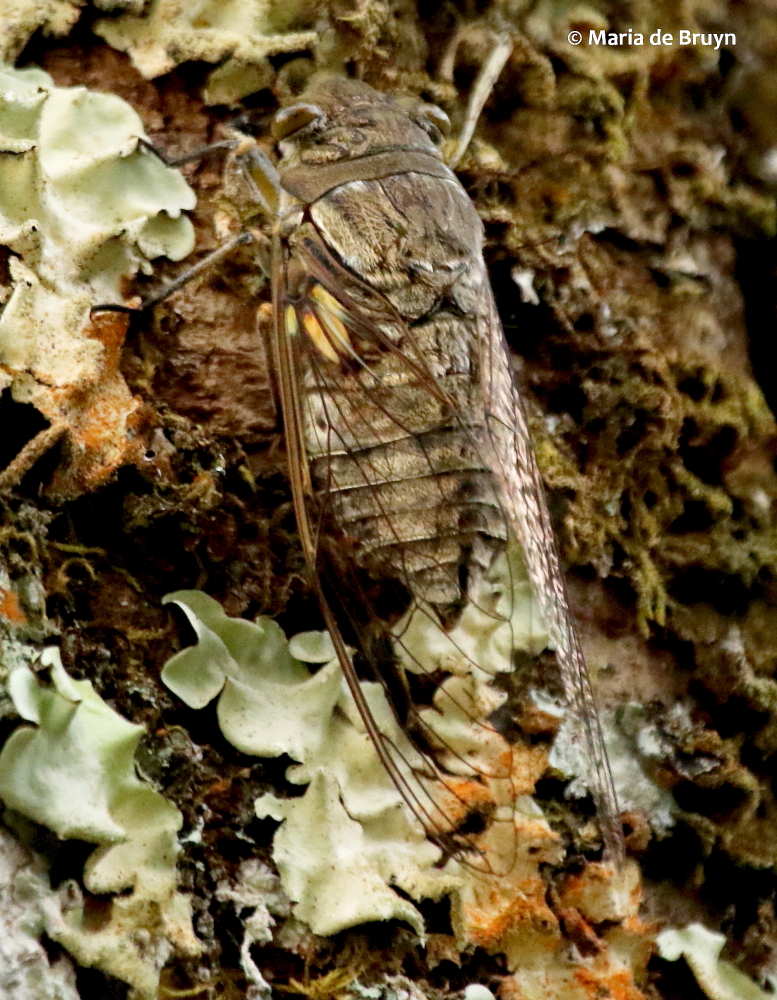
Our guide, Steve, had warned us to wear hats as we would be in areas with lots of cicadas, which are called chicharras locally. We had already heard them in the morning – there seemed to be at least hundreds of them in various wooded areas. The 23 Costa Rican species emerge from underground during the breeding season of several bird species that feed on them, such as motmots, trogons and flycatchers. Their cacophony of mating calls was sometimes so loud that you had to speak loudly to other people to be heard over it. But why would we need hats – don’t they just perch in the trees and call?

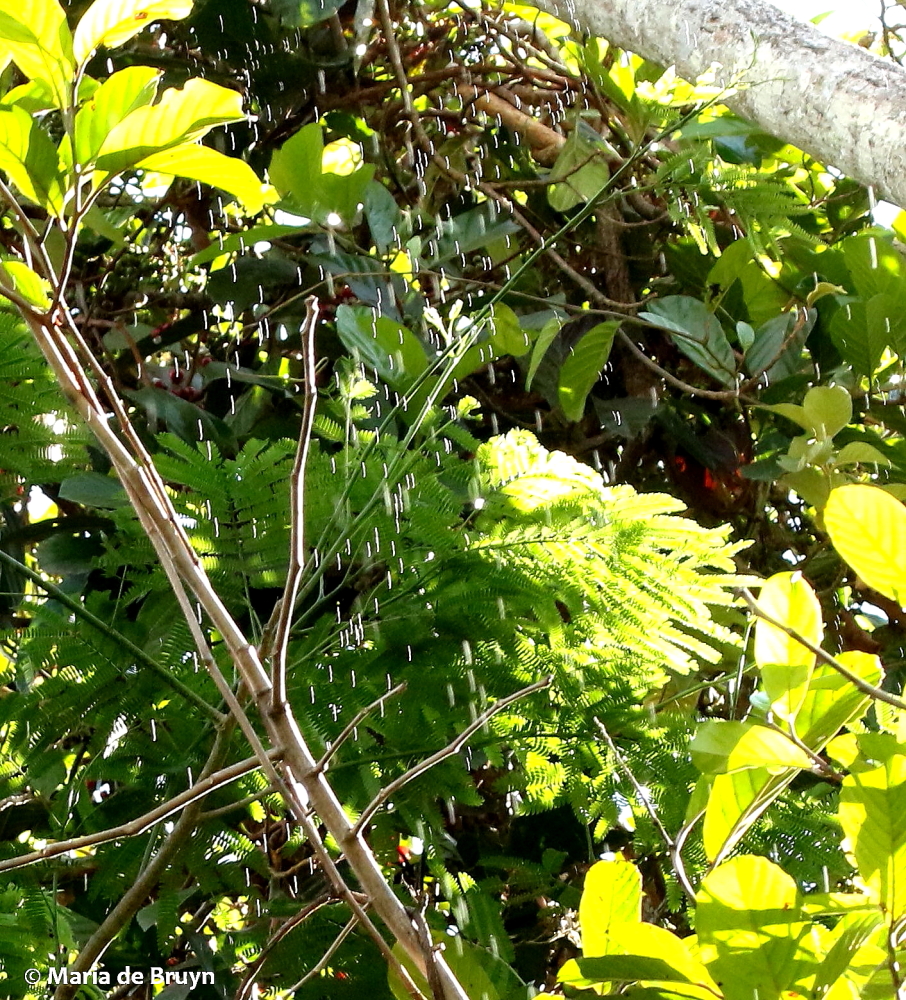
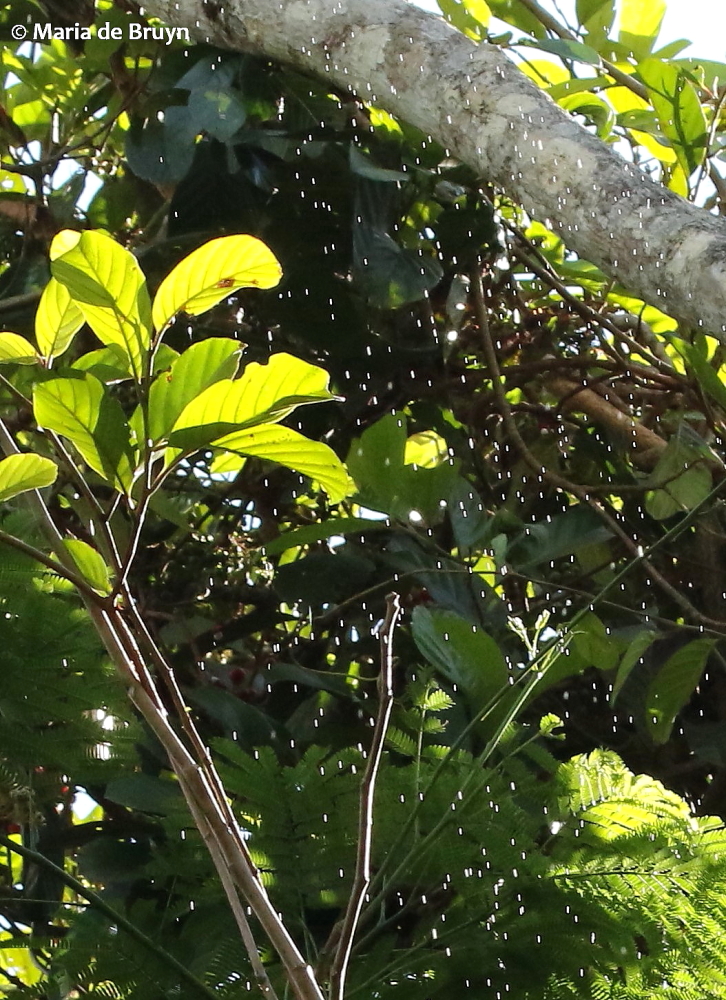
As I stood on the road, photographing the parrot, I thought we had run into a quick shower – then I realized what the slightly sticky (to me) droplets were – cicada rain!!! The cicadas drink xylem, which is tree sap, and urinate as they process the nutrients– when they do so in large numbers and you are standing underneath them, an umbrella would not be out of place. I tried to photograph the rain to give an idea of the falling pee.


More on Talari Lodge and its surroundings in the next blog!

Costa Rican rambles 1: a flower-laden arrival

Traveling to countries in Europe, Asia, Africa and the Americas was a privilege I really enjoyed as part of my work in health care, gender and rights for immigrants and people living in developing countries. That frequent travel came to an end due to the circumstances of my retirement, so it was with enormous pleasure that I just participated in my first post-career trip to Costa Rica, giving me the first stamp in my most recent passport!


This was only my second time traveling as part of an organized tour (the first time was in the 1970s on a visit to the Soviet Union). While I would have liked to linger longer in some places, the accommodations and good food arranged by the trip organizer, our birding guide’s wit, our driver’s helpfulness, and my fellow travelers’ good spirits made for lots of laughter, interesting sightings and delicious, companionable meals – and it was relaxed as I didn’t have to worry about how to get somewhere and find a place to stay.

Costa Rica’s natural beauty was a daily delight, and I’d like to share some of what I saw in a series of blogs. Many blogs nowadays are short on text; my blogs will be long with lots of photos, which may be a challenge to some readers in these days of imited time (attention spans) and Internet surfing. But I hope those of you who stick it out will enjoy the descriptions!

Since this was a birding trip, the series will mostly feature avians, but I managed to get some photos of mammals, insects and reptiles, too. But to start, we’ll take a look at the abundant flora in the 10-acre Santo Domingo hotel garden where we spent our first afternoon and next morning. The Hotel Bougainvillea received the Costa Rican National Gardening Association’s award as the best botanical garden in Costa Rica and it was a pleasure to visit.

Not being a botanist and having never studied plants, it took me an inordinate amount of time to identify some of the plants; half-way through my searching, I finally understood that this garden also features tropical plants from other continents. I wasn’t able to ascertain the names of many flowers – if anyone can identify the unnamed ones, please leave a comment!

The bougainvillea were blooming and an African blue butterfly bush (Rotheca myricoides) also caught my eye.


The native Heliconia flowers were abundant and varied, appealing not only to humans strolling about the gardens, but also to the birds who sheltered among them, searched for insects there or drank the floral nectar. Some of these plants are also called lobster claws, parrot flowers and wild plantain.


Some of the 40 species of heliconias can grow up to 30 feet high; there are heliconias whose flowers grow upright and others that hang. Their bracts – modified leaves or scales that surround a flower – may be larger and more colorful than the actual flower.


I quite enjoyed the bromeliads, like this one (Guzmania lingulata); we saw them in abundance throughout the trip and it made me long for some in my own trees.

There were plants with which I am familiar such as lantanas and lilies.


I’ve seen the Angel’s trumpet in the NC Botanical Garden; all parts of this plant are toxic, as my Costa Rican friend Esmeralda pointed out. All seven Brugmansia species are listed as extinct in the wild. These flowers were either Brugmansia versicolor or insignis.


I had also seen the Anthurium and passion flowers (Passiflora coccinea) before.


One tree had me stumped; it reminded me of a mimosa but was different. It took more than an hour searching the Internet but I was finally able to identify it as the pink shaving brush tree (Pseudobombax ellipticum)! It became one of my favorites.


Another favorite, which I would love to have in my garden, is the torch ginger (Etlingera elatior). Near it were some attractive golden shrimp plants (Pachystachys lutea).


A few plants had handy name signs by them, like this mateares cactus (Pereskia lychnidiflora), which is almost extinct in Costa Rica (but abundant in other parts of Central America). It was right next to what looked like a type of prickly pear cactus.

Some of the non-Central American plants were really lovely. The bottle palm (Hyophorbe lagenicaulis) is endemic to Mauritius. The fan palm may have been a native though.


The blue-green jade vine (Strongylodon macrobotrys), which looked like someone had dyed it, comes from the Philippines, while the bright orange flame vine (Pyrostegia venusta) is a Mexican plant.


The lily of the Nile (Agapanthus) is native to Uganda and Kenya.

The balloonplant (Gomphocarpus physocarpus), native to southeast Africa, didn’t look like a type of milkweed to me!

There were some lovely orchids, like a purple one that could be Guarianthe skinneri or perhaps Guaria morada (the national flower) and a yellow one, which I thought was Oncidium sphacelatum.


This type of lady slipper orchid had a name tag but unfortunately I forgot to write down the name!


And then there were the ones I couldn’t figure out.


The garden also featured a couple tables with examples of geological specimens for the mineral and rock collecting enthusiasts.


One part had what I think was petrified wood.

If you visit San José, I’d definitely recommend a visit to the hotel garden. Next up –  wildlife in the garden!


Finding fungal friends!

Although I find mushrooms interesting, they honestly are not especially favorite members of the plant kingdom for me. However, they do attract my attention when they are unusual or unusually abundant after rainfall. And I do find them a tasty addition to a meal for sure. So when the non-profit Friends of Bolin Creek sent out an invitation for a mushroom walk, it seemed like a nice way to take an outdoor break from my numerous tasks and chores.


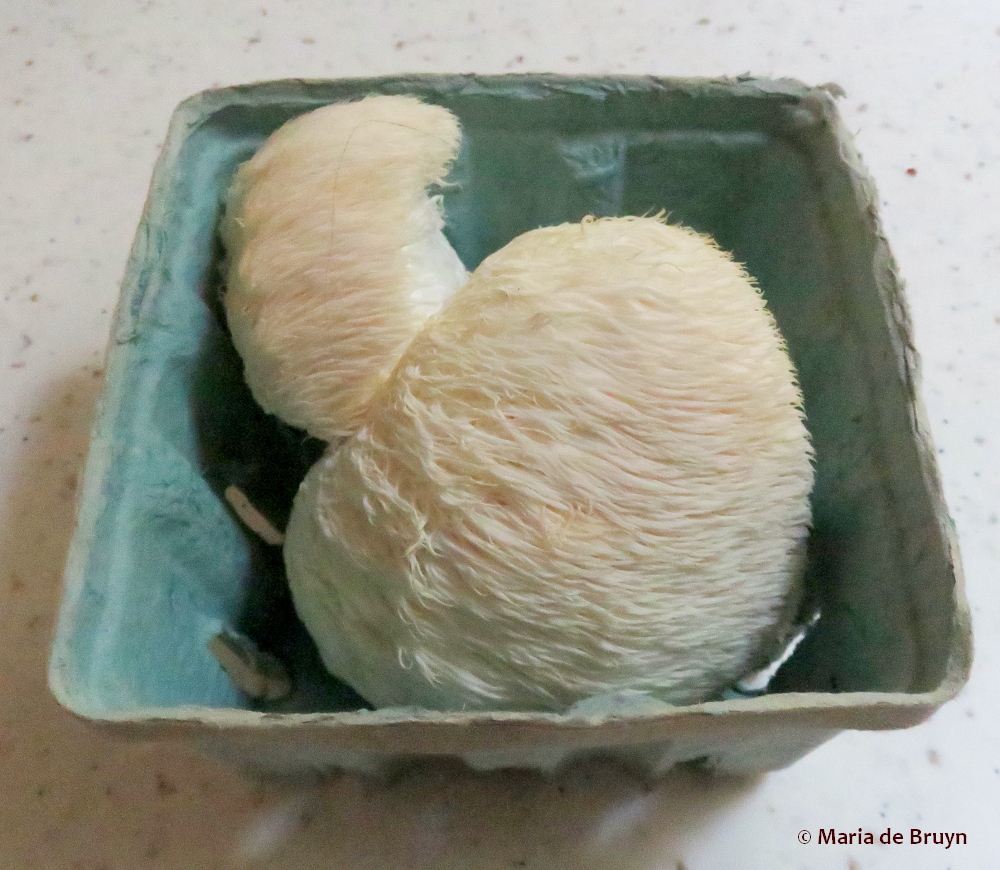
I was hoping to see a lion’s mane mushroom (Hericium erinaceus) on the walk – mushroom enthusiast friends had recommended this one to me and I happened to have purchased one from a fungus grower at the farmers’ market the previous day.

The walk was organized by the Association’s nature walk coordinator, Salli Benedict, and led by Van Cotter, a retired mycologist and volunteer with the University of North Carolina’s Herbarium in Chapel Hill. He still mentors students involved with environmental studies and our group included several students who were intent on adding to their collection of 25 species for a class assignment. So, the walk participants included people of various ages and degrees of fungal knowledge.*


We divided into two sub-groups and our group set off into the woods. Our first spotting was a Suillis mushroom. This type is associated with pine trees and we did indeed find three growing at the base of a tree. A mycologist in our group pointed out the veil, a membranous tissue covering the cap, and she cut it length-wise so we could see the inside. These mushrooms are also called butter mushrooms.


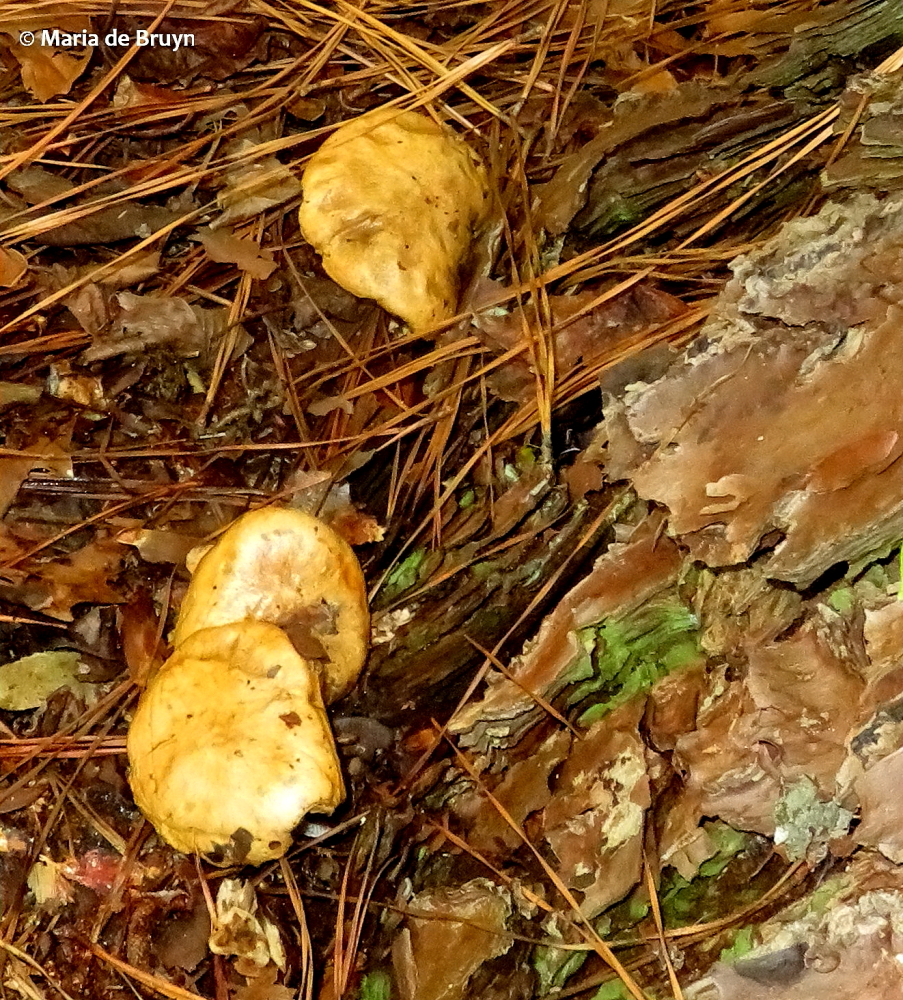
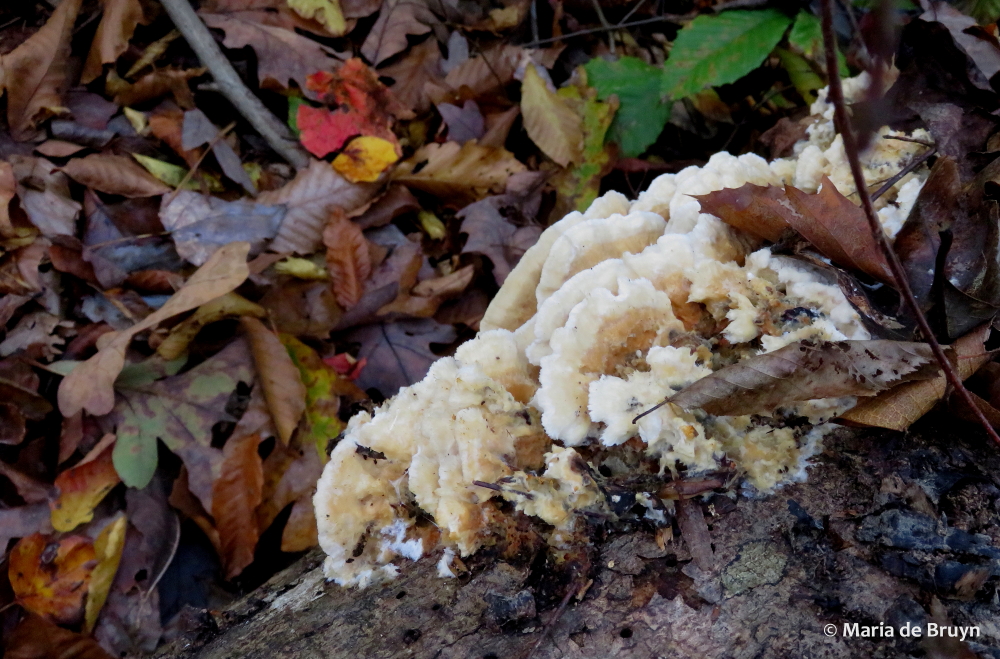
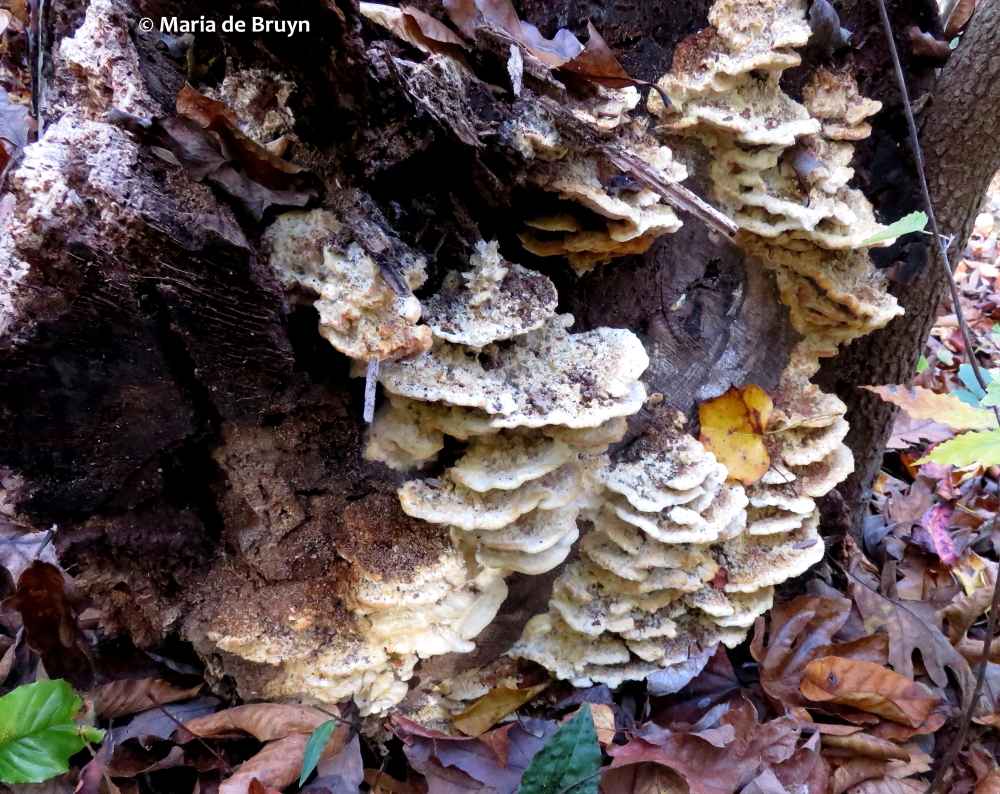
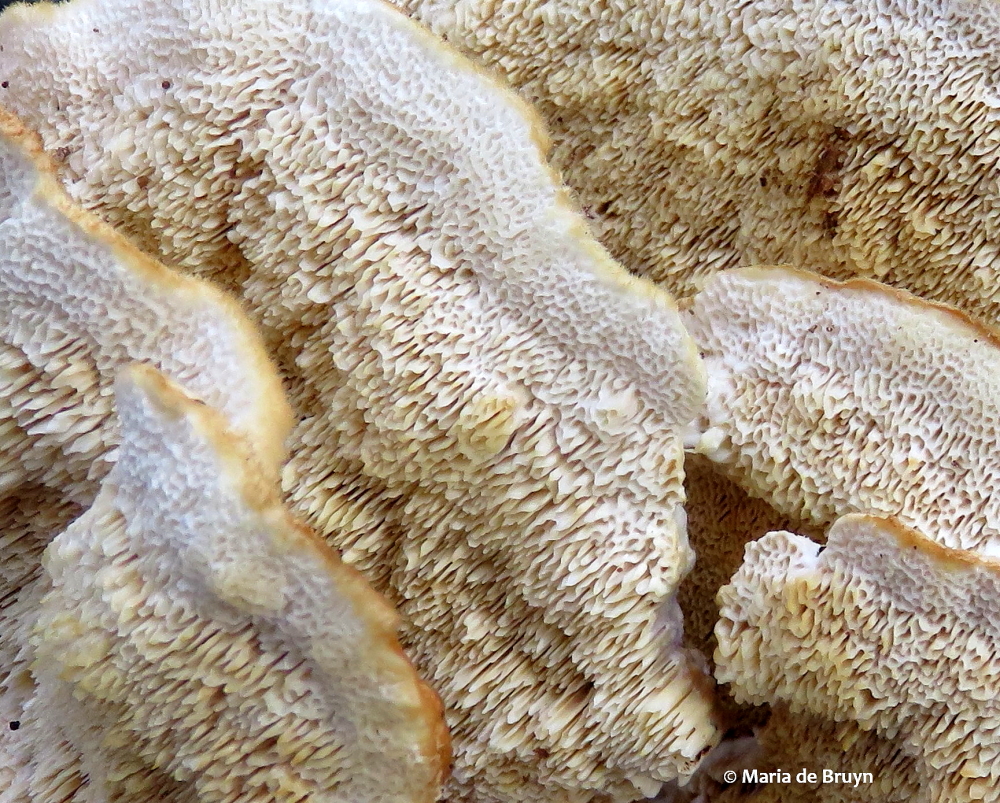
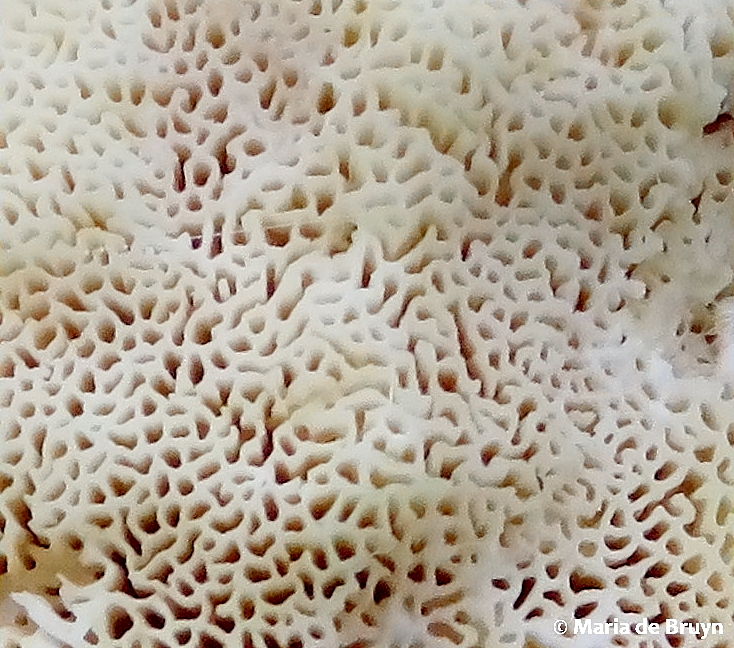
As we walked on, we came across a few species of fungi growing on fallen and rotting logs. A few were polypores, which are mushrooms with pores or tubes on the underside of the cap. Some of them were shelf or bracket mushrooms.


Some species look as if they have a maze of tubes underneath the fruiting body. The polypores are important in furthering wood decay, which in turn is important for cycling of nutrients and production of carbon dioxide in forests.


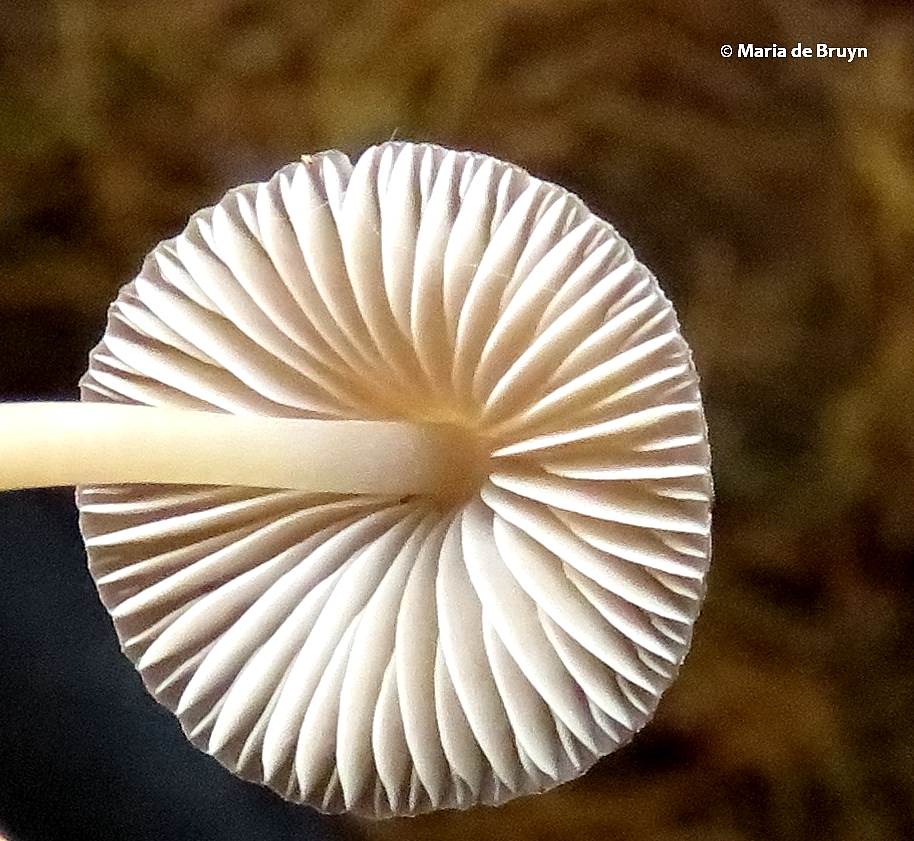
The tiny Mycena mushrooms have conical caps with gills and fragile thin stems. Some species are edible, but others contain toxins.


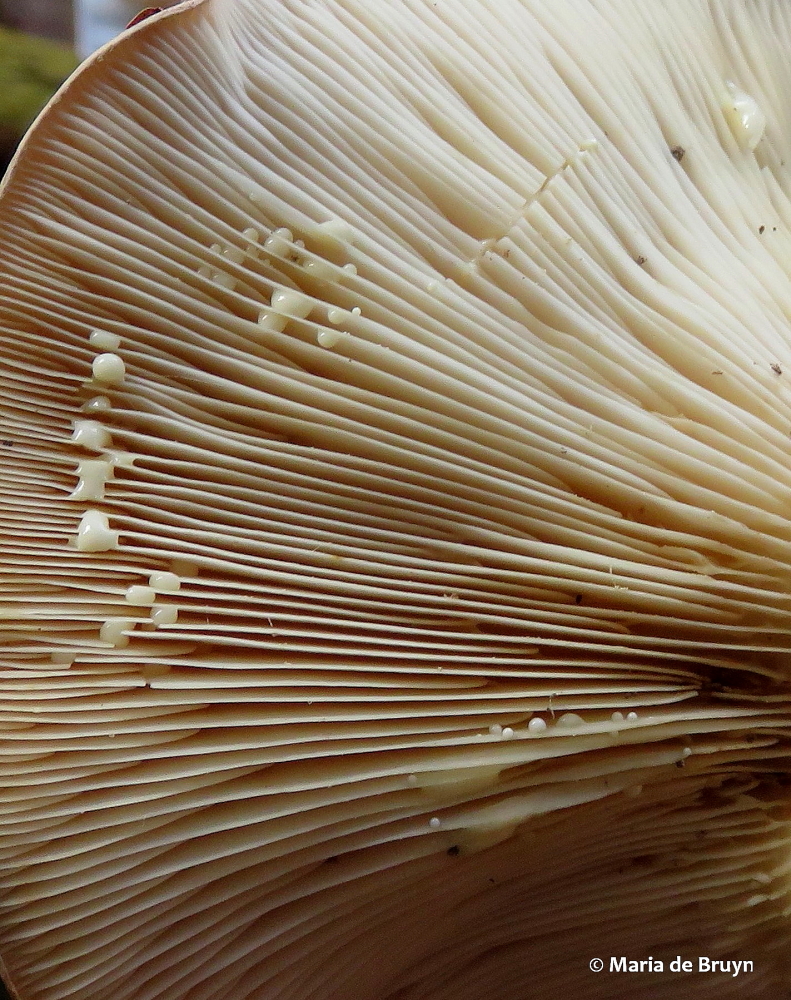
The Lactarius mushrooms, known as milk-caps, release a milky substance when the cap is cut or damaged. The undersides of the caps are gilled.

Armillaria fungi are also known as honey fungus; these mushrooms grow on rotting wood in clusters and can eventually become quite large. In fact, it is thought by some that an Armillaria in Oregon’s Malheur National Forest is the largest living organism on earth – it now covers about 2470 acres and may be about 8650 years old!


When I spotted these brightly colored Pholiota mushrooms, they were greeted with enthusiasm both by the non-mycologists and the student collectors. They only took a few and left the rest for other walkers to admire.


When we returned to our starting point, the two sub-groups laid out all their specimens and Van told us interesting facts about them. The Lepiota mushrooms are often poisonous. Because edible and poisonous mushrooms can look very similar, people without in-depth knowledge of fungi should not eat mushrooms they find growing outside. In North Carolina, for example, only about 200 of the more than 3000 identified mushrooms are common edible ones.

Few people die from eating poisonous mushrooms (7 deaths were reported in 2012), but people are hospitalized because they don’t recognize unsafe species. Some mushrooms need to be prepared for consumption in a special way to make them safe; some should not be consumed while drinking alcohol and some individuals may have personal problems with particular species.

Van also pointed out that mycologists use spore prints in identifying fungal species. The color of spore prints is particularly important.


When I returned home, I prepared the lion’s mane as recommended by those who eat them regularly (sautéing or grilling; I sautéd it). It was with great anticipation that I took my first bite, remembering how much I loved oyster mushrooms when I first tried those. Sad to say, I found the lion’s mane bland and rather tasteless, but at least I had tried it. And I did have an enjoyable time on the mushroom walk, thanks to Friends of Bolin Creek!

** Thanks to Salli Benedict for providing the group photo!

A nature walk with some history to ponder

In our area of North Carolina, various nature reserves have some background of historical interest. It may be related to the provenance of the land, the names of the reserve and its trails, or the remnants of structures still in place. A newer reserve in Orange County is the Blackwood Farm Park and it had some historical artefacts which I had not expected to see while I searched for beautiful plants and wildlife of different kinds.

The 152-acre reserve has transformed a former working farm into a place with hiking trails through fields and hilly woodlands, preserved farm buildings (barn, smokehouse, corncrib, milking shed, etc.), and meadows where hay is still sown and harvested every year. The first farmers arrived around 1745 and farming ended with the Blackwood family in the 1980s.


Dogs are allowed but supposed to remain on leash; currently, the trails are for hikers, birders and others who appreciate nature. On my last visit, a small group of dog trainers were putting canines through their paces in front of the old farmhouse, while a few people were chatting at the picnic tables nearby.

In the meantime, a chipping sparrow (Spizella passerina) was extensively grooming itself in one of the shady yard trees.


As I began my walk through the woods, I heard a distinctive bird call and began searching for the scarlet tanager (Piranga olivacea). Lucky me, he came into sight briefly overhead so that I could admire his handsome but fleeting appearance.

The meadows were filled with flowers, including Carolina horsenettle (Solanum carolinense), with its distinctive white and purple flowers, and beautiful moth mullein (Verbascum blattaria), which some botanists consider a weed and rip out in glee when they see it (this happened a few days ago when I was volunteering at another reserve!).


Butterflies, like this American lady (Vanessa virginiensis), were investigating the flowers like me and sometimes feeding on the ground.


The trail through the woods is partly level and then leads up and down hills and across small streams. Some sections are alive with bird sound and others are fairly quiet. Small signs indicate where the reserve property abuts nearby privately-owned farms.

As I came nearer to the forest edge adjoining a meadow with a pond, I came across an unexpected reminder of history. A sign at the entrance to a clearing announced that it was a burial site for slaves who had been owned by farmer Samuel Strayhorn from 1817 to 1847 and visitors are asked to observe the site with appropriate respect.


Archaeological surveying has identified 34 graves, including adults and children; some are marked by stones and others are now indicated by small metal tags.


Oral tradition relates that not only the slaves but some of their descendants were buried here after the Civil War. It is a sobering reminder of a shameful time in the history of this country, but it is good that the site has been preserved and that further historical research is being done to learn more about the enslaved people who lived here.


After spending some time in contemplation and wondering how the slaves’ descendants are faring now, I wandered on, emerging into the pond area where numerous dragonflies were flitting about.


Male blue dasher dragonfly                      Female widow skimmer (Libellula luctuosa)

(Pachydiplax longipennis)

          Banded pennants (Celithemis fasciata)


A couple of amorous damselflies were also in evidence.


Leaving the pond, I entered the woods again and witnessed a pair of six-spotted tiger beetles (Cicindela sexguttata) engaged in mating, but it was not with mutual consent. The iridescent blue male jumped on the greenish female, who did her best to escape. He literally tackled her and at one point had her on her back as he kept hold of her.


She continued trying to escape but he was persistent and finally managed to mount her. She periodically engaged in vigorous shaking, obviously trying to dislodge him but he hung on.


Finally, after some time, she bucked a bit like a horse at a rodeo and threw the male off so that she was able to streak off with great speed. The male remained behind, alone.


A little further on, a black and yellow millipede (Boraria stricta) trundled along the forest floor, its antennae exploring the ground ahead and identifying which obstacles (twigs, stones) it could surmount and which ones it needed to skirt.


At one point, I pondered a tube hung on a tree by someone who was probably doing a study of some kind, rather than making an artistic statement (I hope).


When I left the reserve, a Northern mockingbird (Mimus polyglottos) was flashing its wings near a picnic table, undoubtedly looking for insects as a meal to enjoy there.

My walk that day didn’t result in a wide variety of wildlife spottings, but what I did see was interesting. Coming upon the cemetery was an unexpected educational experience that made the visit well worthwhile. I hope the researchers uncover more information that can be shared with visitors in the future.


The sad spring saga of Sassy squirrel

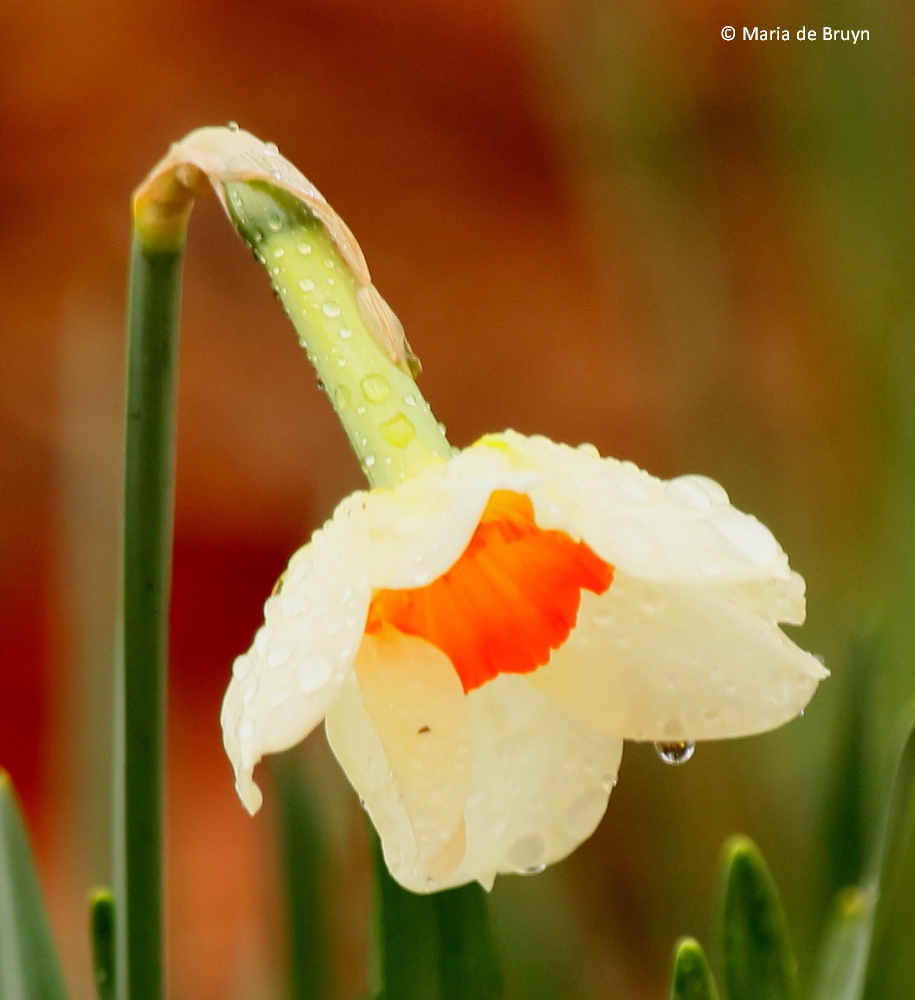
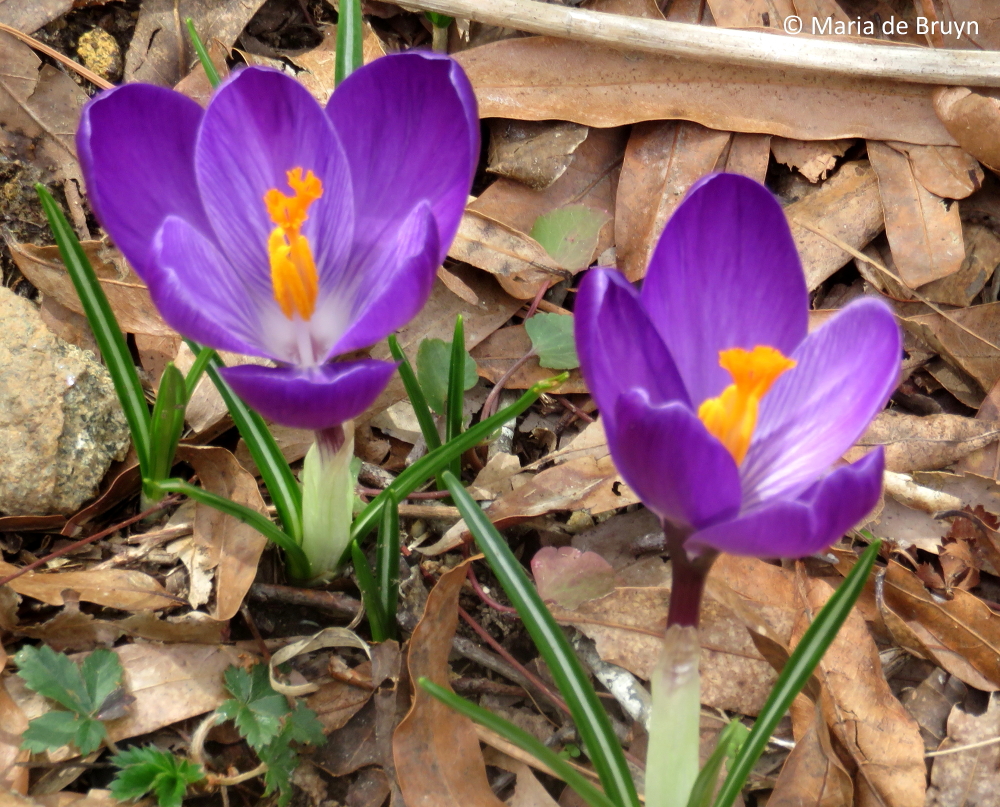
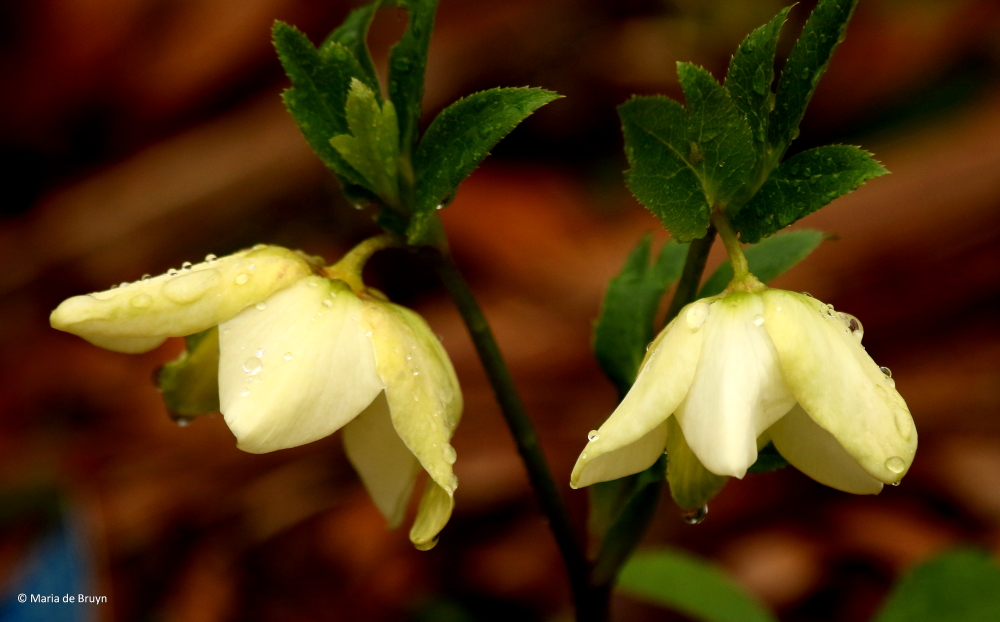
cape-may-warbler-i77a5989-maria-de-bruyn-2resSpring has come early to North Carolina, leading to some early bird migration (like this Cape May warbler, Setophaga tigrina, on its way North), avian courtship and nest building, as well as spring blossoms already emerging in profusion. My garden has seen some lovely flowers, both cultivated and wild: daffodils (Narcissus), crocuses (Crocus), winter jasmine (Jasminum nudiflorum), henbit (Lamium amplexicaule) and lenten rose (Helleborus orientalis).

daffodil-i77a2964-maria-de-bruyn-res    daffodil-i77a2325-maria-de-bruyn-res

crocus-img_1813-maria-de-bruyn-res   crocus-img_1790-maria-de-bruyn-res

winter-jasmine-i77a0793-maria-de-bruyn-res    henbit-i77a1155-maria-de-bruyn-res

lenten-rose-i77a2951-maria-de-bruyn-res lenten-rose-i77a1903-maria-de-bruyn-res

lenten-rose-i77a2970-maria-de-bruyn-res

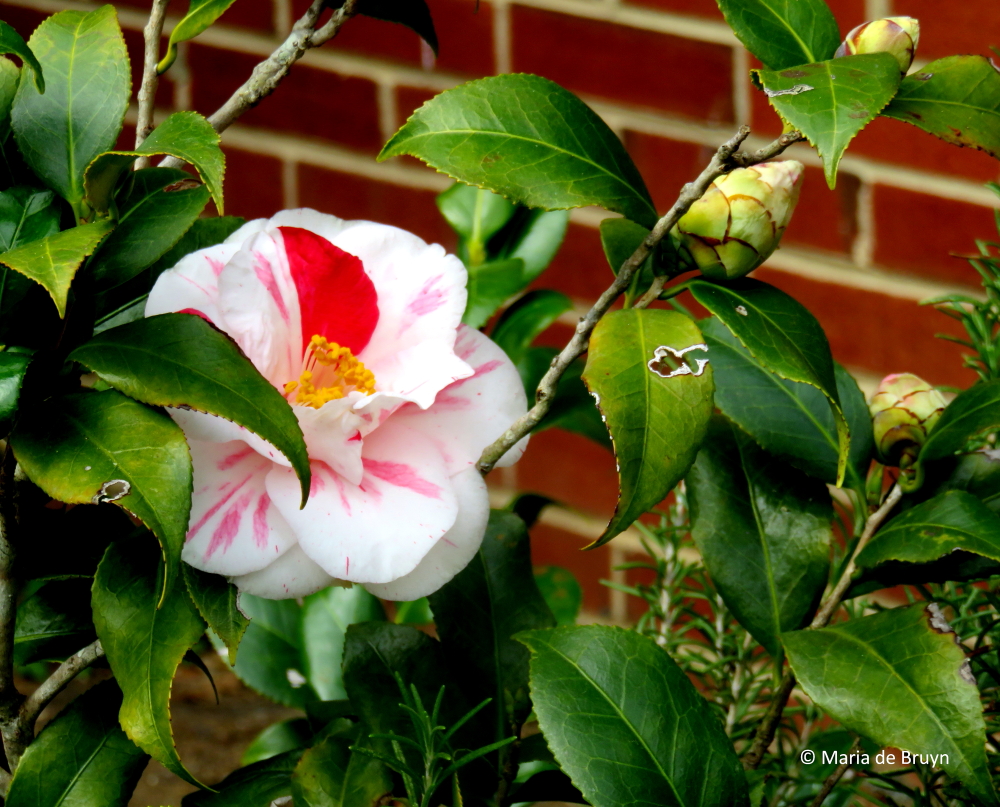
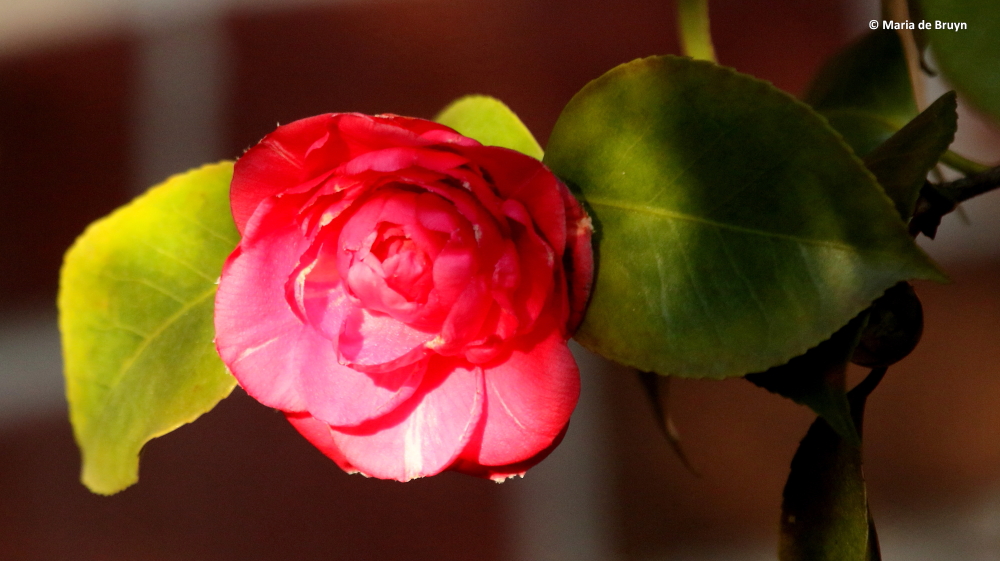
My camellias ( Camellia) bloomed in much greater profusion than ever before.

camellia-img_1816-maria-de-bruyn-res    camellia-i77a1922-maria-de-bruyn-res

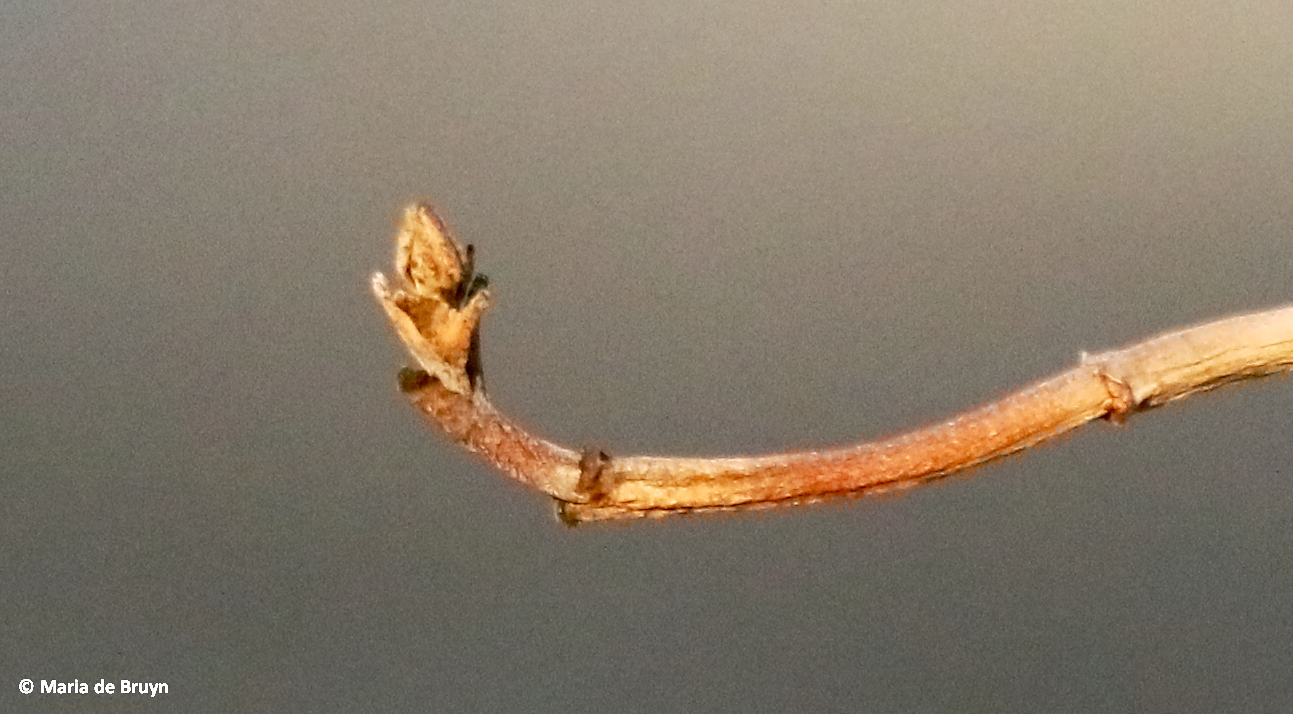
The shrubs and trees also sent out their buds weeks “ahead of schedule” – since the past month was the warmest recorded February in this area, my plants advanced their springtime blossoming, including the serviceberry (Amelanchier arborea), viburnums, dogwoods (Cornus kousa and Cornus florida) and common elderberry (Sambucus nigra).

serviceberry-i77a1965-maria-de-bruyn-res  tree-i77a1949-maria-de-bruyn-res

tree-i77a1963-maria-de-bruyn-res tree-i77a1950-maria-de-bruyn-res

My new blueberry bushes burgeoned with delicate little flowers, but the past two nights I had to cover them up so that they wouldn’t shrivel up as the temperatures dropped below freezing.

eastern-gray-squirrel-i77a0079-maria-de-bruyn-res


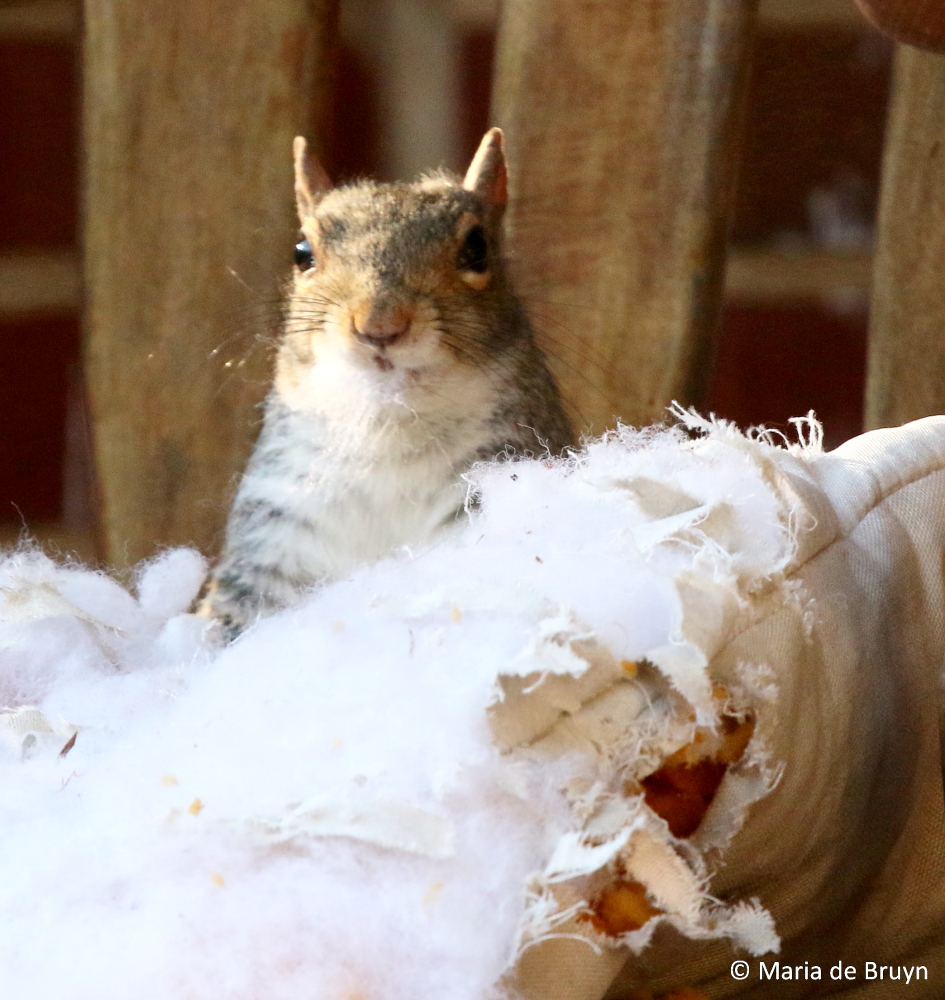
It wasn’t only the plant and bird life responding to the unusually changing season, though, as I discovered when I finally noticed the altered pillow on my front porch rocking chair. I first saw that the cloth covering the pillow had been torn; upon closer examination, I saw that the pillow had been opened up with its filling tufting up in places.


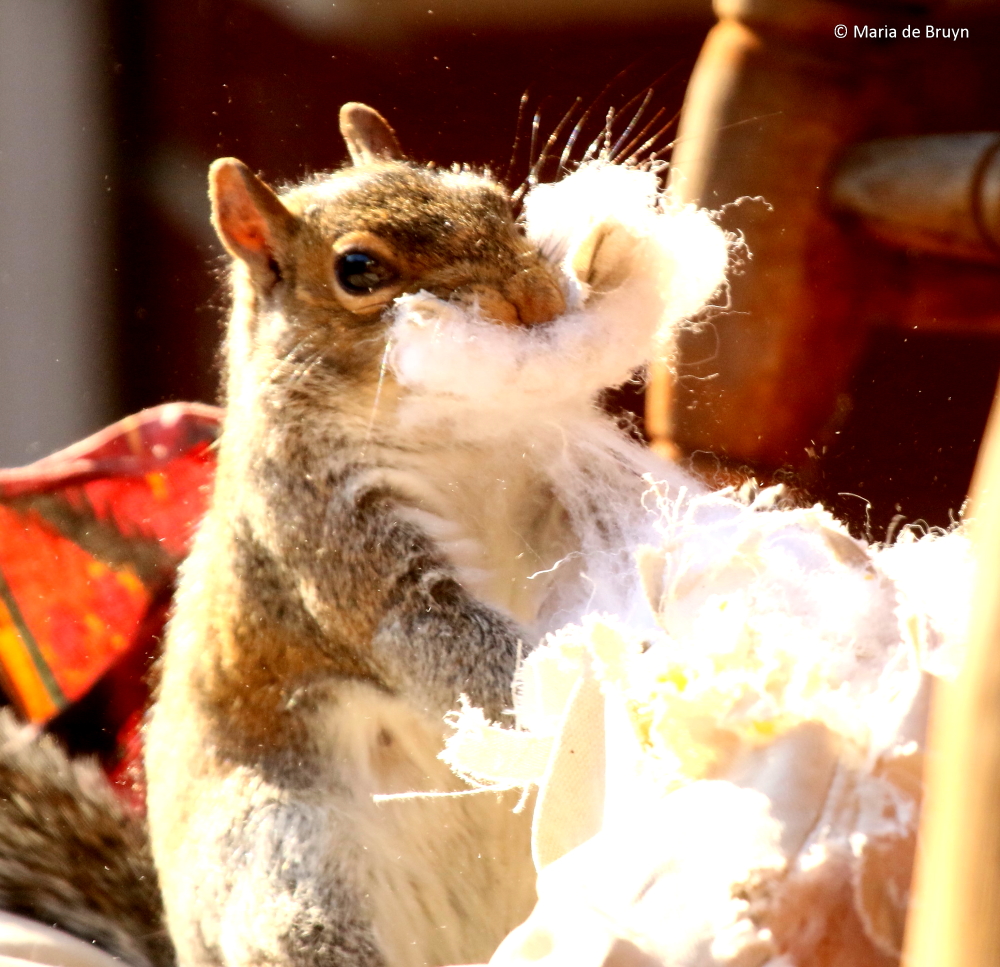
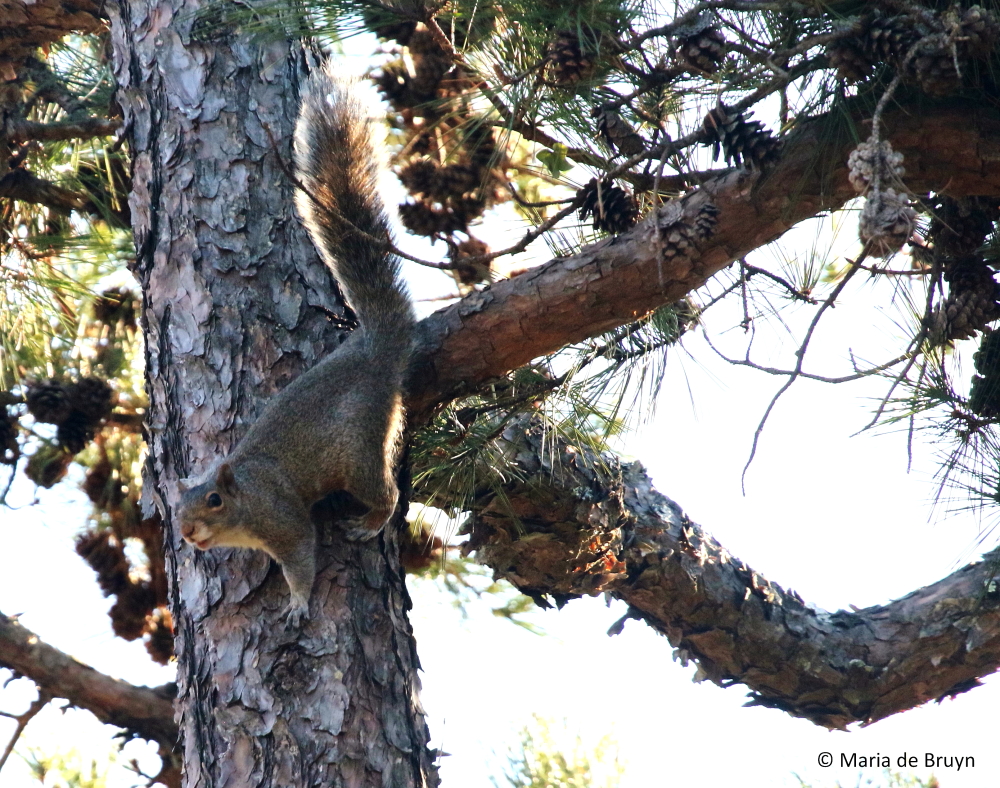
eastern-gray-squirrel-i77a0093-maria-de-bruyn-resWhen I began watching the rocker in addition to the bird feeders, I discovered the culprit – an industrious Eastern gray squirrel (Sciurus carolinensis), whom I named Sassy as she shows no fear, just a little caution.

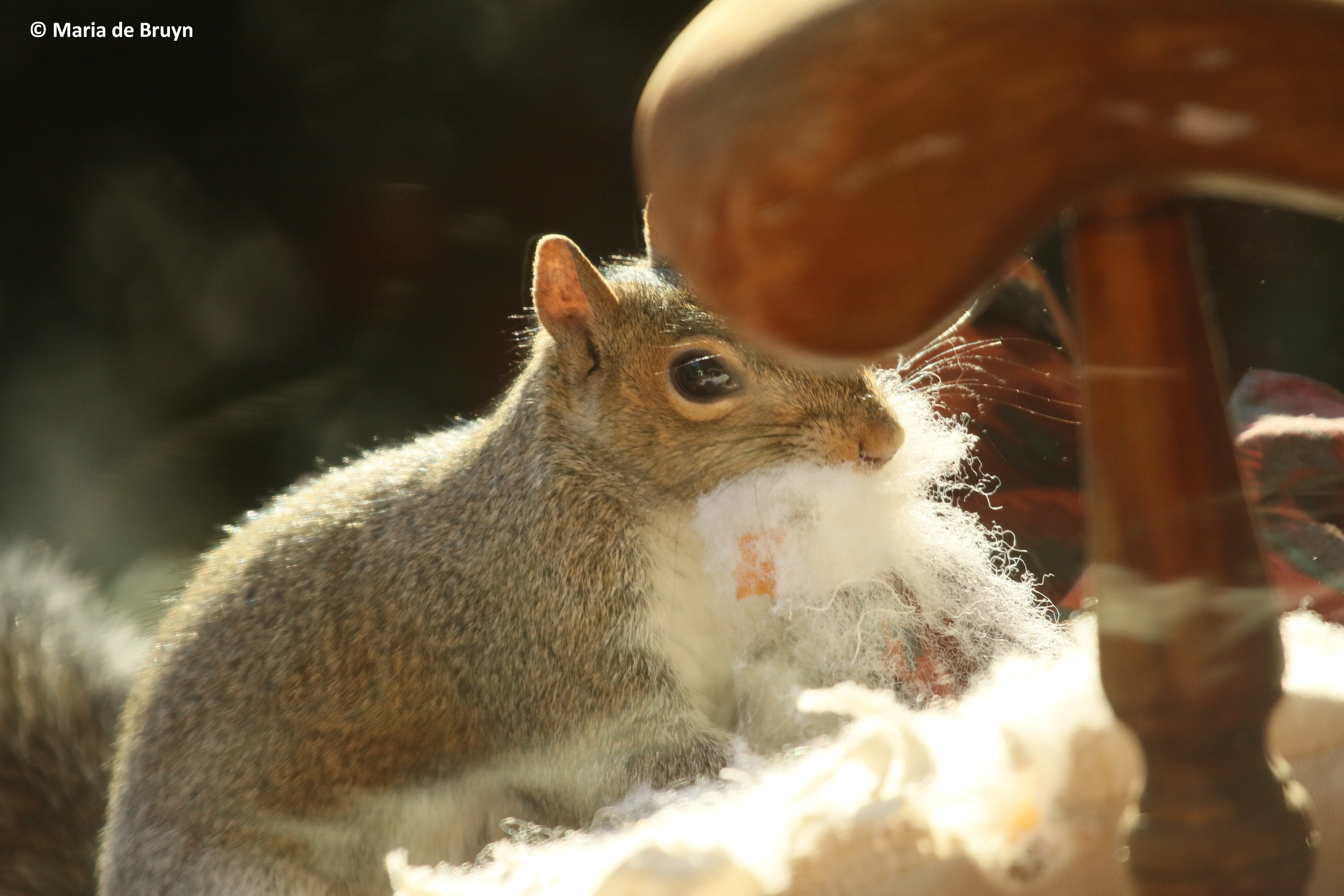
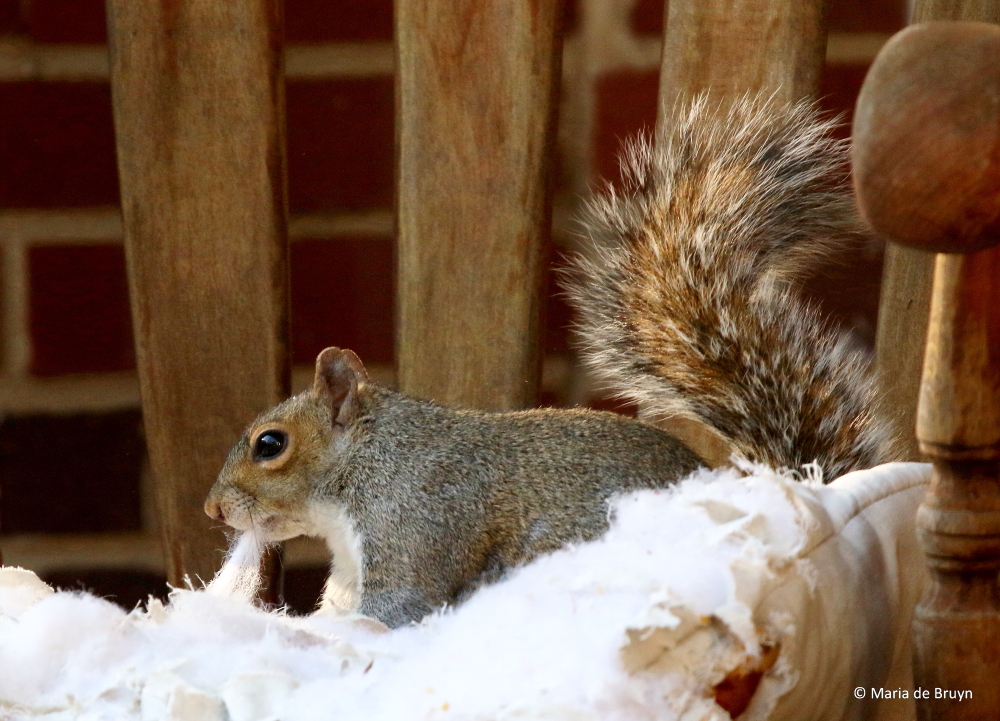
Sassy is quite bold, coming up onto the porch even when I’m seated there. She keeps an eye on me but goes about her business in a calm and confident mood. This was also the case for her nest building activities. She perched on the pillow and used her teeth to tear out the insides.

eastern-gray-squirrel-i77a9708-maria-de-bruyn  eastern-gray-squirrel-i77a0073-maria-de-bruyn-res

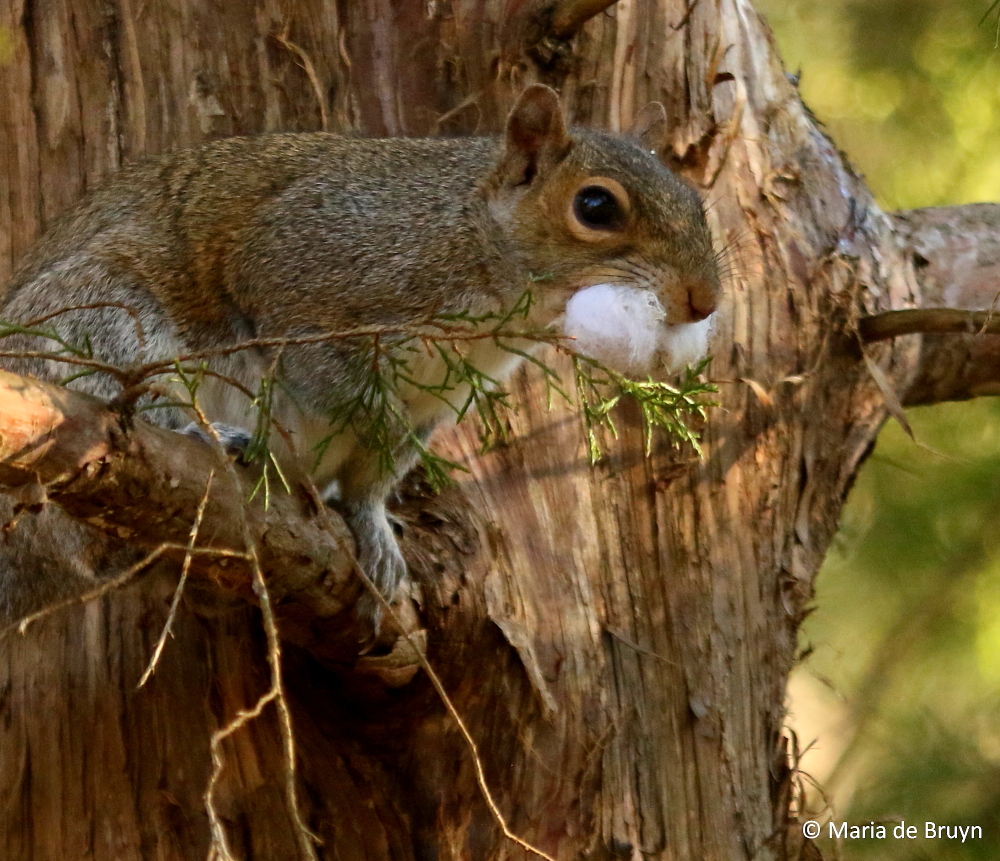
She then manipulated the tufts with her paws and teeth to form them into neat little oblong packages that she could easily transport in her mouth.

eastern-gray-squirrel-i77a9795-maria-de-bruyn-res eastern-gray-squirrel-i77a9796-maria-de-bruyn-res

eastern-gray-squirrel-i77a9801-maria-de-bruyn-res eastern-gray-squirrel-i77a9802-maria-de-bruyn-res

Sometimes, she added some dried leaves to the mixture.

eastern-gray-squirrel-i77a1995-maria-de-bruyn-res

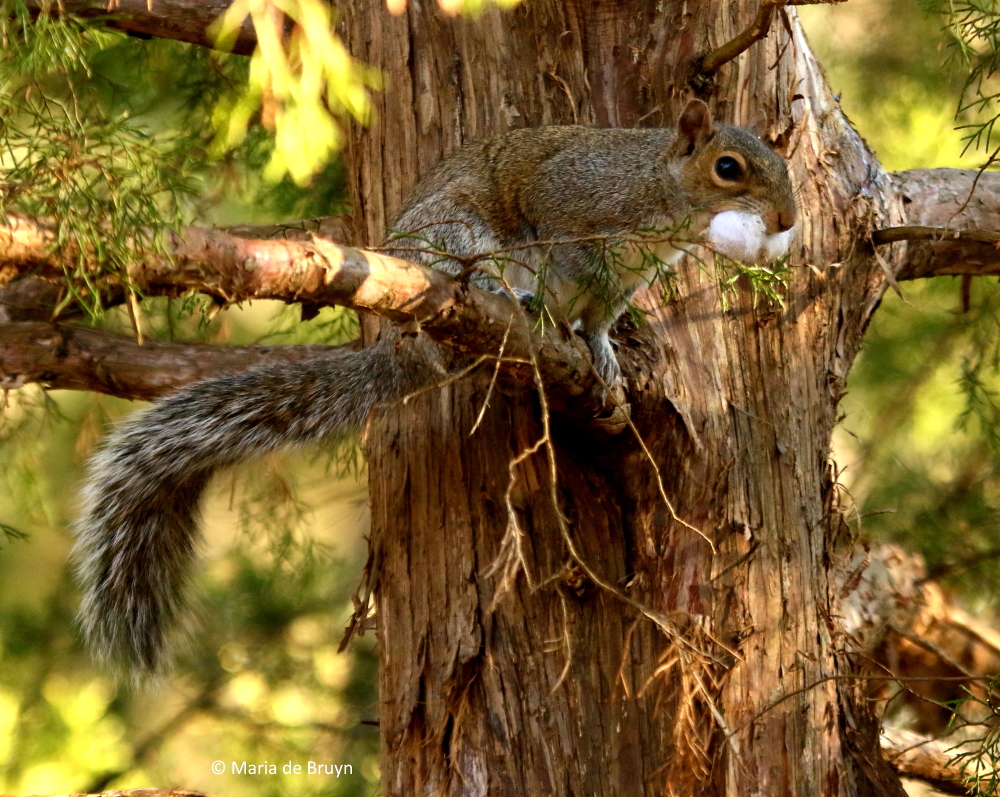
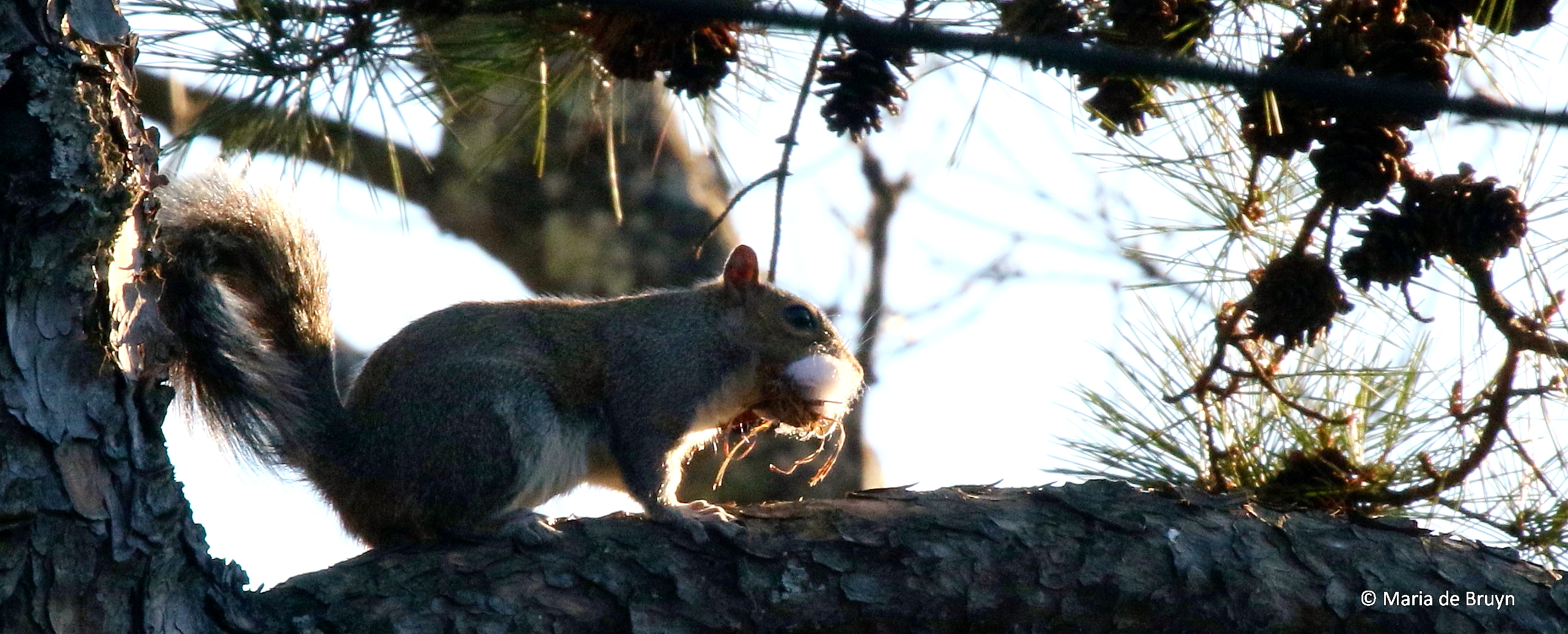
When her mouth was filled with enough material, she left to transport it to the nest that she was constructing – as it turned out, high in a loblolly pine (Pinus taeda) in a neighbor’s front yard. As I followed behind her, she stayed aware of my movements.

eastern-gray-squirrel-i77a0107-maria-de-bruyn-reseastern-gray-squirrel-i77a0108-maria-de-bruyn-res

Then she crossed the street and scurried up the tree, where she deposited her “mattress stuffing” among the leaves and other materials lining the nest.

eastern-gray-squirrel-i77a0125-maria-de-bruyn-res  eastern-gray-squirrel-i77a0139-maria-de-bruyn

Since Sassy was so very industrious and the pillow was no longer salvageable, I left it out for her. She returned for several days, systematically dismantling her found source of nest material and carrying off her little woolly trophies.

eastern-gray-squirrel-i77a0099-maria-de-bruyn-res eastern-gray-squirrel-i77a0093-maria-de-bruyn-res

When the stuffing began to disperse with the wind, I finally gathered it up and threw out what was left, figuring she had had plenty of manmade contributions to her home.

eastern-gray-squirrel-i77a0142-maria-de-bruyn-res eastern-gray-squirrel-i77a9817-maria-de-bruyn-res

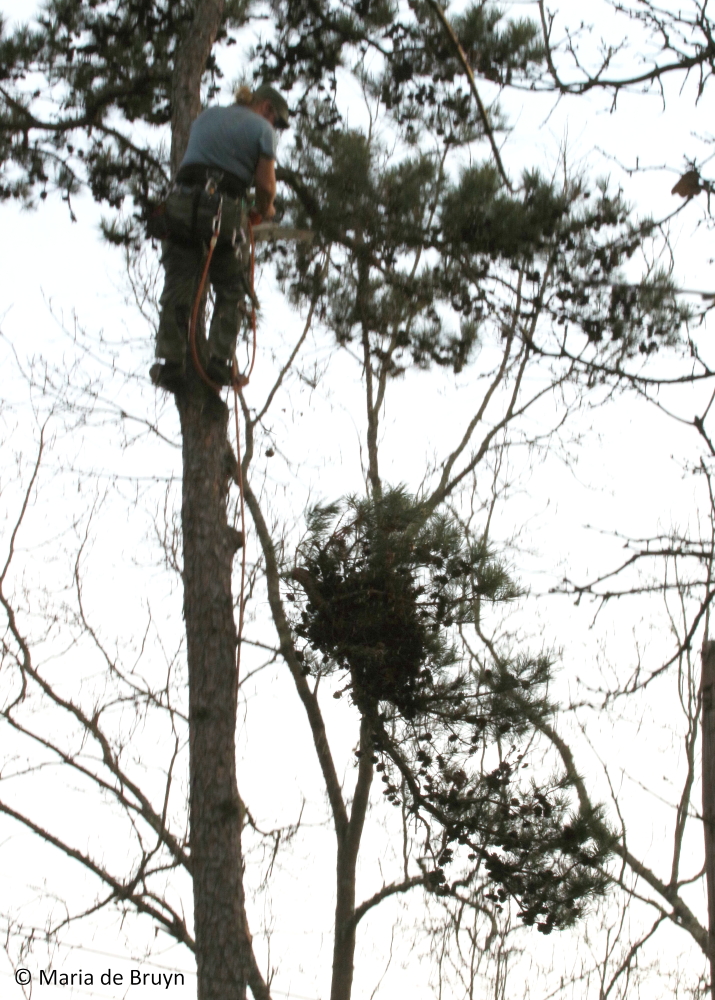
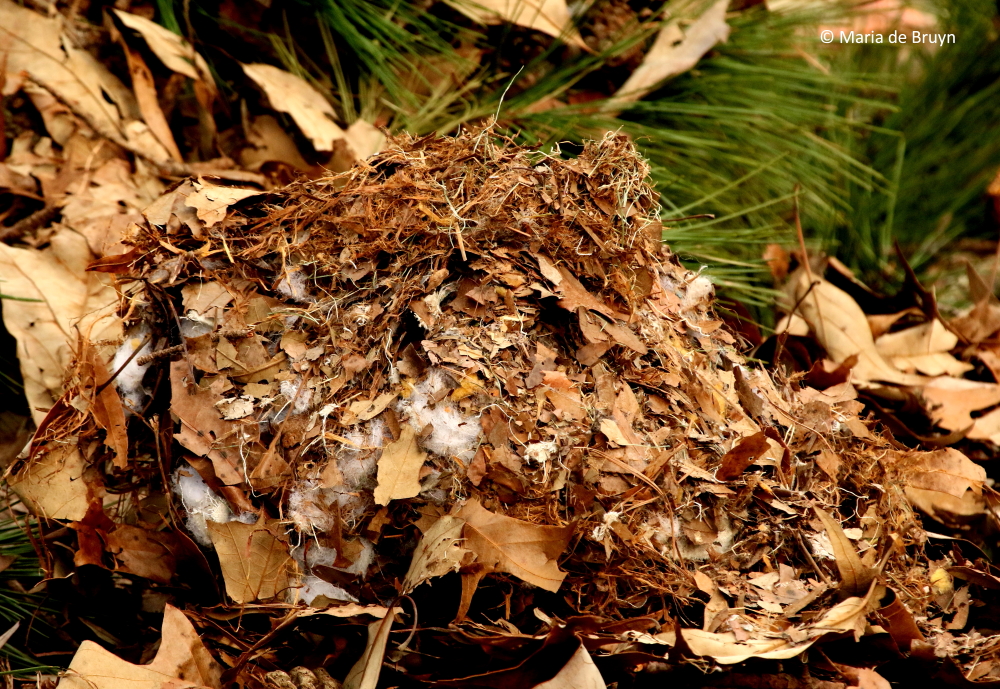
Then a couple days later, I was dismayed on her behalf to see that the new neighbors had decided to remove the tree where her nest was located. The landscapers said Sassy’s nest was not a factor in their decision; they just thought the tree was in the way. I watched with sadness as Sassy’s tree was dismantled and her nest plunged to the ground.

squirrel-nest-i77a9820-maria-de-bruyn-res  squirrel-nest-i77a2239-maria-de-bruyn-res

squirrel-nest-i77a2248-maria-de-bruyn-res

I didn’t see where Sassy was during this event but am sure she was watching from some other vantage point. I felt badly for her – all her innovative and dedicated work was destroyed. Of course, people lose their homes, too, to flooding, fires, tornadoes, etc.  and that is horrible. But I still regretted that this hard-working mammal had lost her home as well.

I presume Sassy has been building a new nest elsewhere. And given her boldness, I’m fairly certain that she was the squirrel I saw yesterday afternoon who had decided that she likes dried mealworms.

eastern-gray-squirrel-img_1911-maria-de-bruyn-res

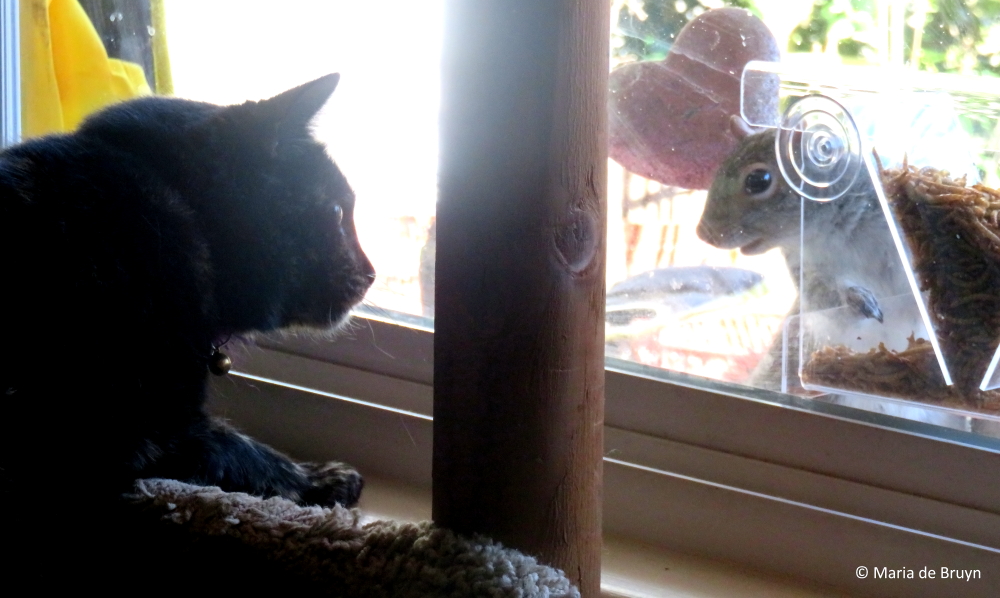
As my feline companion Moasi watched from her cat tree perch in the living room, Sassy was busy on the other side of the window chowing down on the worms in a new window feeder that I had actually bought for the Carolina wrens and chickadees, who often perch on the chair in front of the window.

eastern-gray-squirrel-img_1920-maria-de-bruyn-res

flower-i77a3037maria-de-bruyn-res


Sassy didn’t seem to mind Moasi watching her and she wasn’t fazed when I approached either. It was only when I knocked on the window that she finally descended to the porch and then left for the yard. I like to think that Sassy has made a new home and is now busy getting extra nutrition for the babies to come. And spring continues to unfold with temperatures varying from 24 to 70 degrees and above!