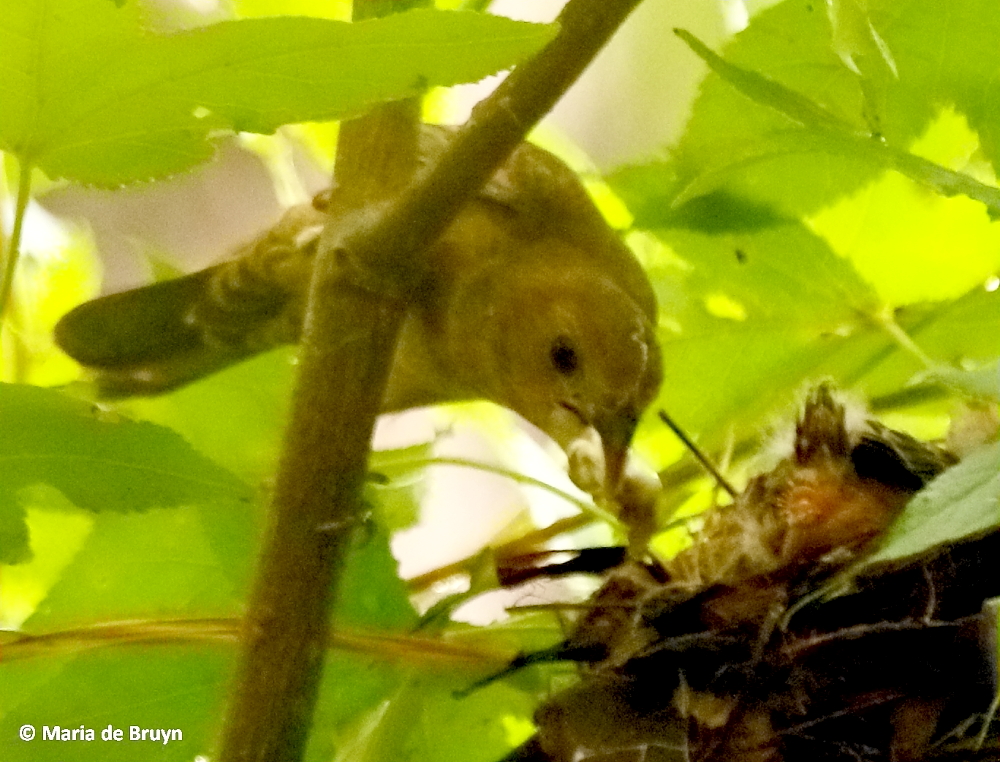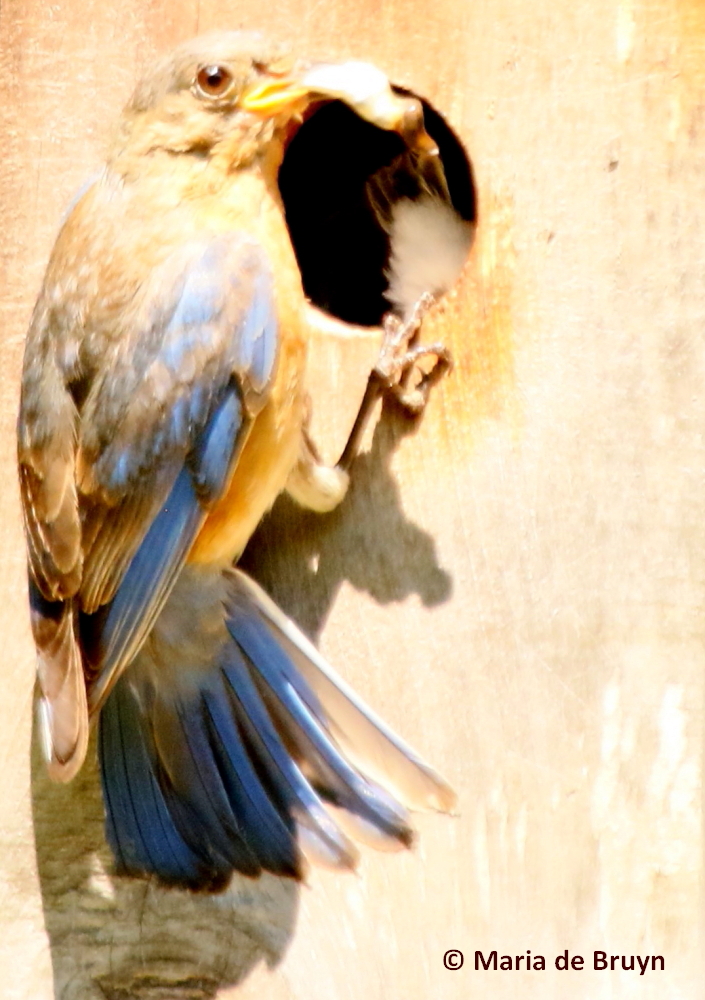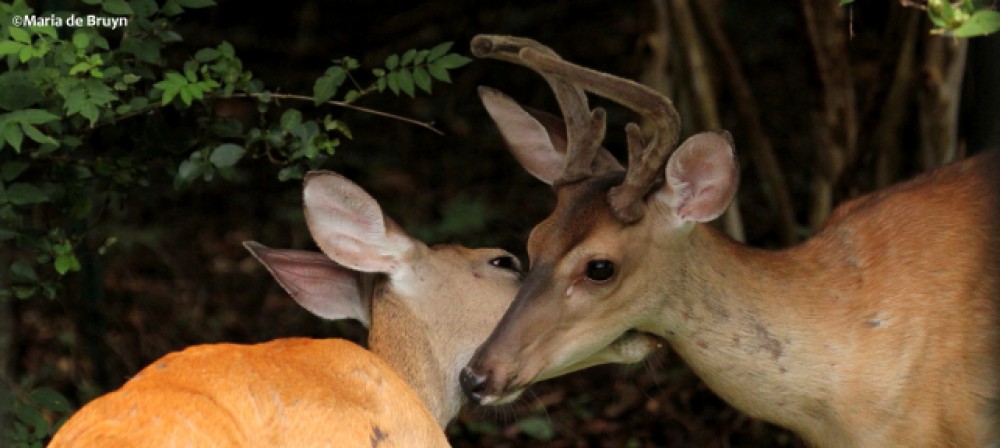
Spring is in the air…. Uh, I mean water!

It was the sound that first attracted my attention. Initially, I thought that it sounded like a flock of birds, but as I approached a pond, I realized that was not the case. The almost chirruping sound didn’t fit with any frogs I had heard before. As I scanned the scene before, my roving vision finally alit on a small section of brownish water dappled with green algae and stalks of dead reeds – there were moving bumps there. When I came closer, I finally realized that it was a mass of writhing and continually moving toads, engaged in what resembled a bit of a battle. It was actually what could be called a mating contest. (Click on a photo to see it larger; then arrow back to return to blog.)

The sound made by the male Eastern American toad (Anaxyrus americanus americanus) when he is ready to breed has been likened to an old-fashioned ringing telephone. It can last from 6 to 30 seconds and when multiple toads are calling at the same time, they create a very loud and penetrating “concert”. It doesn’t sound like a phone to me; you can judge by listening to the video.

I only saw a couple of the toads with inflated throat sacs. The sound was very loud, however, and the water was roiling with moving heads topped by periscope eyes, warty bodies and thrashing legs.

Before examining how the toads were going about their reproductive endeavor, a little biology lesson. Toads are a sub-group of frogs; while most frogs have moist skin, toads generally have drier and wartier skins. They vary greatly in color, including shades of yellow, brown, black and red, and may be speckled or have solid hues. The skin color can also change in response to stress, temperature, humidity and habitat.


American toads have two glands at the top of their head behind the eye crest. These are parotid glands that produce a neurotoxin, bufotoxin, which can sicken and even kill a predator. The milky substance can produce skin irritation in human beings and can be dangerous to smaller mammals (like dogs).


Like birds, toads have nictitating membranes, transparent eyelids that help protect the eye. They sometimes raise the nictitating membrane half-way so that they retain sharper vision.


Toads actually spend a lot of their lives on dry land, eating insects as well as worms, slugs and other small invertebrates. A particularly fascinating fact is that they use their eyeballs to help swallow food – when they ingest their prey, the eyeballs sink down into their mouth and help push the food down their throats!!!

At times, they created little whirlpools as they bumped up against one another or tried to mount a neighbor.


Sometimes, a large female with a smaller male atop her would rest quietly under water, apparently trying to avoid notice. This strategy did not always work, however, and sometimes one or more other males would try to join the pair already in amplexus (i.e., when the male grasps the female with his front legs and fertilizes the eggs as she releases them from her body)..

The female toad ejects her eggs in two strings, which are immediately fertilized by a nearby male spurting out a stream of sperm. (Frogs lay their eggs in clusters.) Tadpoles will emerge from the eggs within 2–14 days and reach adulthood within 50–65 days. They become sexually mature at 2-3 years.

In one case, I developed a real sympathy for a particularly large female. She had a small male astride her who resembled her in coloring and they looked to be peacefully joined. Then another male spotted them and he launched a sneak attack, trying to usurp the position of her already-present suitor. The first male clung on tightly.

No. 1 pushed No. 2 away with a hind leg again and again.

In the meantime, a great blue heron (Ardea herodius) who had been feeding on the other side of the pond, made its way over to the site of toad frenzy. S/he had been eating small fish and amphibians.

I thought the heron would plunge into the midst of the numerous toads for an easy meal, but instead the bird looked around and then skirted the group, veering away to the shoreline. Perhaps some instinct made the heron avoid the group during a reproductive event? Or s/he was put off by the vigorous activity of the potential prey?

A second rival toad then joined the first, who was still trying to get the original mating male out of the way. Eventually, a third, fourth and yet another male joined the group and the poor female was weighted down by 5 – FIVE! – male toads all vying for the prime spot on her back. Often her head was pushed down under water.

The first male clung on with great determination, often being pushed down under water as well as the other males piled on. He was NOT going to give up.

Ms Toad did not like this state of affairs. She laboriously began moving from a deeper spot in the pond to the pond’s edge. This was a slow process, made difficult by the clinging crowd who must have weighed a good deal as a group.

I thought she might be trying to get to more shallow water so the toad “knot” would not keep her submerged. Toads can breathe under water like frogs because they can absorb oxygen through their skin. They do have lungs, however, and if these fill with water, they can drown. A fellow Facebook nature lover told me that she had seen expired female toads with males still clinging to them. A toad knot can therefore unfortunately result in maternal mortality – the demise of a mother giving birth (to several thousand eggs; most of the tadpoles do not survive).

I soon left the scene after Ms Toad had reached the side of the pond and could keep her head above water. It was noticeable that her throat pouch was inflating and deflating – perhaps she was breathing deeply to compensate for lack of oxygen when she had to suffer a submerged head due to the over-amorous males.


Inhale!                                                                  Exhale!

I know I am anthropomorphizing, but I do believe that she likely felt the amphibian equivalent of relief and was looking forward to the end of that day!

Venturing forth on overcast days

Our area has been inundated with rain for 9 days straight now – not a big deal if you live in a region with monsoon seasons but it is not really usual for us. We also had two hurricanes and several severe storms the past 5.5 months as well as other rainy periods and the ground – much of it clay – is just not absorbing all the water anymore. My yard (which I am fortunate to have, don’t get me wrong!) currently has patches that are simply sodden mud and clay with no vegetation to be seen. Paths in the nature reserves are slick and slippery. Still, if you’re a person who gets “spiritual sustenance” by going out into nature, you venture forth on those days that might have a few overcast but rain-free hours to see what is out and about. Though I haven’t seen beavers lately, I did see their tracks in one reserve. A father had brought his children out and they made plaster casts of the tracks – a wonderful outdoor nature lesson.

Because we have also had some unusually warm days for this time of year, the flowers began budding a bit earlier than other years. Daffodils, hyacinths and crocuses are blooming profusely and a few of my neighbors have lovely flowering quince (Chaenomeles).


A winter honeysuckle (Lonicera fragrantissima) at one park had some lovely blossoms.


At another reserve, an apple tree (Malus pumila) has lovely flowers emerging.


Unfortunately, the tree is right next to a grove of cedars that are laden with mature cedar apple rust galls (Gymnosporangium juniperi-virginianae). When they emit their spores, they will kill the apples. I used to have an apple tree in my yard but the nearby cedars also got apple rust and now the tree has died. I’ve planted a plum tree and hope that that one will thrive and survive.

With the leaves having fallen from most trees, it’s possible to see the cocoons of some of our larger moths. So far, I’ve found three cecropia moth cocoons, two polyphemus moth cocoons and several bagworm moth cocoons in three different places. The Chinese praying mantis (Tenodera sinensis) egg cases are also showing up better with little foliage to hide them.

Getting nice shots of birds is not easy on those dull and gray days. Many of the smaller birds were huddled in bushes and trees, puffing themselves up to trap some body heat as a means of coping with the cold and wet conditions.


Field sparrow (Spizella pusilla)

I tried to get close to a beautiful kestrel (Falco sparverius), who kept flying just a bit further away when I slowly approached it. As I was walking back to my car, it suddenly turned and flew right by me – I swung up my camera and got one shot, which was not perfect but still a bit of a reward.


A gorgeous great blue heron (Ardea herodias), on the other hand, deigned to entertain me with a protracted grooming session at a local pond. S/he first perched above a couple turtles and watched them until they plopped down underwater.

Then the bird began picking at its feathers, showing off how its long neck can be twisted to enable that long beak to reach where it wants.

Note where the beak is peeking through in the photo above right! Flexible neck!

The preening activities gave me a chance to get what I considered to be a series of nice portraits.


The weather forecasters predicted that the rain would end, it would get very windy and the sun would shine this afternoon – they were right! They also say we will have a week of sunny days coming up – I certainly hope that that’s the case so I can exchange my muck boots for regular walking shoes again. Hope you are enjoying some pleasant weather!


Signs of spring in an uncertain season

As tiny snowflakes fall gently from the sky, my thoughts have left Costa Rica for a bit and turned to the weird weather we’ve been having in North Carolina. I didn’t move to this state for its weather but in the time I’ve been here, I’ve grown to appreciate the climate – we have four seasons but the winters have not seemed overly long and the spring and autumn temperatures are often fabulous.


This year, much of February was unseasonably warm in our Piedmont area and people, as well as plants and animals, were enjoying the warm sun and mild temperatures. Crocuses and irises poked their blooms up a bit early and birds were checking out nest boxes.


Butterflies, like this question mark (Polygonia interrogationis) made an appearance (it was getting sustenance from some dog poop left on a bridge!) and Carolina anoles (Anolis carolinensis) emerged to sun in the warmth.


Then on 12 March, we had a day of snow. The male Northern cardinal (Cardinalis cardinalis) and Carolina wren (Thryothorus ludovicianus) sat amid the flakes between trips to the feeders.


The female ruby-crowned kinglet (Regulus calendula) didn’t seem too perturbed, but the male resident was not happy – his bedraggled red crown was in evidence, both when chasing her away from the feeders and when he was just coping with the wet snow.


When I left for my Costa Rican rambles, it looked like the spring weather might give way to colder temperatures; when I returned 10 days later, it was definitely more winter-like. Then, this past weekend, we had a brief respite. Despite a cold morning start, friend Karla and I visited the Guilford County Farm. The farm personnel had marked off a section of the gravel parking lot where killdeer (Charadrius vociferus) had placed a nest with four eggs. When the babies hatch, they can walk away from the nest as soon as their downy feathers dry.


They won’t be able to fly until about 25 days later, but they can feed themselves. The parents will continue tending to and defending them, however. In the meantime, the parents do not come near the nest so as not to draw attention to it and they will try to lead any potential predators away with a broken wing display. They do fly near the nest often, however, and keep an eye on it in between their own feeding sessions.

Karla quickly spotted Wilson’s snipes (Gallinago delicata) flying over the pond and settling at the water’s edge. As we drew closer, we could spot them occasionally, but they blended really well with the vegetation. Below are a couple photos taken at a fair distance with a high ISO and lots of grain – but you can try to see if you can spot the six snipes in the first photo and the two in the second.

Fortunately, one flew in a bit later and I got a couple more recognizable photos!


Some Canada geese (Branta canadensis) flew in and headed for the same corner of the pond.

Then, as I was trying to find the snipe in the grass again, I noticed a killdeer looking for insects nearby.

She was accompanied by a male, who at first seemed to be preening but who was actually trying to impress her with some courtship displays.


The males will show off their feathers for their (potential) mates, especially raising and displaying their bright tail feathers as a fan.

The female would walk away and he would eventually move closer in an attempt to get a response.

Nearby, we saw three Northern mockingbirds (Mimus polyglottos), two of whom seemed to be males battling over a female. Their dispute was very vigorous and lasted quite a long time. In fact, when they flew away, they were still going after one another!


During our continuing walk in the fields and woods near the farm, we saw many other bird species including Eastern meadowlarks, brown creepers, woodpeckers and a pair of kestrels. The woods were kind of strange in that there were very few bird nests visible in the bare trees and also no Eastern gray squirrel nests – in fact, we did not see one squirrel the entire time we were there, which was very odd. An adorable baby donkey (Equus asinus) did greet us as we walked by, though, and our long excursion (about 6 hours) gave us a nice taste of spring. Hopefully, when the snow flurries today end, we will see spring weather come back quickly and be able to enjoy the flora and fauna of this season again. Next blog – back to Costa Rica!


Avian generations in the making – part 3A: raising and feeding babies

So here in North America, it’s approaching winter and it may seem a bit weird to have another blog at this time on birds raising their young. But I wanted to complete the series even though it has been delayed because of my volunteer activities and commitments the past month. Also, it is now late spring in the Southern hemisphere so for some people this is seasonal and there are other birds around them that are getting ready for babies, though different species than these American robins (Turdus migratorius). Because this part kept growing longer as I worked on it, I’ve divided it into two parts – this one on raising the babies until fledging and the next one on fledging and post-fledgling care. I hope all of you who read this will enjoy it no matter where you live.

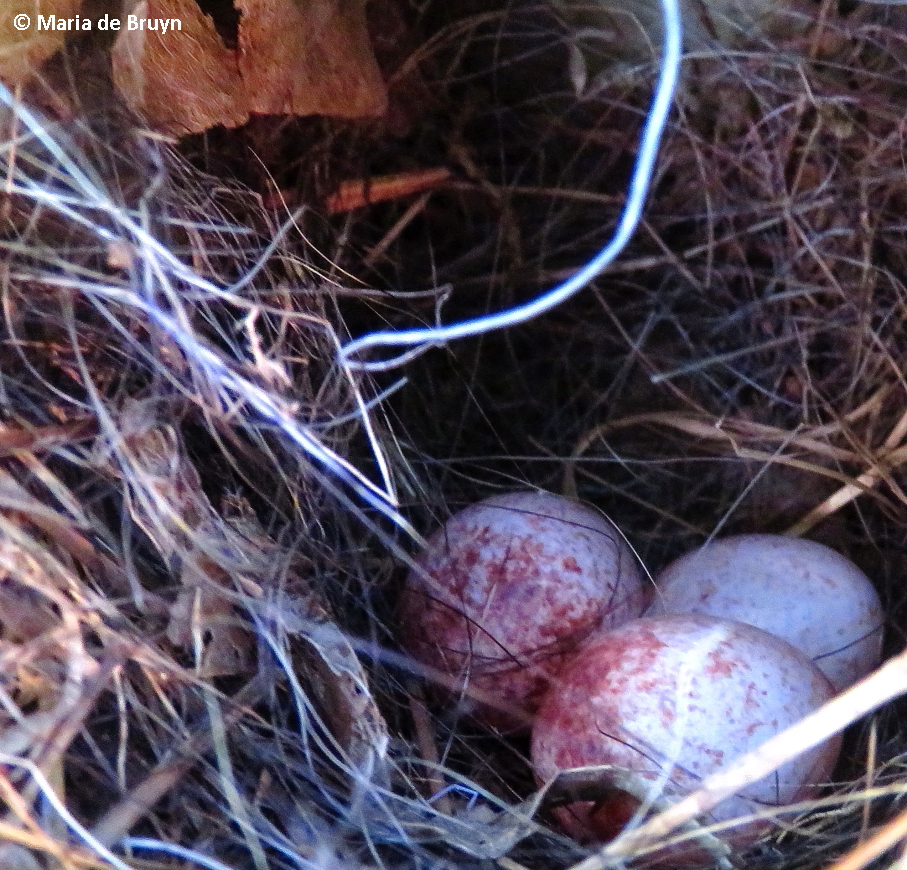
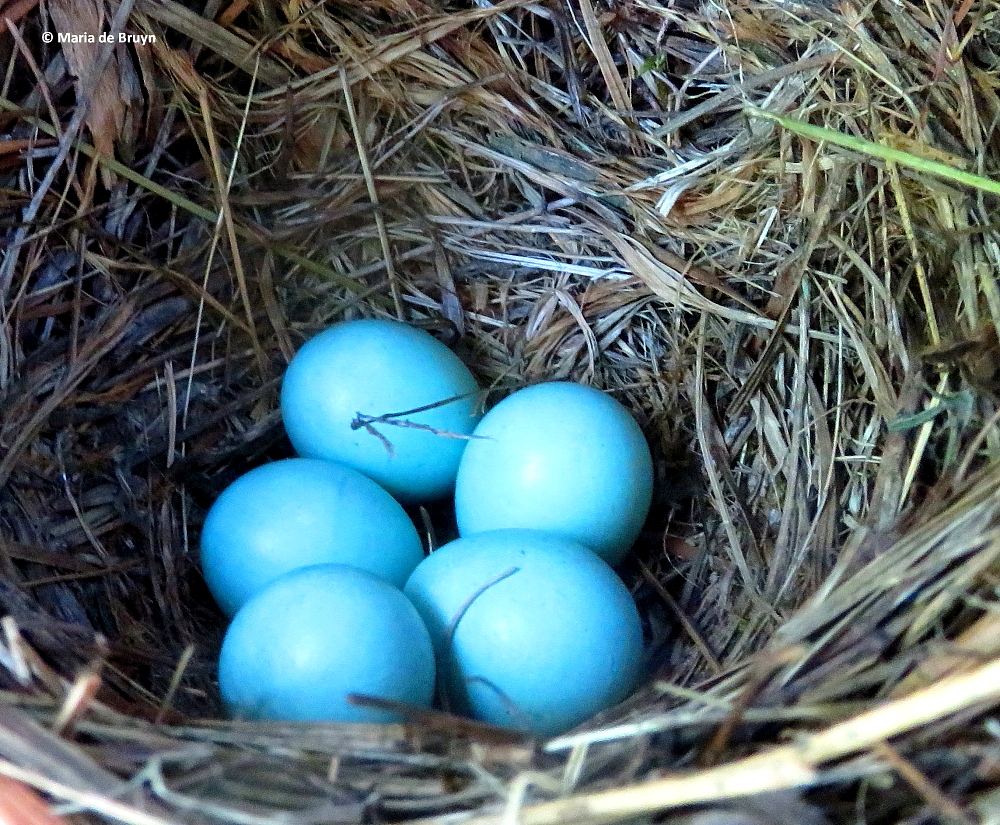
It’s fascinating to me to watch the birds during their reproductive cycle; I always learn something new. Once parent birds have completed a nest to their liking, the female lays her eggs and proceeds to brood them, with some species sitting on the eggs almost full time right away and others taking breaks.


Carolina wren (Thryothorus ludovicianus)              Eastern bluebird (Sialia sialis)

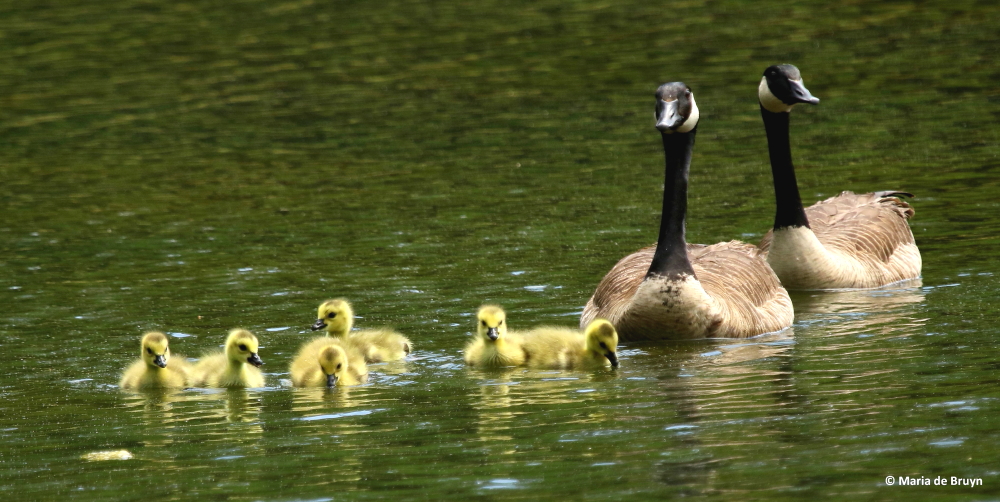
An acquaintance recently told me about a friend of hers who commented that she had seen a very pregnant goose that was so fat, she was waddling. The acquaintance proceeded to give an avian reproduction lesson to her friend – a woman in her 80s – who apparently did not know all birds lay eggs! Even after babies hatch, the Canada goose (Branta canadensis) may still look well-fed!

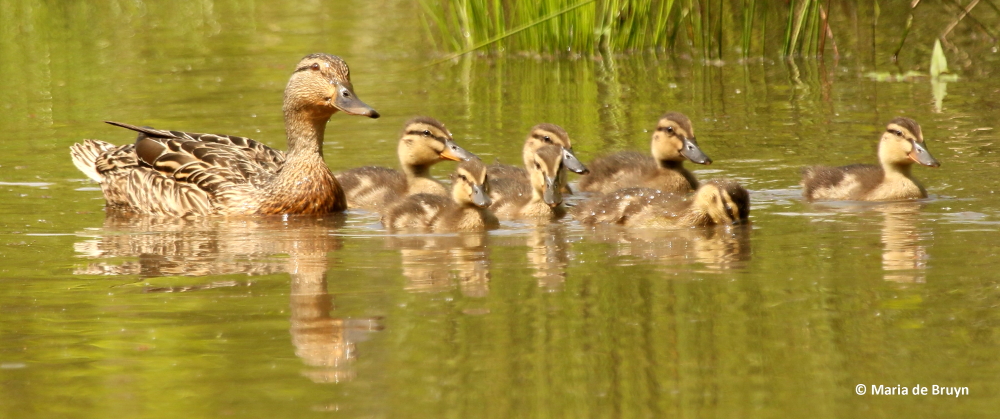
Some bird species have young who are “precocial”, that is, they are covered with downy feathers and have open eyes when they hatch and are soon able to feed themselves. These species include turkeys and ducks, like these mallards (Anas platyrhynchos), and the young often leave the nest soon after birth (which makes them “nidifugous” – good Scrabble word!). The newborns may look fuzzy but it’s not long before they start to take after their parents’ looks.

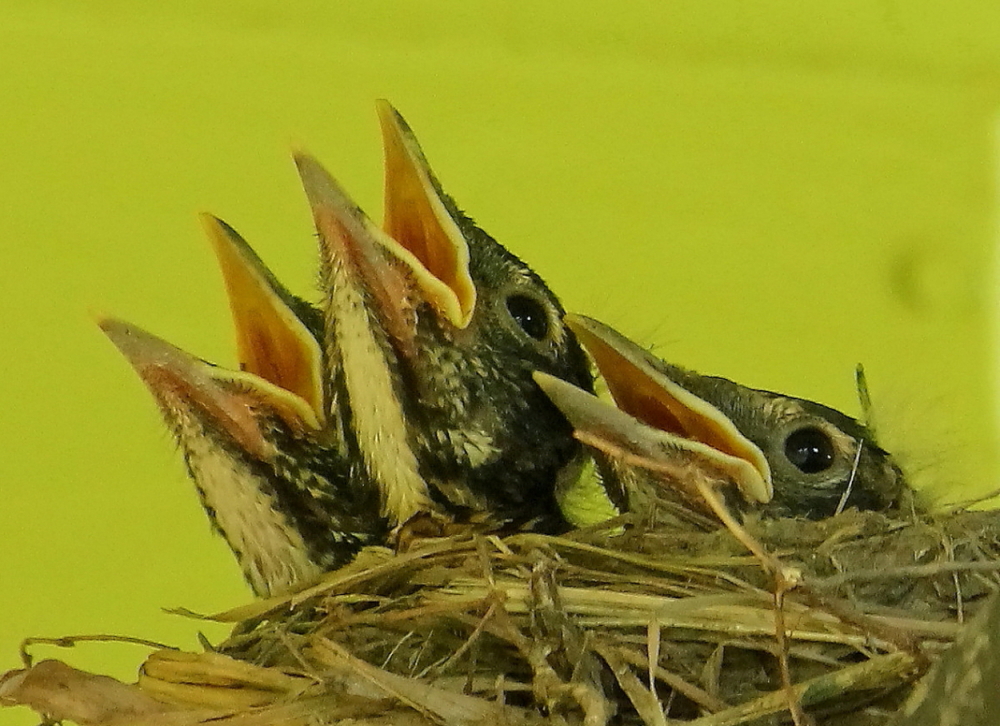
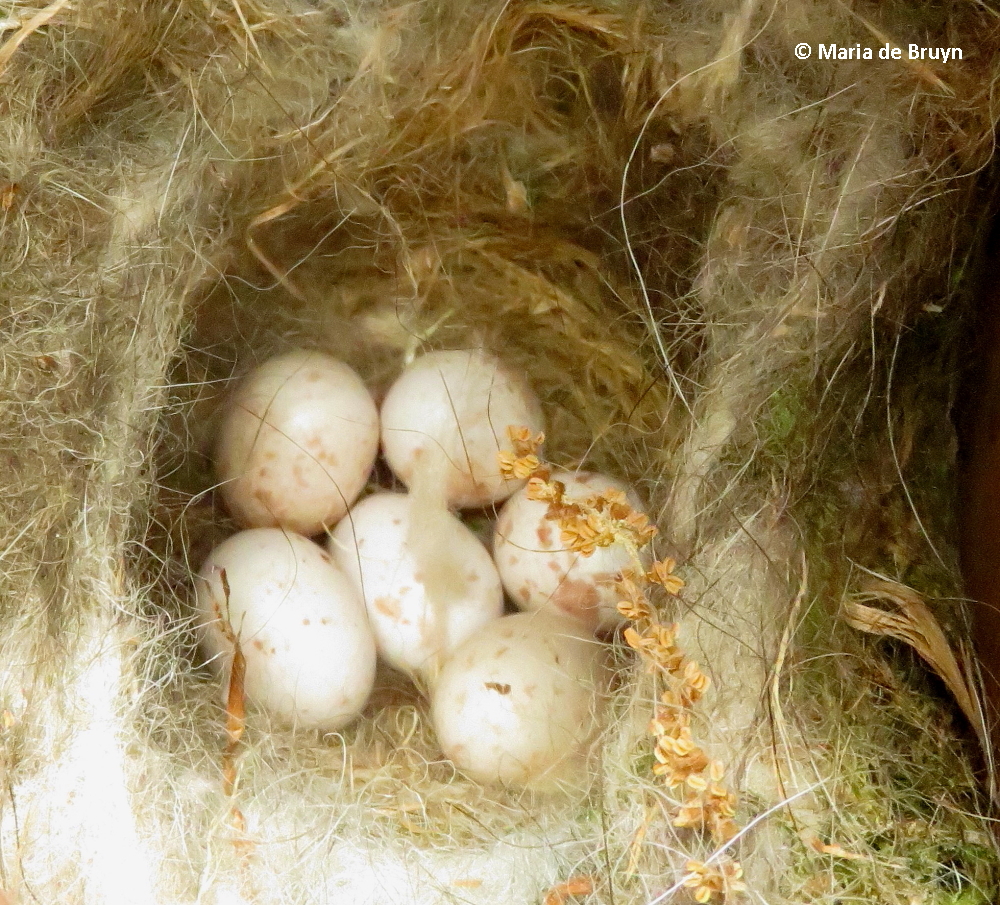
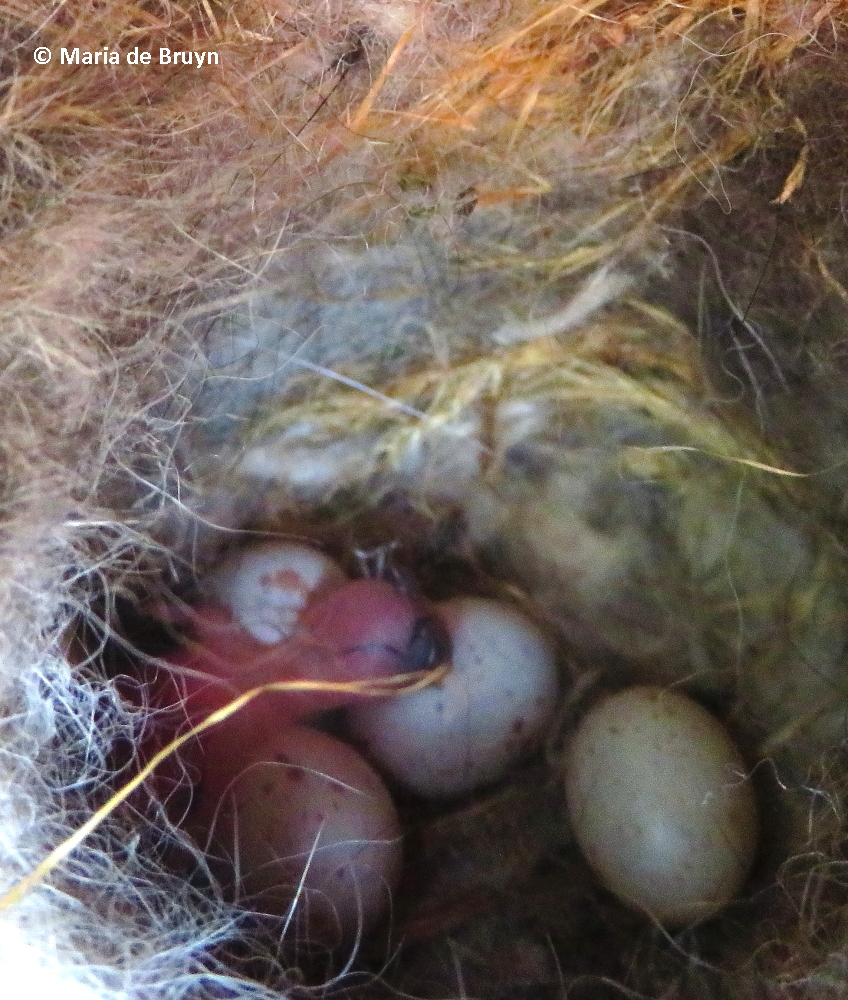
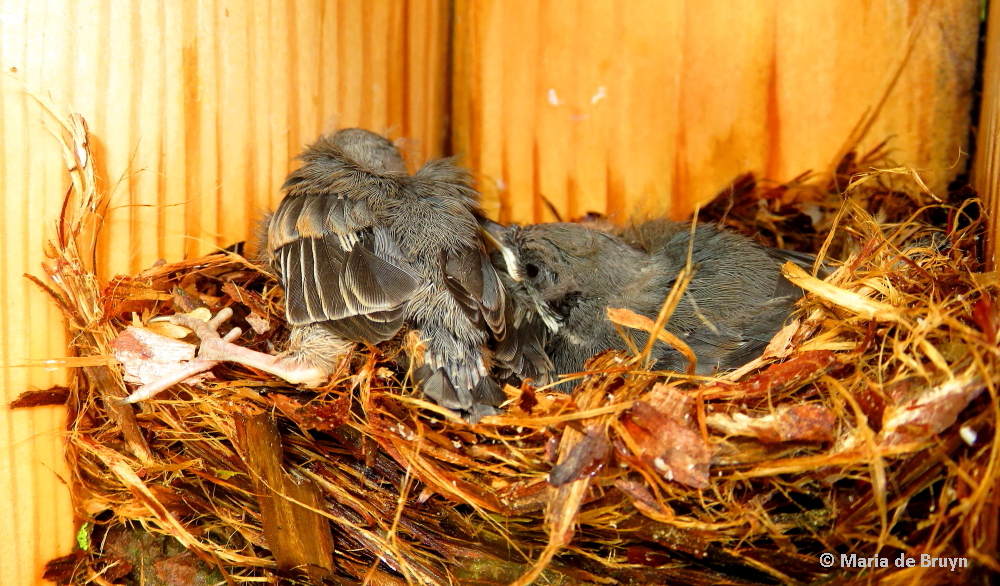
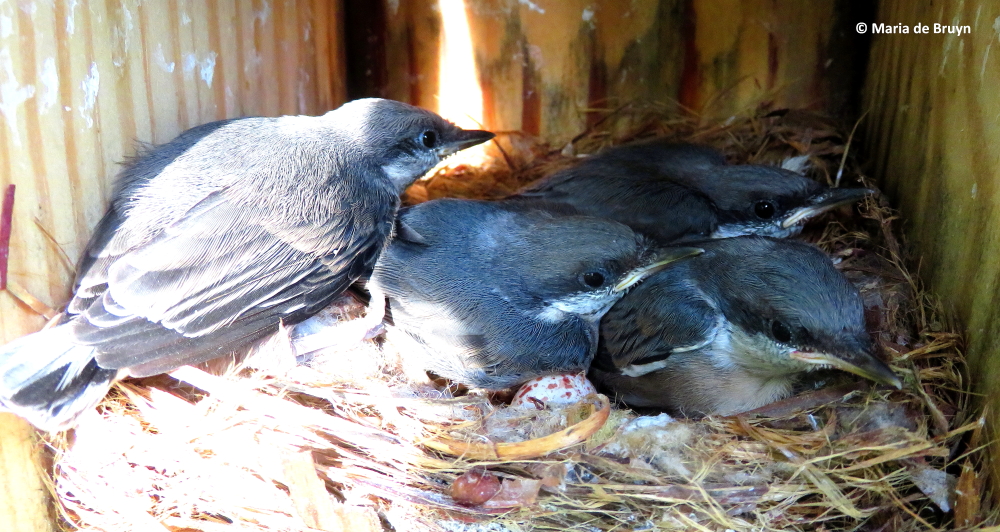
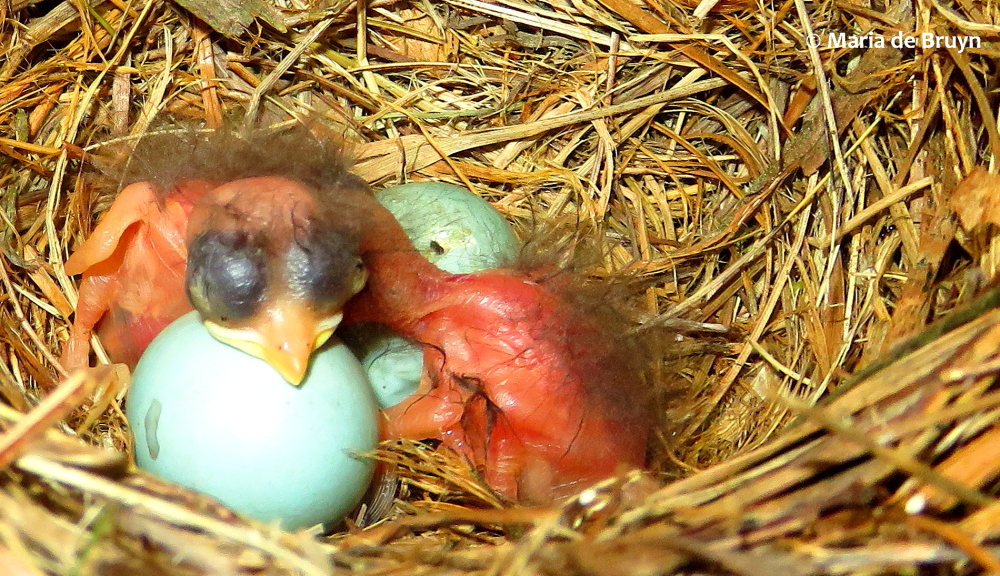
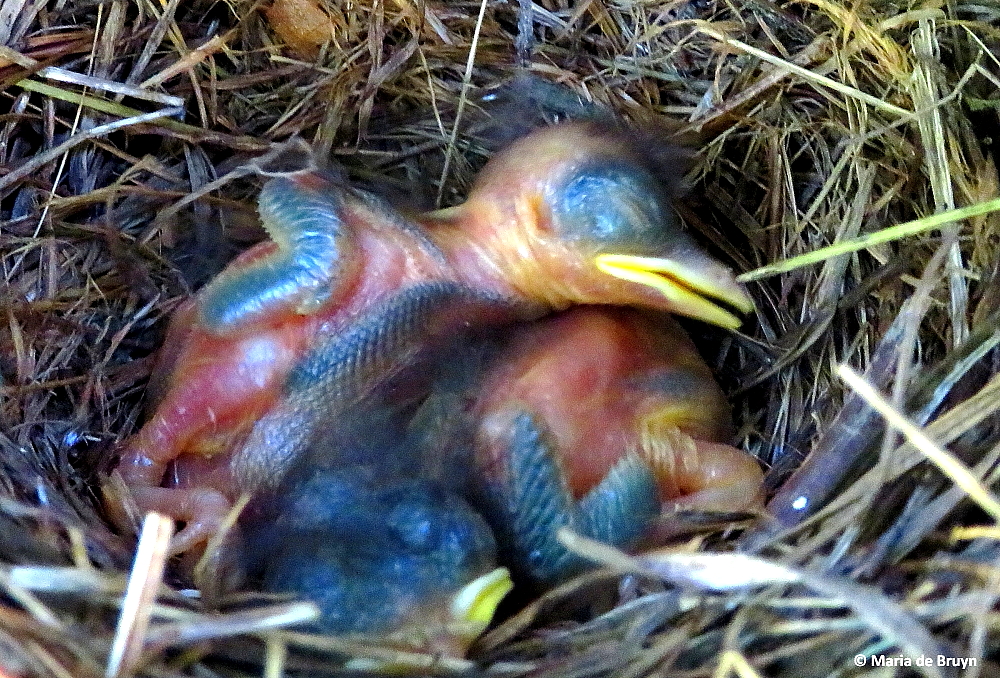
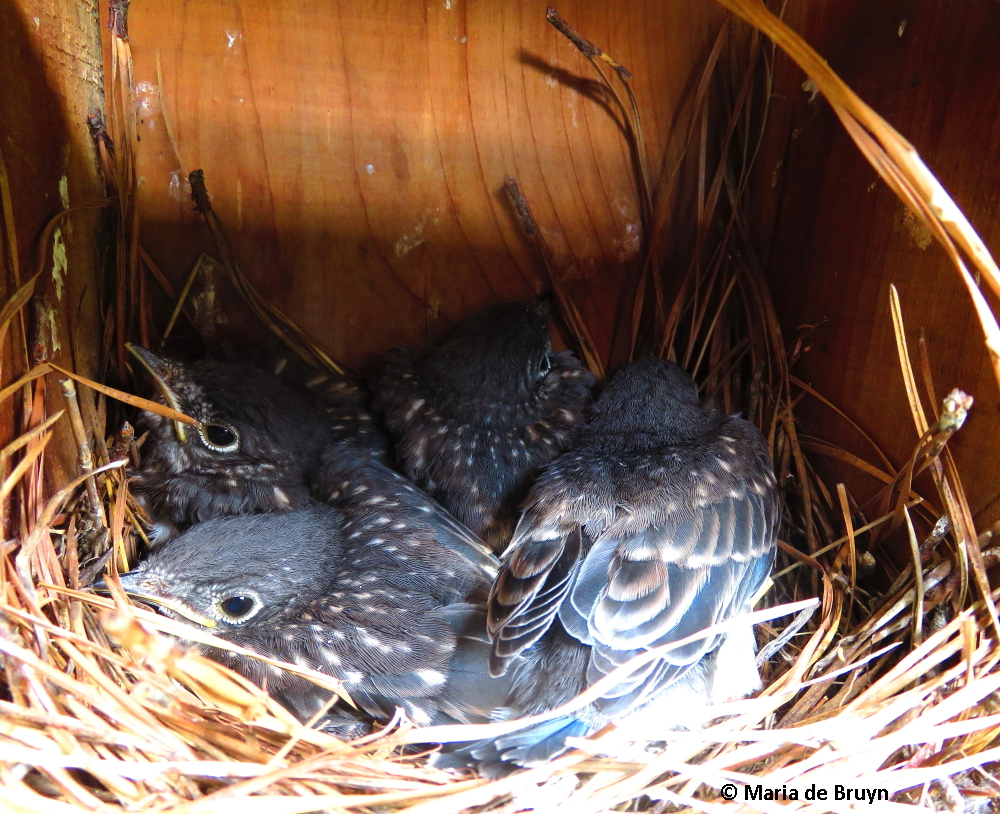
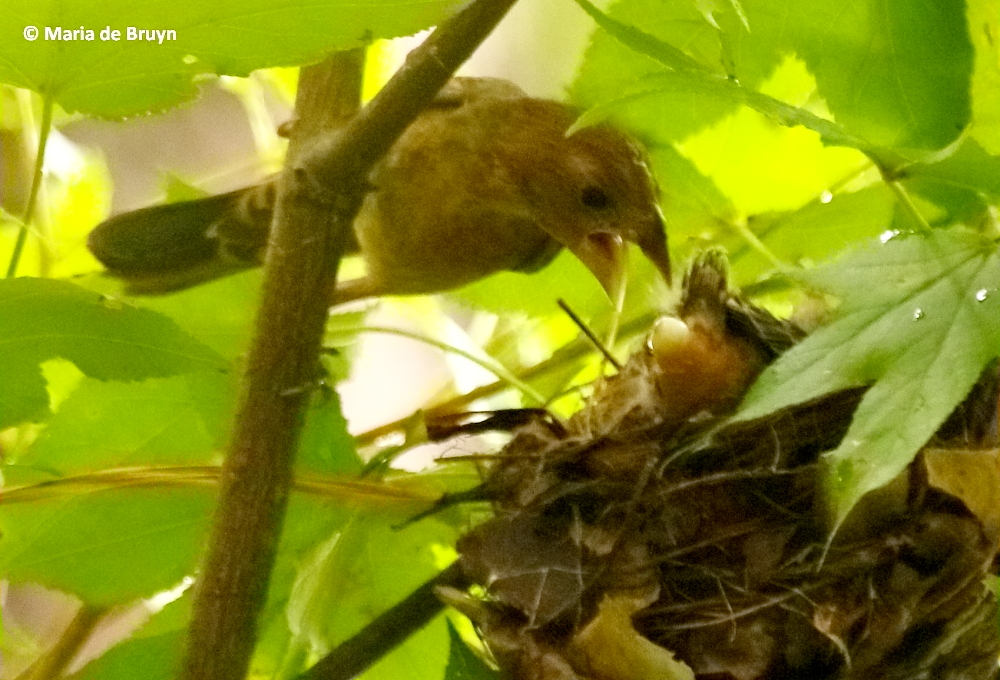
Other birds, such as songbirds, are altricial (as are human beings) – they are naked and helpless at birth and require considerable care before they can walk, fly and feed themselves. If you have some in a nest that is easily observable (and you can take photos when parents are not there so you don’t distress them), it’s interesting to see how the babies develop.


Carolina chickadees (Poecile carolinensis) on 18 and 22 April           

Brown-headed nuthatches (Sitta pusilla) on 13, 25 and 29 April


Eastern bluebirds (below)


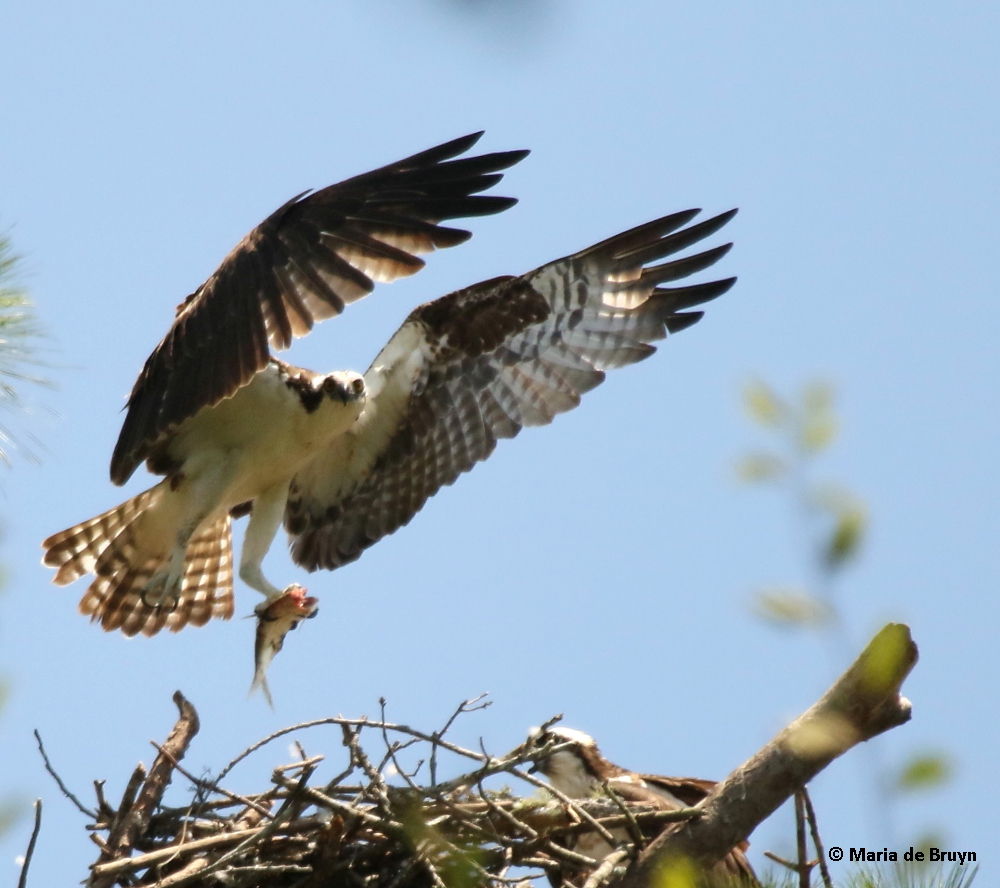
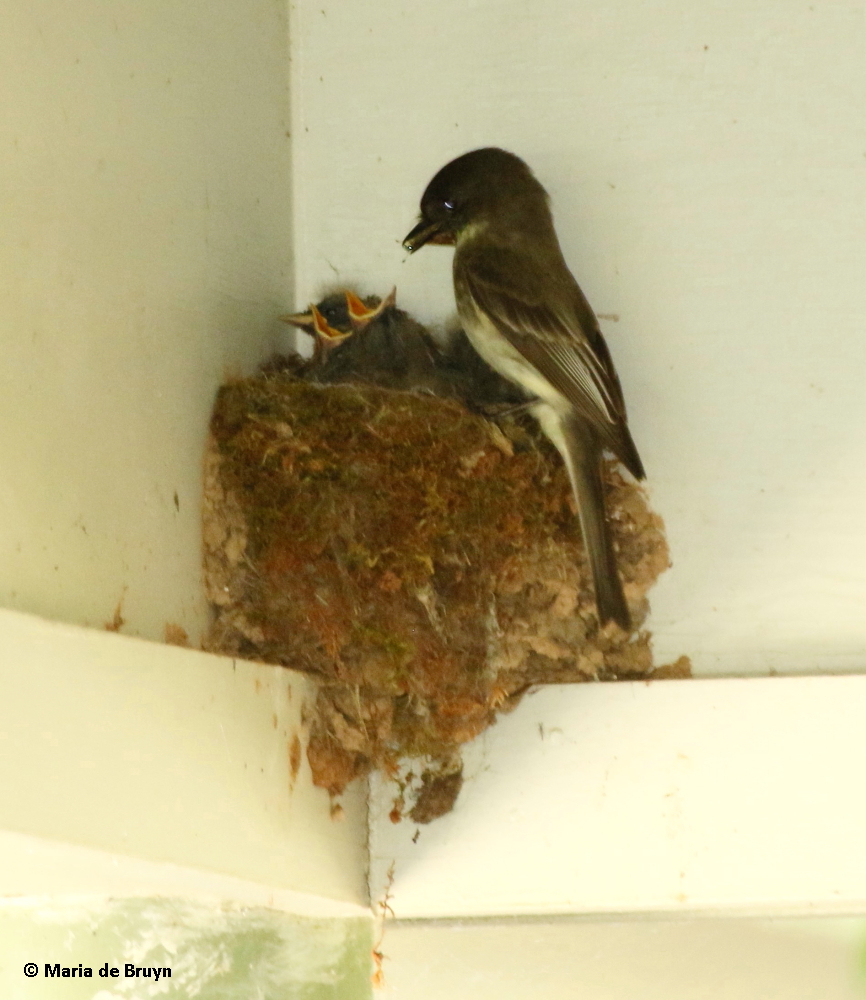
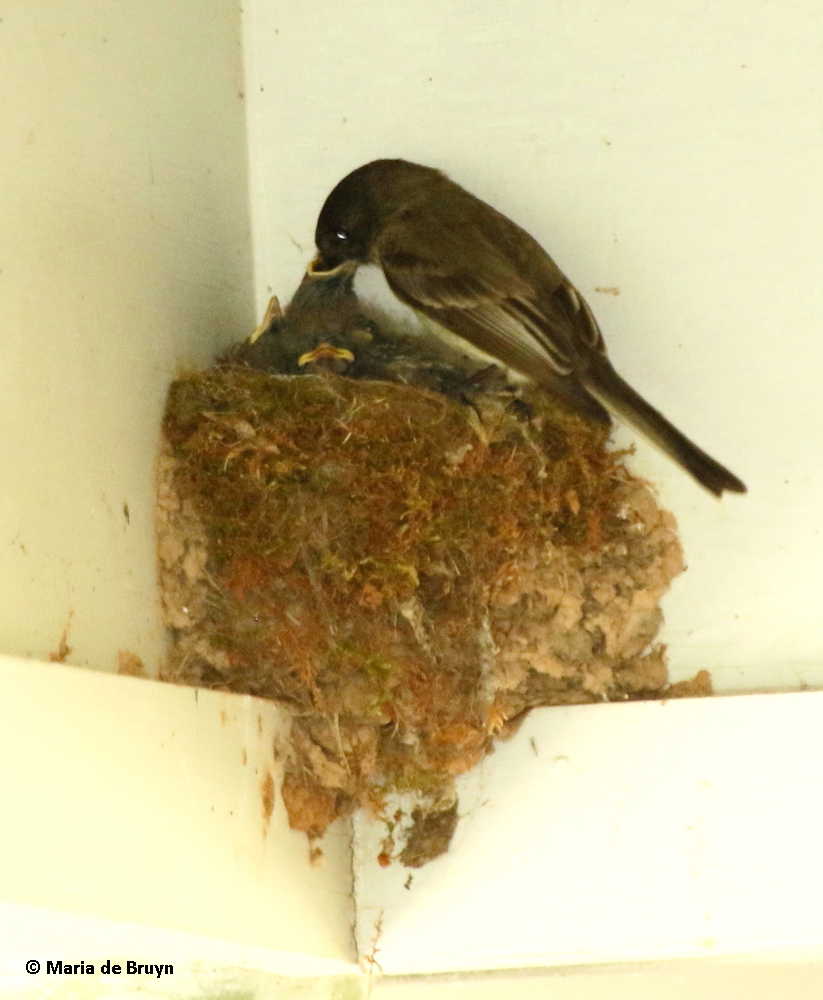
As the mother incubates the eggs, her mate will often feed her so she doesn’t have to leave the nest. This young osprey (Pandion haliaetus) was assiduous in bringing his female life companion fish. Then as the babies hatch, in many species both the male and female parents get busy bringing the young frequent meals.  It’s estimated that Carolina chickadees, for example, will bring over 5000 insects to their brood before fledging!

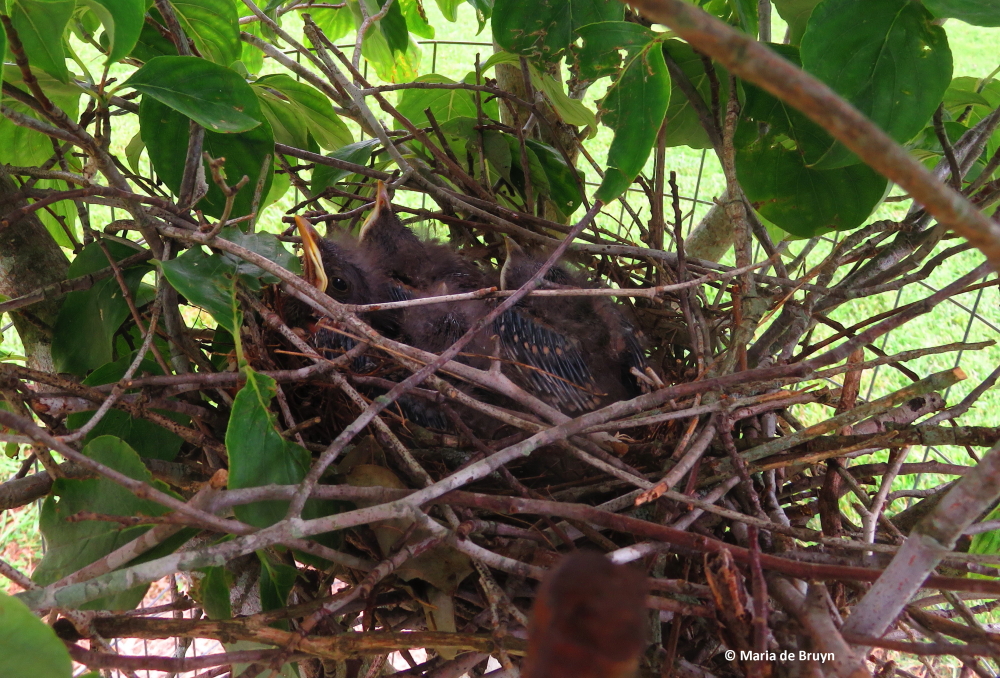
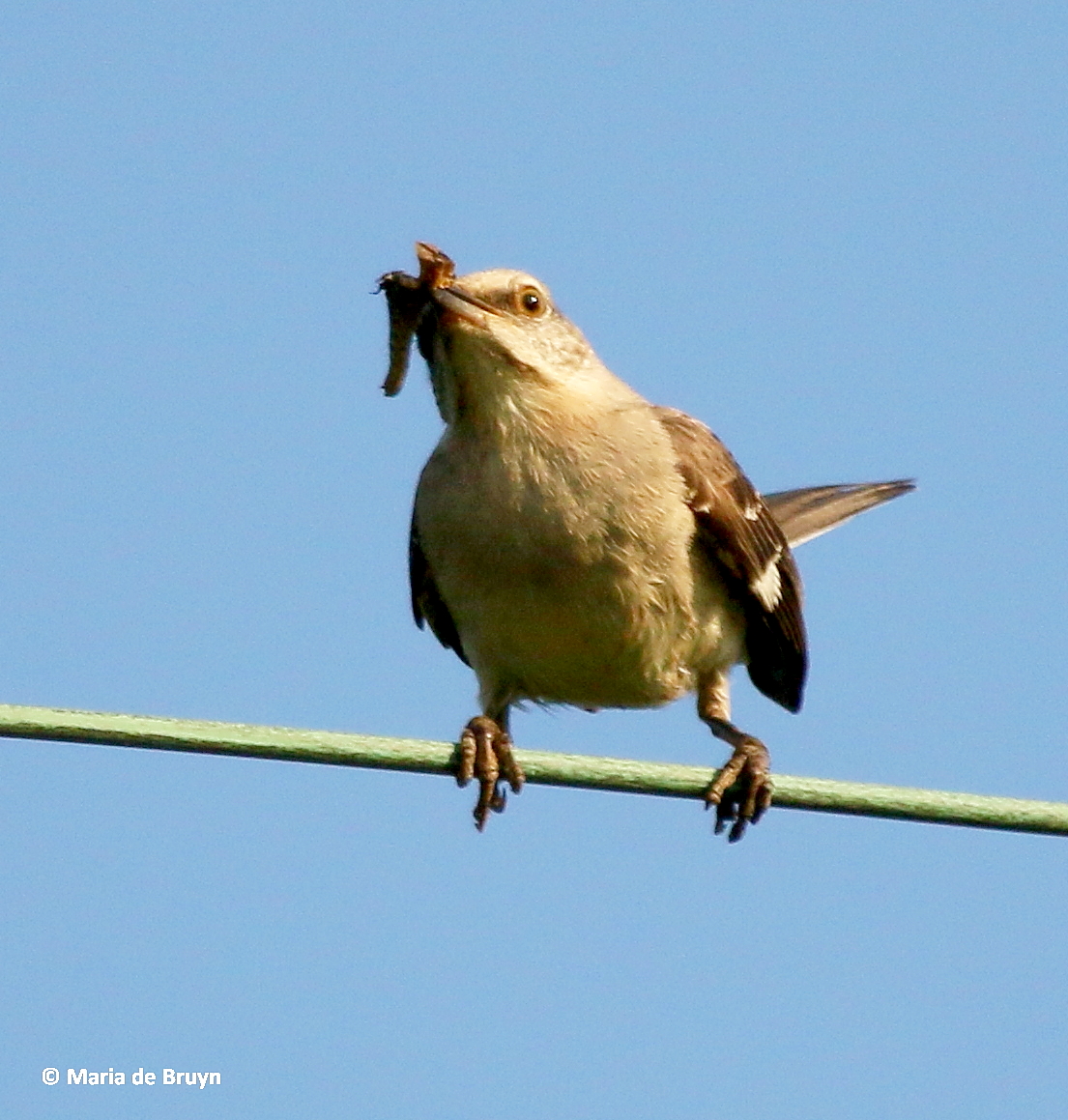
Northern mockingbird (Mimus polyglottos)


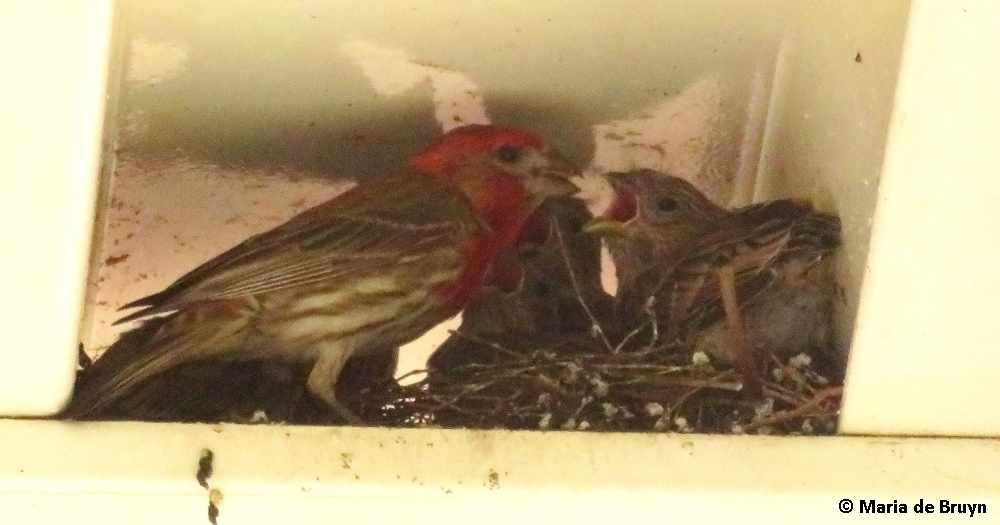
House finch (Haemorhous mexicanus)  and Red-headed woodpecker                (Melanerpes erythrocephalus)


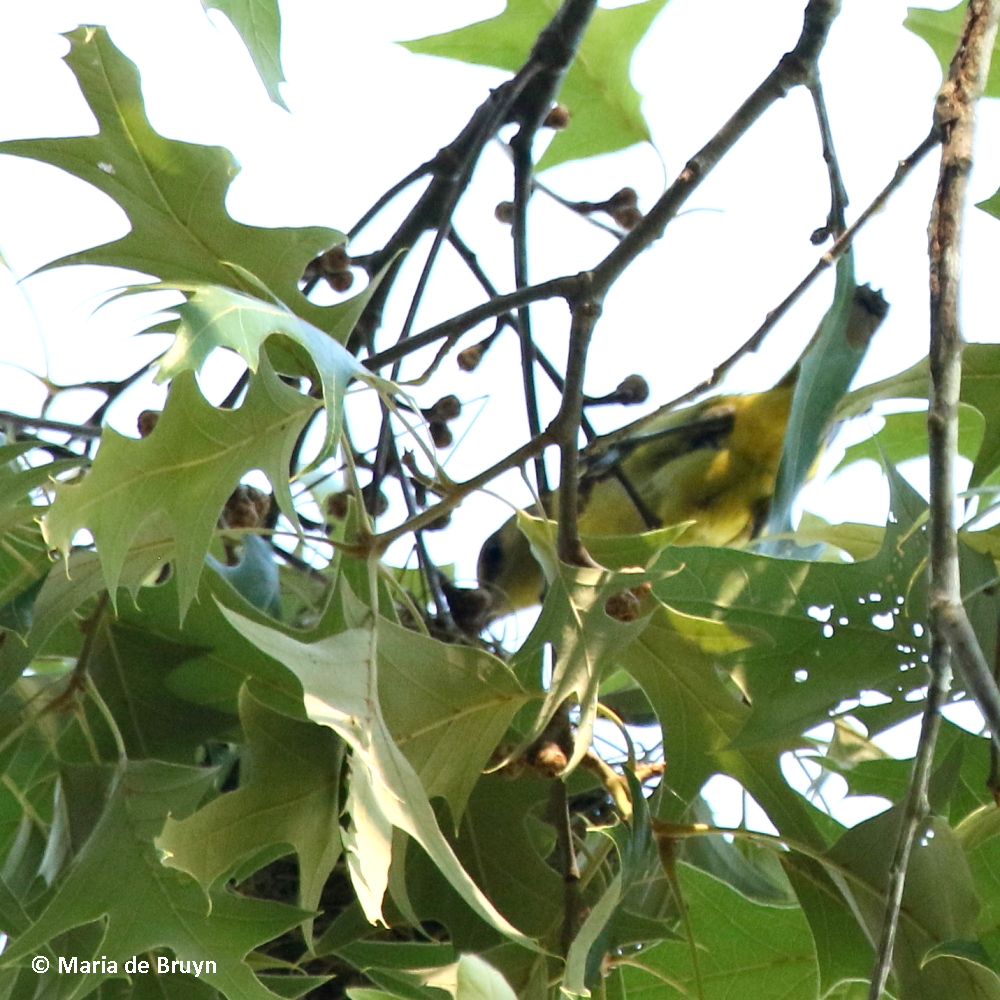
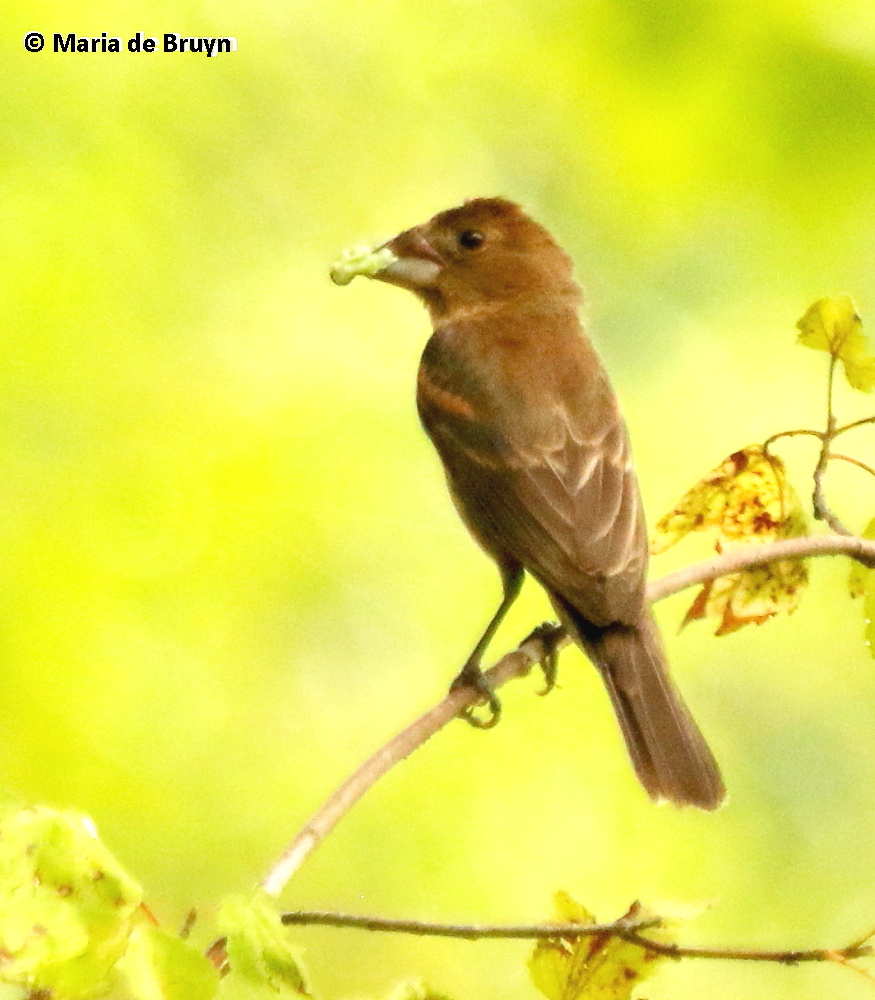
Orchard oriole (Icterus spurius)                  Blue grosbeak (Passerina caerulea


Eastern phoebe (Sayornis phoebe)

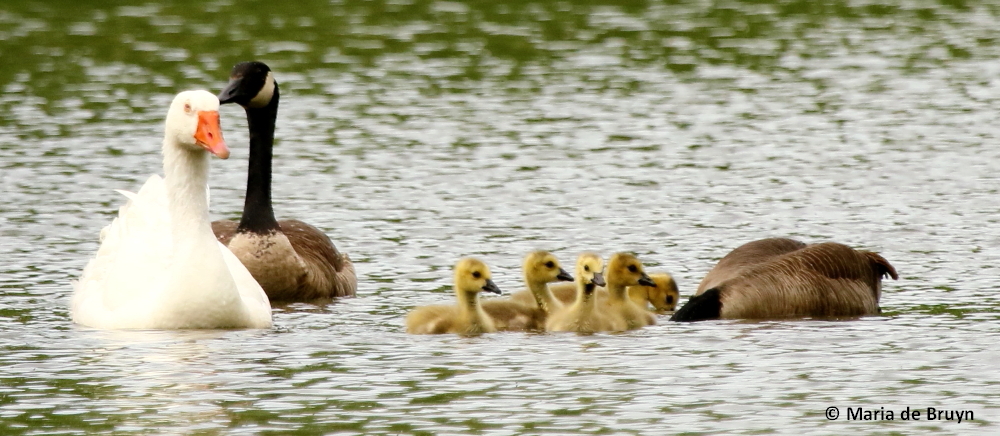
In some species, the previous year’s young will help their parents with the new brood. Brown-headed nuthatches and American crows are examples of this. A pair of Canada geese that I observed this past spring seemed to have a domestic goose helping them out.

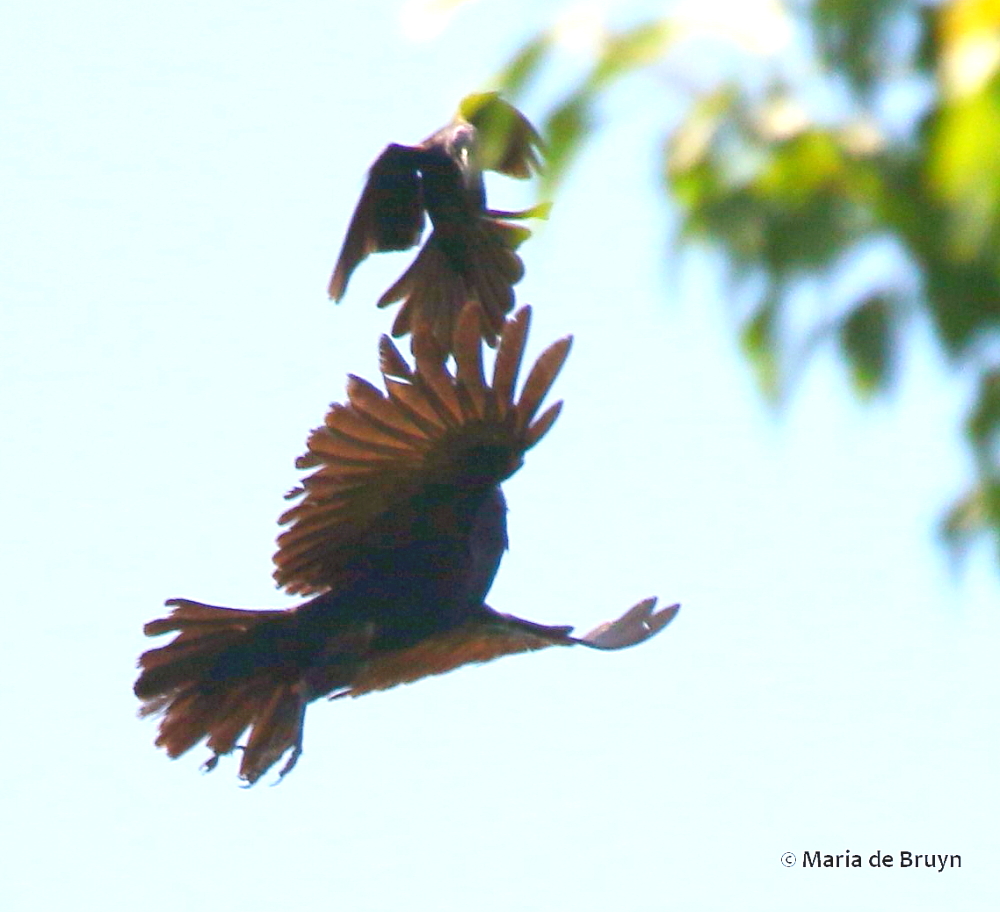
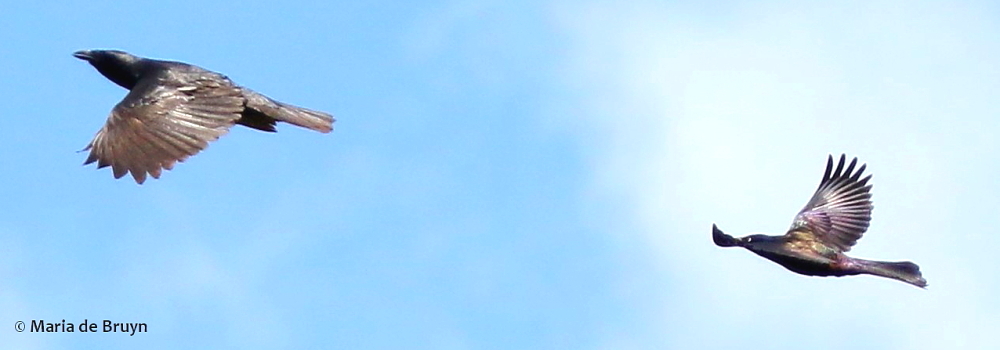
The parents have other chores, too. They must keep the babies safe from predators – Both American crows (Corvus brachyrhynchos) and common grackles (Quiscalus quiscula) will be chased away by songbirds, for example, because these birds will raid nests to eat eggs and babies. But the grackles must also protect their own young against the crows, pursuing them non-stop to drive them away.


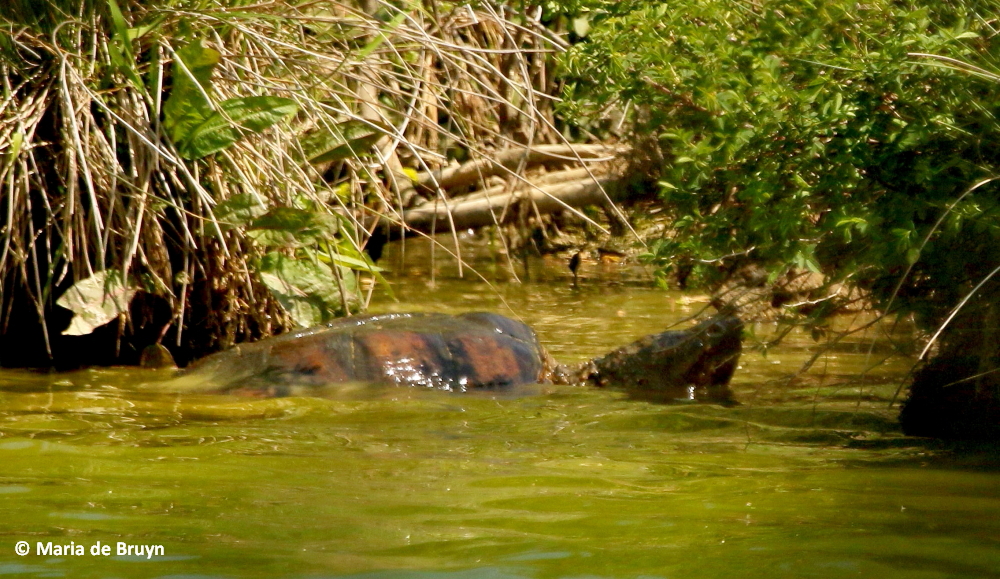
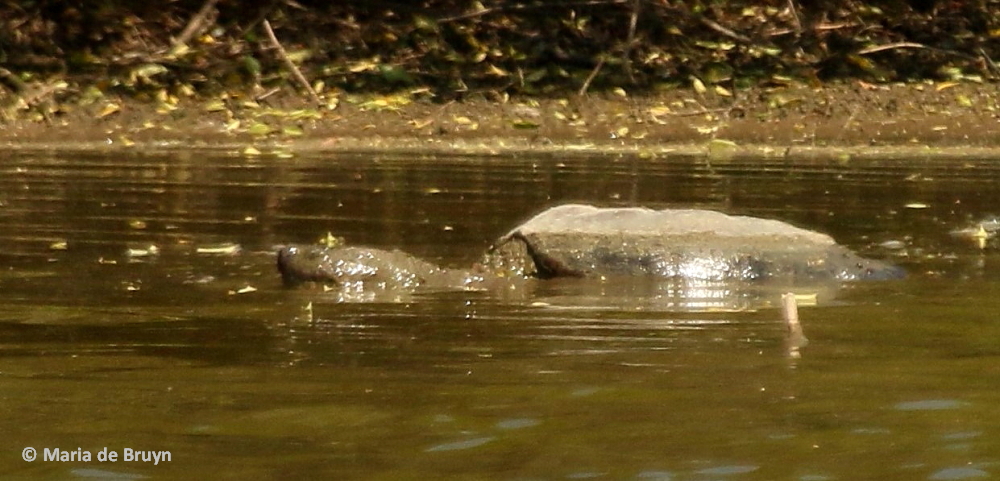
For other birds, protecting the young can be more difficult. This mother wood duck (Aix sponsa) was raising her brood in a pond that was home to at least three large snapping turtles (Chelydra serpentina). Ultimately, another birder and I thought she only had two ducklings survive.   

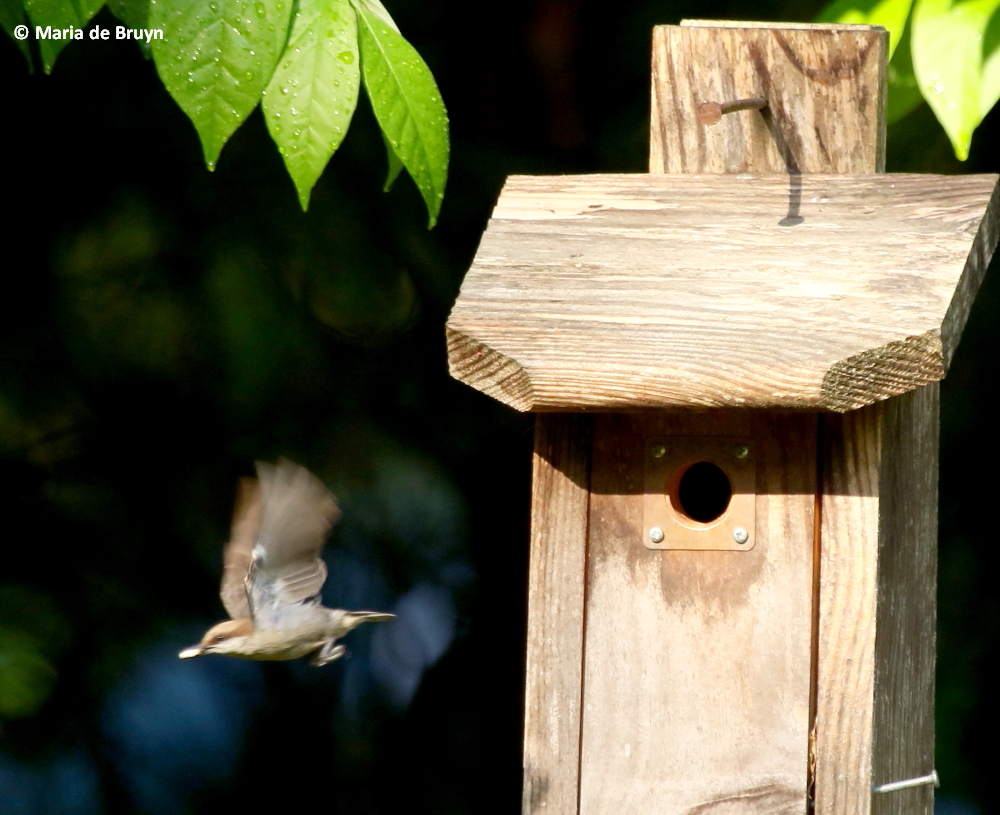
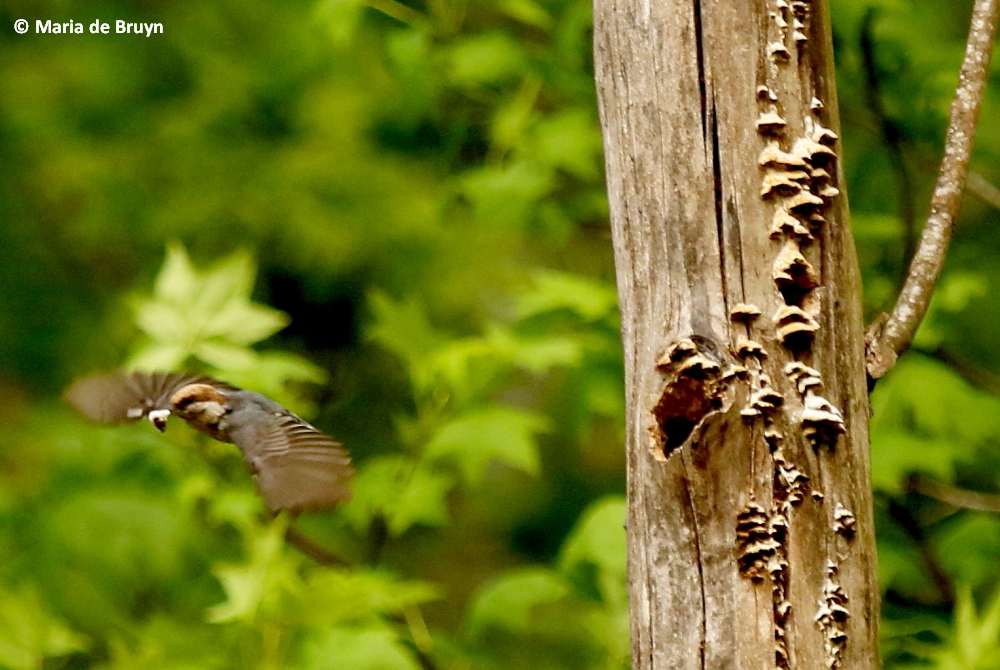
Keeping the nest reasonably clean is another chore. The babies make this task a little easier than you might think because they defecate into a mucous membrane that forms a sac. When you watch a nest box, especially when it gets closer to fledging time, you can periodically see the parents flying out of the box with a white blob in their mouth, which turns out to be a fecal sac. They either discard it elsewhere or sometimes eat it for some nutritional benefit.


Brown-headed nuthatches

This year, I was surprised to have caught a female blue grosbeak during the cleaning – it appeared that she was actually pulling the fecal sac from the baby! Later, I read that some species stimulate defecation by prodding the babies’ cloaca so they can get on with the chore. I also caught a photo in which a baby bluebird had just presented its rear end to the parent for removal of a sac. I could imagine that some human parents might think a fecal sac would be a cool avian adaptation for their babies to have – no more dirty diapers and expense for diapers either! (An idea for an SF short story?)


After all their efforts, the parents are usually ready for those babies to fledge – the subject of the upcoming last blog in the series.


* Not all the photos in this blog are of great quality, I know, but my intention was first to show behaviors and secondarily to have some nice shots in the blog.


Swallow sibling spats – who gets the food??

Mother Nature came through for me again a week ago, treating me to an interesting session of cliff swallow (Petrochelidon pyrrhonota) behavior. (I first thought they were barn swallows but then noted they didn’t have deeply forked tail feathers.) I had noticed the swallows flying high above me as I walked to a favorite birding spot where I hoped to see hummingbirds feeding on the profusely blooming trumpet vines. Instead, I got a lesson on how swallow siblings may interact.

Occasionally a couple birds would come very near one another in flight. My attempts to get good shots were however stymied by their very swift swooping.  As I came upon the structure where I would position myself for the next 80 minutes, I noticed five swallows sitting on a wire, all of them preening and grooming. It was only after taking multiple photos and one flying off that I realized the group included both adults and juveniles.


At one point, all but one flew away; he (assuming a male for convenience’s sake) was alone for a good bit of time. Occasionally, he would stretch his feathers or teeter on the wire; I wondered if he had hurt his wings and was therefore staying put, unable to fly.

It turned out that he was just waiting for a parent to arrive with food. The bird would stretch his wings and put them out a bit to help with balance but otherwise didn’t move except when a parent came within earshot. Then he began fluttering his wings and calling with an open mouth guaranteed to trigger the instinct to stuff something down it.


Sometimes, this meant having to turn his head 180° to get it in the right position for the deposit of an insect. This had the desired results.

The bird was alone on the wire for perhaps 20 minutes or so – and then was joined by a couple others. They looked a bit bigger and more developed but I finally realized that these were the bird’s siblings, who had been doing more to practice their flight capabilities.


“Wire” bird maneuvered his way down the wire in stages to end up right next to, and then almost on top of, one sibling. He almost seemed to be pecking the bird. This did not go down well and finally brother/sister left after wire bird moved back and forth.


The parents arrived sporadically with food, perhaps hoping that wire bird would finally take off – and then he finally did, showing he was not injured at all. I think he simply wanted to have table service and figured staying on the wire with an open mouth was easier than having to try catching lunch on the wing like his siblings.


Two siblings finally decided to perch on the wire, too, all making sure to keep some distance between themselves. Perhaps they were tuckered out after all those flights; one took a few naps between visits from mom and dad.

Wire bird was very good at attracting his parents’ attention so the other two tried to become more vocal and began fluttering their wings more as well. They also moved closer to him, likely hoping to intercept a meal.


Things became a bit more difficult for the parents, who could scarcely alight on the wire before having the food snatched away!


Then, one of the siblings seemed to have had enough of wire bird’s success and approached him – to wire bird’s dismay.

They had a little spat!


Sibling No. 2 also took a turn at wire bird – they seemed to be saying that enough was enough and he had to stop monopolizing mom and dad’s attention, care and feeding.


When a crow arrived, everybody flew off in a panic but it wasn’t long before wire bird was back in place. Mom and dad began arriving much more regularly and the siblings decided being on the wire would be more productive than trying to find their own food. The parents finally began feeding the siblings more and everyone seemed to be pleased with that arrangement.

Towards the end of my 80-minute observation stint, I reflected on how patience showed me much more of what was happening than I had first assumed. If I had left after 20 minutes, I might have gone away feeling sorry for wire bird, thinking he couldn’t fly well and had to rely on his faithful parents. It was only by staying and watching that I saw the nest mates have their spats and I had a new narrative to explain the behavior I was seeing.


It would be so interesting to be a researcher who follows the development of a species, avian or otherwise. When I was younger, I probably didn’t have the amount of patience needed to spend more than an hour in position to see what would happen next. Now it was a sore arm from holding up my heavy camera and zoom lens that ended my session. But I’m grateful that I have the time and calm now to watch and wait and wonder about what will happen next. And other than the camera equipment and gas expenses, it’s an inexpensive way to keep learning and enjoying the fabulous natural areas that still remain.