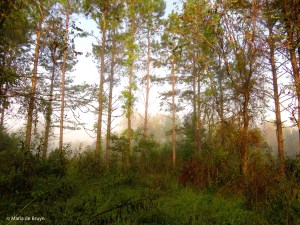
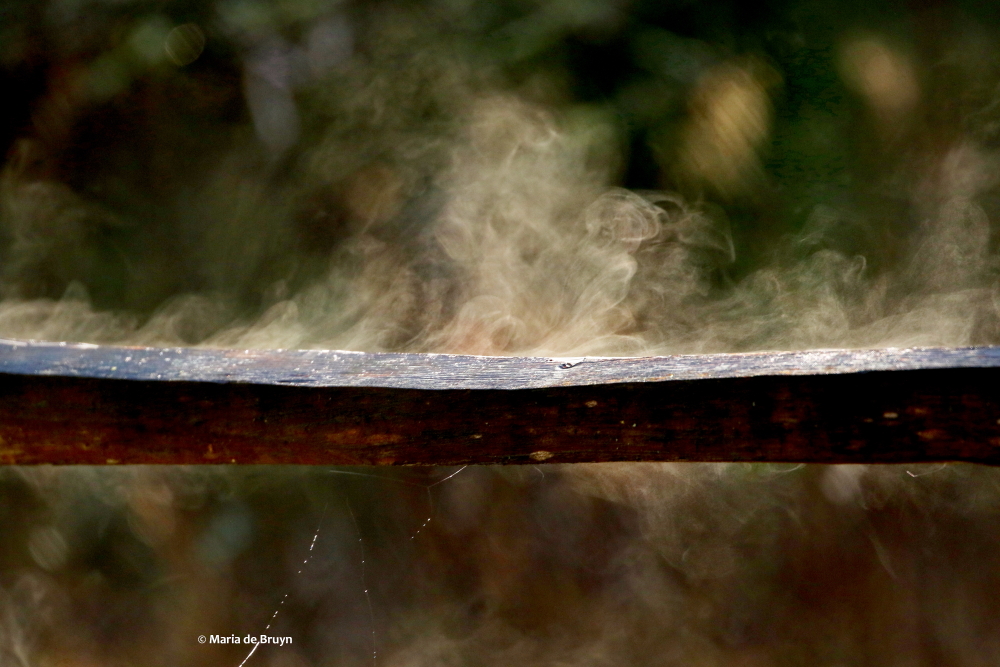
It’s been challenging lately to know what to expect as far as weather goes in our area. Following tropical storms Florence and Michael, we’ve had several more episodes of drenching downpours that caused local flooding and closed off some natural areas. The temperatures have gone down to freezing or below in the morning and then have risen to 50-60s F (10-16C); this has sometimes led to steam rising from fence posts and some flowers still blooming which usually would have died by now. This morning, I skipped my walk as the temperature was below freezing with wind, so I re-lived some visits this past month to the Brumley Nature Preserve North. If you, too, are inside sheltering from the weather, perhaps you’ll have the time to amble photographically through this long Brumley walk with me.

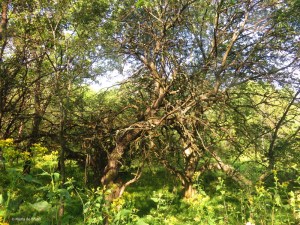
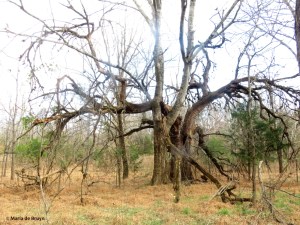
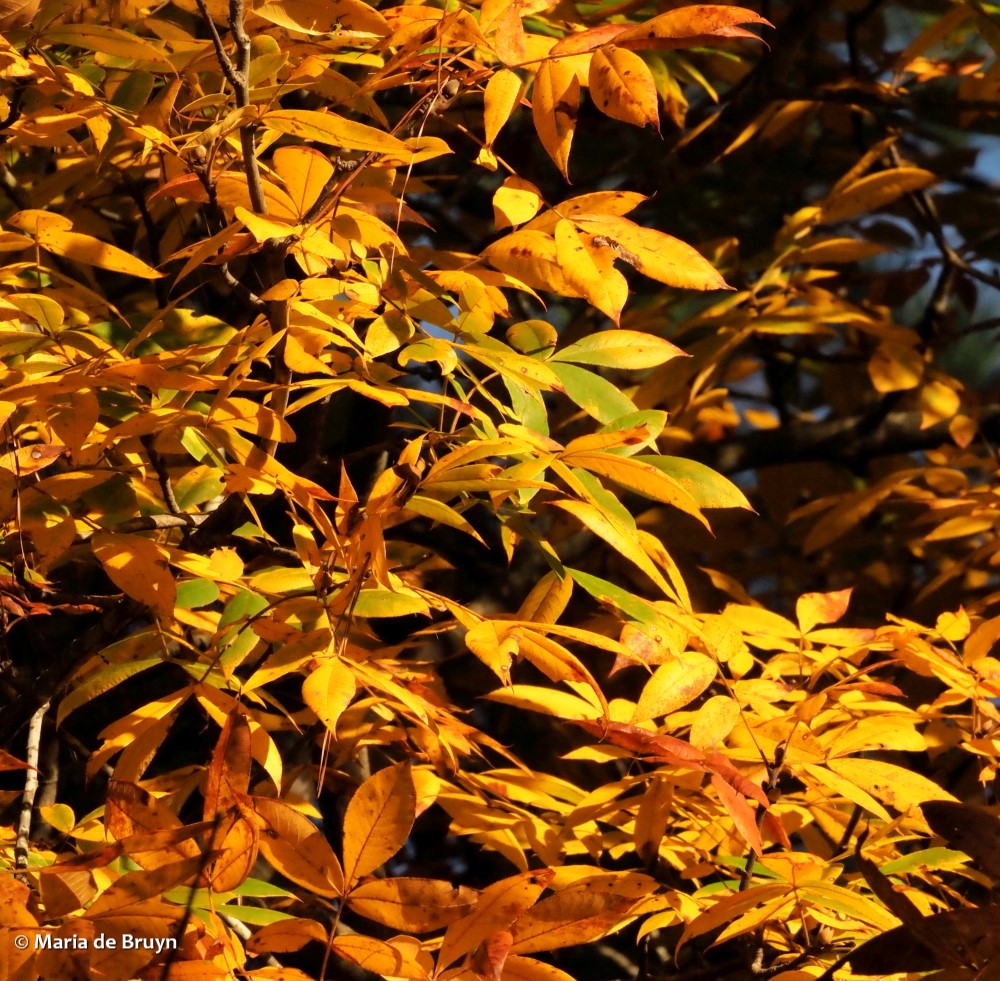
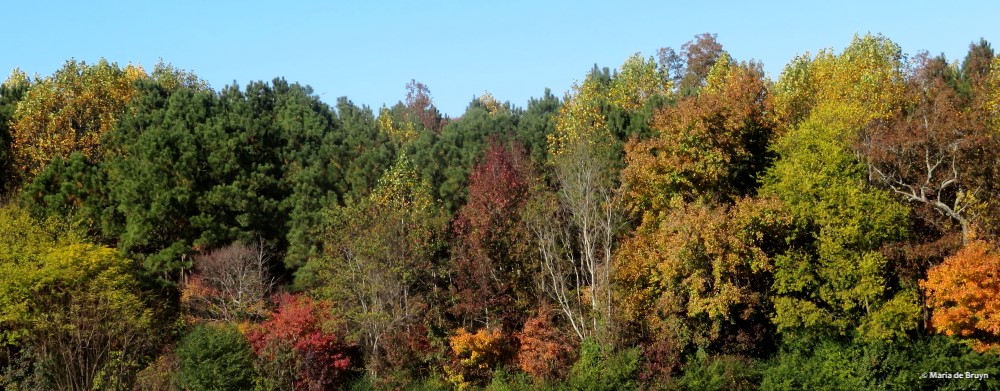
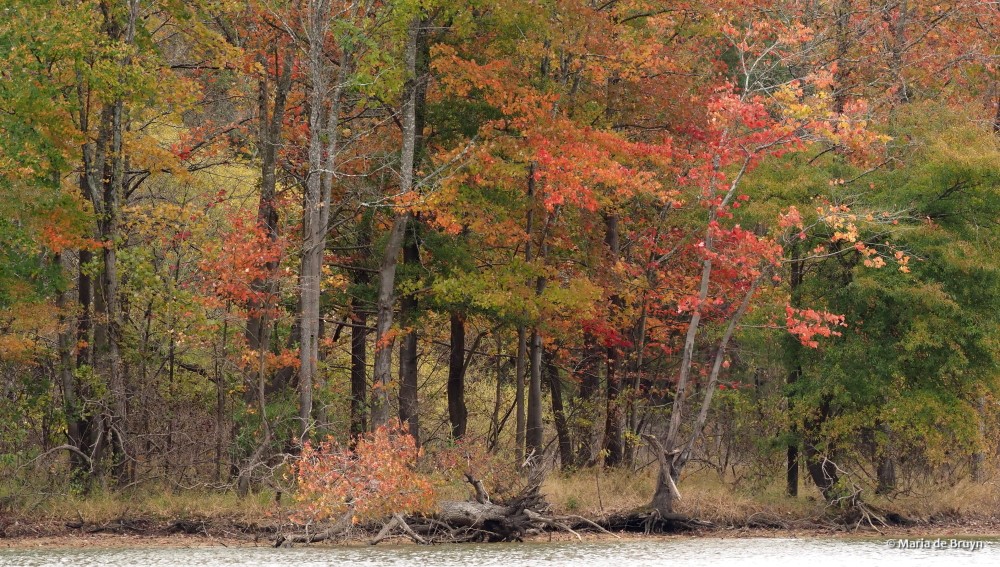
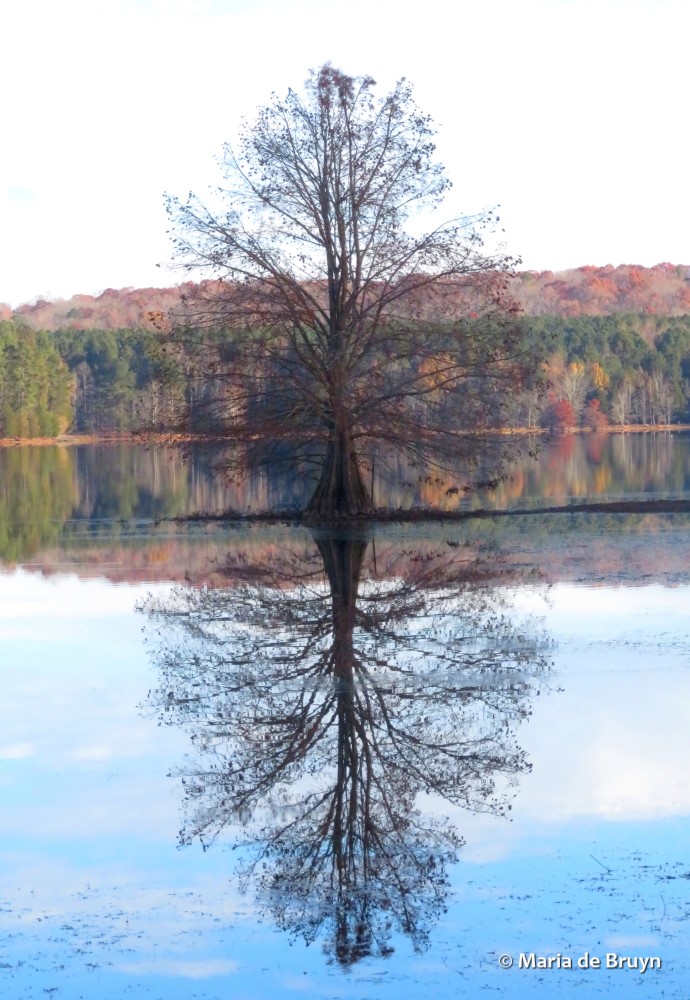
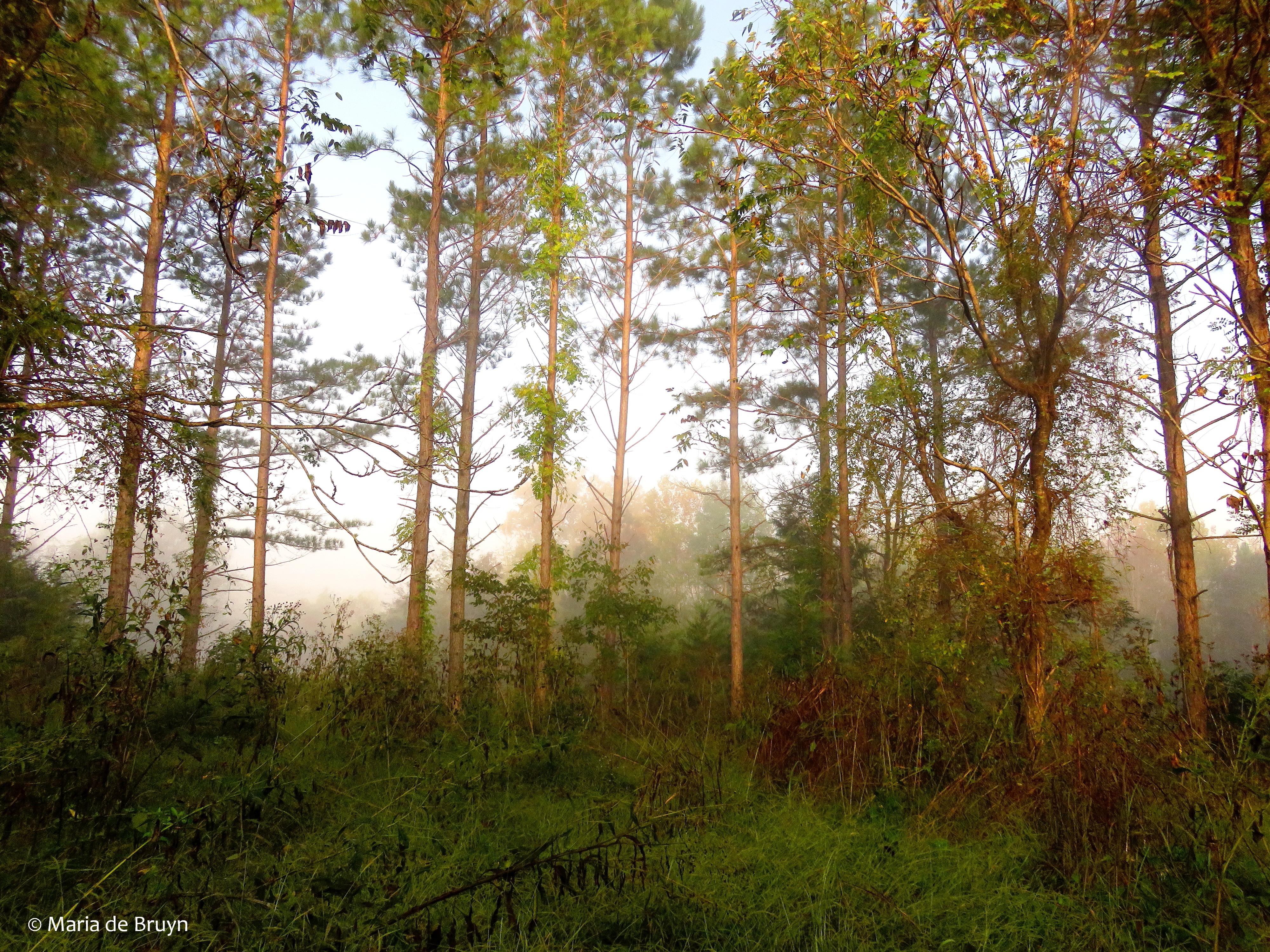
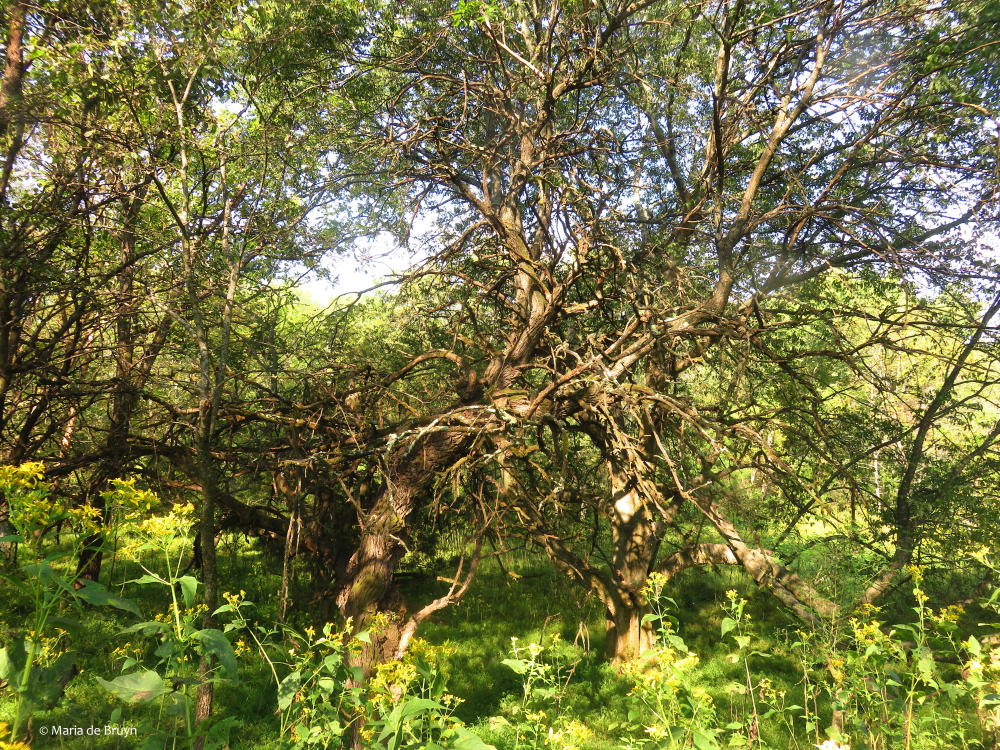
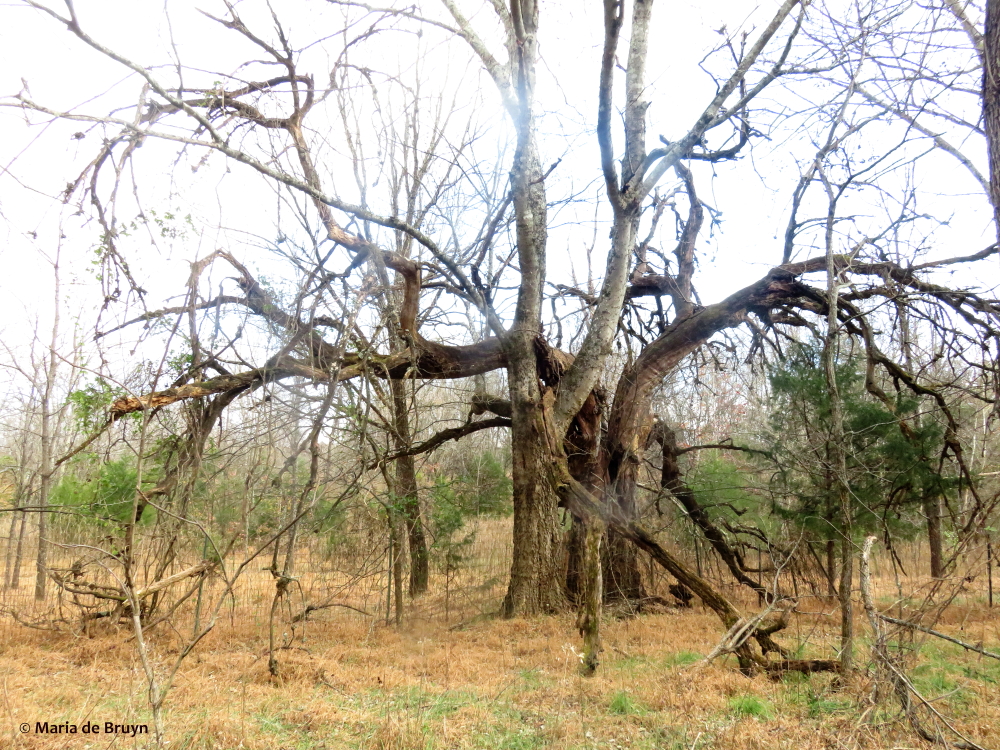
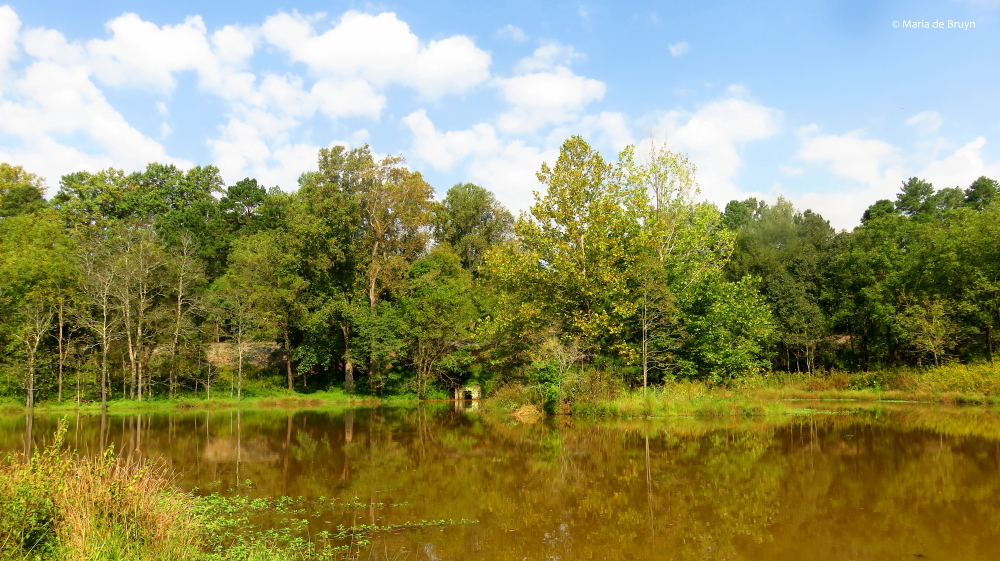
Some parts of the reserve are still fairly green, which creates a lovely ambience for leisurely strolling and nature observations. In other cases, we can see the arrival of late autumn and approaching winter. This picturesque tree, one of three near a pond that harbor various bird species, was still very green in late September; now these forest denizens are showing off their gnarly “bare bones”.
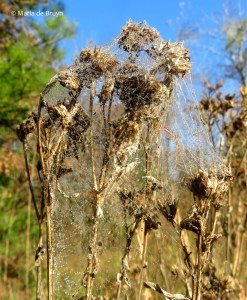
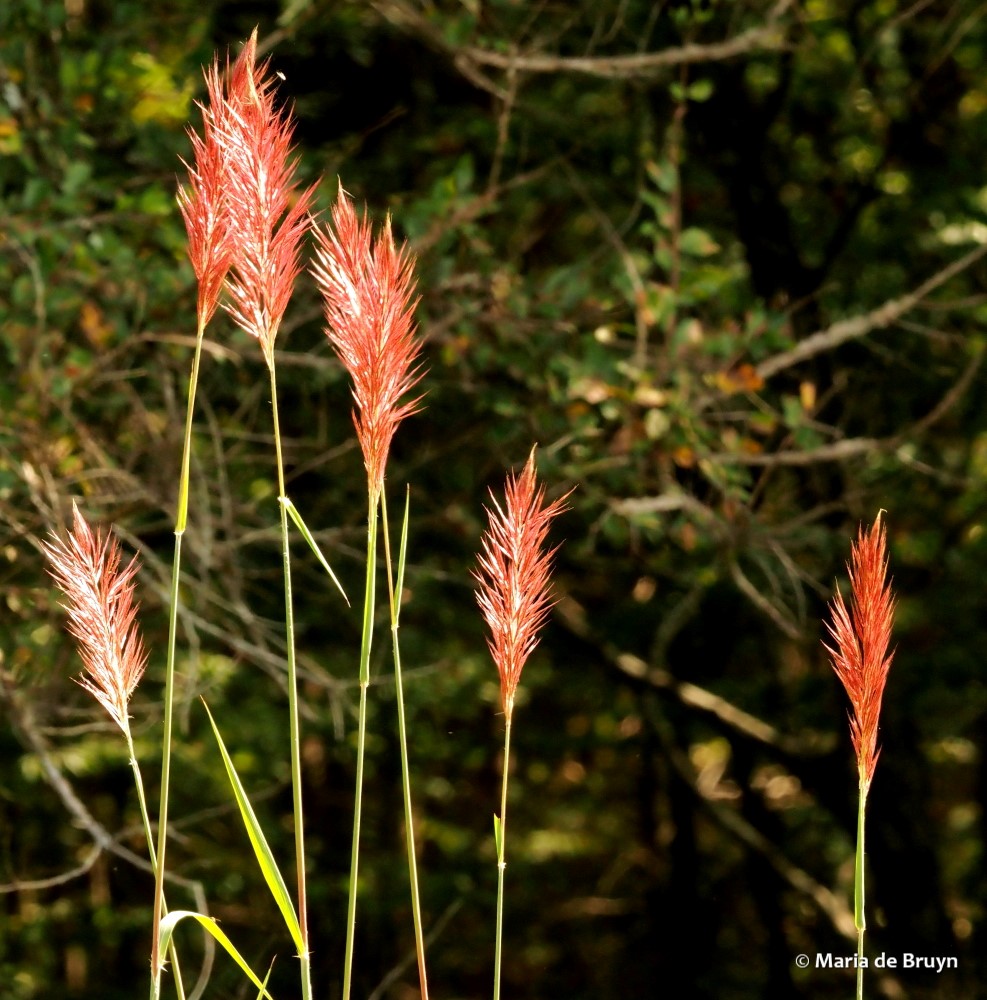
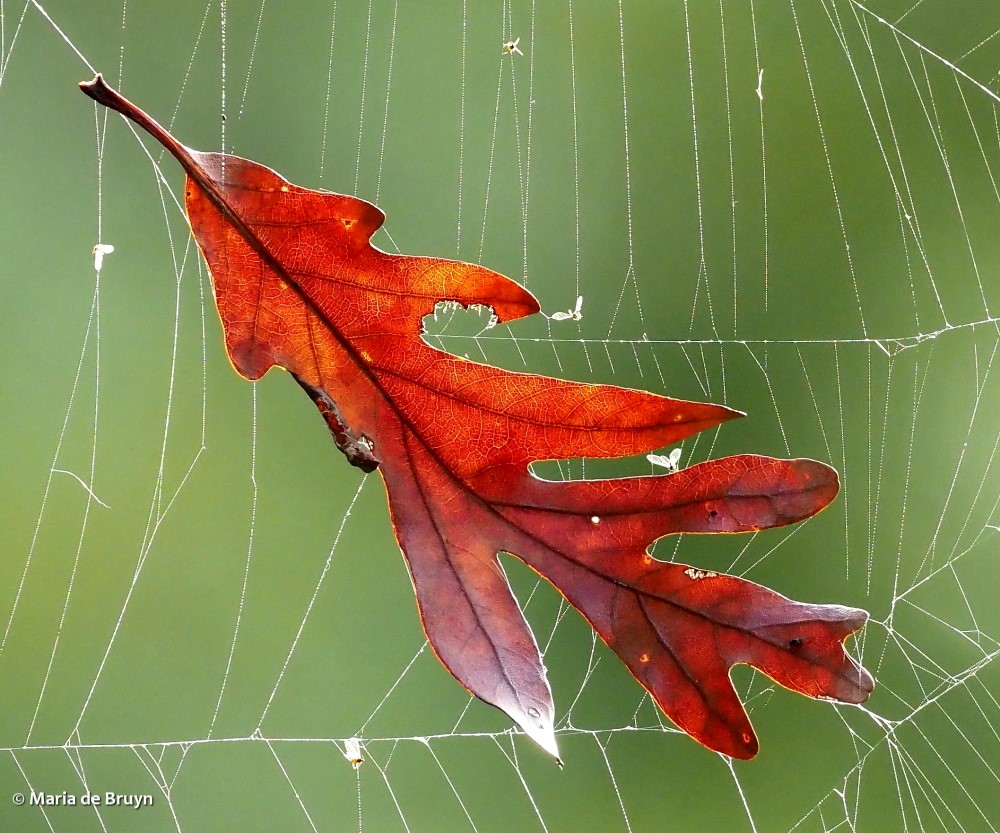
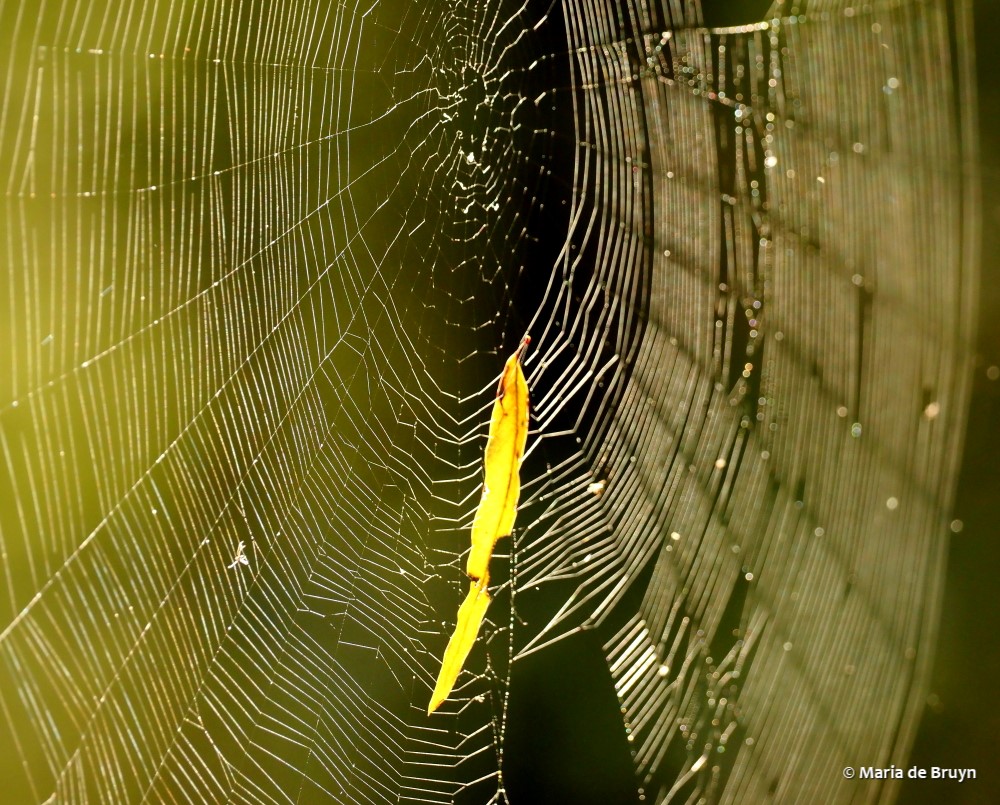
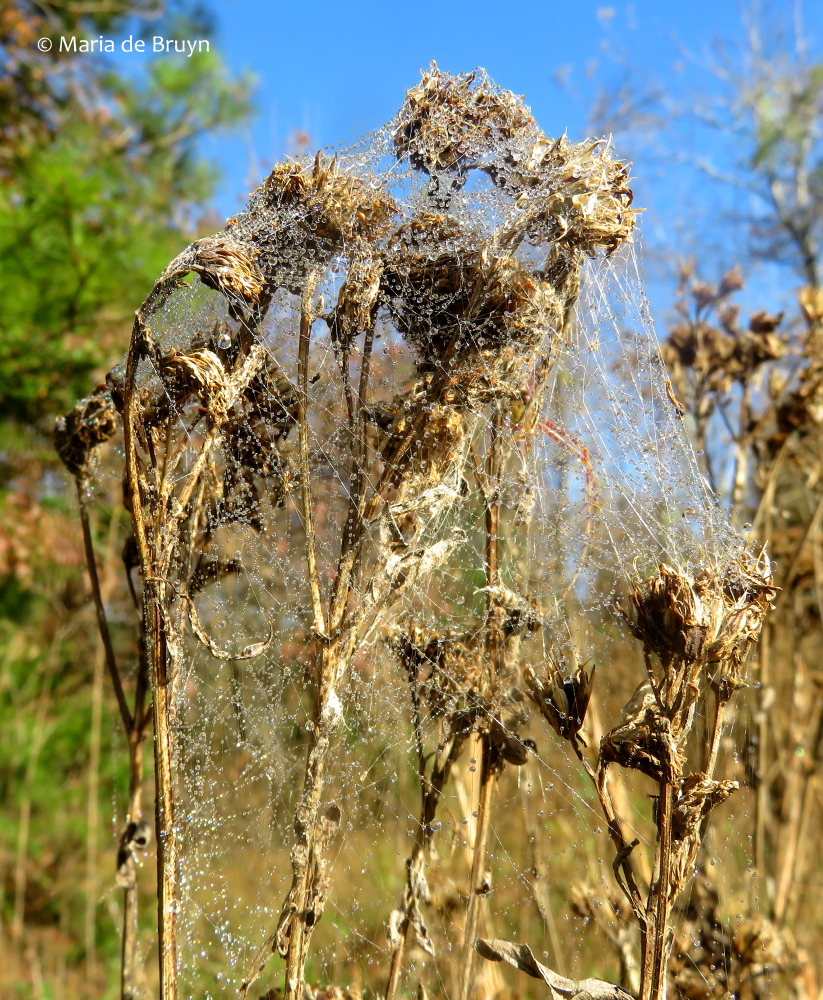
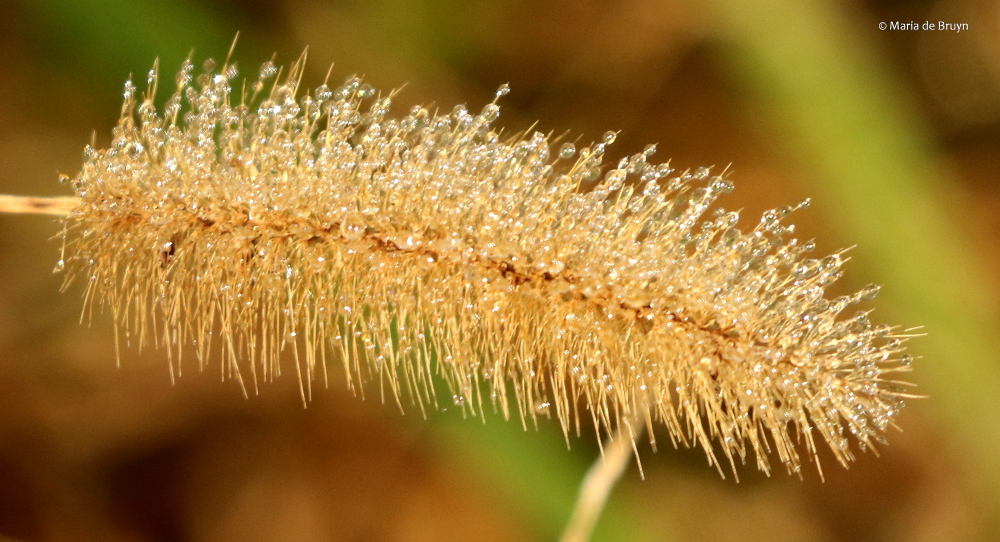
So some early mornings are quite nippy and others a bit milder, with dried plants glistening with spider webs and dew drops that sparkle in the sun.
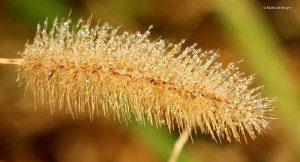
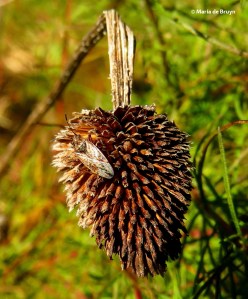
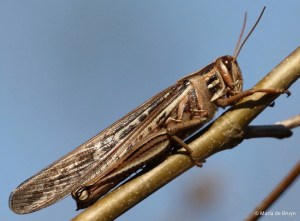
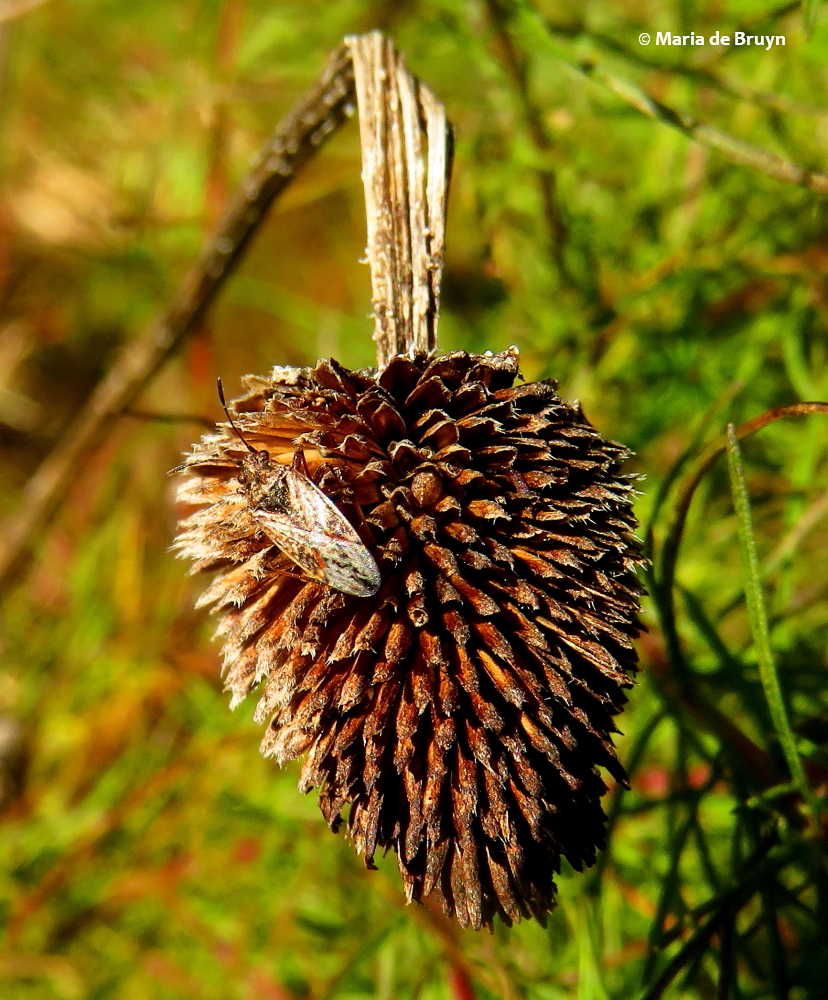
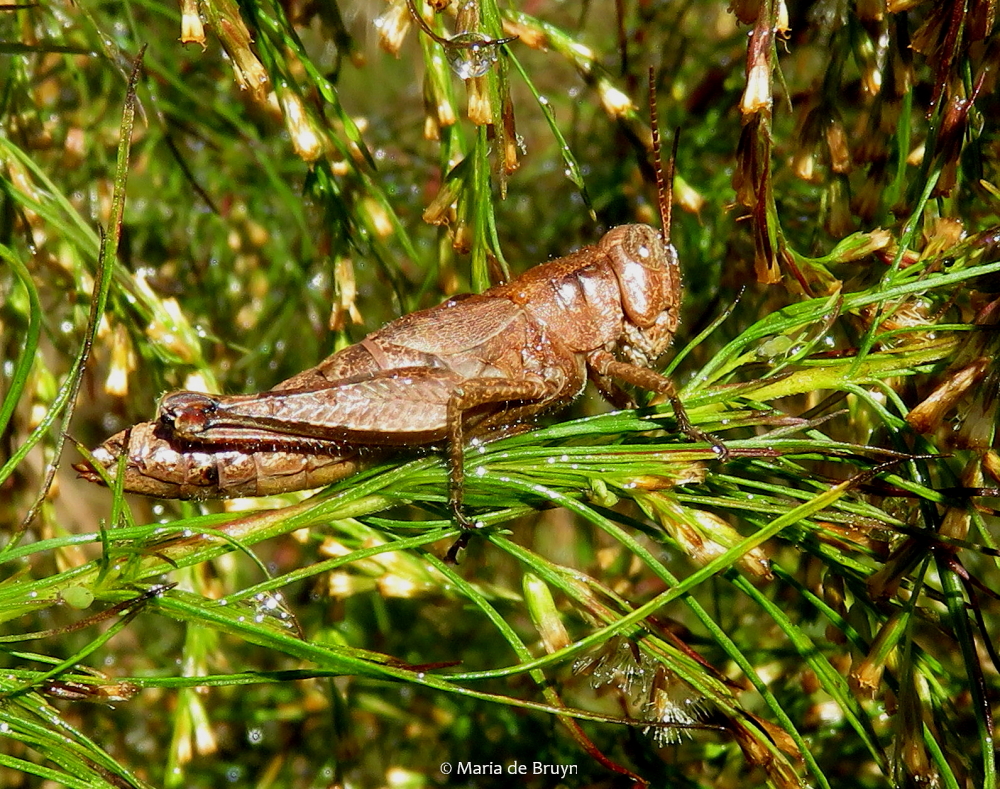
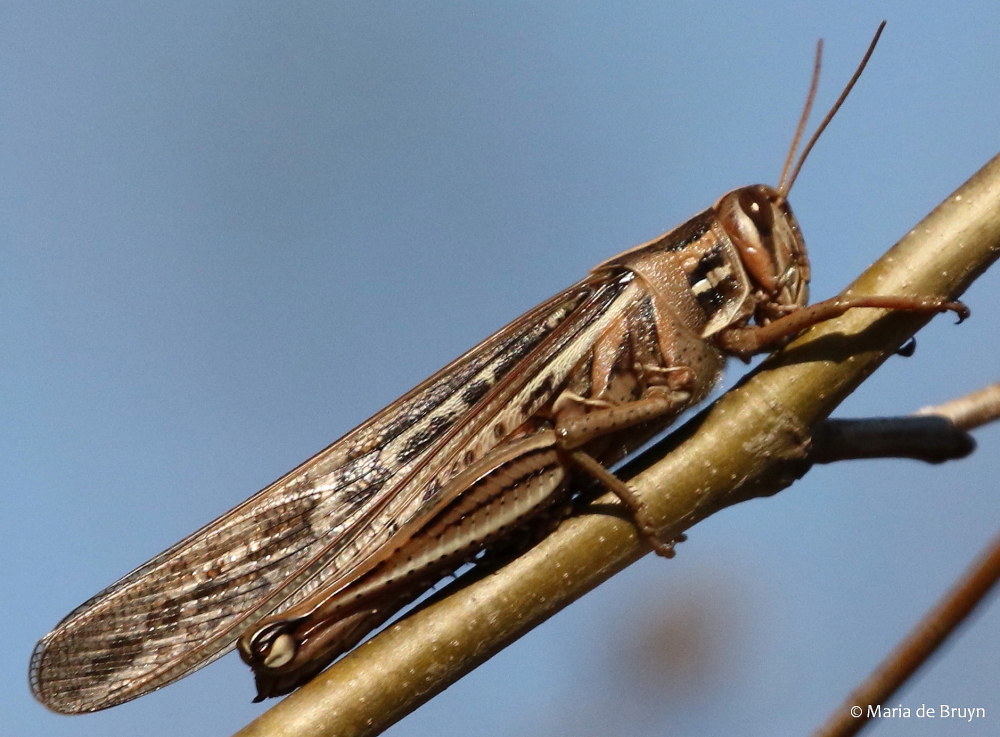
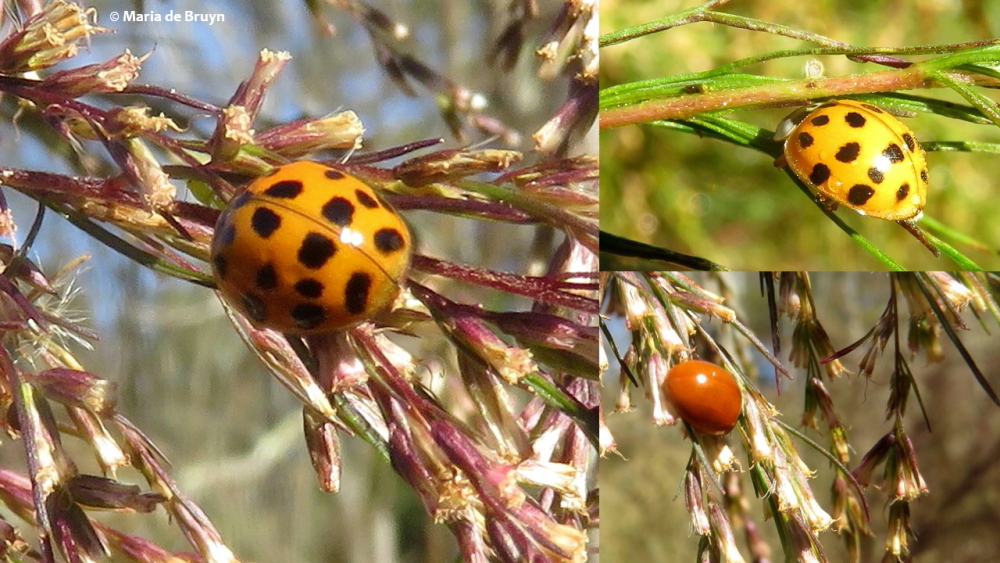
Some of the insects emerge with the sun to bask in the golden light, like this seed bug (Orsellinae, left), whose coloring camouflages it well against the seed heads, short-horned grasshopper, American bird grasshopper (Schistocerca americana) and different color variations of Asian lady beetles (Harmonia axyridis) who were hanging out on the dog fennel (Eupatorium capillifolium).


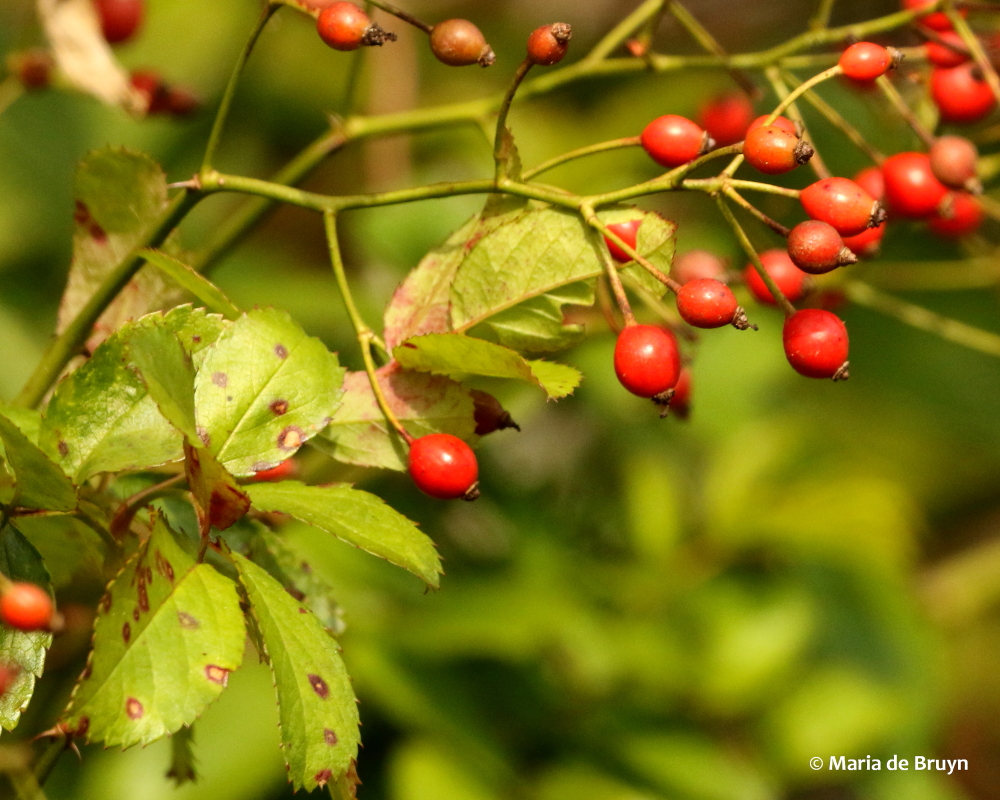
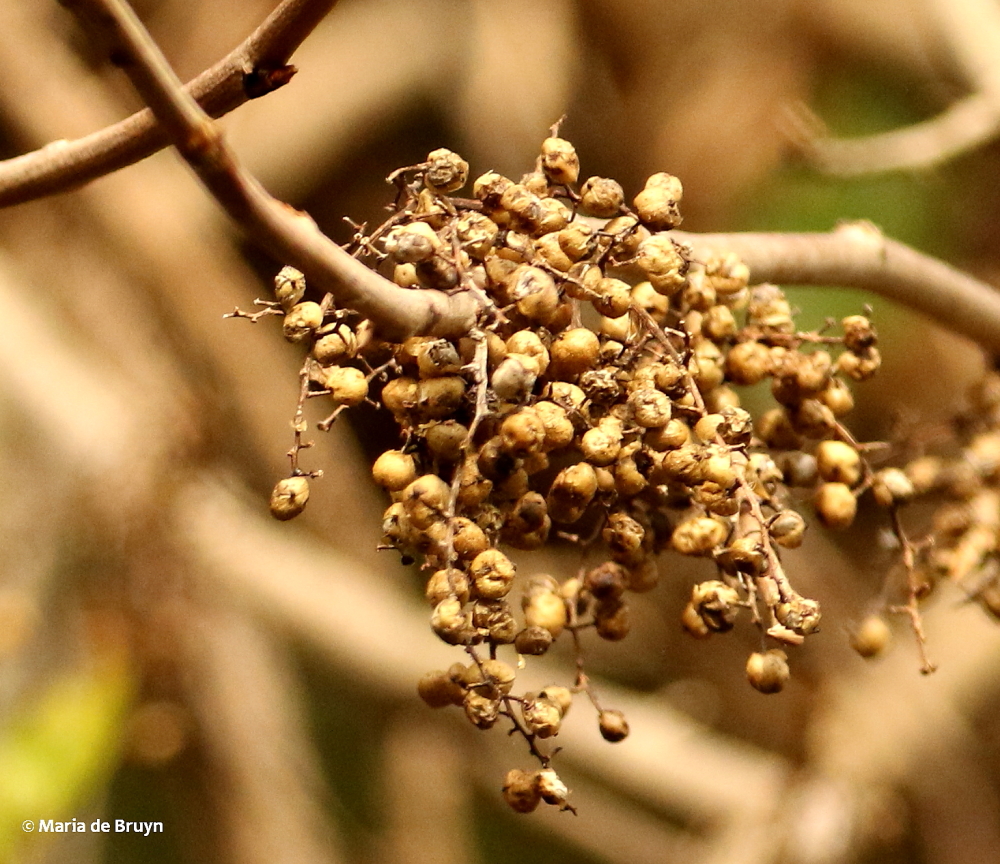
Various birds have been enjoying the winter seeds and especially the winter berries, like the red multiflora rose (Rosa multiflora) and beige poison ivy (Toxicodendron radicans). 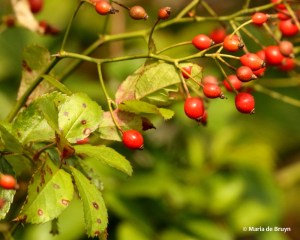
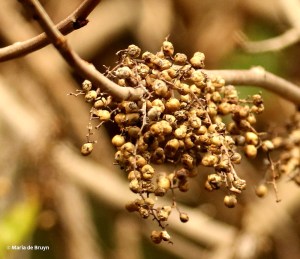
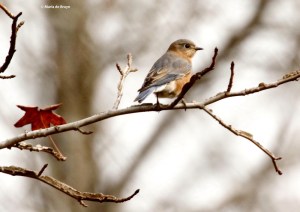
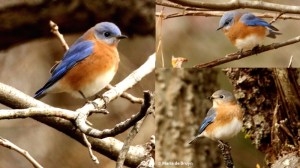
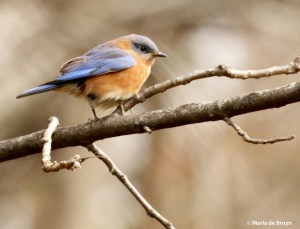
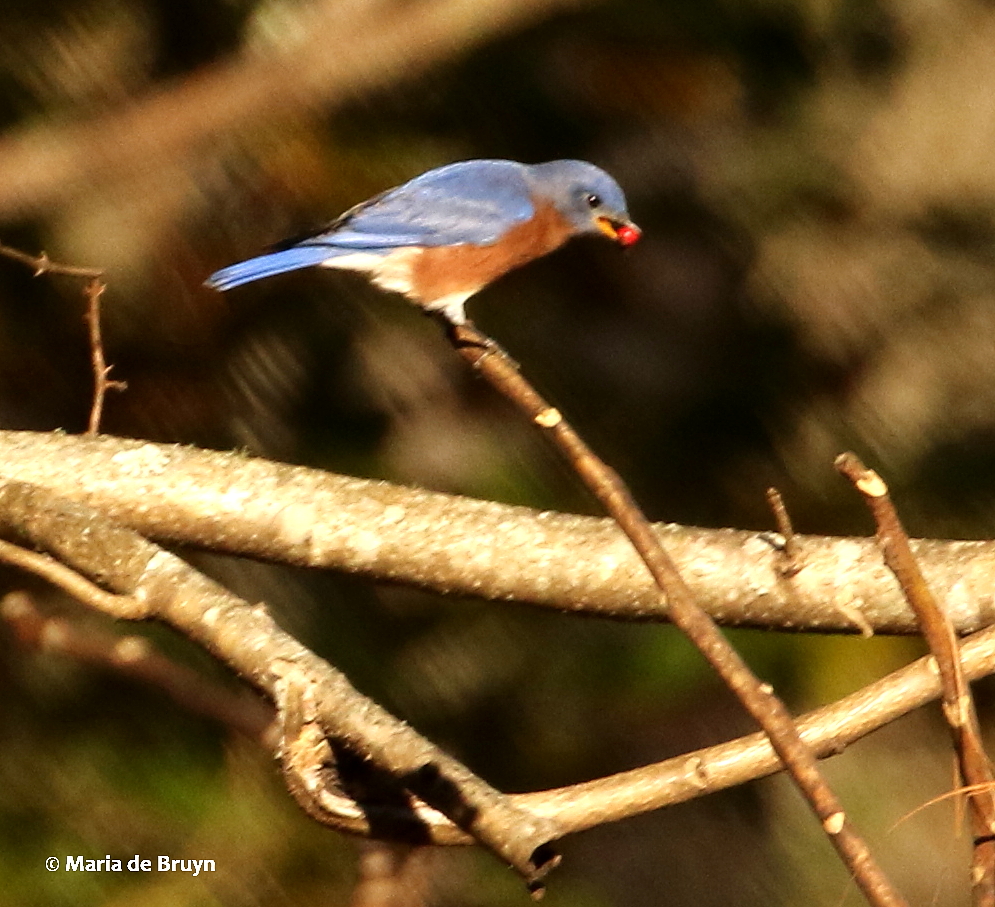
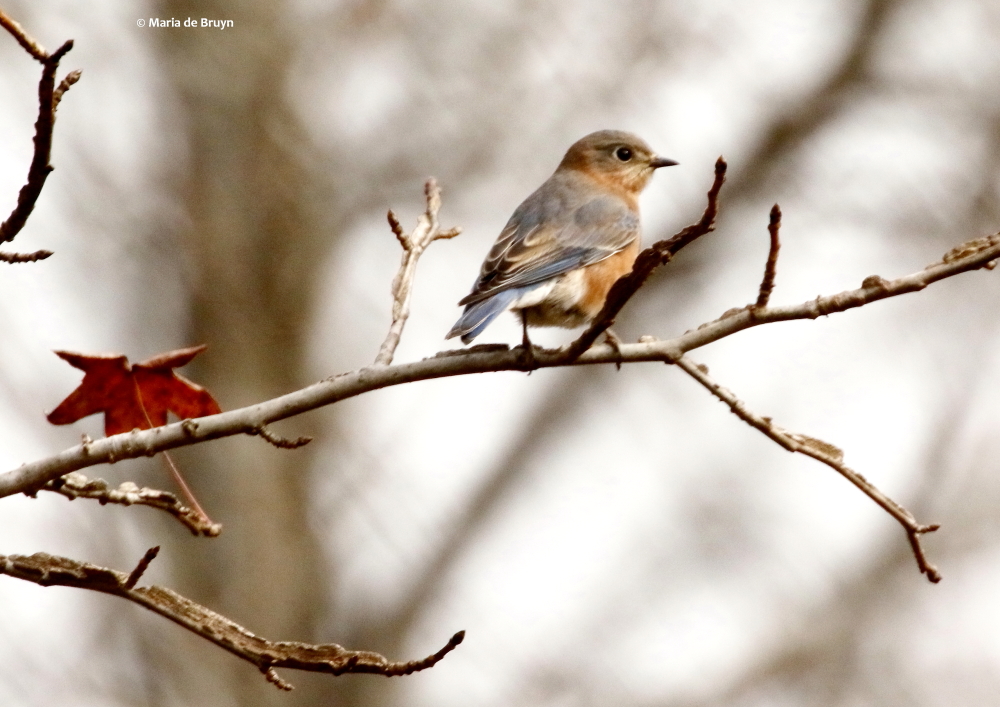
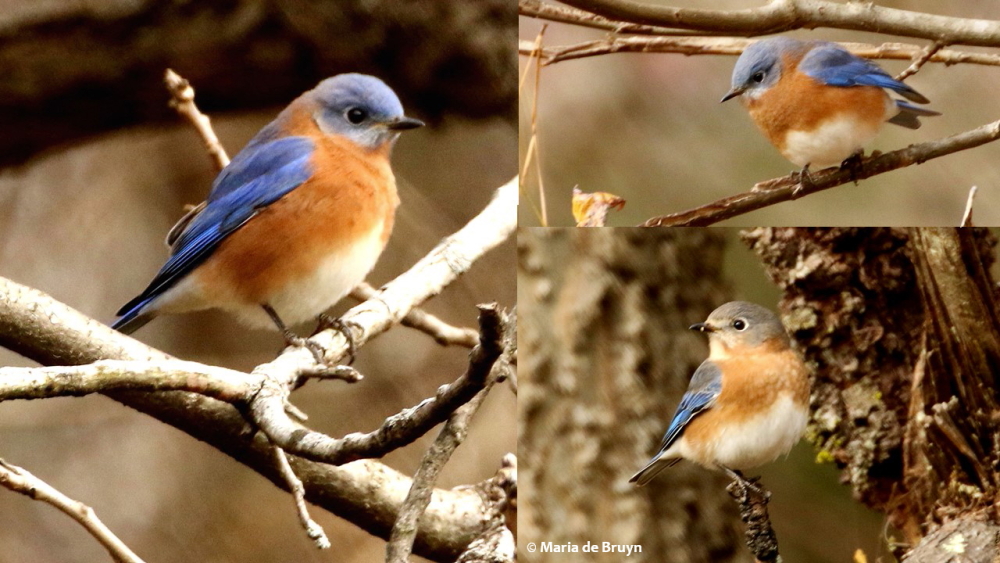
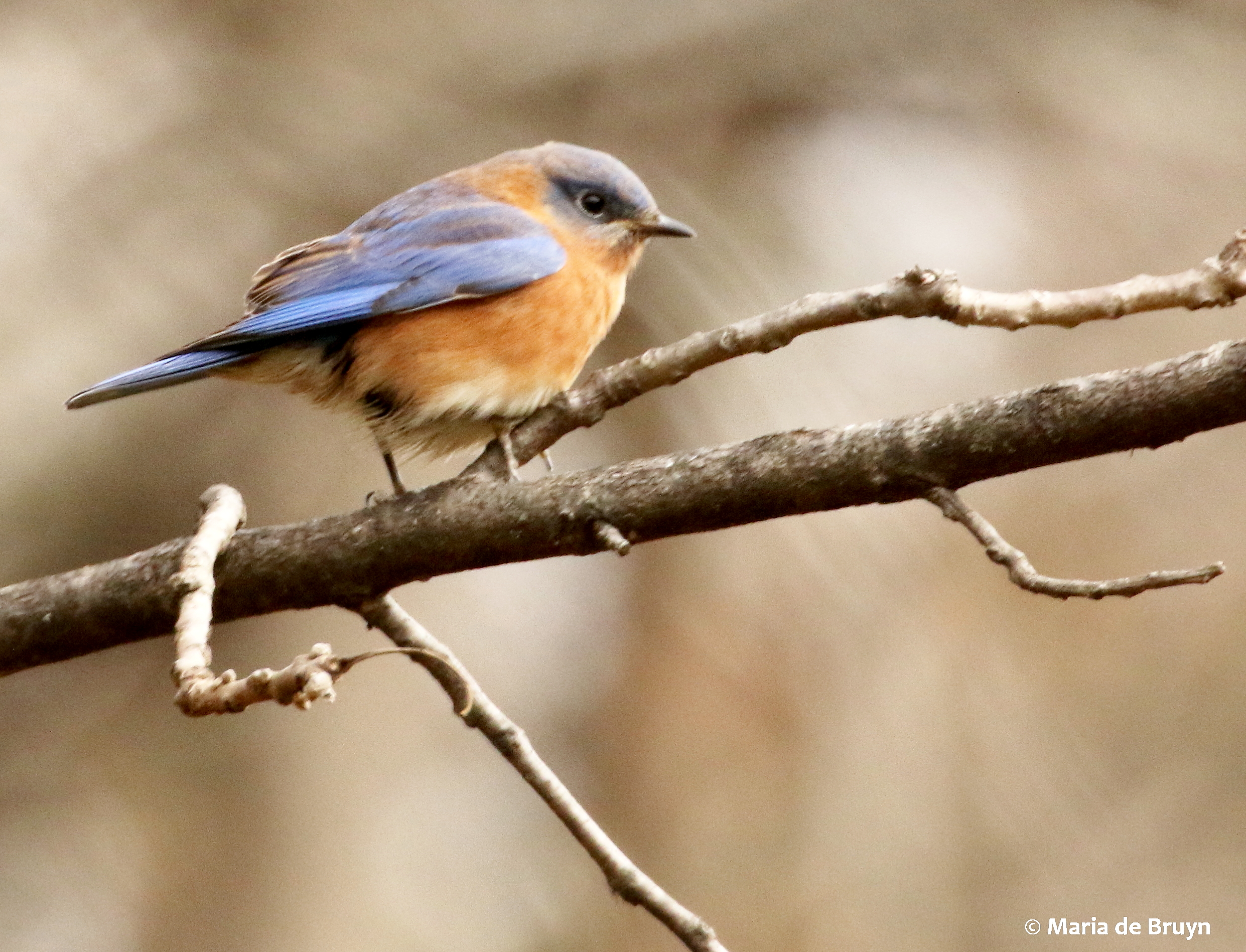
The Eastern bluebirds (Sialia sialis) are quite fond of berries.
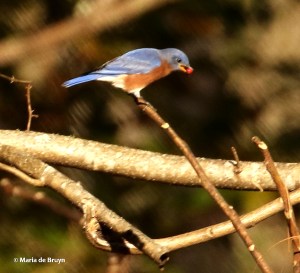
They travel back and forth between fruit-laden trees and dried grass seedheads, occasionally stopping on paths to find worms and insects.
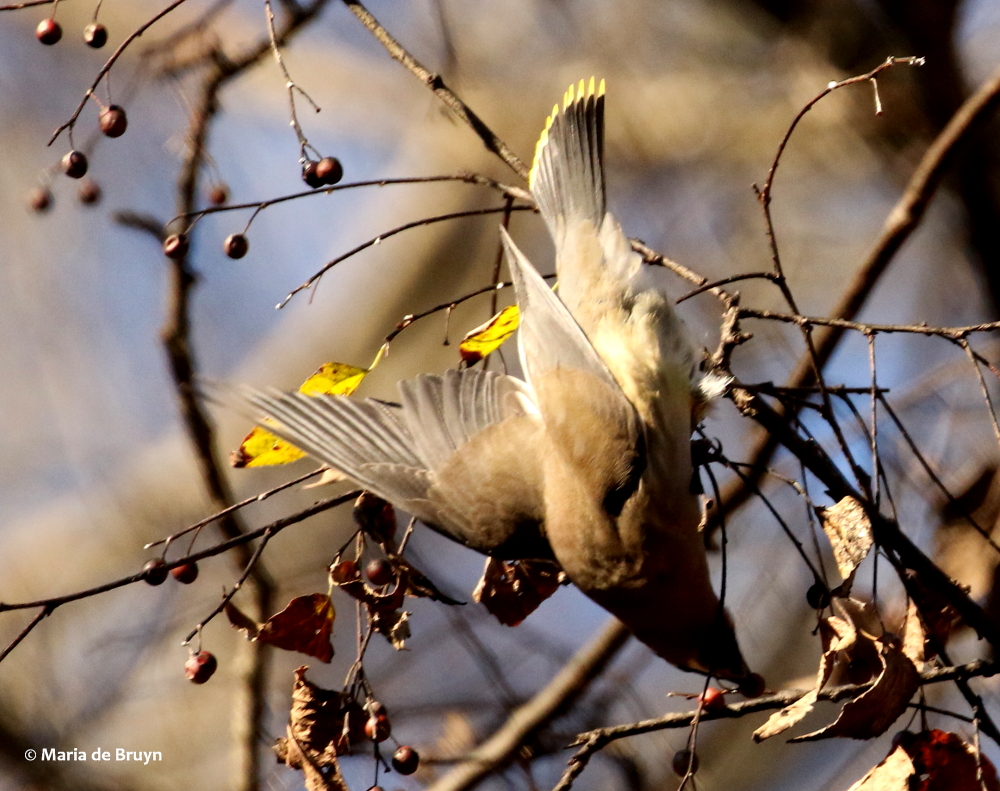
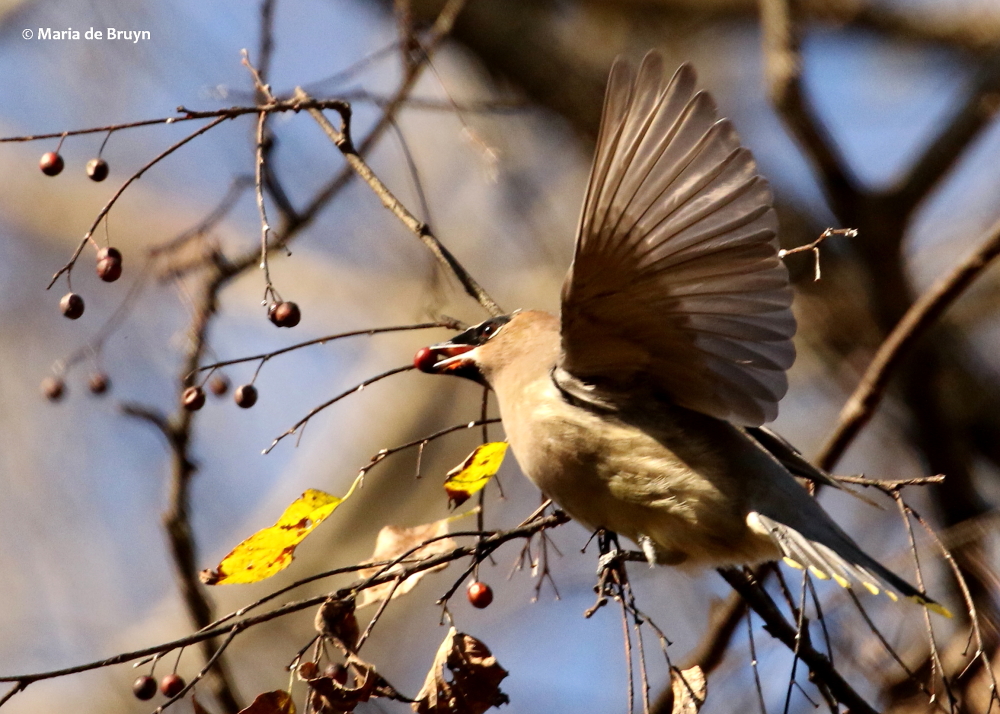
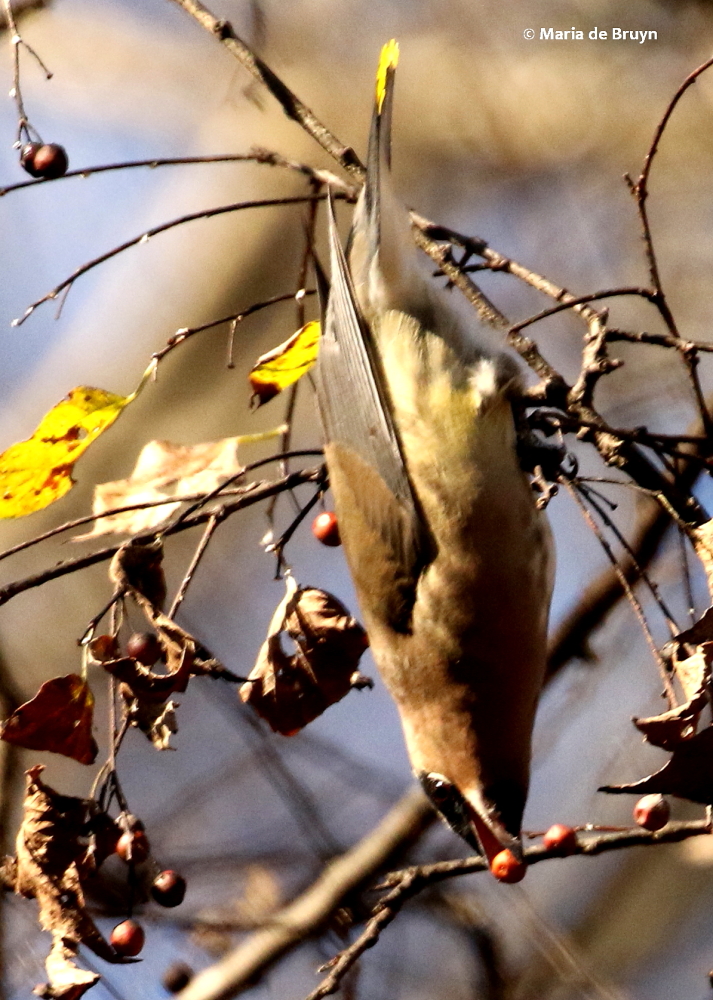
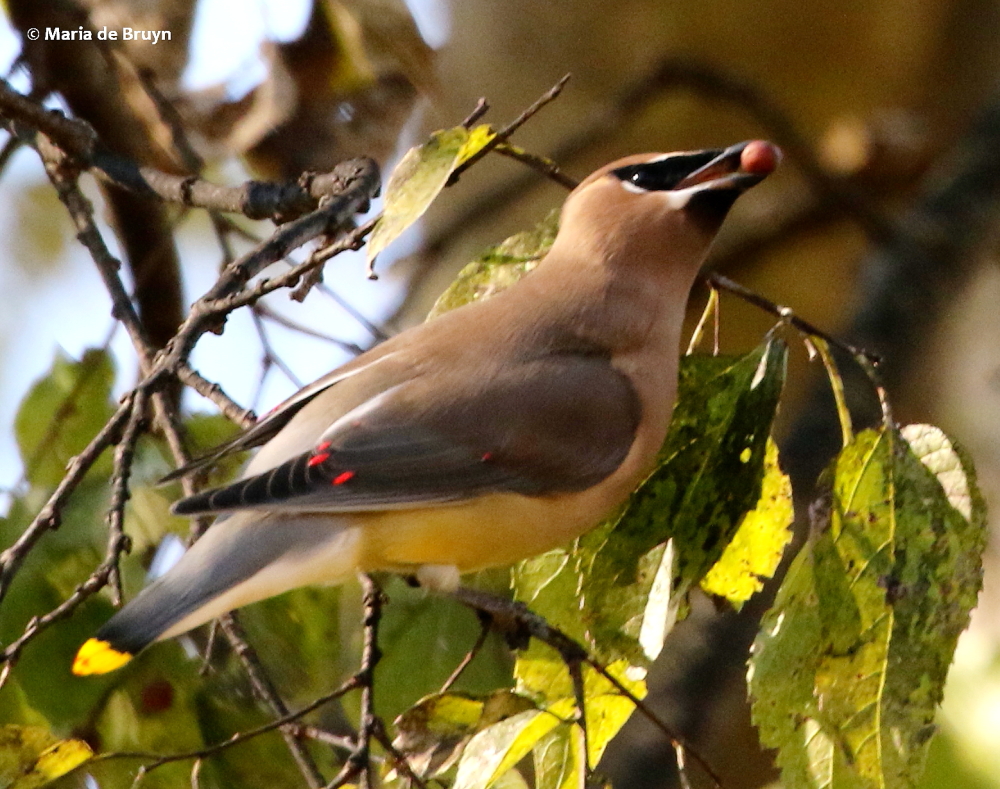
The cedar waxwings (Bombycilla cedrorum) also like to gorge on berries, often sharing trees with American robins who enjoy the same meal. Sometimes snagging a berry involves some acrobatic moves.
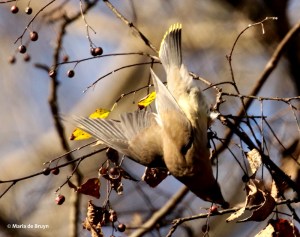
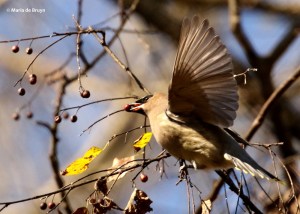
The waxwings are adept at these moves and I only occasionally saw one drop a fruit. They are such elegant birds with their black masks and subtle touches of red on the wings and yellow on the tail feathers.


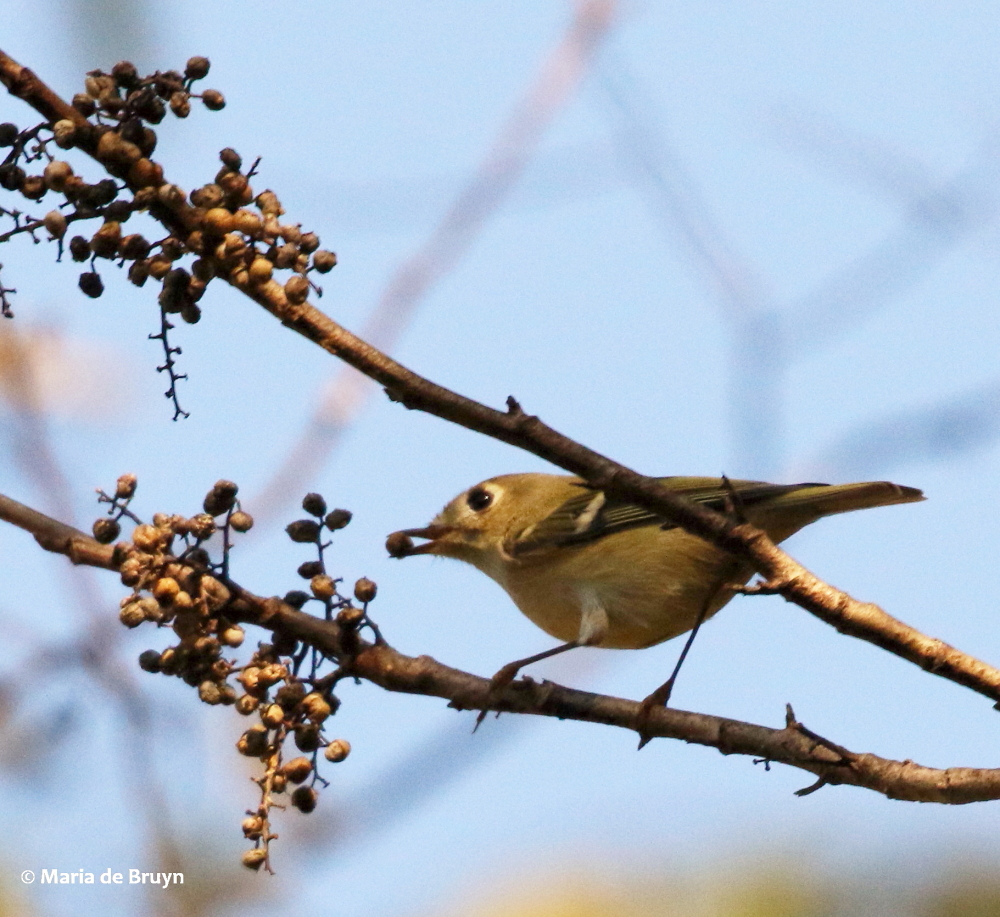
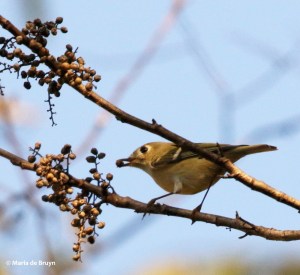 One of my favorite bird species, the ruby-crowned kinglets (Regulus calendula), are also fond of berries. They like suet in gardens but no suet feeders are found in the reserve.
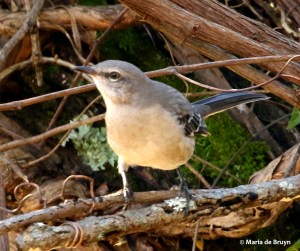
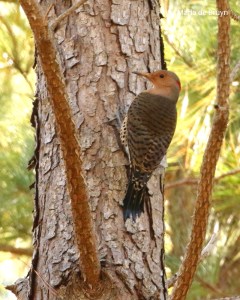
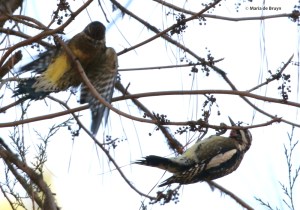
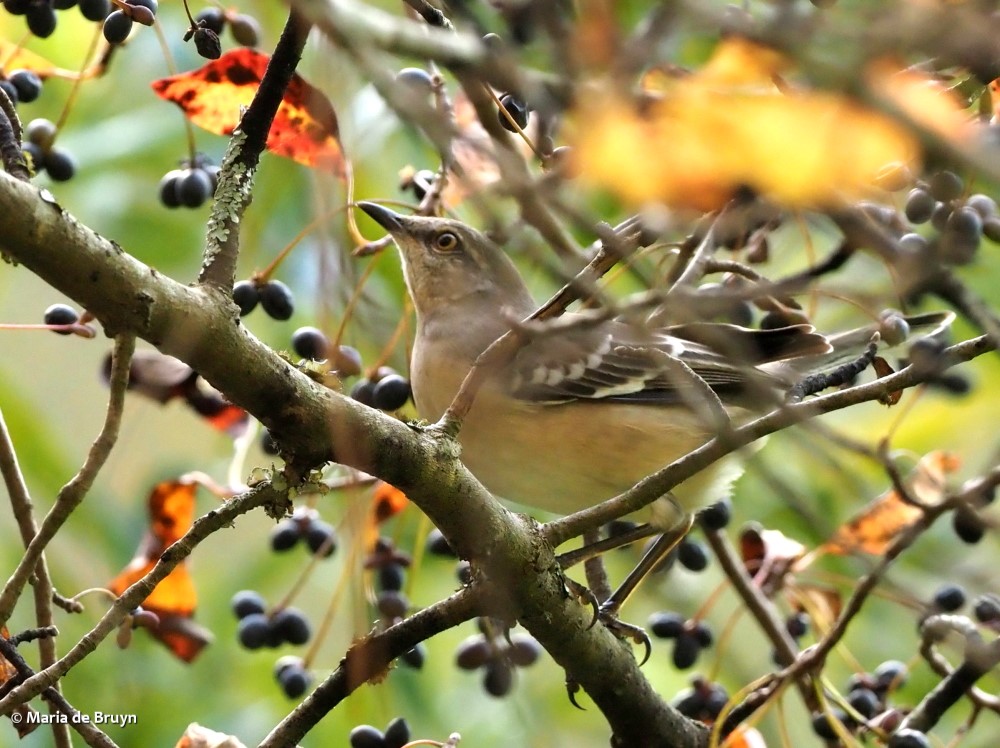
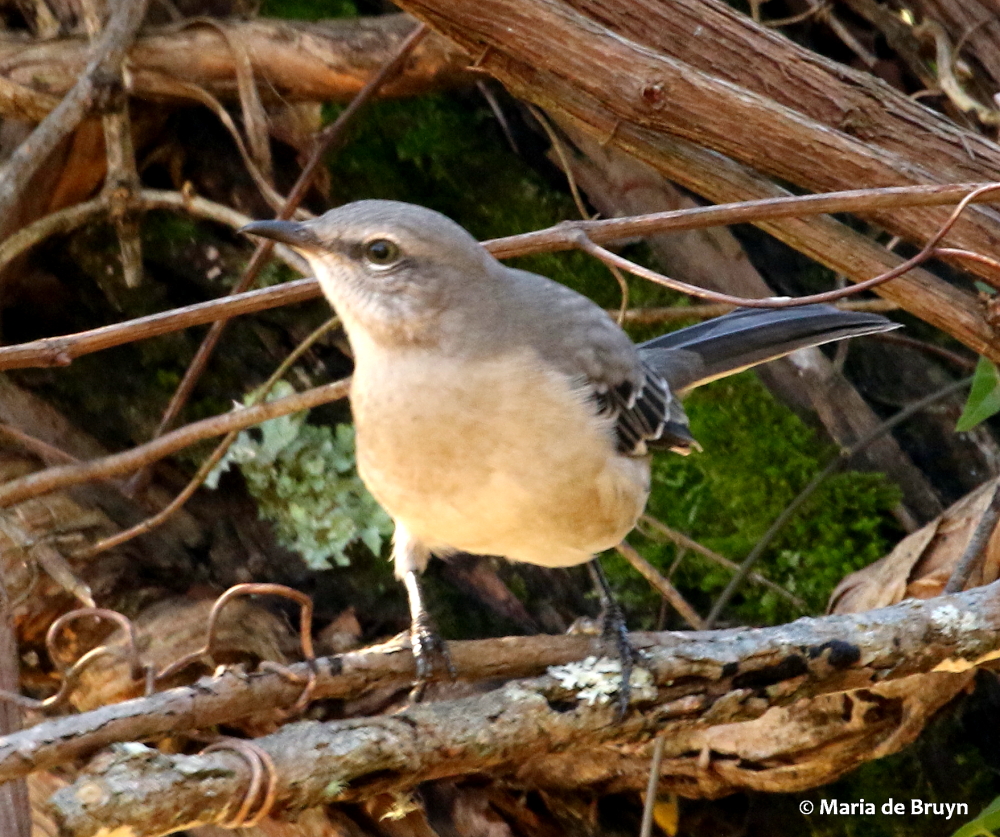
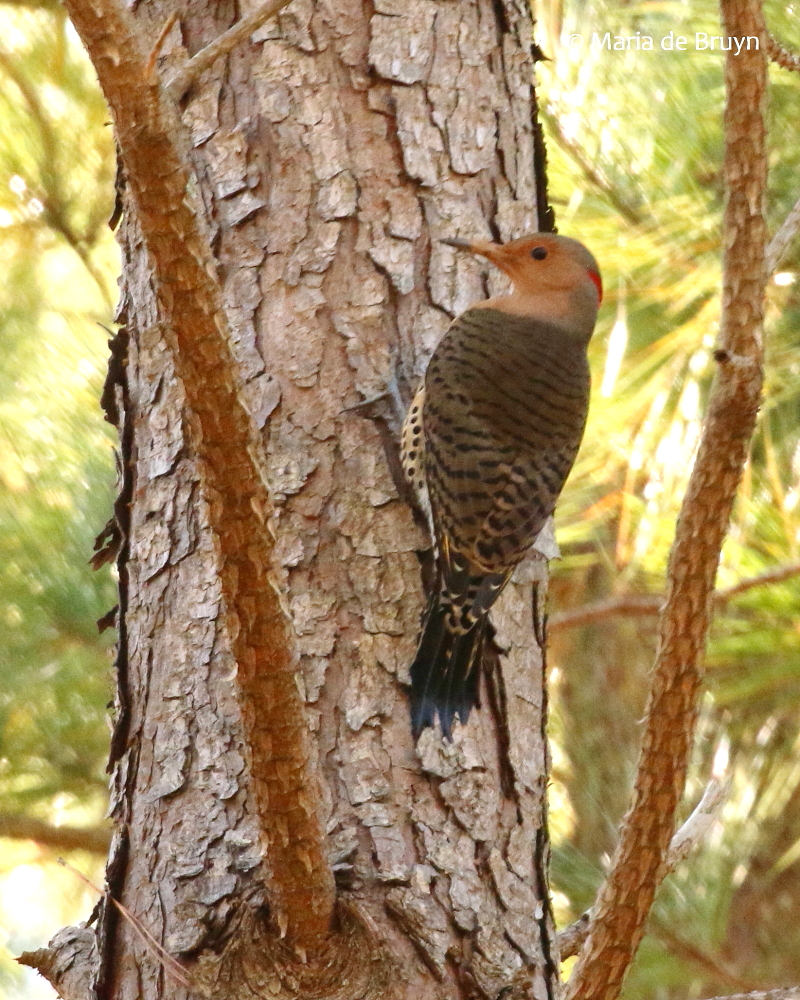
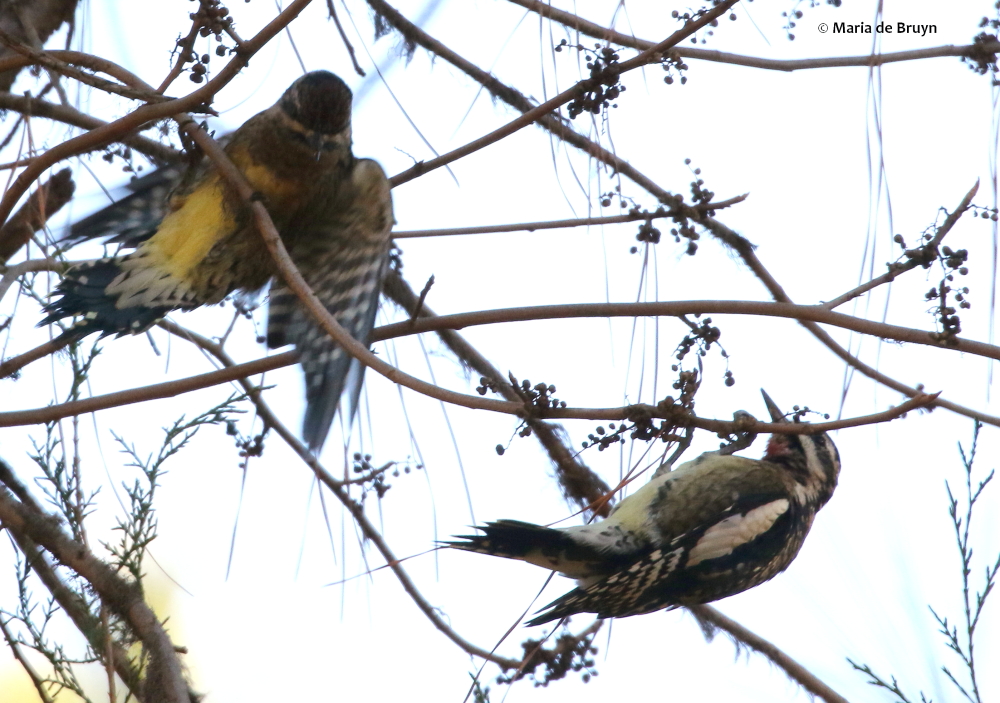
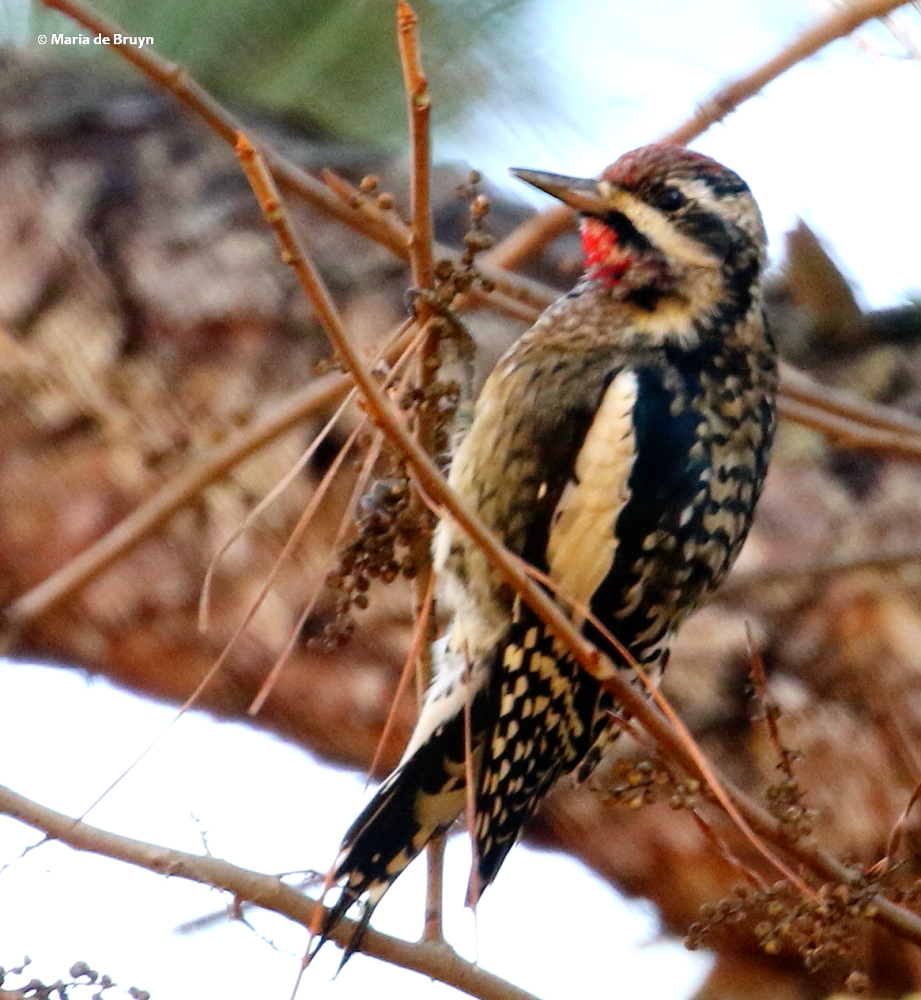
Some of the larger birds, like the Northern mockingbird (Mimus polyglottos), Northern flicker (Colaptes auratus) and yellow-bellied sapsuckers (Sphyrapicus varius), also look for berries and insects as they mostly stay high up in the trees.

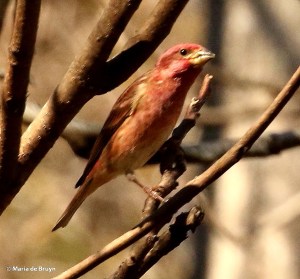
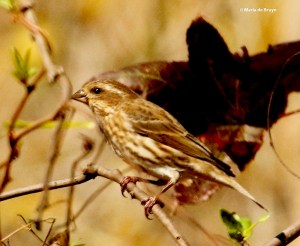
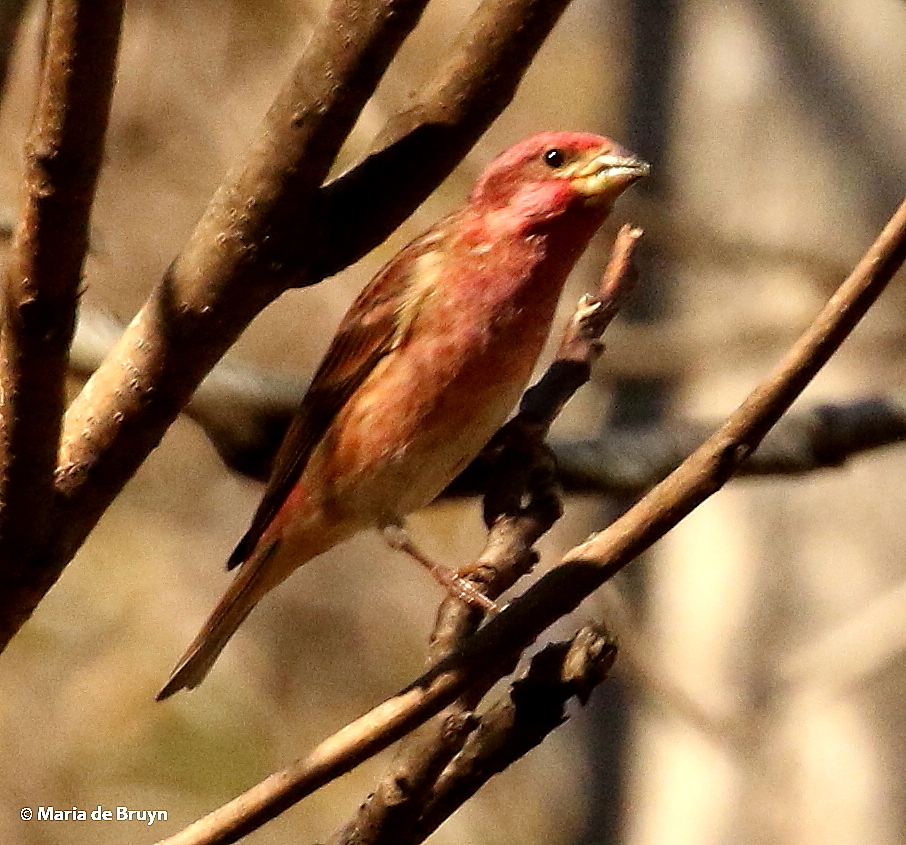
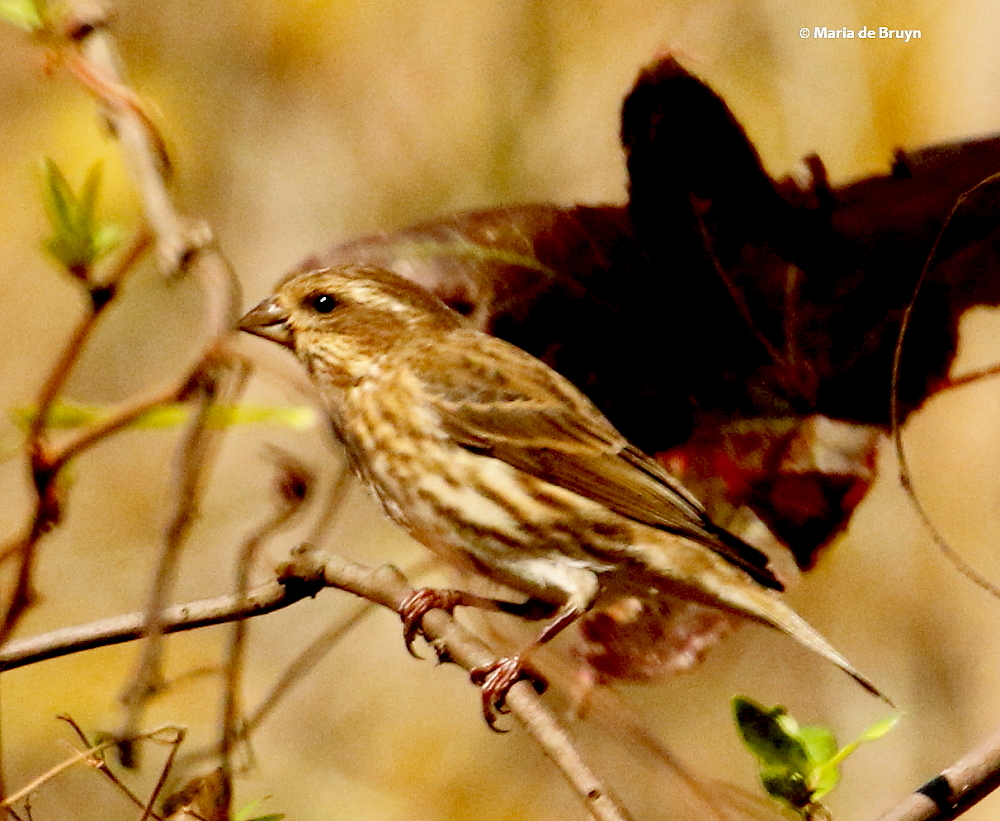
Purple finches (Haemorhous purpureus) are another species that enjoy late autumn fruit.
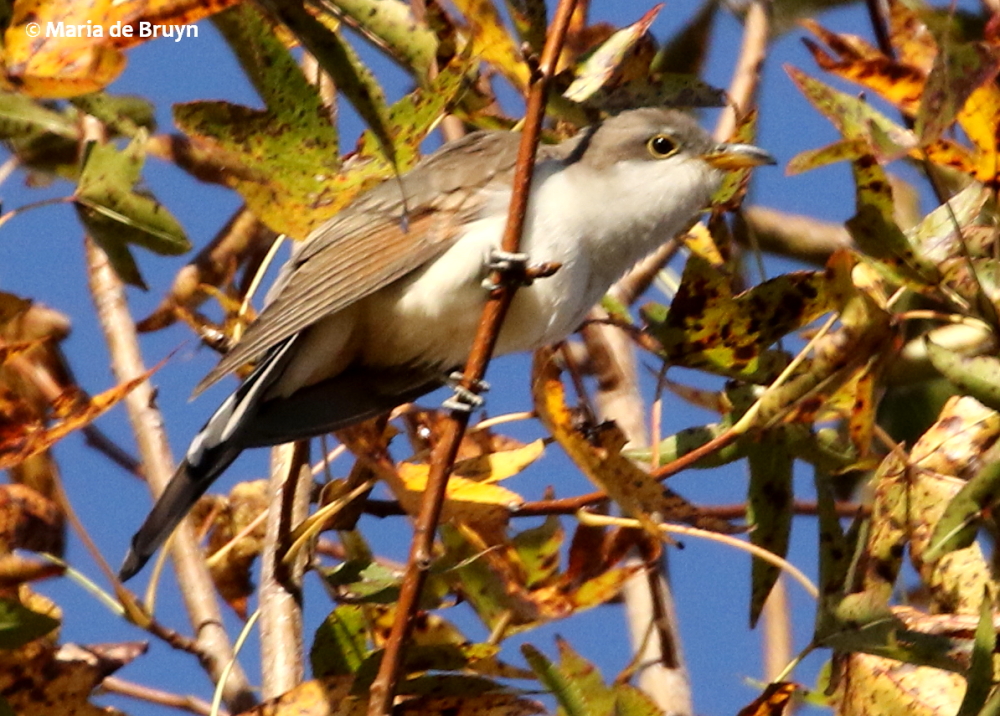
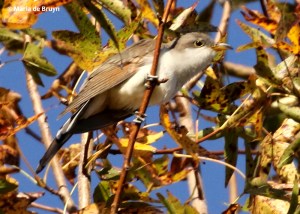 In early November, I had my first of two delightful surprises at Brumley. It was early morning and as I glanced up at some very tall trees, I spotted movement among the earth-toned leaves. My lens revealed a yellow-billed cuckoo (Coccyzus americanus) – and when I entered it into my bird list for the day, eBird asked me to justify having seen it as it was a rarity this late in the year.
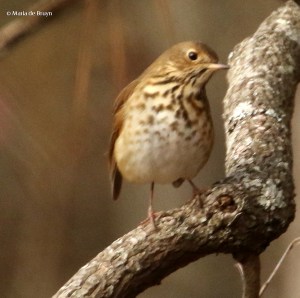
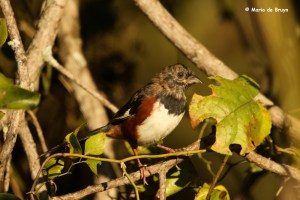
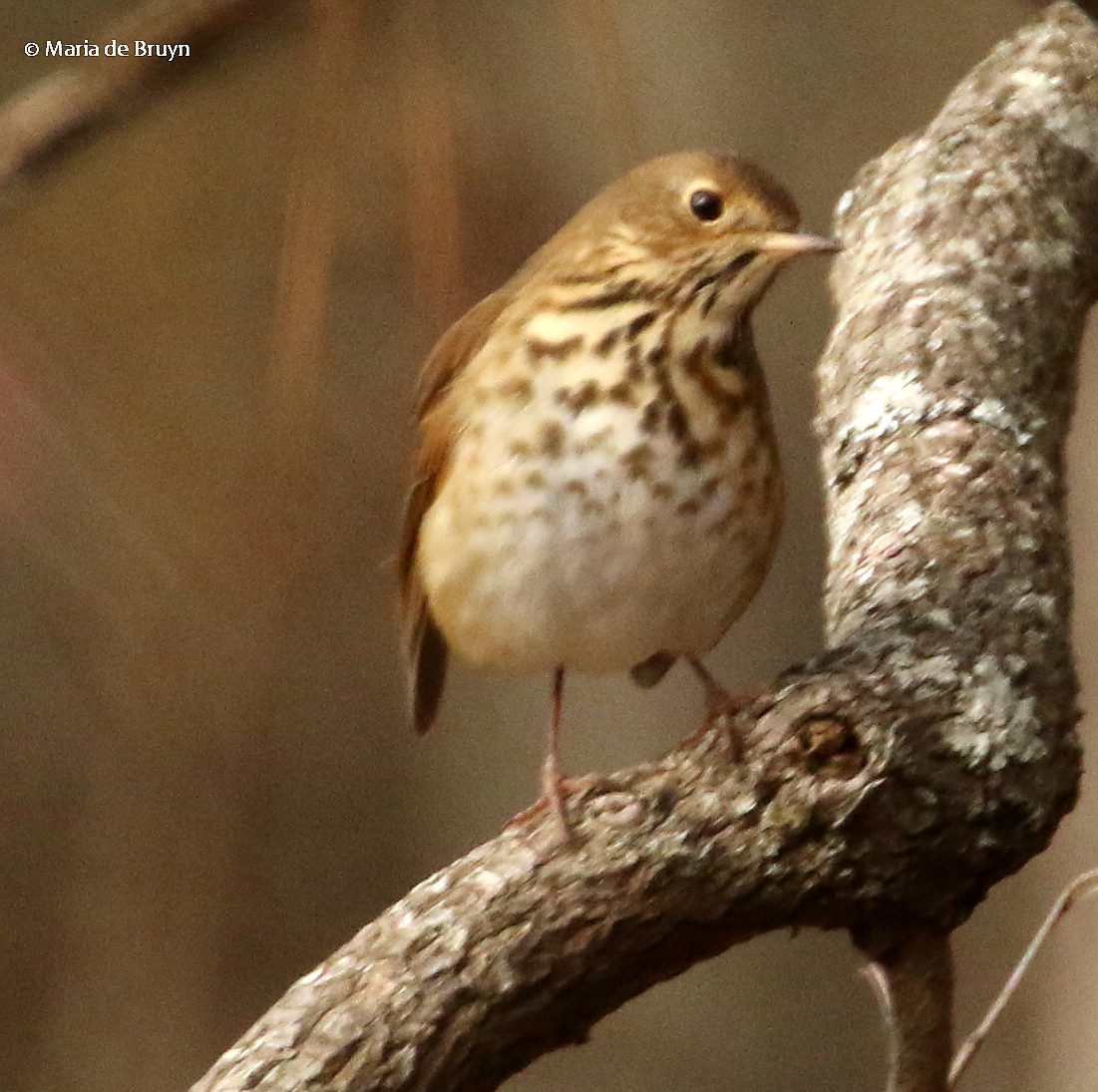
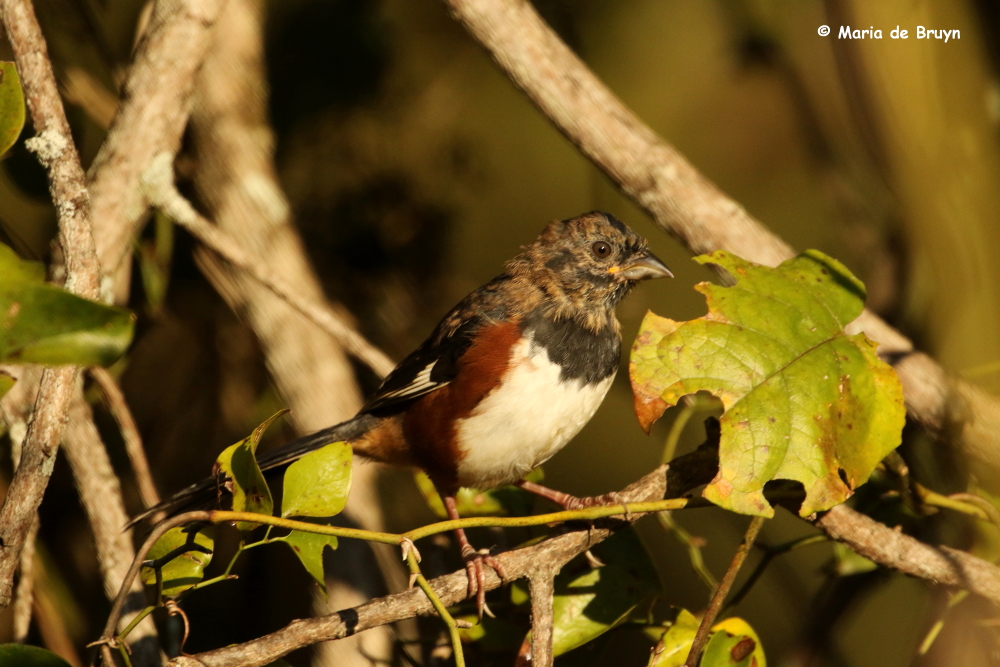
Two other birds that are not surprises but also a joy to see are the hermit thrush (Catharus guttatus) and colorful Eastern towhee (Pipilo erythrophthalmus).
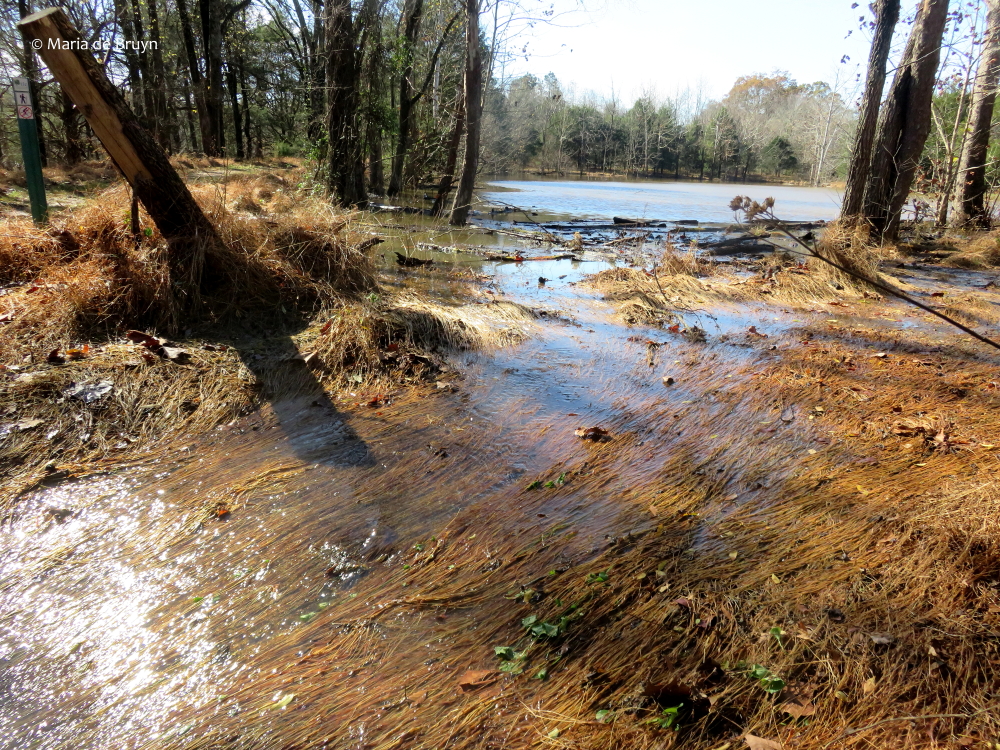
It’s always worthwhile to look all around when you walk, not only up at trees if you are a birder or at eye level if you like mammals. I take a lot of bird photos, because I love birds and because they are often easier to see than other wildlife species. But I consider myself more a “wildlifer” than a “birder” since I really am interested in all kinds of animals. That now stands me in good stead during the high-precipitation events we’ve been having. The ponds are filled to capacity and then some, with water flowing over the banks and onto paths.
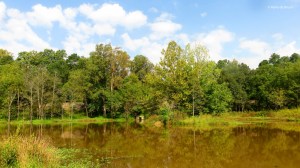
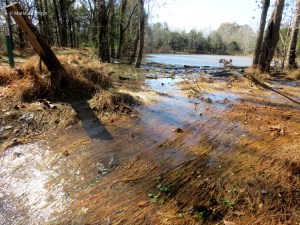
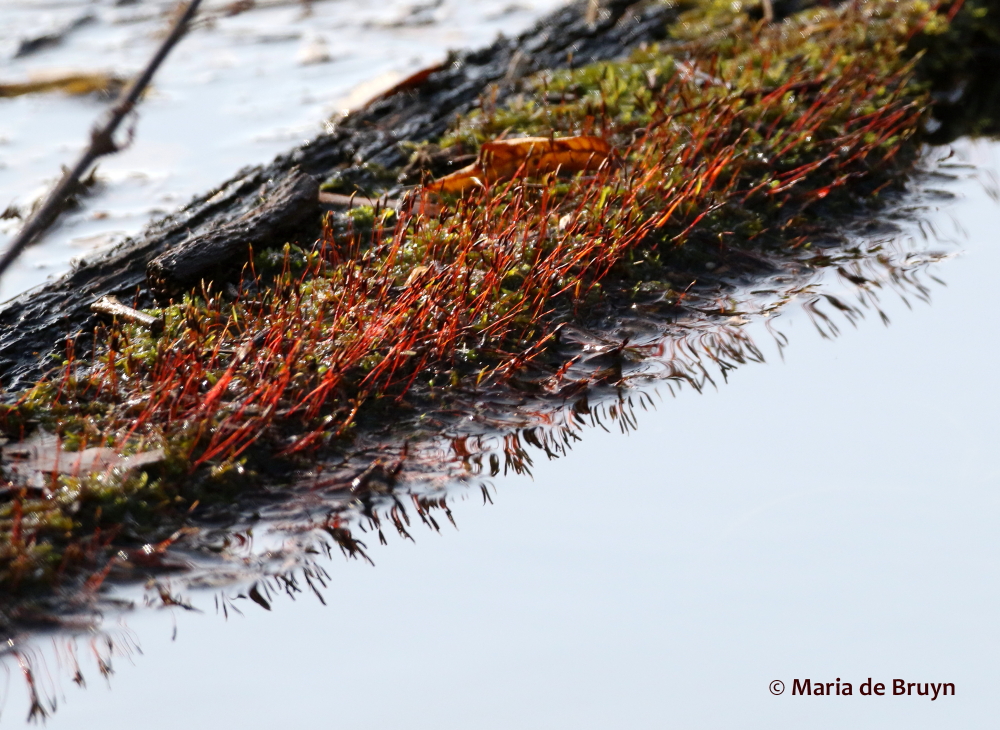
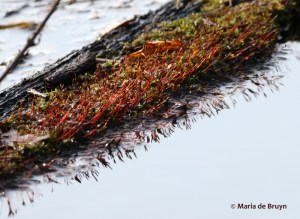 In some cases, the high humidity has been great for plants; bryophytes are shooting up sporophytes which carry their reproductive spores. As there are over 600 mosses, liverworts and hornworts in North Carolina, I didn’t get the scientific ID for this species.
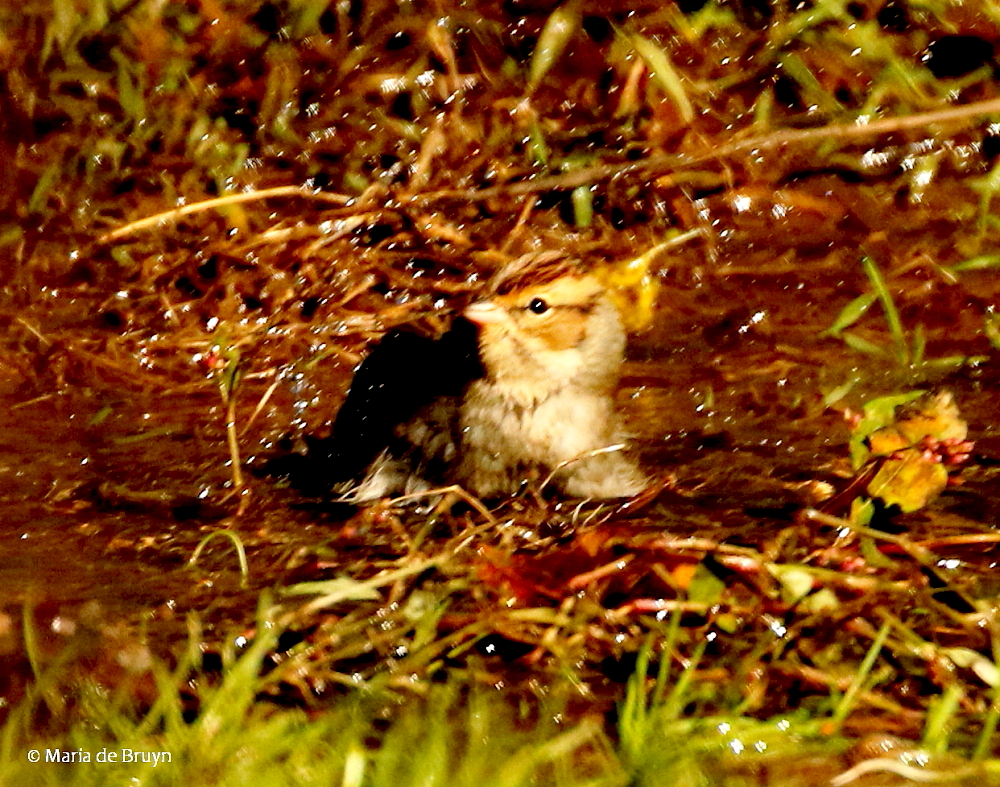
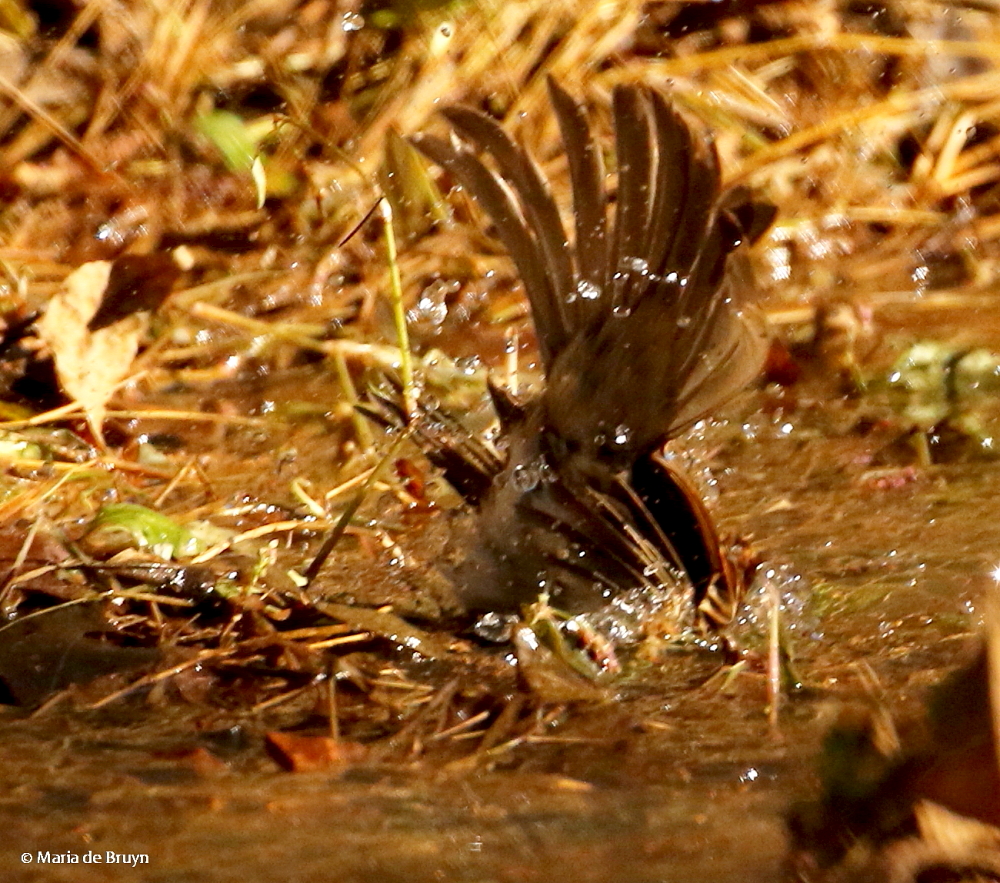
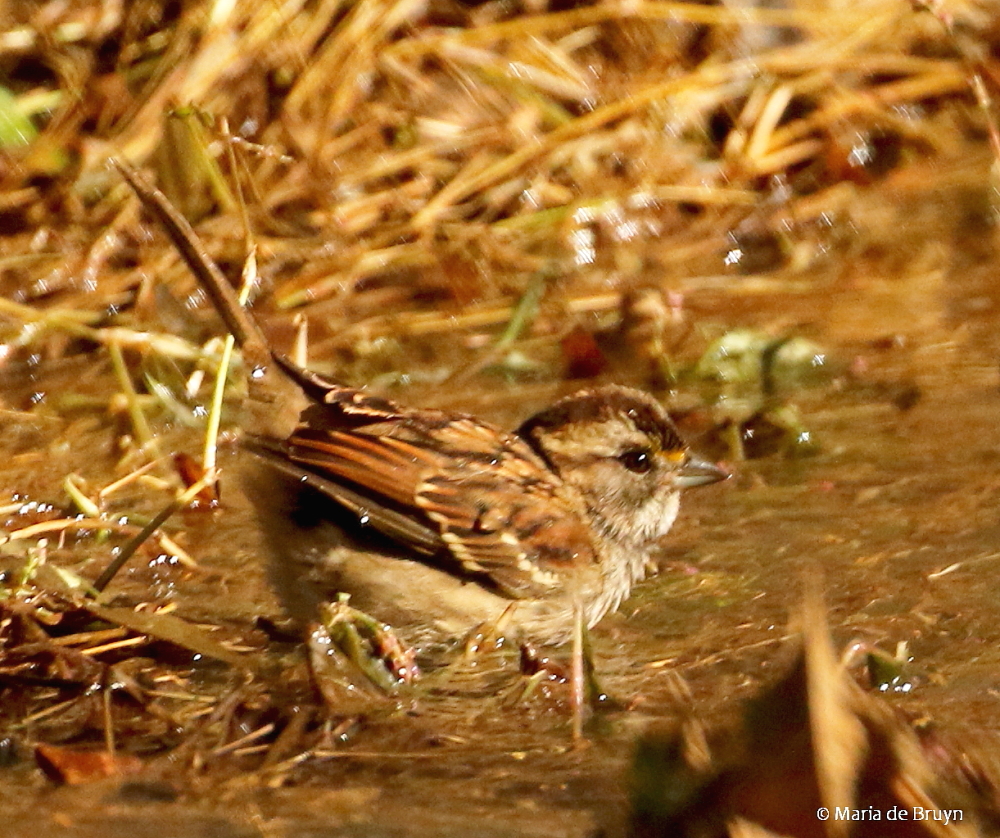
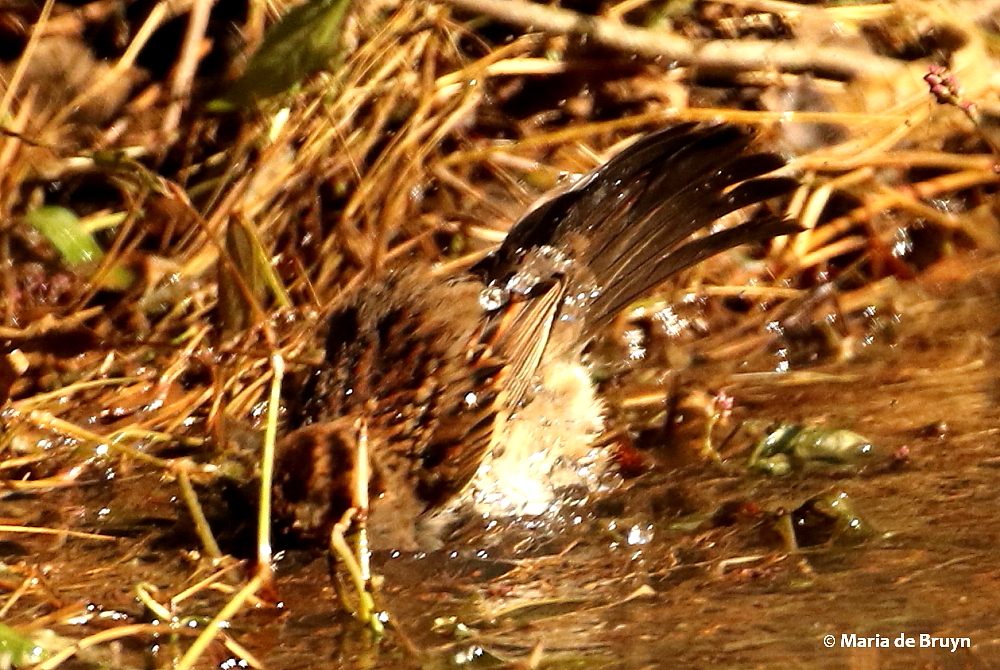
The rains created new temporary water-filled gullies, where chipping sparrows (Spizella passerina) and white-throated sparrows (Zonotrichia albicollis) have been enjoying baths along with other birds.
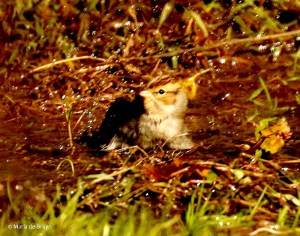
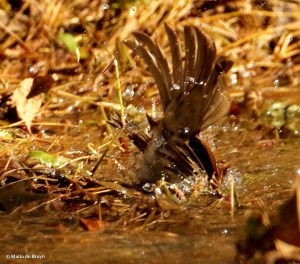
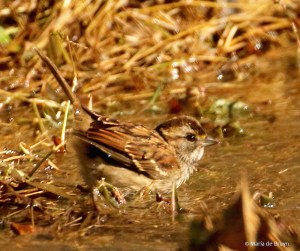

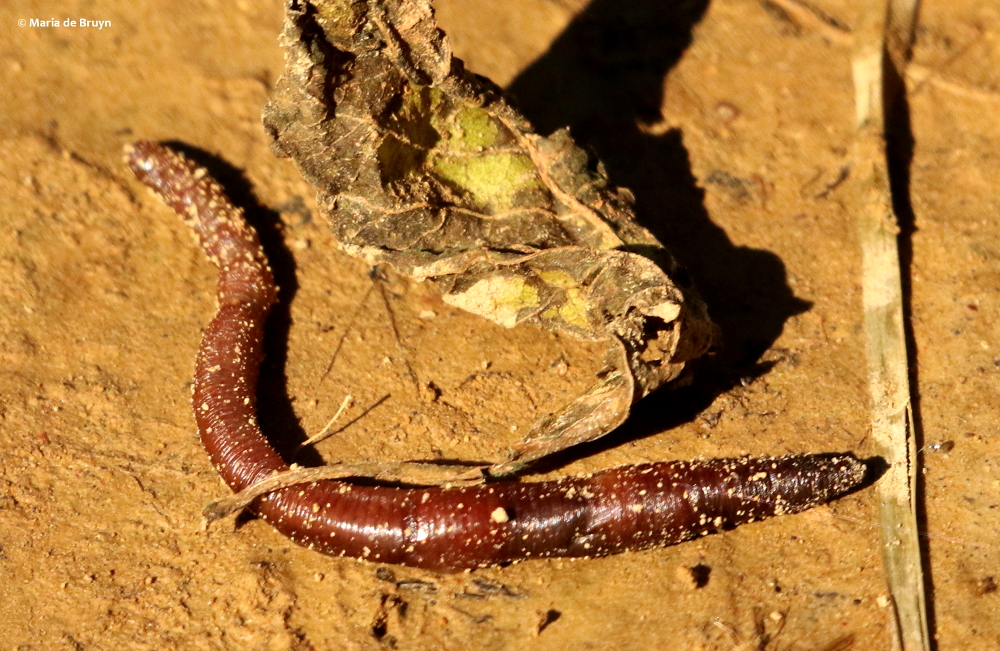
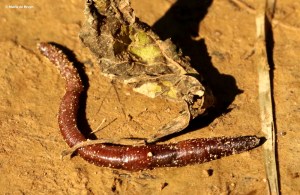 This earthworm (Lumbricina) obviously decided it had to get out of the water-logged earth for a while and I was glad not to have squashed it as I walked along. Its slow progress along the path may not have aided it, though, because there were plenty of robins and other worm-eaters in the vicinity.
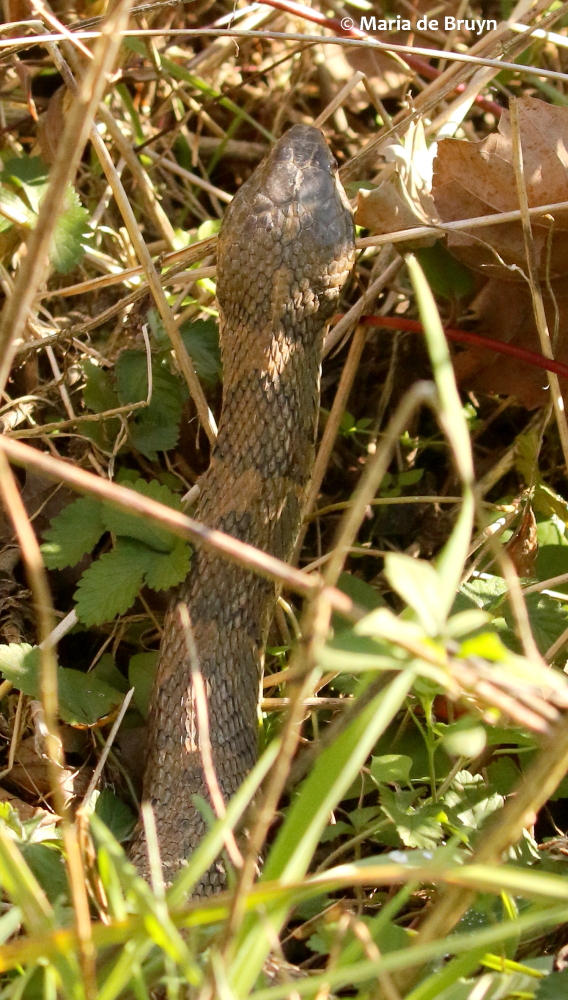
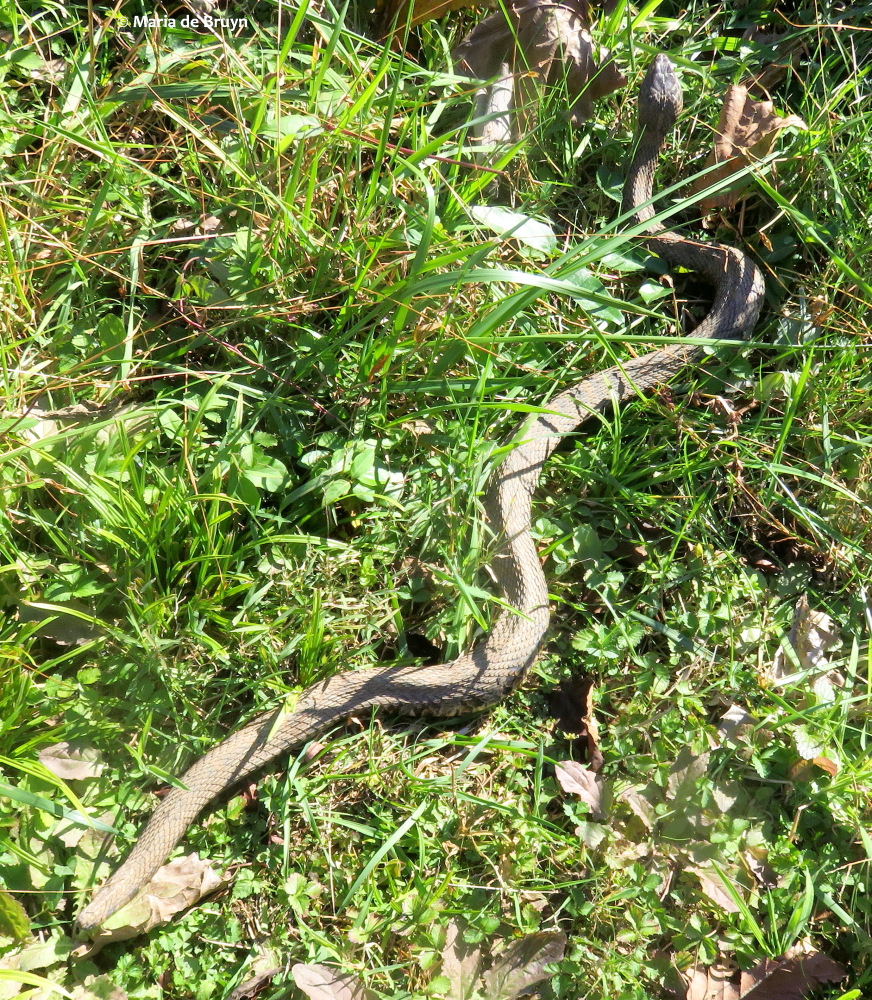
A large Northern water snake (Nerodia sipedon) was sunning next to a path after the rains as well.


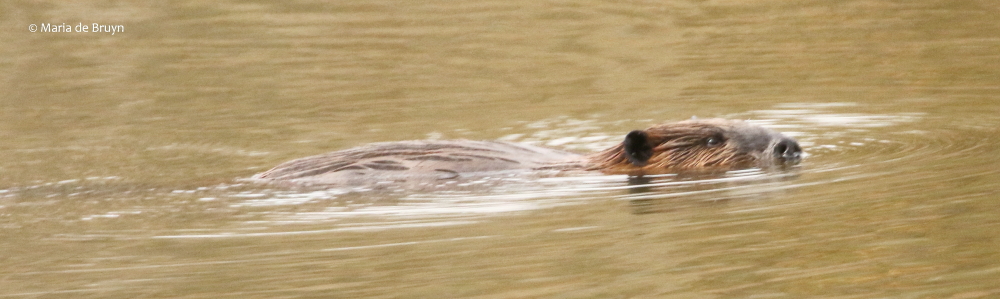
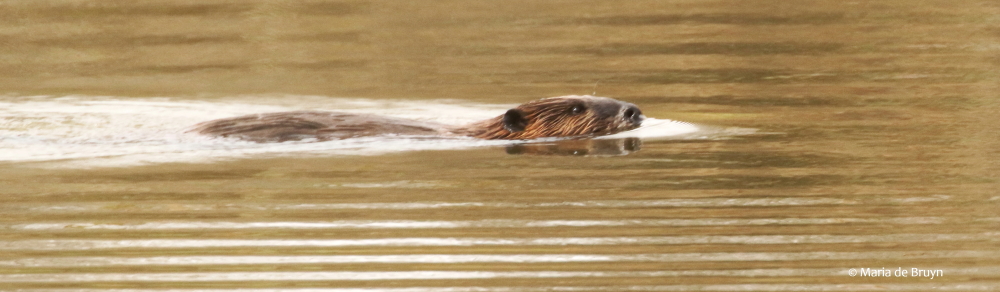
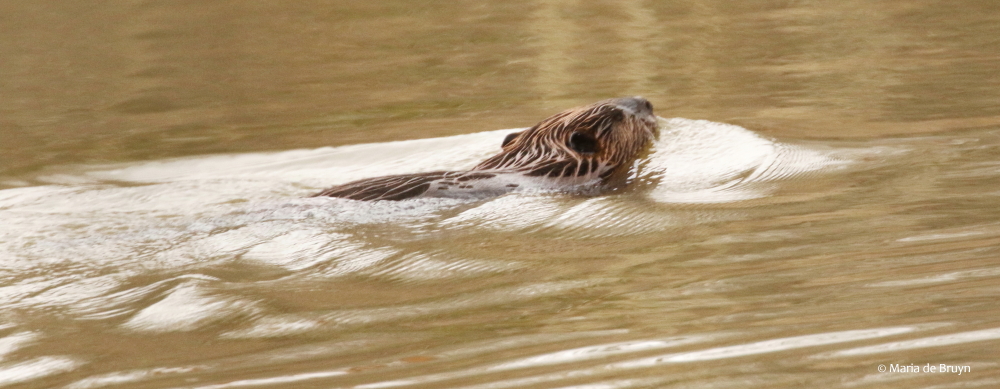
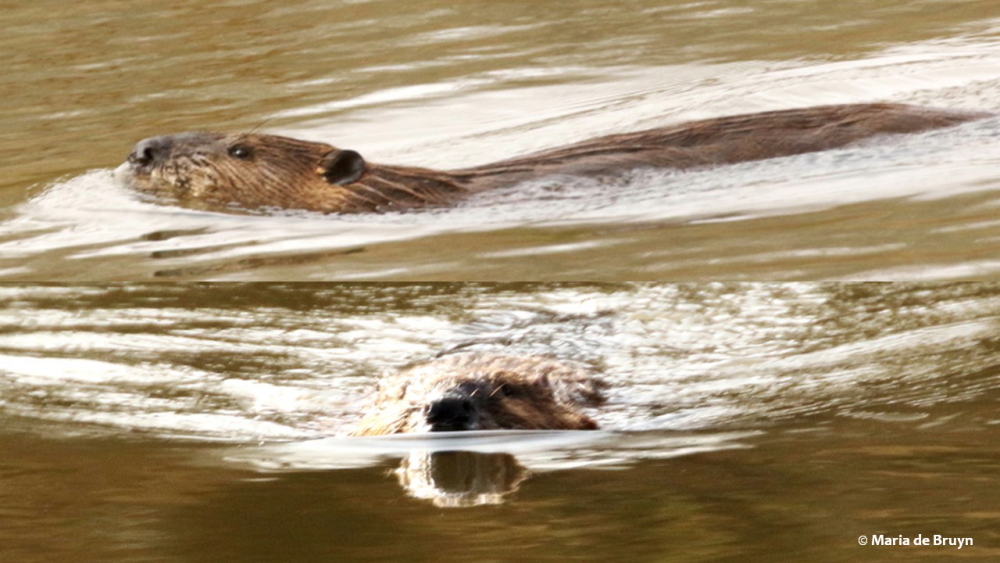
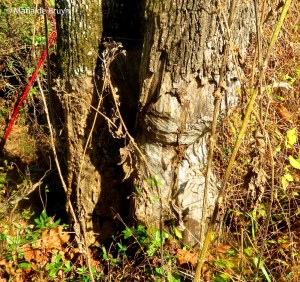 So my last visit to Brumley, when I was hoping to capture a golden-crowned kinglet digitally, did not fulfill that hope but ended by giving me a great surprise – my first sighting of a beaver (Castor canadensis) at this reserve. A colleague had seen one there, I’d noted the gnawed tree near the pond, and I had figured out where the lodge was, but I had not yet seen the mammal in the early mornings. Shortly before reaching the pond, I’d stopped to chat with dog owners and mentioned that a beaver was there but I hadn’t seen it yet. Ten minutes later – at 2 p.m. in the afternoon, there s/he was!
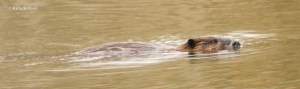
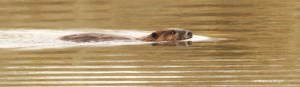
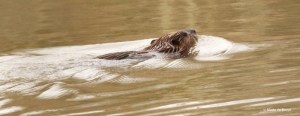 It was so surprising to see the aquatic mammal cruising the pond, swimming in large and small circles. As it created small waves and wakes with its head, I pondered why this largely (but not solely!) crepuscular animal was out in the open with people walking by. S/he must have just really wanted to have a good long swim because the animal was out and about for a few hours.
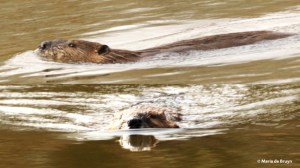
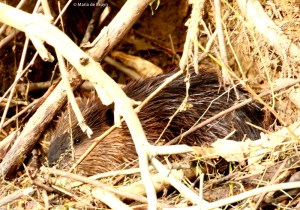
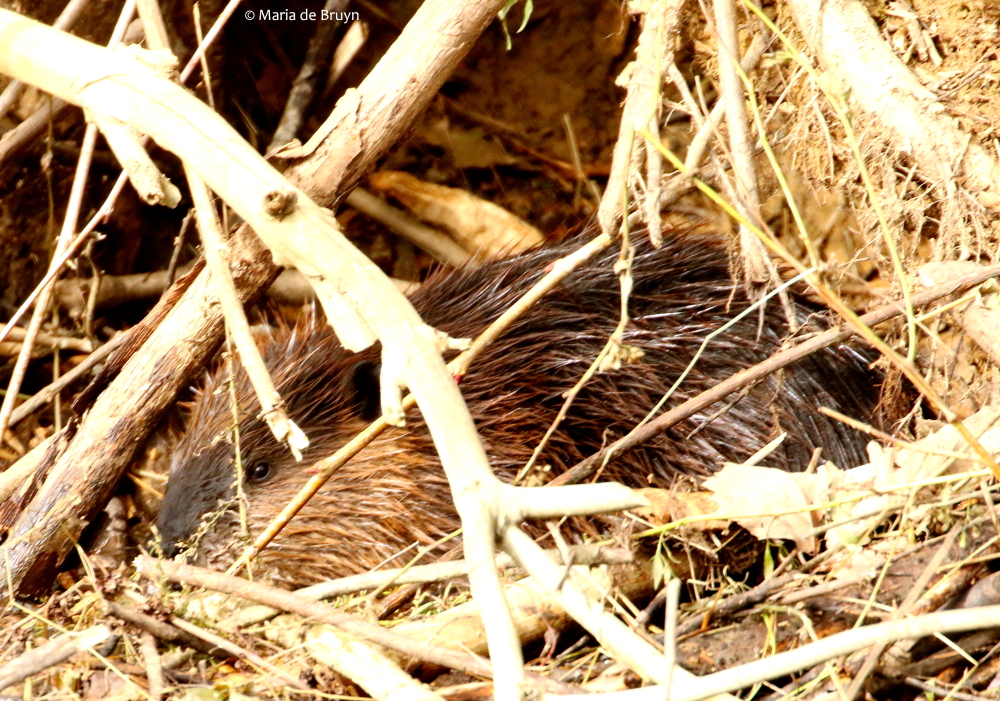
Three times, the beaver slapped its tail and dove under with a huge splash when people with dogs strolled by – three times, I missed getting that shot but I did manage to get a photo when the beaver took a time out at the entrance to the lodge.
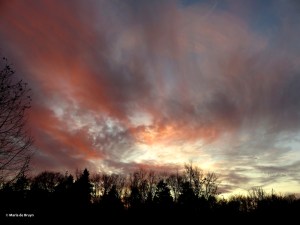
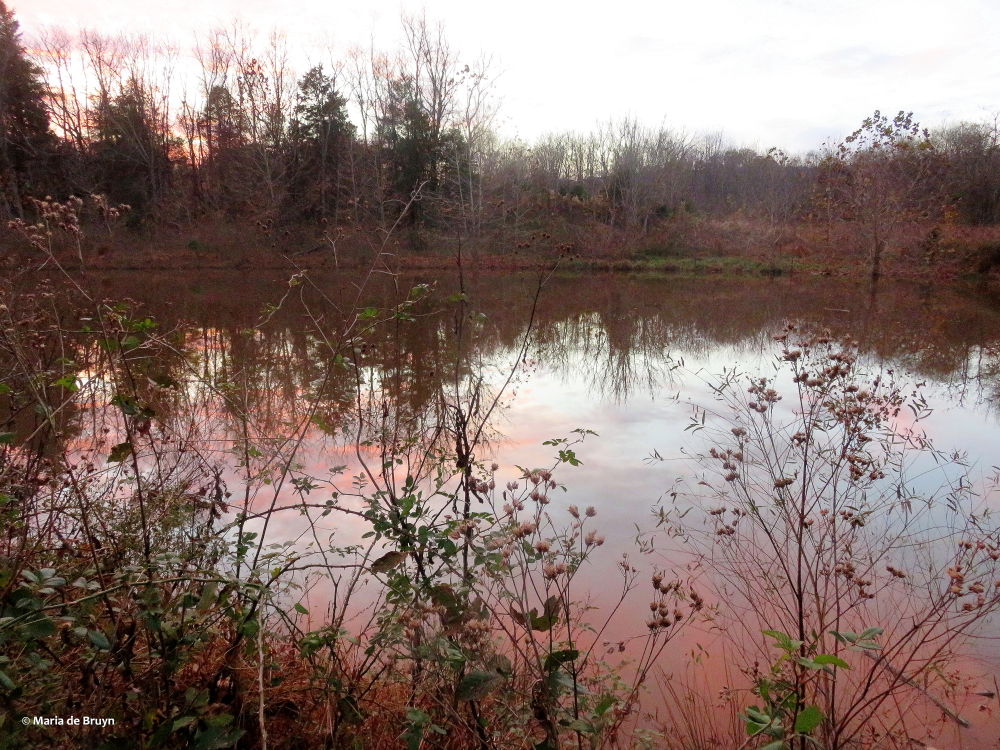
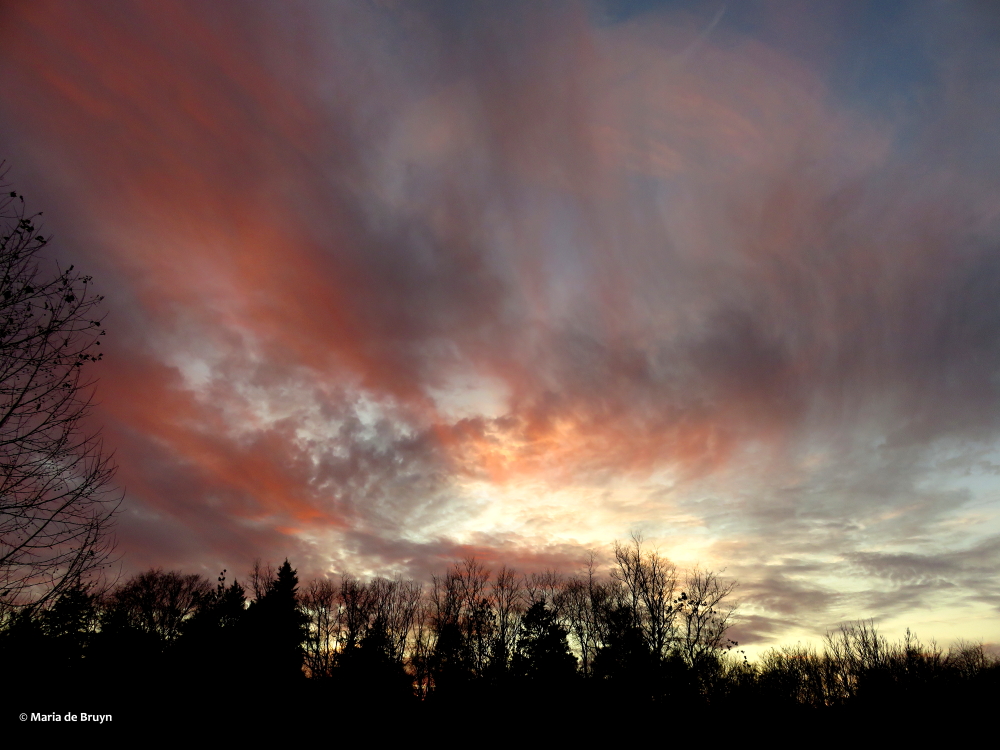
That was an exciting wildlife spotting – not only did I get to see an animal I rarely see but it was also exhibiting a behavior that I witnessed for the first time. (Previously, I’d seen them harvesting and transporting food to the lodge, chewing bark and felling trees.) As I often go to Brumley in the mornings, being there in the afternoon had another advantage as well – I got to witness a spectacular autumn sunset with the sky almost seeming like a kaleidoscope as the clouds and sun’s rays created rapidly changing skies. I’m looking forward already to my next foray to this reserve!




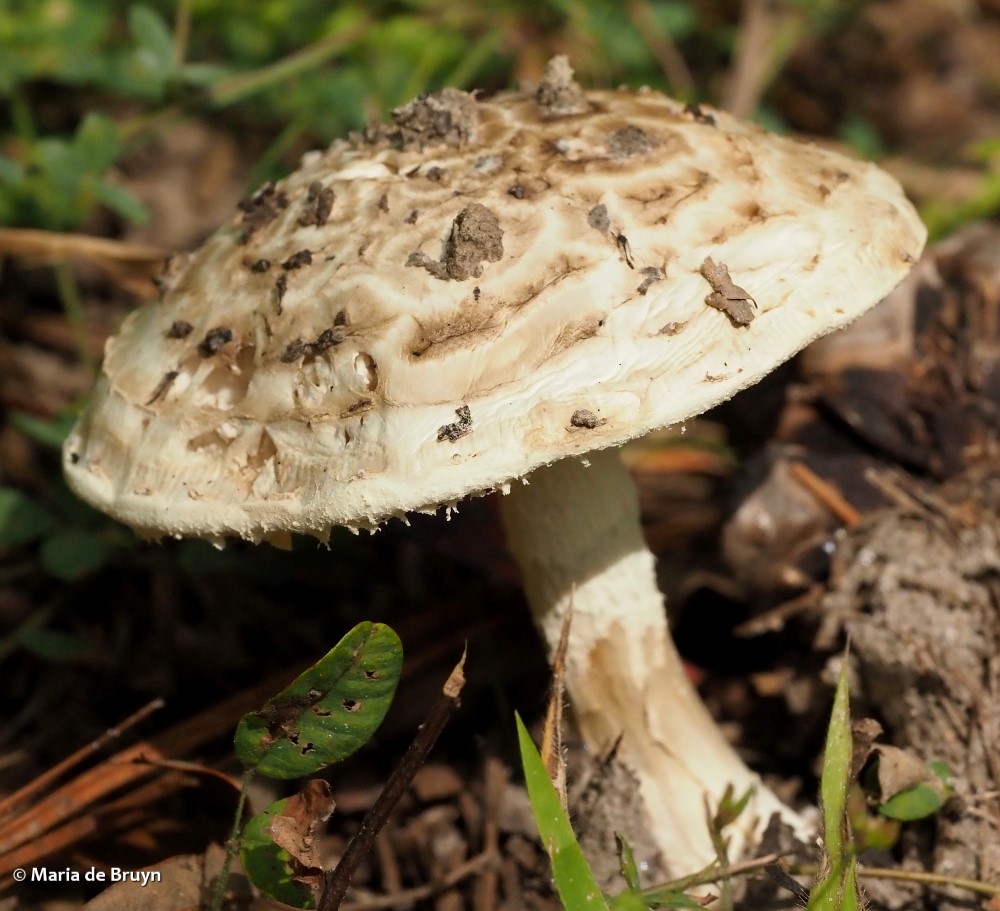 And I want to read more of the scientific writing that is challenging ideas about cooperative fungal and tree networks and cautioning us to await further studies that can show how fungi and plants may both collaborate and compete.


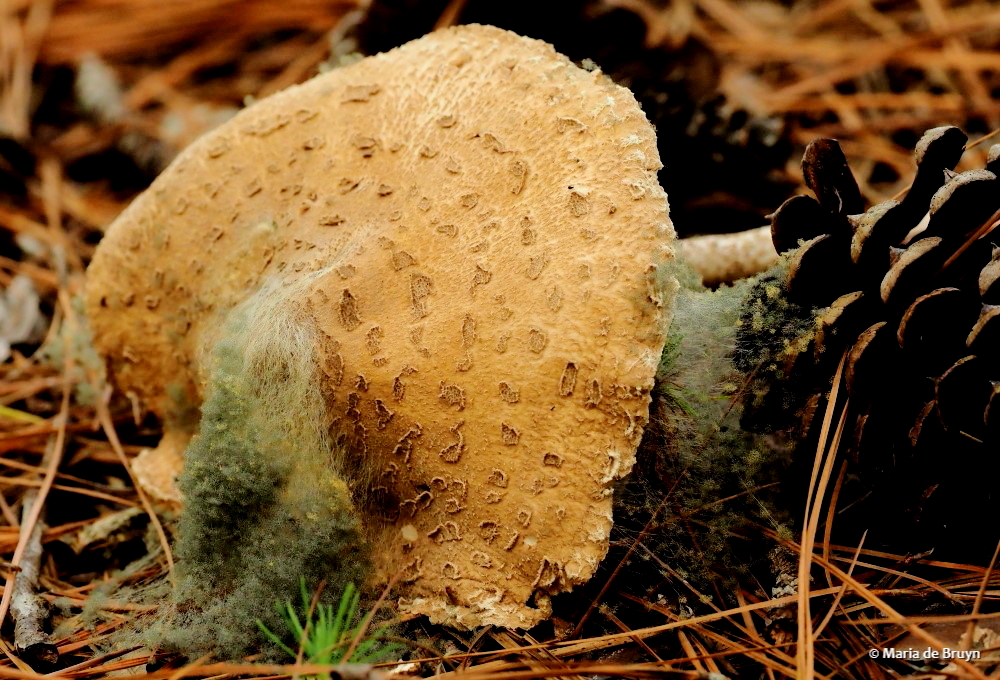


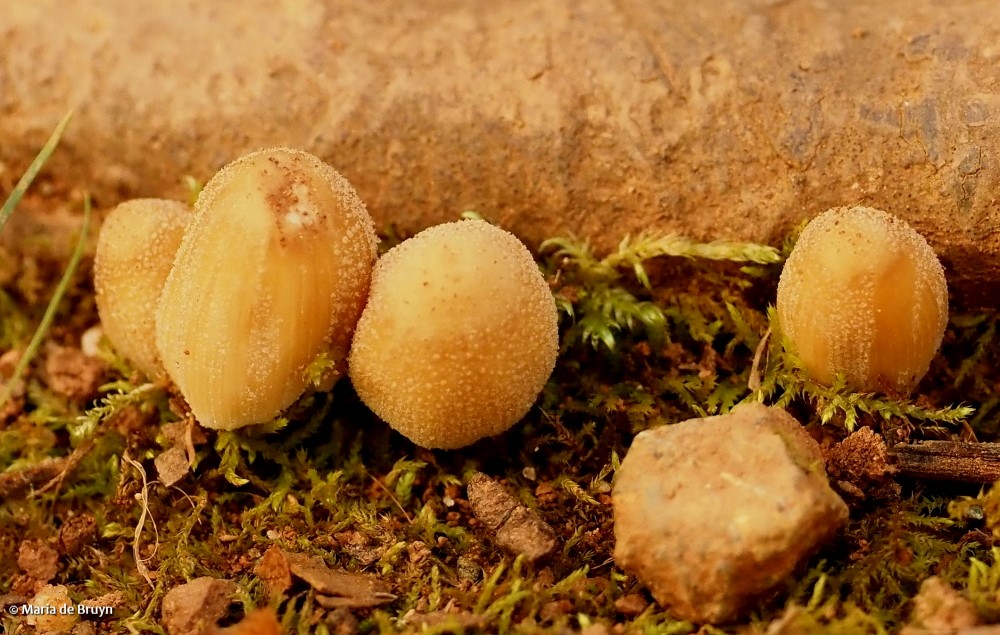

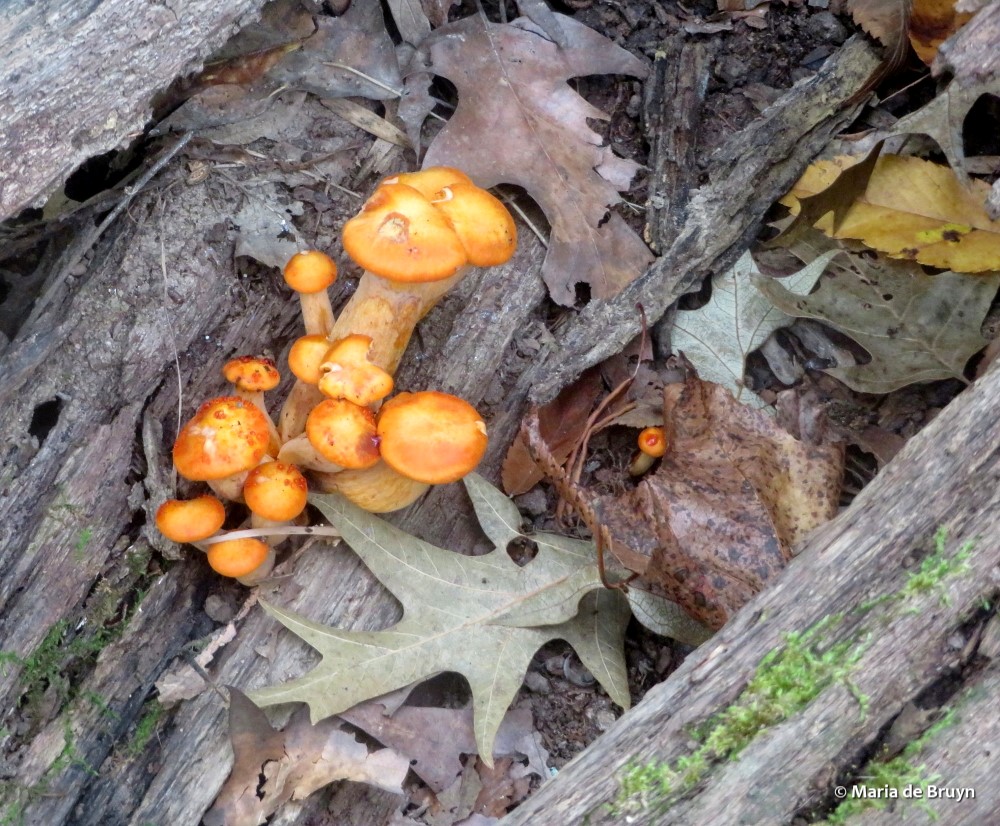
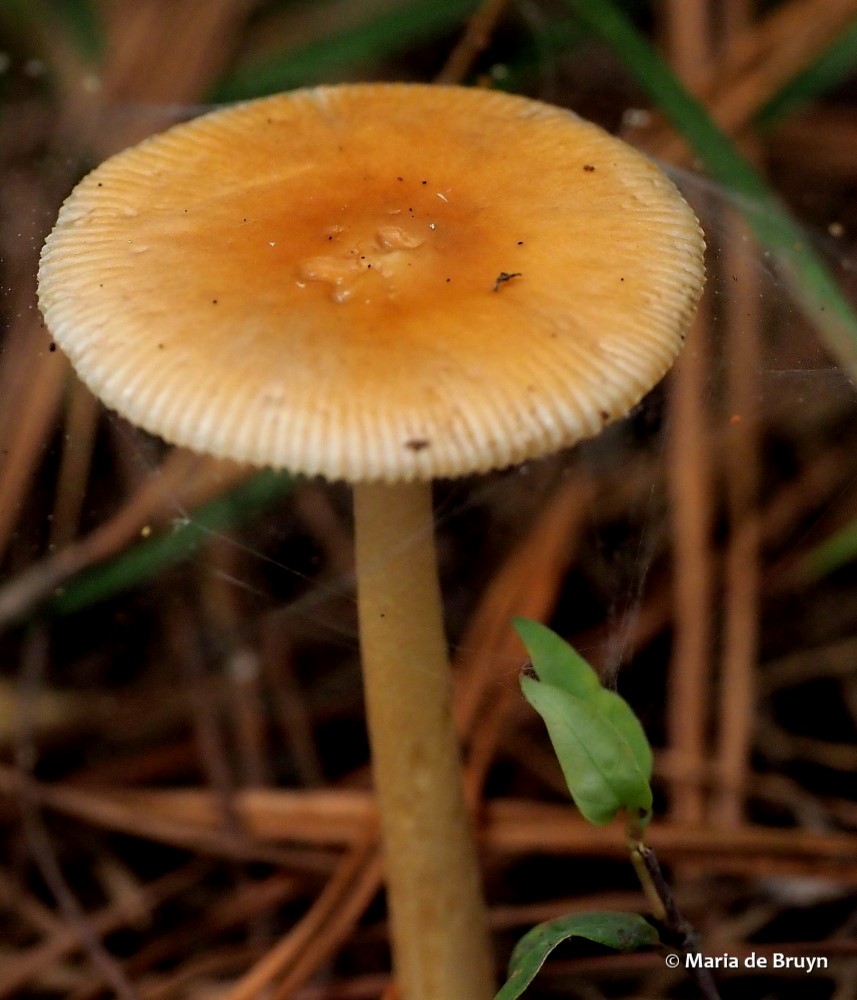
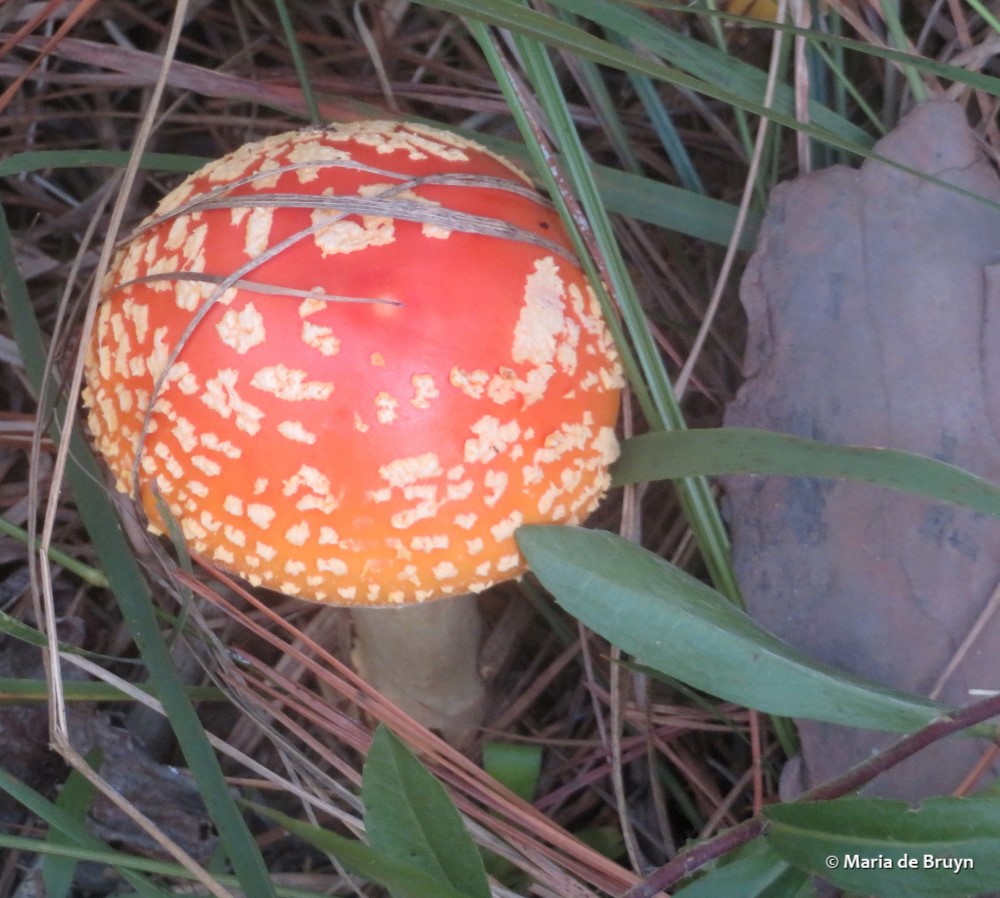 Some of my nature-oriented conservation colleagues know something about mushrooms because they enjoy collecting them for consumption. You do need to know a good deal about them, however, to do this safely as some mushrooms are poisonous. One easily recognizable one is the fly agaric mushroom with its pretty red cap dotted with white spots.





 I’ll leave you with a find that has puzzled me as I have no idea what it is. Several green plants were covered with these fine white filaments. I don’t know if they were produced by fungi or some type of insect; my Internet searches have not produced an answer yet. If any of you readers know what this is, please enlighten me! And have a nice day!





 My beautiful world