The dance of the sandhill cranes

sandhill crane I77A7926© Maria de Bruyn resDuring my trip to Yellowstone National Park, I had the privilege of seeing what birders call “lifers” – bird species that one sees for the first time. One spectacular sighting – for me – was of sandhill cranes (Grus canadensis). I didn’t spot them first; I was traveling with two photographers from Michigan who were used to seeing these beautiful birds in their backyards. We had already passed but they kindly returned so I could take a few photos – and then to our delight, the pair of birds performed their mating dance for us!

These birds mate for life and may live to a considerable age. The oldest known sandhill crane was 36.5 years old.

sandhill crane I77A7910© Maria de Bruyn resWhile many of these birds are grayish in color, some have rusty orange coloring, attributable to iron-rich mud in their environment. In Yellowstone, the birds use their long bills to spread the reddish mud over their feathers when they preen and this helps to camouflage them when nesting. Cranes that are not yet mature also have reddish upper parts. Their heads are topped by a red patch.


sandhill crane I77A7925© Maria de Bruyn res


These birds have very long legs and necks as you can see. Their windpipes curl up in the sternum and give their sounds a lower pitch. Mated pairs will sing in unison, with the female calling twice for every call that her mate makes.


The males dance when they display to one another. Courtship dances can involve bowing followed by leaps into the air. They may stretch their wings and pump their heads as well.

SANDHILL CRANE I77A7932© Maria de Bruyn RES

sandhill crane I77A7934© Maria de Bruyn res

The pair would dance and stop, dance and stop. A real pas de deux (in French and ballet terms)!

sandhill crane I77A7931© Maria de Bruyn res

sandhill crane I77A7936© Maria de Bruyn ressandhill crane I77A7938© Maria de Bruyn res

sandhill crane I77A7955© Maria de Bruyn ressandhill crane I77A7974© Maria de Bruyn res

Perhaps some ballet terminology was inspired (unconsciously) by the graceful cranes.

sandhill crane I77A7915© Maria de Bruyn res

Grand jeté (jump from one foot to the other)

sandhill crane I77A8005© Maria de Bruyn res

Sur les pointes (on tiptoes)

sandhill crane I77A7935© Maria de Bruyn res

Demi-plié (Half-bend of the knees)

`11111111111111111 sandhill crane I77A7940© Maria de Bruyn

Fondu (sinking down)

Dancers have tried to mimic cranes and while they created a beautiful dance, the sandhill cranes had more varied moves.

sandhill crane I77A7947© Maria de Bruyn res sandhill crane I77A7952© Maria de Bruyn res

sandhill crane I77A8010© Maria de Bruyn ressandhill crane I77A7917© Maria de Bruyn2 res


sandhill crane I77A7928© Maria de Bruyn res


The courtship dance was a tour de force and a highlight of my first day at this national park. In hindsight, I wish I had taped it but I was so enthralled, I forgot. 🙂


Living above a restaurant

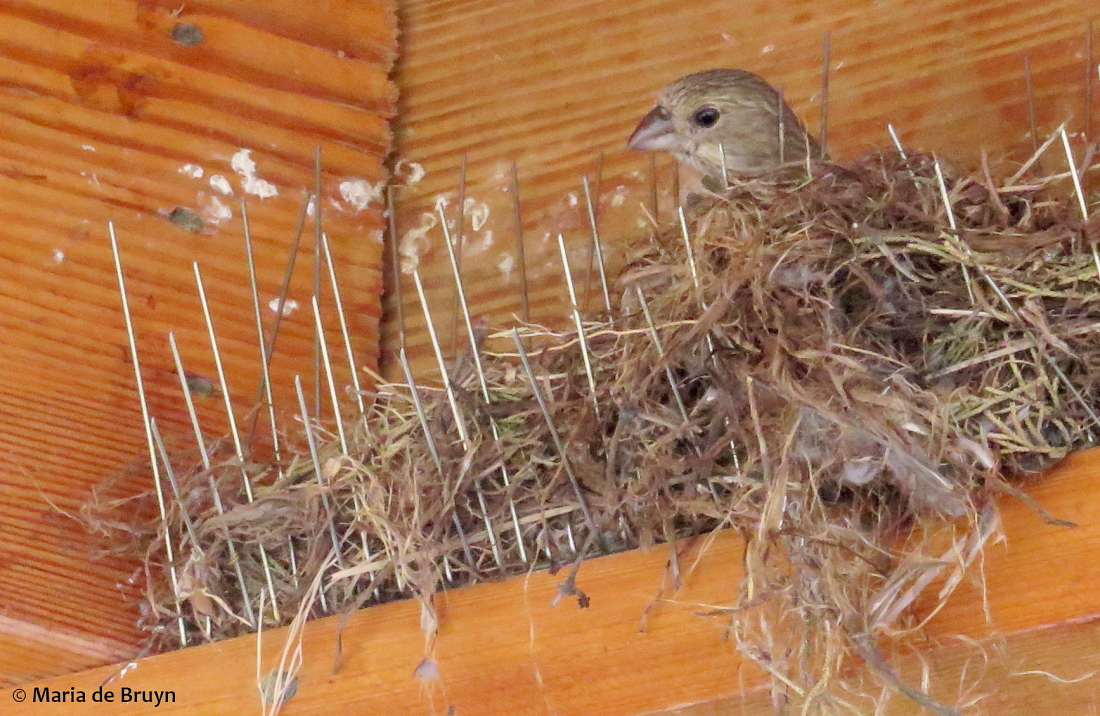
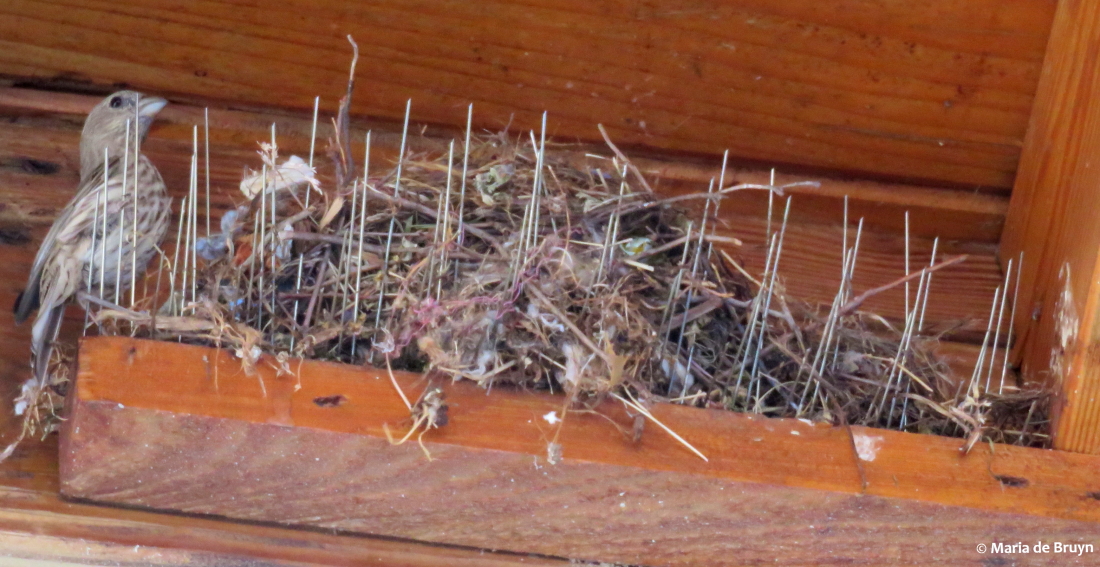
house finch nest 1 IMG_4358© Maria de Bruyn resAt one point in Amsterdam, I lived in a room with a shared kitchen and toilet above a butcher shop. It was a cramped space but I made some nice friends there. Eventually, I painted the hallway with flowers and snails to bring a bit of nature inside. Today, on my way to a prompt writing session, I saw that some birds also choose to live above commercial establishments, including those who established homes above one of my favorite restaurants, El Tigre.

House finch nest 1IMG_4373© Maria de Bruyn res


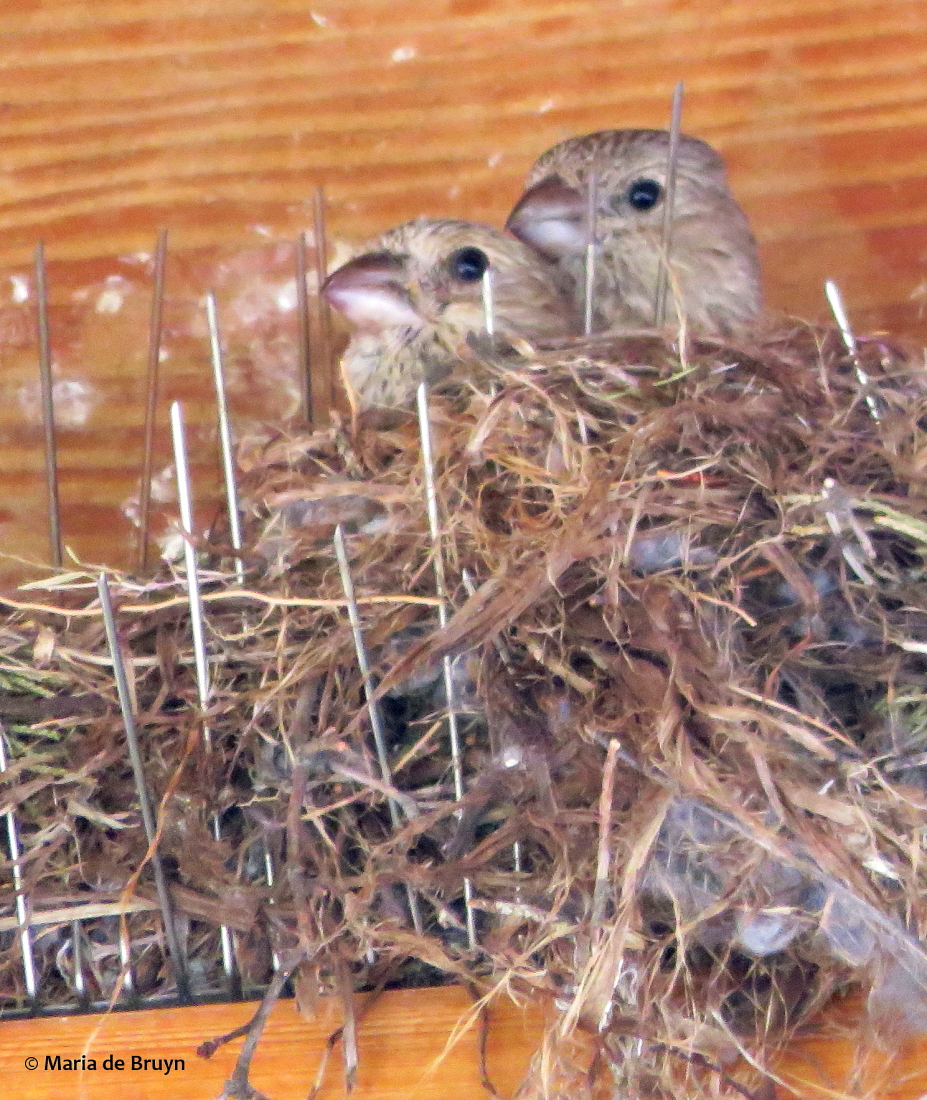
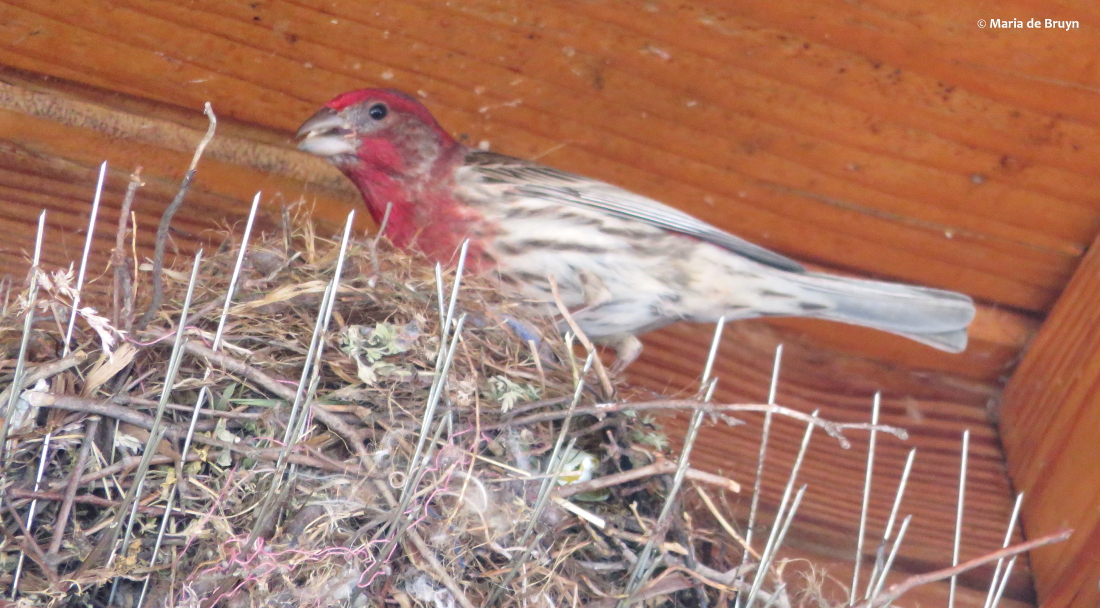
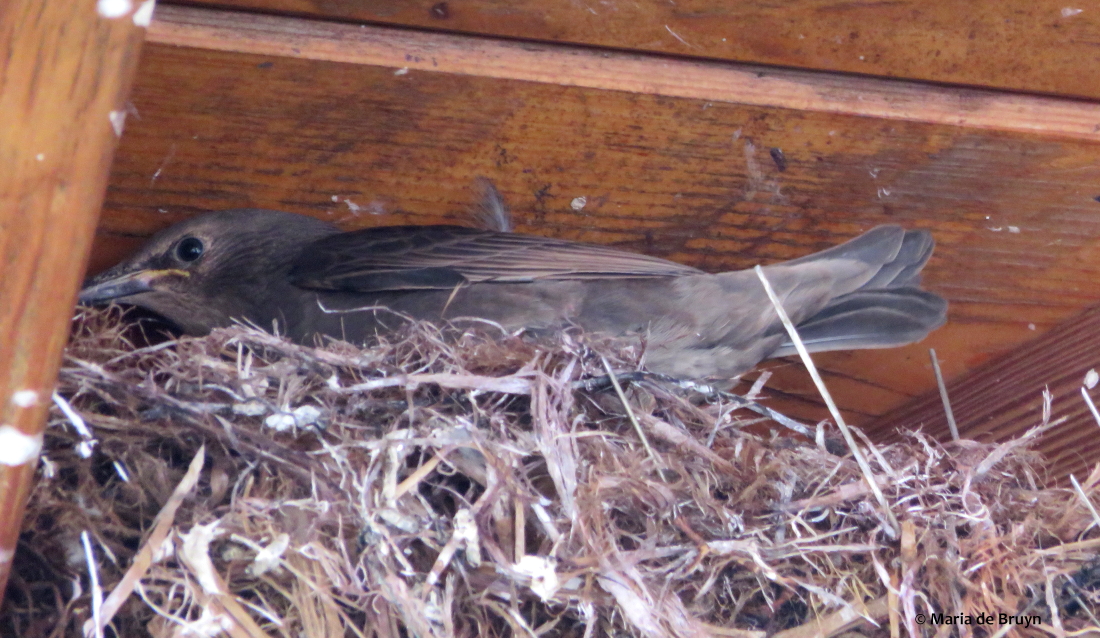
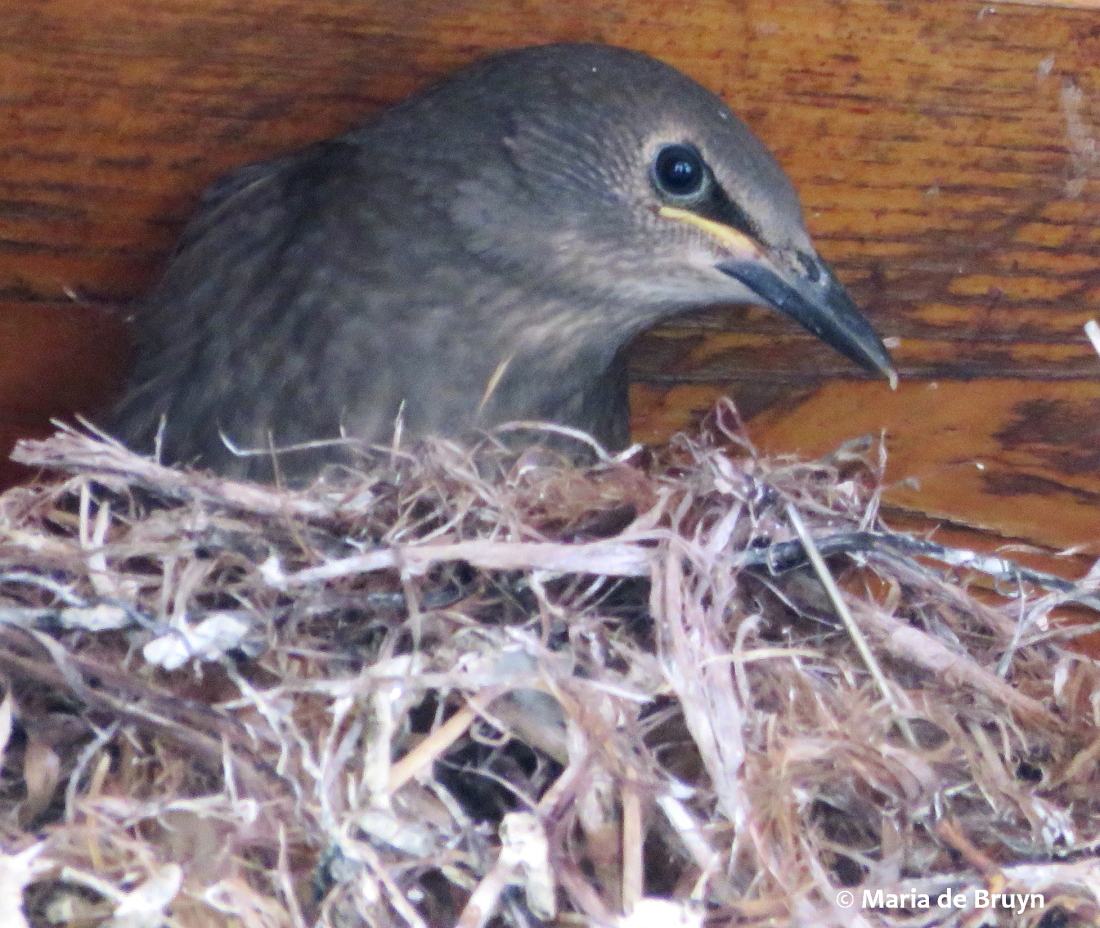
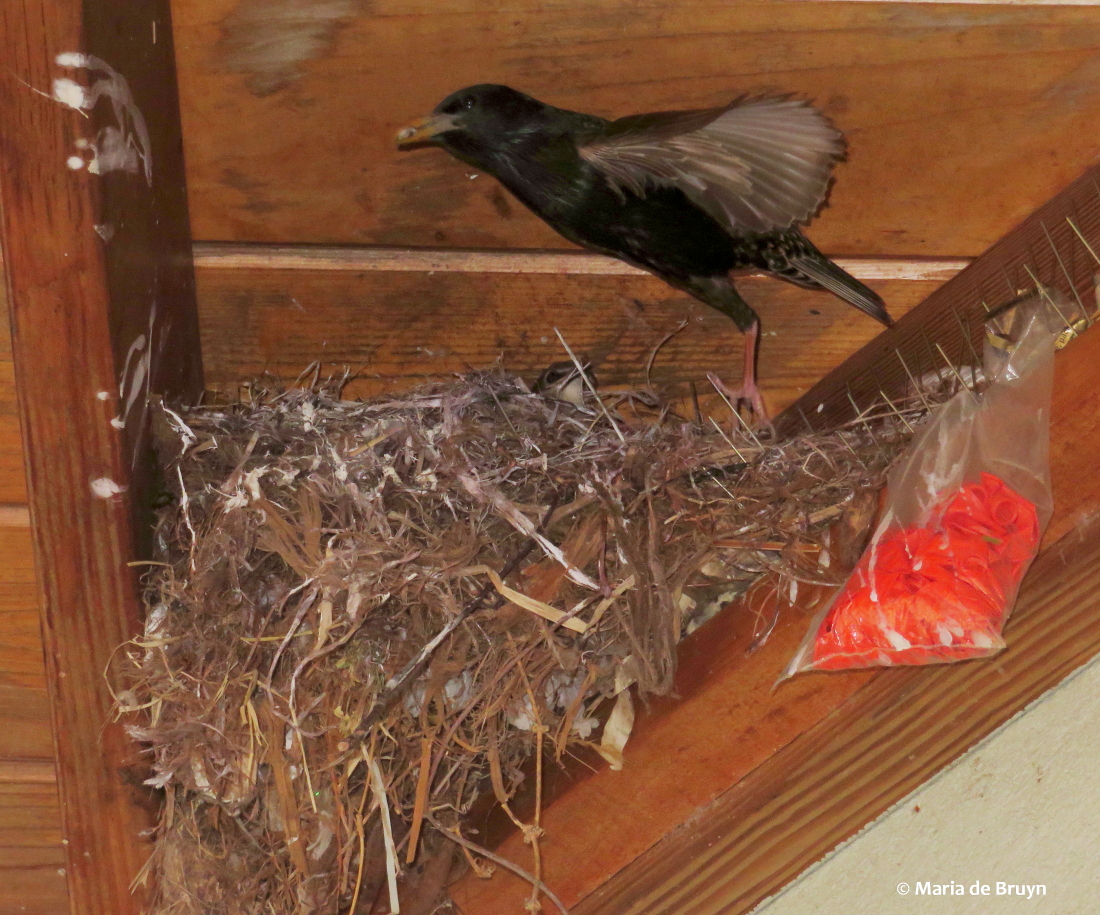
There were three nests (at least – I didn’t look around to the other wall), with house finches (Haemorhous mexicanus) on either side of a European starling (Sturnus vulgaris) home in the middle. Nest 1 had a female bird visiting while a couple stayed inside.


The other finch nest was attended by both mother and father.

house finch nest 3 IMG_4375© Maria de Bruyn res house finch nest 3 IMG_4351© Maria de Bruyn res

house finch nest 3 IMG_4396© Maria de Bruyn res

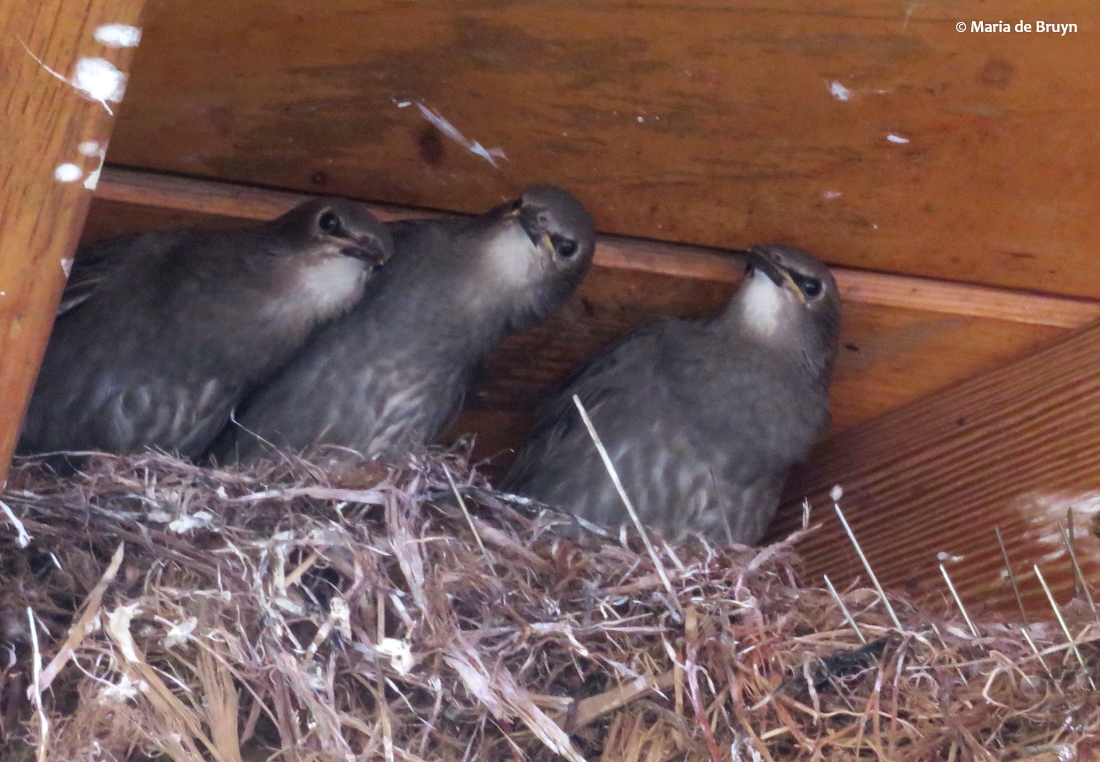
European starling IMG_4390© Maria de Bruyn resThe nest with starlings had rather large babies in it. At one point, an adult bird flew in with a worm or insect but then took off before feeding anyone – perhaps alarmed when it saw me watching the nest. The babies didn’t say much, in contrast to the somewhat older baby starlings in my yard who make quite a racket asking to be fed.

European starling IMG_4387© Maria de Bruyn resEuropean starling IMG_4347© Maria de Bruyn res


European starling IMG_4397© Maria de Bruyn res

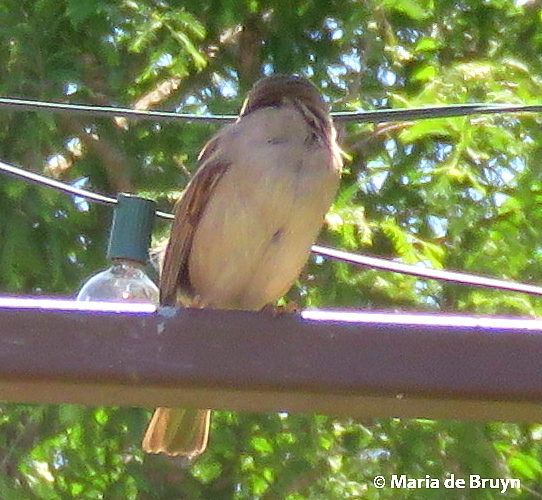
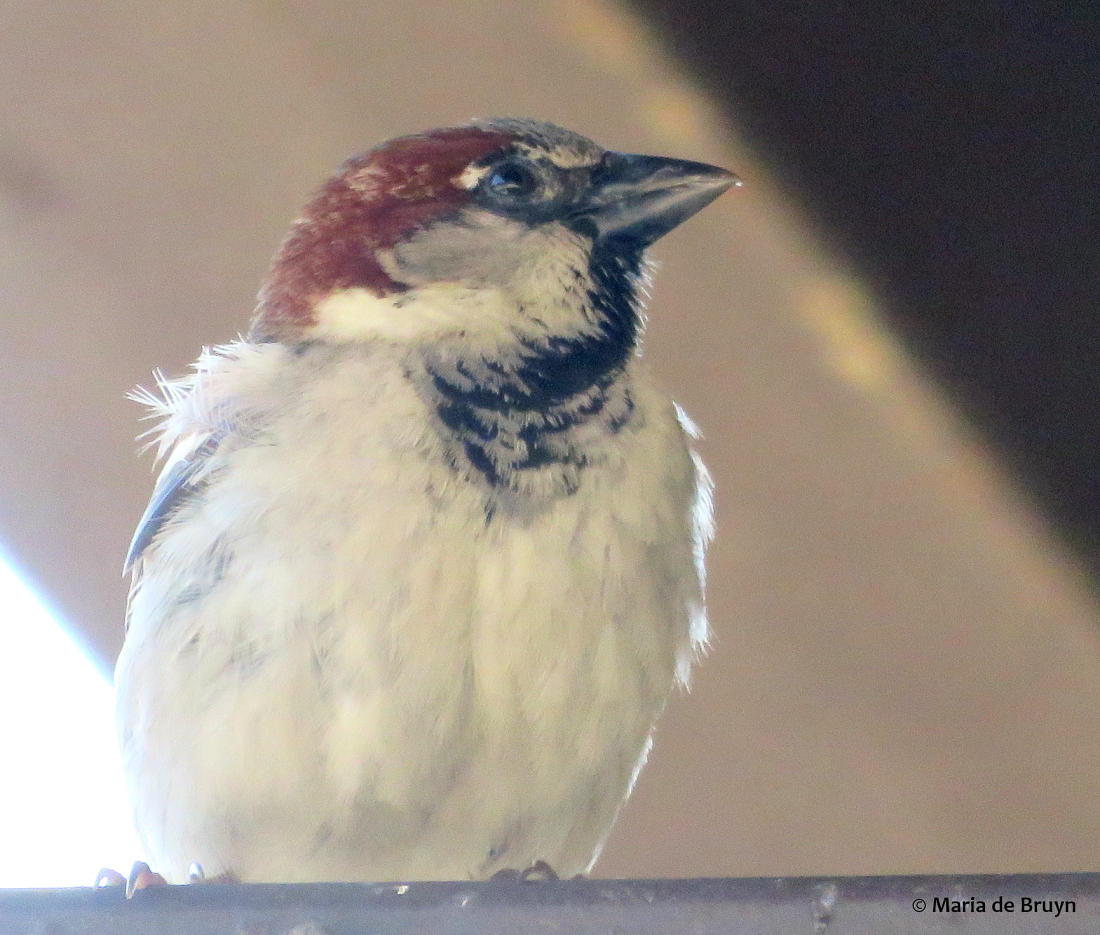
I wasn’t the only observer, however; a couple house sparrows (Passer domesticus) were also observing the comings and goings to and from the nests.

house sparrow IMG_4412© Maria de Bruyn res house sparrow IMG_4355© Maria de Bruyn res

I had a busy day and didn’t think I’d get to do much nature observation – but then those adaptable birds showed me that even in an urban environment, I can grab a few moments to see what other species are doing on a lovely spring day!


Nest Watch citizen science – 2016 edition

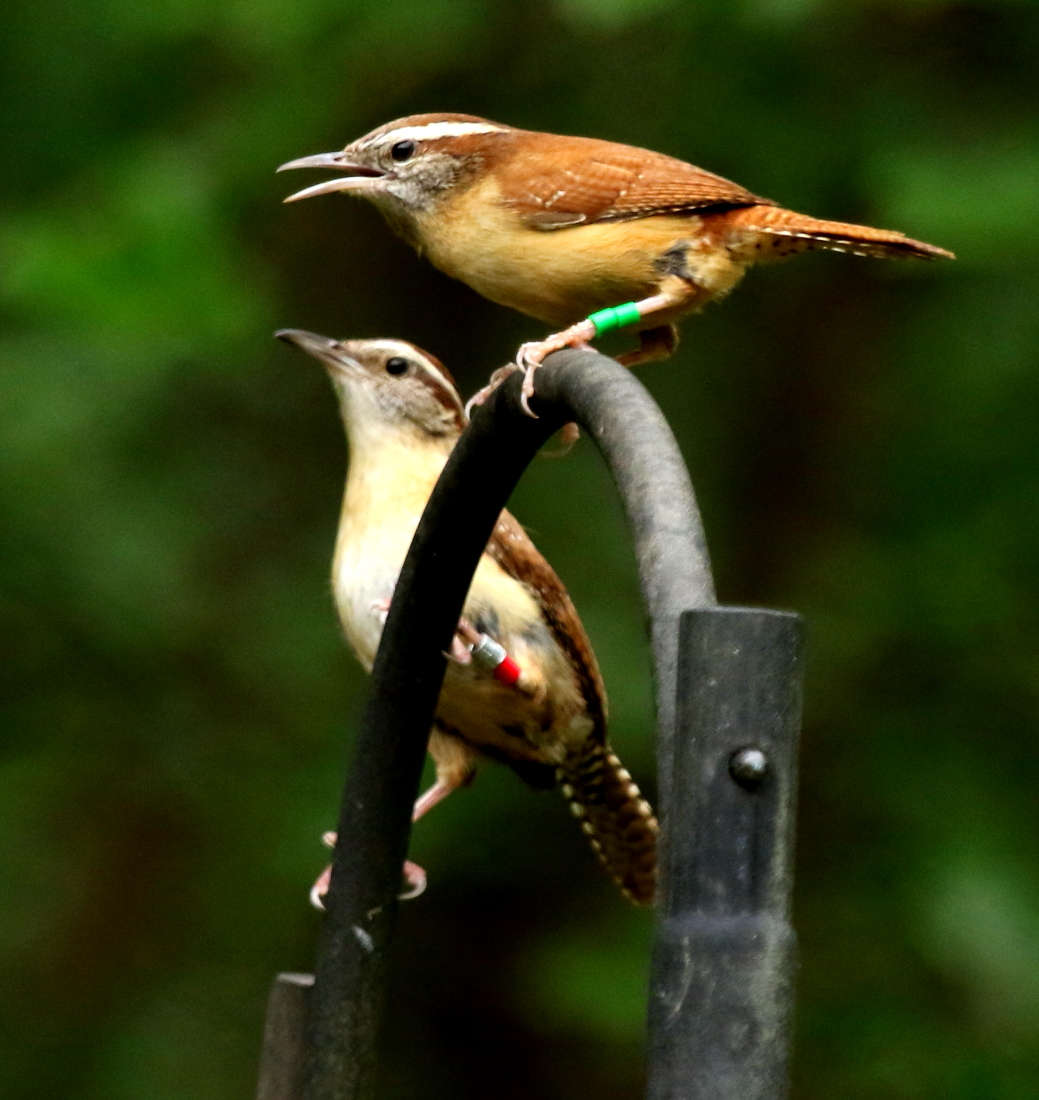
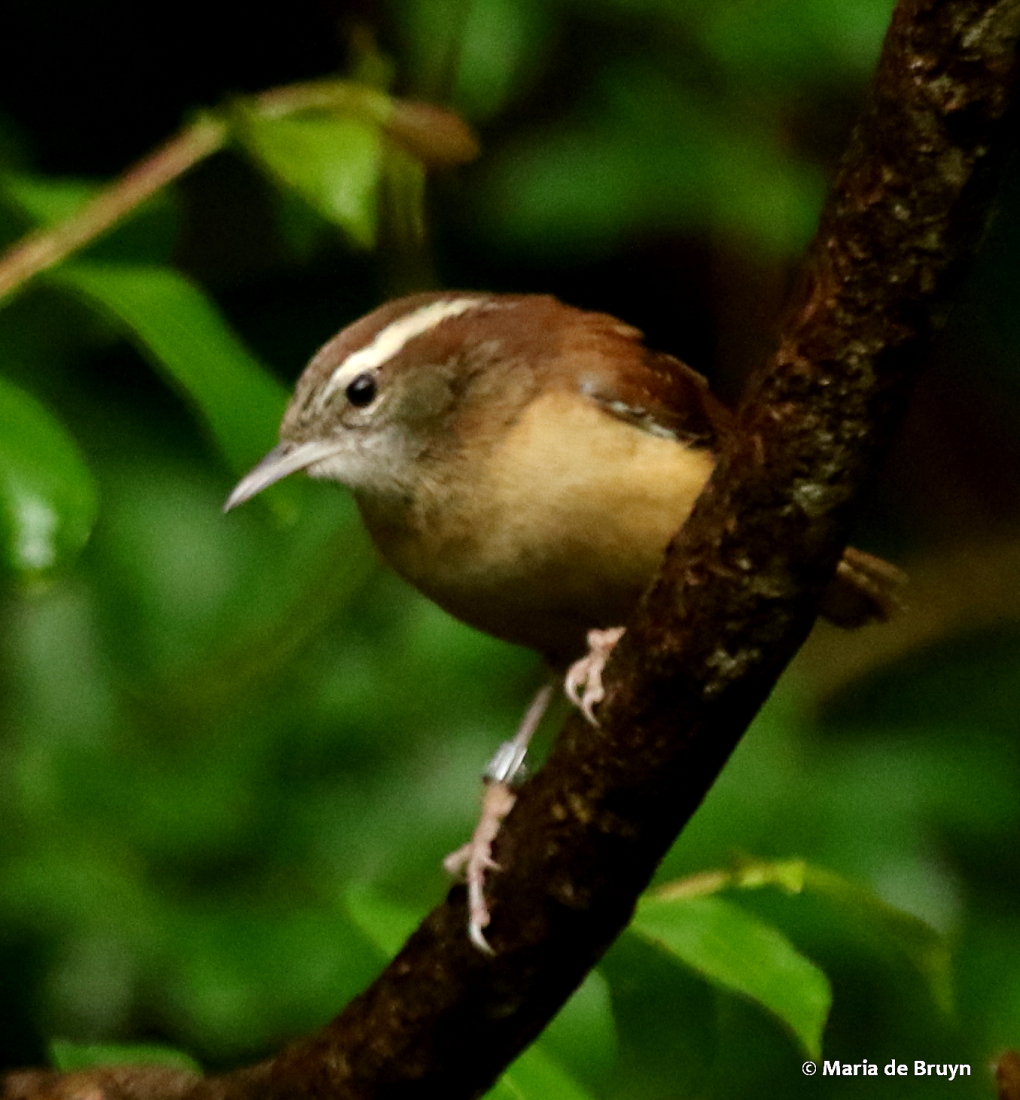
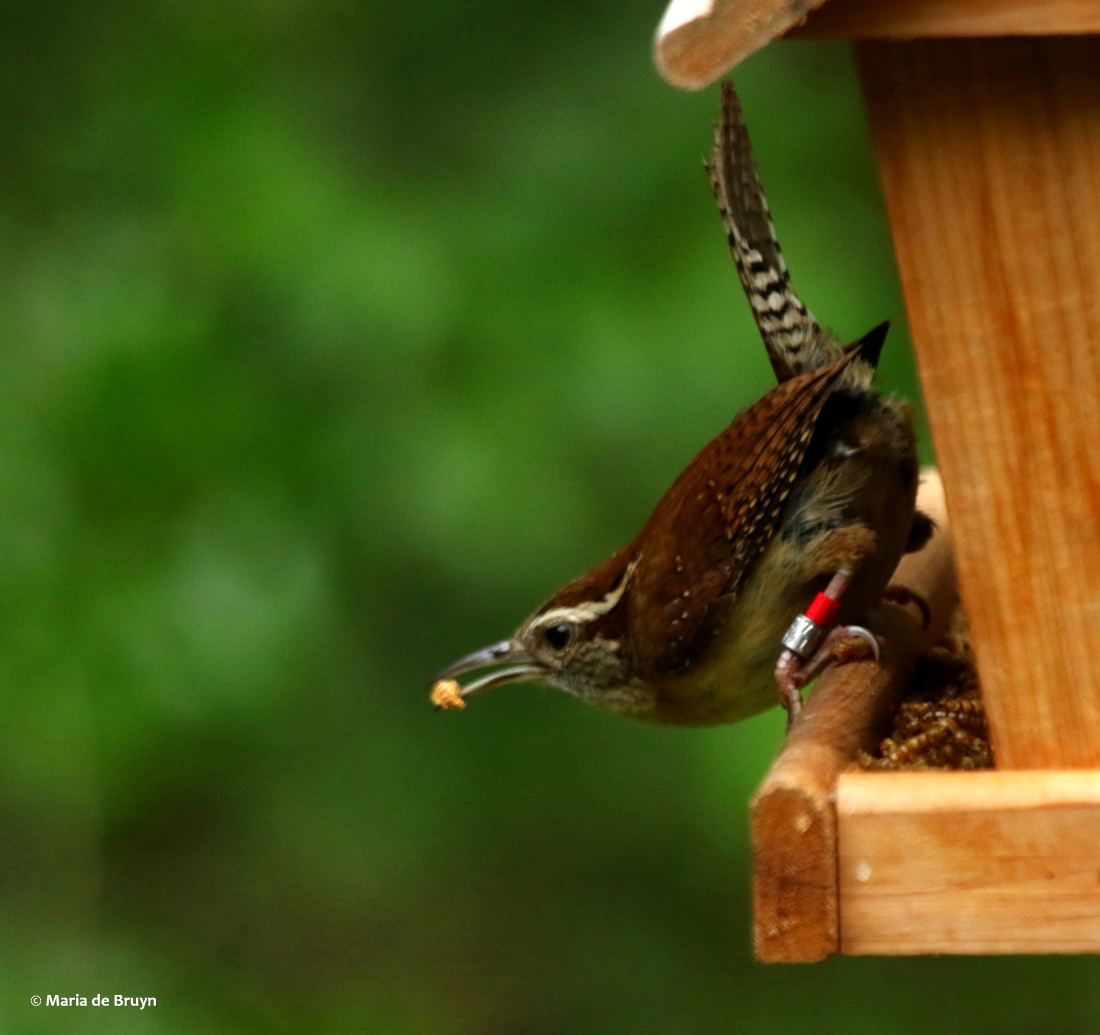
Carolina wren Renee and Riley I77A9074© Maria de Bruyn resLast year, I became a Nest Watch volunteer, which involves having birds banded in your yard so that you can follow and report to researchers the birds’ presence over time as they visit and leave your yard.

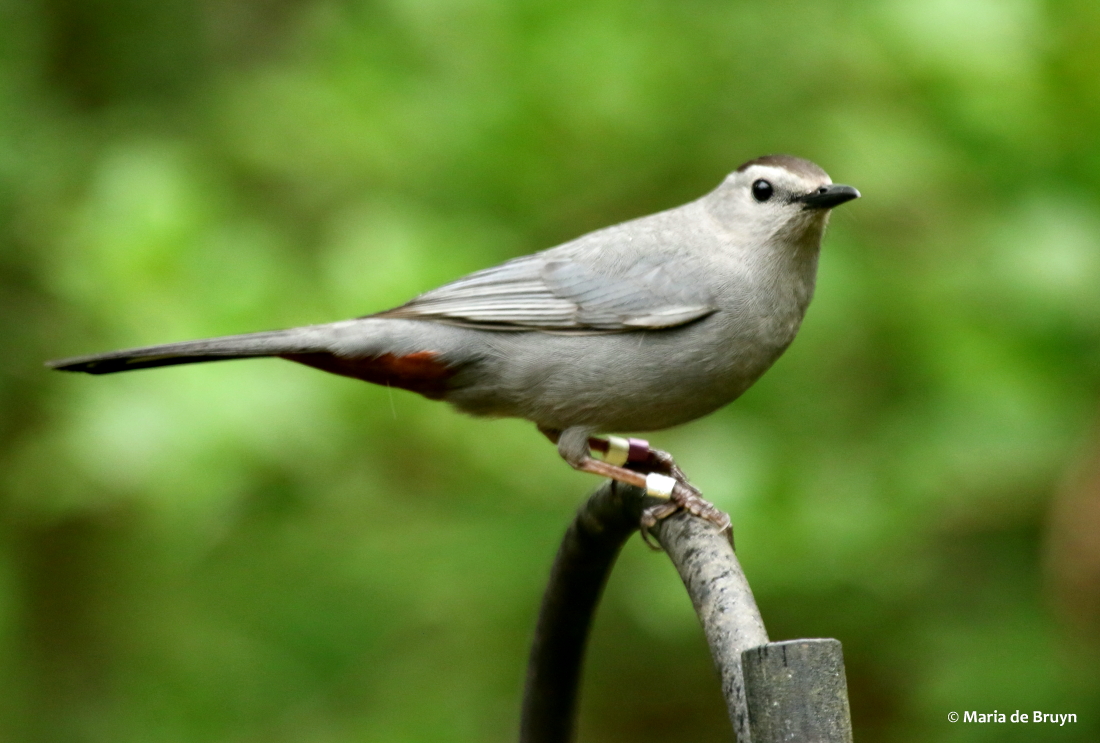
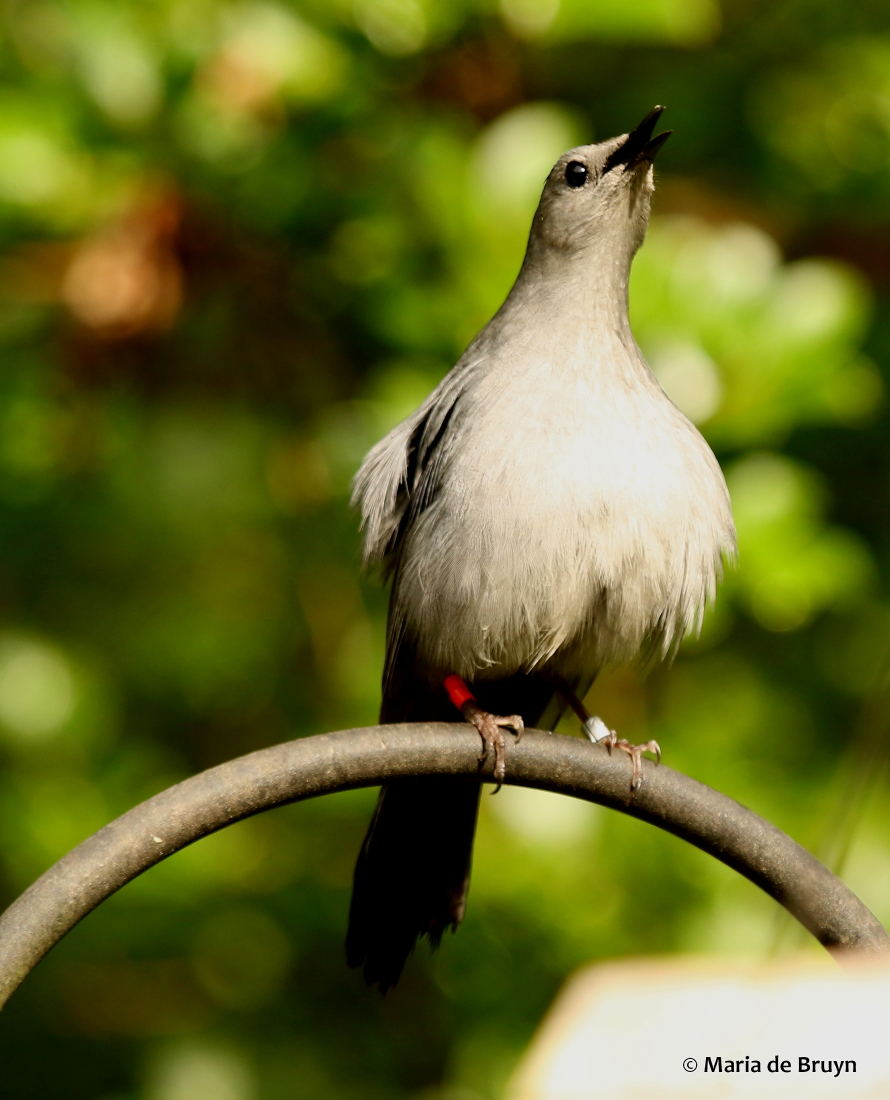
In 2015, we banded six birds. If a bird is only a temporary visitor or if it died outside the yard due to disease, old age or predation, you just won’t see it again and have no idea what became of it. The American robin (Turdus migratorius) that was banded last year never returned. If the birds stick around, however, you have the enjoyment of observing birds you get to know. The three gray-headed catbirds (Dumetella carolinensis) stayed around all summer and fall, and two of them – Camden and Corey – returned to my yard from winter migration a few days ago. They have been accompanied by females whom they appear to be assiduously courting.
gray-headed catbird Camden I77A8990© Maria de Bruyn res

gray-headed catbird Corey I77A8083© Maria de Bruyn res

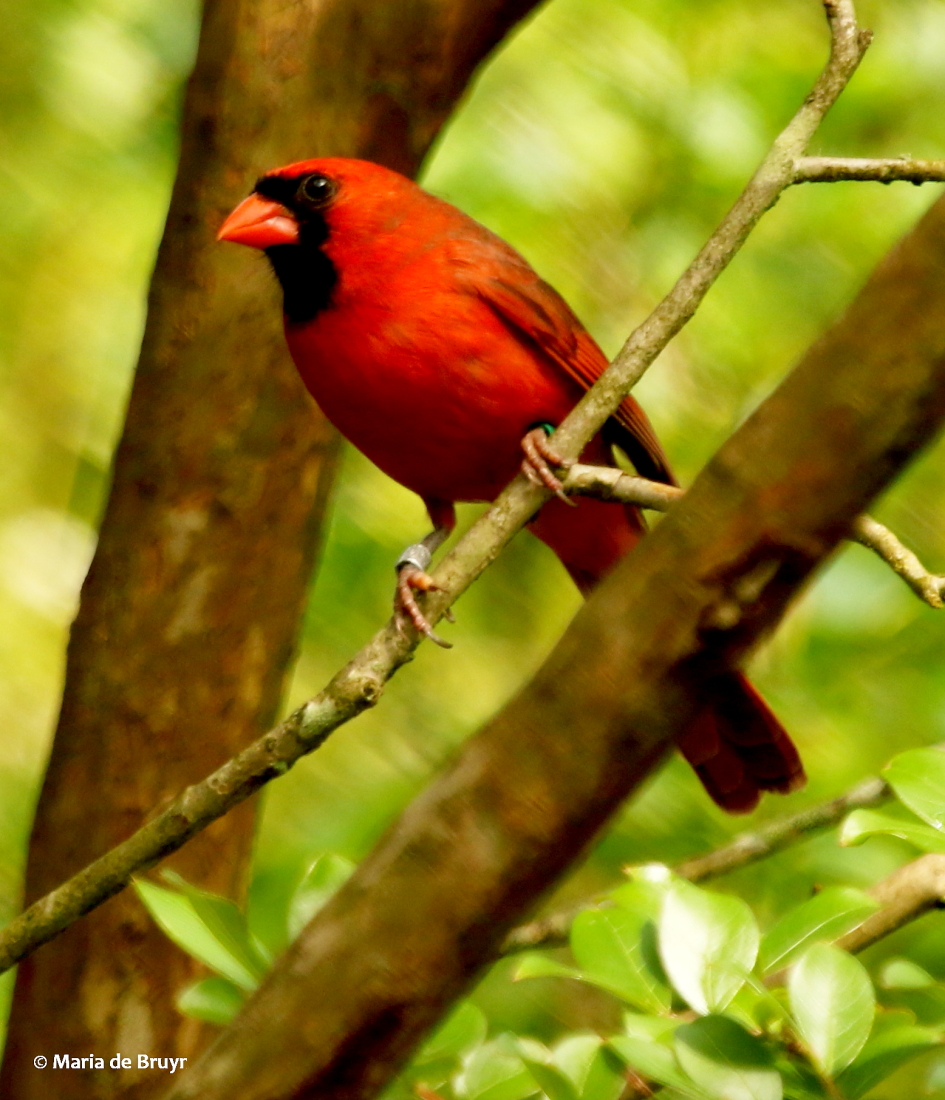
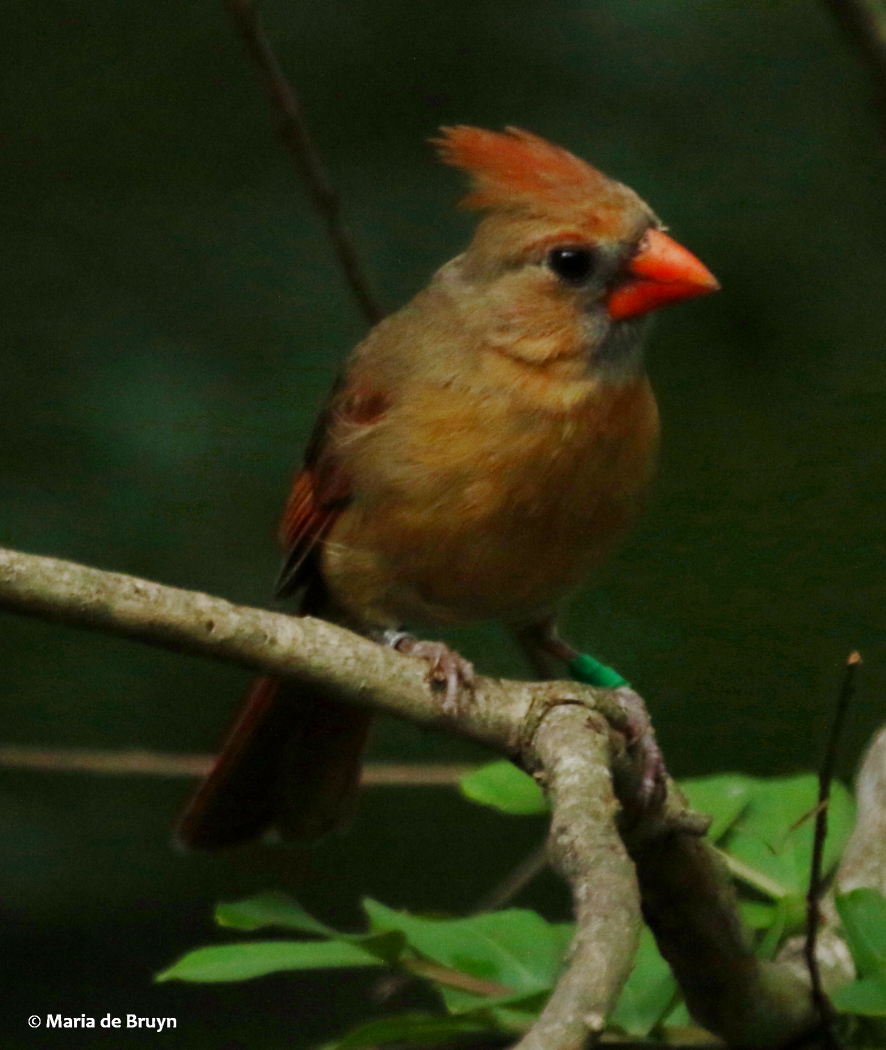
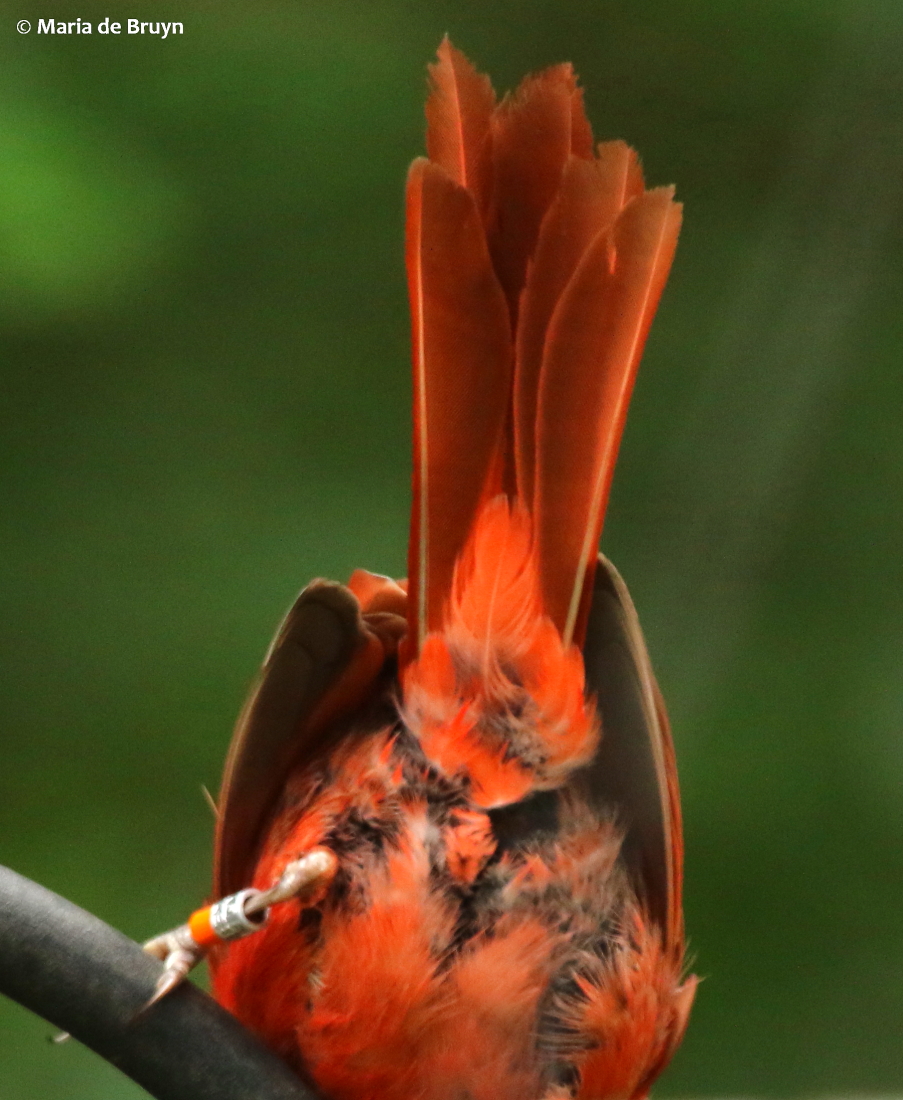
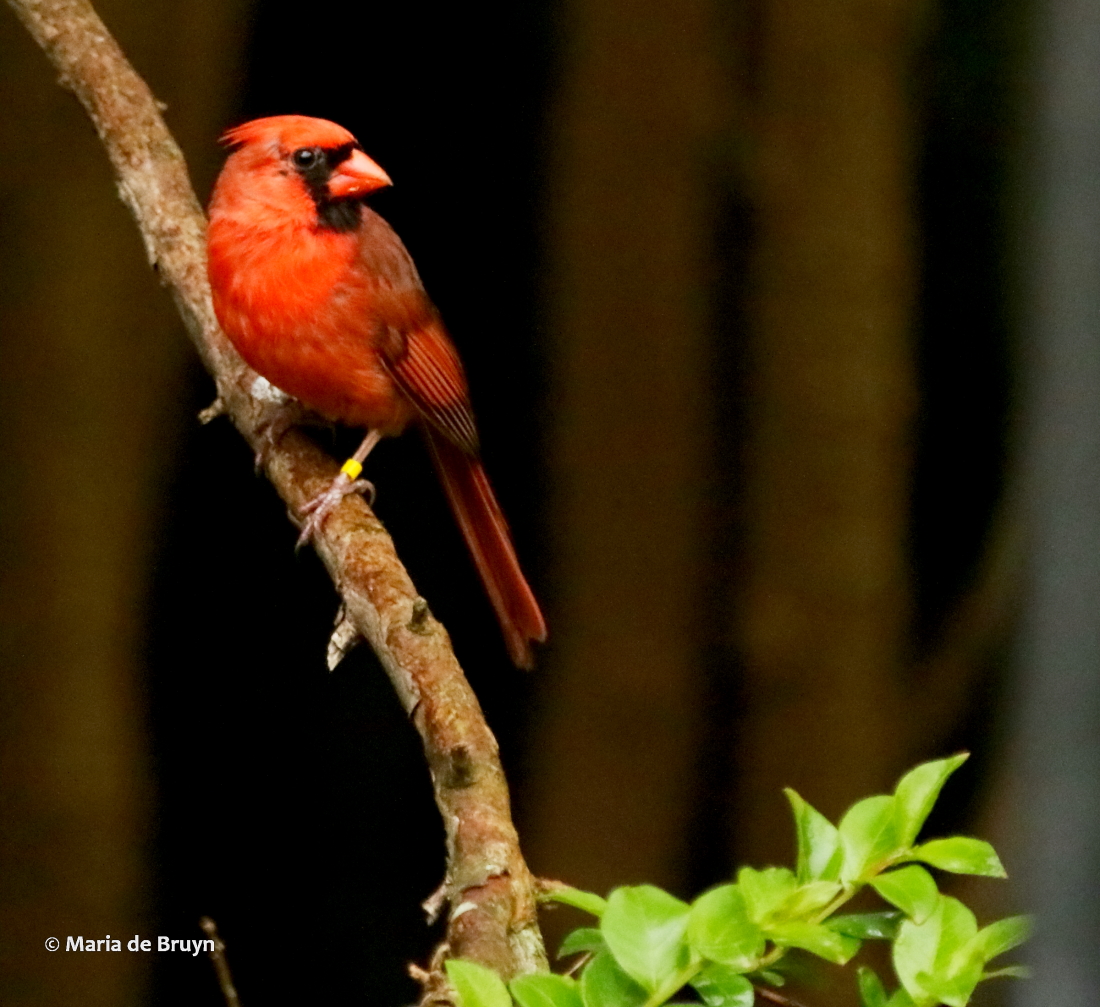
Northern cardinal Clancy I77A8123© Maria de Bruyn resOne Northern cardinal (Cardinalis cardinalis) was banded last year, but Clancy only stayed a few days and then disappeared for the rest of the summer, fall and winter. He suddenly appeared yesterday – perhaps encouraged to spend time at the feeders by the other birds with bracelets.

Three days ago, a second round of banding was done and we put the colorful anklets on a total of 10 birds. They were caught in two mist nets – one near my back garden and one near the backyard feeders.

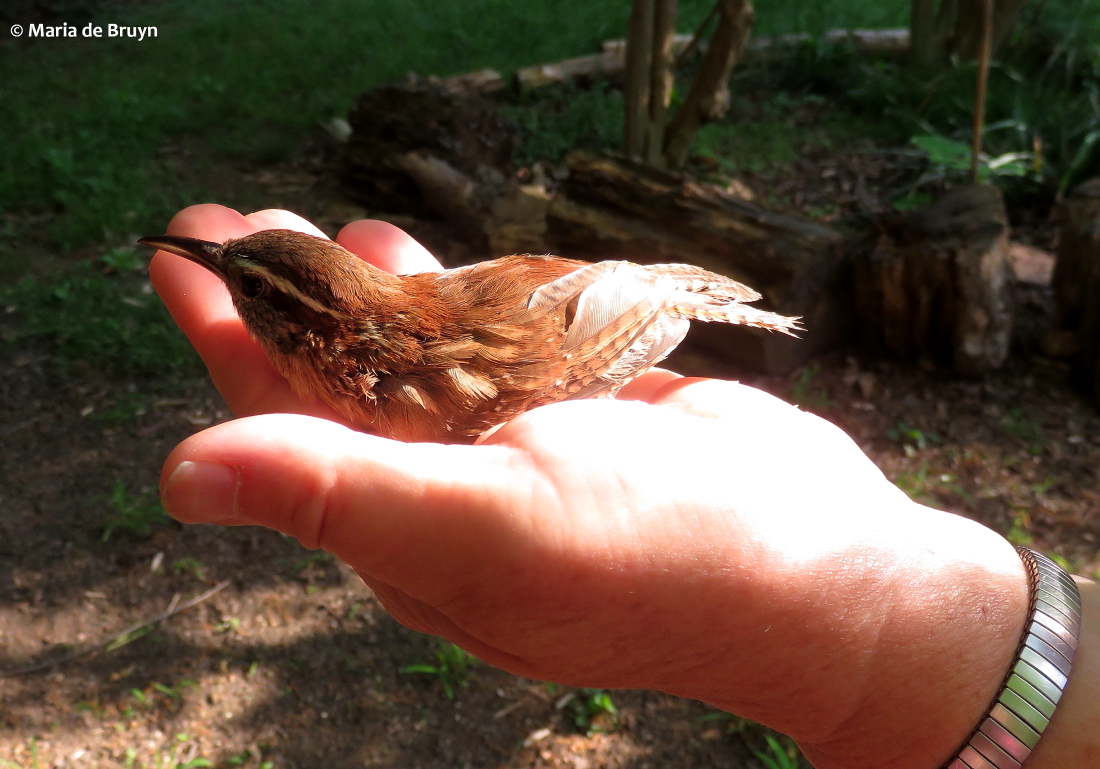
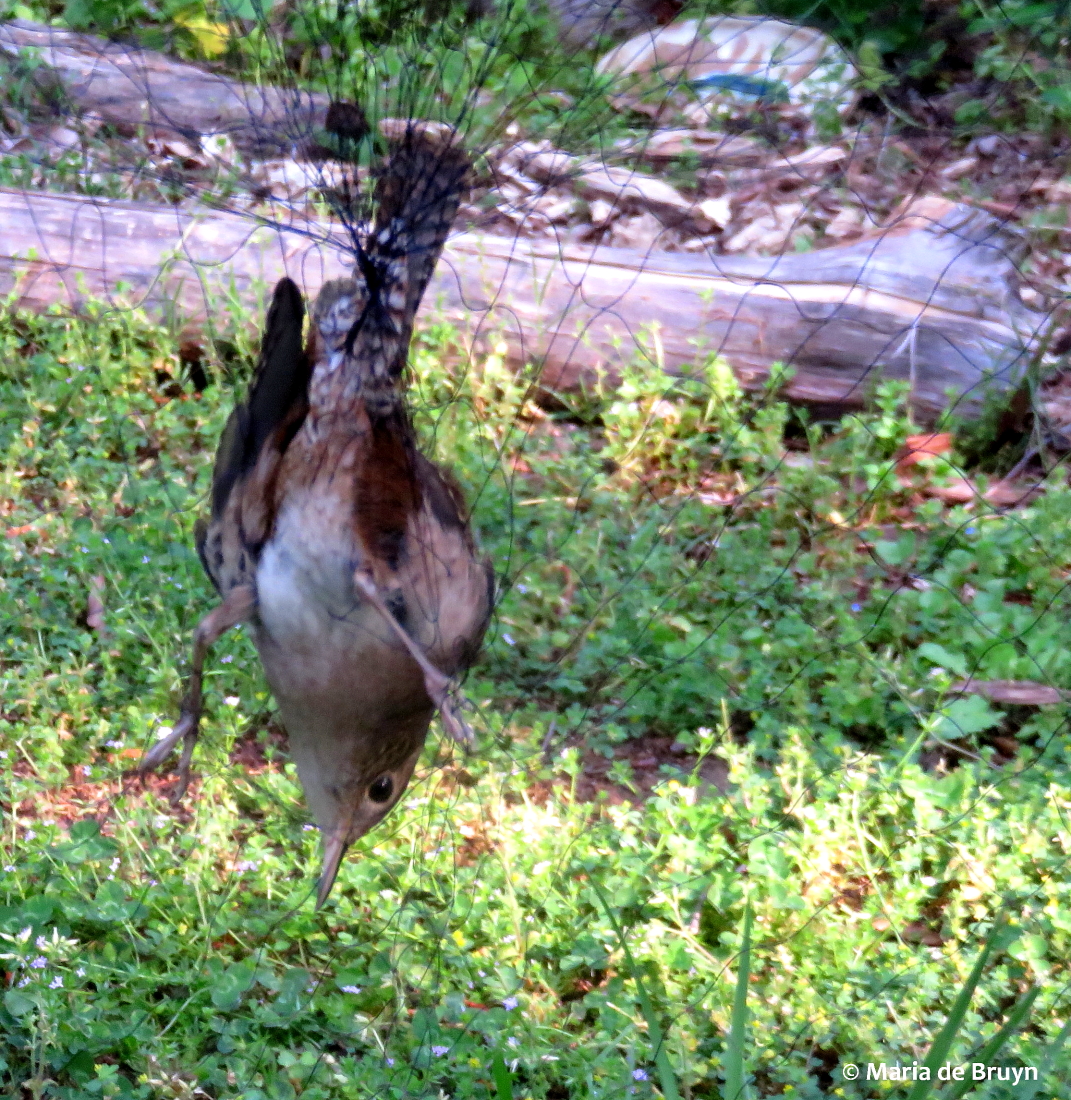
Northern cardinal Camilla I77A9127© Maria de Bruyn resThe nets had just been installed when our first visitor, a female Northern cardinal, was caught. She was not happy and when put in a bag until she could be banded, weighed, examined and measured, she did not remain still and calm. She had a little wait, however, as a female Carolina wren (Thryothorus ludovicianus) flew into the other net at just about the same time, followed by her mate within seconds. As the cardinals can tolerate being in a bag better than the smaller birds, the two wrens were banded first. Alicia let the first one go and then I released the second one, who rested on my palm for a bit. He felt so nice and soft!

Carolina wren Riley IMG_3832© Maria de Bruyn res

Forty-five minutes later, playback of a house wren’s song (Troglodytes aedon) led to the capture of a male who immediately came to investigate who was invading his territory. His mate, who was busy putting the finishing touches on a nest in a box near the mist net, didn’t go near the net.

house wren Hans IMG_3842© Maria de Bruyn reshouse wren Hans IMG_3844© Maria de Bruyn res

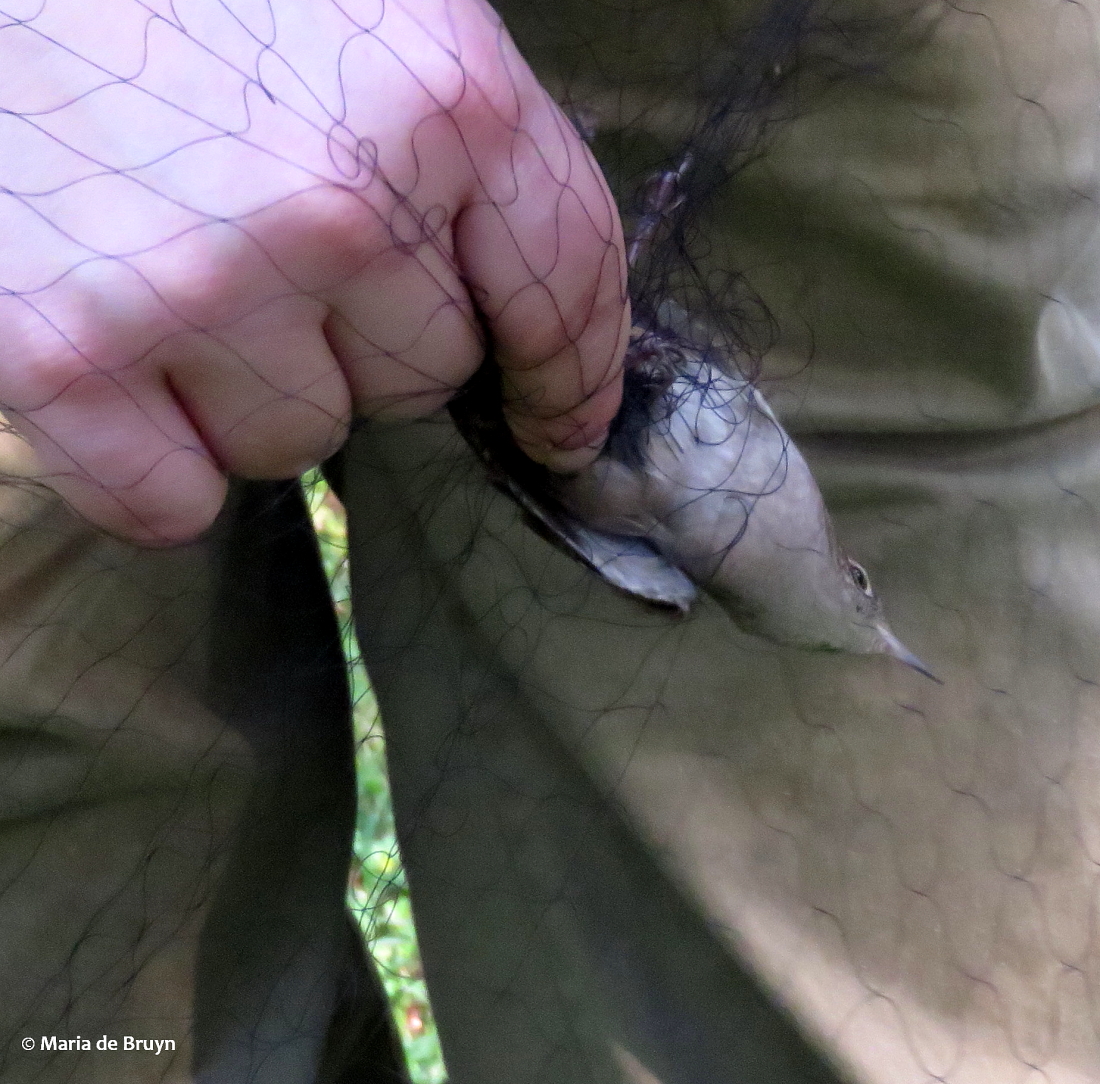
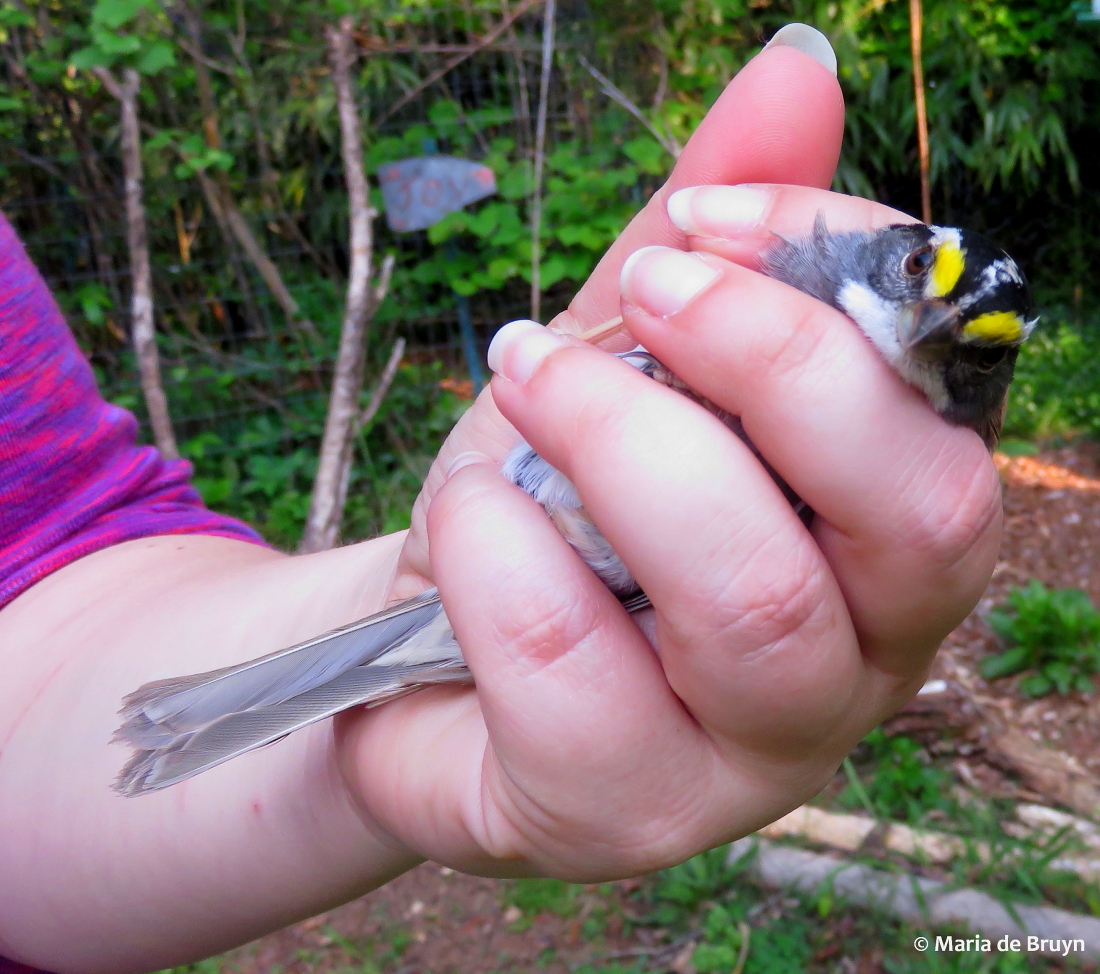
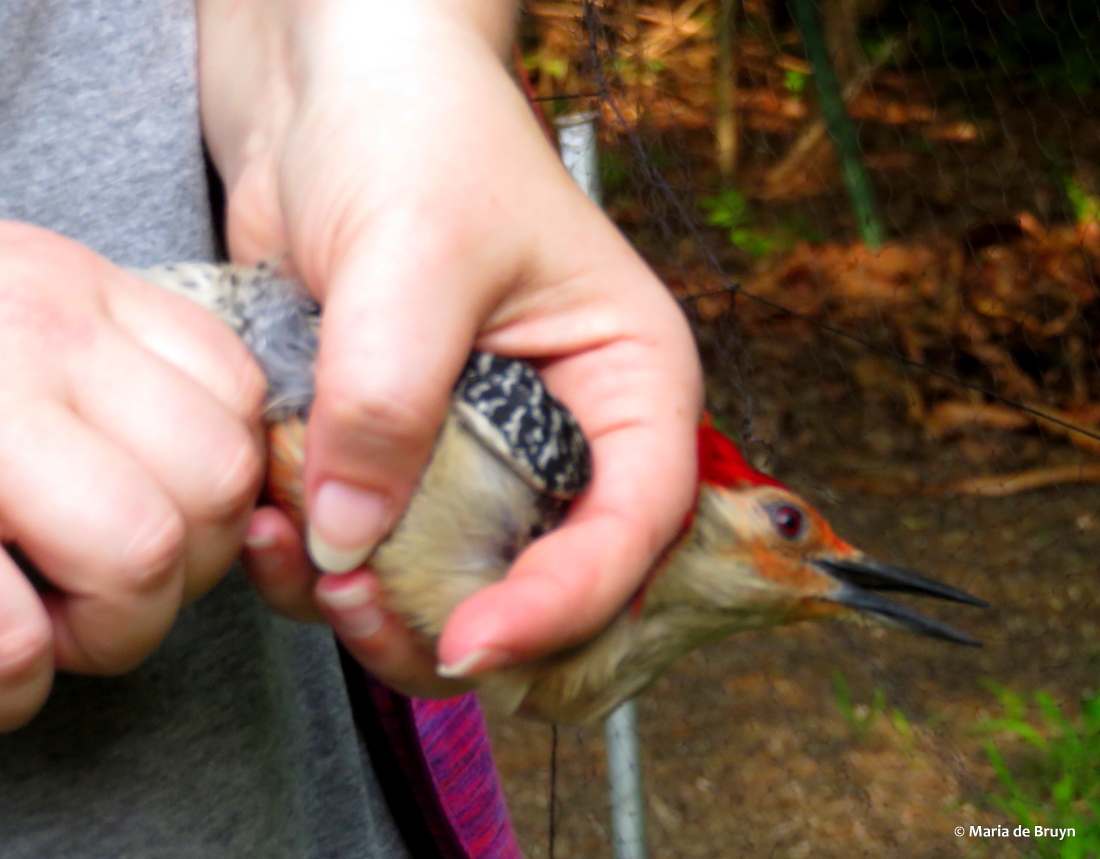
A few birds not targeted for the study ended up tangled in a net. A white-throated sparrow (Zonotrichia albicollis) had beautiful vivid breeding colors on his head. A red-bellied woodpecker (Melanerpes carolinus) was not calm like the sparrow, fluttering his wings constantly as Alicia, the bird bander, got him loose.

white-throated sparrow IMG_3837© Maria de Bruyn res red-bellied woodpecker IMG_3822© Maria de Bruyn res

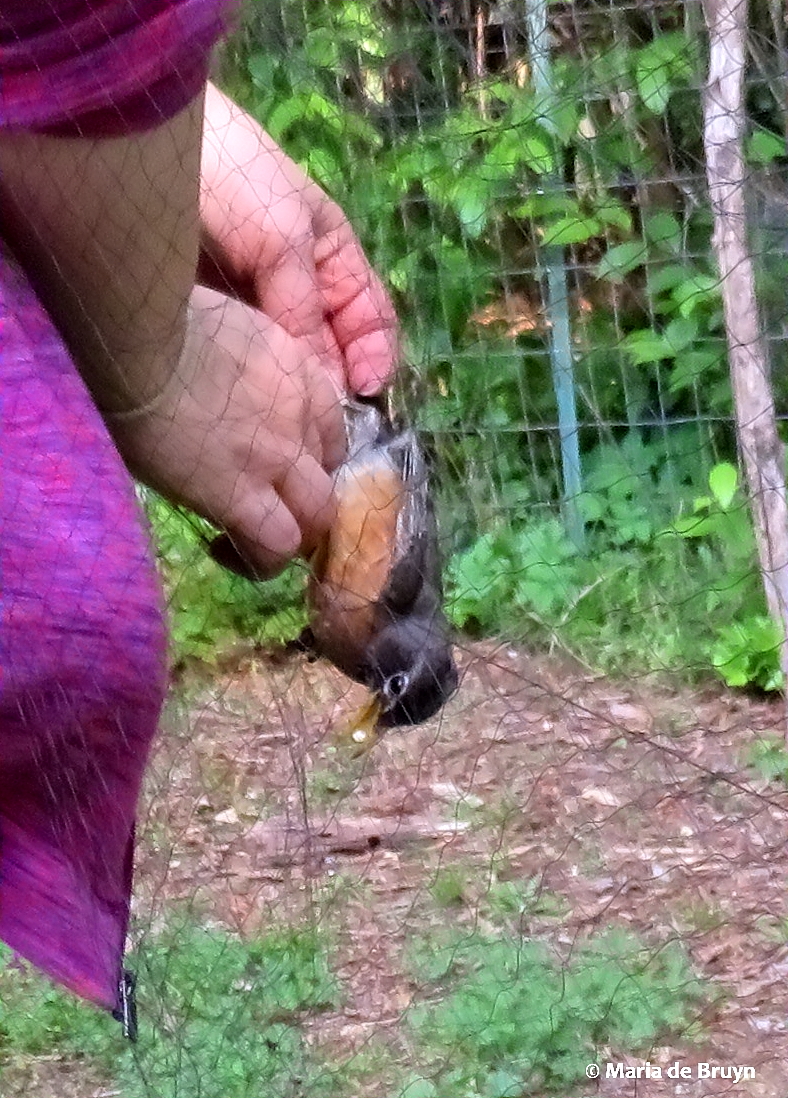
Next up were a male cardinal and a female American robin. Like last year, the birds were measured and weighed. Although about the same length, the weight difference between the heaviest Northern cardinal we banded (41.2 oz) and the American robin was striking (79.6oz). The robin’s fondness for worms and other dietary preferences helps account for this. When I let her go, she didn’t feel very heavy in my hand as she rested a second before flying off.

American robin Raisin IMG_3854© Maria de Bruyn

Except for birds that were molting their tail feathers, Alicia also removed the third left tail feather; this is done primarily for stable isotope analysis, which allows a researcher to estimate where the bird was when that feather was grown.

Northern cardinal Crake I77A0559© Maria de Bruyn res

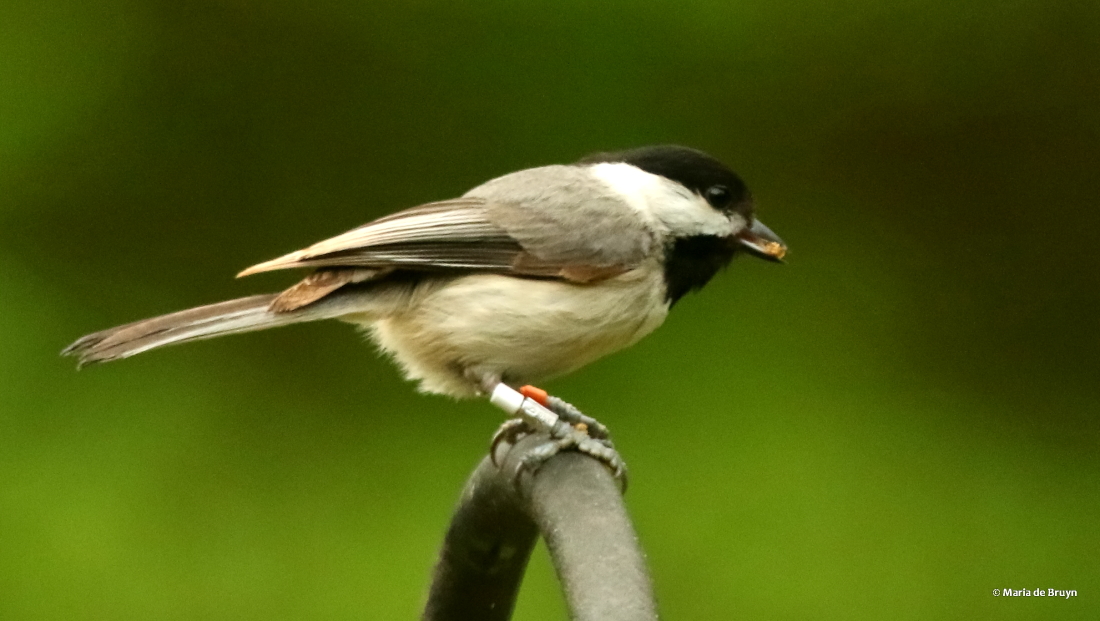
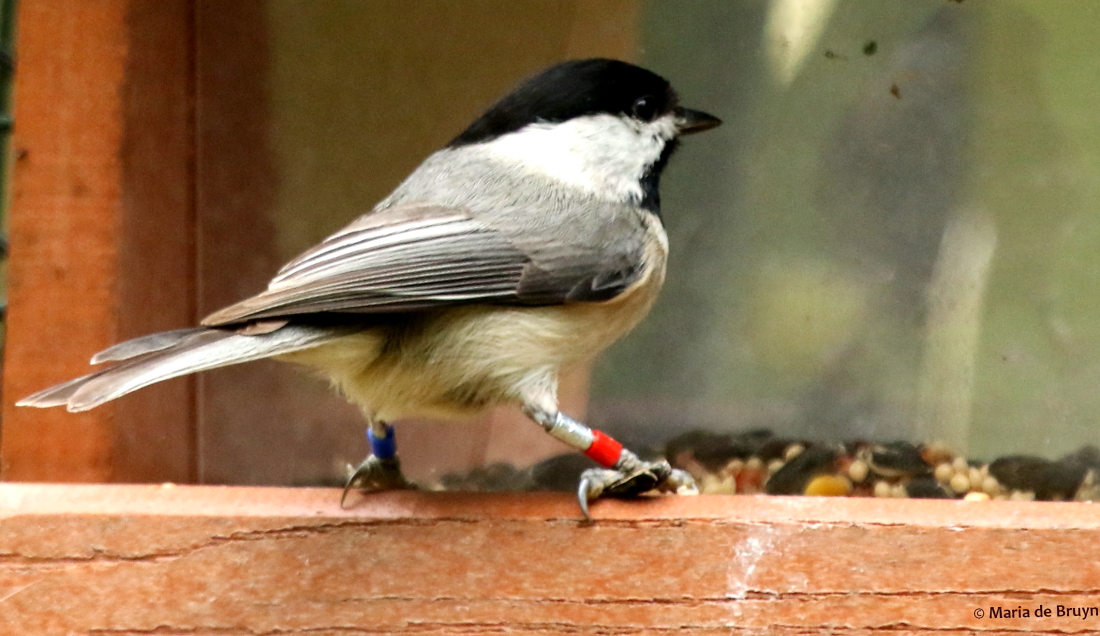
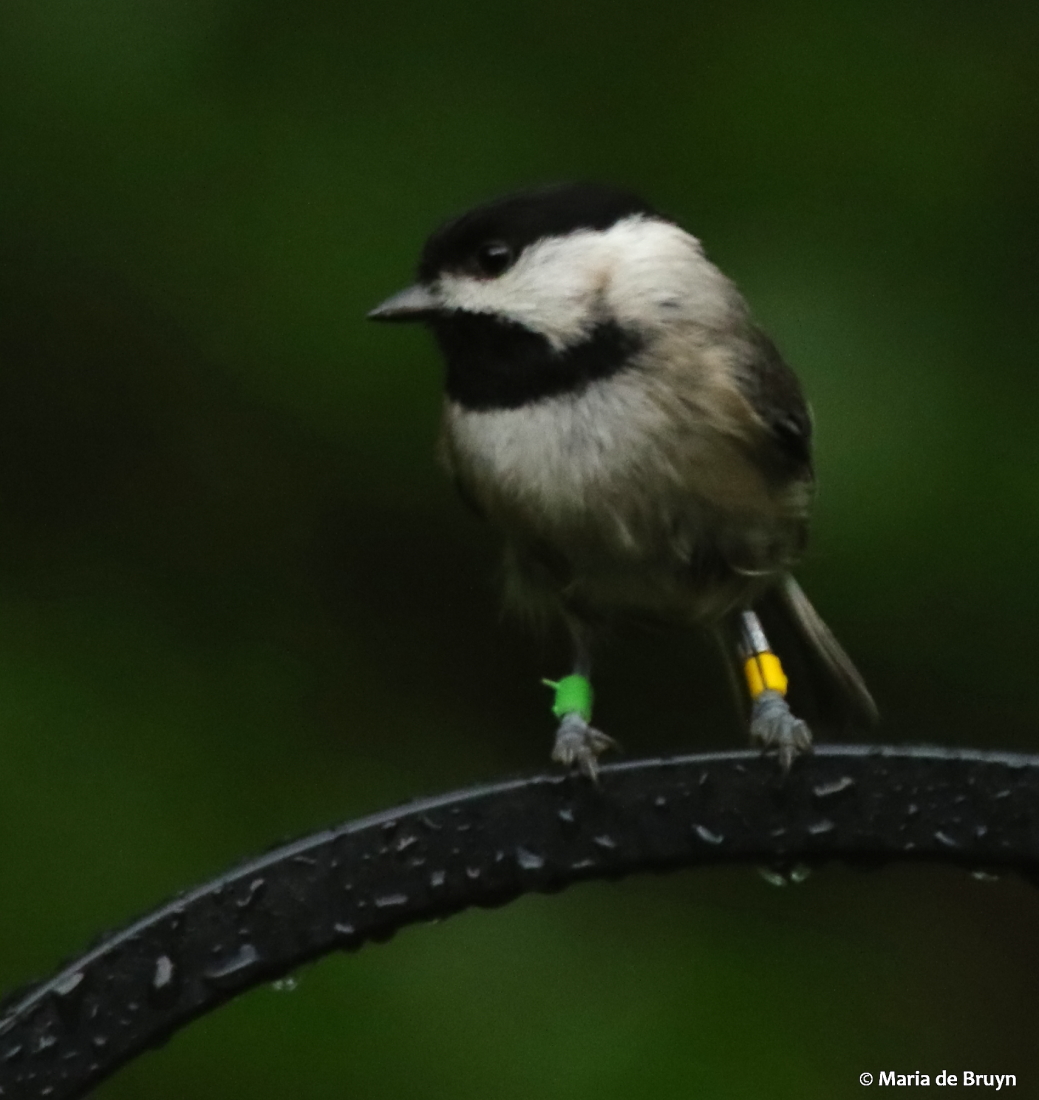
Carolina chickadee Chancey I77A7762© Maria de Bruyn resThe catbirds avoided the mist nets skillfully this year. Playback of their songs drew them to the vicinity but the two pairs visiting the feeders were more interested in chasing each other away from the territory. Alicia hoped that we could get a Carolina chickadee (Poecile carolinensis); with playback we got a male and then, 45 minutes later after banding another cardinal, we got a pair of them.

Carolina chickadee Chase I77A0348© Maria de Bruyn res Carolina chickadee Chantal I77A9525© Maria de Bruyn res

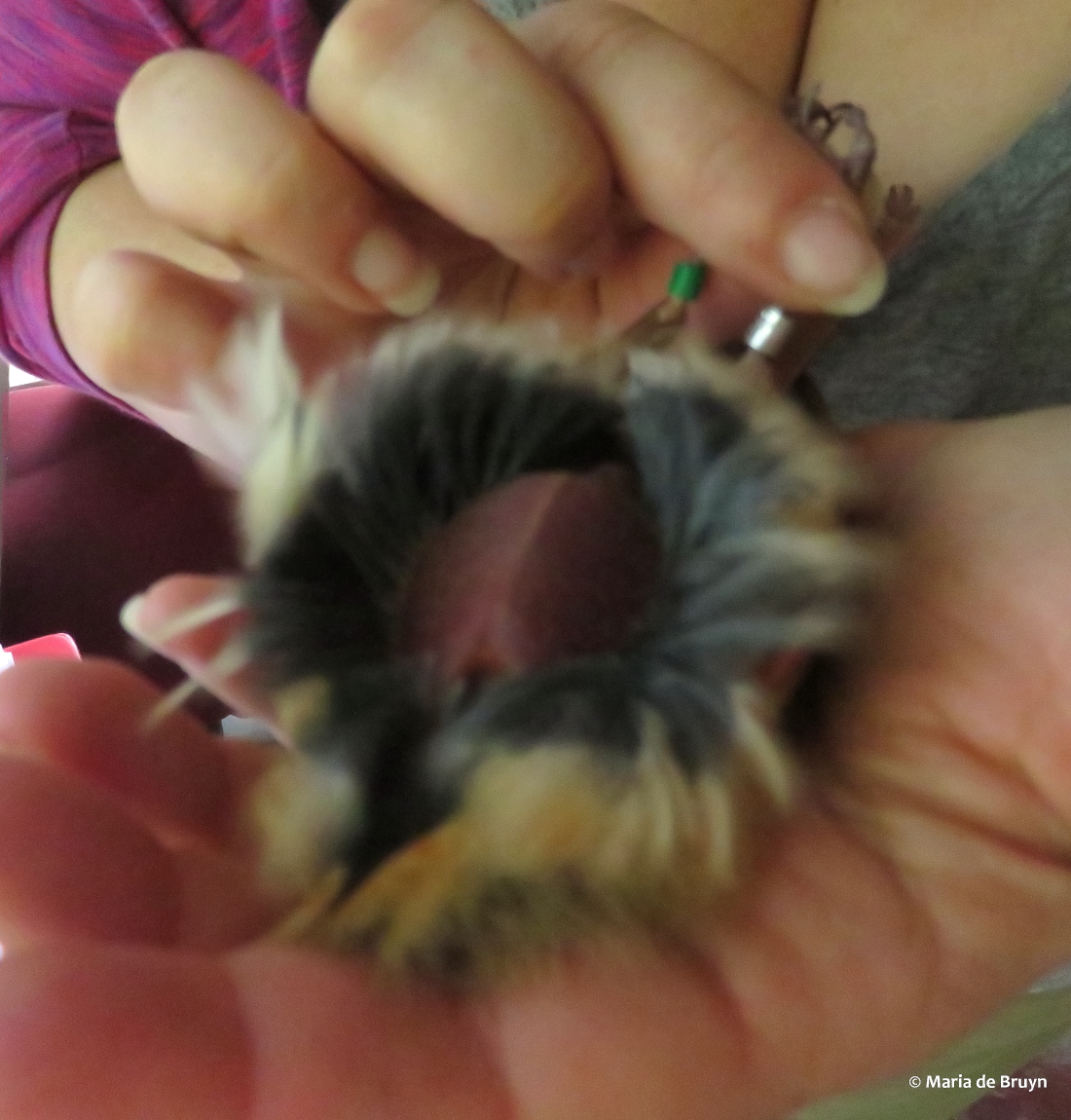
Alicia blew on the birds’ undersides (forgive the blurry photo) to assess fat reserves, which are stored along the flanks and up near the furcula by the collar bone. She could also determine sex that way and thought that one chickadee might be developing an egg – hopefully, one of the females who lost a nest to predators in my yard a week ago. The last male chickadee released was out of sorts after the experience; before leaving my hand to fly off rapidly, he turned and bit me as a parting shot.

Carolina wren Renee IMG_3813© Maria de Bruyn res Carolina chickadee IMG_3856© Maria de Bruyn res

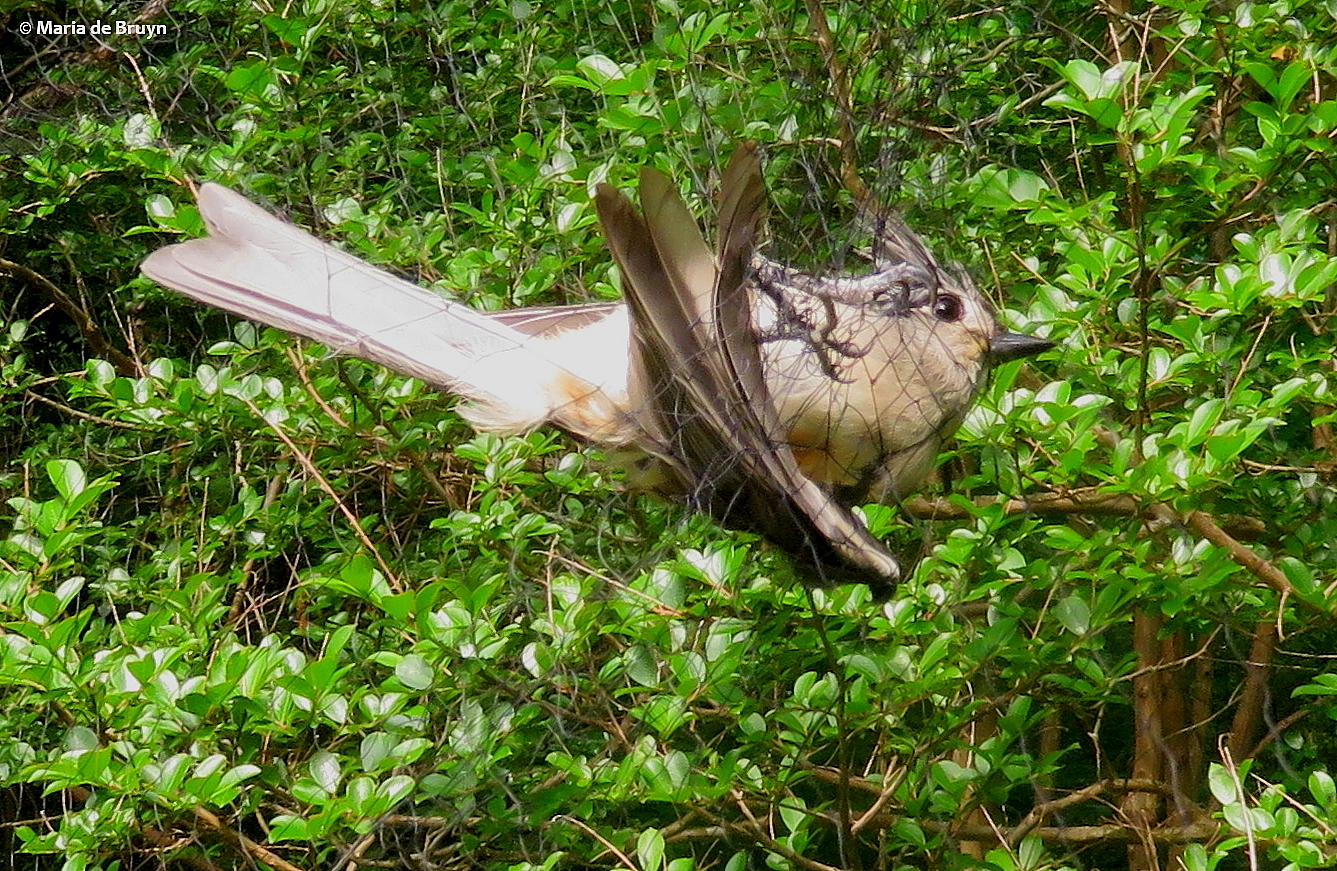
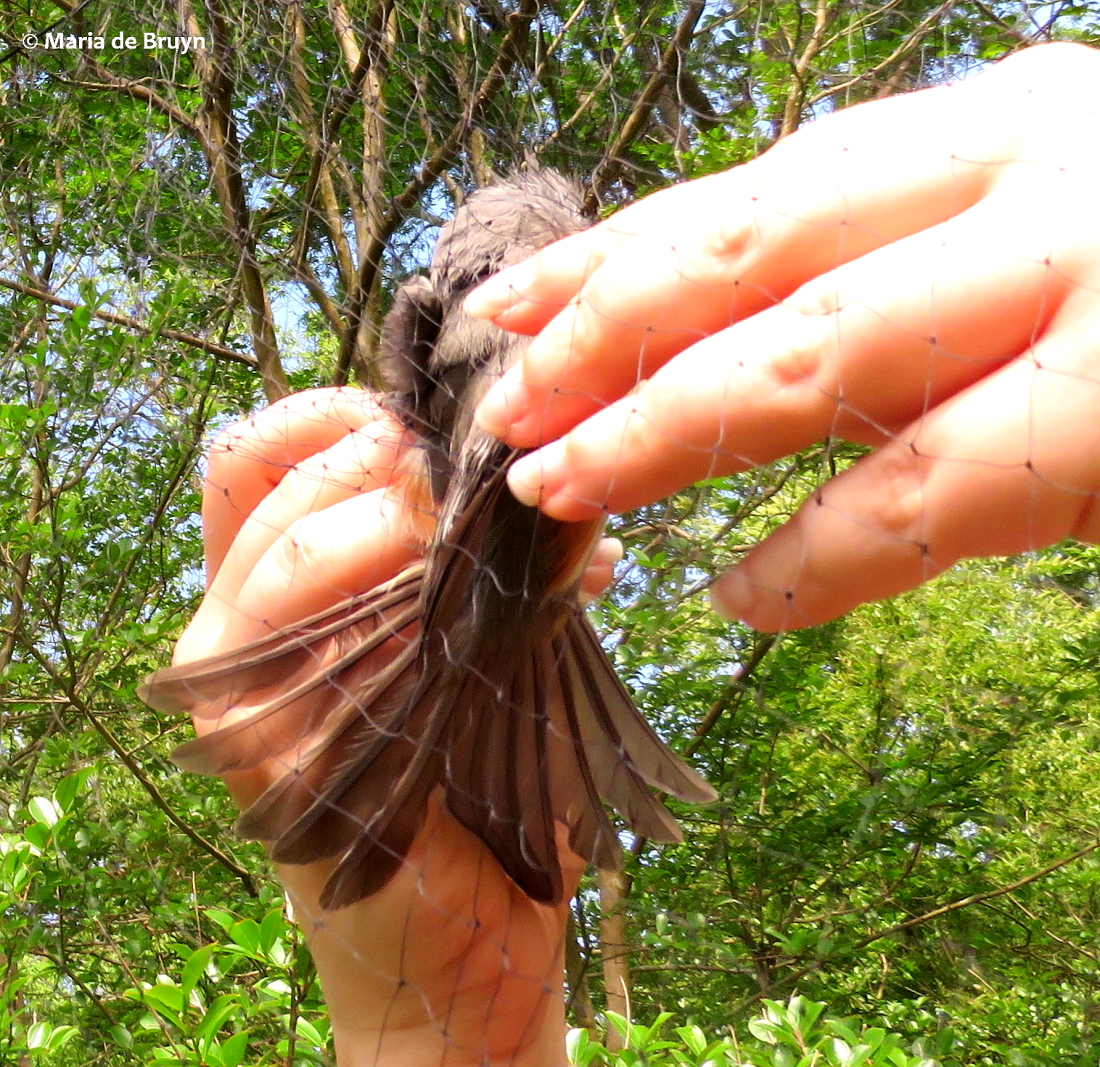
Alicia had remarked that she hoped no tufted titmouse (Baeolophus bicolor) would be caught; they are not part of the study and she said they are so feisty that their bites can be a bit painful like those of the cardinals. Unfortunately, one leaving a feeder did end up in a net and lived up to its reputation as a feisty bird. A chipping sparrow (Spizella passerina), who was the last bird in a net remained fairly calm as the net was removed from its claws.

tufted titmouse IMG_3858© Maria de Bruyn res

Tufted titmouse IMG_3861© Maria de Bruyn res

Yesterday, I spent some time watching the feeders and yard to see if all the banded birds had left. Luckily, some of them showed up and were here again today. So here are a few of “my birds” with bling – this is a truly enjoyable citizen science project. 🙂

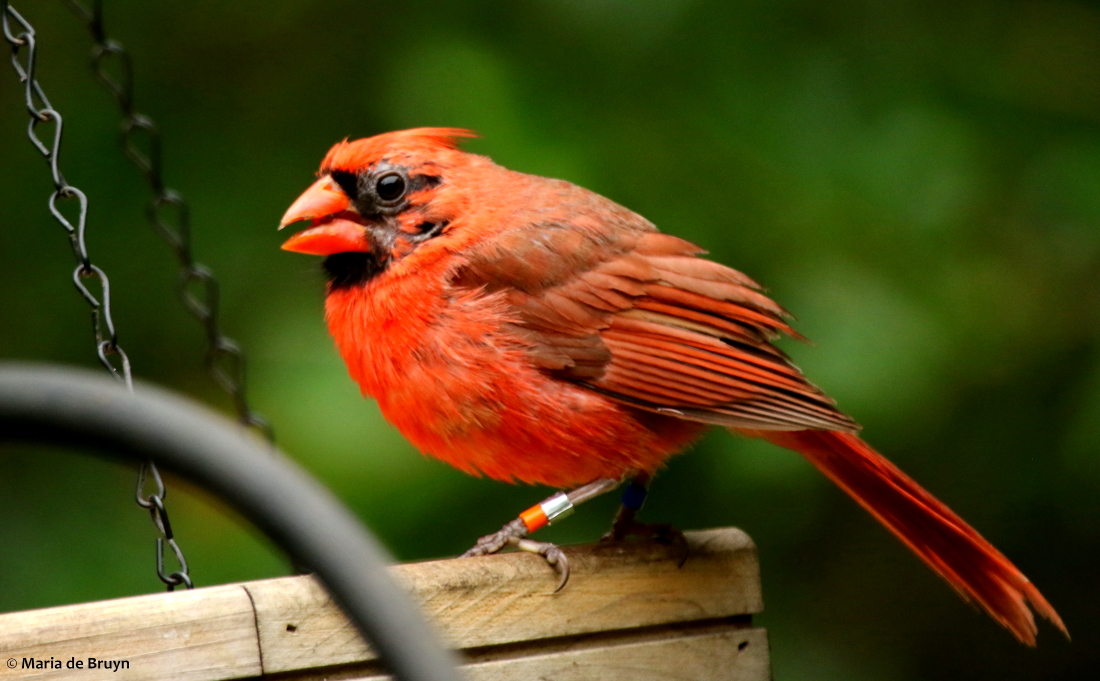
Northern cardinal Clarence I77A0124© Maria de Bruyn res Northern cardinal Crake I77A0593© Maria de Bruyn res

Clarence                                                                       Crake

Carolina wren Renee I77A9354© Maria de Bruyn resCarolina wren Riley I77A0508© Maria de Bruyn res

Renee and Riley Carolina wrens


Shades of brown at the end of winter

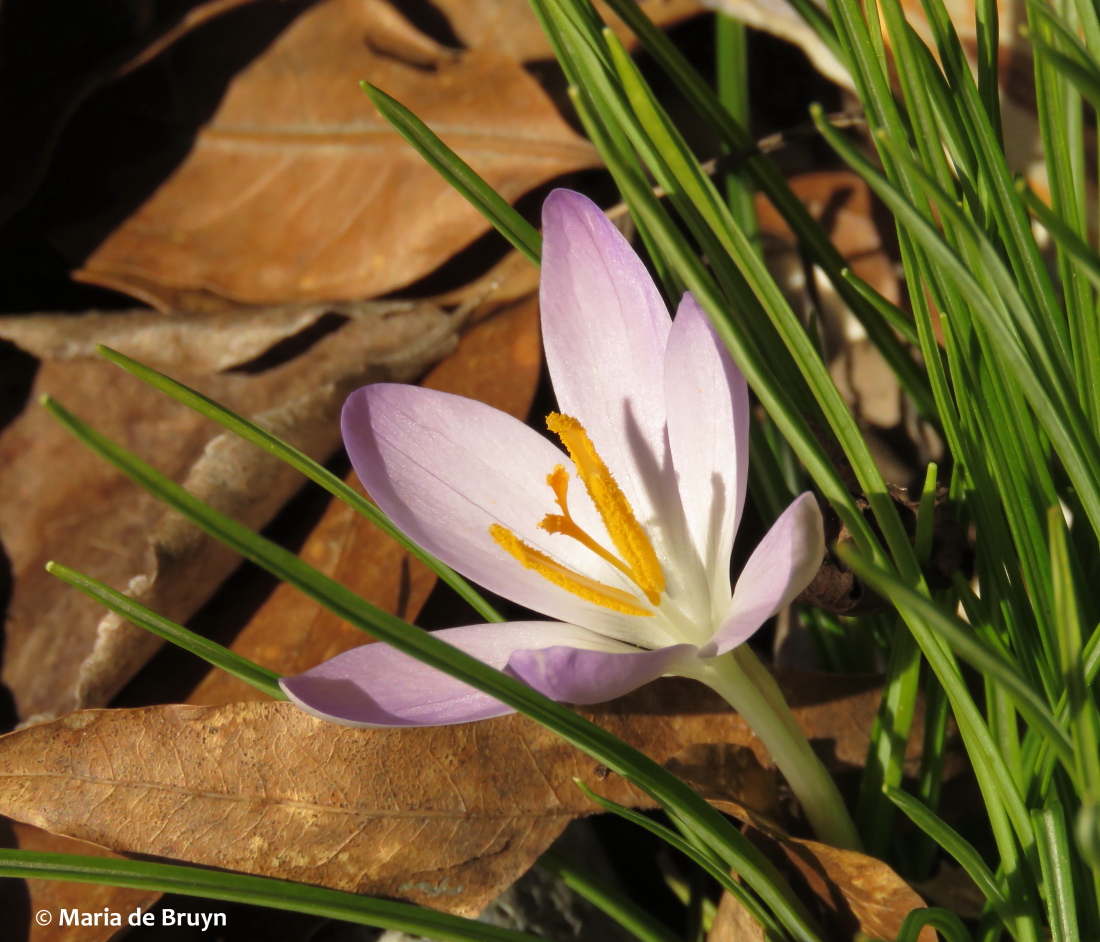
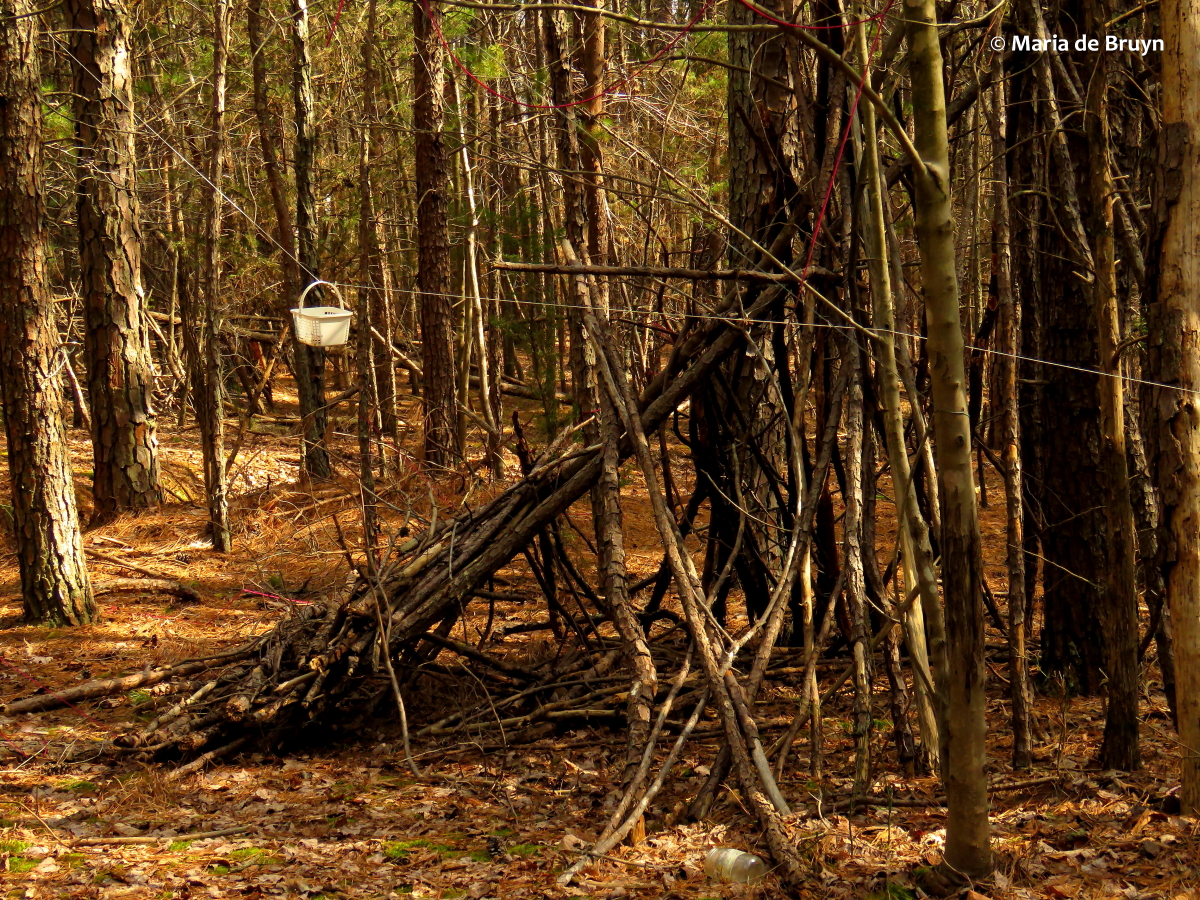
As this crocus (Crocuscrocus IMG_2199© Maria de Bruyn) shows, spring is coming to our part of North Carolina and the last days of winter have not infrequently been warm and sunny. This led me to take a break a couple weeks ago for a walk in our neighborhood woods.

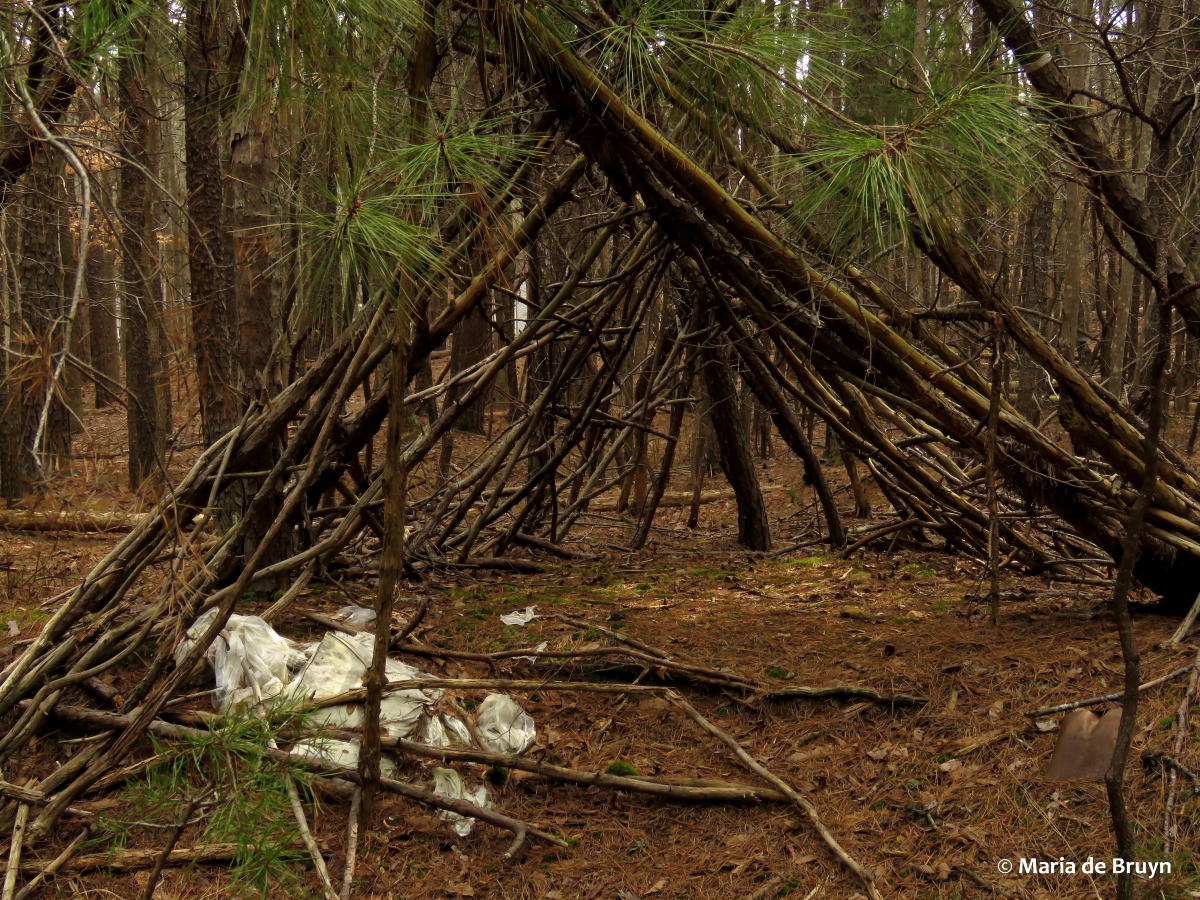
The sunlight filtered through the trees, creating lots of shadows and sunlit patches on the forest floor. I was looking to see if the natural shelters constructed by homeless people still were up and found three. None appeared to have been made or used recently.

homeless shelter IMG_2360© Maria de Bruyn res     homeless shelter IMG_2351© Maria de Bruyn res

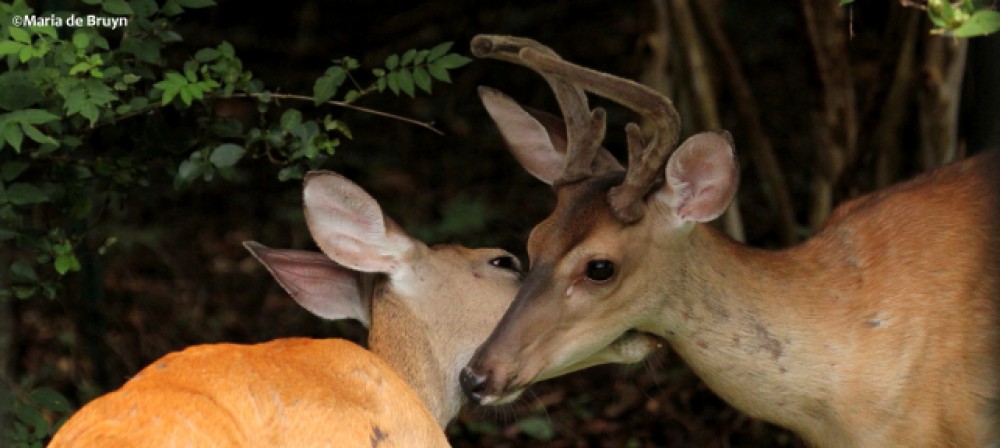
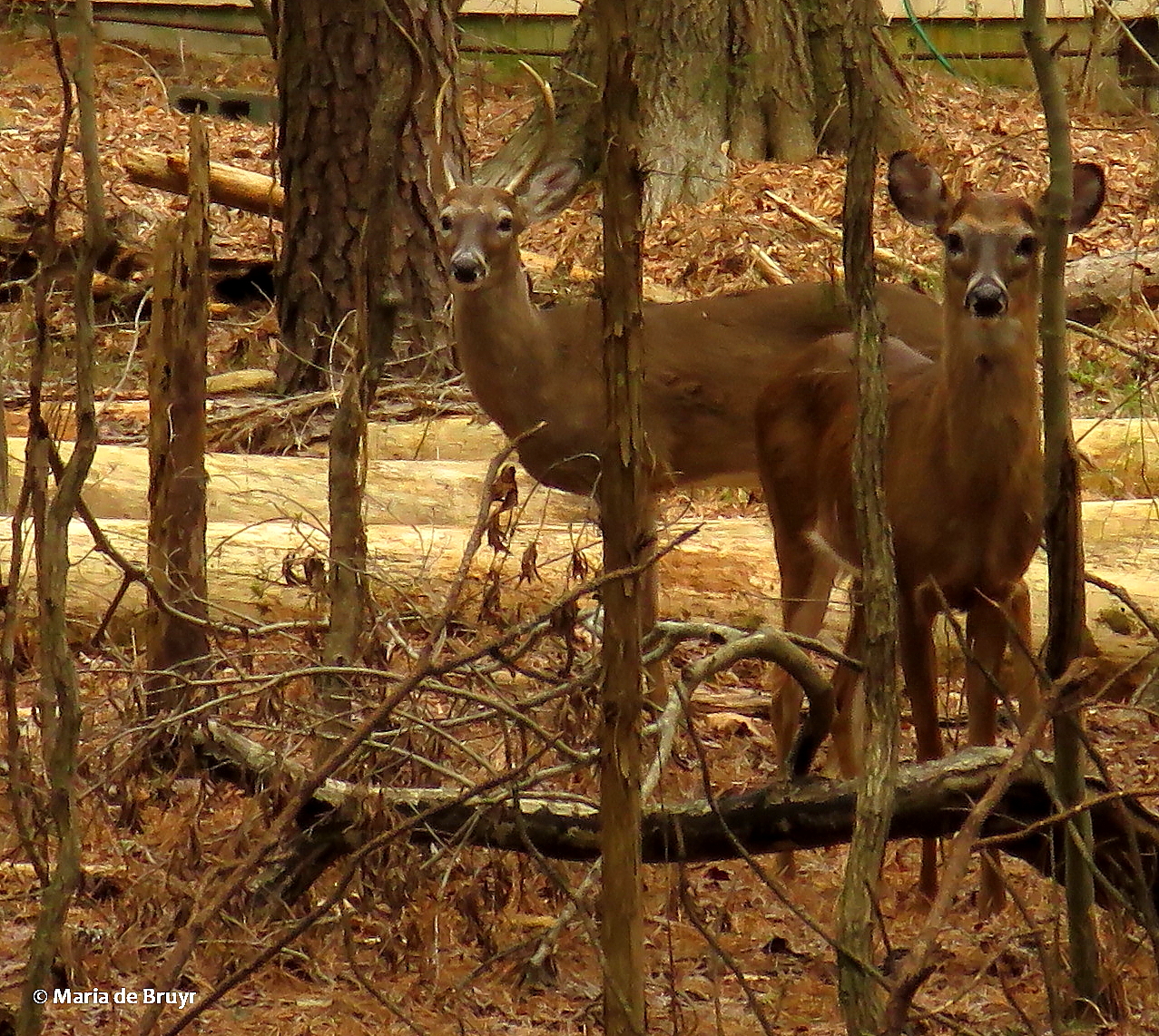
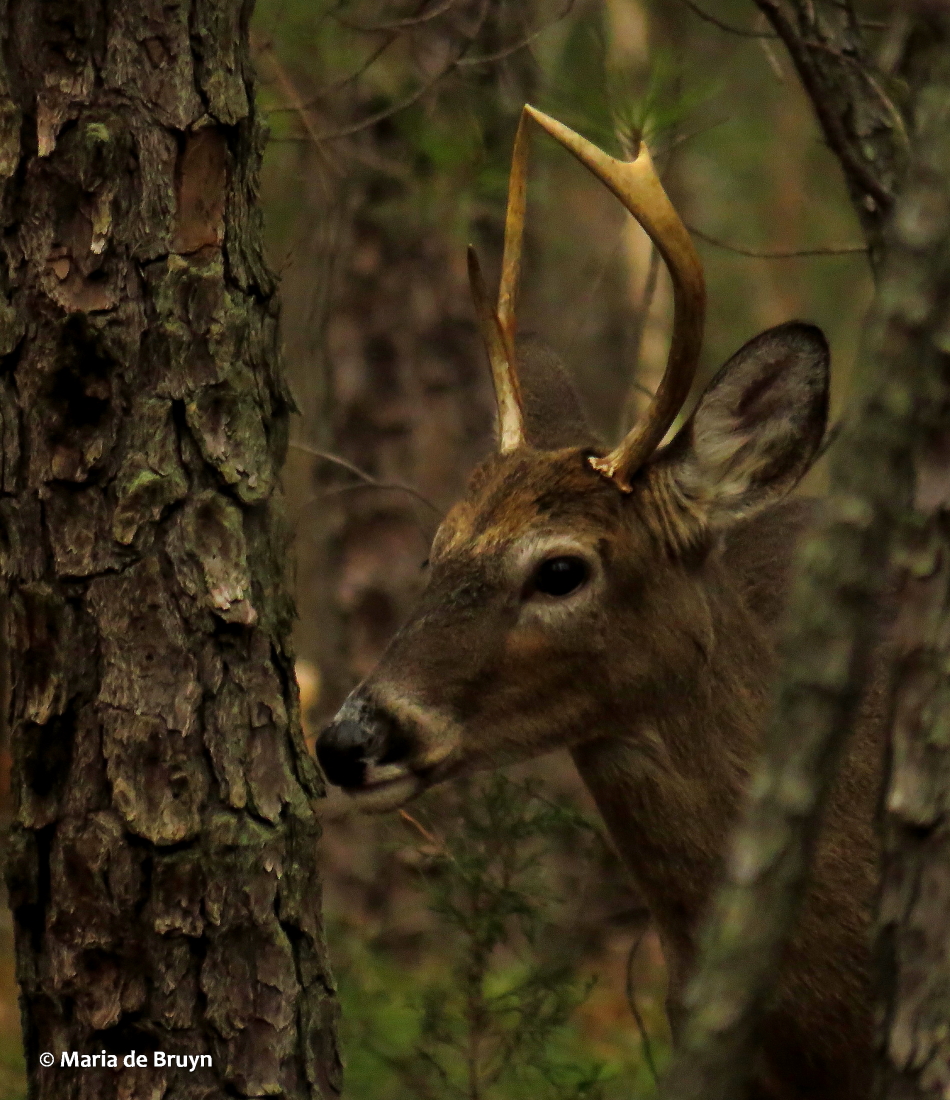
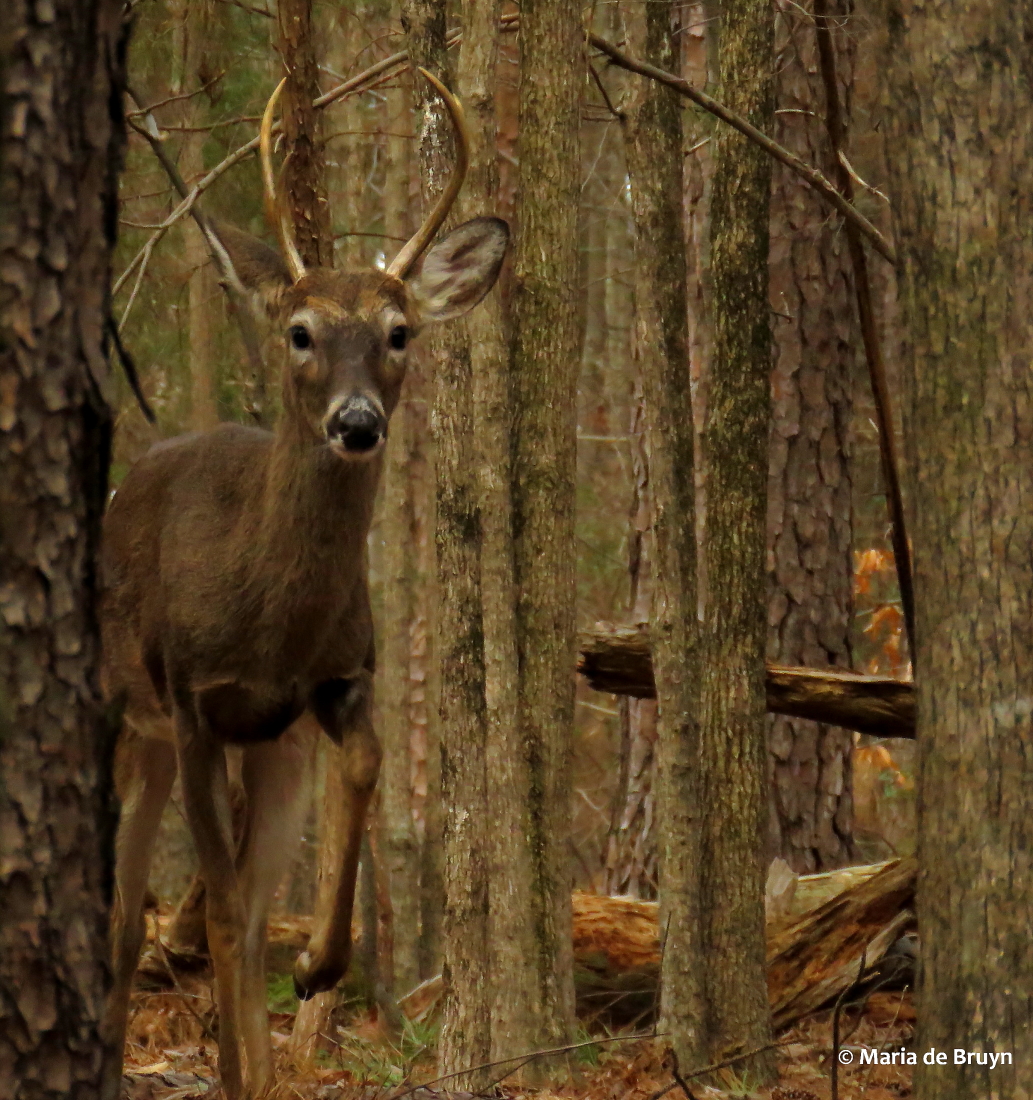
white-tailed deer IMG_2374© Maria de BruynAs I was walking around one to photograph it, my footsteps and movement rustled up some other neighborhood residents, who had been taking a rest at the edge of the woods. Four white-tailed deer (Odocoileus virginianus) got to their feet and gave me some looks of irritation at having disturbed their R&R.

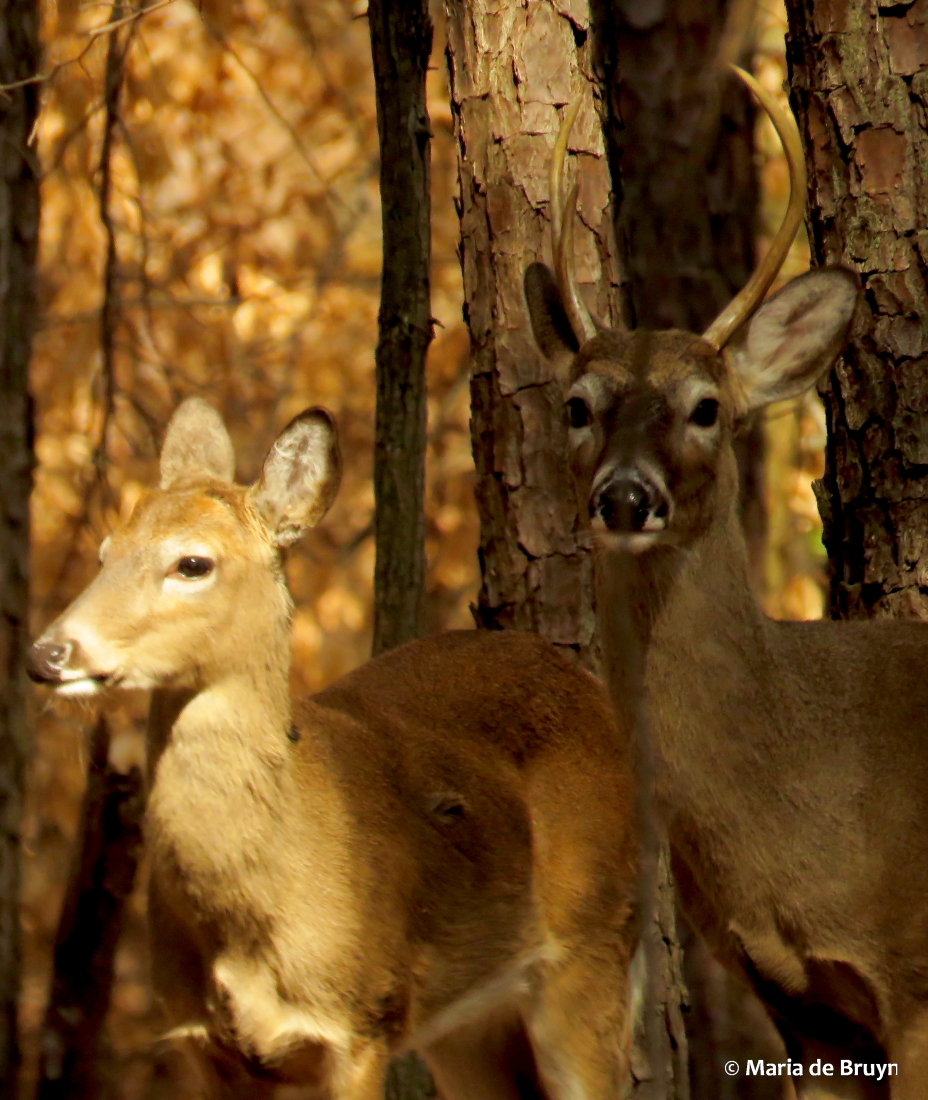
As I walked another way, they began keeping pace with me at a distance. I thought they would just choose another patch to lie in but, for some reason, they decided to see where I was going. At first, I thought it was a buck and some does.

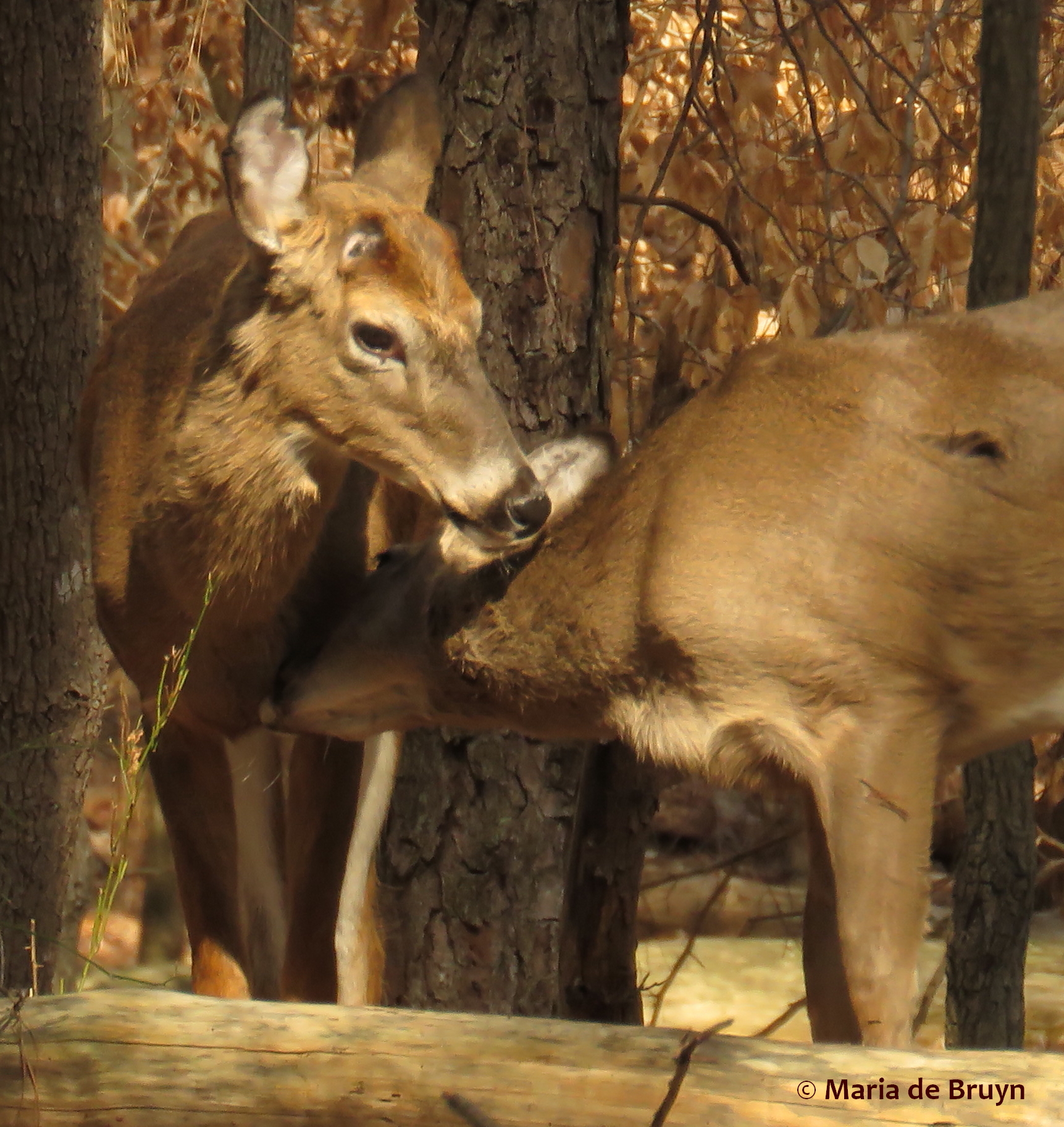
white-tailed deer IMG_2440© Maria de Bruynwhite-tailed deer IMG_2413© Maria de Bruyn


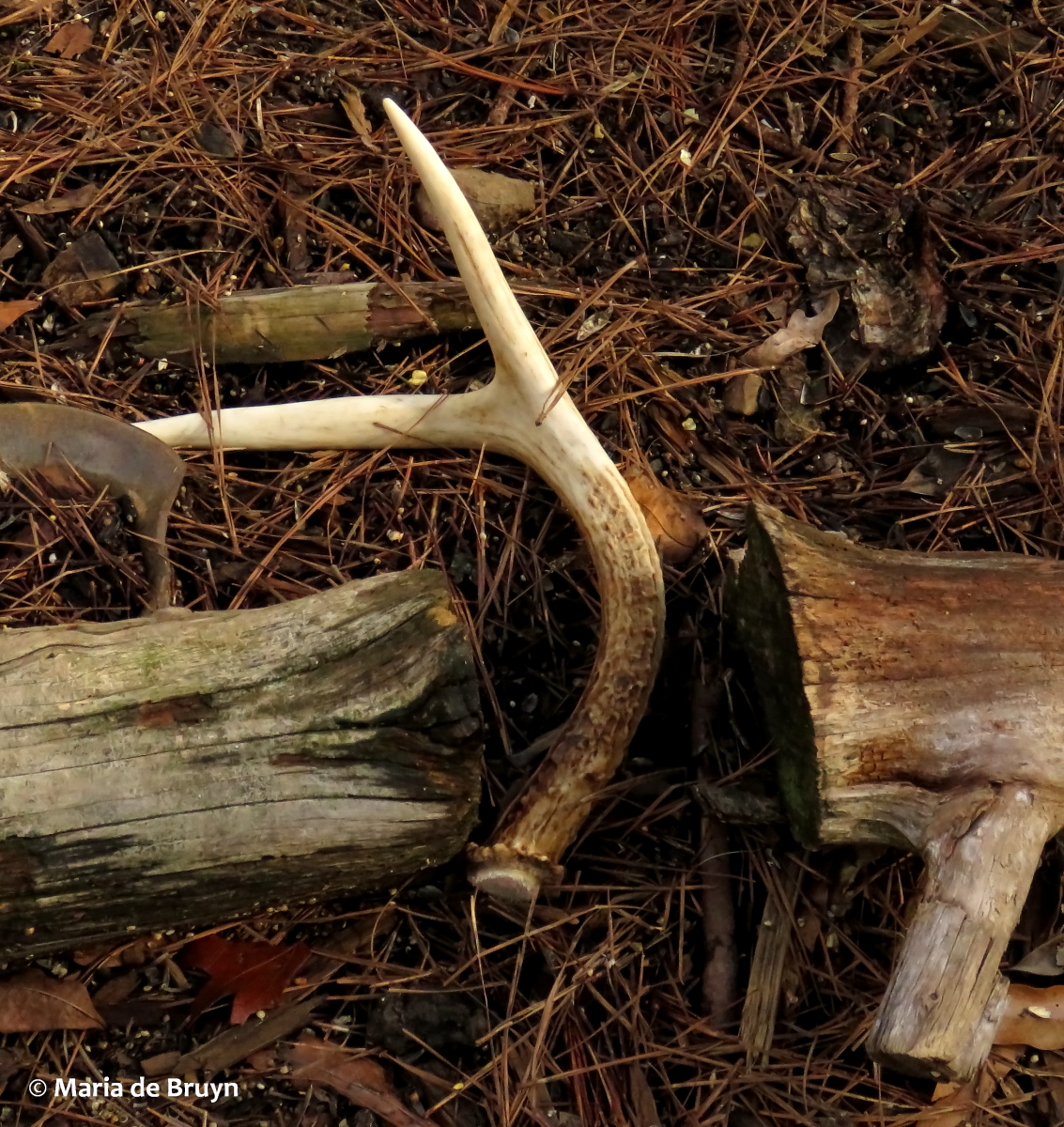
deer antler IMG_1211© Maria de Bruyn resLater, I realized it was a group of bucks, some of whom had already shed their antlers. I kept a lookout for antlers but didn’t see any. However, one local buck had gifted me with one in my front yard recently.

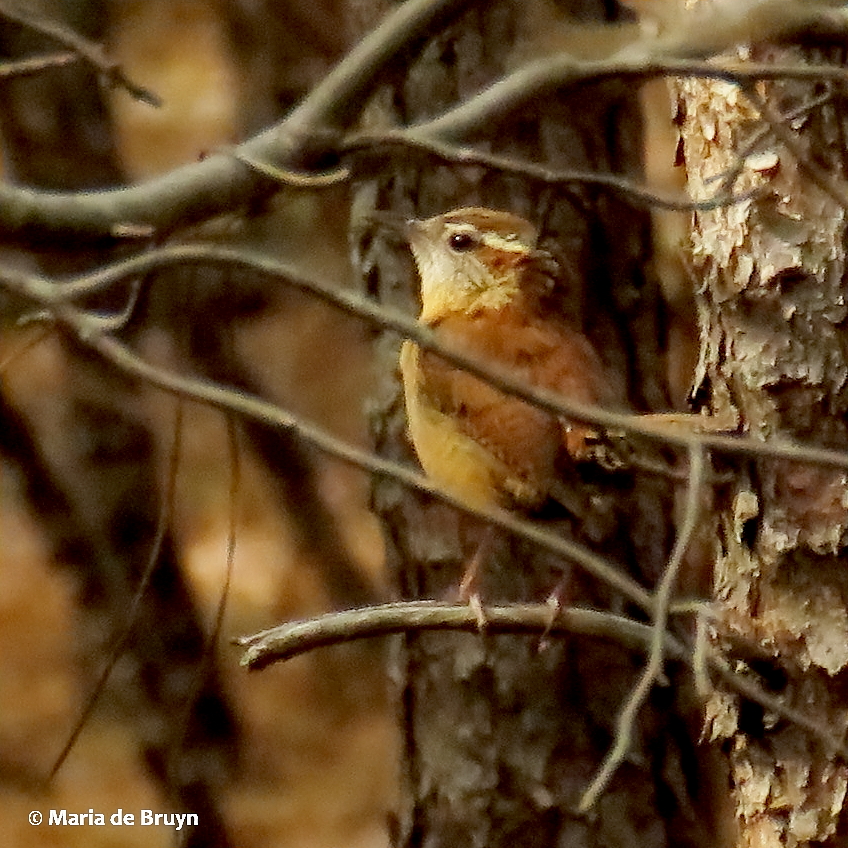
For some odd reason, I rarely see or hear birds in this particular woodsy area, but that day I encountered a Carolina chickadee (Poecile carolinensis) singing away.

Carolina chickadee IMG_2469© Maria de Bruyn


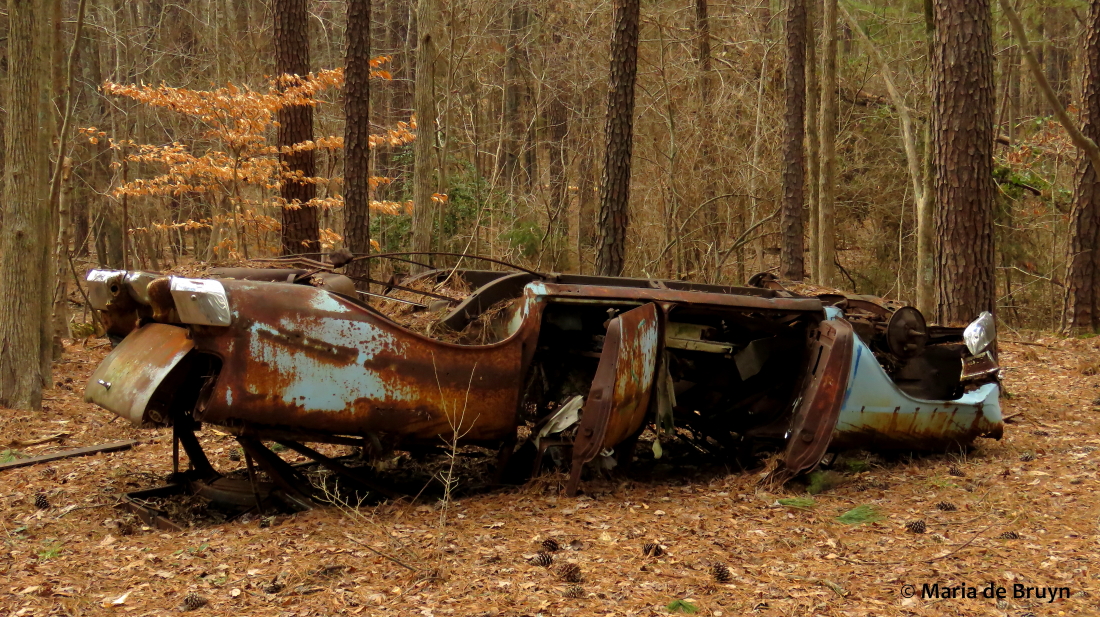
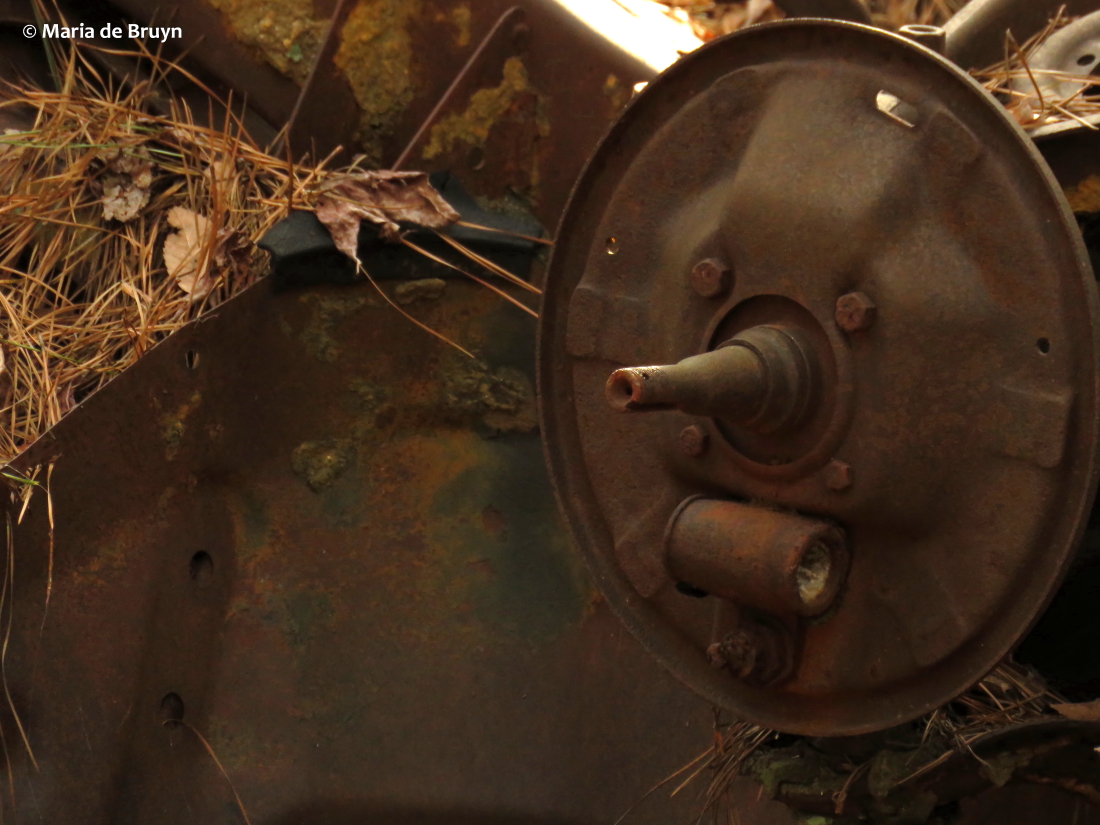
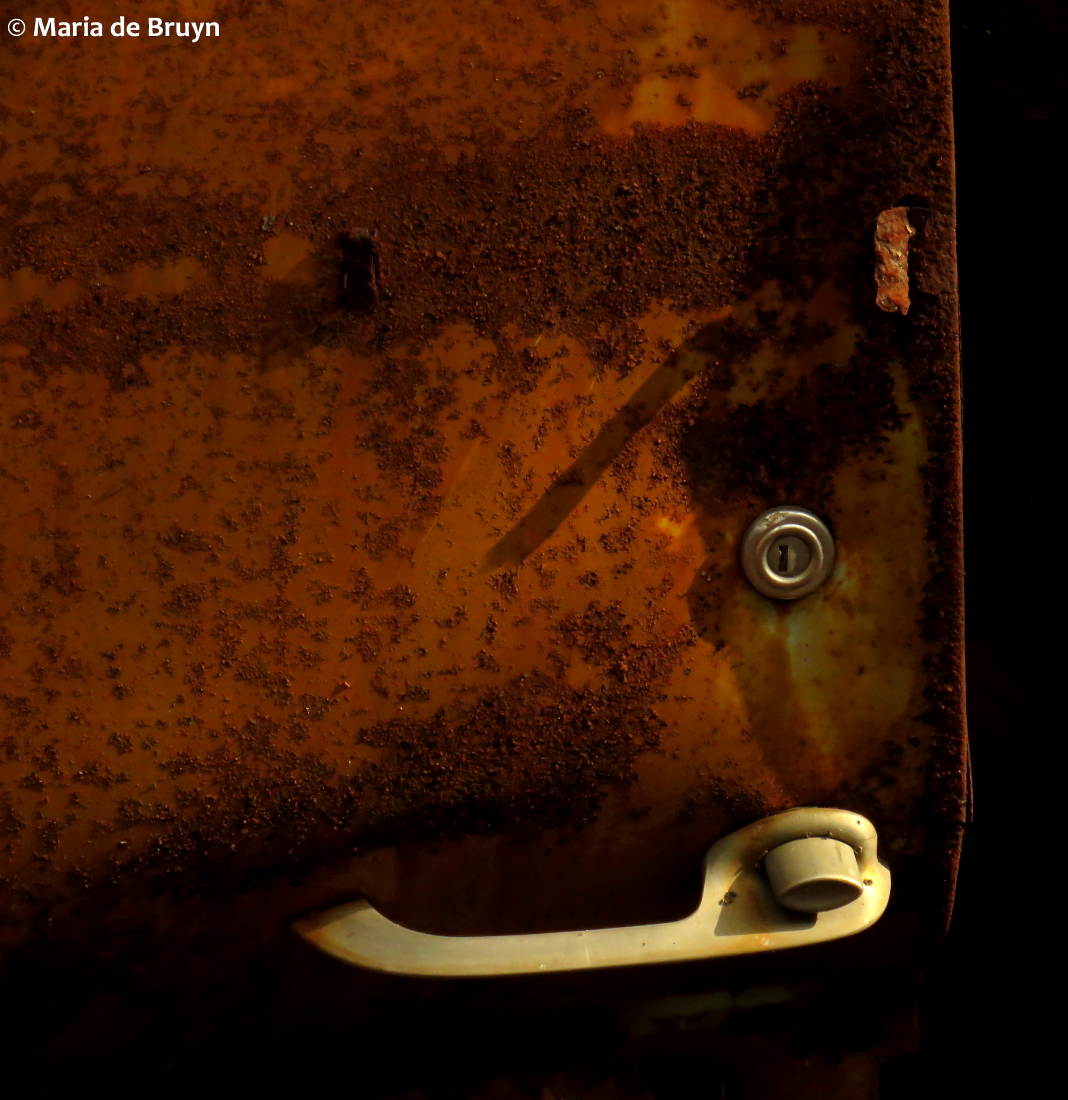
My next stop was to see how the two abandoned cars in these woods were faring. They must have been left here decades ago and have been like evolving metal sculptures as the scouring winds, sun, rain and ice change their appearance.


car IMG_2525 © Maria de Bruyn

car IMG_2558© Maria de Bruyn RES  car IMG_2582© Maria de Bruyn

white-tailed deer IMG_2496 © Maria de BruynAs I was taking photos of the cars, I heard movement behind me and there was the group of deer, still keeping tabs on me. The big male who still had antlers stamped his foot to warn me off, even though I hadn’t turned in their direction. Given his wariness, I certainly wasn’t going to go charging up to them for close-ups!white-tailed deer IMG_2489© Maria de Bruyn

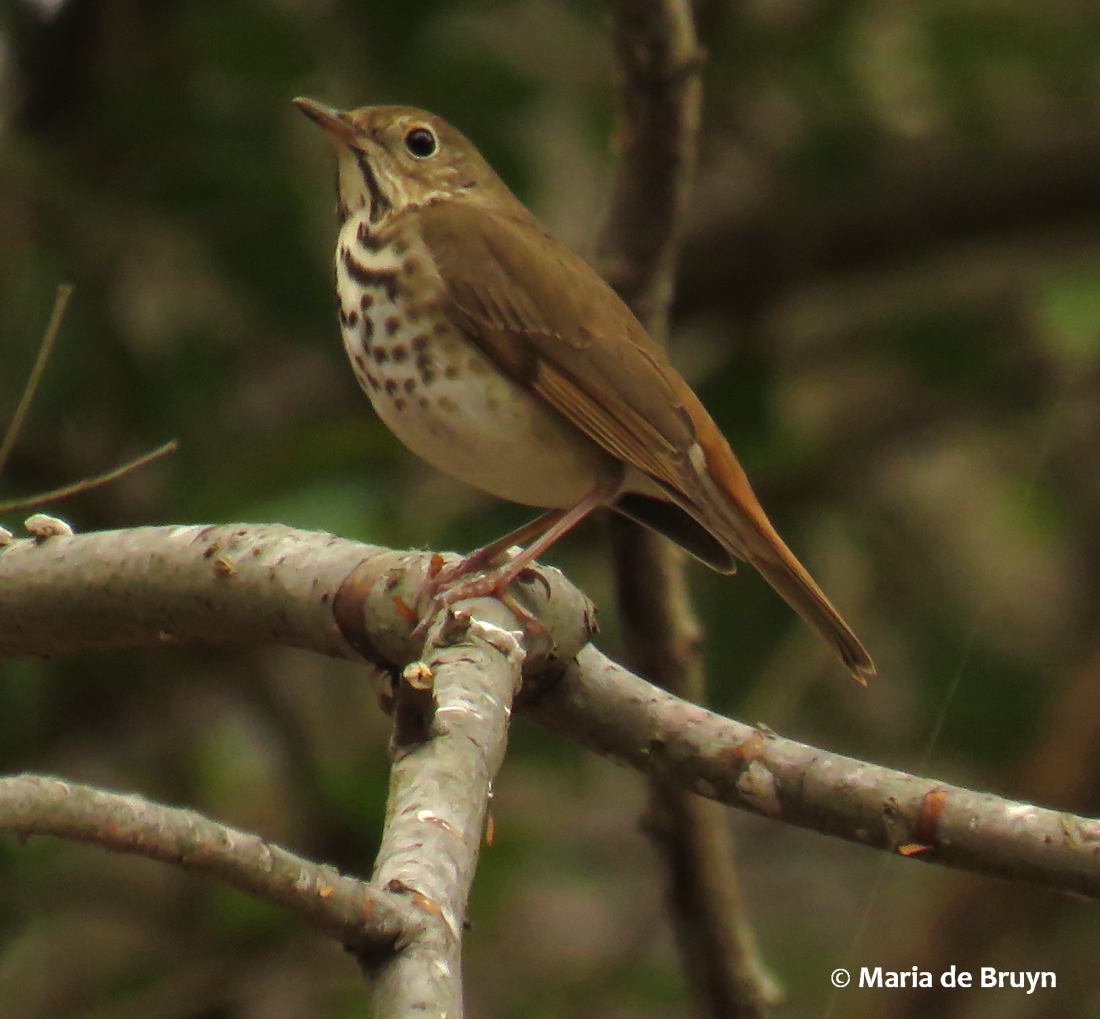
hermit thrush IMG_2614© Maria de Bruyn


My walk ended with some surprising good views of a hermit thrush (Catharus guttatus). They rarely come to my yard so it was lovely to see one in the woods that day. They will likely be migrating soon and we will have new birds to welcome as spring arrives in her full glory. It was a very pleasant winter walk!

Chasing Joseph – excitement evoked by an effervescent bird!


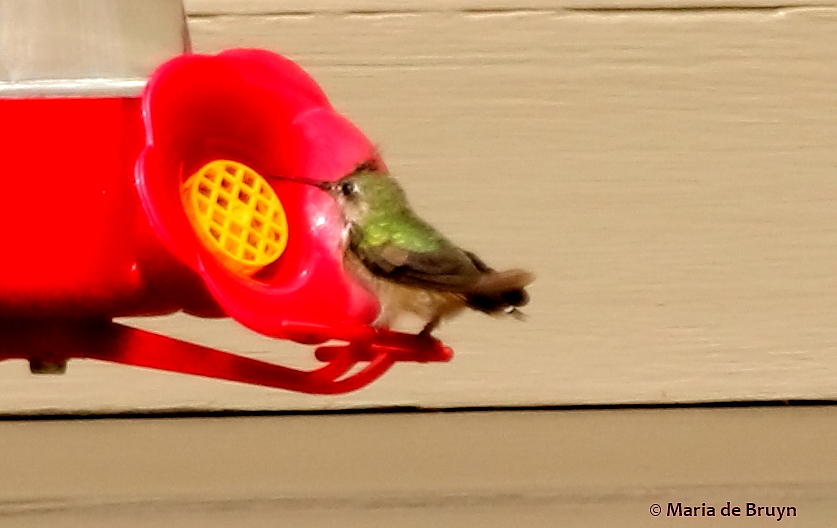
Calliope hummingbird I77A6799© Maria de Bruyn

Birders can be quite enamored with their pursuit of avian species, some making special trips just to see one bird that they haven’t seen before. Such trips may be within an hour or two of their homes, but there are plenty of birders who travel to other (even distant) regions within their own or another country as well. Some people might say they are a bit crazy, but birding is actually one of the sanest ways to appreciate nature.
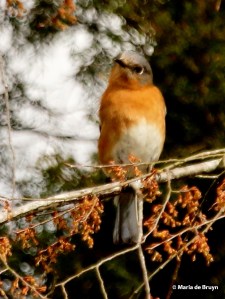
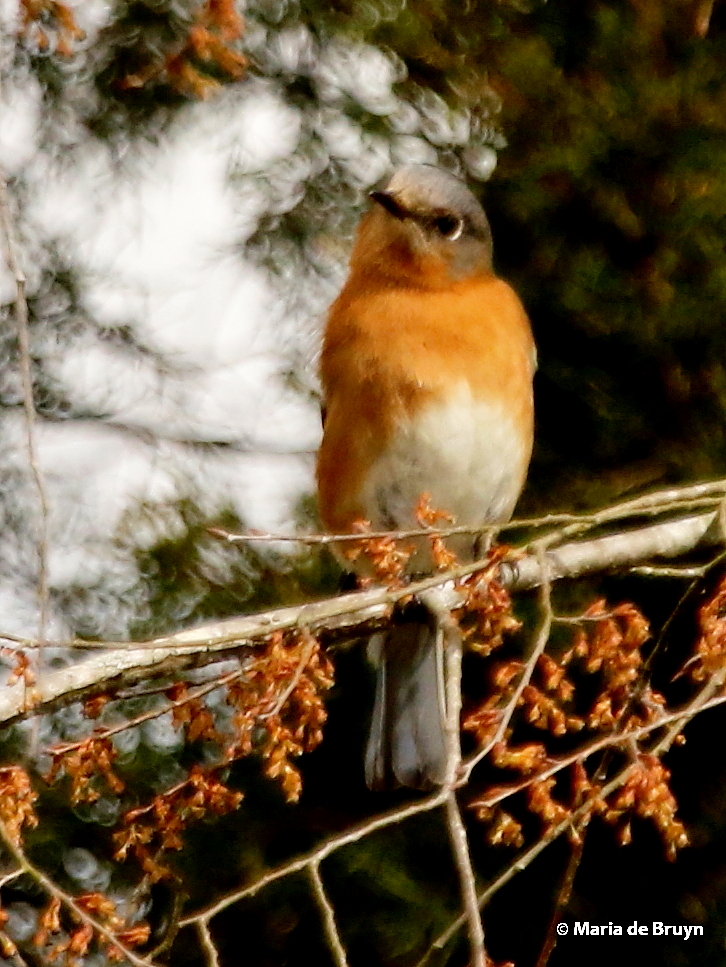
Eastern bluebird I77A6750© Maria de Bruyn cardIt generates knowledge, provides rest and relaxation (well, mostly) and many birders contribute to environmental protection and conservation, even if they restrict themselves to observing local species like Eastern bluebirds (Sialia sialis). In addition, while much is made of the money that hunting fees provide for environmental programs, birders also make economic contributions to society – through donations to environmental protection groups and expenditures on birding supplies, ecotourism, etc. The Audubon Society reports that birders and other wildlife observers spend $916 million in the US state of North Carolina alone each year!

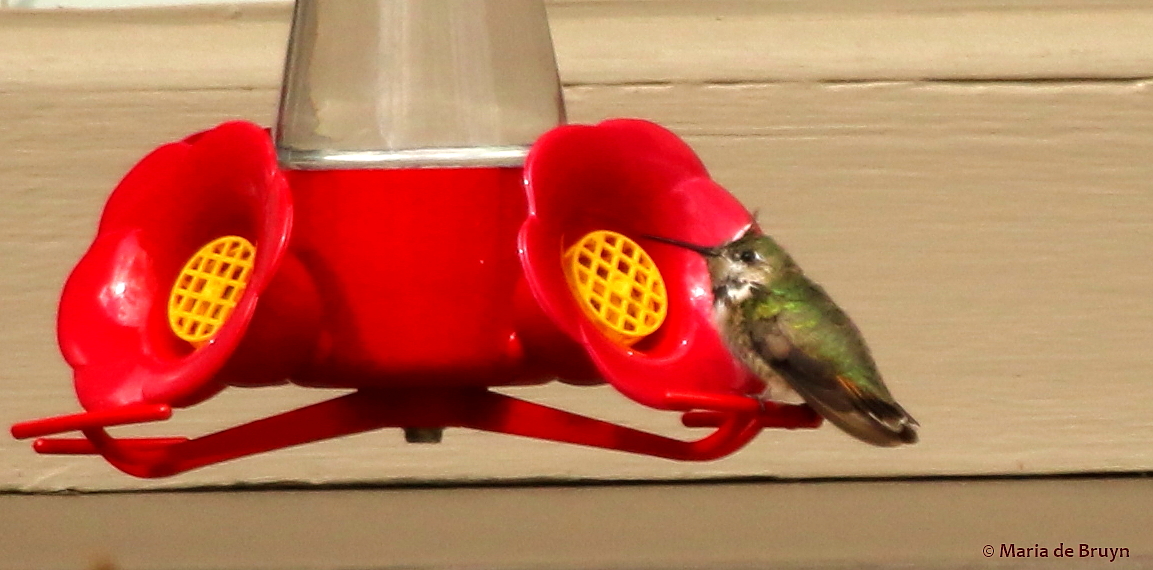
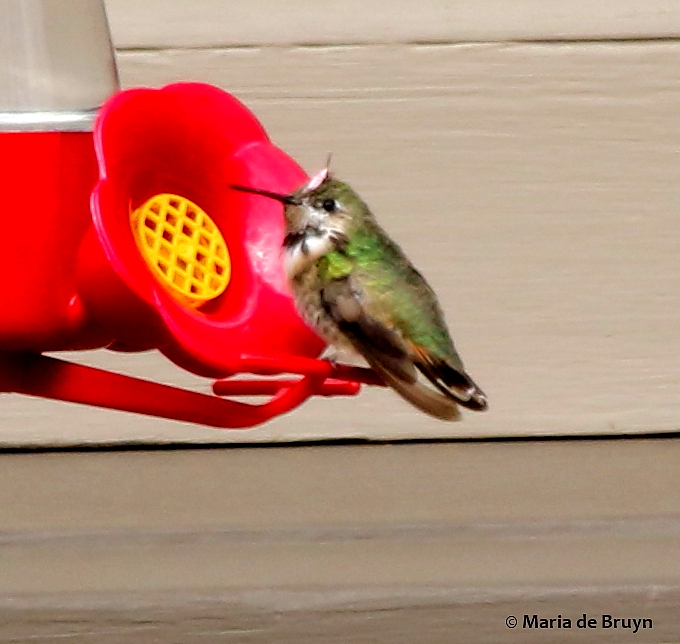
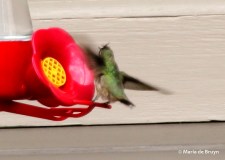
Calliope hummingbird I77A6939© Maria de Bruyn resSo, in the last half year, I’ve become a birder who will make a special trip to see a particular bird. In October last year, I traveled 77 miles with friends to see a buff-bellied hummingbird (Amazilia yucatanensis). This year, a shorter distance (22 miles) led me twice to the calliope hummingbird (left, Selasphorus calliope), which is the smallest bird species in North America outside Mexico.

The first visit was pure serendipity; two other birders (Lucretia and Lorentz) and I met birding guide Jan at a reservoir and he mentioned having seen the calliope the previous day. It was only a 10-minute drive from where we were, he said, and the couple hosting the bird was very nice. So we jumped in Lorentz’s car and headed over to the next county in pursuit of our lifer (a bird that one sees for the first time in one’s life).

Calliope hummingbird I77A6897© Maria de BruynThe calliope hummers are the tiniest long-distance migrants of all the world’s birds, traveling from the mountains of the Northwest USA and Canada to Mexico and a few spots in the southern United States in winter. This year, however, a young male landed in the Malinski’s yard; they named him Joseph.

Some other instances of calliope hummingbirds in the Southeastern USA have been noted but they are still fairly unusual. However, it’s speculated that they may become more frequent winter visitors because of environmental changes associated with human activity.

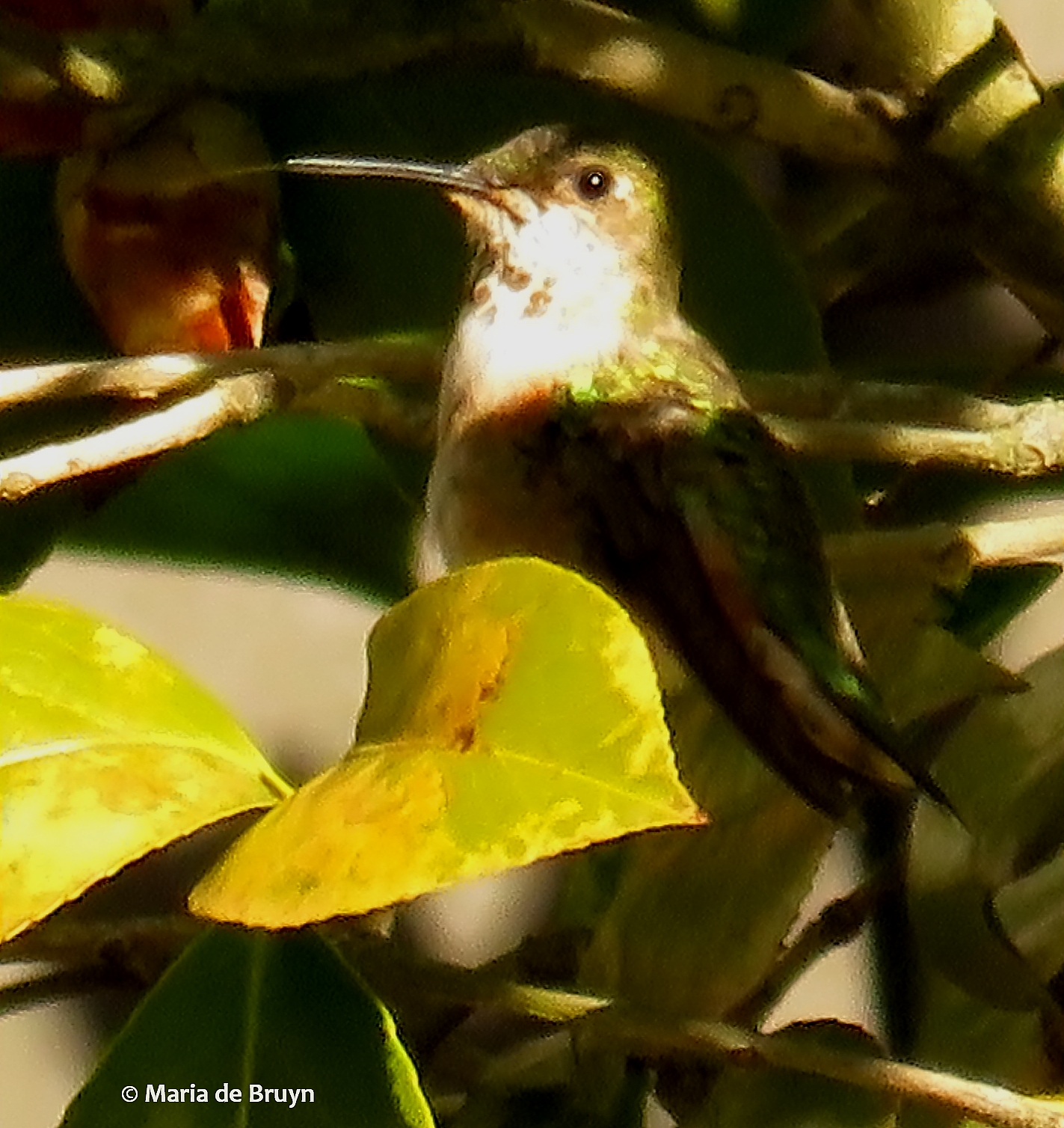
At the Malinski’s home, the calliope is keeping company with another winter migrant, a female rufous hummingbird (below, Selasphorus rufus). Mrs. Malinski has seen the rufous chasing the calliope away from the feeders, living up to that species’ reputation for being feisty. However, the calliope hummers are brave, too, even chasing red-tailed hawks (Buteo jamaicensis) away from their territories during breeding season!
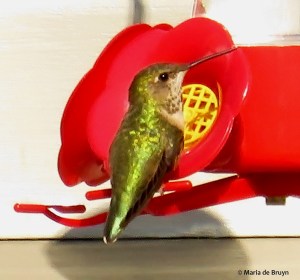
Rufous hummingbird IMG_2657© Maria de Bruyn       Rufous hummingbird IMG_2669© Maria de Bruyn

Calliope hummingbird I77A6756© Maria de BruynJoseph is currently molting and can be identified for the time being with a little topknot atop his head. Susan Campbell, North Carolina’s well-known hummingbird bander, gave him his bracelet at the Malinski home, which should make it possible to identify him if he returns next year.

Calliope banding Campbell IMG_0646


In this photo kindly provided by Susan, you can clearly see that he is developing the bright purple feathers that will grace his throat and give him a beautiful appearance in full maturity. They are just a little visible when he zips in to land at the feeder.
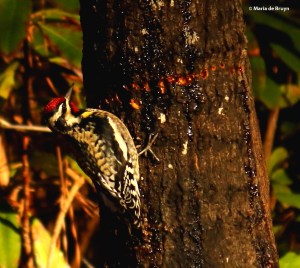
 

yellow-bellied sapsucker I77A7858© Maria de Bruyn res


Both Joseph and the female rufous enjoy the nectar provided by the Malinski’s. These birds will also eat insects and calliopes are known to drink from yellow-bellied sapsucker (Sphyrapicus varius) sapwells like those shown here.


Many people have traveled to the couple’s home to observe Joseph. During my two visits, I encountered 10 other birders and I know of more who paid a visit. The Malinski’s are most gracious, allowing us to stay in their front yard for hours.
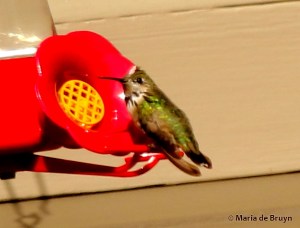
Calliope hummingbird I77A6566© Maria de Bruyn       Calliope hummingbird I77A7075© Maria de Bruyn

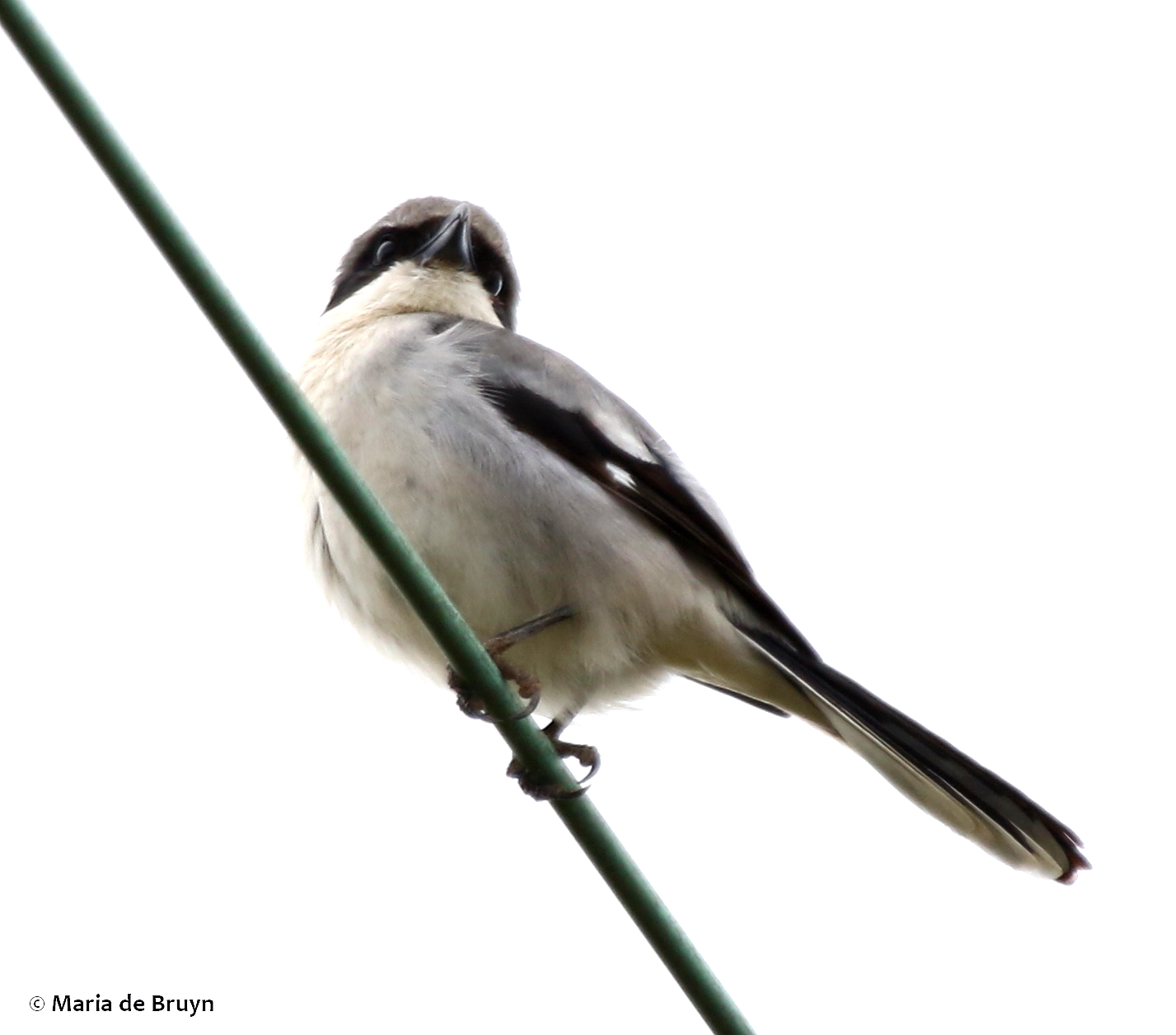
loggerhead shrike I77A7328© Maria de Bruyn


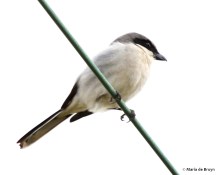
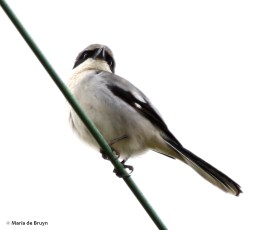
After I left them with Joseph buzzing back and forth between the front and back yards, I stopped at a rural road known as a spot for white-crowned sparrows. I didn’t see them but did get to see a loggerhead shrike (Lanius ludovicianus).
 

loggerhead shrike I77A7301© Maria de Bruyn            loggerhead shrike I77A7280© Maria de Bruyn

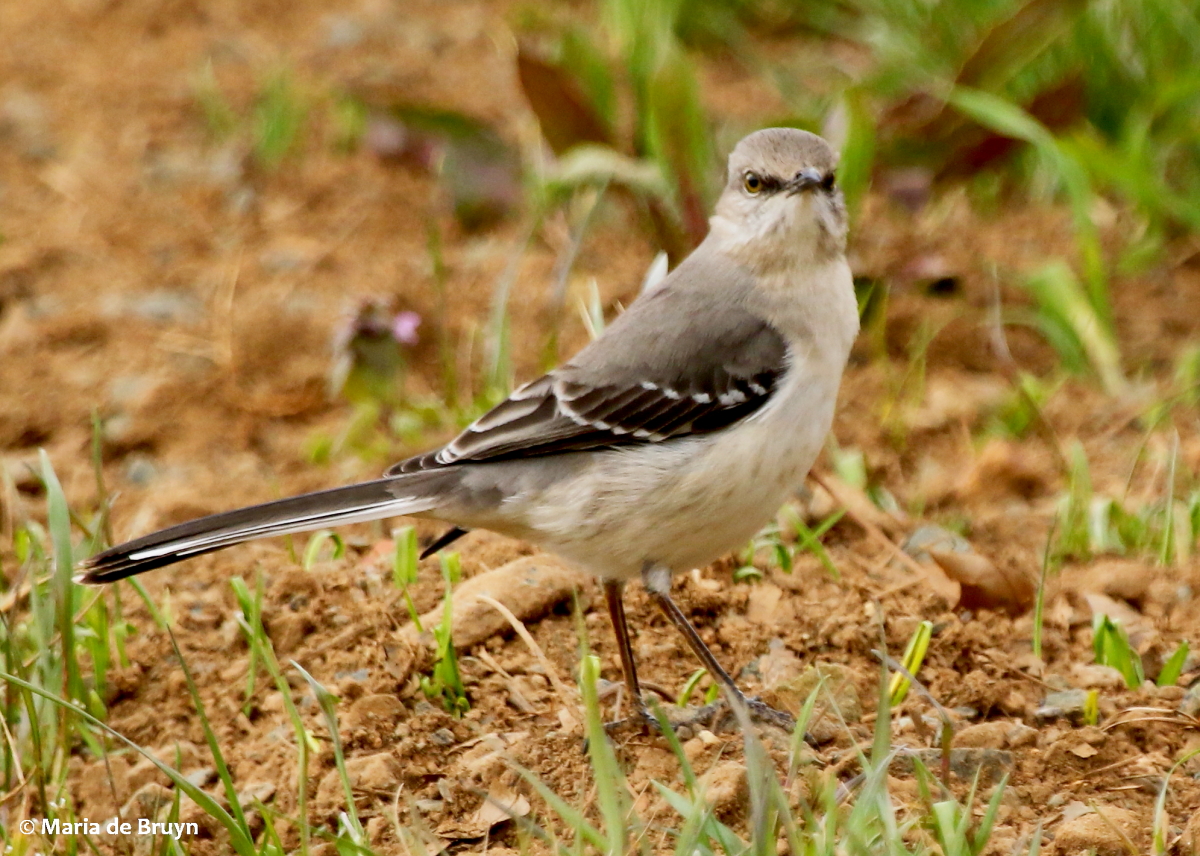
The Northern mockingbirds (Mimus polyglottos) were courting and chasing each other, making a fair bit of noise and flashing their lovely feathers.

Northern mockingbird I77A7172© Maria de Bruyn    Northern mockingbird I77A7425© Maria de Bruyn

Northern mockingbird I77A7118© Maria de Bruyn res

Even though mockingbirds live around my yard, I always enjoy seeing them again. I likely never will become a birder who goes off to exotic lands just to chase down one species I haven’t seen before. But I certainly am paying even more attention to the birds around me wherever I am and making some shorter forays as time permits (just yesterday, I joined friends Beth, Carol and Nan to go see a Wilson’s snipe (Gallinago delicata) at a farm in the next county – another lifer!). But it’s not only birds that will get me to travel – bears are on my list of animals that I am still hoping to see and photograph in the wild. When I get to that point, you’ll read about them here, too!