Costa Rican rambles 2 – exploring the fauna of the hotel botanical garden

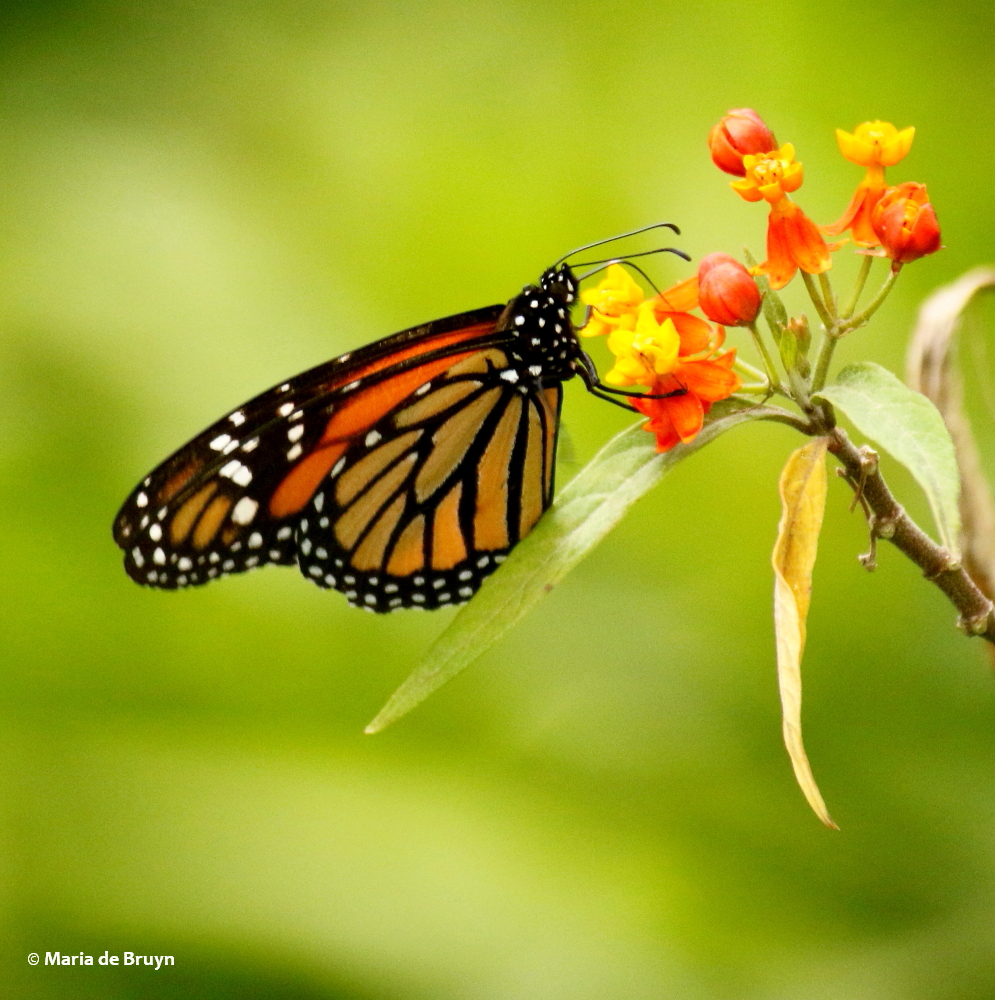
My first close-up spotting of wildlife in Costa Rica was a butterfly familiar to me from North Carolina – a beautiful monarch (Danaus plexippus). Lots of little flies were buzzing about but they were a bit too quick for photos.

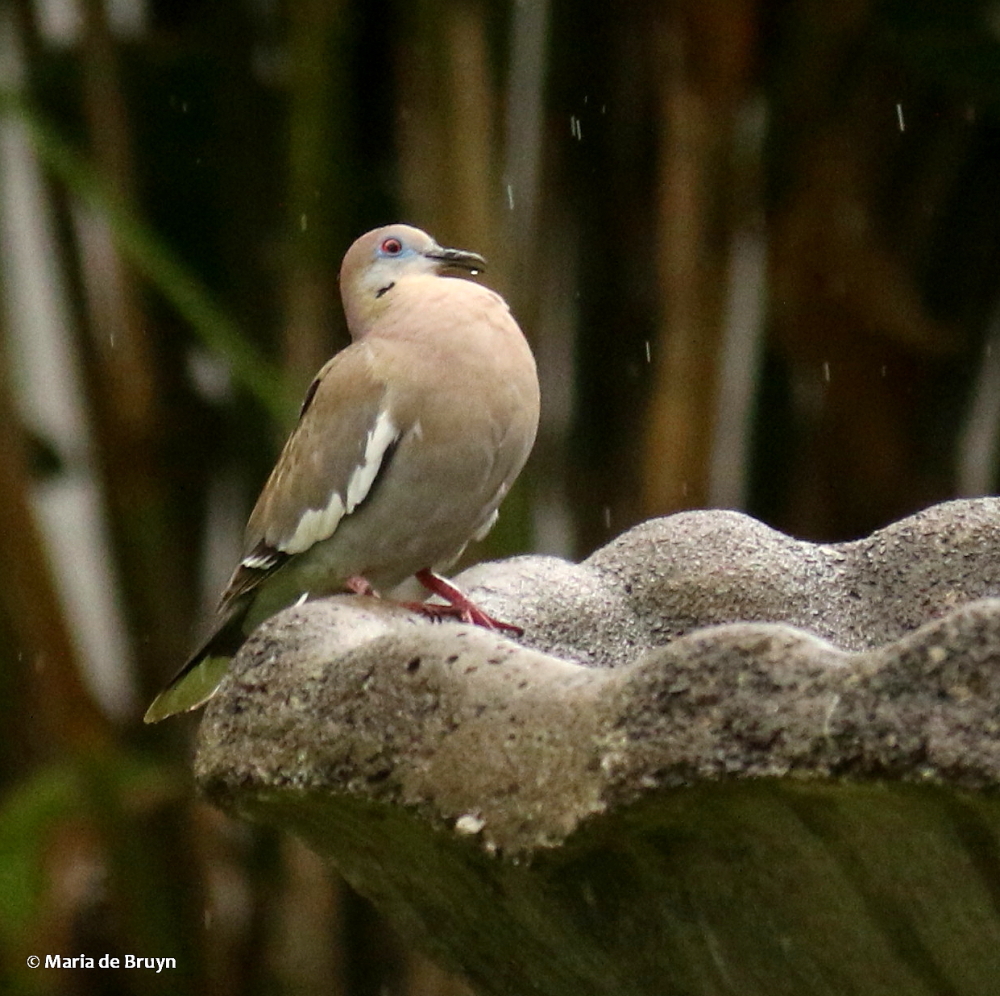
I wasn’t familiar with the first bird I saw, but after running into fellow traveler Dave, he kindly identified it for me as a white-winged dove (Zenaida asiatica).


Later and the next morning, I saw several wandering about the grounds and at the birdbath.
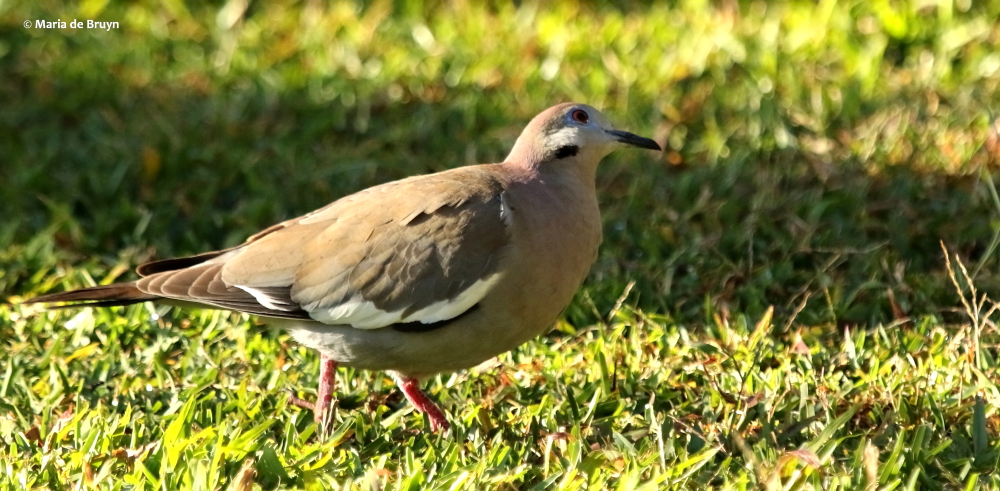
  

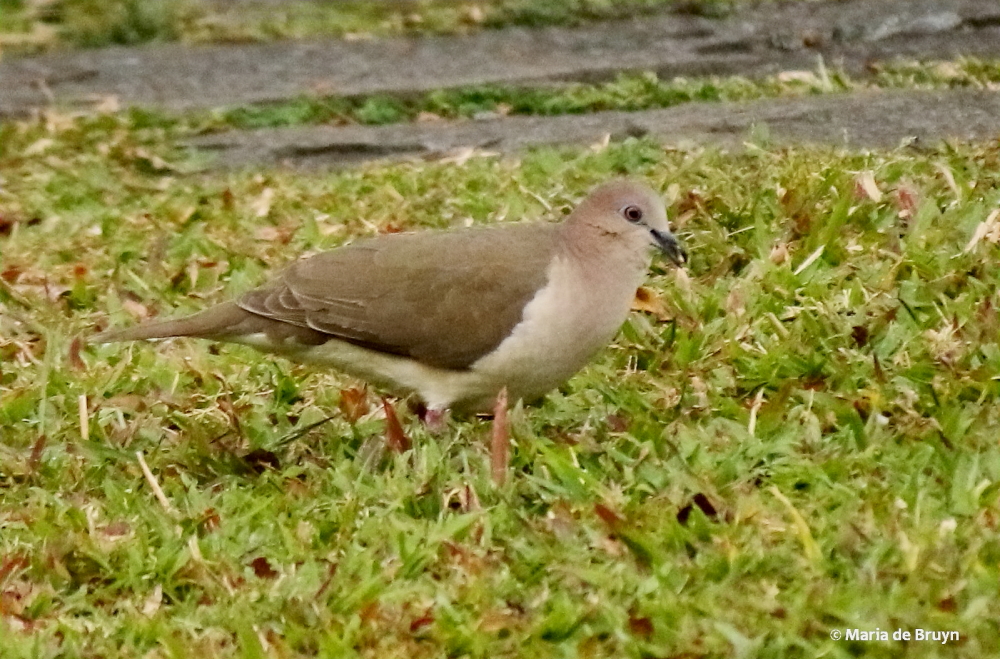
Another common dove was the white-tipped one (Leptotila verreauxi).
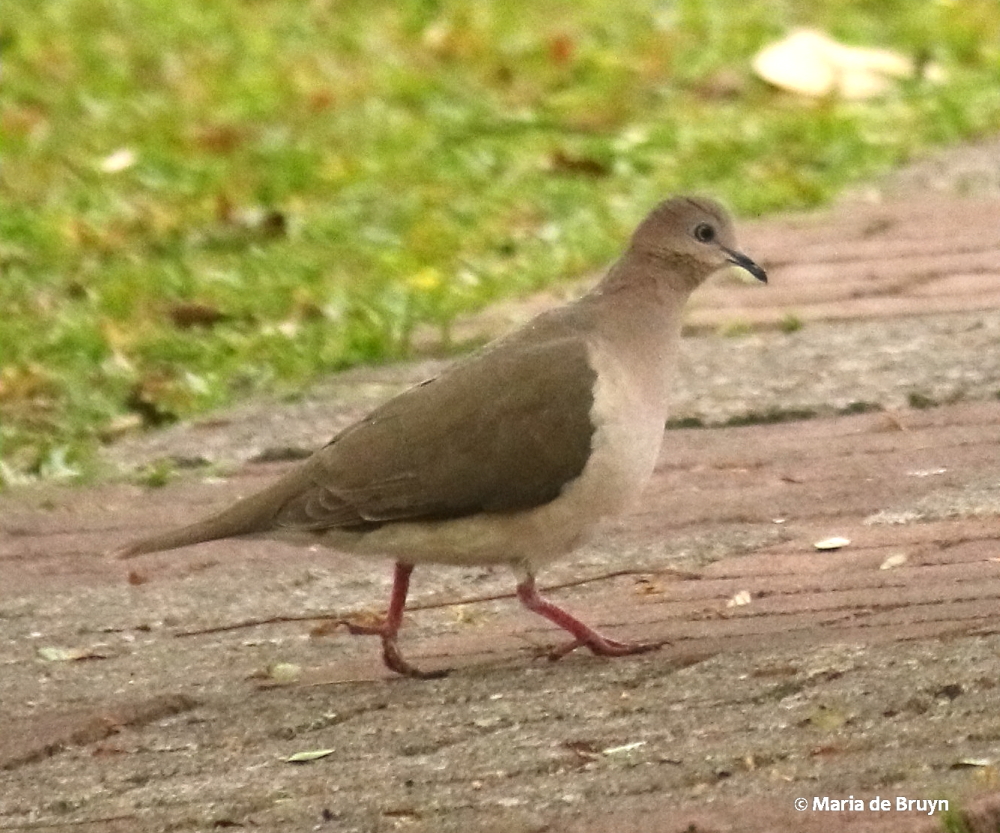
 

While roaming around, I ran into two more fellow travelers, Joy and Janet; together with Dave, we climbed a wonderful lookout tower placed in a strategic spot for birders. It looked down on a pond in one direction and a birdbath in another, where I saw the clay-colored thrush (Turdus grayi) – Costa Rica’s national bird, known locally as the yigüirro.  Its beautiful song is said to welcome the green rainy seasons and these birds were abundant in this garden and the other sites we would be visiting.
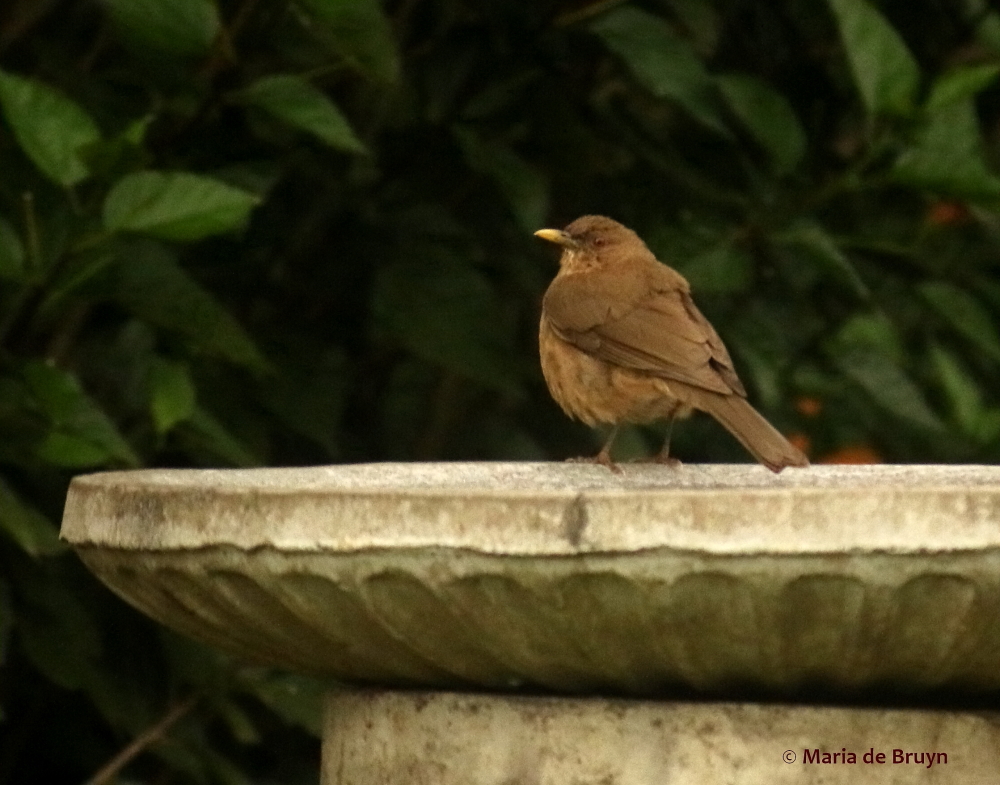
  

A couple species of hummingbirds appeared but I was only able to photograph the rufous-tailed hummer (Amazilia tzacatl).

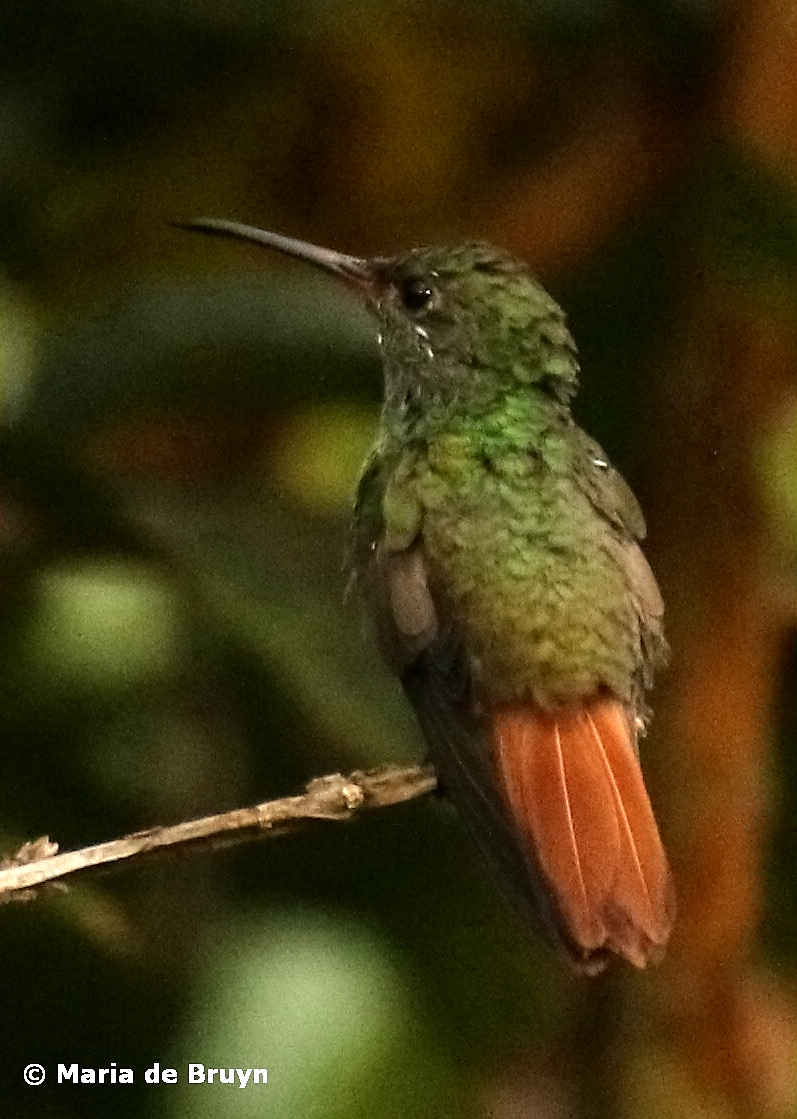
  

While looking for it, I spotted what was to become one of my favorite Costa Rican birds, the rufous-naped wren (Campylorhynchus rufinuch).

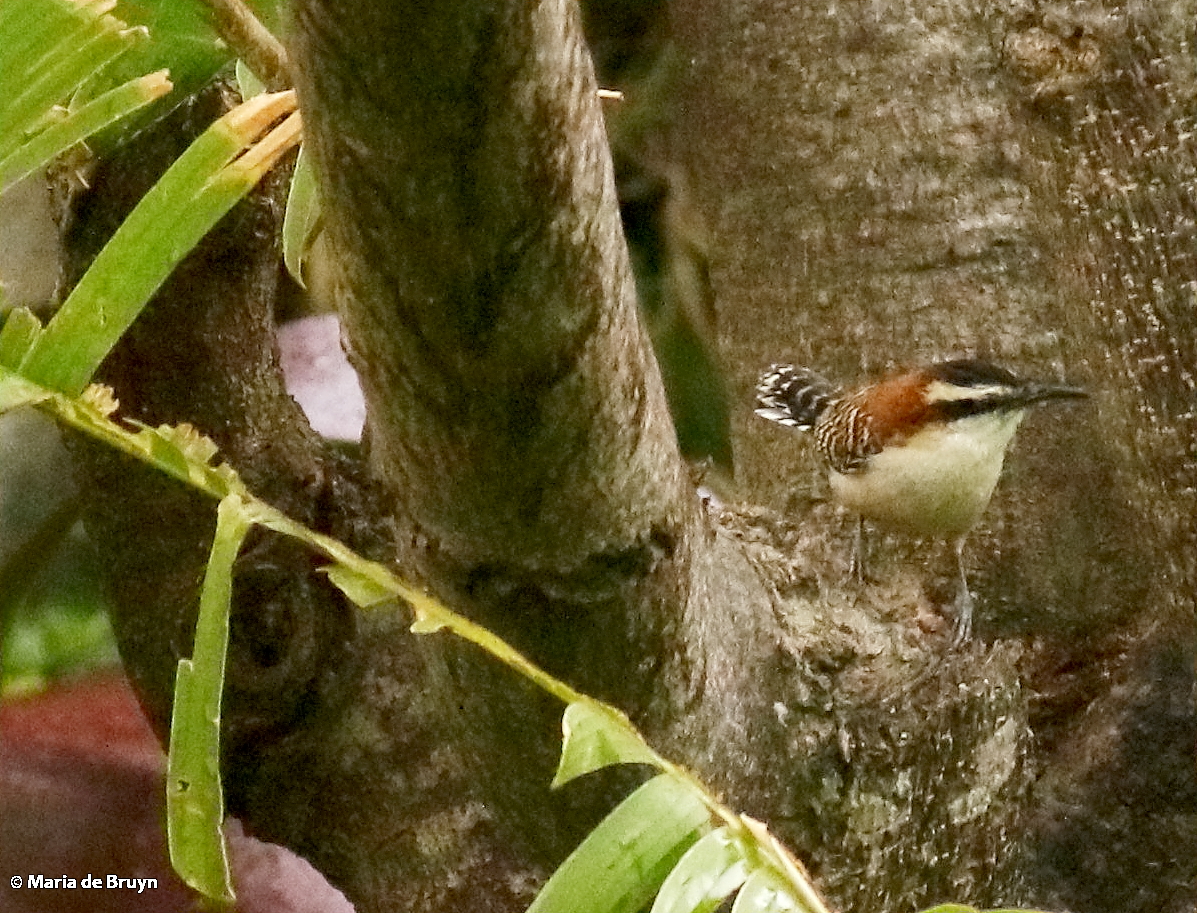
  

I just fell in love with its brown speckled appearance and followed a pair flitting about the flower-laden bushes in the area.
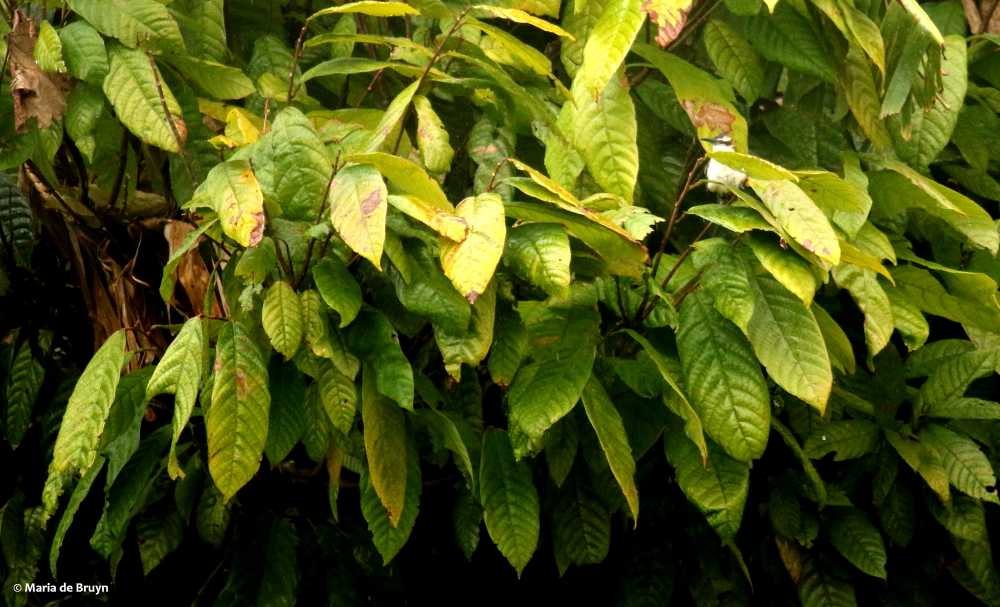
 

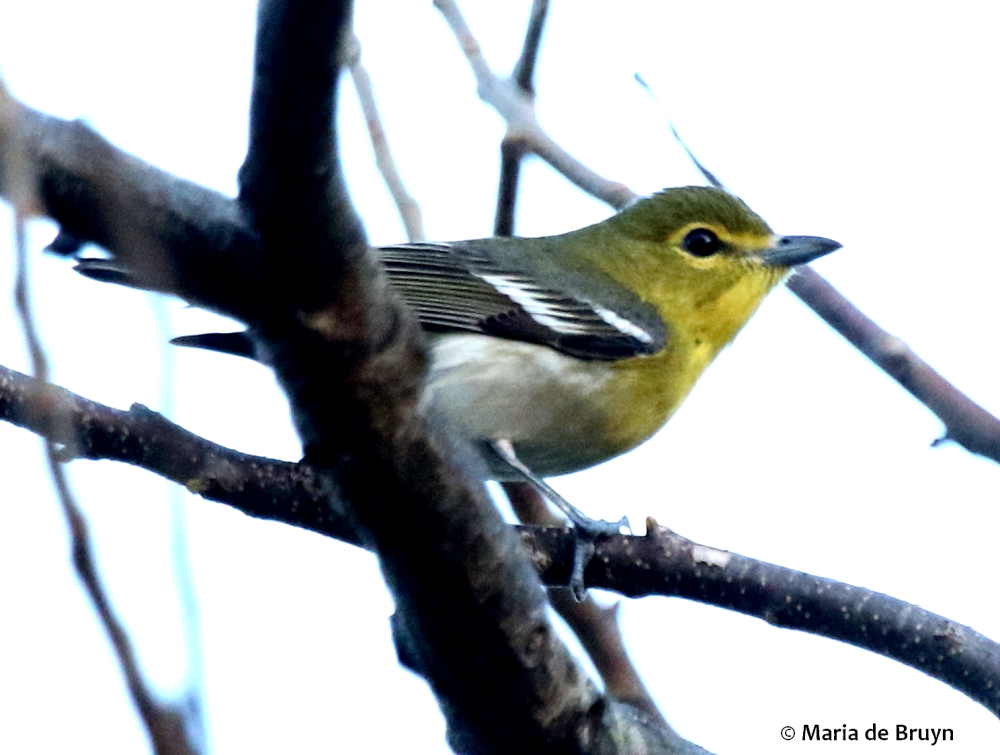
Some “Northern migrants” put in appearances, including a Baltimore oriole (Icterus galbula) and some yellow-throated vireos (Vireo flavifrons).


Birds flitting in the treetops further included a few yellow warblers (Setophaga petechia) and Tennessee warblers (Leiothlypis peregrina), which I had not yet seen in the USA.


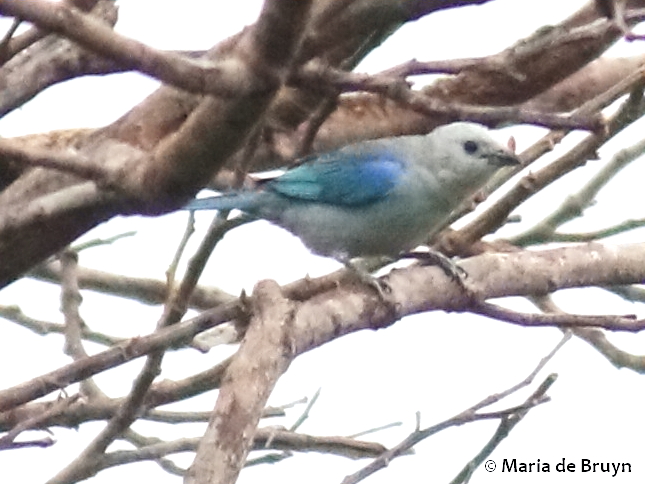
A beautiful blue-gray tanager (Thraupis episcopus) flew by and I saw my first male Cherrie’s tanager, for which I’ll post a better photo in a later blog. 
The high perch which we birders had offered me a first spotting of the variegated squirrel (Sciurus variegatoides), which lives up to its name with individuals showing very different coloring on their bodies.


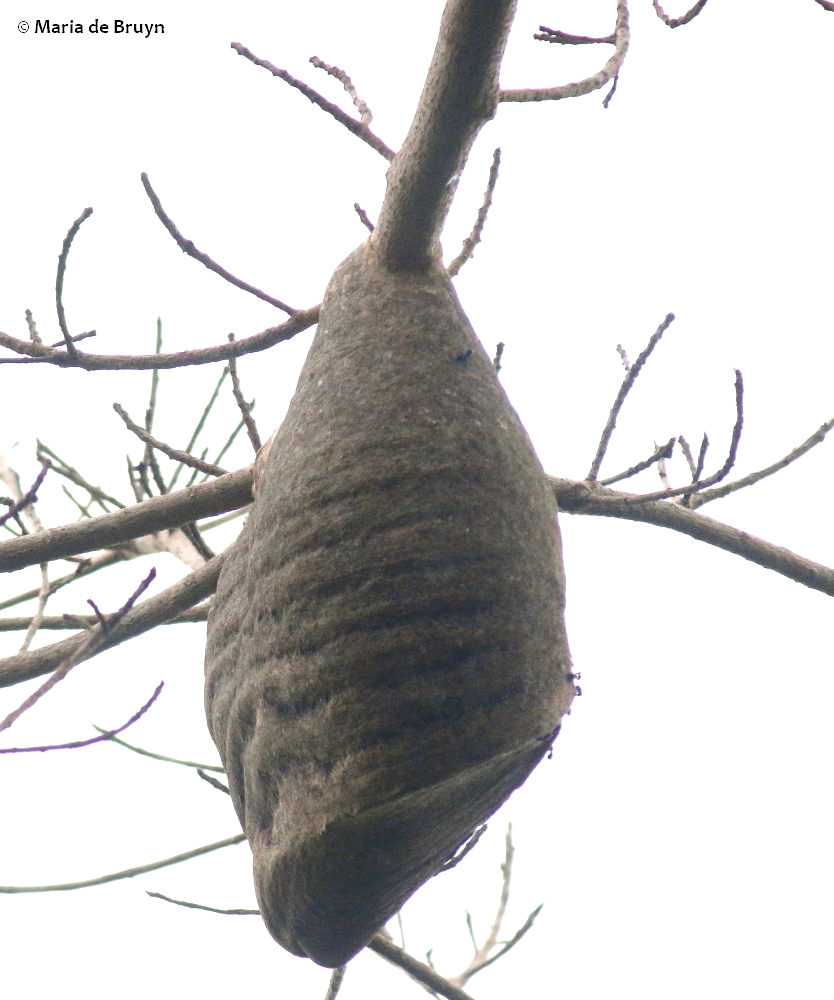
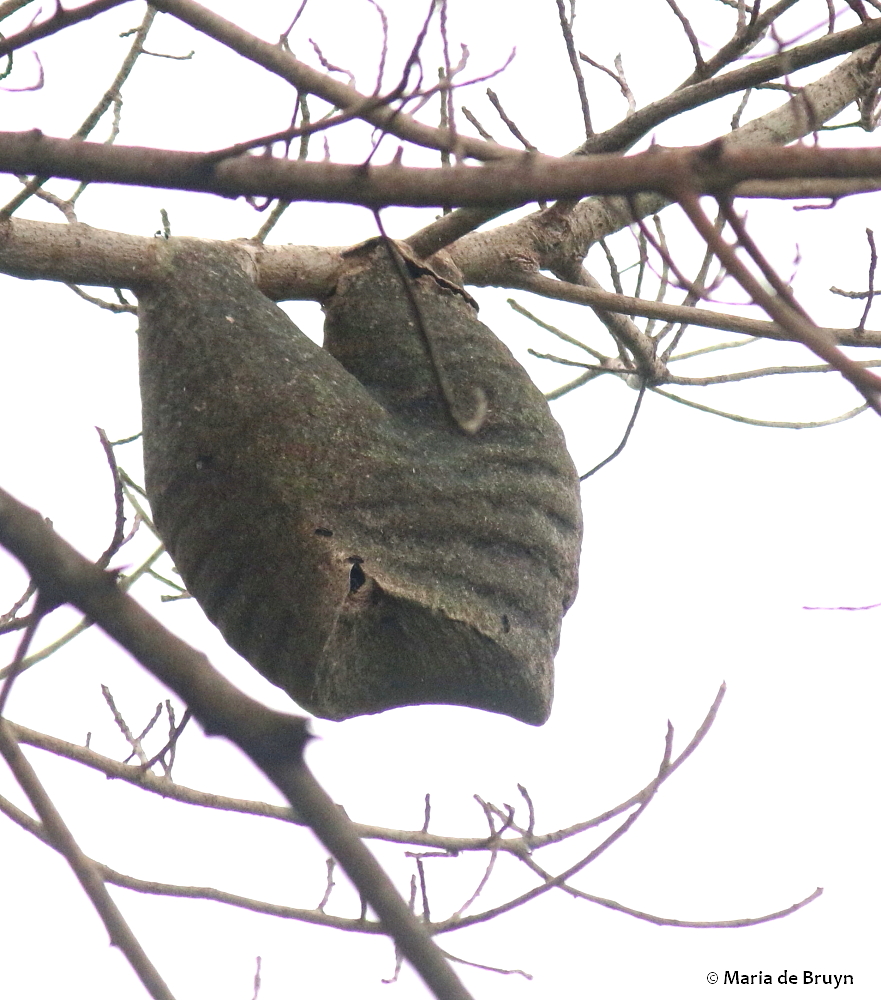
I left the lookout tower to investigate more of the 10-acre garden and as it began raining, found a spectacular wasp or hornet nest. It looked quite different from varied perspectives, the underneath view making it look like a pair of pants hung from the tree by its legs.



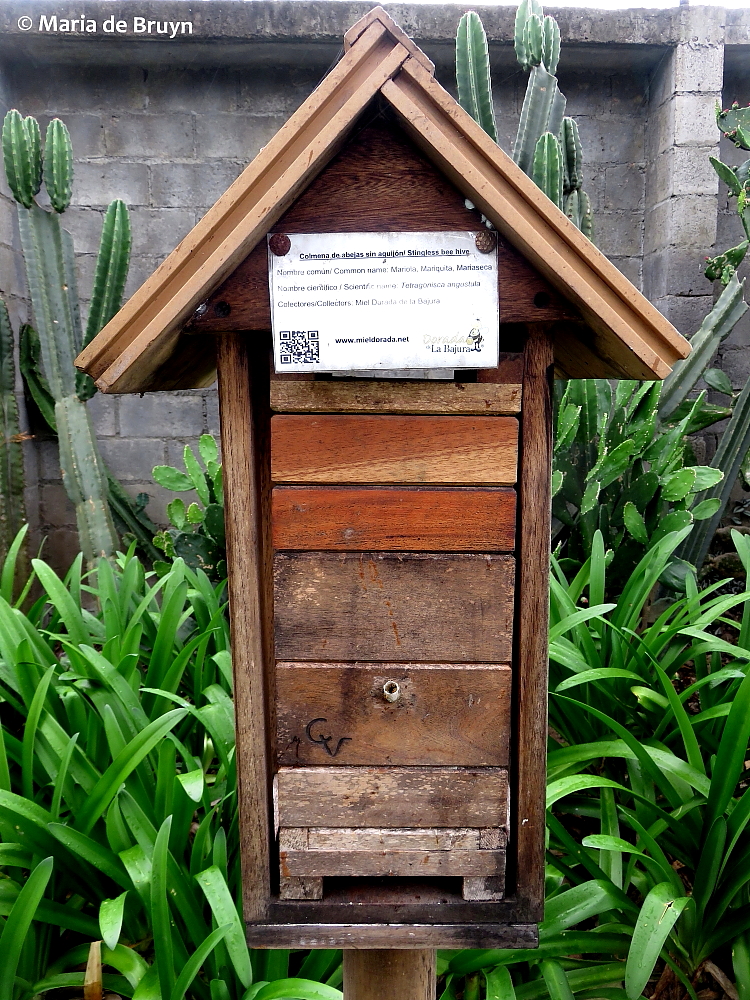
The garden featured several man-made hives for stingless bees (Tetragonisca angustula); I didn’t see any buzzing about but perhaps they preferred to stay indoors during the rain.

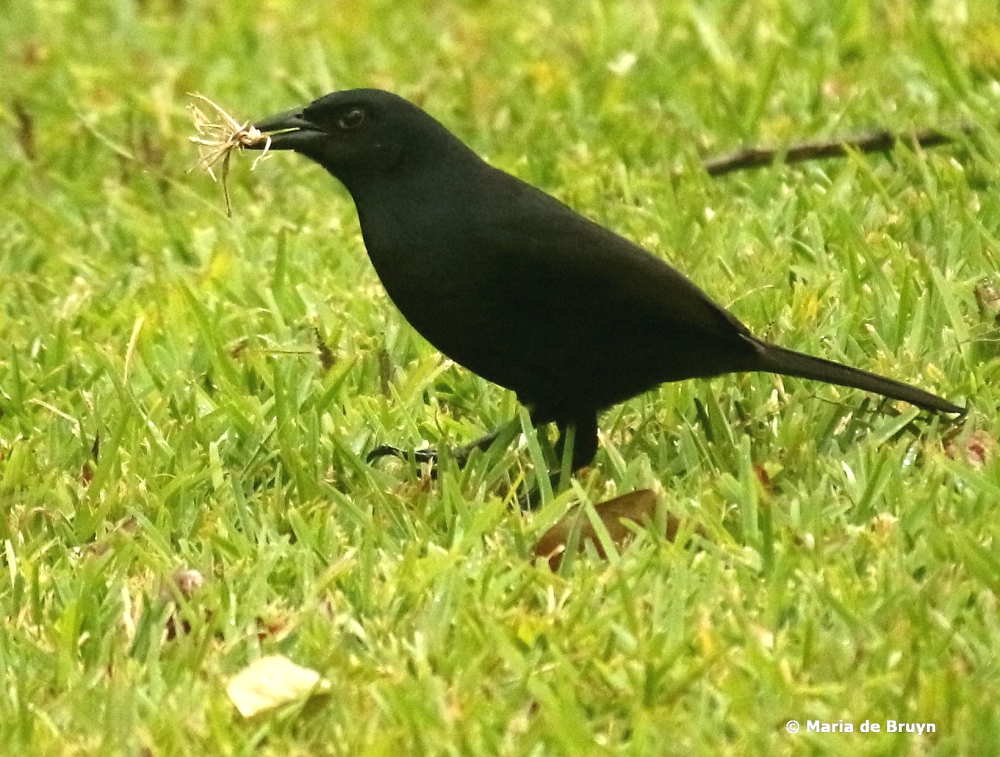
Back near the lookout tower, I began hearing a pair of birds calling to one another with beautiful songs and notes. I was looking around for some small songbird but suddenly realized the concert was being offered by a pair of large melodious blackbirds (Dives dives), who really deserve their common name!
 

A somewhat more raucous set of cries alerted me to the arrival of a group of brown jays (Psilorhinus morio). They are much larger than the blue jays I see in my own garden and certainly seemed more social; they tend to move around in flocks. At first sight, they seemed a bit drab but a closer look shows they have a pretty muted appearance.


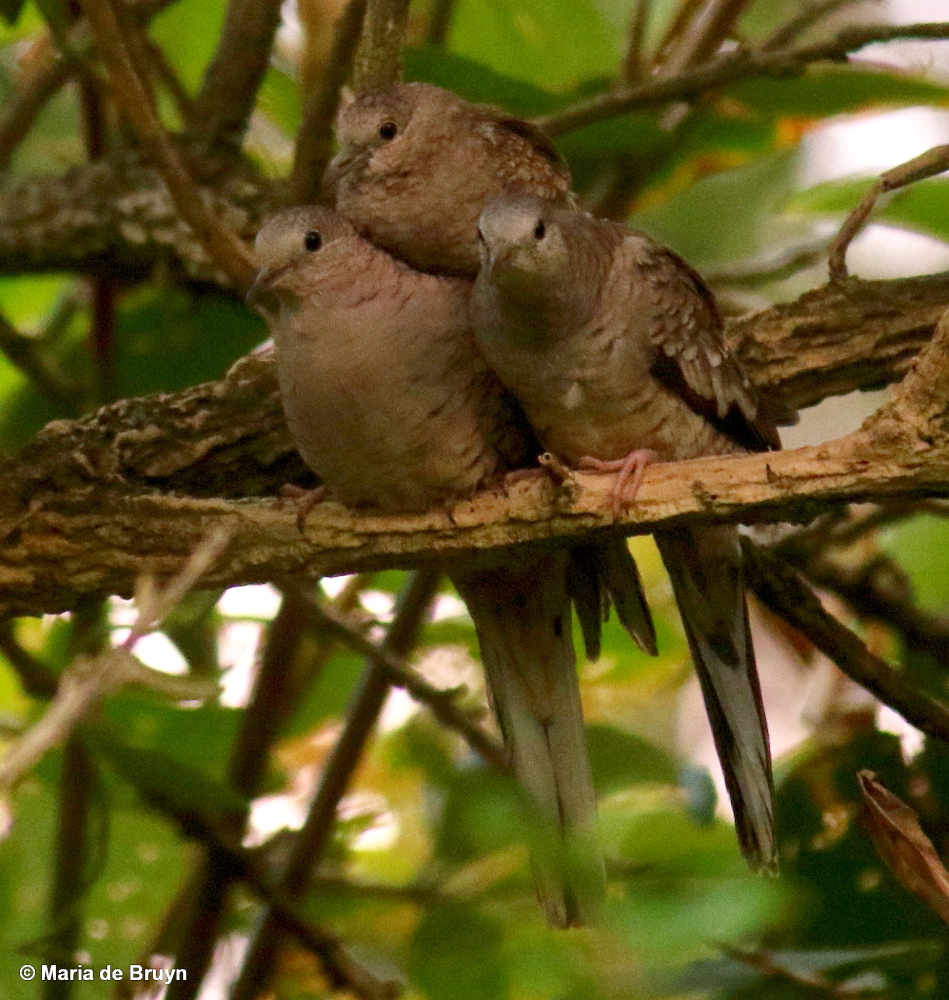
As I began following a hummingbird in an effort to get a close-up, Janet and Joy alerted me to a trio of Inca doves (Columbina inca) who were smushing together in a compact group for the night. It was almost dark and I had to adjust my camera settings a lot to be able to photograph them; they were becoming barely visible in the vegetation but oh so cute. Occasionally, one would leave the line and sit atop the other two but those below always got the third one to come down to the branch again.

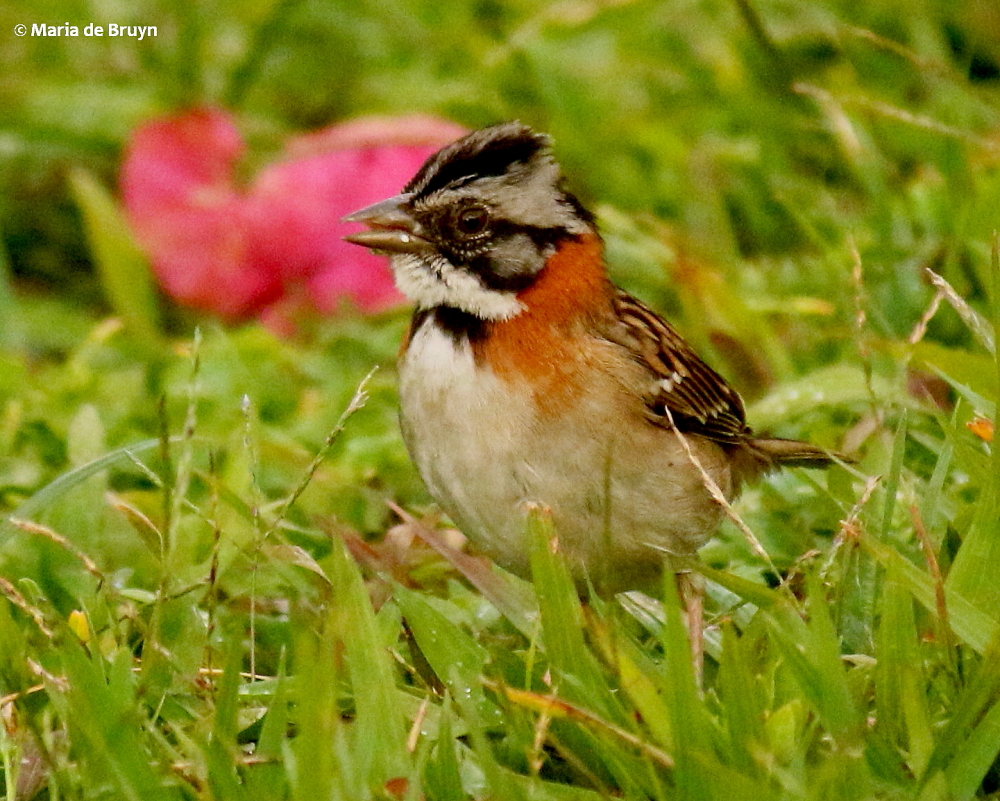
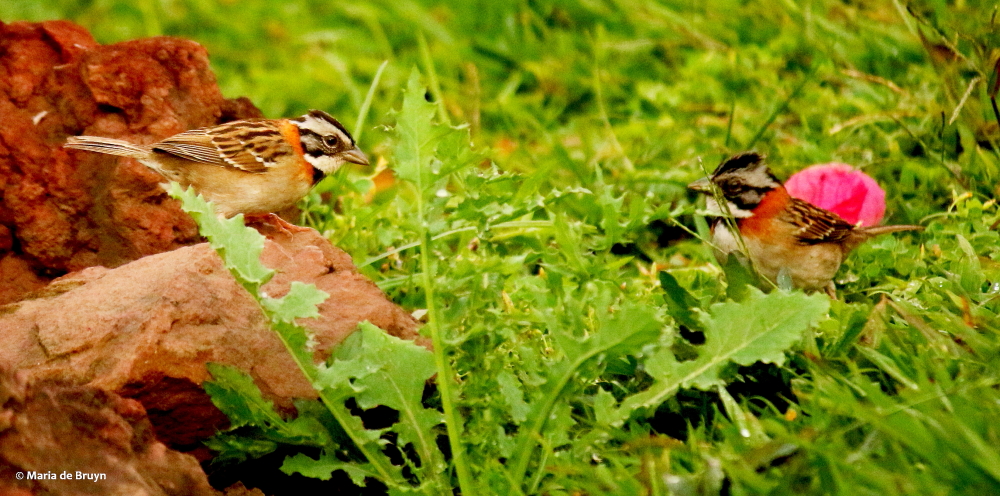
Seeing some very cute rufous-collared sparrows (Zonotrichia capensis) foraging in the grass.
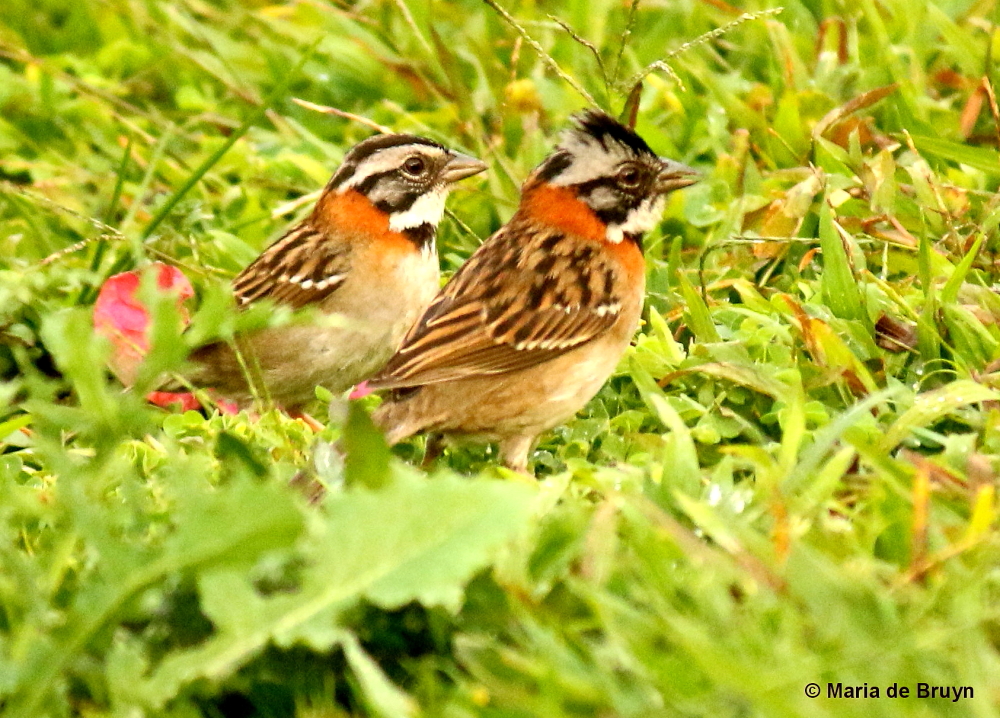
The next morning began with a spotting of a pair of masked tityras (Tityra semifasciata), who were difficult to photograph in the early dawn light.
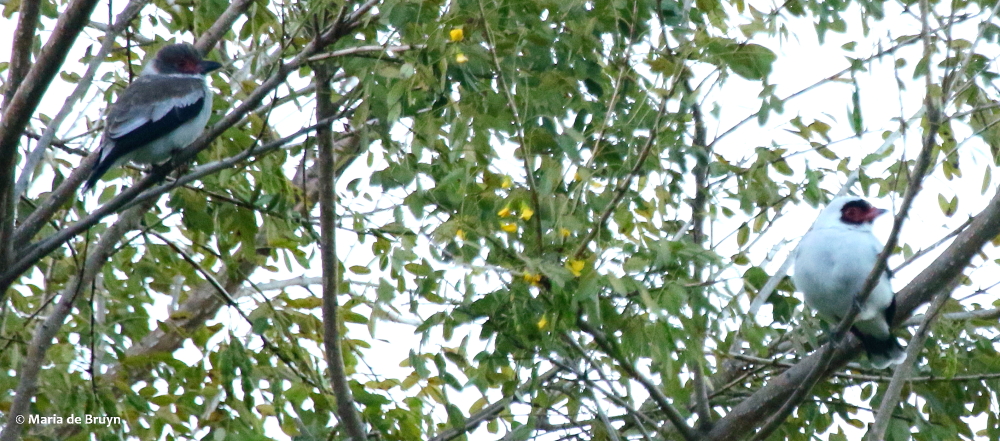
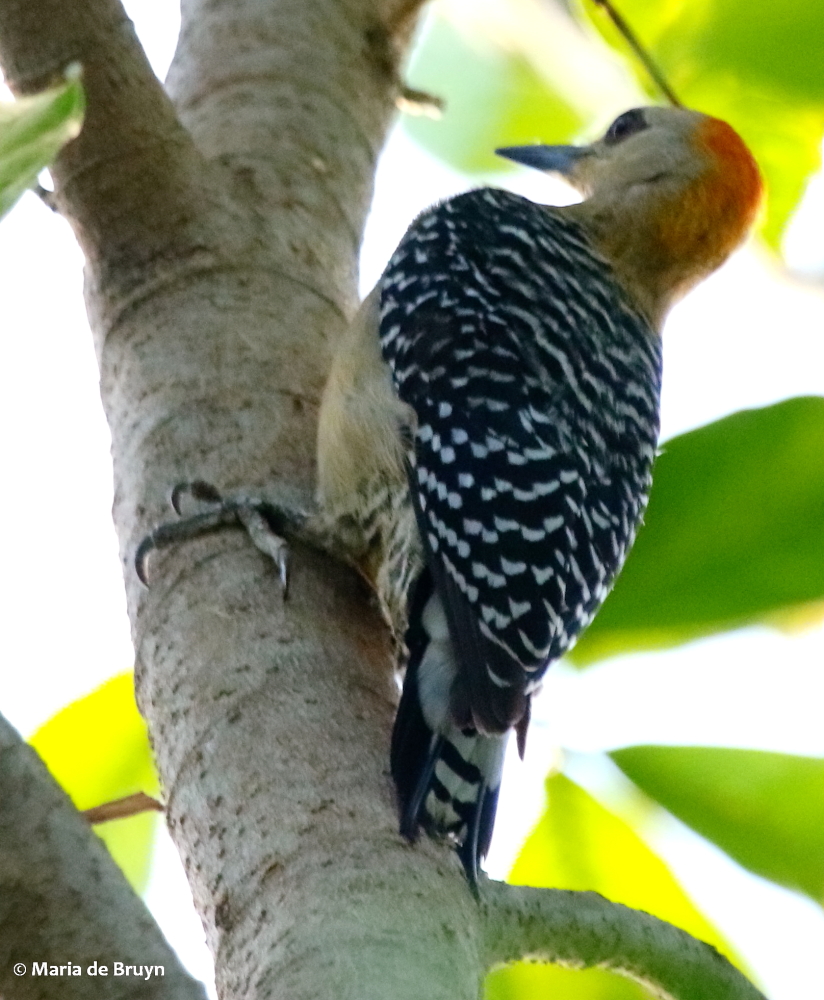
A Hoffman’s woodpecker (Melanerpes hoffmannii, right) came by briefly and as the day started to brighten, a tropical kingbird (Tyrannus melancholicus) alighted on a branch.

  

It was after that sighting that I discovered a new bird (for me) – the social flycatcher (Myiozetetes similis); I had been calling all birds that looked like these great kiskadees – and they do look very similar to be sure!  And if readers see I have identified a bird incorrectly, please let me know!


My first evening and morning in Costa Rica taught me that the bird photography could be challenging; the lush vegetation meant that the birds are often in between dark leaves and shadows. This meant that I was shooting at high ISOs much of the time, with somewhat grainy photos as a result. I guess perhaps I should finally look into getting a photo editing program!


A morning at the Butterfly House – with birds, butterflies and more!

I have all these ideas for blogs in mind, and photos to accompany them as well, but I keep taking new photos and then get behind in posting. One day, the thought came that I could just not go out to photograph and settle down to writing some blogs, but going out for nature walks as often as possible has become a real need in my life. Scientists are saying that “forest bathing” is good for your health and being outdoors and observing and learning about the flora and fauna certainly contributes to my having a happier state of mind, while contributing to my overall stamina (but not weight loss, more’s the pity). I also enjoy “shoreline, field and meadow, creek, river, and backyard bathing.”

It came to me today, after spending 3.5 hours tearing out invasive plants from my yard, that one blog that doesn’t need to be postponed because I keep getting new shots to include is this one – my visit to the Durham Museum of Life and Science Butterfly House with the Carolinas’ Nature Photographers Association.

The Museum had opened the Butterfly House for the morning for our group alone so that we could take photos for several hours without people walking in front of our shots. The Butterfly House is a 35-foot tall, glassed-in dome with many tropical plants such as the Angel’s Trumpet (Brugmansia). One of the four species of birds living in the conservatory, the Oriental white-eye (Zosterops palpebrosus), was enjoying a meal of tropical flowers. The bird would pluck a petal from the stem and then insert its beak into the base; the white-eyes have a special brush-like appendage at the end of the tongue which helps them forage for nectar and pulp.


The white-eyes were brought into the conservatory to help control leaf pests and ants.


The butterflies were gorgeous and the subject of many photos in our group. The postman butterflies have variations within a species.


Common postman (Heliconius melpomene)


Red postman (Heliconius erato)

Another group were the longwing butterflies.


Cydno longwing (Heliconius cydno)


Sara longwing (Heliconius sara)


Tiger longwing (Heliconius hecale)              Doris longwing (Heliconius doris)


Numata longwing (Heliconius numata)

As we looked at the butterflies that landed low on flowers, we were able to see the Crested wood partridges (Rollulus roulroul) that are endemic to Asia. They breed in the conservatory, laying their eggs behind dense shrubs, and they help control soil pests in the Butterfly House.


Male                                                                        Female

At one point, a museum staff-member brought us a group of insects to see up close. One of them, I certainly would not have touched, although it was fascinating to watch: the Asian forest scorpion (Heterometrus).


The Chilean rose tarantula (Grammaostola rosea) was a really beautiful tarantula that blended in well with the tree against which it was placed.

The dragon-headed katydid (Eumegalodon blanchardi) was an interesting creature. I do think its head looks more like a horseshoe crab, though!


The rhinoceros beetle was nice and shiny – I once saw a young boy in Thailand who had one as a pet; he was taking it for a walk in the forest and it looked to be about as big as his hand.


It’s interesting how the patterns on the dorsal and ventral sides of a butterfly can be so very different – you may need to look up both sides to get a good ID of the species. This is especially true of the Blue morpho (Morpho peleides).


The same is true for the male scarlet peacock (Troides amphrysus)


The female shows similarities in her dorsal and ventral wings.


The owl butterfly (Caligo memnon) was an impressively large individual.


The Malayan birdwing (Troides amphrysus) spent much of its time huddled up against the windows but I was able to catch it on a flower.


Two kinds of black-and-white butterflies were fluttering about, the Asian paper kite (Idea leuconoe) and the zebra mosaic (Colobura dirce) from Central and South America.


There is a glass case in the conservatory that has lines of chrysalids hanging on wires. At any time, you may see one or several butterflies that have just emerged and are unfolding and drying their wings. This individual was perched against the glass for the unfurling, giving an excellent view of beautiful feathery antennae.


There were two more birds in the Butterfly House that were beautiful to see. Both from Australia, the zebra finch (Taeniopygia guttata) was difficult to photograph as it spent a lot of time very high up in the dome.


The most beautiful – to me – was the Gouldian finch (Erythrura gouldiae). The colors are a bit like the American painted bunting but they look as if they were put on in blocks of color like a kind of avian Mondriaan painting. I followed this bird around several times in the hopes of getting some nice photos and finally succeeded in my opinion. I’d love to have this bird coming to my feeders!

Soothing my spirit, seeking solace for the soul

leaf-i77a2875-maria-de-bruyn-resAlthough more people in the USA voted for the Democratic ticket than the Republican one, the electoral college system will likely lead to the installation of a Republican presidency unless election re-counts affect those designated votes. This distresses me greatly given the persons who have been announced as top administration advisers and cabinet members. My work on social issues and on behalf of vulnerable people will continue and is increasing. But in the meantime, to keep from going into a 100% depressed mode, I have sought solace in nature walks and spiritual strengthening in the flora and fauna I see.

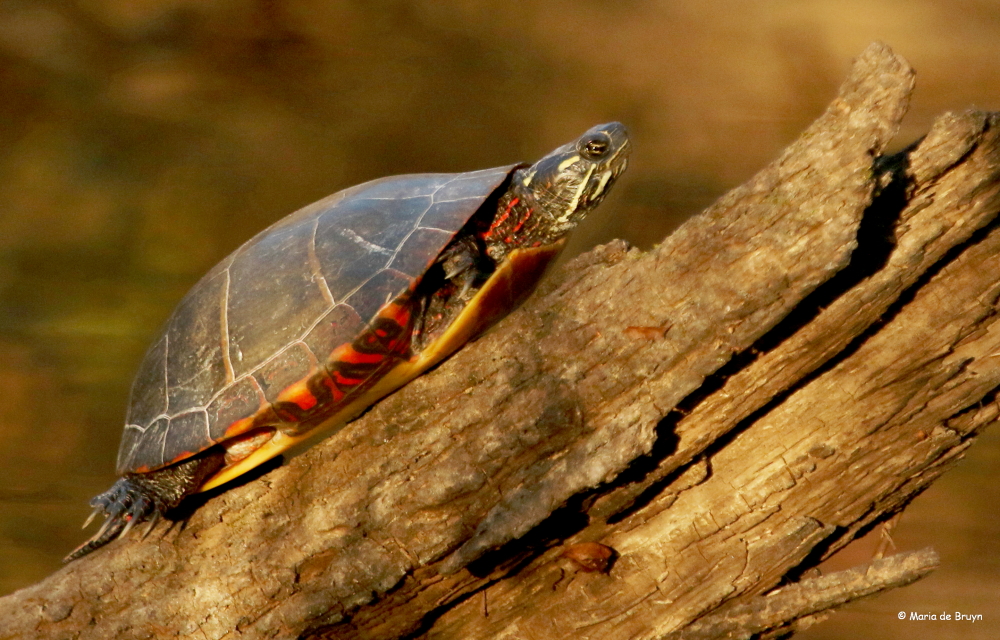
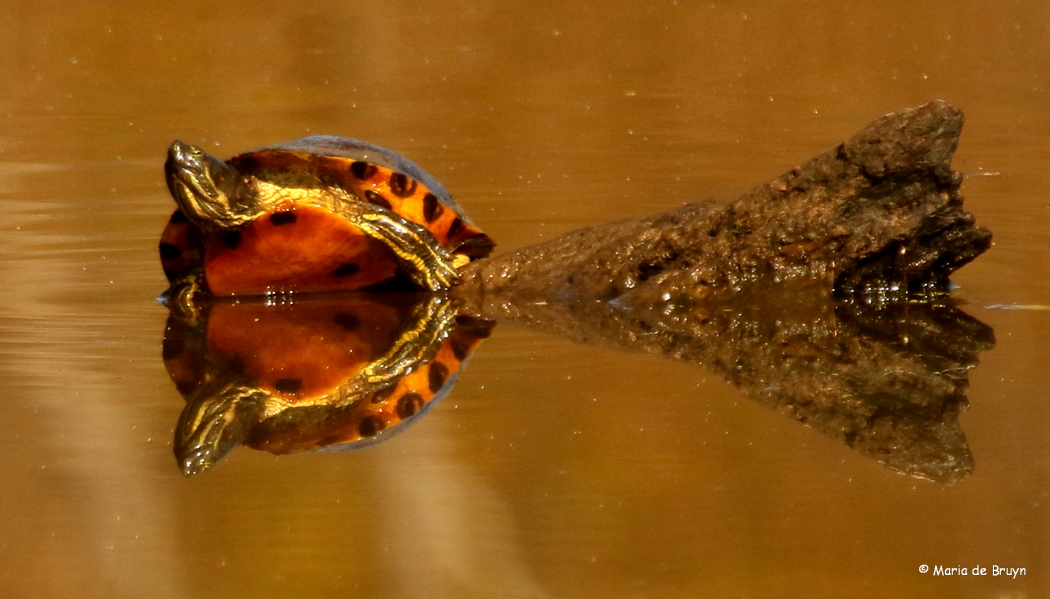
painted-turtle-i77a2277-maria-de-bruyn-resToday, I will share some of words of wisdom from a conscientious spiritual leader with you, along with some photos of nature’s beauties seen during my walks at the Cane Creek Reservoir, Sandy Creek Park and Mason Farm Biological Reserve just before and since the November election. It’s a bit of a long blog but offers some visual sustenance to ponder, like the painted turtle (Chrysemys picta, above) at Mason Farm and the yellow-bellied slider (Trachemys scripta scripta) at Sandy Creek sunning in the morning sun despite chilly temperatures. (From a distance, the slider looked a bit as if there was something with open jaws in the pond!)

yellow-bellied-slider-i77a2954-maria-de-bruyn-res

flower-77a1303maria-de-bruyn-res


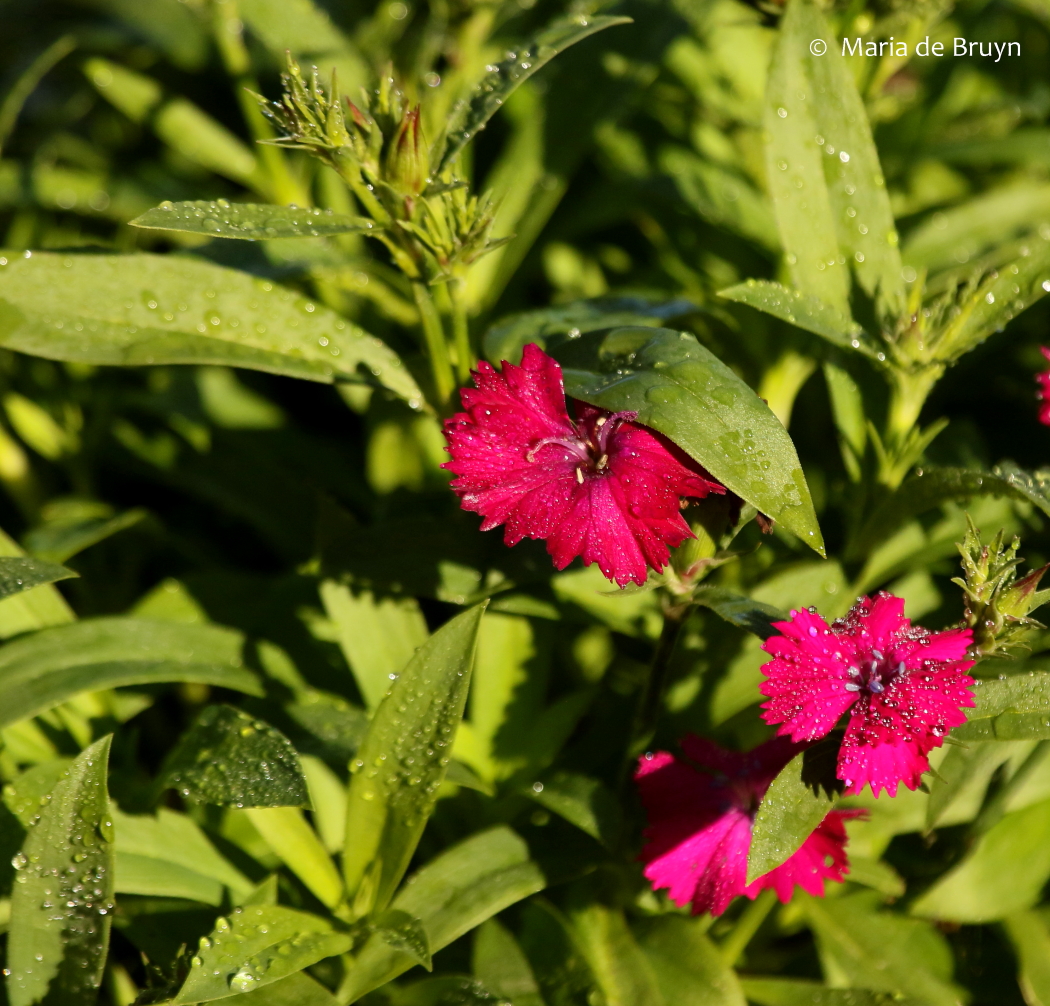
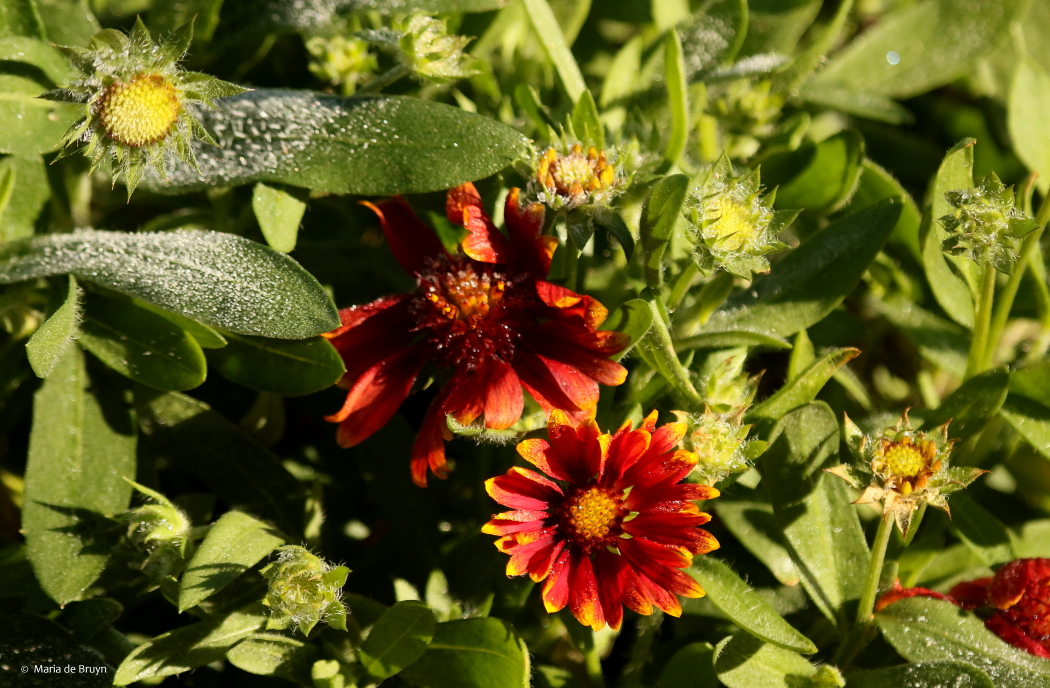
Early in the morning, you can find frost- and dew-covered plants and a few remaining flowers glistening in the sun.


blanket-flower-i77a1309maria-de-bruyn-res  henbit-i77a0825maria-de-bruyn-res

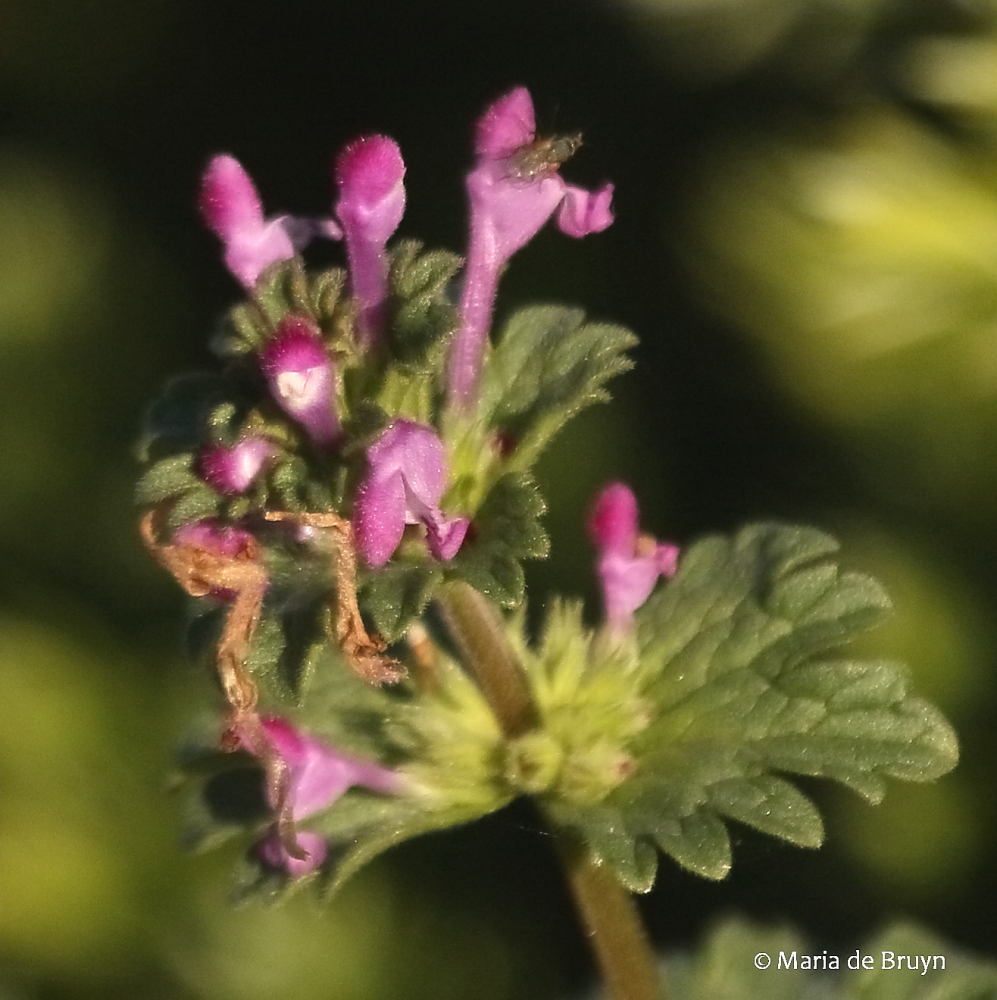
Blanket flower (Gaillardia)                           Henbit (Lamium amplexicaule)

leaf-bird-i77a2906-maria-de-bruyn-res


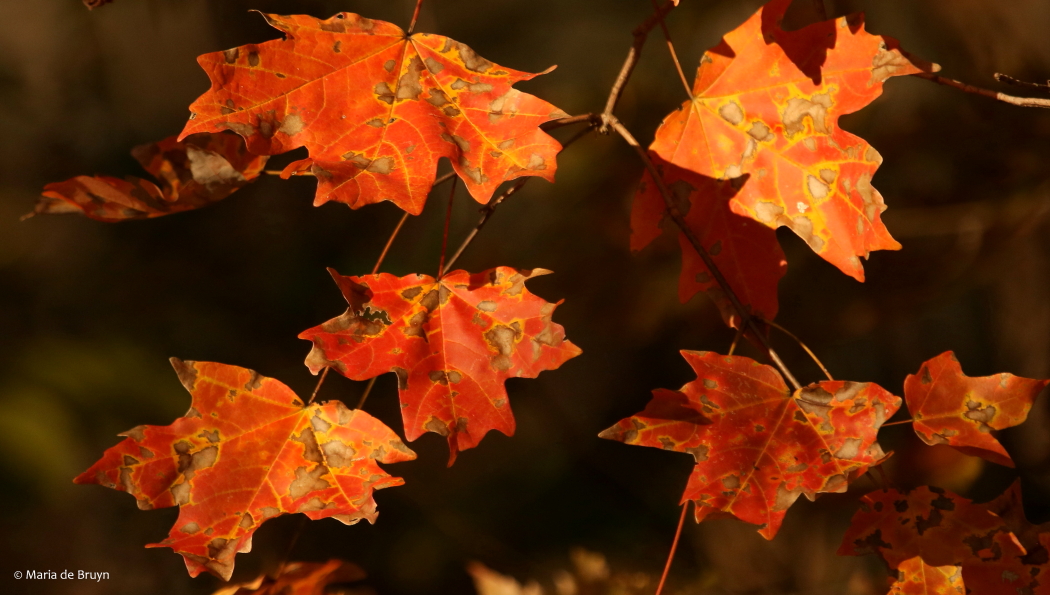
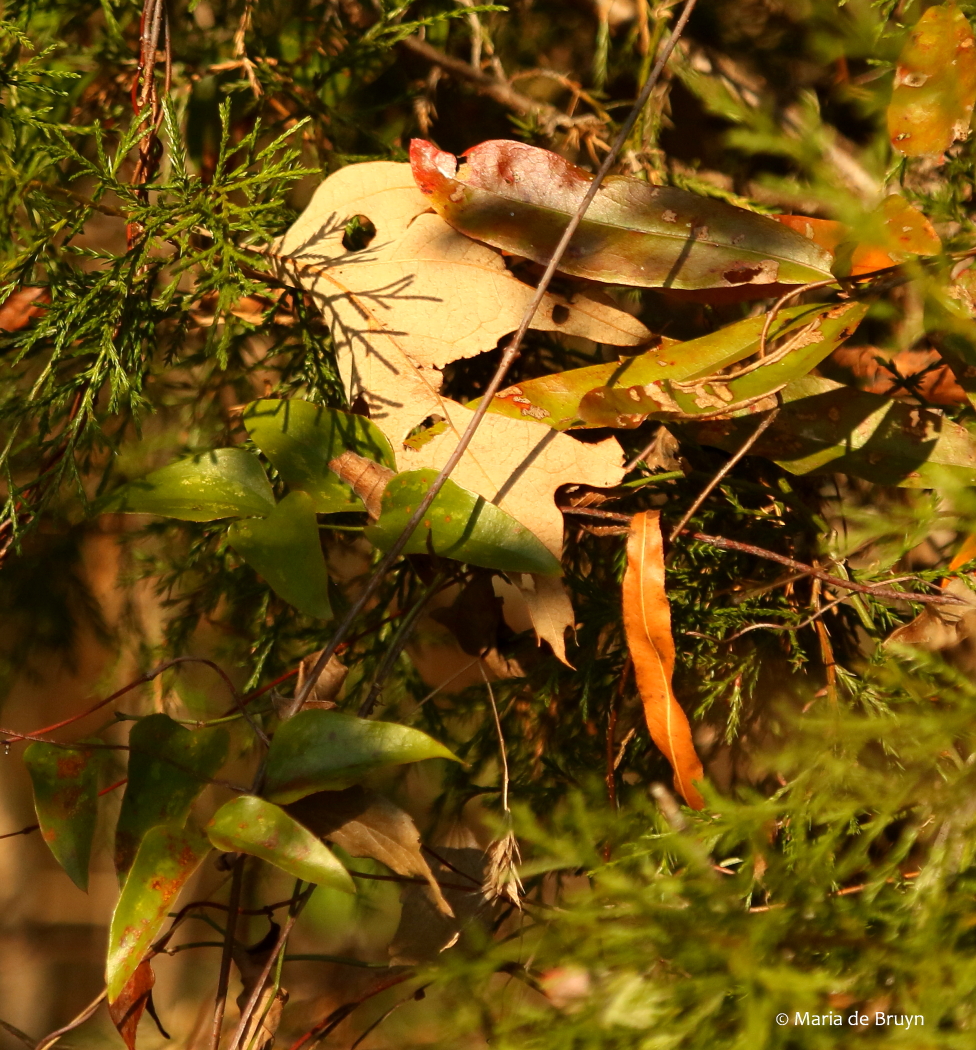
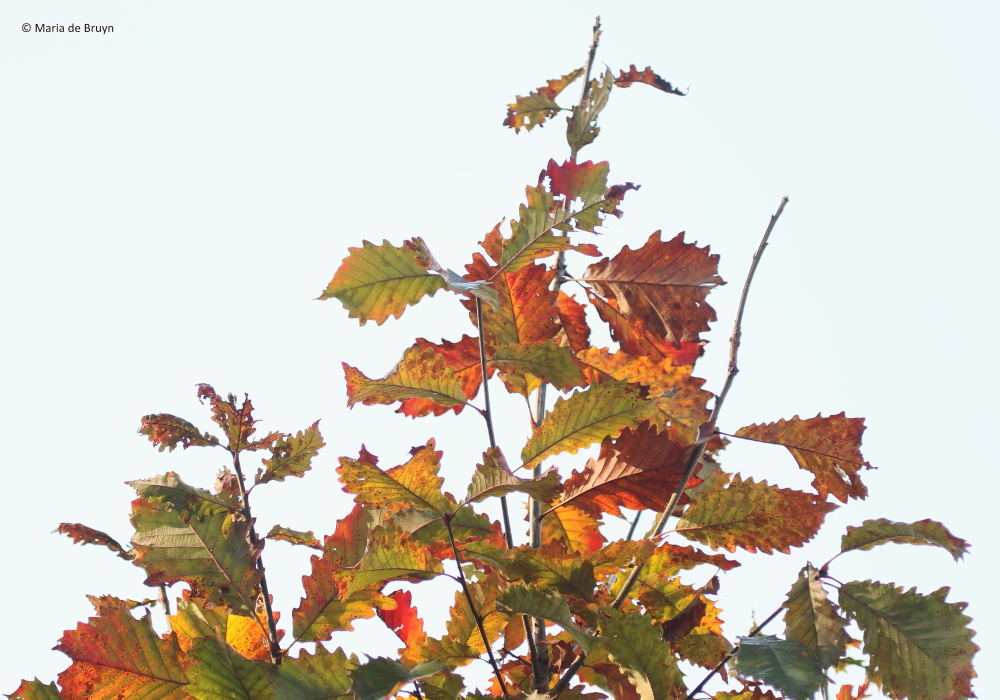
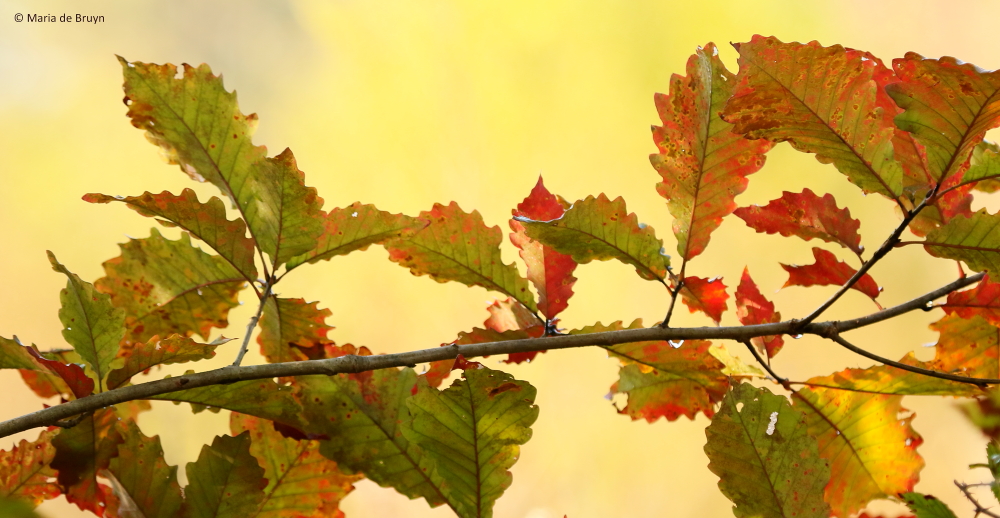
Later in the morning, the autumn-colored leaves make nice patterns as you search for birds high and low. And occasionally you get to see the fabled “leaf bird”.


leaves-i77a2893-maria-de-bruyn-res   leaves-i77a2882-maria-de-bruyn-res

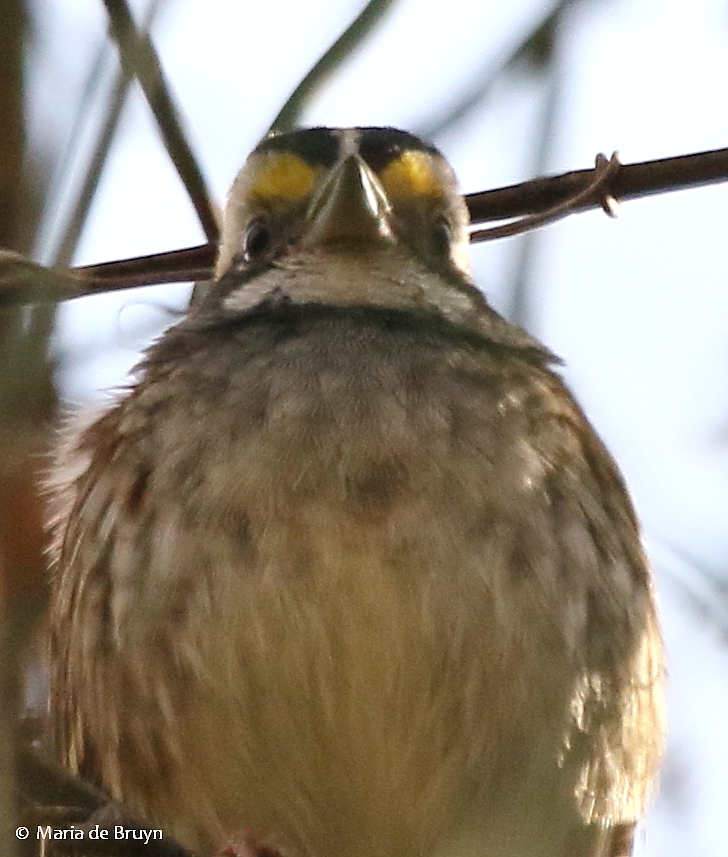
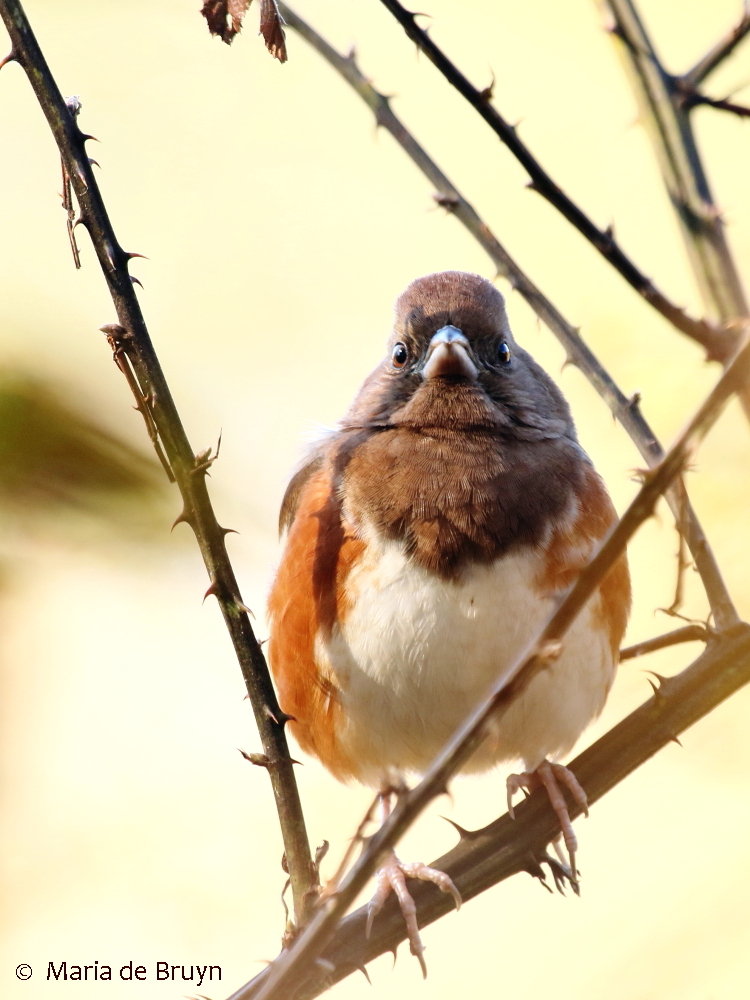
When looking high, you may find the birds looking down on you; face-level stares as you gaze straight ahead may also occur!

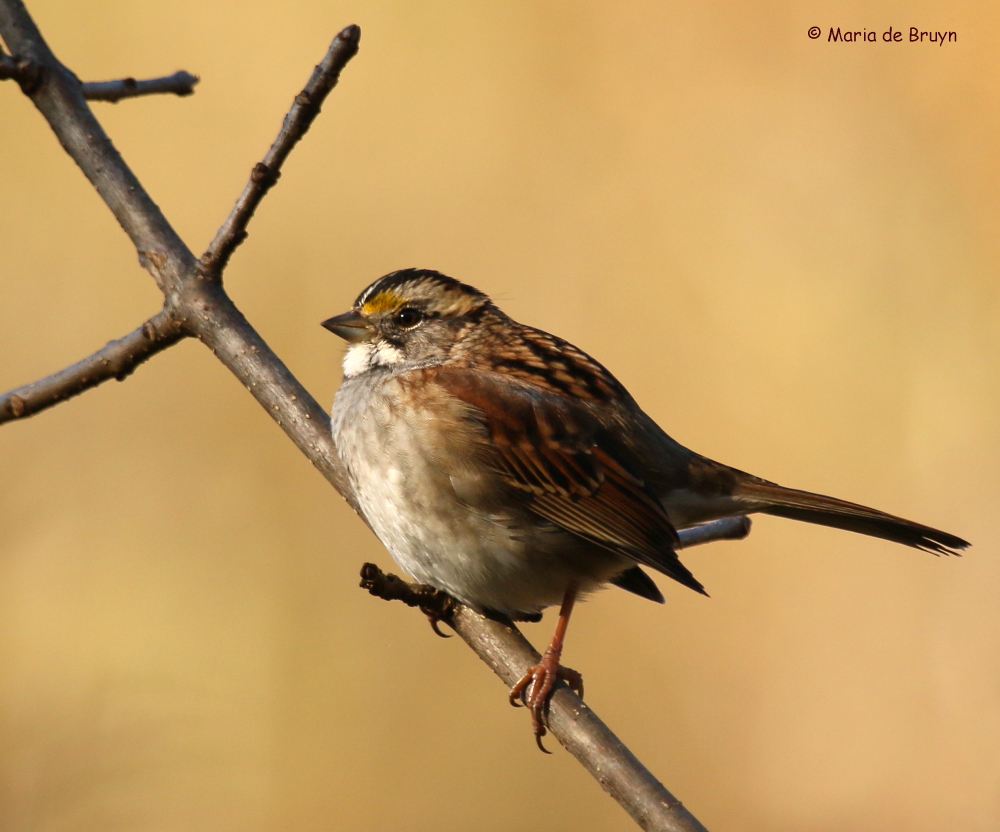
white-throated-sparrow-i77a6365-maria-de-bruyn-res                     eastern-towhee-i77a1659maria-de-bruyn-res

White-throated sparrow (Zonotrichia albicollis)  Eastern towhee (Pipilo erythrophthalmus)

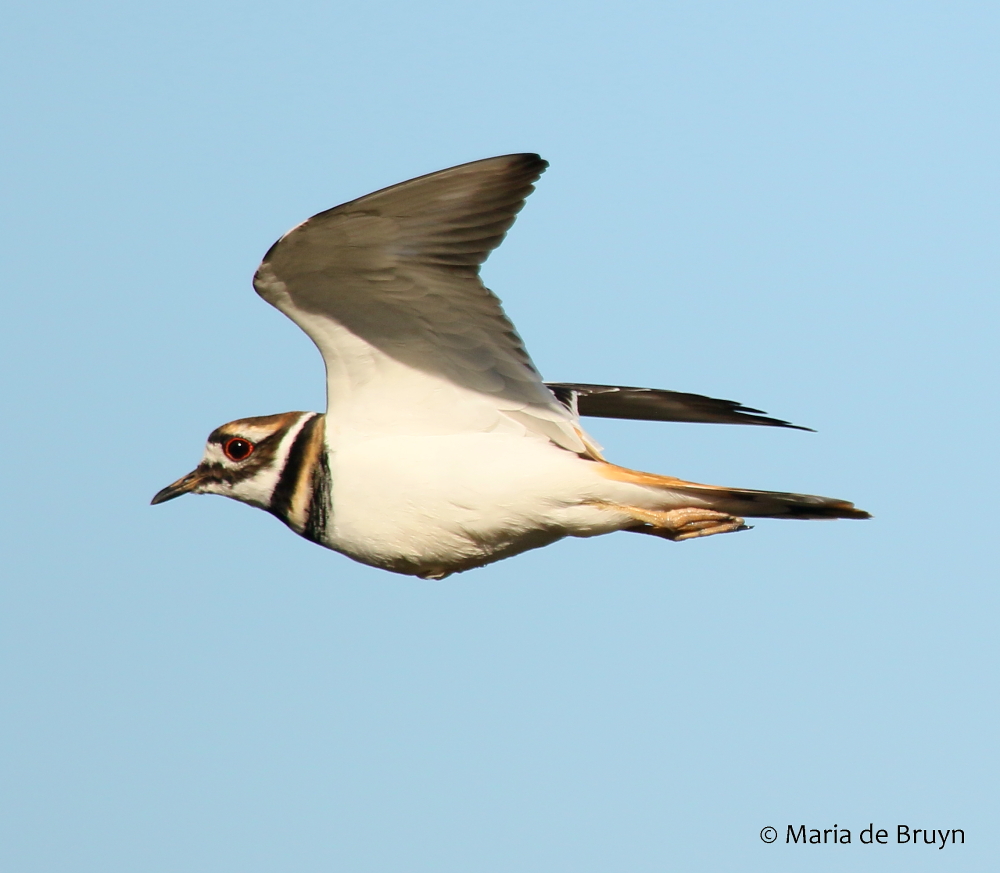
killdeer-i77a0916maria-de-bruyn-res


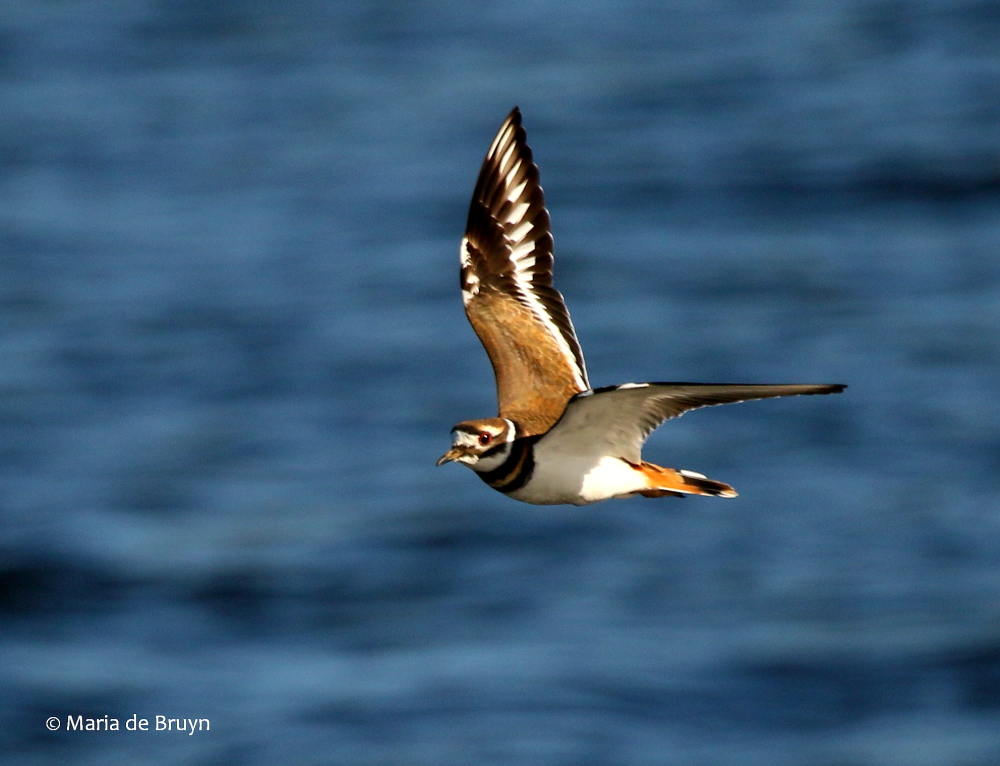
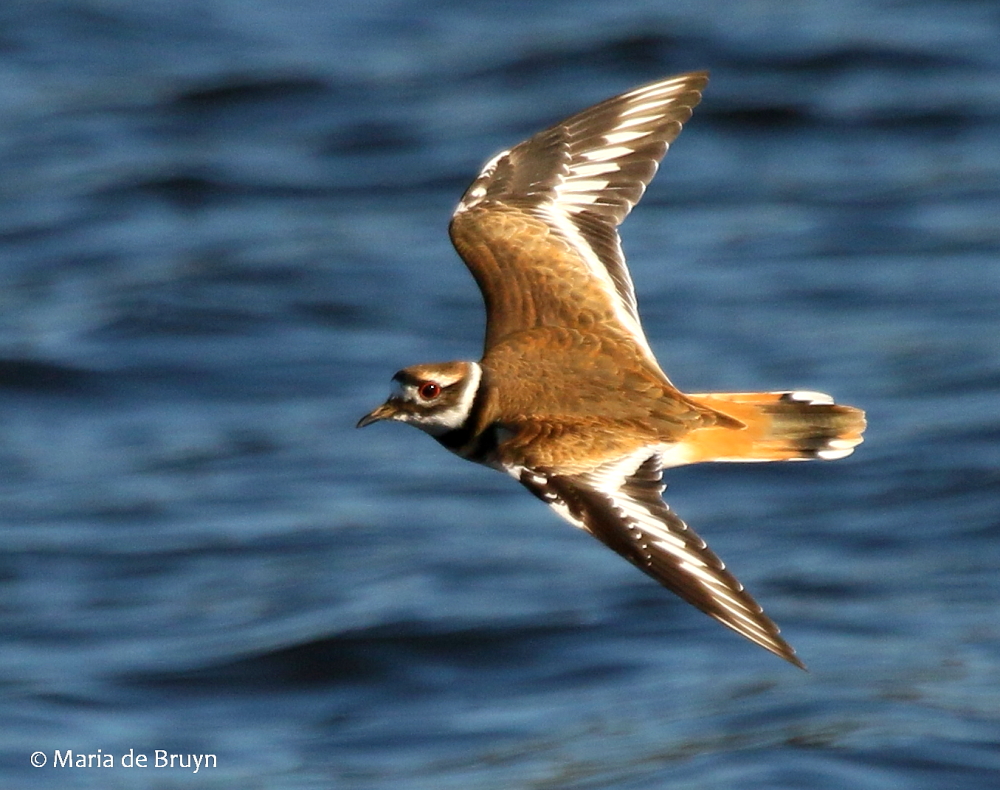
At Cane Creek, the killdeer (Charadrius vociferous) make their presence known by their distinctive calls and you can enjoy their gorgeous appearance as they fly over the lake.


killdeer-i77a0913maria-de-bruyn-res  killdeer-i77a0911maria-de-bruyn-res

Taking care of our planet is like taking care of our houses. Since we human beings come from Nature, there is no point in our going against Nature, which is why I say the environment is not a matter of religion or ethics or morality. These are luxuries, since we can survive without them. But we will not survive if we continue to go against Nature.  – Dalai Lama

red-bellied-woodpecker-i77a2988maria-de-bruyn-res


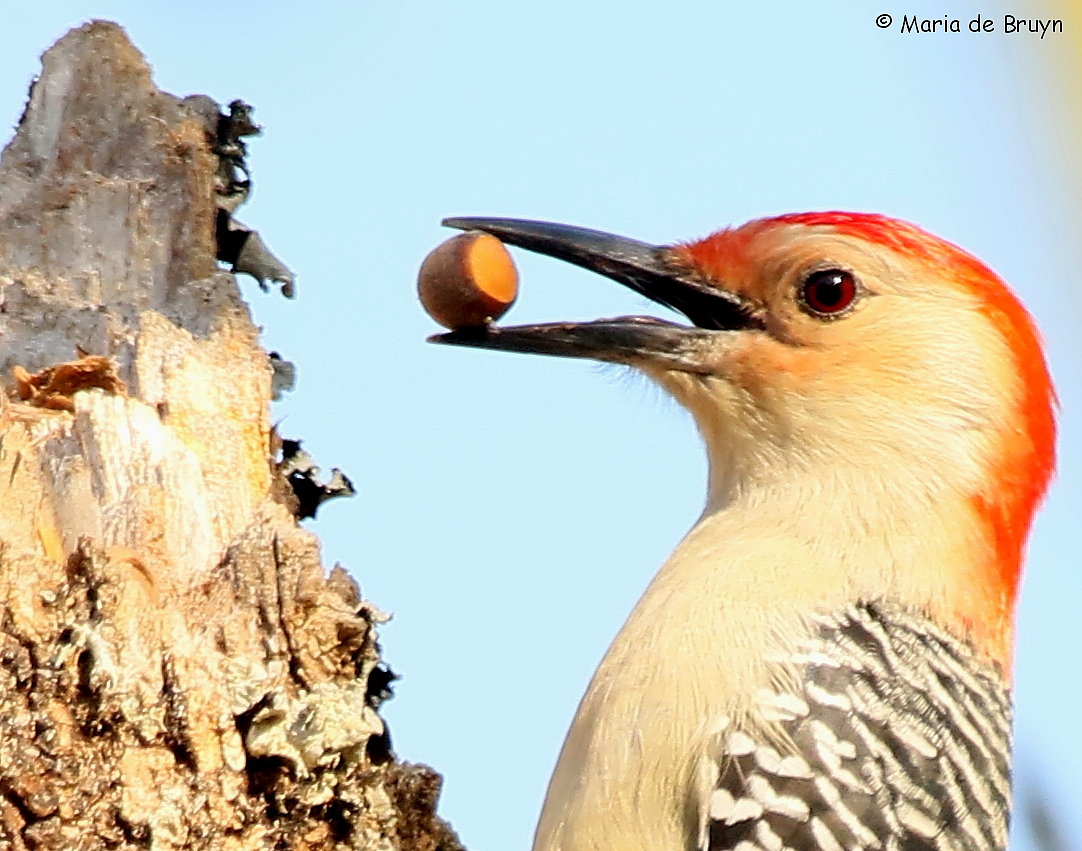
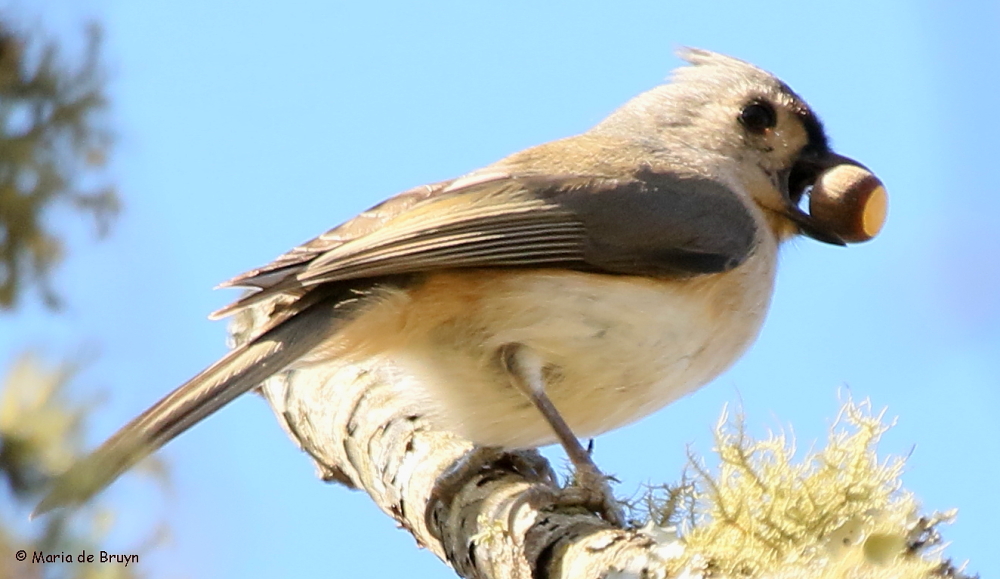
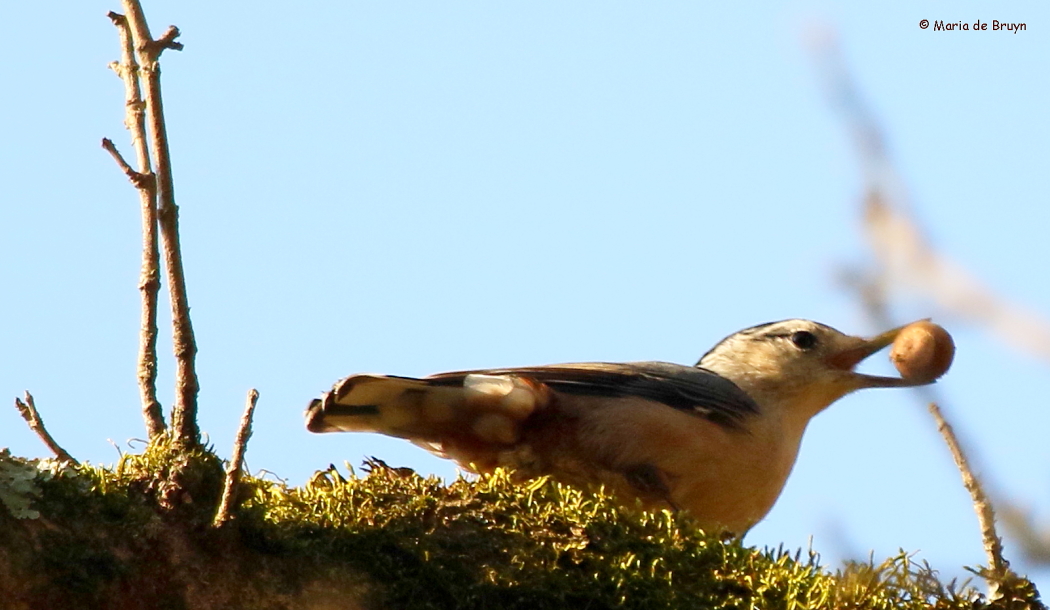
Many birds, like this red-bellied woodpecker (Melanerpes carolinus), are busy finding seeds and nuts for their meals.


tufted-titmouse-i77a1965maria-de-bruyn-res  white-breasted-nuthatch-i77a2671maria-de-bruyn-res

Tufted titmouse (Baeolophus bicolor)          White-breasted nuthatch (Sitta carolinensis)

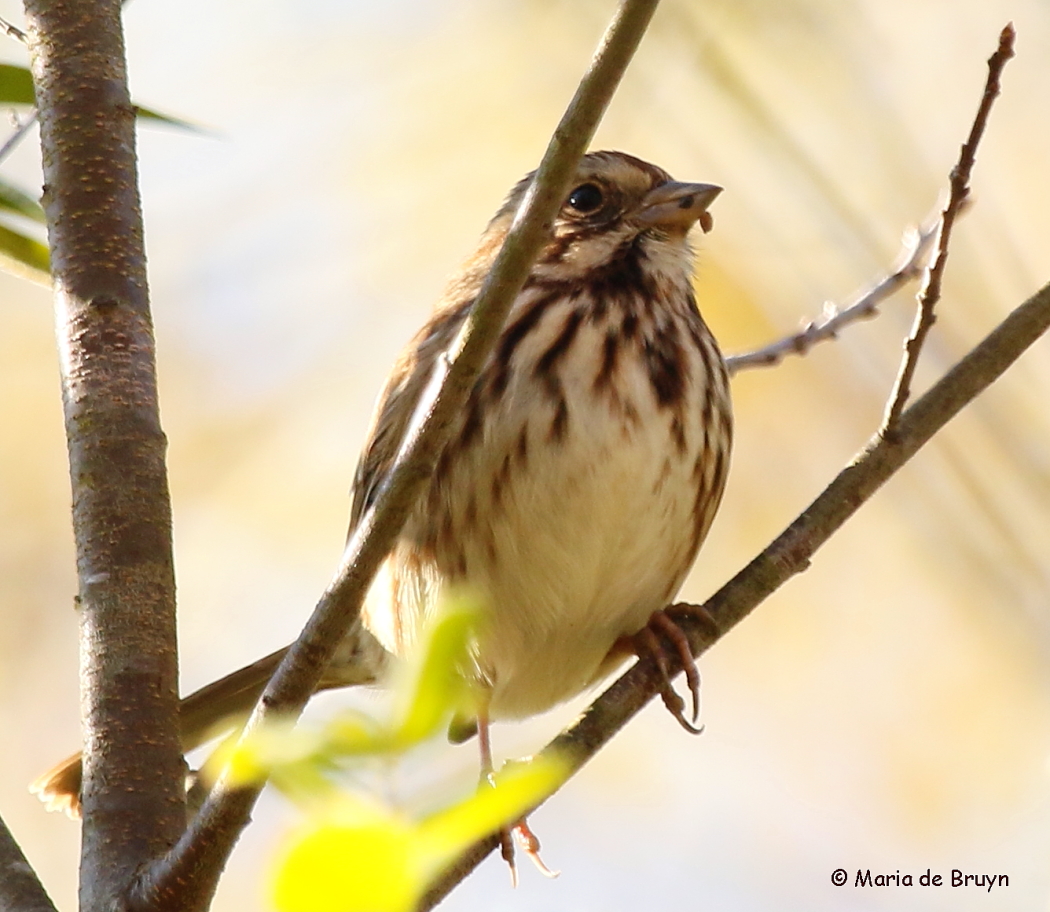
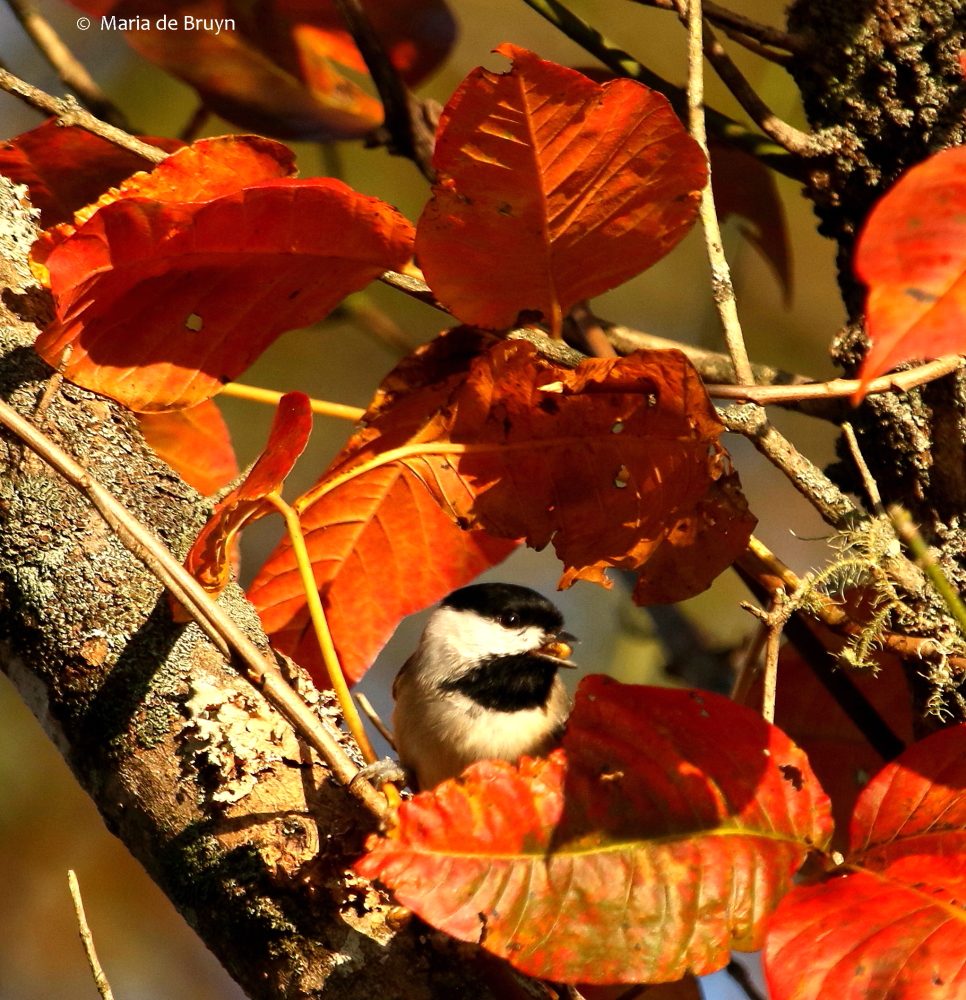
song-sparrow-i77a1499maria-de-bruyn-res   carolina-chickadee-i77a8444-maria-de-bruyn-res

Song sparrow (Melospiza melodia)                 Carolina chickadee (Poecile carolinensis)

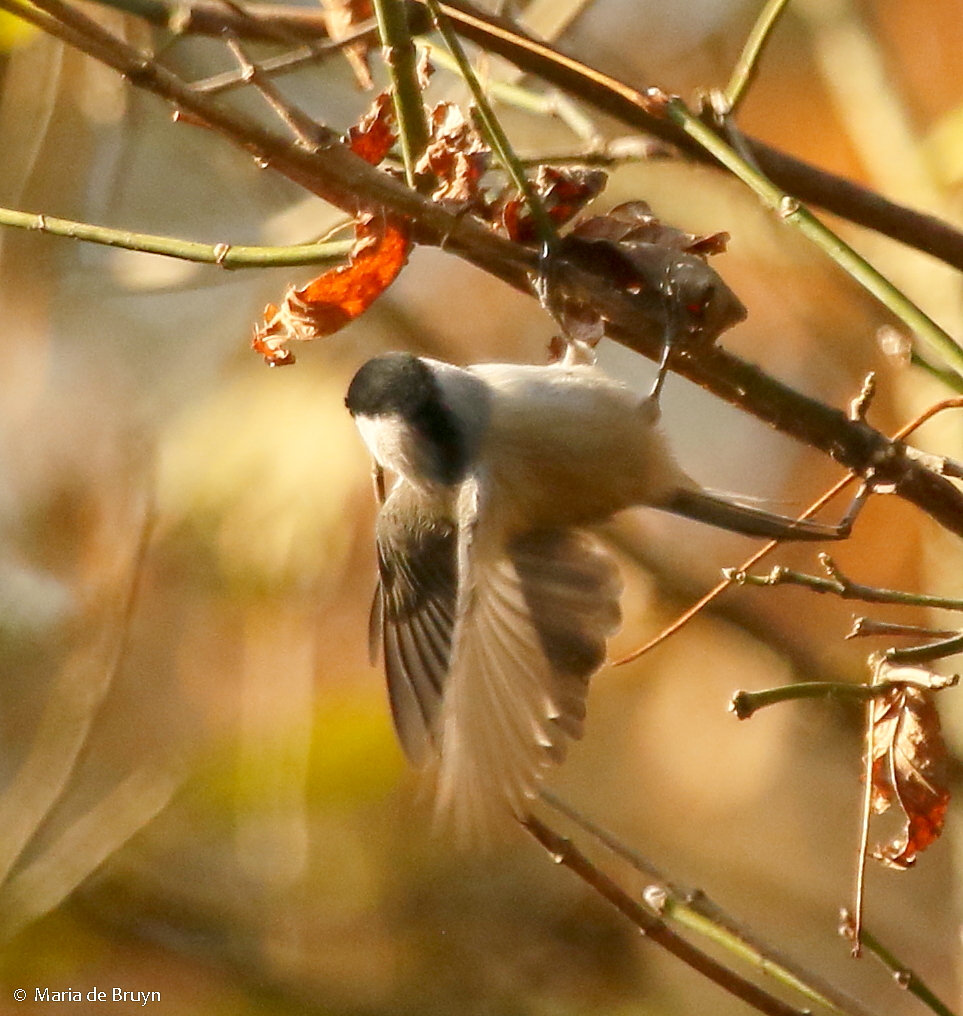
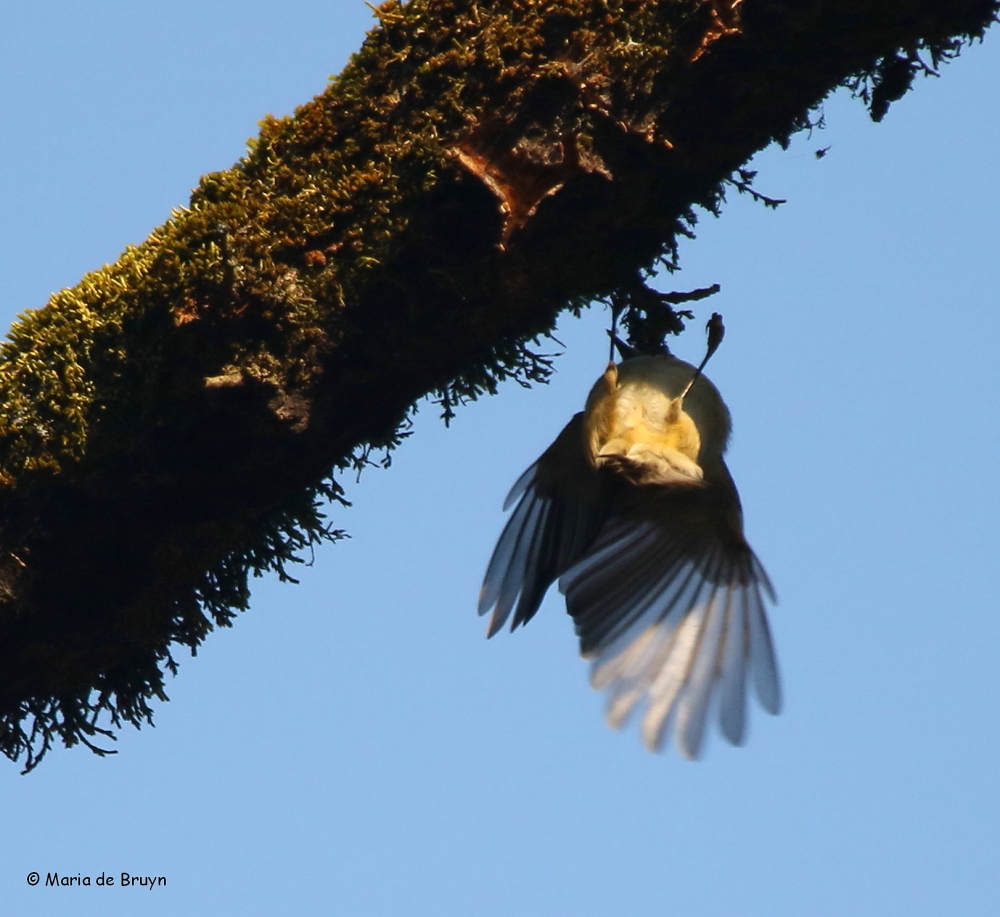
Sometimes, it involves hanging upside down to snag a tasty morsel and their wings help in balancing.

carolina-chickadee-i77a2699maria-de-bruyn    ruby-crowned-kinglet-i77a2565-maria-de-bruyn-res

Carolina chickadee                                    Ruby-crowned kinglet (Regulus calendula)

If we unbalance Nature, humankind will suffer. Furthermore, as people alive today, we must consider future generations: a clean environment is a human right like any other. It is therefore part of our responsibility towards others to ensure that the world we pass on is as healthy, if not healthier, than when we found it. – Dalai Lama

american-crow-i77a6327-maria-de-bruyn-res


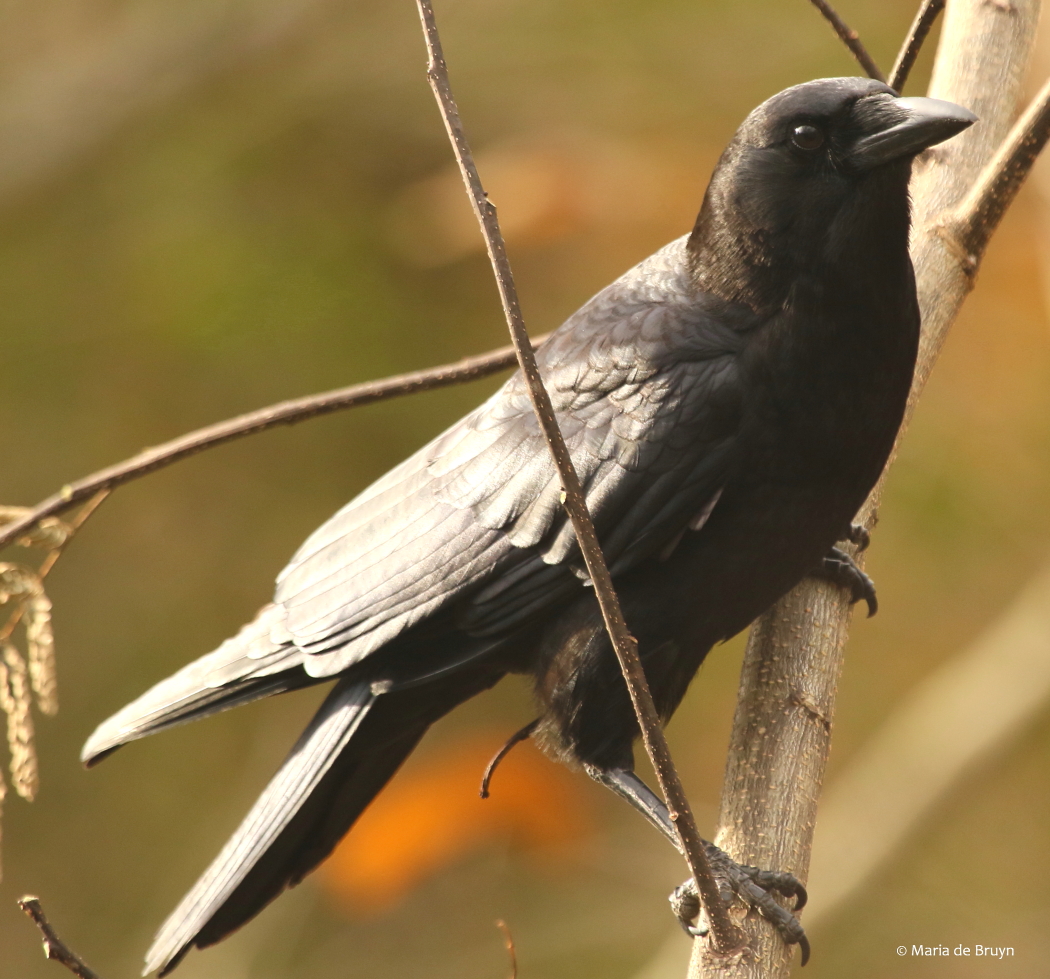
At Sandy Creek, a group of American crows (Corvus brachyrhynchos) flew down to investigate what had dropped to the ground from an overflowing garbage can but they soon flew off to seek more normal food elsewhere.


great-blue-heron-i77a1936maria-de-bruyn-res


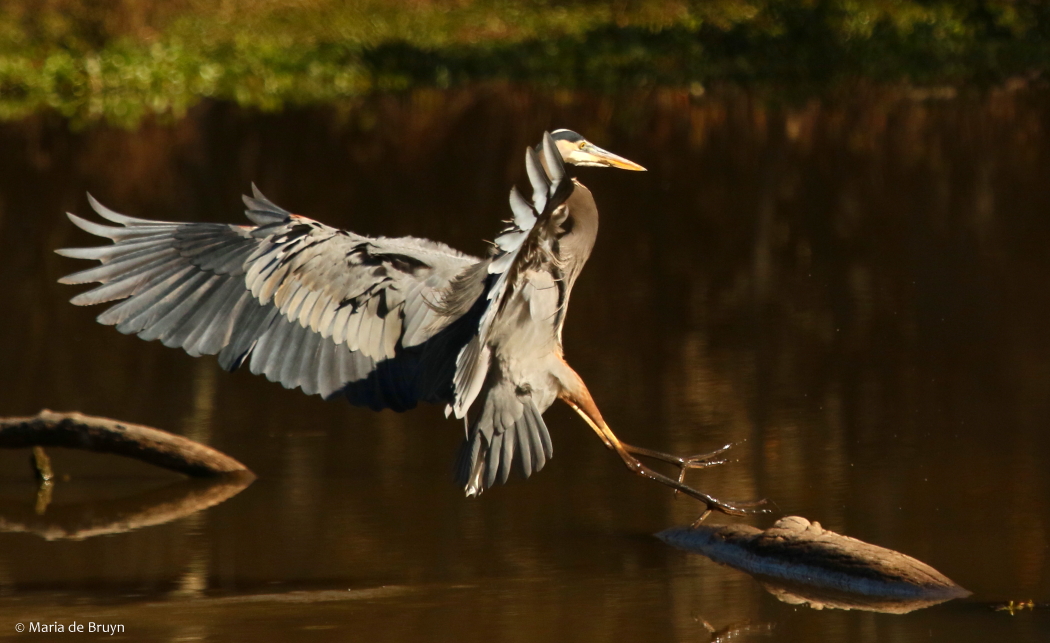
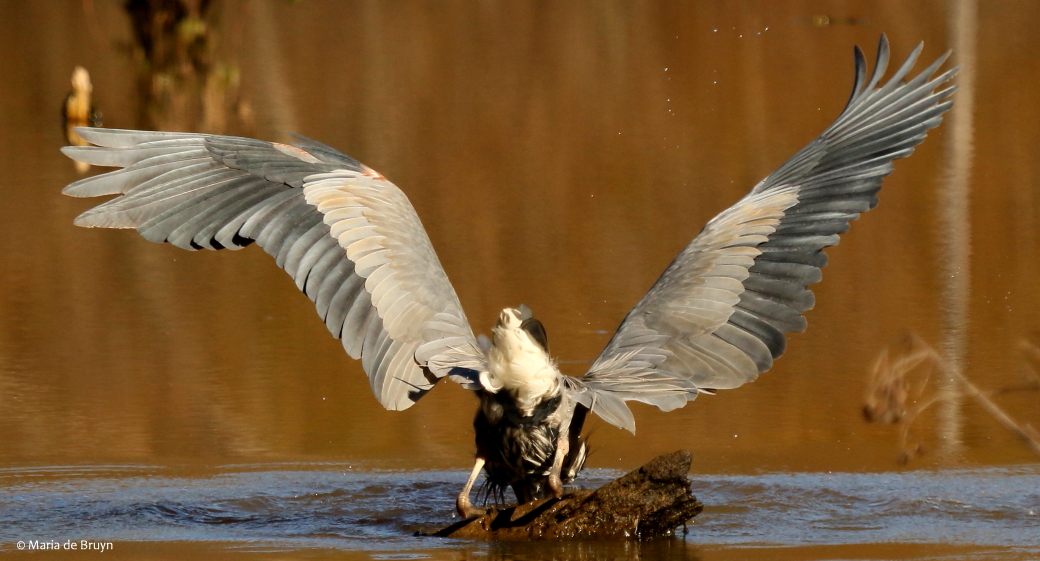
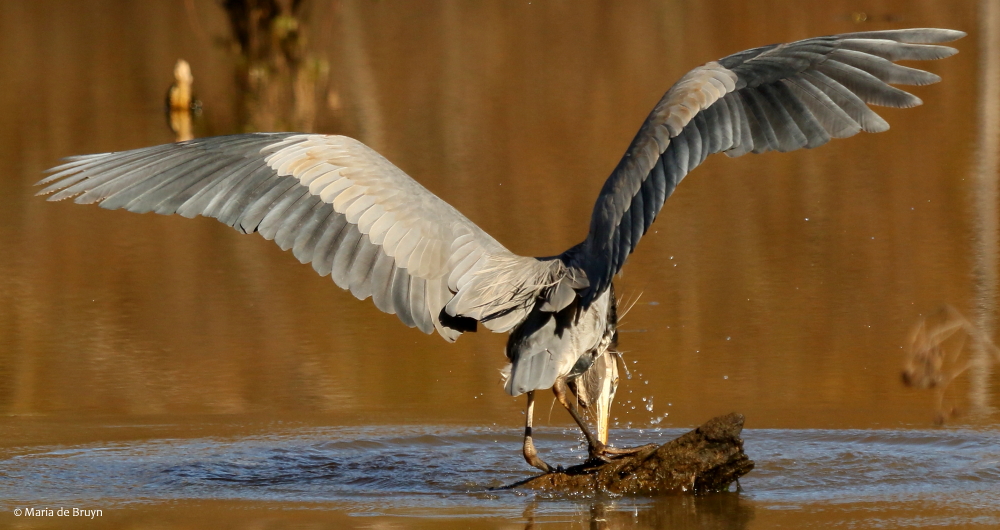
A great blue heron (Ardea herodias) was stalking the pond for fish; after I saw him (or her) snag a medium-sized fish, he turned his back so I saw the fishing technique from the rear.

great-blue-heron-i77a1438maria-de-bruyn-2-res  great-blue-heron-i77a1440maria-de-bruyn-res

flowering-dogwood-i77a0882maria-de-bruyn-res


The flowering dogwoods (Cornus florida) at Cane Creek still had a few blossoms; at Sandy Creek and Mason Farm, they offered bright berries. On one tree, they made me think of a movie-inspired alien peeking out of the branches with eyes on stalks.


flowering-dogwood-i77a5820-maria-de-bruyn-res       flowering-dogwood-i77a1012maria-de-bruyn-res

Destruction of nature and nature resources results from ignorance, greed and lack of respect for the earth’s living things. – Dalai Lama

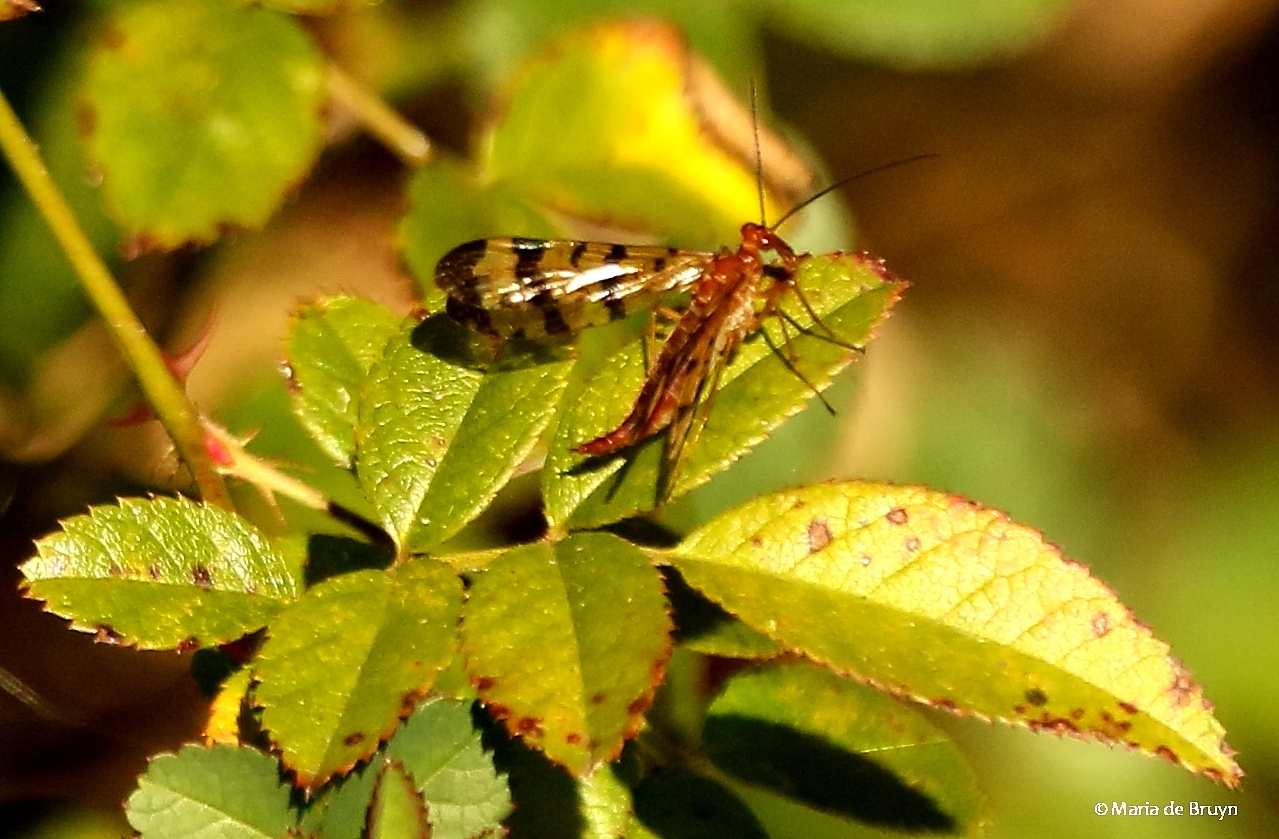
Up until the first morning frost this autumn, butterflies were still around, like this sleepy orange (Eurema nicippe); now that we have had several mornings of below-freezing temperatures, the butterflies are mostly gone as are the majority of bees. A scorpion fly (Panorpa) was in evidence at Cane Creek to my surprise.

sleepy-orange-i77a1003maria-de-bruyn-res  scorpion-fly-i77a0991maria-de-bruyn-res

eastern-gray-squirrel-i77a2505-maria-de-bruyn-res


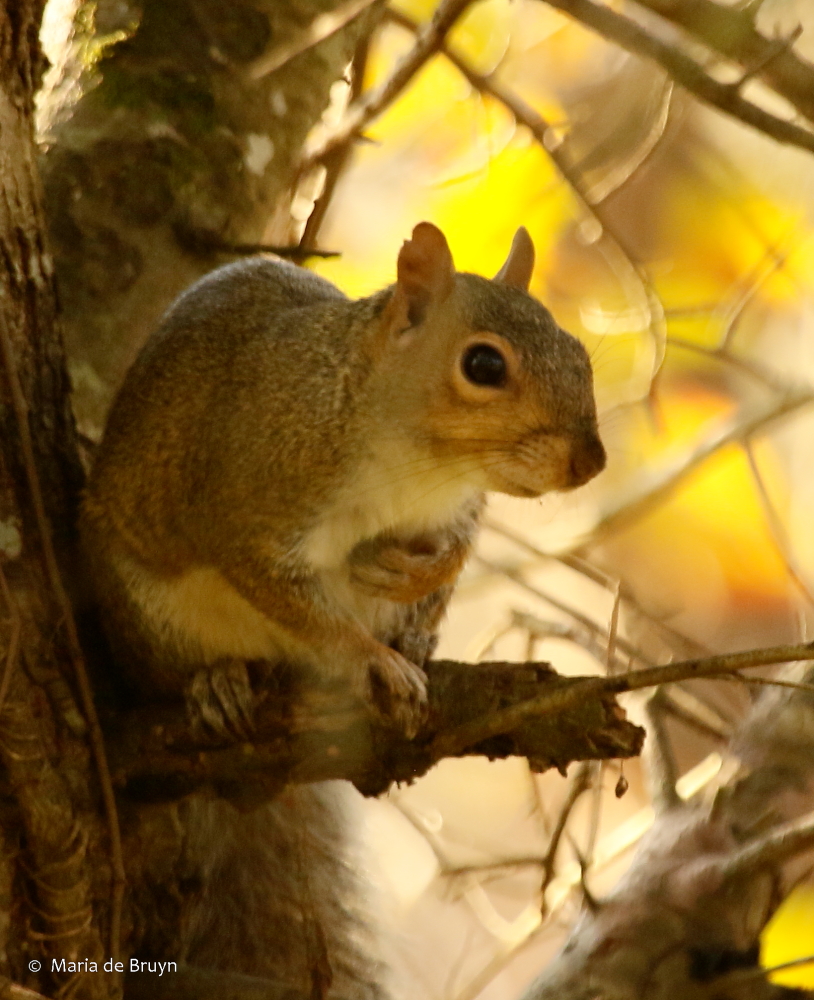
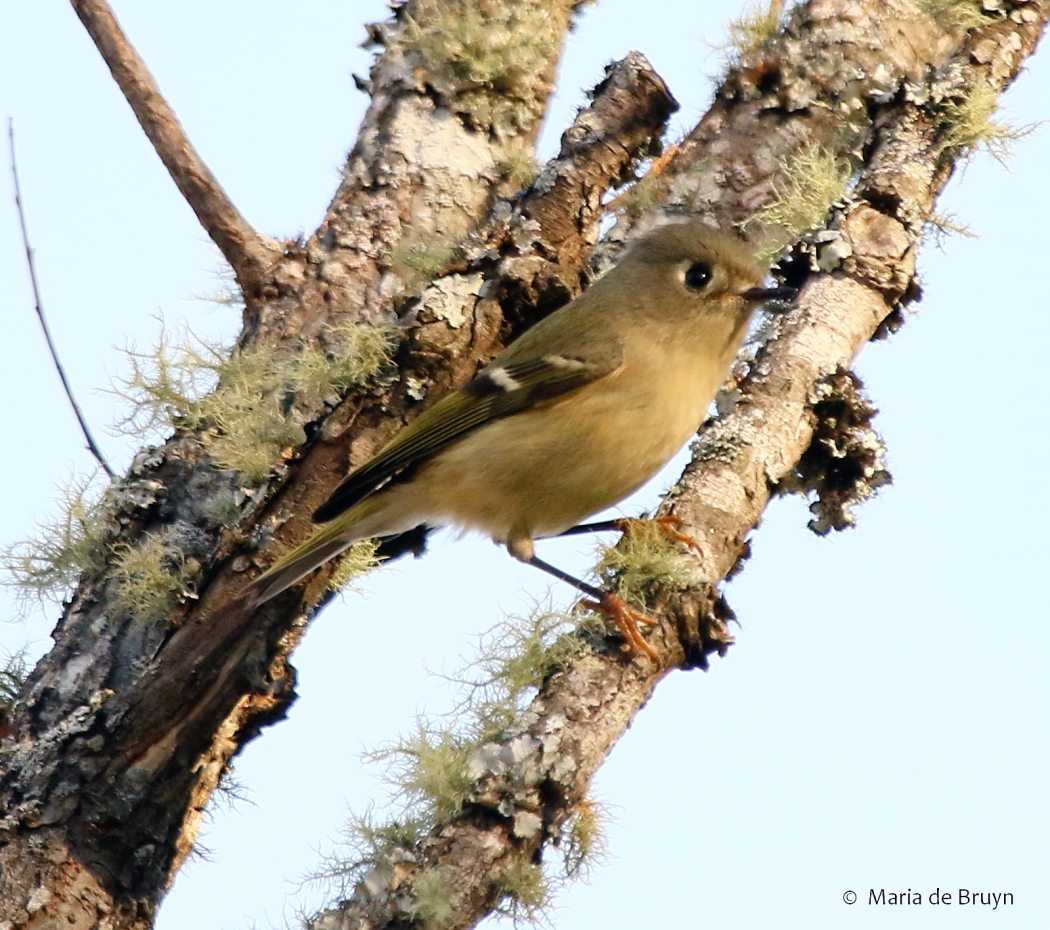
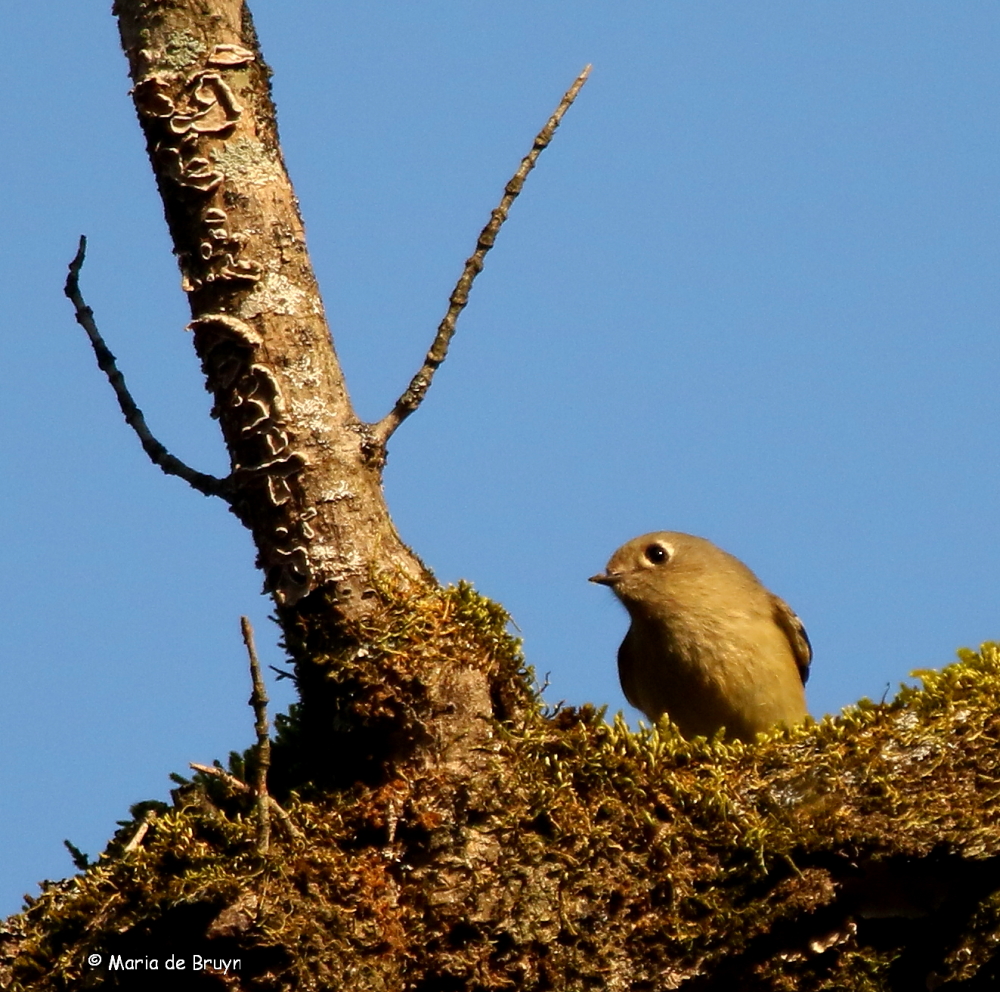
In between bird spottings, Eastern gray squirrels (Sciurus carolinensis) chittered at me at all three parks. And I was pleased to see some ruby-crowned kinglets since the one that has enjoyed the suet at my house the past three years hasn’t appeared yet.


ruby-crowned-kinglet-i77a6241-maria-de-bruyn-res     ruby-crowned-kinglet-i77a2574-maria-de-bruyn-res

…until now, Mother Earth has been able to tolerate our sloppy house habits. However, the stage has now been reached where she can no longer accept our behaviour in silence. The problems caused by environmental disasters can be seen as her response to our irresponsible behaviour. She is warning us that there are limits even to her tolerance. –  Dalai Lama

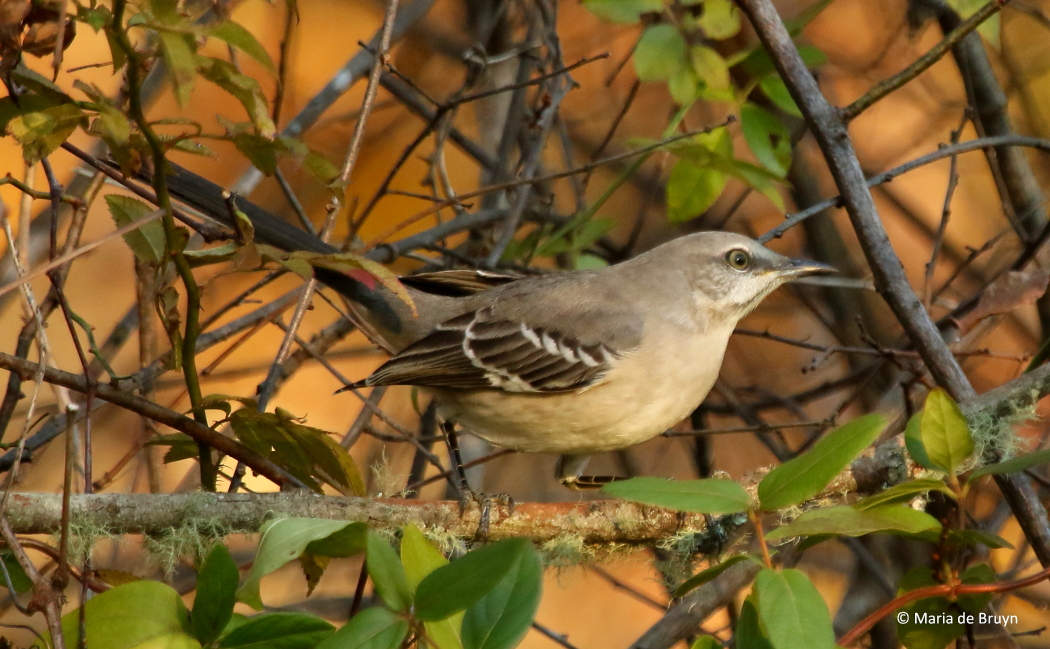
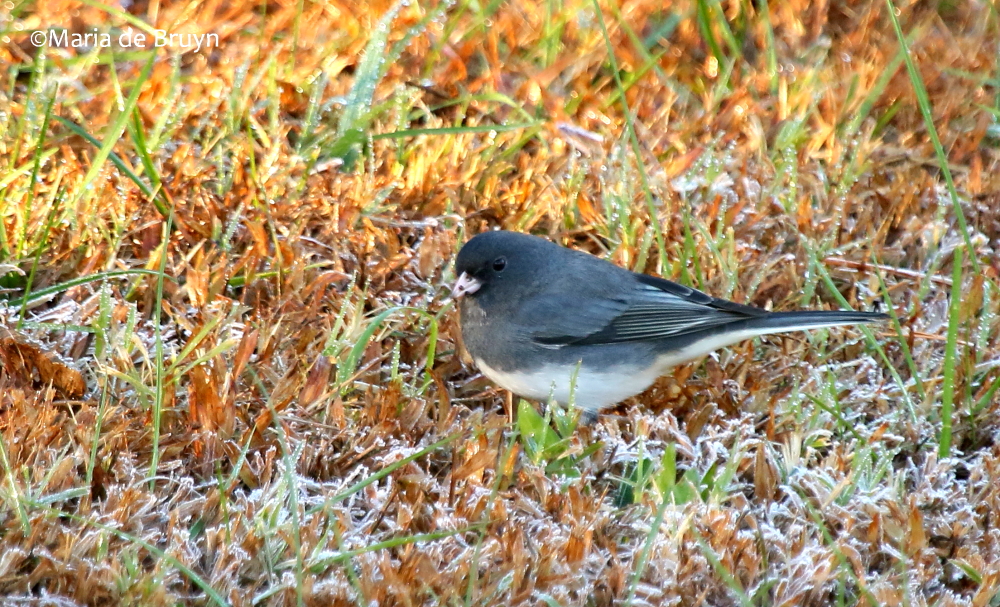
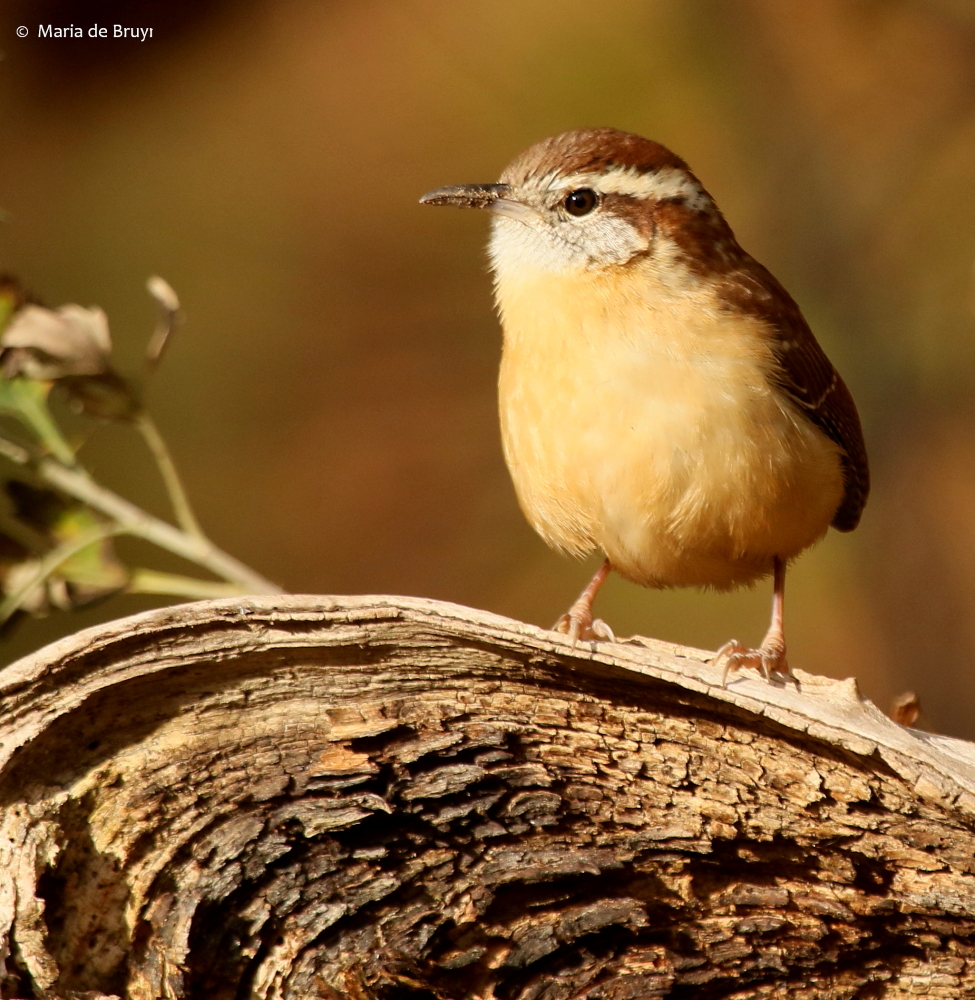
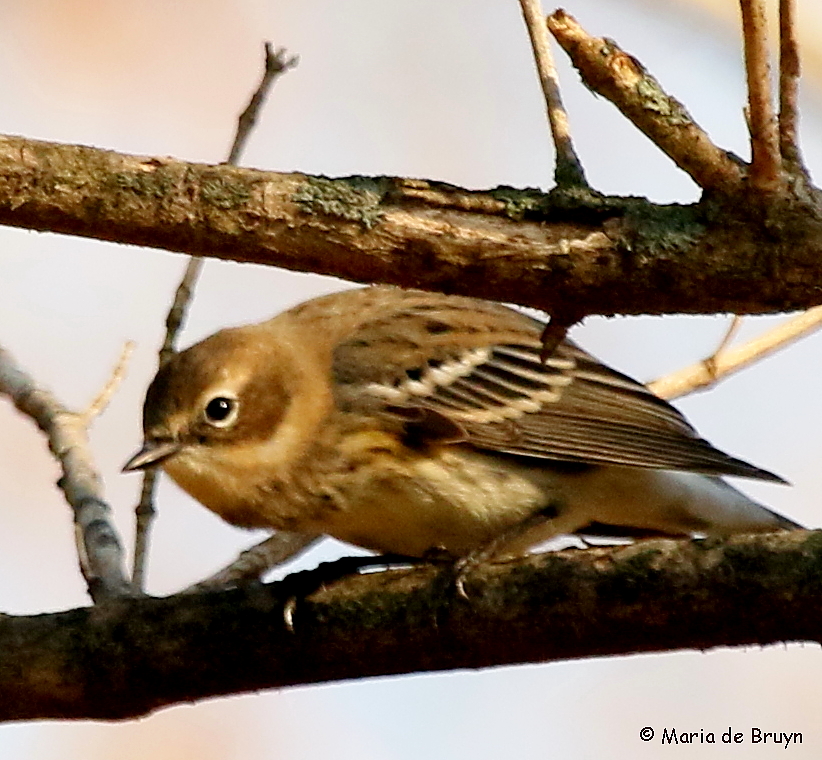
Some of the birds common in my yard are welcome sights at the nature reserves, too.

northern-mockingbird-i77a2312-maria-de-bruyn-res    dark-eyed-junco-i77a0624maria-de-bruyn-res

Northern mockingbird (Mimus polyglottos)         Dark-eyed junco (Junco hyemalis)

carolina-wren-i77a6358-maria-de-bruyn-res   yellow-rumped-warbler-i77a2780maria-de-bruyn-res

Carolina wren (Thryothorus ludovicianus)   Yellow-rumped warbler (Setophaga coronata)

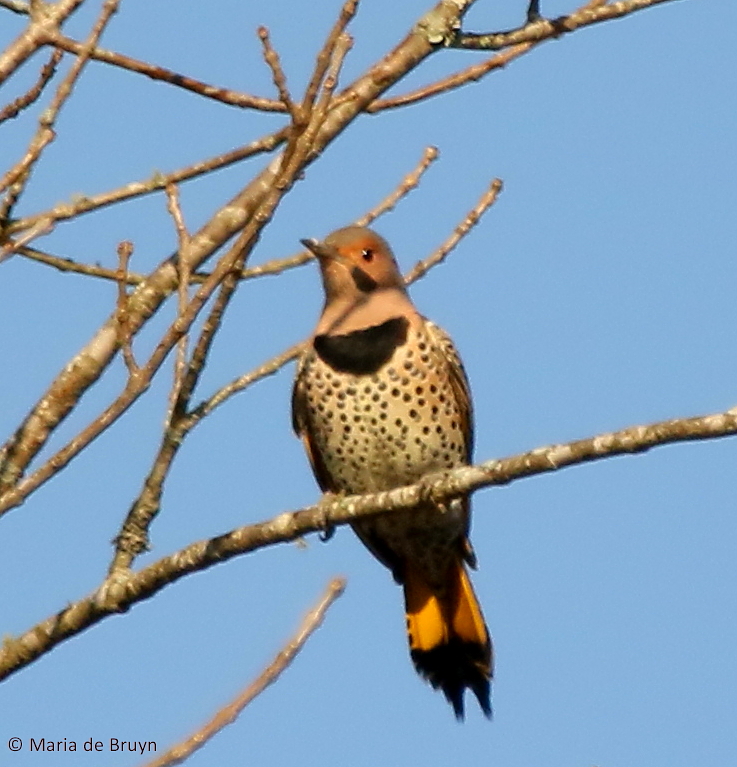
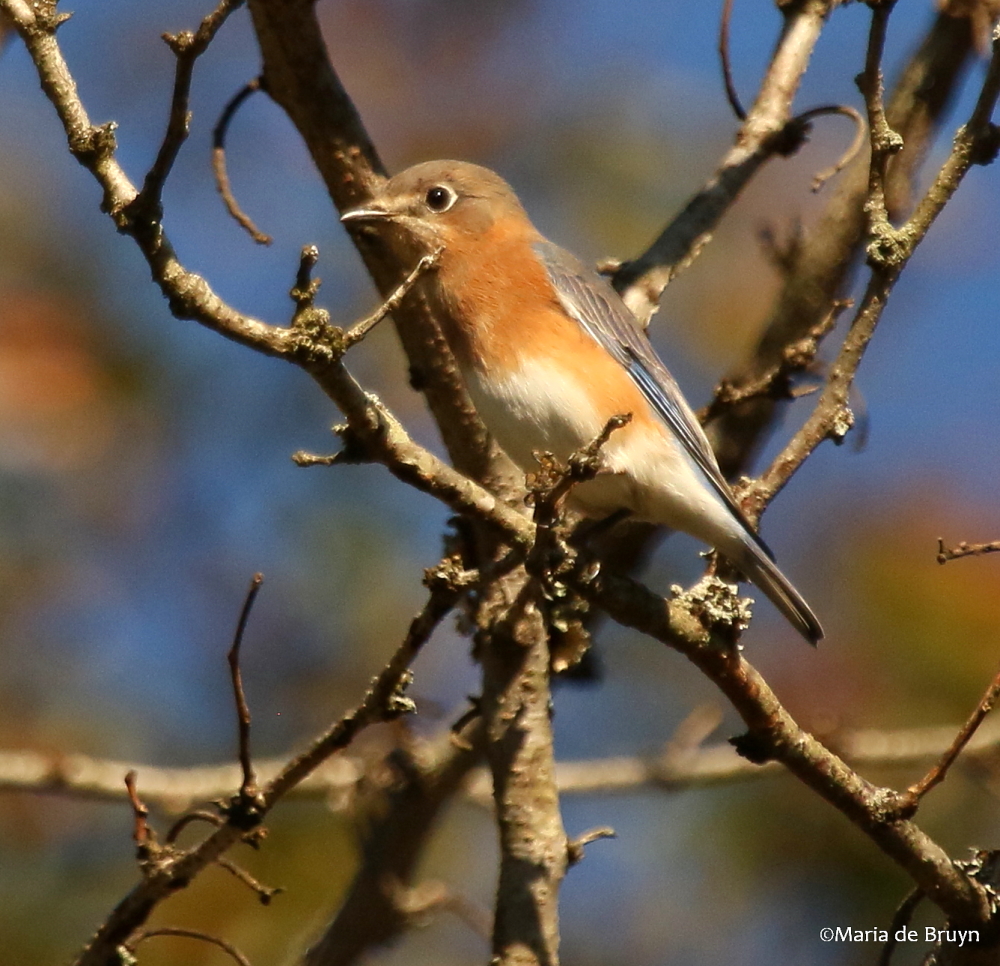
northern-flicker-i77a2485-maria-de-bruyn-res          eastern-bluebird-i77a0688maria-de-bruyn-res

Northern flicker (Colaptes auratus)               Eastern bluebird (Sialia sialis)

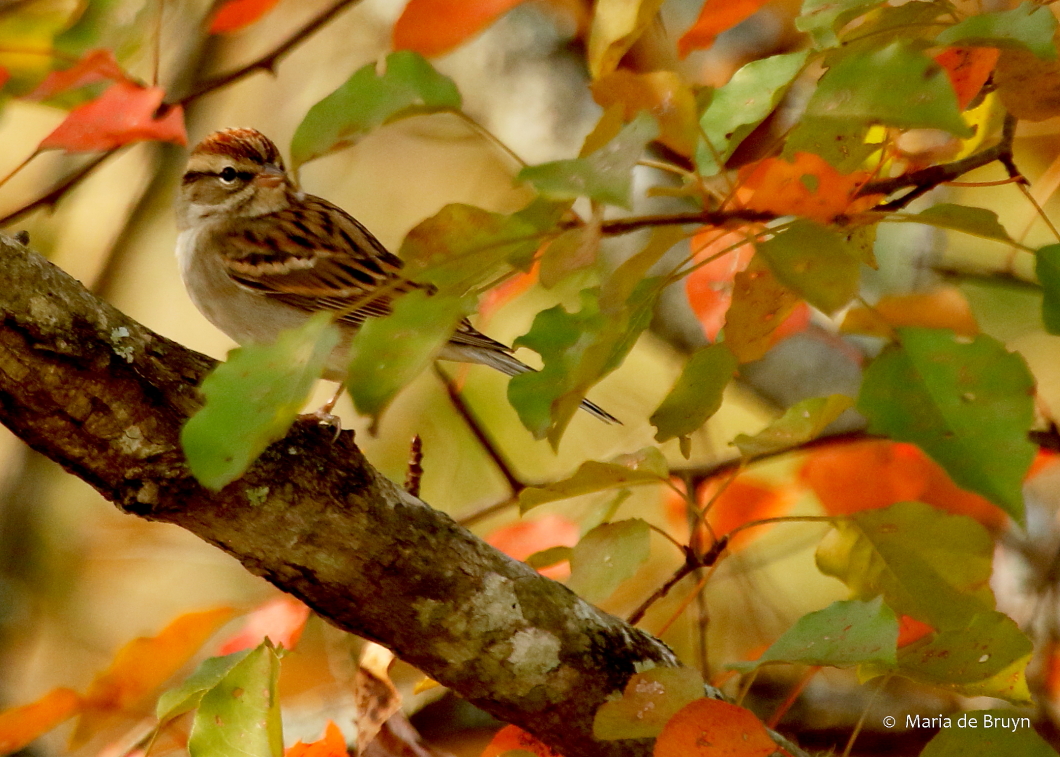
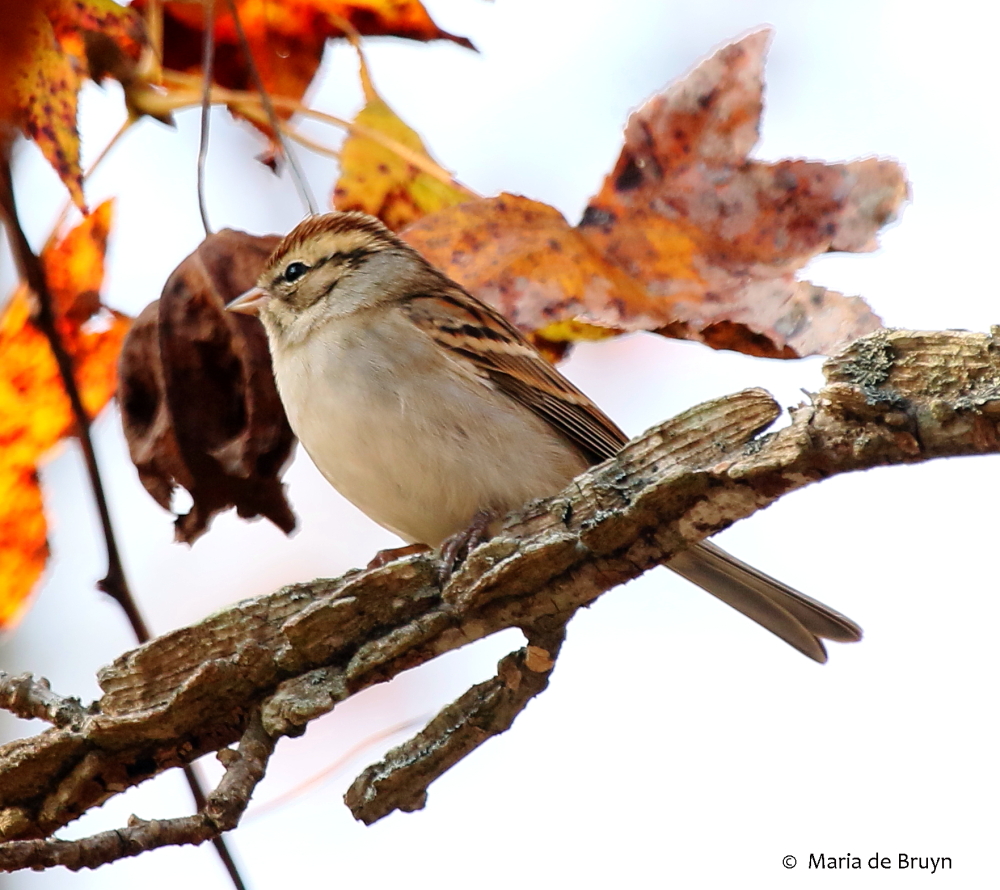
chipping-sparrow-i77a2915-maria-de-bruyn-res    chipping-sparrow-i77a2925-maria-de-bruyn-res

Chipping sparrow (Spizella passerina)

Many of the earth’s habitats, animals, plants, insects, and even microorganisms that we know of as rare or endangered, may not be known at all by future generations. We have the capacity, and the responsibility. We must act before it is too late.    Dalai Lama

And the occasional or rare visitors to my yard are appreciated in the woods and fields, too!

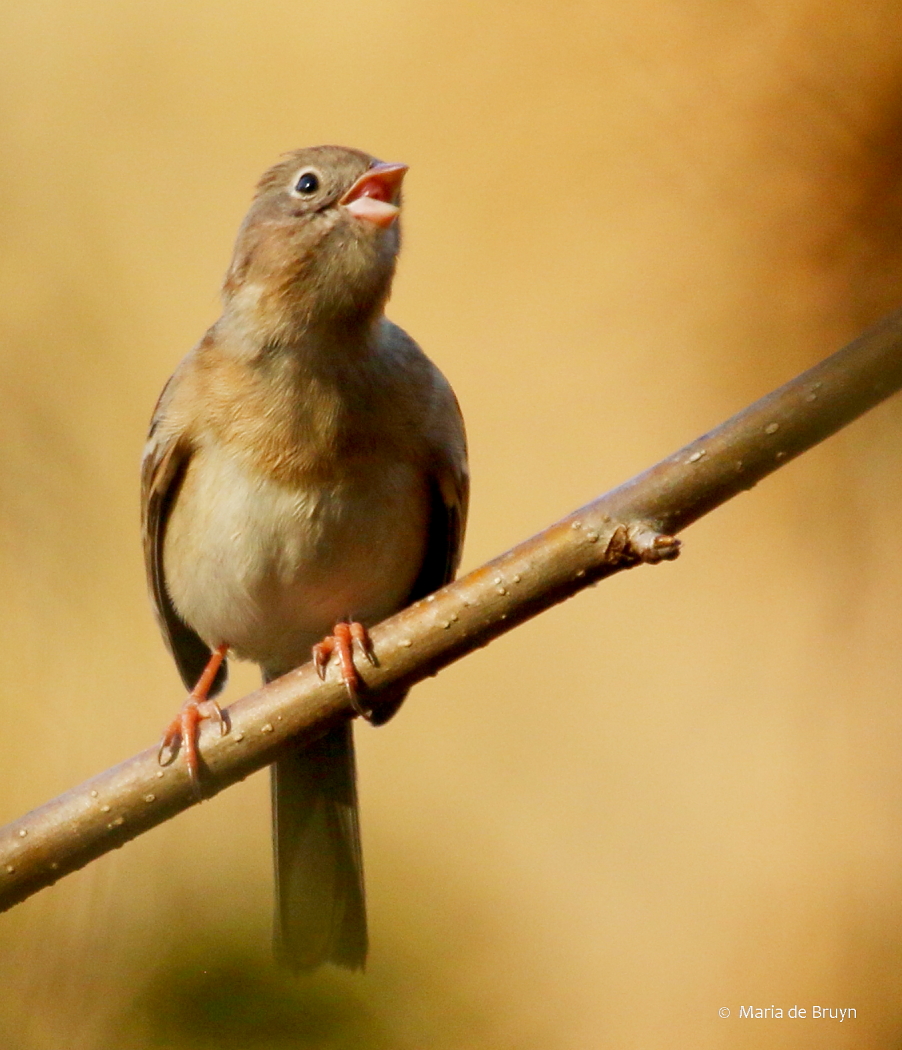
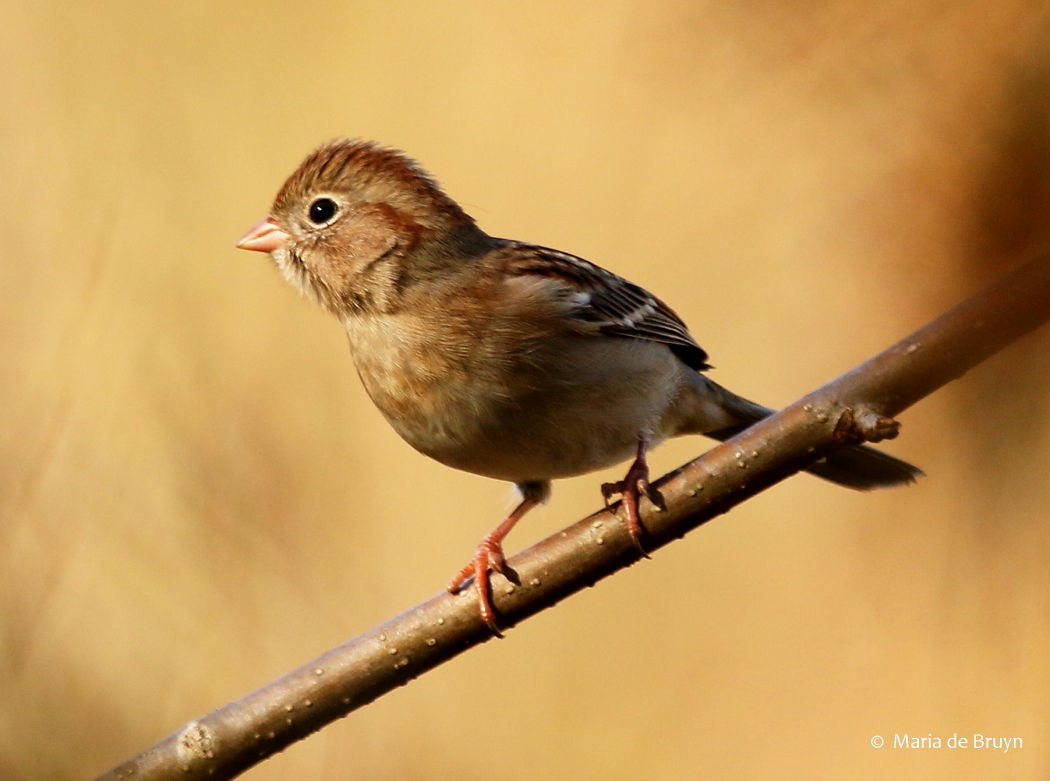
field-sparrow-i77a1587maria-de-bruyn-res      field-sparrow-i77a1634maria-de-bruyn-res

Field sparrow (Spizella pusilla)

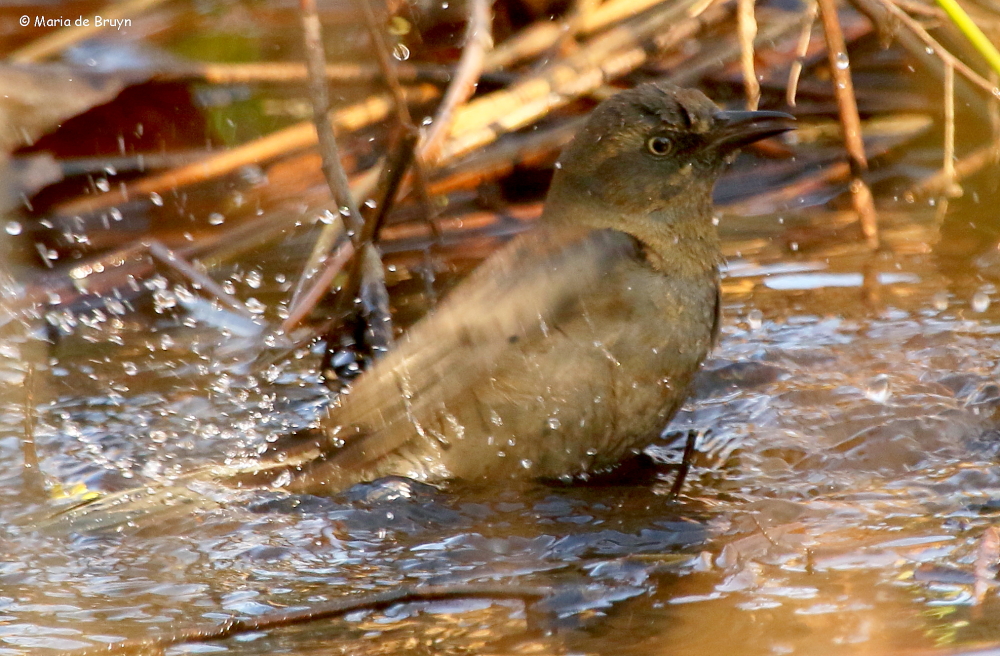
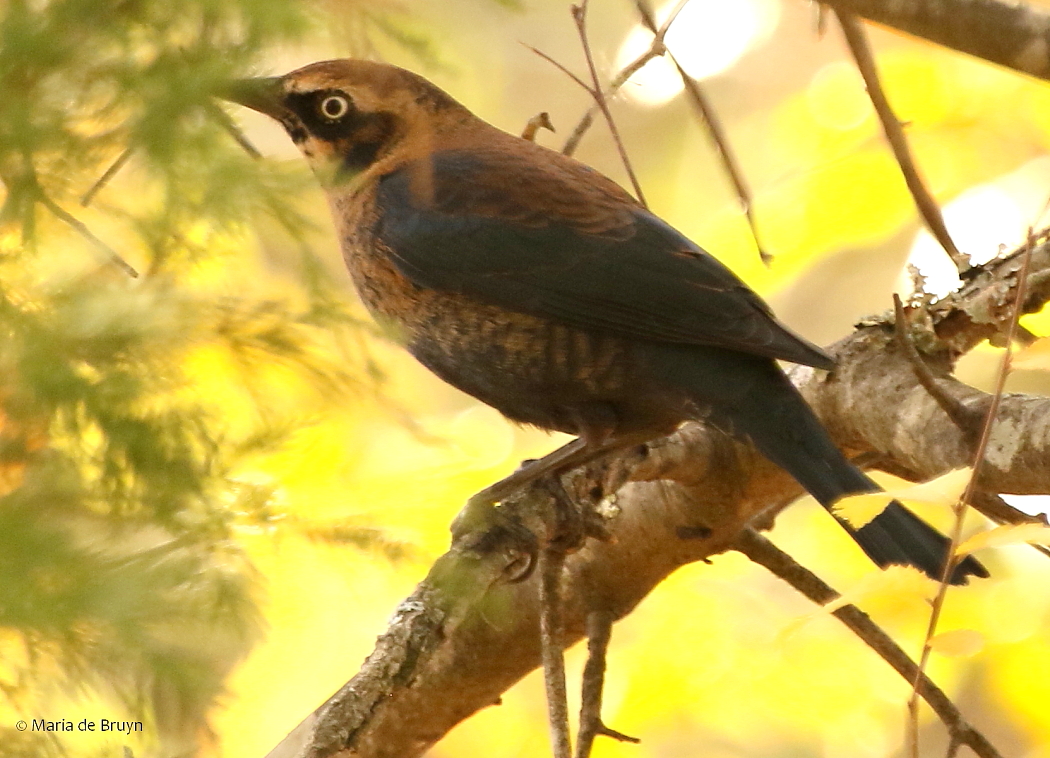
rusty-blackbird-i77a3199-maria-de-bruyn-res rusty-blackbird-i77a3110maria-de-bruyn-res

Rusty blackbird (Euphagus carolinus)

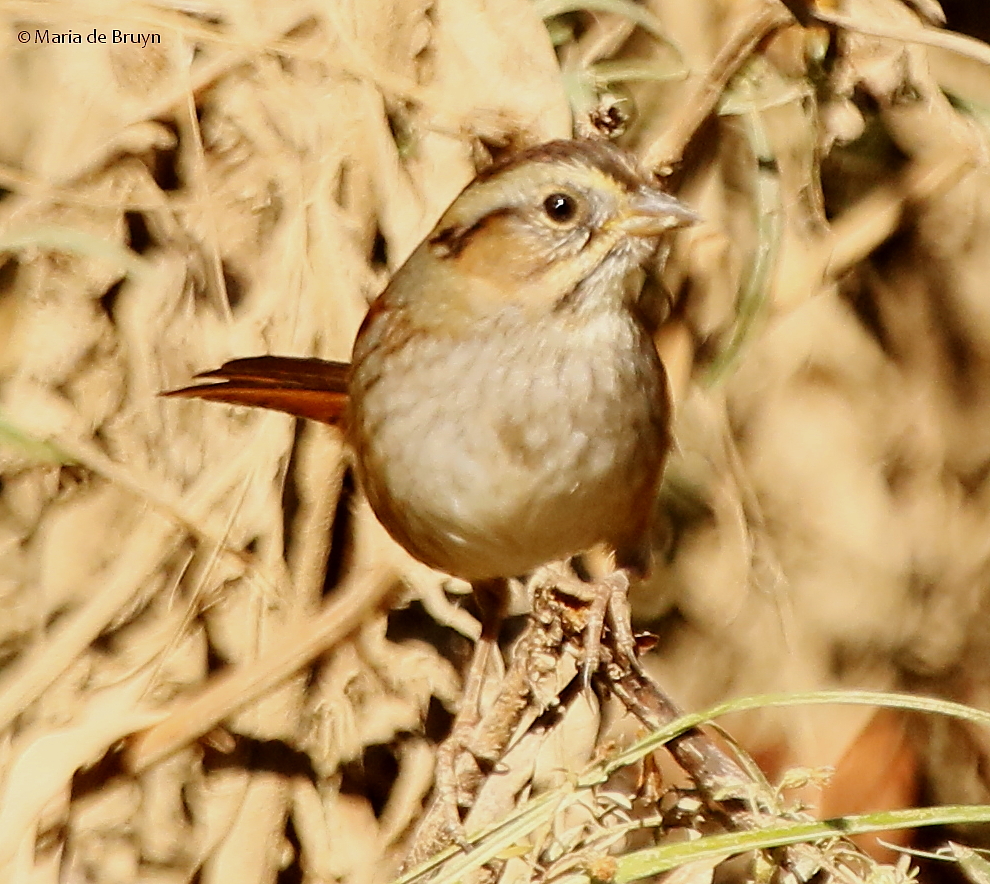
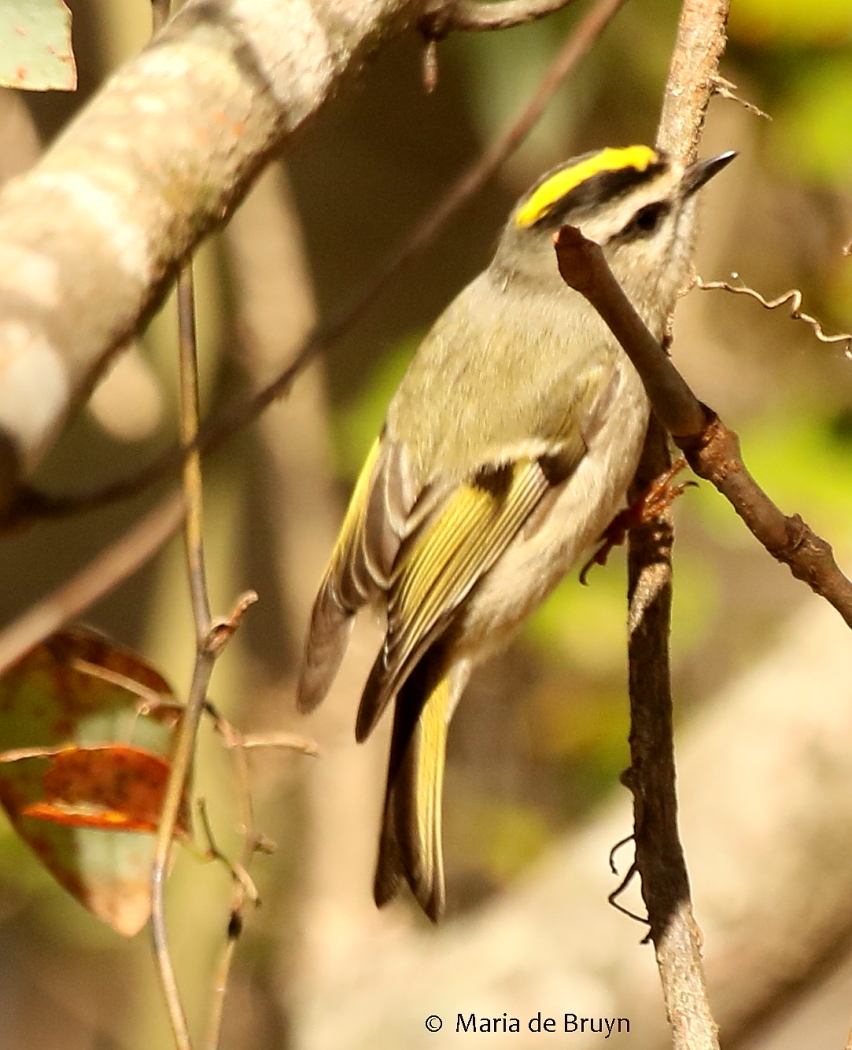
swamp-sparrow-i77a6063-maria-de-bruyn-res      golden-crowned-kinglet-maria-de-bruyn-i77a1711maria-de-bruyn-res

Swamp sparrow (Melospiza georgiana)             Golden-crowned kinglet (Regulus satrapa)

I feel that it is extremely important that each individual realize their responsibility for preserving the environment, to make it a part of daily life, create the same attitude in their families, and spread it to the community. – Dalai Lama

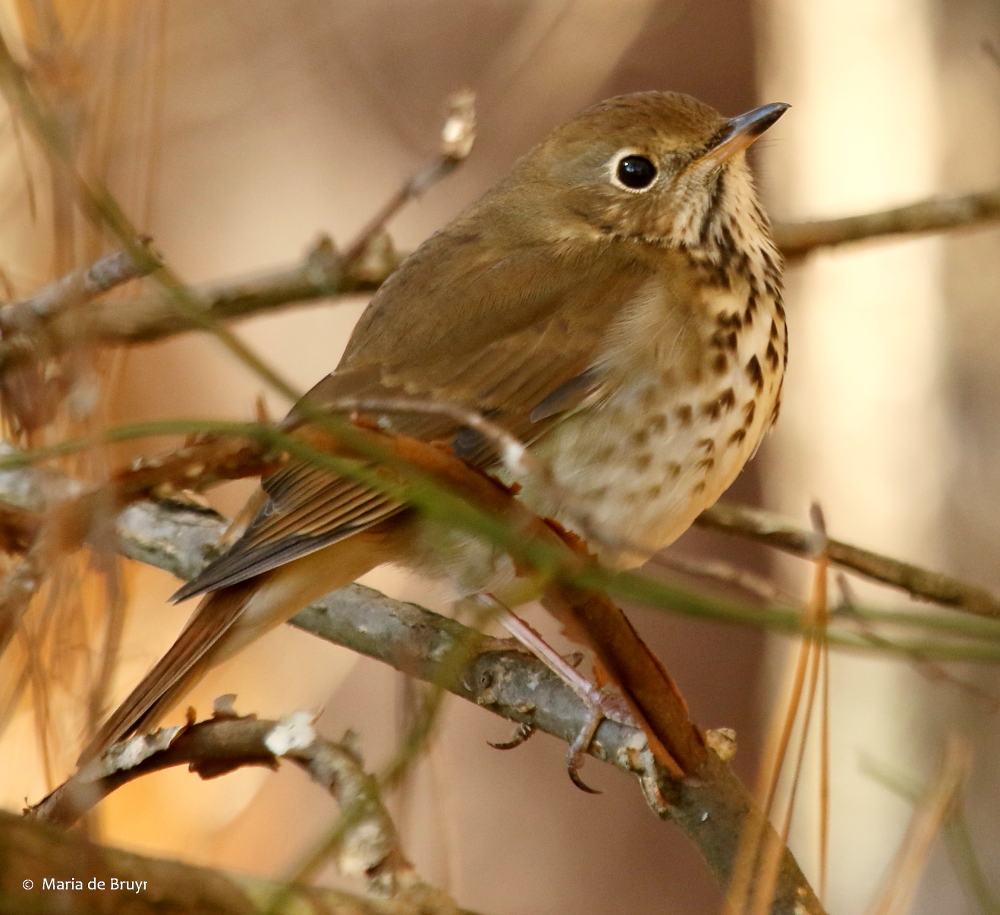
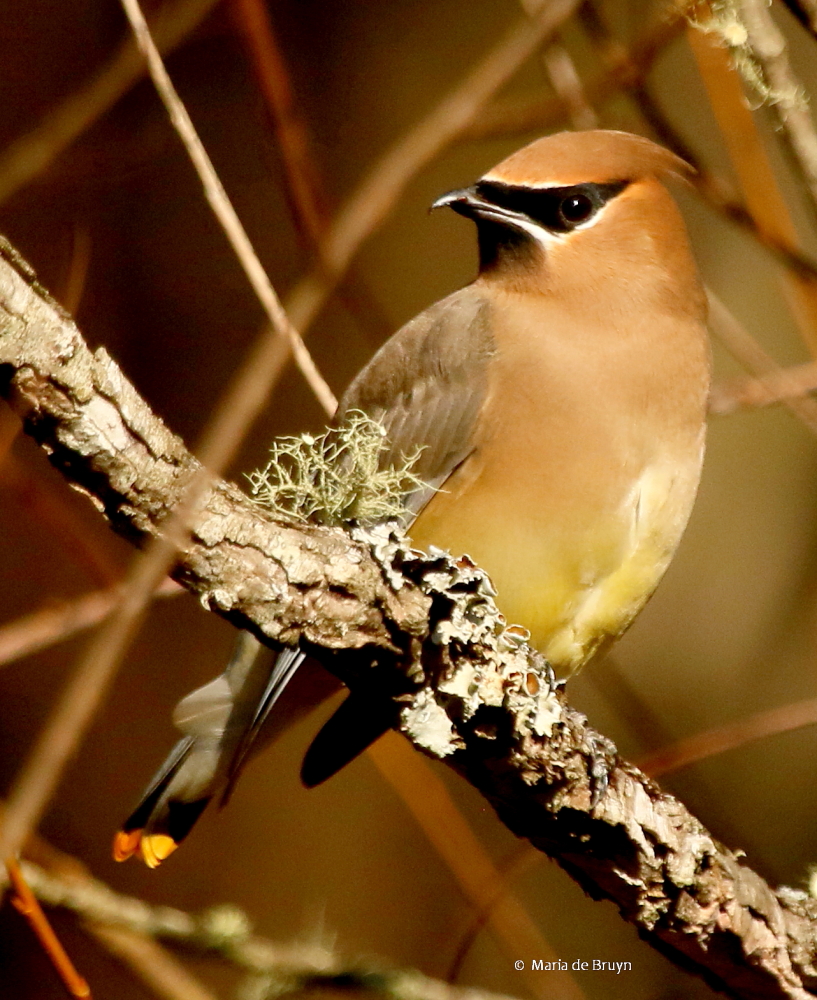
hermit-thrush-i77a6034-maria-de-bruyn-res  cedar-waxwing-i77a5945-maria-de-bruyn-res

Hermit thrush (Catharus guttatus)                          Cedar waxwing (Bombycilla cedrorum)

white-throated-sparrow-i77a1564maria-de-bruyn-res


What a great quote and slogan material:


Preserve the environment, make it part of your daily life and spread it to the community!

A working farm as a nature reserve

cattle I77A8663© Maria de Bruyn resTo continue the saga of Braeburn Farm, I’d like to introduce you to some of the non-avian wildlife to be found there. As a vegetarian, I’ll admit I was originally a bit reluctant to go there, but I must acknowledge that the farm management does many things to give the cattle a good life.

Red Devon cattle I77A6581© Maria de Bruyn resThey keep their herd of Red Devons (Bos taurus) to about 300 animals and allow the calves to reach the age of at least 3 years. Some cows and bulls are allowed to grow much older (10-12 years or more) and they enjoy a peaceful life before they go to market, rotating through the farm’s varied habitats, which include meadows and fields, ponds, woods and creeks. No pesticides are used in the habitats and the vegetation is allowed to grow as naturally as possible. Farm manager Nick said that when it is time to shift the cows to a new pasture area, he just calls them. The older cows know that they will be enjoying fresh and different veggies so they follow him willingly, leading the rest of the herd along.

My visits in June and July showed how this farm is cultivating biodiversity among plants and wildlife. The fields were dotted with thistles, white clover (Trifolium repens), red clover (Trifolium pratense) and many other plants.

brown-eyed Susan I77A7112© Maria de Bruyn res        Moth mullein Verbascum blattaria I77A5812© Maria de Bruyn res

Brown-eyed Susan (Rudbeckia hirta)                           Moth mullein (Verbascum blattaria)

Bees and butterflies were abundant, showing that the farm’s methods are good for the pollinators.

clouded sulphur I77A6930© Maria de Bruyn res    Clouded skipper I77A7102© Maria de Bruyn

Clouded sulphur (Colias philodice)                             Clouded skipper (Lerema accius)

Least skipper IMG_0155© Maria de Bruyn    Sachem skipper I77A7026© Maria de Bruyn res

Least skipper (Ancyloxypha numitor)          Sachem skipper (Atalopedes campestris)            cabbage white I77A6735© Maria de Bruyn res         monarch I77A6970© Maria de Bruyn res

Cabbage white (Pieris rapae)                      Monarch butterfly (Danaus plexippus)

Leaf-footed bugs (Leptoglossus phyllopus), margined leatherwing soldier beetles (Chauliognathus marginatus), bees and various species of syrphid flies (also known as hoverflies and often mistaken for bees) were exploring the thistles.

leaf-footed bug Leptoglossus phyllopus IMG_4412© Maria de Bruyn res   leaf-footed bug Leptoglossus phyllopus IMG_4400© Maria de Bruyn res

margined leatherwing soldier beetle IMG_4437© Maria de Bruyn resMargined leatherwing soldier beetle

Eastern carpenter bee 2 I77A6964© Maria de Bruyn res            syrphid fly Sphaerophoria I77A5781© Maria de Bruyn

Eastern carpenter bee (Xylocopa virginica)            Syrphid fly (Sphaerophoria)

common oblique syrphid fly Allograpta obliqua IMG_4418© Maria de Bruyn res

Common oblique syrphid fly (Allograpta obliqua)

Syrphid fly - Palpada vinetorum IMG_4422© Maria de Bruyn bg    Syrphid fly - Palpada vinetorum IMG_4422© Maria de Bruyn res

Syrphid fly (Palpada vinetorum)

Elsewhere, the nymph of a wheel bug (Arilus cristatus) moved along large leaves.

Wheel bug - Arilus cristatus IMG_4499© Maria de Bruyn    Wheel bug - Arilus cristatus IMG_4481© Maria de Bruyn res

It pays to look down at your feet as you wander through the fields in the early morning. The grasses are covered in tiny webs that glisten with water droplets. Underneath are the tiny red dwarf sheetweb spiders (Florinda coccinea) that may show themselves if you stay very still.

dwarf sheetweb spider IMG_0117© Maria de Bruyn res     dwarf sheetweb spider IMG_0126© Maria de Bruyn res

dwarf sheetweb spider IMG_0127© Maria de Bruyn   dwarf sheetweb spider IMG_0121© Maria de Bruyn

In the vegetation below you can also see other insects, like the Spur-throated grasshopper (Melanoplus), or the Forage looper moth (Caenurgina erechtea).

spur-throated grasshopper Melanoplus IMG_0152© Maria de Bruyn res      Forage looper I77A5943© Maria de Bruyn res

Various dragonflies and damselflies balance on grasses and sometimes alight on the ground (the former hold their wings out when resting and the damselflies fold their wings along their bodies).

halloween pennant I77A6315© Maria de Bruyn res   halloween pennant Celithemis eponina I77A6337© Maria de Bruyn res

Halloween pennant (Celithemis eponina)

Double-striped American bluet Dancer damselfly I77A6155© Maria de Bruyn res

Double-striped bluet damselfly (Enallagma basidens)

widow skimmer I77A6998© Maria de Bruyn bg

Widow skimmer (Libellula luctuosa)

common whitetail I77A6394© Maria de Bruyn res

Common whitetail (Plathemis lydia)

At the creek crossings, you may see a common sanddragon dragonfly (Progomphus obscurus, a lifer for me!), paper wasps (Polistes) or a viceroy butterfly (Limenitis archippus) having a drink or looking for a mate. The viceroy mimics the monarch but can be distinguished easily with the line crossing its wings horizontally when you see it rest.

Common sanddragon dragonfly I77A6480© Maria de Bruyn res    Common sanddragon dragonfly I77A6508© Maria de Bruyn res

paper wasp Polistes I77A6454© Maria de Bruyn bg       Viceroy I77A6432© Maria de Bruyn res

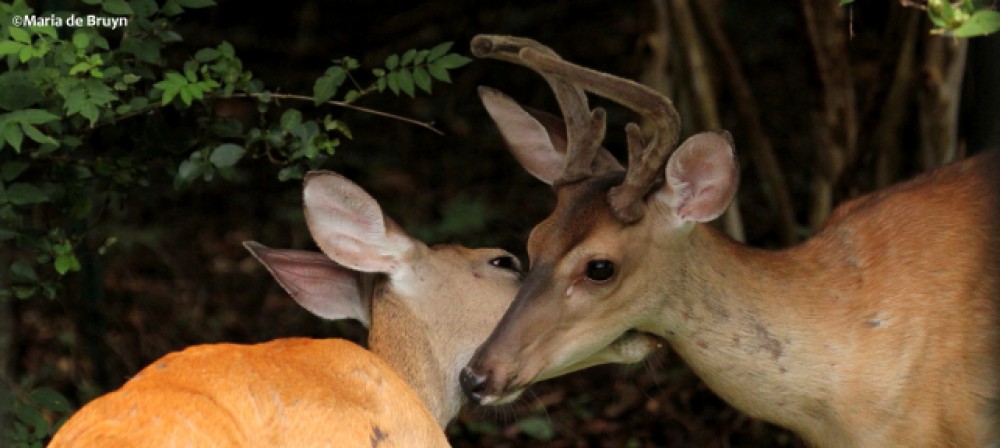
Walking through the fields, you may also occasionally spot a mammal although they are not as easy to see as the other wildlife. As I trudged around a pond, this white-tailed deer fawn (Odocoileus virginianus) was startled from its hiding place – showing off the part of its anatomy for which the species is named and looking as if s/he was sporting a very large feather.

white-tailed deer I77A6198© Maria de Bruyn res           white-tailed deer I77A6199© Maria de Bruyn res

On one outing, Nick and I spotted a couple darling raccoon kits (Procyon lotor), who wasted no time scurrying for cover when they spotted us.

raccoon I77A7213© Maria de Bruyn res     raccoon I77A7225© Maria de Bruyn res

Red Devon cattle I77A6617© Maria de Bruyn resThe farm is a great place to spend quality time outdoors. You can contact the farm management to schedule a visit and they will instruct on which fields and areas are open for visitation. And if you should wander by mistake into a field with some of the cattle, you needn’t worry as the Red Devons are likely to walk away or just watch you as they are a placid breed. I hope that Braeburn Farm becomes a popular birding and wildlife observation area so that we can continue enjoying visits there.

A wildflower walk with surprises!

owl IMG_3036© Maria de Bruyn resThis past Saturday morning, we awoke to water streaming from the heavens in quite a heavy downpour. A local conservation group, Friends of Bolin Creek, had scheduled a wildflower walk to see some of our ephemeral spring blooms but the wet conditions were not inviting. A decision to postpone the walk to early afternoon was taken – and the weather-people had gotten it right – the sun began shining at mid-day and the temperature rose, creating lovely conditions for a walk after all. A large owl (later revealed to be granddaughter Kate of the group’s president) greeted the small group of intrepid walkers and we set off to see what we could find.

Southern arrowwood IMG_3039© Maria de Bruyn res

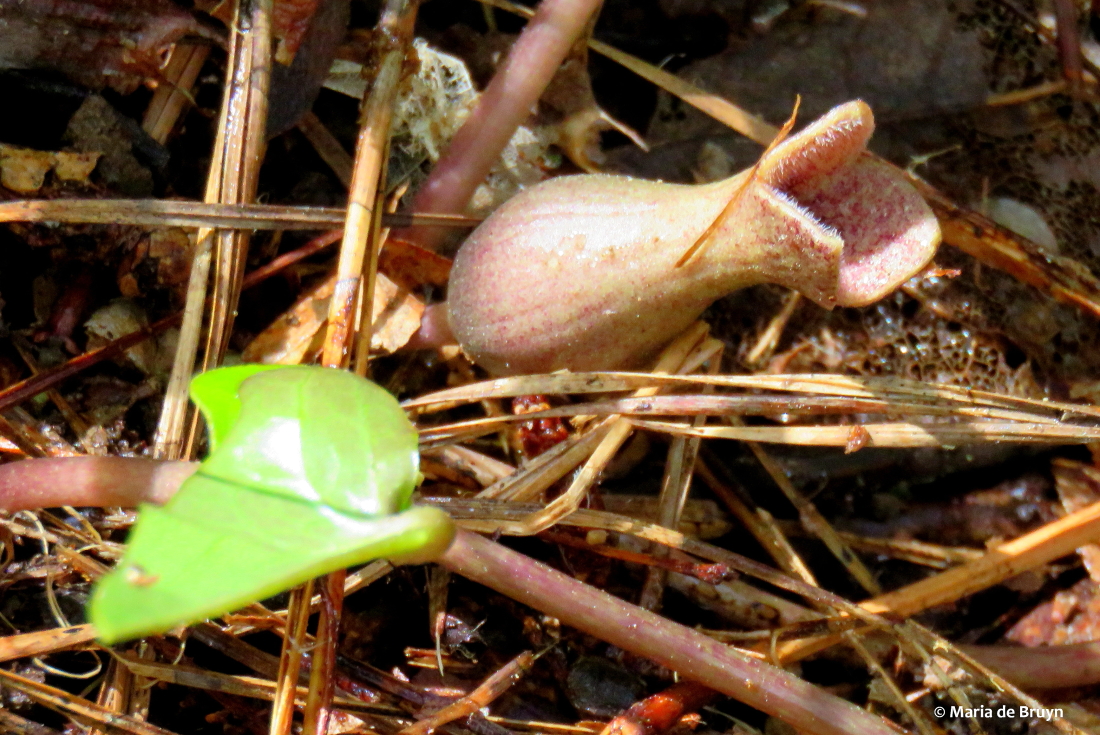
Our first flowers were the not-yet-open blooms of a Southern arrowwood (Viburnum dentatum). We passed numerous black and yellow millipedes on the paths and then found another millipede species (Narceus americanus) curled up next to a little brown jug (also known as arrowleaf heartleaf, Hextastylis arifolia var arifolia).

millipede IMG_3052© Maria de Bruynlittle brown jug IMG_3048© Maria de Bruyn

We came across other nice specimens of the plant, including one with four small flowers.

little brown jug IMG_3138© Maria de Bruynlittle brown jug IMG_3141© Maria de Bruyn

The painted buckeye trees (Aesculus sylvatica) were blooming profusely with their greenish-yellow flowers.

painted buckeye IMG_3070© Maria de Bruynpainted buckeye IMG_3492© Maria de Bruyn


Eastern spring beauty IMG_3089© Maria de Bruyn


Clusters of Eastern spring beauties (Claytonia virginica) were in their vicinity.


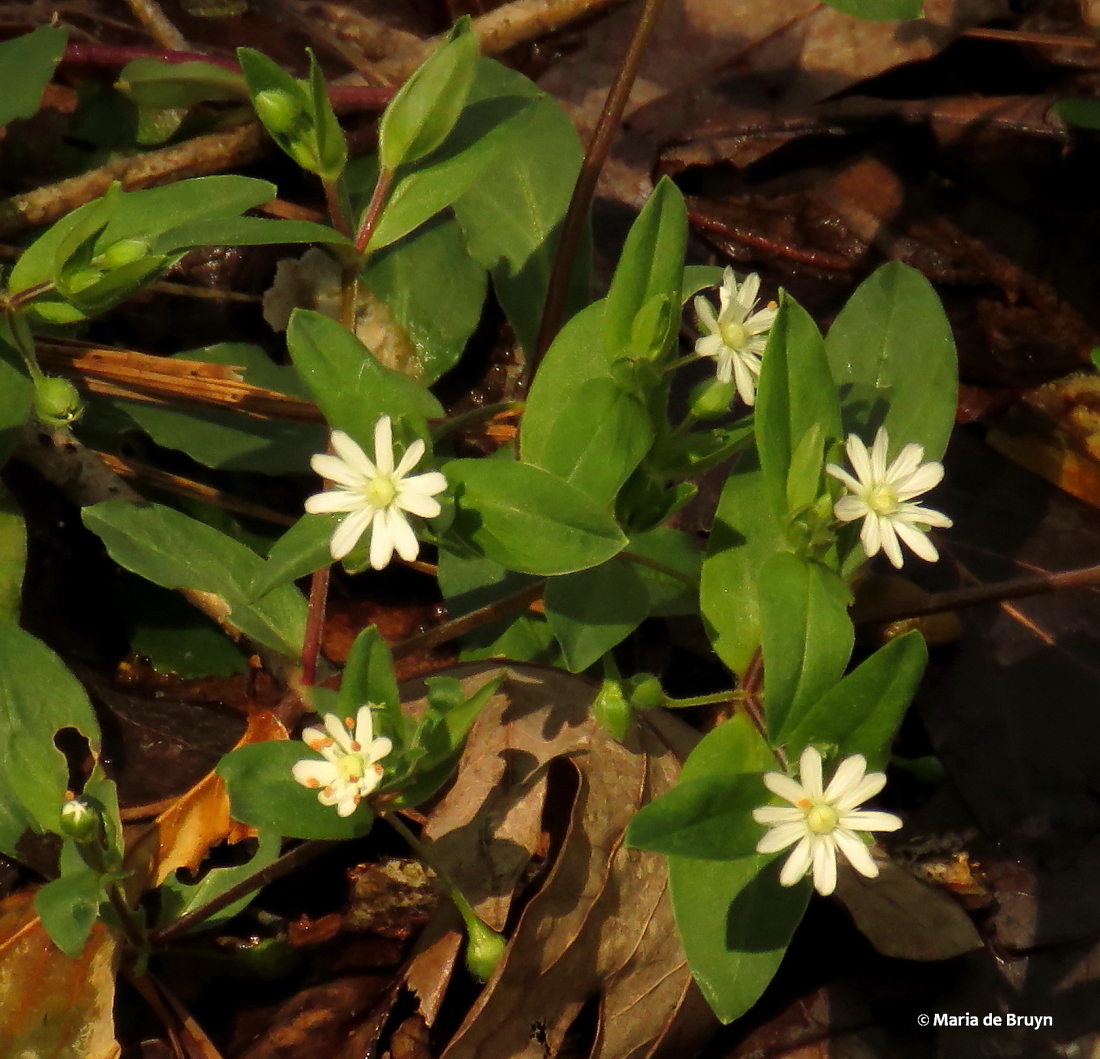
star chickweed IMG_3095© Maria de Bruyn


Some of the star chickweeds (Stellaria pubera) were near another white bloom, the rue anemones (Thalictrum thalictroides).


rue anemone IMG_3110© Maria de Bruyn rue anemone IMG_3109© Maria de Bruyn

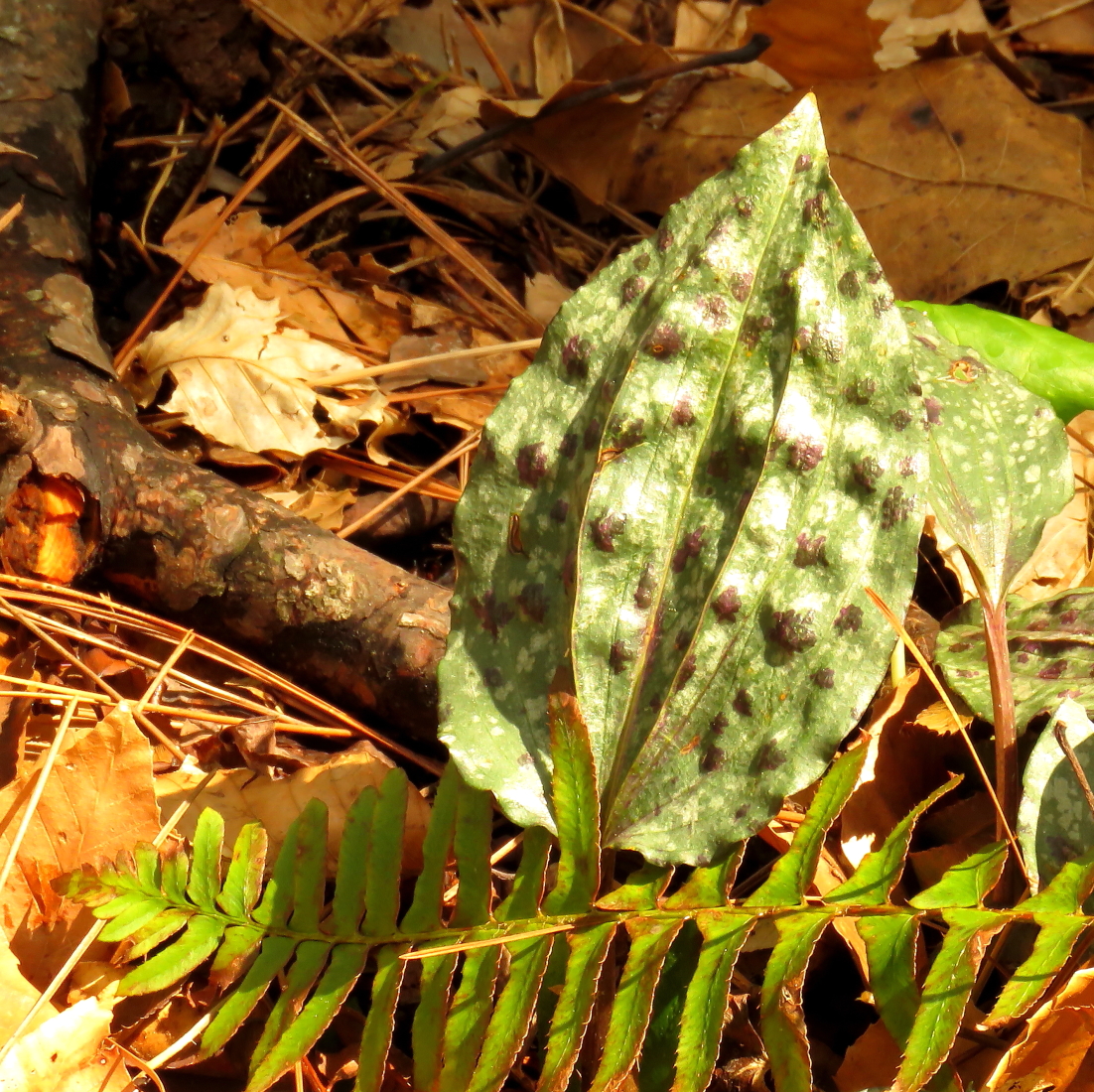
Both the trout lilies (Erythronium americanum) and cranefly orchids (Tipularia discolor) had already bloomed, the trout lilies about 7-10 days ago and the orchids in the winter (when there are no leaves). One orchid had left behind its brown stalk as a witness to the flower that had seen the light.

trout lily IMG_3156© Maria de Bruyncranefly orchid IMG_3148© Maria de Bruyn

Tiny bluets (Houstonia pusilla) in clusters here and there provided some variation from the ubiquitous white blooms that we were seeing. The mayapples (Podophyllum peltatum) were just emerging and it will be a little while before we see their flowers emerge underneath the leafy umbrellas.

tiny bluet IMG_3118© Maria de Bruynmayapple IMG_3196© Maria de Bruyn


Bolin creek IMG_3165© Maria de BruynThe creek was running high and fast and we debated on crossing it at the first branch. Only two of us had wellingtons (and one lady found that her boots leaked); others were wearing running and walking shoes but everyone made it across by using stones, canes and walking sticks that some of our group had brought along. Our immediate reward was a view of a gorgeous pinxterbloom wild azalea (Rhododendron periclymenoides).

pinxterbloom azalea IMG_3174© Maria de Bruyn

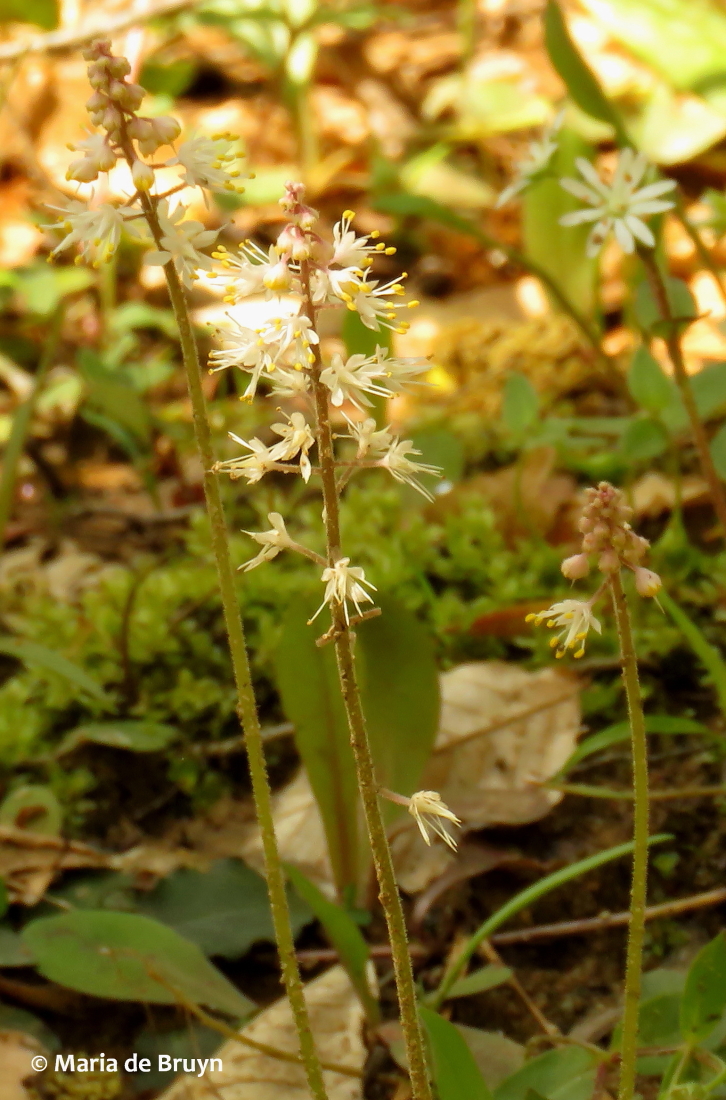
foamflower IMG_3180© Maria de Bruyn


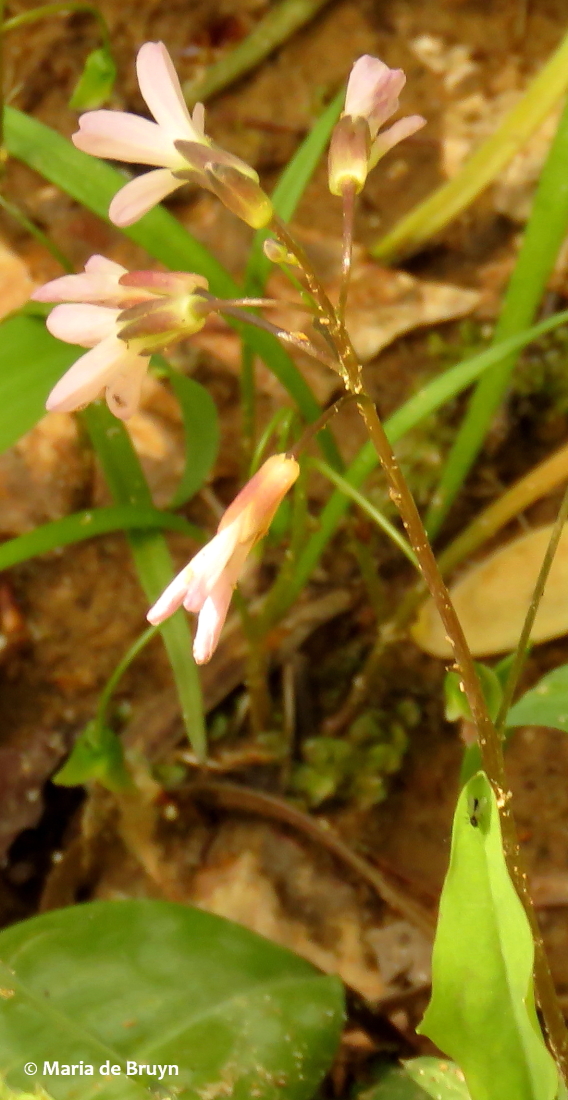
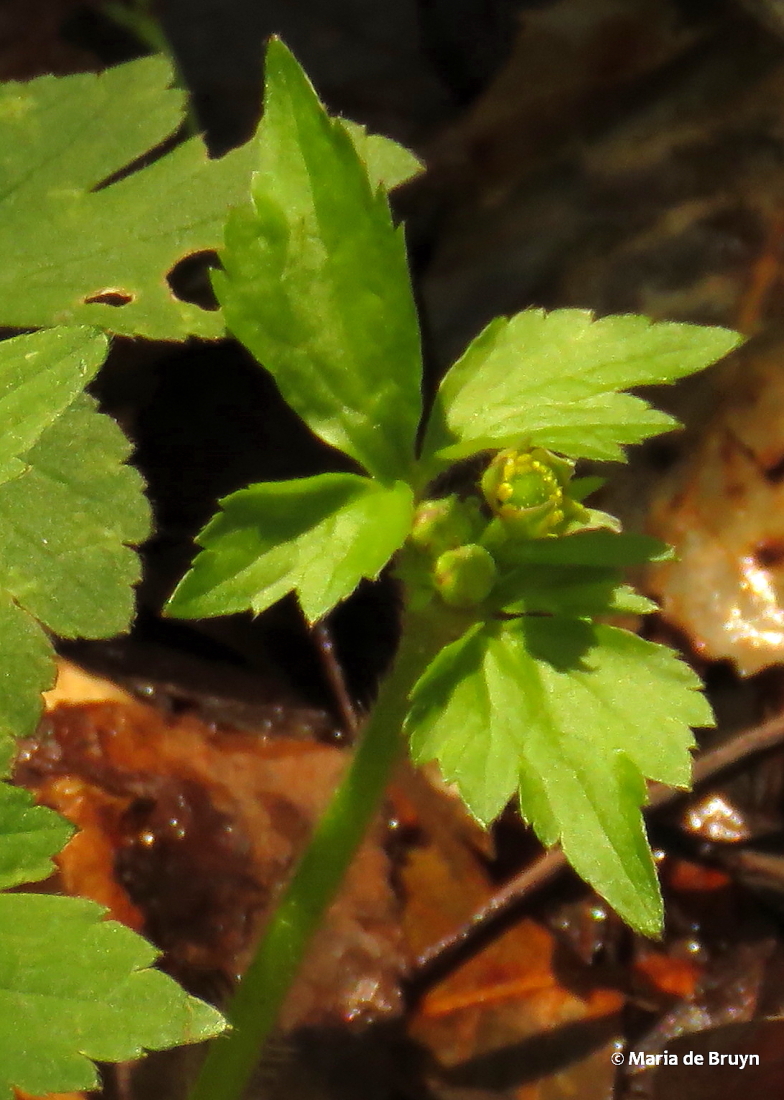
A sighting of a foamflower (Tiarella cordifolia), followed by a cutleaf toothwort (Cardamine concatenata) provided a bit more color, as did the littleleaf buttercup (Ranunculus abortivus), although its blooms were not fully expanded yet.


cutleaf toothwort IMG_3187© Maria de Bruynlittle leaf buttercup IMG_3092© Maria de Bruyn

Only the jigsaw puzzle-like leaves of the bloodroot (Sanguinaria canadensis) were in evidence as that flower had stopped blooming already. A tufted titmouse singing overhead (Baeolophus bicolor) gave us a nice little concert as compensation.

bloodroot IMG_3198© Maria de Bruyn tufted titmouse IMG_3201© Maria de Bruyn

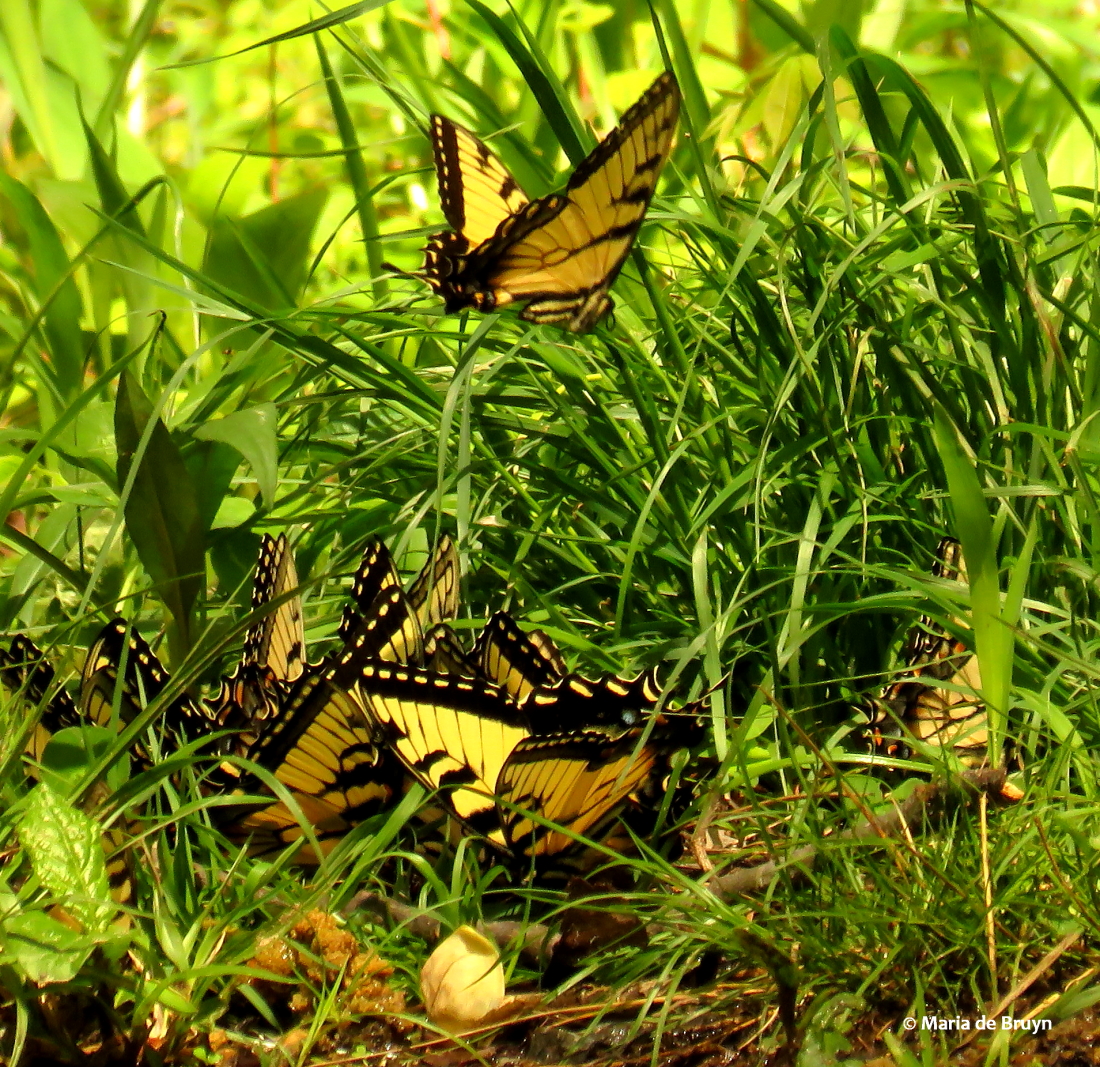
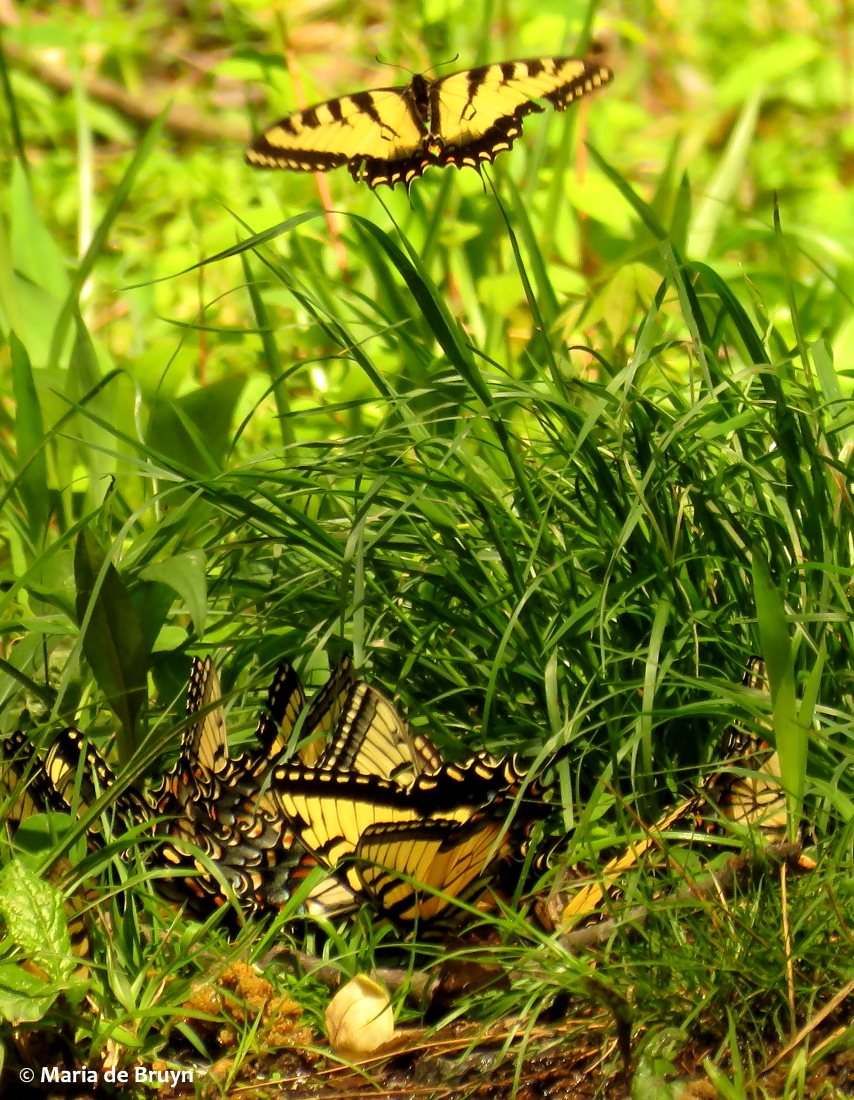
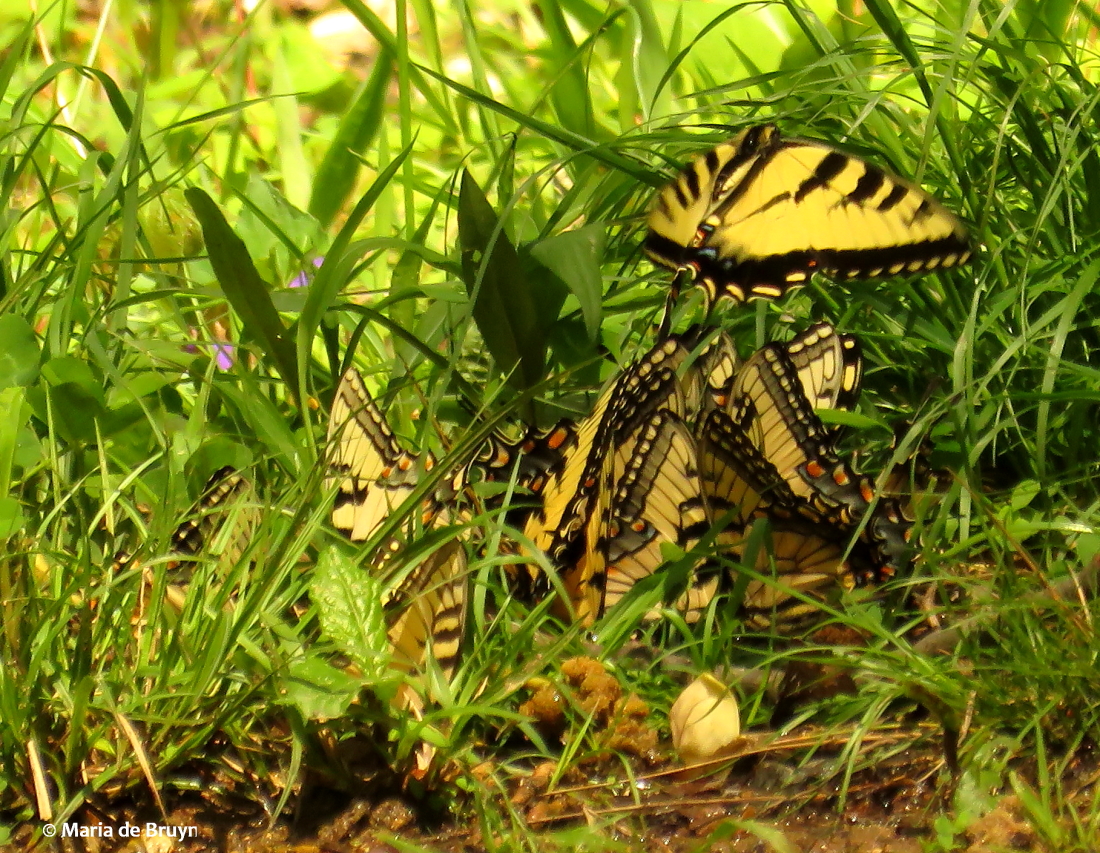
Eastern tiger swallowtail IMG_3428© Maria de Bruyn resAnd then we came across our three surprises of the walk. We had already seen several Eastern tiger swallowtail butterflies (Papilio glaucus) fluttering by in one’s and two’s and we remarked how welcome they were because of the paucity of butterflies we had had the past couple years. But then across another branch of the creek, we spotted some 12-20 butterflies congregating over some delicacy of unknown (to us) origin.

Eastern tiger swallowtail IMG_3259© Maria de Bruyn res Eastern tiger swallowtail IMG_3263© Maria de Bruyn res

The water was fairly deep and flowing fast, so we did not cross but we surmised that someone’s dog had left a pile of poo to provide a mud-puddling butterfly feast.

Eastern tiger swallowtail IMG_3443© Maria de Bruyn res Eastern tiger swallowtail IMG_3447© Maria de Bruyn res

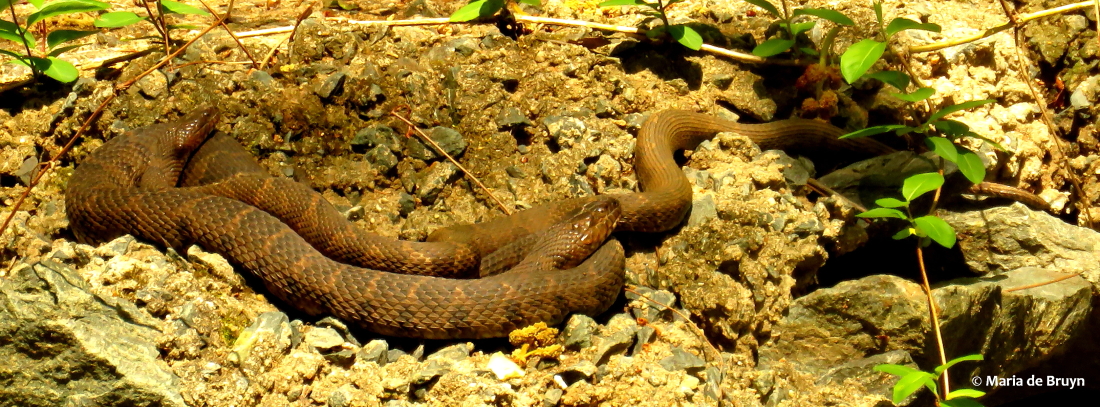
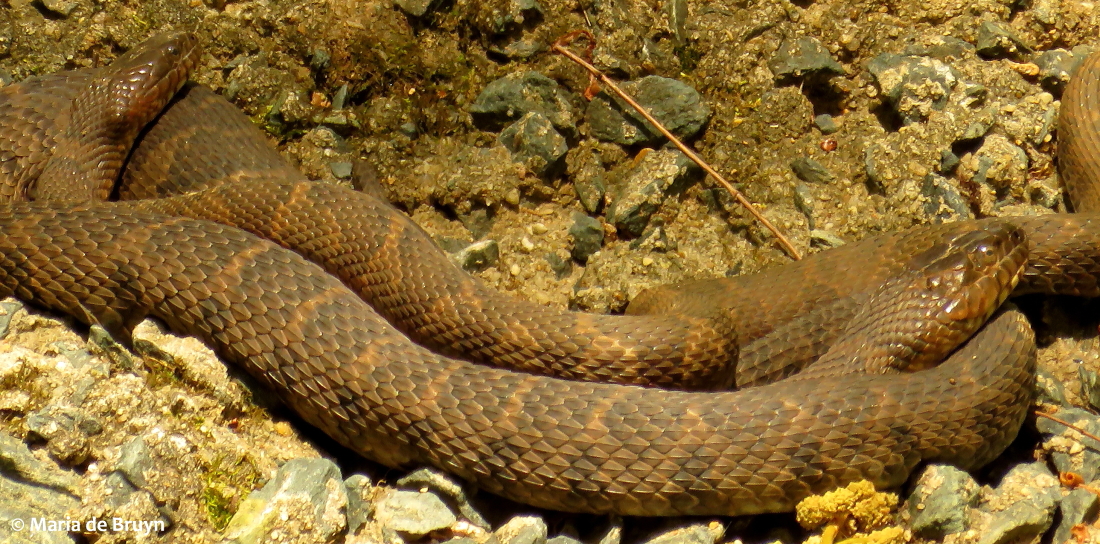
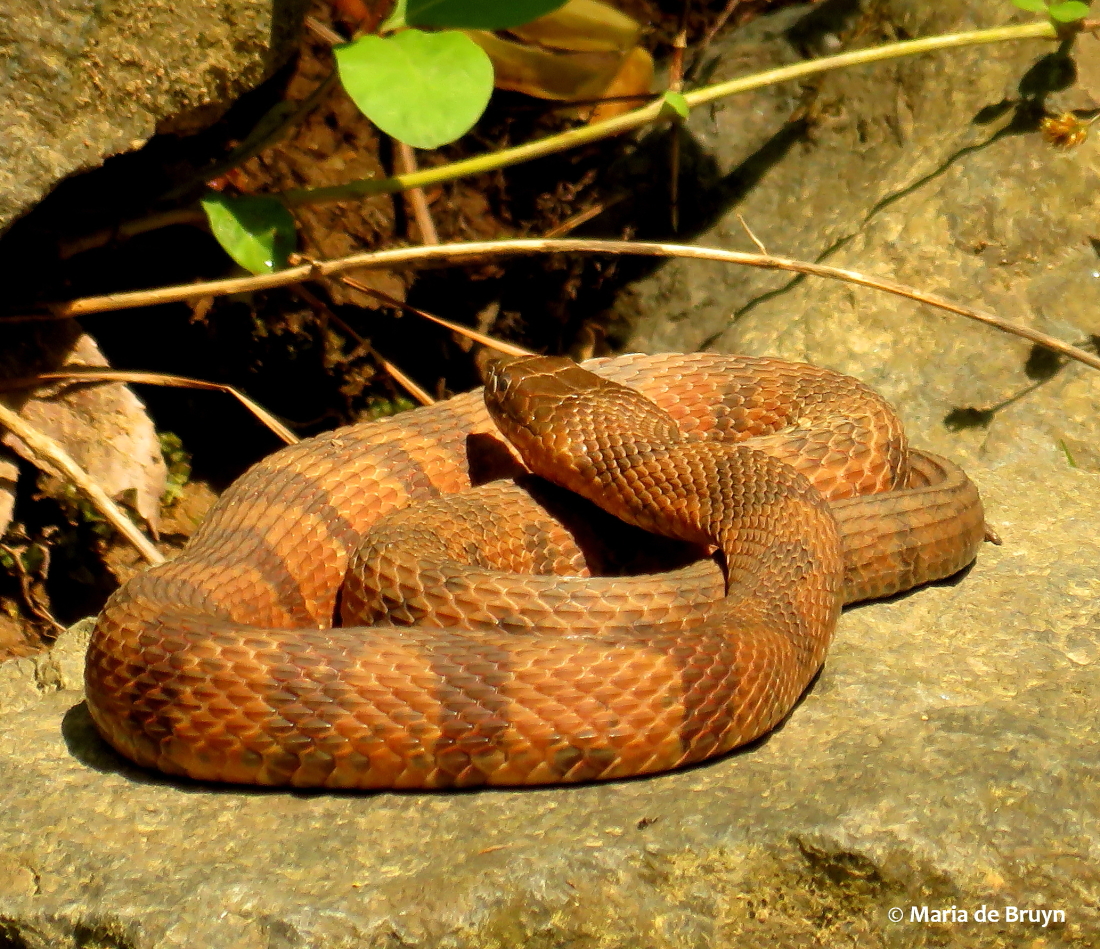
Then we noticed on a rock just below the bank under the butterflies where two Northern watersnakes (Nerodia sipedon) were having a little rest.

northern watersnake IMG_3406© Maria de Bruyn

northern watersnake IMG_3408© Maria de BruynThey were a bit dull in color, which became quite obvious when compared to a third northern watersnake that we spotted on a rock closer to the creek – perhaps a younger individual who had decided that a sunbath was just the thing for a Saturday afternoon.

northern watersnake IMG_3241© Maria de Bruyn northern watersnake IMG_3349© Maria de Bruyn

While we were all enamored with the flowers we’d seen, the butterflies and snakes gave our walk a special feel.

bugleweed IMG_3501© Maria de Bruyn


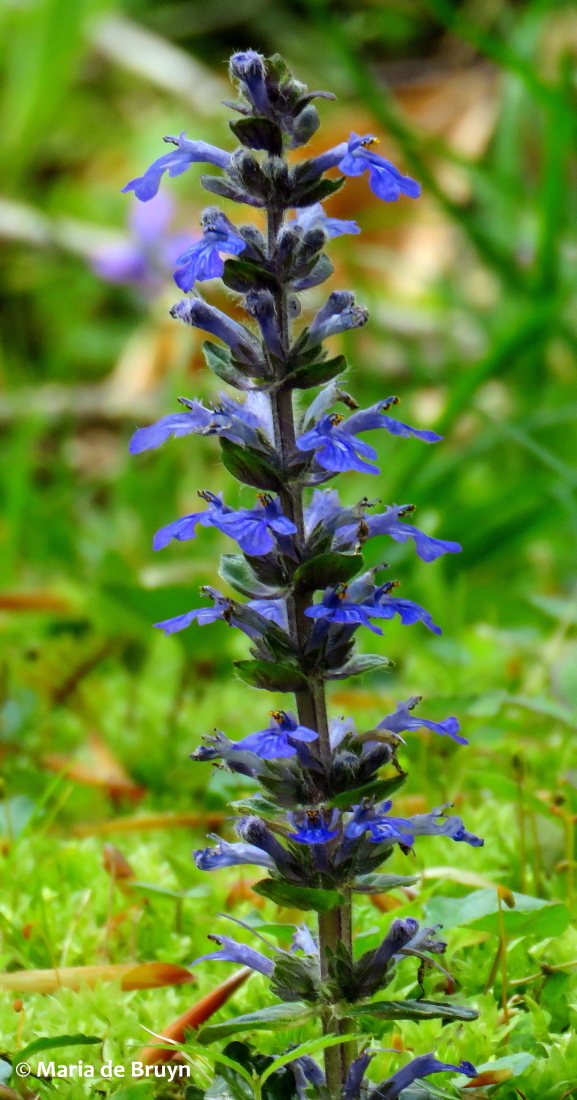
On our return trip through the woods to reach our transportation, we came across an invasive plant, the bugleweed (Ajuga reptans). We had already seen plenty of Japanese wisteria, mahonia, privet and autumn olive and agreed that another volunteer day to weed out some invasives would be a good contribution to the preserve. But that is for the future – right now, we are happy to think back to our surprise spottings!