Nest Watch citizen science – 2016 edition

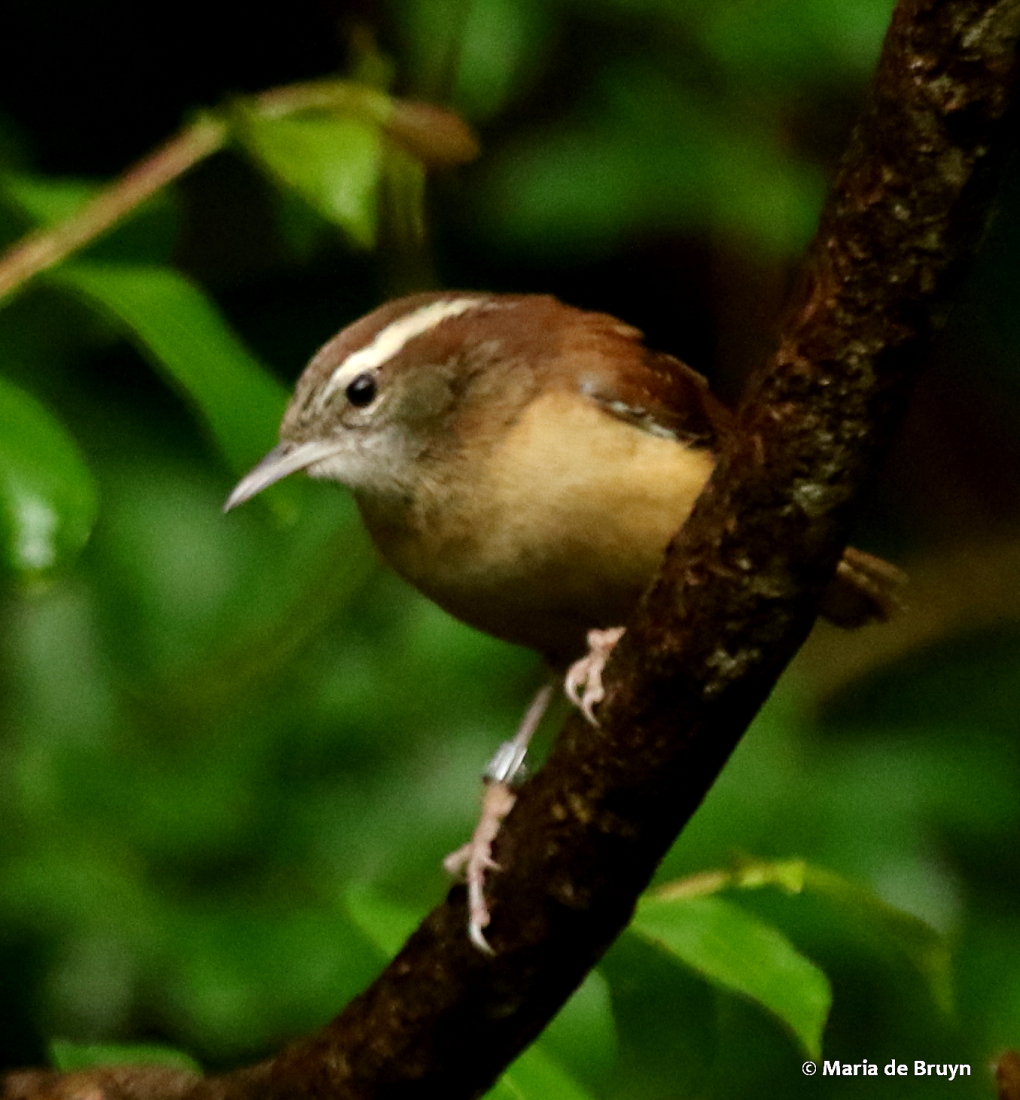
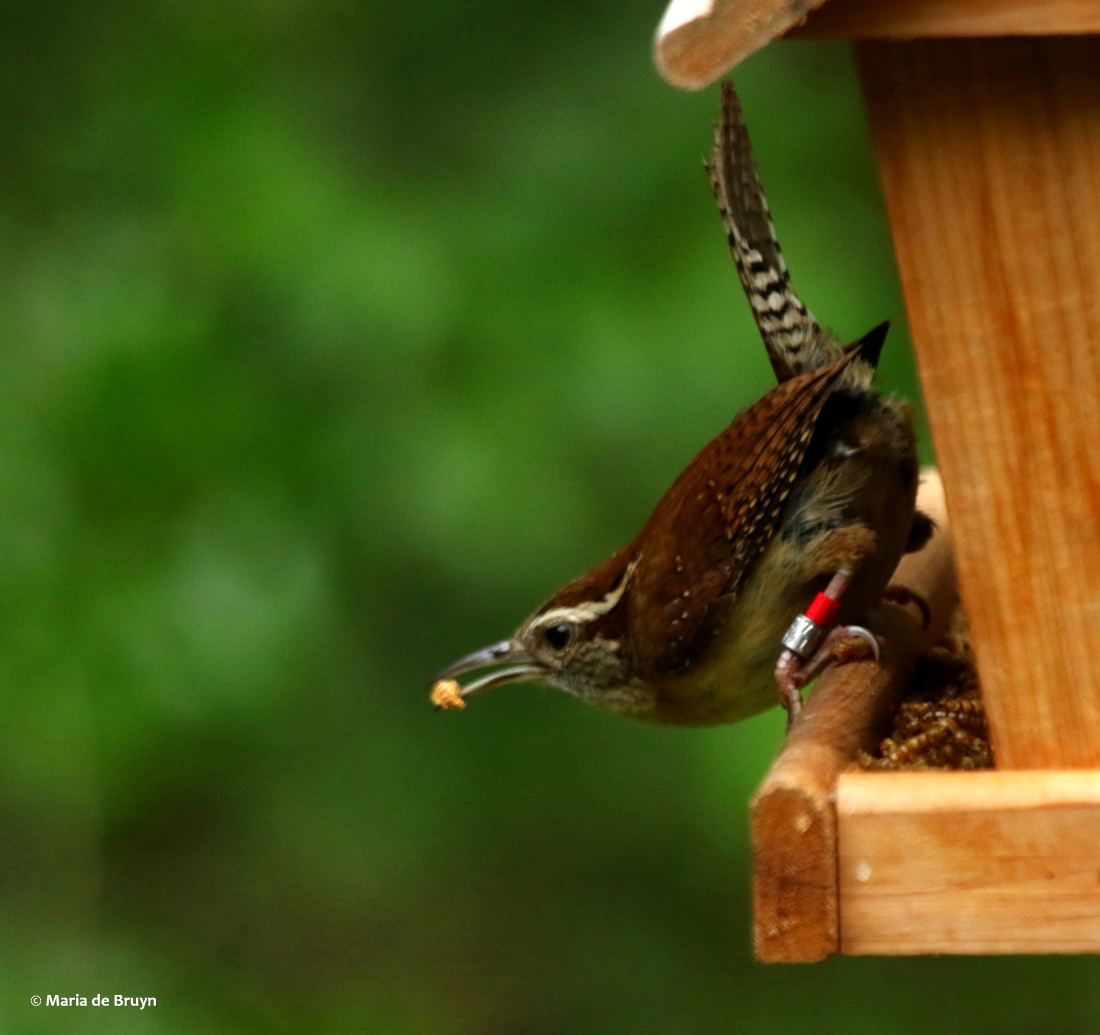
Carolina wren Renee and Riley I77A9074© Maria de Bruyn resLast year, I became a Nest Watch volunteer, which involves having birds banded in your yard so that you can follow and report to researchers the birds’ presence over time as they visit and leave your yard.

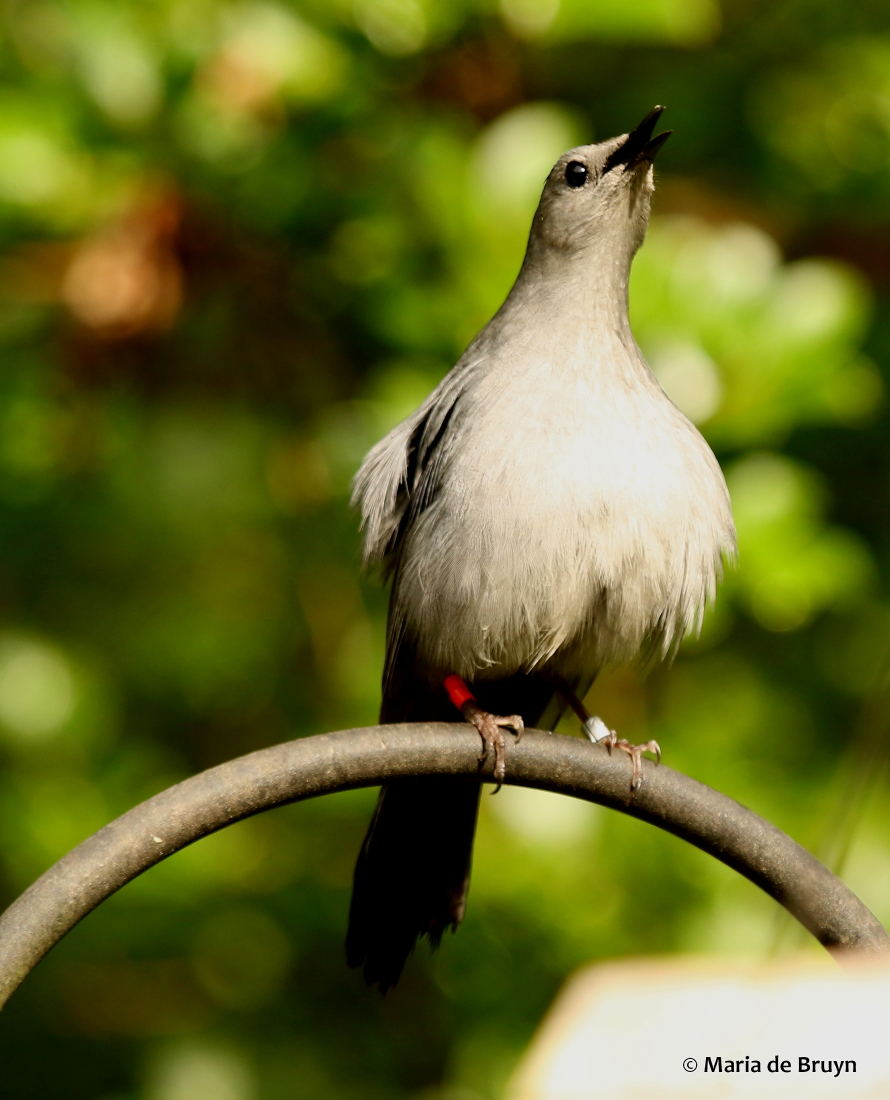
In 2015, we banded six birds. If a bird is only a temporary visitor or if it died outside the yard due to disease, old age or predation, you just won’t see it again and have no idea what became of it. The American robin (Turdus migratorius) that was banded last year never returned. If the birds stick around, however, you have the enjoyment of observing birds you get to know. The three gray-headed catbirds (Dumetella carolinensis) stayed around all summer and fall, and two of them – Camden and Corey – returned to my yard from winter migration a few days ago. They have been accompanied by females whom they appear to be assiduously courting.
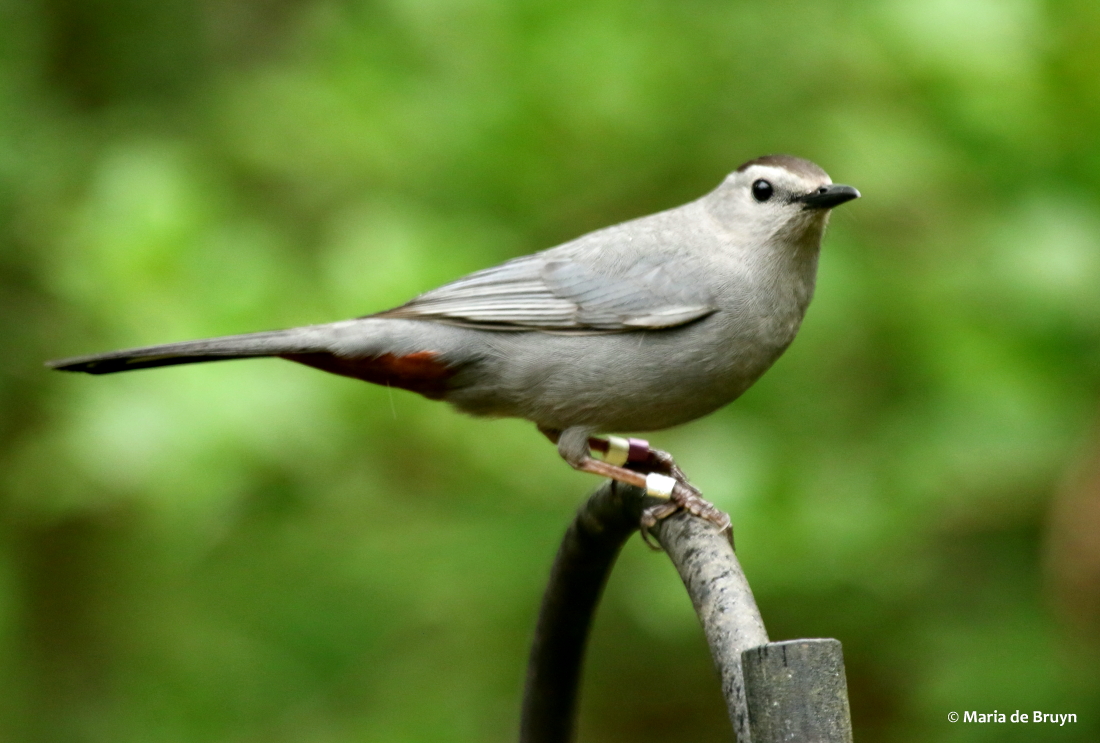
gray-headed catbird Camden I77A8990© Maria de Bruyn res

gray-headed catbird Corey I77A8083© Maria de Bruyn res

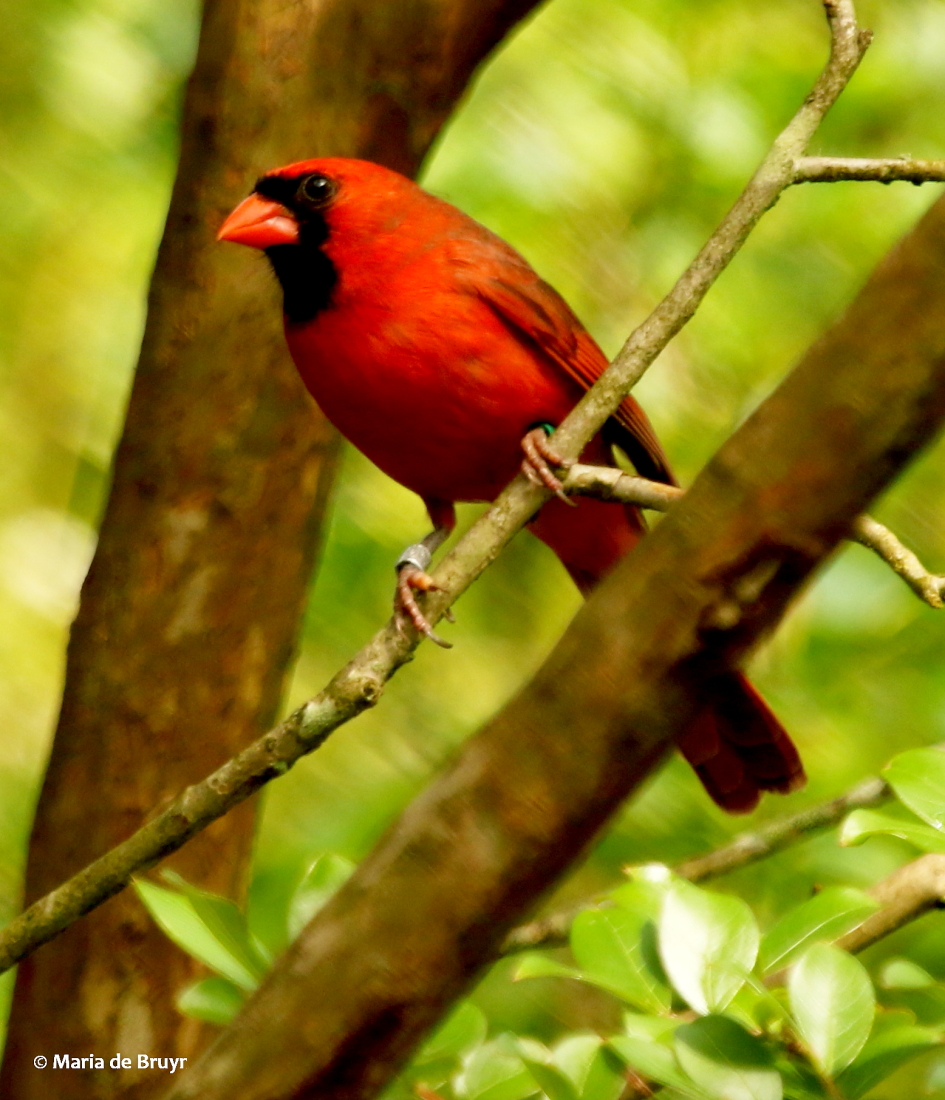
Northern cardinal Clancy I77A8123© Maria de Bruyn resOne Northern cardinal (Cardinalis cardinalis) was banded last year, but Clancy only stayed a few days and then disappeared for the rest of the summer, fall and winter. He suddenly appeared yesterday – perhaps encouraged to spend time at the feeders by the other birds with bracelets.

Three days ago, a second round of banding was done and we put the colorful anklets on a total of 10 birds. They were caught in two mist nets – one near my back garden and one near the backyard feeders.
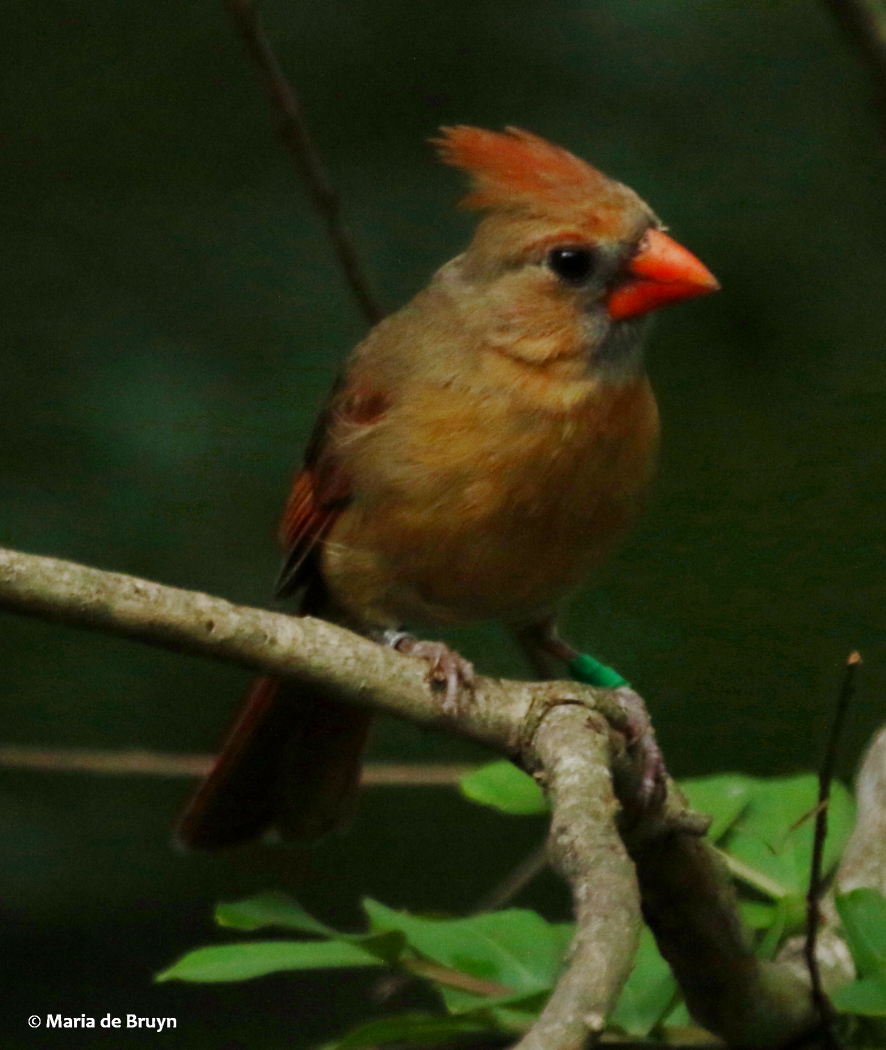
Northern cardinal Camilla I77A9127© Maria de Bruyn resThe nets had just been installed when our first visitor, a female Northern cardinal, was caught. She was not happy and when put in a bag until she could be banded, weighed, examined and measured, she did not remain still and calm. She had a little wait, however, as a female Carolina wren (Thryothorus ludovicianus) flew into the other net at just about the same time, followed by her mate within seconds. As the cardinals can tolerate being in a bag better than the smaller birds, the two wrens were banded first. Alicia let the first one go and then I released the second one, who rested on my palm for a bit. He felt so nice and soft!
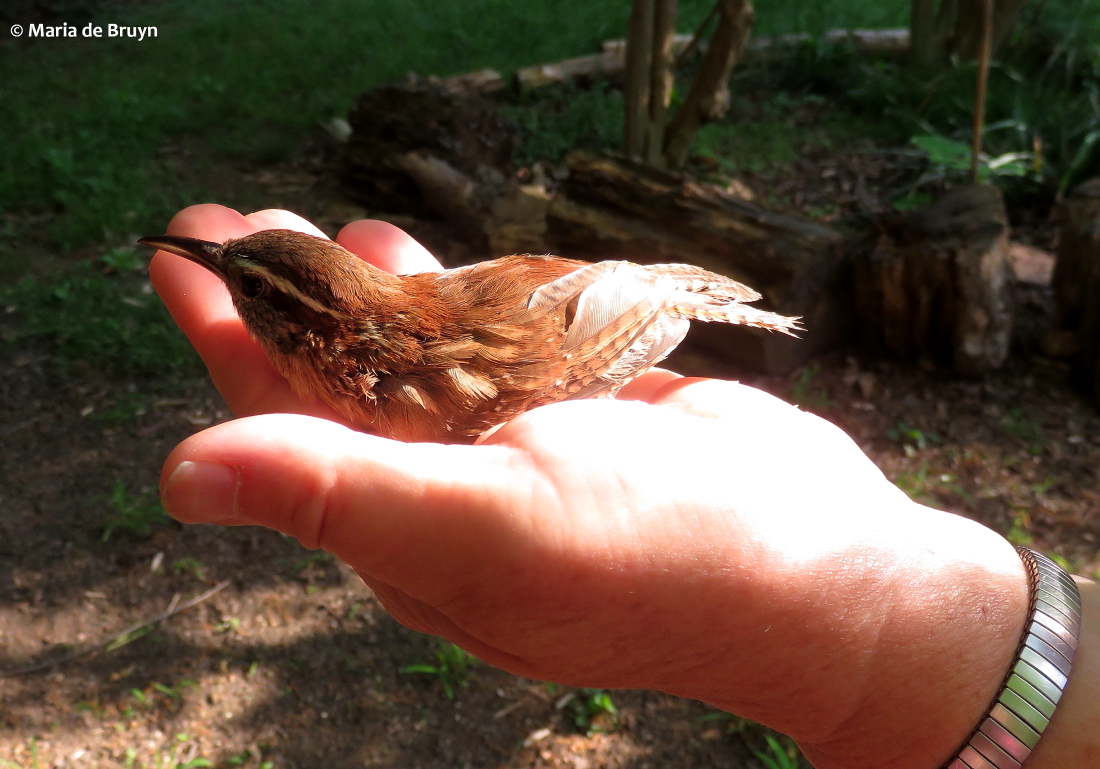
Carolina wren Riley IMG_3832© Maria de Bruyn res

Forty-five minutes later, playback of a house wren’s song (Troglodytes aedon) led to the capture of a male who immediately came to investigate who was invading his territory. His mate, who was busy putting the finishing touches on a nest in a box near the mist net, didn’t go near the net.
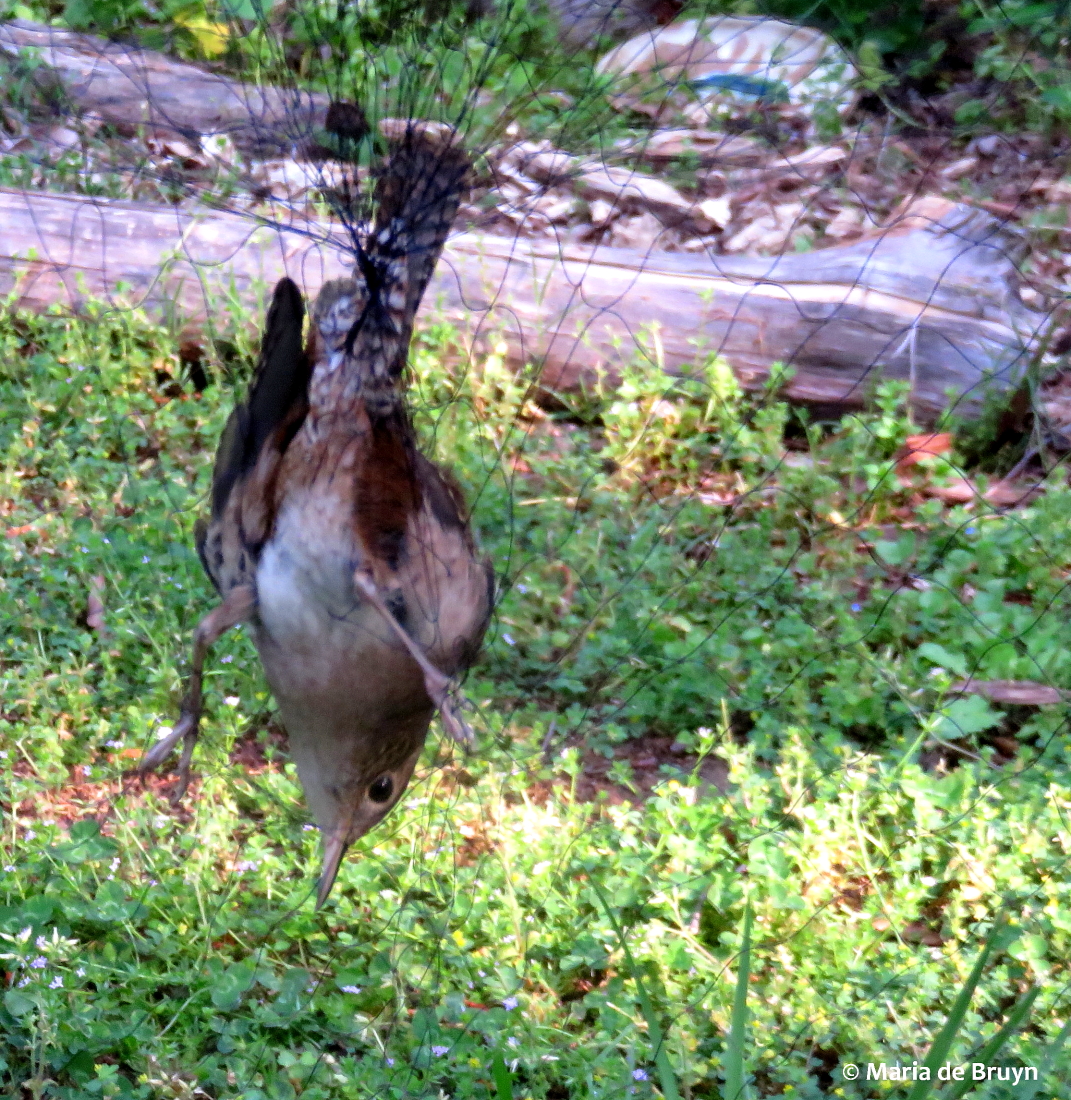
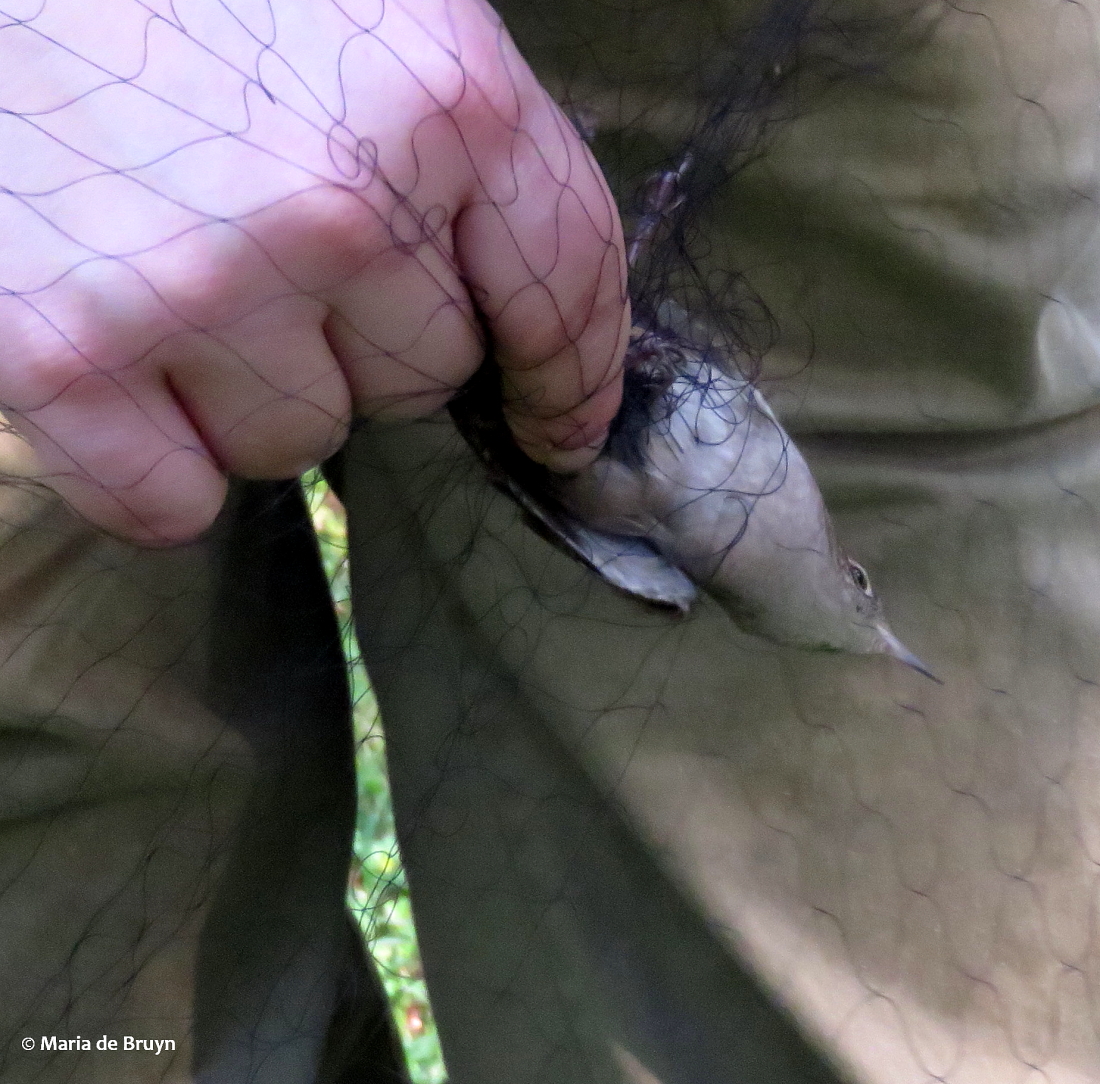
house wren Hans IMG_3842© Maria de Bruyn reshouse wren Hans IMG_3844© Maria de Bruyn res

A few birds not targeted for the study ended up tangled in a net. A white-throated sparrow (Zonotrichia albicollis) had beautiful vivid breeding colors on his head. A red-bellied woodpecker (Melanerpes carolinus) was not calm like the sparrow, fluttering his wings constantly as Alicia, the bird bander, got him loose.
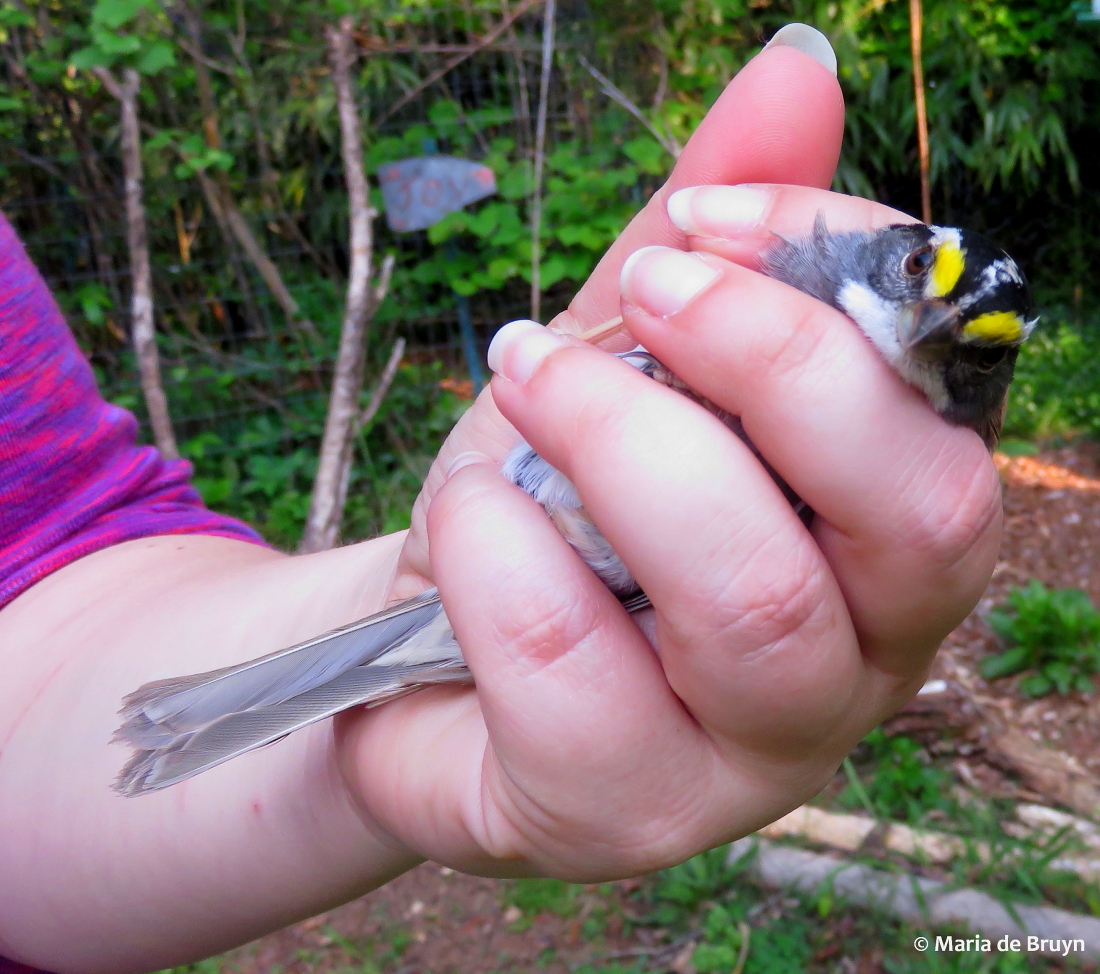
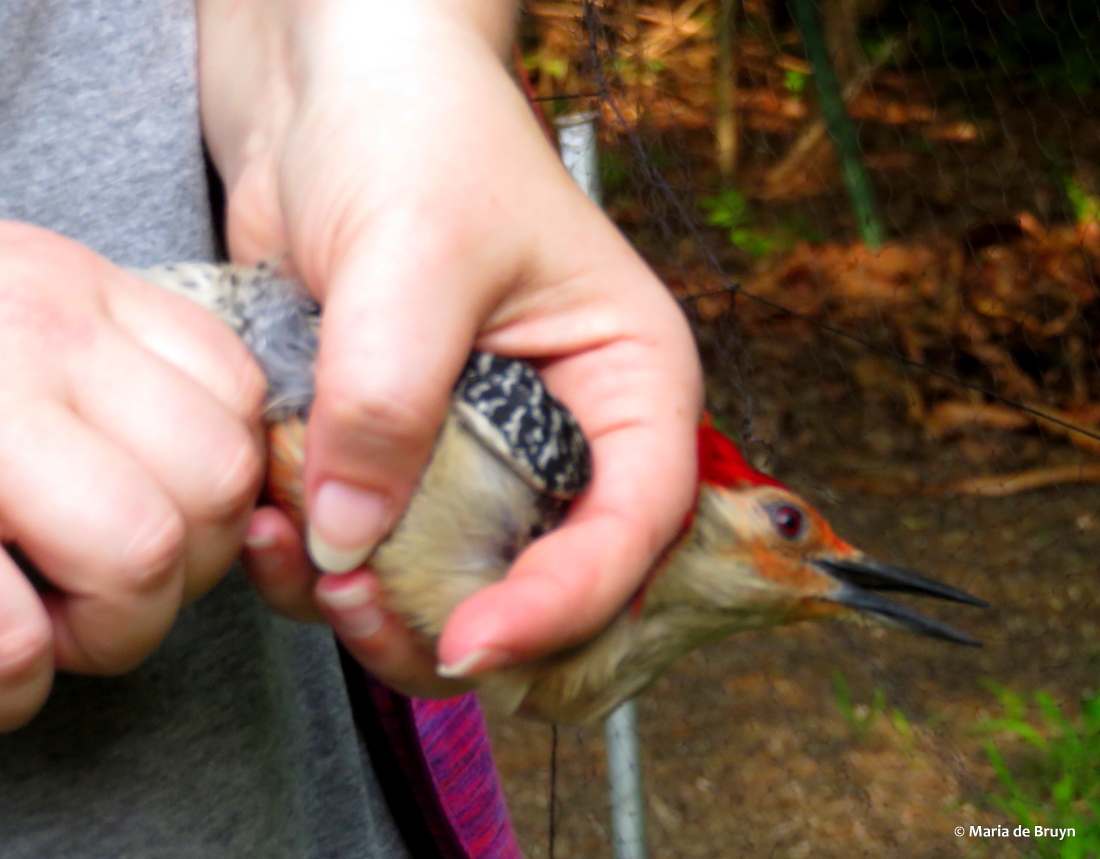
white-throated sparrow IMG_3837© Maria de Bruyn res red-bellied woodpecker IMG_3822© Maria de Bruyn res

Next up were a male cardinal and a female American robin. Like last year, the birds were measured and weighed. Although about the same length, the weight difference between the heaviest Northern cardinal we banded (41.2 oz) and the American robin was striking (79.6oz). The robin’s fondness for worms and other dietary preferences helps account for this. When I let her go, she didn’t feel very heavy in my hand as she rested a second before flying off.
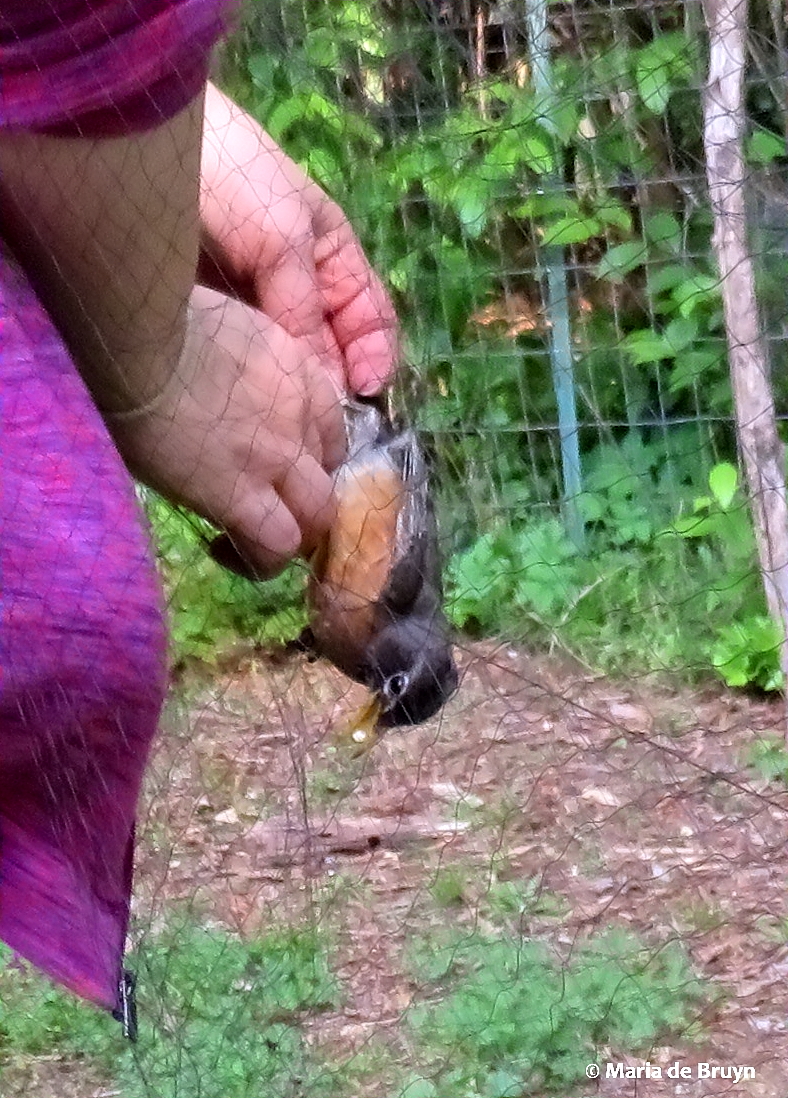
American robin Raisin IMG_3854© Maria de Bruyn

Except for birds that were molting their tail feathers, Alicia also removed the third left tail feather; this is done primarily for stable isotope analysis, which allows a researcher to estimate where the bird was when that feather was grown.
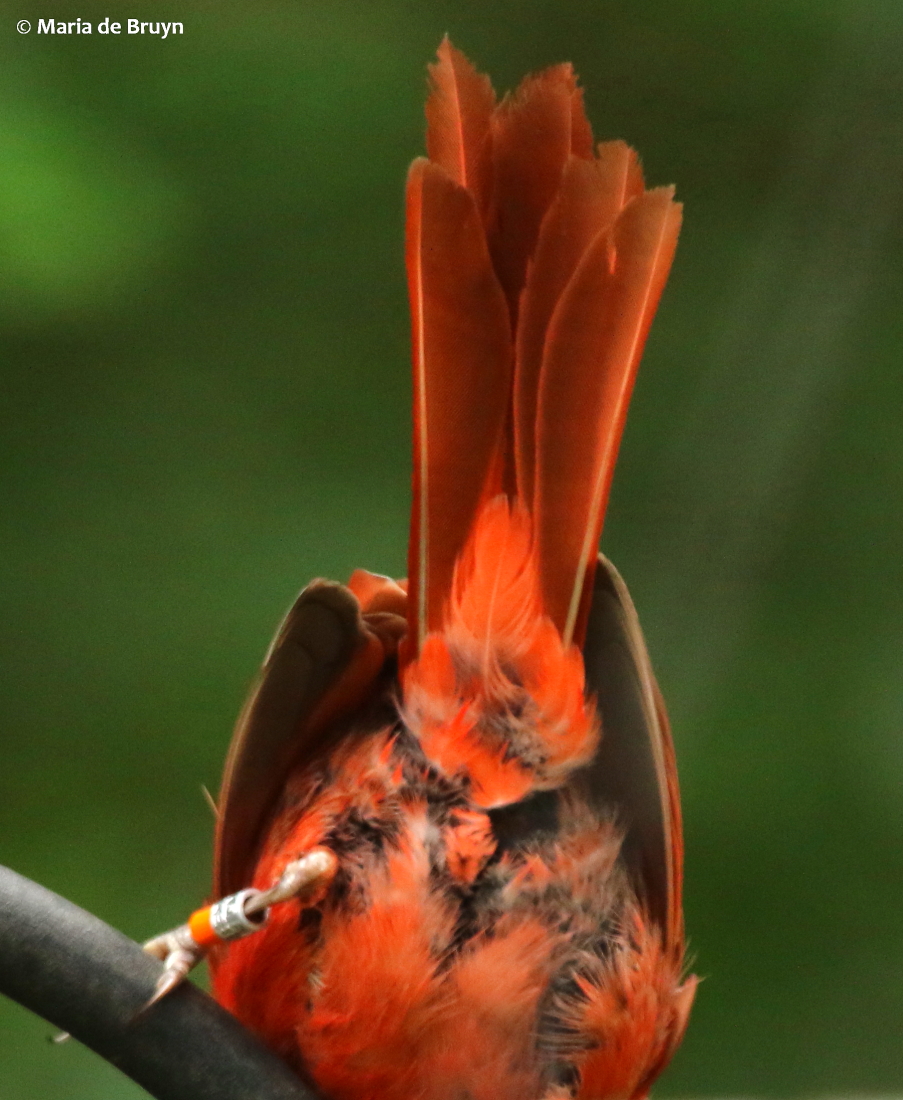
Northern cardinal Crake I77A0559© Maria de Bruyn res

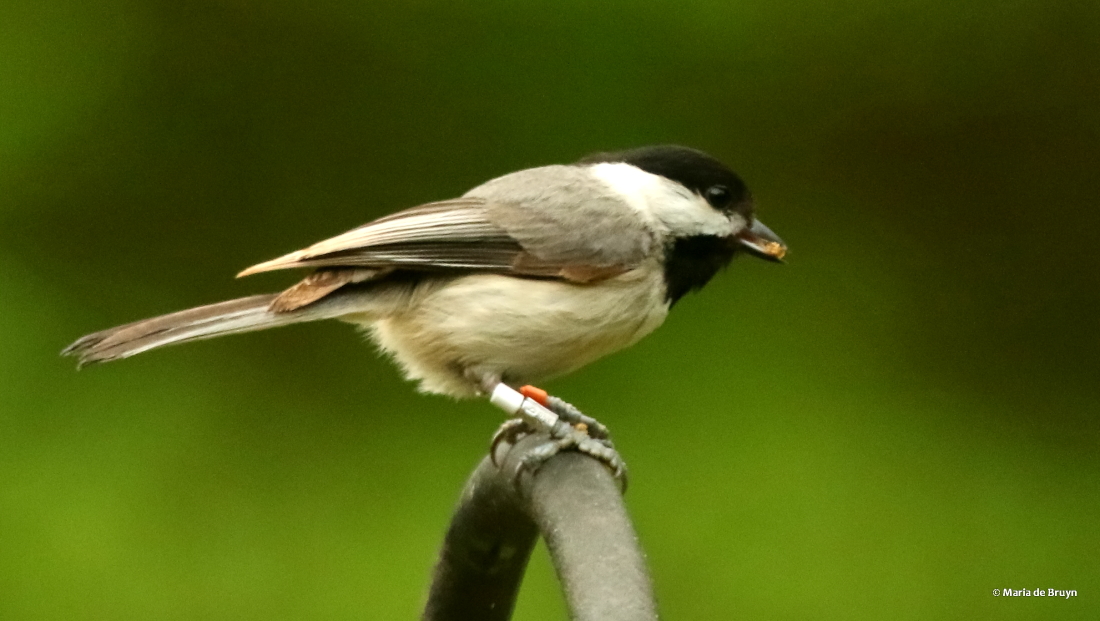
Carolina chickadee Chancey I77A7762© Maria de Bruyn resThe catbirds avoided the mist nets skillfully this year. Playback of their songs drew them to the vicinity but the two pairs visiting the feeders were more interested in chasing each other away from the territory. Alicia hoped that we could get a Carolina chickadee (Poecile carolinensis); with playback we got a male and then, 45 minutes later after banding another cardinal, we got a pair of them.
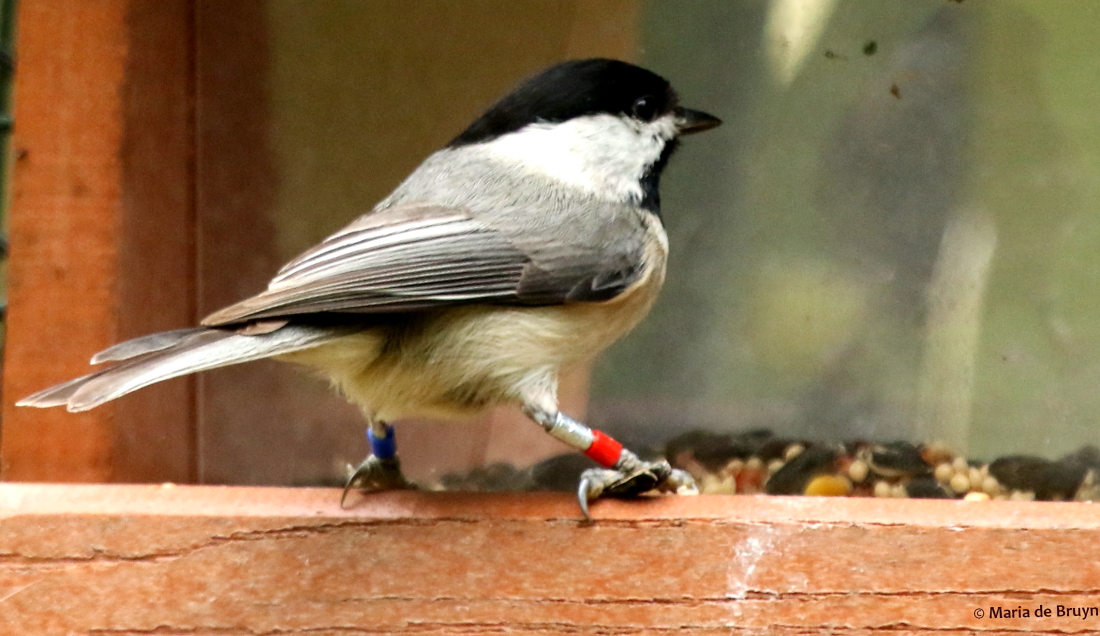
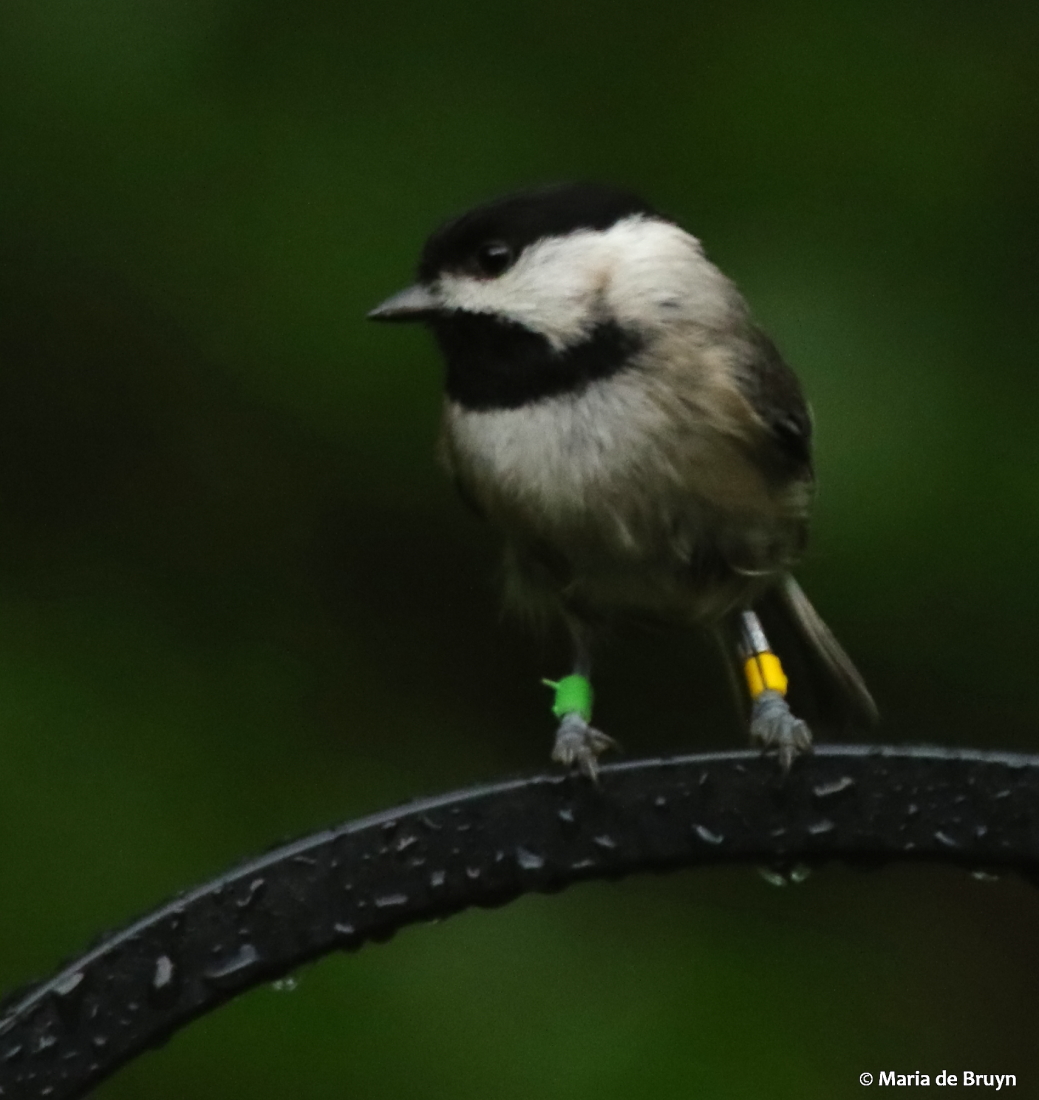
Carolina chickadee Chase I77A0348© Maria de Bruyn res Carolina chickadee Chantal I77A9525© Maria de Bruyn res

Alicia blew on the birds’ undersides (forgive the blurry photo) to assess fat reserves, which are stored along the flanks and up near the furcula by the collar bone. She could also determine sex that way and thought that one chickadee might be developing an egg – hopefully, one of the females who lost a nest to predators in my yard a week ago. The last male chickadee released was out of sorts after the experience; before leaving my hand to fly off rapidly, he turned and bit me as a parting shot.
Carolina wren Renee IMG_3813© Maria de Bruyn res Carolina chickadee IMG_3856© Maria de Bruyn res

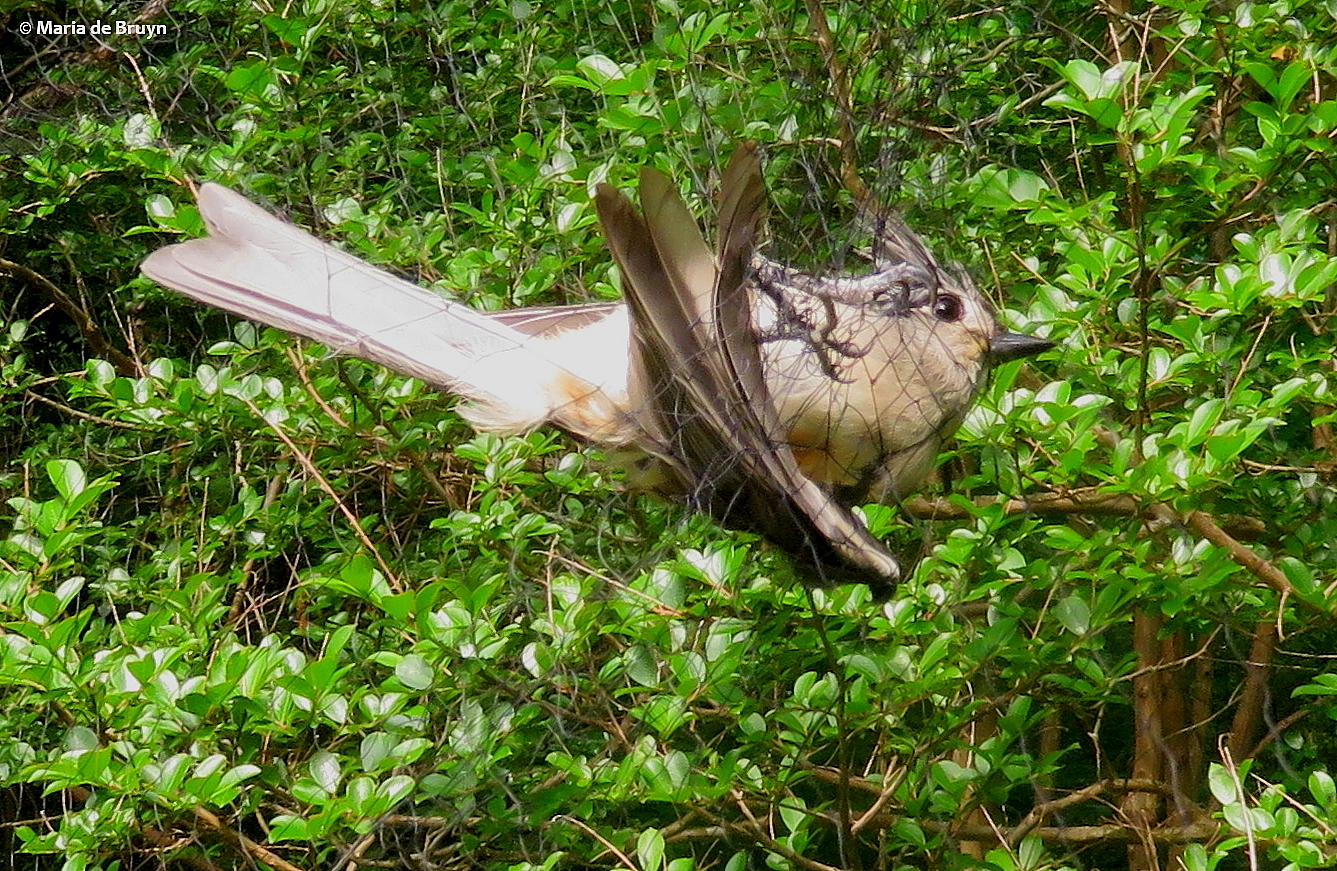
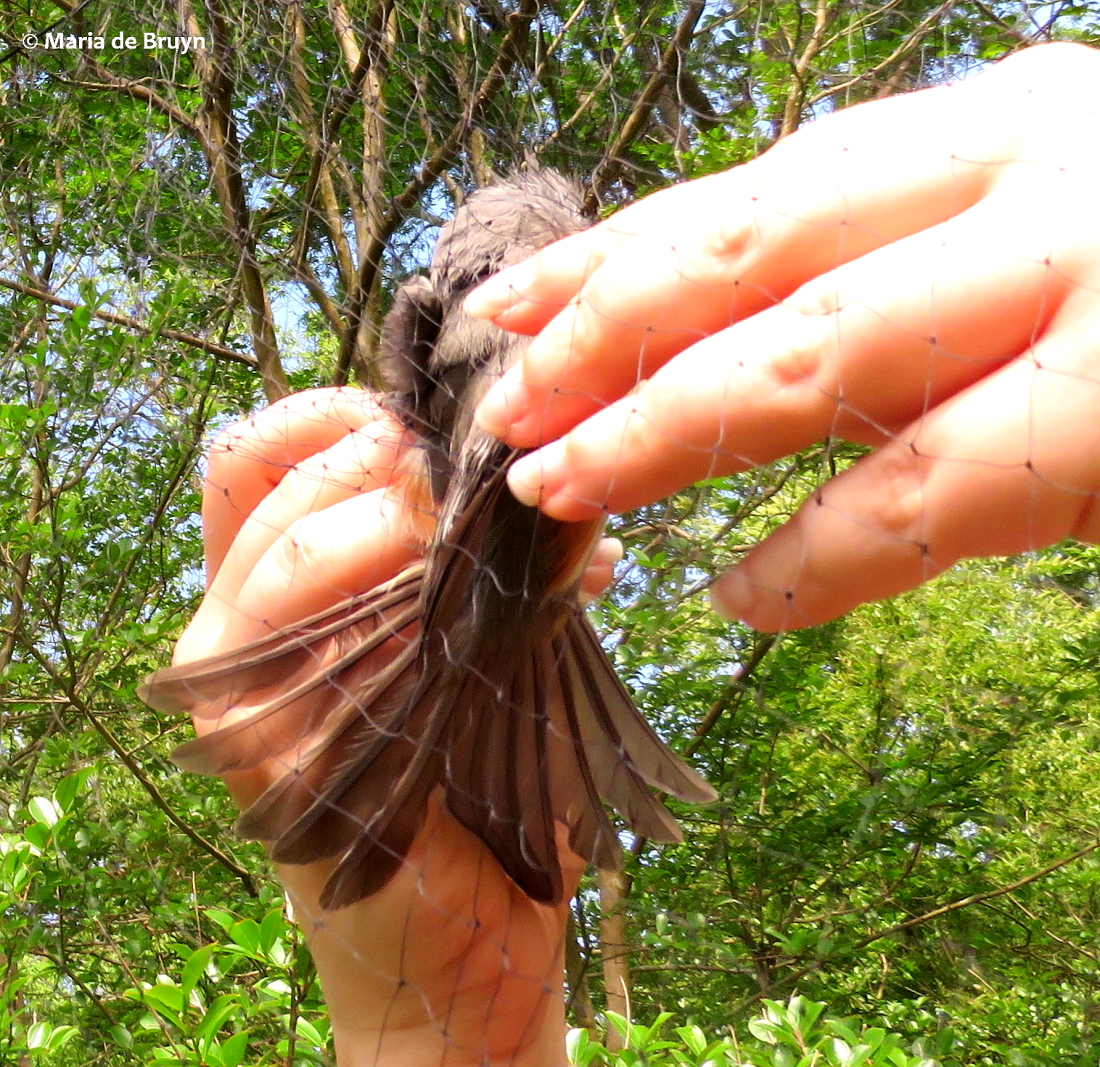
Alicia had remarked that she hoped no tufted titmouse (Baeolophus bicolor) would be caught; they are not part of the study and she said they are so feisty that their bites can be a bit painful like those of the cardinals. Unfortunately, one leaving a feeder did end up in a net and lived up to its reputation as a feisty bird. A chipping sparrow (Spizella passerina), who was the last bird in a net remained fairly calm as the net was removed from its claws.
tufted titmouse IMG_3858© Maria de Bruyn res

Tufted titmouse IMG_3861© Maria de Bruyn res

Yesterday, I spent some time watching the feeders and yard to see if all the banded birds had left. Luckily, some of them showed up and were here again today. So here are a few of “my birds” with bling – this is a truly enjoyable citizen science project. 🙂
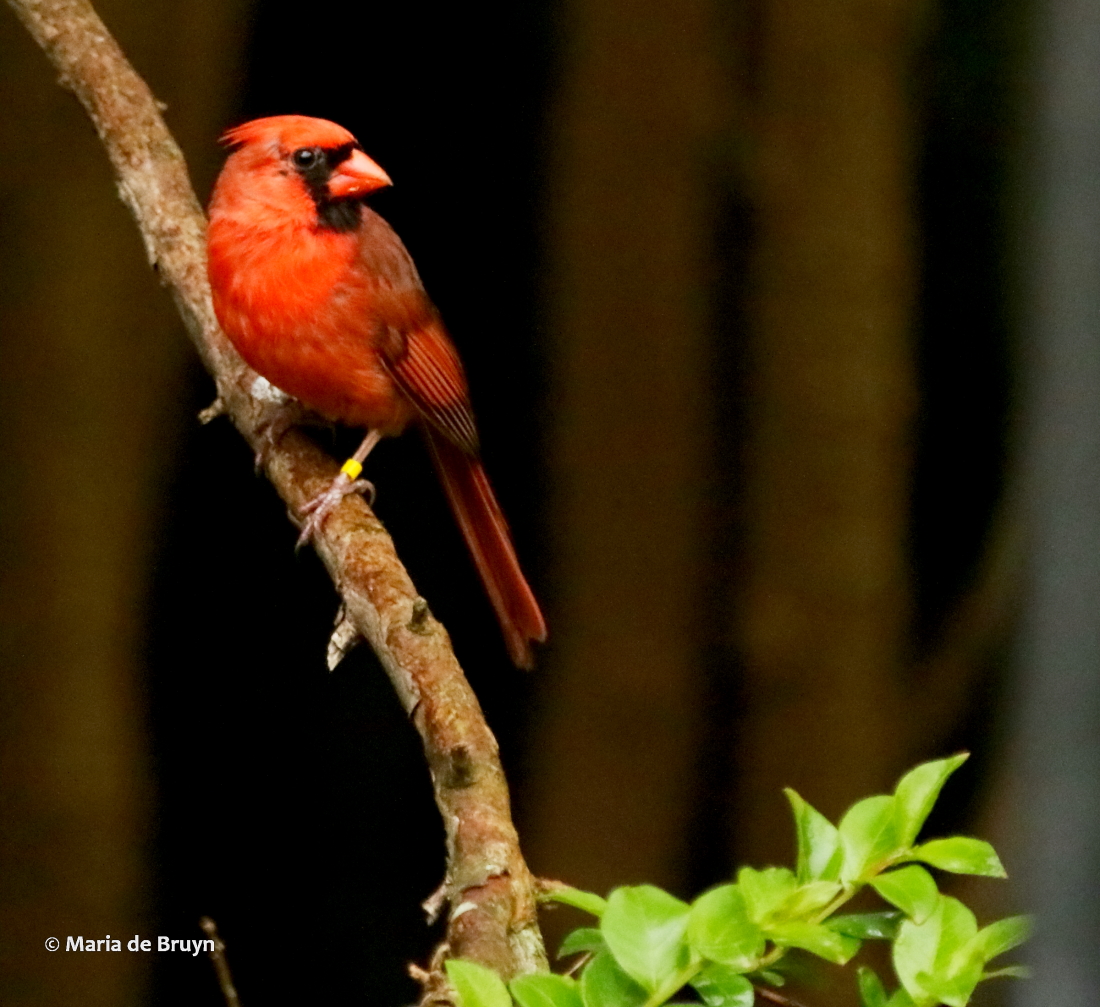
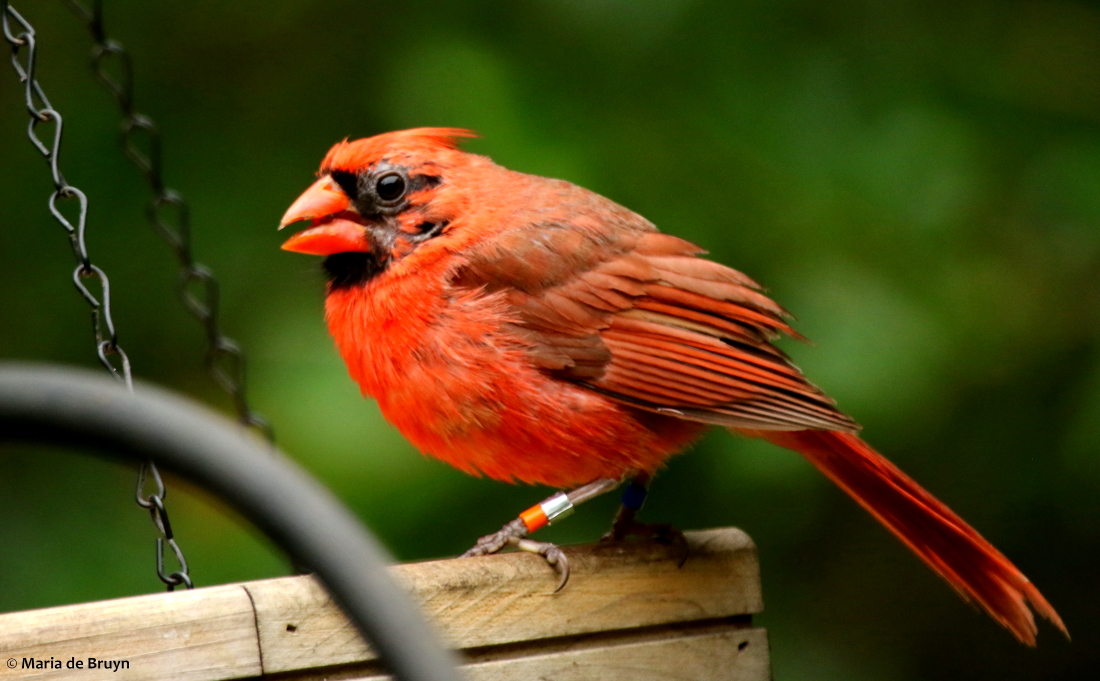
Northern cardinal Clarence I77A0124© Maria de Bruyn res Northern cardinal Crake I77A0593© Maria de Bruyn res

Clarence                                                                       Crake

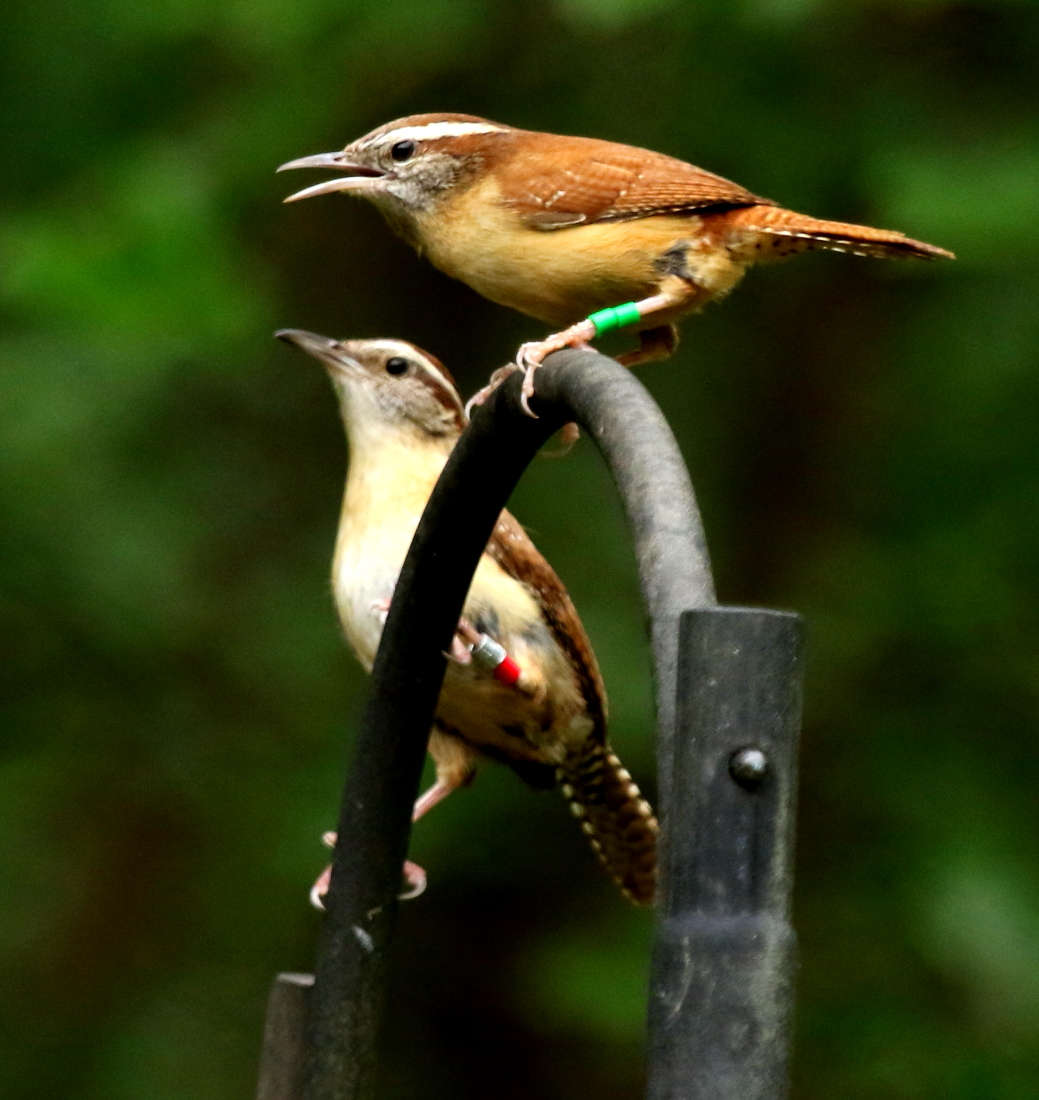
Carolina wren Renee I77A9354© Maria de Bruyn resCarolina wren Riley I77A0508© Maria de Bruyn res

Renee and Riley Carolina wrens
 

Birds, berries, nuts and seeds – enjoyment of nature’s bounty

So this wasn’t my last blog of 2015 after all. An unexpected hospital admission on 30 December brought about quite a delay in my blogging efforts. But I managed to complete this in instalments over the past days and hope you enjoy the final version, which I am happily able to post on my second day at home in 2016!

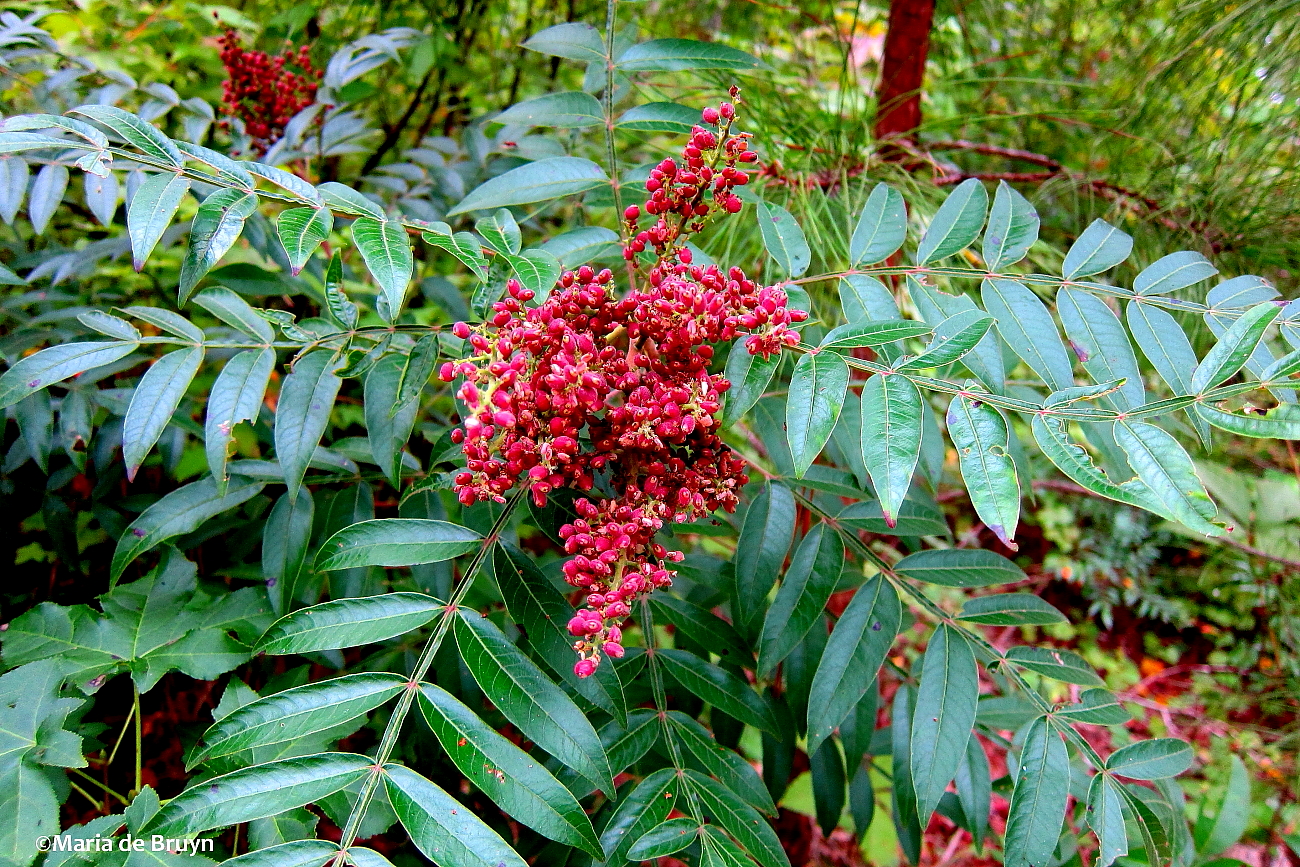
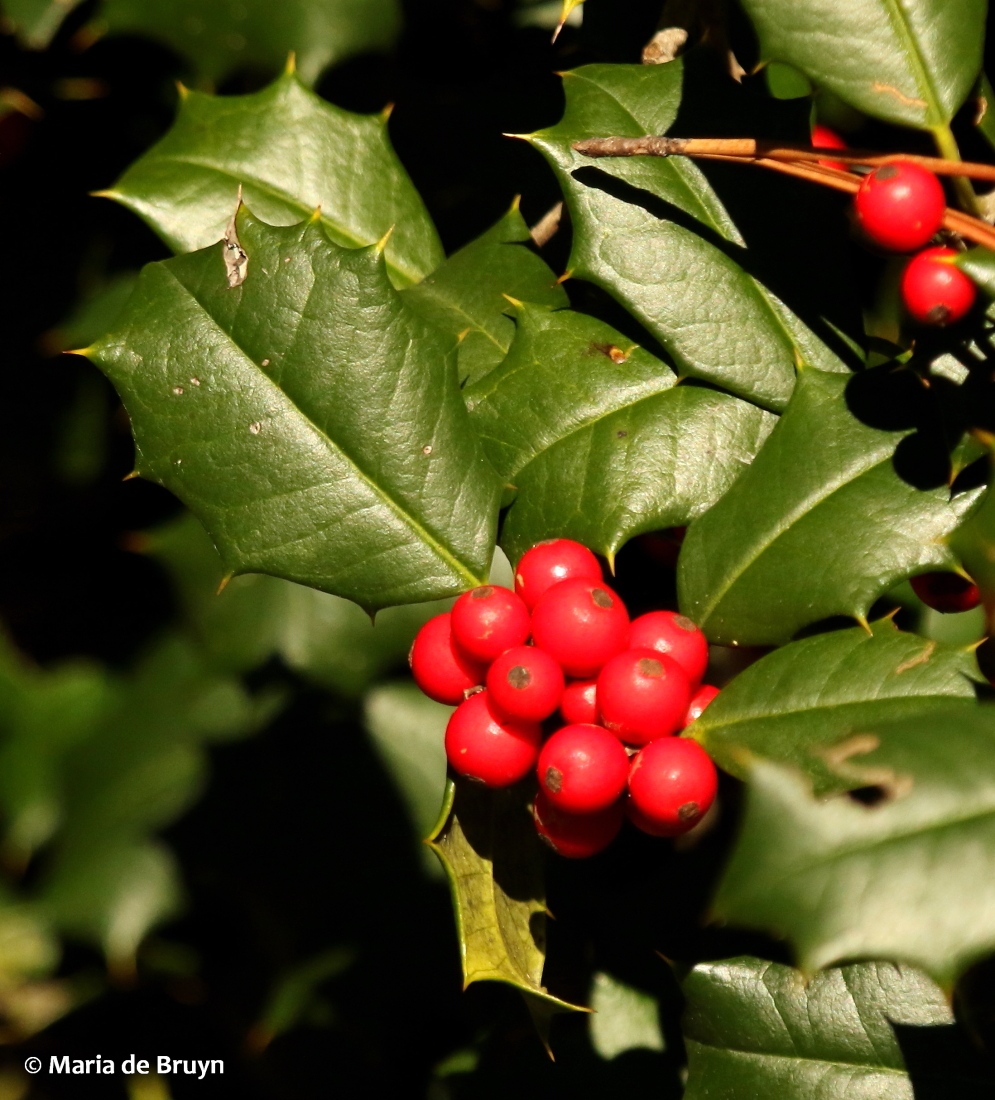
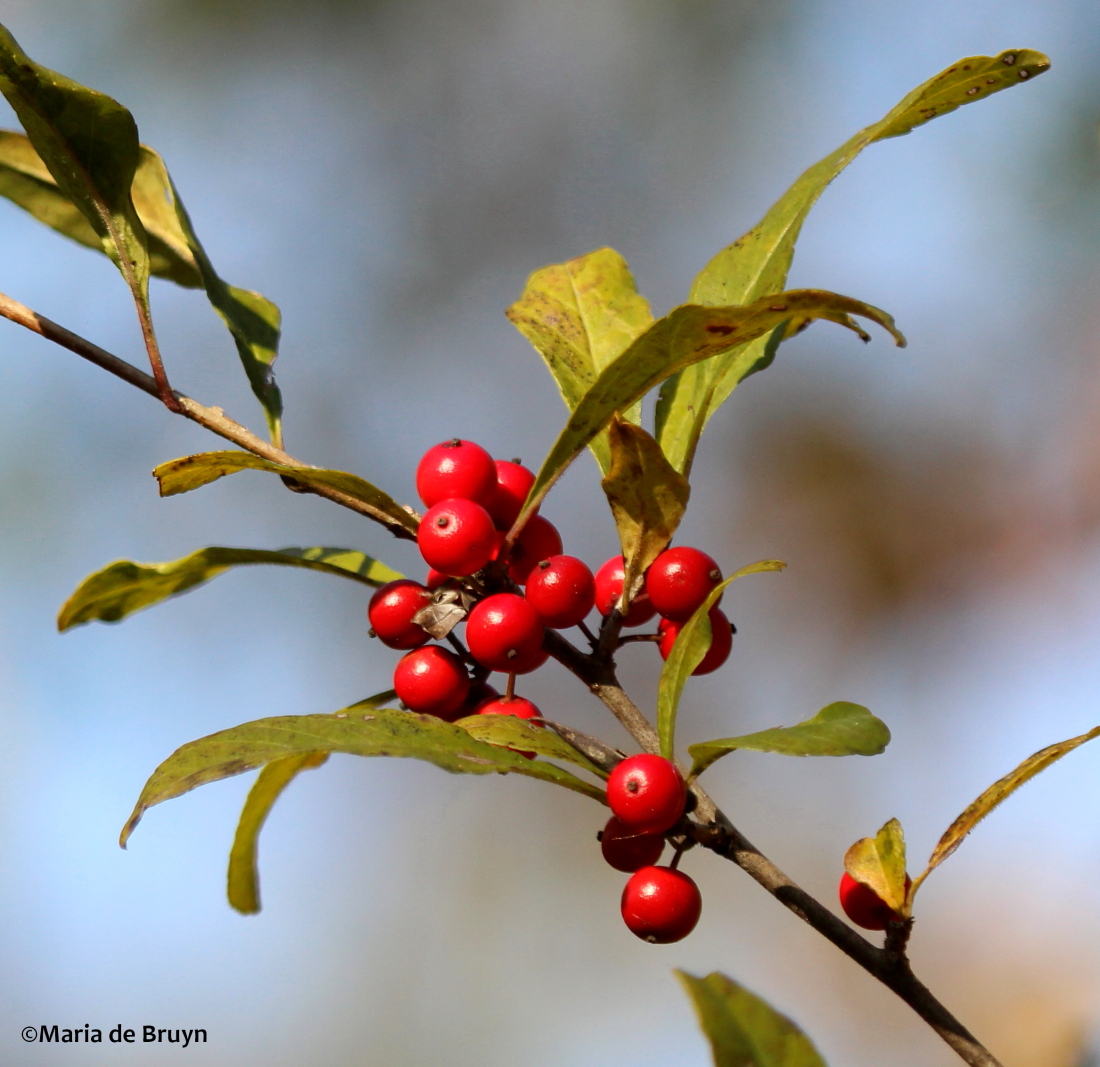
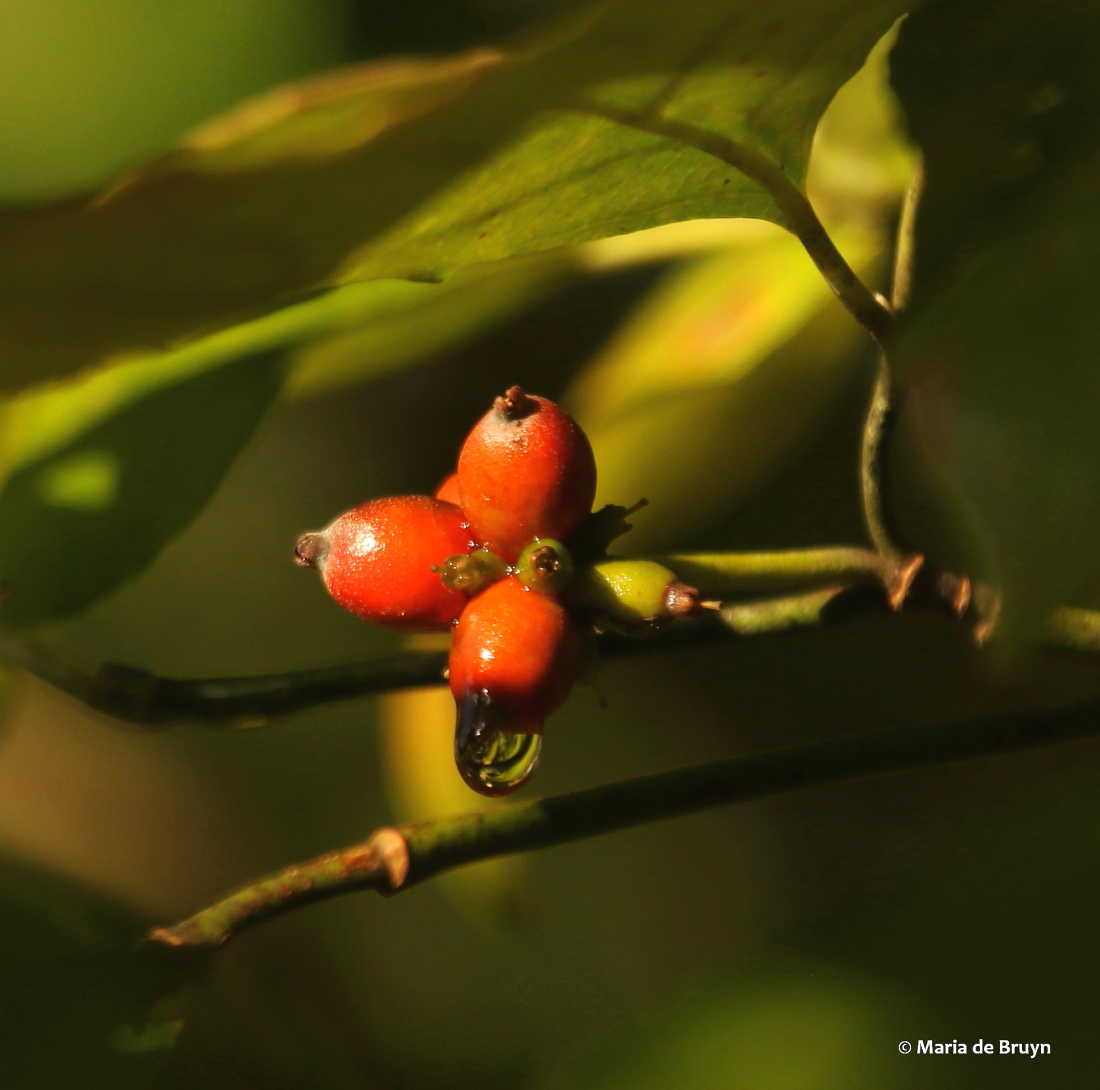
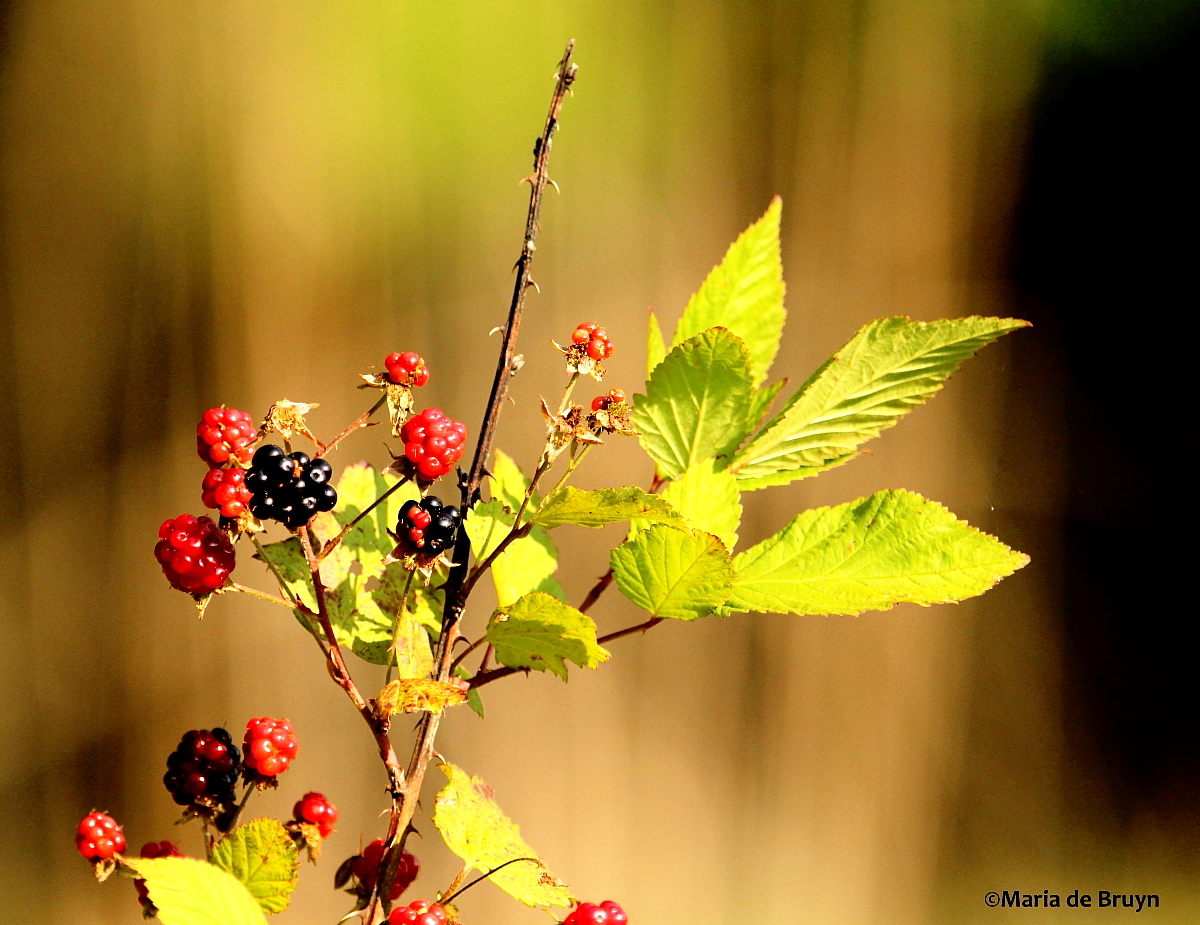
During late summer, when various plants have or start developing fruit, the birds begin to enjoy nature’s bounty. Here in North Carolina, they will eat the berries of native plants such as American beautyberry (Callicarpa americana), winged sumac (Rhus copallinum), American holly (Ilex opaca), possumhaw (deciduous holly, Ilex decidua), flowering dogwood (Cornus florida) and wild blackberries (Rubus).

American beautyberry IMG_7637© Maria de Bruyn resWinged sumac IMG_5377©Maria de Bruyn res

American holly I77A3150© Maria de Bruyn resDeciduous holly IMG_4428© Maria de Bruyn res

Flowering dogwood DK7A7731© Maria de Bruyn reswild blackberryIMG_2588©Maria de Bruyn res


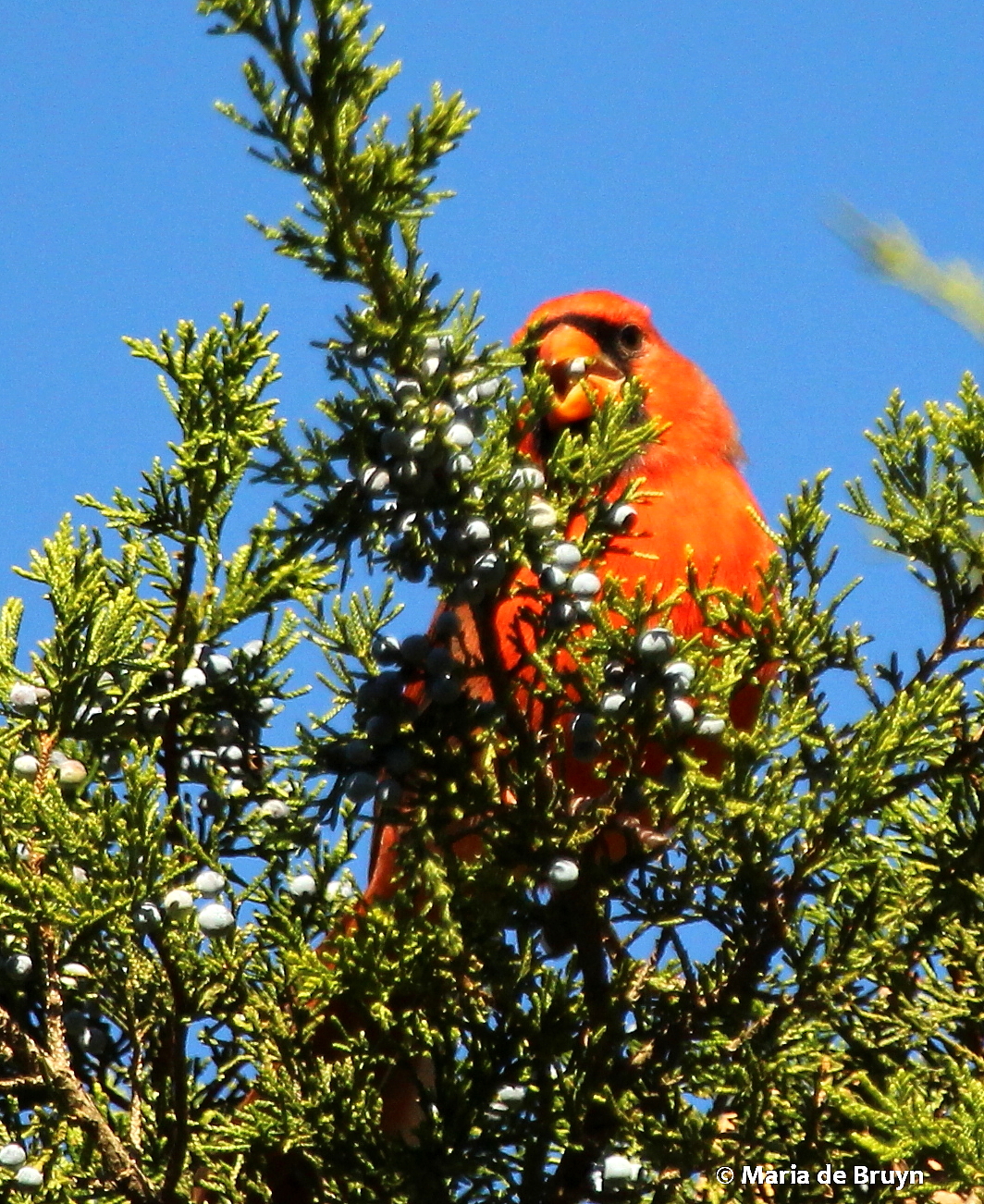
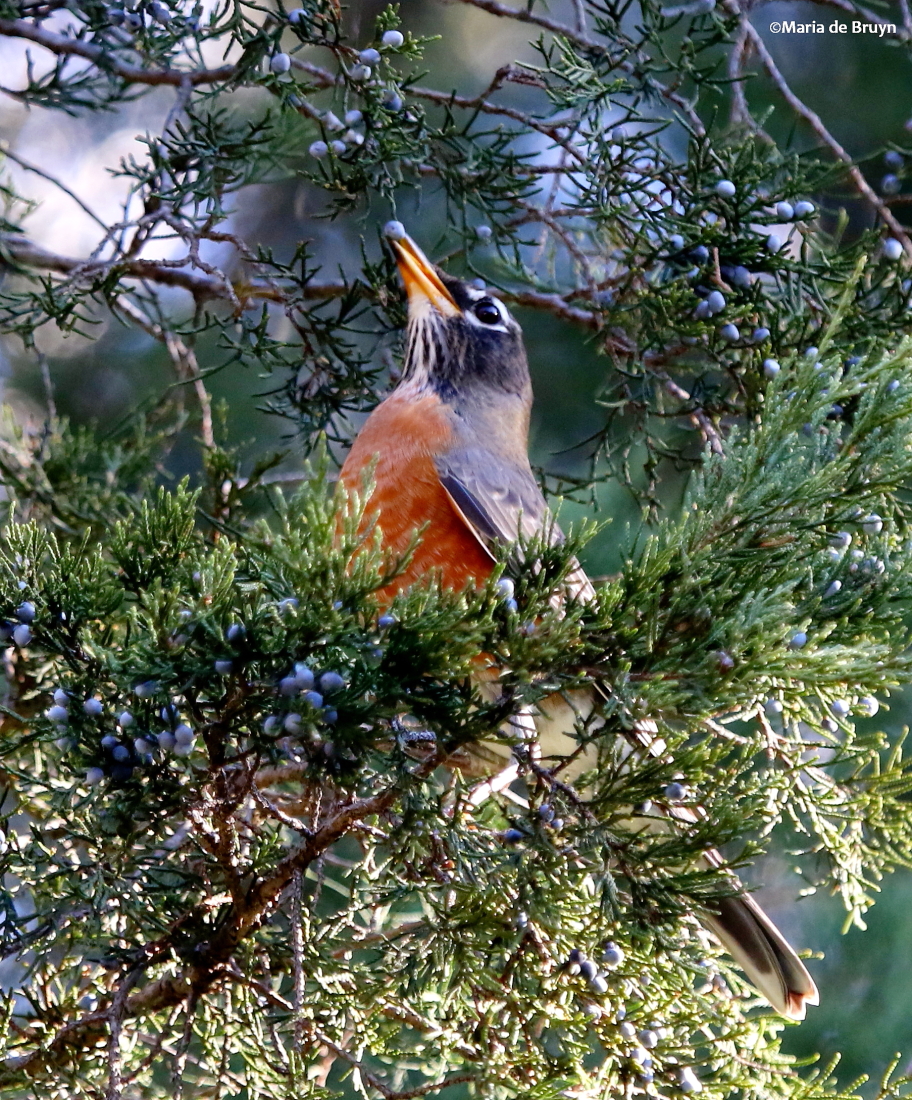
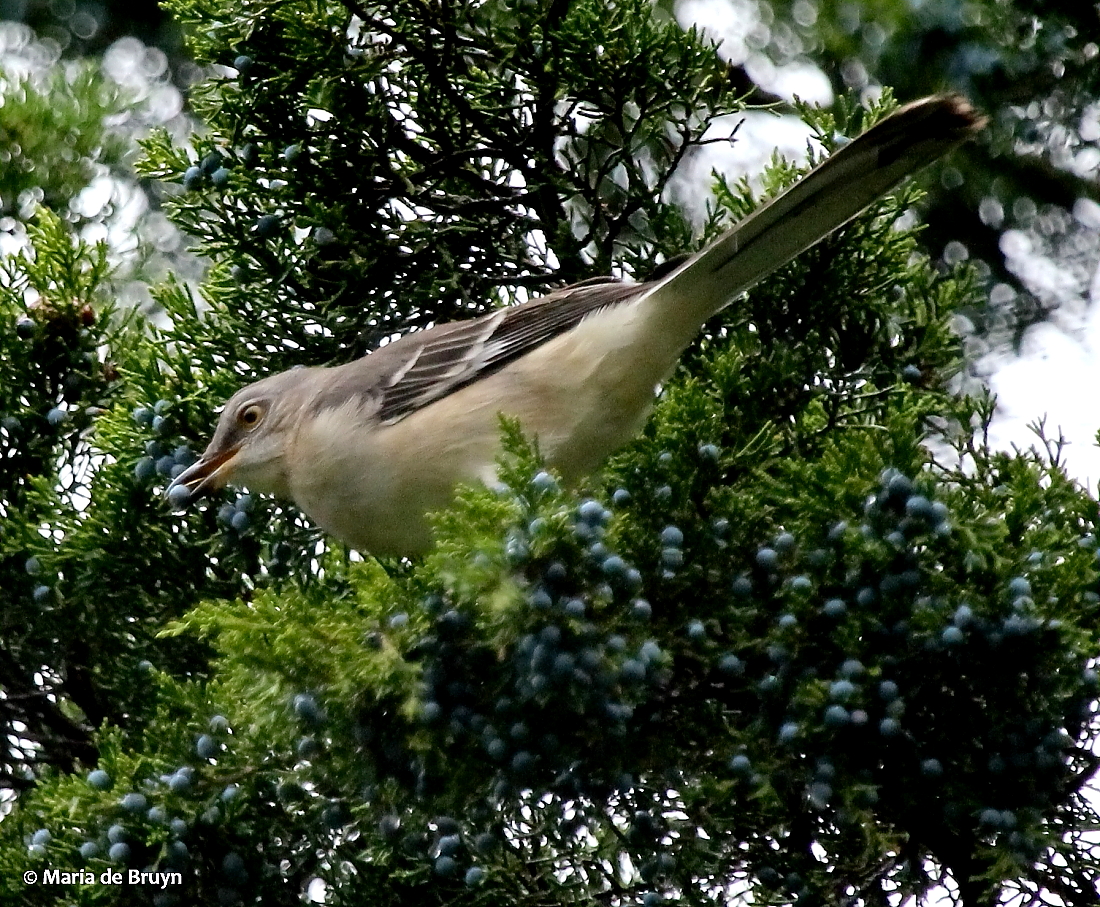
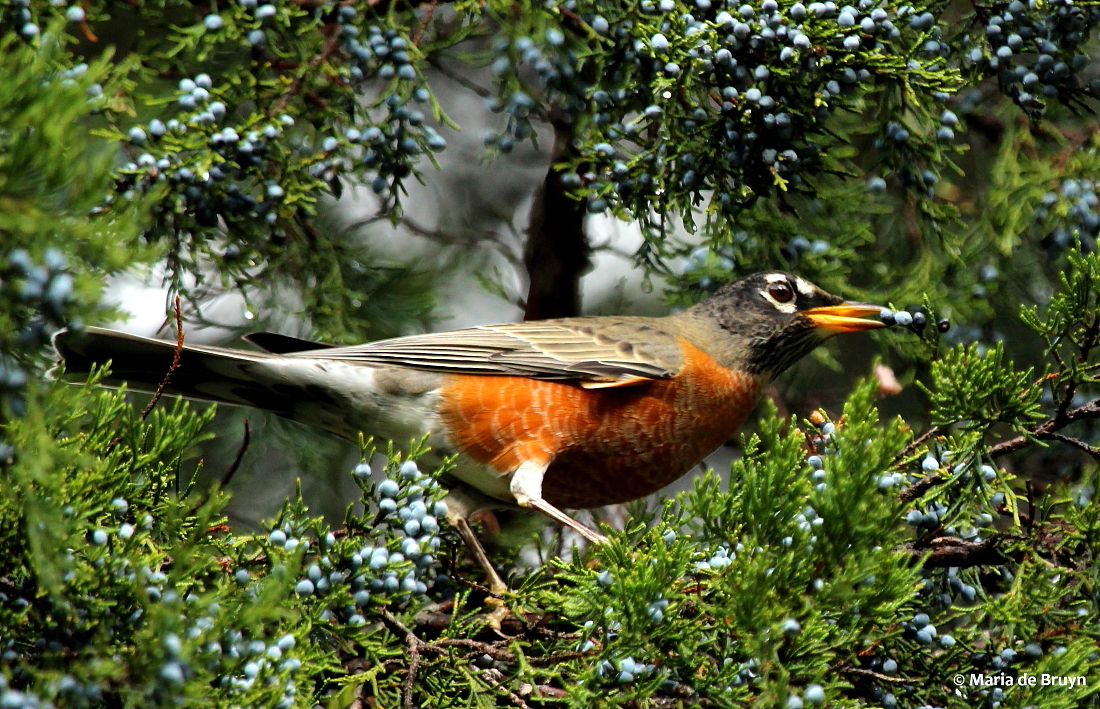
This year, the juniper berries were a real crowd pleaser. The American robins (Turdus migratorius) went for them first, soon followed by Northern cardinals (cardinalis cardinalis), Eastern bluebirds (Sialia sialis), Northern mockingbirds (Mimus polyglottos polyglottos) and Northern flickers (Colaptes auratus).

American robin IMG_6567© Maria de Bruyn res

Northern cardinal IMG_3653© Maria de BruynAmerican robin I77A0801©Maria de Bruyn res

Eastern bluebird I77A0913©Maria de Bruyn resNorthern mockingbird 2 IMG_6308© Maria de Bruyn res

Northern flicker IMG_5853© Maria de Bruyn res

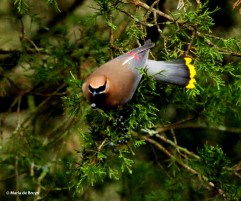
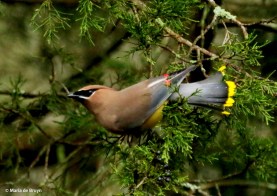
The beautiful cedar waxwings (Bombycilla cedrorum) enjoyed the cedar berries, too.

cedar waxwing I77A4266© Maria de Bruyn res

cedar waxwing I77A4293© Maria de Bruyn res

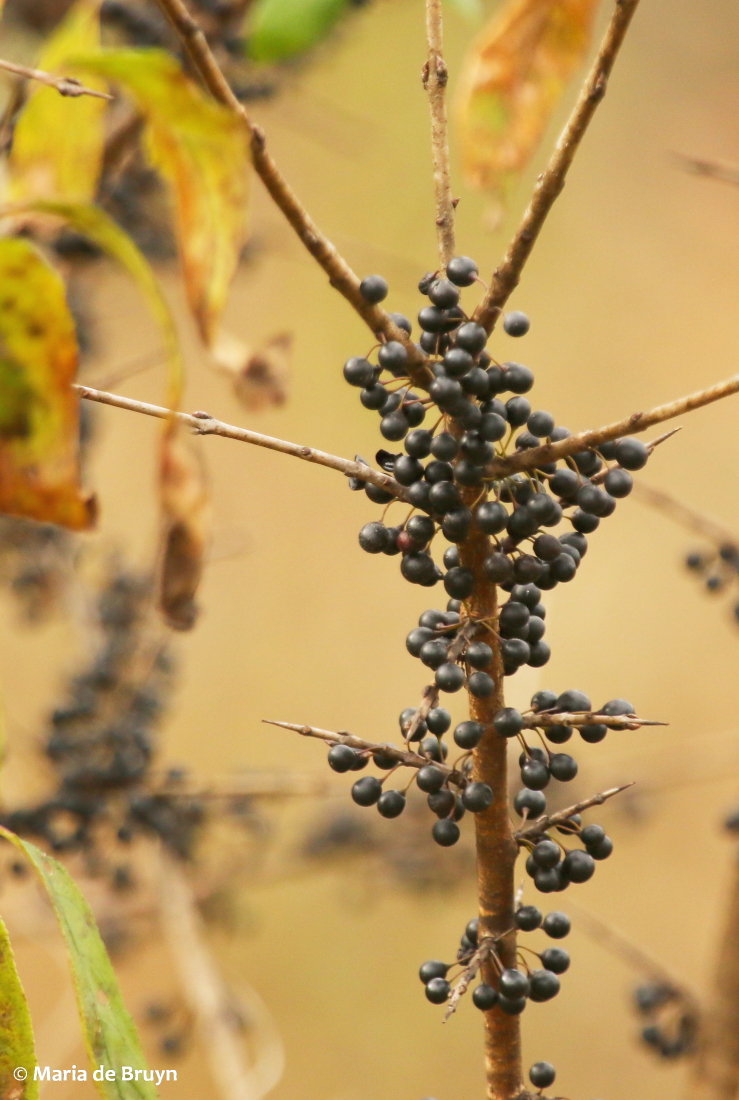
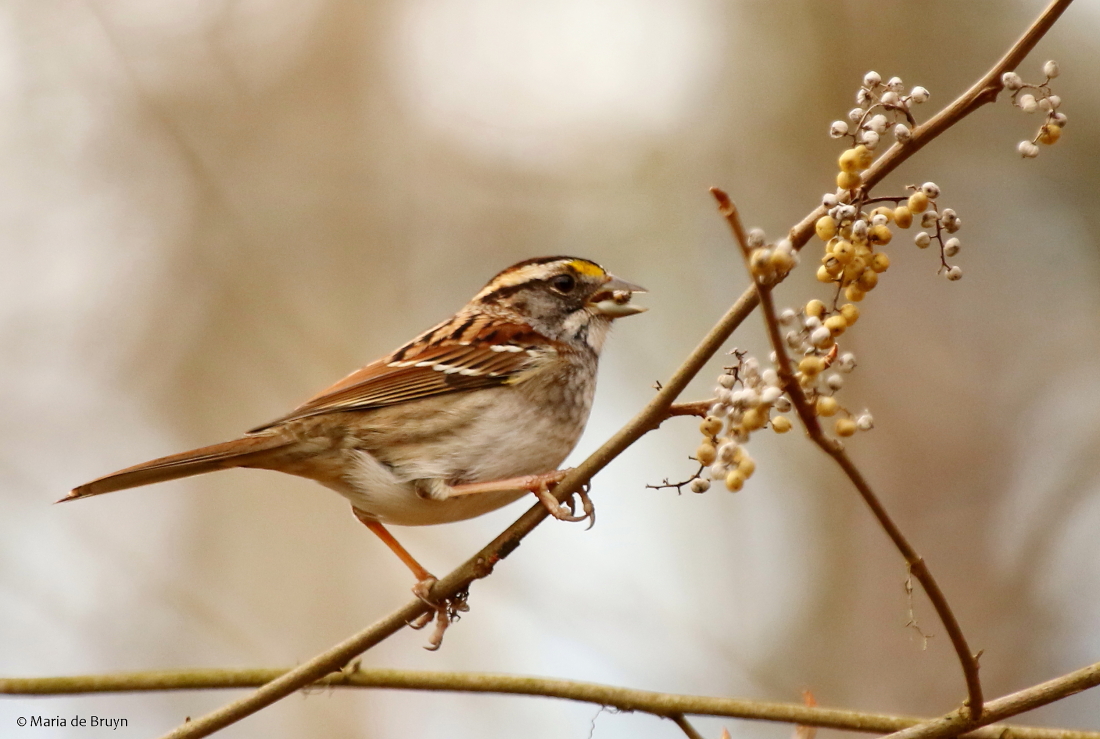
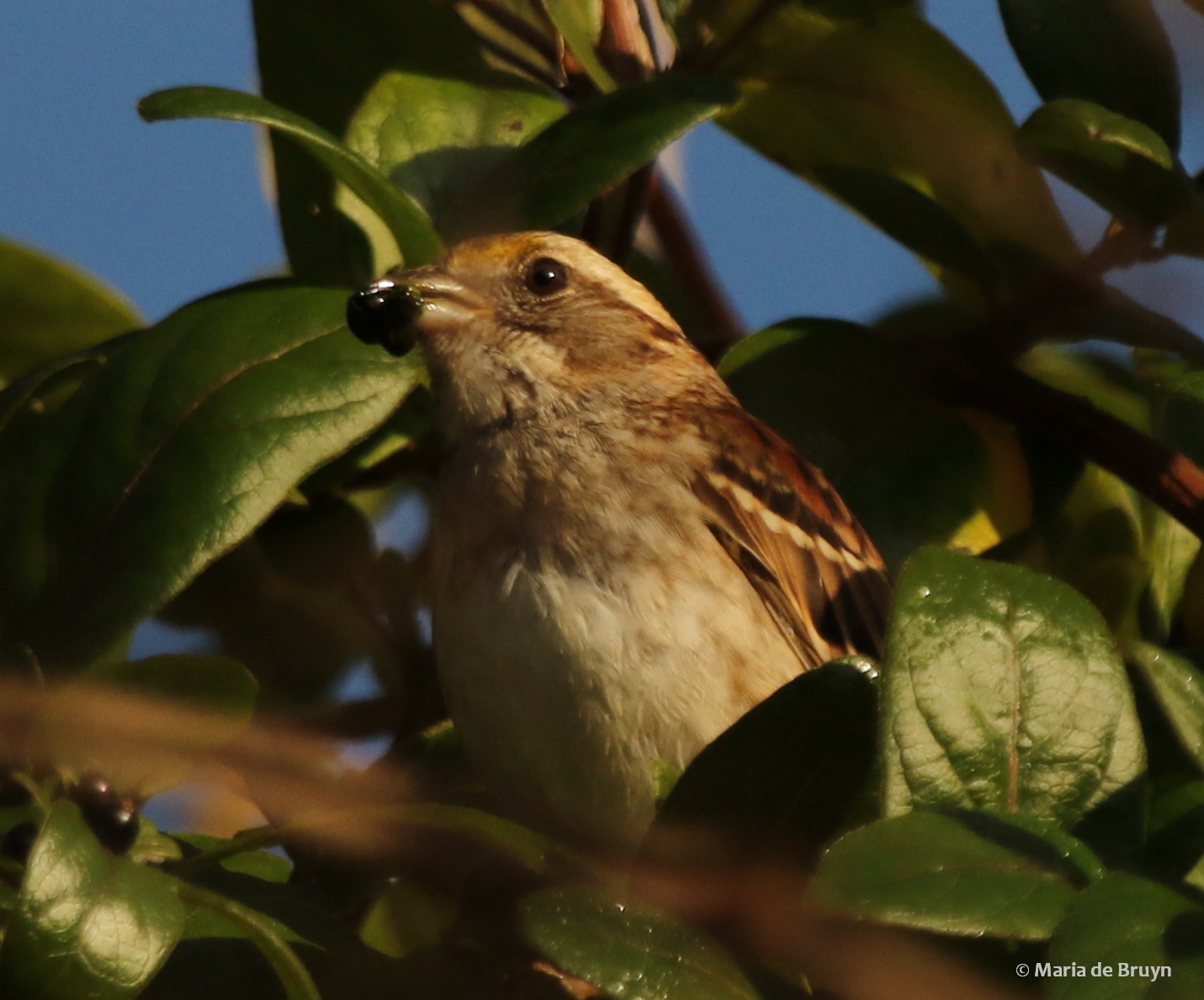
Birds like thbuckthorn I77A2455© Maria de Bruyn signed rese Northern mockingbird and white-throated sparrow (Zonotrichia albicollis) also enjoy the berries of invasive plants such as privet (Ligustrum), common buckthorn (Rhamnus cathartica. left), Chinaberry (Melia azedarach) and autumn olive (Eleagnus umbellata).

Northern mockingbird I77A2924© Maria de Bruyn res
white-throated sparrow I77A8188© Maria de Bruyn 2 reswhite-throated sparrow I77A4714© Maria de Bruyn signed

Watching our avian friends enjoy snapping up berries from vines can create enjoyment for the birdwatcher, too!

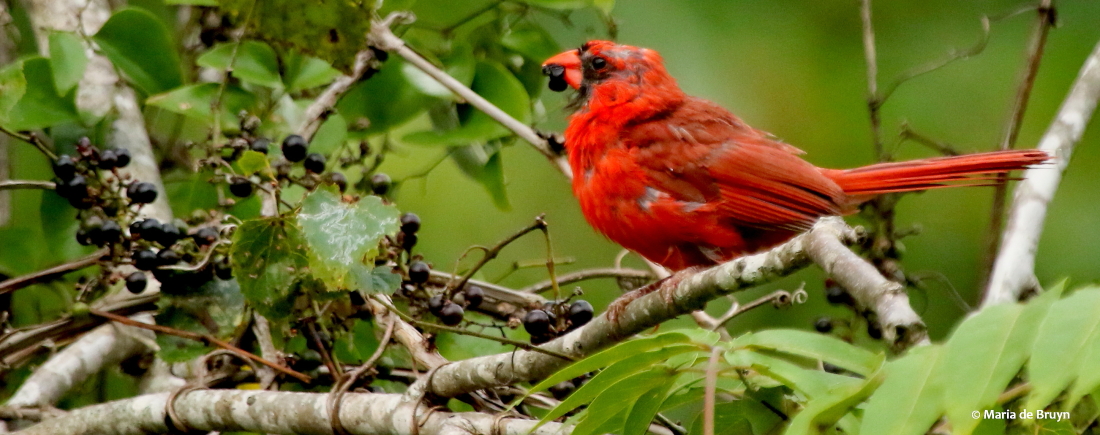
Northern cardinal DK7A8841© Maria de Bruyn signed res

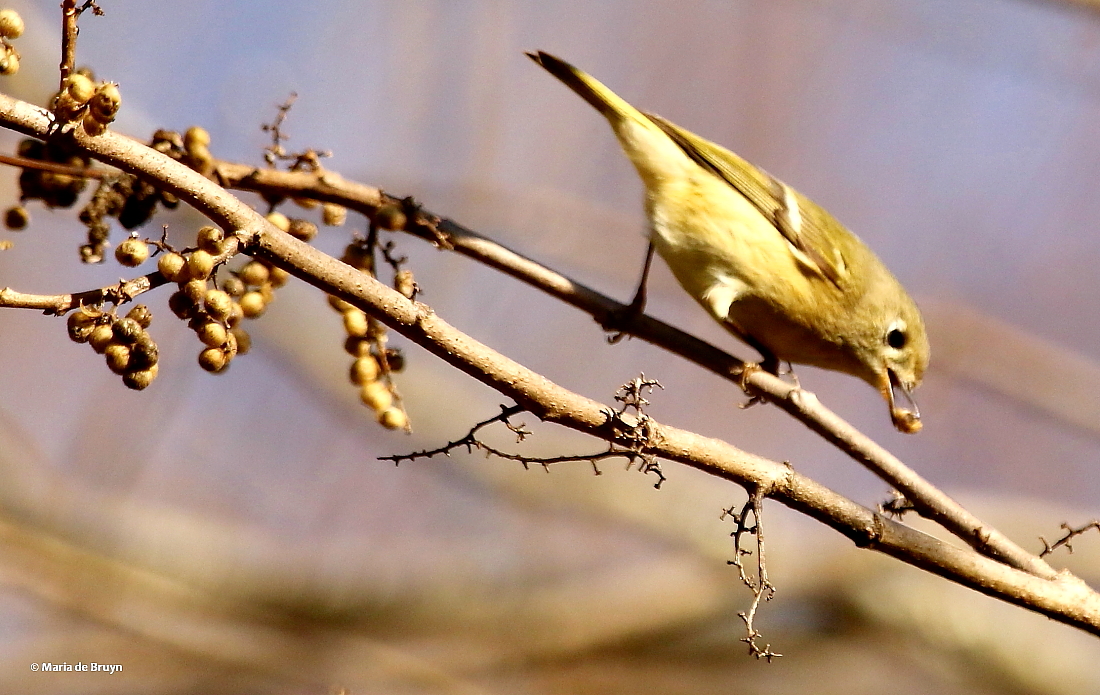
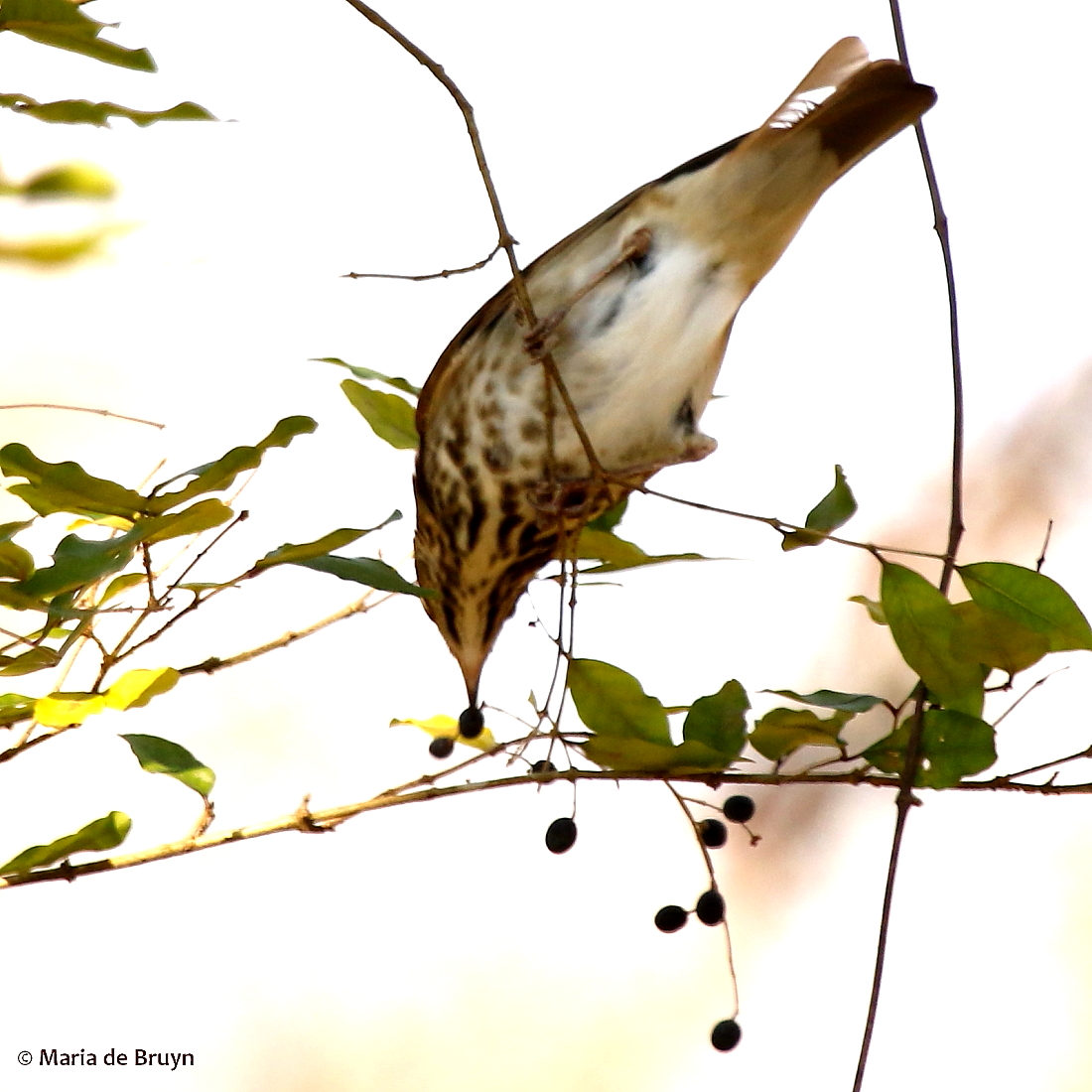
ruby-crowned kinglet I77A5319© Maria de Bruyn reshermit thrush I77A5816© Maria de Bruyn signed res

Ruby-crowned kinglet (Regulus calendula)

Hermit thrush (Catharus guttatus)


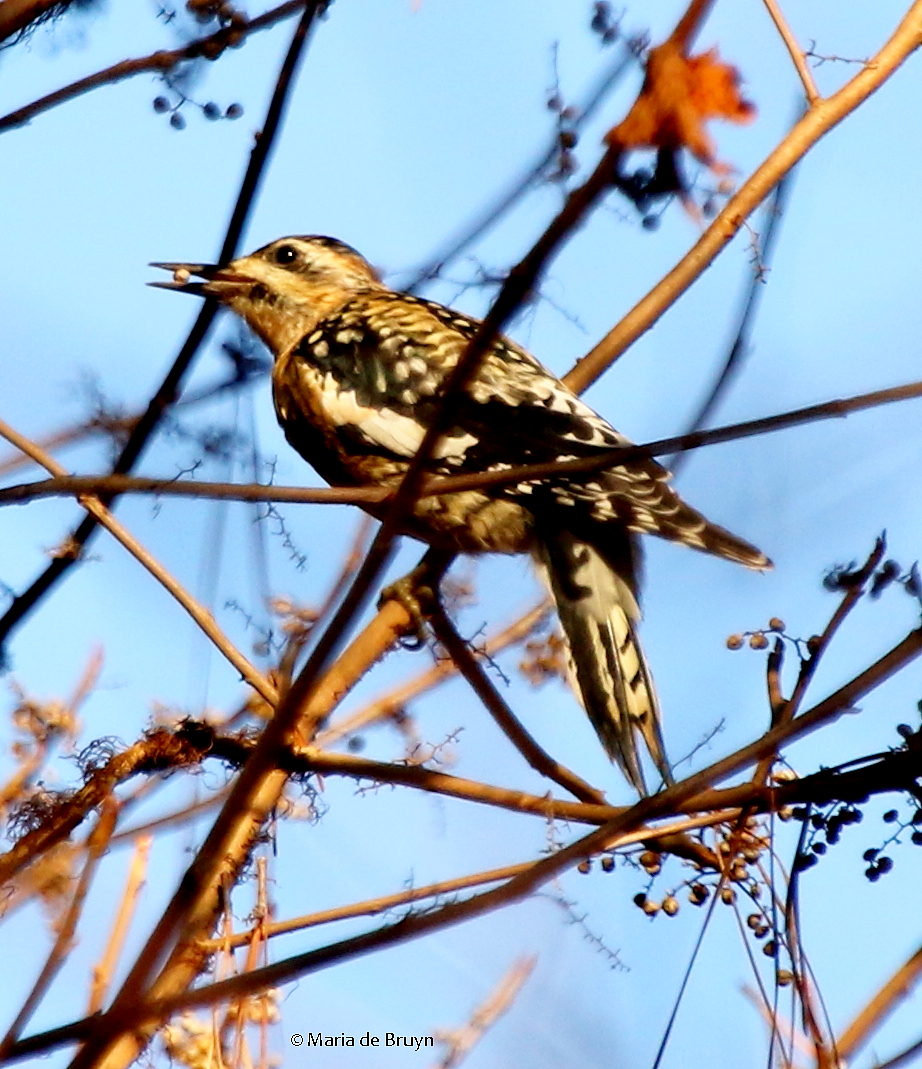
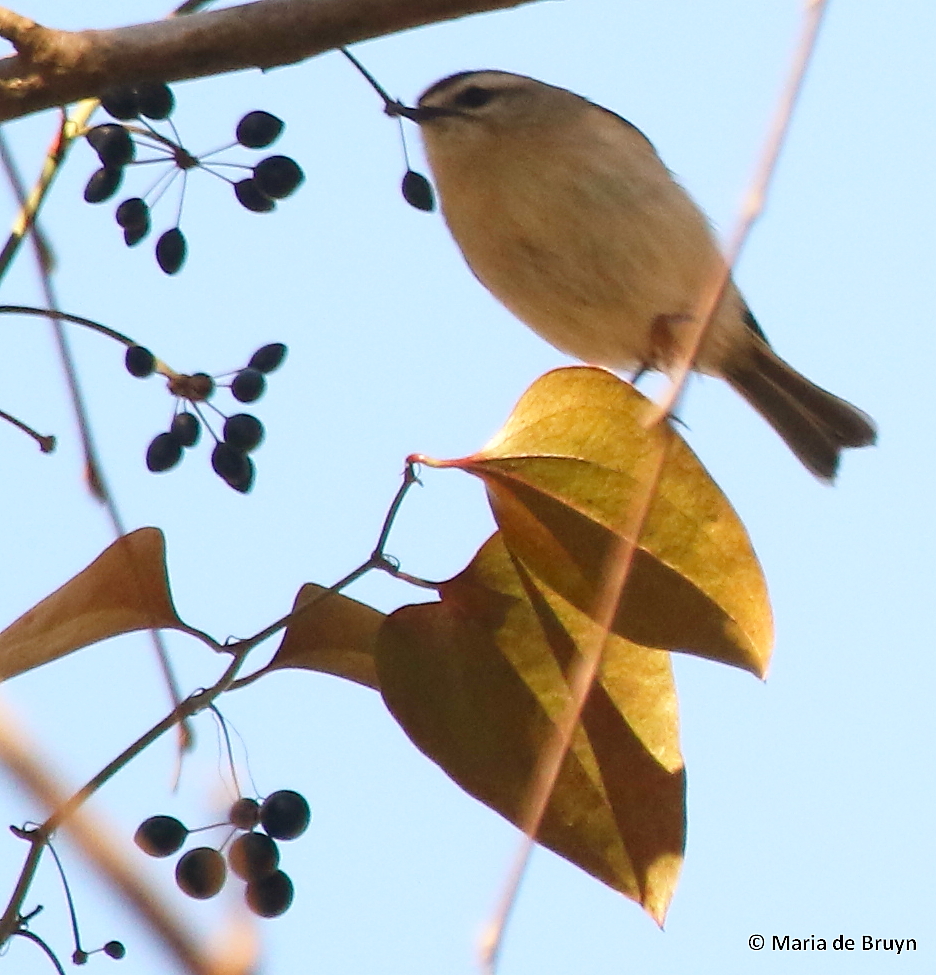
In some cases, they may also be seeking insects along with the berries, as this yellow-bellied sapsucker (Sphyrapicus varius) and tiny golden-crowned kinglet (Melanerpes erythrocephalus) may have been doing.

Yellow-bellied sapsucker I77A9133© Maria de Bruyngolden-crowned kinglet I77A1918© Maria de Bruyn

American goldfinch DK7A4411© Maria de Bruyn signed


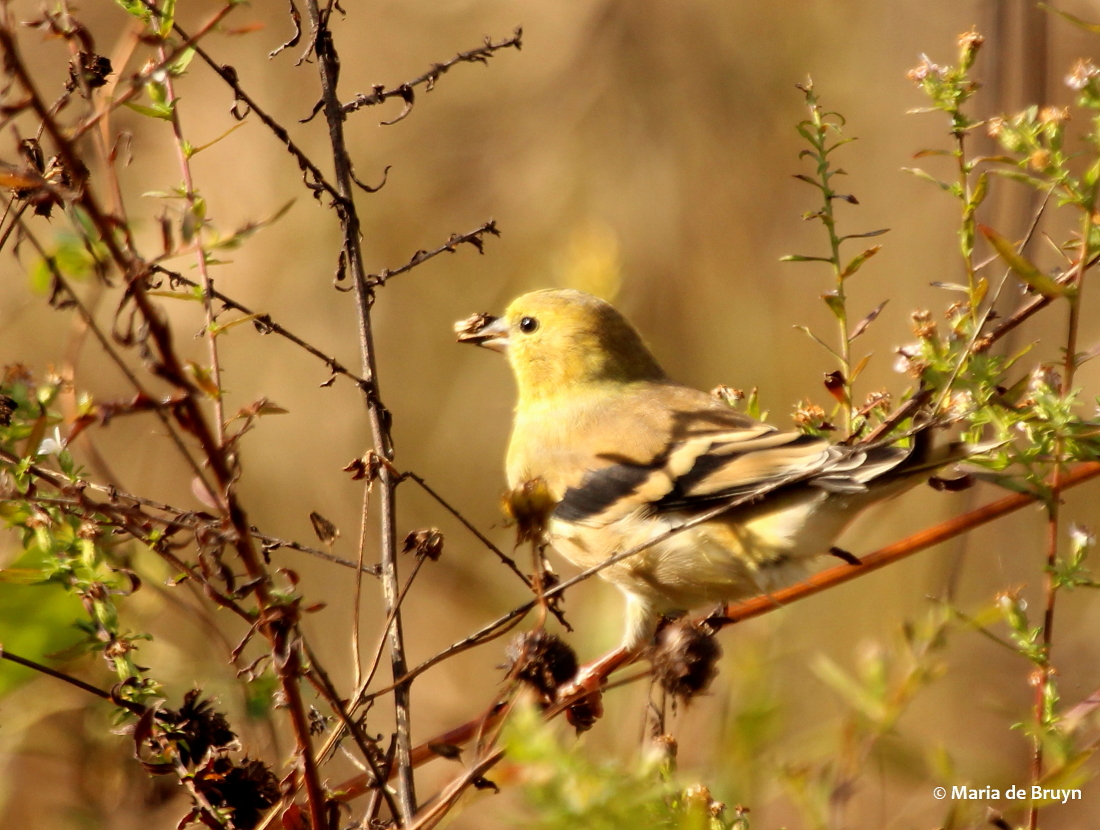
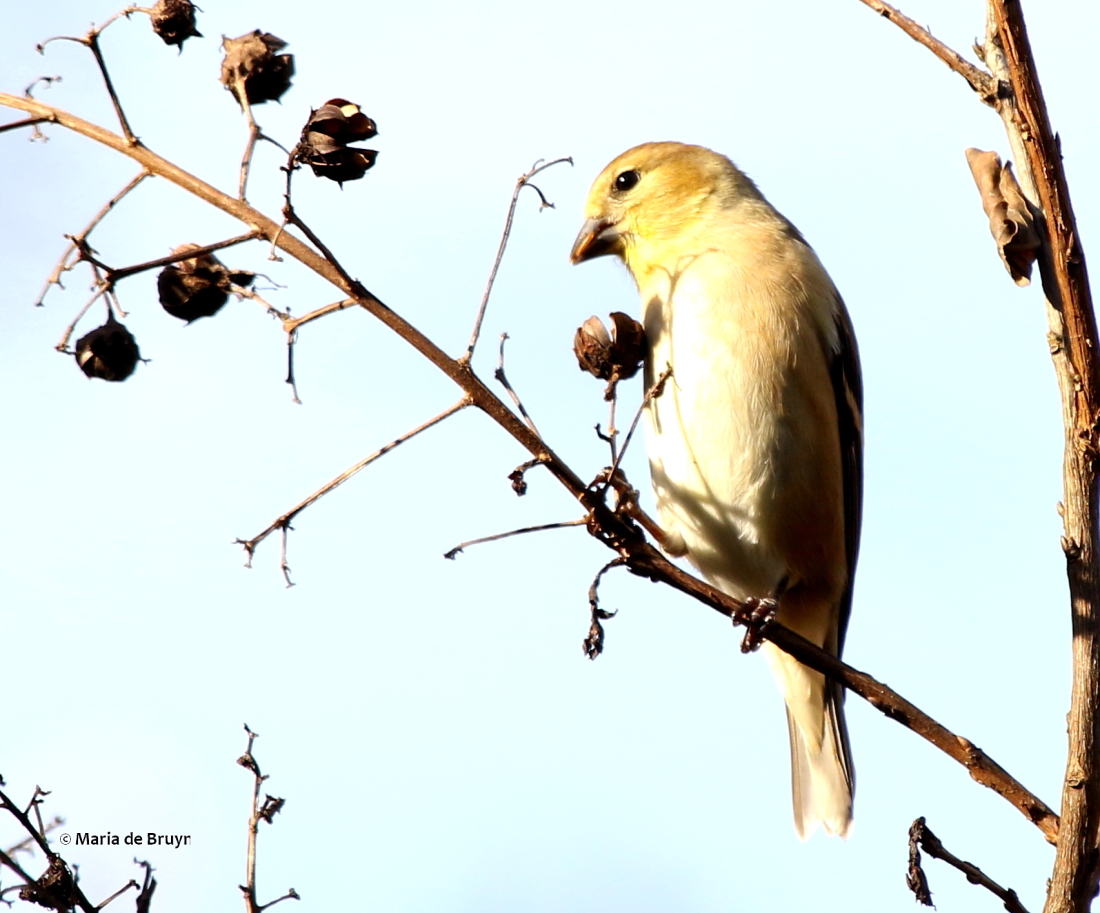
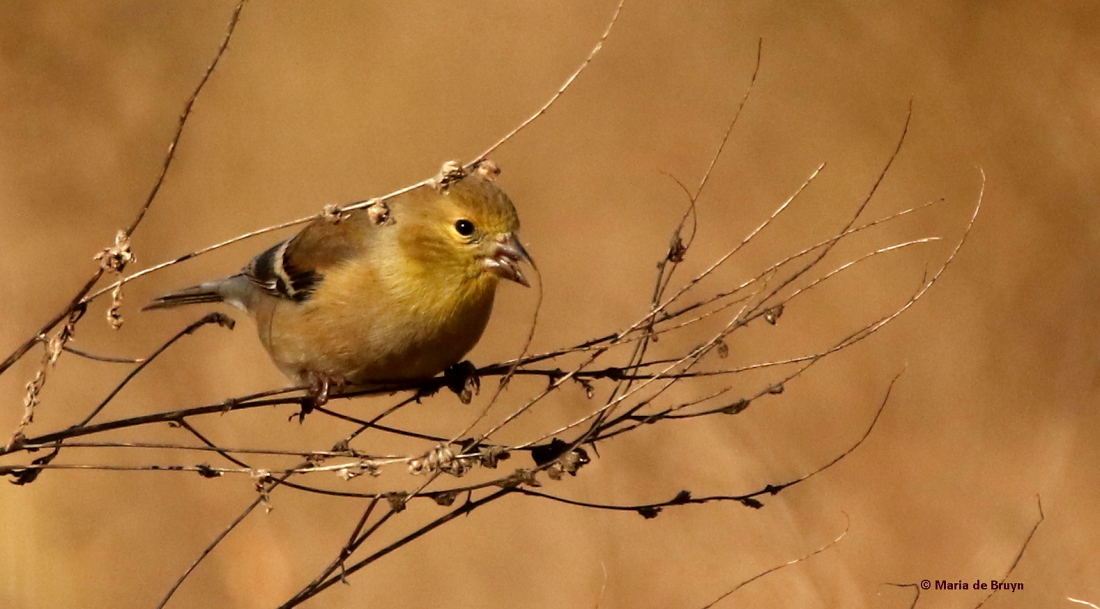
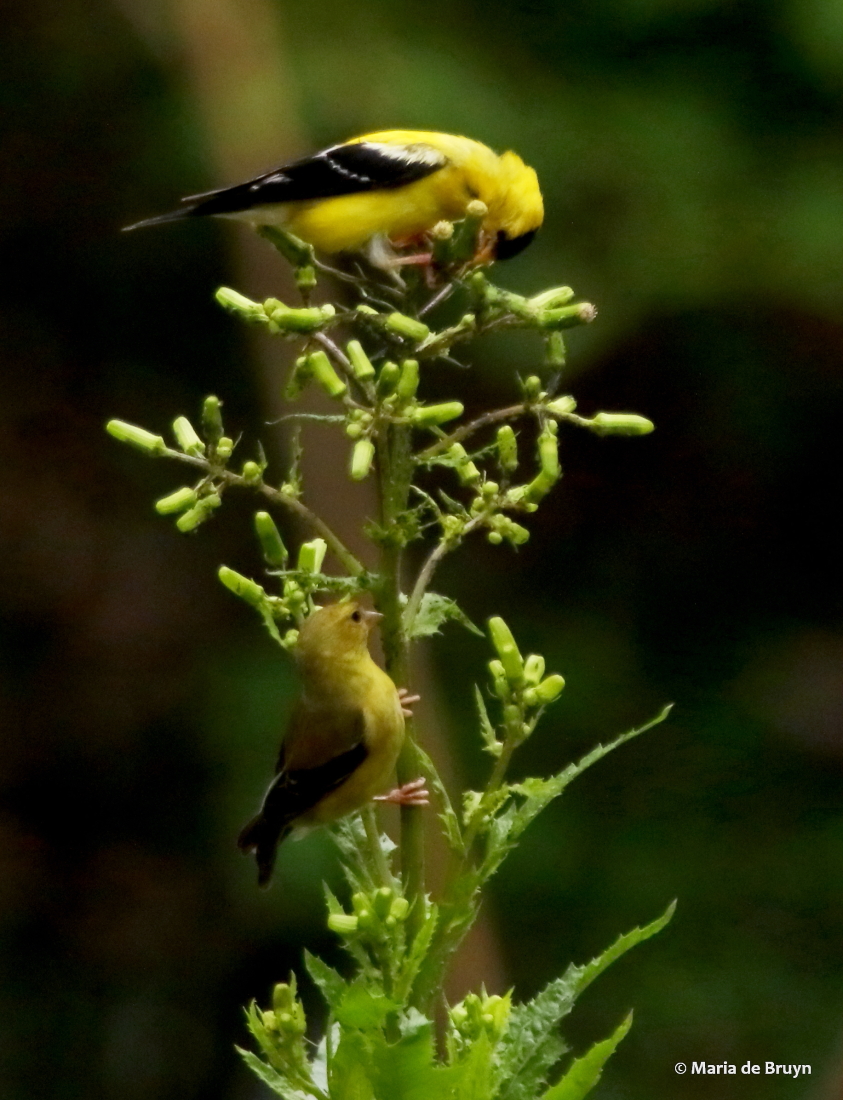
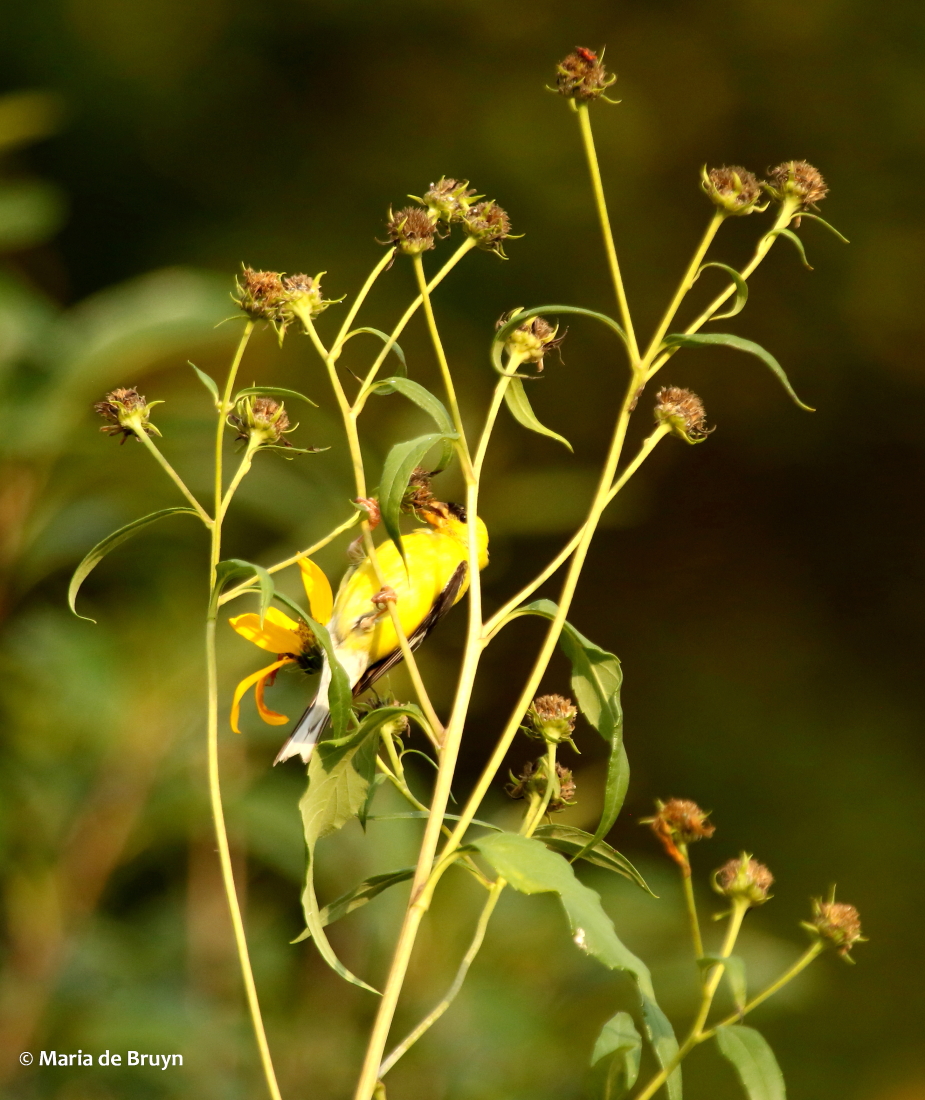
It’s not only the fruit that draws them away from the bird feeders in the autumn though. Sunflower seeds (Helianthus) are a big hit with the American goldfinches (Spinus tristis), who also seek out different kinds of seed pods.


American goldfinch I77A2510© Maria de Bruyn res American goldfinch IMG_7947© Maria de Bruyn signed res

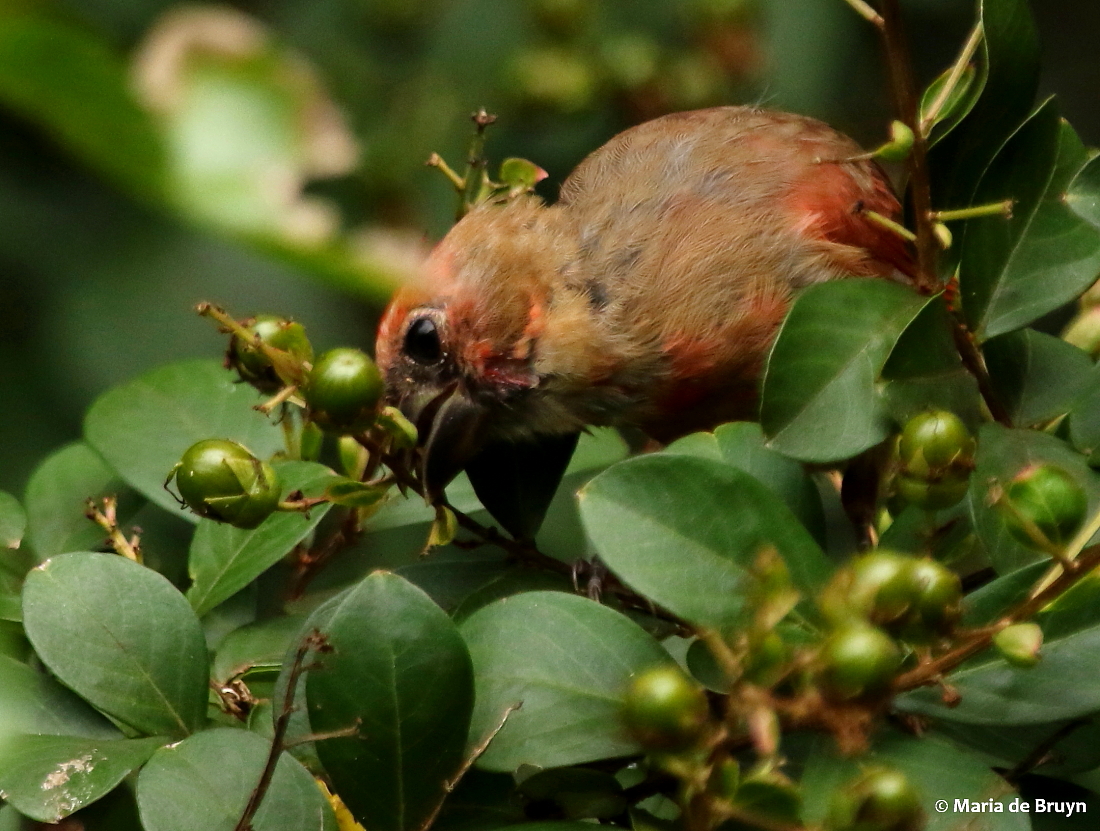
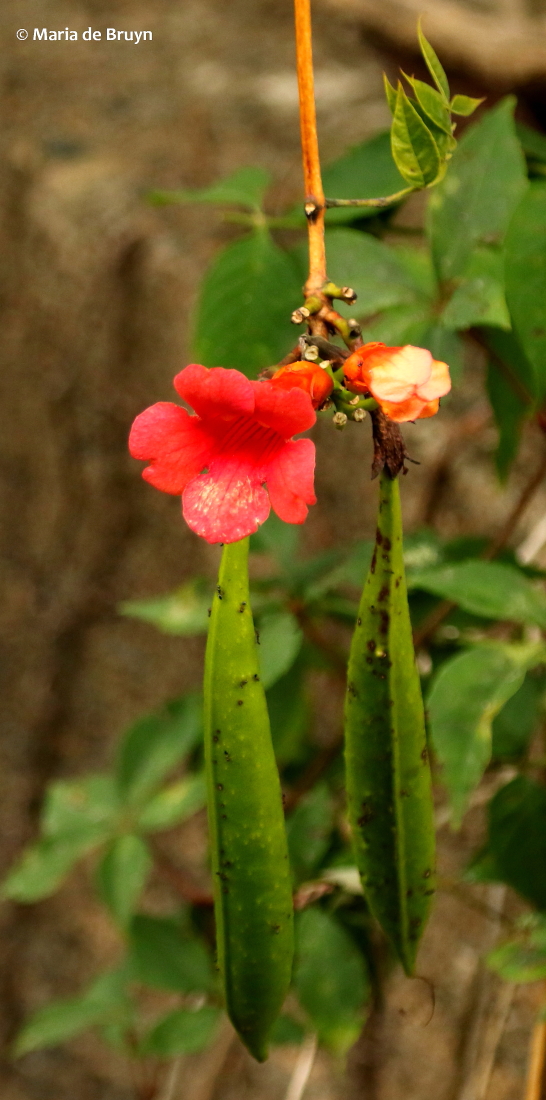
Pods on trees, like the crepe myrtle (Lagerstroemia fauriei), and on vines such as the trumpet creeper (Campsis radicans) offer attractive meals, too.

goldfinch I77A2097© Maria de Bruyn resNorthern cardinal DK7A1206© Maria de Bruyn signed res

American goldfinch and Northern cardinal both eating crepe myrtle

Trumpet vine DK7A9266© Maria de Bruyn signed restrumpet vine I77A1487© Maria de Bruyn ressycamore IMG_2339©Maria de Bruyn res

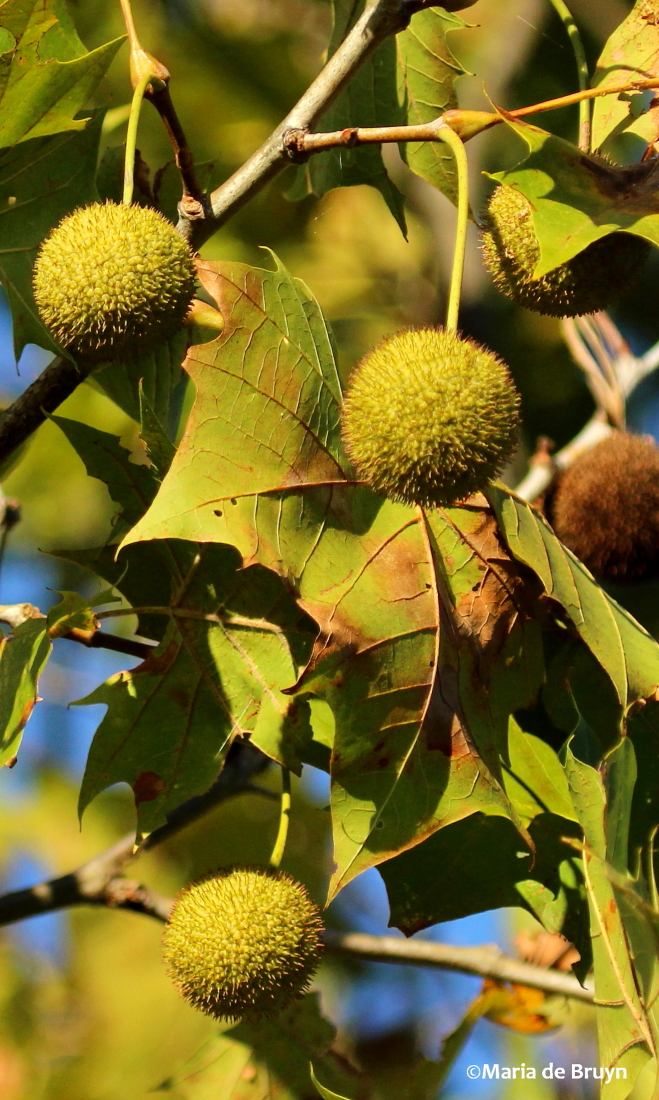
Trumpet vine                                         American sycamore (Platanus occidentalis)

milkweed I77A7144© Maria de Bruyn signed resCarolina wren I77A8006©Maria de Bruyn res

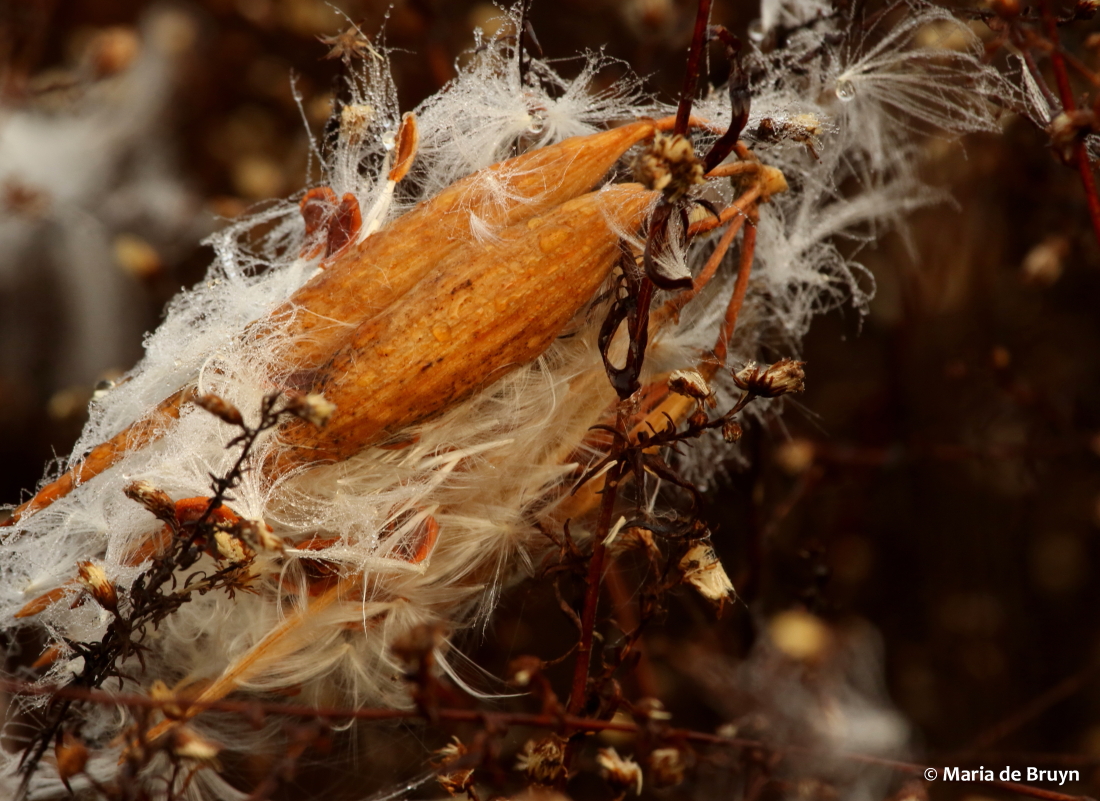
Milkweed (Asclepius) and Carolina chickadee (Poecile carolinensis)

American goldfinch DK7A1355© Maria de Bruyn SIGNED RESamerican goldfinch DK7A7127© Maria de Bruyn signed res

American goldfinches

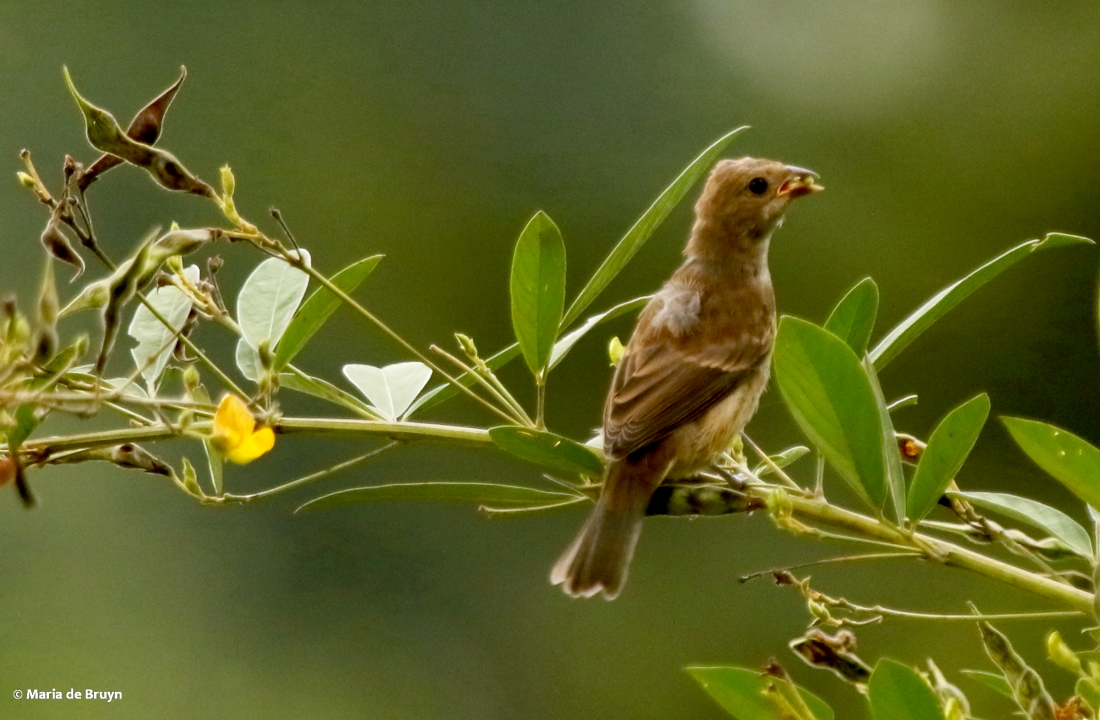
Indigo bunting DK7A7525© Maria de Bruyn signed res

Indigo bunting ( Passerina cyanea)

Scarlet tanager IMG_7415© Maria de Bruyn signed

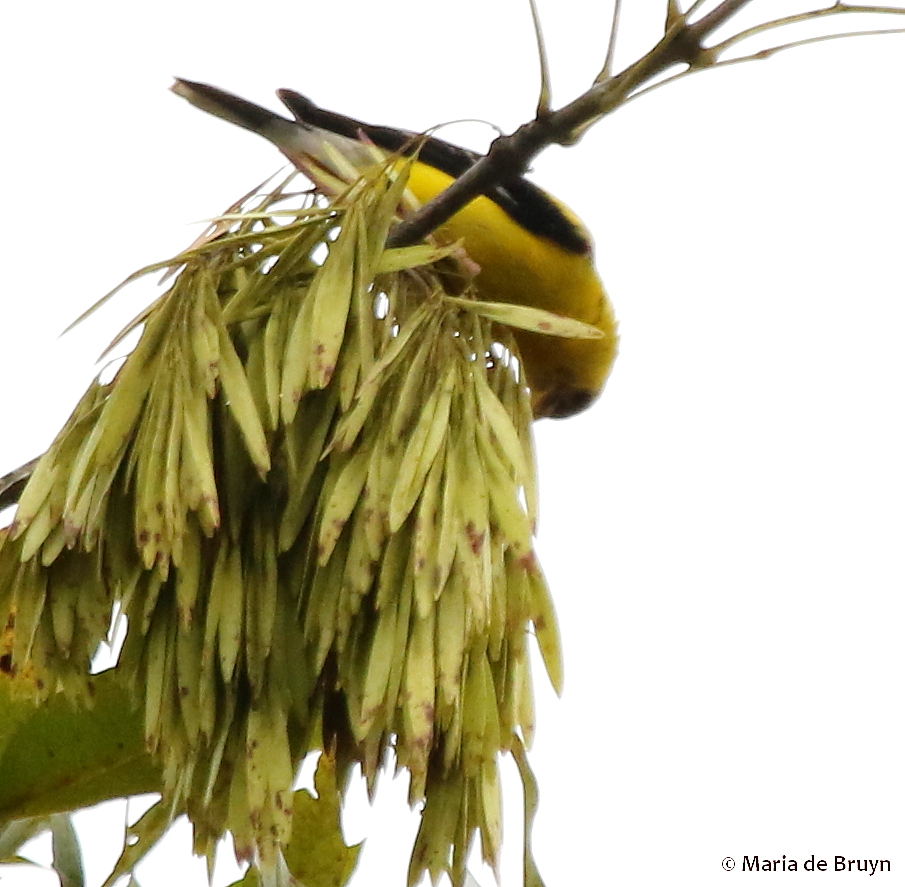
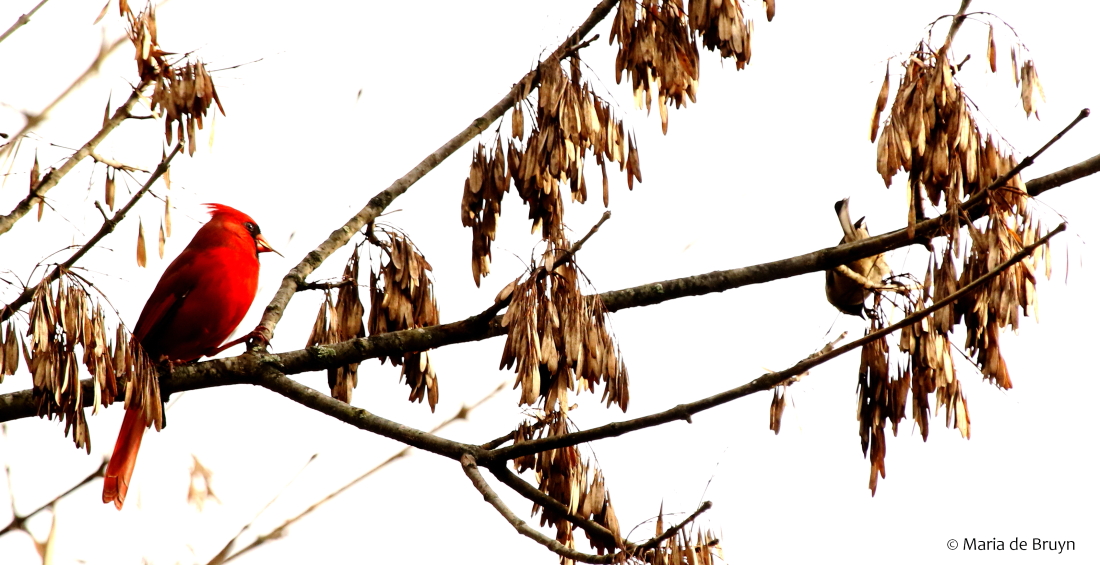
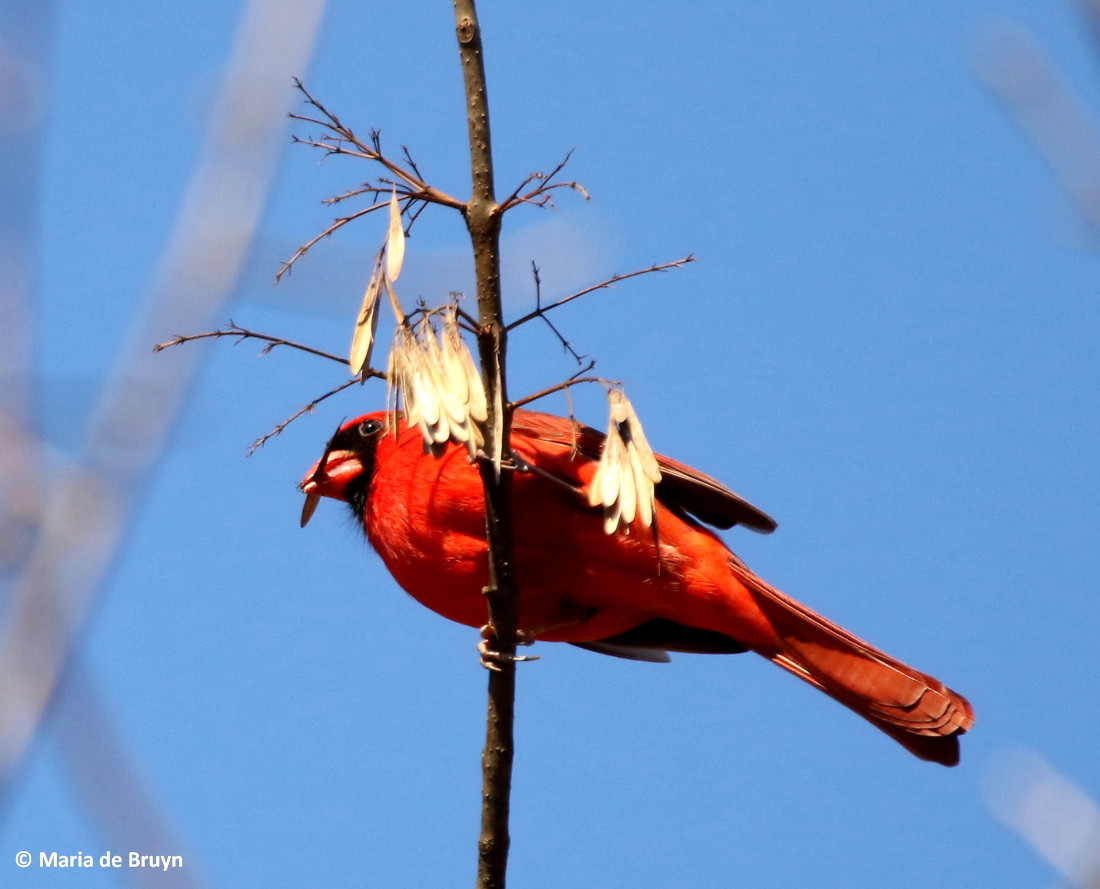
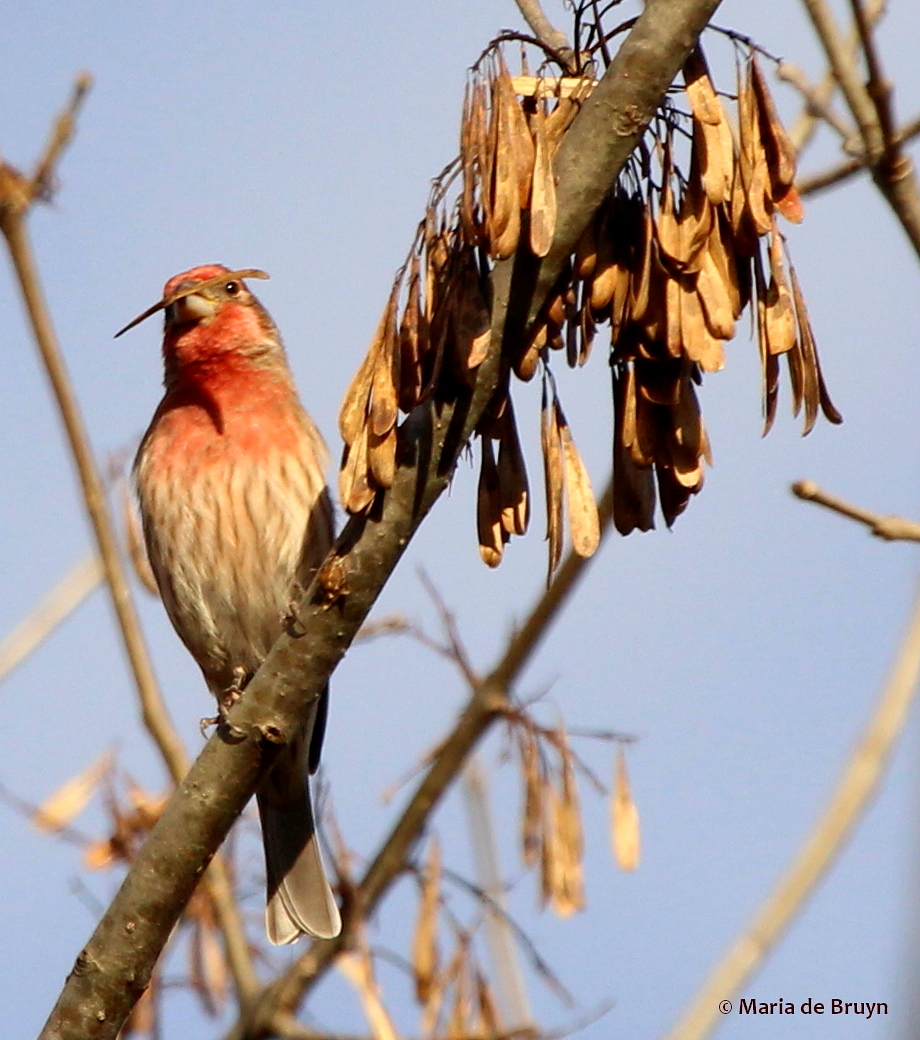
Some trees like maples have samara seed pods, in which a single seed is surrounded by a paper-like tissue that is dispersed by the wind. Ash trees have samaras that grow in clusters. Here a young scarlet tanager (Piranga olivacea) is dining. Below are an American goldfinch, house finch (Haemorhous mexicanus) and Northern cardinal, all of them males.


American goldfinch DK7A5026© Maria de Bruyn signedHouse finch IMG_7718© Maria de Bruyn signed


Northern cardinal I77A8006© Maria de Bruyn res


cedar waxwing I77A6594© Maria de Bruyn signed res

Cedar waxwing (left) with samara of the tulip tree (Liriodendron tulipifera)


blue jay IMG_7806© Maria de Bruyn signed


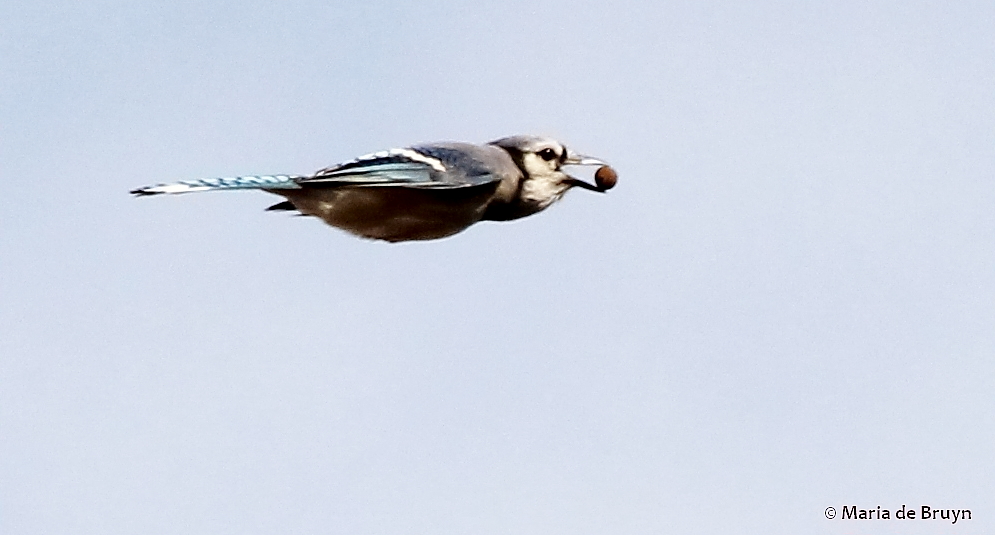
Blue jays (Cyanocitta cristata, above) like nuts a great deal and can often be seen flying away with a prize.

red-bellied woodpecker IMG_5780© Maria de Bruyn (2)


The red-bellied woodpeckers (Melanerpes carolinus) and red-headed woodpeckers (Melanerpes erythrocephalus) don’t turn away from nuts either.


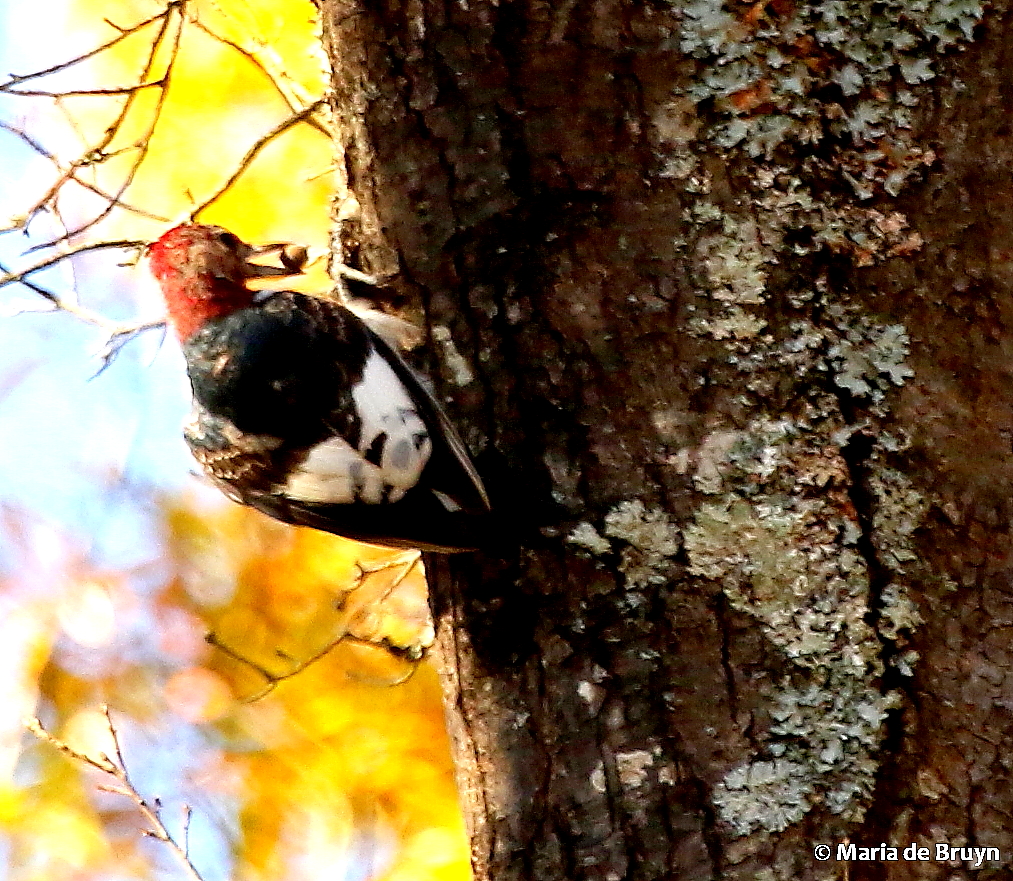
Red-headed woodpecker I77A7844© Maria de Bruyn signed       red-headed woodpecker I77A5149© Maria de Bruyn res

Northern cardinal I77A2153© Maria de Bruyn res

It may feel a bit sad when activity dies down at the feeders for a time, but if you can manage to have nut-, seed- and fruit-bearing vegetation around your home, you can still enjoy watching your avian friends forage – and the natural surroundings can make for lovelier photos, too!

Water-logged and soggy birds

Carolina wren I77A2794© Maria de Bruyn resMy original intent was to write only one more blog this year, but our current weather has induced me to write two (the other will follow on the last day of 2015). During the past week, our region has had more than our “fair share” of rain. Fortunately, the house is not downstream or downhill of flowing water so that flooding is not a concern (and having helped my parents when their home was flooded with about 5 feet of water, I know that is a real pain to say the least). But the yard is so water-logged that small pools of water are scattered in many places and the ground cover squishes when we walk on it. Combined with very high temperatures for this time of year, it seems that El Niño is really making itself known – and the birds like this Carolina wren (Thryothorus ludovicianus) must be getting tired of being water-logged as well!

Sayings such as “like water off a duck’s back” imply that birds don’t really get bothered by water pouring from the heavens, but that is probably only partly true. During recent downpours, I saw – through the back porch screen – a Carolina wren and Northern cardinal (Cardinalis cardinalis) hanging out on a downspout under the house eaves, while a brown-headed nuthatch (Sitta pusilla) clung to the brick wall under the roof overhang to get out of the rain.

brown-headed nuthatch I77A0090© Maria de BruynNorthern cardinal I77A0101© Maria de Bruyn res

Birds that regularly dive underwater do have denser feathers, which helps prevent water from penetrating through to their skin, as is the case for this Canada goose (Branta canadensis).

Canada goose I77A1169© Maria de Bruyn res

But birds’ feathers are not inherently waterproof – when we see water droplets beading on their backs and tails, as in the case of this brown thrasher (Toxostoma rufum) and blue jay (Cyanocitta cristata), it’s because the birds have made them water-resistant to some extent.

Blue jay I77A3141© Maria de Bruyn resbrown thrasher I77A9881© Maria de Bruyn res

This happens in two ways. On the one hand, birds such as pigeons, herons, hawks and owls have special feathers called “powder downs” or “pulviplumes”, which are covered in a dusty powder containing keratin that disintegrates and becomes a waterproof coating. They spread the powder to other feathers while preening.

Great blue heron I77A1220© Maria de Bruyn res

Great blue heron (Ardea herodias)

brown-headed nuthatch I77A0090© Maria de Bruyn resOther birds have a uropygial (preen) gland located at the base of their tails. It produces a substance containing oil and wax that the birds spread on their feathers when they groom. Often, they will rub their head against the preen gland and then spread the oil by rubbing their head against other feathers, a behavior that this female red-winged blackbird (Agelaius phoeniceus) seemed to be doing when she was grooming. The wax then helps make the feathers more flexible and water-resistant, which explains the water beads we see on their feathers when it rains.

dark-eyed junco I77A4085© Maria de Bruyndark-eyed junco I77A9650© Maria de Bruyn res

Dark-eyed junco (Junco hyemalis)

Eastern towhee I77A9682© Maria de Bruyn res Pine warbler I77A9921© Maria de Bruyn res

Eastern towhee (Pipilo erythrophthalmus)

     Pine warbler (Setophaga pinus)

It may be that some birds are less successful in spreading the powder and wax to their head feathers, or they rub all the oil or powder off their heads onto other feathers. This may account for the “bad hair day” look some of them get when it rains for hours on end. These spiky “Mohawks” often appear in Northern cardinals and Eastern bluebirds (Sialia sialis).

Northern cardinal I77A9734© Maria de Bruyn res Northern cardinal I77A9870© Maria de Bruyn res

Eastern bluebird I77A9717© Maria de Bruyn resEastern bluebird I77A9710© Maria de Bruyn res

Other birds seem to especially get soggy feathers on the crowns of their heads just above their eyes. This may be why we see so many of them shaking their heads vigorously to get rid of the dampness on their pates.

Pine warbler I77A9942© Maria de Bruyn res White-throated sparrow I77A2980© Maria de Bruyn res

Pine warbler                                              White-throated sparrow (Zonotrichia albicollis)

Red-bellied woodpecker I77A9724© Maria de Bruyn res


And some birds just get an overall scruffy look when it rains hard, like this red-bellied woodpecker (Melanerpes carolinus).


Eastern bluebird I77A0155© Maria de Bruyn resThe water-logged look does seem to give some birds an angry or disgruntled appearance; I can certainly sympathize since endless days of rain – even in warmer temperatures – is one of my least favorite types of weather. It seems that overcast days and showers are continuing in our local forecast for some time to come. So the poor birds have to put up with the wet weather a while longer. We’ll all appreciate the sunlight when it comes back in force – hopefully soon!

The banded birds are back!

gray catbird DK7A2255© Maria de Bruyn resIn a previous blog, I described how six birds were banded in my backyard so I could track them over time. Bird banding has been done for decades, indicating that it is a practice that truly works for monitoring lifespans and locations of individual birds. But it still seemed to me that being caught in a net, having someone hold you as they extricated your legs and wings from the clinging threads, then putting rings on your legs and sticking you into a container (for weighing) would be a traumatic enough experience for you to decide that this geographical area was not where you wanted to be. Anthropomorphizing the banded birds’ reactions meant that I wouldn’t have been surprised (albeit very disappointed) if I had not seen the six birds again.

gray catbird DK7A2210© Maria de Bruyn resMy expectation was almost immediately proved wrong, however, confirming that birds do not stay away from sites where they were given their ankle bracelets. Corey, my tail-less gray catbird (Dumetella carolinensis) was the first one I spotted again, the very next day after the banding. He has an aluminum band on one leg and 2 red bands on the other.

Since the bands are such different colors, I decided to name the birds as that is easier to note down for sightings. The gray catbird with an aluminum band (they all have this color as it contains their registration number) and white and purple bands became Camden. The catbird with the lovely yellow and green bands was dubbed Clarissa. All three have been very regular visitors to the feeders, proving that a little discomfort was not enough to dissuade them from visiting the always available buffet of mealworms and other delights.

gray catbird Camden DK7A2085© Maria de Bruyn res gray catbird Clarissa DK7A2091© Maria de Bruyn res

The catbirds have a fondness for sweets and like both apples and blueberries. Grape jelly is a real treat, for which they will return again and again.

gray catbird Clarissa DK7A2647© Maria de Bruyn resgray catbird Camden DK7A2198© Maria de Bruy resn gray catbird Camden DK7A1965© Maria de Bruyn resCorey’s return visits have shown how his tail feathers grew in again nicely over time. gray catbird Corey DK7A2472© Maria de Bruyn resI named the Northern cardinal (Cardinalis cardinalis) Clancy and I first spotted him again 2 days after the banding. He has not been a regular visitor, however – or I just haven’t caught sight of him among the bevy of other male cardinals that flit around the trees. However, a few days ago he turned up among the apples!

Northern cardinal Clancy  DK7A7771© Maria de Bruyn res northern cardinal Clancy  DK7A7753© Maria de Bruyn res

Carolina wren Willow DK7A2608© Maria de Bruyn resWillow, the Carolina wren (Thryothorus ludovicianus), has been a very infrequent returnee. When he comes, he tries to stay out of sight, choosing the side of the feeder away from me and only lingering a short while in plain sight. At least I know he is ok.

The one bird I have not yet seen is Rusty, the American robin (Turdus migratorius). I’ve been staring at the legs of every robin that hops around the yard but have yet to see one with leg jewelry. Perhaps he was just a stray visitor the day of the banding? I will certainly keep a look-out for him.

My first re-sighting data were entered into the Nestwatch site on 1 June 2015; it will be interesting to see how long I can maintain this input. Clarissa is a very frequent visitor so I think she will be in many entries. Or perhaps she is just busy right now feeding young ones.

gray catbird Clarissa DK7A2504© Maria de Bruyn res gray catbird Clarissa DK7A2503© Maria de Bruyn res gray catbird Clarissa DK7A2498© Maria de BruynEastern bluebird IMG_3881© Maria de Bruyn resIn the meantime, I am monitoring two nests for data entry; one for Eastern bluebirds (Sialia sialis), who have babies in a nest box, and one for gray catbirds, who have a nest in the middle of a shrub next to my carport.

The catbird parents are ever so vigilant and call out warnings to me whenever I approach the shrub. They hesitate to go into the shrub with food when I am near, even though those babies must be hungry. I finally got a view of them through the twigs when they were close to fledging. They are now hopping around on twigs in the shrub near the nest. Yesterday, when I came too close, Mama catbird dive-bombed, actually grazing my head!

Gray catbird IMG_3887© Maria de Bruyn res gray catbird IMG_3873© Maria de Bruyn

The parents in both pairs are very diligent about bringing the babies meals, working as a team. One catbird parent seems to be good at collecting a variety of foods, in one case bringing three different insects at once (presumably one for each baby). I will look forward to seeing the young ones out and about and sincerely hope my neighbor’s cat doesn’t get them.

gray catbird DK7A2939© Maria de Bruyn res gray catbird DK7A2937© Maria de Bruyn res

Bird watching is an enjoyable way to spend time; doing it and contributing to scientific data collection is even cooler!

Citizen science in my backyard!

Gray-headed catbird DK7A8986© Maria de Bruyn resIt’s been a while since I’ve blogged – not for lack of ideas and photos but due to a dearth of time and energy that was absorbed by multiple troubles with a few cool happenings in between. But now I’m back with some new observations about the beauty and happenings of interest in my natural world and I hope to share some wildlife sightings on a regular basis again.

One activity that I have managed to fit in amid the other goings-on was enrollment in two new (for me) citizen science projects for the Smithsonian Institute. I’m participating in an eMammal project run by the North Carolina Museum of Natural Science and in a multi-year observational study of some common birds. The mammal project is time-limited, so I will report on that in about a month’s time.

Northern mockingbird DK7A8859©Maria de BruynThe bird project will involve tracking visits to my yard by banded birds for several years to come. The target species include American robins (Turdus migratorius), Carolina chickadees (Poecile carolinensis), Carolina wrens (Thryothorus ludovicianus), house wrens (Troglodytes aedon), gray-headed catbirds (Dumetella carolinensis), Northern cardinals (Cardinalis cardinalis) and Northern mockingbirds (Mimus polyglottos, at the right), all of which come to my yard. Song sparrows are the 8th target species but I haven’t seen them at my house. However, I discovered that there is a great crested flycatcher in my trees, although I’ve never seen him (or her) either, so who knows if one will come in the future? In any case, the target birds can live from about 6-10 years on average, so I’ll have an ongoing activity for as long as my eyesight remains reasonable!
bird banding IMG_3291© Maria de Bruyn resmist net IMG_3290© Maria de Bruyn

So how does the bird banding proceed? We (the bird bander and I) set up one 12-foot and one 6-foot mist net in two parts of the yard, after the bander laid out her equipment for the banding process. Within a very short time, we caught three birds in the large net! The first was a gray-headed catbird that I recognized (photo above), because he had molted all his tail feathers at once and looks a bit odd with no tail. This bird, whom I have named Corey, has been the most vocal catbird at my feeders and he was extremely vocal about having been caught as well.

gray-headed catbird IMG_3294© Maria de Bruyn bird banding IMG_3295© Maria de Bruyn

After being disentangled – very carefully – from the net, he was put in a bag while the bander got the other two birds out of the net. Corey was measured, weighed, and banded with a combination of aluminum and colored bands. Sex was determined (I now know he is a he!) and then he was let go.

gray-headed catbird IMG_3301© Maria de Bruyn bird banding IMG_3304© Maria de Bruyn res

Northern cardinal IMG_3311© Maria de Bruyn resBird 2 was a beautiful male Northern cardinal, who appeared to have good fat reserves. He was a bit vocal and bit the bander to show his displeasure at the treatment he was receiving.

Bird 3 was a male American robin. Sex was determined partly by looking at the cloacal region (outside breeding season, other markers besides brood patches and this area are examined). If a bander is unsure of the sex, this is also marked on the data sheet. The robin was more sedate during handling than his predecessors.


American robin IMG_3314 © Maria de Bruyn resAmerican robin IMG_3315© Maria de Bruyn res

The house wrens had been calling loudly during the banding and flitted about in the trees and to the feeders,but they always flew just above the nets and were not caught. A male Carolina wren with a nice eye stripe did not escape.
house wren DK7A4794© Maria de Bruyn Carolina wren IMG_3316© Maria de Bruyn

American crow IMG_3359© Maria de BruynThe chickadees and Northern mockingbird flew about but did not really come too close to the nets. Non-target species were at or near the feeders, too, such as courting bluejays, an American crow (Corvus brachyrhynchos, right) who came to eat jelly and take some apple to his mate, downy woodpeckers, white-breasted and brown-headed nuthatches, a house finch, Eastern towhees and a male cowbird.

red-bellied woodpecker IMG_3344© Maria de Bruyn resOther non-target birds flew into the large mist net, however, such as a brown thrasher, a tufted titmouse, a red-bellied woodpecker (Melanerpes carolinus, right), a chipping sparrow (Spizella passerina), a female common yellowthroat (Geothlypis trichas, below) and a common grackle. I’d not seen these birds up so close before, so that was really a nice experience.

Common yellowthroat IMG_3339© Maria de Bruyn res


bird banding IMG_3340© Maria de Bruyn resTo get more target species, a loudspeaker that played bird calls and some model birds were placed in the grass by the largest net. Eventually, two more catbirds were caught – with other catbirds in a nearby tree puffing themselves up to show their shared distress. These were the first catbirds banded for the project so far, so that was a nice way to end the exercise.

Cope's tree frog IMG_3293© Maria de Bruyn resA tour of the yard to see if there were any nests that could be followed for the Nest Watch project revealed a couple wren nests in boxes that were built up so high it was not possible to see if they had eggs in them. The bluebirds’ nest has five eggs that I will follow through fledging (hopefully); a catbird nest is too high up for me to see how many eggs she is sitting on but I will watch for her fledglings, too. And a Cope’s tree frog (Hyla chrysoscelis) had taken up residence in the nest box that the downy woodpecker uses to rest at night. The wrens had begun building a nest in that box last night and the frog was gone this afternoon.
The banding took place yesterday in the morning and in the afternoon, the banded birds had not returned. I wonder how long it will take most of these individuals to come again. Corey already returned this afternoon, instantly recognizable not only because of his very short tail feathers growing in but because of the red and silver bands on his little legs. I was so glad to see he was none the worse for wear!