Love my yard!

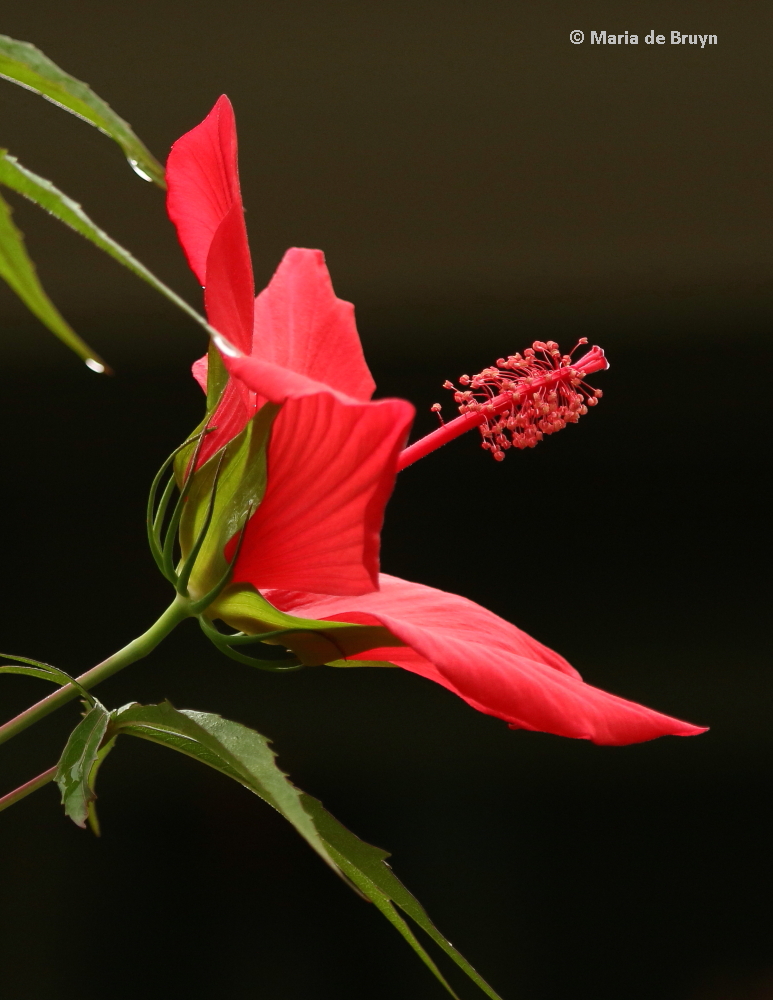
scarlet-mallow-i77a6509-maria-de-bruyn-res2016 began with distress for me, having just been admitted to hospital in considerable pain and worried about expenses. So when I was able to get home again and find diversion from the necessity of self-administering an IV medication twice daily by admiring what nature has to offer in my yard, it was a more-than-welcome event.

Even when my mood is down, walks in nature soothe my spirit since my mind becomes totally absorbed by what I’m observing and there’s no space for any other thoughts. Even aches and pains recede to the background so when I can’t get out to a reserve or park, taking advantage of the little plot of land I call my own is a real delight.
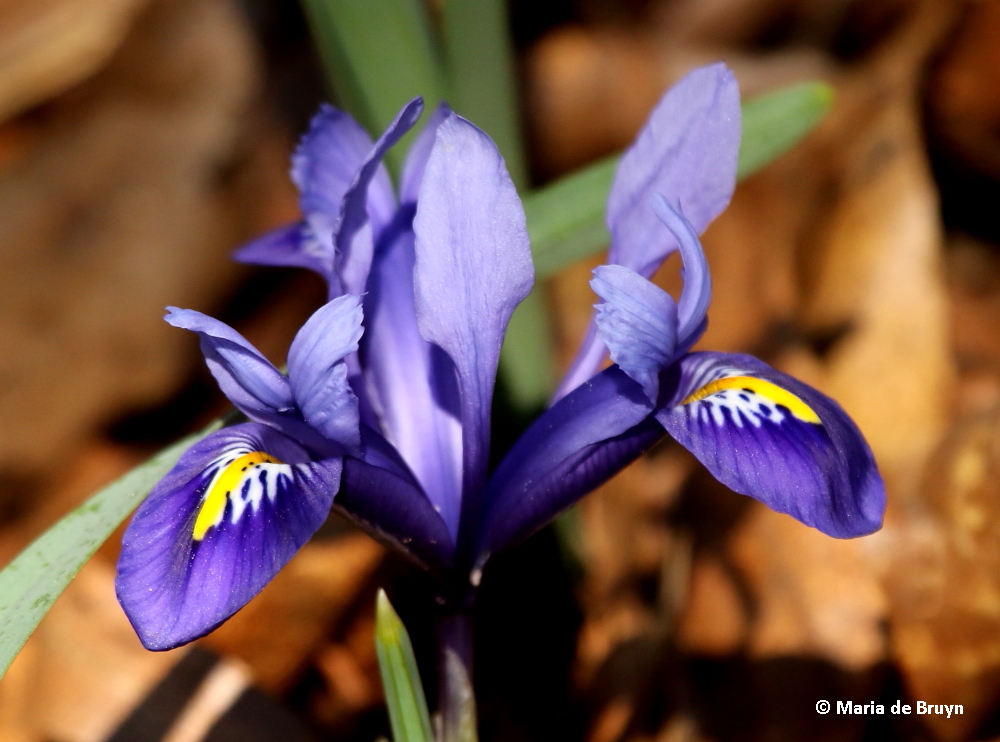
iris-i77a4541maria-de-bruyn-res


The yard has everything – plants, insects, amphibians, reptiles, birds and mammals, which is very cool indeed. Spring and summer are especially lovely with the blooming flowers and I’ve taken care to include many native vegetative species among the plantings.
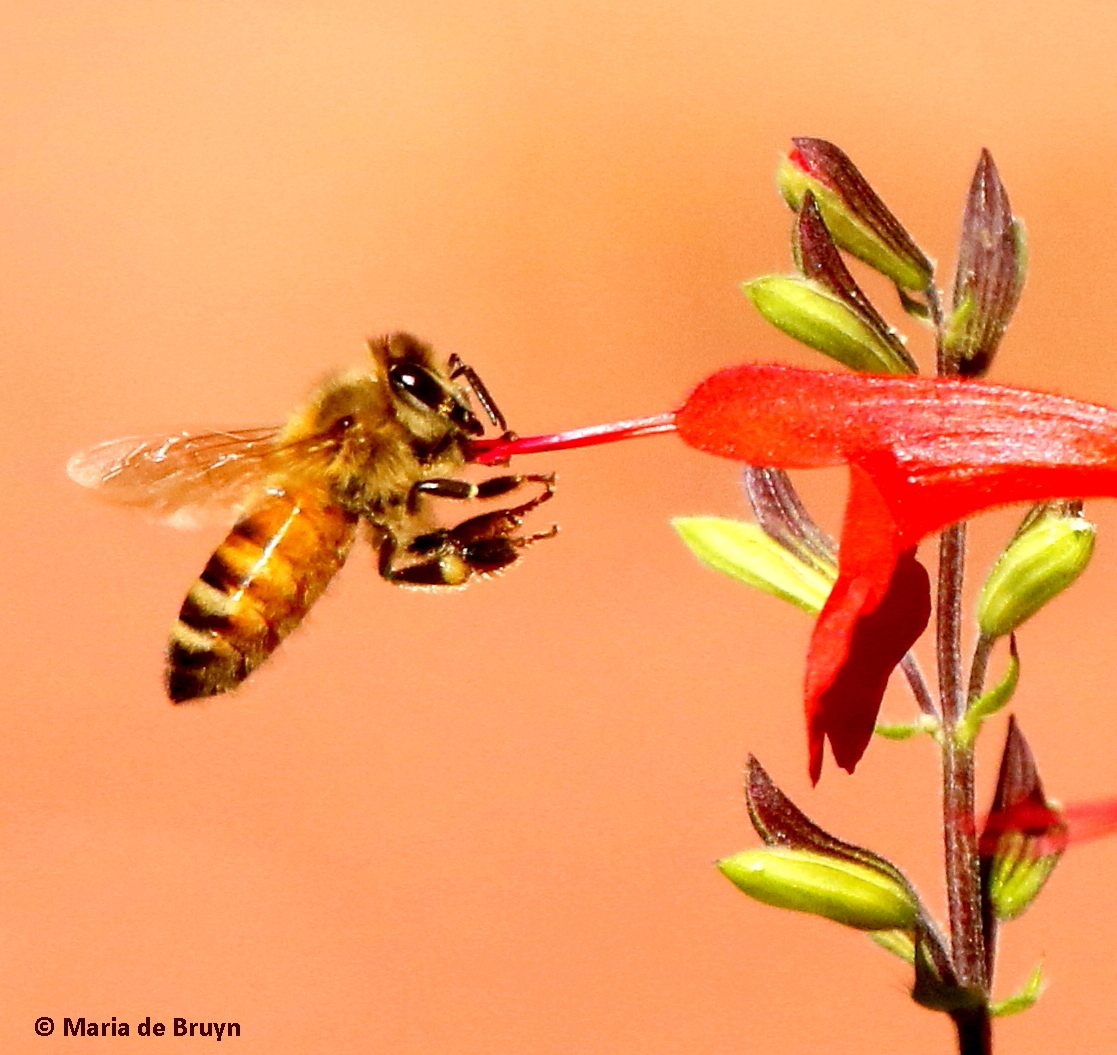
 

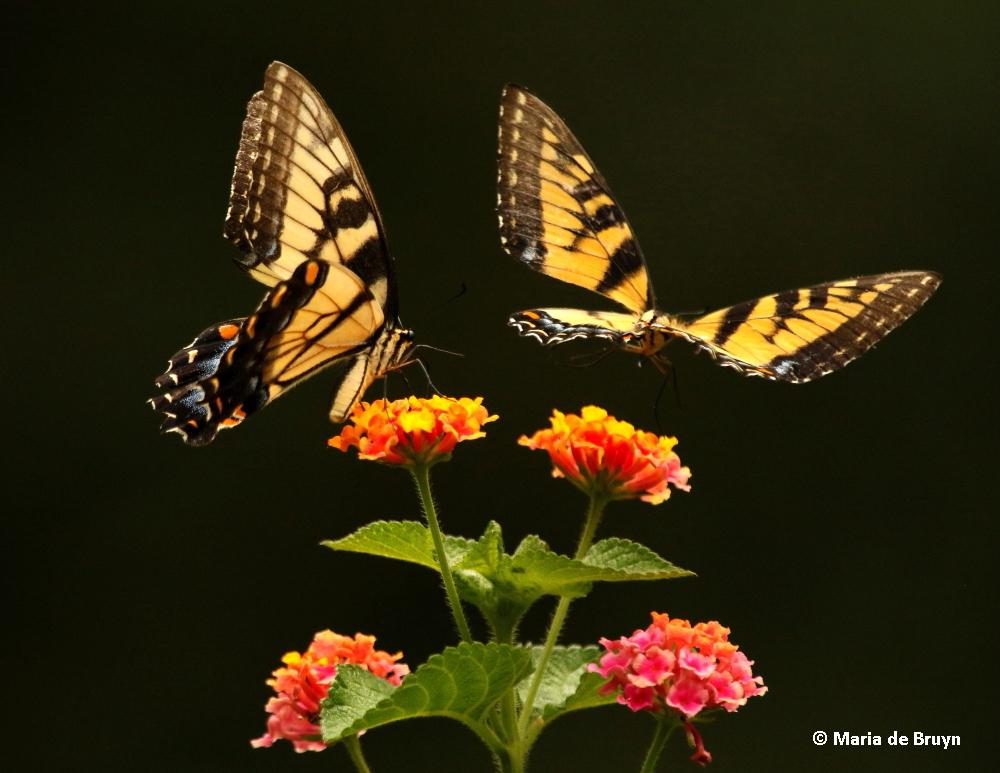
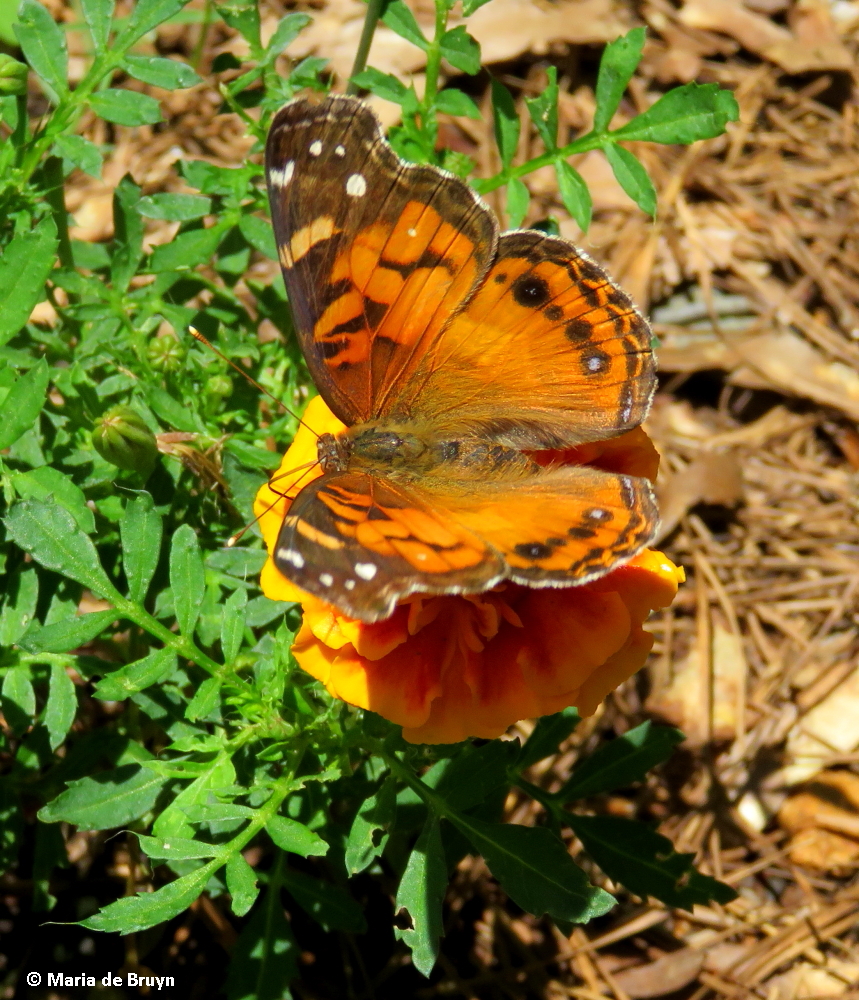
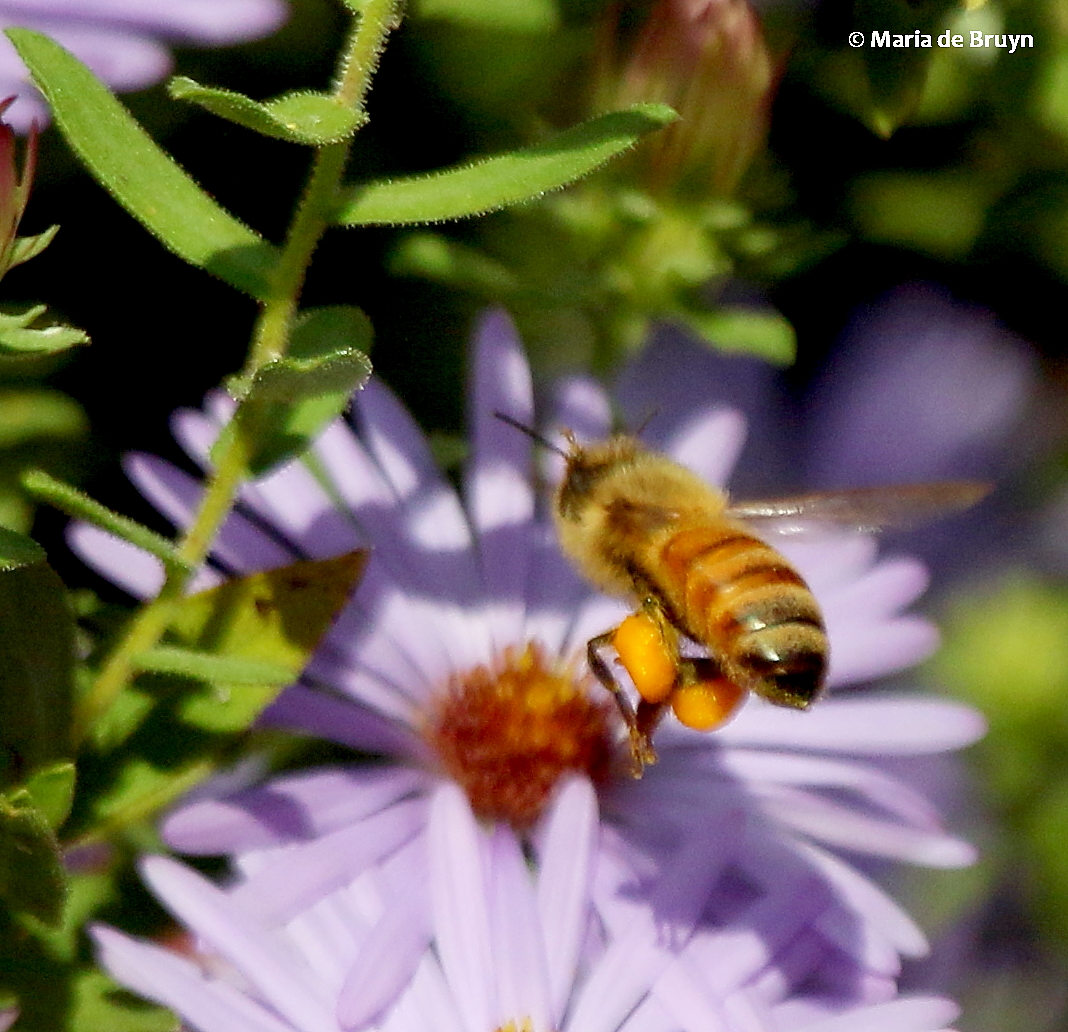
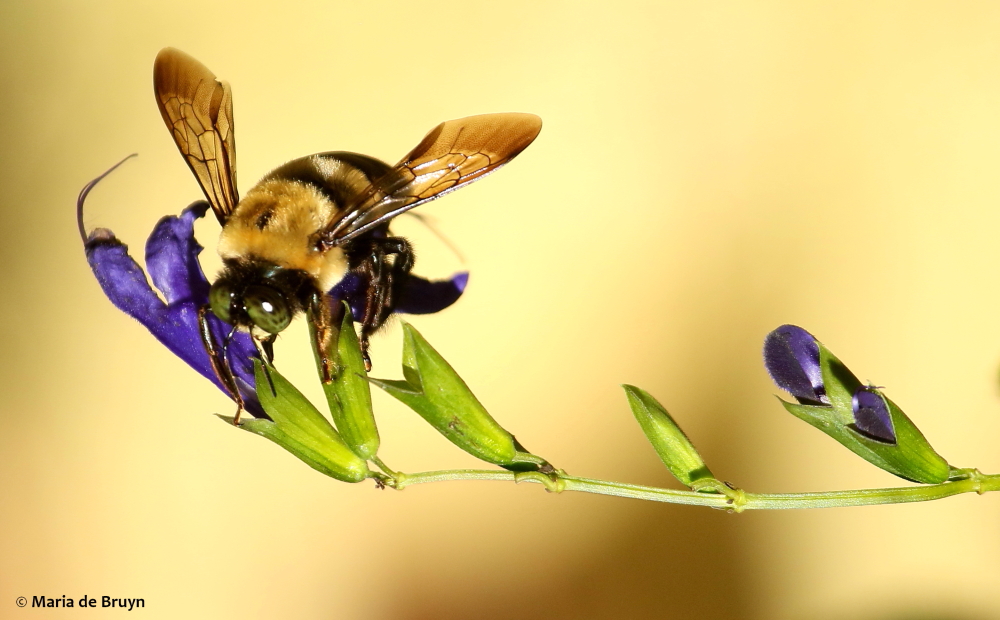
honey-bee-morning-calisthenics-i77a5676-maria-de-bruyn-resThe flowers and shrubs not only attract birds but many species of insects, too, and give me plenty of chances to practice photographing bees in flight and butterflies nectaring. The Eastern carpenter bees (Xylocopa virginica), and European honey bees (Apis mellifera) were good models, as were the Eastern tiger swallowtails (Papilio glaucus) and American lady (Vanessa virginiensis) butterflies.
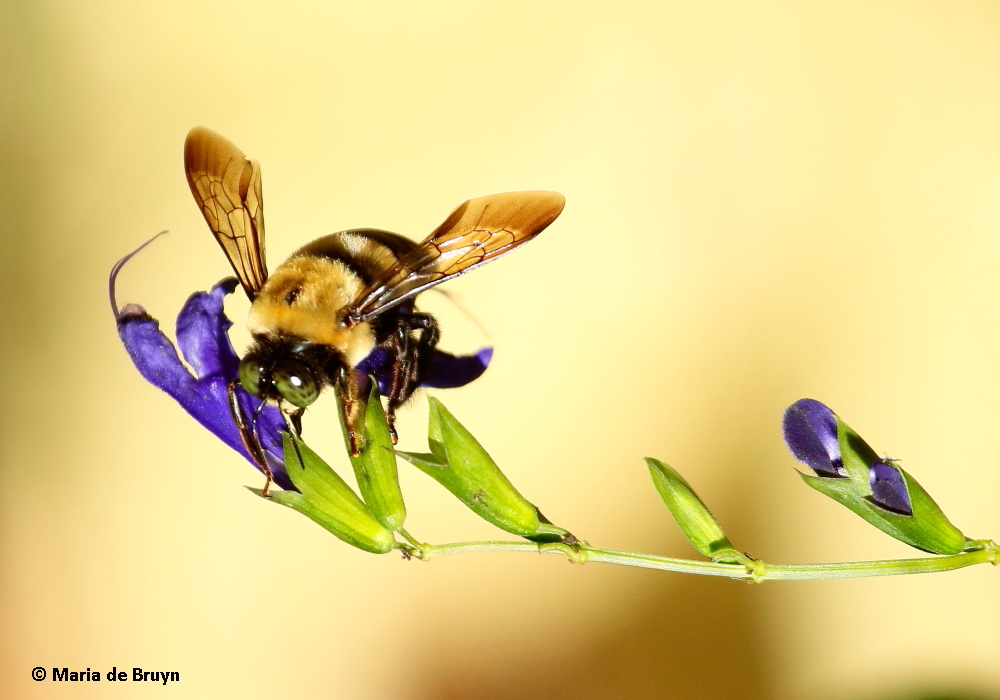
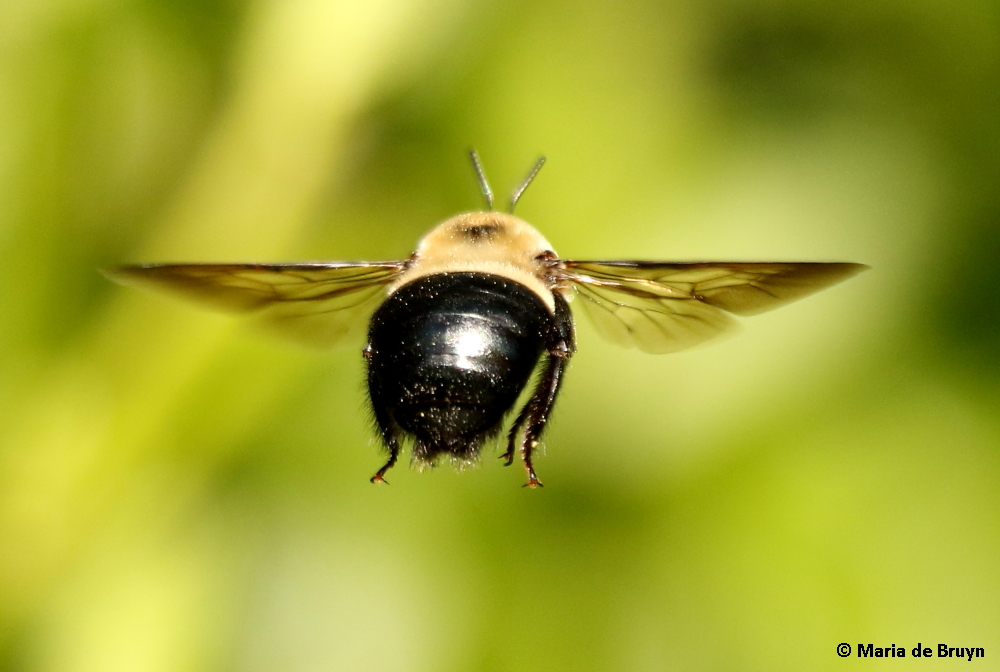
eastern-carpenter-bee-2-i77a7906-maria-de-bruyn-res  eastern-carpenter-bee-i77a8678-maria-de-bruyn-res

eastern-tiger-swallowtail-i77a8669-maria-de-bruyn-res  american-lady-img_0069-maria-de-bruyn-res

blue-pickerel-weed-i77a3947-maria-de-bruyn-resThe front yard has one small pond with blue pickerel weed (Pontederia cordata) and the back yard has two ponds and a heated bird bath in winter. Deer, raccoons and birds, like this American robin (Turdus migratorius) use these as watering holes.
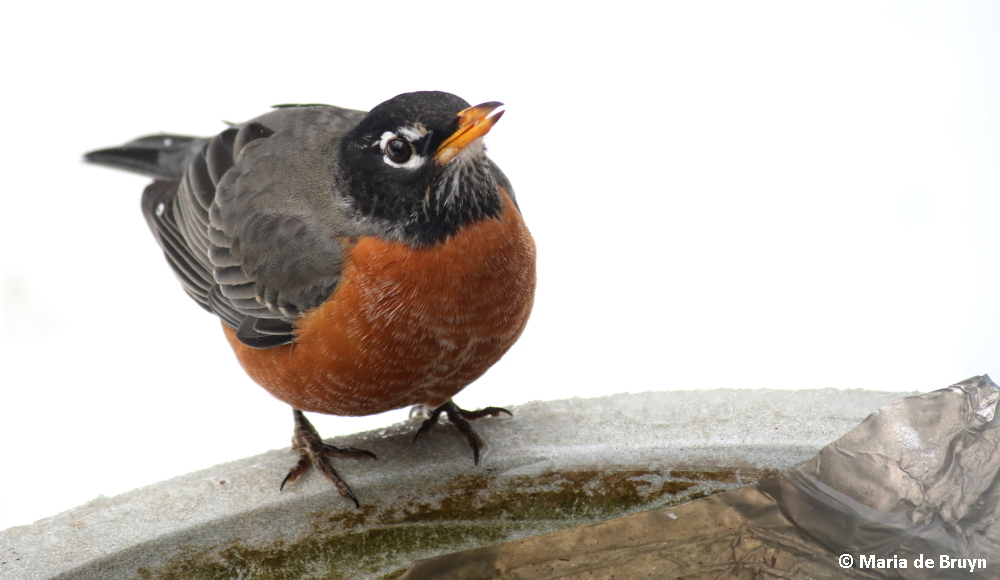
american-robin-i77a9005-maria-de-bruyn-res

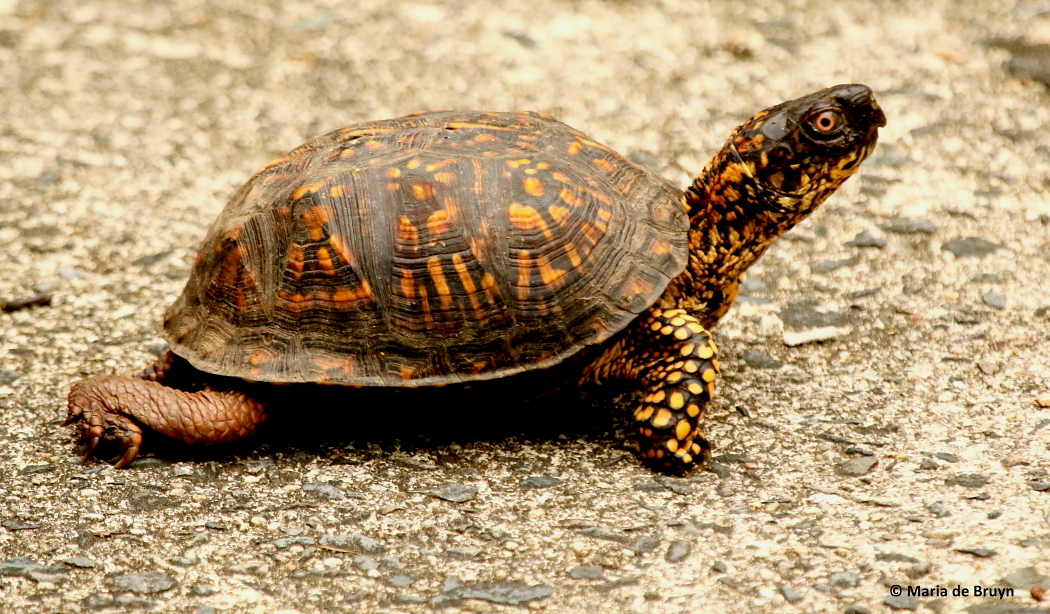
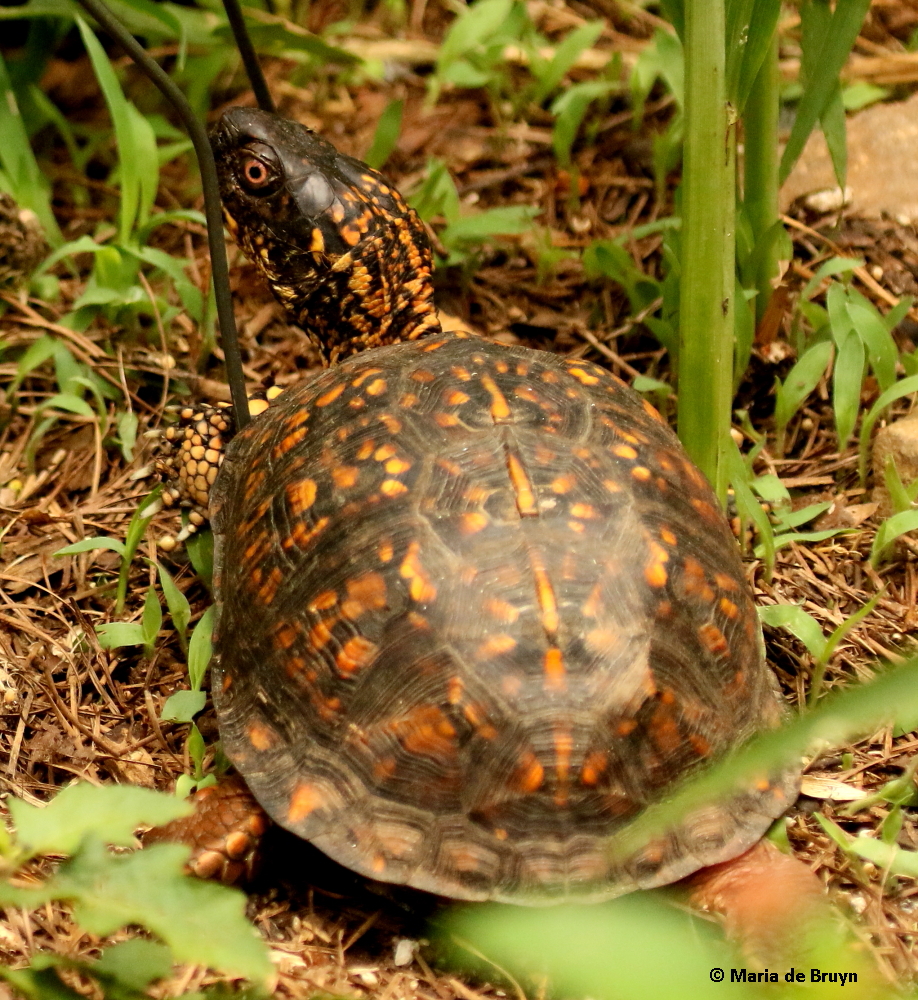
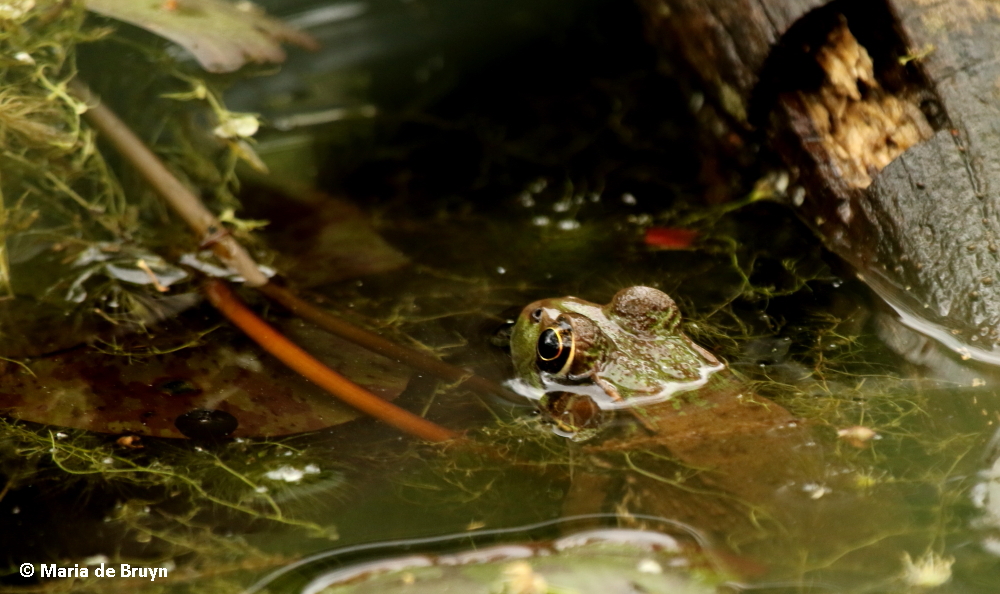
bullfrog-i77a9694-maria-de-bruyn-resFish live in one pond along with green and/or bullfrogs (Lithobates catesbeianus). Occasionally, I’ve had to rescue an adventurous Eastern box turtle (Terrapene carolina carolina) that didn’t seem able to climb out again on the logs provided as bridges out of the water. Other turtles trundle around in other parts of the yard.
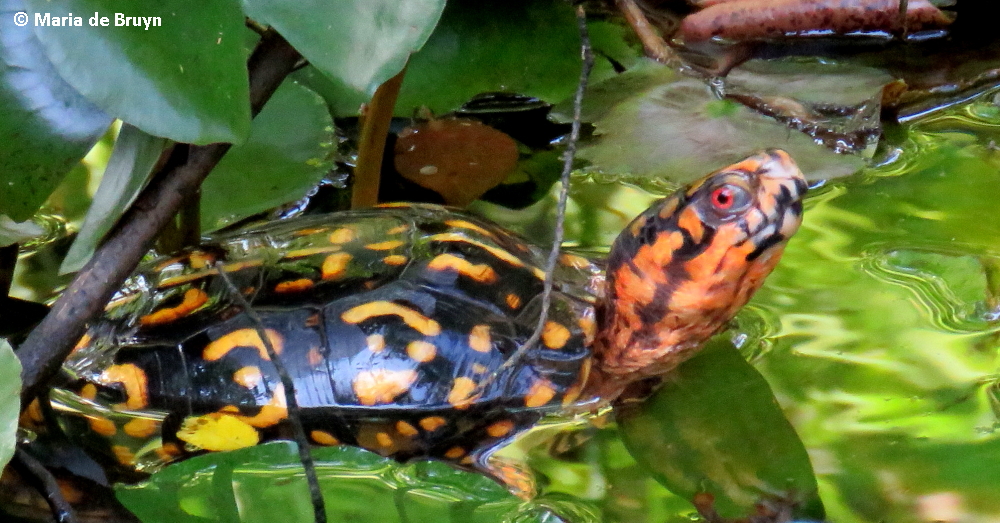
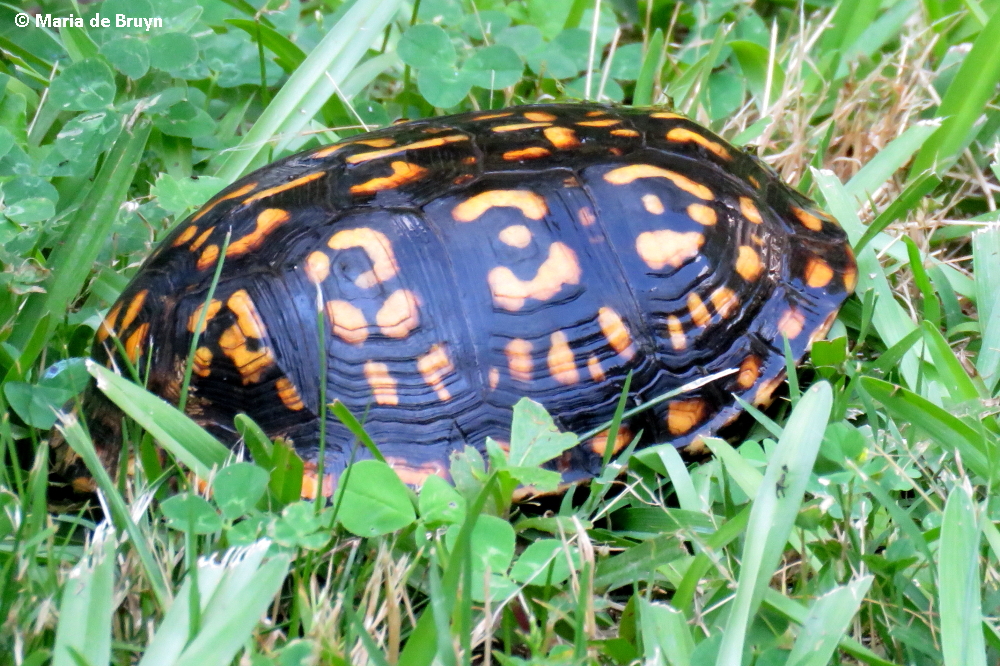
eastern-box-turtle-img_1392-maria-de-bruyn-res    eastern-box-turtle-img_1422-maria-de-bruyn-res

eastern-box-turtle-male-i77a8333-maria-de-bruyn-res   eastern-box-turtle-i77a8380-maria-de-bruyn-res

Raquel raccoon (Procyon lotor) and members of her family usually appear at night, as do the local opossums, of whom I have few photos. When Raquel is expecting another brood or in nursing mode, she gets more adventurous and comes round in the daytime.
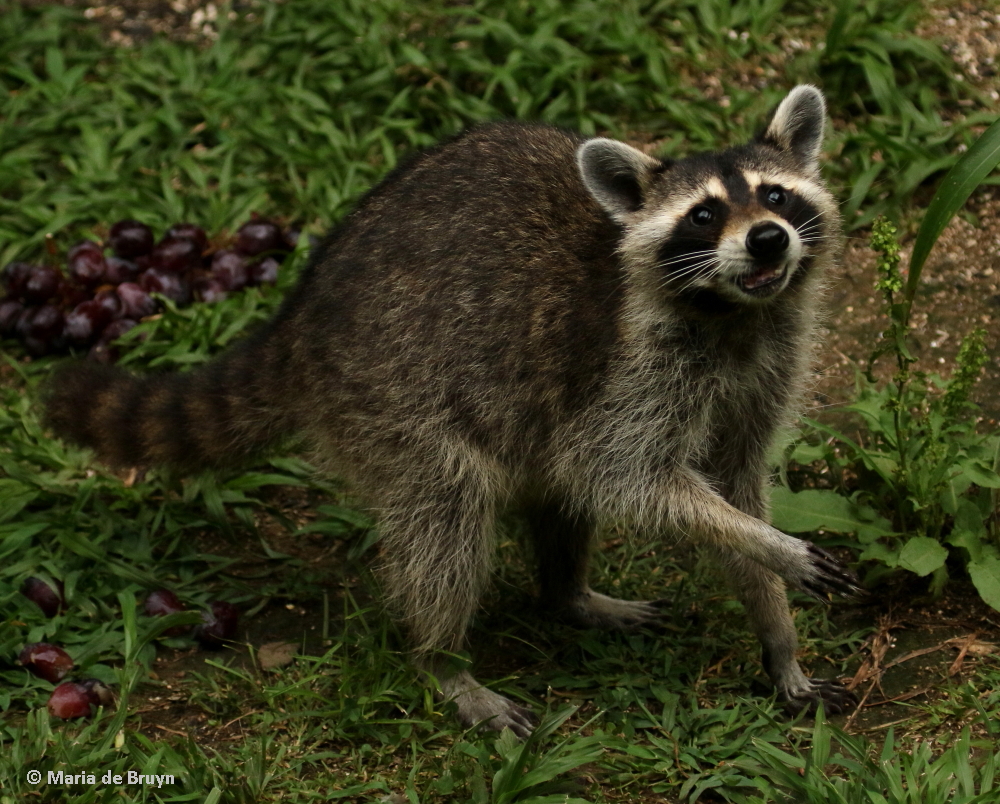
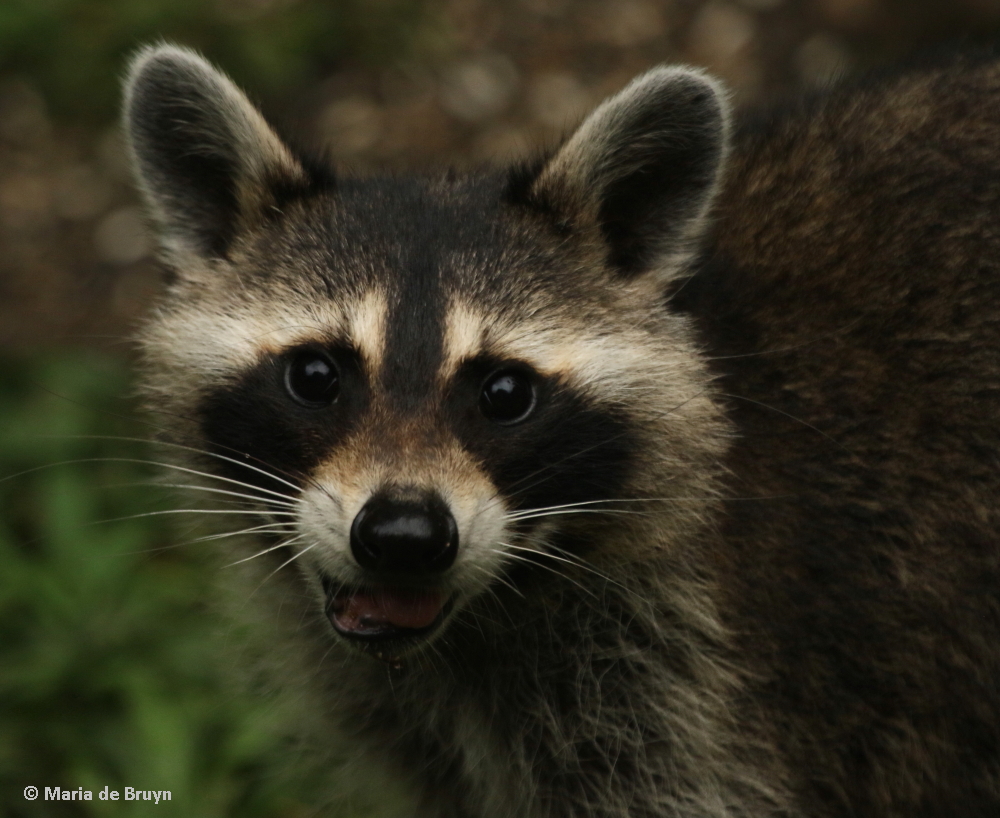
raccoon-i77a5969-maria-de-bruyn-res   raccoon-i77a5906-maria-de-bruyn-res

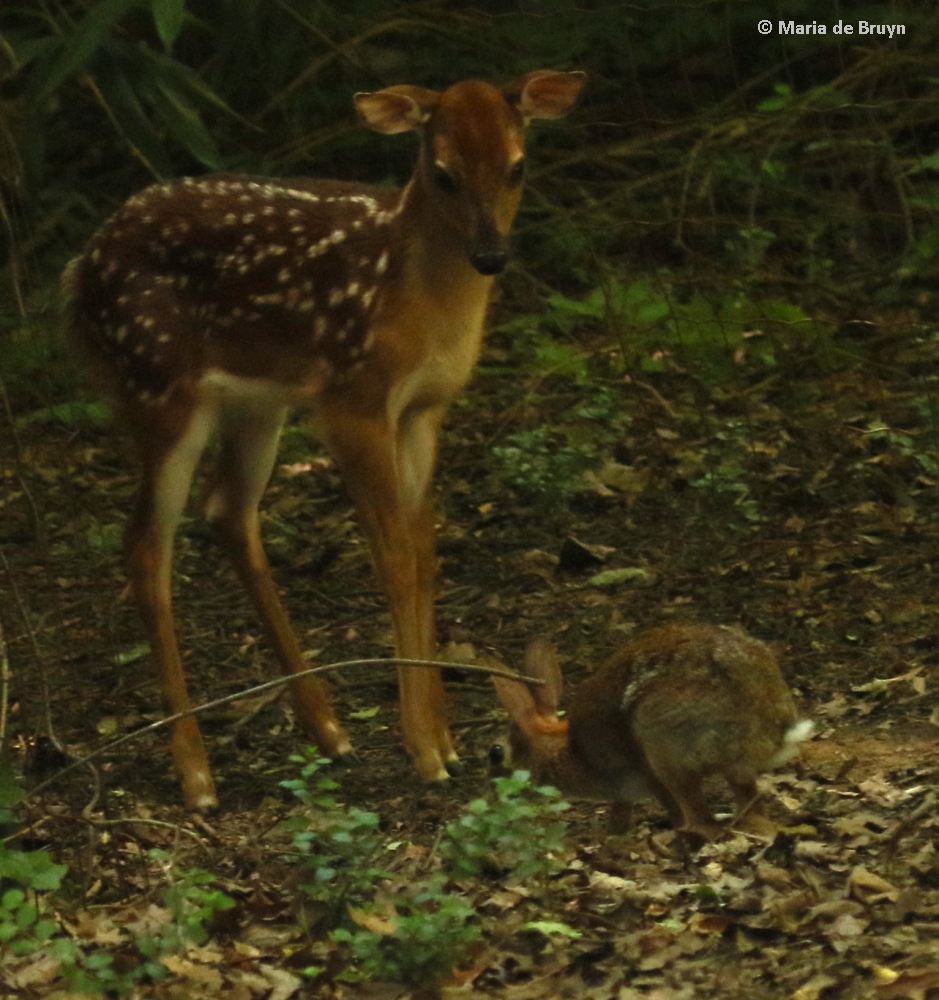
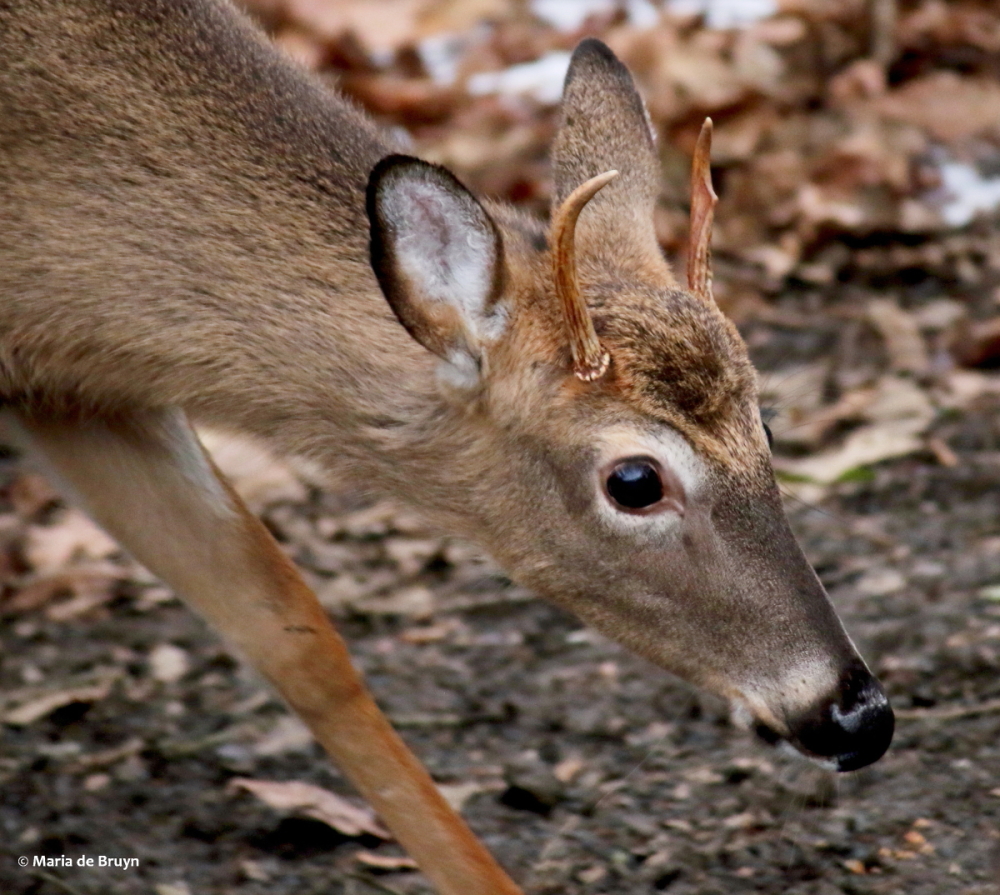
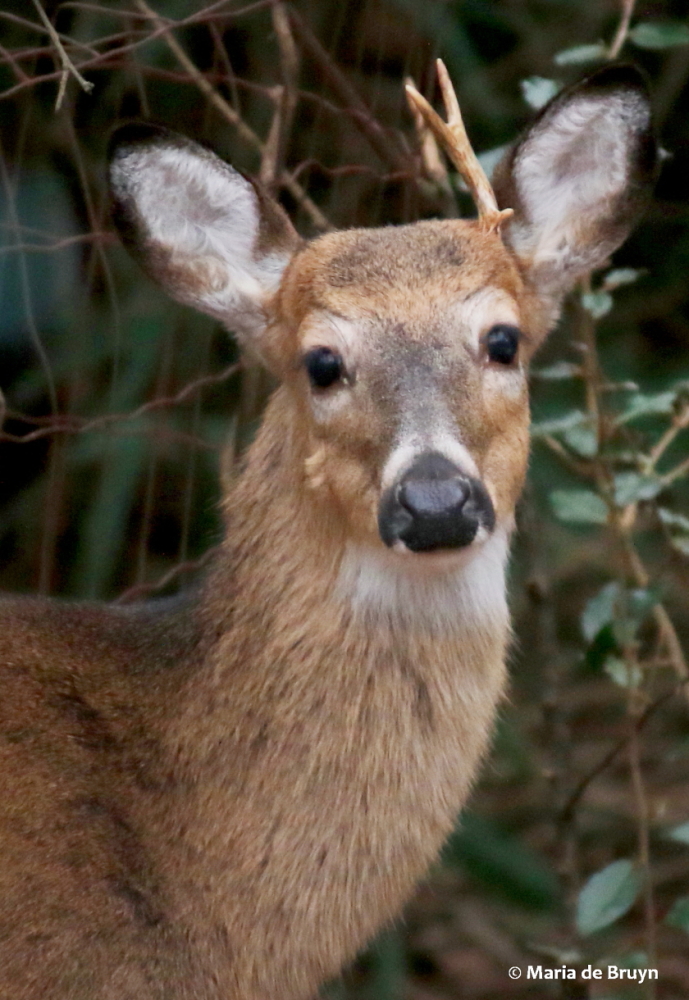
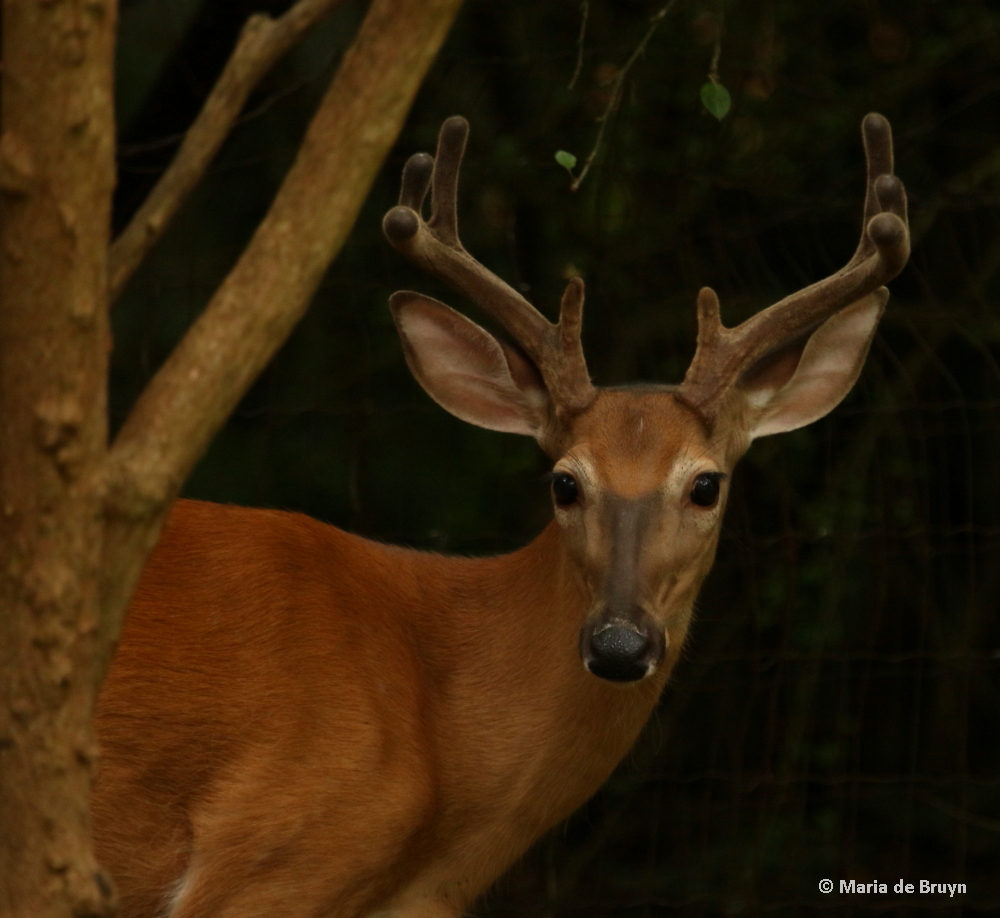
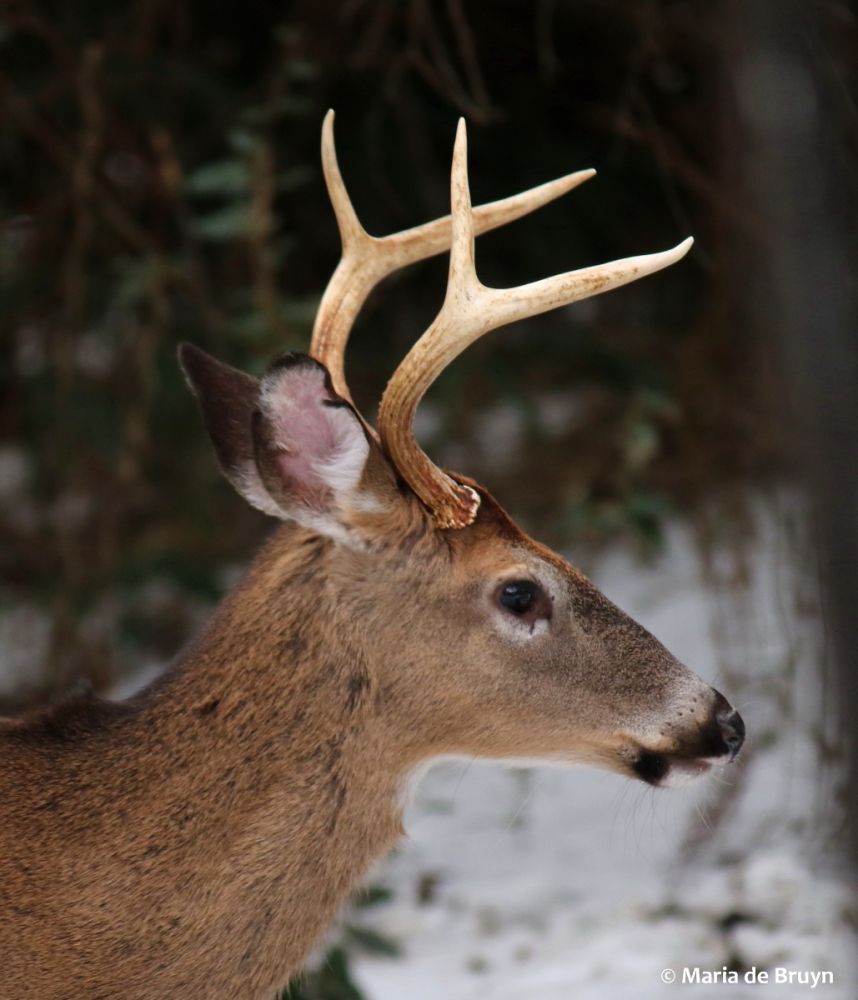
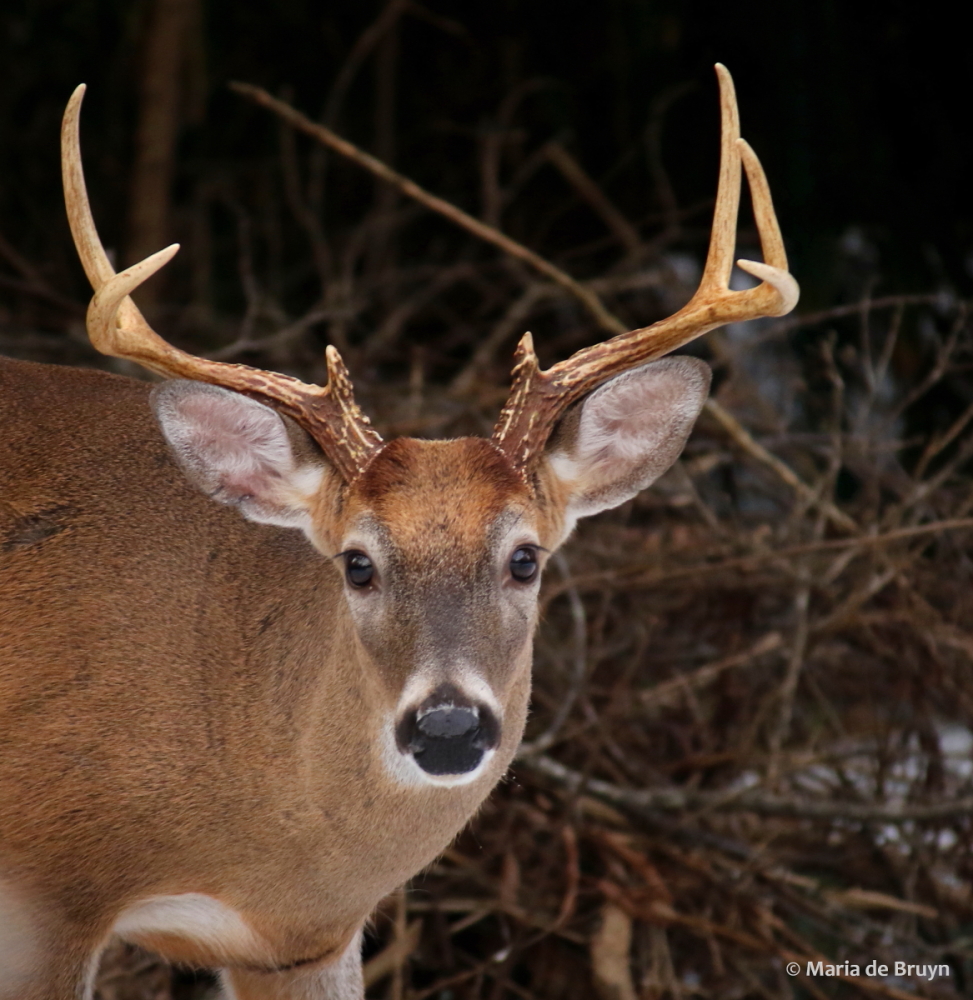
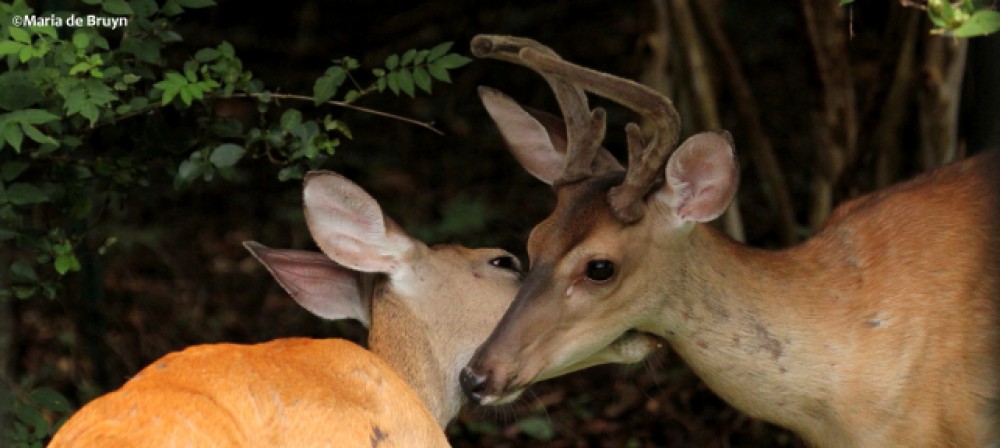
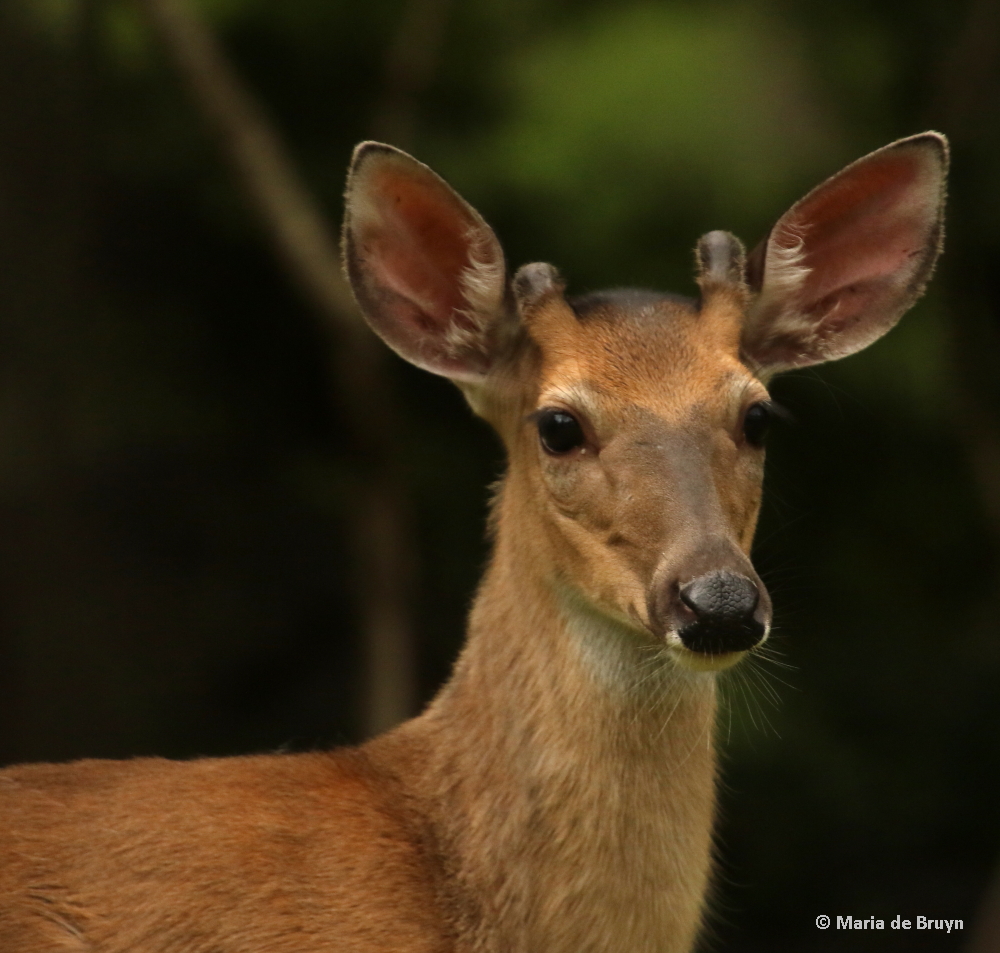
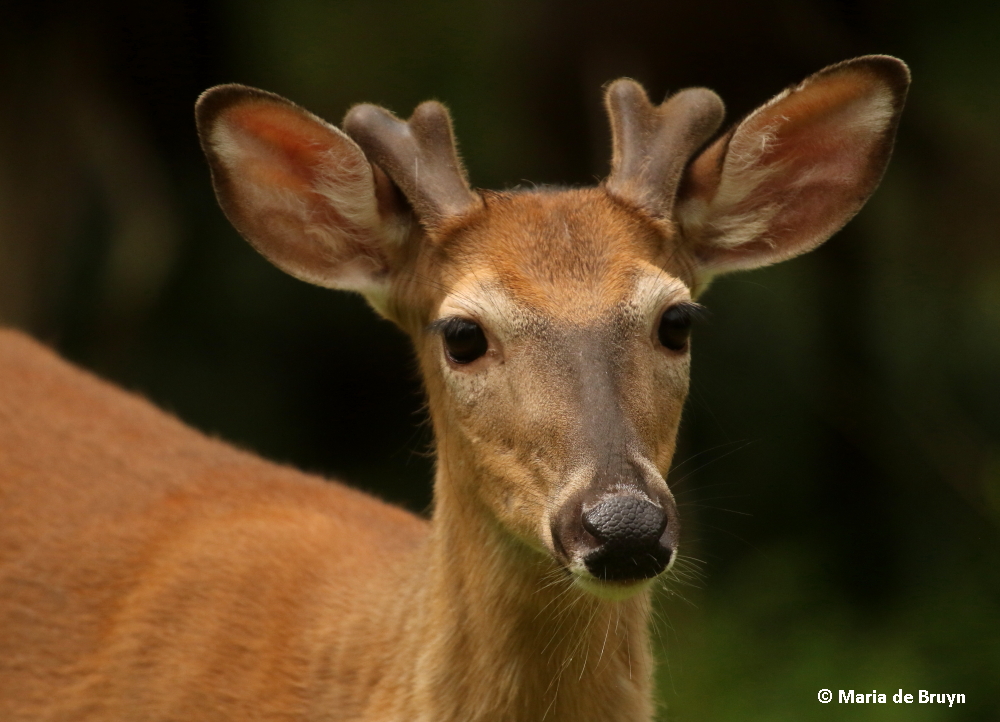
The white-tailed deer (Odocoileus virginianus) come by all months of the year and provide opportunities to see how the fawns learn about the other creatures sharing their space.
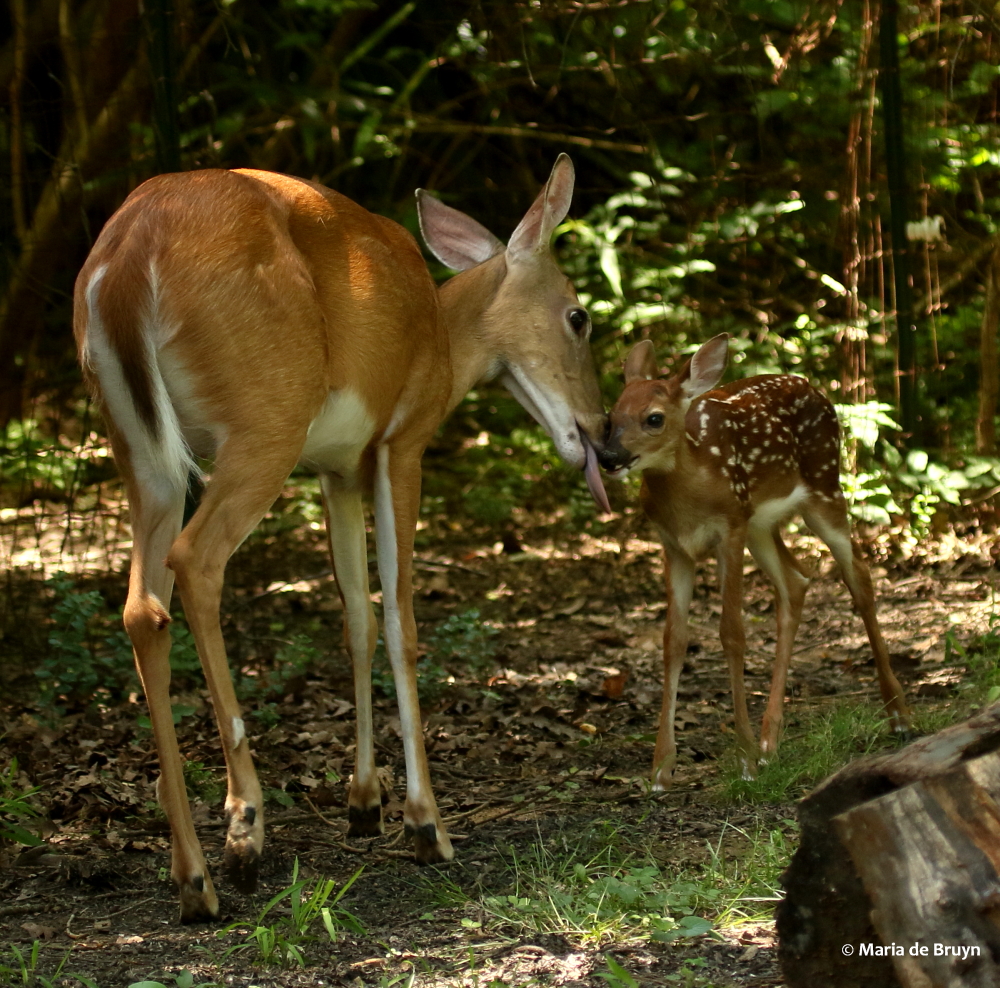
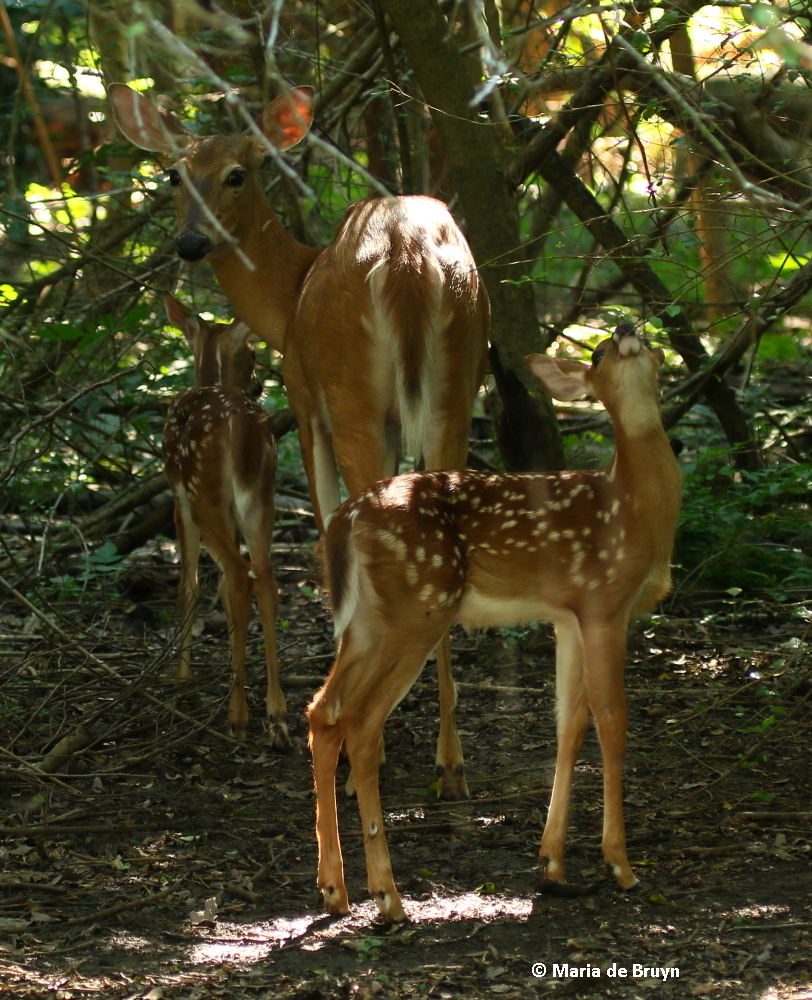
white-tailed-deer-i77a7463-maria-de-bruyn white-tailed-deer-i77a2126-maria-de-bruyn-res

white-tailed-deer-i77a7826-maria-de-bruyn-res

It’s interesting to see how button bucks are followed by yearlings with nubby antlers and eventually grow up to become handsome 5- or more point bucks.
white-tailed-deeri77a4099-maria-de-bruyn-res      white-tailed-deer-i77a4097-maria-de-bruyn-res

white-tailed-deer-i77a1367-maria-de-bruyn-res  white-tailed-deer-i77a1366-maria-de-bruyn-res

white-tailed-deer-i77a9813-maria-de-bruyn-res

white-tailed-deer-i77a1061-maria-de-bruyn-res white-tailed-deer-i77a1005-maria-de-bruyn-res

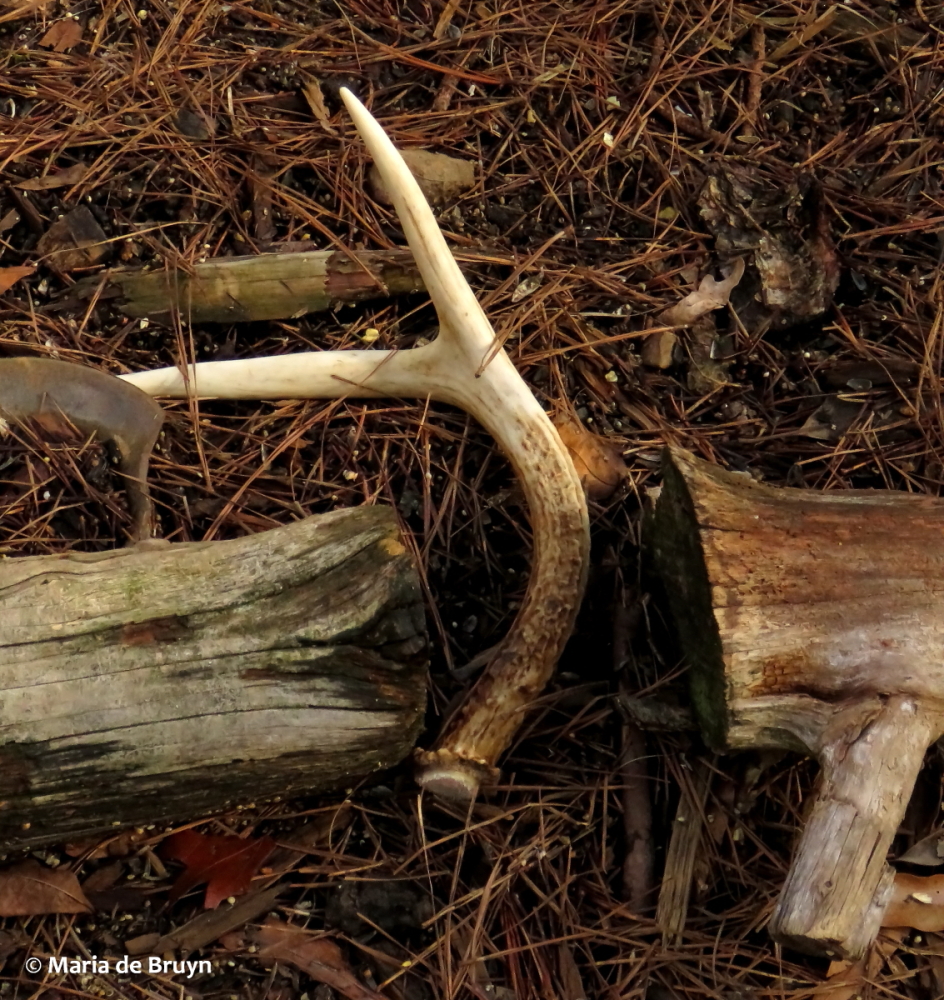
white-tailed-deer-antler-img_1211-maria-de-bruyn-resThis past year, one of the bucks was kind enough to drop one of his antlers in my yard as a souvenir.

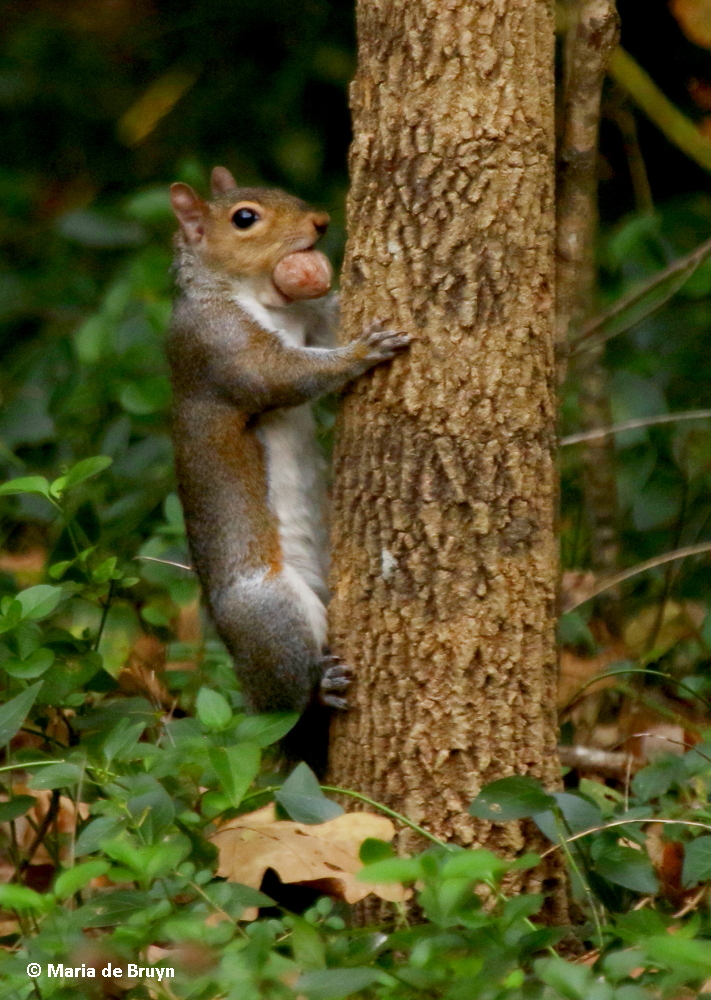
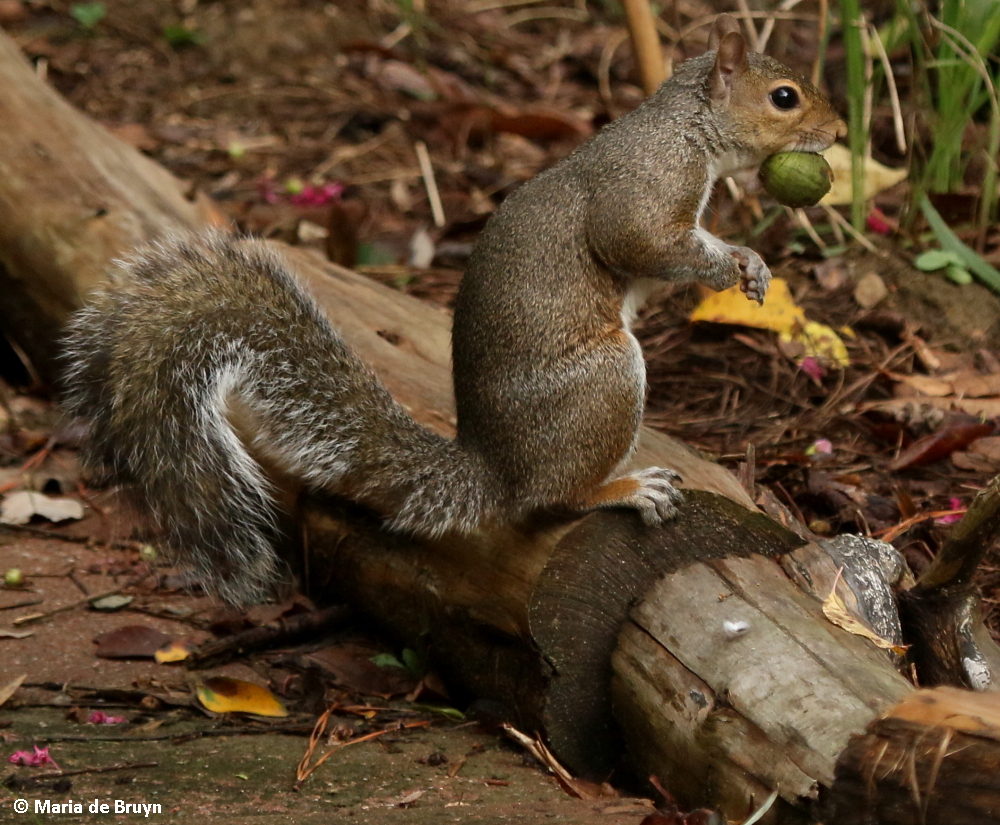
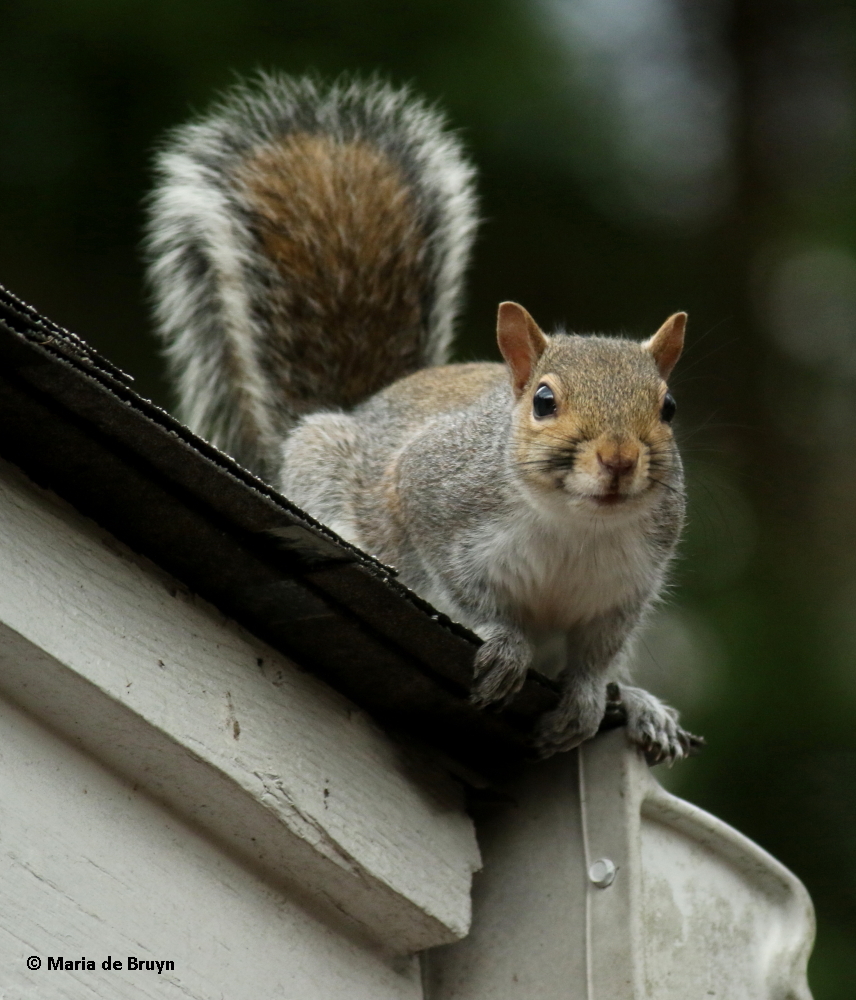
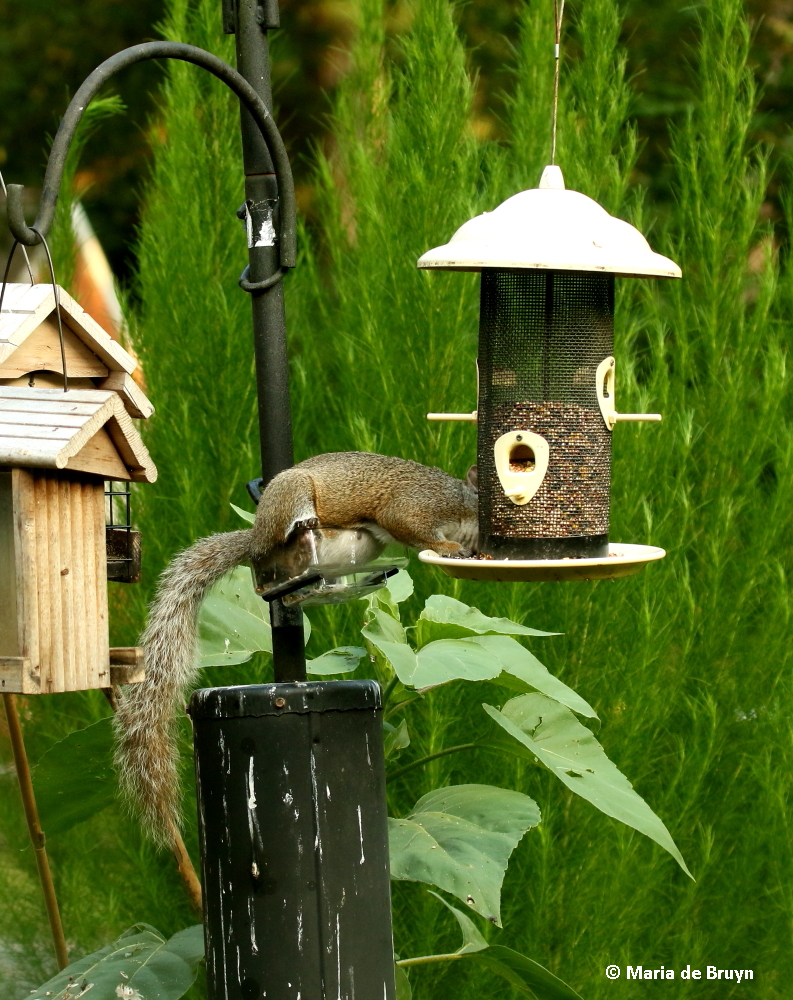
The Eastern gray squirrels (Sciurus carolinensis) provide endless amusement – one way is by investigating various techniques to find a way onto the bird feeders. These are largely unsuccessful, even when they climb up on the roof to see if they can launch themselves far enough to reach a feeder pole. This year, however, one enterprising squirrel managed to finally get onto a feeder by climbing up a rather large sunflower stem that held his/her weight until it bent over close to a pole.
eastern-gray-squirrel-i77a5492-maria-de-bruyn-res   eastern-gray-squirrel-i77a7478-maria-de-bruyn-res

Their antics as they chase one another in play and for amorous purposes, too, are also quite entertaining.
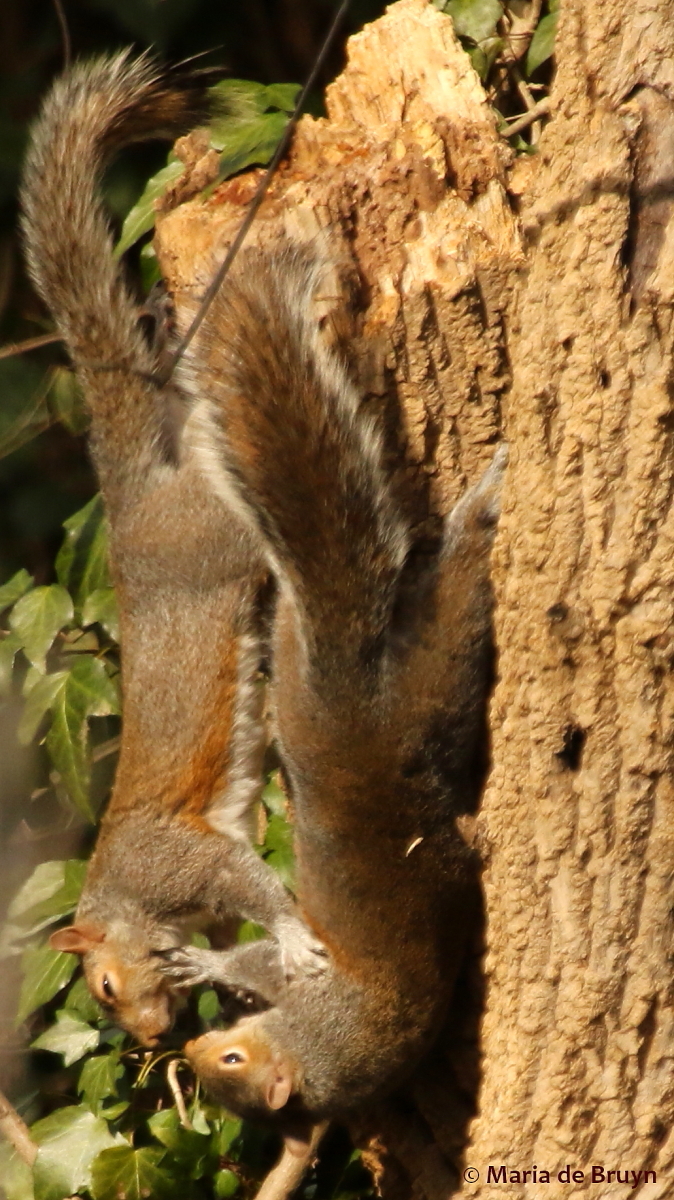
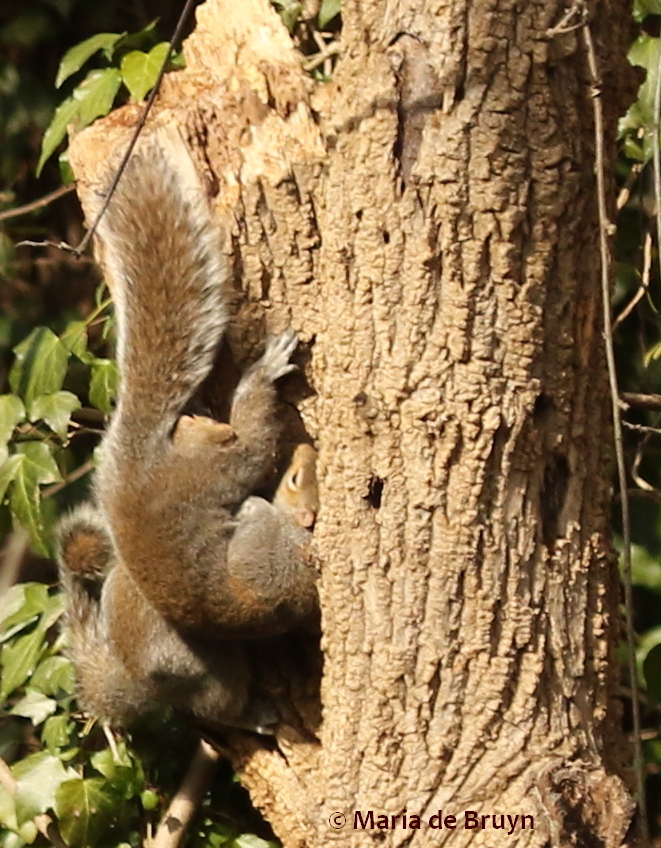
eastern-gray-squirrel-i77a1104-maria-de-bruyn-res      eastern-gray-squirrel-77a0929-maria-de-bruyn

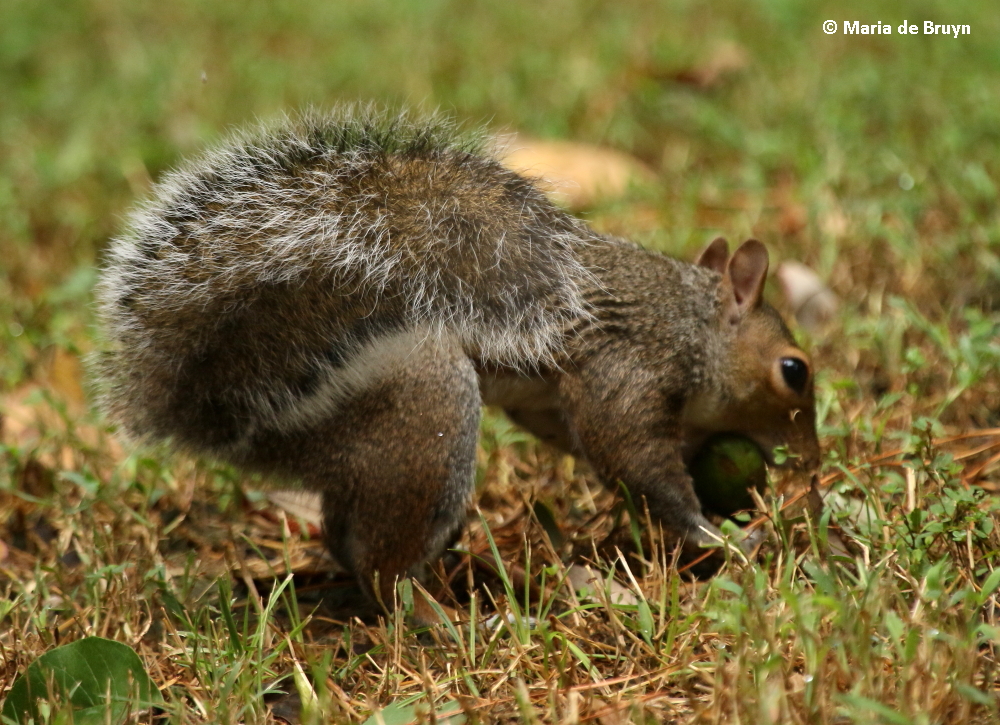
It’s fun to watch them caching seeds as well; sometimes, they decide a spot in the middle of the lawn is the best hiding place!
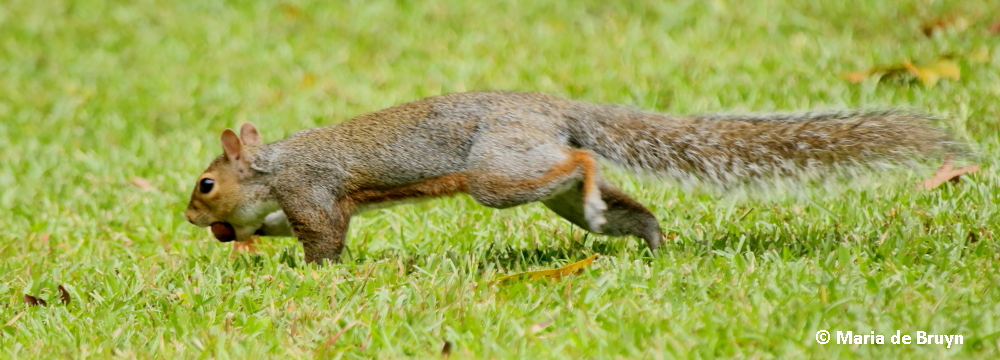
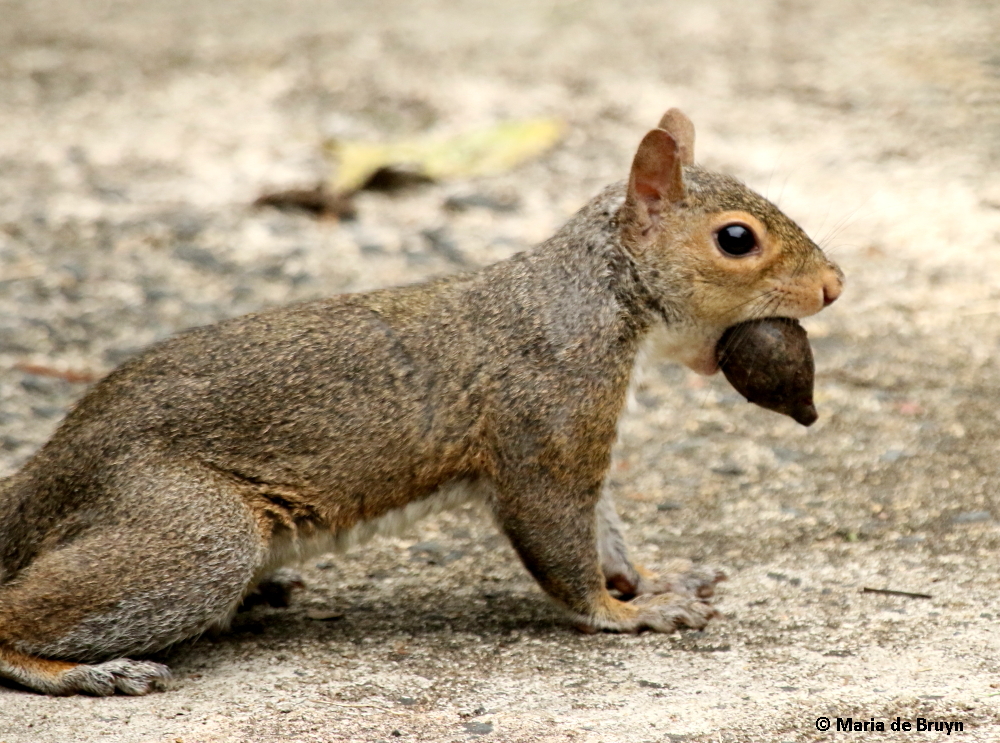
eastern-gray-squirrel-i77a0026-maria-de-bruyn-res

eastern-gray-squirrel-i77a9947-maria-de-bruyn-res   eastern-gray-squirrel-i77a6837-maria-de-bruyn-res

eastern-gray-squirrel-i77a4579-maria-de-bruyn-res   eastern-gray-squirrel-i77a4938-maria-de-bruyn-res

eastern-chipmunk-i77a4007-maria-de-bruyn-res


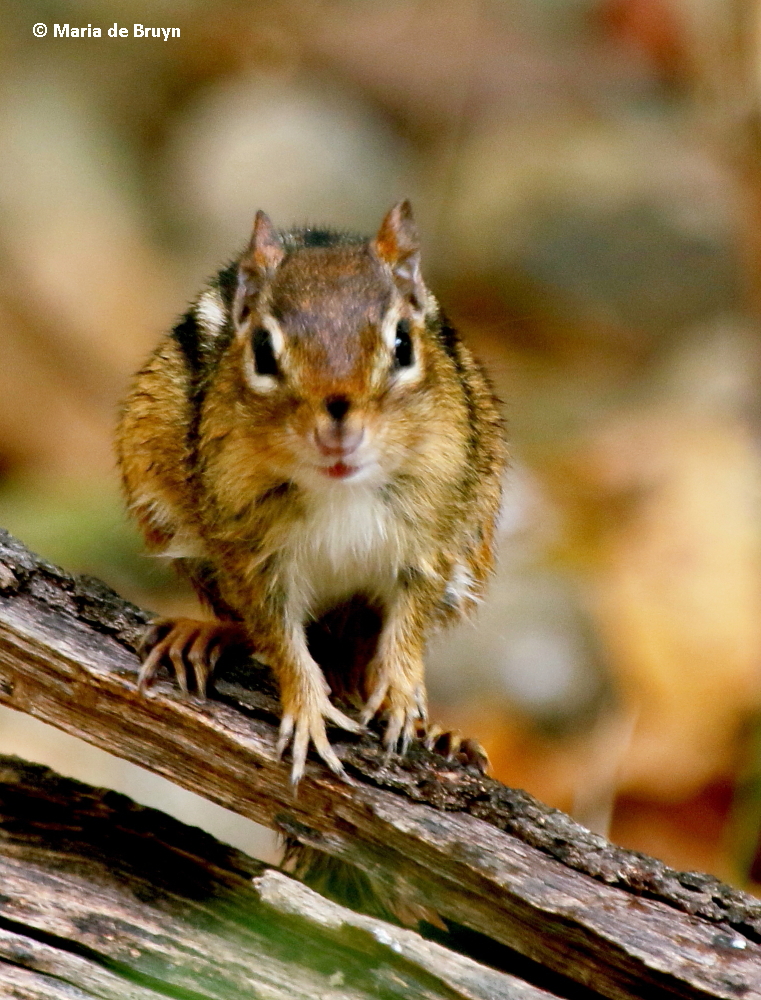
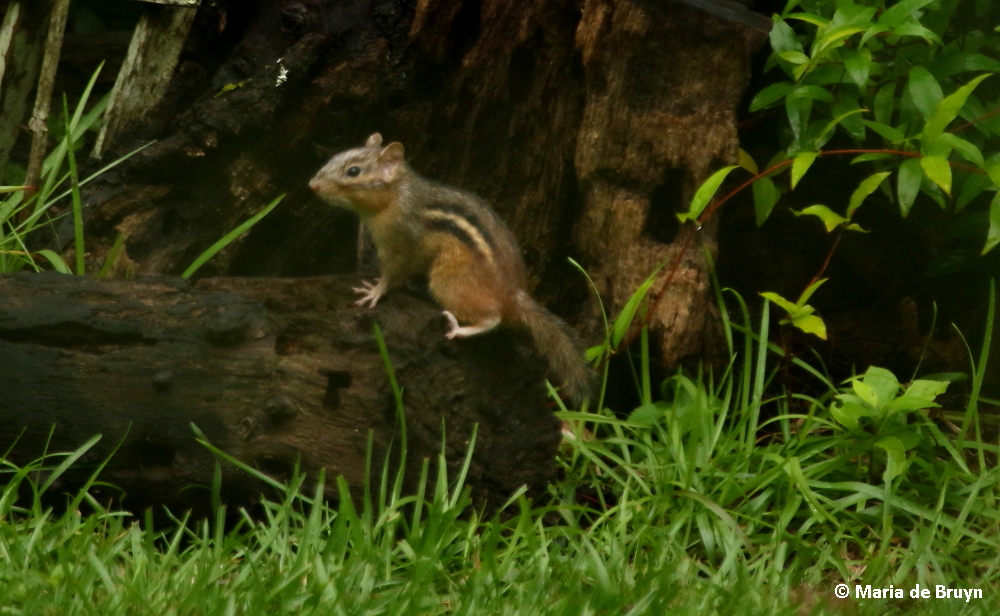
They often will chase non-family members away from the food I put out on the ground – seeds, bits of bread and apples for the birds (crows and catbirds are especially fond of apples). They are usually (not always!) willing to tolerate the Eastern chipmunks (Tamias striatus) who come to get some goodies, too.
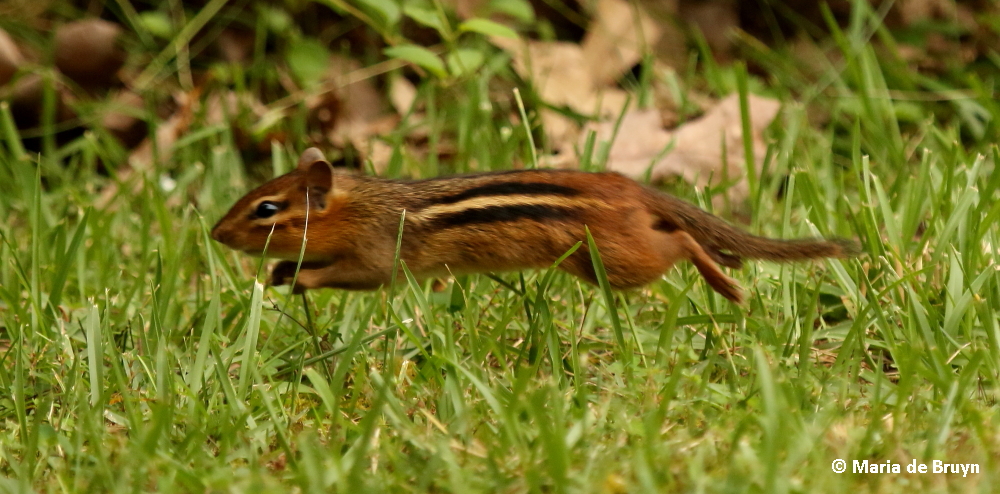
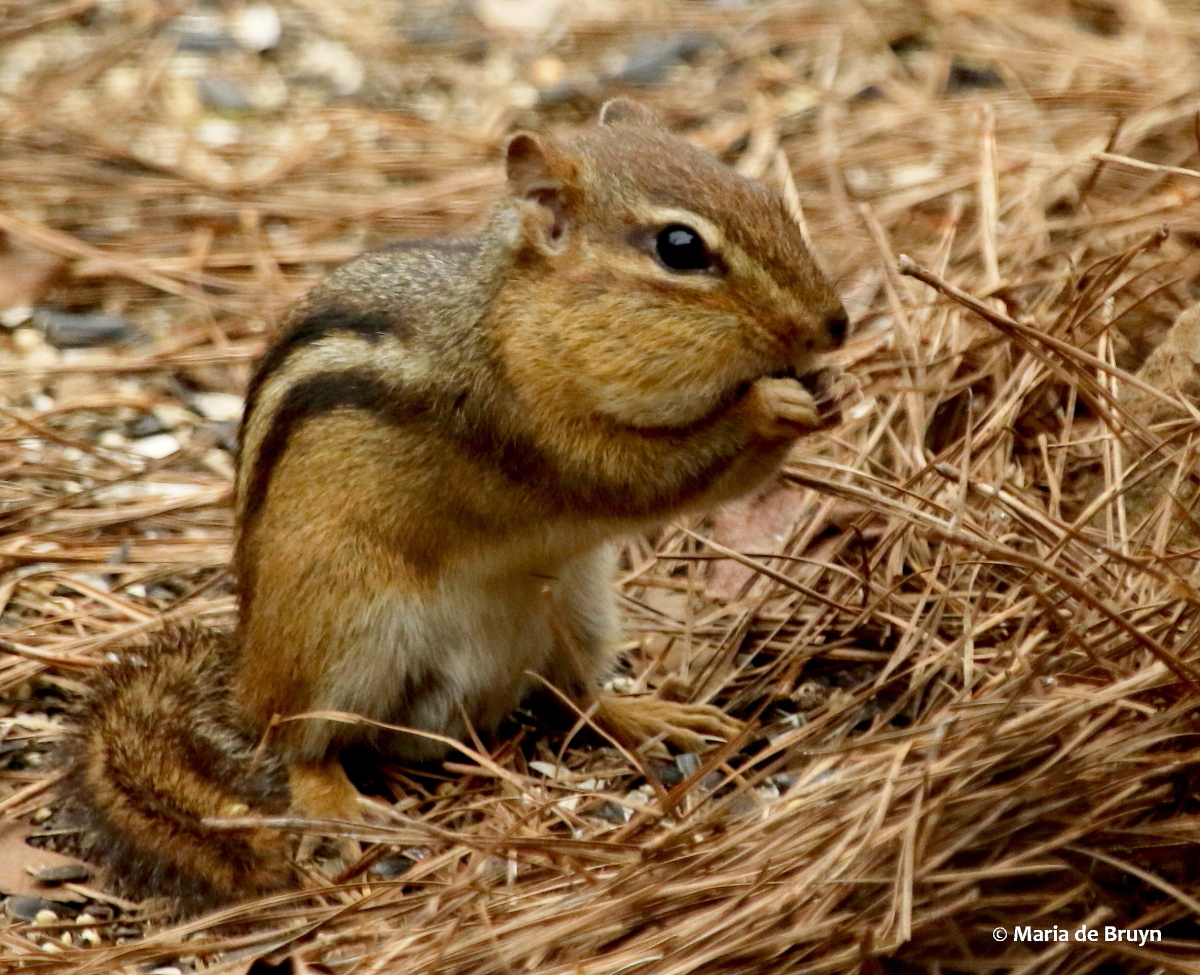
eastern-chipmunk-i77a7935-maria-de-bruyn-res

eastern-chipmunk-i77a8790-maria-de-bruyn-res  eastern-chipmunk-i77a3418-maria-de-bruyn-res

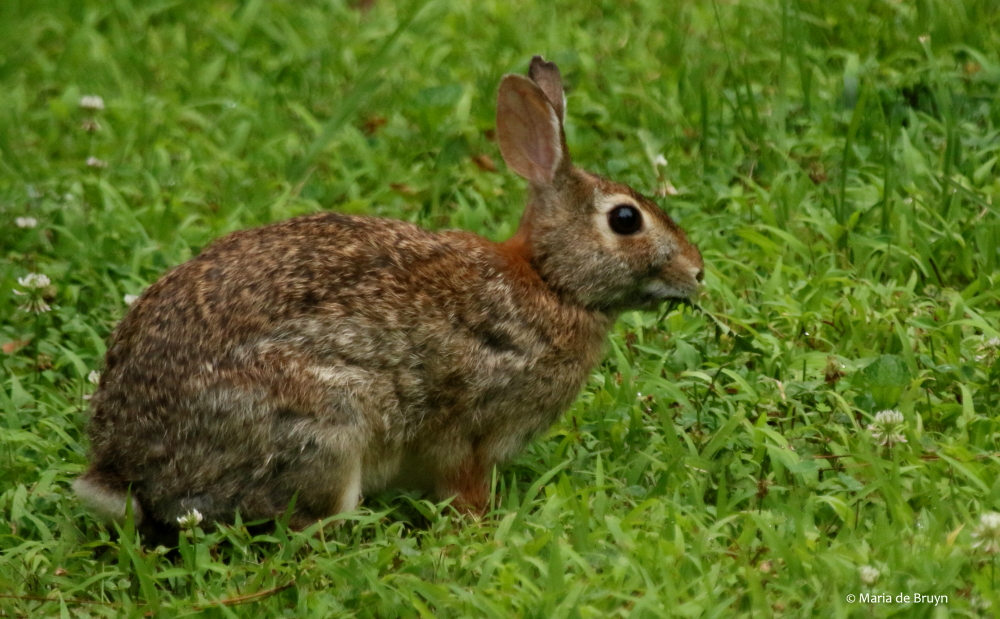
eastern-cottontail-i77a9747-maria-de-bruyn-resThe Eastern cottontail rabbits (Sylvilagus floridanus) don’t often go for the bird food but prefer to munch on the grasses and other plants growing on the “lawn”.

I was surprised this summer when I discovered that the beautiful neighborhood gray fox (Urocyon cinereoargenteus) was fond of bread.
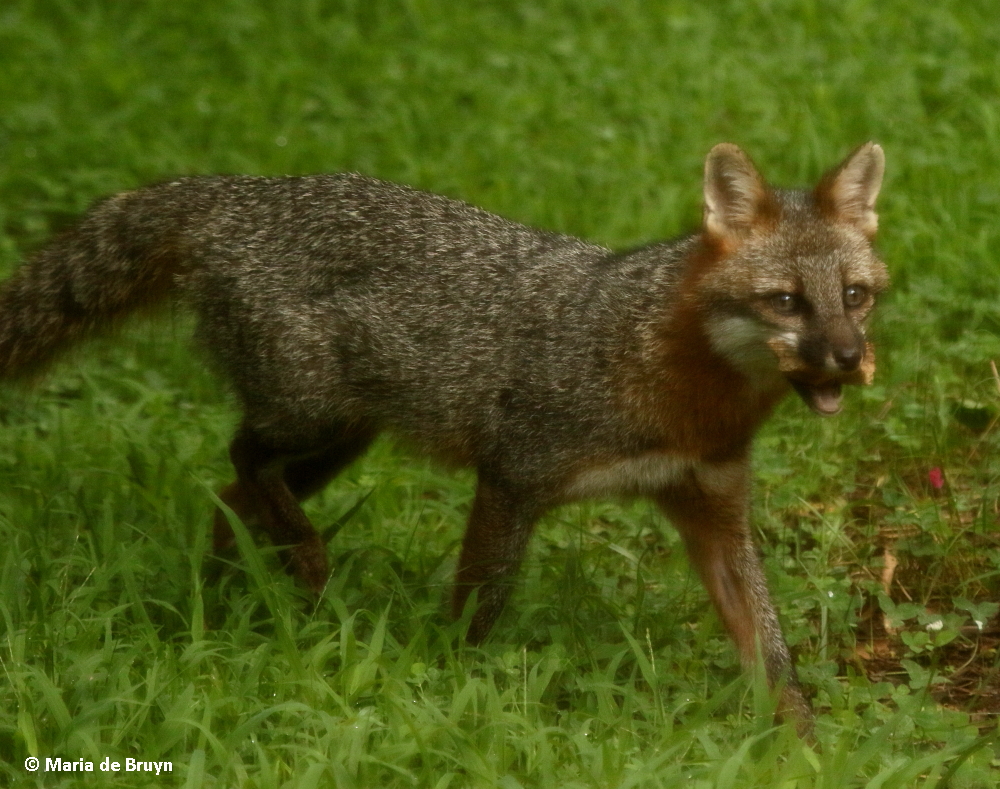
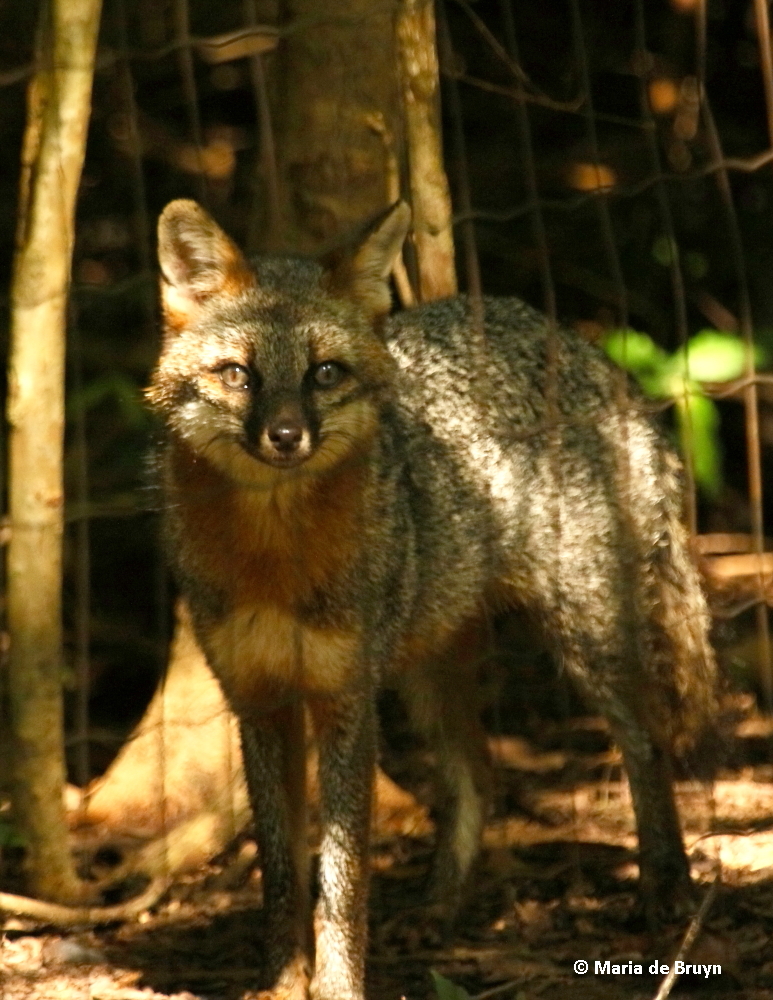
gray-fox-i77a1236-maria-de-bruyn-res gray-fox-faith-i77a1197-maria-de-bruyn-res

Her presence in the yard reinforced my resolve to no longer let my former indoor-outdoor cat, Jonahay, out by himself anymore. He has almost reached the ripe old age of 18 years and is going strong despite suffering arthritis, mild kidney disease, mild dementia and deafness. But all the years of having roamed outside have preserved a strong will to go outdoors so I take him for walks around the yard, which give him opportunities to mark his territory anew. (My other two cats are strictly indoor felines, although one of them likes to escape now and again.)
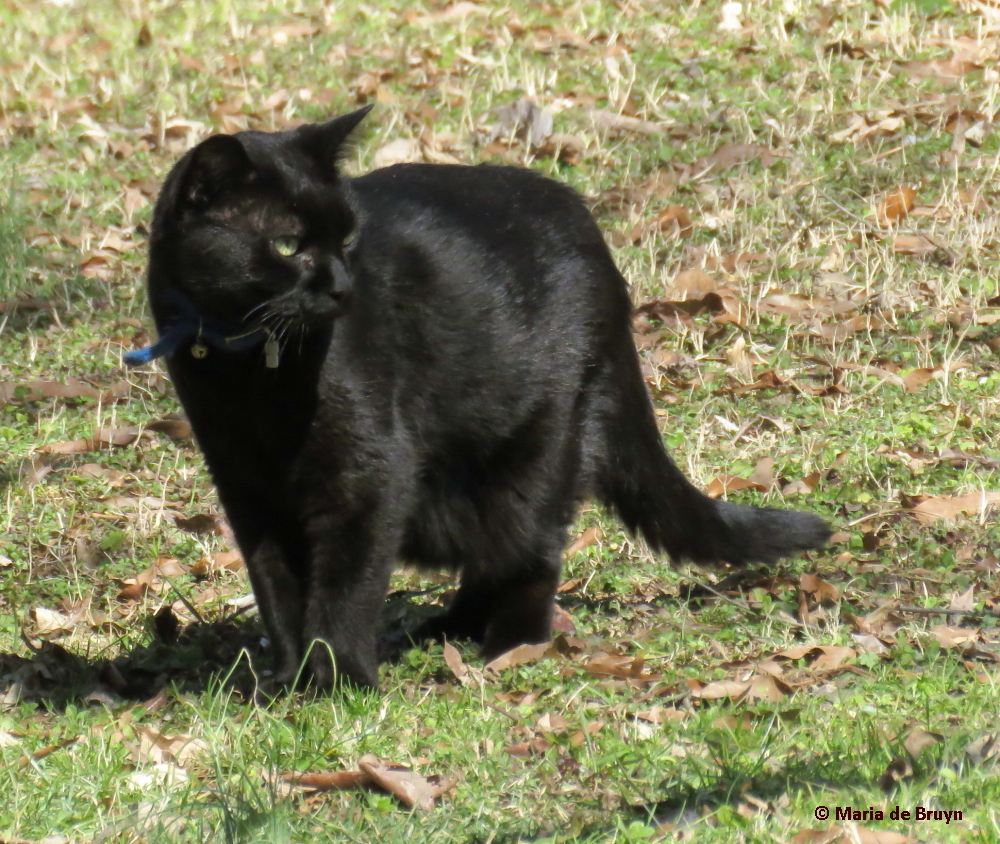
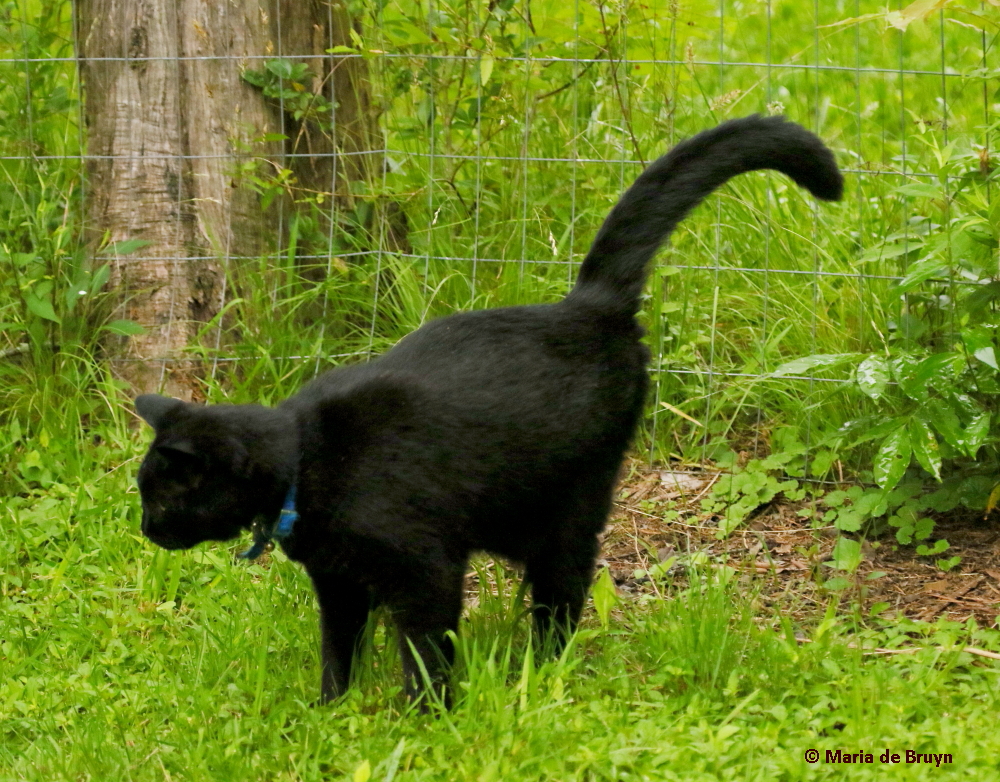
jonahay-img_0058-maria-de-bruyn-res jonahay-i77a5004-maria-de-bruyn-res

Two years running now, my yard has served as a venue for a citizen-science bird banding exercise and it’s always a pleasure to see banded birds returning to the feeders, like Corey catbird (Dumetella carolinensis) who enjoys American beautyberries. They also include my intrepid Carolina chickadee (Poecile carolinensis), Chantal, who unfortunately lost a leg (I think because she had scaly leg when she was banded and the bands were too tight but I don’t know this for sure). She is a feisty little bird and manages to balance remarkably well on her remaining leg; her daily return is always a joyous sight for me.
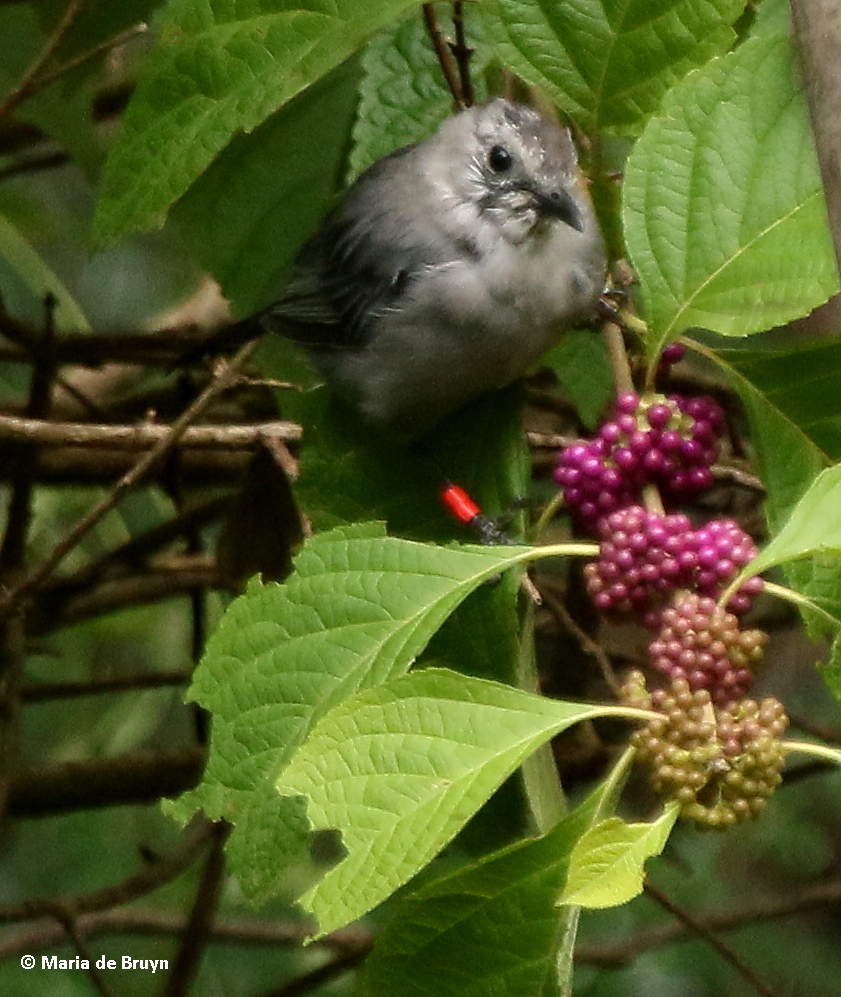
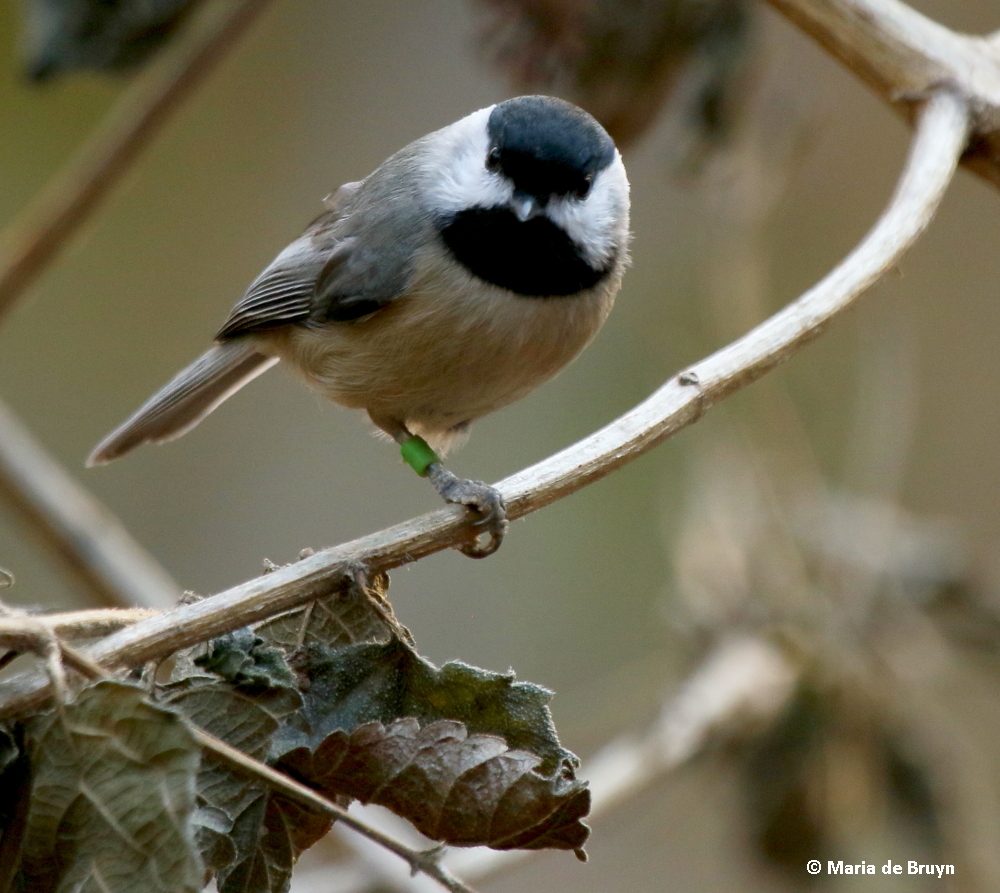
gray-catbird-corey-i77a4763-maria-de-bruyn-res  carolina-chickadee-chantal-i77a7263-maria-de-bruyn-res

sphinx-moth-caterpillar-img_4314-maria-de-bruyn-res


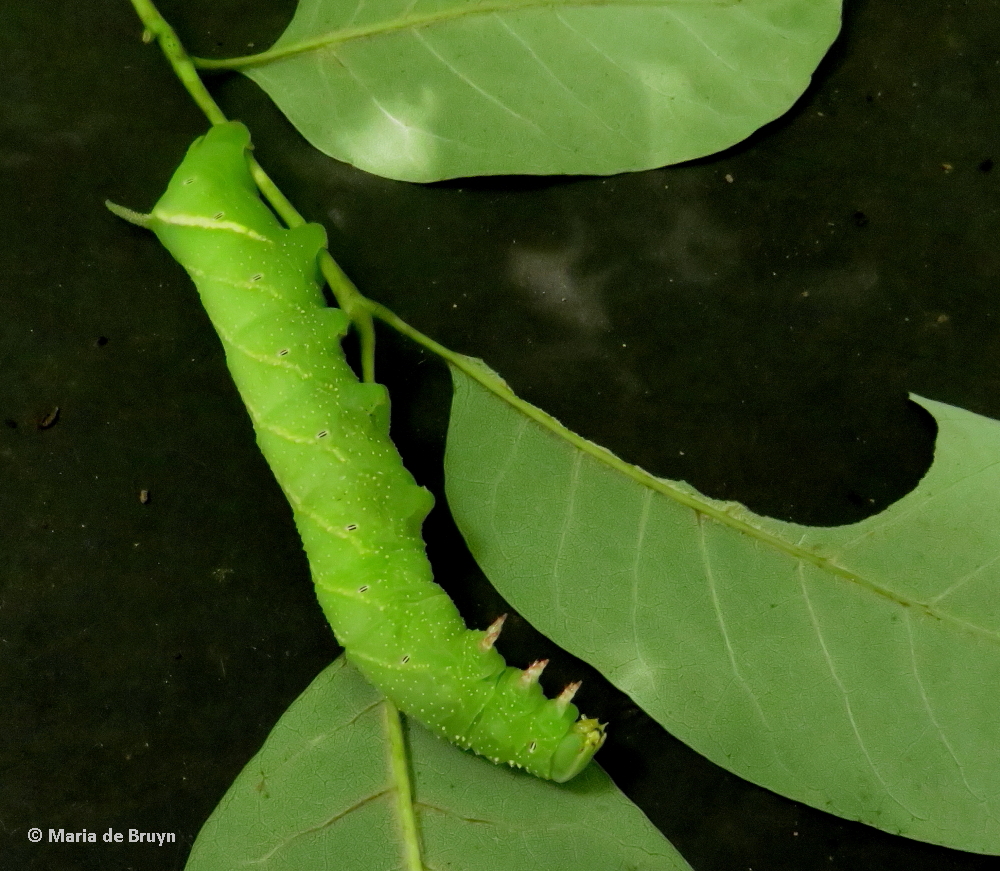
2016 was an exciting year as far as caterpillars went since a large sphinx moth caterpillar (Paonias) graced the yard for the first time (at least that I had noticed).  Cute little jumping spiders (Salticidae) climb onto bird nest boxes and Eastern eyed click beetles (Alaus oculatus) are found in the leaf litter.
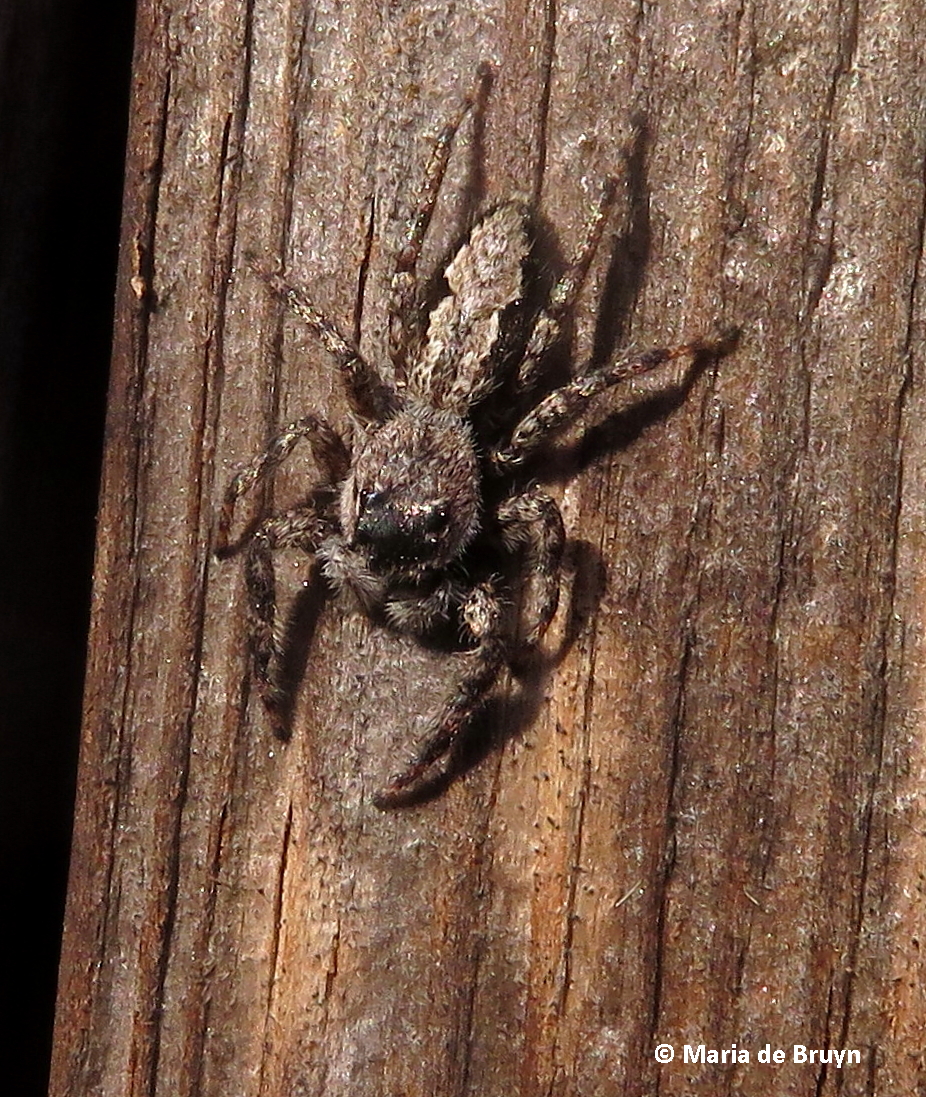
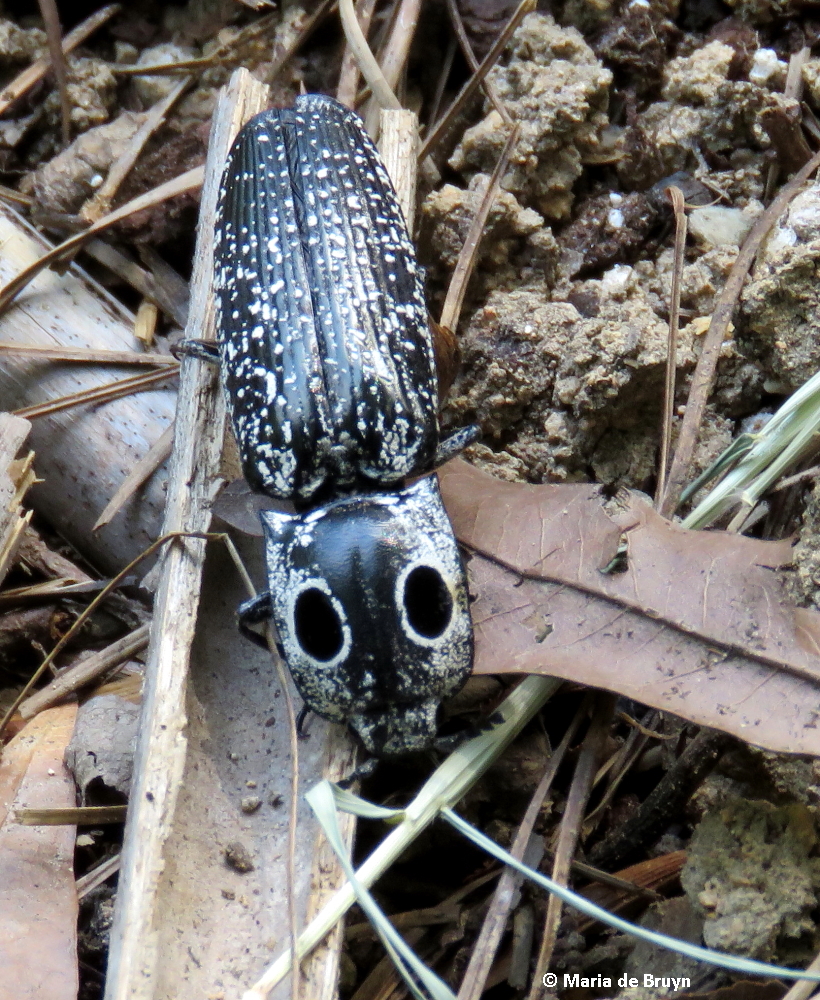
 

jumping-spider-img_0562_1-maria-de-bruyn   click-beetle-img_4582-maria-de-bruyn-res

stink-bug-img_0575maria-de-bruyn-res


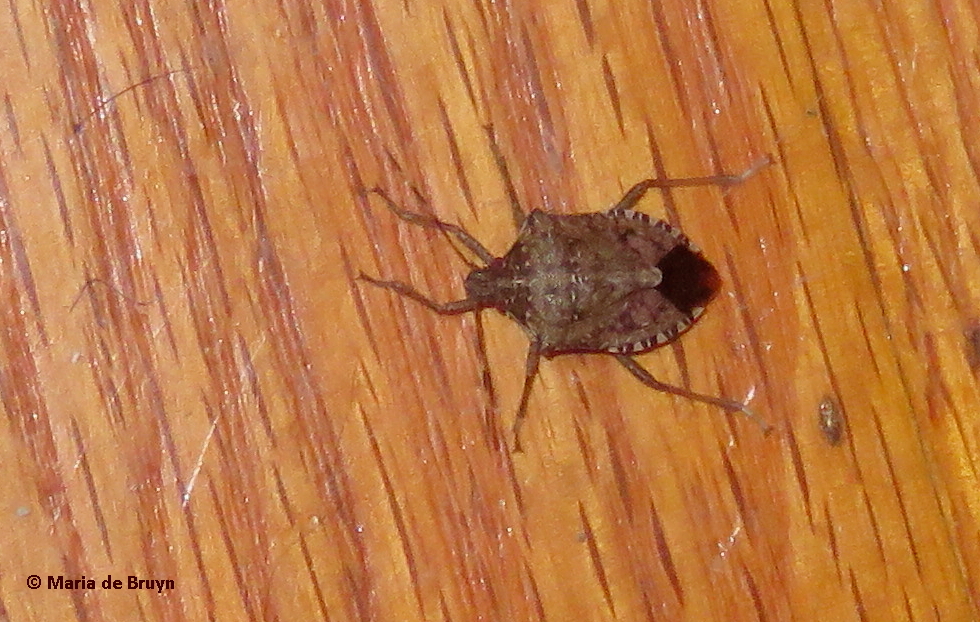
Unfortunately, some of the stink bugs (Halyomorpha) make their way into the house so that I have to take them back outside. One of my cats made the mistake of eating one that I hadn’t got in time and she ended up quite sick, even foaming at the mouth!
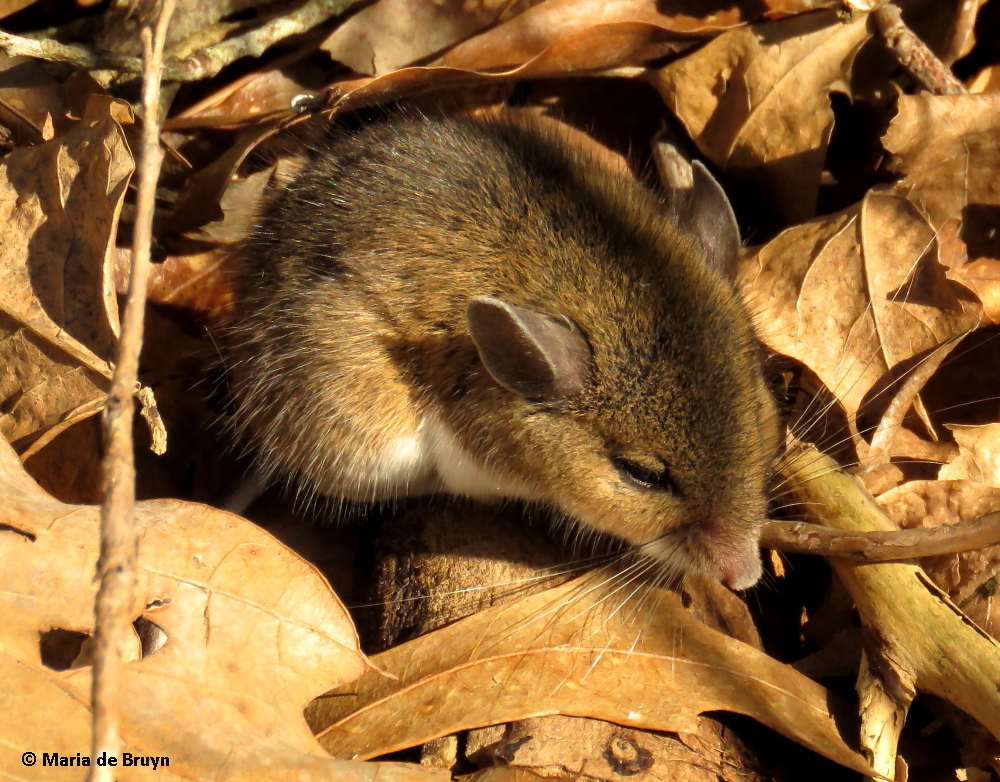
mouse-img_2726-maria-de-bruyn-resOccasionally, mice (Mus) get into the house. The cats don’t eat them and aren’t out to kill them but if they catch one at night and I don’t awaken, the rodent will be dead in the morning. Otherwise, I manage to get hold of the animal (sometimes with a lot of effort) and let it go outside again.

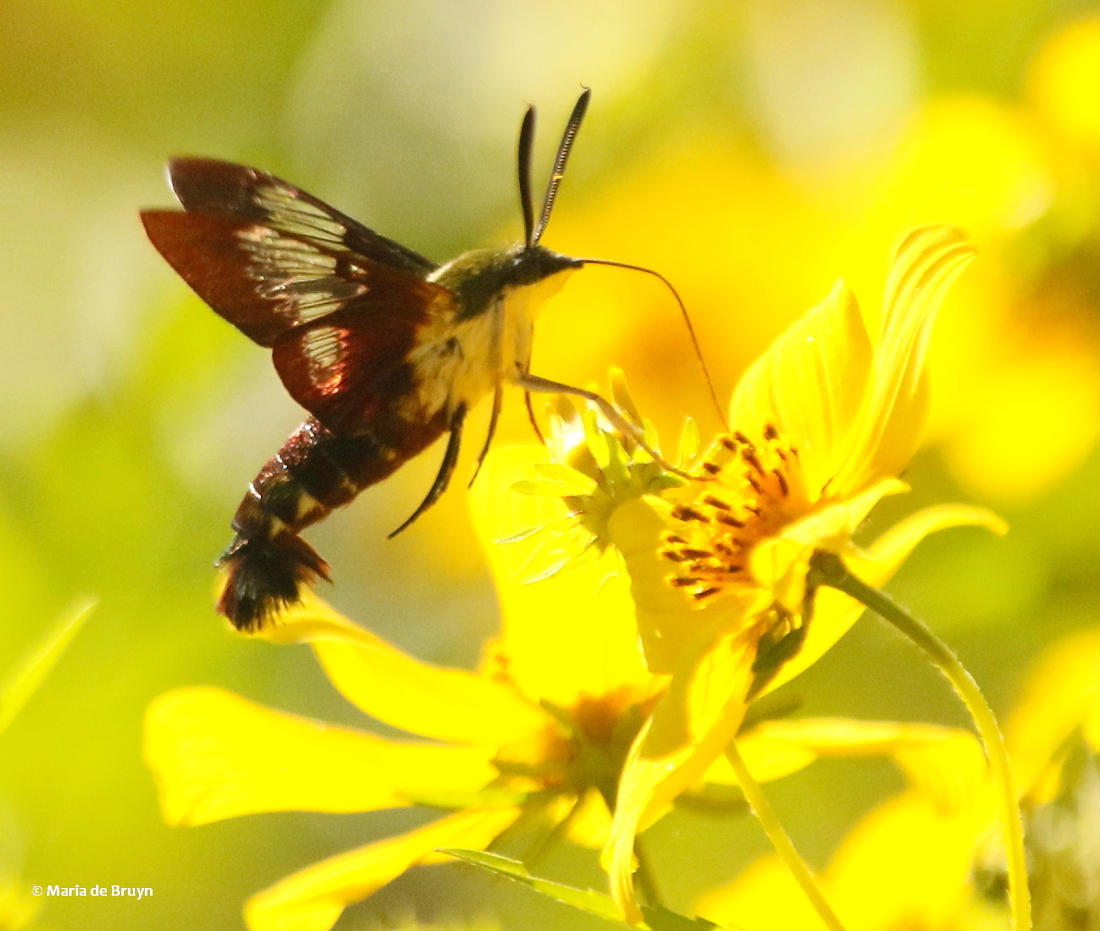
The snowberry (Hemaris diffinis) & hummingbird clearwing moths (Hemaris thysbe) are delightful.
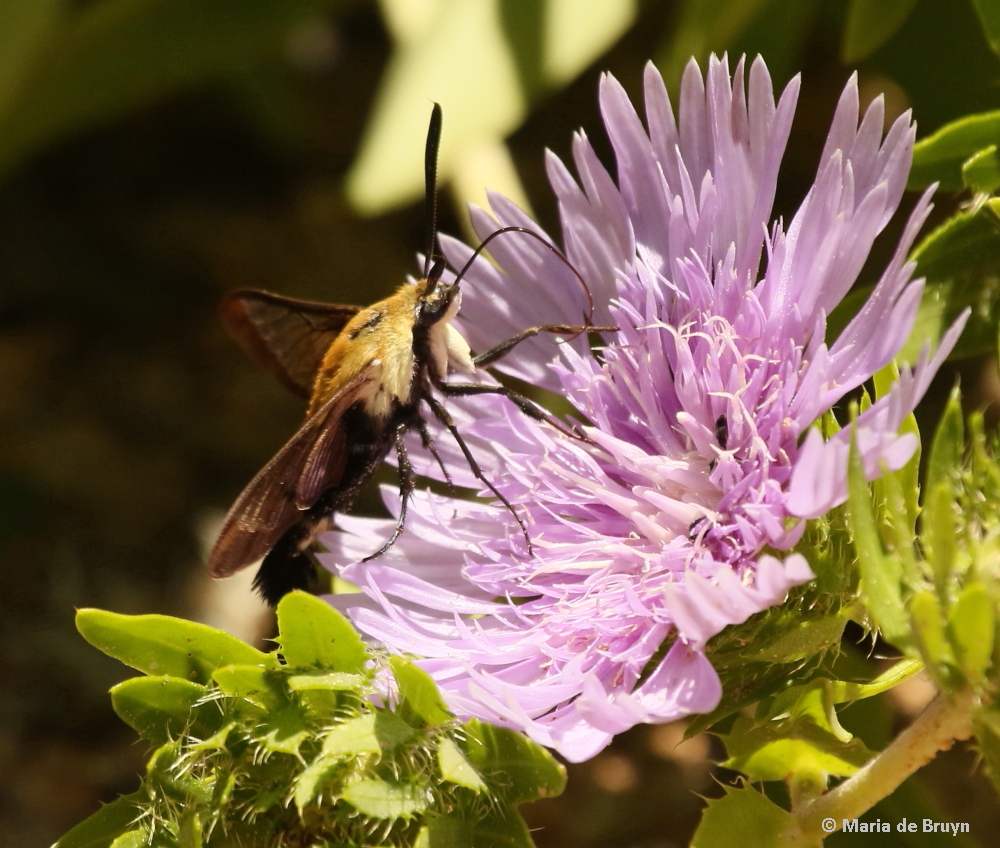
snowberry-clearwing-moth-i77a5324-maria-de-bruyn-res   clearwing-hummingbird-moth-i77a7002-maria-de-bruyn-res

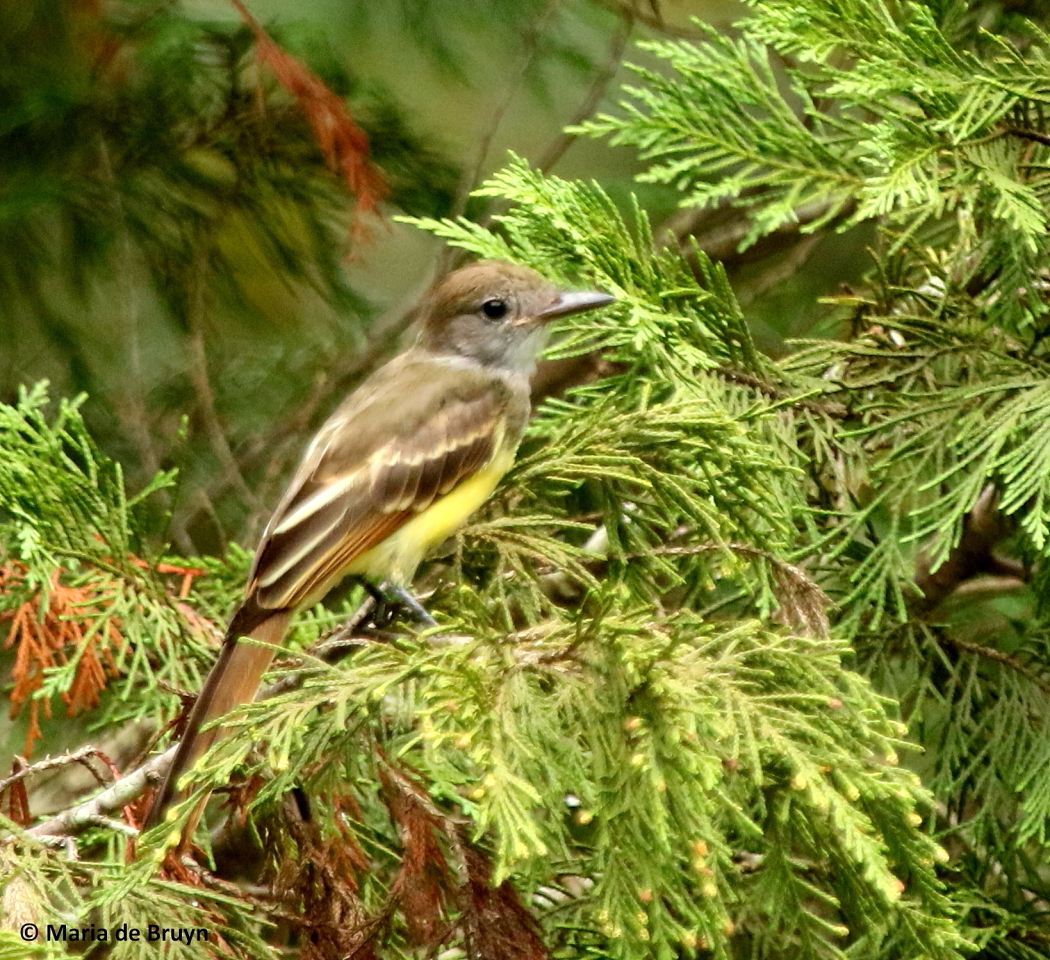
great-crested-flycatcher-i77a6714-maria-de-bruyn-res


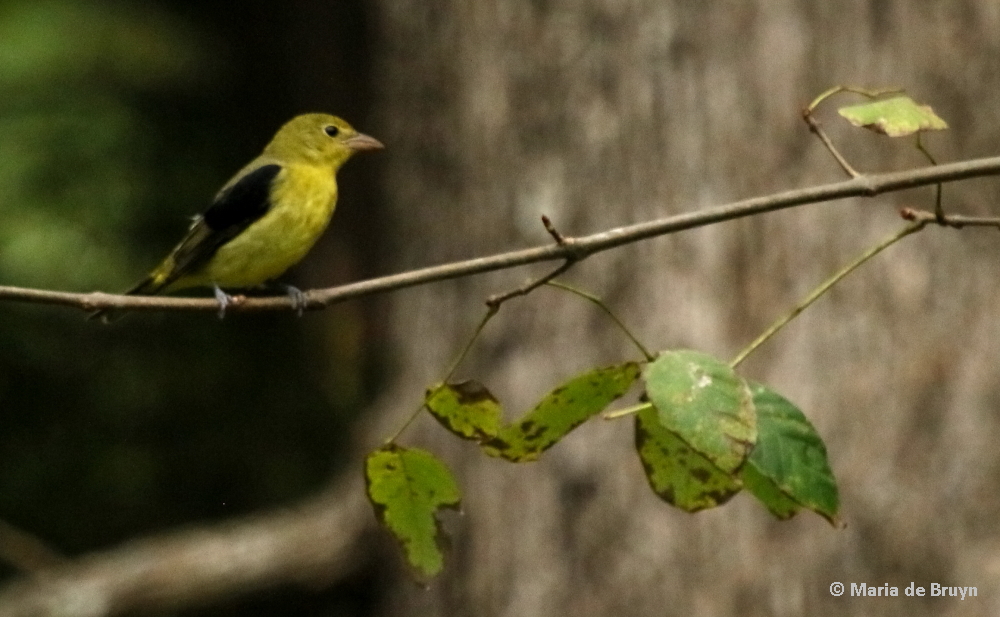
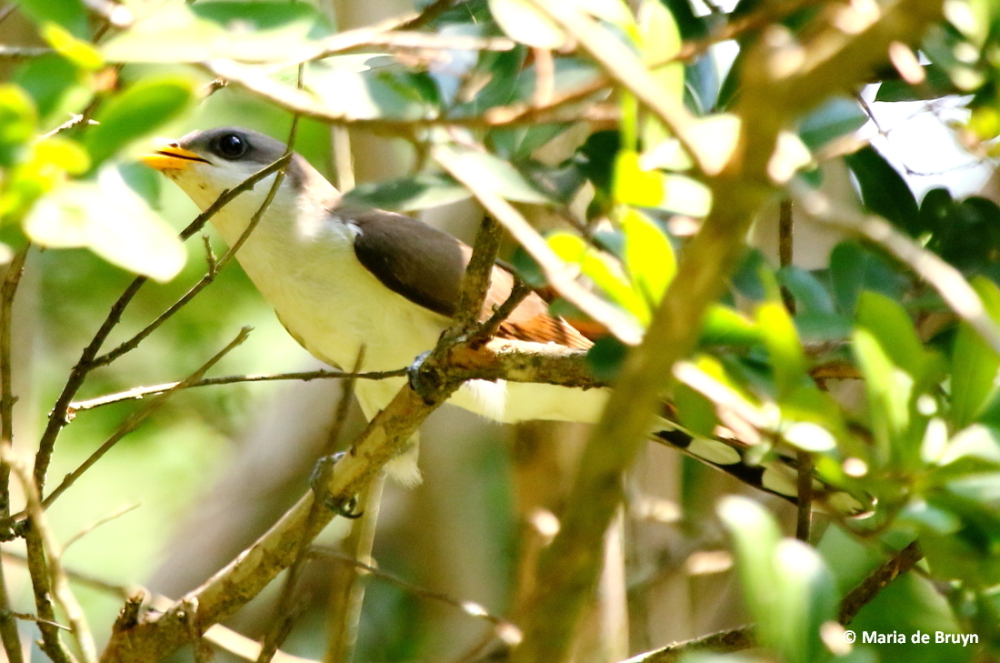
And so were various birds that visited my yard for the first time this year (or at least as far as I had noticed)! They included the black and white warbler, chestnut-sided warbler and Northern parula. Here are three more, plus the beautiful great crested flycatcher (Myiarchus crinitus, left), which I’d seen before but not well.
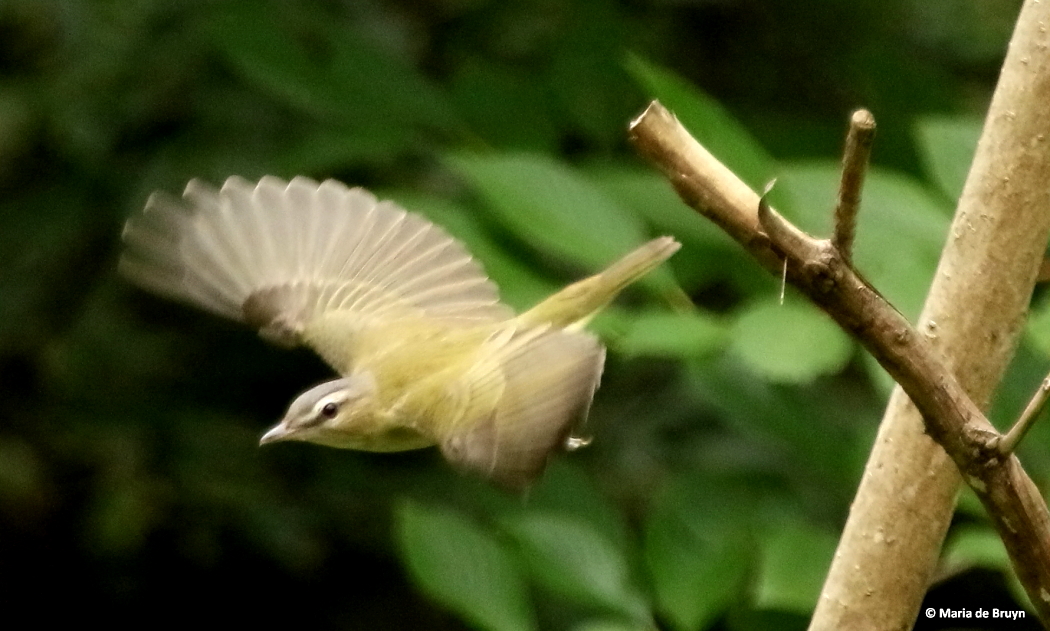
 

red-eyed-vireo-i77a6755-maria-de-bruyn-res

Red-eyed vireo (Vireo olivaceus)

scarlet-tanager-i77a0102-maria-de-bruyn-res

Scarlet tanager (Piranga olivacea)

yellow-billed-cuckoo-i77a1564-maria-de-bruyn-res

Yellow-billed cuckoo (Coccyzus americanus)
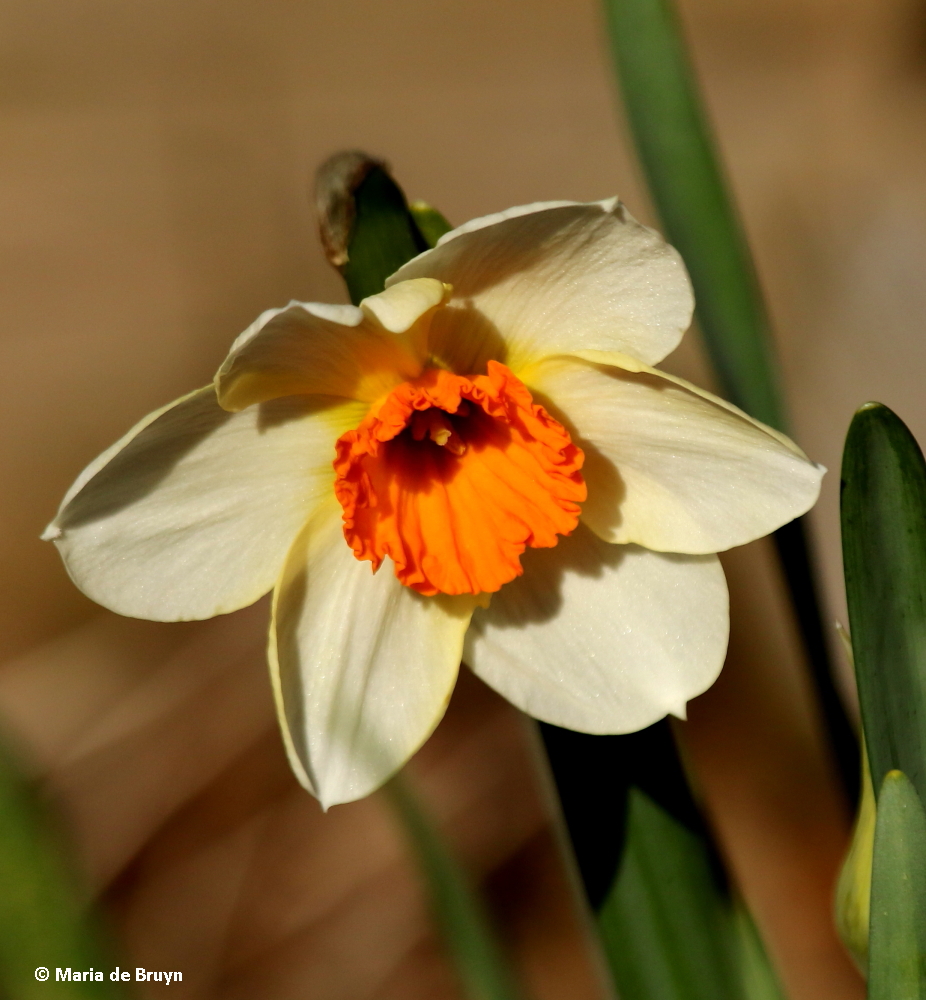
daffodil-i77a8465-maria-de-bruyn-res


I’m so pleased to begin this year in my home and really hope that circumstances in 2017 will allow me to continue enjoying nature, especially in my yard as I work to make it ever more welcoming to the local wildlife. And I hope all of you who read my blog will have many opportunities to get out and appreciate our beautiful natural world, too! Happy New Year to you!


Humankind has not woven the web of life.
We are but one thread within it.
Whatever we do to the web, we do to ourselves.
All things are bound together.
All things connect.

~ Chief Seattle, 1854 ~
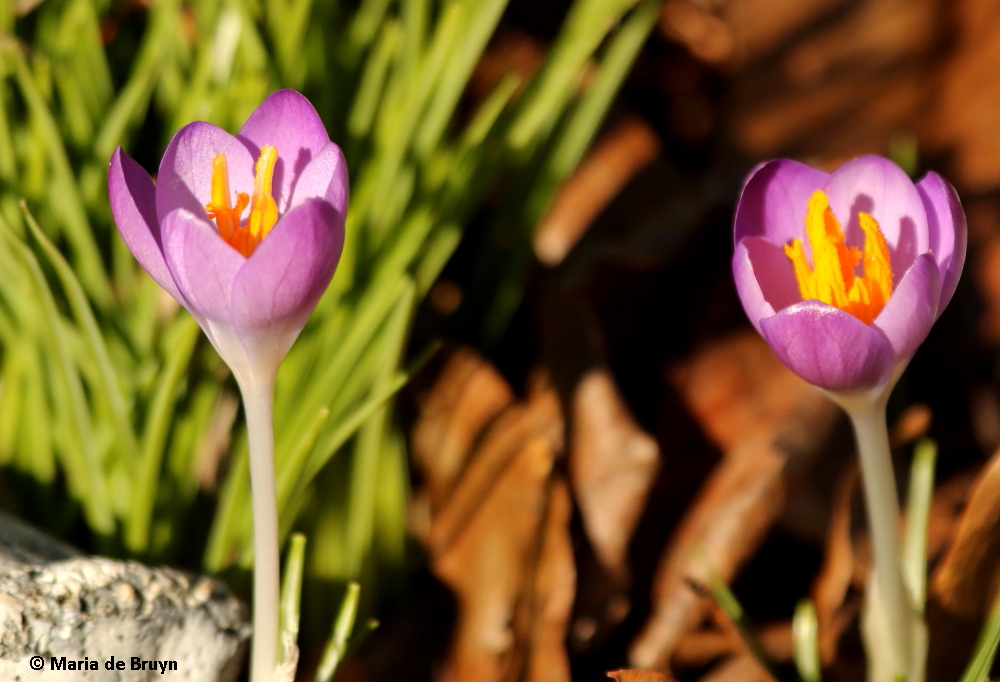
crocus-i77a6296-maria-de-bruyn-res

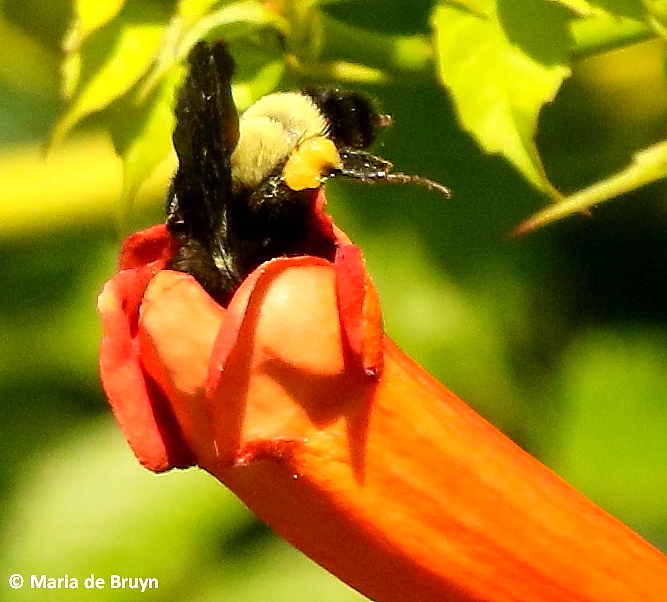
Busy as a bee is no joke! Our hardworking pollinators – pretty and persevering!

honey-bee-brazilian-sage-i77a1269-maria-de-bruyn-resHere it is, 7 November, and the honey bees were still busily working over the Brazilian sage, lantana and chrysanthemums in my garden. The Eastern carpenter bees were absent today, perhaps because of the cold night we had, but a few butterflies were flying among the flowers. We know that some of our pollinators are in serious trouble, but my garden has nevertheless been blessed this year with a steady stream of pollinating visitors who were to be seen on the varied blooms morning, noon and almost night.

bees02fin02


I’d enjoyed seeing the bees, butterflies and syrphid flies in the past, but started paying even more attention to them as pollinators this year as I worked on the “Healthy Bee, Healthy Me” project initiated by the non-profit organization Keep Durham Healthy.


eastern-tiger-swallowtail-i77a8131-maria-de-bruyn-res


The project expresses its goal as follows: “…to establish educational pollinator gardens in proximity to pre-existing community gardens to ensure the sustainability of nectar and pollen sources for our honey bees, native bees, butterflies and other pollinators throughout the year, and to increase the yield of the food crops grown within the community gardens.” Some of my photos were used in one of their interpretive garden signs and next year more community gardens will join the project.

hummingbird-clearwing-moth-i77a3130maria-de-bruyn-res

Science knows that more than 250,000 plants are pollinated by over 100,000 different types of animals, but not all plants require assistance from pollinators for fertilization. In abiotic pollination, fertilization occurs without another organism as an intermediary – for example, through movement of pollen from male vegetative anthers to female stigma by the wind (called anemophily) or water (called hydrophily). However, much fertilization occurs with assistance from biotic vectors, which not only include bees, butterflies and flies but also moths, birds and mammals (e.g., lemurs, squirrels, opossums, monkeys and bats; here you see a hummingbird clearwing moth – Hemaris thysbe – getting nectar.) How cool is that!

honey-bee-i77a5677-maria-de-bruyn-res


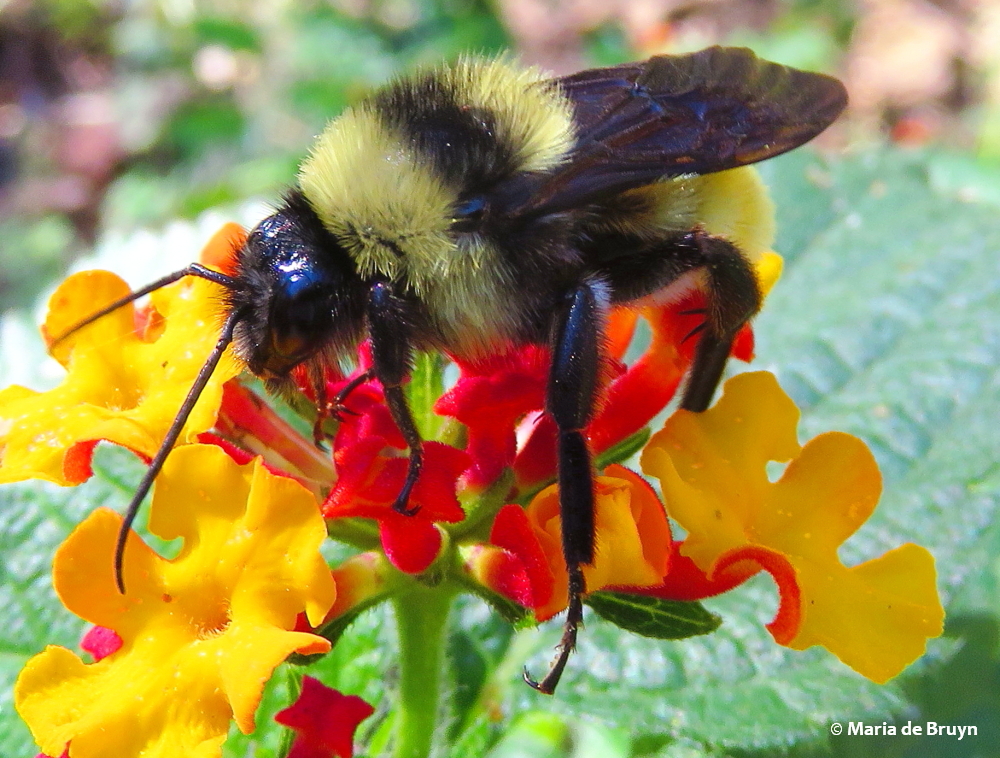
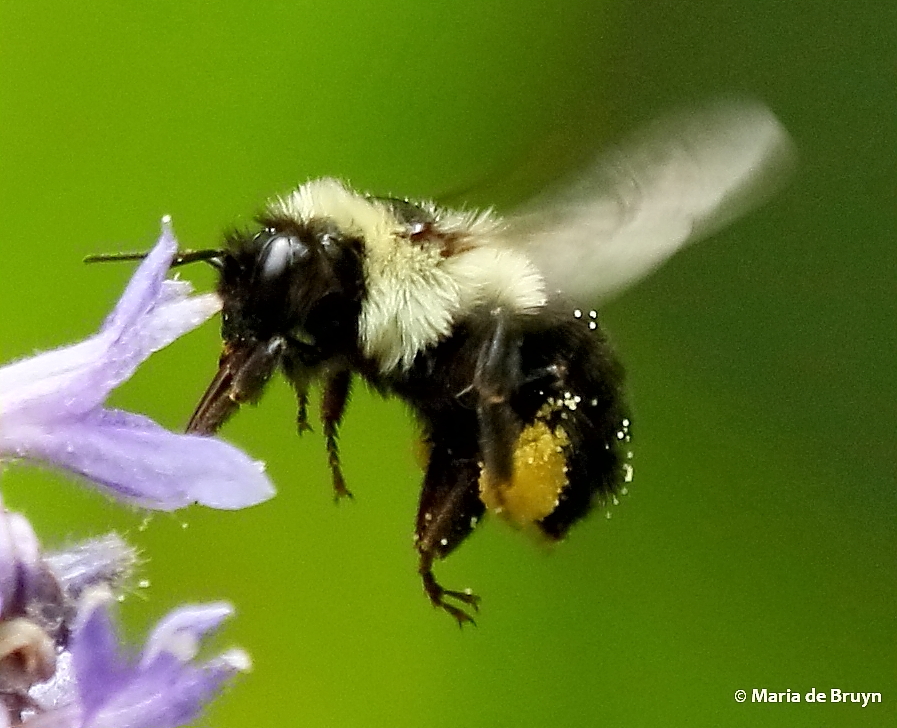
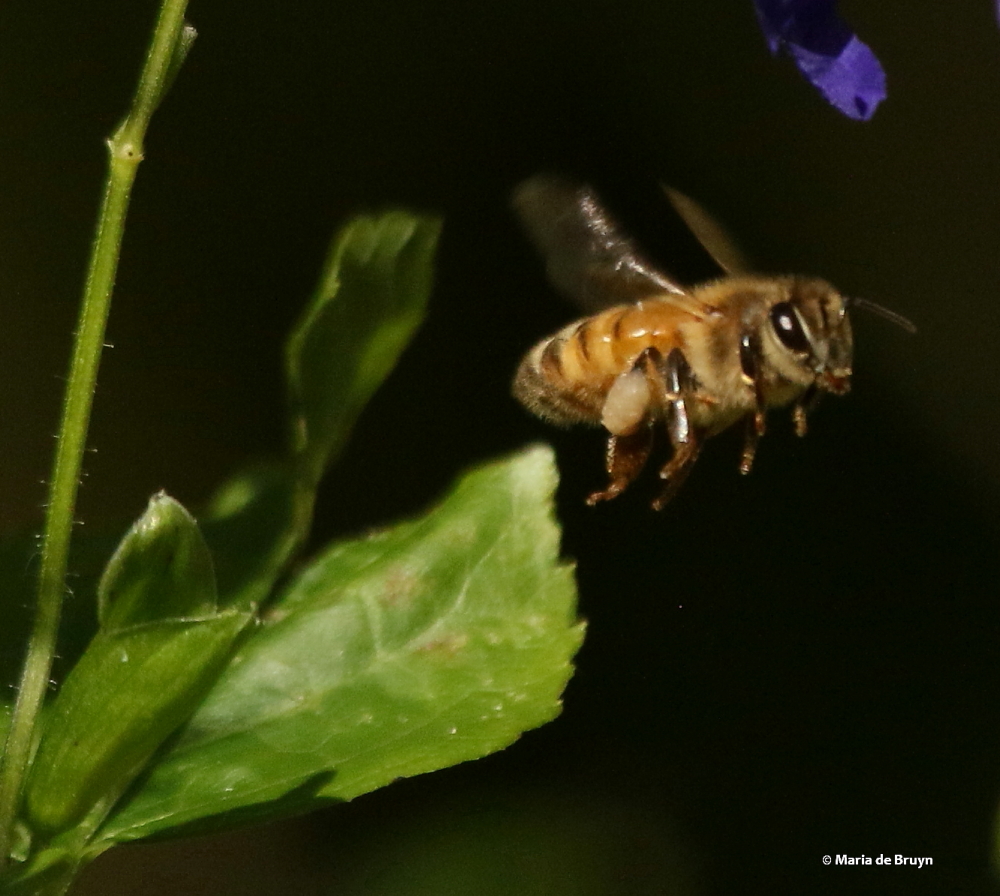
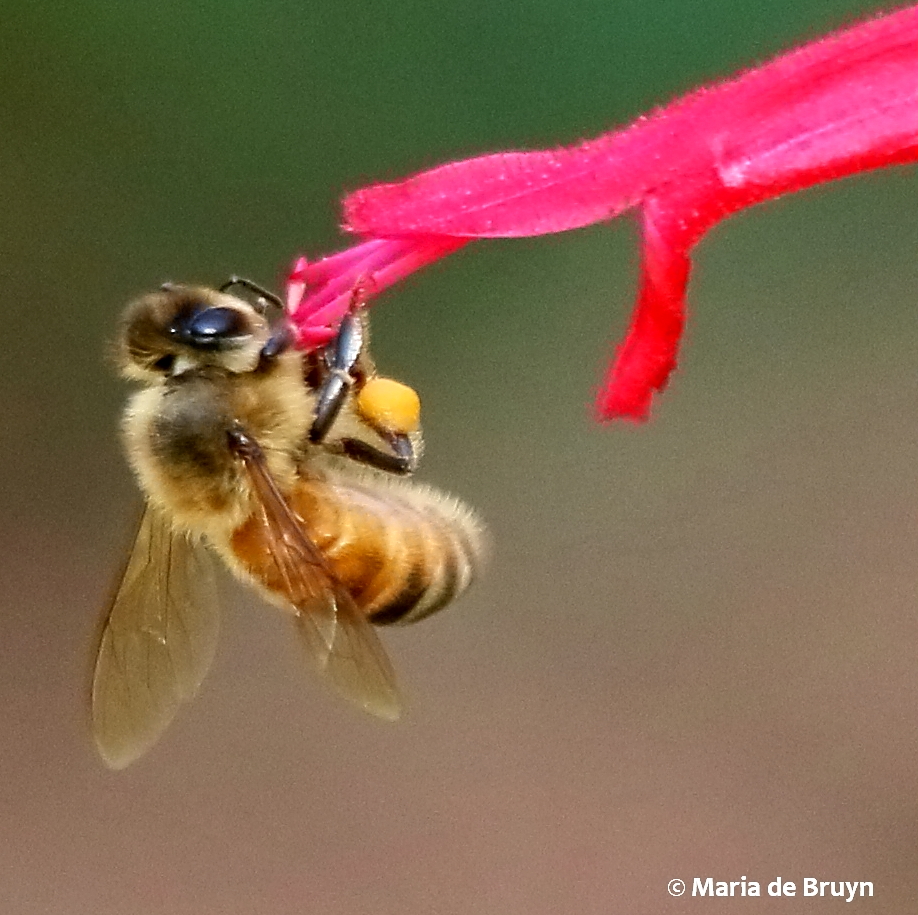
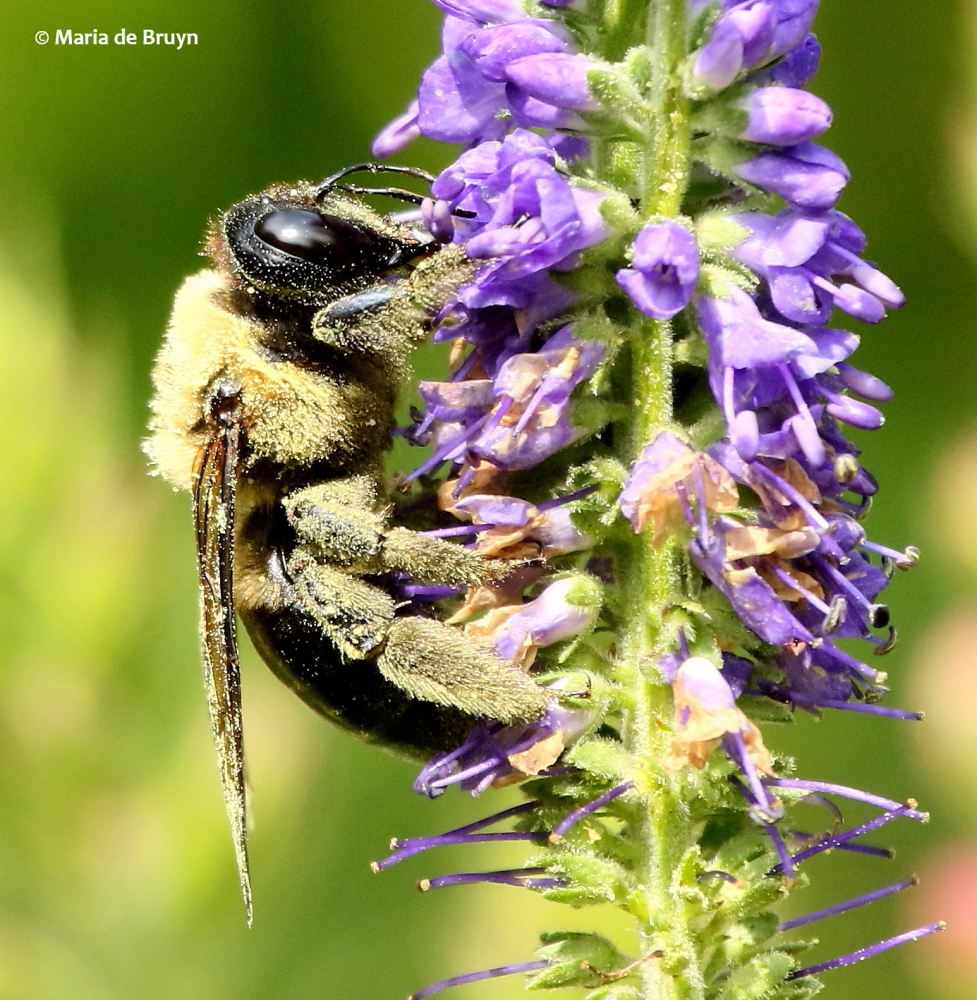
The most efficient pollinators are the bees. Some species like honey bees (Apis mellifera) and bumble bees have pollen baskets (corbiculae) on their legs – a concave portion of their hind leg in which pollen can be stored as a ball. It starts out small but eventually gets fairly big so their little tibia begin to look like barbells. The color of the pollen can differ from bright yellow to brown to red to white, depending on the pollen of the flowers visited most often.


american-bumble-bee-i77a0763-maria-de-bruyn2-res    american-bumble-bee-male-img_5492-maria-de-bruyn-bg

American bumble bee (Bombus pensylvanicus)

common-eastern-bumble-bee-bombus-impatiens-i77a9625-maria-de-bruyn-bg

Common Eastern bumble bee (Bombus impatiens)

honey-bee-i77a8142-maria-de-bruyn-res      honey-bee-i77a2099-maria-de-bruyn

Honey bees

The attractive little honey bees, which vary in their coloring, are known to pollinate about one-third of the popular foods eaten by humans, including items such as tomatoes, peas, beans and other fruit.

honey-bee-i77a7652-maria-de-bruyn-res    honey-bee-i77a6542-maria-de-bruyn-res

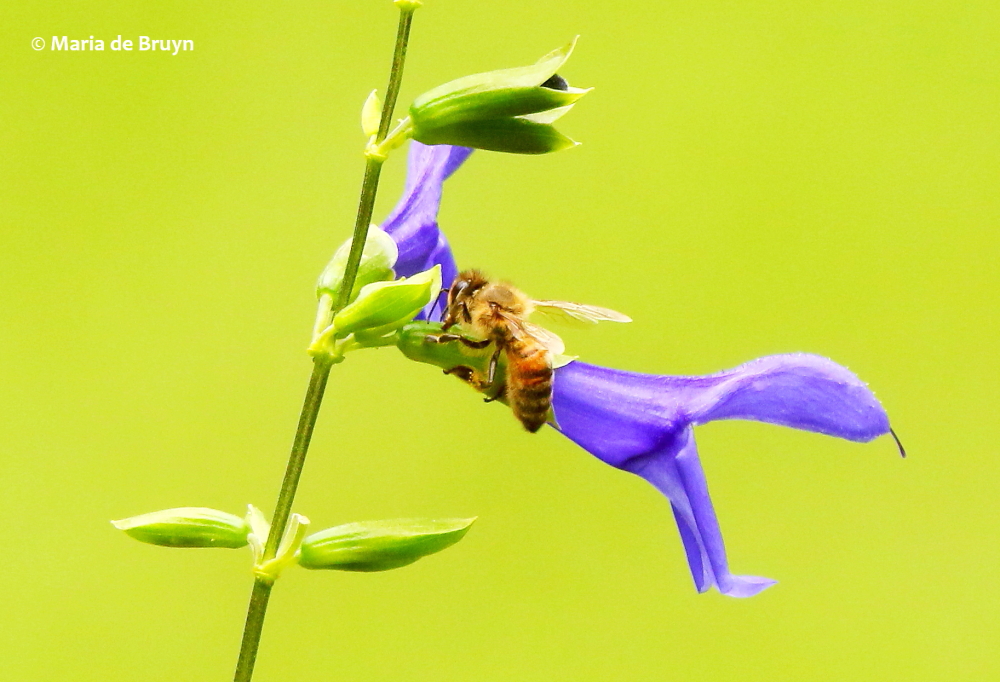
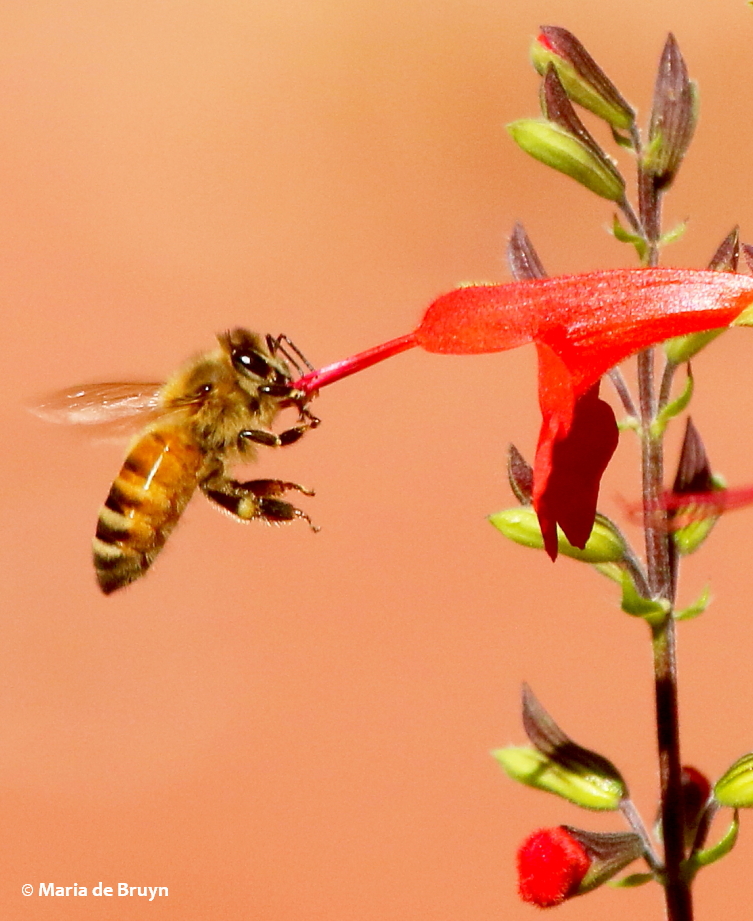
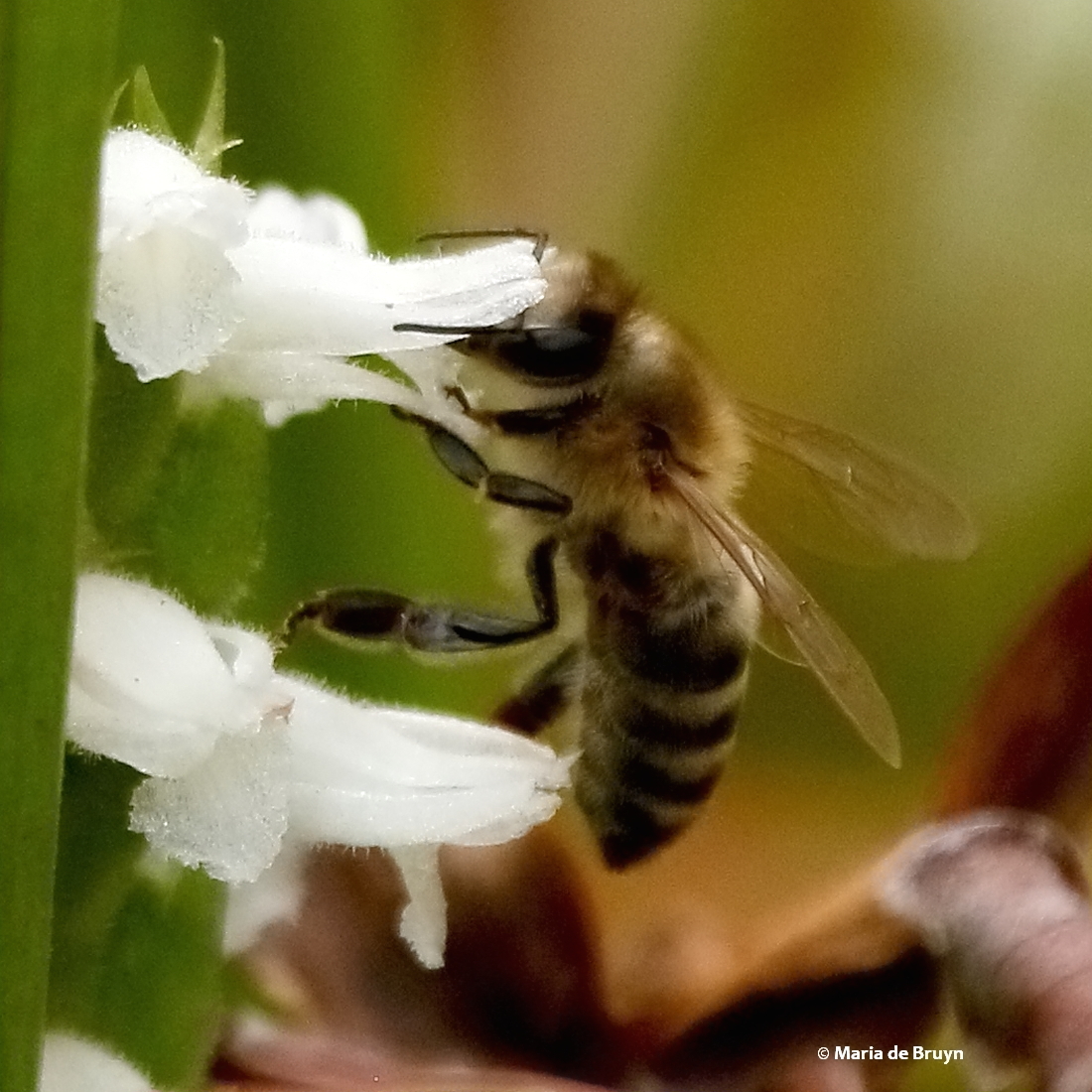
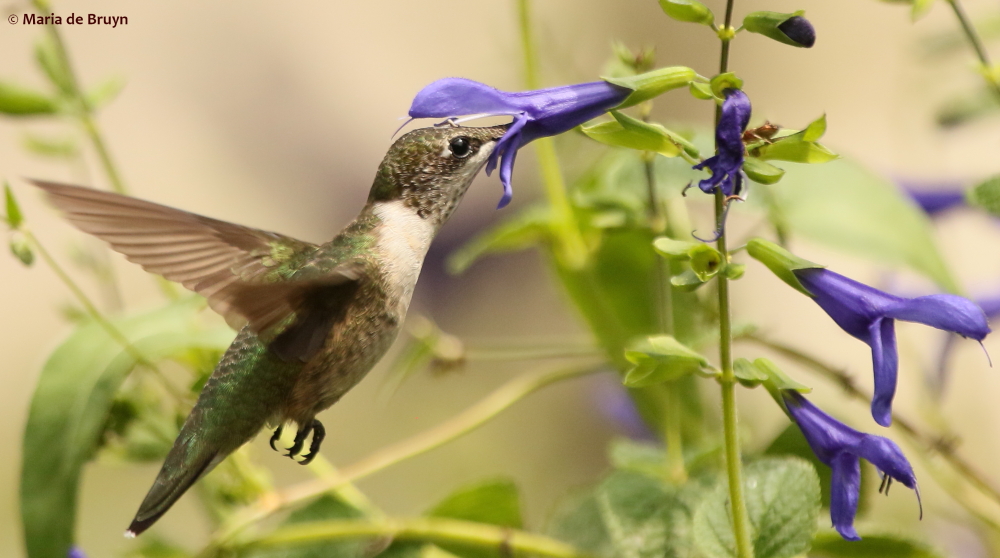
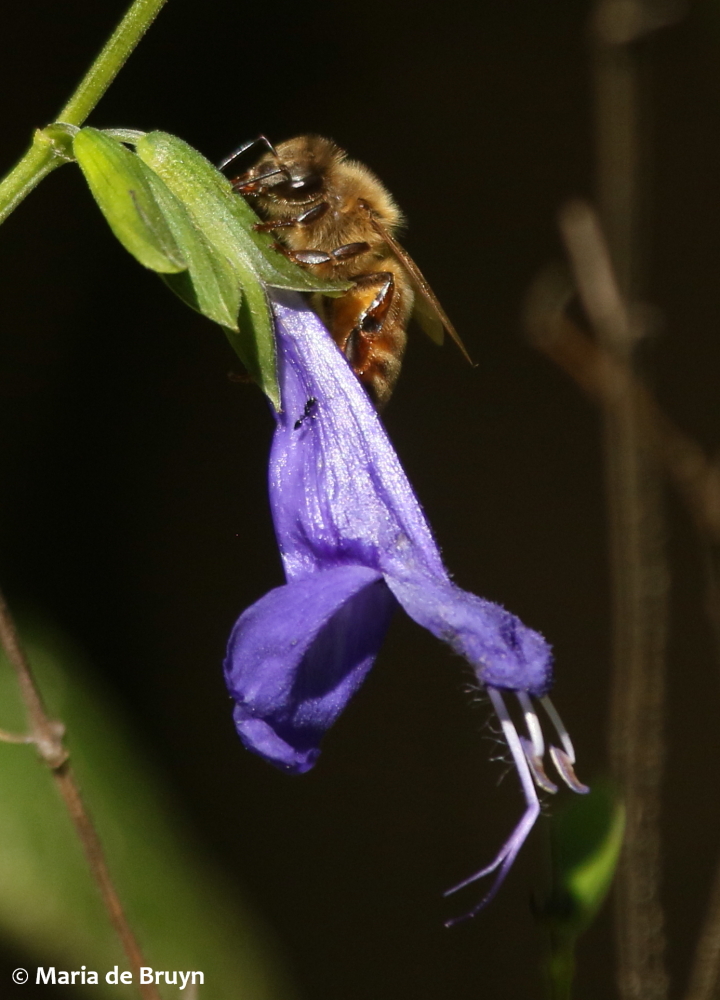
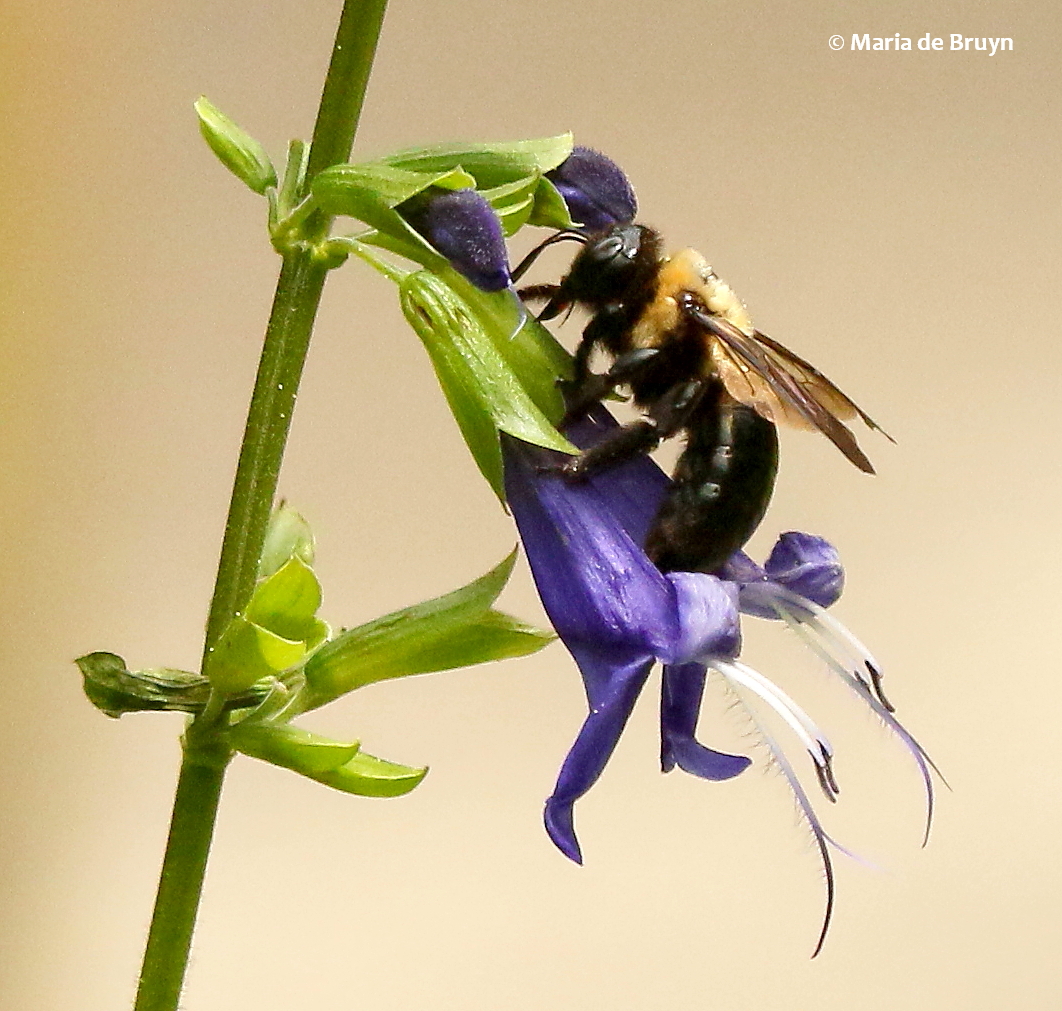
ruby-throated-hummingbird-i77a1315-maria-de-bruyn-resWhen visiting tubular flowers, like the Brazilian sage (Salvia guaranitica), the bees don’t look for nectar by entering the flower as do the ruby-throated hummingbirds (Archilochus colubris) with their long bills. Rather, they alight on the base of the corolla tube so that they can drill down into the flower to extract the nectar at the source.

honey-bee-i77a7849-maria-de-bruyn-res       de-bruyn-maria-carpenter-bee-brazilian-sage-2-i77a7250

Honey bee                                                  Eastern carpenter bee (Xylocopa virginica)

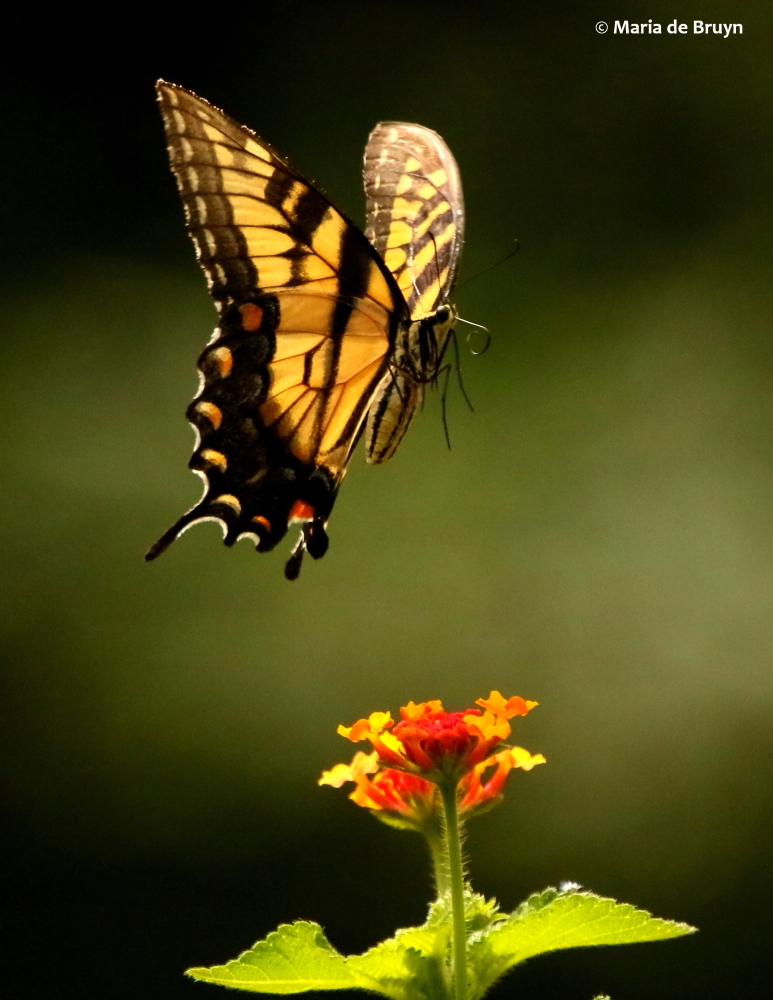
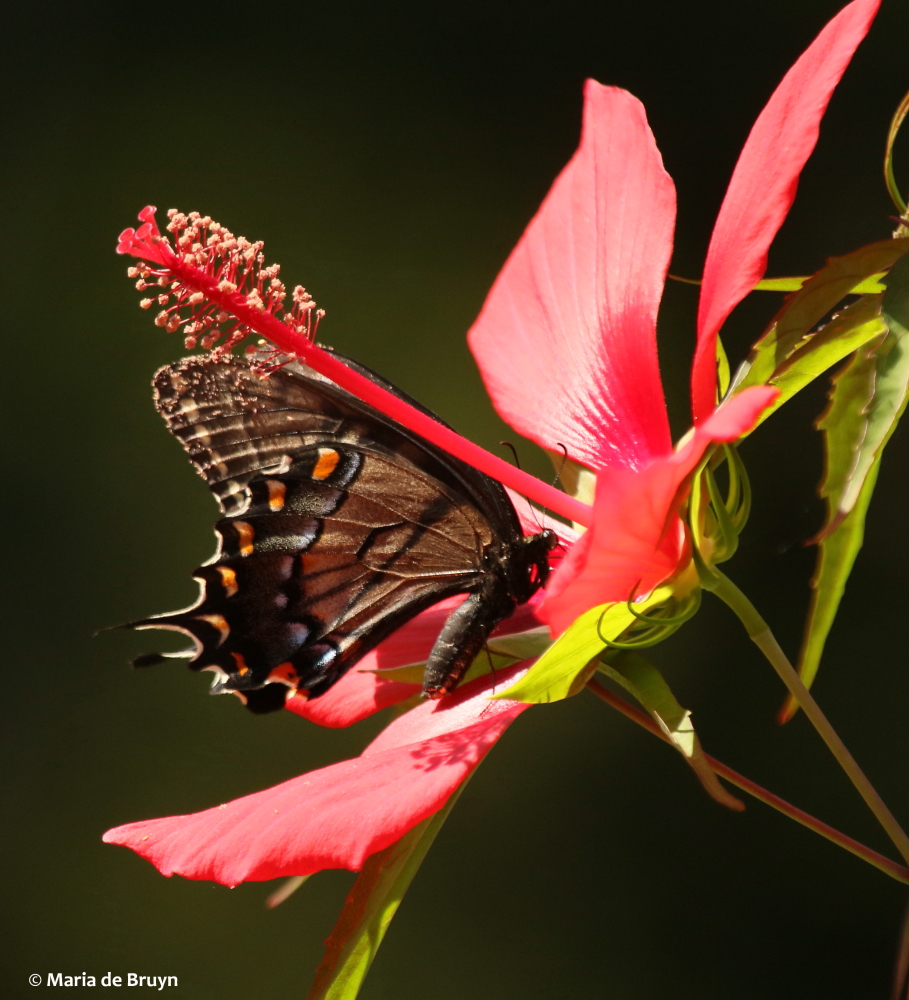
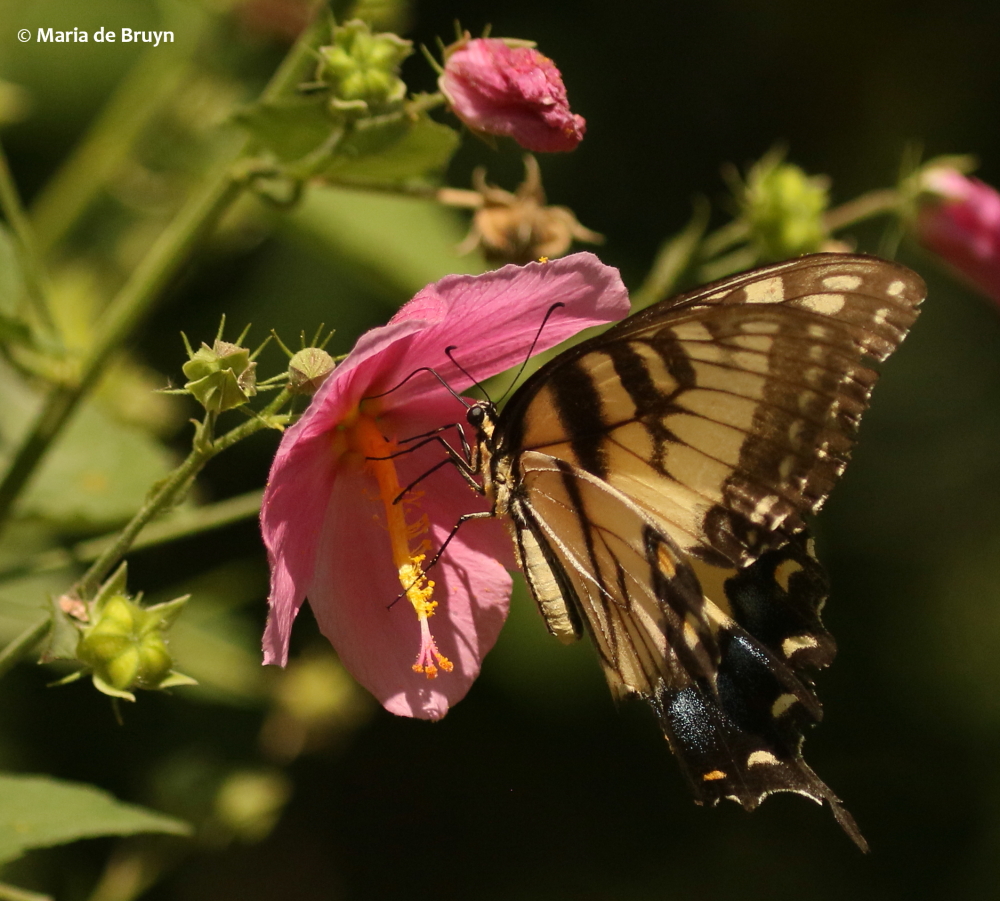
The clearwing moths and butterflies, like the Eastern tiger swallowtails (Papilio glaucus), have long tongues that they use to probe the flowers as they hover. Nevertheless, they can get pollen on their legs or bodies and transport it to another plant, although they are not as efficient at this as, for example, the sweat bees and carpenter bees.

eastern-tiger-swallowtail-pollen-i77a5259-maria-de-bruyn-res    eastern-tiger-swallowtail-i77a3693maria-de-bruyn-res

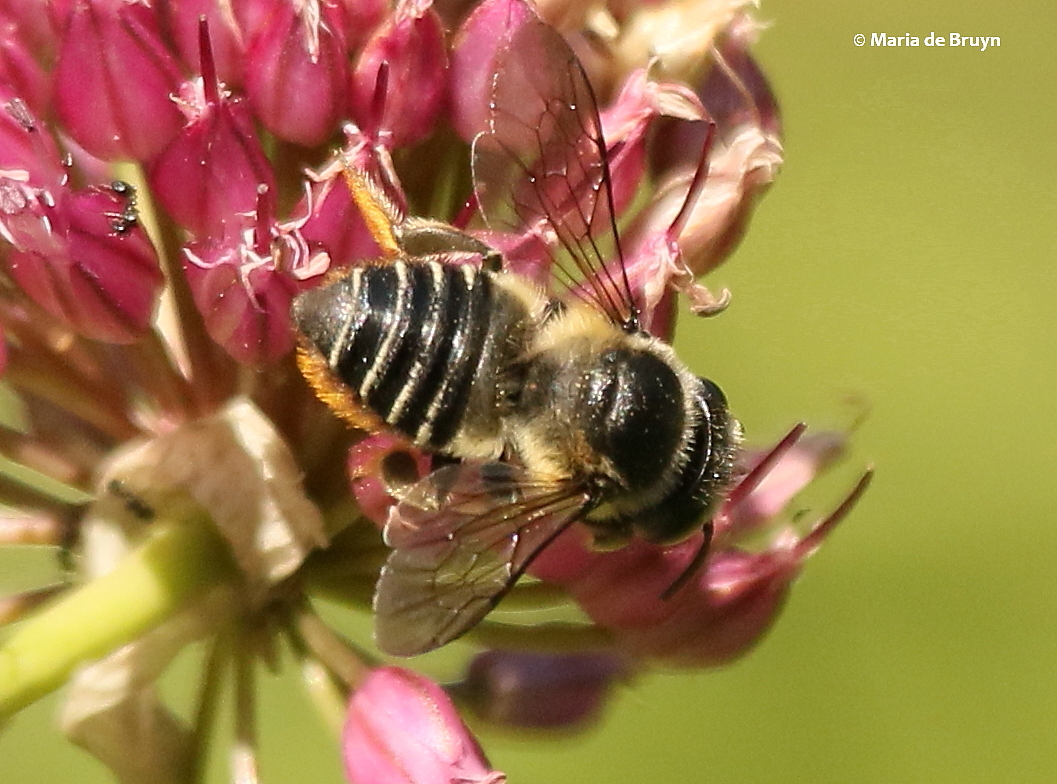
These bees have scopae rather than pollen baskets on their legs, i.e., structures comprising dense masses of compressed hairs into which pollen grains are pressed.

small-carpenter-bee-ceratina-dk7a0015-maria-de-bruyn-res-signed

Small carpenter bee (Ceratina)

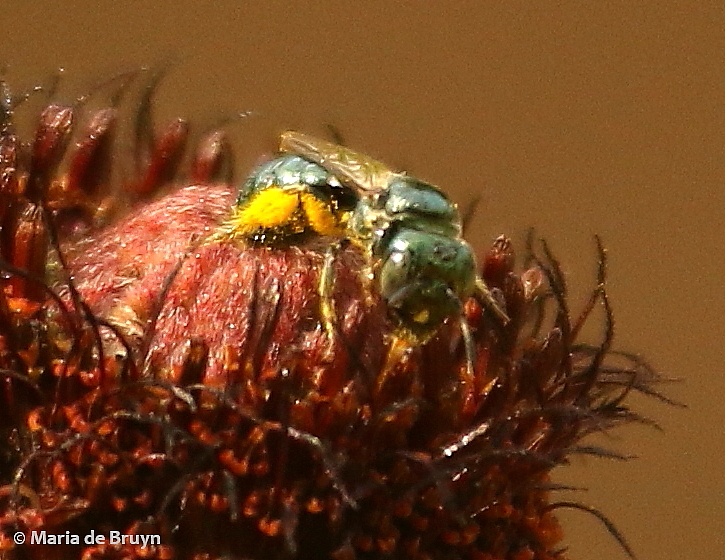
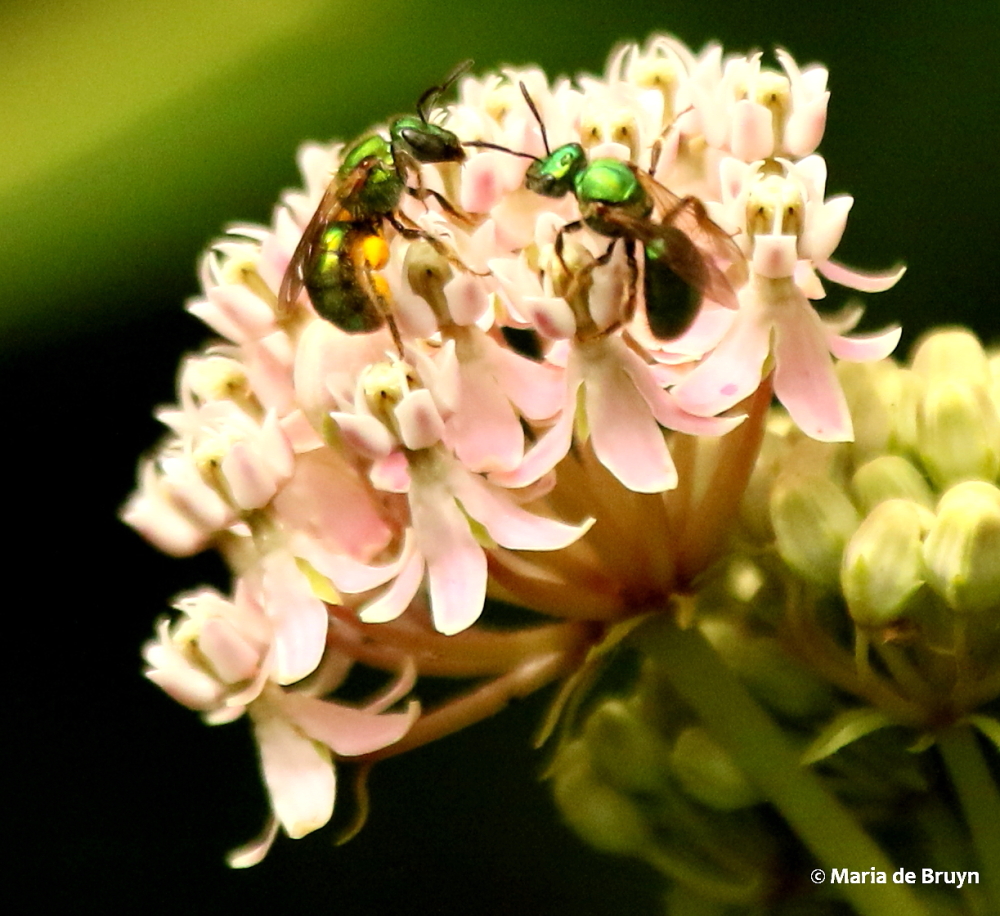
sweat-bee-on-milkweed-i77a7861-maria-de-bruyn-res

Female sweat bees (Augochlorella)

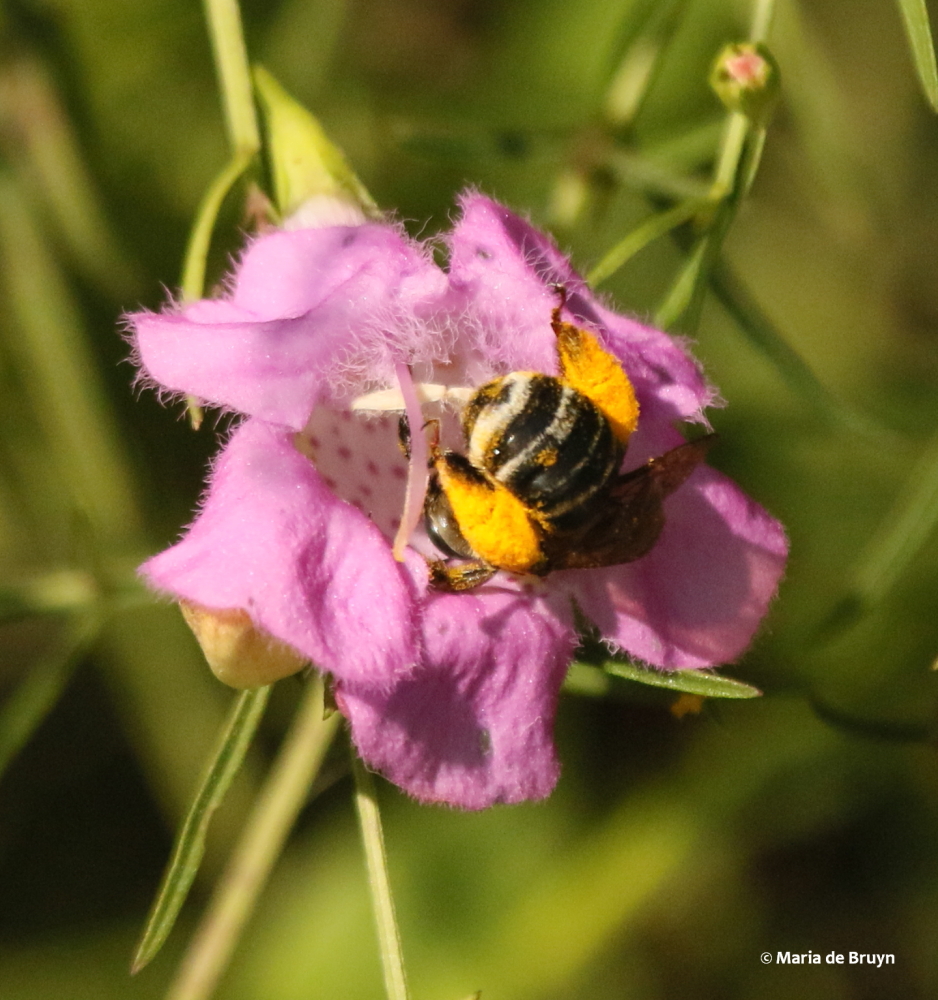
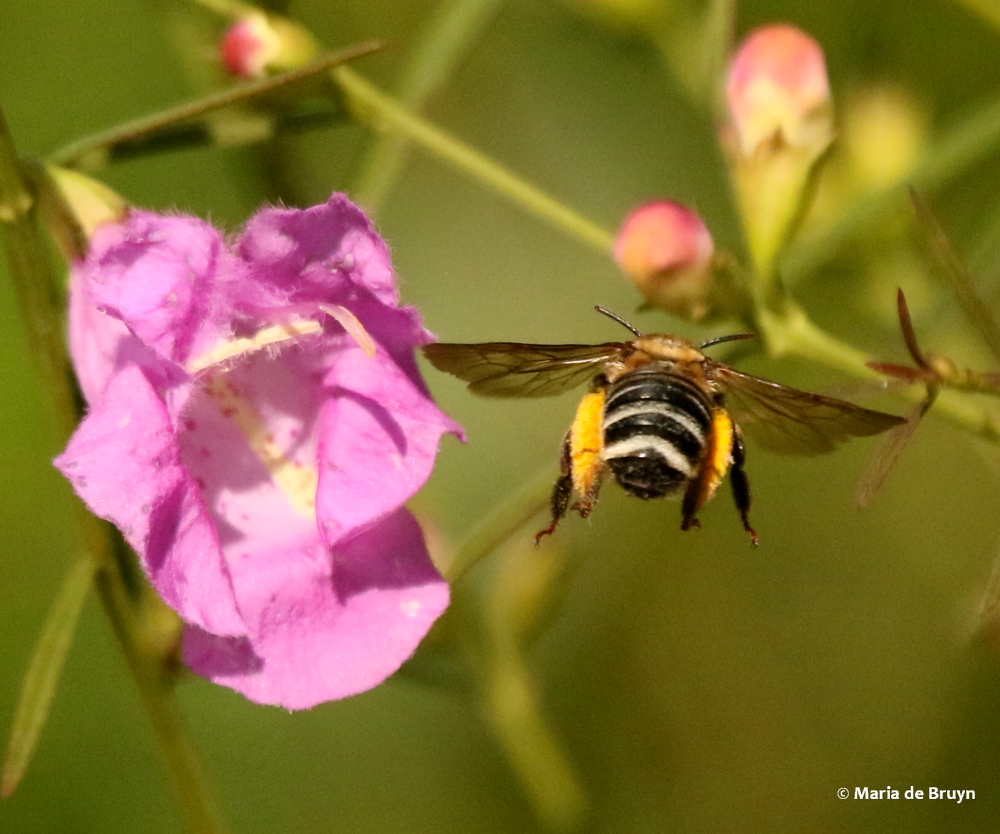
long-horned-bee-melissodes-i77a3343-maria-de-bruyn-res   long-horned-bee-melissodes-i77a3428-maria-de-bruyn-res

Long-horned bee (Melissodes)

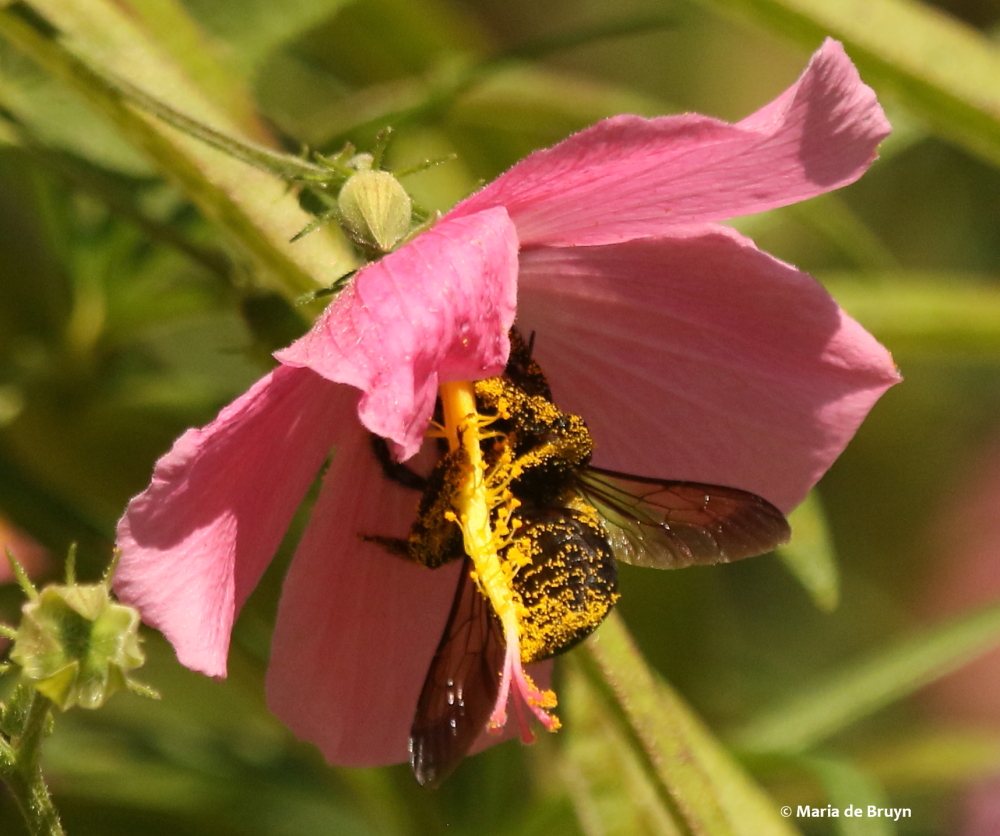
Sometimes the bees manage to get their whole bodies covered with pollen, which can make species identification more difficult but creates some interesting views.

eastern-carpenter-bee-i77a2601-maria-de-bruyn-res    eastern-carpenter-bee-i77a3750maria-de-bruyn-res

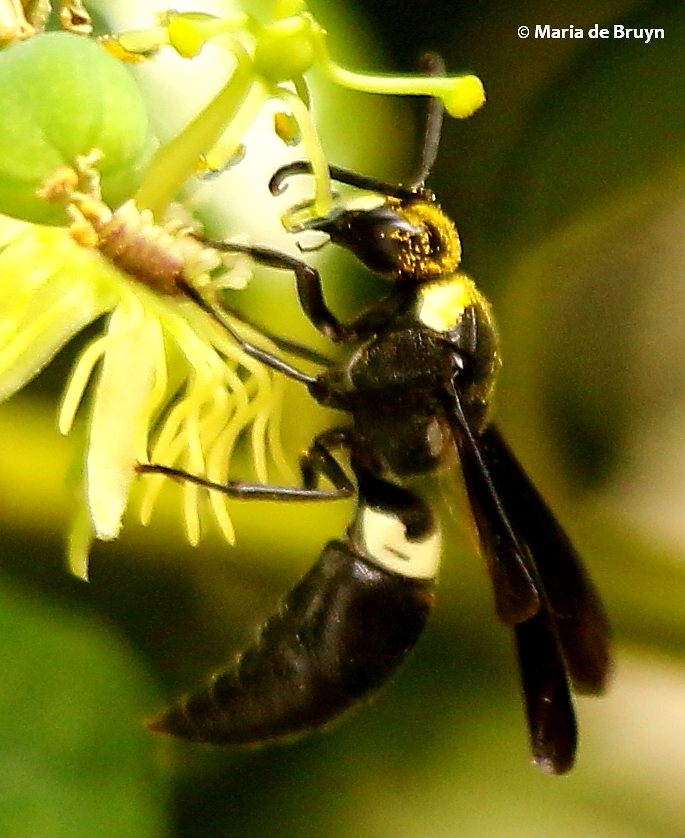
four-toothed-mason-wasp-monobia-quadridens-i77a2039-maria-de-bruyn-bgWasps can carry pollen as I saw almost daily when the four-toothed mason wasps (Monobia quadridens) visited my yellow passionflowers (Passiflora lutea). Here you can see the pollen collecting on the head of a male, whose sex can be determined by the fact he has 7 abdominal segments and curved antennae (females have straight antennae and 6 abdominal segments). How’s that for a bit of obscure information for the non-entomologist?

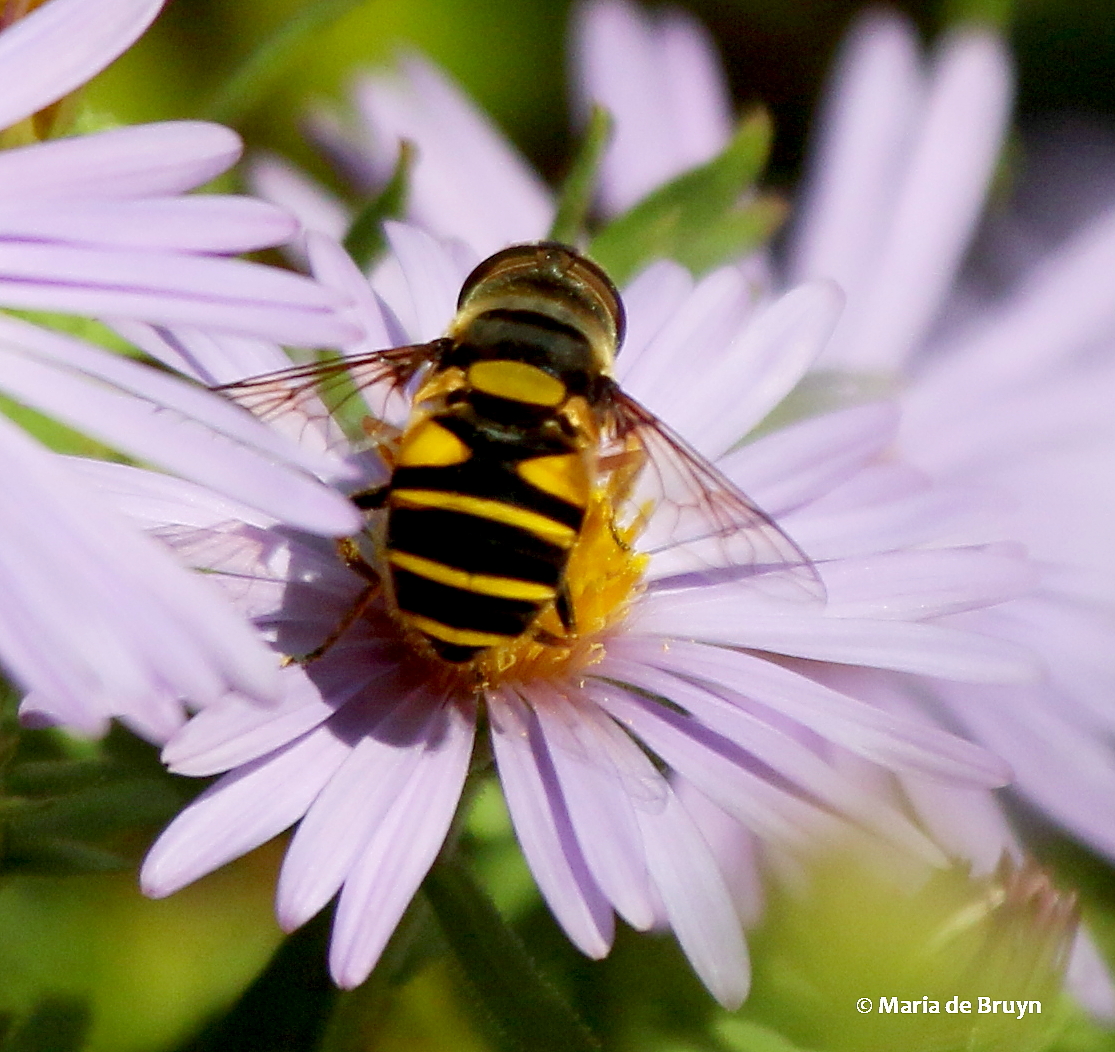
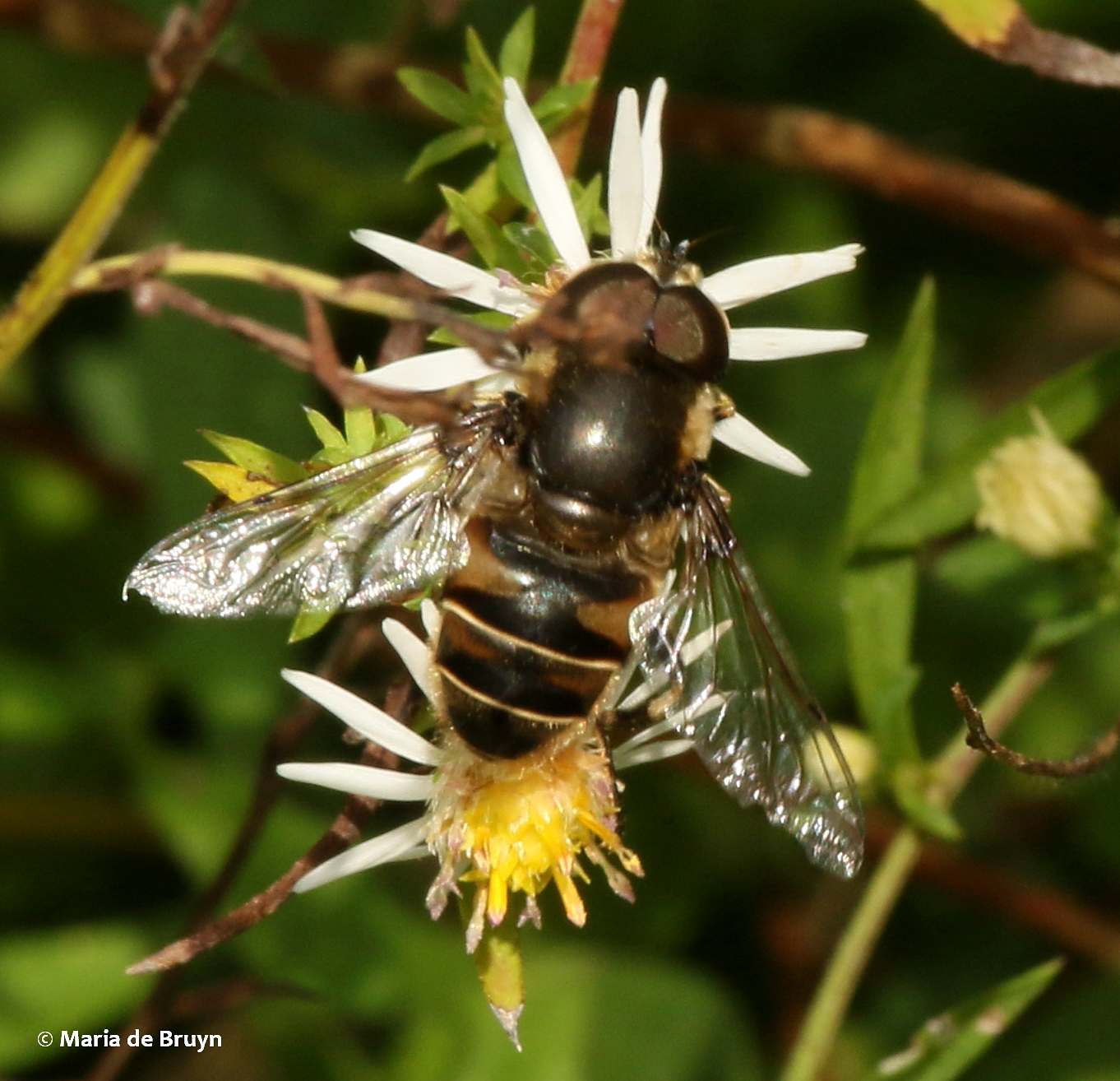
The syrphid flies, often known as bee mimics, help pollinate, too. A number of these flies are honey-bee size and can be confused with the bees easily.

flat-tailed-leaf-cutter-bee-i77a4043-maria-de-bruyn-res

Flat-tailed leaf-cutter bee (Megachile mendica)

transverse-flower-fly-eristalis-transversa-i77a2116-maria-de-bruyn

Transverse flower fly (Eristalis transversa)

syrphid-fly-eristalis-dimidiata-i77a2060-maria-de-bruyn

Syrphid fly (Eristalis dimidiata)

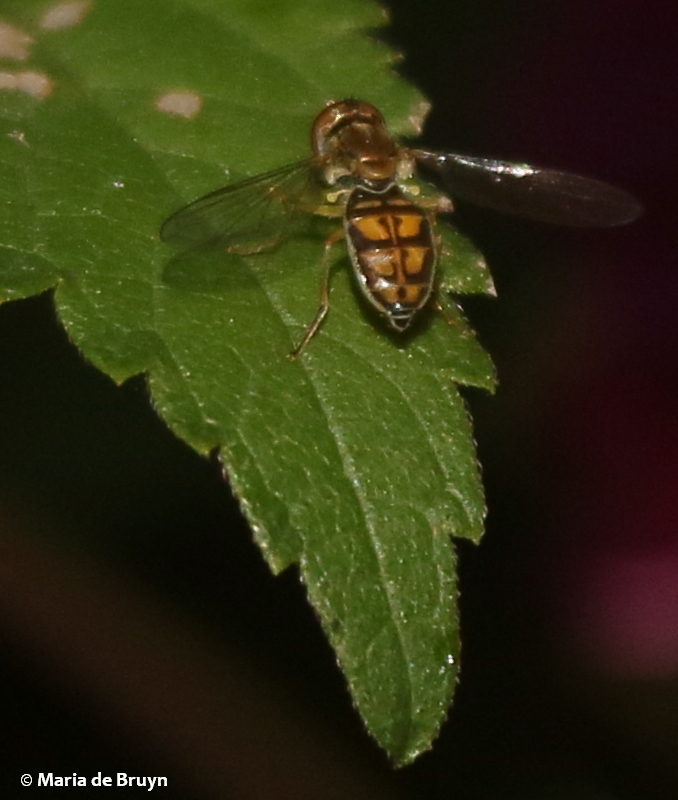
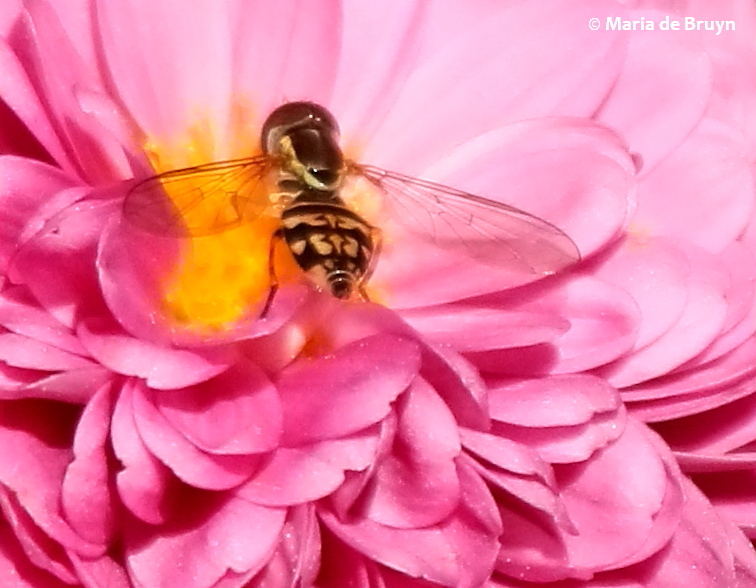
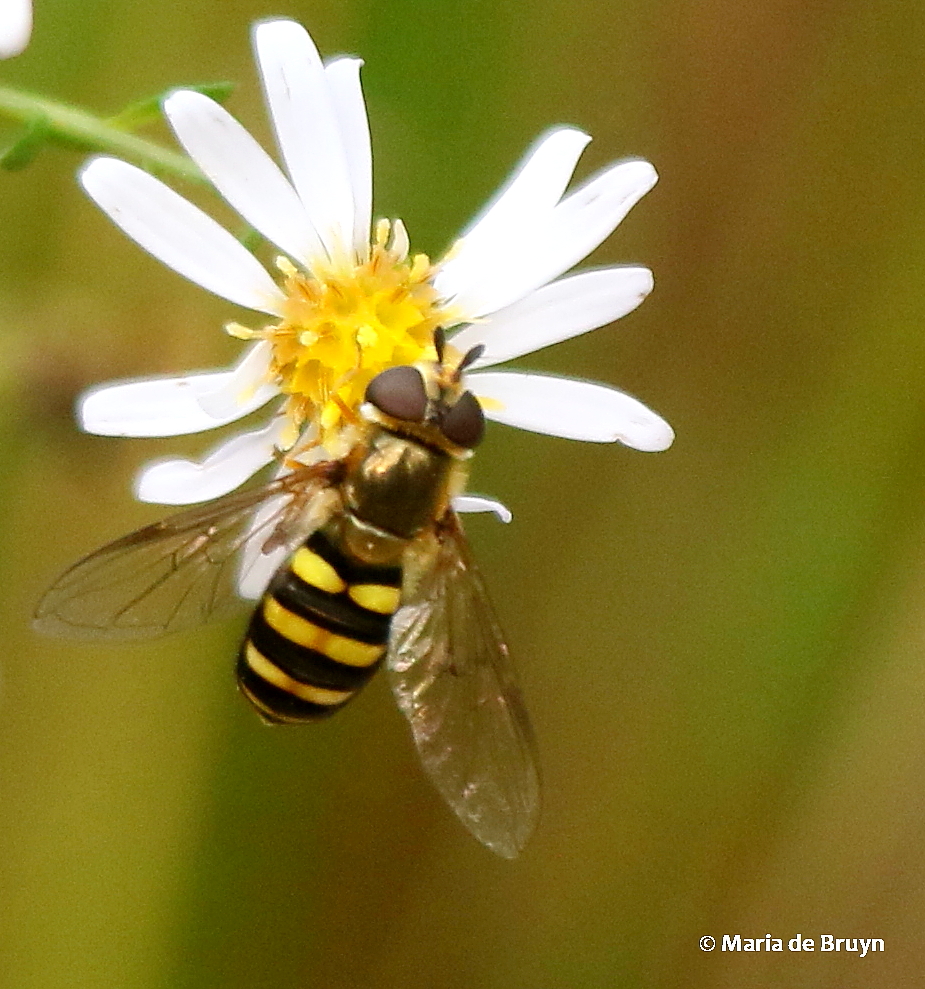
Others are itsy bitsy, tiny flyers that can have pretty interesting abdominal patterns. I couldn’t see the patterns even with my glasses on; enlarging the photos revealed their beauty, which could make for interesting fabric patterns in my opinion.

syrphid-fly-toxomerus-marginatus-i77a5952-maria-de-bruyn-res   syrphid-fly-toxomerus-geminatus-i77a5943-maria-de-bruyn-res

Syrphid fly (Toxomerus marginatus)                      Syrphid fly (Toxomerus geminatus)

syrphid-fly-eupeodes-subgenus-metasyrphus-i77a6061-maria-de-bruyn

Syrphid fly with a lovely golden sheen (Eupeodes subgenus Metasyrphus)

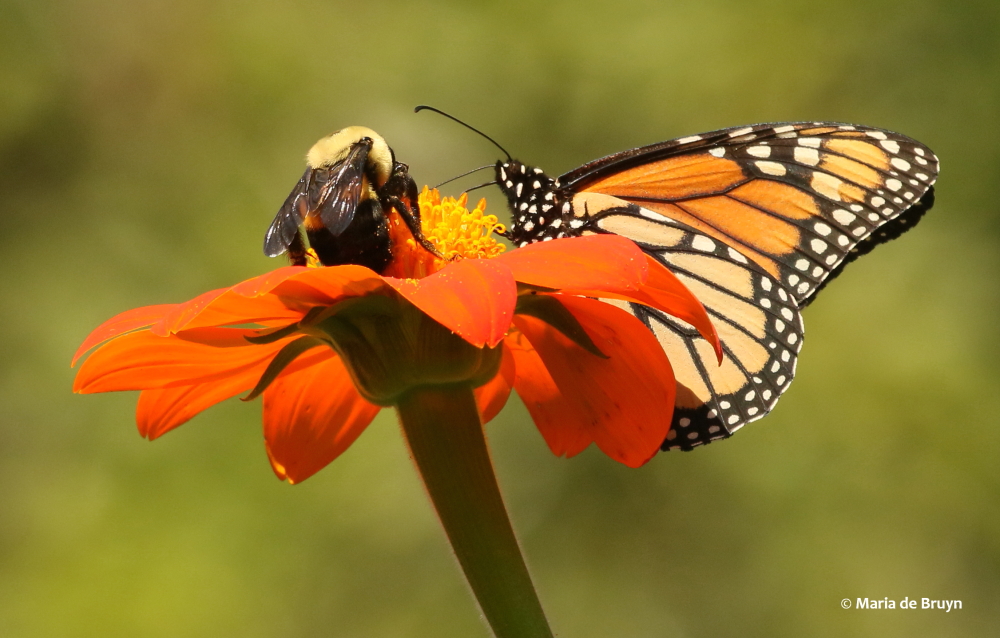
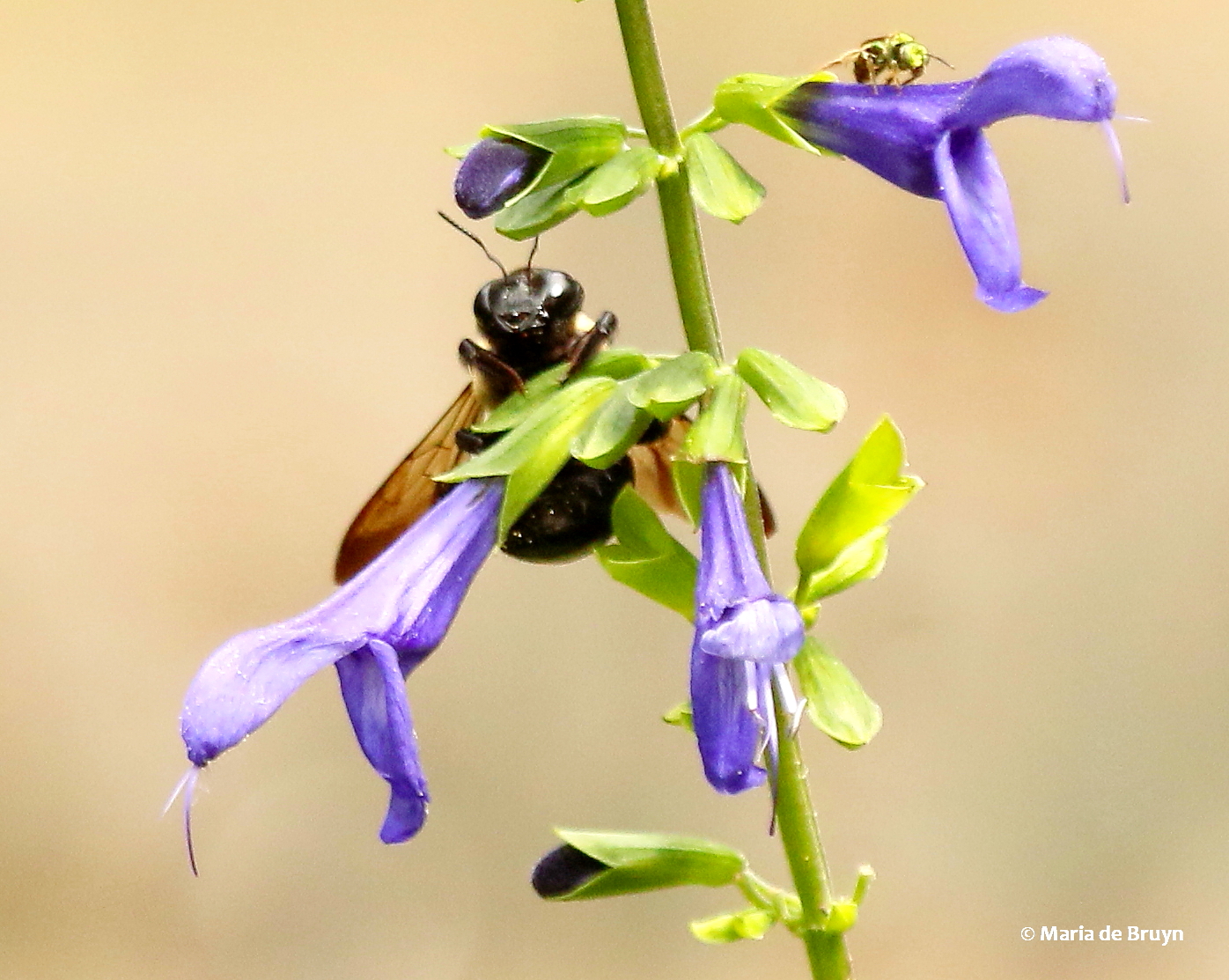
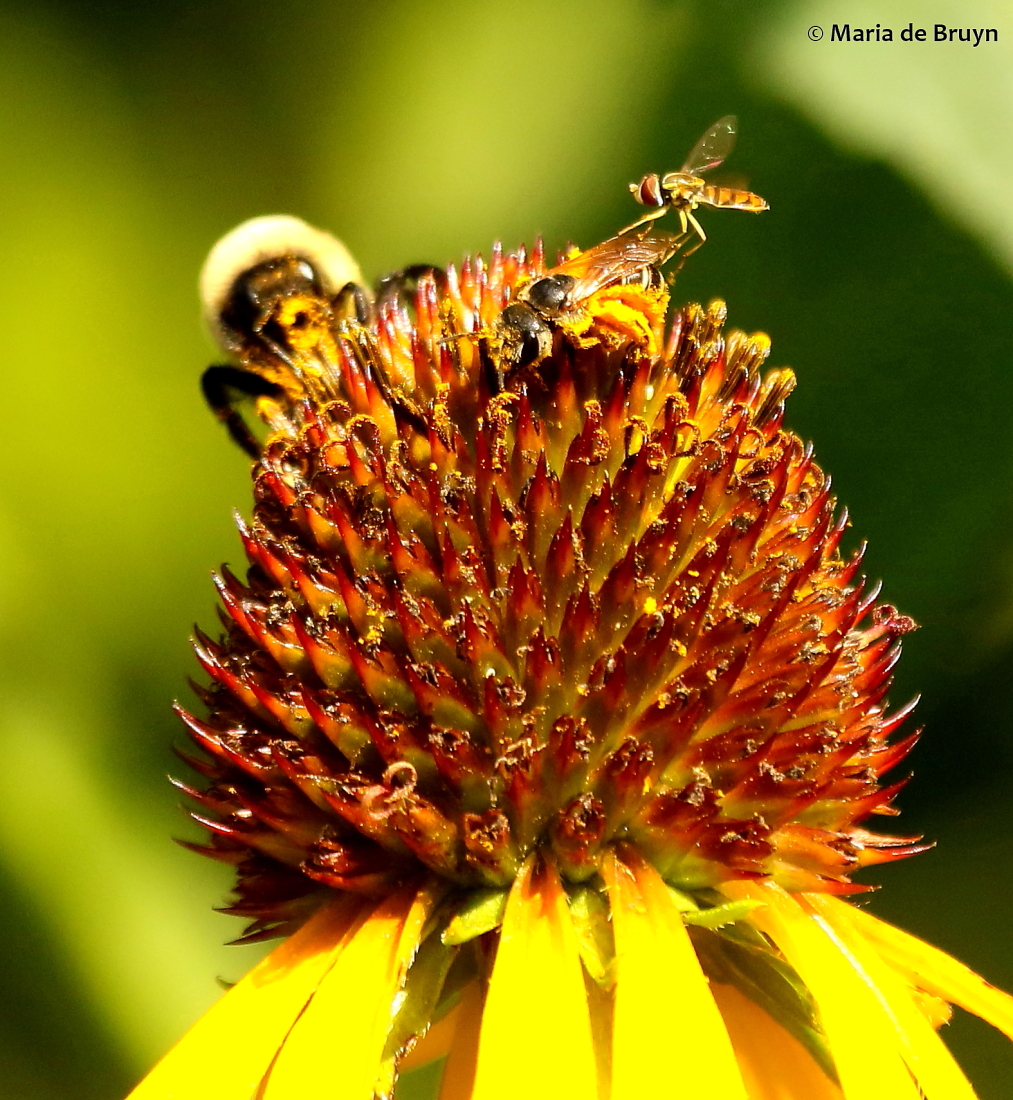
The pollinators don’t appear to begrudge one another nectar – different species will share space on particularly popular plants.

monarch-and-eastern-carpenter-bee-i77a4010maria-de-bruyn-res

Eastern carpenter bee and monarch butterfly (Danaus plexippus)

bumble-bee-brazilian-sage-i77a7263-maria-de-bruyn-res

Eastern carpenter bee and sweat bee

bumble-bee-halictus-sweat-bee-toxomerus-marginatus-i77a6296-maria-de-bruyn-res

Eastern carpenter bee, sweat bee and syrphid fly

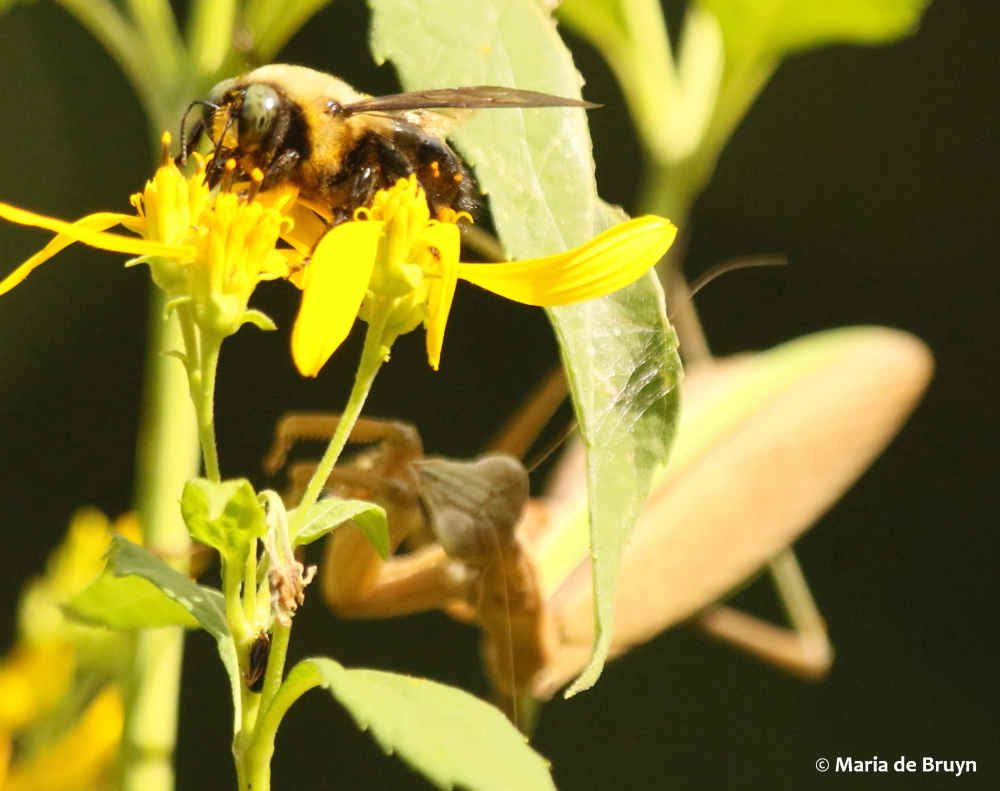
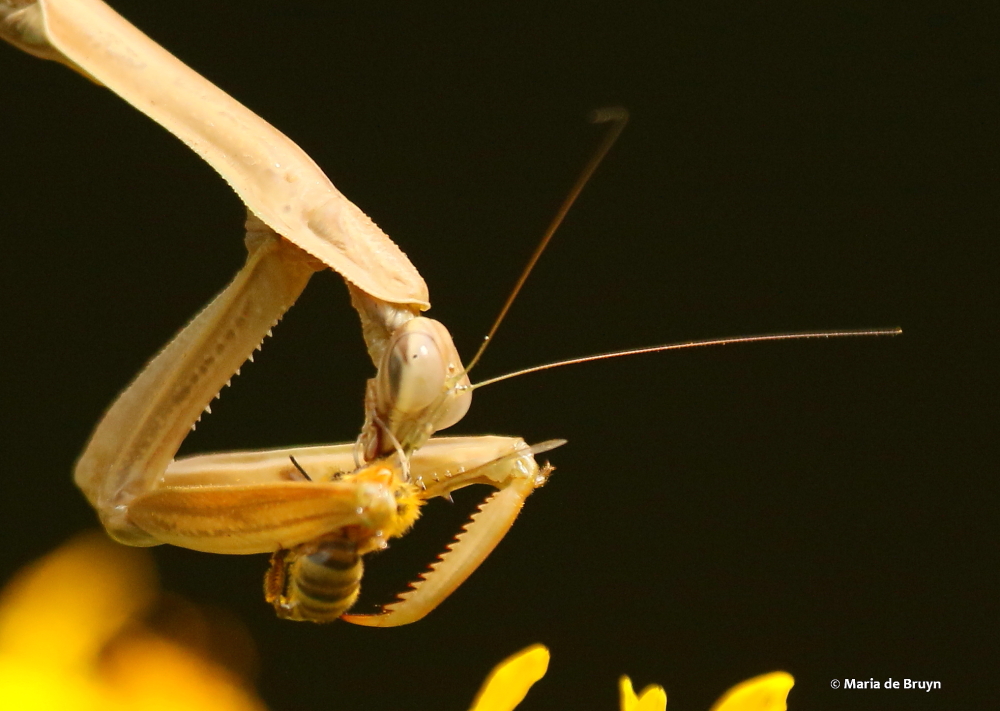
Occasionally, the pollinators do not live out their usual short lifespans as predators catch them for food. This Chinese mantis (Tenodera sinensis) had been eyeing a bumble bee and was slowly moving toward it but the bee flew off before the mantis could complete its lunge. Later the mantis managed to snag a honey bee, however.

chinese-mantis-eastern-carpenter-bee-i77a4937maria-de-bruyn-res   chinese-mantis-and-honey-bee-i77a4795maria-de-bruyn-res

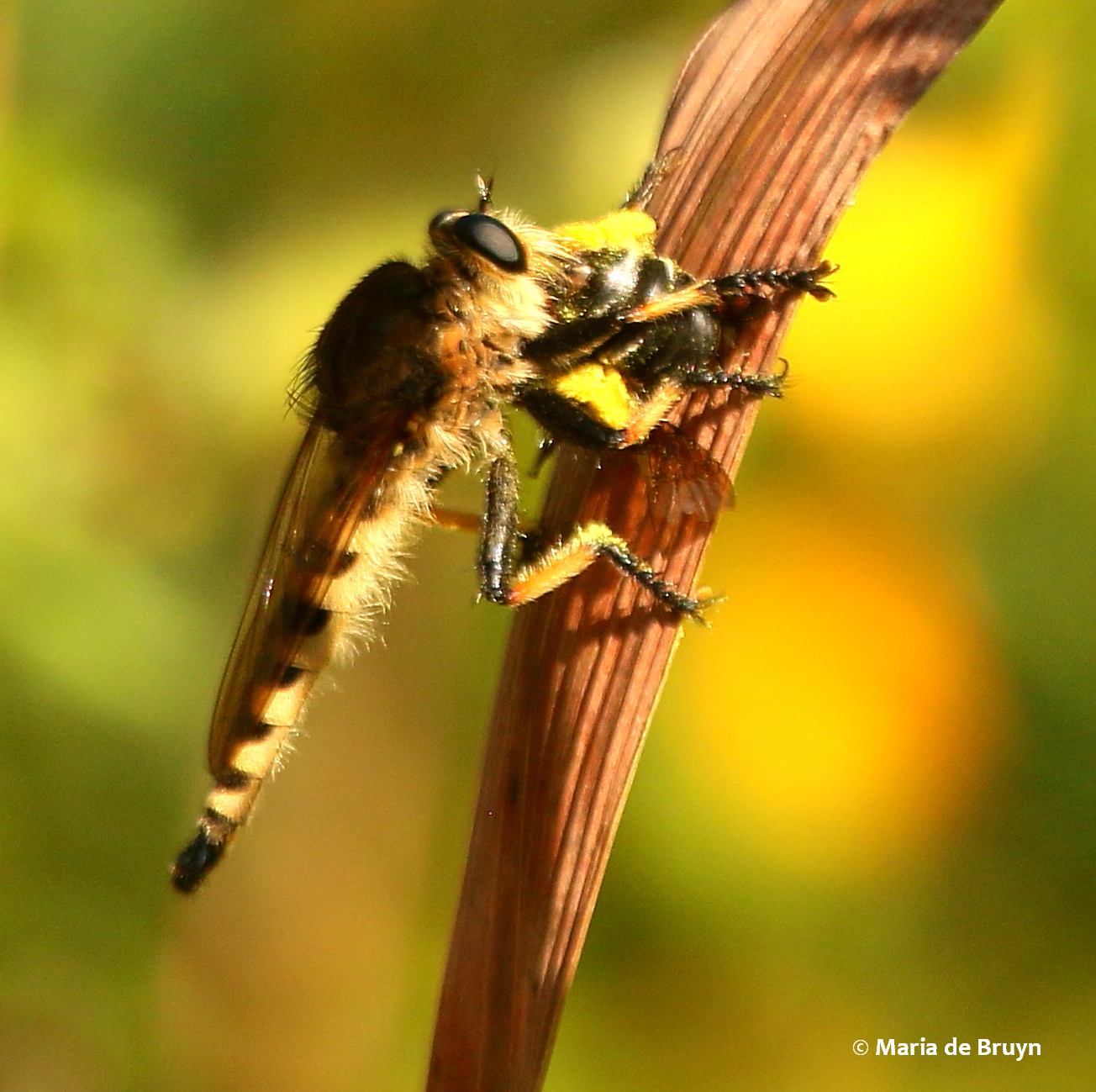
robber-fly-bumblebee-77a2813maria-de-bruyn


While on a walk one day, I suddenly was startled by the loudest buzzing I had ever heard, coming up behind me. It sounded angry, intense and was rather piercing for a buzz. I turned just in time to witness a giant robber fly (Promachus) settle on a grass stem with a bumble bee that it had just caught. The buzzing stopped fairly quickly as the fly proceeded to ingest its meal.


eastern-carpenter-bee-i77a7906-maria-de-bruyn-signed-res

Various organizations and agencies, including the US Fish and Wildlife Service, are drawing attention to the endangerment of pollinator species. The main threats include loss and degradation of habitat as we pave over an increasing amount of natural space and plant lawns instead of native plants in yards. Using pesticides in landscaping areas is further threatening many of the insects on which pollination depends.

eastern-carpenter-bee-i77a6424-maria-de-bruyn-res3


Planting pollinator gardens is a way in which we all can contribute to saving our pollinators; if you don’t have your own yard, you can volunteer with a project to create a community garden. And then you can watch these fascinating insects with appreciation for their contributions to us!

Can you go home again? Apparently so!

brown-headed-nuthatch-i77a3736-maria-de-bruyn-res


This year, I had the good fortune to see both brown-headed nuthatches (Sitta pusilla) and Eastern bluebirds (Sialia sialis) raise broods in some of my nest boxes. I saw the babies fledge, which was truly an enjoyable event.


eastern-bluebird-i77a7134-maria-de-bruyn-res

For some time, the parents continued feeding their babies after they left home, but eventually they got to the point that they could catch or find their own food. As summer progressed, the parents and children both visited my feeders and it was gratifying to see the families thrive. Then during September and October, I saw a behavior that I don’t remember from years past.

brown-headed-nuthatch-i77a7426-maria-de-bruyn-resbrown-headed-nuthatch-i77a7439-maria-de-bruyn-res

The nuthatches started to return to their nest box almost daily. They didn’t check out nearby boxes but went to their original home and today they are still visiting there, sitting on top, fluttering around it and looking inside.

tufted-titmouse-i77a7417-maria-de-bruyn-res

Their frequent visits seem to have intrigued a local tufted titmouse (Baeolophus bicolor) who decided to take a look in their box, too,but that was only a one-time visit as far as I could see.

It’s not only the parents doing this, but also one or more of their offspring. So how true is the saying “you can never go home again” (origin a novel by Thomas Wolfe)? It originally meant that you can’t recapture exactly how things were in your youth because changes take place in situations and places. But people do often journey back to the places where they grew up and apparently birds do, too! Maybe they are wondering if their nest box is still the same good place for a home.

brown-headed-nuthatch-i77a7459-maria-de-bruyn-resbrown-headed-nuthatch-i77a7441-maria-de-bruyn-res

i77a0203-maria-de-bruyn-res


The bluebirds began doing the same with their home nest box as well. They take turns flying from nearby branches to cling to the box and investigate the now empty dwelling. While the nuthatches just lean and peer inside, the bluebirds eventually go inside for a bit.


eastern-bluebird-i77a9732-maria-de-bruyn-res brown-headed-nuthatch-i77a9653-maria-de-bruyn-res


Oddly, there seems to be some contention involved. For example, when this pair was investigating, they had a little tiff for some reason.

eastern-bluebird-i77a9722-maria-de-bruyn-res eastern-bluebird-i77a9725-maria-de-bruyn-res

eastern-bluebird-i77a9723-maria-de-bruyn-res eastern-bluebird-i77a9726-maria-de-bruyn-res

I can only guess that the birds are checking out the nest boxes in anticipation of next year’s nesting season. The nuthatches and bluebirds will begin breeding again around March, although nuthatches might already begin building a new nest as early as December. It will also be interesting to see if they end up roosting in the boxes during the colder winter nights.

brown-headed-nuthatch-i77a4527-maria-de-bruyn-resWatching the nuthatches and bluebirds nest, fledge and feed is an enjoyable pastime and I’m looking forward to seeing them repeat the process next year. In the meantime, perhaps I’ll continue seeing them around the nest boxes this winter – as Pliny the Elder said, “Home is where the heart is” and something is sure attracting them back! (And yes, I know, that is a bit of anthropomorphizing.)

A wildflower walk with surprises!

owl IMG_3036© Maria de Bruyn resThis past Saturday morning, we awoke to water streaming from the heavens in quite a heavy downpour. A local conservation group, Friends of Bolin Creek, had scheduled a wildflower walk to see some of our ephemeral spring blooms but the wet conditions were not inviting. A decision to postpone the walk to early afternoon was taken – and the weather-people had gotten it right – the sun began shining at mid-day and the temperature rose, creating lovely conditions for a walk after all. A large owl (later revealed to be granddaughter Kate of the group’s president) greeted the small group of intrepid walkers and we set off to see what we could find.

Southern arrowwood IMG_3039© Maria de Bruyn res

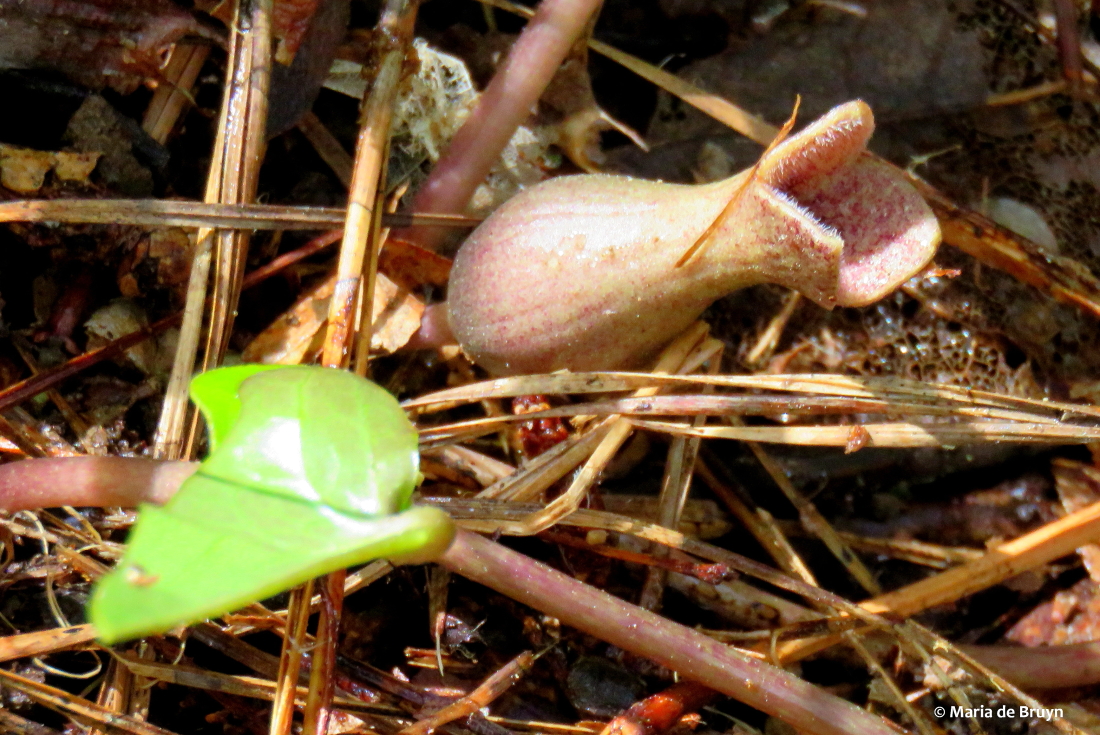
Our first flowers were the not-yet-open blooms of a Southern arrowwood (Viburnum dentatum). We passed numerous black and yellow millipedes on the paths and then found another millipede species (Narceus americanus) curled up next to a little brown jug (also known as arrowleaf heartleaf, Hextastylis arifolia var arifolia).

millipede IMG_3052© Maria de Bruynlittle brown jug IMG_3048© Maria de Bruyn

We came across other nice specimens of the plant, including one with four small flowers.

little brown jug IMG_3138© Maria de Bruynlittle brown jug IMG_3141© Maria de Bruyn

The painted buckeye trees (Aesculus sylvatica) were blooming profusely with their greenish-yellow flowers.

painted buckeye IMG_3070© Maria de Bruynpainted buckeye IMG_3492© Maria de Bruyn


Eastern spring beauty IMG_3089© Maria de Bruyn


Clusters of Eastern spring beauties (Claytonia virginica) were in their vicinity.


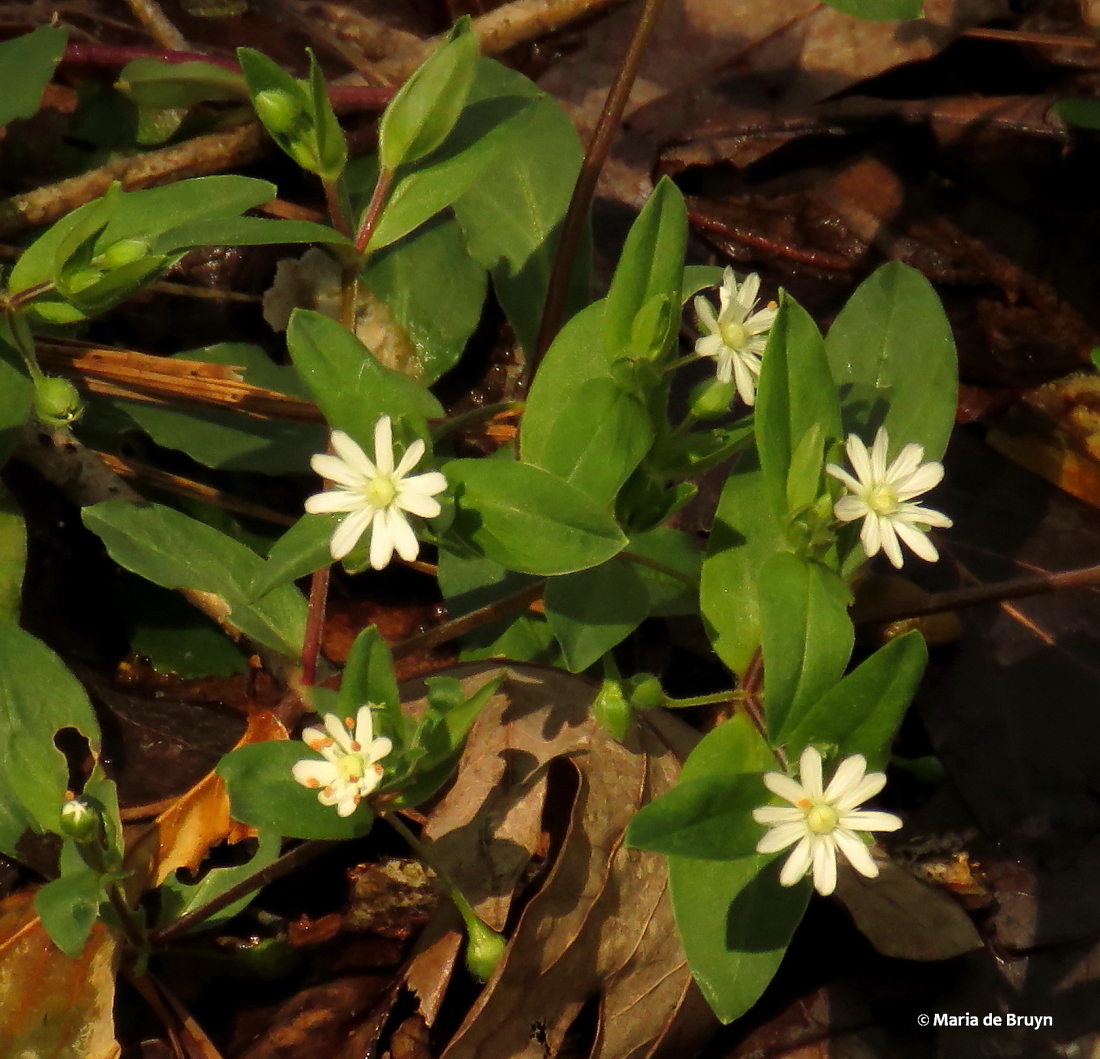
star chickweed IMG_3095© Maria de Bruyn


Some of the star chickweeds (Stellaria pubera) were near another white bloom, the rue anemones (Thalictrum thalictroides).


rue anemone IMG_3110© Maria de Bruyn rue anemone IMG_3109© Maria de Bruyn

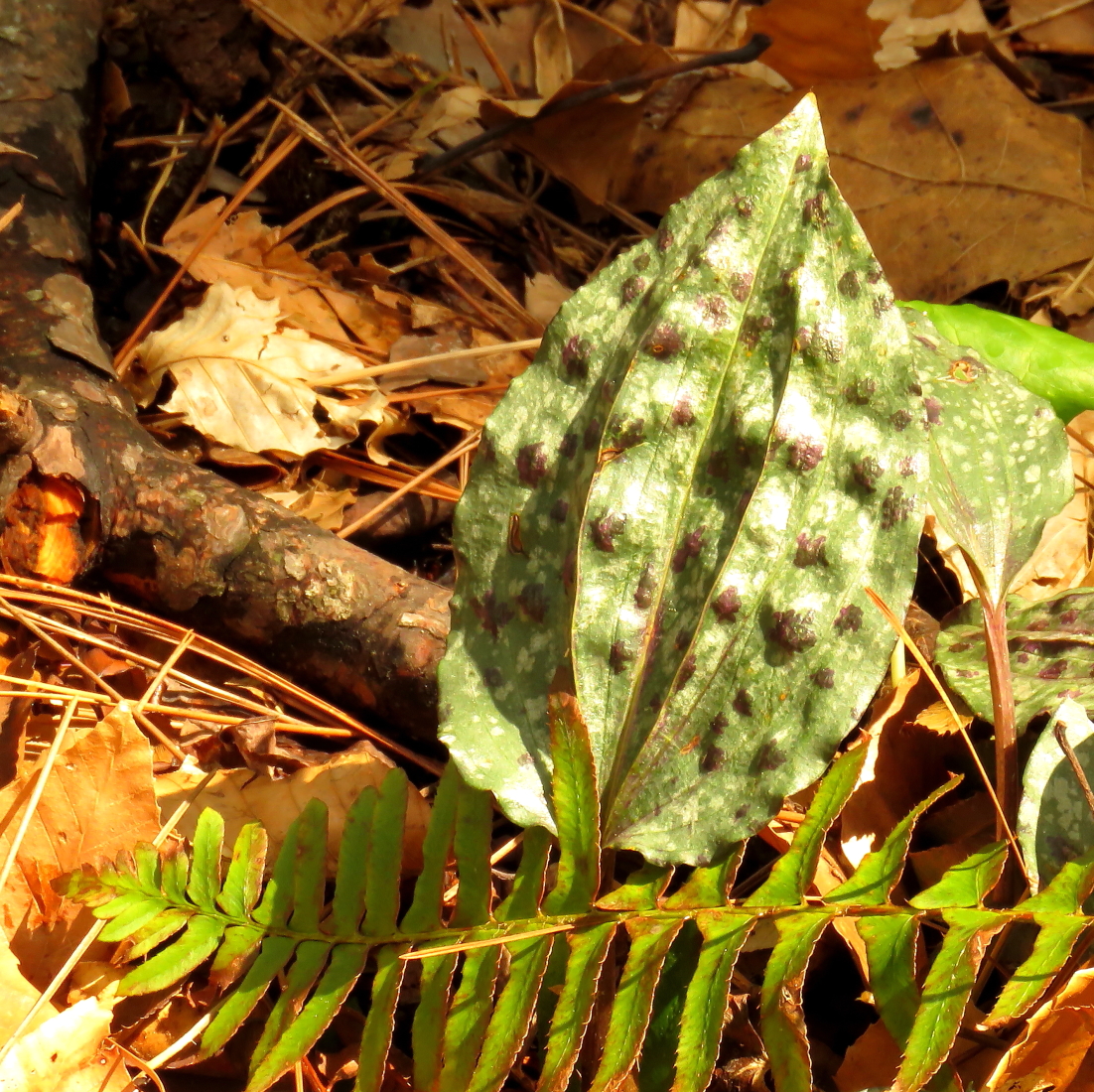
Both the trout lilies (Erythronium americanum) and cranefly orchids (Tipularia discolor) had already bloomed, the trout lilies about 7-10 days ago and the orchids in the winter (when there are no leaves). One orchid had left behind its brown stalk as a witness to the flower that had seen the light.

trout lily IMG_3156© Maria de Bruyncranefly orchid IMG_3148© Maria de Bruyn

Tiny bluets (Houstonia pusilla) in clusters here and there provided some variation from the ubiquitous white blooms that we were seeing. The mayapples (Podophyllum peltatum) were just emerging and it will be a little while before we see their flowers emerge underneath the leafy umbrellas.

tiny bluet IMG_3118© Maria de Bruynmayapple IMG_3196© Maria de Bruyn


Bolin creek IMG_3165© Maria de BruynThe creek was running high and fast and we debated on crossing it at the first branch. Only two of us had wellingtons (and one lady found that her boots leaked); others were wearing running and walking shoes but everyone made it across by using stones, canes and walking sticks that some of our group had brought along. Our immediate reward was a view of a gorgeous pinxterbloom wild azalea (Rhododendron periclymenoides).

pinxterbloom azalea IMG_3174© Maria de Bruyn

foamflower IMG_3180© Maria de Bruyn


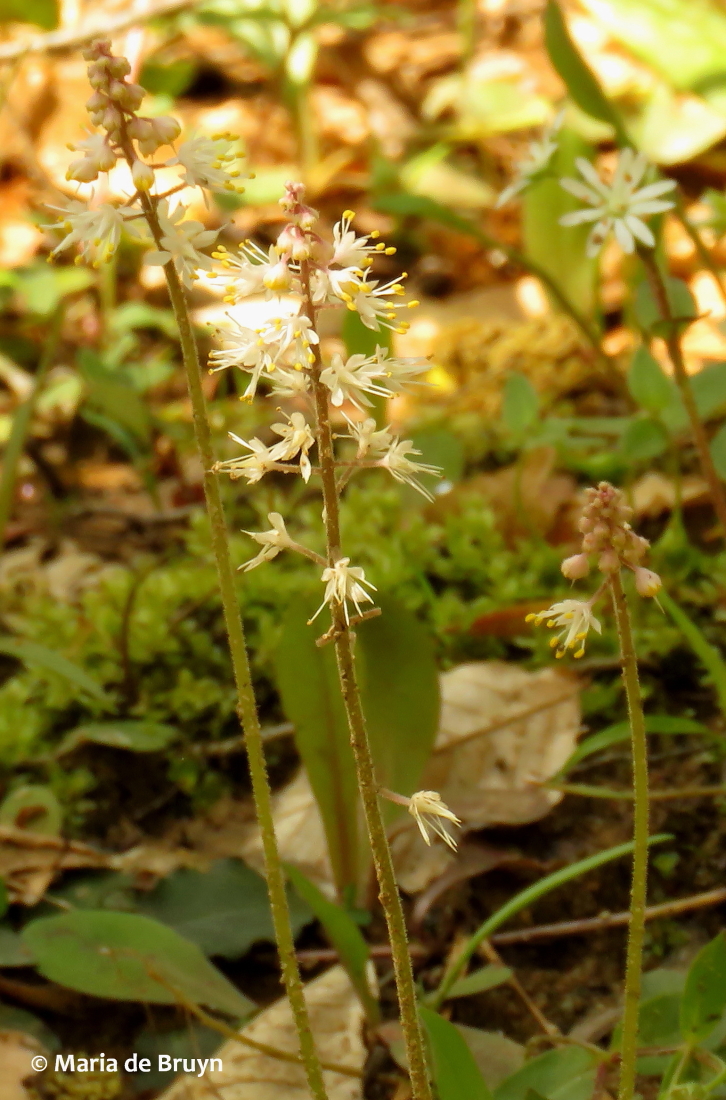
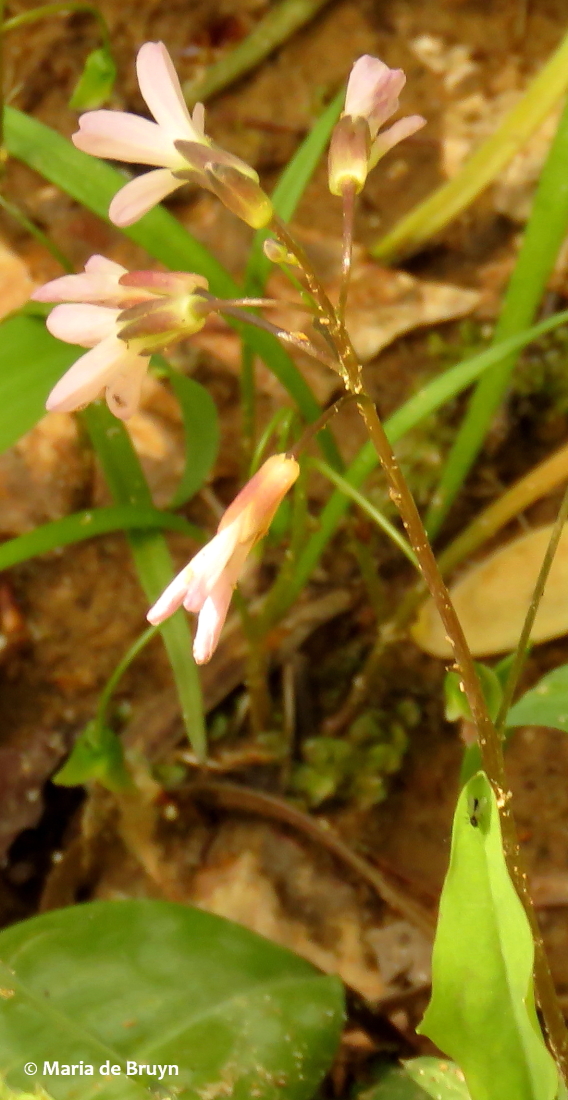
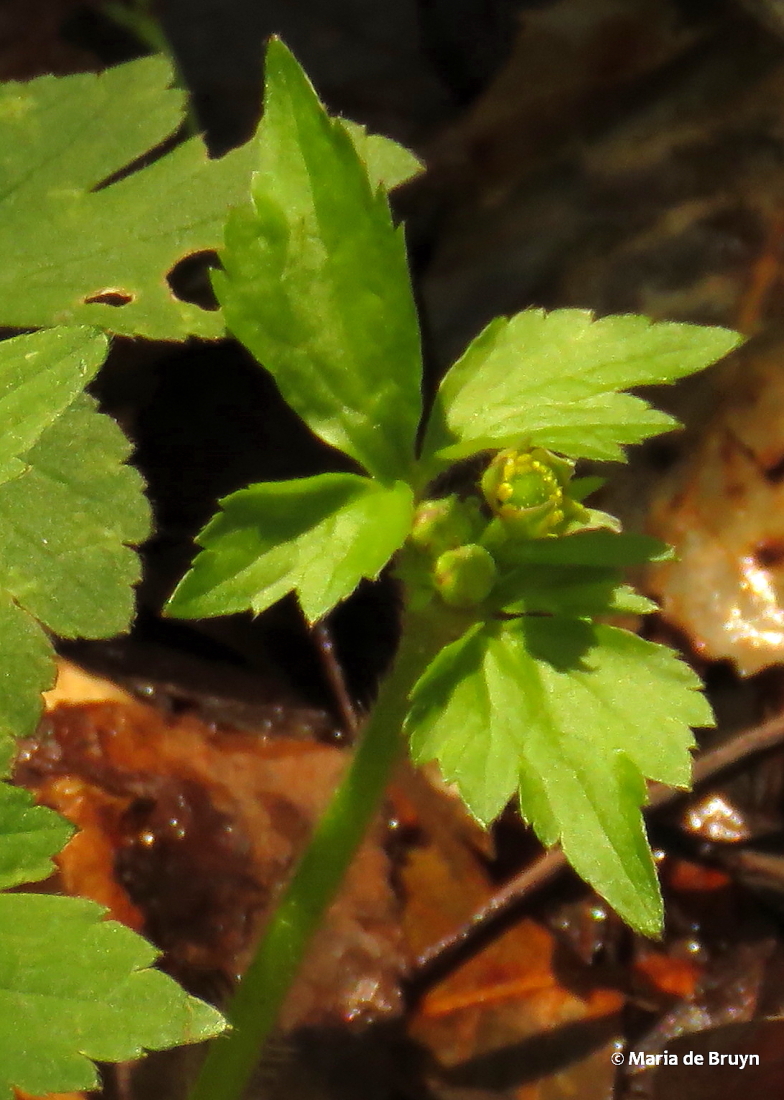
A sighting of a foamflower (Tiarella cordifolia), followed by a cutleaf toothwort (Cardamine concatenata) provided a bit more color, as did the littleleaf buttercup (Ranunculus abortivus), although its blooms were not fully expanded yet.


cutleaf toothwort IMG_3187© Maria de Bruynlittle leaf buttercup IMG_3092© Maria de Bruyn

Only the jigsaw puzzle-like leaves of the bloodroot (Sanguinaria canadensis) were in evidence as that flower had stopped blooming already. A tufted titmouse singing overhead (Baeolophus bicolor) gave us a nice little concert as compensation.

bloodroot IMG_3198© Maria de Bruyn tufted titmouse IMG_3201© Maria de Bruyn

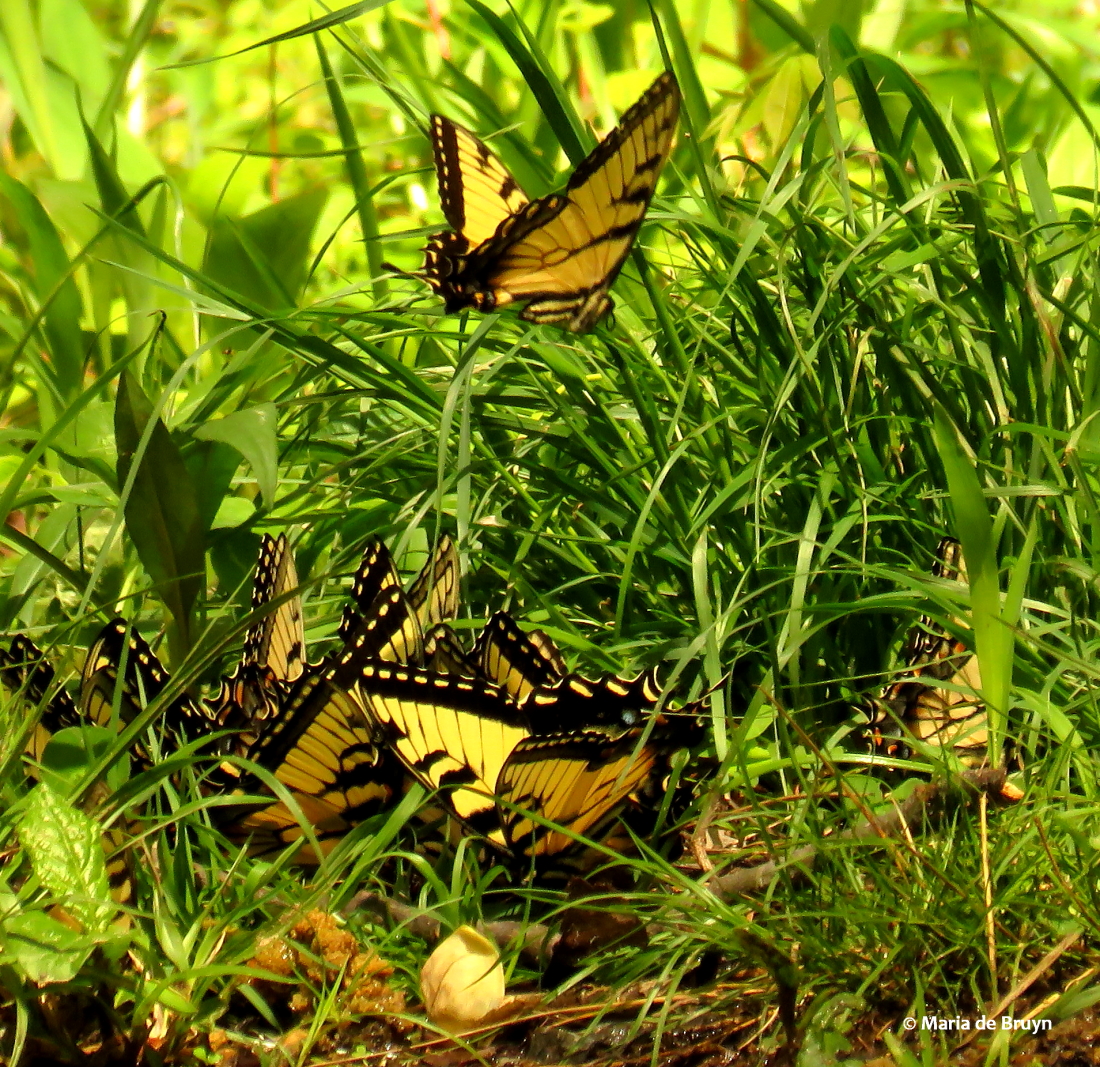
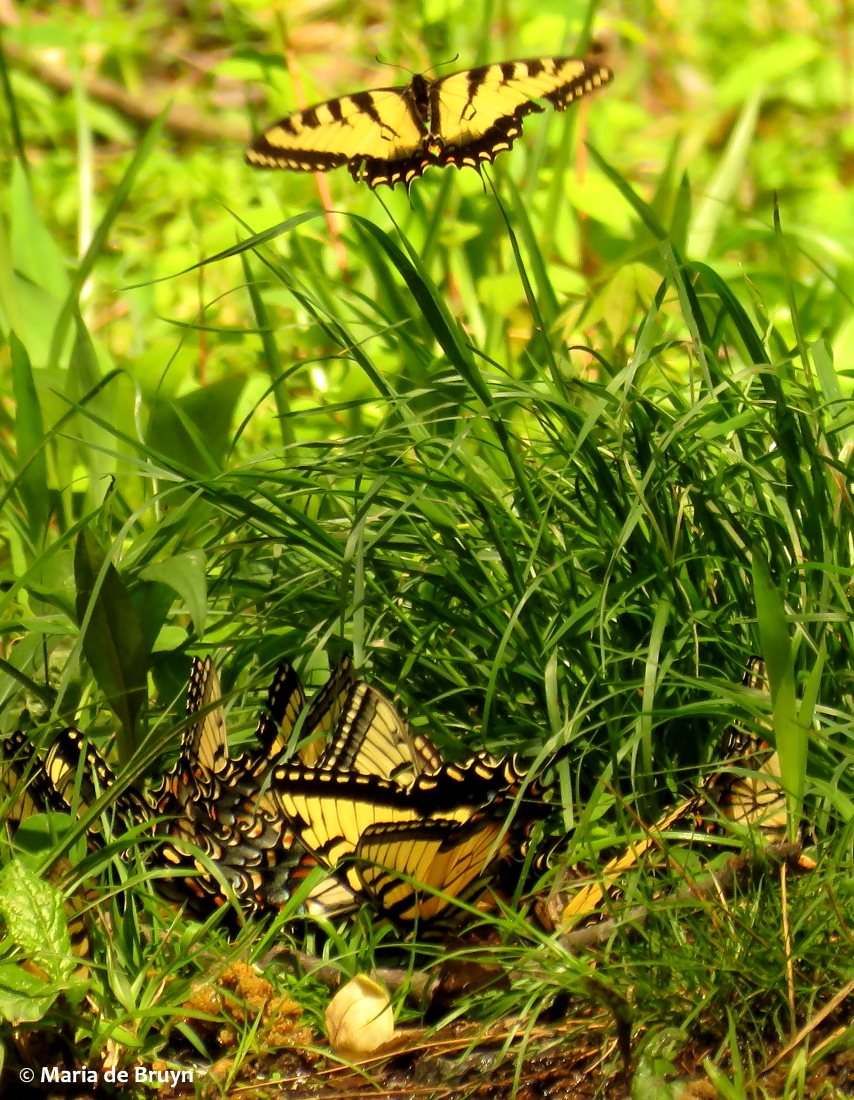
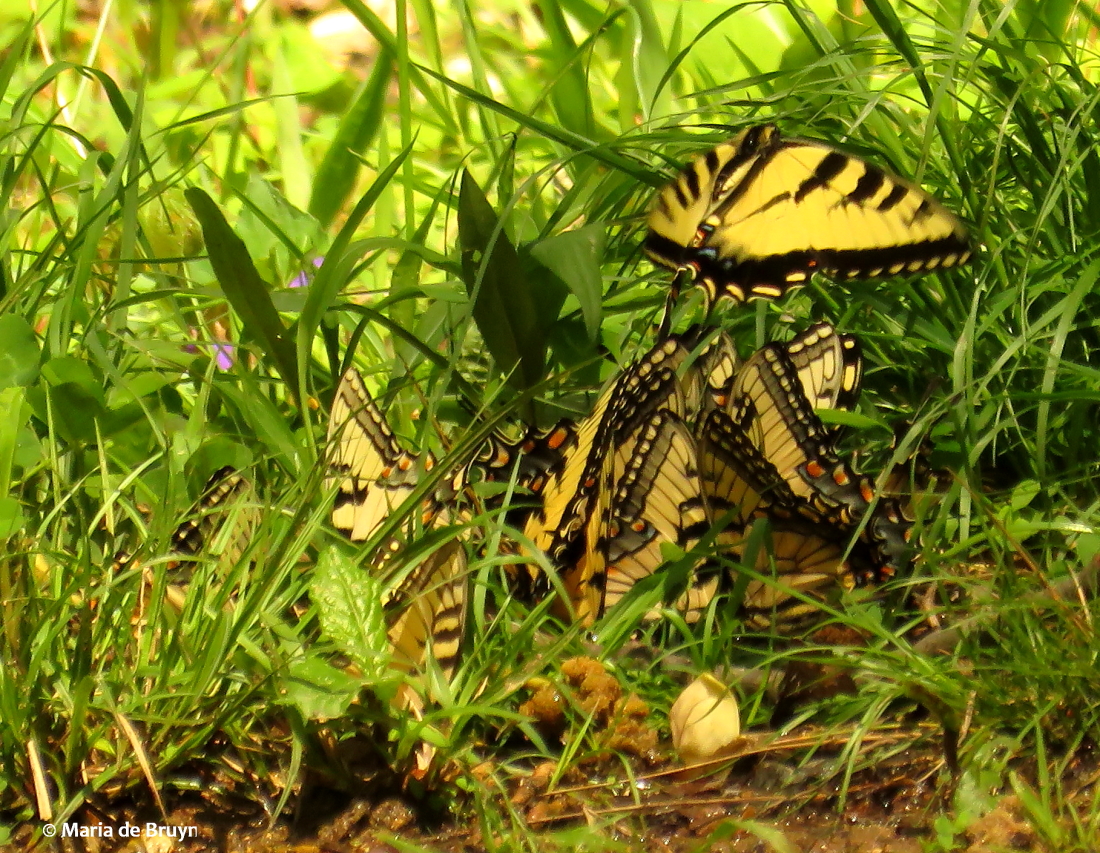
Eastern tiger swallowtail IMG_3428© Maria de Bruyn resAnd then we came across our three surprises of the walk. We had already seen several Eastern tiger swallowtail butterflies (Papilio glaucus) fluttering by in one’s and two’s and we remarked how welcome they were because of the paucity of butterflies we had had the past couple years. But then across another branch of the creek, we spotted some 12-20 butterflies congregating over some delicacy of unknown (to us) origin.

Eastern tiger swallowtail IMG_3259© Maria de Bruyn res Eastern tiger swallowtail IMG_3263© Maria de Bruyn res

The water was fairly deep and flowing fast, so we did not cross but we surmised that someone’s dog had left a pile of poo to provide a mud-puddling butterfly feast.

Eastern tiger swallowtail IMG_3443© Maria de Bruyn res Eastern tiger swallowtail IMG_3447© Maria de Bruyn res

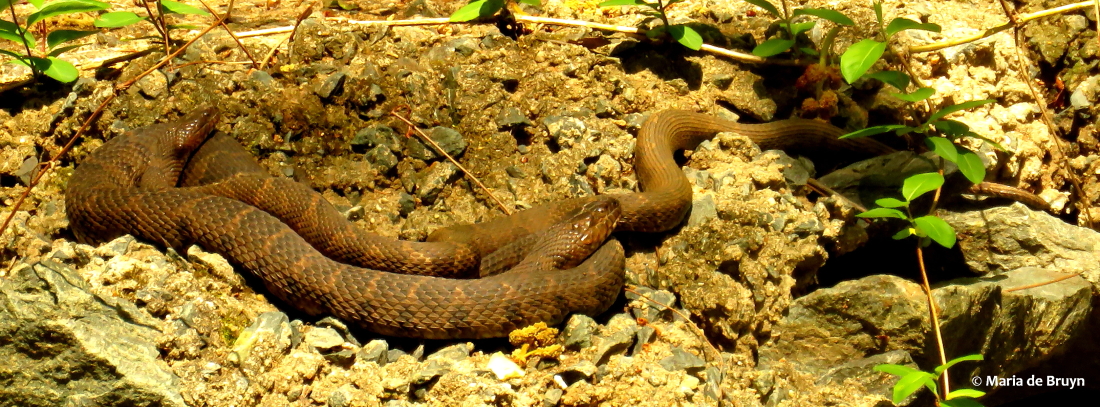
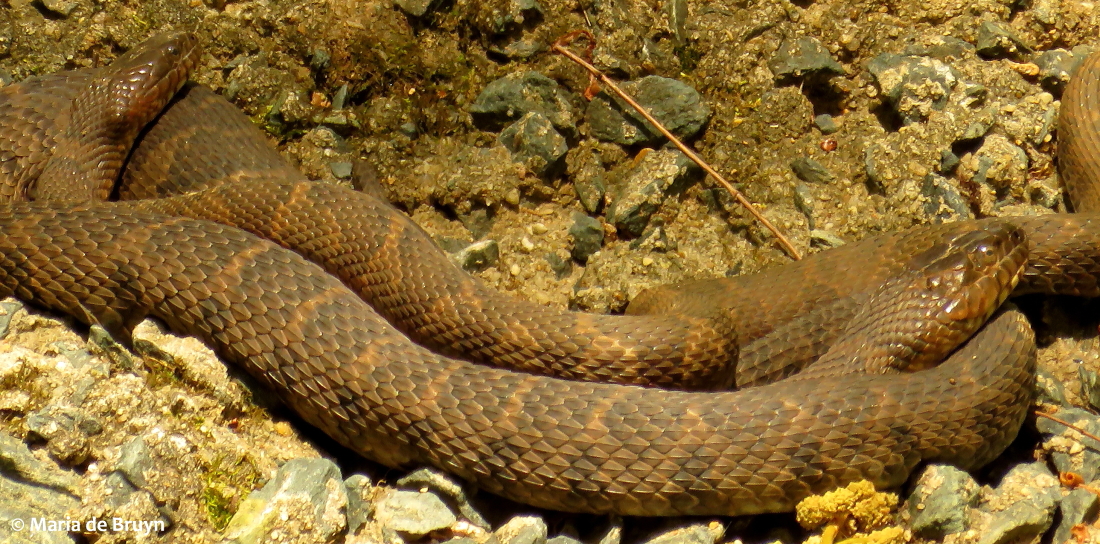
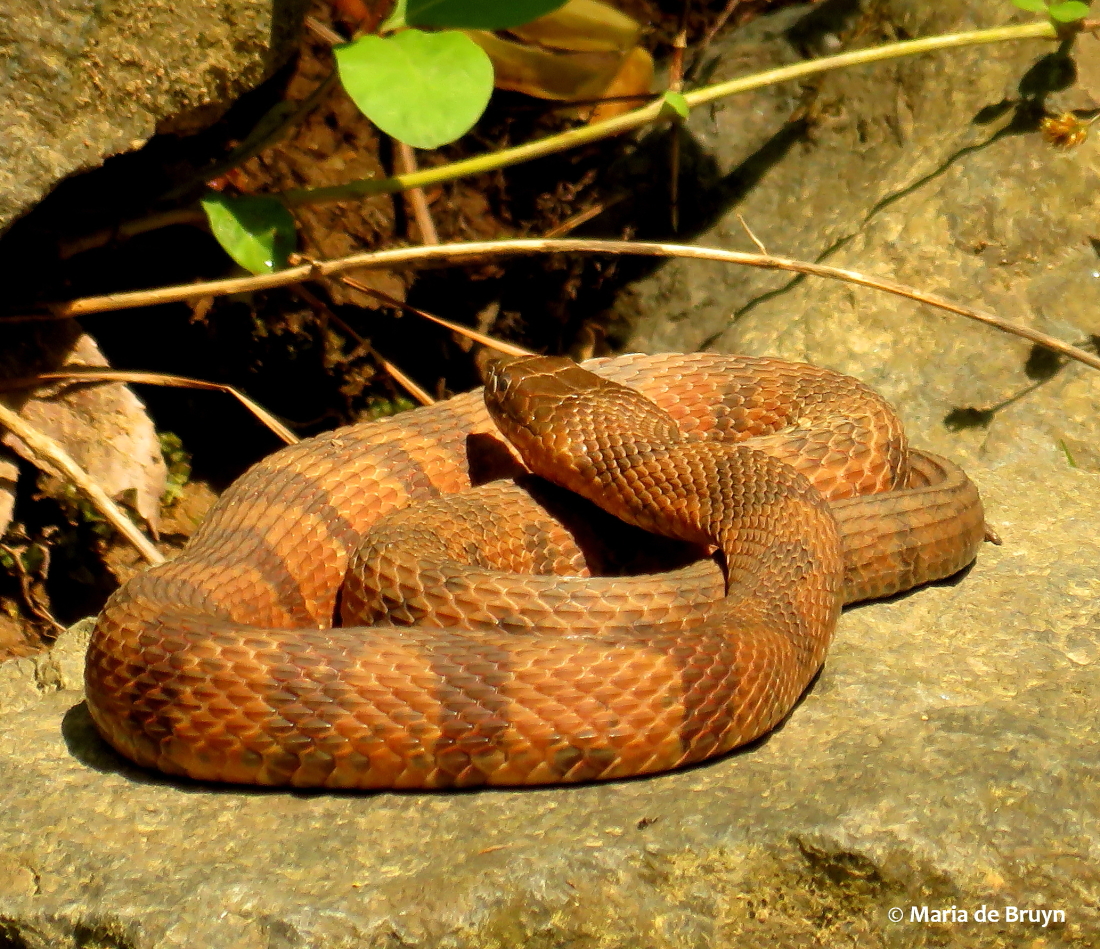
Then we noticed on a rock just below the bank under the butterflies where two Northern watersnakes (Nerodia sipedon) were having a little rest.

northern watersnake IMG_3406© Maria de Bruyn

northern watersnake IMG_3408© Maria de BruynThey were a bit dull in color, which became quite obvious when compared to a third northern watersnake that we spotted on a rock closer to the creek – perhaps a younger individual who had decided that a sunbath was just the thing for a Saturday afternoon.

northern watersnake IMG_3241© Maria de Bruyn northern watersnake IMG_3349© Maria de Bruyn

While we were all enamored with the flowers we’d seen, the butterflies and snakes gave our walk a special feel.

bugleweed IMG_3501© Maria de Bruyn


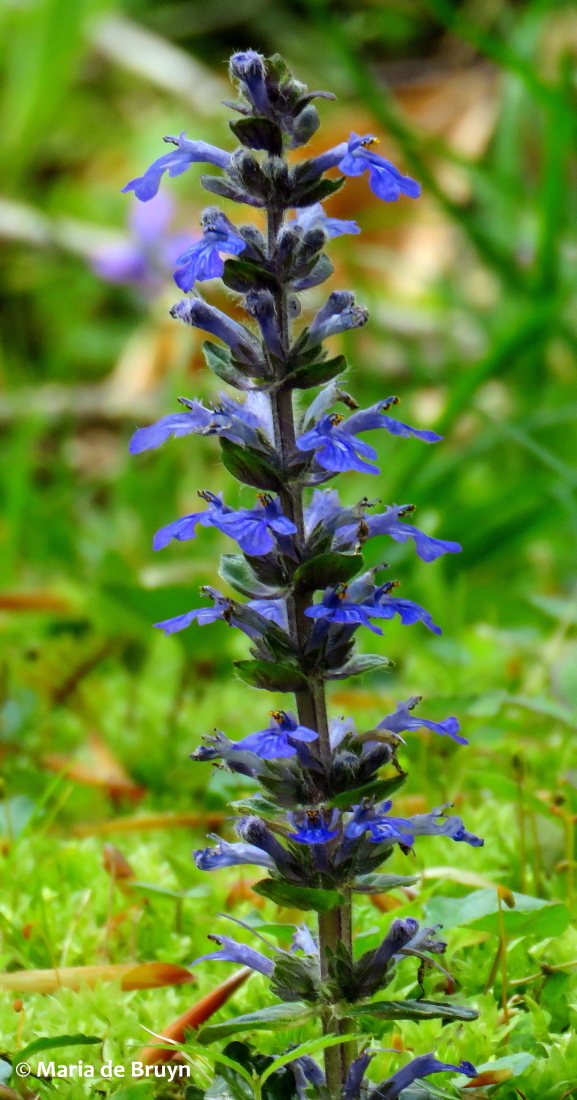
On our return trip through the woods to reach our transportation, we came across an invasive plant, the bugleweed (Ajuga reptans). We had already seen plenty of Japanese wisteria, mahonia, privet and autumn olive and agreed that another volunteer day to weed out some invasives would be a good contribution to the preserve. But that is for the future – right now, we are happy to think back to our surprise spottings!

Woodpecker welcome!

My celebration for the arrival of 2016 happened on 21 January, when I had my first nature walk of the year. It was delayed by a hospitalization at the start of the year and home treatments for a couple weeks after that. When a relatively warm and sunny day arrived, I just had to get out there despite still dealing with some recovery-related issues. I chose the North Carolina Botanical Garden as my venue since it has plenty of benches for short rests in between walking. It was simply lovely.

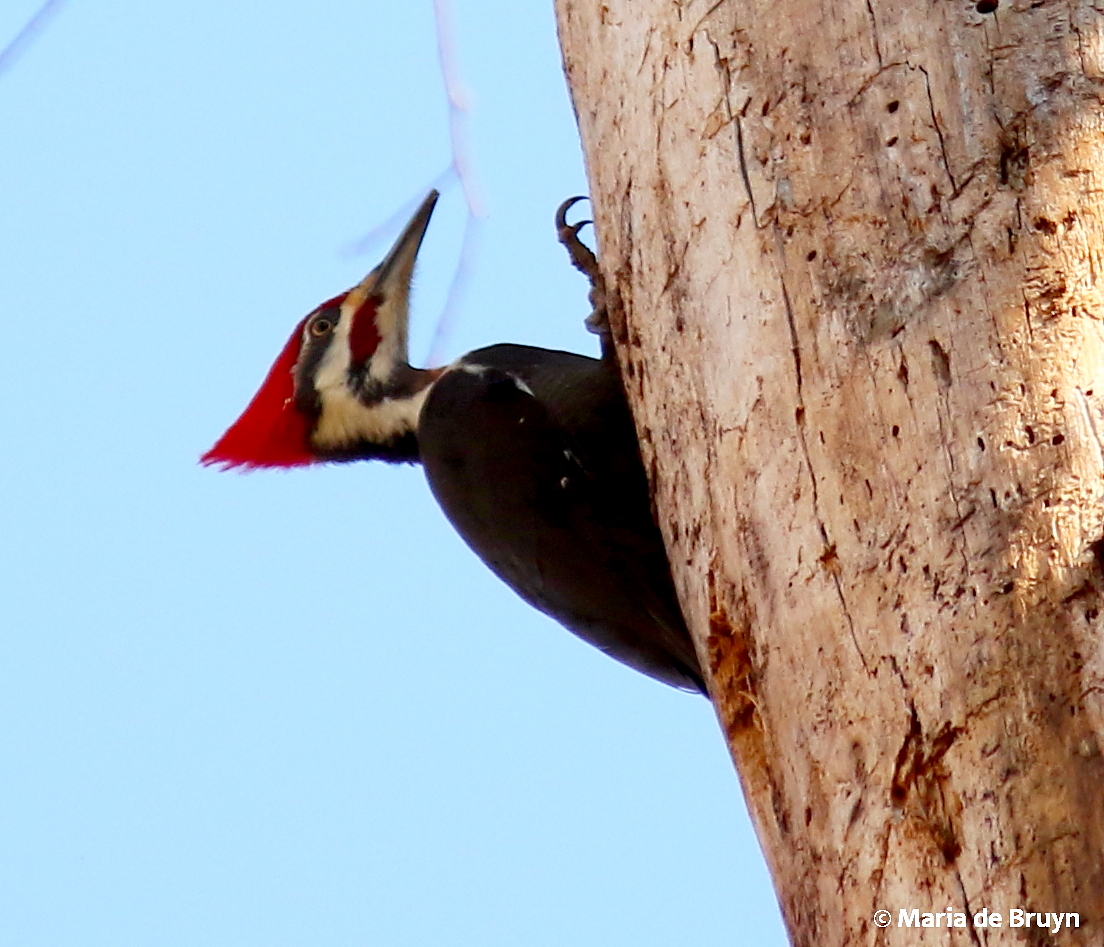
pileated woodpecker I77A7321© Maria de BruynMy first bird of the day was a beautiful male pileated woodpecker (Dryocopus pileatus), a harbinger of the day’s theme – the woodpeckers were my welcome committee!

Loud rhythmic hammering had me searching the snags among the tall trees for the next greeter – it reminded me of the facts I had learned about woodpeckers and their adaptations to a pecking life.

downy woodpecker I77A7372© Maria de BruynIt turned out to be a diminutive downy woodpecker (Dryobates pubescens), whose hammering sounds were enhanced by the hollow stem with which he was busy.
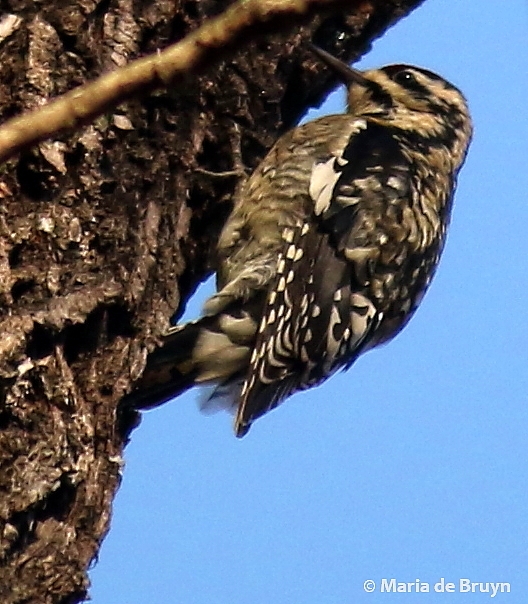
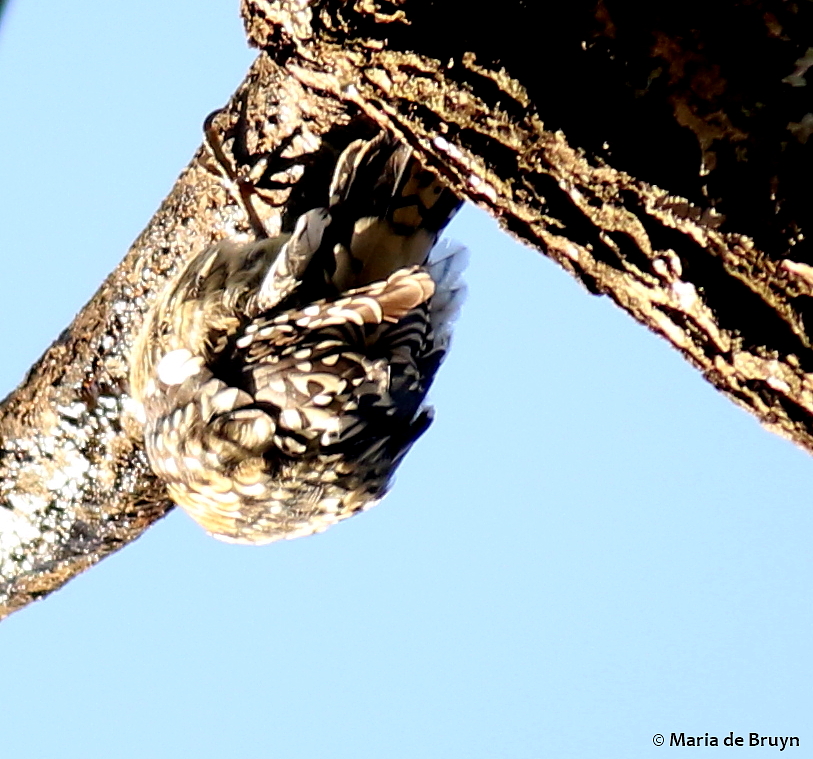
Next up was a lovely female yellow-bellied sapsucker (Sphyrapicus varius) who was very industriously flitting from branch to branch in search of sustenance.

yellow-bellied sapsucker I77A7419© Maria de Bruynyellow-bellied sapsucker I77A7582© Maria de Bruyn

When flattened against tree trunks, she demonstrated how well camouflaged her back feathers make her. A male sapsucker showed it, too.

yellow-bellied sapsucker I77A7476© Maria de Bruyn

yellow-bellied sapsucker I77A7860© Maria de Bruyn res

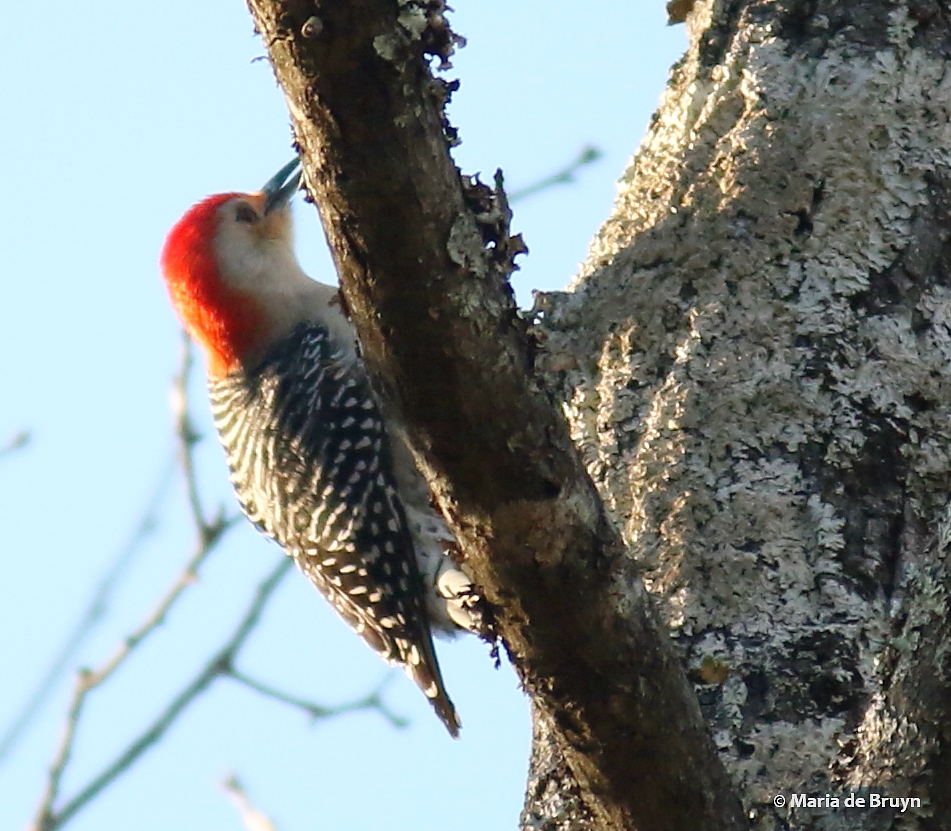
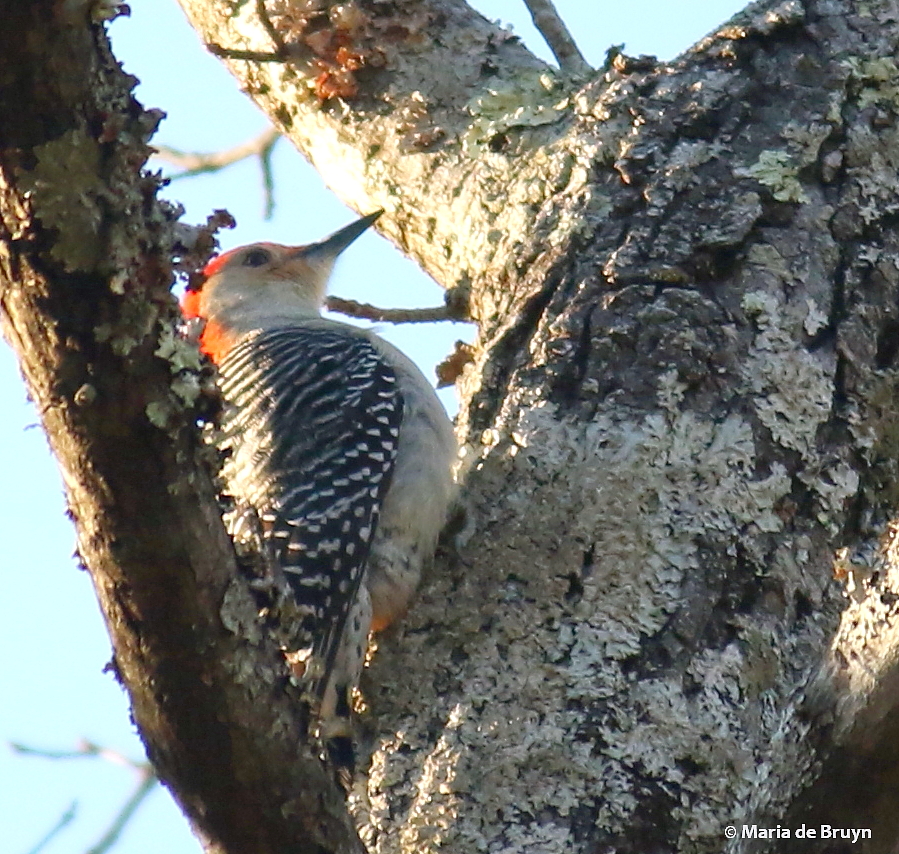
red-bellied woodpecker I77A8242© Maria de BruynA red-bellied woodpecker (Melanerpes carolinus) rounded out the welcoming committee.

The other birds didn’t disappoint. Several species were in the woods and at the feeders near the Garden’s bird blind. A lovely Carolina chickadee (Poecile carolinensis) flitted about. A tufted titmouse (Baeolophus bicolor) was singing.


Carolina chickadee I77A7639© Maria de Bruyn tufted titmouse I77A7388© Maria de Bruyn


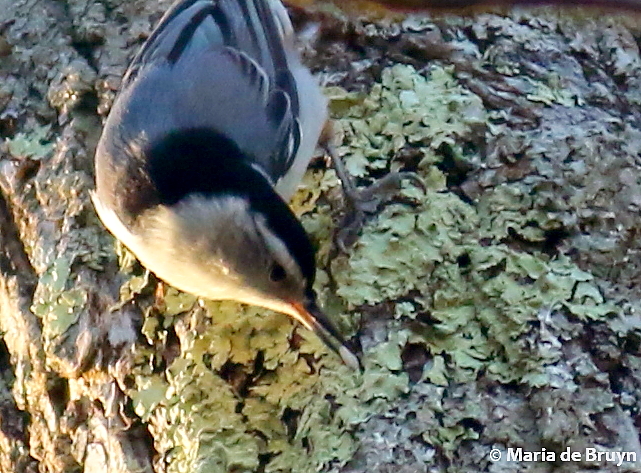
white-breasted nuthatch I77A8203© Maria de Bruyn


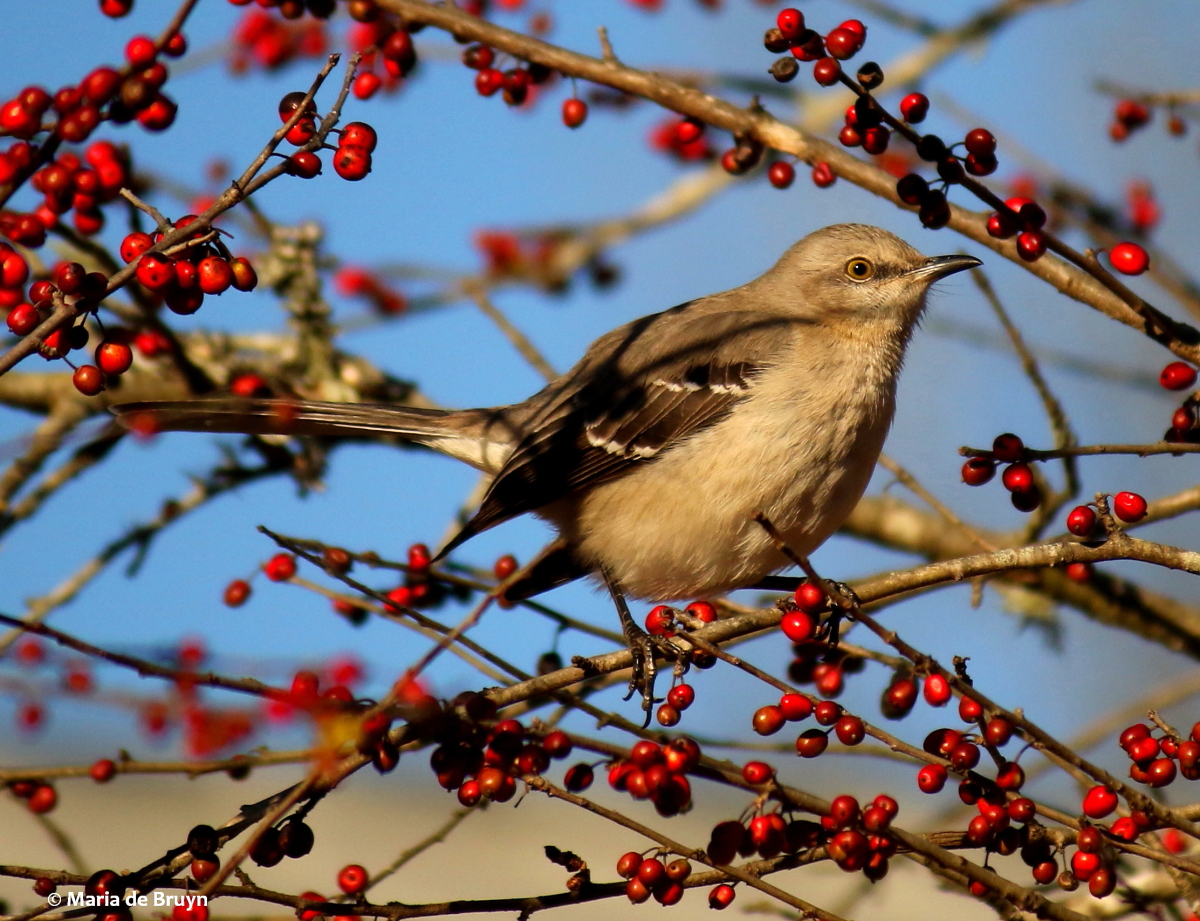
A white-breasted nuthatch (Sitta carolinensis) foraged on tree trunks overhead. A Northern mockingbird (Mimus polyglottos polyglottos) posed among red winter berries.


Northern mockingbird I77A7737© Maria de Bruyn res

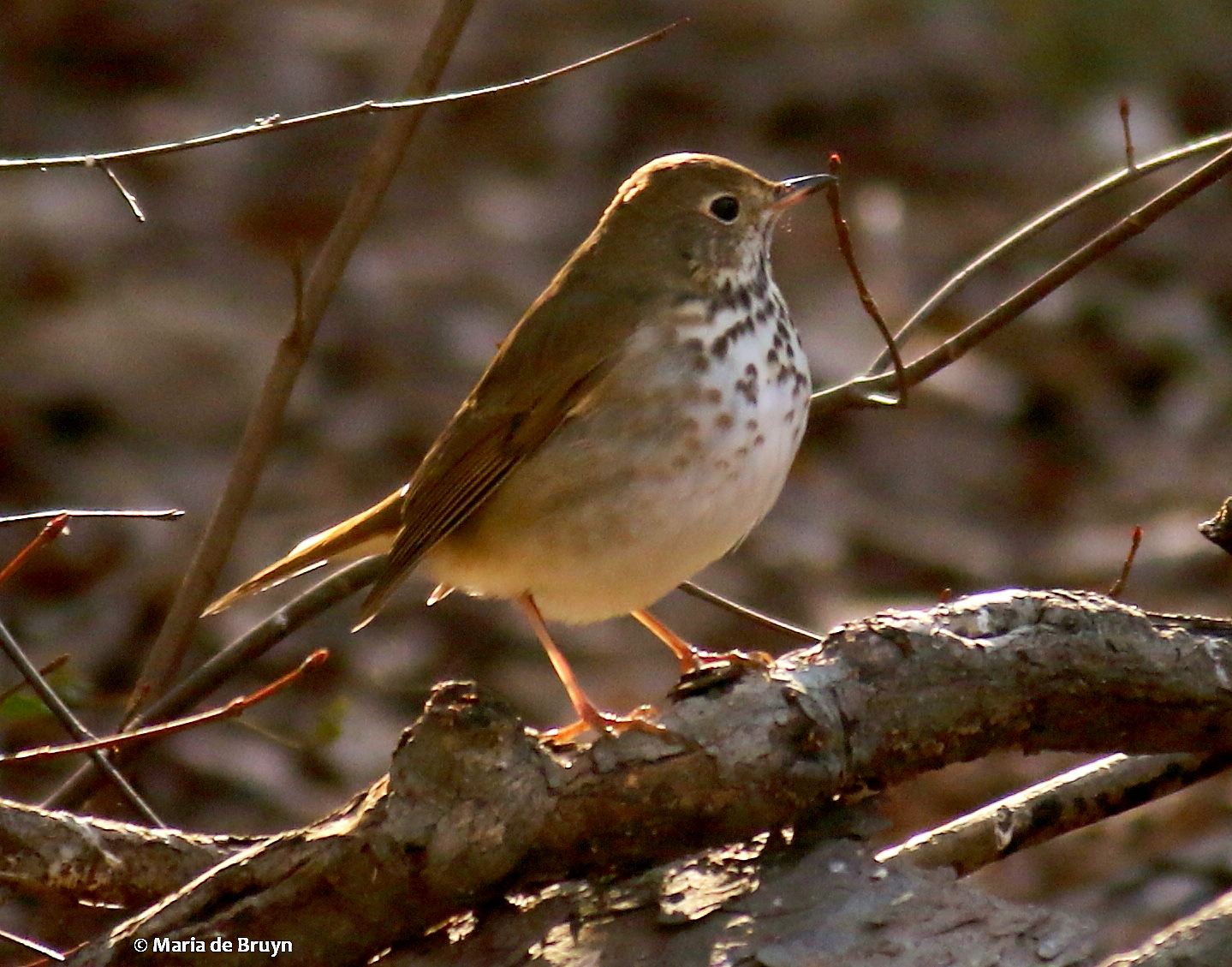
hermit thrush I77A7658© Maria de Bruyn


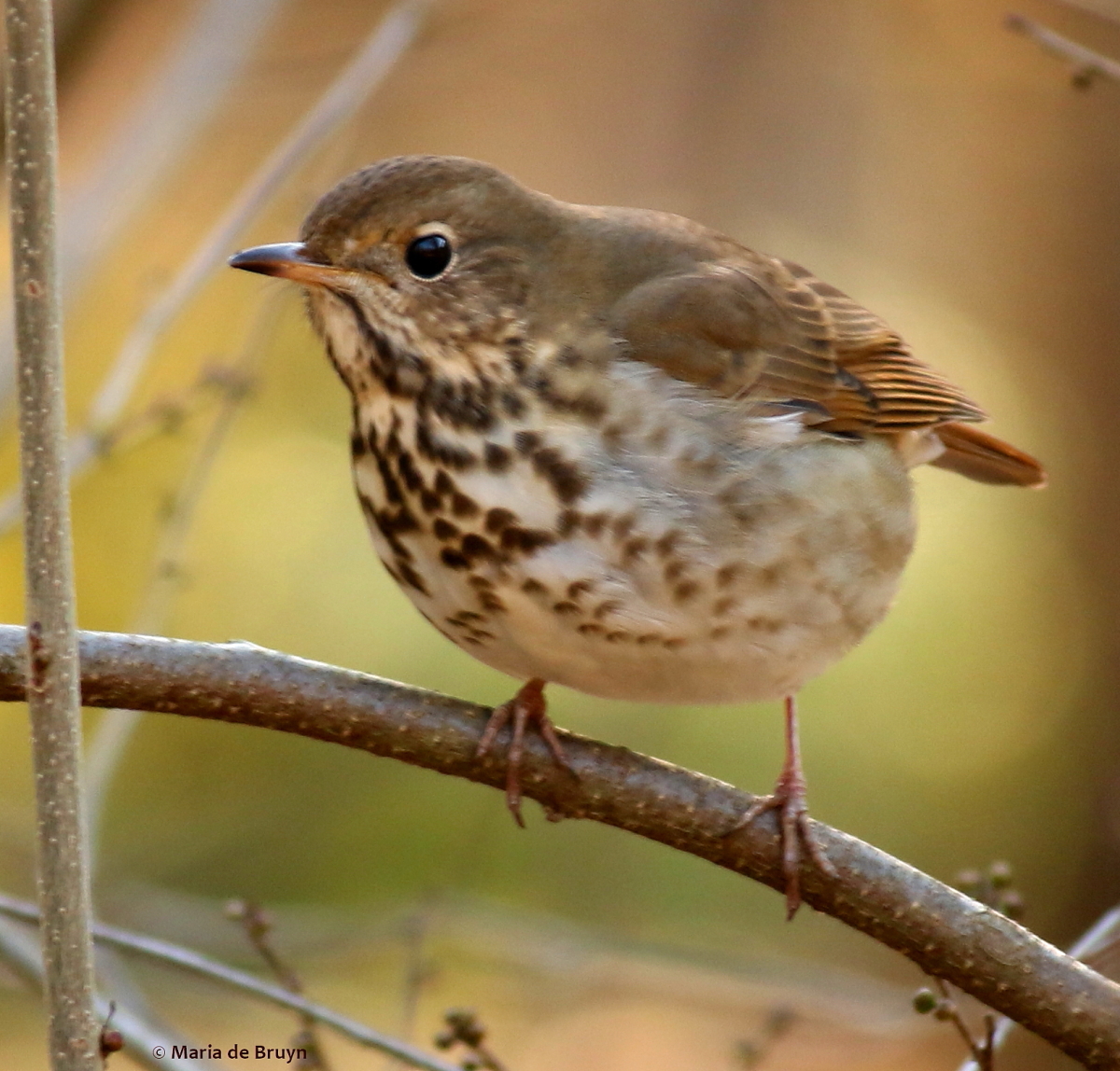
A hermit thrush (Catharus guttatus) emerged near the bird blind, and then the same bird or another seemed to accompany me as I walked another part of the native habitats garden.


hermit thrush I77A7818© Maria de Bruyn

hermit thrush I77A7788© Maria de Bruyn res

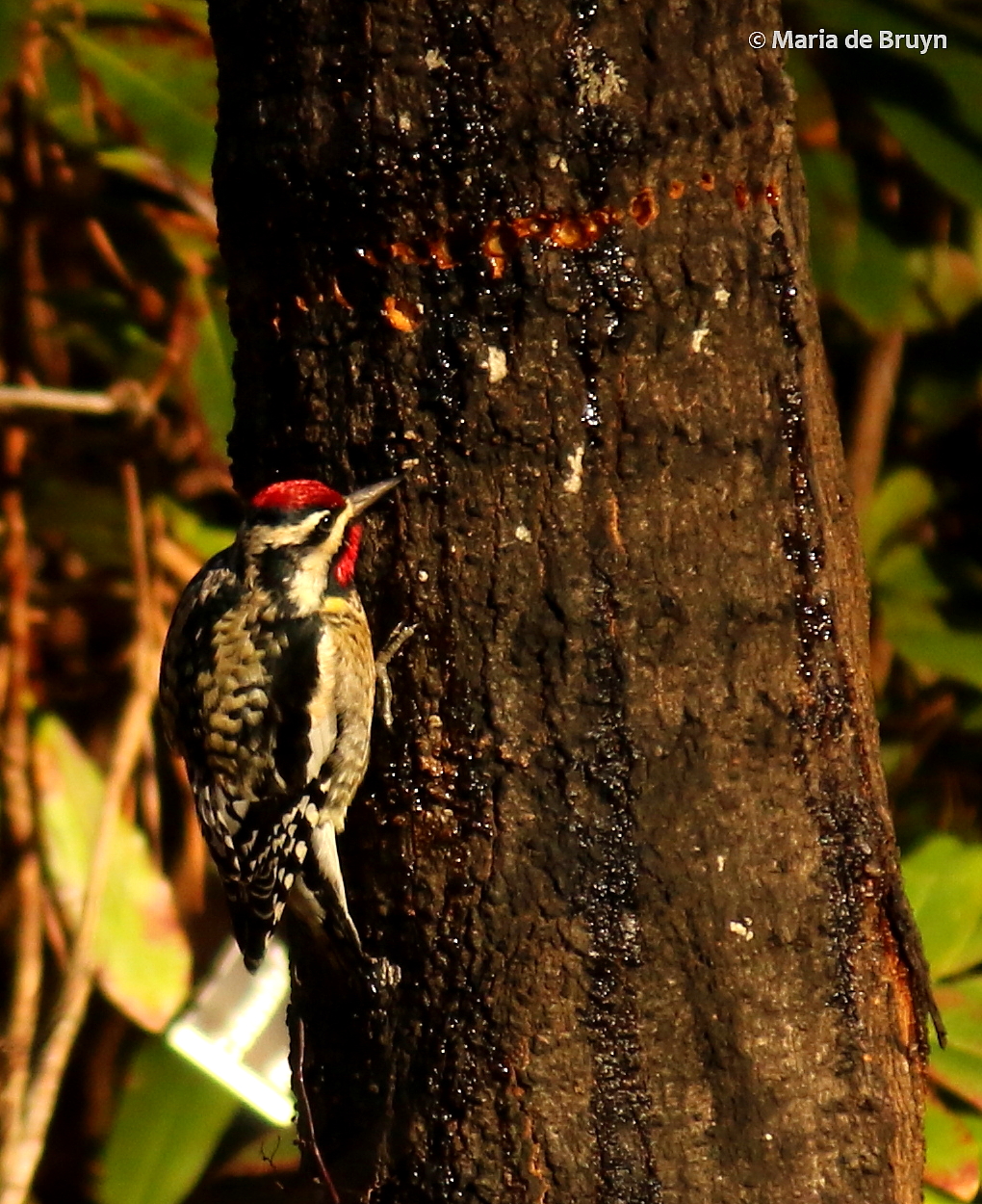
Later, a male sapsucker (identifiable by his red throat) appeared near the Paul Green cabin, where he had been busy working on his sapwells.

yellow-bellied sapsucker I77A7858© Maria de Bruyn res yellow-bellied sapsucker I77A7854© Maria de Bruyn res

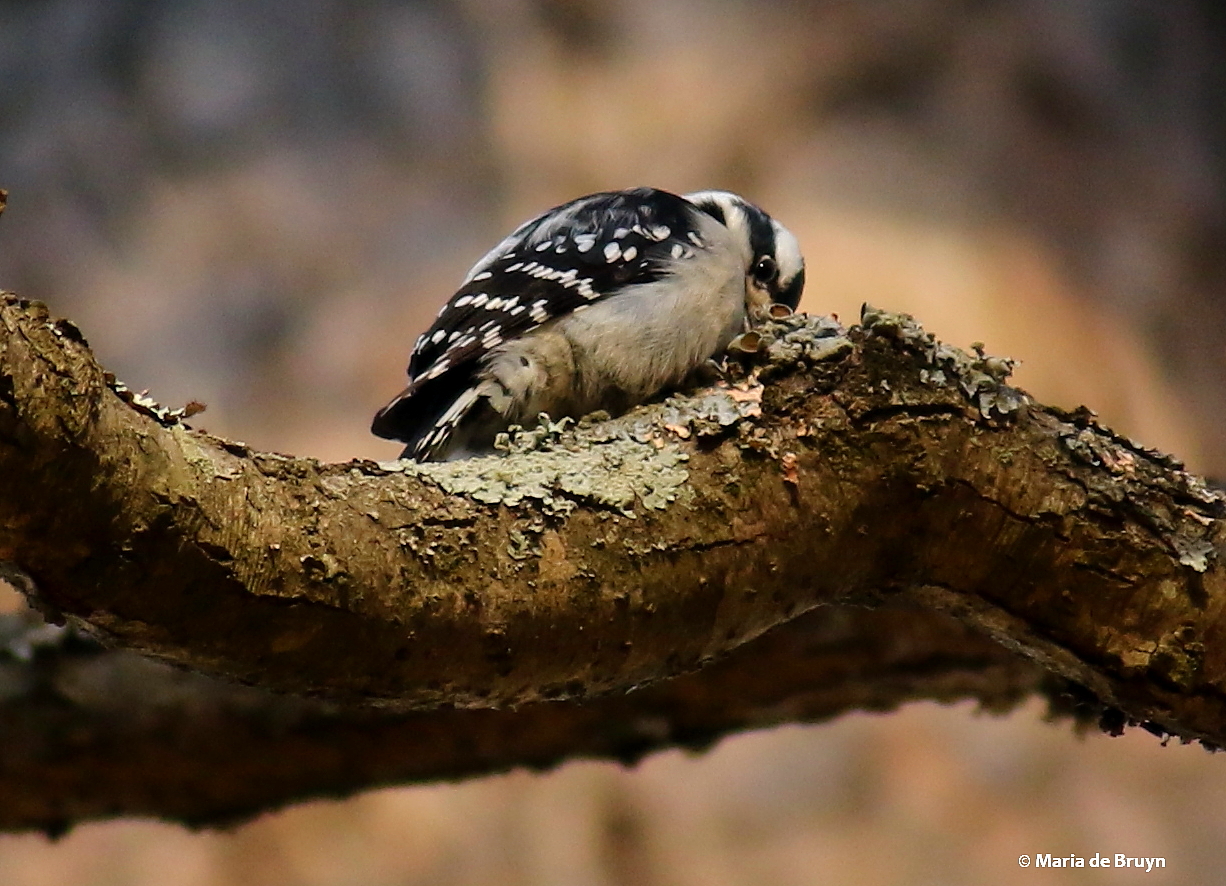
Shortly thereafter a downy woodpecker came to the same spot and sampled sap (or something else) from the row of holes left by the sapsucker! That was a nice example of how what one animal does can benefit another, too.

downy woodpecker I77A7912© Maria de Bruyn

downy woodpecker I77A7921© Maria de Bruyn res

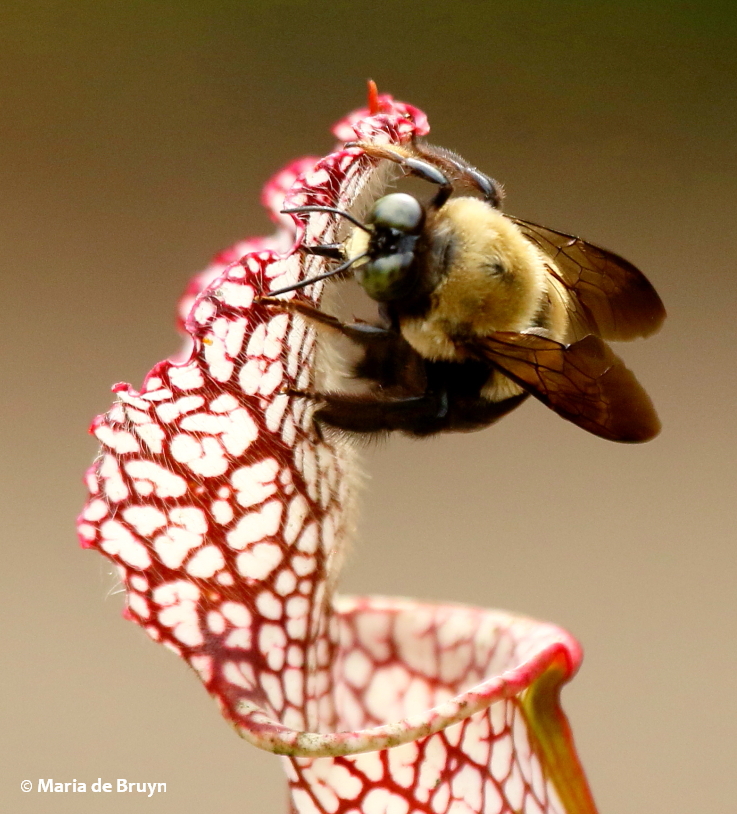
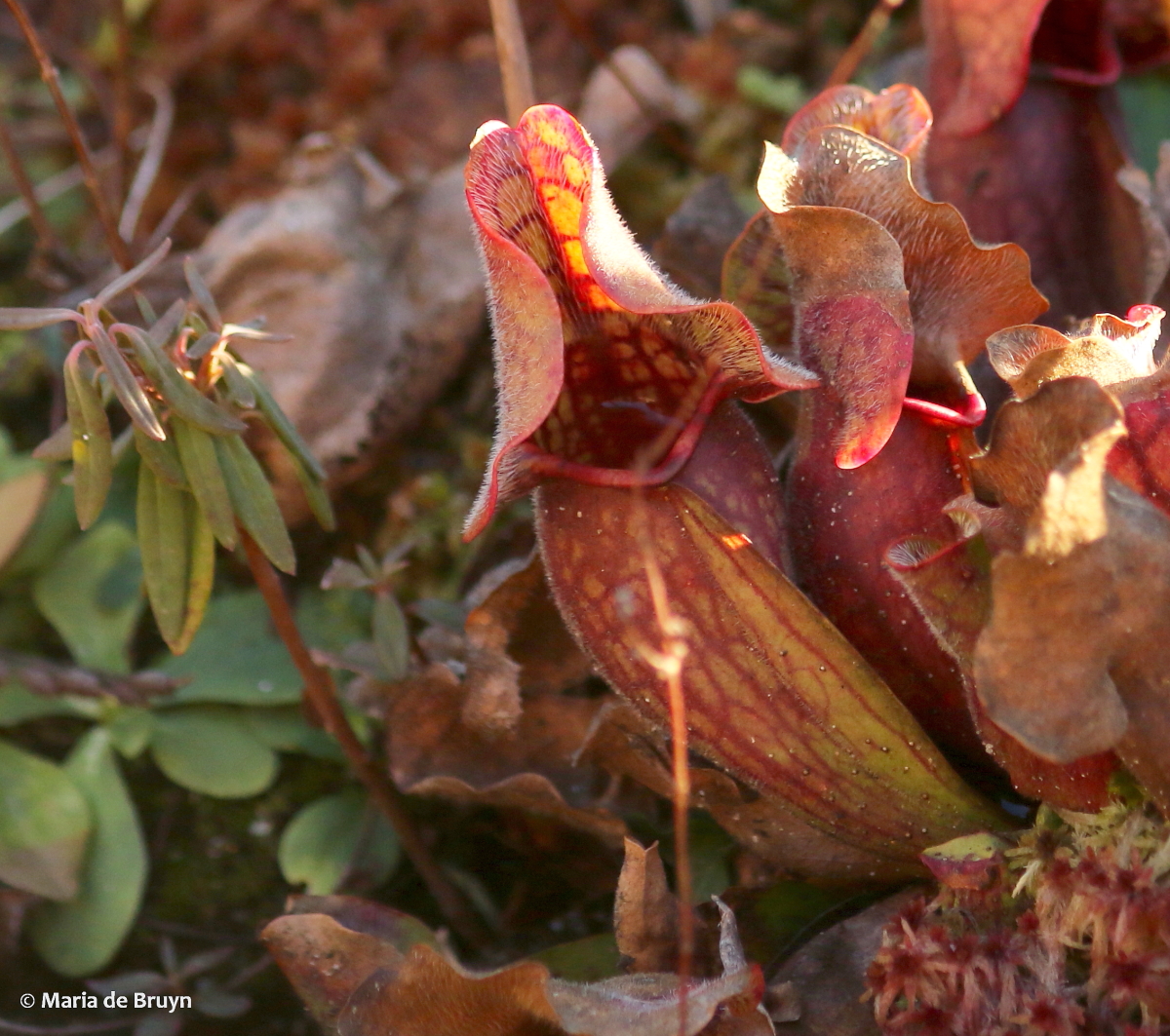
During a plant interlude, I was surprised to see some Southern purple pitcher plants (Sarracenia purpurea) that had not yet shriveled up in the cold.

Southern purple pitcher plant I77A8086© Maria de Bruyn Southern purple pitcher plant I77A8081© Maria de Bruyn res


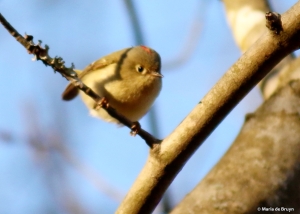
When, I was leaving, a ruby-crowned kinglet (Regulus calendula) alighted overhead,

ruby-crowned kinglet I77A8165© Maria de Bruyn ruby-crowned kinglet I77A8164© Maria de Bruyn

a red-bellied woodpecker arrived, and one more woodpecker made an appearance – a Northern flicker (Colaptes auratus) high up behind some branches in a tall tree. I was using my small zoom lens so the photo quality isn’t great, but you can see that s/he was there.

red-bellied wooodpecker I77A8234© Maria de Bruyn Northern flicker I77A8154© Maria de Bruyn

downy woodpecker I77A8006© Maria de BruynThe only woodpeckers that are common in our town that I missed were the red-headed and hairy woodpeckers – it was truly a woodpecker welcome and a really lovely start to my wildlife photography outings for this year!