Maintaining culture through plants

Burmese farmer IMG_5217© Maria de Bruyn resChapel Hill’s largest refugee community comprises three ethnic groups who fled the country of Myanmar (Burma); a number of them lived in refugee camps in Thailand before they came to the USA. Some 30 of these families have been receiving assistance since 2010 at the Transplanting Traditions Community Farm, through which they are able to grow many of the plants on which they relied as farmers in their home country. The gardens they maintain not only help feed members of their families and community, but also enable them to maintain some of their original culture through dietary customs. The farm also helps the families earn an income through the crops they sell via farmers’ markets and a community supported agricultural (CSA) project wherein customers commit to buying a box of vegetables from them every week.

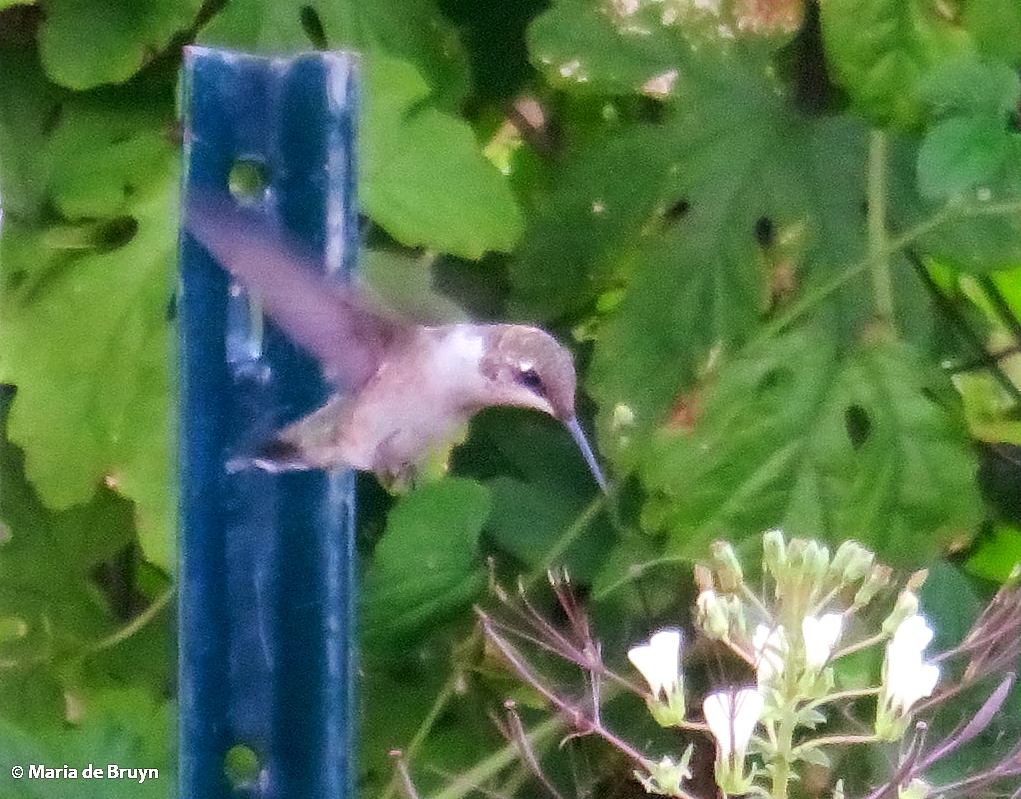
IMG_5230© Maria de BruynThis evening, the Community offered the general public a chance to tour their gardens and sample some of their traditional dishes, a delightful experience to be sure. When I arrived for the event, I first toured one of the plots with shared vegetable gardens. What first struck me was the large number of birds that were in the garden, including American goldfinches (Spinus tristis), chipping sparrows (Spizella passerina), ruby-throated hummingbirds (Archilochus colubris) and great-crested flycatchers (Myiarchus crinitus) among others.

American goldfinch IMG_5117© Maria de Bruyn res

chipping sparrow IMG_5063© Maria de Bruyn res flycatcher IMG_5075© Maria de Bruyn res

ruby-throated hummingbird IMG_5088© Maria de BruynThe air was alive with bird calls and song and as dusk fell, you could see the birds flitting from ground to plant to plant. Butterflies, like this red-spotted purple (Limenitis arthemis astyanax), were also flying about the garden, which had a mix of full-grown vegetables and blossoms promising more crops to come.

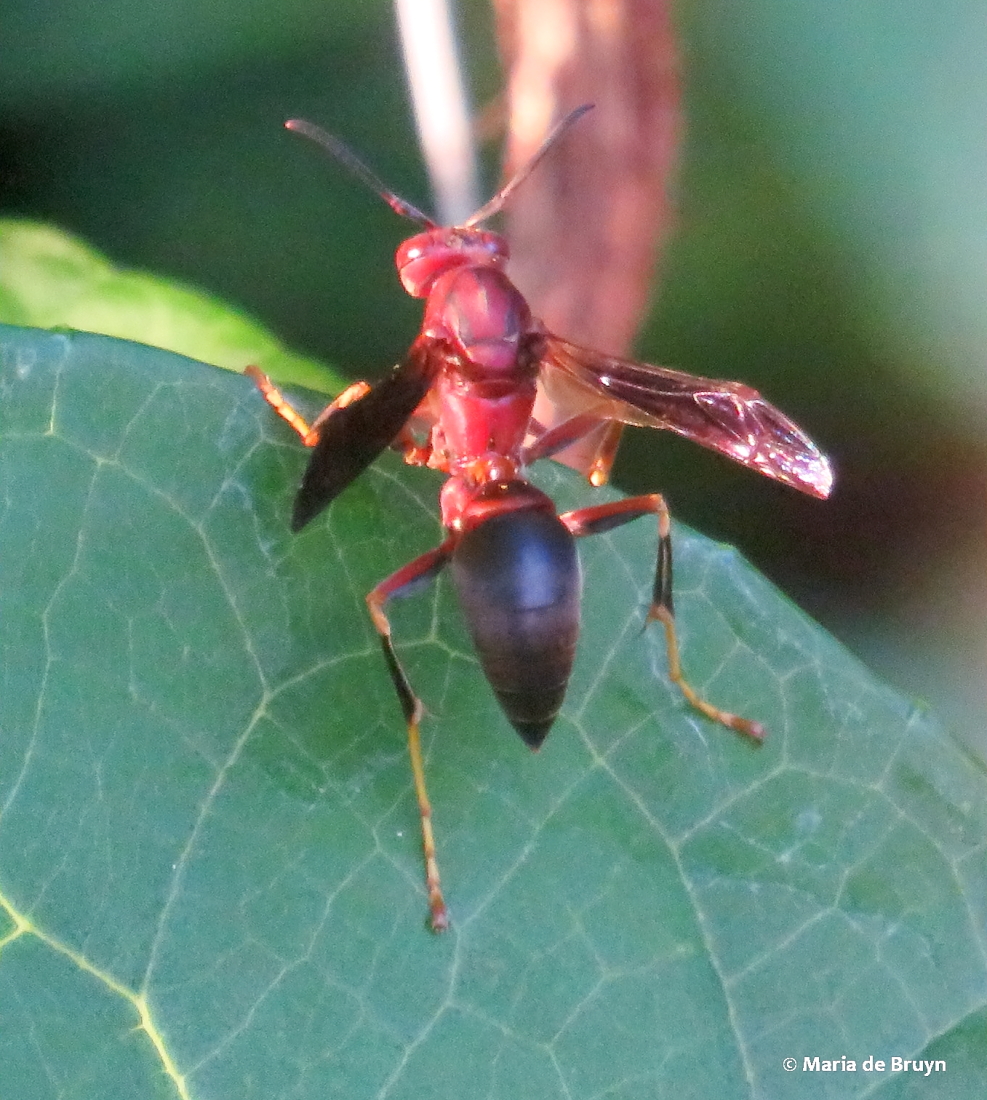
Paper wasps (Polistes) and other insects were also plentiful.
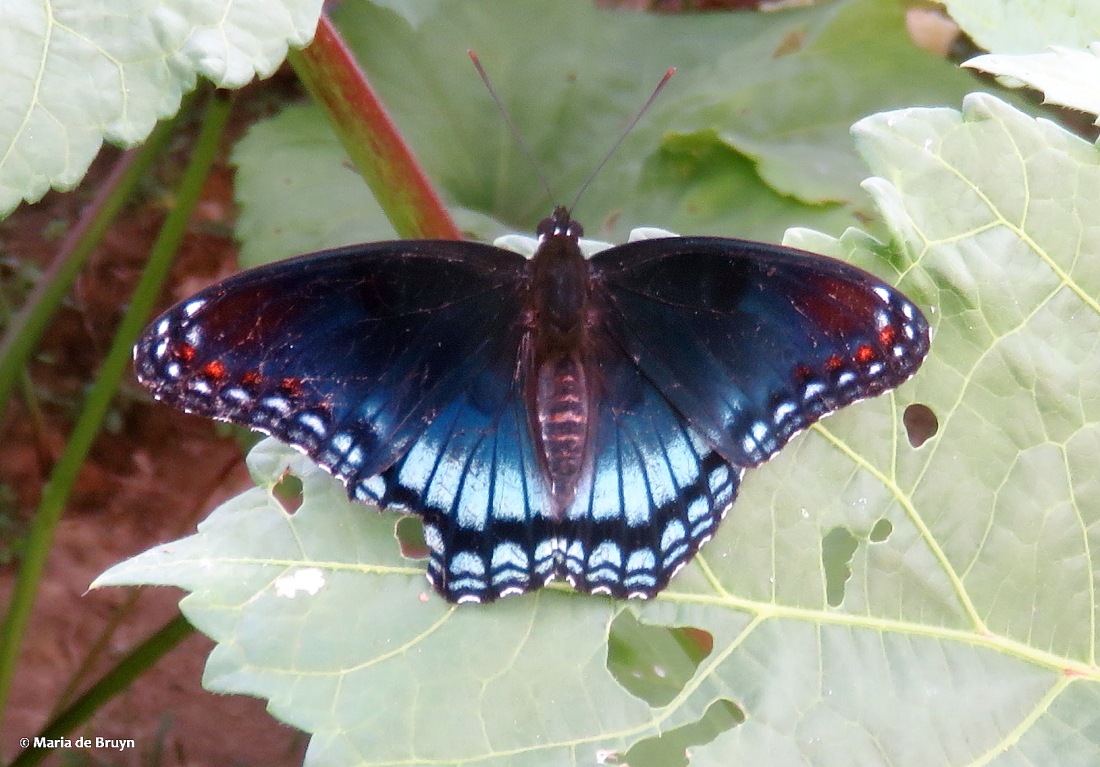
red-spotted purple IMG_5151© Maria de Bruyn res Paper wasp IMG_5182© Maria de Bruyn res

squash IMG_5095© Maria de Bruyn res vegetable blossom IMG_5065© Maria de Bruyn res

The event was co-sponsored by The Conservation Trust for North Carolina, Orange County Partnership for Young Children, and Triangle Land Conservancy, which provided the Community Farm with space in its Irvin Nature Preserve. Representatives of the organizations said a few words about their work and then we were led on a guided tour of a newer part of the Community Farm by Kelly Owensby, the Project Director, and one of the Karen teenagers participating in the project, Joe.

IMG_5194© Maria de Bruyn

We had some tasty beer, provided by a donor, and were given a bit of the Farm’s history as we walked along the path to the new section.  The 5-acre Farm is on land in the rural outskirts of Chapel Hill and, while it is a wonderful site on this 269-acre Preserve, it is not served by public transportation, a circumstance that has made it impossible for some refugee families to participate in the project. The 30 families that have managed to get there daily, in addition to their regular jobs, have made over $125,000 over the past three years with their produce sales.
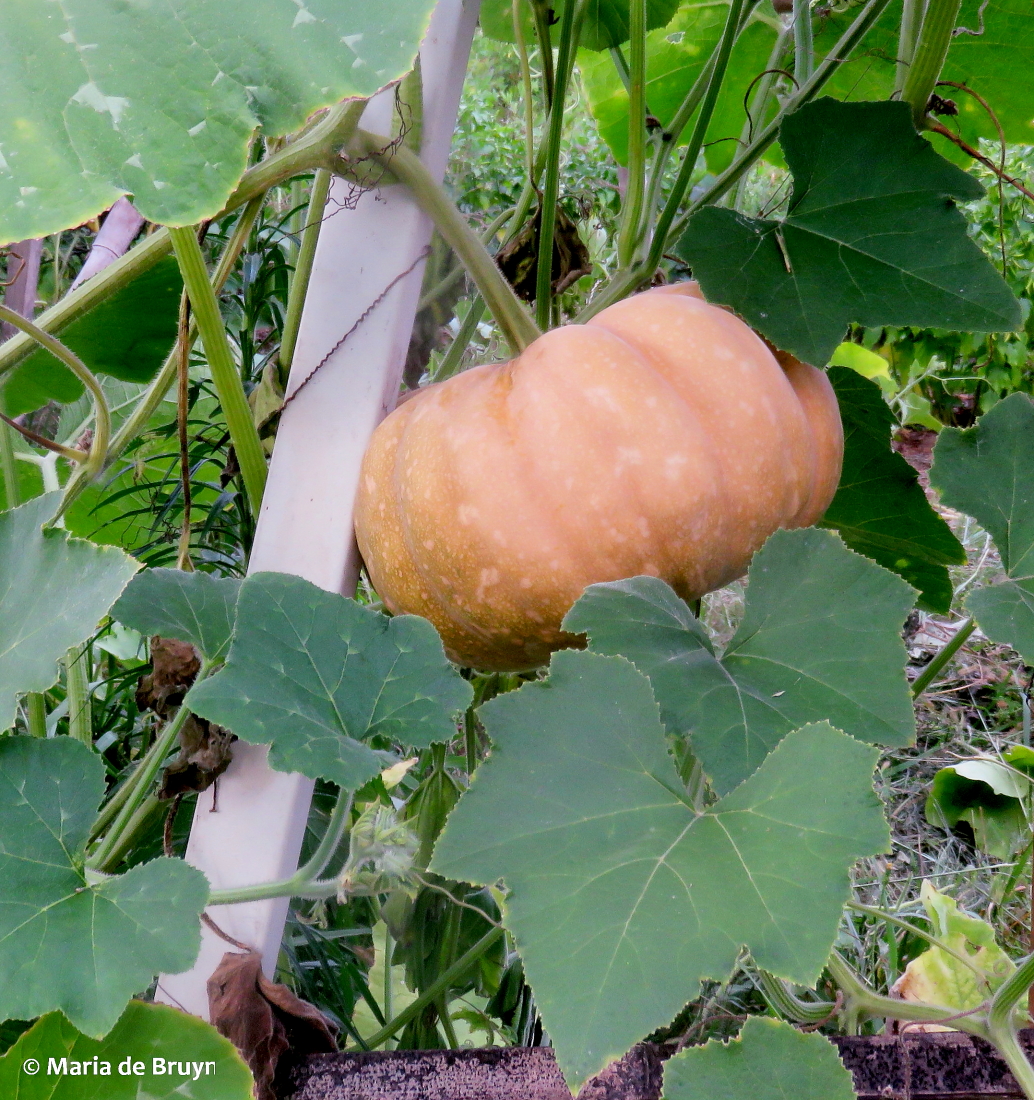
pumpkin IMG_5070© Maria de Bruyn resKaren plant IMG_5139© Maria de Bruyn res

Joe told us about a Karen holiday that are celebrated by these ethnic families here in North Carolina. The wrist-tying ceremony recalls how the Karen people fled through Mongolia a long time ago; elders bind the wrists of young people by winding white thread around them three times wound three times with white string, which wards off misfortune and evil.

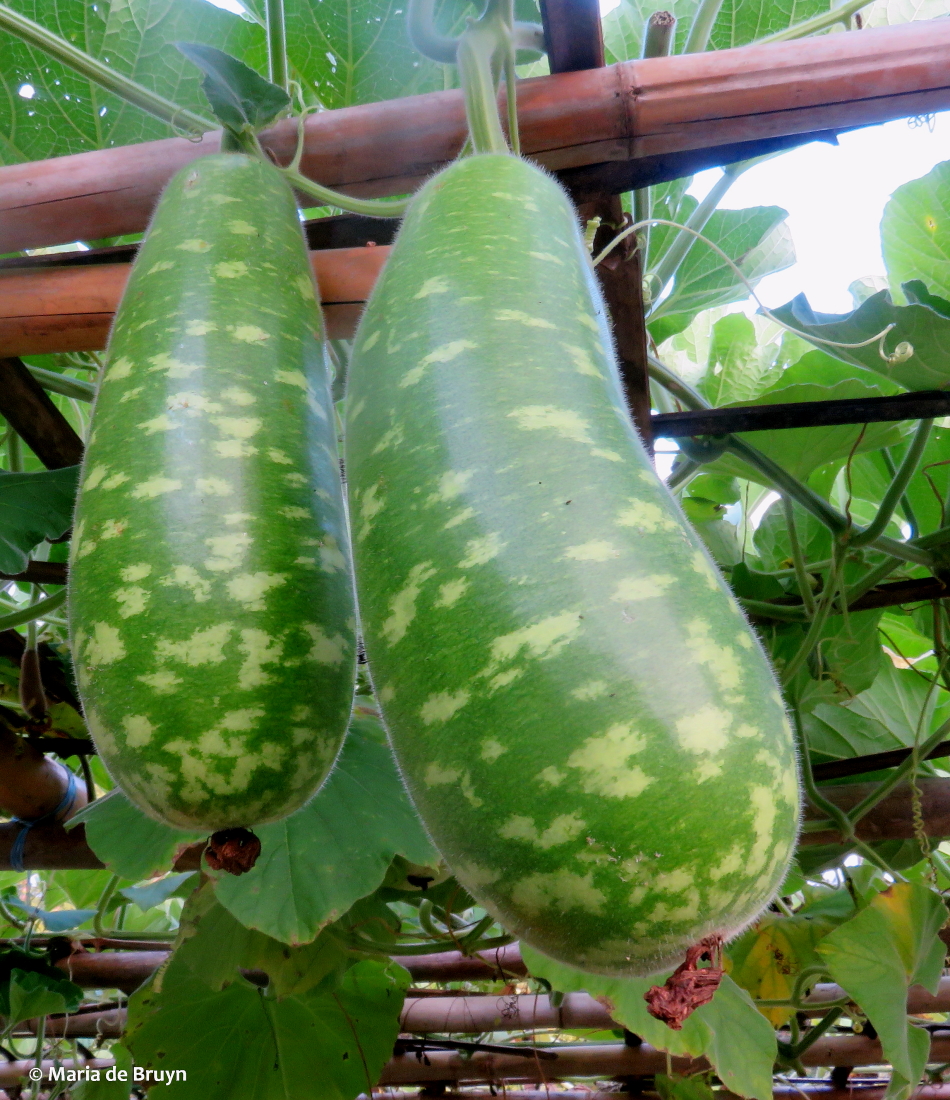
Papaya IMG_5176© Maria de BruynThe farmers grow some 40 plants native to Burma. These plants need to be re-planted from seeds each year since the North Carolina climate is too cold in winter for them to survive as perennials. The papayas don’t bear fruit but the Burmese refugees use their leaves in various dishes. Some of the native plants include gourds, turmeric, bitter melons, ginger, taro root, medicinal herbs and lemongrass. Plain green gourds could be seen hanging near spotted water gourds.
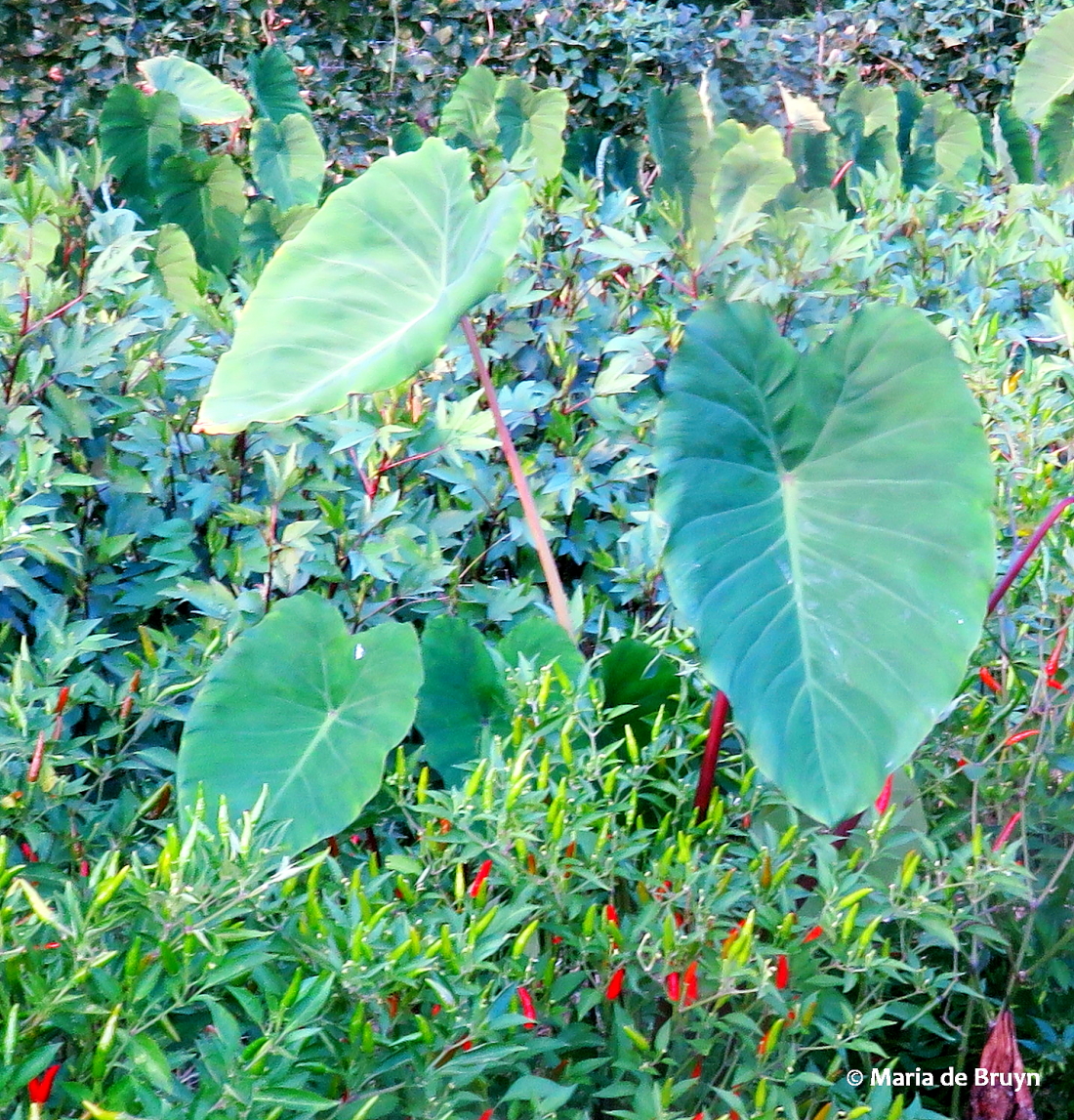
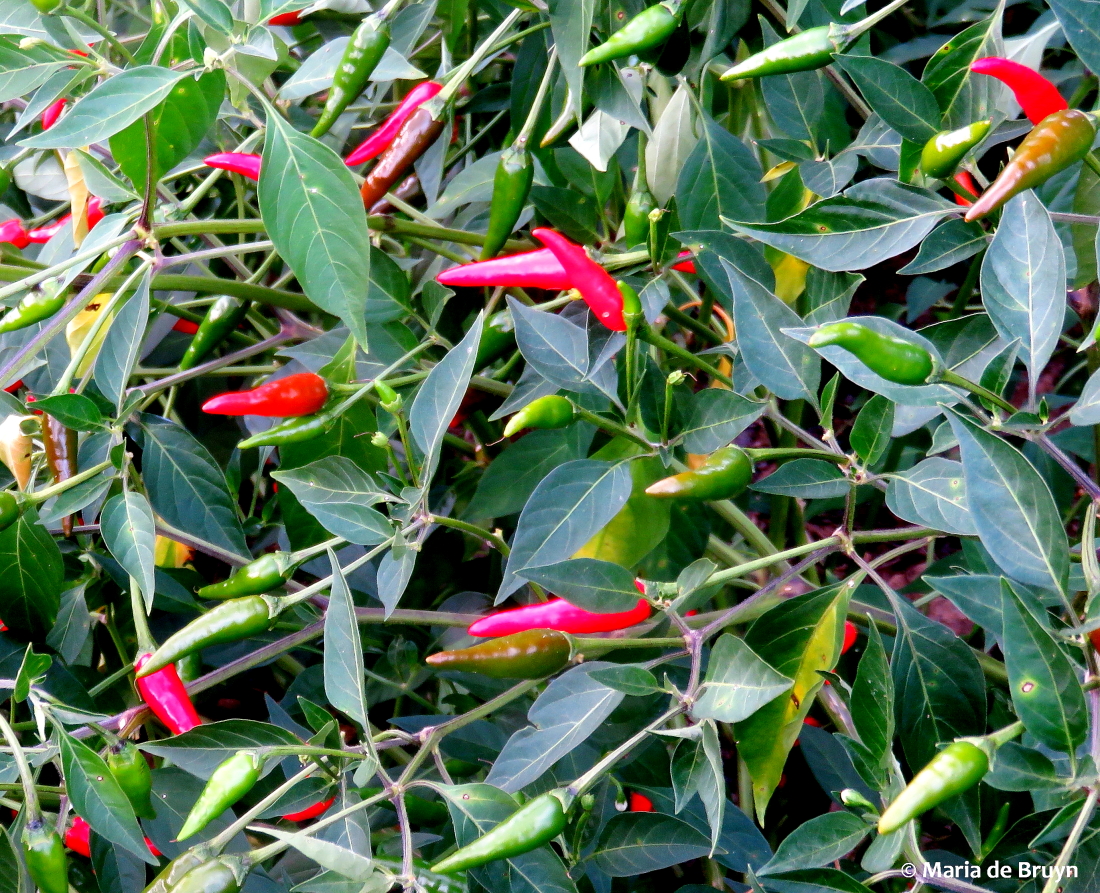
taro IMG_5201© Maria de Bruyn respepper IMG_5115© Maria de Bruyn res

gourd IMG_5211© Maria de Bruyn res water gourd IMG_5204© Maria de Bruyn res

Sesame IMG_5187© Maria de Bruyn resOne female farmer had begun growing sesame seed, a crop she had had in her native country and which she was very glad to be growing here. The bamboo trellises are commonly used to suspend gourds and provide shade for crops that need protection from constant sun such as ginger and turmeric.


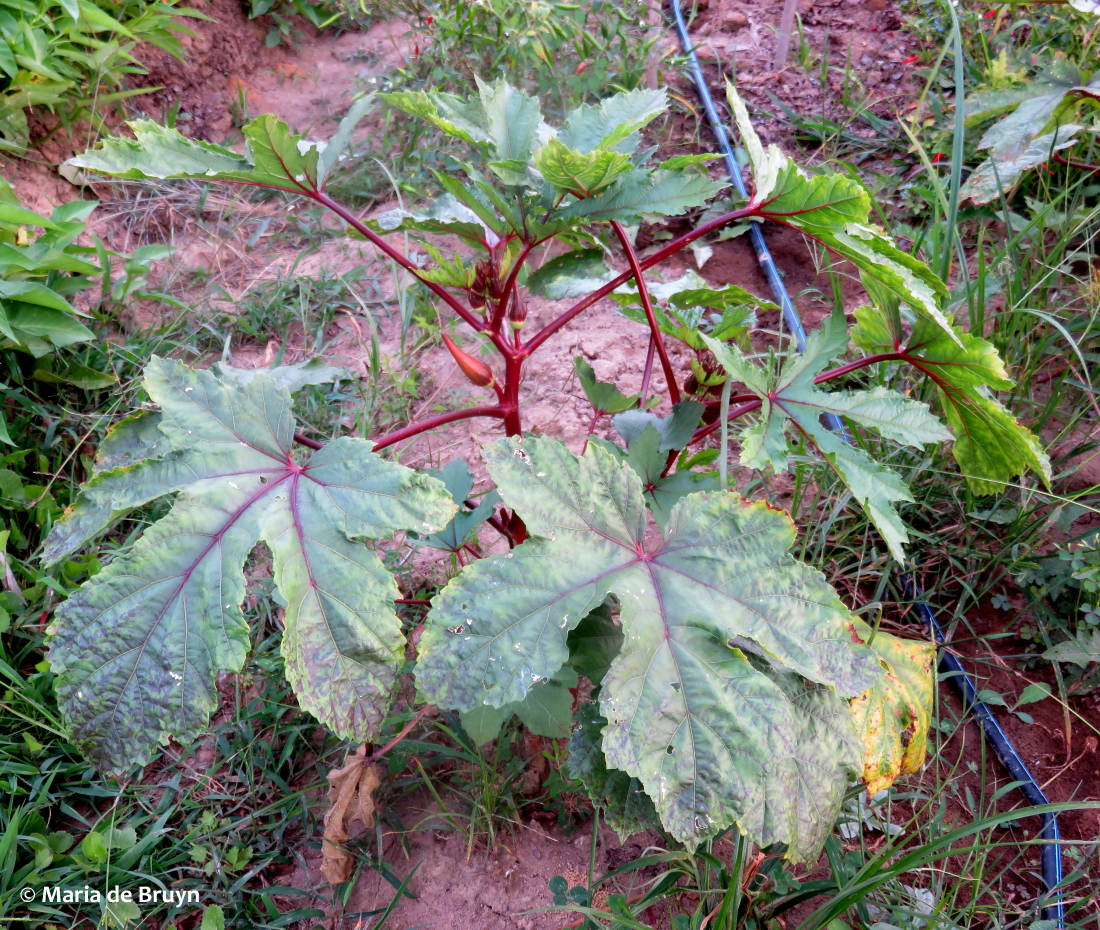
The farmers are also growing plants native to North Carolina, such as okra.

okra IMG_5199© Maria de Bruyn res

IMG_5231© Maria de Bruyn


Burmese vegetables IMG_5219© Maria de Bruyn resBurmese meal IMG_5229© Maria de Bruyn res

The okra featured alongside water gourd and ridge gourd as part of our meal appetizer of vegetable tempura. We were also treated to a delicious soup incorporating okra along with lemon grass and shitake mushrooms, a delicious and slightly spicy pumpkin curry and a salad with some bitter elements that went well with the other dishes.

gourd IMG_5113© Maria de Bruyn res Karen plant IMG_5156© Maria de Bruyn res

I had told four people about this opportunity to sample Karen and other Burmese cuisine but none of them came; they missed a really delicious meal! I hope many more people attend the evening next year.

A morning at Cane Creek Reservoir

The Orange County water authority maintains two recreational areas where it manages water supplies for our area’s drinking and sewage water. One is the Cane Creek Reservoir, where people can boat, fish, bird and relax. When my morning began yesterday with a distressing family situation, for which I would need to wait for news, I decided to visit the reservoir since getting out into nature always helps me handle stress. My foray was rewarding, both in terms of handling the emotional tension and appreciating the marvelous diversity that nature offers for our appreciation.

marbled orbweaver DK7A5291© Maria de Bruyn resMy walk began with a need to wipe spider webs from my face as our arachnid brethren were busy spinning their webs across walking paths. The marbled orbweaver (Araneus marmoreus) was in the process of building a web, climbing up and down and leaving new silken strands behind as they emerged from the spinneret.

marbled orbweaver DK7A5288© Maria de Bruyn

The walking path also held evidence of the passing of a young white-tailed fawn (Odocoileus virginianus). A Carolina satyr butterfly (Hermeuptychia sosybius) was moving from grass blade to grass stem as I proceeded up a hill.

white-tailed deer DK7A5276© Maria de Bruyn resCarolina Satyr DK7A5279 © Maria de Bruyn res

Eastern bluebird DK7A5392© Maria de BruynFirst birds of the day as I left the woods — a pair of Eastern bluebirds (Sialia sialis) that were roosting on a wire. When a pine warbler (Setophaga pinus) wanted to join them, he was given to understand that his proximity was not appreciated.


pine warbler DK7A5383© Maria de Bruyn res

Next, I caught sight of a Northern mockingbird (Mimus polyglottos polyglottos), very busy grooming near the top of a small tree.

Northern mockingbird DK7A5449© Maria de Bruyn res Northern mockingbird DK7A5443© Maria de Bruyn

Southern magnolia DK7A5439© Maria de Bruyn resA nearby Southern magnolia (Magnolia grandiflora) was mostly laden with rose-colored fruit but one large bloom was still vibrant and visited by smaller and larger bees.

A number of birds were singing but I didn’t recognize their calls and I saw some birds flit from one tree to another but then I caught sight of one that was dipping into the grass to pick up insects and then sitting still on a branch for a while. It was a lovely Eastern phoebe (Sayornis phoebe), a type of flycatcher with a yellow hue.

Eastern phoebe DK7A5586© Maria de BruynEastern phoebe DK7A5722© Maria de Bruyn

This bird flew around a bit, perching in trees, on ropes and barbed wire, providing some nice views of its lovely self.

Eastern phoebe DK7A5670© Maria de Bruyn resEastern phoebe DK7A5825© Maria de Bruyn res

A blue-gray gnatcatcher (Polioptila caerulea), busy as these small birds always seem to be, was gleaning insects from twigs and branches.

blue-gray gnatcatcher DK7A5924© Maria de Bruyn Blue-gray gnatcatcher DK7A5920© Maria de Bruyn blue-gray gnatcatcher 1-de Bruyn, Maria DK7A5944 Supported on the balance beam

Coming up on the shoreline of the reservoir, I first spotted some least sandpipers (Calidris minutilla) foraging at the water’s edge. This is the smallest species of sandpiper and they are also the smallest shorebirds in North America. They looked very pretty in flight.

least sandpiper DK7A6073© Maria de Bruynleast sandpiper DK7A6081© Maria de Bruyn

The sandpipers landed near some killdeer (Charadrius vociferous), who looked very large next to them.

killdeer DK7A6103© Maria de Bruyn res

red-spotted purple DK7A6143© Maria de Bruyn resA red-spotted purple butterfly (Limenitis arthemis astyanax) was mud-puddling on the shore, as was a Sachem skipper butterfly (Atalopedes campestris). A trio of American goldfinches (Spinus tristis) also dropped onto the wet mud for a brief time.


sachem skipper DK7A6355© Maria de Bruynsachem skipper DK7A6368© Maria de Bruyn

american goldfinch DK7A6323© Maria de Bruyn res

Several flocks of Canada geese (Branta canadensis) came in to the little lake. One group surprised me by suddenly veering in my direction and flying right in front of me, so close that they more than filled the screen of my zoom lens.

Canada goose DK7A6472© Maria de Bruyn res Canada goose DK7A6195© Maria de Bruyn res

Canada goose DK7A6205© Maria de Bruyn resCanada goose DK7A6207© Maria de Bruyn res

Near the end of my visit, a fellow birder kindly pointed out two green herons (Butorides virescens) to me. (Having binoculars is a definite advantage for this pursuit!). One was rather far away but another within walking distance so I snuck up on it in stages.

green heron DK7A6717© Maria de Bruyngreen heron DK7A6575© Maria de Bruyn

In the left-hand photo, you can imagine the dinosaur ancestor of this stalker.

At one point, the bird stretched and stared at the sky, moving its head from side to side obviously watching something – it turned out to be a juvenile red-tailed hawk (Buteo jamaicensis).

red-tailed hawk DK7A6633© Maria de Bruyn red-tailed hawk DK7A6631© Maria de Bruyn

My sneaking ever closer to the heron was rewarded when I saw the short bird catch and eat a rather large frog for its brunch. It was sad for the frog, but that is the cycle of life.

green heron DK7A6826© Maria de Bruyn resgreen heron DK7A6850© Maria de Bruyn res

And when I returned home a short while later, I learned that the family emergency had been handled for the time being. Like the fauna, our own cycles of life are also unpredictable.

Communal nesting – the rookery at Sandy Creek Park

great blue heron DK7A5496© Maria de BruynUnlike Eastern bluebirds (Sialia sialis) and other songbirds, great blue herons (Ardea herodias) like to build their nests near one another, forming what is called a rookery, or colony of nests. The nests are often seen in the tops of tall trees and comprise large twigs and branches that surround grass, leaves and moss. As many as 135 nests have been counted in a rookery, but the one at Sandy Creek Park that I visited this spring had three nests.

The herons return to the nests for several years running. Each year, the males re-furbish the nests in order to attract a mate.

great blue heron DK7A7297©Maria de Bruyn great blue heron DK7A7367©Maria de Bruyn

You can see the nests well with binoculars from a walking path, but as I have no binoculars and rely on my camera’s zoom lens, I slogged through forest and marshy terrain on numerous occasions to get close to the pond that had their rookery pine trees on the other side. They were still a bit out of range for my lens, but occasionally I managed to get a half-way decent shot, which encouraged me to return often to follow the nestlings’ progress.I followed them from 8 March through 26 June.

great blue heron DK7A5924© Maria de BruynGreat blue heron DK7A3689© Maria de BruynThe top nest in an open-to-the sky tree appeared to have four babies, while the nest below it had three.

A nest in a tree to the right, which had much more dense foliage, seemed to be occupied by only one or two babies.

great blue heron DK7A6005© Maria de Bruyn

There were always 1-4 adults around, including both parents on the nest and “guards”, who took up posts atop nearby trees to watch the nearby skies. This is one reason for the rookeries; the herons want to ensure that there are adults around to protect the nestlings from predators, which include raccoons, crows and hawks, such as this red-shouldered hawk (Buteo lineatus) that was hanging around the nests one day.

red-shouldered hawk DK7A7354© Maria de Bruyn red-shouldered hawk DK7A7371© Maria de Bruyn

great blue heron DK7A6601© Maria de BruynGreat blue heron DK7A3495© Maria de Bruyngreat blue heron DK7A8238© Maria de Bruyn resThe parents feed their young by regurgitating food and the young birds get excited when a parent returns after being away for a time.

The nestlings make quite a lot of noise squawking loudly while they jostle to get first in line for the meal.

great blue heron DK7A3743© Maria de BruynThe young herons appear to “argue” with one another with loud calls and it seemed that they “jousted” with one another using their beaks.

great blue heron DK7A3735© Maria de Bruyn

Weaker chicks may miss out on getting enough food and can die of starvation, but that didn’t happen at the Sandy Creek rookery. Some chicks were obviously larger and stronger than others, but even the smallest fledglings survived.As they grew, the babies began standing tall and walking around the nest.

great blue heron DK7A8283© Maria de Bruyn Great blue heron DK7A3638© Maria de Bruyn

great blue heron DK7A9348© Maria de BruynWhen they were close to fledging, they stood near the edge of the nest and practiced spreading and flapping their wings. Sixty days after hatching (much longer than smaller birds!), the young herons were ready to fly and began taking short flights to nearby trees, before venturing out on farther trips. great blue heron DK7A8960©Maria de BruynThe young ones will not breed until they are two years old.

Watching events unfold at the rookery was a new past-time for me this year and likely one I’ll repeat in the future. If you have time and the opportunity, I’d recommend the experience!

New bird generations emerge in my yard!

This spring and summer, I’ve had the pleasure of watching various species of birds in my yard care for new offspring until they have fledged (left the nest). My most recent observations came today as I watched three hatchlings jump bravely into their wide new world. This blog will introduce you to some of my new neighbors; two blogs to follow will go back in time to spring and early summer to describe some nesting I witnessed in local parks and reserves.

gray catbird IMG_3888© Maria de BruynA dense privet tree next to my carport offered a pair of gray catbirds (Dumetella carolinensis) space to construct a well-hidden nest. I discovered it was there because the parents suddenly began yelling at me loudly whenever I left the carport to walk into the yard and then a bird bander who was visiting managed to locate the nest, which was about 8 feet up so I couldn’t see the eggs in it.

I kept an eye on the shrub and saw the parents were flying in with insects and emerging empty-beaked, so I knew the eggs had hatched. One day, I ventured close and peered through the privet branches and saw a couple little heads sticking up above the nest.

gray catbird IMG_3933© Maria de Bruyn res gray catbird IMG_3903© Maria de Bruyn res

A short time later, the baby birds hopped out of the nest and they stayed in the large shrub for several days as their parents continued bringing them a variety of insects.  As I mentioned in a previous blog, the parents were good providers, sometimes bringing more than one type of insect home in their beaks.

gray catbird DK7A2939© Maria de Bruyn res gray catbird DK7A2937© Maria de Bruyn res

Eastern bluebird IMG_3881© Maria de Bruyn resA pair of Eastern bluebirds (Sialia sialis) laid five eggs in a nest box in my front yard and I was able to record when all the eggs had been laid. Information provided online about time to hatching (12 to 14 days) alerted me as to when I might see newborns.  Only four of the five eggs hatched; the fifth one was broken. I also checked how long it takes for hatchlings to develop until they leave the nest – that can take 16-21 days but usually 17-18 days.

Eastern bluebird DK7A3842© Maria de Bruyn res


The bluebird parents were diligent about bringing food, mostly caterpillars and insects but supplemented by wild raspberries and dried meal worms that I had made available. It turned out this brood wasn’t too interested in the meal worms; I found a layer of them in the nest when the babies fledged.


Eastern bluebird DK7A3411© Maria de Bruyn resEastern bluebird DK7A8706© Maria de Bruyn res


Eastern bluebird DK7A3210© Maria de Bruyn resEastern bluebird DK7A8685© Maria de Bruyn res

Eastern bluebird DK7A3137© Maria de Bruyn RESClose to fledging, the parents began showing protective behavior – chasing squirrels out of the large tree in front of the nest box, flying at other birds that came too close, keeping an eye on me as I sat near the box. Mama and papa removed fecal sacs frequently, flying off with them to a considerable distance from the nest. Only once did I see a parent actually swallow the fecal sac.


Eastern bluebird DK7A3081© Maria de Bruyn resMama investigated something odd at the edge of the box one day, flying down to look closely at the gap between the box wall and door. When I looked, I didn’t see anything. She also would occasionally hover in front of the nest box opening, as if she was demonstrating to the babies what they had to do.

Eastern bluebird DK7A3149© Maria de Bruyn res Eastern bluebird DK7A3174© Maria de Bruyn res

I was lucky enough to see all four babies leave the nest. Two of them were definitely stronger than the other two, who couldn’t fly as well and who didn’t seem to have feathers that were so well developed. When I moved close to take photos, the cautious parents dive-bombed me and the young eventually moved across the street. I never saw the young ones at my feeders.

Eastern bluebird DK7A4306© Maria de Bruyn resEastern bluebird DK7A4281© Maria de Bruyn res

Eastern bluebird DK7A4489© Maria de Bruyn res Eastern bluebird DK7A4386© Maria de Bruyn res

These past few weeks, some bluebirds raised a second brood in my backyard. This nest had some history. First, three eggs were laid, with a pair of bluebirds visiting the nest occasionally. Unfortunately, one day I saw a Cooper’s hawk (Accipiter cooperii) swoop in and it looked like the raptor had caught one of the bluebirds. In any event, the eggs were abandoned. After a few weeks, I had just decided to clean out the nest with eggs when I suddenly saw another pair of bluebirds building a new nest on top of the old one. They, Eastern bluebird DK7A7145© Maria de Bruyn restoo, laid three eggs.

Using the guidance given to me by the Smithsonian Institute’s Backyard Nestwatch Project, I checked the box every three days until the eggs hatched and then every two days to check on the nestlings’ well-being.

I was surprised that the mother was not sitting on the eggs much of the time, but the local Audubon chapter president told me that when the weather is very hot, the parent will not brood because it could become too warm inside the box.

The parents were quite diligent in bringing food to the hungry babies. They occasionally visited my mealworm and suet feeders but mostly just to feed themselves. They appeared to be feeding their babies an exclusive diet of caterpillars and insects and a little bit of suet – no mealworms though.

Eastern bluebird DK7A7038© Maria de Bruyn resEastern bluebird DK7A8265© Maria de Bruyn res

Eastern bluebird DK7A8265© Maria de Bruyn res Eastern bluebird DK7A8041© Maria de Bruyn res

They were busy removing fecal sacs as well and I discovered that the baby birds actually present the sac to the parent by sticking up their behinds so the parent can pull out the sac. That made for a couple unusual photos!

Eastern bluebird DK7A8089© Maria de BruynEastern bluebird DK7A8106© Maria de Bruyn res


Eastern bluebird DK7A8351© Maria de Bruyn res

Eastern bluebird DK7A8316© Maria de Bruyn resI had calculated that today or tomorrow would likely be fledging day so after a doctor’s appointment and grocery shopping, I settled into a canopy chair to observe the box. The parents were very busy bringing food but also taking time to sit in the crepe myrtle tree across from the box to call to their little ones. The nestlings were now sticking their heads out of the box so I figured that fledging was imminent.

As I watched the parents and nestlings for an hour, I also looked around at the other bird activity in the yard. Suddenly, I saw an immature red-bellied woodpecker (Melanerpes carolinus) take interest in the nestlings and it swooped over to the box. I feared for the little ones but one of the parents descended on the larger bird to drive it away from their temporary home.

red-bellied woodpecker DK7A8468© Maria de Bruyn resred-bellied woodpecker DK7A8472© Maria de Bruyn res

Eastern bluebird DK7A8532© Maria de BruynAfter a while, I thought bird No. 1 was going to jump but at the last minute s/he crawled back inside. I was occasionally turning my head to observe other birds at feeders and just as I turned my head again, action erupted.

Eastern bluebird DK7A8660© Maria de Bruyn resI was warned because the bluebird parents swooped down from the crepe myrtle tree to fly straight at my head under the canopy of my chair – they were not taking any chances! It turned out that bird No. 1 had flown by me and landed on the side of my screened-in porch, which was where I had been looking.

Eastern bluebird DK7A8714© Maria de BruynEastern bluebird DK7A8715© Maria de Bruyn res

The parents continued to fly at me, perhaps 6 or 7 times coming very close to my face, so I went on the porch so that they could calm down. Then they began chasing other birds as their young one had flown from the porch to a tree. While they were occupied, I went back to the chair and was able to see babies 2 and 3 jump from the nest box.

Eastern bluebird DK7A8864© Maria de Bruyn resEastern bluebird DK7A8865© Maria de Bruyn res

Eastern bluebird DK7A9056© Maria de Bruyn resEastern bluebird DK7A9058© Maria de Bruyn res

Eastern bluebird DK7A9059© Maria de Bruyn res

It was a partly cloudy, partly sunny morning for the fledging today and then a few hours after the bluebird young flew, the rain began. There has only been a little thunder and no lightning so perhaps this will just be a nice steady rain that we can use and not severe weather. I do feel a little sorry for the new members of our local bluebird society, however, as they have to face getting sodden on their first day outdoors. The parents are visiting the mealworm feeder now; I hope I get to see the babies at my feeders the coming days. In any event, they made my morning very enjoyable indeed and I have a third nesting report to add to Backyard Nestwatch!


P.S. I have higher-resolution photos for sale as prints or photo cards; let me know if you ever want a particular one!


Nesting perils – or not?

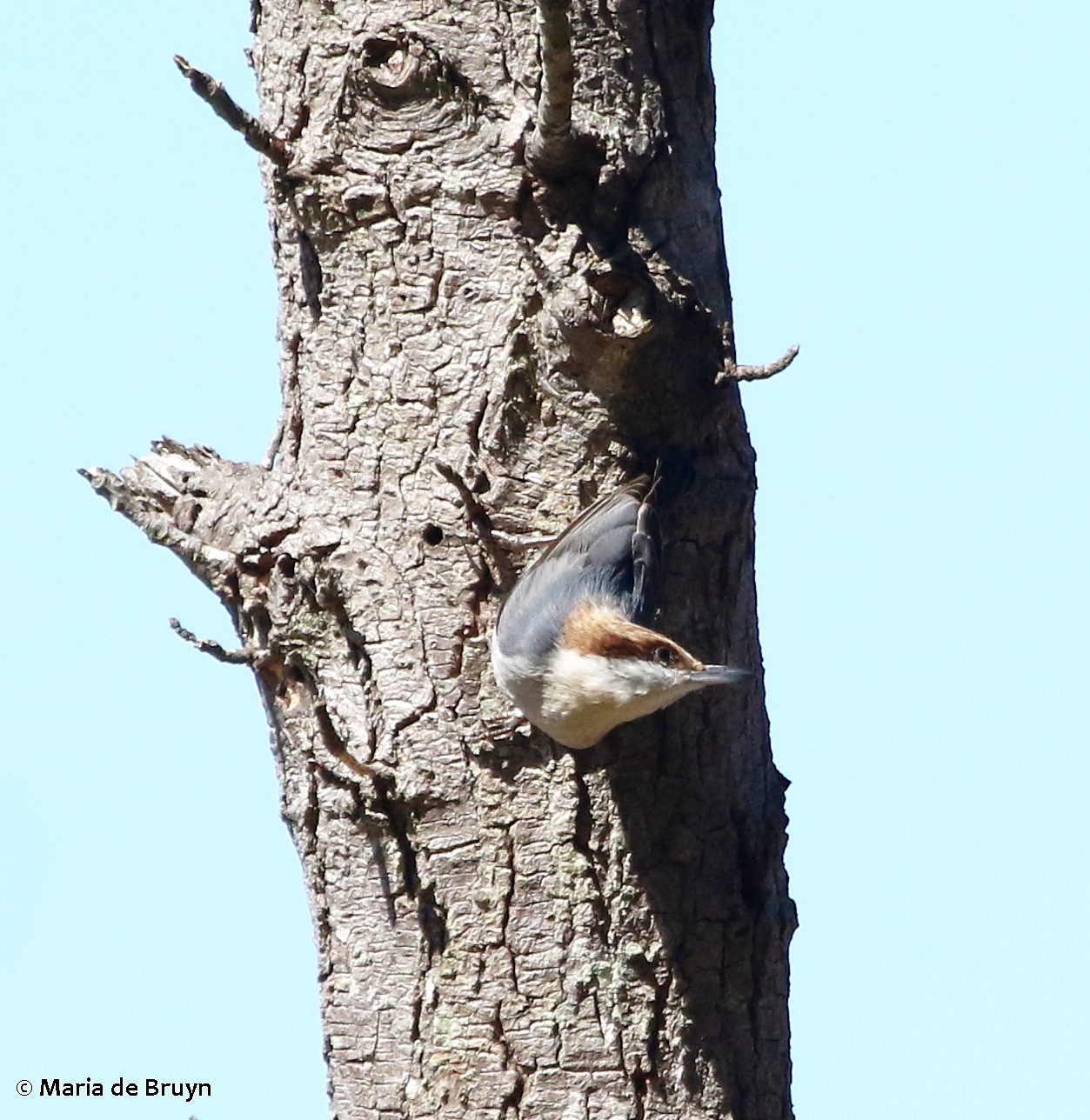
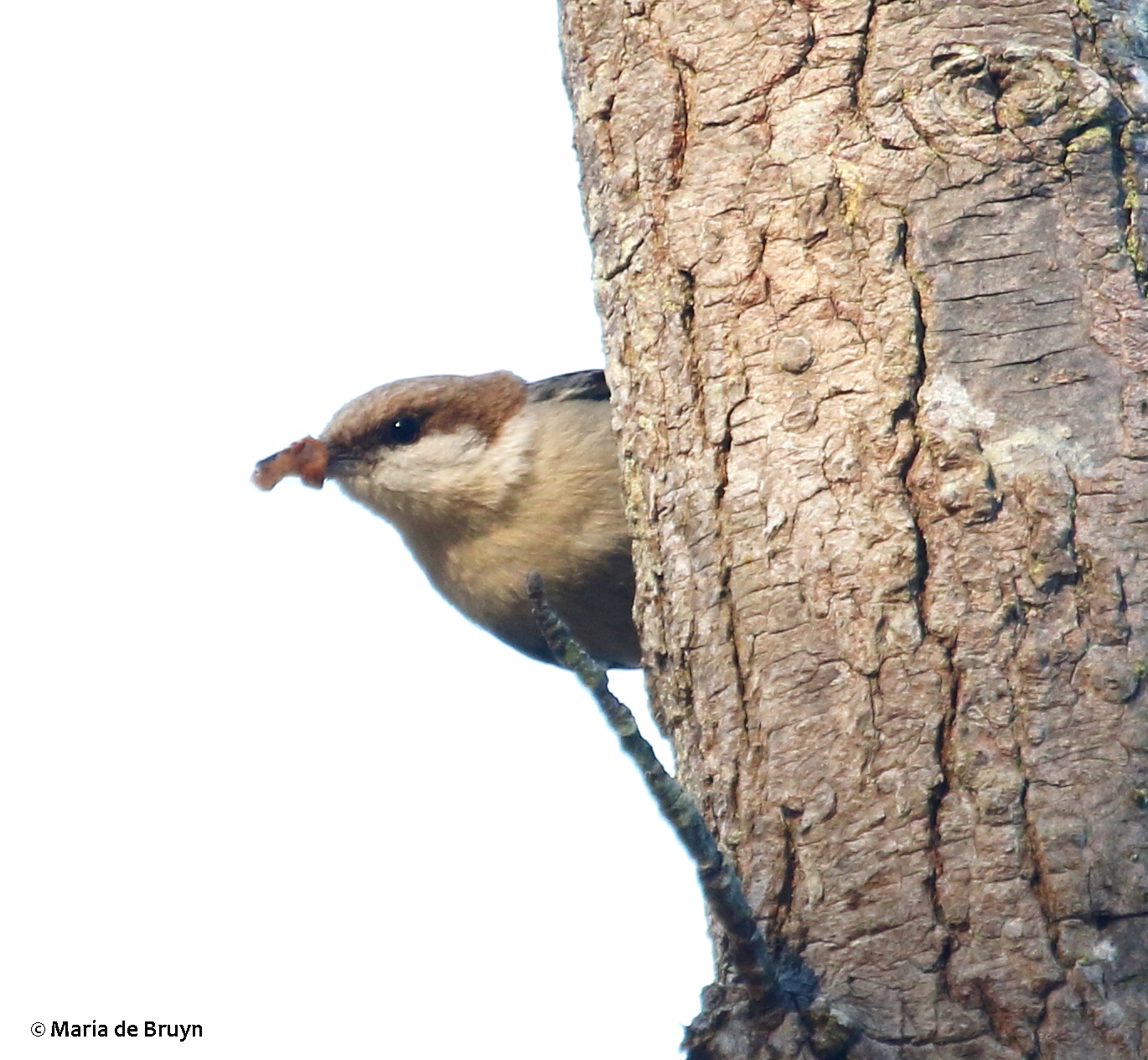
brown-headed nuthatch DK7A5128© Maria de Bruyn resLast year, I had the good fortune to come upon a snag (a dead standing tree) near the shore of Jordan Lake in which brown-headed nuthatches (Sitta pusilla) were tending a nest. This year, thinking back to those delightful visits, I decided to go investigate the tree again. My first visit revealed no nuthatches in the vicinity, but a second visit a few days later on 15 March revealed they had a nest in the same place again. As these birds may keep mates for several years, I just assumed it was the same pair as in 2014, so it was like seeing old friends!


brown-headed nuthatch DK7A0438© Maria de Bruyn brown-headed nuthatch DK7A0467© Maria de Bruyn

brown-headed nuthatch DK7A9987©Maria de BruynOn 29 March, it looked like the birds were bringing food to the nest. One might also have had a piece of bark in its mouth; these nuthatches may use bark pieces as tools to help dig for insects. If the female had by chance laid her eggs around 15 March, the eggs would have just been hatching now. Usually, it then takes 18-19 days for the babies to fledge, so they could have been ready to fly around 15 April, but the egg-laying and hatching could have been earlier.

brown-headed nuthatch DK7A9990©Maria de Bruyn resbrown-headed nuthatch DK7A9994©Maria de Bruyn res

On 4 April, the birds were still bringing food to the nest.

brown-headed nuthatch DK7A4943© Maria de Bruynbrown-headed nuthatch DK7A5264© Maria de Bruyn

brown-headed nuthatch DK7A4649© Maria de Bruyn res

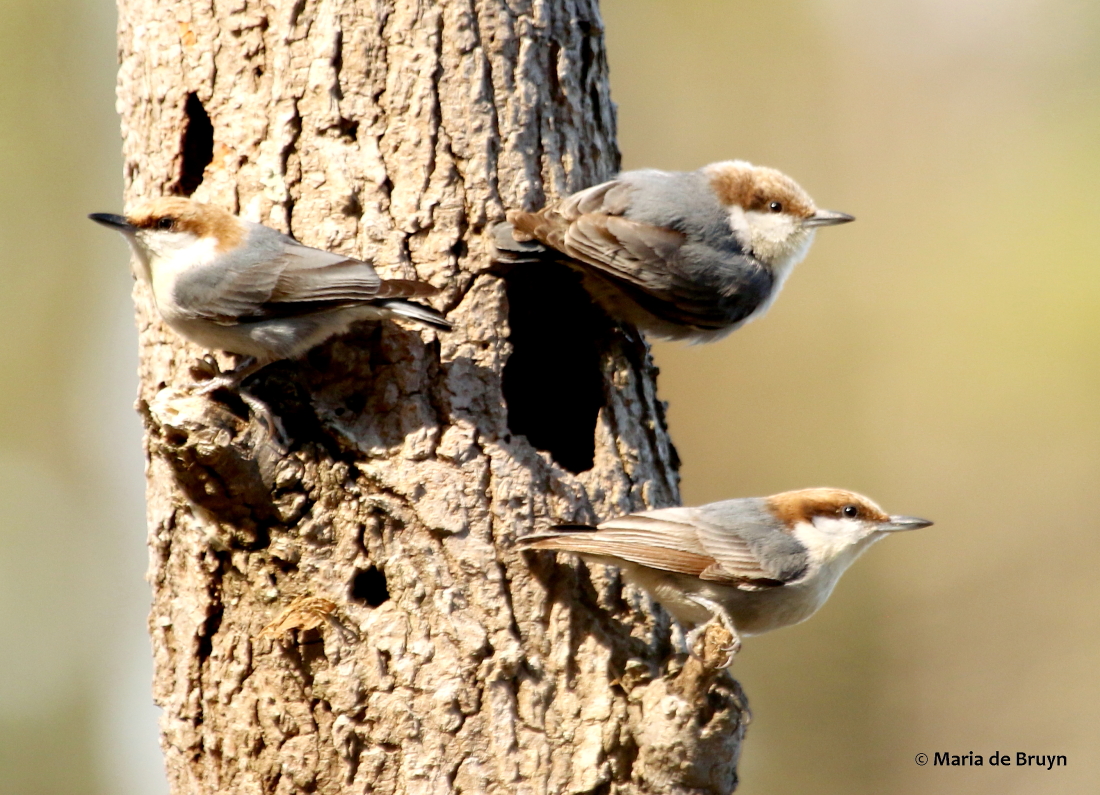
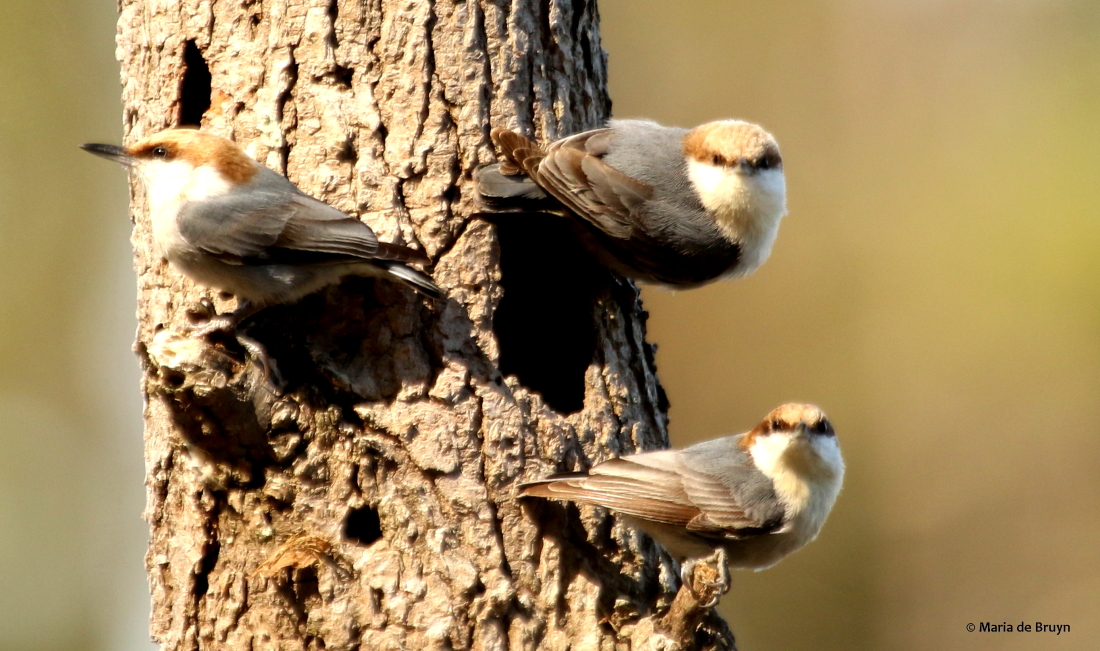
brown-headed nuthatch DK7A5331© Maria de Bruyn resI was photographing the birds and wondering which one might be the male and which the female. Suddenly, I was surprised to see three birds, all about the same size.

Reading up on the species taught me that not only the mating pair but also other individuals, usually young males, help attend the nests. Scientists don’t yet know whether these helpers are older offspring, but it seems to me that it might be similar to the older son helpmates among the American crows.

brown-headed nuthatch DK7A5353© Maria de Bruyn resbrown-headed nuthatch DK7A5351© Maria de Bruyn res

brown-headed nuthatch DK7A5366© Maria de Bruyn res brown-headed nuthatch DK7A5364© Maria de Bruyn res

brown-headed nuthatch DK7A8333© Maria de BruynOn the other hand, perhaps the rather fuzzy bird was a baby, which lacks the white neck spot seen in the adults. The babies also tend to have more gray and less brown coloring than adults. On 12 April, I didn’t see any nuthatches, but on 27 April, I saw a bird peeping out of the nest, well past the fledging period I think.

As I mentioned in a previous blog, since 1966, the population of brown-headed nuthatches has declined by 45% because they are losing nesting habitats (dead and pine trees) to deforestation and urbanization. Apparently, they also lose nests to predation.

brown-headed nuthatch 2 DK7A5128© Maria de Bruynbrown-headed nuthatch DK7A9709© Maria de Bruyn res

brown-headed nuthatch DK7A9827© Maria de Bruyn resOn 9 May, when I returned to Jordan Lake to see if nuthatches were still around the nest, I found their home tree decapitated, precisely at the spot where the hole had been for their nest. I imagine that a raccoon might have gotten up there, although I suppose some other predator could have wreaked havoc as well. In any event, it means I won’t be able to count on visiting the nuthatches there next spring.

The mysteries of the third bird’s identity and what took down the nest will likely remain unknowns. But at least I have my photos of the lovely little birds’ last nest at that site!