 While ospreys are one of my favorite large birds, the gorgeous ruby-crowned kinglet (Regulus calendula) has won my heart among my tinier feathered friends. Today I’m sharing some portraits of kinglets made the past couple months (in my yard and at Bolin Creek greenway in Chapel Hill, Jordan Lake woods, Sandy Creek Park in Durham).
One of the more active small birds (about 4 inc hes or 10-11 cm long), this kinglet is in almost constant motion, which makes getting good portraits a bit of a challenge. Despite this high level of activity, however, research has shown that the ruby-crowned kinglet only uses up to 10 kcal a day in energy. (Sometimes I think this holds true for me as well as the weight I want to lose just stays in place.)
 Their main diet consists of insects, including spiders, ants, wasps, beetles and aphids. They will also occasionally eat seeds, fruit and sap.
In addition, these kinglets – or at least the one that has been visiting my yard during migration the past couple years – also love suet a lot.
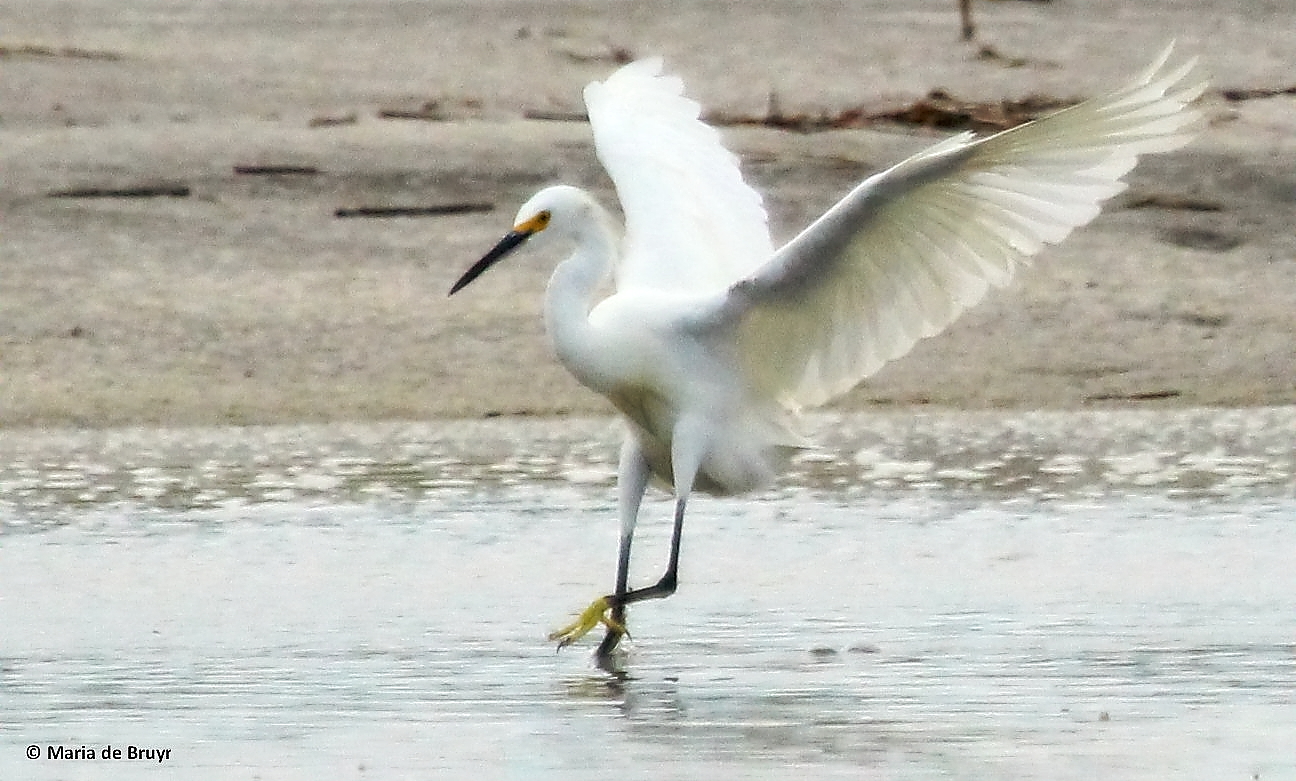
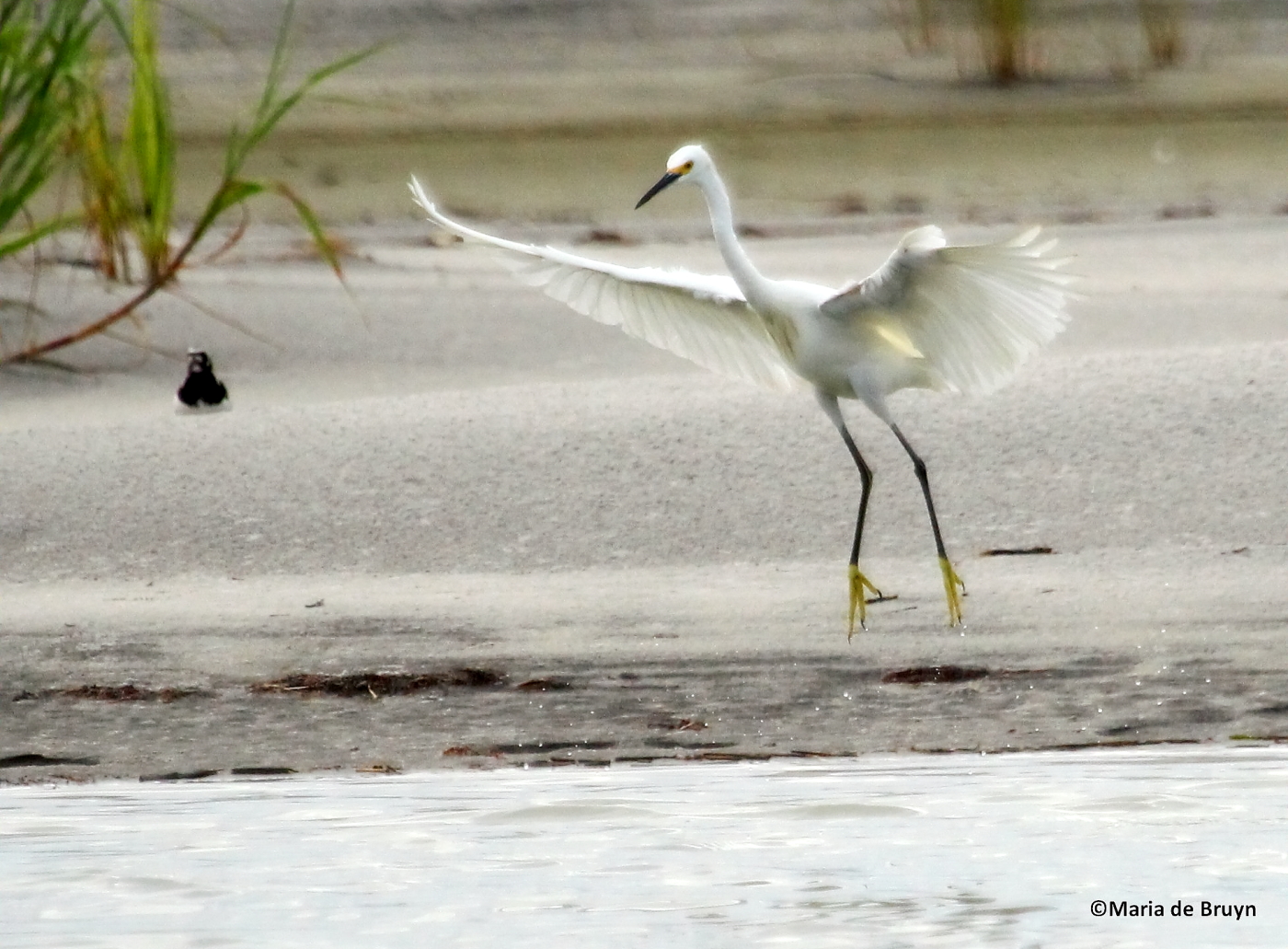
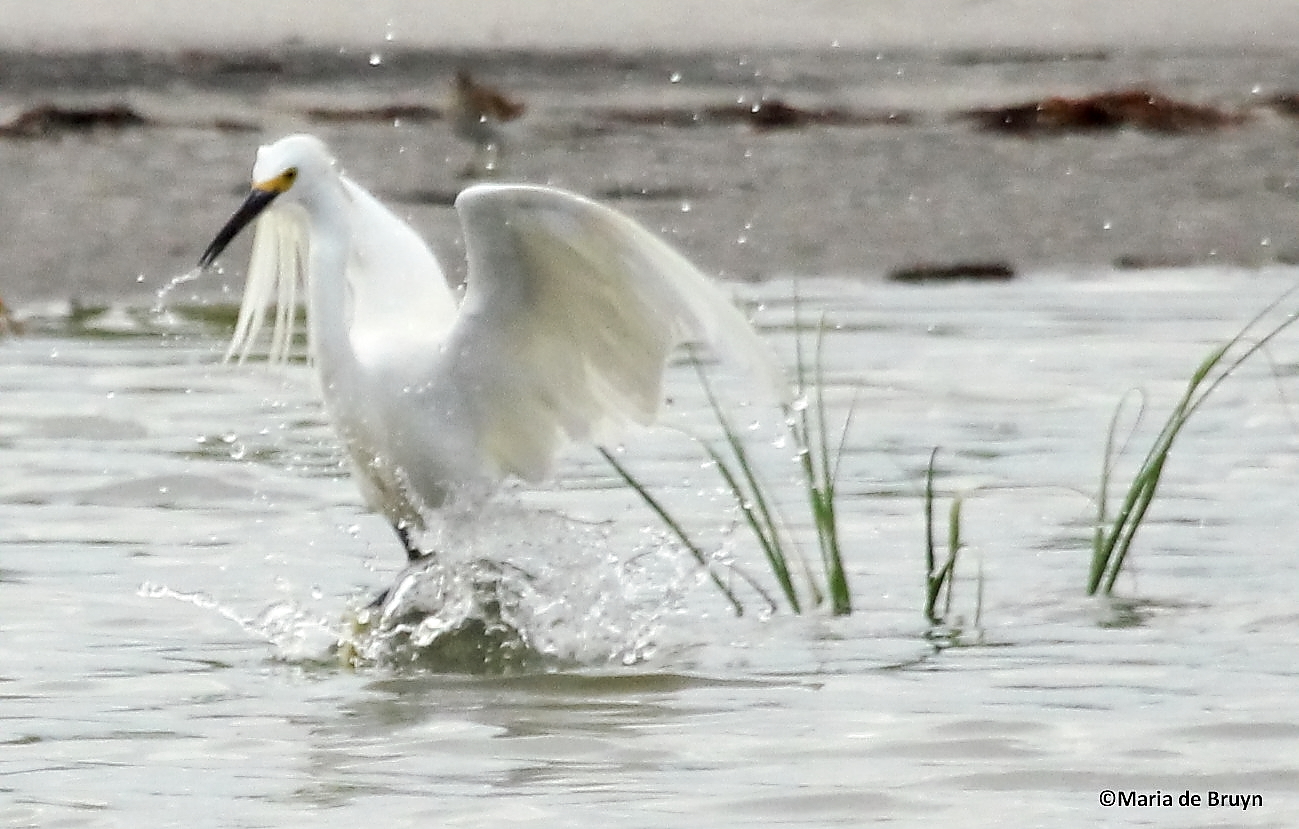
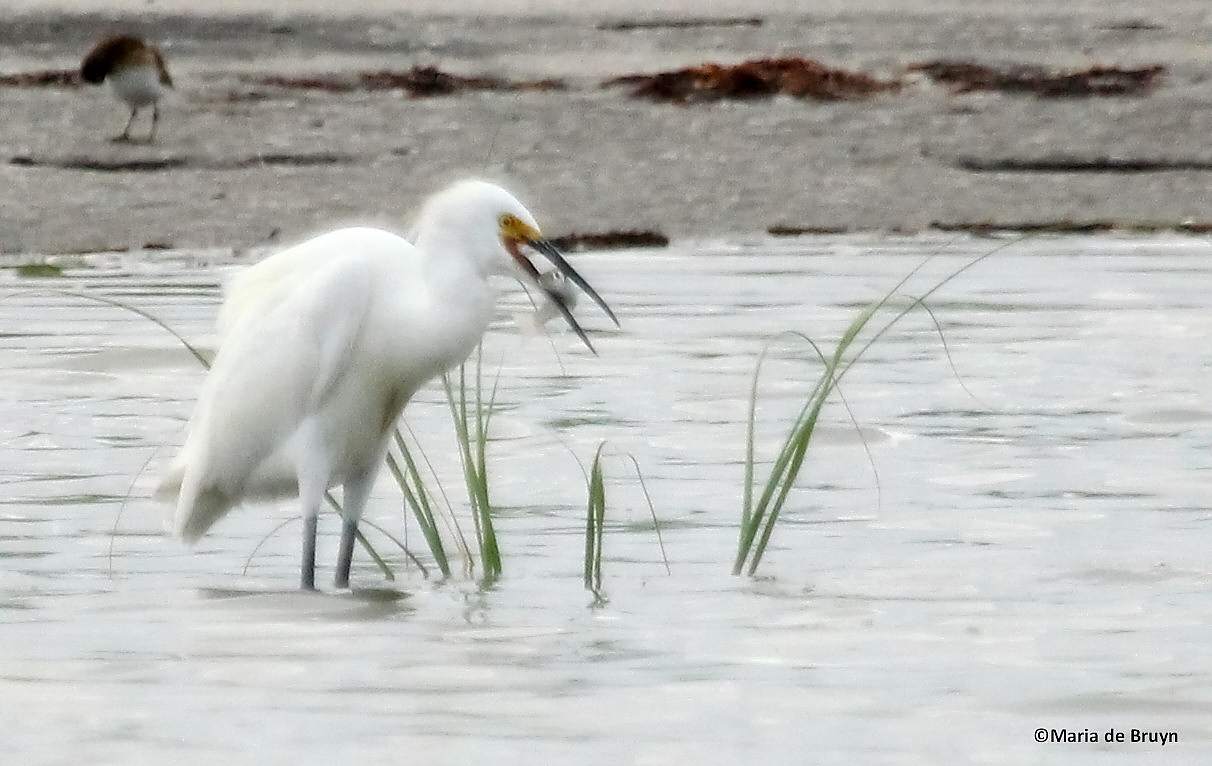
The ruby-crowned kinglet is known for its habit of flicking its wings as it forages for food; this helps it scare up insects (another bird that uses its wings in its hunt for food, like Northern mockingbirds and snowy egrets).


Though they don’t look as adept as hummingbirds, they sometimes hover to get at insects on the underside of leaves; they show this hovering behavior at feeders, too, before landing or flying off with a piece of suet snatched in flight..
 Most of the time, the male’s beautiful little red crest (which gives the species its name) remains hidden unless it gets excited about something.


The ruby-crowned kinglet seems to me to have an expression of perpetual wonderment as it flits quickly from one spot to another. Its thin little legs with yellow-red feet help it land securely, on a branch, wire or feeder.


 In my pursuit of portraits, I’ve found that just as I think I have the bird in focus, it has disappeared from my viewfinder and I need to look up and around to locate it again..Given its diminutive size, one wouldn’t expect that the female lays up to 12 – twelve! – eggs in its nest, which is elastic and can expand as the brood grows. The male and female stay together until the chicks fledge at about 2 months and they will defend the nest against intruders.
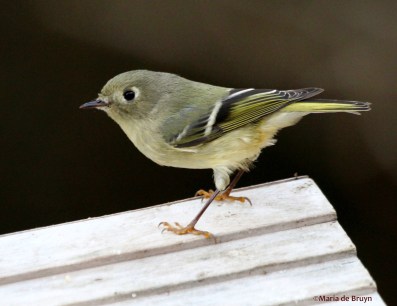
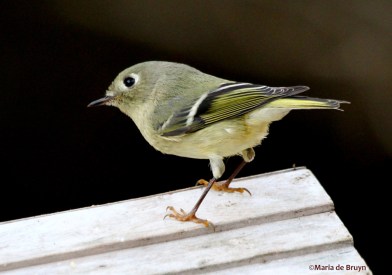
 Sometimes, I hear the chittering call before I see the tiny wonder and only very rarely get to enjoy its longer song, which apparently varies according to region.
Ruby-crowned kinglets can live up to at least 4½ years (as shown by a banded bird). I don’t actually know if there is more than one bird visiting me or whether another will take its place in time.
 What is very cool for me is that my visitor can become very friendly indeed. Last year, on two occasions, I was carrying a replenished suet feeder outside when the kinglet flew in to perch on it as I held the feeder in my hands – giving me a great close-up view. I look forward to seeing if the kinglet will favor me with an up-close-and-personal meeting again this coming winter!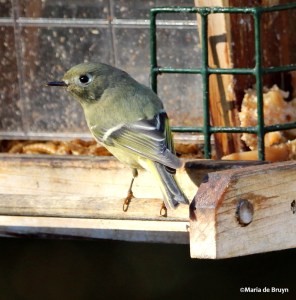
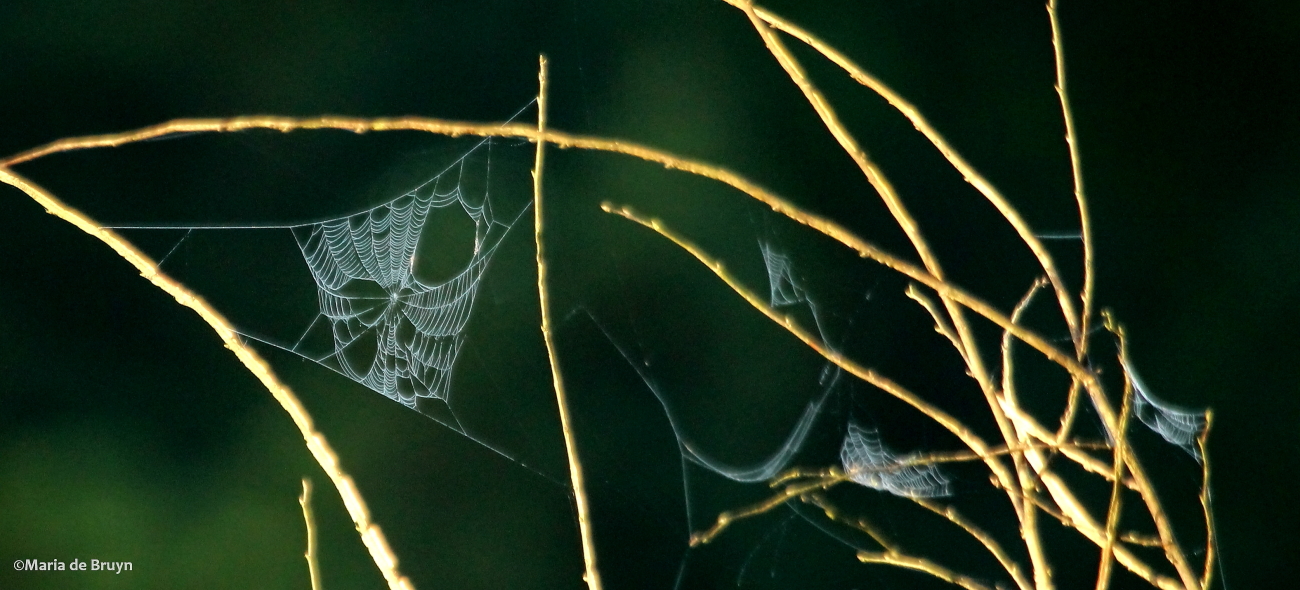
 admire the handiwork of spiders as they build temporary or semi-permanent abodes and hunting traps. During my walks in different areas this fall, I’ve seen various forms of webs, but none as large the

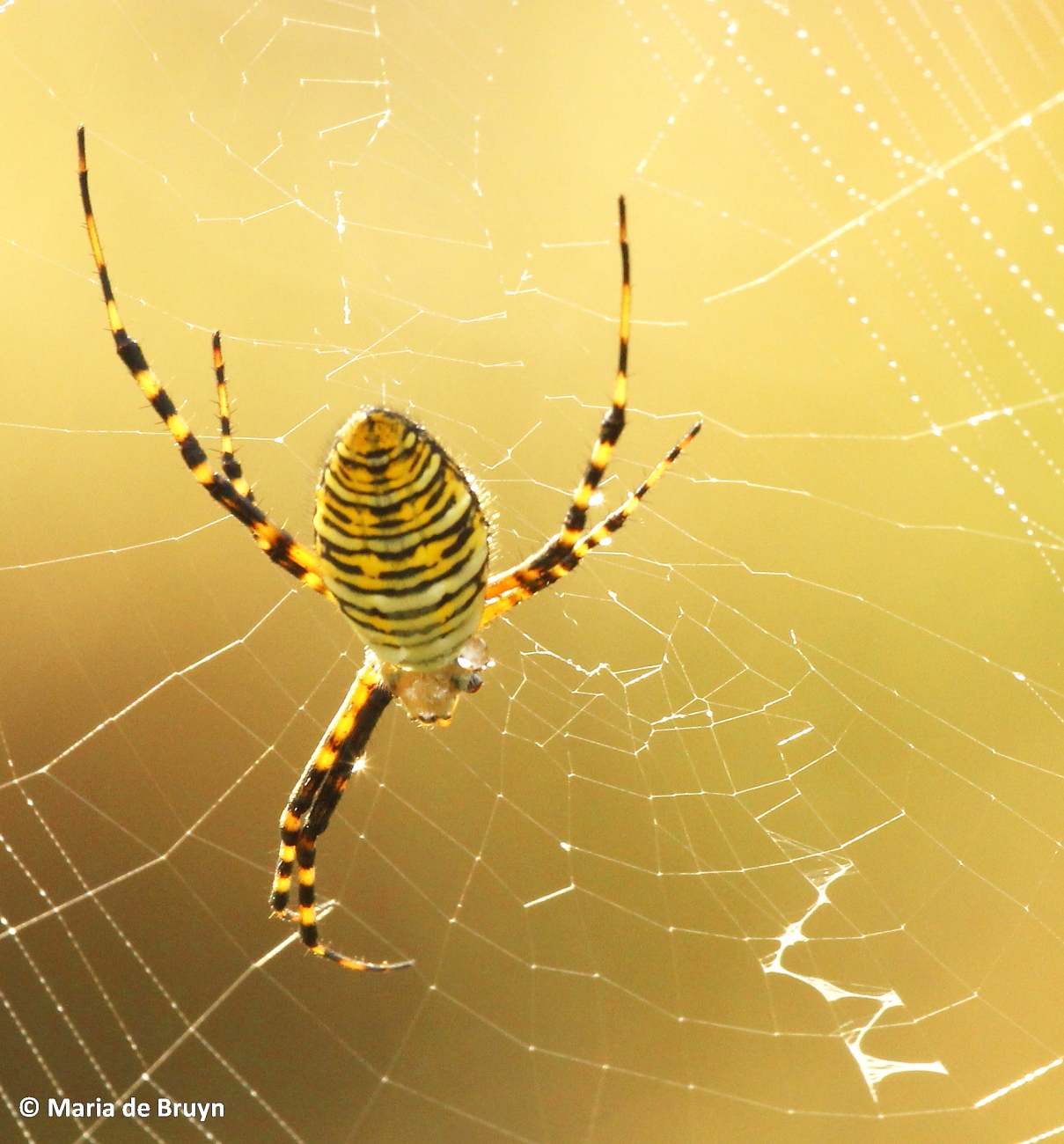
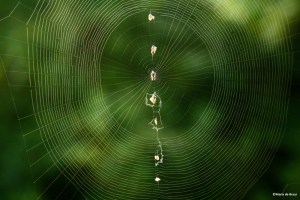 The trashline orbweaver (Cyclosa turbinata) arranges bits of old prey in a line in its web, apparently helping to camouflage itself as it looks like another piece of trash in the web.
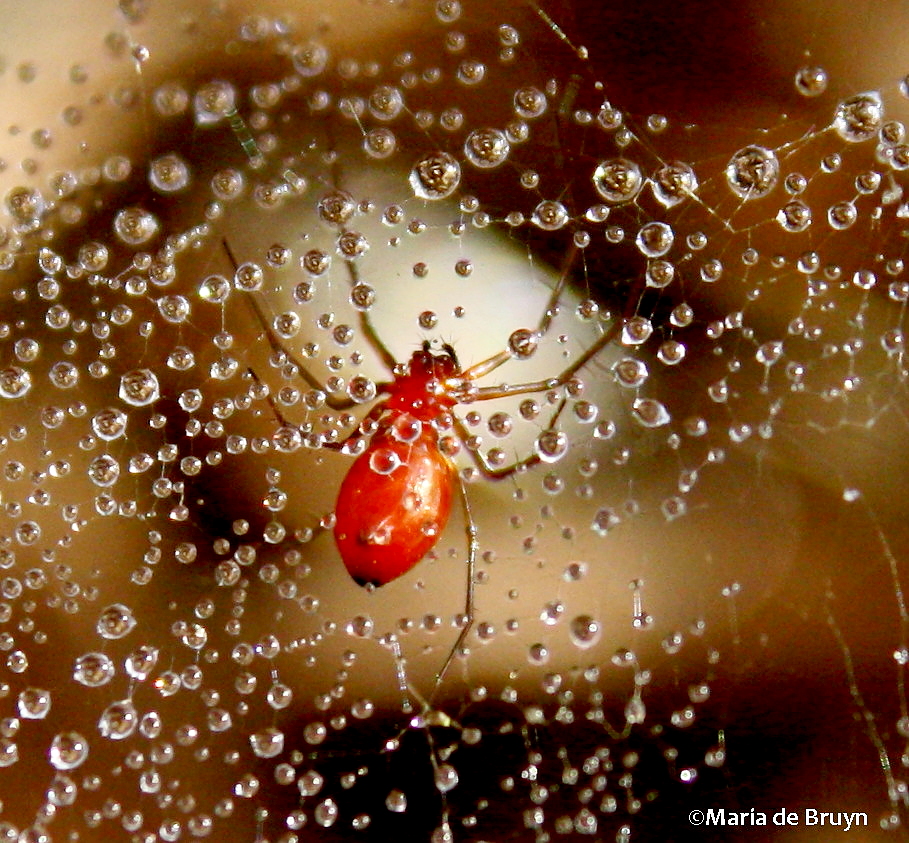
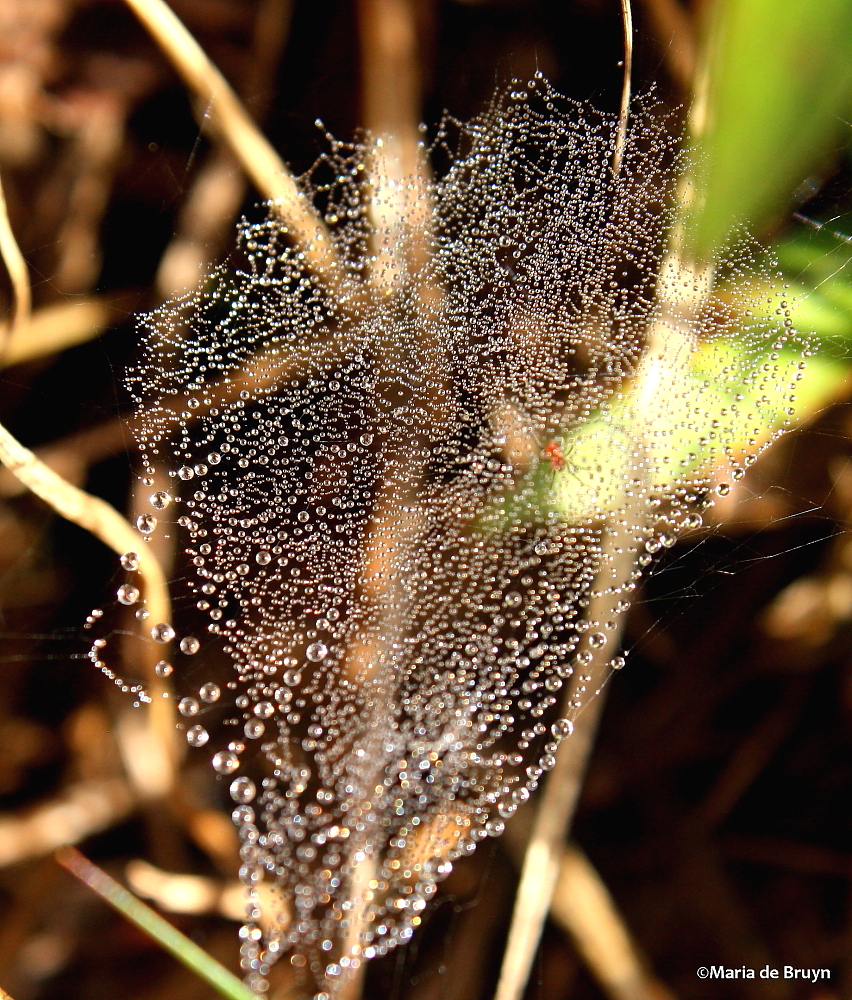
 Arrowhead spiders (Verrucosa arenata) suspend a few or more strands of silk along or across trails at about head height. Have you wondered how they manage to suspend a web across a trail that is quite wide? They first produce a fine adhesive thread that can drift over the gap with a breeze. When the thread sticks to something at the other side of the gap, the spider feels a change in the vibrations of the thread and then reels it in and tightens it. The spider then crosses the gap on this thread and strengthens it by placing a second thread and so the web begins.
 Orbweavers tend to make large vertical webs, like the ones being spun by the marbled orbweavers (Araneus marmoreus) in the next photos.

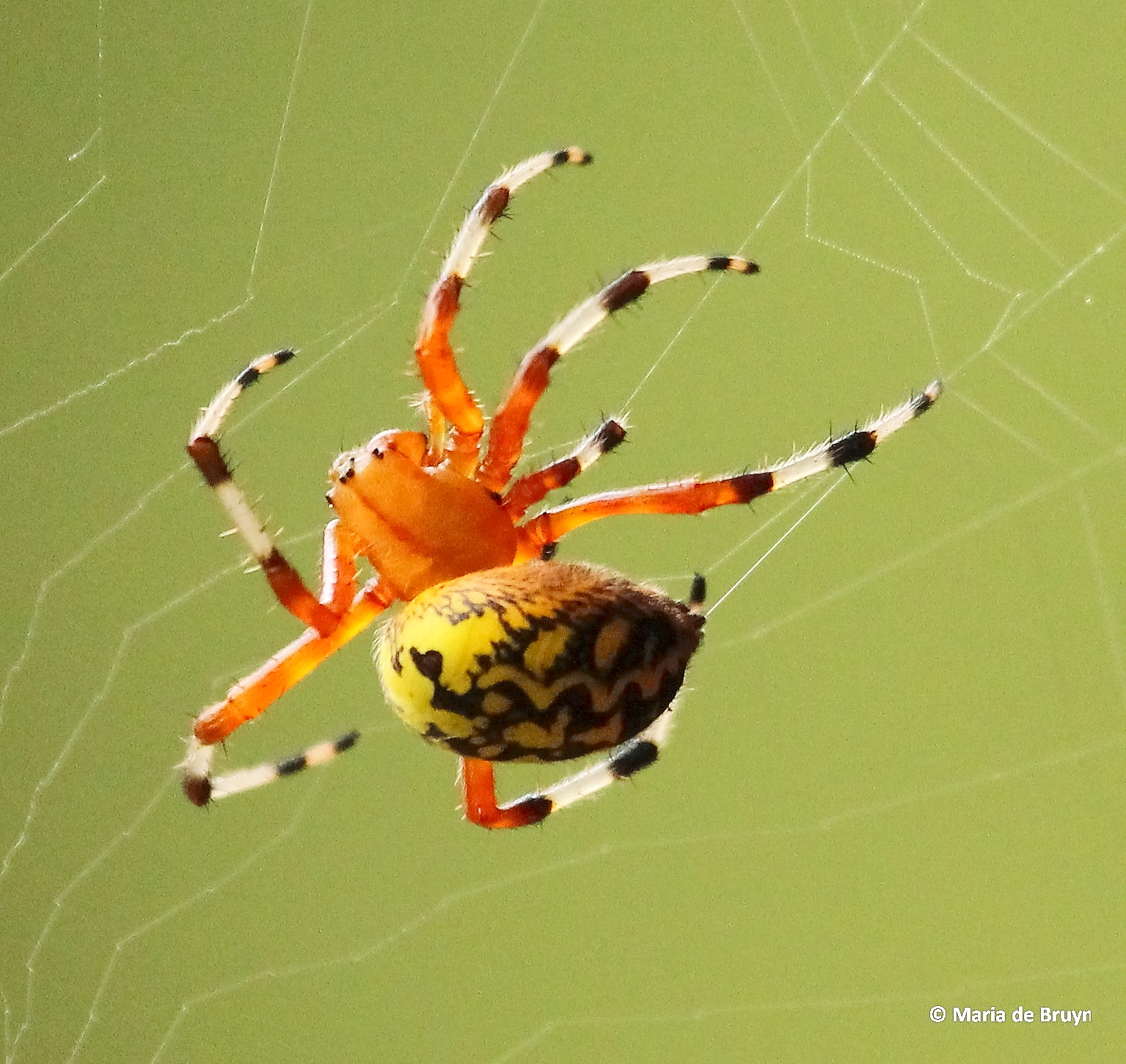
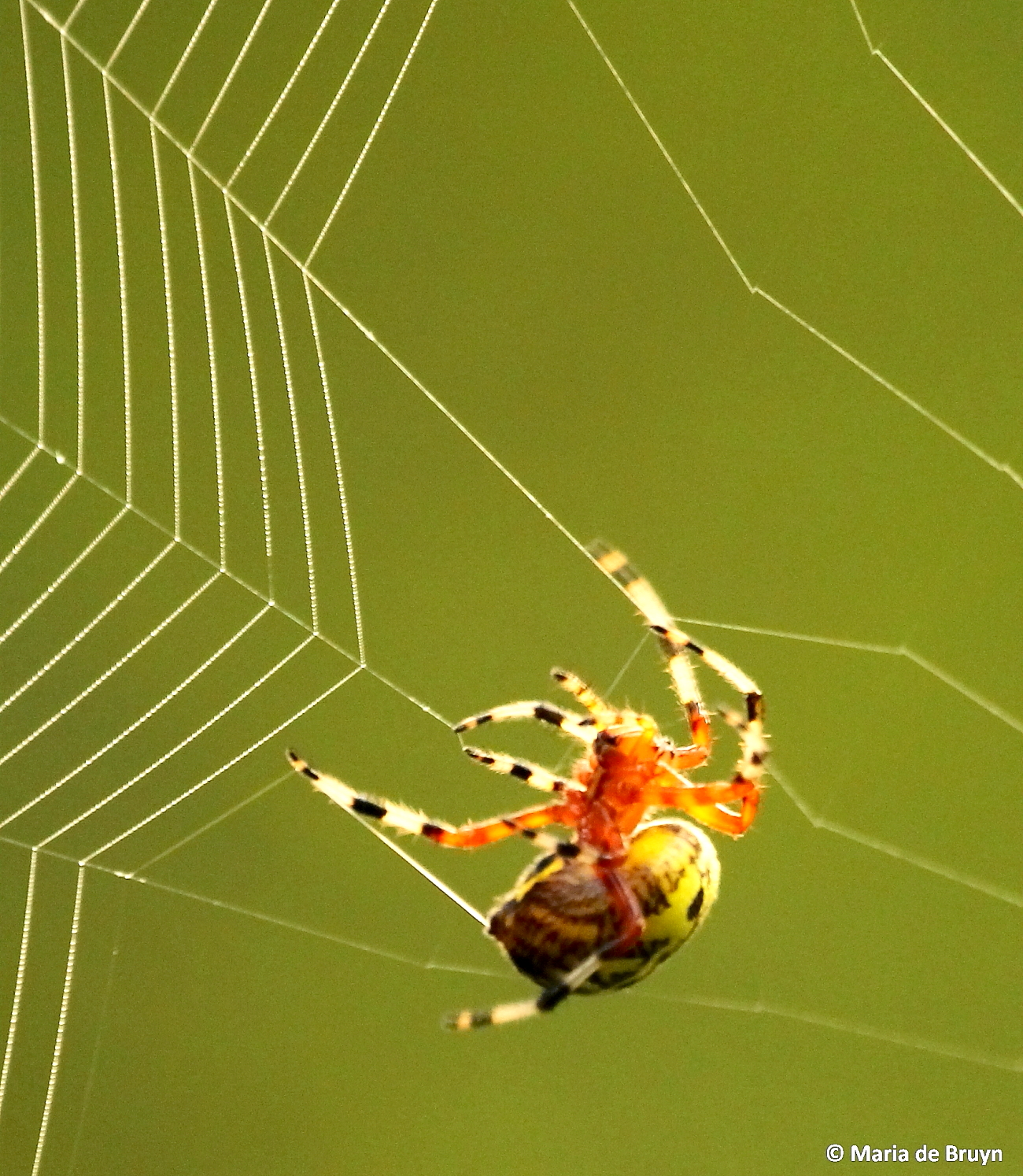
 of energy building webs and it is not uncommon for them to eat their own web in order to re-gain some energy used in spinning.
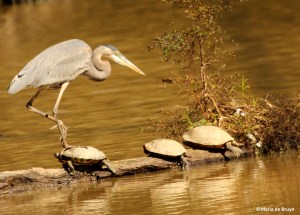
 One day when I was at a beautiful nature park in the neighboring city of Durham, I was – of course – looking for wildlife. For a while I watched a Northern mockingbird (Mimus polyglottos) pecking along the path in a quest for insects. It wasn’t until I got to the pond, however, that a scene unfolded which kept me occupied for a while.
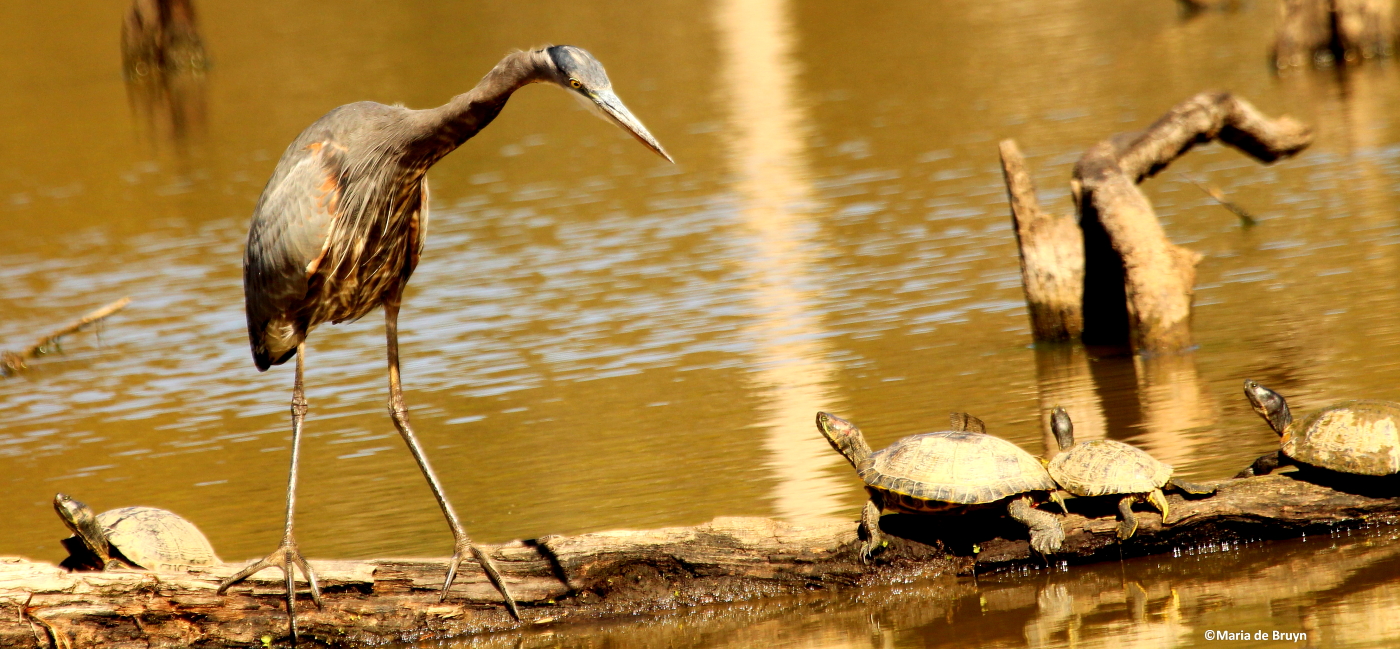
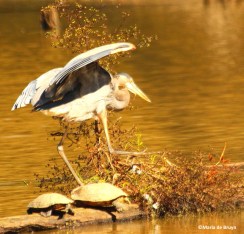
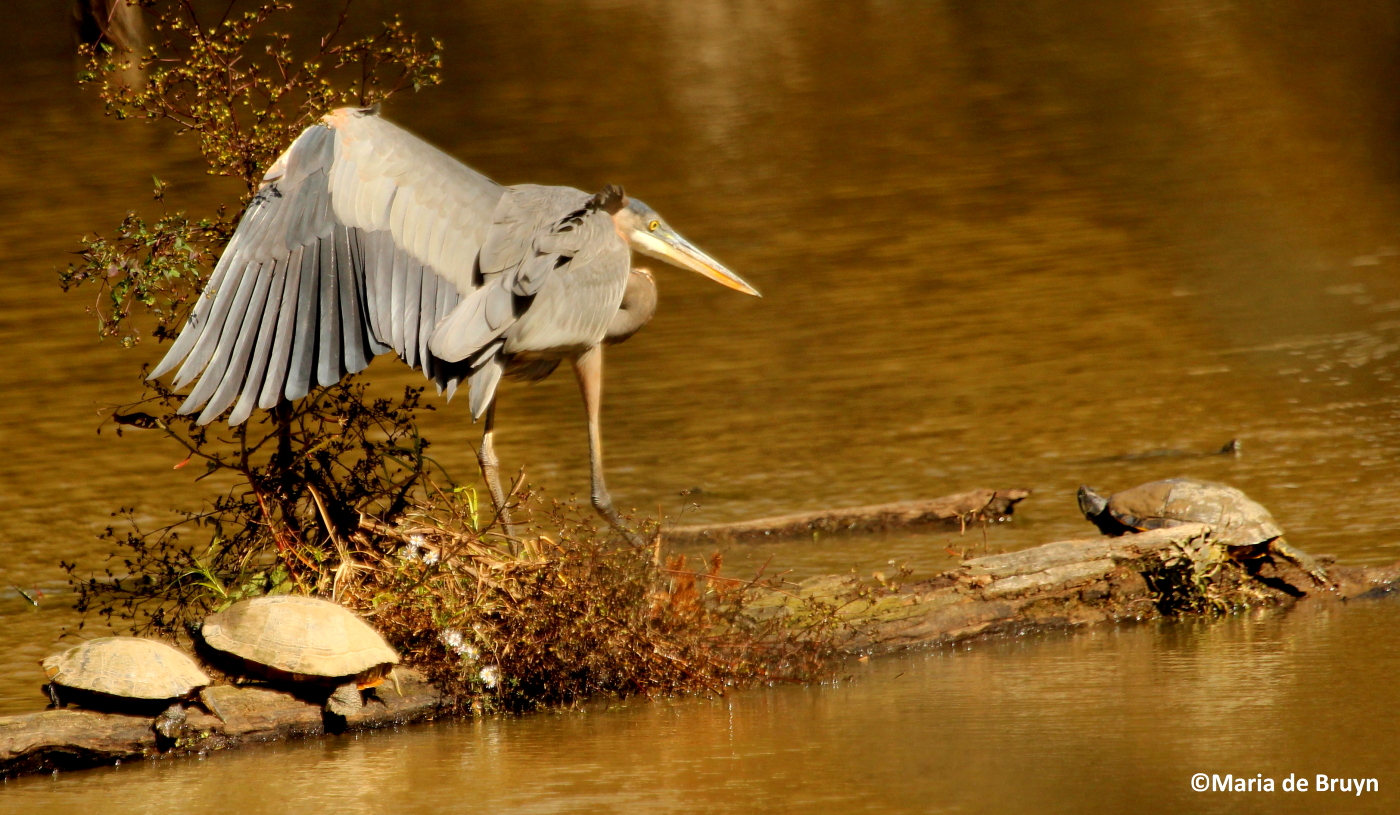
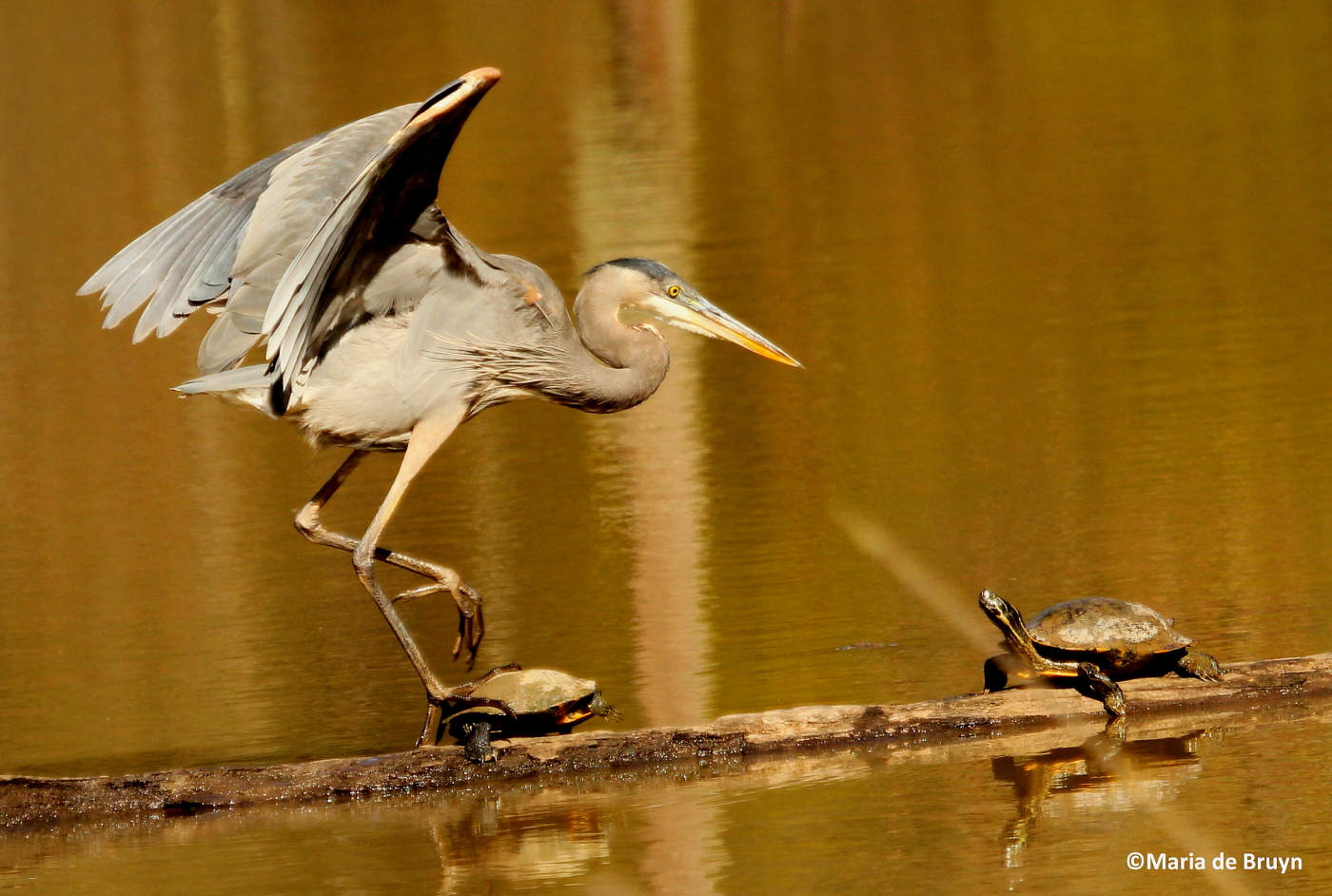
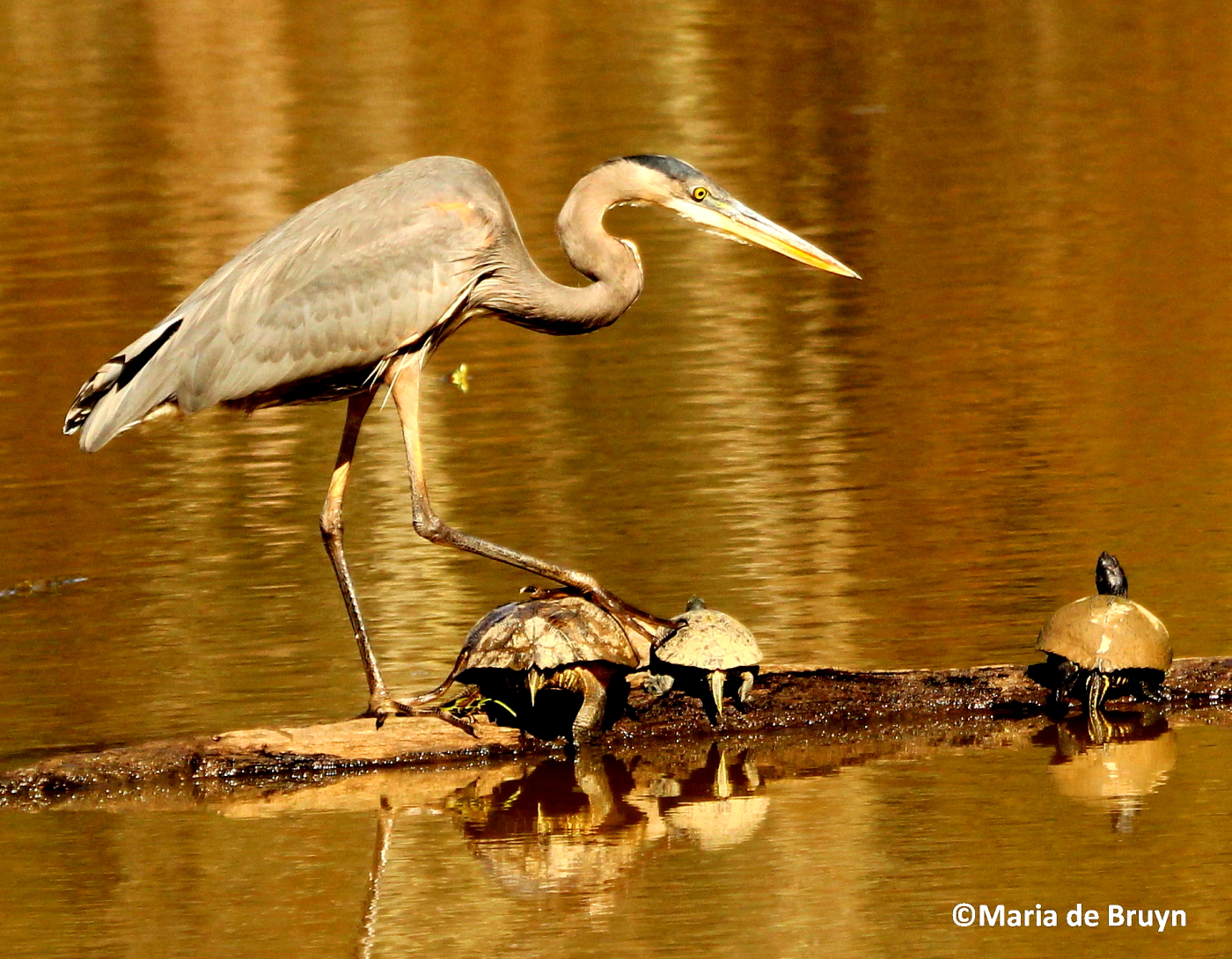
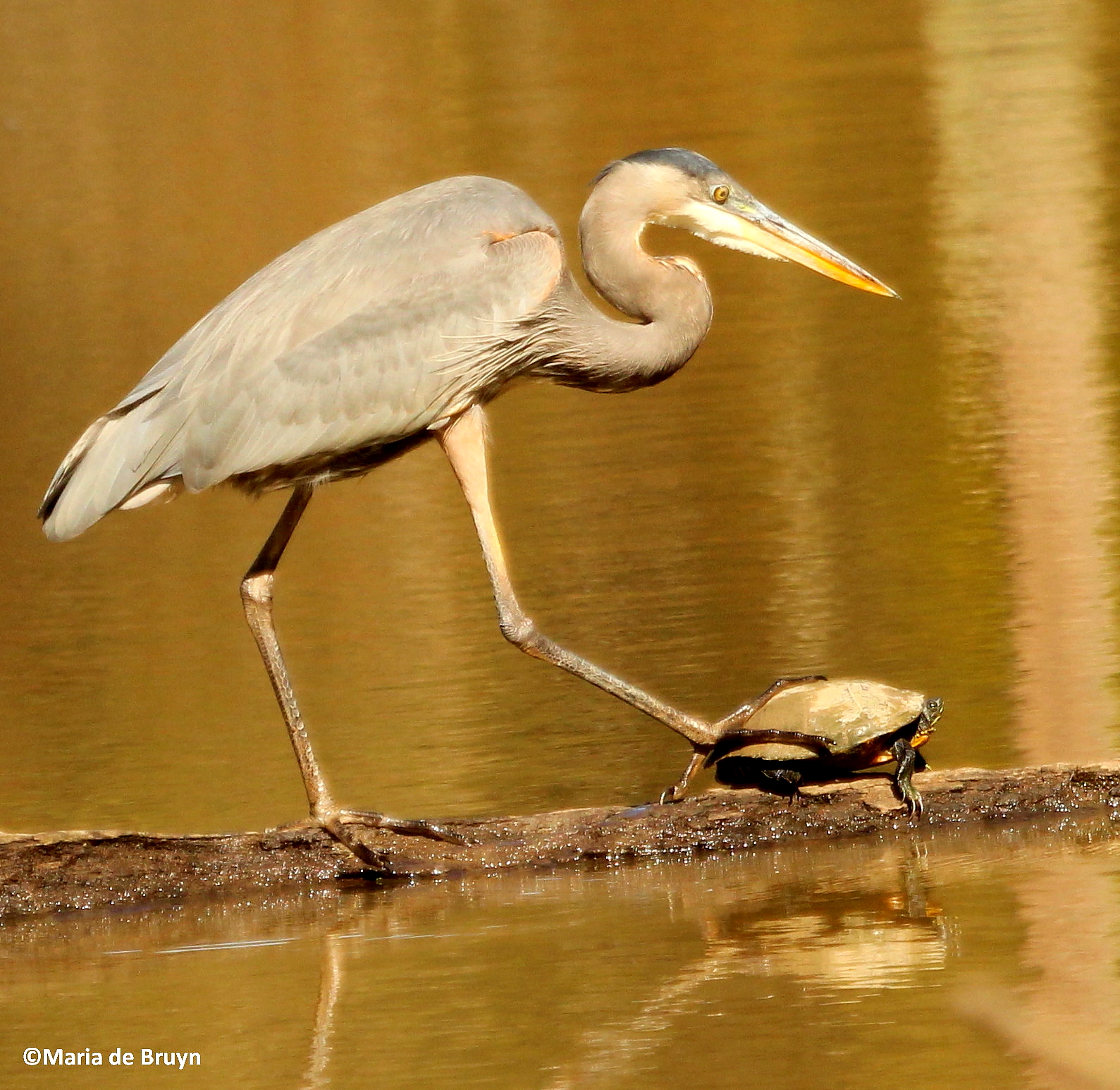
 The resident great blue heron (Ardea herodias) had stationed him (or her) self at the end of a log on which several pond slider turtles (Trachemys scripta) were basking. He seemed to be staring in their direction, so I wondered if he was considering eating one. After seeing a video of a heron swallowing a groundhog whole, I knew that they can consume quite large meals. After a time, though, it seemed that the bird wasn’t interested in the turtles but in the fish swimming in front of them. After patiently waiting for a time, the heron stabbed and had success!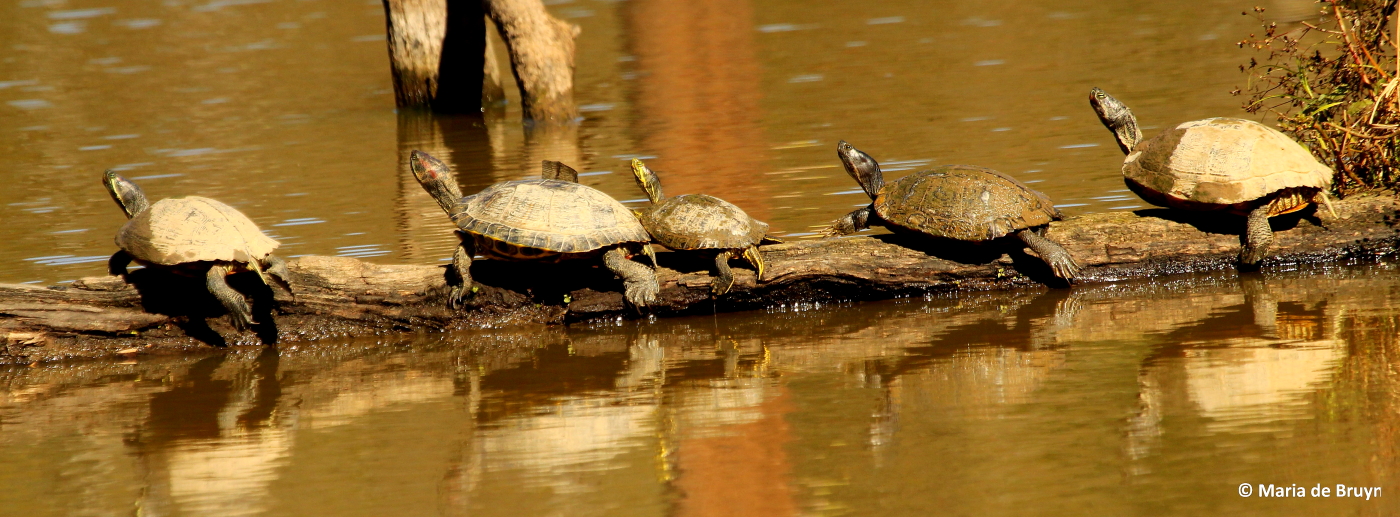
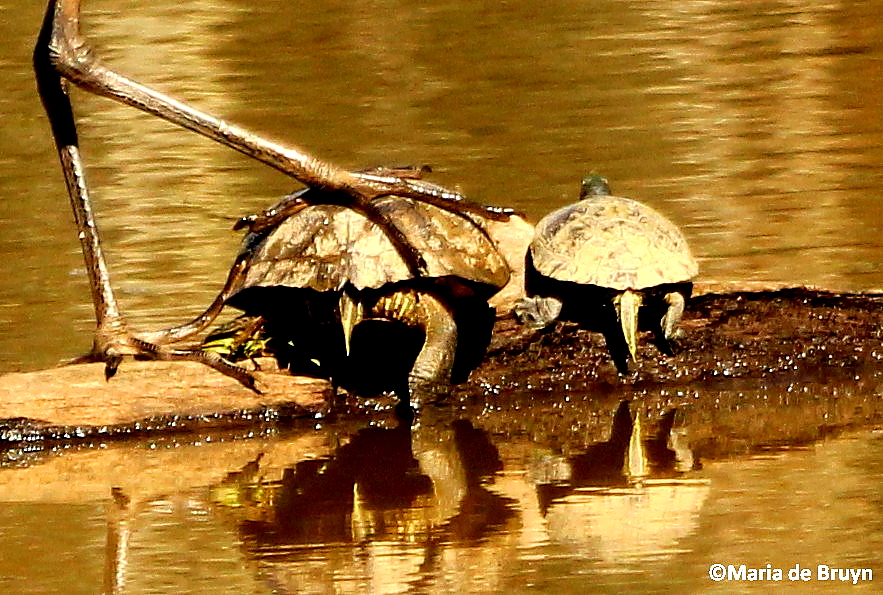


 At home, I did an Internet search and found out that turtles shed their scutes from time to time and that was apparently what I was seeing. So I learned that turtles shed! Turtles’ shells are extensions of their rib cage and attached to their spine; terrestrial turtles don’t shed but aquatic turtles do shed scutes, which are made of keratin (like the material of horns or fingernails).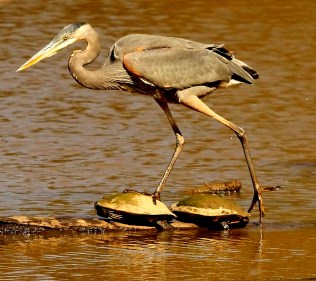
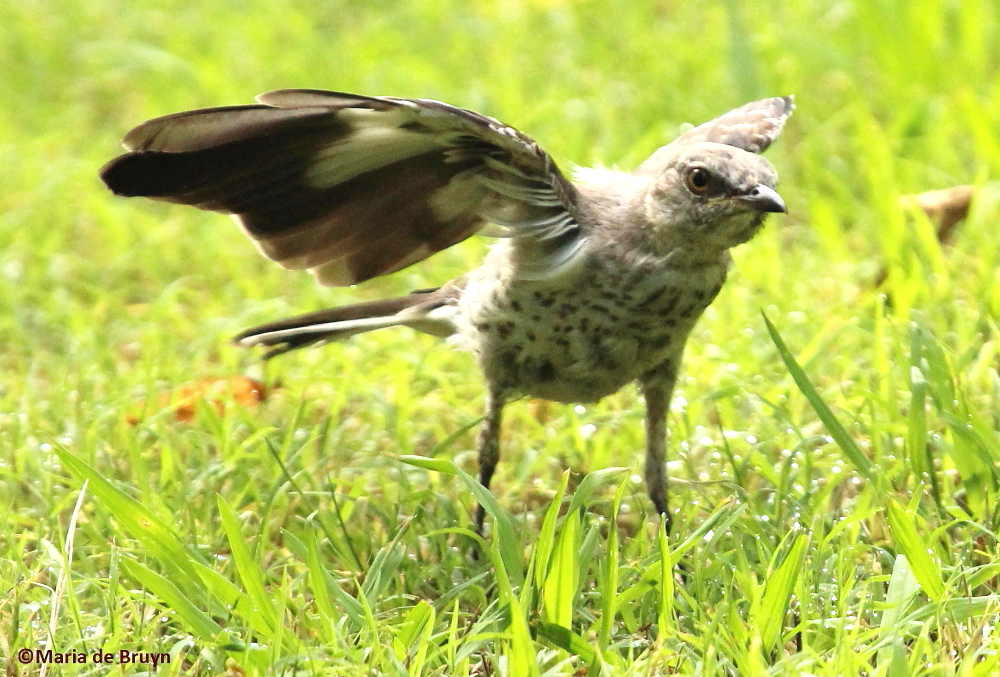
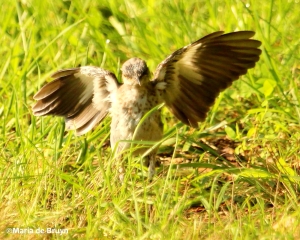 Last year, during a nature walk, I witnessed young Northern mockingbirds (Mimus polyglottos) displaying odd behavior as they strutted around on the ground. They would walk and hop a bit and then suddenly spread their wings wide and wider still, then close them and continue pecking on the ground.


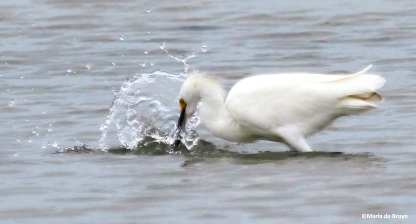
 This worked at least part of the time for this particular bird, as s/he got a few fish down. It required a lot of patience, however.


 My beautiful world