A morning at the Butterfly House – with birds, butterflies and more!

I have all these ideas for blogs in mind, and photos to accompany them as well, but I keep taking new photos and then get behind in posting. One day, the thought came that I could just not go out to photograph and settle down to writing some blogs, but going out for nature walks as often as possible has become a real need in my life. Scientists are saying that “forest bathing” is good for your health and being outdoors and observing and learning about the flora and fauna certainly contributes to my having a happier state of mind, while contributing to my overall stamina (but not weight loss, more’s the pity). I also enjoy “shoreline, field and meadow, creek, river, and backyard bathing.”

It came to me today, after spending 3.5 hours tearing out invasive plants from my yard, that one blog that doesn’t need to be postponed because I keep getting new shots to include is this one – my visit to the Durham Museum of Life and Science Butterfly House with the Carolinas’ Nature Photographers Association.

The Museum had opened the Butterfly House for the morning for our group alone so that we could take photos for several hours without people walking in front of our shots. The Butterfly House is a 35-foot tall, glassed-in dome with many tropical plants such as the Angel’s Trumpet (Brugmansia). One of the four species of birds living in the conservatory, the Oriental white-eye (Zosterops palpebrosus), was enjoying a meal of tropical flowers. The bird would pluck a petal from the stem and then insert its beak into the base; the white-eyes have a special brush-like appendage at the end of the tongue which helps them forage for nectar and pulp.


The white-eyes were brought into the conservatory to help control leaf pests and ants.


The butterflies were gorgeous and the subject of many photos in our group. The postman butterflies have variations within a species.


Common postman (Heliconius melpomene)


Red postman (Heliconius erato)

Another group were the longwing butterflies.


Cydno longwing (Heliconius cydno)


Sara longwing (Heliconius sara)


Tiger longwing (Heliconius hecale)              Doris longwing (Heliconius doris)


Numata longwing (Heliconius numata)

As we looked at the butterflies that landed low on flowers, we were able to see the Crested wood partridges (Rollulus roulroul) that are endemic to Asia. They breed in the conservatory, laying their eggs behind dense shrubs, and they help control soil pests in the Butterfly House.


Male                                                                        Female

At one point, a museum staff-member brought us a group of insects to see up close. One of them, I certainly would not have touched, although it was fascinating to watch: the Asian forest scorpion (Heterometrus).


The Chilean rose tarantula (Grammaostola rosea) was a really beautiful tarantula that blended in well with the tree against which it was placed.

The dragon-headed katydid (Eumegalodon blanchardi) was an interesting creature. I do think its head looks more like a horseshoe crab, though!


The rhinoceros beetle was nice and shiny – I once saw a young boy in Thailand who had one as a pet; he was taking it for a walk in the forest and it looked to be about as big as his hand.


It’s interesting how the patterns on the dorsal and ventral sides of a butterfly can be so very different – you may need to look up both sides to get a good ID of the species. This is especially true of the Blue morpho (Morpho peleides).


The same is true for the male scarlet peacock (Troides amphrysus)


The female shows similarities in her dorsal and ventral wings.


The owl butterfly (Caligo memnon) was an impressively large individual.


The Malayan birdwing (Troides amphrysus) spent much of its time huddled up against the windows but I was able to catch it on a flower.


Two kinds of black-and-white butterflies were fluttering about, the Asian paper kite (Idea leuconoe) and the zebra mosaic (Colobura dirce) from Central and South America.


There is a glass case in the conservatory that has lines of chrysalids hanging on wires. At any time, you may see one or several butterflies that have just emerged and are unfolding and drying their wings. This individual was perched against the glass for the unfurling, giving an excellent view of beautiful feathery antennae.


There were two more birds in the Butterfly House that were beautiful to see. Both from Australia, the zebra finch (Taeniopygia guttata) was difficult to photograph as it spent a lot of time very high up in the dome.


The most beautiful – to me – was the Gouldian finch (Erythrura gouldiae). The colors are a bit like the American painted bunting but they look as if they were put on in blocks of color like a kind of avian Mondriaan painting. I followed this bird around several times in the hopes of getting some nice photos and finally succeeded in my opinion. I’d love to have this bird coming to my feeders!

Love my yard!

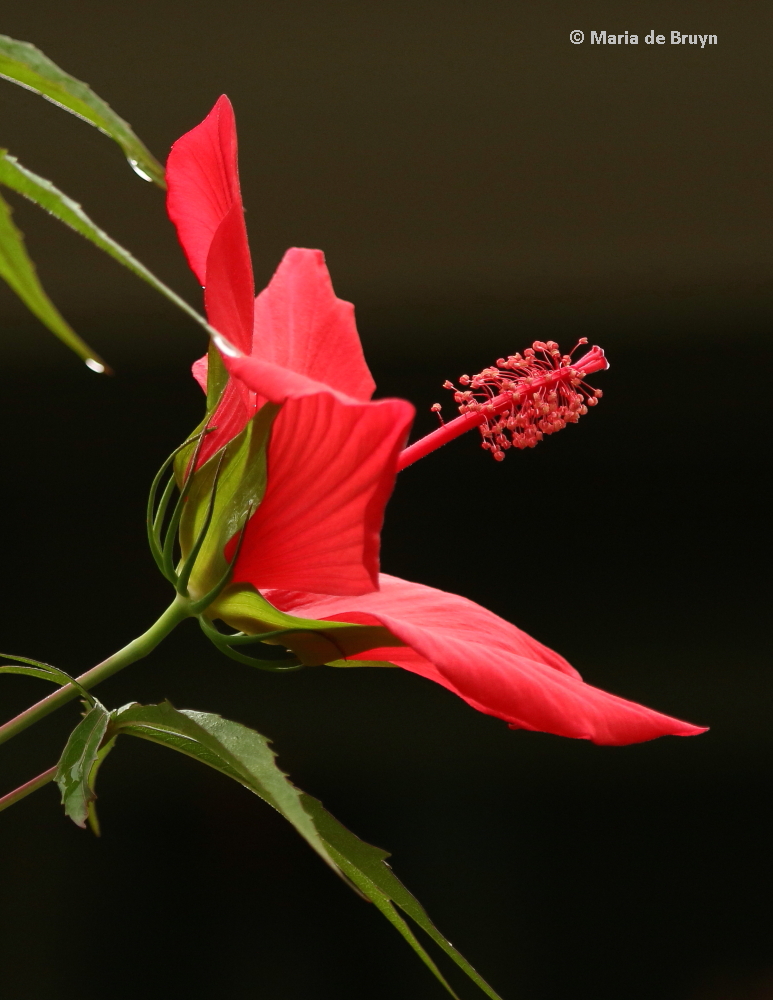
scarlet-mallow-i77a6509-maria-de-bruyn-res2016 began with distress for me, having just been admitted to hospital in considerable pain and worried about expenses. So when I was able to get home again and find diversion from the necessity of self-administering an IV medication twice daily by admiring what nature has to offer in my yard, it was a more-than-welcome event.

Even when my mood is down, walks in nature soothe my spirit since my mind becomes totally absorbed by what I’m observing and there’s no space for any other thoughts. Even aches and pains recede to the background so when I can’t get out to a reserve or park, taking advantage of the little plot of land I call my own is a real delight.

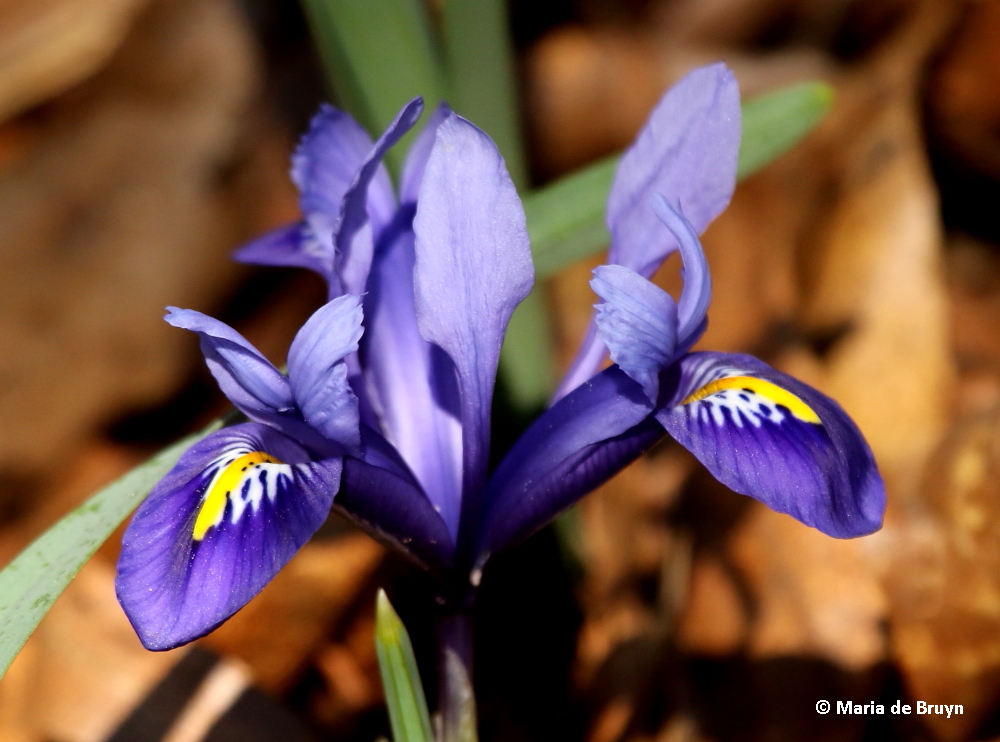
iris-i77a4541maria-de-bruyn-res


The yard has everything – plants, insects, amphibians, reptiles, birds and mammals, which is very cool indeed. Spring and summer are especially lovely with the blooming flowers and I’ve taken care to include many native vegetative species among the plantings.


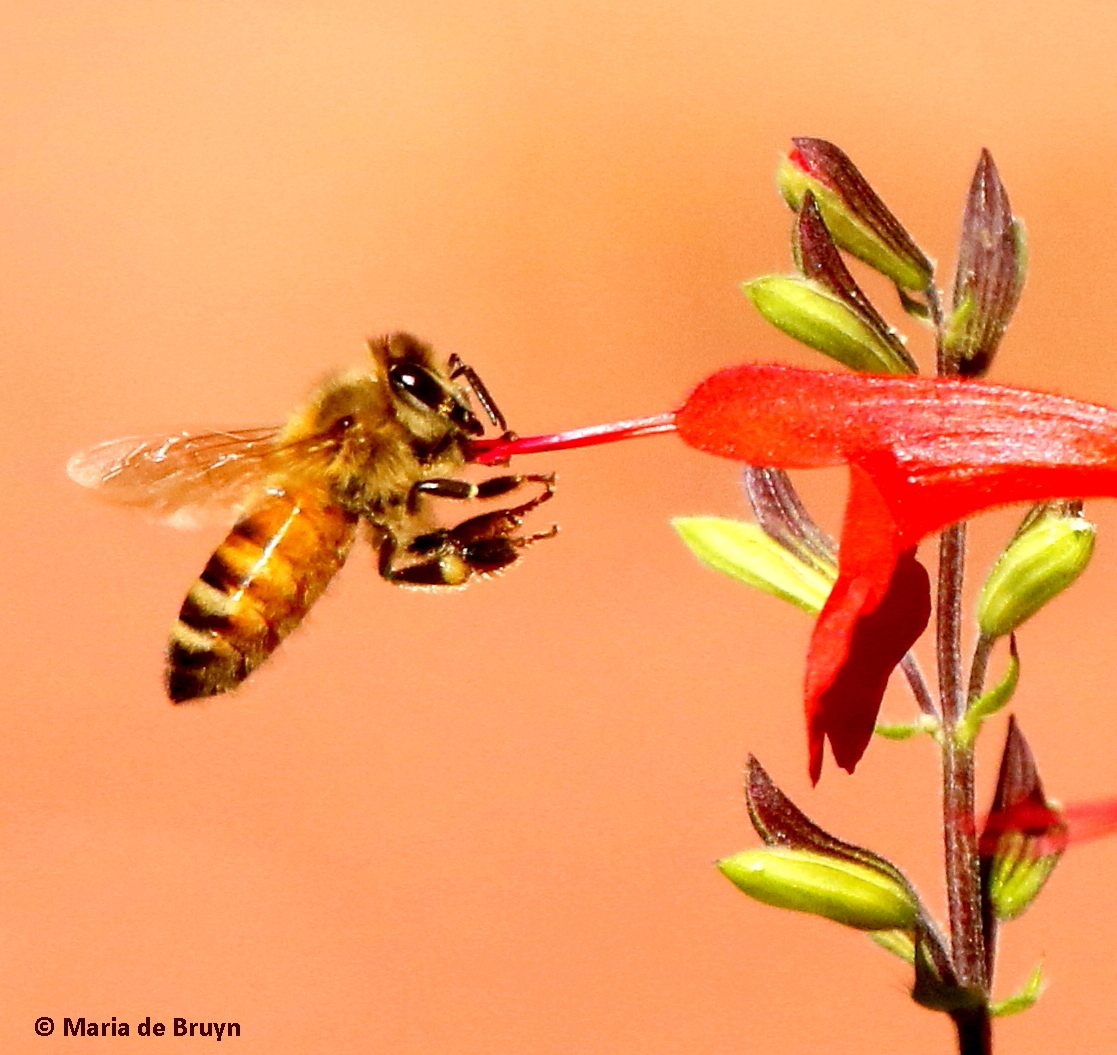
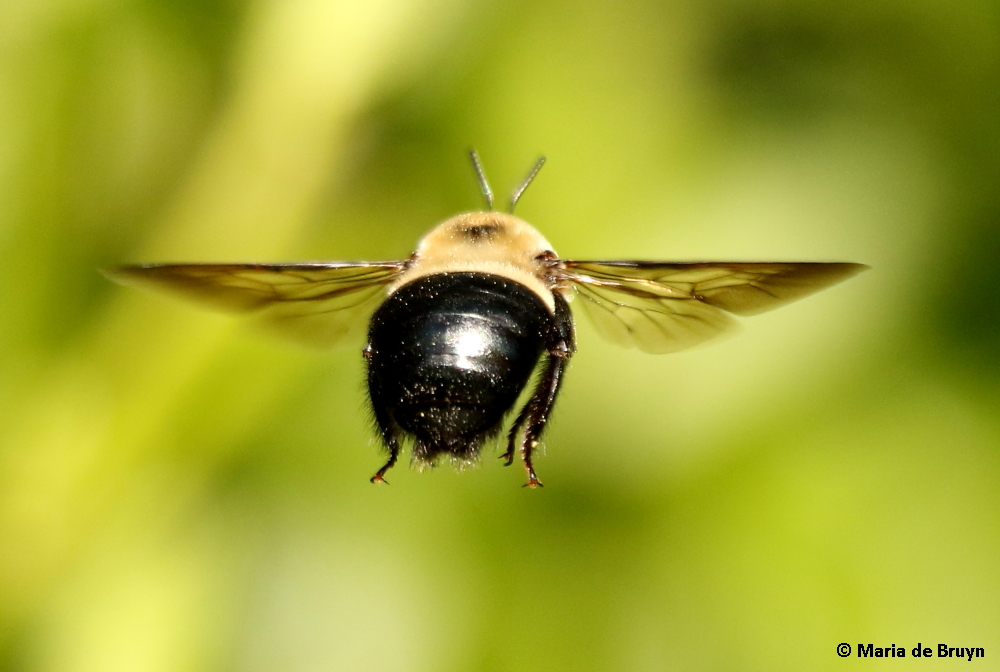
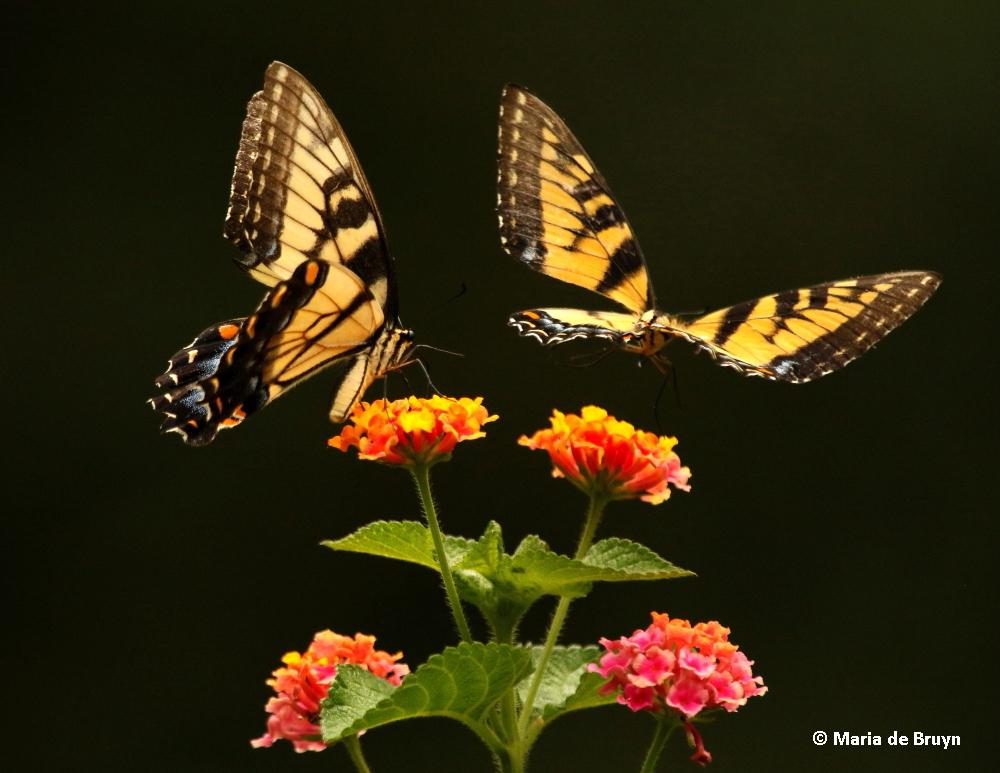
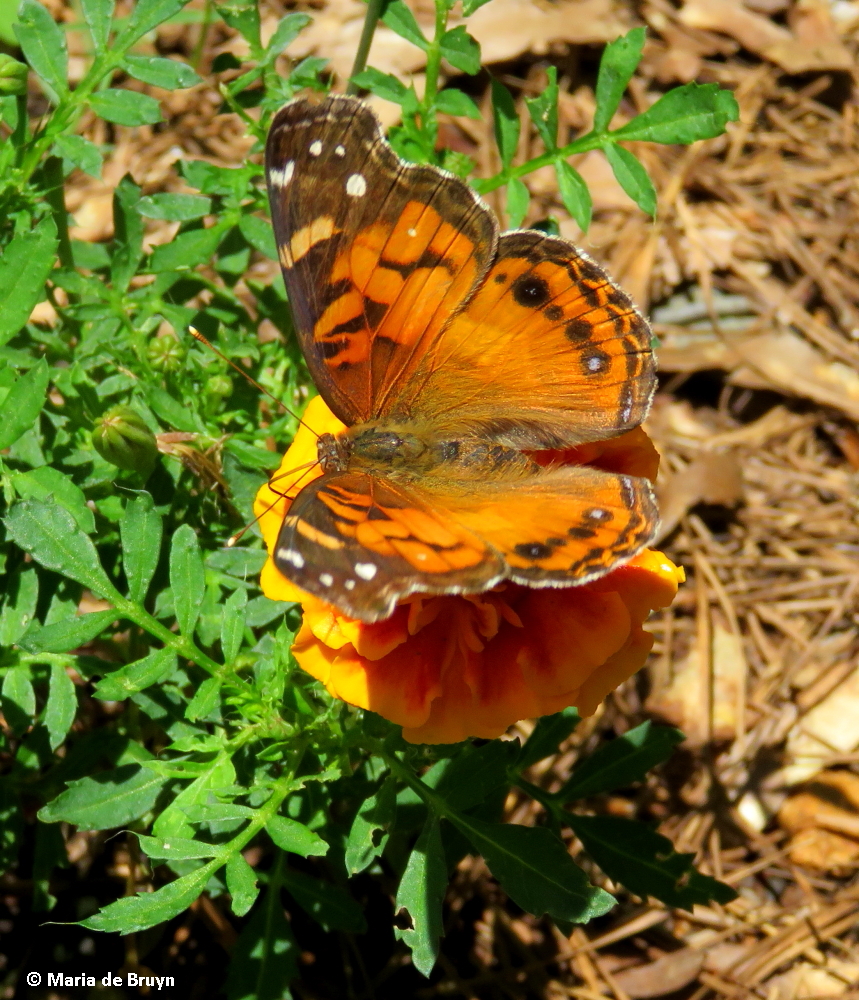
honey-bee-morning-calisthenics-i77a5676-maria-de-bruyn-resThe flowers and shrubs not only attract birds but many species of insects, too, and give me plenty of chances to practice photographing bees in flight and butterflies nectaring. The Eastern carpenter bees (Xylocopa virginica), and European honey bees (Apis mellifera) were good models, as were the Eastern tiger swallowtails (Papilio glaucus) and American lady (Vanessa virginiensis) butterflies.

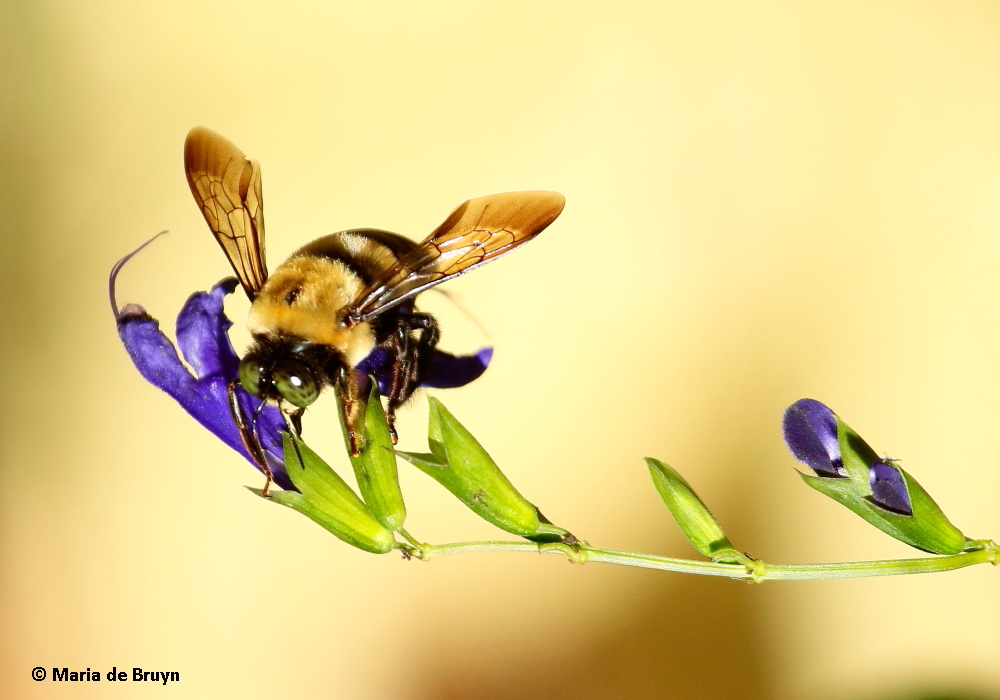
eastern-carpenter-bee-2-i77a7906-maria-de-bruyn-res  eastern-carpenter-bee-i77a8678-maria-de-bruyn-res

eastern-tiger-swallowtail-i77a8669-maria-de-bruyn-res  american-lady-img_0069-maria-de-bruyn-res

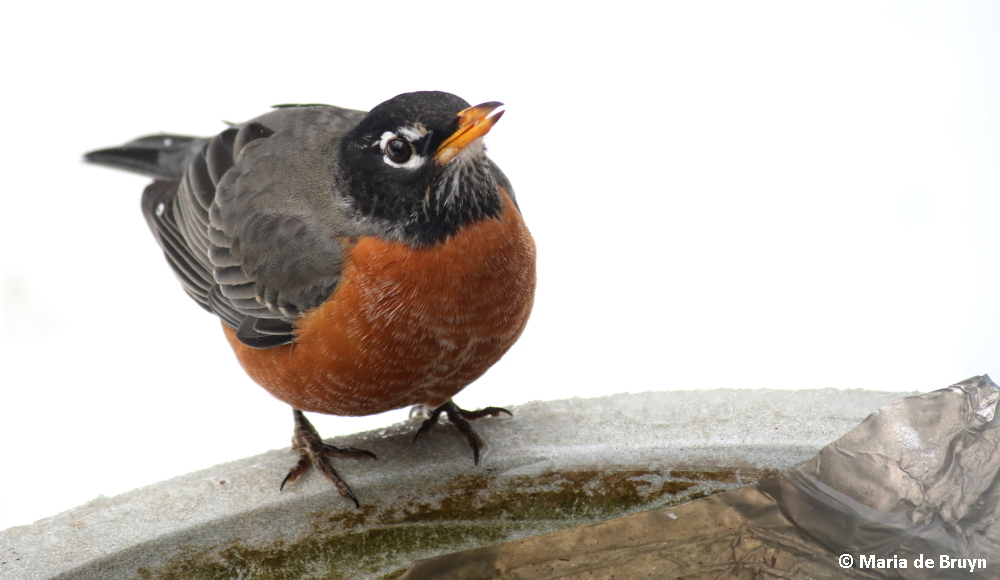
blue-pickerel-weed-i77a3947-maria-de-bruyn-resThe front yard has one small pond with blue pickerel weed (Pontederia cordata) and the back yard has two ponds and a heated bird bath in winter. Deer, raccoons and birds, like this American robin (Turdus migratorius) use these as watering holes.

american-robin-i77a9005-maria-de-bruyn-res

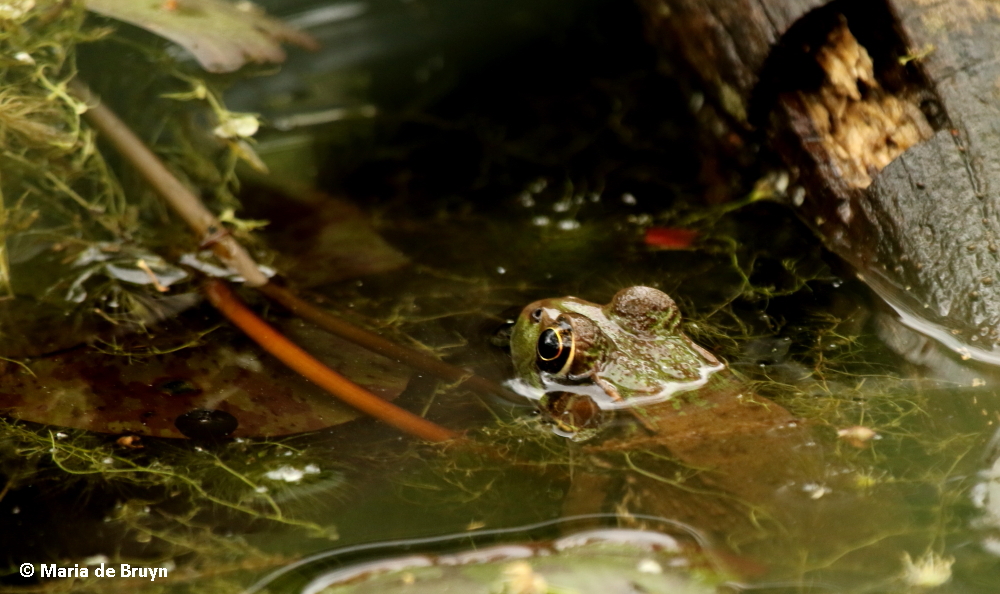
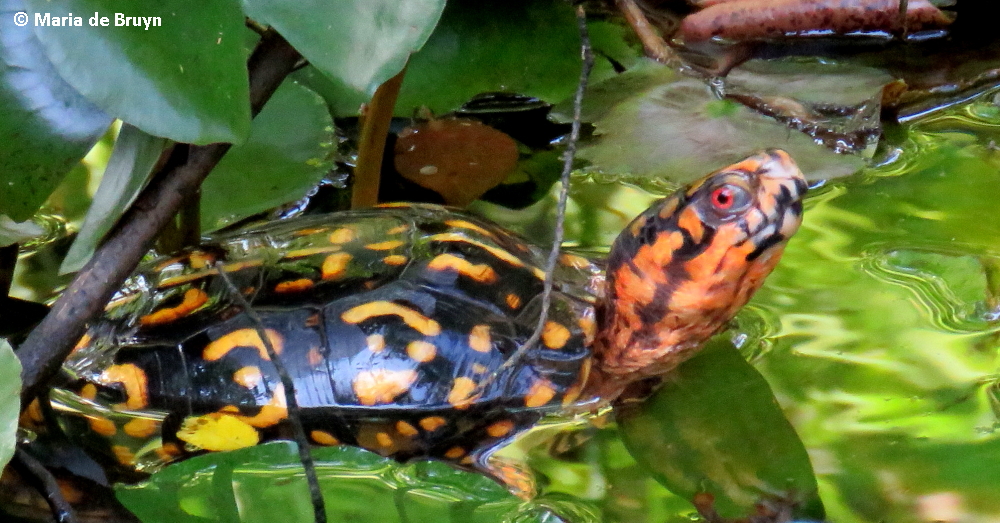
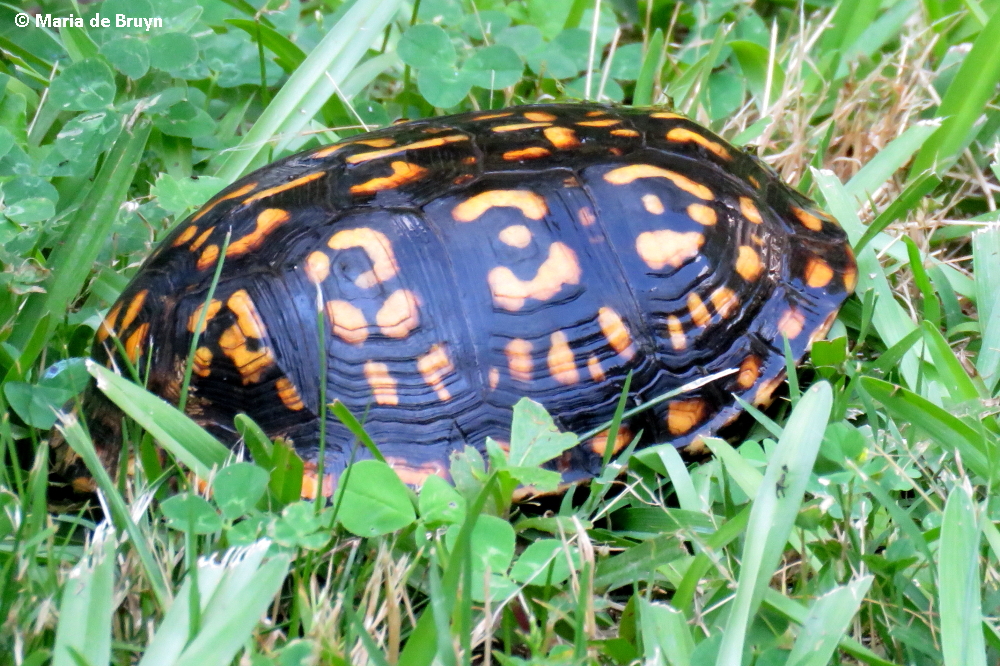
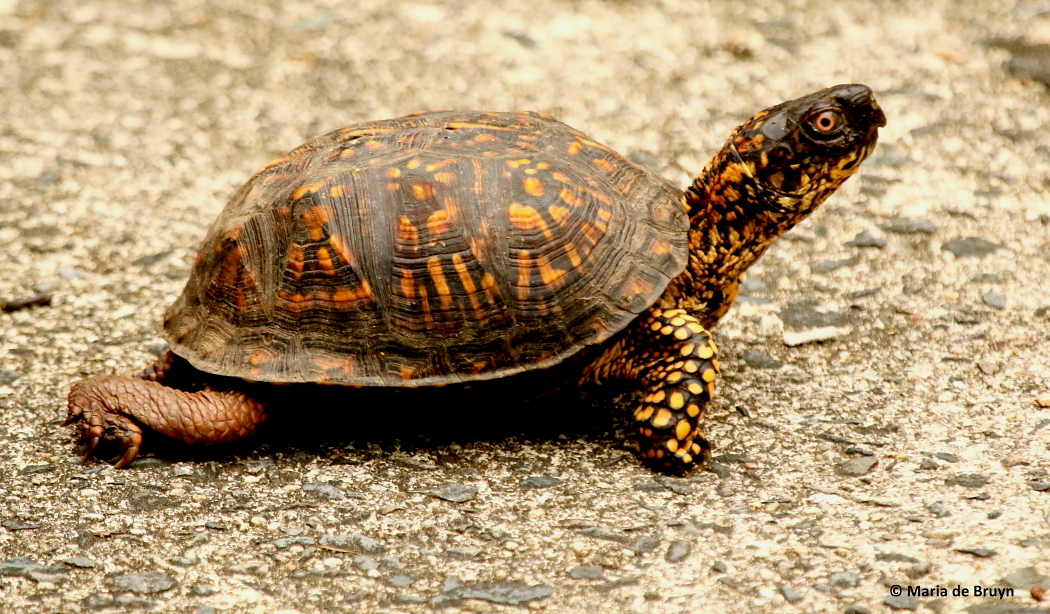
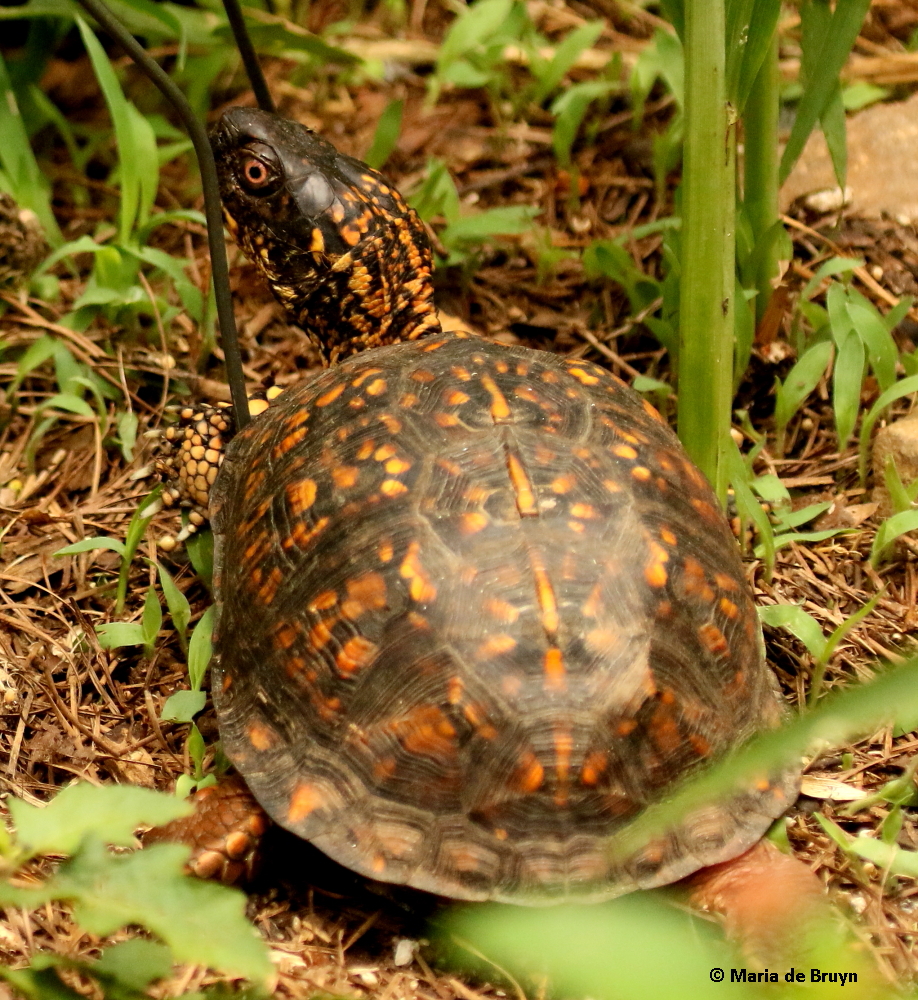
bullfrog-i77a9694-maria-de-bruyn-resFish live in one pond along with green and/or bullfrogs (Lithobates catesbeianus). Occasionally, I’ve had to rescue an adventurous Eastern box turtle (Terrapene carolina carolina) that didn’t seem able to climb out again on the logs provided as bridges out of the water. Other turtles trundle around in other parts of the yard.

eastern-box-turtle-img_1392-maria-de-bruyn-res    eastern-box-turtle-img_1422-maria-de-bruyn-res

eastern-box-turtle-male-i77a8333-maria-de-bruyn-res   eastern-box-turtle-i77a8380-maria-de-bruyn-res

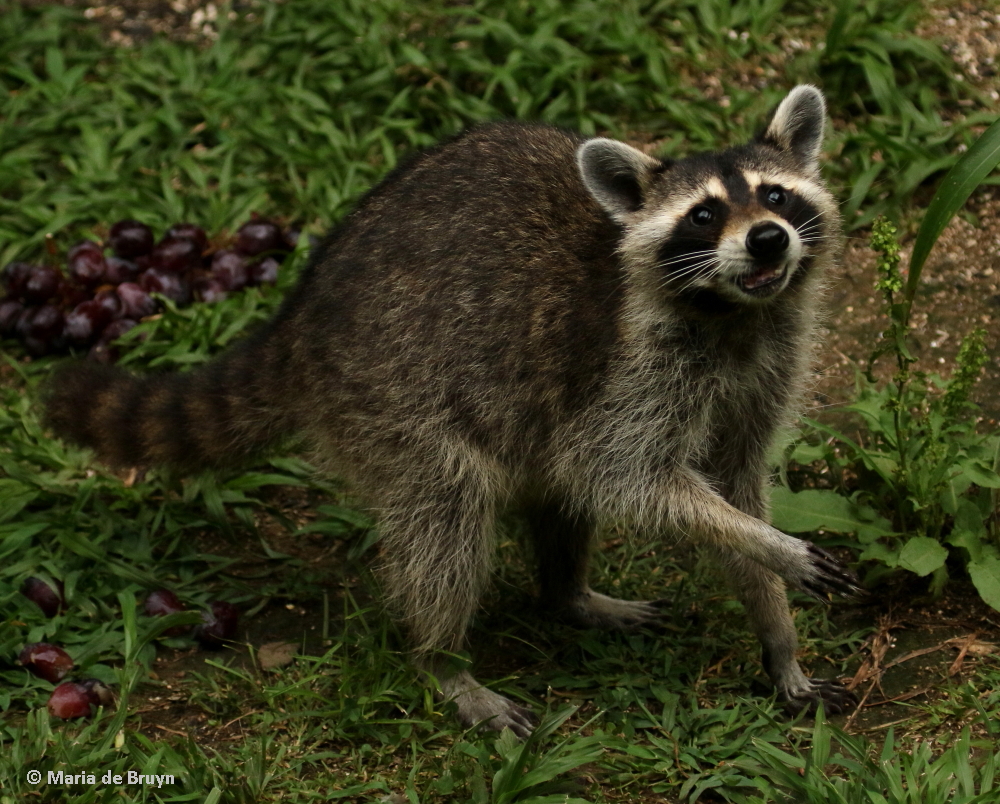
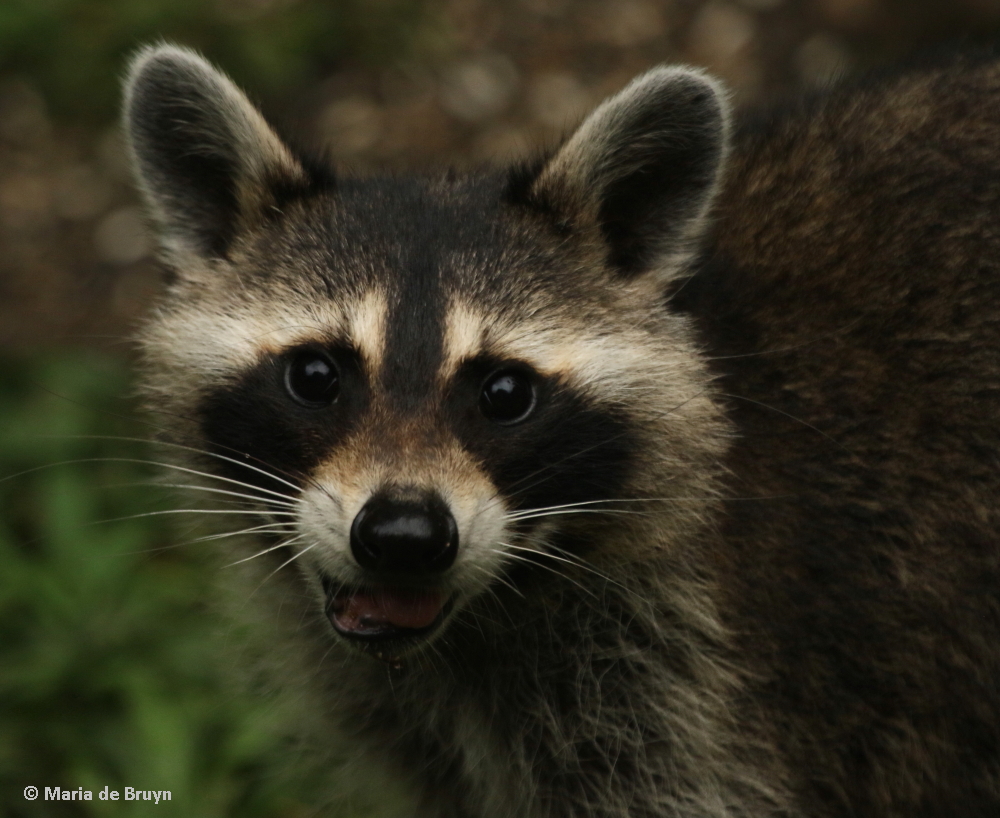
Raquel raccoon (Procyon lotor) and members of her family usually appear at night, as do the local opossums, of whom I have few photos. When Raquel is expecting another brood or in nursing mode, she gets more adventurous and comes round in the daytime.

raccoon-i77a5969-maria-de-bruyn-res   raccoon-i77a5906-maria-de-bruyn-res

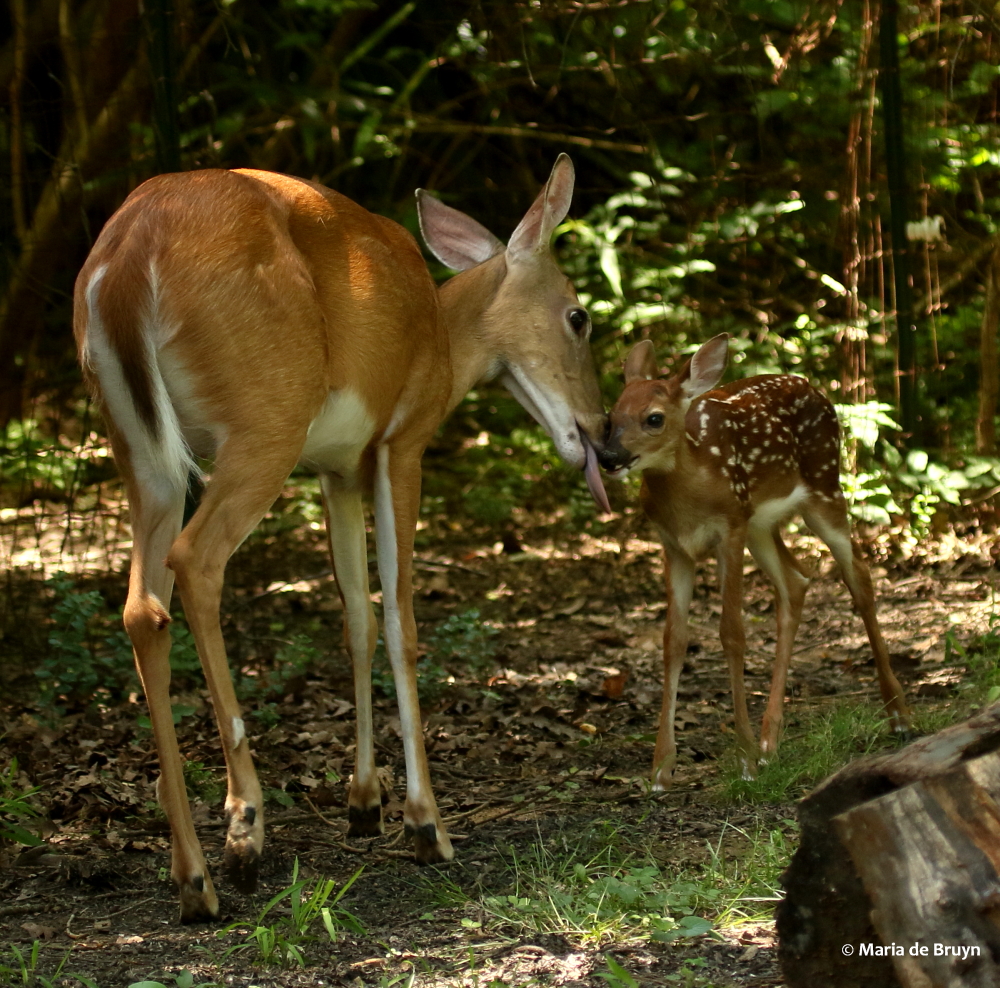
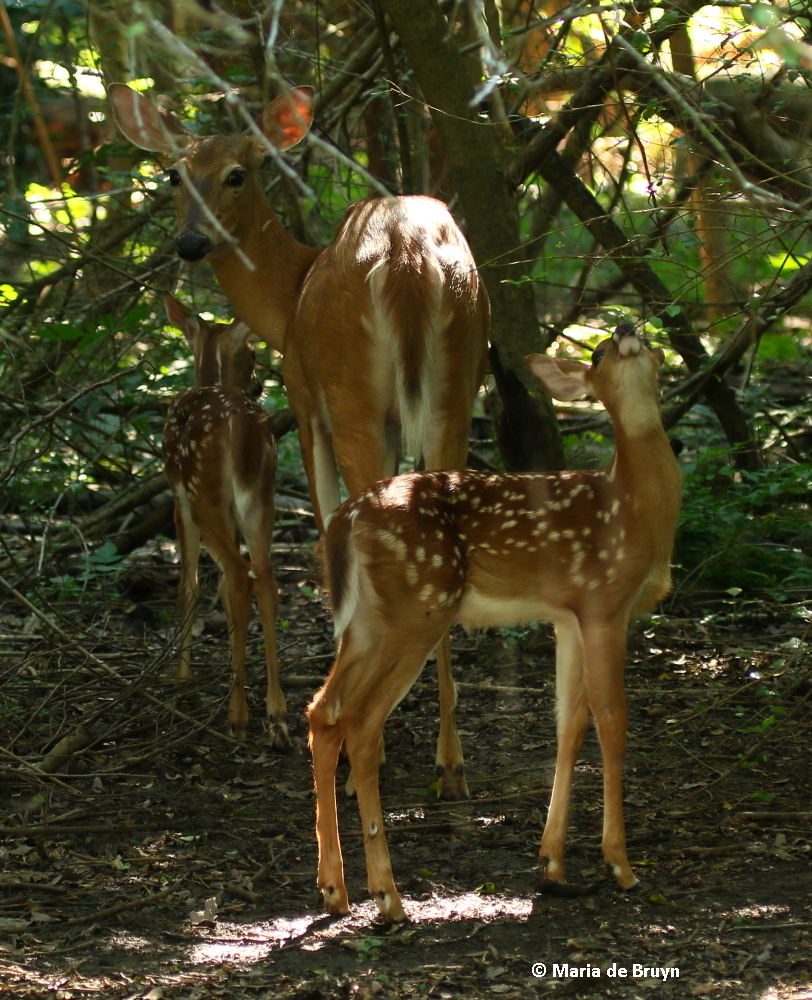
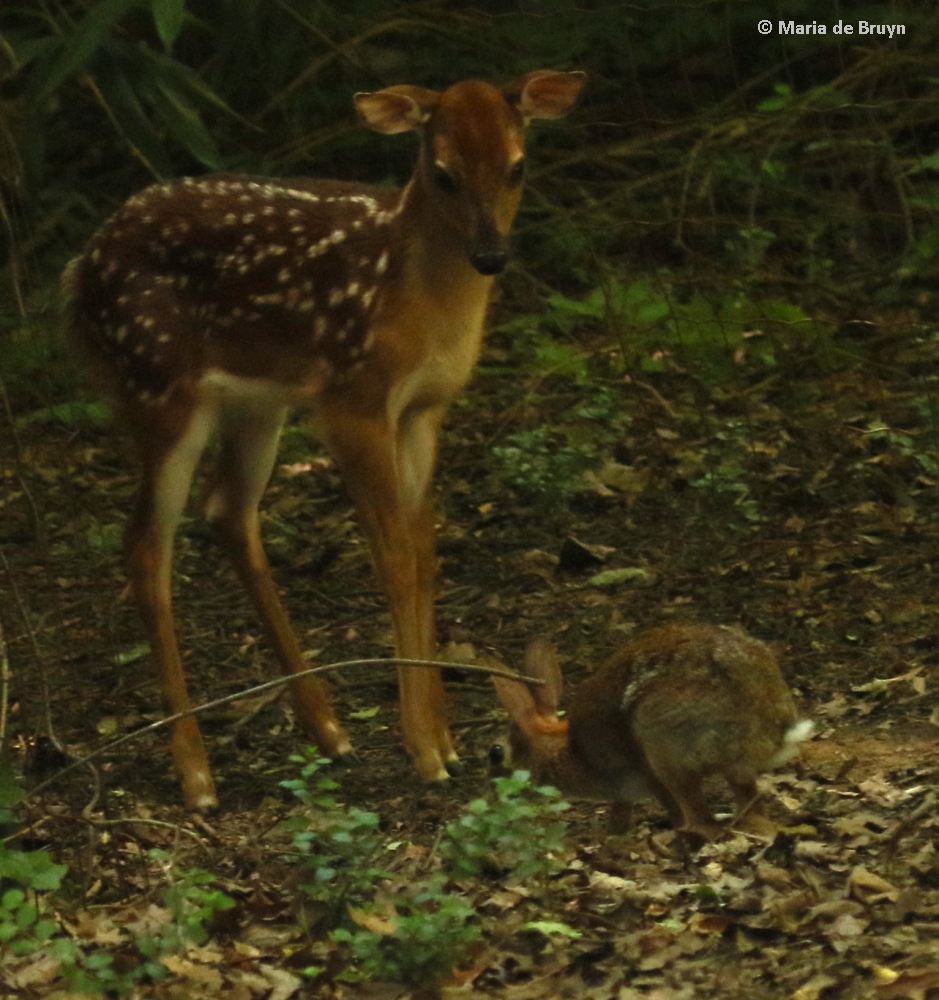
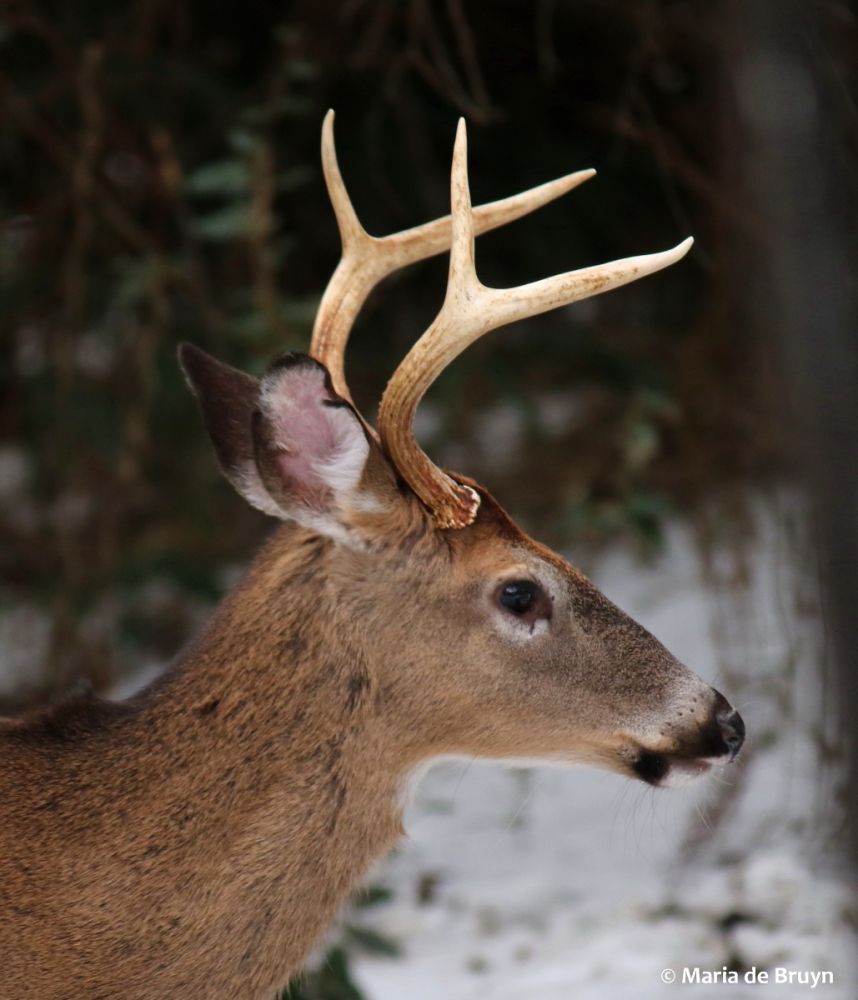
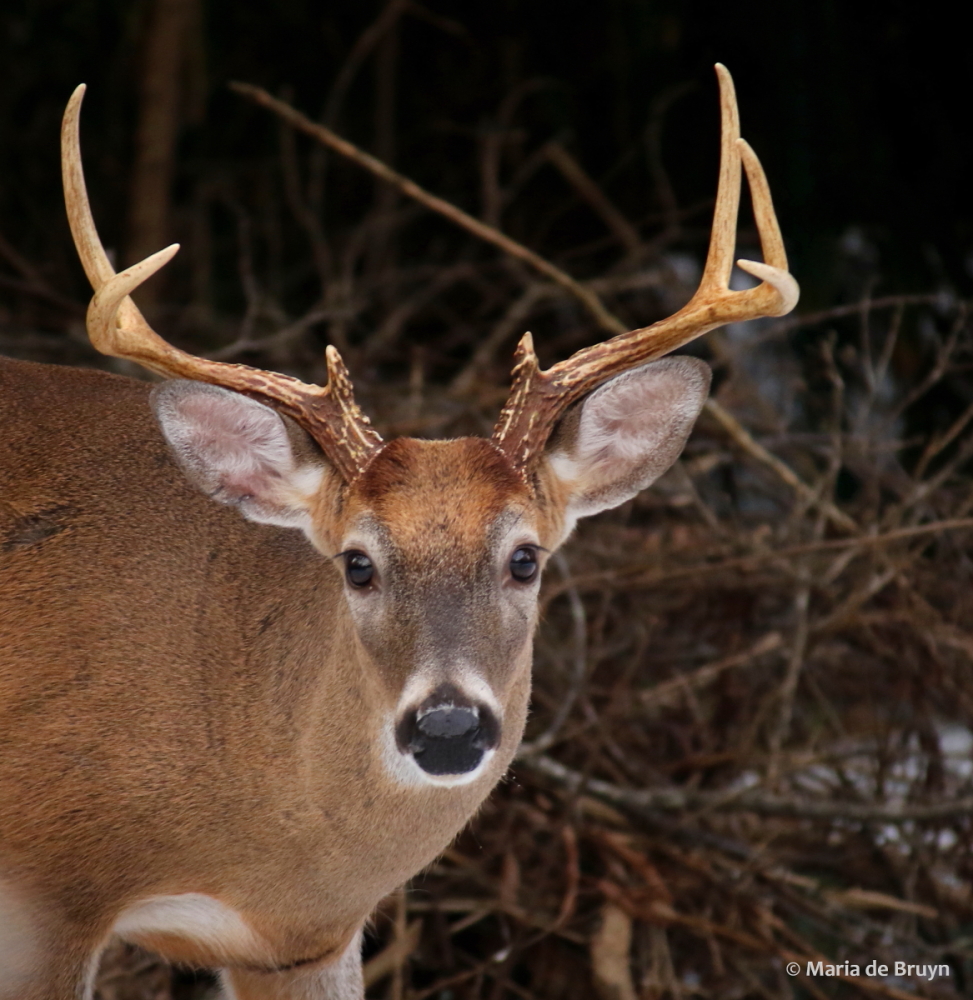
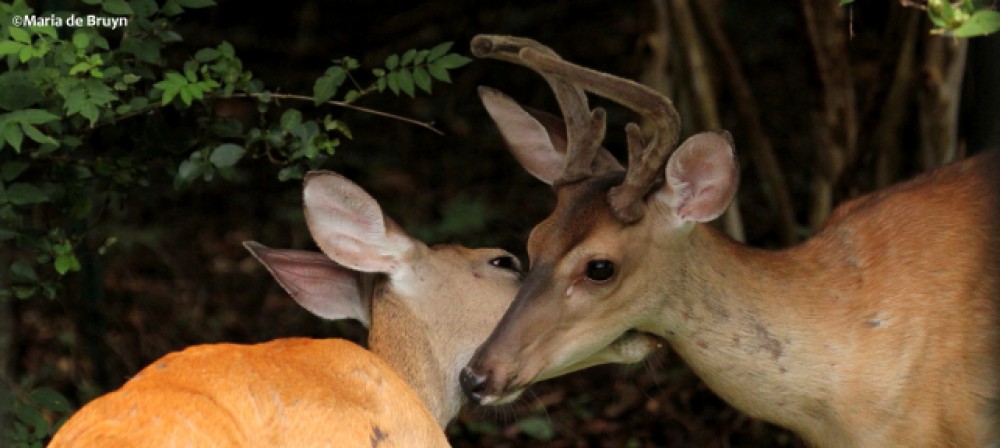
The white-tailed deer (Odocoileus virginianus) come by all months of the year and provide opportunities to see how the fawns learn about the other creatures sharing their space.

white-tailed-deer-i77a7463-maria-de-bruyn white-tailed-deer-i77a2126-maria-de-bruyn-res

white-tailed-deer-i77a7826-maria-de-bruyn-res

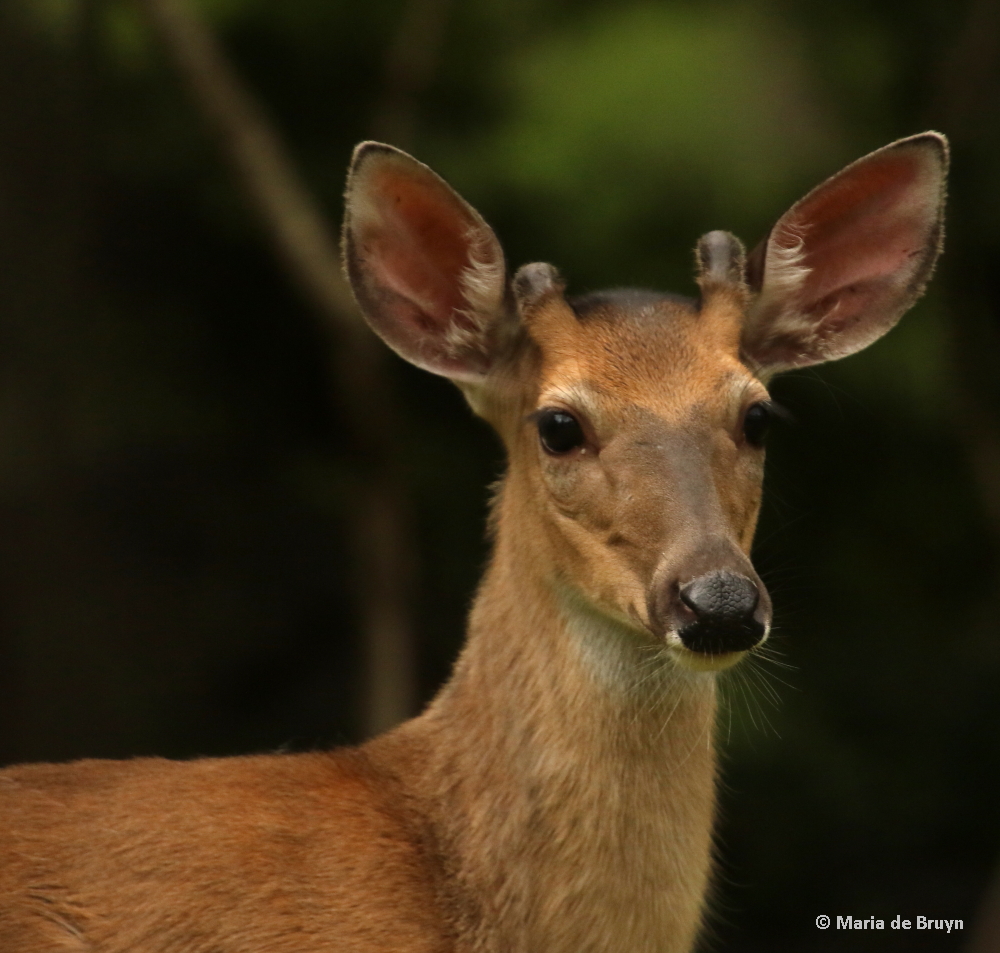
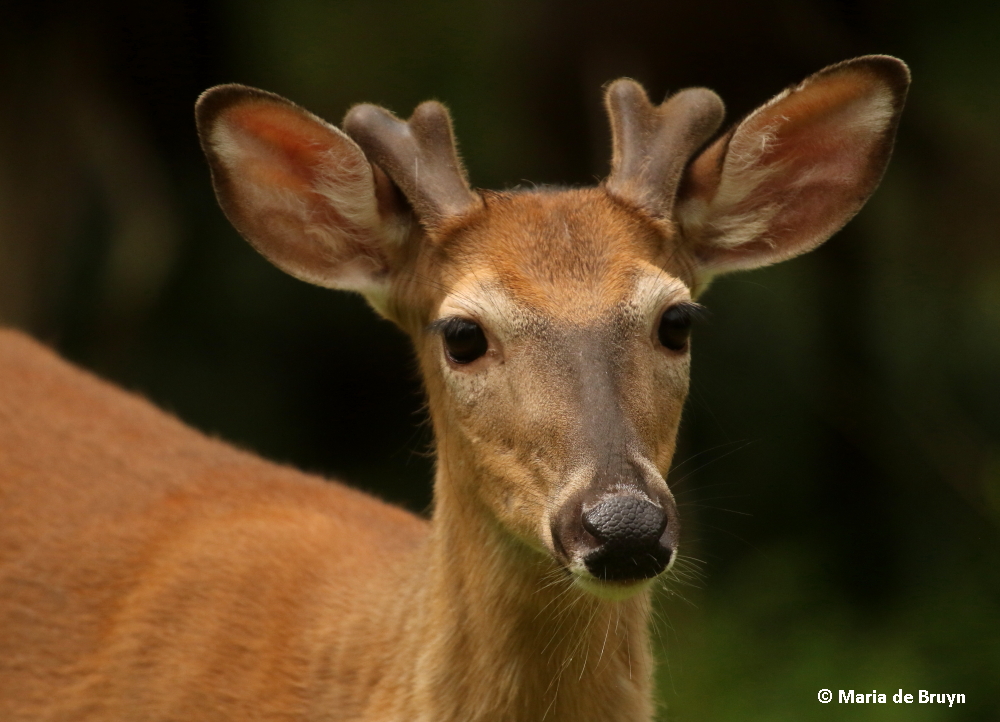
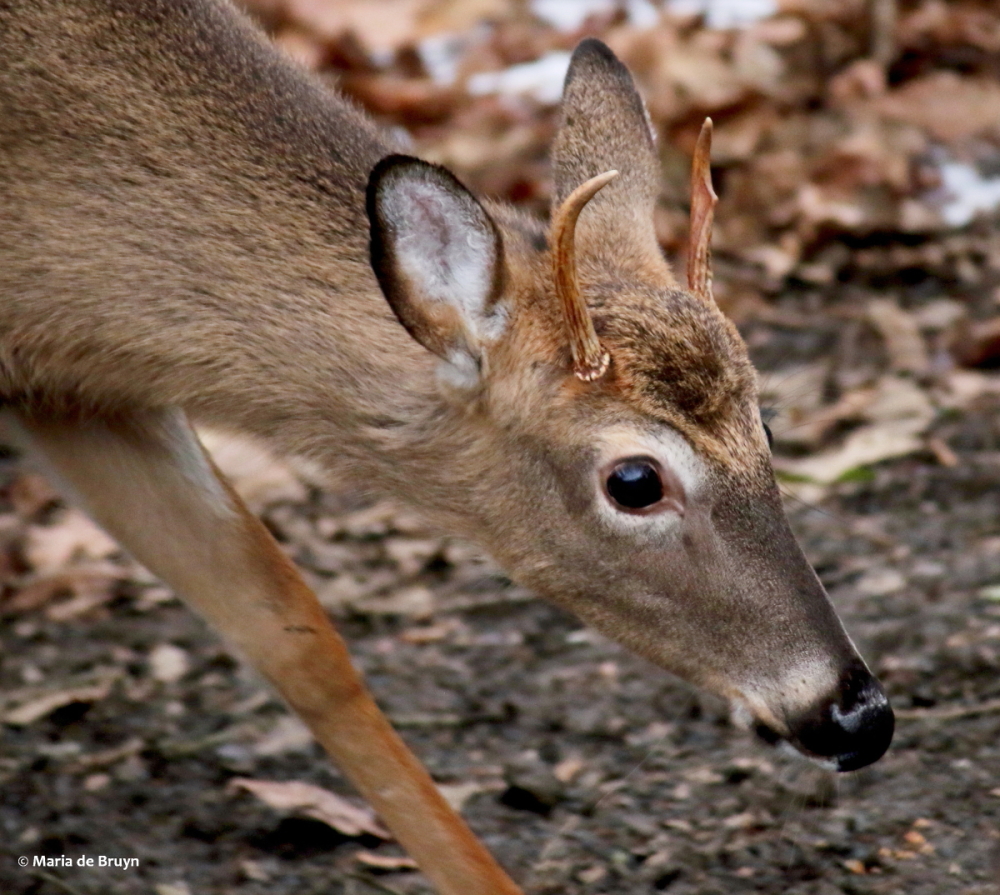
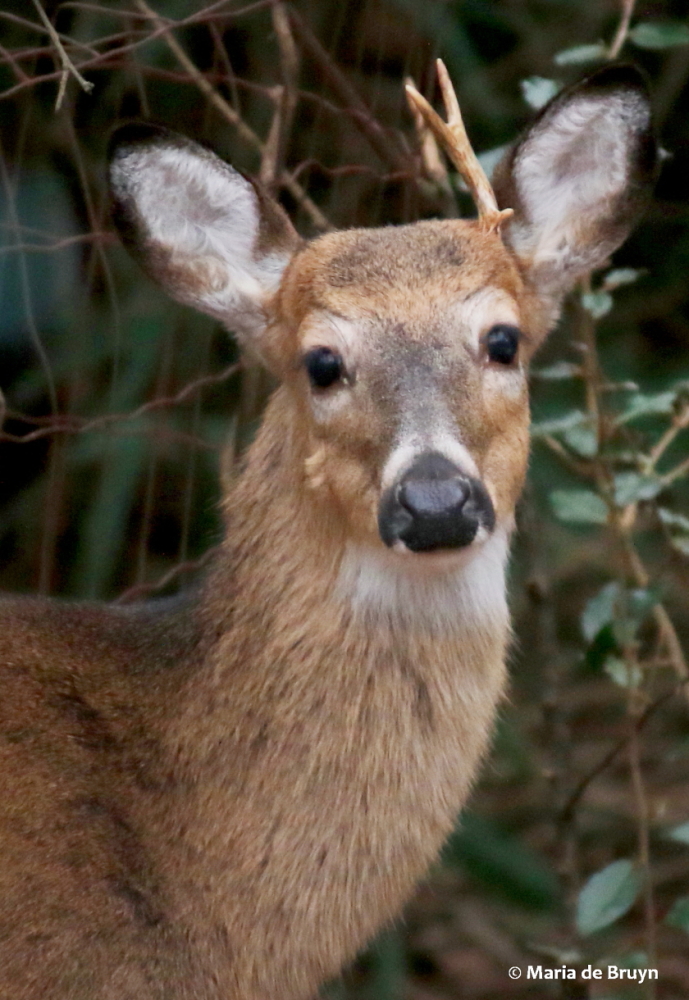
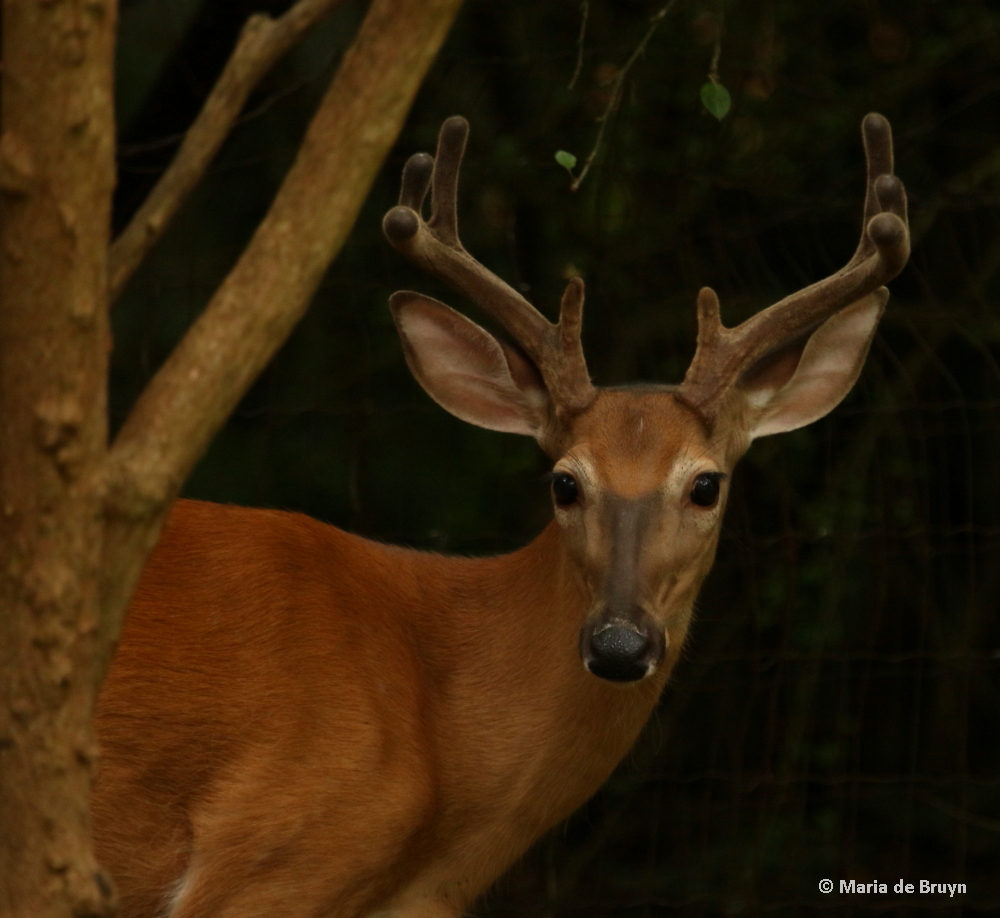
It’s interesting to see how button bucks are followed by yearlings with nubby antlers and eventually grow up to become handsome 5- or more point bucks.

white-tailed-deeri77a4099-maria-de-bruyn-res      white-tailed-deer-i77a4097-maria-de-bruyn-res

white-tailed-deer-i77a1367-maria-de-bruyn-res  white-tailed-deer-i77a1366-maria-de-bruyn-res

white-tailed-deer-i77a9813-maria-de-bruyn-res

white-tailed-deer-i77a1061-maria-de-bruyn-res white-tailed-deer-i77a1005-maria-de-bruyn-res

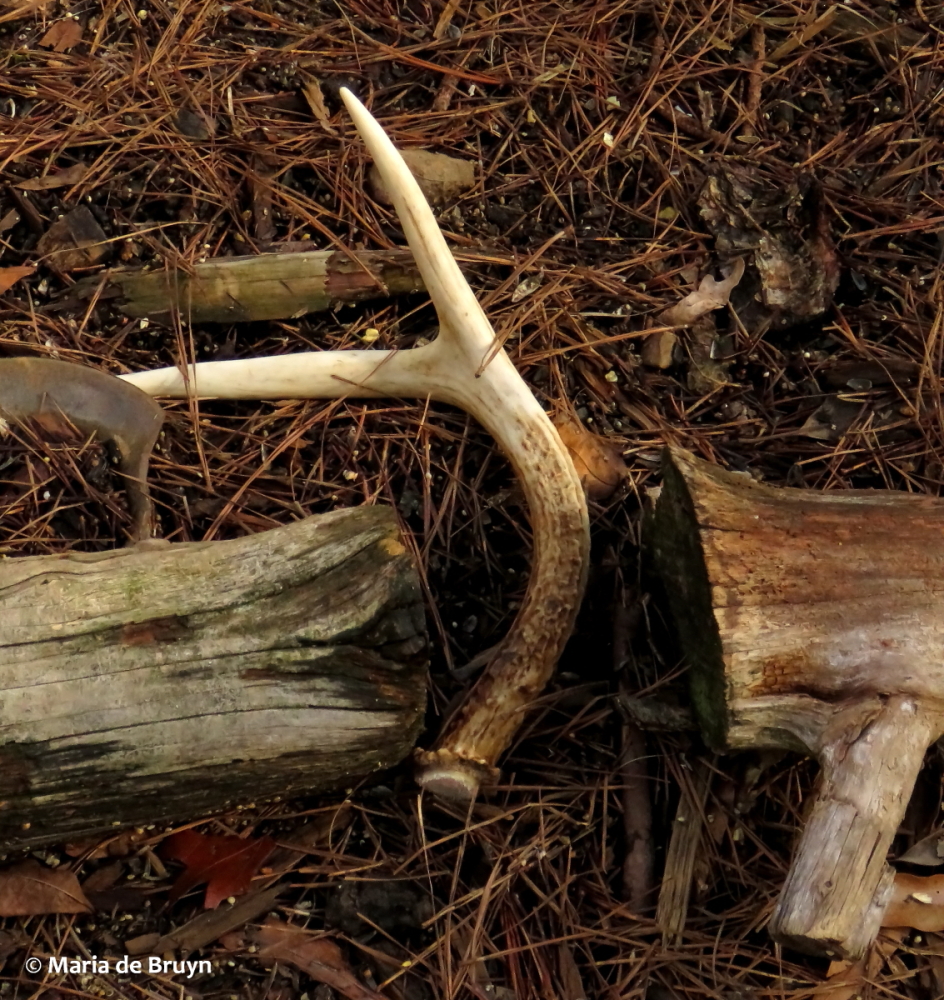
white-tailed-deer-antler-img_1211-maria-de-bruyn-resThis past year, one of the bucks was kind enough to drop one of his antlers in my yard as a souvenir.

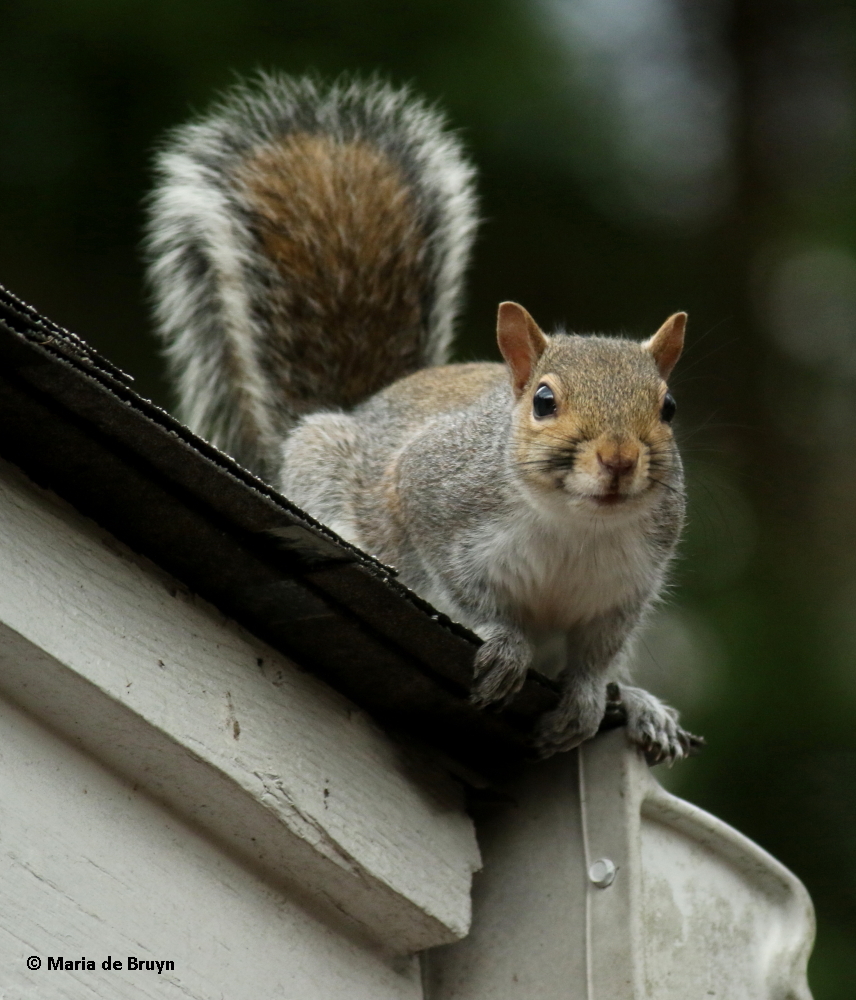
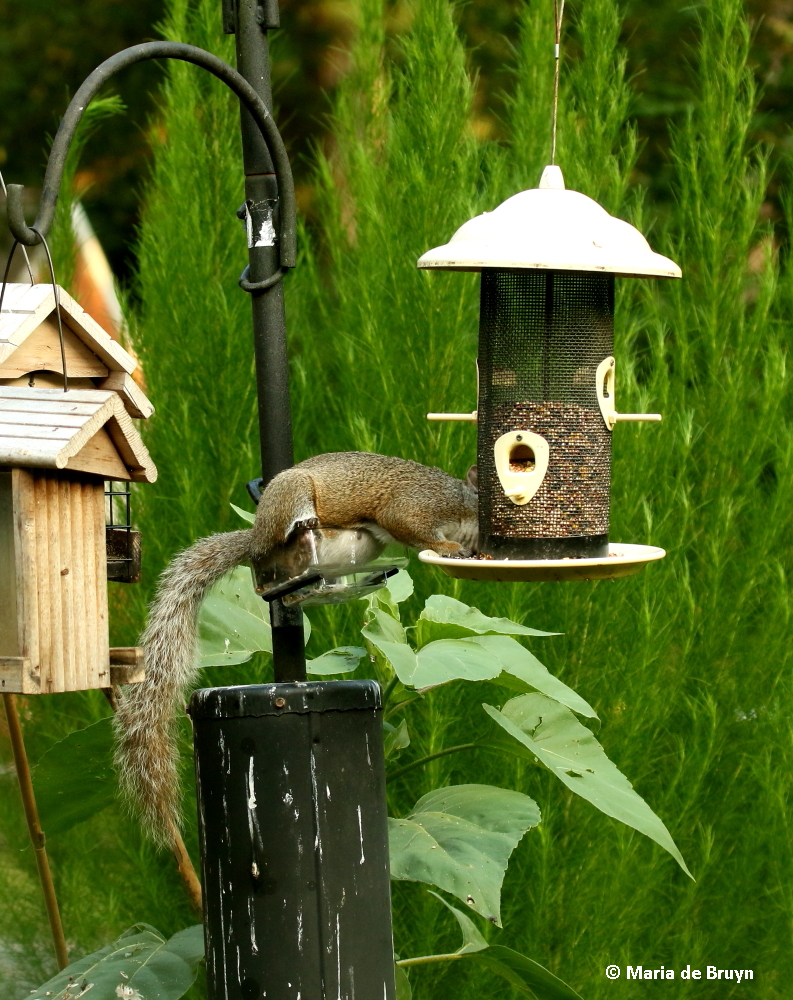
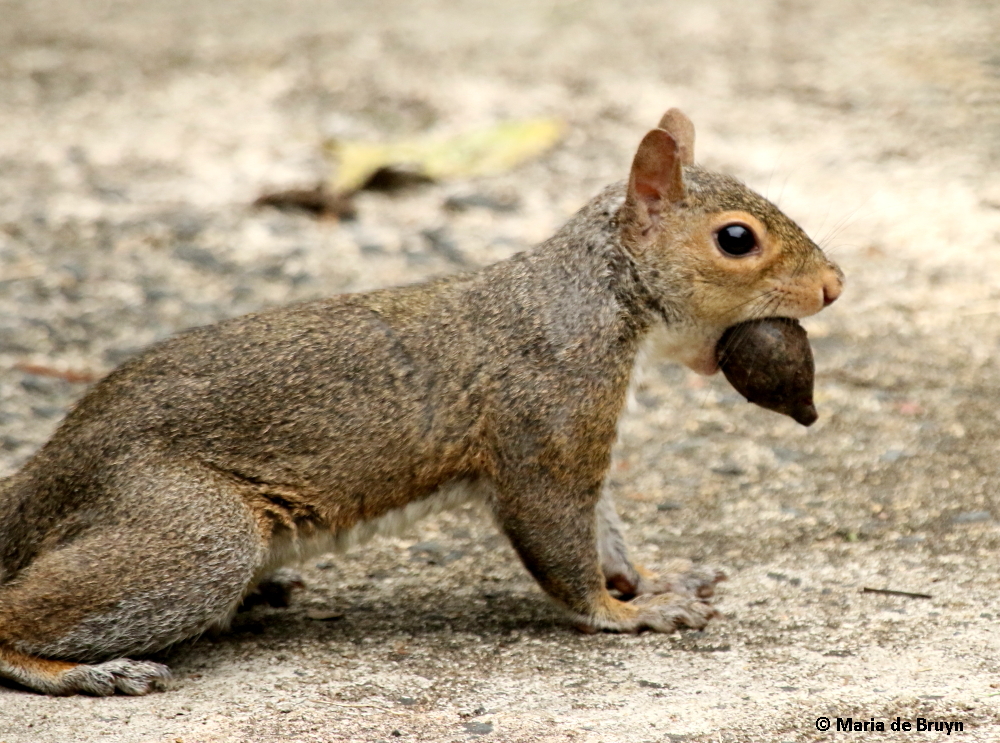
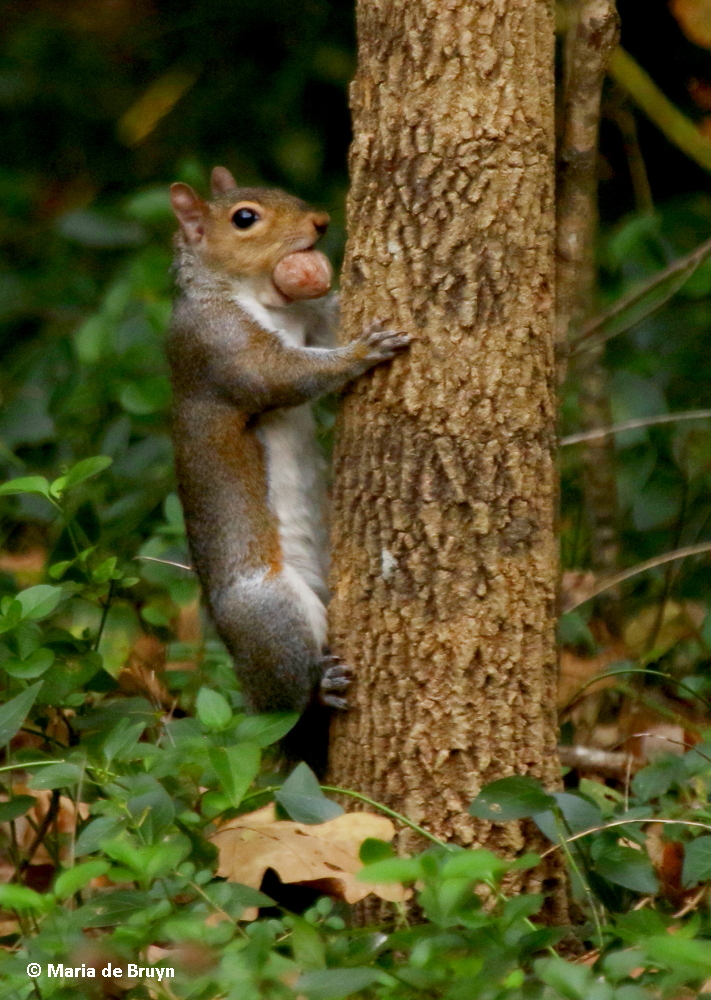
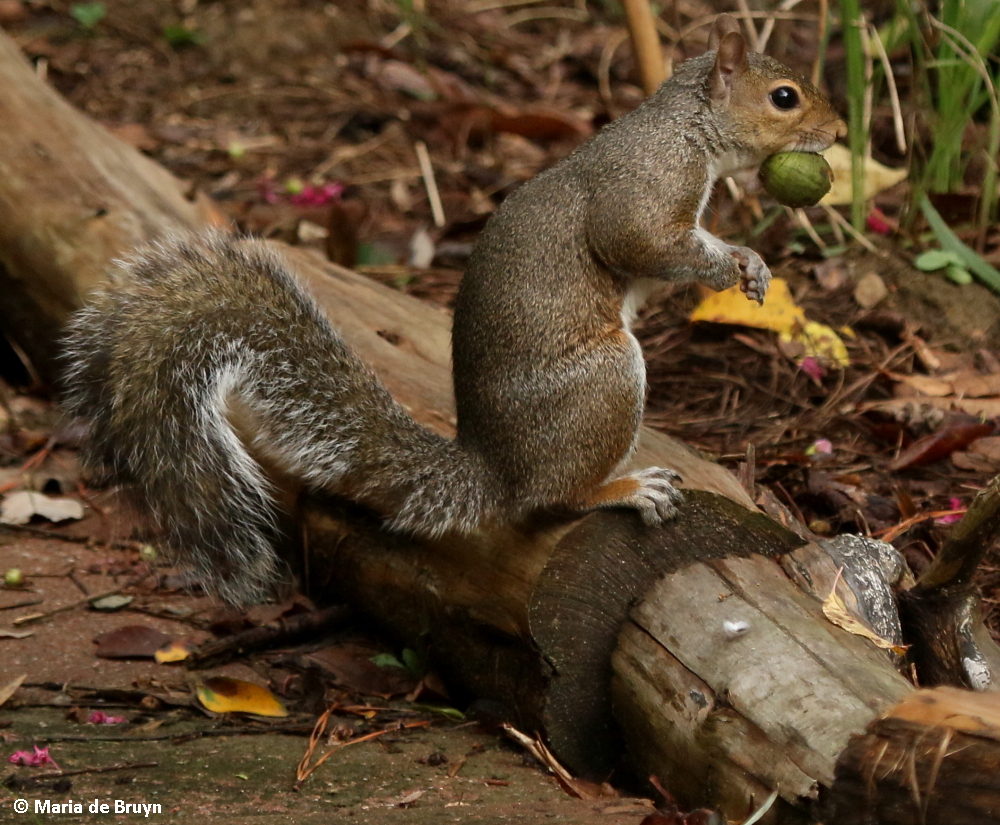
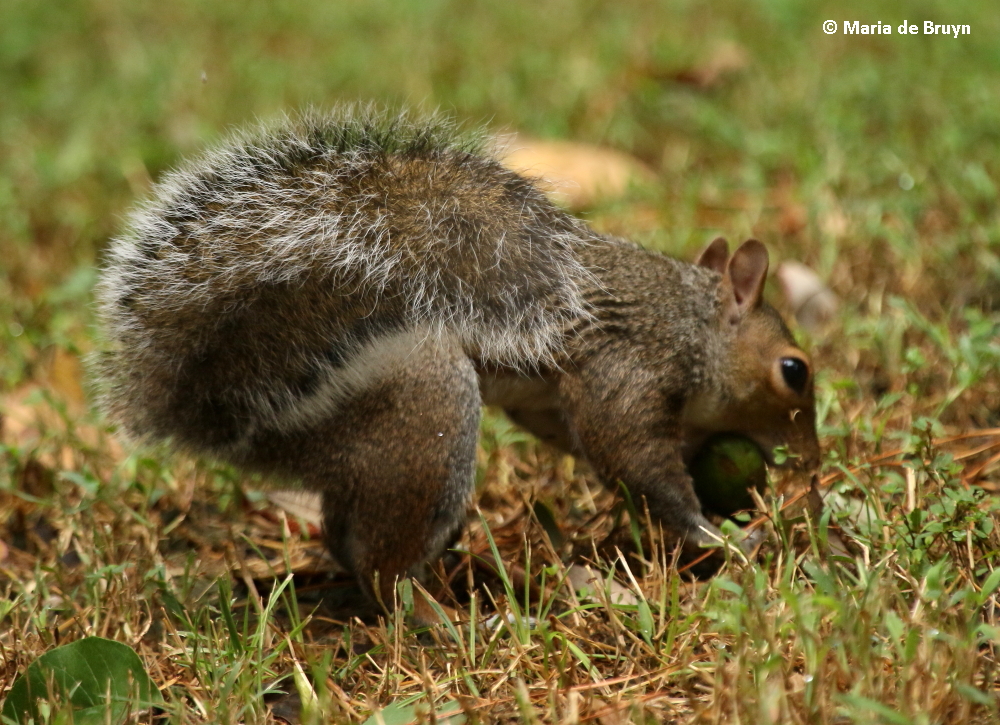
The Eastern gray squirrels (Sciurus carolinensis) provide endless amusement – one way is by investigating various techniques to find a way onto the bird feeders. These are largely unsuccessful, even when they climb up on the roof to see if they can launch themselves far enough to reach a feeder pole. This year, however, one enterprising squirrel managed to finally get onto a feeder by climbing up a rather large sunflower stem that held his/her weight until it bent over close to a pole.

eastern-gray-squirrel-i77a5492-maria-de-bruyn-res   eastern-gray-squirrel-i77a7478-maria-de-bruyn-res

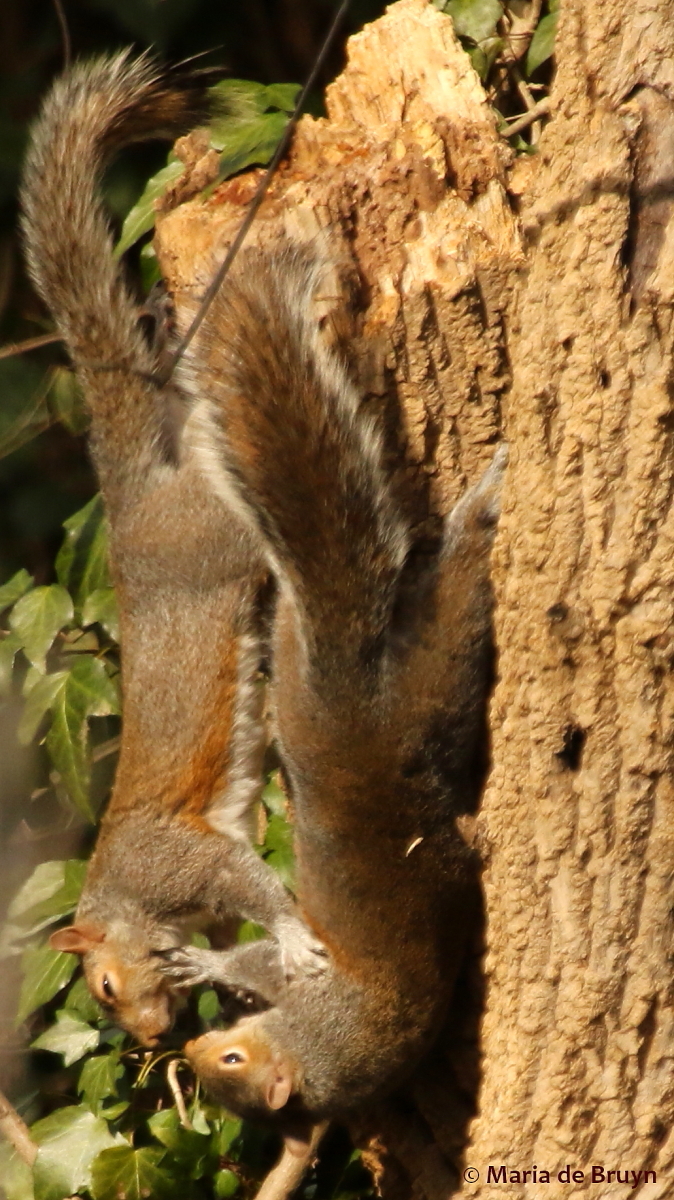
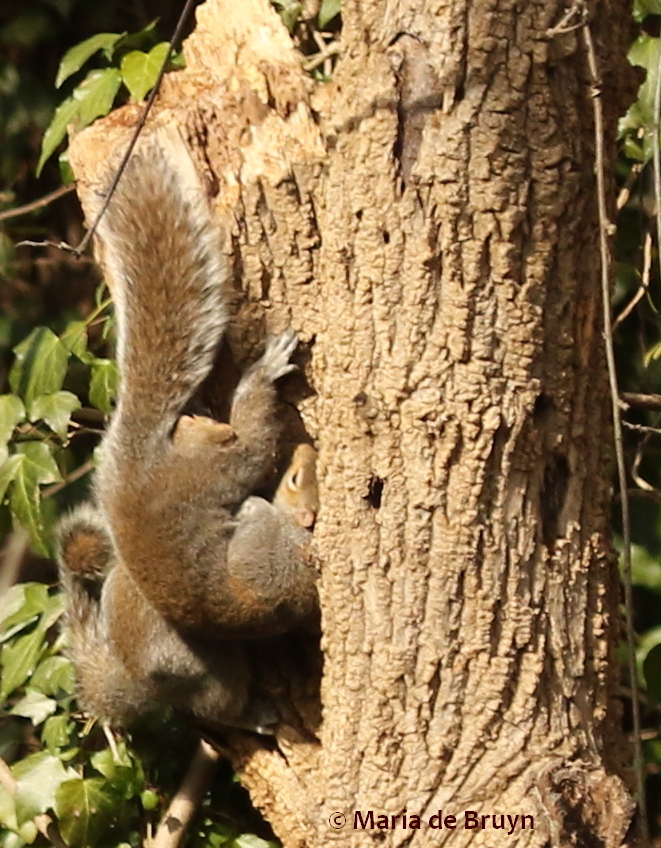
Their antics as they chase one another in play and for amorous purposes, too, are also quite entertaining.

eastern-gray-squirrel-i77a1104-maria-de-bruyn-res      eastern-gray-squirrel-77a0929-maria-de-bruyn

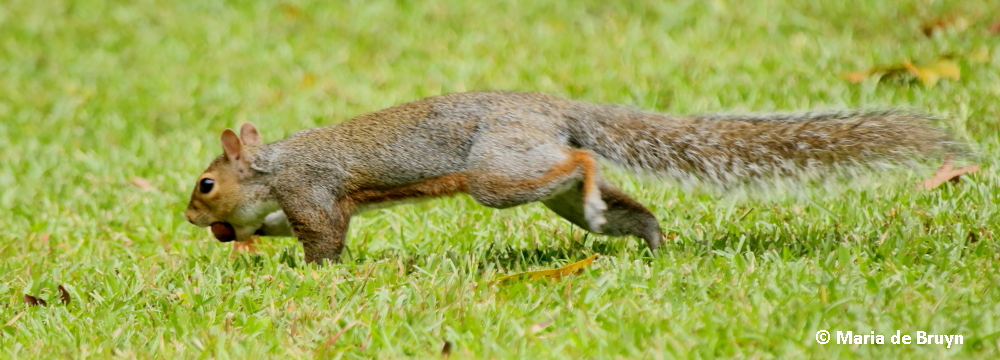
It’s fun to watch them caching seeds as well; sometimes, they decide a spot in the middle of the lawn is the best hiding place!

eastern-gray-squirrel-i77a0026-maria-de-bruyn-res

eastern-gray-squirrel-i77a9947-maria-de-bruyn-res   eastern-gray-squirrel-i77a6837-maria-de-bruyn-res

eastern-gray-squirrel-i77a4579-maria-de-bruyn-res   eastern-gray-squirrel-i77a4938-maria-de-bruyn-res

eastern-chipmunk-i77a4007-maria-de-bruyn-res


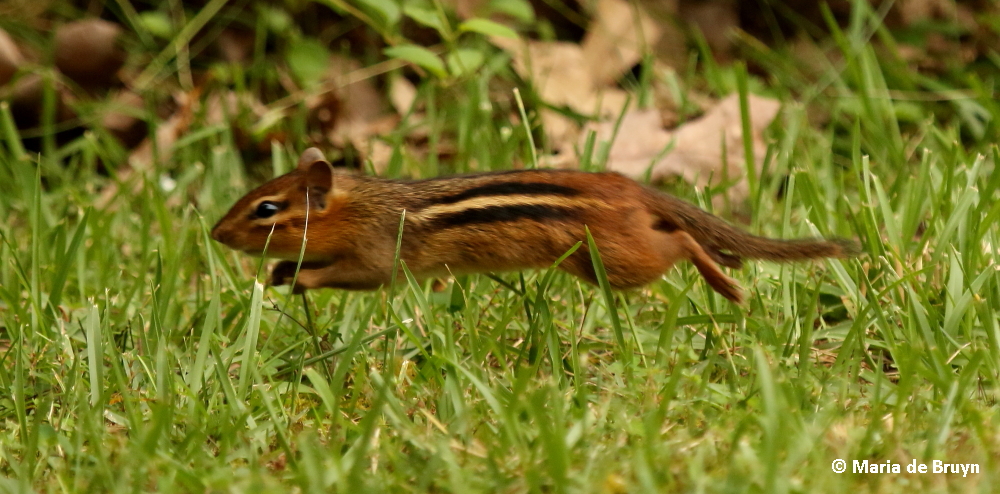
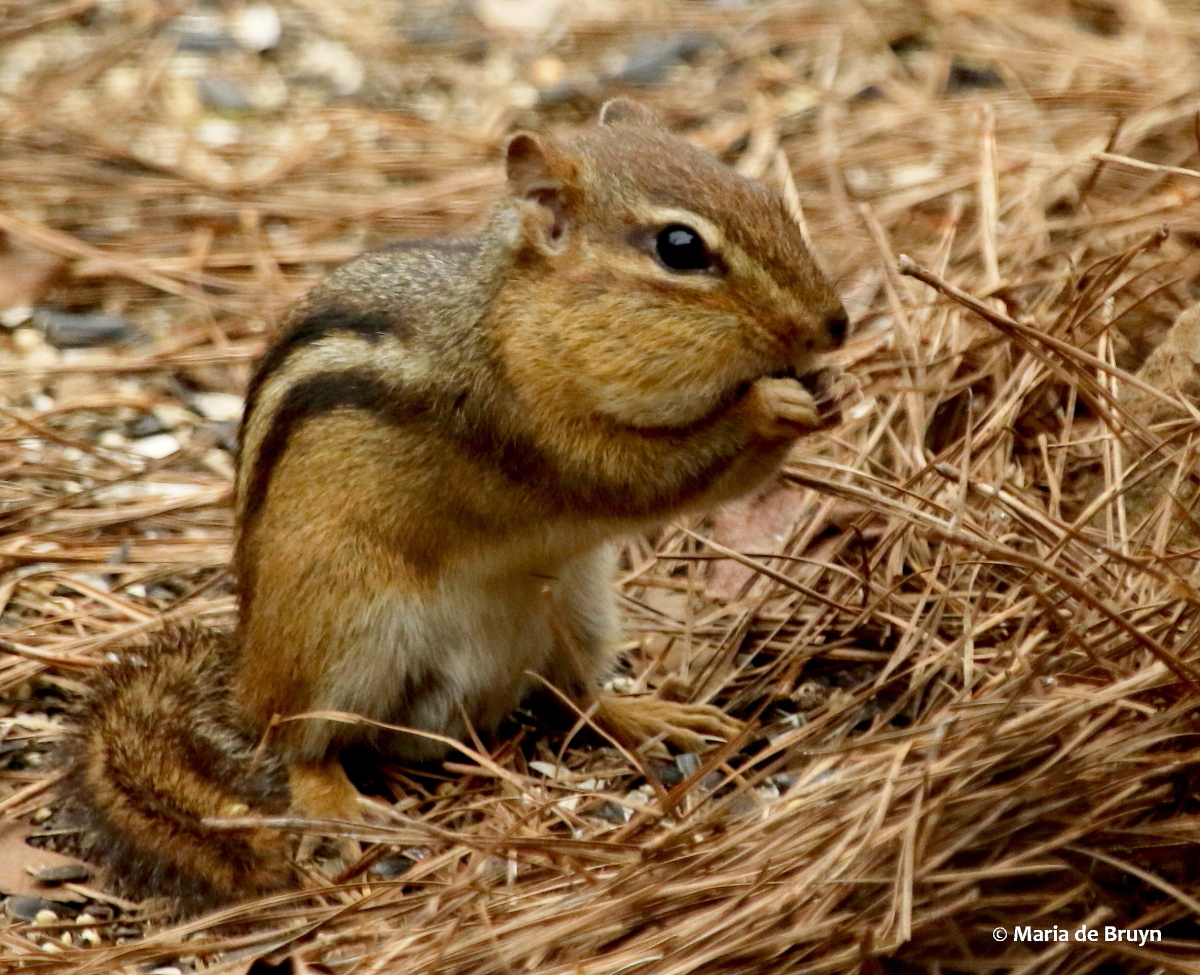
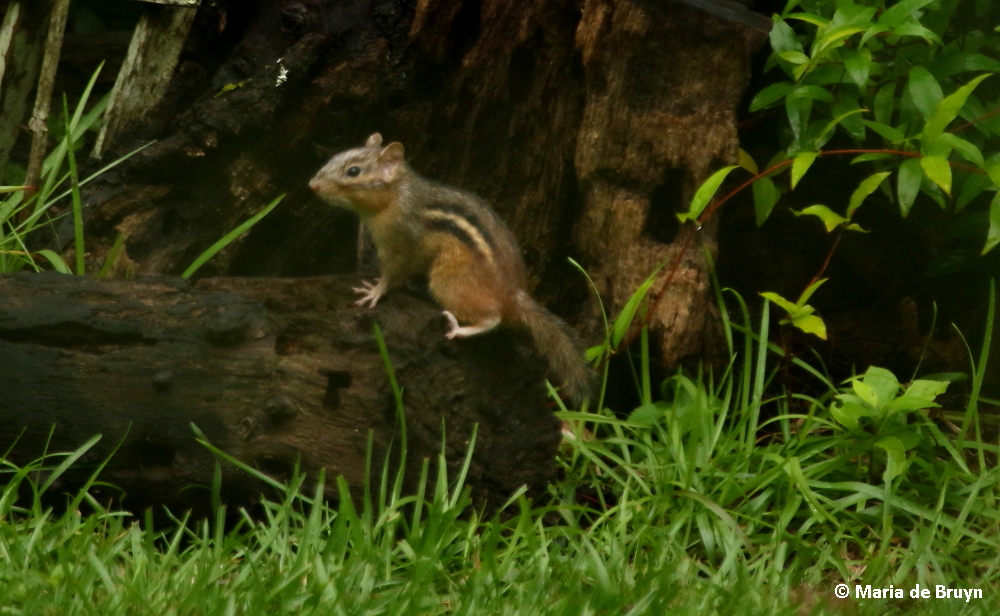
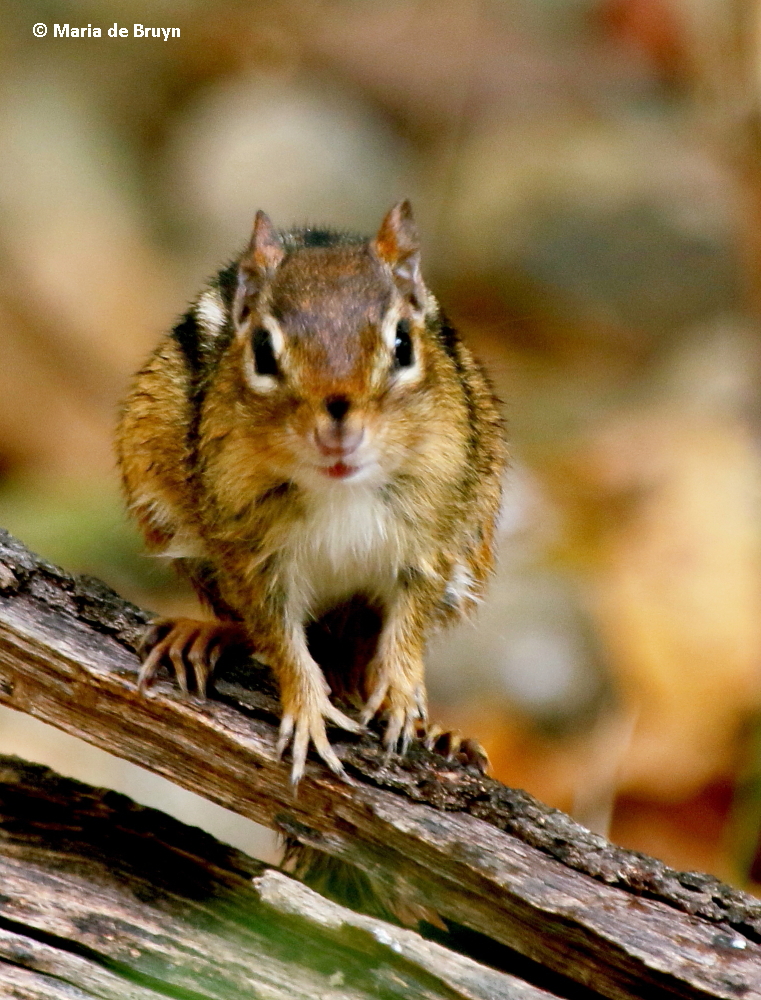
They often will chase non-family members away from the food I put out on the ground – seeds, bits of bread and apples for the birds (crows and catbirds are especially fond of apples). They are usually (not always!) willing to tolerate the Eastern chipmunks (Tamias striatus) who come to get some goodies, too.

eastern-chipmunk-i77a7935-maria-de-bruyn-res

eastern-chipmunk-i77a8790-maria-de-bruyn-res  eastern-chipmunk-i77a3418-maria-de-bruyn-res

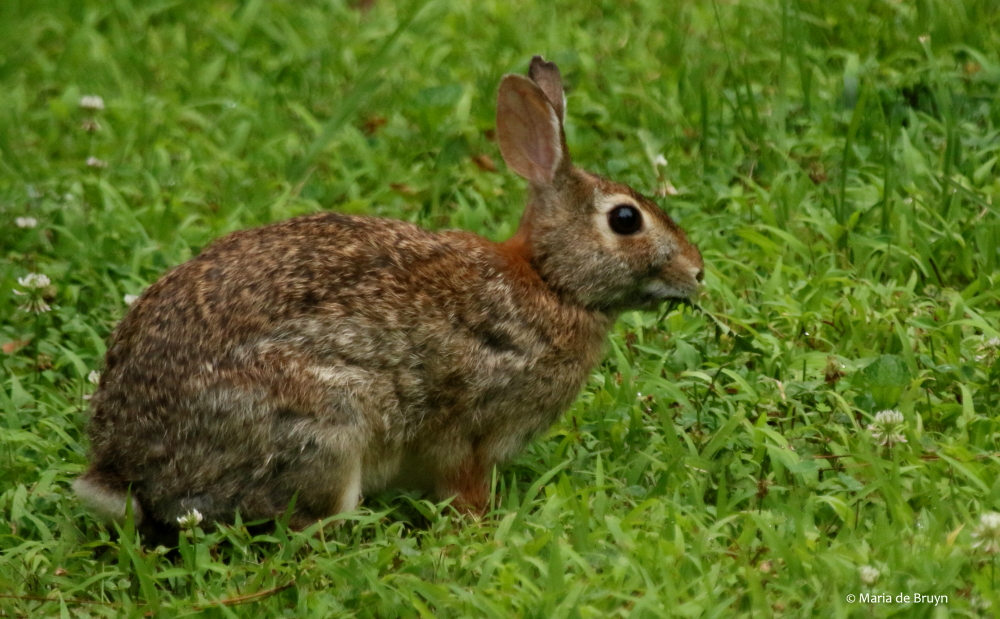
eastern-cottontail-i77a9747-maria-de-bruyn-resThe Eastern cottontail rabbits (Sylvilagus floridanus) don’t often go for the bird food but prefer to munch on the grasses and other plants growing on the “lawn”.

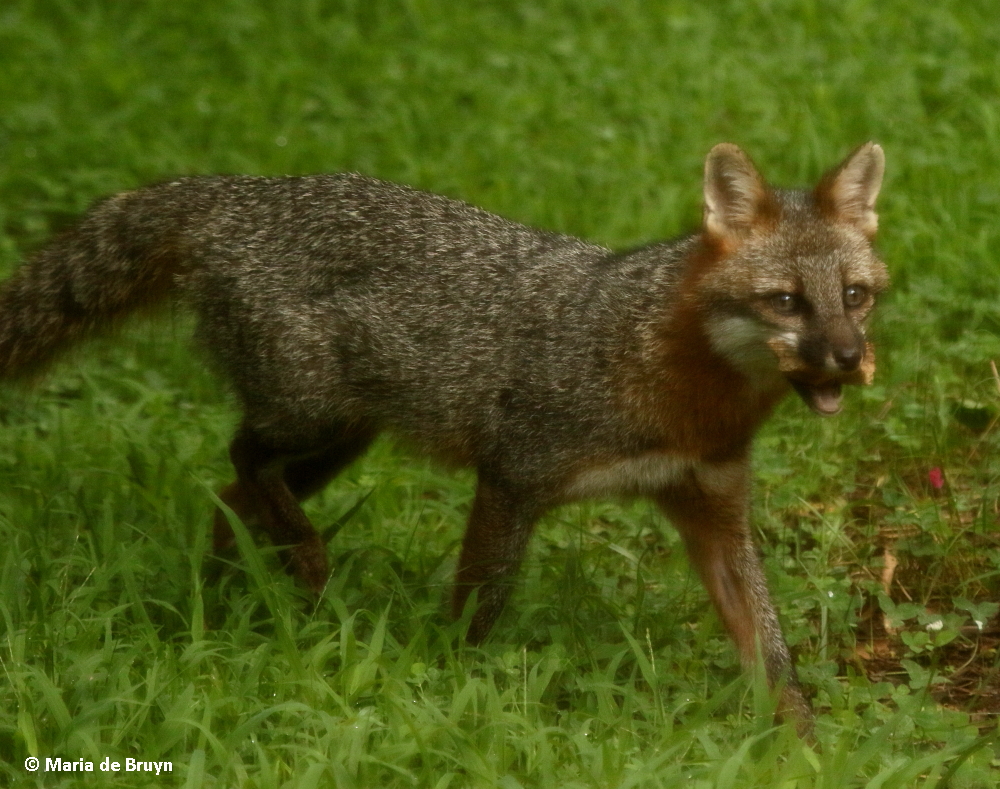
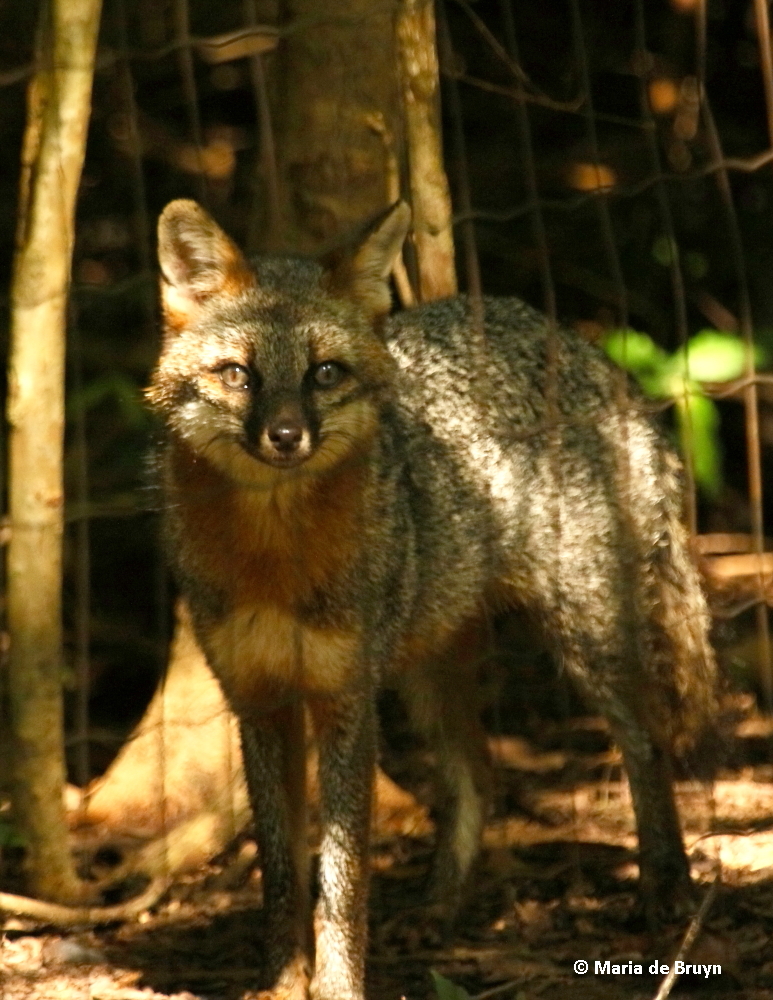
I was surprised this summer when I discovered that the beautiful neighborhood gray fox (Urocyon cinereoargenteus) was fond of bread.

gray-fox-i77a1236-maria-de-bruyn-res gray-fox-faith-i77a1197-maria-de-bruyn-res

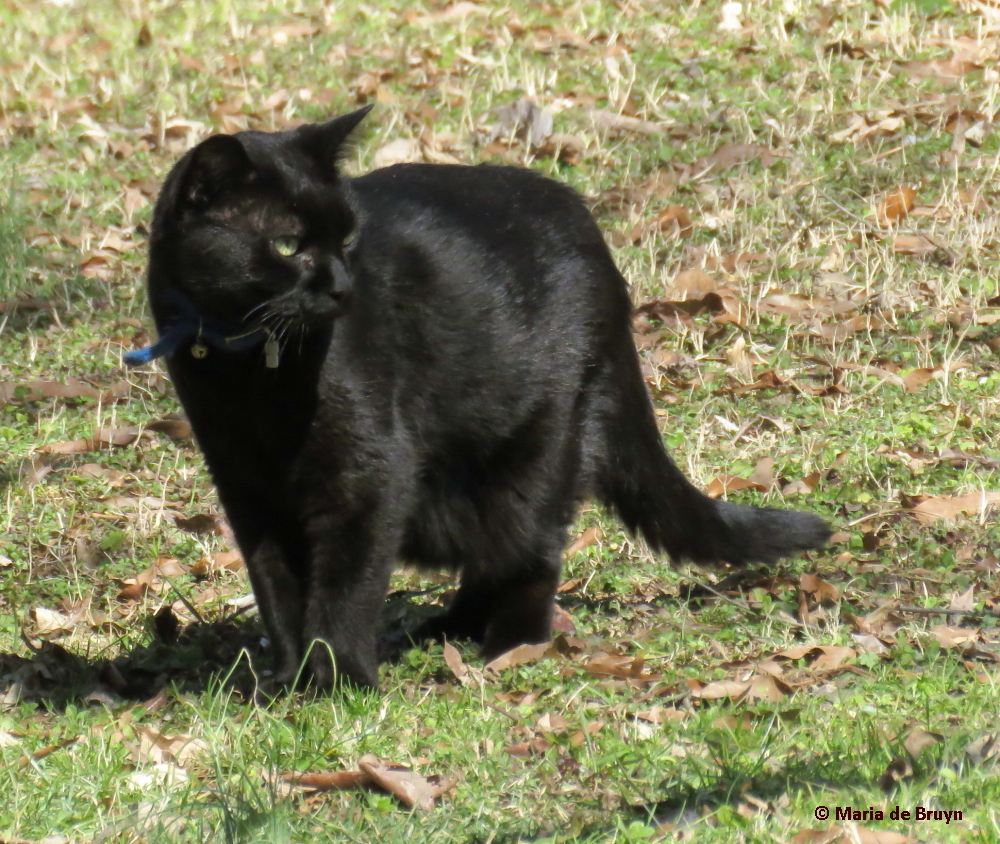
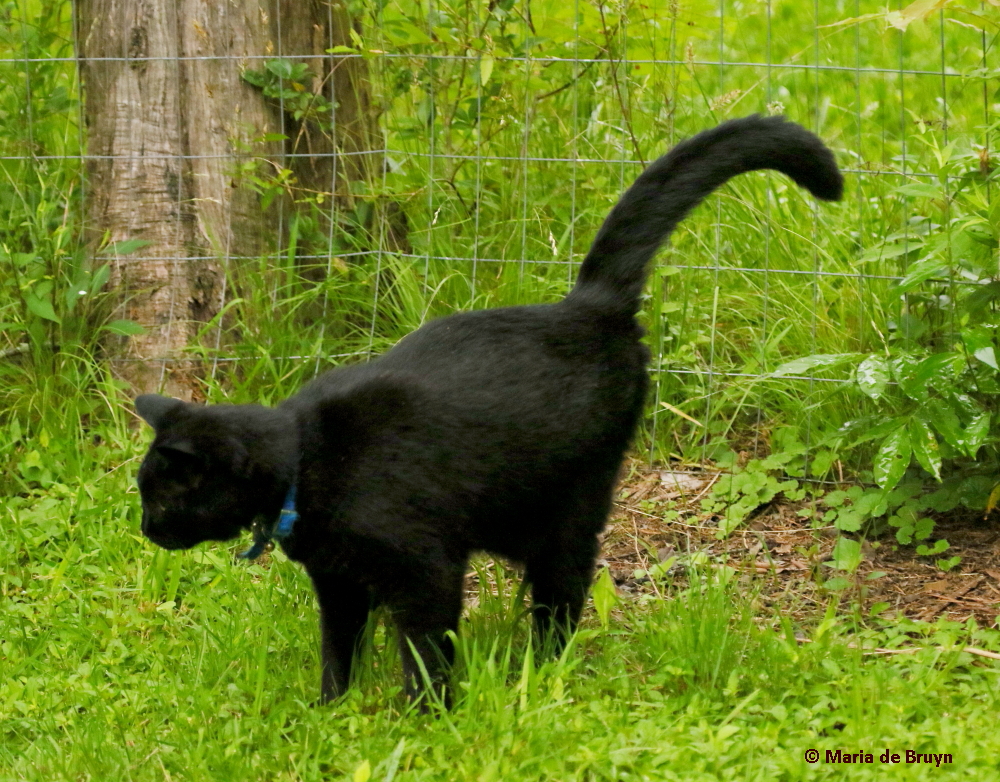
Her presence in the yard reinforced my resolve to no longer let my former indoor-outdoor cat, Jonahay, out by himself anymore. He has almost reached the ripe old age of 18 years and is going strong despite suffering arthritis, mild kidney disease, mild dementia and deafness. But all the years of having roamed outside have preserved a strong will to go outdoors so I take him for walks around the yard, which give him opportunities to mark his territory anew. (My other two cats are strictly indoor felines, although one of them likes to escape now and again.)

jonahay-img_0058-maria-de-bruyn-res jonahay-i77a5004-maria-de-bruyn-res

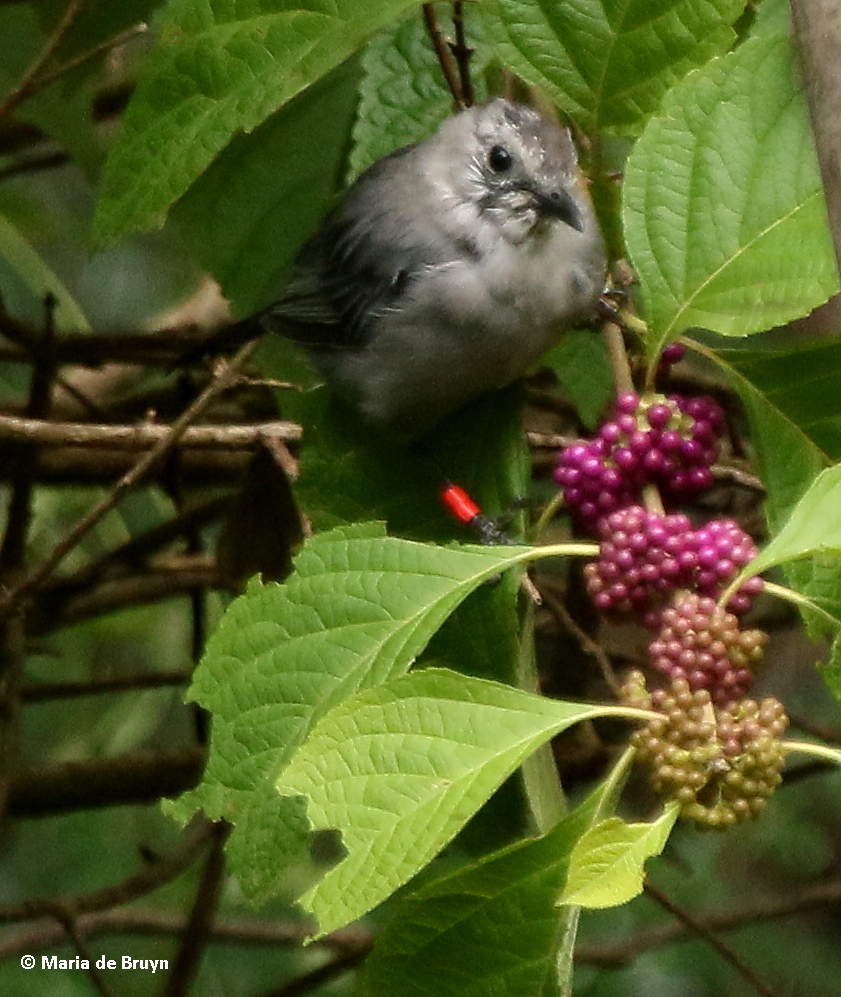
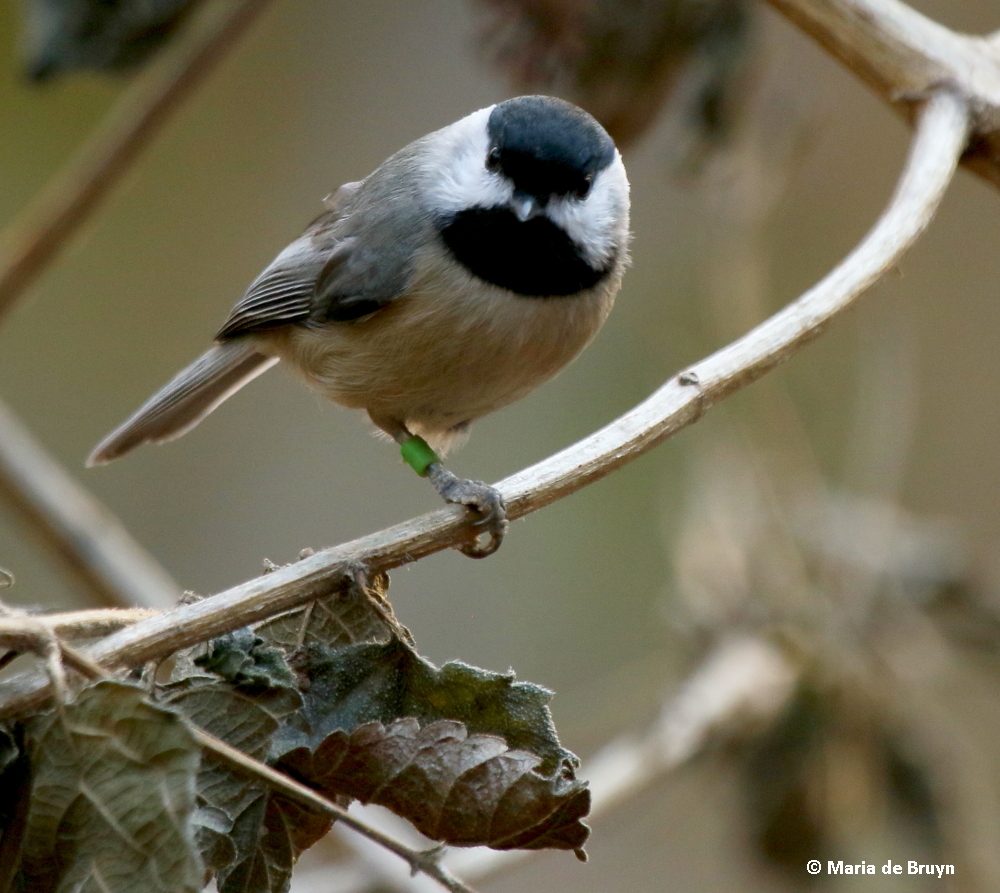
Two years running now, my yard has served as a venue for a citizen-science bird banding exercise and it’s always a pleasure to see banded birds returning to the feeders, like Corey catbird (Dumetella carolinensis) who enjoys American beautyberries. They also include my intrepid Carolina chickadee (Poecile carolinensis), Chantal, who unfortunately lost a leg (I think because she had scaly leg when she was banded and the bands were too tight but I don’t know this for sure). She is a feisty little bird and manages to balance remarkably well on her remaining leg; her daily return is always a joyous sight for me.

gray-catbird-corey-i77a4763-maria-de-bruyn-res  carolina-chickadee-chantal-i77a7263-maria-de-bruyn-res

sphinx-moth-caterpillar-img_4314-maria-de-bruyn-res


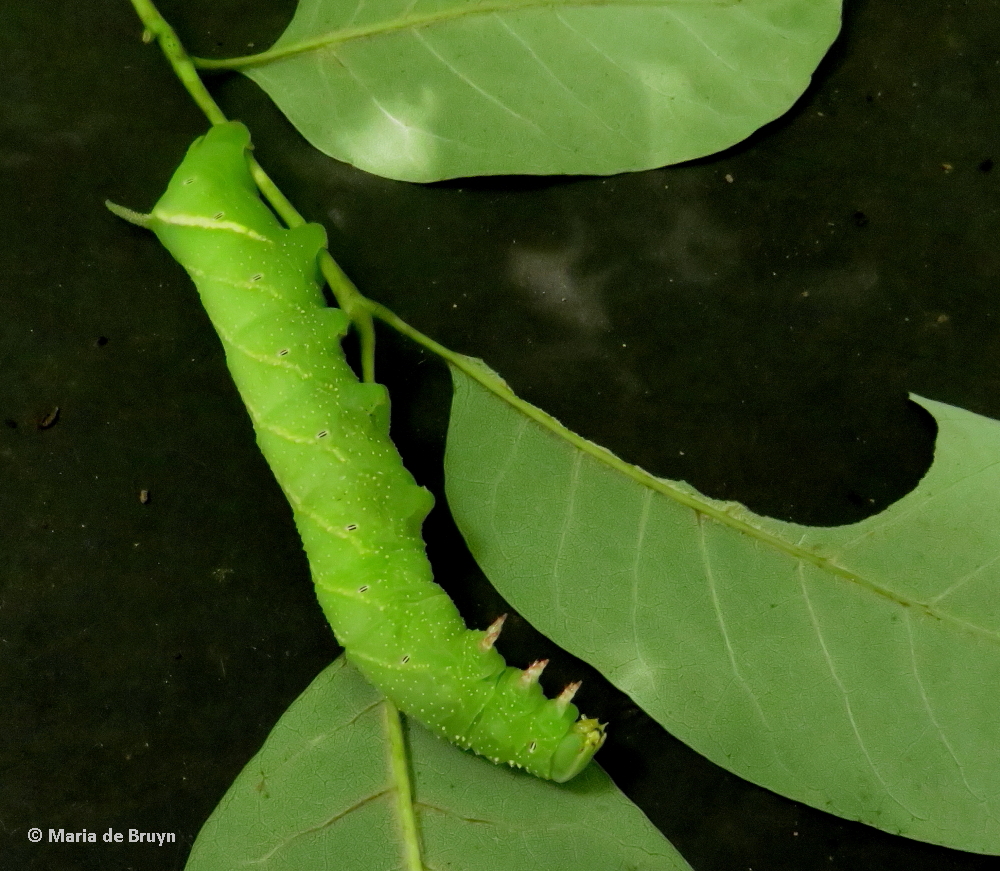
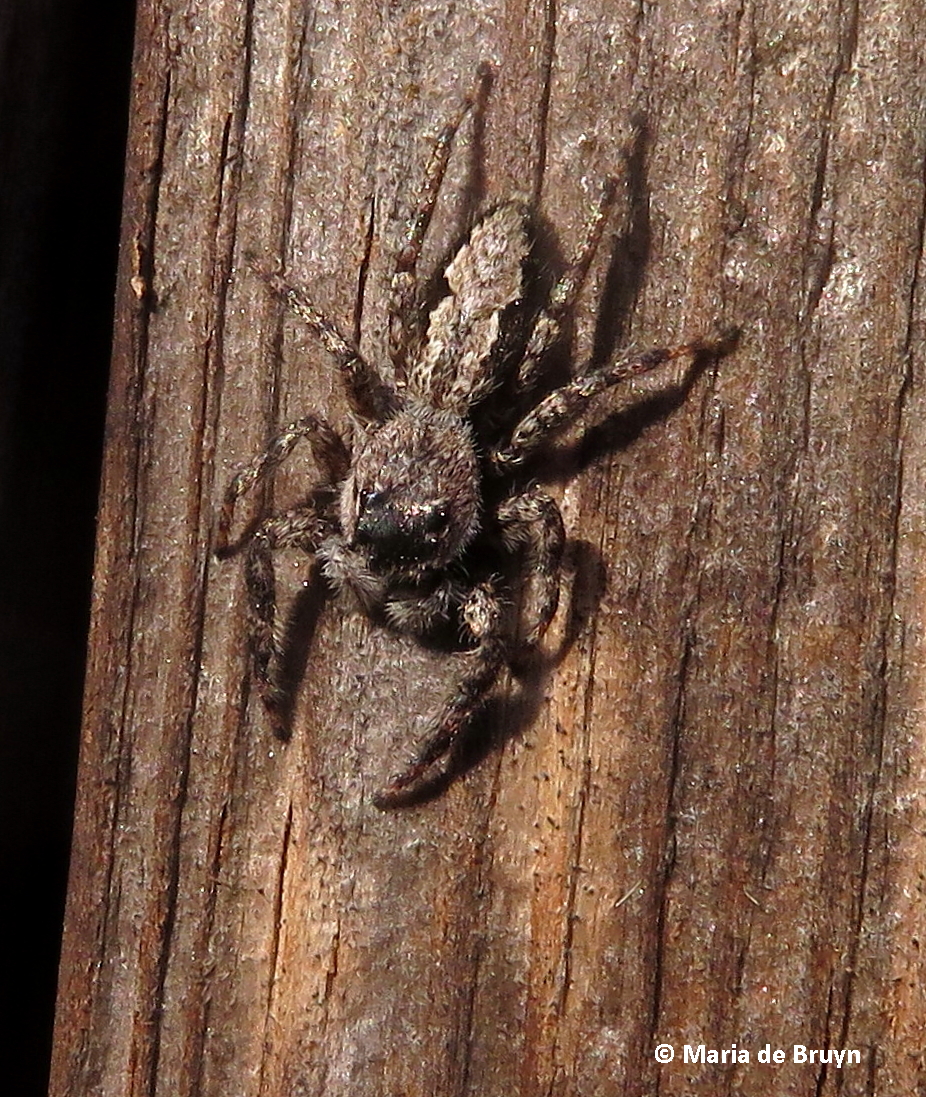
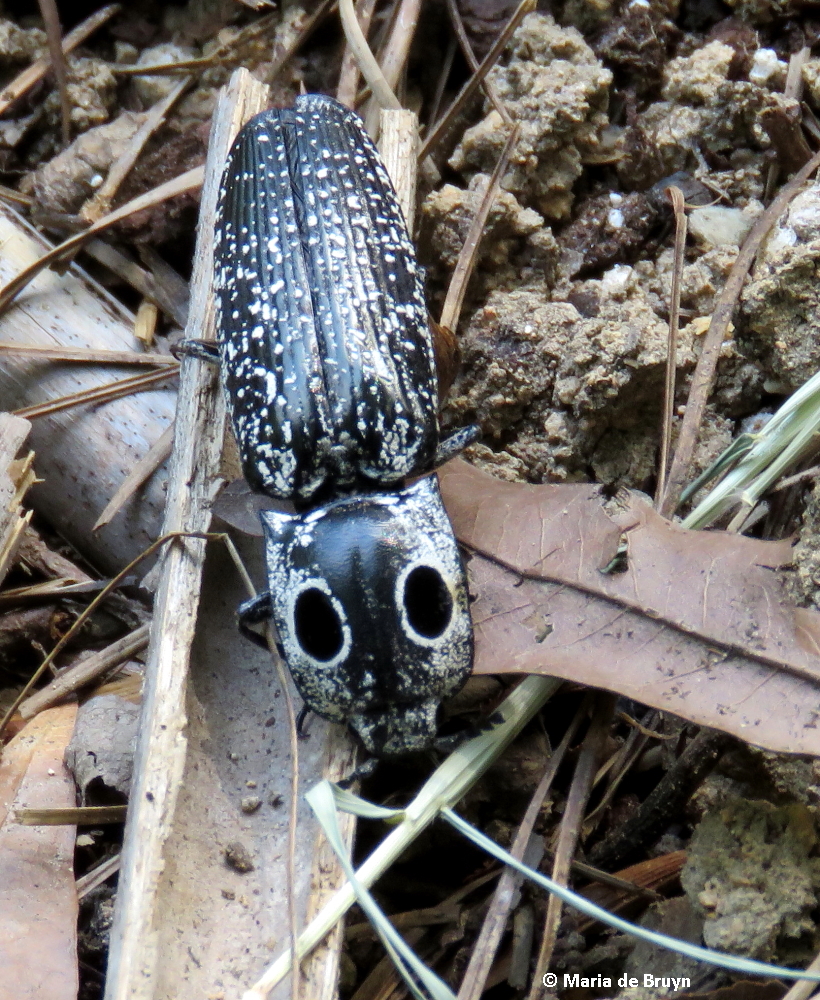
2016 was an exciting year as far as caterpillars went since a large sphinx moth caterpillar (Paonias) graced the yard for the first time (at least that I had noticed).  Cute little jumping spiders (Salticidae) climb onto bird nest boxes and Eastern eyed click beetles (Alaus oculatus) are found in the leaf litter.


jumping-spider-img_0562_1-maria-de-bruyn   click-beetle-img_4582-maria-de-bruyn-res

stink-bug-img_0575maria-de-bruyn-res


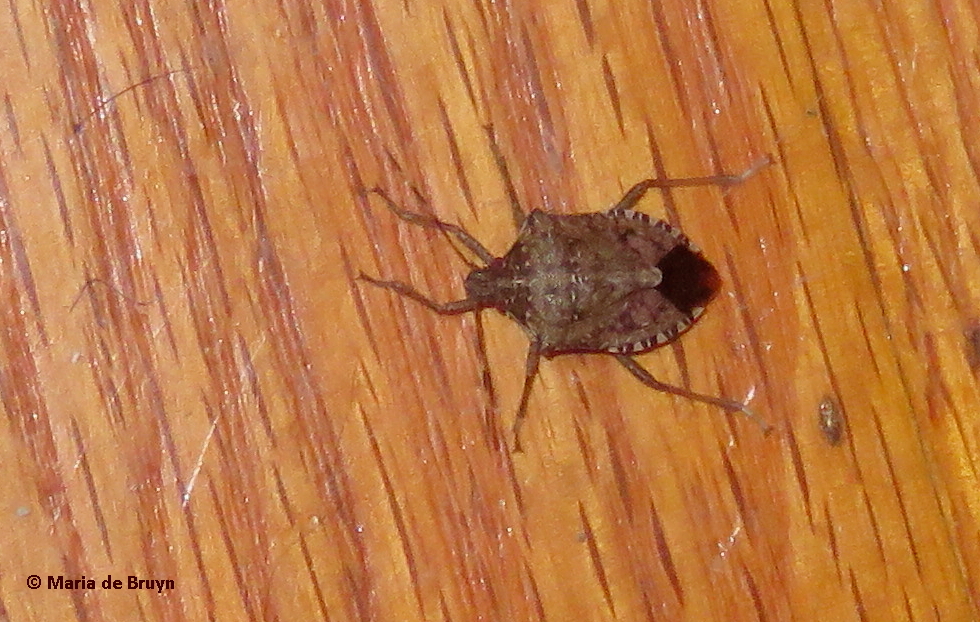
Unfortunately, some of the stink bugs (Halyomorpha) make their way into the house so that I have to take them back outside. One of my cats made the mistake of eating one that I hadn’t got in time and she ended up quite sick, even foaming at the mouth!

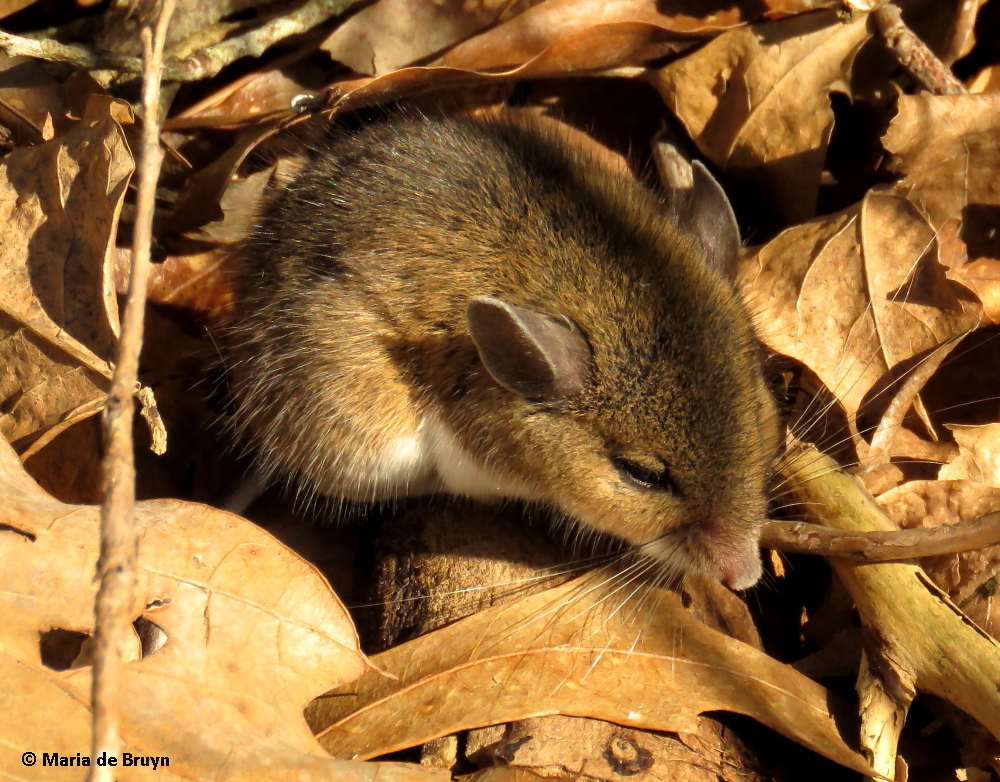
mouse-img_2726-maria-de-bruyn-resOccasionally, mice (Mus) get into the house. The cats don’t eat them and aren’t out to kill them but if they catch one at night and I don’t awaken, the rodent will be dead in the morning. Otherwise, I manage to get hold of the animal (sometimes with a lot of effort) and let it go outside again.

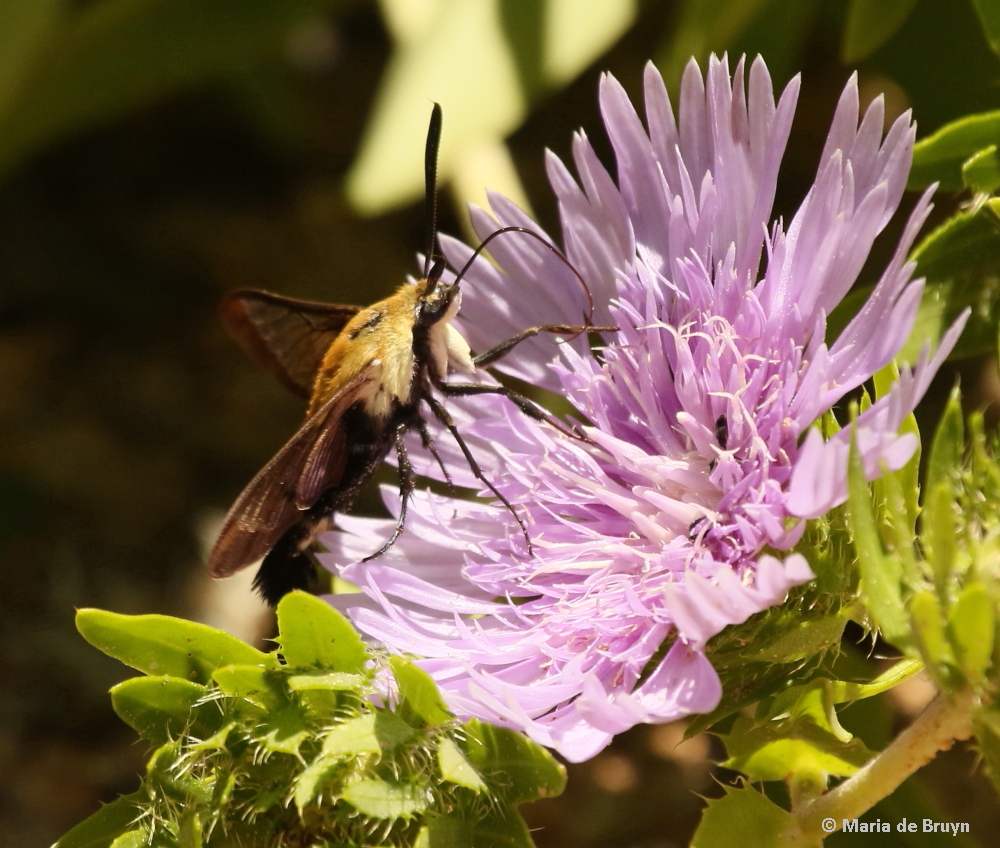
The snowberry (Hemaris diffinis) & hummingbird clearwing moths (Hemaris thysbe) are delightful.

snowberry-clearwing-moth-i77a5324-maria-de-bruyn-res   clearwing-hummingbird-moth-i77a7002-maria-de-bruyn-res

great-crested-flycatcher-i77a6714-maria-de-bruyn-res


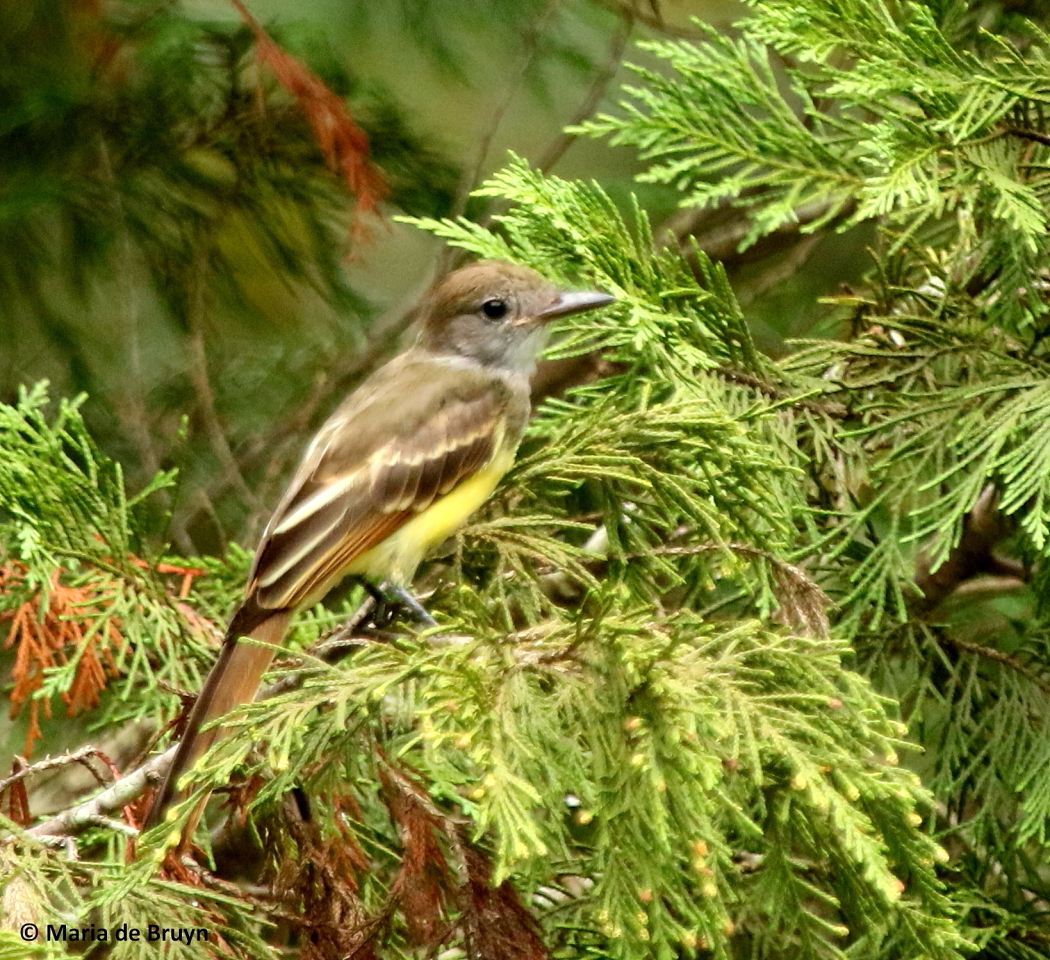
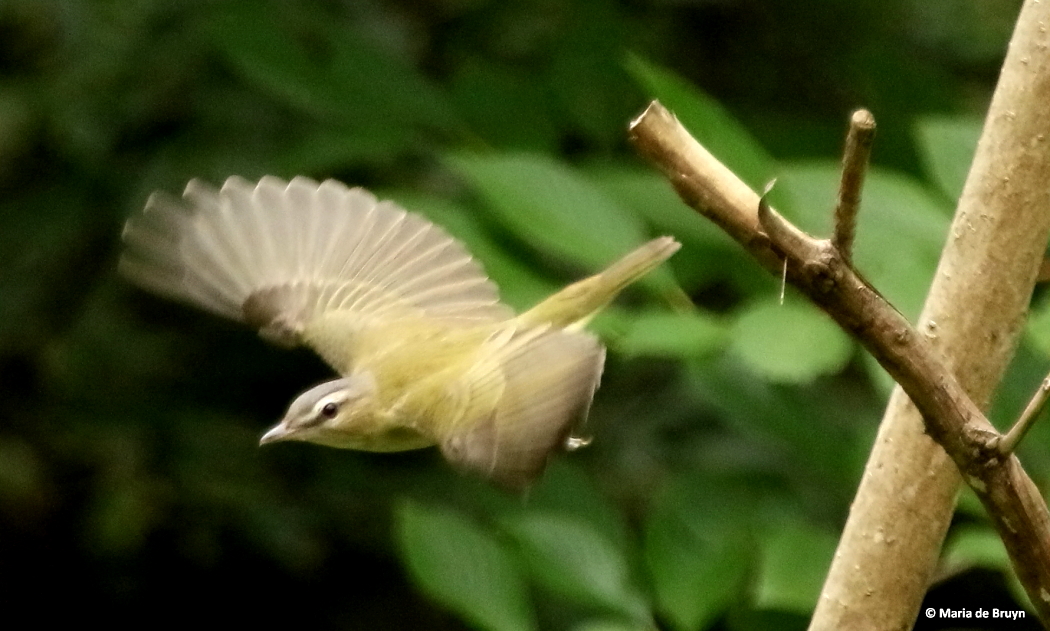
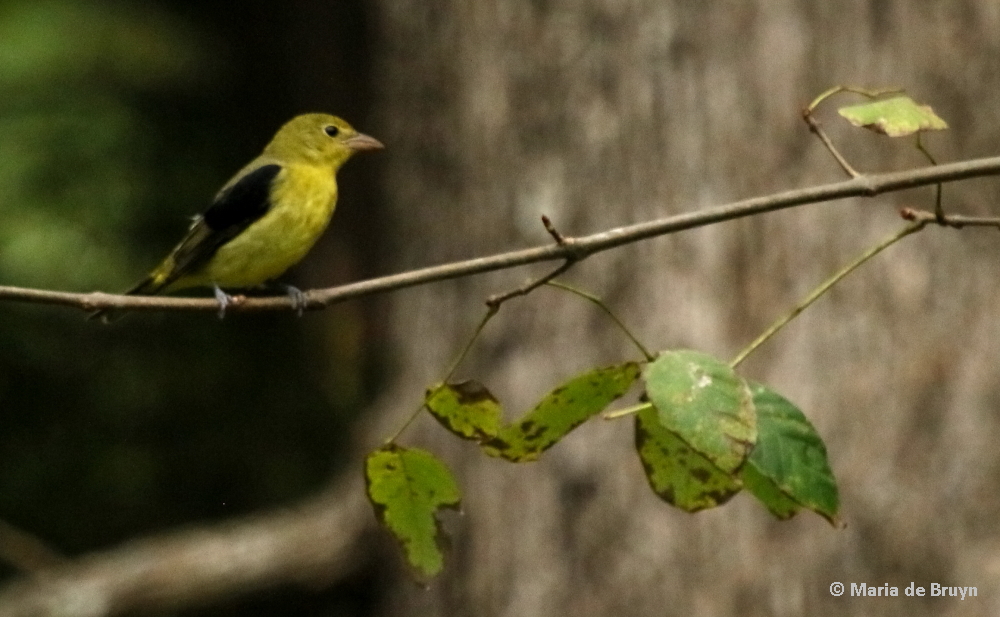
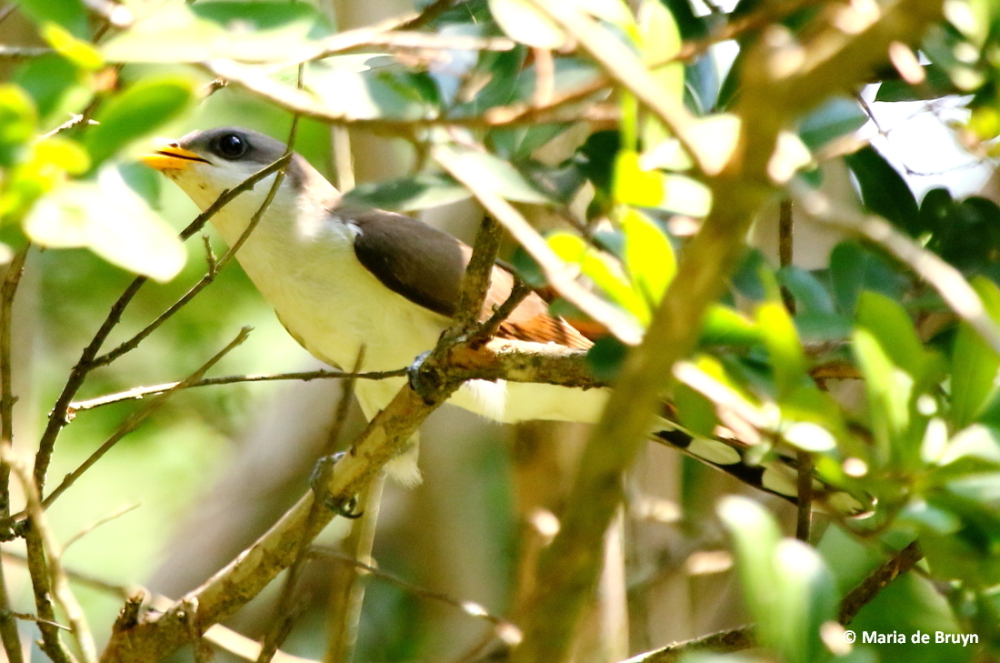
And so were various birds that visited my yard for the first time this year (or at least as far as I had noticed)! They included the black and white warbler, chestnut-sided warbler and Northern parula. Here are three more, plus the beautiful great crested flycatcher (Myiarchus crinitus, left), which I’d seen before but not well.


red-eyed-vireo-i77a6755-maria-de-bruyn-res

Red-eyed vireo (Vireo olivaceus)

scarlet-tanager-i77a0102-maria-de-bruyn-res

Scarlet tanager (Piranga olivacea)

yellow-billed-cuckoo-i77a1564-maria-de-bruyn-res

Yellow-billed cuckoo (Coccyzus americanus)

daffodil-i77a8465-maria-de-bruyn-res


I’m so pleased to begin this year in my home and really hope that circumstances in 2017 will allow me to continue enjoying nature, especially in my yard as I work to make it ever more welcoming to the local wildlife. And I hope all of you who read my blog will have many opportunities to get out and appreciate our beautiful natural world, too! Happy New Year to you!


Humankind has not woven the web of life.
We are but one thread within it.
Whatever we do to the web, we do to ourselves.
All things are bound together.
All things connect.

~ Chief Seattle, 1854 ~

crocus-i77a6296-maria-de-bruyn-res

Soothing my spirit, seeking solace for the soul

leaf-i77a2875-maria-de-bruyn-resAlthough more people in the USA voted for the Democratic ticket than the Republican one, the electoral college system will likely lead to the installation of a Republican presidency unless election re-counts affect those designated votes. This distresses me greatly given the persons who have been announced as top administration advisers and cabinet members. My work on social issues and on behalf of vulnerable people will continue and is increasing. But in the meantime, to keep from going into a 100% depressed mode, I have sought solace in nature walks and spiritual strengthening in the flora and fauna I see.

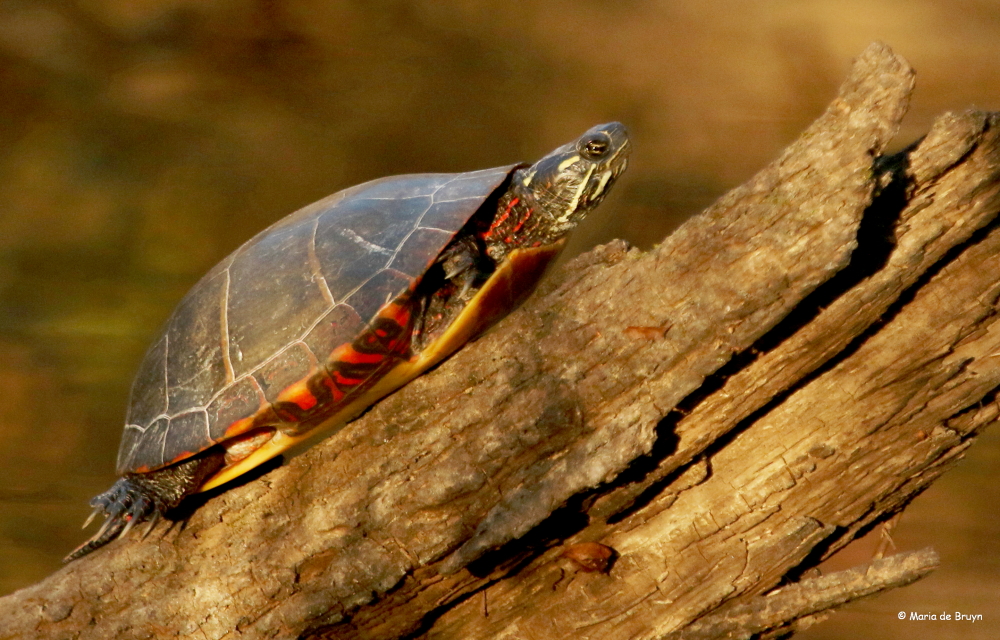
painted-turtle-i77a2277-maria-de-bruyn-resToday, I will share some of words of wisdom from a conscientious spiritual leader with you, along with some photos of nature’s beauties seen during my walks at the Cane Creek Reservoir, Sandy Creek Park and Mason Farm Biological Reserve just before and since the November election. It’s a bit of a long blog but offers some visual sustenance to ponder, like the painted turtle (Chrysemys picta, above) at Mason Farm and the yellow-bellied slider (Trachemys scripta scripta) at Sandy Creek sunning in the morning sun despite chilly temperatures. (From a distance, the slider looked a bit as if there was something with open jaws in the pond!)

yellow-bellied-slider-i77a2954-maria-de-bruyn-res

flower-77a1303maria-de-bruyn-res


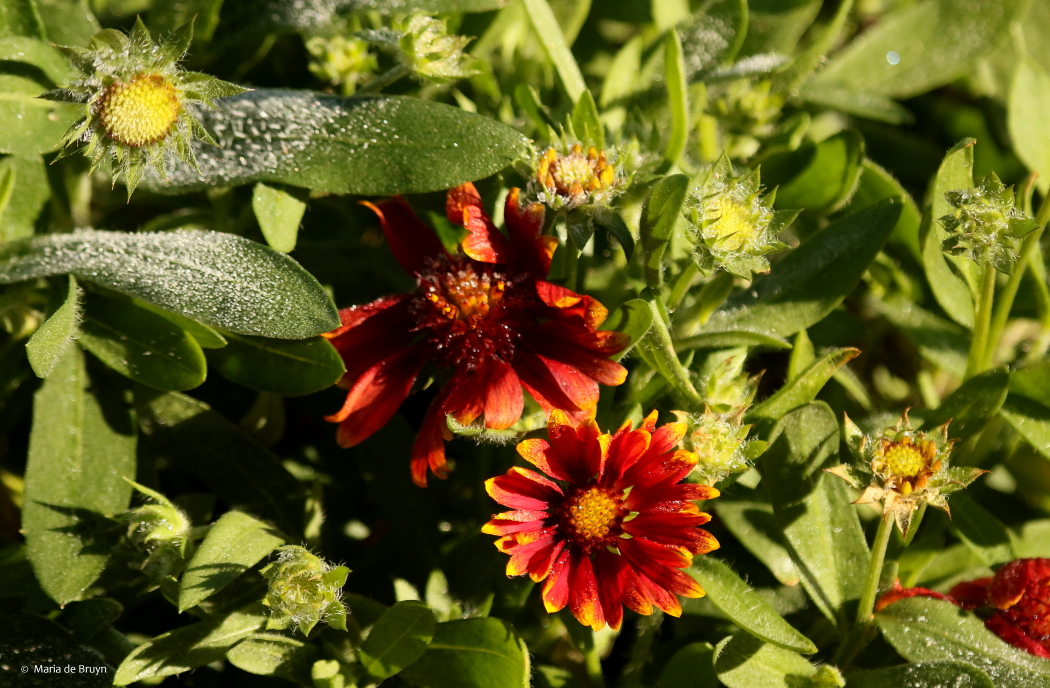
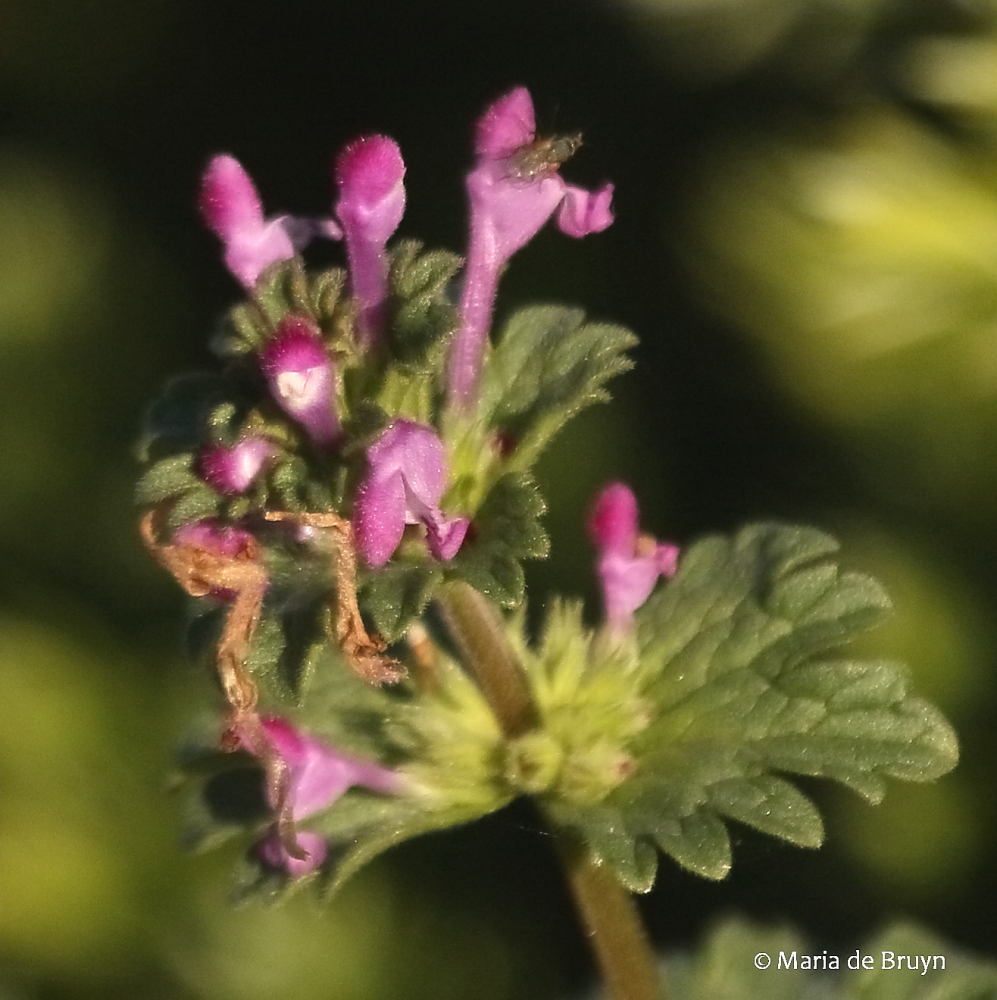
Early in the morning, you can find frost- and dew-covered plants and a few remaining flowers glistening in the sun.


blanket-flower-i77a1309maria-de-bruyn-res  henbit-i77a0825maria-de-bruyn-res

Blanket flower (Gaillardia)                           Henbit (Lamium amplexicaule)

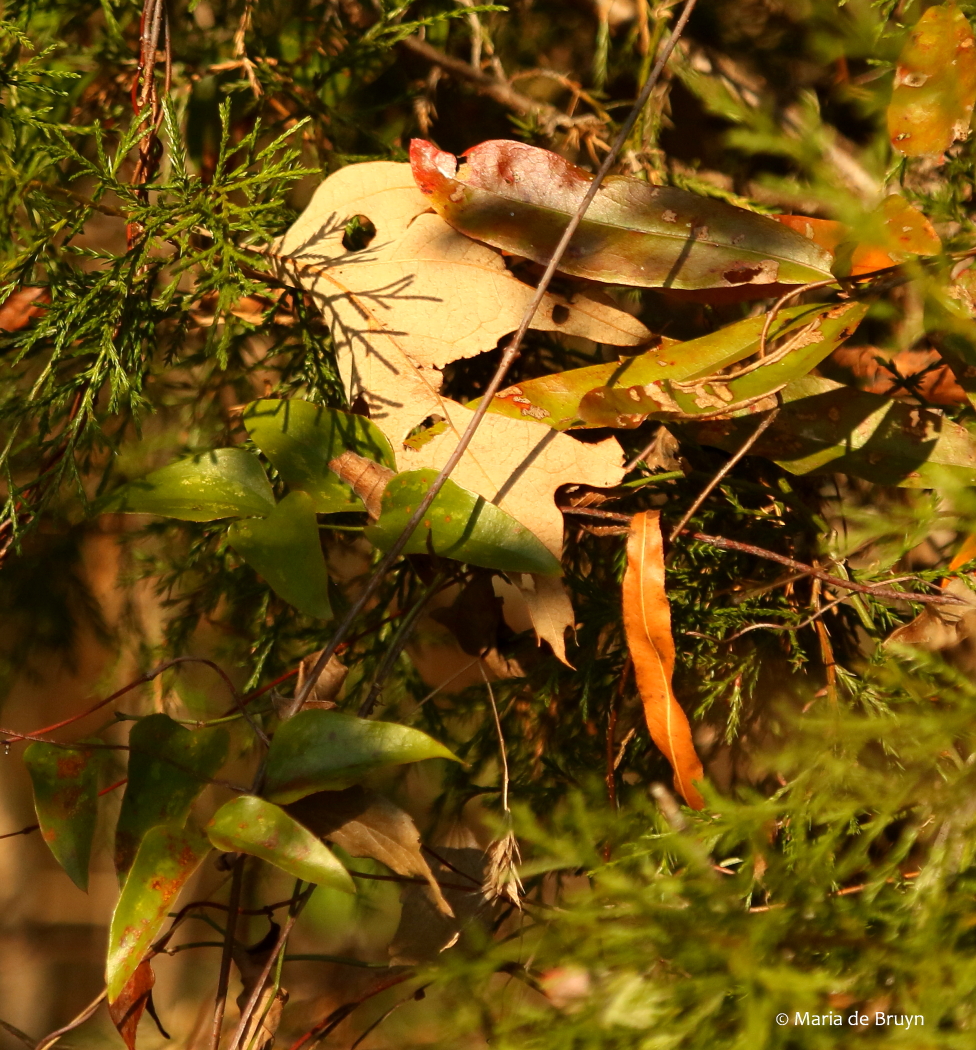
leaf-bird-i77a2906-maria-de-bruyn-res


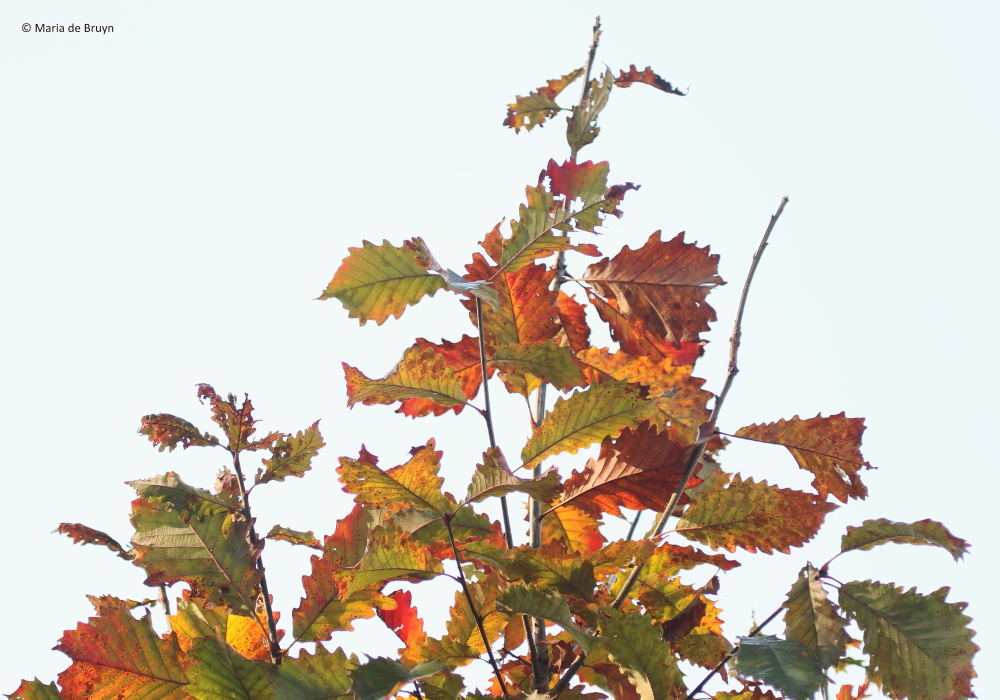
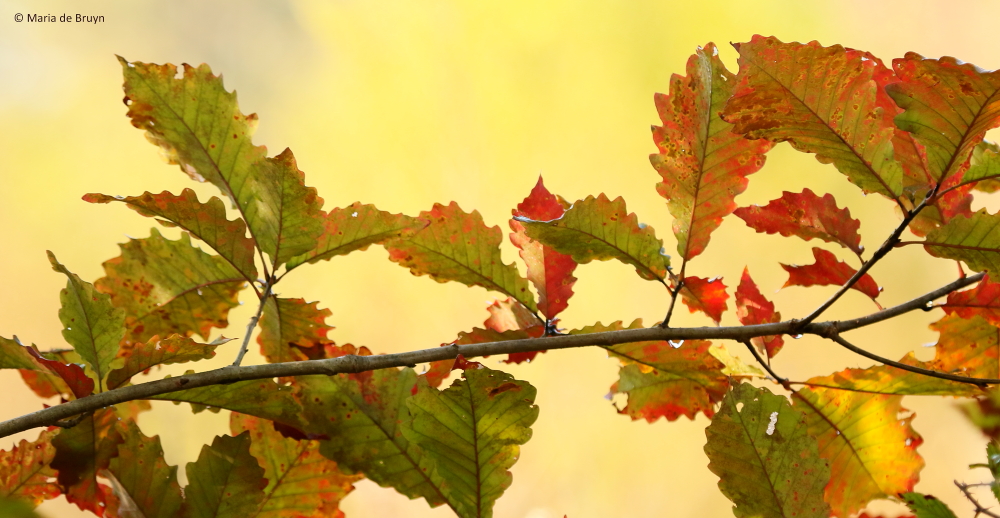
Later in the morning, the autumn-colored leaves make nice patterns as you search for birds high and low. And occasionally you get to see the fabled “leaf bird”.


leaves-i77a2893-maria-de-bruyn-res   leaves-i77a2882-maria-de-bruyn-res

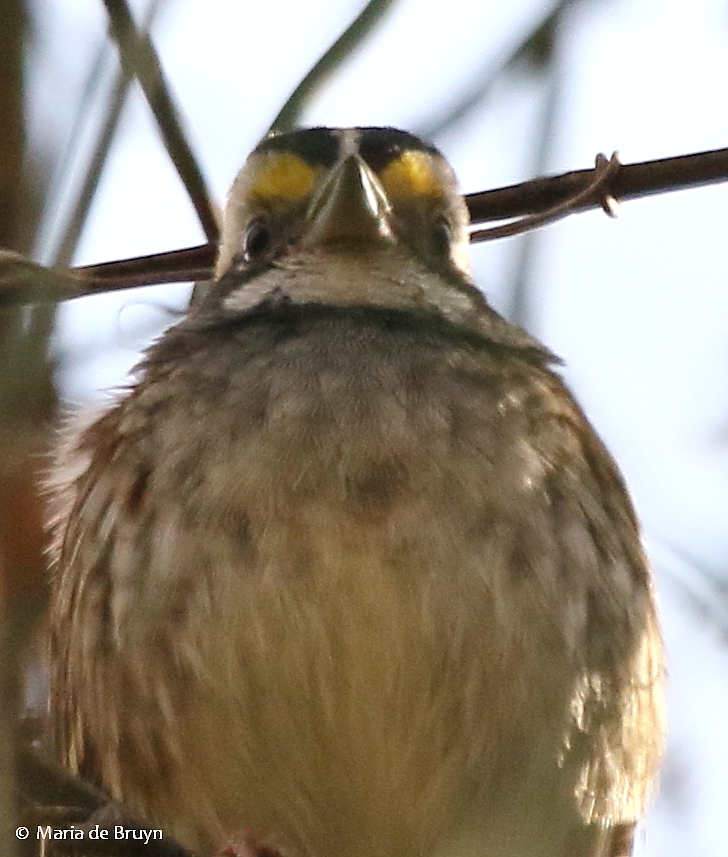
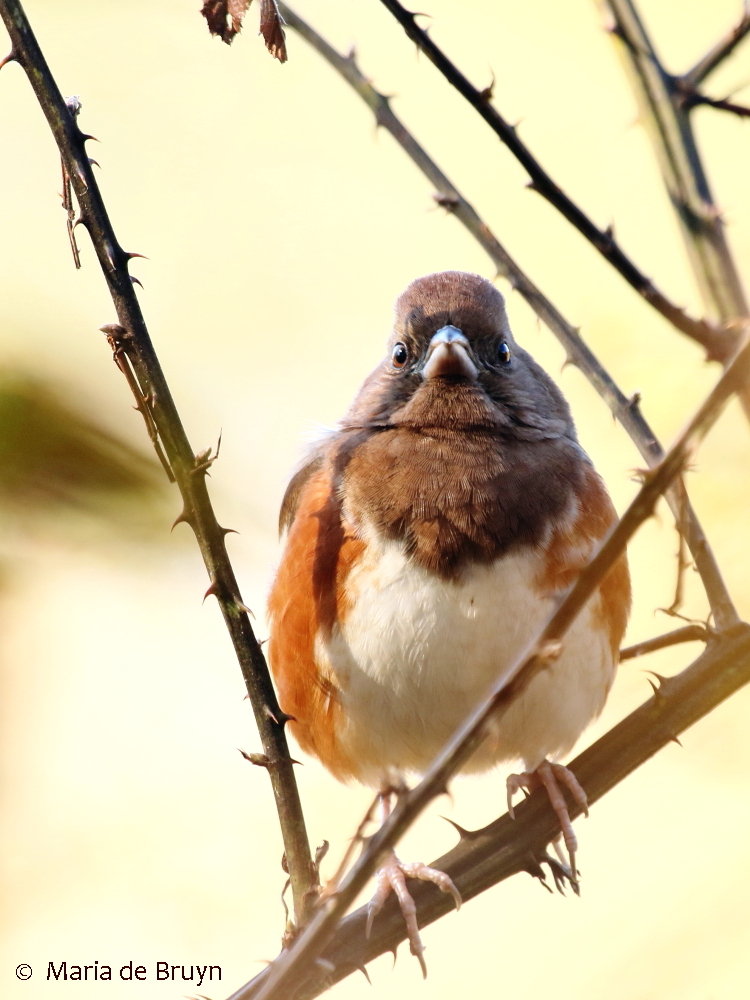
When looking high, you may find the birds looking down on you; face-level stares as you gaze straight ahead may also occur!

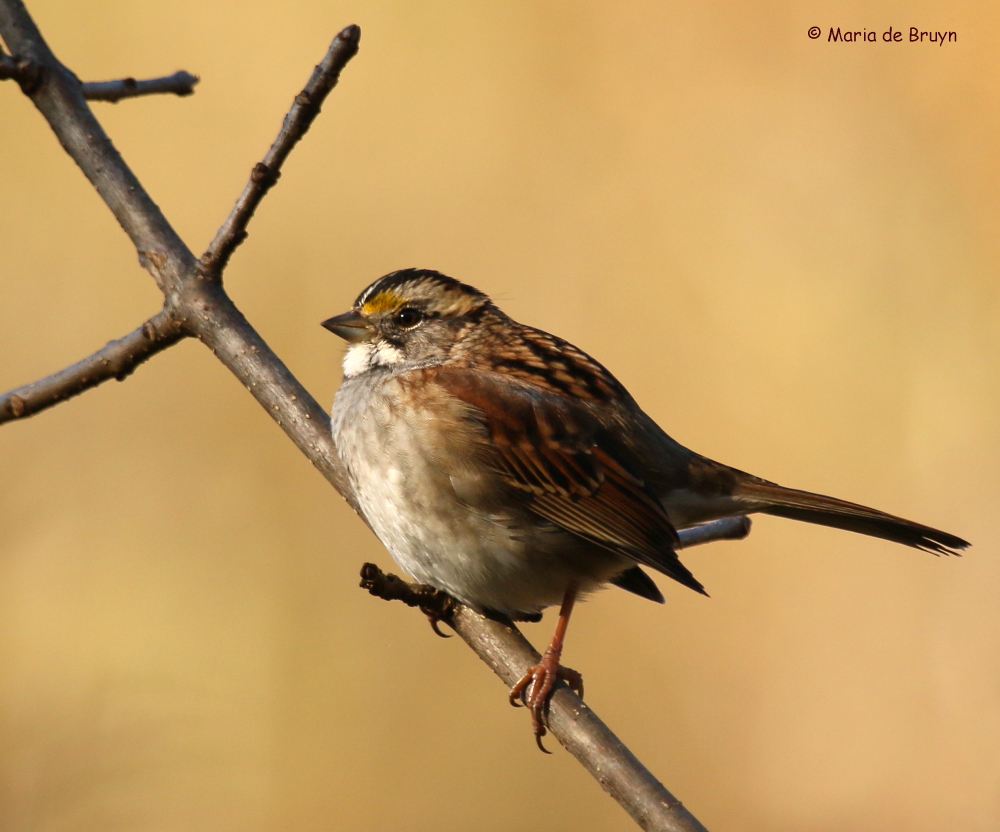
white-throated-sparrow-i77a6365-maria-de-bruyn-res                     eastern-towhee-i77a1659maria-de-bruyn-res

White-throated sparrow (Zonotrichia albicollis)  Eastern towhee (Pipilo erythrophthalmus)

killdeer-i77a0916maria-de-bruyn-res


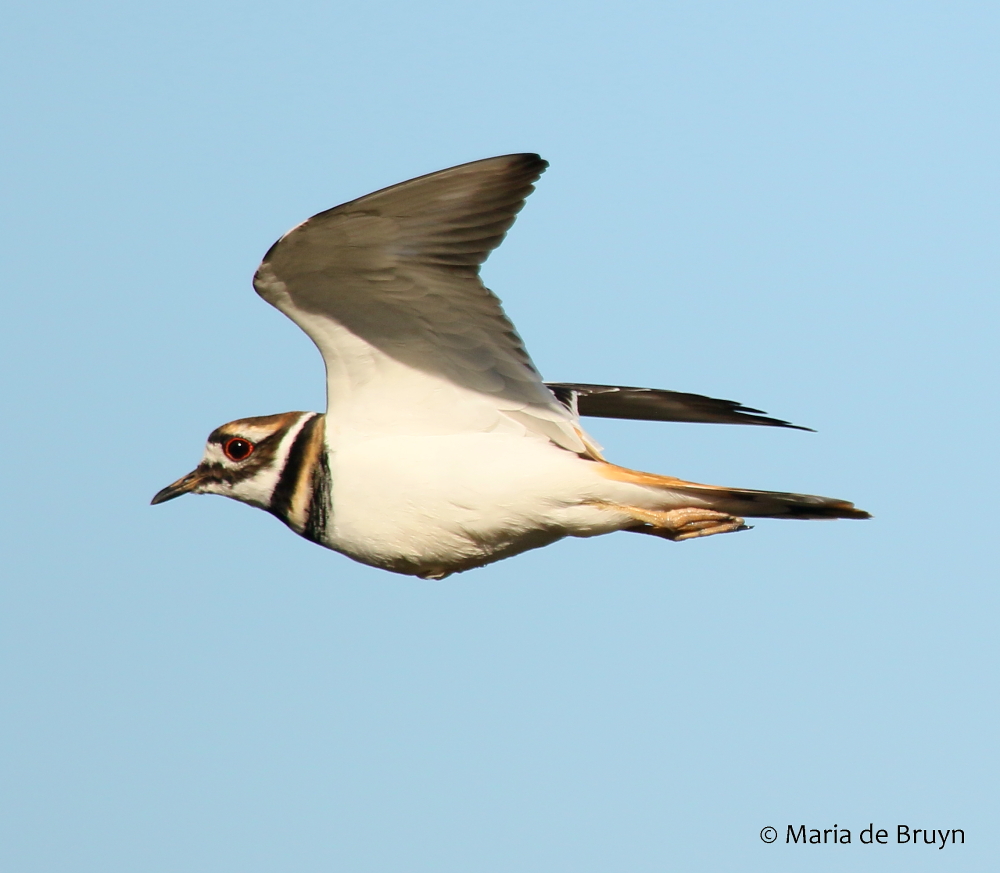
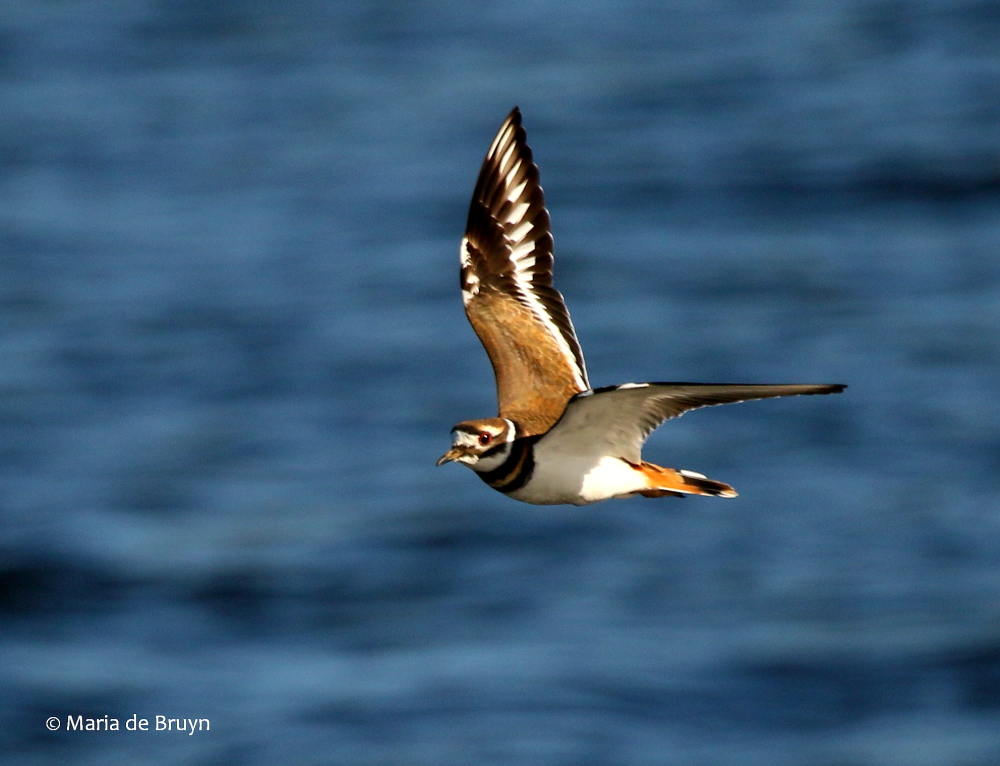
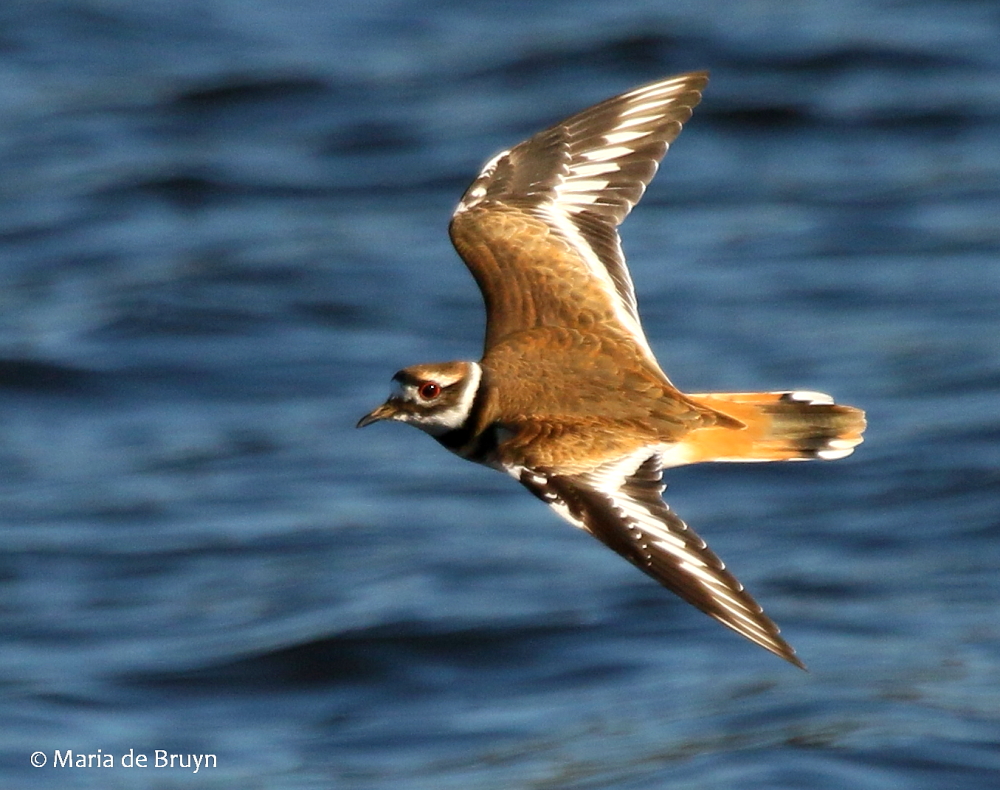
At Cane Creek, the killdeer (Charadrius vociferous) make their presence known by their distinctive calls and you can enjoy their gorgeous appearance as they fly over the lake.


killdeer-i77a0913maria-de-bruyn-res  killdeer-i77a0911maria-de-bruyn-res

Taking care of our planet is like taking care of our houses. Since we human beings come from Nature, there is no point in our going against Nature, which is why I say the environment is not a matter of religion or ethics or morality. These are luxuries, since we can survive without them. But we will not survive if we continue to go against Nature.  – Dalai Lama

red-bellied-woodpecker-i77a2988maria-de-bruyn-res


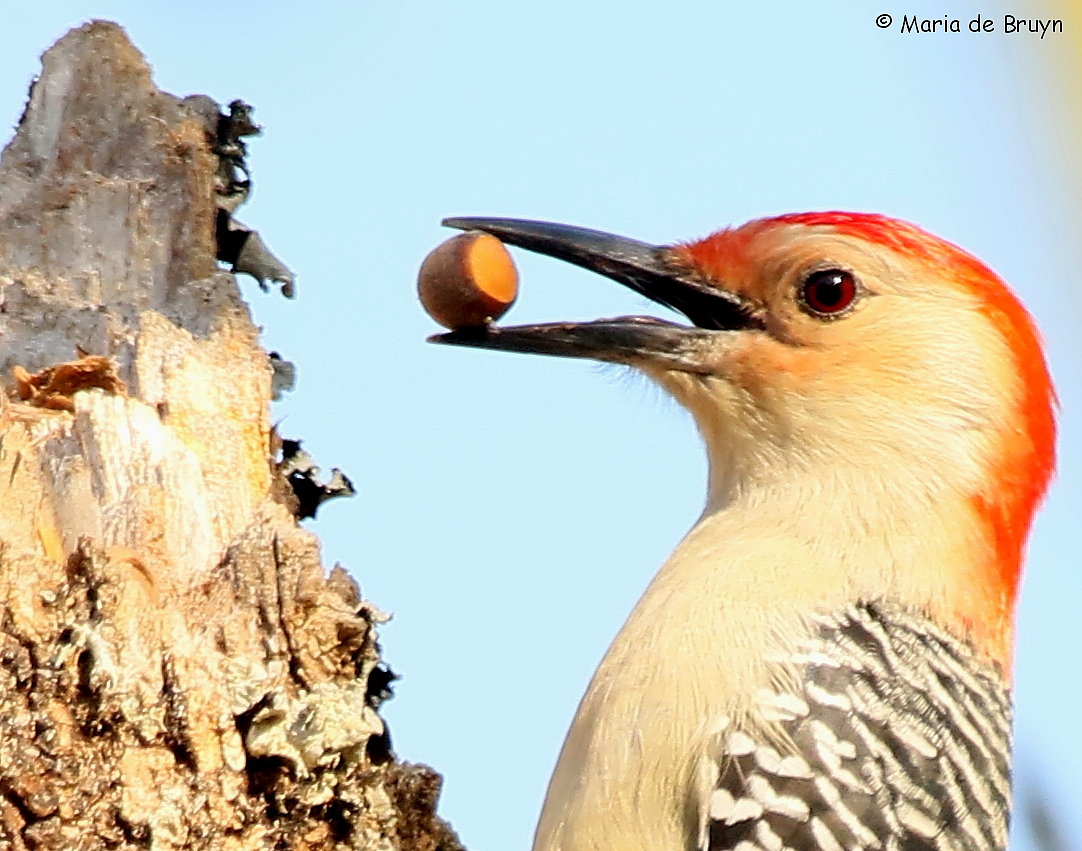
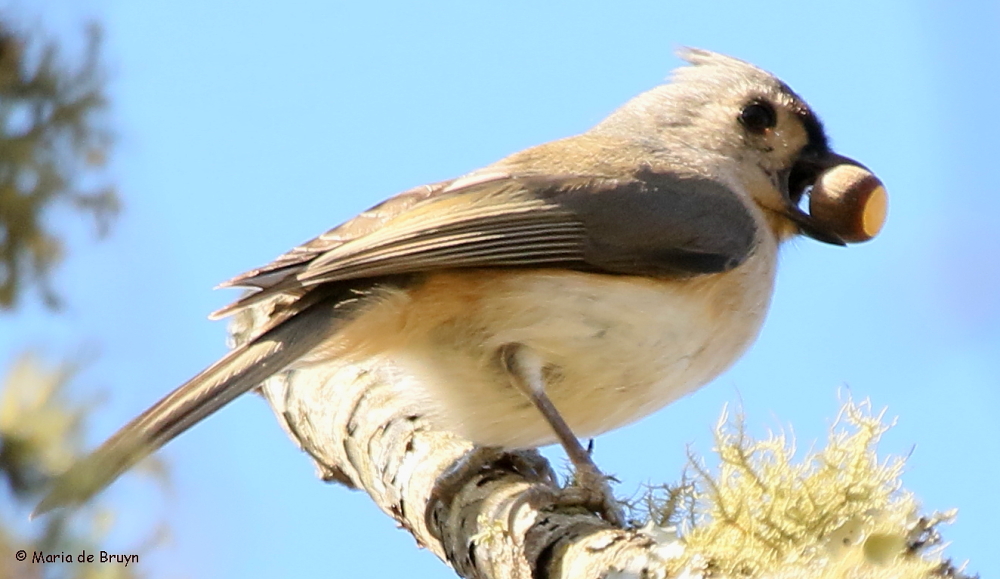
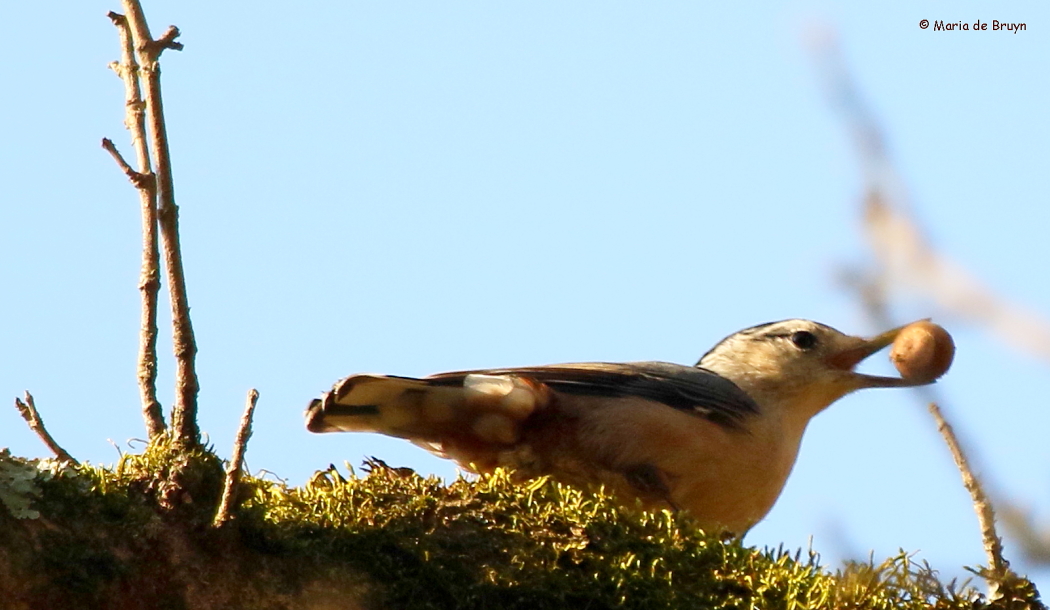
Many birds, like this red-bellied woodpecker (Melanerpes carolinus), are busy finding seeds and nuts for their meals.


tufted-titmouse-i77a1965maria-de-bruyn-res  white-breasted-nuthatch-i77a2671maria-de-bruyn-res

Tufted titmouse (Baeolophus bicolor)          White-breasted nuthatch (Sitta carolinensis)

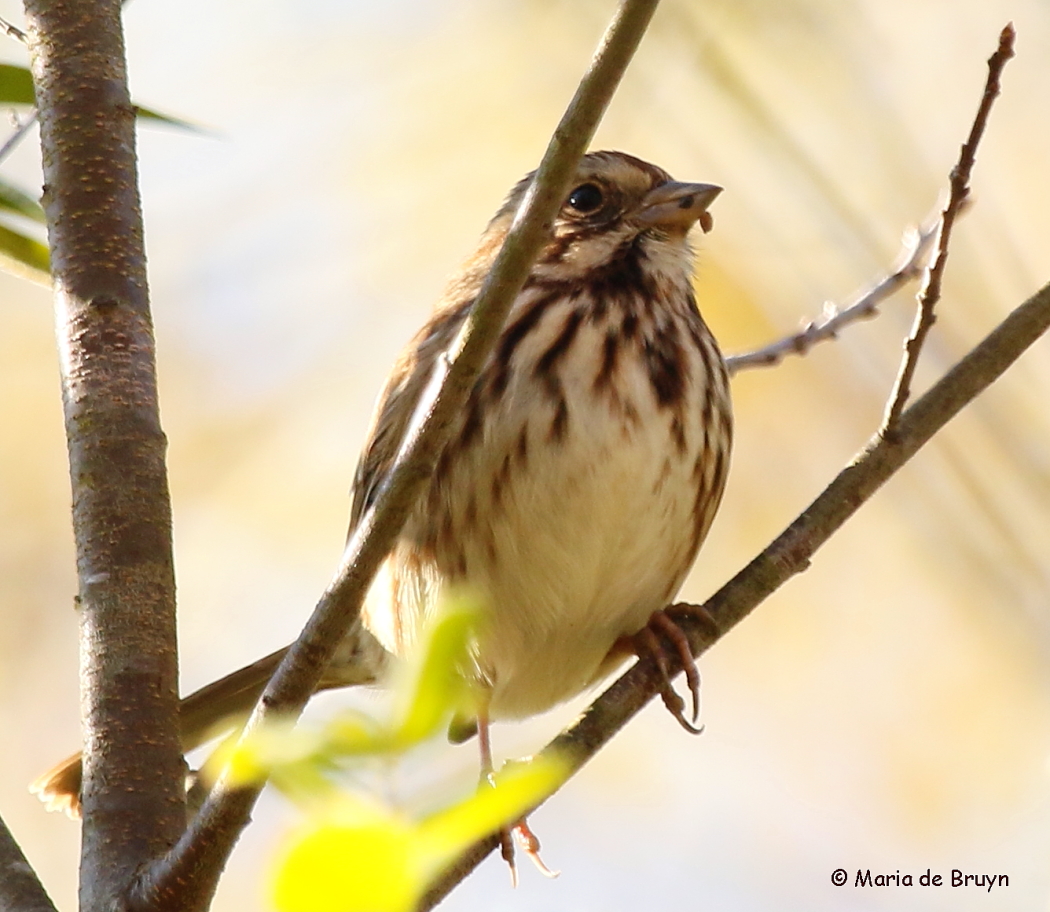
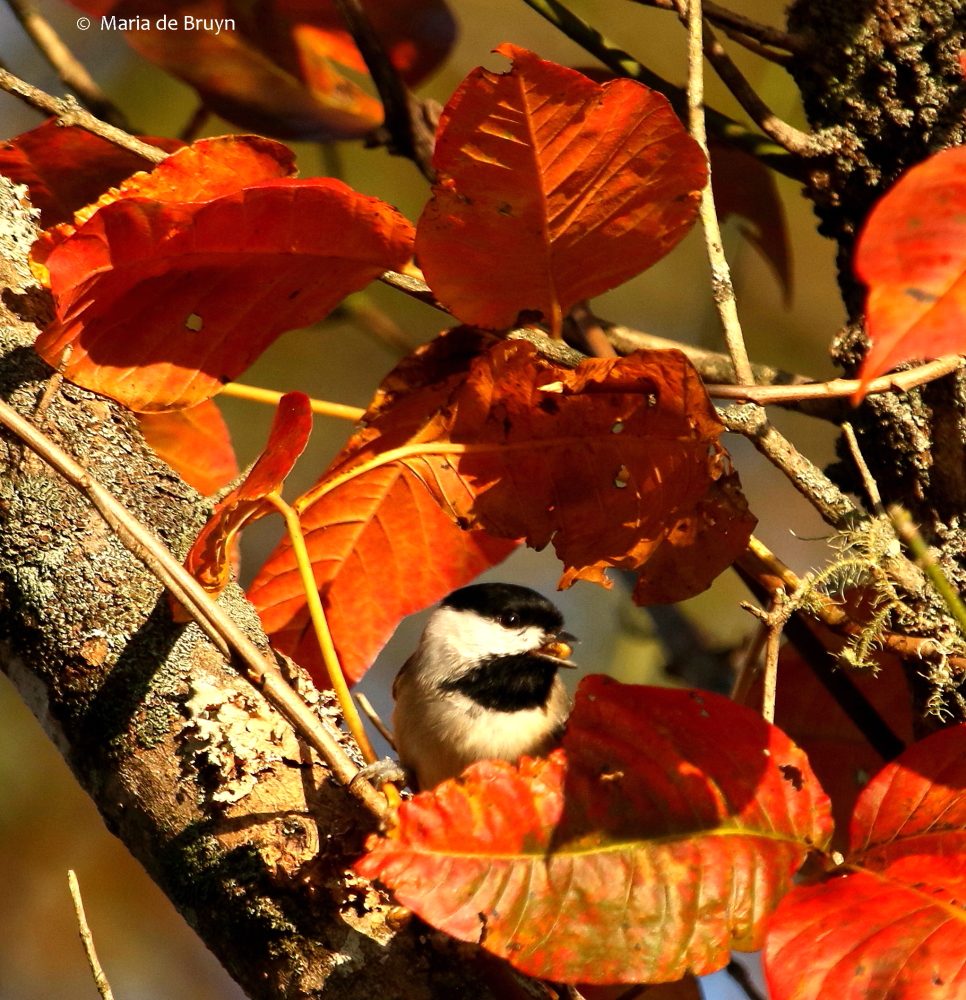
song-sparrow-i77a1499maria-de-bruyn-res   carolina-chickadee-i77a8444-maria-de-bruyn-res

Song sparrow (Melospiza melodia)                 Carolina chickadee (Poecile carolinensis)

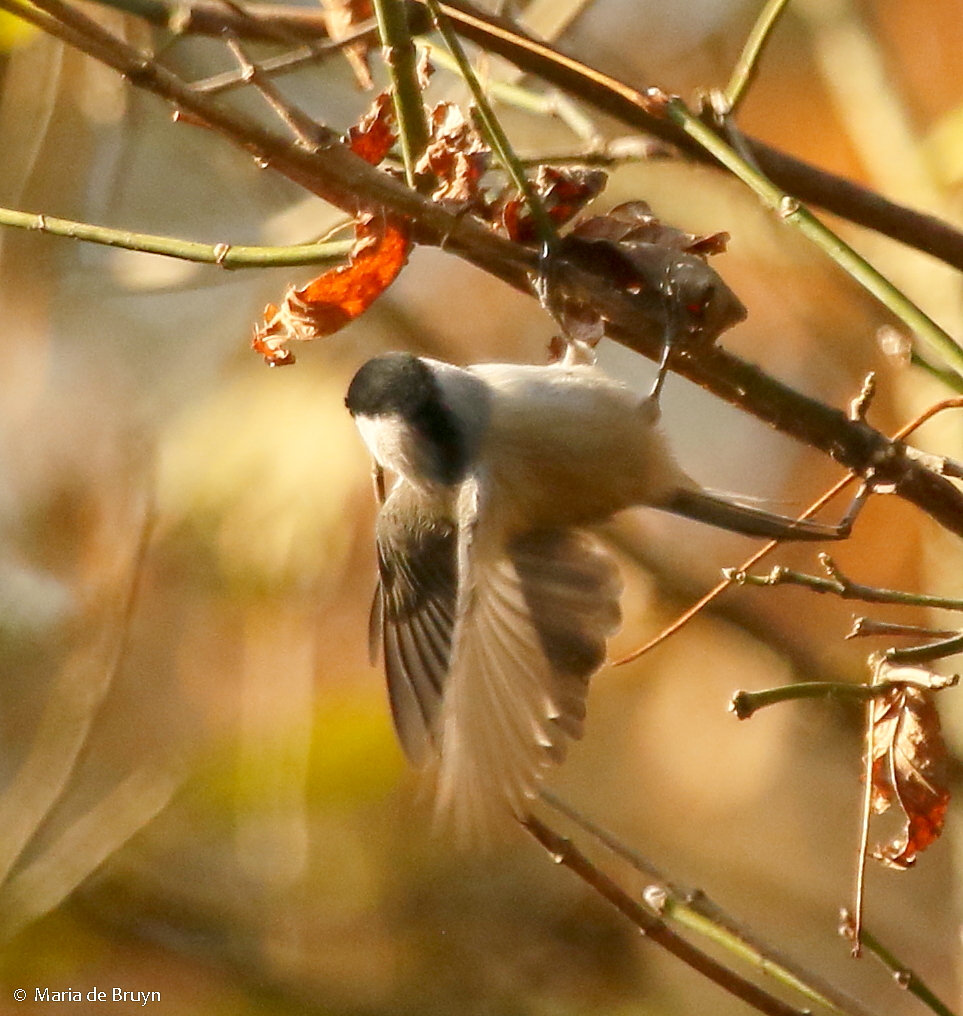
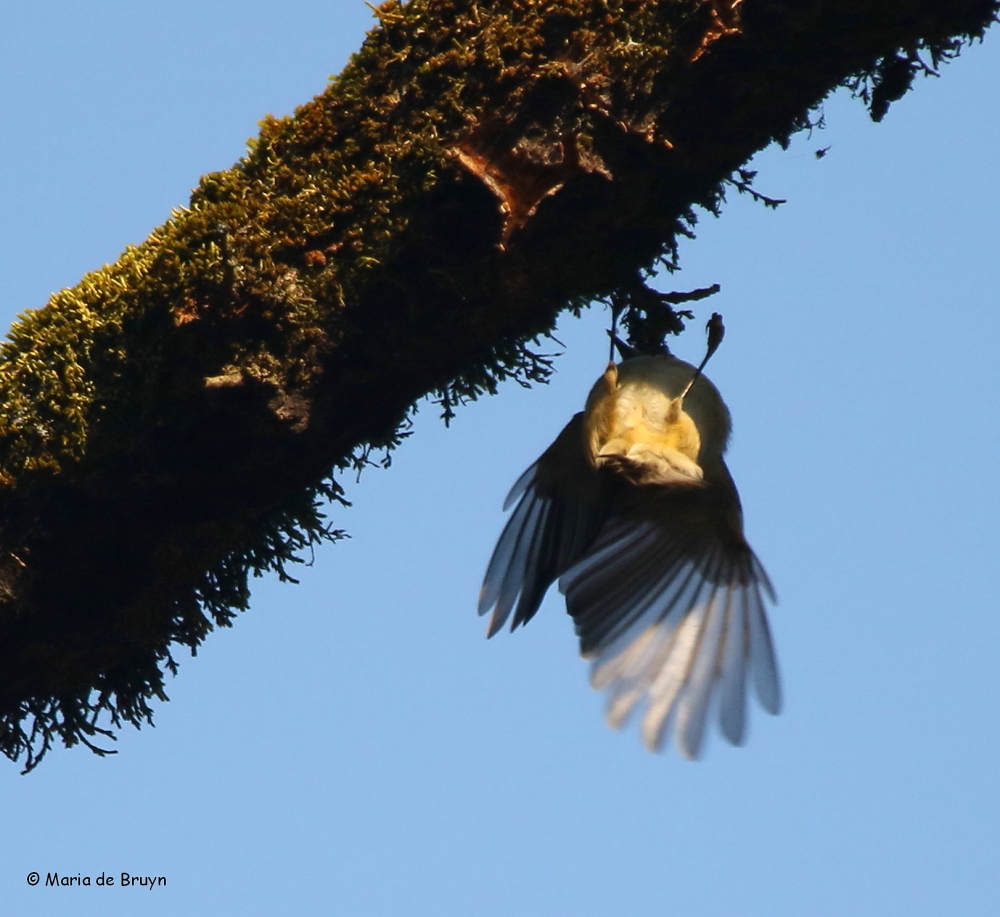
Sometimes, it involves hanging upside down to snag a tasty morsel and their wings help in balancing.

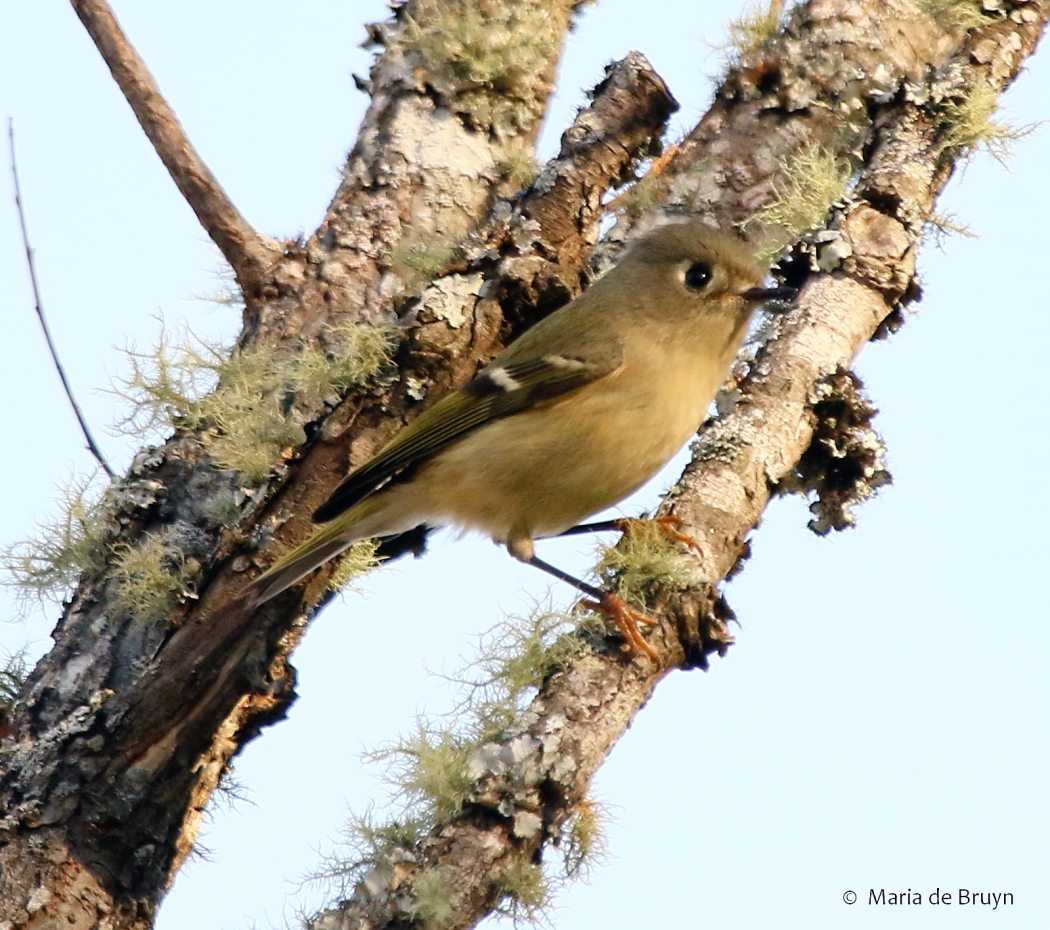
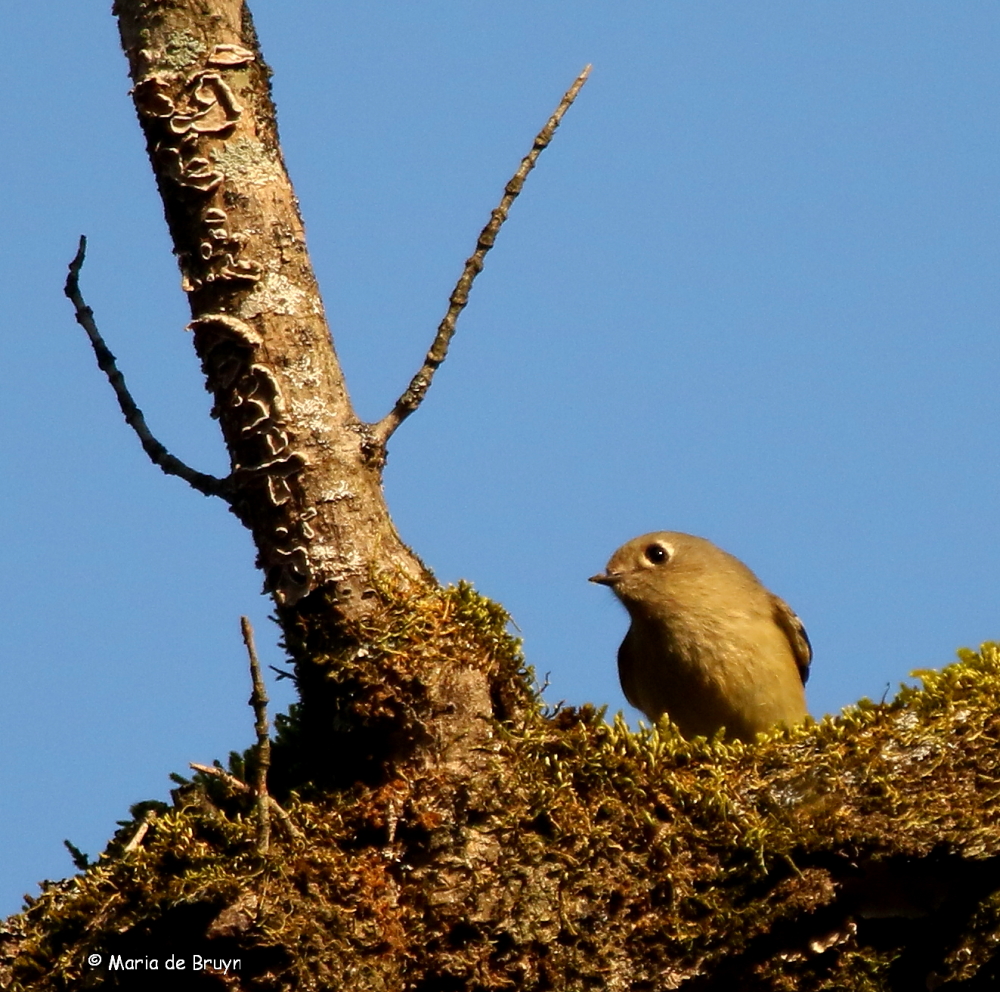
carolina-chickadee-i77a2699maria-de-bruyn    ruby-crowned-kinglet-i77a2565-maria-de-bruyn-res

Carolina chickadee                                    Ruby-crowned kinglet (Regulus calendula)

If we unbalance Nature, humankind will suffer. Furthermore, as people alive today, we must consider future generations: a clean environment is a human right like any other. It is therefore part of our responsibility towards others to ensure that the world we pass on is as healthy, if not healthier, than when we found it. – Dalai Lama

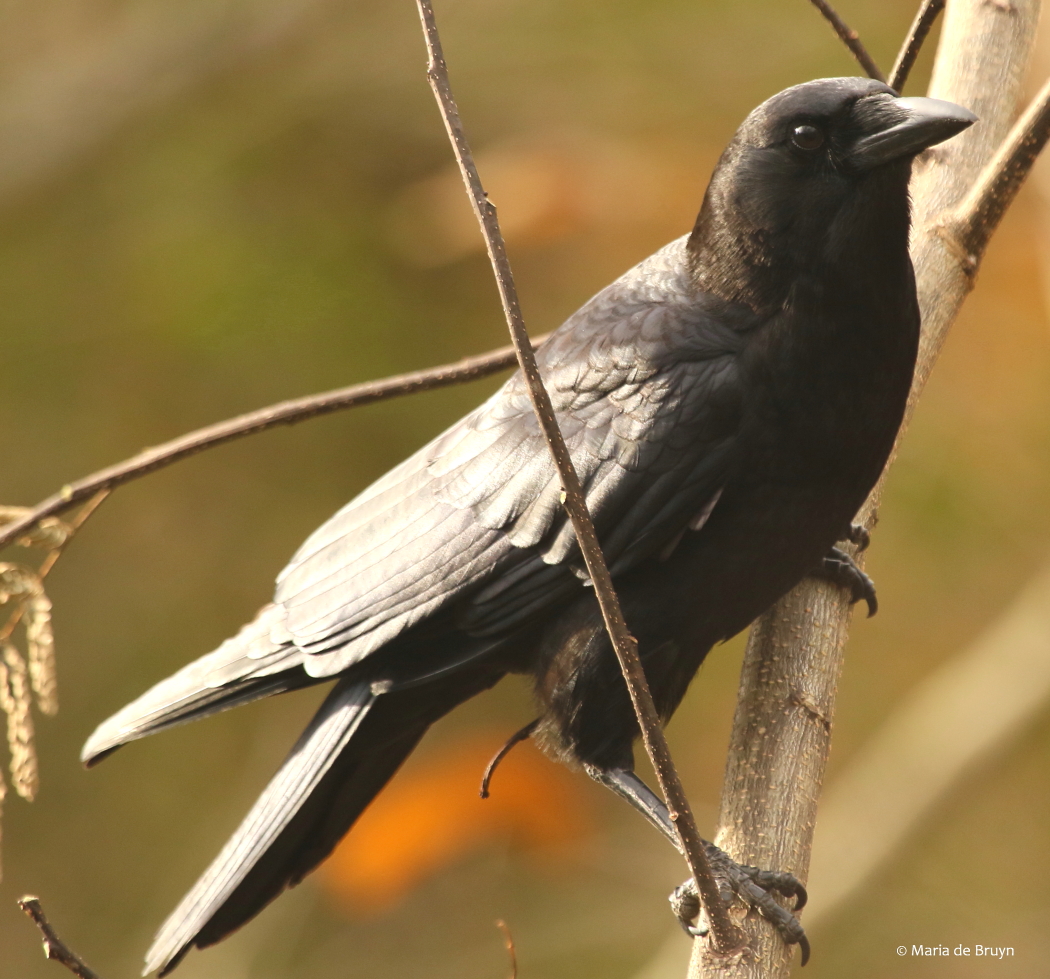
american-crow-i77a6327-maria-de-bruyn-res


At Sandy Creek, a group of American crows (Corvus brachyrhynchos) flew down to investigate what had dropped to the ground from an overflowing garbage can but they soon flew off to seek more normal food elsewhere.


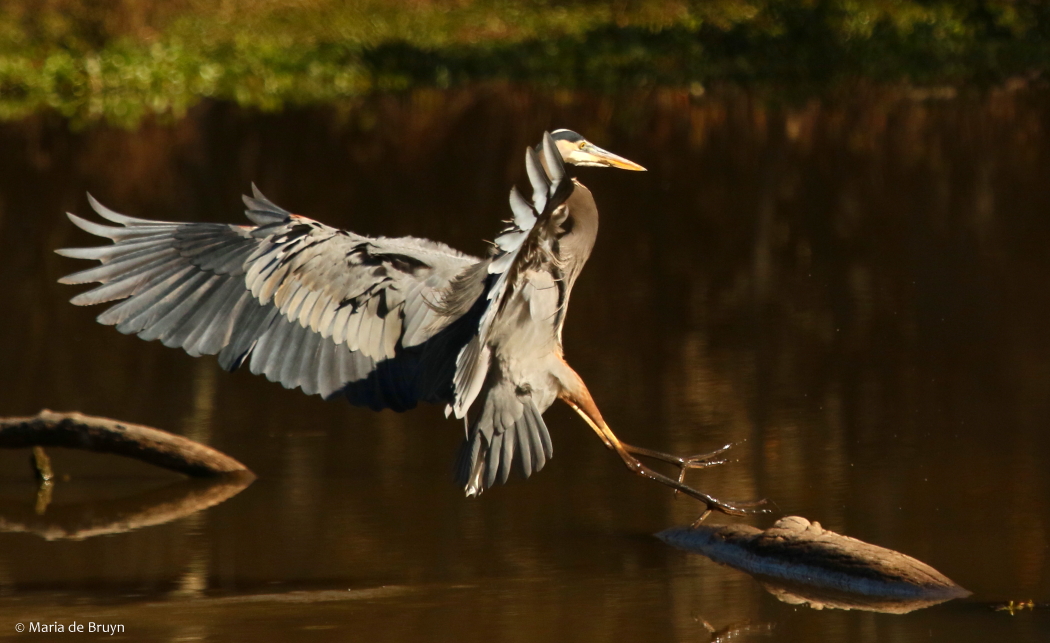
great-blue-heron-i77a1936maria-de-bruyn-res


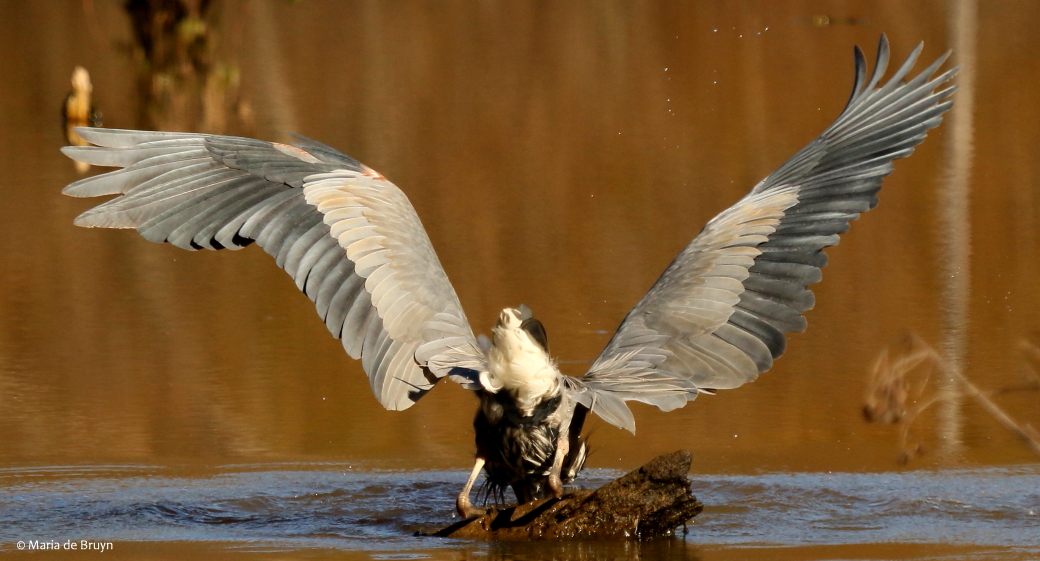
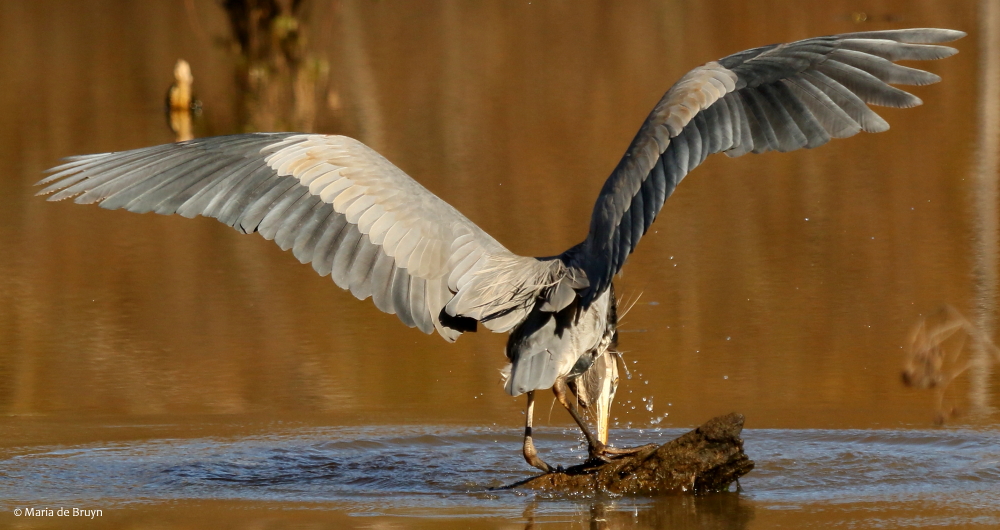
A great blue heron (Ardea herodias) was stalking the pond for fish; after I saw him (or her) snag a medium-sized fish, he turned his back so I saw the fishing technique from the rear.

great-blue-heron-i77a1438maria-de-bruyn-2-res  great-blue-heron-i77a1440maria-de-bruyn-res

flowering-dogwood-i77a0882maria-de-bruyn-res


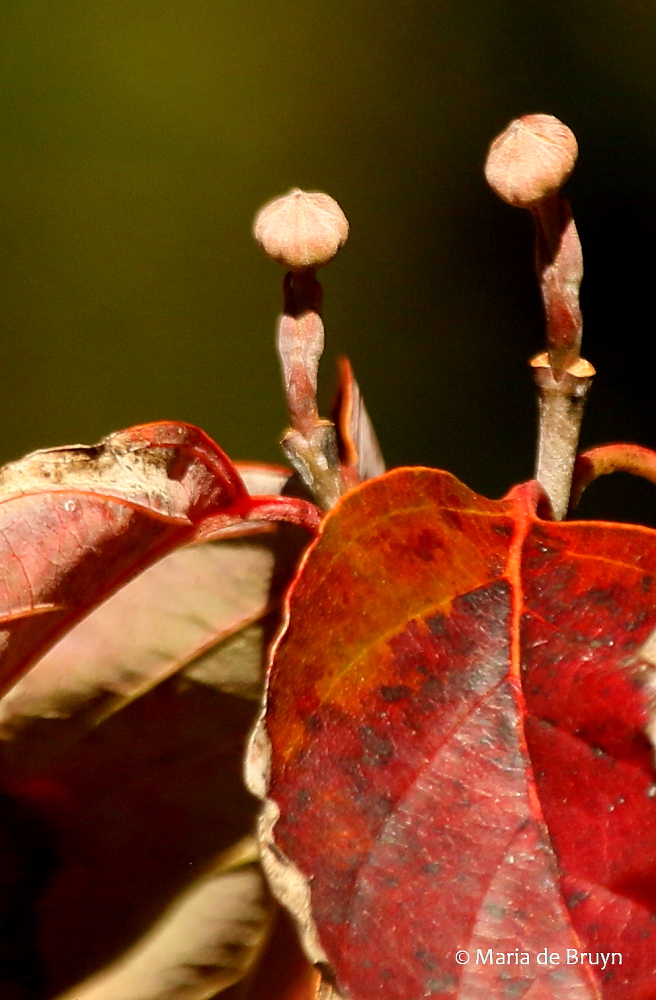
The flowering dogwoods (Cornus florida) at Cane Creek still had a few blossoms; at Sandy Creek and Mason Farm, they offered bright berries. On one tree, they made me think of a movie-inspired alien peeking out of the branches with eyes on stalks.


flowering-dogwood-i77a5820-maria-de-bruyn-res       flowering-dogwood-i77a1012maria-de-bruyn-res

Destruction of nature and nature resources results from ignorance, greed and lack of respect for the earth’s living things. – Dalai Lama

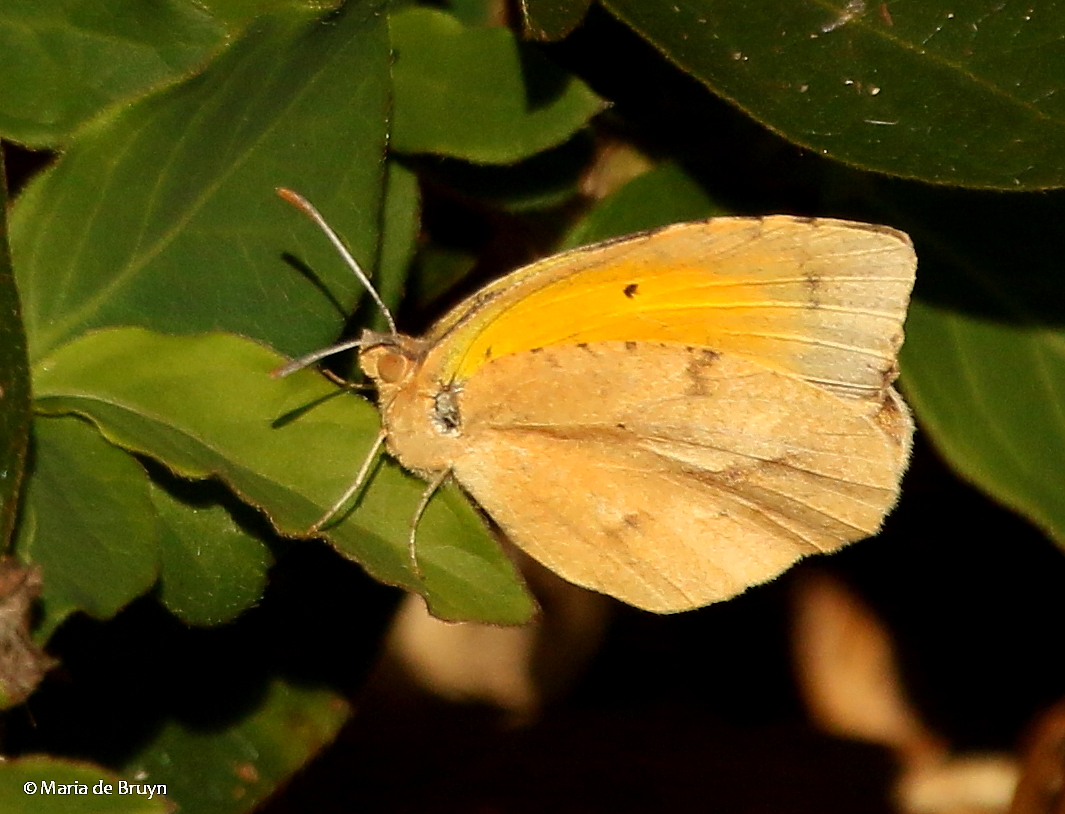
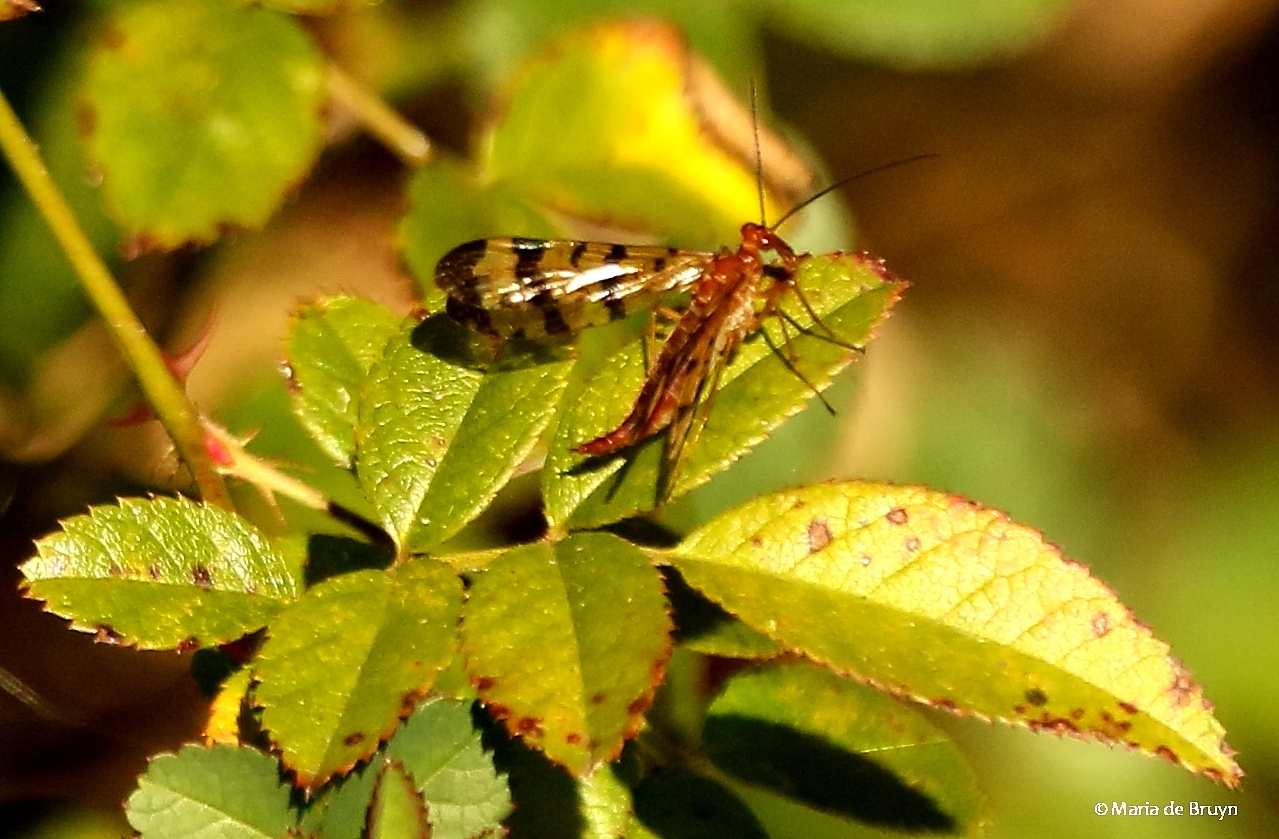
Up until the first morning frost this autumn, butterflies were still around, like this sleepy orange (Eurema nicippe); now that we have had several mornings of below-freezing temperatures, the butterflies are mostly gone as are the majority of bees. A scorpion fly (Panorpa) was in evidence at Cane Creek to my surprise.

sleepy-orange-i77a1003maria-de-bruyn-res  scorpion-fly-i77a0991maria-de-bruyn-res

eastern-gray-squirrel-i77a2505-maria-de-bruyn-res


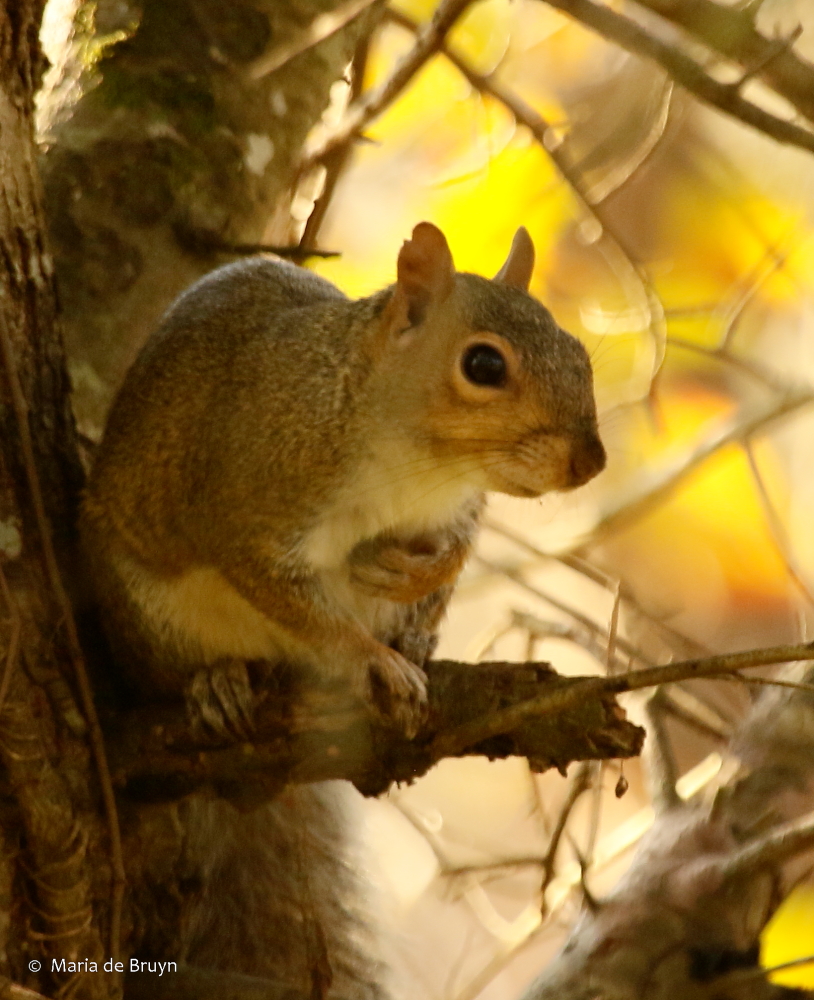
In between bird spottings, Eastern gray squirrels (Sciurus carolinensis) chittered at me at all three parks. And I was pleased to see some ruby-crowned kinglets since the one that has enjoyed the suet at my house the past three years hasn’t appeared yet.


ruby-crowned-kinglet-i77a6241-maria-de-bruyn-res     ruby-crowned-kinglet-i77a2574-maria-de-bruyn-res

…until now, Mother Earth has been able to tolerate our sloppy house habits. However, the stage has now been reached where she can no longer accept our behaviour in silence. The problems caused by environmental disasters can be seen as her response to our irresponsible behaviour. She is warning us that there are limits even to her tolerance. –  Dalai Lama

Some of the birds common in my yard are welcome sights at the nature reserves, too.

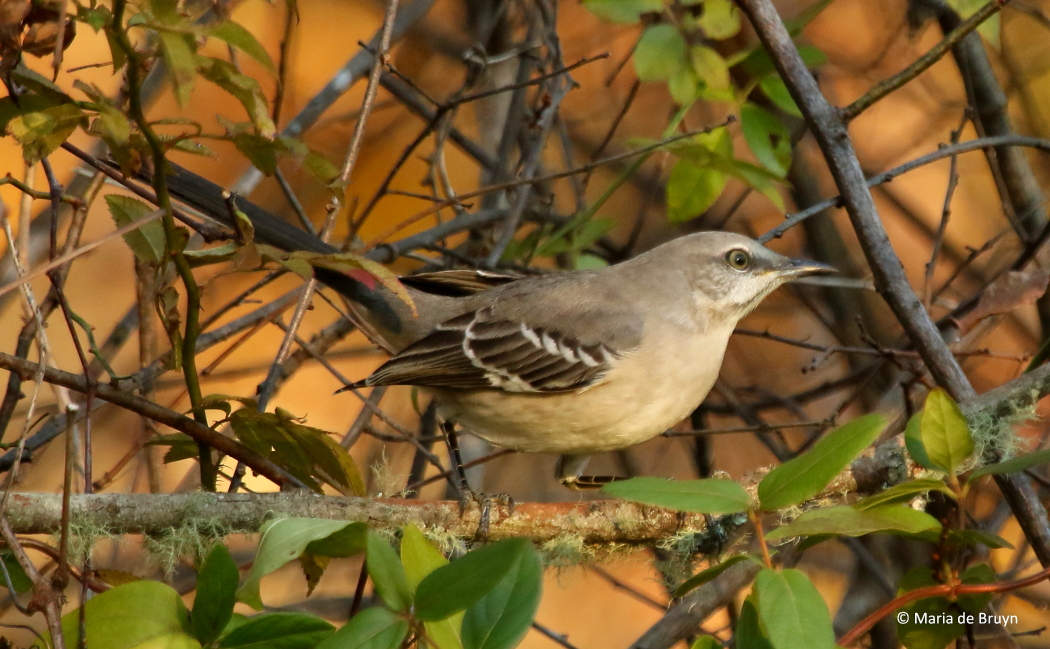
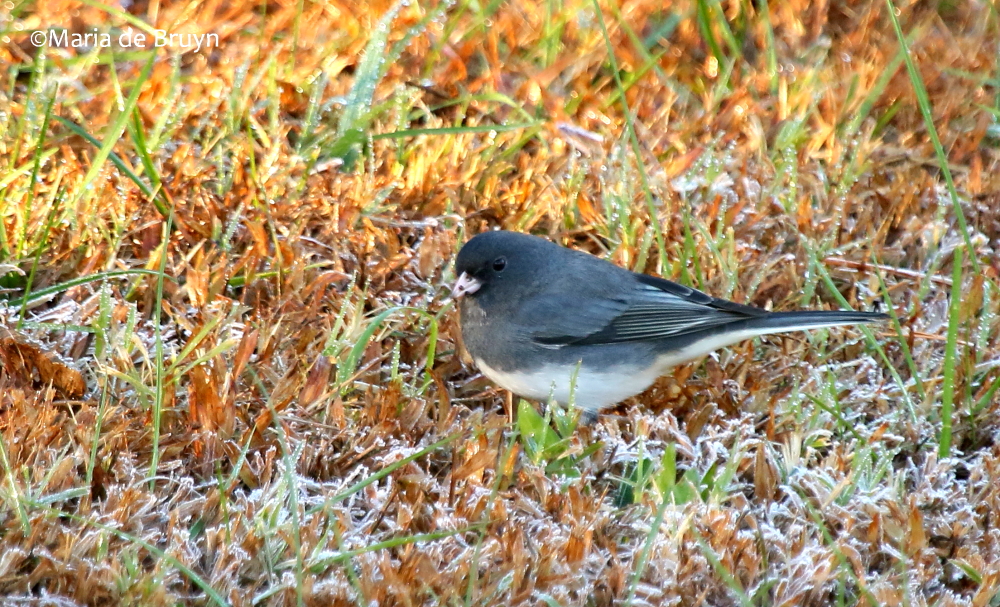
northern-mockingbird-i77a2312-maria-de-bruyn-res    dark-eyed-junco-i77a0624maria-de-bruyn-res

Northern mockingbird (Mimus polyglottos)         Dark-eyed junco (Junco hyemalis)

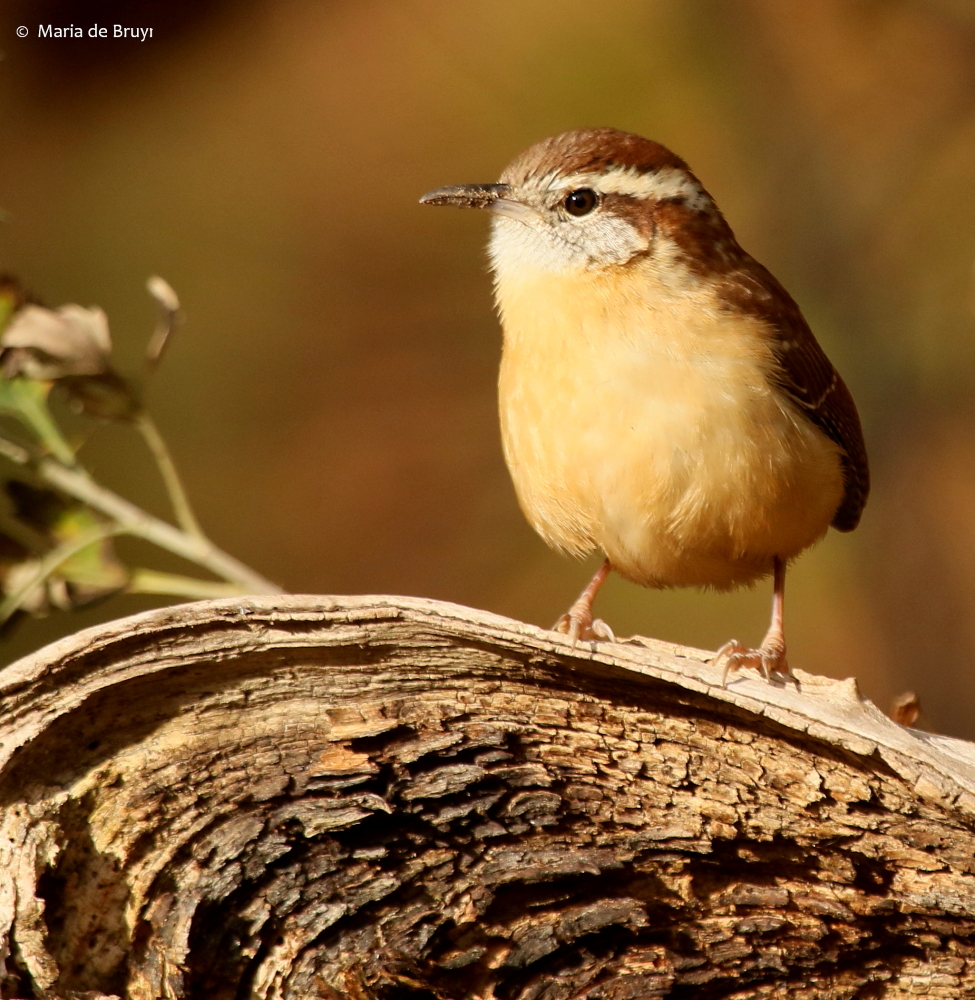
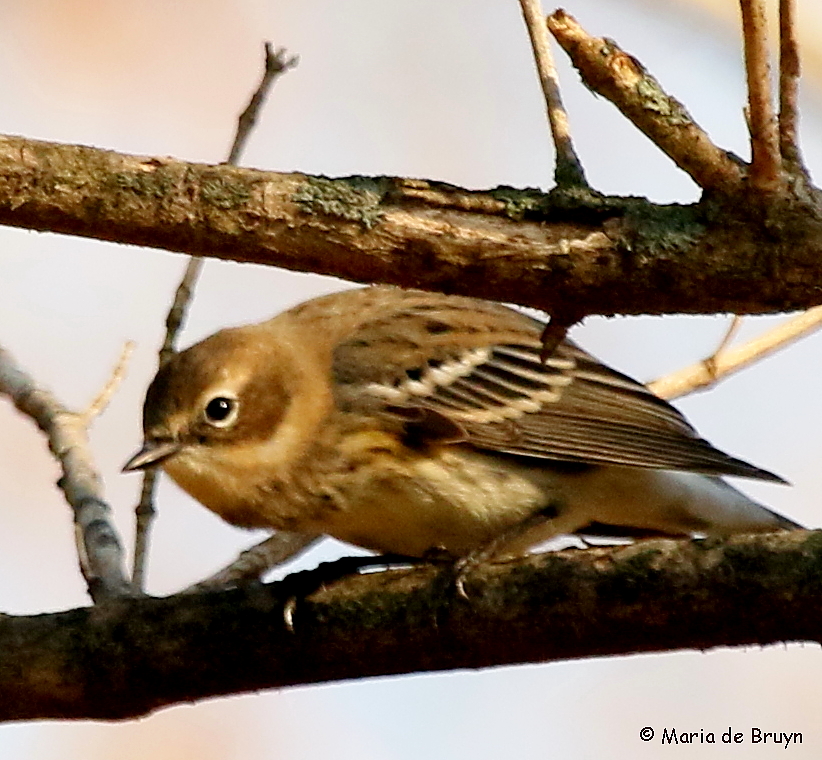
carolina-wren-i77a6358-maria-de-bruyn-res   yellow-rumped-warbler-i77a2780maria-de-bruyn-res

Carolina wren (Thryothorus ludovicianus)   Yellow-rumped warbler (Setophaga coronata)

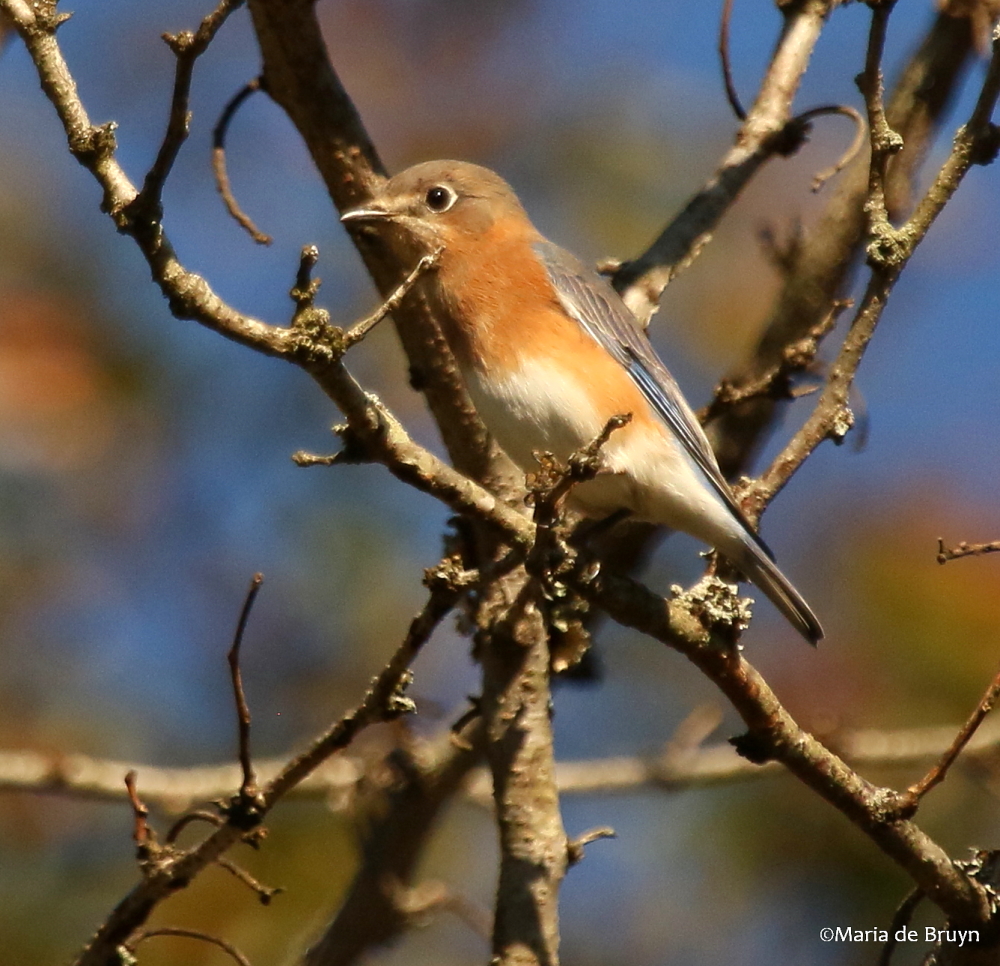
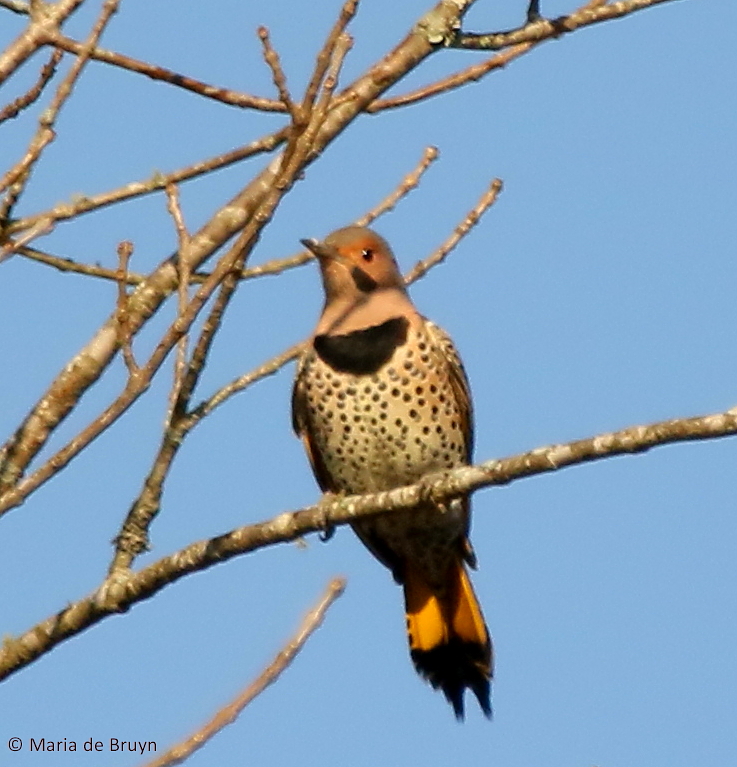
northern-flicker-i77a2485-maria-de-bruyn-res          eastern-bluebird-i77a0688maria-de-bruyn-res

Northern flicker (Colaptes auratus)               Eastern bluebird (Sialia sialis)

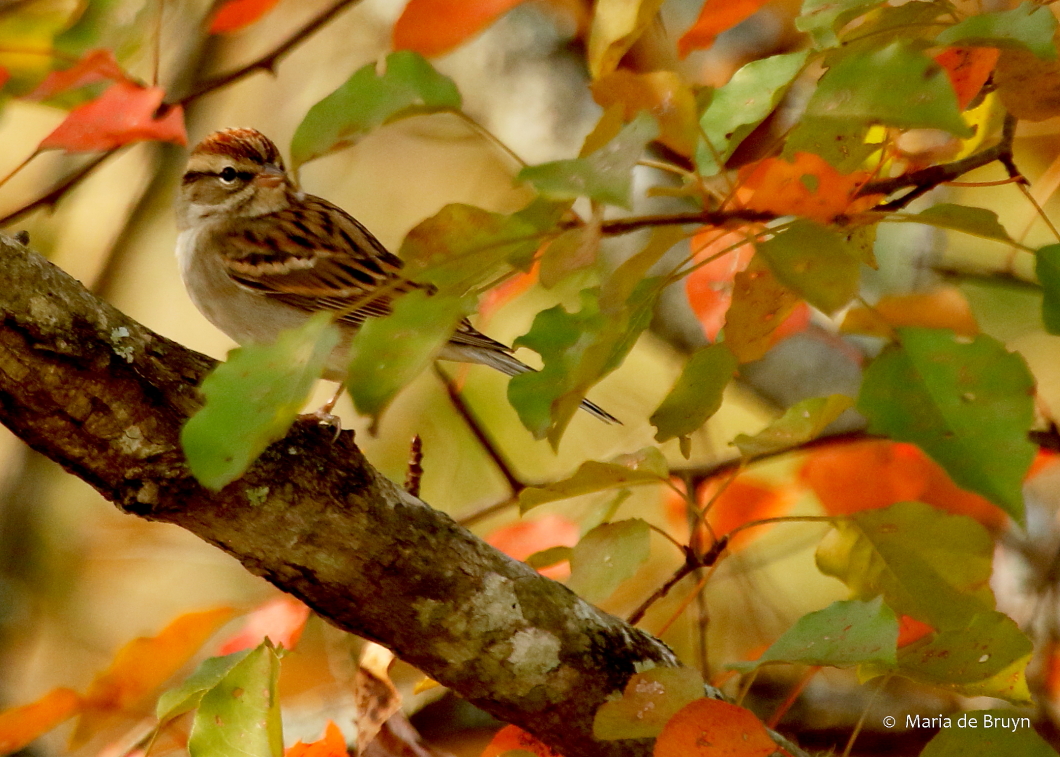
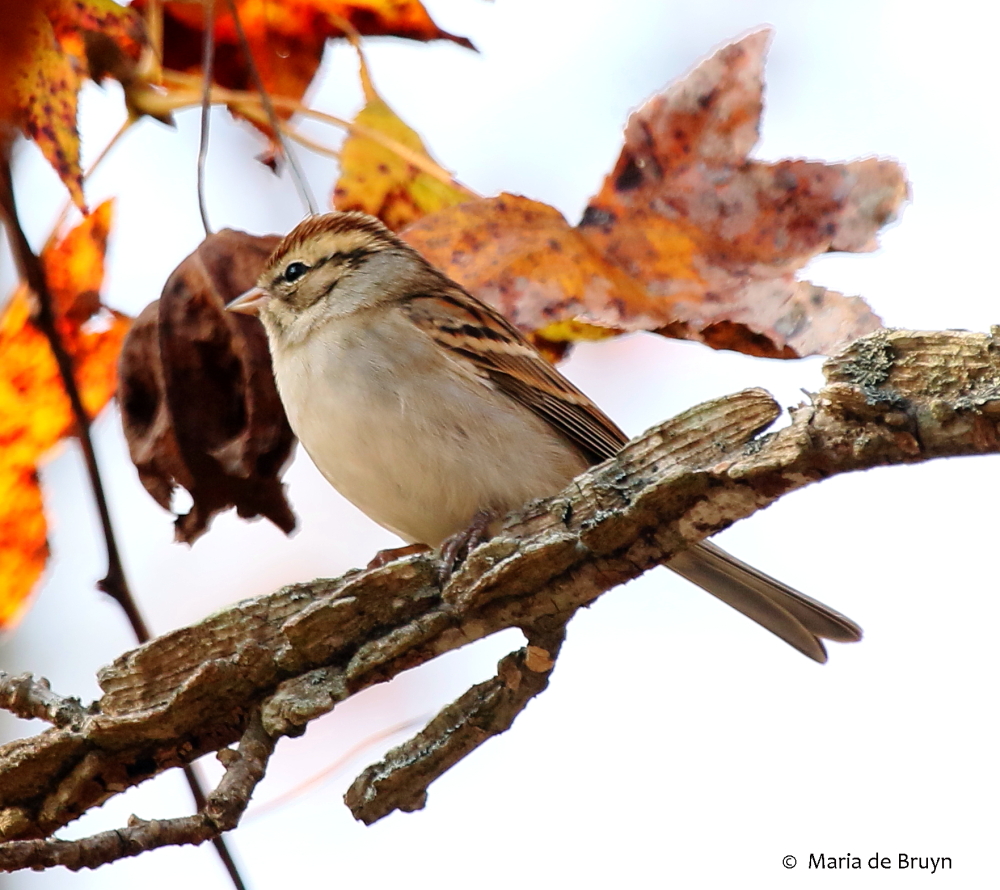
chipping-sparrow-i77a2915-maria-de-bruyn-res    chipping-sparrow-i77a2925-maria-de-bruyn-res

Chipping sparrow (Spizella passerina)

Many of the earth’s habitats, animals, plants, insects, and even microorganisms that we know of as rare or endangered, may not be known at all by future generations. We have the capacity, and the responsibility. We must act before it is too late.    Dalai Lama

And the occasional or rare visitors to my yard are appreciated in the woods and fields, too!

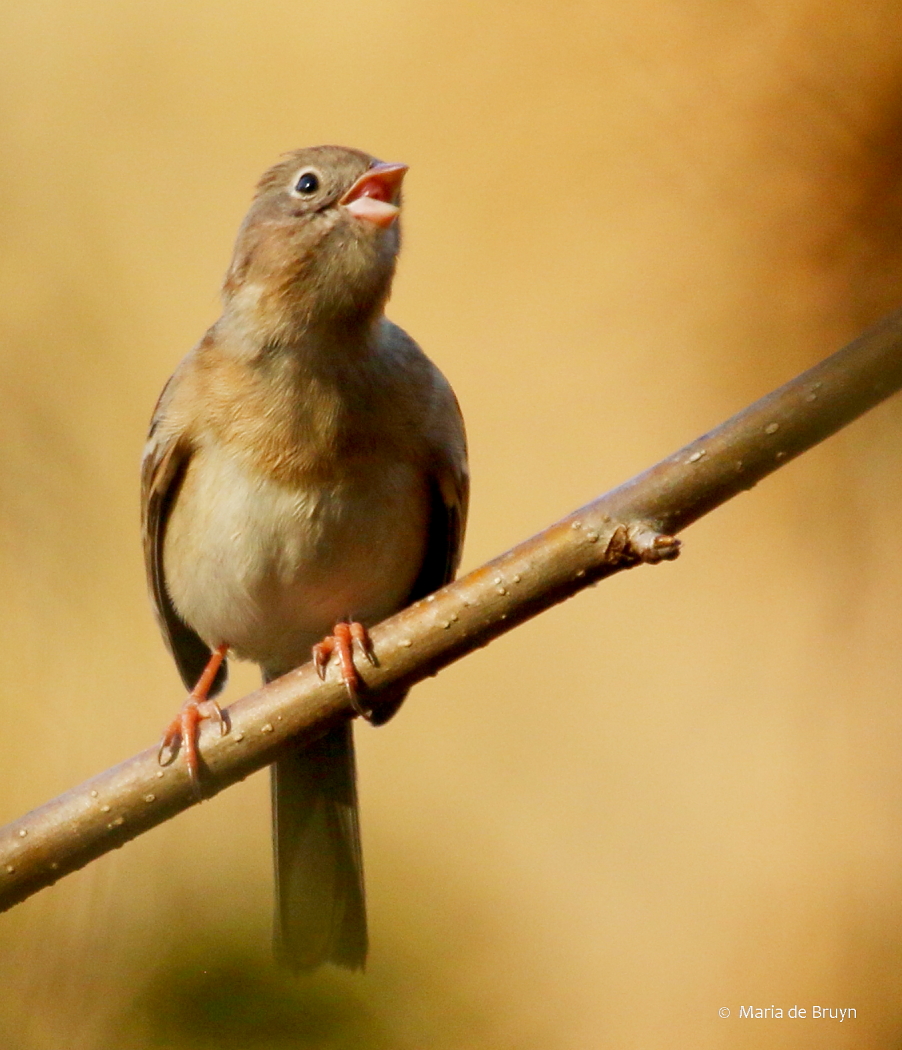
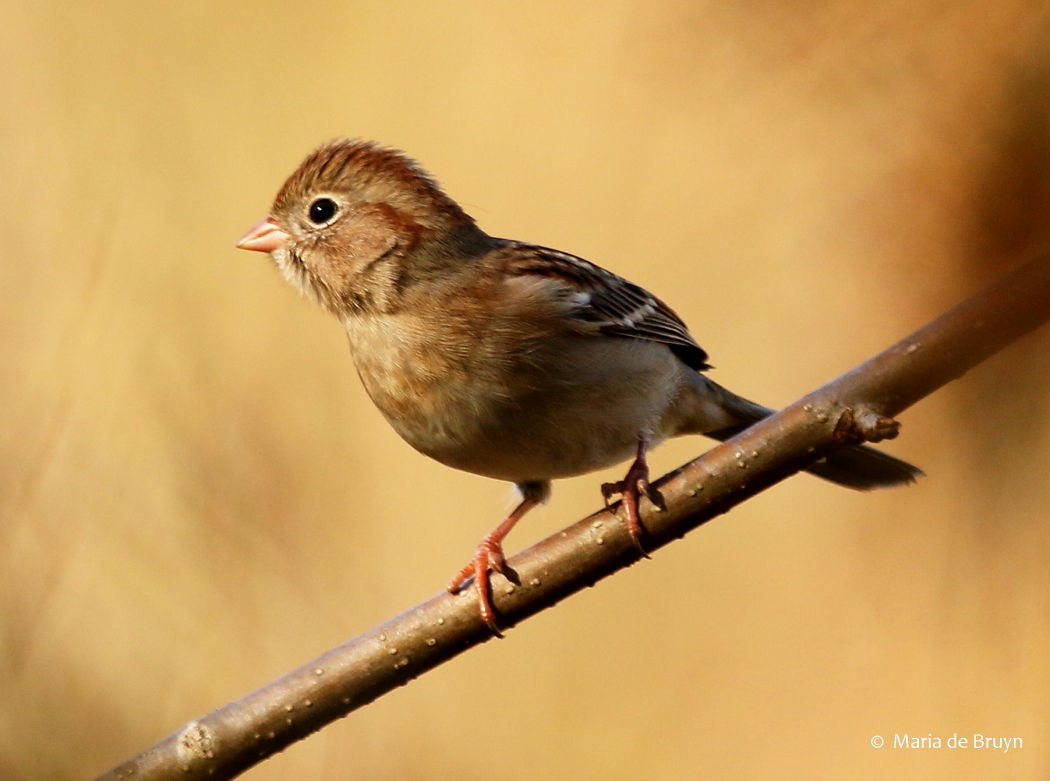
field-sparrow-i77a1587maria-de-bruyn-res      field-sparrow-i77a1634maria-de-bruyn-res

Field sparrow (Spizella pusilla)

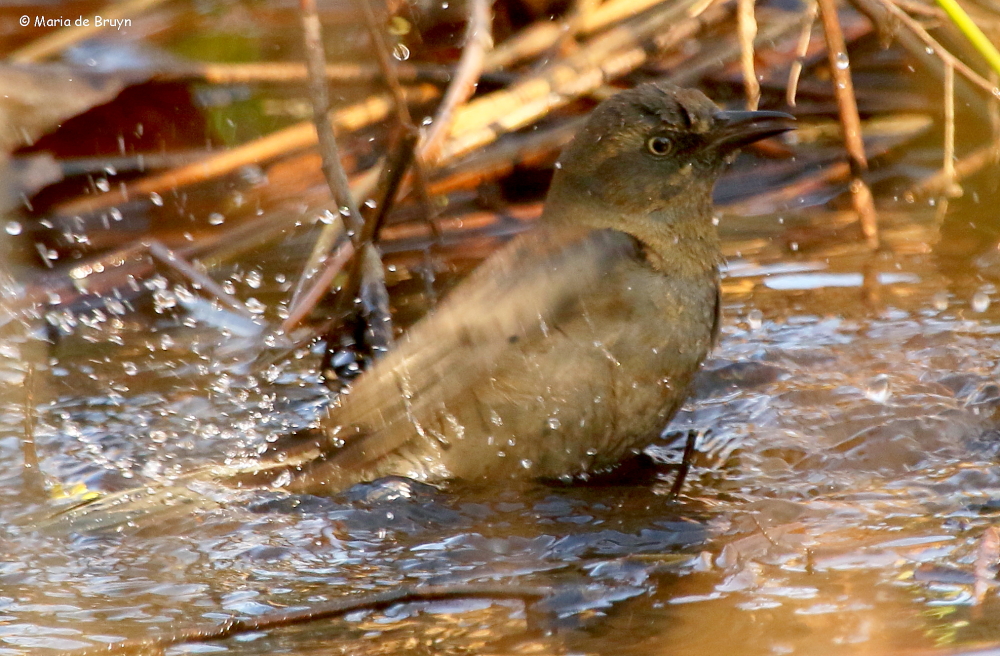
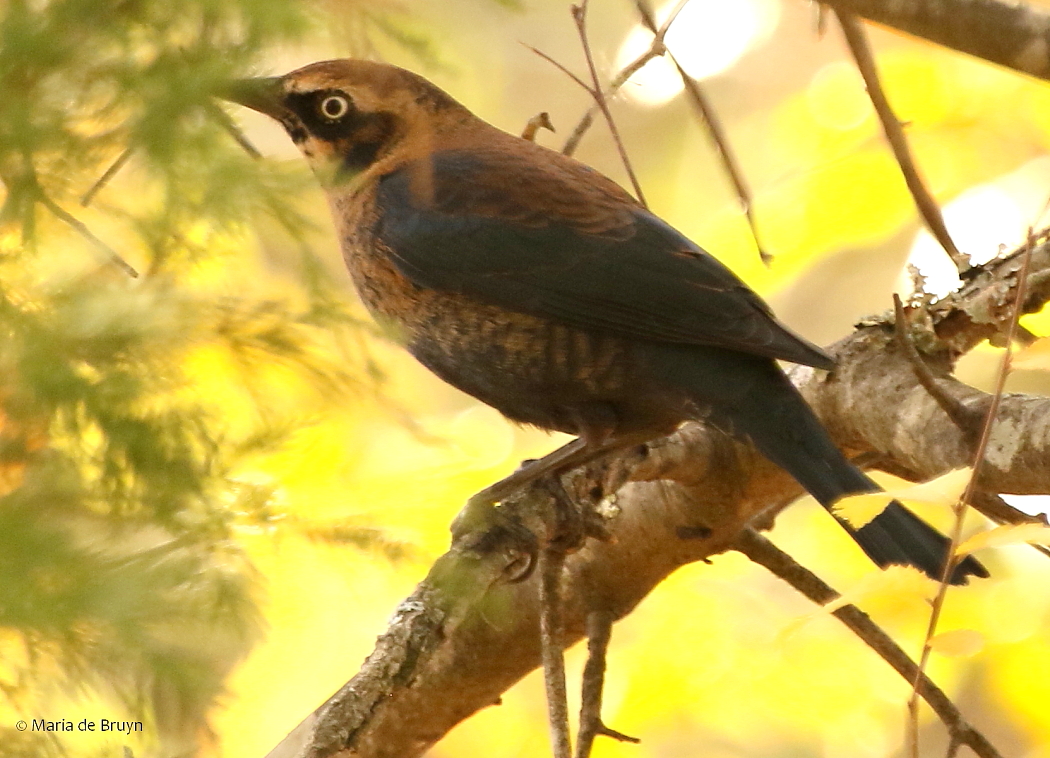
rusty-blackbird-i77a3199-maria-de-bruyn-res rusty-blackbird-i77a3110maria-de-bruyn-res

Rusty blackbird (Euphagus carolinus)

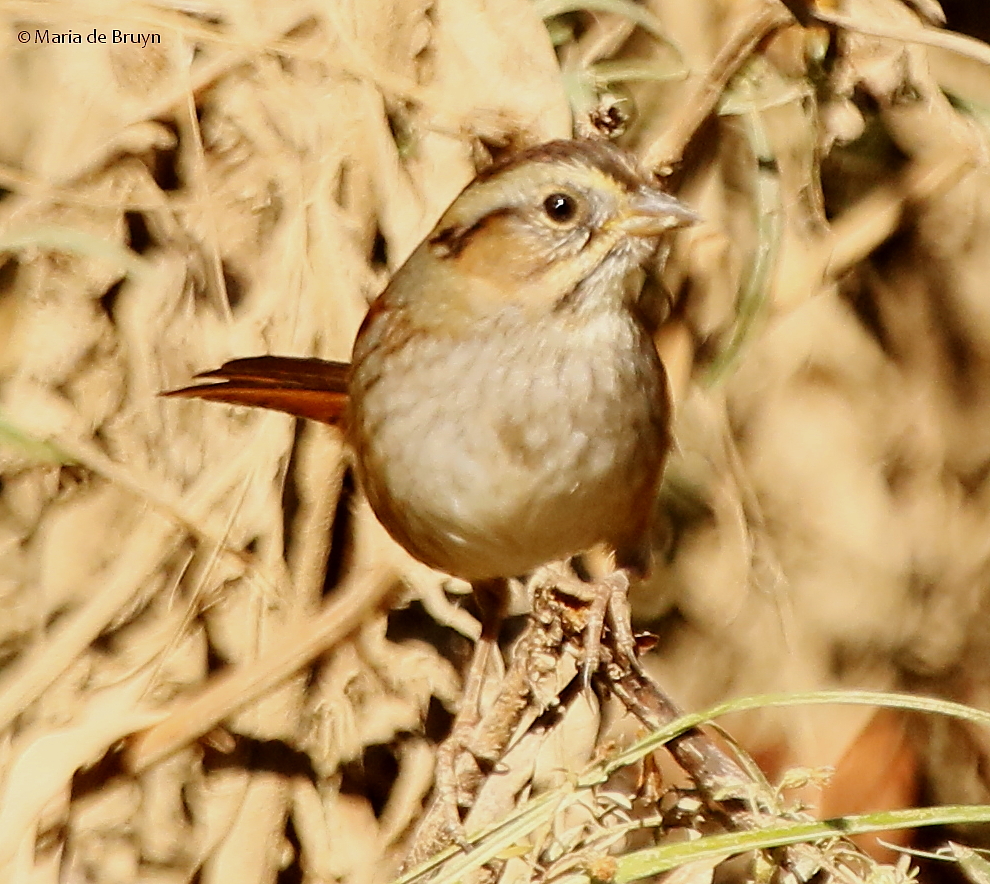
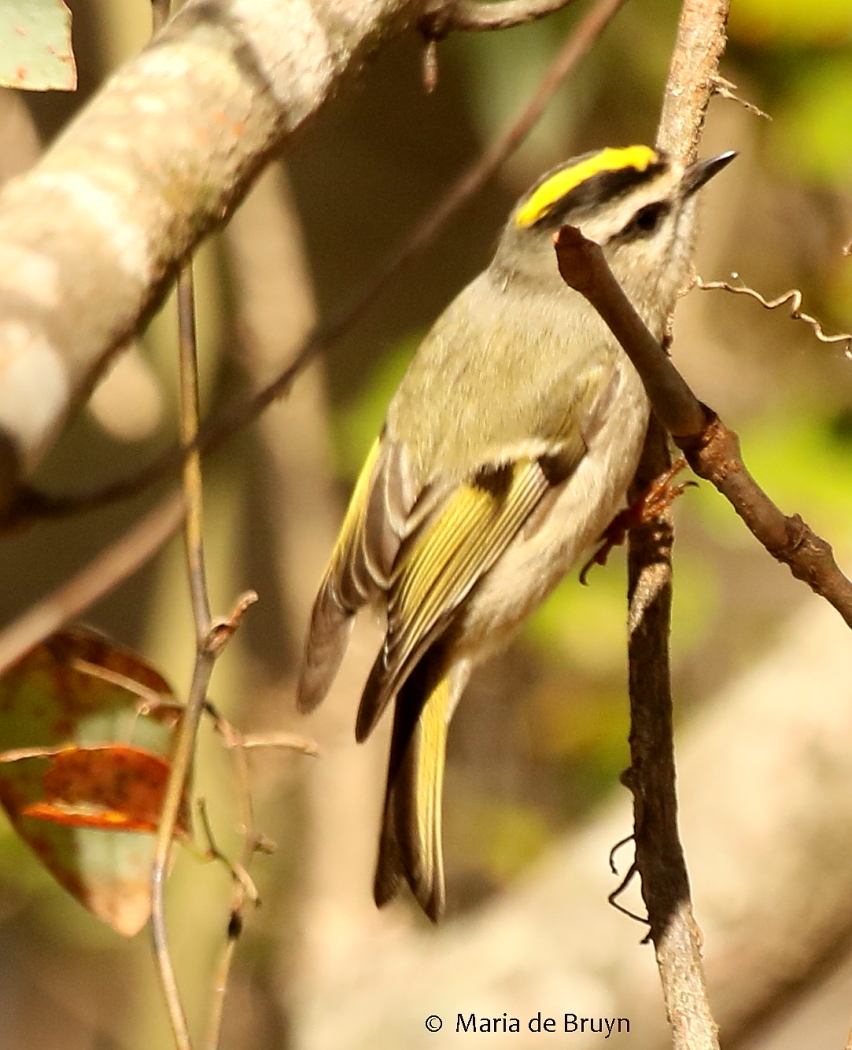
swamp-sparrow-i77a6063-maria-de-bruyn-res      golden-crowned-kinglet-maria-de-bruyn-i77a1711maria-de-bruyn-res

Swamp sparrow (Melospiza georgiana)             Golden-crowned kinglet (Regulus satrapa)

I feel that it is extremely important that each individual realize their responsibility for preserving the environment, to make it a part of daily life, create the same attitude in their families, and spread it to the community. – Dalai Lama

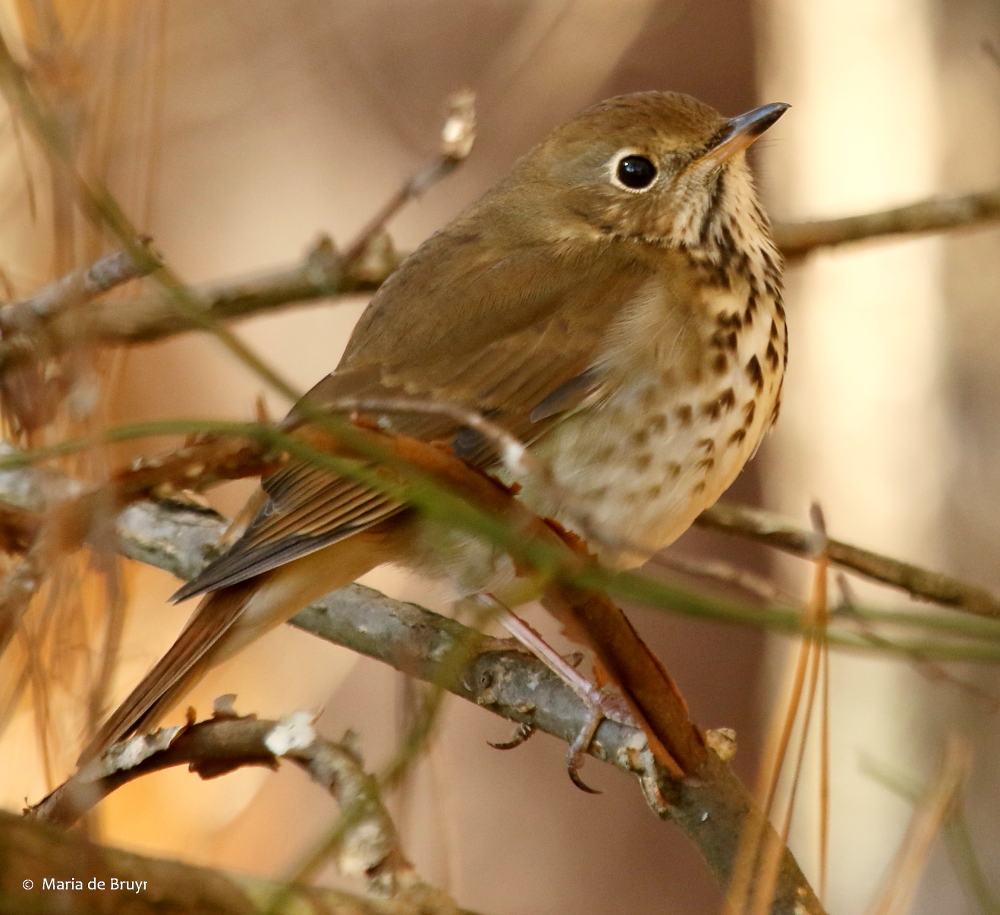
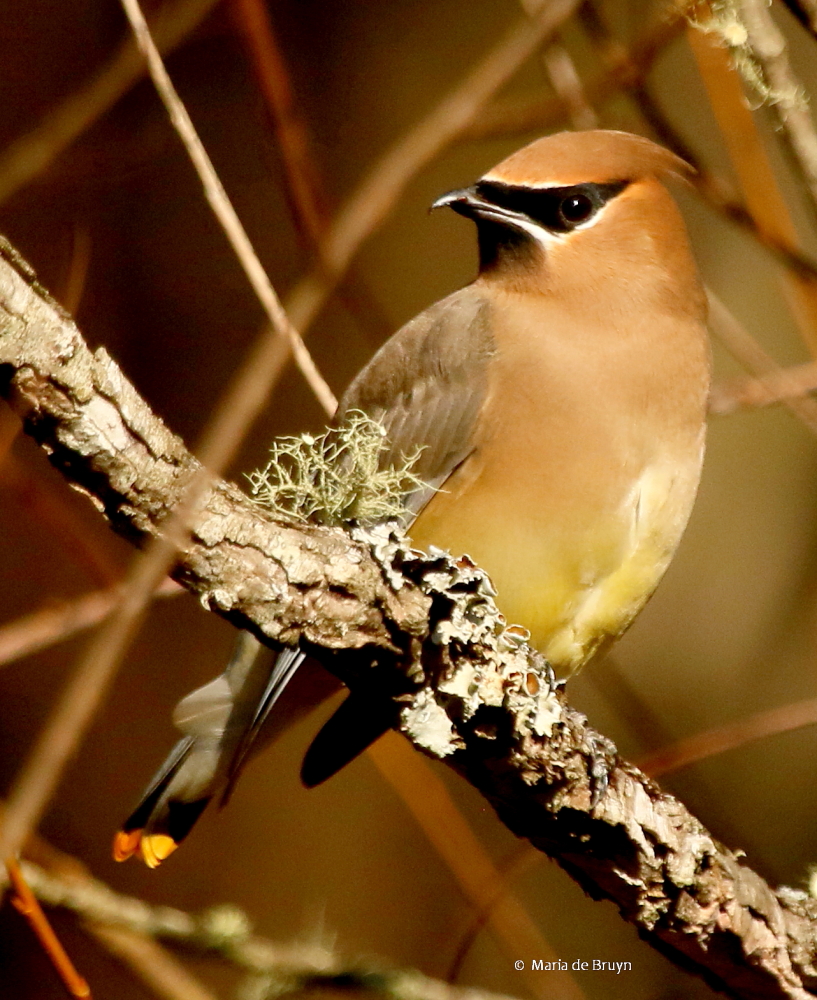
hermit-thrush-i77a6034-maria-de-bruyn-res  cedar-waxwing-i77a5945-maria-de-bruyn-res

Hermit thrush (Catharus guttatus)                          Cedar waxwing (Bombycilla cedrorum)

white-throated-sparrow-i77a1564maria-de-bruyn-res


What a great quote and slogan material:


Preserve the environment, make it part of your daily life and spread it to the community!

A working farm as a nature reserve

cattle I77A8663© Maria de Bruyn resTo continue the saga of Braeburn Farm, I’d like to introduce you to some of the non-avian wildlife to be found there. As a vegetarian, I’ll admit I was originally a bit reluctant to go there, but I must acknowledge that the farm management does many things to give the cattle a good life.

Red Devon cattle I77A6581© Maria de Bruyn resThey keep their herd of Red Devons (Bos taurus) to about 300 animals and allow the calves to reach the age of at least 3 years. Some cows and bulls are allowed to grow much older (10-12 years or more) and they enjoy a peaceful life before they go to market, rotating through the farm’s varied habitats, which include meadows and fields, ponds, woods and creeks. No pesticides are used in the habitats and the vegetation is allowed to grow as naturally as possible. Farm manager Nick said that when it is time to shift the cows to a new pasture area, he just calls them. The older cows know that they will be enjoying fresh and different veggies so they follow him willingly, leading the rest of the herd along.

My visits in June and July showed how this farm is cultivating biodiversity among plants and wildlife. The fields were dotted with thistles, white clover (Trifolium repens), red clover (Trifolium pratense) and many other plants.

brown-eyed Susan I77A7112© Maria de Bruyn res        Moth mullein Verbascum blattaria I77A5812© Maria de Bruyn res

Brown-eyed Susan (Rudbeckia hirta)                           Moth mullein (Verbascum blattaria)

Bees and butterflies were abundant, showing that the farm’s methods are good for the pollinators.

clouded sulphur I77A6930© Maria de Bruyn res    Clouded skipper I77A7102© Maria de Bruyn

Clouded sulphur (Colias philodice)                             Clouded skipper (Lerema accius)

Least skipper IMG_0155© Maria de Bruyn    Sachem skipper I77A7026© Maria de Bruyn res

Least skipper (Ancyloxypha numitor)          Sachem skipper (Atalopedes campestris)            cabbage white I77A6735© Maria de Bruyn res         monarch I77A6970© Maria de Bruyn res

Cabbage white (Pieris rapae)                      Monarch butterfly (Danaus plexippus)

Leaf-footed bugs (Leptoglossus phyllopus), margined leatherwing soldier beetles (Chauliognathus marginatus), bees and various species of syrphid flies (also known as hoverflies and often mistaken for bees) were exploring the thistles.

leaf-footed bug Leptoglossus phyllopus IMG_4412© Maria de Bruyn res   leaf-footed bug Leptoglossus phyllopus IMG_4400© Maria de Bruyn res

margined leatherwing soldier beetle IMG_4437© Maria de Bruyn resMargined leatherwing soldier beetle

Eastern carpenter bee 2 I77A6964© Maria de Bruyn res            syrphid fly Sphaerophoria I77A5781© Maria de Bruyn

Eastern carpenter bee (Xylocopa virginica)            Syrphid fly (Sphaerophoria)

common oblique syrphid fly Allograpta obliqua IMG_4418© Maria de Bruyn res

Common oblique syrphid fly (Allograpta obliqua)

Syrphid fly - Palpada vinetorum IMG_4422© Maria de Bruyn bg    Syrphid fly - Palpada vinetorum IMG_4422© Maria de Bruyn res

Syrphid fly (Palpada vinetorum)

Elsewhere, the nymph of a wheel bug (Arilus cristatus) moved along large leaves.

Wheel bug - Arilus cristatus IMG_4499© Maria de Bruyn    Wheel bug - Arilus cristatus IMG_4481© Maria de Bruyn res

It pays to look down at your feet as you wander through the fields in the early morning. The grasses are covered in tiny webs that glisten with water droplets. Underneath are the tiny red dwarf sheetweb spiders (Florinda coccinea) that may show themselves if you stay very still.

dwarf sheetweb spider IMG_0117© Maria de Bruyn res     dwarf sheetweb spider IMG_0126© Maria de Bruyn res

dwarf sheetweb spider IMG_0127© Maria de Bruyn   dwarf sheetweb spider IMG_0121© Maria de Bruyn

In the vegetation below you can also see other insects, like the Spur-throated grasshopper (Melanoplus), or the Forage looper moth (Caenurgina erechtea).

spur-throated grasshopper Melanoplus IMG_0152© Maria de Bruyn res      Forage looper I77A5943© Maria de Bruyn res

Various dragonflies and damselflies balance on grasses and sometimes alight on the ground (the former hold their wings out when resting and the damselflies fold their wings along their bodies).

halloween pennant I77A6315© Maria de Bruyn res   halloween pennant Celithemis eponina I77A6337© Maria de Bruyn res

Halloween pennant (Celithemis eponina)

Double-striped American bluet Dancer damselfly I77A6155© Maria de Bruyn res

Double-striped bluet damselfly (Enallagma basidens)

widow skimmer I77A6998© Maria de Bruyn bg

Widow skimmer (Libellula luctuosa)

common whitetail I77A6394© Maria de Bruyn res

Common whitetail (Plathemis lydia)

At the creek crossings, you may see a common sanddragon dragonfly (Progomphus obscurus, a lifer for me!), paper wasps (Polistes) or a viceroy butterfly (Limenitis archippus) having a drink or looking for a mate. The viceroy mimics the monarch but can be distinguished easily with the line crossing its wings horizontally when you see it rest.

Common sanddragon dragonfly I77A6480© Maria de Bruyn res    Common sanddragon dragonfly I77A6508© Maria de Bruyn res

paper wasp Polistes I77A6454© Maria de Bruyn bg       Viceroy I77A6432© Maria de Bruyn res

Walking through the fields, you may also occasionally spot a mammal although they are not as easy to see as the other wildlife. As I trudged around a pond, this white-tailed deer fawn (Odocoileus virginianus) was startled from its hiding place – showing off the part of its anatomy for which the species is named and looking as if s/he was sporting a very large feather.

white-tailed deer I77A6198© Maria de Bruyn res           white-tailed deer I77A6199© Maria de Bruyn res

On one outing, Nick and I spotted a couple darling raccoon kits (Procyon lotor), who wasted no time scurrying for cover when they spotted us.

raccoon I77A7213© Maria de Bruyn res     raccoon I77A7225© Maria de Bruyn res

Red Devon cattle I77A6617© Maria de Bruyn resThe farm is a great place to spend quality time outdoors. You can contact the farm management to schedule a visit and they will instruct on which fields and areas are open for visitation. And if you should wander by mistake into a field with some of the cattle, you needn’t worry as the Red Devons are likely to walk away or just watch you as they are a placid breed. I hope that Braeburn Farm becomes a popular birding and wildlife observation area so that we can continue enjoying visits there.

See anything good?

Sandy Creek path IMG_4981© Maria de Bruyn resThat’s a common question I get when I am out on one of my nature walks. Since I carry a camera with a large zoom lens and often a smaller camera, too, it’s obvious to passersby that I’m out observing nature. And I realize that when they ask the question, what they really want to know is whether I saw anything unusual or spectacular.

A recent walk at Sandy Creek Park in Durham, NC, was a case in point. I told one couple who posed the question that my most memorable sighting so far had been a male ebony jewelwing damselfly (Calopteryx maculata) – the iridescence of its body and wings in the sunlight was wonderful. They smiled a bit uncertainly and the lady of the pair admitted that she didn’t know anything about damselflies as they walked on.

ebony jewelwing I77A0417© Maria de Bruyn res   ebony jewelwing I77A0469© Maria de Bruyn res

Fragile Forktail damselfly I77A0648© Maria de Bruyn resAn hour or so later, another couple asked if I had “seen any good ones?” I repeated my delight in seeing the male damselfly, adding that the female is not as striking with her brown color and white spots. “Yes,” said the man, “that is often the case with other species. In our species, though, it’s the females who shine.” That may be the case some of the time, but my day was made by seeing a female damselfly that was a member of a new species for me – the fragile forktail (Ischnura posita).


My experience is that I find some beauty in almost all the wildlife I see (ticks and chiggers are an exception). So I want to share a few of those “good things” I saw at Sandy Creek Park last month in a two-part blog “tour”. In this first part, I’ll continue on with the insects.

Identifying dragonflies is not easy since the females and males can look quite different. The great blue skimmer (Libellula vibrans) provides an example – the male lives up to his name with a blue hue and large size, but the female shows off her beauty with a brown and yellow abdomen.

great blue skimmer dragonfly I77A0715© Maria de Bruyn res    great blue skimmer dragonfly I77A0741© Maria de Bruyn res

The Eastern pondhawk (Erythemis simplicicollis) has distinctively different appearances as a male and female. The adult male is a blue individual, sometimes with a bit of greenish tint; the female – and the immature males! – is brilliant with different shades of green. I remember being excited when I first spotted a female as their green color is so striking.
Eastern pondhawk I77A0721© Maria de Bruyn res  Eastern pondhawk I77A0749© Maria de Bruyn res

blue dasher I77A0172©Maria de Bruyn resThe blue dasher dragonfly (Pachydiplax longipennis) has some stripes, as do some of the bumble bees. The brown-belted bumble bee (Bombus griseocollis) lives up to its name with a brown stripe, while this American bumble bee (Bombus pensylvanicus) feeding on a trumpet vine (Campsis radicans) has white bands. Like honey bees, the latter bee has pollen baskets (corbicula) on its hind legs in which it stores pollen. I enjoyed watching this individual – s/he would dip down into the flower, back up a bit, and then plunge forward again, almost always keeping the pollen basket above the tip of the flower.

Brown-belted bumble bee I77A0218©Maria de Bruyn res   American bumble bee I77A0763© Maria de Bruyn2 res

Bumble bee I77A6297© Maria de Bruyn res


The pollen gatherers were numerous during both visits and willing to share the sources of their bounty – here you see a bumble bee (Bombus), syrphid fly (Toxomerus marginatus) and sweat bee (Halictus) feeding peacefully together on a coneflower (Echinacea).


Eastern carpenter bee IMG_0768© Maria de Bruyn res


The milkweed plants were attracting many species of pollinators; here an Eastern carpenter bee (Xylocopa virginica) was enjoying a meal.


common buckeye I77A0237© Maria de Bruyn res


While there were many, many bees the days of my visits, there were fewer butterflies but the common buckeye (Junonia coenia) was stunning!


The little wood satyr (Megisto cymela) and dun skipper (Euphyes vestris, to the lower right on the milkweed) were not as colorful, and some people might even call them dull, but they are still nice to see and the Eusarca moth (Eusarca confusaria) was also an evenly colored beauty. I had grown up thinking moths usually fly at night, attracted by lights so it still draws my attention when I see them in the daytime.

Little wood satyr I77A0584© Maria de Bruyn res         Eastern carpenter bee IMG_0804© Maria de Bruyn 2 res

Confused Eusarca moth Eusarca confusaria I77A5701© Maria de Bruyn

Even a somewhat tattered American lady (Vanessa virginiensis) offered a pretty view.

American lady I77A6238© Maria de Bruyn res

The broad-headed sharpshooter (Oncometopia orbona), a leaf hopper, and the spotted pink lady beetle (Coleomegilla maculata) are tiny but such colorful insects that close perusal of the vegetation helps you spot them (and presumably makes it easier for birds to see them, too?).

broad-headed sharpshooter Oncometopia orbona I77A0592© Maria de Bruyn      Spotted pink lady beetle I77A0081©Maria de Bruyn bg

Emerald ash borer trap I77A0719© Maria de Bruyn res


One beetle that we don’t really want to see is the emerald ash borer (Agrilus planipennis), an invasive species that came to the USA from Asia. The larvae of these beetles kill ash trees and the park administrators have hung a trap box for them to determine whether this species has reached the park.


Spotting mammals is not always easy at the park but one day fellow birder Jim was kind enough to alert me to an opossum (Didelphis virginiana) in a tree when we met on a walking path. He told me approximately where it was and I spotted that one and another in a nearby tree; I thought it might be a mother and grown offspring but that was a guess and I certainly couldn’t confirm it. As these are nocturnal animals, it was pretty cool for me to see two in broad daylight. The only marsupial found in the United States and Canada is a beneficial animal for us humans (and other wildlife) as they could eat up to 4000 ticks in a week! 
opossum IMG_0605© Maria de Bruyn res     opossum I77A5788© Maria de Bruyn res

One of the pair demonstrated that they can open their jaws widely – watching him/her slowly stretch that mouth offered me a surprise; I would think it couldn’t go any further and the animal continued to show that s/he could really please a dentist who would like lots of space to investigate those teeth.

opossum I77A5897© Maria de Bruyn res

Eastern cottontail rabbitI77A5578© Maria de Bruyn res


The Eastern cottontail rabbit (Sylvilagus floridanus) was not so lucky, carrying a fat tick in its ear. Too bad the opossums couldn’t come by and groom him/her and remove that pesky arachnid!


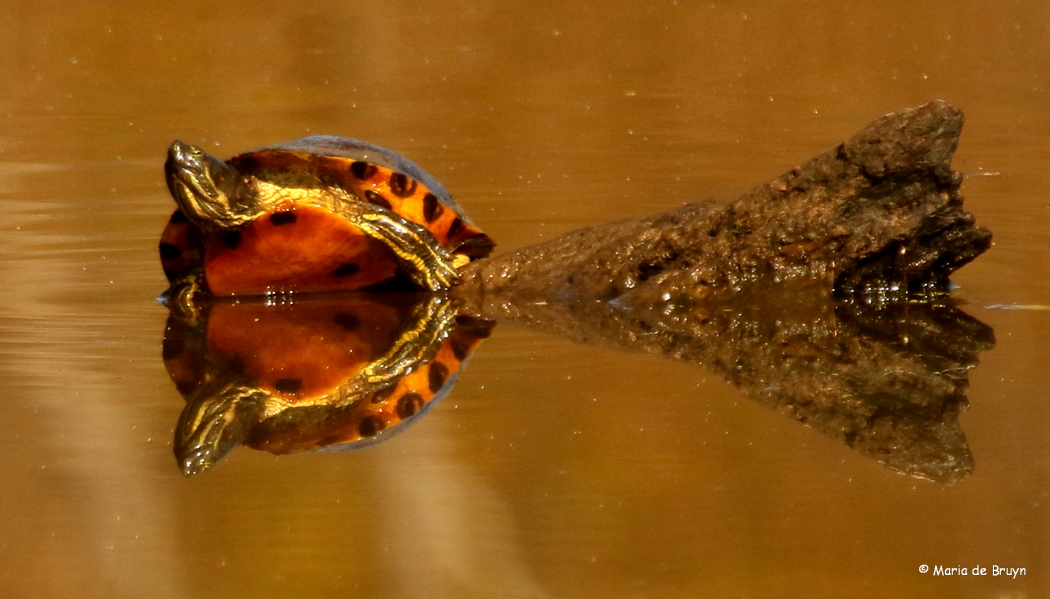
The park is not only attractive for the entomologists. Reptile enthusiasts can spot turtles fairly easily, especially in the spring when they are looking for places to lay their eggs. A large painted turtle was crossing a field looking for a spot, while an Eastern mud turtle (Kinosternon subrubrum) was trundling down a paved path one morning, not far from a pond which often has many painted turtles and red-eared sliders (Trachemys scripta elegans), like this one – who must have been a bit bothered by a bird feather caught in its shell.

Eastern mud turtle IMG_0741© Maria de Bruyn res    Red-eared slider I77A5941© Maria de Bruyn2

Which bird could it have been? I’m thinking a swallow – see part 2 of the tour for a view of the species and more of the wonderful biodiversity that can be seen in the park.