A varied palate – hummingbirds’ choice of foods

DK7A2925© Maria de Bruyn res

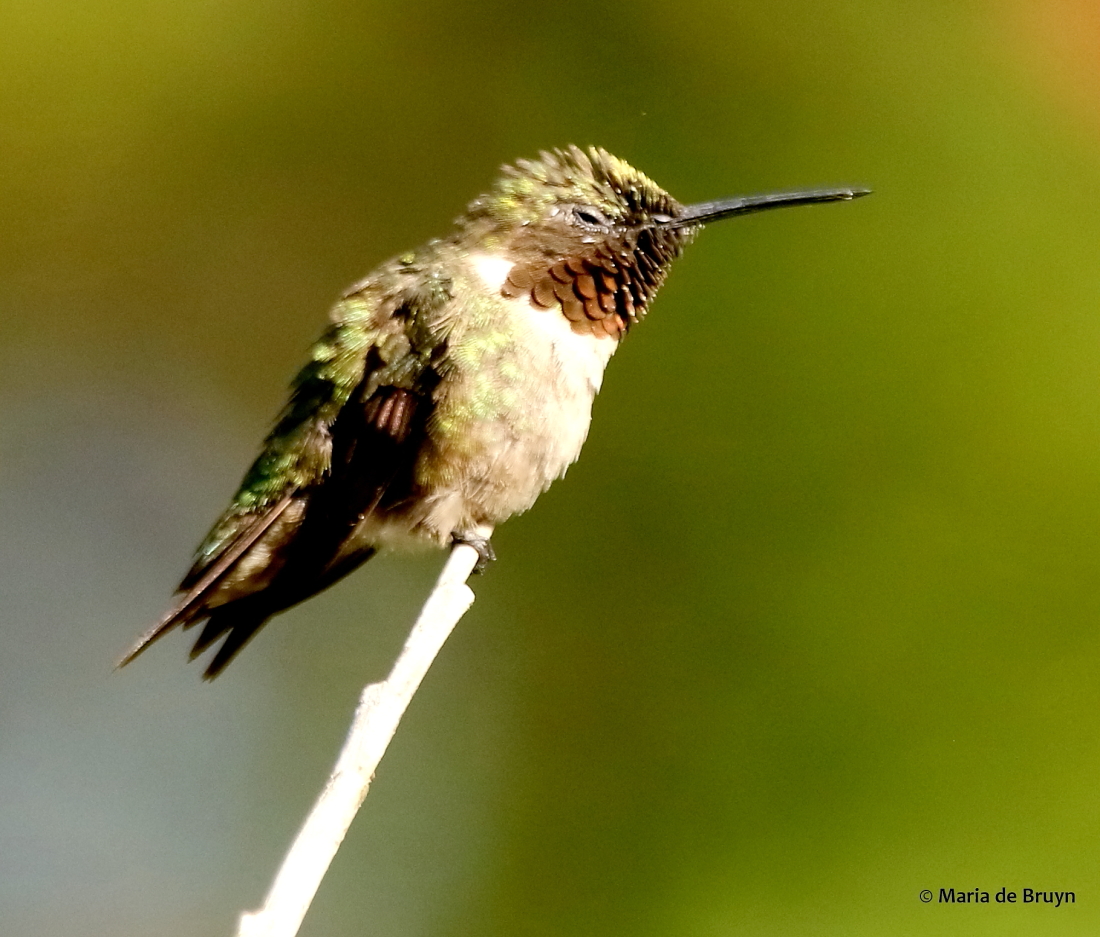
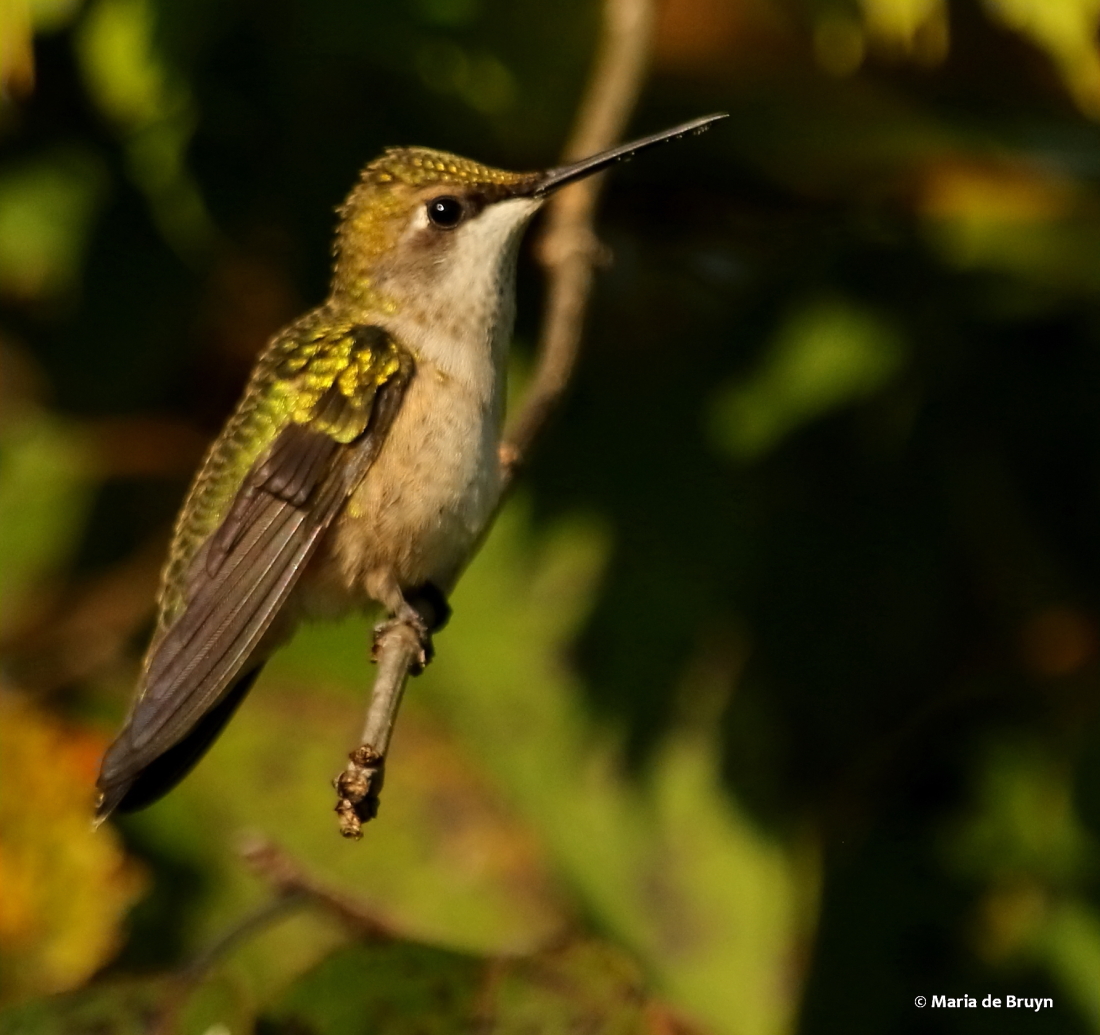
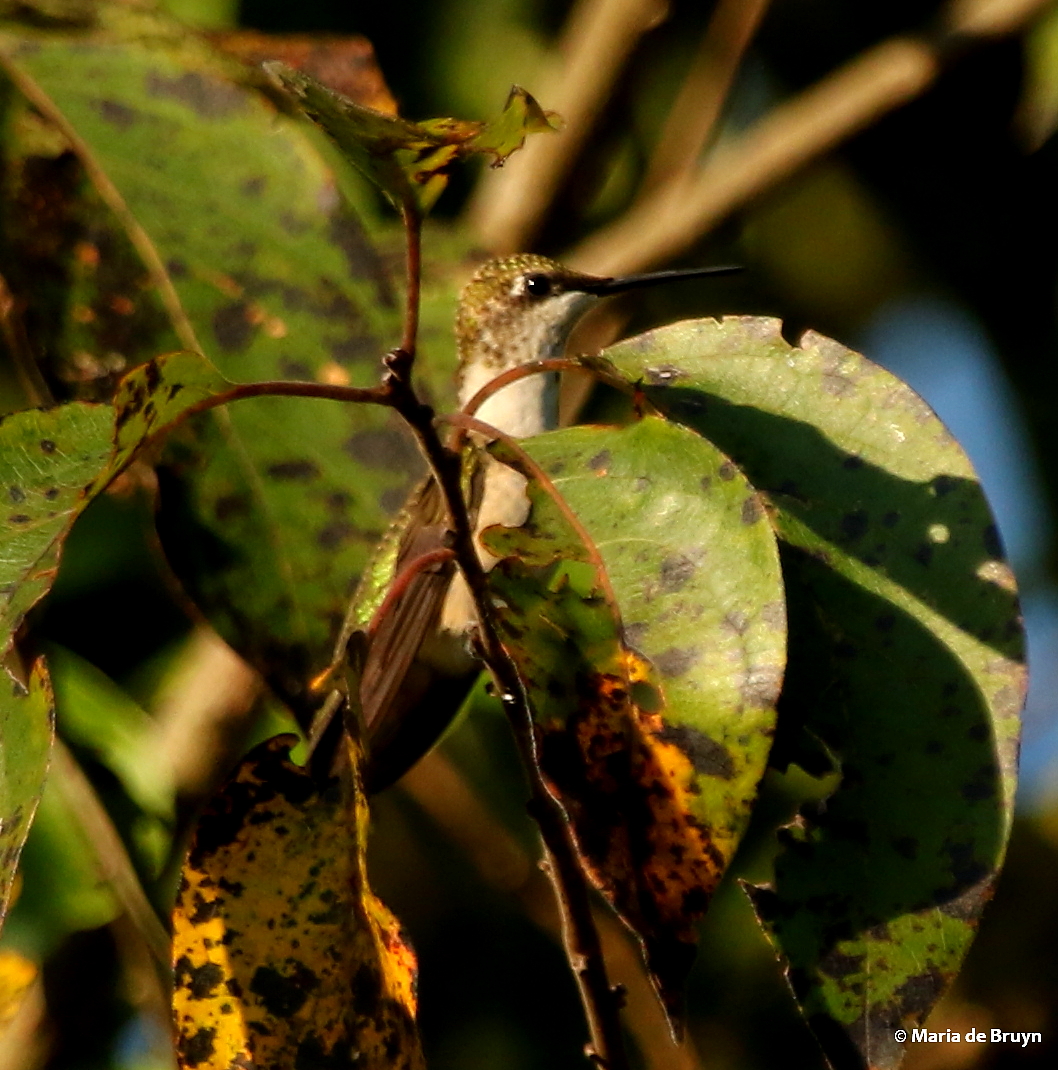
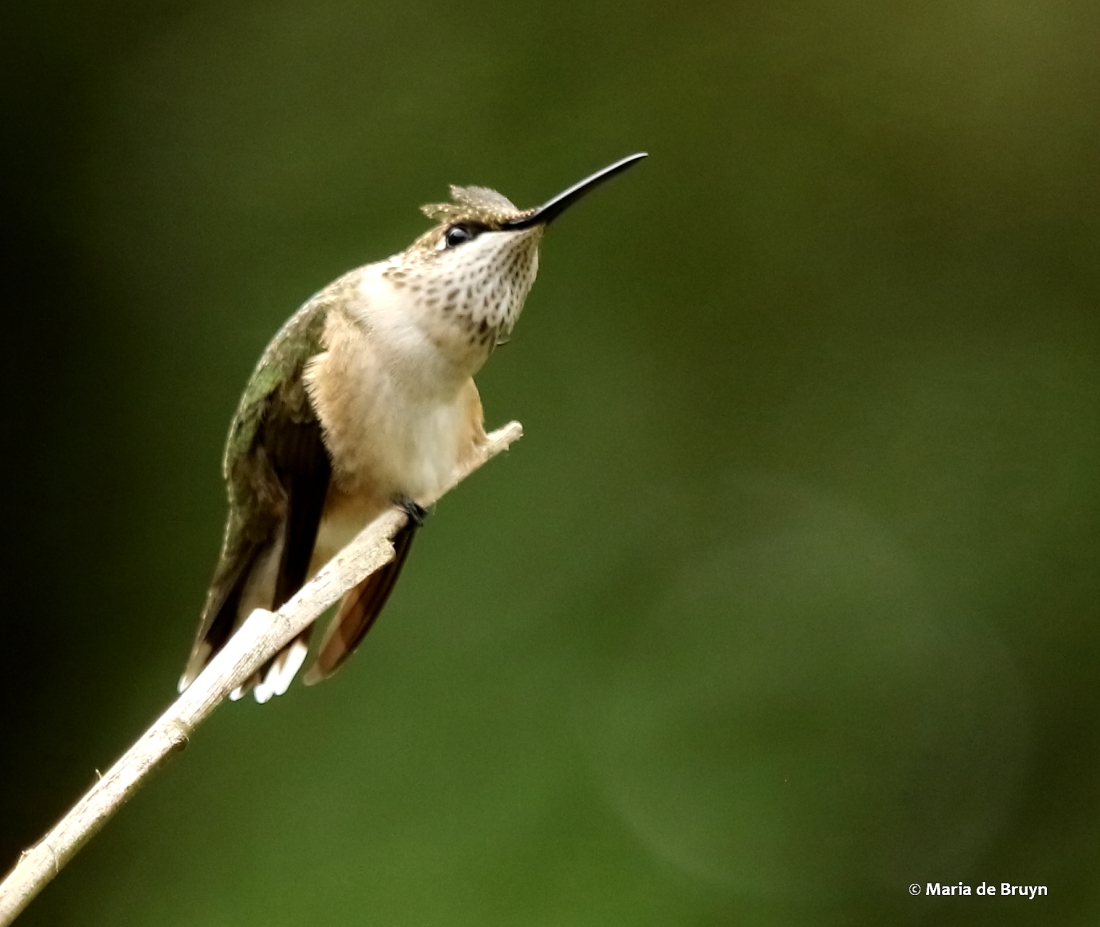
As promised, one more blog on hummingbirds before I move to another topic; their presence always brings me enjoyment and I know other people who are enamored with these tiny birds, too. Also, although autumn has come, I still have a couple ruby-throated hummingbirds (Archilochus colubris) at my feeders. And a couple days ago I had the privilege of seeing a species new to me, the buff-bellied hummingbird (Amazilia yucatanensis), which has only visited the state of North Carolina once before (at least as far as human witnesses are concerned)!

DK7A2528© Maria de Bruyn resThe hummers have a varied diet, including mainly insects (mosquitoes, gnats, fruit flies, small bees), spiders, tree sap and sweet nectar (or sugar water). They tend to feed about 5-10 times per hour during the day and need about 10 calories of nutrition each day.


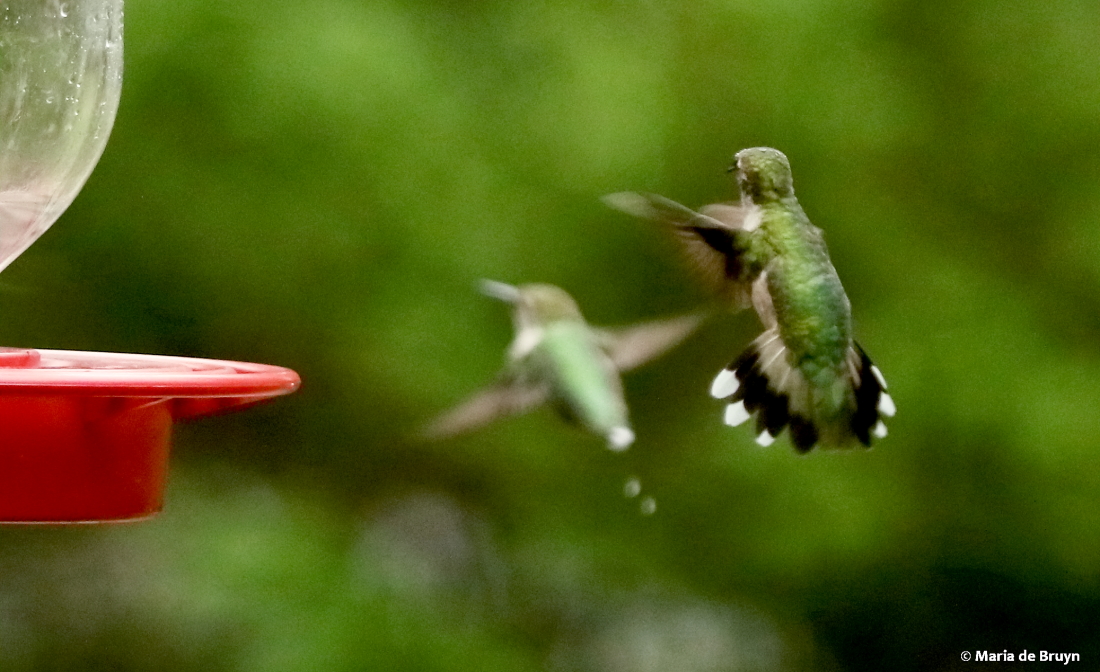
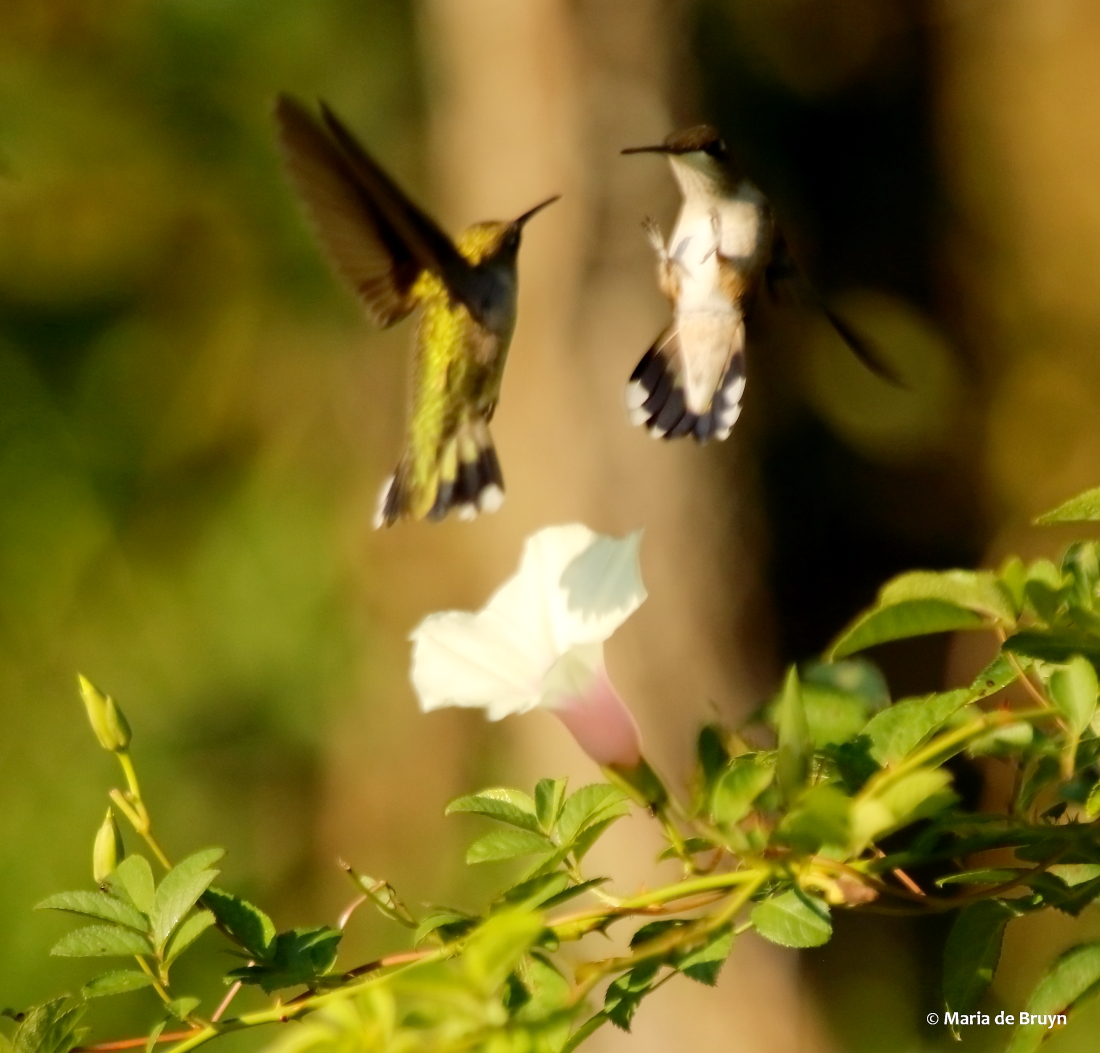
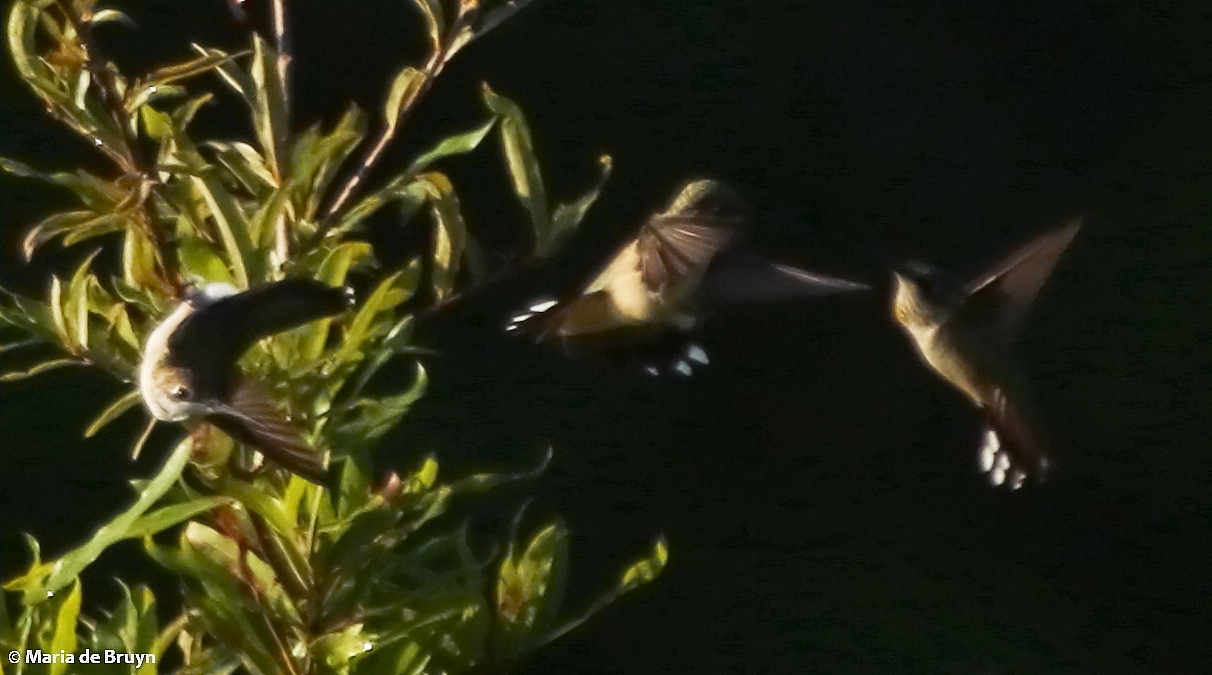
It is a lot easier to catch them drinking nectar than catching insects (apologies for the blurred photos)!

DK7A0749© Maria de Bruyn (2) res

DK7A7171© Maria de BruynDK7A2814© Maria de Bruyn

DK7A7808© Maria de Bruyn


Hummingbirds use their long tubular tongues as elastic micro-pumps to obtain nectar. This enables them to lick a flower up to 20 times per second as they gather food. And although we can’t see it when just looking at them, they have forked tongues (like snakes)!


DK7A0391© Maria de Bruyn res ruby-throated hummingbird DK7A1076© Maria de Bruyn res

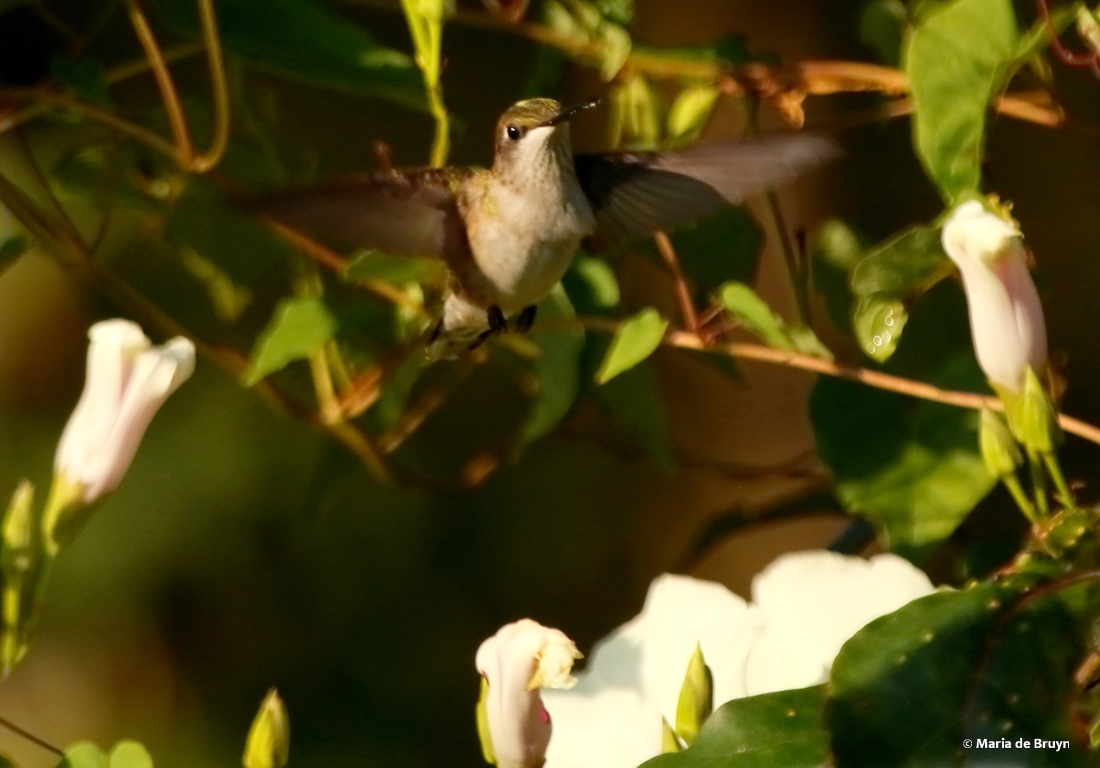
DK7A4497© Maria de Bruyn2The hummers visit a variety of flowers to drink their sweet nectar, often preferring orange or red flowers but certainly not avoiding others.In my garden, this includes cardinal flowers (Lobelia cardinalis), hollyhocks (Alcea), yellow passionflower (Passiflora lutea) and lantana (Lantana).

ruby-throated hummingbird DK7A0820© Maria de BruynDK7A0555© Maria de Bruyn res

In nature reserves, I’ve seen them visiting morning glories (Ipomoea), ironweed (Vernonia) and trumpet vines (Campsis radicans).

DK7A2213© Maria de Bruyn resDK7A3392© Maria de Bruyn res

DK7A2289© Maria de Bruyn res


Their long bills, tubular tongues and slim bodies make it easy for them to drink from long flowers, but sometimes they will simply pierce the base of a flower to obtain nectar, or use a hole already made there by an insect.

DK7A2915© Maria de Bruyn resDK7A2428© Maria de Bruyn res

Light-colored flowers are not shunned as food sources, however!

DK7A7178© Maria de Bruyn (2) resDK7A7142© Maria de Bruyn res

DK7A7165© Maria de Bruyn res

Bean plants and gerbera daisies (Gerbera)  were on the menu at the Translating Traditions farm.

DK7A7360© Maria de Bruyn resDK7A7381© Maria de Bruyn res

At my house, the hummers visit the nectar feeders with great regularity, presumably because the food is very easily available there. A little known fact about the hummingbirds is that, compared to all other birds, their brains are the largest in comparison to body size. They remember where feeders are from year to year and also can recognize the people who fill the feeders. When the nectar is low and I appear, a hummer will sometimes hover and chitter in my direction at length; I really do think it is warning me that it’s time to prepare another serving.

ruby-throated hummingbird DK7A8190© Maria de Bruyn res

The buff-bellied hummingbird breeds in Mexico and south Texas. When they migrate, it is in a north-eastern direction, but the only previous recorded visit of one to North Carolina was in 2007. Now there is one hanging out at a couple’s home in the town of Winston-Salem, so I accompanied three fellow birders to go see it. Our 90-minute drive there was rewarded by a view of the bird within about 15 minutes and we stayed for almost two hours watching it come and go along with some ruby-throated hummingbirds.

buff-bellied hummingbird DK7A1131© Maria de Bruynbuff-bellied hummingbird DK7A1171© Maria de Bruyn

These hummingbirds have bellies with a light orange-yellow hue, brighter orange tail feathers and a bright green back and head. In contrast to the ruby-throated hummingbird’s straight dark bill, they have a reddish, curved bill. These lovely little birds appear to be the least studied species among the hummingbirds in the USA.

rufous hummingbird IMG_1789 M de Bruyn


Two years ago, I had a rufous hummingbird (Selasphorus rufus) visit my nectar feeder after he had migrated here in winter from the far North. This year, I’ll leave at least one feeder up again after the ruby-throats take off for warmer climes in case some wintering hummers need food. And I’ll look forward to seeing my regular residents again next summer!


More information:

http://www.livescience.com/51904-hummingbird-tongue-pump.html

http://www.nytimes.com/2015/09/08/science/the-hummingbirds-tongue-how-it-works.html?_r=0

Birdie beauty – hummingbird preening and grooming

ruby-throated hummingbird DK7A6865© Maria de Bruyn res

ruby-throated hummingbird DK7A1226© Maria de Bruyn resIt has been great to welcome back the sun and dispel some of the gloom resulting from the record number of rainy days we’ve had. Watching the ruby-throated hummingbirds (Archilochus colubris) in my yard and at nature reserves is also a day brightener and has taught me that these tiny avians are quite fastidious, grooming often and at length.


They cannot use their feet to hop or walk; they only cling to perches and shuffle a bit.

ruby-throated hummingbird DK7A0497© Maria de Bruyn resruby-throated hummingbird DK7A0499© Maria de Bruyn (2) res

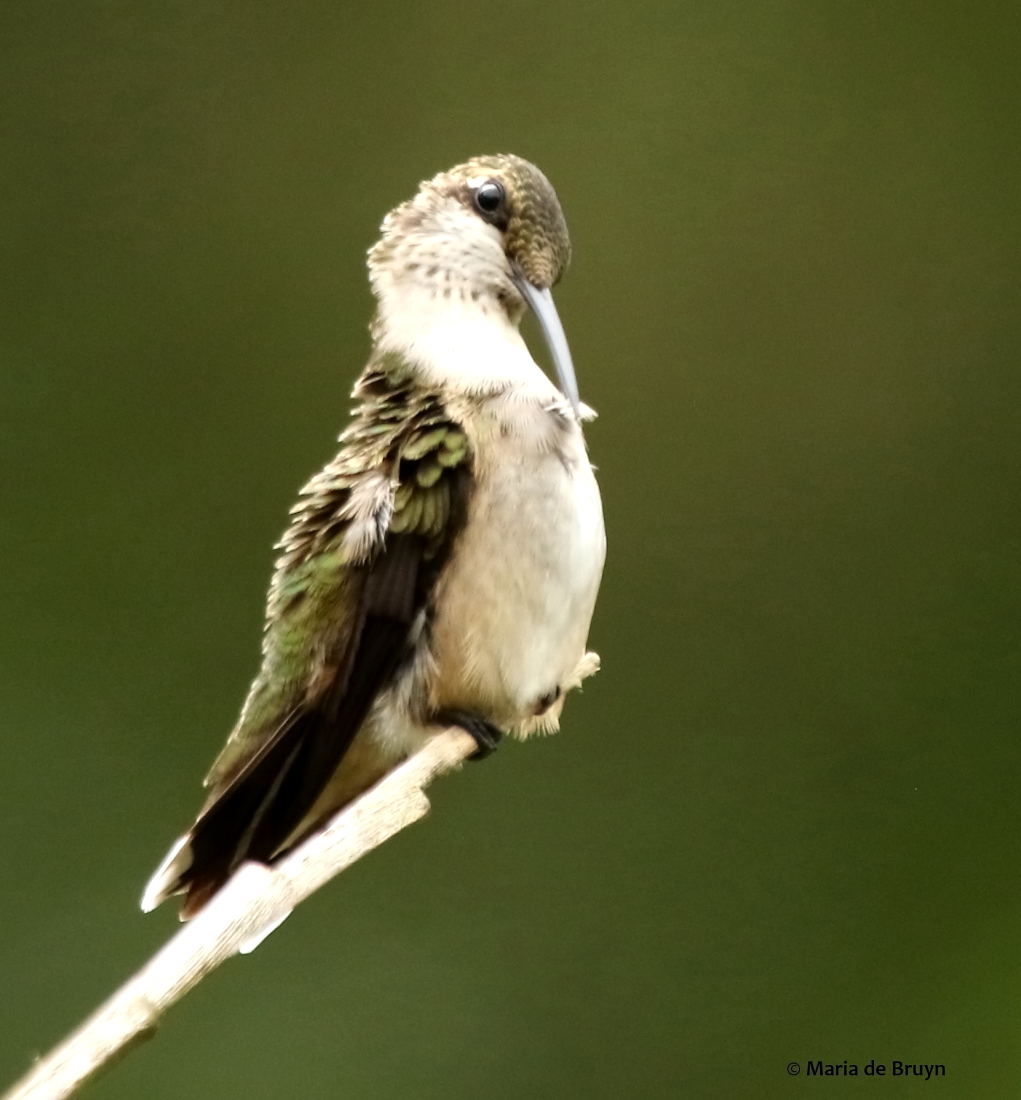
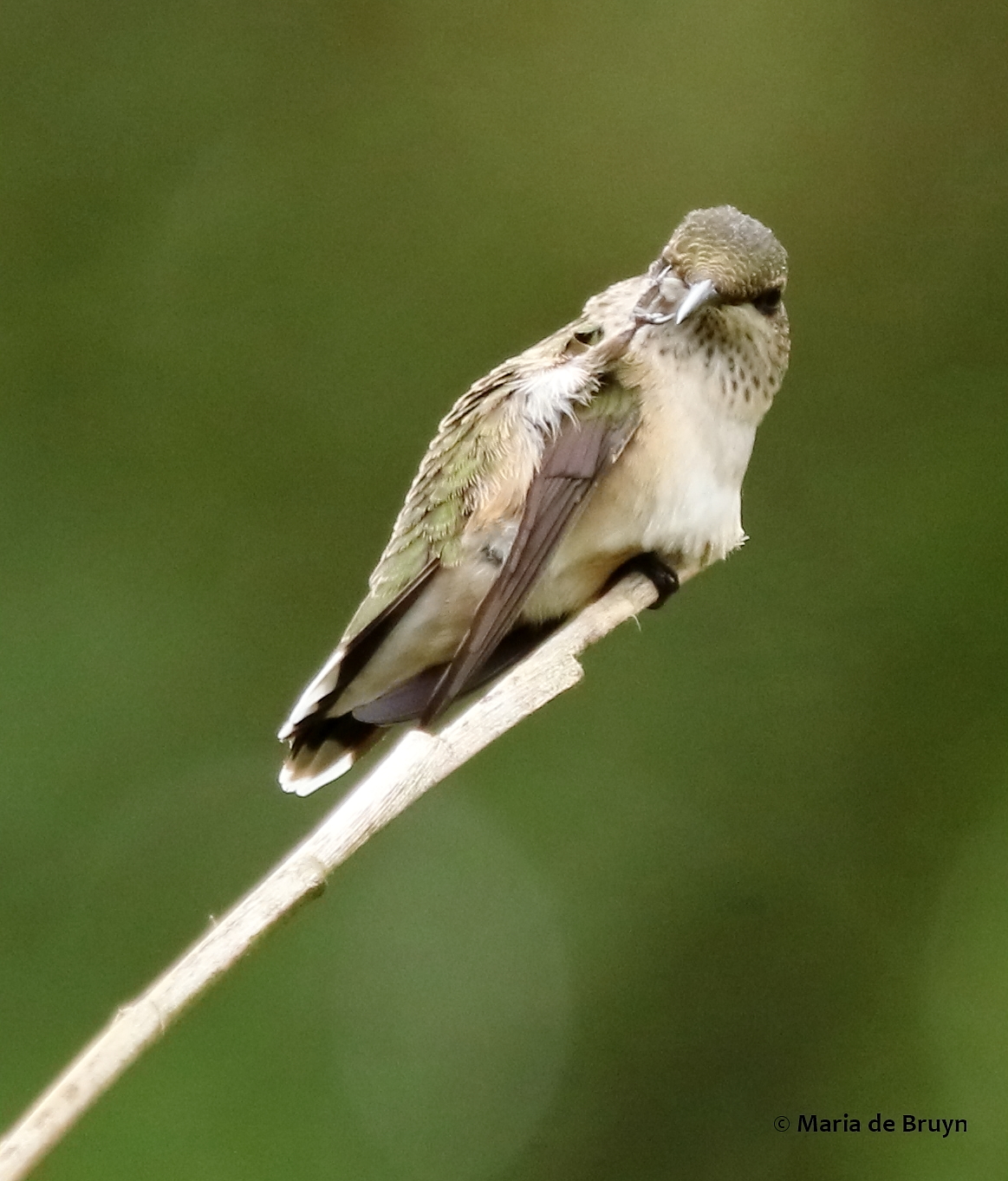
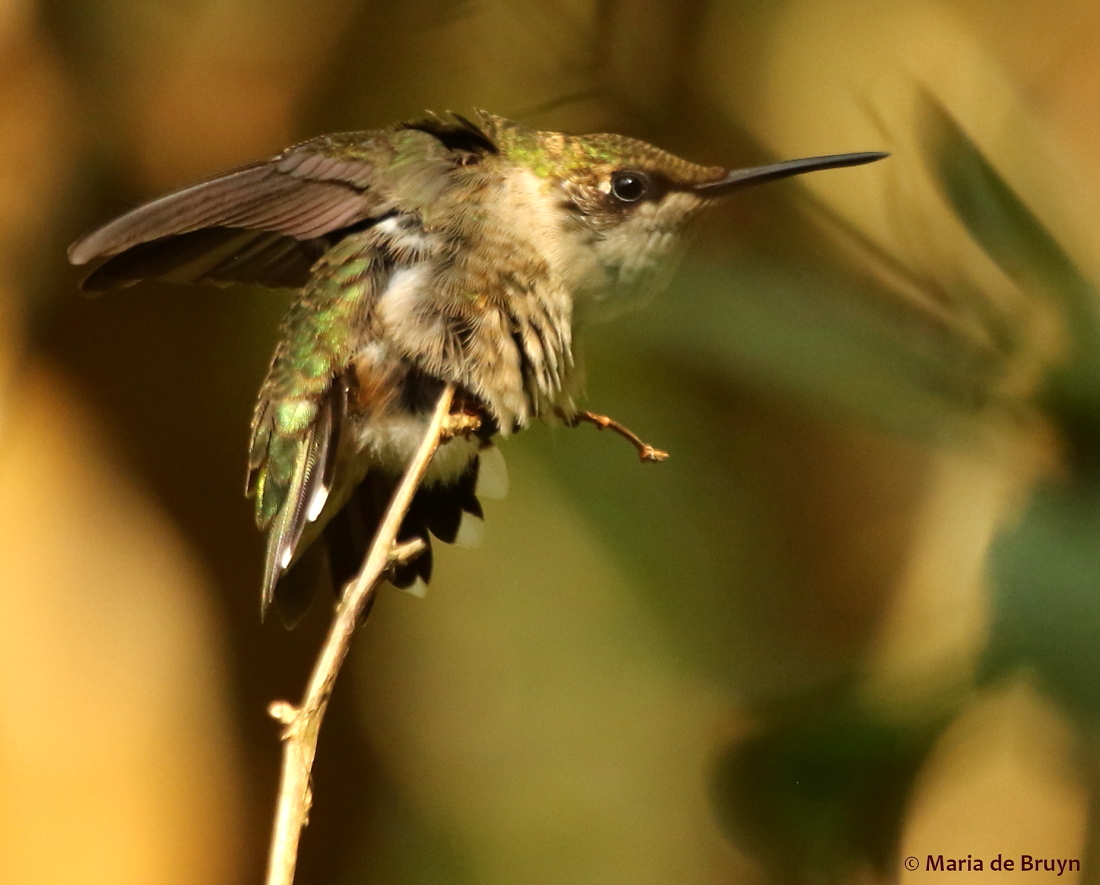
They do use their claws as a “comb” to groom their heads and necks and to scratch itches.

ruby-throated hummingbird DK7A7454© Maria de Bruyn resruby-throated hummingbird DK7A1811© Maria de Bruyn res

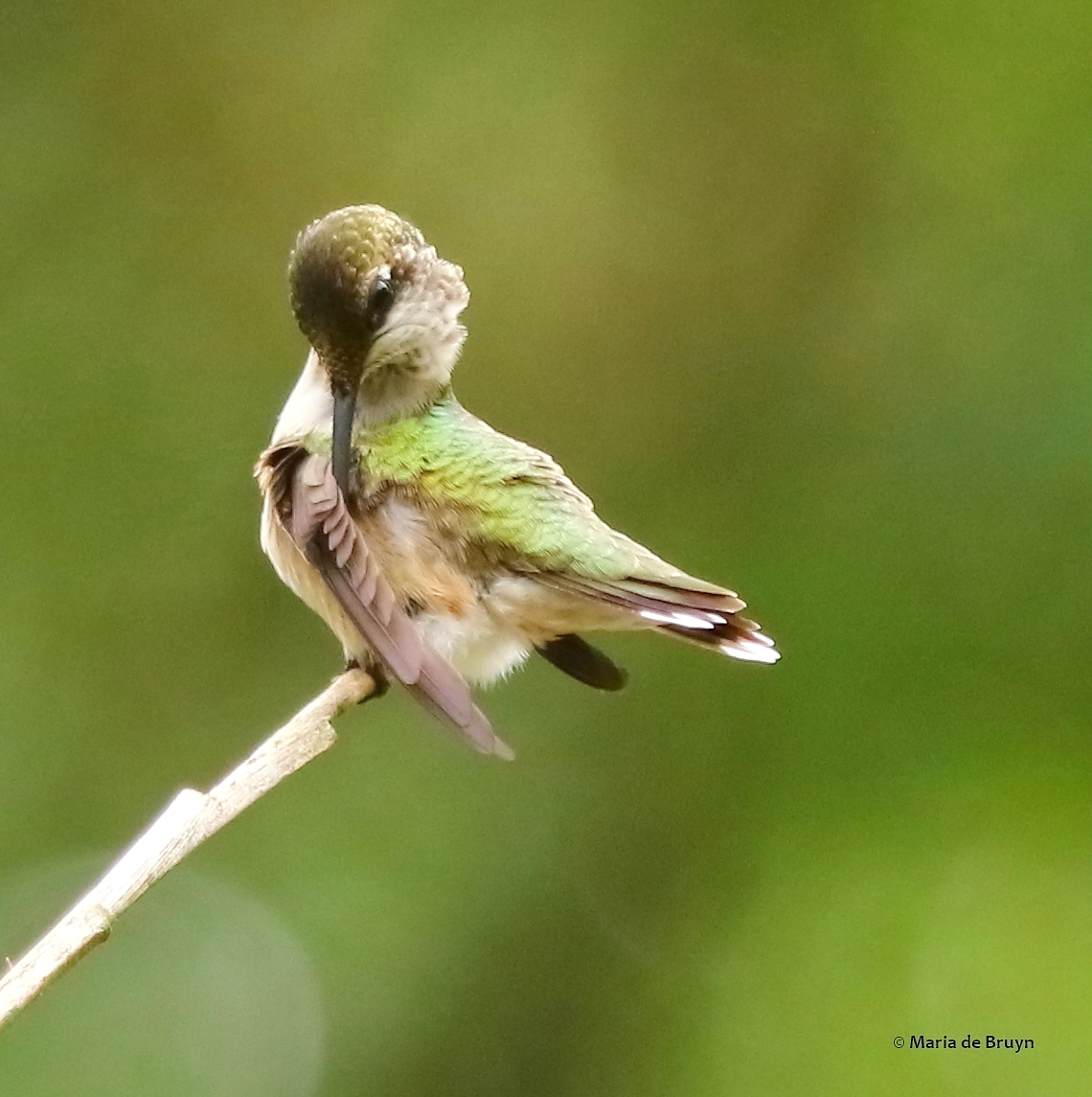
Using oil from a gland near their tail, they cover their iridescent feathers with the oil to help clean them.

ruby-throated hummingbird DK7A1112© Maria de Bruyn resruby-throated hummingbird DK7A1230© Maria de Bruyn res

ruby-throated hummingbird DK7A1754© Maria de Bruyn res ruby-throated hummingbird DK7A1756© Maria de Bruyn res

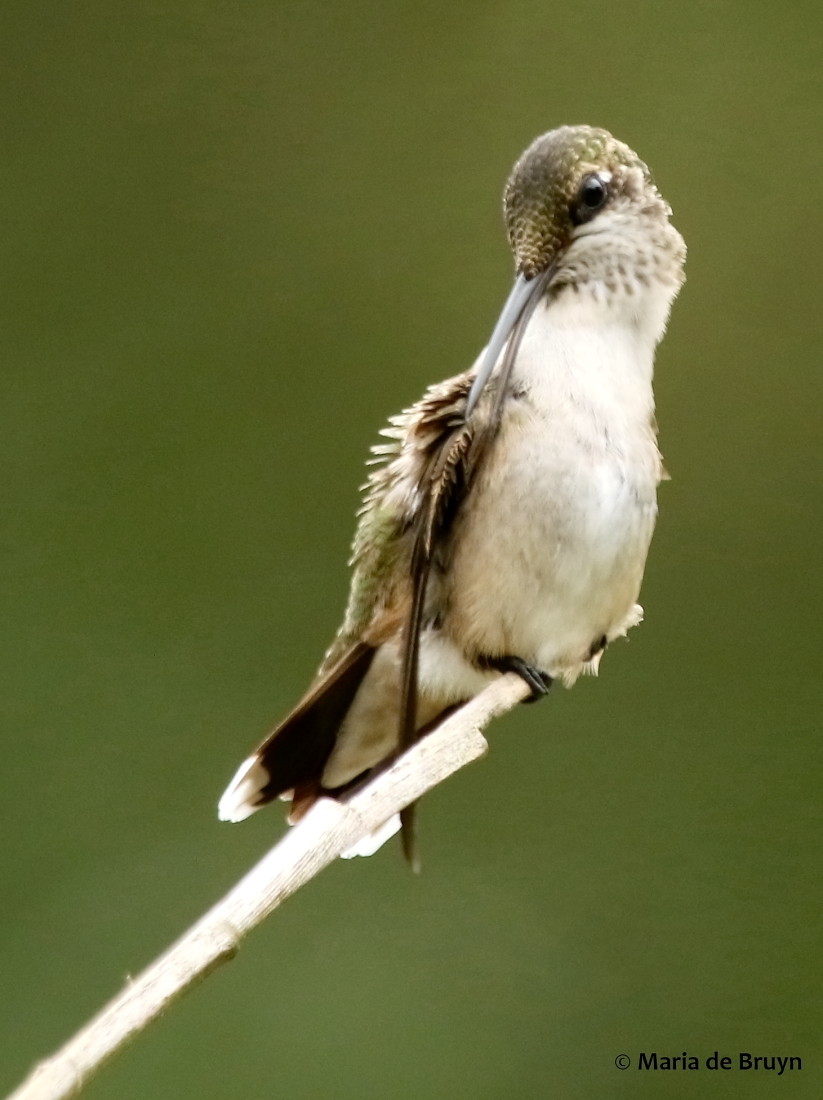
When you see them rubbing their long beaks on a twig, they are wiping off debris and pollen.

ruby-throated hummingbird DK7A7094© Maria de Bruyn res

The youngest birds have a groove in their beak but this smooths out by the winter.

ruby-throated hummingbird DK7A5627© Maria de Bruyn res ruby-throated hummingbird DK7A7105© Maria de Bruyn res

When the hummers look up in the sky, while sitting all puffed up on a branch, they may be taking a sun bath.

ruby-throated hummingbird DK7A7969© Maria de Bruyn res ruby-throated hummingbird DK7A7804© Maria de Bruyn res

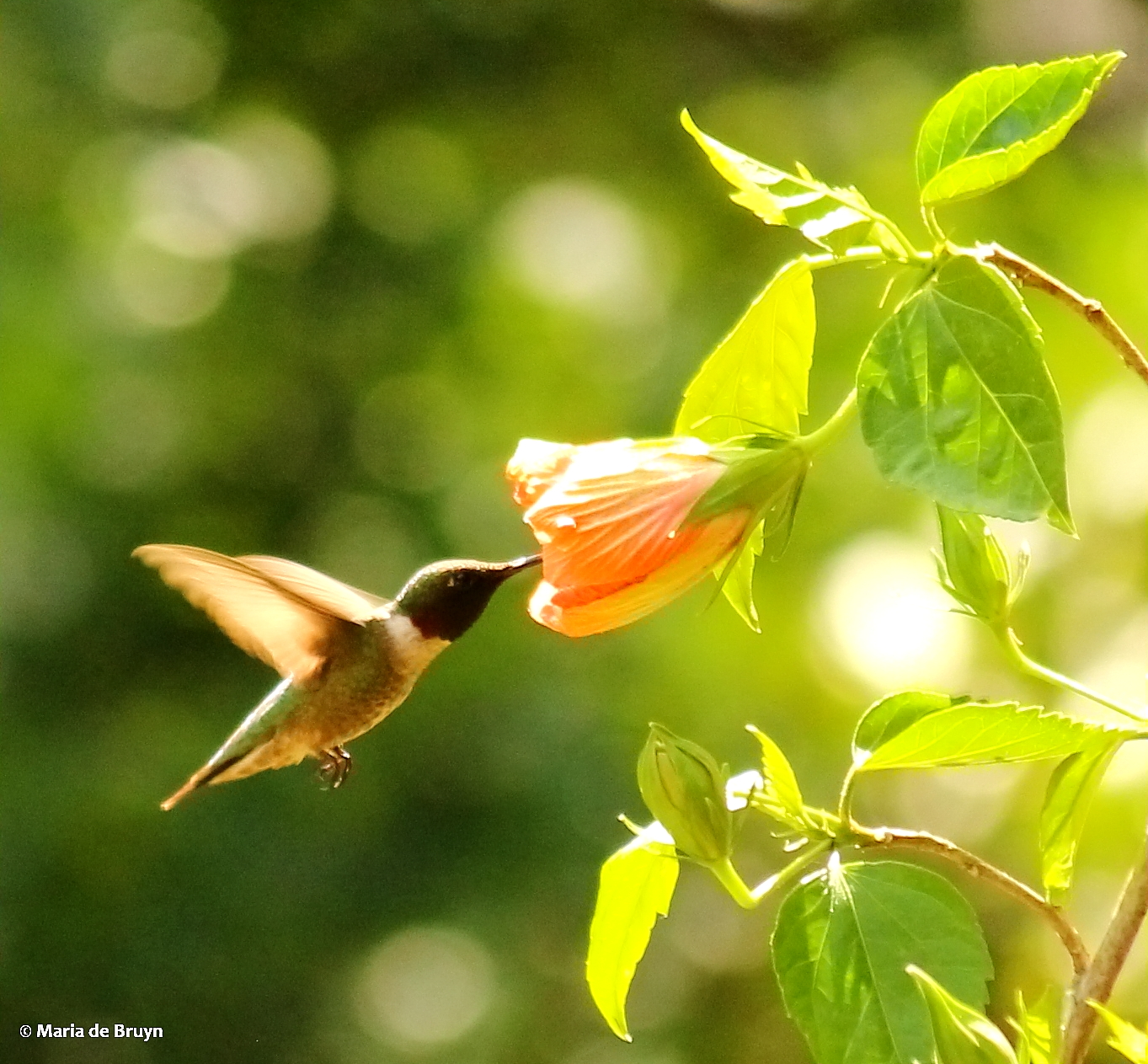
A tiny catnap – or hummer nap – can also be observed now and then. This is understandable since their little hearts beat at 1220 times per minute while they fly; this lessens to about 250 times per minute when they are at rest.
ruby-throated hummingbird DK7A0060© Maria de Bruyn resruby-throated hummingbird DK7A7319© Maria de Bruyn res

ruby-throated hummingbird DK7A0389© Maria de Bruyn res

ruby-throated hummingbird DK7A7355© Maria de Bruyn res


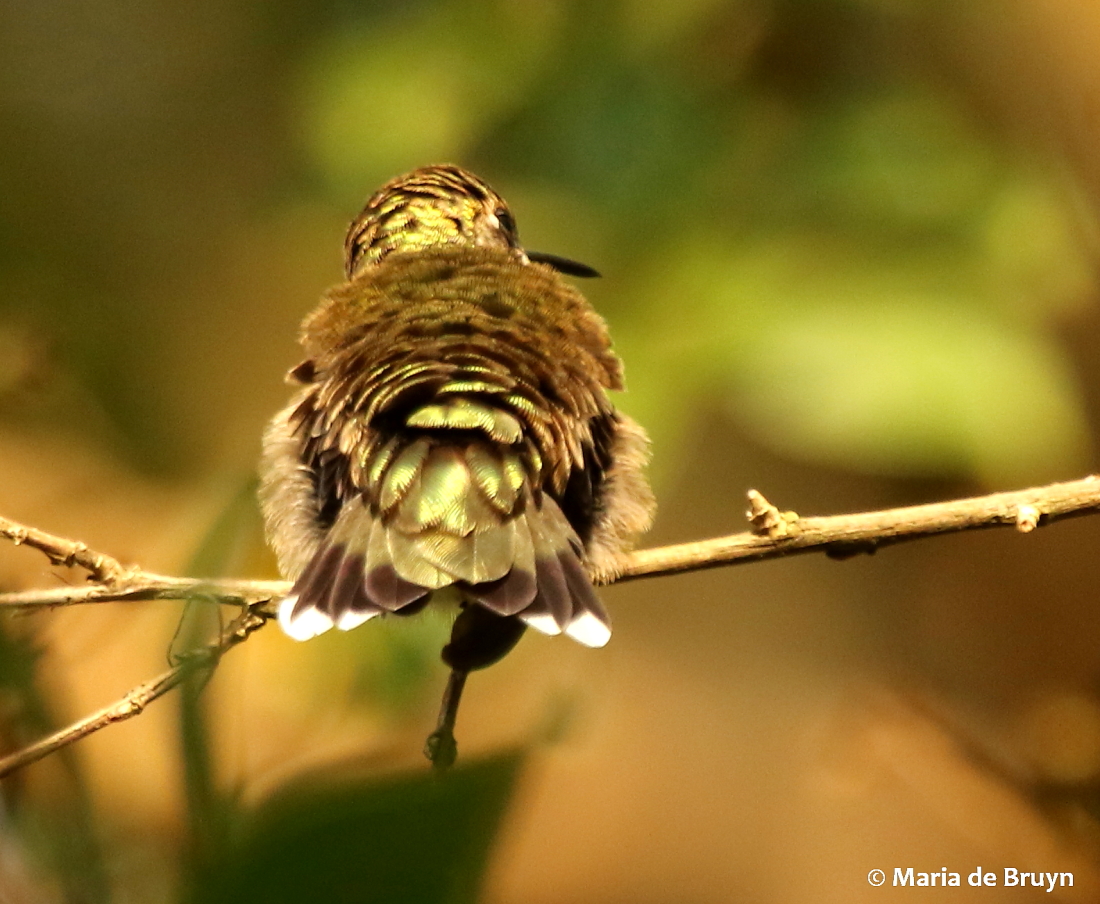
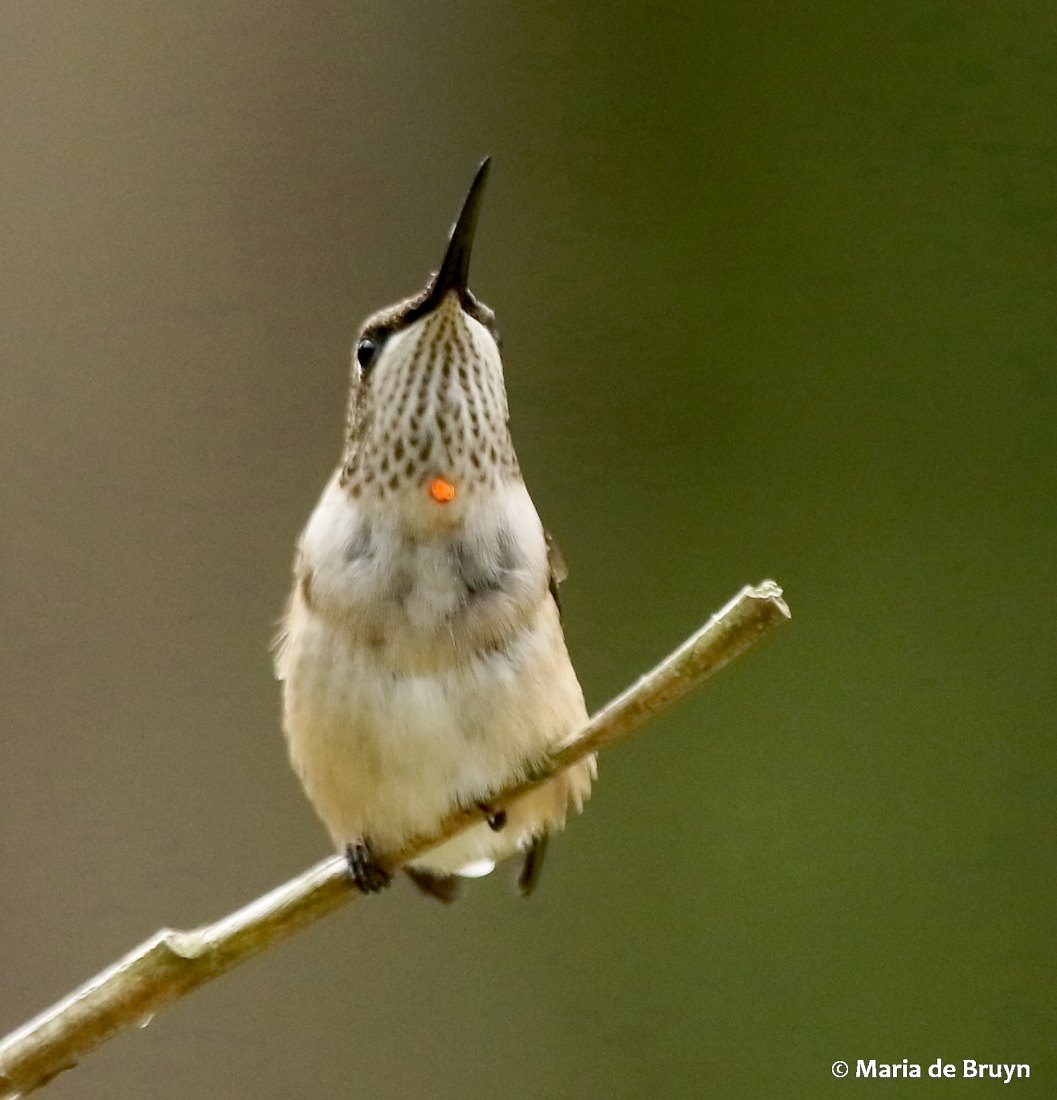
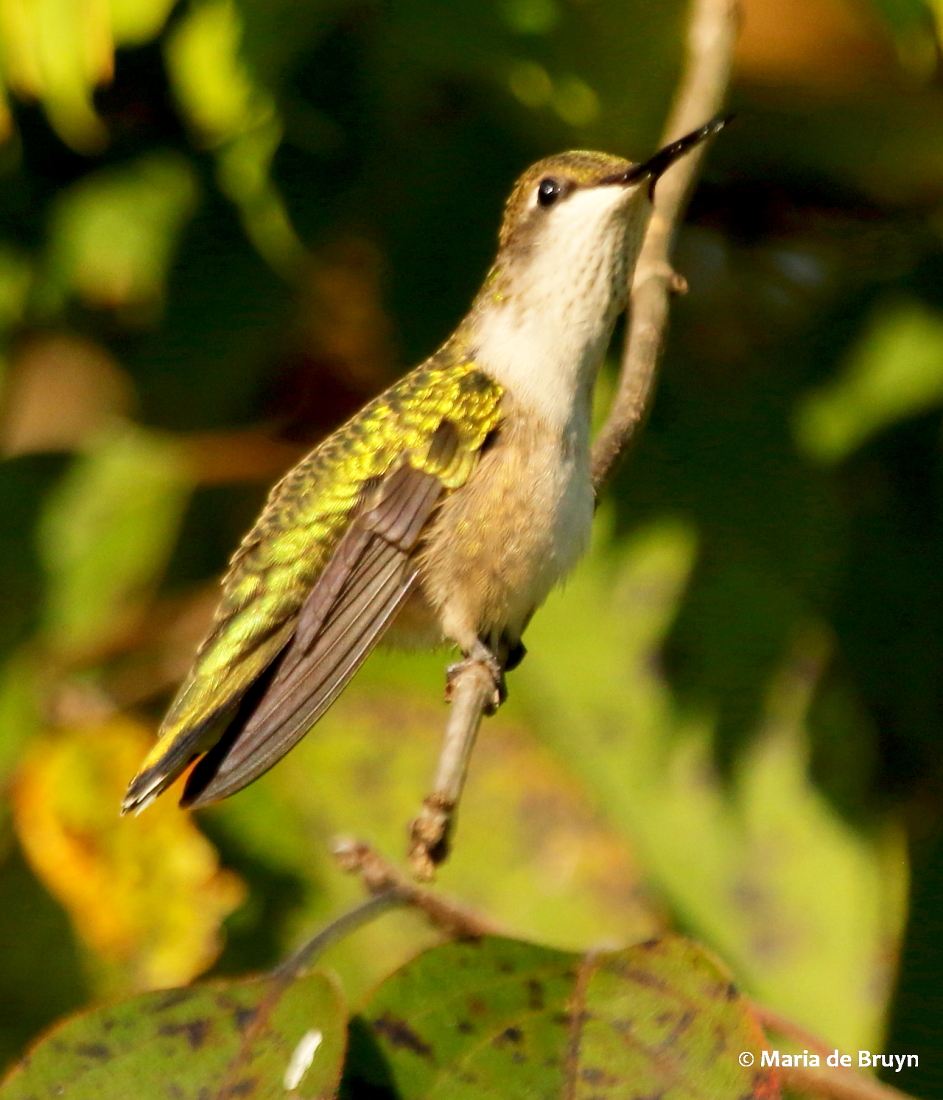
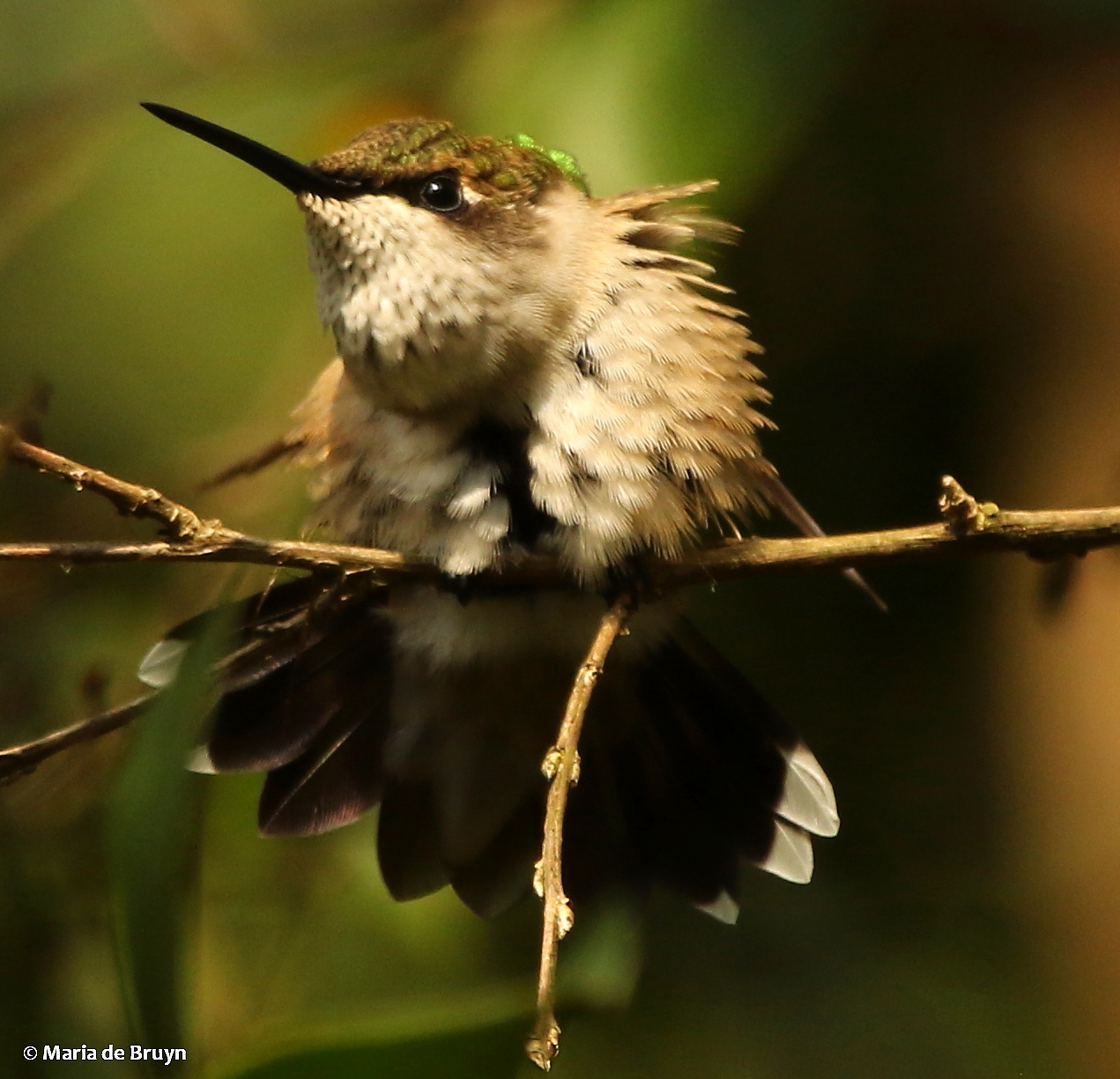
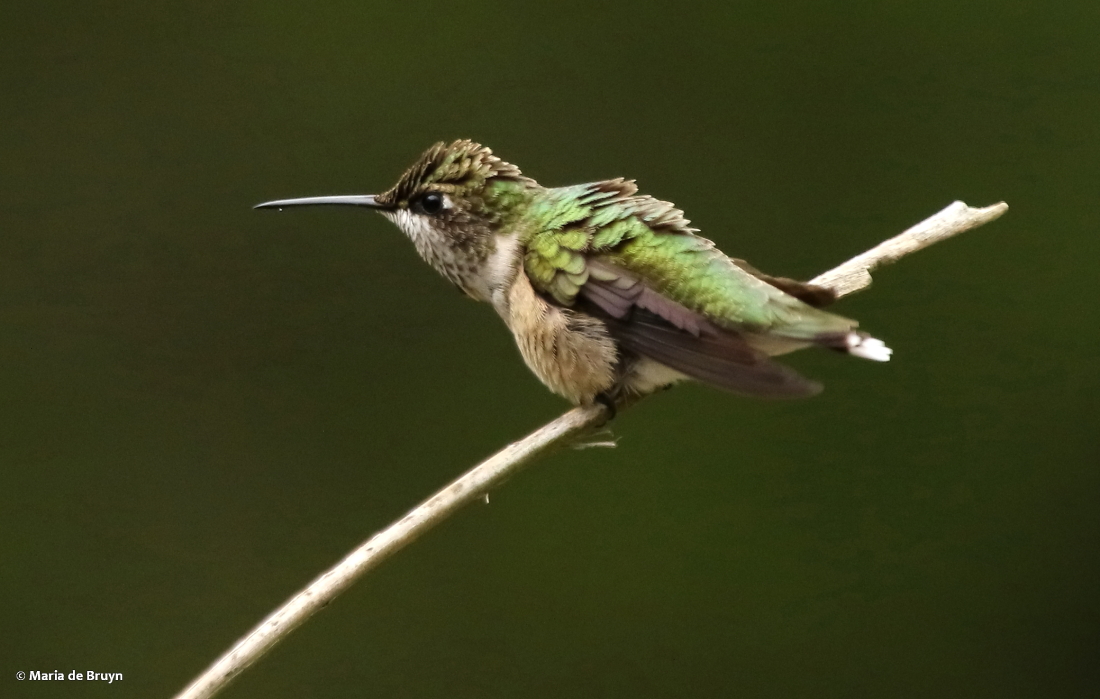
You can sometimes tell the sex of the hummingbird by its tail feathers. The tips are white and rounded in both females and first-year males, who do not yet have fully colored throats

.
ruby-throated hummingbird DK7A2031© Maria de Bruyn


In the adult males, the tail feathers have sharp black points.

The red gorget (throat) feathers that give this species its common name are seen in the adult males. Very occasionally, a female will have one or two black or one red feather there, but it is generally a young male that has one red throat feather.

ruby-throated hummingbird DK7A6577© Maria de Bruynruby-throated hummingbird DK7A0610© Maria de Bruyn res

ruby-throated hummingbird DK7A2084© Maria de Bruyn res


After nesting, females may look somewhat tattered and molt their feathers, like this one in July. The regular molting period is autumn through about March and that is when the juvenile males develop their their red throats.


Both female and male ruby-throated hummers have a small patch of white feathers behind their dark eyes.

ruby-throated hummingbird DK7A8123© Maria de Bruynruby-throated hummingbird DK7A2409© Maria de Bruyn res

One thing is for sure – all these little avians are beautiful to see and watch!

More information:

http://www.hummingbirdworld.com/h/behavior.htm

Hummers haranguing – feistiness in small packages!

ruby-throated hummingbird DK7A0498© Maria de Bruyn (2) resAt times, we may see on Facebook or the Internet a photo or video of hummingbird nectar feeders surrounded by at least 6 and sometimes dozens of these small birds, sharing space as they take turns at imbibing some of the sweet water. Here in my part of North Carolina, however, it seems that the ruby-throated hummingbirds (Archilochus colubris) are just NOT interested in having their territory host family members or neighbors. This species is known for being territorial and those in my vicinity live up to that reputation for sure.

Both at home and in nature reserves, I’ve watched these tiny birds stake out a claim to a feeder or some choice blooms. They drink a little and then will take up a post on a vantage point where they can keep an eye out for other birds. Occasionally, the waiting spot is out in the open and often it is in a nearby shrub or tree.

ruby-throated hummingbird DK7A2402© Maria de Bruyn res ruby-throated hummingbird DK7A2298© Maria de Bruyn

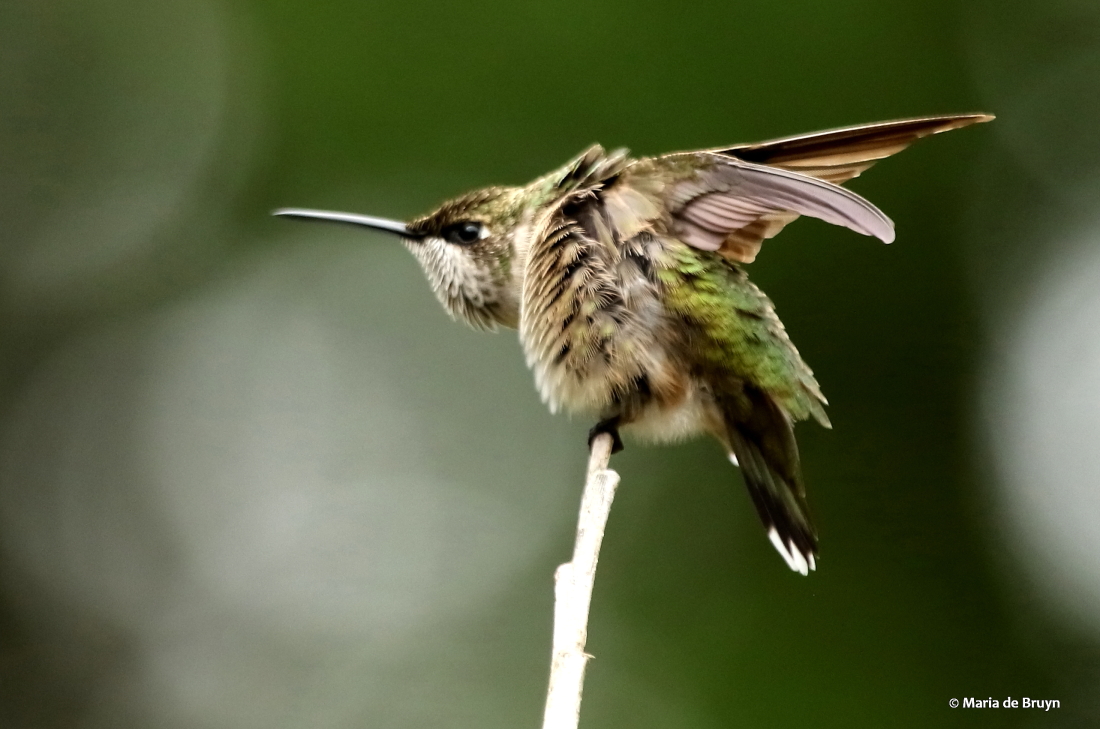
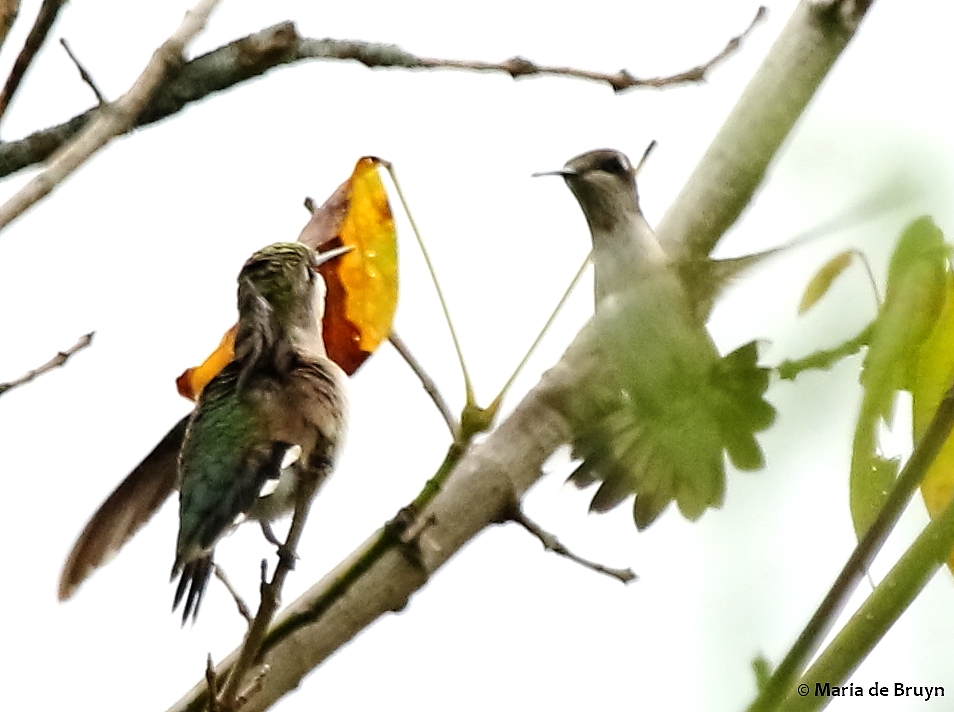
When they spot a rival approaching the food source, they may either immediately give chase or first engage in a threat display.

ruby-throated hummingbird DK7A2376© Maria de Bruyn resruby-throated hummingbird DK7A1568© Maria de Bruyn res

Their displays include both posturing and sound. To warn off other birds, they may chirp both quickly and loudly. Their threat postures aim to frighten away intruders by displaying size and strength and include pointing their long bills at the other bird(s), puffing up their throats, spreading and raising their wings, and flaring their tail feathers, .

ruby-throated hummingbird DK7A0712© Maria de Bruyn resruby-throated hummingbird DK7A0492© Maria de Bruyn res


ruby-throated hummingbird DK7A7307© Maria de Bruyn resruby-throated hummingbird DK7A0499© Maria de Bruyn res

ruby-throated hummingbird DK7A7353© Maria de Bruyn resruby-throated hummingbird DK7A7928© Maria de Bruyn

ruby-throated hummingbird DK7A2247© Maria de Bruyn resThey don’t really use their bills to battle as they need to protect this body part but they can fly into each other. On one occasion, in my front yard, I heard a loud thump when the two birds actually collided during a high-speed chase.

The drive to protect territory is not for lack of food. My yard has three nectar feeders out back and one in the front and three of them have at least four feeding holes. This year, a brightly colored male laid claim to the yard while the female was caring for her brood. When the female and young birds began coming to the feeders, “Red” was not pleased. Later, the young males also vied with one another.

ruby-throated hummingbird DK7A1562© Maria de Bruyn res

Chittering loudly, they sweep in to make the other birds take off; occasionally they do get a chance to have a short drink before another hummer shows up. At my house, the birds can feed because they have to patrol both the front and back yards and can’t be in two places at once.

ruby-throated hummingbird IMG_0379© Maria de Bruynruby-throated hummingbird DK7A0866© Maria de Bruyn res

I witnessed a similar scenario at the Mason Farm Biological Reserve. There was a spot with plenty of blooming trumpet vines (Campsis radicans) and morning glories (Ipomoea pandurata), which were attracting a variety of pollinators. Three hummingbirds were also visiting and, again, chasing one another from the site as soon as they caught sight of their rivals.

ruby-throated hummingbird DK7A2117© Maria de Bruyn

ruby-throated hummingbird DK7A2116© Maria de Bruyn

In an area near the Haw River where many wildflowers bloom, a similar scenario took place.

ruby-throated hummingbird DK7A9401© Maria de Bruynruby-throated hummingbird DK7A9403© Maria de Bruyn

This is the time of year when the ruby-throated hummingbirds undertake their migration to Central America, a distance of at least 1000 miles. They need to store energy for this and may double their body mass while feeding during the preparatory phase. However, it seems to me that chasing away other birds from their preferred feeding sites must take an enormous amount of energy and it seems to be an endless activity. In my yard, it goes on all day long!

ruby-throated hummingbird DK7A1828© Maria de Bruyn resThese birds’ flight muscles take up 25% of their weight; when they rest, their hearts beat at a rate of 250 beats per minute but during flight, their hearts speed up to 1220, so the zipping back and forth and up and down in hot pursuits must use lots of calories and energy. They also may hover mid-air for a while rather than sitting on an outpost twig; the other day, one of Red’s rivals spent a quarter minute suspended about 18 inches from my face, looking me over until Red dive-bombed him.

ruby-throated hummingbird DK7A2213© Maria de Bruyn resThis summer I’ve been lucky to see the hummers in several places, including Sandy Creek Park, near the Haw River and a farm cultivated by refugees from Myanmar. In all cases, the birds appeared unwilling to share their dining areas. Once in a while, though, one would have the space to him- or herself for a while and I could watch them feed, afterwards flicking out their long tongues.


ruby-throated hummingbird DK7A7940© Maria de Bruyn resruby-throated hummingbird DK7A0181© Maria de Bruyn res

When they return next year, I hope to learn more about these wonderful little birds through daily observation in my garden habitat.

ruby-throated hummingbird DK7A1673© Maria de Bruyn (2) res

More interesting information on ruby-throated hummingbirds can be found here:

http://www.rubythroat.org/rthufactsmain.html

http://www.allaboutbirds.org/guide/ruby-throated_hummingbird/lifehistory

http://www.worldofhummingbirds.com/behavior.php

Growing up to be a redhead

Red-headed woodpecker IMG_9062© Maria de Bruyn (2)In the past month or so, I’ve been seeing red-headed woodpeckers (Melanerpes erythrocephalus) almost everywhere I go — except my own neighborhood! Jordan Lake’s woods in two different areas and various sections of the Mason Farm Biological Reserve have all provided me with multiple spottings of, and concerts by, these lovely birds.

I’m not very good at recognizing birds by their calls. Having listened to loud rock music as a teenager left me with some hearing problems. But the red-heads have a loud, unique, warbling territorial call that they emit frequently, regardless of whether another of their species is close by or not. I’ve become quite good at recognizing that call!

The juveniles begin life looking quite different from their parents. They have mostly gray-brown heads and backs and the part of their feathers that will later be entirely white are marked by black splotches and dots.

Red-headed woodpecker IMG_0654© Maria de BruynRed-headed woodpecker IMG_0700© Maria de Bruyn


Red-headed woodpecker IMG_0742© Maria de Bruyn res


Like their parents, they show a variety of prey-hunting and food-gathering behaviors. You will hear them pecking at trees in their quest for insects but they also look for insects on the ground and can catch them during flight in mid-air.


Red-headed woodpecker IMG_0612© Maria de BruynThey also eat fruit, seeds and nuts like acorns and beechnuts, with plant materials making up about two-thirds of their diet. They will store food in caches so that they can find it again later during times of more nutritional scarcity. And in places far apart, they appear to be good at finding the same orangey cubes that are not nuts but some other, obviously delicious, substance.


Red-headed woodpecker IMG_8082© Maria de BruynRed-headed woodpecker IMG_8096© Maria de BruynRed-headed woodpecker IMG_8788© Maria de Bruyn resred-headed woodpecker IMG_1880© Maria de Bruyn


Red-headed woodpecker IMG_9470© Maria de BruynTheir food storage habits help birders find them more easily. Both at Jordan Lake and Mason Farm, I’ve discovered a couple trees where certain birds have their food stash and if I wait long enough, a red-head is more than likely going to appear.


Unfortunately, due to habitat loss and changes to its usual food supply, this species has declined considerably in numbers. That is why it is so nice to see the juveniles among these various groups.

Red-headed woodpecker IMG_0574© Maria de BruynRed-headed woodpecker IMG_0576© Maria de Bruyn

Red-headed woodpecker IMG_8625© Maria de Bruyn


As they age, the brown feathers begin giving way to red ones, first around the nape and back of the neck. The black markings on the tail feathers begin to fade as well as they grow older.


Red-headed woodpecker IMG_9202© Maria de Bruyn resRed-headed woodpecker IMG_8734© Maria de Bruyn res

When they reach maturity, the birds have brilliant red heads, glossy black and pure white flight and tail feathers.

Red-headed woodpecker IMG_8345© Maria de Bruyn resRed-headed woodpecker IMG_9104© Maria de Bruyn

Red-headed woodpecker IMG_1587© Maria de Bruyn resRed-headed woodpecker IMG_8332© Maria de Bruyn res

As these birds need dead trees for their nesting and storage cavities, it’s great that our area has some preserved forests where they currently appear to be thriving. And I can continue going out in the hopes of one descending from treetops to a lower and nearer perch so that I can finally get the stunning shots I’ve been wishing for!
Red-headed woodpecker IMG_0605© Maria de BruynRed-headed woodpecker IMG_0707© Maria de Bruyn


Danger on the beach!

great black-backed gull IMG_4207© Maria de Bruyn resDuring a recent visit to Topsail Island, one of my favorite get-away sites, the various gulls, terns and other birds were very busy: resting, eating and investigating beach debris such as twigs, like this great black-backed gull (Larus marinus).

When I looked through my zoom lens and saw two juveniles of the species picking up and dropping items into the sand, I decided to photograph them. Given some deterioration in my eyesight, even through the zoom lens, I thought one of them was examining a large black twig so I shot away. Imagine my surprise when I downloaded the photos to my computer and enlarged them to see what the gull was actually carrying around!

great black-backed gull IMG_4297© Maria de Bruyn

Most of the time, s/he appeared to be grasping the knife by the blade rather than the handle end, which totally amazed me.

great black-backed gull IMG_4277© Maria de Bruyn res bgreat black-backed gull IMG_4306© Maria de Bruyn

The bird would drop the paring knife and then pick it up again.

great black-backed gull IMG_4292© Maria de Bruyn resgreat black-backed gull IMG_4280© Maria de Bruyn res

One time it was by the handle.

great black-backed gull IMG_4284© Maria de Bruyn resgreat black=backed gull IMG_4288© Maria de Bruyn res

I wish I had realized what the gull was doing when I was there so that I could have picked up the utensil but at the time, I was convinced it was a twig and after shooting the series, I turned to other birds.

great black-backed gull IMG_4297© Maria de Bruyn res b

I posted the photo on a Facebook birding group page with the remark that: “Beach-goers and fishermen need to pay a lot more attention to what they leave behind onshore!” The responses that came were interesting:

– wow…scary the things people leave behind
– I hope he dropped it when he realized how sharp it was!
– Smelled like fish most likely….
– Sometimes they ‘steal’ from us while our backs are turned on a fishing pier!
– Maybe he’s in a gang?
– Considering it’s Topsail, more likely one of Blackbeard’s crew. Nice image of the gull.

And then one person apparently doubted that the photo I had posted was real: “The size of the gull and the size of the knife looks fishy. The knife is only a bit longer than the beak. That must be one big gull. It’s all in the perspective, I guess.” Since I don’t own Photoshop or some other program with which I can combine photos or insert things into photos, I can assure you that the series shows what happened.

While the respondent who mentioned birds stealing items from people is stating a fact, this site was at the end of the island very far from any piers. So I can only assume that some careless human left the knife behind on the beach (like the cell phone cover and plastic that I collected for the garbage that day).

It is well known that the trash on beaches often ends up in the sea, harming animals that ingest it and contributing to large floating garbage piles.great black-backed gull IMG_4311© Maria de Bruyn resOn 20 September 2014, the Ocean Conservancy is sponsoring the International Coastal Cleanup — the world’s largest volunteer effort to clean up waterways and the ocean. I don’t live near an ocean but will pick up trash near a large lake in my area. And I urge you all to participate in some way if you can! It may be a drop in the ocean/waterways bucket but the drops add up!