Marvelous mammals, part 1 – at the homestead

Judging from how many blogs I’ve written about birds, you might assume that I’m mainly a devotee of avian wildlife but that is certainly not the case. Without a doubt, I do love birds, but I really enjoy observing, learning about and photographing all kinds of other wildlife.  Fortunately, my own yard provides me with some opportunities for that as I have a number of regular mammalian visitors. Sometimes, their visits entail a bit of drama but often their presence is quite peaceful.

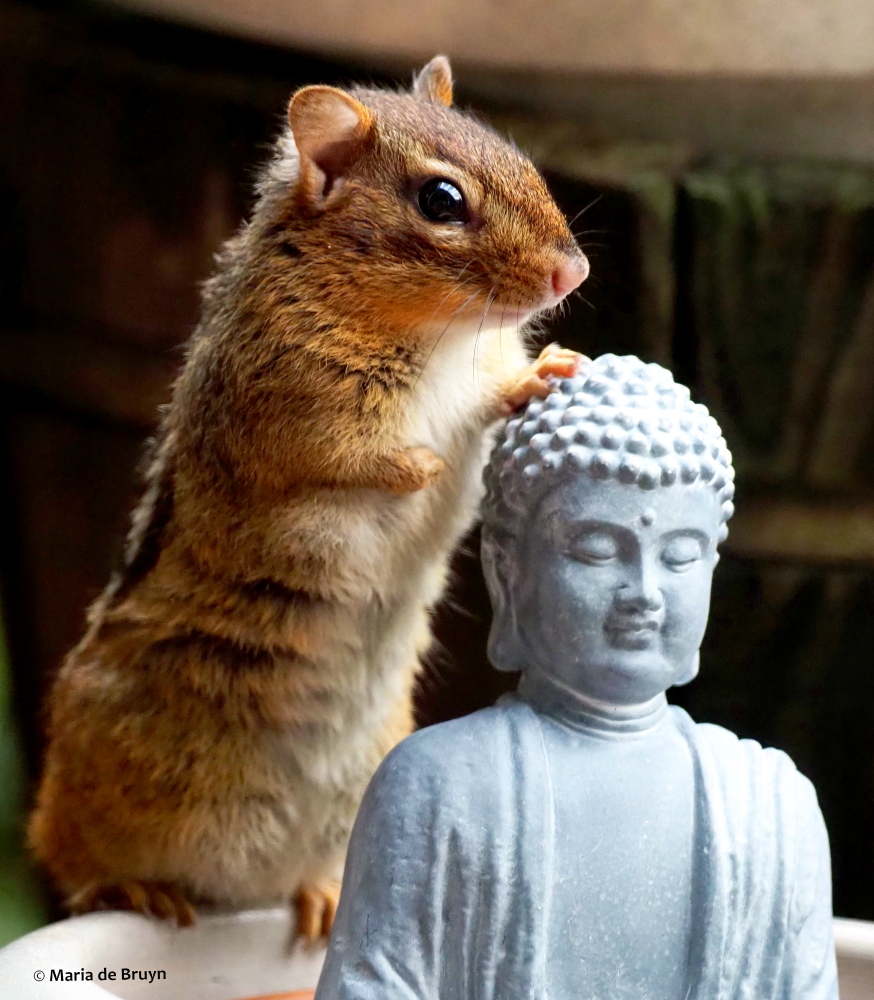
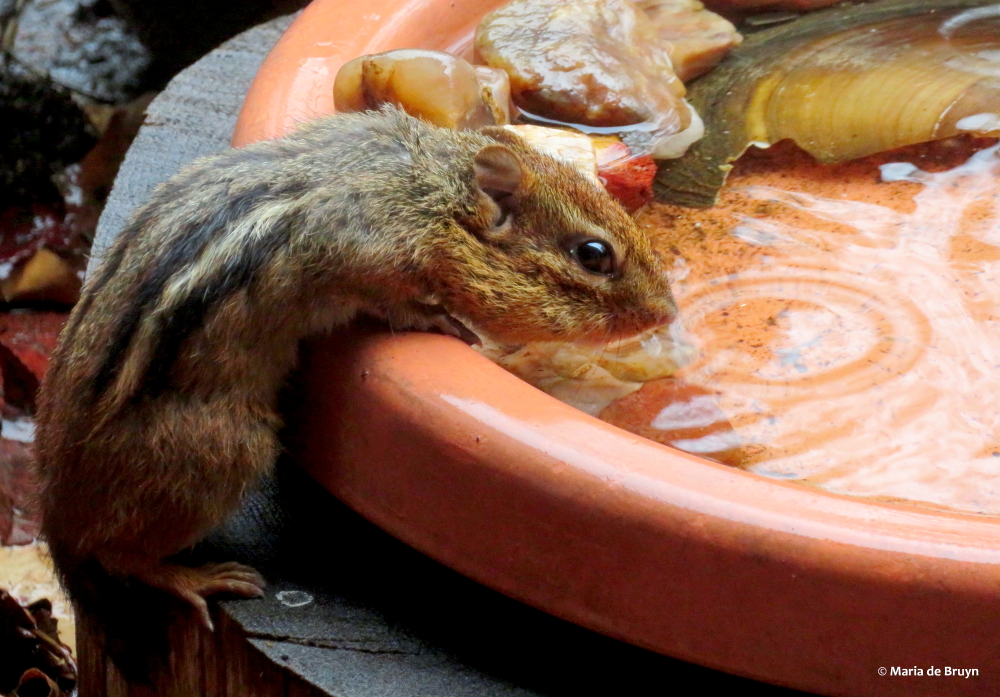
The Eastern chipmunks (Tamias striatus) like to visit the front porch to see if there’s something of interest among the potted plants or to take a drink from a water source.
These cute little rodents are more than willing to mingle with the ground-feeding birds looking for seed under the feeders. They scurry away as fast as their little legs will carry them when birds of prey appear – and they can certainly run quickly!
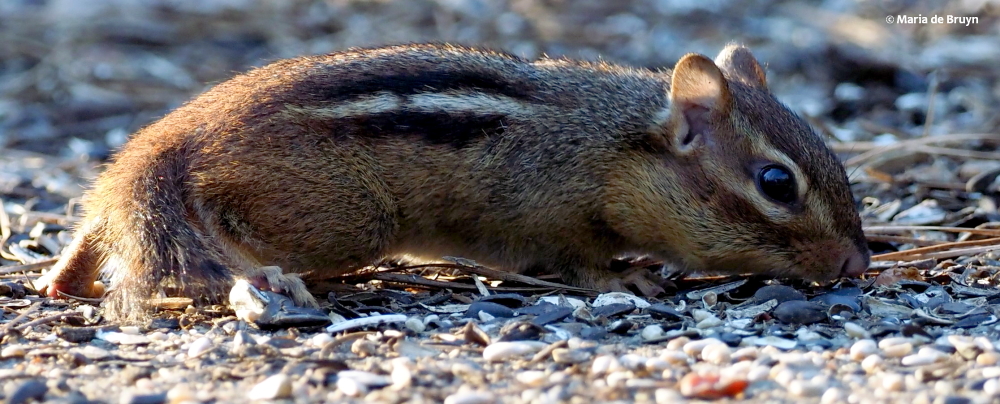
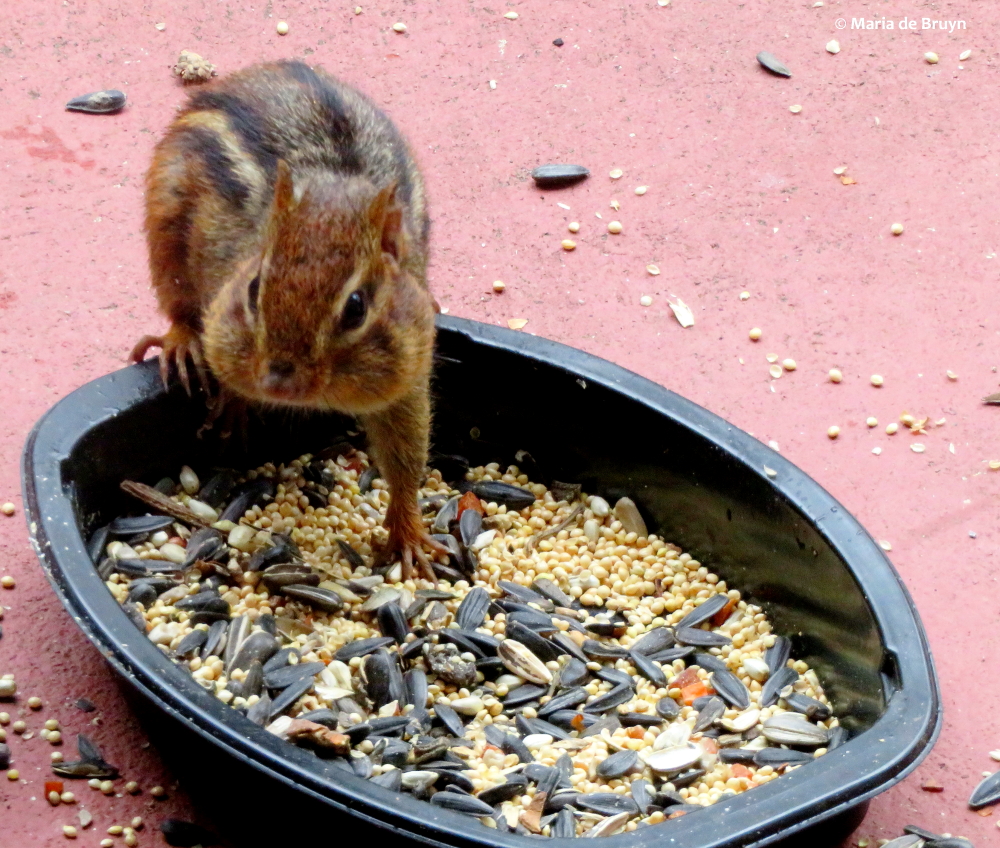
 

When it’s very cold, I sometimes offer them a small tray of seed just for themselves on the porch. They scarf down the goodies, filling their cheek pouches to what seems like almost bursting before dashing away to store the goodies for later consumption.
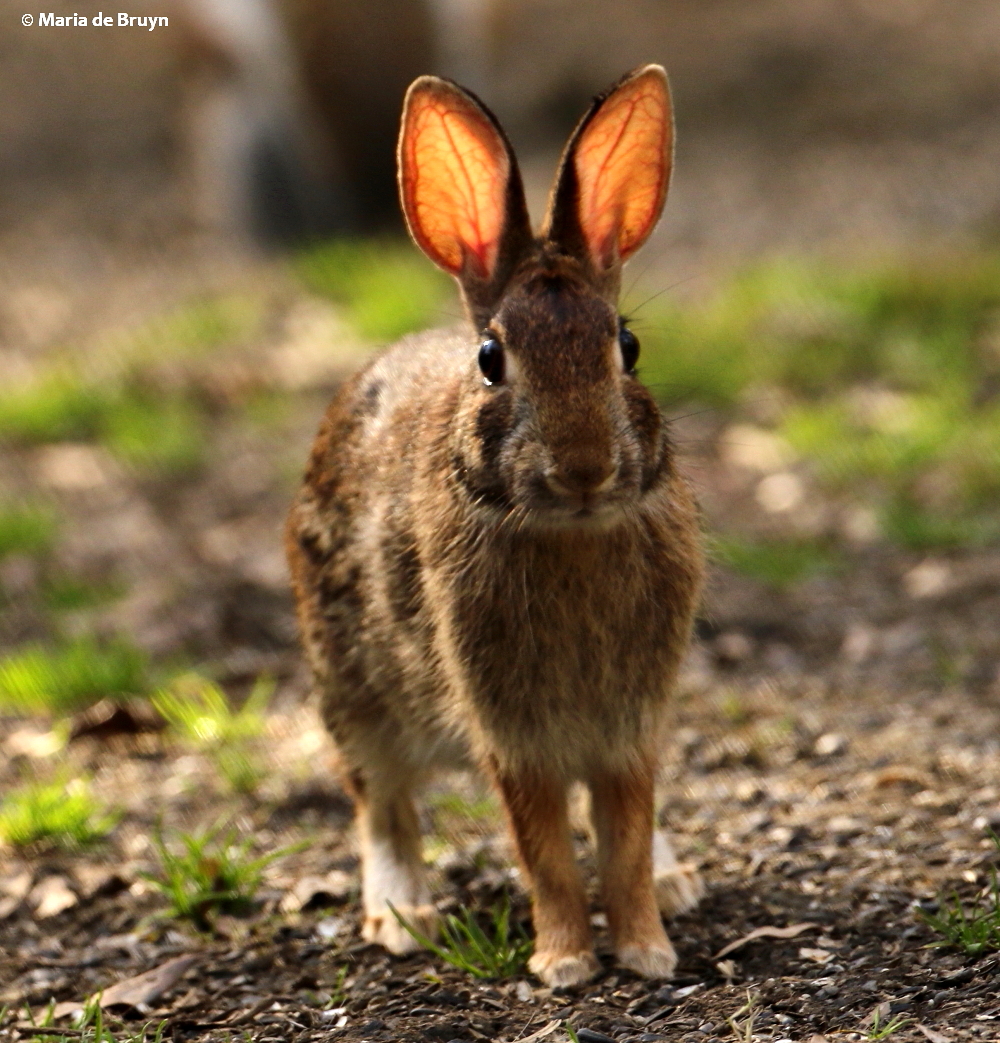
 

A pair of Eastern cottontail rabbits (Sylvilagus floridanus) lives in my yard and both mom and dad are very good about taking care of their young. I don’t see them much in the winter but expect they will be out and about again in the spring, doing their “leapfrogging” courtship ritual.

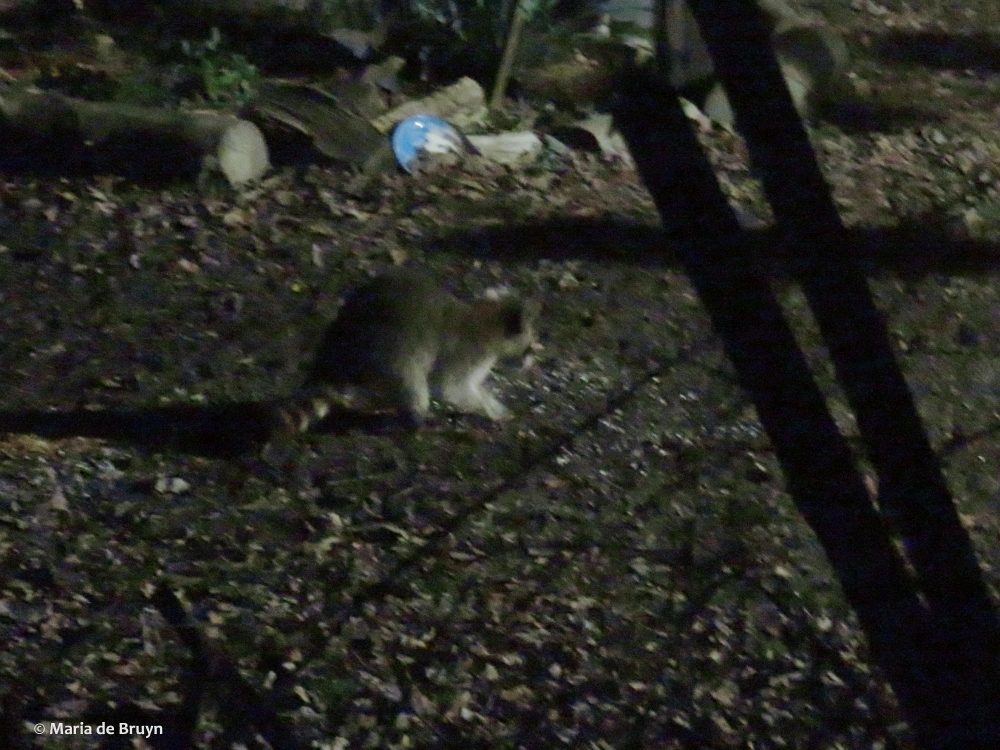
When it’s breeding season, I may see raccoons (Procyon lotor) in the daytime but lately they have been coming to the yard at night to pick up whatever seed is left on the ground from the daytime visitors. My wildlife cam caught a not-so-clear photo of this happening.
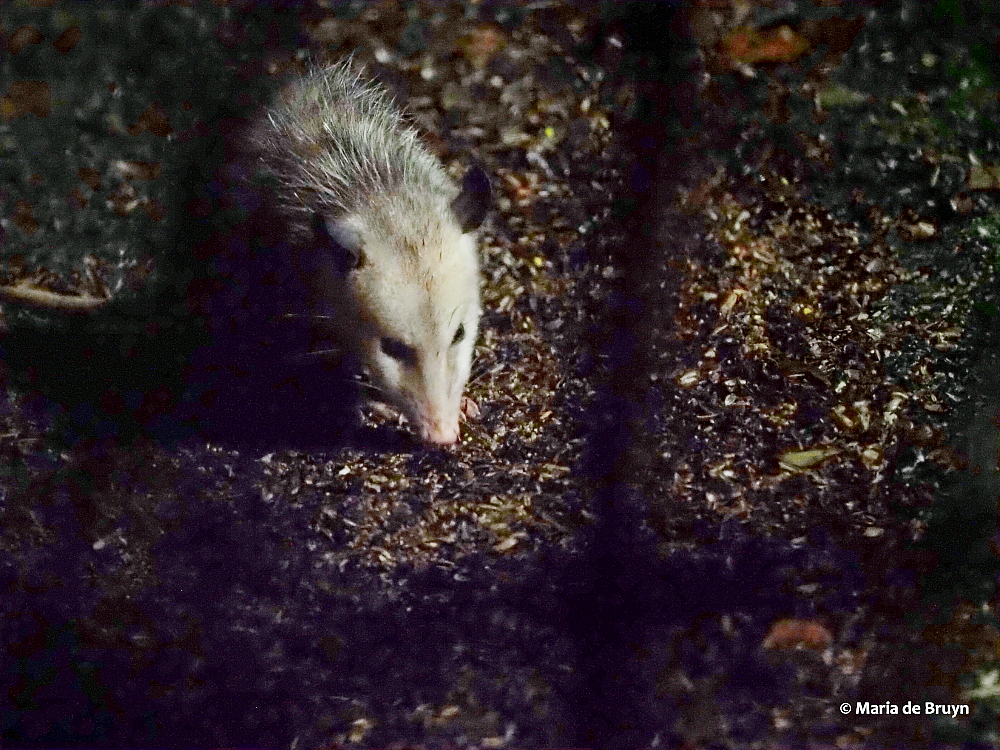
Another visitor who mostly comes at night is the opossum (Didelphis virginiana), one of my favorites given their propensity to eat lots and lots of ticks! Many people seem to think that they are ugly or scary, but I actually think they are kind of cute.

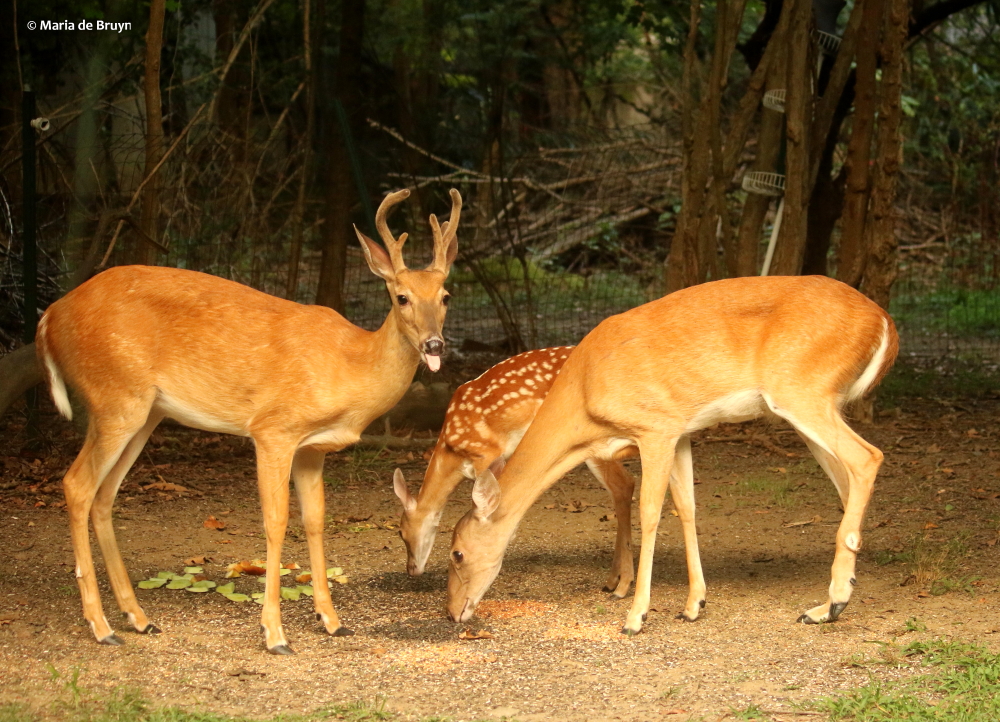
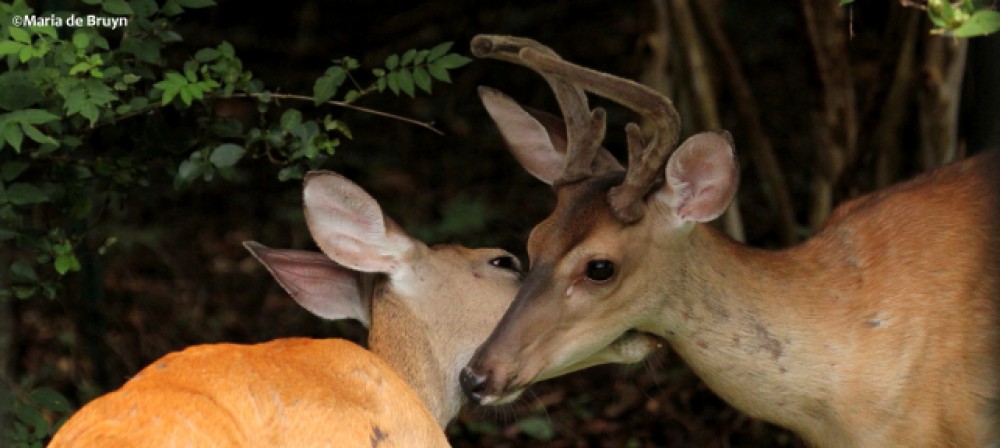
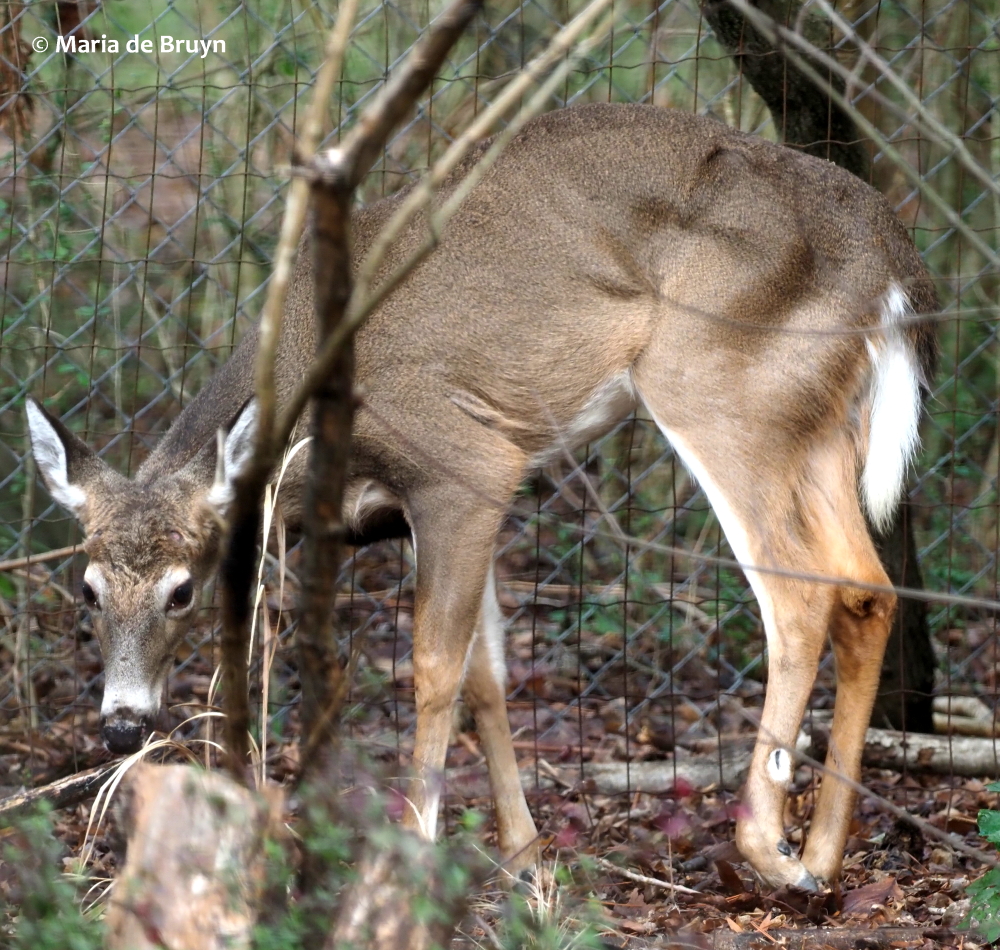
The largest mammalian visitors I see daily are the white-tailed deer (Odocoileus virginianus). I’ve loved them ever since I got to know a particular individual, whom I named Schatje (Dutch for “dear”). She approached me when she was a yearling and made friends with me, sitting next to me in the grass and thereafter bringing her newborn fawns to the yard right after their births. She unfortunately died in a car accident after some years, but through her I learned to really appreciate these mammals.
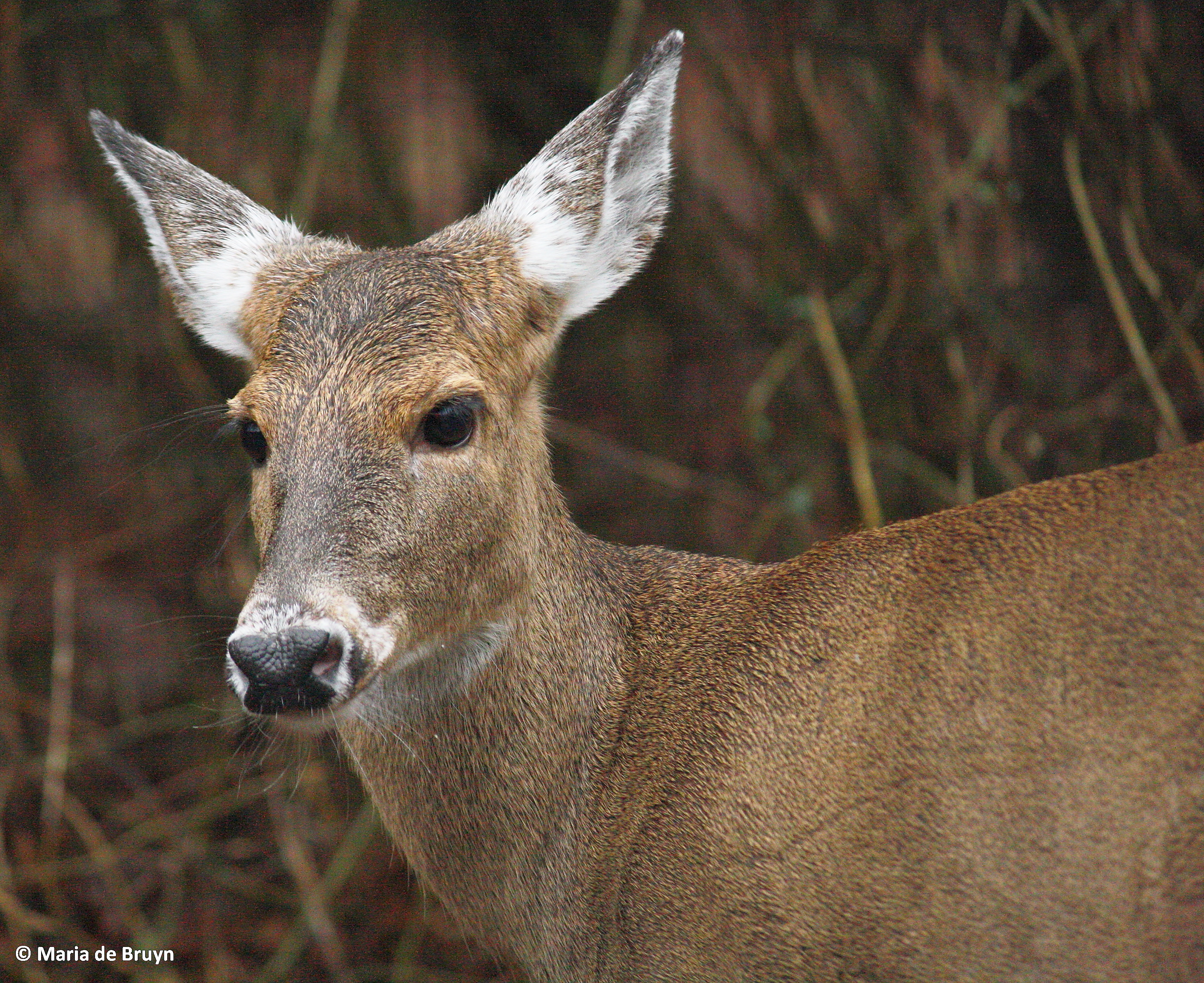
Some people dislike deer intensely because they eat their flowers and prized shrubs. But I’ve found that consistent application of a deer repellent on my plants keeps them off the vegetation that I want to preserve. Also, I let them eat bird seed and sometimes apple slices that I put out for the ground-feeding birds like white-throated sparrows, Eastern towhees, dark-sided juncos, American crows (the apple lovers) and brown thrashers.
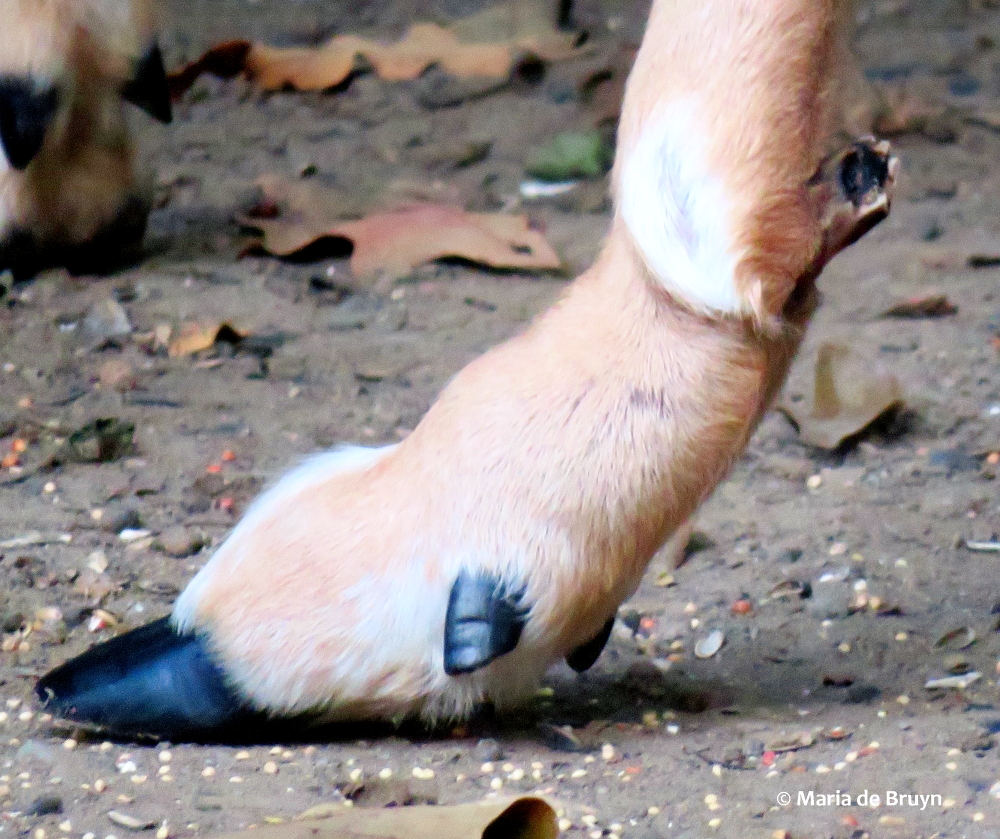
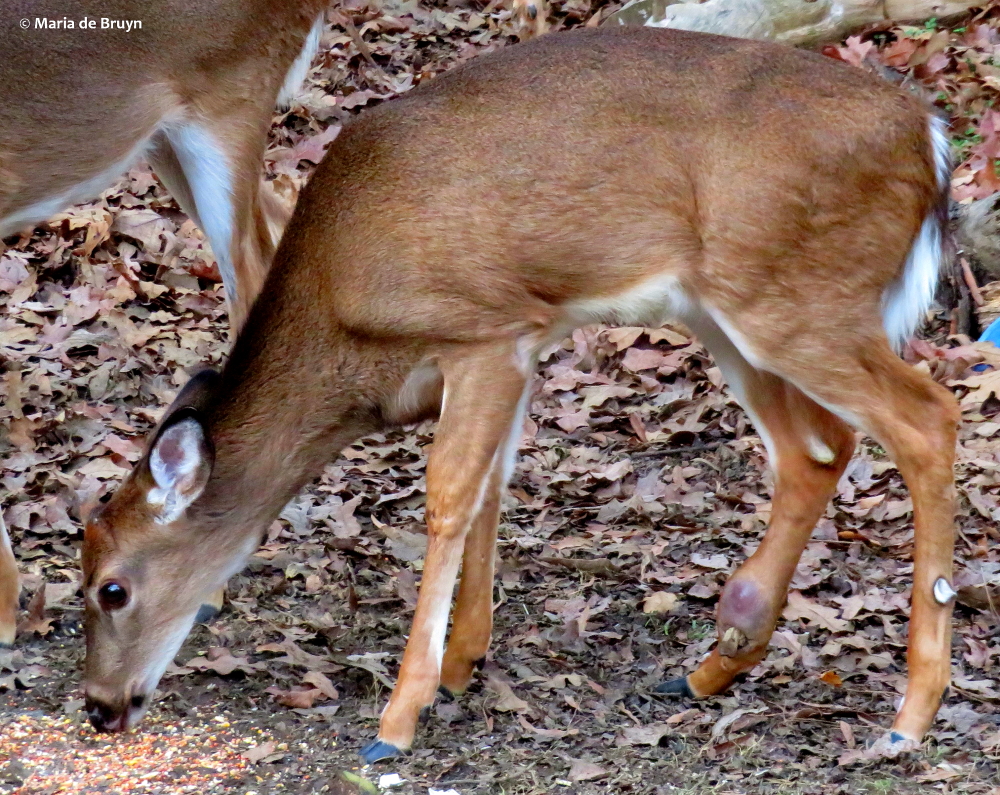
So I’ve been watching the deer for many years now and a very odd occurrence happened over the past half year. At least four deer have appeared with broken hind legs or feet. When “Mama”, a doe with twins, showed up with a terrible break on her leg, I wondered if it happened when she jumped a fence. The bone was jutting out and it was obviously very painful. She hobbled on three legs.
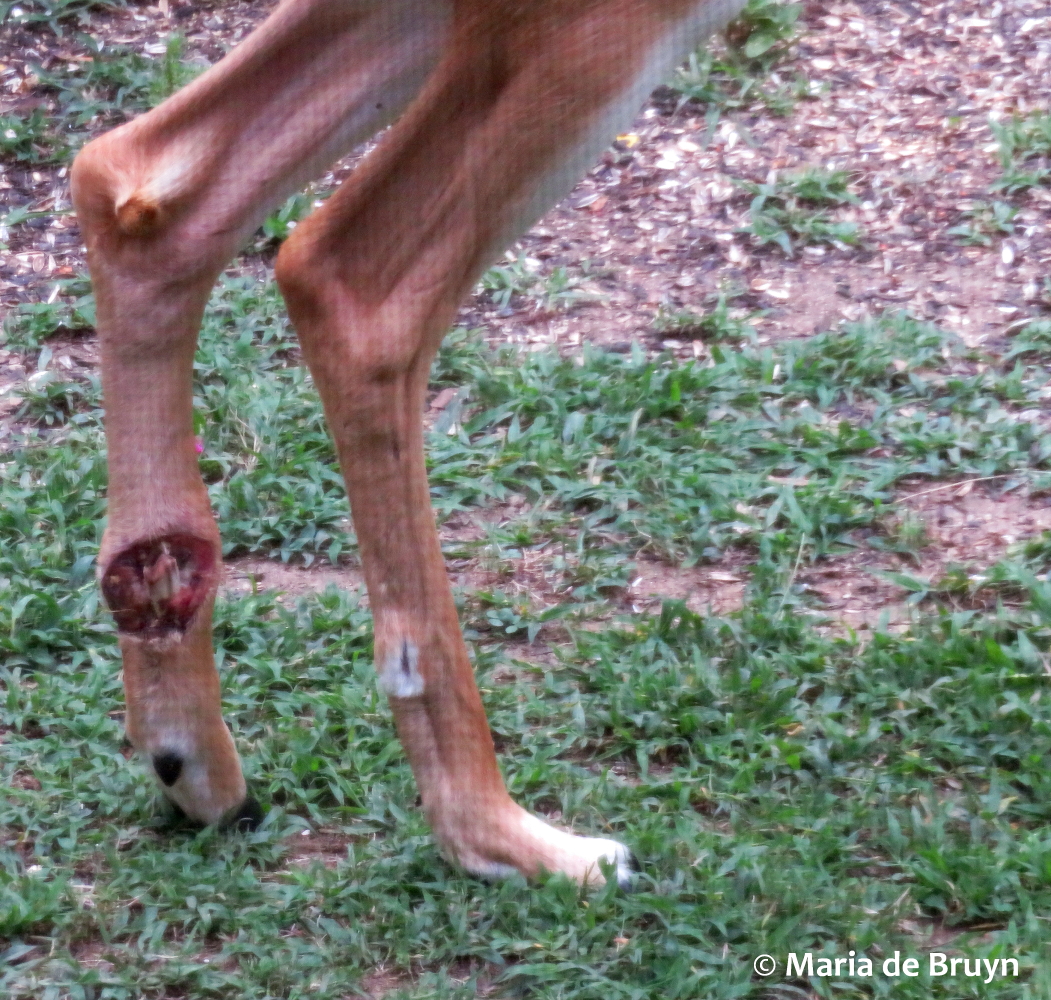
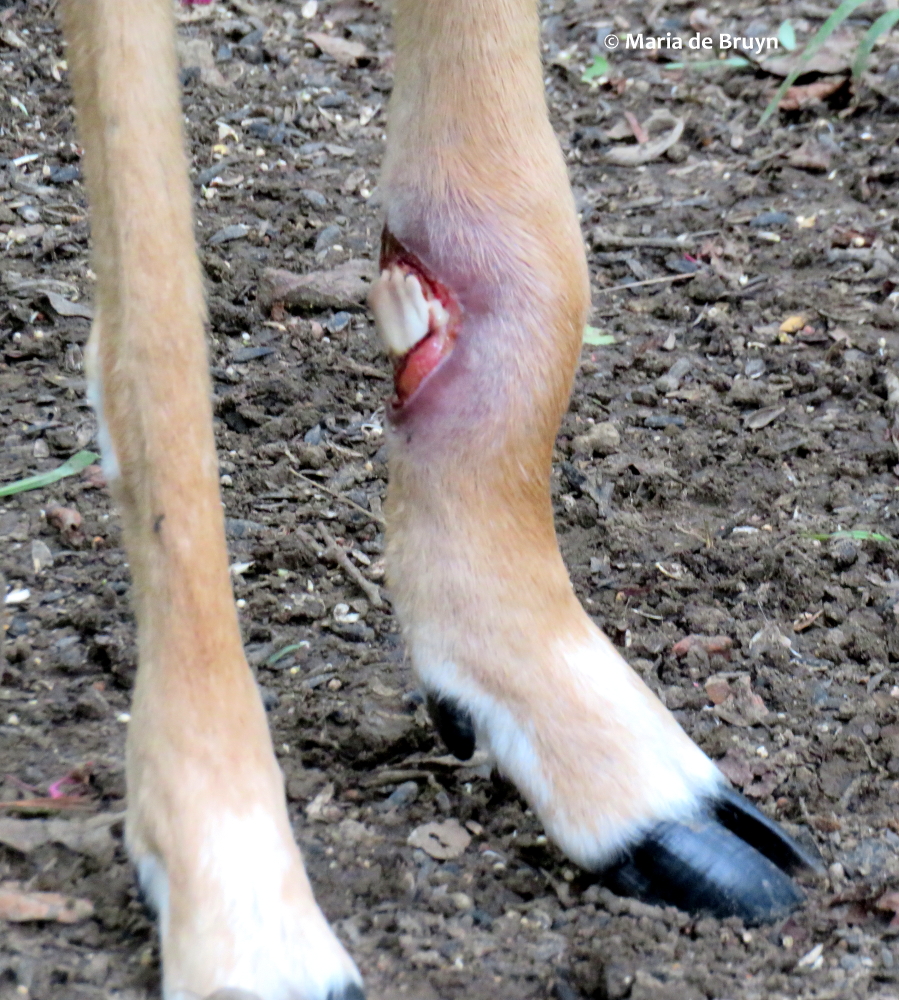
What was amazing was the fact that her two-year-old son began caring for her. He already had a nice set of antlers and by rights should have left to join the stag group in the neighborhood, but he stayed with her and tended the wound, licking it, and also grooming her! I had not heard of a stag doing that before, so I named him Sweetie. He stayed with her for months!
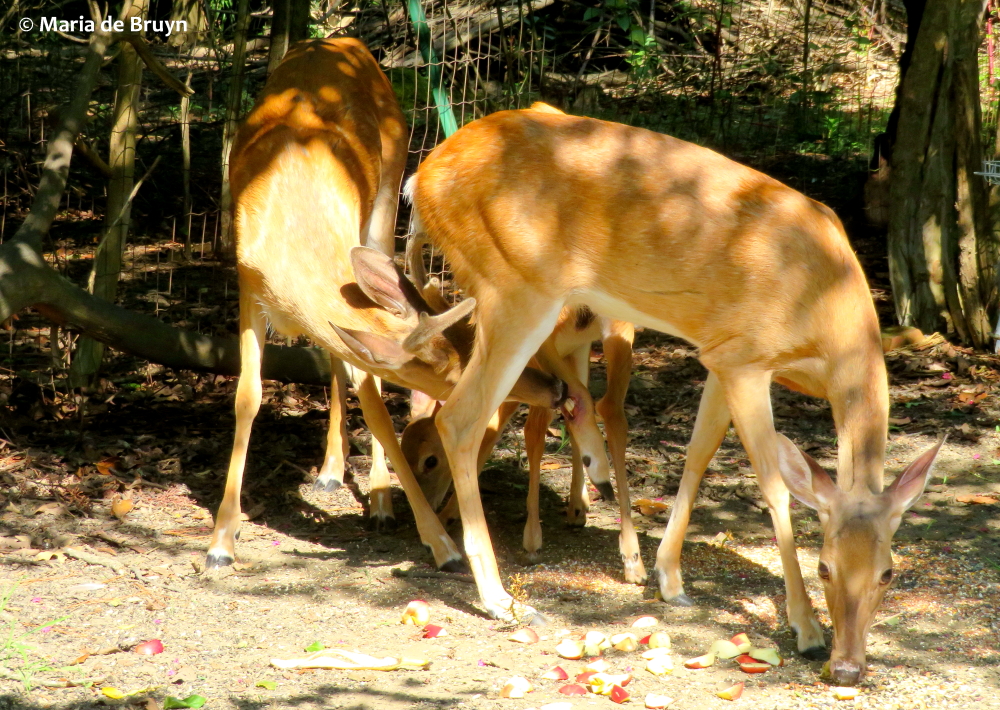
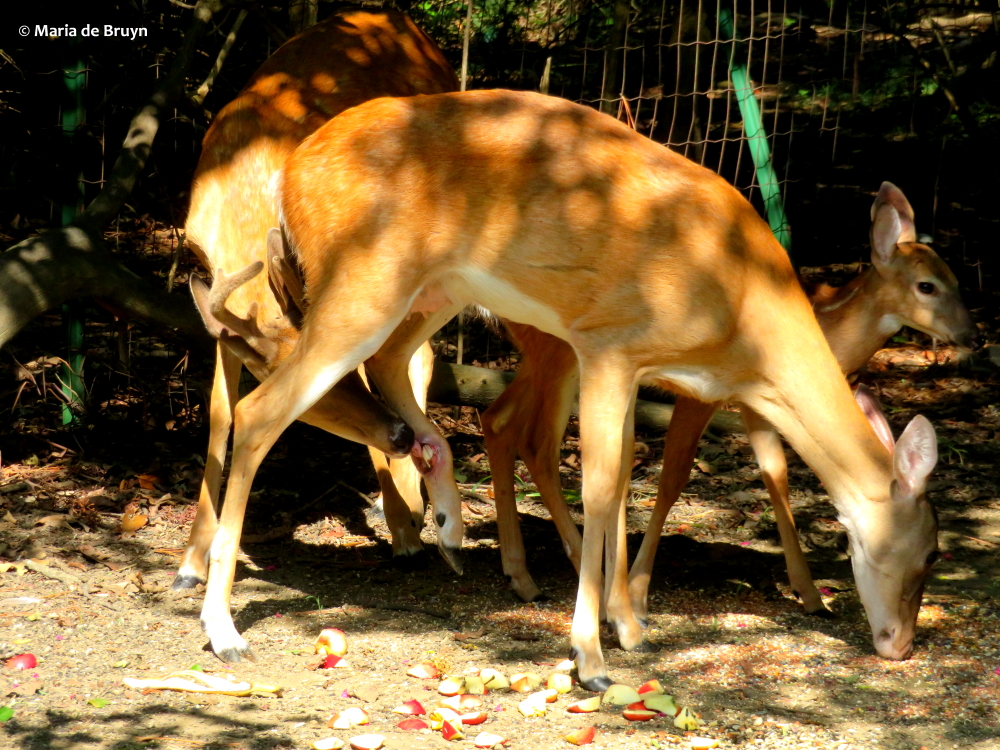
Mama kept caring for her twins (a male and female). (The past couple years, she had only had male offspring so that cut down on the number of deer we might otherwise have had). And she tended her wound on her own as well.
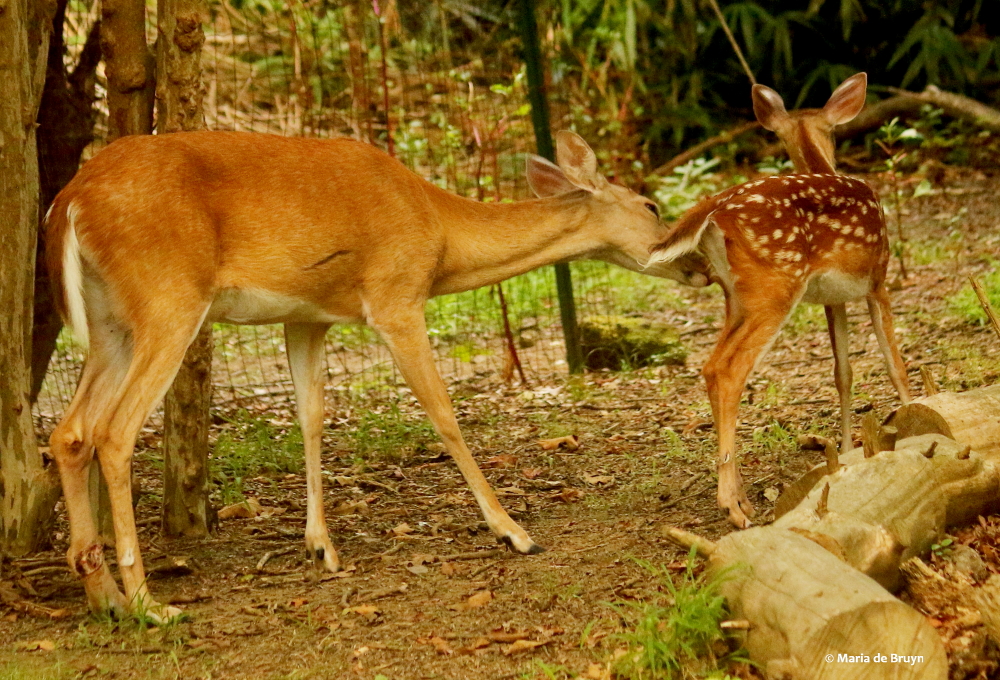
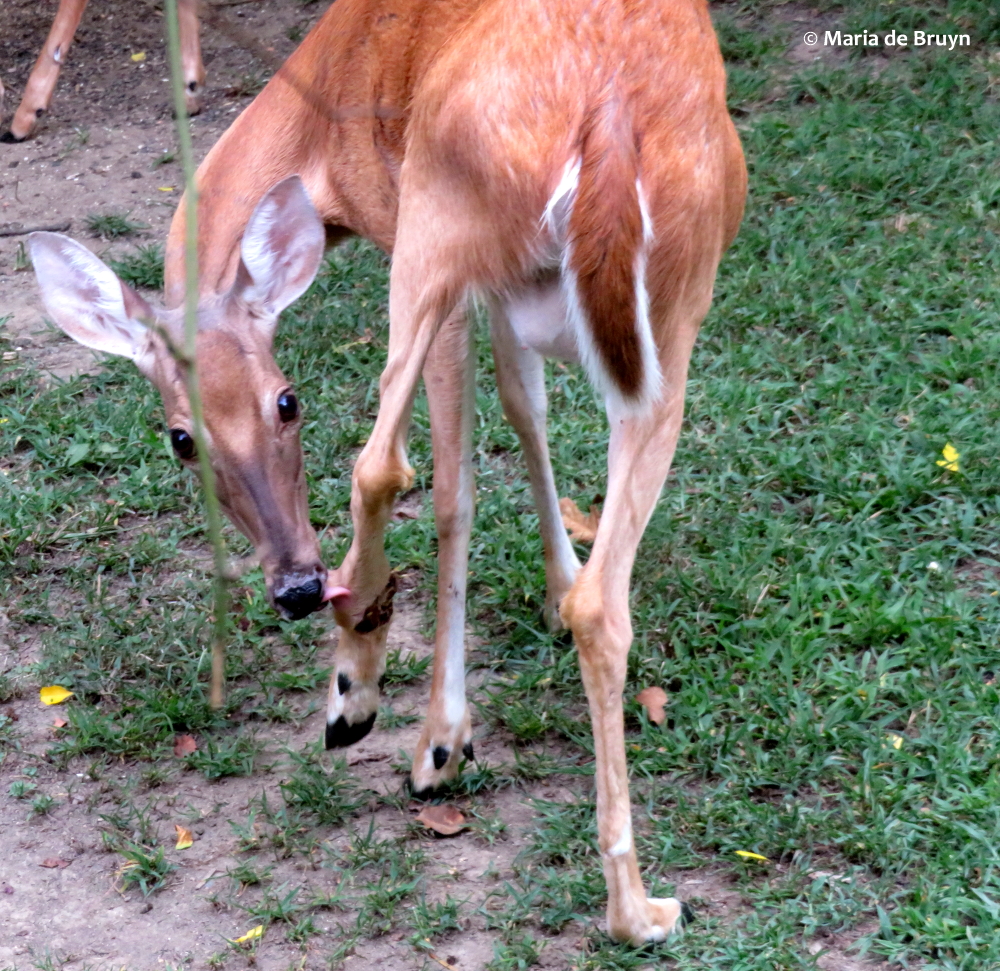
Mama also had to withstand the advances of the dominant neighborhood stag, who was intent on mating with her. Sweetie tried to be there to fend off the interloper, but he had to give in and move off as he was no match for the big buck. Mama tried to get away, but he kept trying to mount her – unsuccessfully, since her back quarters would collapse as she could not bear any weight on the broken leg. She finally got away and ran, which must have been terribly painful for her.
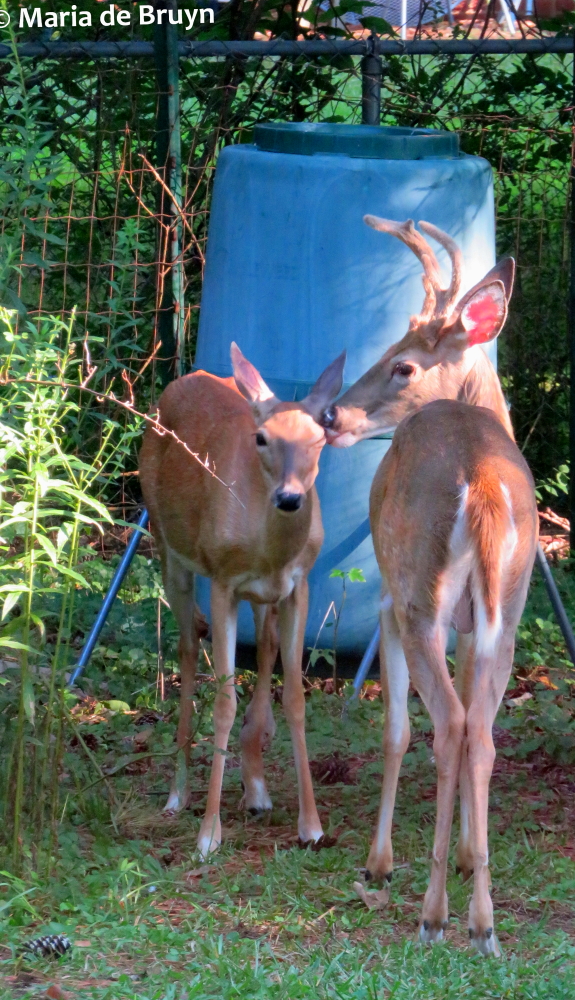
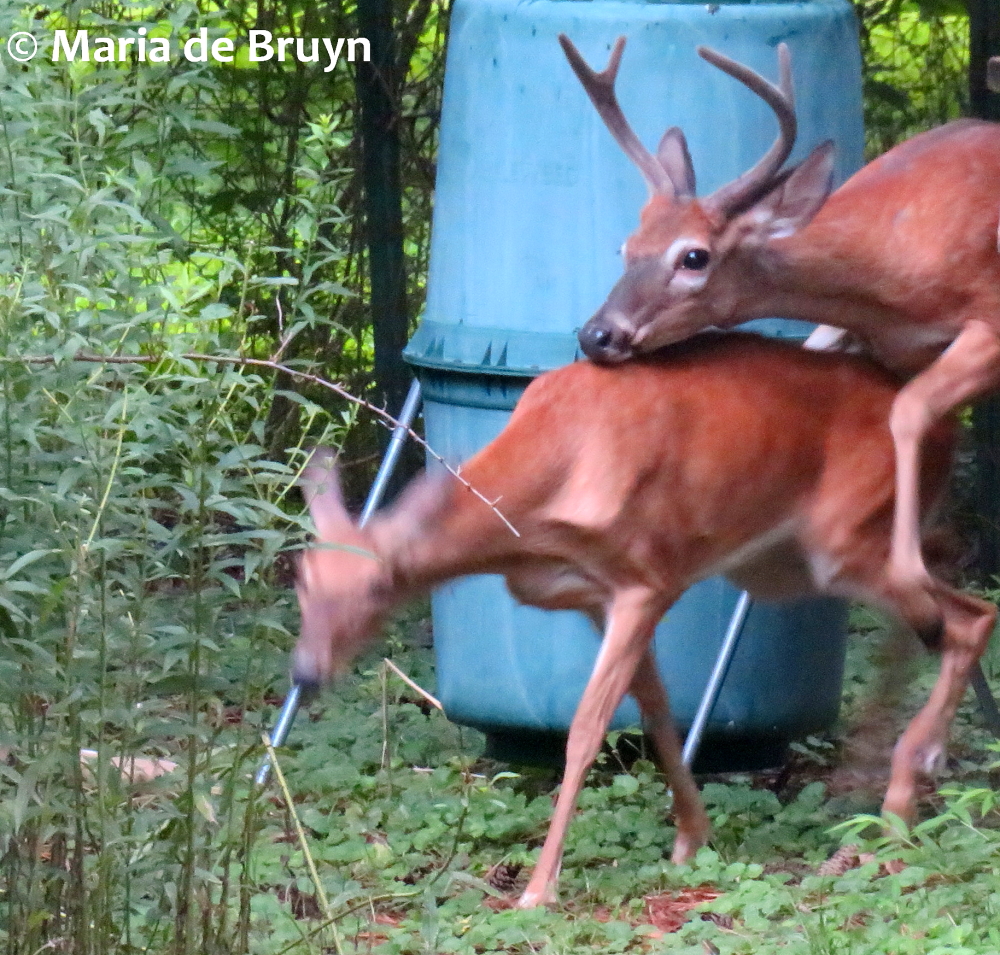
 

Mama could not stand up for herself with the hurt leg so she began being bullied by another doe who showed up. That deer, who I called Bossy, was ill-tempered and a bit nasty; she even would chase her own son away from seed on the ground, even when her son also got a broken leg!
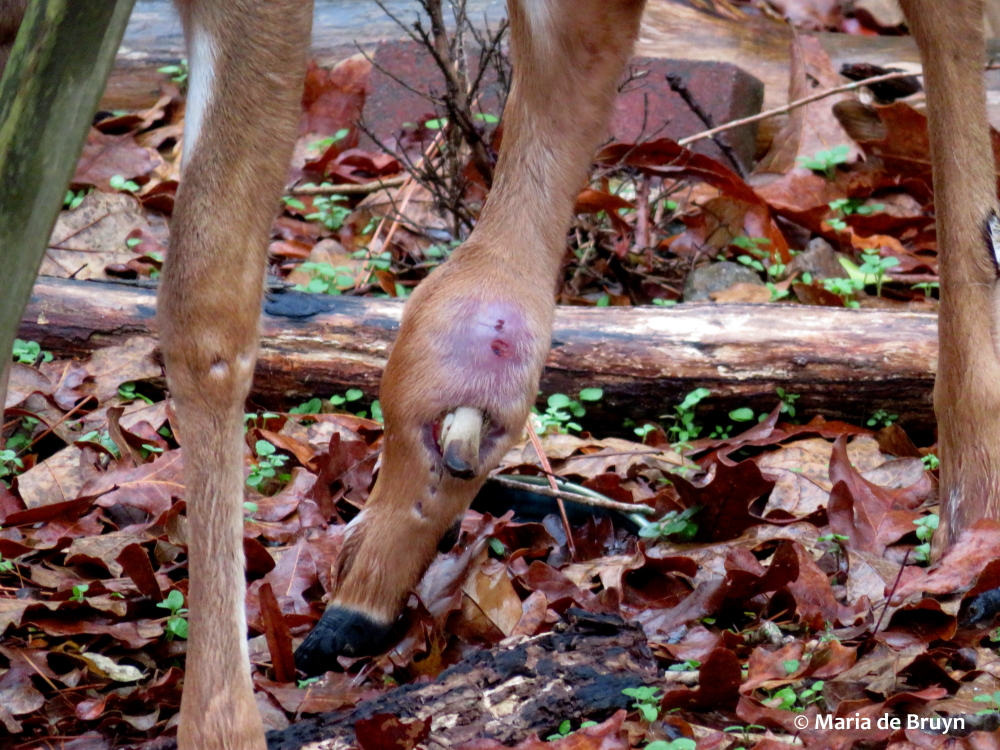
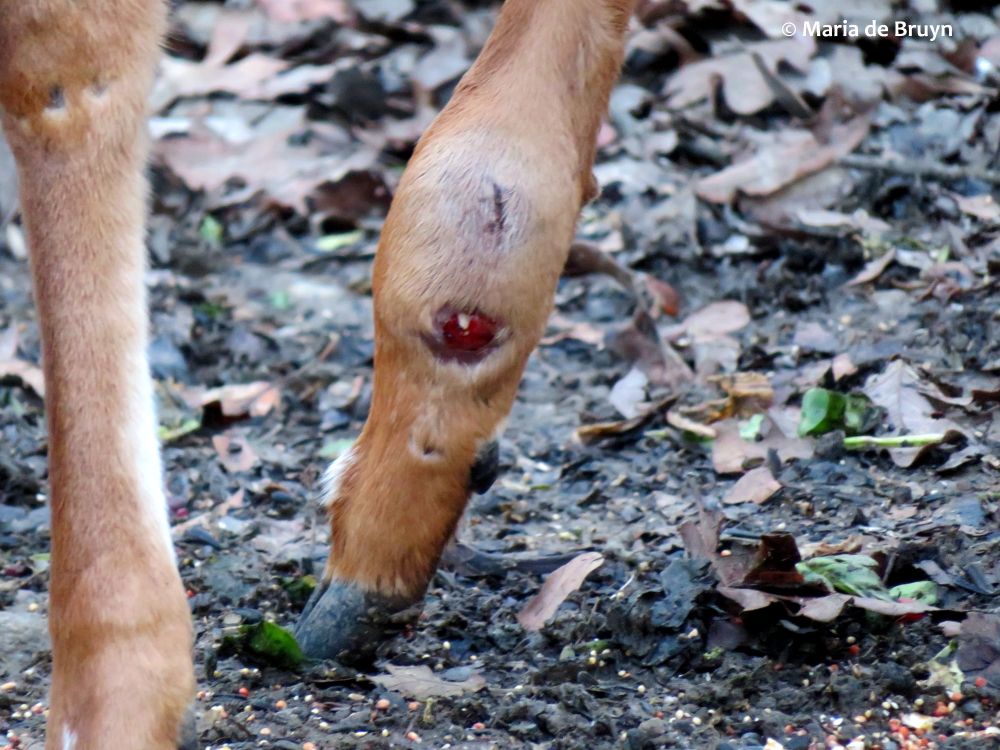
Then two adult males turned up with breaks – one had a broken foot. I wondered if someone was feeding them deer corn, which can be bad for their health and affect their hooves so that perhaps leg breaks would happen more easily. Or was someone taking potshots at them? It remains a mystery, but I’ve learned that the deer can overcome something like this although the healing takes months.
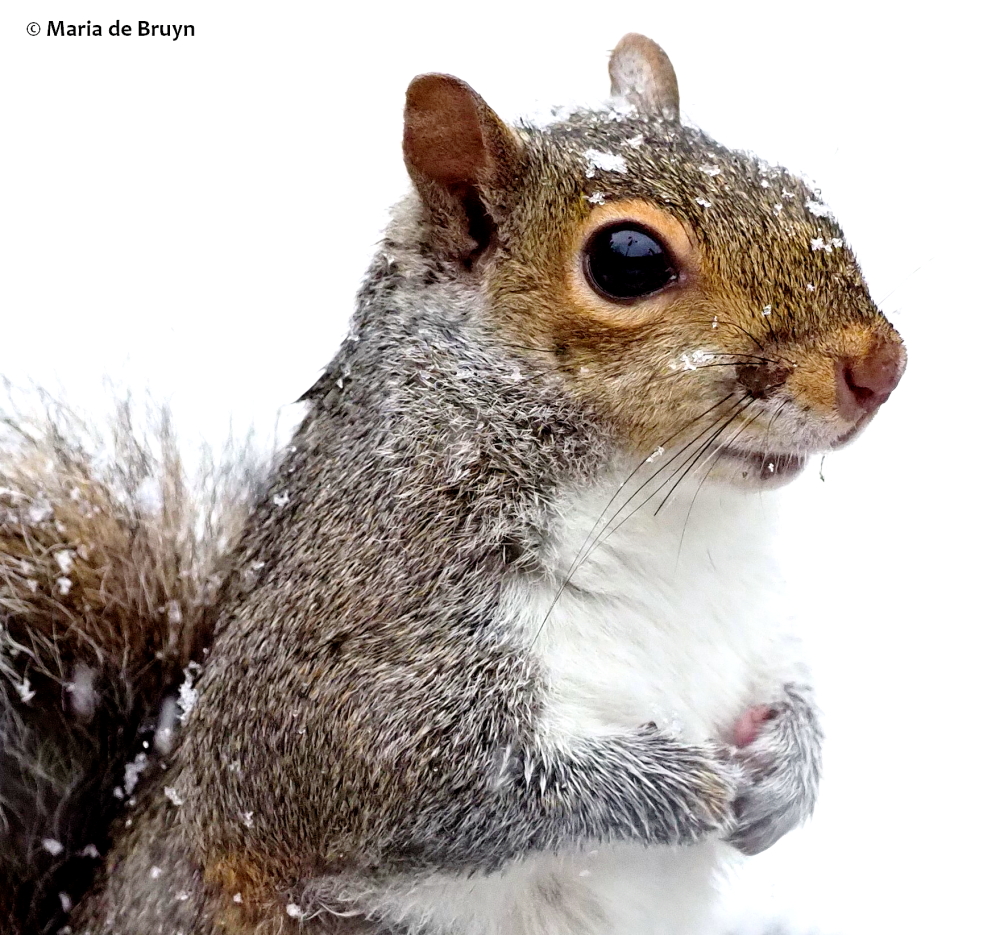
And then we come to my “nemesis” yard mammal, the Eastern gray squirrel (Sciurus carolinensis). As all bird-feeding people know, squirrels will do their utmost to eat all and any bird food that is put out — this has generated an industry devoted to producing squirrel baffles and “squirrel-proof” feeders. Even when I had smeared a bit of suet on a holly bush for the ruby-crowned kinglet who was sometimes crowded away from the feeder, a squirrel discovered the treat there and consumed what s/he could.
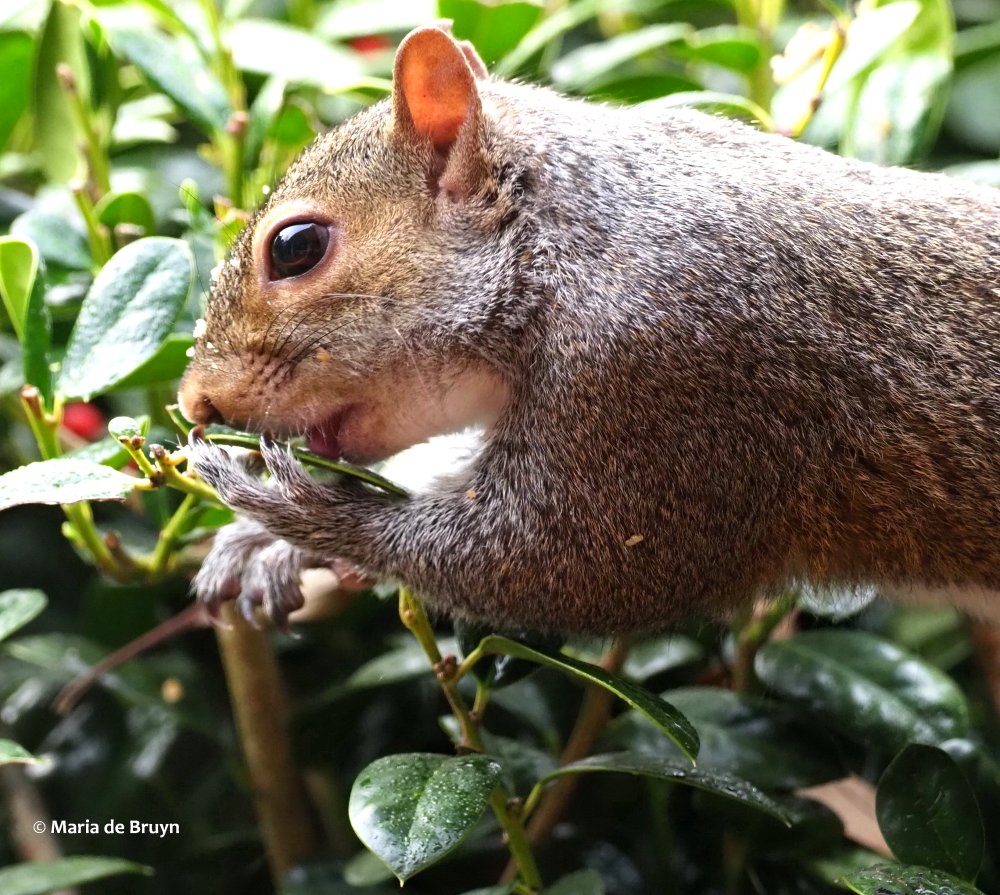
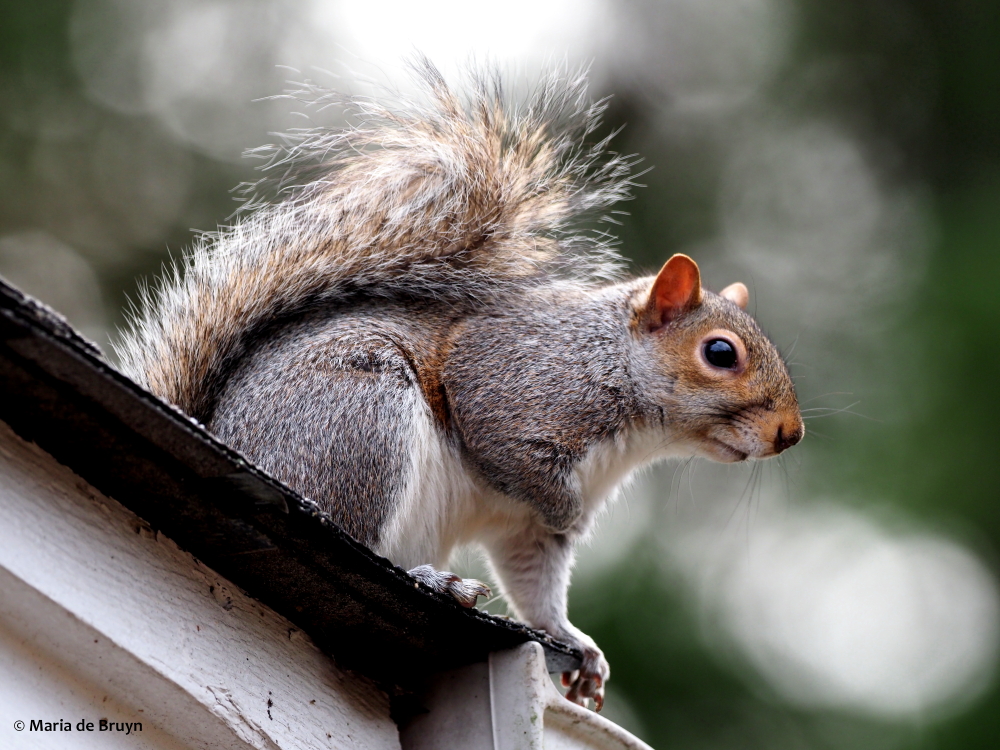
I’ve been fairly fortunate in having the baffles work until recently, when a couple squirrels used their little brains to figure out ways to get around them. It was my belief that I had put the feeder poles sufficiently far from the roof or large tree branches so that the squirrel couldn’t make the leap. One kept trying over and over and finally succeeded in lengthening his/her “long jump”!

I moved the poles further away. But two poles were about five feet apart and I then saw a squirrel use a strategy that really looked very clever to me. S/he would take a run at one pole, launch him/herself onto the pole at high velocity just under the baffle and then turn to vault from that height up and over the baffles on the neighboring pole! I really did admire the creature’s ingenuity and gained a new respect for their intelligence.
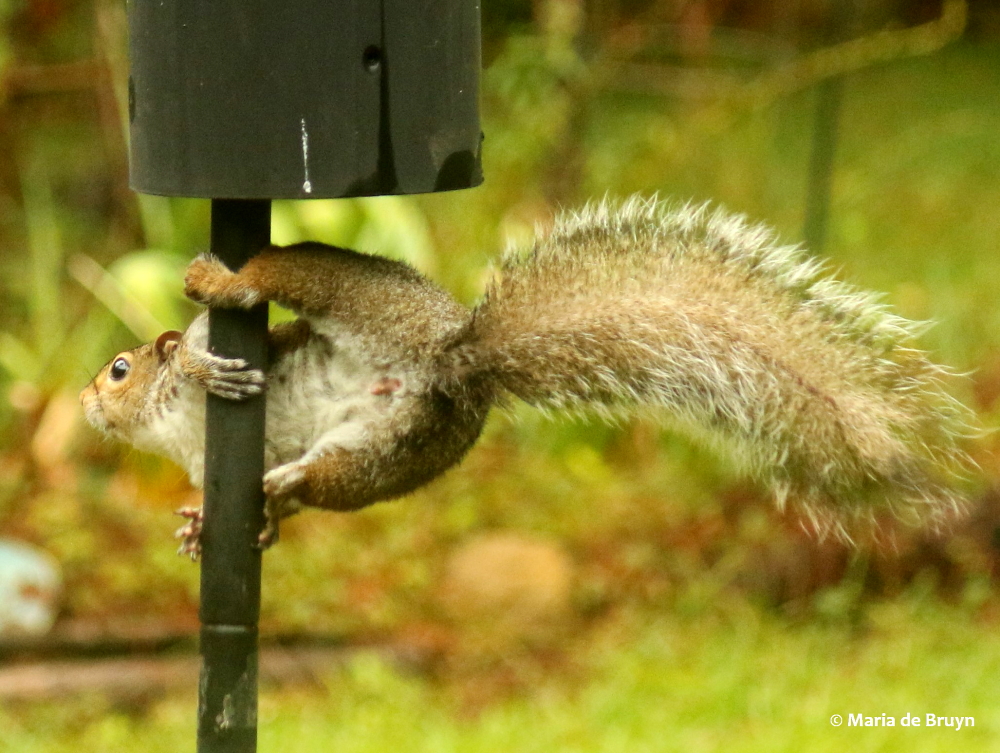
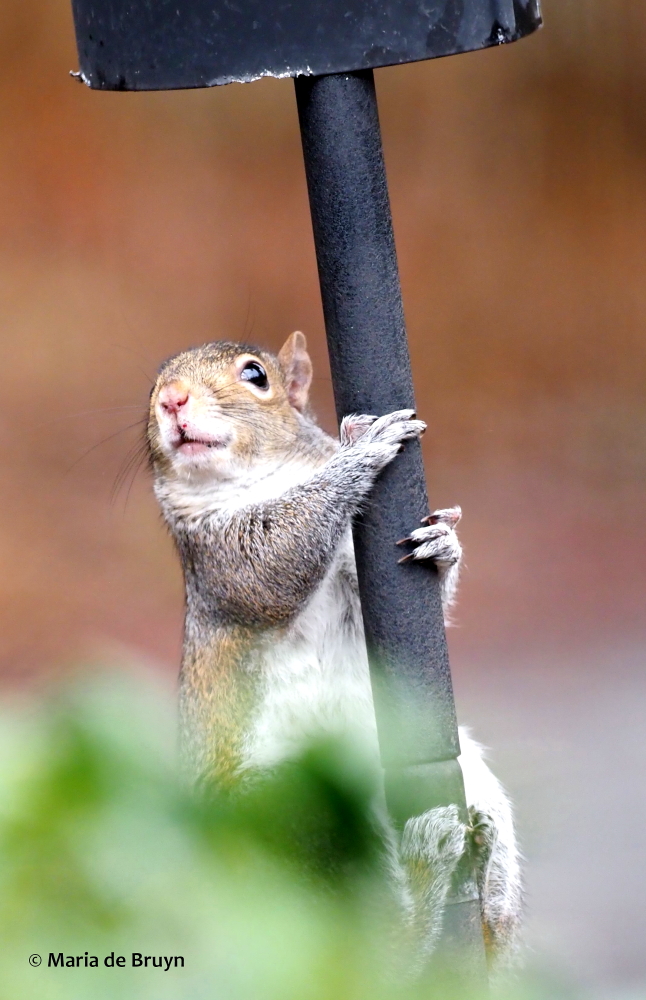
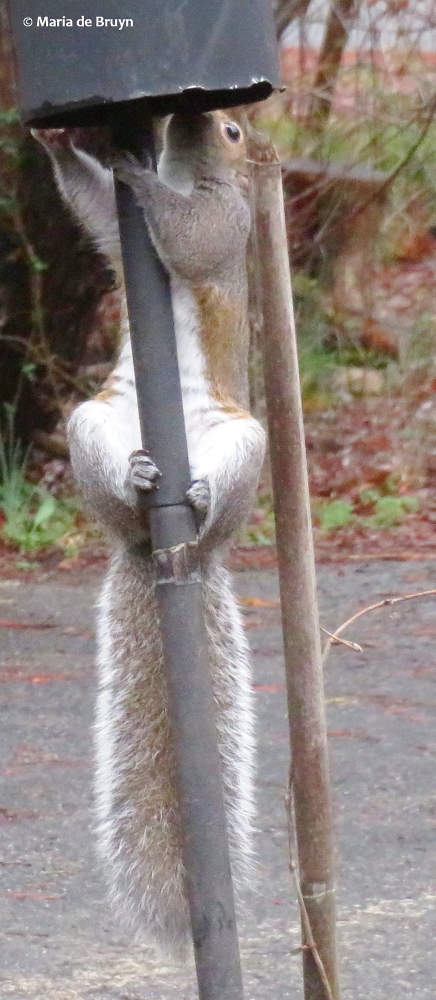
After moving the feeder poles further apart, I then noticed that a couple feeders on one pole were being emptied quickly. Looking out my window one day, I saw a squirrel perched atop the pole, enjoying seed after having managed to move the baffles down the pole. How was s/he doing that?


I set aside time to watch and discovered the squirrel’s secret.
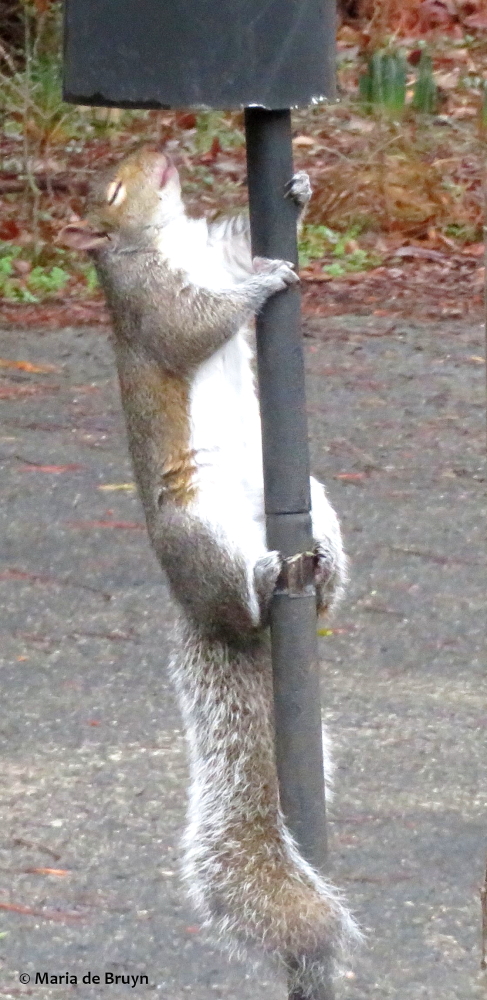
 

The animal was hanging onto the raccoon baffle, biting it and jerking down at the same time. This eventually loosened the screws in the apparatus on which the baffle rested so that the baffle finally slid down the pole!
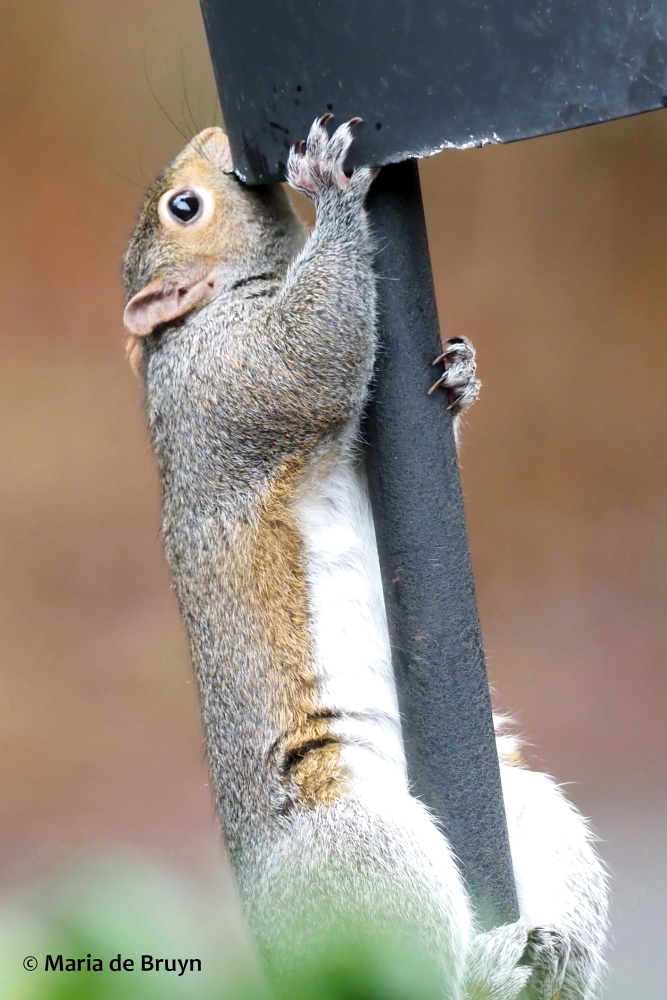
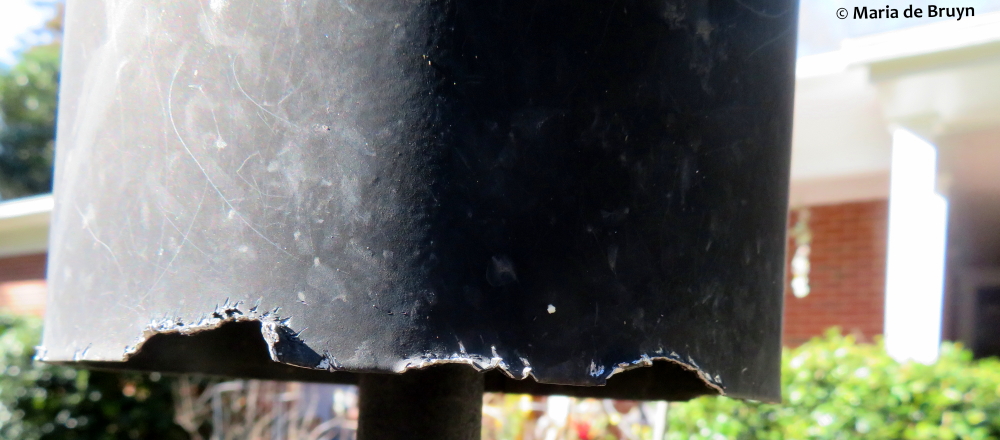
 

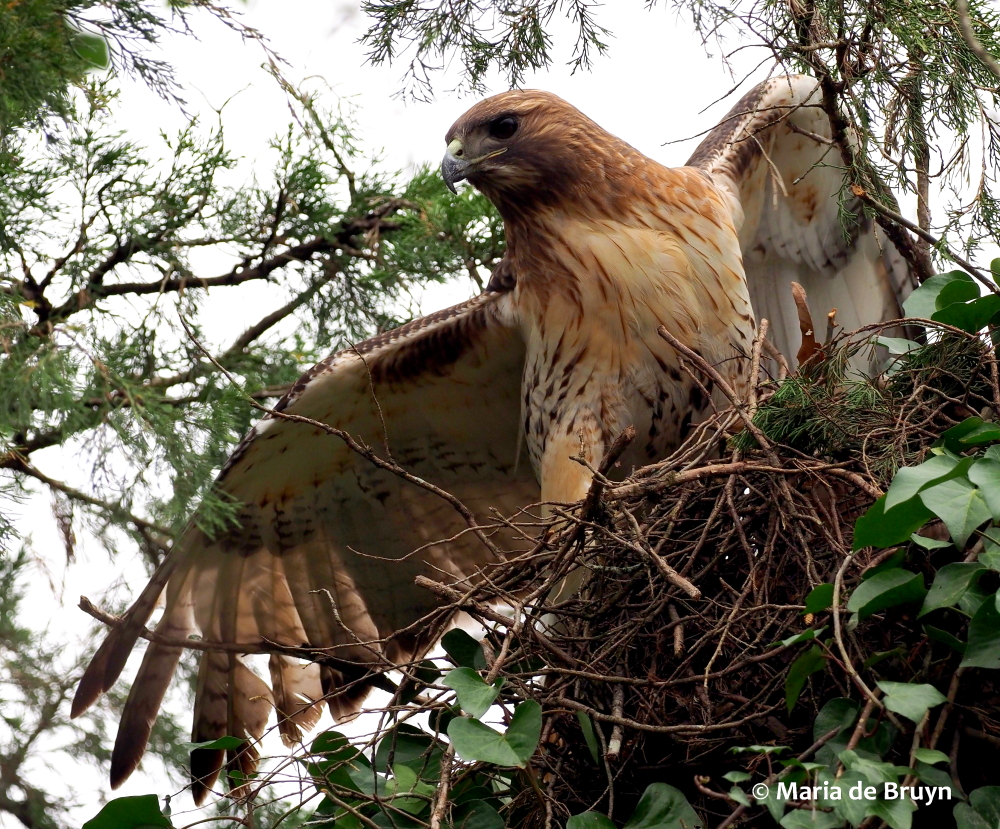
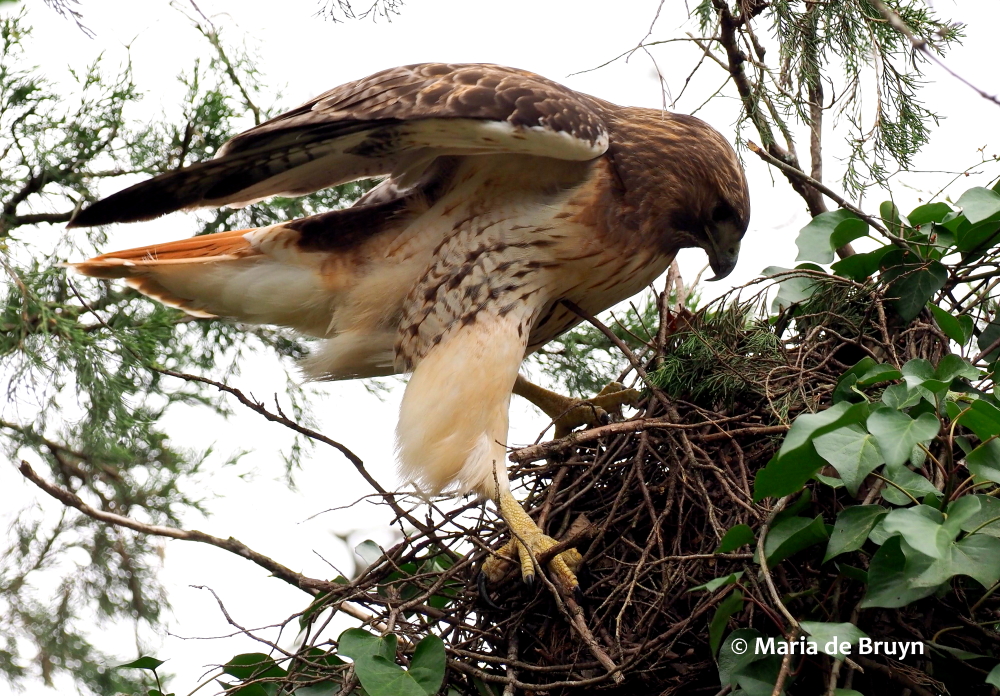
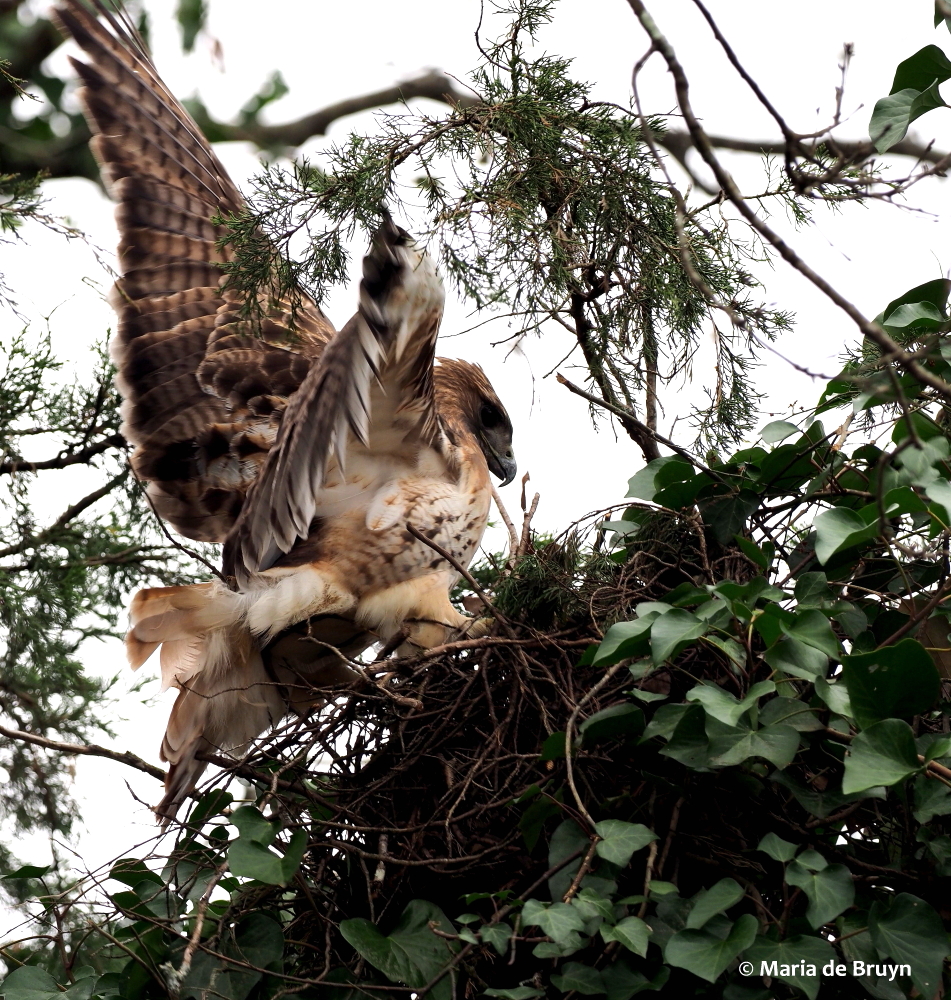
The screws have now been tightened and the next move is up to the squirrels. They are clever and tenacious. This was further brought home to me when a red-tailed hawk (Buteo jamaicensis) recently landed on a squirrel nest and did its best to extricate the mammal with its claws. The hawk eventually had to leave without its envisioned meal.
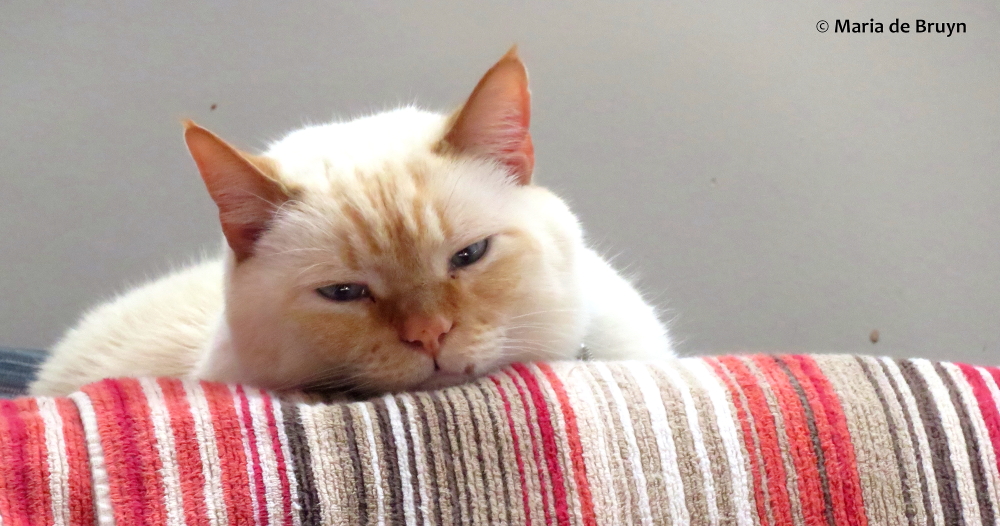
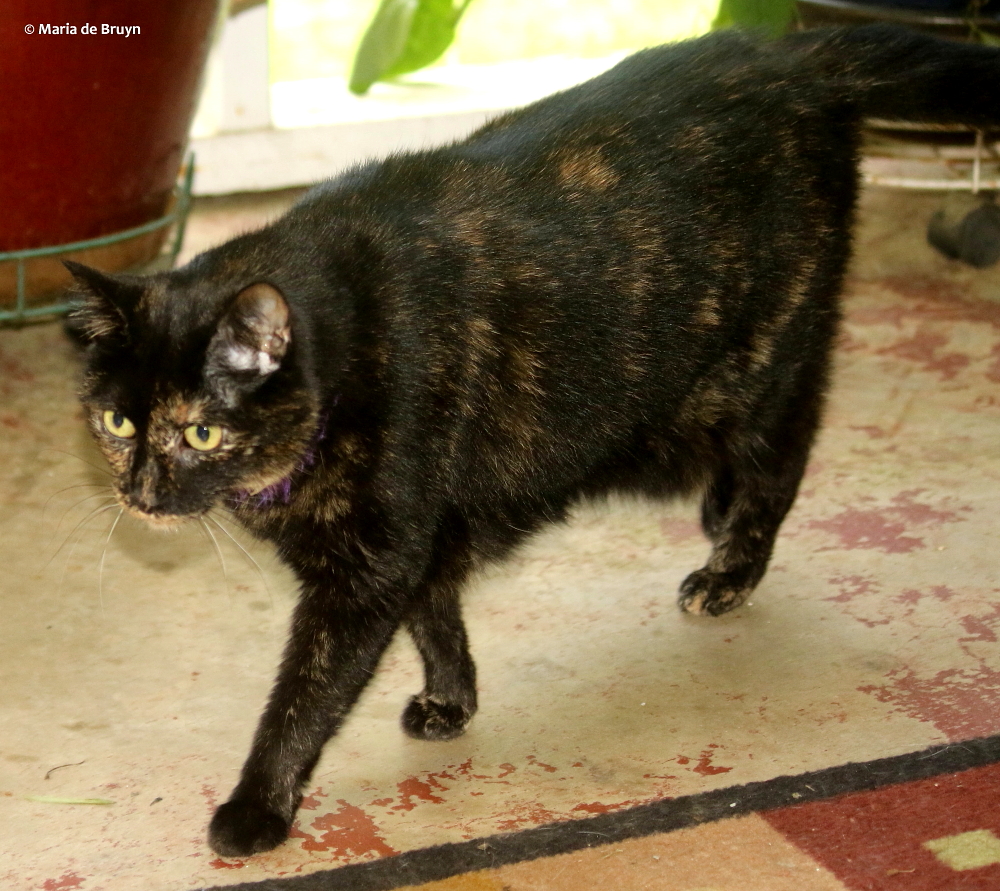
The yard mammals are certainly entertaining. If any of you readers have had interesting experiences with them, I’d love to hear about them in comments on this blog’s page! (Except for cats running free outside – goodbye from my two indoor cats, Ogi and Moasi!)
Quebec chronicles – the non-avian wildlife

While birding has become a beloved pastime for me, I think of myself mostly as a wildlife photographer. I enjoy observing (new) insects, reptiles and mammals as much as I like seeing birds and find their behaviors just as fascinating. So I was also on the lookout for non-avian wildlife during our recent migration trip.

You could tell that springtime was flourishing as plants were putting out new leaves and buds. There were gorgeous red (Trillium erectum) and white trilliums (Trillium grandiflorum).


Fiddlehead ferns were popping up everywhere. And a new flower for me was the white baneberry (Actaea pachypoda).

Yellow trout lilies (Erythronium americanum) were emerging and red columbines (Aquilegia canadensis) dangled their pretty red and yellow blooms.

Red osier dogwoods (Cornus sericea) were in meadows at one park and in the area where we were staying, multiple shadbush (serviceberry, Amelanchier) trees were in bloom.

Quite an unusual plant turned up in Pointe au Pic near an area with local shops. I had not seen one like this before – a helpful member of a plant identification group told me it was a rhubarb (Rheum).

The dandelions (Taraxacum officinale) we saw were very large in comparison to those I’ve seen in North Carolina (NC). Interesting is that the official name in French is “pissenlit”, which literally translated would be “piss in bed” (although proper French speakers would say “Pisse au lit”). In any event, dandelions can not only be eaten in salads but also be used as a diuretic, so perhaps centuries ago the French Quebeçois were referring to the flower’s properties in describing it. Another French name for the bloom is “lion’s teeth” or “dents de lion” (from which the English word dandelion came).

The insects were taking advantage of those edible yellow flowers; both spiders and ants were busy crawling around them.


A beautiful syrphid fly was also busy getting its meal, while an unknown moth flitted down to rest in the middle of a road.

There were butterflies at the shorelines, like this Lucia azure (Celastrina lucia) and mussel shells rested on rocks.


A spur-throated grasshopper (Melanoplus) was hanging out on a pissenlit, and a diamondback moth (Plutella xylostella) turned up in a photo of another plant (not a great photo but a lifer insect for me).

A beautiful honey bee (Apis mellifera) was covered in pollen.

Another new insect for me was the tricolored bumble bee (Bombus ternarius).

A few mammals appeared during our spring vacation, although not the hoped-for moose. (We unfortunately saw one black bear, but it had been hit on the road.) On several days, I caught sight of white-tailed deer (Odocoileus virginianus) bounding away, both in the area where we were staying and in the parks that we visited. I managed to catch a glimpse of an Eastern chipmunk, too, but it wouldn’t come out from behind some twigs for a photo shoot.

Much more cooperative were the American red squirrels (Tamiasciurus hudsonicus), which feed primarily on conifer cone seeds. They also enjoy other foods such as mushrooms, which were beginning to grow profusely like this nice morel.

The chickarees (another name for these rodents) were often out and about along the roadway where our rental house was located.

On one day, I ran into a small squirrel that seemed to have a problem with its left eye. However, it might have been a trick of the light. I tried to get another view, but the little rodent wouldn’t let me get around to its other side to take a photo. In any event, they are beautiful little creatures (generally smaller than the large gray squirrels that reside in my yard).

A very pleasant surprise during our trip was running into some groundhogs (Marmota monax, also known as whistle pigs and woodchucks). It is said that they tend to avoid swampy areas and like open fields and meadows but both woodchucks we saw were spotted near water. The first one we saw popped up near a cove on a paved road leading down to the water. The mammal was surprised by our group which had occupied a space between the water and nearby vegetation areas.


We tried to stay in one area so the groundhog could go around us, but s/he was uncertain about passing us, making several forays in our direction, turning around and then heading back again to get to the bushes and trees.


Finally, the groundhog screwed up its courage and ran at high speed past us and disappeared into the trees.


A couple days later, one of our group spotted another groundhog that was foraging in the newly leafing out shrubs alongside a creek that ran into a cove. The large rodent was agile and able to climb up into spindly little trees.


Its bulk also made it lose its footing a few times, but the mammal managed to hold on and regain its balance so that it could continue munching on the fresh food. It was delightful watching this beautiful rodent going about its daily business.

Another mammal that proved to be a bit elusive for me (others in our group were able to get some good out-in-the-open views) was the snowshoe hare (Lepus americanus). During our first full day of exploring, we spotted one bounding away into the underbrush, which was quite exciting. Then a few days later in the Tadoussac dunes, a hare suddenly bounded out of nearby shrubs to dash across the sand into another group of shrubs. I didn’t get sharp shots as I only caught sight of it out of the corner of my eye and it was almost gone as I swung my camera around.

The hares that we saw were not yet done changing into their “summer” colors and still had some winter white fur on their impressive huge feet. These mammals begin breeding in mid-March and females may have up to four litters a year. They often communicate with one another using their feet, thumping them on the ground to make messages.

On another day, I spotted a hare foraging in a brushy area. In the winter, they eat twigs, bark and buds but in summer they can enjoy grasses, clover, dandelions and other green plants. This hare was enjoying the fresh food, but I felt sad looking at her (or him) as its head was covered in ticks. I don’t know if the animal was particularly vulnerable because it was young, maybe not completely healthy or just had the bad luck to have sat in a nest of the nasty insects. I hoped that the hare would be able to go on in health after the insects fell off.


The snowshoe hares prefer to be in dense groundcover, so they are somewhat hidden from predators (coyotes, fox, lynx, minks, owls, hawks) while they search for food. Their “cousins” back in my residential area, the Eastern cottontail rabbits (Sylvilagus floridanus) also need to worry about predators (owls, hawks, crows, raccoons) but one pair has become quite relaxed in my yard. Here you see dad (left) and mom (right).

As far as I can tell, they had one surviving offspring. They don’t generally seem too frightened, however, and almost everyday I see them lounging in a relaxed manner in the back yard, in contrast to those beautiful but elusive snowshoe hares. I was glad to have seen the hares though.

Two more Quebec chronicles to go: the “flashy” and yellowish birds and signs of humans along the St. Lawrence Seaway.

Surprise gifts from Mother Nature in 2018 – part 2: non-avian wildlife!

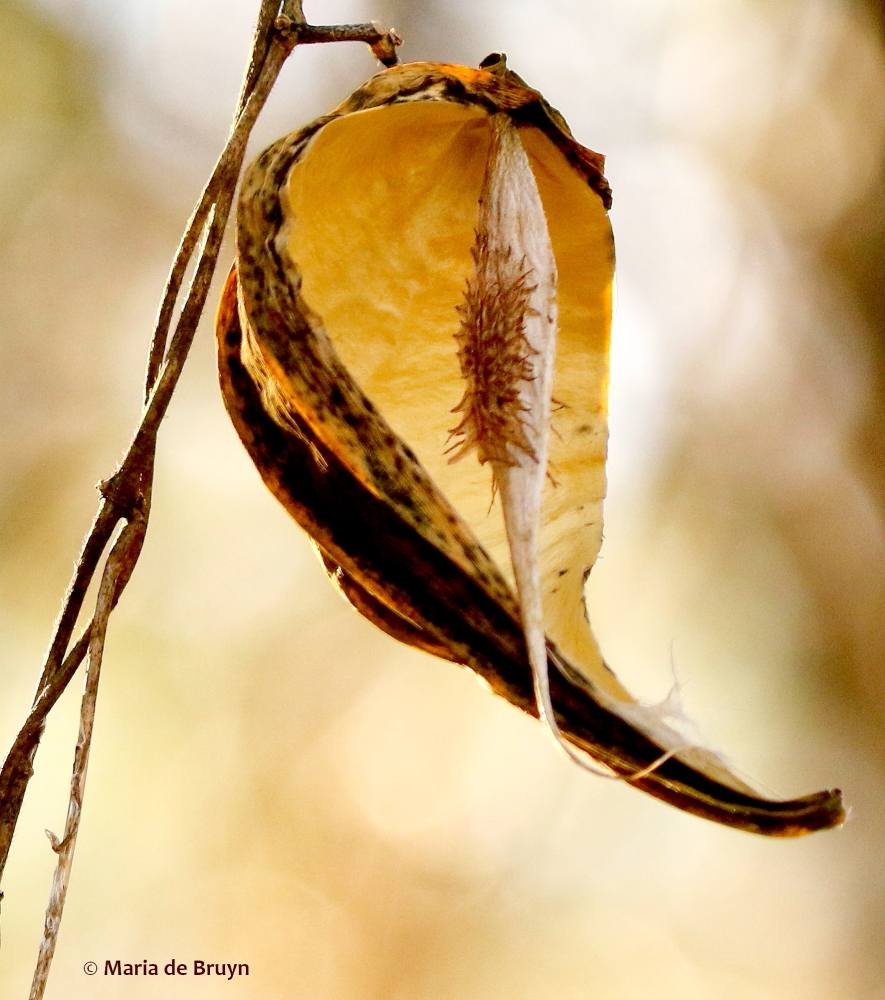
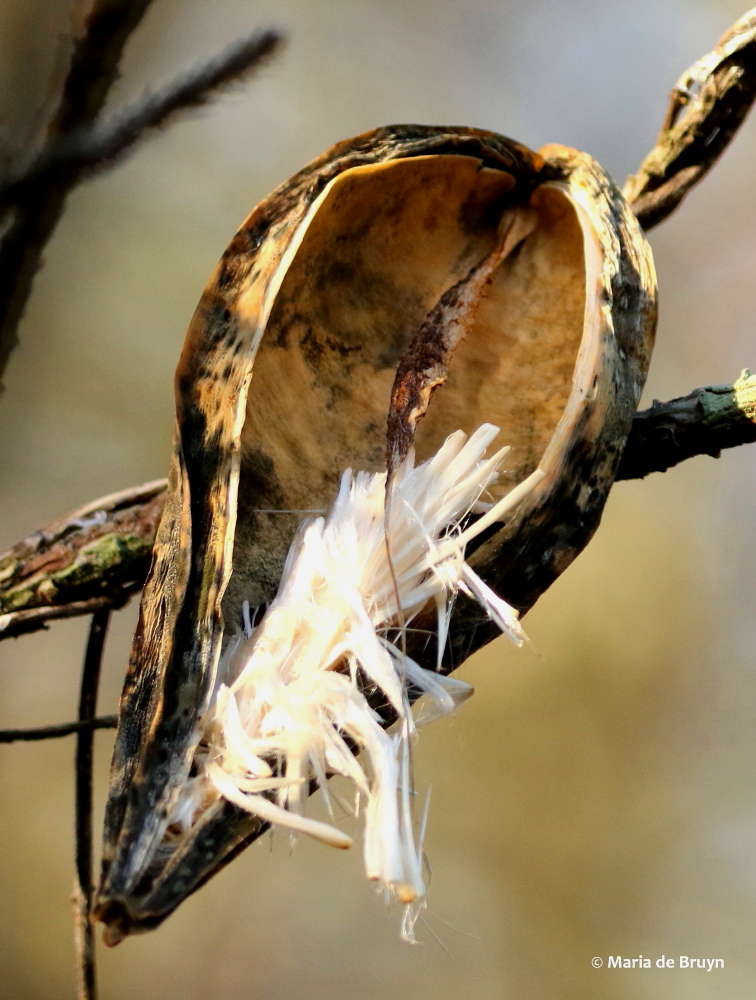
Birding is an activity I enjoy, especially since I can usually spot at least one bird during my outdoor excursions. I’d prefer to call myself a “wildlifer” rather than a “birder”, however, since all kinds of other wildlife also fascinate me. Here is a selection of some wildlife surprises and new species I saw last year, including a new plant – the honeyvine milkweed (Cynanchum laeve).


This vine is sometimes described simply as a native plant that spreads by seed and long roots; other websites call it a noxious weed. It does perhaps spread quickly but it is also a food source for monarch butterfly caterpillars so it seems like a desirable plant to me.

This mushroom was another one of my favorite vegetation spottings last year – it looks to me as if it is an animal with large ears.

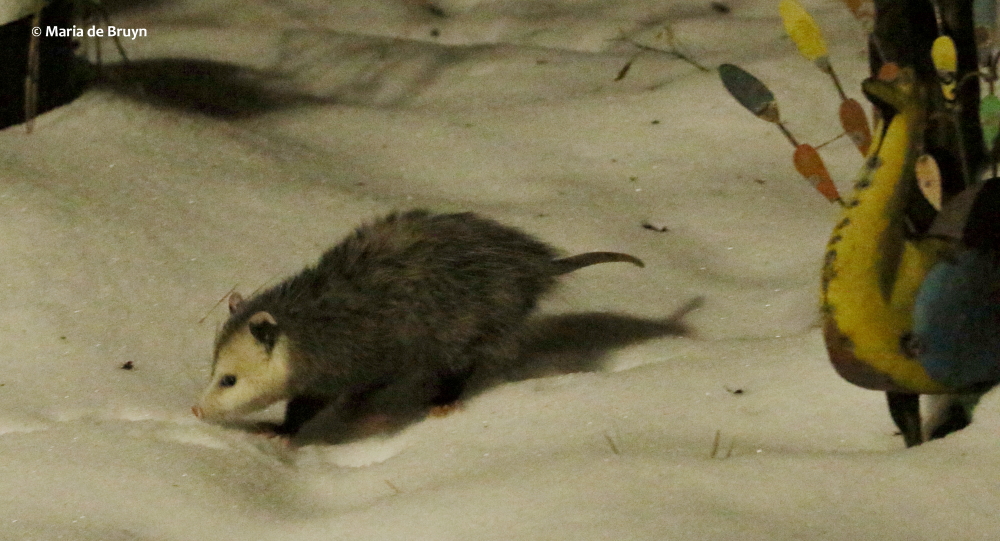
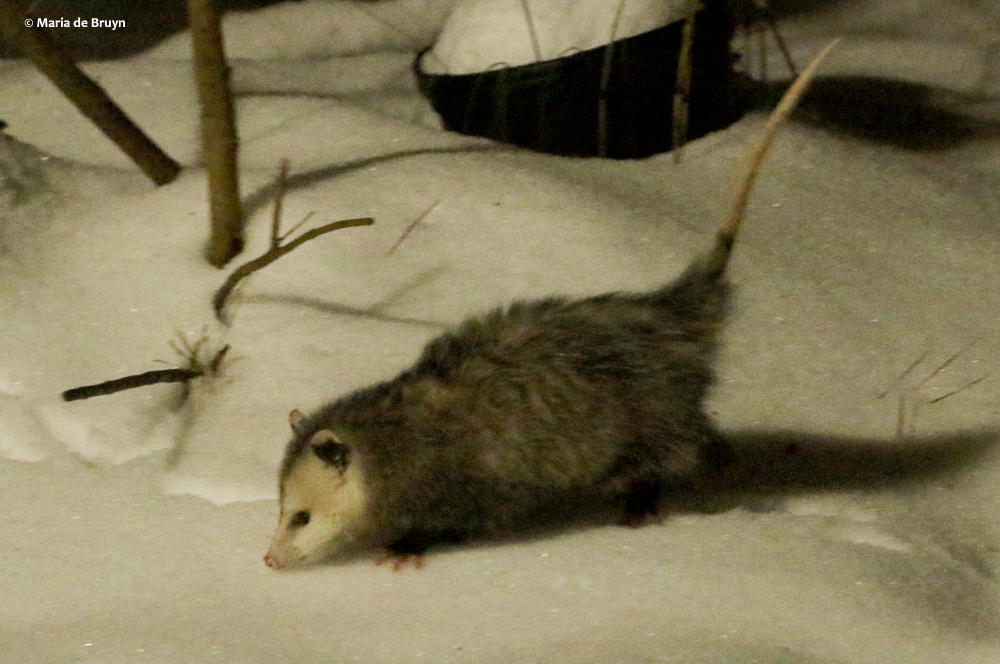
Mammals are favorites of mine but I only see a restricted number regularly – white-tailed deer, Eastern squirrels, raccoons, Eastern chipmunks. When I get to see an opossum (Didelphis virginiana) – like one who visited the yard at night during our early December snowstorm, it was a treat. It seems many people dislike North Carolina’s state marsupial (and the only marsupial in North America) but it is a valuable neighbor since it eats up to 4000 ticks a week. There likely weren’t many ticks around for it to eat but I hope it found something for a meal!


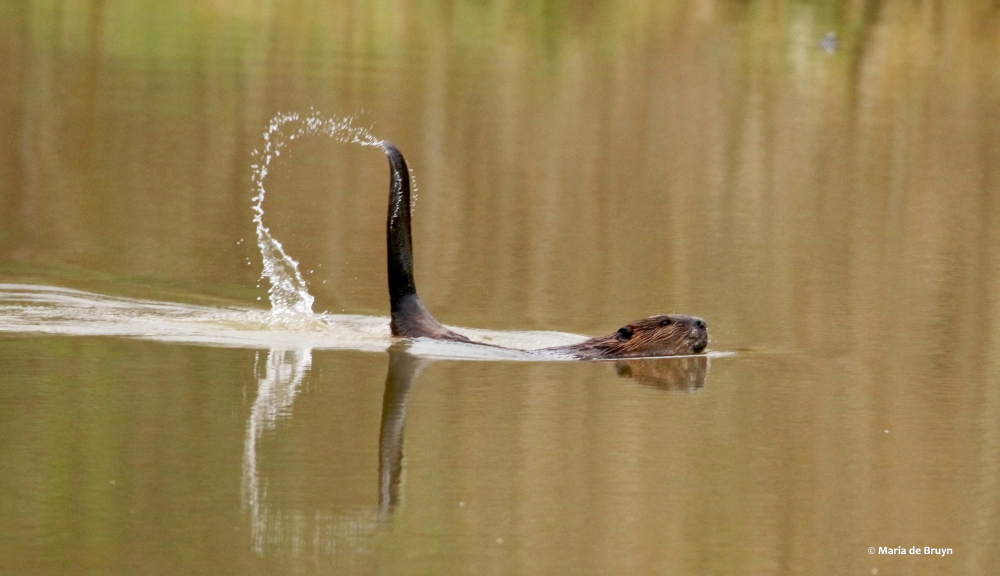
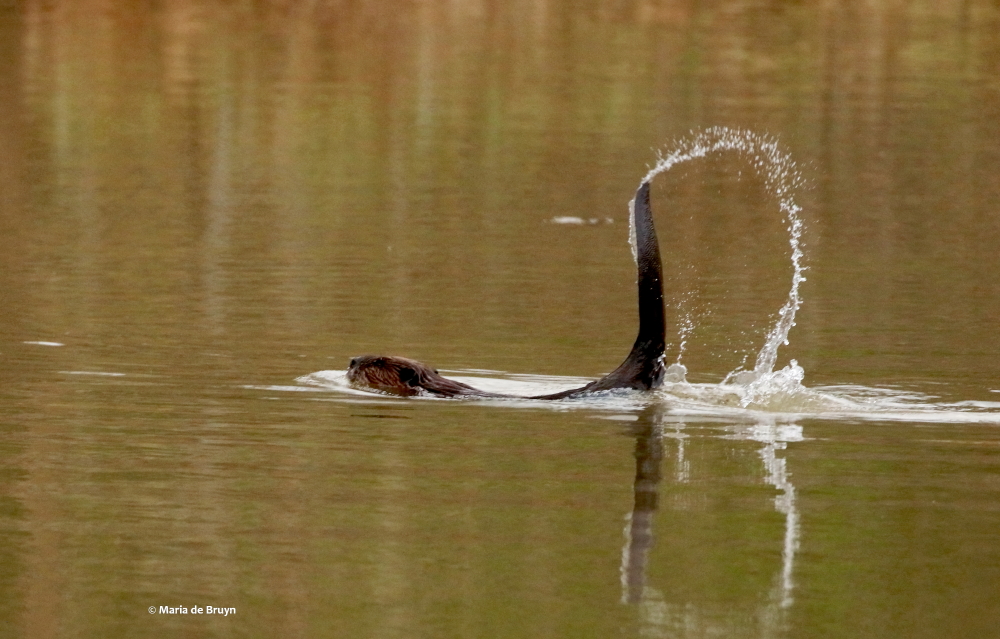
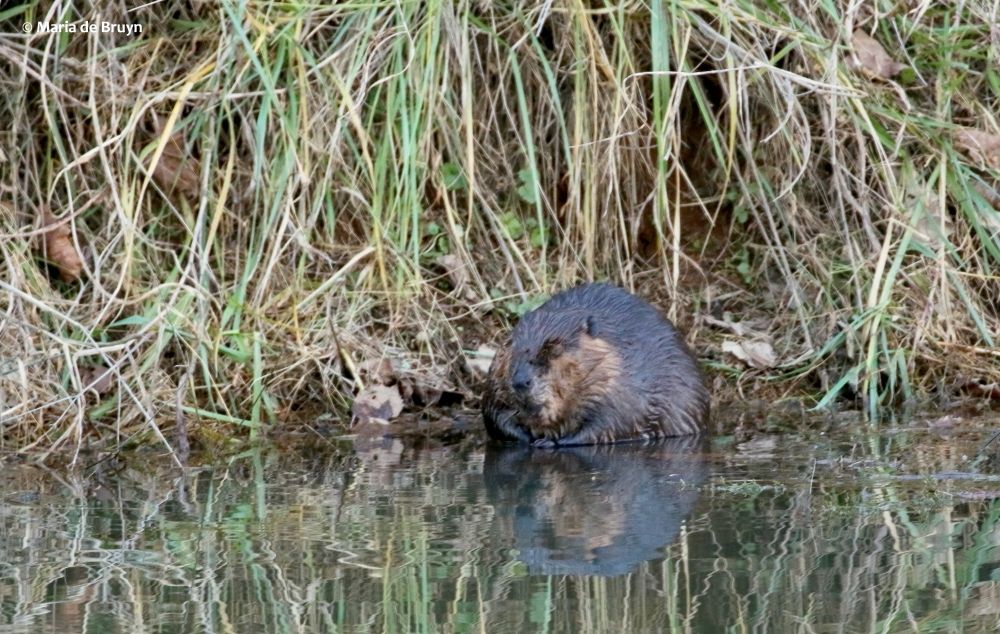
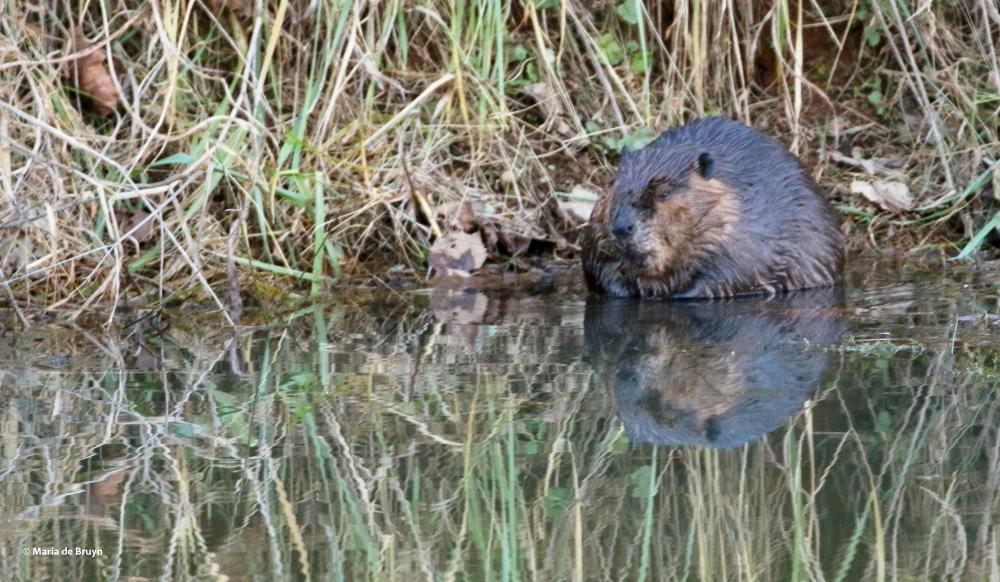
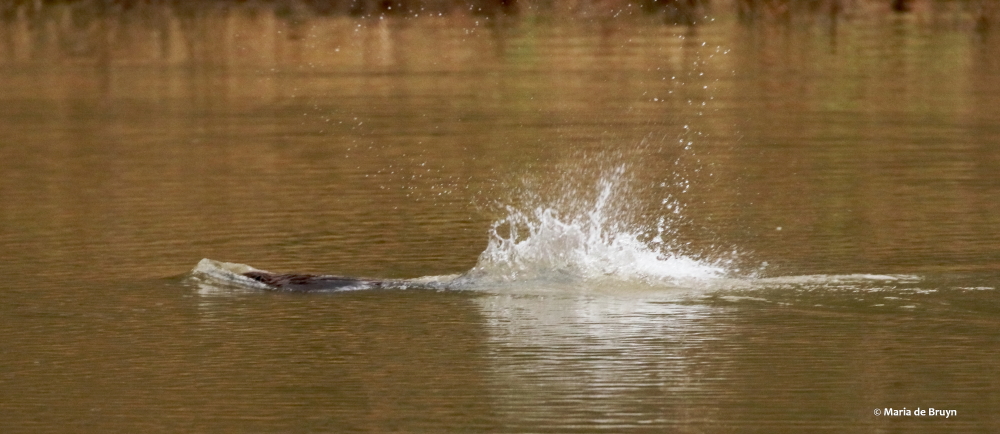
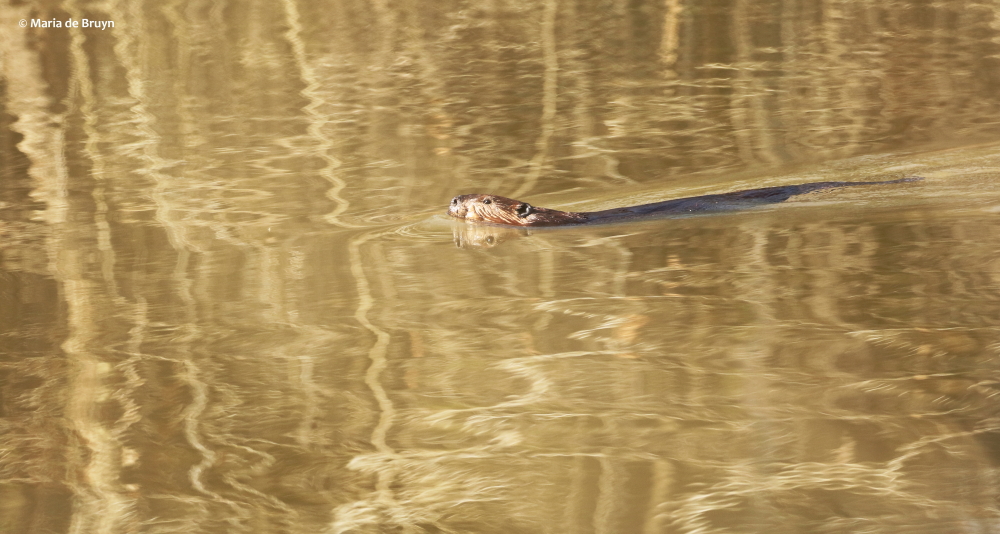
This past year was my “year of the beavers” as I had a chance to follow these nature landscape architects in three different places. And as mentioned in a previous blog, I was so thrilled to get a shot of the warning tail-slapping behavior.


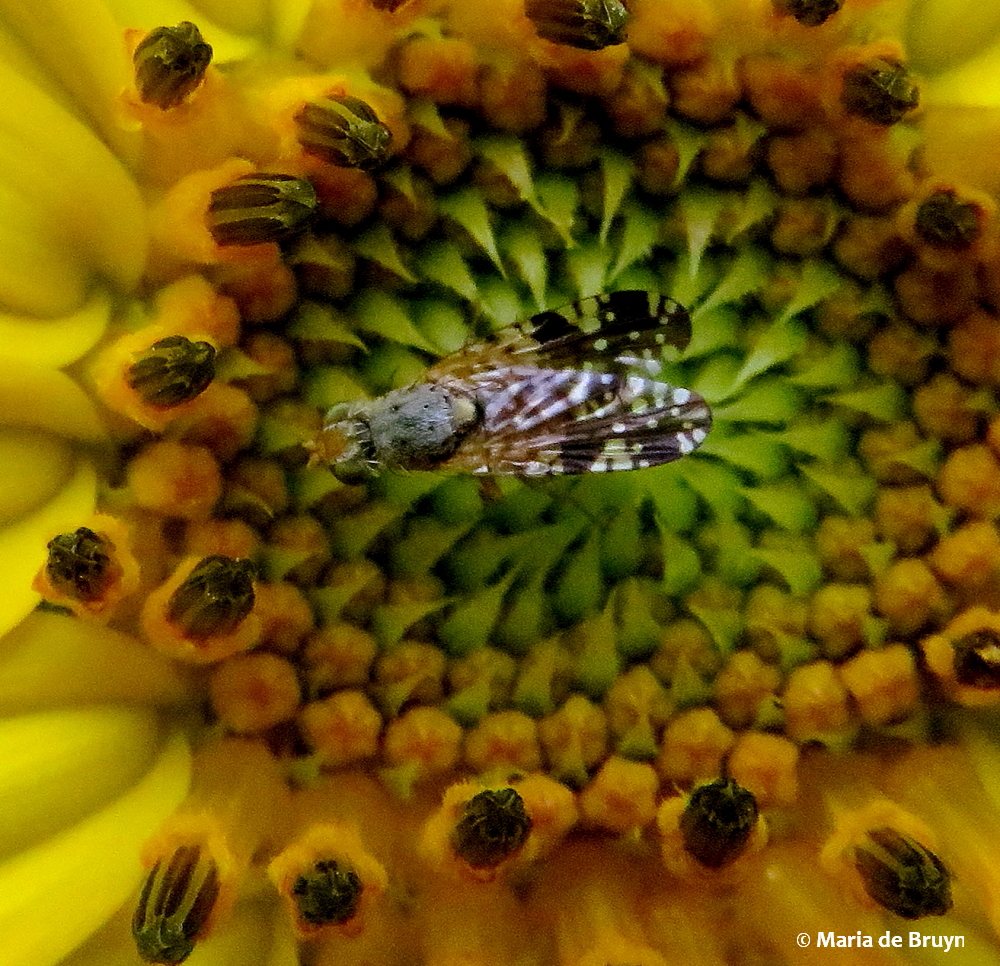
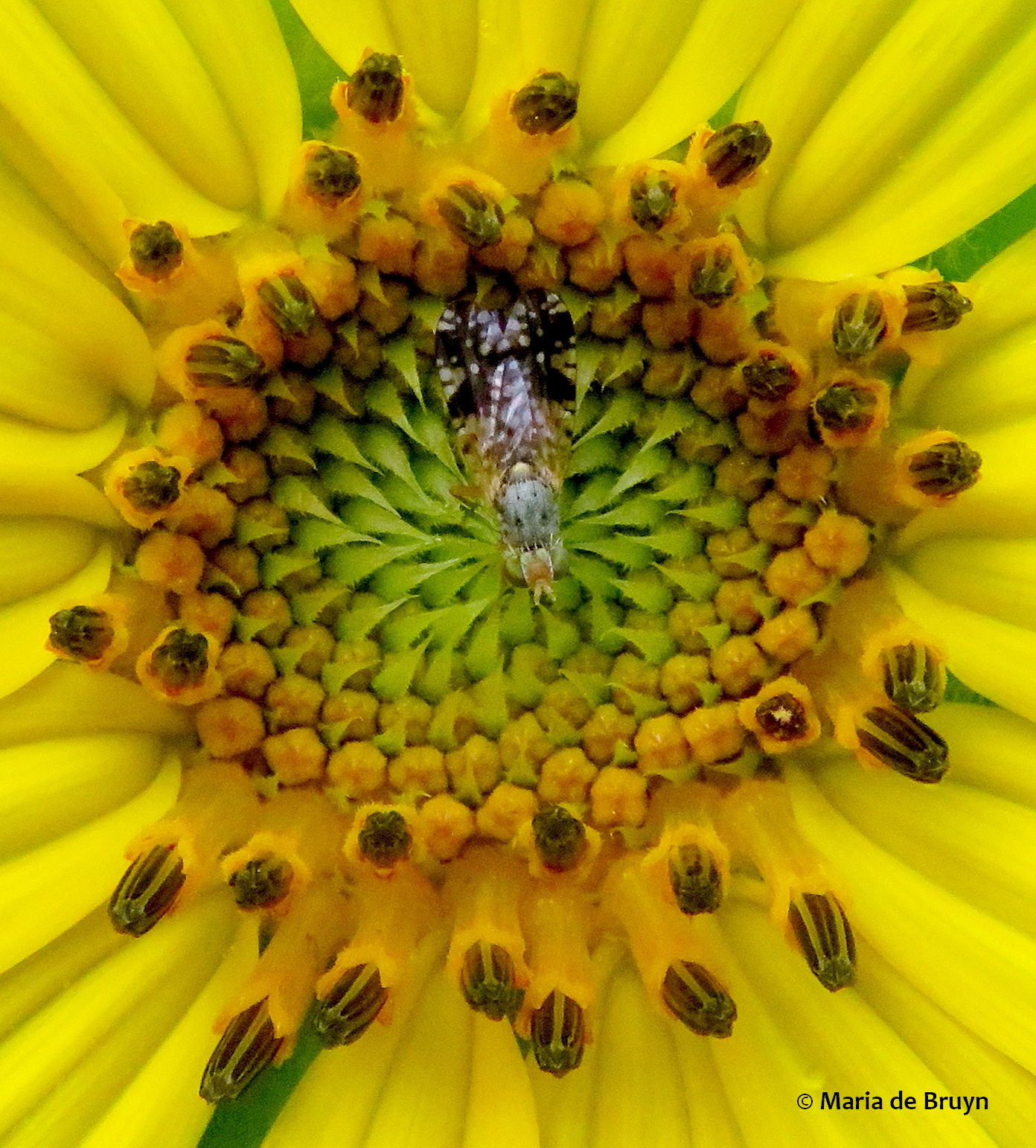
2018 was a good year for seeing new insects. Some are so tiny that you can’t really see their body patterns without magnification. Here are a few of my “discoveries”. The flies can be very interesting.

Sunflower seed maggot fruit fly (Neotephritis finalis)


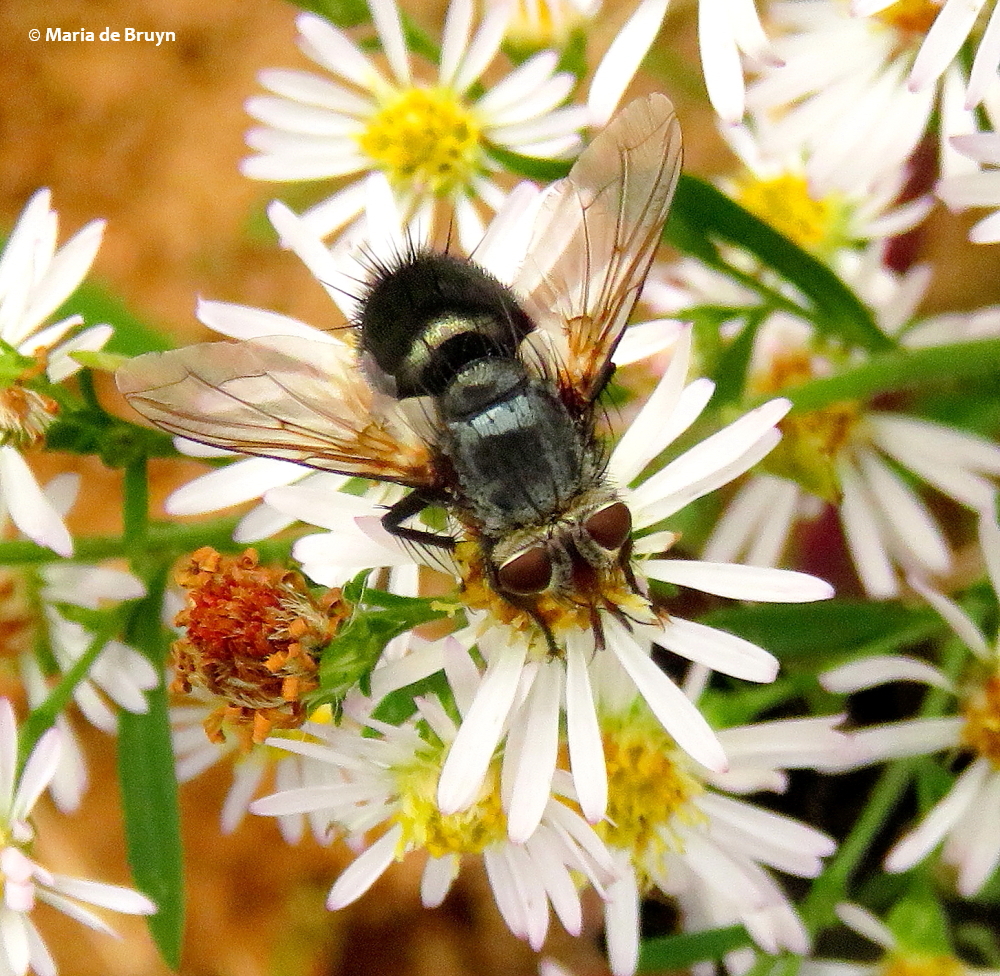
Parasitic fly (Archytas)

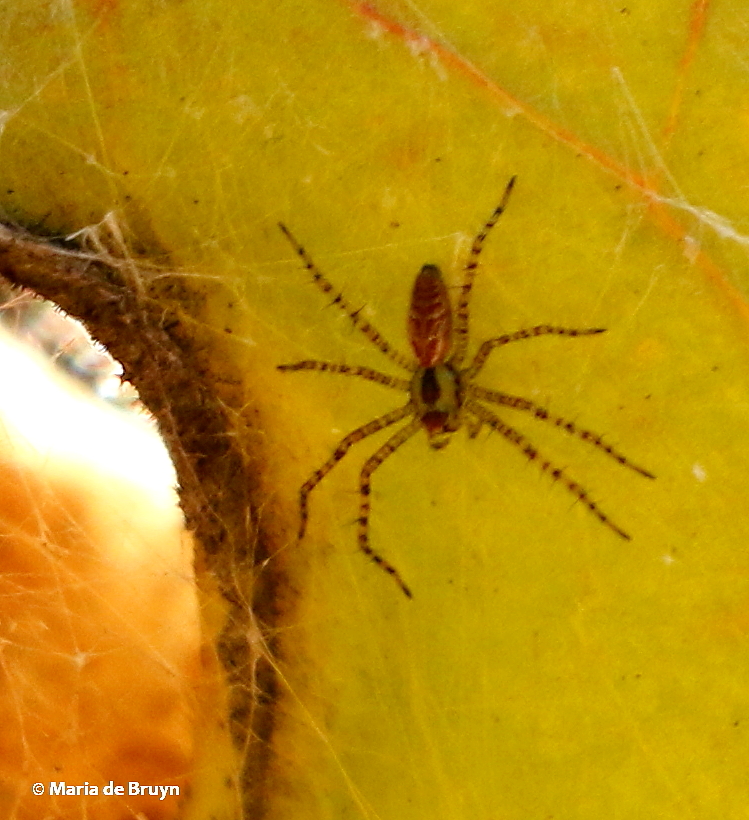
2018 was a year for learning about reproduction among the bugs; not only did I see caterpillars but also chrysalids and arthropod parents caring for offspring. The green lynx spider (Peucetia viridans) is a very attentive mother; she often hangs her egg sac from a grass stalk and then encircles it with her body to keep predators away.

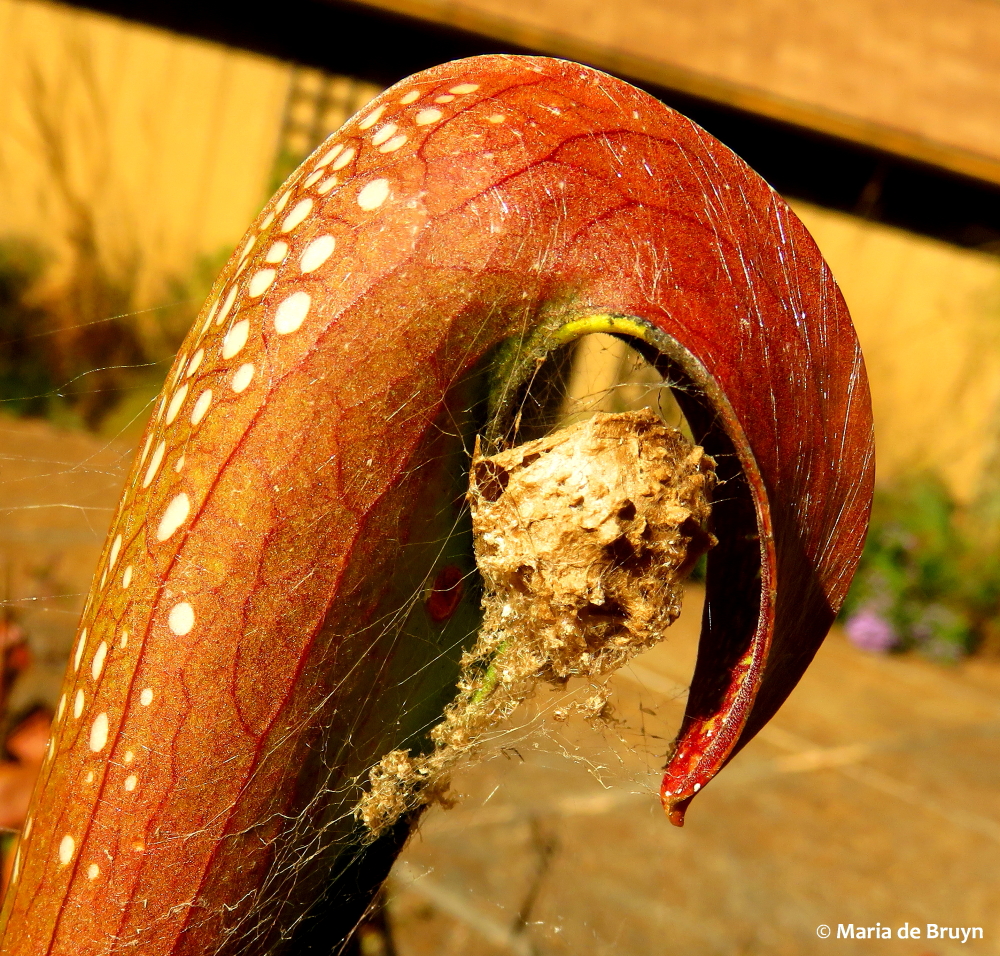
One green lynx at the NC Botanical Garden placed her egg sac underneath the “lid” of a pitcher plant and then hung out on that and neighboring plants to keep an eye on the sac. I was lucky to see one of the babies after it hatched.

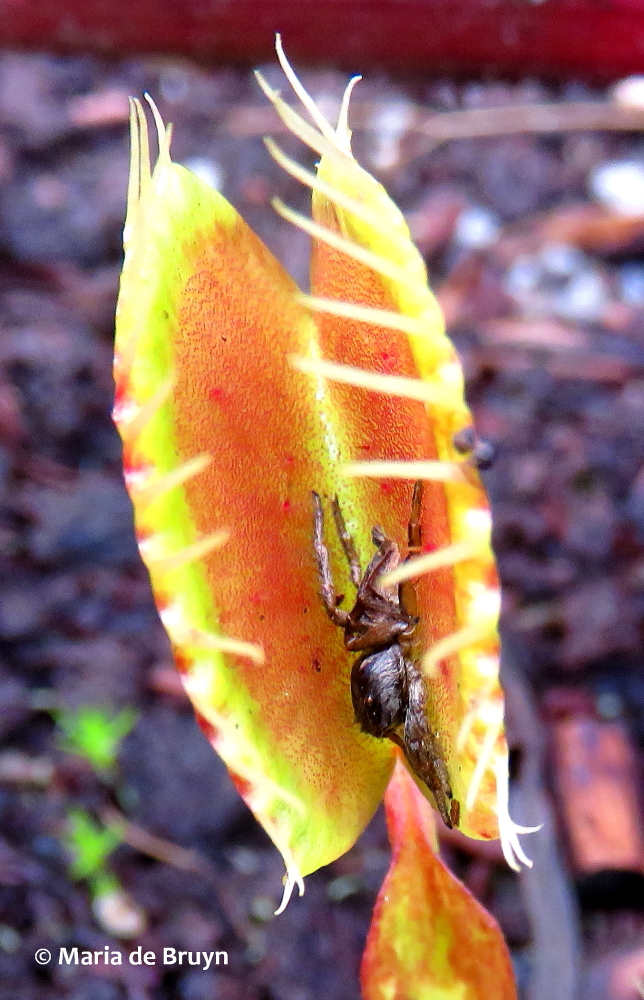
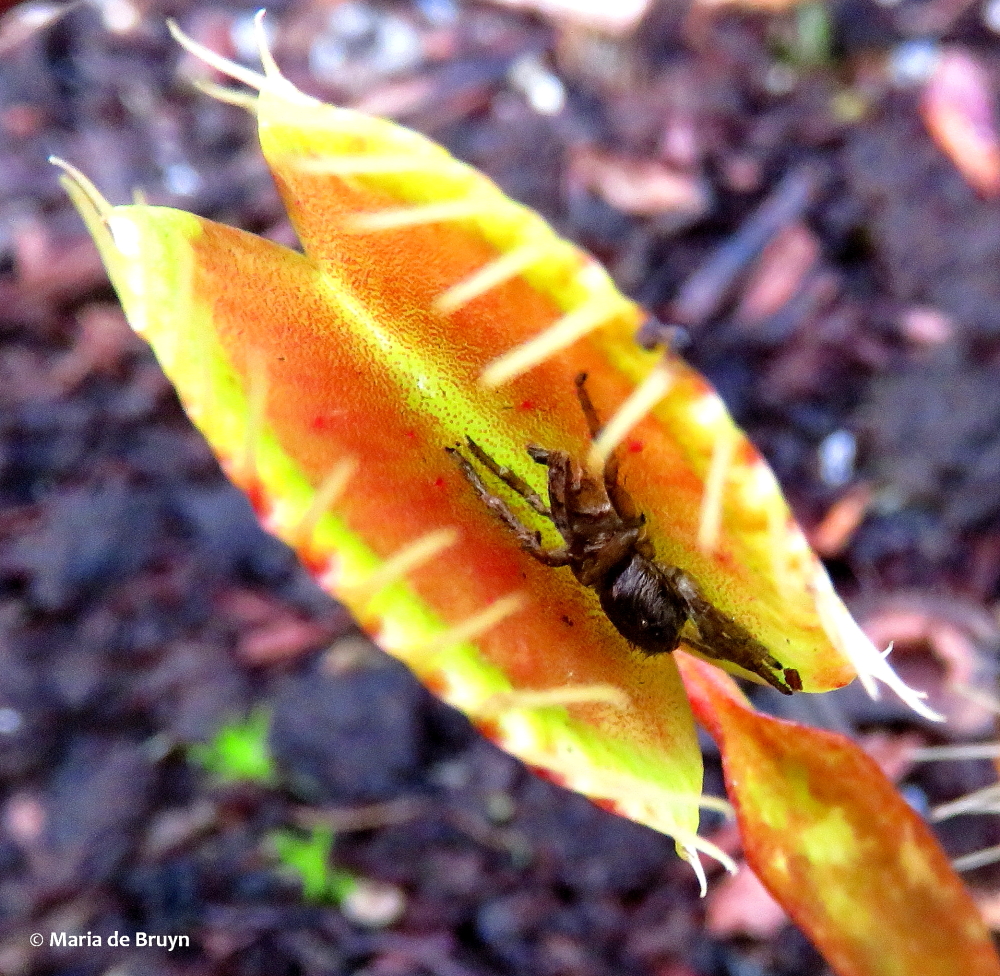
Another spider was not so lucky – it became a meal for one of North Carolina’s endemic “special plants”, the Venus flytrap (Dionaea muscipula).

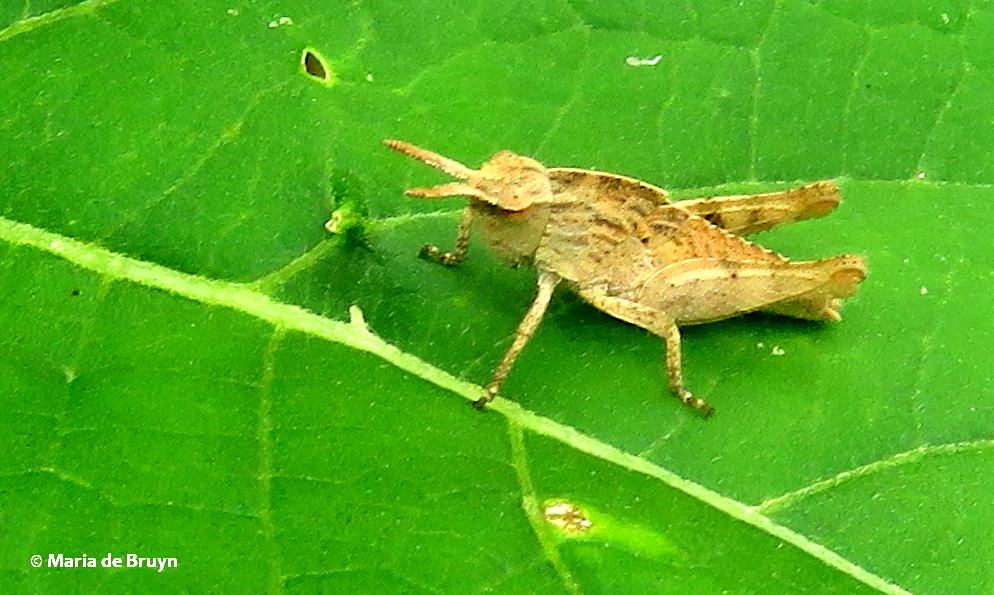
North Carolina has many species of grasshoppers; I saw several species this past year, including several mating pairs. Here is a young short-horned grasshopper.

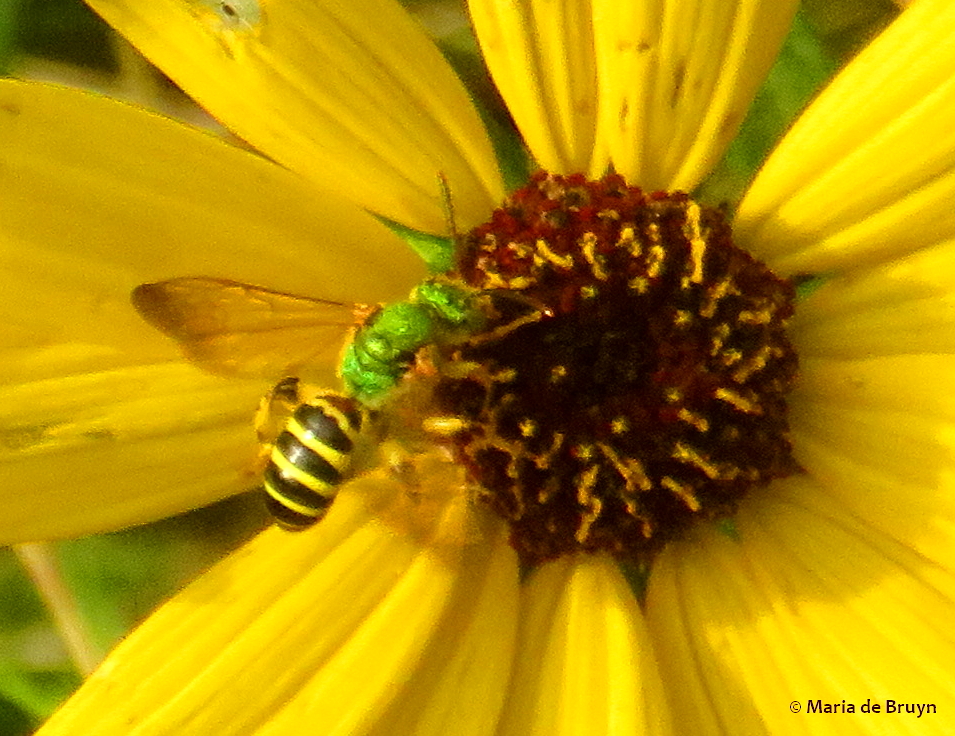
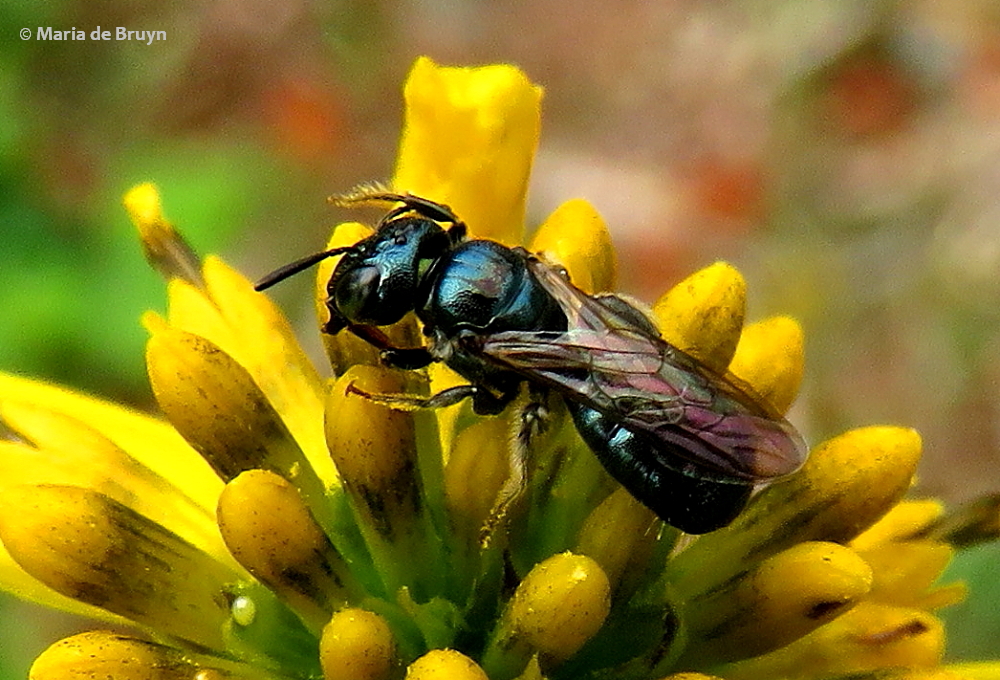
It’s always nice to see some pollinators.


Brown-winged striped sweat bee                        Small carpenter bee                                (Agapostemon splendens)                                   (Ceratina)


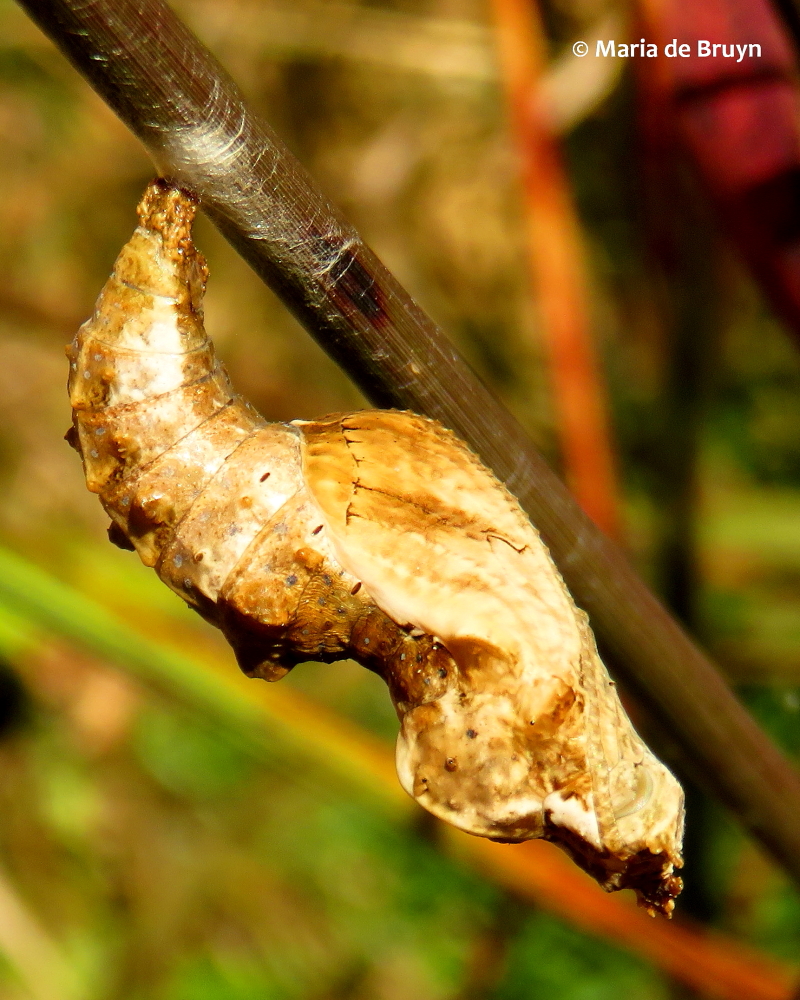
I got to see the chrysalids of two fritillary butterfly species, the variegated fritillary (Euptoieta Claudia, left) and the gulf fritillary (Agraulis vanilla, below).

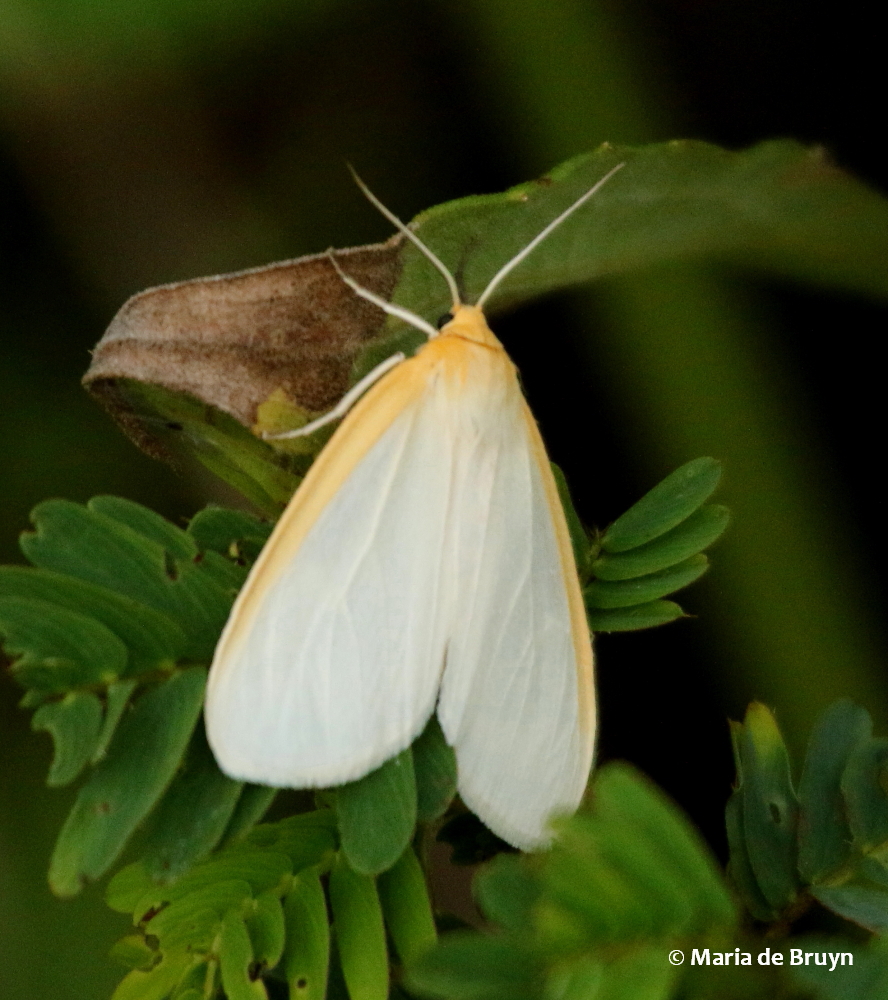
Sometimes, I think the moths get a bum rap, being seen as poor cousins to the “beautiful butterflies”. But there are many really beautiful moths, like the lunate zale moth (Zale lunata) and delicate cycnia moth (Cycnia tenera).


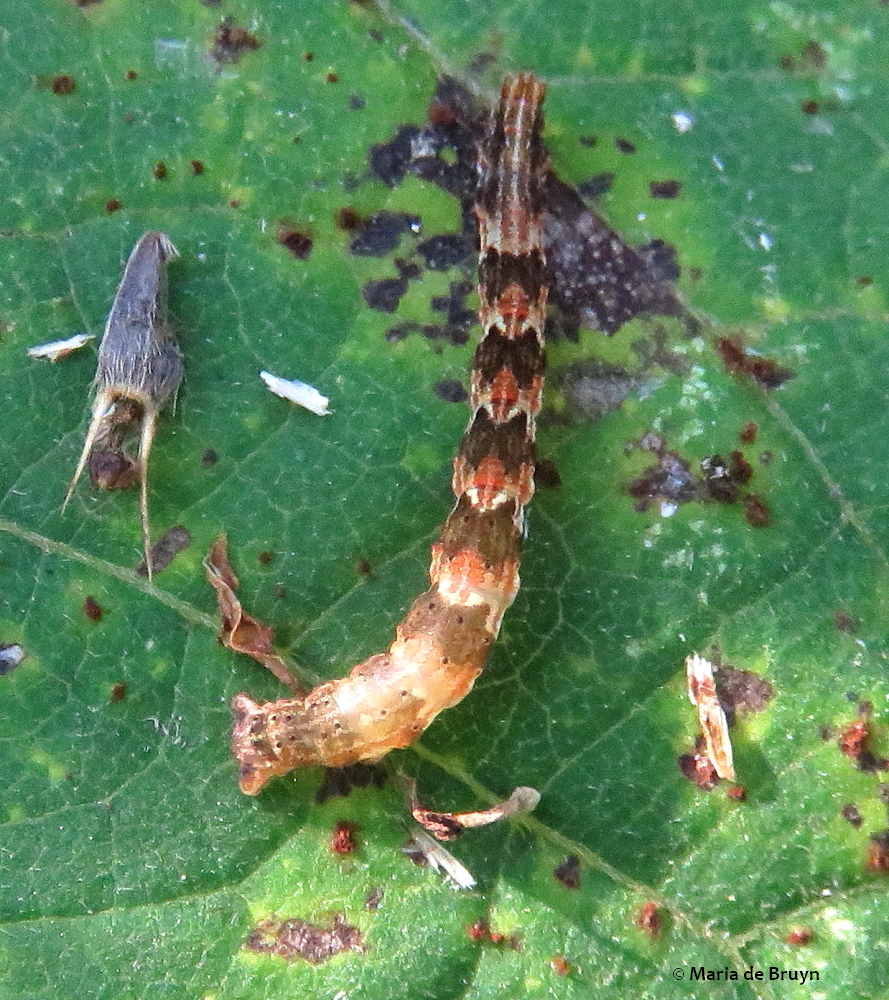
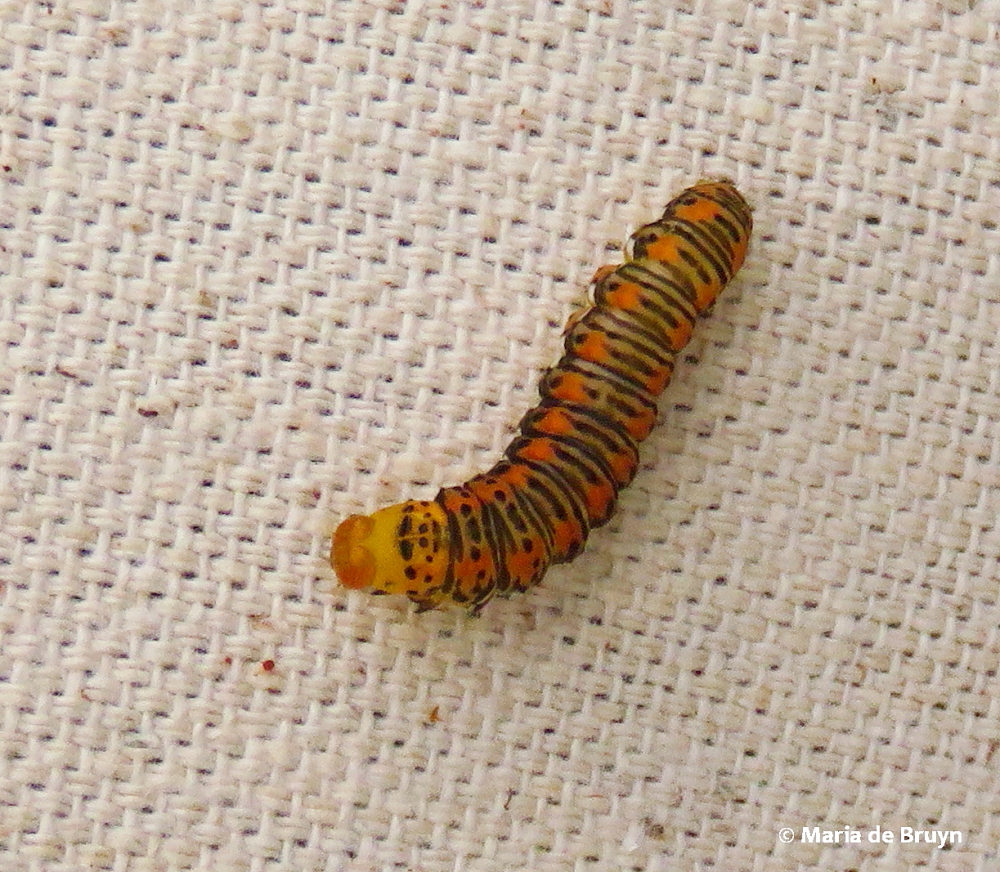
I got to see several moth caterpillars this year; the experts at BugGuide were very helpful in identifying them for me.


Common tan wave moth                           Gold moth caterpillar  (Basilodes pepita)          (Pleuroprucha insulsaria)

 
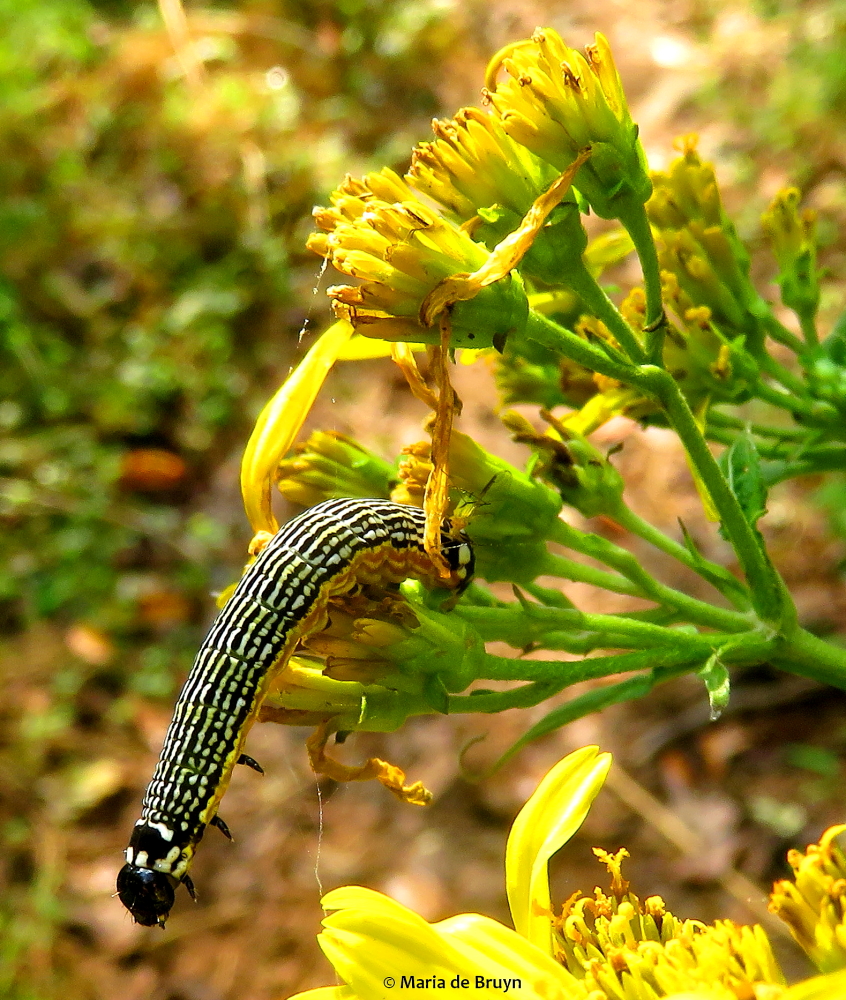
Turbulent phosphila moth caterpillar (Phosphila turbulenta)

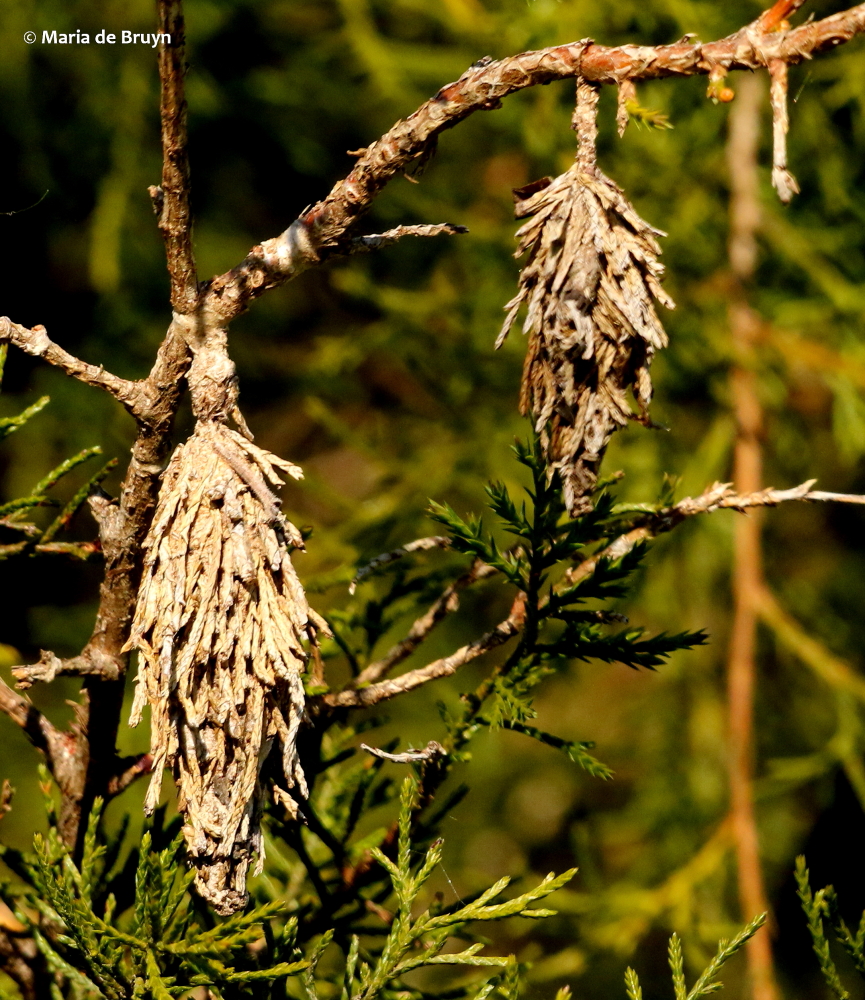
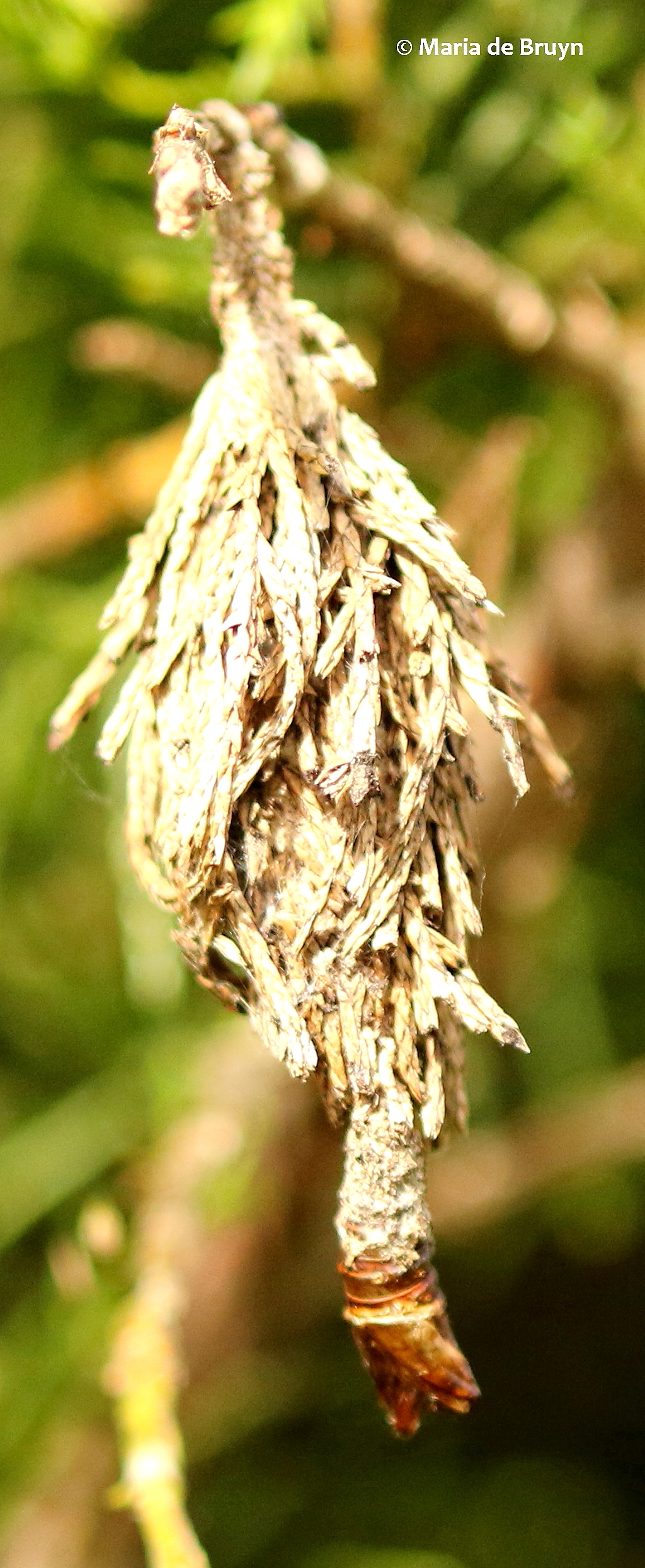
For the first time, I got to see an evergreen bagworm moth (Thyridopteryx ephemeraeformis). There were several hanging out in trees next to a rural farm pond – they did not restrict themselves to an evergreen tree but hung themselves from a persimmon, privet and cedar tree. I think the last photo shows the caterpillar as it was completing the “bag” into which it would insert itself.


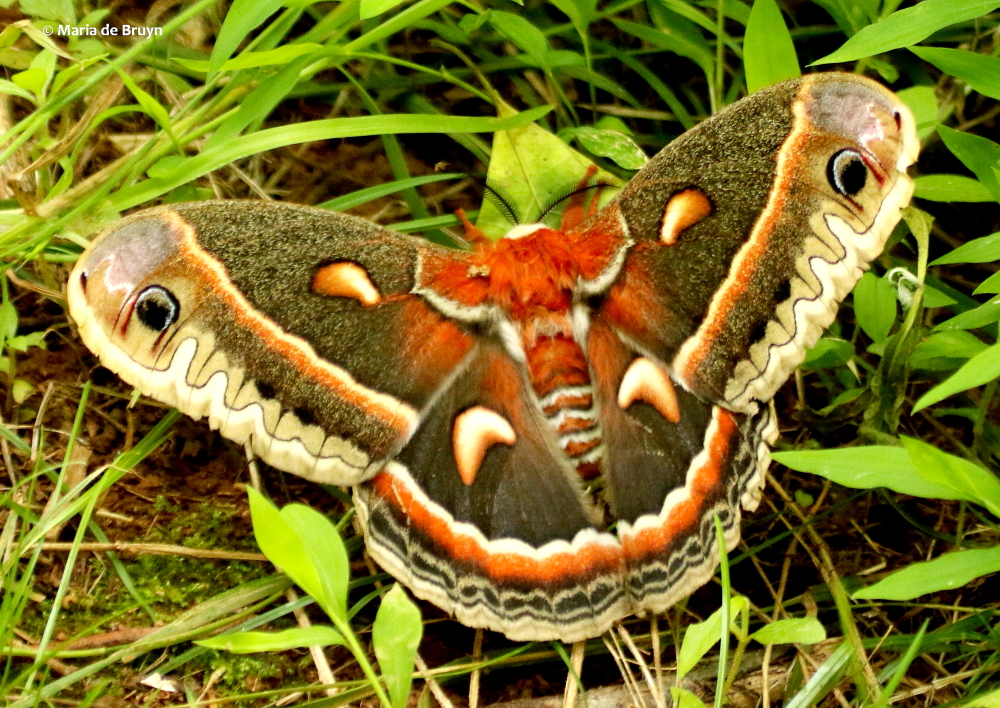
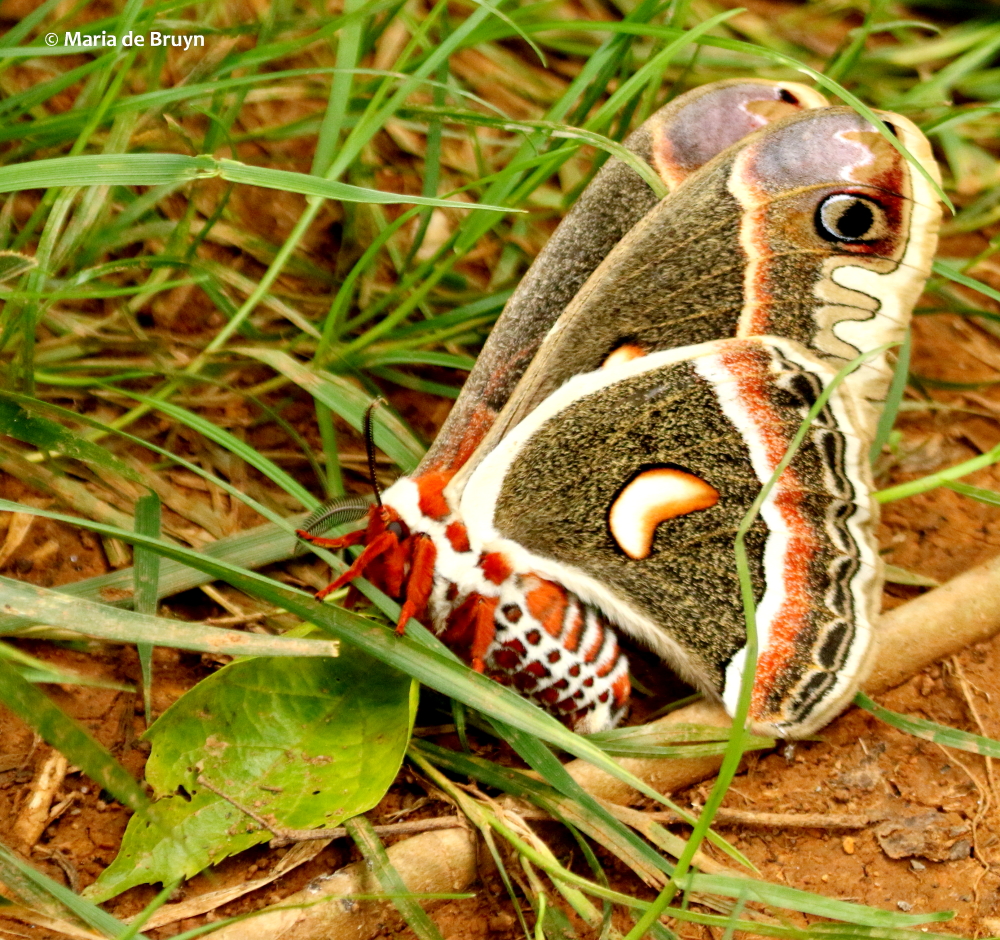
In the summer, I was lucky to see a cecropia moth (Hyalophora cecropia).


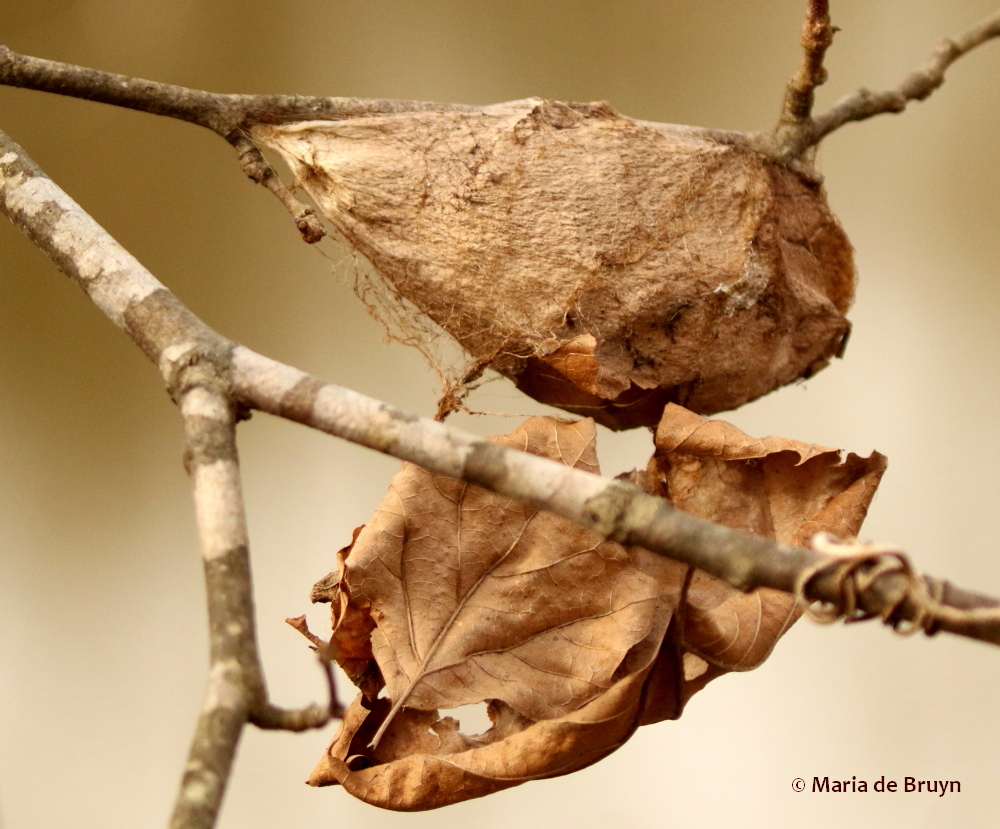
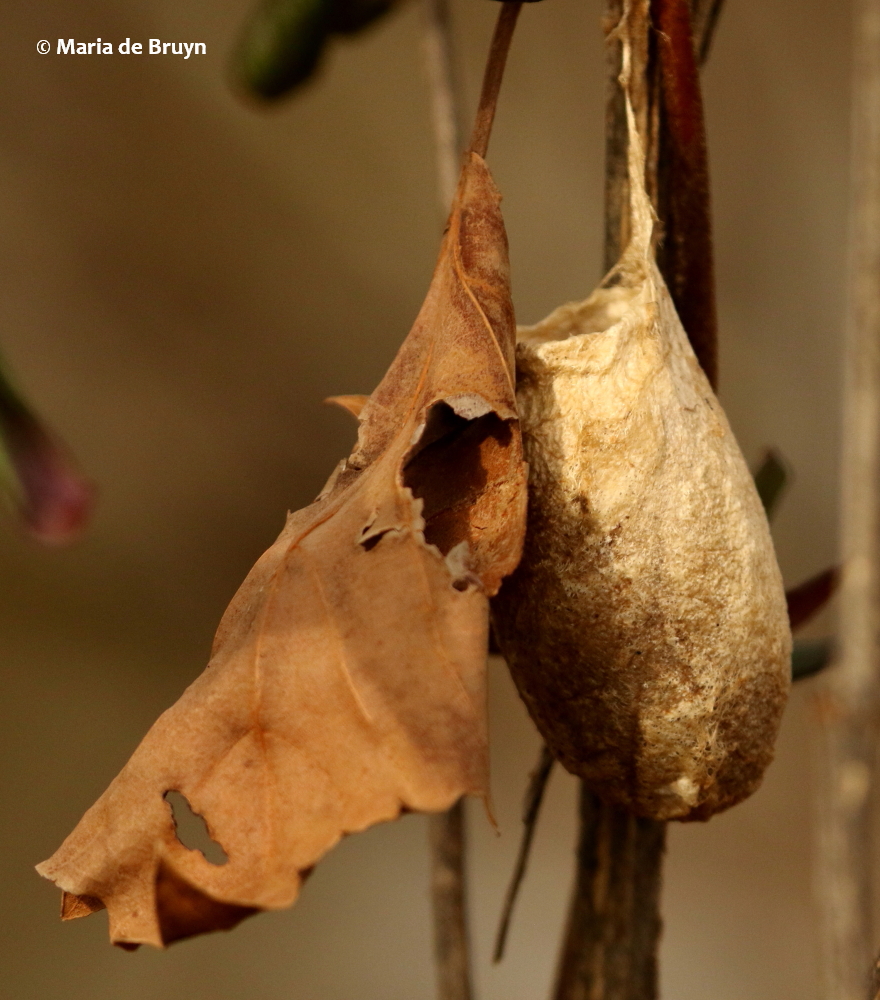
In December, I discovered two cecropia chrysalids, as well as the cup-like chrysalis of a polyphemus moth (Antheraea Polyphemus, which was empty).


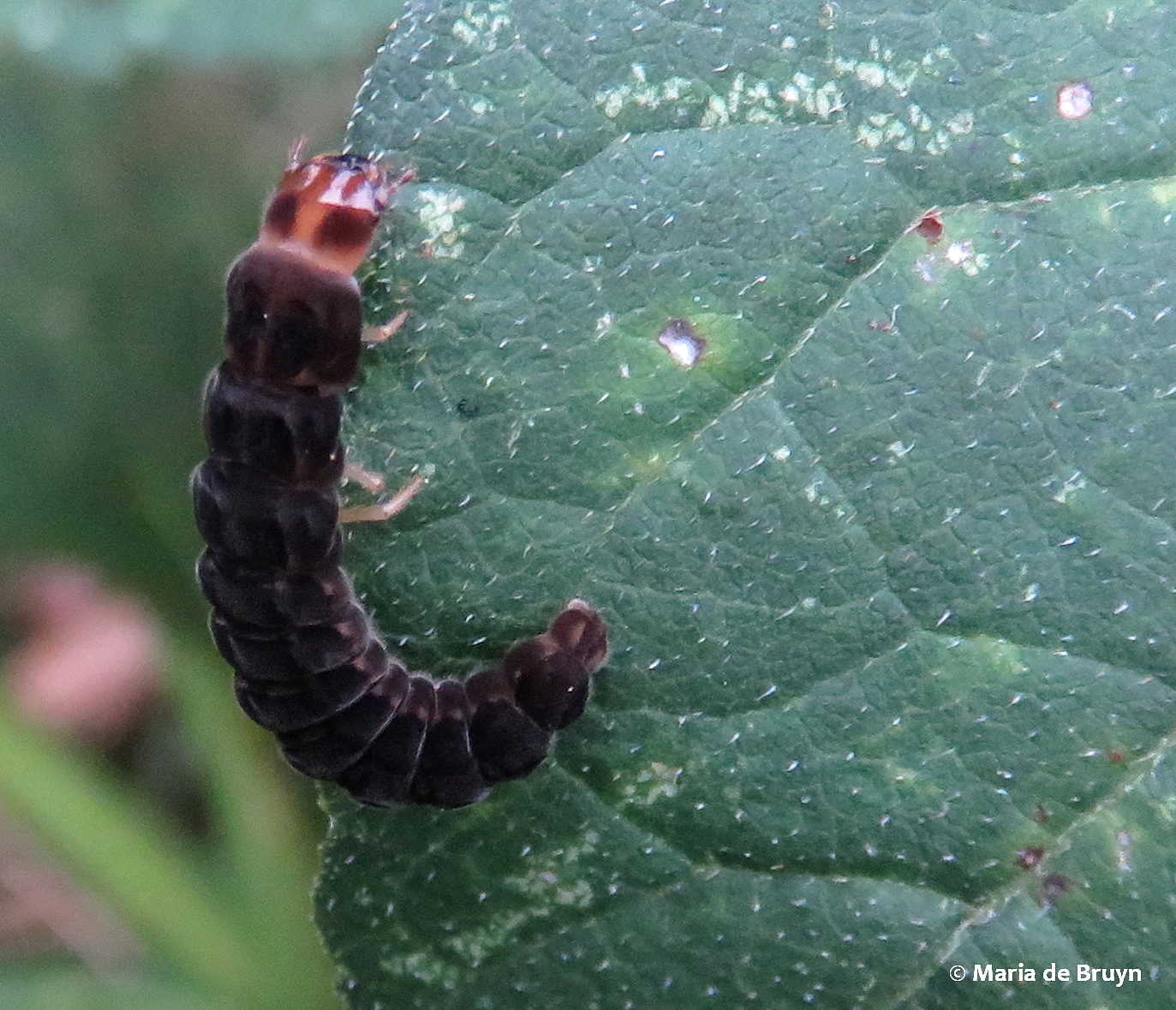
Another discovery was that the larvae of soldier beetles look like some type of caterpillar as well.

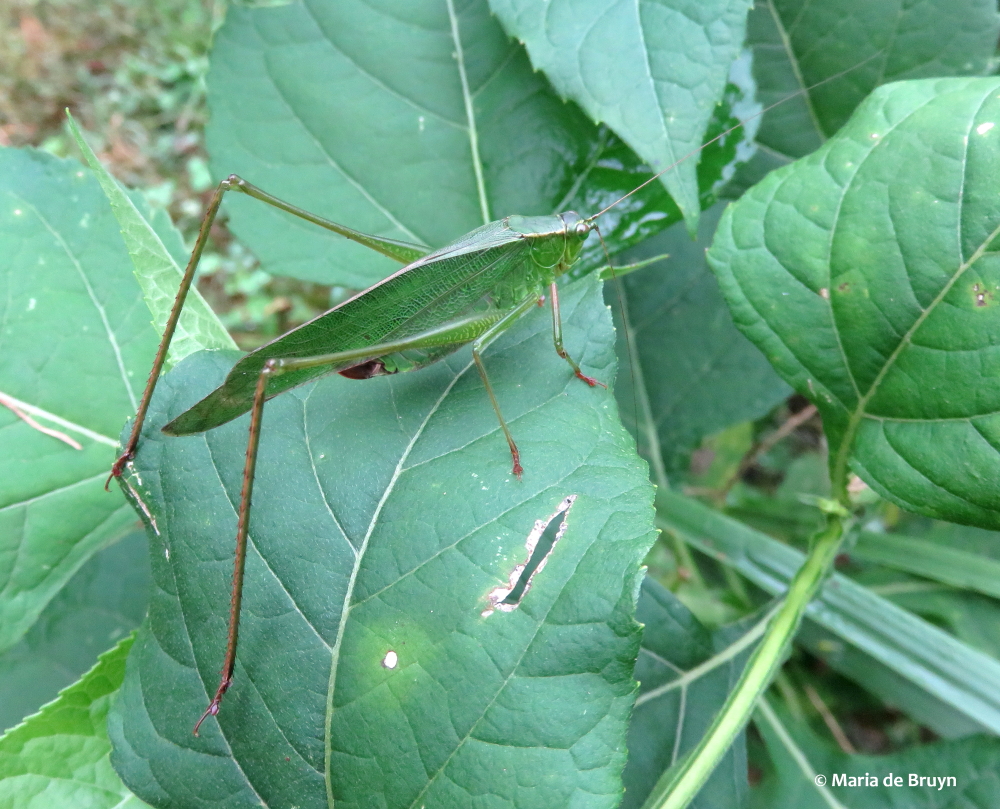
There were lots of katydids around, including the slender straight-lanced katydid (Conocephalus strictus) and the stockier Scudderia bush katydid.


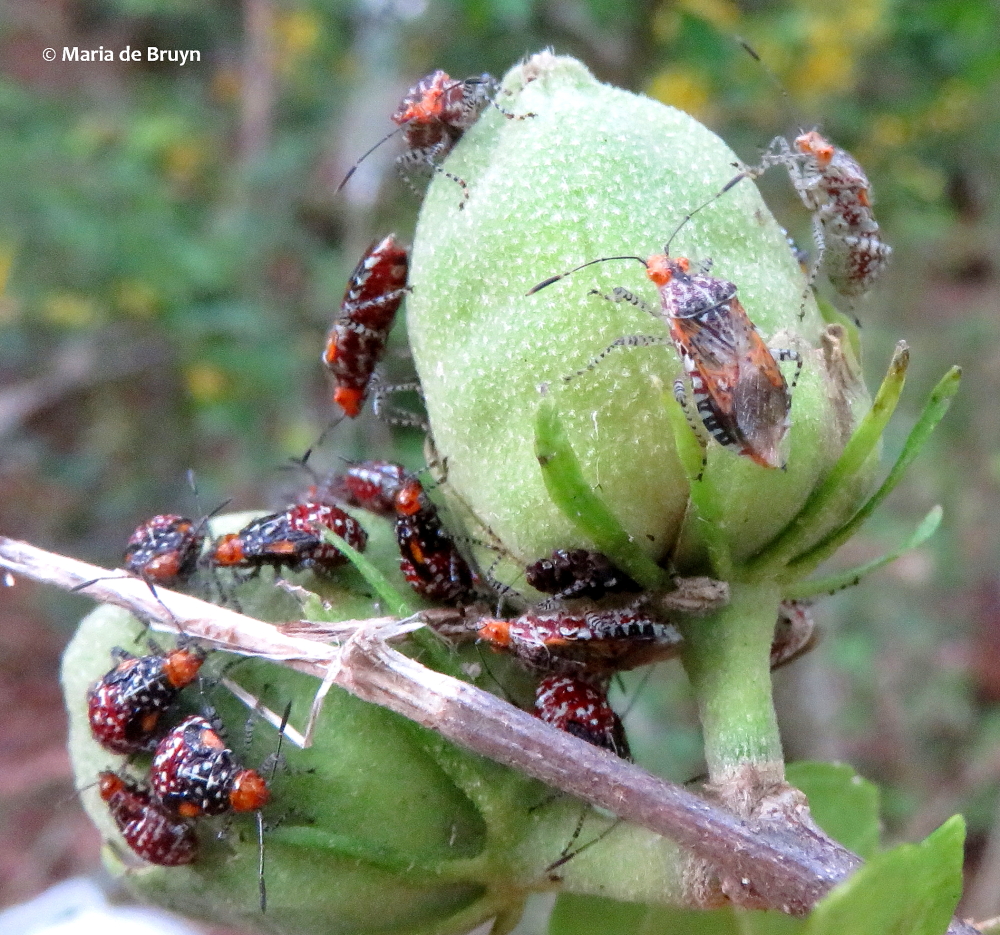
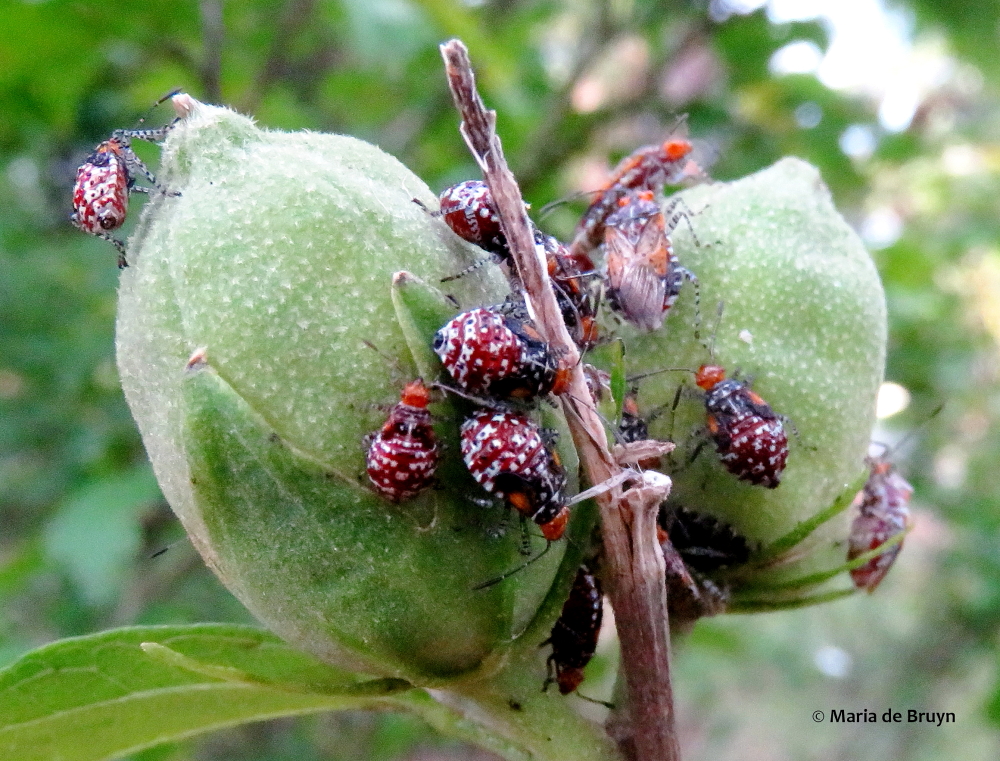
Some new bugs appeared in my yard, including a plant bug with muted colors (not yet identified to species) and some more colorful scentless plant bugs (Niesthrea louisianica) on my Rose of Sharon shrubs.


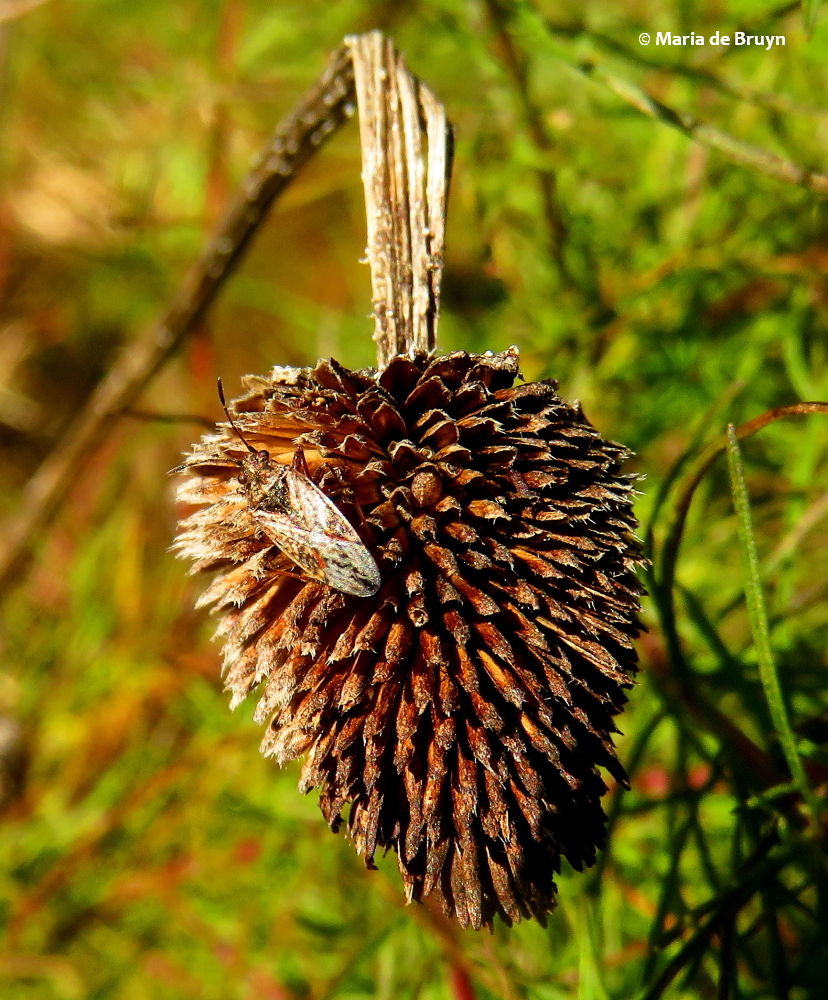
A seed bug on a seed pod and a head-on photo of a millipede (Narceus americanus-annularis-complex) were cool sightings, too.


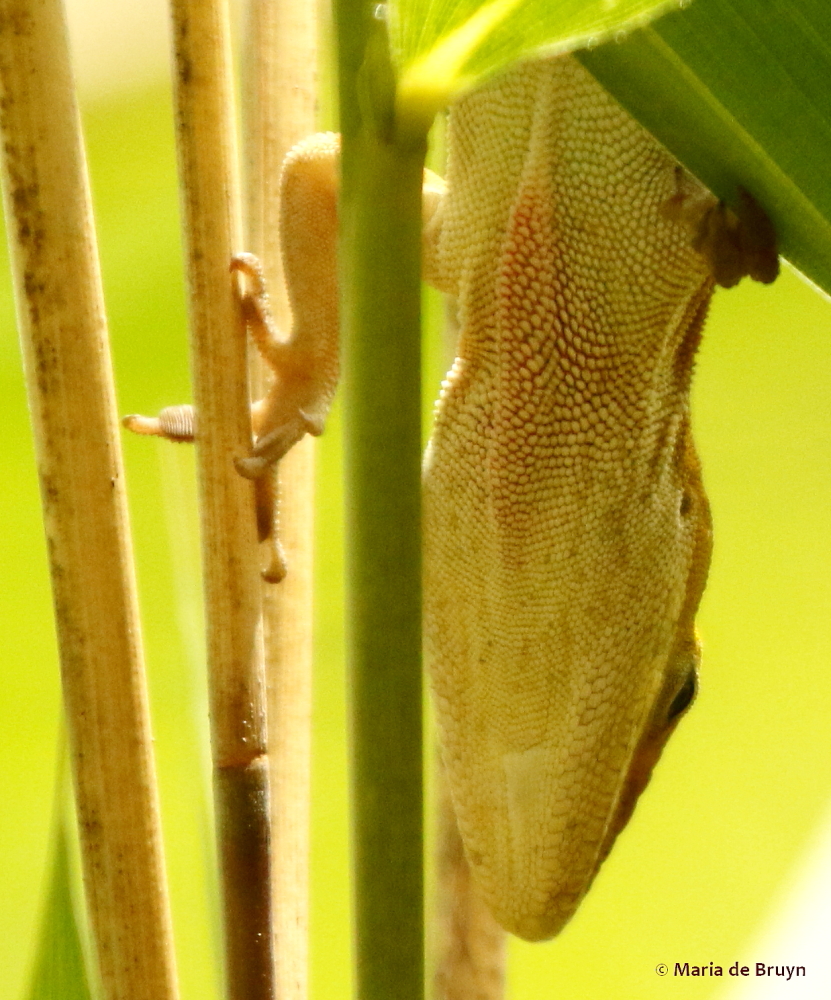
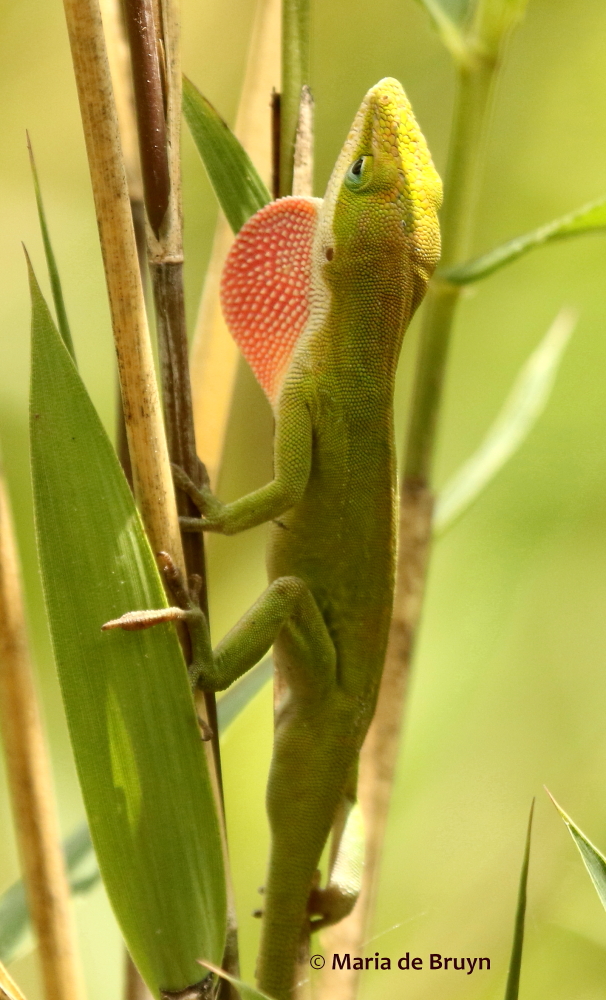
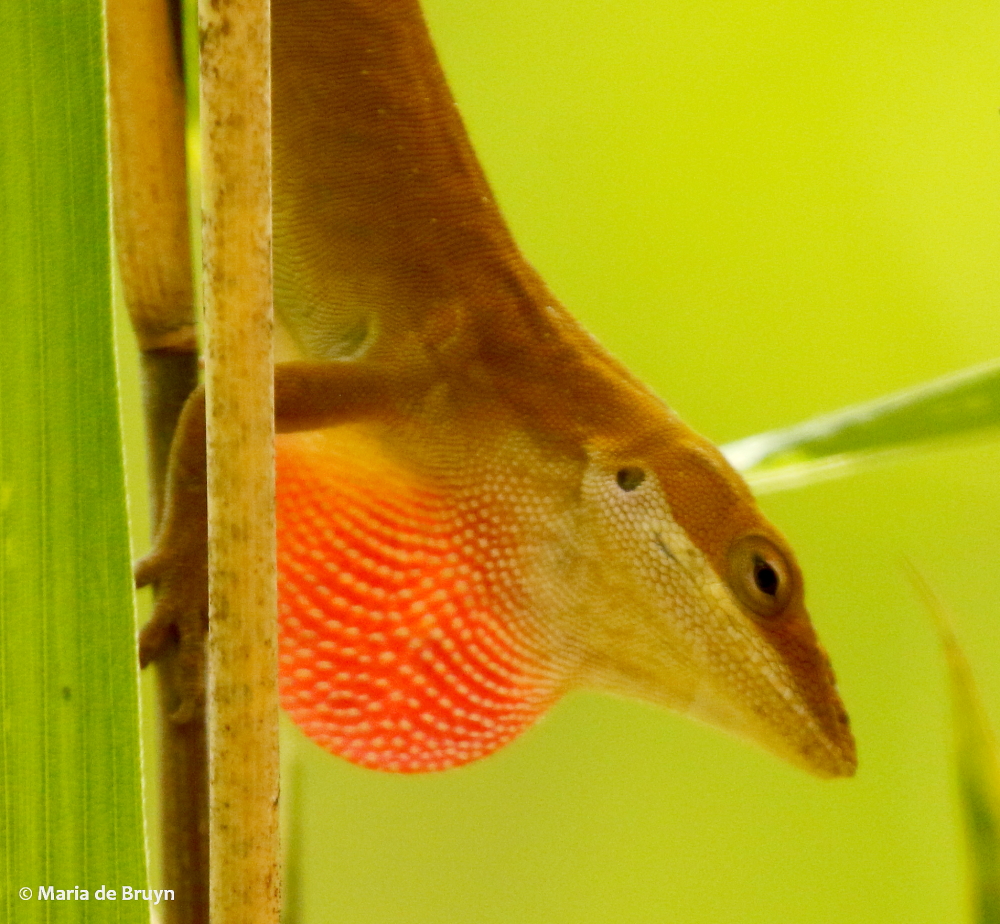
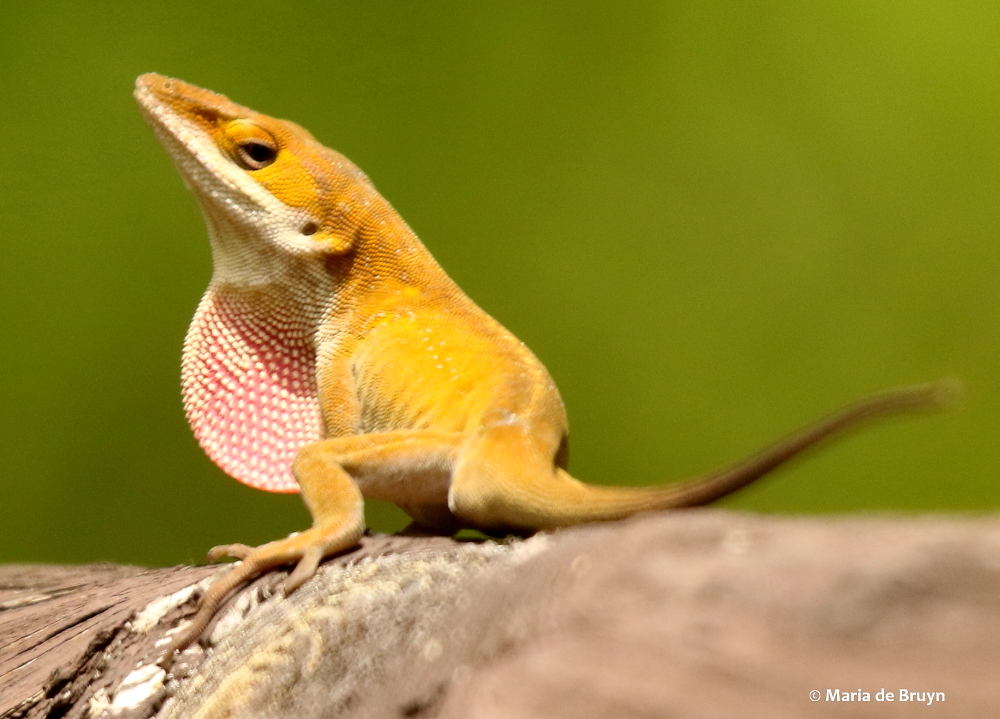
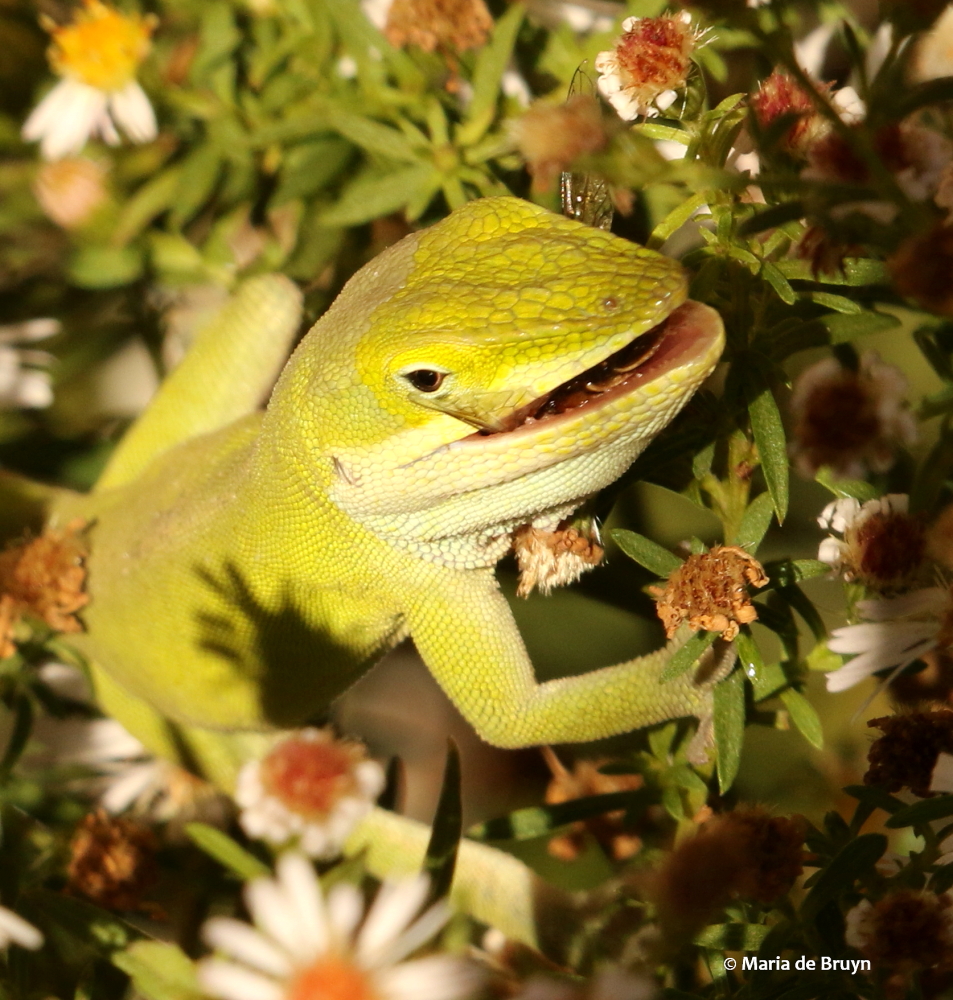
2018 was a good year for my observations of reptiles, too. Seeing a Carolina anole (Anolis carolinensis) flash its red dewlap (also known as a throat fan) was not a new experience but the fact that it was only a foot away from me doing it was a surprise.


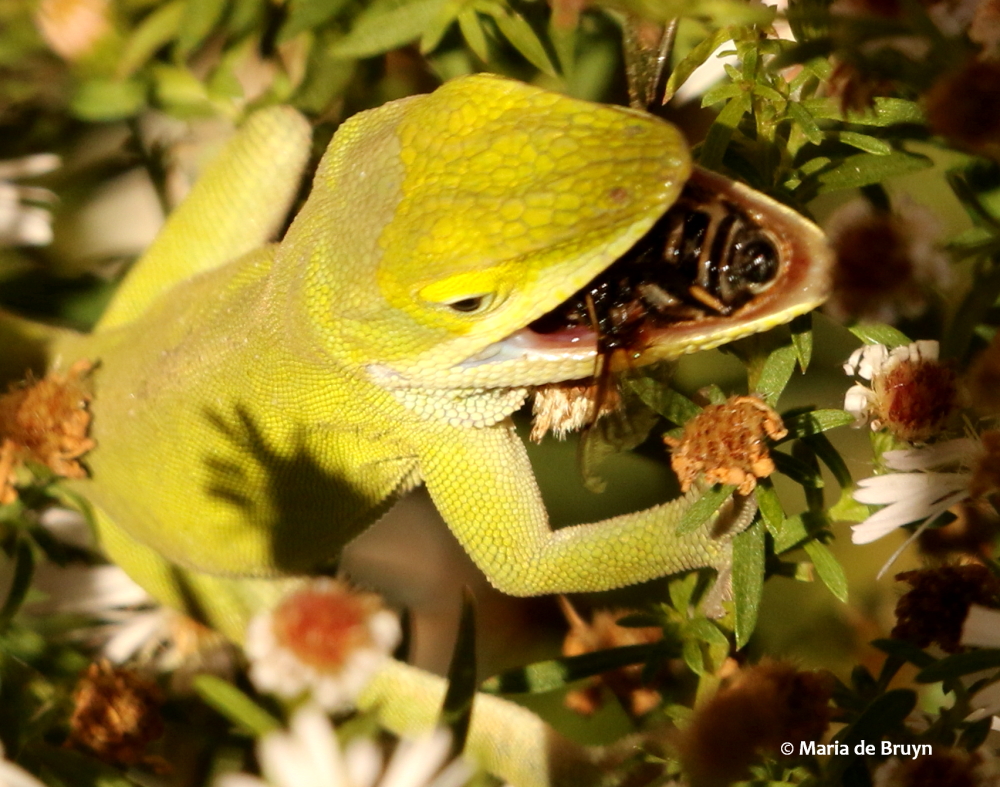
Seeing one of these anoles jump from one small flower twig to another in order to catch a bee for supper was a surprise – I didn’t know they eat bees. I felt a little sad that we lost a pollinator that way, but the anoles have to eat, too.


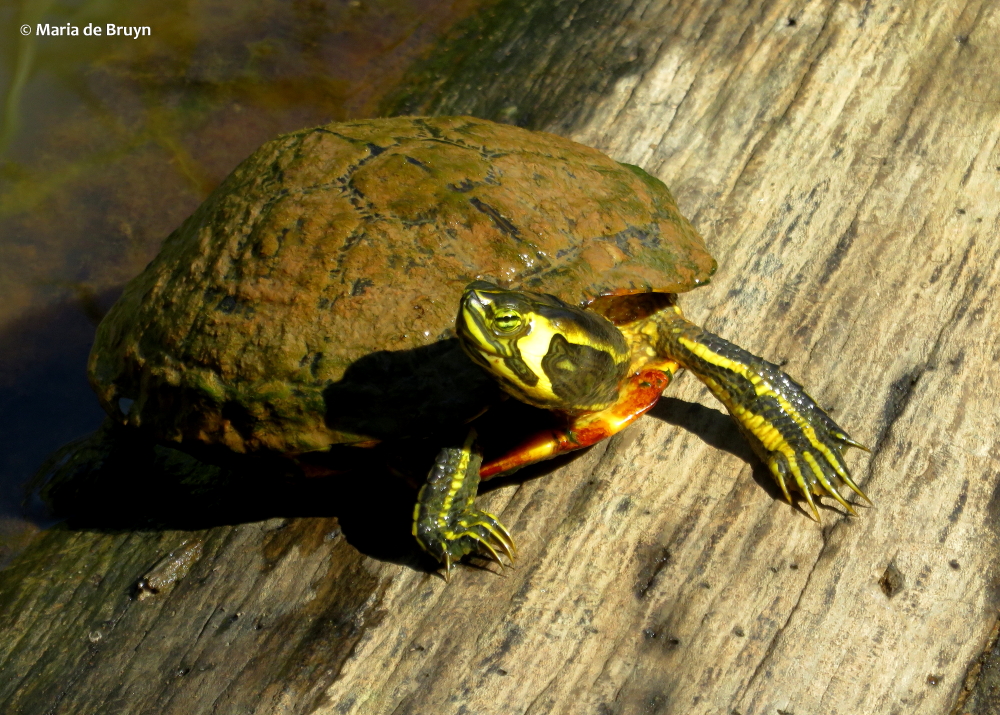
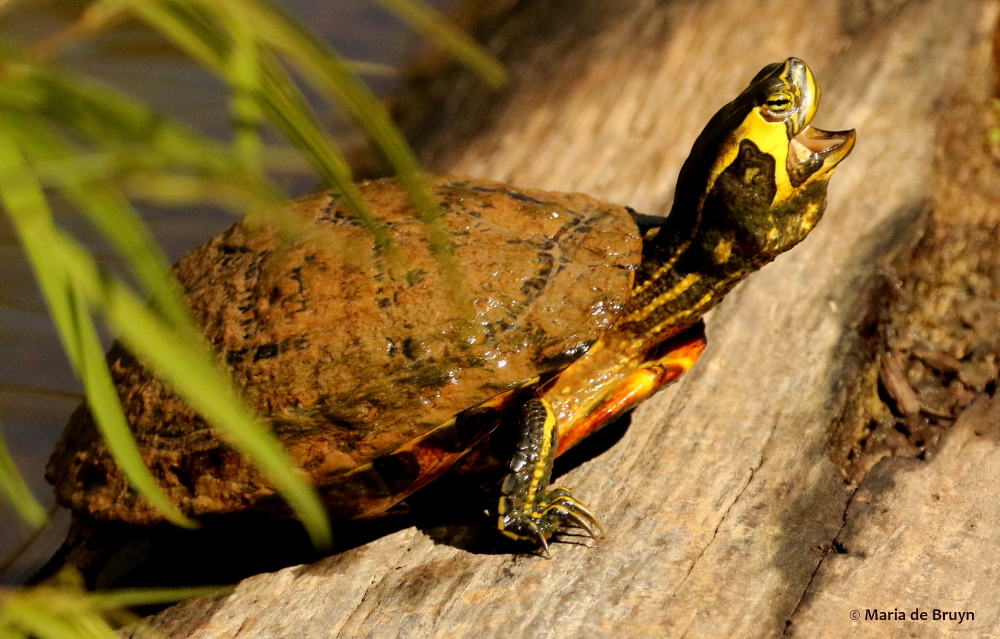
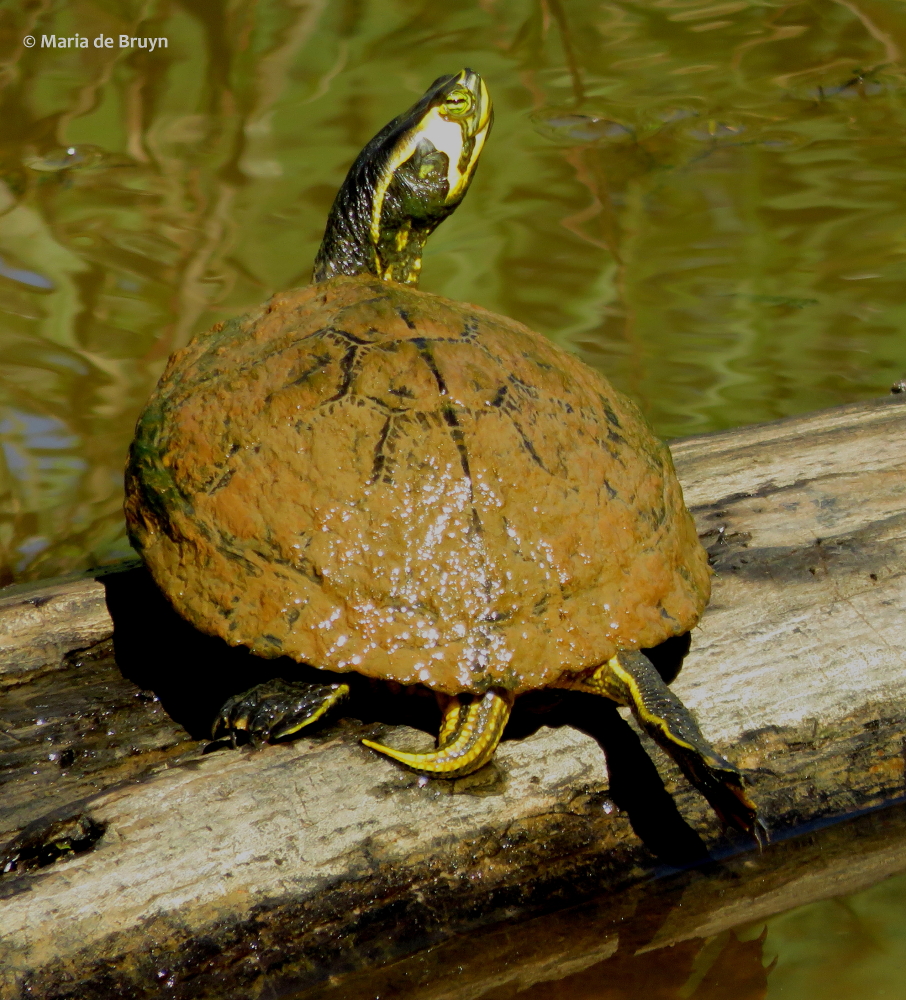
One day, when walking at the same wetlands where the anole hung out I came across some beautifully colored turtles. The yellow-bellied slider (Trachemys scripta) had a beautiful pattern on its face.


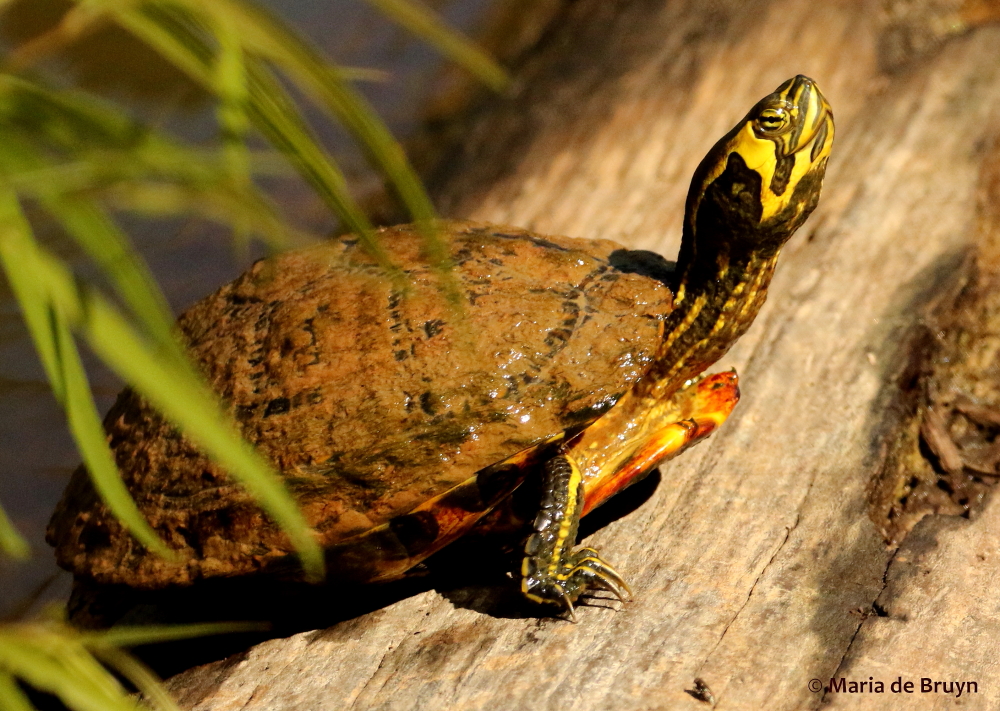
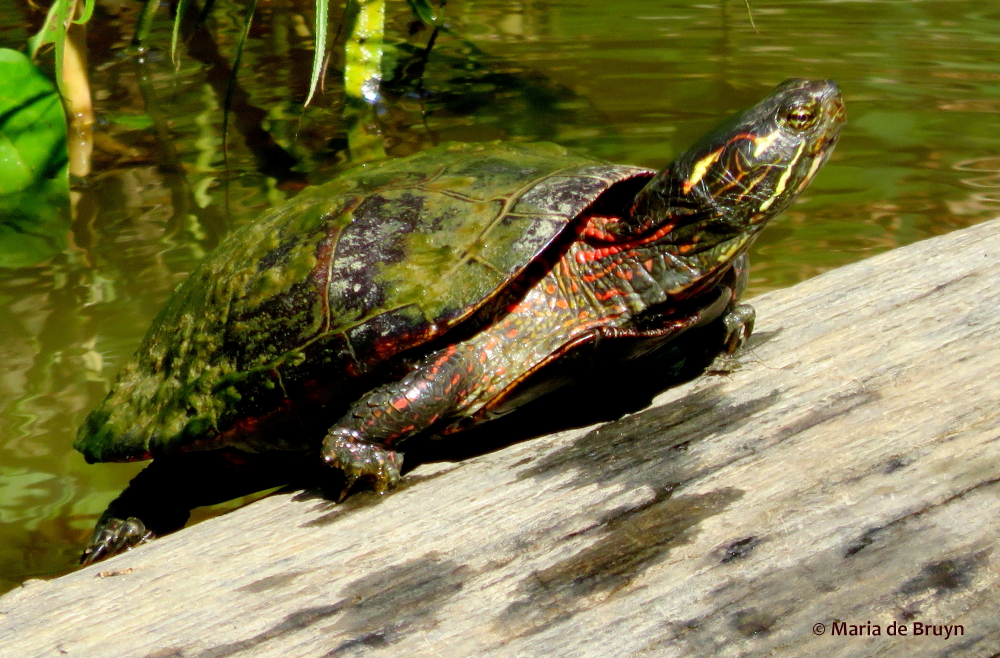
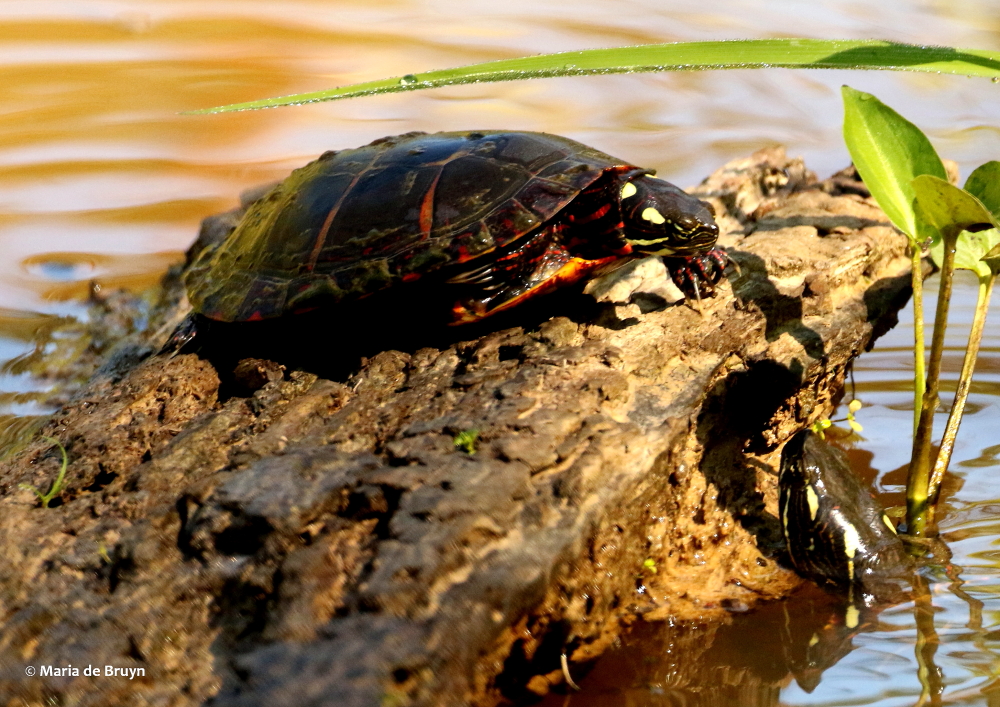
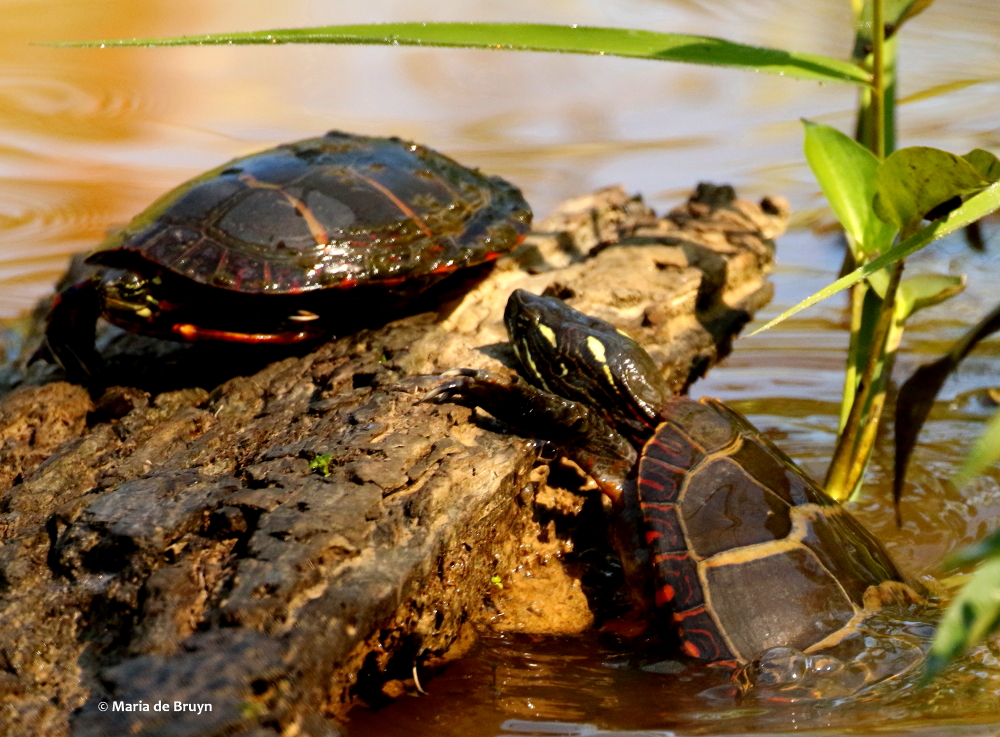
The painted turtle (Chrysemys picta picta) with its long claws had some beautiful bright red striping. It had gotten a prime sunning spot on a log that another turtle wanted for itself; the first turtle held it off.


The second turtle circled around and tried to get on board from the other side but turtle No. 1 kept it at bay.


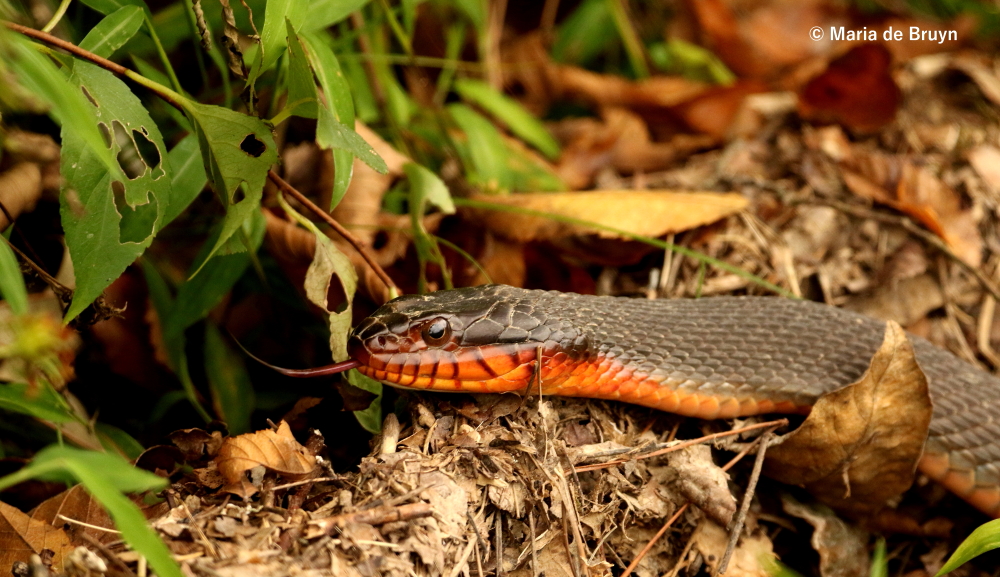
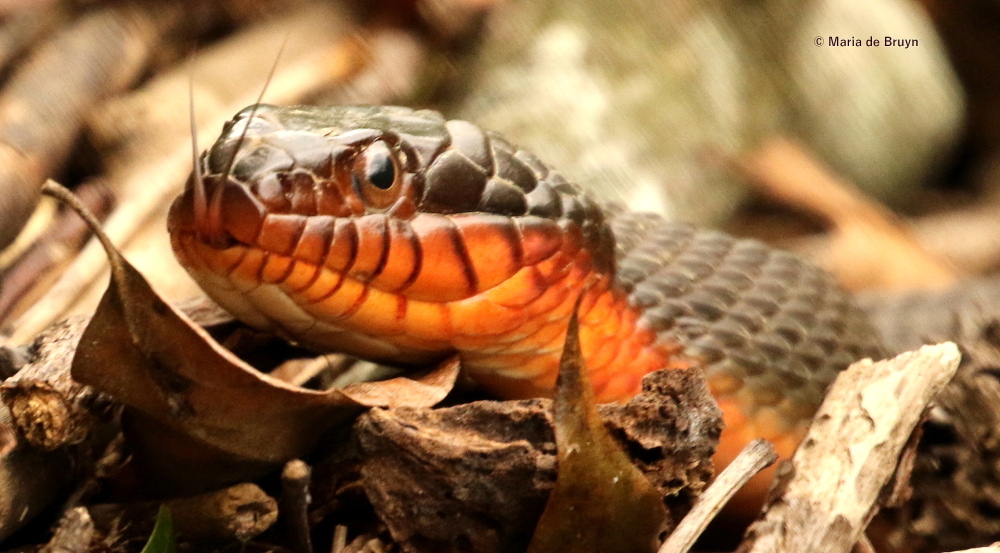
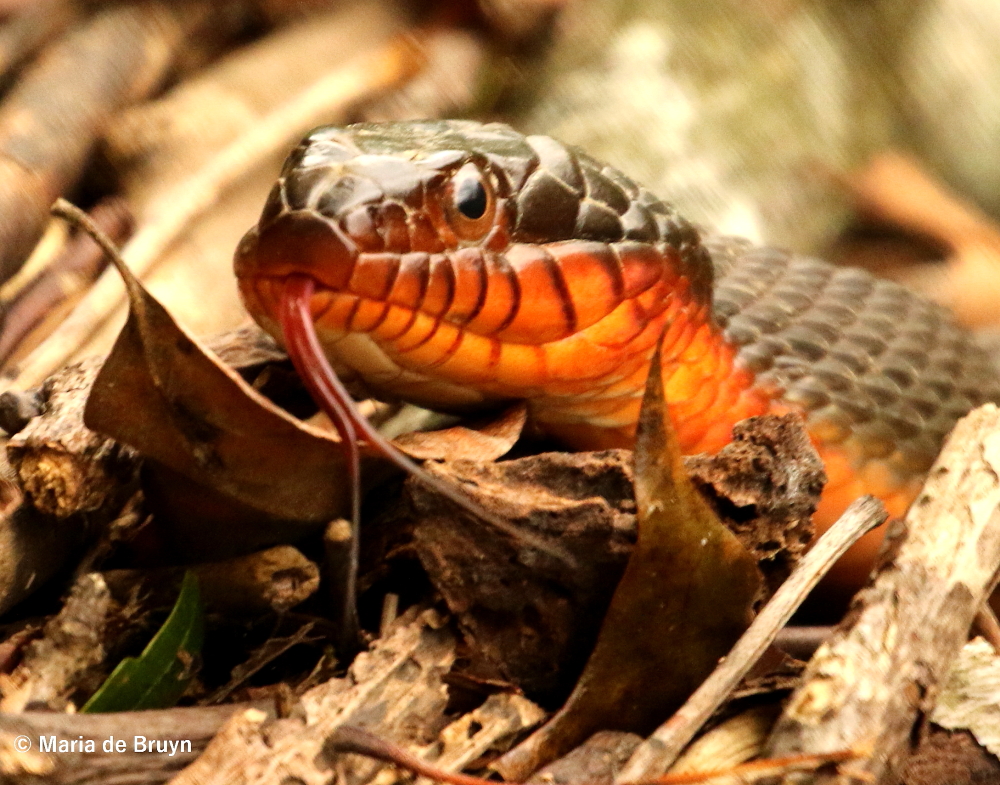
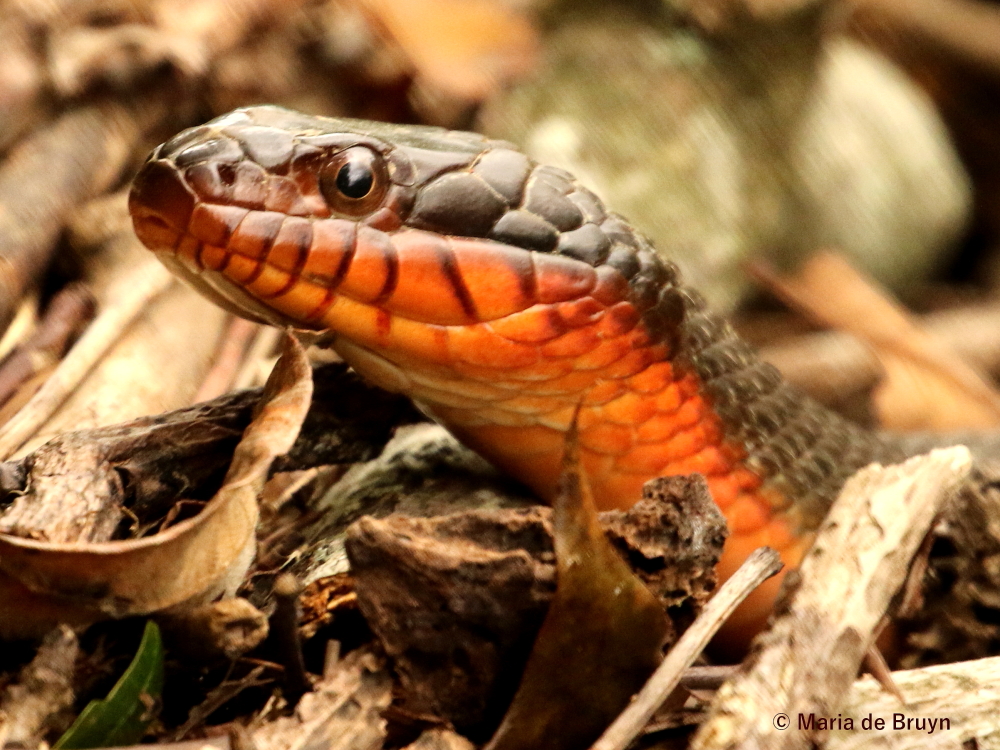
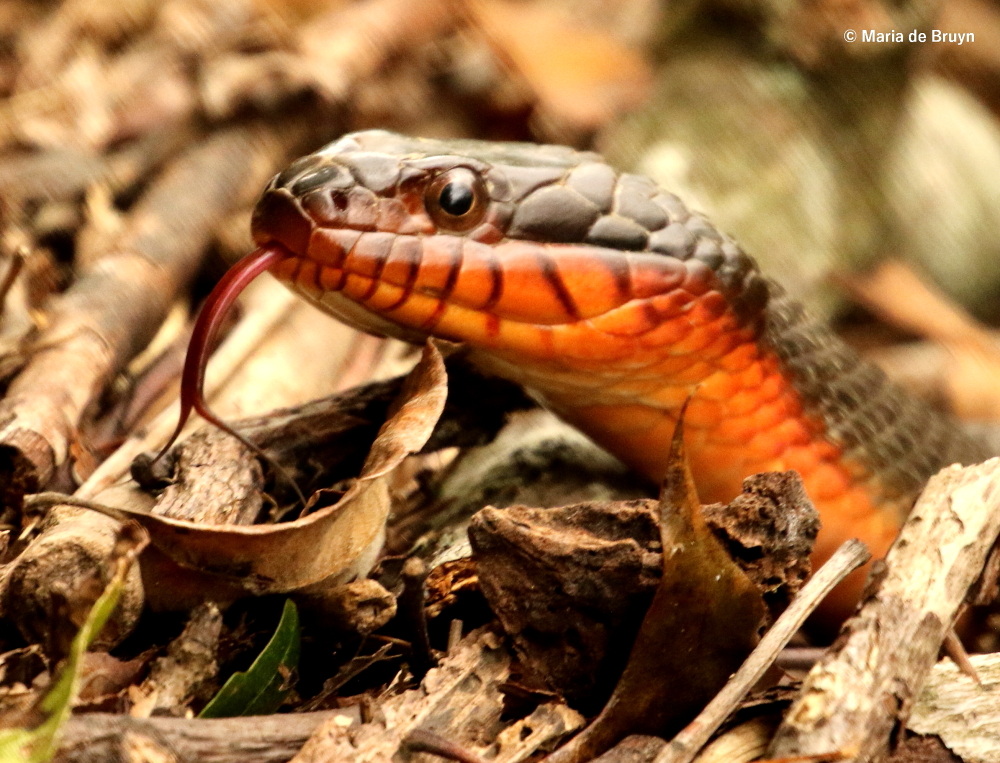
My snake encounters included seeing Northern water snakes and rat snakes. It was a beautiful red-bellied water snake (Nerodia erythrogaster) that caught me by surprise when it suddenly veered off its course toward me. I backed up and the reptile stopped approaching, flicking its tongue out as it explored what was going on.

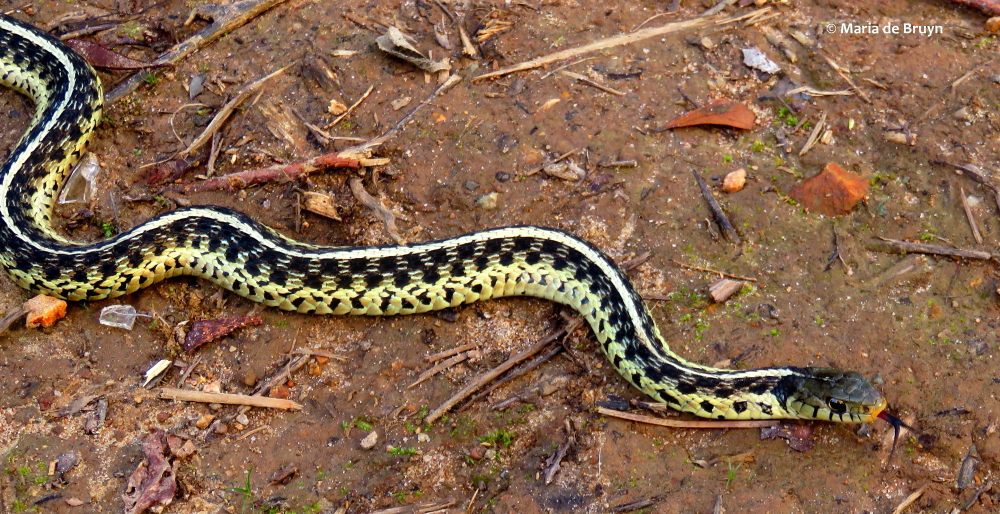
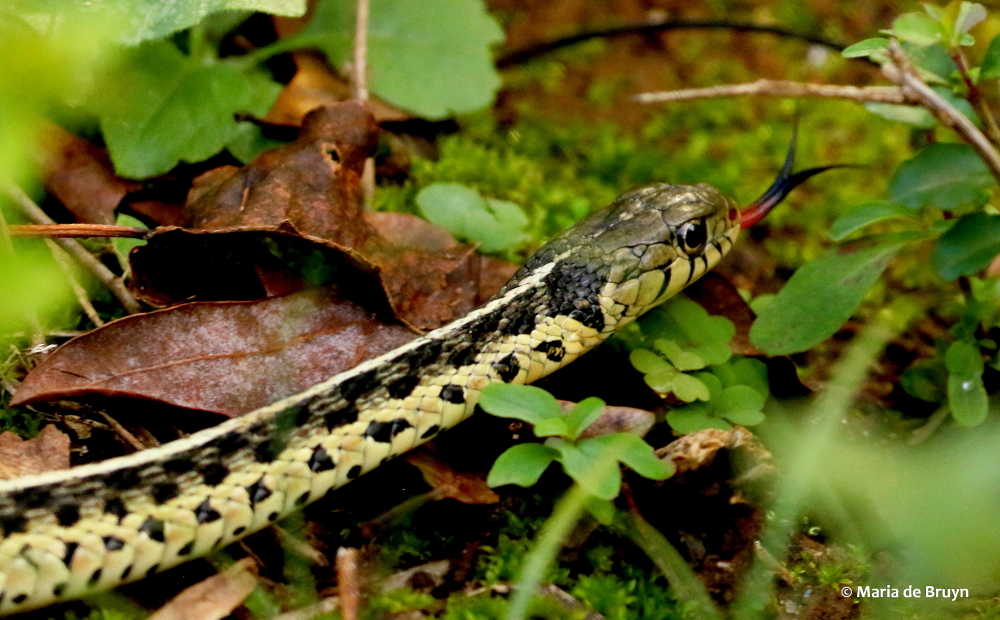
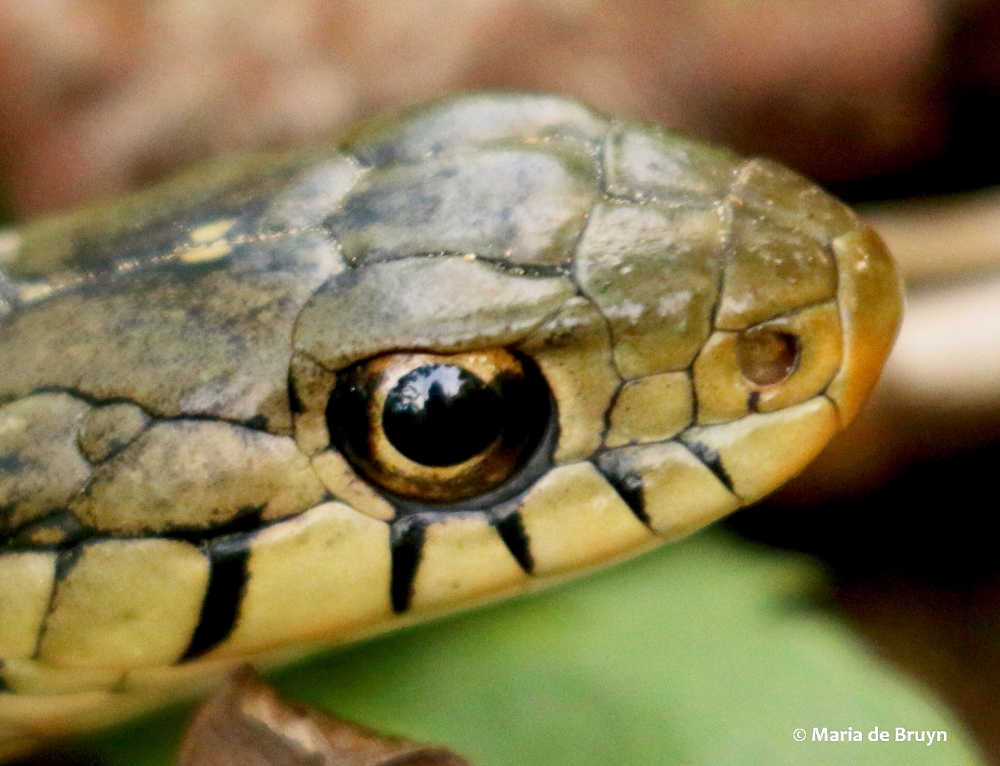
My final spotting to share with you today is another gorgeous snake – a common garter snake (Thamnophis sirtalis). It had been a long time since I had encountered one and this individual had quite vivid colors.

Next up – some beautiful raptors.

A bountiful year for seeing Castor canadensis

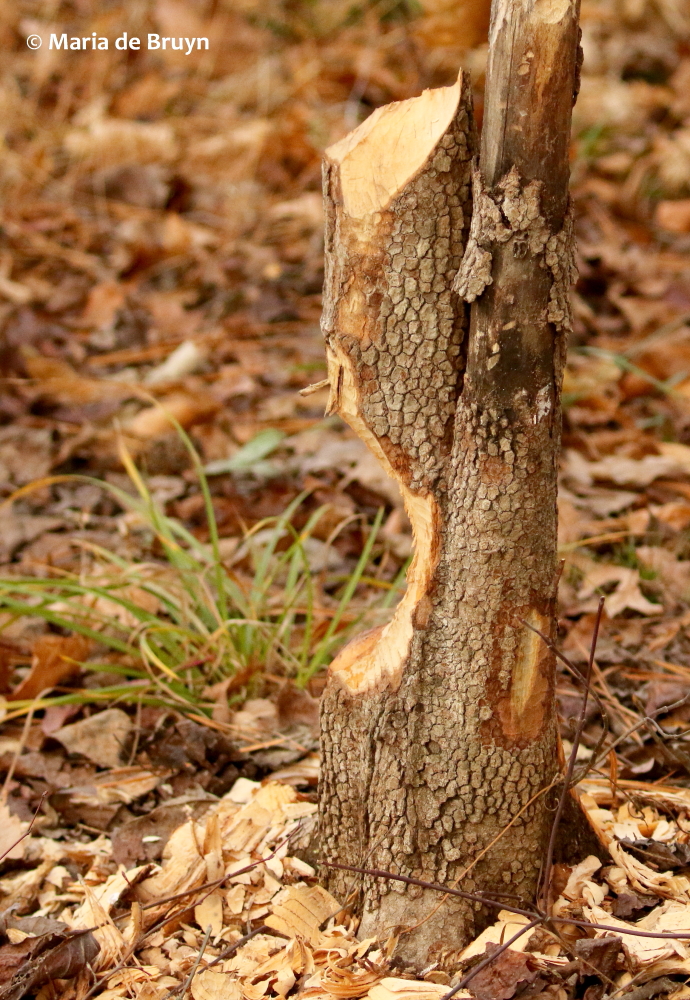
It has been my privilege to go on safaris in Africa and my outings in nature there resulted in sightings of multiple mammalian species each time. Where I live now, there are also a variety of mammals but I don’t see them often, other than squirrels, chipmunks, deer, opossums and raccoons. I was lucky to see chewed trees as evidence of American beavers’ (past) presence, but I was not seeing members of the Castor canadensis species. Some of the chewing patterns on the trees were interesting though.

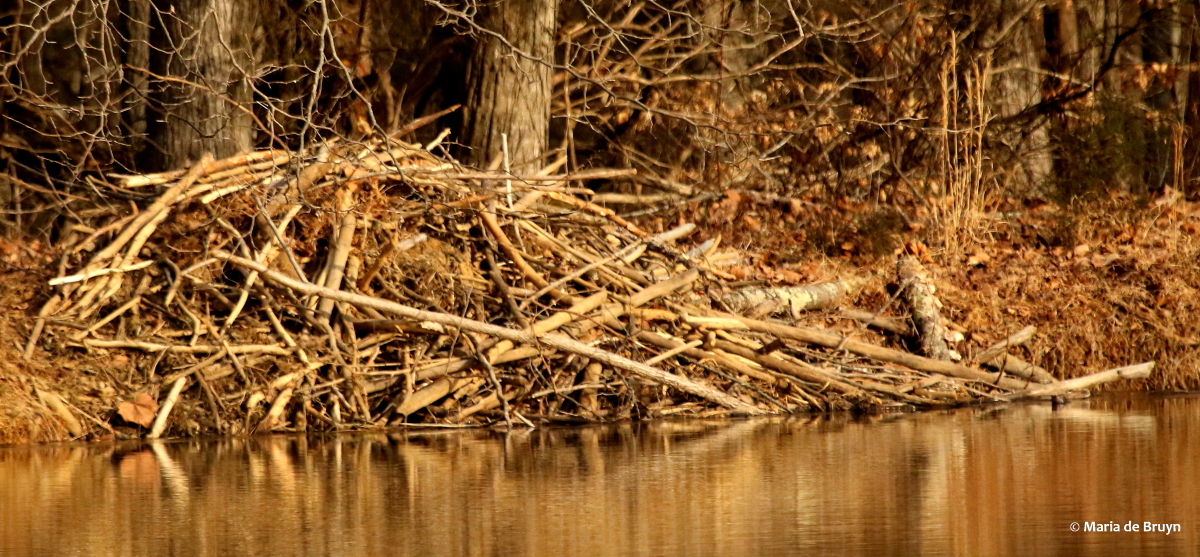
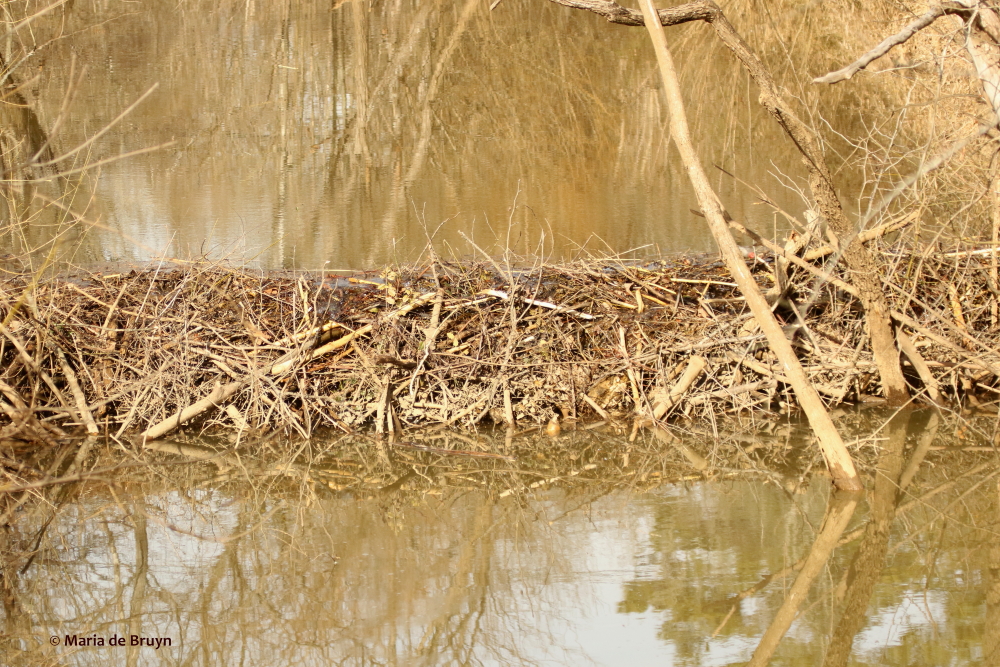
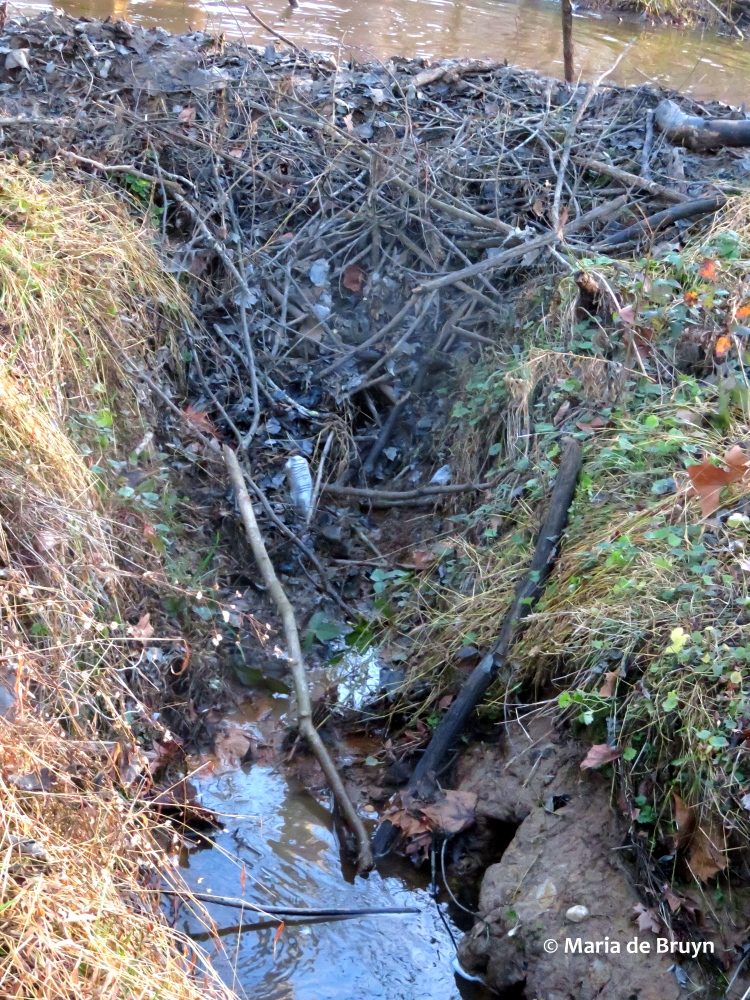
I saw my first beaver lodge at Brumley Nature Preserve South in early 2016 and had the good fortune to get a quick glimpse of a beaver there. (Before that, I had seen them in zoos.) Then I began noticing beaver dams more often on walks, like the one below near the Haw River. So for my first long blog of 2019, I’d like to share with you how 2018 became my bountiful beaver year.

In the spring, a friend told me about a creek where beavers’ dams had resulted in marvelous wetlands along some nature trails. Their handiwork at Pokeberry Creek was appreciated by a considerable number of nearby residents, who were pleased with an increasing number of waterfowl and other birds at the wetlands, as well as otters.


They spoke about the benefits of beavers’ presence, such as the increased biodiversity, improved water quality and more opportunities for wildlife viewing, and celebrated their arrival. Some birding groups began leading walks there to view the numerous songbird and other avian species.

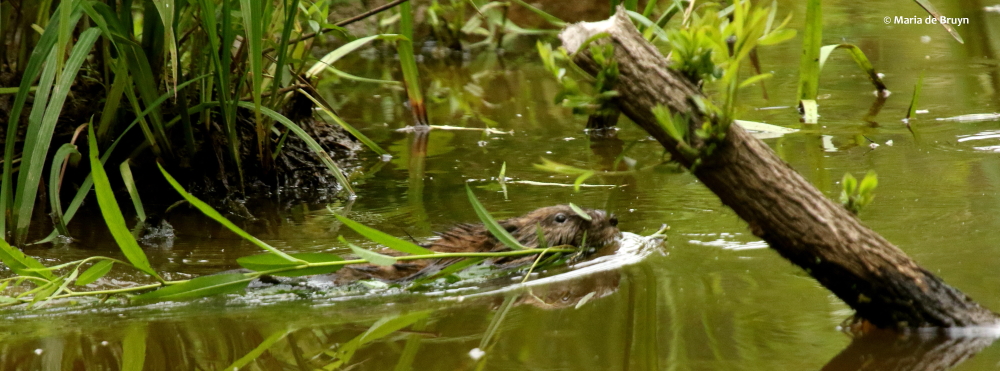
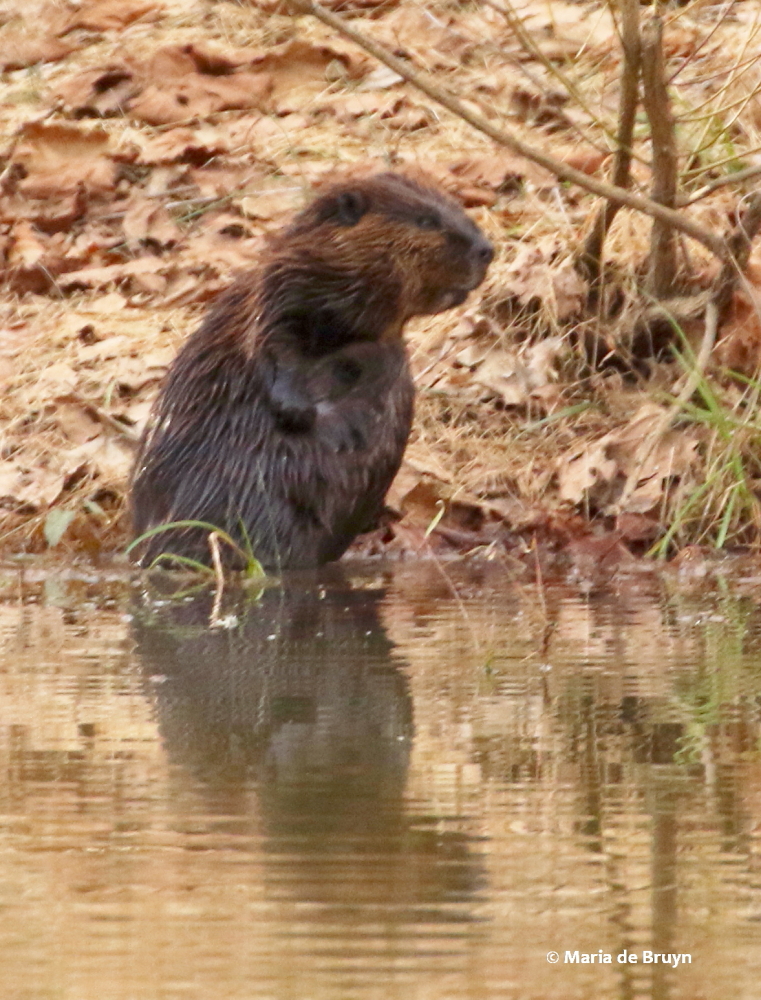
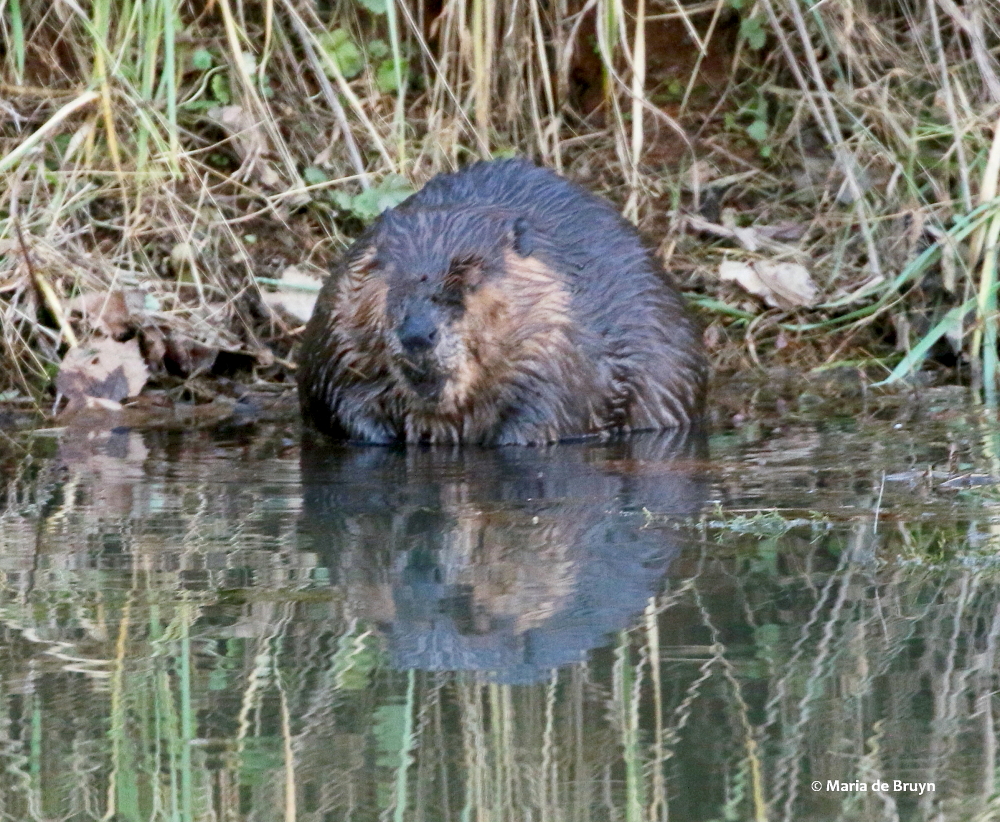
For me, the chance to see the beavers in action was wonderful. One day, I saw an adult chewing branches as part of its meal; it was quiet and didn’t seem disturbed to have me nearby watching.

On other occasions, I saw individuals bringing reeds back to a lodge, presumably to feed young ones left at home. (The offspring may stay with their parents up to two years.)

As beavers are mostly crepuscular, visiting at dusk offered a good chance to see them at work felling trees for their dams and lodges. It struck me that when I had observed them eating, they were very quiet. When they were working to cut trees down, however, I could hear them chewing very loudly.

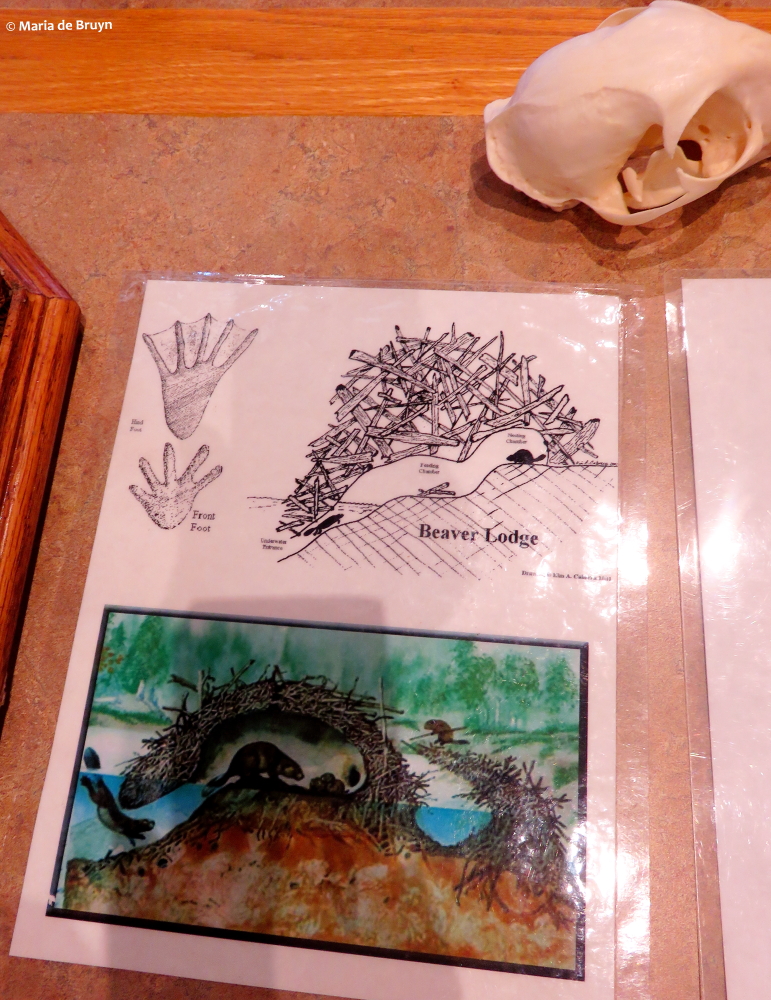
Some people living near Pokeberry Creek brought chairs and drinks to watch the animals at work in the evenings and everyone present seemed to be learning a lot about them. Apparently, many people are interested in beavers – the ranger station at the Jordan Lake Dam has a taxidermied beaver and information about their lodges on display.

Nature’s aquatic engineers are certainly interesting mammals. North America’s largest rodents can swim underwater without coming up for a breath for some 15 minutes; this is because they slow their heart rate. Their transparent eyelids function as goggles so that they can see underwater.

They build dams to ensure that the ponds in which they construct lodges are deep enough so that the entrance remains under water. When the water is at least 2-3 feet, they will be safe from predators and the entrance to their home will stay ice-free in the winter. If they are in a spot where the water remains high enough all the time, they may forego building dams. At Pokeberry, the animals felt a need to build dams in two places. Research has shown that the noise made by water flowing away contributes to their decisions to shore up dams; they apparently cannot tolerate the sound of running water above a certain number of decibels.

The beavers’ environmental engineering irritated some members of the Home Owners Association (HOA) of a nearby community which is still under development. Some people complained that the water was encroaching onto properties (other property owners were ok with it). The rising waters also sometimes flooded a long walking bridge and a cul de sac. Numerous repairs were needed for the bridge and “opposing” parties emerged.

After the HOA announced a plan to have 35 beavers killed, a petition to save the mammals was begun. Within a few days, more than 3700 signatures had been gathered and the HOA undertook a consultation process with different agencies to explore other options. The Friends of Pokeberry Creek Beavers and Wetlands, in the meantime, put up small barriers so that the waters would not encroach so easily onto the cul-de-sac. They also installed a “beaver deceiver” (a pond leveling device, comprising large tubes inserted through a dam so that water would continue to flow through).

It appears that the beavers found the water flow too noisy, so each evening they would mud up the fencing around the deceiver intake so that no water could enter there. The humans would take away the mud; the beavers would put it back. The humans moved the pond leveling devices to deeper areas, but with heavy rainfall, the waters would rise very high.

Finally, in early autumn, the HOA had much of the wetlands drained. This was done to avoid killing the beavers by driving them further downstream to find another area where they could build dams to establish a new pond territory.

The beavers in a large pond that remains rather full have not moved; they are still felling trees, presumably to reinforce their lodge and to have some food supplies in stock for the winter. They also need to keep chewing as their teeth never stop growing. When they remove trees, they leave stumps of about 6-12 inches behind. I’ve seen some of these tree stumps, such as a tulip poplar, sprouting branches again. So the beavers’ tree clearing does not have the same effect as clear-cutting done by humans.


I thought that the drained wetlands at Pokeberry Creek might be the end of my beaver observation opportunities, but then I discovered that another wildlife and recreational park was facing challenges from beaver dams. Sandy Creek Park had had beavers some 5-6 years ago and at that time the mammals were removed (killed). The park manager wants to avoid that now if possible, but the dams need to be controlled since they are causing flooding onto paved pathways which help make the park accessible to persons living with disabilities.

A wildlife biologist visited the park to assess the potential success of a pond leveler there; because the pond in question is rather deep, they may have more success with a beaver deceiver. I’m guessing it will also depend on how the noise levels evolve with the new flow of water into the nearby creek. If they can install a silent outflow pipe, the intervention may be successful.

In November, I found that beavers were also busy at a third natural area that I visit often, the Brumley Nature Preserve North. The rodents are busy in two of three ponds there. The volunteer trail steward periodically breaches the dam at one pond so that the water can continue flowing downstream. When the pond water level remains high enough, the beavers seem to be more lax in repairing the dam.


At the other pond, the water level has stayed fairly consistent with all the rainfall our area has had in the past months and no beaver engineering seems to be happening there. As there is no obvious stream flowing into that pond, if we have a dry summer, the beavers may have to abandon that home as the pond could dry up as happened during a drought period last year. There was an interesting development at this pond, however. It involved one particular beaver who recently spent afternoons for a couple weeks swimming laps for hours.

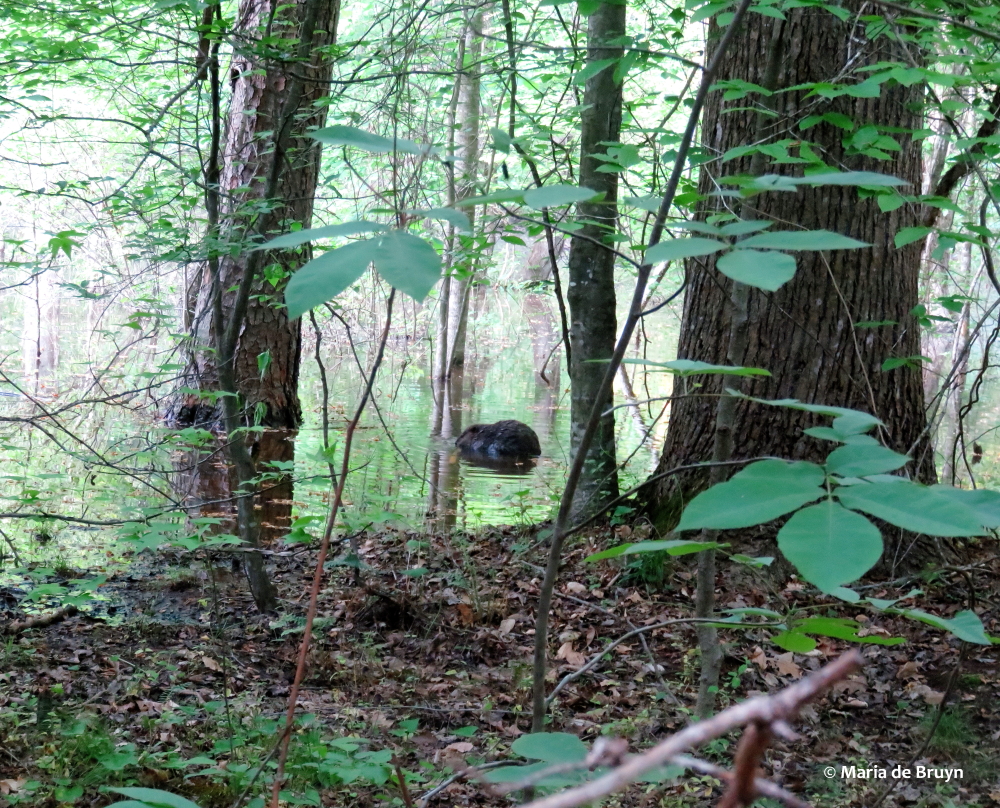
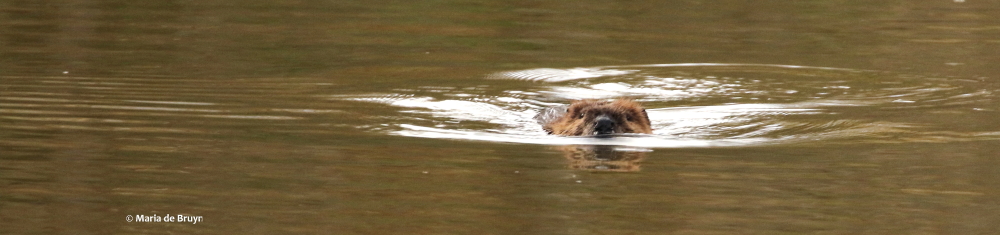
I was quite surprised to see him (it could be female but somehow I thought of this individual as a male who was hoping to attract a mate), since beavers often prefer not to be out in the open during the day. He even emerged from the water from time to time, but always on the other side of the pond.


It didn’t matter whether the day was sunny or colder, gray and overcast. Sometimes, it seemed that he was taking a quick power nap.


The beaver would make small circles, large circles, go to the shore for a quick rest and then resume laps.

One day, I saw him swim toward the lodge and I was able to see inside above the underwater entrance. He didn’t stay there long though and soon came out again to exercise.

This beaver seemed to be quite relaxed, swimming around and around, except for when walkers came by with dogs. He definitely did not care for the canines; when they appeared, he often would begin slapping his large, flat tail on the water and then diving noisily under water before emerging again nearby.

These tail slap warnings and dives showed off his webbed hind paws.

It was interesting to hear how very loud the tail slaps can be. The beaver will also vocalize its distress.

At one point, some visitors to the reserve allowed their dog to jump into the pond and the canine swam close to the beaver lodge. (Dogs are supposed to be kept on leash but a number of pet owners ignore the sign stating this. When I mentioned that dogs running loose also disturb ground-feeding birds, the response was: “Too bad for the ground birds!”) That very much disturbed the beaver, who slapped his tail again and again.

After that incident, I only saw the beaver having afternoon lap sessions a couple more times. He seems to have given up the practice or is now restricting his swims to very quiet times. I can understand if the animal is trying to avoid stress and distress; that’s one reason I go out for nature walks, too. But I was glad he ventured out for a while so I could see him fairly close on several occasions.

Happy New Year to you all – hope your 2019 is happy, healthy and filled with nature’s beauty!

Costa Rican rambles 5B: the Talari Mountain Lodge and environs


After fully experiencing the “honey dew” (another name for cicada urine), we set off for the next university site, an area where students learn about planting. A statue of the Virgin Mary welcomed visitors and we admired some of the beautiful plantings and their seeds that were attracting plenty of insects.


We then left to make a quick stop at a park called Los Cusingos, that we would visit at length later; this was just a quick bathroom break before we took to the road again. My photo of the gray-headed tanager was not that great but you can see how beautiful the red passionflower (Passiflora vitifolia) at the entrance was.

As we drove to a place called Las Nubes, we passed private homes with their filled metal framework trash bins in front, a cemetery and plenty of banana plants.


One of our group members stepped in an anthill when trying to avoid puddles and traffic, which led to some stinging bites. In the meantime, others were trying to see various species of birds that were staying low in the vegetation along the road. I spotted a rather large wasp nest in a nearby tree, likely of the Synoeca septentrionalis species.


At some distance, there was a yellow-headed caracara (Milvago chimachima) sitting on a branch. These raptors are about 16-18 inches in length (41-46 cm) and part of their diet is carrion. They also eat reptiles, amphibians and other small birds, while avoiding birds as food. They take ticks off cattle as well, which gives them a thumbs up from me – any bird that eats ticks is a friend.


A gorgeous smooth-billed ani (Crotophaga ani) was sitting calmly as we milled around in the road. Some people might find this bird homely, but I think it is quite handsome despite a somewhat bulbous beak. They, too, are on my “good birds” list as they sometimes eat ticks and other parasites off of grazing animals. Another nice characteristic is their communal child-raising strategy – several pairs cooperate to build a nest together, in which several females than lay their eggs. They share the incubation and feeding of nestlings – hippies of the bird world!


We traveled on and the views along the road were beautiful, with the mountains and valleys in the distance and then we caught sight of some swallow-tailed kites (Elanoides forficatus) soaring over the nearest valley. We saw one land in a tree and it turned out that they were building a nest there. In the photo, you can see a small white patch on the right-hand side of the tree, which is the female kite on the nest.

As we waited patiently, a few kites began flying overhead; one with nesting material clutched in its claws.


They soared and swooped, giving us delightful views of their flight and then one came by with a meal that it had caught – a poor little chameleon or lizard.


We admired the Talamanca mountain range called La Amistad (Friendship), which separates Costa Rica from Panama. Starting in 1979, these two countries’ governments began a process to conserve the entire range, which is home to four indigenous groups of humans, 600 avian species, 215 mammal species, 250 species of amphibians and reptiles, 115 species of fish and some 10,000 flowering plants! As UNESCO has noted, this is: “one of the very few transboundary World Heritage properties, an excellent intergovernmental framework for coordinated and cooperative management and conservation.”


After a nice lunch, we continued visiting other sites, including one near a Canadian project. That afternoon, I saw my first trogon species – the gartered trogon (Trogon caligatus), another handsome bird to be sure.


While the rest of the group followed Steve’s instructions for sighting some birds hiding in underbrush on a slope, fellow traveler Janet and I watched some leaf-cutter ants (Atta cephalotes) at their labors. Sometimes, I was just not tall enough to see over shrubs to locate a bird and I love all wildlife anyway, so watching the ants in their industrious endeavor was fun.

On our way back to the lodge for supper, we passed small roadside stores and Steve spotted a fork-tailed flycatcher (Tyrannus savanna) for us.


Back at Talari, I did some sightseeing from the balcony of my room, spotting a lengthy and messy-looking flycatcher nest, a variegated squirrel (Sciurus variegatoides) traversing the tree canopy and a pair of palm tanagers (Thraupis palmarum), who were tending an offspring.


At first, I thought the fledged bird was a different species as it sat under a leafy canopy, but later I saw the parents with it. Then it surprised Janet, who was staying next door – she called me over to see the fledgling who had flown into her room and was sitting in the middle of the floor.


She also had two nests under the roof of her balcony, one of which definitely belonged to a clay-colored thrush (Turdus grayi).


After admiring one of the neighbors’ cows and social flycatcher (Myiozetetes similis), I caught sight of a quiet beauty sitting on a branch in front of my room.


The Lesson’s motmot (Momotus lessonii), also known as the blue-diademed motmot, has a bright red eye and beautiful tail with what some birding sites call a “raquet tip”.


As we set off for the dining area, we were treated to a visit from a streaked flycatcher (Myiodynastes maculatus), quite a good-looking bird with its heavily streaked back, breast and face.


As we passed through some vegetation before dinner, I saw a gorgeous flowering banana as a blue-feathered and red-legged honeycreeper (Cyanerpes cyaneus) flew high overhead.


Even though we often were looking for birds in dark and leafy/shady areas, I avoided using a flash but when I saw the lemur anole (Norops lemurinus) on a tree, I gave in so that I coul d get a photo.


As dusk came on and we looked out from the dining area, we got to see some fiery-billed aracaris (Pteroglossus frantzii) in the distance.


While some others in our group got to see one close up, that was not my fate, but the next morning, the aracaris were in a little better light though still far away, allowing me to get a bit better photos.


We ended our second night at Talari Lodge with an owling outing – Steve managed to draw in a tropical screech owl (Megascops choliba) by playing its call on his phone. The owl who came had had an injury to one eye, with a pupil that would no longer dilate but s/he seemed to be flying fine and looked healthy. That bird gave us a nice long look at its beautiful self so that we retired for the night with a feeling of birding satisfaction!