Birds, berries, nuts and seeds – enjoyment of nature’s bounty

So this wasn’t my last blog of 2015 after all. An unexpected hospital admission on 30 December brought about quite a delay in my blogging efforts. But I managed to complete this in instalments over the past days and hope you enjoy the final version, which I am happily able to post on my second day at home in 2016!

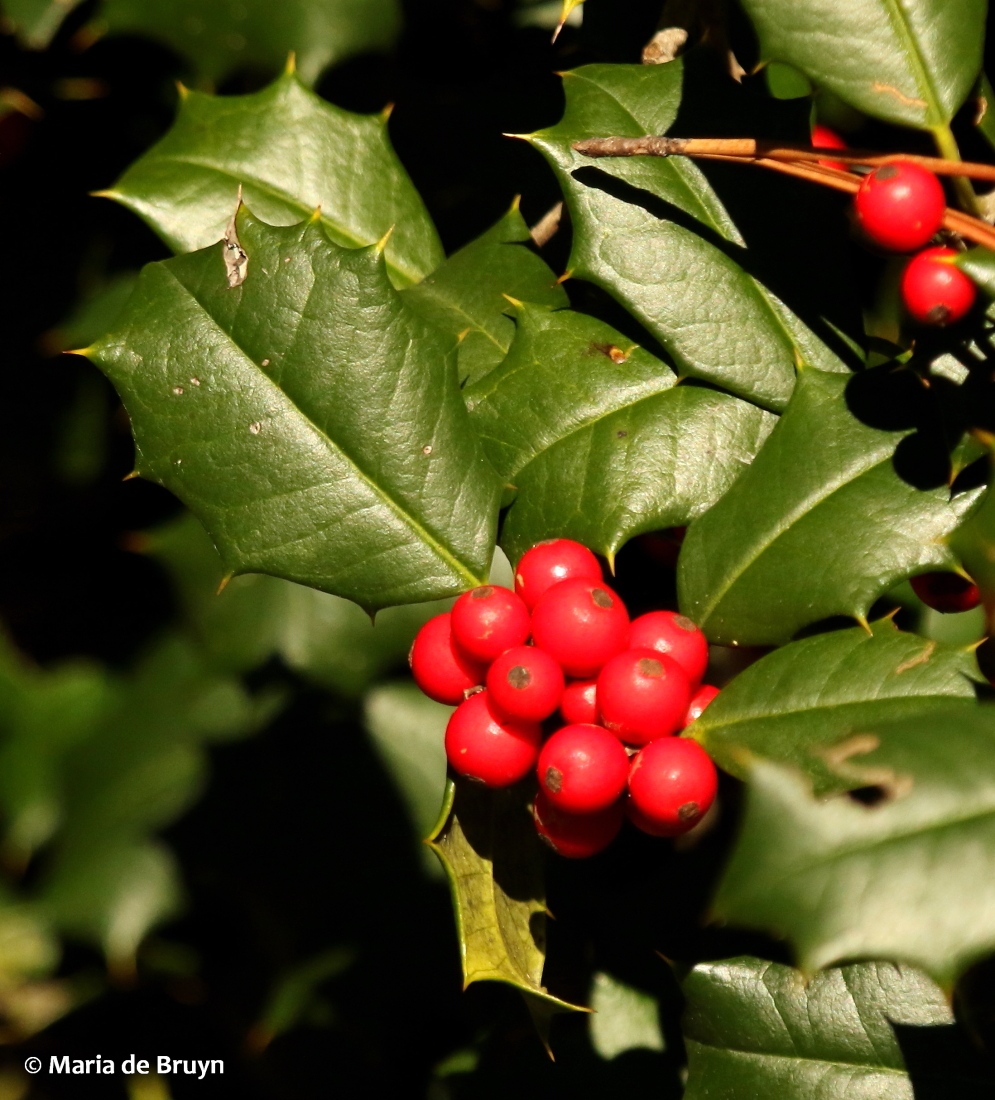
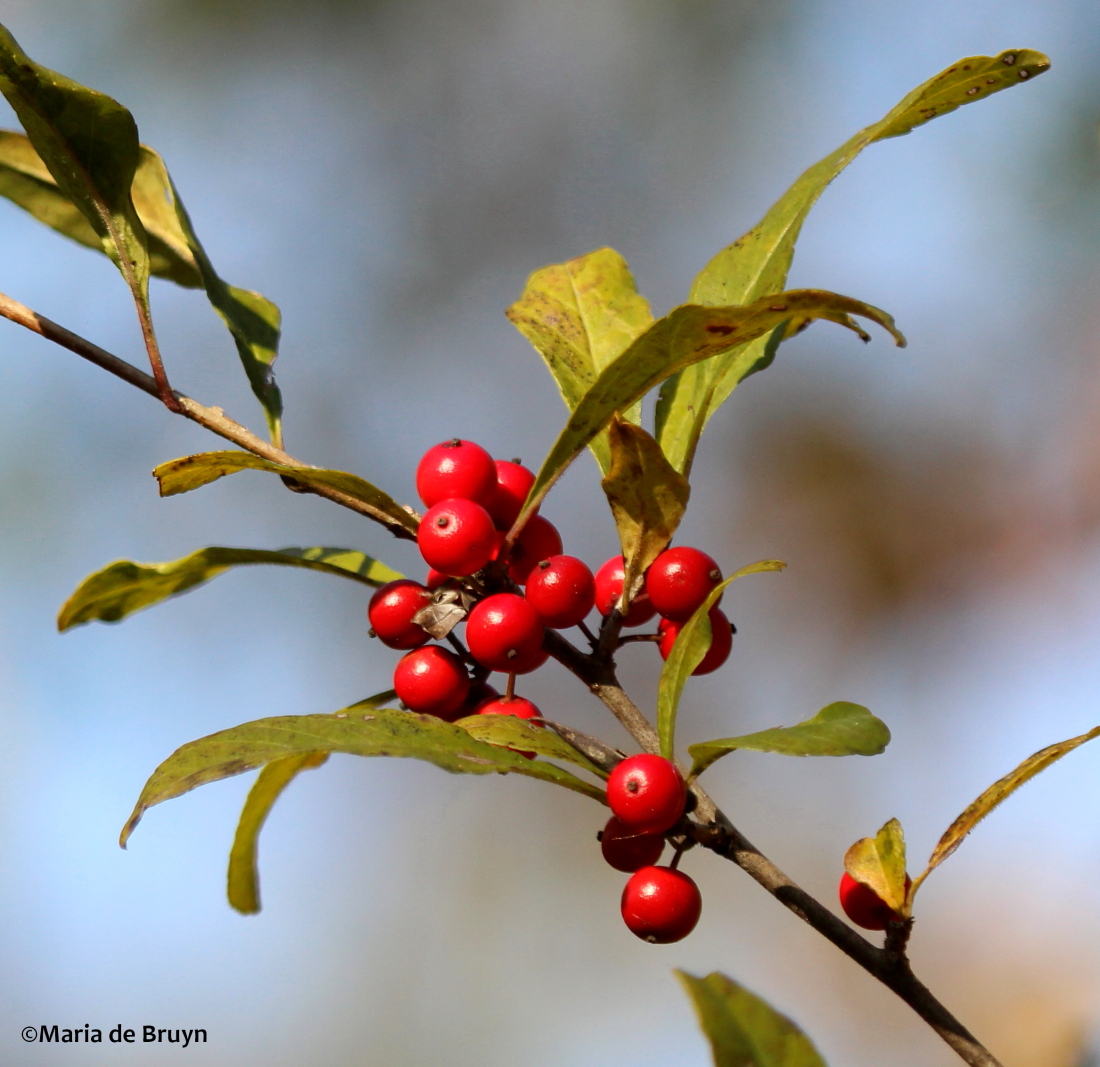
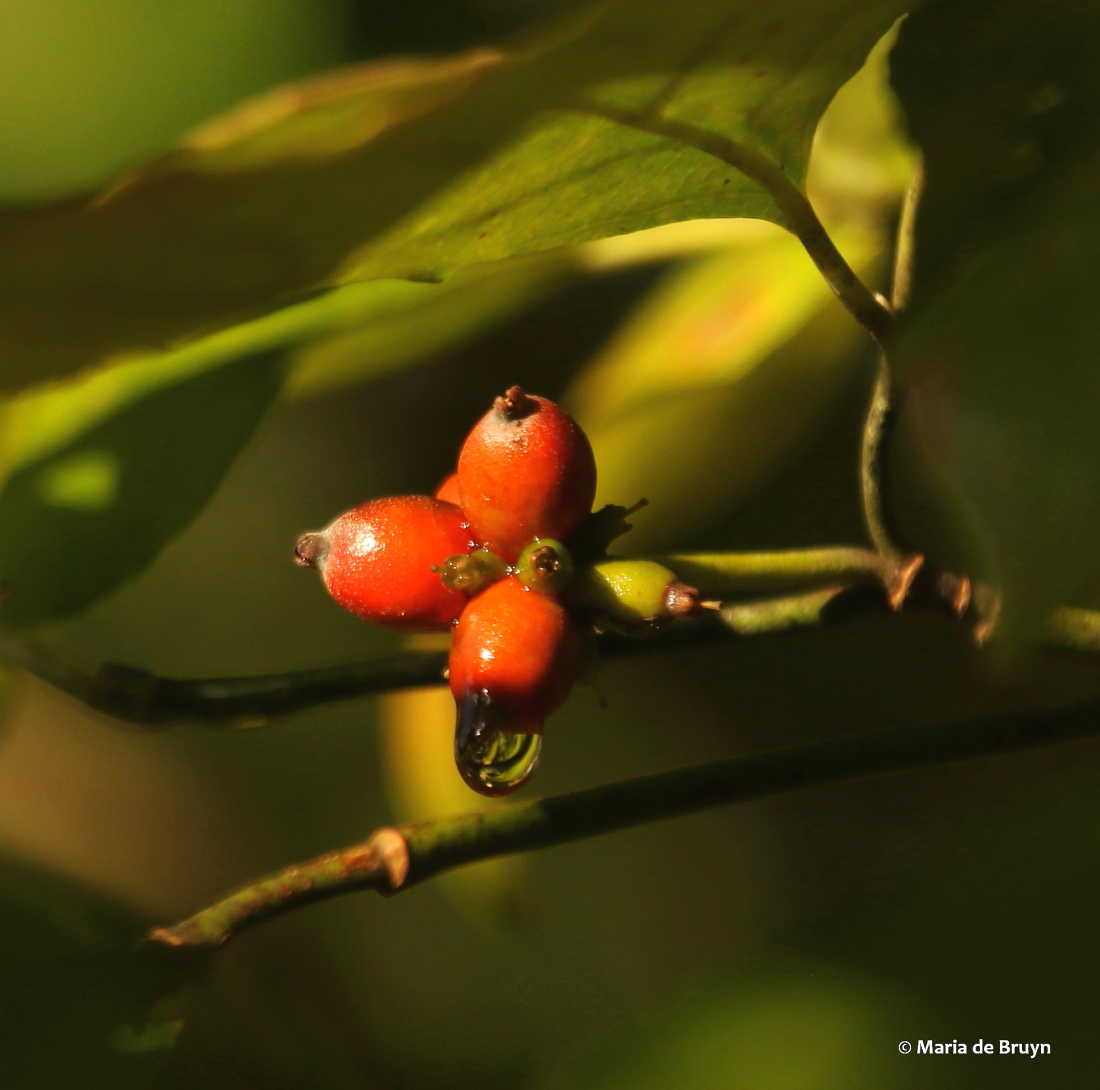
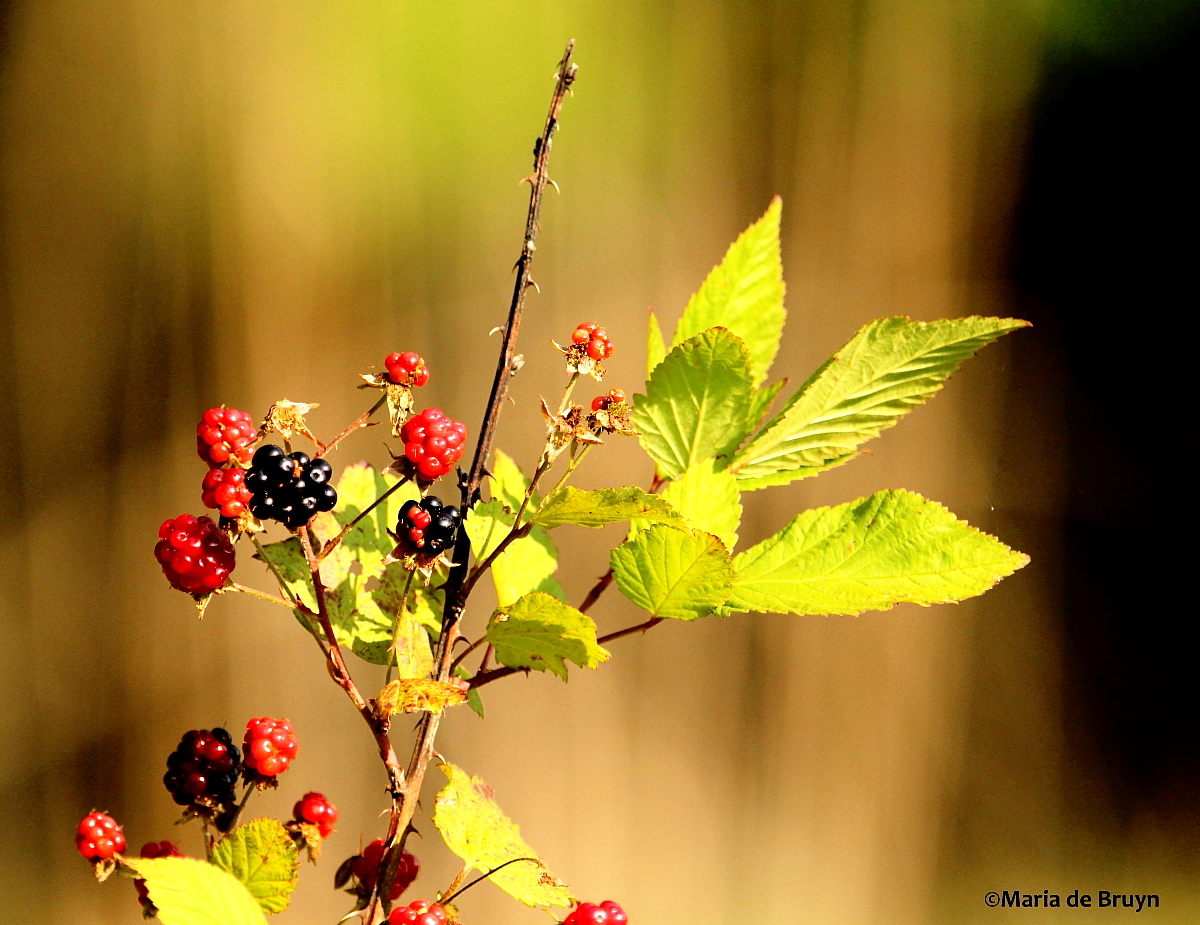
During late summer, when various plants have or start developing fruit, the birds begin to enjoy nature’s bounty. Here in North Carolina, they will eat the berries of native plants such as American beautyberry (Callicarpa americana), winged sumac (Rhus copallinum), American holly (Ilex opaca), possumhaw (deciduous holly, Ilex decidua), flowering dogwood (Cornus florida) and wild blackberries (Rubus).

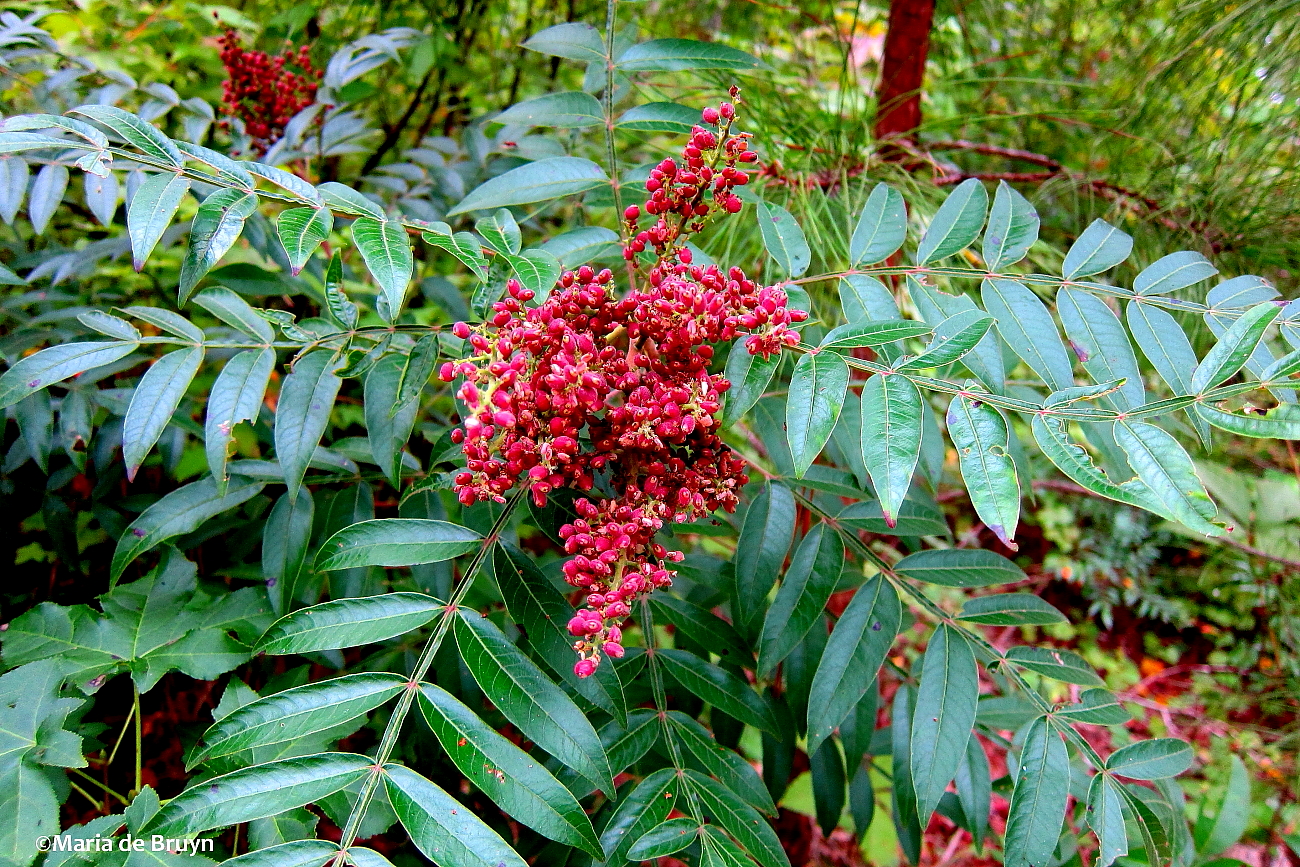
American beautyberry IMG_7637© Maria de Bruyn resWinged sumac IMG_5377©Maria de Bruyn res

American holly I77A3150© Maria de Bruyn resDeciduous holly IMG_4428© Maria de Bruyn res

Flowering dogwood DK7A7731© Maria de Bruyn reswild blackberryIMG_2588©Maria de Bruyn res


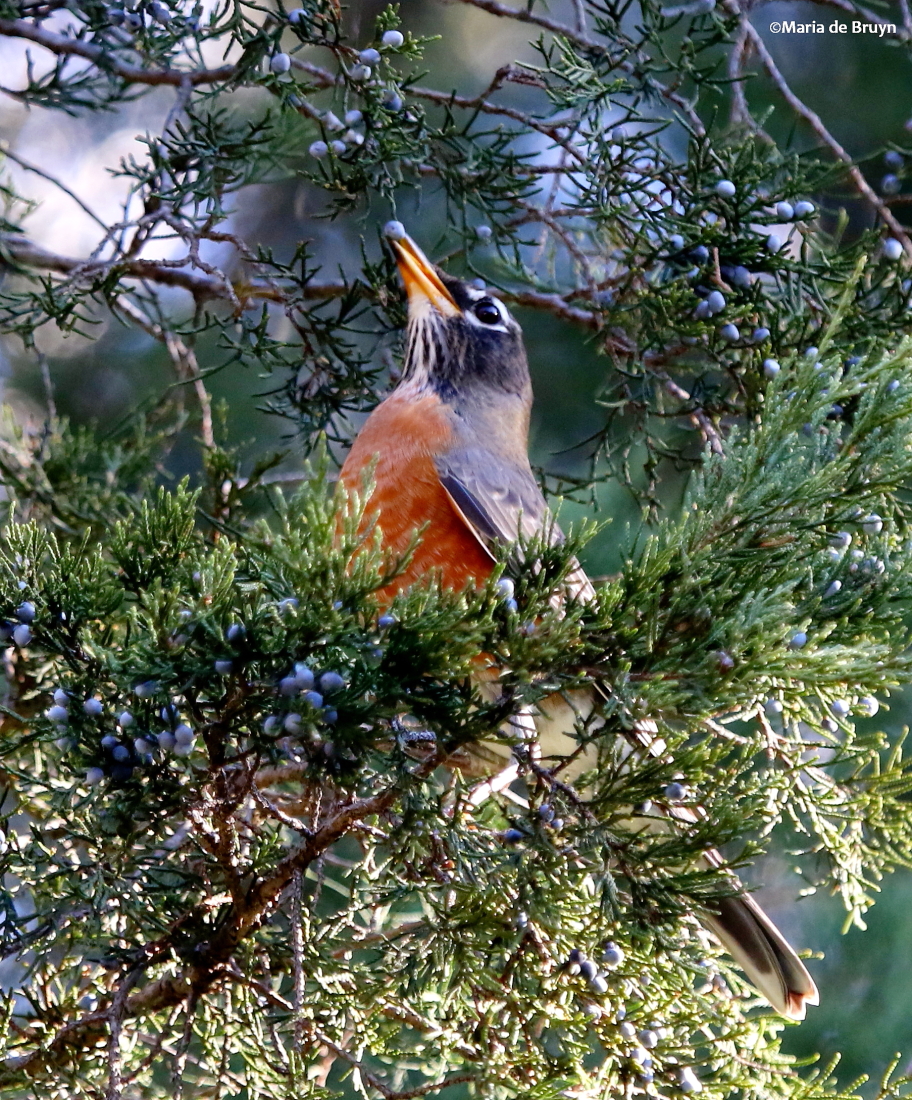
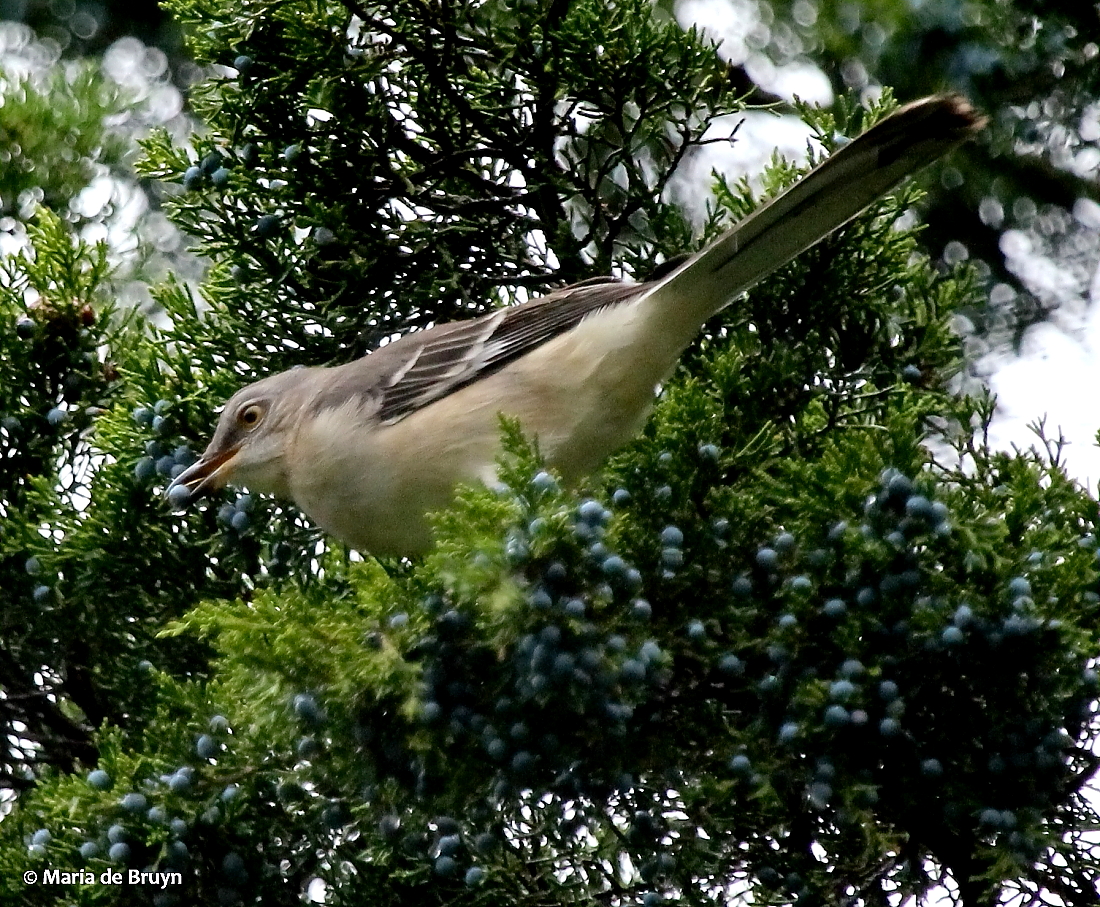
This year, the juniper berries were a real crowd pleaser. The American robins (Turdus migratorius) went for them first, soon followed by Northern cardinals (cardinalis cardinalis), Eastern bluebirds (Sialia sialis), Northern mockingbirds (Mimus polyglottos polyglottos) and Northern flickers (Colaptes auratus).
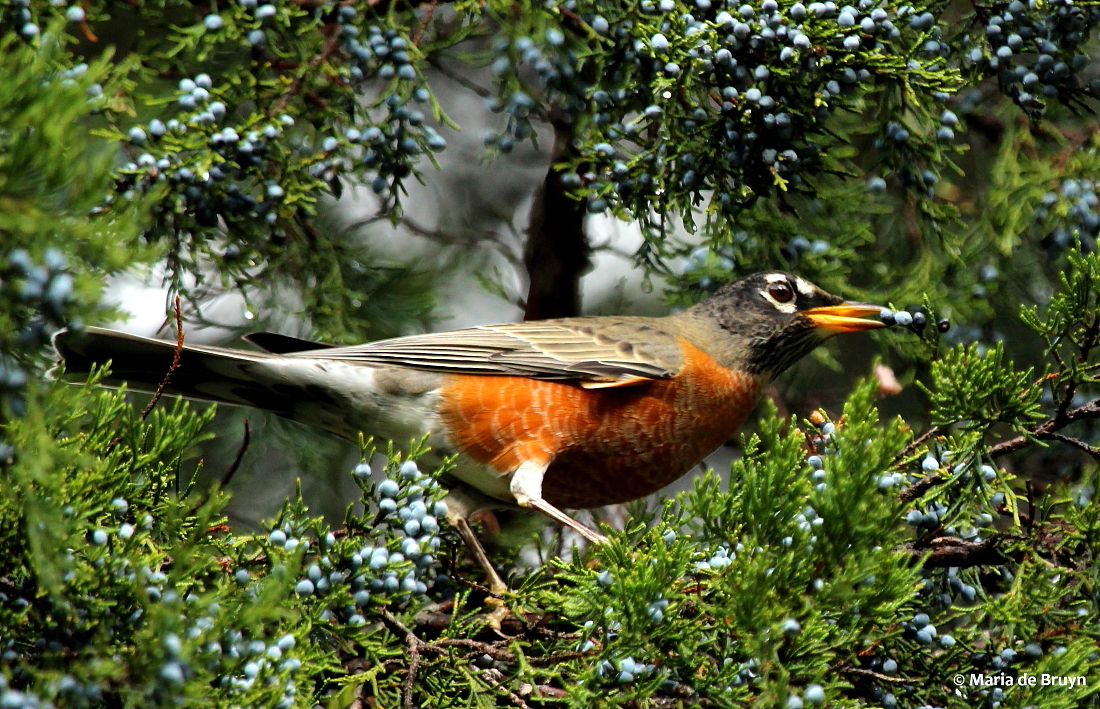
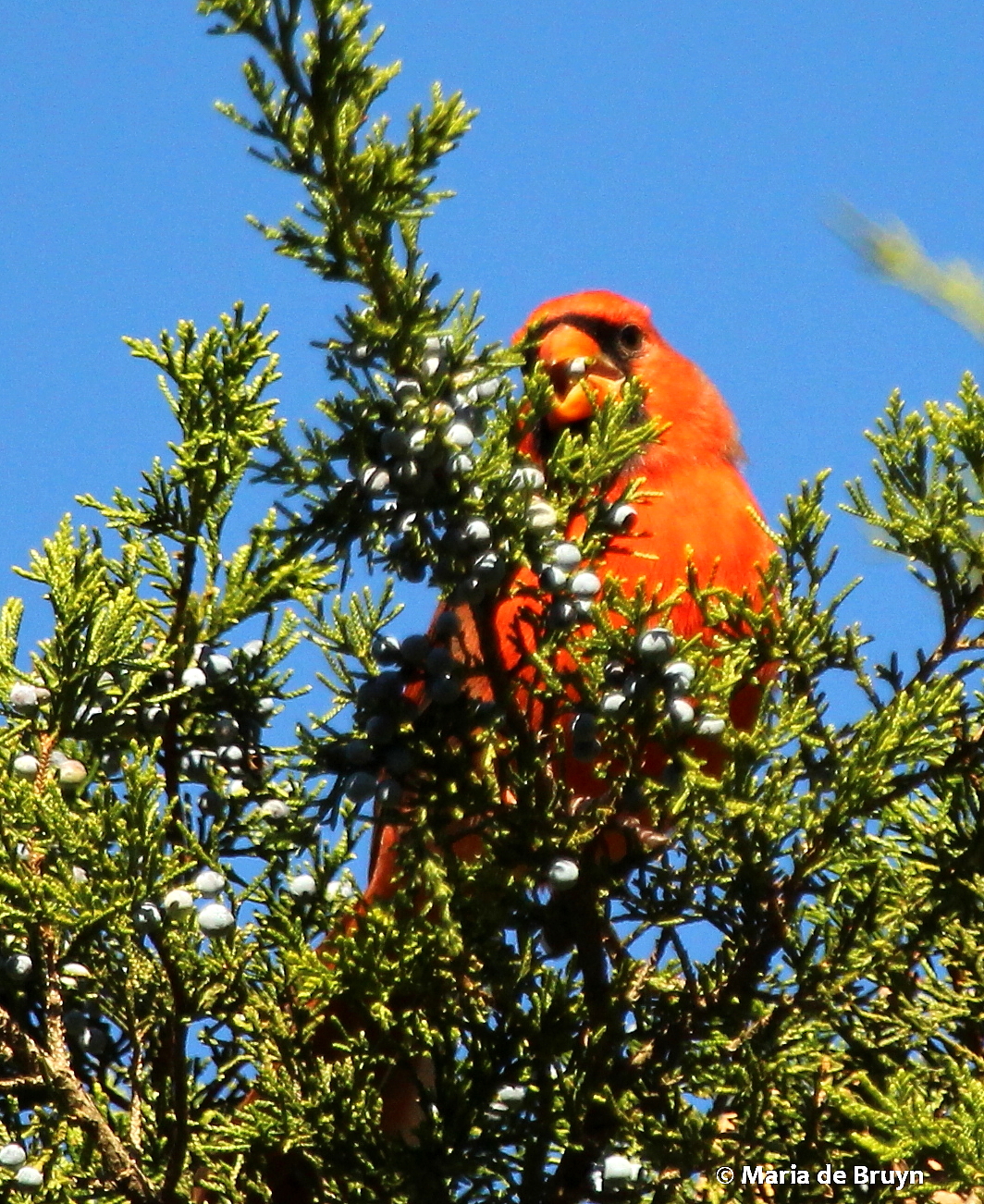
American robin IMG_6567© Maria de Bruyn res

Northern cardinal IMG_3653© Maria de BruynAmerican robin I77A0801©Maria de Bruyn res

Eastern bluebird I77A0913©Maria de Bruyn resNorthern mockingbird 2 IMG_6308© Maria de Bruyn res

Northern flicker IMG_5853© Maria de Bruyn res

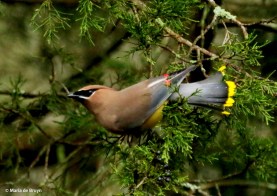
The beautiful cedar waxwings (Bombycilla cedrorum) enjoyed the cedar berries, too.
cedar waxwing I77A4266© Maria de Bruyn res

cedar waxwing I77A4293© Maria de Bruyn res

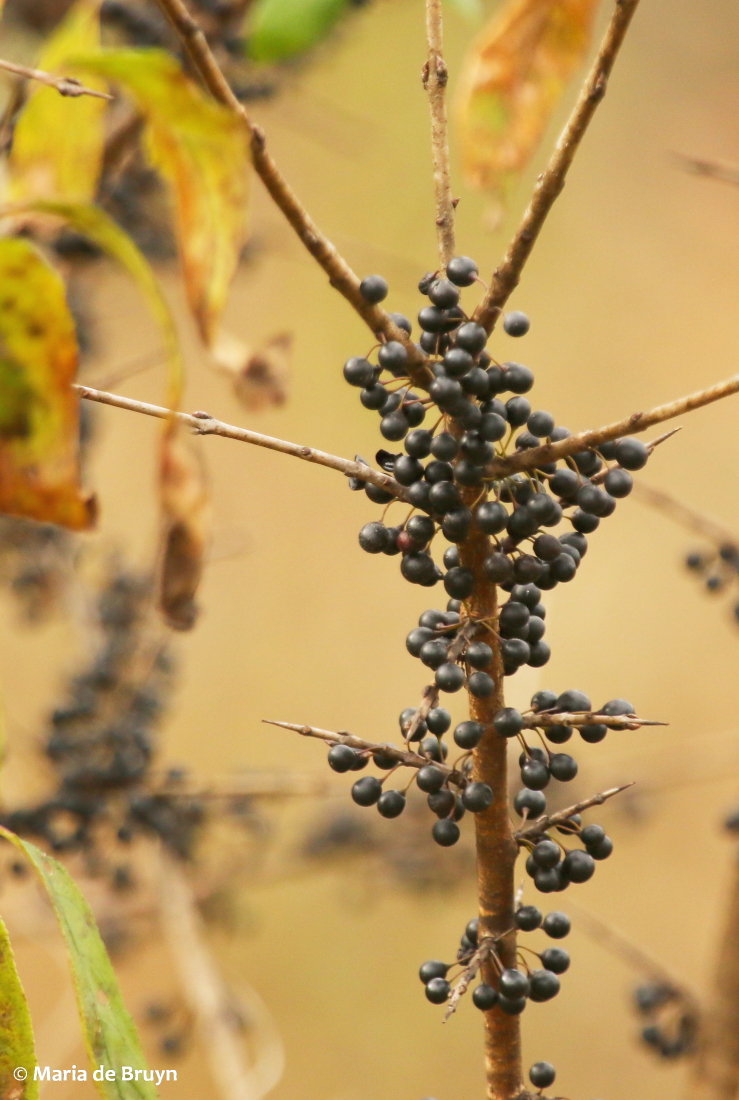
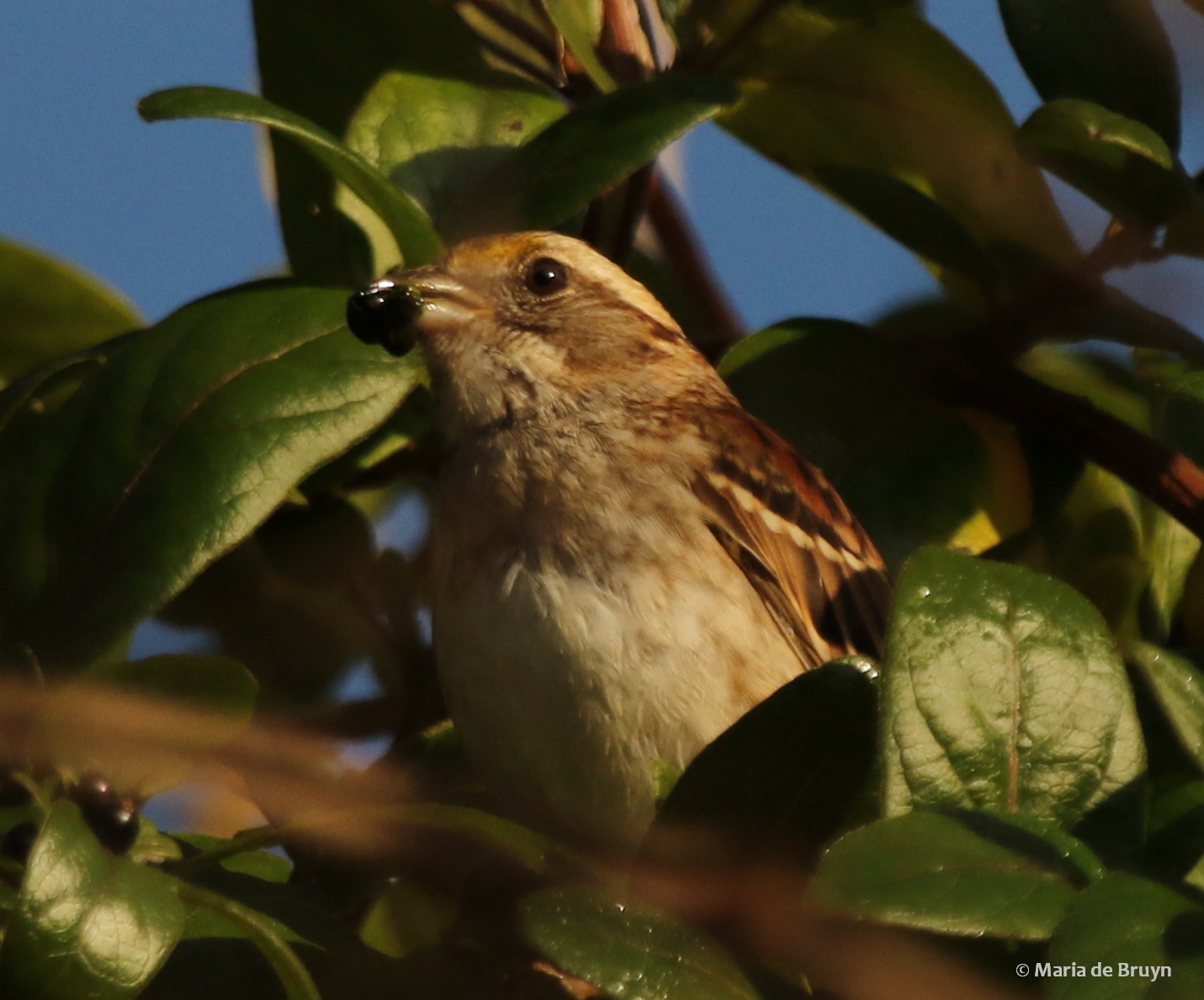
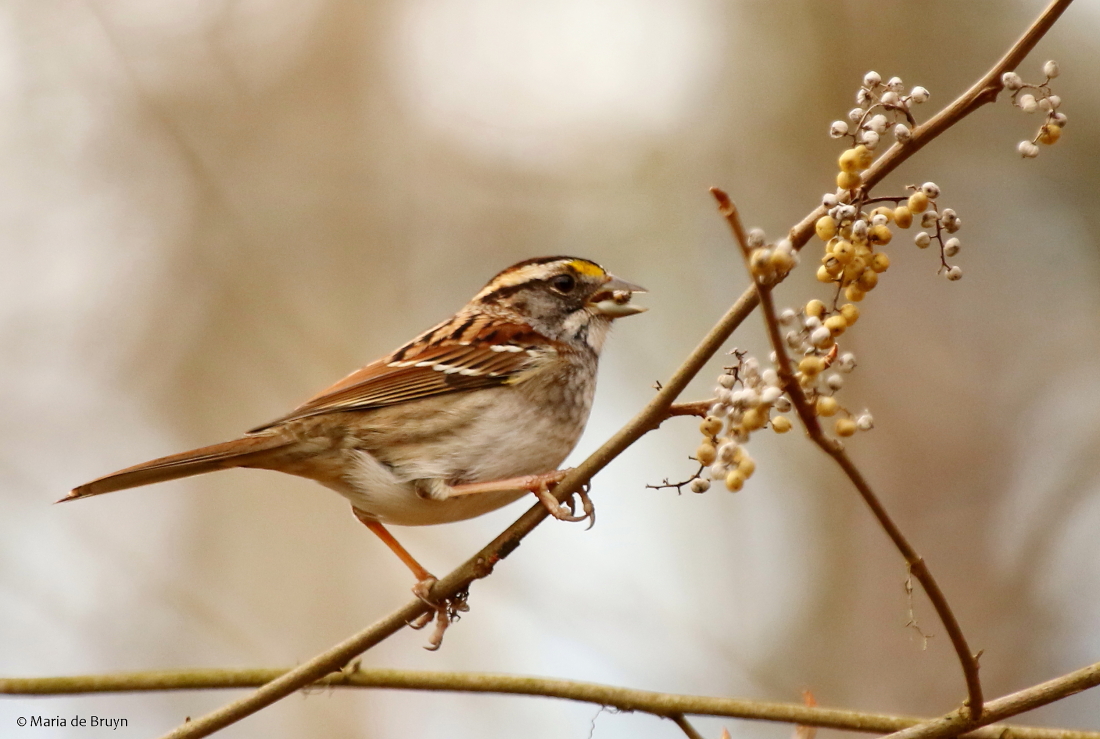
Birds like thbuckthorn I77A2455© Maria de Bruyn signed rese Northern mockingbird and white-throated sparrow (Zonotrichia albicollis) also enjoy the berries of invasive plants such as privet (Ligustrum), common buckthorn (Rhamnus cathartica. left), Chinaberry (Melia azedarach) and autumn olive (Eleagnus umbellata).
Northern mockingbird I77A2924© Maria de Bruyn res
white-throated sparrow I77A8188© Maria de Bruyn 2 reswhite-throated sparrow I77A4714© Maria de Bruyn signed

Watching our avian friends enjoy snapping up berries from vines can create enjoyment for the birdwatcher, too!
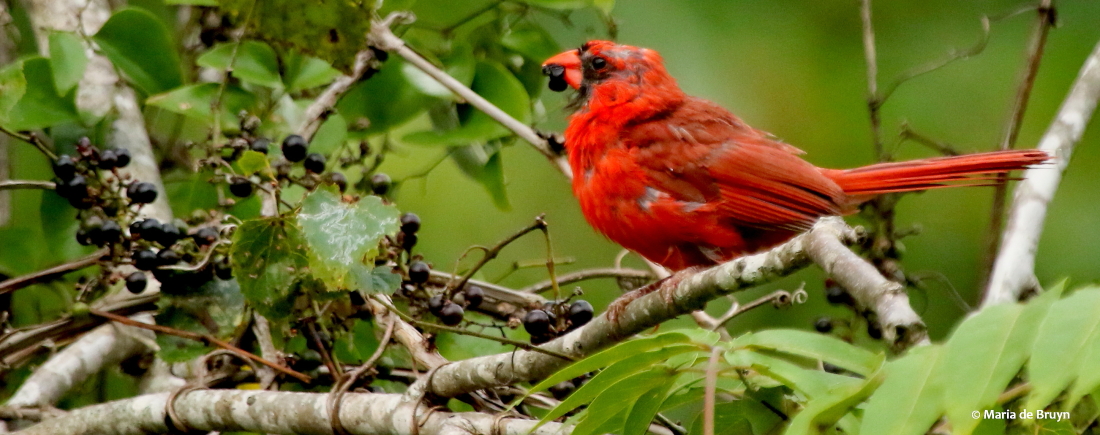
Northern cardinal DK7A8841© Maria de Bruyn signed res

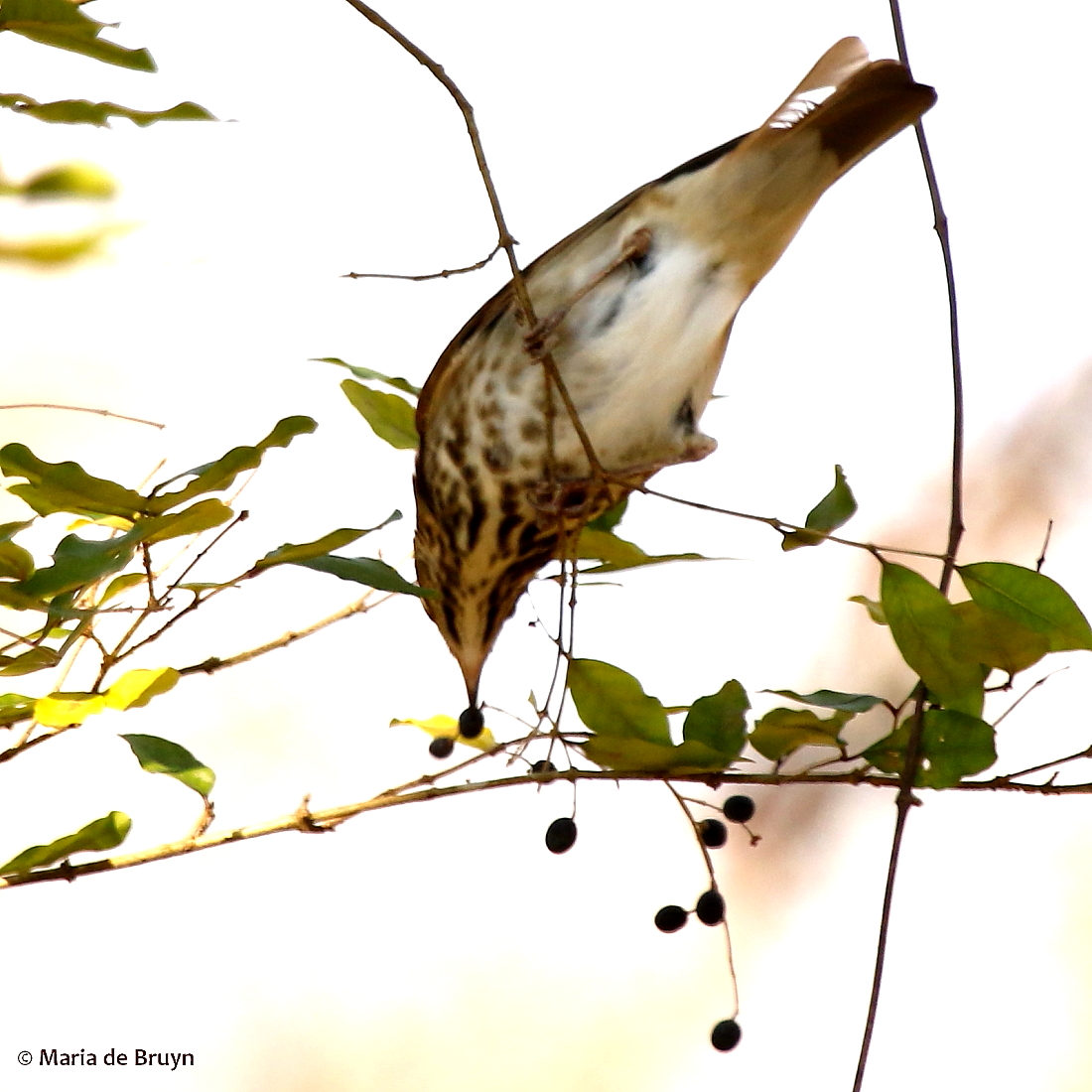
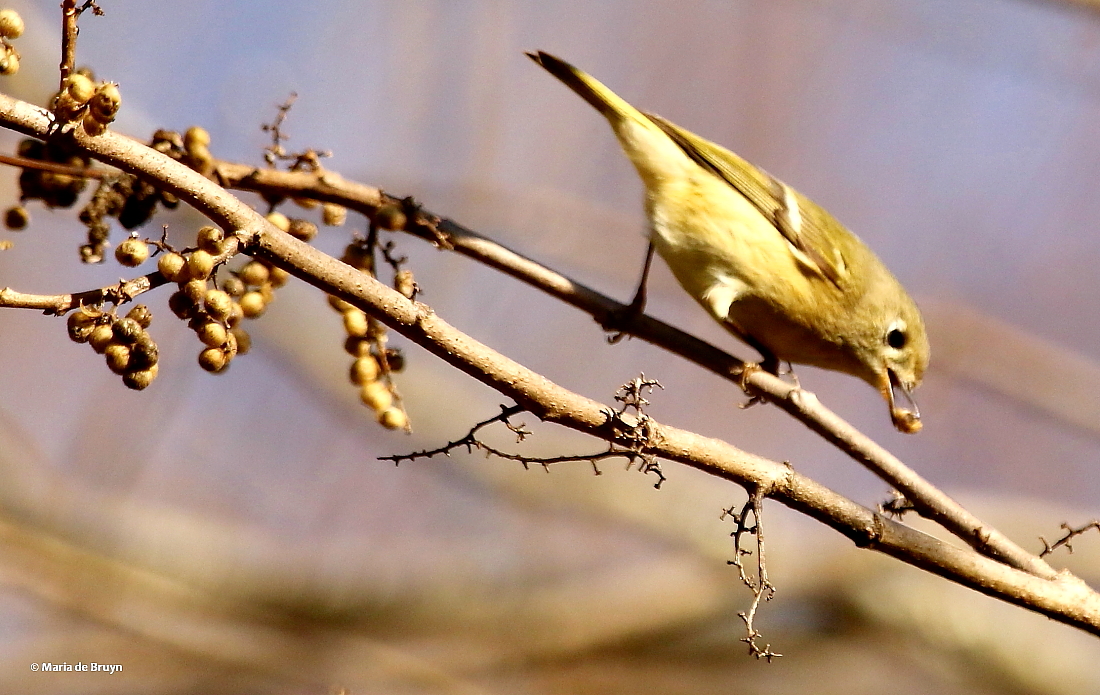
ruby-crowned kinglet I77A5319© Maria de Bruyn reshermit thrush I77A5816© Maria de Bruyn signed res

Ruby-crowned kinglet (Regulus calendula)

Hermit thrush (Catharus guttatus)


In some cases, they may also be seeking insects along with the berries, as this yellow-bellied sapsucker (Sphyrapicus varius) and tiny golden-crowned kinglet (Melanerpes erythrocephalus) may have been doing.
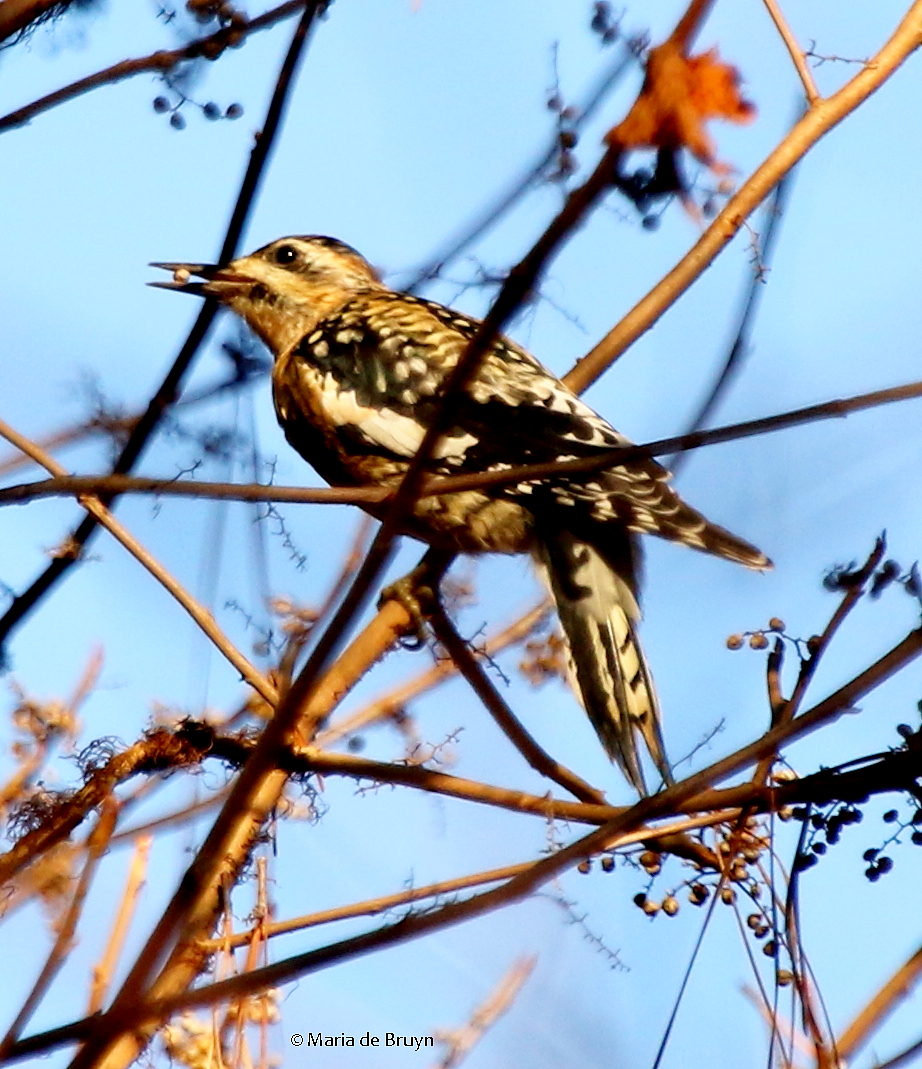
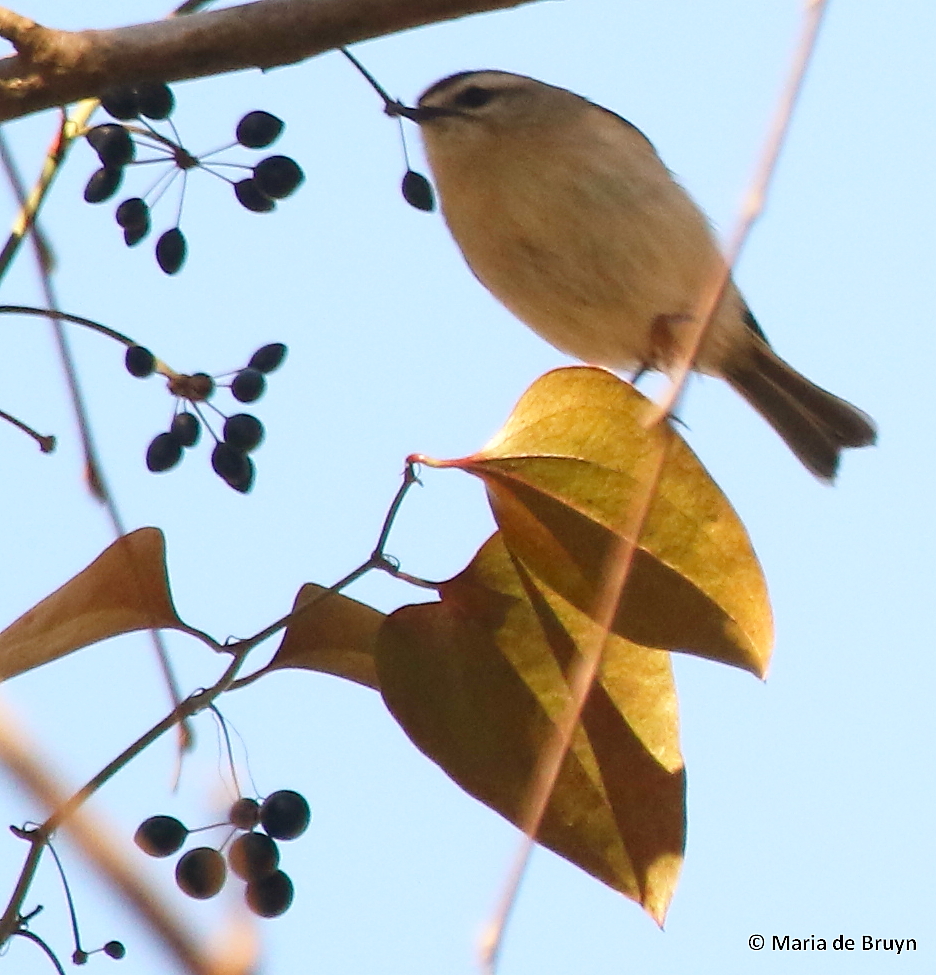
Yellow-bellied sapsucker I77A9133© Maria de Bruyngolden-crowned kinglet I77A1918© Maria de Bruyn

American goldfinch DK7A4411© Maria de Bruyn signed


It’s not only the fruit that draws them away from the bird feeders in the autumn though. Sunflower seeds (Helianthus) are a big hit with the American goldfinches (Spinus tristis), who also seek out different kinds of seed pods.
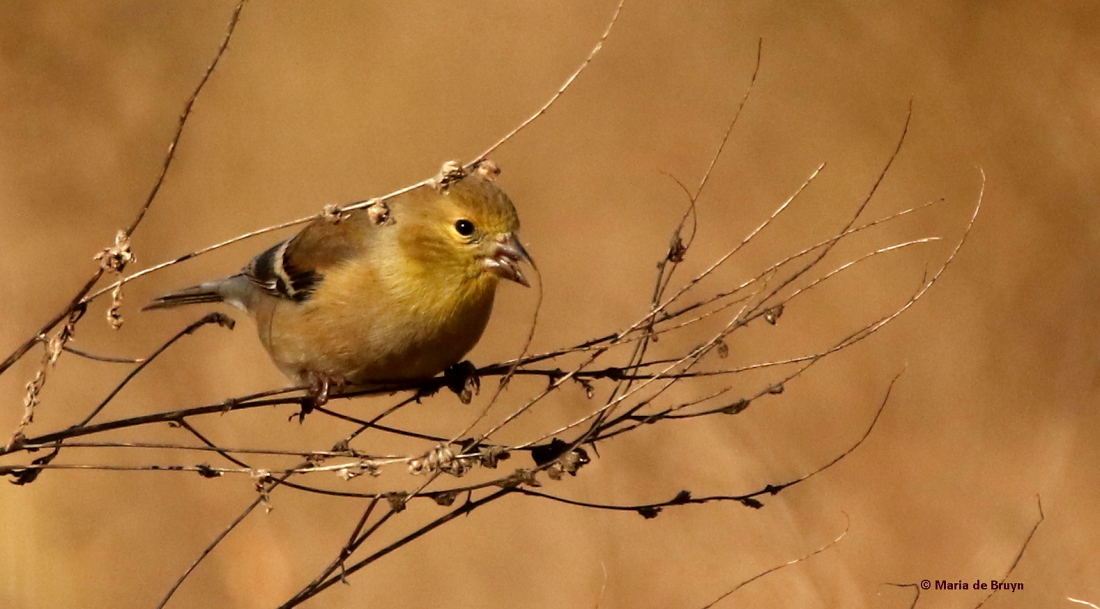
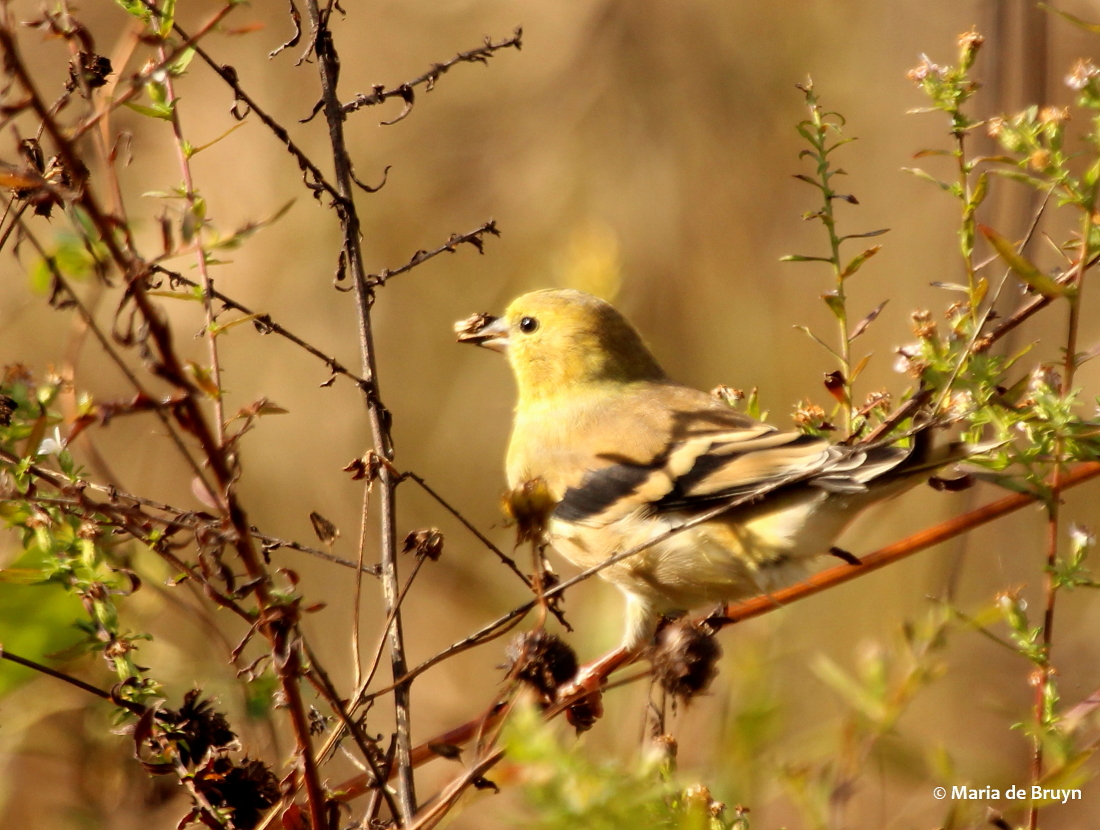
 

American goldfinch I77A2510© Maria de Bruyn res American goldfinch IMG_7947© Maria de Bruyn signed res

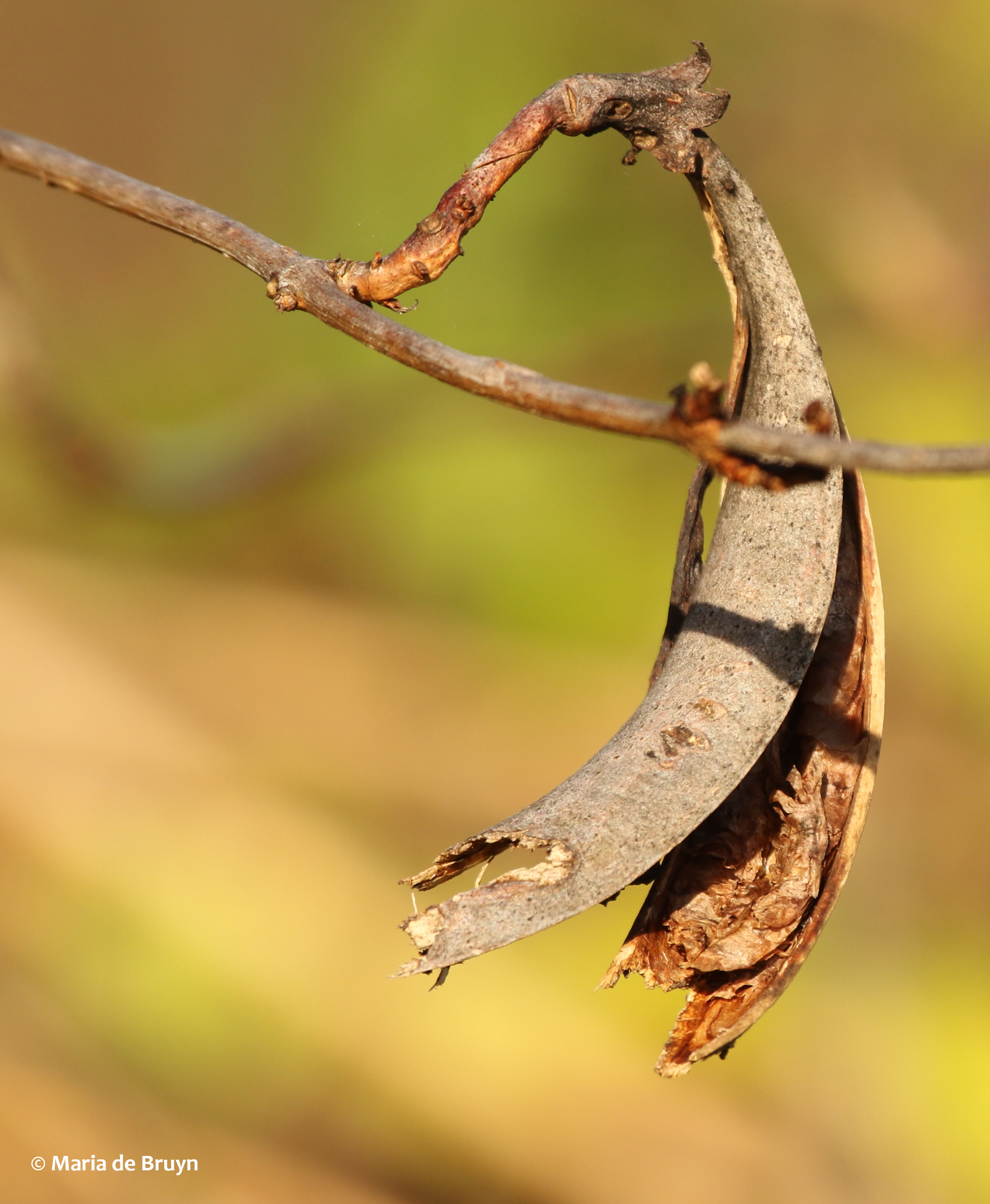
Pods on trees, like the crepe myrtle (Lagerstroemia fauriei), and on vines such as the trumpet creeper (Campsis radicans) offer attractive meals, too.
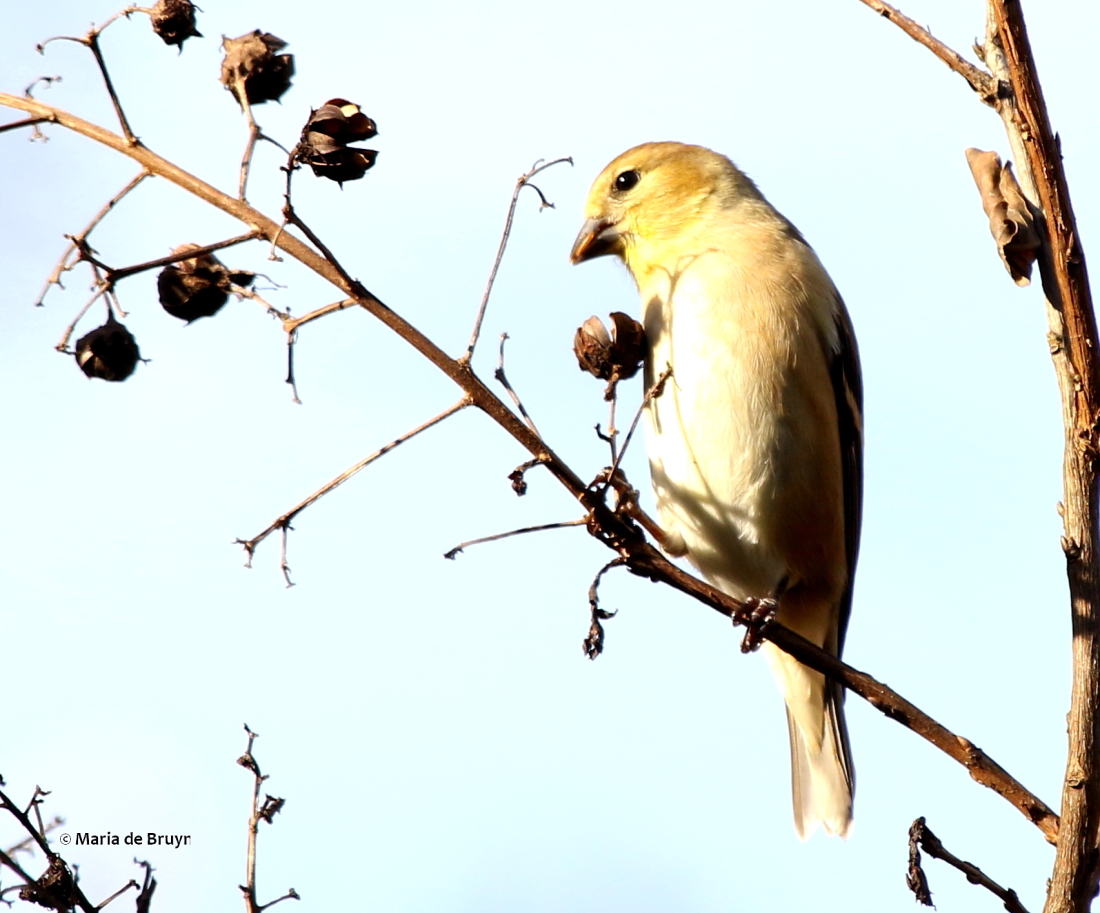
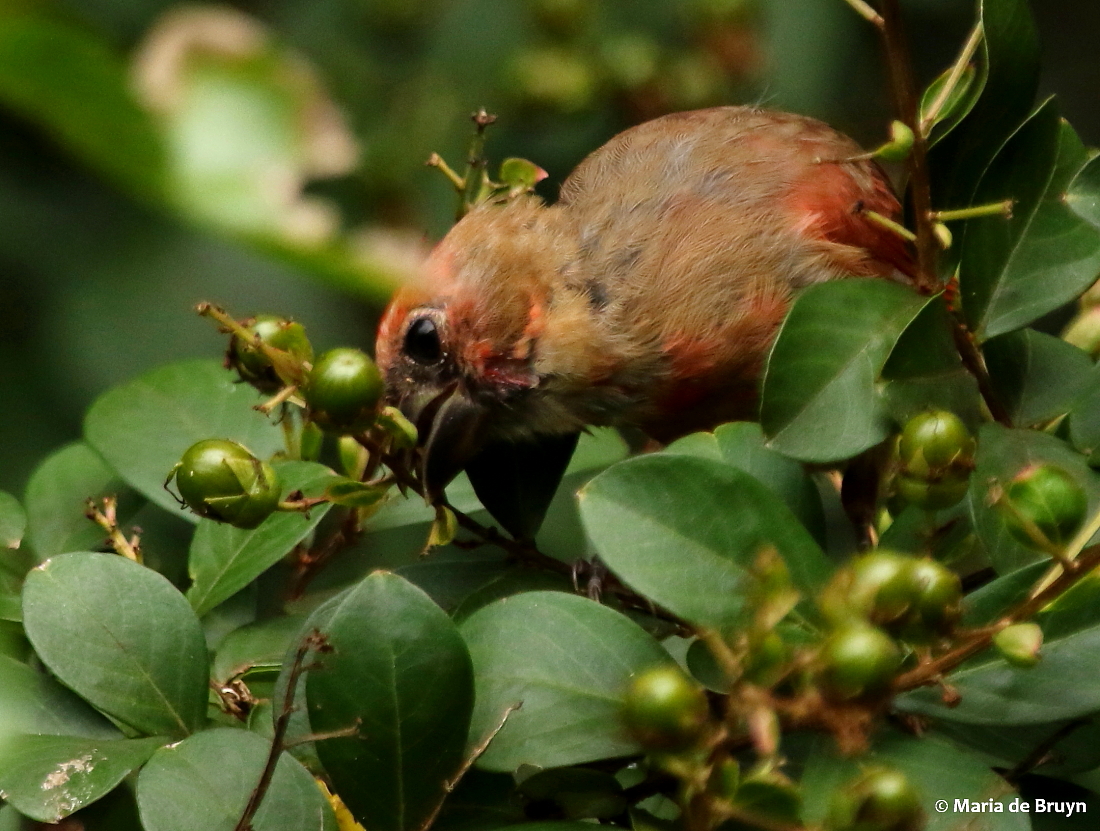
goldfinch I77A2097© Maria de Bruyn resNorthern cardinal DK7A1206© Maria de Bruyn signed res

American goldfinch and Northern cardinal both eating crepe myrtle
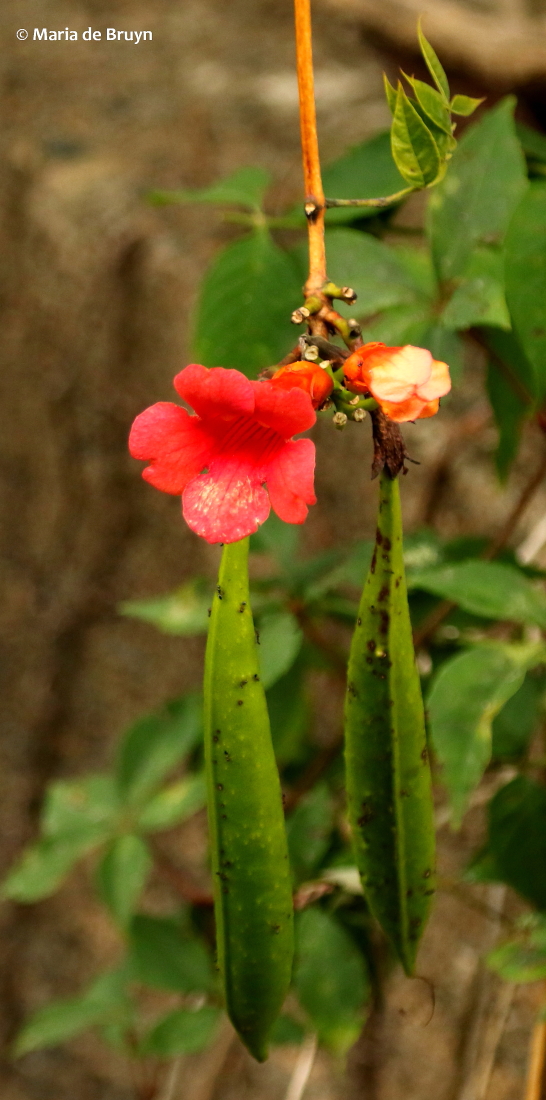
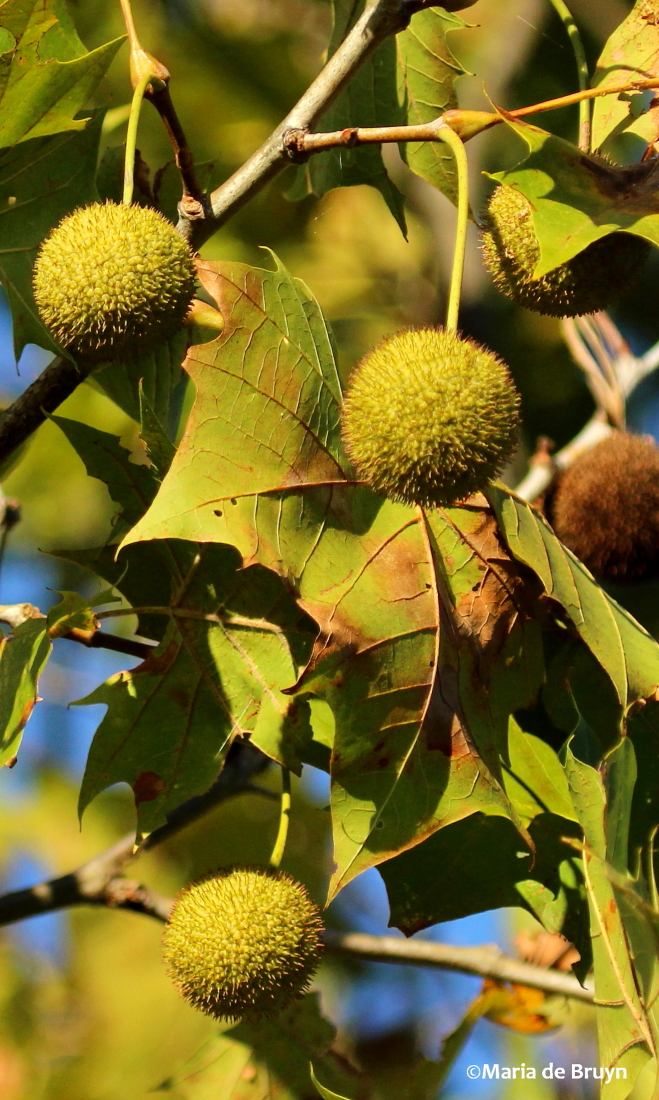
Trumpet vine DK7A9266© Maria de Bruyn signed restrumpet vine I77A1487© Maria de Bruyn ressycamore IMG_2339©Maria de Bruyn res

Trumpet vine                                         American sycamore (Platanus occidentalis)
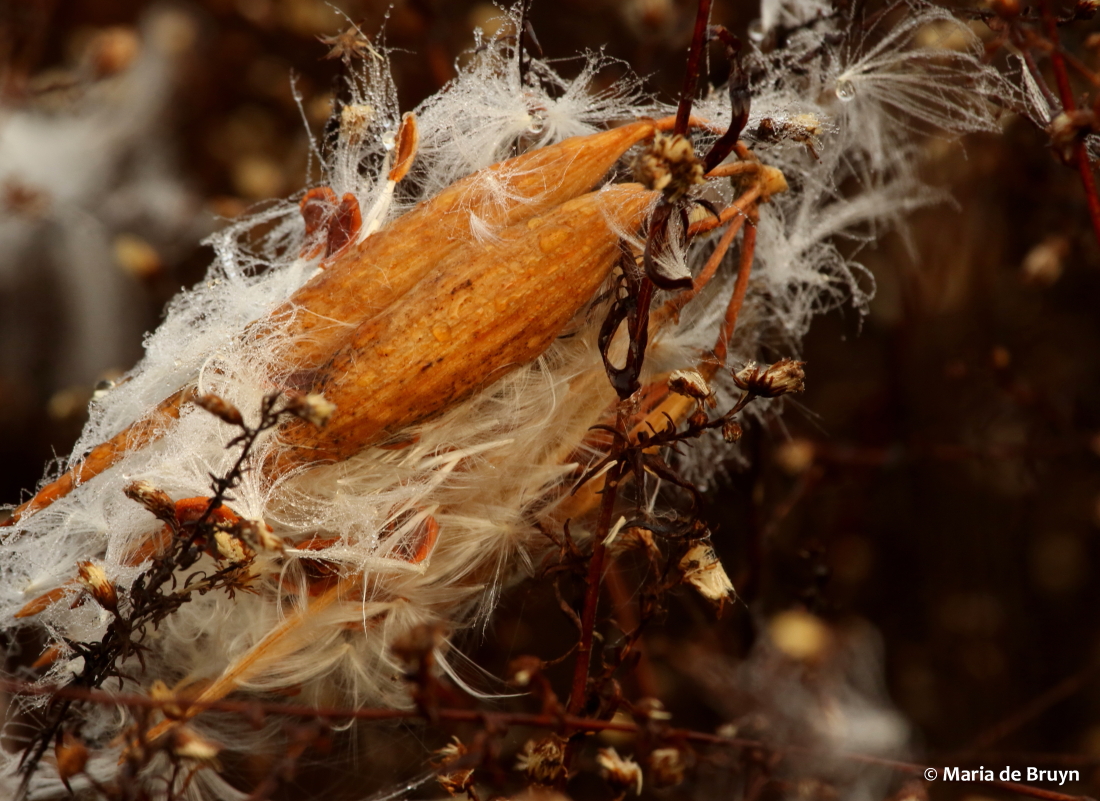
milkweed I77A7144© Maria de Bruyn signed resCarolina wren I77A8006©Maria de Bruyn res

Milkweed (Asclepius) and Carolina chickadee (Poecile carolinensis)
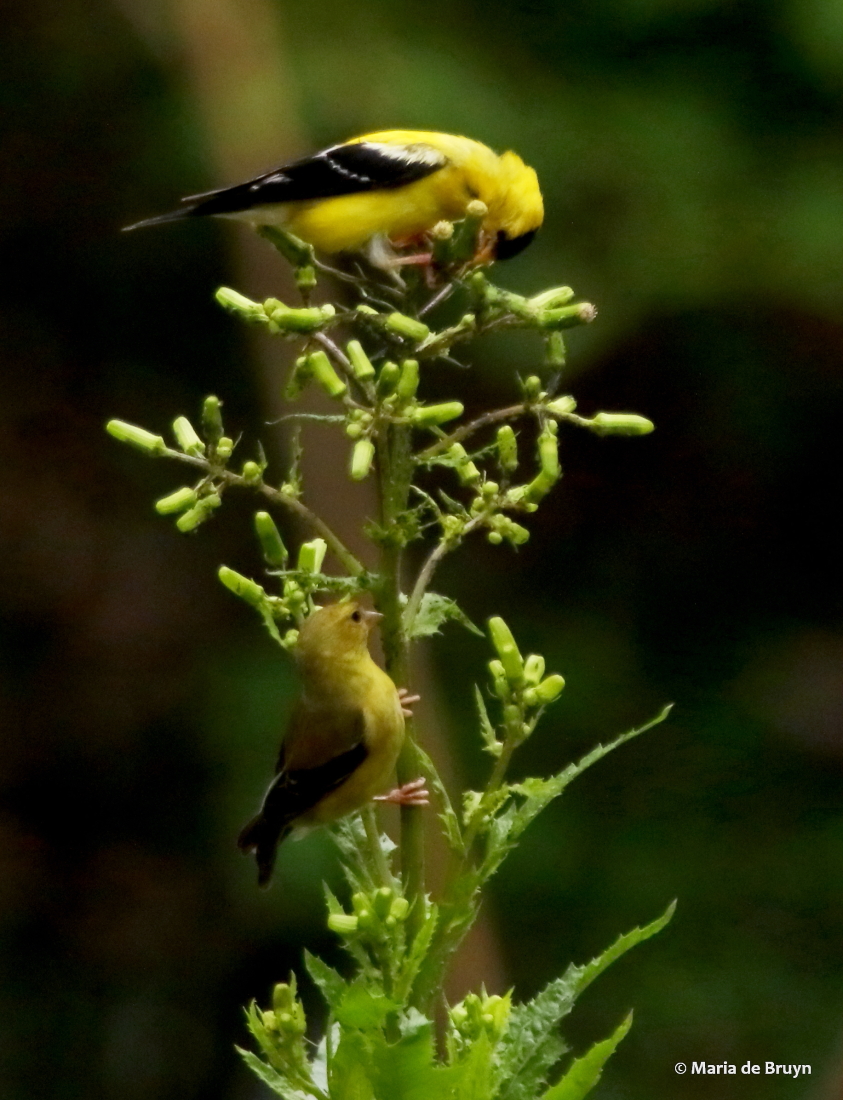
American goldfinch DK7A1355© Maria de Bruyn SIGNED RESamerican goldfinch DK7A7127© Maria de Bruyn signed res

American goldfinches

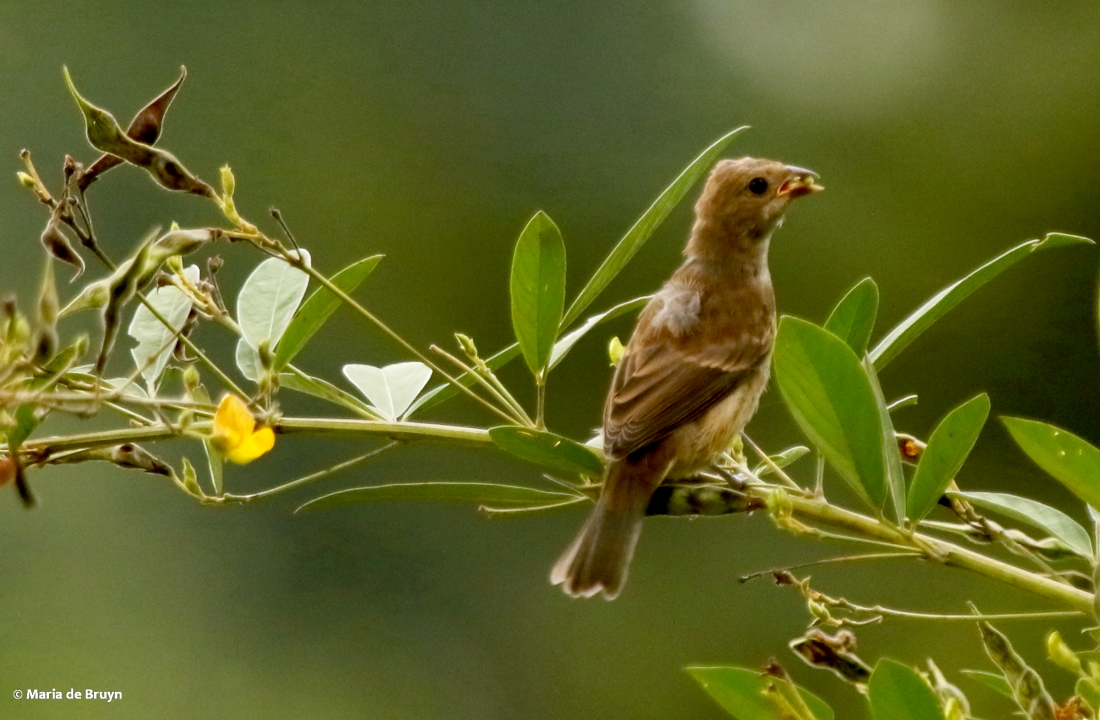
Indigo bunting DK7A7525© Maria de Bruyn signed res

Indigo bunting ( Passerina cyanea)

Scarlet tanager IMG_7415© Maria de Bruyn signed

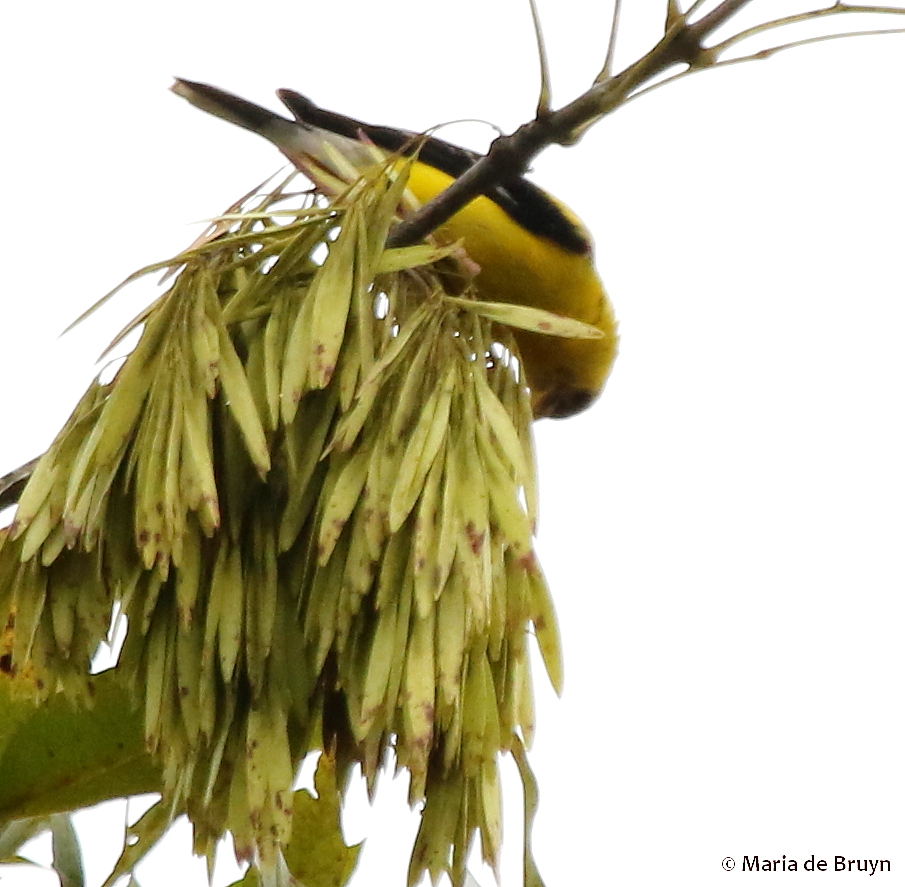
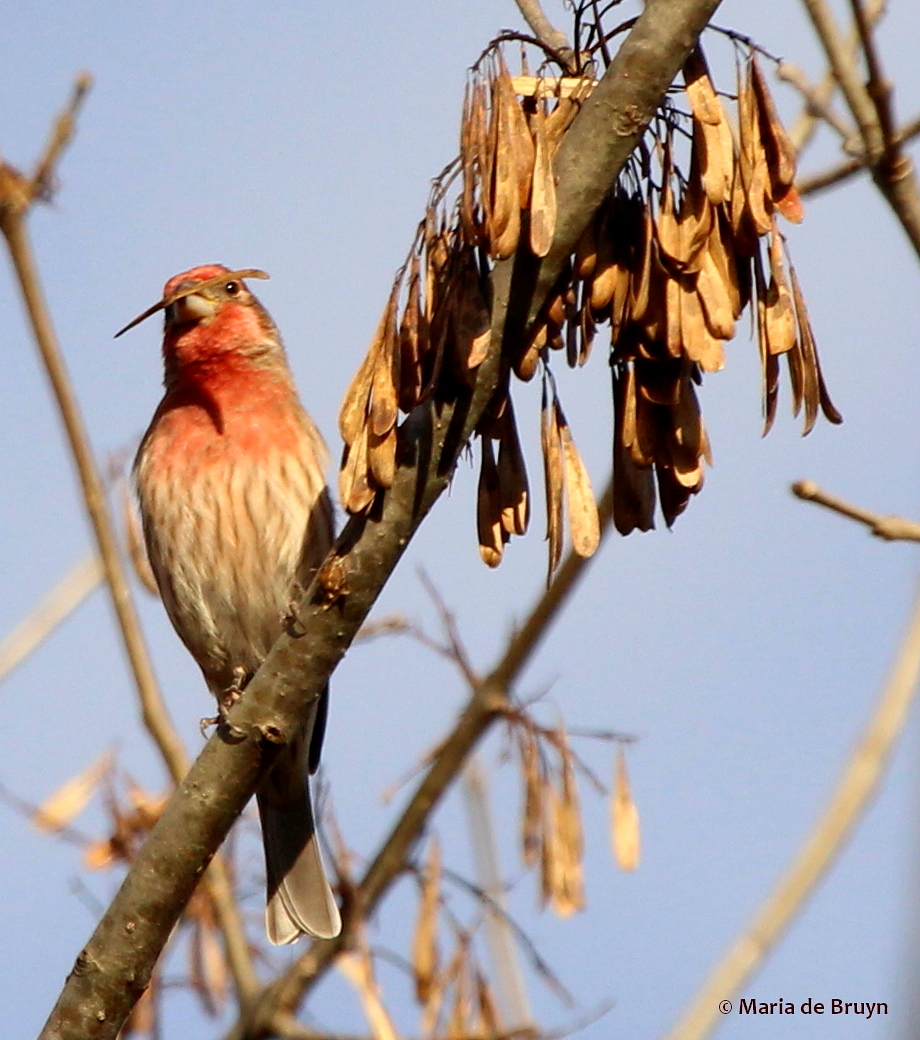
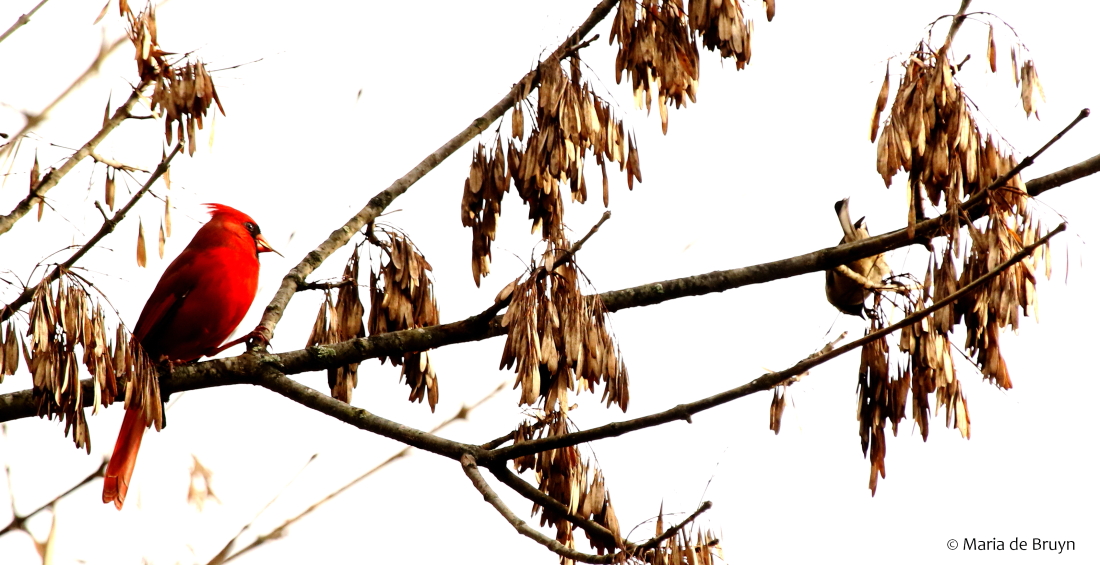
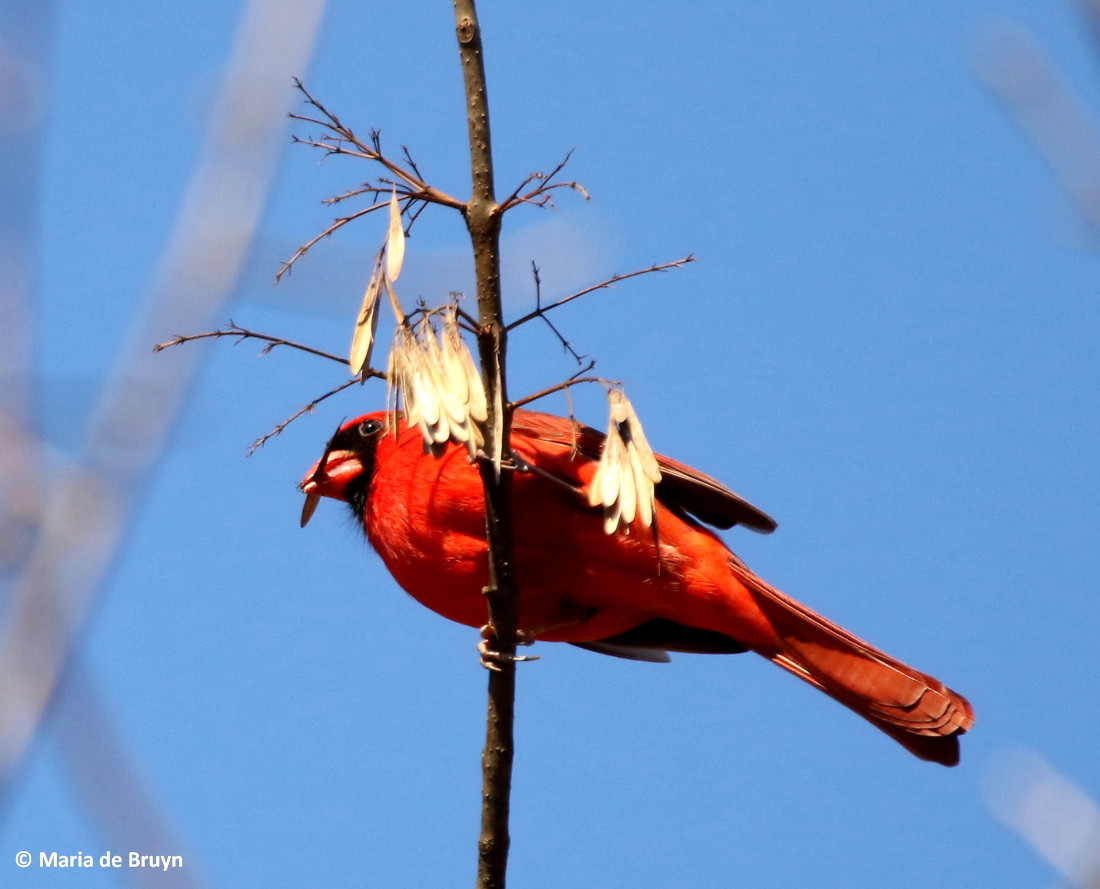
Some trees like maples have samara seed pods, in which a single seed is surrounded by a paper-like tissue that is dispersed by the wind. Ash trees have samaras that grow in clusters. Here a young scarlet tanager (Piranga olivacea) is dining. Below are an American goldfinch, house finch (Haemorhous mexicanus) and Northern cardinal, all of them males.


American goldfinch DK7A5026© Maria de Bruyn signedHouse finch IMG_7718© Maria de Bruyn signed


Northern cardinal I77A8006© Maria de Bruyn res


cedar waxwing I77A6594© Maria de Bruyn signed res

Cedar waxwing (left) with samara of the tulip tree (Liriodendron tulipifera)


blue jay IMG_7806© Maria de Bruyn signed


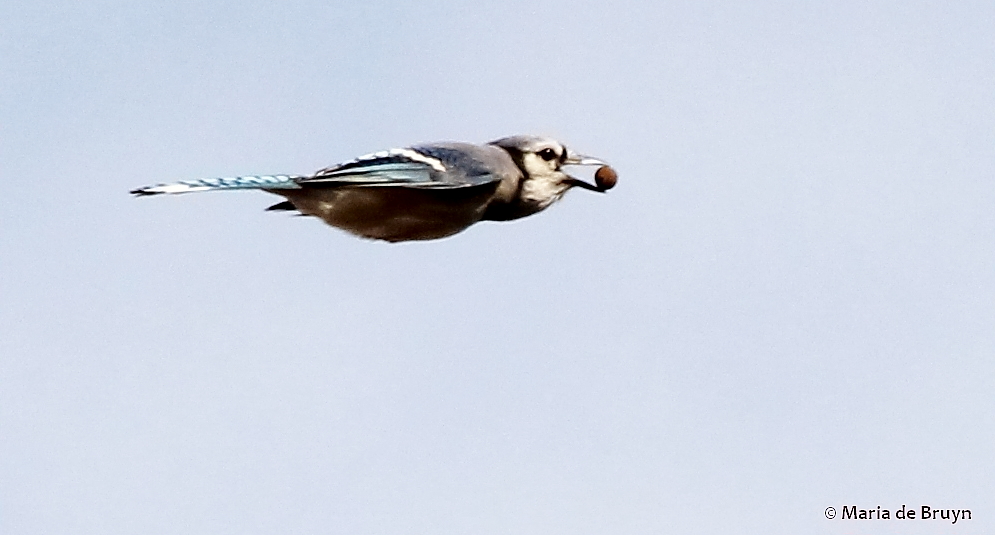
Blue jays (Cyanocitta cristata, above) like nuts a great deal and can often be seen flying away with a prize.

red-bellied woodpecker IMG_5780© Maria de Bruyn (2)


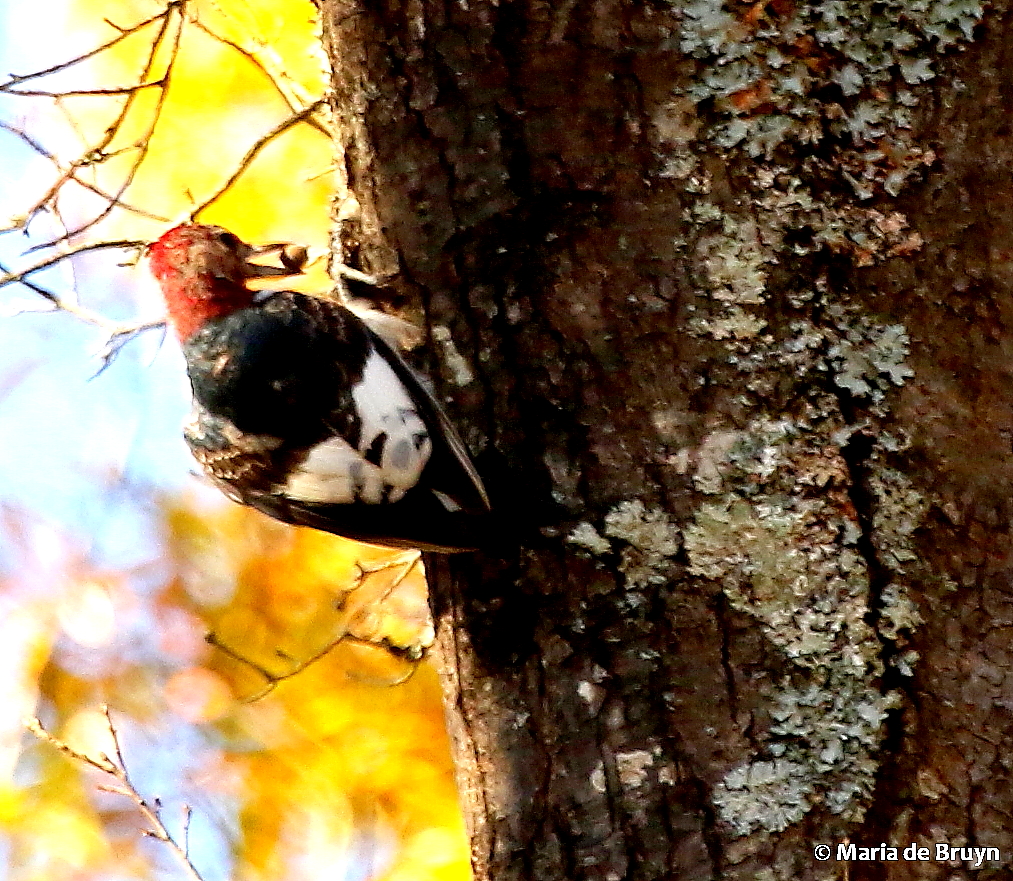
The red-bellied woodpeckers (Melanerpes carolinus) and red-headed woodpeckers (Melanerpes erythrocephalus) don’t turn away from nuts either.


Red-headed woodpecker I77A7844© Maria de Bruyn signed       red-headed woodpecker I77A5149© Maria de Bruyn res

Northern cardinal I77A2153© Maria de Bruyn res

It may feel a bit sad when activity dies down at the feeders for a time, but if you can manage to have nut-, seed- and fruit-bearing vegetation around your home, you can still enjoy watching your avian friends forage – and the natural surroundings can make for lovelier photos, too!

Citizen science in my backyard!

Gray-headed catbird DK7A8986© Maria de Bruyn resIt’s been a while since I’ve blogged – not for lack of ideas and photos but due to a dearth of time and energy that was absorbed by multiple troubles with a few cool happenings in between. But now I’m back with some new observations about the beauty and happenings of interest in my natural world and I hope to share some wildlife sightings on a regular basis again.

One activity that I have managed to fit in amid the other goings-on was enrollment in two new (for me) citizen science projects for the Smithsonian Institute. I’m participating in an eMammal project run by the North Carolina Museum of Natural Science and in a multi-year observational study of some common birds. The mammal project is time-limited, so I will report on that in about a month’s time.

Northern mockingbird DK7A8859©Maria de BruynThe bird project will involve tracking visits to my yard by banded birds for several years to come. The target species include American robins (Turdus migratorius), Carolina chickadees (Poecile carolinensis), Carolina wrens (Thryothorus ludovicianus), house wrens (Troglodytes aedon), gray-headed catbirds (Dumetella carolinensis), Northern cardinals (Cardinalis cardinalis) and Northern mockingbirds (Mimus polyglottos, at the right), all of which come to my yard. Song sparrows are the 8th target species but I haven’t seen them at my house. However, I discovered that there is a great crested flycatcher in my trees, although I’ve never seen him (or her) either, so who knows if one will come in the future? In any case, the target birds can live from about 6-10 years on average, so I’ll have an ongoing activity for as long as my eyesight remains reasonable!

bird banding IMG_3291© Maria de Bruyn resmist net IMG_3290© Maria de Bruyn

So how does the bird banding proceed? We (the bird bander and I) set up one 12-foot and one 6-foot mist net in two parts of the yard, after the bander laid out her equipment for the banding process. Within a very short time, we caught three birds in the large net! The first was a gray-headed catbird that I recognized (photo above), because he had molted all his tail feathers at once and looks a bit odd with no tail. This bird, whom I have named Corey, has been the most vocal catbird at my feeders and he was extremely vocal about having been caught as well.

gray-headed catbird IMG_3294© Maria de Bruyn bird banding IMG_3295© Maria de Bruyn

After being disentangled – very carefully – from the net, he was put in a bag while the bander got the other two birds out of the net. Corey was measured, weighed, and banded with a combination of aluminum and colored bands. Sex was determined (I now know he is a he!) and then he was let go.

gray-headed catbird IMG_3301© Maria de Bruyn bird banding IMG_3304© Maria de Bruyn res

Northern cardinal IMG_3311© Maria de Bruyn resBird 2 was a beautiful male Northern cardinal, who appeared to have good fat reserves. He was a bit vocal and bit the bander to show his displeasure at the treatment he was receiving.

Bird 3 was a male American robin. Sex was determined partly by looking at the cloacal region (outside breeding season, other markers besides brood patches and this area are examined). If a bander is unsure of the sex, this is also marked on the data sheet. The robin was more sedate during handling than his predecessors.


American robin IMG_3314 © Maria de Bruyn resAmerican robin IMG_3315© Maria de Bruyn res

The house wrens had been calling loudly during the banding and flitted about in the trees and to the feeders,but they always flew just above the nets and were not caught. A male Carolina wren with a nice eye stripe did not escape.

house wren DK7A4794© Maria de Bruyn Carolina wren IMG_3316© Maria de Bruyn

American crow IMG_3359© Maria de BruynThe chickadees and Northern mockingbird flew about but did not really come too close to the nets. Non-target species were at or near the feeders, too, such as courting bluejays, an American crow (Corvus brachyrhynchos, right) who came to eat jelly and take some apple to his mate, downy woodpeckers, white-breasted and brown-headed nuthatches, a house finch, Eastern towhees and a male cowbird.

red-bellied woodpecker IMG_3344© Maria de Bruyn resOther non-target birds flew into the large mist net, however, such as a brown thrasher, a tufted titmouse, a red-bellied woodpecker (Melanerpes carolinus, right), a chipping sparrow (Spizella passerina), a female common yellowthroat (Geothlypis trichas, below) and a common grackle. I’d not seen these birds up so close before, so that was really a nice experience.

Common yellowthroat IMG_3339© Maria de Bruyn res


bird banding IMG_3340© Maria de Bruyn resTo get more target species, a loudspeaker that played bird calls and some model birds were placed in the grass by the largest net. Eventually, two more catbirds were caught – with other catbirds in a nearby tree puffing themselves up to show their shared distress. These were the first catbirds banded for the project so far, so that was a nice way to end the exercise.

Cope's tree frog IMG_3293© Maria de Bruyn resA tour of the yard to see if there were any nests that could be followed for the Nest Watch project revealed a couple wren nests in boxes that were built up so high it was not possible to see if they had eggs in them. The bluebirds’ nest has five eggs that I will follow through fledging (hopefully); a catbird nest is too high up for me to see how many eggs she is sitting on but I will watch for her fledglings, too. And a Cope’s tree frog (Hyla chrysoscelis) had taken up residence in the nest box that the downy woodpecker uses to rest at night. The wrens had begun building a nest in that box last night and the frog was gone this afternoon.

The banding took place yesterday in the morning and in the afternoon, the banded birds had not returned. I wonder how long it will take most of these individuals to come again. Corey already returned this afternoon, instantly recognizable not only because of his very short tail feathers growing in but because of the red and silver bands on his little legs. I was so glad to see he was none the worse for wear!

Dining out in winter

cardinal and crowd DK7A9445© Maria de Bruyn resIn the spring, summer and fall, when birds have insects and other favorite foods available, many of us see moderate numbers of avian visitors at our feeders — although there are always exceptions, such as parents looking for easy meals to satisfy the voracious appetites of their offspring. Come wintertime, though, we may have whole flocks of different species flying busily to and fro to take food from our feeders.


tufted titmouse IMG_0635© Maria de BruynOur avian friends need to eat more, and more often, in autumn and winter to ensure that they can gain sufficient fat reserves to see them through the cold weather. Some of the smallest birds will consume up to 30% of their body weight. Nuts are a favored food for tufted titmice (Baeolophus bicolor).

cedar waxwing IMG_7967 ©Maria de Bruyn 2

In the autumn, there are still many berries available and these are a popular food. Birds that tend to eat insects much of the year will switch to berries in winter since their prey has died, is dormant and awaiting rebirth in larval form, or otherwise scarce. The berries of honeysuckle (Lonicera), privet (Ligustrum, an invasive plant) and other plants are popular foods for species such as cedar waxwings (Bombycilla cedrorum).

 Holly berries (Ilex opaca) are a favorite for American robins (Turdus migratorius).

American robin IMG_3302 © Maria de Bruyn American robin IMG_0326©Maria de Bruyn res

Pine siskin IMG_6226©Maria de Bruyn resEven when much of the vegetation has dried up, seeds and seed pods remain. Pine siskins (Spinus pinus), downy woodpeckers (Dryobates pubescens) and American goldfinches (Spinus tristis) will feast on the seeds found in the pods of honeysuckles and trumpet vines (Campsis radicans).


American goldfinch IMG_6251 ©Maria de Bruyn res Downy woodpecker IMG_9184M de Bruyn

In some cases, dried leaves and the remains of caterpillar tents form clumps that attract tufted titmice and white-throated sparrows (Zonotrichia albicollis) as they search for sustenance.

tufted titmouse IMG_9714© Maria de Bruyn res white-throated sparrow DK7A6171© Maria de Bruyn res

Pine siskins will eat moss growing on tree trunks. Other birds search the vegetation alongside ponds, like this song sparrow (Melospiza melodia).

pine siskin IMG_7546©Maria de Bruyn ressong sparrow IMG_6959© Maria de Bruyn (2) res

The seed pods of my crepe myrtle trees (Lagerstroemia) are a magnet in winter for various avian species such as pine siskins, white-throated sparrows, red-winged blackbirds (Agelaius phoeniceus) and Northern cardinals (Cardinalis cardinalis), as well as Eastern gray squirrels (Sciurus carolinensis).

white-throated sparrow IMG_2653©Maria de Bruyn respine siskin IMG_8177 ©Maria de Bruyn

Northern cardinal IMG_4887©Maria de Bruyn resred-winged blackbird DK7A7754© Maria de Bruyn res

Eastern gray squirrel IMG_3547© Maria de Bruyn res Eastern gray squirrel IMG_3528© Maria de Bruyn res (2)

Various species of smaller birds will flock together in winter, both for purposes of safety and help in finding food. As the season progresses, the supply of seeds, pods and berries diminishes. In addition, the variety of natural plants has often decreased in urban areas as homeowners remove “weeds” from their yards. Wildlife organizations therefore encourage bird lovers to add native plants to their property, especially those that attract birds, and to provide extra food through feeders.

white-throated sparrow IMG_1608© Maria de Bruyn ruby-crowned kinglet IMG_1635© Maria de Bruyn res

Northern mockingbird DK7A4279© Maria de Bruyn resMaking available mixed seeds, oil-rich sunflower seeds and suet (traditional or vegetarian made with vegetable shortening) will help the birds like this Northern mockingbird (Mimus polyglottos) keep up their energy. And it’s a good idea to keep those feeders filled — did you know that many songbirds are able to collect food in a special storage pouch within their esophagus so that they can then digest it after dark and overnight? This may help account for the fact that certain birds come back to the feeders over and over again within a short span of time.


The area where I live has had a long winter, with alternating days of relatively high temperatures and then very cold days and nights. Crocuses, daffodils and tulips are beginning to emerge in my gardens despite snow and ice and trees and shrubs are beginning to bud, giving the Eastern gray squirrels and house finches (Haemorhous mexicanus) a new source of food. I think that both the birds and I will be happy when spring arrives and stays! In the meantime, I’ll keep the feeders filled.

Eastern gray squirrel DK7A7410© Maria de Bruyn res House finch DK7A0286© Maria de Bruyn res

A bedraggled sort of day

Carolina wren IMG_4876© Maria de Bruyn resFirst, let this lovely Carolina wren (Thryothorus ludovicianus) and me wish you – fellow nature lovers and blog readers – all the best as we look to the future in this year of 2015! May your minor disappointments (life is not always rosy) be compensated by love, laughter, health and happiness in abundance!


Yesterday may have been a minor disappointment for the wildlife here.Hermit thrush IMG_3106© Maria de Bruyn res On Sunday, it was very cold for North Carolina standards. Together with two other Audubon Society volunteers, I was standing at a local lake in 15°F (-9.4°C) weather waiting to see if any bald eagles flew by for inclusion in the quarterly Eagle Count. We didn’t see any, although this lovely hermit thrush (Catharus guttatus) was nearby eating berries.

Monday was warmer but EXTREMELY wet! Two of my cats awakened me at 5 a.m. and I could hear the rain coming down in a veritable deluge. I wondered if I would be able to see the road to drive for an appointment later that morning (it did let up, thank goodness) and also wondered how the birds and animals were keeping in this unpleasant weather.

Northern cardinal IMG_4462© Maria de Bruyn res

Northern cardinal IMG_4049© Maria de Bruyn res


When it’s cold, the birds fluff up their feathers to trap air pockets by their bodies; this helps they retain body heat and stay warmer. Heavier wet feathers don’t seem to fluff well, though. On the other hand, birds’ feathers are covered with an oily or waxy substance that helps water run off, thereby keeping their bodies drier. Those feathers don’t necessarily look pretty though. Many of the birds were indeed looking bedraggled, some to a greater degree and others just a bit like these Northern cardinals (Cardinalis cardinalis).

red-bellied woodpecker IMG_5005© Maria de Bruyn resIt didn’t seem that many birds were hiding in vegetation to get out from under the downpour. Nope – they all appeared to be very hungry and anxious red-bellied woodpecker IMG_4948© Maria de Bruyn resfor a meal like this red-bellied woodpecker (Melanerpes carolinus), who was scolding me for being so close to the feeders!

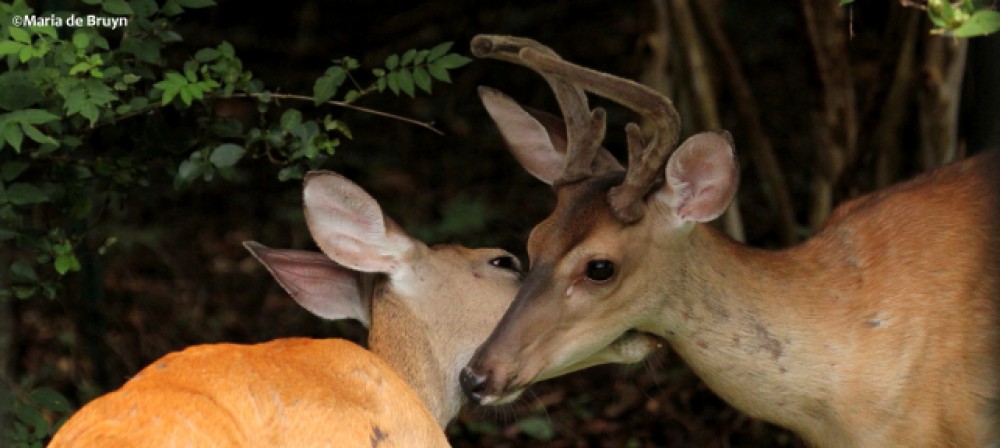
white-tailed deer IMG_4092© Maria de Bruyn resA few white-tailed deer (Odocoileus virginianus) were also wet and hungry, including two visitors to my yard that I had not seen before. They were two bucks, one of whom must have been hit by a car. One of his antlers was broken off and he was hopping along holding up his left hind leg, which had obviously been injured.


white-tailed deer IMG_4063© Maria de Bruyn res white-tailed deer IMG_4001© Maria de Bruyn res

white-tailed deer IMG_4055© Maria de Bruyn resA young doe, who visits regularly, stopped for some bird seed, as did the other buck whose antlers had been shed. Their thick hair was coated in raindrops.

The Eastern gray squirrels (Sciurus carolinensis) can curl their tails up over their backs as a kind of natural umbrella, both on the ground and in trees. This individual, who may have been injured by a predator and escaped, enjoyed some apple – first on the ground and then later in the tree away from the blue jays that were hopping around it.

Eastern gray squirrel IMG_4325© Maria de Bruyn res Eastern gray squirrel IMG_4334© Maria de Bruyn res

Some of the birds definitely looked more presentable than other. The three visiting mockingbirds (Mimus polyglottos) were sleek and beautiful, one using its long tail tobalance as it plucked meal worms from a feeder designed for somewhat smaller birds.

Northern mockingbird IMG_4503© Maria de Bruyn res Northern mockingbird IMG_4467© Maria de Bruyn res

The dark-eyed juncos (Junco hyemalis), Eastern towhees (Pipilo erythrophthalmus) and chipping sparrows (Spizella passerina) looked in fine shape, too.

dark-eyed junco IMG_4802© Maria de Bruyn res dark-eyed junco IMG_4729© Maria de Bruyn res

Eastern towhee IMG_4924© Maria de Bruyn res chipping sparrow IMG_4817© Maria de Bruyn res

The bluebirds (Sialia sialis) varied in appearance; a couple looked groomed but wet, while a couple others looked a bit disheveled.

Eastern bluebird IMG_4587© Maria de Bruyn res Eastern bluebird IMG_4588© Maria de Bruyn res

pine warbler IMG_4569© Maria de Bruyn resThe pine warbler (Setophaga pinus) – usually among the more handsome garden birds – unfortunately looked a sorry sight. Fortunately, when the rain ends, he’ll be able to shake that water off and get back to looking like one of the handsome fellas of the avian neighborhood!

pine warbler IMG_4618© Maria de Bruyn


pine warbler IMG_4842© Maria de Bruyn res

ruby-crowned kinglet IMG_4777© Maria de BruynThe ruby-crowned kinglet’s (Regulus calendulabrown-headed nuthatch IMG_4409© Maria de Bruyn res) oily feather covering seemed to do well in keeping the rainwater at bay, while the brown-headed nuthatch (Sitta pusilla) looked a bit more water-logged.ruby-crowned kinglet IMG_4741© Maria de Bruyn res

The tufted titmouse (Baeolophus bicolor) and Carolina chickadee (Poecile carolinensis) join me in looking forward to dryer and sunnier weather in a few days’ time!
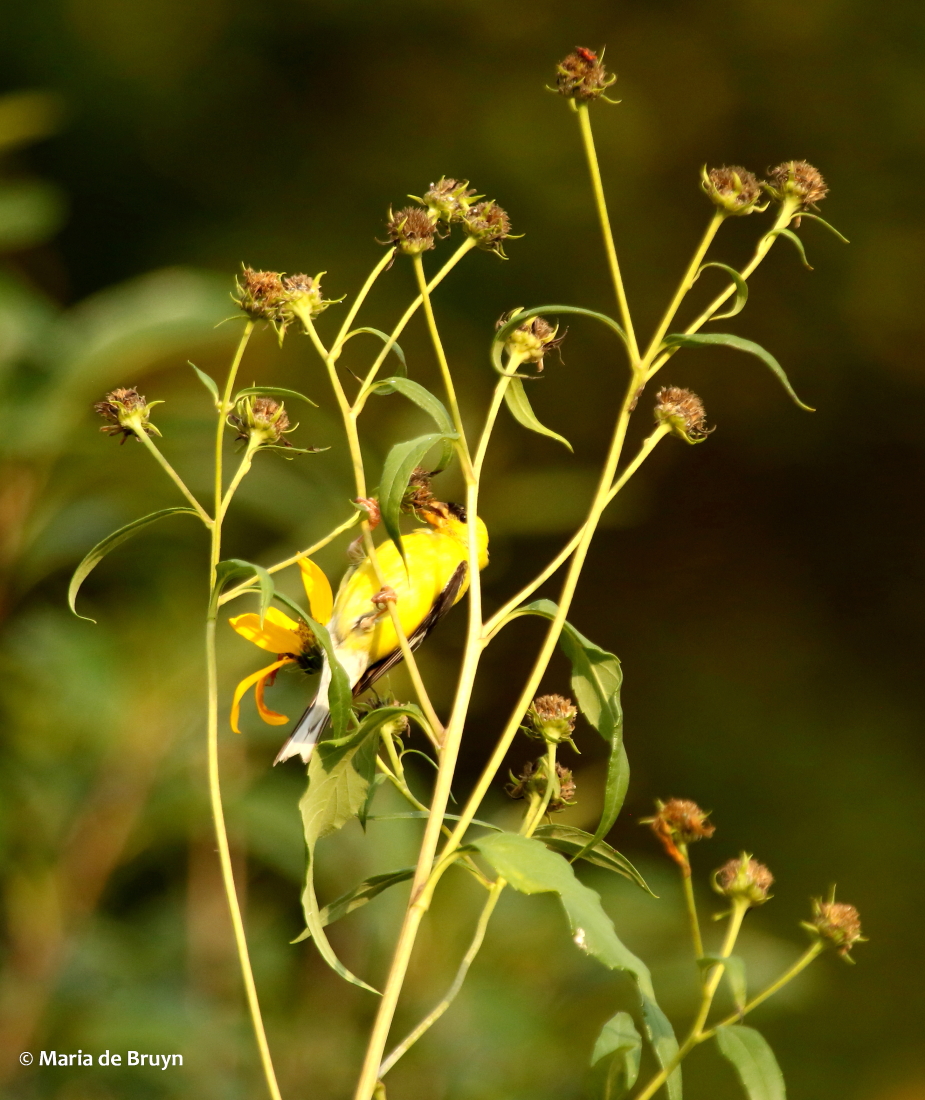
tufted titmouse IMG_4350© Maria de Bruyn resCarolina chickadee IMG_4386© Maria de Bruyn res

Turtles as stepping stones

Northern mockingbird IMG_3689©Maria de Bruyn resOne day when I was at a beautiful nature park in the neighboring city of Durham, I was – of course – looking for wildlife. For a while I watched a Northern mockingbird (Mimus polyglottos) pecking along the path in a quest for insects. It wasn’t until I got to the pond, however, that a scene unfolded which kept me occupied for a while.
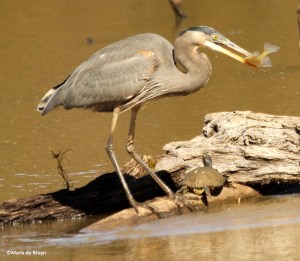
 

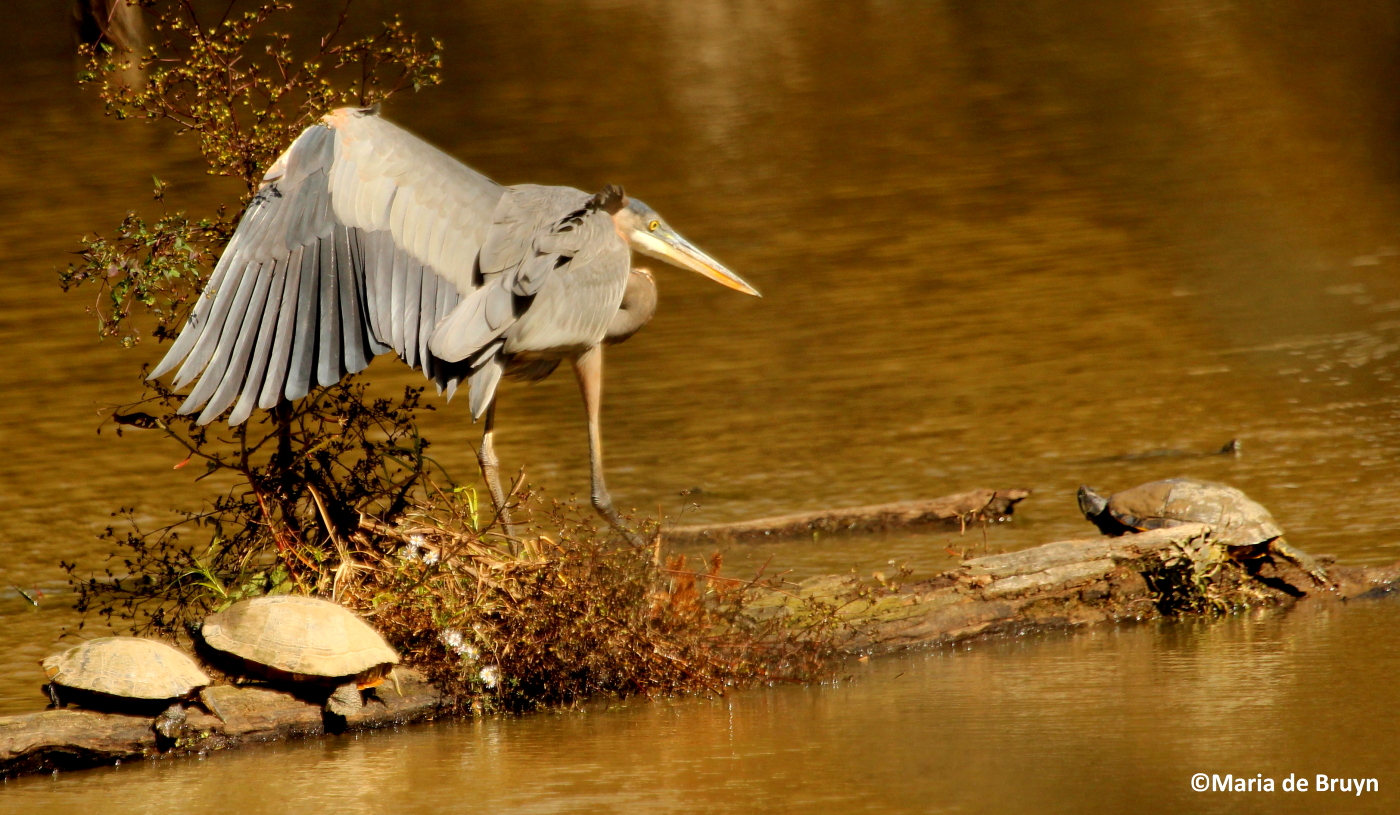
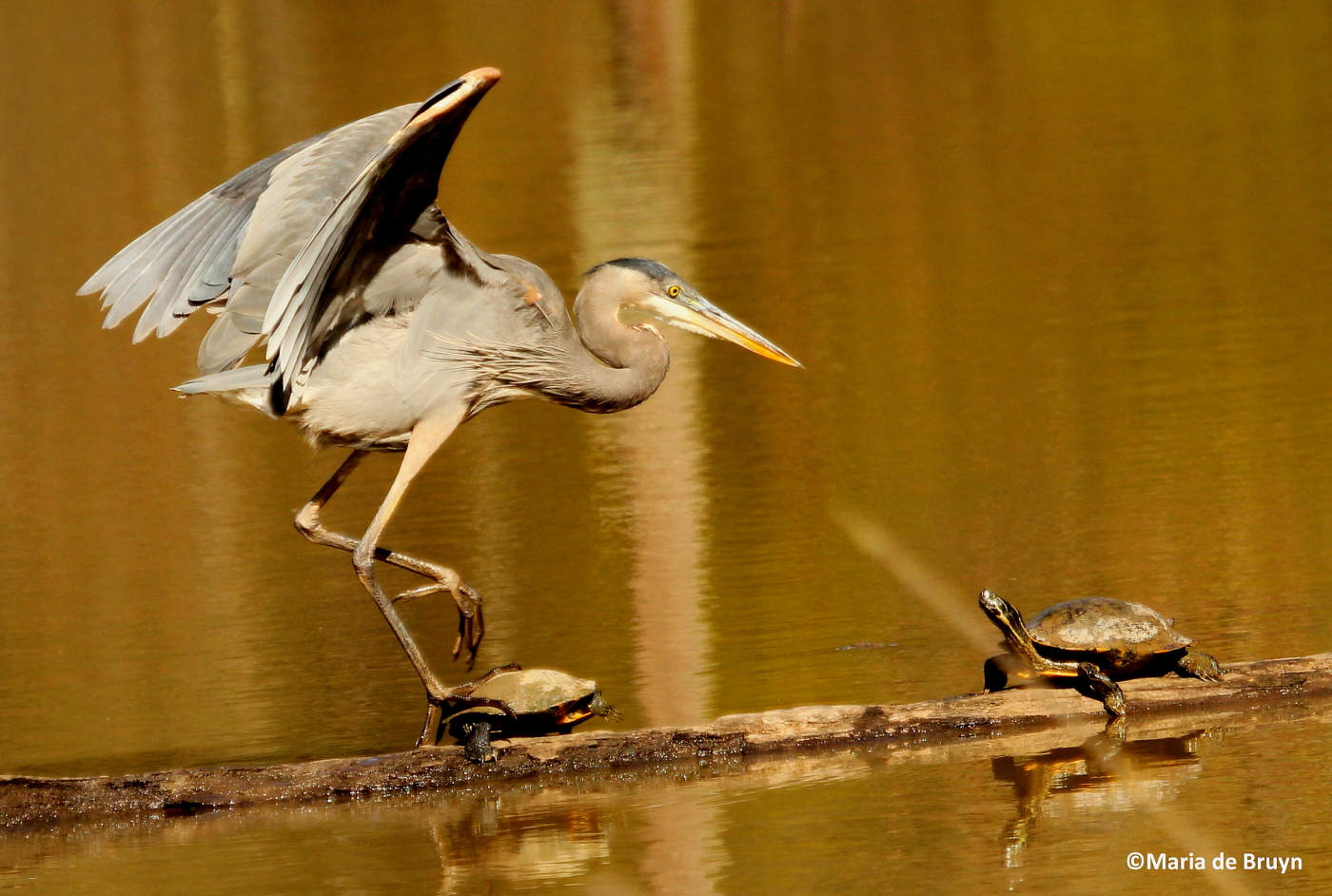
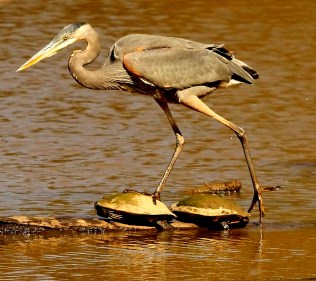
great blue heron IMG_4099©Maria de Bruyn resgreat blue heron IMG_3905©Maria de Bruyn resThe resident great blue heron (Ardea herodias) had stationed him (or her) self at the end of a log on which several pond slider turtles (Trachemys scripta) were basking. He seemed to be staring in their direction, so I wondered if he was considering eating one. After seeing a video of a heron swallowing a groundhog whole, I knew that they can consume quite large meals. After a time, though, it seemed that the bird wasn’t interested in the turtles but in the fish swimming in front of them. After patiently waiting for a time, the heron stabbed and had success!
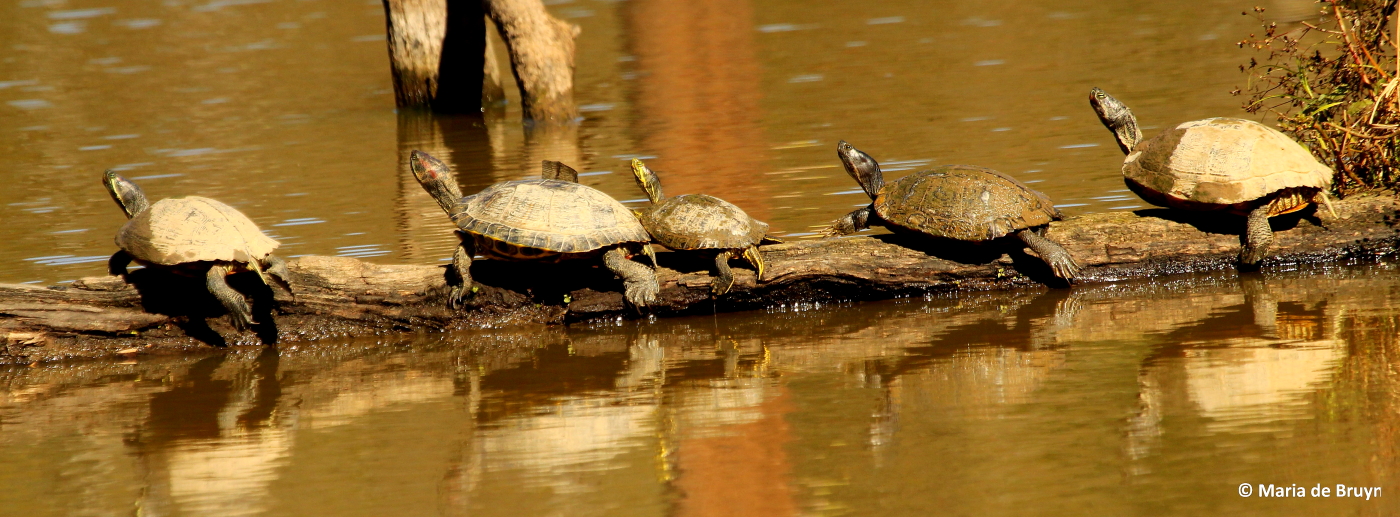
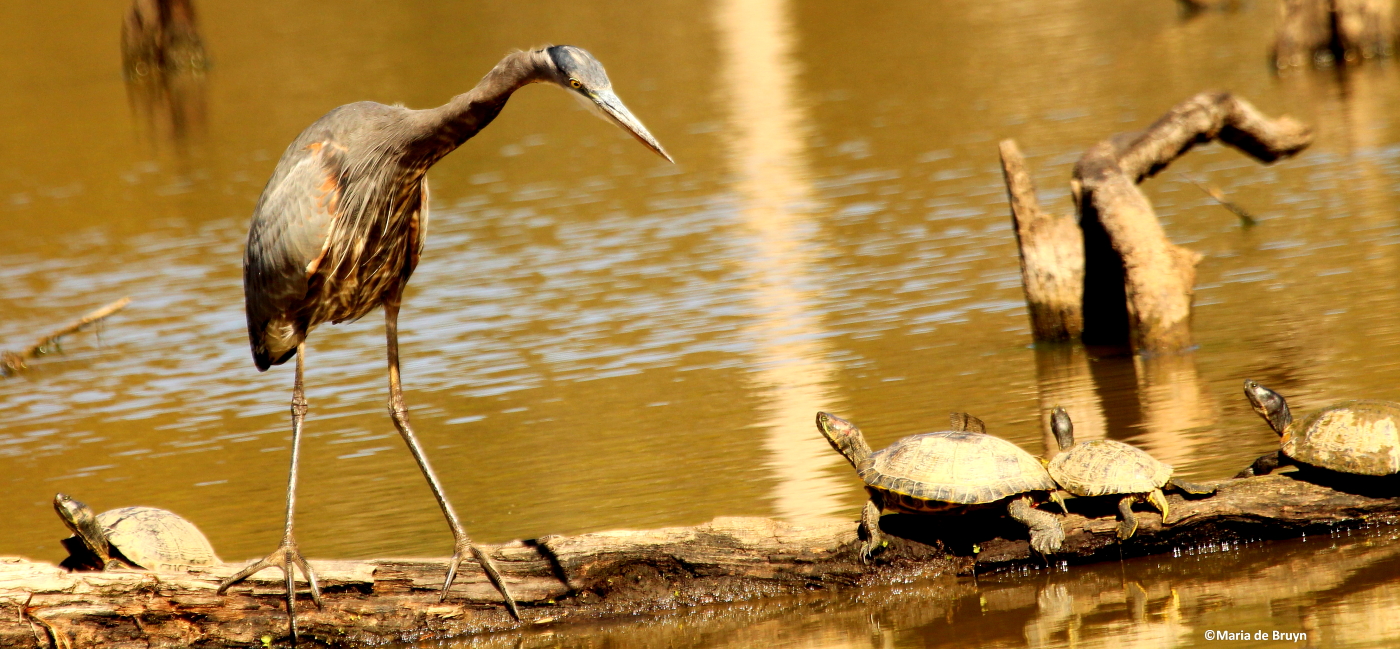
painted turtle IMG_3815© Maria de Bruyn resThe heron decided to move to a new spot, down near the other end of the log. The sun was bright and the pond was filled with many dozens of turtles enjoying the warmth. Whereas red-eared sliders and painted turtles at Mason Farm Biological Reserve will often plop into the water in haste when they sense people nearby, these turtles didn’t seem to care if they were watched from the pond’s edge. But I did think they would move as the heron neared them.

great blue heron IMG_3987©Maria de Bruyn resgreat blue heron IMG_4142©Maria de Bruyn res


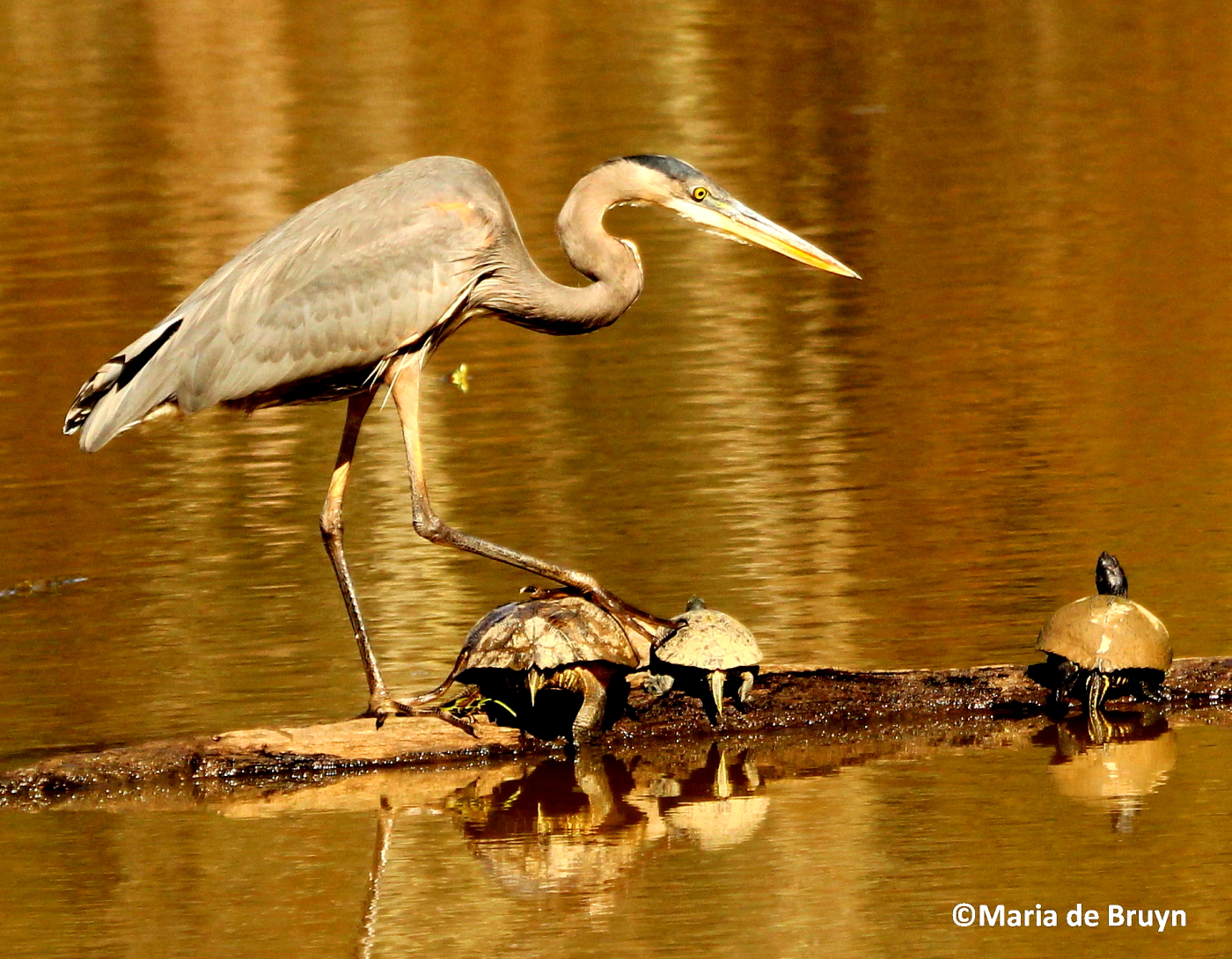
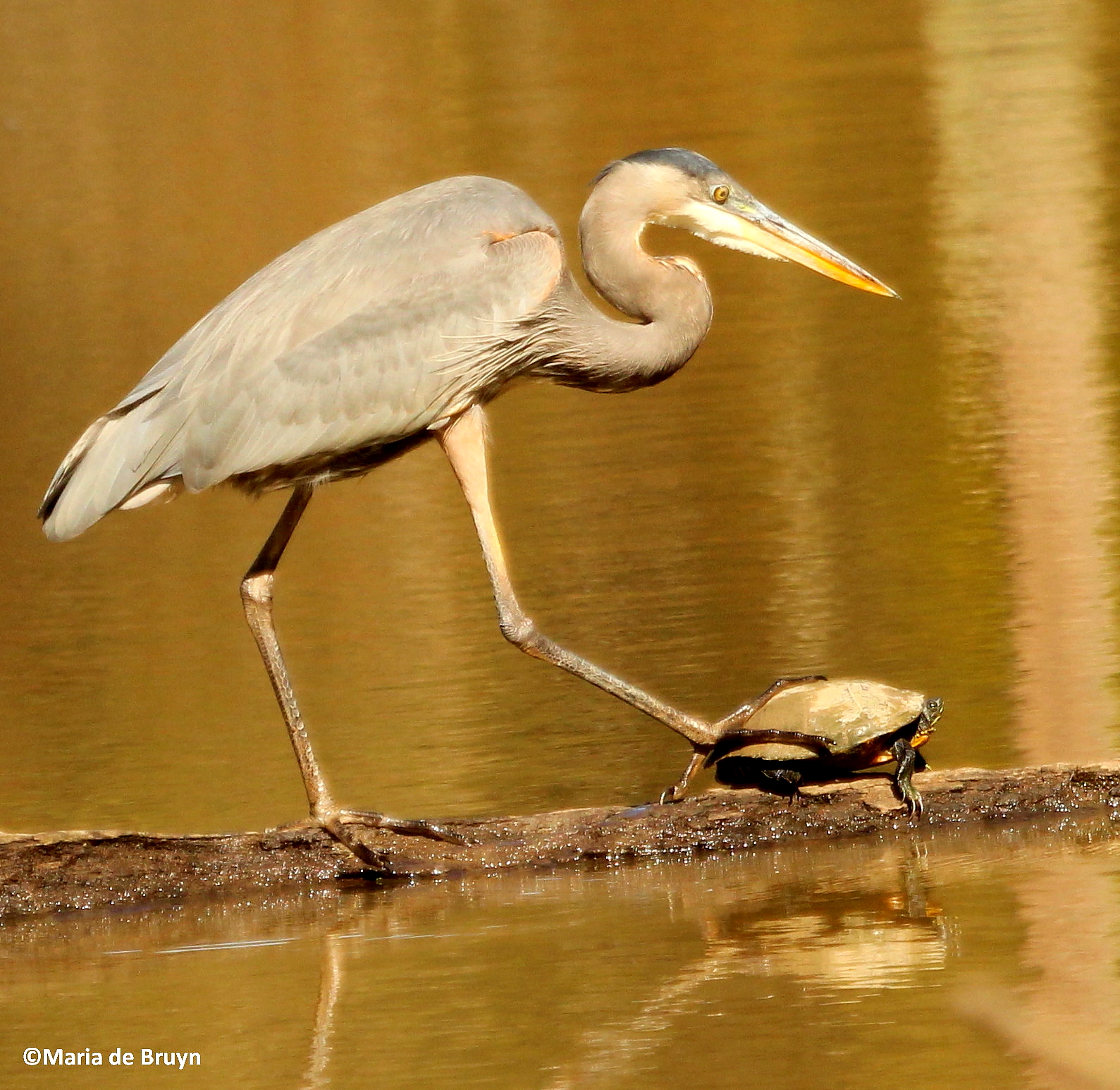
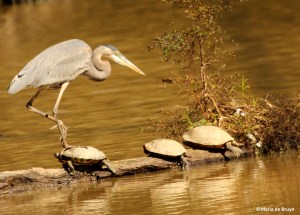
How wrong I was! The turtles saw him coming but they just let the huge bird use their backs as stepping stones!


great blue heron IMG_4160©Maria de Bruyn res   great blue heron IMG_4166©Maria de Bruyn res

great blue heron IMG_4302©Maria de Bruyn res

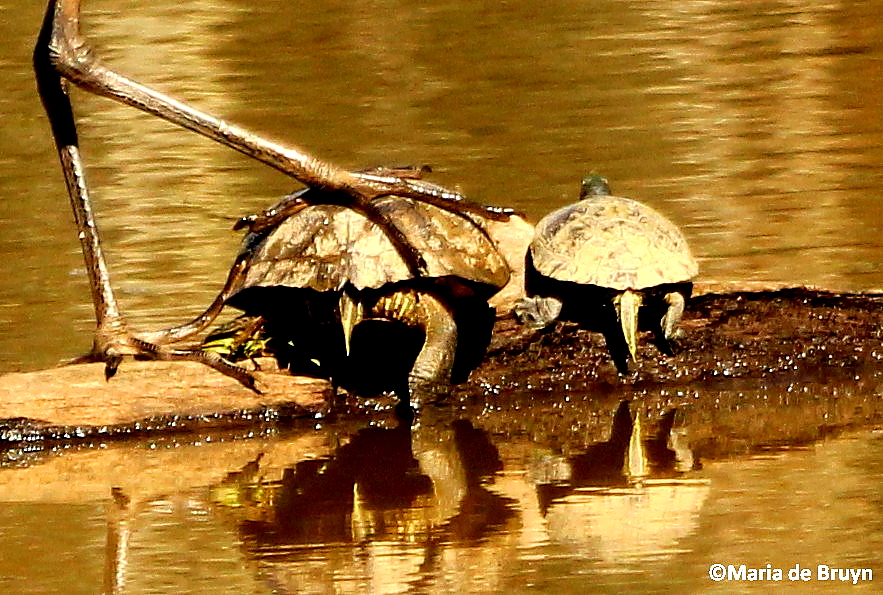
The bird’s claws completely encircled some turtles as it moved along, occasionally balancing on one leg.

great blue heron IMG_4224©Maria de Bruyn res  painted turtle IMG_4217©Maria de Bruyn 2

I noticed a few turtles with scutes bent up into the air. (Scutes are sections of the carapace.) I began to wonder if this was the result of the heron’s claws snagging on their shells as the bird proceeded.

IMG_3808© Maria de Bruyn 2great blue heron IMG_4297©Maria de Bruyn

If that was true, though, why didn’t the turtles skedaddle out of there when the heron came near? I only saw one turtle plunge into the pond.

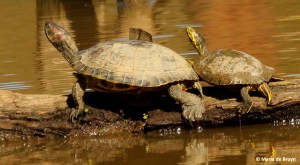
great blue heron IMG_4304©Maria de Bruyn respainted turtle IMG_3815© Maria de BruynAt home, I did an Internet search and found out that turtles shed their scutes from time to time and that was apparently what I was seeing. So I learned that turtles shed! Turtles’ shells are extensions of their rib cage and attached to their spine; terrestrial turtles don’t shed but aquatic turtles do shed scutes, which are made of keratin (like the material of horns or fingernails).
5-MdB great blue heron IMG_4339

The heron kept moving along as he wasn’t having much success in the different spots he chose. He did get a couple fish but smaller than his first catch. Eventually, I found that I wasn’t quite as patient as the heron so I finally left after a very entertaining hour of observation. I do so love watching the natural world!