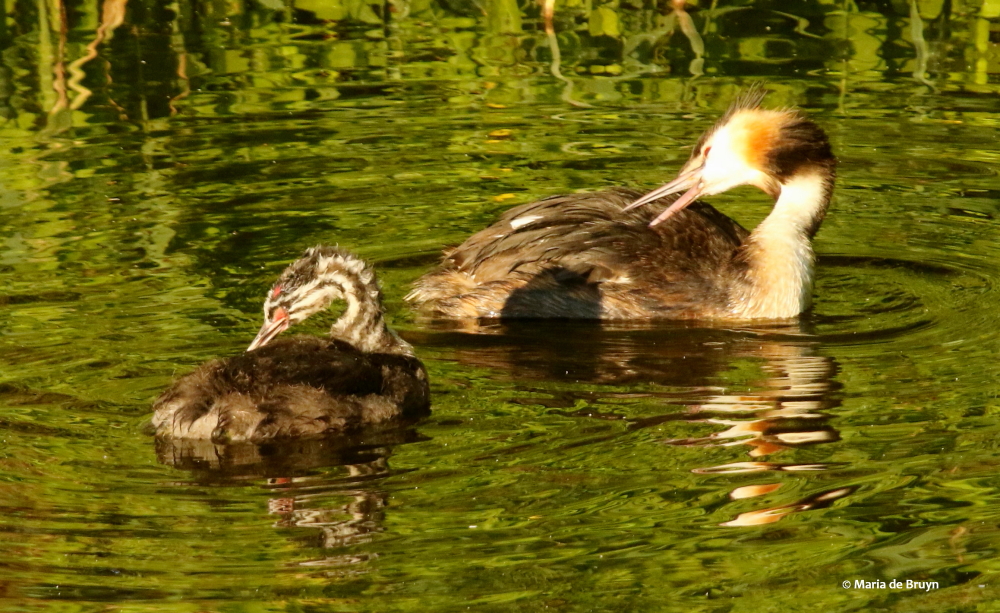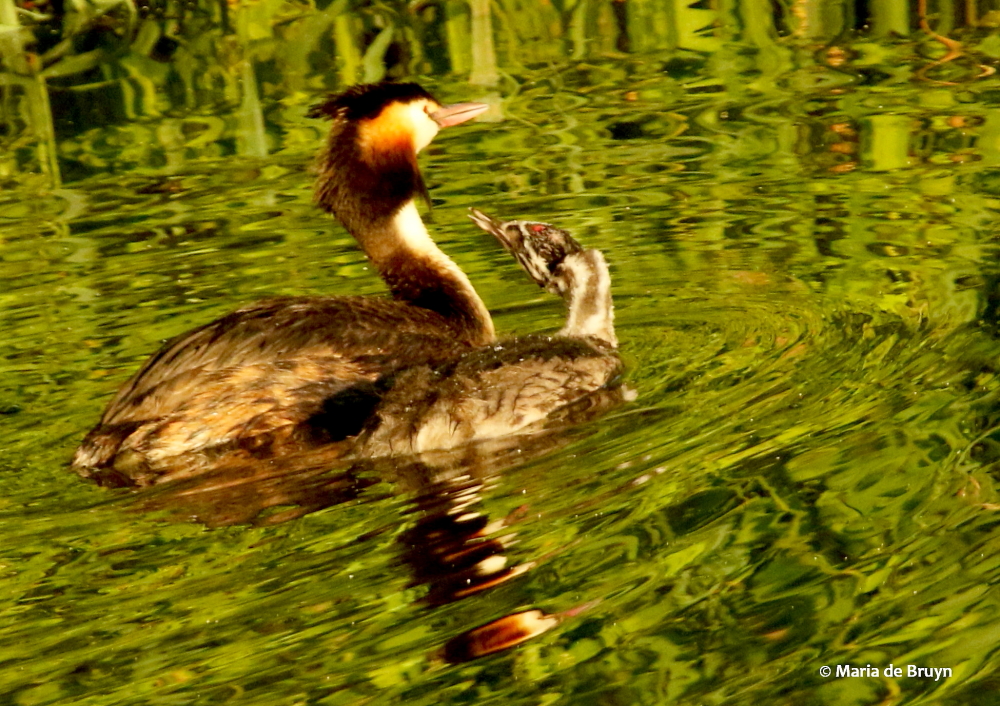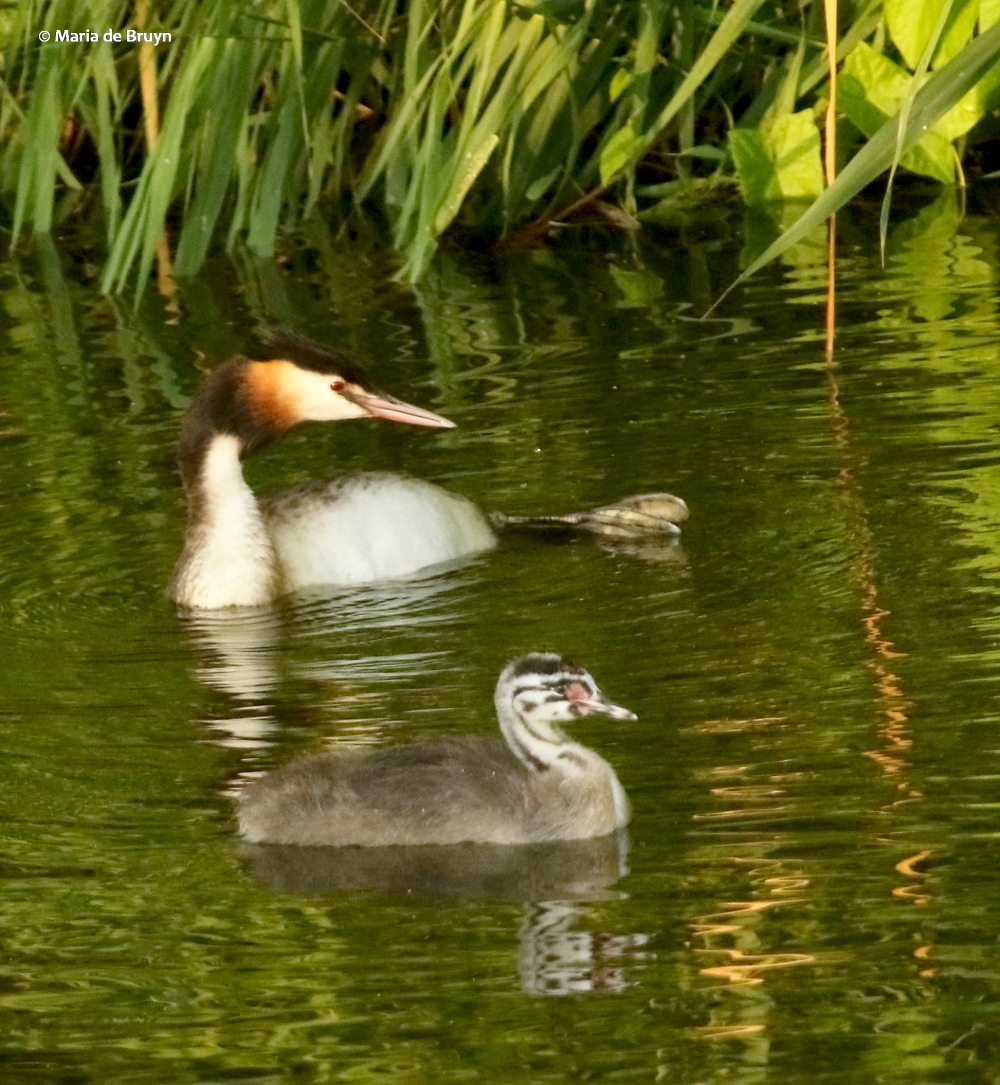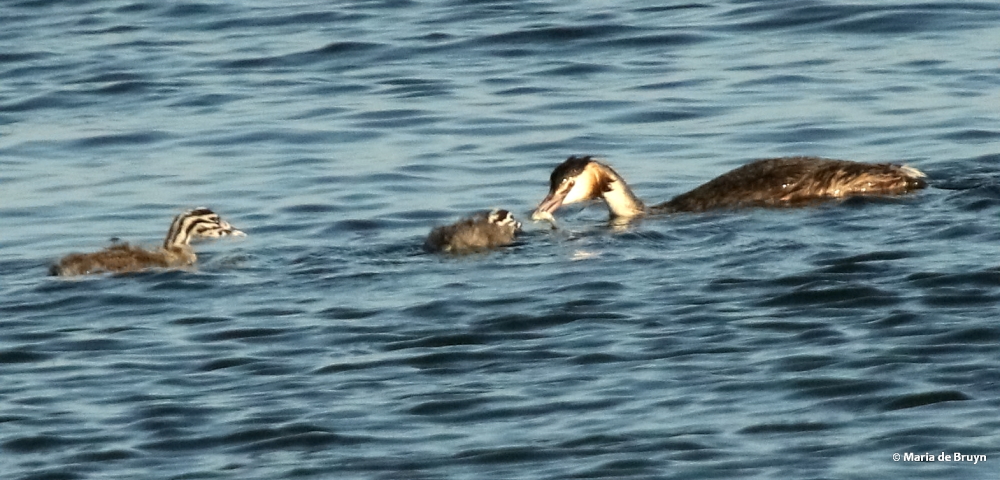
Gracious and gorgeous grebes nurturing newborns

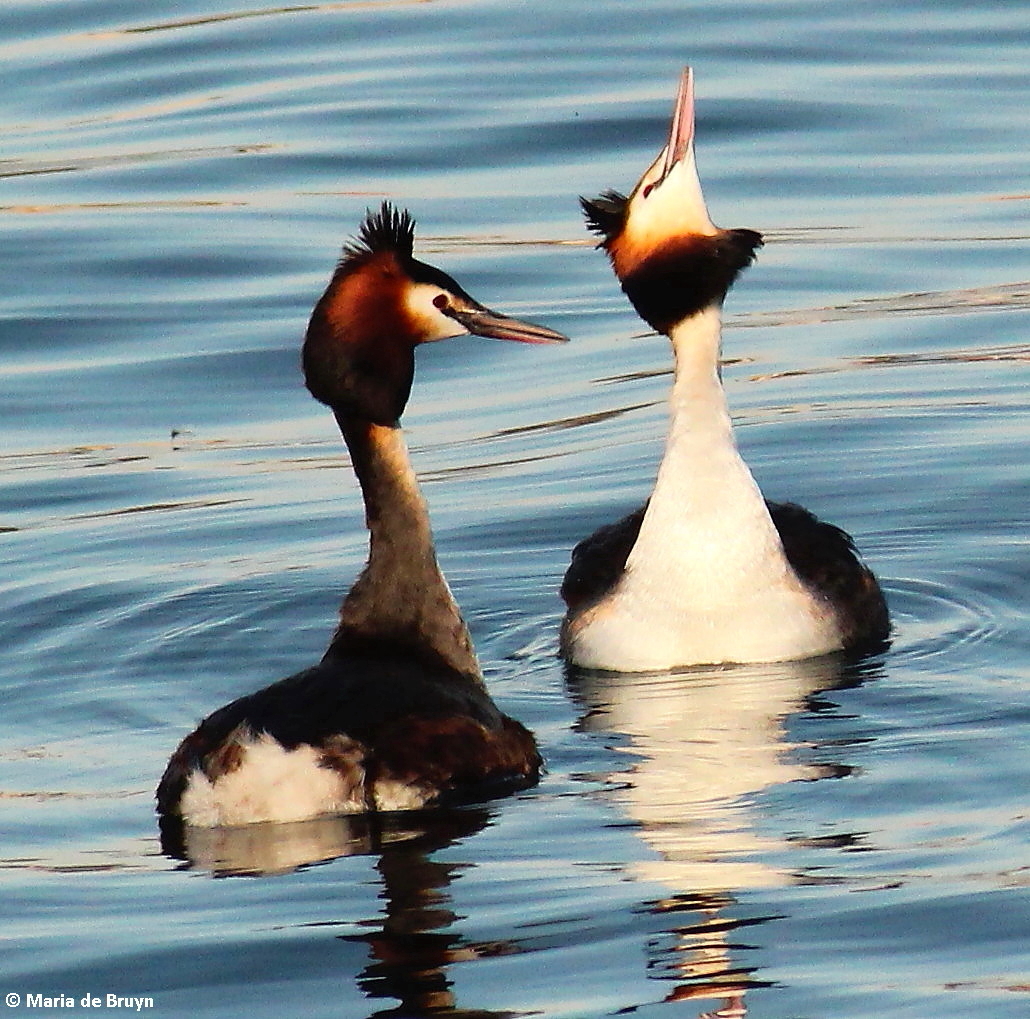
After birding now for some six or seven years, I’ve come to appreciate all birds since each species can be fascinating to watch. I do have some favorites though that have captured my interest. In 2012, I fell in love with great-crested grebes (Podiceps cristatus), whom I first noticed during a trip to Switzerland. A pair was engaged in their courtship dance, which was simply delightful to see. They circled one another, stretched out their necks, ruffled their feathers and arose on the water facing one another. Their beauty enchanted me, and I felt that I had witnessed something very special.
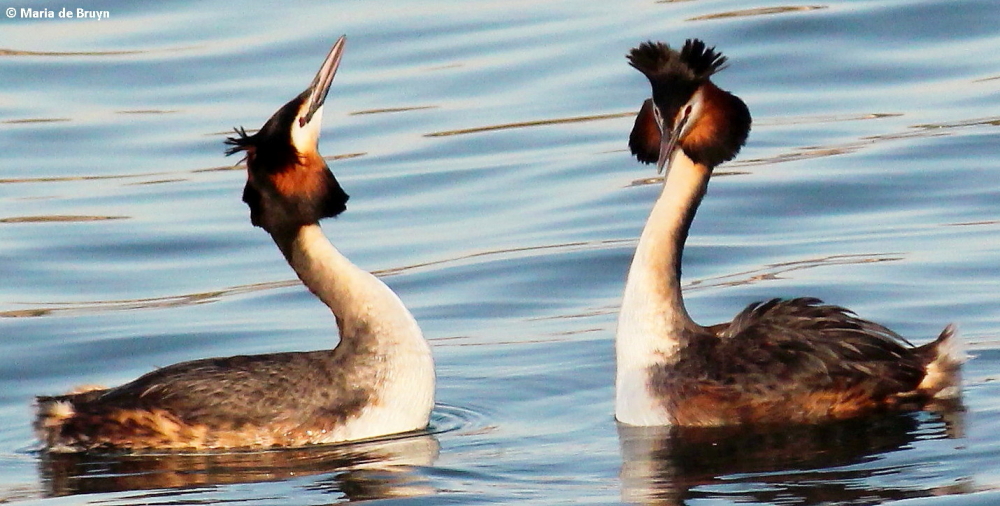
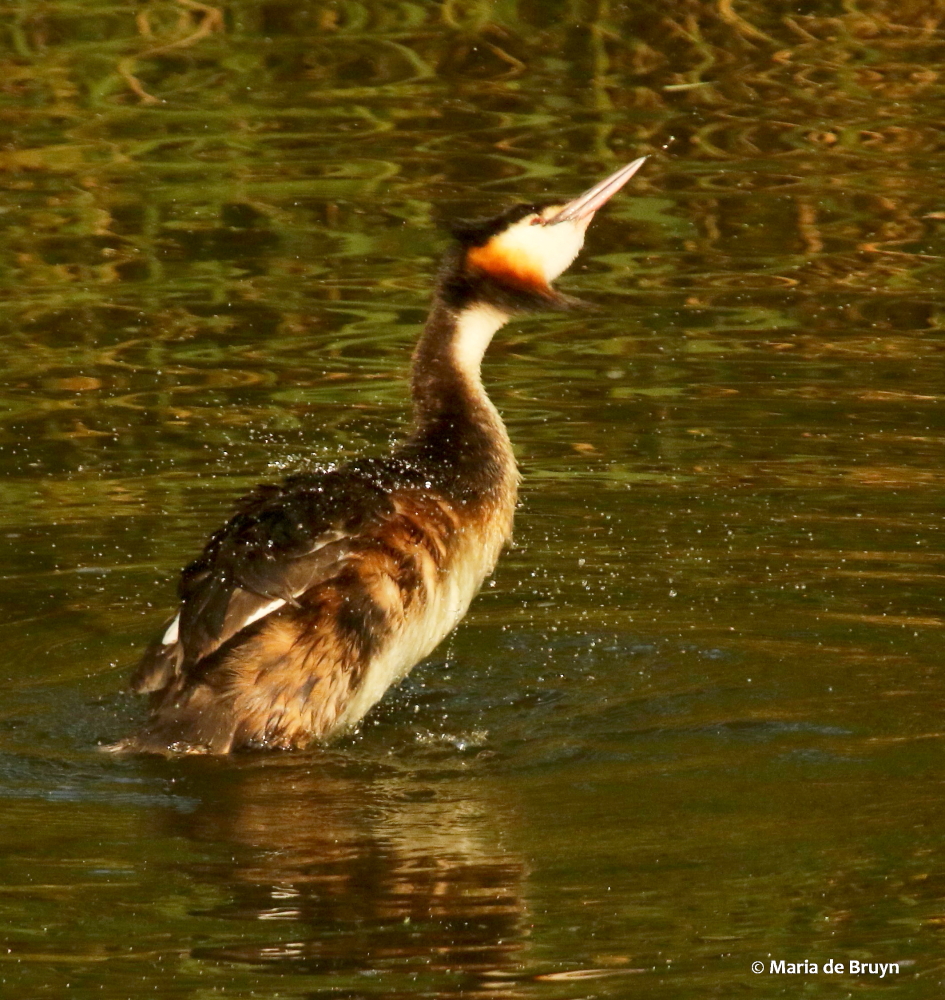
The rust and black-tinted head plumes and ruff are gorgeous, making these birds very attractive indeed. This led to their being hunted almost to extinction during the 1800s in the United Kingdom because the feathers were desired as decorations or hats. This led to the establishment of the Royal Society for the Protection of Birds in that country and their numbers fortunately rebounded.

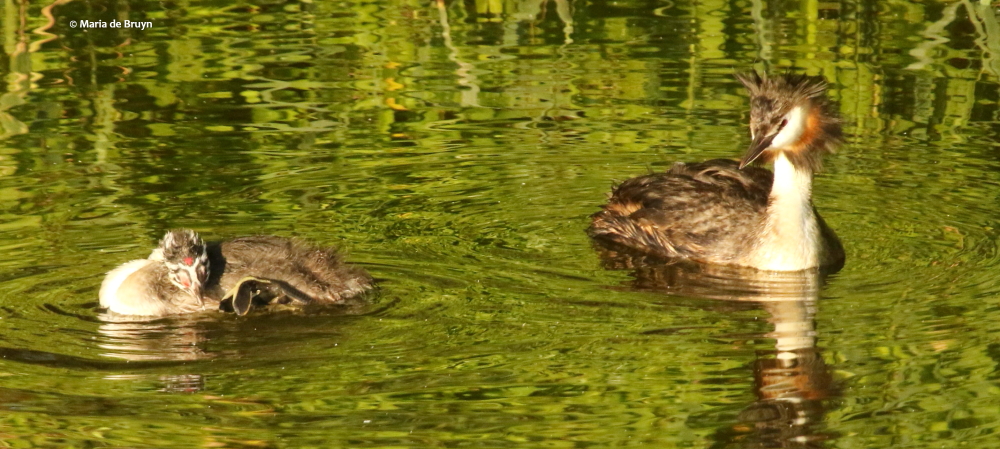
Fast forward six years to this past July, and I discovered that these birds are quite common in my land of birth, where I just had not noticed them before. Granted, I was not a birder while living in The Netherlands (I currently live in the USA), but I had managed to take note of house sparrows, mute swans, Eurasian coots and moorhens when walking along canals and ditches. Now, as a much more observant wildlife observer, it was thrilling to see many grebes along the dike bordering the Gouwzee (a body of water bordering Monnickendam that is part of the larger Markermeer nature area). And even better – they were all tending young ones at different stages of development.
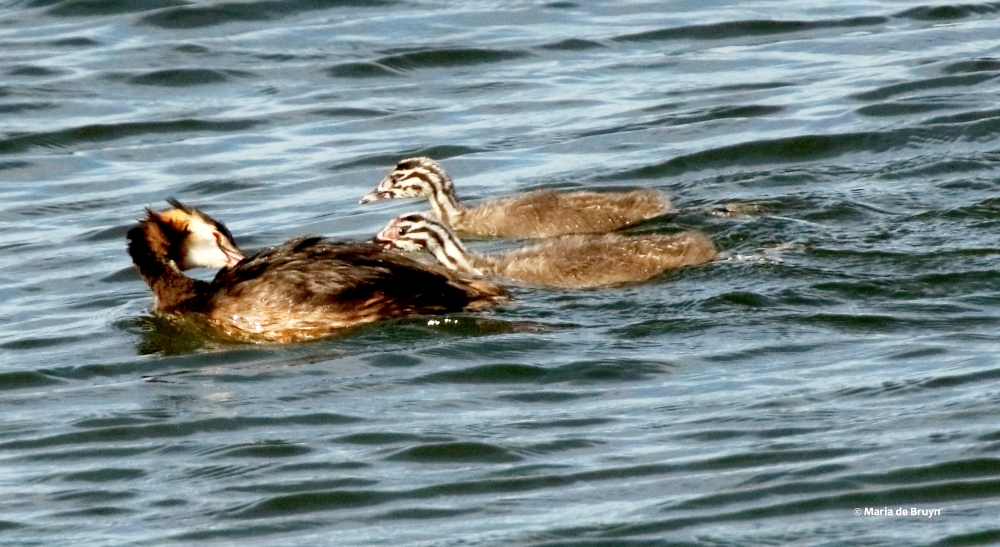
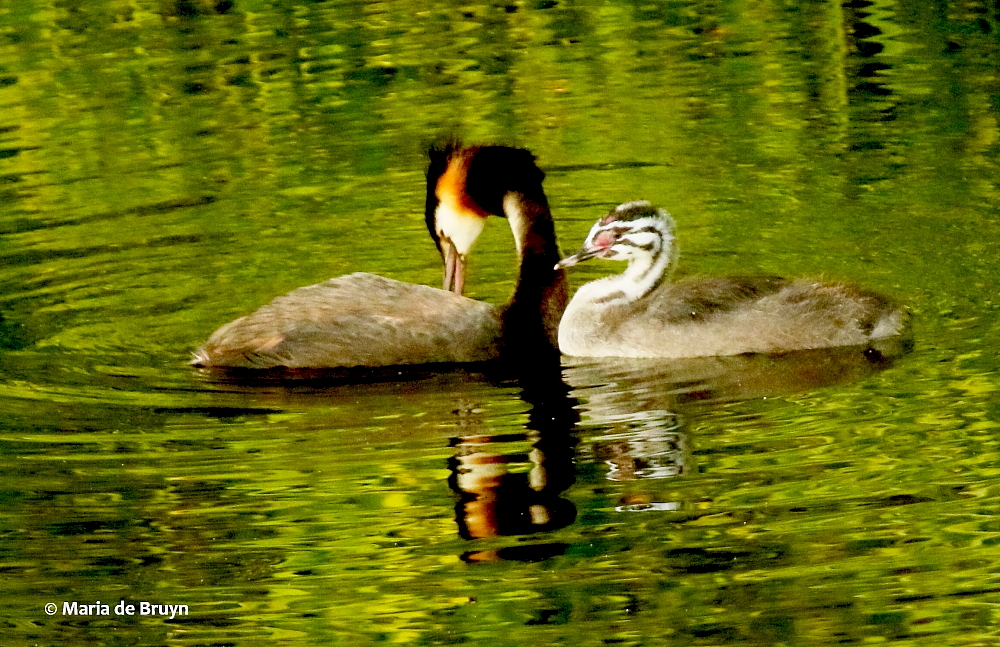
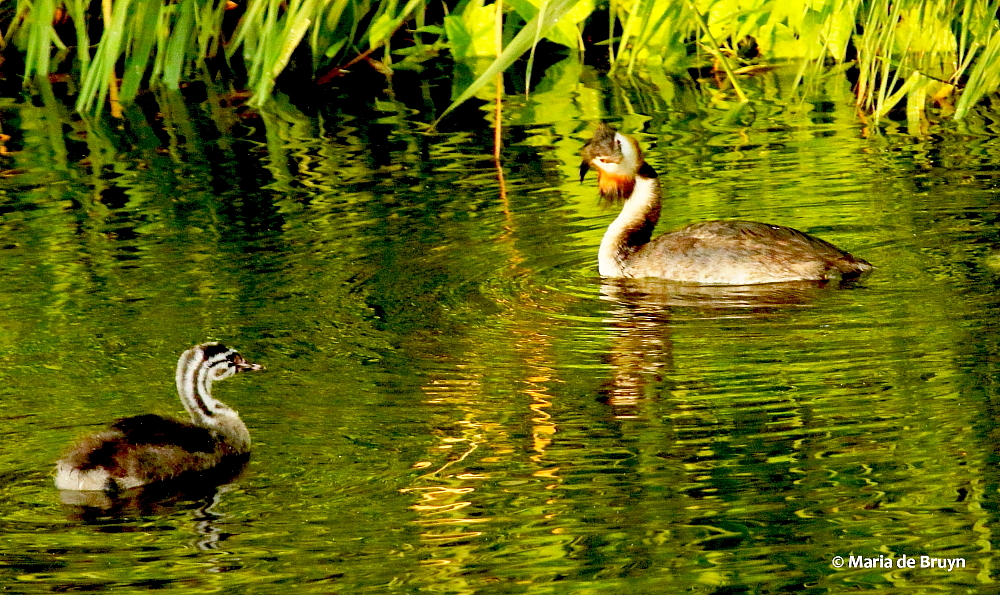
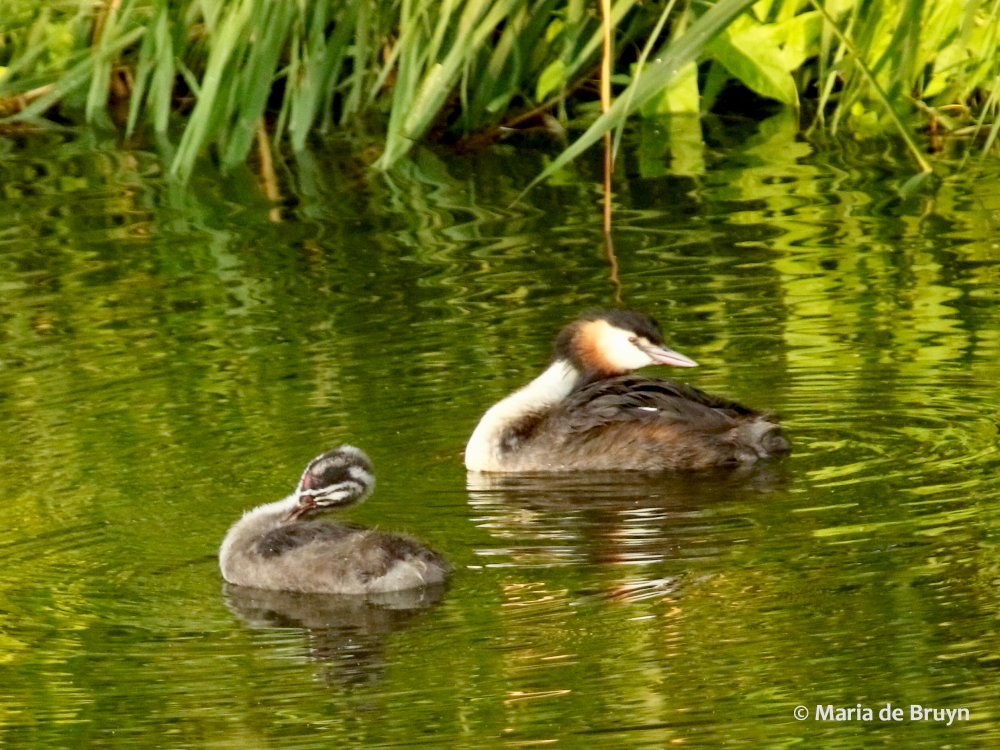
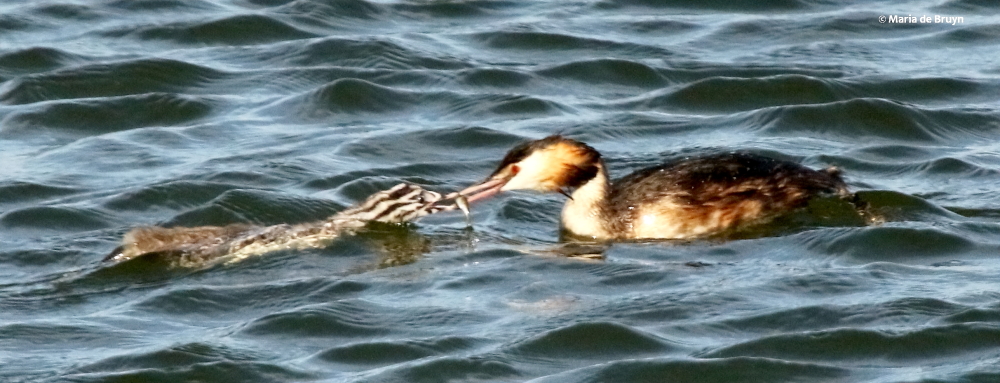
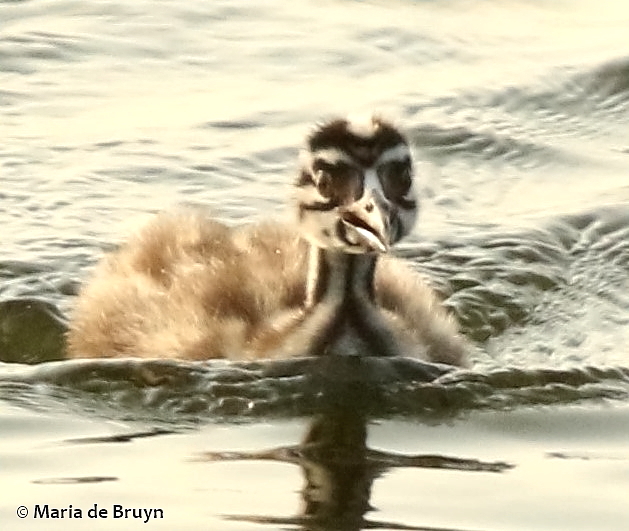
The great-crested is Europe’s largest grebe species and the adults are stunning with their reddish-orange head plumes. (They are also found in Australia, New Zealand and African countries.) I discovered that the young look quite different – mostly light in color with black stripes on their heads and pink markings near the eyes.
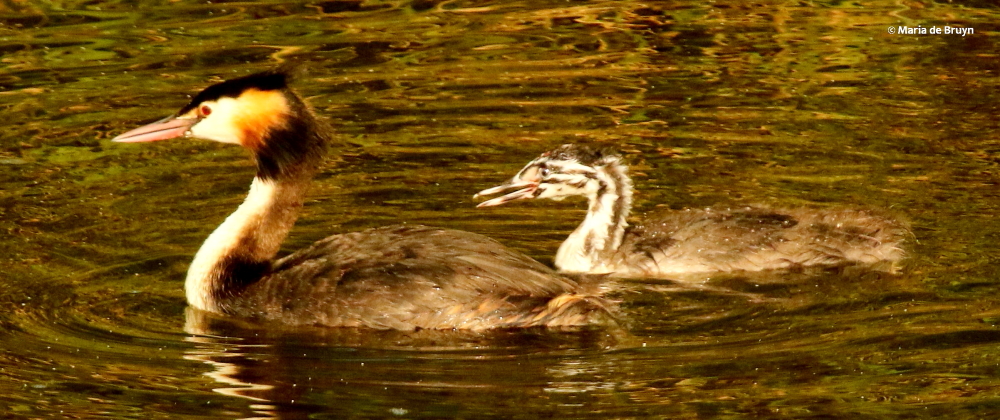
Their floating nests are often found along reed beds, which were abundant along the dike and a ditch across a road from the dike. A couple mothers had chosen the ditch as their home area and the early morning light made for some nice photos in my opinion as they preened and relaxed.
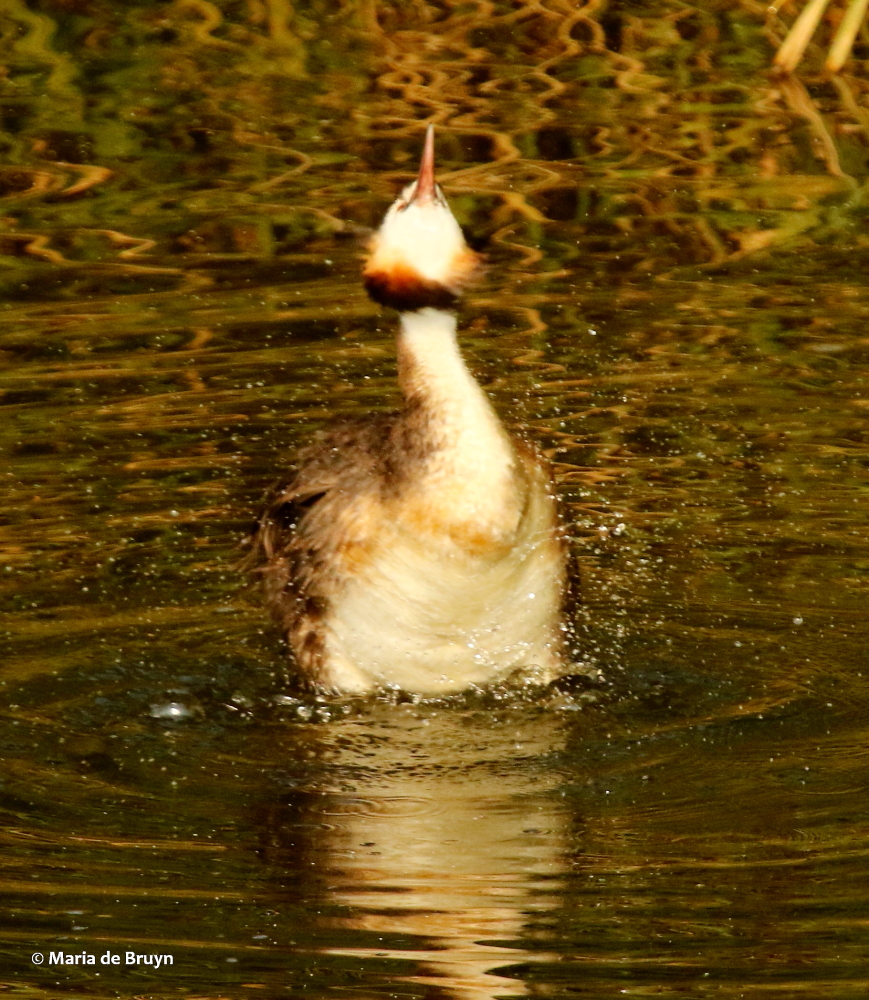
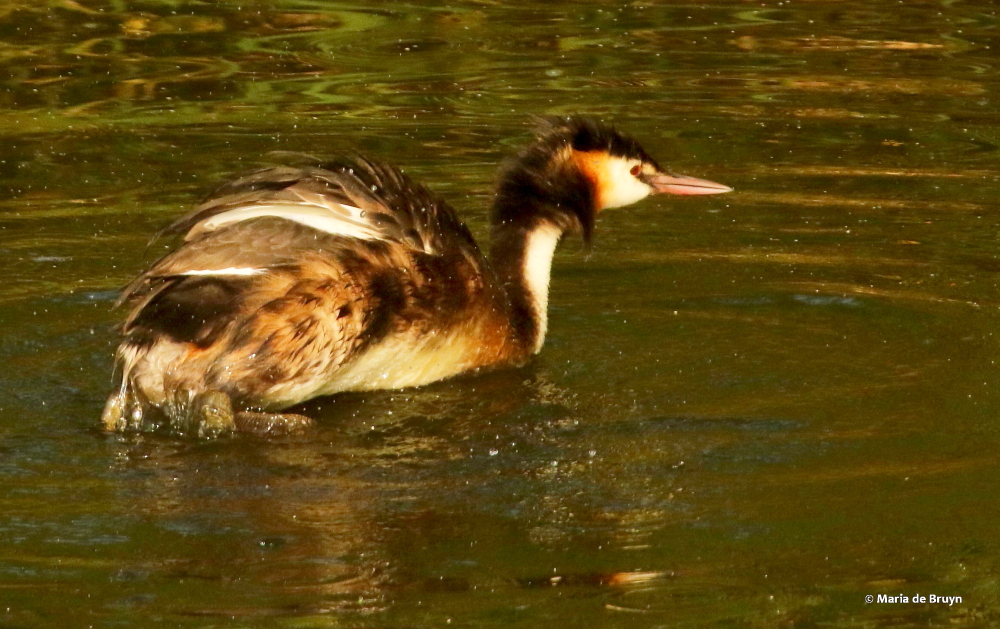


The water in the lake on the other side of the dike was less calm but the young ones managed to swim well in the waves; they can already dive shortly after leaving the nest.

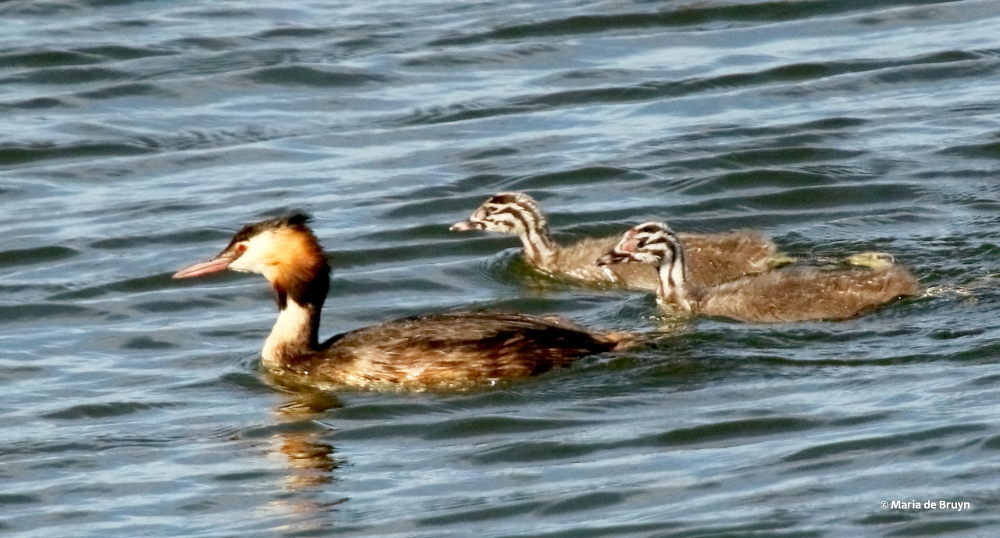
Their feet are set back far along their bodies and they cannot walk well. I did not ever see one on land during the week that I was observing them.

According to the literature, pairs tend 1-9 eggs, which hatch after about 27-29 days. The mothers carry newborns on their backs as they swim along, offering a safe perch for sightseeing in safety. The babies fledge after 71-79 days. I did not see any pairs with more than two young, so some were probably lost during the previous weeks.
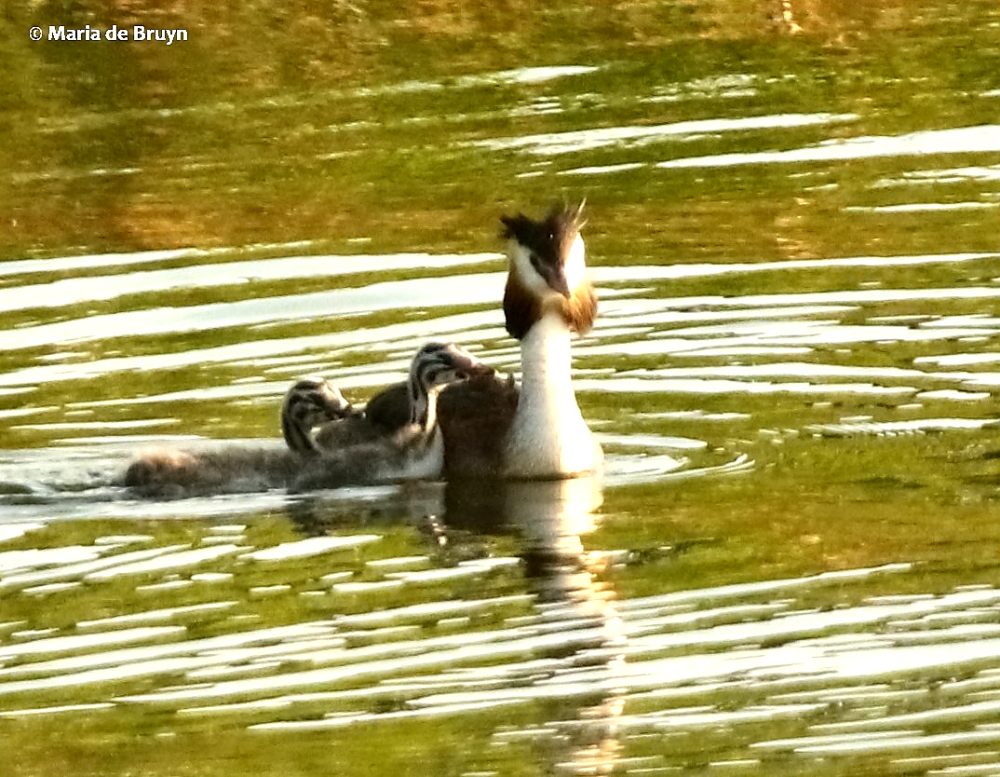
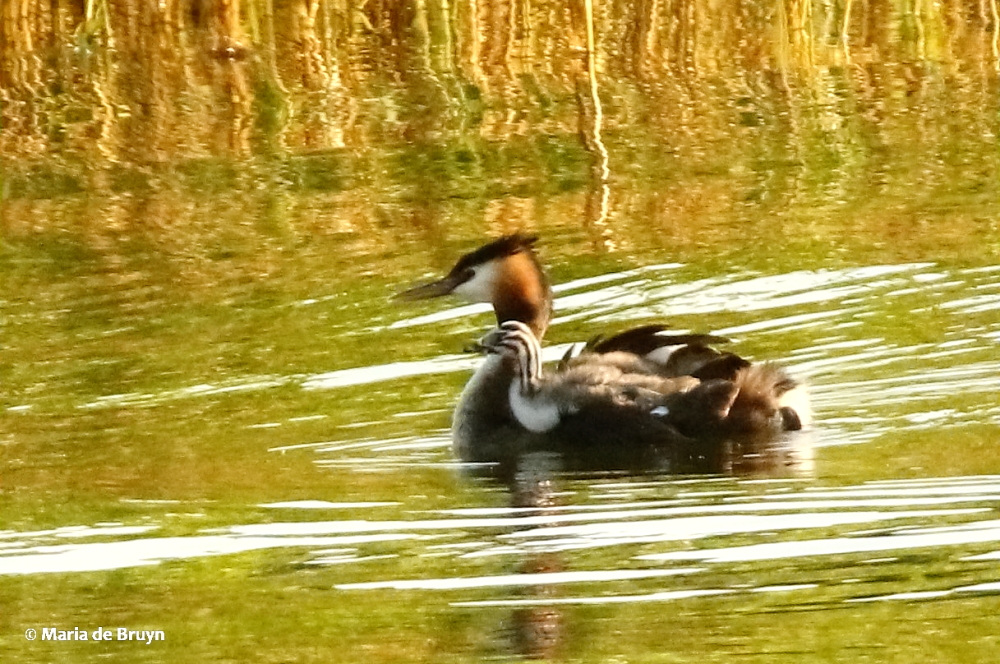
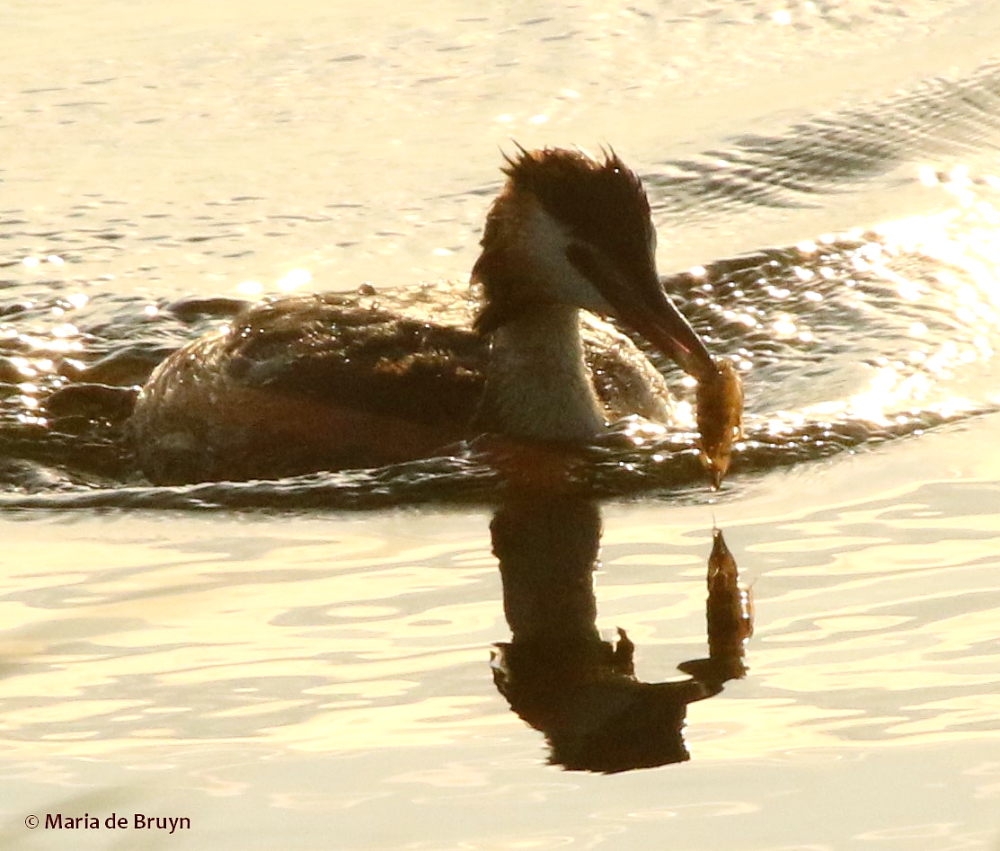
The grebes eat fish, crustaceans, mollusks, amphibians and insects. Their fishing technique, which was more in evidence in the open water of the Gouwzee, includes skimming the water with outstretched necks and diving underwater. (The neck-to-the-water pose is also used to show aggression but in these cases no other birds were near and they would subsequently dive under to come up with some food.)

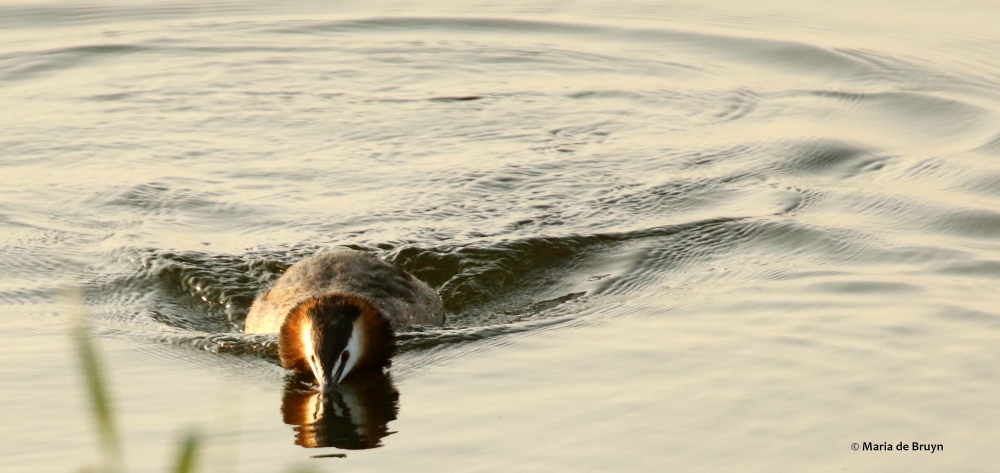
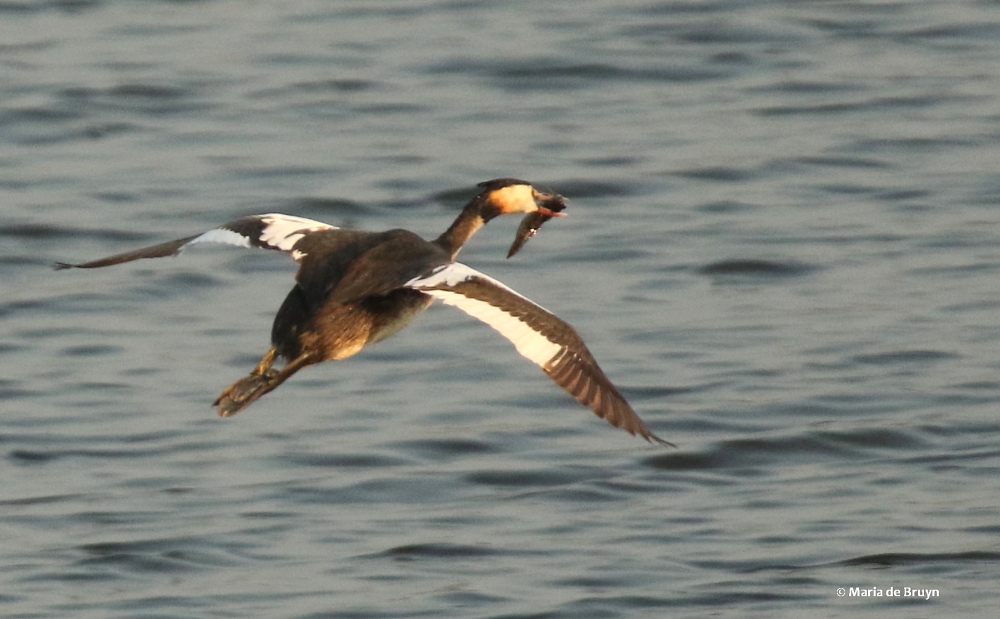
The parents demonstrate and the young imitate them, mostly coming up empty-beaked. Occasionally, a parent would fly away and return later with food. The babies eagerly grab the meals offered by both mama and papa.
After breeding, the adults gather together during a molting period, during which they do not fly. Perhaps one day, I’ll be able to watch them in winter and find out new things about them. In the meantime, if you’d like see what happens when they are feeling perturbed, check out my next blog on “The gorgeous grebes when aggrieved and grumpy!”
The birds and the beautyberry – a great match

Not long after moving into my current home, I began looking for plants that would provide color as well as food for the birds and pollinators in my yard. Although I was not aware at that time of the rationale for avoiding exotics and preferring native plants, I did make some good choices, including an American beautyberry (Callicarpa americana L.) which is also called a French mulberry.

This shrub can grow about 5-7 feet high and about that size wide as well. The flowers are tiny and a pale lilac color, circling the stem like a corona.

They eventually turn into green berries that slowly turn in color, starting out in shades of pink and lilac and eventually gaining a beautiful deep purple shade as they ripen.

People can eat the berries, which are apparently very sweet. I haven’t tried them; they do cause stomach cramps for some people if more than a few are eaten. They are a popular food for wildlife, however. White-tailed deer like both the berries and leaves; raccoons and opossums eat them, too. It is the birds that really get the most fruit from my bushes, including Northern cardinals, Eastern towhees and gray catbirds. The birds kindly transported some seeds to a spot next to my back porch, so I now have a large bush there as well.

When the berries began ripening at the end of August, the cardinals began dining on them first. They were quickly followed by house finches (Haemorhous mexicanus) who began visiting the shrubs daily. The female house finch stayed on the bush far from the house.


The male house finches were bolder and fed on the berries right under the kitchen window. It has been a pleasure to watch them.


The Northern mockingbirds (Mimus polyglottos) are a bit more reluctant to feed when they see me looking at them from a few feet away. Even with the window closed, they are shy but I finally got one to sample some berries while I watched.

The leaves of the beautyberry have been used as an insect repellent in folk remedies; laboratory studies have shown that a chemical compound in the plant will stave off mosquitoes.

I haven’t pruned my beautyberries much but it seems that the plant will bear more fruit the next year if this is done. I do think I will transplant some young ones to other parts of the yard this fall, however, as this plant – along with the purple pokeweed (Phytolacca decandra) – is a real wildlife crowd pleaser.

When those loving instincts leave you dangling

This was not a planned blog, but I recently observed something that simultaneously intrigued, amazed and astounded me, so I wanted to share it with those of you who may not have witnessed this either.

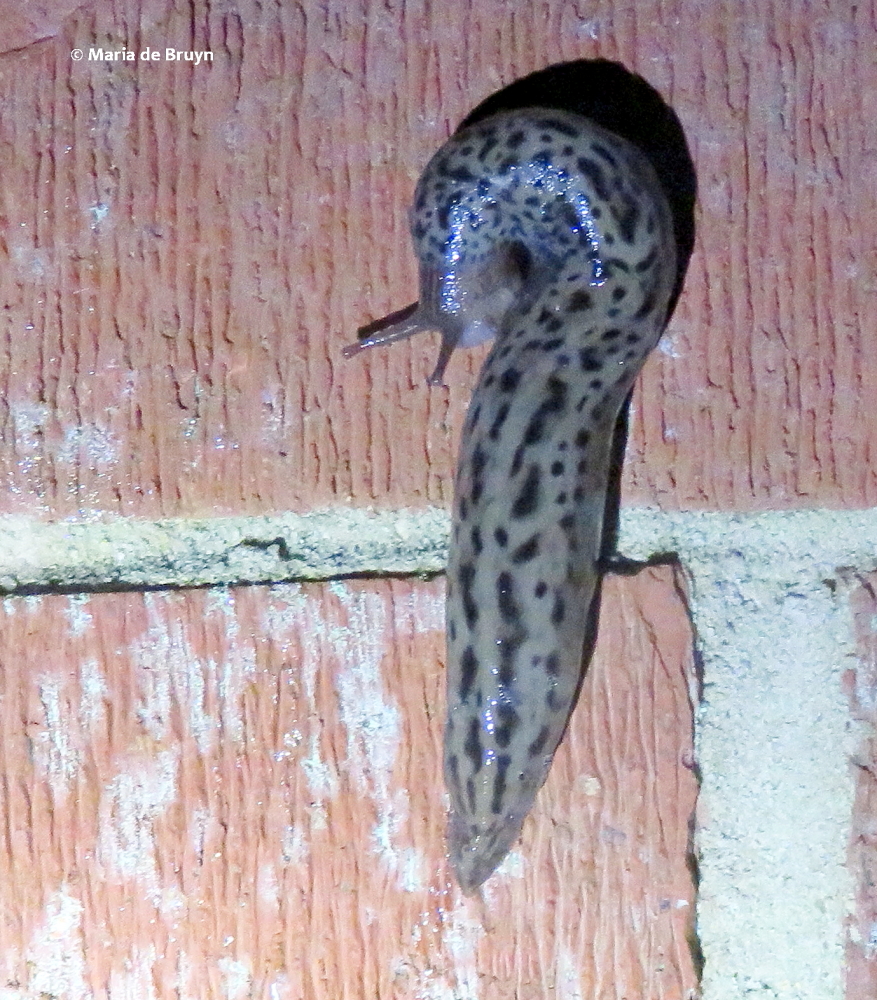
Like many gardens in my neighborhood, my yard has its fair share of leopard slugs (Limax maximus), but they don’t bother me as they do some other people who complain about them eating their vegetables. Until recently, I never thought about the slugs much and certainly didn’t wonder about their life cycle. Then my friend Mary posted a lovely photo of two intertwined leopard slugs mating and my interest and curiosity were piqued.

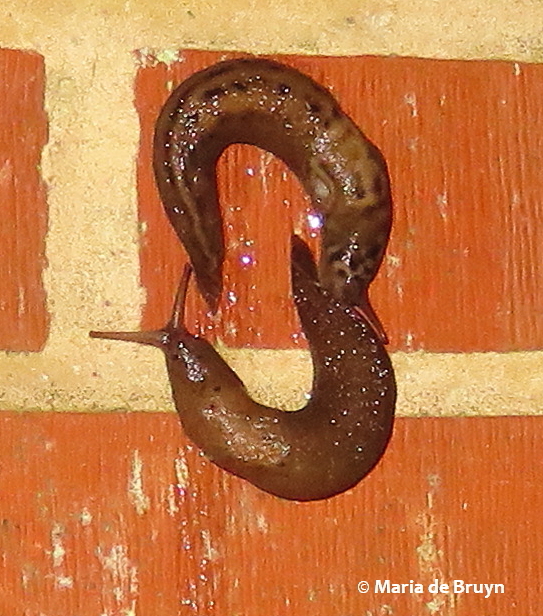
A few days later, a fellow nature lover, Ace, reported that he had a cool photo to show me – and there on his iPhone was a photo of mating leopard slugs. It turns out that their anatomy makes for a somewhat bizarre spectacle – at least to a human being if not a fellow slug. Now I really wanted to see this phenomenon, too, and I followed Ace’s recommendation, going out into my yard at night with a flashlight to see if I could find some amorous mollusks. Lo and behold – as I rounded the corner of my house, there were three pairs of large slugs getting ready to reproduce! They were leaving glistening slime trails on the brick wall as they slowly got into position.

The slime that the slugs exude has multiple purposes – they can leave a trail behind them as a signpost to the way home, they can numb the mouth of a potential predator with the mucus as a means of defense, and they can broadcast their interest in some reproductive behavior by emitting pheromones to attract a potential mate.

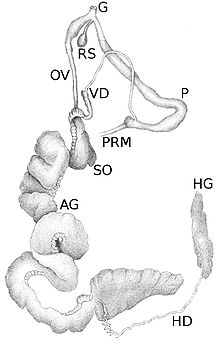
They don’t actually need to mate to reproduce – each slug is a hermaphrodite and can fertilize its own eggs with no need of outside assistance. Slugs have an organ called a spermoviduct (SO), which has two parts – one for the sperm (vas deferens, VD) and one for the ova (oviduct, OV), as seen as this drawing from the Wikipedia page.

Some slugs apparently like reproductive acrobatics, however, and seek out a partner. The mating begins with a pair of slugs following one another around and nudging and licking one another. (A couple photos look browner – I took those with a flash but most were taken with one hand holding a small camera and the other shining a flashlight near the slugs.)


They then begin to curl up together and suspend themselves from a long mucus rope, which is somewhat stronger than the slime that they usually exude. They form a kind of writhing ball as they intertwine their elongated bodies (see this video for an example).

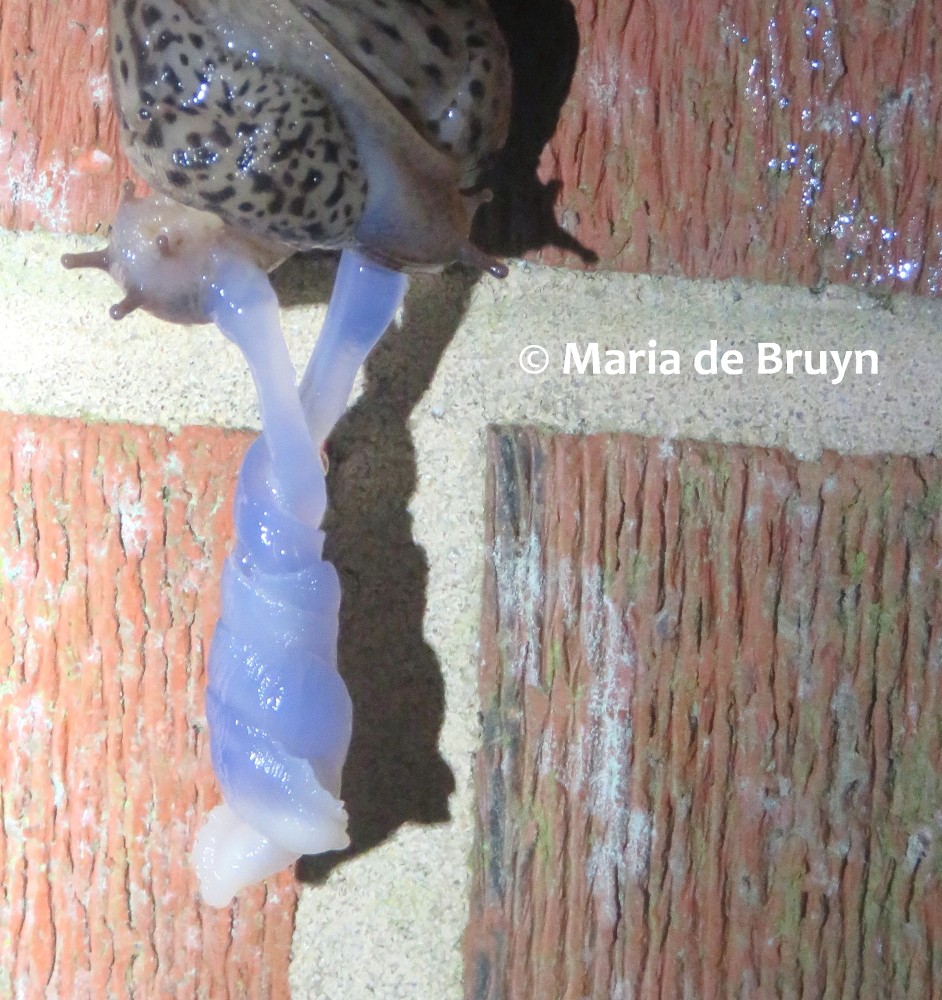
Next comes the awesomely weird part – out of a gonopore on the right side of their heads (the elongated tentacles are for vision) come their translucent mating organs (penises)! This video, which is shown in a horizontal position, lets you see how this happens.

Wouldn’t this interesting anatomy and reproductive behavior make an interesting plotline for an SF novel about a genderless society?


Because the slugs are hanging upside down, gravity helps pull down their reproductive organs, which are pumped full of body fluids until they are as long as the slugs’ entire bodies! Their penises are everted (turned inside out) and the two mollusks intertwine these just like their bodies. They take a while to exchange spermatophores as the penises twirl, intertwine, elongate and pull back to look a bit like a chandelier.


When the creatures have been joined at the neck for some time, they begin to slowly withdraw their reproductive organs, which are now carrying genes from another parent.


After they separate, one of the pair usually consumes the mucus rope from which they dangled in love as it carries extra nutrients which they can use after their vigorous efforts.


Each slug may spend some time examining its gonopore (above) – and perhaps they are helping push back in the penis when they do this, too. After watching the process for two pairs of slugs, I decided to give the third pair some privacy during their mating tryst. On the wall beneath my screened porch, I discovered another slug with a mucus rope dangling from its tail – leaving me with a little mystery as to why this might have happened. A partner slug was not in evidence except for a much smaller slug – perhaps the big one tried to mate but the younger one was not ready. These mollusks with a life span of 2.5-3 years don’t become sexually mature until they are 2 years old.


I do know that at least three and perhaps six slugs will each be laying up to 200 eggs somewhere in the yard. And when I see them in the future, I will undoubtedly always be picturing them in my head doing their dangling dance with intertwined translucent blue tubes that will help promote their future generations. My discovery of their life cycle has also reinforced my support for scientist Hope Jahren’s (Lab Girl) observation: “…being able to derive happiness from discovery is a recipe for a beautiful life.”

Costa Rican rambles 7B – Cerro Buena Vista and a night prowl


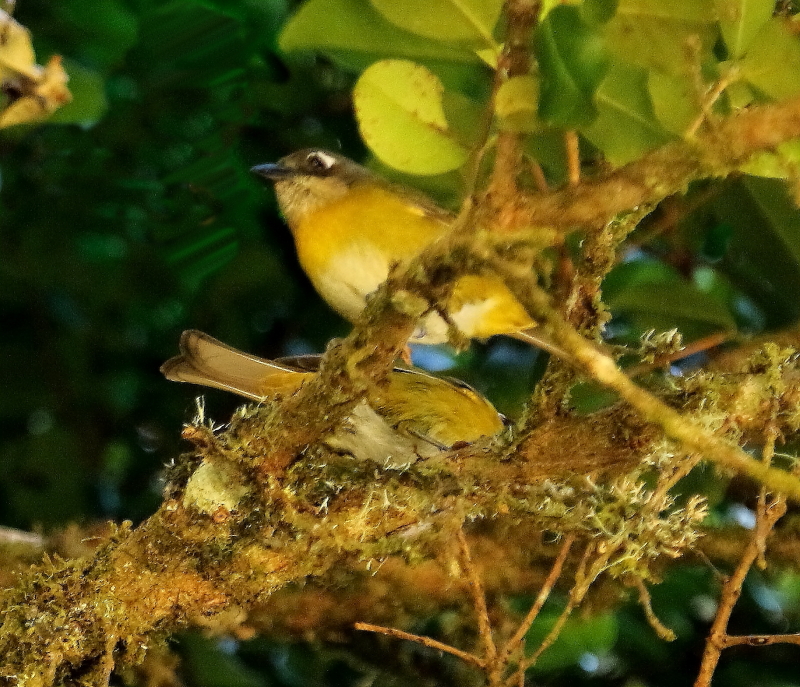
After seeing the beautiful green and blue emerald swift lizard, our attention went back to birds and we rewarded with sightings of a few gorgeous little yellow birds – a yellow-winged vireo (Vireo carmioli) and yellowish flycatcher (Empidonax flavescens).

Since I photograph insects to contribute to BugGuide in the USA, I was watching for them in Costa Rica, too. Insect galls on plant stems and leaves were in evidence and a blue damselfly (Argia pulla) posed for a moment.

A yellow weevil was a fascinating find – those blunt-nosed small insects make me think of Pinodchio.

Then – to the delight of everyone in our party – we had the good fortune to see a resplendent quetzal (Pharomachrus mocinno) fly across our path. We had caught sight of a couple flying high over the Lodge before setting off for our hike, but this bird actually perched not too far away, not staying very long at all but giving me a minute to step around a fellow birder and get a couple shots.

A hairy woodpecker (Leuconotopicus villosus), a more familiar bird for us, looked down on us from high above and a flame-throated warbler (Oreothlypis gutturalis) brought another spot of color to our upward trek.


When we started down to make it back in time for lunch, we had time to examine the surrounding flowers and then were lucky to see yet another emerald swift lizard, also kown as the green spiny lizard (Sceloporus malachiticus).

After a meal, it was a treat to see a collared redstart (Myioborus torquatus).


A black-thighed grosbeak (Pheucticus tibialis) gave us another yellow-hued sighting before our attention turned to birds with more subdued coloring – an ochraceous wren (Troglodytes ochraceus) which made me think of hobbits in woods for some reason, some ruddy treerunners (Margarornis rubiginosus) and a spangle-cheeked tanager (Tangara dowii).


A black-faced solitaire (Myadestes melanops) graced us with its presence before we took an afternoon break. Some of our fellow birders went to rest, but Janet invited me to her cabin where we had the rare pleasure of seeing a lesser violetear hummingbird (Colibri cyanotus) sitting on her nest! When she flew off after a while to get some sustenance, we noted that she had not yet laid any eggs.


Then, as I scanned the surrounding trees from Janet’s balcony, I discovered another nest, occupied by the young of a gray-tailed hummingbird (Lampornis cinereicauda). It was not easy to see but peering through the leaves, I managed to get a shot of the hummer stuffing some food down an offspring’s throat.


Janet’s balcony was a wonderful birding spot – the next visitor was a gorgeous red-headed barbet (Eubucco bourcierii). A flame-colored tanager (Piranga bidentata) was yet another brilliantly hued avian visitor.

Walking along the nearby roads, I saw the horses (Equus ferus caballus) used for tourists’ horse-back riding galloping along – beautiful, well-fed animals to be sure.


We soon left on our next excursion to the Páramo zone (montane shrub- and grassland mountaintop environment), where we scaled the Cerro Buena Vista (“Good View Mountain”) by van. This region contains the highest point of the Pan American Highway in Central America (3492 meters or 11456.69 feet in elevation). The peak harbors telecommunications equipment and is noteworthy for the many bird species endemic to this area.


The one for which we were especially looking was the volcano junco (Junco vulcani), a great bird that was not shy at all and posed for us in numerous positions and at great length.

After leaving the mountaintop, we descended to the rainforest and there spotted a black guan (Chamaepetes unicolor).


Our day ended with a night prowl after dinner, looking for the dusky nightjar (Antrostomus saturatus). And we were lucky enough to have one fly right in when it heard the playback of a compatriot on our birding guide’s sound system!


Well satisfied, I retired to a good night’s sleep after catching a rather large cranefly-type insect, which I let go outside. I wanted to be prepared for our next day’s adventures with the wildlife beauties of Costa Rica.

Costa Rican rambles 7A – the Sueños del Bosque lodge and environs

And now my Costa Rican wildlife travelogue continues after a long absence. Busy projects and chores, a vacation abroad and illness all conspired to delay the writing of this next installment, And now one of my photo software programs is refusing to work, making photo processing a real pain. But I was still able to get some shots to share of beautiful creatures in the Costa Rican Talamanca highlands. 😊


We started our fourth day early, first going out to see if we could find local favorites at sites near the Sueños del Bosque (dreams of the forest) Lodge. Located near the town of San Gerardo de Dota, the elevation is 7200 feet at this spot. A few busloads of other birding enthousiasts were also there; the guides all knew one another.

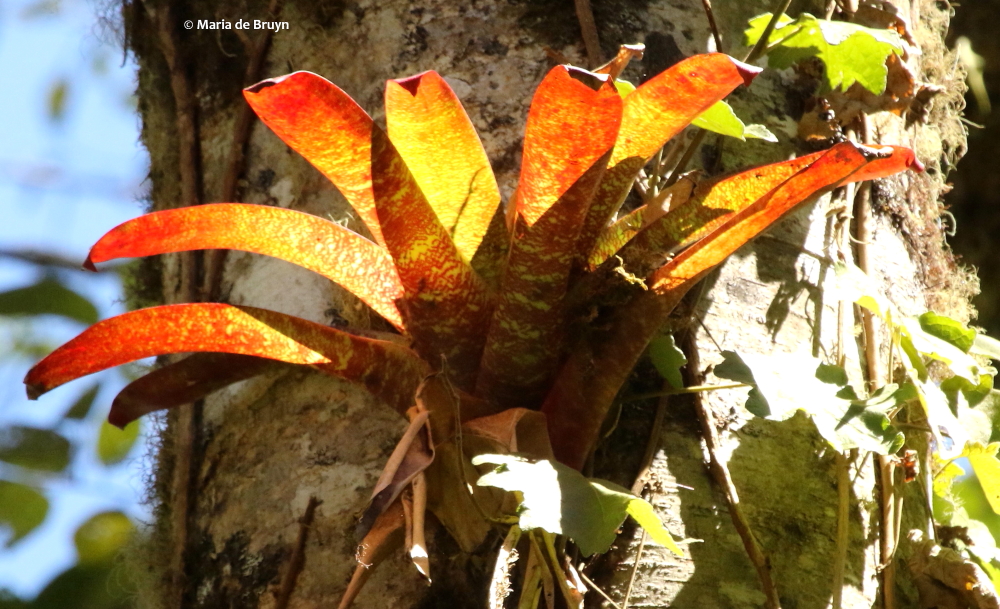
When our guide ran into his brother – also a birding guide – we were told about a spot where some spotted wood quail were hanging out. I did get a photo but it was still so dark, that the photo was not all that great. Our next venture was to a spot where the resplendent quetzal had been seen – a few people with binoculars didn’t have much trouble spotting a really distant pair of birds building a nest across a valley, but I bird with a telelens and had no such luck. So I admired the flowers and plants– and saw some very nice ones throughout the day as you can see below.


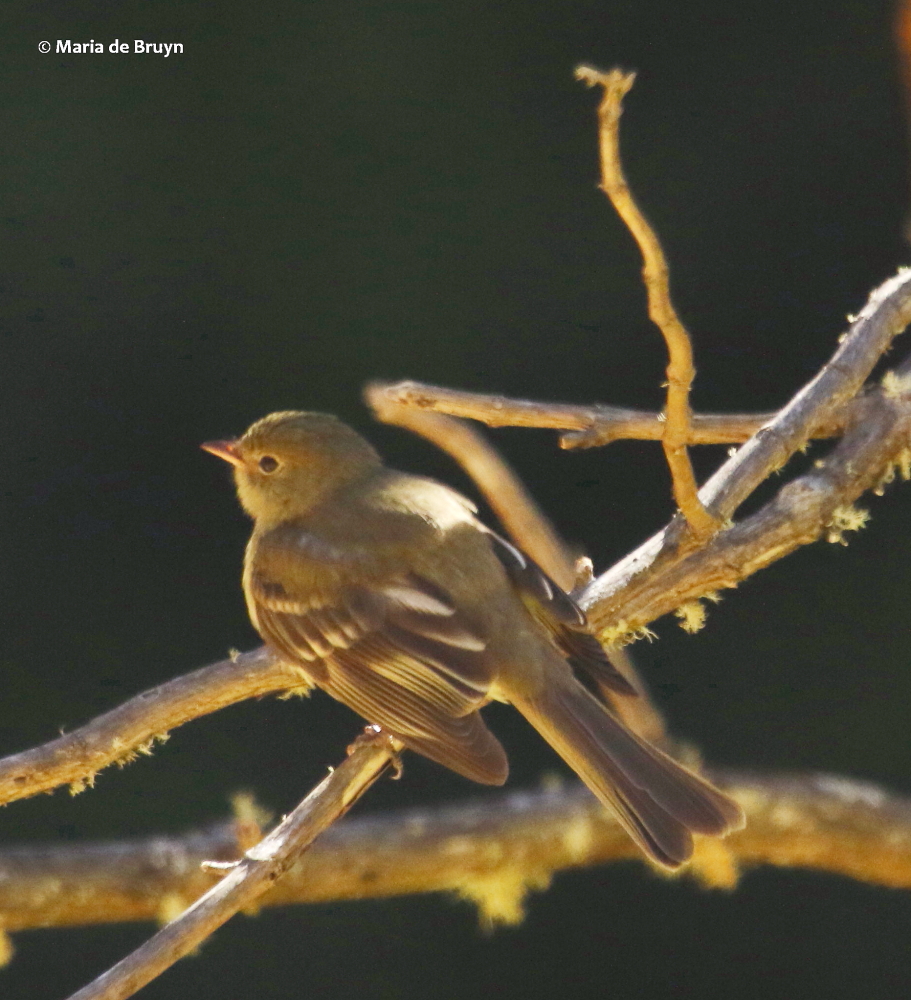
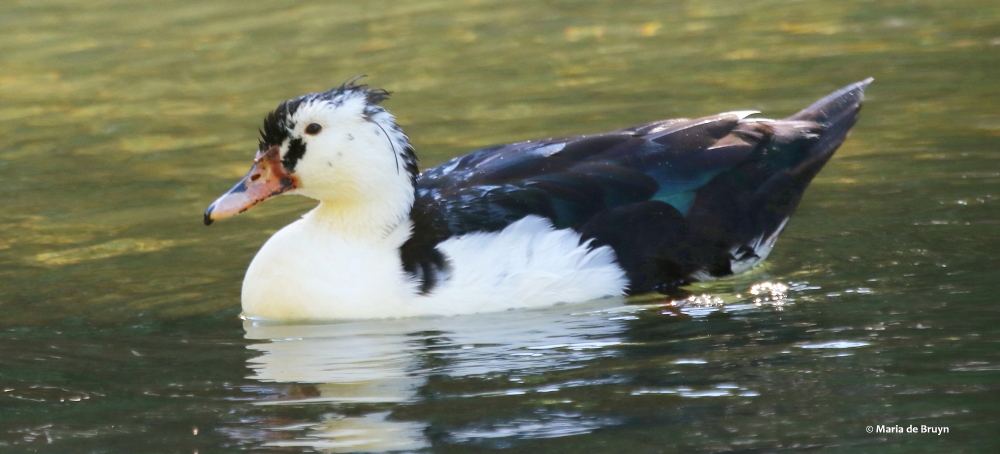
Back at the Lodge, we had time to look for birds near our rooms and the dining area. This cute little mountain elaenia (Elaenia frantzii) was a pleasure to behold. The lodge’s pond had numerous domestic ducks in residence, including a crested duck (Anas platyrhynchos domesticus).


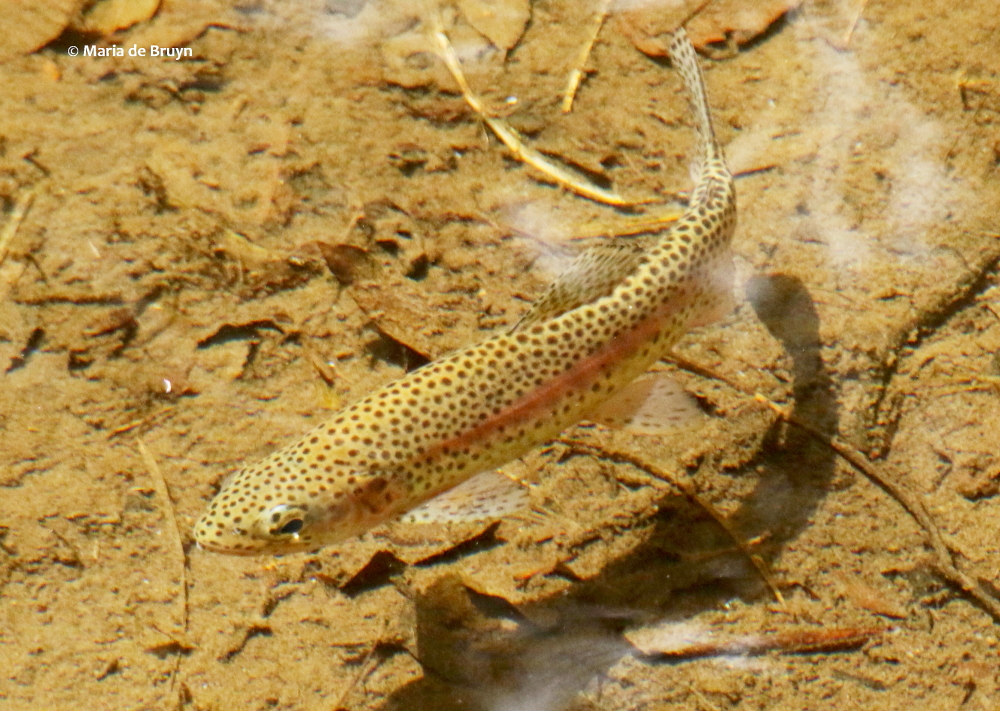
Next, we took a walk along trails leading away from the Lodge up the mountain. We passed a stream, stocked with rainbow trout, which were imported by Efraín Chacón, who discovered the Rio Savegre Valley and built the visitors’ accommodations.


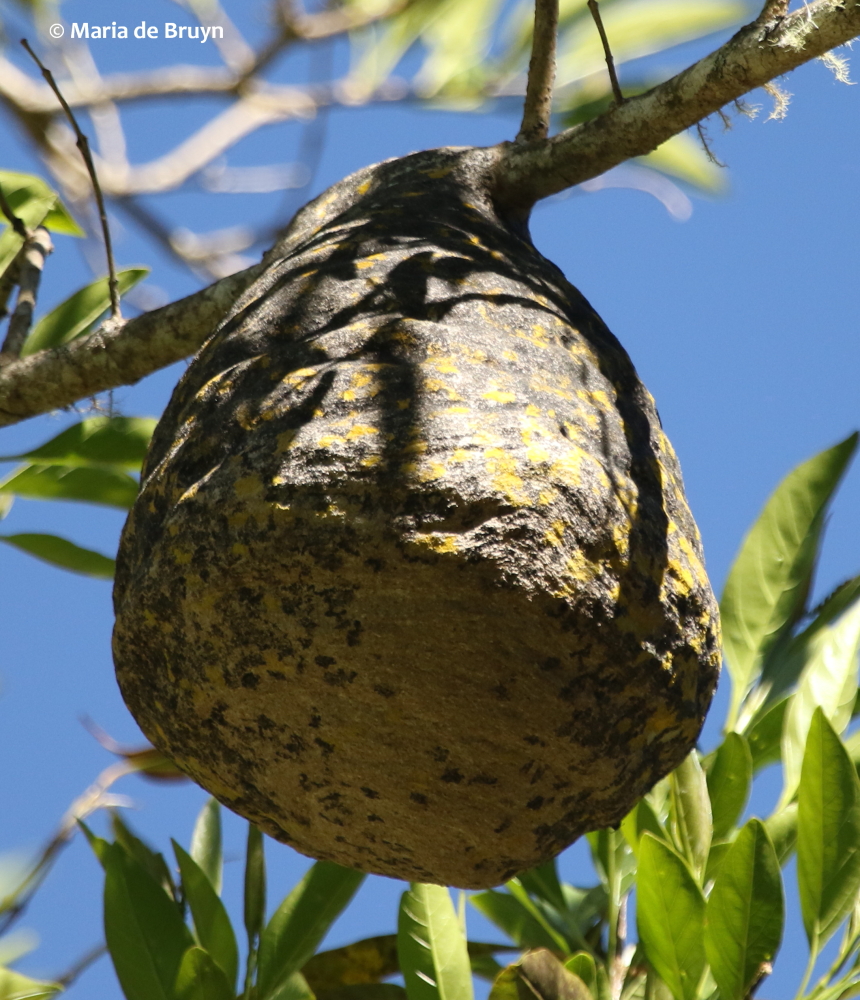
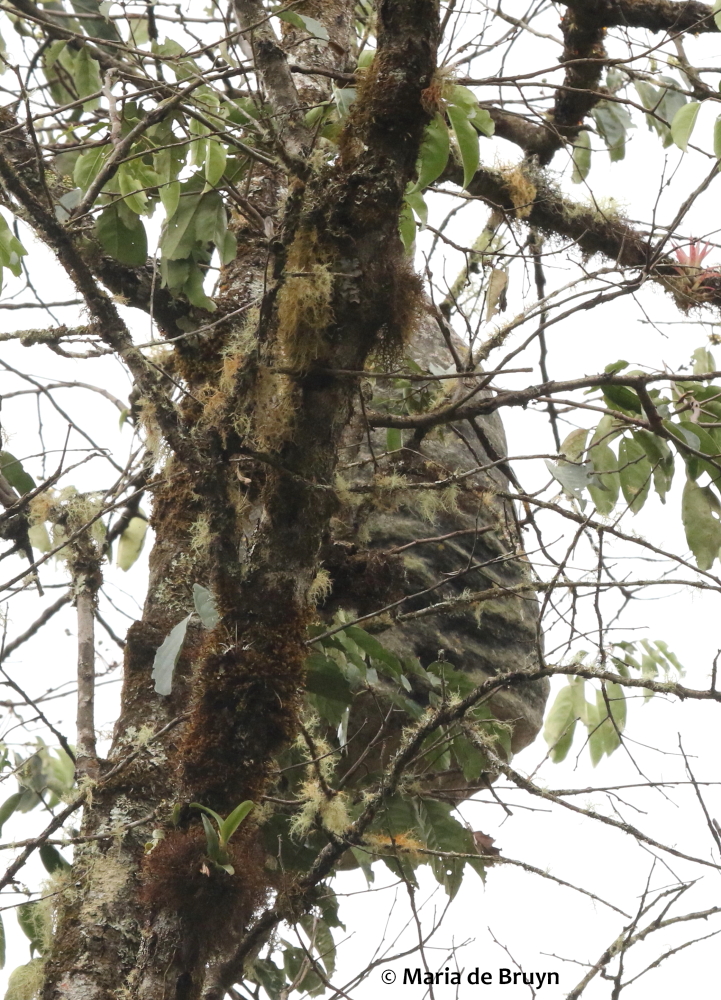
Wasp nests were hanging above our heads in the trees in several places.


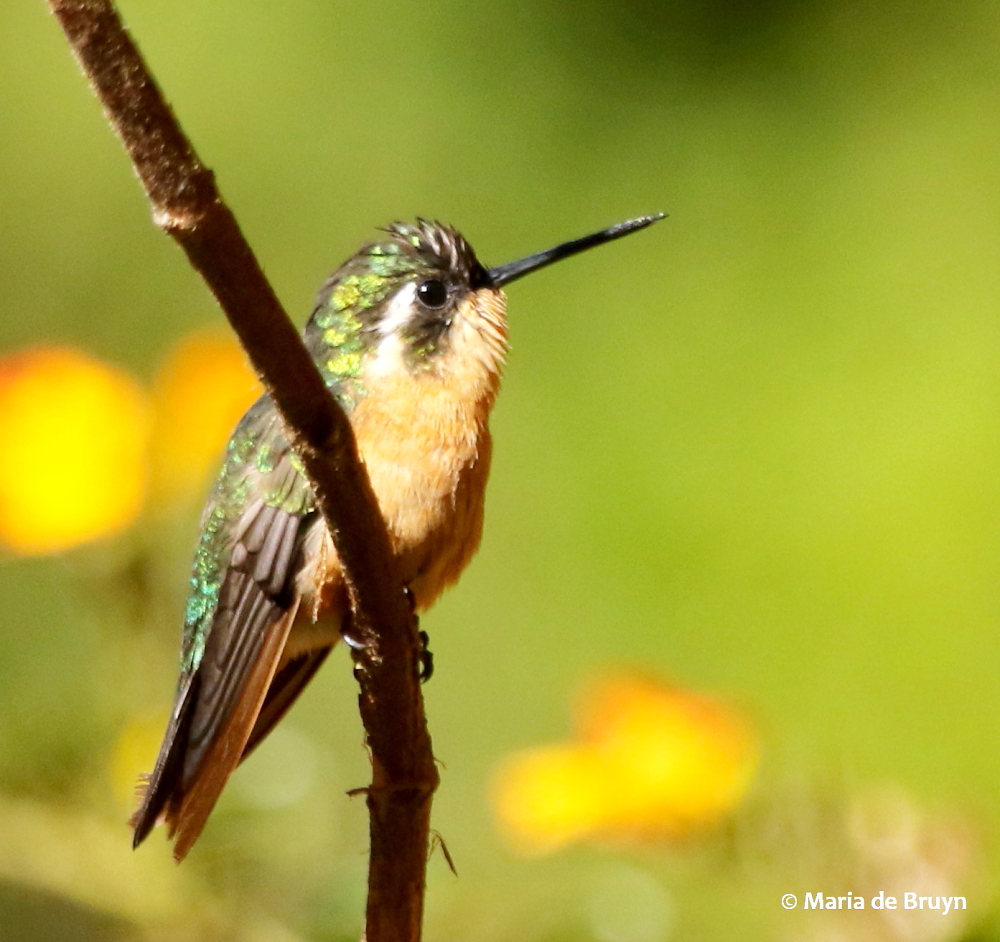
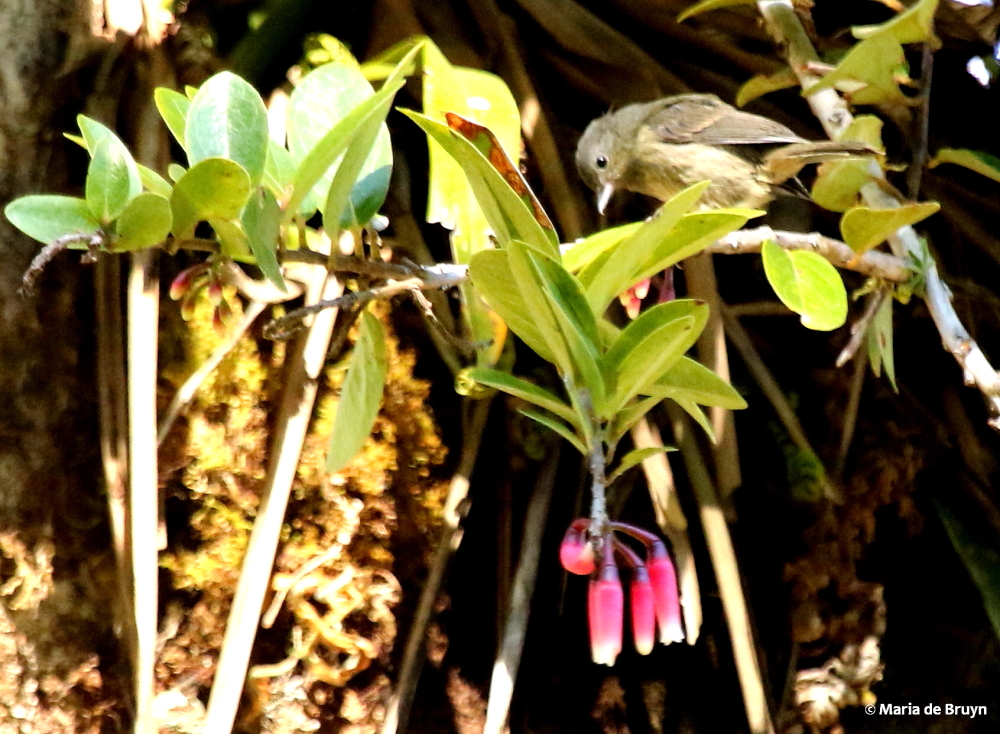
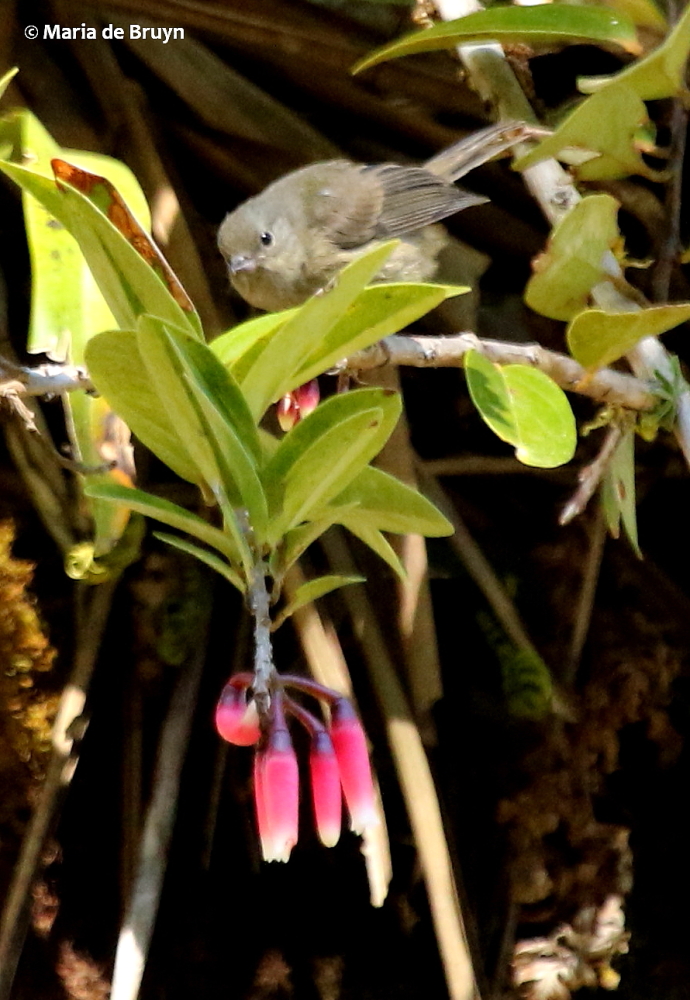
A beautiful white-throated mountain gem hummingbird (Lampornis castaneoventris) gave us a good view as it perched nearby, and a small grayish bird that I haven’t  yet identified was flitting about the flowers as well.


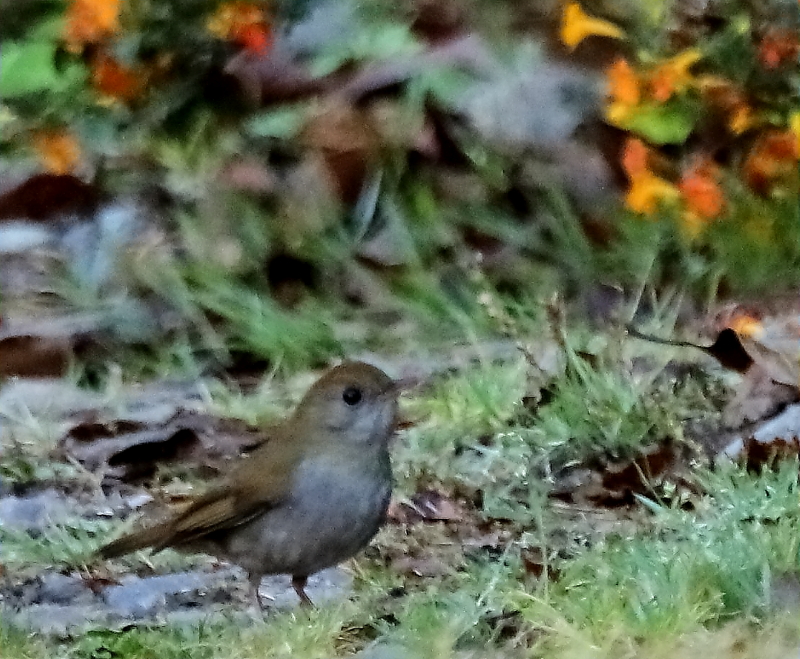
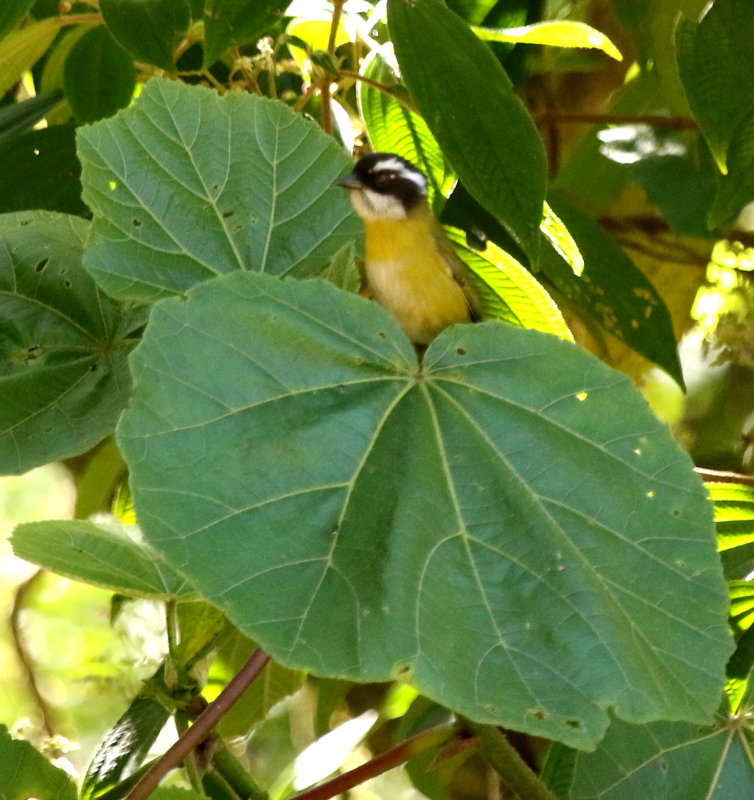
A black-billed nightingale thrush (Catharus gracilirostris) was smaller than I would have expected. Two tanagers showed themselves briefly – a sooty-capped bush tanager (Chlorospingus pileatus) and a pair of common bush tanagers (Chlorospingus flavopectus).


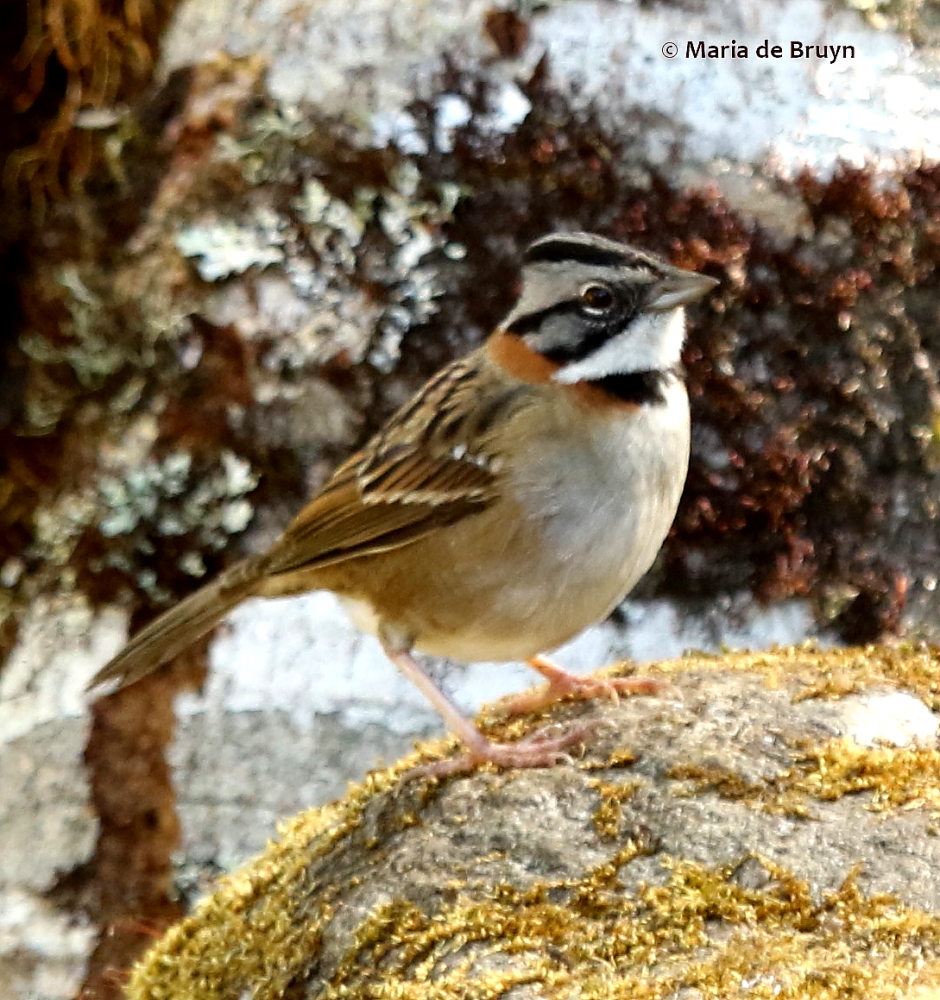
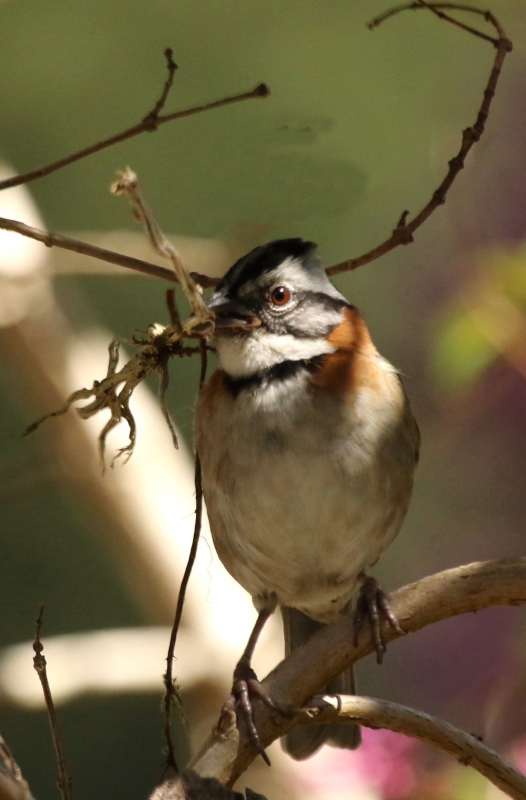
A rufous-collared sparrow (Zonotrichia capensis) was busy collecting material for a nest.


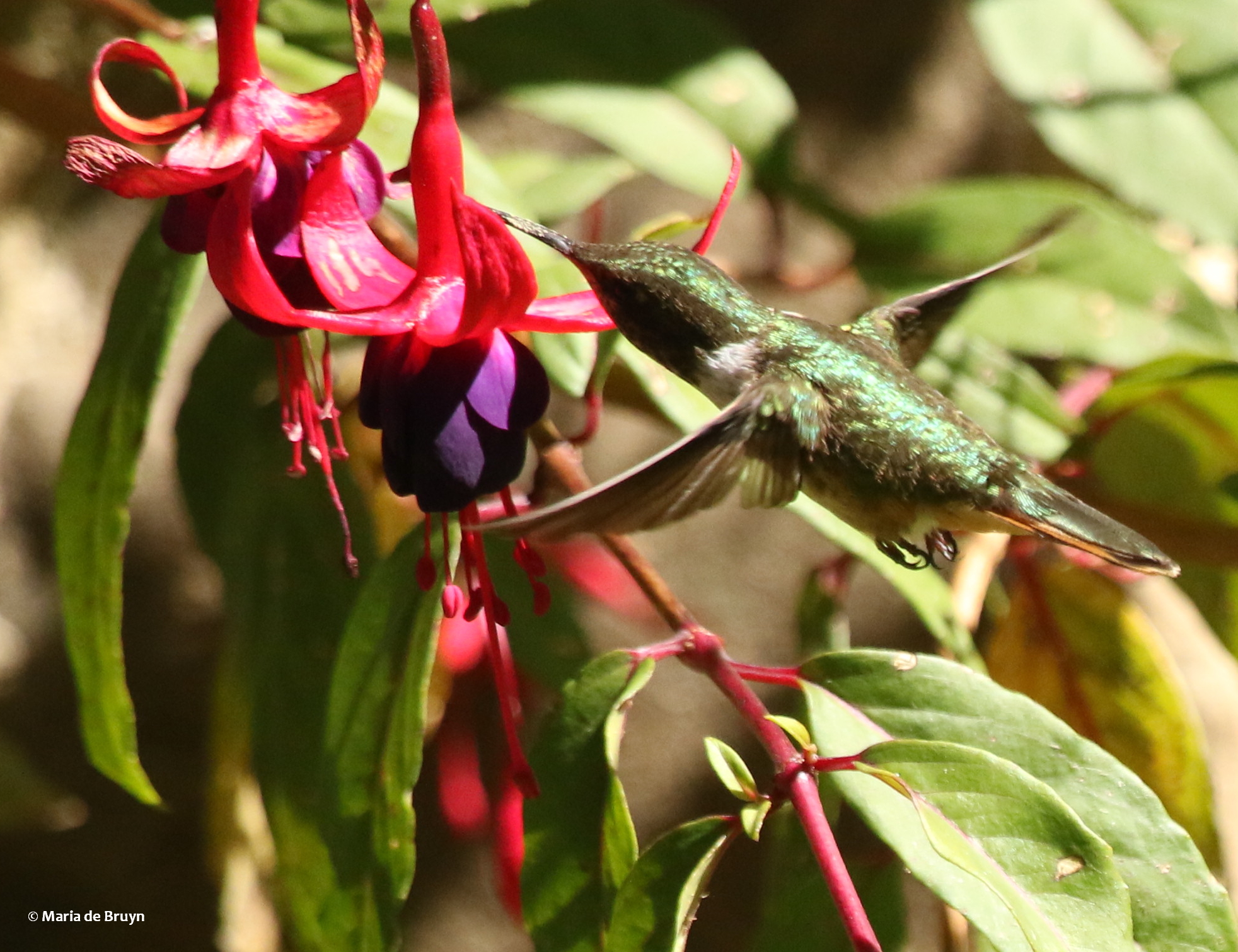
A hummingbird was busy having a meal, while a sulphur-winged parakeet (Pyrrhura hoffmani) had a little rest and watched us.


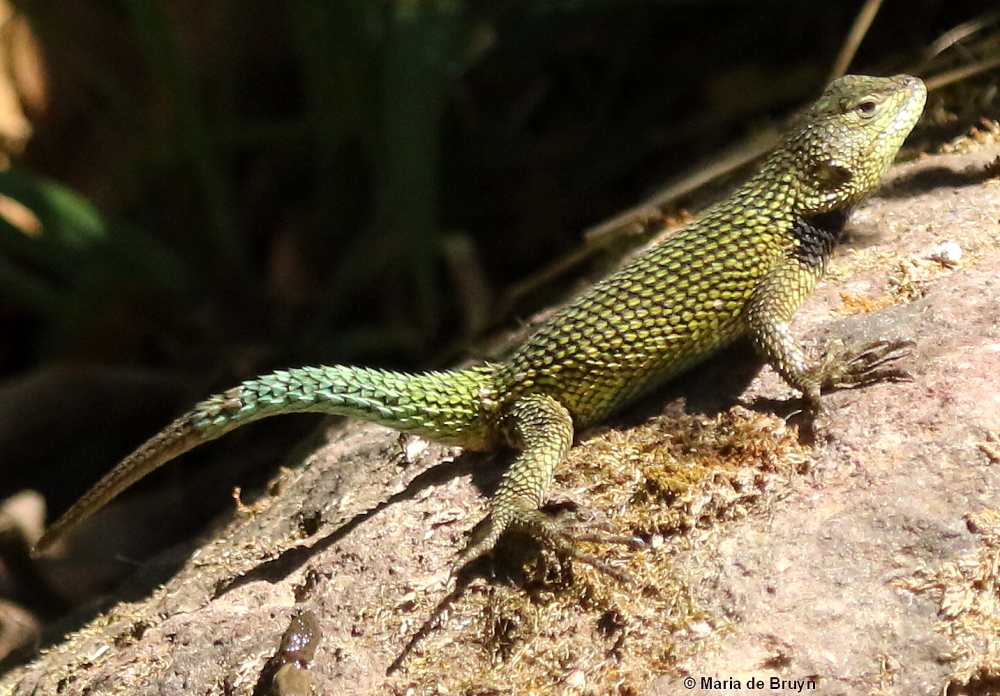
For those of us interested in all wildlife besides birds, a treat was running into an emerald swift lizard (Sceloporus malachiticus) along the trail. We admired the reptile’s beautiful colors before setting up further along the rising path. (More on this day’s excursion follows in the next blog!)