Motherhood in the wild

yellow-bellied slider IMG_3703© Maria de Bruyn res After watching the baby herons today at the Sandy Creek Park rookery (blog coming on that!!), I walked down a path taking photos of plants and flowers, ending in a spot where I wanted to check on what had happened to a moth cocoon. To my surprise and delight, when I glanced to the side, I saw a yellow-bellied slider (I think, Trachemys scripta scripta) in the process of laying her eggs.

yellow-bellied slider MG_3704© Maria de BruynI didn’t want to get too close but was really curious as well since this would be the first time I had seen a turtle laying eggs. So I inched a bit closer and witnessed her last egg dropping down into the nest. Happy turtle and happy me!

She immediately began covering it by pushing dampened earth over it with her hind legs and feet.

yellow-bellied slider IMG_3706© Maria de Bruyn res yellow-bellied slider DK7A4271© Maria de BruynMother turtle kept an eye on me during this process, pausing if I moved too close.

yellow-bellied slider DK7A4273© Maria de Bruyn resAt one point, I continued along the path to give her a little privacy and came upon another turtle – perhaps also looking for a nesting site?

Yellow-bellied slider DK7A4294© Maria de Bruyn res yellow-bellied slider DK7A4296© Maria de Bruyn res

This turtle’s eggs will now incubate for a period of two to three months. When the babies hatch, they will likely stay near the nest during the winter, eating insects, spiders, carrion – an almost exclusively carnivorous diet. If left alone by humans and predators, they can grow up to live as long as 30 years in the wild.yellow-bellied slider DK7A4270© Maria de Bruyn res yellow-bellied slider DK7A4439© Maria de Bruyn res

yellow-belllied slider DK7A4286© Maria de Bruyn resI left mom to the task of covering the site and returned about 20 minutes later. She was nowhere in sight and it was only because I had seen her on the nest that I could tell where she had laid the eggs. I hope I remember the site so that I can return in a couple months and perhaps be lucky enough to see the babies emerge.


Pines, habitat loss and endangered woodpeckers

longleaf pine IMG_0016©Maria de Bruyn resLongleaf pine trees (Pinus palustris) grow for 100-150 years before they reach full size and they can live as long as 500 years. Their extremely long needles give the young trees the look of a spike with grass growing out of it. At the tops of trees, the long, fanned out needles paint a pretty picture when silhouetted against the sky, even on overcast and dull days.

longleaf pine IMG_0015©Maria de Bruyn res

RED-COCKADED WOODPECKER IMG_9109©Maria de Bruyn RESUnfortunately, the longleaf pine forests have dwindled in size as a result of logging and this has contributed to the endangerment of a unique bird – the red-cockaded woodpecker (Picoides borealis).


The longleaf pine has a rough bark and plentiful resin, so much so that tree stumps impregnated with the resin will not rot. The heartwood of the old pines also becomes saturated with the resin.

longleaf pine IMG_9042©Maria de Bruyn reslong-leaf pine IMG_9025©Maria de Bruyn res

When the longleaf pine forests were still plentiful, the red-cockaded woodpecker evolved into a very specialized bird species as far as nesting is concerned. They mainly nest in longer-lived longleaf pines, preferring trees that are infected with red heart fungus as this softens the wood and makes it easier for the birds to dig out a nest cavity. They are the only woodpecker species that makes nest cavities in living rather than dead trees.

longleaf pine IMG_9035©Maria de Bruyn resThe nest cavities are constructed by a family of birds and completing one can take as long as two years (or longer). The families work on several cavities at a time and you will find clusters of trees with nest holes in given areas. The cavities are pecked out in such a way that the tree releases resin around the nest hole and you will see trees that are covered with long thick strands of resin coming down from nests.

The woodpeckers employ this tactic because the heavy flow of resin helps to keep tree-climbing snakes away from their nests, eggs and chicks. A breeding male will scout various nest cavities and then roost in the most recent cavity with the heaviest flow of pitch. The female lays the eggs and then the male incubates them during the night-time hours.

red-cockaded woodpecker IMG_9103©Maria de Bruyn resRaising the young becomes a cooperative effort as older sons remain with the parents and help incubate, brood and feed the babies. Family groups can range from three to nine or more members. The female offspring only rarely stay with their breeding parents as they move off in search of their own mates.

These woodpeckers mainly eat insects, including ants, beetles, roaches, and wood-boring insects as well as caterpillars and spiders. The family will forage as a group and sometimes also eat fruit and berries. Their abandoned nest cavities are used by other birds and small mammals.

red-cockaded woodpecker IMG_9152 ©Maria de BruynThe species is now considered vulnerable to extinction, with only about 12,500 of these birds remaining in the Southern United States. This is equivalent to about one per cent of the original population of this woodpecker. In response, there are now conservation efforts being undertaken to preserve the longleaf pine forests as habitat for the red-cockaded woodpeckers.


long-leaf pine IMG_0013©Maria de Bruyn resAt the Santee Coastal Reserve Wildlife Management Area in South Carolina, as well as in the Sandhills areas of South and North Carolina, forest rangers and others are working to enhance the longleaf pine forests for the birds. Controlled burns are clearing out dense undergrowth as the woodpeckers prefer sites with less deciduous growth; you can see them foraging quite low on trees.

In some areas, wildlife management projects are trying to help out the birds by creating artificial cavities, into which man-made nests are inserted. Restrictor plates around the holes also serve to stop other species from enlarging the holes or shape of the nest hole so that the red-cockaded woodpeckers will keep using them.

longleaf pine IMG_9040©Maria de Bruyn res longleaf pine IMG_9030©Maria de Bruyn res

At the Santee Coastal Reserve, several such nest holes can be observed alongside other trees where the birds are making their own nest cavities. Trees with nest holes are banded with white tape so that rangers can keep an eye on the woodpeckers’ activity.

longleaf pine IMG_9046©Maria de Bruyn resRED-COCKADED WOODPECKER IMG_9229©Maria de Bruyn RES

It is heartwarming to see the efforts being made to restore the longleaf pine forests and the habitat for the woodpeckers – perhaps this will prevent this species from going extinct. And the National Wildlife Federation has stated that research shows that long-leaf pine forests will be especially well adapted to coping with environmental changes caused by global warming.

RED-COCKADED WOODPECKER IMG_9214©Maria de Bruynred-cockaded woodpecker IMG_9165 ©Maria de Bruyn

I’ve fallen in love!

It would be cool if it was a male of the same species as me, but I have come across another species that is giving me great joy when I see it. Ah, pray tell, say you – what or who has won your heart?

osprey IMG_9944©Maria de Bruyn

osprey IMG_5354©Maria de Bruyn resIt’s this raptor that has seized my attention and grabbed my thoughts so that I return again and again to spots where he (or she) is known to be seen. I haven’t lost my affection for the many other avian family members, but the graceful flight and piercing eyes of the osprey (Pandion haliaetus carolinensis) have captured my imagination for sure.


The osprey’s beautiful face with a black stripe highlighting its focused gaze is actually more attractive to me than its bird of prey cousin who delights so many, the bald eagle.

IMG_8405©Maria de BruynOver the past few months, I’ve discovered I’m not the only osprey fan around. During various visits to Jordan Lake, I’ve now met at least 8 guys who devote themselves to photographing raptors. They tend to get more excited when spotting an adult or juvenile eagle, but they will definitely train their zoom lenses in the direction of osprey looking for a meal.

osprey IMG_9503©Maria de BruynThe ospreys circle round and round in the air high above the lake, training their eyes on the water because their superb vision allows them to see the fish underwater.

Sometimes, fish jump out of the water fairly close to me, leaving an ever-widening circle wavelet which is a give-away of their presence. Yet the osprey often ignores those tell-tale signs and looks elsewhere – often at a good distance from where I am so that my shots are mostly from far away and a little blurry. But that gives me motivation to return again and again, hoping for a sharply focused close-up one day!

The bird’s wingspan averages 127–180 cm (50–71 in) and they can weigh up to 2.1 kg (4.6 lb). Interestingly, ospreys are found in all continents except Antarctica, so this family has gotten around!

osprey IMG_9298©Maria de Bruyn resosprey IMG_8387©Maria de Bruyn res

They are fairly successful hunters. It’s not unlikely to see one beginning a dive, only to halt its descent half-way, apparently deciding that a plunge won’t be rewarding. They begin their dive head first. Then, at the last minute they flip upright so that they enter the water feet first, with claws spread wide and ready to snatch their prey.

IMG_8390©Maria de Bruynosprey IMG_9466©Maria de Bruyn

osprey IMG_9947©Maria de Bruyn res

osprey IMG_5671©Maria de Bruyn 2 res

Very often when they crash down into the water, closing their nostrils so that they don’t get waterlogged heads, they arise with a fish. Like owls, ospreys have reversible outer toes which help them grab their slippery prey with two toes in front and two behind.

IMG_8401©Maria de Bruyn resIf the fish is large, the bird may have a bit of a struggle to arise from the water while gripping its meal tightly in its talons. Apparently, if the fish is too large, an osprey may not be able to let go and then can drown; luckily, I’ve not witnessed that.


osprey IMG_9908©Maria de BruynIt’s not unusual to see them holding their capture in only one foot , however. Sometimes, they will circle for quite a while holding their fish before they head for a tree where they can eat it at their leisure.

osprey IMG_5703©Maria de Bruyn res


osprey IMG_9509©Maria de Bruyn

Ospreys usually mate for life and they re-use nests from one year to the next. Some nests have been in use for as long as 70 years. These birds often live 7-10 years, but some individuals have been known to survive up to 20-25 and even 30 years.

My fellow raptor photo-graphers and I are not the only osprey fans around. More than 50 international postage stamps have featured this bird of prey and sports teams have been named after them (sometimes using the nickname Seahawk).

osprey IMG_9908©Maria de BruynDavid Gessner, a nature writer based at UNC-Wilmington, has written a couple books about osprey and I was recently lucky enough to get Soaring with Fidel at a bargain price. I’ve just begun reading his adventure in following the ospreys’ migration and expect it will heighten my enjoyment of the photographic pursuit. Knowing these beautiful birds will be soaring overhead when I visit lakes and ponds has certainly made me one of their faithful fans; we’ll be seeing one another for some time to come!
Yay for the bluebirds!

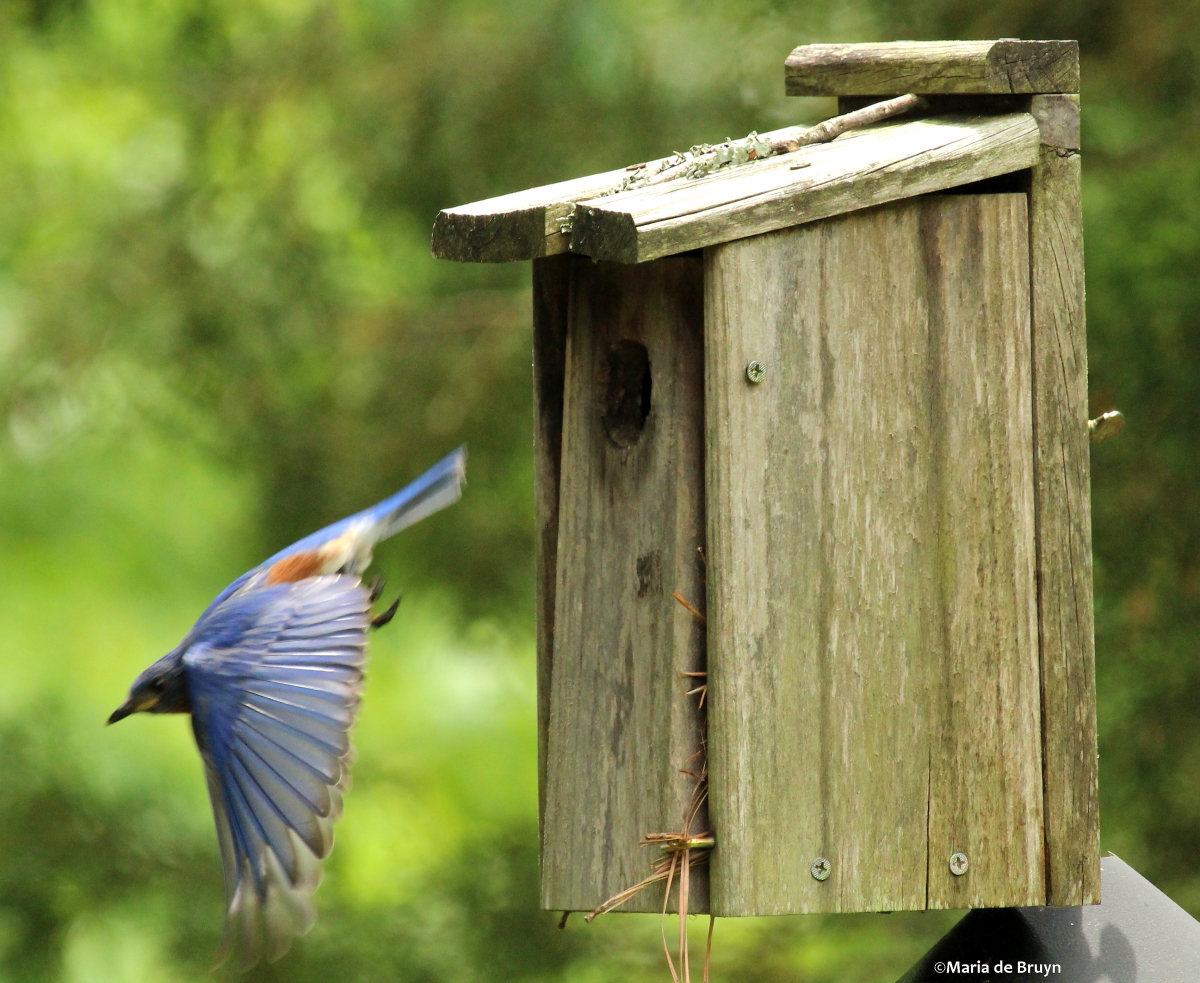
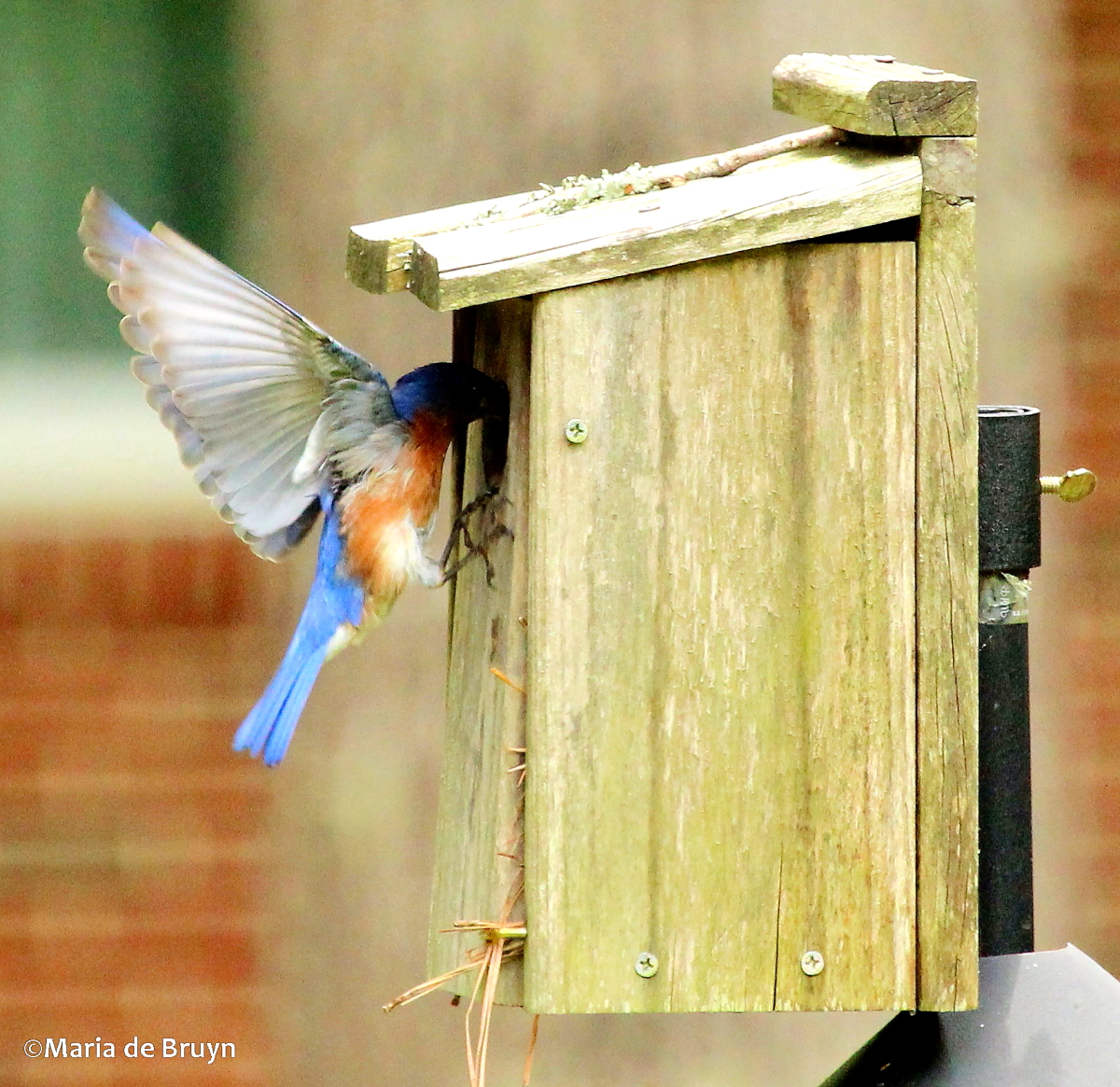
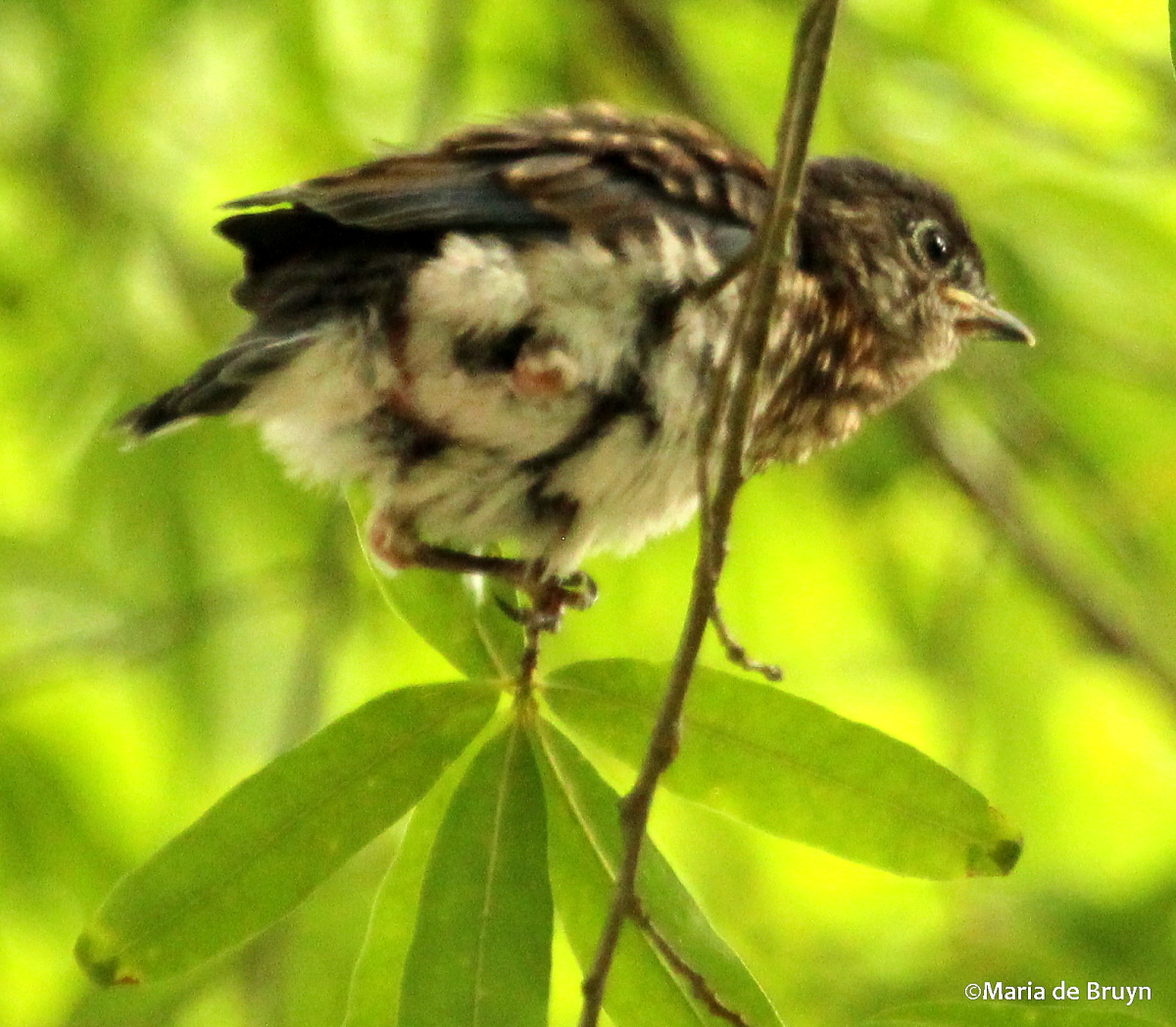
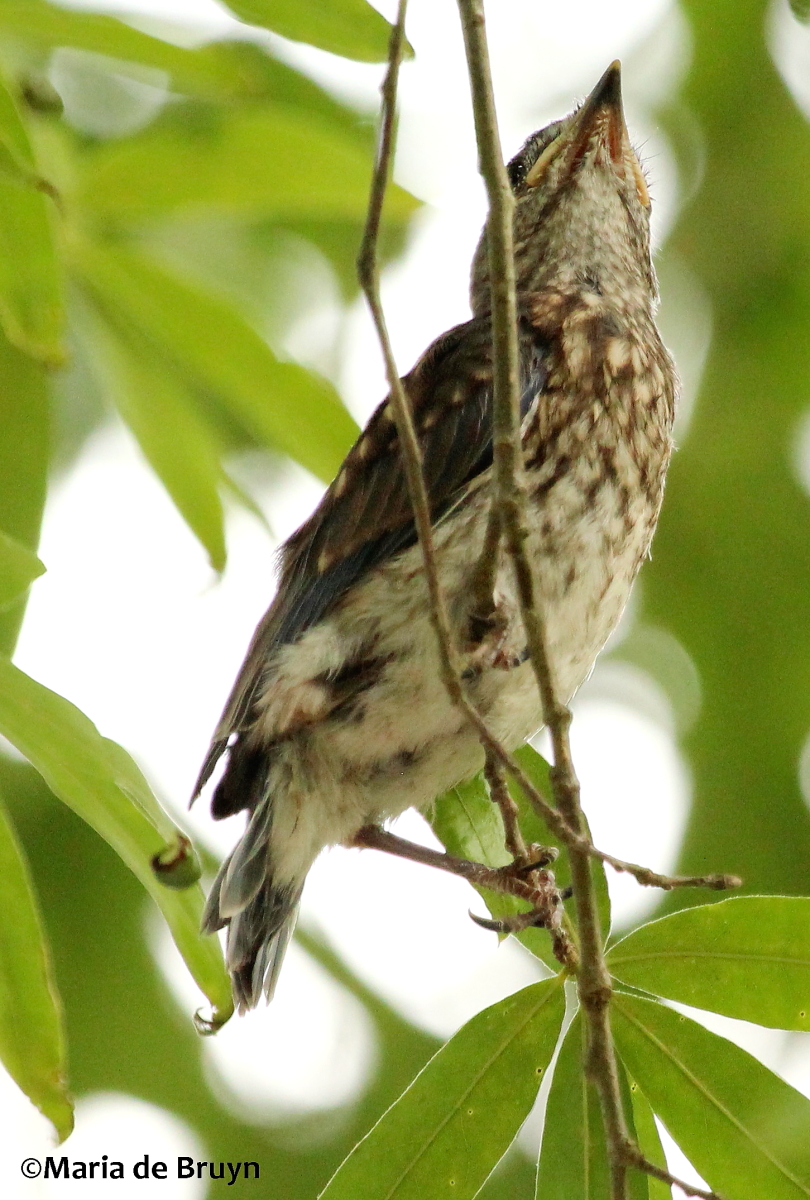
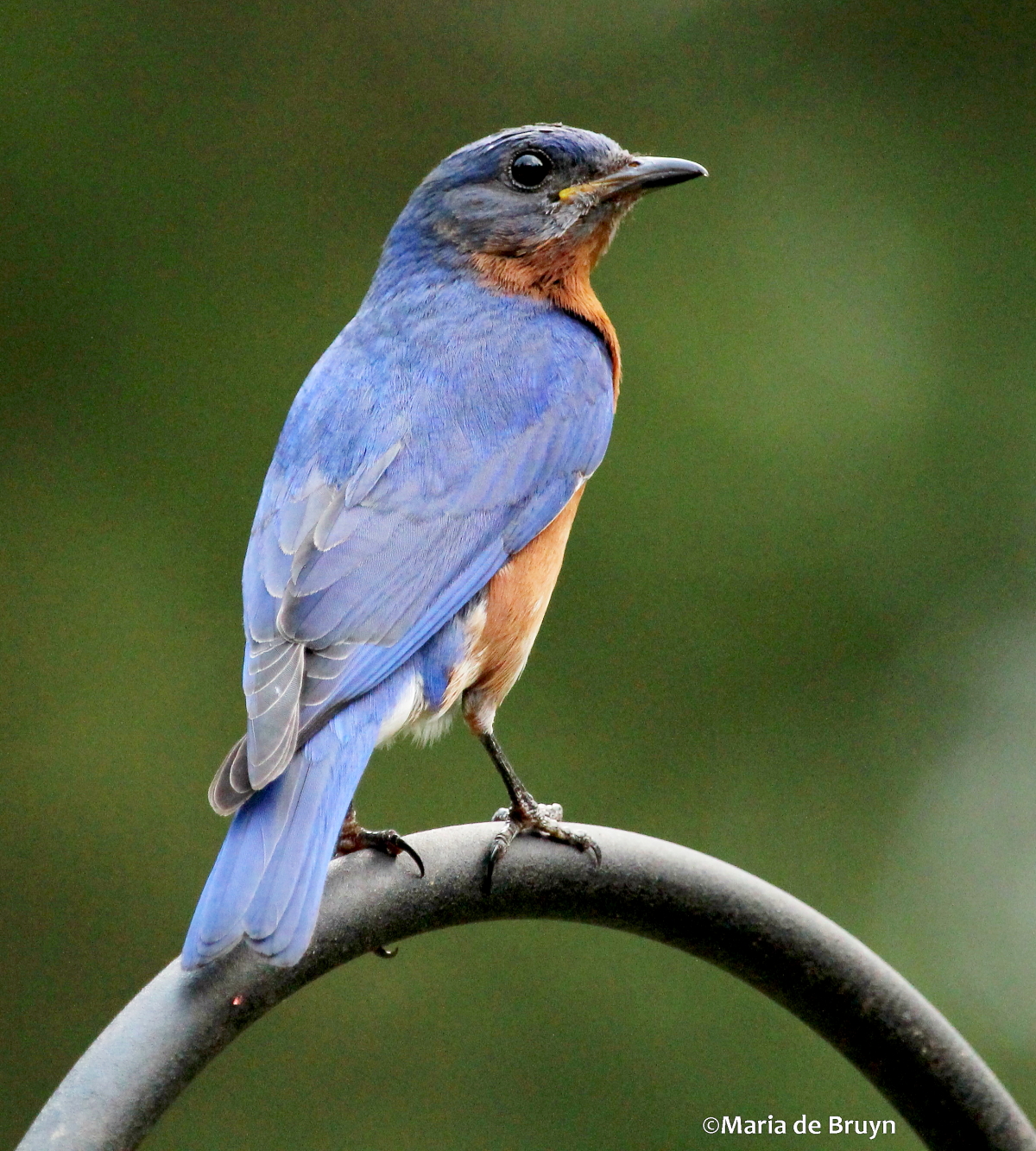
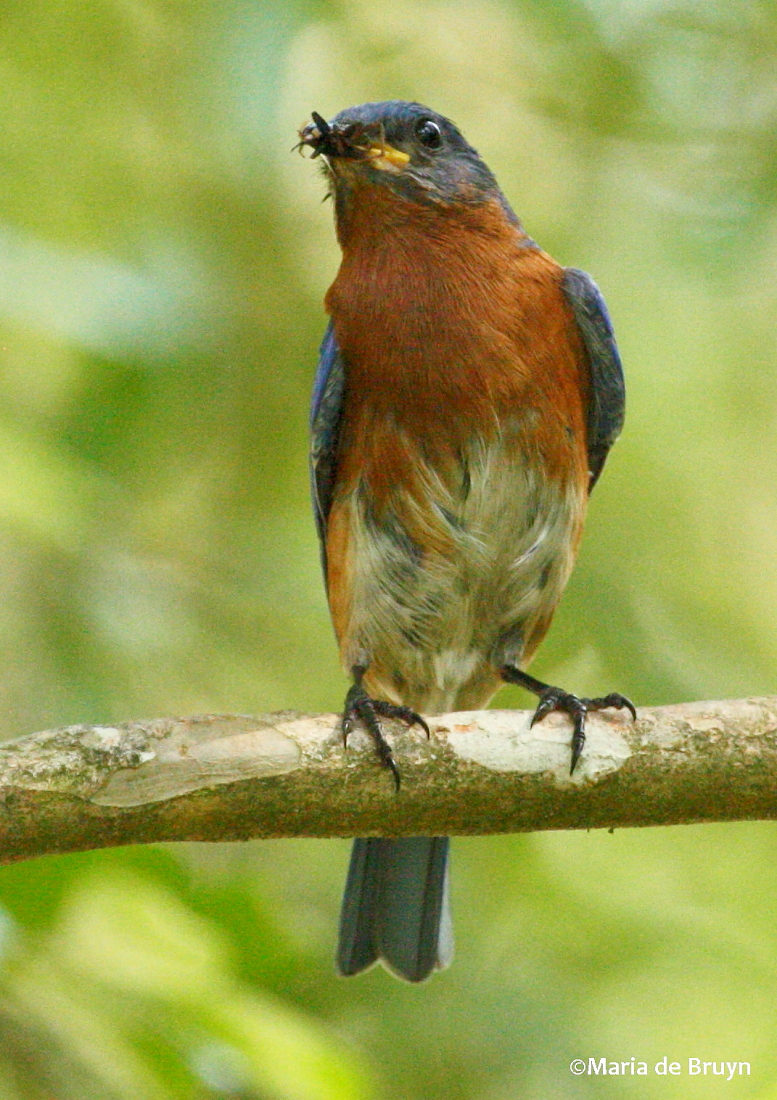
Eastern bluebird Eastern bluebird IMG_9836©Maria de Bruyn resLast year was a disappointment for the bluebirds (Sialia sialias) and me when a cowbird (Molothrus ater) laid her egg in their front-yard nest. The cowbird hatched first and when I looked a few days later, the bluebird eggs were gone. The bluebirds dutifully cared for the foster child but had none of their own.

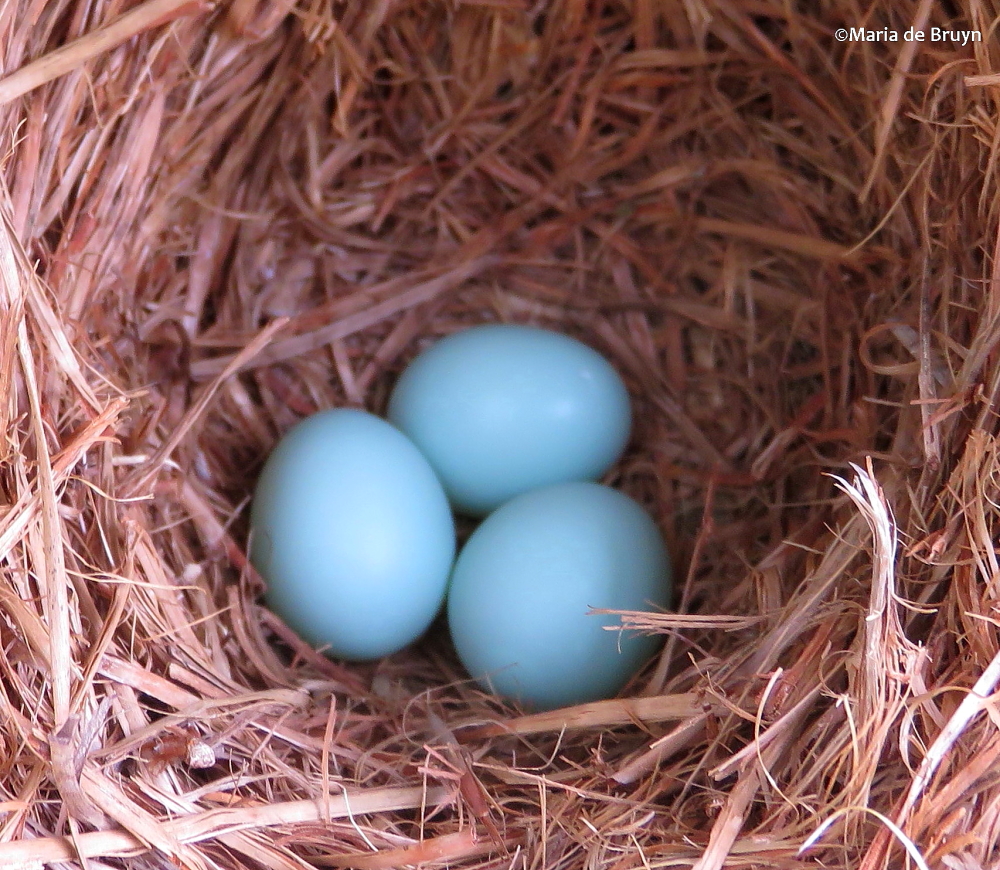
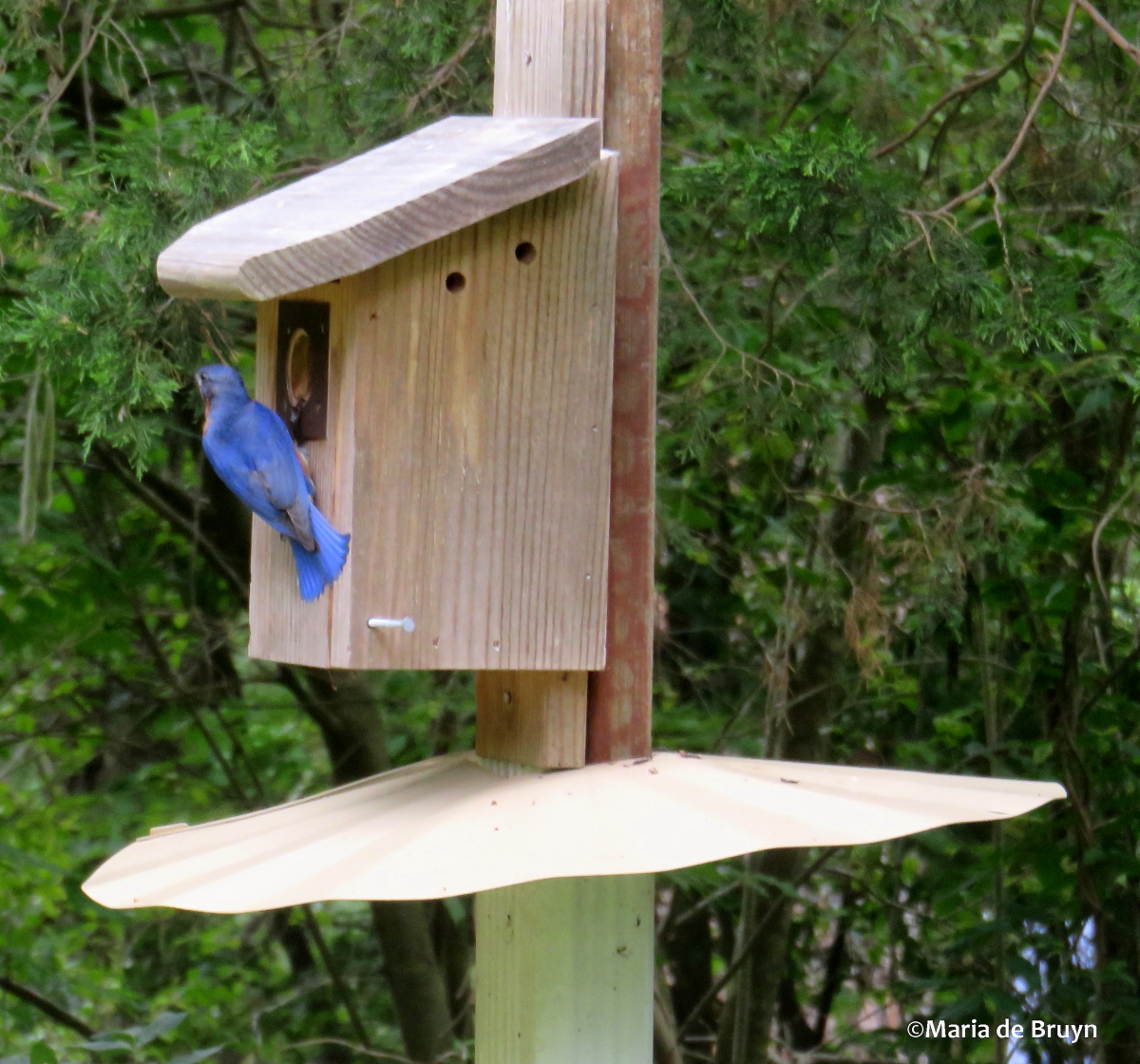
This year, they returned to the same nesting box and despite there being whole flocks of cowbirds around, they were able to avoid being surrogate parents this year. On 2 May, there were three eggs and by 5 May there were four.

Eastern bluebird IMG_5902©Maria de Bruyn resEastern bluebird IMG_4819©Maria de Bruyn resEastern bluebird IMG_4985©Maria de Bruyn res

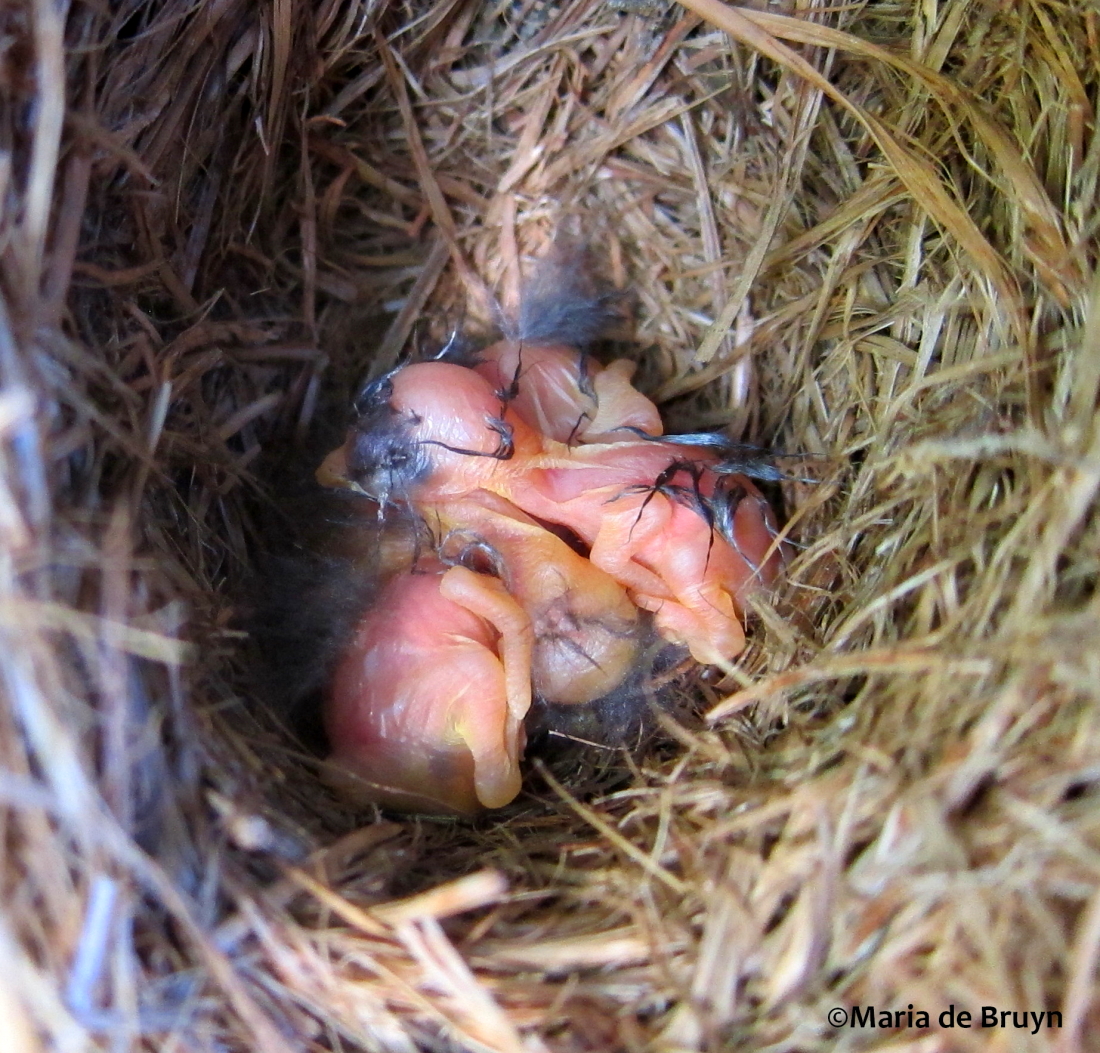
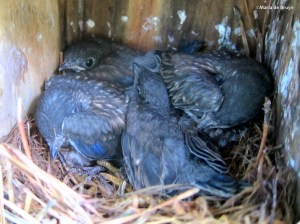
On 17 May, after mama and papa left the vicinity of the nest, I peeked in and saw the hatched babies, very naked newborns indeed! Mama was often with the babies and papa came to bring food, but mama left from time to time. They both visited the feeders to replenish themselves.

Eastern bluebird Eastern bluebird IMG_9753©Maria de Bruyn resEastern bluebird IMG_8753©Maria de Bruyn res

I set up a canopy chair to observe at what I thought was a good distance but discovered I was too close. The parents would arrive in the tree fronting the nest but if I was too close in their opinion, they would not go to the nest or only after I had been still for quite a long time. It was interesting to see that they were feeding the hatchlings dried meal worms along with other insects that they had caught.
Eastern bluebird IMG_3538©Maria de Bruyn resEastern bluebird IMG_3498©Maria de Bruyn res

Eastern bluebird IMG_3657©Maria de Bruyn resEastern bluebird IMG_3620©Maria de Bruyn  res

They also seemed to be feeding the babies fruit – wild raspberries from what I could tell!

Eastern bluebird IMG_4994©Maria de Bruyn resBy 28 May, the babies were much larger and feathered. Mama and papa were kept busy ensuring they were well fed! And house cleaning to remove their brood’s fecal sacs was also a definite necessity!

Eastern bluebird IMG_5129©Maria de Bruyn res

Eastern bluebird IMG_5371©Maria de Bruyn resThe parents remained very vigilant – not only keeping an eye on me but also other too curious visitors. On 1 June, a gray catbird (Dumetella carolinensis) suddenly descended to the nesting box, fluttering its wings furiously to remain suspended in front of the hole while it looked in. It then flew up on top of the box but the bluebird adults chased it away VERY quickly!


Eastern bluebird IMG_5008©Maria de Bruyn res


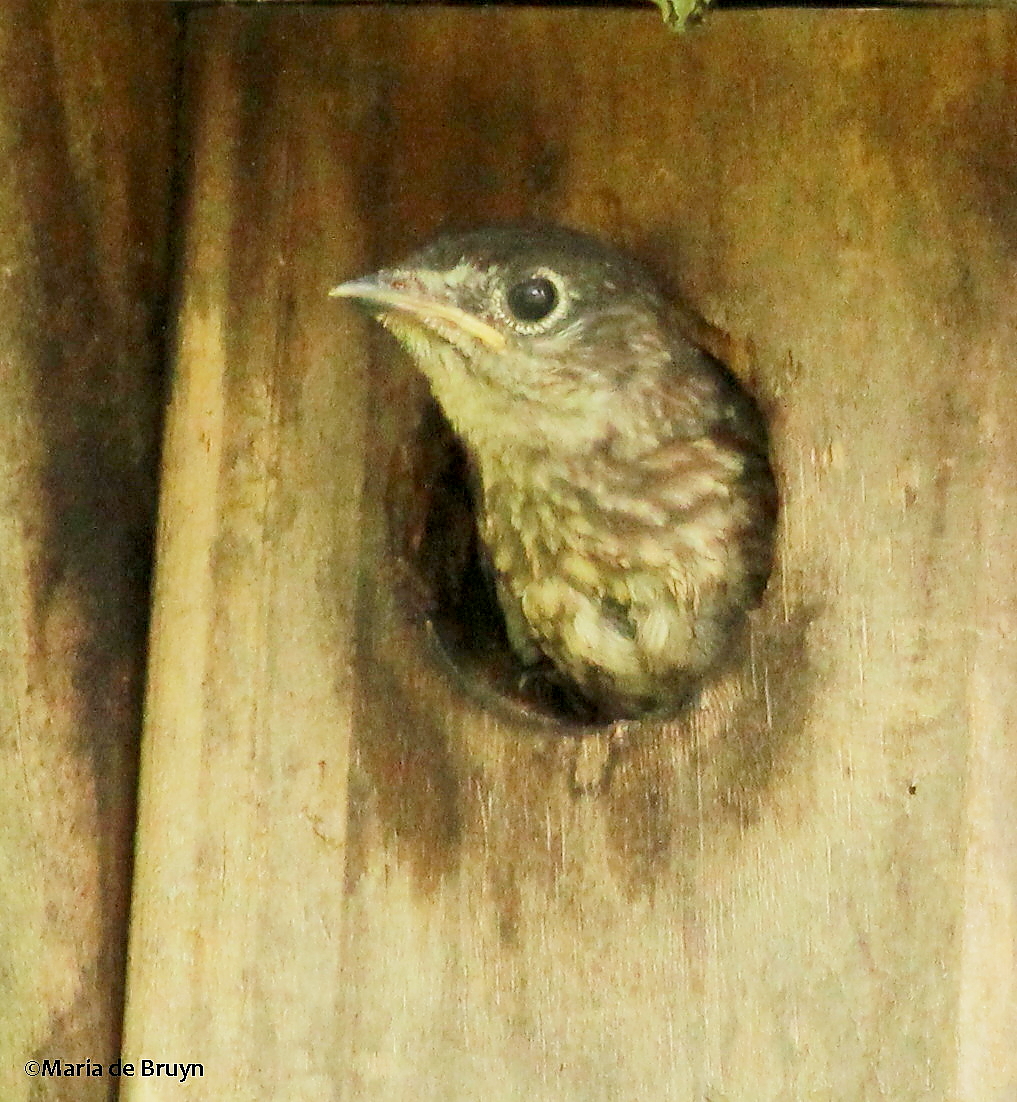
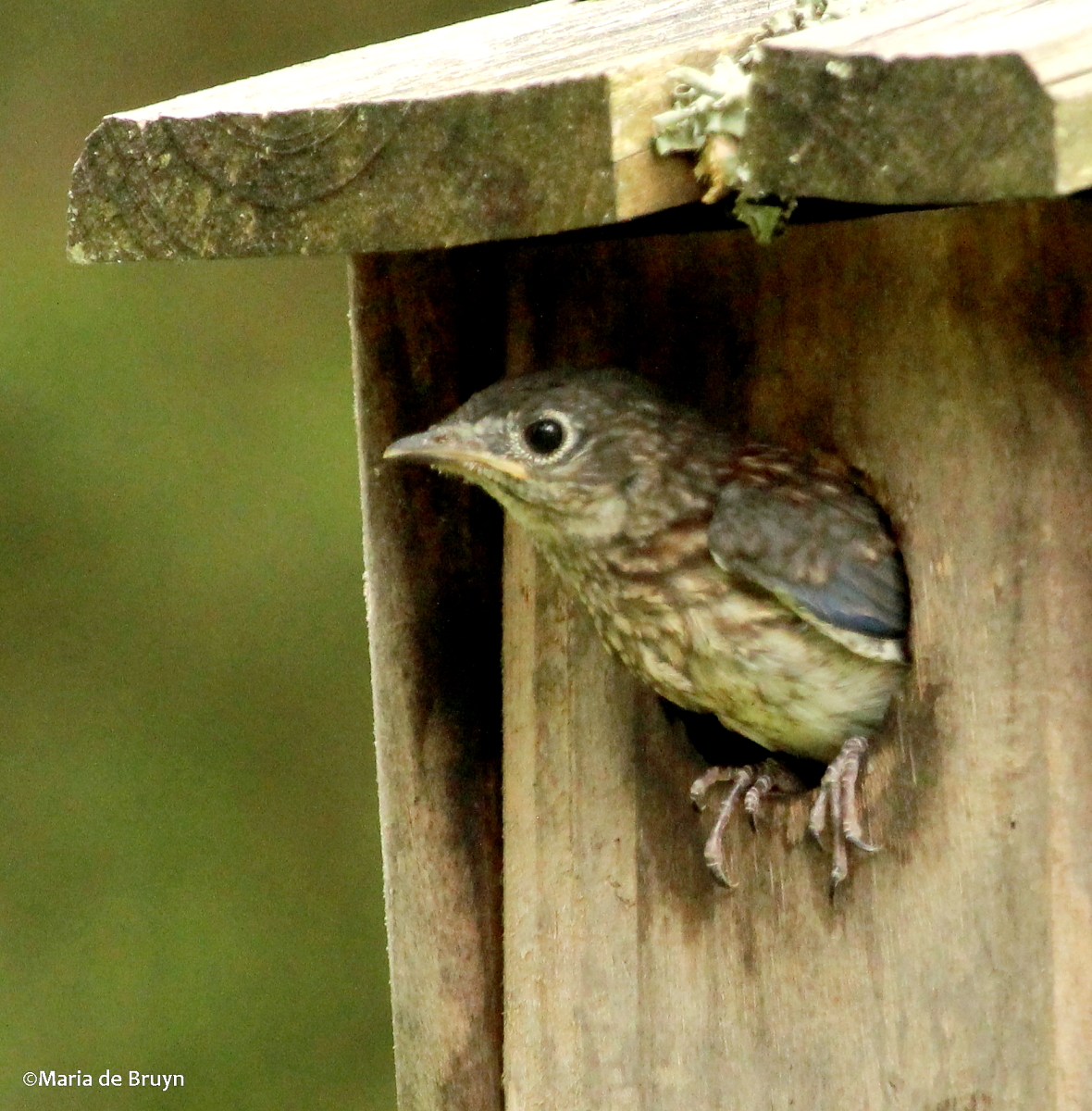
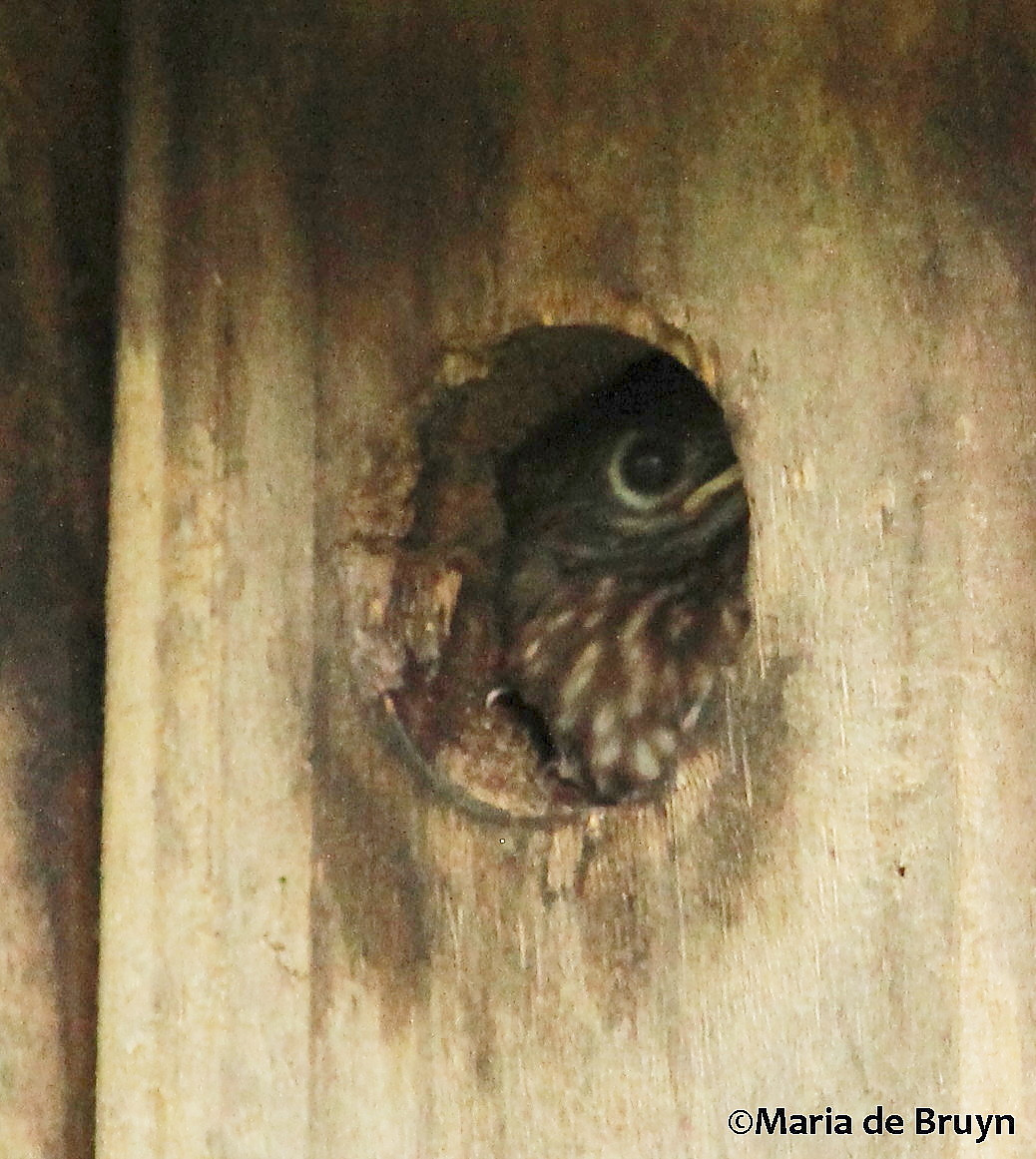
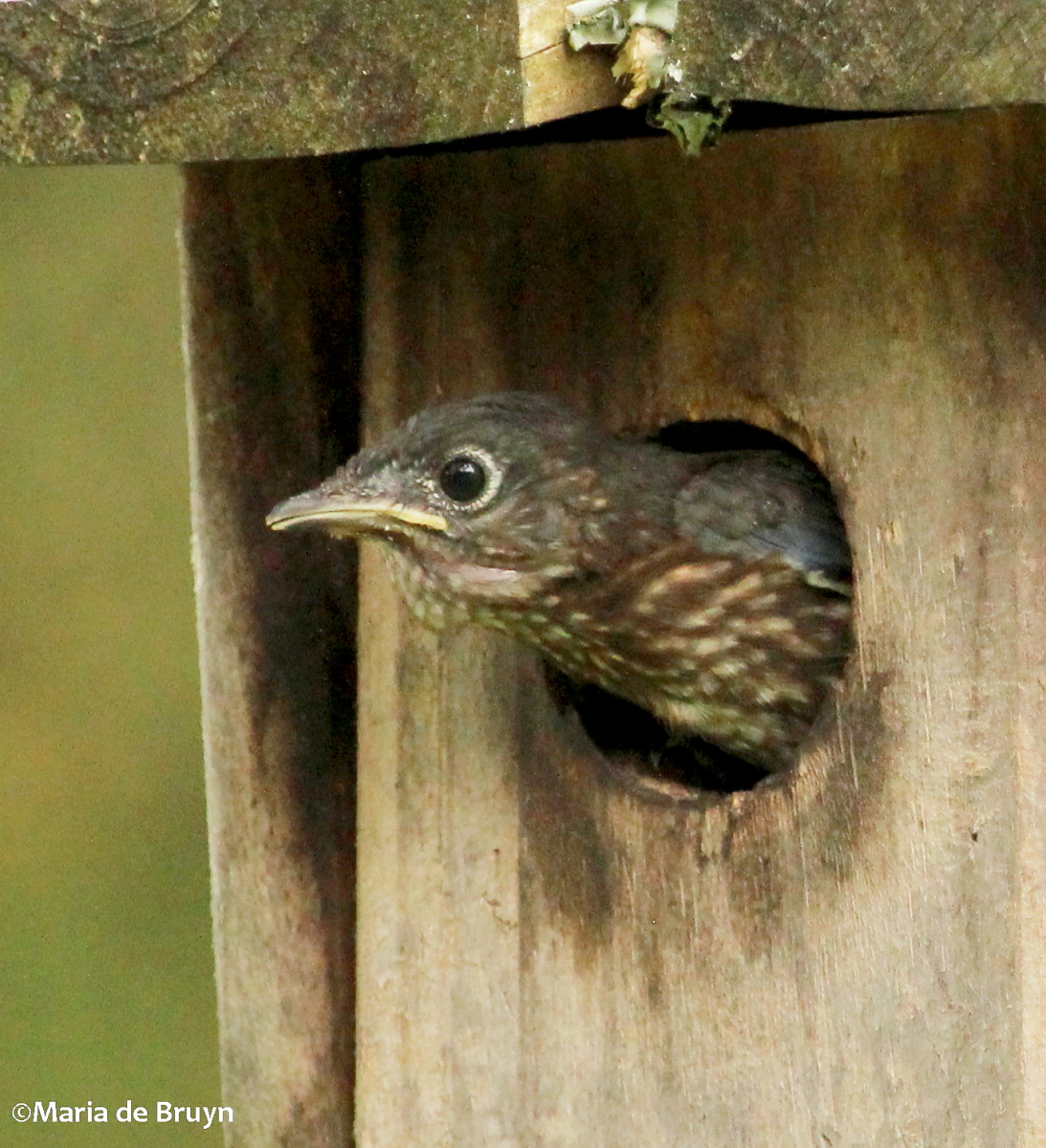
By 2 June, the babies were looking ready to fledge. The next day, I had time to watch the box and saw a baby repeatedly looking out (but not really calling much).


Eastern bluebird IMG_6267©Maria de Bruyn resEastern bluebird IMG_6330©Maria de Bruyn res

Sure enough, I saw it leap and swoop up to perch on a nearby branch.

Eastern bluebird IMG_6347©Maria de Bruyn resEastern bluebird IMG_6369©Maria de Bruyn res

Eastern bluebird IMG_6361©Maria de Bruyn resEastern bluebird IMG_6379©Maria de Bruyn res

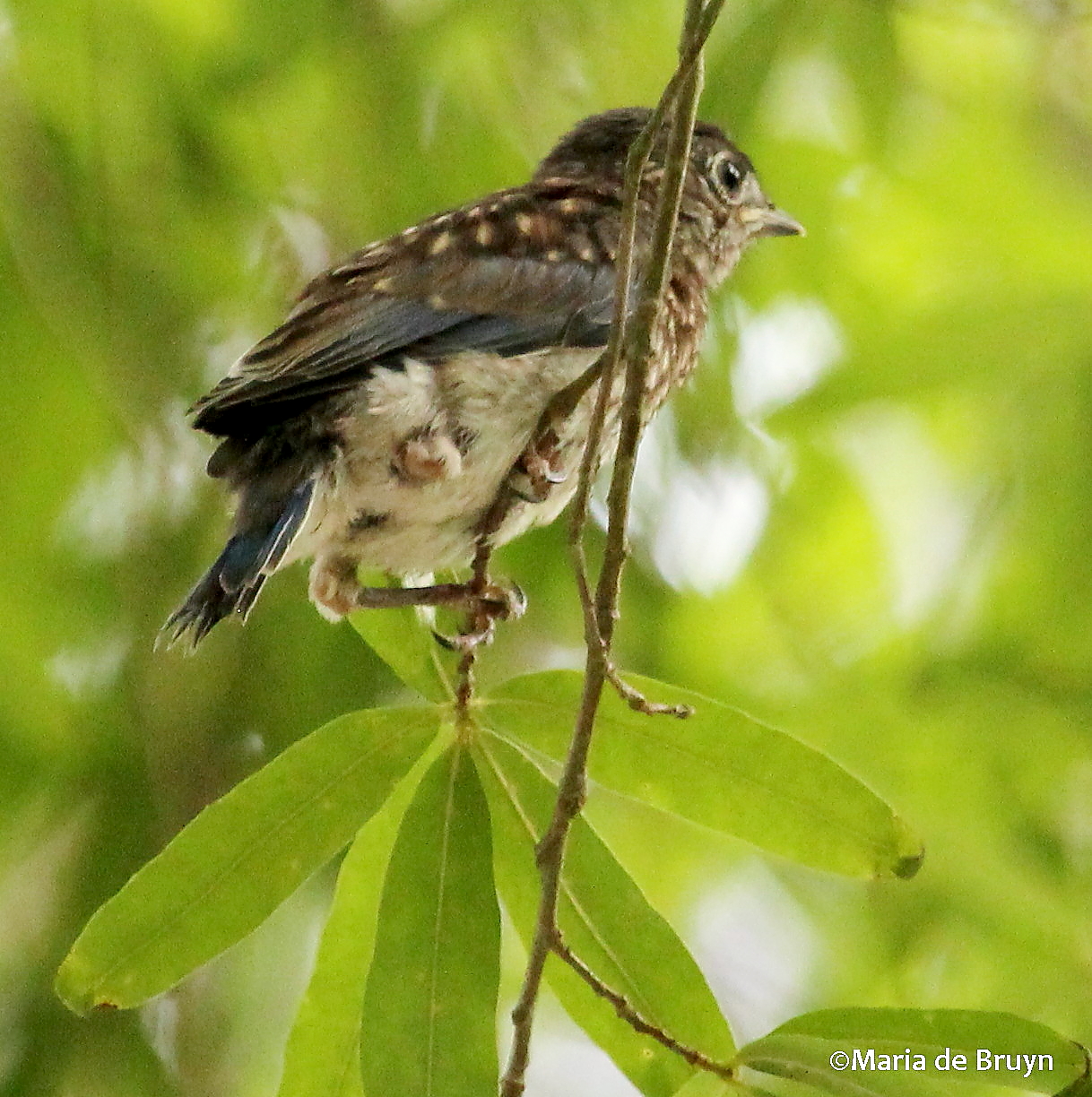
The next baby soon began peeping out, too, although this one also retreated inside the box now and again. Eventually, this baby swooped out as well, but s/he flew all the way across the street to a neighbor’s yard. When I carefully looked inside the next box, I saw that they were the last two to fledge – the others had gone before.

Eastern bluebird IMG_6452©Maria de Bruyn trdEastern bluebird IMG_6458©Maria de Bruyn res

Oddly, I haven’t seen the babies at the feeders although I see the parents there.

Eastern bluebird IMG_8743©Maria de Bruyn resEastern bluebird IMG_7504©Maria de Bruyn res


Eastern bluebird IMG_8749©Maria de Bruyn resThey or another bluebird couple were checking out a nest box in the backyard. They didn’t use this one (Carolina wrens have moved in with a nest there in the last few days) but they have constructed a new nest in another backyard box today. So I hope to witness another fledging in a few weeks! Yay for the bluebirds!


Baby bird quiz!

Springtime is always fun when you are lucky enough to be able to watch avian parents raise a brood successfully to fledgling status. My previous two blogs about watching brown-headed nuthatches and Carolina chickadees conscientiously keep their hatchlings well-fed was going to be followed by some new observations on bird parents – either the Carolina wrens or a tufted titmouse, who had laid eggs in two of my bluebird boxes.

Titmouse nest IMG_7210©Maria de BruynThe wrens are very circumspect about feeding when I am in the vicinity but I had seen the titmouse coming and going to the nest. When I looked in one day, I saw that one egg had hatched and three others were still there. Then, I went away for the Memorial Day weekend and returned home to find the nest had been pulled from the box and the fledgling and eggs were gone. (A loose piece of the roof had been removed; there were squirrel and raccoon baffles on the pole; I surmise a squirrel dropped down from a branch overhead.) So there likely won’t be a blog on those species.

But I thought you might like to try your identification skills on the baby and juvenile birds in this blog. Some are fairly easy and others not so much. I will number the photos and hope that you will make guesses in the comments section of the blog. Then I will post the answers in a comment when I publish my next blog, so check back to see how you did. Good luck!

cardinal baby 3 MdBNo. 1Baby mockingbird IMG_4799 ©Maria de BruynNo. 2

Baby American robin IMG_9188sNo. 3Baby Gray catbird IMG_4654©Maria de BruynNo. 4

Baby thrasher baby©Maria de BruynNo. 5Baby chipping sparrow 8 MdB signed No. 6Baby Eastern towhee IMG_9845 ©Maria de BruynNo. 7   baby cardinal 21  MdB No. 8

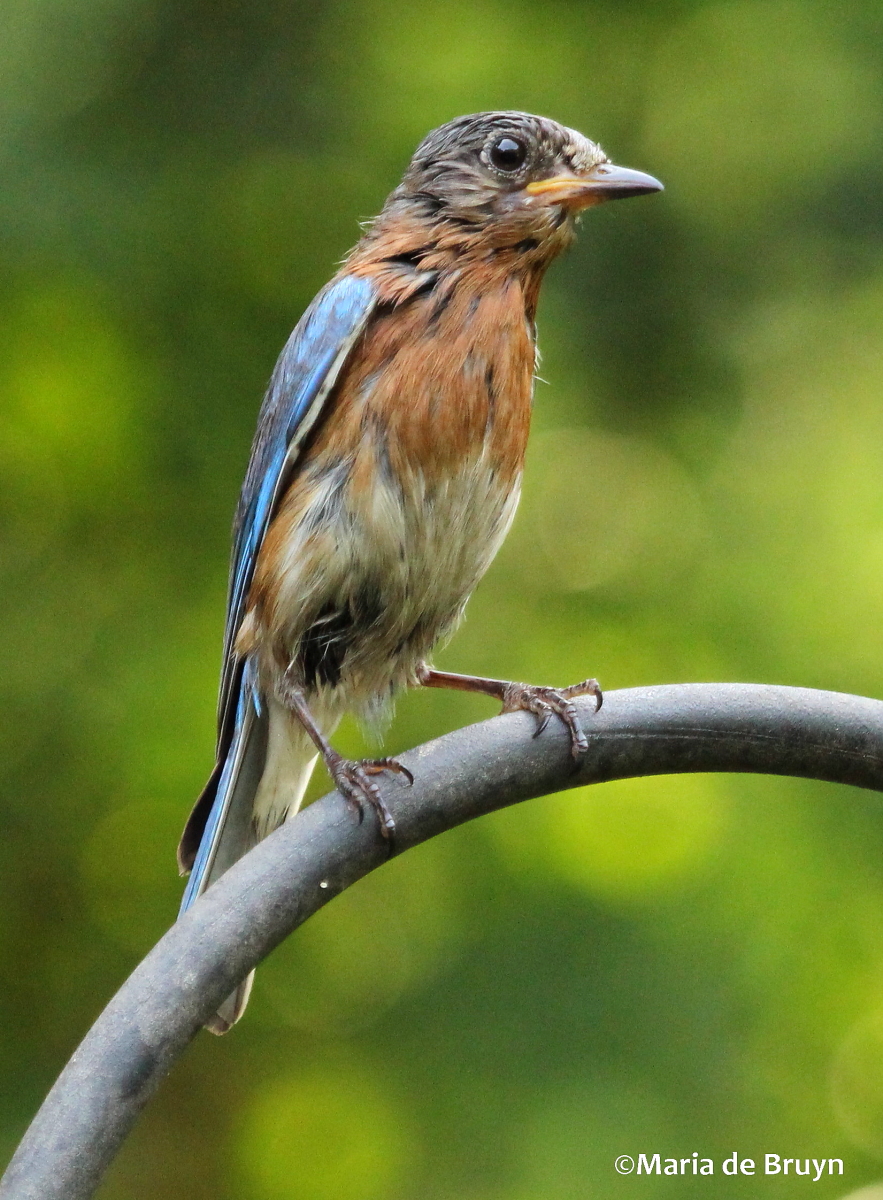
Baby Gray catbird ©Maria de BruynNo. 9  Eastern Bluebird juvenile IMG_5187© Maria de BruynNo. 10

Baby Canada goose MG_0573©Maria de Bruyn No. 11