My hummer summer, part 1 – guarding the home front!

ruby-throated-hummingbird-i77a2165-maria-de-bruyn-res


Just like human beings, some birds like to hang out in groups, while others are more solitary in nature, coming together mainly to reproduce. A prime example of the latter group are the ruby-throated hummingbirds (Archilochus colubris).


ruby-throated-hummingbird-i77a7336-maria-de-bruyn-res2This past summer, some health and other problems led to my spending a good deal of time at home. The upside was that being a bit home-bound gave me plenty of opportunities to observe the comings and goings of these gorgeous little flyers and to learn more about their behavior towards one another.

I had at least four ruby-throats – and probably more as I couldn’t distinguish them all – visiting my feeders and yard regularly. A couple had a distinctive trait that helped me identify them, like some white feathers on top of their heads or at the bottom part of their gorgets.

ruby-throated-hummingbird-i77a1237-maria-de-bruyn-res   ruby-throated-hummingbird-i77a9185-maria-de-bruyn-res

ruby-throated-hummingbird-i77a0810-maria-de-bruyn-res


I usually had three or four nectar feeders up in my back yard and two in my front yard. In addition, as the summer progressed, the gardens were filled with increasing numbers of nectar-filled flowers so my home site was a fairly well-stocked larder for them.

The ruby-throats are among the more competitive hummingbirds and don’t really like to share their feeding space with others, although a friend and I visited a birder in a nearby town who had more than a dozen feeders up and many dozens of hummers visiting his back yard every day, feeding right next to one another. At my house, I suppose guarding their food source is an instinctual imperative, since they do consume half their own weight in nectar each day.

ruby-throated-hummingbird-i77a0514-maria-de-bruyn-res

ruby-throated-hummingbird-i77a8255-maria-de-bruyn-resThe tiny birds were quite intent on protecting their territory from intruders. Only thing was, several of them considered my feeders THEIR territory, so there was a continual rotation of birds perched in nearby trees and shrubs to watch for “invaders”. Once spotted, the newly arrived hummers would have the current “resident” bird swoop down on them (at up to 60 miles per hour!), frequently chittering like mad as a warning to “get out of here.”

Sometimes, they would have a little “challenge flight ballet” as they confronted one another, until one gave up and flew off – sometimes across the street, sometimes to the yard on the other side of the house, and sometimes to a nearby tree or shrub at the side of the house.

ruby-throated-hummingbird-i77a8257-maria-de-bruyn-res   ruby-throated-hummingbird-i77a8256-maria-de-bruyn-res

ruby-throated-hummingbird-i77a9443-maria-de-bruyn-resThere was one particular male hummer who seemed particularly aggressive – or perhaps possessive is a better term as I never saw him body slam a rival; he just made sure that the other bird would leave. I recognized him as he often chose exactly the same spots on a nearby Rose of Sharon, a willow oak and a cedar as his watching posts,

Some of those who were run off didn’t travel far, however. They would fly to a nearby tree or shrub and wait to see if Hummer No. 1 would leave.

ruby-throated-hummingbird-i77a0290-maria-de-bruyn-res       ruby-throated-hummingbird-i77a1099-maria-de-bruyn-res

ruby-throated-hummingbird-i77a5725-maria-de-bruyn-resScientists have determined that the brain section responsible for memory and learning – the hippocampus – is five times larger in hummingbirds than in woodpeckers, seabirds and songbirds. They memorize where feeders and nectar flowers are and can remember when they last fed there. They can even estimate how long it will take each flower to fill up with nectar again.

ruby-throated-hummingbird-i77a6553-maria-de-bruyn-res


The hummers’ memory is long-term, too – they recall not only where feeders are placed in their breeding territories but also in places along their yearly migration routes! Wouldn’t it be nice if we had such great memories making GPS and maps less of a necessity?


ruby-throated-hummingbird-i77a7716-maria-de-bruyn-resAnother behavior I observed several times was a hummer hovering in front of me, especially when the nectar feeders were getting low. Scientists have determined that they can recognize the people who replenish their food sources, which makes for a delightful encounter as one chirps at you while suspended in front of your face with its wings flapping at 60 beats per second!

While guarding their home turf, they may stick out their tongues briefly after feeding.

ruby-throated-hummingbird-i77a5099-maria-de-bruyn-res   ruby-throated-hummingbird-i77a2353-maria-de-bruyn-res

ruby-throated-hummingbird-i77a9404-maria-de-bruyn-res


However, if you see one with its tongue stuck out permanently, this can be a sign of a fungal infection (often acquired from dirty feeders). Their tongues swell with the infection and they can no longer drink with these anatomical, elastic micro-pumps.


ruby-throated-hummingbird-i77a8243-maria-de-bruyn-res


Often death ensues, so it’s important to keep the nectar feeders clean!


Coming up in part 2: the beauty of the hummingbirds at rest and in flight


Can you go home again? Apparently so!

brown-headed-nuthatch-i77a3736-maria-de-bruyn-res


This year, I had the good fortune to see both brown-headed nuthatches (Sitta pusilla) and Eastern bluebirds (Sialia sialis) raise broods in some of my nest boxes. I saw the babies fledge, which was truly an enjoyable event.


eastern-bluebird-i77a7134-maria-de-bruyn-res

For some time, the parents continued feeding their babies after they left home, but eventually they got to the point that they could catch or find their own food. As summer progressed, the parents and children both visited my feeders and it was gratifying to see the families thrive. Then during September and October, I saw a behavior that I don’t remember from years past.

brown-headed-nuthatch-i77a7426-maria-de-bruyn-resbrown-headed-nuthatch-i77a7439-maria-de-bruyn-res

The nuthatches started to return to their nest box almost daily. They didn’t check out nearby boxes but went to their original home and today they are still visiting there, sitting on top, fluttering around it and looking inside.

tufted-titmouse-i77a7417-maria-de-bruyn-res

Their frequent visits seem to have intrigued a local tufted titmouse (Baeolophus bicolor) who decided to take a look in their box, too,but that was only a one-time visit as far as I could see.

It’s not only the parents doing this, but also one or more of their offspring. So how true is the saying “you can never go home again” (origin a novel by Thomas Wolfe)? It originally meant that you can’t recapture exactly how things were in your youth because changes take place in situations and places. But people do often journey back to the places where they grew up and apparently birds do, too! Maybe they are wondering if their nest box is still the same good place for a home.

brown-headed-nuthatch-i77a7459-maria-de-bruyn-resbrown-headed-nuthatch-i77a7441-maria-de-bruyn-res

i77a0203-maria-de-bruyn-res


The bluebirds began doing the same with their home nest box as well. They take turns flying from nearby branches to cling to the box and investigate the now empty dwelling. While the nuthatches just lean and peer inside, the bluebirds eventually go inside for a bit.


eastern-bluebird-i77a9732-maria-de-bruyn-res brown-headed-nuthatch-i77a9653-maria-de-bruyn-res


Oddly, there seems to be some contention involved. For example, when this pair was investigating, they had a little tiff for some reason.

eastern-bluebird-i77a9722-maria-de-bruyn-res eastern-bluebird-i77a9725-maria-de-bruyn-res

eastern-bluebird-i77a9723-maria-de-bruyn-res eastern-bluebird-i77a9726-maria-de-bruyn-res

I can only guess that the birds are checking out the nest boxes in anticipation of next year’s nesting season. The nuthatches and bluebirds will begin breeding again around March, although nuthatches might already begin building a new nest as early as December. It will also be interesting to see if they end up roosting in the boxes during the colder winter nights.

brown-headed-nuthatch-i77a4527-maria-de-bruyn-resWatching the nuthatches and bluebirds nest, fledge and feed is an enjoyable pastime and I’m looking forward to seeing them repeat the process next year. In the meantime, perhaps I’ll continue seeing them around the nest boxes this winter – as Pliny the Elder said, “Home is where the heart is” and something is sure attracting them back! (And yes, I know, that is a bit of anthropomorphizing.)

Living above a restaurant

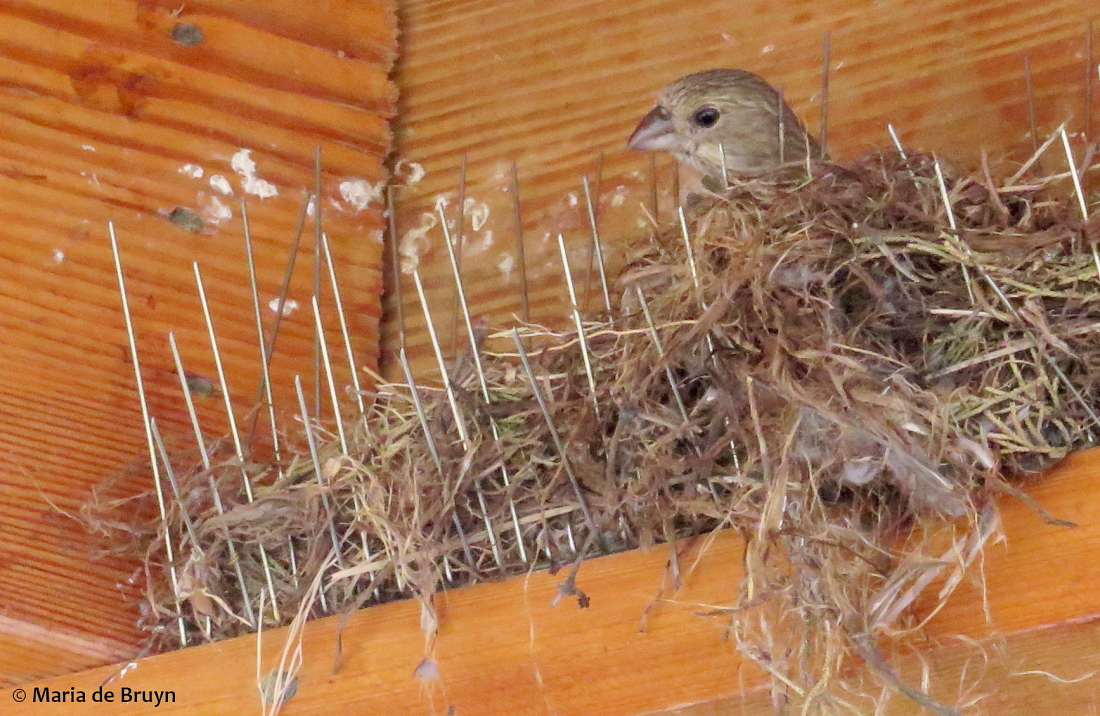
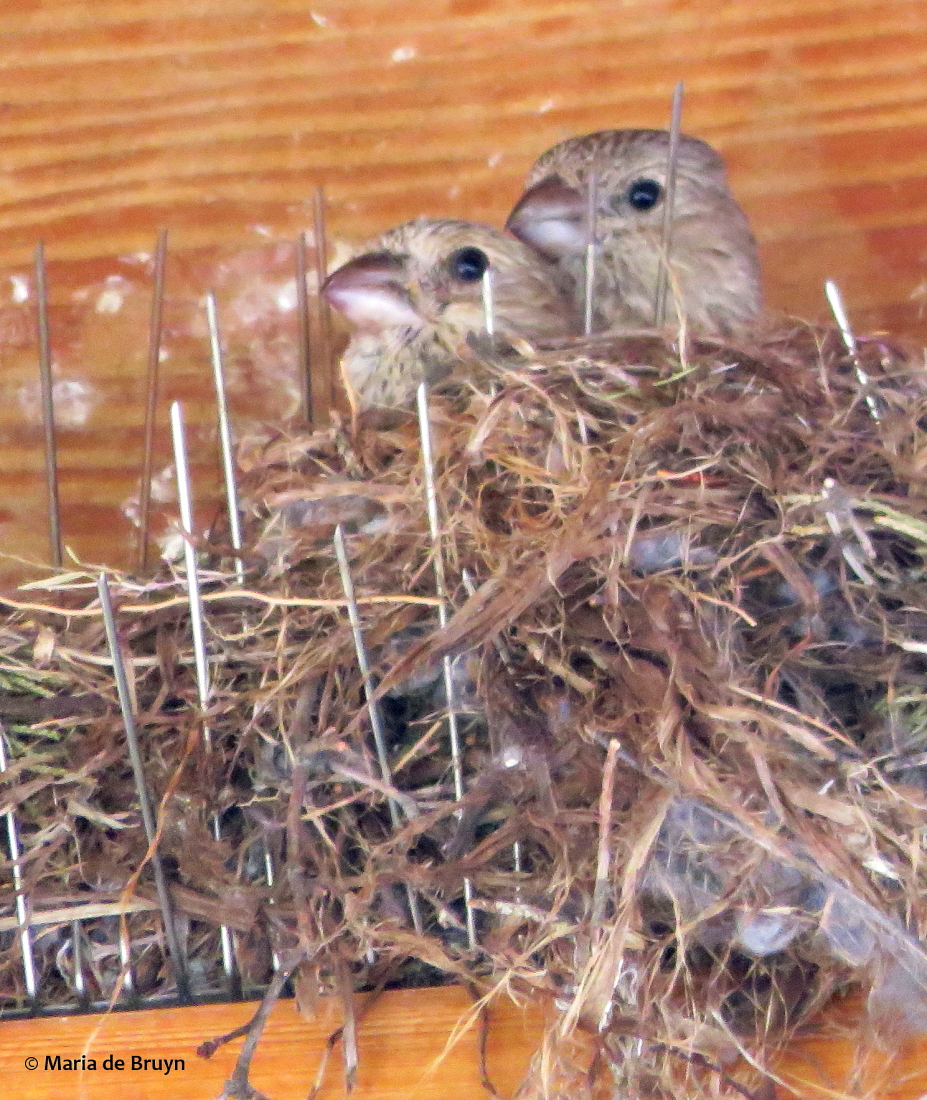
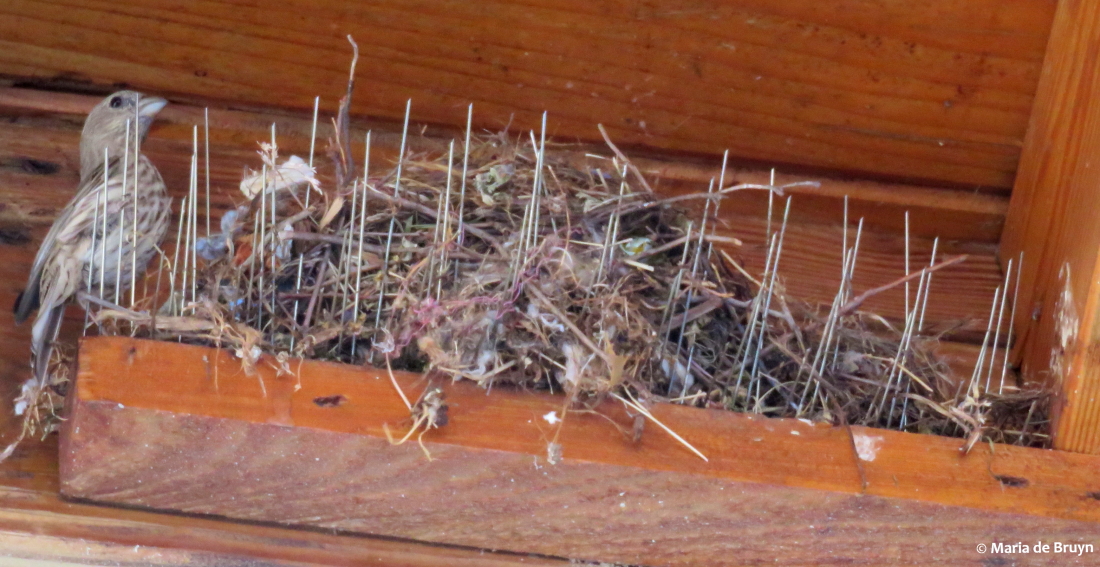
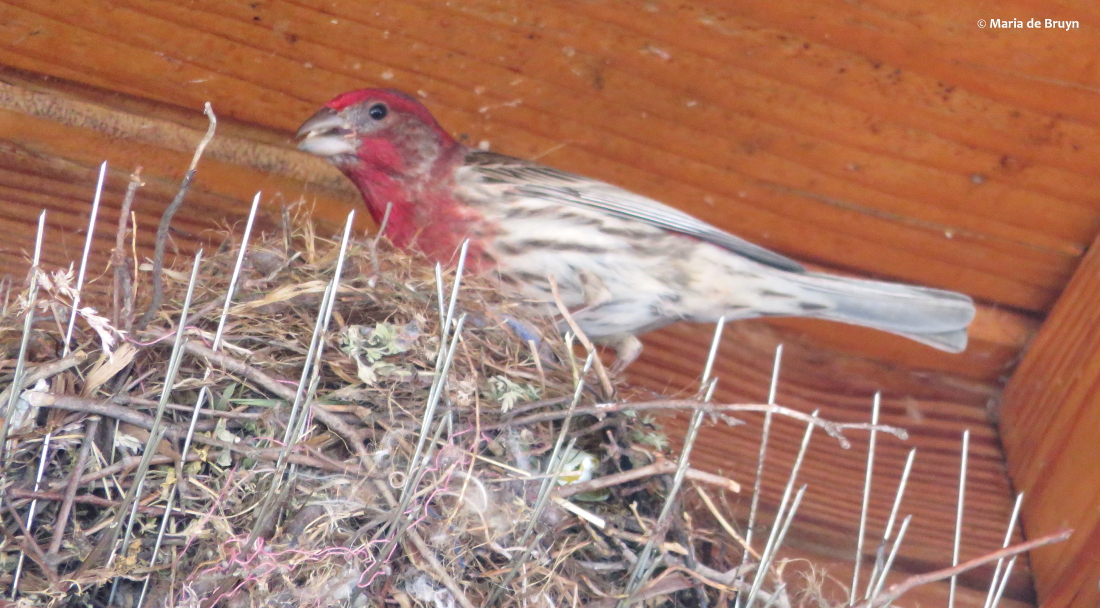
house finch nest 1 IMG_4358© Maria de Bruyn resAt one point in Amsterdam, I lived in a room with a shared kitchen and toilet above a butcher shop. It was a cramped space but I made some nice friends there. Eventually, I painted the hallway with flowers and snails to bring a bit of nature inside. Today, on my way to a prompt writing session, I saw that some birds also choose to live above commercial establishments, including those who established homes above one of my favorite restaurants, El Tigre.

House finch nest 1IMG_4373© Maria de Bruyn res


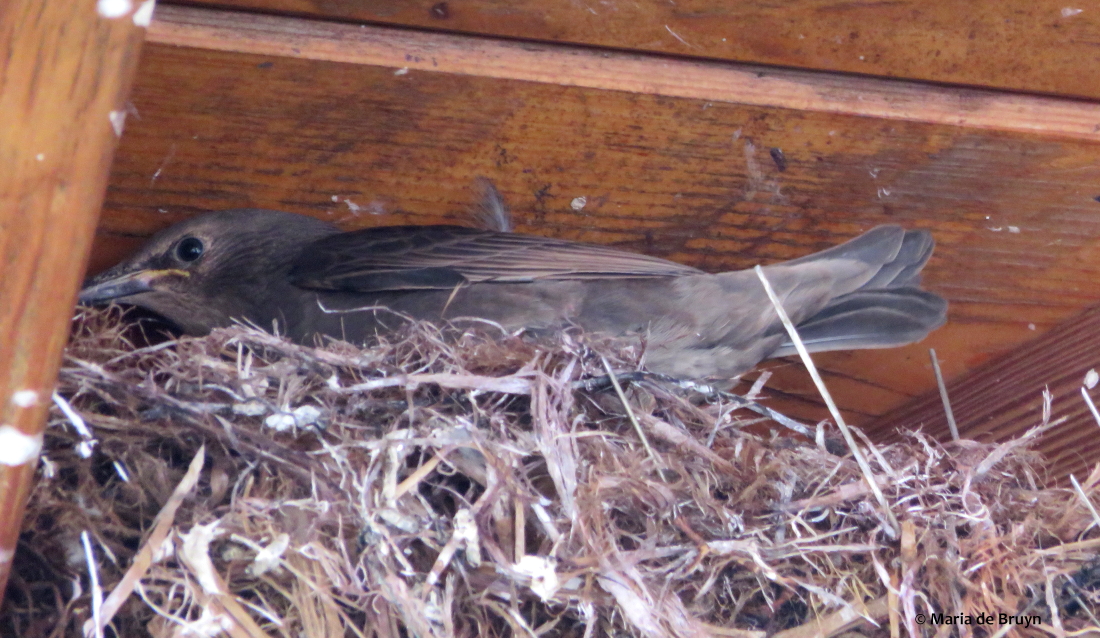
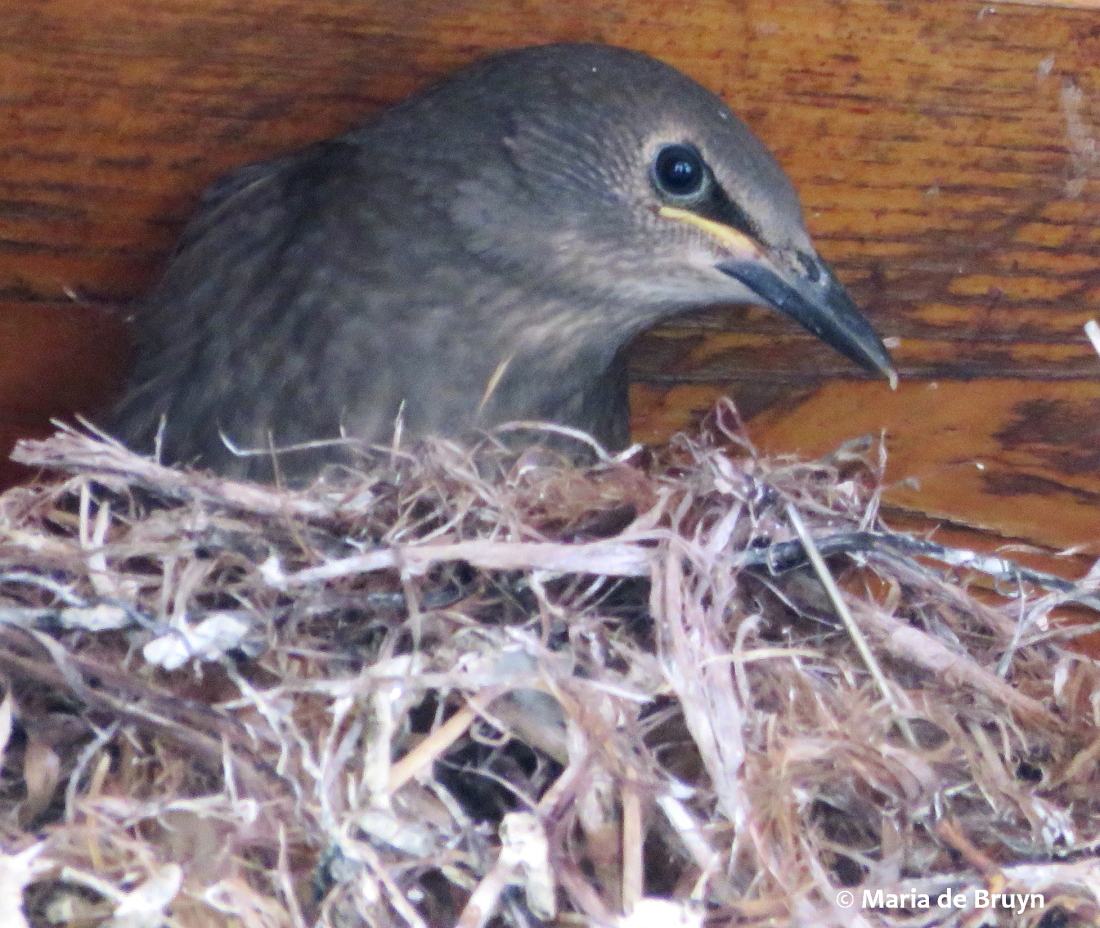
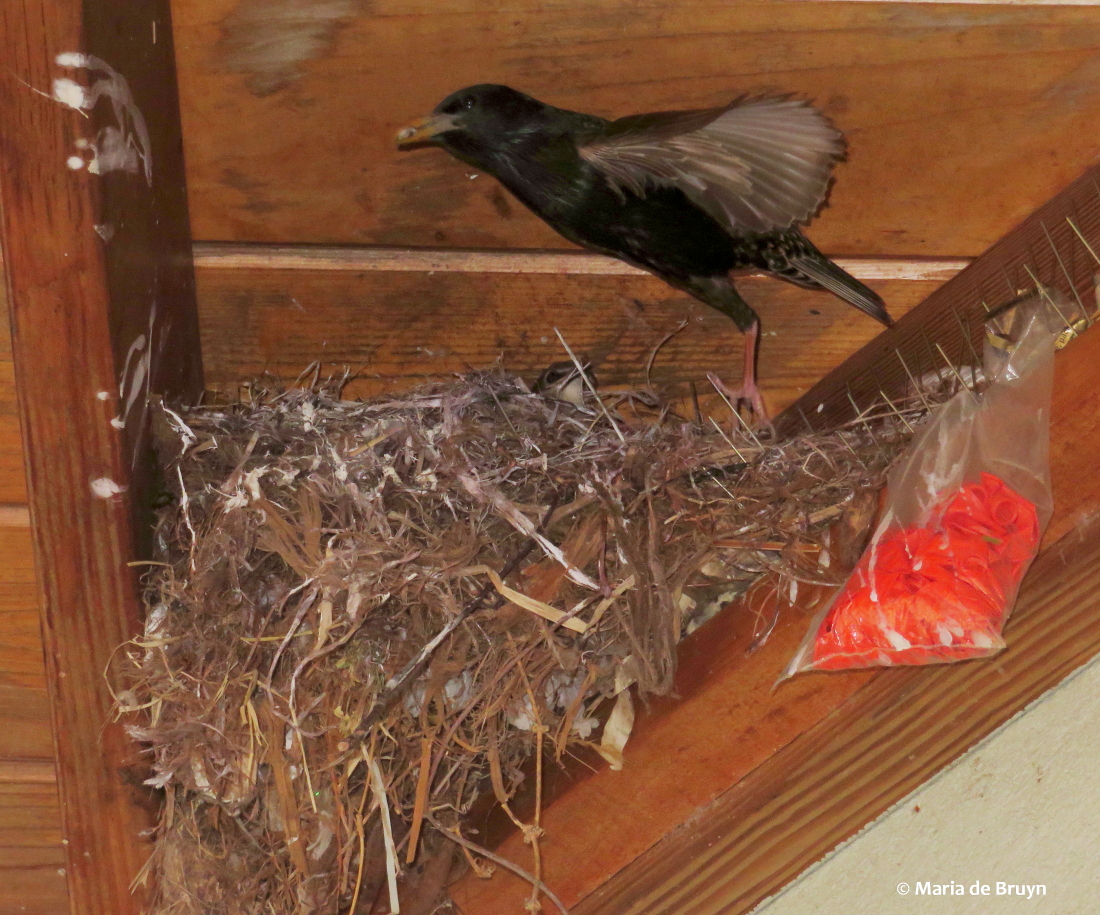
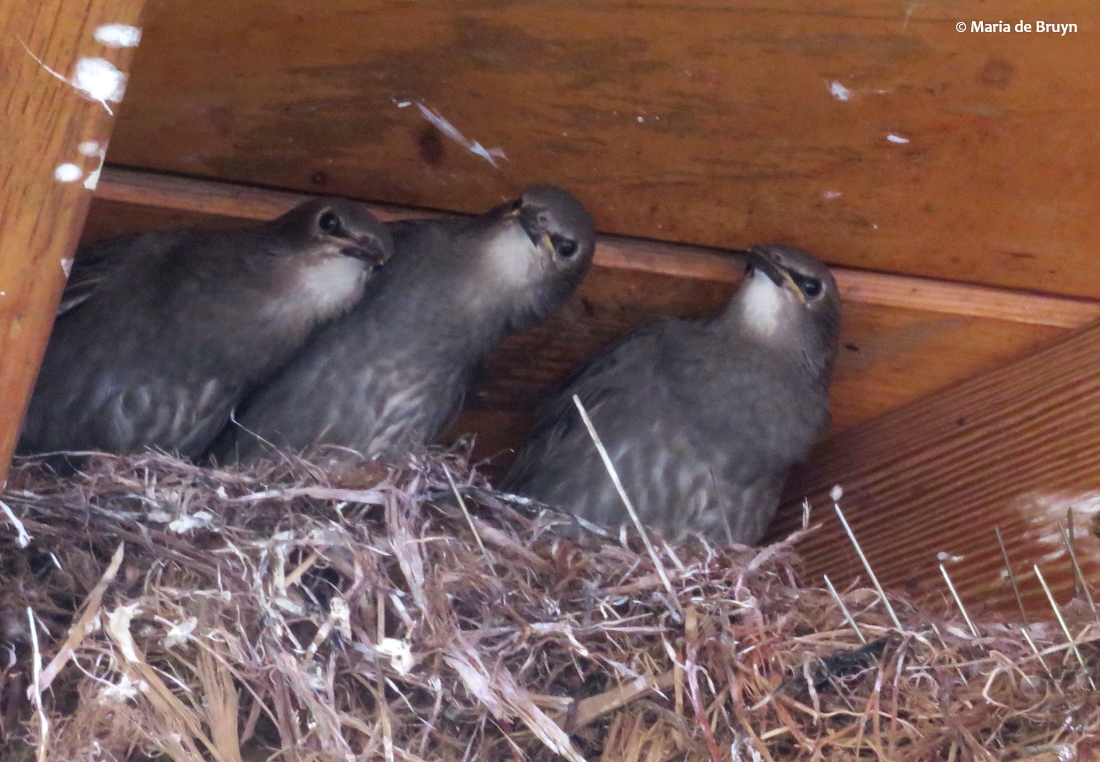
There were three nests (at least – I didn’t look around to the other wall), with house finches (Haemorhous mexicanus) on either side of a European starling (Sturnus vulgaris) home in the middle. Nest 1 had a female bird visiting while a couple stayed inside.


The other finch nest was attended by both mother and father.

house finch nest 3 IMG_4375© Maria de Bruyn res house finch nest 3 IMG_4351© Maria de Bruyn res

house finch nest 3 IMG_4396© Maria de Bruyn res

European starling IMG_4390© Maria de Bruyn resThe nest with starlings had rather large babies in it. At one point, an adult bird flew in with a worm or insect but then took off before feeding anyone – perhaps alarmed when it saw me watching the nest. The babies didn’t say much, in contrast to the somewhat older baby starlings in my yard who make quite a racket asking to be fed.

European starling IMG_4387© Maria de Bruyn resEuropean starling IMG_4347© Maria de Bruyn res


European starling IMG_4397© Maria de Bruyn res

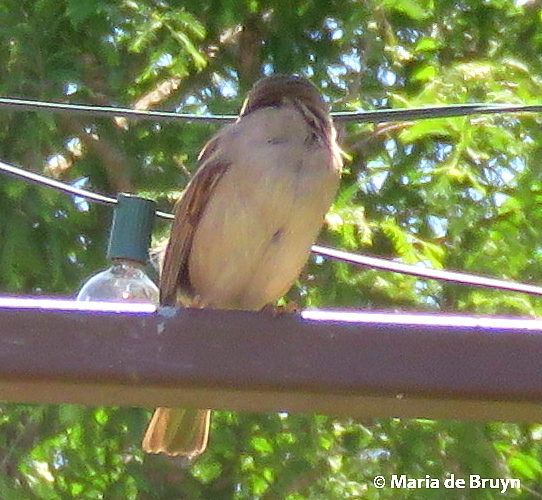
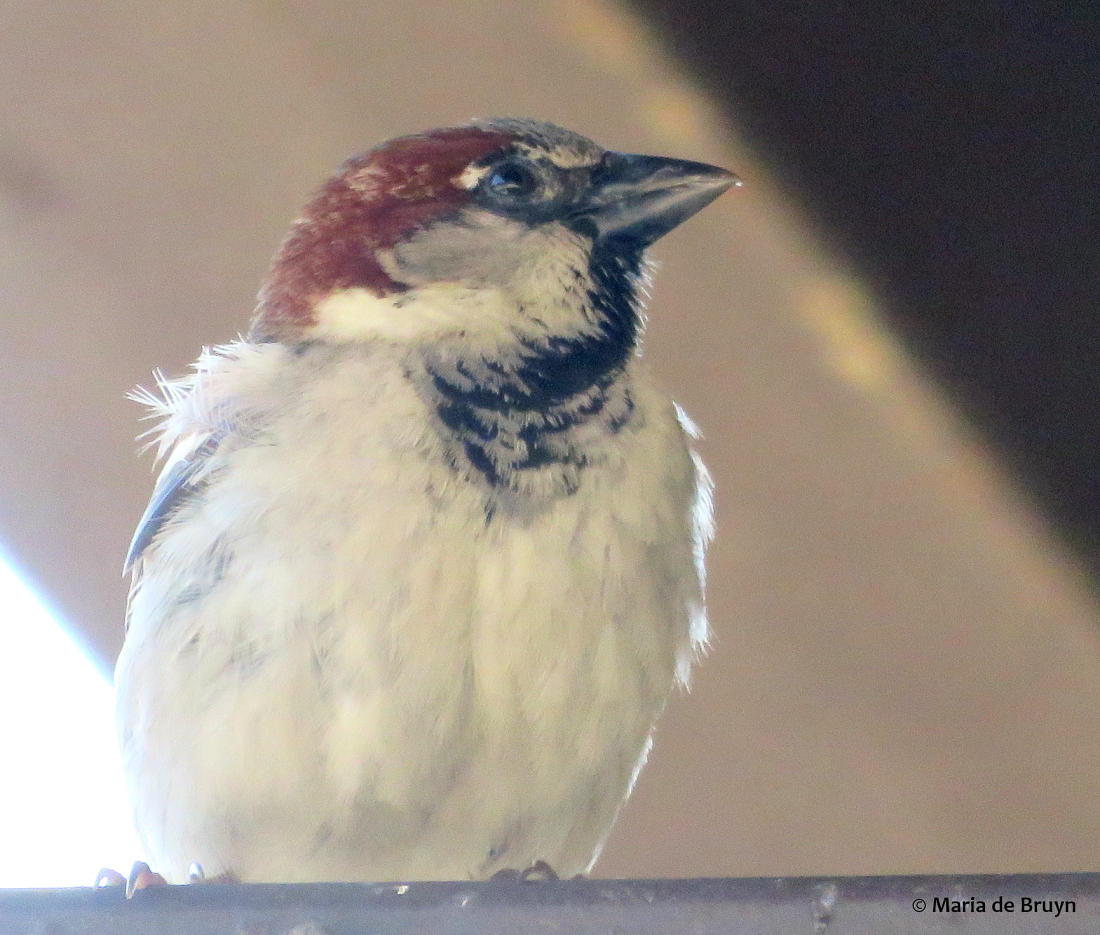
I wasn’t the only observer, however; a couple house sparrows (Passer domesticus) were also observing the comings and goings to and from the nests.

house sparrow IMG_4412© Maria de Bruyn res house sparrow IMG_4355© Maria de Bruyn res

I had a busy day and didn’t think I’d get to do much nature observation – but then those adaptable birds showed me that even in an urban environment, I can grab a few moments to see what other species are doing on a lovely spring day!


A walk in the woods with a bit of local history

Ken Moore IMG_6384© Maria de Bruyn resOn a sunny afternoon in mid-April, volunteers at the North Carolina Botanical Garden (NCBG) had the chance to learn about Bill Hunt, a horticultural expert who donated hundreds of acres of land for environmental conservation to the University of North Carolina. Hunt’s work laid the foundations for the expansion of the Garden with the Hunt Arboretum and the Piedmont Nature Trails in woods behind the cultivated gardens. The trails were “re-dedicated” during a walk to commemorate the Garden’s first public offering, which was originally dedicated on 10 April 1966. A walk in the woods was quite a nice way to help celebrate the NCBG’s 50th birthday.

Ken Moore IMG_6398© Maria de Bruyn resWe learned about how the Nature Trails were created and maintained from Ken Moore, retired assistant director of the NCBG and the Garden’s first employee.

Moore was accompanied by other Garden staff who offered other interesting tidbits of information. For example, Johnny Randall, NCBG Director of Conservation, told us about how Mr. Hunt visited his rhododendron bushes along Morgan Creek and invited friends to swim at Elephant Rock and to forest picnics at his personal grill located creekside, all the while wearing a suit and tie in his beloved woods.

elephant rock IMG_6443© Maria de Bruyn resHunt barbecue IMG_6436© Maria de Bruyn res

Staff pointed out some of the lovely native plants seen in the springtime woods, including plants that were rescued from other sites such as the trilliums.

Sweet Betsy IMG_6405© Maria de Bruyn res Virginia pennywort IMG_6411© Maria de Bruyn res

Sweet Betsy (Trillium cuneatum)                 Virginia pennywort (Obolaria virginica)

The woodsorrels have three-lobed, clover-like leaves.

Common yellow woodsorrelIMG_6429© Maria de Bruyn   Violet woodsorrel IMG_6423© Maria de Bruyn res

.Common yellow woodsorrel (Oxalis stricta)   Violet woodsorrel (Oxalis violacea)

Indian plantain IMG_6439© Maria de Bruyn res         Spotted wintergreen IMG_6434© Maria de Bruyn res

Indian plantain (Arnoglossum plantagineum)   Spotted wintergreen (Chimaphila maculata)

We also heard about the non-native and invasive plants that were planted along the Nature Trails before conservationists were aware of how they out-competed native plants for space and nutrients. They pointed out that we should remove such vegetation during our volunteer hours and from our own gardens at home, such as Oriental false hawksbeard (Youngia japonica (L.)), which I realized is nestling in in my yard, too.

Special attention was given to the plant with the delightful name of Italian lords-and-ladies (Arum italicum). There were many clumps of these large-leaved flowers and numerous specimens were blooming. While Ken told us how to identify male and female plants so we could eradicate them, other staff demonstrated how to uproot them with gusto.

Italian lords-and-ladies IMG_6481© Maria de Bruyn res          Italian lords-and-ladies IMG_6494© Maria de Bruyn res

Listening IMG_6499© Maria de Bruyn res

As we climbed out of the woods after a couple hours, some last words were said about invasive plants and then Ken sped ahead to greet everyone as we re-entered the demonstration gardens. He kindly offered participants a small booklet about Bill Hunt’s life, a nice gift to commemorate 50 years of the Garden. It will be interesting to think about what the next 50 years might bring.

Ken Moore Ed Harrison IMG_6524© Maria de Bruyn resrue anemone windflower IMG_6450© Maria de Bruyn res                       IMG_6466© Maria de Bruyn res

IMG_6468© Maria de Bruyn res                   IMG_6458© Maria de Bruyn res Wild comfrey (right, Cynoglossum virginianum)

A wildflower walk with surprises!

owl IMG_3036© Maria de Bruyn resThis past Saturday morning, we awoke to water streaming from the heavens in quite a heavy downpour. A local conservation group, Friends of Bolin Creek, had scheduled a wildflower walk to see some of our ephemeral spring blooms but the wet conditions were not inviting. A decision to postpone the walk to early afternoon was taken – and the weather-people had gotten it right – the sun began shining at mid-day and the temperature rose, creating lovely conditions for a walk after all. A large owl (later revealed to be granddaughter Kate of the group’s president) greeted the small group of intrepid walkers and we set off to see what we could find.

Southern arrowwood IMG_3039© Maria de Bruyn res

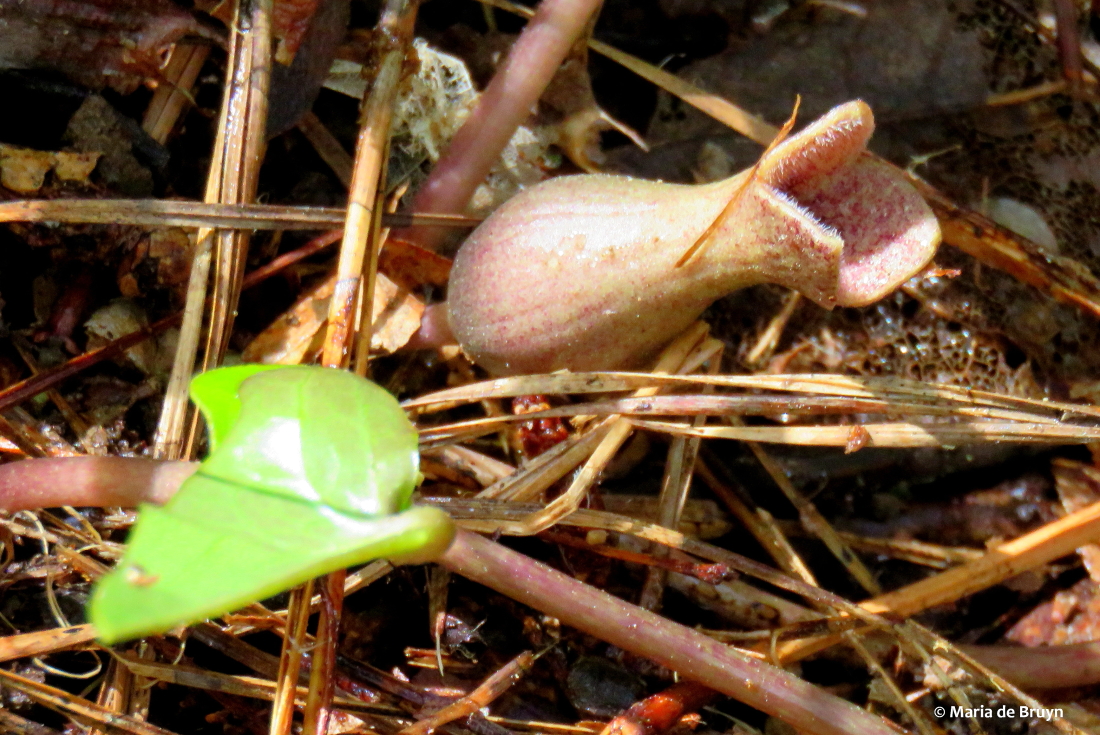
Our first flowers were the not-yet-open blooms of a Southern arrowwood (Viburnum dentatum). We passed numerous black and yellow millipedes on the paths and then found another millipede species (Narceus americanus) curled up next to a little brown jug (also known as arrowleaf heartleaf, Hextastylis arifolia var arifolia).

millipede IMG_3052© Maria de Bruynlittle brown jug IMG_3048© Maria de Bruyn

We came across other nice specimens of the plant, including one with four small flowers.

little brown jug IMG_3138© Maria de Bruynlittle brown jug IMG_3141© Maria de Bruyn

The painted buckeye trees (Aesculus sylvatica) were blooming profusely with their greenish-yellow flowers.

painted buckeye IMG_3070© Maria de Bruynpainted buckeye IMG_3492© Maria de Bruyn


Eastern spring beauty IMG_3089© Maria de Bruyn


Clusters of Eastern spring beauties (Claytonia virginica) were in their vicinity.


star chickweed IMG_3095© Maria de Bruyn


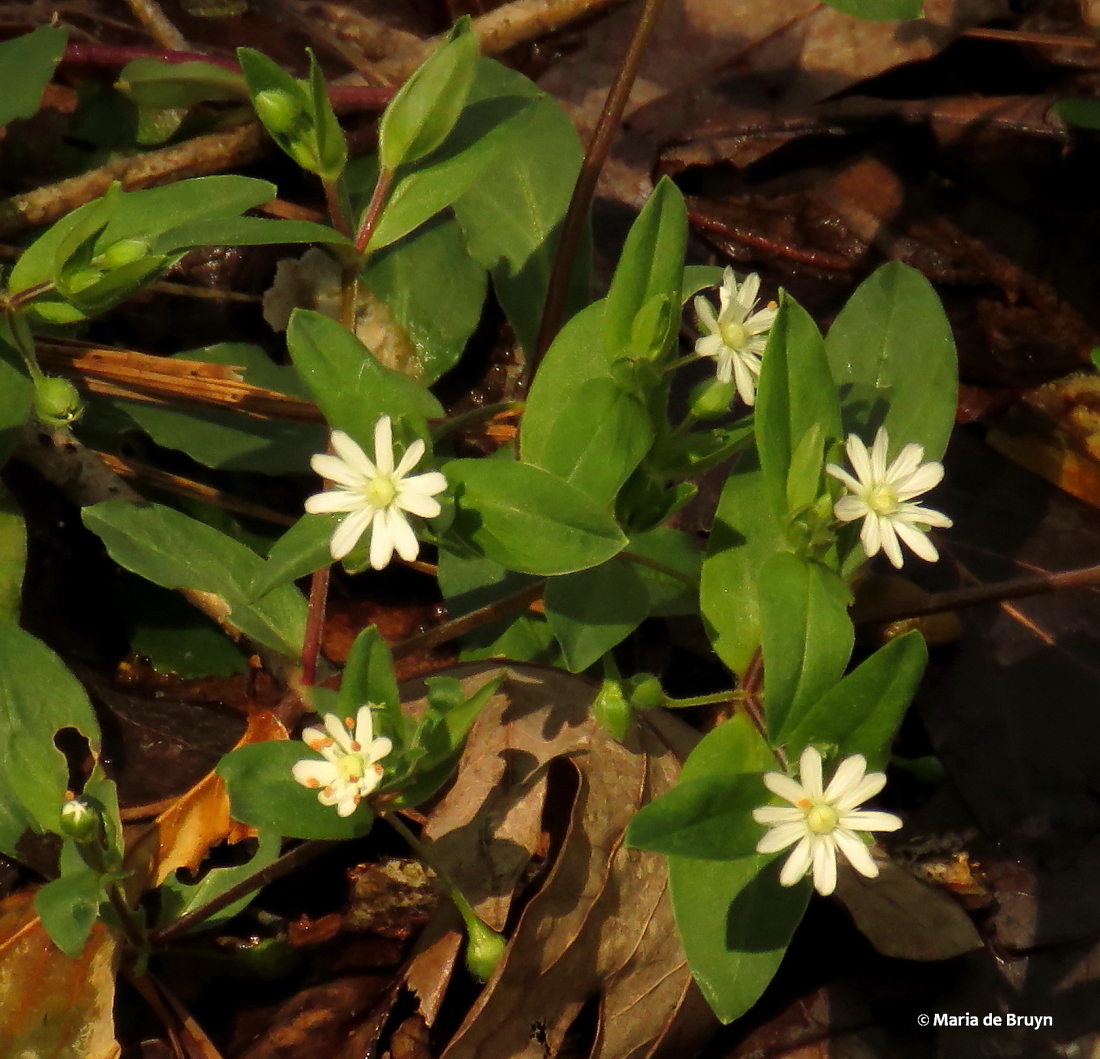
Some of the star chickweeds (Stellaria pubera) were near another white bloom, the rue anemones (Thalictrum thalictroides).


rue anemone IMG_3110© Maria de Bruyn rue anemone IMG_3109© Maria de Bruyn

Both the trout lilies (Erythronium americanum) and cranefly orchids (Tipularia discolor) had already bloomed, the trout lilies about 7-10 days ago and the orchids in the winter (when there are no leaves). One orchid had left behind its brown stalk as a witness to the flower that had seen the light.

trout lily IMG_3156© Maria de Bruyncranefly orchid IMG_3148© Maria de Bruyn

Tiny bluets (Houstonia pusilla) in clusters here and there provided some variation from the ubiquitous white blooms that we were seeing. The mayapples (Podophyllum peltatum) were just emerging and it will be a little while before we see their flowers emerge underneath the leafy umbrellas.

tiny bluet IMG_3118© Maria de Bruynmayapple IMG_3196© Maria de Bruyn


Bolin creek IMG_3165© Maria de BruynThe creek was running high and fast and we debated on crossing it at the first branch. Only two of us had wellingtons (and one lady found that her boots leaked); others were wearing running and walking shoes but everyone made it across by using stones, canes and walking sticks that some of our group had brought along. Our immediate reward was a view of a gorgeous pinxterbloom wild azalea (Rhododendron periclymenoides).

pinxterbloom azalea IMG_3174© Maria de Bruyn

foamflower IMG_3180© Maria de Bruyn


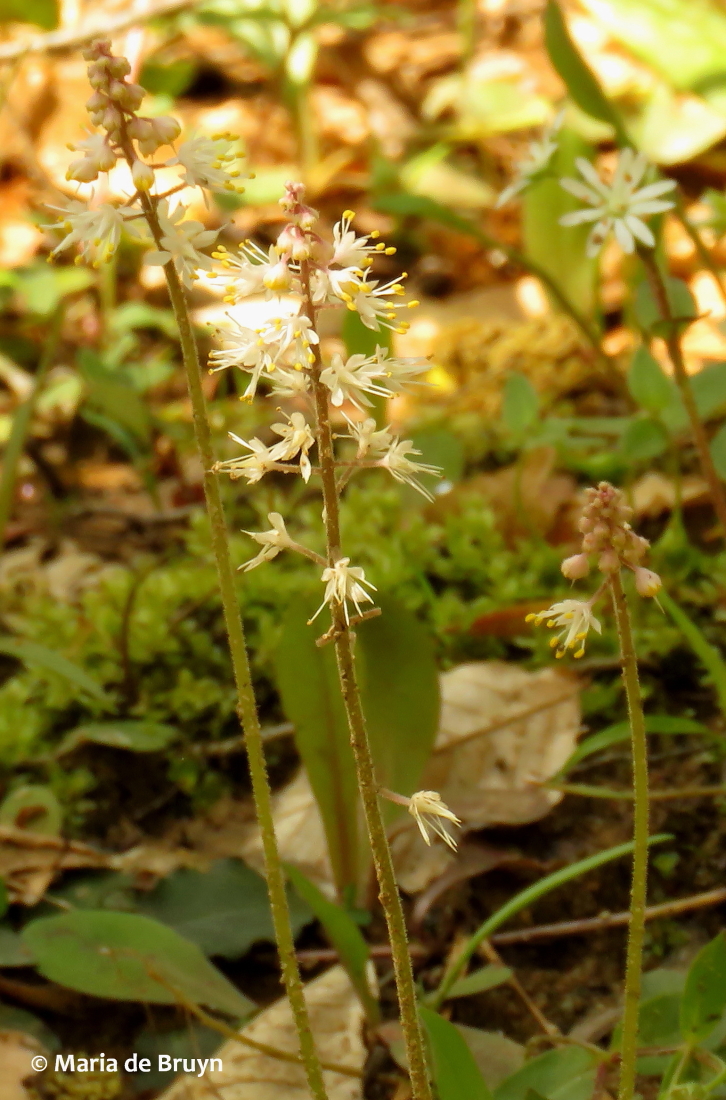
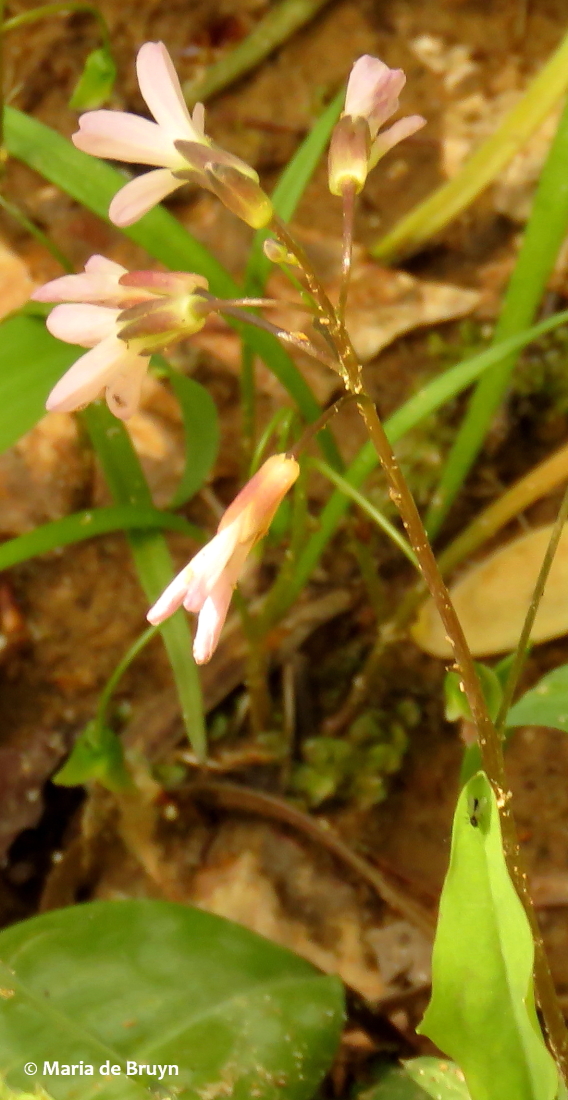
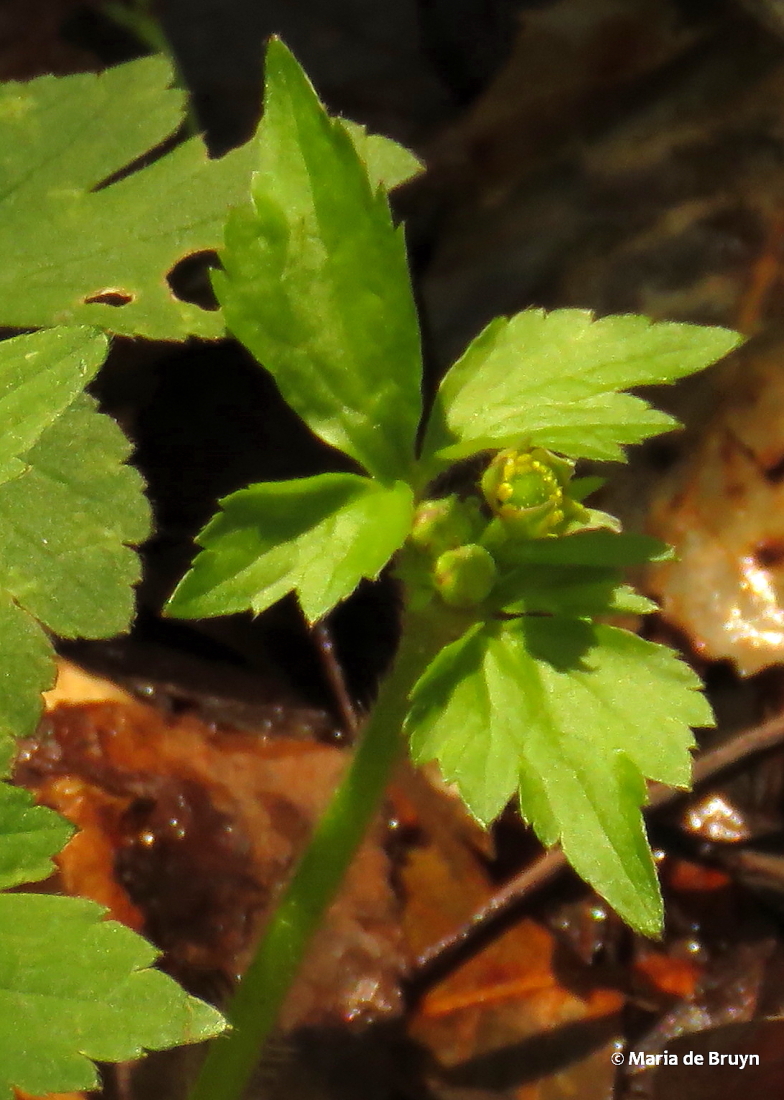
A sighting of a foamflower (Tiarella cordifolia), followed by a cutleaf toothwort (Cardamine concatenata) provided a bit more color, as did the littleleaf buttercup (Ranunculus abortivus), although its blooms were not fully expanded yet.


cutleaf toothwort IMG_3187© Maria de Bruynlittle leaf buttercup IMG_3092© Maria de Bruyn

Only the jigsaw puzzle-like leaves of the bloodroot (Sanguinaria canadensis) were in evidence as that flower had stopped blooming already. A tufted titmouse singing overhead (Baeolophus bicolor) gave us a nice little concert as compensation.

bloodroot IMG_3198© Maria de Bruyn tufted titmouse IMG_3201© Maria de Bruyn

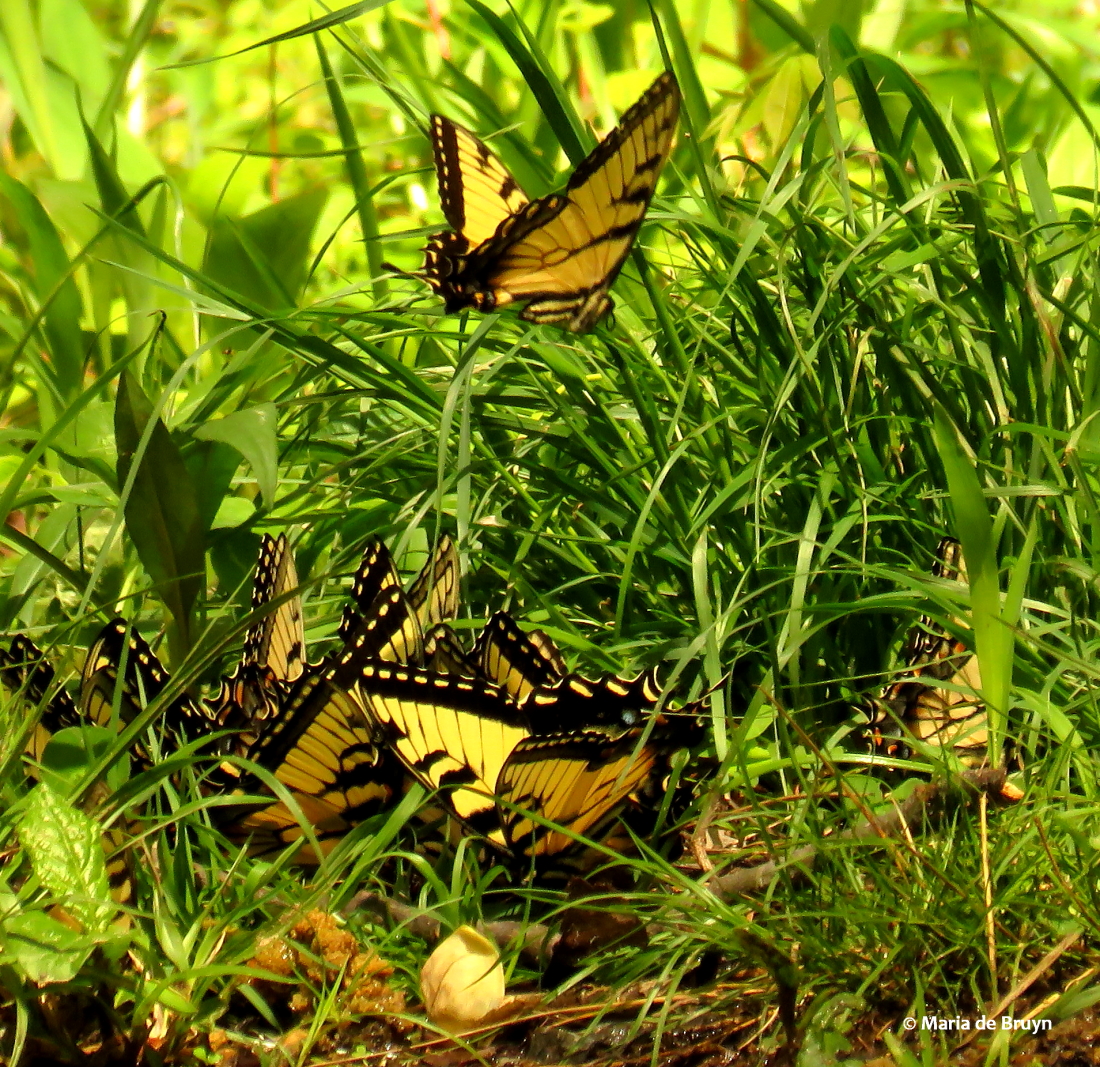
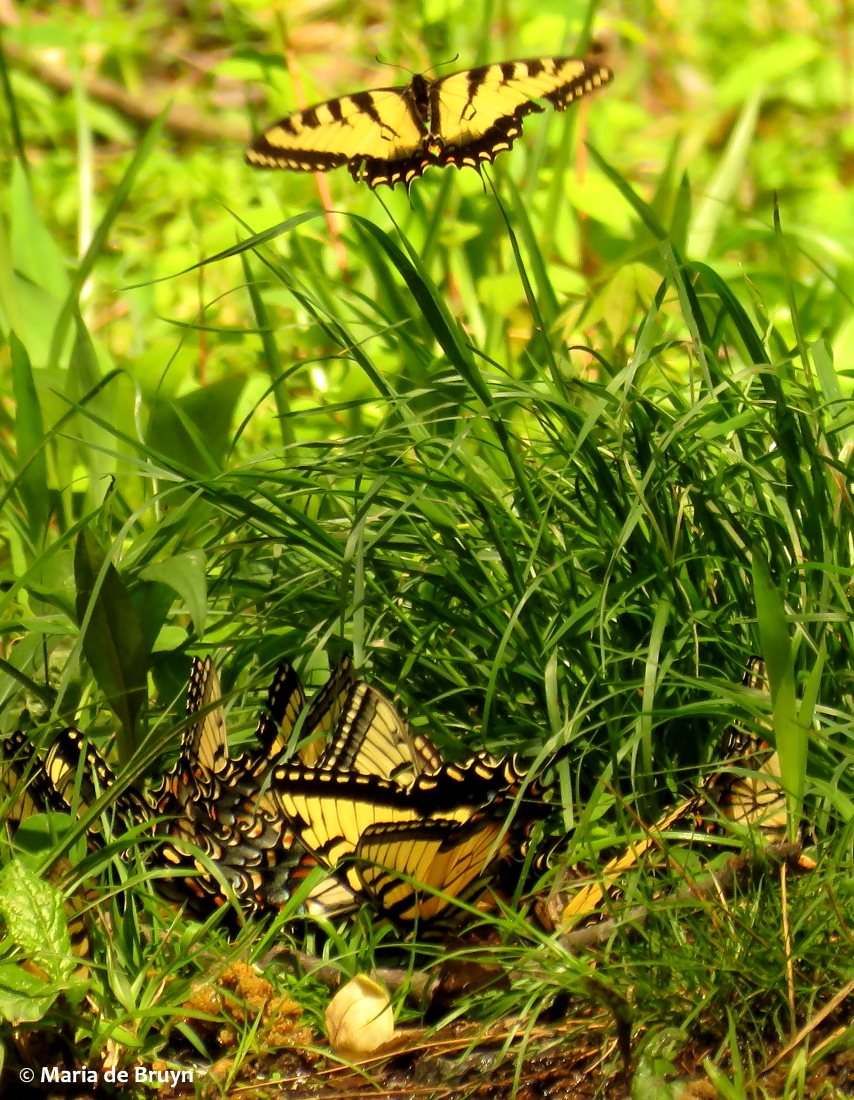
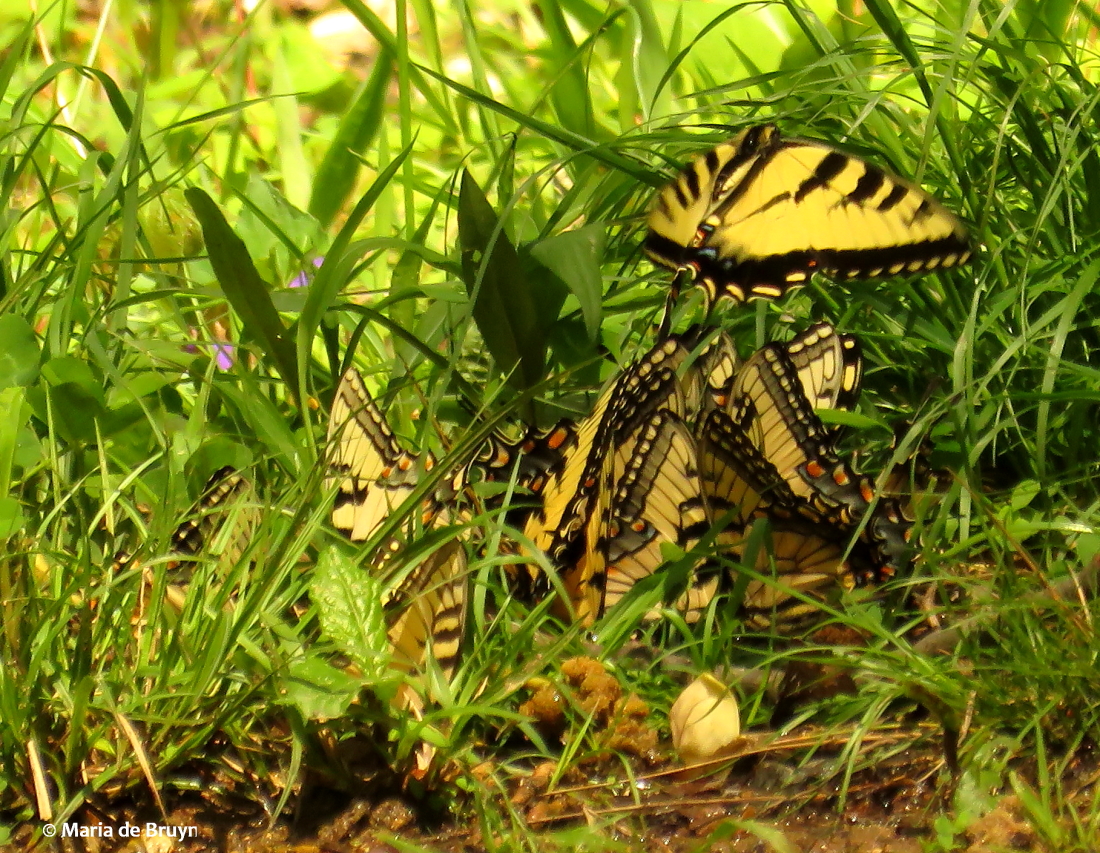
Eastern tiger swallowtail IMG_3428© Maria de Bruyn resAnd then we came across our three surprises of the walk. We had already seen several Eastern tiger swallowtail butterflies (Papilio glaucus) fluttering by in one’s and two’s and we remarked how welcome they were because of the paucity of butterflies we had had the past couple years. But then across another branch of the creek, we spotted some 12-20 butterflies congregating over some delicacy of unknown (to us) origin.

Eastern tiger swallowtail IMG_3259© Maria de Bruyn res Eastern tiger swallowtail IMG_3263© Maria de Bruyn res

The water was fairly deep and flowing fast, so we did not cross but we surmised that someone’s dog had left a pile of poo to provide a mud-puddling butterfly feast.

Eastern tiger swallowtail IMG_3443© Maria de Bruyn res Eastern tiger swallowtail IMG_3447© Maria de Bruyn res

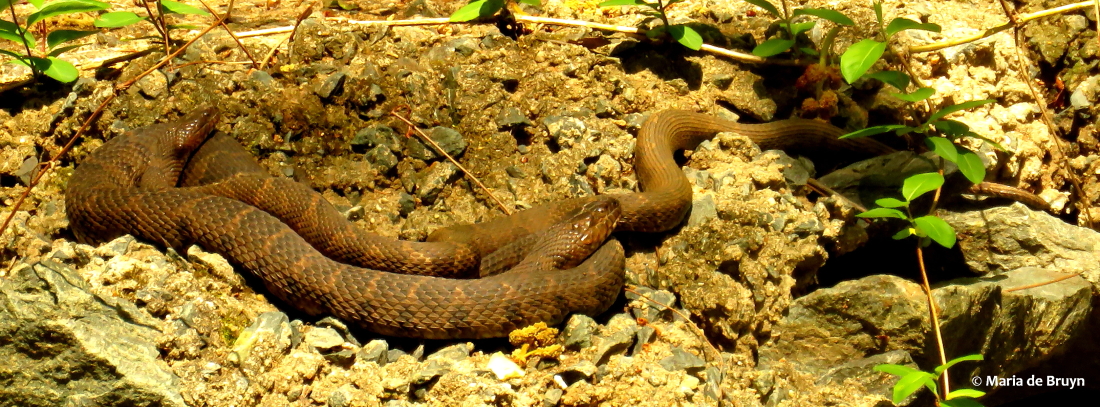
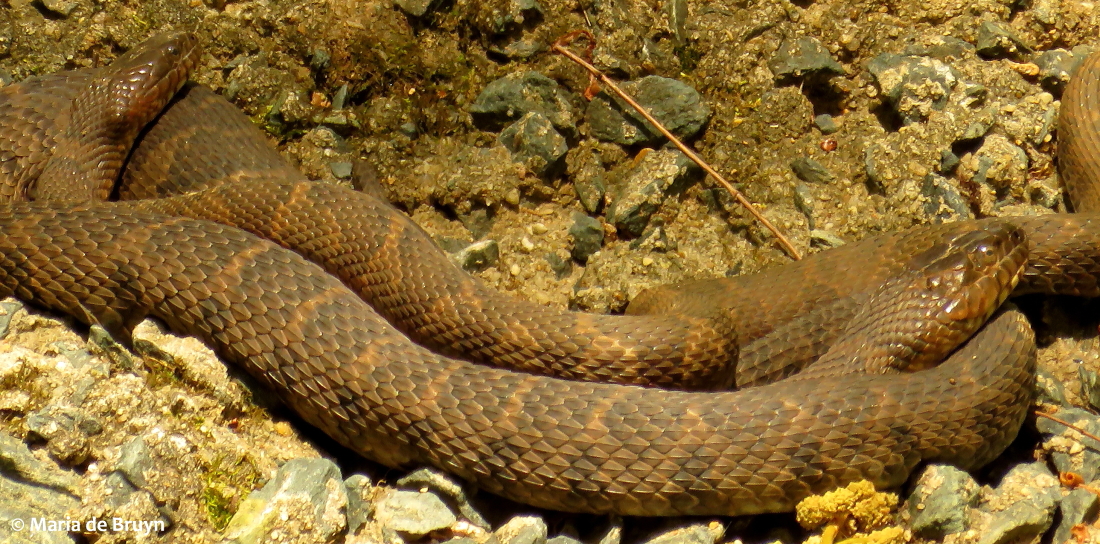
Then we noticed on a rock just below the bank under the butterflies where two Northern watersnakes (Nerodia sipedon) were having a little rest.

northern watersnake IMG_3406© Maria de Bruyn

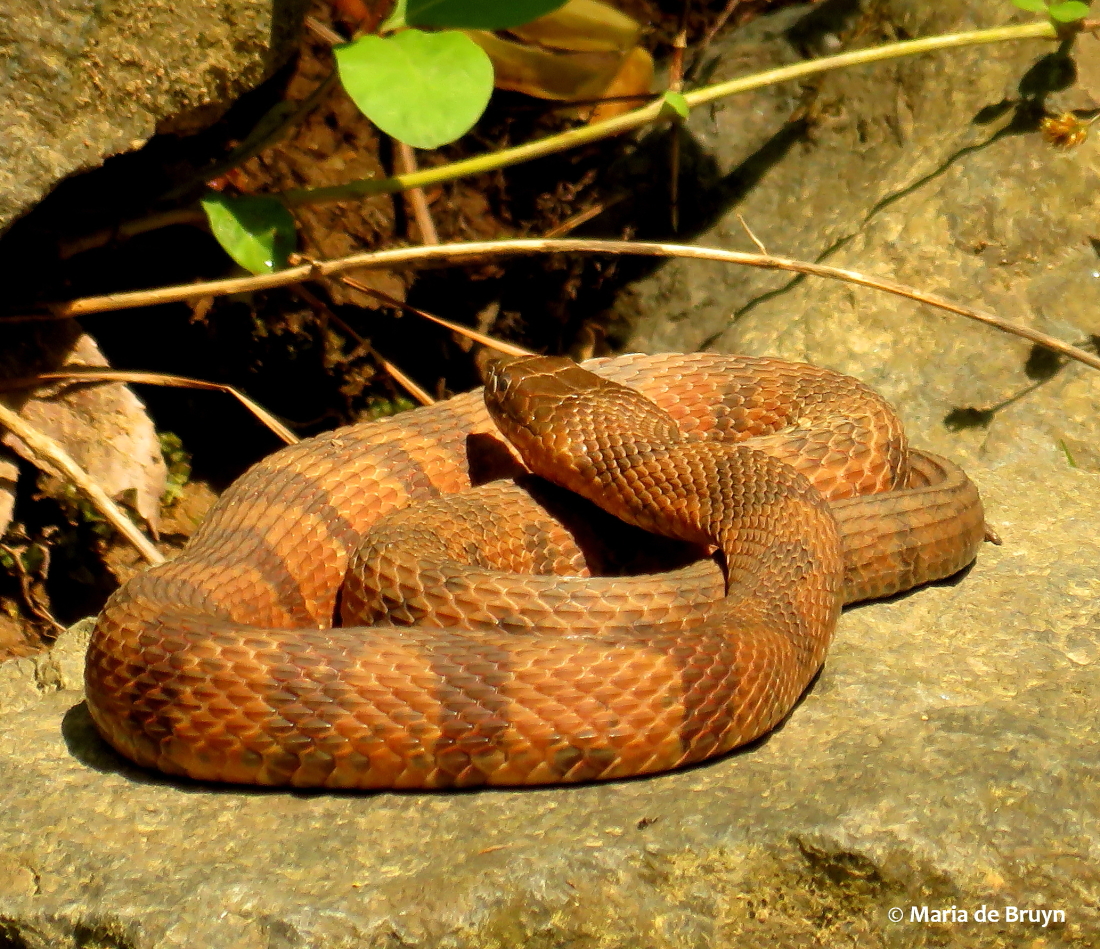
northern watersnake IMG_3408© Maria de BruynThey were a bit dull in color, which became quite obvious when compared to a third northern watersnake that we spotted on a rock closer to the creek – perhaps a younger individual who had decided that a sunbath was just the thing for a Saturday afternoon.

northern watersnake IMG_3241© Maria de Bruyn northern watersnake IMG_3349© Maria de Bruyn

While we were all enamored with the flowers we’d seen, the butterflies and snakes gave our walk a special feel.

bugleweed IMG_3501© Maria de Bruyn


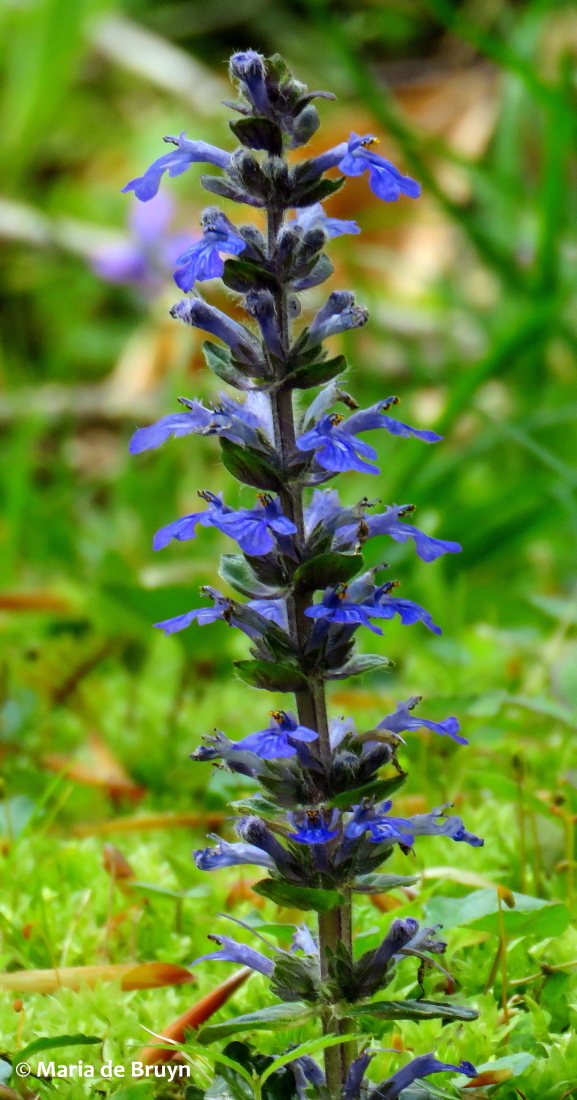
On our return trip through the woods to reach our transportation, we came across an invasive plant, the bugleweed (Ajuga reptans). We had already seen plenty of Japanese wisteria, mahonia, privet and autumn olive and agreed that another volunteer day to weed out some invasives would be a good contribution to the preserve. But that is for the future – right now, we are happy to think back to our surprise spottings!