An hour at a local pond

There is a pond in the county where I live that used to be a real hot spot for birds and other wildlife. The dairy farm fields around it had lots of native vegetation, which was very welcoming to avian wildlife.

A couple years ago, the farmers retired, and the property was purchased by a vineyard owner to expand his holdings. He cut down most of the vegetation around the pond and along the road bordering the fields. He has turned most of the fields into vineyards, keeping only small portions untouched where birds can still find some refuge.
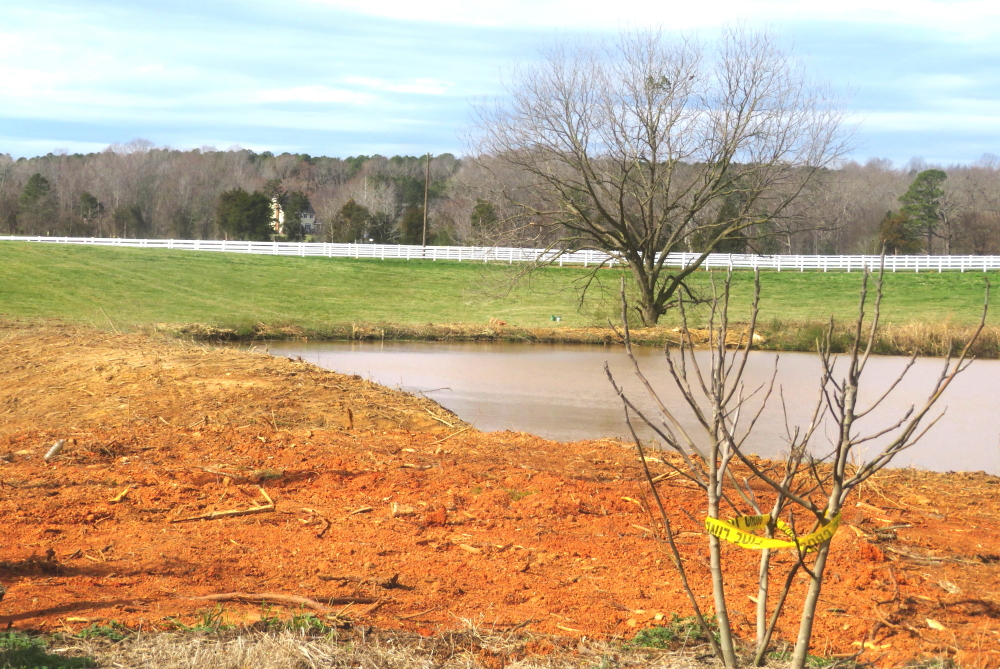
I used to see a yellow-billed cuckoo return from migration to a small patch of trees there every spring. This now is a thing of the past. However, some pond-edge vegetation had been regenerated, and a little bit was planted, so some birds are hanging in there. They still make for some interesting birding. Here is what I saw on a recent visit.
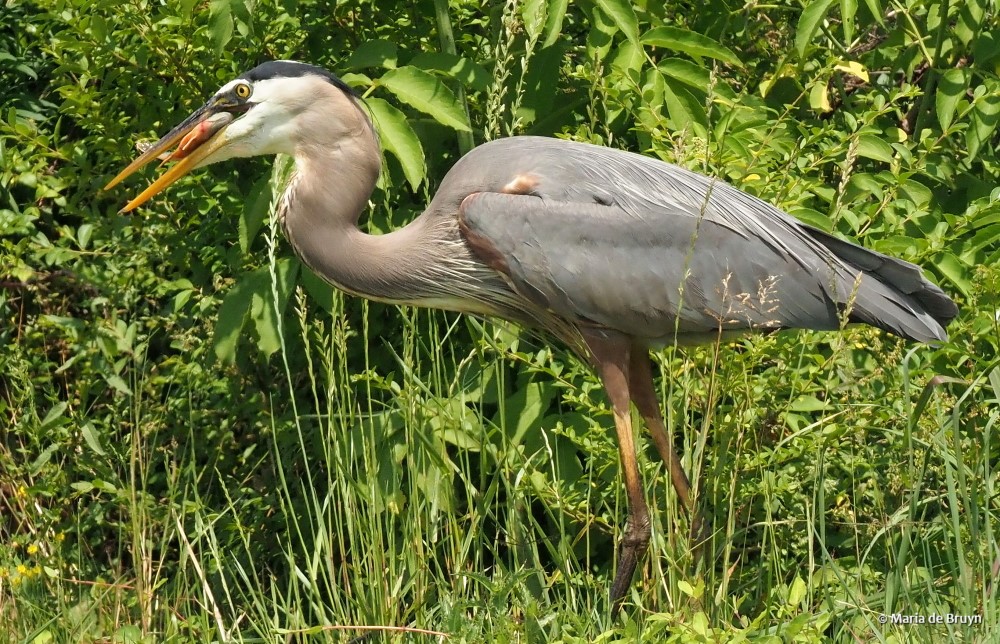
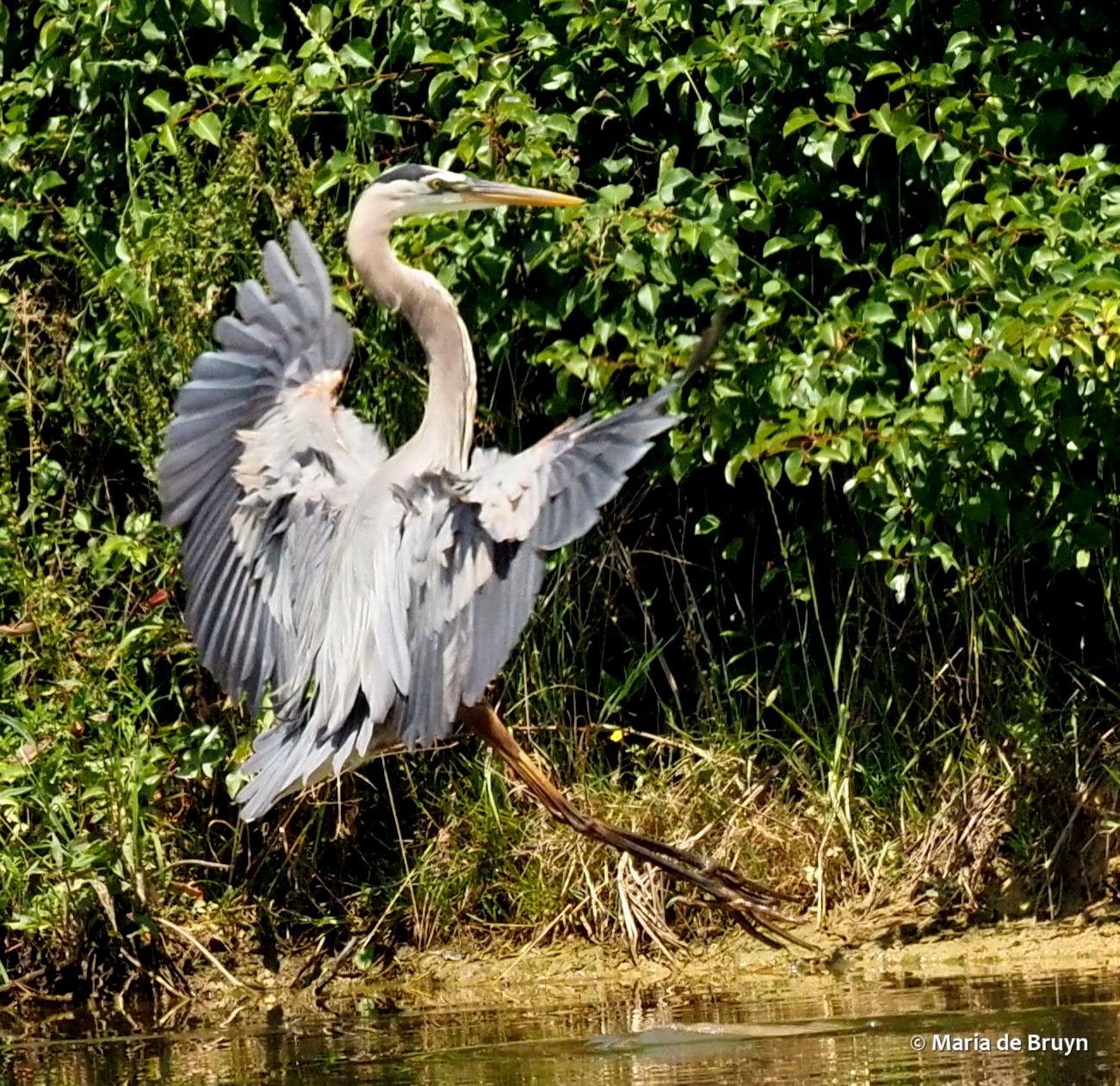
The largest birds that keep returning to the pond are the great blue herons. Sometimes there is one; other times there are two or three. Occasionally a green heron flies in or over but none stopped by on this occasion.

The heron often has good days fishing there. I often see him/her snag at least one fish and often more than one.

The heron stalks along the pond and frequently flies across to the other side for a change of venue. Perhaps the fish manage to hide well once they realize s/he is stalking them.
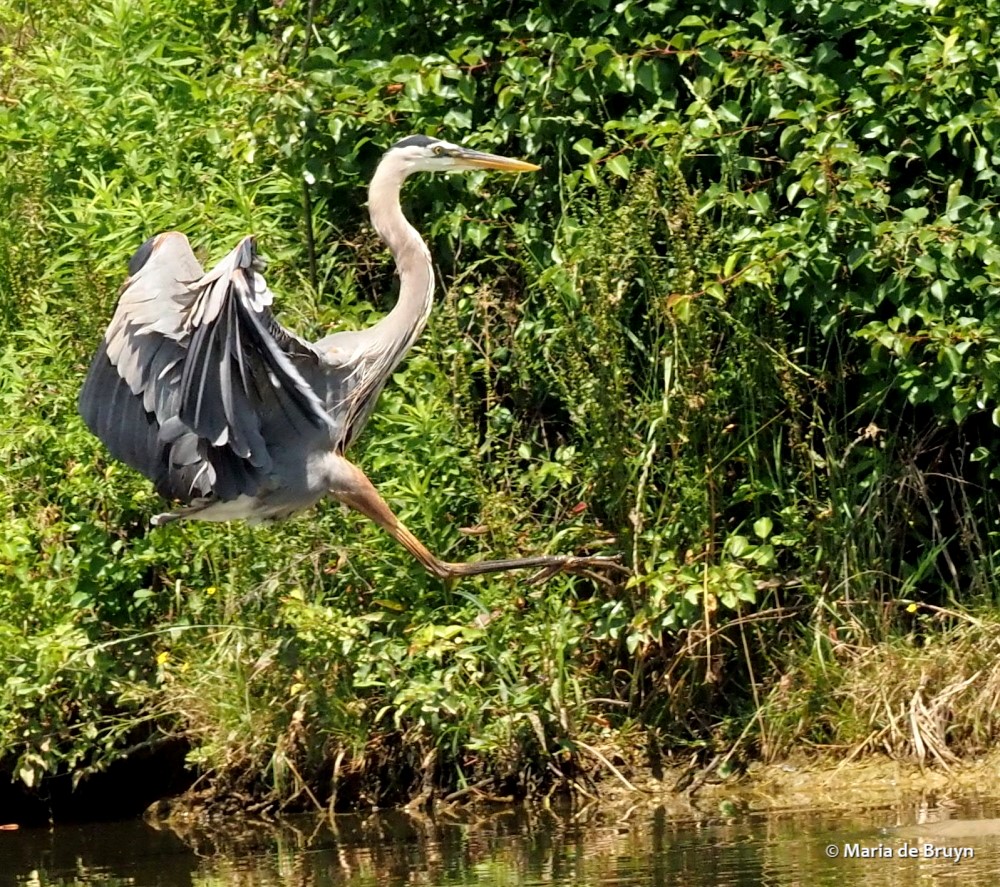
It’s wonderful to see the heron’s wings spread as the bird alights and then begins stalking again.

Eastern bluebirds had taken advantage of an electrical installation next to the pond (which also serves as a resource for the local fire department as needed). They not only used it as a perch for bug seeking but also built a nest inside it. I wondered what the new owner would do.
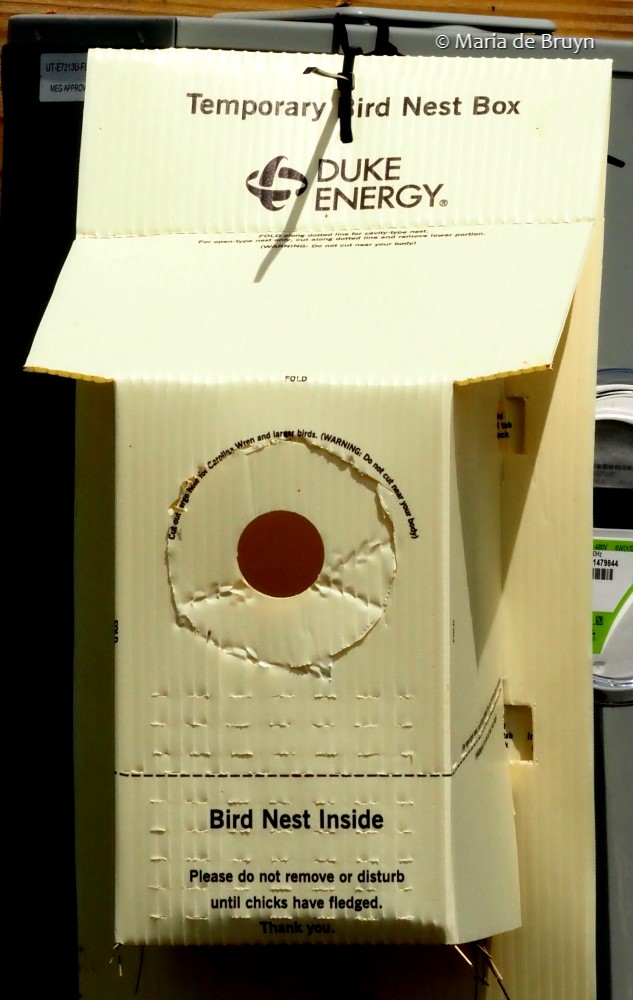


To my great surprise, his problem was solved by the local electricity company. They removed the birds’ original nest and put it into a temporary nest box!
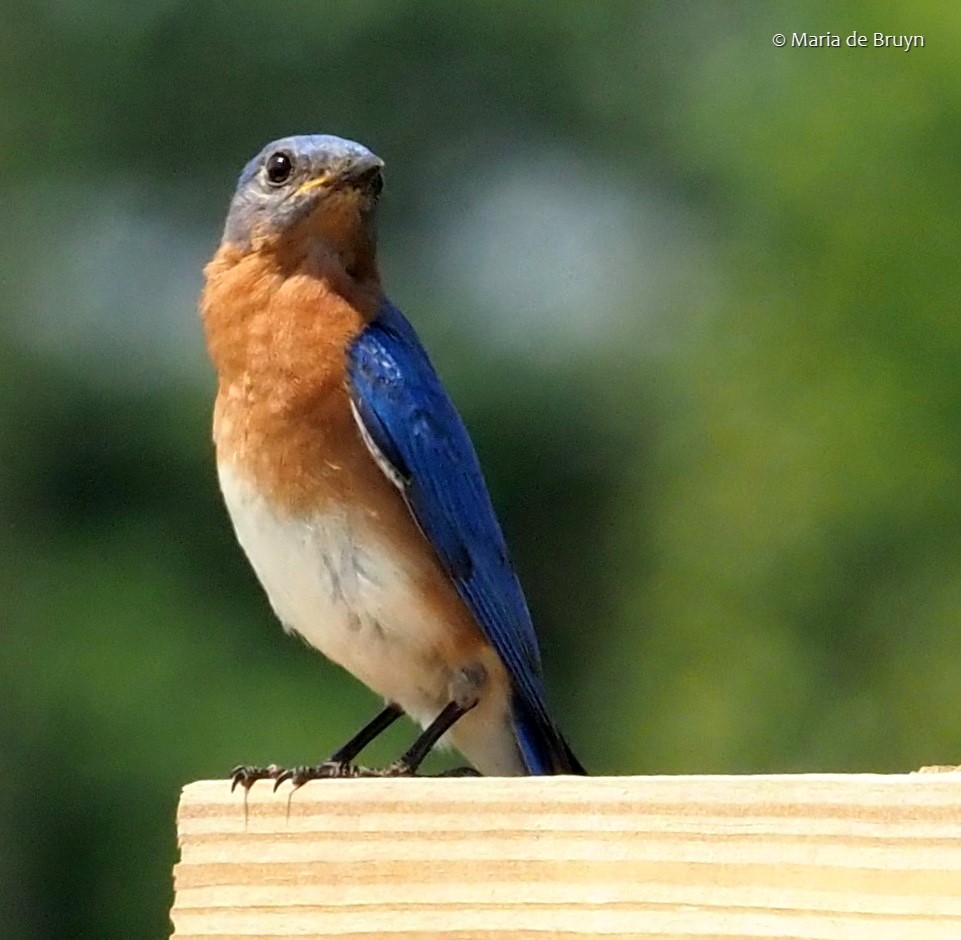
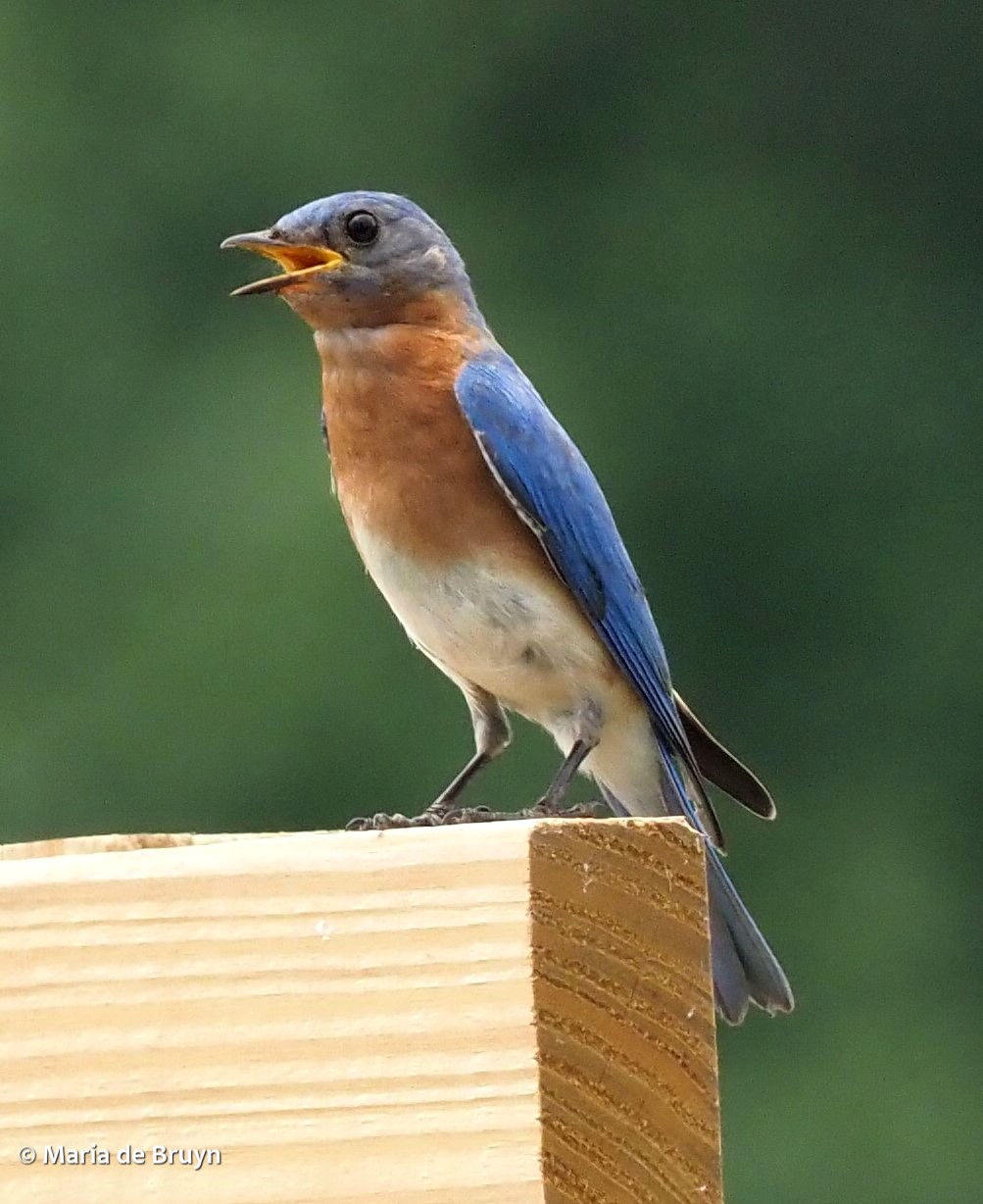
    

Mom and Dad bluebird were guarding the nest space, but it looked like they were still getting used to the new digs.

While watching the bluebirds, I suddenly heard a commotion in front of me, but I couldn’t see what was happening behind the bushes at the pond’s edge (I’m short!). However, I could tell that a bird was in distress. I wondered if one of the huge snapping turtles had caught a duckling. I walked further along and saw one of the two resident female wood ducks (above) swimming away from the area.
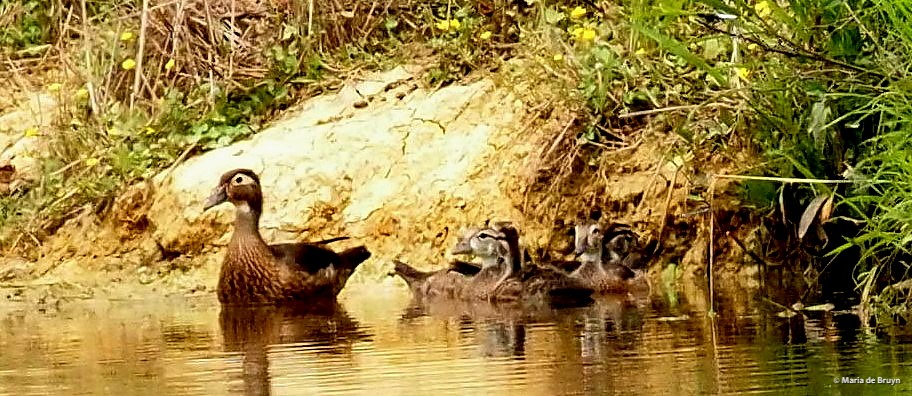
No ducklings followed and I feared the worst. One mother had five ducklings (above) while the one swimming away had lost one a few weeks before. Now I wondered if she had lost others, too. Luckily, I later saw her return to the area and shepherd four ducklings across the water to the other side.


In the small bit of meadow immediately adjacent to the pond, red-winged blackbirds are now nesting. One pair has a nest close to the road and they are warning visitors away with constant flights along the pond’s edge, while the male calls repeatedly.


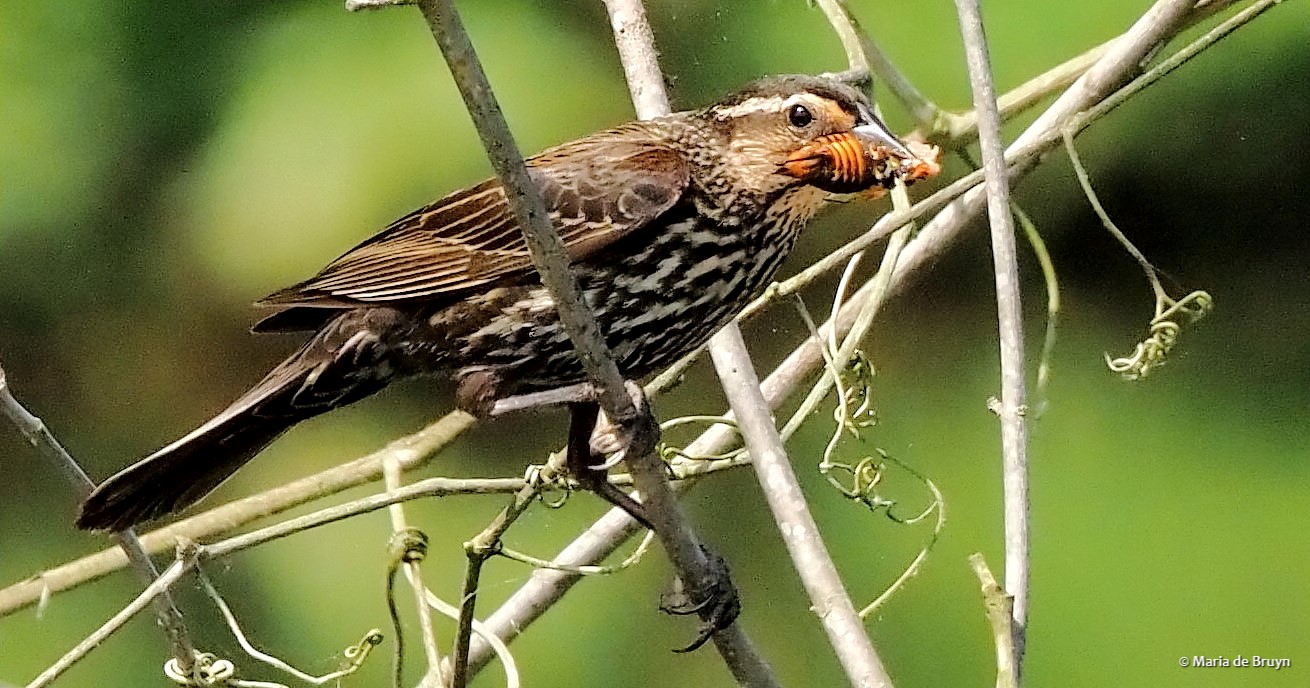
The female was taking breaks from warning-off flights to enjoy an occasional meal, at this time consisting of one of the remaining periodical cicadas that emerged recently.

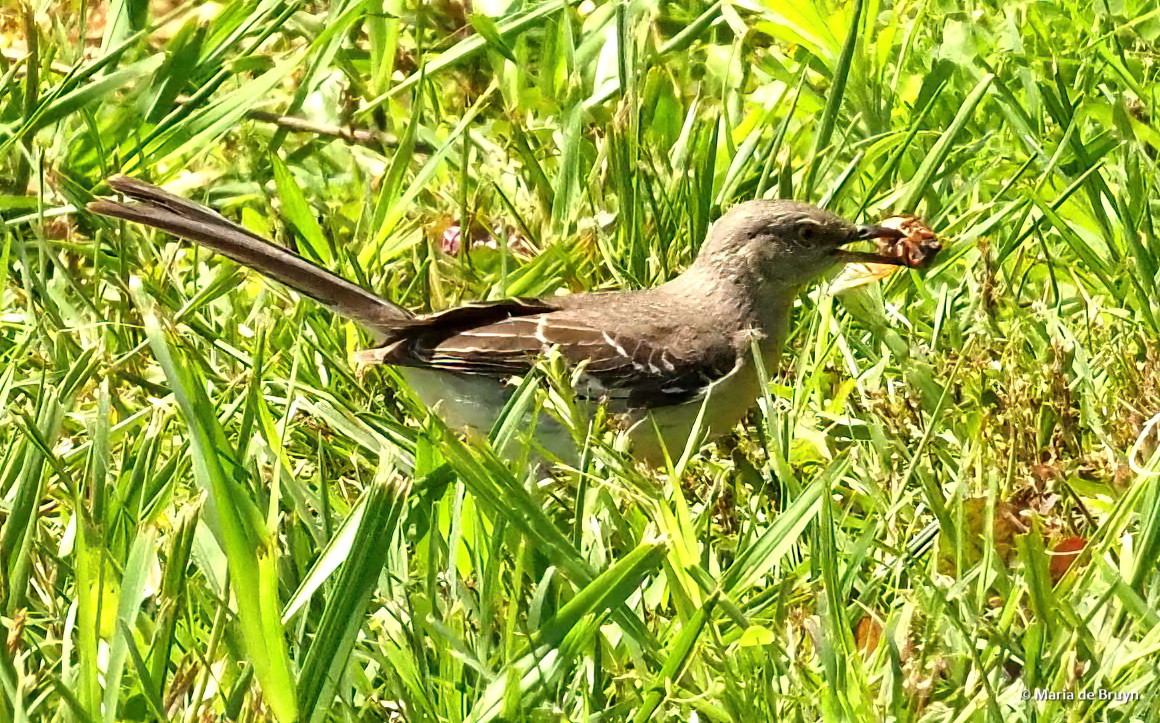
She wasn’t the only one seeking these insect delicacies. Two Northern mockingbirds were also intently examining the area under a tree for them. One finally had success in snagging a cicada. (For more about the cicadas, see my previous two blogs!)


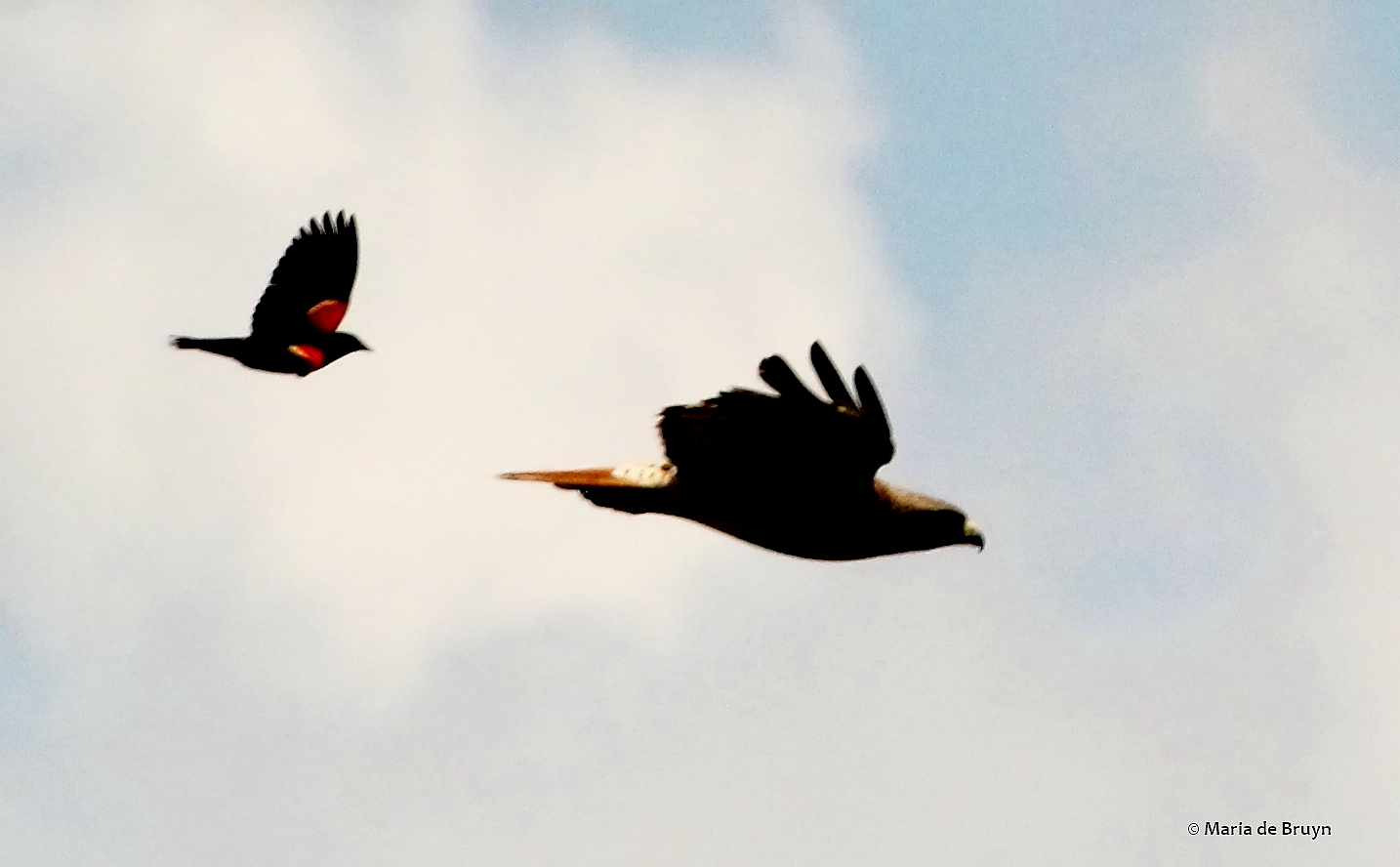
The male red-winged blackbird was very busy keeping “intruders” as far as away as possible from their nest. He warned off the great blue heron, who was actually pretty far away. (He is flying away from the heron on the left side of the photo.)

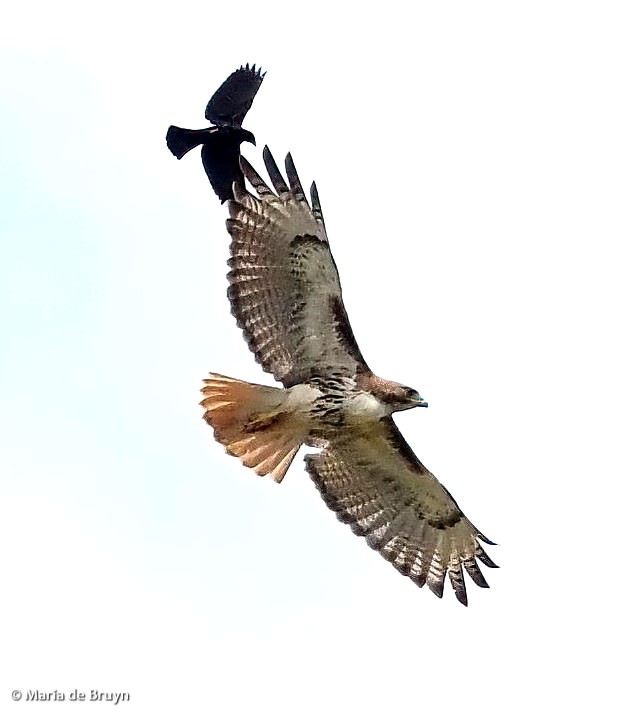
He also went after a red-tailed hawk, who appeared soaring overhead.
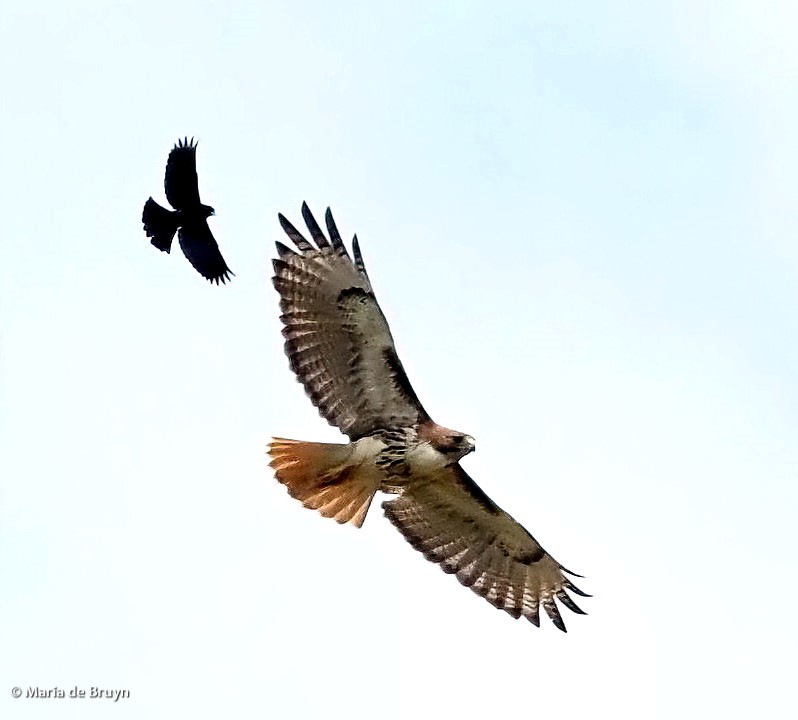
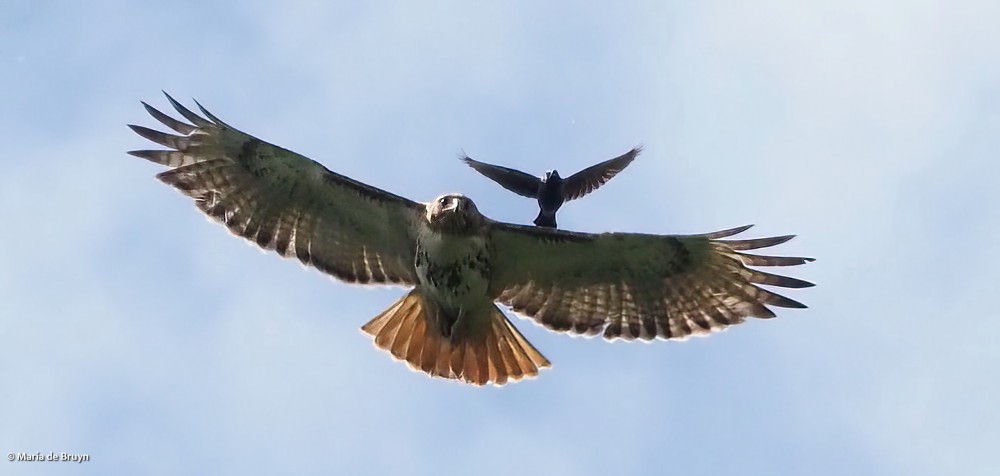
Common grackles, often present at this pond, will also chase away these hawks. There weren’t any around to join in the foray this time, but the photos below taken at another pond show how they go after the red-tails.

I looked at a small patch of chicory across the road to see if any bobolinks, grosbeaks or meadowlarks were around. I love this plant and planted some seeds in my own yard, hoping to attract more pollinators and birds. So far, they have not sprouted.
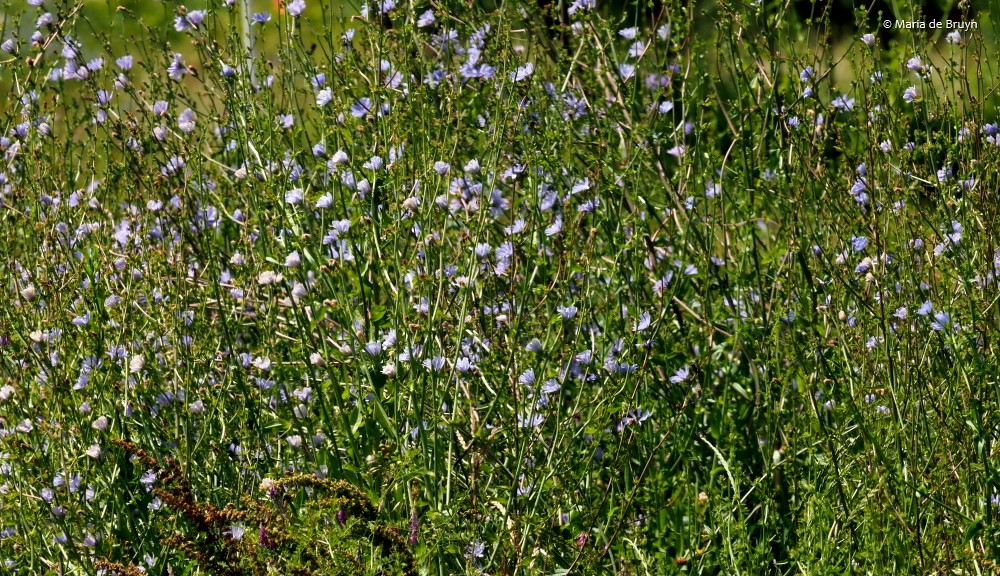
 

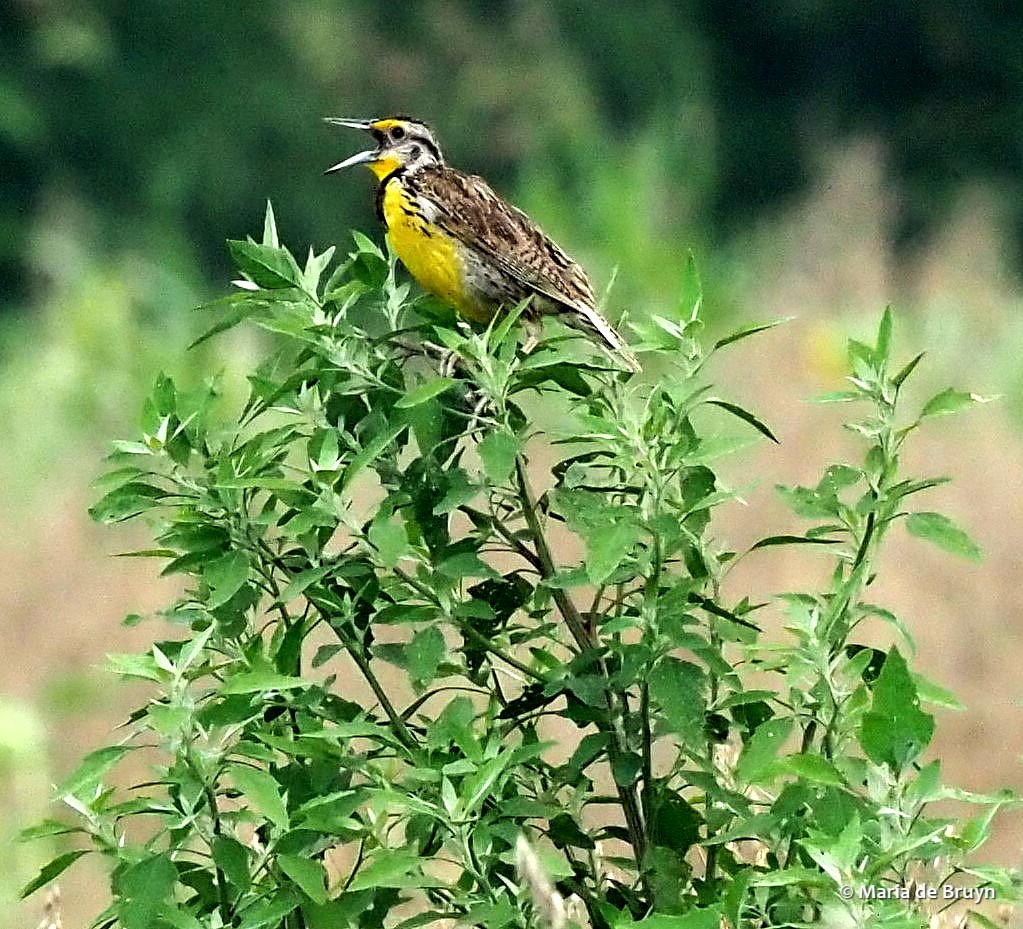
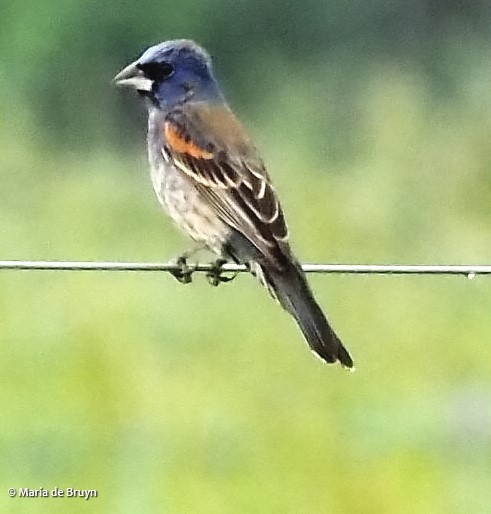
Below you see a young blue grosbeak and a pair of Eastern meadowlarks who were in the patchy field spots another time.
 

Usually, several types of swallows frequent the pond, including purple martins, tree swallows, barn swallows and Northern rough-winged swallows. I only saw a couple of the latter this day and only got poor flight photos as my camera began acting up, refusing to focus.

Staring hard across the pond, I did manage to spot three killdeer, four least sandpipers and a couple other sandpipers that I couldn’t immediately identify. I later learned that they were semipalmated sandpipers, which I hadn’t seen there yet. (If you click on the photo, you see it larger; then go back to the blog.)

That hour at the pond didn’t turn out to be a super one for capturing stellar photos, but it was definitely a great one for relaxing, observing the action and appreciating nature again!
Sunflower fields as critter-friendly habitats — part 1: birds and butterflies

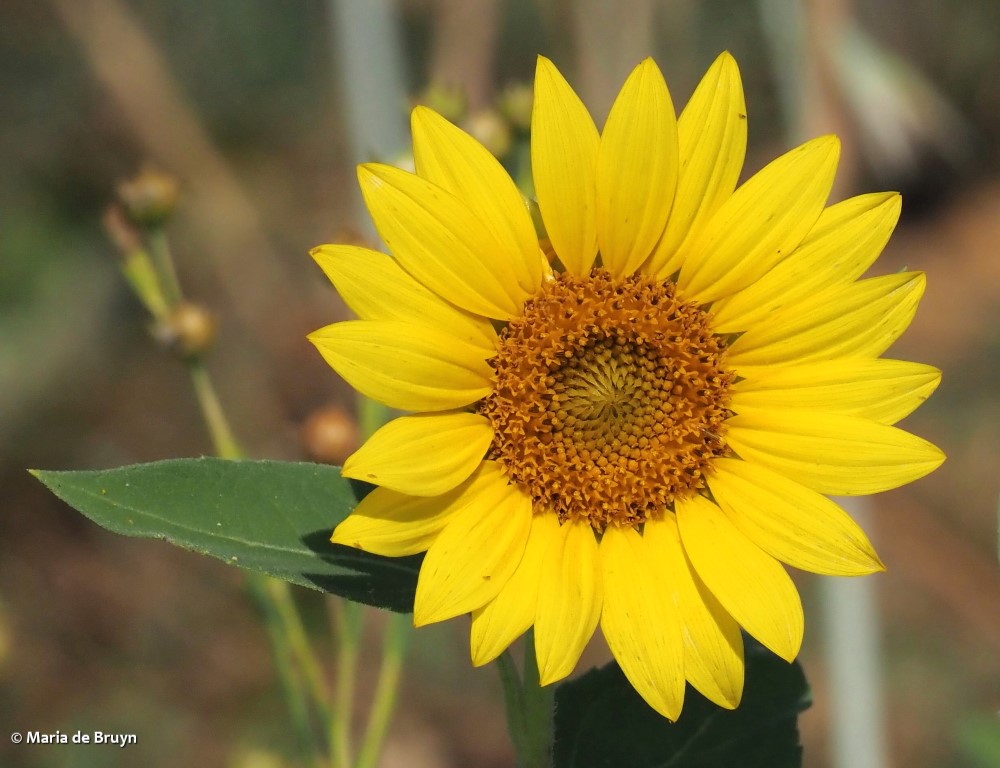
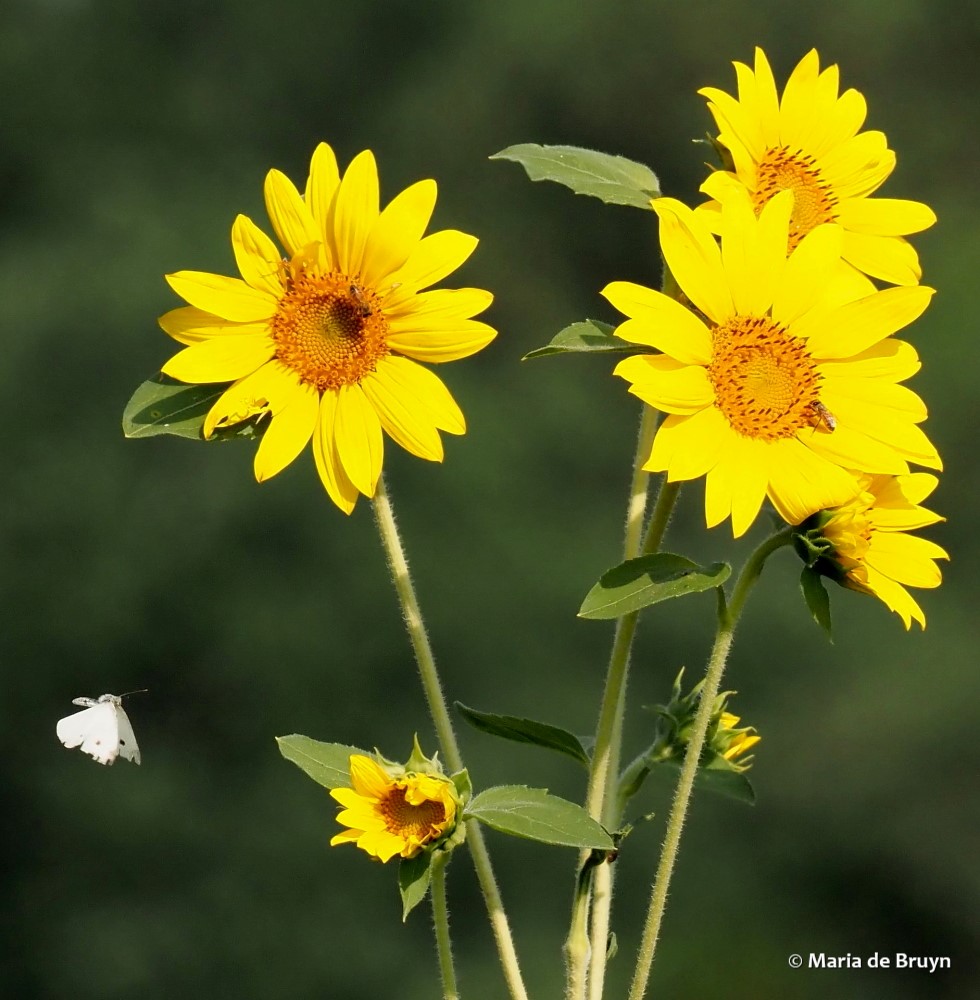
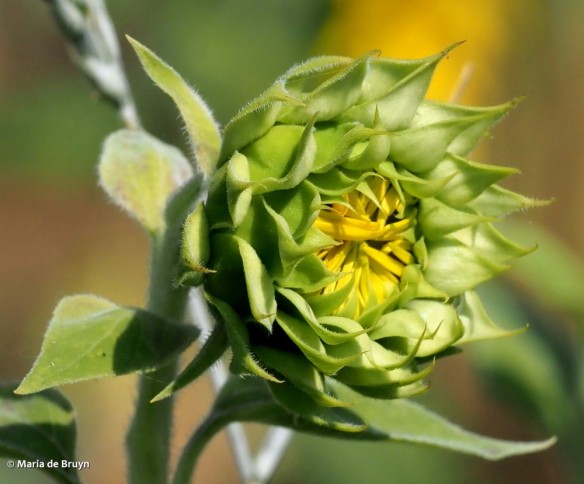
Last month, many residents of the county where I live were alerted to the eruption of profusely blooming sunflowers that were attracting both birds and people. The avians were looking for tasty seeds, as well as bugs attracted to the blooms, and the humans were seeking beauty and backdrops for photo portraits.


Sunflower fields are so popular in our area that they feature on the TV news and in online tourism guides. The NC Museum of Art has sunflower fields and offered a sold-out Sunflower Photography Workshop.

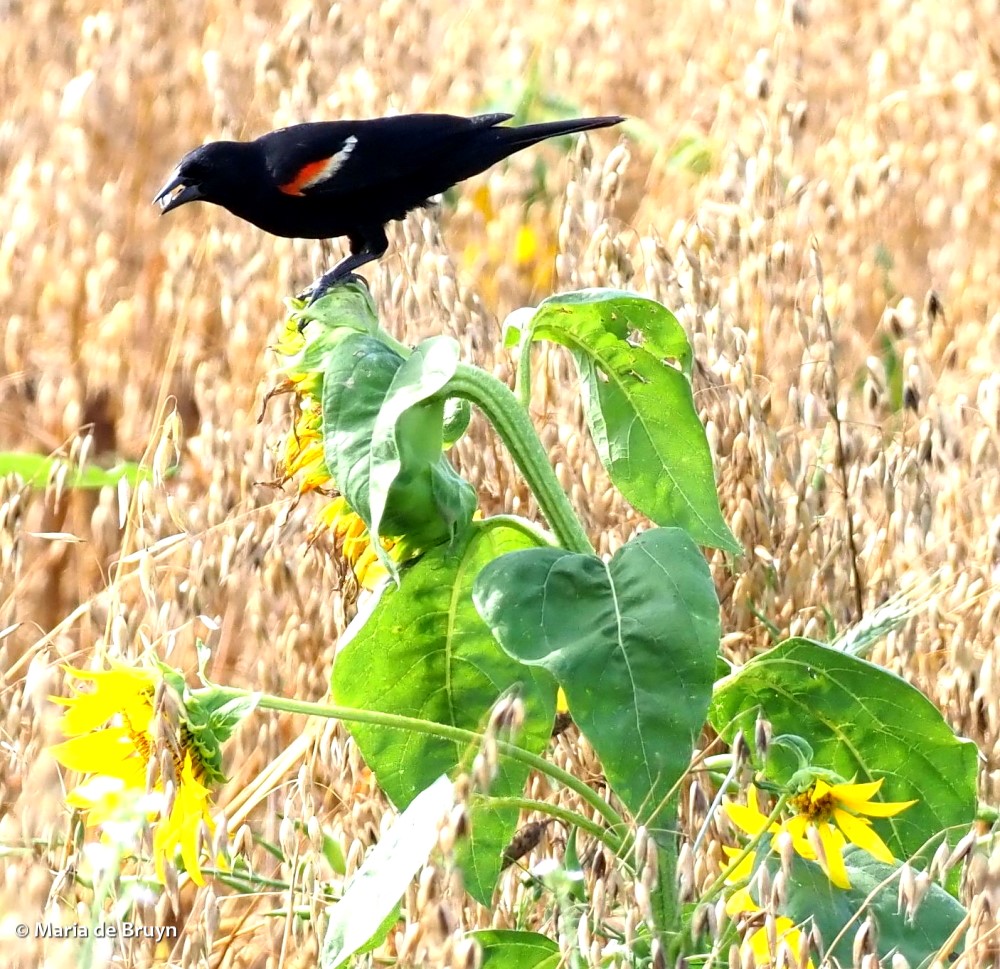
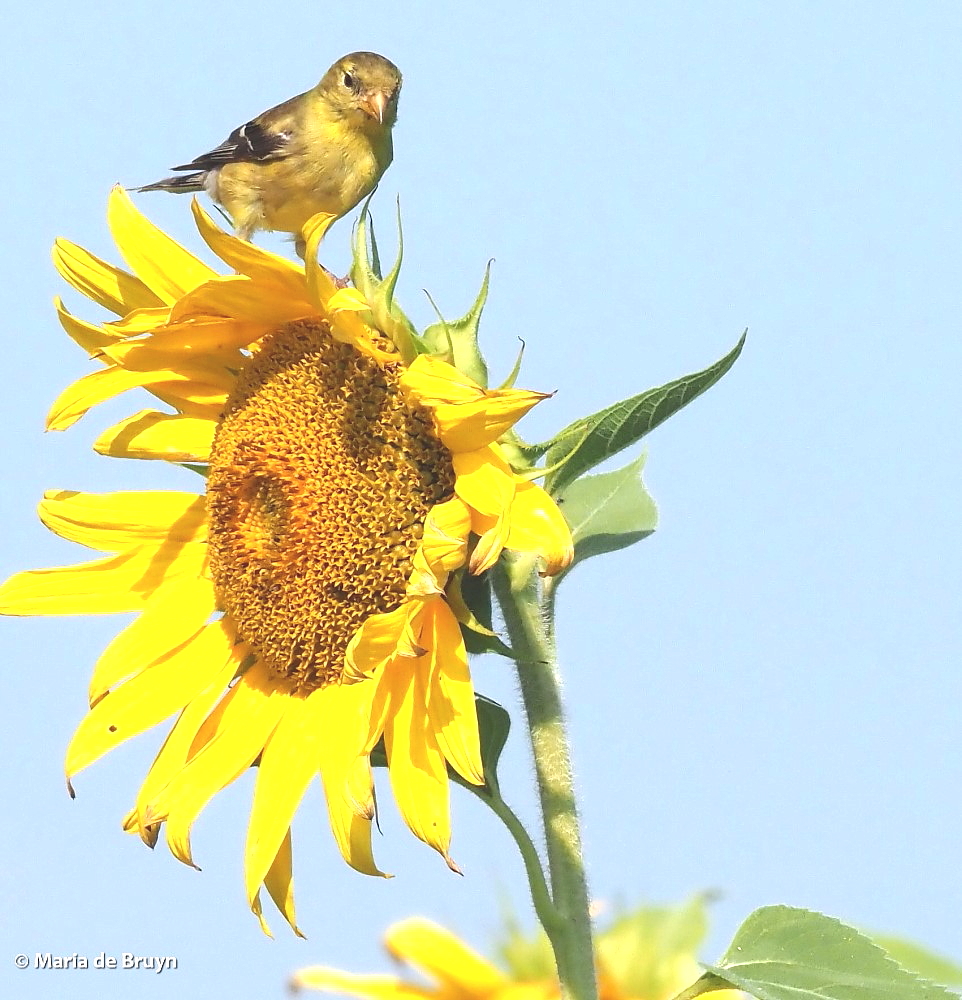
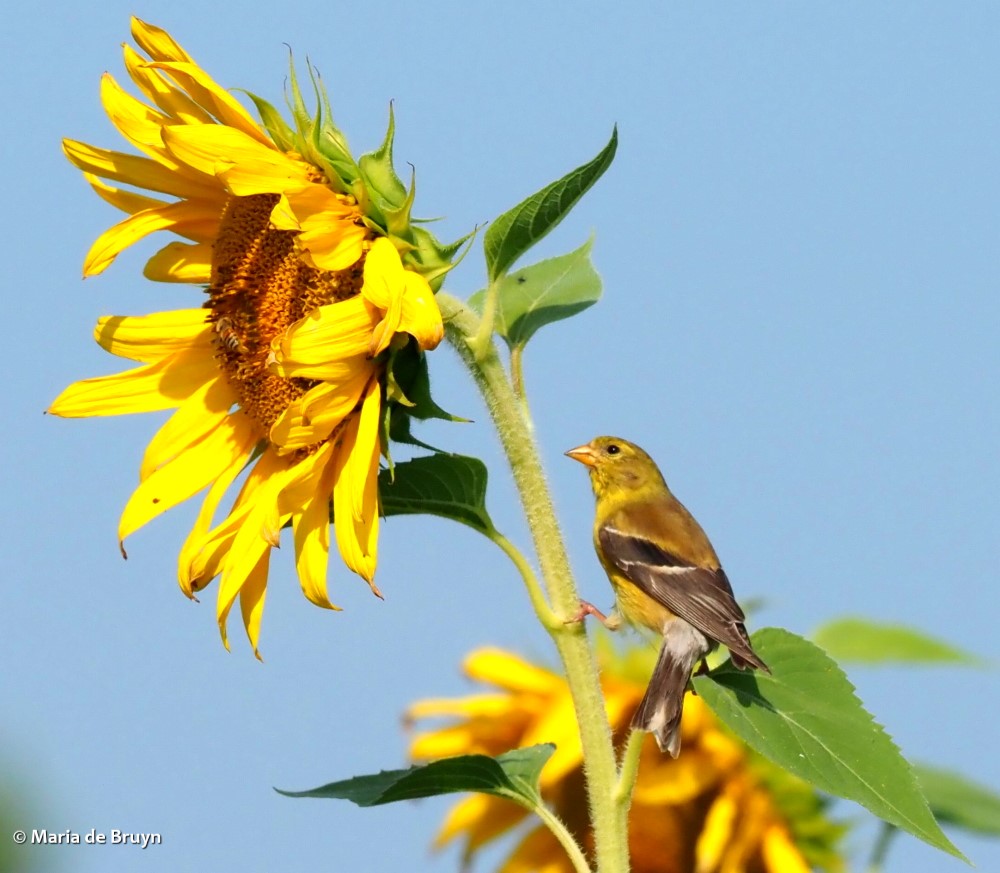
Many birds love sunflower seeds, but it can be difficult to see the foragers as they may be dining at blooms lower down on stems. The bright blue indigo buntings are sometimes easy to spot but I couldn’t get photos of them feeding. Red-winged blackbirds (Agelaius phoeniceus) and American goldfinches (Spinus tristis) will often perch atop a bloom to peck away at the ripening seeds.


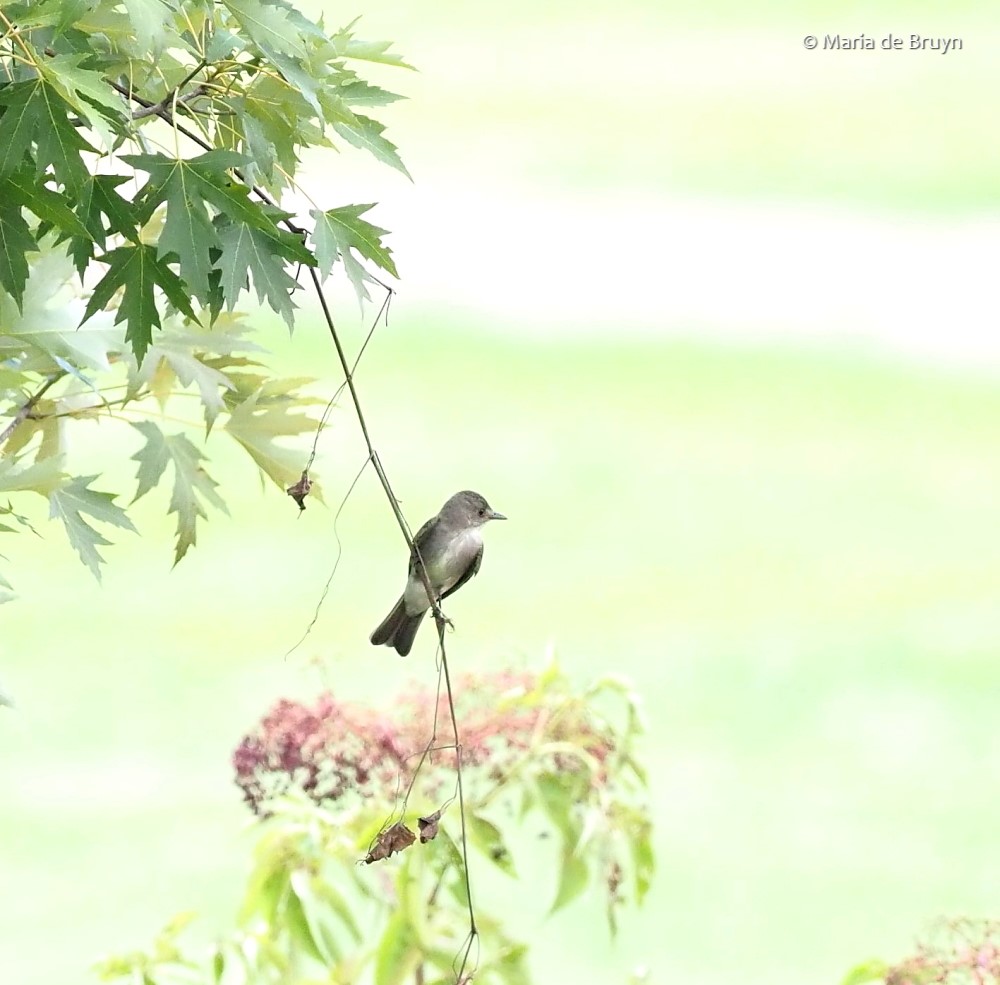
Other birds were active in the vicinity of the fields, but I didn’t see them at the flowers. For example, the Eastern wood-pewee (Contopus virens) stayed in the vicinity of a nearby pond while I visited.

The Eastern meadowlarks (Sturnella magna) flitted about in nearby meadows. I didn’t see them among the sunflowers.

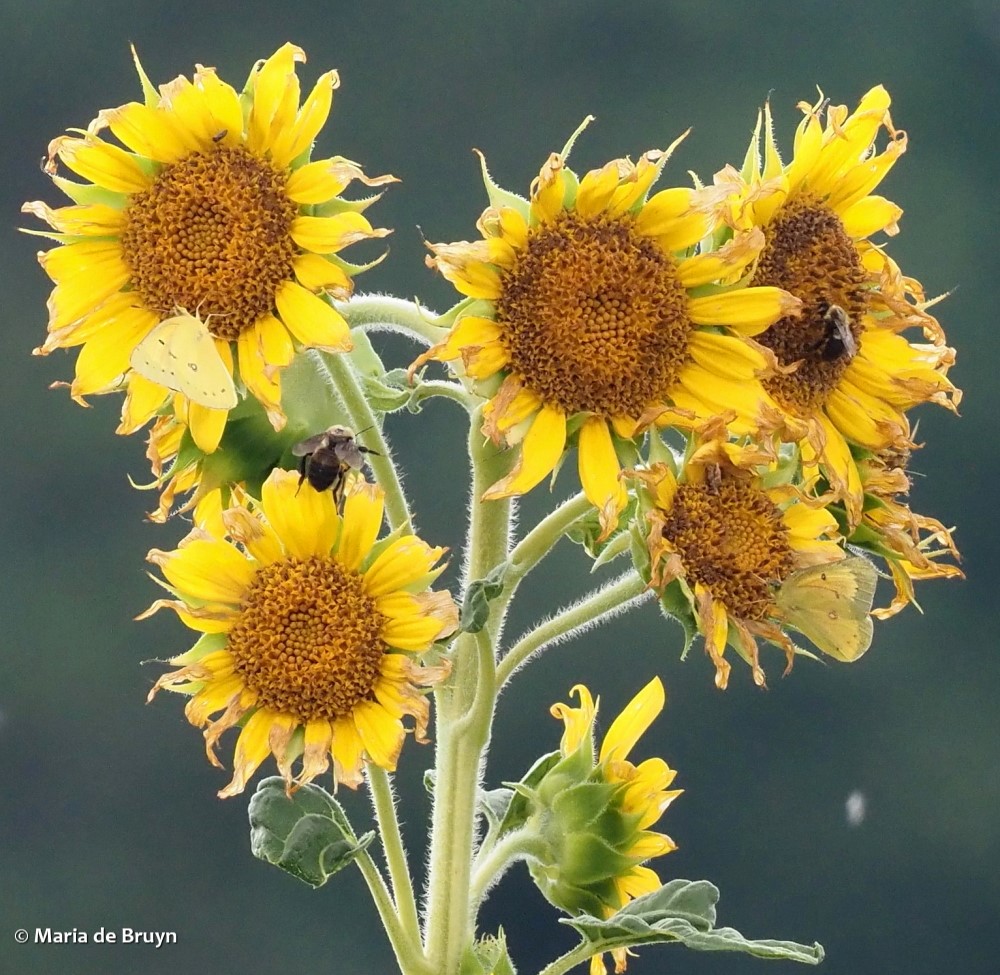
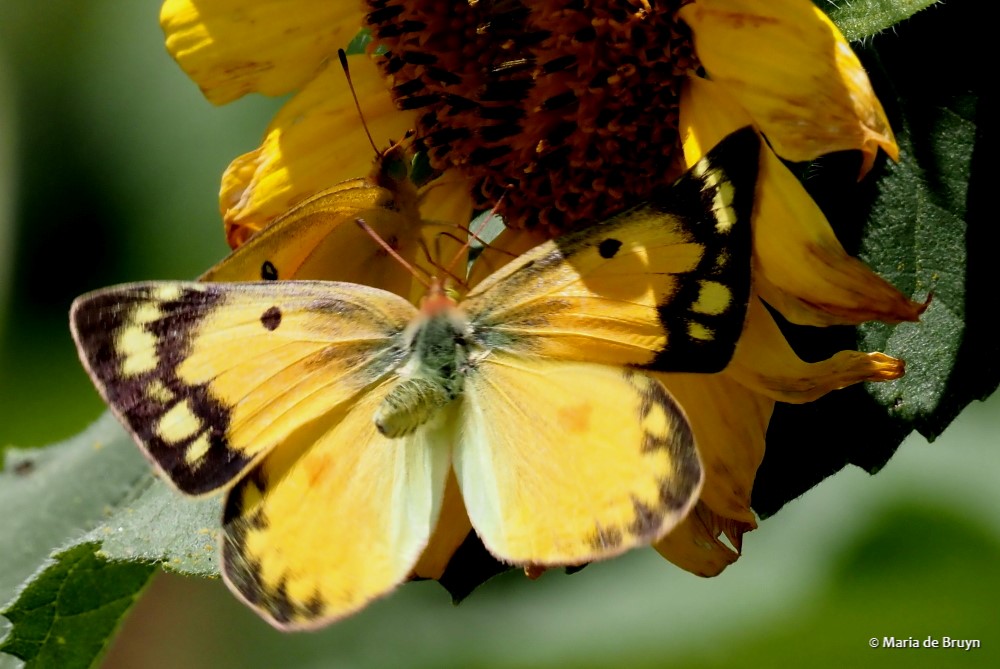
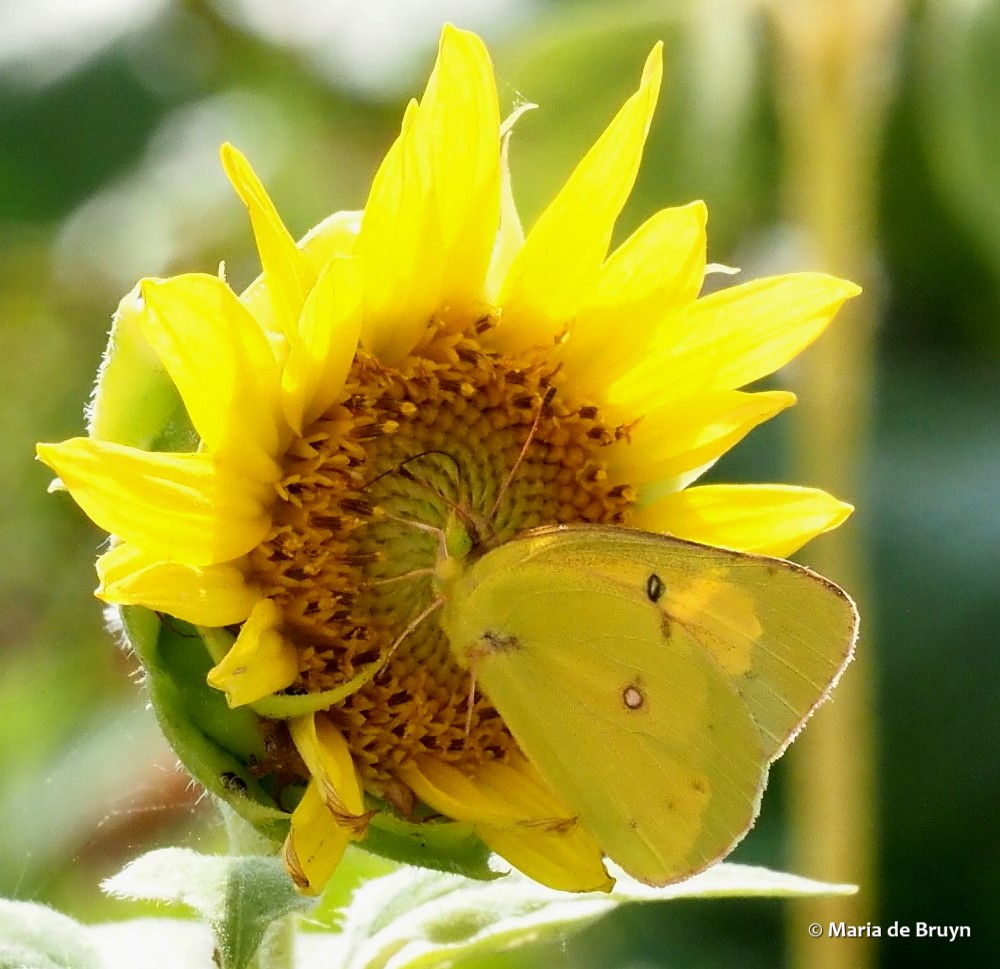
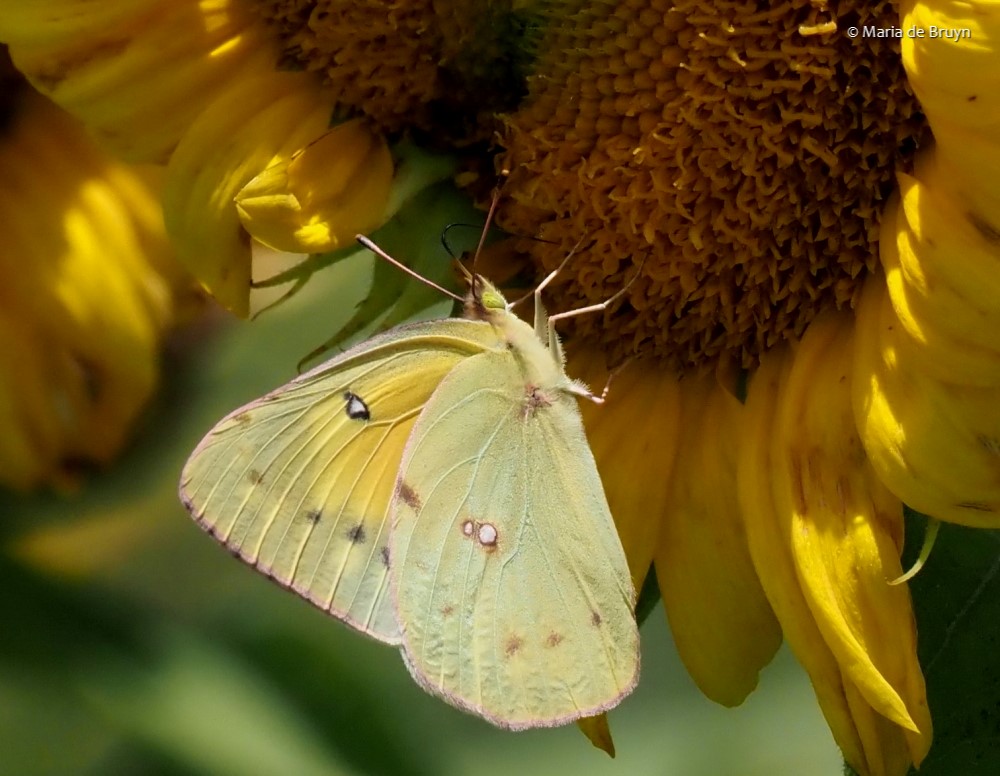
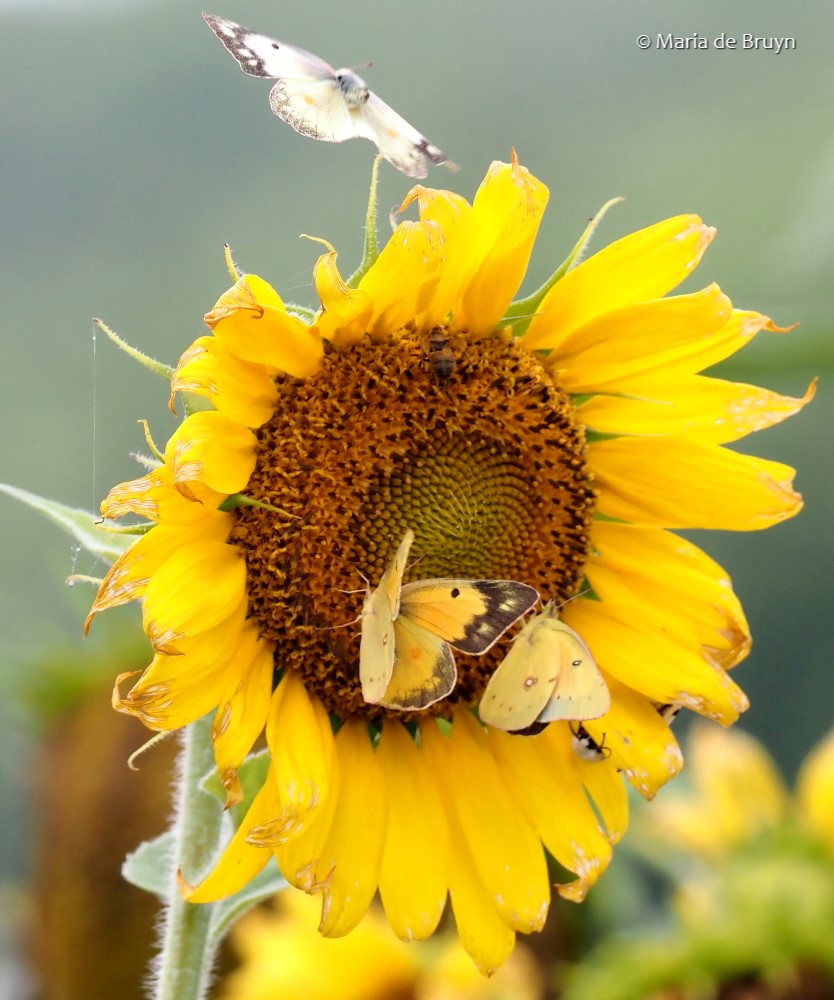
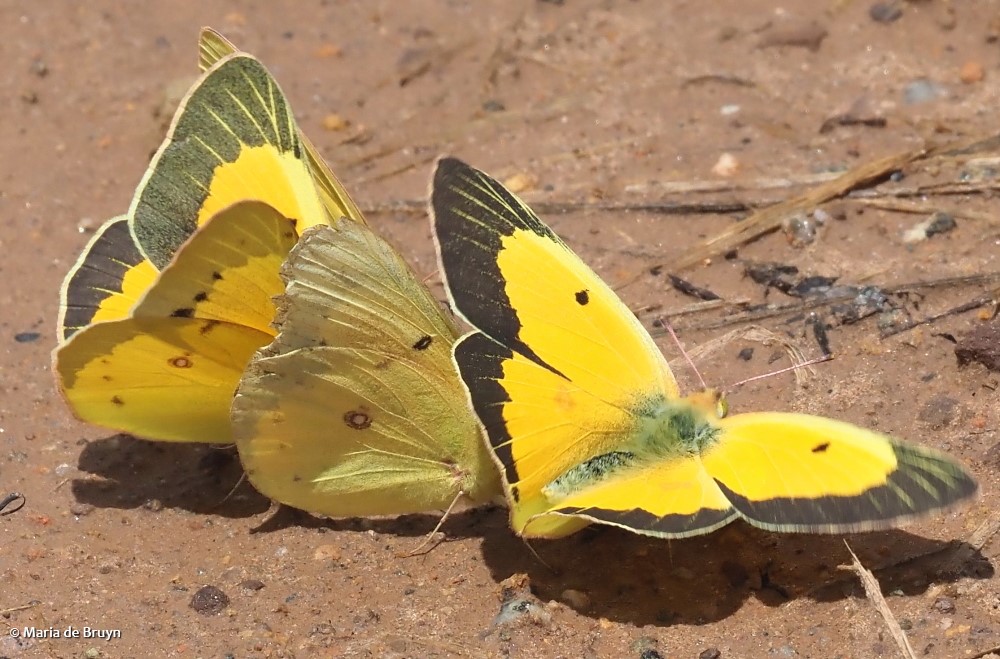
It’s not only the birds and people that like sunflowers, however. A field of these flowers is a boon for pollinators. The Orange County fields that I visited featured hundreds of butterflies. The most numerous were the orange sulphurs (Colias eurytheme).

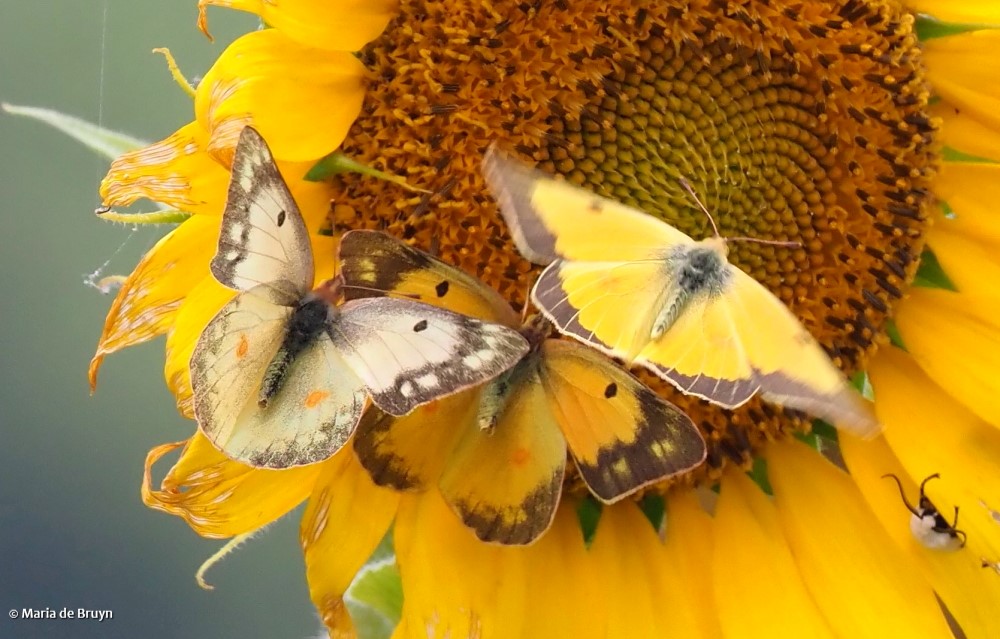
As I watched, pairs of sulphurs would often flutter around one another, ascending high up in the air. It was interesting to see that two types of female orange sulphurs were present. Some were yellow-hued like the males; others were whitish in color, known as the Alba variant.

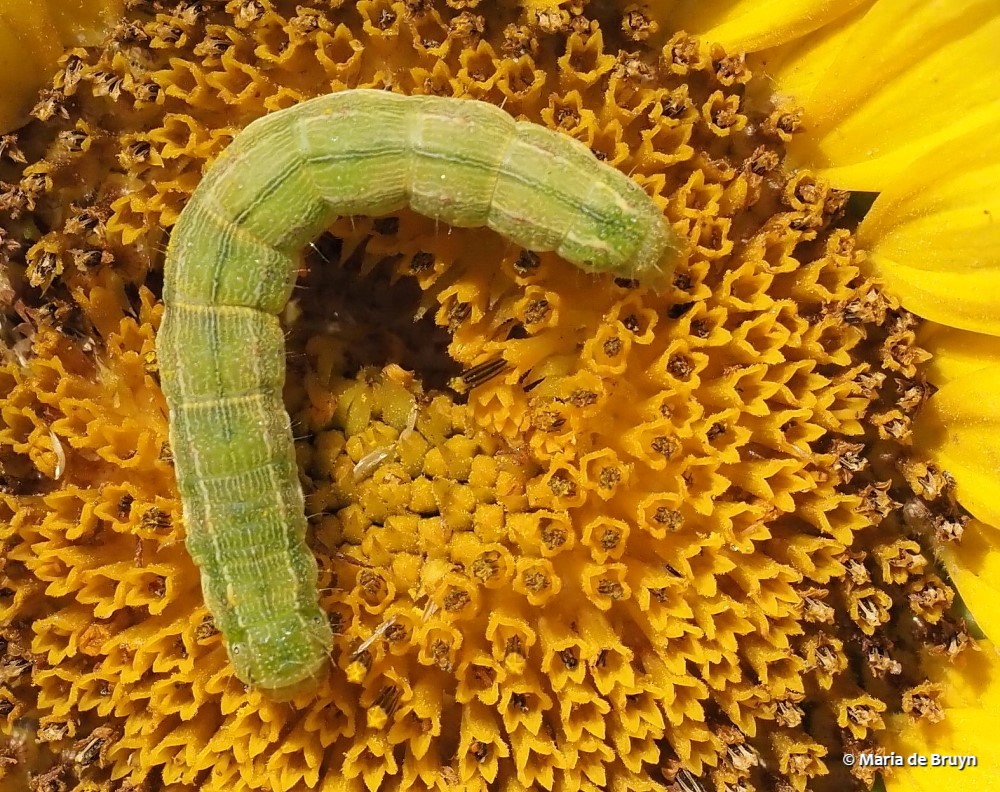
These sulphurs are also known as alfalfa butterflies and the larva is sometimes called the alfalfa caterpillar. An interesting fact about these sulphurs is that the males’ hind wings have an ultraviolet light reflectance pattern, while the females’ hind wings have an ultraviolet absorbing pattern so that they can be distinguished in flight.

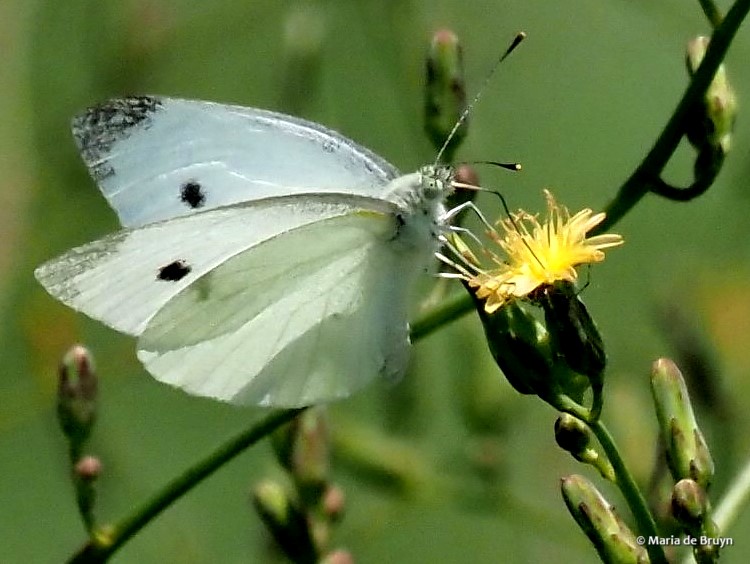
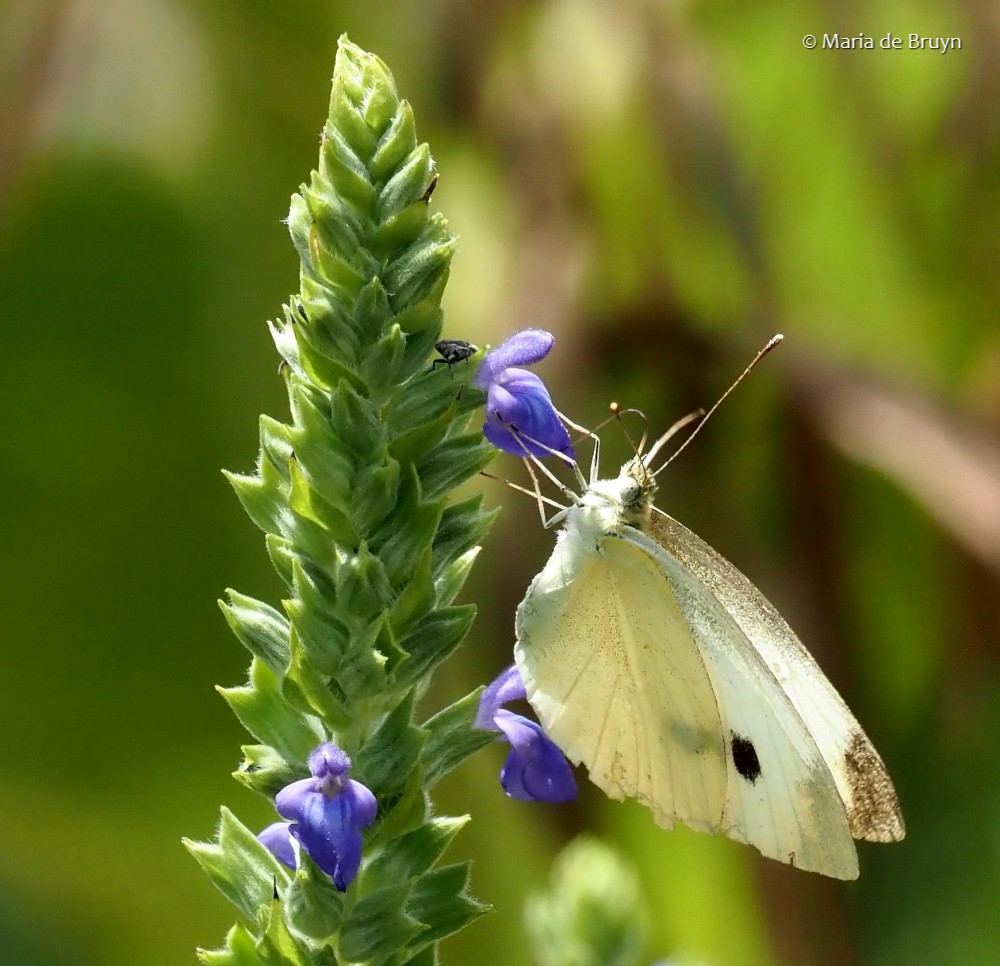
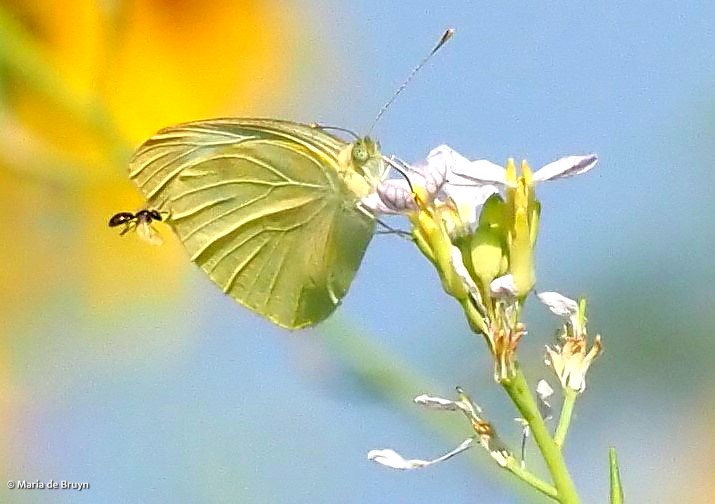
Another abundantly present butterfly species were the cabbage whites (Pieris rapae), which were accidentally introduced into North America around 1860. They didn’t seem attracted to the sunflowers per se but instead were fluttering around and landing on the other flowering plants mixed in with them.

Of these small butterflies had me stumped for an ID at first; it was yellowish in color and didn’t have prominent black spots. However, an entomology expert on BugGuide assured me that it was a cabbage white.

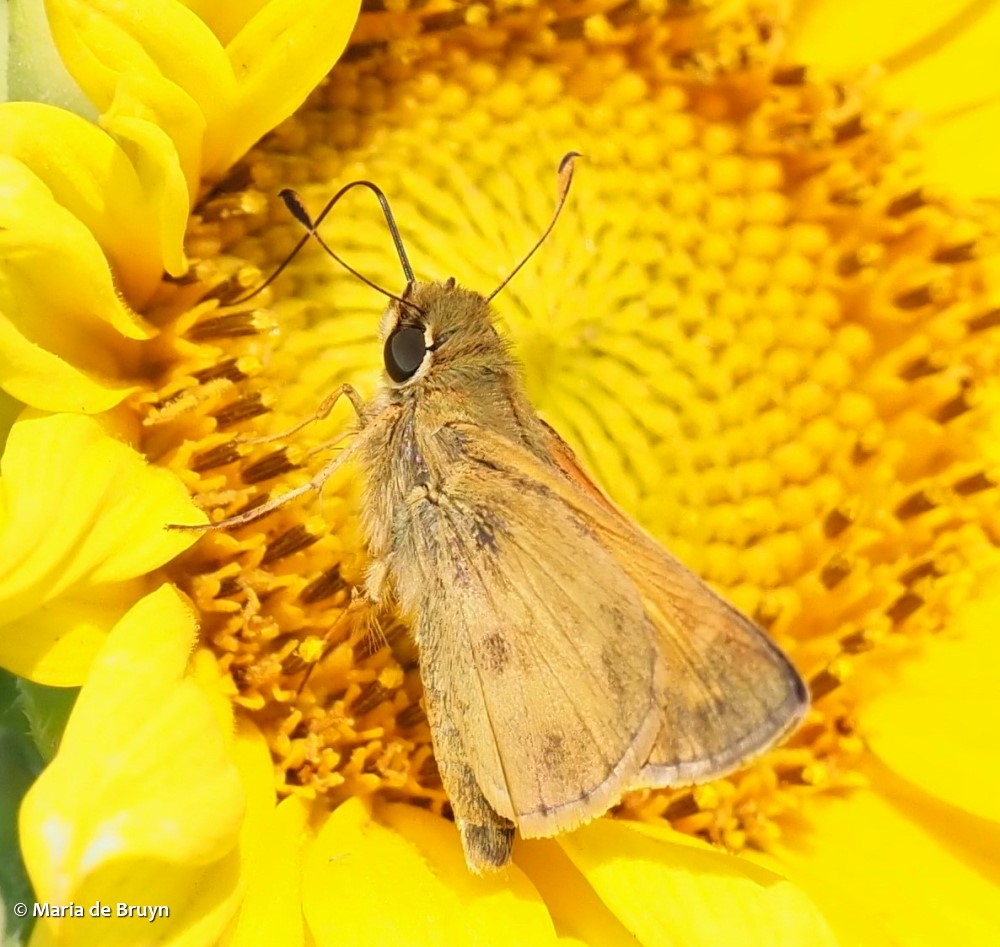
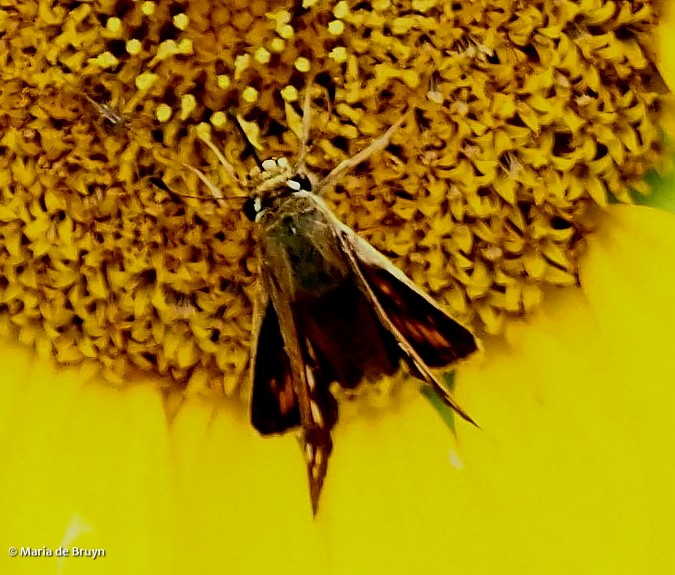
Various types of skipper butterflies were feeding on the sunflowers.

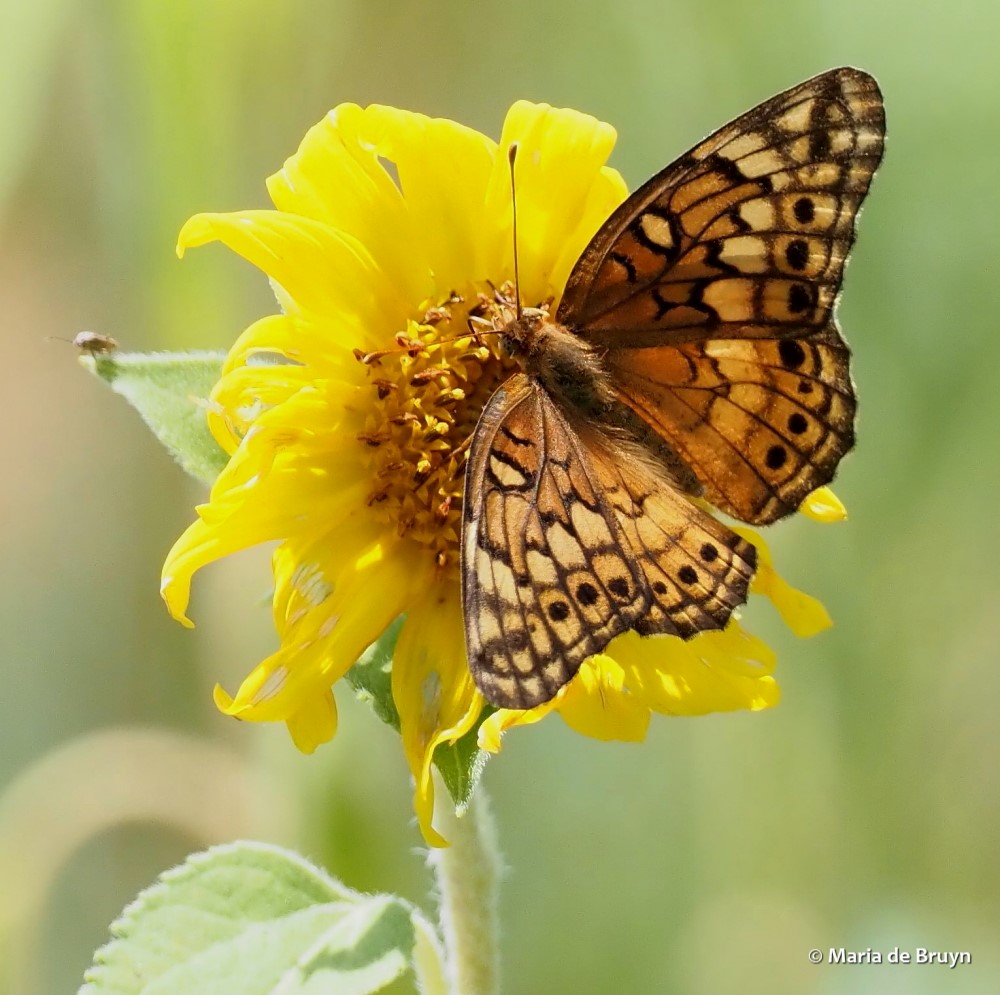
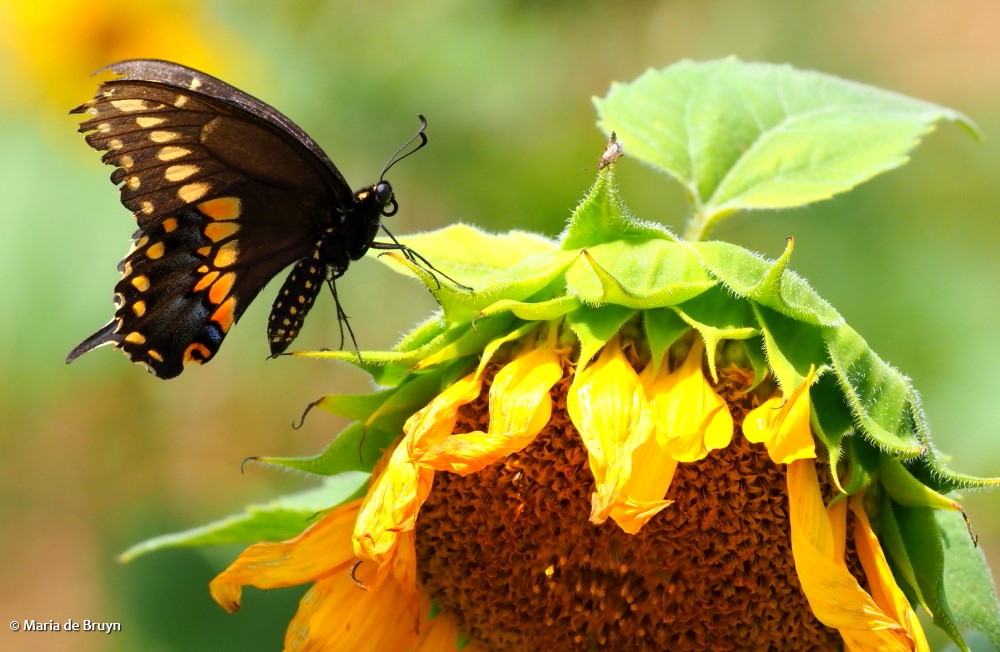
There were a few variegated fritillaries (Euptoieta claudia) visiting the sunflowers and an occasional black swallowtail (Papilio polyxenes) fluttered into view as well.

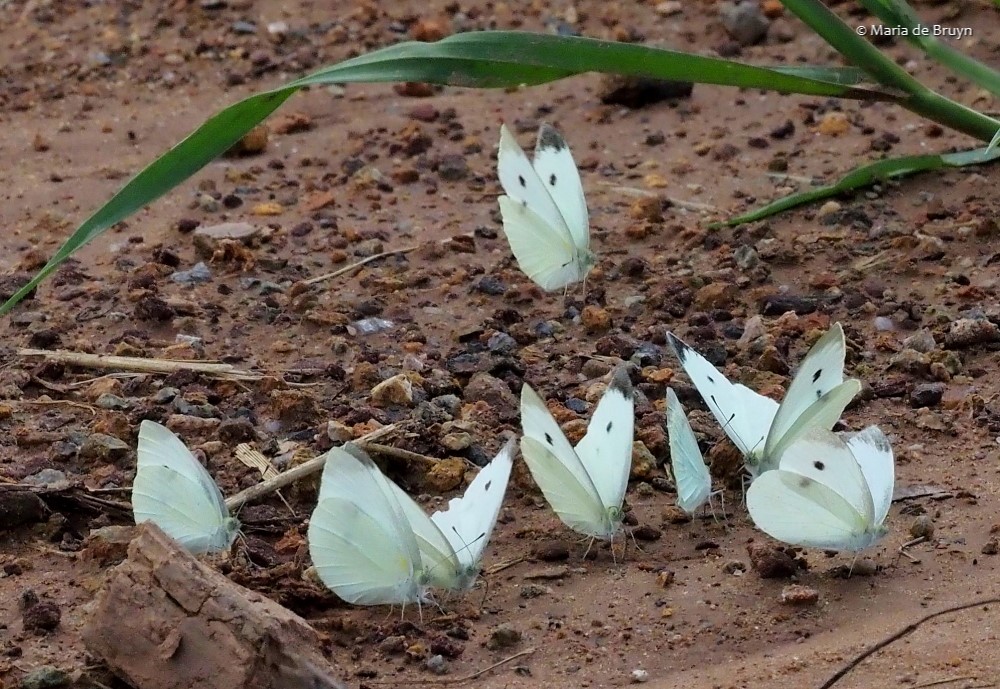
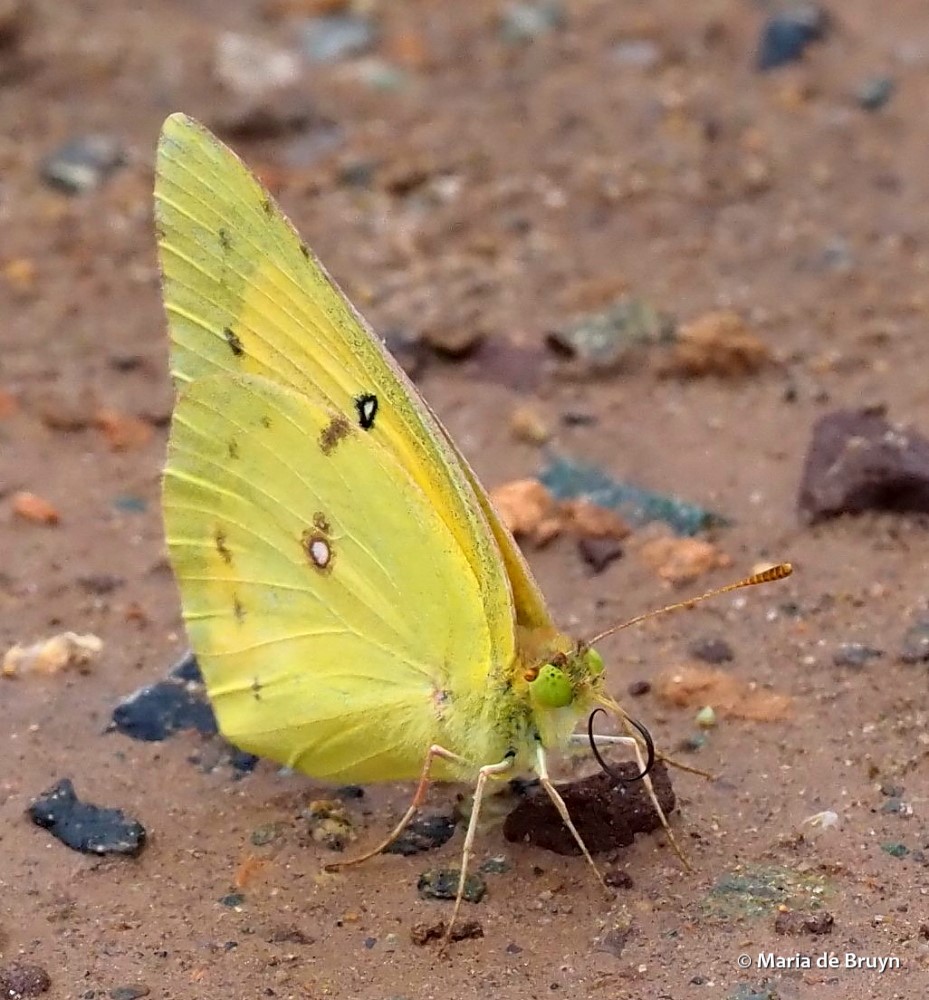
Both the cabbage whites and orange sulphurs were visiting muddy spots at a nearby pond.

This behavior is known both as mudding and mud-puddling and occurs when the butterflies are looking for certain nutrients in mud and rotting plant matter.

Observations have indicated that most of the puddling butterflies are males who often appear to be ingesting salts and amino acids. These substances seem to improve the males’ reproductive success and they transfer these compounds to females when they mate. The nutrients then contribute to the survival of the deposited eggs. Wouldn’t it be interesting if human males could transfer nutritional benefits to offspring in that way?

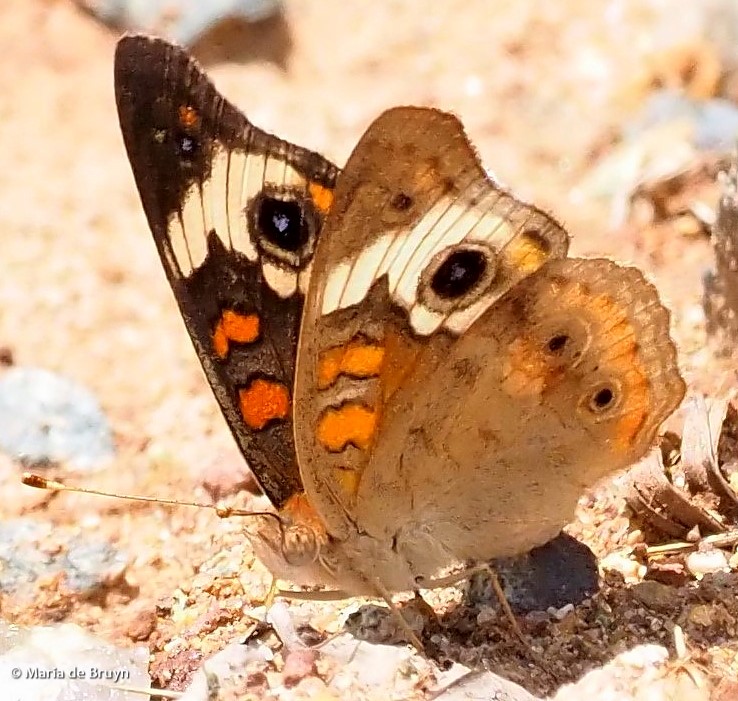
A latecomer to the puddling parties was a lone common buckeye butterfly (Junonia coenia Hübner). This species generates several generations of offspring each summer and I’m always pleased to see them in my own yard.

Next blog: the sunflower field visit continues with some other numerous visitors!

Red-winged, rusty and ravishing – black bird delights!


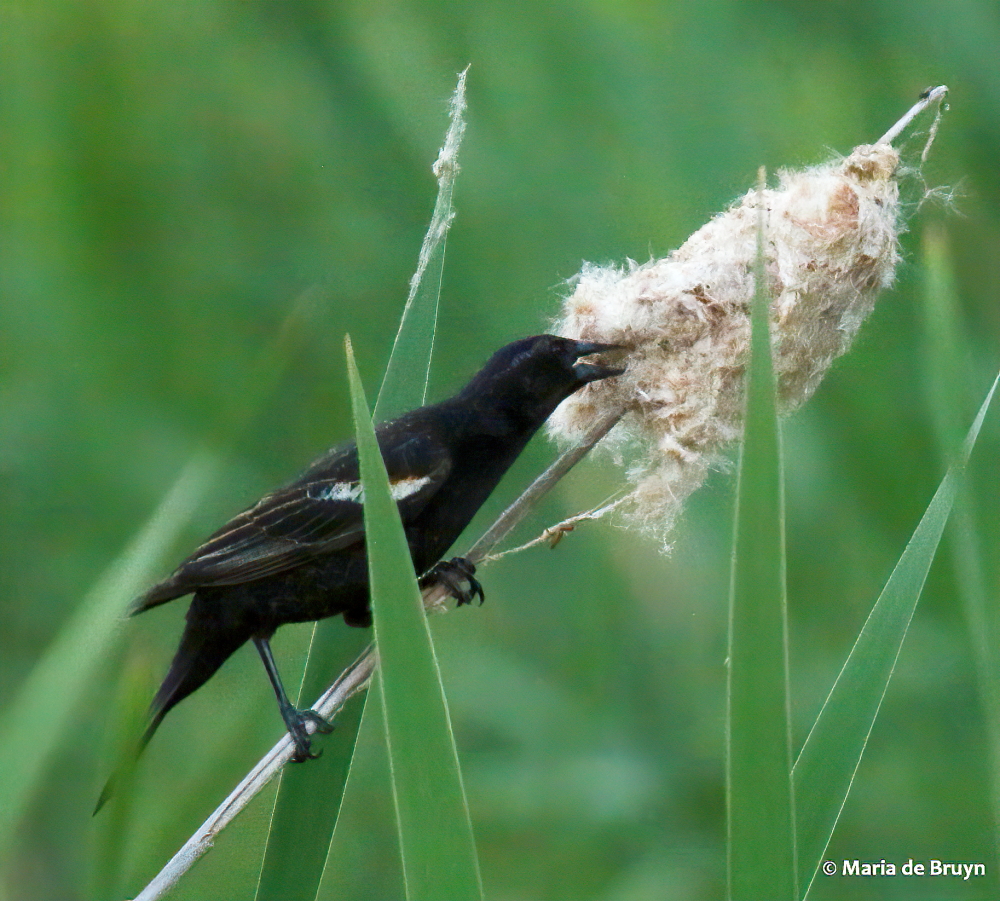
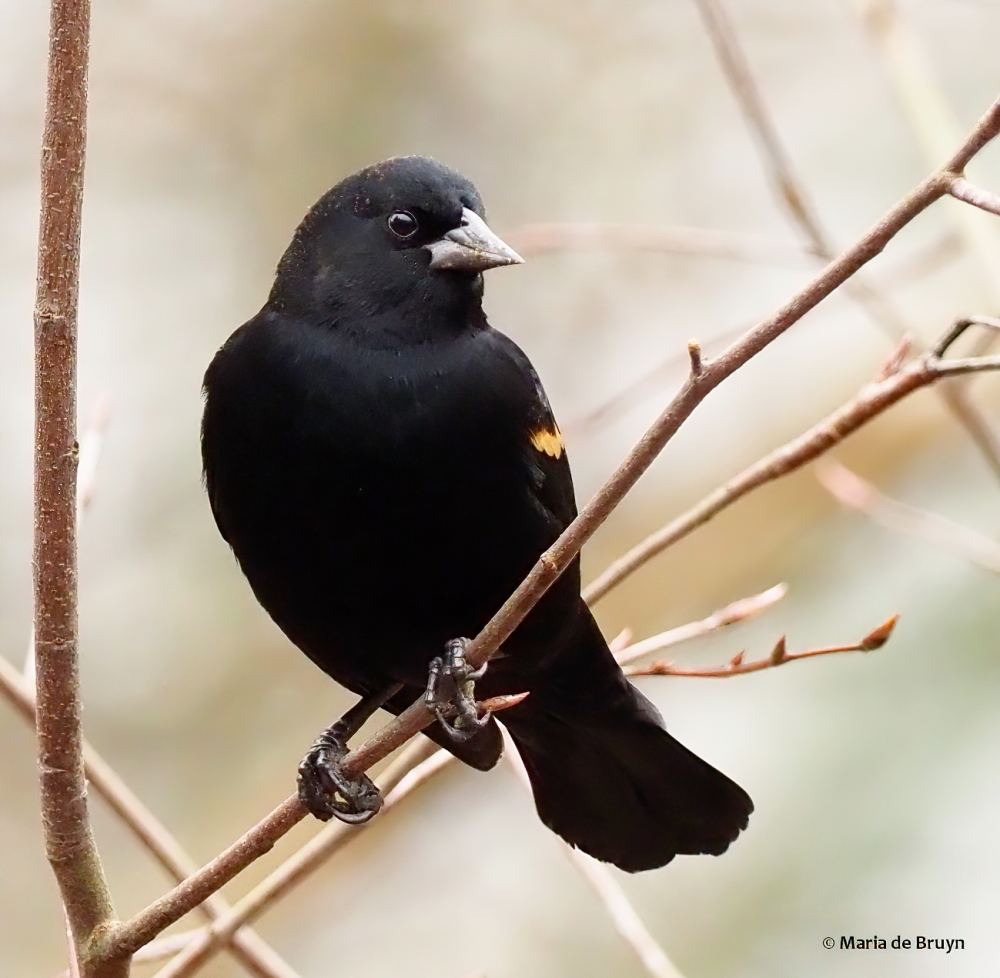
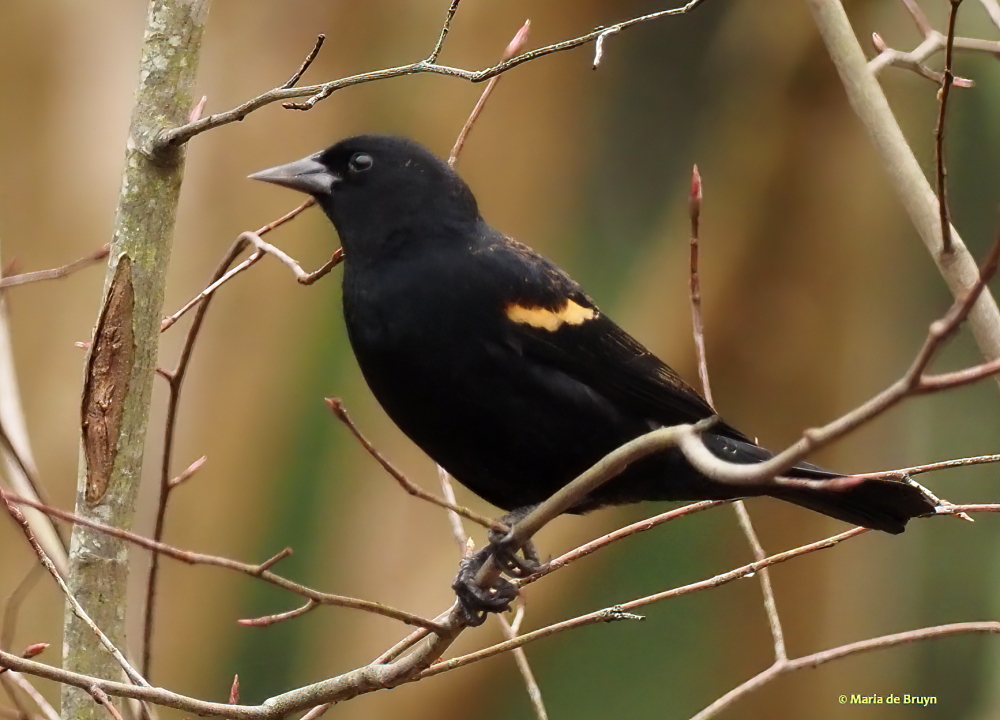
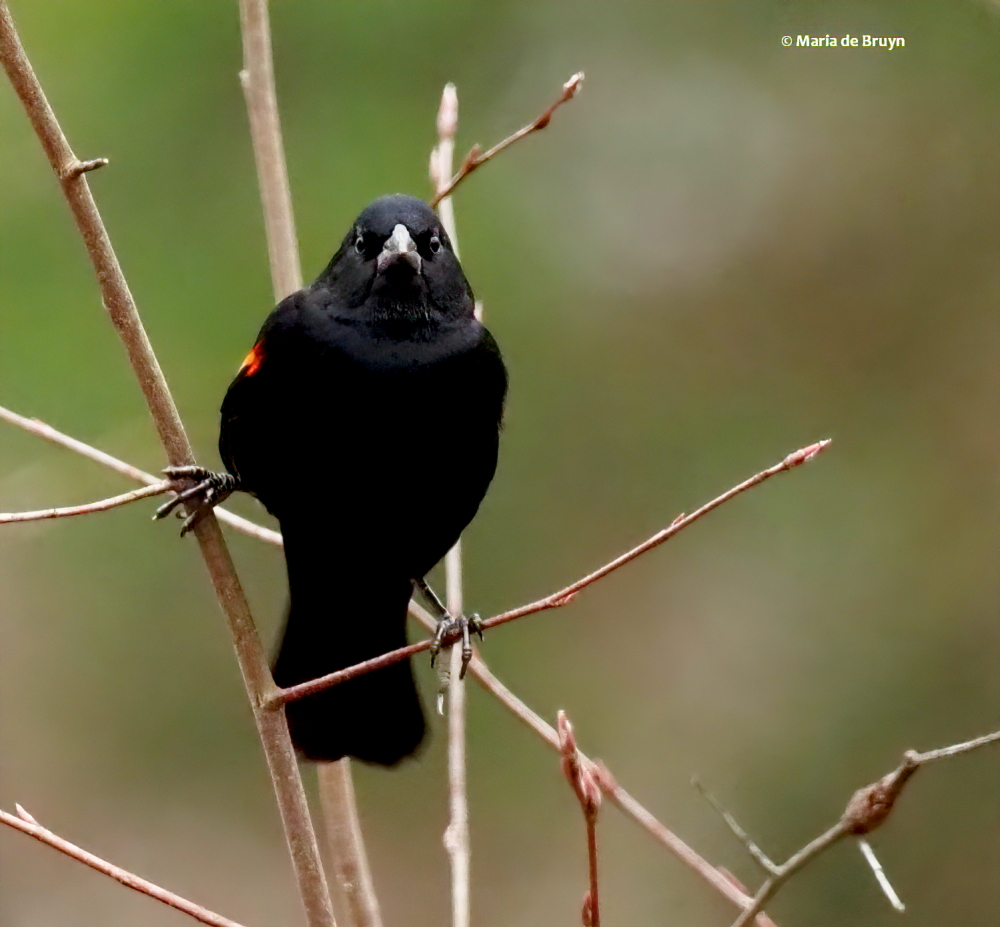
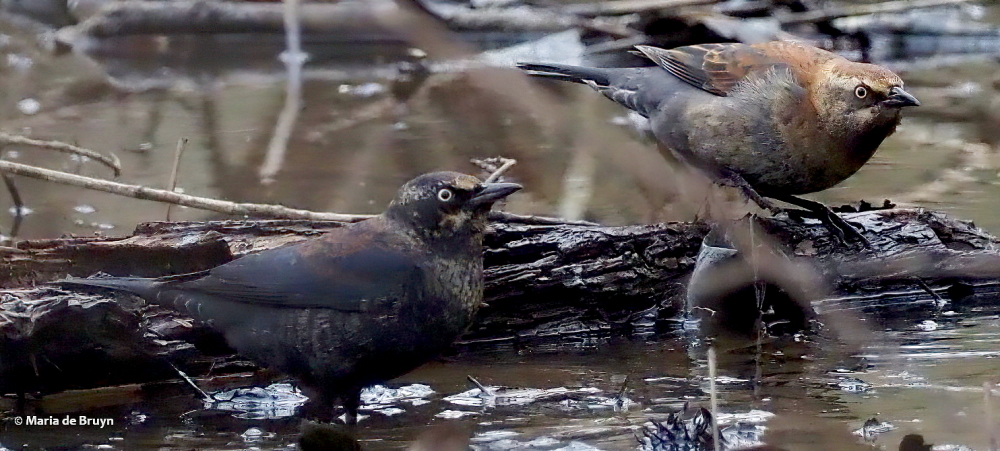
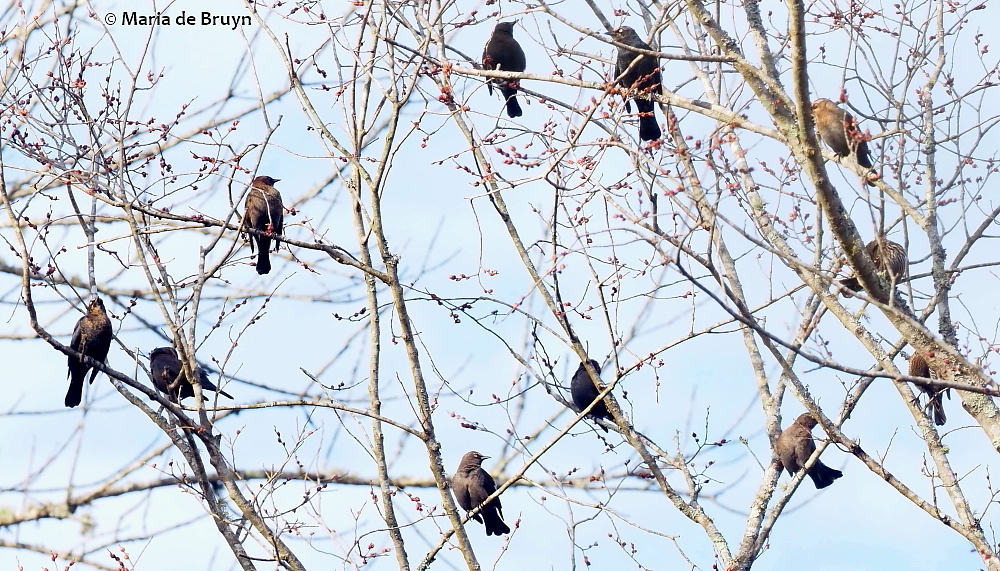
Two species of birds that I enjoy seeing during the autumn and winter months in North Carolina (NC) are red-winged blackbirds (Agelaius phoeniceus, above left) and rusty blackbirds (Euphagus carolinus, above right). Both species breed in the northern USA and Canada, traveling to the southern USA during the colder months.

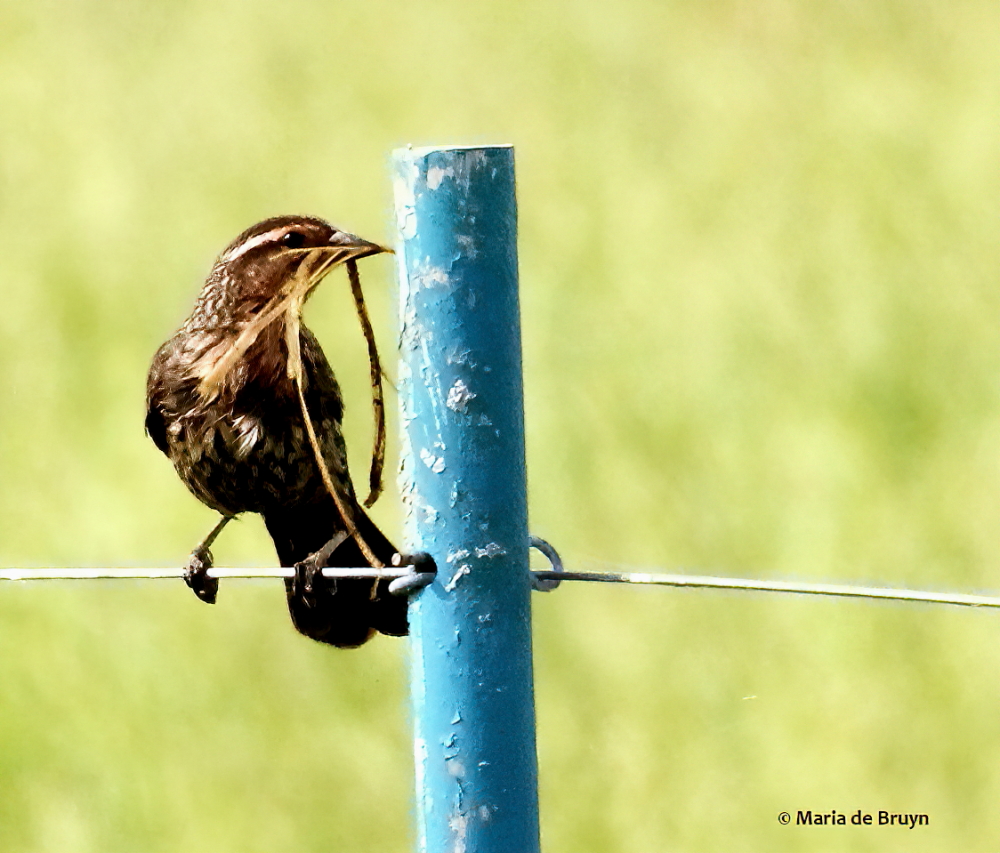
There is also a population of red-winged blackbirds that nest in NC’s Piedmont region. I’ve seen them collecting nesting material at local ponds and wetlands but have never had the pleasure of seeing their nests or watching them feed their young.

The red-winged blackbirds have two avian records to their name: 1) currently perhaps the most numerous land bird in North America, with counts of more than 1 million birds in a flock!! and 2) one of the most researched wild bird species anywhere.

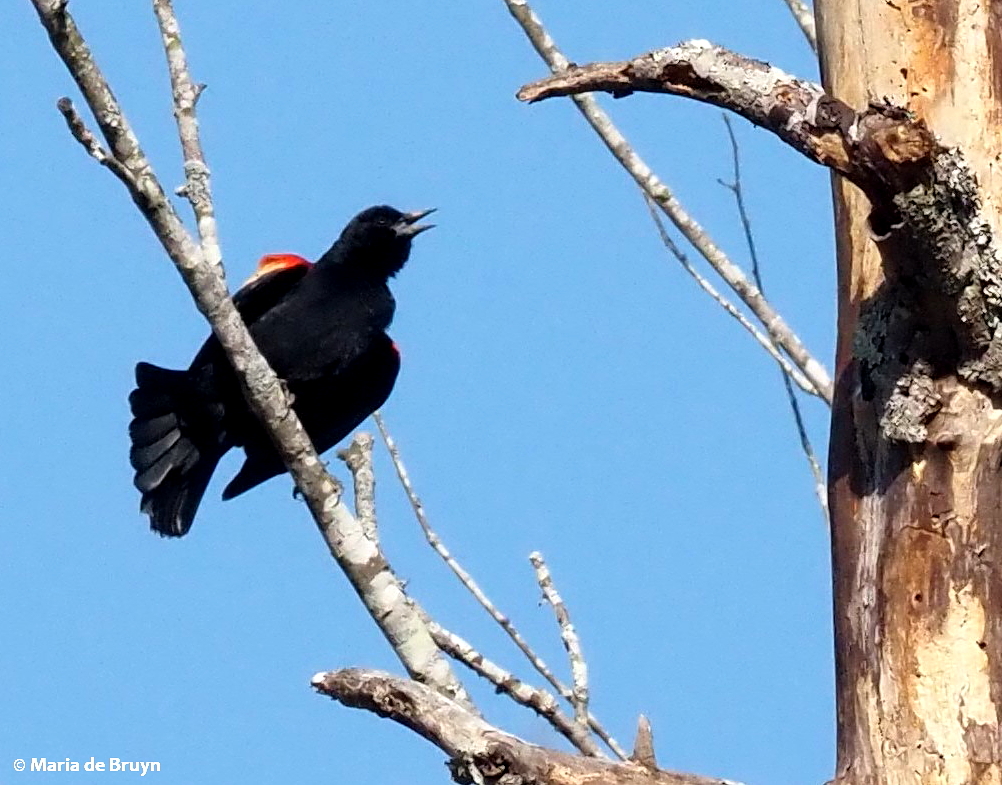
The male red-wings call the attention of females with the red and yellow patches on their wings. It turns out that those with larger patches are more successful in disputes with other males for territory and mates.


Some males have been recorded as having up to 15 mates in their territories during a season, but it turned out that 24-50% of the nestlings had another male as a parent!


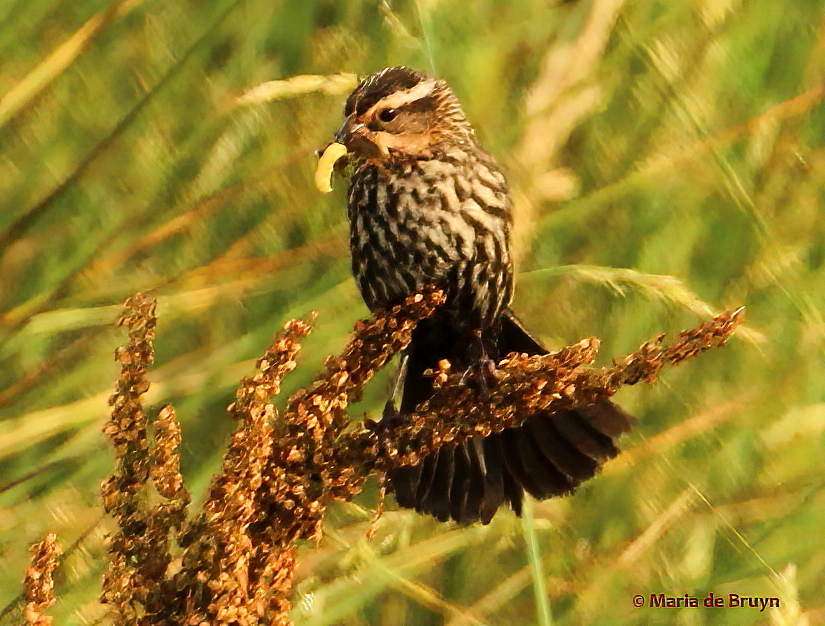
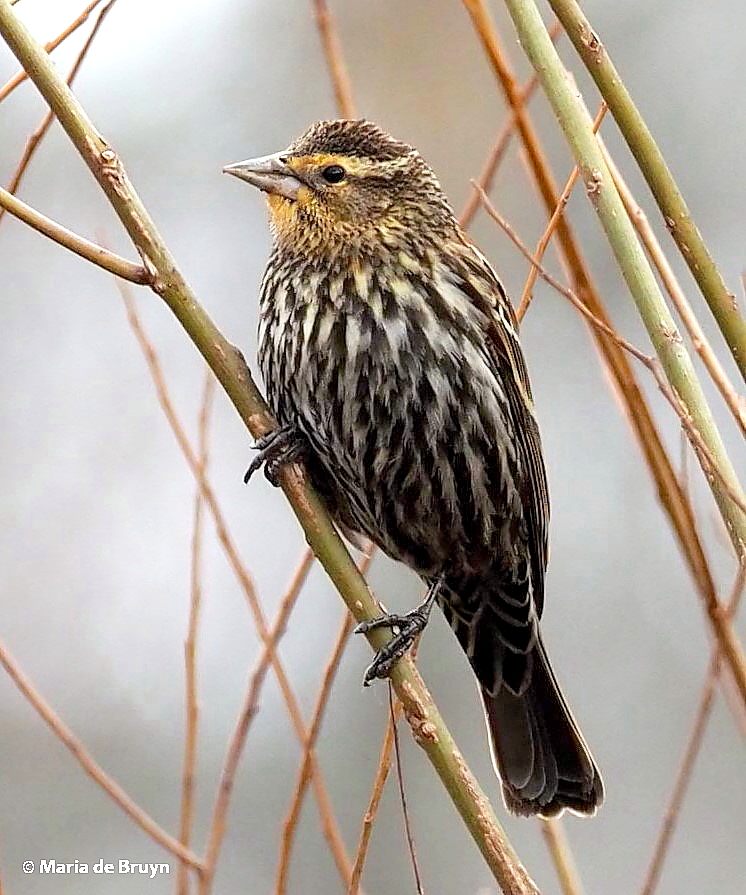
The females look very different from the males with beautiful reddish-brown striping. Their faces are marked by off-white eyebrows.


They often nest near other red-wings.


Doing so means that their nesting area has multiple parents on the alert for predators.

It is interesting that Native American languages also had common names that describe their physical characteristics (red patch, spotted, marked). The longest one that I read about was “memiskondinimaanganeshiinh” (Ojibwa meaning “a bird with a very red damn-little shoulder blade”)!


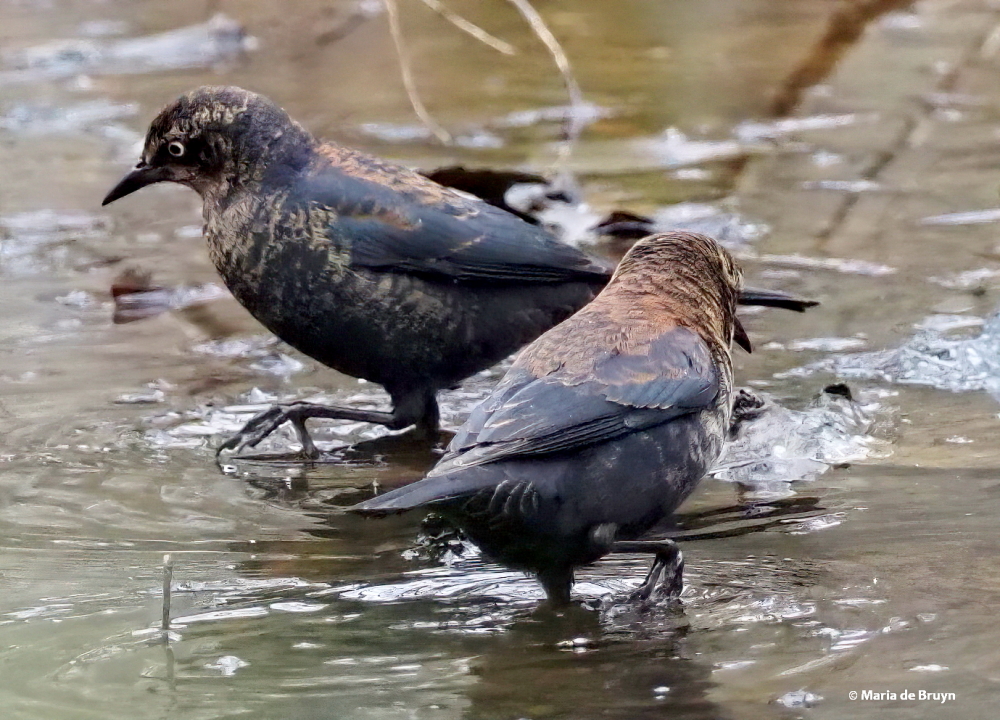
During breeding season, the male rusty blackbirds have glossy black plumage with a greenish sheen. At other times, they have rusty tips to their feathers, giving them a mottled look.

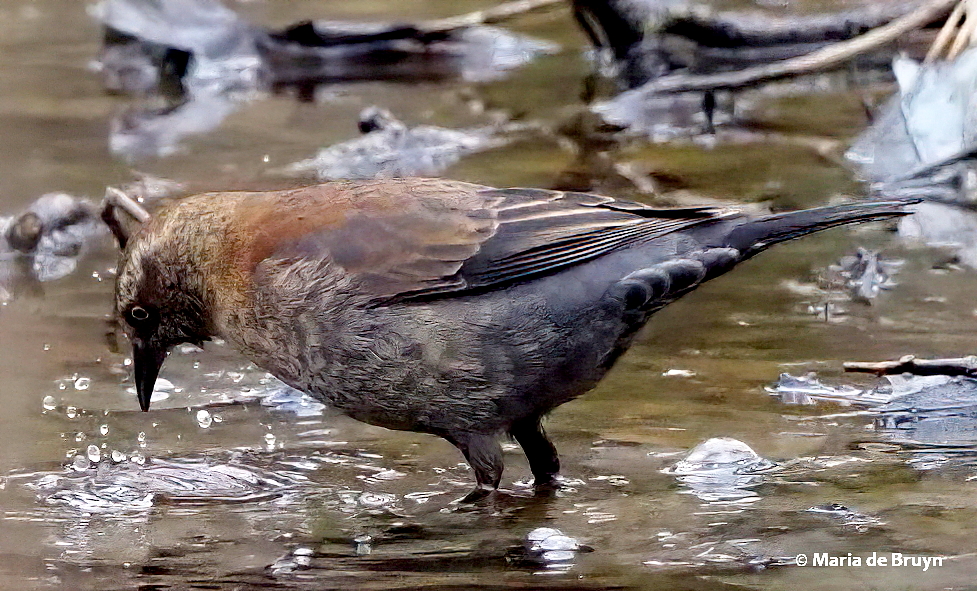
The females may also look a bit mottled but have much more light brown and beige coloration.


In contrast to the numerous red-winged blackbirds, the rusty blackbirds used to have high numbers but have lost up to 85-99% of their populations during the past 40 years for unknown reasons.


The sharp decline is so mystifying that scientists have formed an International Rusty Blackbird Working Group to investigate what is happening.


One possible explanation is a decline in wetlands, especially in the Southeastern USA where 80% of the birds overwinter. A resurgence in beaver ponds may be helping them, which shows how protecting one wildlife species can also assist another one. I have indeed seen them in areas where beavers have been active.


The rusty blackbirds that I spotted were indeed using local wetlands in their search for food, turning over the sodden leaves with their feet and beaks as they searched for sustenance.

The International Working Group is asking people to report their sightings of these birds to eBird to help track the species.

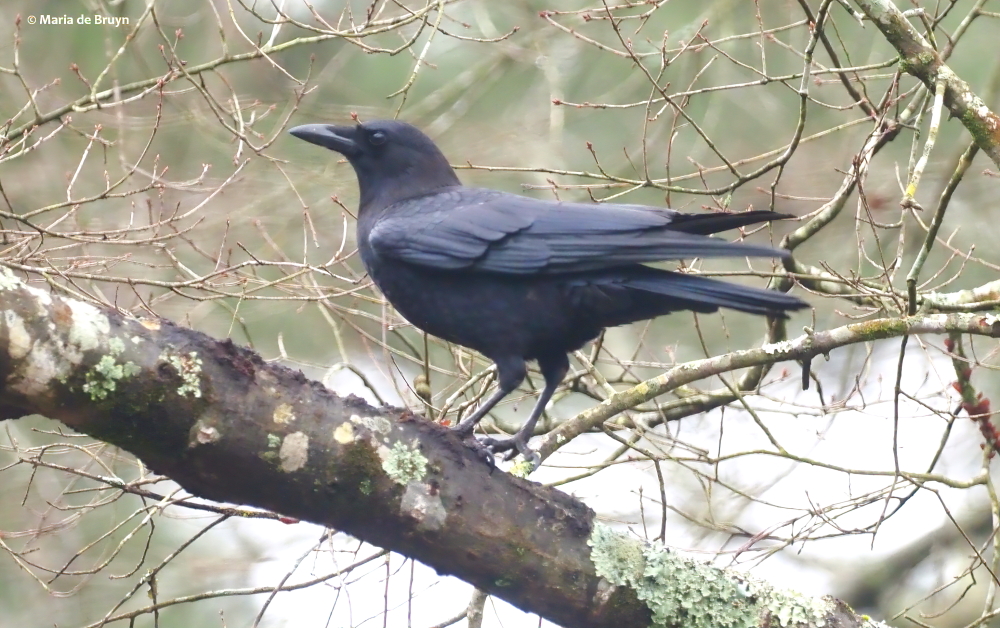
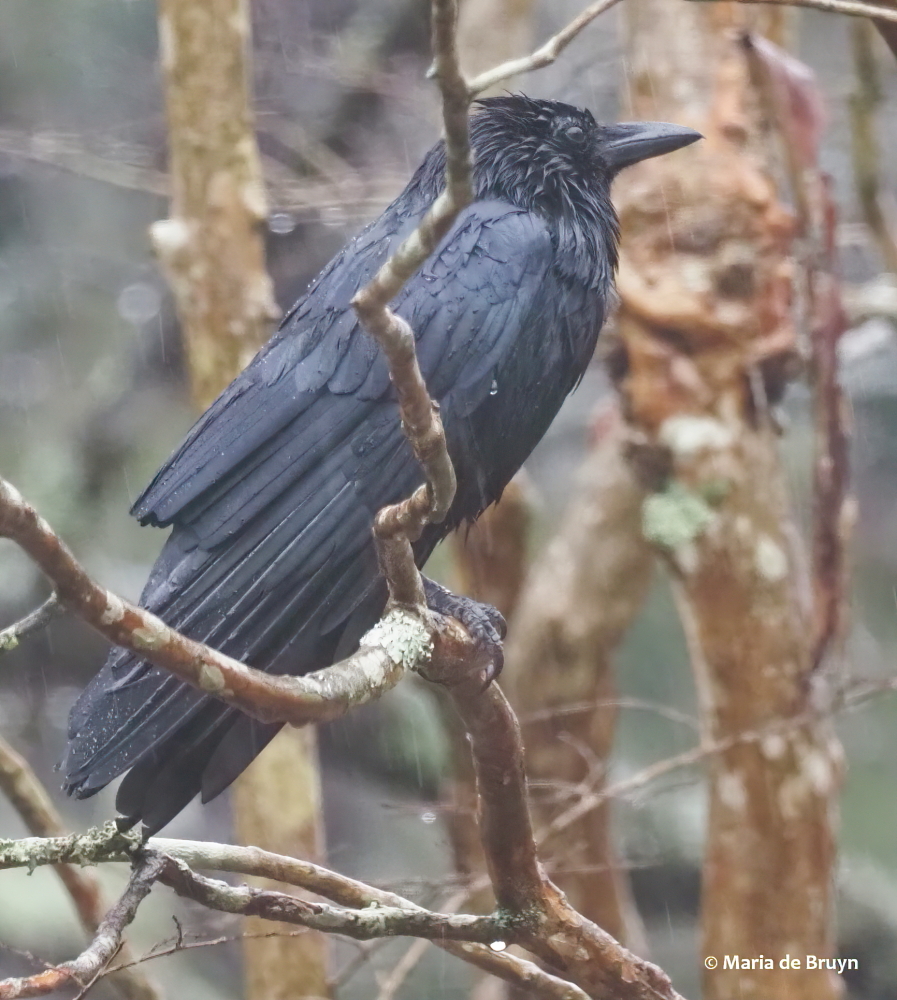
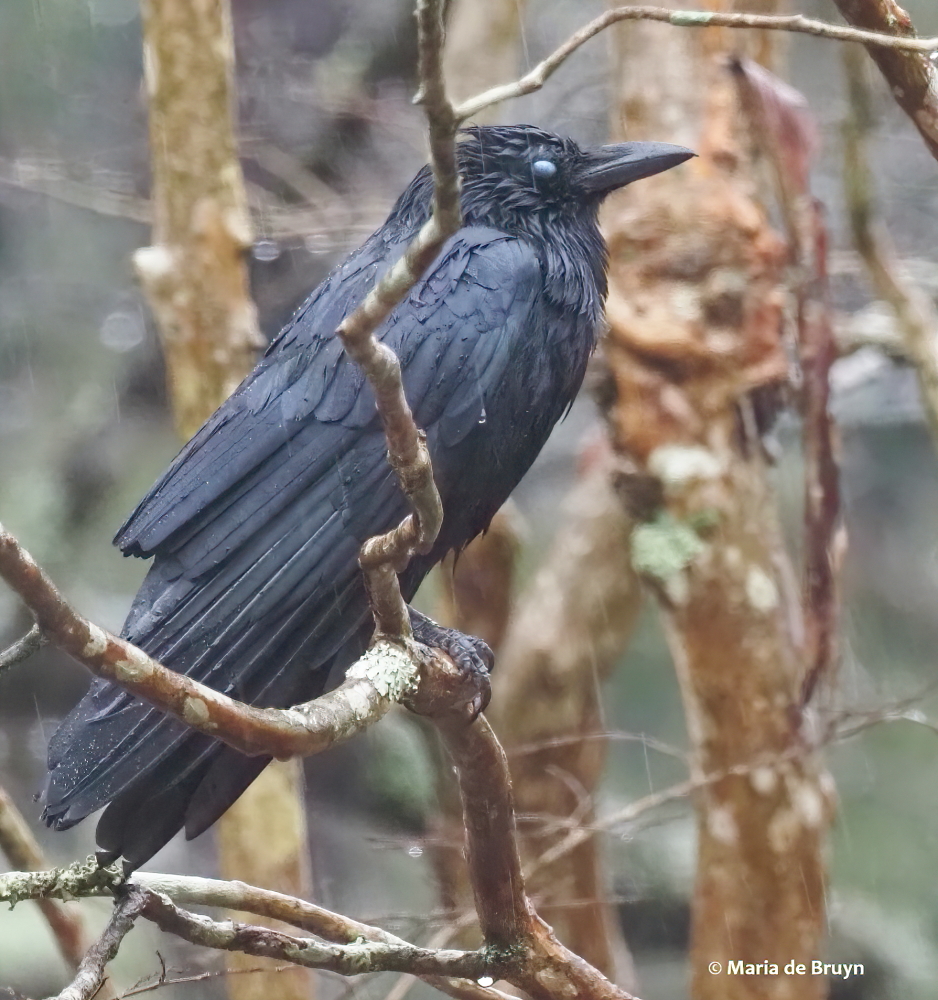
To close this blog, I wanted to share just a few photos of some other birds who are a beautiful black color: my faithful American crow couple (Corvus brachyrhynchos).

They have been visiting with one of their offspring from last year, just as they have done in previous years.


Unfortunately, it appears that one of the birds has somehow suffered an injury to one leg and foot. S/he has been hopping around on the ground and can fly well, but it is a mystery as to what happened to hurt this large bird. Perhaps a tussle with one of the neighborhood hawks?


Spring weather is beginning in our area, which means some avian species will be leaving us and some new ones will be arriving or passing through in the coming weeks. The next blog will feature a few of our feathered friends who will be leaving.

My one greed that I do not regret


My thoughts & walking wander
Sometimes in conjunction
& sometimes on different paths.

The wheezy red-winged blackbird
Calls out time on this quiet Sunday morning.

An hour’s worth of nature should do me today.
Enough to rejuvenate, calm down, re-fill with some contentment.

A dove’s hooo hooooo
A songbird’s chirrups
The hawk’s plaintive cry.


A united triumvirate causes the hawk to flee
As it appears to clutch a prize in its claws;
The flight is too fast to decipher its capture.
Nesting & fledging season continues, so the grackles’ vigilance is warranted.


As a vulture descends
Circling downward over my head, I wonder
What does s/he know that I don’t?
Or the grasshopper?
The Nez Perce people said: “Every animal knows more than you do.”


Lichen-covered and veined stones and rocks jut up from the dirt path.
My feet seek purchase since
An injured leg needs no more distress.


A silver-spotted skipper alights on spiky purple thistle
Beautiful white patch on velvety brown.

On another day the summer azures caught my eye.
So small with details of their beauty escaping the naked eye.
The wonders of technology bring them closer.


Someone else has been walking here, too,
Where wetlands waters once flowed.


The five-lined skink and Carolina anole
Are not coming out today.


The beaver pond is placid
The dragons dip and rise
Turtles break surface and sink
Frogs give a cry of alarm, jumping high-pitched into the depths.

A pair of kingfishers
Fly to and fro,
Practicing their observation skills

As they wait for their permanent colors to come in.


Leaves are trembling
Branches and twigs waving
The slightest of breezes beckons
And helps the cattails sway a bit.


It’s hot
Clothing damp and sticking.
Even the honeybee is not staying around long.


The brown thrasher, on the other hand,
Is enjoying a dust bath and sunbathing in the glaring light…
Until I surprise her/him from behind. Sorry!!


A three-way Japanese beetle gathering
Is staying put for a while
Eating up the leaves on which they rest.


A bright American goldfinch stops by.
I do not think of them as sad
Regardless of the name they were given.
Their brief presence makes me happy.


Two hours, 20 minutes…
Passed while admiring an eyed click beetle
And acknowledging deceptions in the natural world.

Two not-so-common looking buckeyes delight.
One a little tattered, showing age.
I can sympathize from experience.


The life-filled ground, plants, water and air
Enthrall.

An hour should do me?

An hour is enough?
It could suffice in some circumstances.
But the one greed I have, which I do not regret,
Is the desire for much more time among the non-human beings in nature.

The trails beckon.
Who’s waiting around the bend?

Winter wonderland – sharing and spats at the feeders

I thought I had published this blog in early February and just discovered that I had only saved a draft. Since we had snowflakes last night (in April!), I’m going to go ahead and post this now – a break in the series about Costa Rica! When the snow began falling during our day of one-foot accumulation, the feeders were inundated by some of the dark-colored bird species who tend to come in crowds. At first, they were peacefully sharing space.


Although I sometimes have a couple dozen red-winged blackbirds (Agelaius phoeniceus) at the feeders, during the storm only one pair showed up for a brief visit and the other birds left them alone.


The mourning doves (Zenaida macroura) often share feeder space with other birds, including those that are smaller than they are.

The common grackles (Quiscalus quiscula) are known to other people as domineering birds at the feeder, but those in my yard have always been polite, even though they seem to have a permanent expression that expresses anger.


The brown-headed cowbirds (Molothrus ater) sometimes share space nicely and sometimes fuss at one another as they vie for a good perch. They don’t try to chase off other species though and are not apt to “yell” at other birds.

The birds who do “yell” are the European starlings (Sturnus vulgaris). Young ones yell at their parents after fledging, begging to be fed. Adults yell at each other when they are trying to all crowd together onto a feeder. And adults yell at other species to drive them away so they can have all the space for themselves.

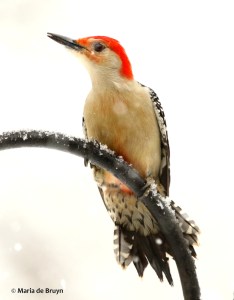
At my feeders, however, they have found their match in the male red-bellied woodpecker (Melanerpes carolinus). One day, I watched as they managed to intimidate him for a few minutes, but he then returned to the feeder and refused to give up. Now he is no longer frightened of them and stands his ground when a starling does its best to make him move.


It turns out that studies have shown that the red-bellied woodpeckers are the birds most apt to resist attempts by other birds to displace them from feeders.

The red-bellied woodpecker also was not intimidated by me at one point. He doesn’t like it when he flies in and notices at the last moment that I am sitting or standing on the porch; often he will swerve away and wait for me to leave. During the snow storm, however, he decided to display his displeasure with my close presence, both from a frontal and dorsal view!


I guess that the little bird spats do make for sometimes more interesting birding observations. Seeing the tiny ruby-crowned kinglet (Regulus calendula) warning off a rival a few days before and after the snow melted did show off a gorgeous and brave little bird.


I’m looking forward to seeing what the springtime observations of animal behavior will reveal.