Soothing my spirit, seeking solace for the soul

leaf-i77a2875-maria-de-bruyn-resAlthough more people in the USA voted for the Democratic ticket than the Republican one, the electoral college system will likely lead to the installation of a Republican presidency unless election re-counts affect those designated votes. This distresses me greatly given the persons who have been announced as top administration advisers and cabinet members. My work on social issues and on behalf of vulnerable people will continue and is increasing. But in the meantime, to keep from going into a 100% depressed mode, I have sought solace in nature walks and spiritual strengthening in the flora and fauna I see.
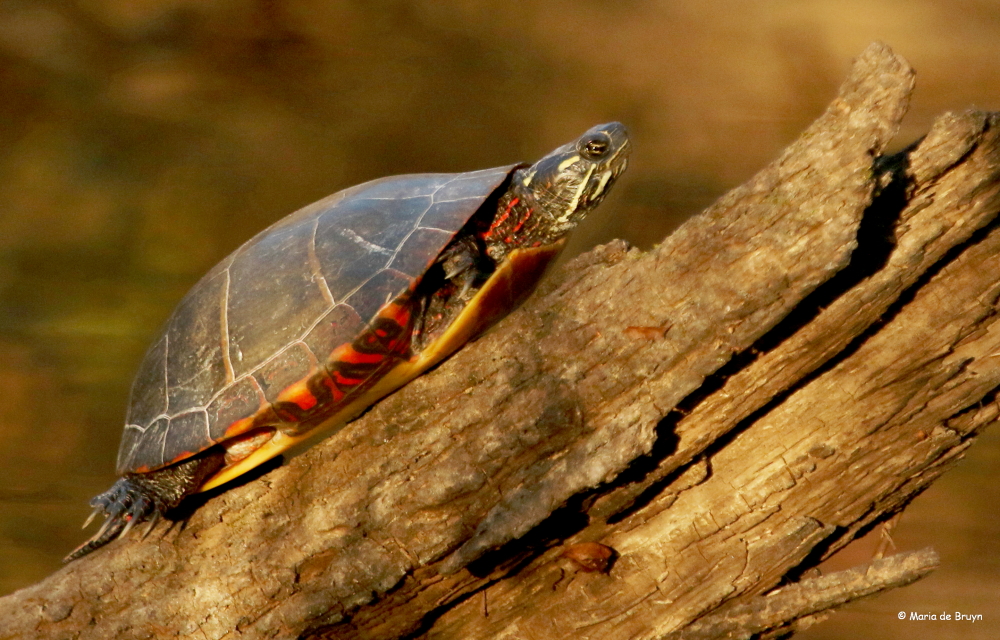
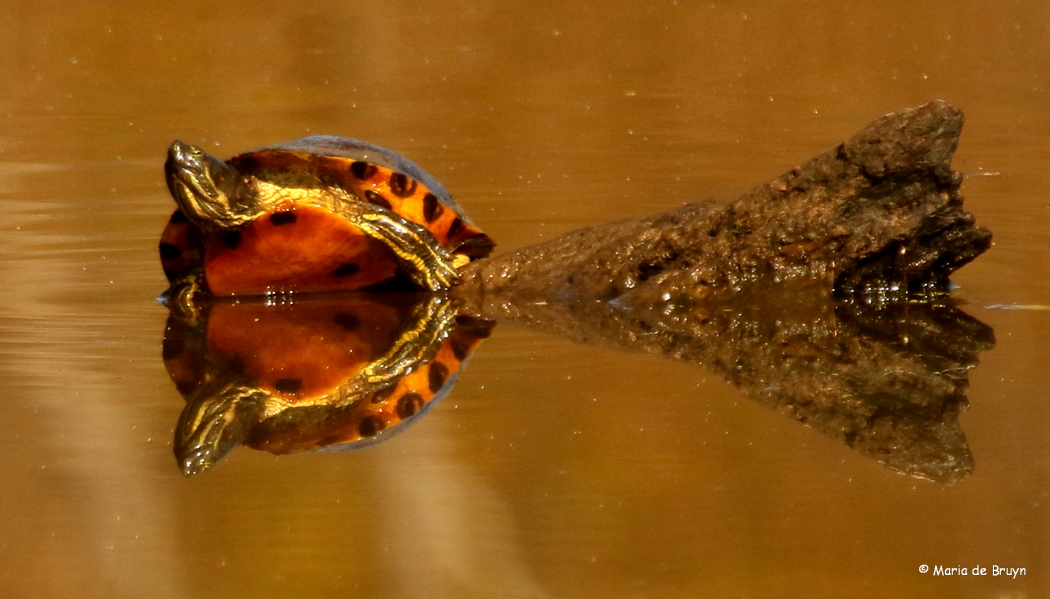
painted-turtle-i77a2277-maria-de-bruyn-resToday, I will share some of words of wisdom from a conscientious spiritual leader with you, along with some photos of nature’s beauties seen during my walks at the Cane Creek Reservoir, Sandy Creek Park and Mason Farm Biological Reserve just before and since the November election. It’s a bit of a long blog but offers some visual sustenance to ponder, like the painted turtle (Chrysemys picta, above) at Mason Farm and the yellow-bellied slider (Trachemys scripta scripta) at Sandy Creek sunning in the morning sun despite chilly temperatures. (From a distance, the slider looked a bit as if there was something with open jaws in the pond!)
yellow-bellied-slider-i77a2954-maria-de-bruyn-res

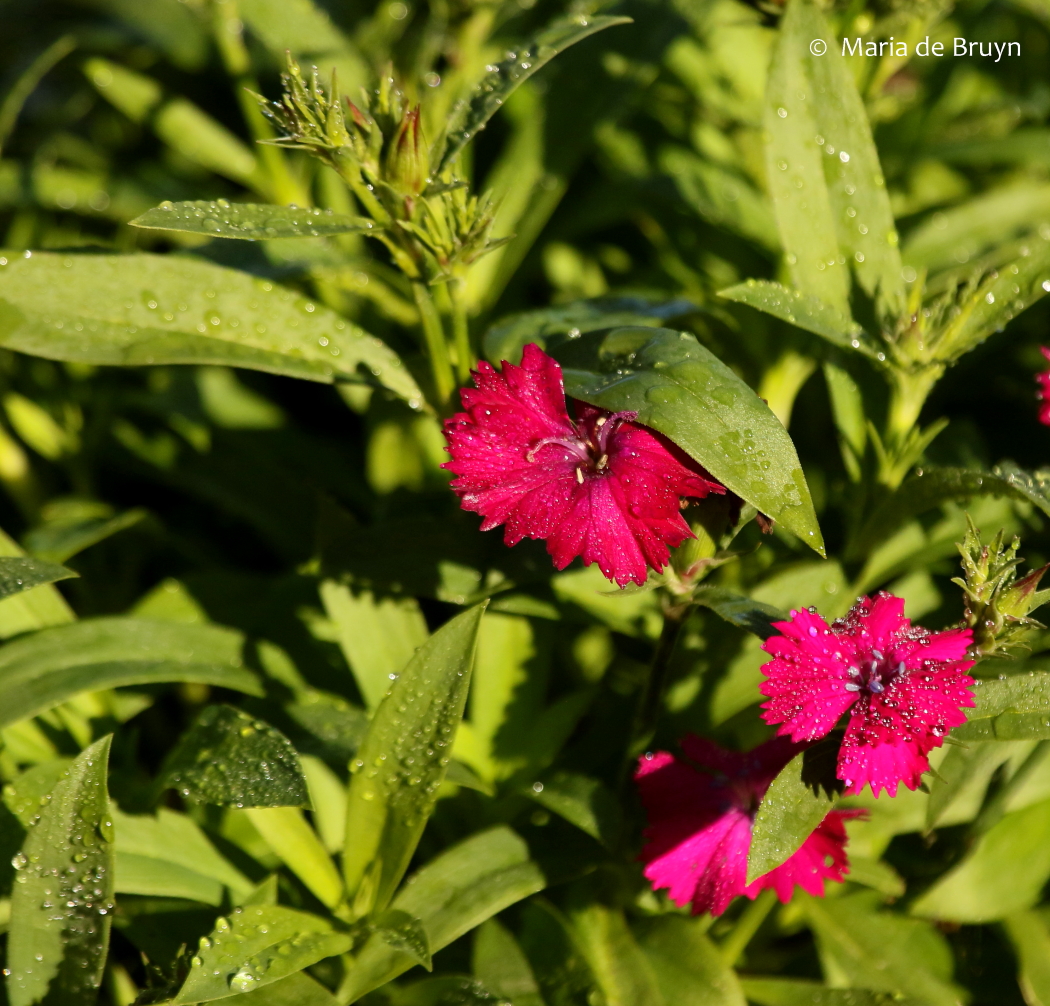
flower-77a1303maria-de-bruyn-res


Early in the morning, you can find frost- and dew-covered plants and a few remaining flowers glistening in the sun.
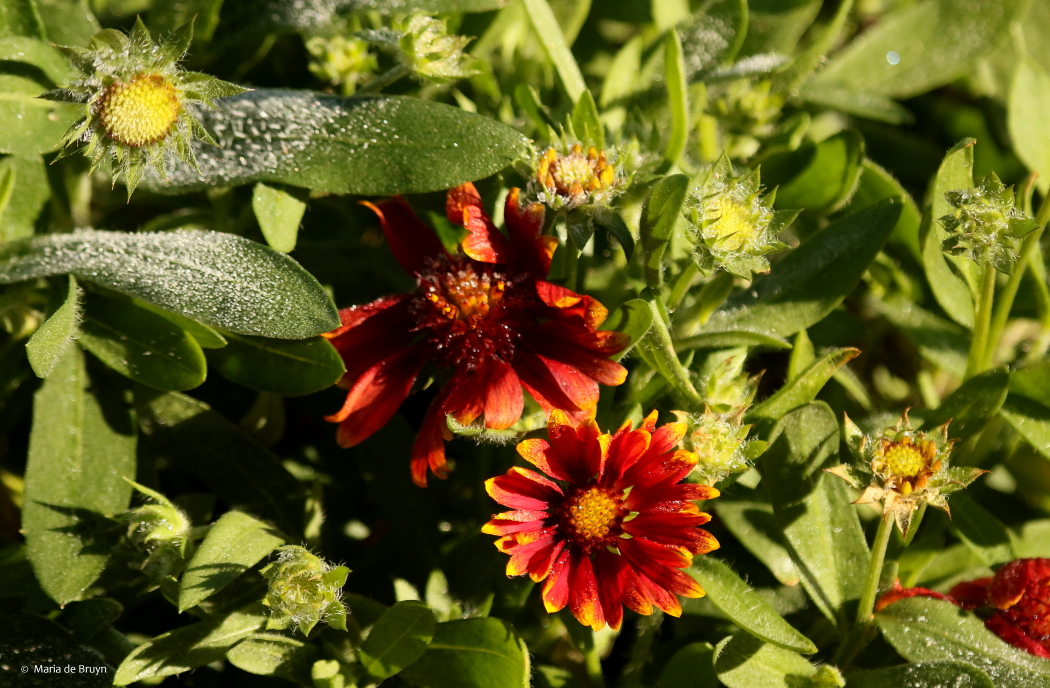
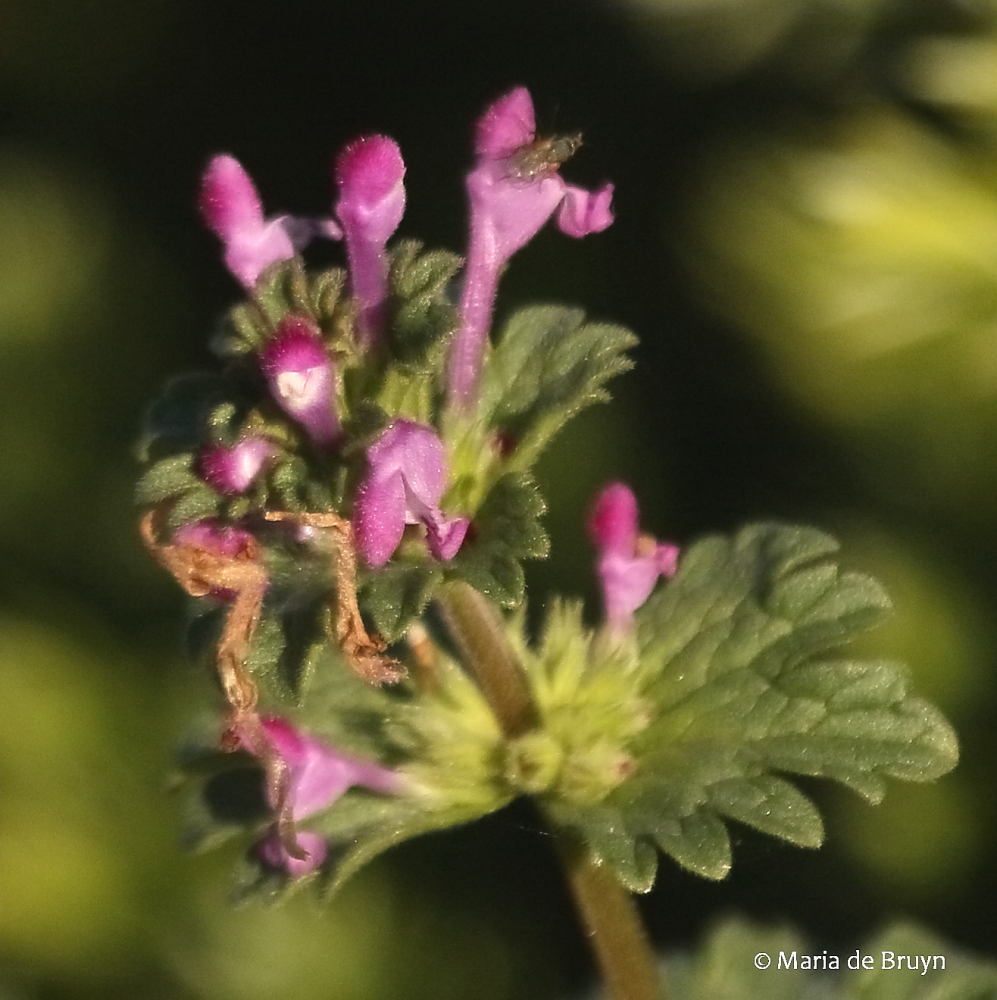


blanket-flower-i77a1309maria-de-bruyn-res  henbit-i77a0825maria-de-bruyn-res

Blanket flower (Gaillardia)                           Henbit (Lamium amplexicaule)
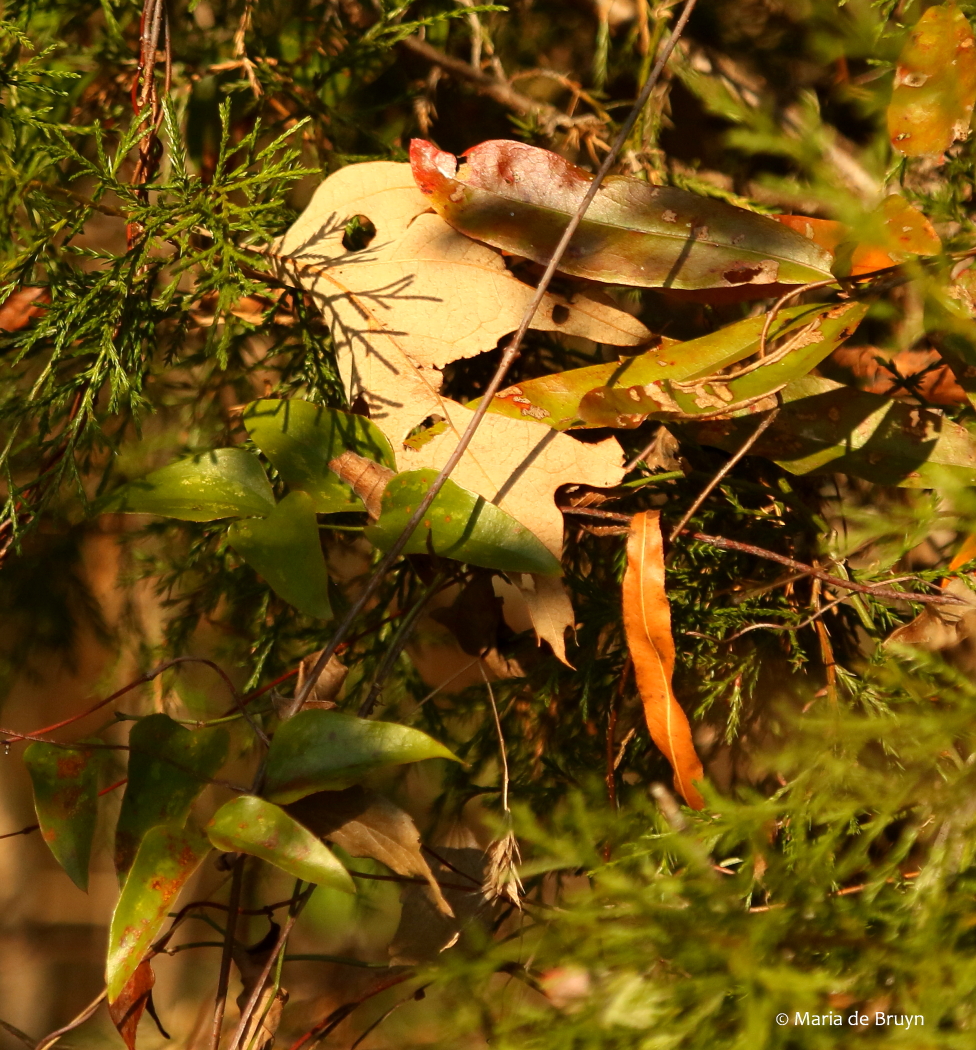
leaf-bird-i77a2906-maria-de-bruyn-res


Later in the morning, the autumn-colored leaves make nice patterns as you search for birds high and low. And occasionally you get to see the fabled “leaf bird”.
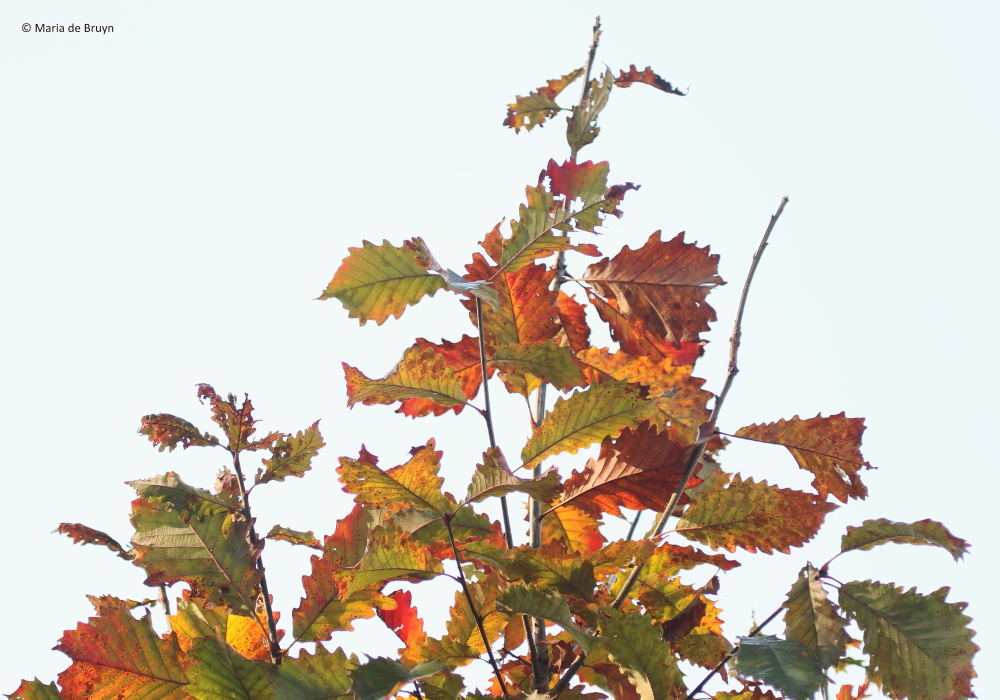
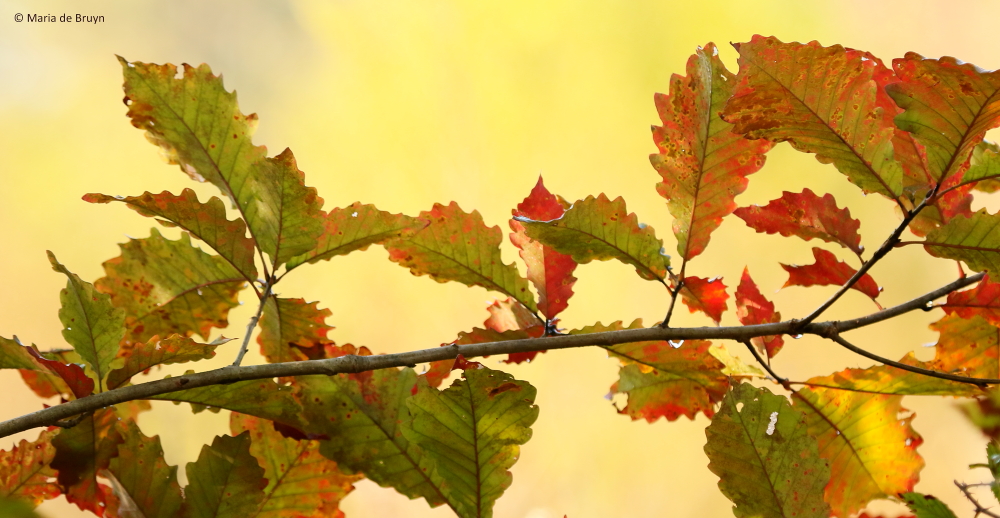


leaves-i77a2893-maria-de-bruyn-res   leaves-i77a2882-maria-de-bruyn-res

When looking high, you may find the birds looking down on you; face-level stares as you gaze straight ahead may also occur!
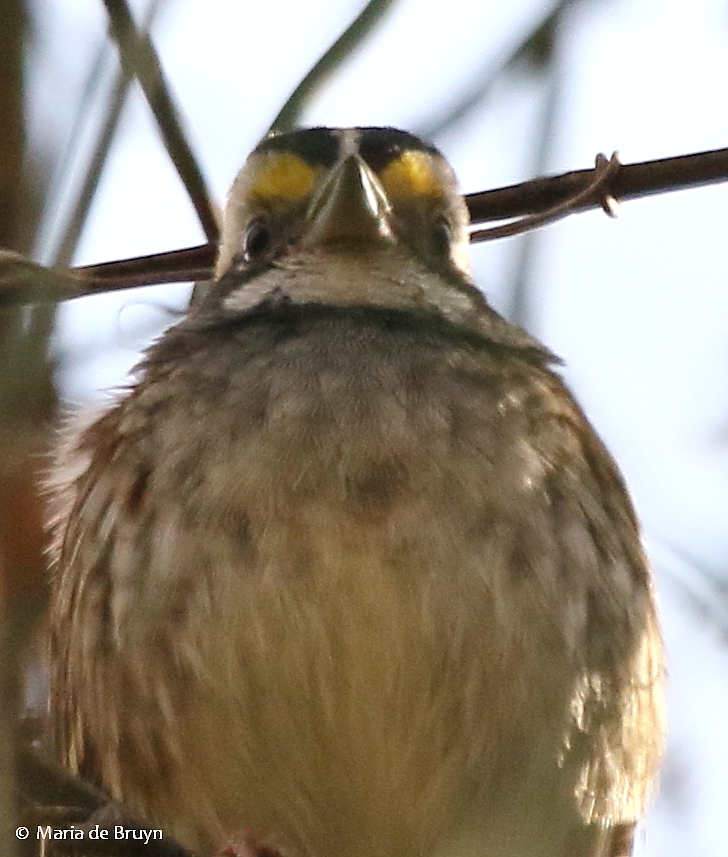
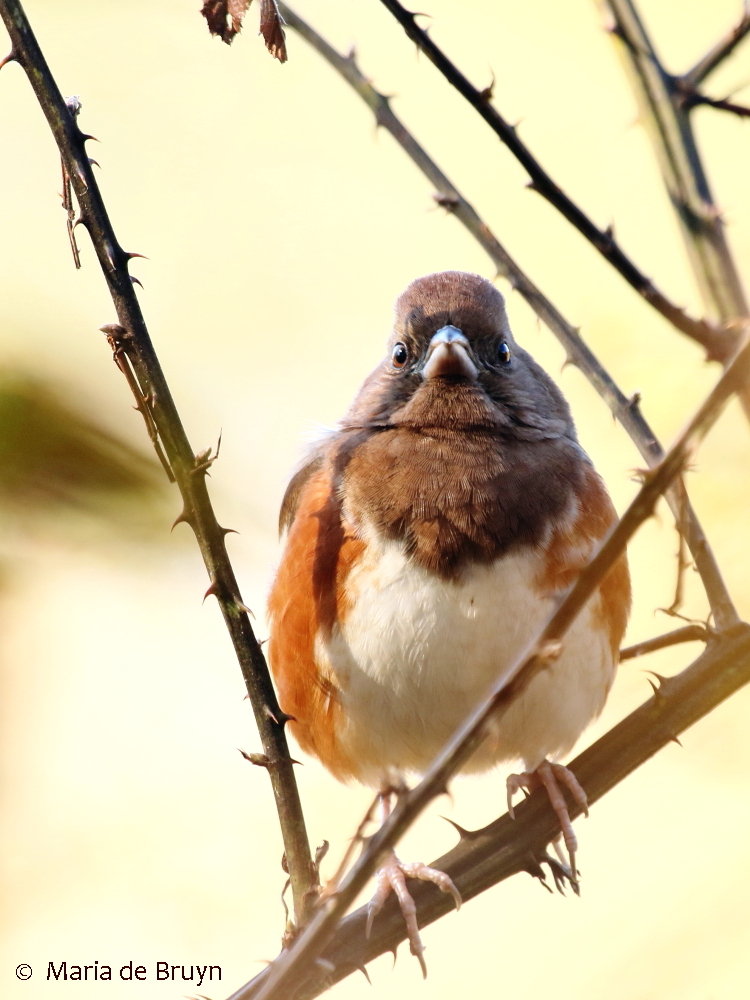
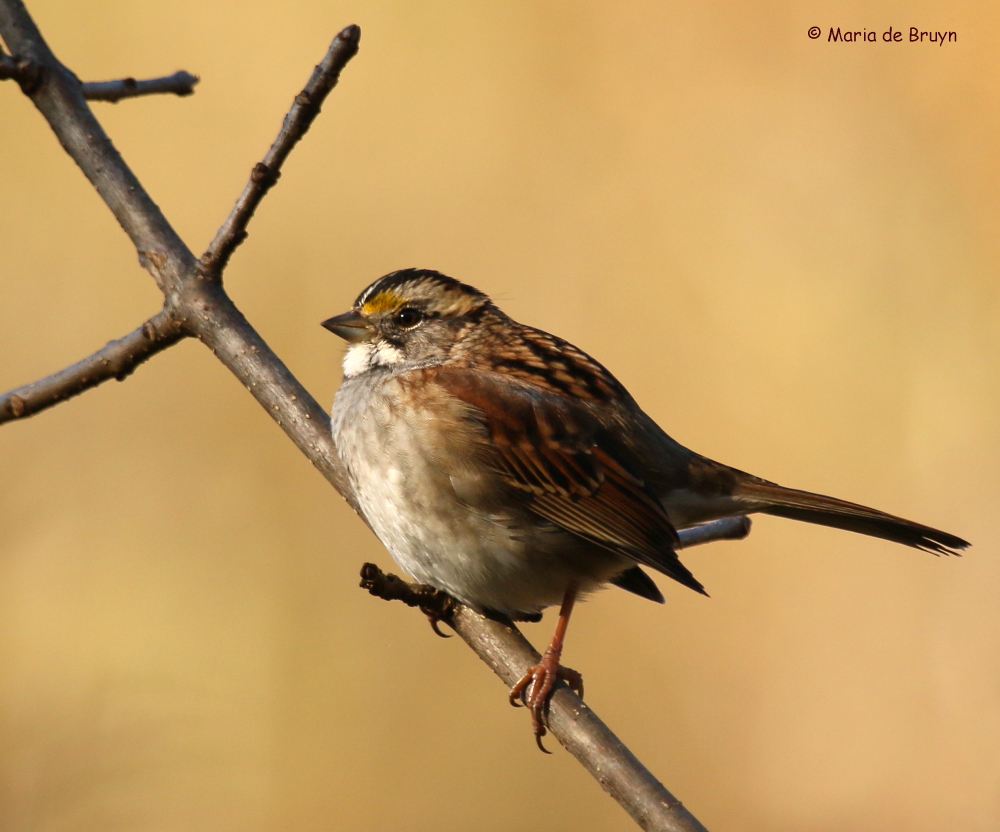
white-throated-sparrow-i77a6365-maria-de-bruyn-res                     eastern-towhee-i77a1659maria-de-bruyn-res

White-throated sparrow (Zonotrichia albicollis)  Eastern towhee (Pipilo erythrophthalmus)
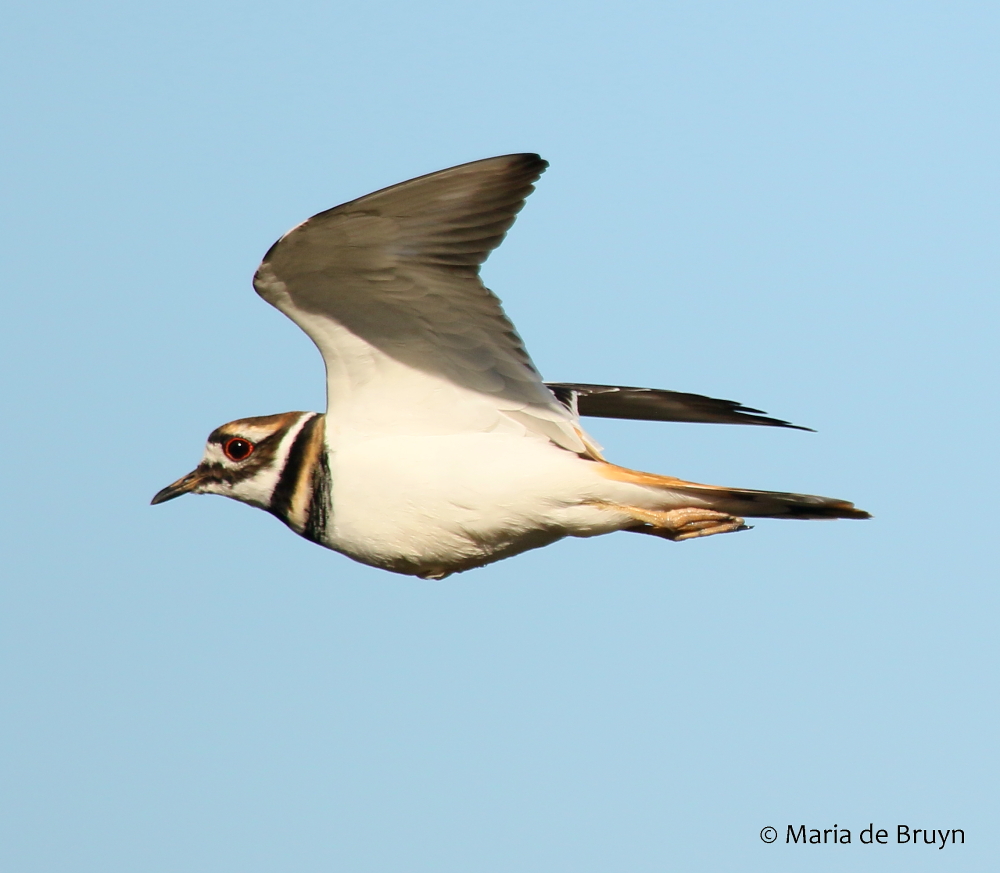
killdeer-i77a0916maria-de-bruyn-res


At Cane Creek, the killdeer (Charadrius vociferous) make their presence known by their distinctive calls and you can enjoy their gorgeous appearance as they fly over the lake.
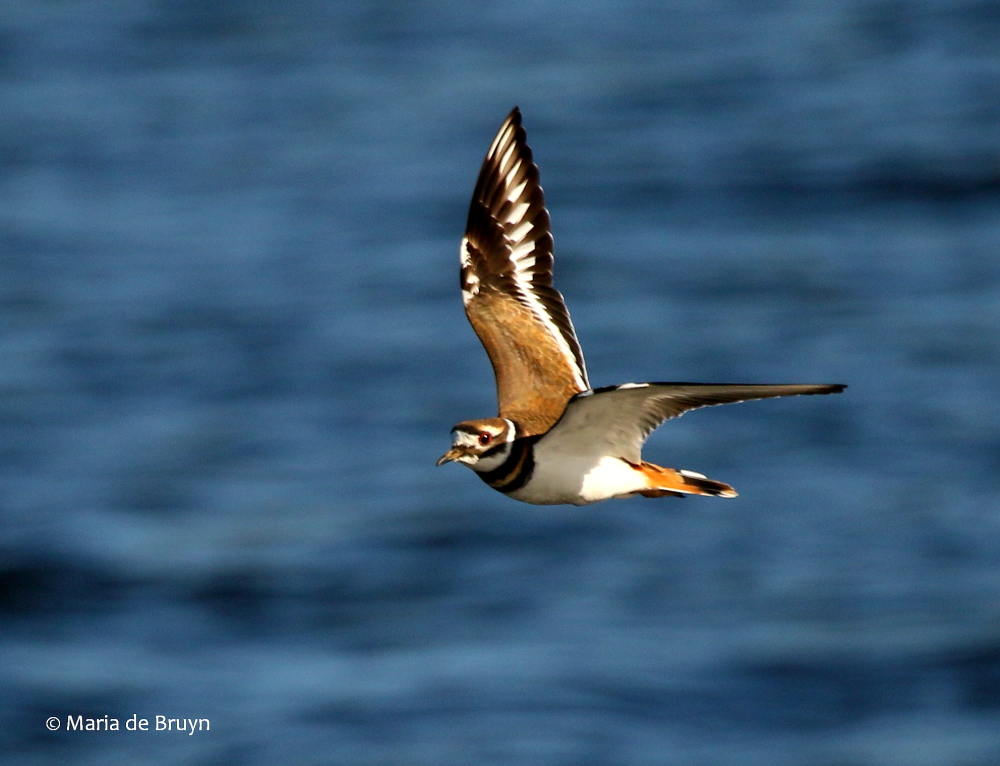
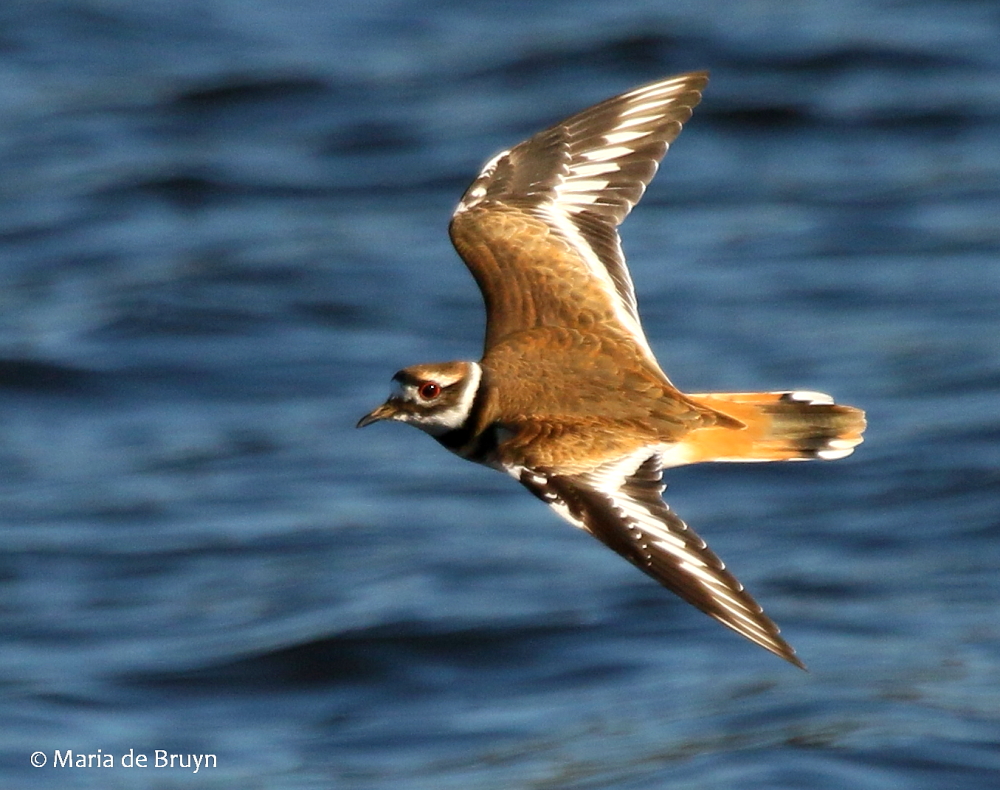


killdeer-i77a0913maria-de-bruyn-res  killdeer-i77a0911maria-de-bruyn-res

Taking care of our planet is like taking care of our houses. Since we human beings come from Nature, there is no point in our going against Nature, which is why I say the environment is not a matter of religion or ethics or morality. These are luxuries, since we can survive without them. But we will not survive if we continue to go against Nature.  – Dalai Lama
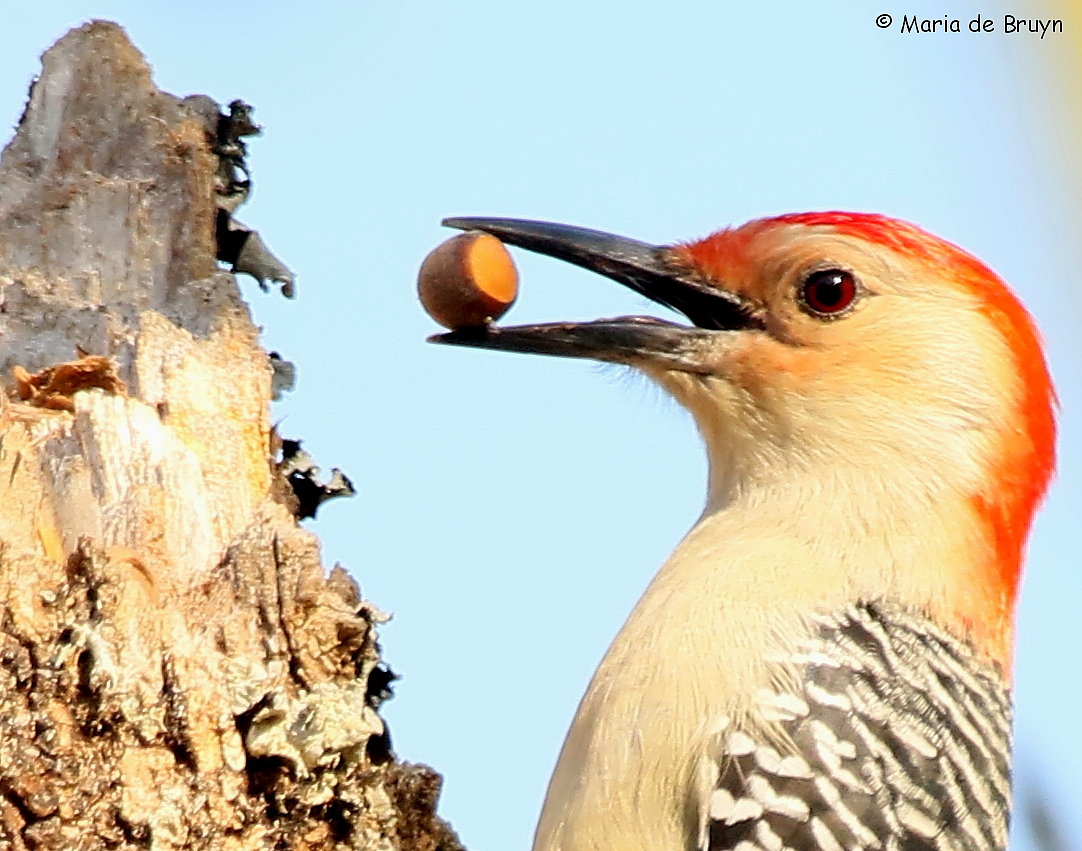
red-bellied-woodpecker-i77a2988maria-de-bruyn-res


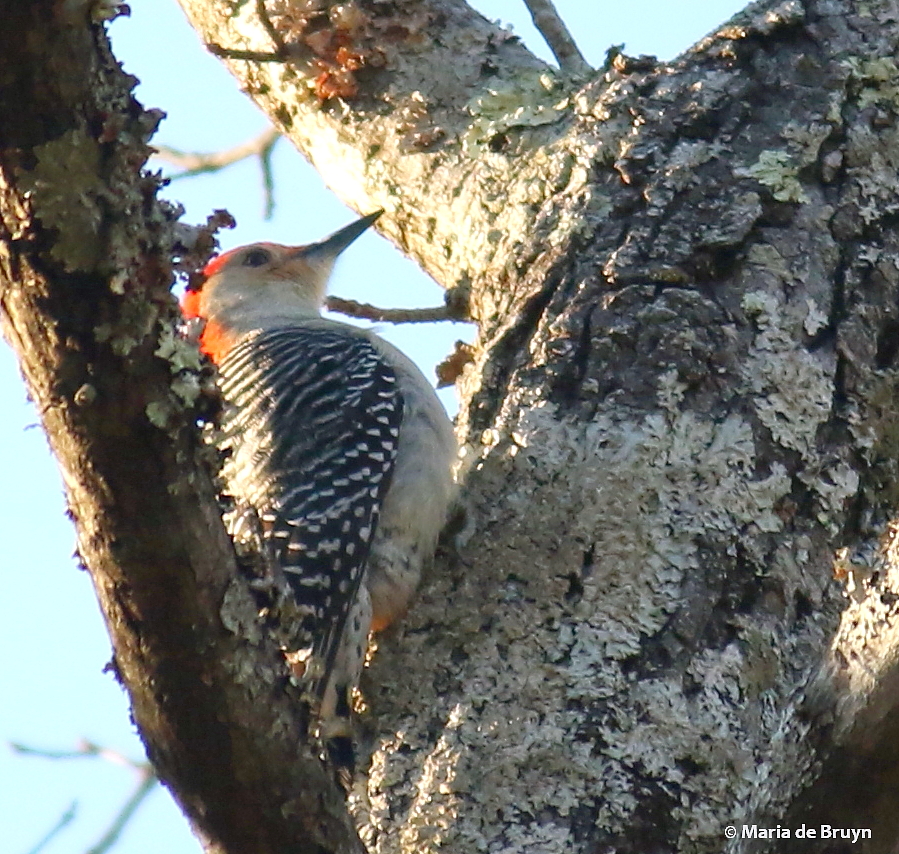
Many birds, like this red-bellied woodpecker (Melanerpes carolinus), are busy finding seeds and nuts for their meals.
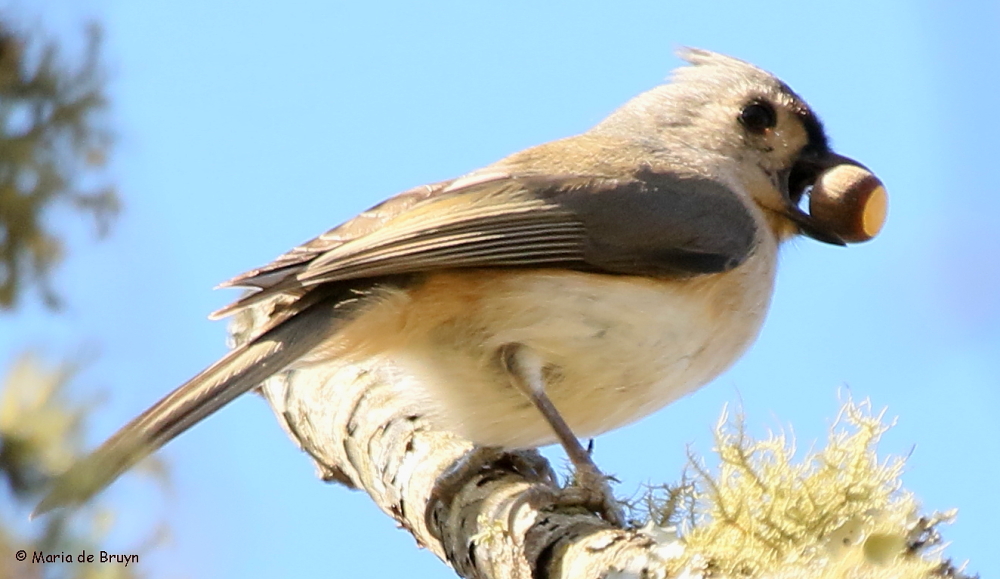
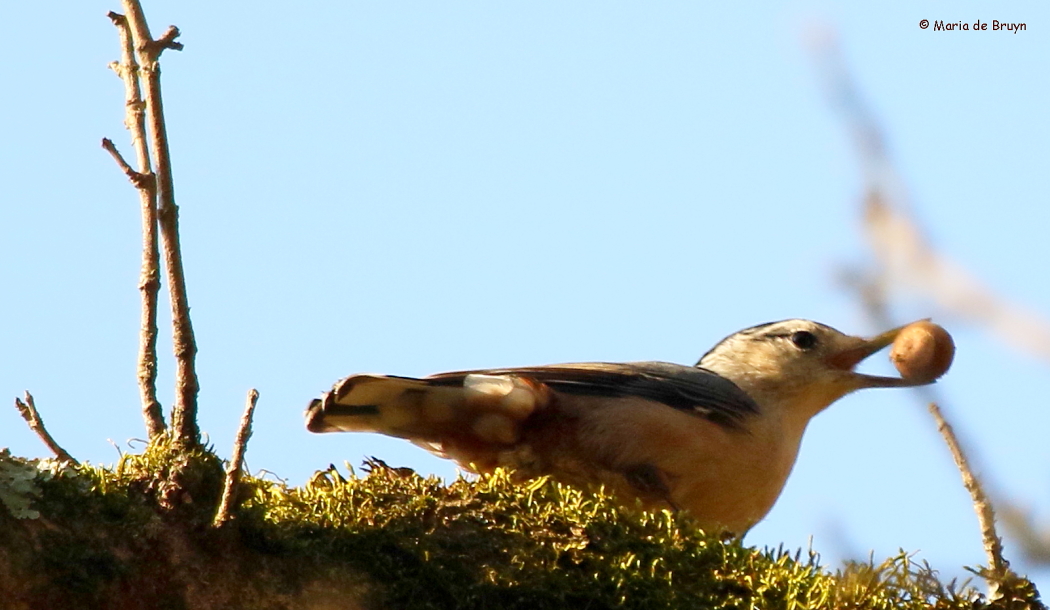


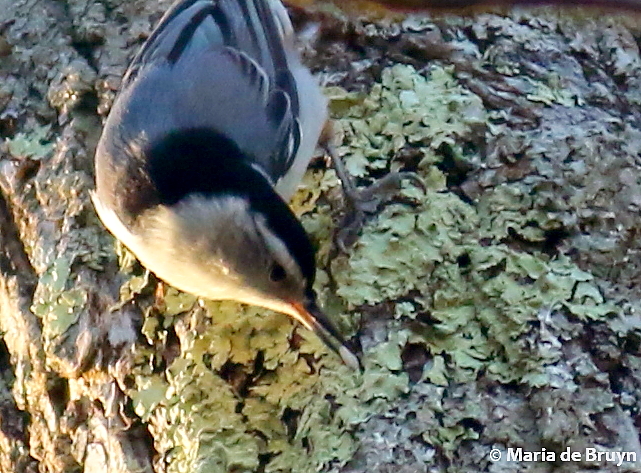
tufted-titmouse-i77a1965maria-de-bruyn-res  white-breasted-nuthatch-i77a2671maria-de-bruyn-res

Tufted titmouse (Baeolophus bicolor)          White-breasted nuthatch (Sitta carolinensis)
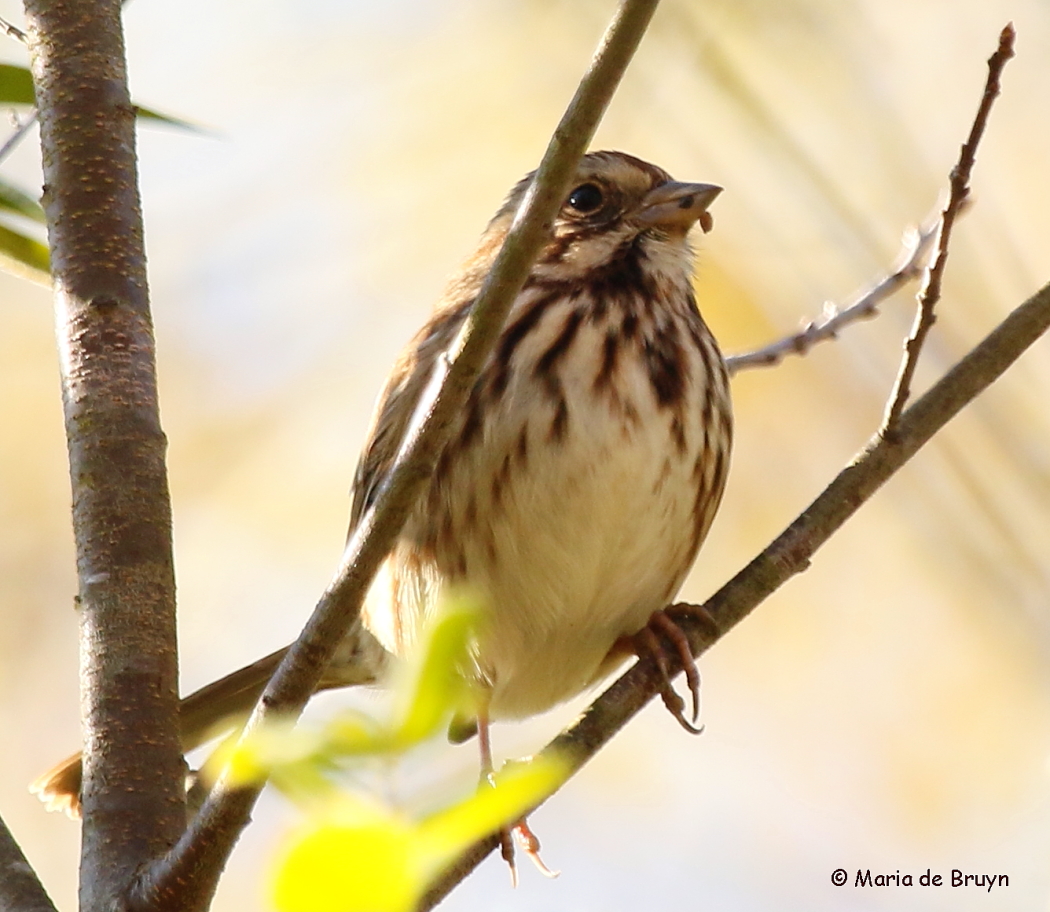
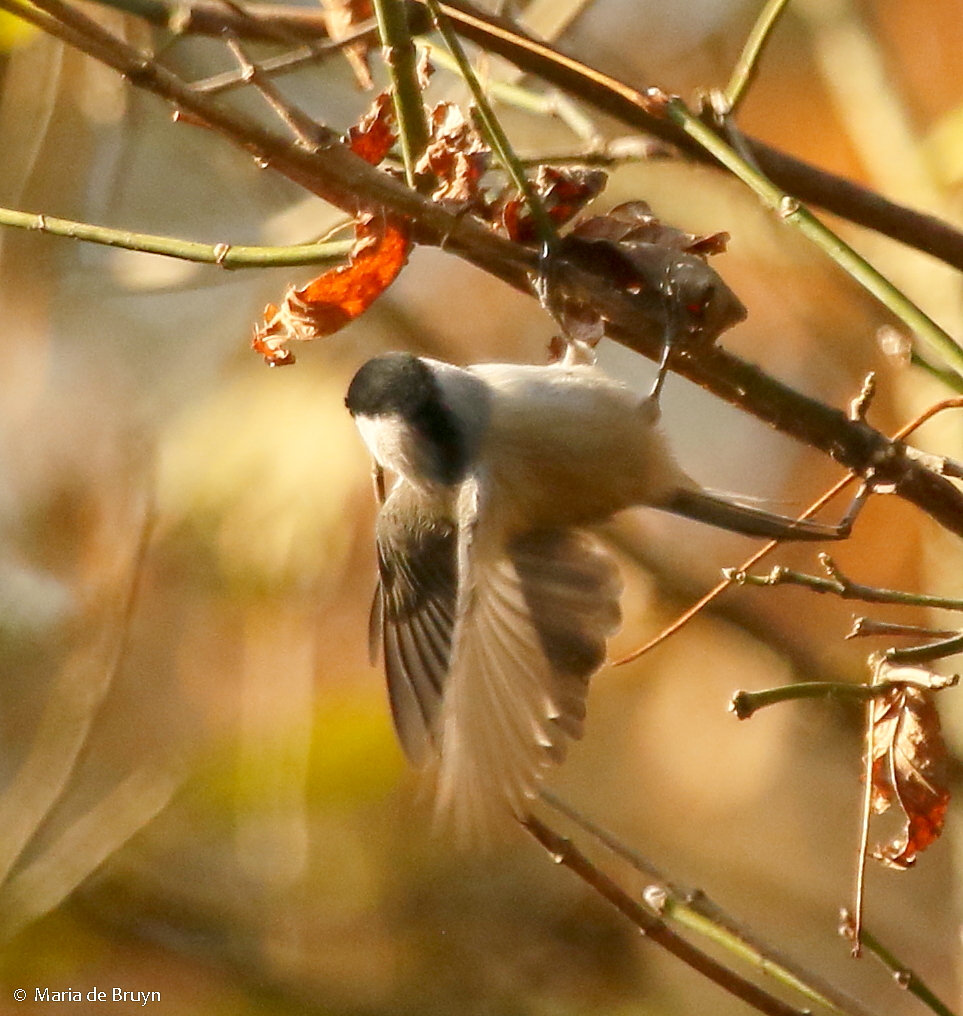
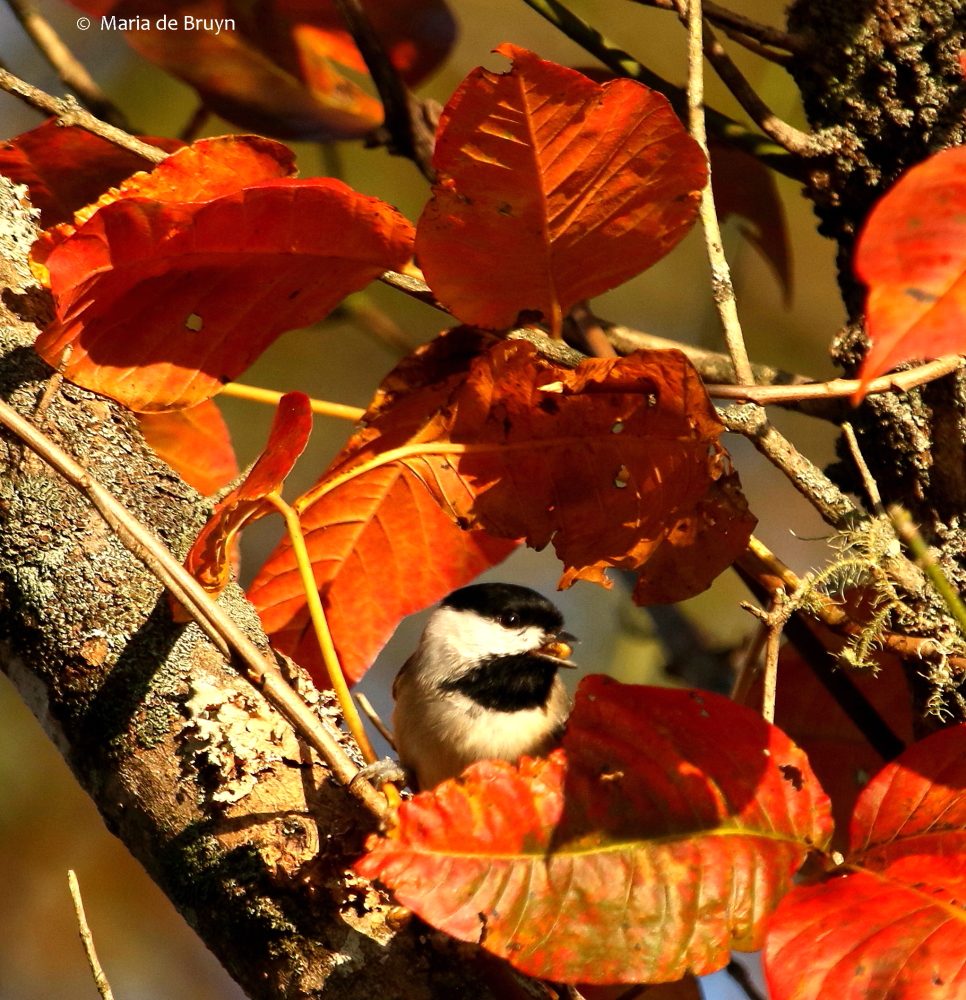
song-sparrow-i77a1499maria-de-bruyn-res   carolina-chickadee-i77a8444-maria-de-bruyn-res

Song sparrow (Melospiza melodia)                 Carolina chickadee (Poecile carolinensis)

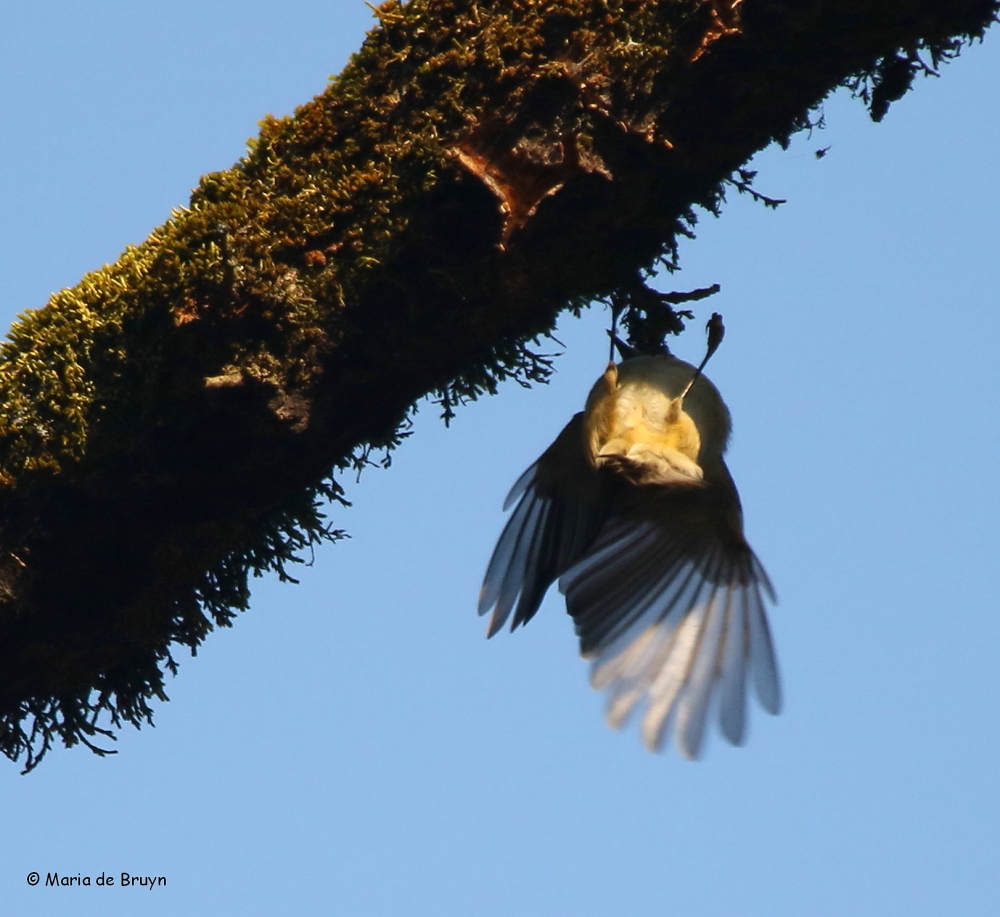
Sometimes, it involves hanging upside down to snag a tasty morsel and their wings help in balancing.

carolina-chickadee-i77a2699maria-de-bruyn    ruby-crowned-kinglet-i77a2565-maria-de-bruyn-res

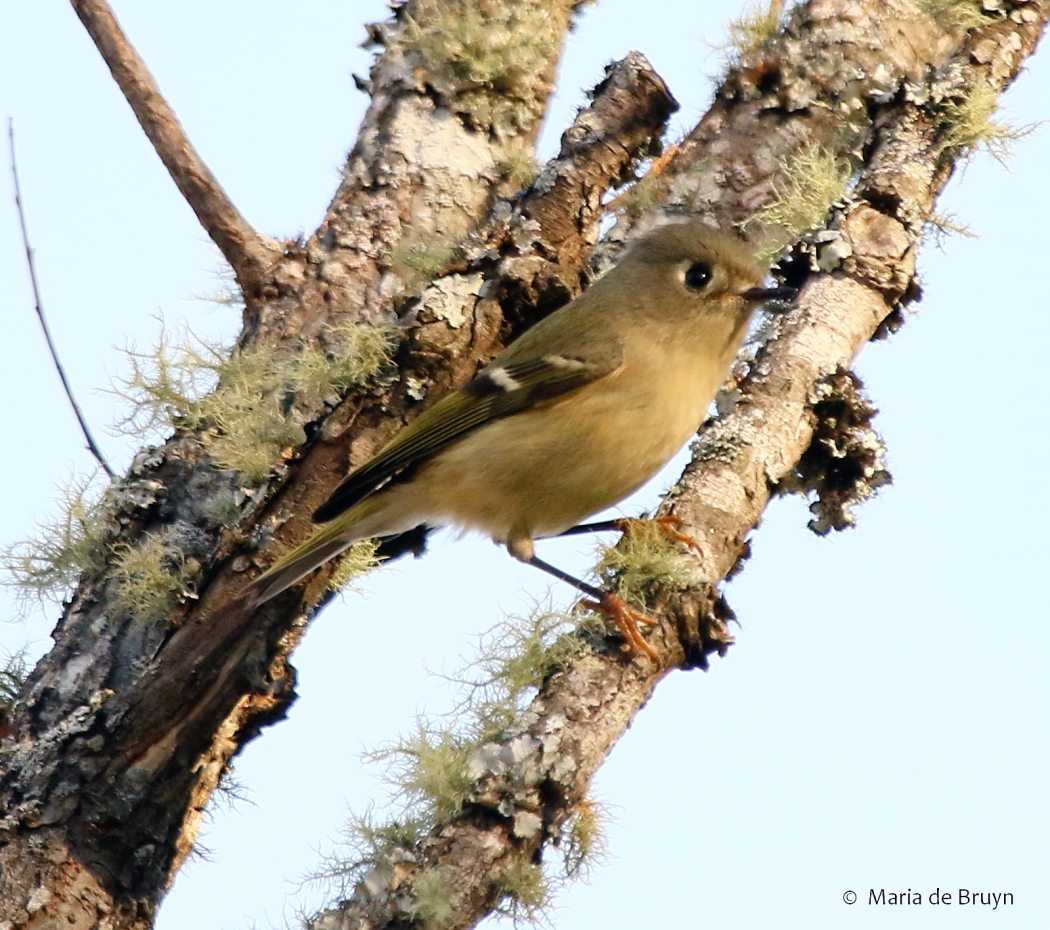
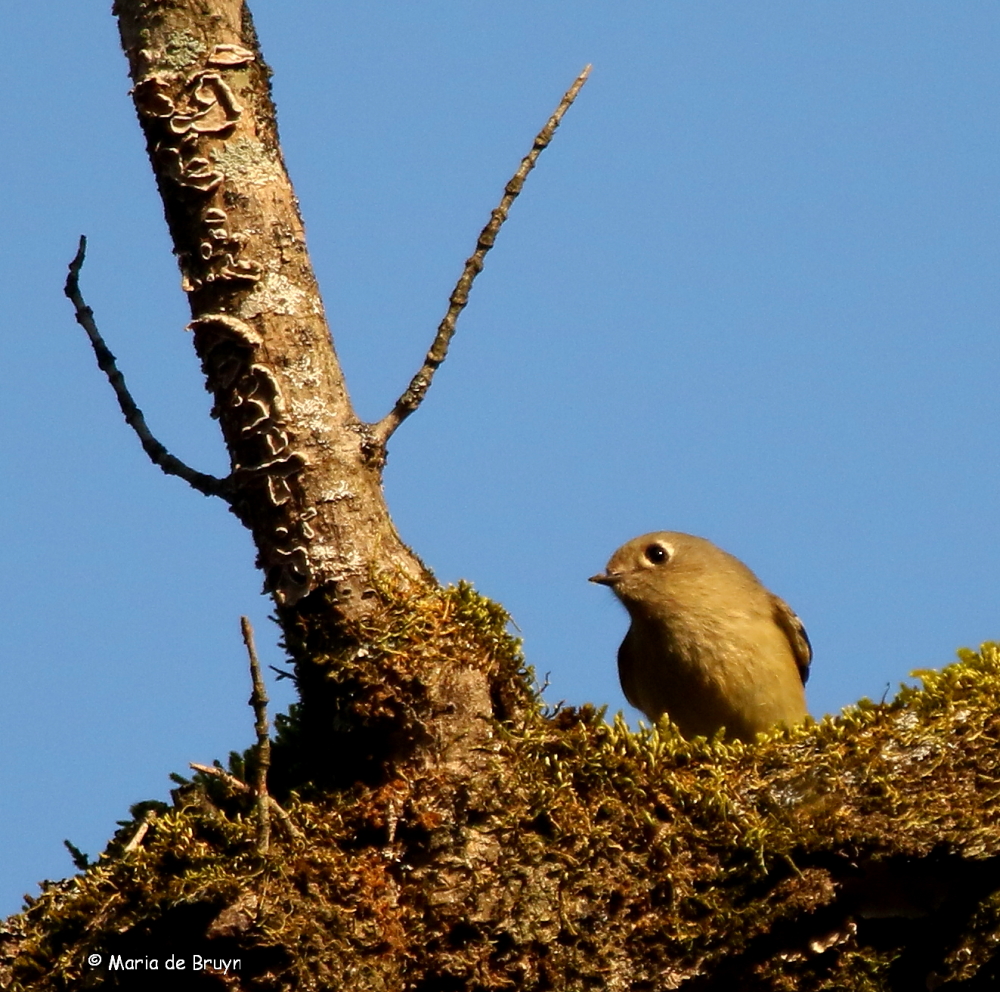
Carolina chickadee                                    Ruby-crowned kinglet (Regulus calendula)

If we unbalance Nature, humankind will suffer. Furthermore, as people alive today, we must consider future generations: a clean environment is a human right like any other. It is therefore part of our responsibility towards others to ensure that the world we pass on is as healthy, if not healthier, than when we found it. – Dalai Lama

american-crow-i77a6327-maria-de-bruyn-res


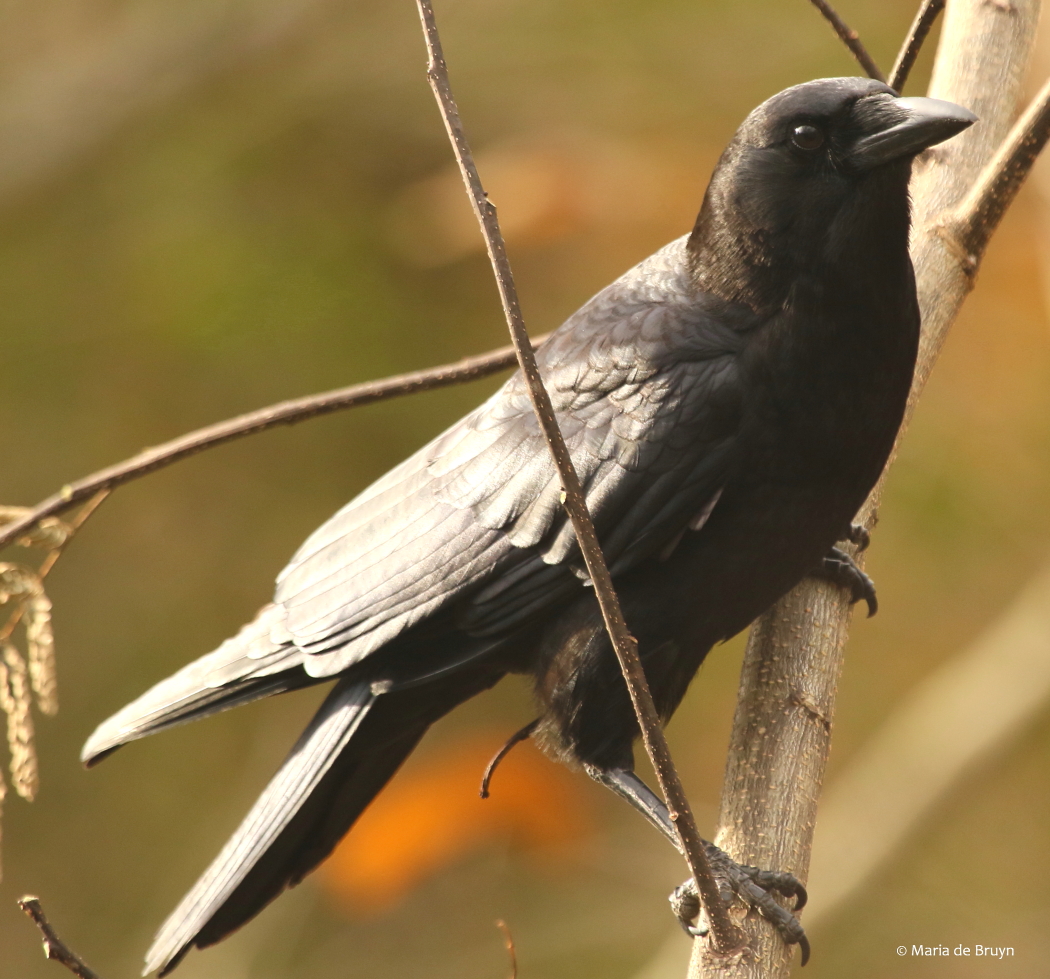
At Sandy Creek, a group of American crows (Corvus brachyrhynchos) flew down to investigate what had dropped to the ground from an overflowing garbage can but they soon flew off to seek more normal food elsewhere.


great-blue-heron-i77a1936maria-de-bruyn-res


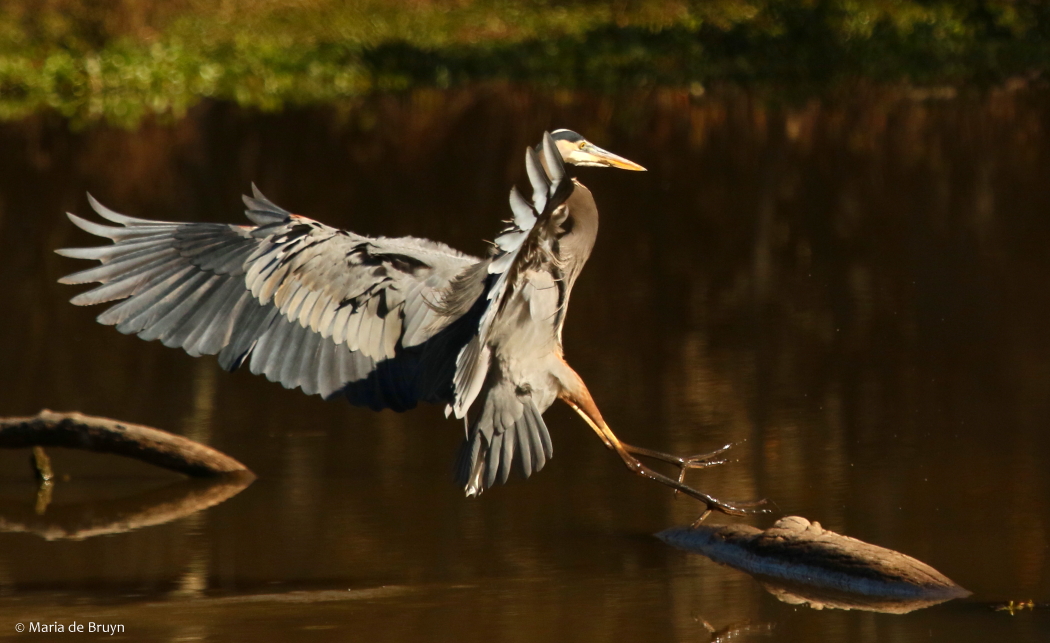
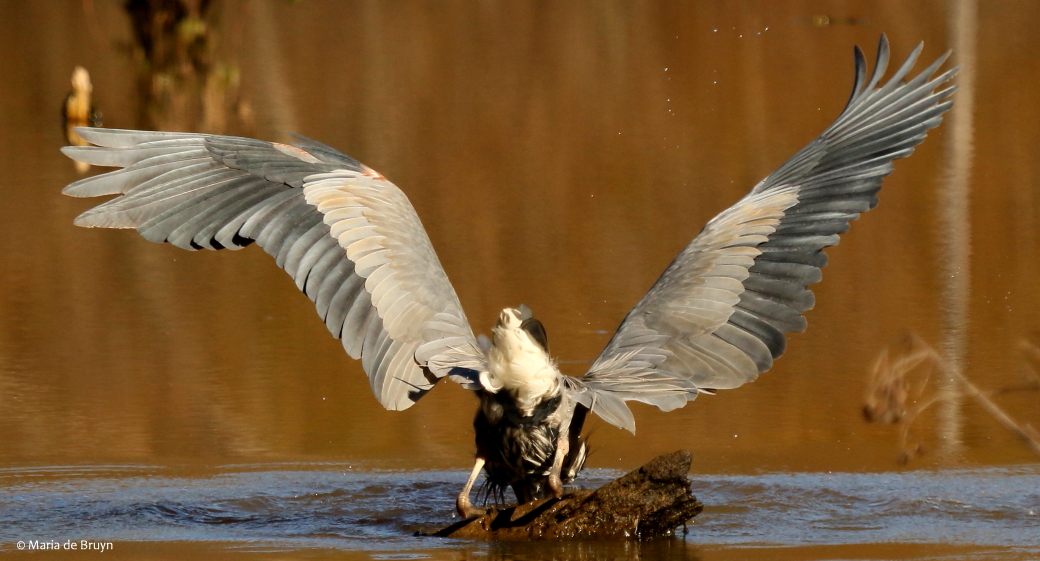
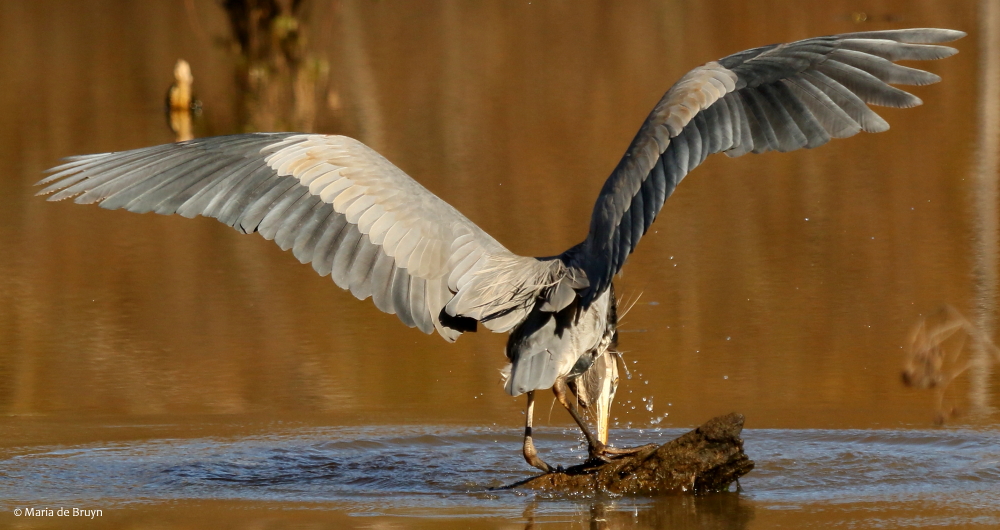
A great blue heron (Ardea herodias) was stalking the pond for fish; after I saw him (or her) snag a medium-sized fish, he turned his back so I saw the fishing technique from the rear.

great-blue-heron-i77a1438maria-de-bruyn-2-res  great-blue-heron-i77a1440maria-de-bruyn-res

flowering-dogwood-i77a0882maria-de-bruyn-res


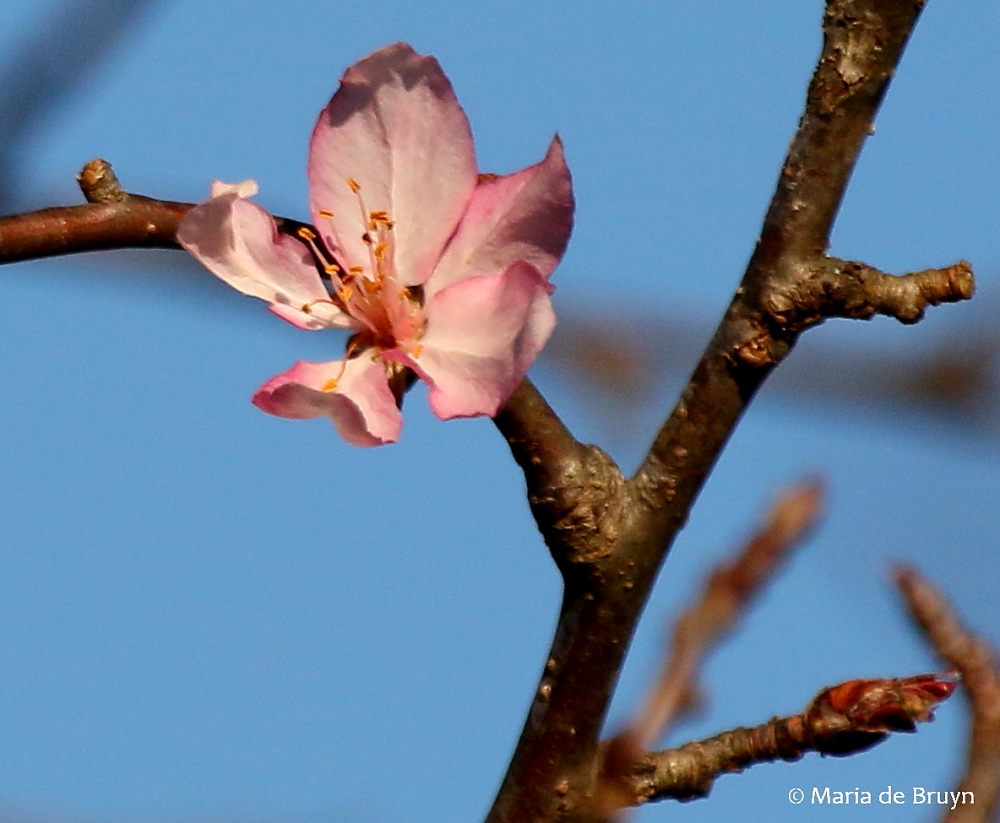
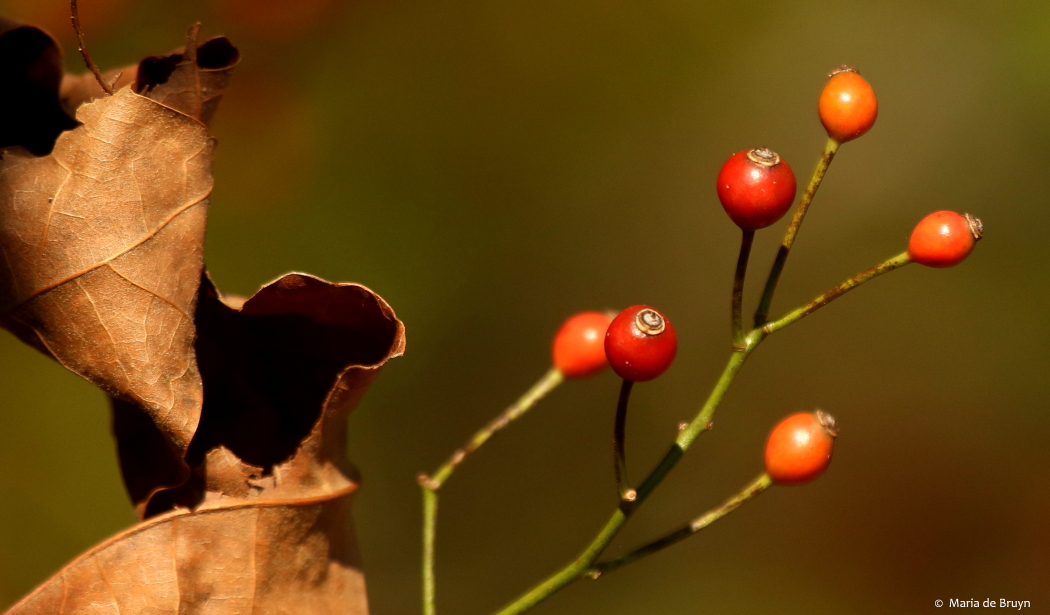
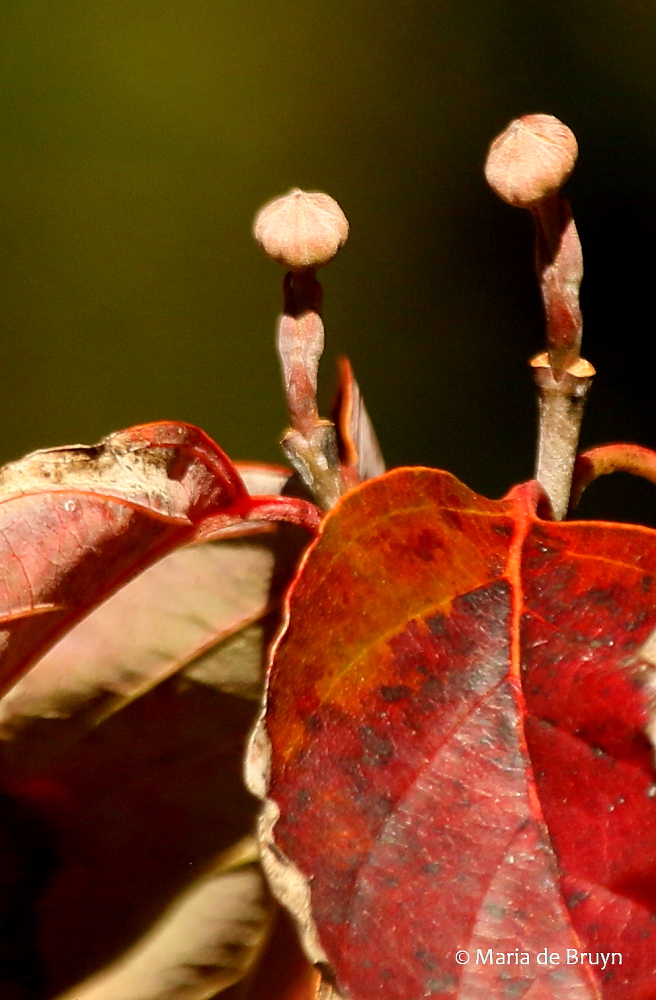
The flowering dogwoods (Cornus florida) at Cane Creek still had a few blossoms; at Sandy Creek and Mason Farm, they offered bright berries. On one tree, they made me think of a movie-inspired alien peeking out of the branches with eyes on stalks.


flowering-dogwood-i77a5820-maria-de-bruyn-res       flowering-dogwood-i77a1012maria-de-bruyn-res

Destruction of nature and nature resources results from ignorance, greed and lack of respect for the earth’s living things. – Dalai Lama

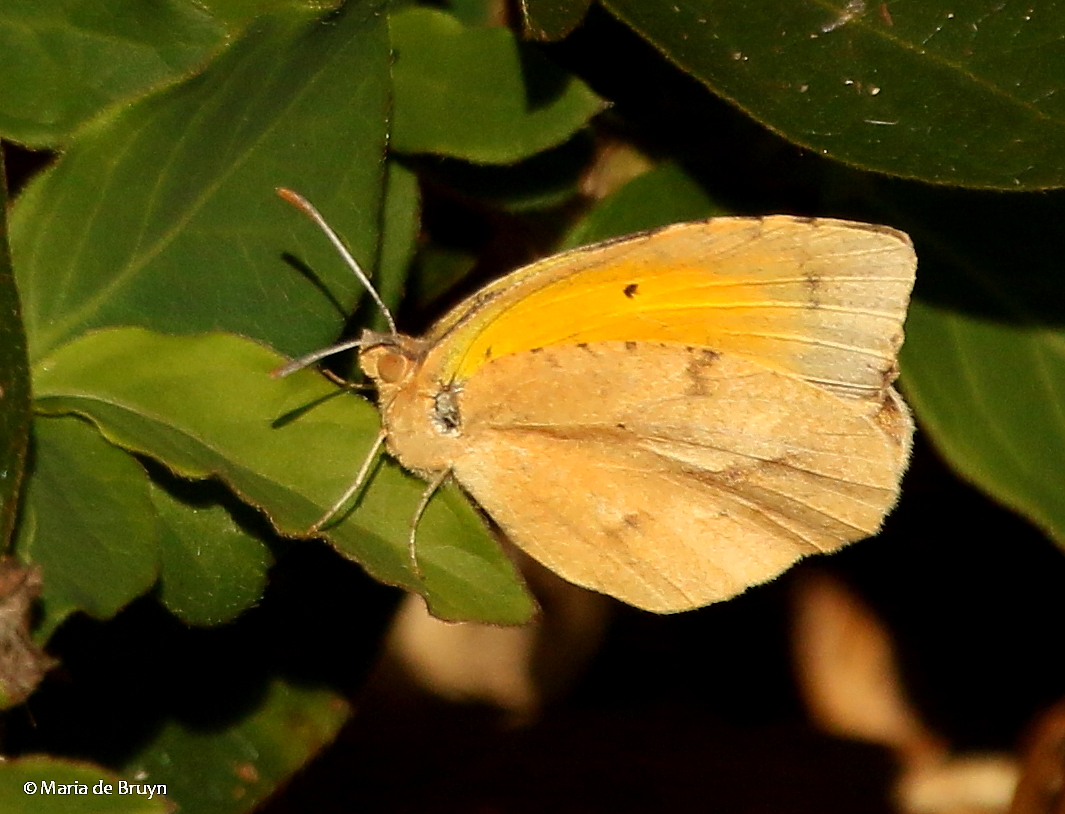
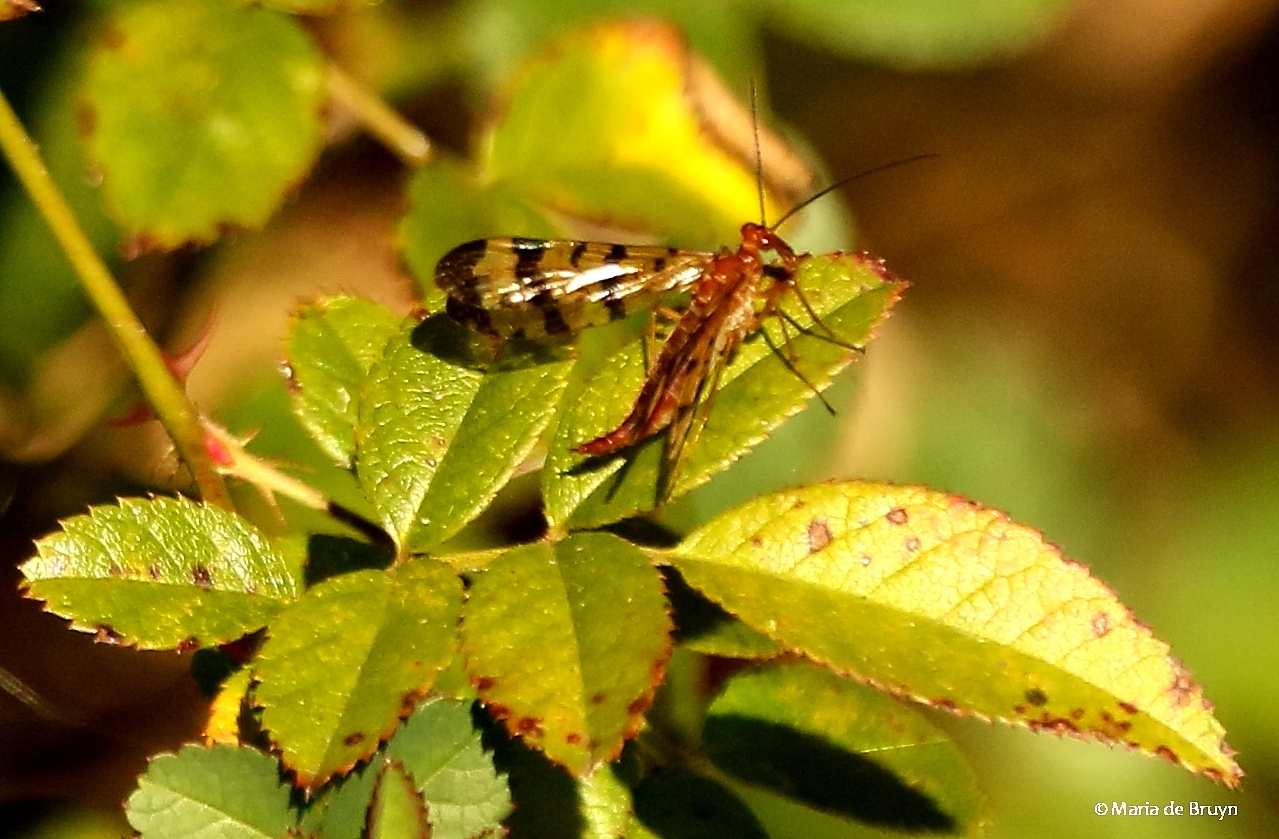
Up until the first morning frost this autumn, butterflies were still around, like this sleepy orange (Eurema nicippe); now that we have had several mornings of below-freezing temperatures, the butterflies are mostly gone as are the majority of bees. A scorpion fly (Panorpa) was in evidence at Cane Creek to my surprise.

sleepy-orange-i77a1003maria-de-bruyn-res  scorpion-fly-i77a0991maria-de-bruyn-res

eastern-gray-squirrel-i77a2505-maria-de-bruyn-res


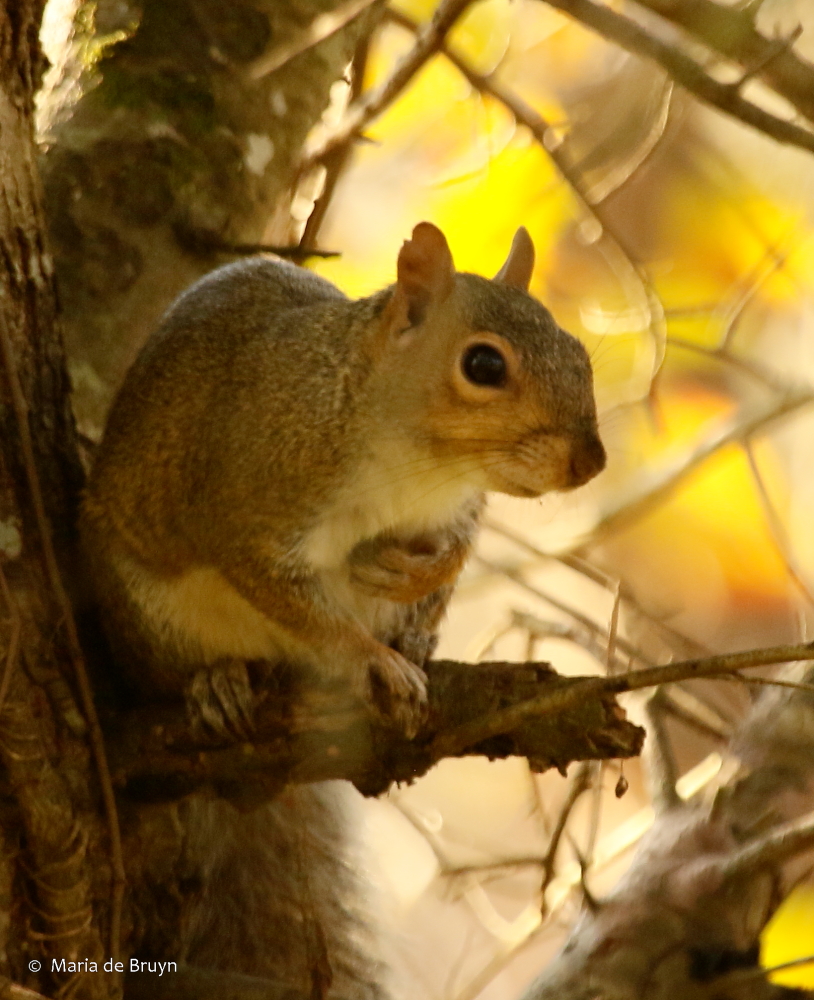
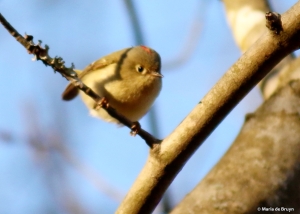
In between bird spottings, Eastern gray squirrels (Sciurus carolinensis) chittered at me at all three parks. And I was pleased to see some ruby-crowned kinglets since the one that has enjoyed the suet at my house the past three years hasn’t appeared yet.


ruby-crowned-kinglet-i77a6241-maria-de-bruyn-res     ruby-crowned-kinglet-i77a2574-maria-de-bruyn-res

…until now, Mother Earth has been able to tolerate our sloppy house habits. However, the stage has now been reached where she can no longer accept our behaviour in silence. The problems caused by environmental disasters can be seen as her response to our irresponsible behaviour. She is warning us that there are limits even to her tolerance. –  Dalai Lama

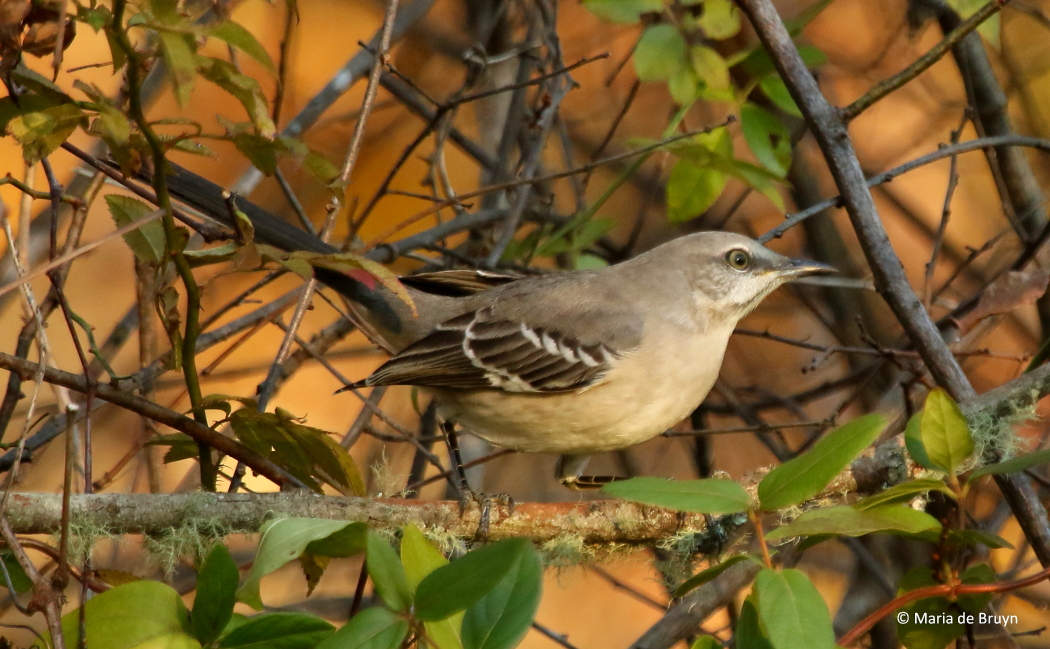
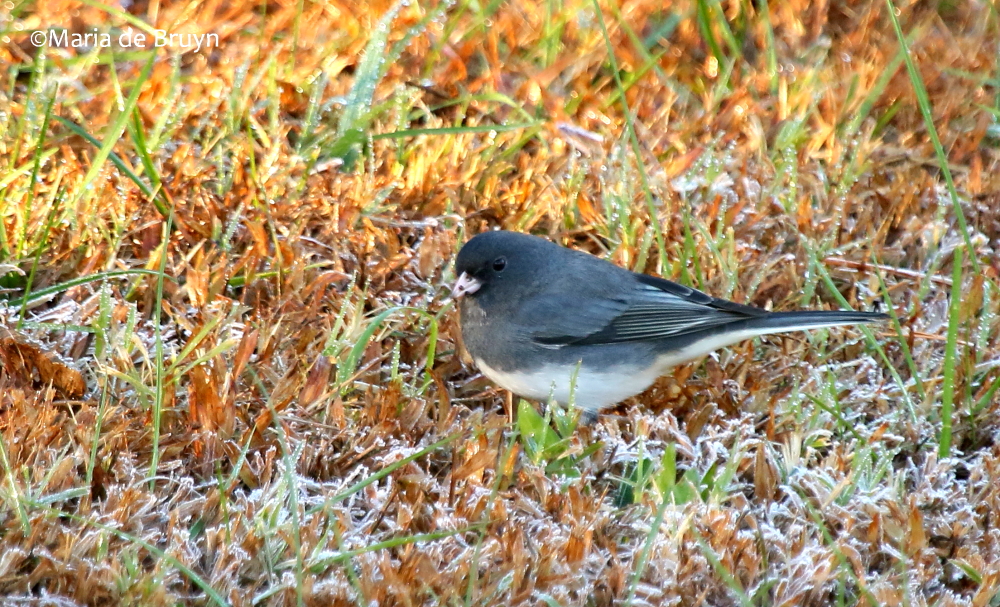
Some of the birds common in my yard are welcome sights at the nature reserves, too.

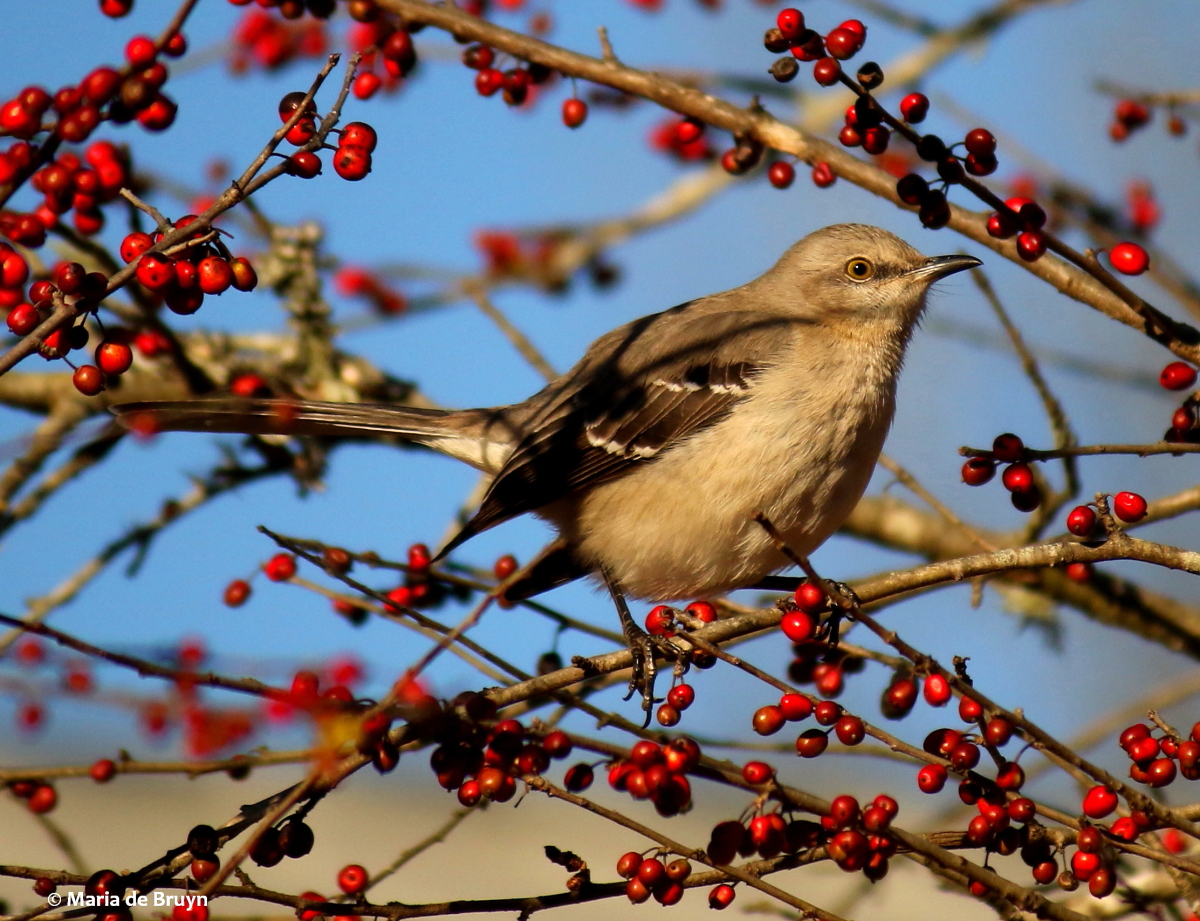
northern-mockingbird-i77a2312-maria-de-bruyn-res    dark-eyed-junco-i77a0624maria-de-bruyn-res

Northern mockingbird (Mimus polyglottos)         Dark-eyed junco (Junco hyemalis)

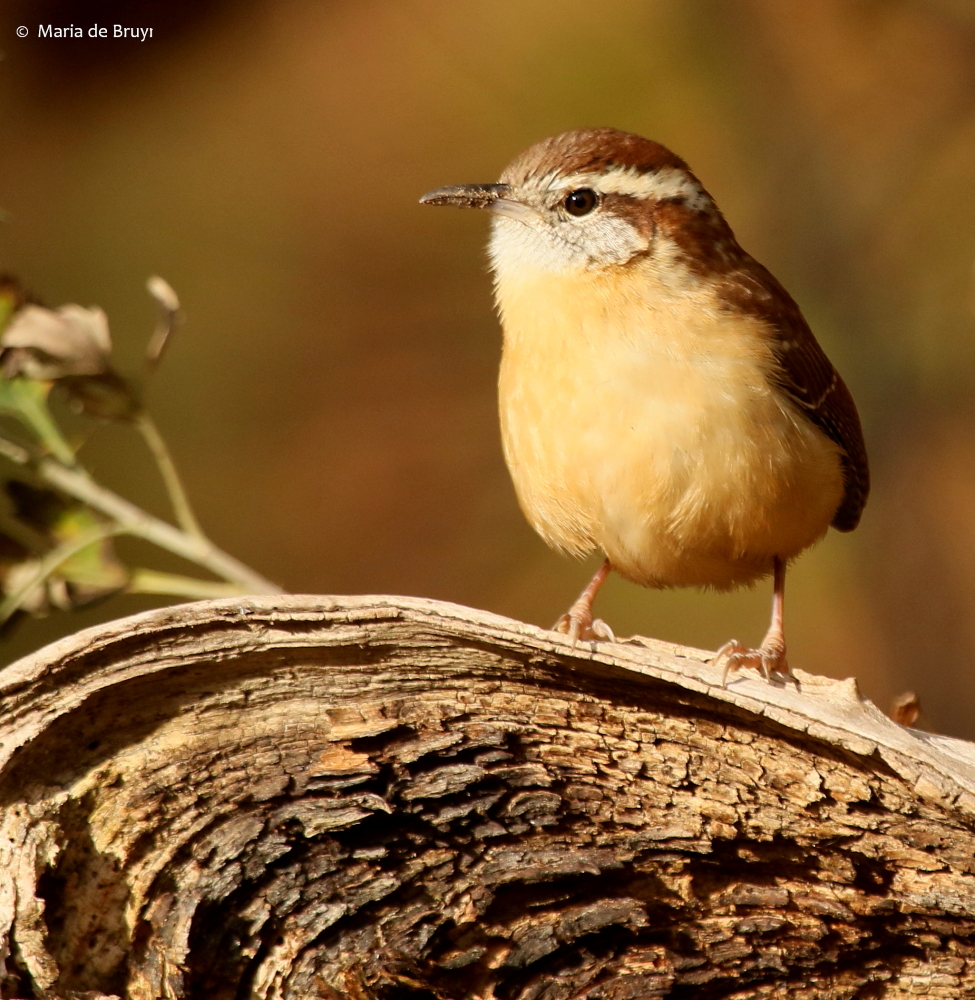
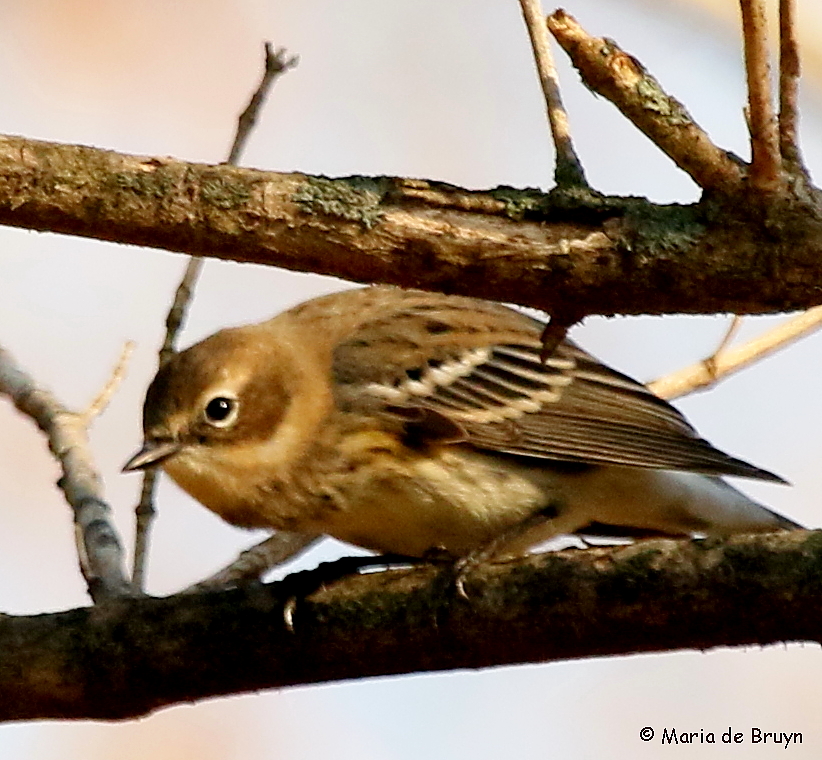
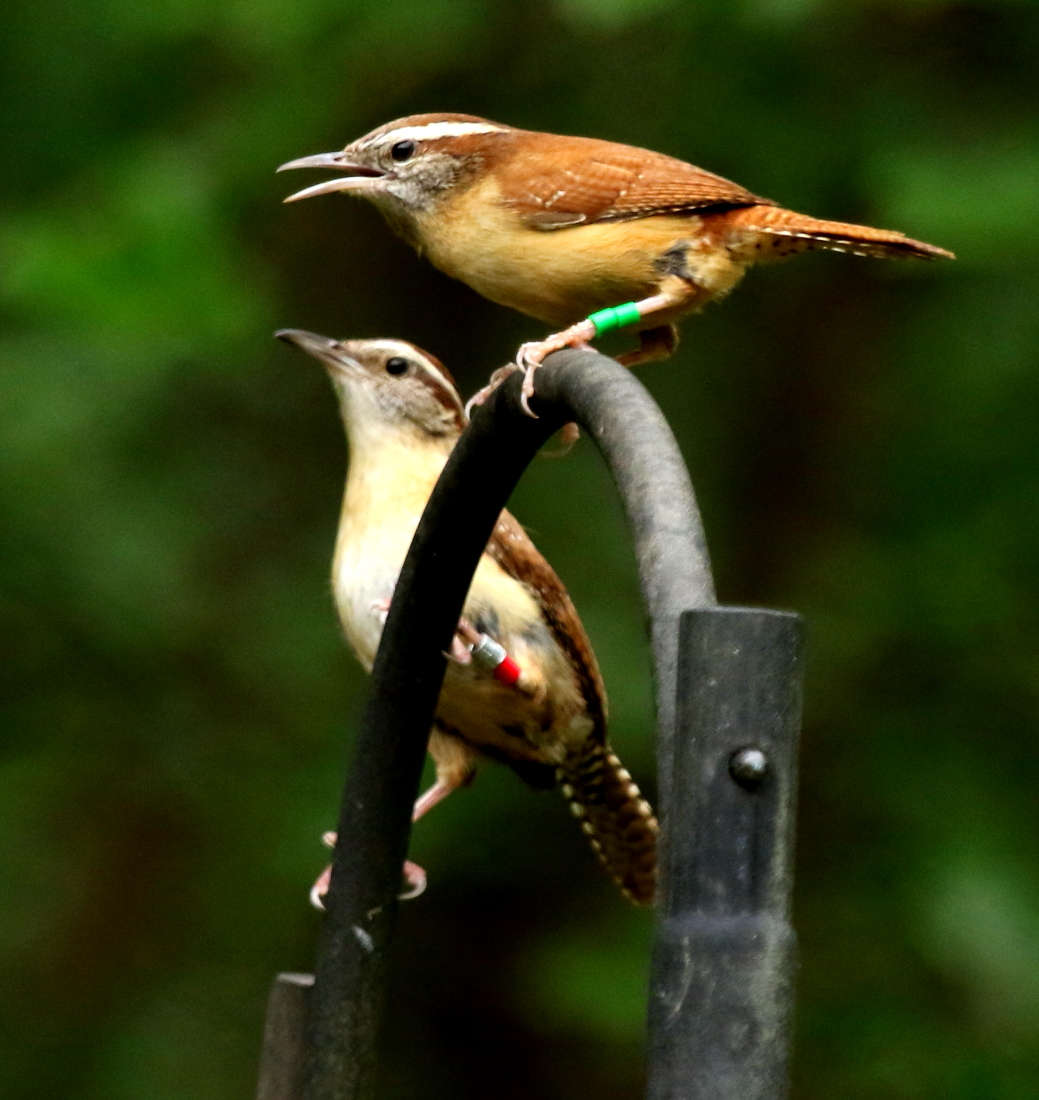
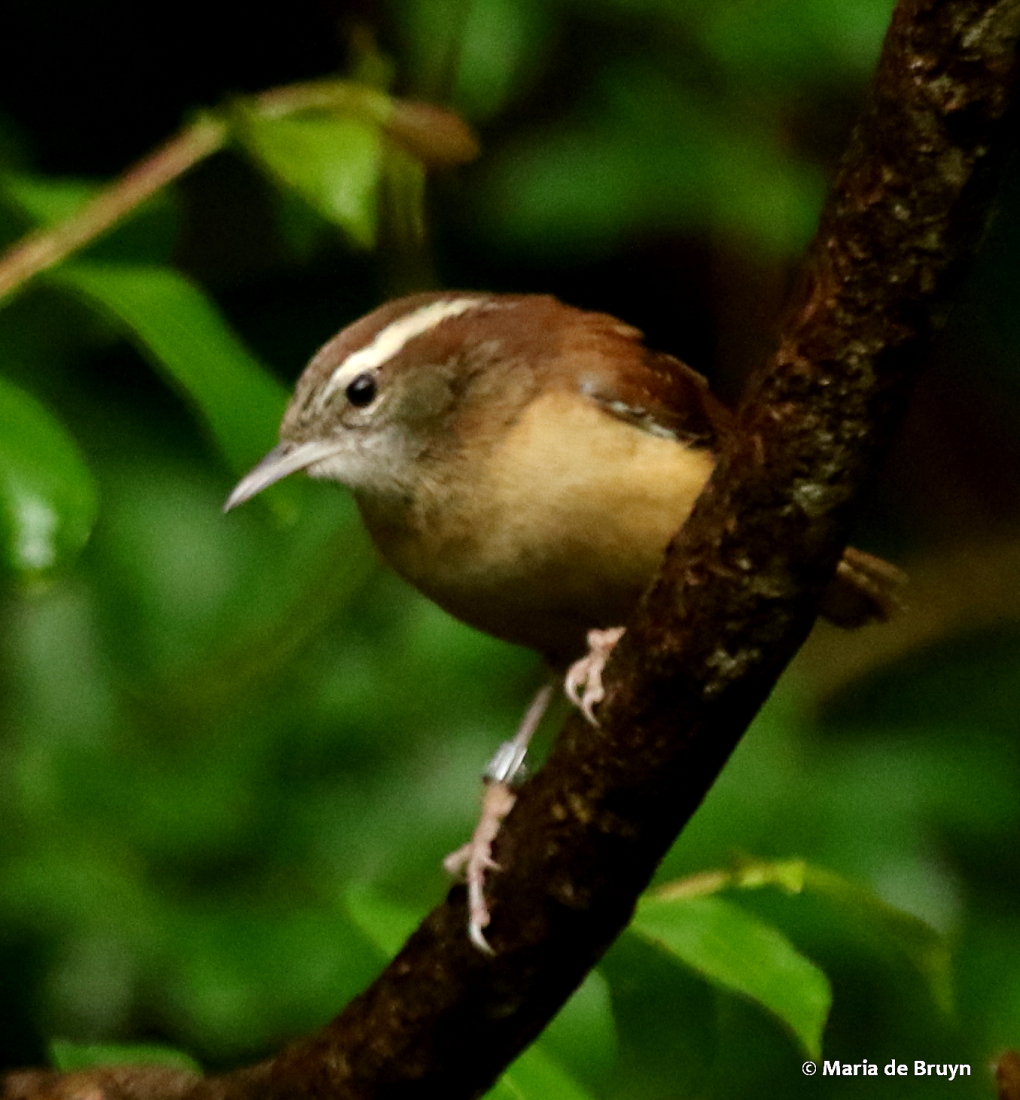
carolina-wren-i77a6358-maria-de-bruyn-res   yellow-rumped-warbler-i77a2780maria-de-bruyn-res

Carolina wren (Thryothorus ludovicianus)   Yellow-rumped warbler (Setophaga coronata)

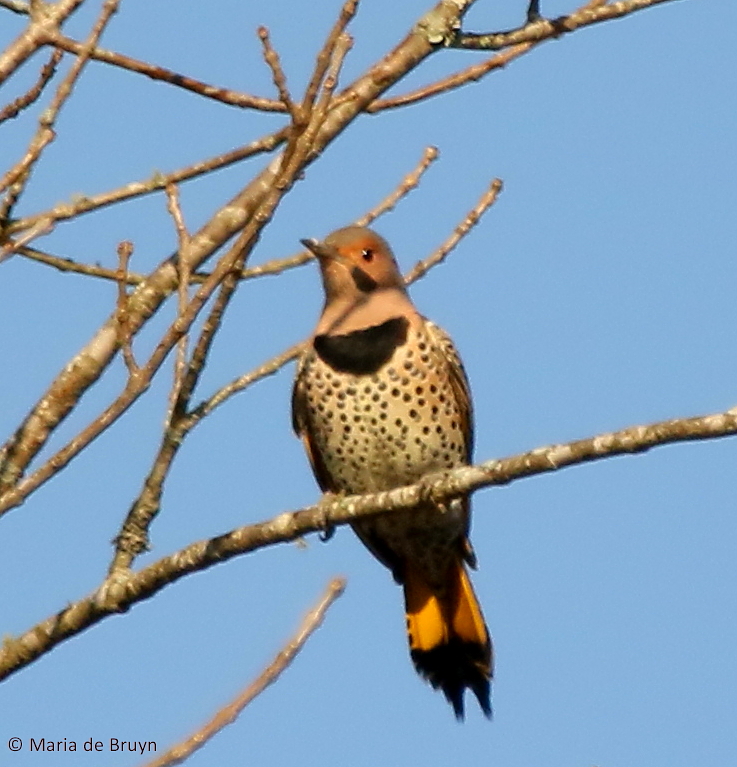
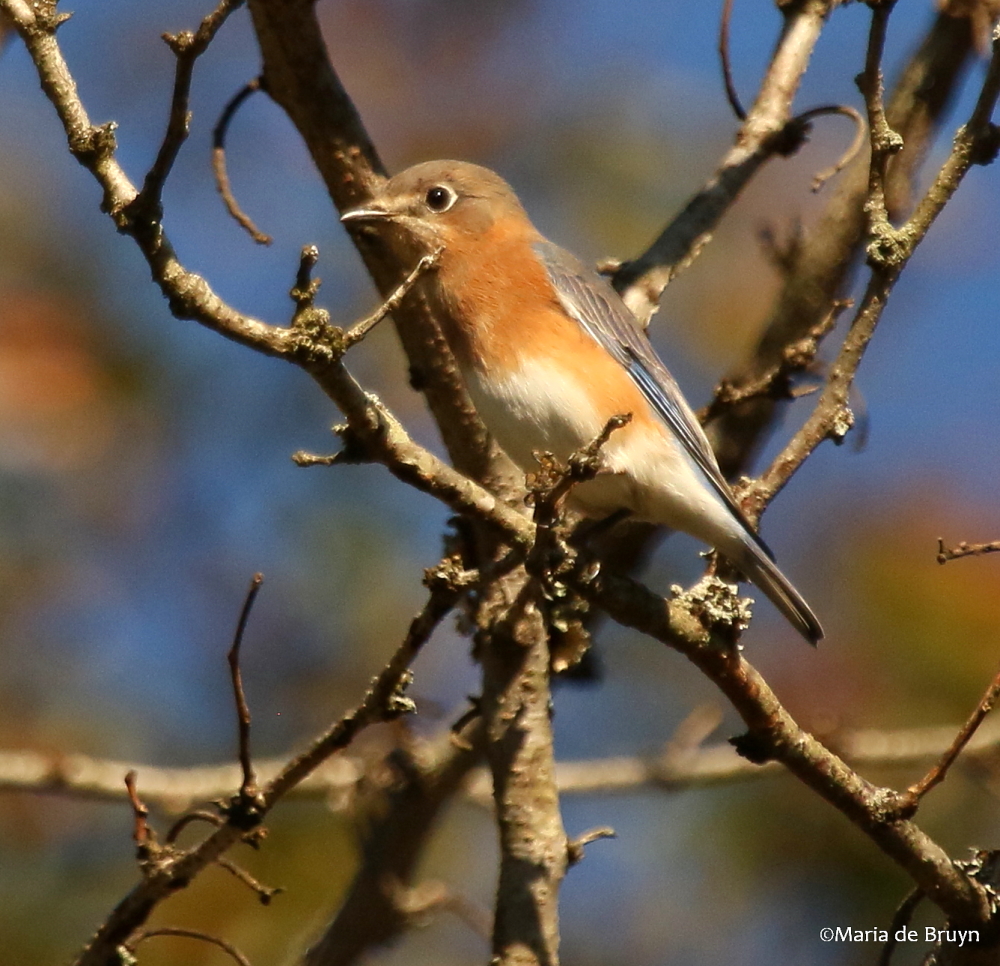
northern-flicker-i77a2485-maria-de-bruyn-res          eastern-bluebird-i77a0688maria-de-bruyn-res

Northern flicker (Colaptes auratus)               Eastern bluebird (Sialia sialis)

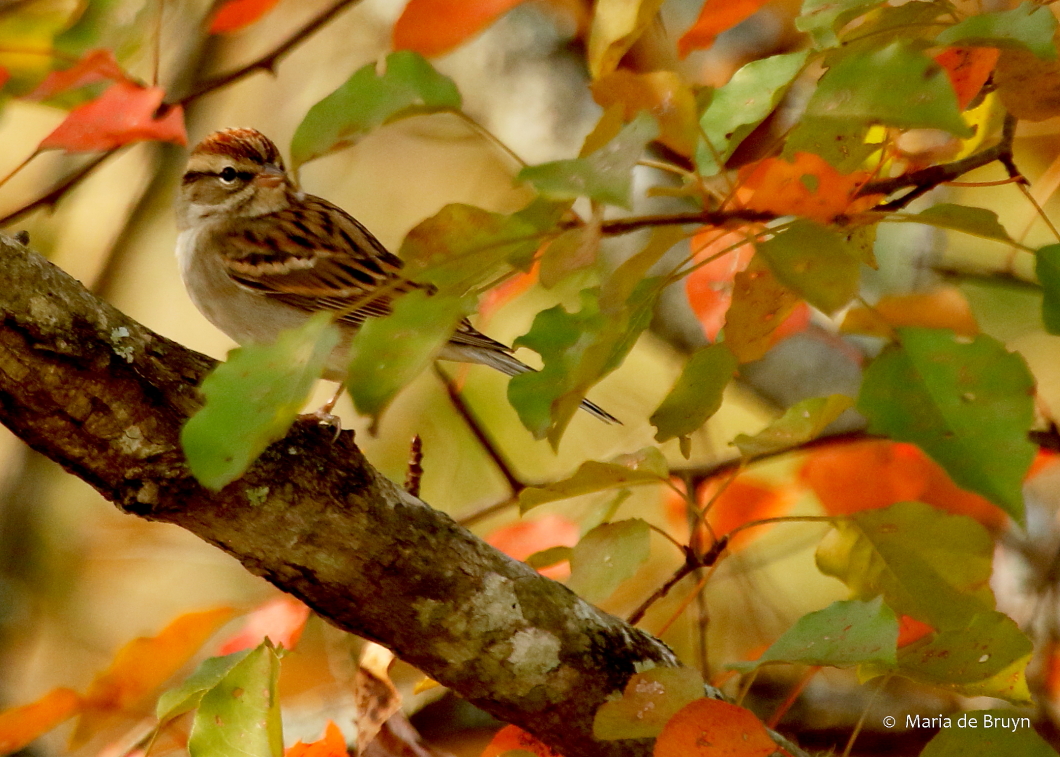
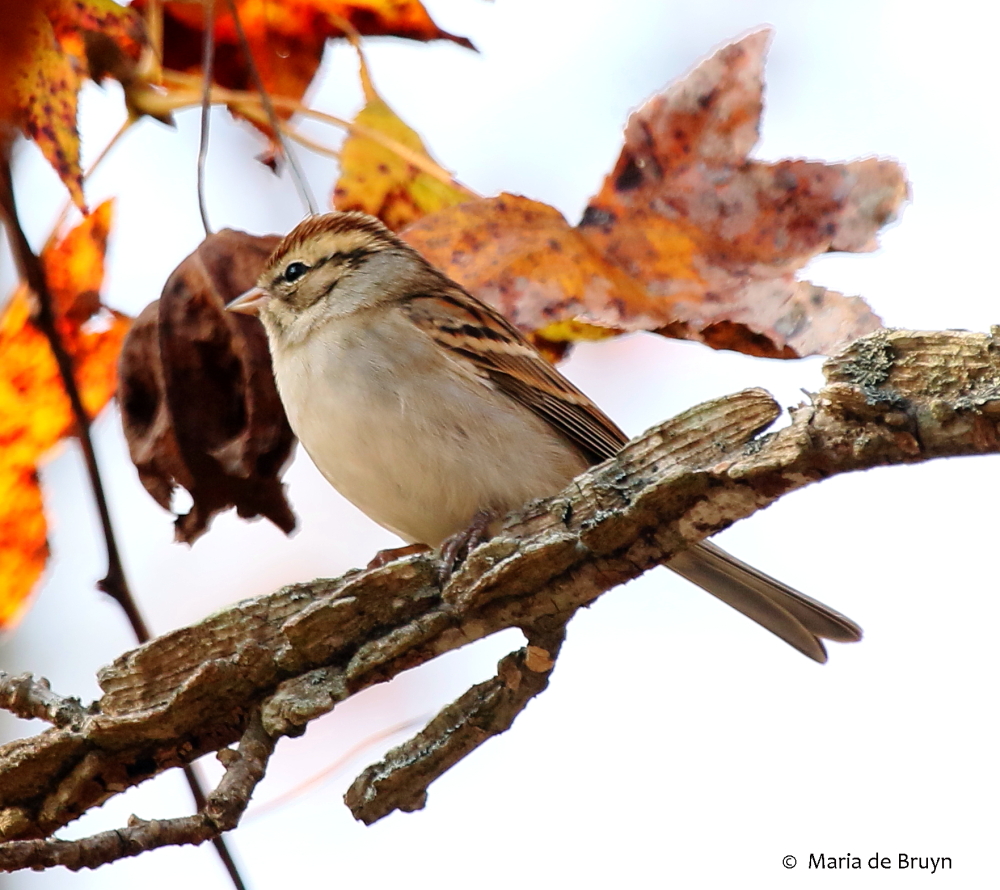
chipping-sparrow-i77a2915-maria-de-bruyn-res    chipping-sparrow-i77a2925-maria-de-bruyn-res

Chipping sparrow (Spizella passerina)

Many of the earth’s habitats, animals, plants, insects, and even microorganisms that we know of as rare or endangered, may not be known at all by future generations. We have the capacity, and the responsibility. We must act before it is too late.    Dalai Lama

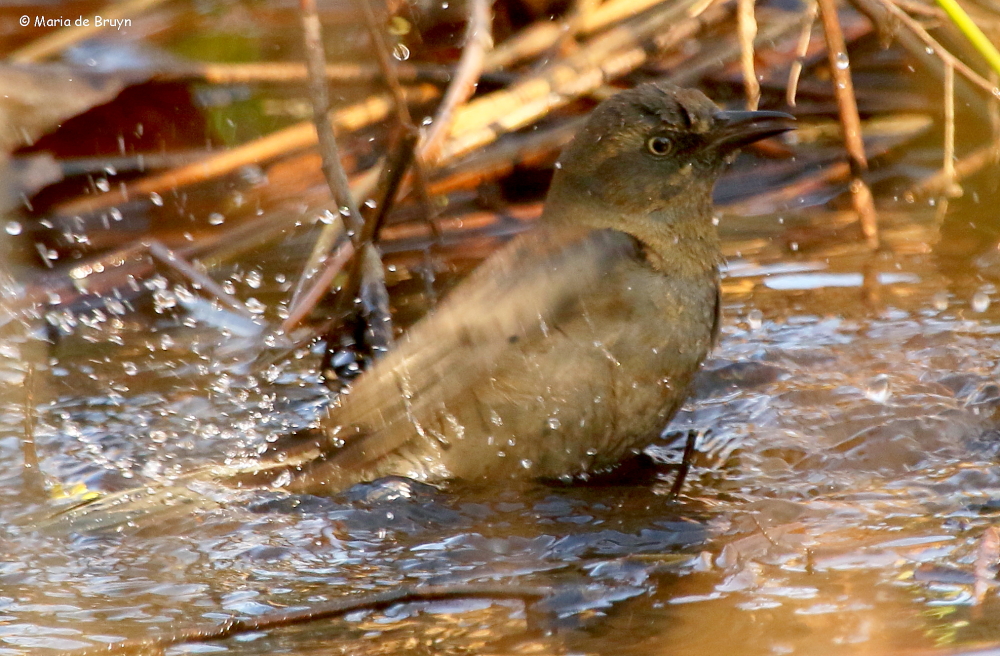
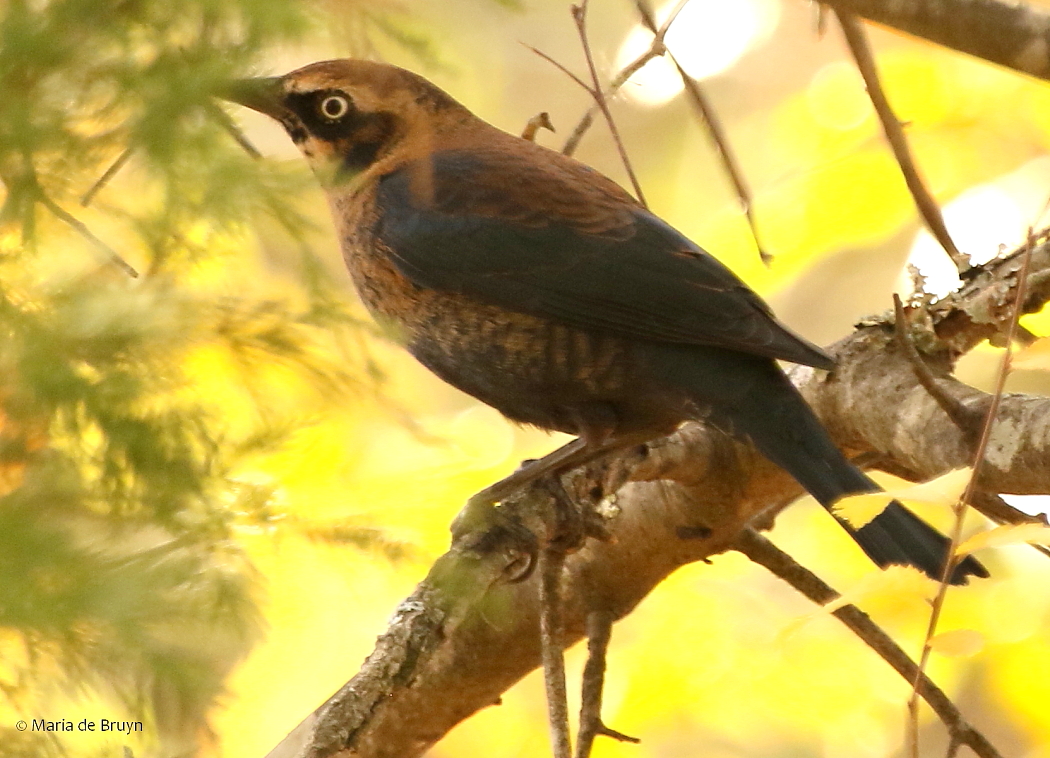
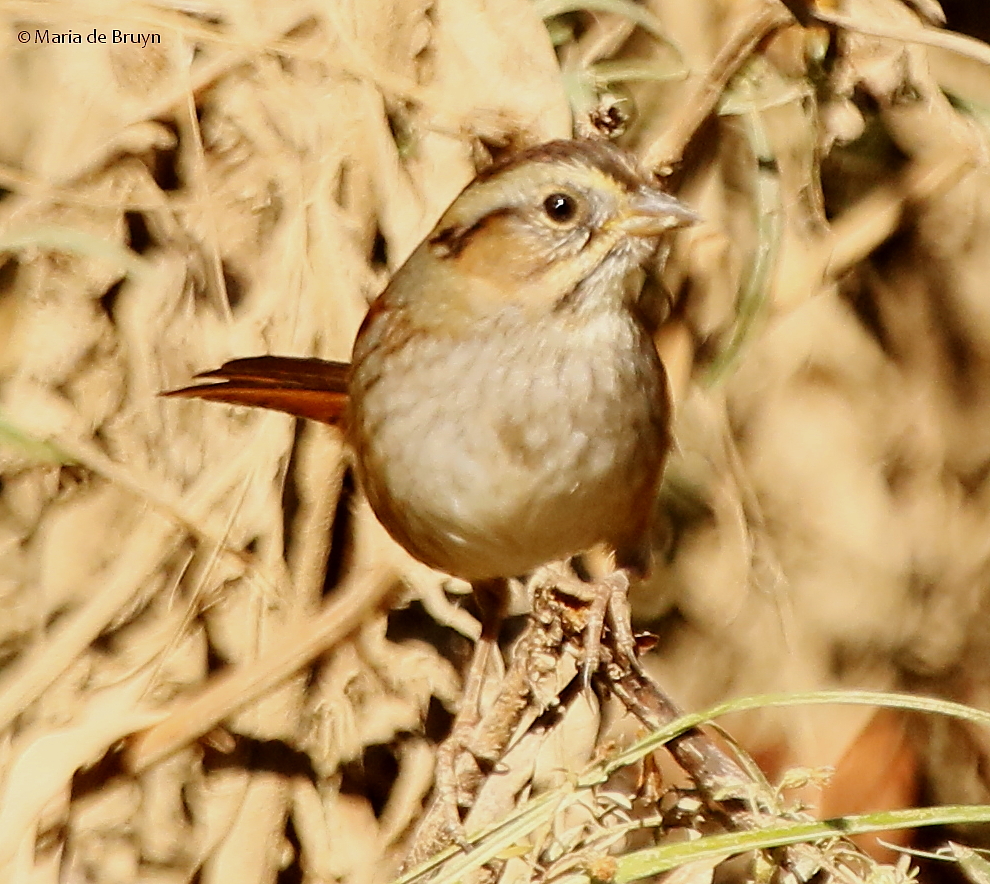
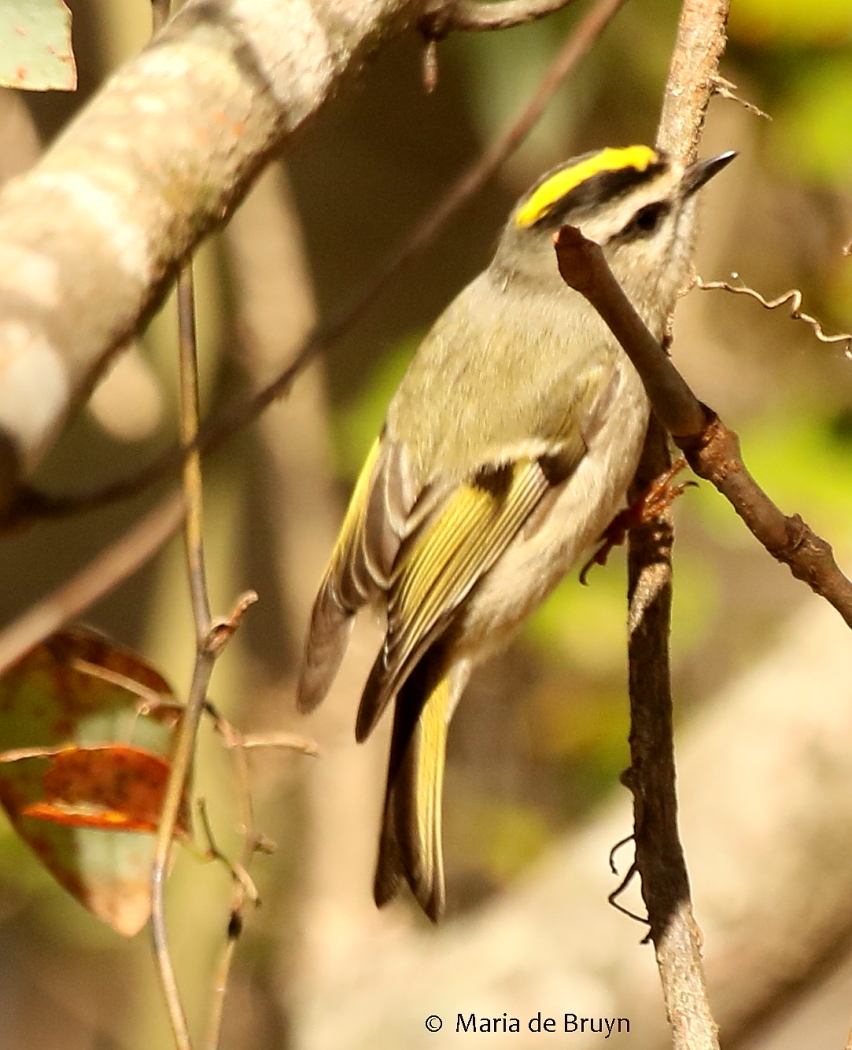
And the occasional or rare visitors to my yard are appreciated in the woods and fields, too!

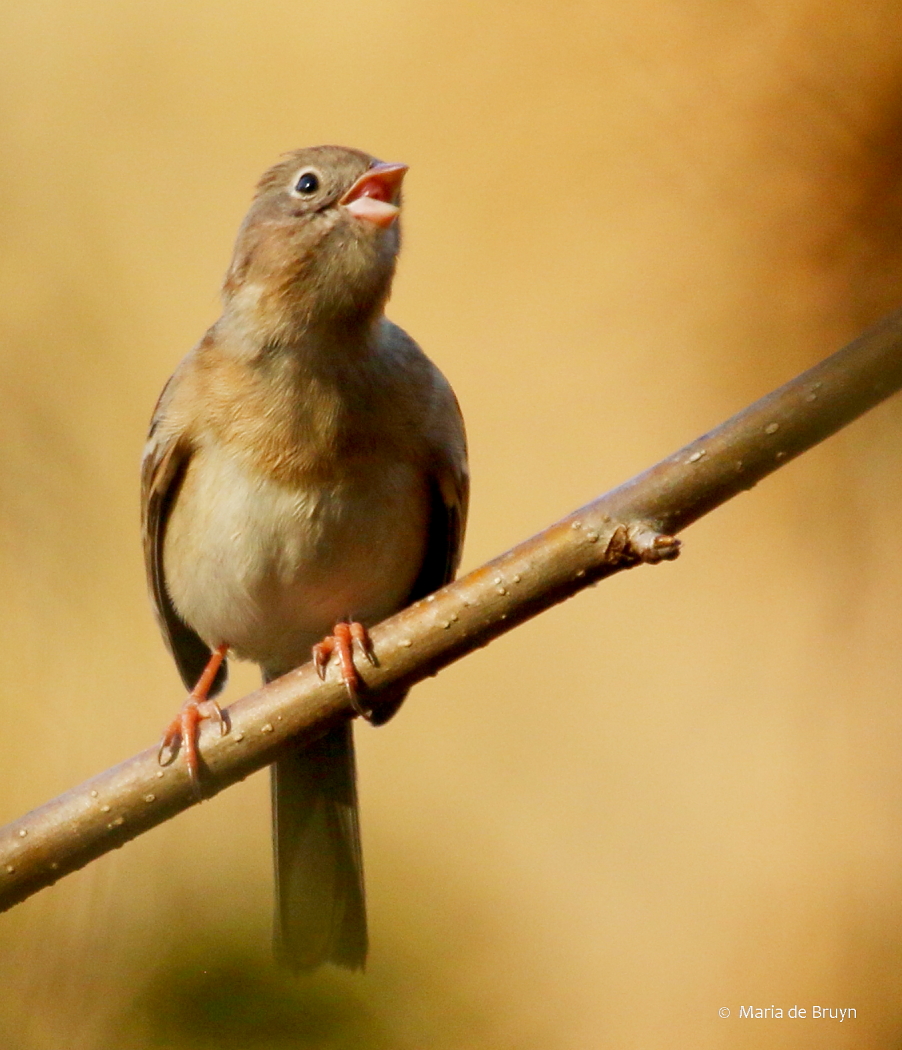
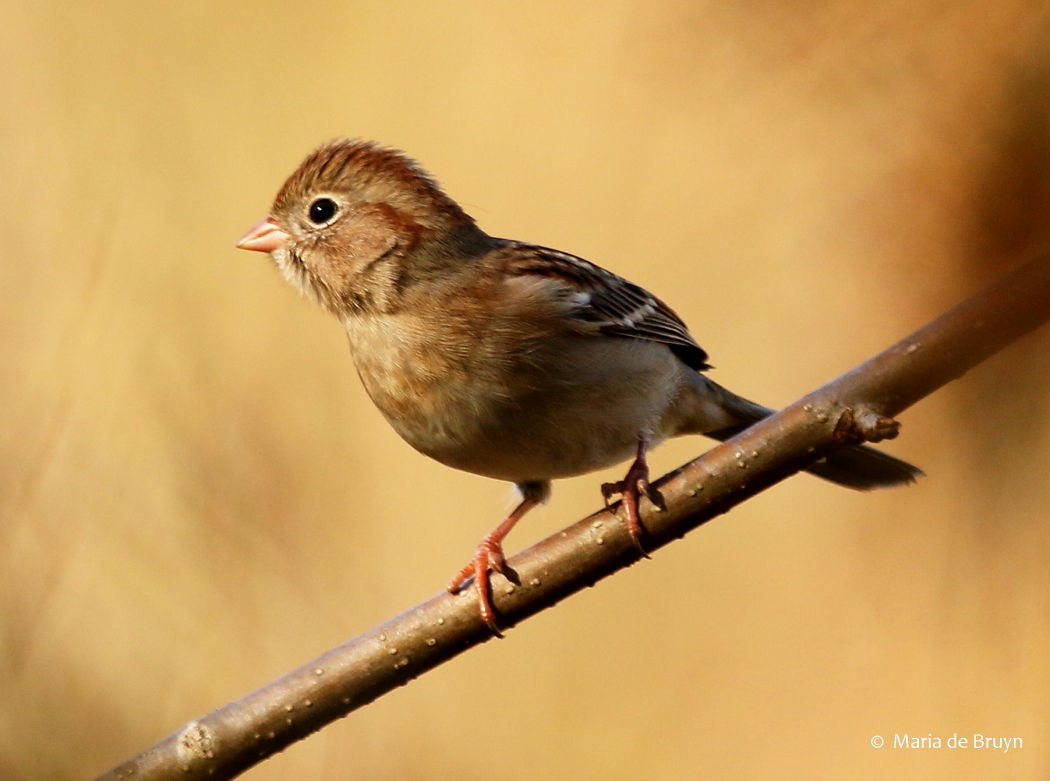
field-sparrow-i77a1587maria-de-bruyn-res      field-sparrow-i77a1634maria-de-bruyn-res

Field sparrow (Spizella pusilla)

rusty-blackbird-i77a3199-maria-de-bruyn-res rusty-blackbird-i77a3110maria-de-bruyn-res

Rusty blackbird (Euphagus carolinus)

swamp-sparrow-i77a6063-maria-de-bruyn-res      golden-crowned-kinglet-maria-de-bruyn-i77a1711maria-de-bruyn-res

Swamp sparrow (Melospiza georgiana)             Golden-crowned kinglet (Regulus satrapa)

I feel that it is extremely important that each individual realize their responsibility for preserving the environment, to make it a part of daily life, create the same attitude in their families, and spread it to the community. – Dalai Lama

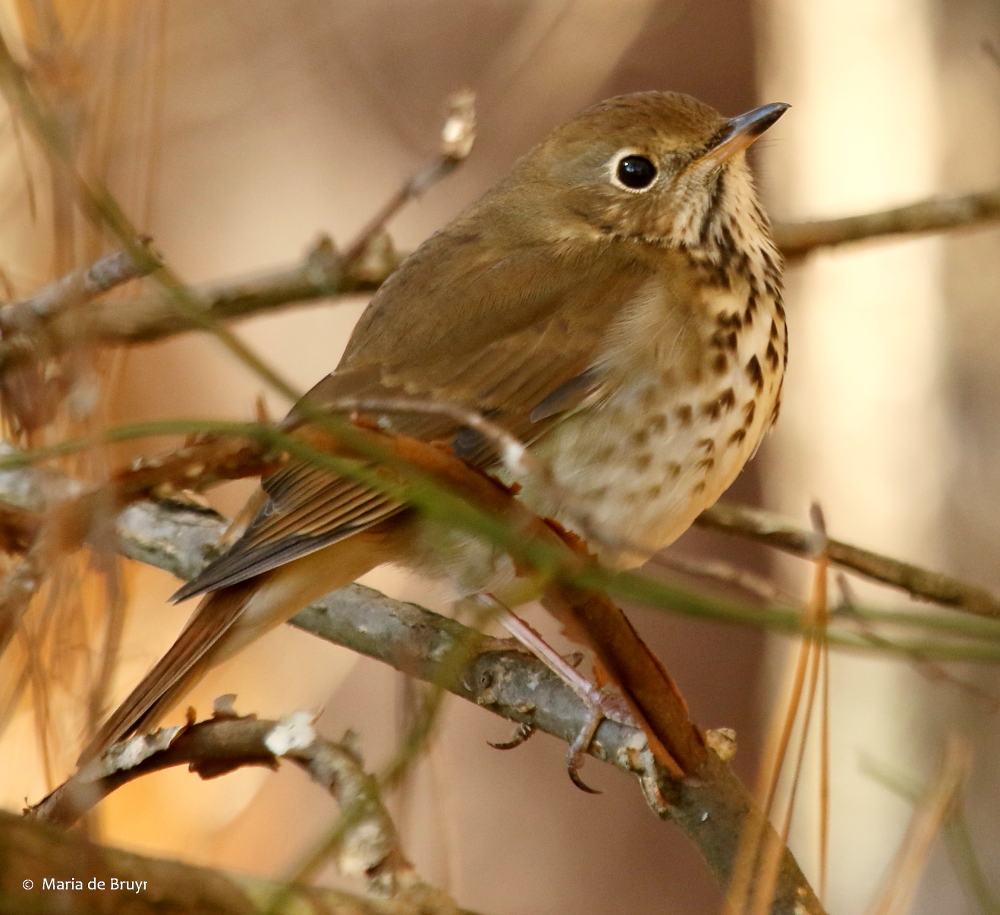
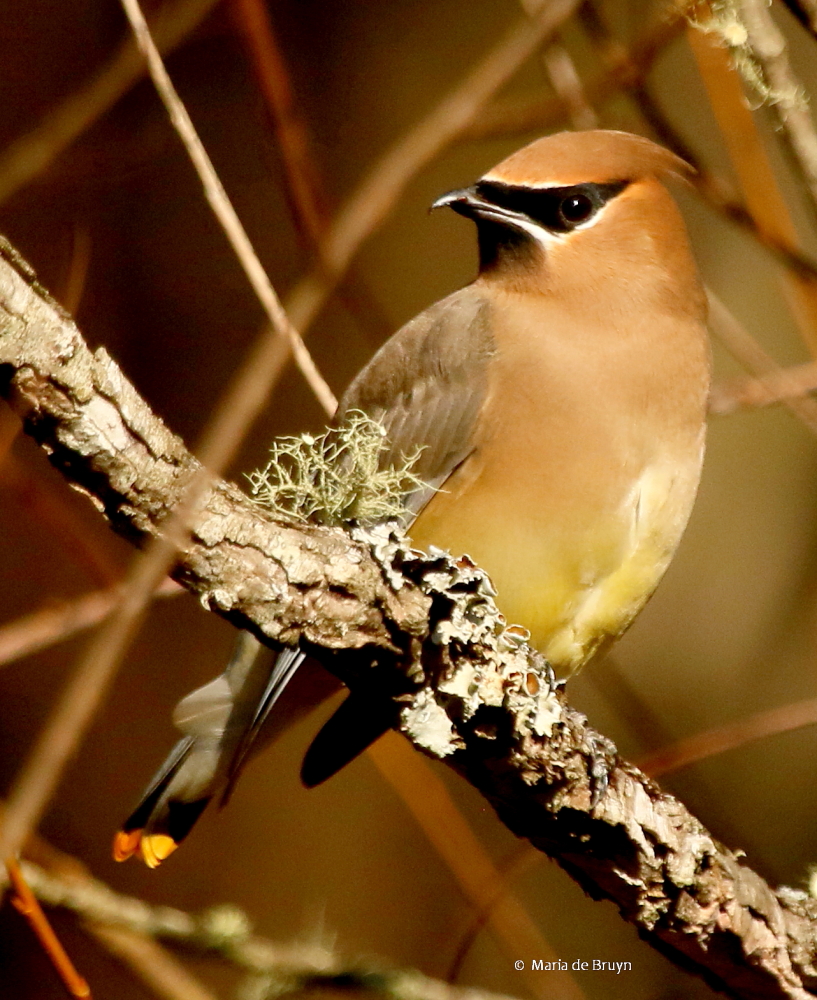
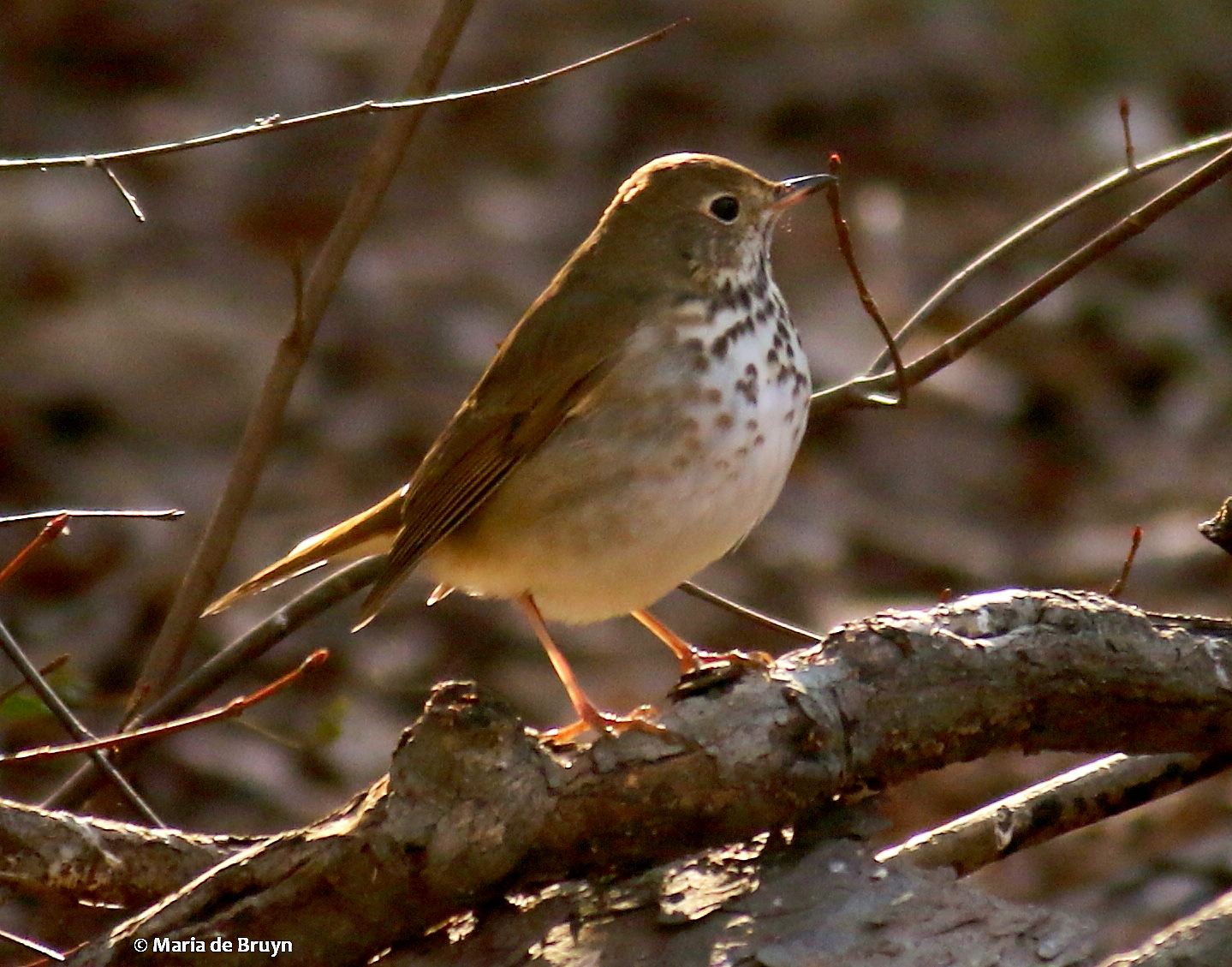
hermit-thrush-i77a6034-maria-de-bruyn-res  cedar-waxwing-i77a5945-maria-de-bruyn-res

Hermit thrush (Catharus guttatus)                          Cedar waxwing (Bombycilla cedrorum)

white-throated-sparrow-i77a1564maria-de-bruyn-res


What a great quote and slogan material:


Preserve the environment, make it part of your daily life and spread it to the community!

Can you go home again? Apparently so!

brown-headed-nuthatch-i77a3736-maria-de-bruyn-res


This year, I had the good fortune to see both brown-headed nuthatches (Sitta pusilla) and Eastern bluebirds (Sialia sialis) raise broods in some of my nest boxes. I saw the babies fledge, which was truly an enjoyable event.


eastern-bluebird-i77a7134-maria-de-bruyn-res

For some time, the parents continued feeding their babies after they left home, but eventually they got to the point that they could catch or find their own food. As summer progressed, the parents and children both visited my feeders and it was gratifying to see the families thrive. Then during September and October, I saw a behavior that I don’t remember from years past.

brown-headed-nuthatch-i77a7426-maria-de-bruyn-resbrown-headed-nuthatch-i77a7439-maria-de-bruyn-res

The nuthatches started to return to their nest box almost daily. They didn’t check out nearby boxes but went to their original home and today they are still visiting there, sitting on top, fluttering around it and looking inside.

tufted-titmouse-i77a7417-maria-de-bruyn-res

Their frequent visits seem to have intrigued a local tufted titmouse (Baeolophus bicolor) who decided to take a look in their box, too,but that was only a one-time visit as far as I could see.

It’s not only the parents doing this, but also one or more of their offspring. So how true is the saying “you can never go home again” (origin a novel by Thomas Wolfe)? It originally meant that you can’t recapture exactly how things were in your youth because changes take place in situations and places. But people do often journey back to the places where they grew up and apparently birds do, too! Maybe they are wondering if their nest box is still the same good place for a home.

brown-headed-nuthatch-i77a7459-maria-de-bruyn-resbrown-headed-nuthatch-i77a7441-maria-de-bruyn-res

i77a0203-maria-de-bruyn-res


The bluebirds began doing the same with their home nest box as well. They take turns flying from nearby branches to cling to the box and investigate the now empty dwelling. While the nuthatches just lean and peer inside, the bluebirds eventually go inside for a bit.


eastern-bluebird-i77a9732-maria-de-bruyn-res brown-headed-nuthatch-i77a9653-maria-de-bruyn-res


Oddly, there seems to be some contention involved. For example, when this pair was investigating, they had a little tiff for some reason.

eastern-bluebird-i77a9722-maria-de-bruyn-res eastern-bluebird-i77a9725-maria-de-bruyn-res

eastern-bluebird-i77a9723-maria-de-bruyn-res eastern-bluebird-i77a9726-maria-de-bruyn-res

I can only guess that the birds are checking out the nest boxes in anticipation of next year’s nesting season. The nuthatches and bluebirds will begin breeding again around March, although nuthatches might already begin building a new nest as early as December. It will also be interesting to see if they end up roosting in the boxes during the colder winter nights.

brown-headed-nuthatch-i77a4527-maria-de-bruyn-resWatching the nuthatches and bluebirds nest, fledge and feed is an enjoyable pastime and I’m looking forward to seeing them repeat the process next year. In the meantime, perhaps I’ll continue seeing them around the nest boxes this winter – as Pliny the Elder said, “Home is where the heart is” and something is sure attracting them back! (And yes, I know, that is a bit of anthropomorphizing.)

Nest Watch citizen science – 2016 edition

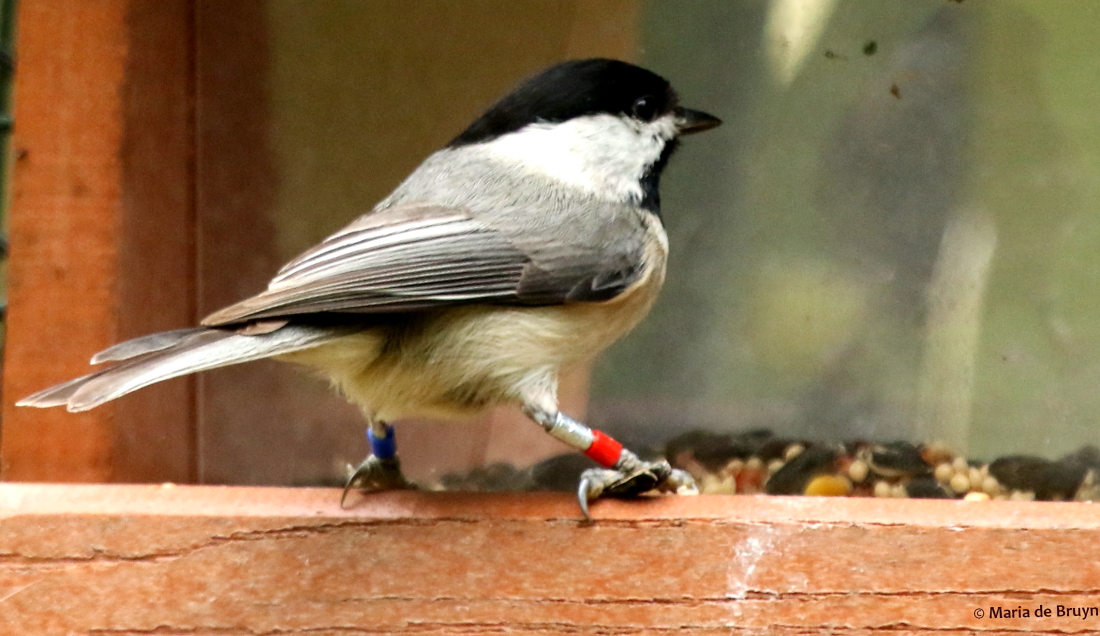
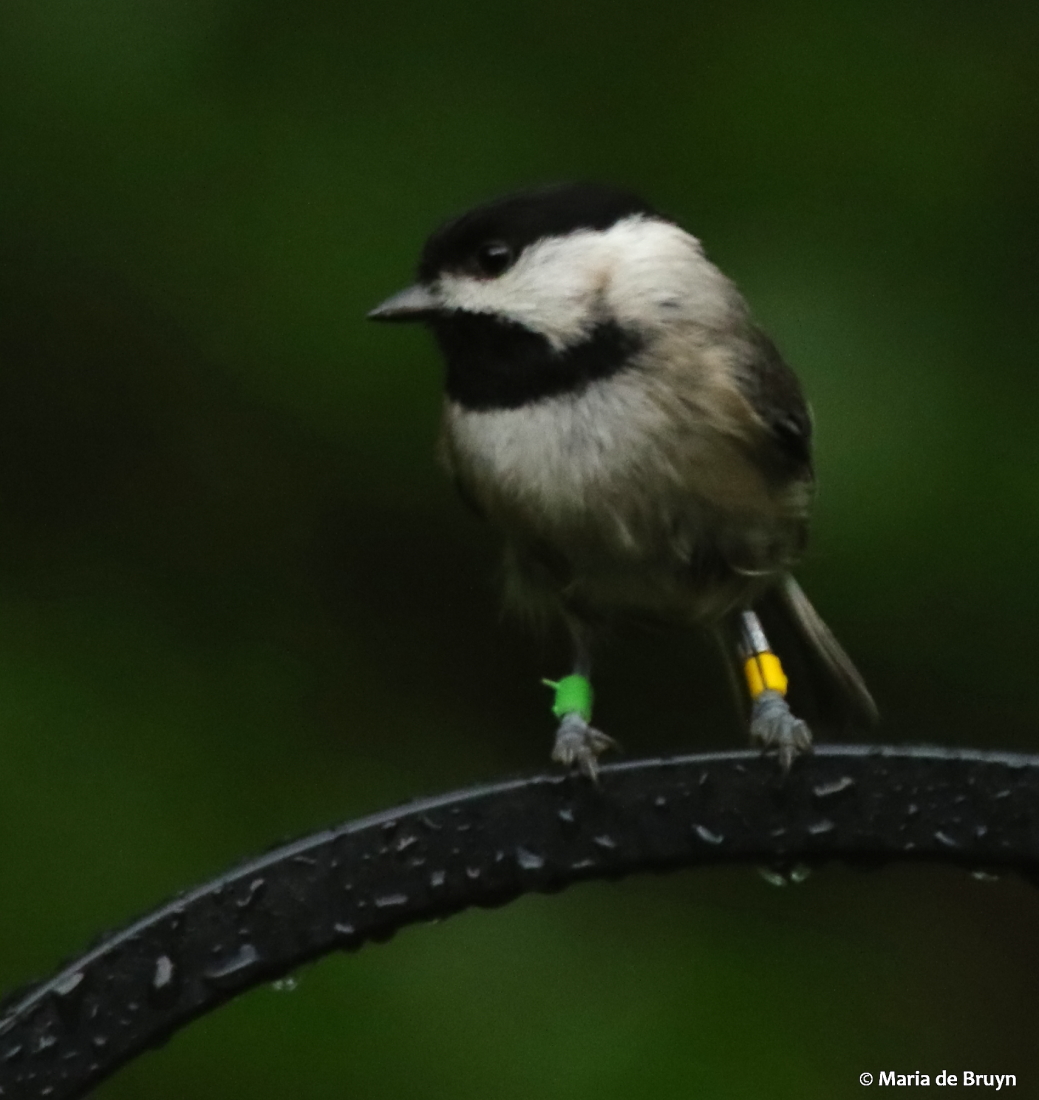
Carolina wren Renee and Riley I77A9074© Maria de Bruyn resLast year, I became a Nest Watch volunteer, which involves having birds banded in your yard so that you can follow and report to researchers the birds’ presence over time as they visit and leave your yard.

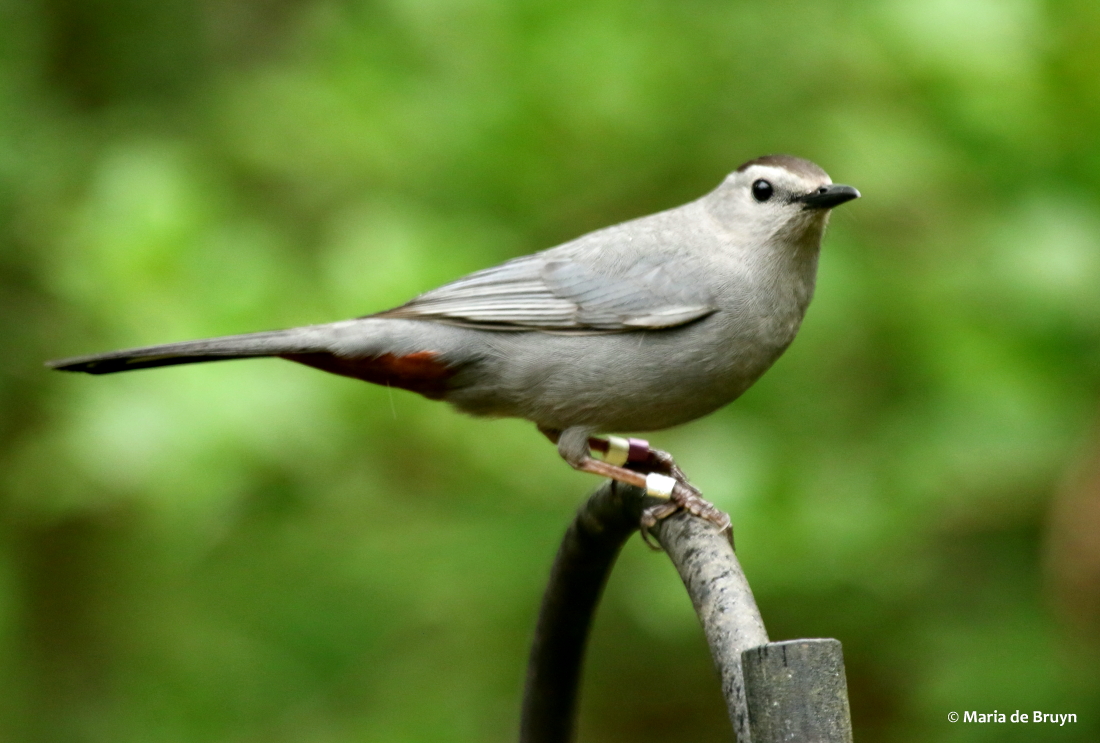
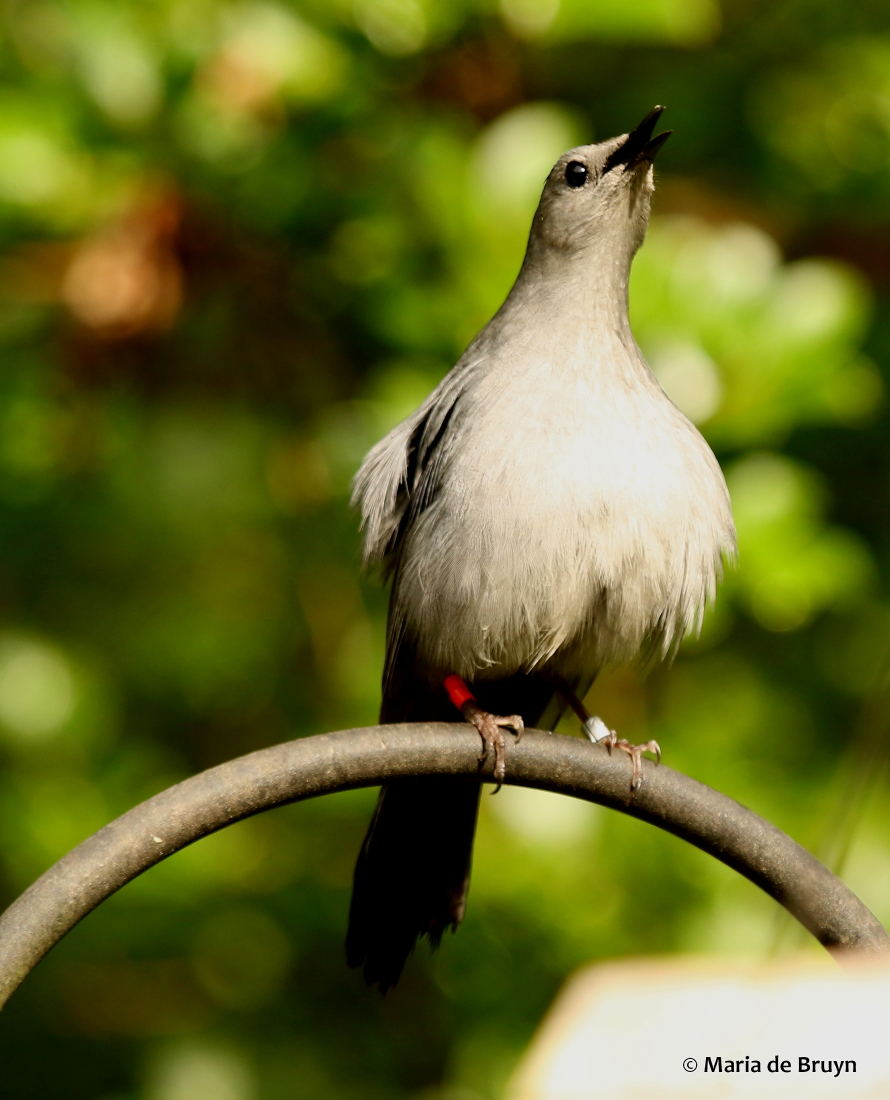
In 2015, we banded six birds. If a bird is only a temporary visitor or if it died outside the yard due to disease, old age or predation, you just won’t see it again and have no idea what became of it. The American robin (Turdus migratorius) that was banded last year never returned. If the birds stick around, however, you have the enjoyment of observing birds you get to know. The three gray-headed catbirds (Dumetella carolinensis) stayed around all summer and fall, and two of them – Camden and Corey – returned to my yard from winter migration a few days ago. They have been accompanied by females whom they appear to be assiduously courting.
gray-headed catbird Camden I77A8990© Maria de Bruyn res

gray-headed catbird Corey I77A8083© Maria de Bruyn res

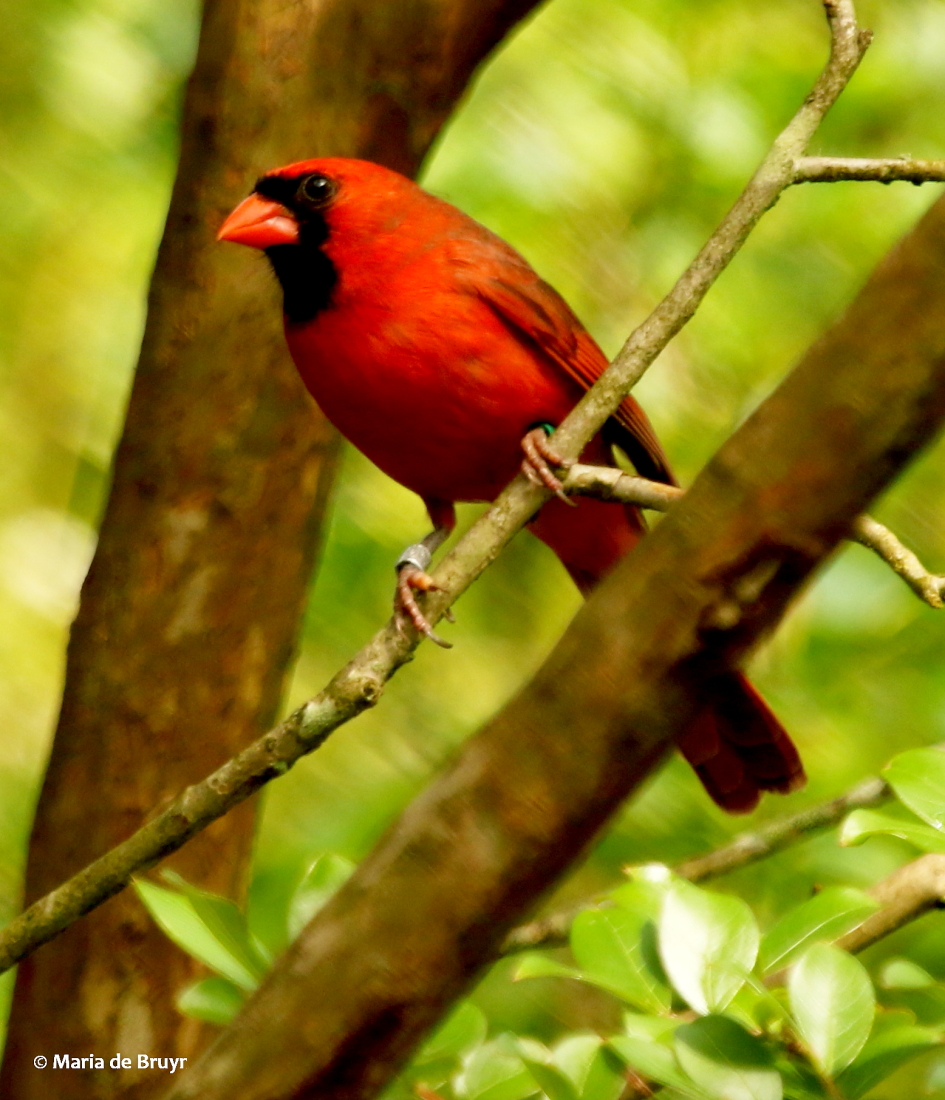
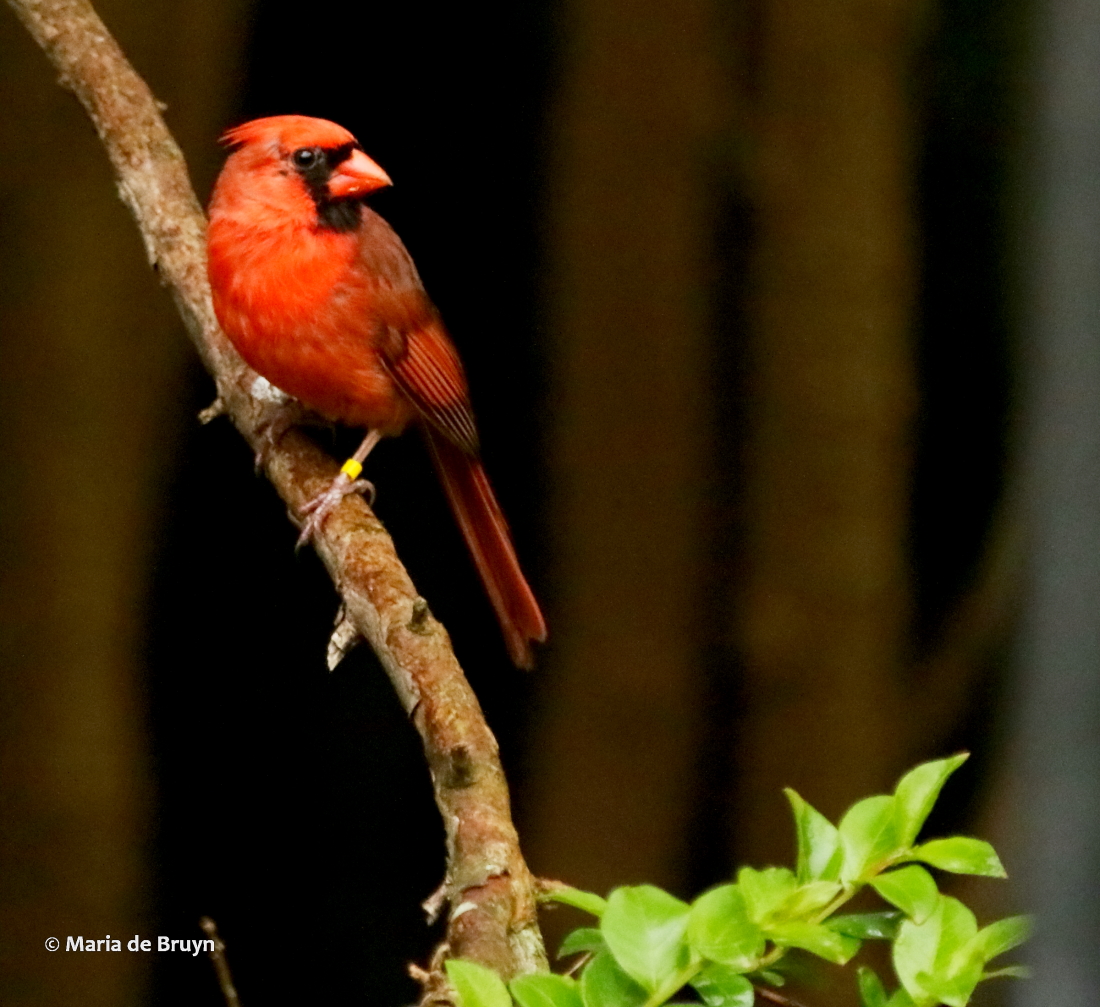
Northern cardinal Clancy I77A8123© Maria de Bruyn resOne Northern cardinal (Cardinalis cardinalis) was banded last year, but Clancy only stayed a few days and then disappeared for the rest of the summer, fall and winter. He suddenly appeared yesterday – perhaps encouraged to spend time at the feeders by the other birds with bracelets.

Three days ago, a second round of banding was done and we put the colorful anklets on a total of 10 birds. They were caught in two mist nets – one near my back garden and one near the backyard feeders.

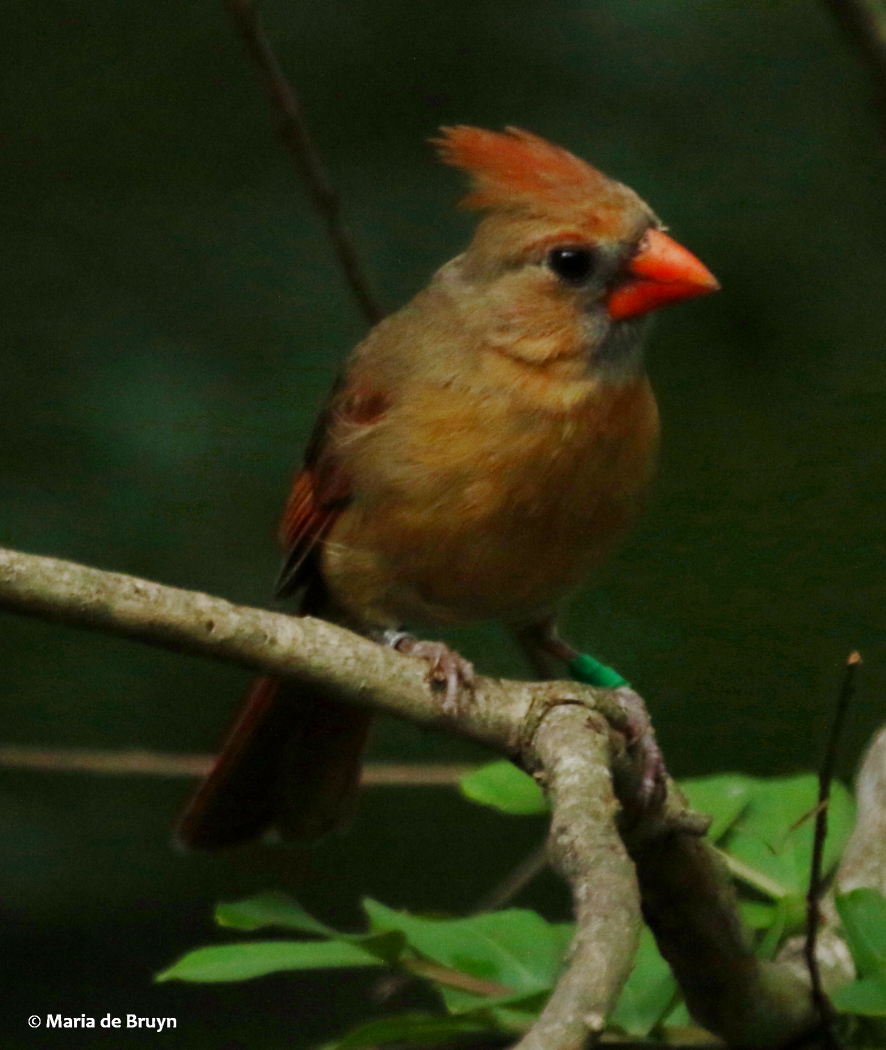
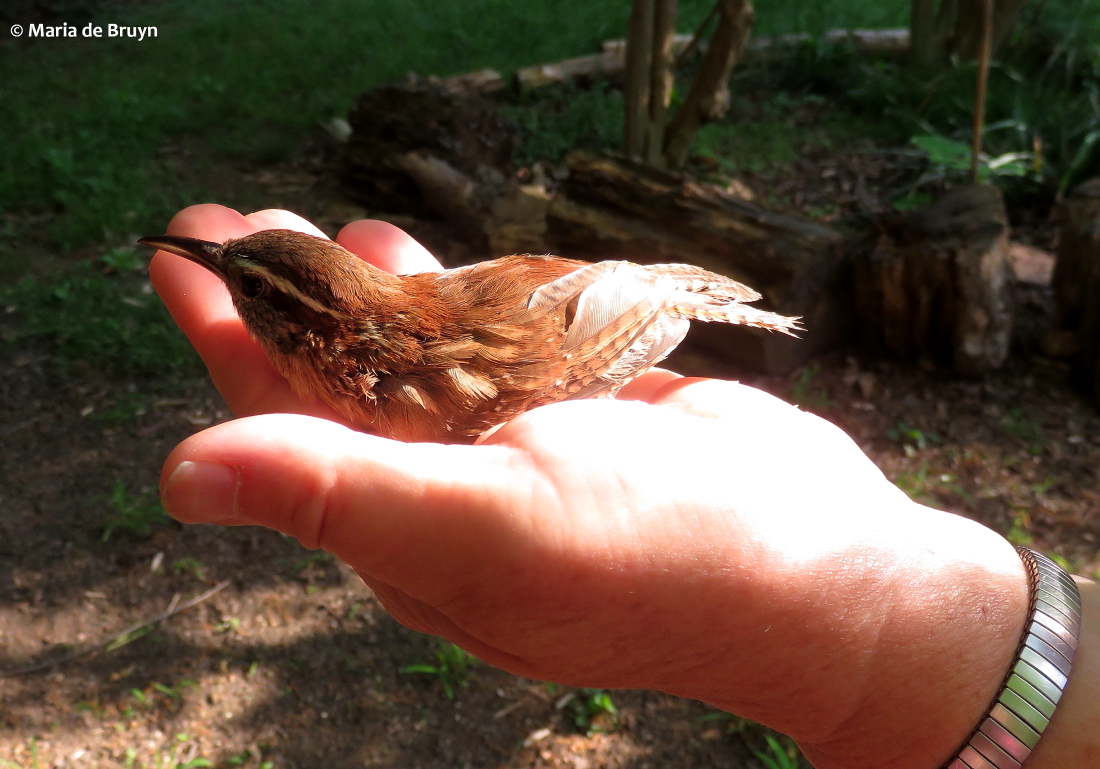
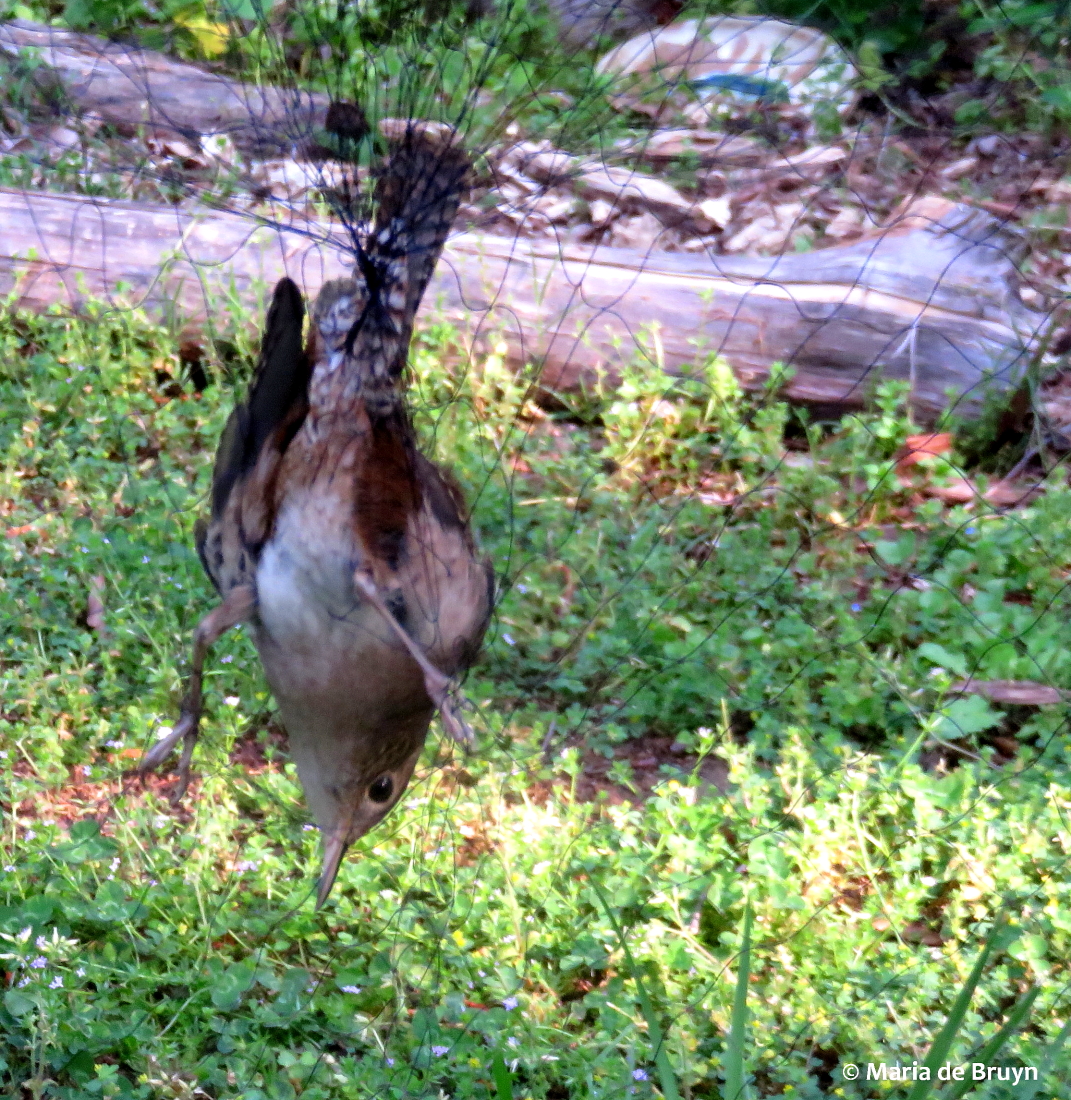
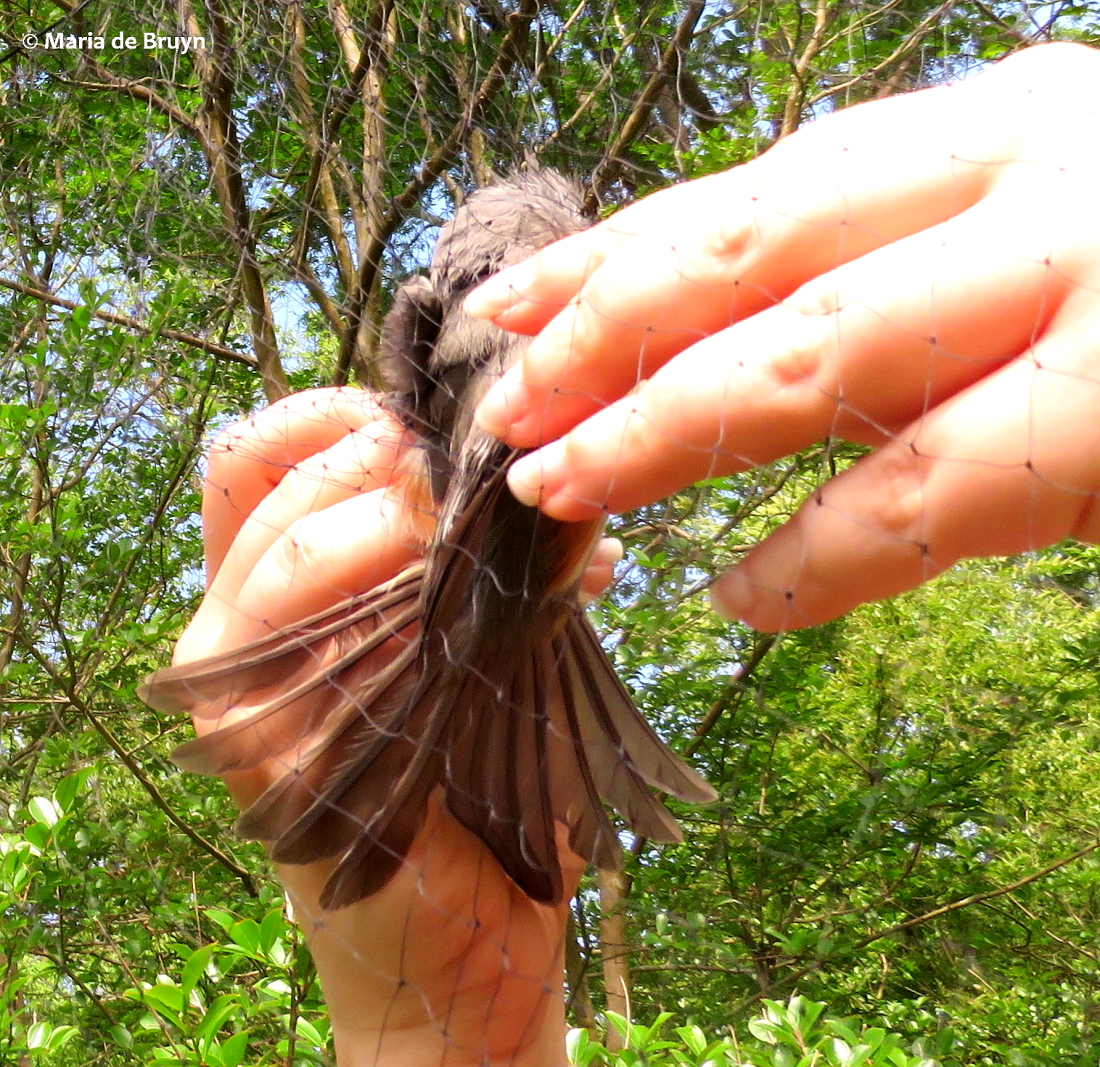
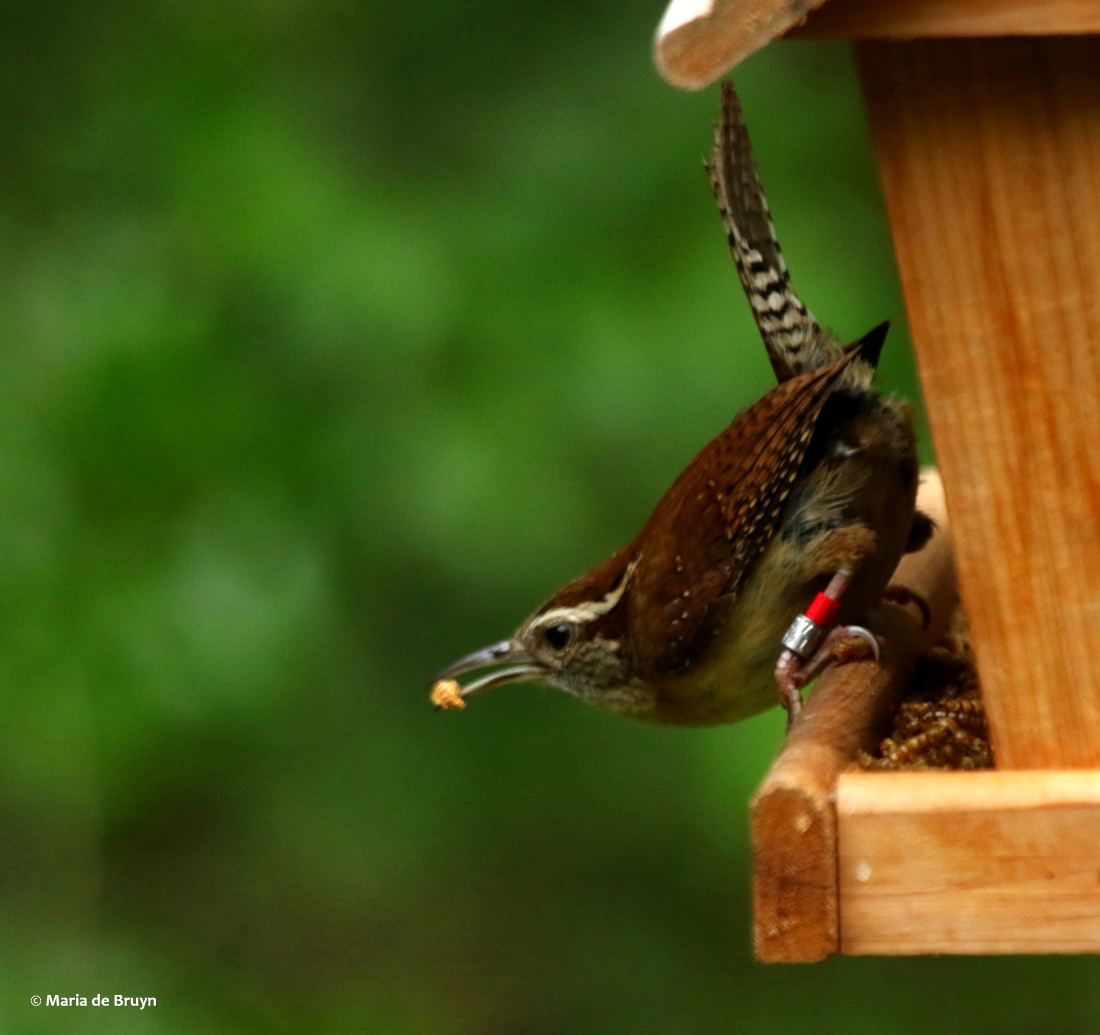
Northern cardinal Camilla I77A9127© Maria de Bruyn resThe nets had just been installed when our first visitor, a female Northern cardinal, was caught. She was not happy and when put in a bag until she could be banded, weighed, examined and measured, she did not remain still and calm. She had a little wait, however, as a female Carolina wren (Thryothorus ludovicianus) flew into the other net at just about the same time, followed by her mate within seconds. As the cardinals can tolerate being in a bag better than the smaller birds, the two wrens were banded first. Alicia let the first one go and then I released the second one, who rested on my palm for a bit. He felt so nice and soft!

Carolina wren Riley IMG_3832© Maria de Bruyn res

Forty-five minutes later, playback of a house wren’s song (Troglodytes aedon) led to the capture of a male who immediately came to investigate who was invading his territory. His mate, who was busy putting the finishing touches on a nest in a box near the mist net, didn’t go near the net.

house wren Hans IMG_3842© Maria de Bruyn reshouse wren Hans IMG_3844© Maria de Bruyn res

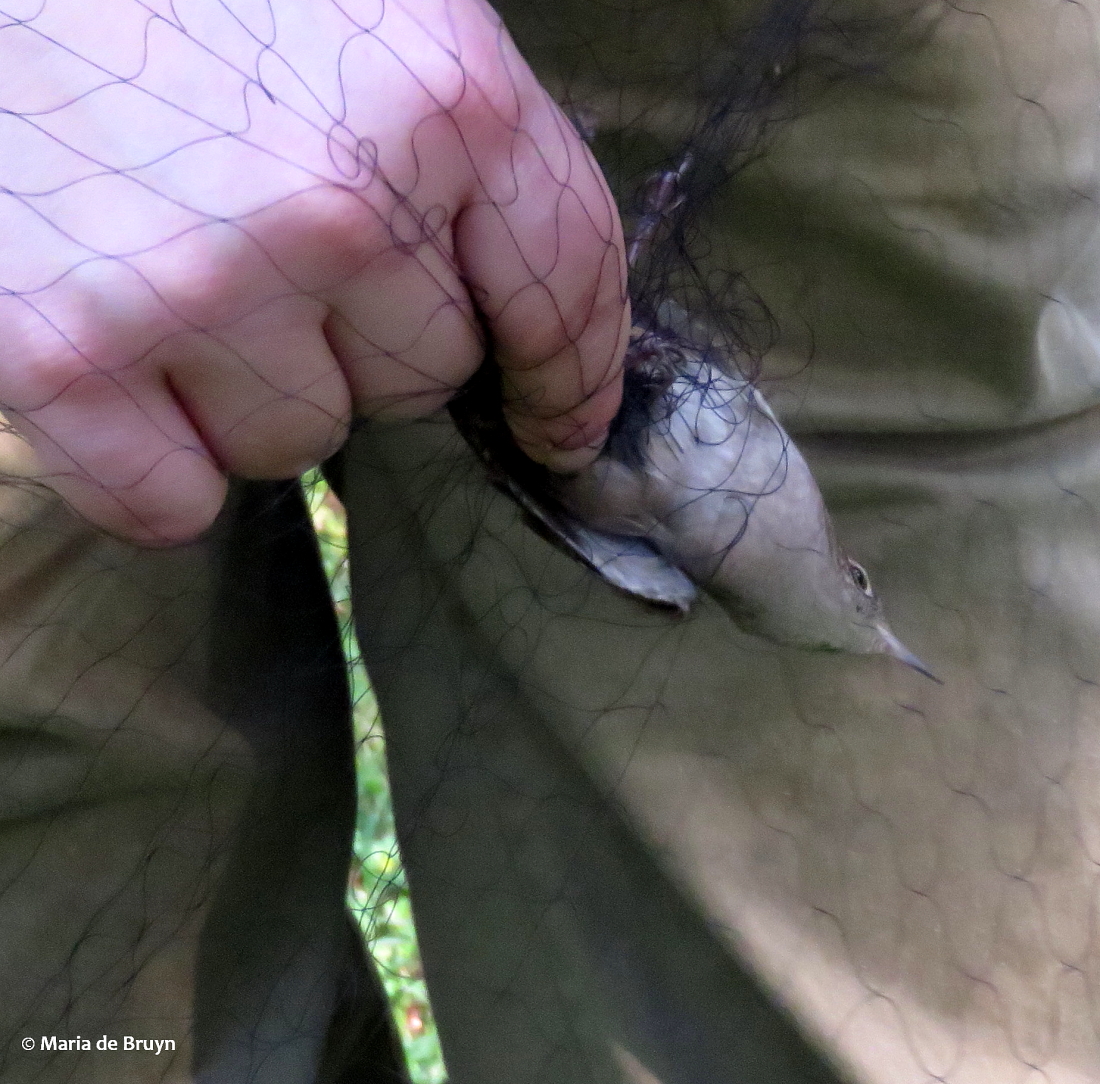
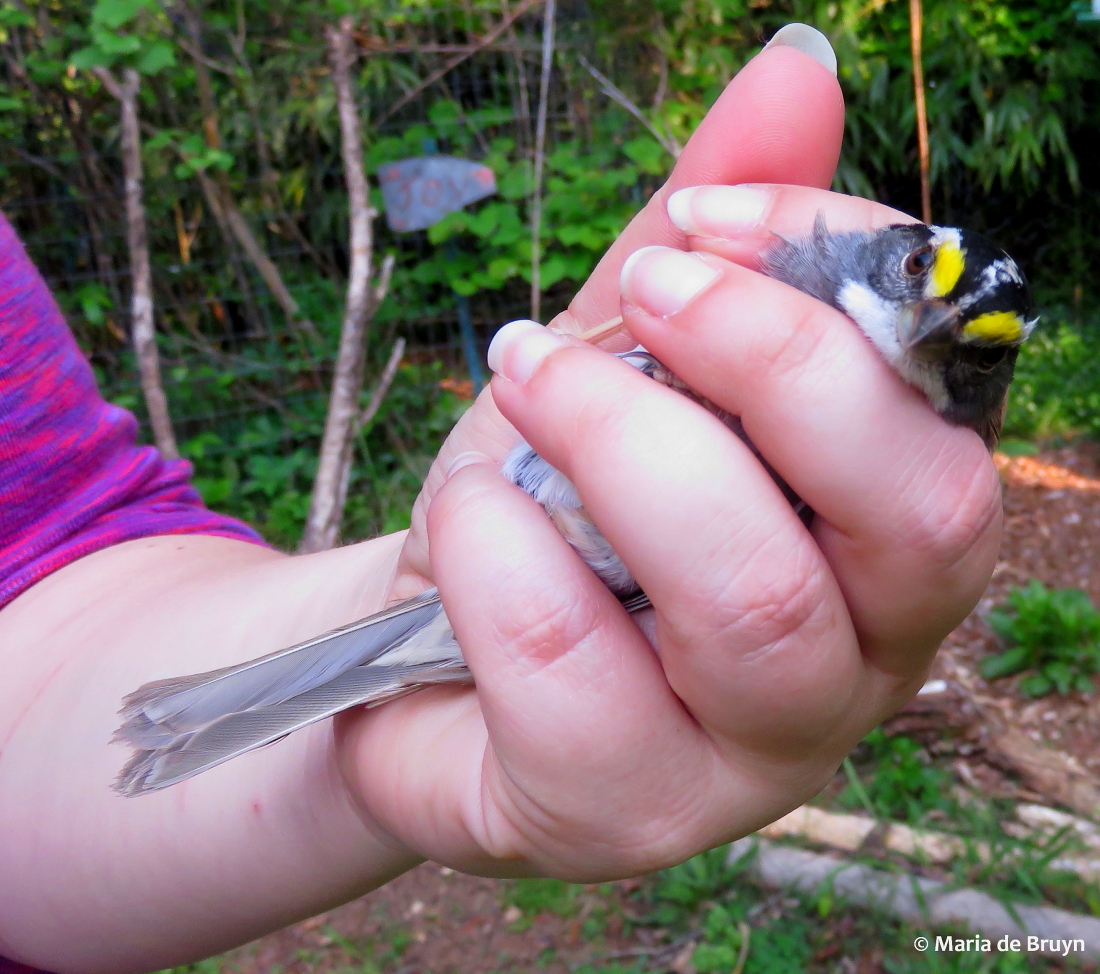
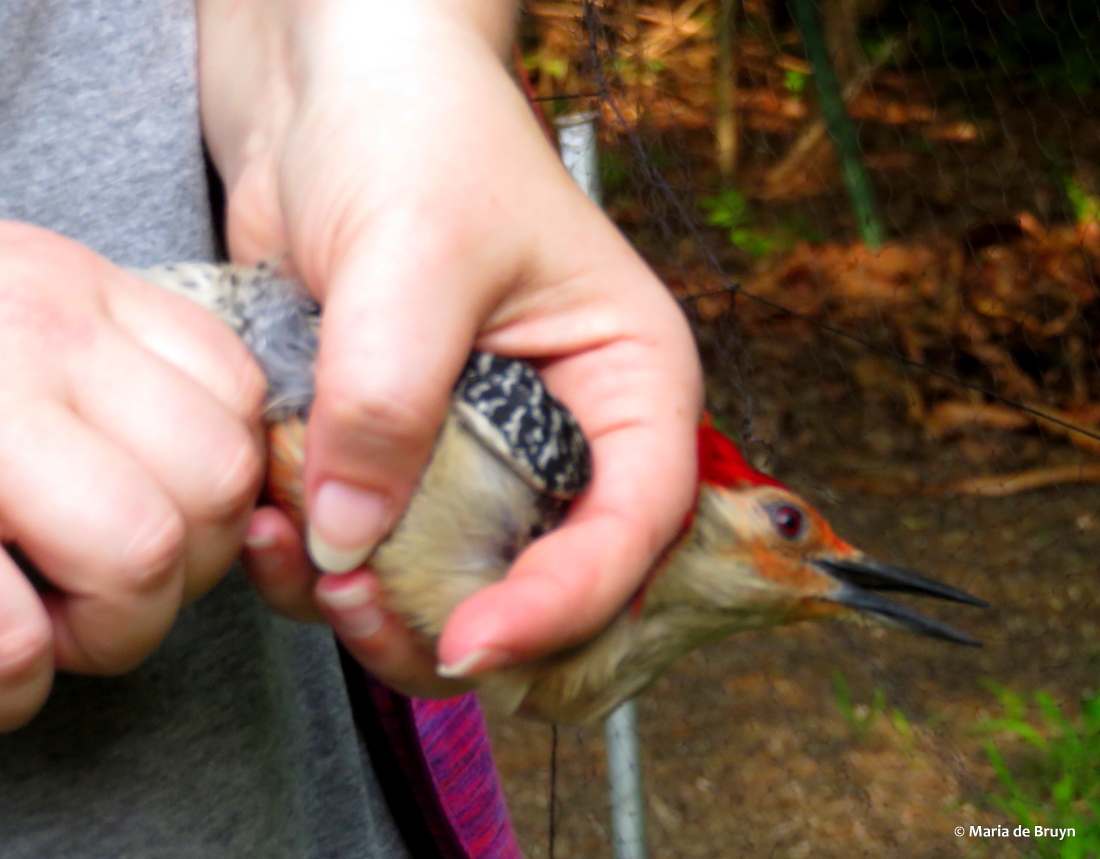
A few birds not targeted for the study ended up tangled in a net. A white-throated sparrow (Zonotrichia albicollis) had beautiful vivid breeding colors on his head. A red-bellied woodpecker (Melanerpes carolinus) was not calm like the sparrow, fluttering his wings constantly as Alicia, the bird bander, got him loose.

white-throated sparrow IMG_3837© Maria de Bruyn res red-bellied woodpecker IMG_3822© Maria de Bruyn res

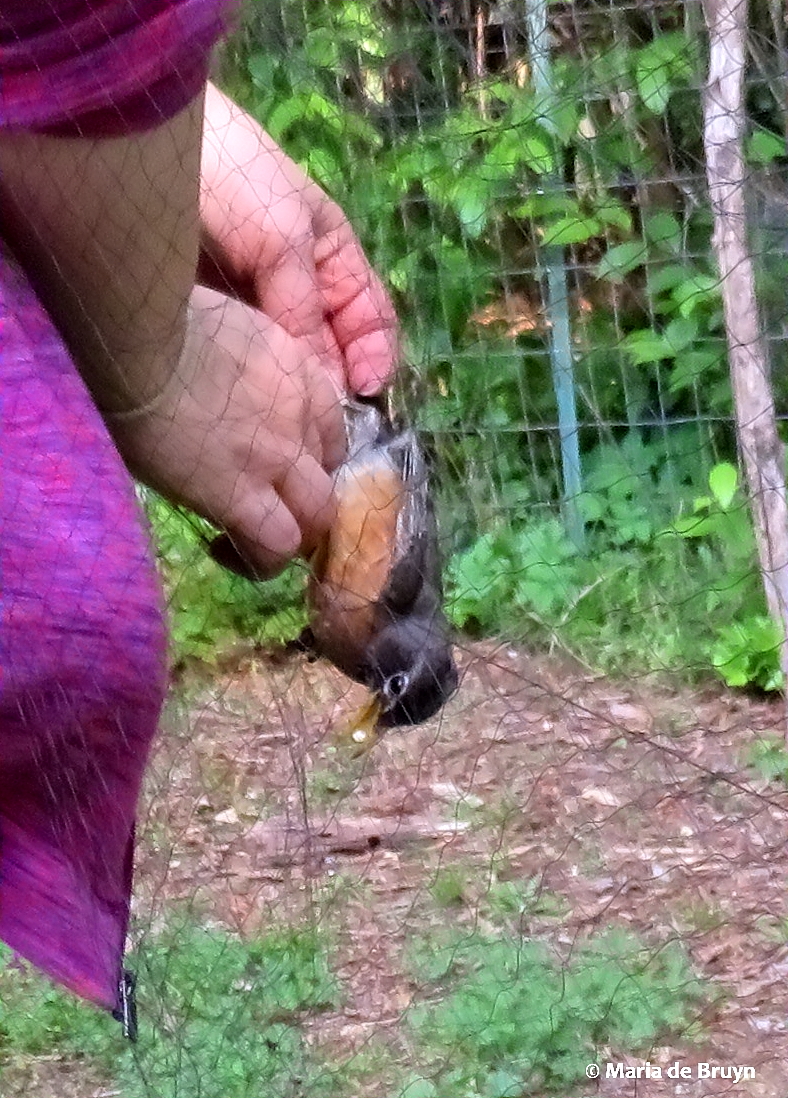
Next up were a male cardinal and a female American robin. Like last year, the birds were measured and weighed. Although about the same length, the weight difference between the heaviest Northern cardinal we banded (41.2 oz) and the American robin was striking (79.6oz). The robin’s fondness for worms and other dietary preferences helps account for this. When I let her go, she didn’t feel very heavy in my hand as she rested a second before flying off.

American robin Raisin IMG_3854© Maria de Bruyn

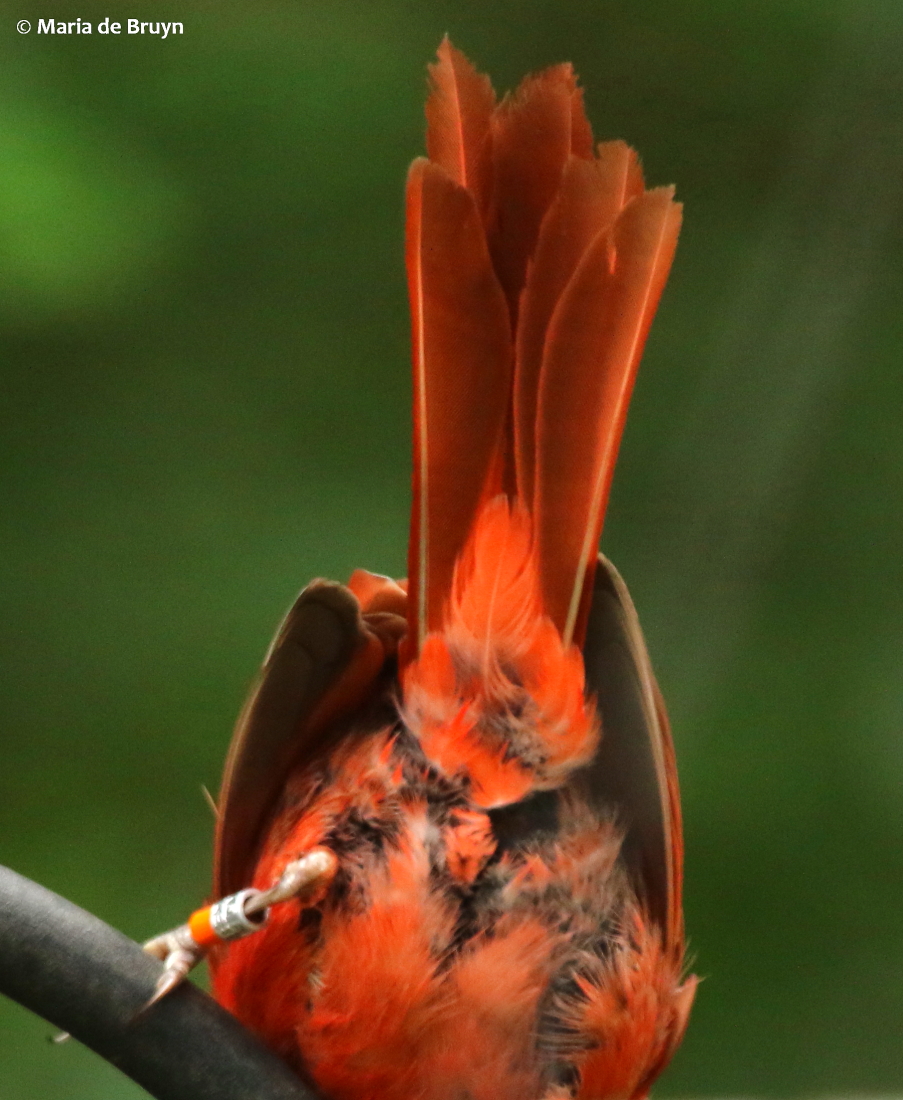
Except for birds that were molting their tail feathers, Alicia also removed the third left tail feather; this is done primarily for stable isotope analysis, which allows a researcher to estimate where the bird was when that feather was grown.

Northern cardinal Crake I77A0559© Maria de Bruyn res

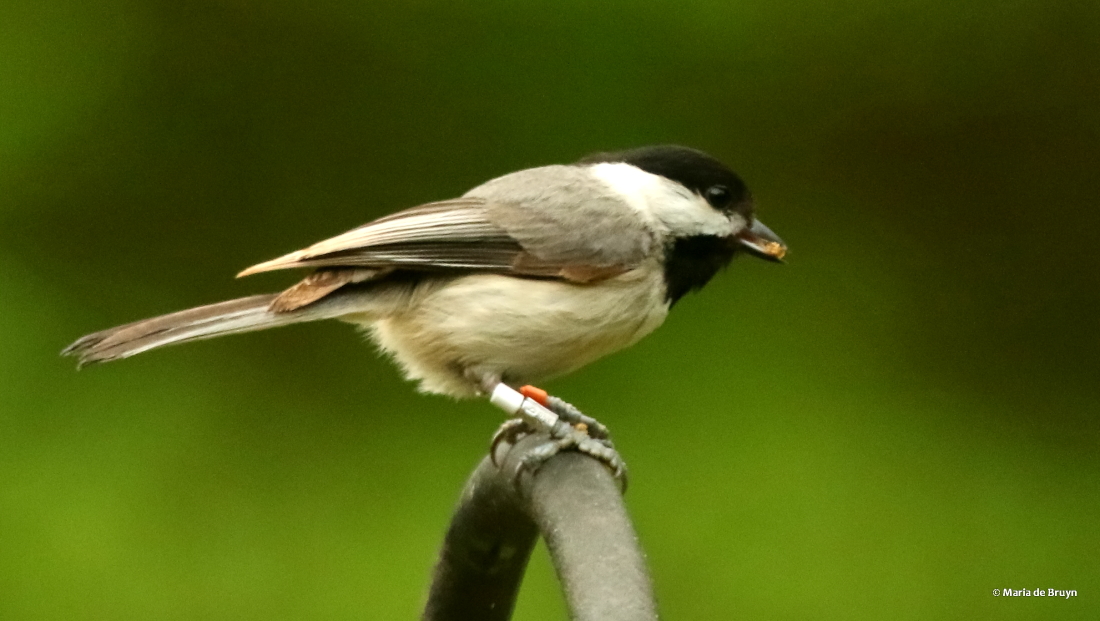
Carolina chickadee Chancey I77A7762© Maria de Bruyn resThe catbirds avoided the mist nets skillfully this year. Playback of their songs drew them to the vicinity but the two pairs visiting the feeders were more interested in chasing each other away from the territory. Alicia hoped that we could get a Carolina chickadee (Poecile carolinensis); with playback we got a male and then, 45 minutes later after banding another cardinal, we got a pair of them.

Carolina chickadee Chase I77A0348© Maria de Bruyn res Carolina chickadee Chantal I77A9525© Maria de Bruyn res

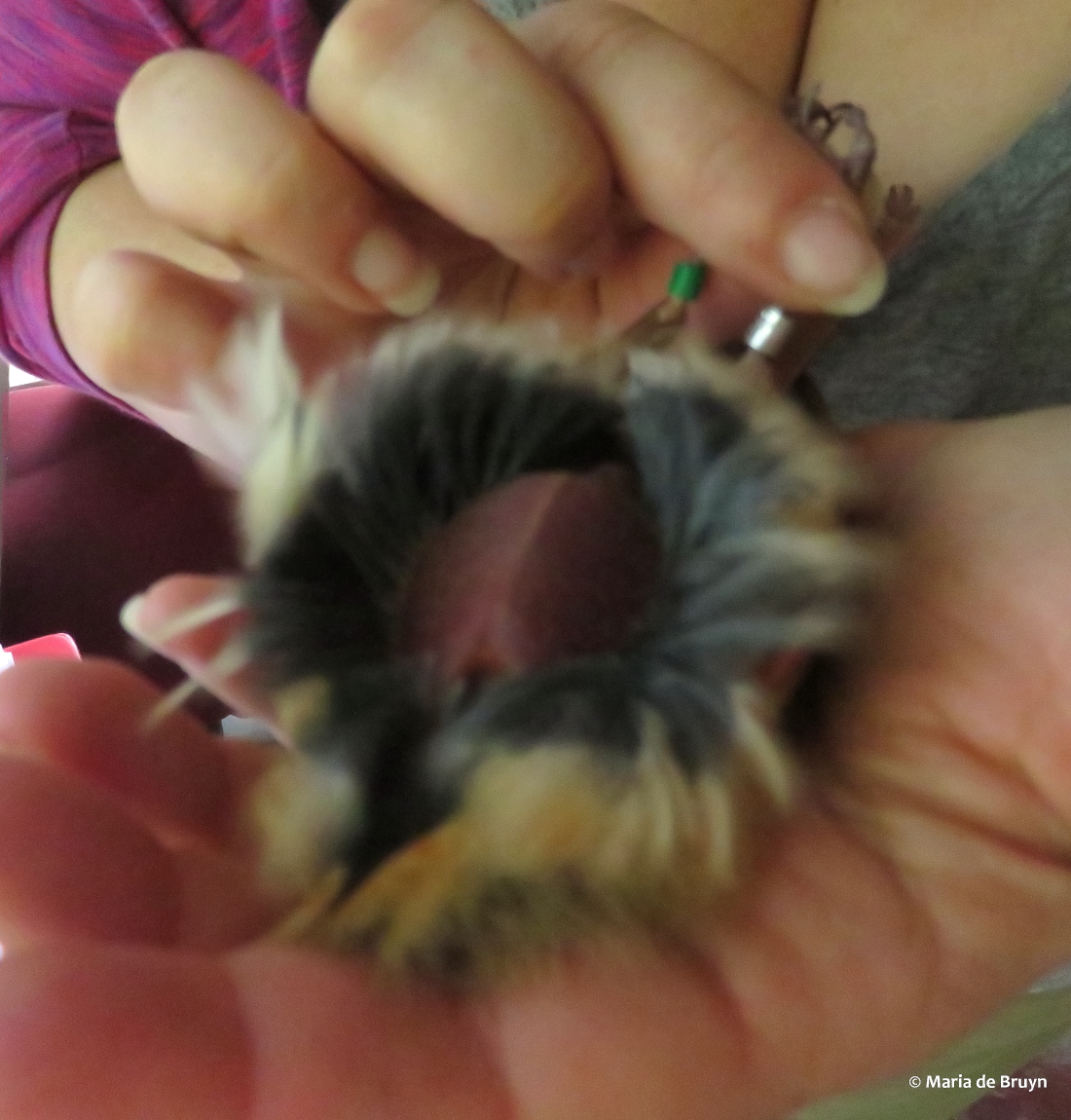
Alicia blew on the birds’ undersides (forgive the blurry photo) to assess fat reserves, which are stored along the flanks and up near the furcula by the collar bone. She could also determine sex that way and thought that one chickadee might be developing an egg – hopefully, one of the females who lost a nest to predators in my yard a week ago. The last male chickadee released was out of sorts after the experience; before leaving my hand to fly off rapidly, he turned and bit me as a parting shot.

Carolina wren Renee IMG_3813© Maria de Bruyn res Carolina chickadee IMG_3856© Maria de Bruyn res

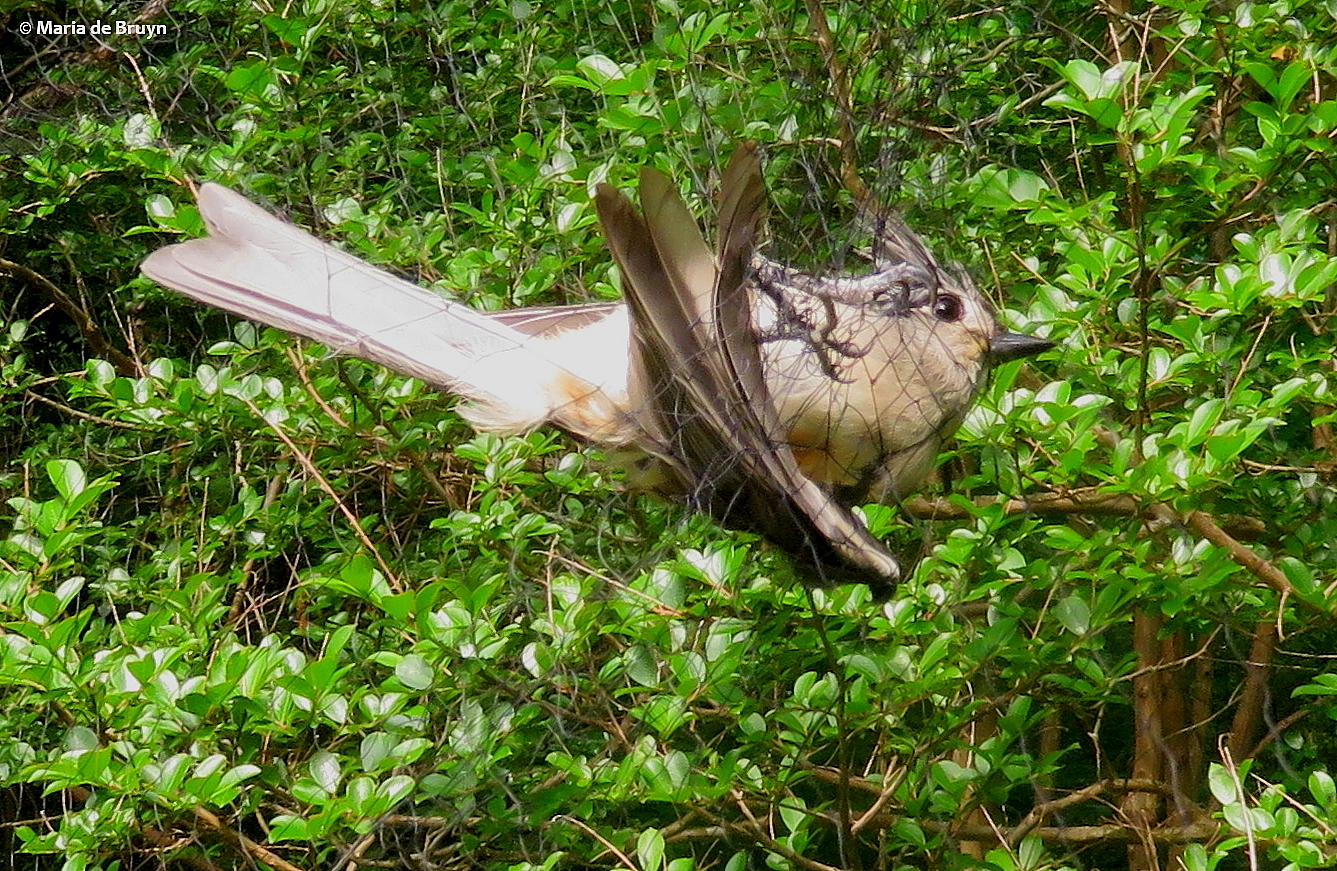
Alicia had remarked that she hoped no tufted titmouse (Baeolophus bicolor) would be caught; they are not part of the study and she said they are so feisty that their bites can be a bit painful like those of the cardinals. Unfortunately, one leaving a feeder did end up in a net and lived up to its reputation as a feisty bird. A chipping sparrow (Spizella passerina), who was the last bird in a net remained fairly calm as the net was removed from its claws.

tufted titmouse IMG_3858© Maria de Bruyn res

Tufted titmouse IMG_3861© Maria de Bruyn res

Yesterday, I spent some time watching the feeders and yard to see if all the banded birds had left. Luckily, some of them showed up and were here again today. So here are a few of “my birds” with bling – this is a truly enjoyable citizen science project. 🙂

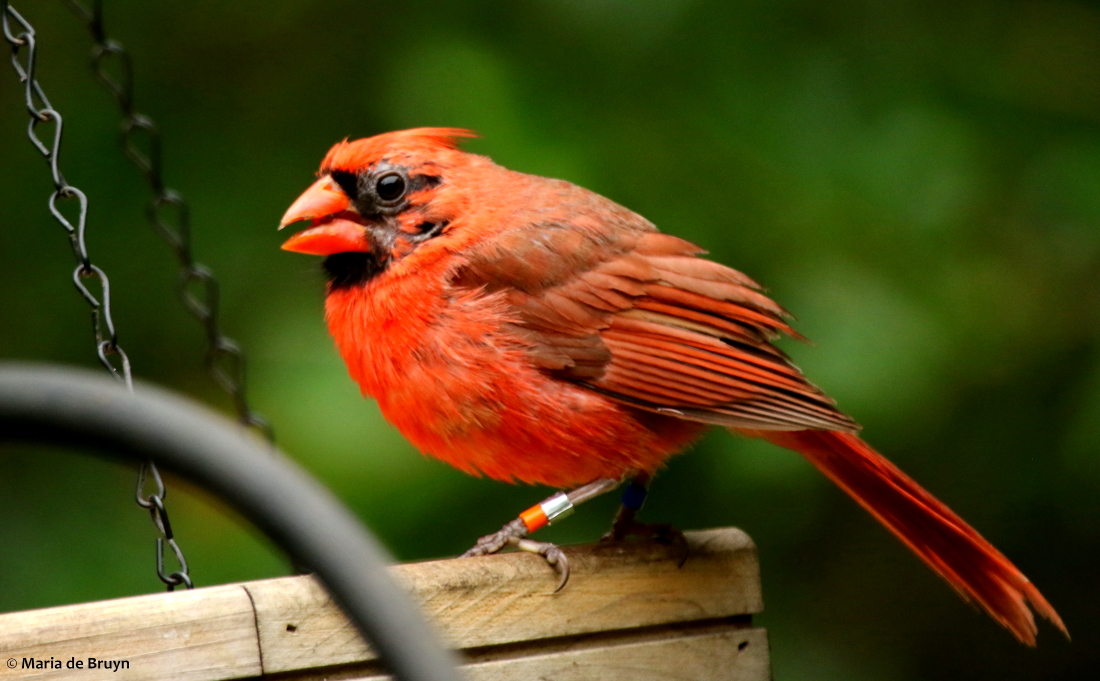
Northern cardinal Clarence I77A0124© Maria de Bruyn res Northern cardinal Crake I77A0593© Maria de Bruyn res

Clarence                                                                       Crake

Carolina wren Renee I77A9354© Maria de Bruyn resCarolina wren Riley I77A0508© Maria de Bruyn res

Renee and Riley Carolina wrens


A wildflower walk with surprises!

owl IMG_3036© Maria de Bruyn resThis past Saturday morning, we awoke to water streaming from the heavens in quite a heavy downpour. A local conservation group, Friends of Bolin Creek, had scheduled a wildflower walk to see some of our ephemeral spring blooms but the wet conditions were not inviting. A decision to postpone the walk to early afternoon was taken – and the weather-people had gotten it right – the sun began shining at mid-day and the temperature rose, creating lovely conditions for a walk after all. A large owl (later revealed to be granddaughter Kate of the group’s president) greeted the small group of intrepid walkers and we set off to see what we could find.

Southern arrowwood IMG_3039© Maria de Bruyn res

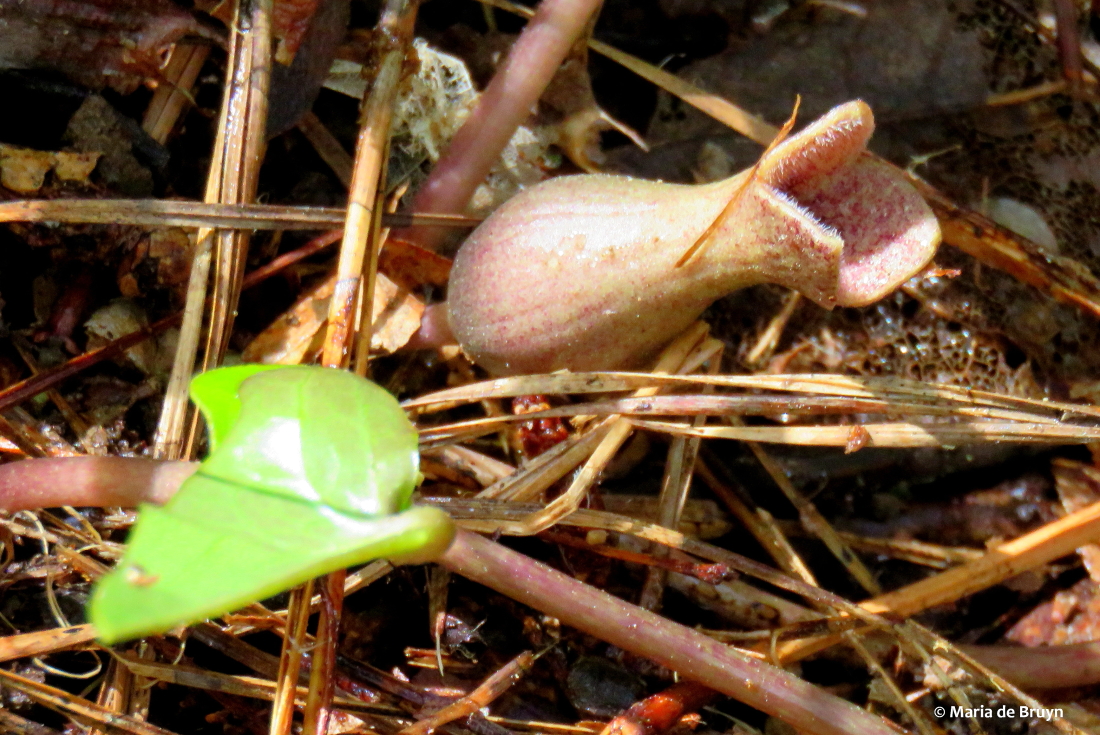
Our first flowers were the not-yet-open blooms of a Southern arrowwood (Viburnum dentatum). We passed numerous black and yellow millipedes on the paths and then found another millipede species (Narceus americanus) curled up next to a little brown jug (also known as arrowleaf heartleaf, Hextastylis arifolia var arifolia).

millipede IMG_3052© Maria de Bruynlittle brown jug IMG_3048© Maria de Bruyn

We came across other nice specimens of the plant, including one with four small flowers.

little brown jug IMG_3138© Maria de Bruynlittle brown jug IMG_3141© Maria de Bruyn

The painted buckeye trees (Aesculus sylvatica) were blooming profusely with their greenish-yellow flowers.

painted buckeye IMG_3070© Maria de Bruynpainted buckeye IMG_3492© Maria de Bruyn


Eastern spring beauty IMG_3089© Maria de Bruyn


Clusters of Eastern spring beauties (Claytonia virginica) were in their vicinity.


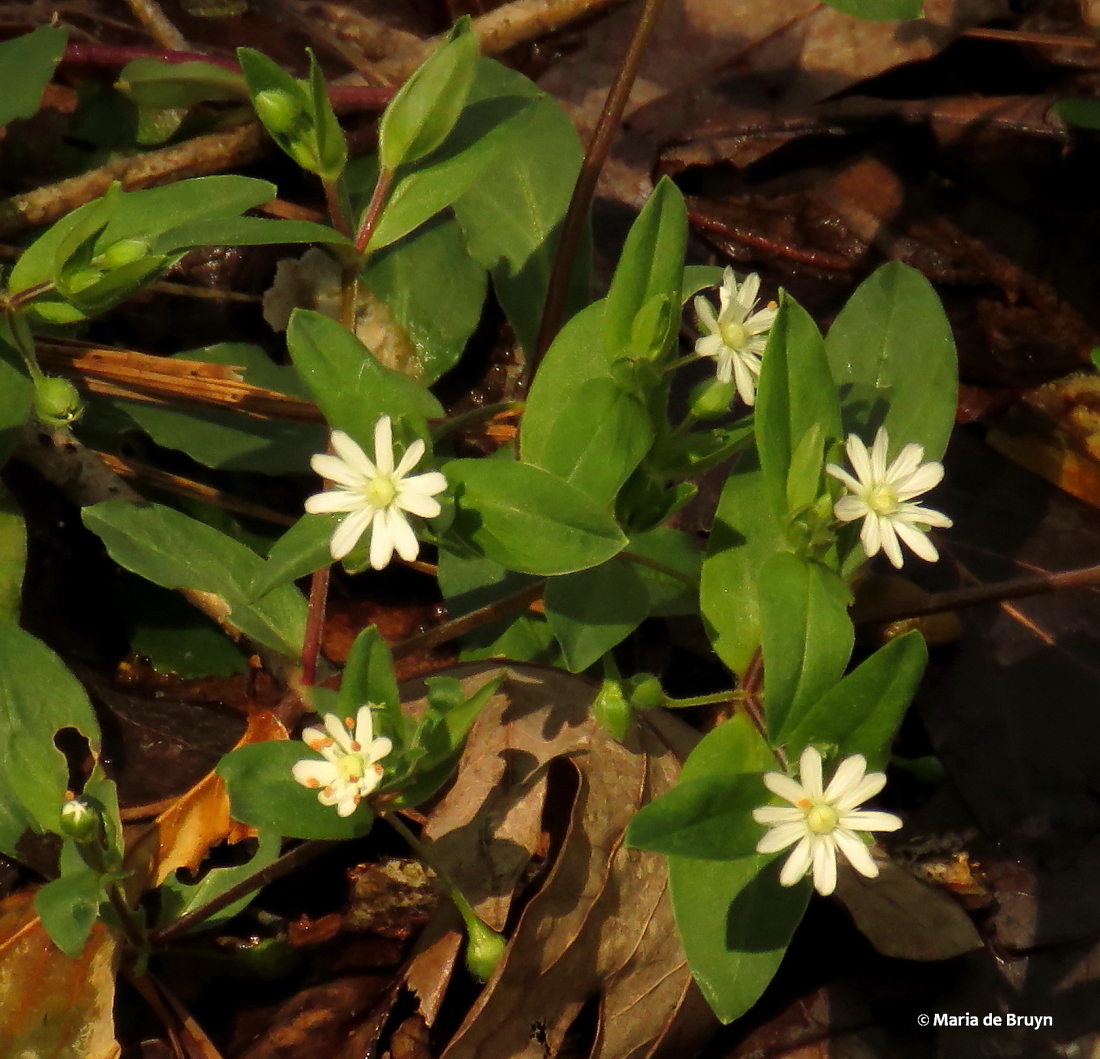
star chickweed IMG_3095© Maria de Bruyn


Some of the star chickweeds (Stellaria pubera) were near another white bloom, the rue anemones (Thalictrum thalictroides).


rue anemone IMG_3110© Maria de Bruyn rue anemone IMG_3109© Maria de Bruyn

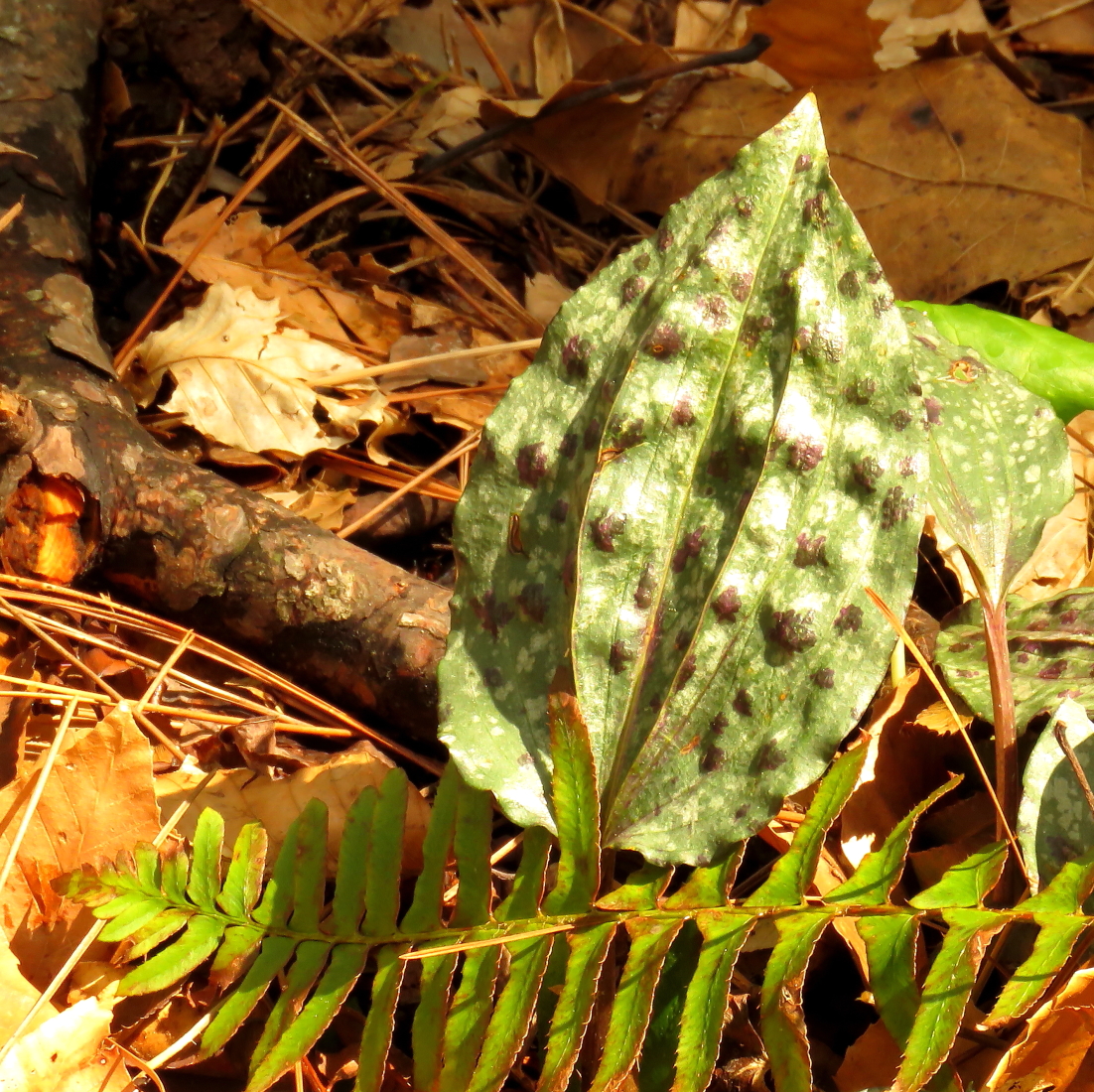
Both the trout lilies (Erythronium americanum) and cranefly orchids (Tipularia discolor) had already bloomed, the trout lilies about 7-10 days ago and the orchids in the winter (when there are no leaves). One orchid had left behind its brown stalk as a witness to the flower that had seen the light.

trout lily IMG_3156© Maria de Bruyncranefly orchid IMG_3148© Maria de Bruyn

Tiny bluets (Houstonia pusilla) in clusters here and there provided some variation from the ubiquitous white blooms that we were seeing. The mayapples (Podophyllum peltatum) were just emerging and it will be a little while before we see their flowers emerge underneath the leafy umbrellas.

tiny bluet IMG_3118© Maria de Bruynmayapple IMG_3196© Maria de Bruyn


Bolin creek IMG_3165© Maria de BruynThe creek was running high and fast and we debated on crossing it at the first branch. Only two of us had wellingtons (and one lady found that her boots leaked); others were wearing running and walking shoes but everyone made it across by using stones, canes and walking sticks that some of our group had brought along. Our immediate reward was a view of a gorgeous pinxterbloom wild azalea (Rhododendron periclymenoides).

pinxterbloom azalea IMG_3174© Maria de Bruyn

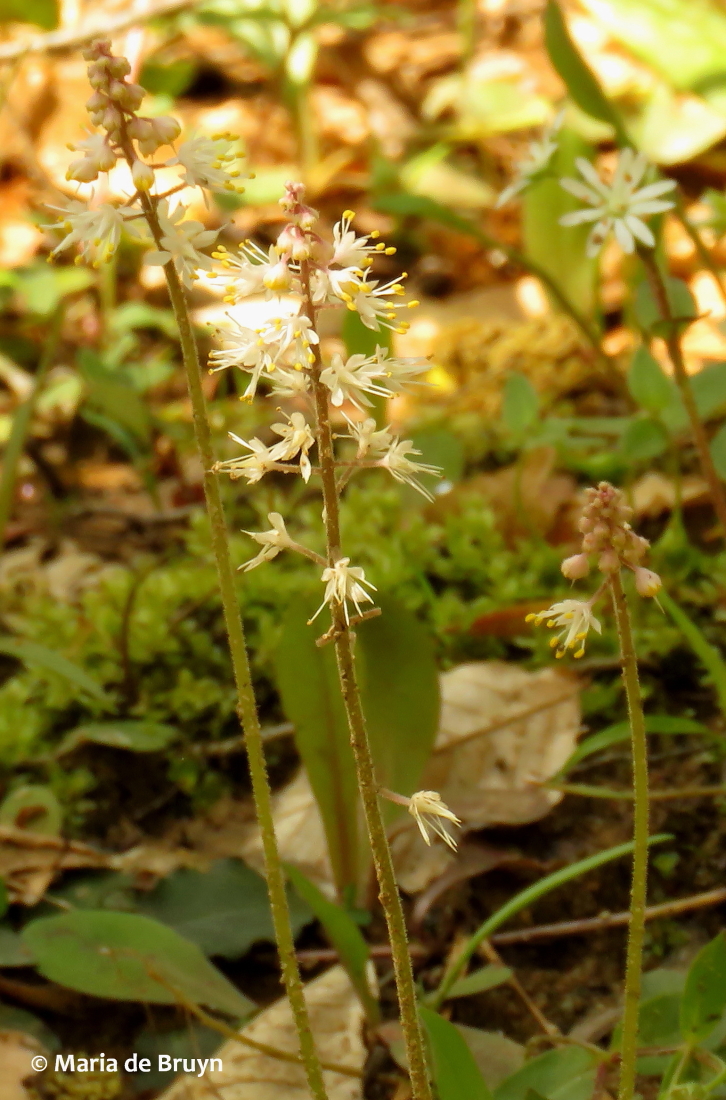
foamflower IMG_3180© Maria de Bruyn


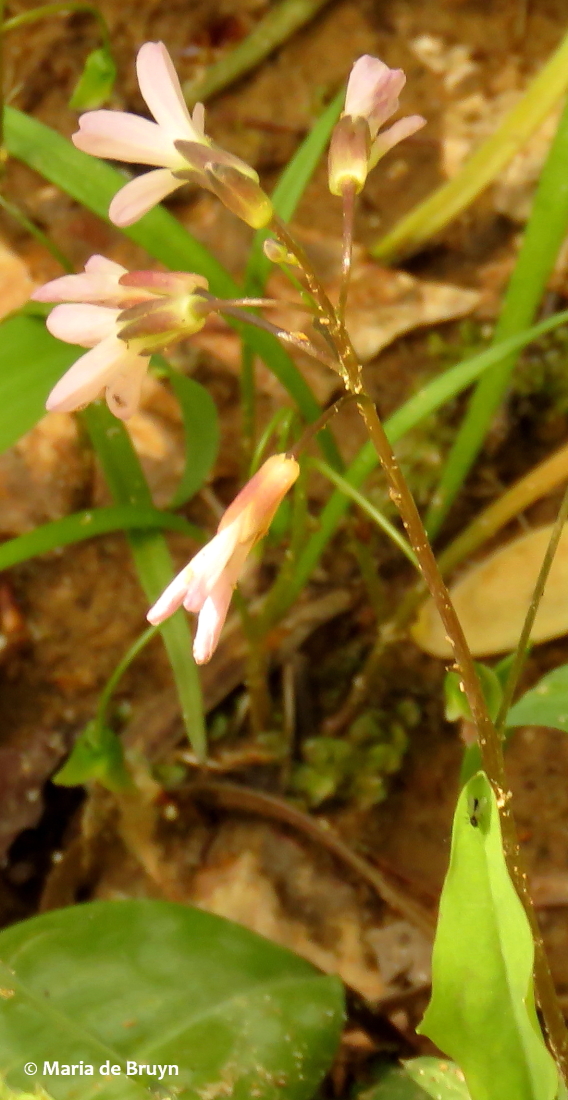
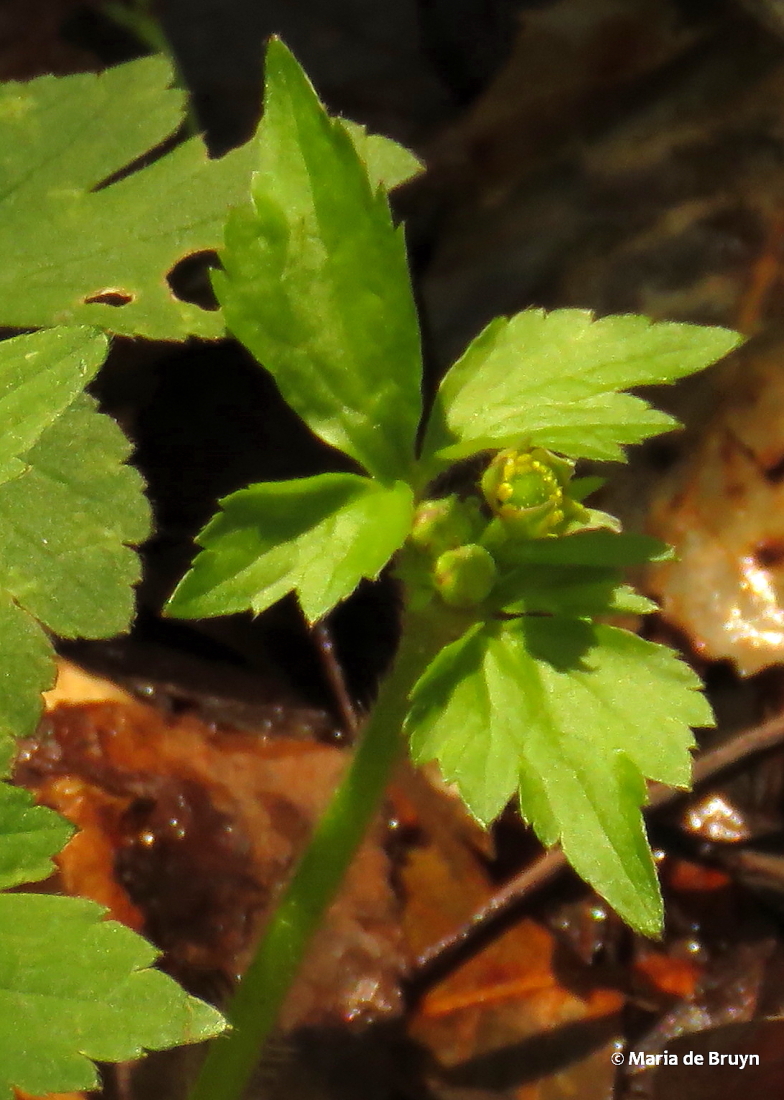
A sighting of a foamflower (Tiarella cordifolia), followed by a cutleaf toothwort (Cardamine concatenata) provided a bit more color, as did the littleleaf buttercup (Ranunculus abortivus), although its blooms were not fully expanded yet.


cutleaf toothwort IMG_3187© Maria de Bruynlittle leaf buttercup IMG_3092© Maria de Bruyn

Only the jigsaw puzzle-like leaves of the bloodroot (Sanguinaria canadensis) were in evidence as that flower had stopped blooming already. A tufted titmouse singing overhead (Baeolophus bicolor) gave us a nice little concert as compensation.

bloodroot IMG_3198© Maria de Bruyn tufted titmouse IMG_3201© Maria de Bruyn

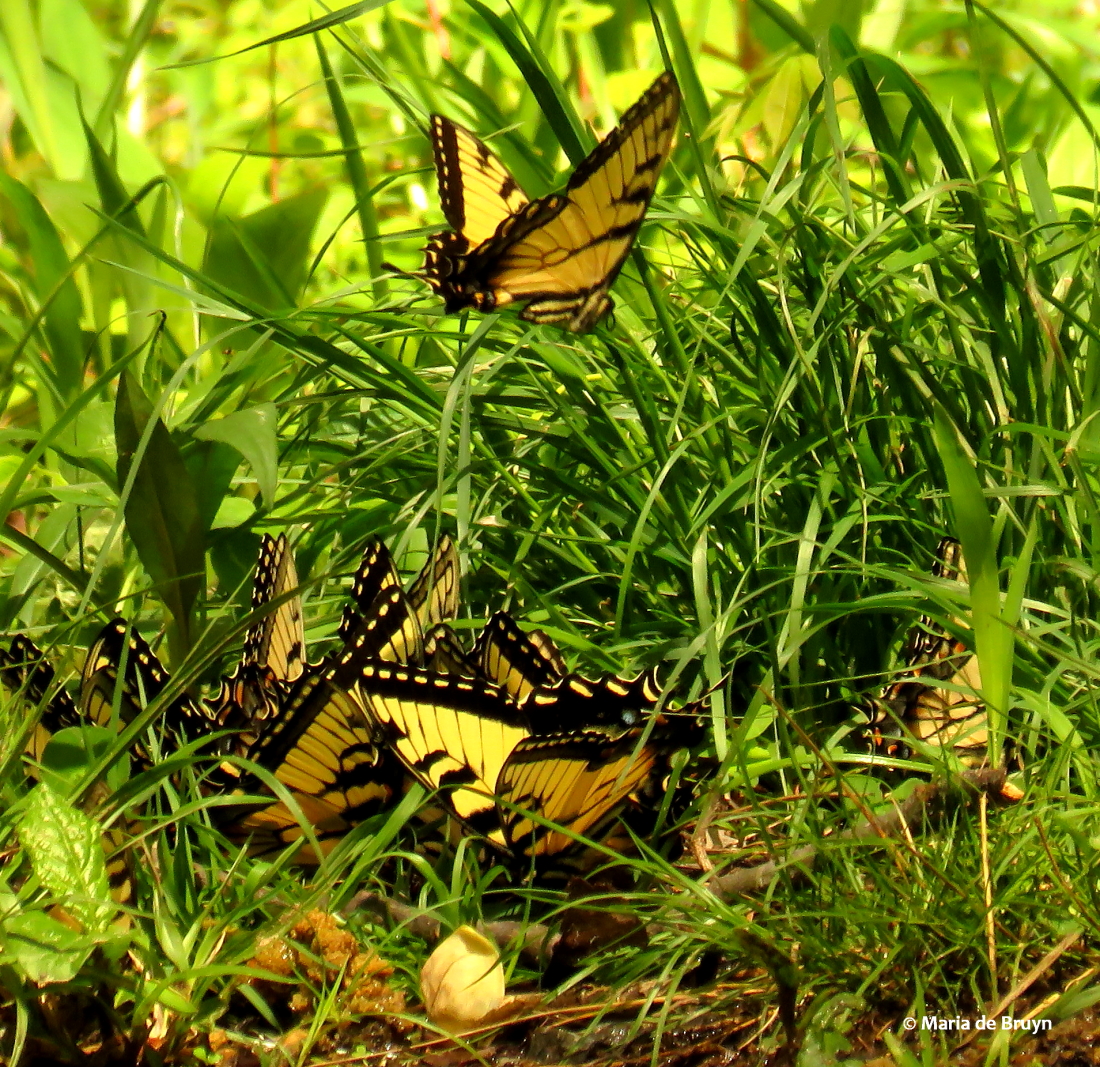
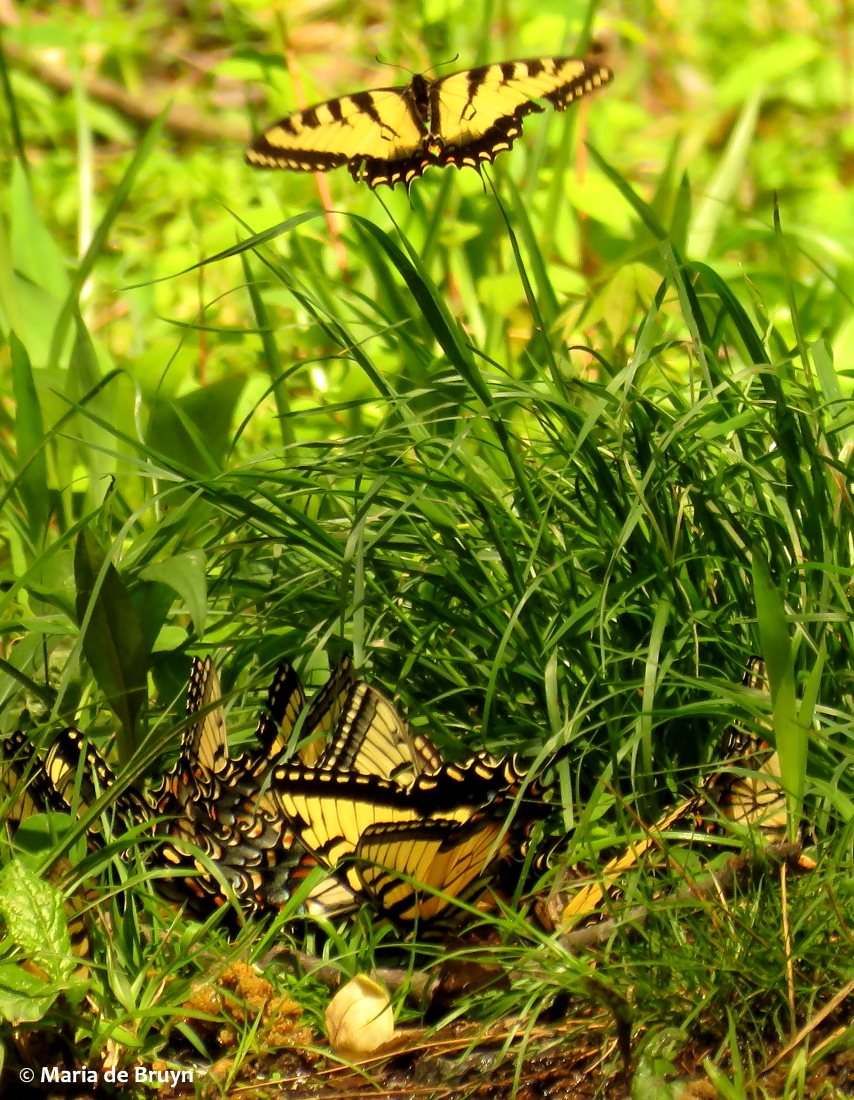
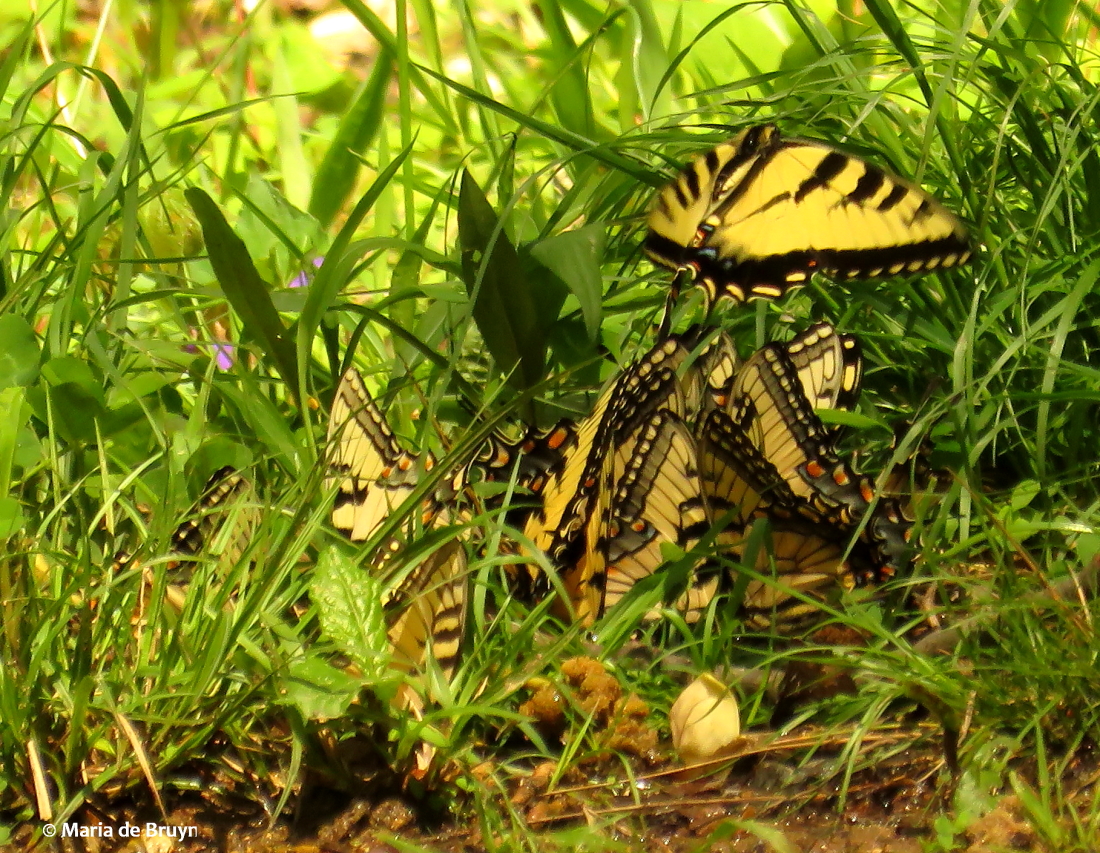
Eastern tiger swallowtail IMG_3428© Maria de Bruyn resAnd then we came across our three surprises of the walk. We had already seen several Eastern tiger swallowtail butterflies (Papilio glaucus) fluttering by in one’s and two’s and we remarked how welcome they were because of the paucity of butterflies we had had the past couple years. But then across another branch of the creek, we spotted some 12-20 butterflies congregating over some delicacy of unknown (to us) origin.

Eastern tiger swallowtail IMG_3259© Maria de Bruyn res Eastern tiger swallowtail IMG_3263© Maria de Bruyn res

The water was fairly deep and flowing fast, so we did not cross but we surmised that someone’s dog had left a pile of poo to provide a mud-puddling butterfly feast.

Eastern tiger swallowtail IMG_3443© Maria de Bruyn res Eastern tiger swallowtail IMG_3447© Maria de Bruyn res

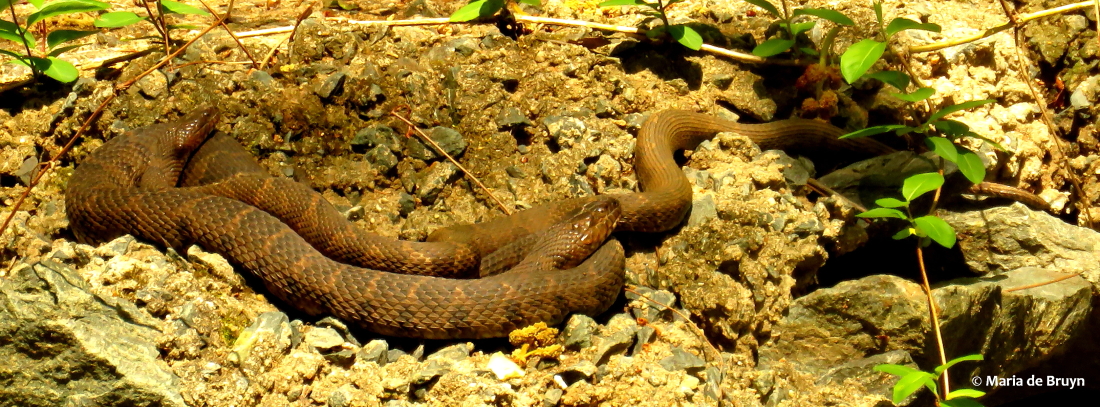
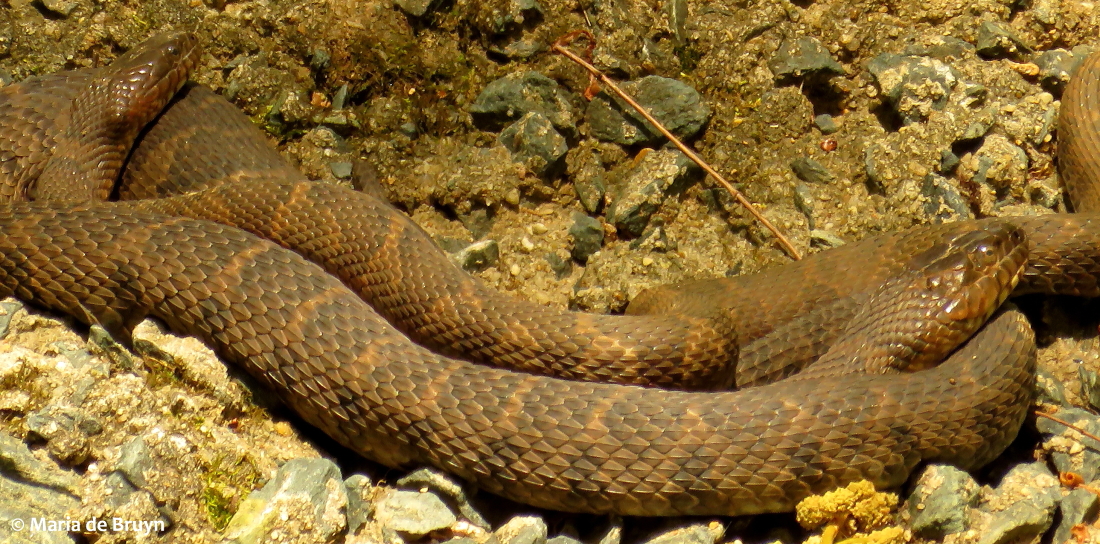
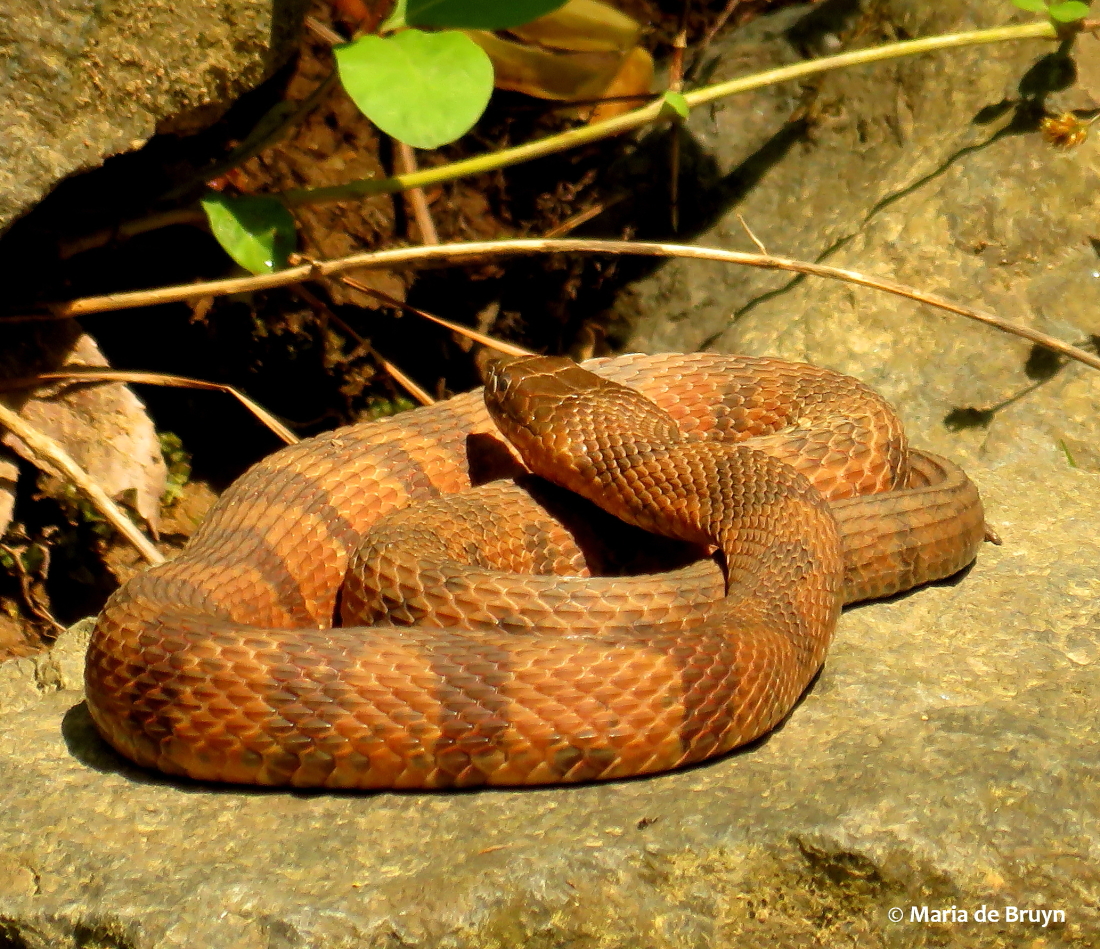
Then we noticed on a rock just below the bank under the butterflies where two Northern watersnakes (Nerodia sipedon) were having a little rest.

northern watersnake IMG_3406© Maria de Bruyn

northern watersnake IMG_3408© Maria de BruynThey were a bit dull in color, which became quite obvious when compared to a third northern watersnake that we spotted on a rock closer to the creek – perhaps a younger individual who had decided that a sunbath was just the thing for a Saturday afternoon.

northern watersnake IMG_3241© Maria de Bruyn northern watersnake IMG_3349© Maria de Bruyn

While we were all enamored with the flowers we’d seen, the butterflies and snakes gave our walk a special feel.

bugleweed IMG_3501© Maria de Bruyn


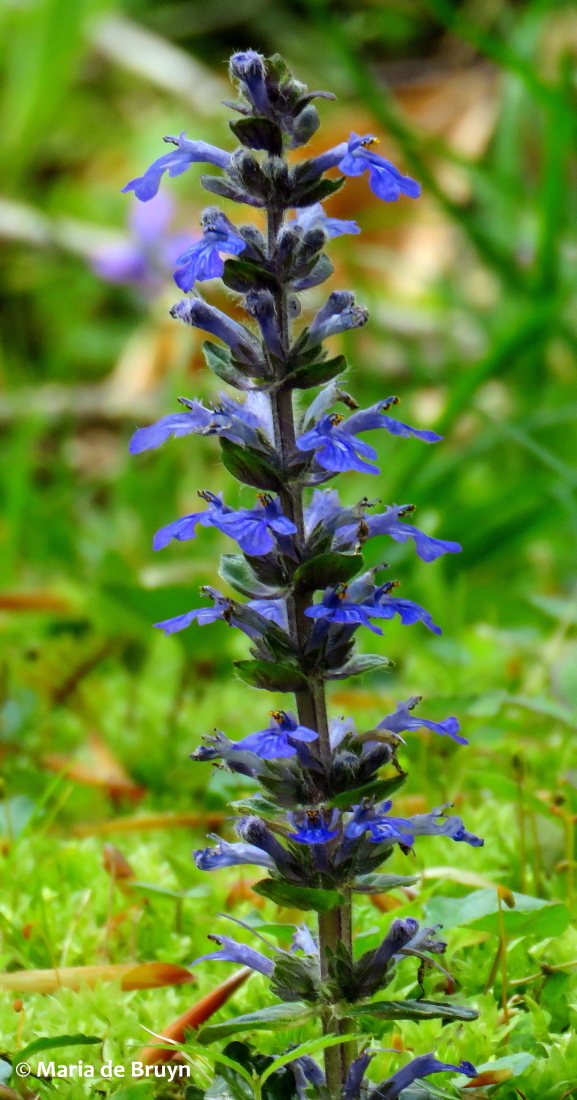
On our return trip through the woods to reach our transportation, we came across an invasive plant, the bugleweed (Ajuga reptans). We had already seen plenty of Japanese wisteria, mahonia, privet and autumn olive and agreed that another volunteer day to weed out some invasives would be a good contribution to the preserve. But that is for the future – right now, we are happy to think back to our surprise spottings!

Woodpecker welcome!

My celebration for the arrival of 2016 happened on 21 January, when I had my first nature walk of the year. It was delayed by a hospitalization at the start of the year and home treatments for a couple weeks after that. When a relatively warm and sunny day arrived, I just had to get out there despite still dealing with some recovery-related issues. I chose the North Carolina Botanical Garden as my venue since it has plenty of benches for short rests in between walking. It was simply lovely.

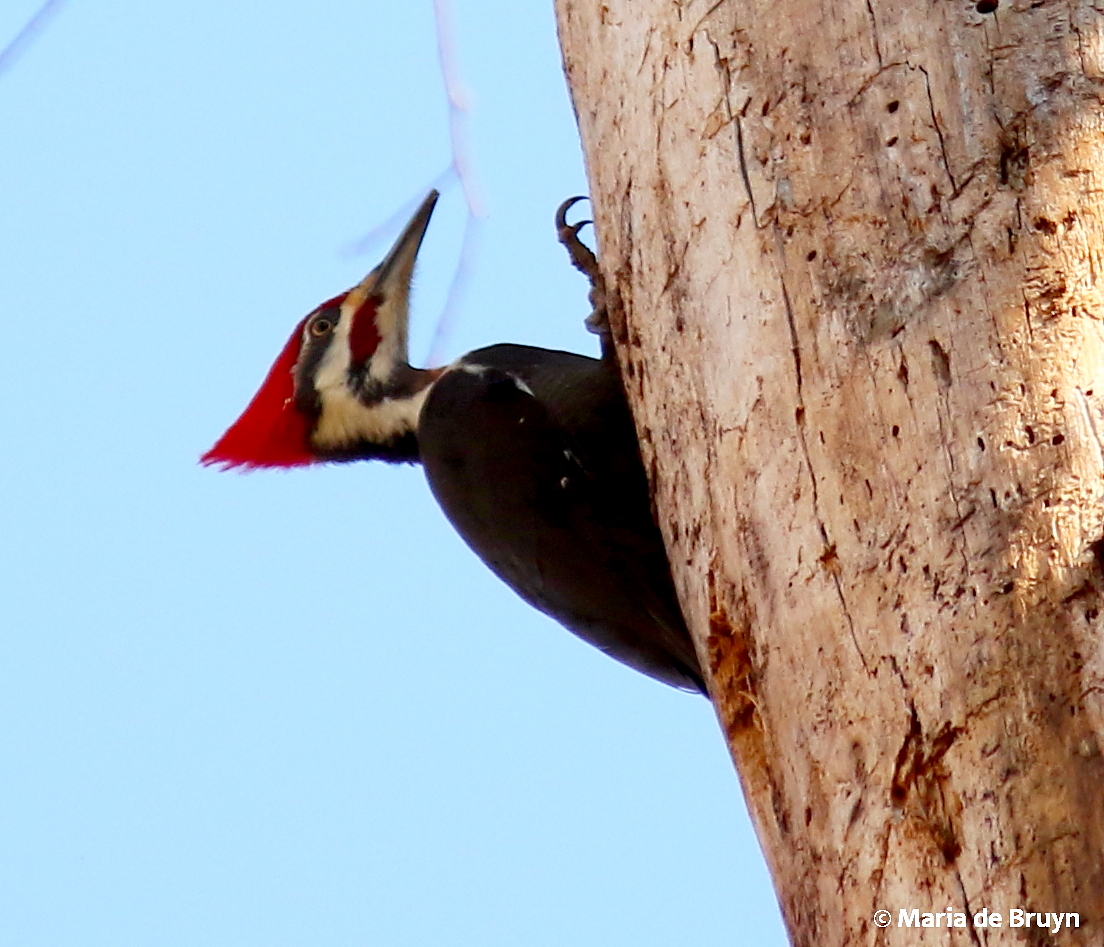
pileated woodpecker I77A7321© Maria de BruynMy first bird of the day was a beautiful male pileated woodpecker (Dryocopus pileatus), a harbinger of the day’s theme – the woodpeckers were my welcome committee!

Loud rhythmic hammering had me searching the snags among the tall trees for the next greeter – it reminded me of the facts I had learned about woodpeckers and their adaptations to a pecking life.

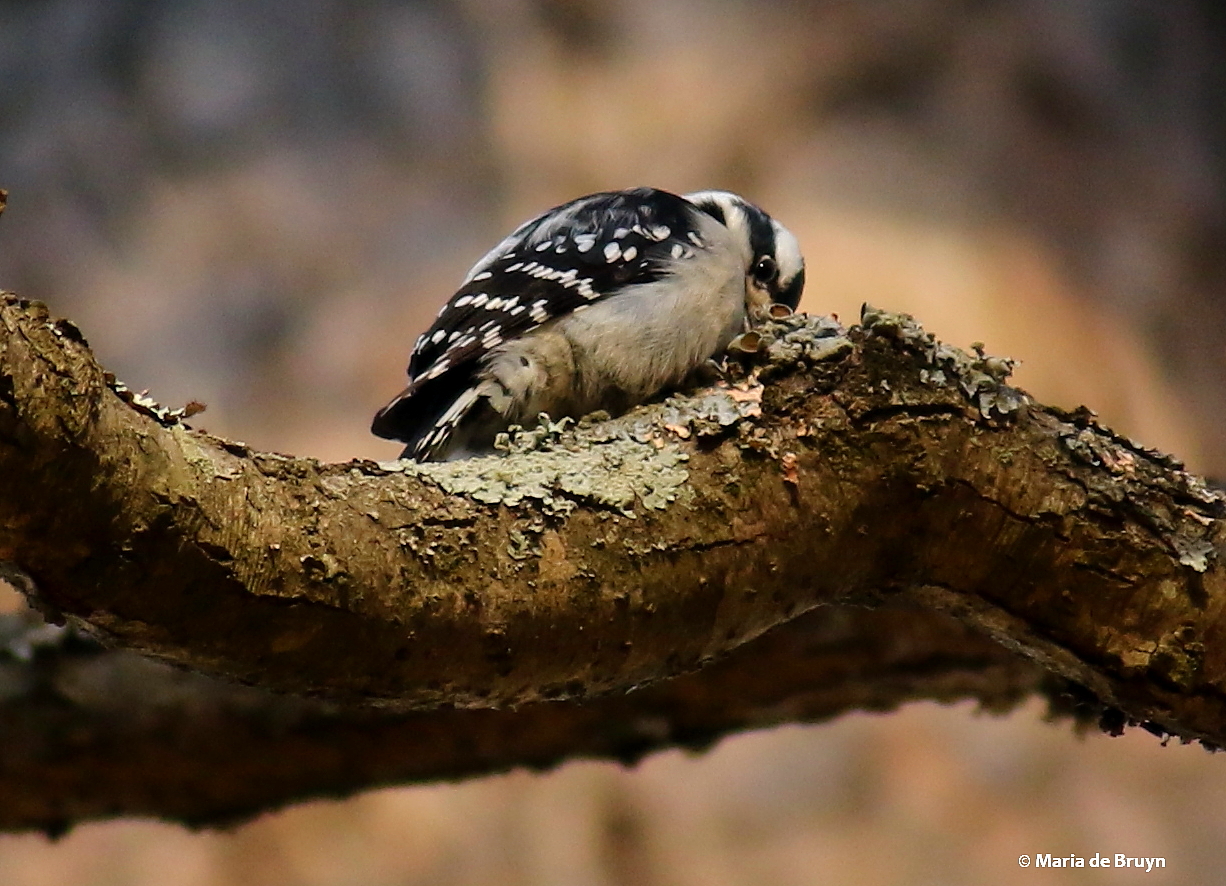
downy woodpecker I77A7372© Maria de BruynIt turned out to be a diminutive downy woodpecker (Dryobates pubescens), whose hammering sounds were enhanced by the hollow stem with which he was busy.

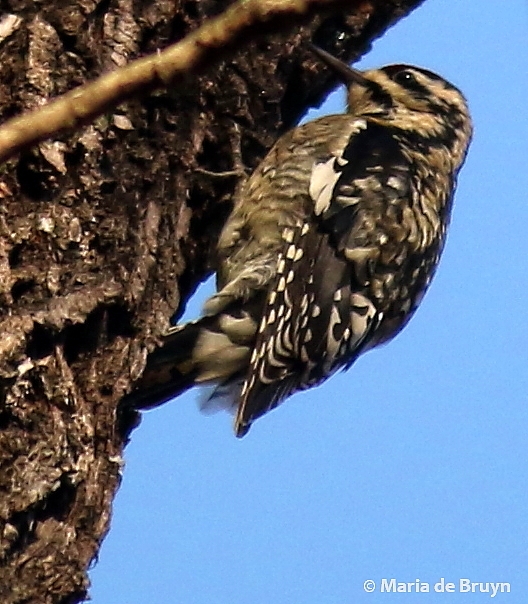
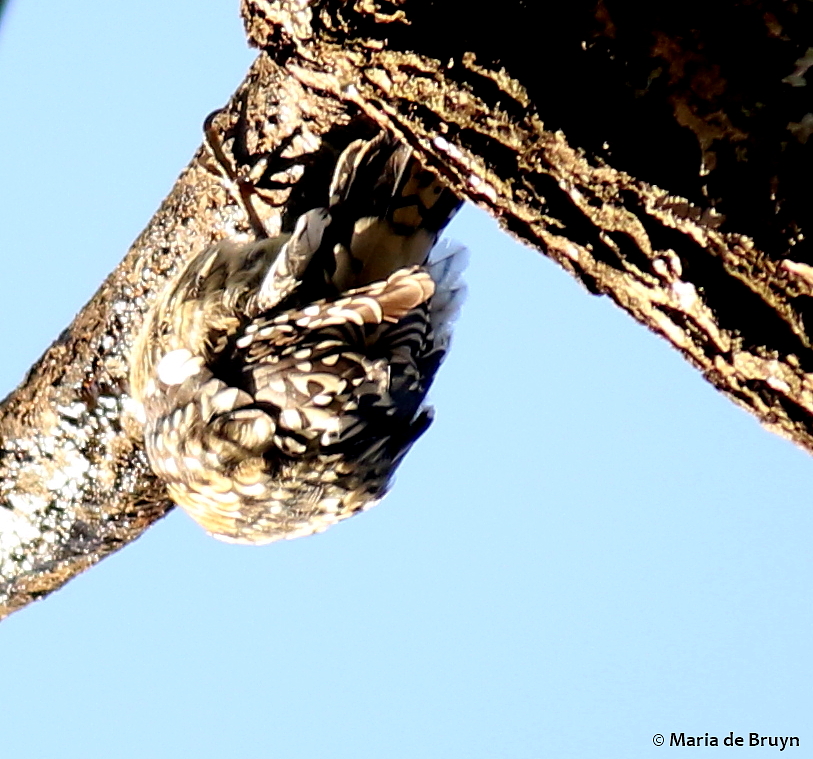
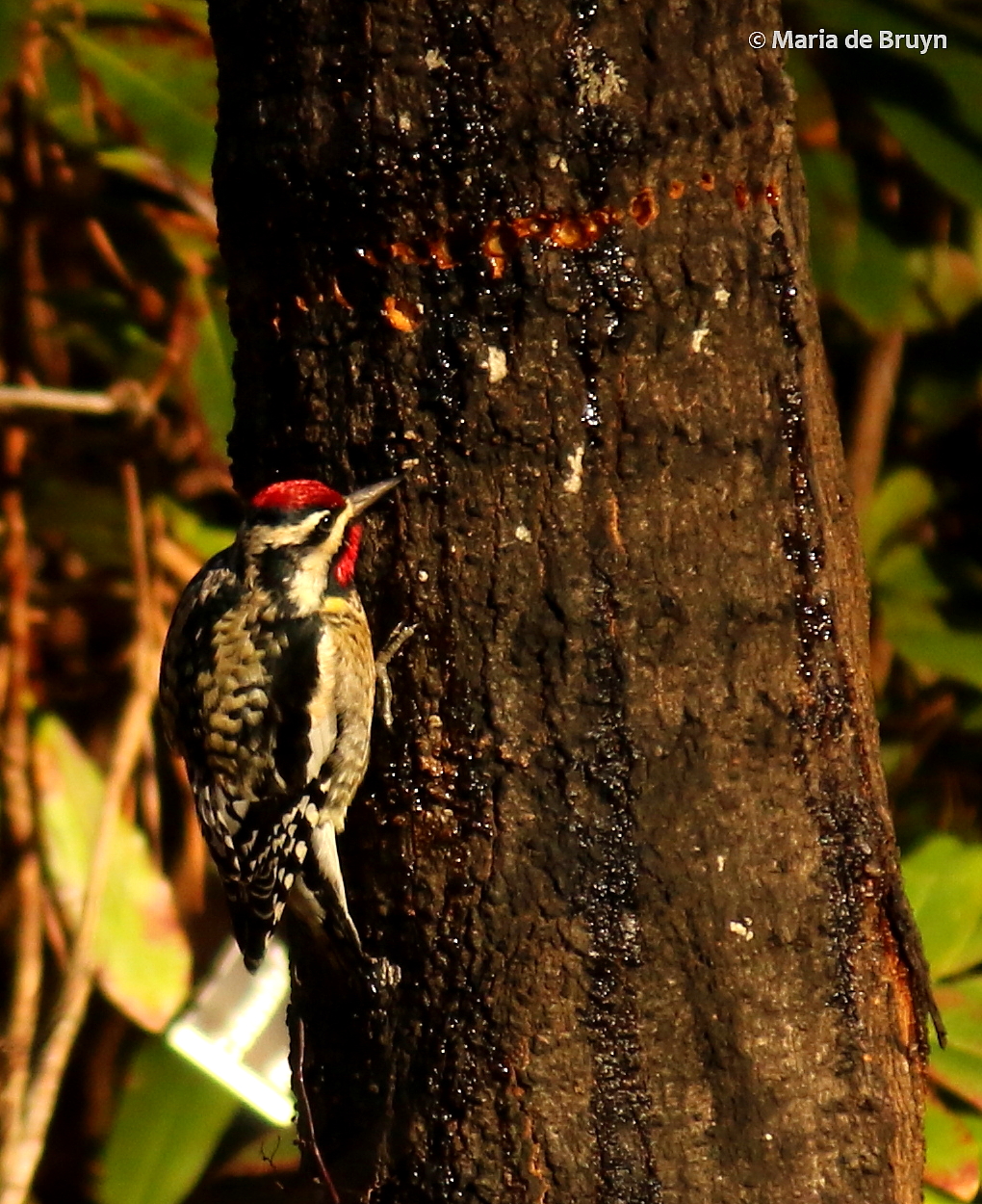
Next up was a lovely female yellow-bellied sapsucker (Sphyrapicus varius) who was very industriously flitting from branch to branch in search of sustenance.

yellow-bellied sapsucker I77A7419© Maria de Bruynyellow-bellied sapsucker I77A7582© Maria de Bruyn

When flattened against tree trunks, she demonstrated how well camouflaged her back feathers make her. A male sapsucker showed it, too.

yellow-bellied sapsucker I77A7476© Maria de Bruyn

yellow-bellied sapsucker I77A7860© Maria de Bruyn res

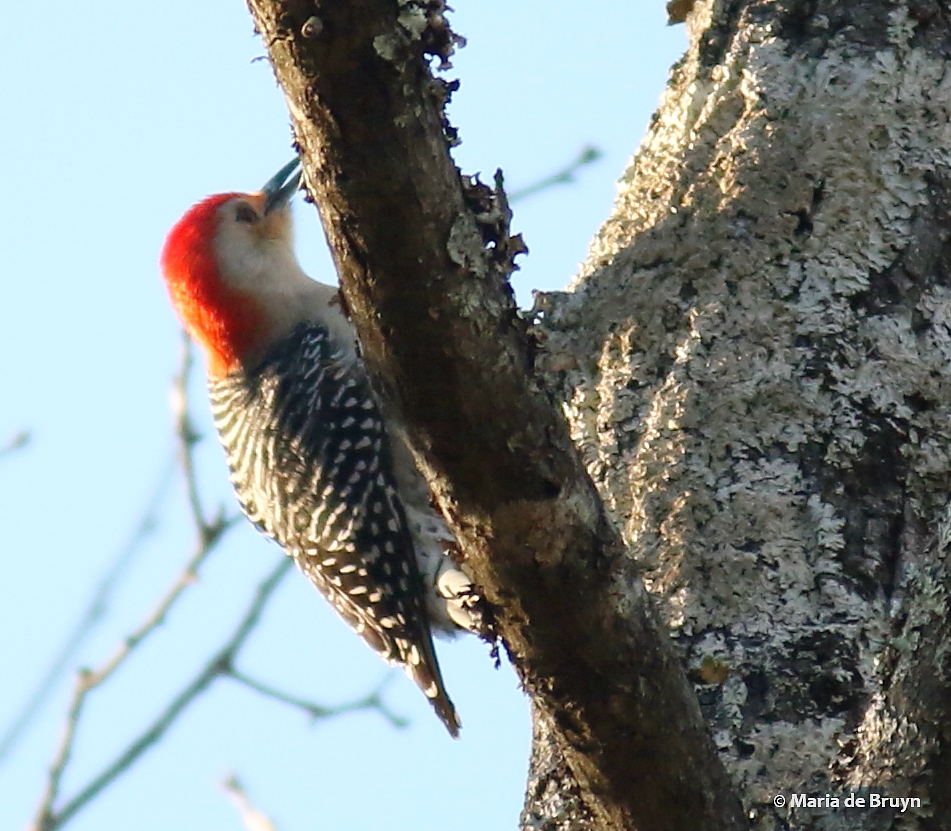
red-bellied woodpecker I77A8242© Maria de BruynA red-bellied woodpecker (Melanerpes carolinus) rounded out the welcoming committee.

The other birds didn’t disappoint. Several species were in the woods and at the feeders near the Garden’s bird blind. A lovely Carolina chickadee (Poecile carolinensis) flitted about. A tufted titmouse (Baeolophus bicolor) was singing.


Carolina chickadee I77A7639© Maria de Bruyn tufted titmouse I77A7388© Maria de Bruyn


white-breasted nuthatch I77A8203© Maria de Bruyn


A white-breasted nuthatch (Sitta carolinensis) foraged on tree trunks overhead. A Northern mockingbird (Mimus polyglottos polyglottos) posed among red winter berries.
 

Northern mockingbird I77A7737© Maria de Bruyn res

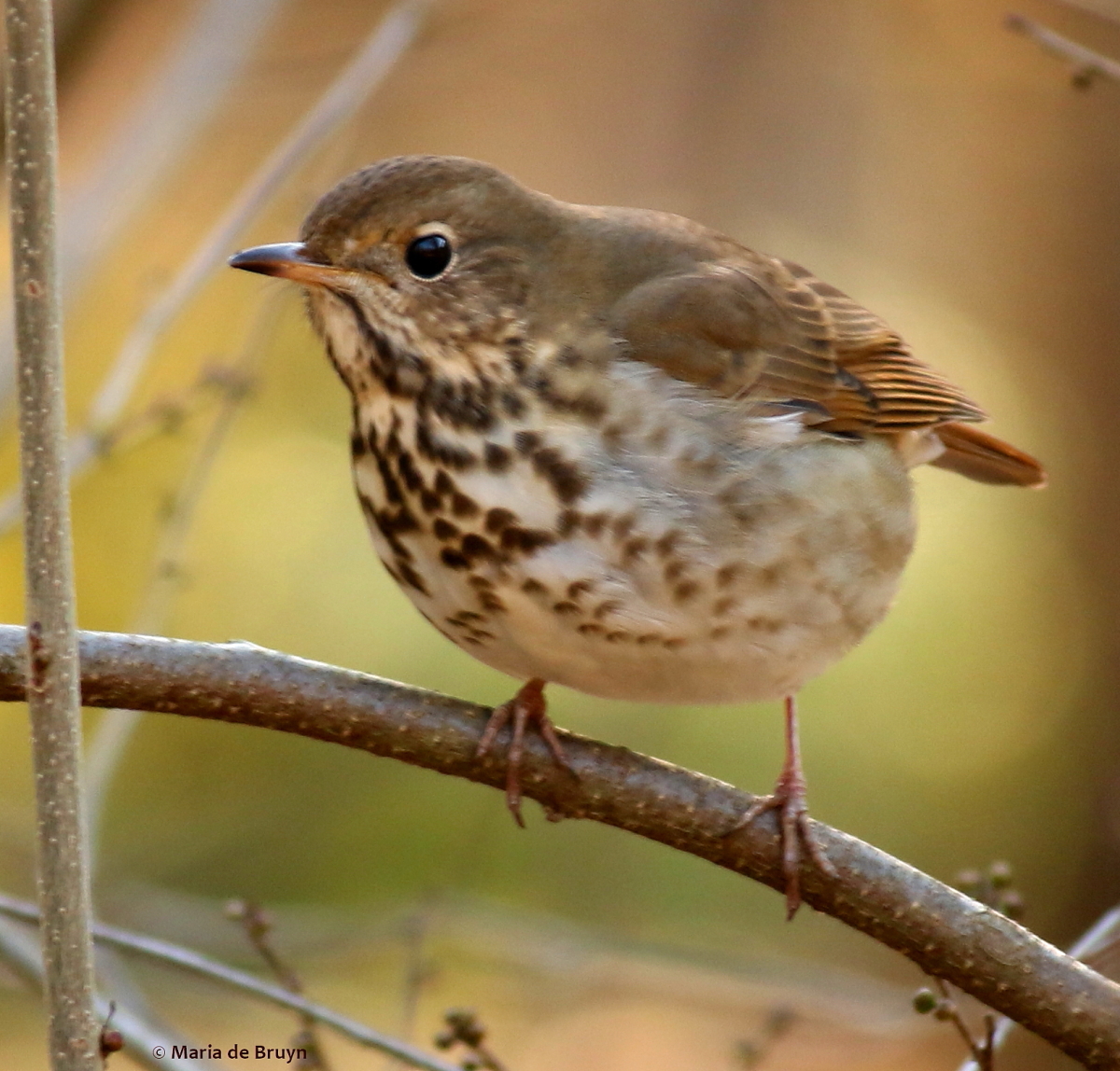
hermit thrush I77A7658© Maria de Bruyn


A hermit thrush (Catharus guttatus) emerged near the bird blind, and then the same bird or another seemed to accompany me as I walked another part of the native habitats garden.


hermit thrush I77A7818© Maria de Bruyn

hermit thrush I77A7788© Maria de Bruyn res

Later, a male sapsucker (identifiable by his red throat) appeared near the Paul Green cabin, where he had been busy working on his sapwells.

yellow-bellied sapsucker I77A7858© Maria de Bruyn res yellow-bellied sapsucker I77A7854© Maria de Bruyn res

Shortly thereafter a downy woodpecker came to the same spot and sampled sap (or something else) from the row of holes left by the sapsucker! That was a nice example of how what one animal does can benefit another, too.

downy woodpecker I77A7912© Maria de Bruyn

downy woodpecker I77A7921© Maria de Bruyn res

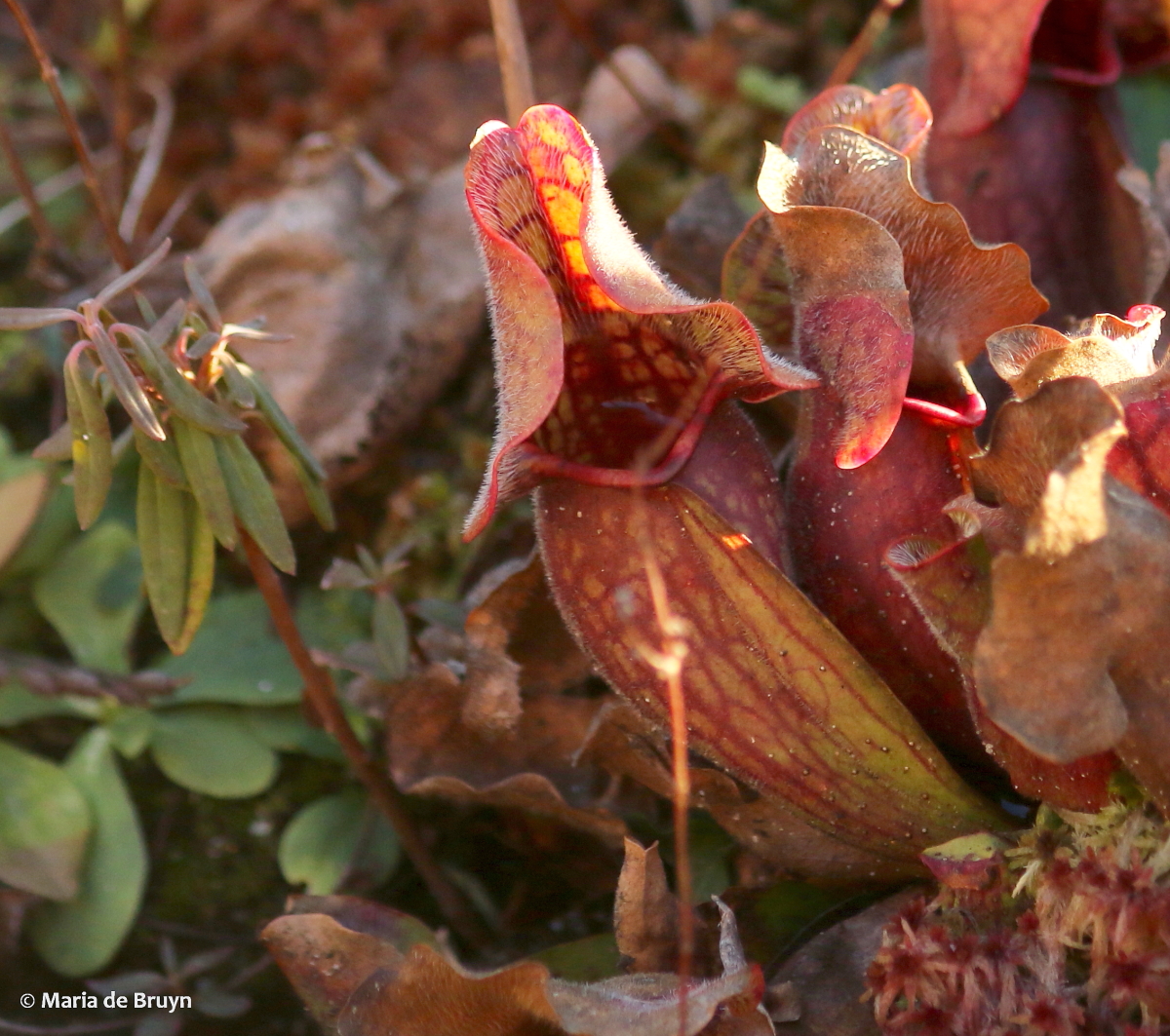
During a plant interlude, I was surprised to see some Southern purple pitcher plants (Sarracenia purpurea) that had not yet shriveled up in the cold.

Southern purple pitcher plant I77A8086© Maria de Bruyn Southern purple pitcher plant I77A8081© Maria de Bruyn res


When, I was leaving, a ruby-crowned kinglet (Regulus calendula) alighted overhead,

ruby-crowned kinglet I77A8165© Maria de Bruyn ruby-crowned kinglet I77A8164© Maria de Bruyn

a red-bellied woodpecker arrived, and one more woodpecker made an appearance – a Northern flicker (Colaptes auratus) high up behind some branches in a tall tree. I was using my small zoom lens so the photo quality isn’t great, but you can see that s/he was there.

red-bellied wooodpecker I77A8234© Maria de Bruyn Northern flicker I77A8154© Maria de Bruyn

downy woodpecker I77A8006© Maria de BruynThe only woodpeckers that are common in our town that I missed were the red-headed and hairy woodpeckers – it was truly a woodpecker welcome and a really lovely start to my wildlife photography outings for this year!