When those loving instincts leave you dangling

This was not a planned blog, but I recently observed something that simultaneously intrigued, amazed and astounded me, so I wanted to share it with those of you who may not have witnessed this either.

Like many gardens in my neighborhood, my yard has its fair share of leopard slugs (Limax maximus), but they don’t bother me as they do some other people who complain about them eating their vegetables. Until recently, I never thought about the slugs much and certainly didn’t wonder about their life cycle. Then my friend Mary posted a lovely photo of two intertwined leopard slugs mating and my interest and curiosity were piqued.

A few days later, a fellow nature lover, Ace, reported that he had a cool photo to show me – and there on his iPhone was a photo of mating leopard slugs. It turns out that their anatomy makes for a somewhat bizarre spectacle – at least to a human being if not a fellow slug. Now I really wanted to see this phenomenon, too, and I followed Ace’s recommendation, going out into my yard at night with a flashlight to see if I could find some amorous mollusks. Lo and behold – as I rounded the corner of my house, there were three pairs of large slugs getting ready to reproduce! They were leaving glistening slime trails on the brick wall as they slowly got into position.

The slime that the slugs exude has multiple purposes – they can leave a trail behind them as a signpost to the way home, they can numb the mouth of a potential predator with the mucus as a means of defense, and they can broadcast their interest in some reproductive behavior by emitting pheromones to attract a potential mate.
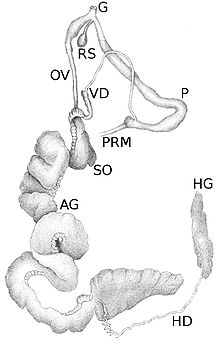
They don’t actually need to mate to reproduce – each slug is a hermaphrodite and can fertilize its own eggs with no need of outside assistance. Slugs have an organ called a spermoviduct (SO), which has two parts – one for the sperm (vas deferens, VD) and one for the ova (oviduct, OV), as seen as this drawing from the Wikipedia page.

Some slugs apparently like reproductive acrobatics, however, and seek out a partner. The mating begins with a pair of slugs following one another around and nudging and licking one another. (A couple photos look browner – I took those with a flash but most were taken with one hand holding a small camera and the other shining a flashlight near the slugs.)
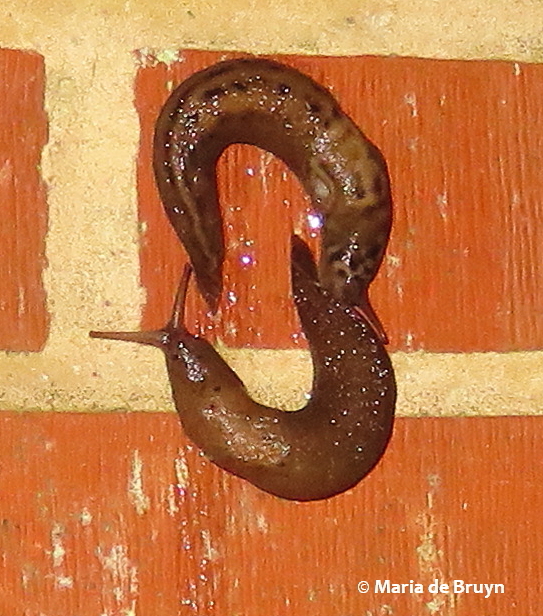
 

They then begin to curl up together and suspend themselves from a long mucus rope, which is somewhat stronger than the slime that they usually exude. They form a kind of writhing ball as they intertwine their elongated bodies (see this video for an example).

Next comes the awesomely weird part – out of a gonopore on the right side of their heads (the elongated tentacles are for vision) come their translucent mating organs (penises)! This video, which is shown in a horizontal position, lets you see how this happens.

Wouldn’t this interesting anatomy and reproductive behavior make an interesting plotline for an SF novel about a genderless society?

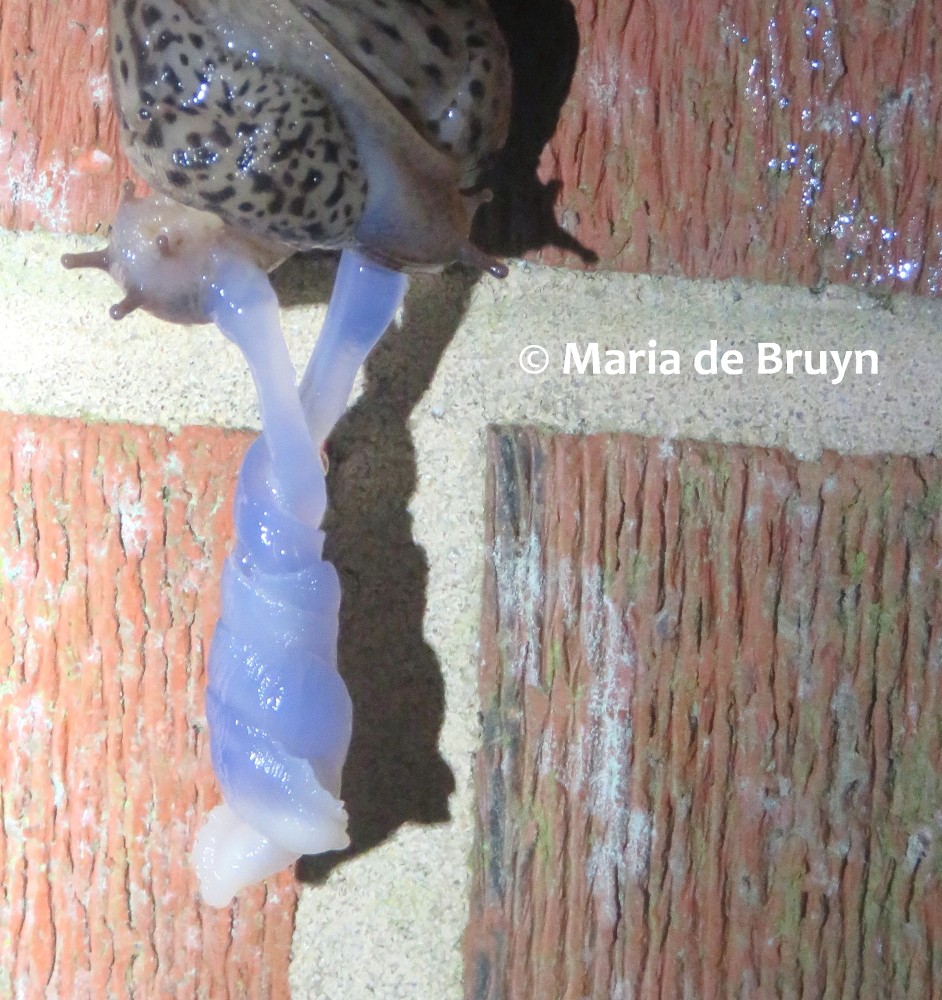


Because the slugs are hanging upside down, gravity helps pull down their reproductive organs, which are pumped full of body fluids until they are as long as the slugs’ entire bodies! Their penises are everted (turned inside out) and the two mollusks intertwine these just like their bodies. They take a while to exchange spermatophores as the penises twirl, intertwine, elongate and pull back to look a bit like a chandelier.


When the creatures have been joined at the neck for some time, they begin to slowly withdraw their reproductive organs, which are now carrying genes from another parent.


After they separate, one of the pair usually consumes the mucus rope from which they dangled in love as it carries extra nutrients which they can use after their vigorous efforts.

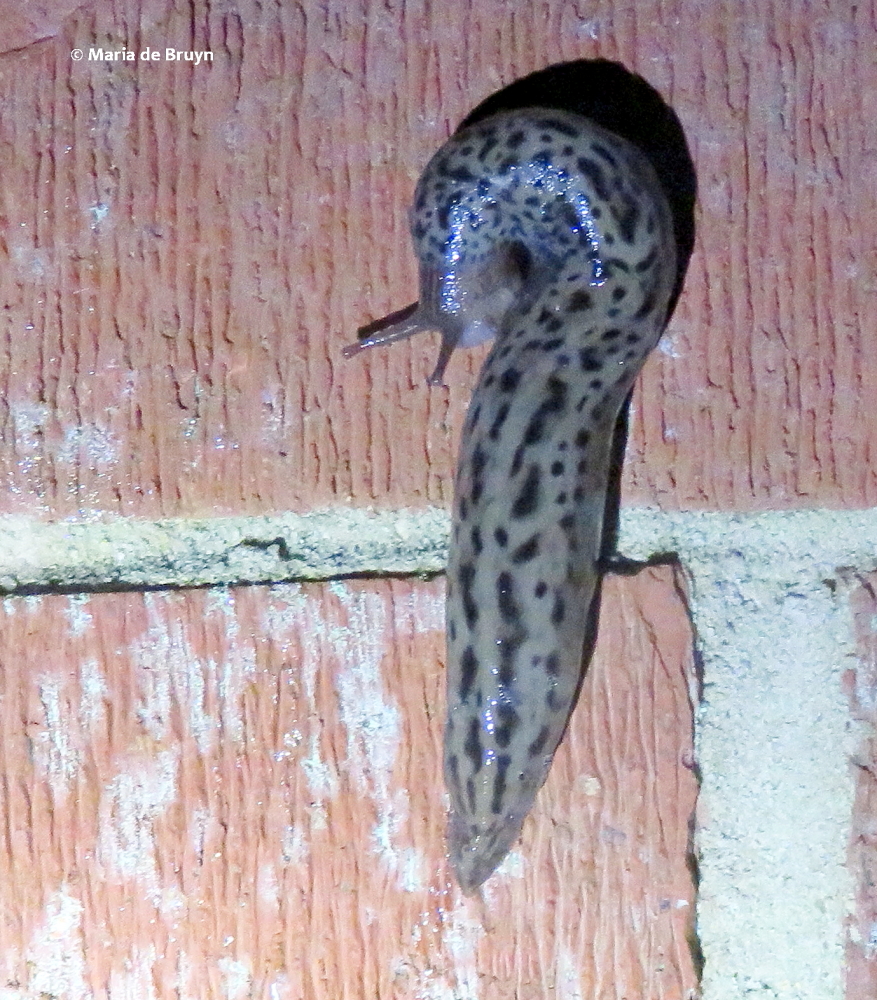


Each slug may spend some time examining its gonopore (above) – and perhaps they are helping push back in the penis when they do this, too. After watching the process for two pairs of slugs, I decided to give the third pair some privacy during their mating tryst. On the wall beneath my screened porch, I discovered another slug with a mucus rope dangling from its tail – leaving me with a little mystery as to why this might have happened. A partner slug was not in evidence except for a much smaller slug – perhaps the big one tried to mate but the younger one was not ready. These mollusks with a life span of 2.5-3 years don’t become sexually mature until they are 2 years old.


I do know that at least three and perhaps six slugs will each be laying up to 200 eggs somewhere in the yard. And when I see them in the future, I will undoubtedly always be picturing them in my head doing their dangling dance with intertwined translucent blue tubes that will help promote their future generations. My discovery of their life cycle has also reinforced my support for scientist Hope Jahren’s (Lab Girl) observation: “…being able to derive happiness from discovery is a recipe for a beautiful life.”
Costa Rican rambles 6B – On the road

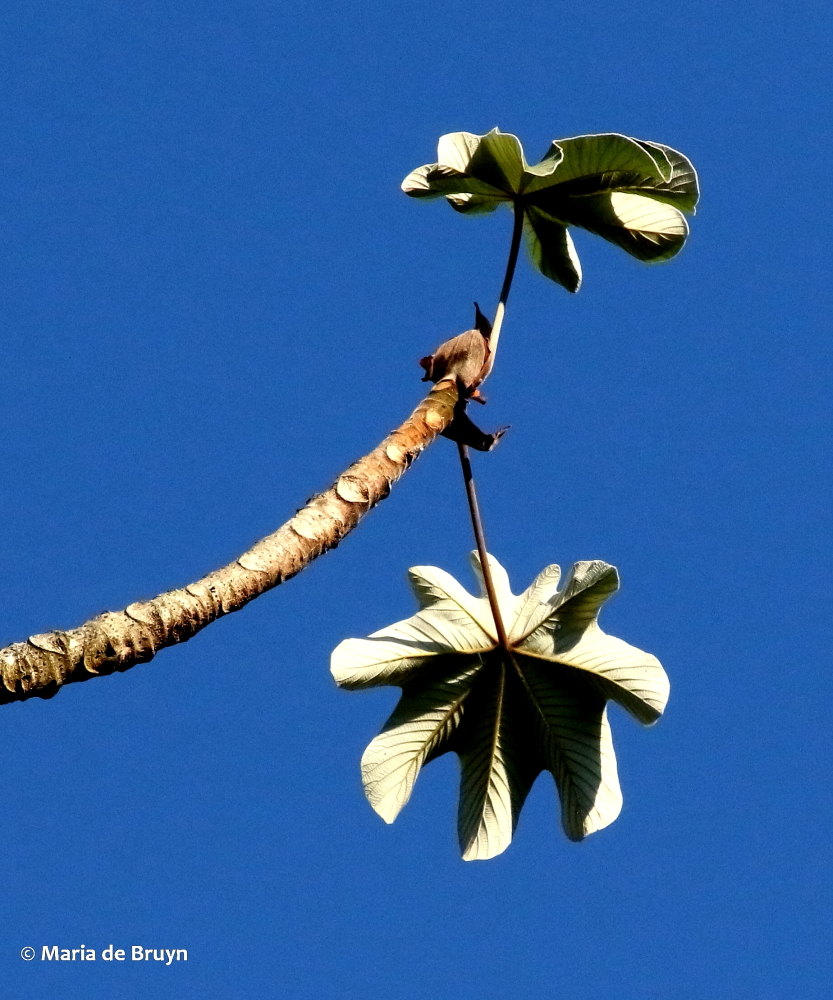
After leaving Los Cusingos, we continued our Costa Rican trip by birding along roads, where we saw more of the countryside, including the ubiquitous cecropia trees with their beautiful leaves. We had heard that some of the banana plantations had become diseased and were replaced with sugar cane; this apparently happened in the 1950s when a fungal disease, Fusarium wilt, affected banana crops. Bananas are still a major crop and many small homesteads along the road had a banana tree in the yard. And these fruits were very popular at the bird feeders.

The day before, we had seen sugar cane growing in various places; the varieties in this country are tall perennial grasses. Farmers were cutting some down with machetes in various places as we traveled and we saw trucks and tractors laden with the crop going to processing plants.


These plants were right beside the roads we drove along.


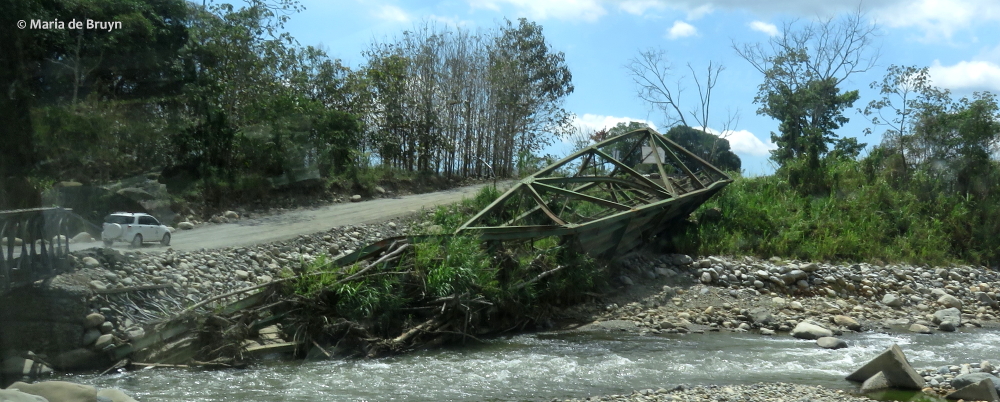
In one area, we crossed a fairly dry river with the remains of a twisted metal bridge on one of its banks – apparently, the result of Tropical Storm Nate which left the country with several fatalities and lots of destruction in October 2017.

We stopped for lunch at an open-air restaurant with signs advising that both sexual harassment at school and in the workplace, as well as smoking, were forbidden. We could see birds flying by in a valley overlooked by the restaurant veranda, which was a nice touch.

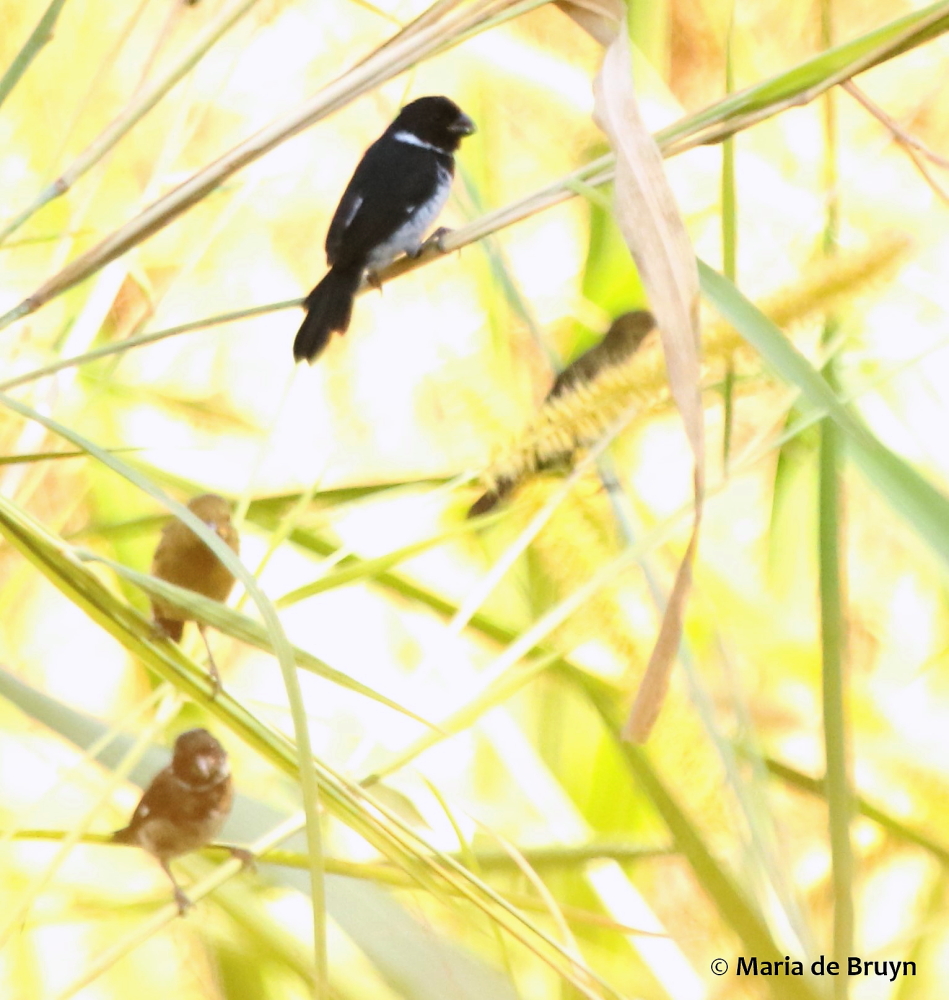
A fair amount of time was spent looking at shorebirds enjoying the water at the San Isidro sewage lagoons. This was not my favorite spot – it didn’t smell bad but the lighting was awful, the birds were far away behind fences that I couldn’t photograph over or through very well. I did manage a photo of a mangrove swallow (Tachycineta albilinea) zipping over the water in the distance. The photo of the variable seedeater (Sporophila aurita) was in dense shrubs and then I over-compensated – but you can see the male is black with a white mark at the neck and the females are brown.


A great kiskadee (Pitangus sulphuratus) perched in a tree and on a wire not too far away.


A green-breasted mango hummingbird (Anthracothorax prevostii) perched, too.


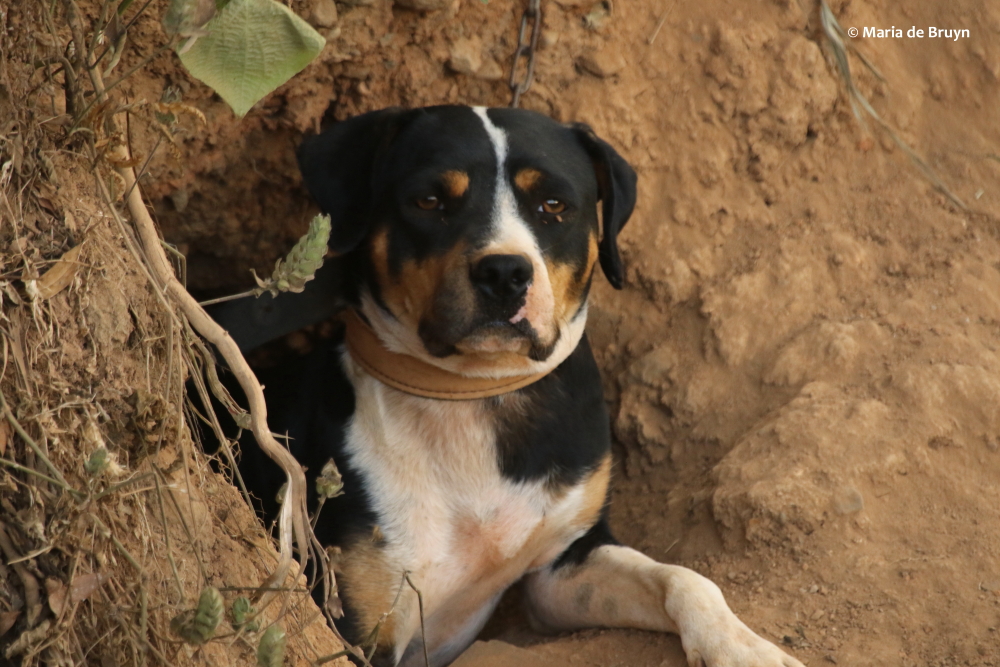
At another roadside stop, I spotted a nice dog who was resting in a hole in the bank of a creek. At first, I thought he was clever to find a cool spot but then I felt badly for him when I saw he was chained.


A restaurant at one stop turned out to be older than me, which was a nice observation.

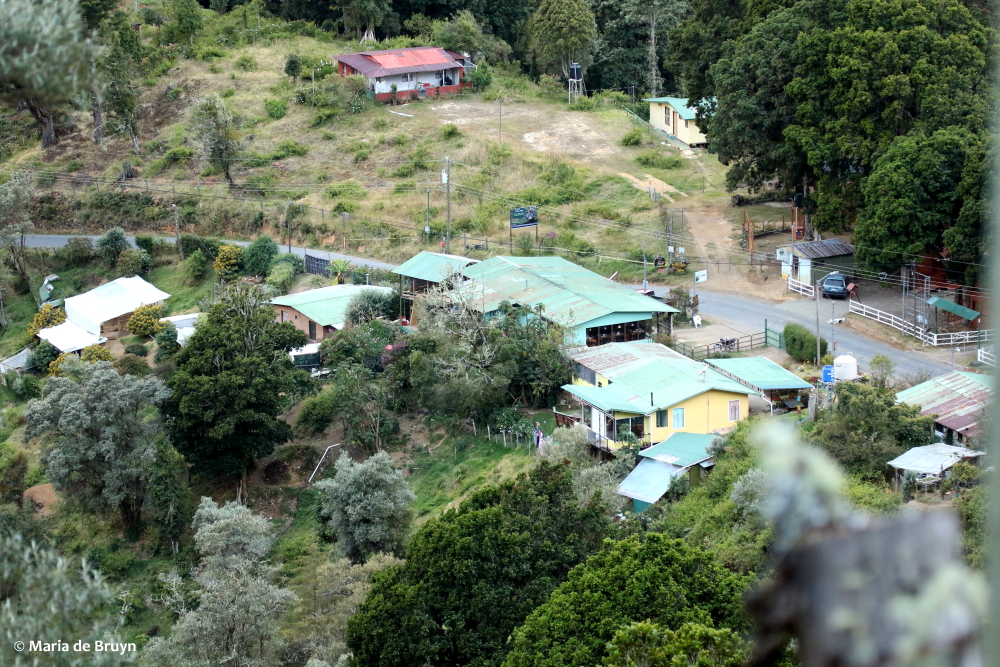
The roadside birding was often on a hilly road and we could see villages below.


In the dense foliage, we saw a dark-capped flycatcher (a very small bird, Empidonax atriceps) sharing a shrub with a euphonia. The yellow-thighed finch (Pselliophorus tibialis) fortunately came out in the open – this bird became one of my favorites.


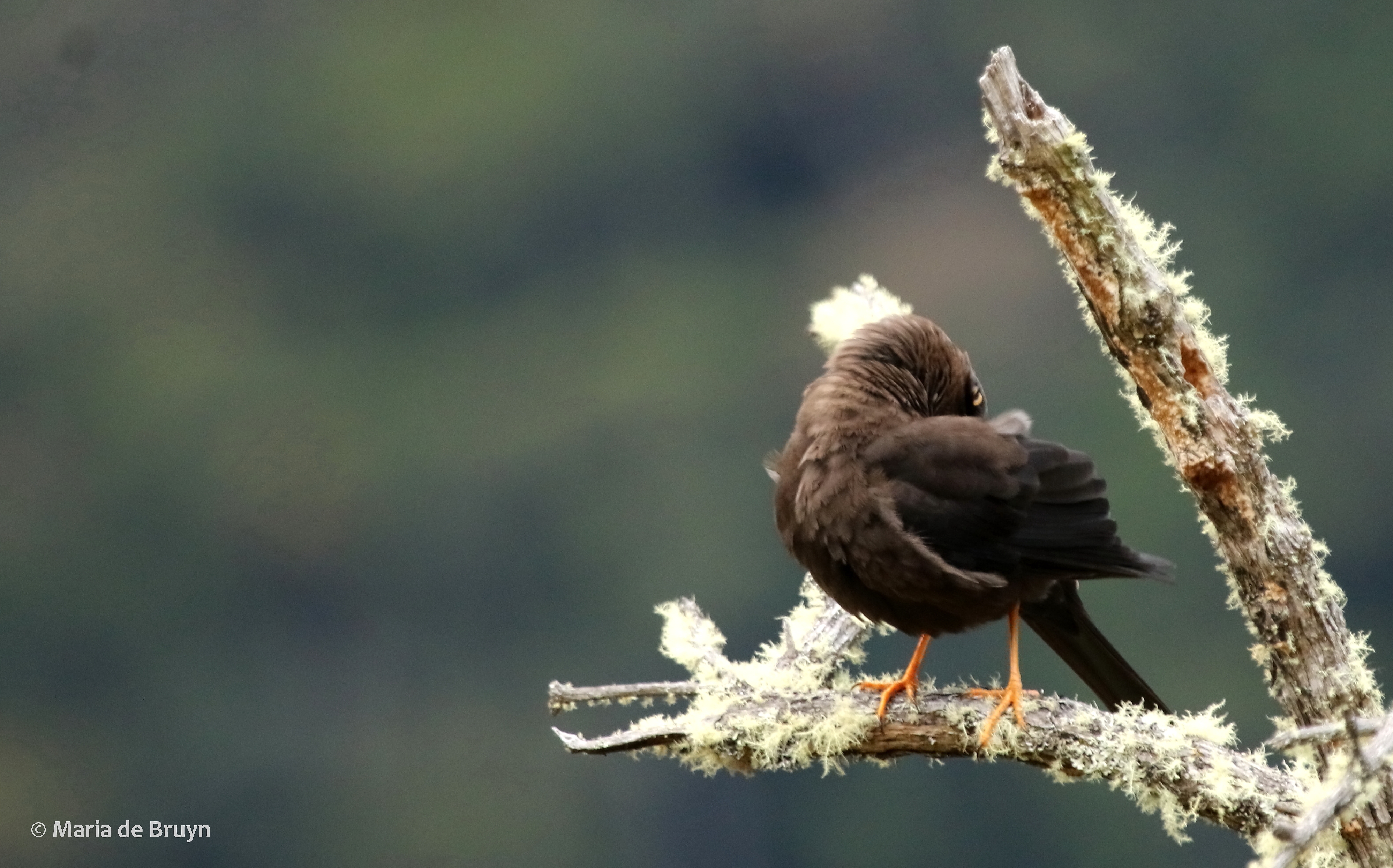
My photo of the long-tailed silky flycatcher didn’t turn out well and I got a better photo later; this was compensated for me by the sooty thrush (Turdus nigrescens), who posed nicely for a long time on a lichen-laden branch. That was a nice way to end the day as we made the last miles to our next hotel for two nights, the Sueños del Bosque cabins where the bathroom was decorated with flowers on the toilet seat, sink drain and shelves. Next instalment coming soon!


Winter wonderland – sharing and spats at the feeders

I thought I had published this blog in early February and just discovered that I had only saved a draft. Since we had snowflakes last night (in April!), I’m going to go ahead and post this now – a break in the series about Costa Rica! When the snow began falling during our day of one-foot accumulation, the feeders were inundated by some of the dark-colored bird species who tend to come in crowds. At first, they were peacefully sharing space.


Although I sometimes have a couple dozen red-winged blackbirds (Agelaius phoeniceus) at the feeders, during the storm only one pair showed up for a brief visit and the other birds left them alone.


The mourning doves (Zenaida macroura) often share feeder space with other birds, including those that are smaller than they are.

The common grackles (Quiscalus quiscula) are known to other people as domineering birds at the feeder, but those in my yard have always been polite, even though they seem to have a permanent expression that expresses anger.


The brown-headed cowbirds (Molothrus ater) sometimes share space nicely and sometimes fuss at one another as they vie for a good perch. They don’t try to chase off other species though and are not apt to “yell” at other birds.

The birds who do “yell” are the European starlings (Sturnus vulgaris). Young ones yell at their parents after fledging, begging to be fed. Adults yell at each other when they are trying to all crowd together onto a feeder. And adults yell at other species to drive them away so they can have all the space for themselves.
At my feeders, however, they have found their match in the male red-bellied woodpecker (Melanerpes carolinus). One day, I watched as they managed to intimidate him for a few minutes, but he then returned to the feeder and refused to give up. Now he is no longer frightened of them and stands his ground when a starling does its best to make him move.


It turns out that studies have shown that the red-bellied woodpeckers are the birds most apt to resist attempts by other birds to displace them from feeders.

The red-bellied woodpecker also was not intimidated by me at one point. He doesn’t like it when he flies in and notices at the last moment that I am sitting or standing on the porch; often he will swerve away and wait for me to leave. During the snow storm, however, he decided to display his displeasure with my close presence, both from a frontal and dorsal view!


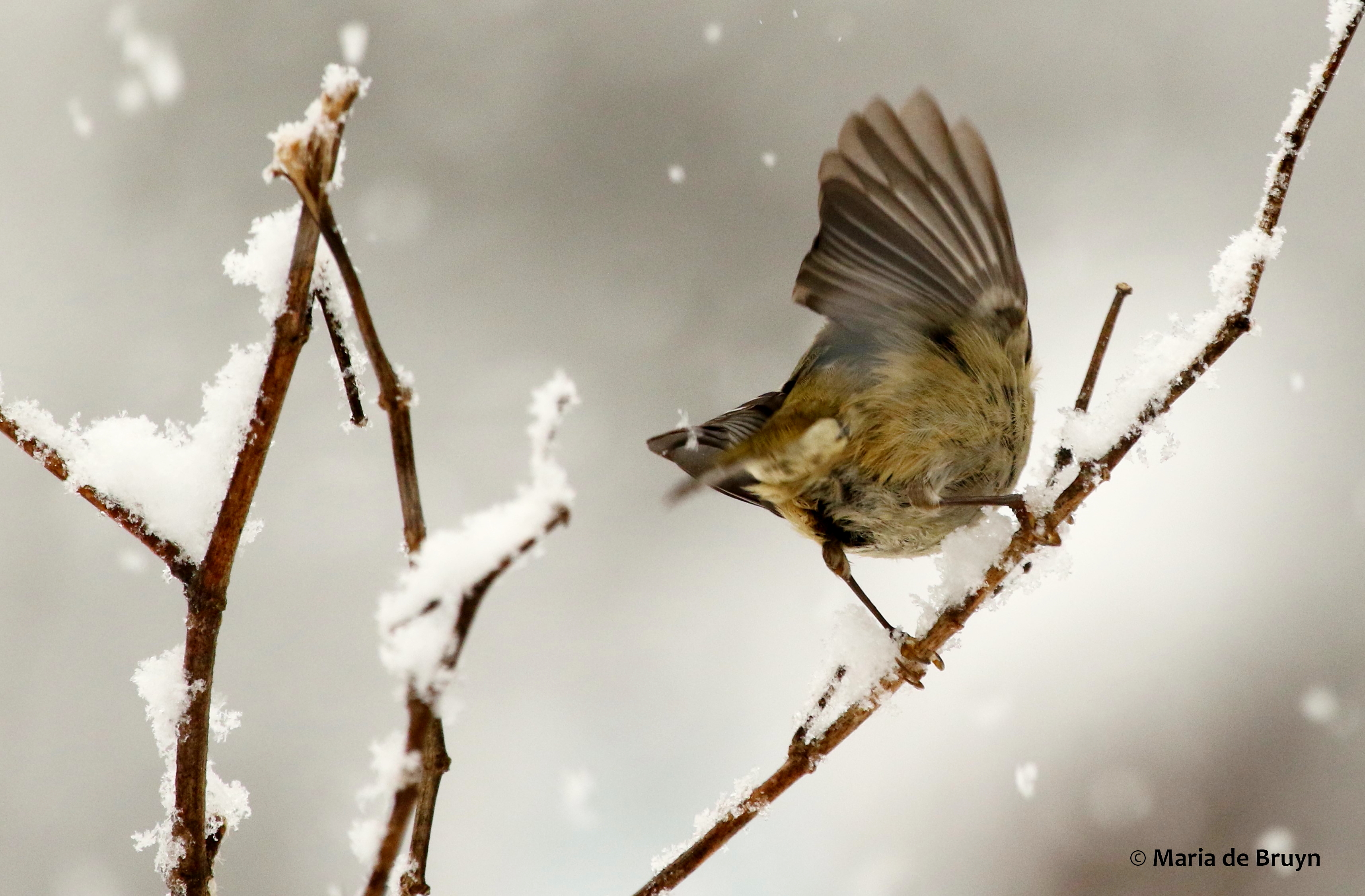
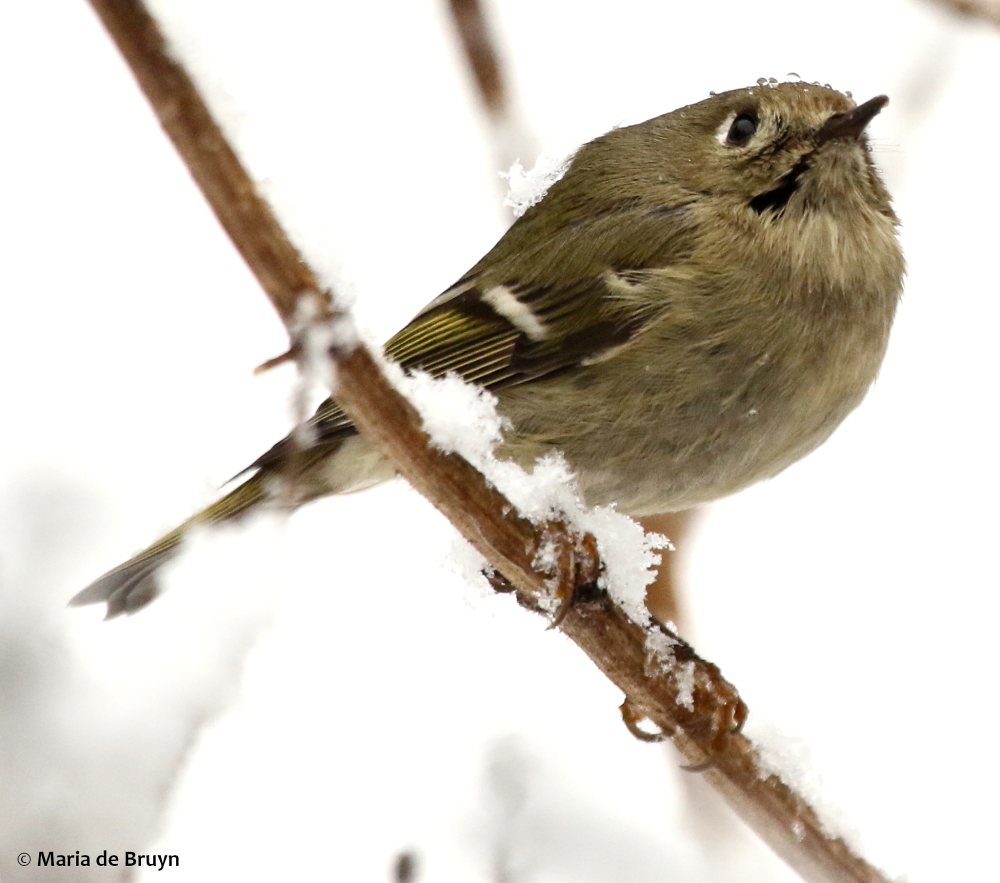
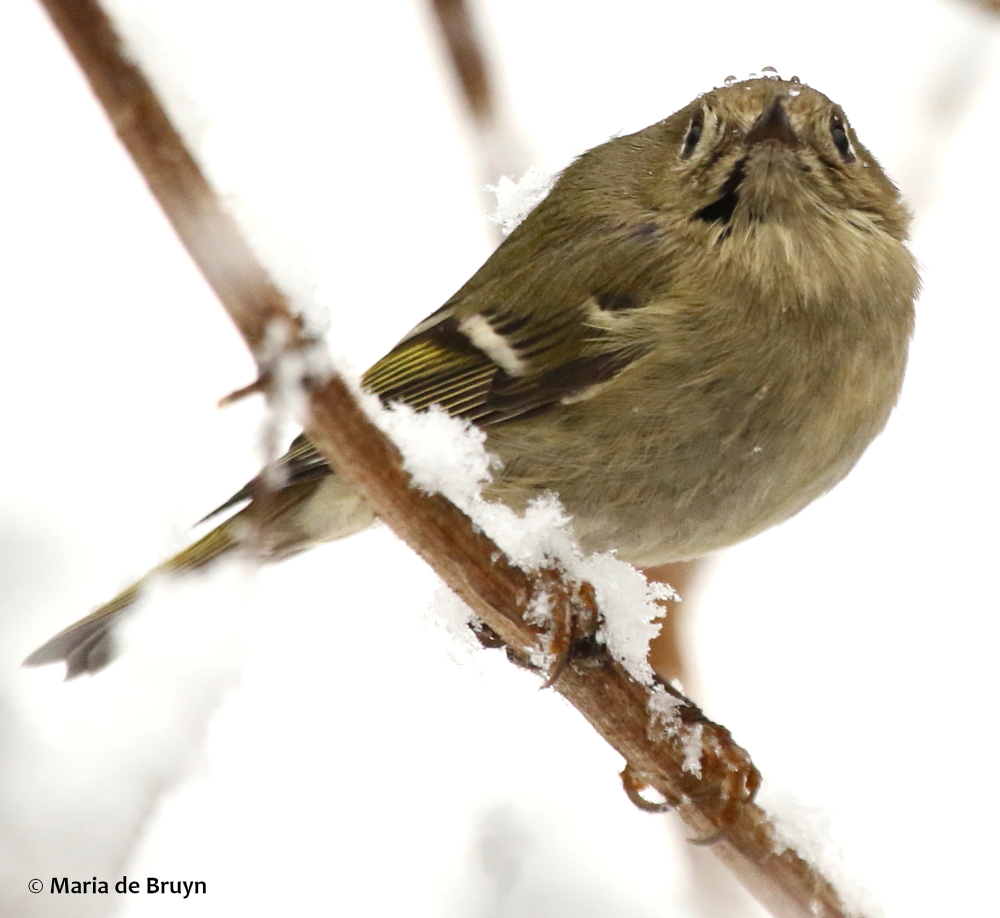
I guess that the little bird spats do make for sometimes more interesting birding observations. Seeing the tiny ruby-crowned kinglet (Regulus calendula) warning off a rival a few days before and after the snow melted did show off a gorgeous and brave little bird.


I’m looking forward to seeing what the springtime observations of animal behavior will reveal.


Winter wonderland – the bigger and colorful birds

In this second-to-last blog of the snowstorm series, I’d like to feature the bigger and colorful birds who demonstrated how they adapted their feeding habits to the prevailing weather. The Northern cardinals (Cardinalis cardinalis) actually didn’t change their behavior that much – they looked on the ground for fallen seeds and spent plenty of time at the feeders.

They spent some time in the snow-laden trees looking lovely, too.


The Eastern towhees (Pipilo erythrophthalmus) usually spend their time foraging underneath the feeders in search of fallen seed and they continued that behavior during the snowstorm. Unfortunately, the female was carrying a tick; I had already seen a robin and a junco with ticks on their faces – this may mean that the coming spring and summer will be an especially bad tick seasonal period for us.


The beautiful brown thrasher (Toxostoma rufum) looked both on the ground and at the feeders for his meals. Despite his size, s/he never bullied any other bird.


The remaining juniper berries on the red cedar trees (Juniperus virginiana) attracted the blue jays (Cyanocitta cristata).

The Northern mockingbird (Mimus polyglottos) was also seeking food there.


The cedar waxwings (Bombycilla cedrorum) and American robins (Turdus migratorius) had already been eating the juniper berries in the autumn; the waxwings had been by about a week earlier but now the robins were all over the trees, shaking off accumulated snow to get at the remaining fruit.


One robin looked as if s/he might have lost some outer feathers but it didn’t seem to affect her balance or flight. Occasionally, a robin also visited the meal worm feeder.


On the days following the big snowfall, as the snow melted more and more, the robins began eating it. During a previous snow event, they had joined the cedar waxwings on the roof of my house to get their drinks that way; now they were taking the snow from the trees.

They weren’t the only ones taking advantage of the opportunity. The Northern flicker (Colaptes auratus), who did not visit the feeder, spent a lot of time in an oak tree near the feeders eating snow.


There were a few birds that visit my yard who didn’t show up during the snow. They included the American crows and the hawks who often make the birds scatter from the feeders: the Cooper’s, sharp-shinned, red-tailed and red-shouldered hawks. They must have been looking for food elsewhere.

Some birds may have also avoided the feeders because of the large number of competitors who showed up, a feature of the next and last blog in this series.

Winter wonderland – the smaller and medium-sized birds

Oddly, during our January snowstorm, the brown-headed and white-breasted nuthatches did not visit my bird feeders – that was unexpected as they really do like the sunflower and other seeds, as well as the home-made suet. Other smaller birds did appear, however, and they filled up on the provided food since finding insects was almost impossible during those days.

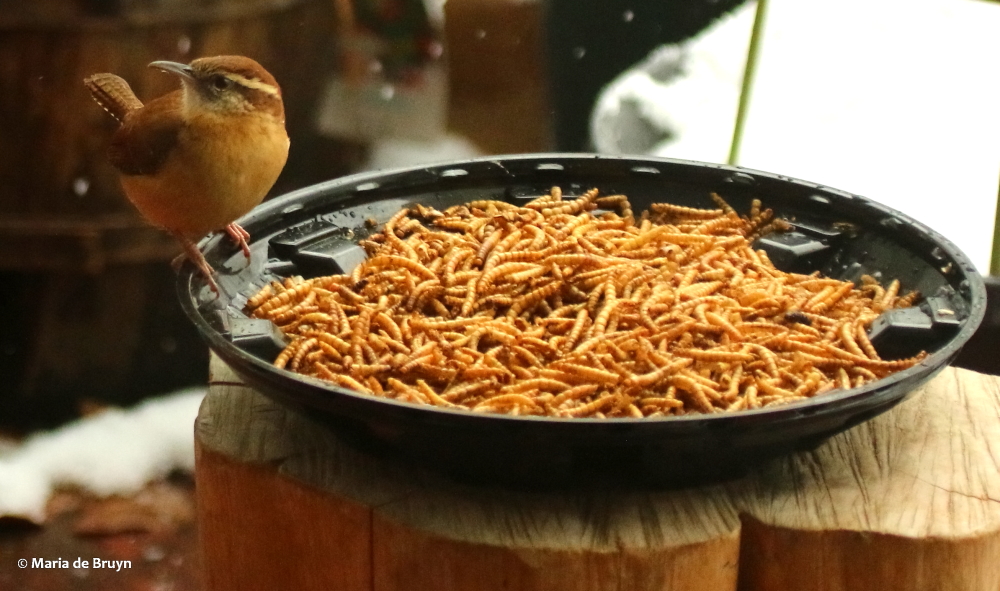
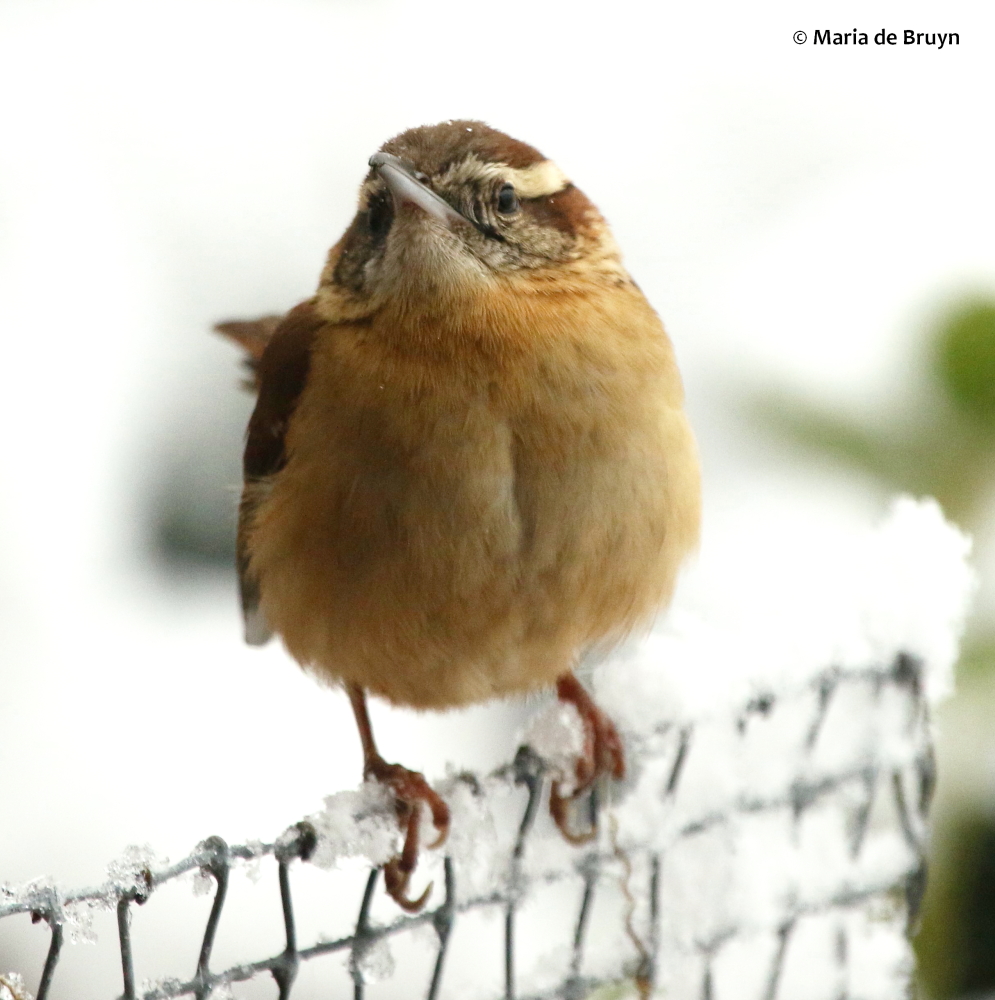
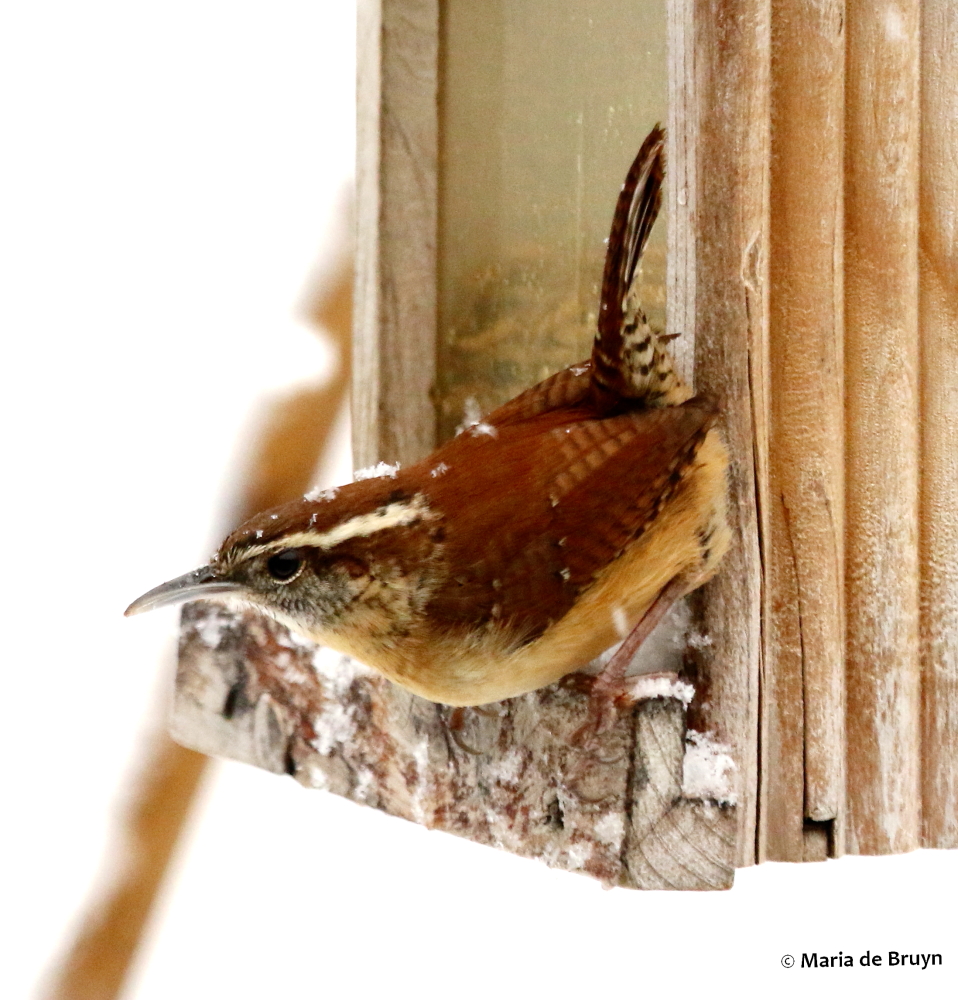
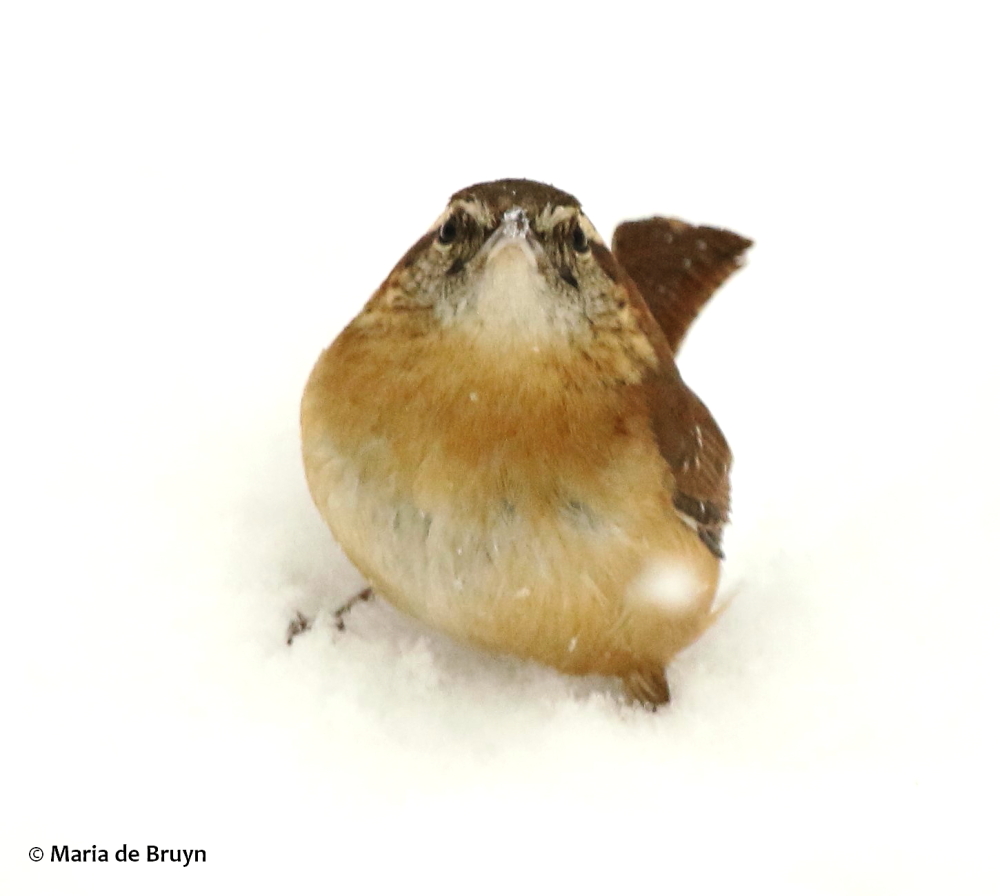
The Carolina wrens (Thryothorus ludovicianus) were fans of the dried meal worms and at one point, I put out an extra tray of these treats on the dry front porch. Other birds are more reluctant to come onto the porch so they had a nice quiet feeding area, although they also spent time perched on the snowy bushes and feeders.


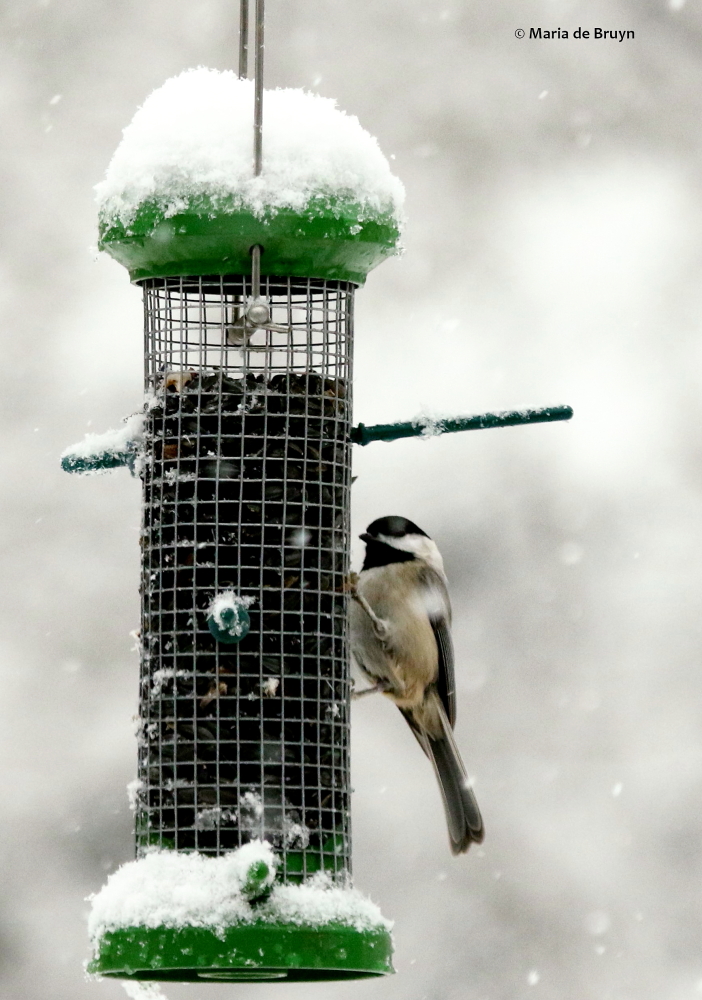
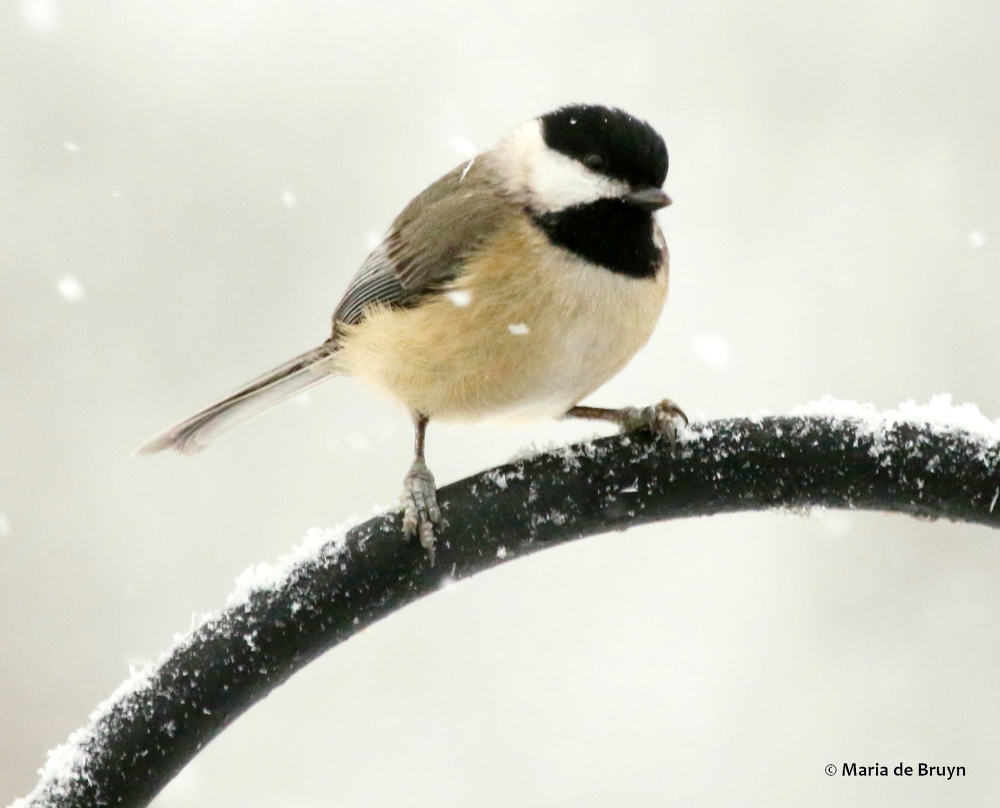
The Carolina chickadees (Poecile carolinensis) worked their way in between the other birds to reach the feeders, sometimes waiting patiently on a feeder pole for their turn.

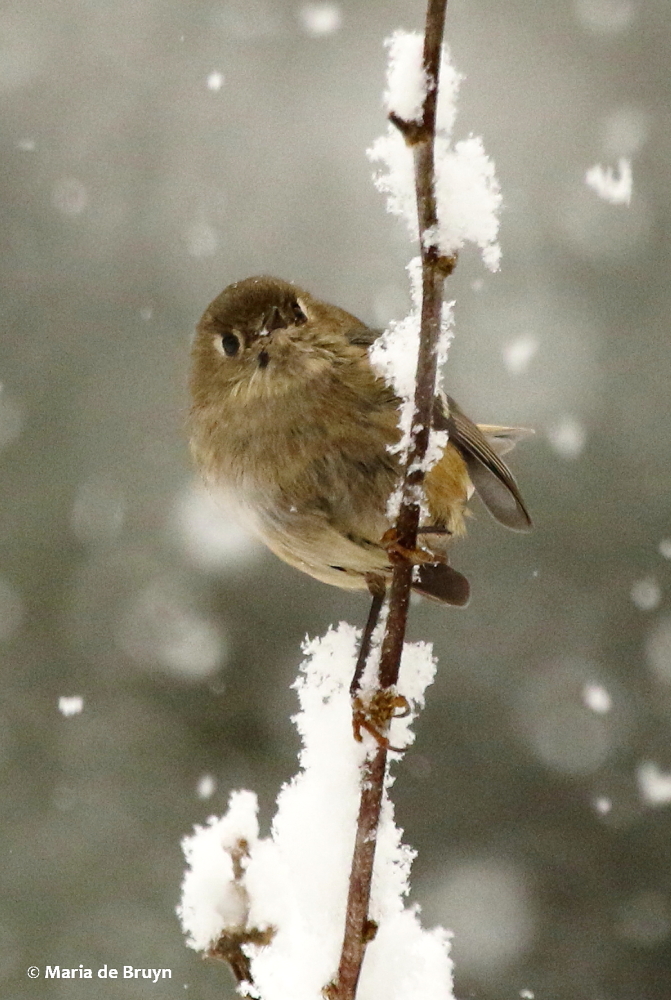
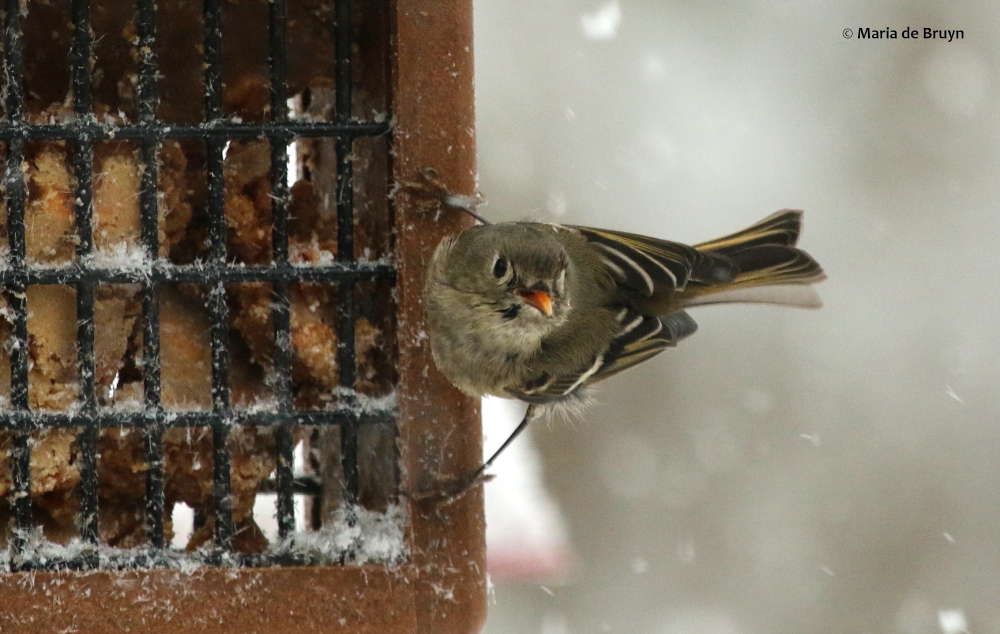
The ruby-crowned kinglets (Regulus calendula), of which I have two visiting the feeders, were happy with the home-made suet. Occasionally, I smeared a bit of suet on dried flower stalks and they would perch there to snag a bite to eat. Other times, they just waited on a twig until the yellow-rumped warblers had vacated the area so they could eat in peace.


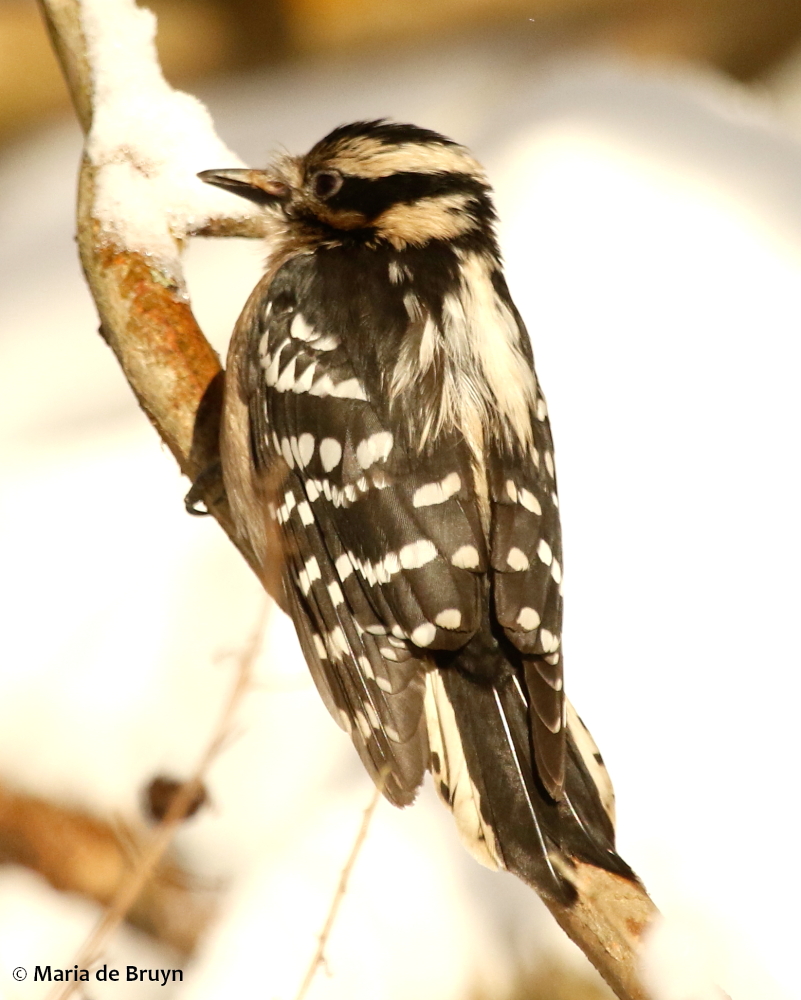
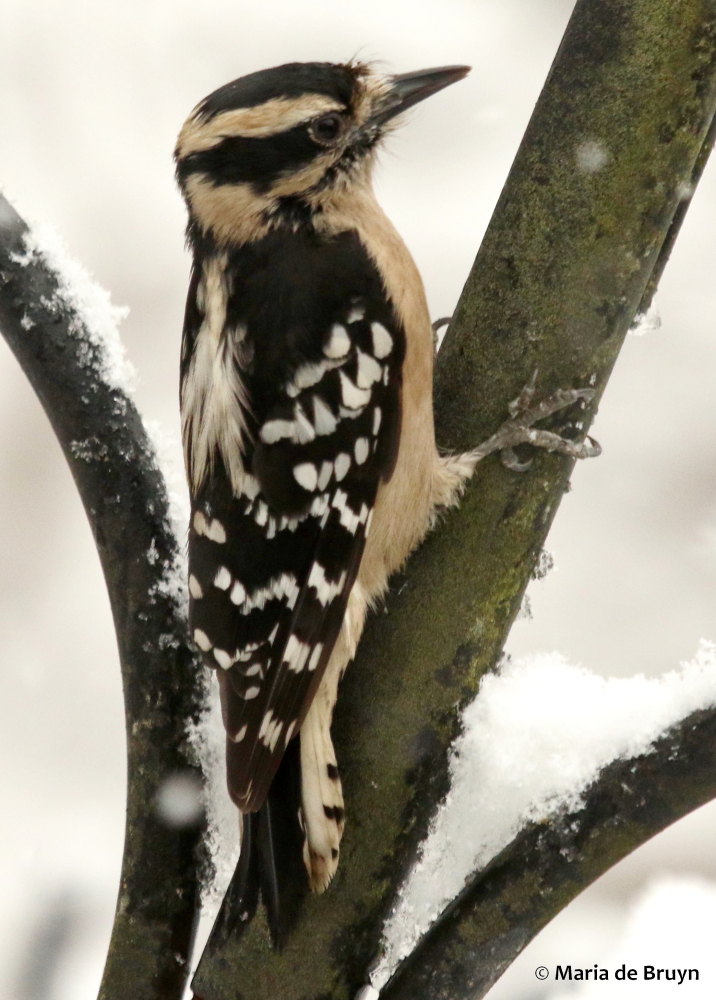
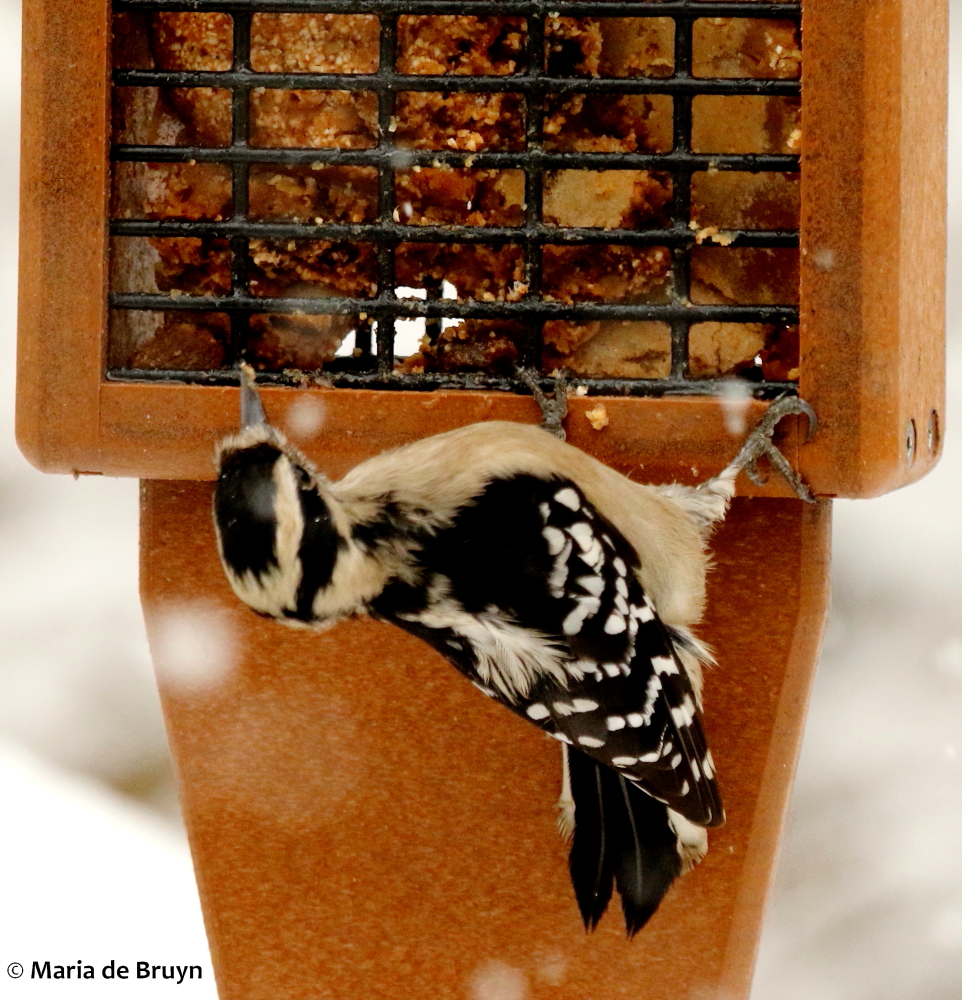
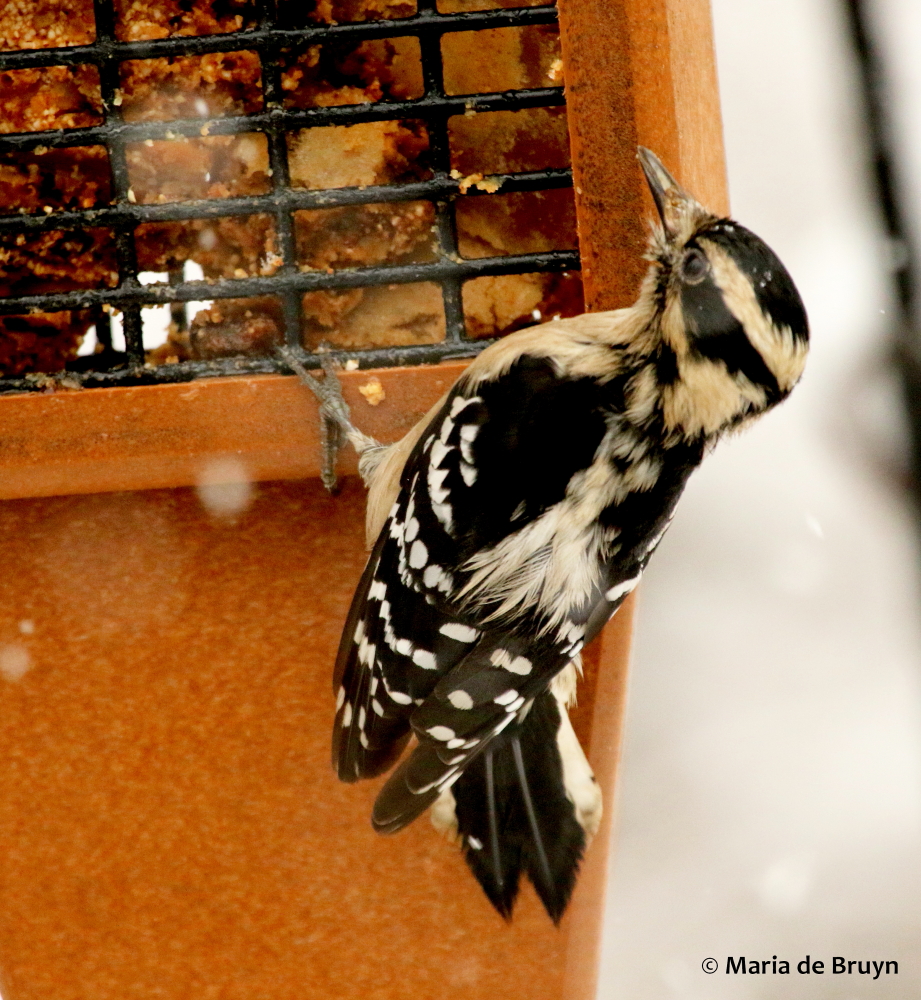
While the downy woodpecker (Picoides pubescens) is slightly larger, they are like the small birds in being somewhat hesitant to approach feeders if there is a crowd. Once on a feeder, they will feed and then hang on to take a look around.


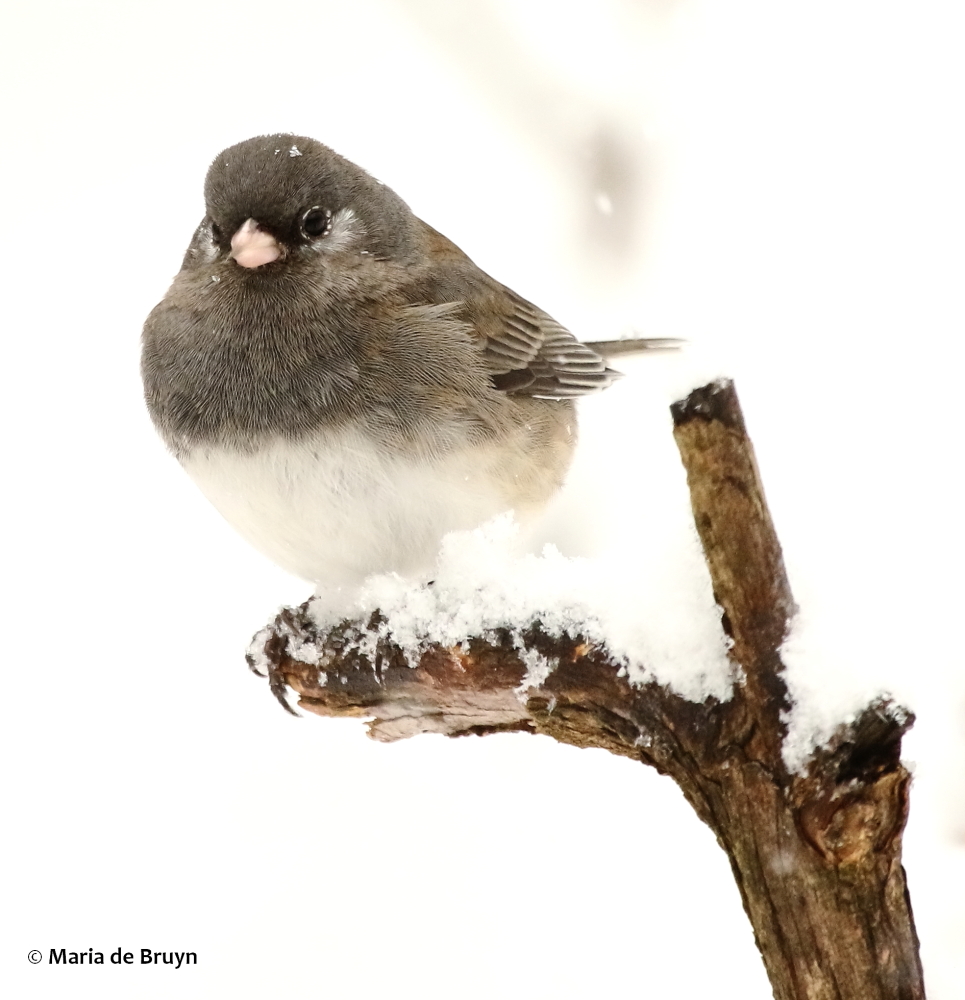
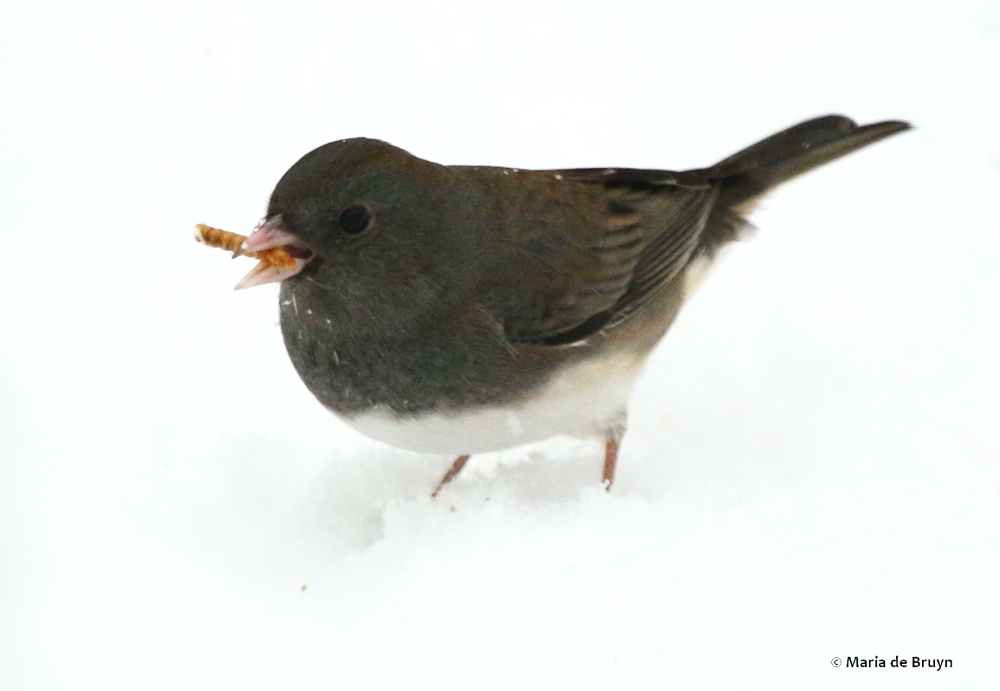
The dark-eyed juncos (Junco hyemalis), who have an understated quiet beauty, were looking for meal worms.


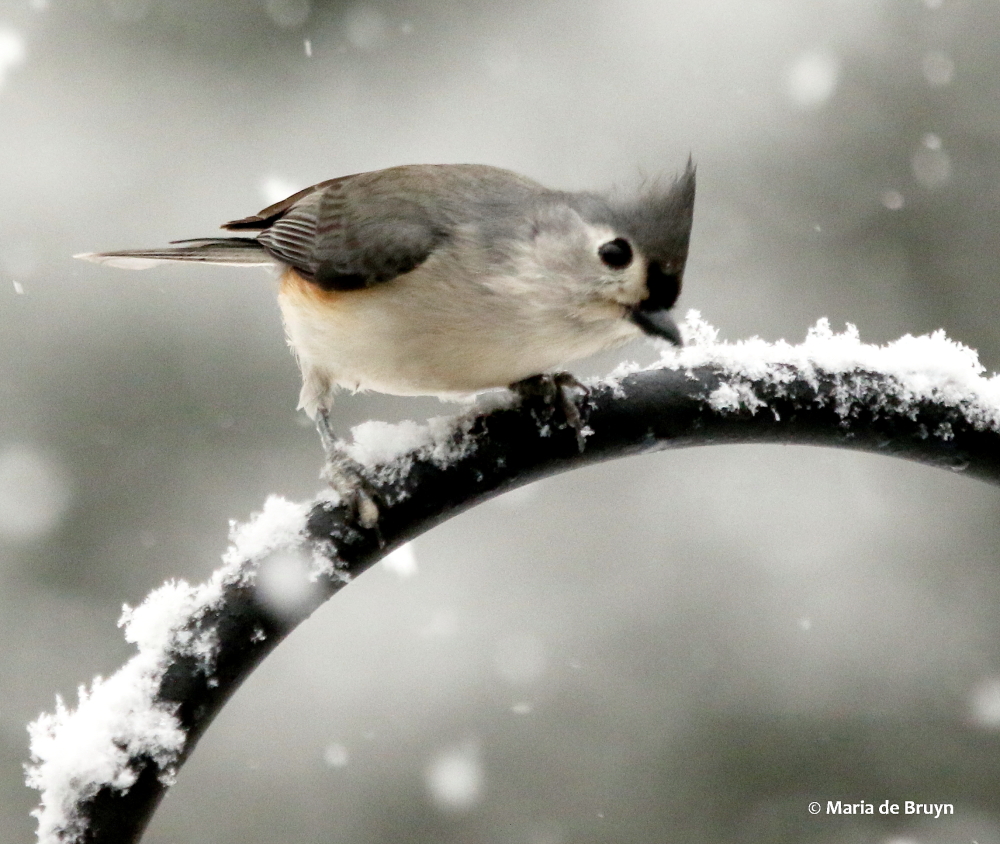
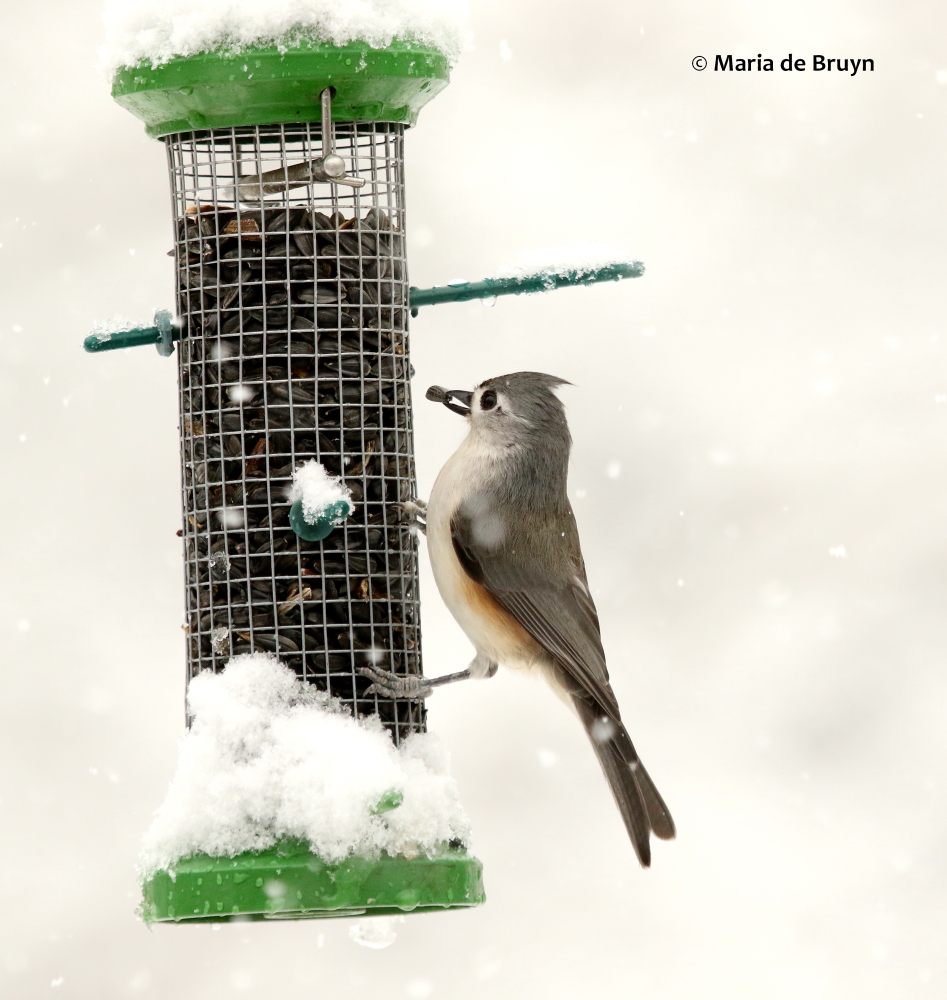
The similarly colored tufted titmouse (Baeoloophus bicolor) often zoomed in on its target of the fruit and nut feeder without taking time to perch first.

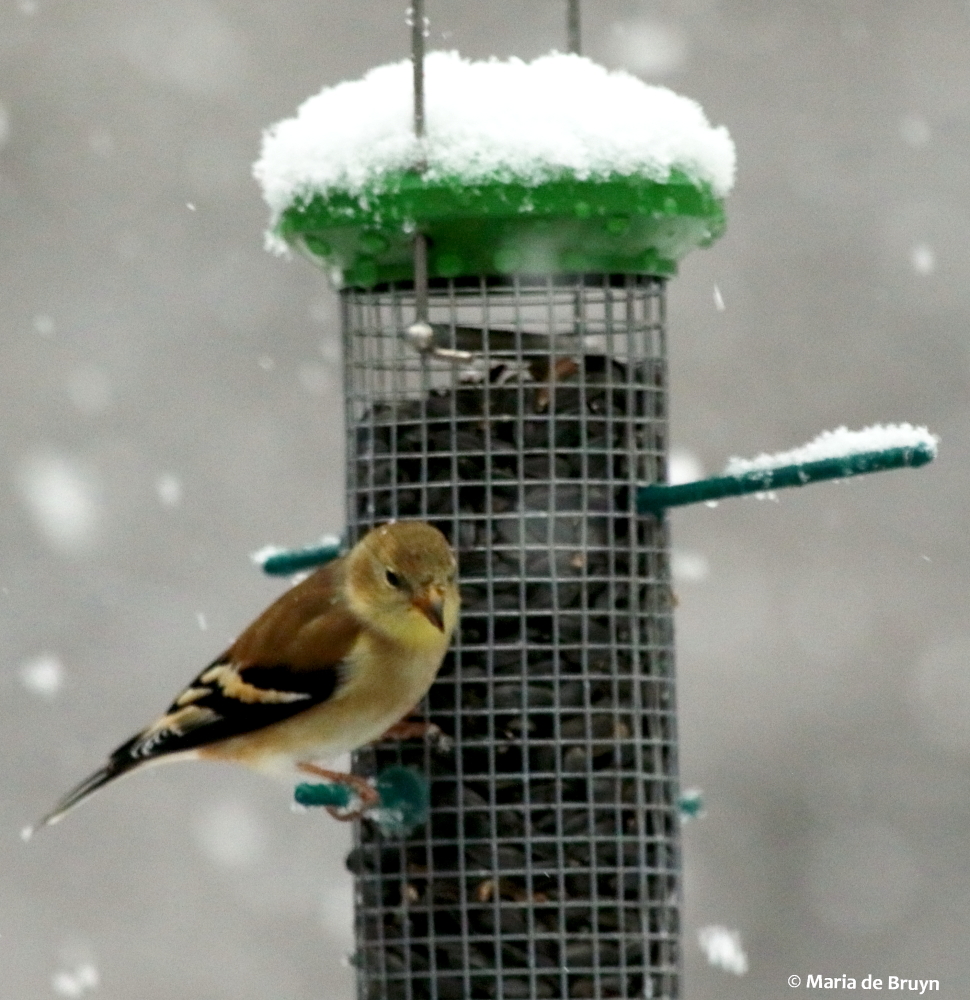
The American goldfinches (Spinus tristis) didn’t come round very much, only snacking on some sunflower seeds. Since they often feed on the crepe myrtle tree seeds, they were likely finding enough food there.

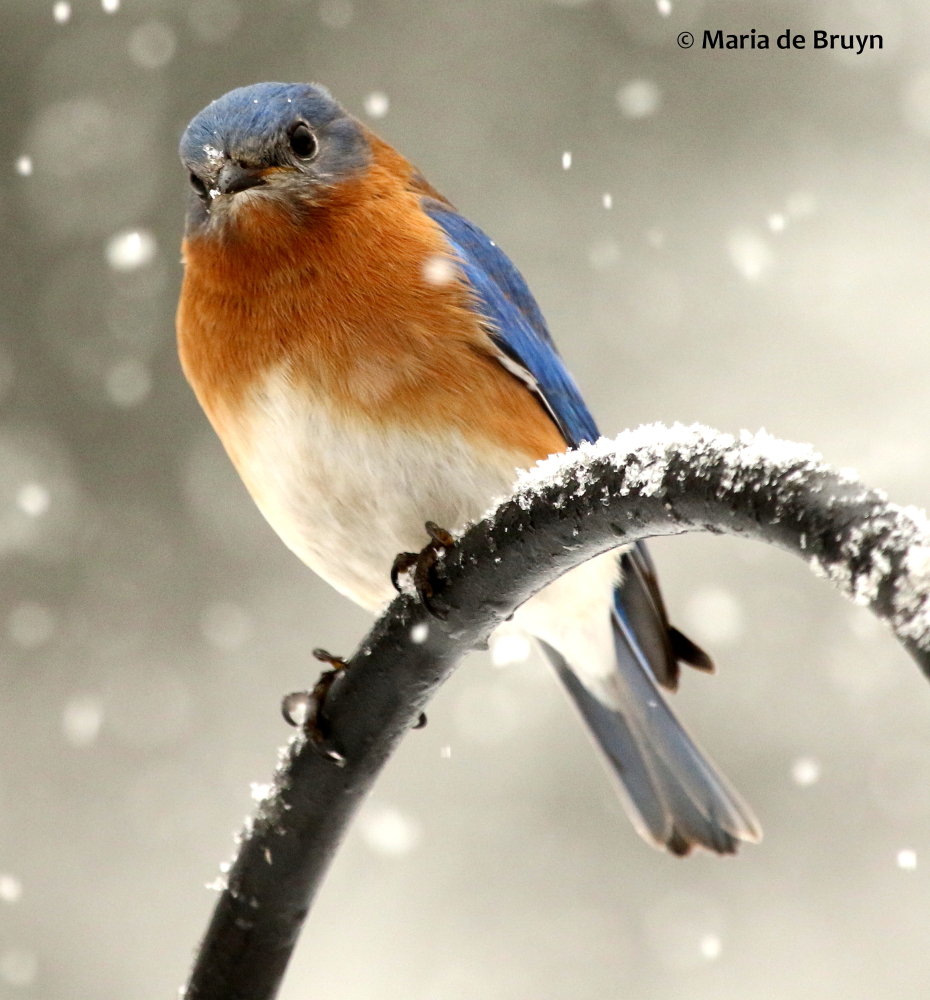
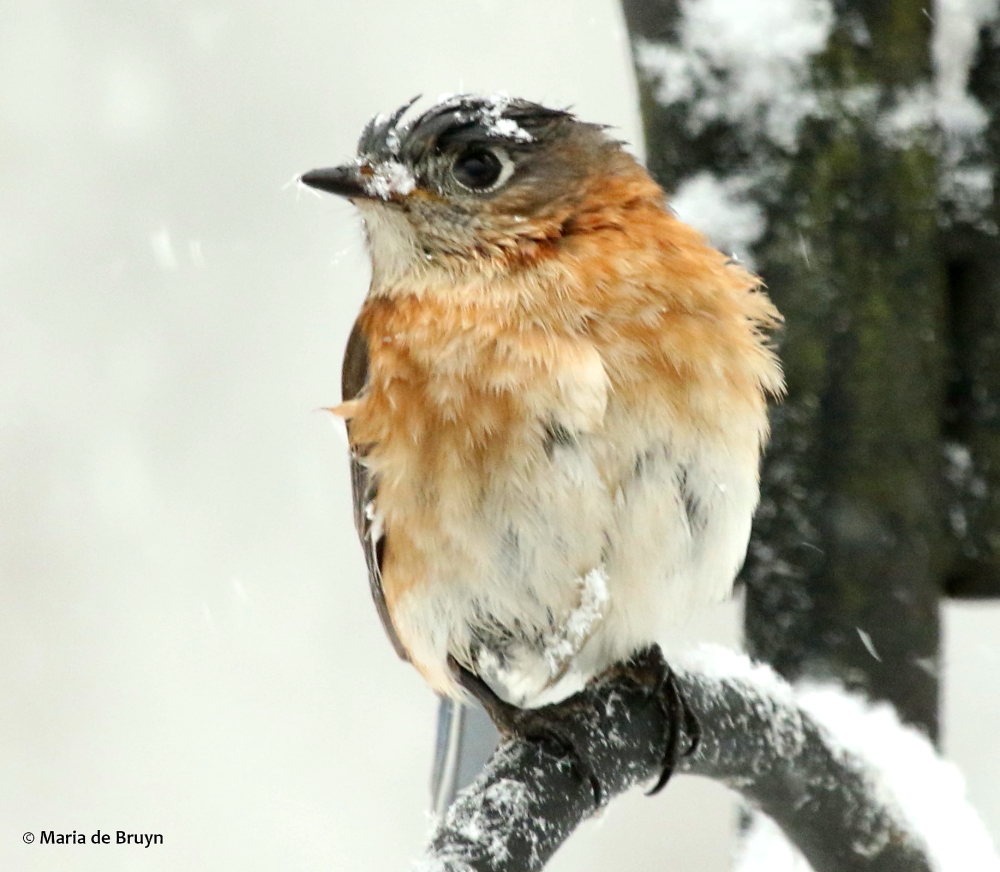
The Eastern bluebirds (Sialia sialis) came in spurts of activity. They always look rather bedraggled when they get wet with snow or rain and perhaps prefer to stay drier under branches until there is a break in the falling moisture. Even wet, though, they are still attractive to me.

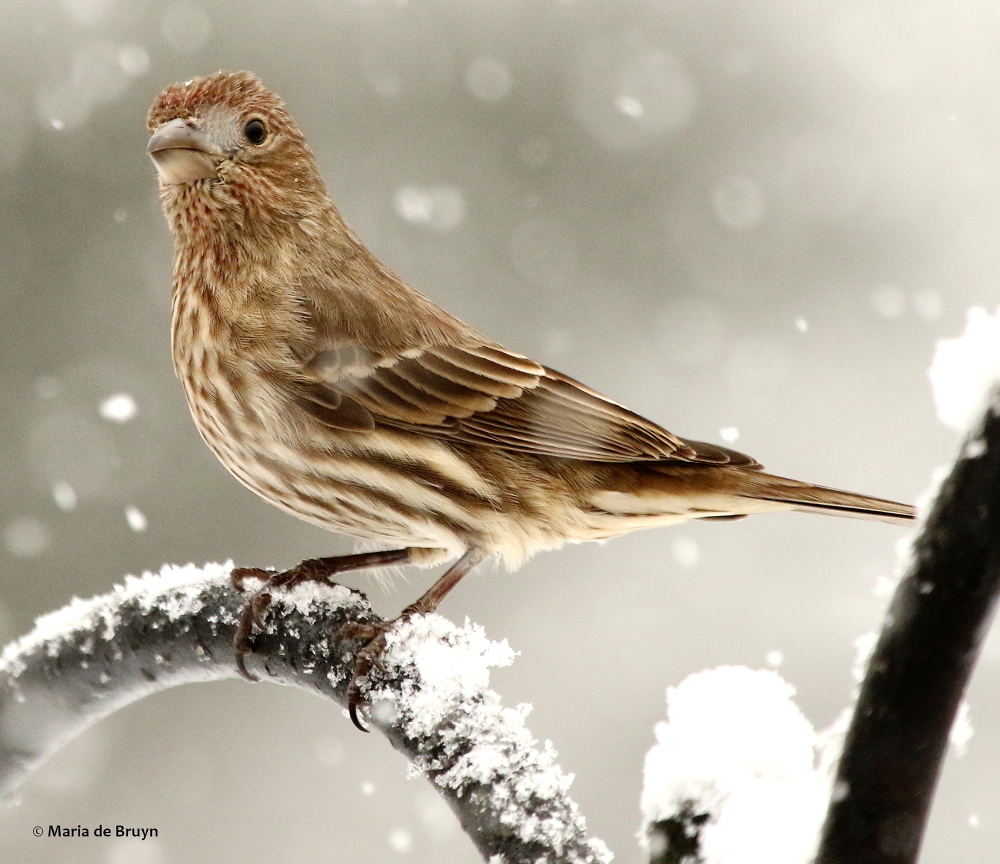
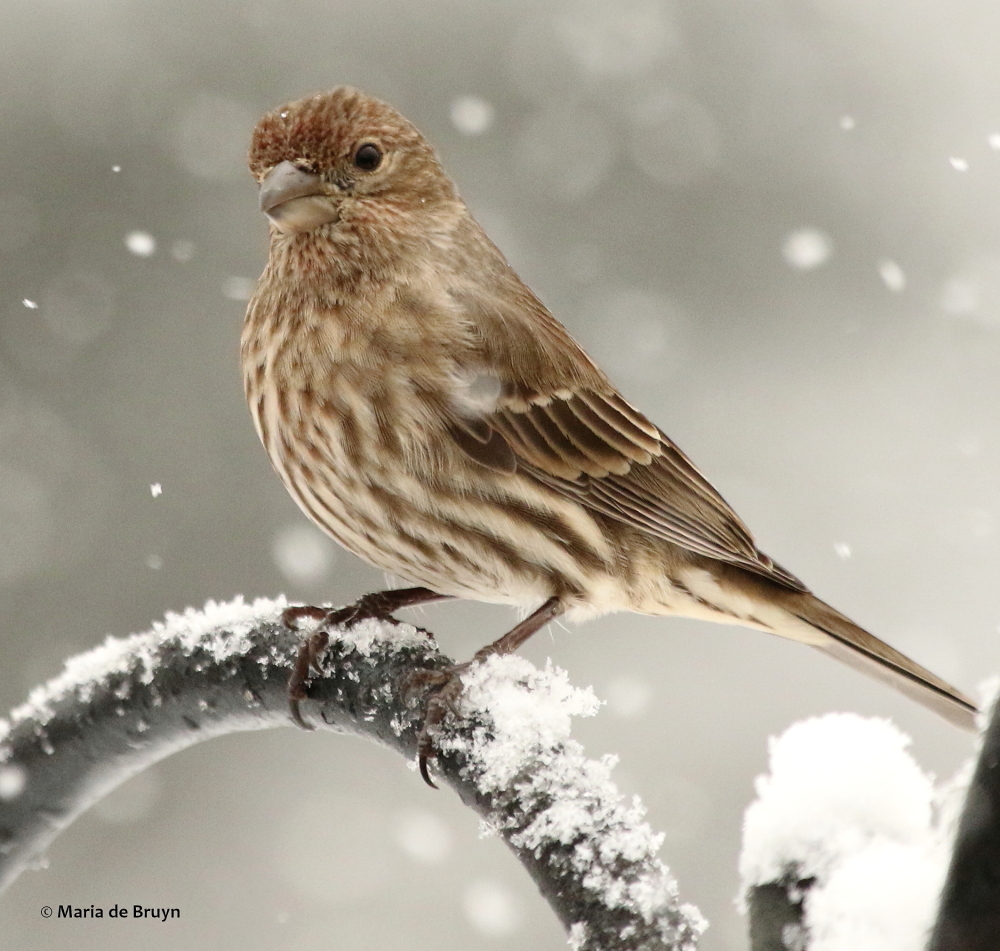
The smaller/medium bird group was rounded off by the house finches (Haemorhous mexicanus). The females were looking especially nice. The finches never have spats with anyone and are among the most peaceful feeder birds. Not everyone was like that, however, and the next blog looks at the rowdy ones.