 In front of a dog park in the small town of Carrboro, NC, there stands a small serviceberry tree, also known as a shadbush or sarvisberry (Amelanchier). This particular specimen has several trunks and was heavily laden with pretty white flowers in the early spring. These turned into bright red berries in late spring, forming a very bountiful buffet for the resident birds and some other wildlife, too!
The variety of species visiting this tree was delightful and led me to go back on several mornings and evenings to observe.

The cedar waxwings (Bombycilla cedrorum) were there in pairs and groups, some of them sweetly feeding one another!

The male and female Northern cardinals (Cardinalis cardinalis) were also huge fans of this tree, returning over and over to have their fill.


A couple birds seemed only to alight in the tree, not really partaking, like the Eastern bluebirds (Sialia sialis) and chipping sparrows (Spizella passerina). However, those sparrows, like the American robin (Turdus migratorius), might have been just checking out the wares before they dropped to the ground under the tree to enjoy a few berries. That surprised me – especially, the robins whom I have considered to be mainly insectivores and worm-eaters.


One day, a trio of Eastern gray squirrels (Sciurus carolinensis) arrived. I thought for sure that they would be stripping the branches clean but they hopped around the tree, sampling here and there. During several visits to the serviceberry, that was the only time I saw them climb into the tree for a snack.


Other birds seemed to visit only briefly, like the Northern mockingbird (Mimus polyglottos) and the tufted titmouse (Baeolophus bicolor).


 The red-bellied woodpecker (Melanerpes carolinus), on the other hand, was a very frequent visitor – coloring oh so nicely with the host tree! This bird seemed to be also storing some berries for later consumption in the bark of a tree?


Serviceberries are promoted for gardens as a source of delicious fruit for human beings. They are said to be wonderful in jam, pies, ice cream, syrup for pancakes and or in alcoholic drinks. Raw, they taste a little like blueberries with a nice sweet tang.
They were obviously a great hit with a pair of summer tanagers (Piranga rubra). The male colored nicely with the fruit he was eating; he is an example of the only bird in North America that is entirely red!


The yellow female stood out as she ate berry after berry.


 After watching this spectacle, I have now decided to find one of these shrubs for my own yard. They are unfortunately susceptible to cedar apple rust (Gymnosporangium juniperi-virginianae) which I have in neighboring cedar trees; it doesn’t seem to hurt the cedars but may account for the fact that the apples in my apple tree stay very small even if I haven’t seen signs of the rust on the apple tree leaves. Hopefully, it won’t be a problem as it would be really nice to see the birds at a serviceberry buffet here at home in years to come!
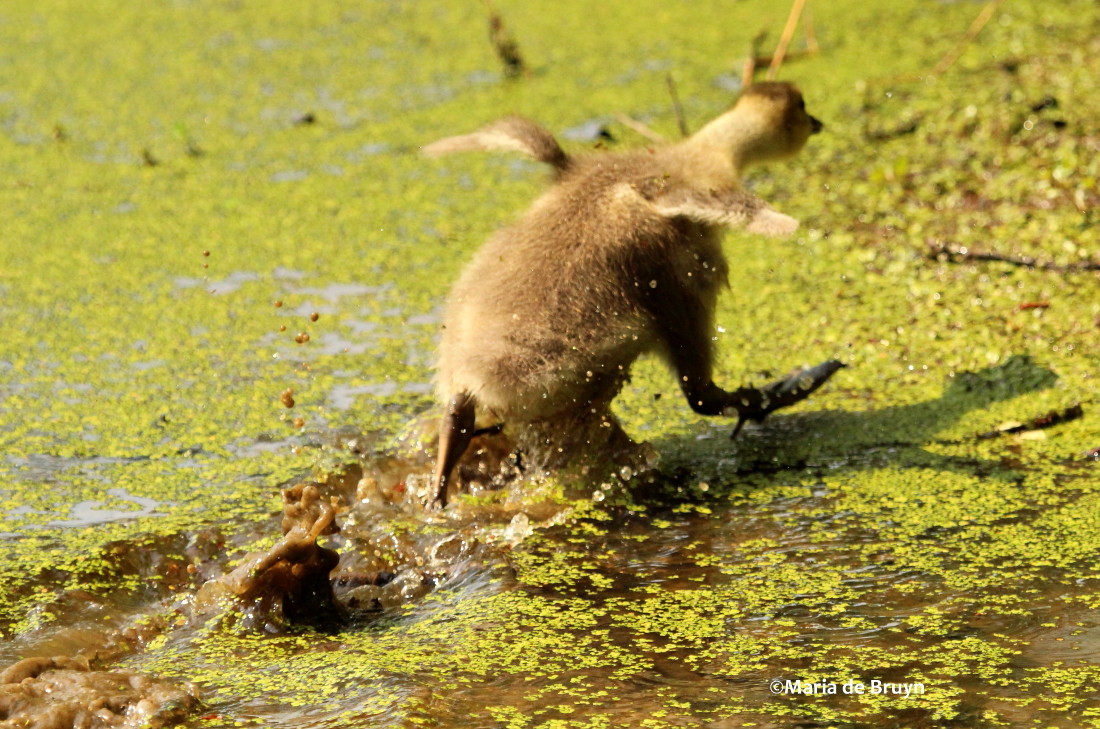
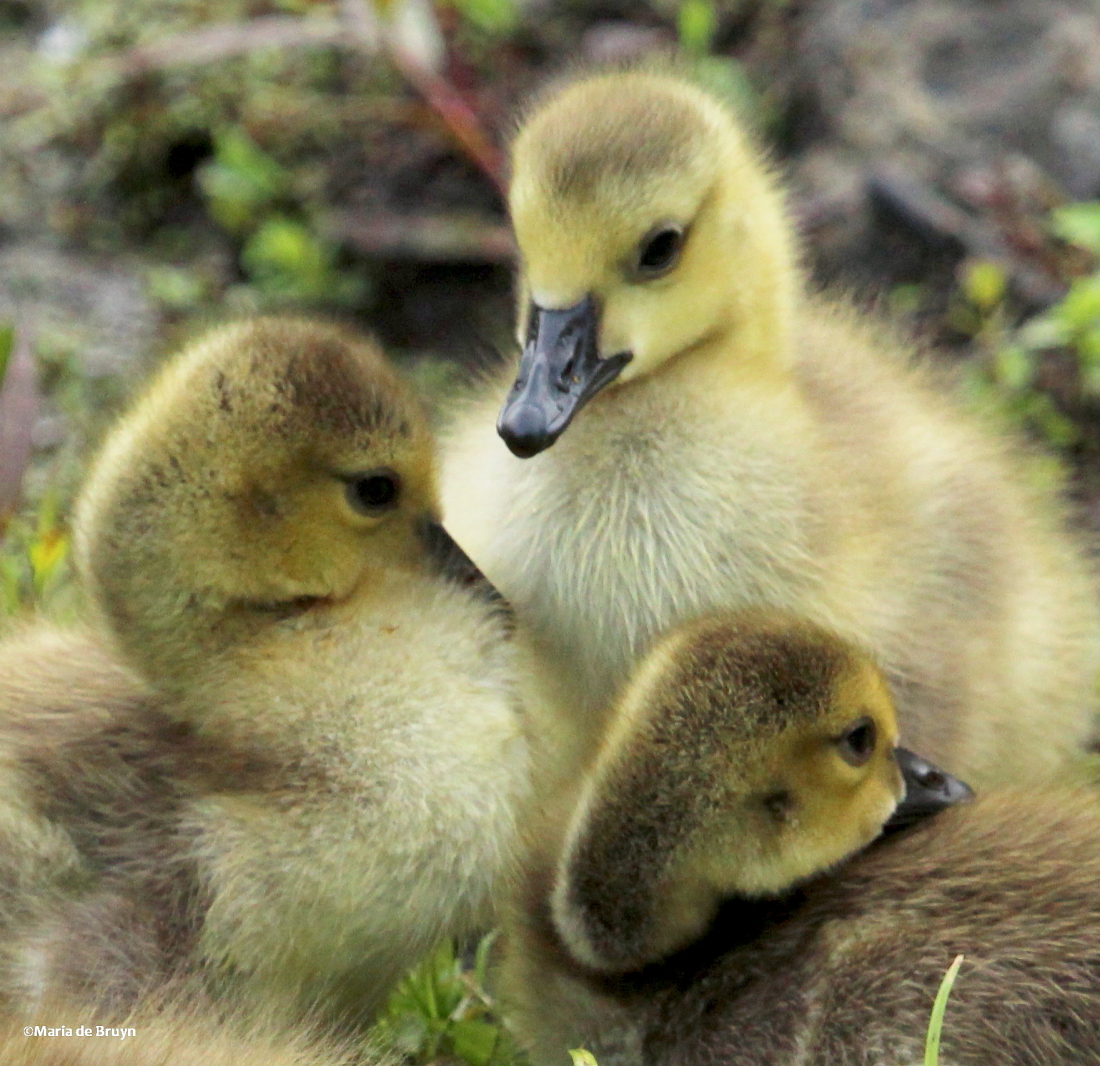
 ensis), who I have named Clara; she is currently raising four goslings. Canada geese are monogamous and the fathers help raise the young, but Clara appears to be a single mom. At least, she doesn’t have a male goose partner.
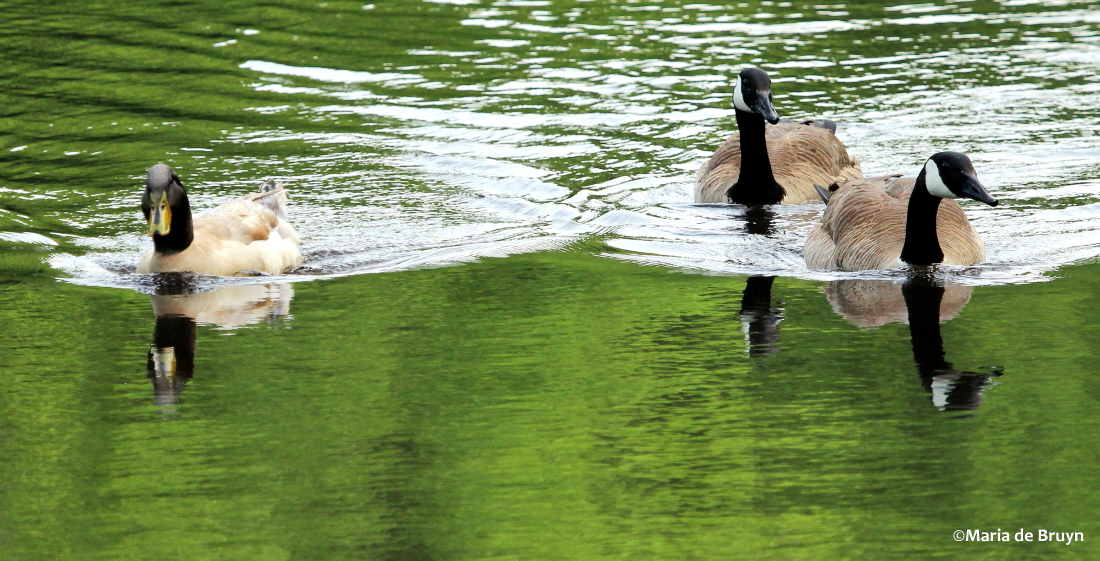
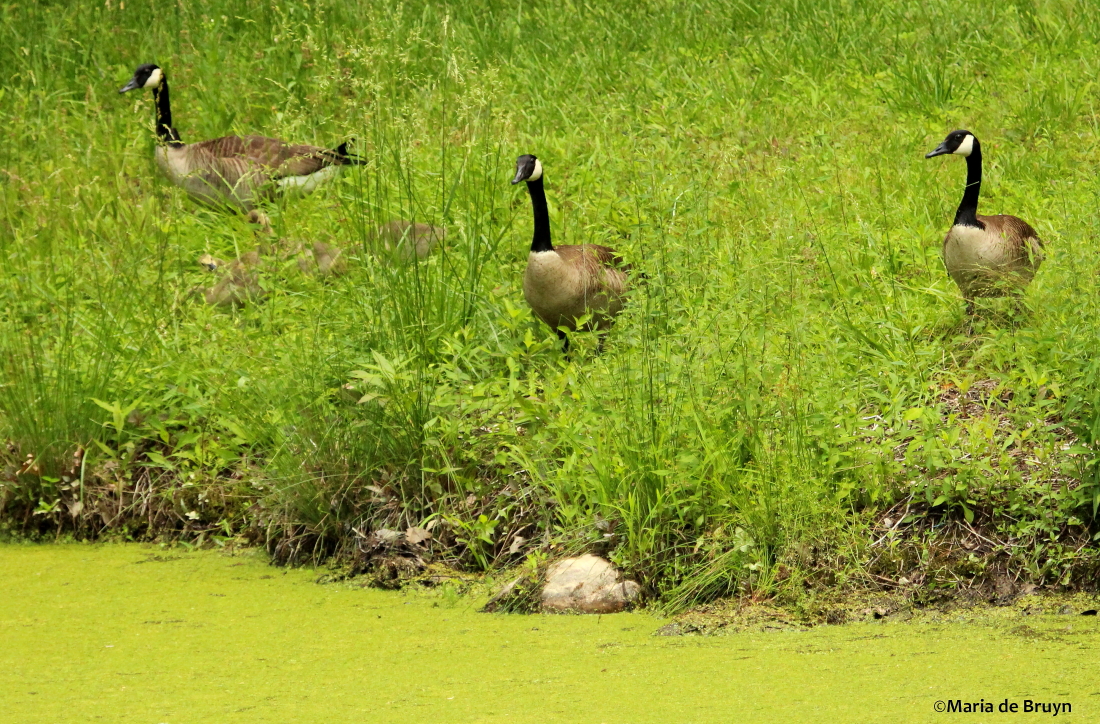
 ten and even attack people who come too close to their babies, they become pretty mellow when they are often around humans who have shown they will not harm them. Mama kept an eye on all the people taking a stroll around the pond, but she simply shepherded the goslings aside when a person came too close. Harry also kept an eye on the people wandering about.
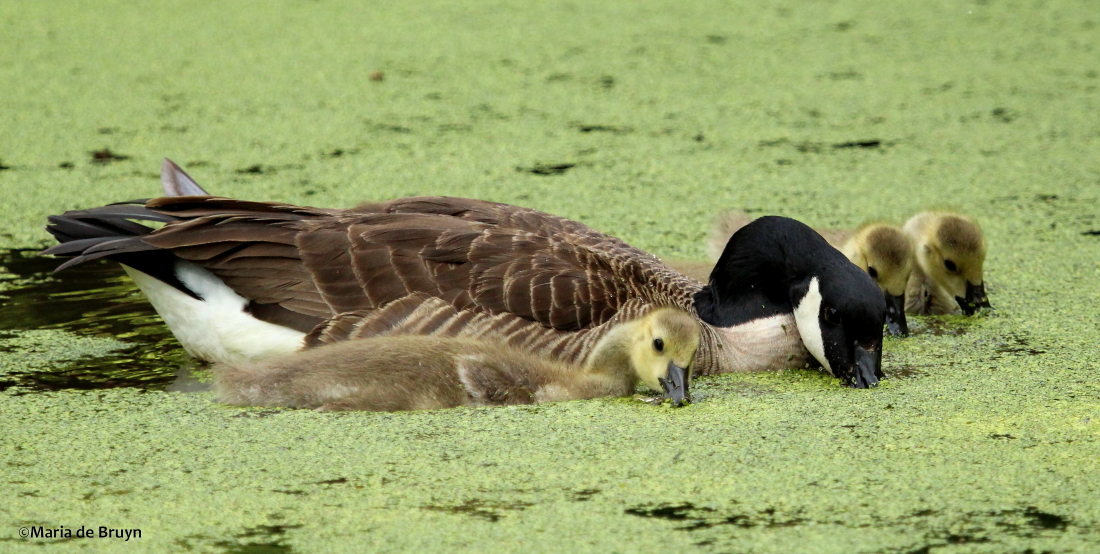
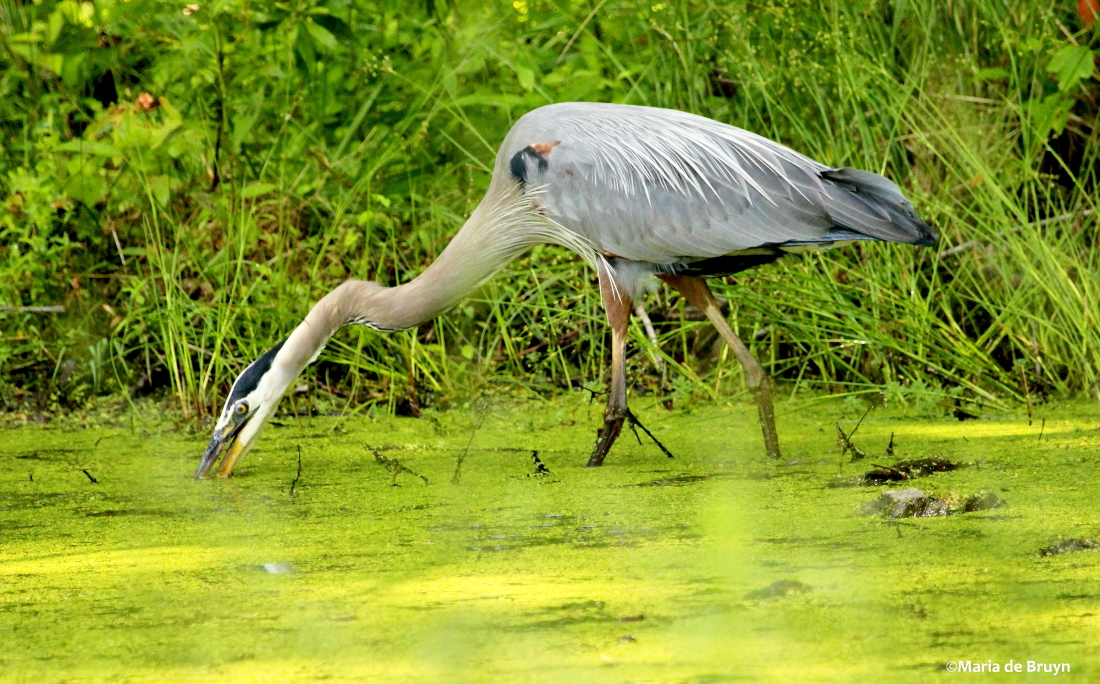
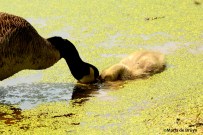 xample when foraging in water, tipping forward and extending their necks and heads underwater to scoop up vegetation and even the occasional fish.








 hickadees had begun nests in two others. It is not uncommon for them to begin a couple nests and then finally settle on one. On 12 April, I discovered that Mom had laid five white with brown-specked eggs in a nice soft nest made of moss, soft grasses and some down, even using a bit of pillow stuffing I had left out for interested nest-builders.


 spent time looking out of the box before venturing out. One took a flying leap and swerved up into a tree.


 ckadees’ nest (after removing some remaining fecal matter). One chickadee ventured back to peer into the box but the wren pair loudly chased the original owner away.
 My beautiful world