A bountiful year for seeing Castor canadensis

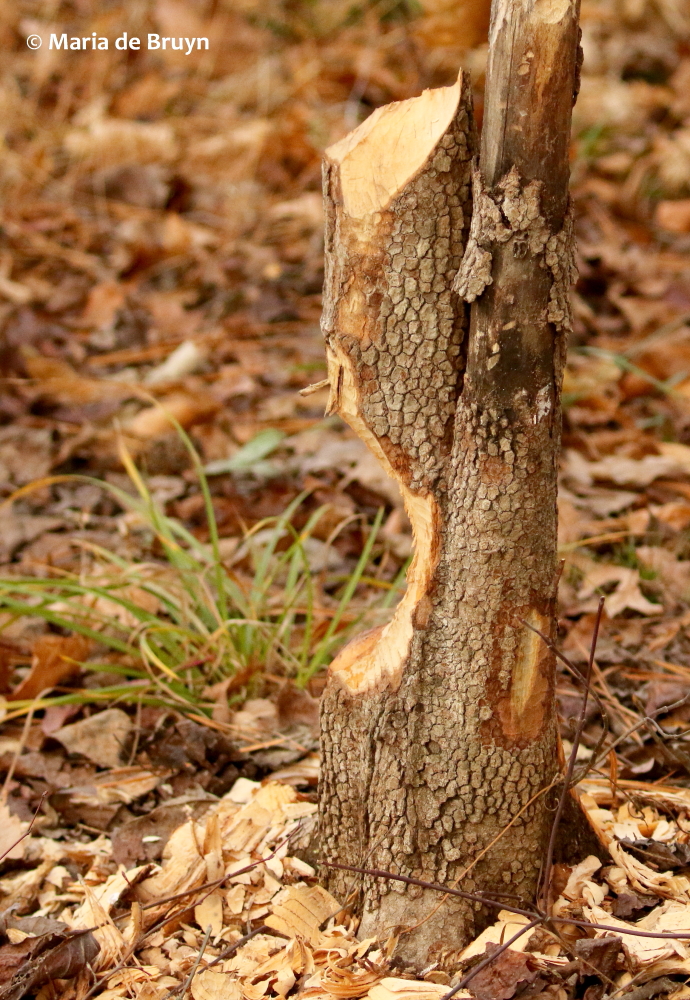
It has been my privilege to go on safaris in Africa and my outings in nature there resulted in sightings of multiple mammalian species each time. Where I live now, there are also a variety of mammals but I don’t see them often, other than squirrels, chipmunks, deer, opossums and raccoons. I was lucky to see chewed trees as evidence of American beavers’ (past) presence, but I was not seeing members of the Castor canadensis species. Some of the chewing patterns on the trees were interesting though.

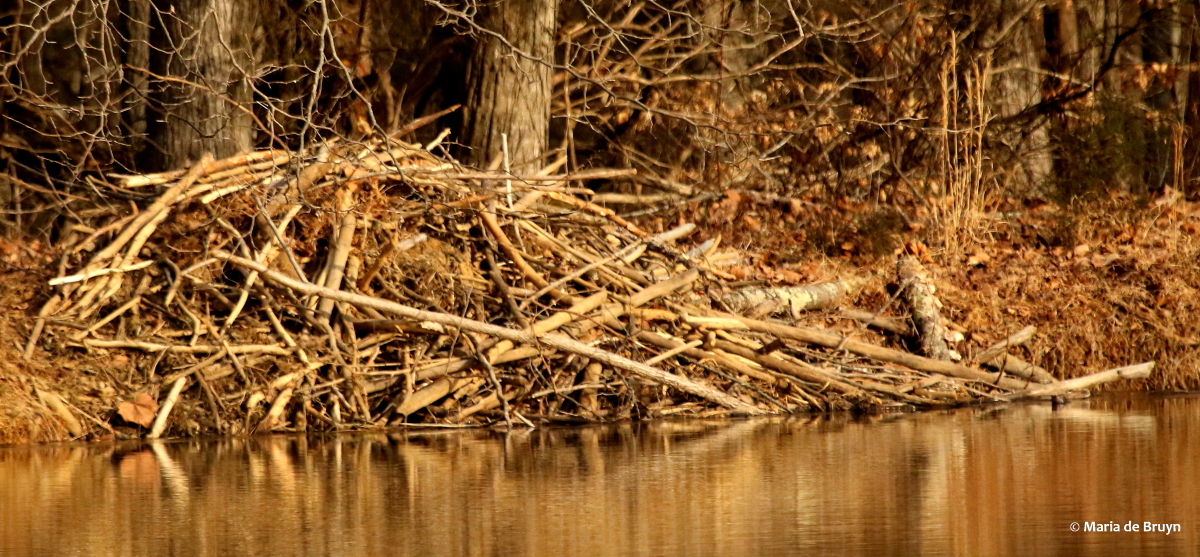
I saw my first beaver lodge at Brumley Nature Preserve South in early 2016 and had the good fortune to get a quick glimpse of a beaver there. (Before that, I had seen them in zoos.) Then I began noticing beaver dams more often on walks, like the one below near the Haw River. So for my first long blog of 2019, I’d like to share with you how 2018 became my bountiful beaver year.
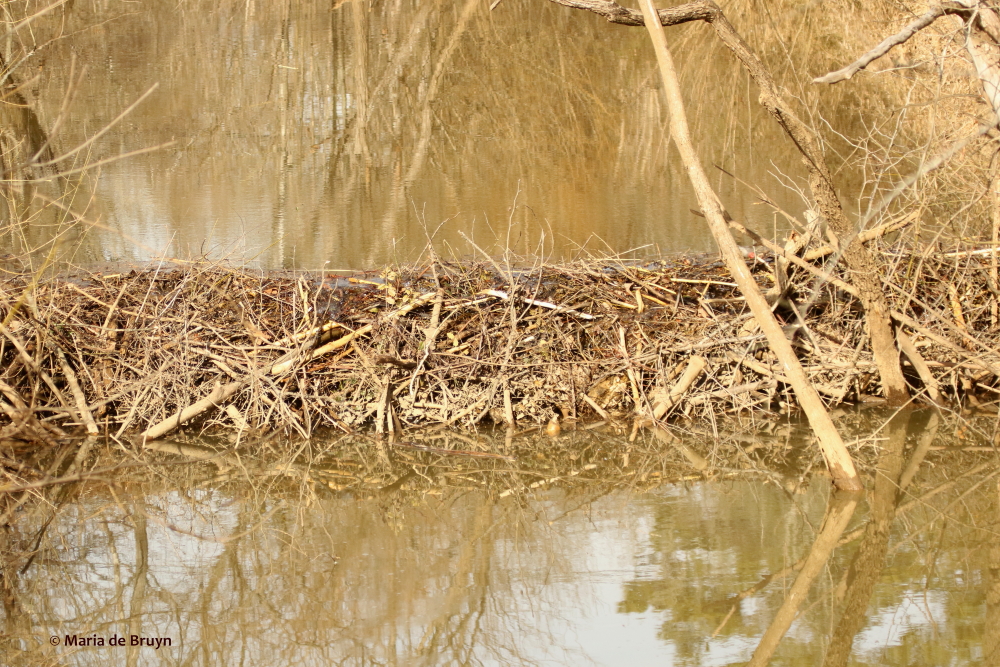
In the spring, a friend told me about a creek where beavers’ dams had resulted in marvelous wetlands along some nature trails. Their handiwork at Pokeberry Creek was appreciated by a considerable number of nearby residents, who were pleased with an increasing number of waterfowl and other birds at the wetlands, as well as otters.
 

They spoke about the benefits of beavers’ presence, such as the increased biodiversity, improved water quality and more opportunities for wildlife viewing, and celebrated their arrival. Some birding groups began leading walks there to view the numerous songbird and other avian species.

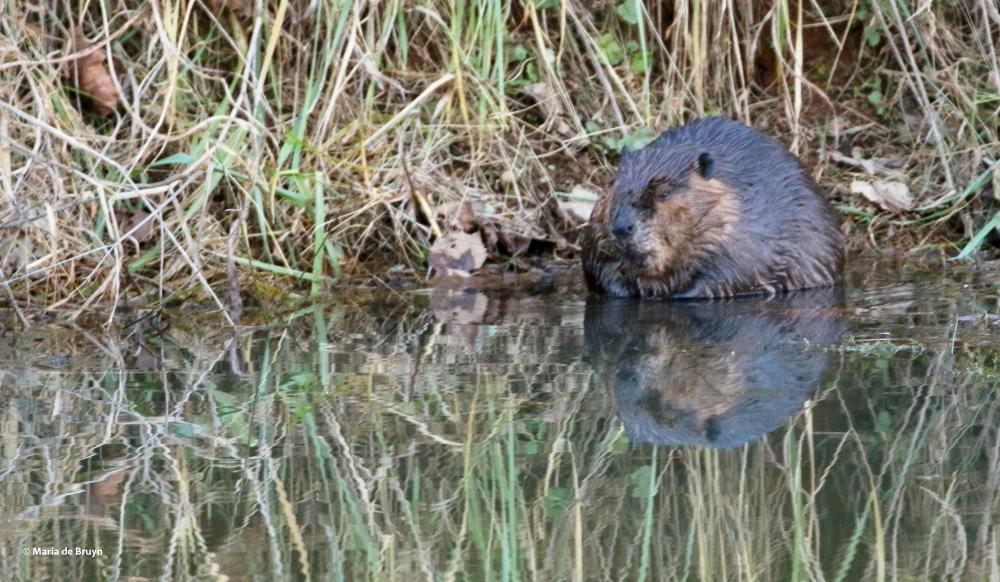
For me, the chance to see the beavers in action was wonderful. One day, I saw an adult chewing branches as part of its meal; it was quiet and didn’t seem disturbed to have me nearby watching.

On other occasions, I saw individuals bringing reeds back to a lodge, presumably to feed young ones left at home. (The offspring may stay with their parents up to two years.)

As beavers are mostly crepuscular, visiting at dusk offered a good chance to see them at work felling trees for their dams and lodges. It struck me that when I had observed them eating, they were very quiet. When they were working to cut trees down, however, I could hear them chewing very loudly.

Some people living near Pokeberry Creek brought chairs and drinks to watch the animals at work in the evenings and everyone present seemed to be learning a lot about them. Apparently, many people are interested in beavers – the ranger station at the Jordan Lake Dam has a taxidermied beaver and information about their lodges on display.
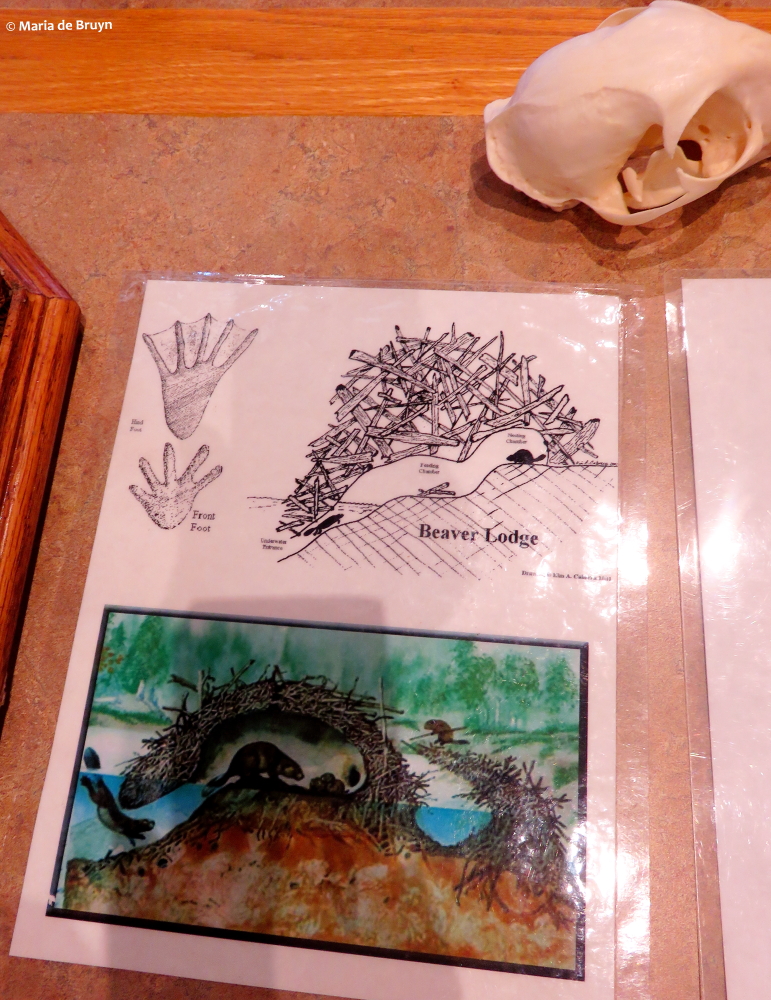
Nature’s aquatic engineers are certainly interesting mammals. North America’s largest rodents can swim underwater without coming up for a breath for some 15 minutes; this is because they slow their heart rate. Their transparent eyelids function as goggles so that they can see underwater.
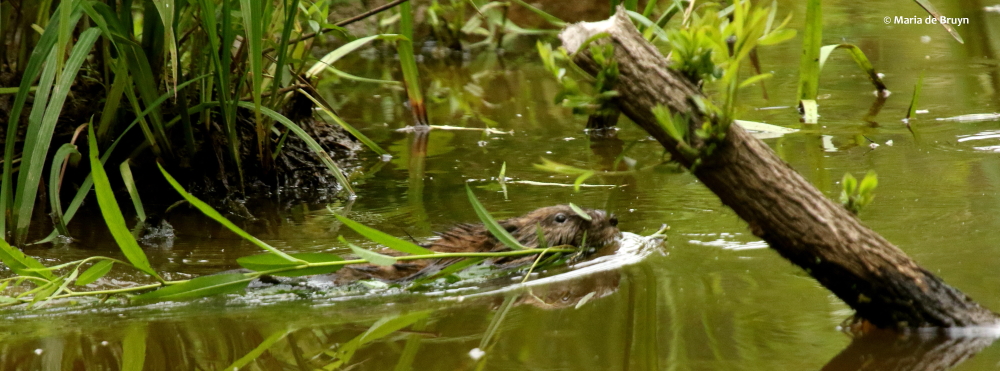
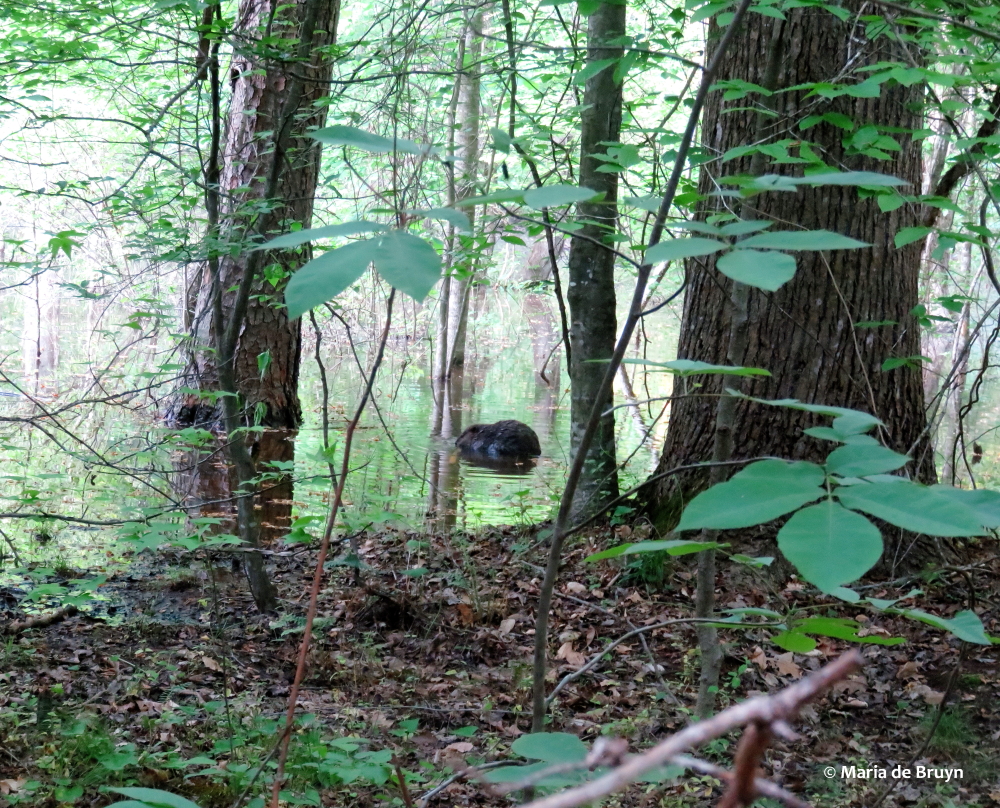
They build dams to ensure that the ponds in which they construct lodges are deep enough so that the entrance remains under water. When the water is at least 2-3 feet, they will be safe from predators and the entrance to their home will stay ice-free in the winter. If they are in a spot where the water remains high enough all the time, they may forego building dams. At Pokeberry, the animals felt a need to build dams in two places. Research has shown that the noise made by water flowing away contributes to their decisions to shore up dams; they apparently cannot tolerate the sound of running water above a certain number of decibels.

The beavers’ environmental engineering irritated some members of the Home Owners Association (HOA) of a nearby community which is still under development. Some people complained that the water was encroaching onto properties (other property owners were ok with it). The rising waters also sometimes flooded a long walking bridge and a cul de sac. Numerous repairs were needed for the bridge and “opposing” parties emerged.

After the HOA announced a plan to have 35 beavers killed, a petition to save the mammals was begun. Within a few days, more than 3700 signatures had been gathered and the HOA undertook a consultation process with different agencies to explore other options. The Friends of Pokeberry Creek Beavers and Wetlands, in the meantime, put up small barriers so that the waters would not encroach so easily onto the cul-de-sac. They also installed a “beaver deceiver” (a pond leveling device, comprising large tubes inserted through a dam so that water would continue to flow through).

It appears that the beavers found the water flow too noisy, so each evening they would mud up the fencing around the deceiver intake so that no water could enter there. The humans would take away the mud; the beavers would put it back. The humans moved the pond leveling devices to deeper areas, but with heavy rainfall, the waters would rise very high.

Finally, in early autumn, the HOA had much of the wetlands drained. This was done to avoid killing the beavers by driving them further downstream to find another area where they could build dams to establish a new pond territory.

The beavers in a large pond that remains rather full have not moved; they are still felling trees, presumably to reinforce their lodge and to have some food supplies in stock for the winter. They also need to keep chewing as their teeth never stop growing. When they remove trees, they leave stumps of about 6-12 inches behind. I’ve seen some of these tree stumps, such as a tulip poplar, sprouting branches again. So the beavers’ tree clearing does not have the same effect as clear-cutting done by humans.


I thought that the drained wetlands at Pokeberry Creek might be the end of my beaver observation opportunities, but then I discovered that another wildlife and recreational park was facing challenges from beaver dams. Sandy Creek Park had had beavers some 5-6 years ago and at that time the mammals were removed (killed). The park manager wants to avoid that now if possible, but the dams need to be controlled since they are causing flooding onto paved pathways which help make the park accessible to persons living with disabilities.

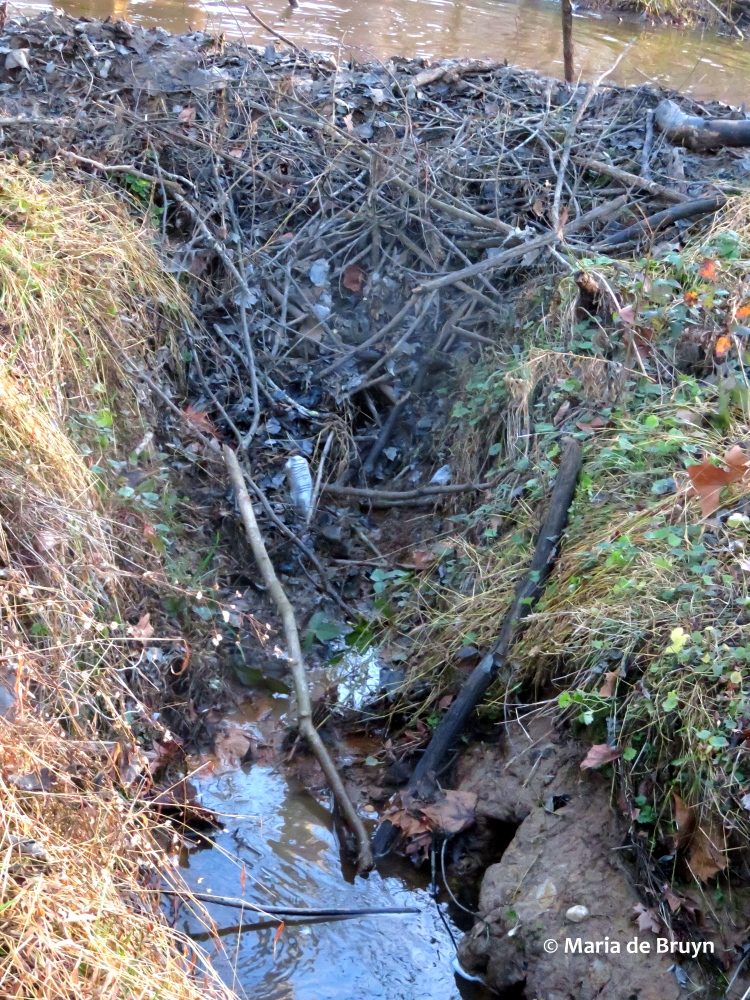
A wildlife biologist visited the park to assess the potential success of a pond leveler there; because the pond in question is rather deep, they may have more success with a beaver deceiver. I’m guessing it will also depend on how the noise levels evolve with the new flow of water into the nearby creek. If they can install a silent outflow pipe, the intervention may be successful.

In November, I found that beavers were also busy at a third natural area that I visit often, the Brumley Nature Preserve North. The rodents are busy in two of three ponds there. The volunteer trail steward periodically breaches the dam at one pond so that the water can continue flowing downstream. When the pond water level remains high enough, the beavers seem to be more lax in repairing the dam.


At the other pond, the water level has stayed fairly consistent with all the rainfall our area has had in the past months and no beaver engineering seems to be happening there. As there is no obvious stream flowing into that pond, if we have a dry summer, the beavers may have to abandon that home as the pond could dry up as happened during a drought period last year. There was an interesting development at this pond, however. It involved one particular beaver who recently spent afternoons for a couple weeks swimming laps for hours.
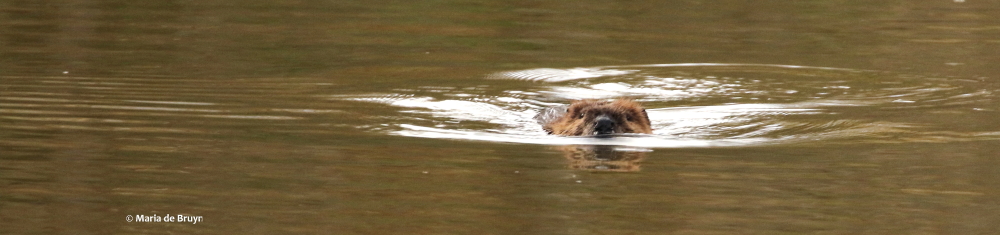
I was quite surprised to see him (it could be female but somehow I thought of this individual as a male who was hoping to attract a mate), since beavers often prefer not to be out in the open during the day. He even emerged from the water from time to time, but always on the other side of the pond.
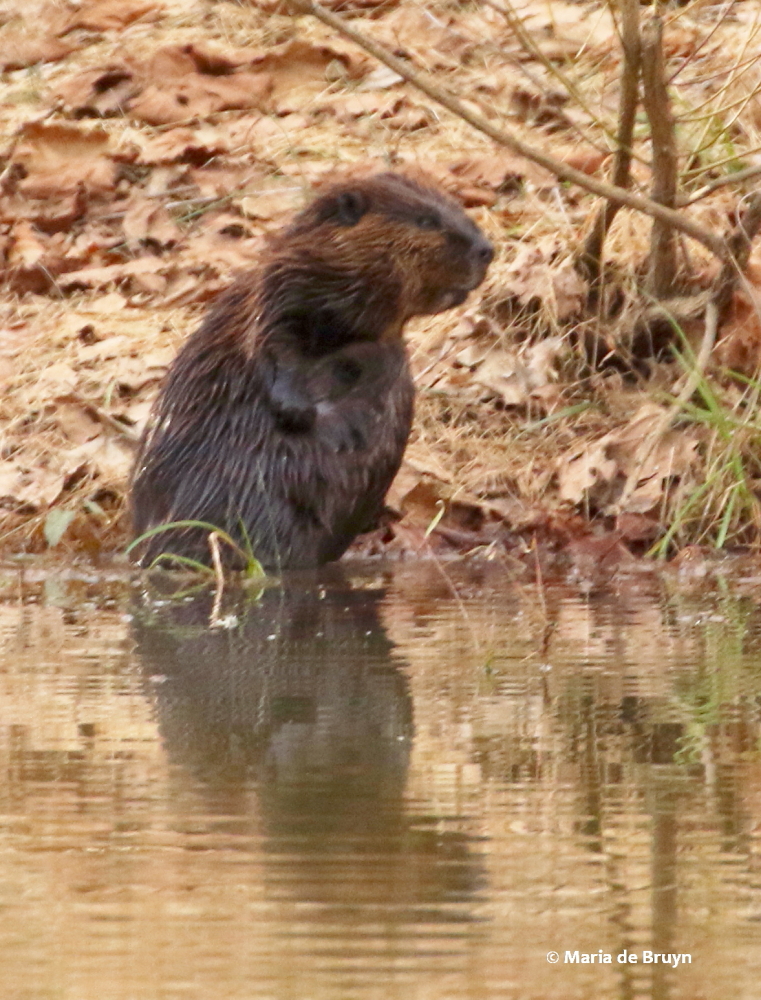
 

It didn’t matter whether the day was sunny or colder, gray and overcast. Sometimes, it seemed that he was taking a quick power nap.
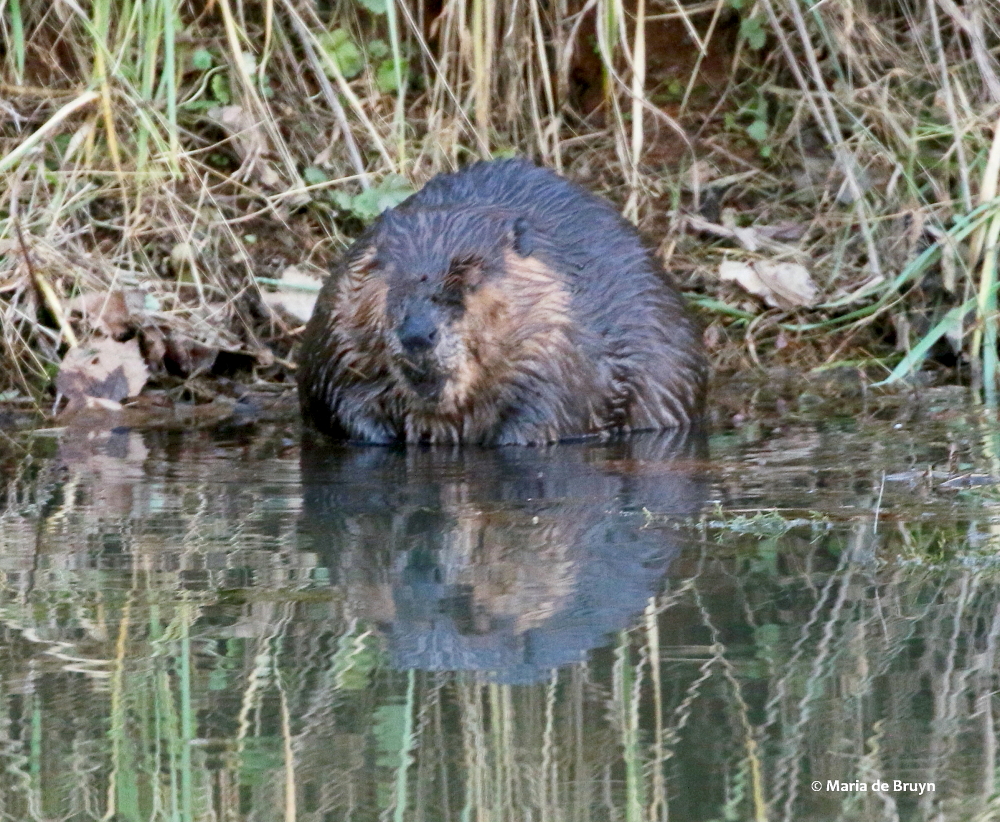
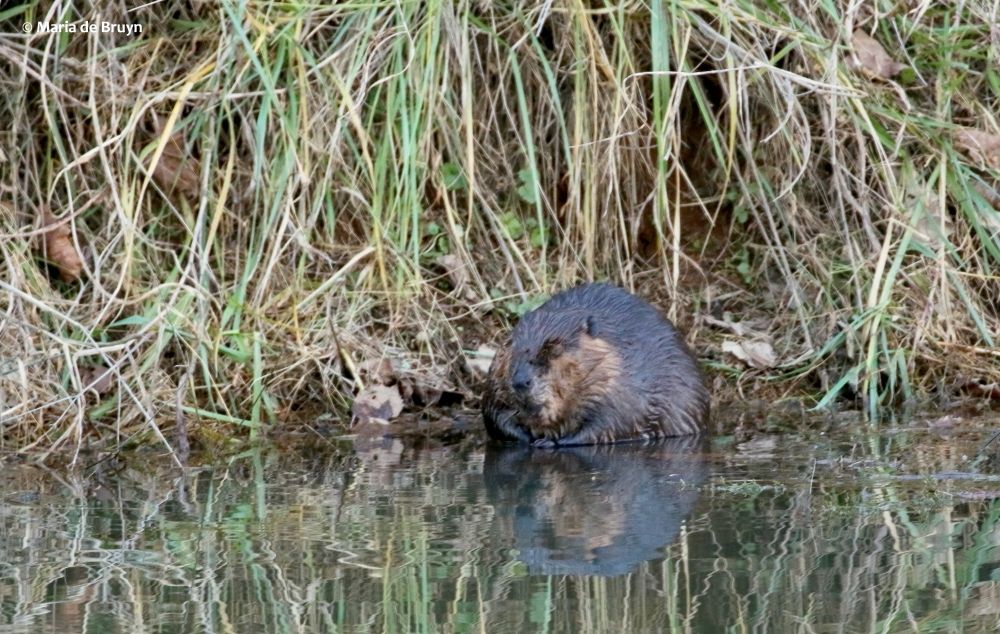
  

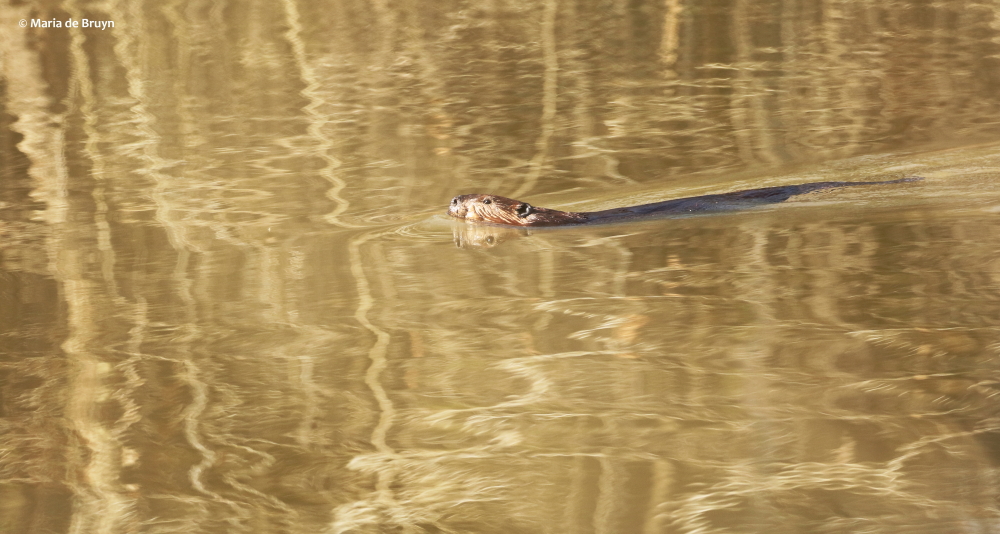
The beaver would make small circles, large circles, go to the shore for a quick rest and then resume laps.

One day, I saw him swim toward the lodge and I was able to see inside above the underwater entrance. He didn’t stay there long though and soon came out again to exercise.

This beaver seemed to be quite relaxed, swimming around and around, except for when walkers came by with dogs. He definitely did not care for the canines; when they appeared, he often would begin slapping his large, flat tail on the water and then diving noisily under water before emerging again nearby.
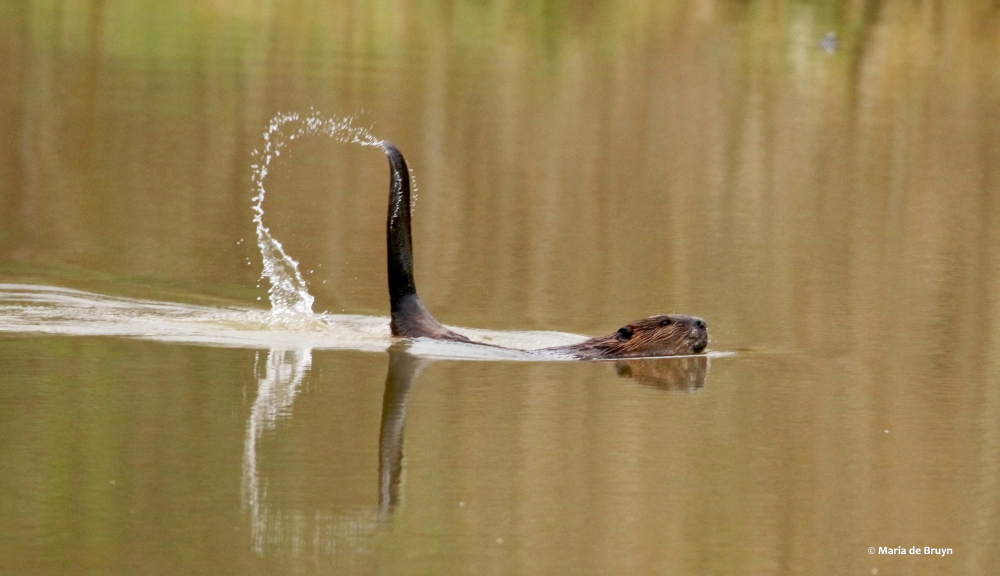
These tail slap warnings and dives showed off his webbed hind paws.
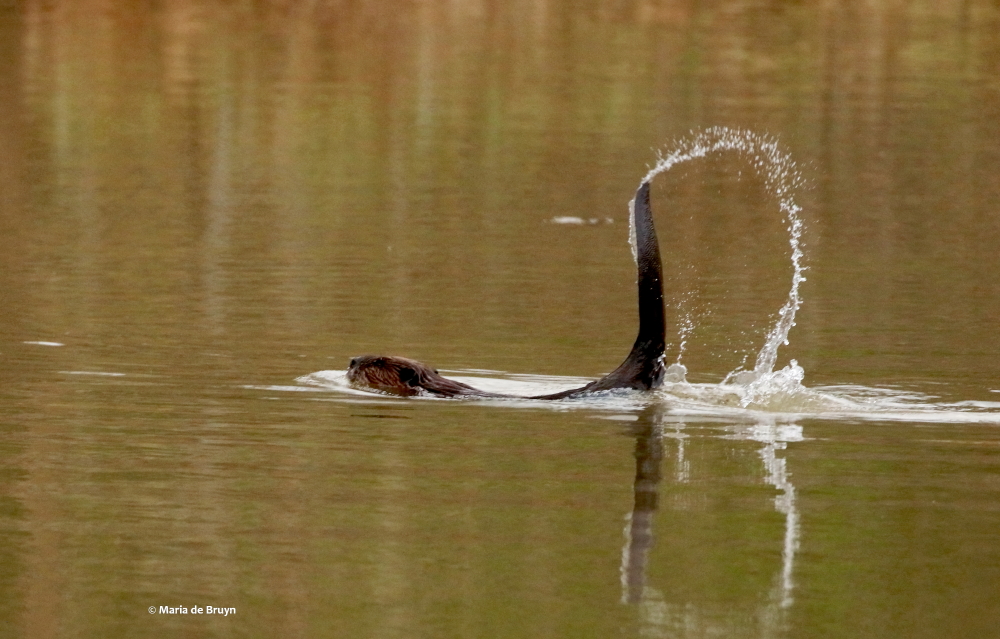
It was interesting to hear how very loud the tail slaps can be. The beaver will also vocalize its distress.

At one point, some visitors to the reserve allowed their dog to jump into the pond and the canine swam close to the beaver lodge. (Dogs are supposed to be kept on leash but a number of pet owners ignore the sign stating this. When I mentioned that dogs running loose also disturb ground-feeding birds, the response was: “Too bad for the ground birds!”) That very much disturbed the beaver, who slapped his tail again and again.
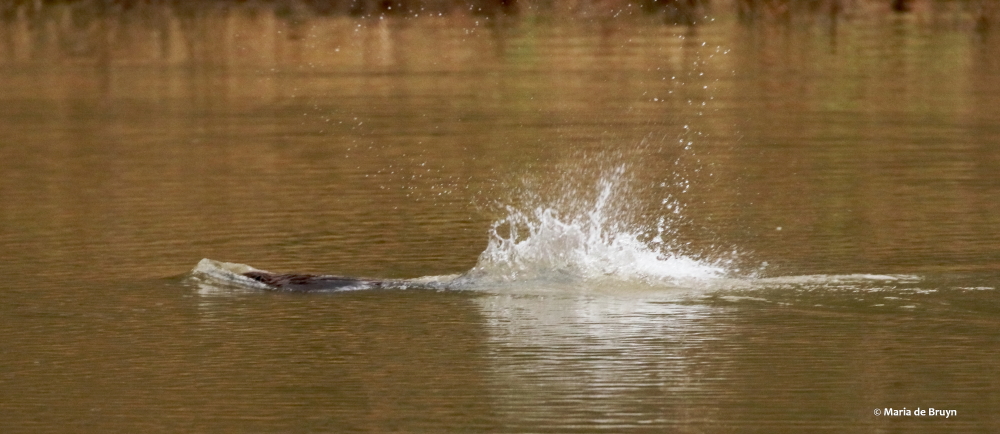
After that incident, I only saw the beaver having afternoon lap sessions a couple more times. He seems to have given up the practice or is now restricting his swims to very quiet times. I can understand if the animal is trying to avoid stress and distress; that’s one reason I go out for nature walks, too. But I was glad he ventured out for a while so I could see him fairly close on several occasions.
Happy New Year to you all – hope your 2019 is happy, healthy and filled with nature’s beauty!
Unexpected loving care – a winter gift

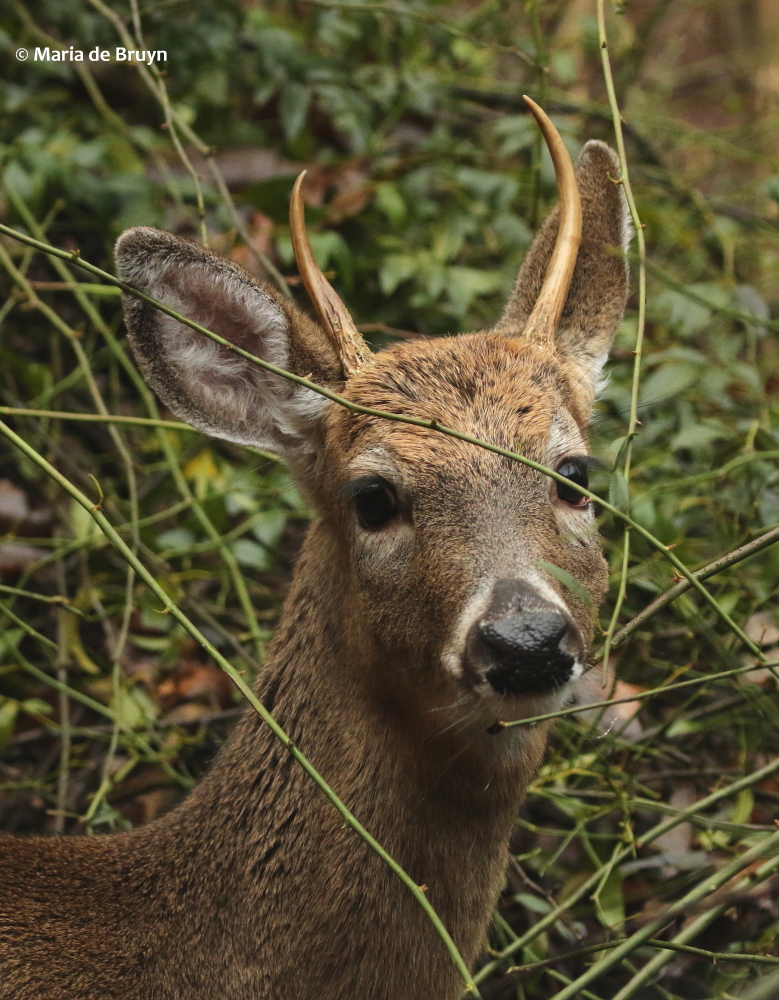
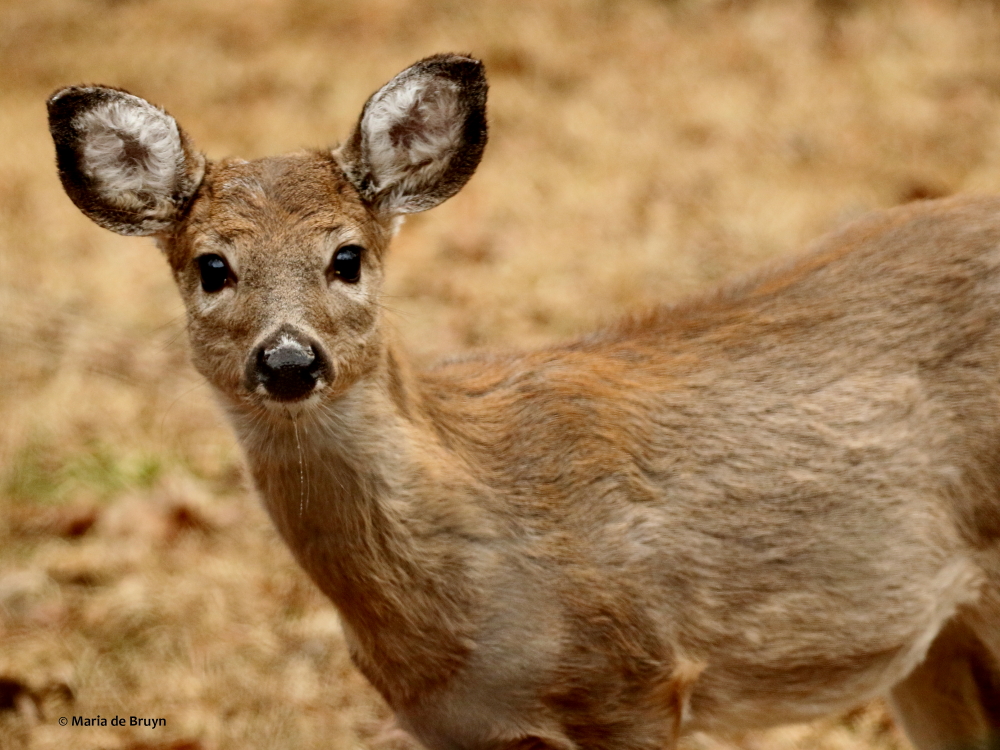
One of the delights of my back yard is being able to look outside just about any time to see some sort of wildlife. Often, it is birds that I see but there are insects, mammals, amphibians and reptiles, too. Wooded areas in and near our neighborhood are being clear-cut, pushing the animals out of their long-time homes and they don’t have many places to go. So our yards become a refuge, at least when the residents don’t chase them away. I am fine with non-human species in my yard, so they sometimes rest here, get a drink from the pond and hunt for food. Among the most graceful visitors are the white-tailed deer (Odocoileus virginianus), who have been among my favorite mammals ever since I got to know one in particular, Schatje.

The past couple years, the resident does who most often traversed our streets had fawns, but they were mostly producing male offspring – five bucks to two does by my guesstimate. Since the availability of food is diminishing, as is the available natural territory, it may be that this will keep the local population somewhat limited as there will be fewer does to give birth.

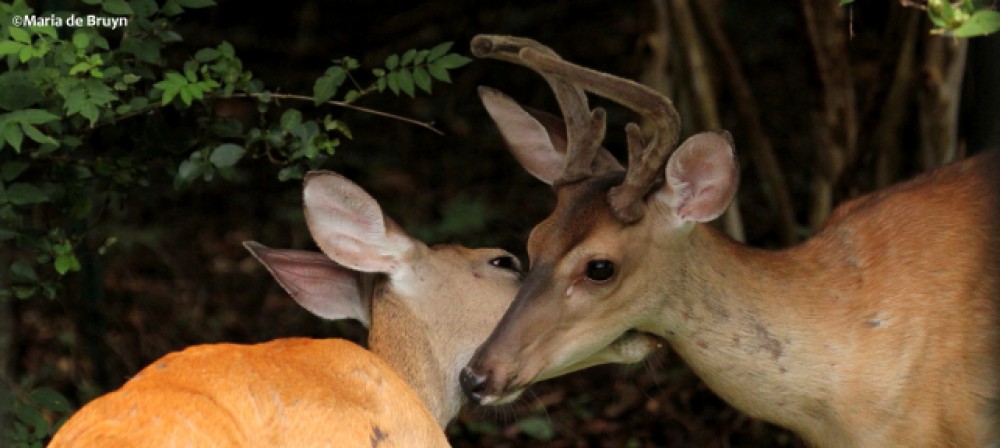
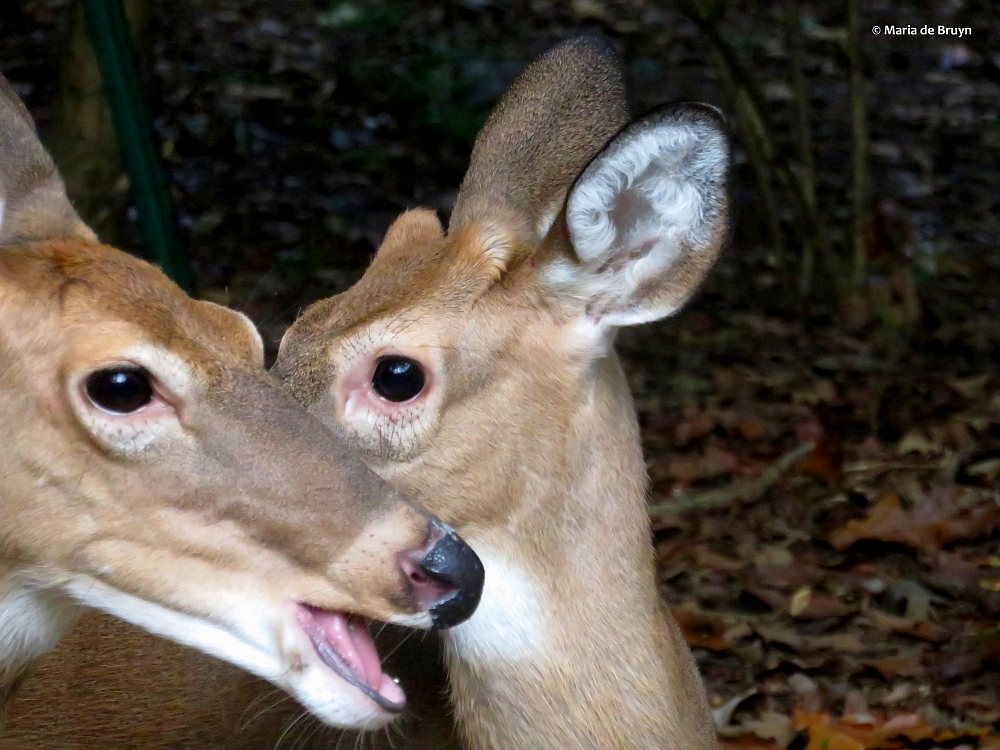
In spring and summer, bucks do not visit my yard as often as does and their fawns but during breeding season, they put in more frequent appearances. One of the two daily visiting does (“Mama”, recognizable by a mark near her eye) fled this year whenever they arrived. At one point, her twins (born this past spring) began coming around with an older brother who was born last year (“Sweetie”; at left). Mama eventually stopped coming at all and I suspect she was perhaps hit by a car.

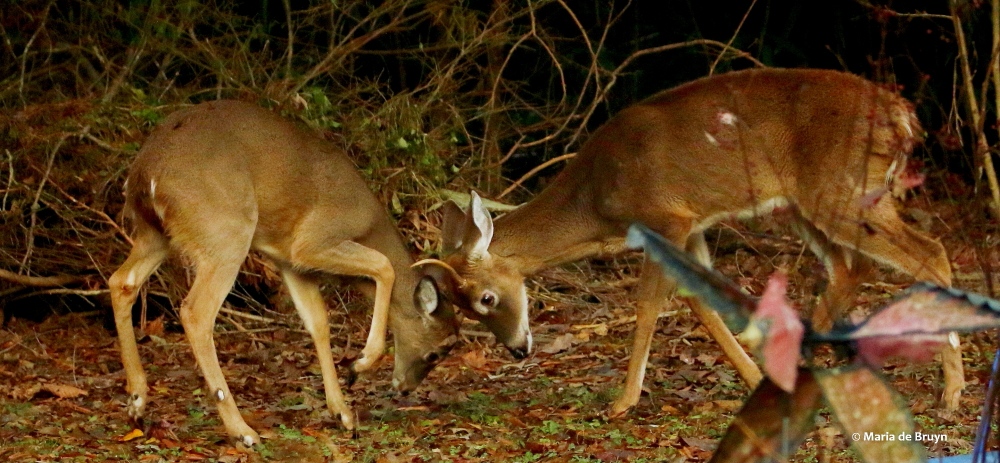
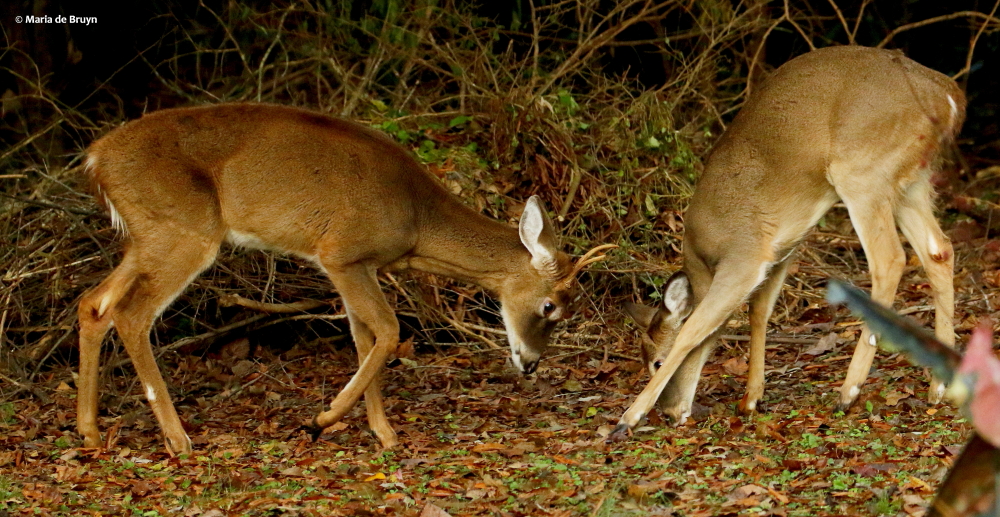
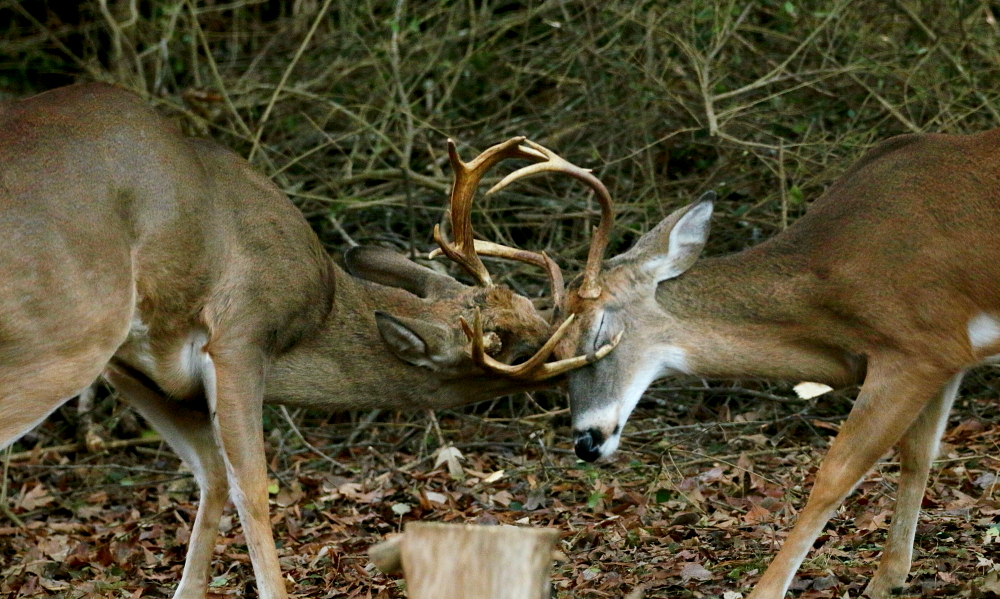
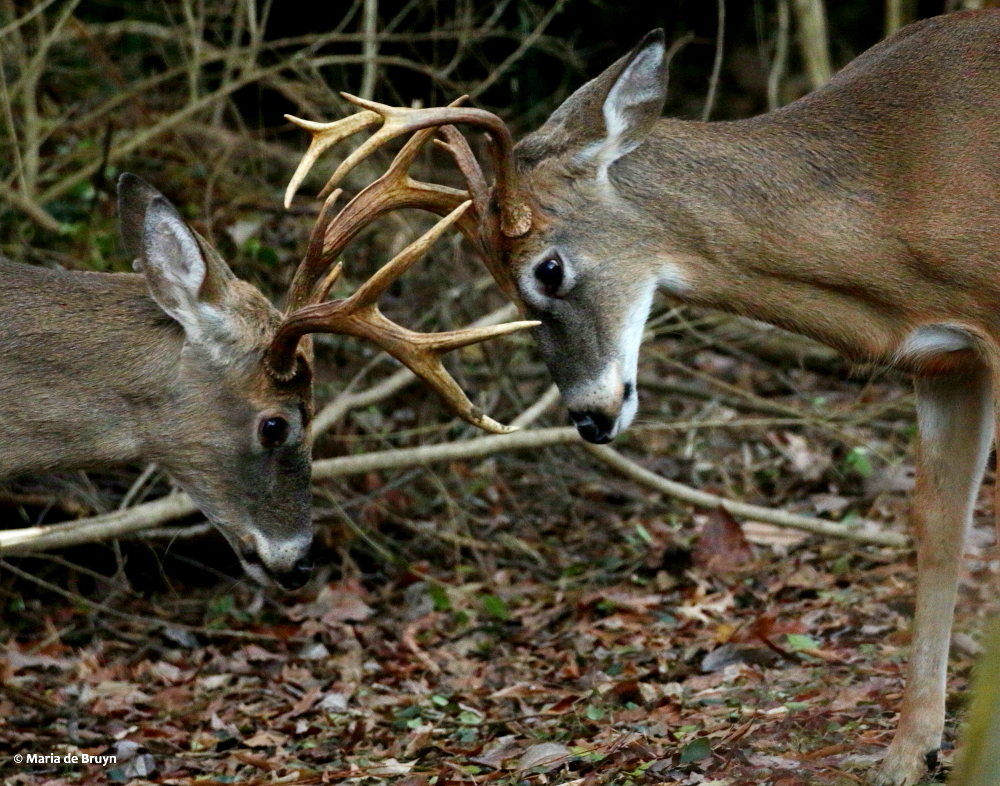
Sweetie has sometimes been challenged by one of his younger brothers and then he does a little practice “jousting” with him. He never pushes hard, just enough to give the younger button buck something to resist.

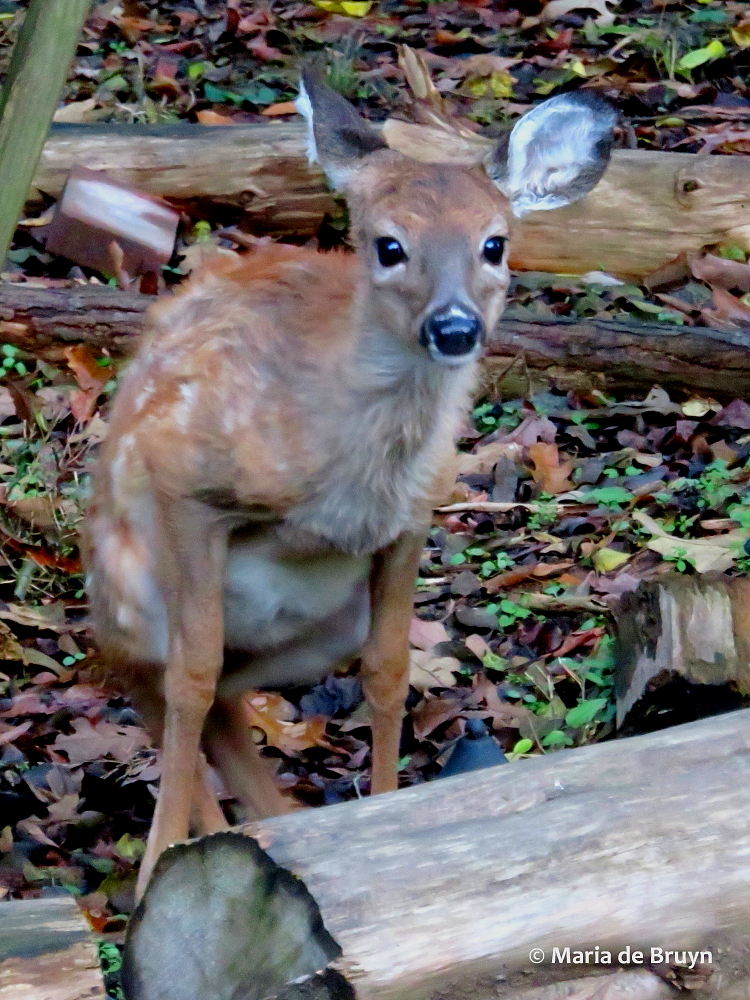
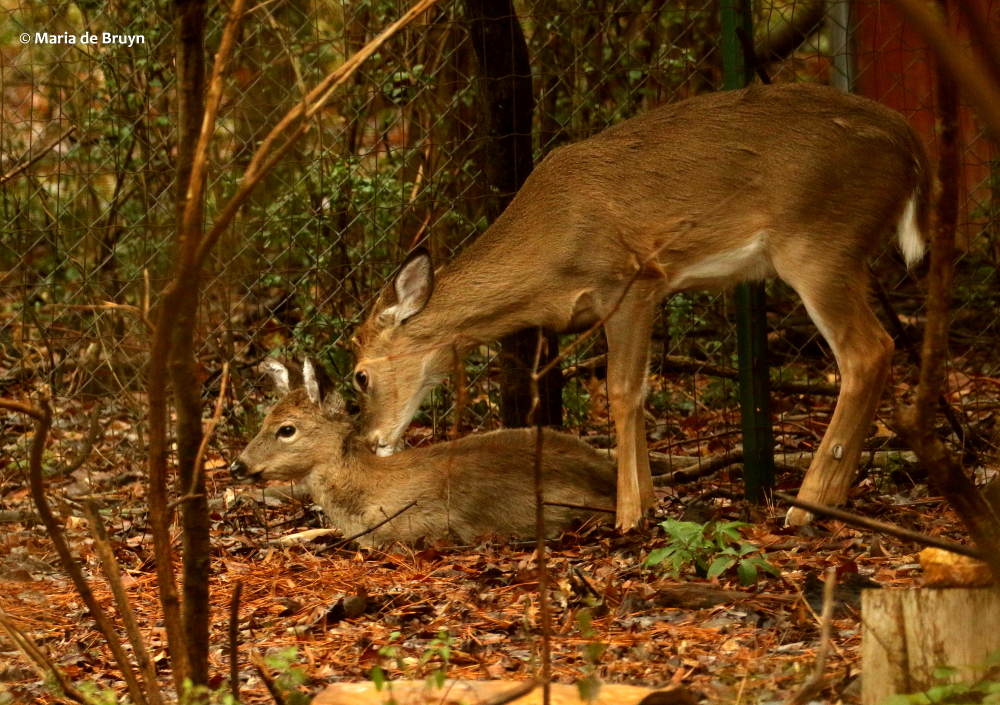
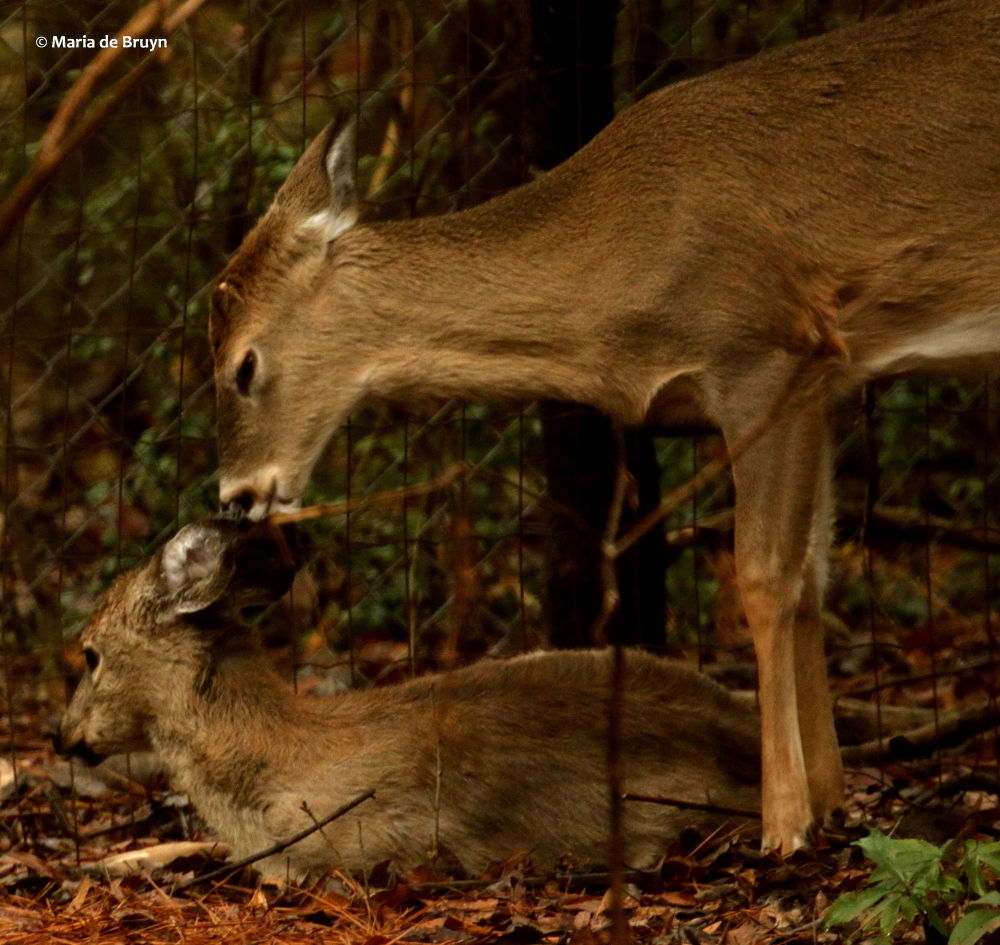
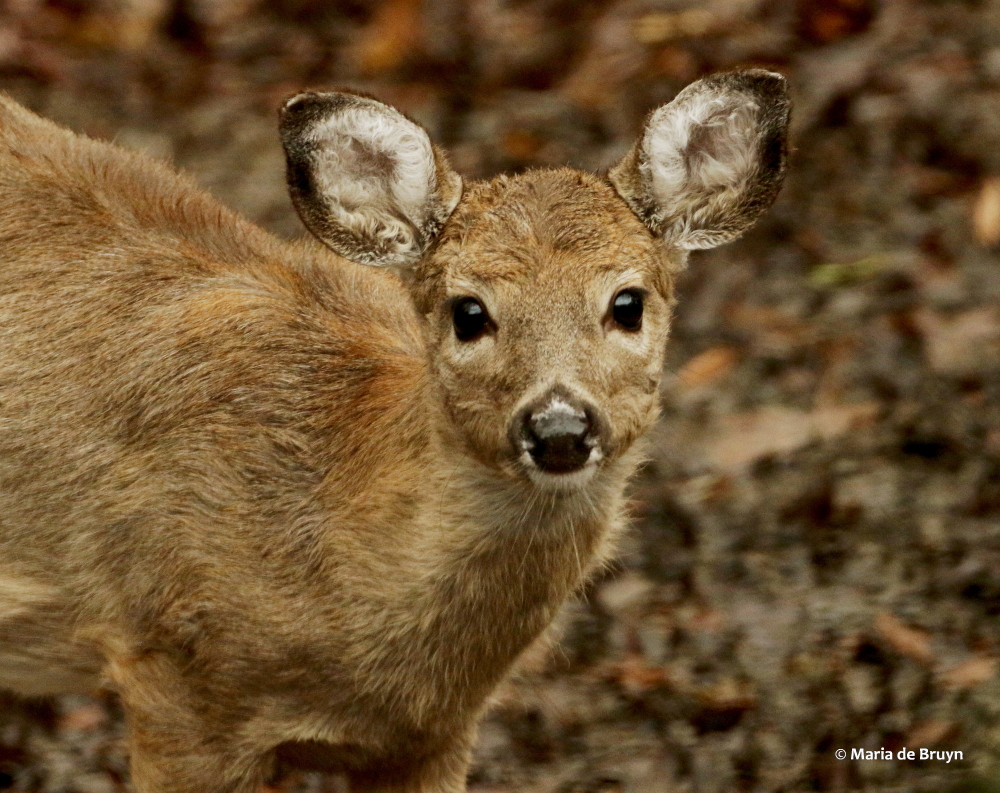
At the start of November, I was quite surprised to see a very small fawn that still had some spotting turn up in the yard. The other deer tried to drive it away but it hung around waiting for them to leave and then would lick up whatever remaining bird seed was still on the ground. The little one was never accompanied by a doe and I had to assume that the mother had died and the young one is an orphan. I had read that late-born fawns often do not survive as they haven’t had time to build up body mass and reserves to get through a winter but this little deer seems to be very resilient and persistent.

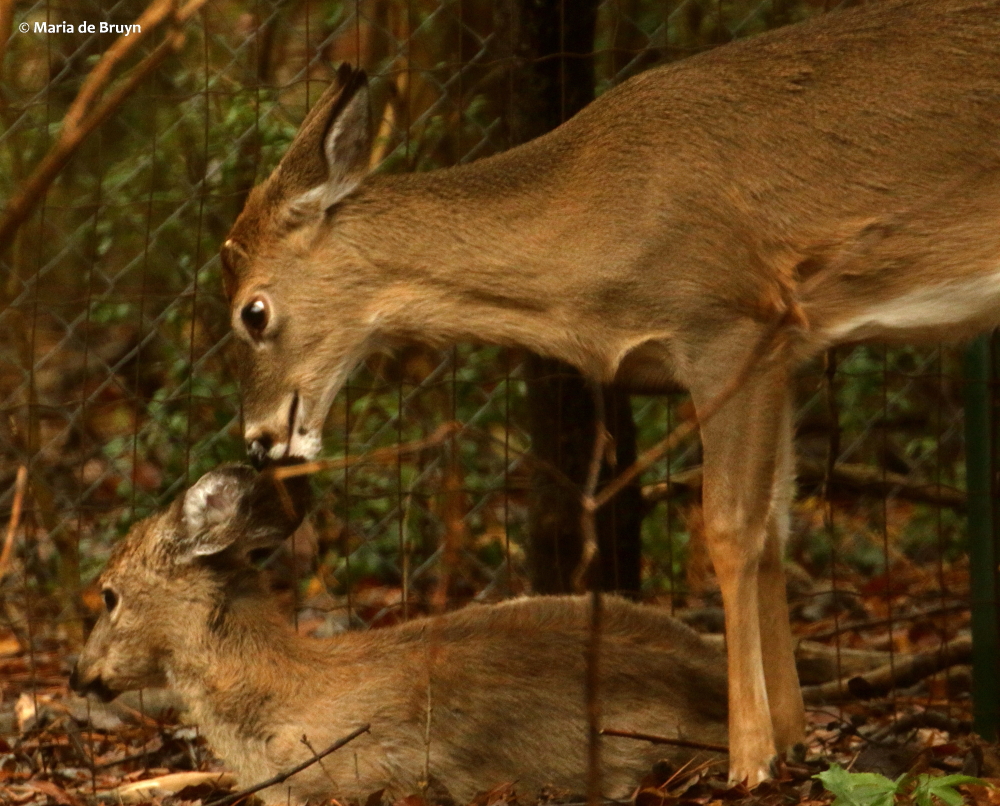
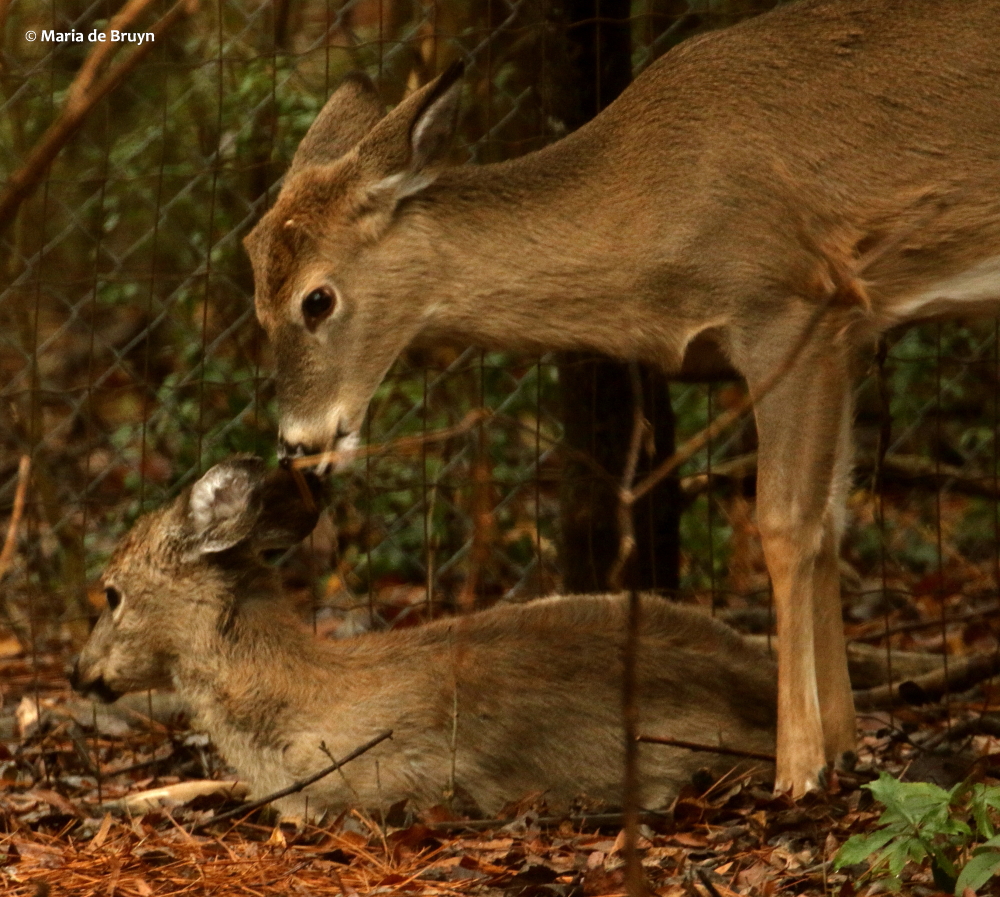
The persistence seems to have paid off and resulted in a winter gift. Sweetie and one of his younger brothers seem to have “adopted” the fawn! They not only allow the young deer to be around them when they look for bird seed on the ground; they are also grooming the orphan! This seems to me to be unusual behavior for bucks, but I’m happy they are doing it.

This development has just warmed my heart.

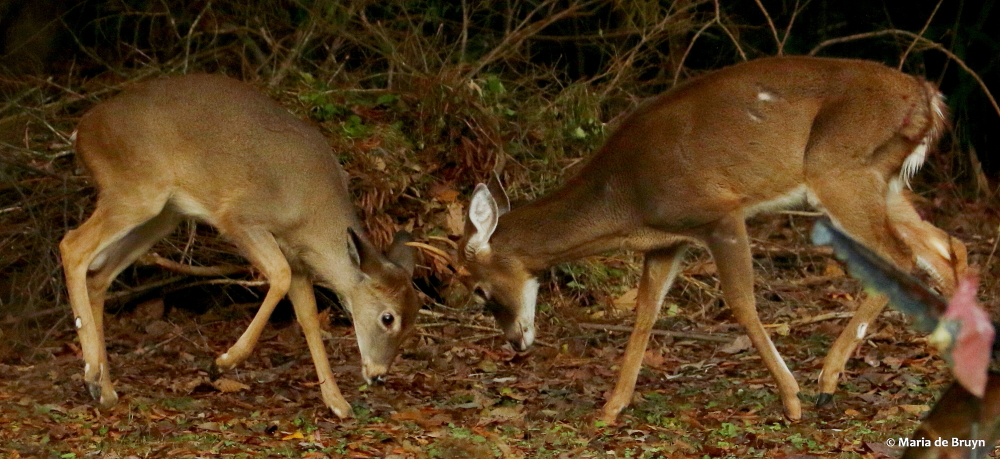
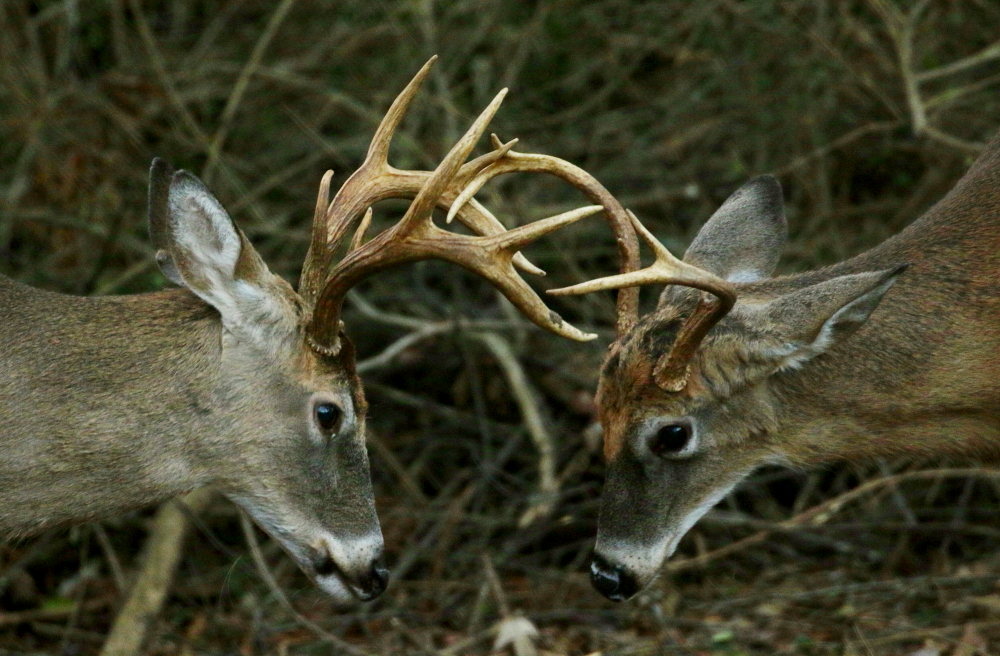
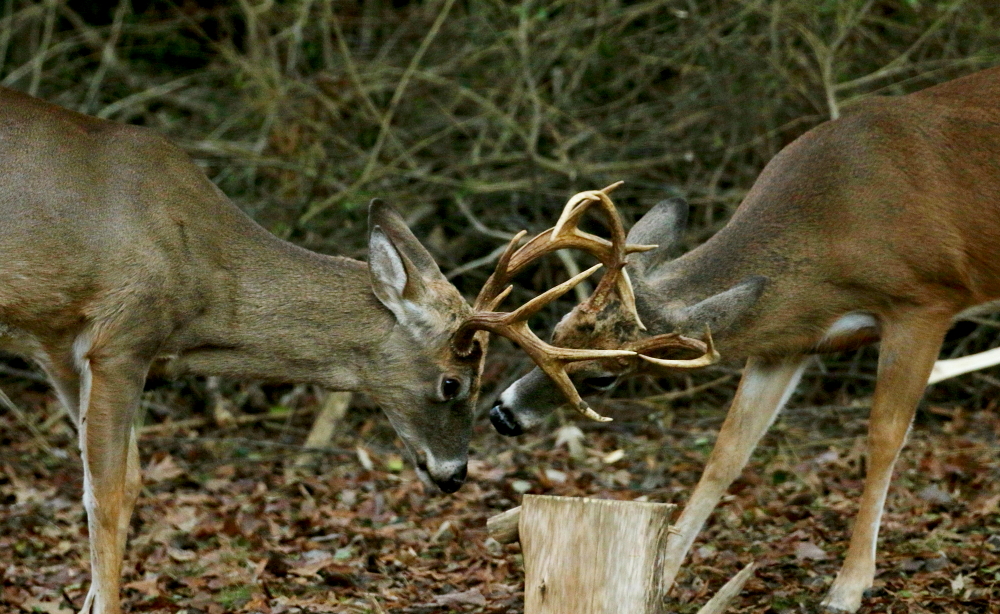
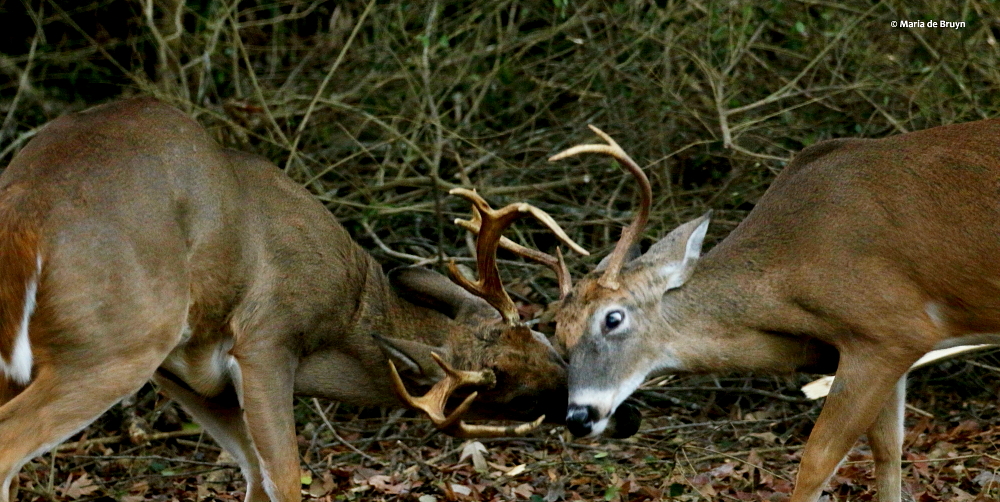
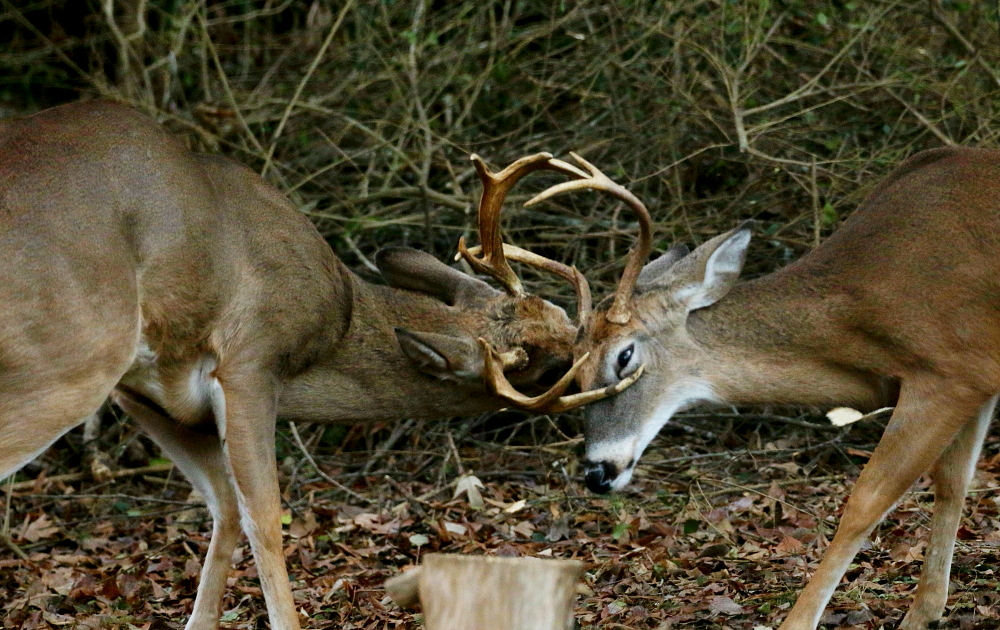
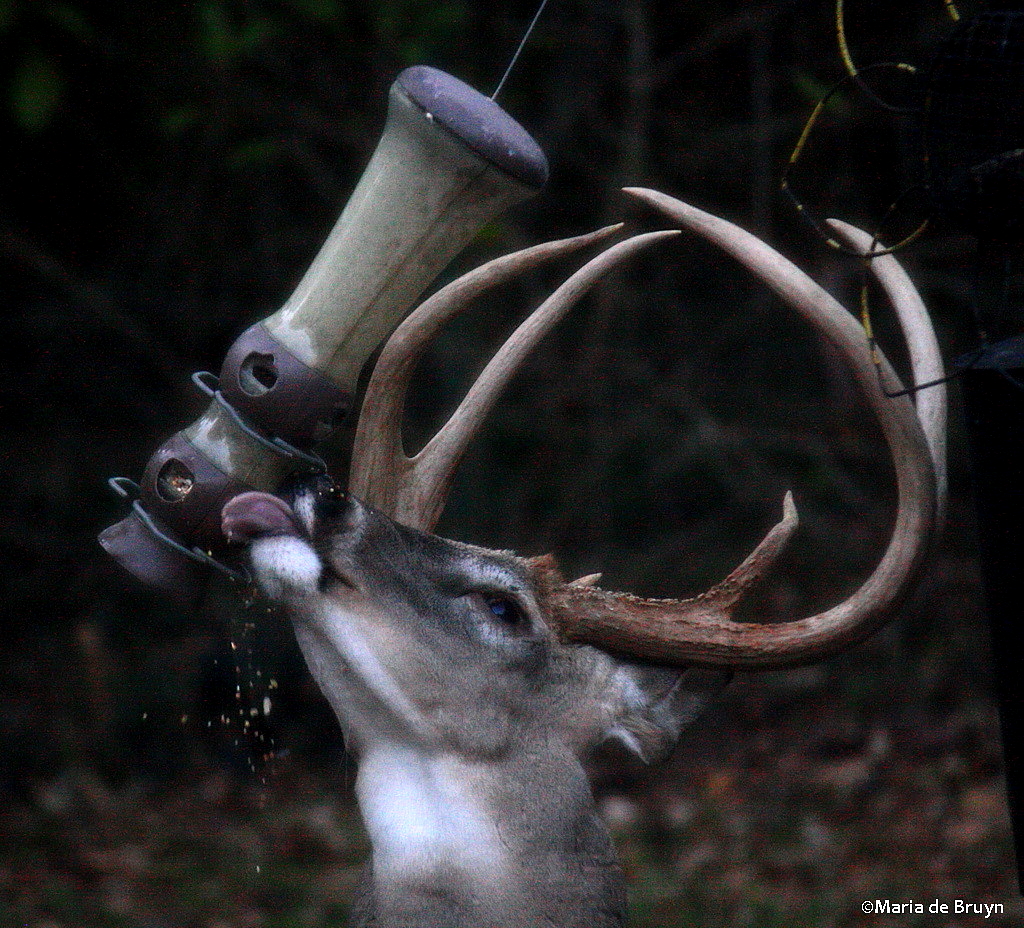
In the meantime, the remaining older doe has only come by occasionally, together with what I assume is her daughter from last year. They do not stick around when the larger bucks put in an appearance. The other day, the largest buck entered the yard holding up his left front leg. The injury does not prevent him from walking. When a younger adult buck came by, it turned out that the injury also does not prevent him from engaging in some jousting as well.

The “duel” between the two adult males that I witnessed did not seem very serious, perhaps because no does were in sight or perhaps because the healthy buck was still being careful not to challenge the larger deer even though he had an injury.

They did not really push one another much but spent more time entwining their antlers – which seemed pretty dicey to me as the points came close to their eyes! That didn’t stop their activity, however.

Eventually, the two parted, quite amiably it seemed, and each went his own way. It was a fascinating “performance” and kept me quite entertained. And I remain grateful that these beautiful mammals come by regularly, sometimes resting against the back fence and sometimes displaying behaviors that keep me learning something about their lives.


Autumn amblings — seeing insects, birds, a snake and two surprises

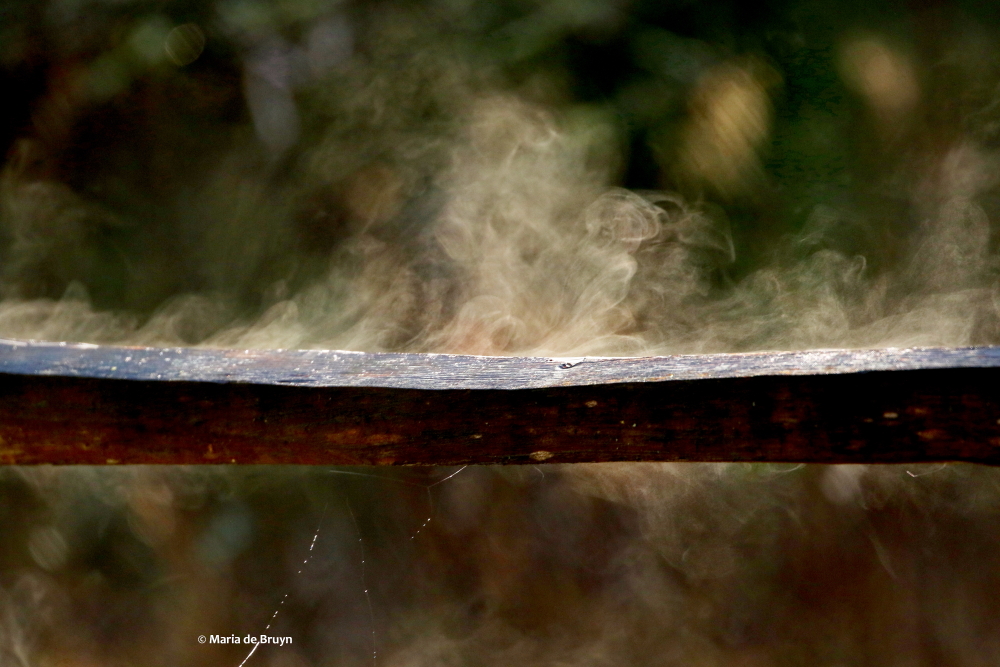
It’s been challenging lately to know what to expect as far as weather goes in our area. Following tropical storms Florence and Michael, we’ve had several more episodes of drenching downpours that caused local flooding and closed off some natural areas. The temperatures have gone down to freezing or below in the morning and then have risen to 50-60s F (10-16C); this has sometimes led to steam rising from fence posts and some flowers still blooming which usually would have died by now. This morning, I skipped my walk as the temperature was below freezing with wind, so I re-lived some visits this past month to the Brumley Nature Preserve North. If you, too, are inside sheltering from the weather, perhaps you’ll have the time to amble photographically through this long Brumley walk with me.

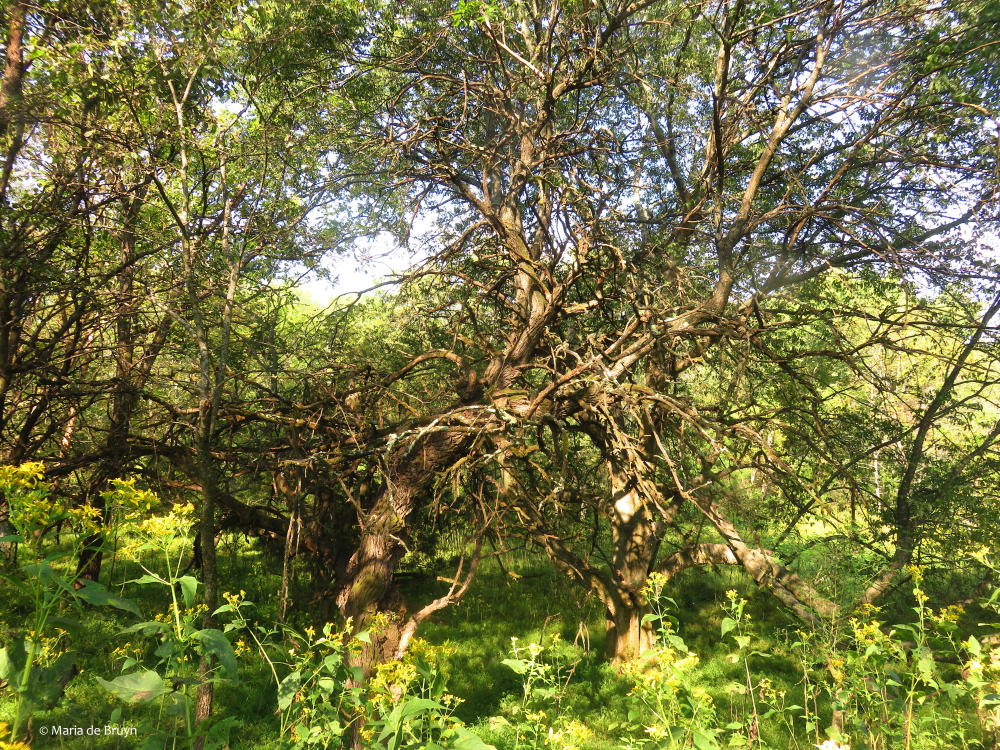
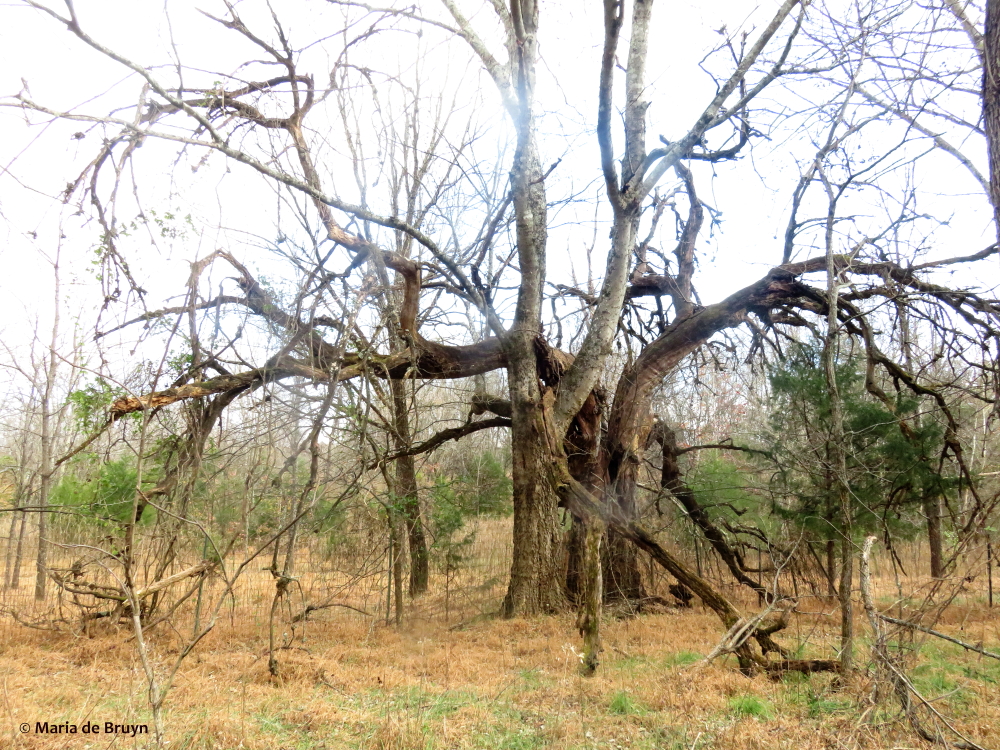
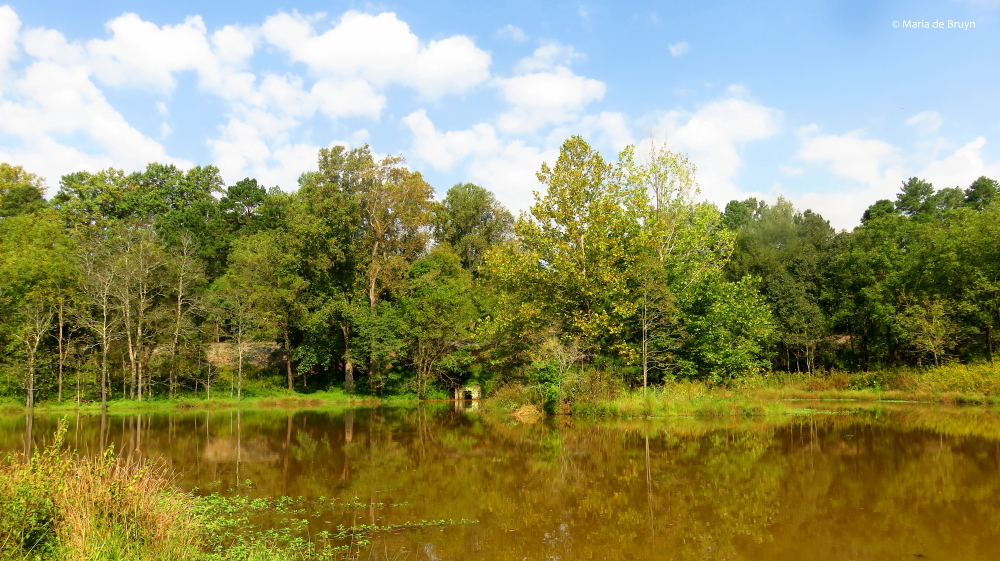
Some parts of the reserve are still fairly green, which creates a lovely ambience for leisurely strolling and nature observations. In other cases, we can see the arrival of late autumn and approaching winter. This picturesque tree, one of three near a pond that harbor various bird species, was still very green in late September; now these forest denizens are showing off their gnarly “bare bones”.


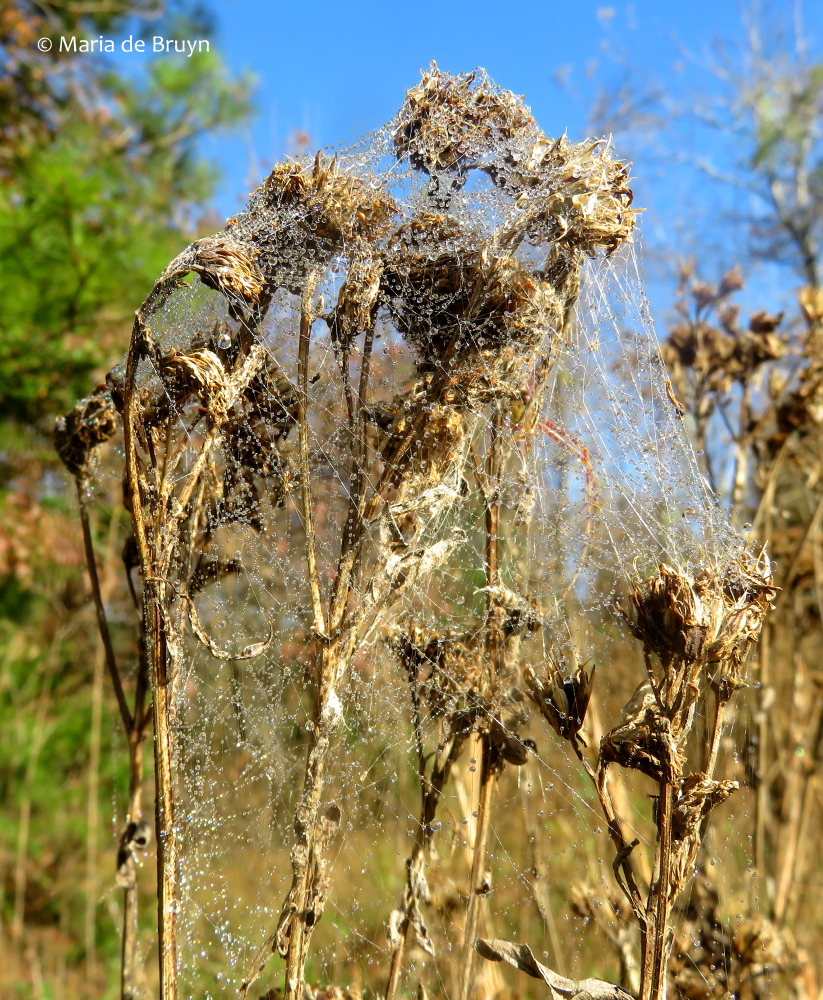
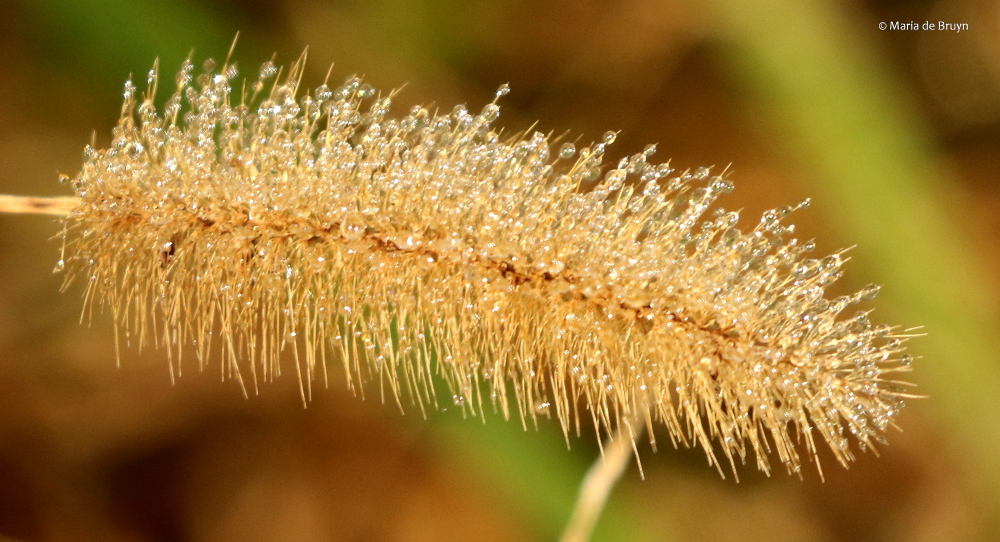
So some early mornings are quite nippy and others a bit milder, with dried plants glistening with spider webs and dew drops that sparkle in the sun.


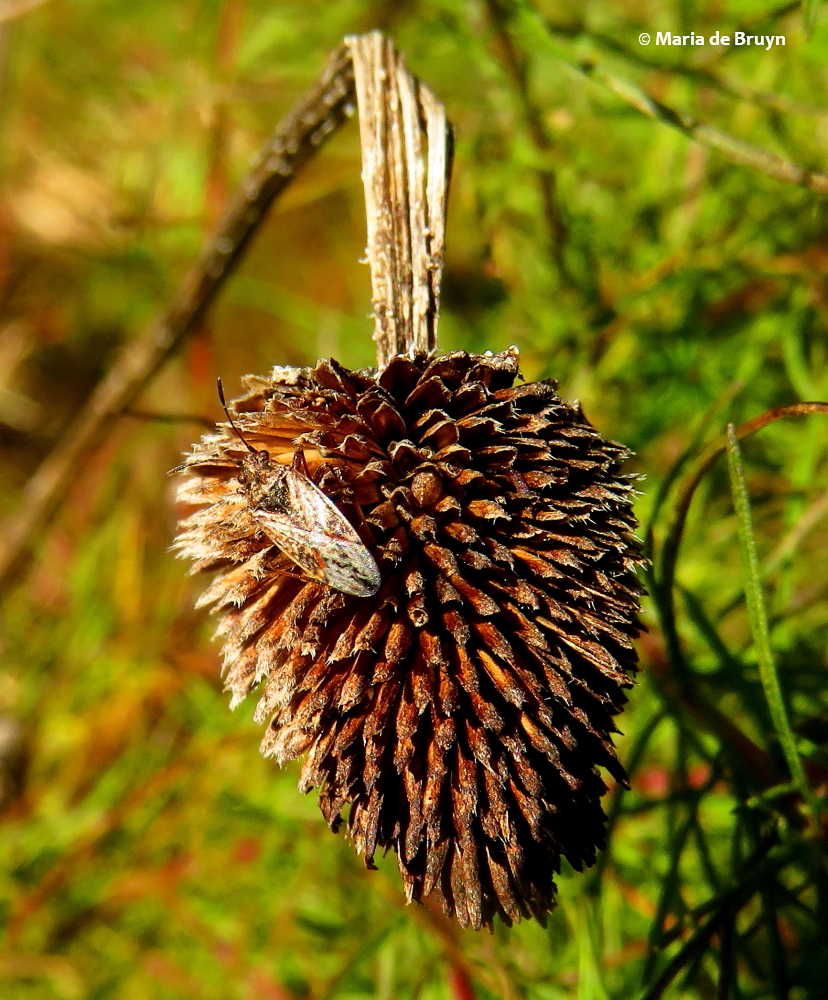
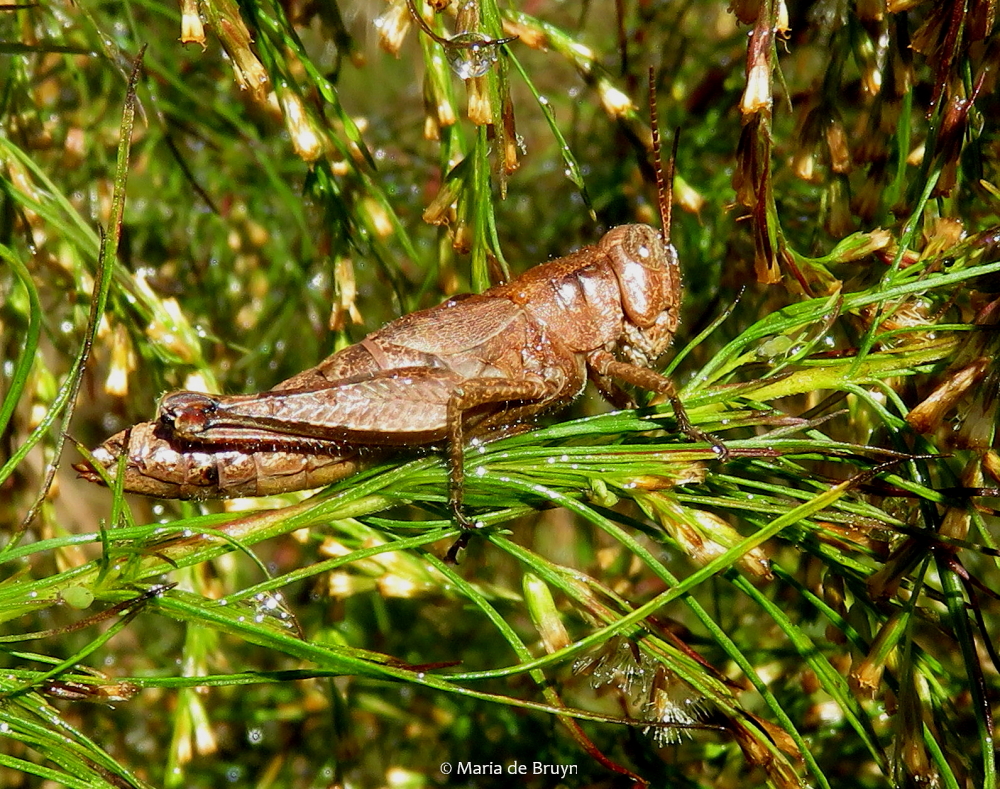
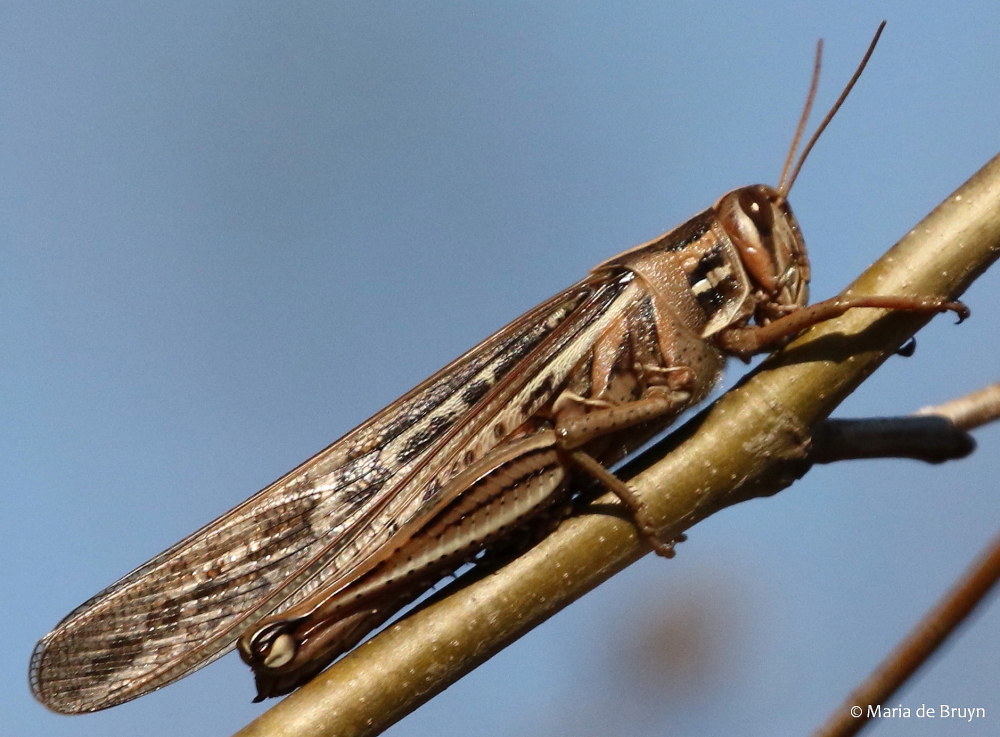
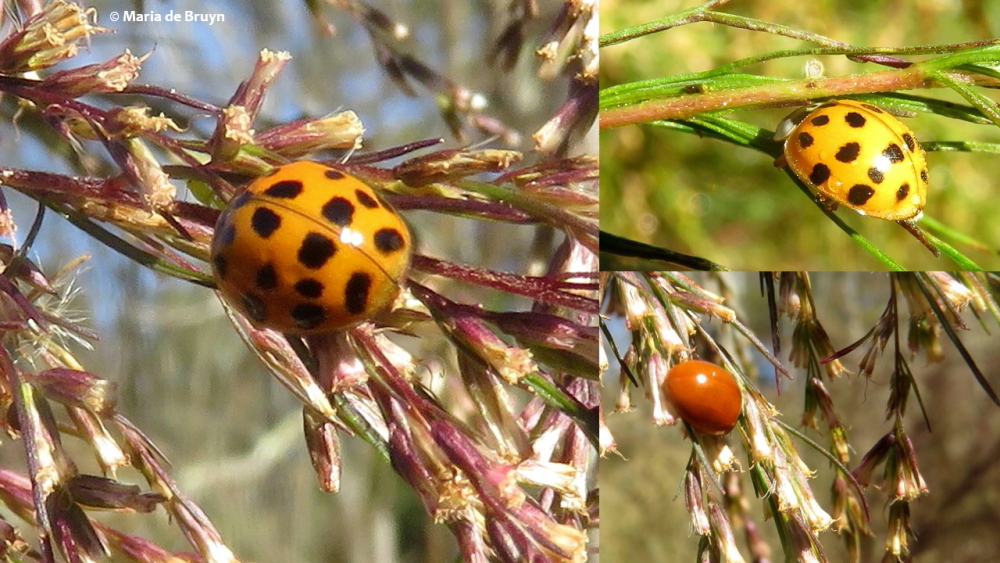
Some of the insects emerge with the sun to bask in the golden light, like this seed bug (Orsellinae, left), whose coloring camouflages it well against the seed heads, short-horned grasshopper, American bird grasshopper (Schistocerca americana) and different color variations of Asian lady beetles (Harmonia axyridis) who were hanging out on the dog fennel (Eupatorium capillifolium).


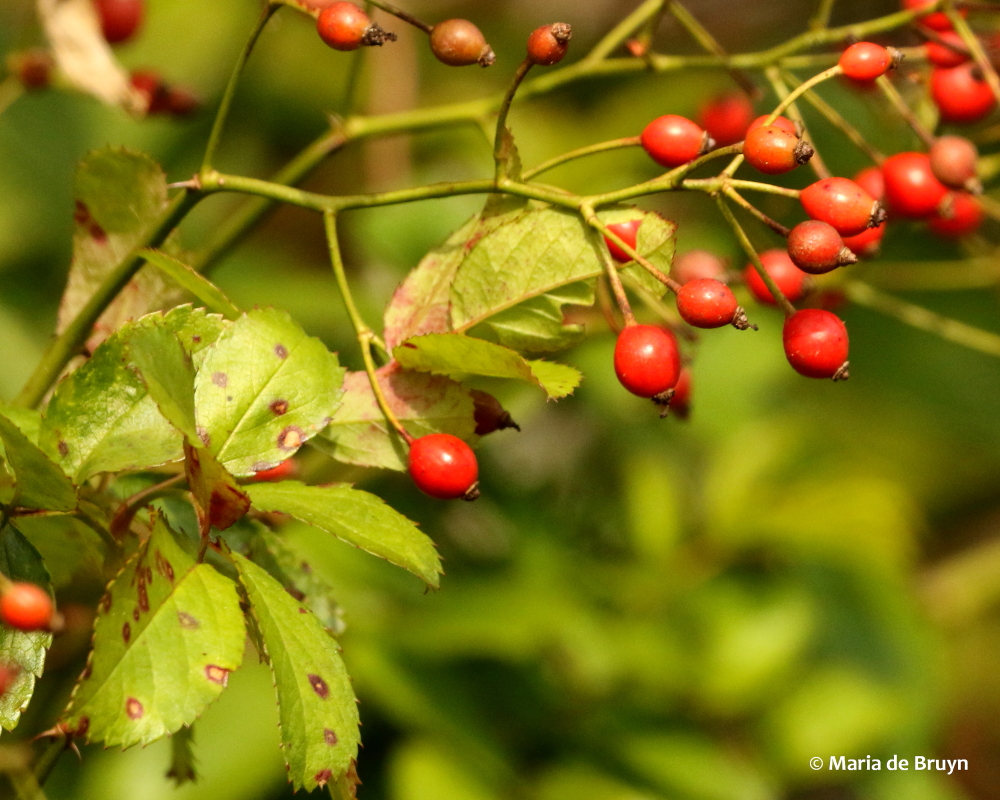
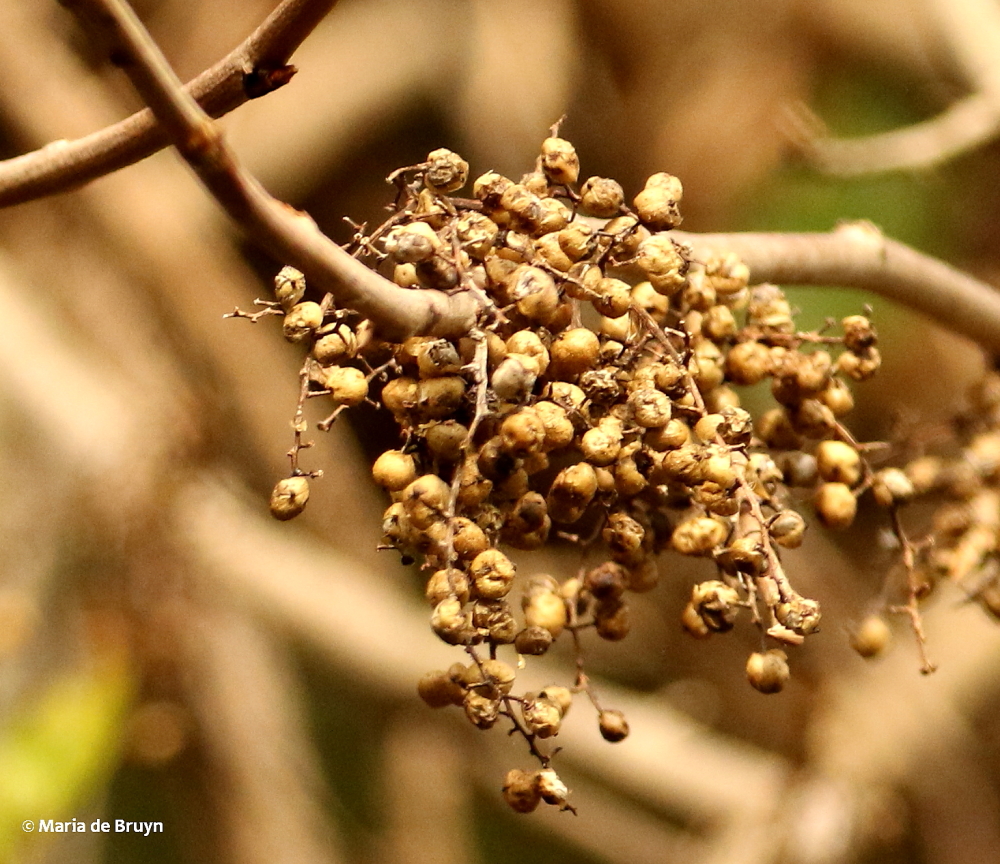
Various birds have been enjoying the winter seeds and especially the winter berries, like the red multiflora rose (Rosa multiflora) and beige poison ivy (Toxicodendron radicans).    

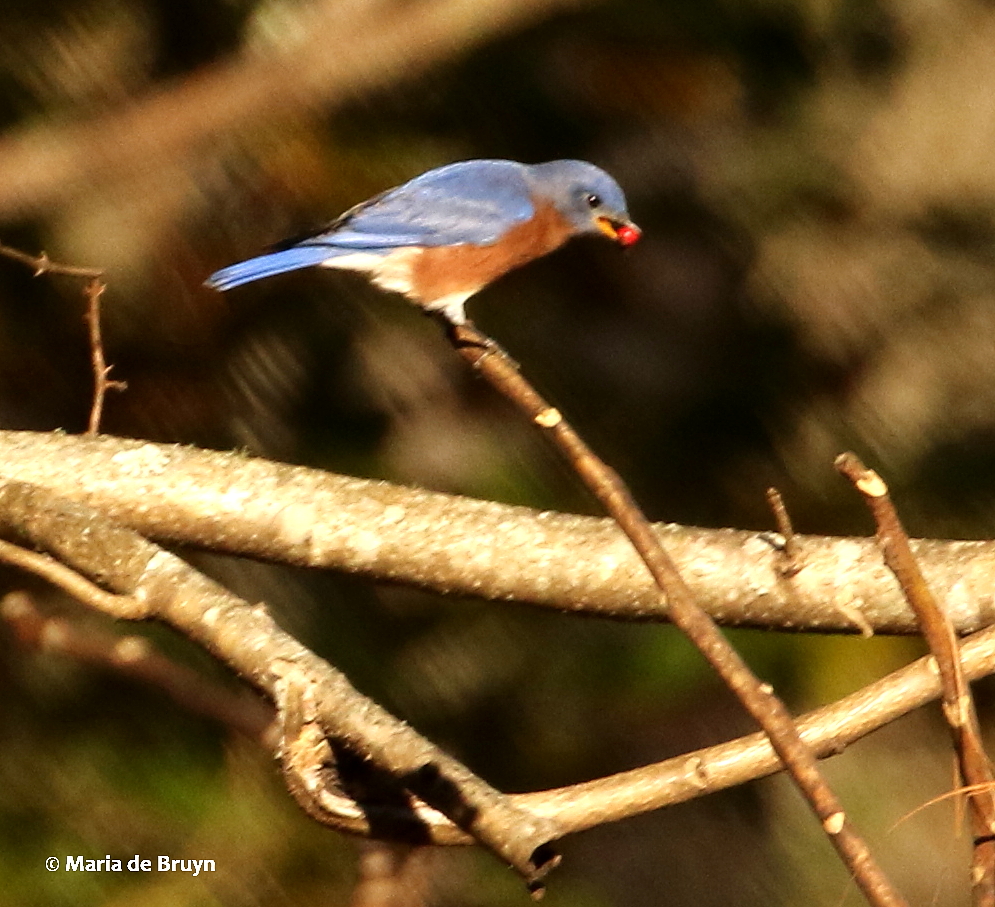
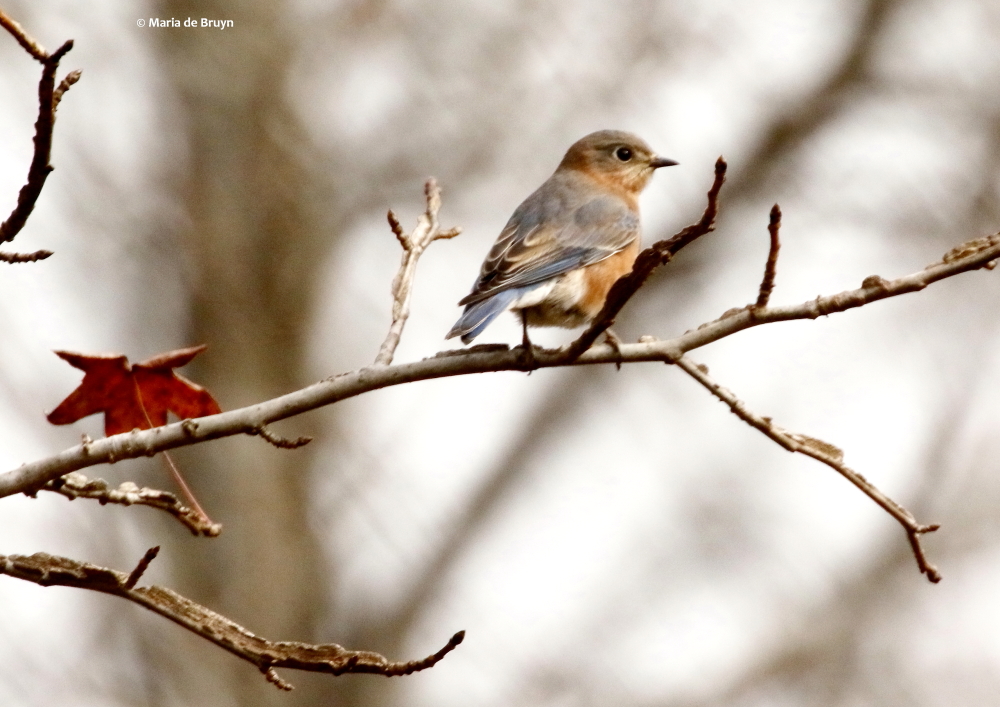
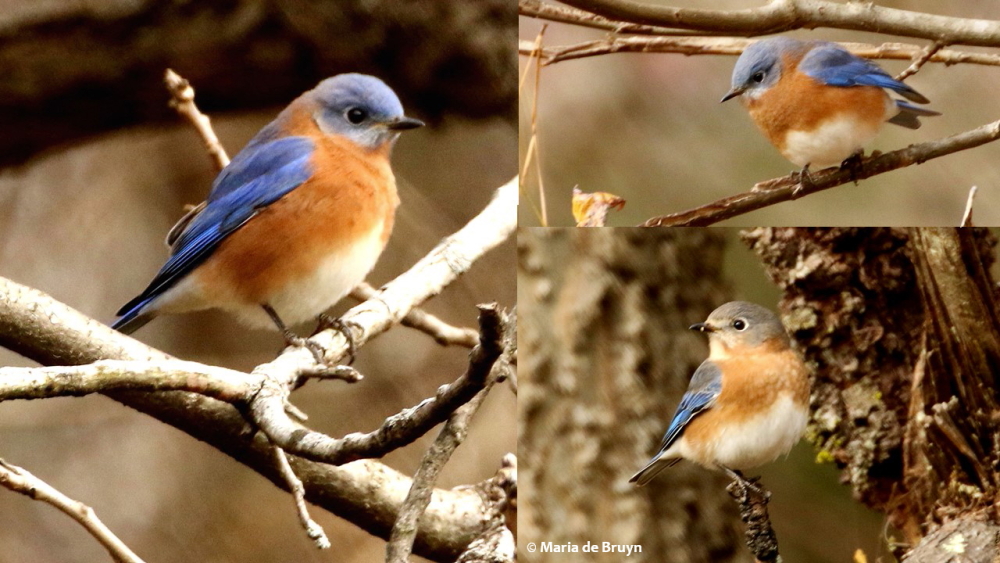
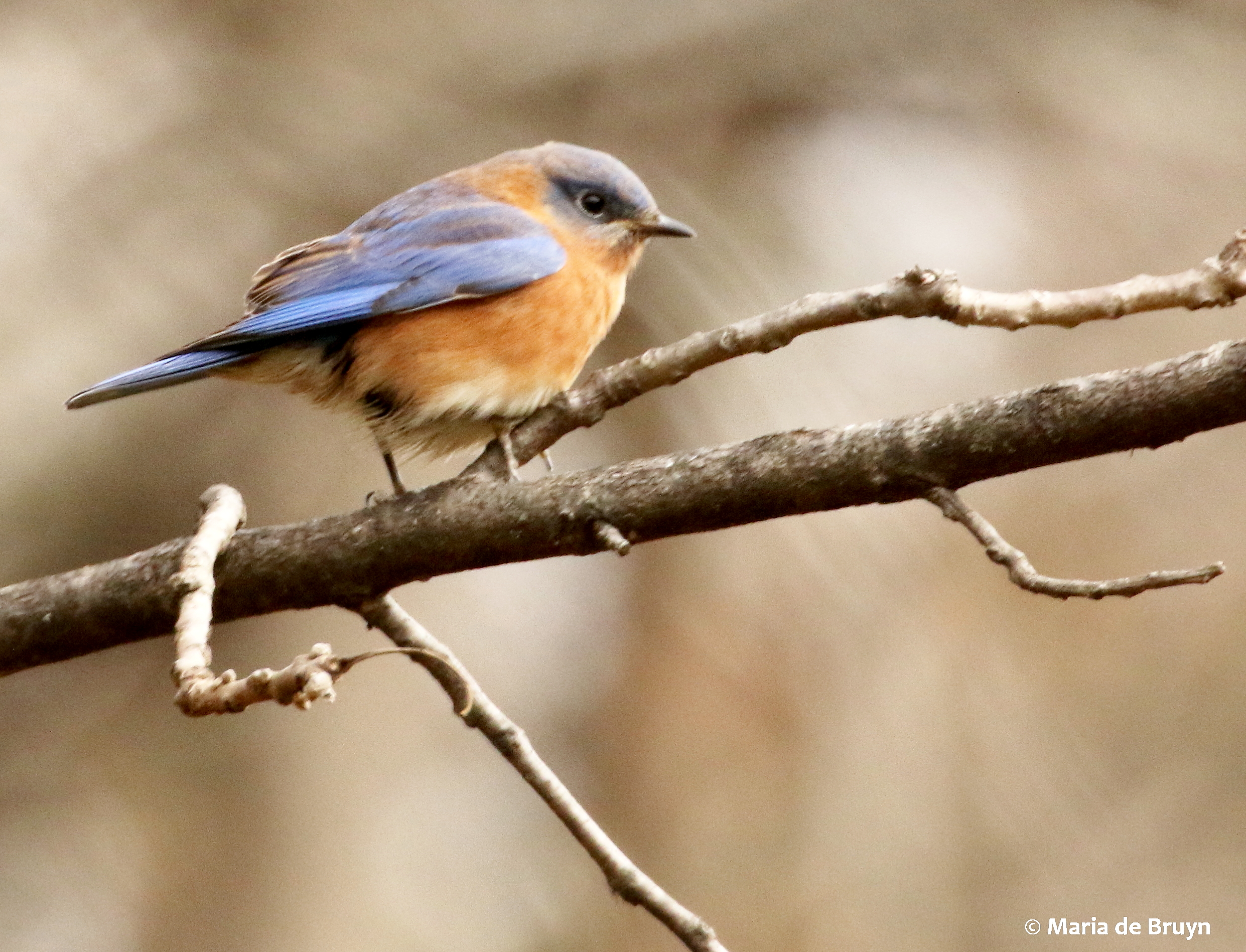
The Eastern bluebirds (Sialia sialis) are quite fond of berries.

They travel back and forth between fruit-laden trees and dried grass seedheads, occasionally stopping on paths to find worms and insects.

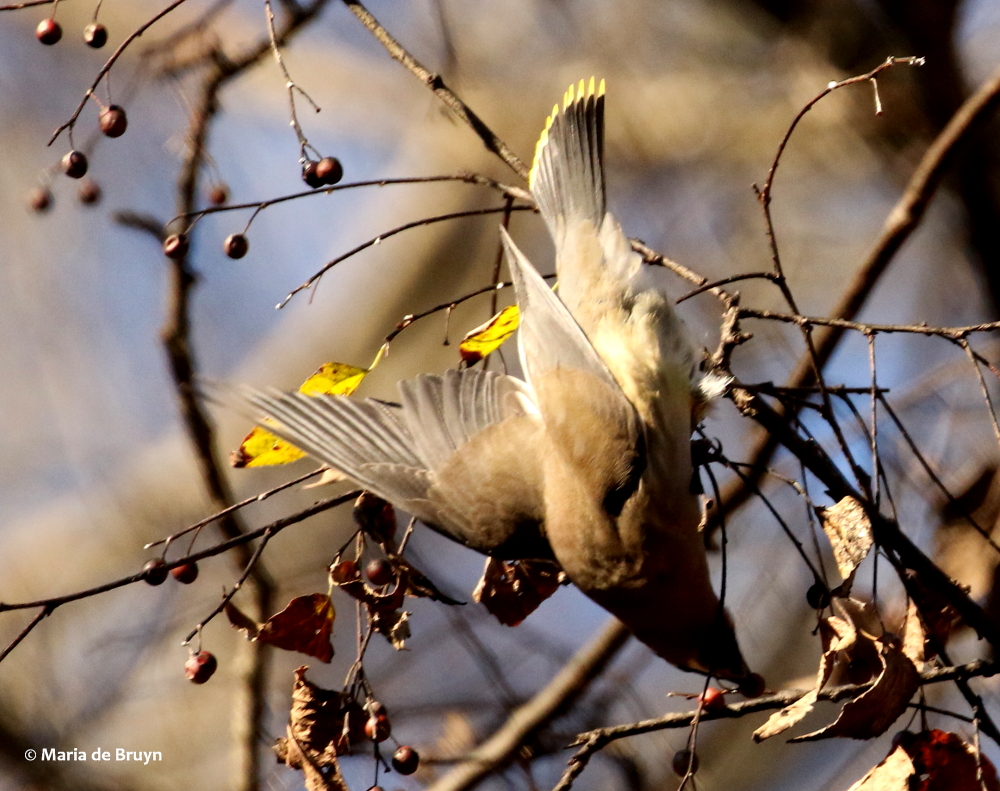
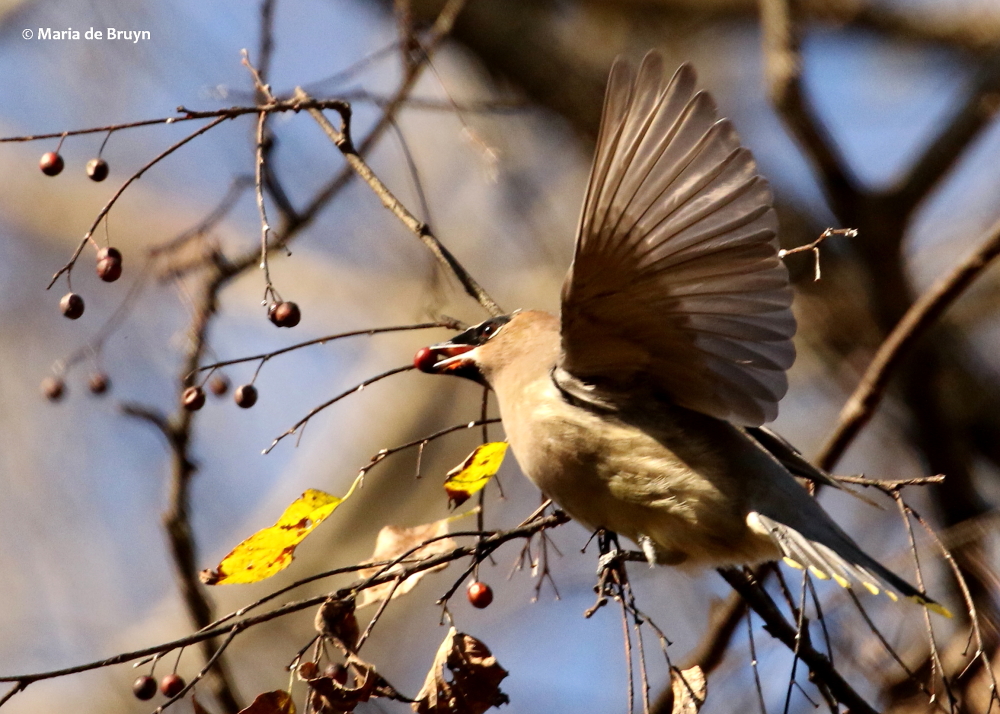
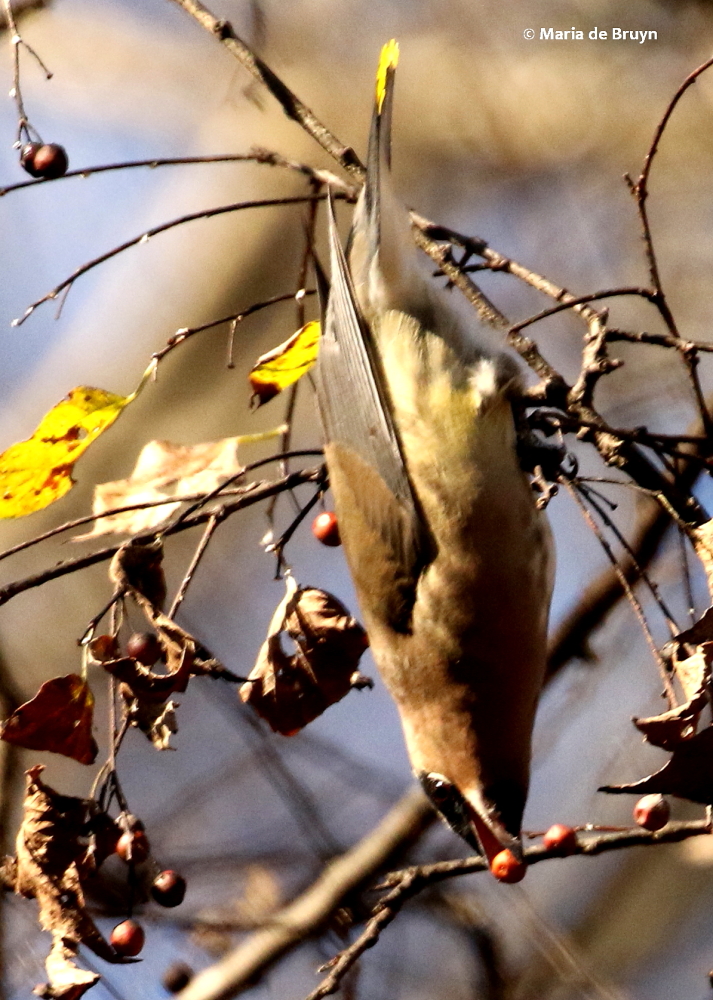
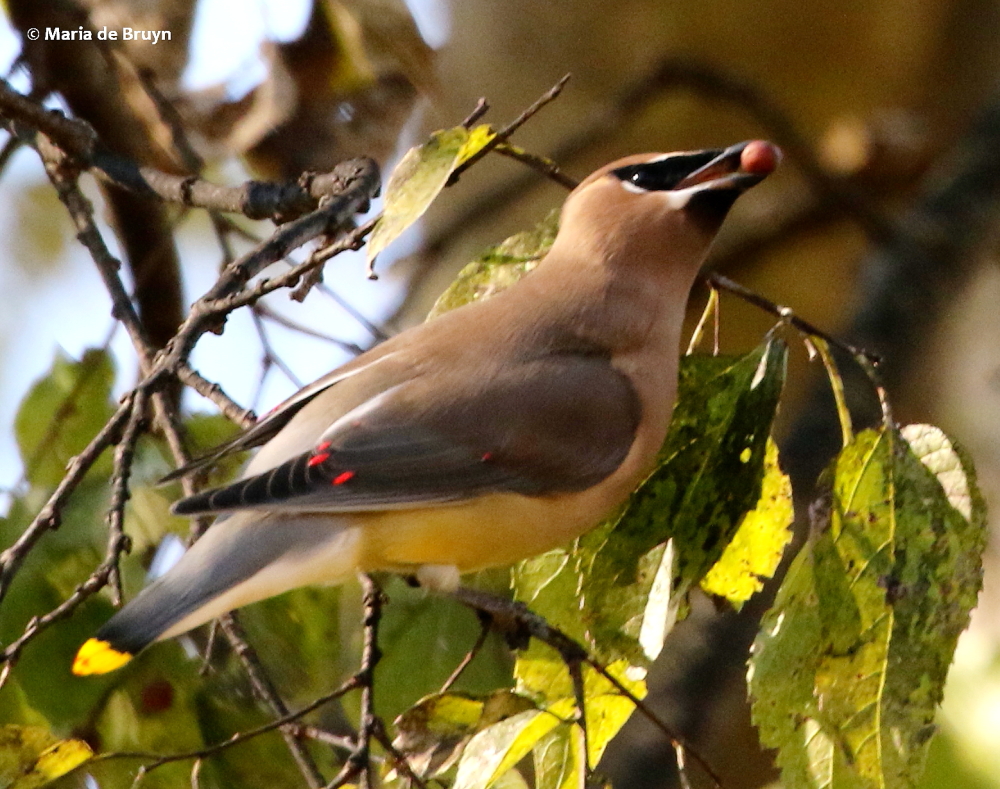
The cedar waxwings (Bombycilla cedrorum) also like to gorge on berries, often sharing trees with American robins who enjoy the same meal. Sometimes snagging a berry involves some acrobatic moves.


The waxwings are adept at these moves and I only occasionally saw one drop a fruit. They are such elegant birds with their black masks and subtle touches of red on the wings and yellow on the tail feathers.


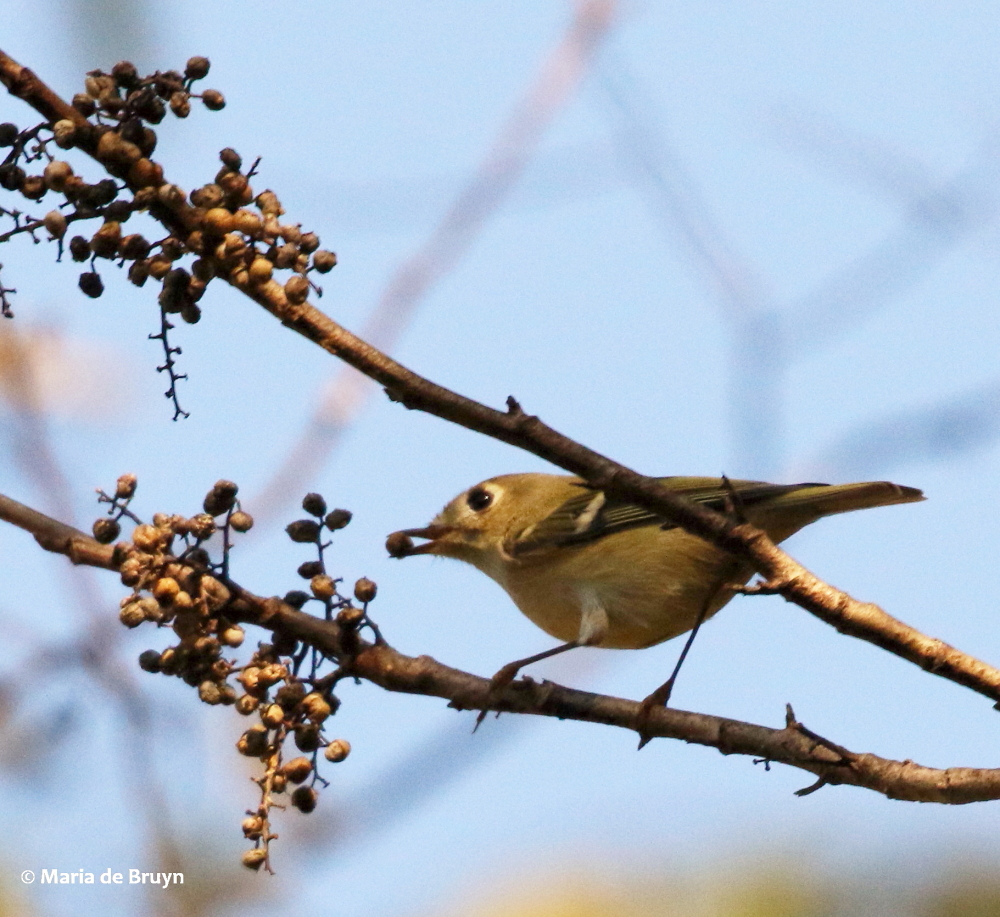
One of my favorite bird species, the ruby-crowned kinglets (Regulus calendula), are also fond of berries. They like suet in gardens but no suet feeders are found in the reserve.
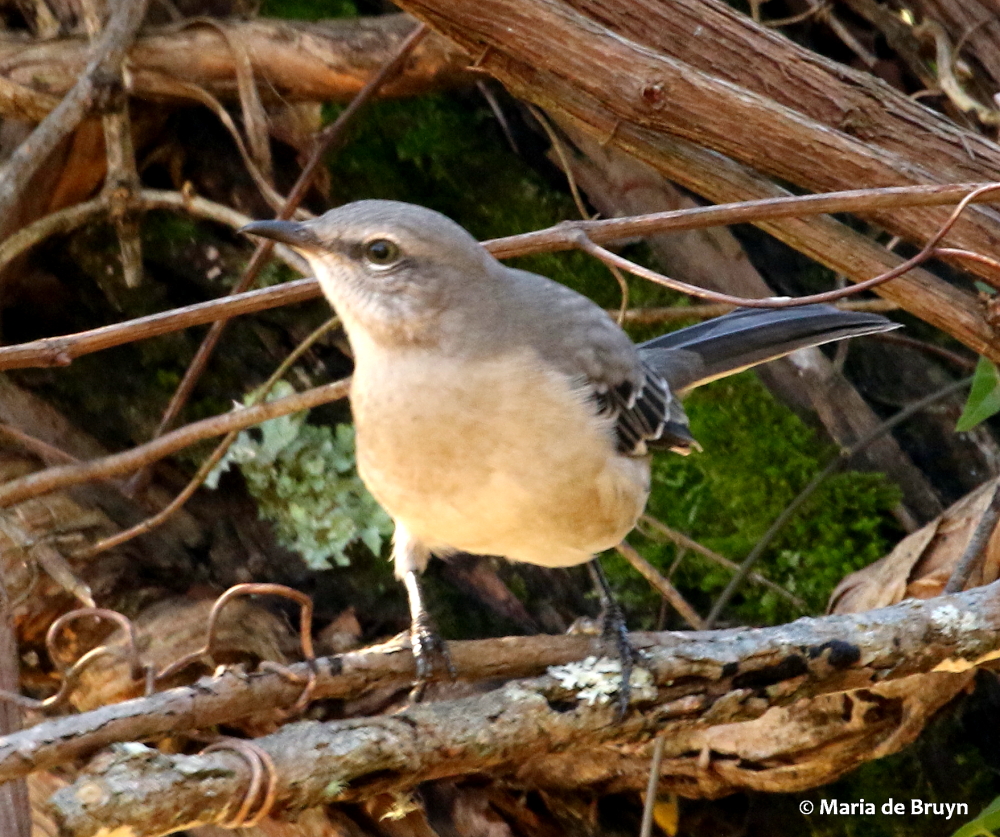
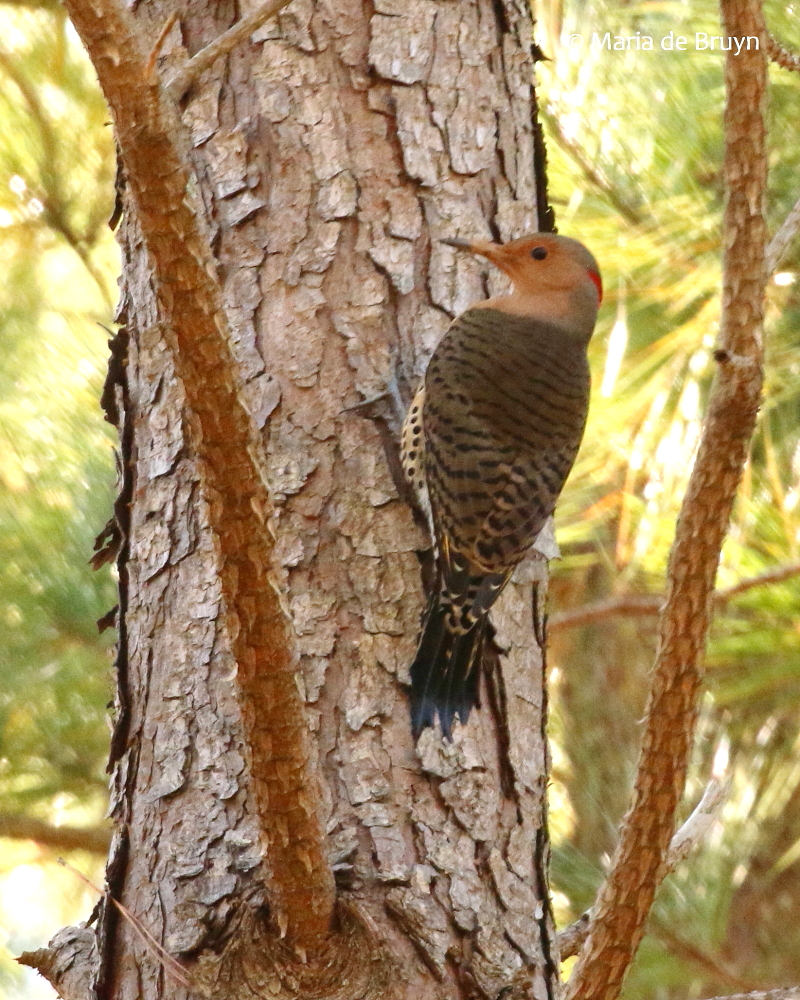
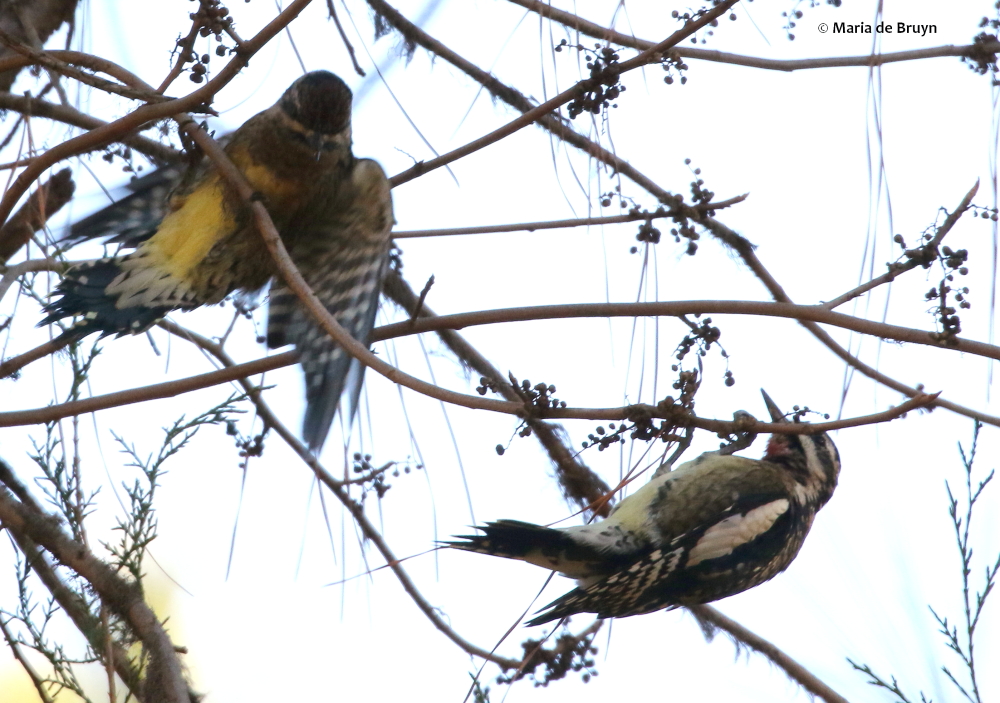
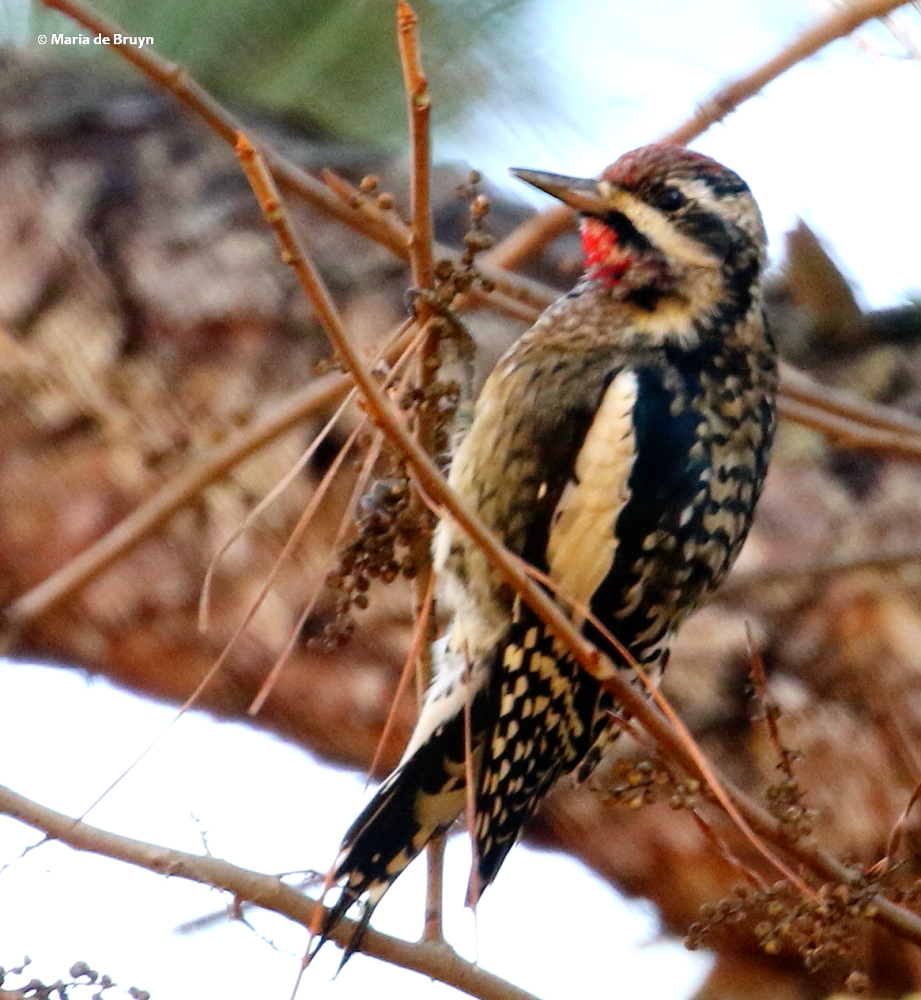
Some of the larger birds, like the Northern mockingbird (Mimus polyglottos), Northern flicker (Colaptes auratus) and yellow-bellied sapsuckers (Sphyrapicus varius), also look for berries and insects as they mostly stay high up in the trees.


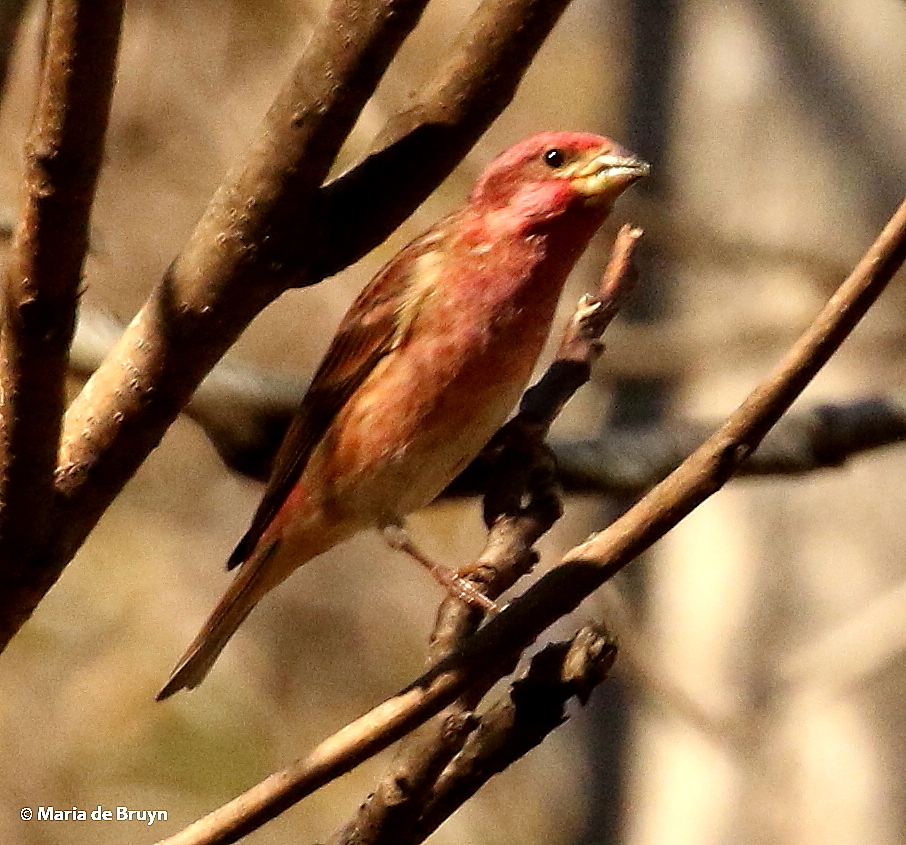
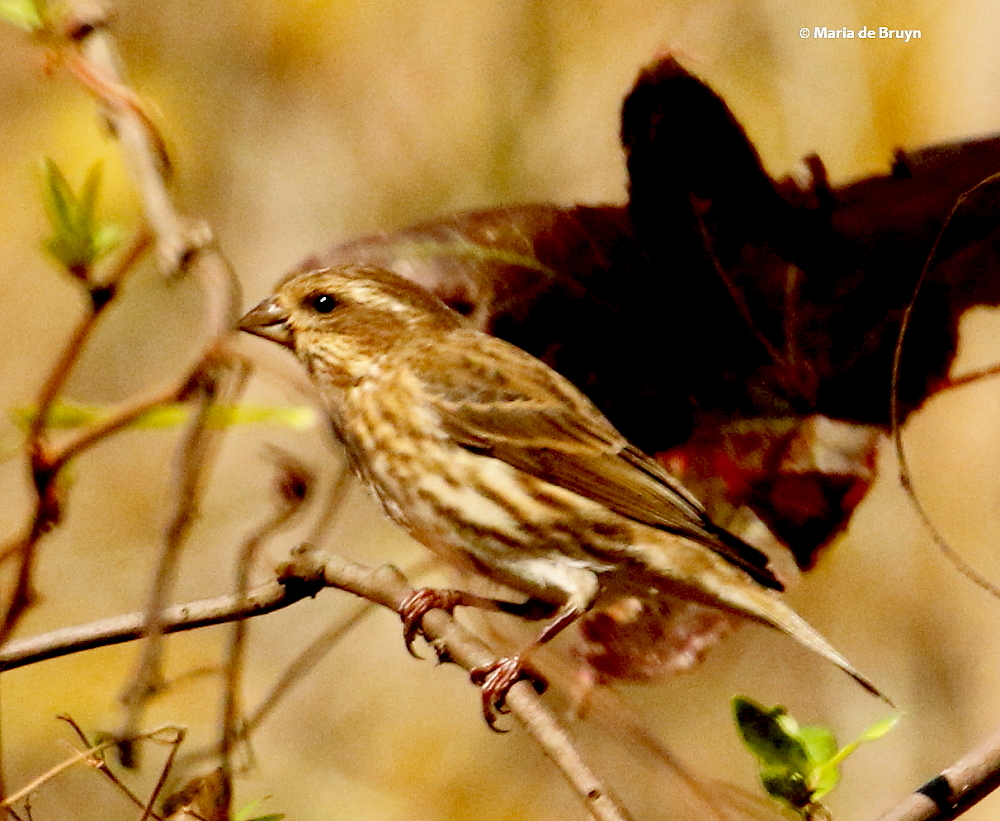
Purple finches (Haemorhous purpureus) are another species that enjoy late autumn fruit.


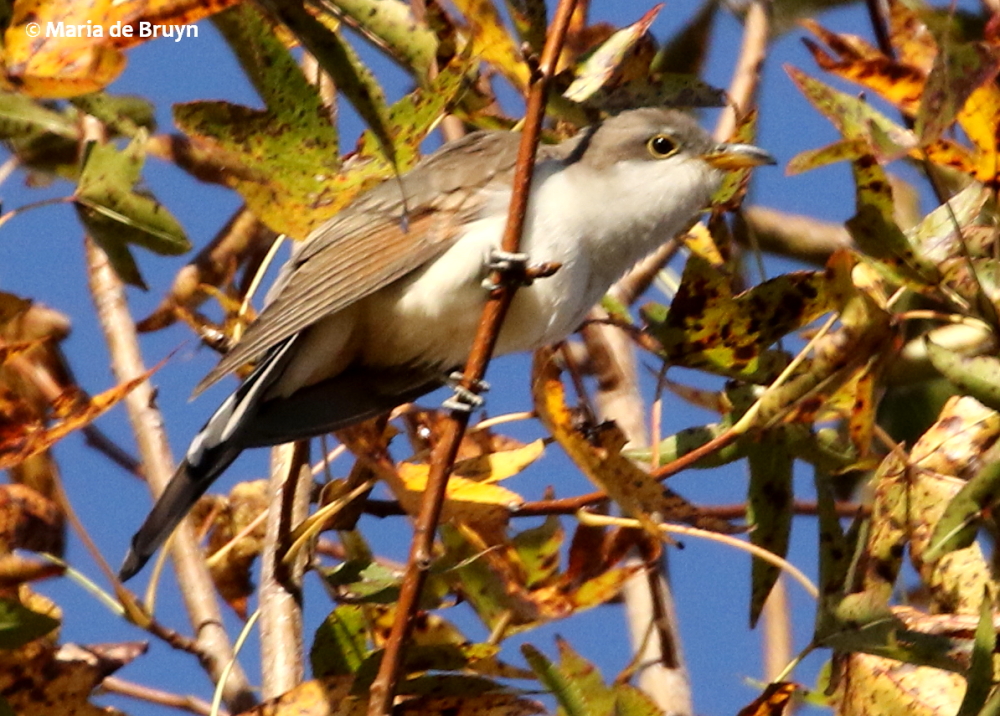
In early November, I had my first of two delightful surprises at Brumley. It was early morning and as I glanced up at some very tall trees, I spotted movement among the earth-toned leaves. My lens revealed a yellow-billed cuckoo (Coccyzus americanus) – and when I entered it into my bird list for the day, eBird asked me to justify having seen it as it was a rarity this late in the year.

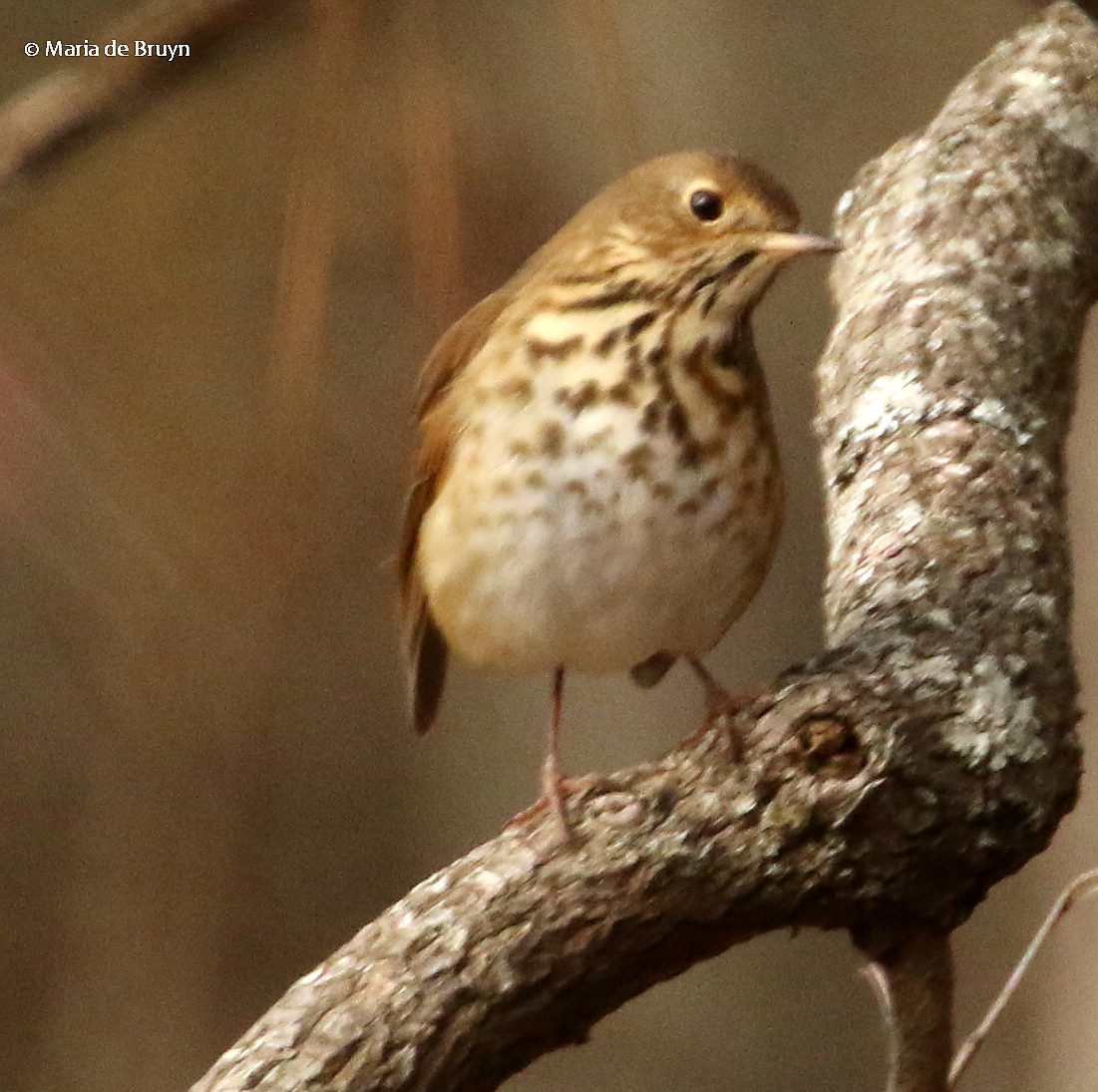
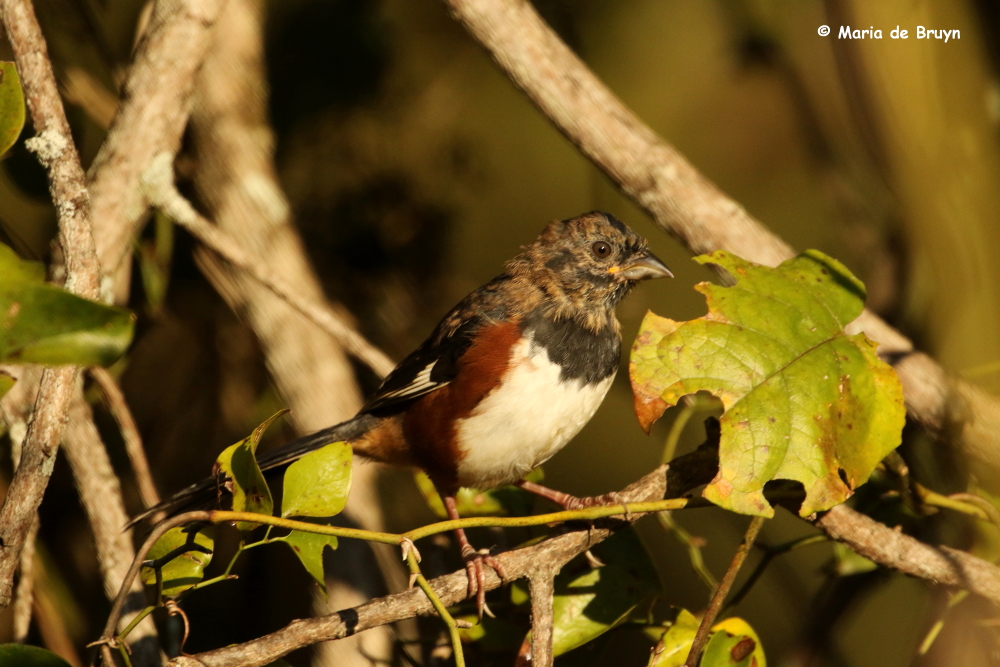
Two other birds that are not surprises but also a joy to see are the hermit thrush (Catharus guttatus) and colorful Eastern towhee (Pipilo erythrophthalmus).


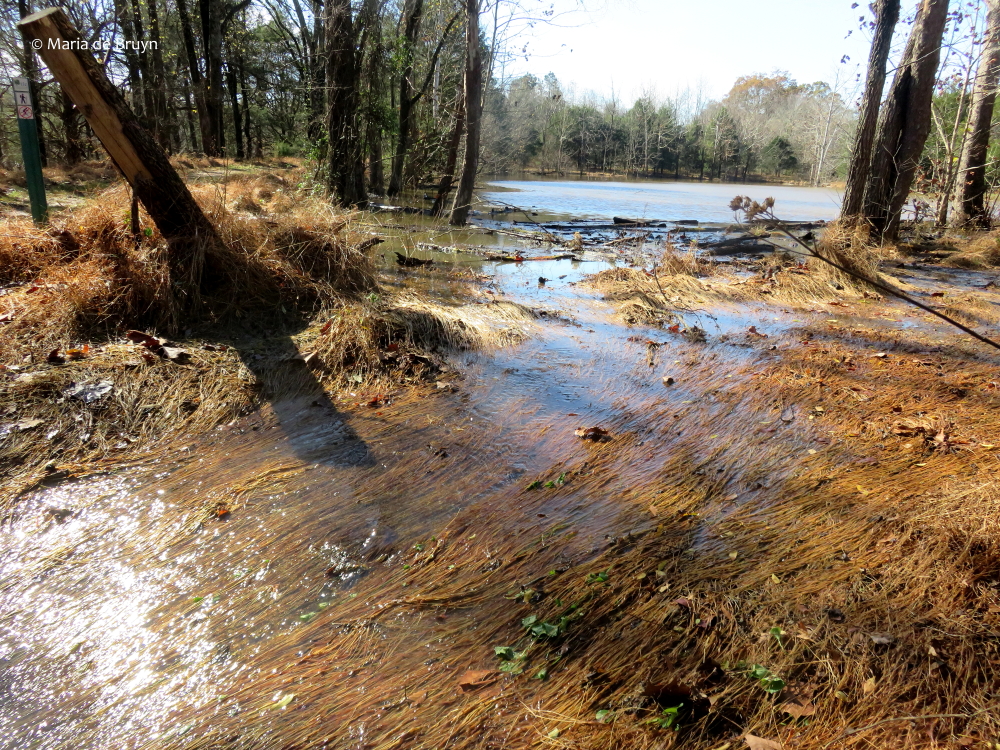
It’s always worthwhile to look all around when you walk, not only up at trees if you are a birder or at eye level if you like mammals. I take a lot of bird photos, because I love birds and because they are often easier to see than other wildlife species. But I consider myself more a “wildlifer” than a “birder” since I really am interested in all kinds of animals. That now stands me in good stead during the high-precipitation events we’ve been having. The ponds are filled to capacity and then some, with water flowing over the banks and onto paths.

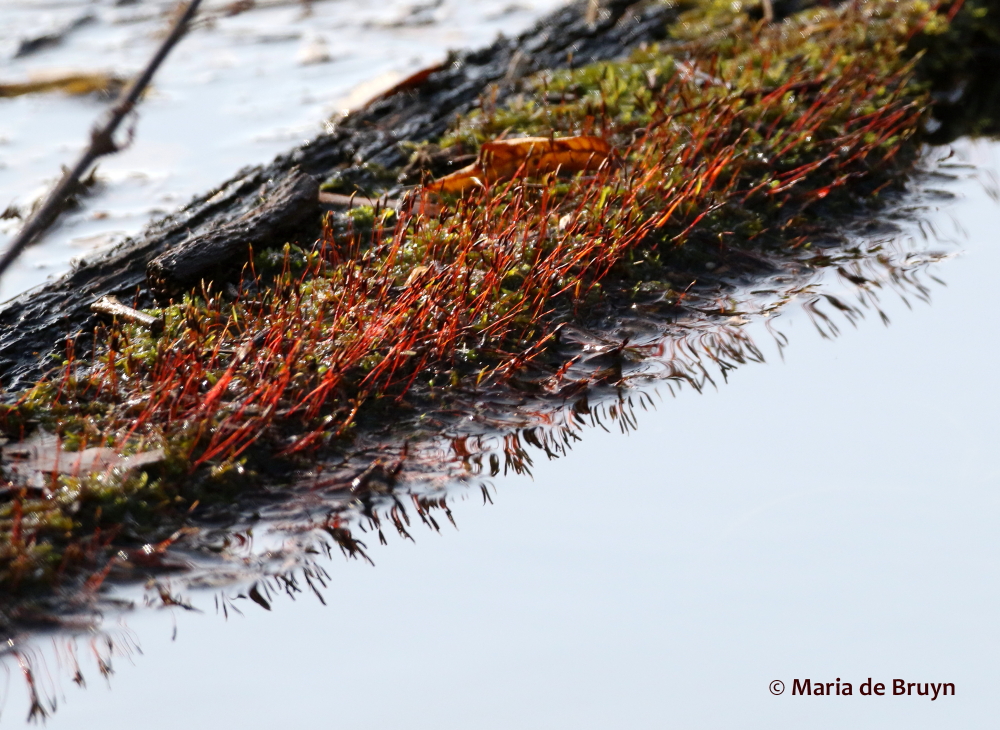
In some cases, the high humidity has been great for plants; bryophytes are shooting up sporophytes which carry their reproductive spores. As there are over 600 mosses, liverworts and hornworts in North Carolina, I didn’t get the scientific ID for this species.

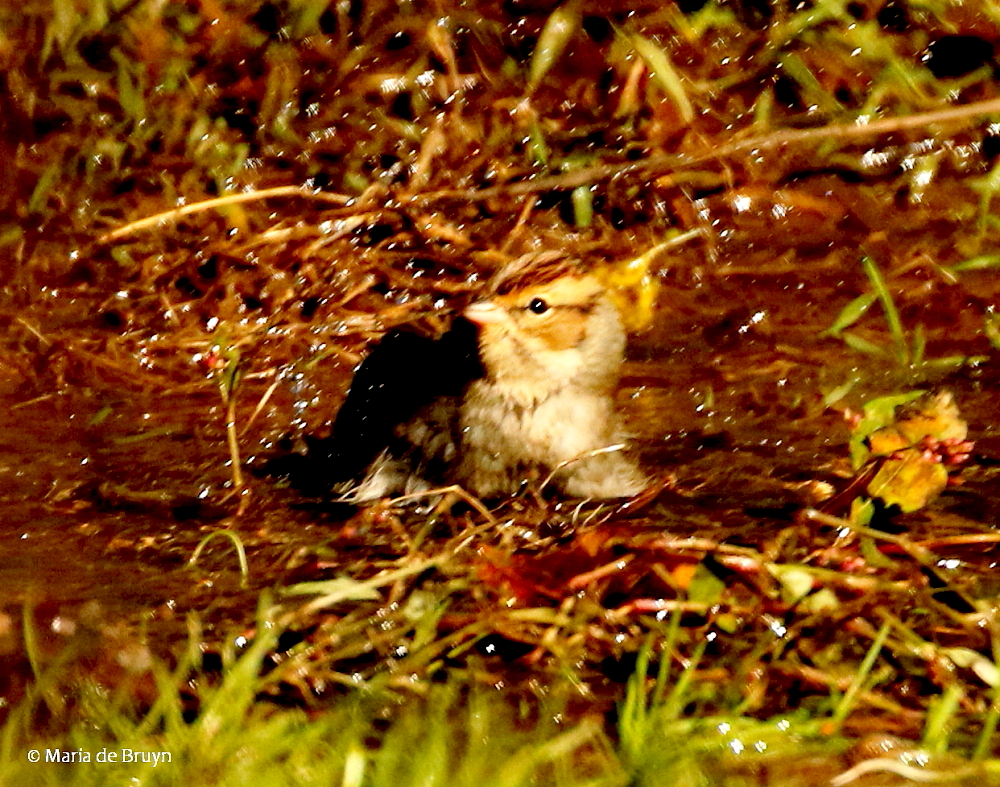
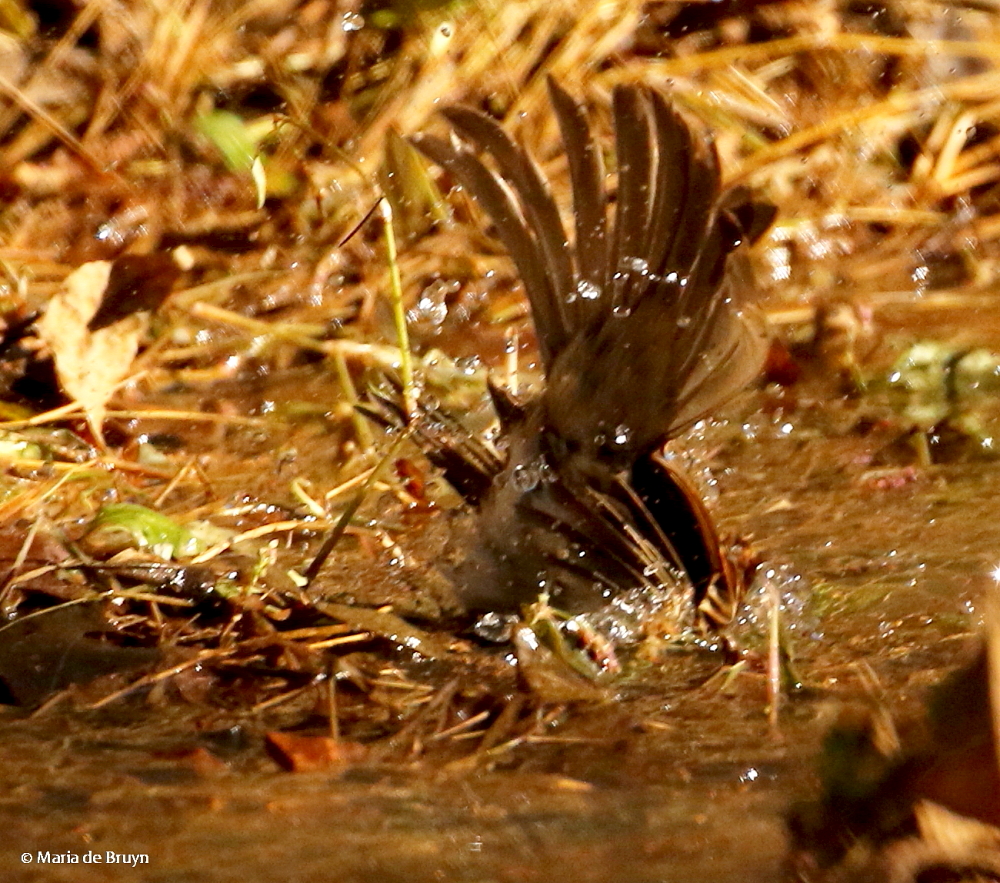
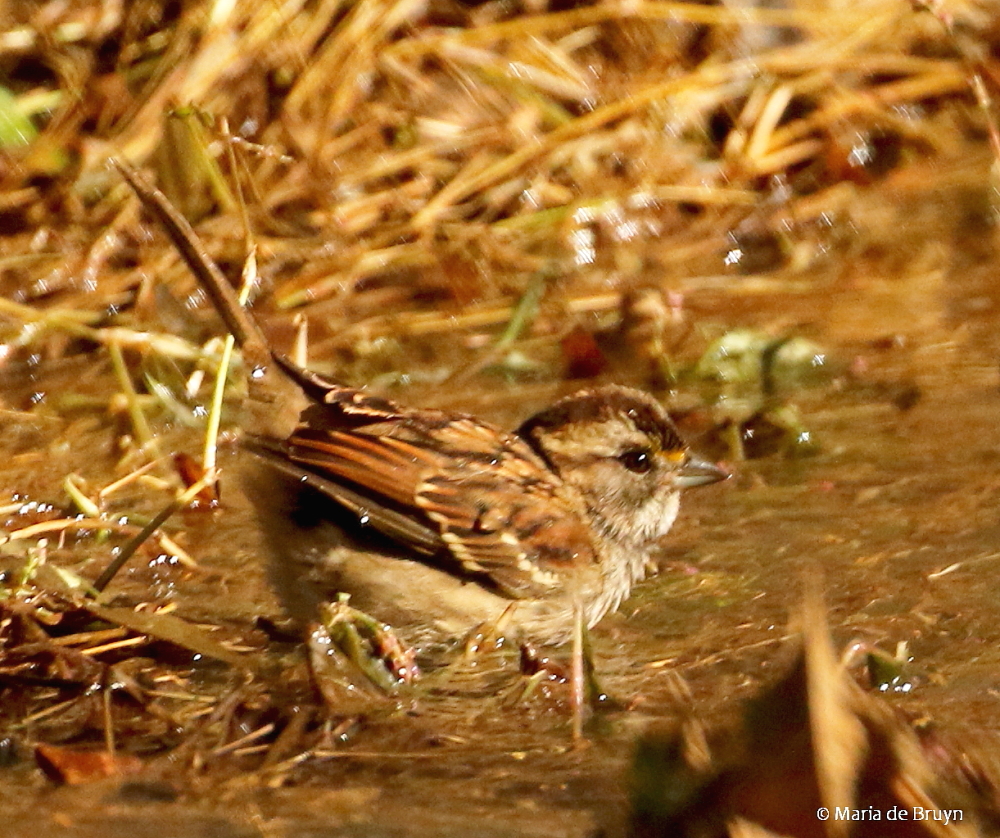
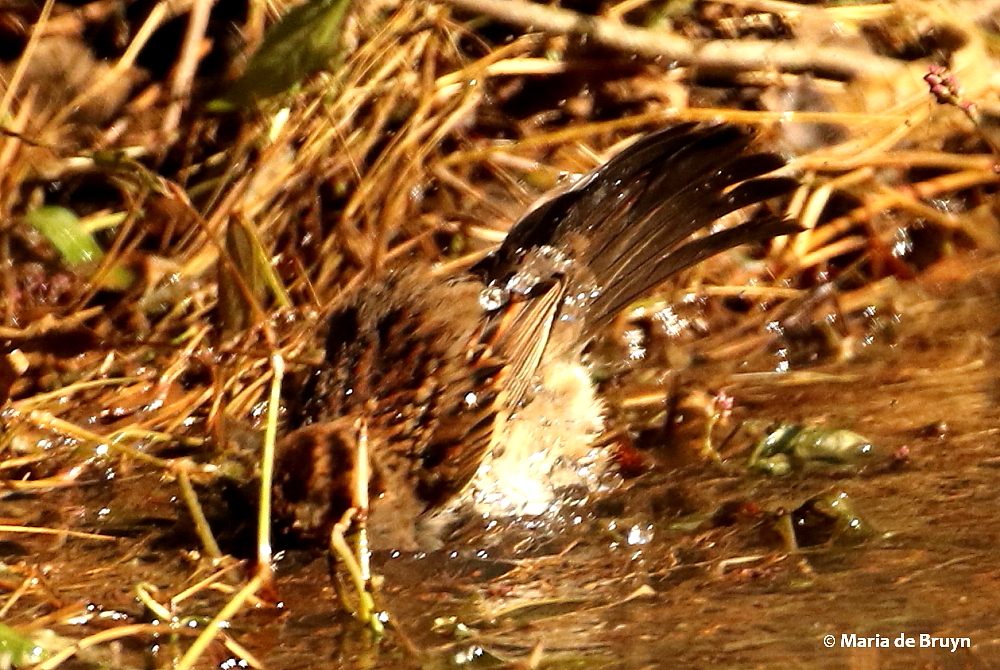
The rains created new temporary water-filled gullies, where chipping sparrows (Spizella passerina) and white-throated sparrows (Zonotrichia albicollis) have been enjoying baths along with other birds.


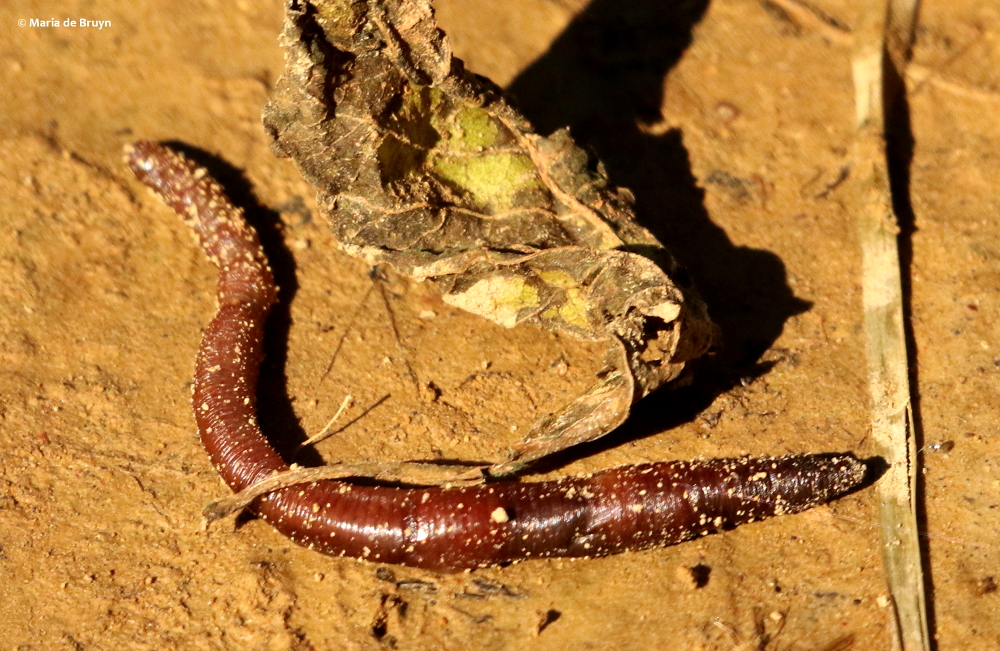
This earthworm (Lumbricina) obviously decided it had to get out of the water-logged earth for a while and I was glad not to have squashed it as I walked along. Its slow progress along the path may not have aided it, though, because there were plenty of robins and other worm-eaters in the vicinity.


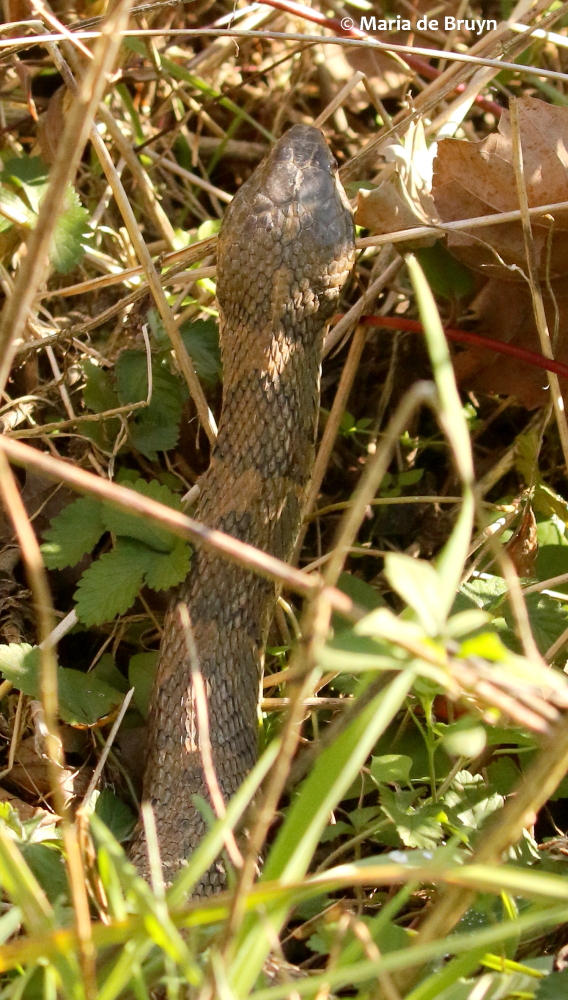
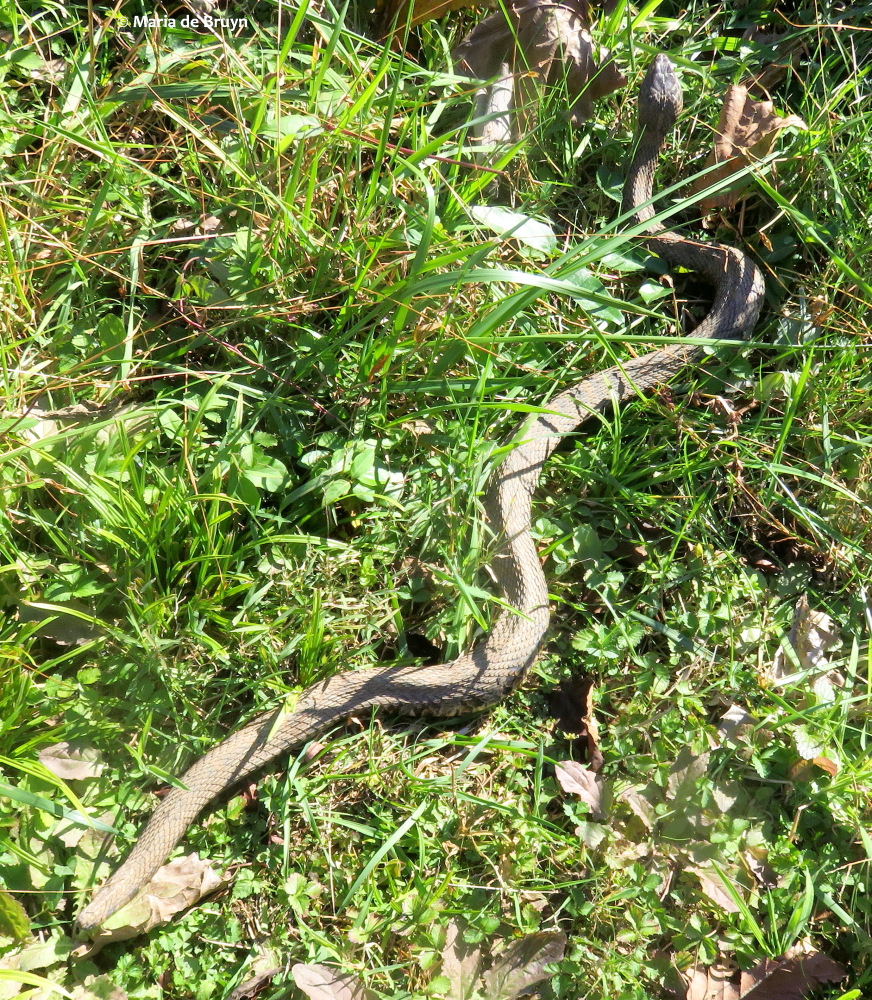
A large Northern water snake (Nerodia sipedon) was sunning next to a path after the rains as well.
   

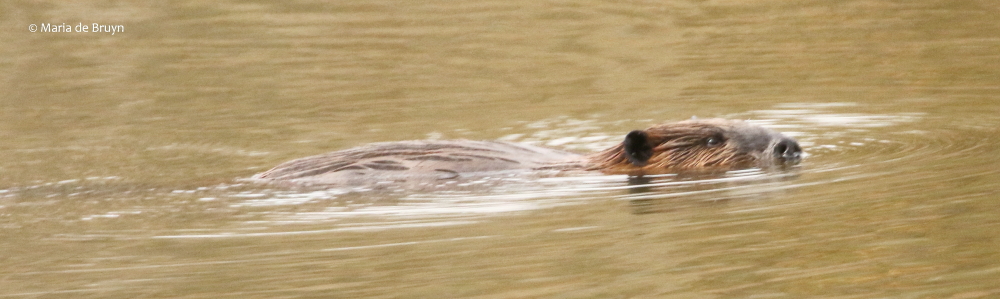
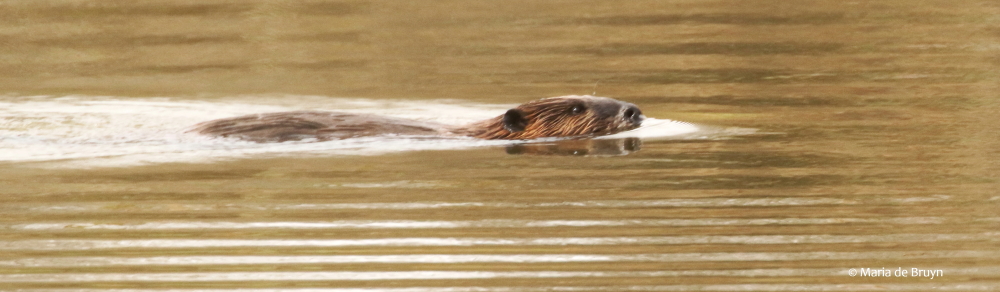
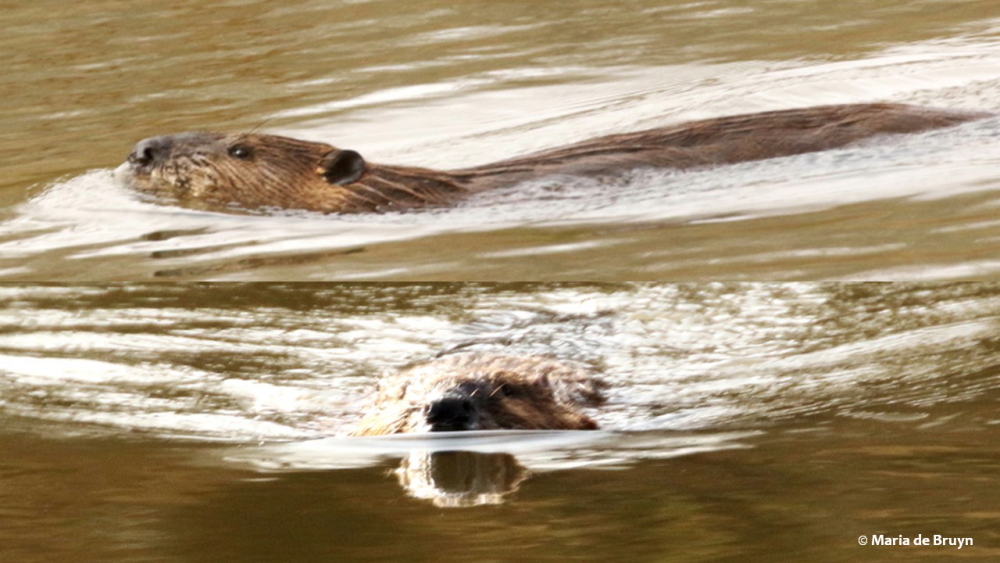
So my last visit to Brumley, when I was hoping to capture a golden-crowned kinglet digitally, did not fulfill that hope but ended by giving me a great surprise – my first sighting of a beaver (Castor canadensis) at this reserve. A colleague had seen one there, I’d noted the gnawed tree near the pond, and I had figured out where the lodge was, but I had not yet seen the mammal in the early mornings. Shortly before reaching the pond, I’d stopped to chat with dog owners and mentioned that a beaver was there but I hadn’t seen it yet. Ten minutes later – at 2 p.m. in the afternoon, there s/he was!
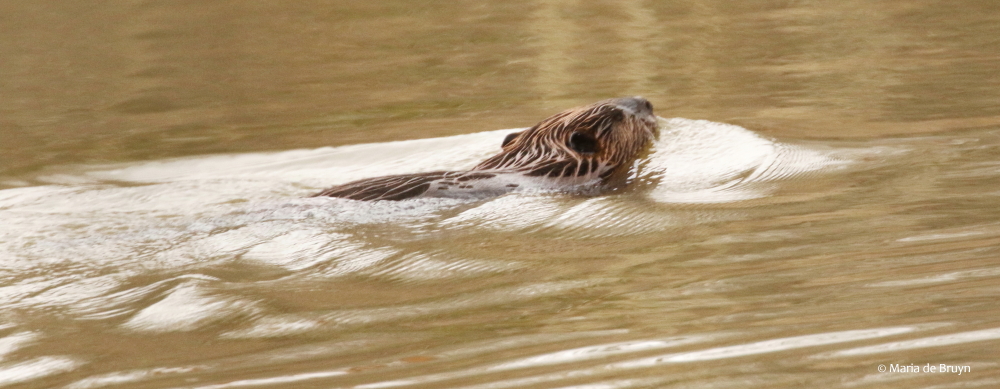
It was so surprising to see the aquatic mammal cruising the pond, swimming in large and small circles. As it created small waves and wakes with its head, I pondered why this largely (but not solely!) crepuscular animal was out in the open with people walking by. S/he must have just really wanted to have a good long swim because the animal was out and about for a few hours.


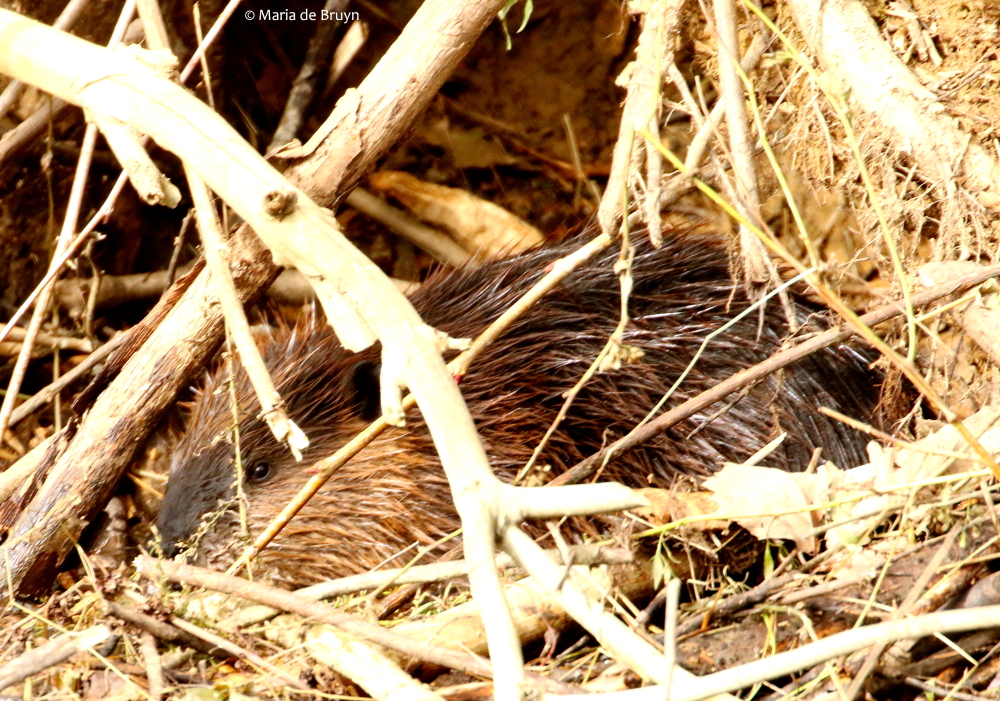
Three times, the beaver slapped its tail and dove under with a huge splash when people with dogs strolled by – three times, I missed getting that shot but I did manage to get a photo when the beaver took a time out at the entrance to the lodge.

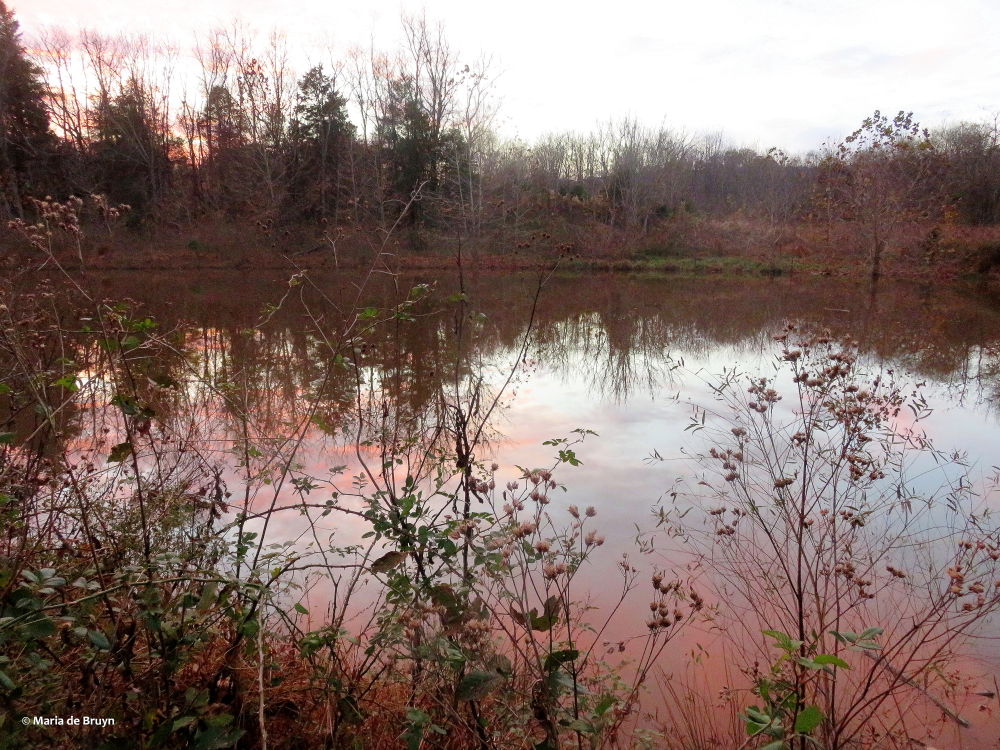
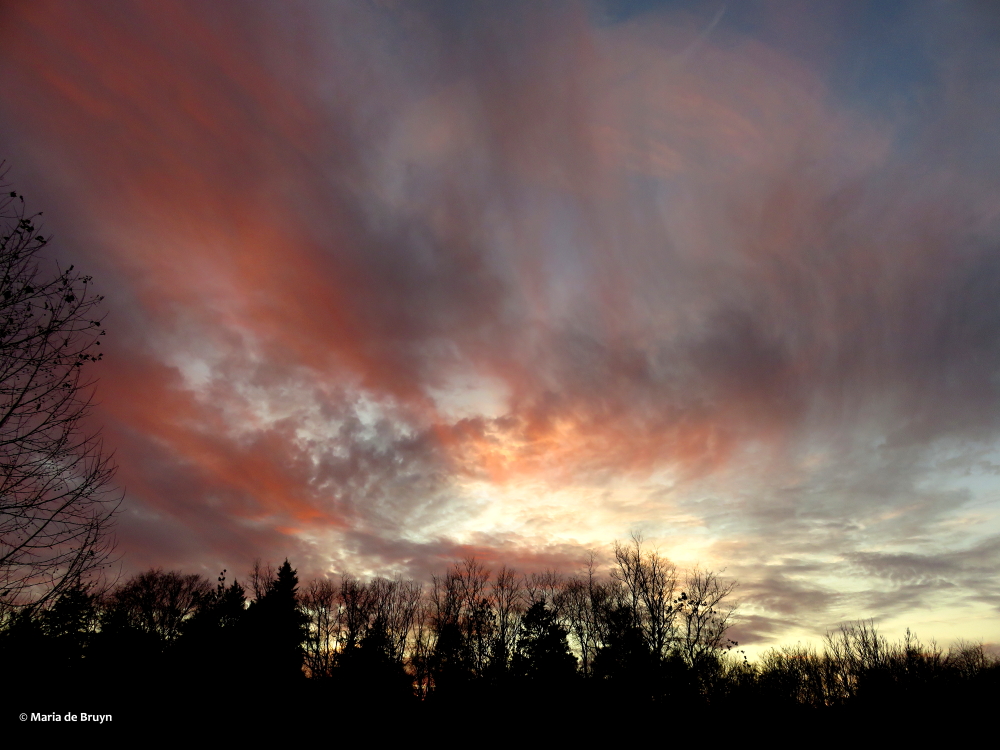
That was an exciting wildlife spotting – not only did I get to see an animal I rarely see but it was also exhibiting a behavior that I witnessed for the first time. (Previously, I’d seen them harvesting and transporting food to the lodge, chewing bark and felling trees.) As I often go to Brumley in the mornings, being there in the afternoon had another advantage as well – I got to witness a spectacular autumn sunset with the sky almost seeming like a kaleidoscope as the clouds and sun’s rays created rapidly changing skies. I’m looking forward already to my next foray to this reserve!

Costa Rican rambles 5B: the Talari Mountain Lodge and environs


After fully experiencing the “honey dew” (another name for cicada urine), we set off for the next university site, an area where students learn about planting. A statue of the Virgin Mary welcomed visitors and we admired some of the beautiful plantings and their seeds that were attracting plenty of insects.


We then left to make a quick stop at a park called Los Cusingos, that we would visit at length later; this was just a quick bathroom break before we took to the road again. My photo of the gray-headed tanager was not that great but you can see how beautiful the red passionflower (Passiflora vitifolia) at the entrance was.

As we drove to a place called Las Nubes, we passed private homes with their filled metal framework trash bins in front, a cemetery and plenty of banana plants.


One of our group members stepped in an anthill when trying to avoid puddles and traffic, which led to some stinging bites. In the meantime, others were trying to see various species of birds that were staying low in the vegetation along the road. I spotted a rather large wasp nest in a nearby tree, likely of the Synoeca septentrionalis species.


At some distance, there was a yellow-headed caracara (Milvago chimachima) sitting on a branch. These raptors are about 16-18 inches in length (41-46 cm) and part of their diet is carrion. They also eat reptiles, amphibians and other small birds, while avoiding birds as food. They take ticks off cattle as well, which gives them a thumbs up from me – any bird that eats ticks is a friend.


A gorgeous smooth-billed ani (Crotophaga ani) was sitting calmly as we milled around in the road. Some people might find this bird homely, but I think it is quite handsome despite a somewhat bulbous beak. They, too, are on my “good birds” list as they sometimes eat ticks and other parasites off of grazing animals. Another nice characteristic is their communal child-raising strategy – several pairs cooperate to build a nest together, in which several females than lay their eggs. They share the incubation and feeding of nestlings – hippies of the bird world!


We traveled on and the views along the road were beautiful, with the mountains and valleys in the distance and then we caught sight of some swallow-tailed kites (Elanoides forficatus) soaring over the nearest valley. We saw one land in a tree and it turned out that they were building a nest there. In the photo, you can see a small white patch on the right-hand side of the tree, which is the female kite on the nest.

As we waited patiently, a few kites began flying overhead; one with nesting material clutched in its claws.


They soared and swooped, giving us delightful views of their flight and then one came by with a meal that it had caught – a poor little chameleon or lizard.


We admired the Talamanca mountain range called La Amistad (Friendship), which separates Costa Rica from Panama. Starting in 1979, these two countries’ governments began a process to conserve the entire range, which is home to four indigenous groups of humans, 600 avian species, 215 mammal species, 250 species of amphibians and reptiles, 115 species of fish and some 10,000 flowering plants! As UNESCO has noted, this is: “one of the very few transboundary World Heritage properties, an excellent intergovernmental framework for coordinated and cooperative management and conservation.”


After a nice lunch, we continued visiting other sites, including one near a Canadian project. That afternoon, I saw my first trogon species – the gartered trogon (Trogon caligatus), another handsome bird to be sure.


While the rest of the group followed Steve’s instructions for sighting some birds hiding in underbrush on a slope, fellow traveler Janet and I watched some leaf-cutter ants (Atta cephalotes) at their labors. Sometimes, I was just not tall enough to see over shrubs to locate a bird and I love all wildlife anyway, so watching the ants in their industrious endeavor was fun.

On our way back to the lodge for supper, we passed small roadside stores and Steve spotted a fork-tailed flycatcher (Tyrannus savanna) for us.


Back at Talari, I did some sightseeing from the balcony of my room, spotting a lengthy and messy-looking flycatcher nest, a variegated squirrel (Sciurus variegatoides) traversing the tree canopy and a pair of palm tanagers (Thraupis palmarum), who were tending an offspring.


At first, I thought the fledged bird was a different species as it sat under a leafy canopy, but later I saw the parents with it. Then it surprised Janet, who was staying next door – she called me over to see the fledgling who had flown into her room and was sitting in the middle of the floor.


She also had two nests under the roof of her balcony, one of which definitely belonged to a clay-colored thrush (Turdus grayi).


After admiring one of the neighbors’ cows and social flycatcher (Myiozetetes similis), I caught sight of a quiet beauty sitting on a branch in front of my room.


The Lesson’s motmot (Momotus lessonii), also known as the blue-diademed motmot, has a bright red eye and beautiful tail with what some birding sites call a “raquet tip”.


As we set off for the dining area, we were treated to a visit from a streaked flycatcher (Myiodynastes maculatus), quite a good-looking bird with its heavily streaked back, breast and face.


As we passed through some vegetation before dinner, I saw a gorgeous flowering banana as a blue-feathered and red-legged honeycreeper (Cyanerpes cyaneus) flew high overhead.


Even though we often were looking for birds in dark and leafy/shady areas, I avoided using a flash but when I saw the lemur anole (Norops lemurinus) on a tree, I gave in so that I coul d get a photo.


As dusk came on and we looked out from the dining area, we got to see some fiery-billed aracaris (Pteroglossus frantzii) in the distance.


While some others in our group got to see one close up, that was not my fate, but the next morning, the aracaris were in a little better light though still far away, allowing me to get a bit better photos.


We ended our second night at Talari Lodge with an owling outing – Steve managed to draw in a tropical screech owl (Megascops choliba) by playing its call on his phone. The owl who came had had an injury to one eye, with a pupil that would no longer dilate but s/he seemed to be flying fine and looked healthy. That bird gave us a nice long look at its beautiful self so that we retired for the night with a feeling of birding satisfaction!


My squirrel nemesis – a worthy opponent!

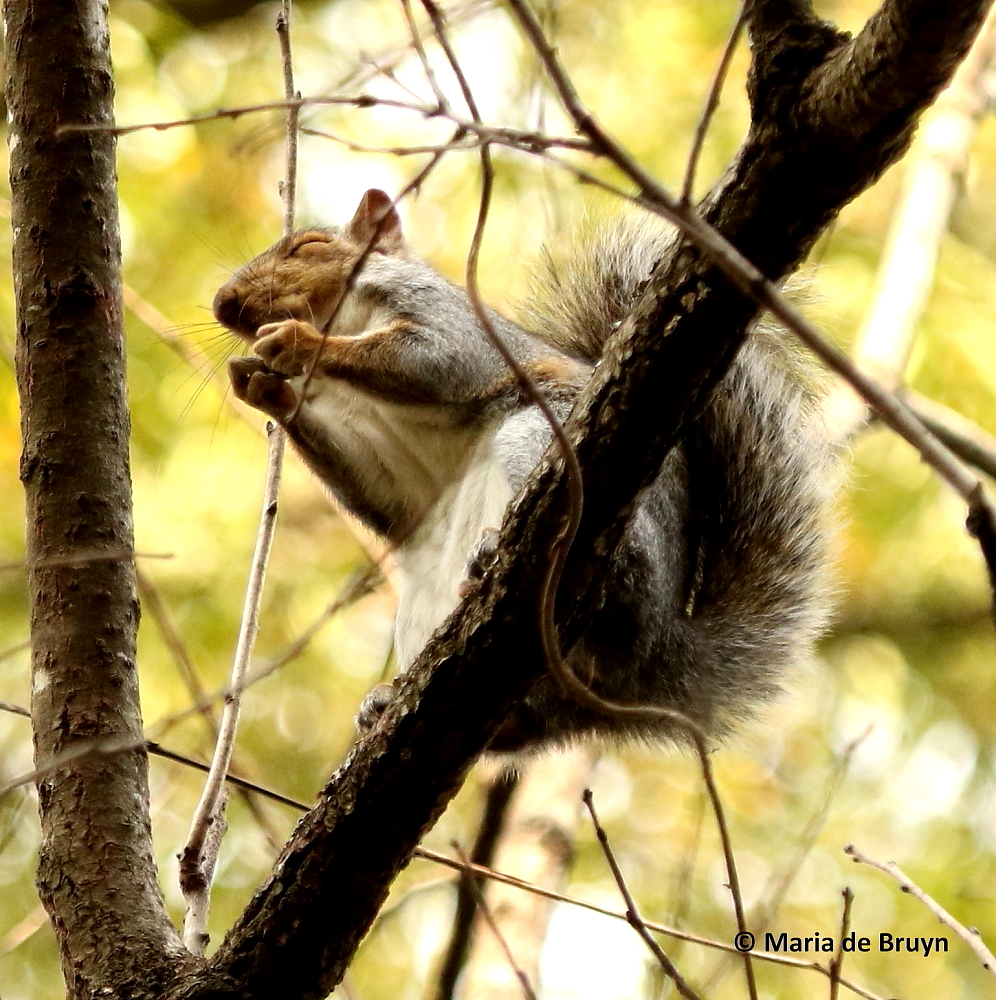
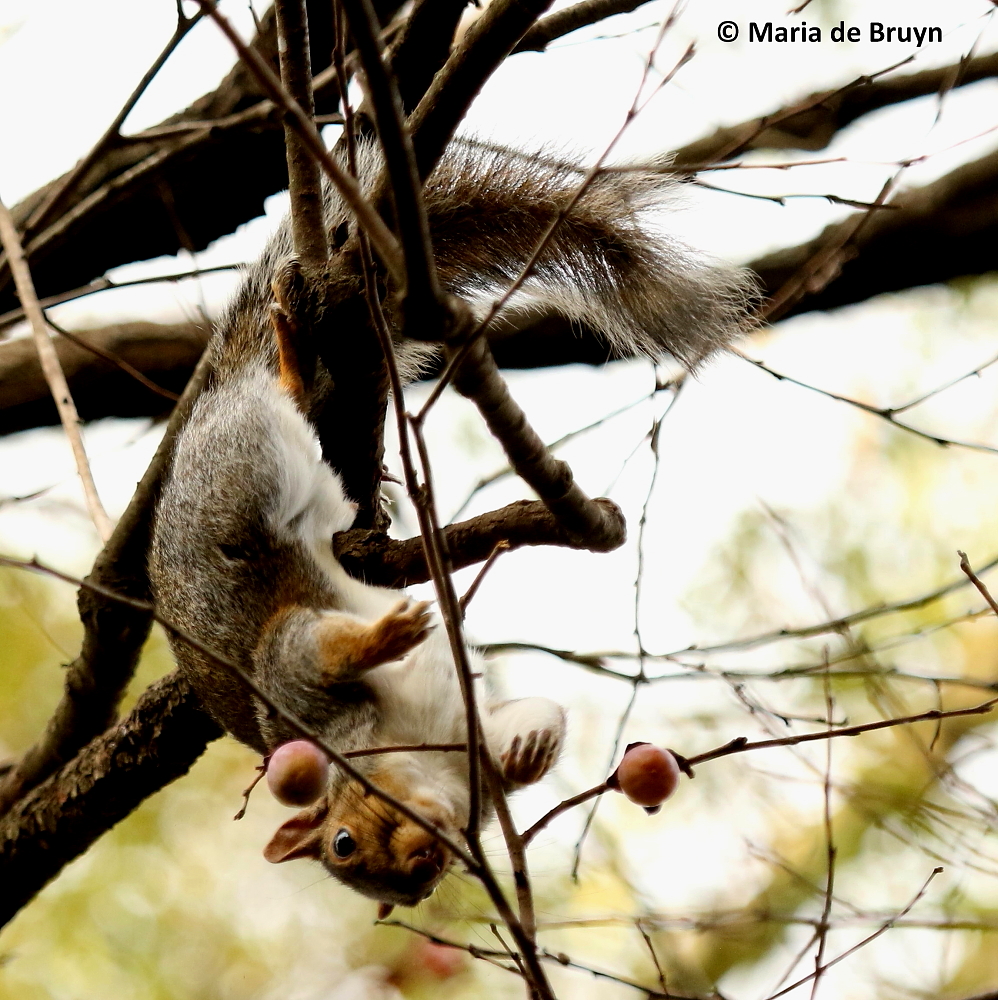
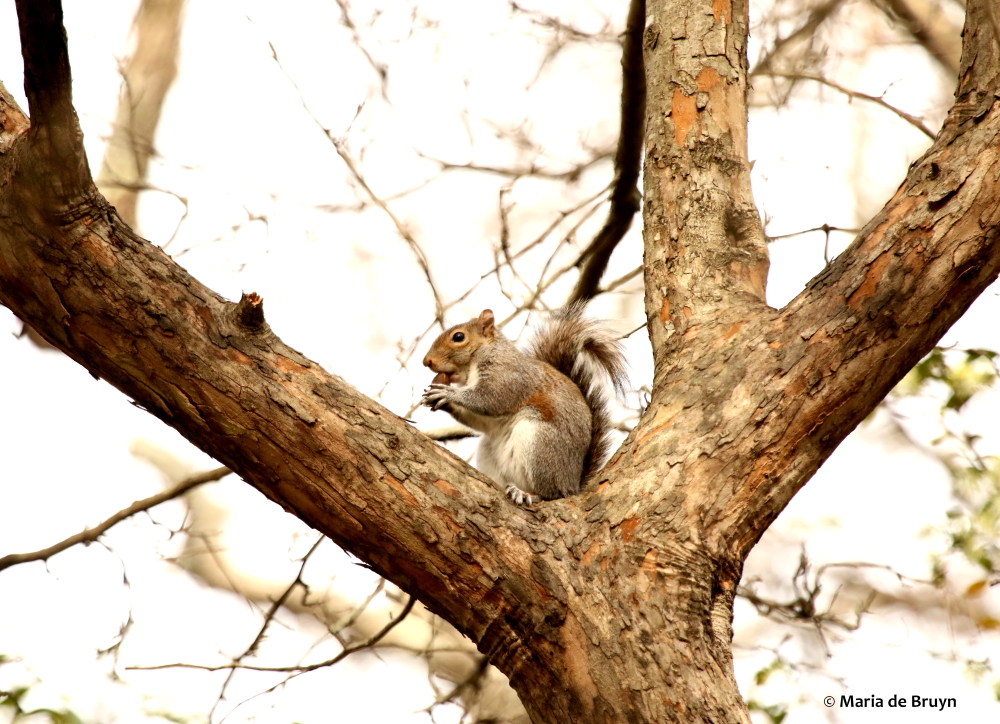
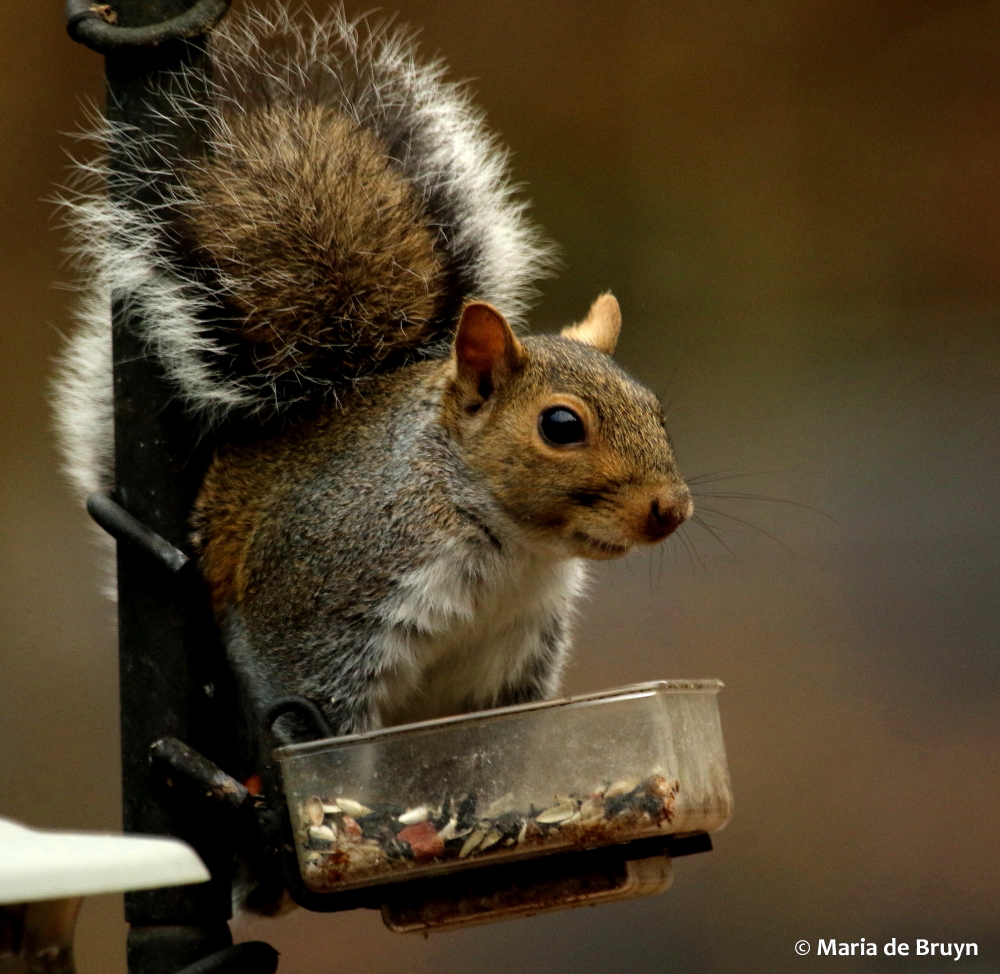
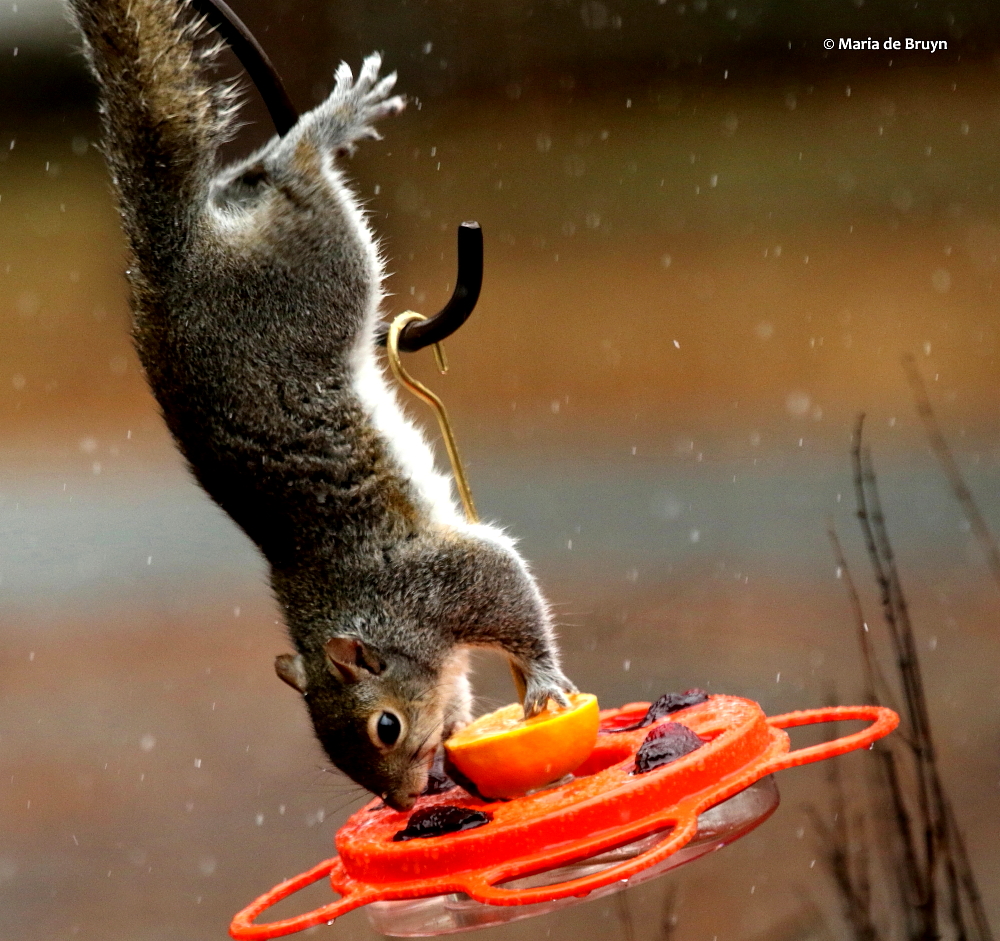
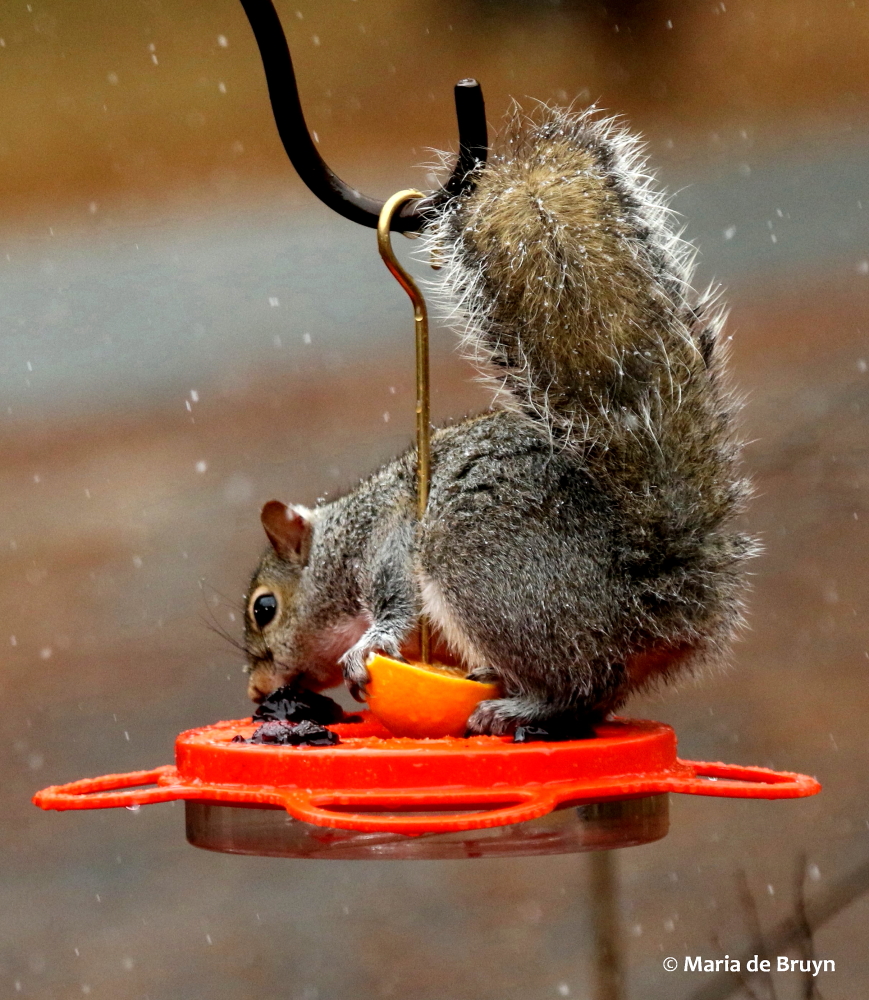
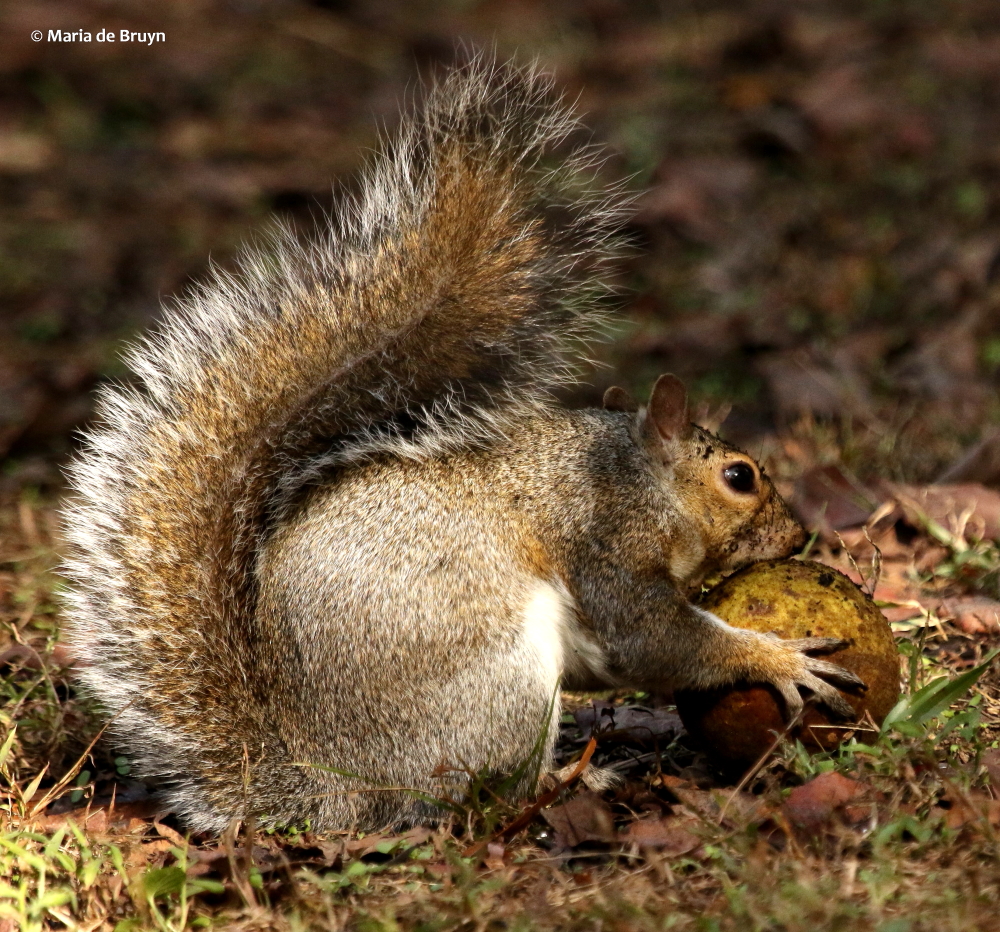
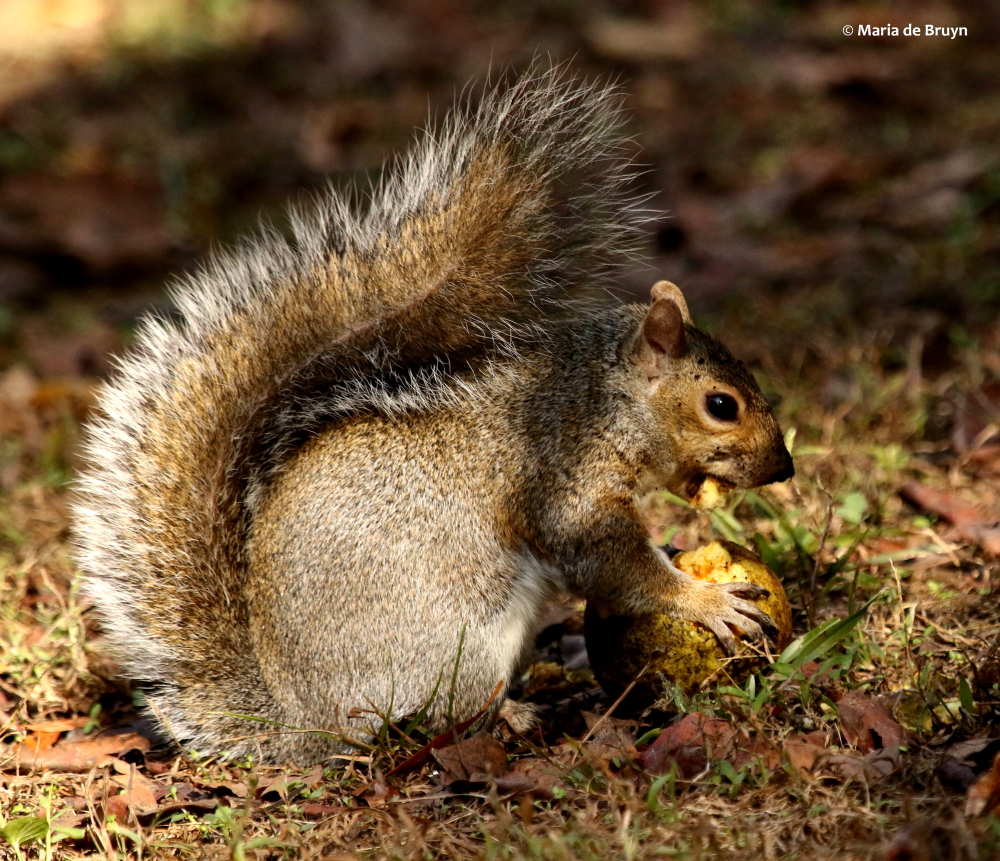
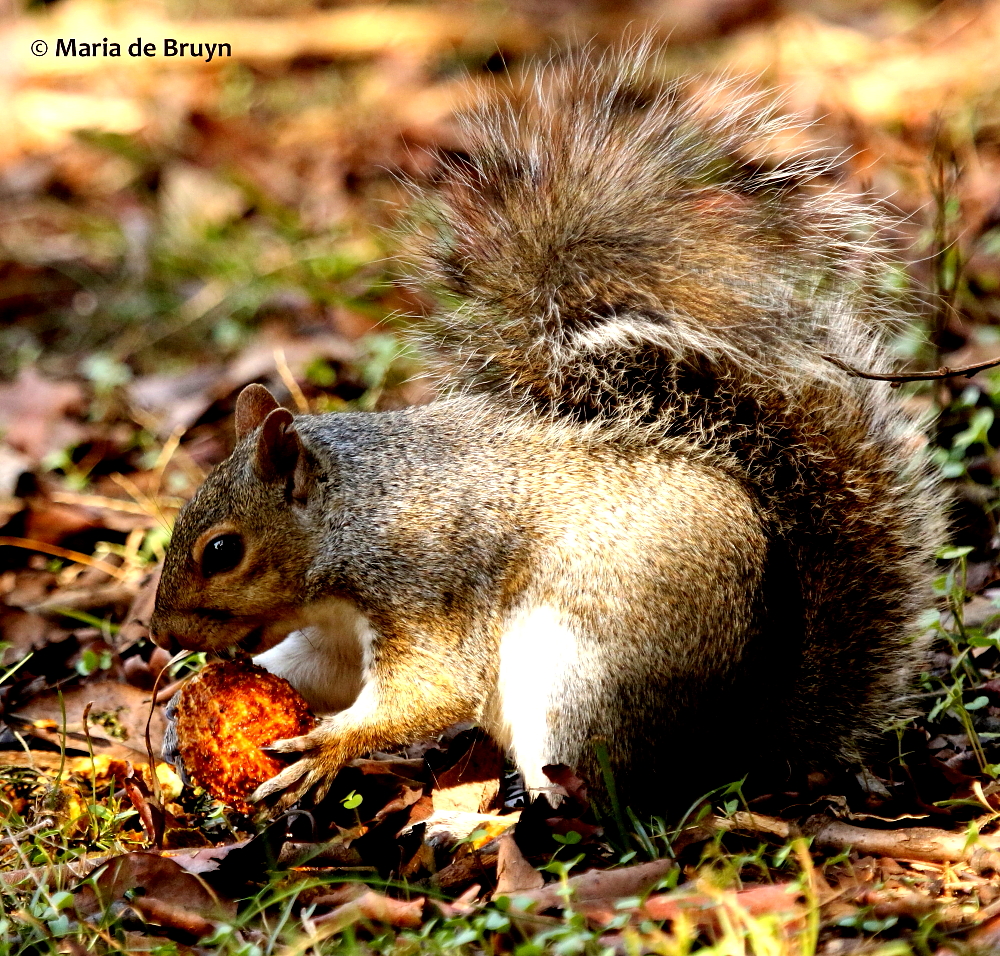
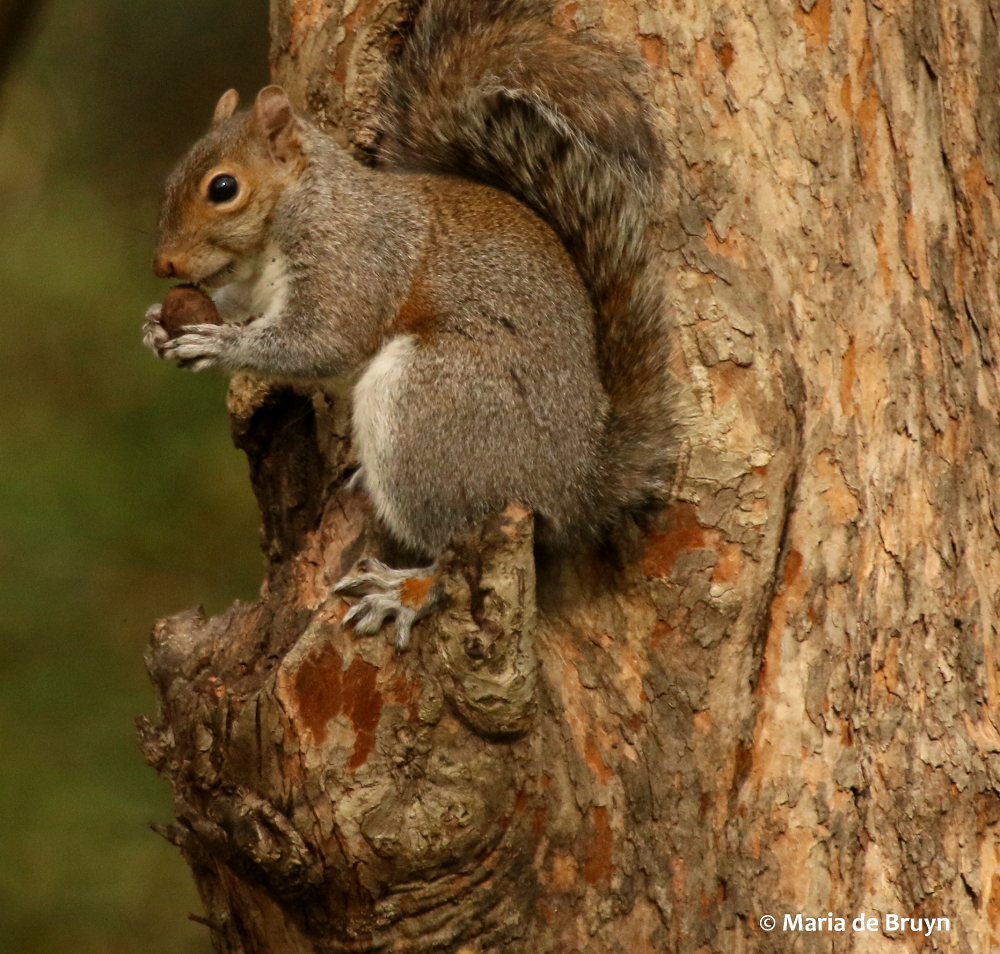
Today is Squirrel Appreciation Day in the USA, a holiday created by Christy Hargrove, a  wildlife rehabilitator affiliated with the Western North Carolina Nature Center. The Eastern gray squirrel species (Sciurus carolinensus) was first recorded in the Carolinas, so I thought I’d honor this wild creature by sharing some photos of the squirrels in my yard who sometimes drive me up the wall with frustration. There is one in particular who can get my ire up. Of course, I realize it may not always be the same creature – perhaps several of “my” squirrels are taking turns in trying to overcome my measures to keep them off my bird feeders. But I do think one in particular is especially tenacious and persistent.

The yard squirrels are lucky since my neighbor has beech trees and I have a couple oak trees that provide plenty of acorns; these mammals therefore have plenty of nuts to store for winter. I periodically see them digging little holes in the lawn and different parts of the garden, “squirreling away” the nuts they have found in the trees. I also saw one burying some grapes that I had put out for the birds; that didn’t seem like a good strategy to me, but I have since learned that they will make temporary caches so perhaps that squirrel was just hoarding a treat for later. They have also occasionally gone after the persimmons.

These squirrels aren’t satisfied with the natural bounty of the yard, however. They also want to get the nuts and seeds in my bird feeders, even when they have been able to  partake of the bounty strewn over the earth for the ground-feeding birds.

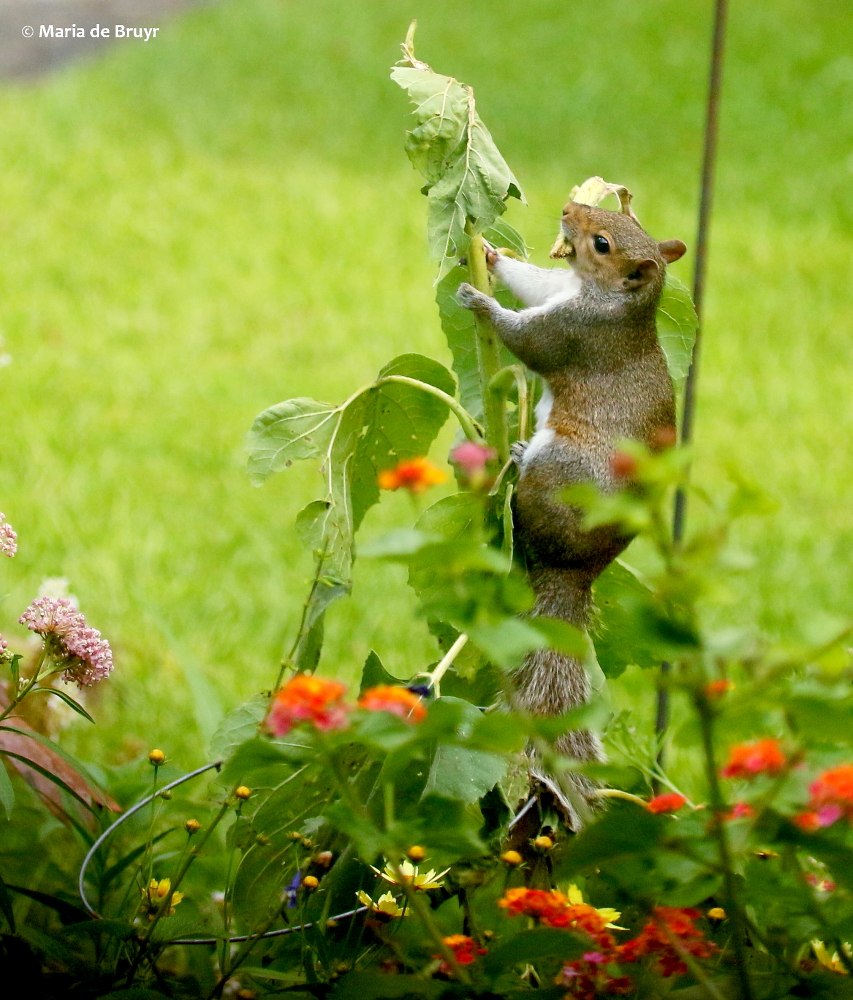
I learned early on that the bird feeder poles need to be at least 10 feet away from the roof of my house and any sturdy shrubs or stumps that they can use as a launching pad to bypass the baffles placed on poles to outwit them. They do go up the raccoon baffle from time to time, testing whether they now might find a way through it but so far that has not been a useful strategy for them. One has managed to climb a thick-stalked sunflower so that it could nip off the seed bud.

I had put a couple stumps in my front flower garden as natural decorations. Then, it appeared that one of the squirrels was using a stump as a launching pad – managing to land above the baffles atop the nut and fruit feeders.


I made the mistake of putting an oriole feeder on a pole without a baffle; I didn’t think it would attract the squirrels but apparently the jelly and nectar did appeal to one individual.


Another time I had only a hummingbird nectar feeder on one pole, which seemed rather flimsy. But the squirrel had to check it out all the same, even though there was nothing to its liking there.

As I have been removing invasive plants and shrubs from my yard, I’ve been adding native shrubs and plants. At one point, I thought it would be nice to have a black walnut (Juglans nigra) so I took a couple walnuts home from a park and then planted them in a deep plant pot with lots of soil over it. I had looked around beforehand and didn’t see a squirrel anywhere watching me, so I thought it was ok.

The next morning, I found a pile of walnut husks in the carport next to the plant pot. Then the next day, I saw one of the squirrels making off with the remaining walnut. Apparently, they can re-locate their hoarding caches partly by memory and partly by smell – so this squirrel must have discovered the tasty walnut by its odor (which I couldn’t detect at all).


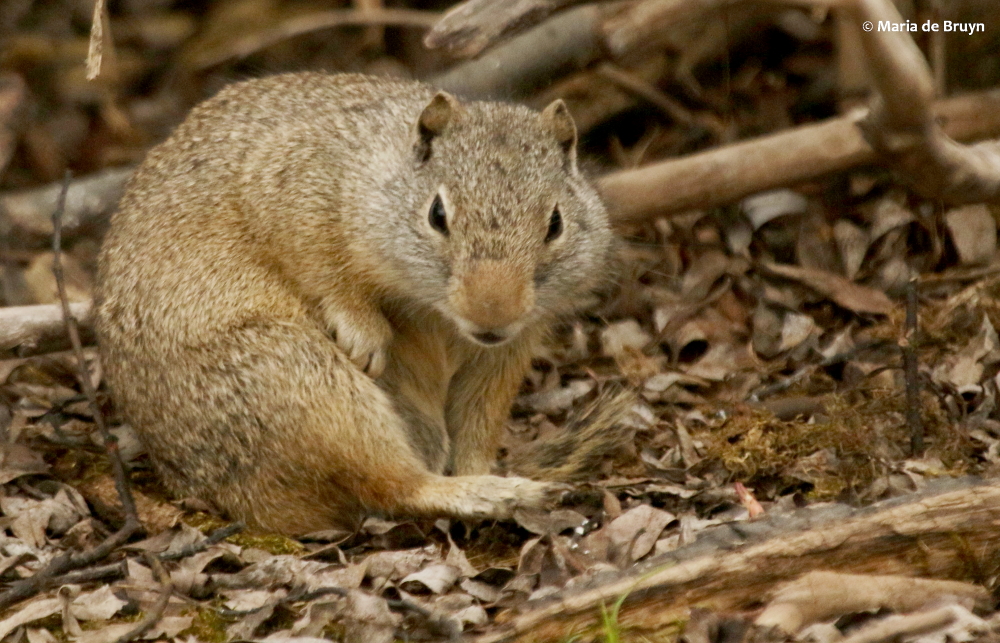
The Eastern gray squirrels are only one of earth’s 200 squirrel species (there are four others in the USA: the fox squirrel, red squirrel, Northern and Southern flying squirrels and the ground squirrels, like this Uinta ground squirrel (Urocitellus armatus) seen in Yellowstone National Park.


I’m glad that I mostly only deal with one species and while I must admit that I don’t appreciate them every day, I always do admire their tenacity, perseverance and ingenuity in finding ways to overcome my strategies for outwitting them. The squirrels are not only a source of food for the neighborhood hawks, but also a source of entertainment for the humans.