Yearning and burning for biological diversity

Burn 18 March 2015 DK7A1575© Maria de Bruyn resOn 18 March, a controlled burn again took place on 18 March at the Mason Farm Biological Reserve as part of the management strategy to promote the biological diversity of native plants at this nature refuge. During a controlled understory burn, the undergrowth of a defined area is set afire in a simulation of the wildfires that have historically been a part of meadow and forest ecology.

Burn 18 March 2015 IMG_1047© Maria de Bruyn resThe area to be burned is prepared by clearing a broad border of flammable materials such as leaves and twigs. If there are trees or plants that should remain but that could catch fire, for example because there are vines going up their trunks, the area around them can be raked clear or sprayed with water, creating a firebreak.


Burn 18 March 2015 IMG_1107© Maria de Bruyn resA controlled burn requires permission from safety authorities and is monitored by a team of people, some of whom will ignite the fire and others who will patrol the perimeters and help ensure that the fire is quenched before leaving for the day. Duties are assigned during pre-burn briefings and team members have copies of maps showing which sections of the designated burn area are their responsibility. They carry out a radio check before the burn begins to ensure they can be in communication when needed.

Burn 18 March 2015 IMG_1076© Maria de Bruyn resBurn 18 March 2015 IMG_1078© Maria de Bruyn res

Burn 18 March 2015 IMG_1157© Maria de Bruyn resdrip torch IMG_1156© Maria de Bruyn resAt Mason Farm, the fires were ignited in lines through the use of a drip torch, which allows the person wielding it to direct a stream of flaming fuel to the area to be burned.


Burn 18 March 2015 DK7A1407© Maria de Bruyn res Burn 18 March 2015 DK7A1393© Maria de Bruyn res

Perimeter and interior monitors use implements such as shovels, rakes, “fire flappers” (long-handled instruments with flexible ends to swat down flames and embers) and portable water sprayers to contain the burn within its boundaries.

Burn 18 March 2015 IMG_1117© Maria de Bruyn resBurn 18 March 2015 DK7A1460© Maria de Bruyn res

The burn at Mason Farm was ignited first in a small patch so that the team could observe the speed with which the fire spread and burned the ground vegetation.

Burn 18 March 2015 DK7A1421© Maria de Bruyn res Burn 18 March 2015 IMG_1080© Maria de Bruyn res

Burn 18 March 2015 IMG_1090© Maria de Bruyn resBurn 18 March 2015 IMG_1119© Maria de Bruyn resThey also paid careful attention to the wind direction, which could transport embers and bits of burned debris away from the burn site.

Burn 18 March 2015 DK7A1427© Maria de Bruyn res Burn 18 March 2015 DK7A1446© Maria de Bruyn res

Controlled burns are important in eradicating invasive plants (e.g., Microstegium vimineum, commonly known as Japanese stiltgrass) and enabling native plants to thrive. Some plants are fire-resistant and suffer little damage during a burn. A variety of grasses, flowers and trees need fire for their seeds to germinate, while other plants may need less dense areas as prime growth habitat. Some of the minerals contained in slowly decaying plant matter become soluble and more available in ash, contributing to quicker rejuvenation of the soil.

Burn 18 March 2015 IMG_1120© Maria de Bruyn resBurn 18 March 2015 DK7A1520© Maria de Bruyn res

Some areas of the work area burned quickly and turned into smoldering ash that occasionally flared up with a rise or turn of the wind. During this burn, some patches did not catch fire; others at first appeared immune to the fire only to burst into flame after some time.

Burn 18 March 2015 IMG_1154© Maria de Bruyn resThe flames could be quite beautiful and even mesmerizing as they flickered and flashed.

Burn 18 March 2015 DK7A1627© Maria de Bruyn res Burn 18 March 2015 DK7A1577© Maria de Bruyn res

At times the wind turned and brought smoke in our direction, obscuring the view but then the wind shifted again and we could see the crackling, shifting fire on logs and stumps.

Burn 18 March 2015 DK7A1496© Maria de Bruyn res Burn 18 March 2015 DK7A1498© Maria de Bruyn res

Burn 18 March 2015 DK7A1573© Maria de Bruyn resA concern for wildlife lovers is the possible demise of animals during a burn. Birds may lose nests but if the burn takes place outside the breeding season, the majority of birds can fly to safety. Many mammals can flee to other areas, while some reptiles and amphibians can burrow into the ground and survive. Occasionally, some animals may perish such as slow-moving turtles and arthropods (e.g., spiders) and insects. That is certainly a sad and regrettable outcome but team members sometimes can help rescue fleeing wildlife. During this burn, the marbled salamander larvae (Ambystoma opacum) continued to swim about placidly in a vernal pool in the woods across from the fire.

Marbled salamander DK7A1338© Maria de Bruyn resOverall, promoting a healthy environment for native plants not only helps restore the natural environment but is also important for wildlife species that depend on the fire-dependent plants for sustenance and habitat. Watching a burn can be an interesting and educational experience. People who want to participate in controlled burns can volunteer for this with the managers of preserved natural areas.


A life and death drama on a nature walk

ice DK7A6116©Maria de BruynFrost was sparkling on the grass, dried shrubs and grasses as our small group set out on a birding walk in the local nature preserve. Water in the creeks and bog was frozen in pretty patterns and the air felt crisp (and cold).


ice DK7A6094©Maria de Bruyn

Eastern towhee DK7A5990©Maria de BruynAt first, not many birds seemed to be aroblue jay DK7A5949©Maria de Bruynund but soon we spotted Eastern towhees (Pipilo erythrophthalmus) and numerous sparrow species in the meadows — none really close by but still visible to those with binoculars and a zoom lens. Blue jays (Cyanocitta cristata) were flying from very high treetop to treetop.

After seeing my familiar red-headed woodpecker (Melanerpes erythrocephalus), to whom I’ve given the name “young’un” as I’ve been following her/his progress since s/he was a brown and white juvenile, we saw some Eastern phoebes (Sayornis phoebe) and more sparrows.

Eastern phoebe DK7A6061©Maria de Bruynred-headed woodpecker DK7A6013©Maria de Bruyn

hairy woodpecker DK7A6163©Maria de BruynIn the woods, we saw a ruby-crowned kinglet and a yellow-bellied sapsucker (Sphyrapicus varius). It was when we emerged from the woods into another meadow that we had our most spectacular encounter, however. I spotted a young red-tailed hawk (Buteo jamaicensis) perched in a tree at the meadow’s edge gazing ahead.


red-tailed hawk DK7A6229©Maria de Bruyn red-tailed hawk DK7A6245©Maria de Bruyn

red-tailed hawk DK7A6246©Maria de BruynSuddenly, the bird flew across the field (perhaps 150 feet in a fellow birder’s estimate) to land on a branch in a tree right next to our walking path.

red-tailed hawk DK7A6397©Maria de Bruyn res

After alighting, the bird began staring downwards very intently. We walked a little closer and stopped. The bird didn’t even look in our direction but continued to stare down with great concentration, occasionally looking out ahead.

red-tailed hawk DK7A6380©Maria de Bruyn res red-tailed hawk DK7A6370©Maria de Bruyn res

We came closer and stopped again. Finally, we got right up even with the bird and looked directly at it from about 6-10 feet. It acknowledged our presence but continued to stare down and we couldn’t figure out what it was tracking. Other birds fluttered in nearby branches but it paid them no mind.

red-tailed hawk DK7A6411©Maria de Bruyn red-tailed hawk DK7A6414©Maria de Bruyn

red-tailed hawk DK7A6425©Maria de Bruyn red-tailed hawk DK7A6432©Maria de Bruyn res

When our group began to walk on after taking many photos and admiring the bird’s sharp eyes and even sharper looking talons, I looked intently under the tree, too. And then I spotted the prey — a hispid cotton rat (Sigmodon hispidus), holding still as a statue on a log.

hispid cotton rat DK7A6463©Maria de Bruyn res hispid cotton rat DK7A6449©Maria de Bruyn res

The hawk looked at us, yet kept the rodent in sight. On looking at the photos afterwards, I’m glad that the hawk didn’t decide to fly at us with those talons extended in order to drive us away. After looking at the rat, our group walked on as it looked to be quite a standoff; the rat had several smaller branches between it and the hawk which might make capture difficult.

red-tailed hawk DK7A6509©Maria de Bruyn resred-tailed hawk DK7A6488©Maria de Bruyn res

As my fellow birders tried to spot winter wrens and purple finches, which they had heard, I couldn’t get the hawk and rat out of my mind. So as they went on, I returned to the dramatic scene. As I arrived, the hawk had risen on the branch and was crouching as it looked at me and the rat. It turned on the branch and I just knew that it was getting ready for an attack. Part of me wanted the rat to make it out of there and part of me felt the hawk deserved a meal after such stellar spotting from a distance and patience in watching the prey.

red-tailed hawk DK7A6496©Maria de Bruyn resThe hawk looked at me, crouched again and then dropped down with great fluttering of wings.

red-tailed hawk DK7A6525©Maria de Bruyn red-tailed hawk DK7A6531©Maria de Bruyn res

red-tailed hawk DK7A6532©Maria de Bruyn res red--tailed hawk DK7A6548©Maria de Bruyn res

Those large wings were somewhat caught up in the small branches but it got the rat. It flapped about, perhaps securing a tighter hold on its meal-to-be and then flew up to a nearby branch (behind lots of vegetation so that I couldn’t get a good photo). It sat for a minute or so and then flew back over the meadow into the woods, leaving me with a few blurry photos as testaments of the final act in the drama.

red-tailed hawk DK7A6574©Maria de Bruyn res red-tailed hawk DK7A6585©Maria de Bruyn res

red-tailed hawk DK7A6599©Maria de Bruyn resMy sympathy was certainly with the rat, whose last 30 minutes of life must have been filled with terror as it froze in the hope of escaping the predator. I had to admire the hawk’s concentration and focus, though — that bird was not going to let anything deter it from getting a meal, not even four humans standing a few feet away aiming cameras and phones at it as it perched on that branch. The hawk certainly gave us an unforgettable experience as we may never come so closely eye-to-eye with a wild raptor again.

If you liked this post and/or the photos, could you please “like” it so that I know people enjoyed this posting? Thanks in advance!

Dining out in winter

cardinal and crowd DK7A9445© Maria de Bruyn resIn the spring, summer and fall, when birds have insects and other favorite foods available, many of us see moderate numbers of avian visitors at our feeders — although there are always exceptions, such as parents looking for easy meals to satisfy the voracious appetites of their offspring. Come wintertime, though, we may have whole flocks of different species flying busily to and fro to take food from our feeders.


tufted titmouse IMG_0635© Maria de BruynOur avian friends need to eat more, and more often, in autumn and winter to ensure that they can gain sufficient fat reserves to see them through the cold weather. Some of the smallest birds will consume up to 30% of their body weight. Nuts are a favored food for tufted titmice (Baeolophus bicolor).

cedar waxwing IMG_7967 ©Maria de Bruyn 2

In the autumn, there are still many berries available and these are a popular food. Birds that tend to eat insects much of the year will switch to berries in winter since their prey has died, is dormant and awaiting rebirth in larval form, or otherwise scarce. The berries of honeysuckle (Lonicera), privet (Ligustrum, an invasive plant) and other plants are popular foods for species such as cedar waxwings (Bombycilla cedrorum).

 Holly berries (Ilex opaca) are a favorite for American robins (Turdus migratorius).

American robin IMG_3302 © Maria de Bruyn American robin IMG_0326©Maria de Bruyn res

Pine siskin IMG_6226©Maria de Bruyn resEven when much of the vegetation has dried up, seeds and seed pods remain. Pine siskins (Spinus pinus), downy woodpeckers (Dryobates pubescens) and American goldfinches (Spinus tristis) will feast on the seeds found in the pods of honeysuckles and trumpet vines (Campsis radicans).


American goldfinch IMG_6251 ©Maria de Bruyn res Downy woodpecker IMG_9184M de Bruyn

In some cases, dried leaves and the remains of caterpillar tents form clumps that attract tufted titmice and white-throated sparrows (Zonotrichia albicollis) as they search for sustenance.

tufted titmouse IMG_9714© Maria de Bruyn res white-throated sparrow DK7A6171© Maria de Bruyn res

Pine siskins will eat moss growing on tree trunks. Other birds search the vegetation alongside ponds, like this song sparrow (Melospiza melodia).

pine siskin IMG_7546©Maria de Bruyn ressong sparrow IMG_6959© Maria de Bruyn (2) res

The seed pods of my crepe myrtle trees (Lagerstroemia) are a magnet in winter for various avian species such as pine siskins, white-throated sparrows, red-winged blackbirds (Agelaius phoeniceus) and Northern cardinals (Cardinalis cardinalis), as well as Eastern gray squirrels (Sciurus carolinensis).

white-throated sparrow IMG_2653©Maria de Bruyn respine siskin IMG_8177 ©Maria de Bruyn

Northern cardinal IMG_4887©Maria de Bruyn resred-winged blackbird DK7A7754© Maria de Bruyn res

Eastern gray squirrel IMG_3547© Maria de Bruyn res Eastern gray squirrel IMG_3528© Maria de Bruyn res (2)

Various species of smaller birds will flock together in winter, both for purposes of safety and help in finding food. As the season progresses, the supply of seeds, pods and berries diminishes. In addition, the variety of natural plants has often decreased in urban areas as homeowners remove “weeds” from their yards. Wildlife organizations therefore encourage bird lovers to add native plants to their property, especially those that attract birds, and to provide extra food through feeders.

white-throated sparrow IMG_1608© Maria de Bruyn ruby-crowned kinglet IMG_1635© Maria de Bruyn res

Northern mockingbird DK7A4279© Maria de Bruyn resMaking available mixed seeds, oil-rich sunflower seeds and suet (traditional or vegetarian made with vegetable shortening) will help the birds like this Northern mockingbird (Mimus polyglottos) keep up their energy. And it’s a good idea to keep those feeders filled — did you know that many songbirds are able to collect food in a special storage pouch within their esophagus so that they can then digest it after dark and overnight? This may help account for the fact that certain birds come back to the feeders over and over again within a short span of time.


The area where I live has had a long winter, with alternating days of relatively high temperatures and then very cold days and nights. Crocuses, daffodils and tulips are beginning to emerge in my gardens despite snow and ice and trees and shrubs are beginning to bud, giving the Eastern gray squirrels and house finches (Haemorhous mexicanus) a new source of food. I think that both the birds and I will be happy when spring arrives and stays! In the meantime, I’ll keep the feeders filled.

Eastern gray squirrel DK7A7410© Maria de Bruyn res House finch DK7A0286© Maria de Bruyn res

My friends, the ruby-crowned kinglets!

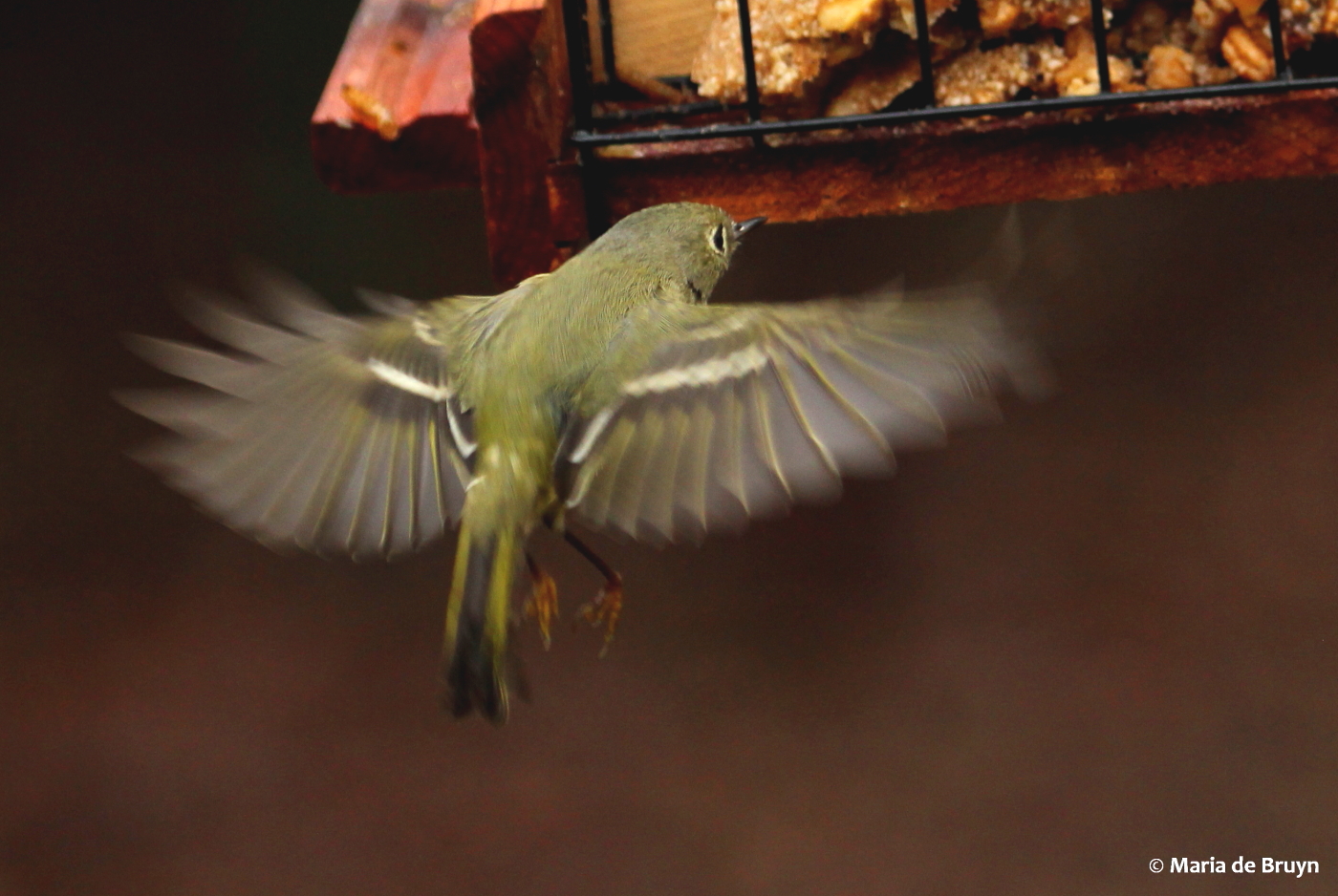
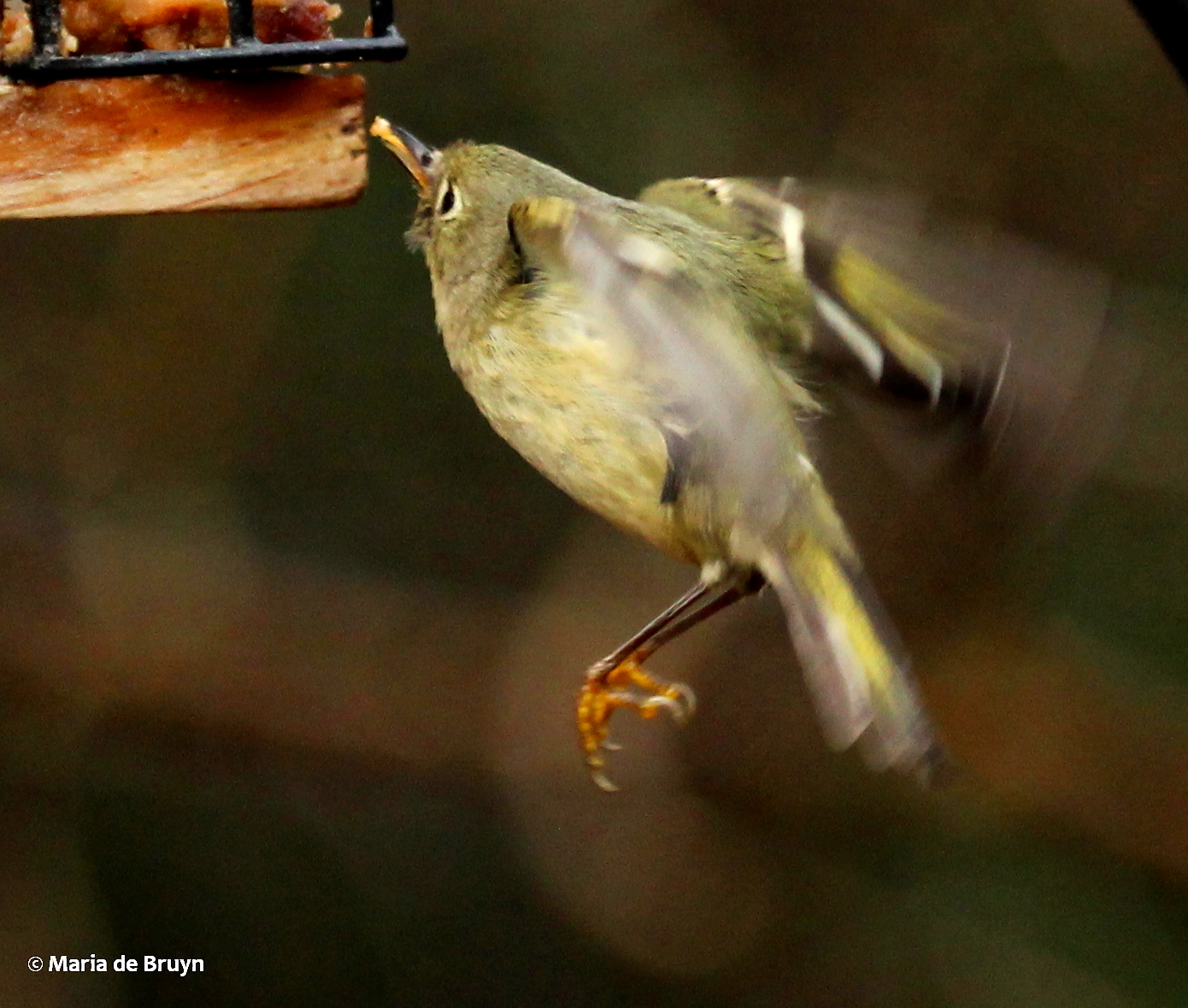
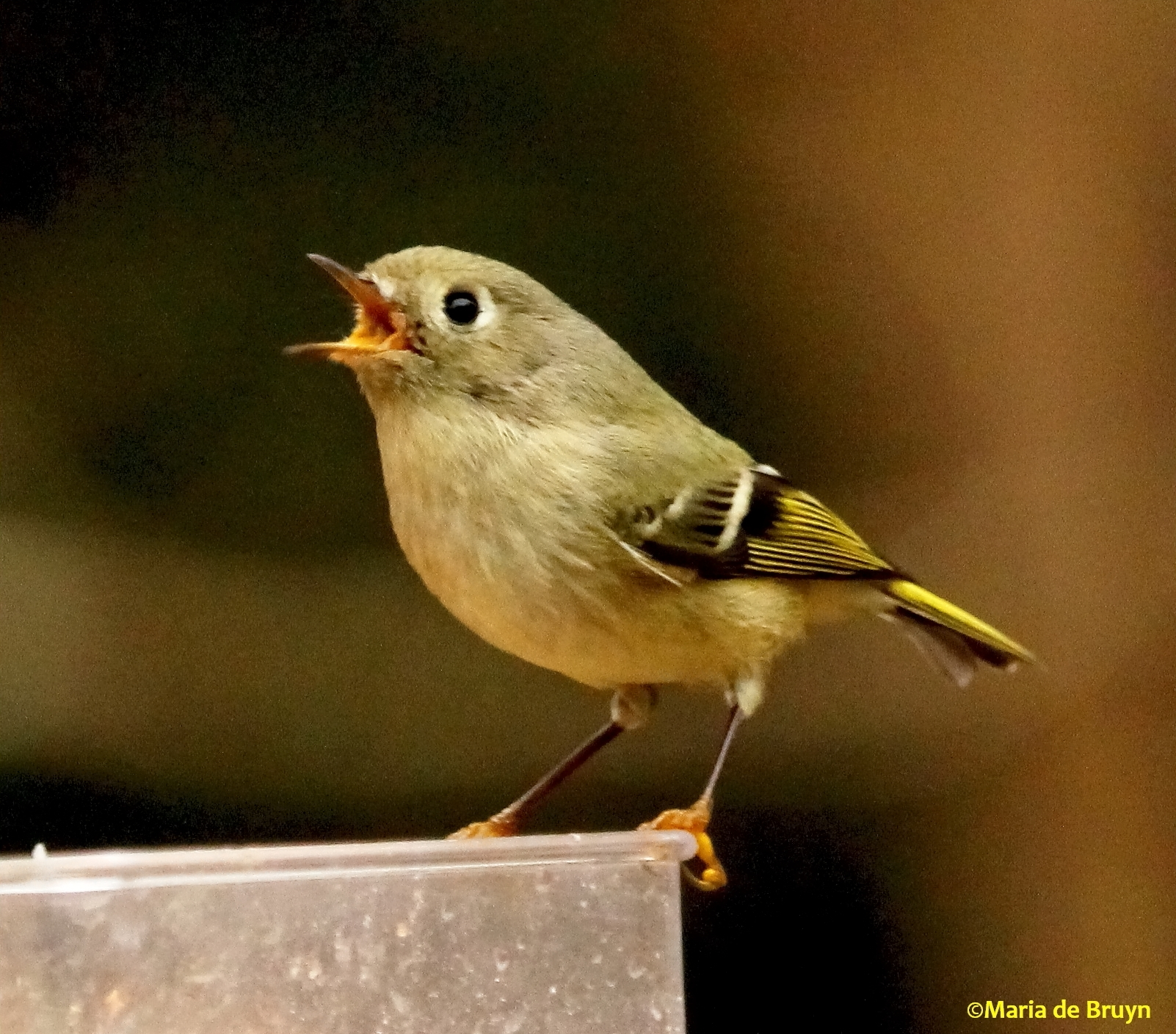
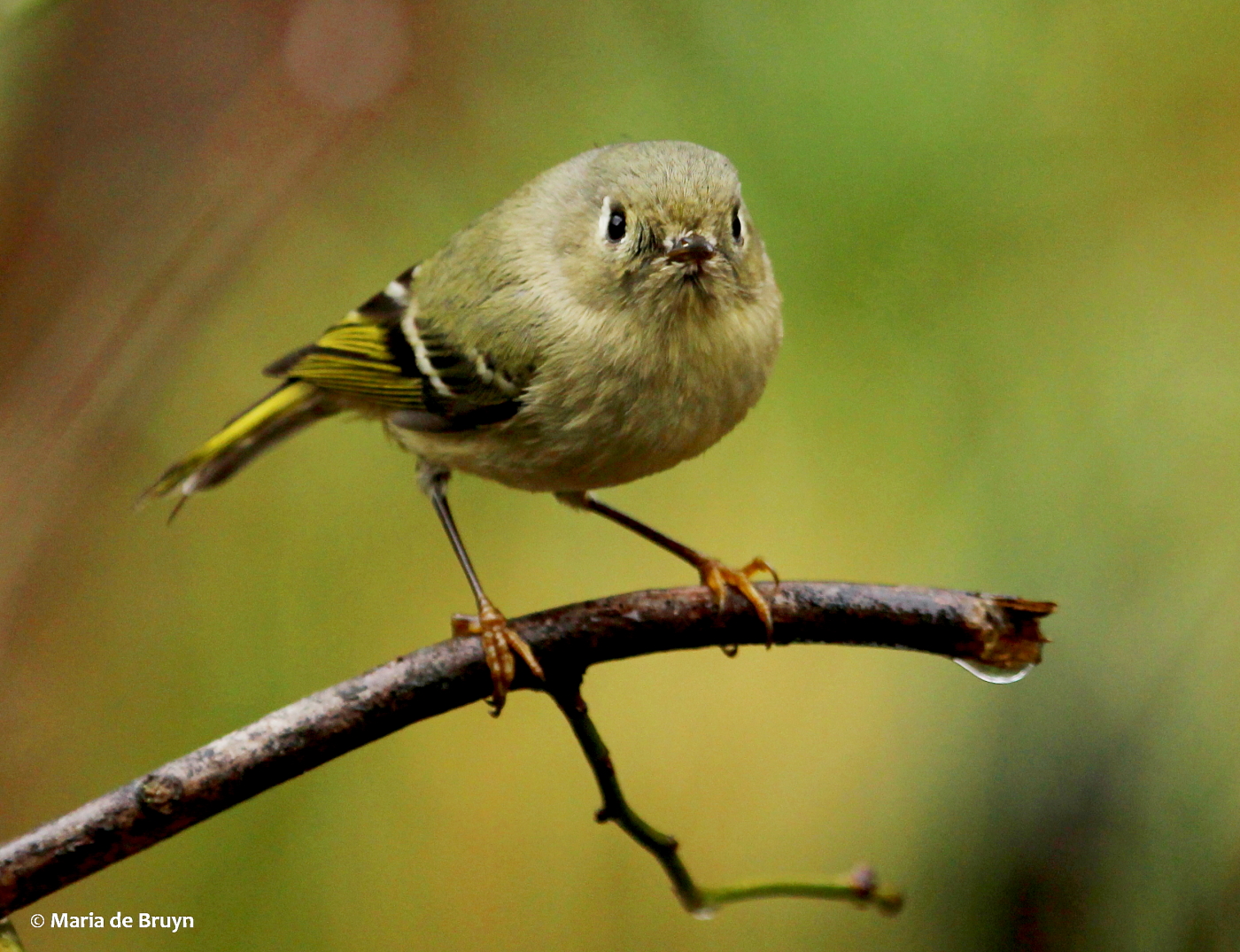
ruby-crowned kinglet IMG_8776© Maria de Bruyn resAs I mentioned in November, ruby-crowned kinglets (Regulus calendula) are one of my favorite bird species. These tiny, yellowish bundles of energy are fascinating to watch as they perch on twigs, hover in mid-air by feeders and branches, and generally look delightful when they stop to catch a breath for a minute.

Adjusting your camera to be able to photograph them with the best speed and lighting can be quite challenging as their constant motion leads them in and out of the sun and above and below branches.

ruby-crowned kinglet IMG_9428© Maria de Bruyn ruby-crowned kinglet IMG_9419© Maria de Bruyn  ruby-crowned kinglet IMG_9377© Maria de Bruyn resruby-crowned kinglet IMG_9406© Maria de Bruyn res

ruby-crowned kinglet IMG_4734© Maria de Bruyn resOn a rainy day, they may sit still for a tiny bit longer but their flight is not impeded though they may look waterlogged.

This has been a good autumn and winter for my being able to photograph these adorable avians, not only in my yard at the feeders but also in venues such as the Jordan Lake woods, Mason Farm Biological Reserve and Sandy Creek Park. This blog will focus on some of the portraits I’ve been able to capture.


ruby-crowned kinglet IMG_0378© Maria de Bruyn resWhen they are flying around rapidly, you could mistake them for first-year, less brightly hued blue-winged warblers (Vermivora cyanoptera). That happened to me in South Carolina where I thought I had gotten a shot of a blue-winged warbler and instead saw a kinglet in the photo.

ruby-crowned kinglet IMG_0271© Maria de Bruyn res

ruby-crowned kinglet IMG_0272© Maria de Bruyn

The kinglets’ yellow-olive color, white wing bars, broken white ring around their eyes and fluttering flight help identify them. Very occasionally, you catch sight of the red crown or get a peek at a couple of the normally hidden red feathers.

ruby-crowned kinglet IMG_8791© Maria de Bruyn 2ruby-crowned kinglet IMG_4174 ©Maria de Bruyn res signed

The Latin species name, which means little king, has led to a number of “royal” terms for a group of kinglets: a castle, a court, and a princedom. My favorite, however, is a dynasty – a grand description for a collection of these tiny fliers.

ruby-crowned kinglet IMG_8747© Maria de BruynI think I might have a particular fondness for birds with black or dark legs and yellow feet. I love snowy egrets (Egretta thula) with their large feet resembling yellow rubber gloves and melt at the sight of those dainty kinglet feet.


It’s amazing to think of these small birds migrating to North Carolina from as far North as Canada and Alaska. Just think about how many wing-beats and how much energy this demands of these birds! I’m glad they make the trip though!

ruby-crowned kinglet IMG_0409© Maria de Bruyn res2 ruby-crowned kinglet IMG_3539©Maria de Bruyna”?

ruby-crowned kinglet IMG_5641©Maria de Bruyn resI hope you have found these photos as cute as I did – have a great day!

Crabs save human lives!

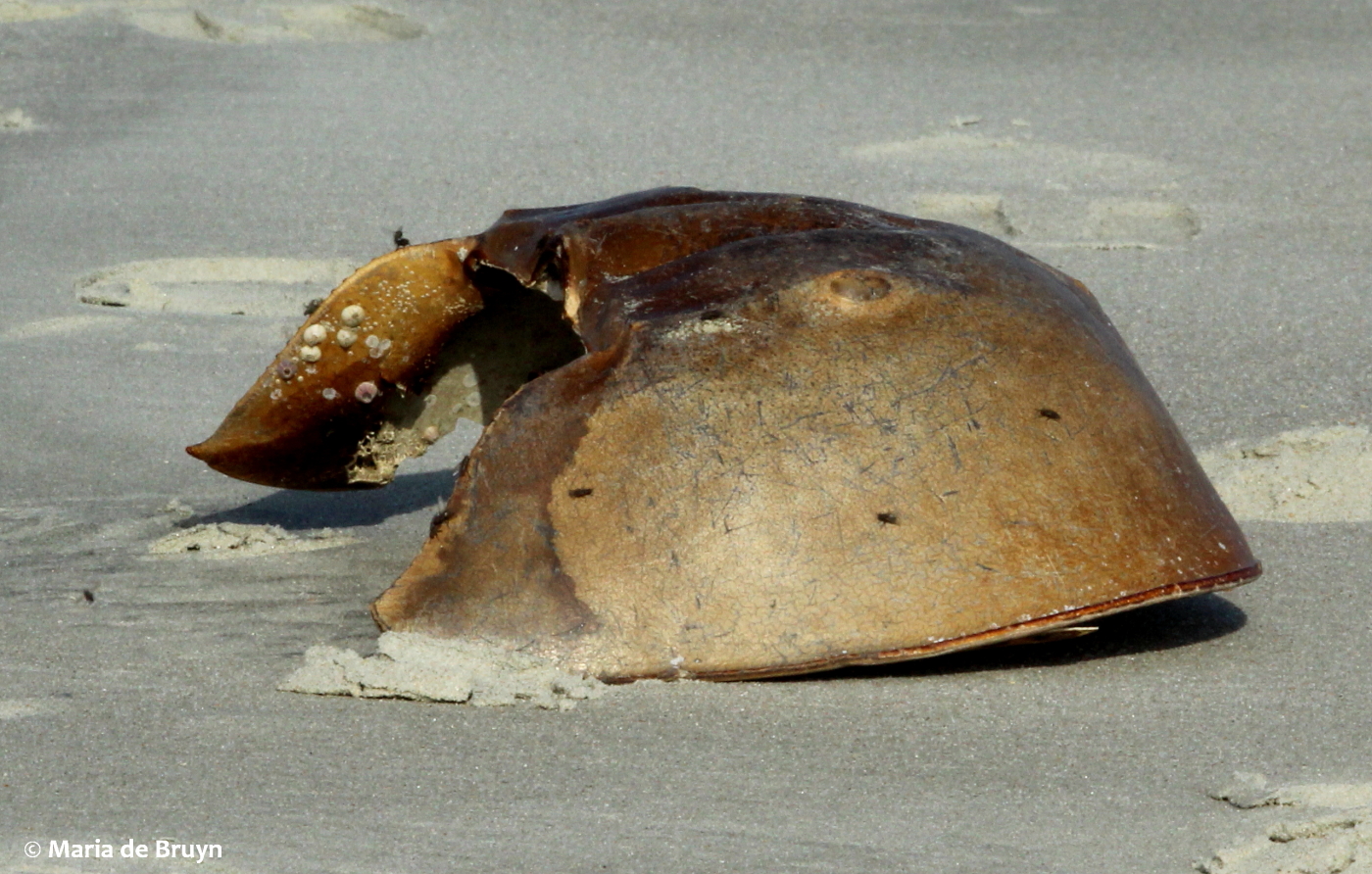
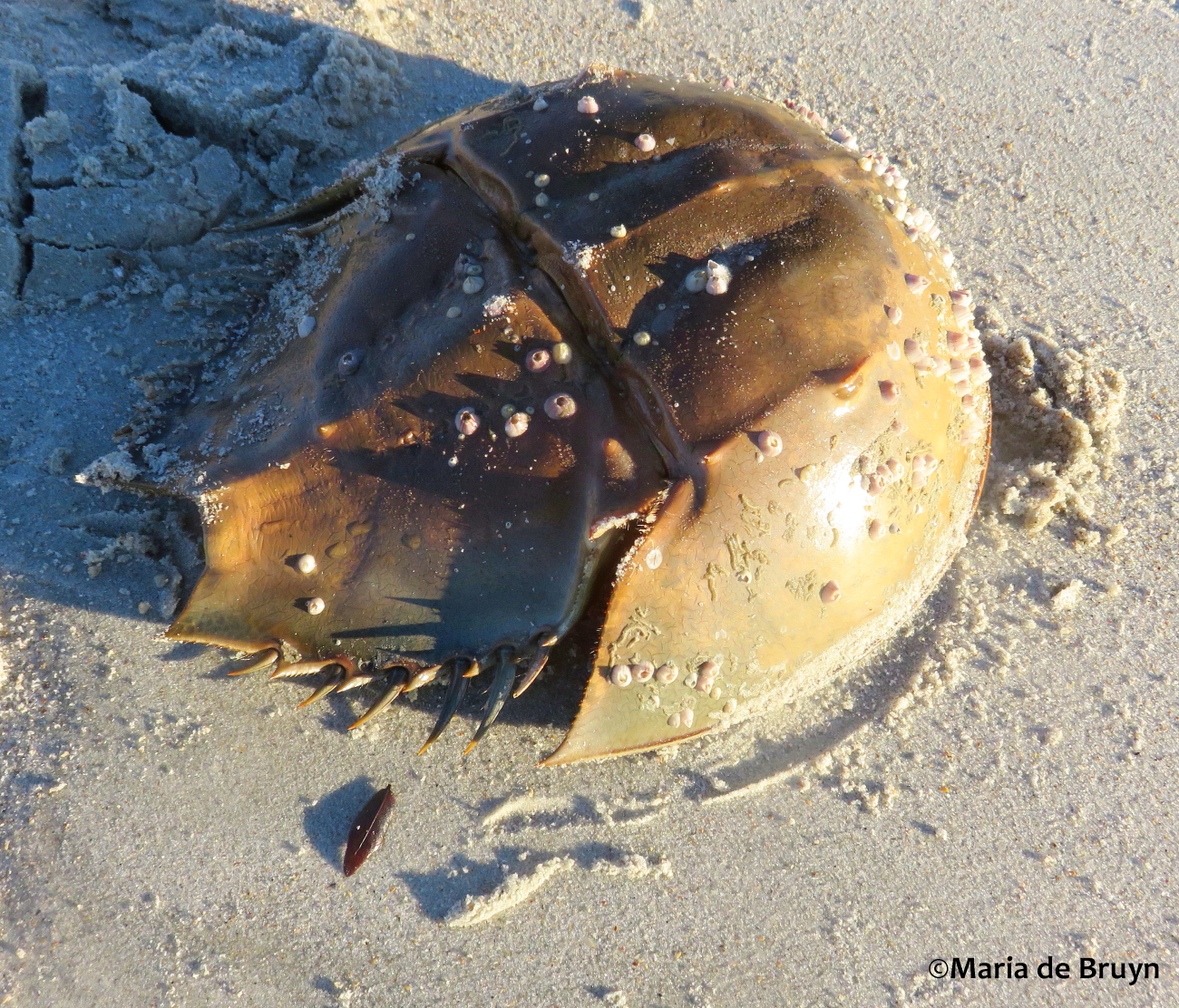
horseshoe crab IMG_0182_1©Maria de Bruyn resOn a trip to Huntington Beach State Park in South Carolina, we took a few walks along the Atlantic shoreline. There I saw the remains of numerous horseshoe crabs (Limulus polyphemus) as their empty shells were scattered among sea pork and sea weed on the beach.

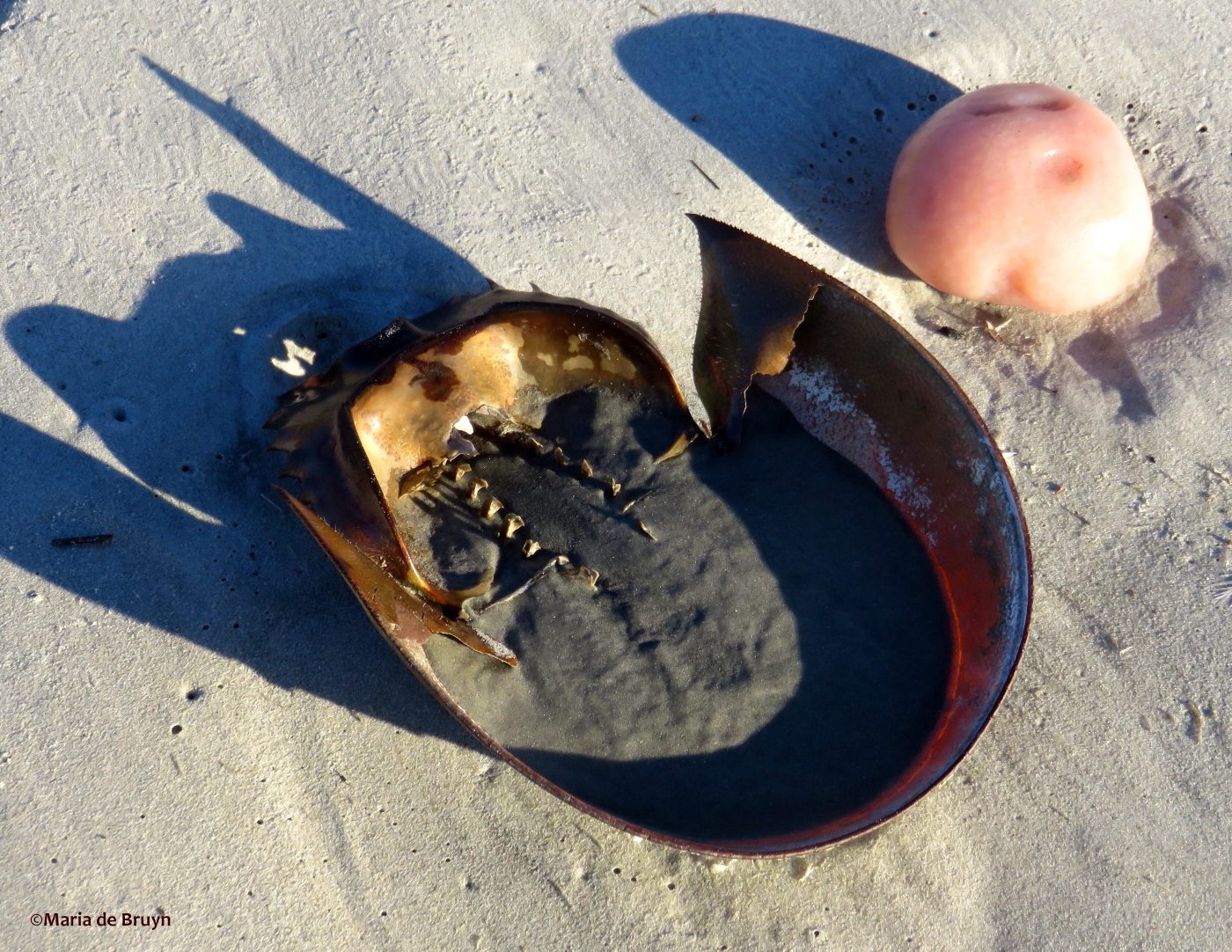
Horseshoe crabs, which can become quite large, live in shallow ocean waters on soft sandy or muddy bottoms. They occasionally come on shore to mate. Behind their five sets of legs (the remains of which are seen in the photos below), they have book gills, which exchange respiratory gases. Two gills are seen sticking up in the center of the first photo.

horshoecrab IMG_0115_1©Maria de Bruyn horseshoe crab IMG_0117_1©Maria de Bruyn res

The gills are also occasionally used by the crabs to swim, which they usually do upside down.

horseshoe crab IMG_8506©Maria de Bruyn resWhen I posted photos of my crab shell spottings on Project Noah, a fellow Noah member informed me that the horseshoe crabs are used in medicine. So I decided to read up on them and discovered how they are utilized. These crabs have hemocyanin instead of hemoglobin in their blood to carry oxygen (this colors their blood blue). Their blood also contains amebocytes, which defend these creatures against pathogens. The blood of the horseshoe crabs is harvested to obtain the amebocytes to make a product that used to detect bacterial endotoxins in human medical applications.

The US Food and Drug Administration mandates that any intravenous drugs and forms of medical equipment that come into contact with patients’ bodies must pass through horseshoe crab blood to help rule out contamination with endotoxins. This includes items such as needles, surgical implants and pacemakers.

horseshoe crab IMG_8503©Maria de Bruyn res horseshoe crab IMG_0124_1©Maria de Bruyn res

horseshoe crab IMG_0164_1©Maria de Bruyn resTo obtain the supplies, about 600,000 crabs are caught each year and drained of about 30% of their blood before being returned to the ocean. Some 10-30% of the crabs do not survive the procedure and others are injured, becoming unable to mate and reproduce. As a consequence of the harvests, these magnificent arthropods, whose lineage dates back 450 million years ago, are now becoming threatened and alternative toxin-detection methods are needed. There is a website devoted to these interesting crabs. Walks on the beach can lead to new knowledge as well as enjoyment!