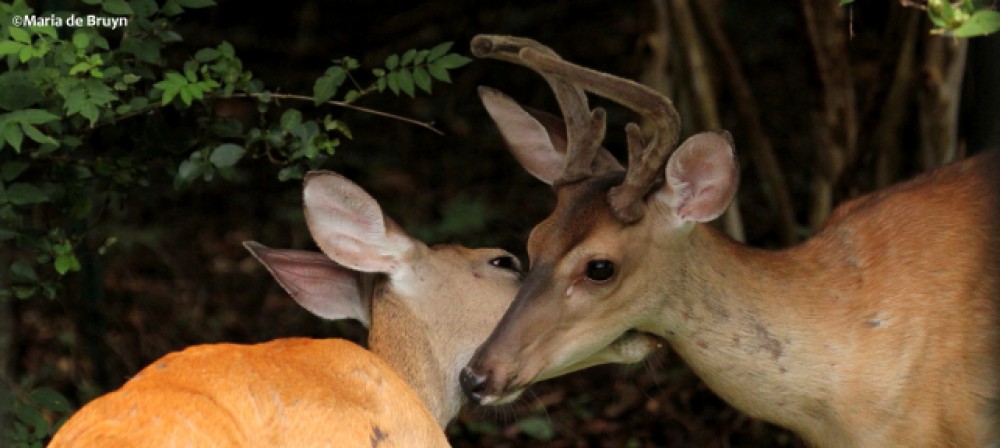
Spring is in the air…. Uh, I mean water!

It was the sound that first attracted my attention. Initially, I thought that it sounded like a flock of birds, but as I approached a pond, I realized that was not the case. The almost chirruping sound didn’t fit with any frogs I had heard before. As I scanned the scene before, my roving vision finally alit on a small section of brownish water dappled with green algae and stalks of dead reeds – there were moving bumps there. When I came closer, I finally realized that it was a mass of writhing and continually moving toads, engaged in what resembled a bit of a battle. It was actually what could be called a mating contest. (Click on a photo to see it larger; then arrow back to return to blog.)

The sound made by the male Eastern American toad (Anaxyrus americanus americanus) when he is ready to breed has been likened to an old-fashioned ringing telephone. It can last from 6 to 30 seconds and when multiple toads are calling at the same time, they create a very loud and penetrating “concert”. It doesn’t sound like a phone to me; you can judge by listening to the video.

I only saw a couple of the toads with inflated throat sacs. The sound was very loud, however, and the water was roiling with moving heads topped by periscope eyes, warty bodies and thrashing legs.

Before examining how the toads were going about their reproductive endeavor, a little biology lesson. Toads are a sub-group of frogs; while most frogs have moist skin, toads generally have drier and wartier skins. They vary greatly in color, including shades of yellow, brown, black and red, and may be speckled or have solid hues. The skin color can also change in response to stress, temperature, humidity and habitat.


American toads have two glands at the top of their head behind the eye crest. These are parotid glands that produce a neurotoxin, bufotoxin, which can sicken and even kill a predator. The milky substance can produce skin irritation in human beings and can be dangerous to smaller mammals (like dogs).


Like birds, toads have nictitating membranes, transparent eyelids that help protect the eye. They sometimes raise the nictitating membrane half-way so that they retain sharper vision.


Toads actually spend a lot of their lives on dry land, eating insects as well as worms, slugs and other small invertebrates. A particularly fascinating fact is that they use their eyeballs to help swallow food – when they ingest their prey, the eyeballs sink down into their mouth and help push the food down their throats!!!

At times, they created little whirlpools as they bumped up against one another or tried to mount a neighbor.


Sometimes, a large female with a smaller male atop her would rest quietly under water, apparently trying to avoid notice. This strategy did not always work, however, and sometimes one or more other males would try to join the pair already in amplexus (i.e., when the male grasps the female with his front legs and fertilizes the eggs as she releases them from her body)..

The female toad ejects her eggs in two strings, which are immediately fertilized by a nearby male spurting out a stream of sperm. (Frogs lay their eggs in clusters.) Tadpoles will emerge from the eggs within 2–14 days and reach adulthood within 50–65 days. They become sexually mature at 2-3 years.

In one case, I developed a real sympathy for a particularly large female. She had a small male astride her who resembled her in coloring and they looked to be peacefully joined. Then another male spotted them and he launched a sneak attack, trying to usurp the position of her already-present suitor. The first male clung on tightly.

No. 1 pushed No. 2 away with a hind leg again and again.

In the meantime, a great blue heron (Ardea herodius) who had been feeding on the other side of the pond, made its way over to the site of toad frenzy. S/he had been eating small fish and amphibians.

I thought the heron would plunge into the midst of the numerous toads for an easy meal, but instead the bird looked around and then skirted the group, veering away to the shoreline. Perhaps some instinct made the heron avoid the group during a reproductive event? Or s/he was put off by the vigorous activity of the potential prey?

A second rival toad then joined the first, who was still trying to get the original mating male out of the way. Eventually, a third, fourth and yet another male joined the group and the poor female was weighted down by 5 – FIVE! – male toads all vying for the prime spot on her back. Often her head was pushed down under water.

The first male clung on with great determination, often being pushed down under water as well as the other males piled on. He was NOT going to give up.

Ms Toad did not like this state of affairs. She laboriously began moving from a deeper spot in the pond to the pond’s edge. This was a slow process, made difficult by the clinging crowd who must have weighed a good deal as a group.

I thought she might be trying to get to more shallow water so the toad “knot” would not keep her submerged. Toads can breathe under water like frogs because they can absorb oxygen through their skin. They do have lungs, however, and if these fill with water, they can drown. A fellow Facebook nature lover told me that she had seen expired female toads with males still clinging to them. A toad knot can therefore unfortunately result in maternal mortality – the demise of a mother giving birth (to several thousand eggs; most of the tadpoles do not survive).

I soon left the scene after Ms Toad had reached the side of the pond and could keep her head above water. It was noticeable that her throat pouch was inflating and deflating – perhaps she was breathing deeply to compensate for lack of oxygen when she had to suffer a submerged head due to the over-amorous males.


Inhale!                                                                  Exhale!

I know I am anthropomorphizing, but I do believe that she likely felt the amphibian equivalent of relief and was looking forward to the end of that day!

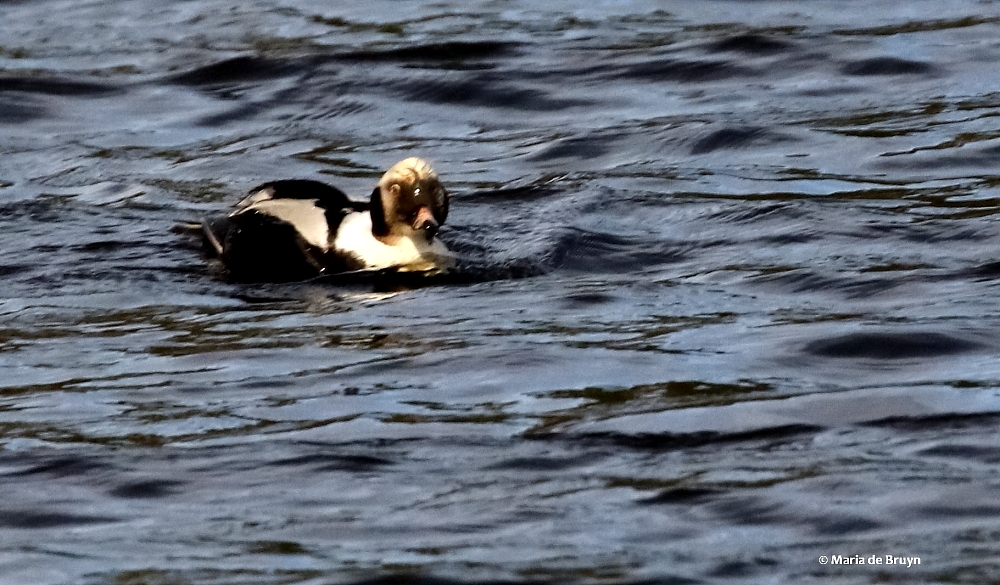
Diving in for a meal


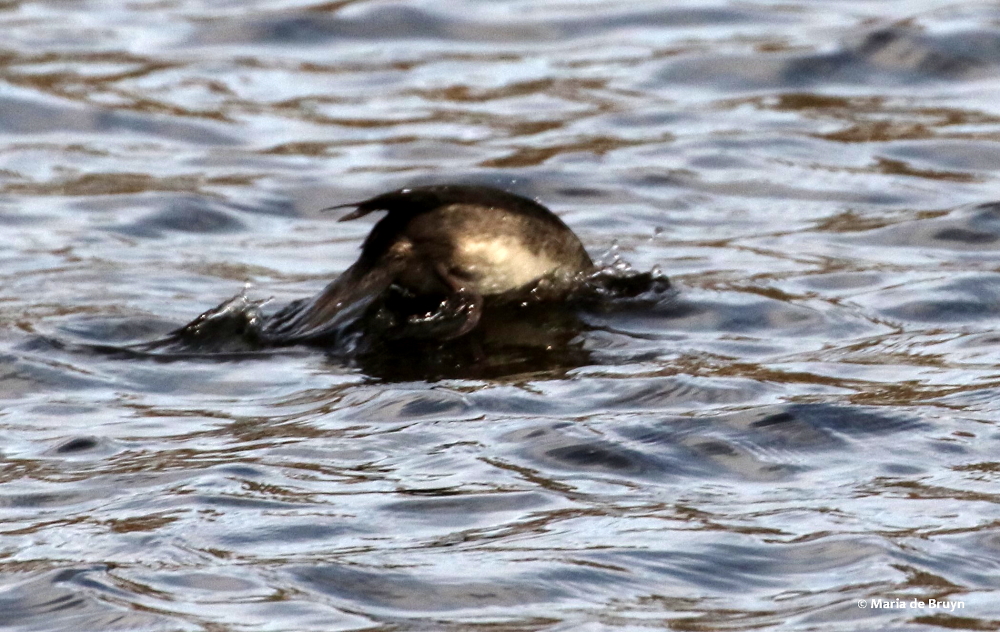
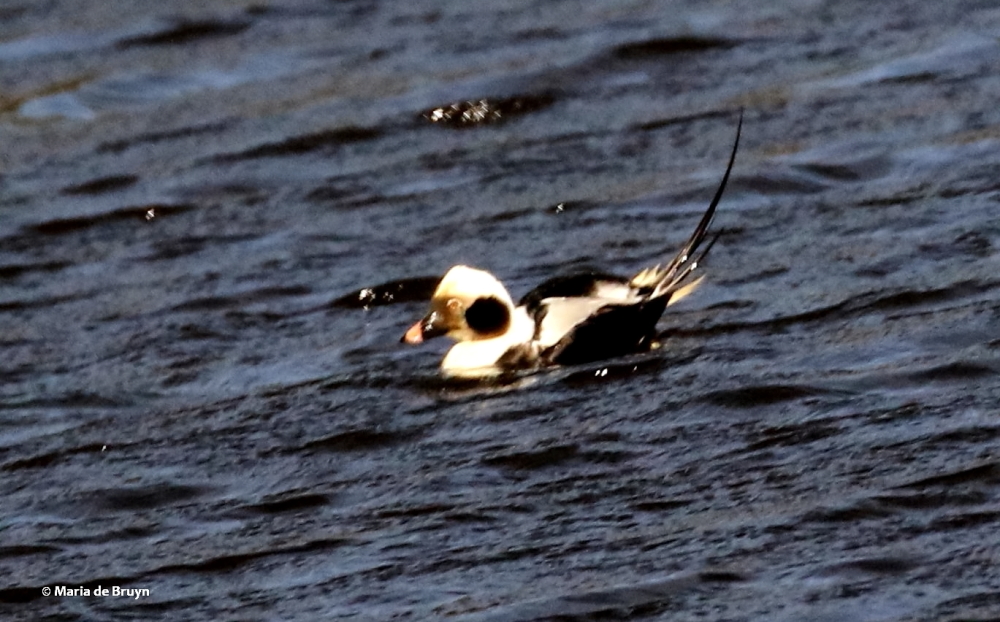
Recently, I had the good fortune to see a sea duck because it had veered away from its usual habitat to land on a pond near the middle of North Carolina. The male long-tailed duck (Clangula hyemalis) is a real looker in his winter plumage. His dark grey bill is tipped by bright pink color and he has large black circles on his white cheeks, which some people think look a bit like ear-muffs.

According to the Audubon Society, these ducks dine on mollusks and crustaceans when they are at sea during the winter. Since this duck had apparently gotten off-course during his winter migration, he seemed to be satisfied now with pondweeds and grasses, which is what they tend to eat in the summer when they are at their breeding grounds.

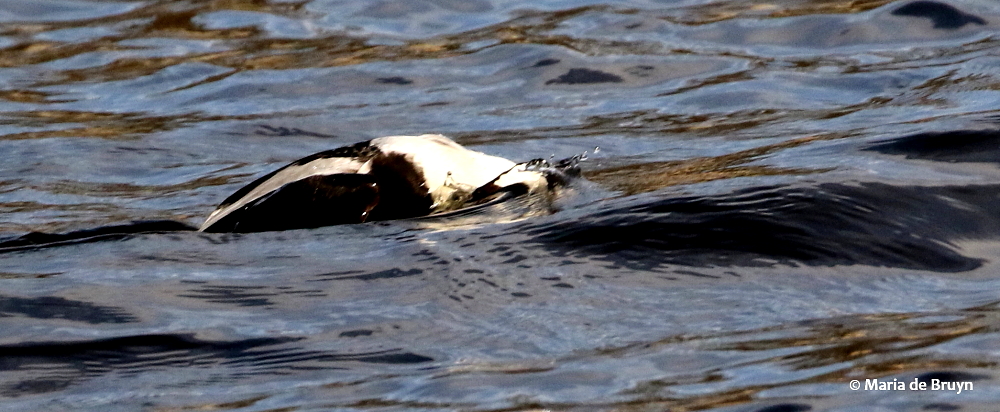
It is his beautiful long tail (3.9 to 5.9 in, 10-15 cm) that really catches your eye, especially when he dives under to gather up some of his food. His dive appeared to comprise a very slight spreading of wing feathers and then a quick forward and downward movement, ending with his rear end sticking up with the long-tailed plume waving a bit before he straightened out just below the water’s surface.

It was when I watched this duck dive under again and again that I actually stopped to think a bit about how ducks dive for their meals. This bird seemed to stay under water for what seemed a very long time (probably 15-30 seconds). It turns out that they can remain submerged up to a minute. In comparison to other diving ducks, the long-tailed duck spends more time under water than at the surface; in fact, when looking for food, this duck will be under water 3-4 times longer than it stays above water!

When reviewing my photos, I realized that this bird was not diving deep but rather staying submerged just under the surface. My friend Lucretia pointed out that the duck would extend his wings a bit away from his body before he went under and the photos showed his wings spread out.

This must be the species’ diving technique when they are foraging for plant material because it turns out that they are likely the deepest diving ducks in the world, able to go down as much as 200 feet (60 meters) in search of food! So it turned out that we were really seeing quite a special bird.
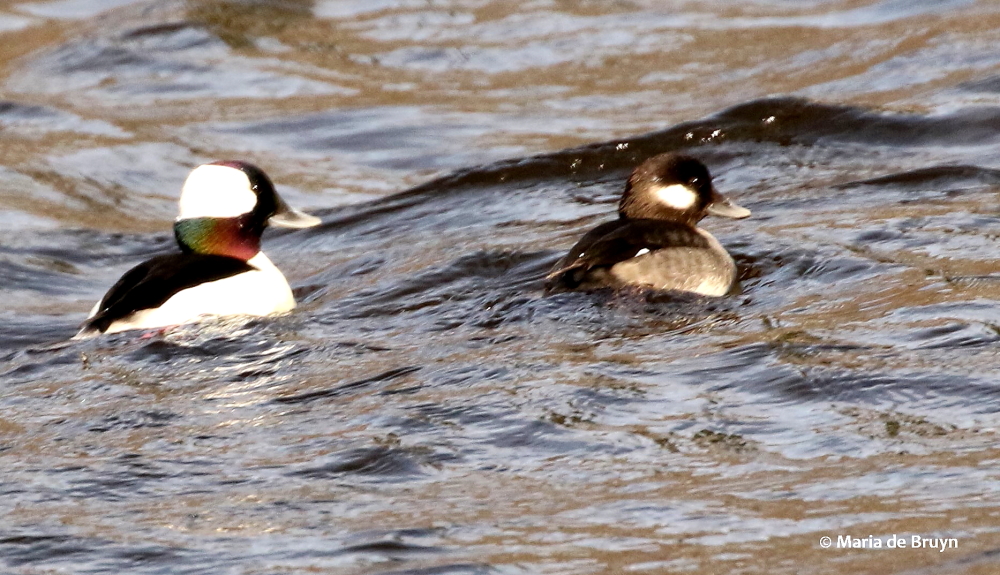
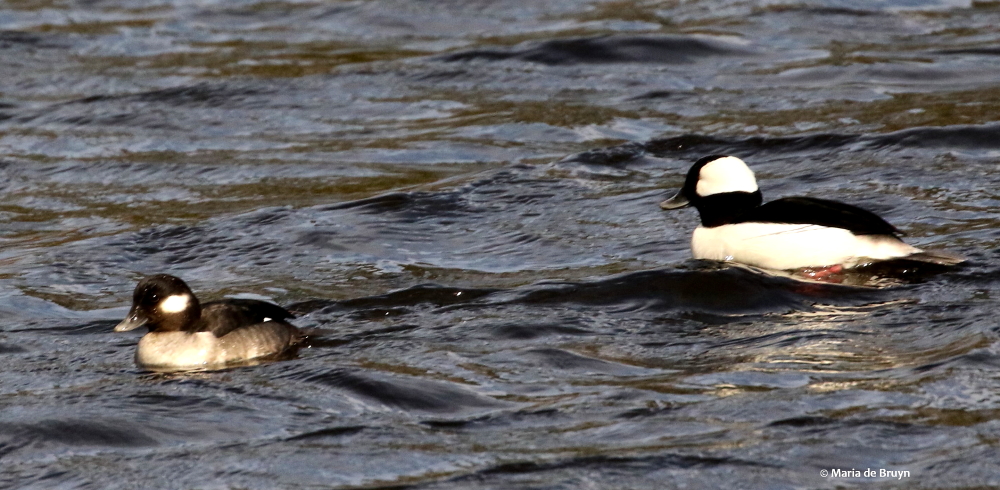
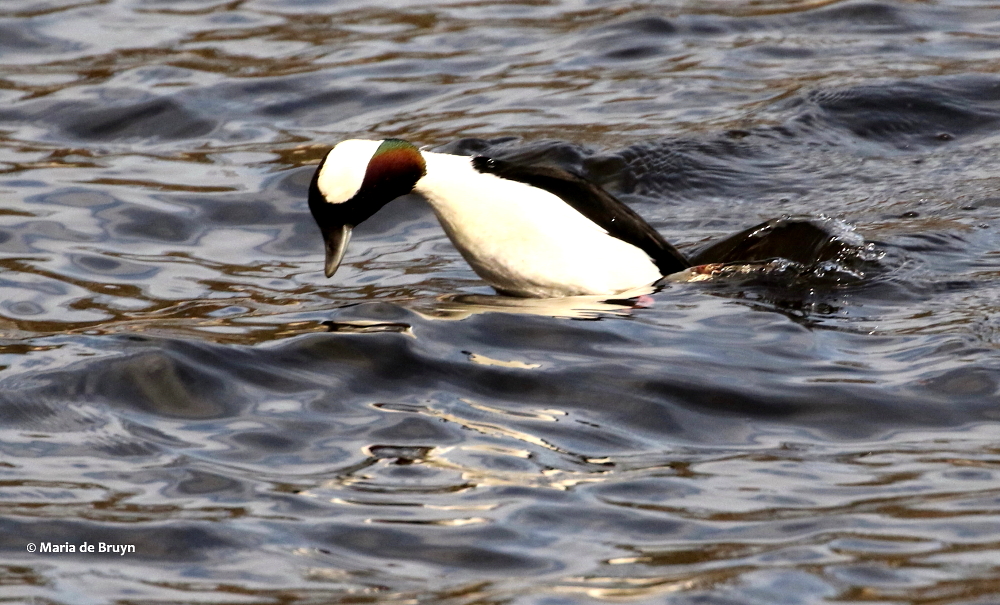
A pair of bufflehead ducks (Bucephala albeola) were at the same pond and give a nice demonstration of their different diving technique. Their winter and summer diets are similar to those of the long-tailed duck; they, too, seemed to be eating plants during our visit. Their dives were of much shorter duration; they appear to stay under water “only” 12-25 seconds at most.

In contrast to the long-tailed duck, however, they would rear up a bit over the water and then arch their bodies in a graceful dive, popping up again quickly after swallowing their food.


It’s interesting to note that their Greek genus name comes from a term meaning bull-headed, while their common name came from a combination of the words buffalo and head. The male duck can puff out his head feathers, making his head look even larger.

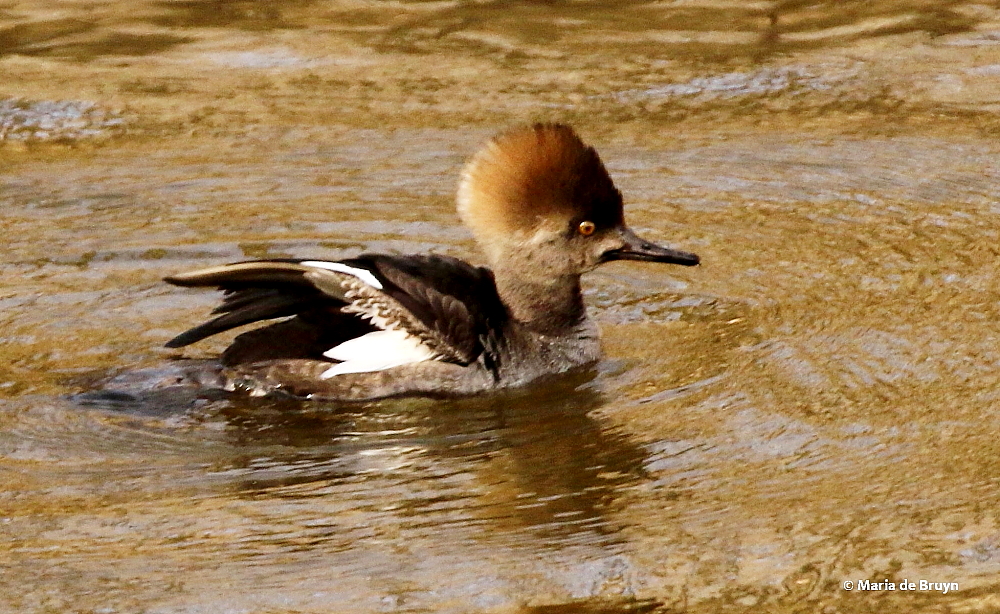
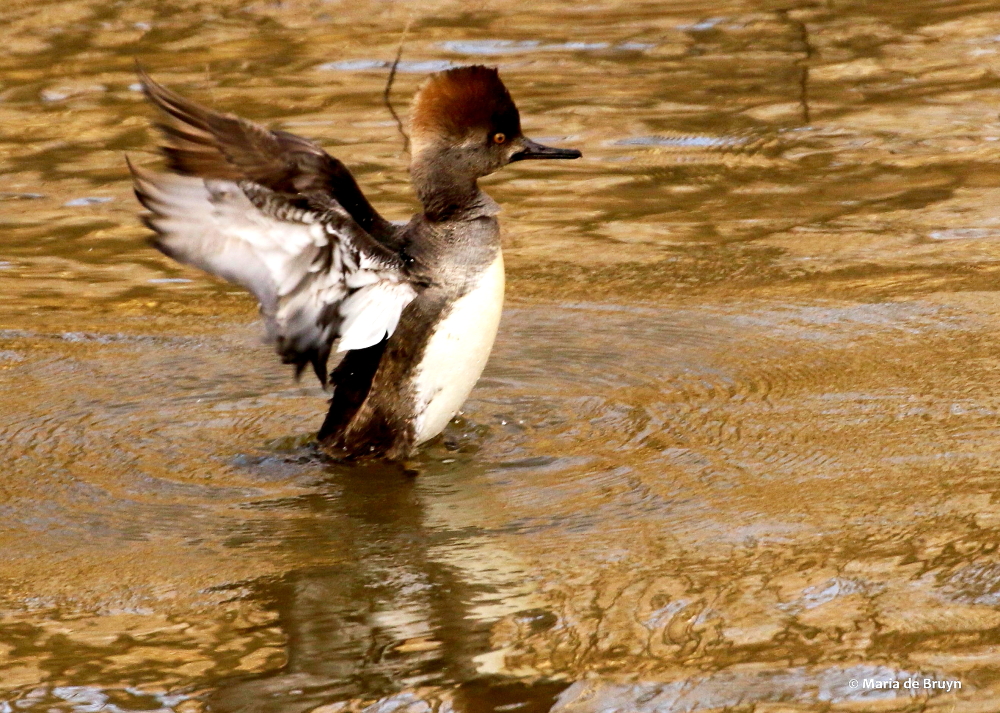
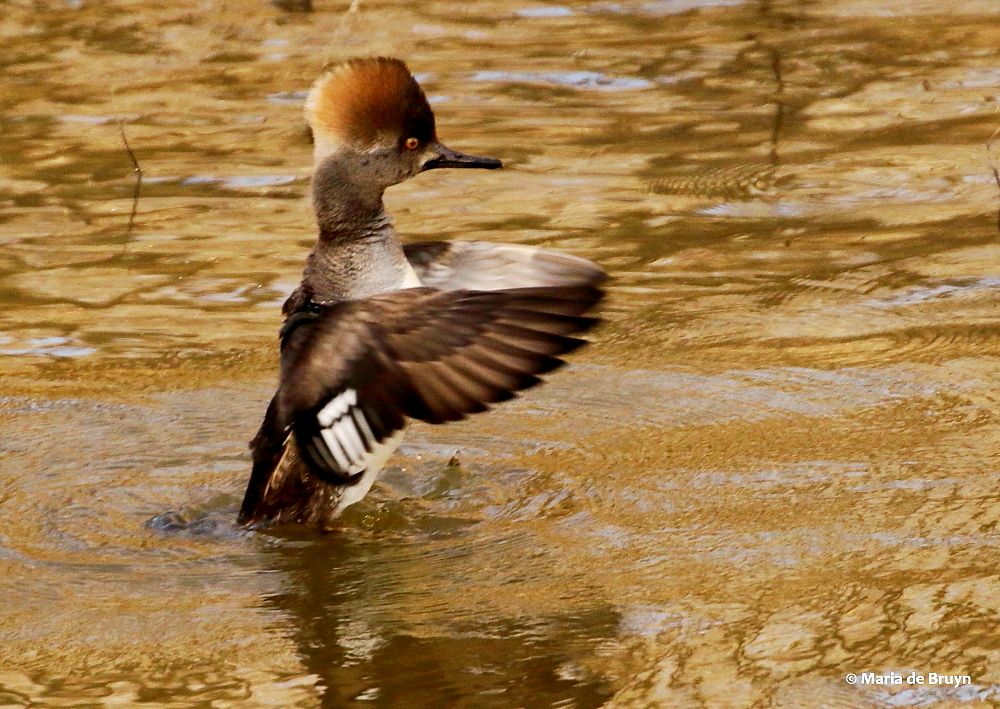
Another duck that can do this is the male hooded merganser (Lophodytes cucullatus); the female can also extend her head feathers, giving herself a crested appearance.

The male and female are quite different in appearance, but both are attractive. Their diet appears to be mostly crustaceans and mollusks.

A female merganser at nearby lake gave a short diving demo the same day as the long-tailed and bufflehead ducks. She, too, tended to perform a shallow dive like the former duck.

Duck watching had not been one of my preferred birding activities but now I’ve become curious as to how other species are executing their underwater forays. Perhaps the arcing-body plunge is a bufflehead specialty – I’ll have to pay more attention to diving techniques from now on!

Venturing forth on overcast days

Our area has been inundated with rain for 9 days straight now – not a big deal if you live in a region with monsoon seasons but it is not really usual for us. We also had two hurricanes and several severe storms the past 5.5 months as well as other rainy periods and the ground – much of it clay – is just not absorbing all the water anymore. My yard (which I am fortunate to have, don’t get me wrong!) currently has patches that are simply sodden mud and clay with no vegetation to be seen. Paths in the nature reserves are slick and slippery. Still, if you’re a person who gets “spiritual sustenance” by going out into nature, you venture forth on those days that might have a few overcast but rain-free hours to see what is out and about. Though I haven’t seen beavers lately, I did see their tracks in one reserve. A father had brought his children out and they made plaster casts of the tracks – a wonderful outdoor nature lesson.

Because we have also had some unusually warm days for this time of year, the flowers began budding a bit earlier than other years. Daffodils, hyacinths and crocuses are blooming profusely and a few of my neighbors have lovely flowering quince (Chaenomeles).


A winter honeysuckle (Lonicera fragrantissima) at one park had some lovely blossoms.


At another reserve, an apple tree (Malus pumila) has lovely flowers emerging.


Unfortunately, the tree is right next to a grove of cedars that are laden with mature cedar apple rust galls (Gymnosporangium juniperi-virginianae). When they emit their spores, they will kill the apples. I used to have an apple tree in my yard but the nearby cedars also got apple rust and now the tree has died. I’ve planted a plum tree and hope that that one will thrive and survive.

With the leaves having fallen from most trees, it’s possible to see the cocoons of some of our larger moths. So far, I’ve found three cecropia moth cocoons, two polyphemus moth cocoons and several bagworm moth cocoons in three different places. The Chinese praying mantis (Tenodera sinensis) egg cases are also showing up better with little foliage to hide them.

Getting nice shots of birds is not easy on those dull and gray days. Many of the smaller birds were huddled in bushes and trees, puffing themselves up to trap some body heat as a means of coping with the cold and wet conditions.


Field sparrow (Spizella pusilla)

I tried to get close to a beautiful kestrel (Falco sparverius), who kept flying just a bit further away when I slowly approached it. As I was walking back to my car, it suddenly turned and flew right by me – I swung up my camera and got one shot, which was not perfect but still a bit of a reward.


A gorgeous great blue heron (Ardea herodias), on the other hand, deigned to entertain me with a protracted grooming session at a local pond. S/he first perched above a couple turtles and watched them until they plopped down underwater.

Then the bird began picking at its feathers, showing off how its long neck can be twisted to enable that long beak to reach where it wants.

Note where the beak is peeking through in the photo above right! Flexible neck!

The preening activities gave me a chance to get what I considered to be a series of nice portraits.


The weather forecasters predicted that the rain would end, it would get very windy and the sun would shine this afternoon – they were right! They also say we will have a week of sunny days coming up – I certainly hope that that’s the case so I can exchange my muck boots for regular walking shoes again. Hope you are enjoying some pleasant weather!


Oh, those ravishing raptors!

Numerous people who attract birds with feeders feel regret and sadness when one of their avian visitors is captured to serve as a meal for a raptor in the neighborhood. I, too, feel that pity and discomfort when I see one of the hawks or owls capture a bird or animal because my thoughts go to the pain and fear that the prey must feel. But of course all wildlife has to eat and I want members of the predator species to survive as well. And the beautiful predators can be really interesting to observe.


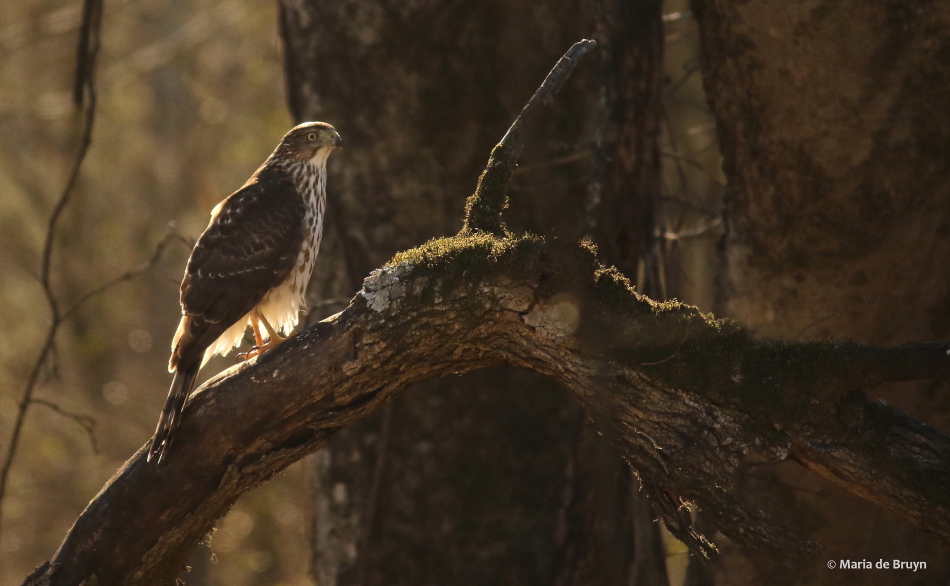
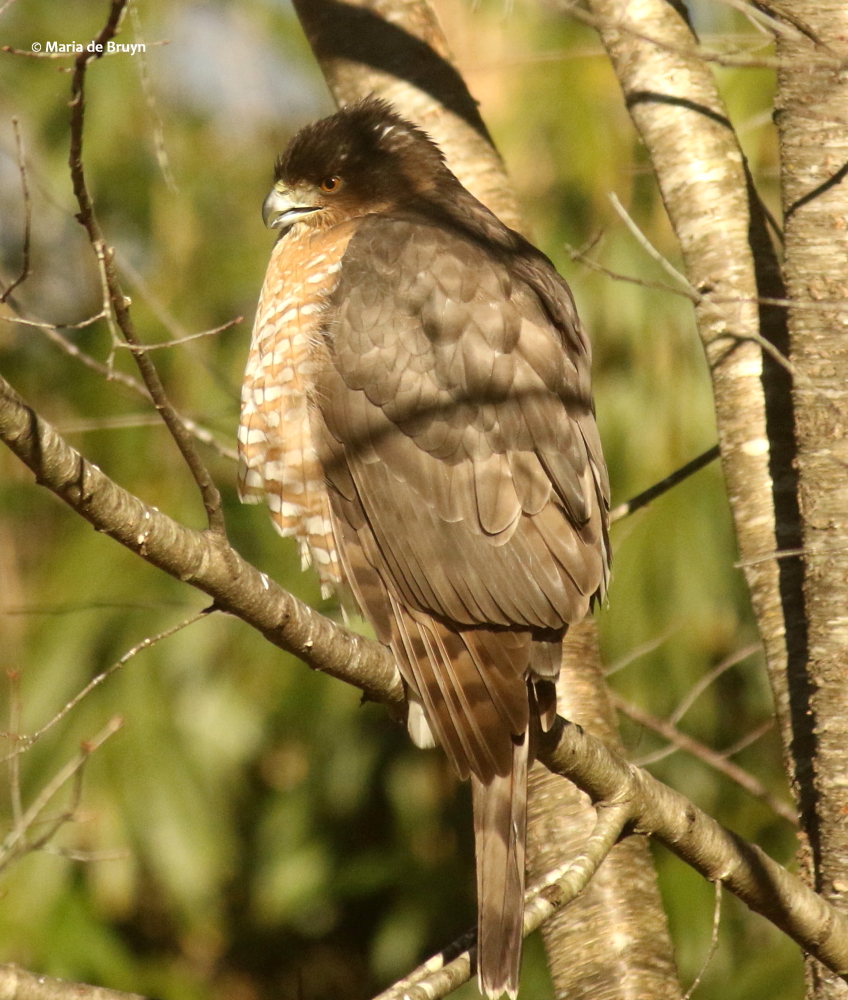
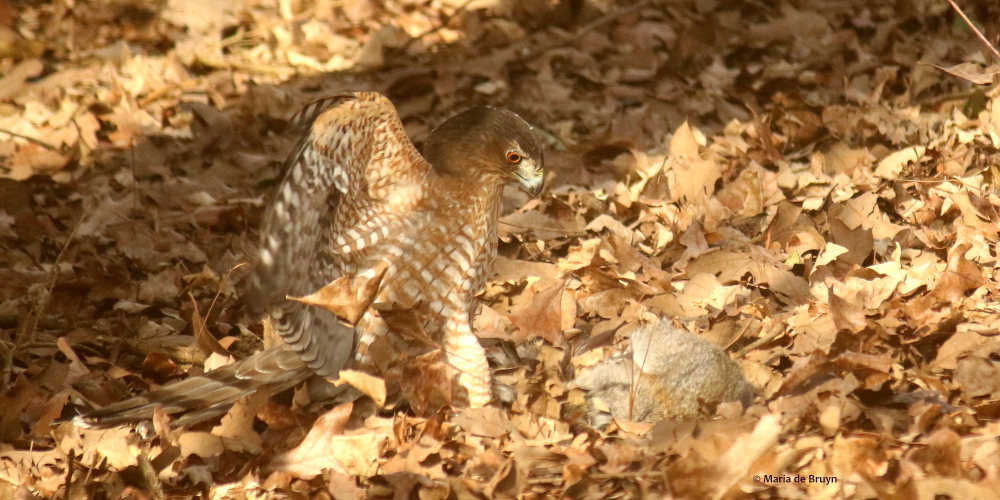
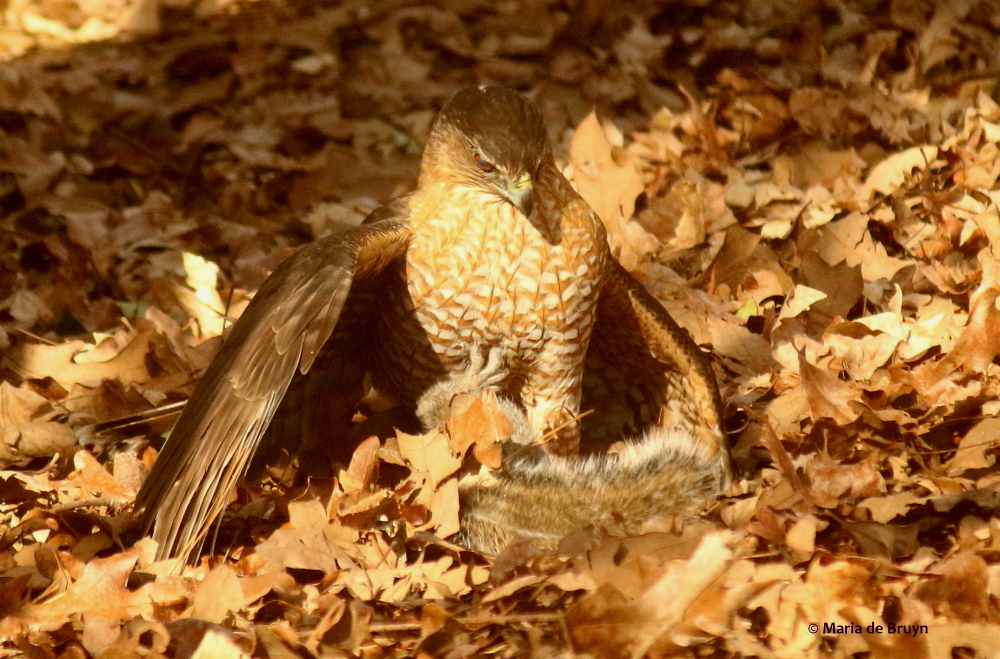
A Cooper’s hawk (Accipiter cooperii, left) sometimes frequents my yard looking for a bird to take. This particular day in November last year, the hawk flew to the front-yard feeders but came up empty-taloned. Raptors, also known as birds of prey, are not the only birds that eat something other than seed. Some smaller birds, like the shrike, do so and many songbirds eat insects. The raptors, however, often go after prey that is fairly large in comparison to their own body size. In January this year, I came across another Cooper’s hawk at a nature reserve. The bird flew soundlessly past me to land in a tree downslope and paused for a bit before flying on, providing time for me to get a gorgeous portrait.

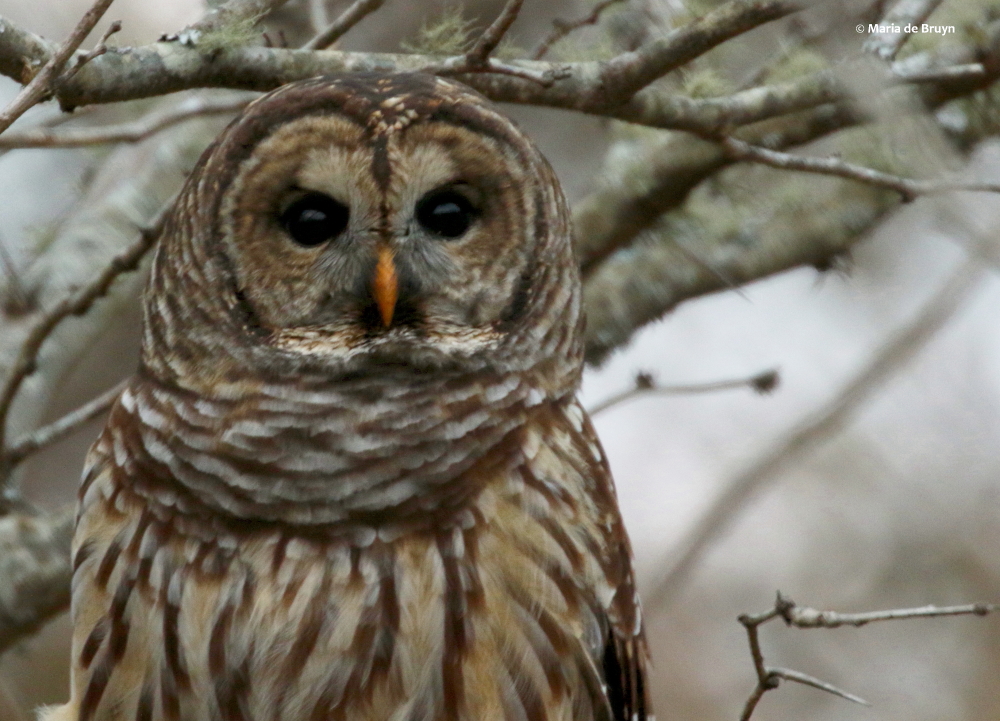
I’ve been lucky lately in seeing barred owls (Strix varia) at the Brumley Nature Preserve North. This owl was sitting silently next to a walking path, looking out over the adjacent field.

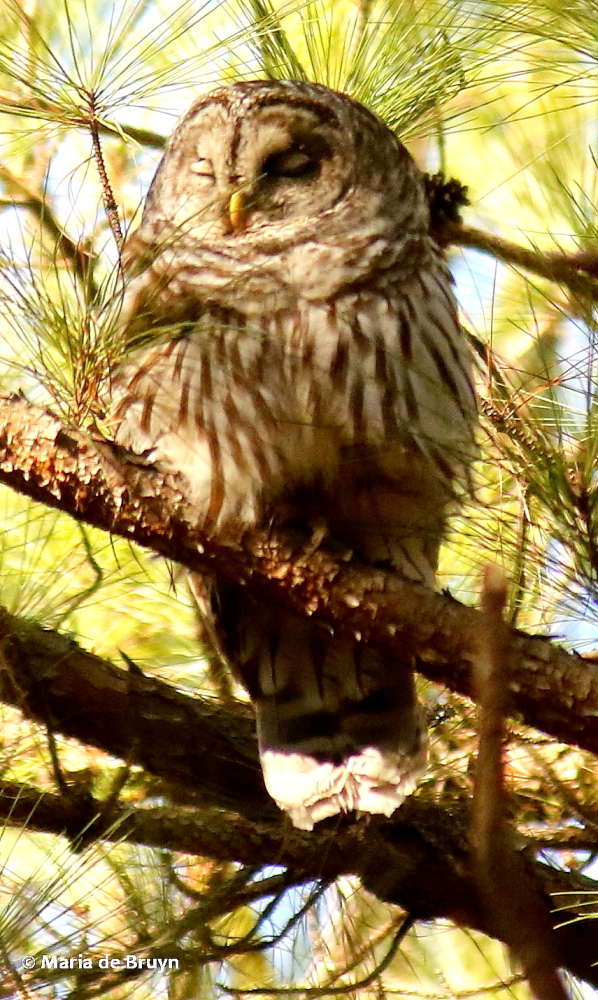
A couple weeks ago, I was startled by this barred owl who suddenly flew in front of me from behind my right shoulder. I hadn’t noticed him/her in a tree behind me. I tried to follow its flight but lost it. I thanked the owl for letting me glimpse it and said it would be nice if s/he came back so I could get another look. Sure enough, after I had turned back to the vicinity where I originally was surprised by the silent predator, it flew in and perched on a branch. The bird had a snooze, keeping one eye partially open to keep me in view.


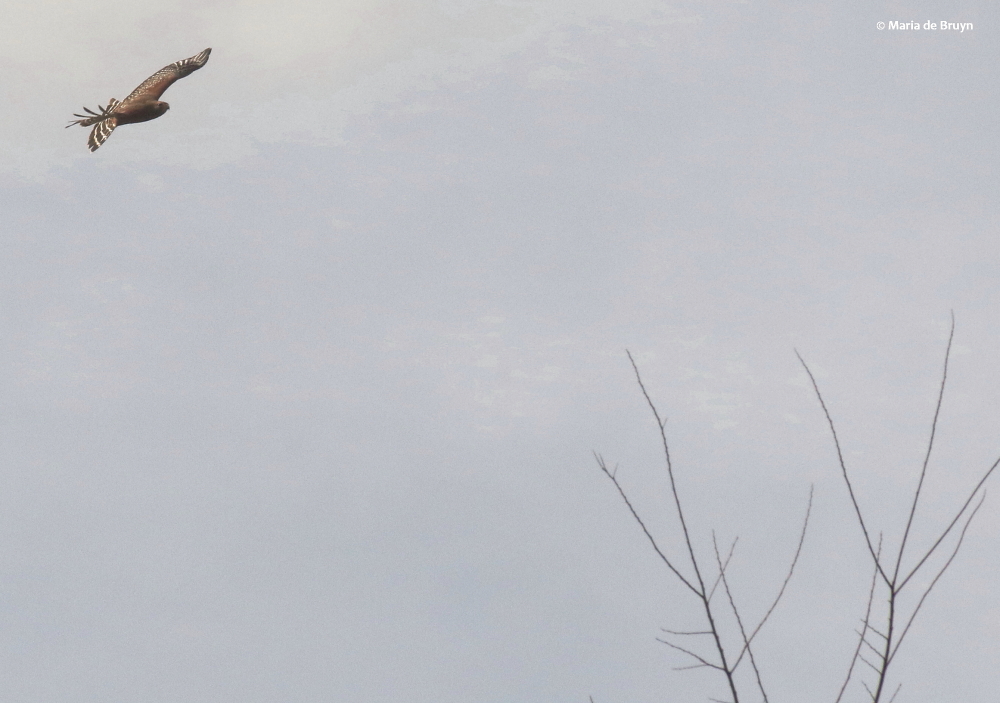
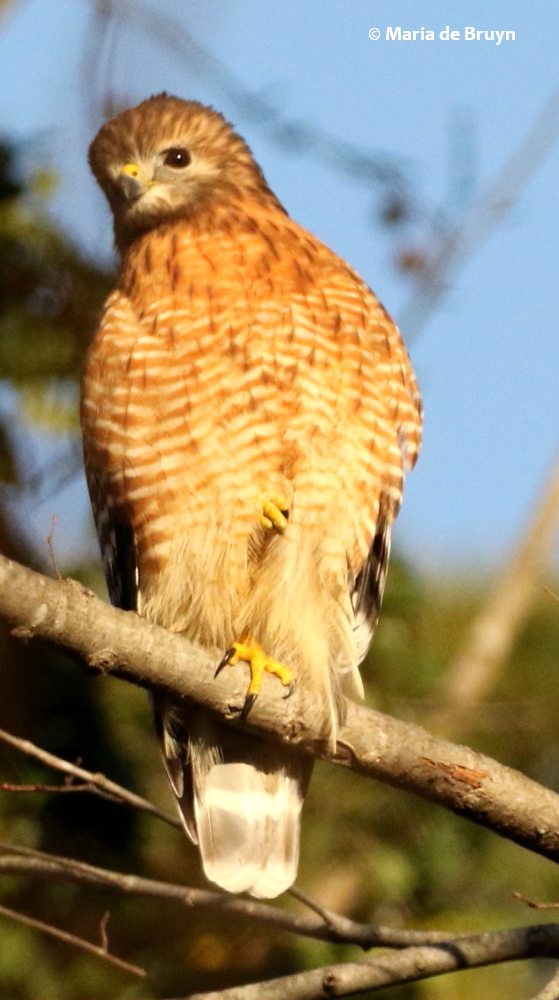
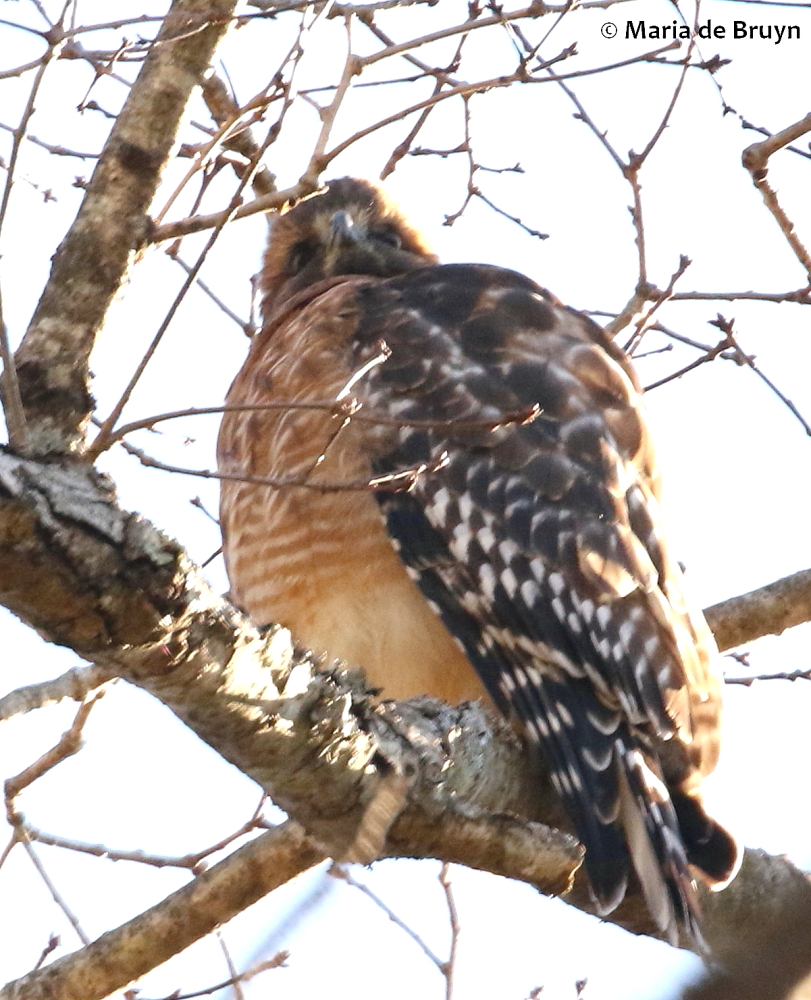
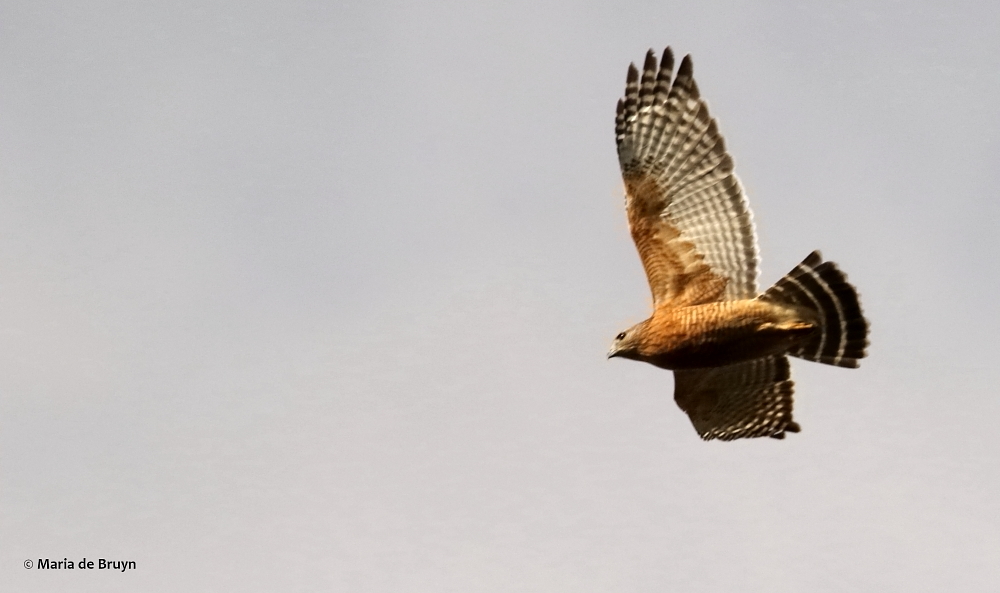
Lately, I’ve been seeing many red-shouldered hawks (Buteo lineatus). They have been flying overhead at the nature reserves. The other day, two flew by calling raucously and then they alighted at the top of a far distant tree. I couldn’t get a photo but did see them mating in silhouette against the late afternoon sky.


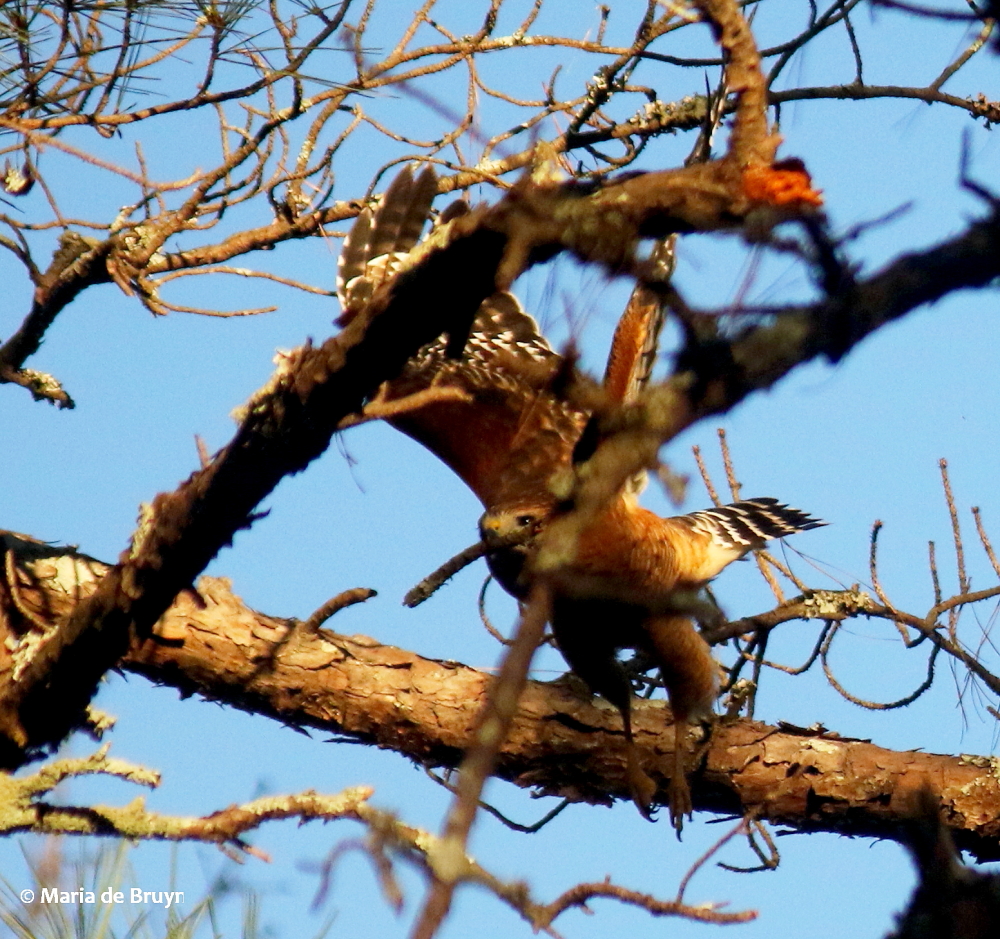
A few weeks ago, a pair of red-shouldered hawks began constructing a nest just down the street from where I live. One afternoon, I happened to see them and one was collecting twigs to build or refurbish a nest.


This pair roams our neighborhood looking for prey; sometimes, one or both will perch in my back-yard tree for a little rest.


When one of the red-shouldered or Cooper’s hawks pauses for some time in the tree over the small pond, I figure it is watching for frogs or one of the chipmunks that live in the rocks surrounding the pond. The chipmunks appear to be very good at eluding capture.


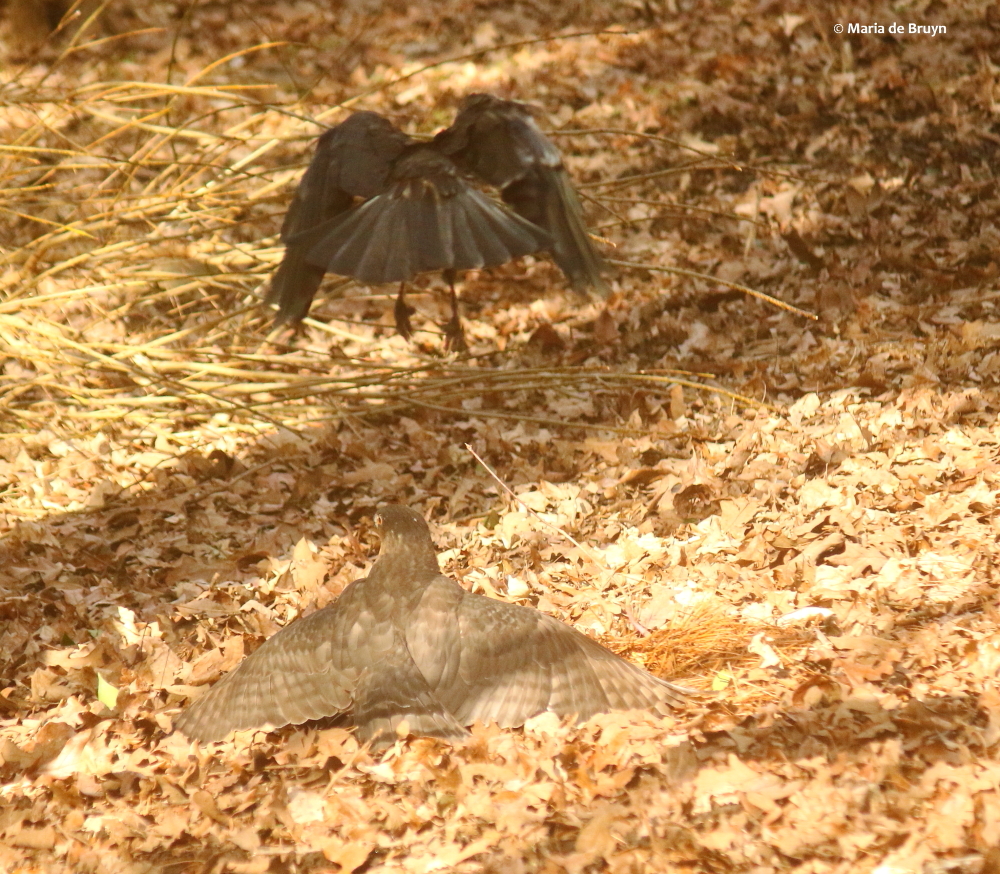
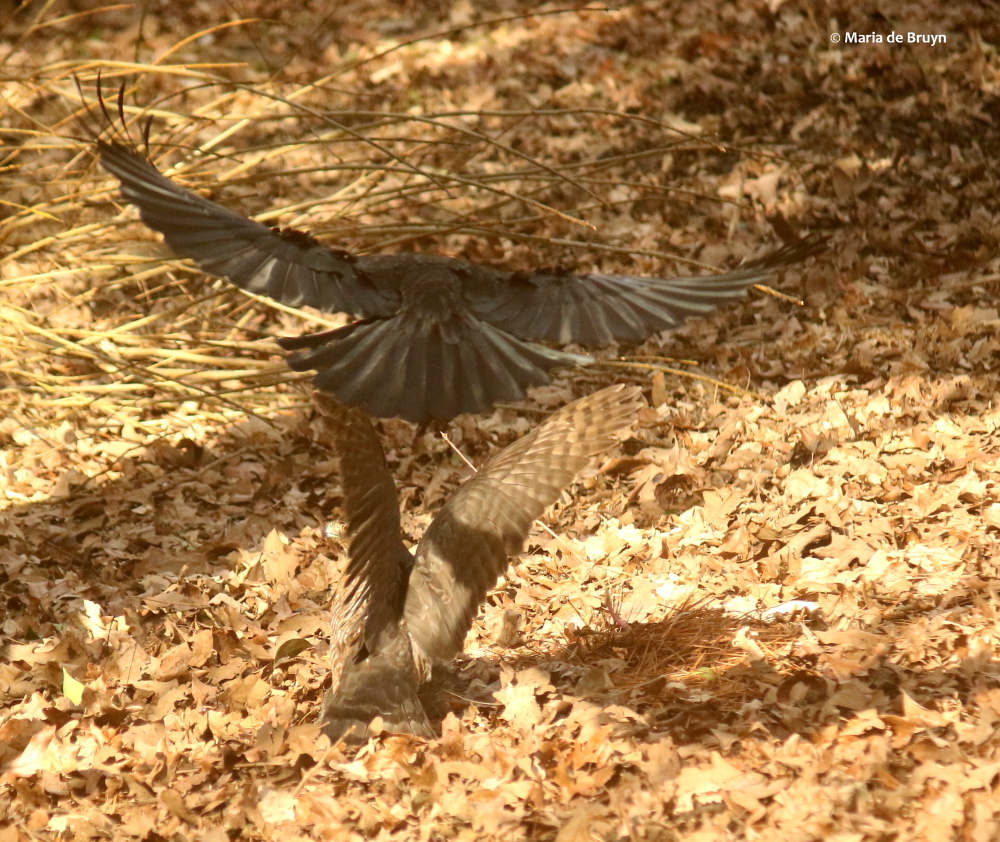
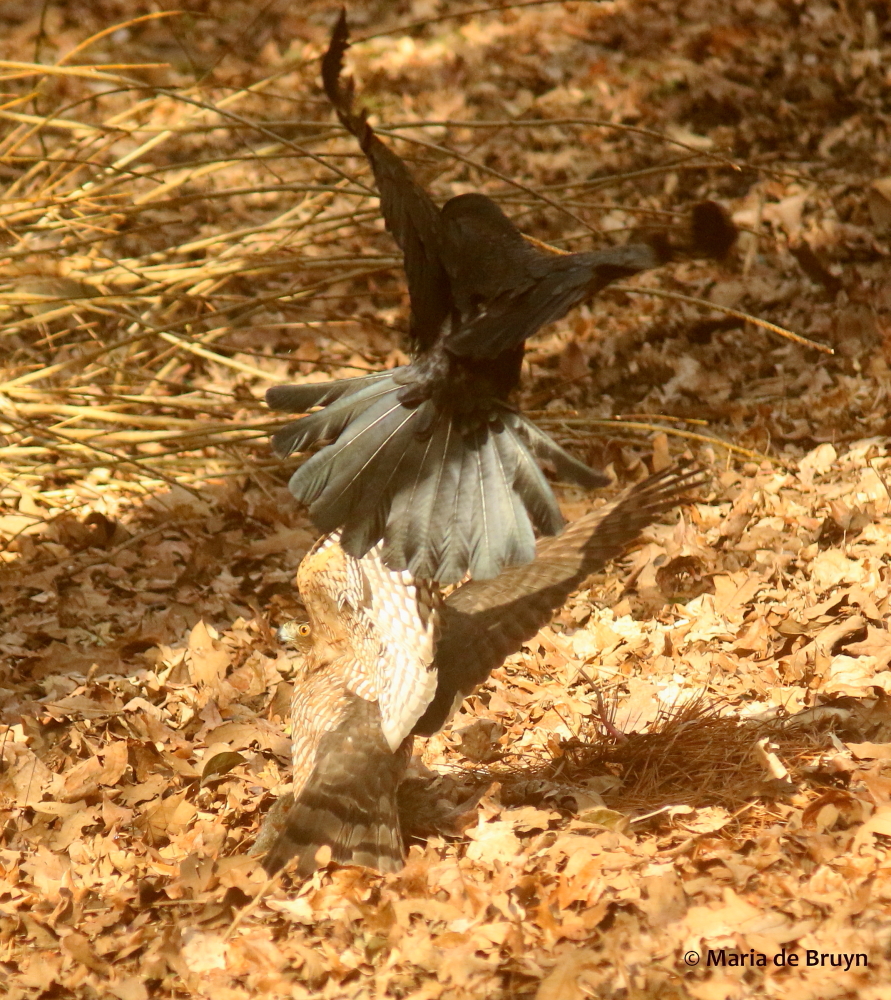
A couple weeks ago, our neighborhood family of American crows (Corvus brachyrhynchos) was making a racket in my yard and when I looked out the window, I could see them harassing a hawk. I couldn’t make out why they were so angry but grabbed my camera for some shots through the window.


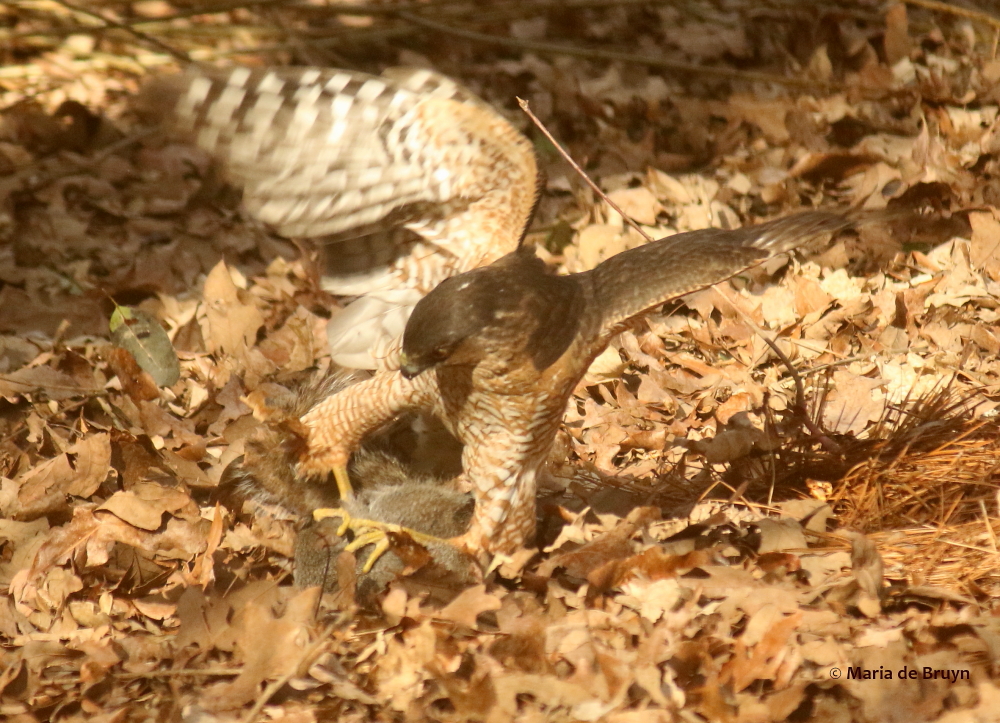
It turned out that the Cooper’s hawk had caught one of the numerous Eastern gray squirrels that live here. The squirrels sometimes annoy me but on the whole, I enjoy watching their antics, so I felt badly for this squirrel, who obviously was not going down without some struggle.

What made it easier for me to watch was that I didn’t really see the squirrel’s head and it was not making a sound. I think the hawk had silenced it early on when it had its claws around its neck and chest.

The hawk was determined and kept hold of the rodent, eventually subduing it.

The hawk as not unscathed, however, as you can see from the wound on its leg.

When the raptor flew off suddenly with the squirrel hanging from its talons, the three crows chased it in hot pursuit. I don’t know if they were just upset that the hawk was present or if they wanted to steal the squirrel away. On walks through the neighborhood, I am now regularly seeing the hawks in trees and on power lines. They are not too shy and seem to be adapted to the human presence in their territory.


While I may be feeling a bit wary for the other animals and birds when the stunning raptors appear, it still is a thrill to see one up close. Only about half of the red-shouldered chicks make it through their first year of life, so I hope the hawks keep coming by. And who knows, maybe we will have some of the long-lived birds who can reach an age of 15-19 years!


Surprise gifts from Mother Nature in 2018 – part 2: non-avian wildlife!

Birding is an activity I enjoy, especially since I can usually spot at least one bird during my outdoor excursions. I’d prefer to call myself a “wildlifer” rather than a “birder”, however, since all kinds of other wildlife also fascinate me. Here is a selection of some wildlife surprises and new species I saw last year, including a new plant – the honeyvine milkweed (Cynanchum laeve).


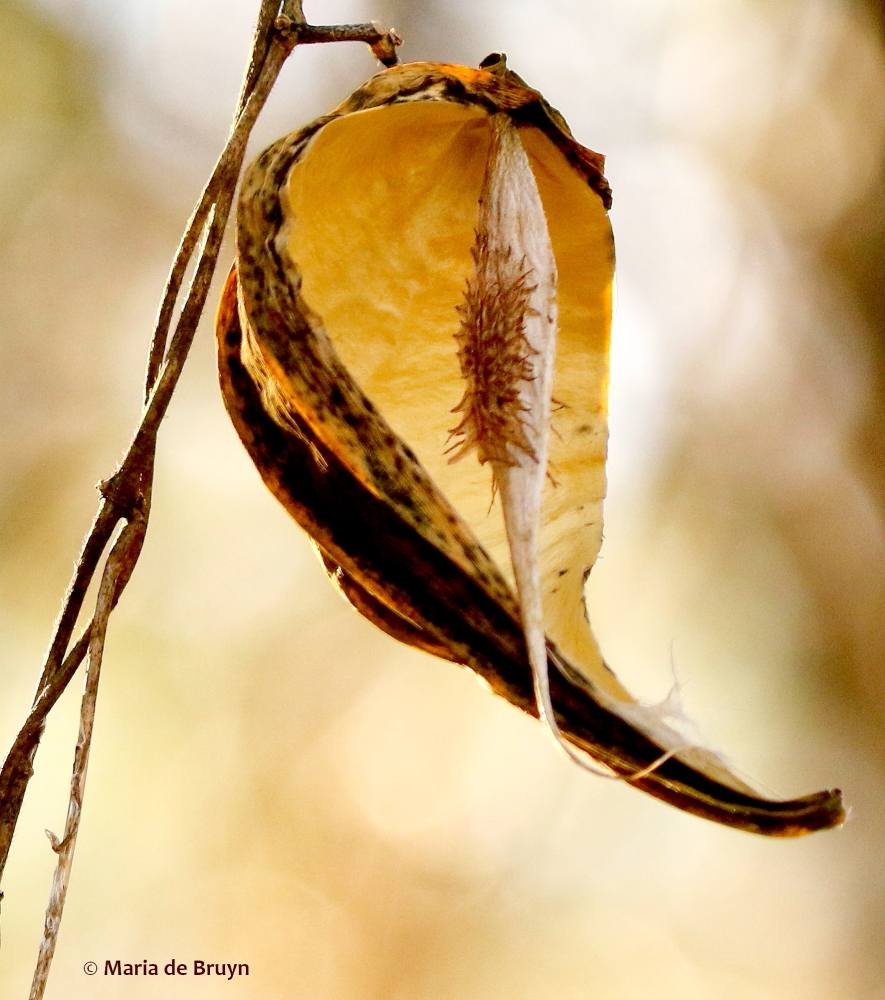
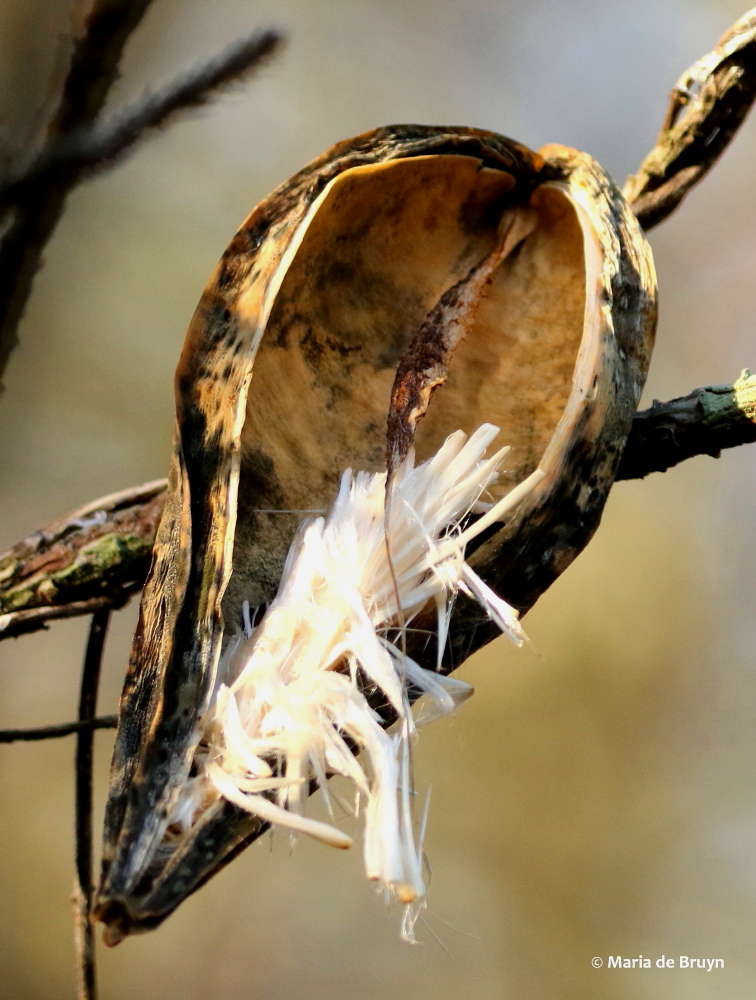
This vine is sometimes described simply as a native plant that spreads by seed and long roots; other websites call it a noxious weed. It does perhaps spread quickly but it is also a food source for monarch butterfly caterpillars so it seems like a desirable plant to me.

This mushroom was another one of my favorite vegetation spottings last year – it looks to me as if it is an animal with large ears.

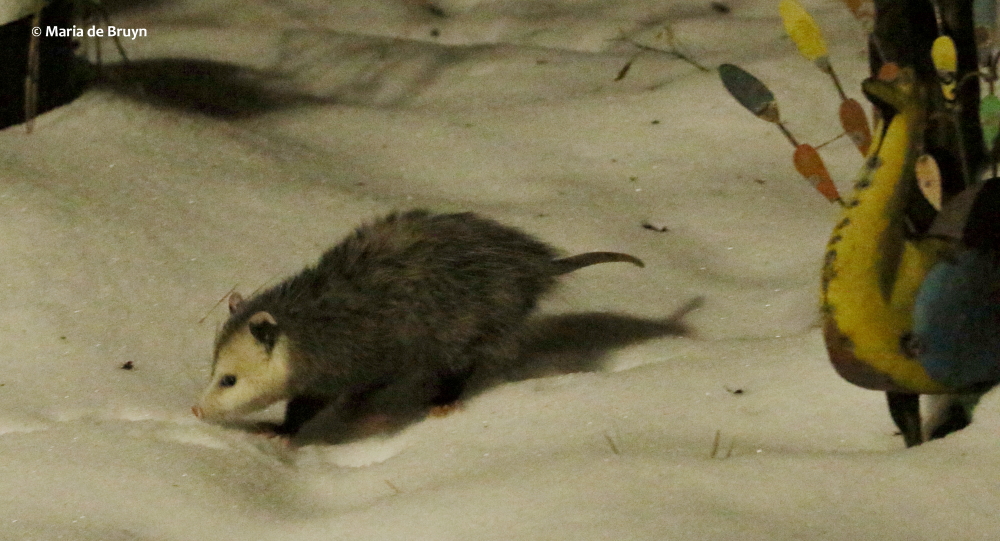
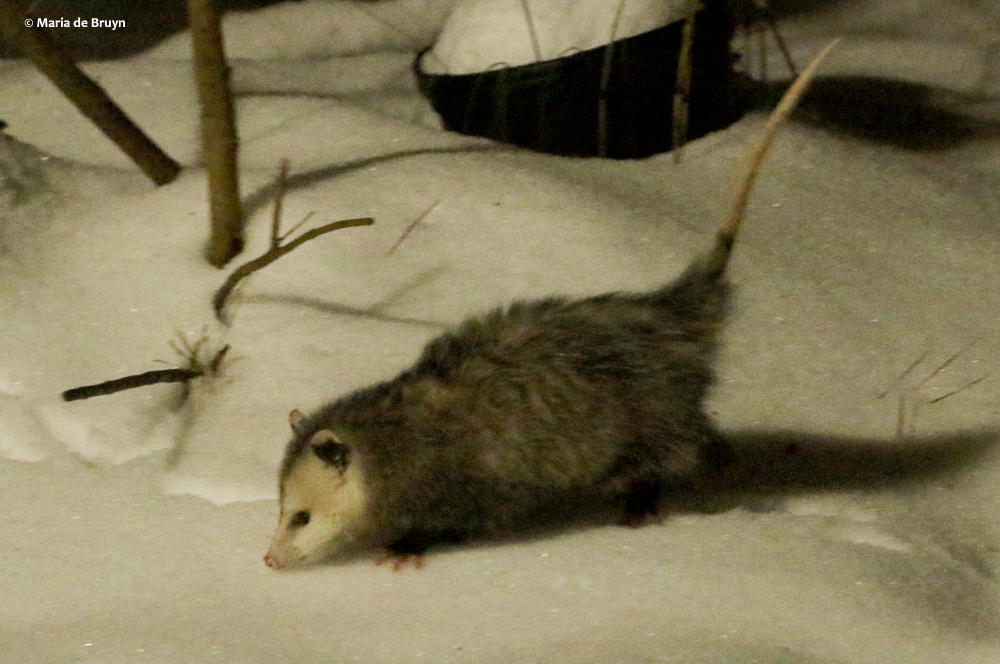
Mammals are favorites of mine but I only see a restricted number regularly – white-tailed deer, Eastern squirrels, raccoons, Eastern chipmunks. When I get to see an opossum (Didelphis virginiana) – like one who visited the yard at night during our early December snowstorm, it was a treat. It seems many people dislike North Carolina’s state marsupial (and the only marsupial in North America) but it is a valuable neighbor since it eats up to 4000 ticks a week. There likely weren’t many ticks around for it to eat but I hope it found something for a meal!


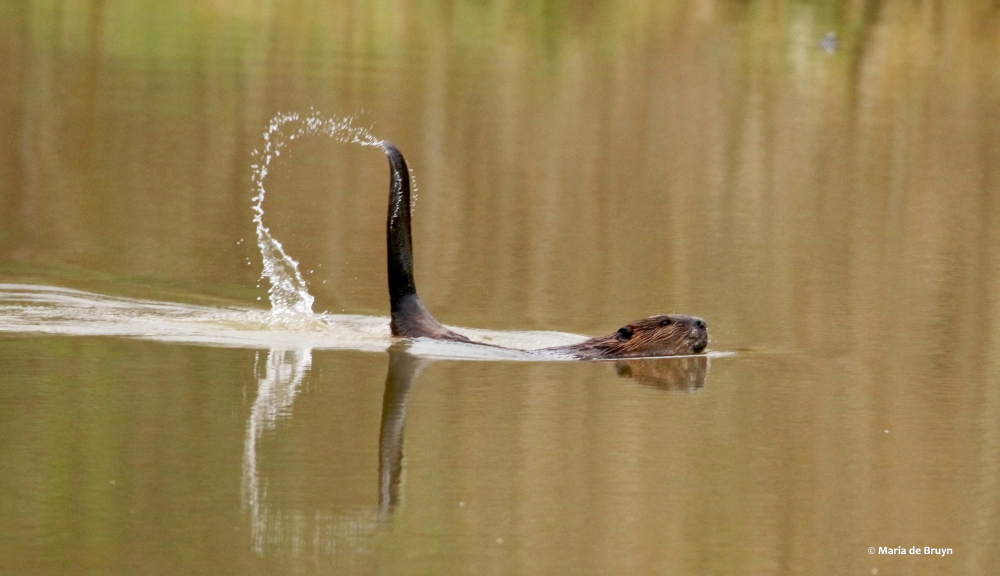
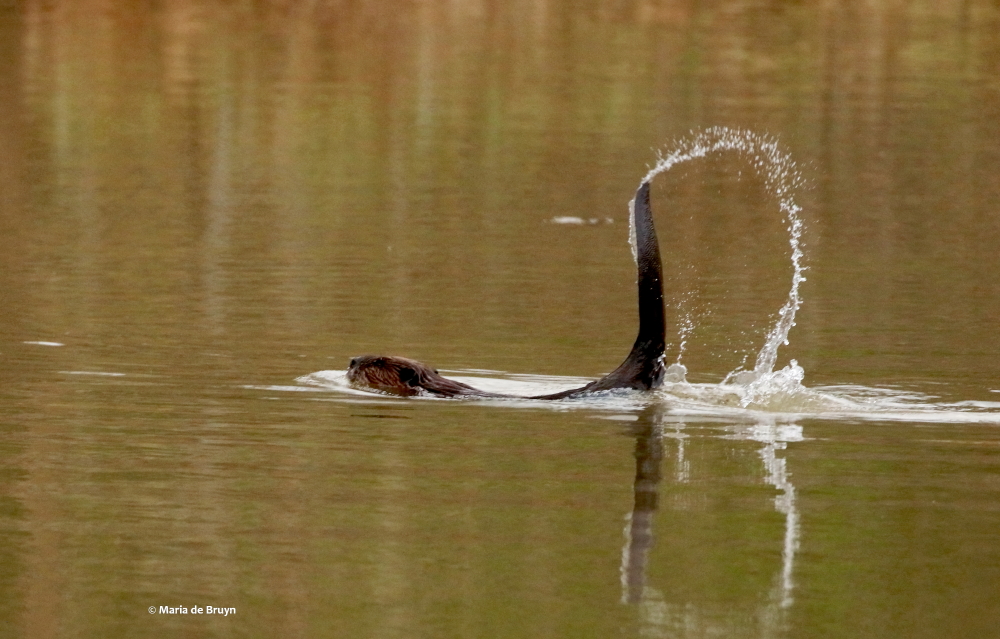
This past year was my “year of the beavers” as I had a chance to follow these nature landscape architects in three different places. And as mentioned in a previous blog, I was so thrilled to get a shot of the warning tail-slapping behavior.


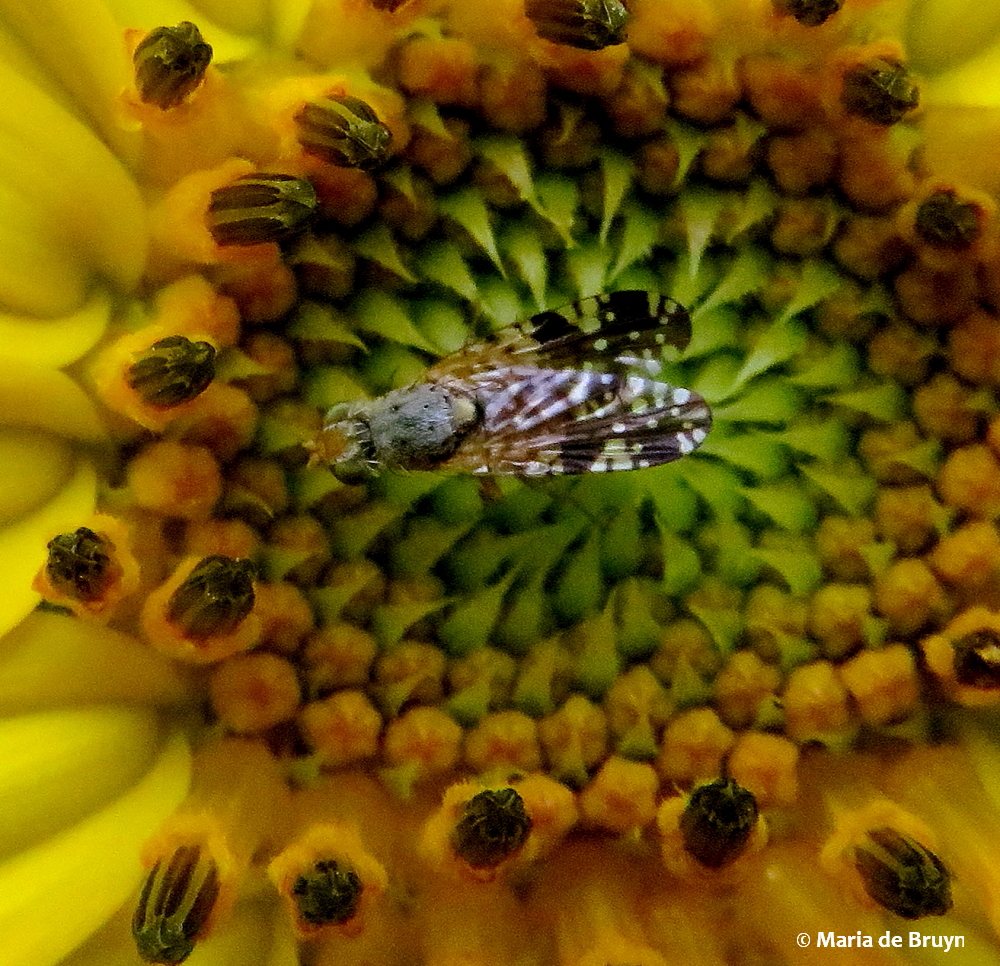
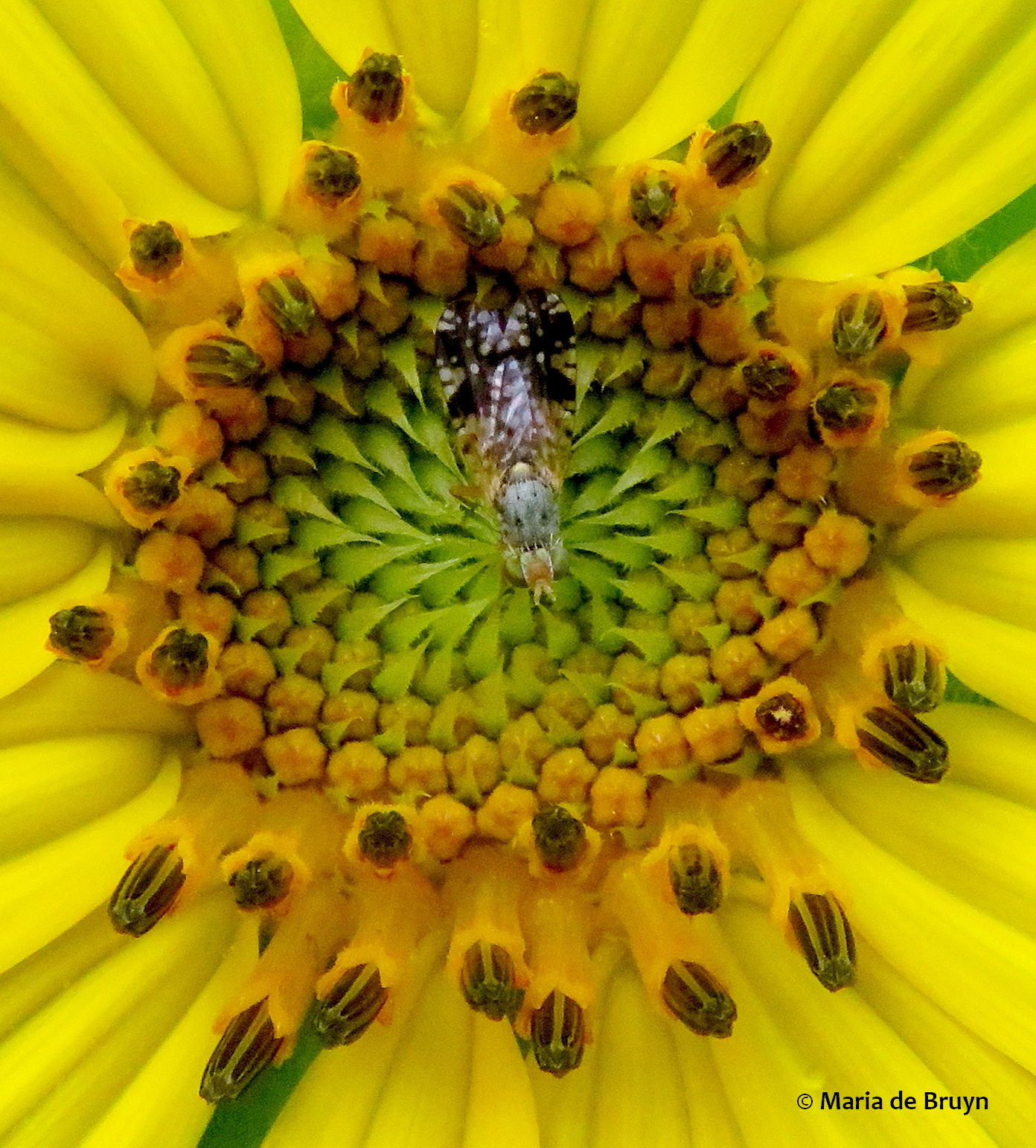
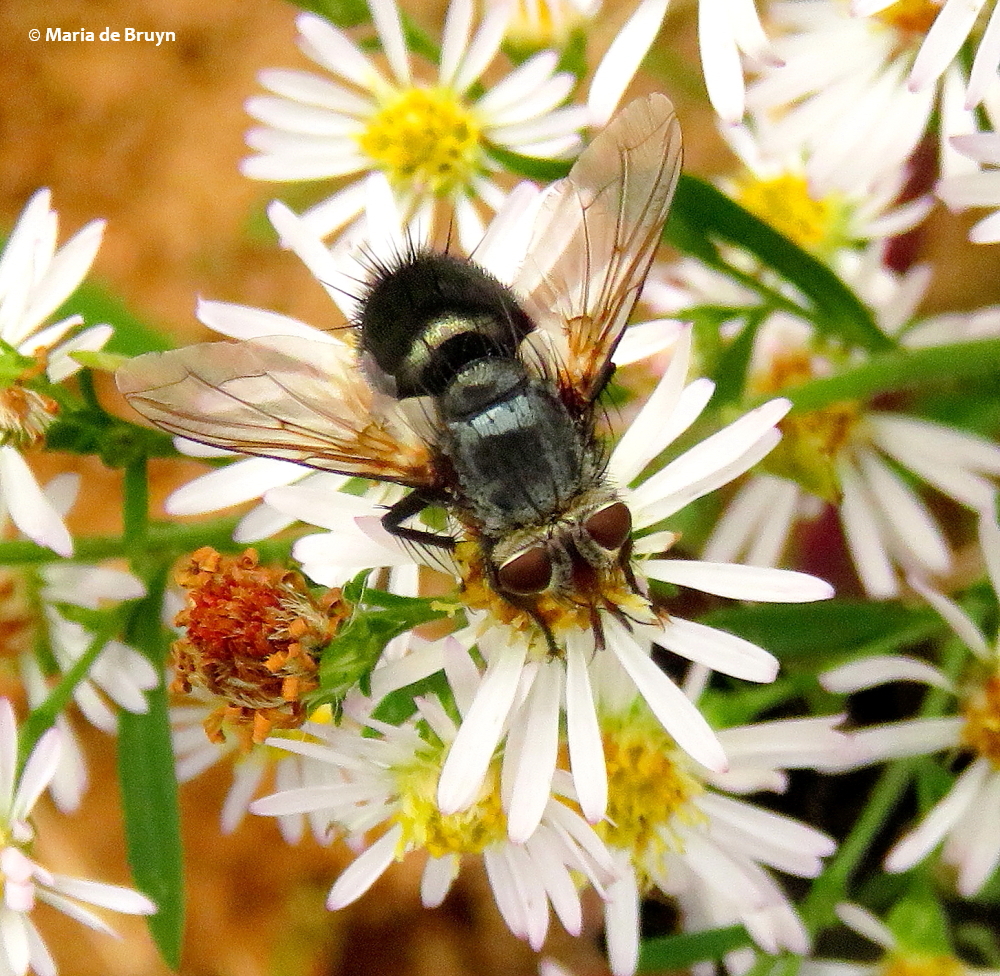
2018 was a good year for seeing new insects. Some are so tiny that you can’t really see their body patterns without magnification. Here are a few of my “discoveries”. The flies can be very interesting.

Sunflower seed maggot fruit fly (Neotephritis finalis)


Parasitic fly (Archytas)

2018 was a year for learning about reproduction among the bugs; not only did I see caterpillars but also chrysalids and arthropod parents caring for offspring. The green lynx spider (Peucetia viridans) is a very attentive mother; she often hangs her egg sac from a grass stalk and then encircles it with her body to keep predators away.

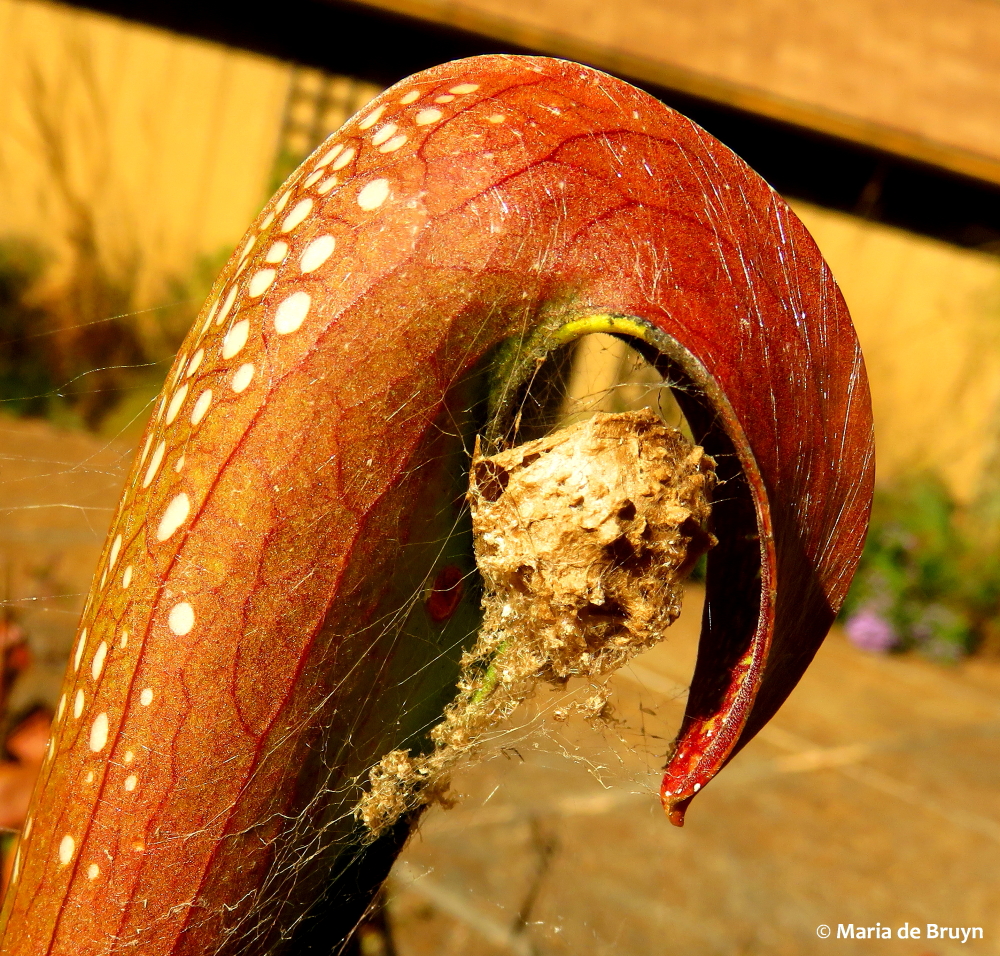
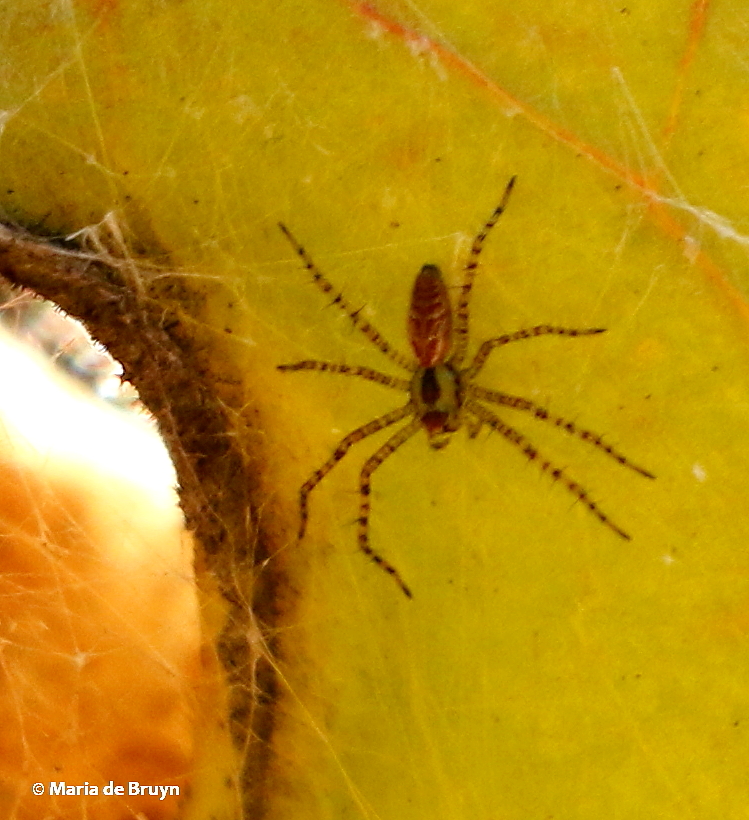
One green lynx at the NC Botanical Garden placed her egg sac underneath the “lid” of a pitcher plant and then hung out on that and neighboring plants to keep an eye on the sac. I was lucky to see one of the babies after it hatched.

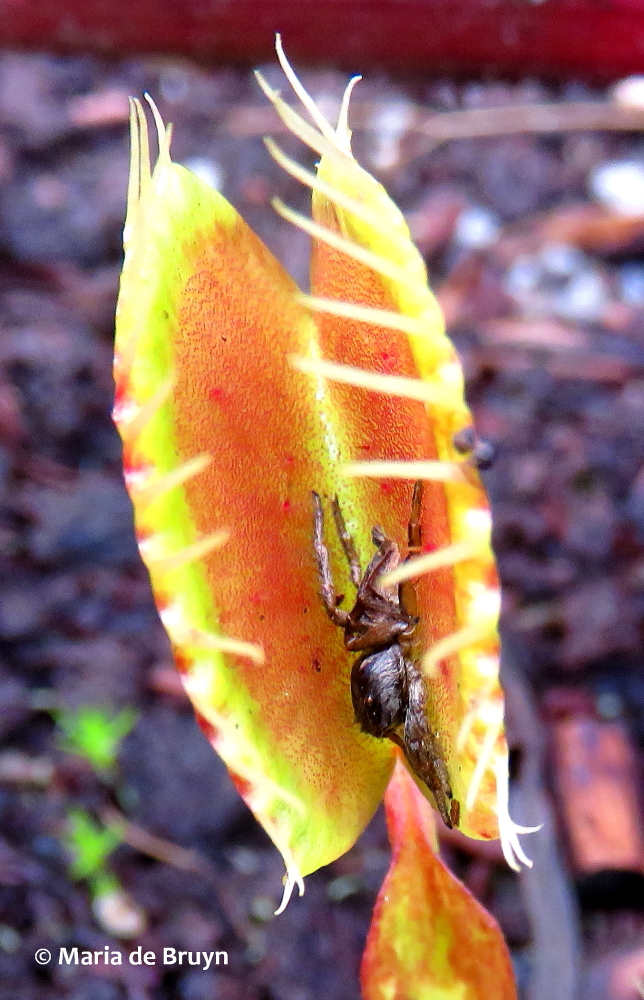
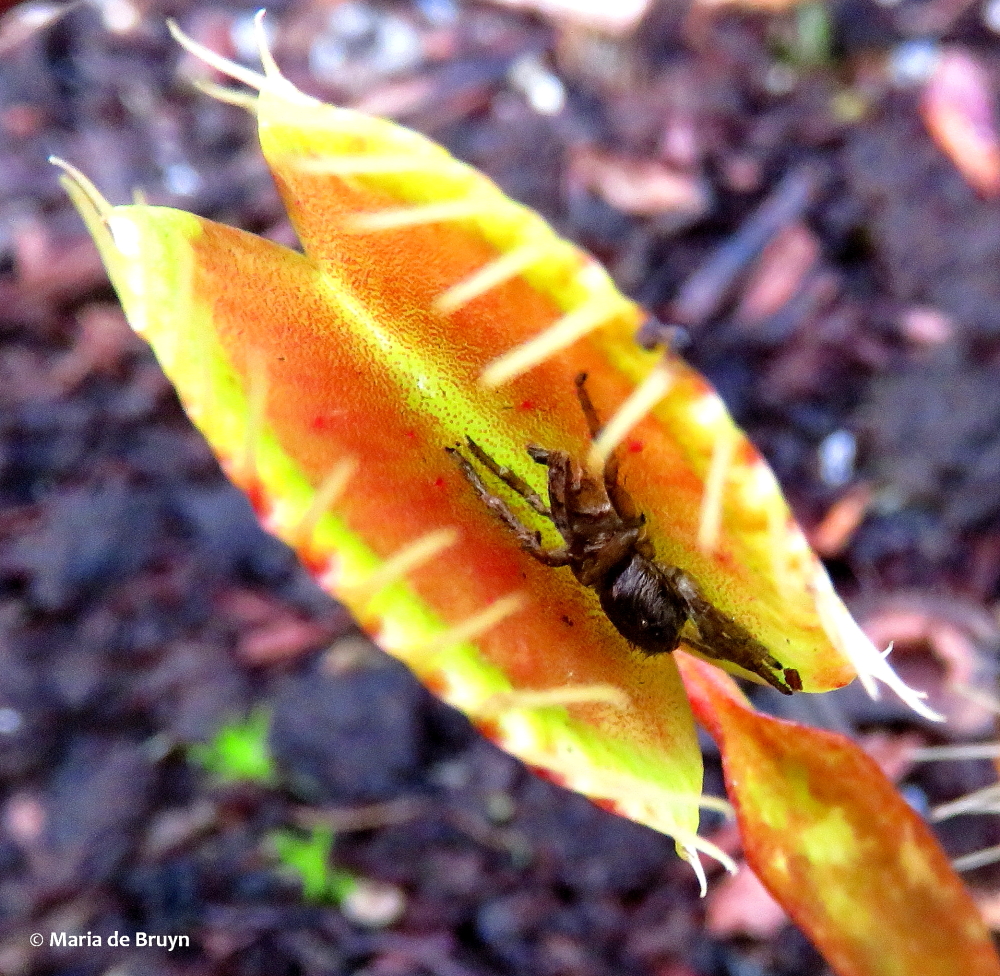
Another spider was not so lucky – it became a meal for one of North Carolina’s endemic “special plants”, the Venus flytrap (Dionaea muscipula).

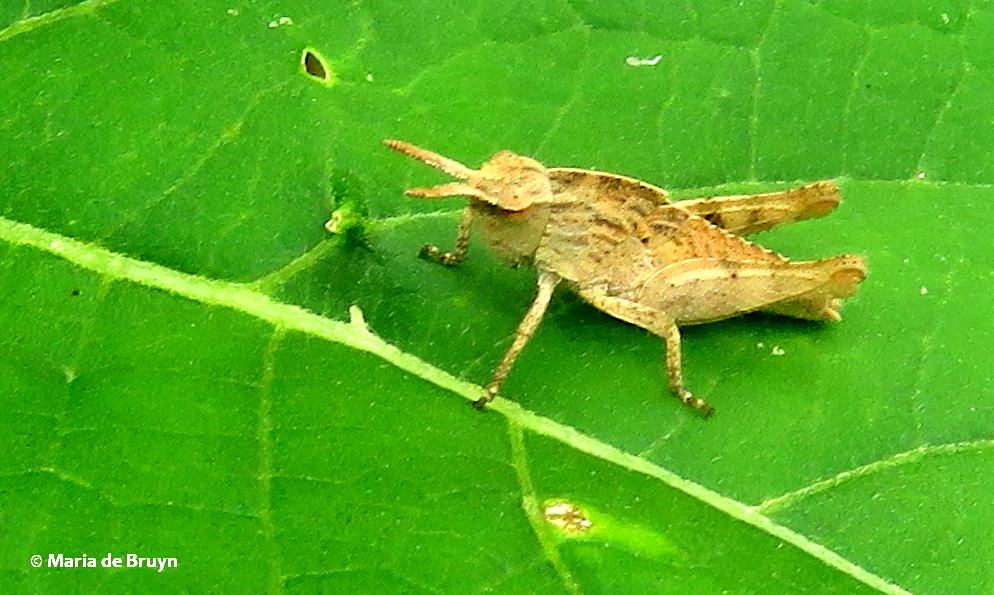
North Carolina has many species of grasshoppers; I saw several species this past year, including several mating pairs. Here is a young short-horned grasshopper.

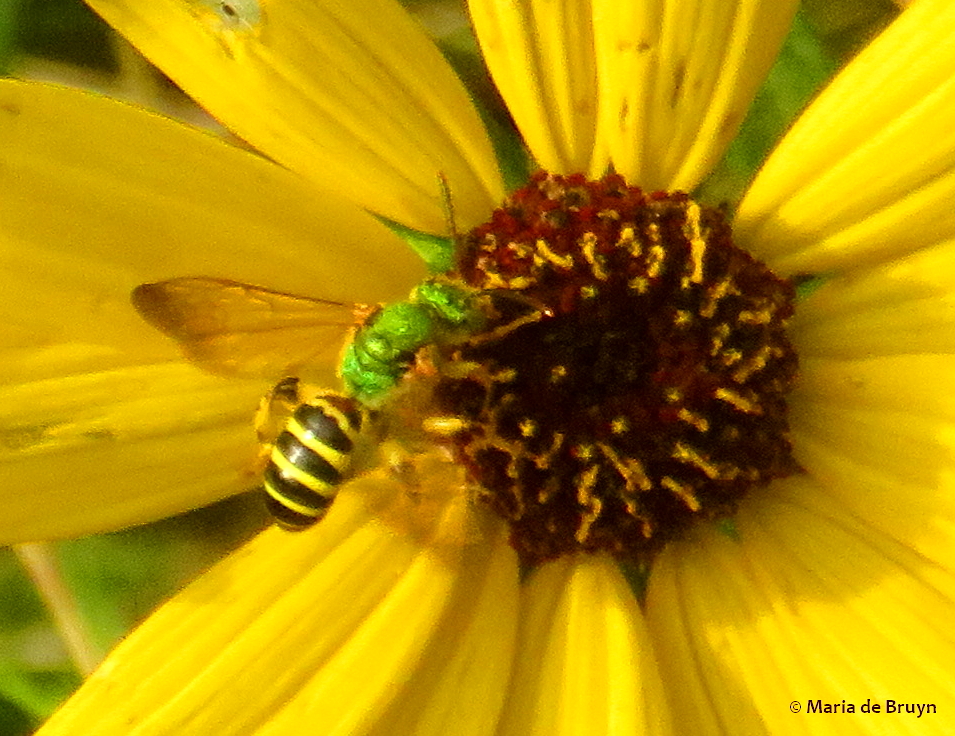
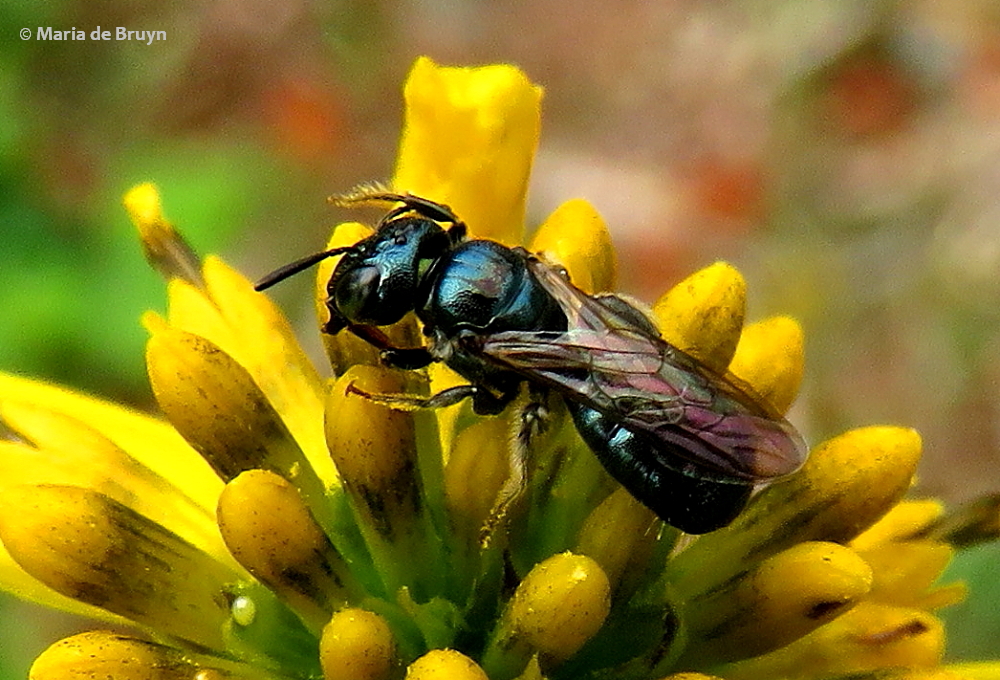
It’s always nice to see some pollinators.


Brown-winged striped sweat bee                        Small carpenter bee                                (Agapostemon splendens)                                   (Ceratina)


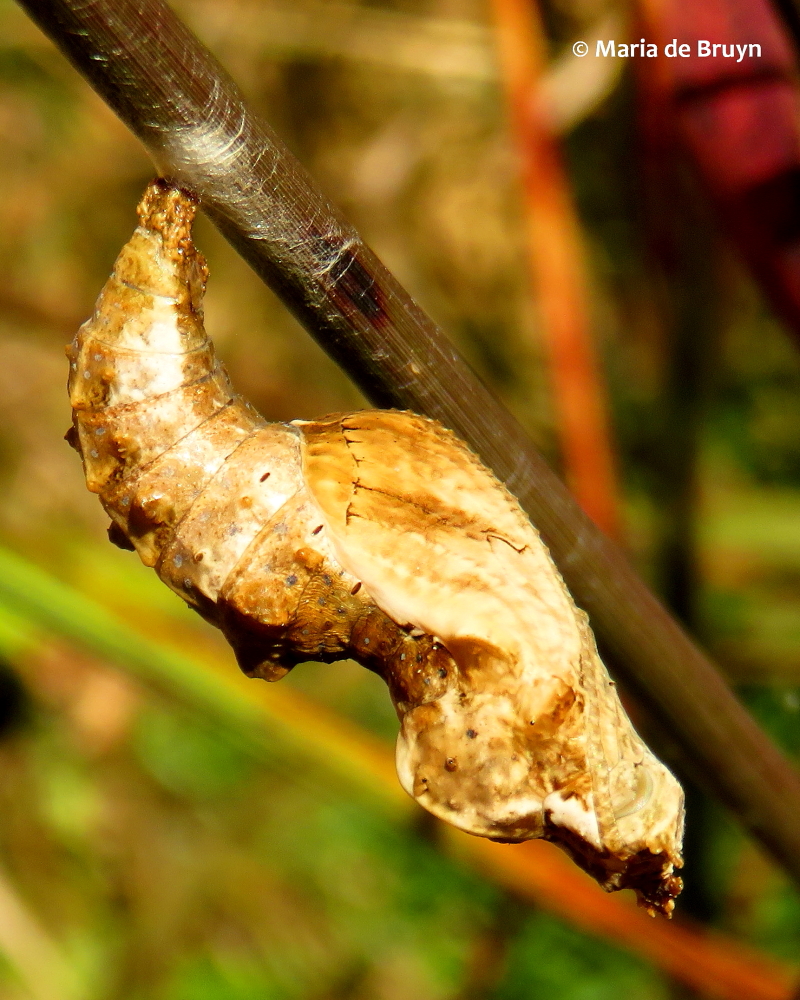
I got to see the chrysalids of two fritillary butterfly species, the variegated fritillary (Euptoieta Claudia, left) and the gulf fritillary (Agraulis vanilla, below).

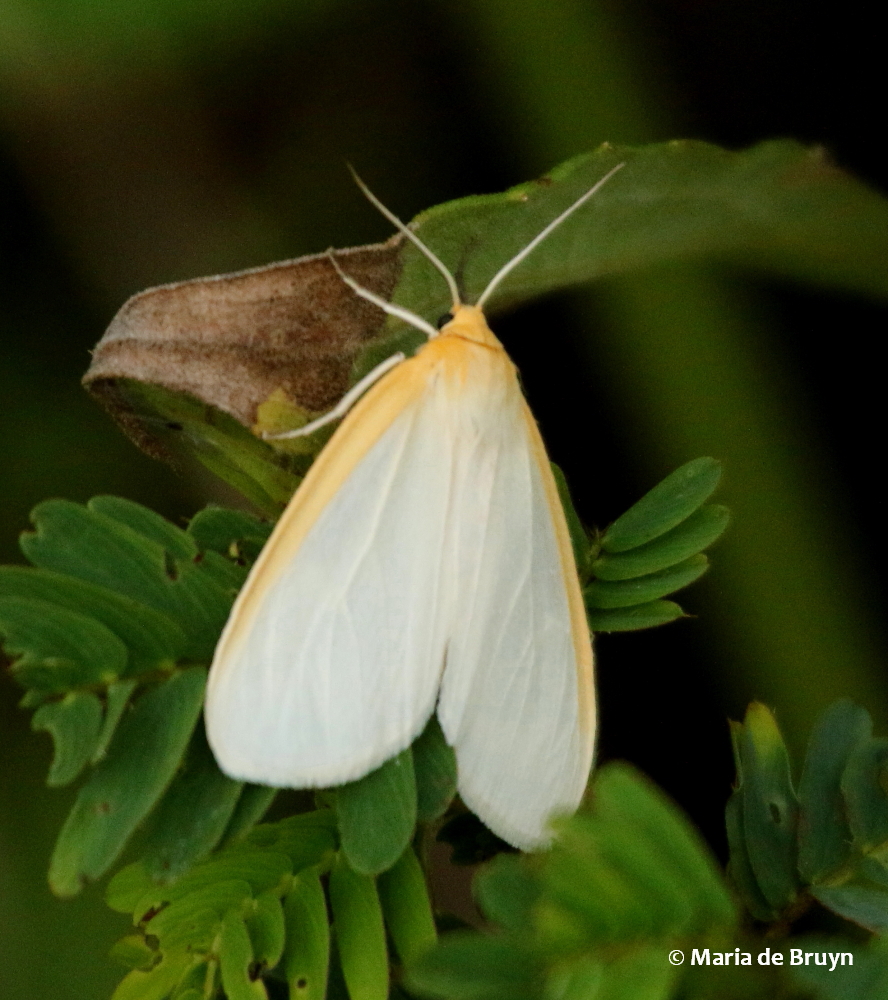
Sometimes, I think the moths get a bum rap, being seen as poor cousins to the “beautiful butterflies”. But there are many really beautiful moths, like the lunate zale moth (Zale lunata) and delicate cycnia moth (Cycnia tenera).


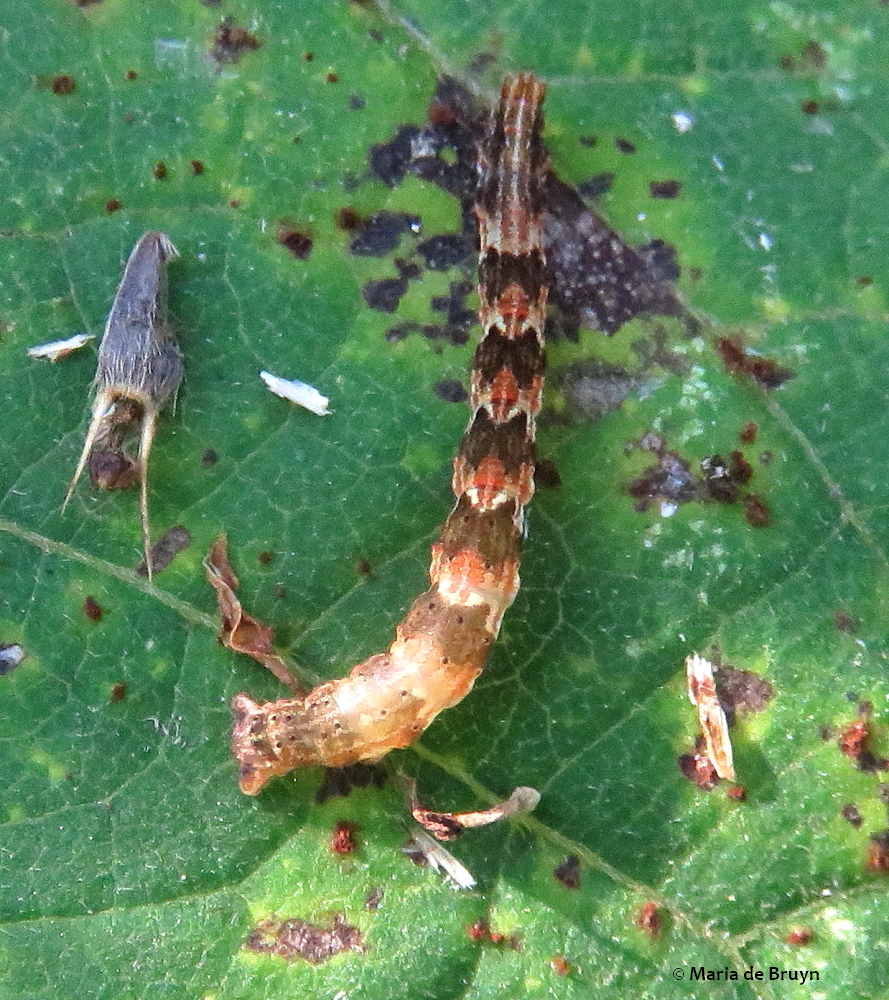
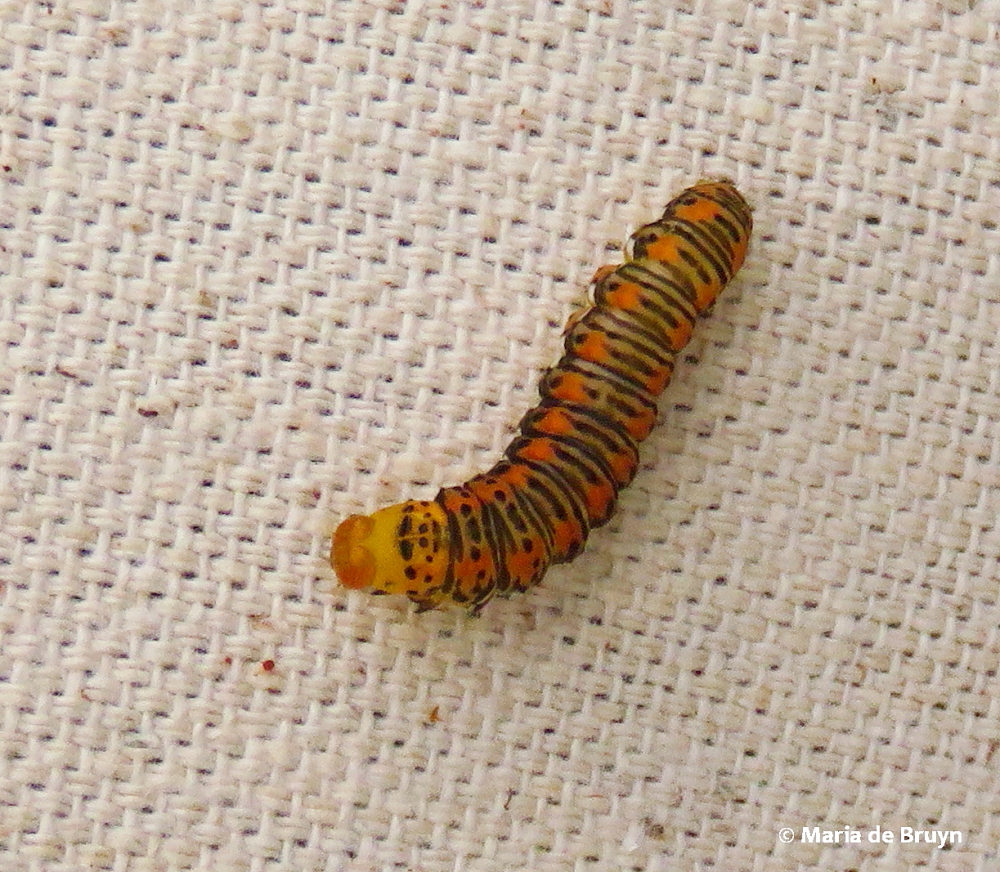
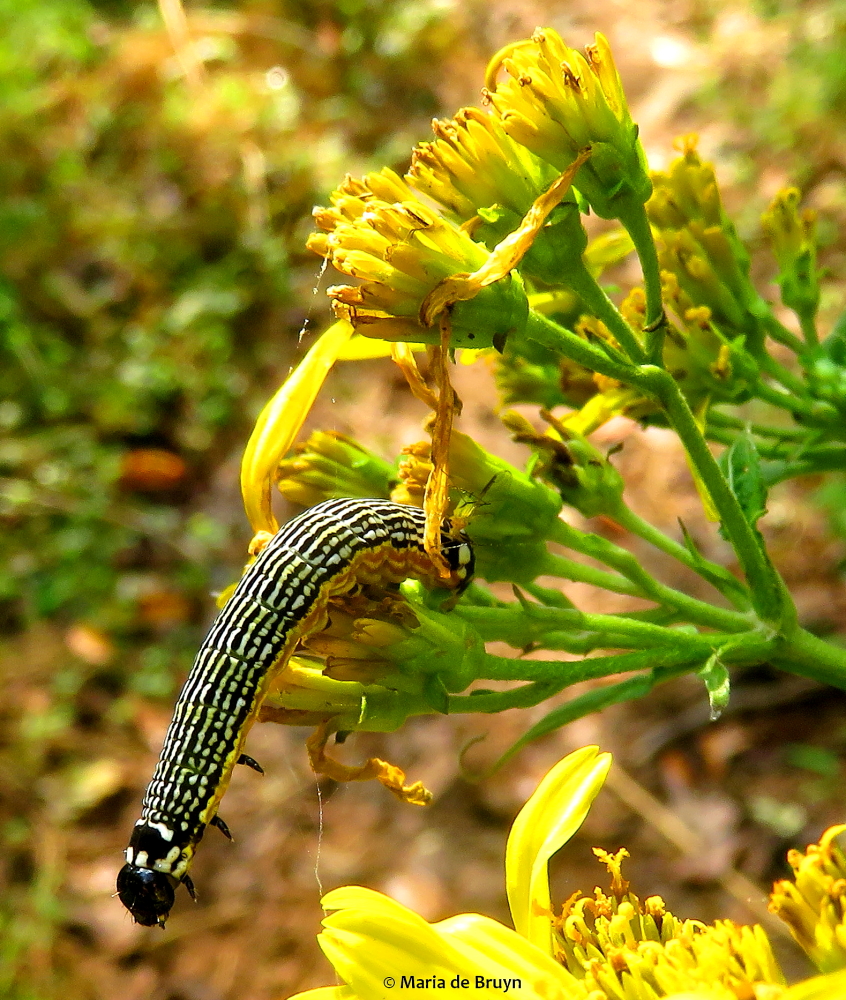
I got to see several moth caterpillars this year; the experts at BugGuide were very helpful in identifying them for me.


Common tan wave moth                           Gold moth caterpillar  (Basilodes pepita)          (Pleuroprucha insulsaria)

 
Turbulent phosphila moth caterpillar (Phosphila turbulenta)

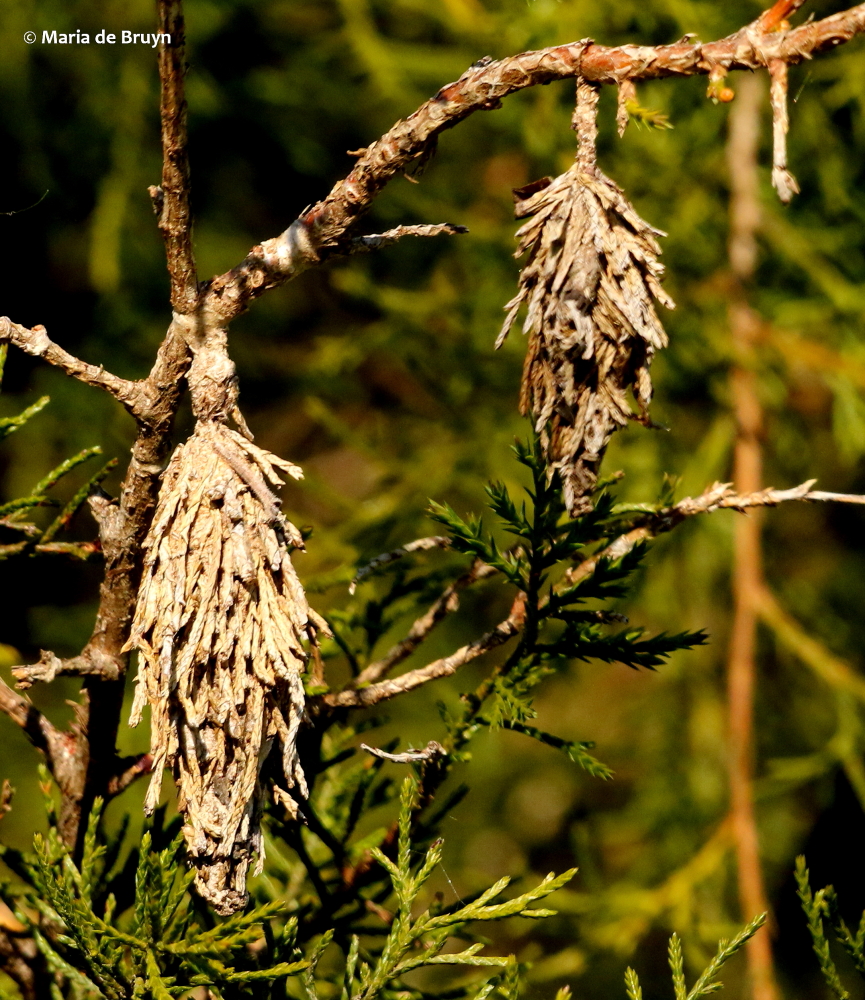
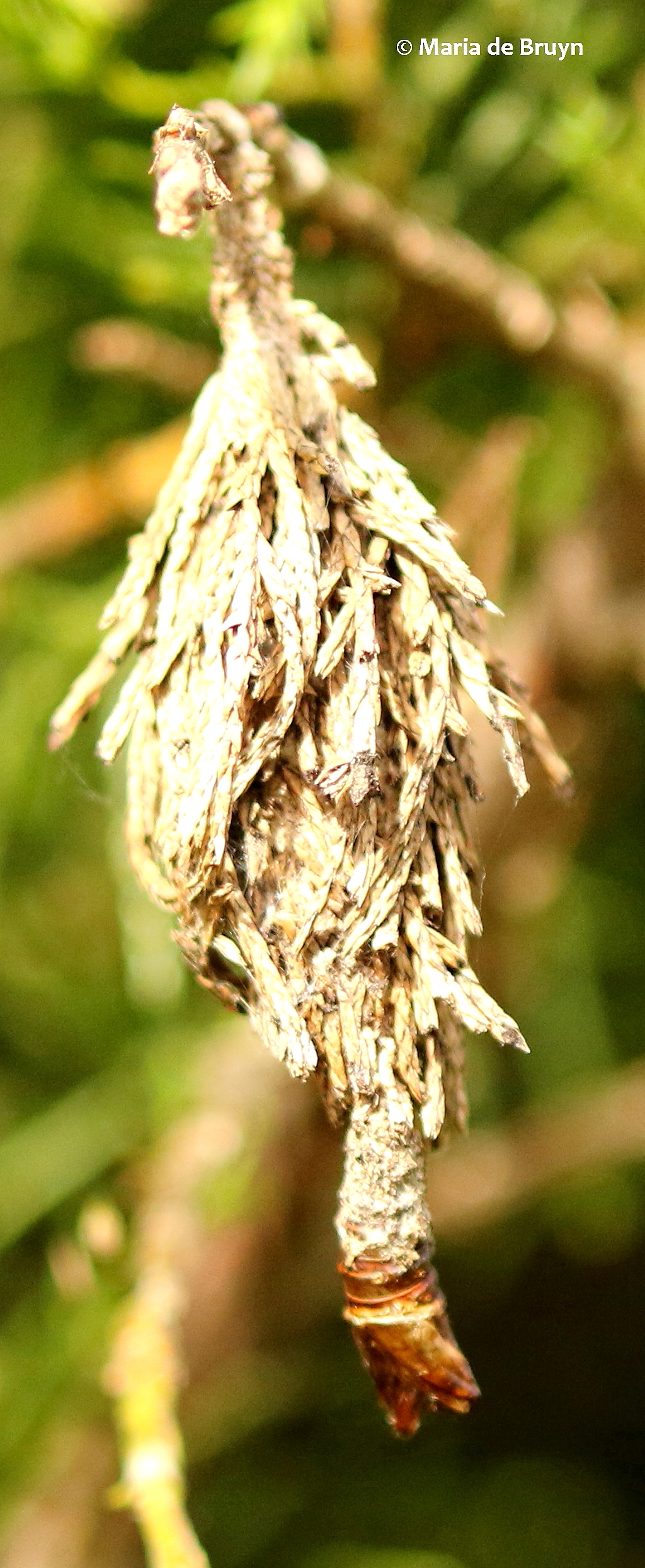
For the first time, I got to see an evergreen bagworm moth (Thyridopteryx ephemeraeformis). There were several hanging out in trees next to a rural farm pond – they did not restrict themselves to an evergreen tree but hung themselves from a persimmon, privet and cedar tree. I think the last photo shows the caterpillar as it was completing the “bag” into which it would insert itself.


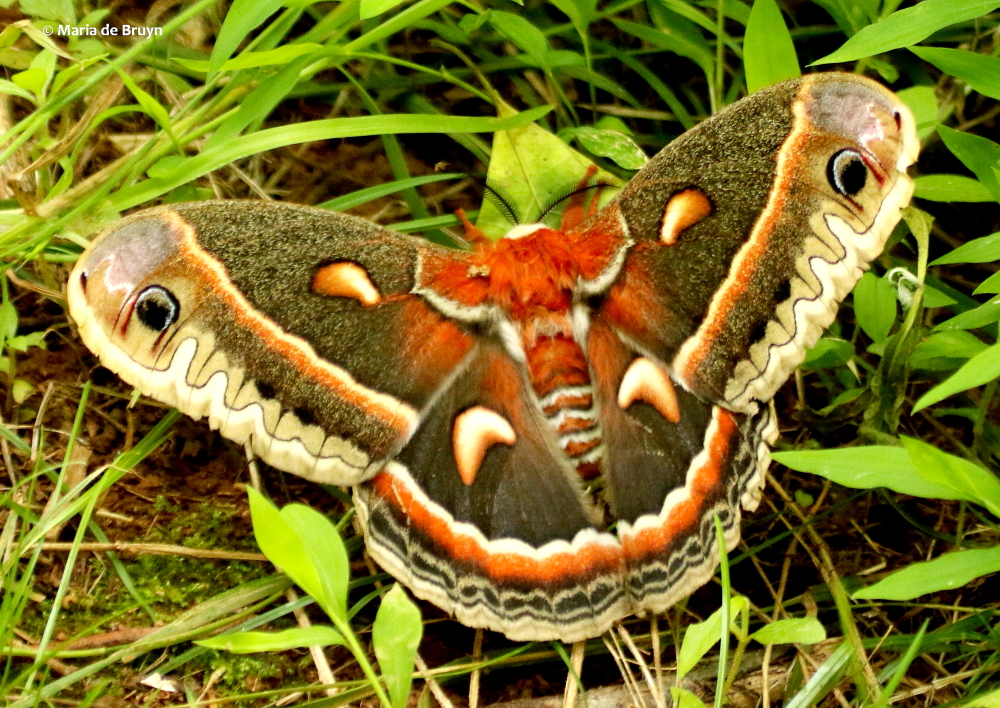
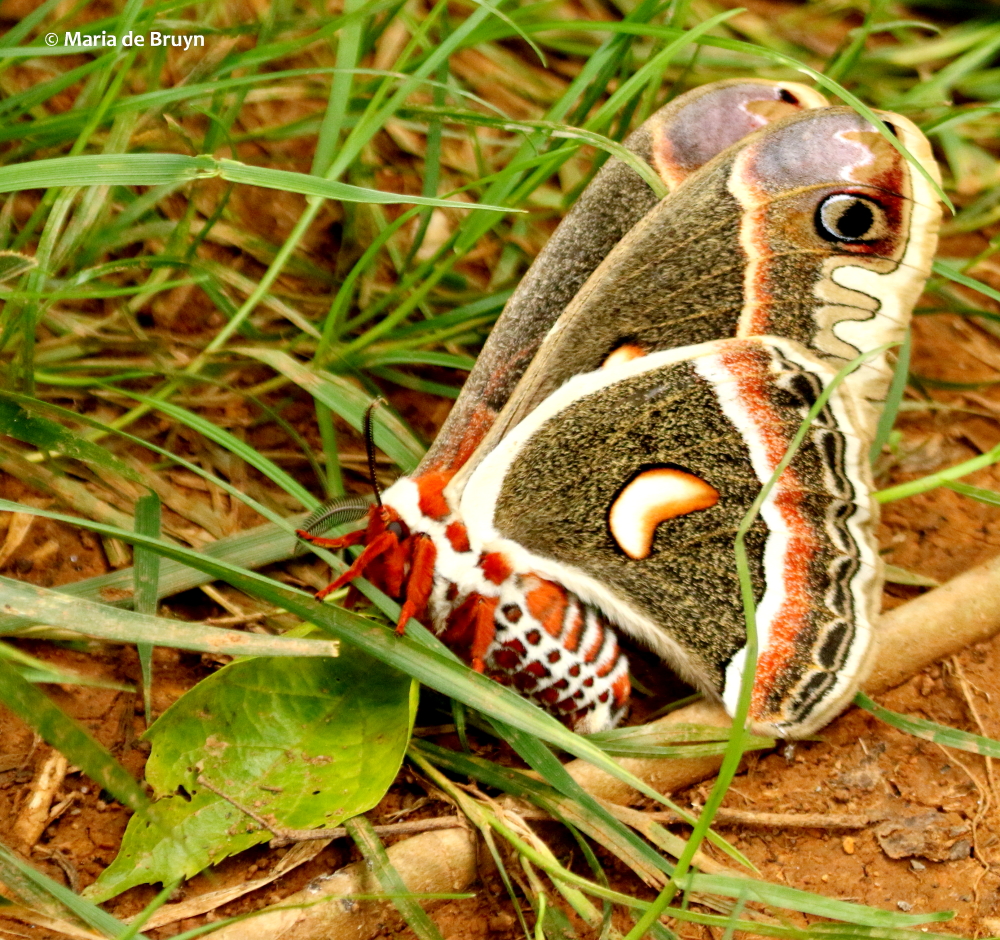
In the summer, I was lucky to see a cecropia moth (Hyalophora cecropia).


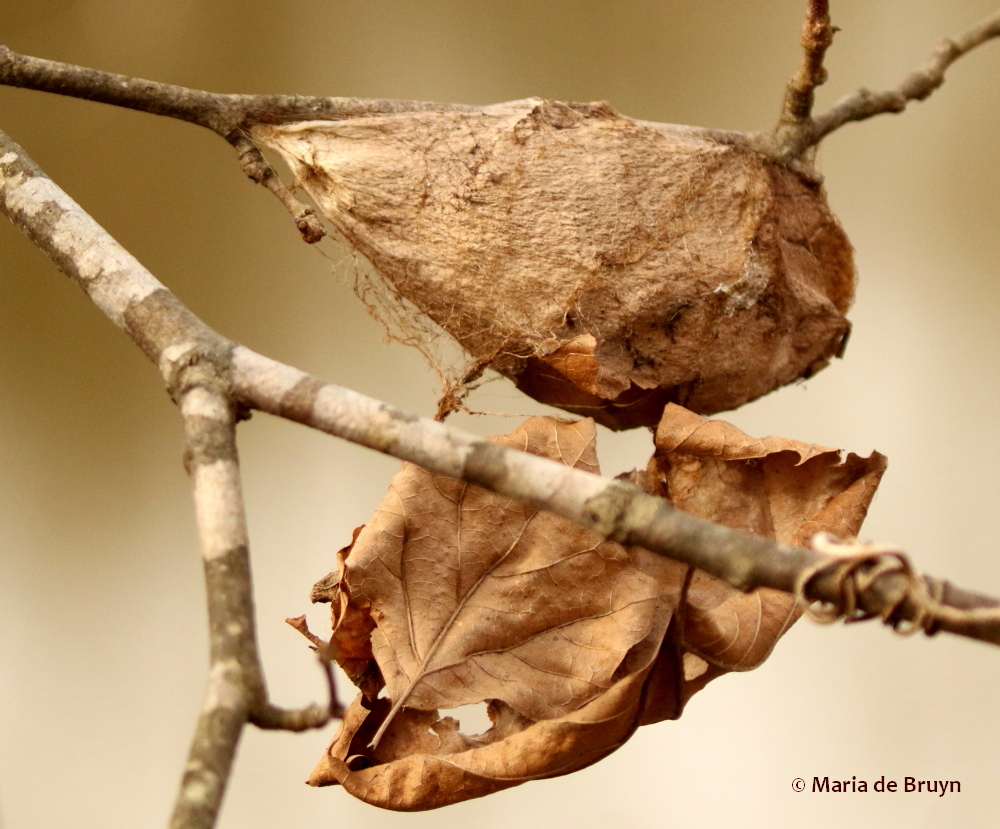
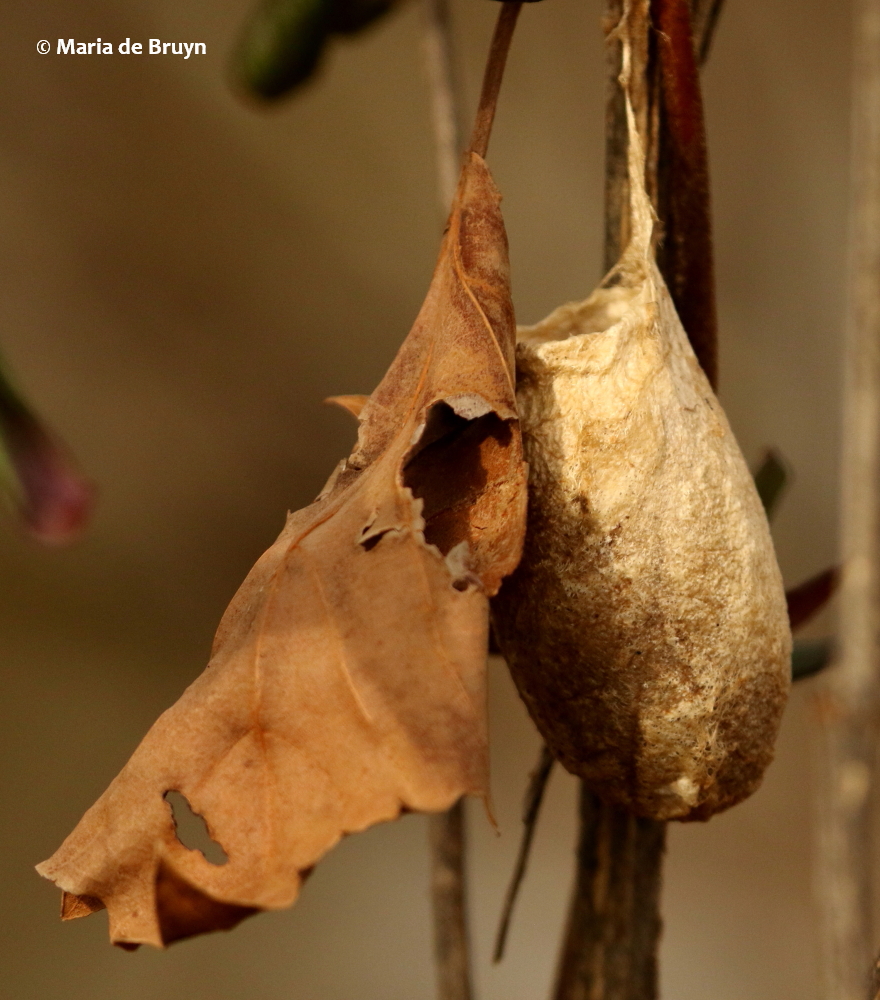
In December, I discovered two cecropia chrysalids, as well as the cup-like chrysalis of a polyphemus moth (Antheraea Polyphemus, which was empty).


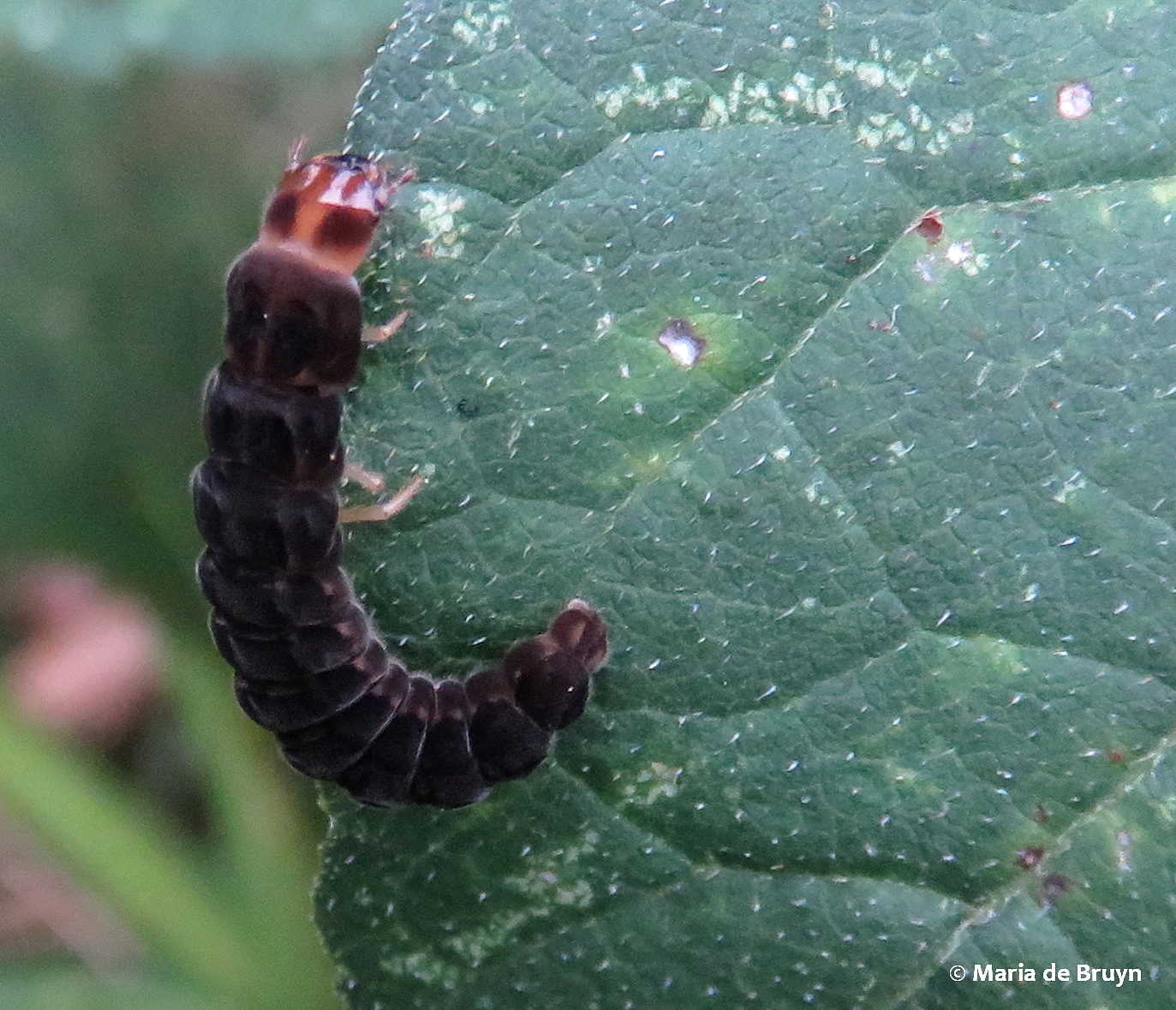
Another discovery was that the larvae of soldier beetles look like some type of caterpillar as well.

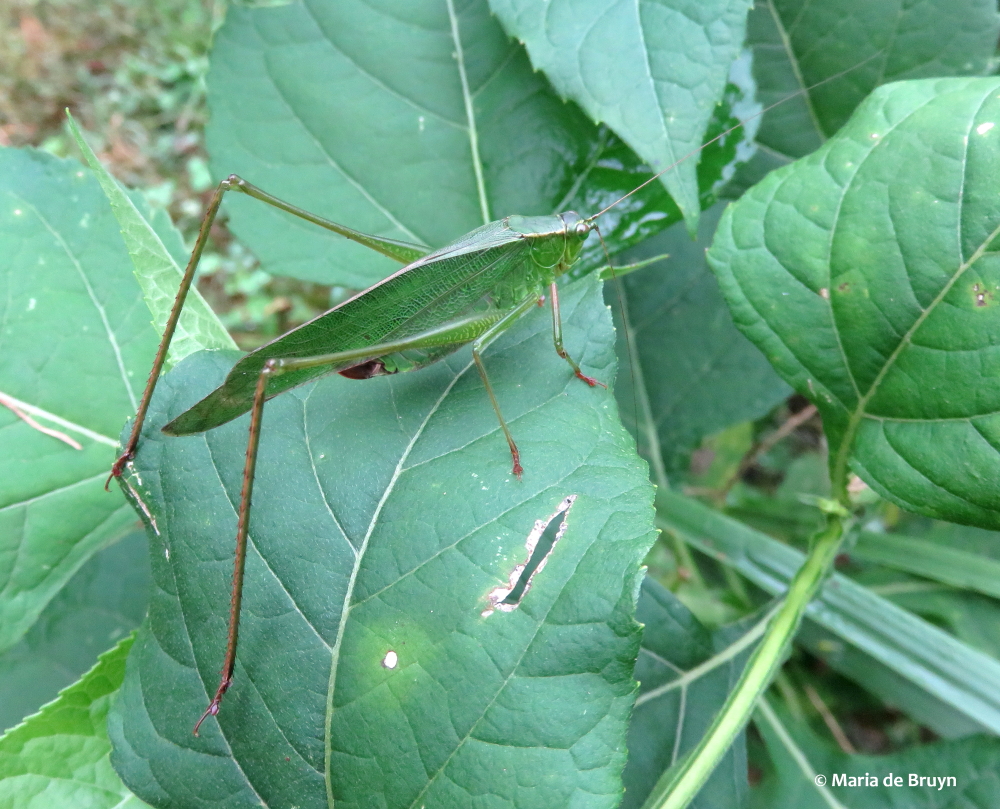
There were lots of katydids around, including the slender straight-lanced katydid (Conocephalus strictus) and the stockier Scudderia bush katydid.


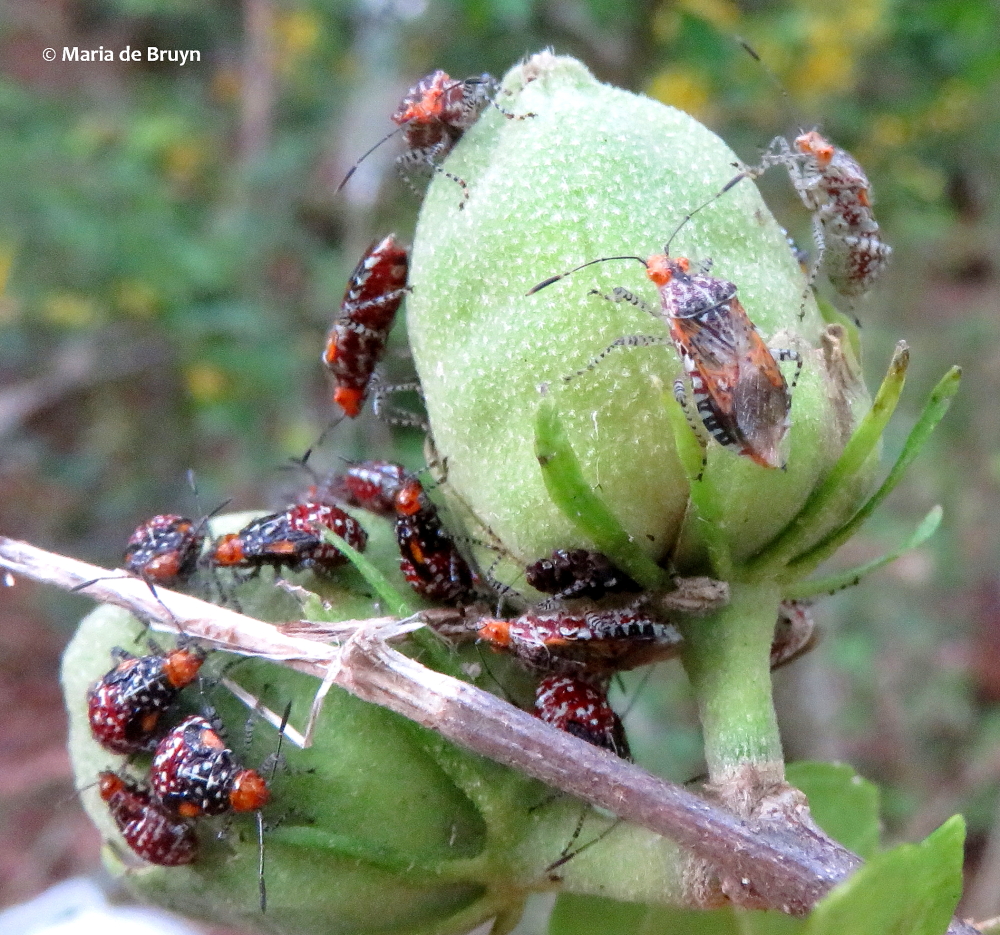
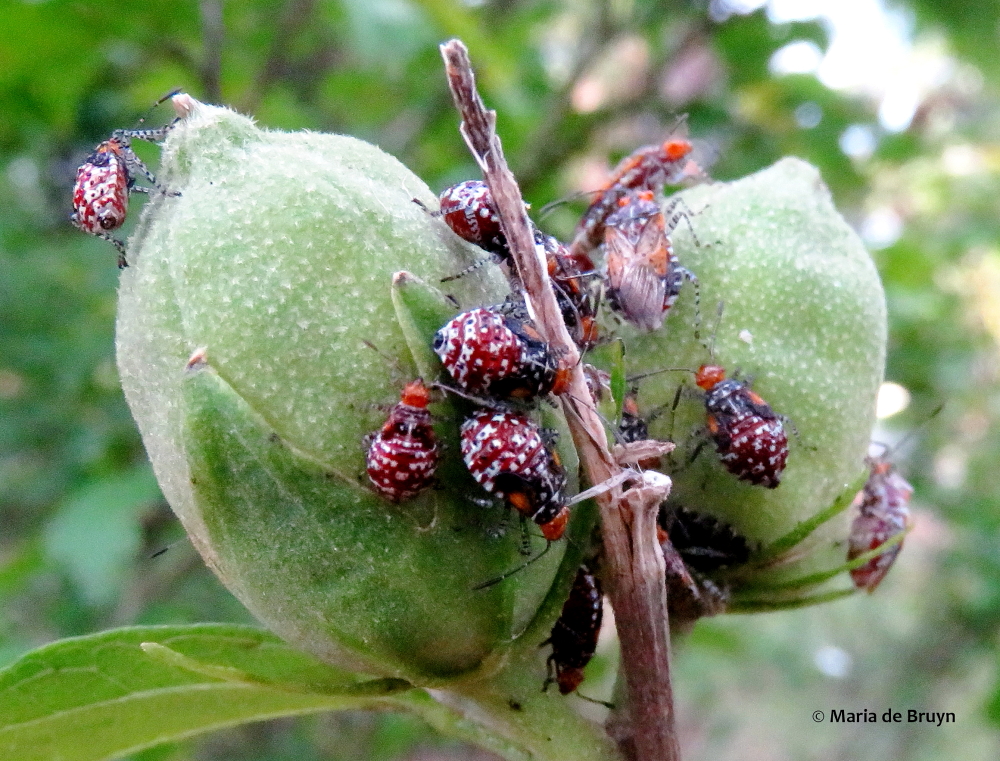
Some new bugs appeared in my yard, including a plant bug with muted colors (not yet identified to species) and some more colorful scentless plant bugs (Niesthrea louisianica) on my Rose of Sharon shrubs.


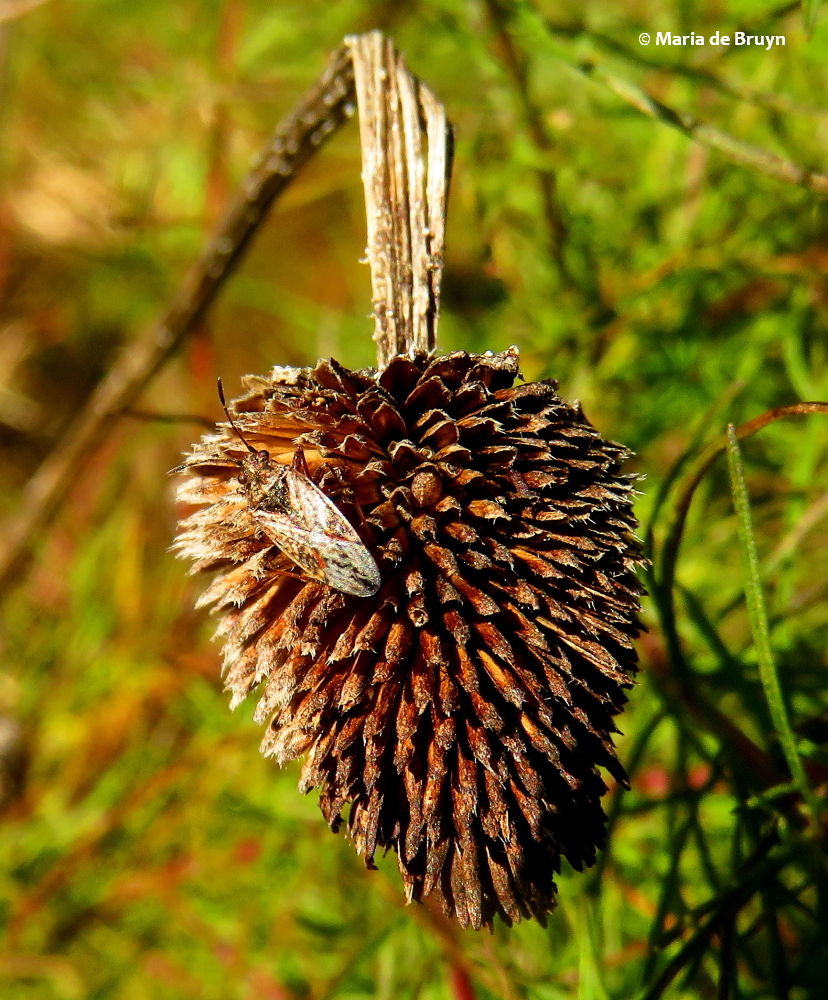
A seed bug on a seed pod and a head-on photo of a millipede (Narceus americanus-annularis-complex) were cool sightings, too.


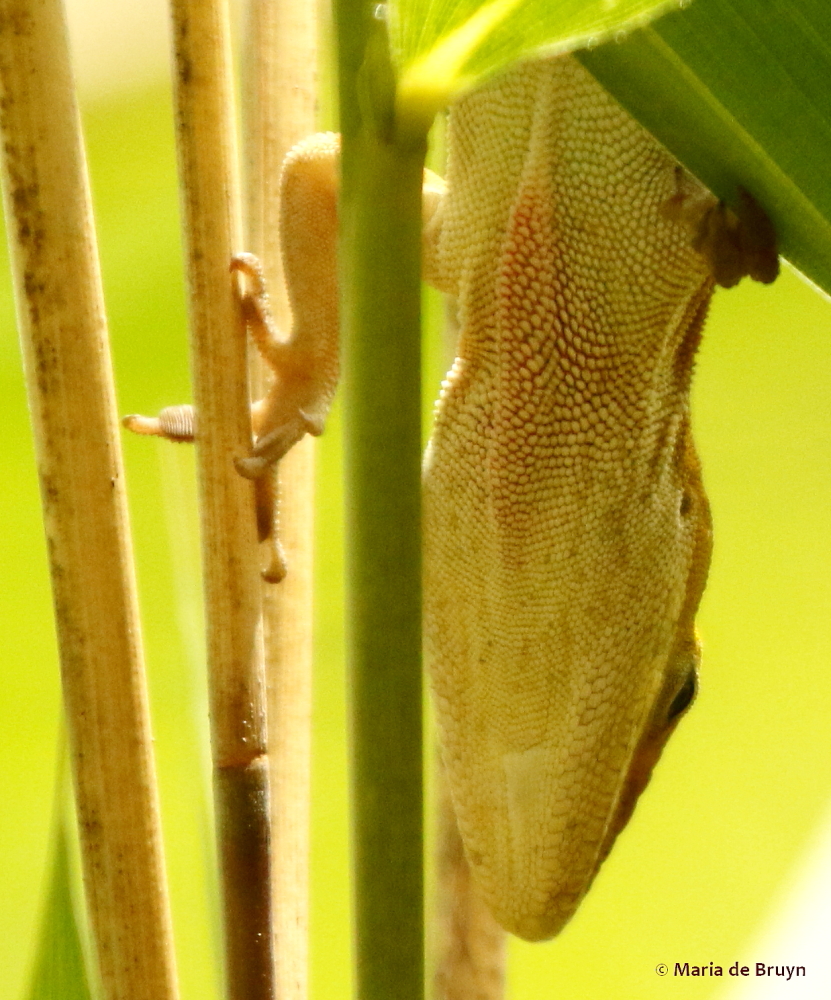
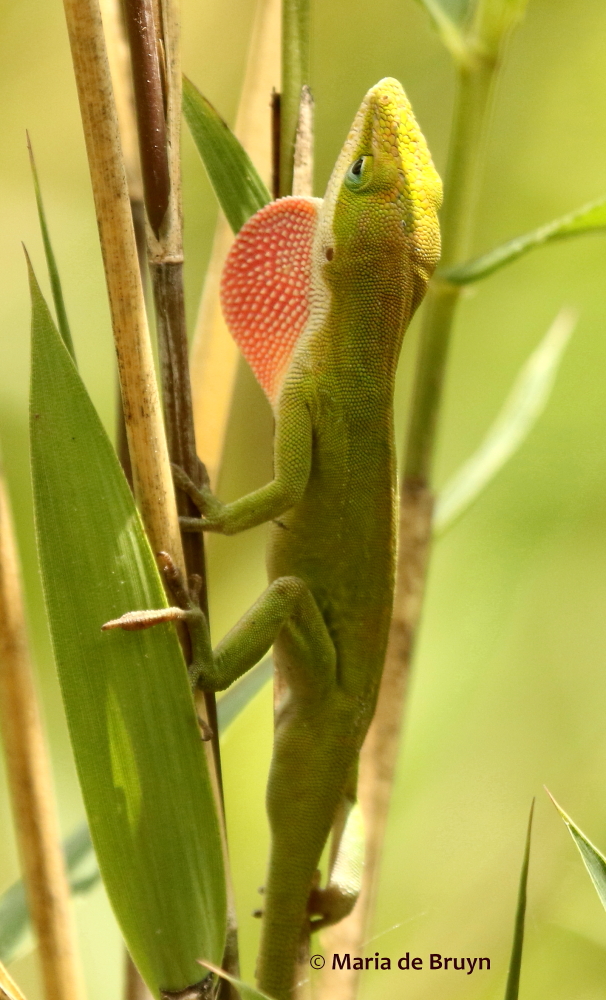
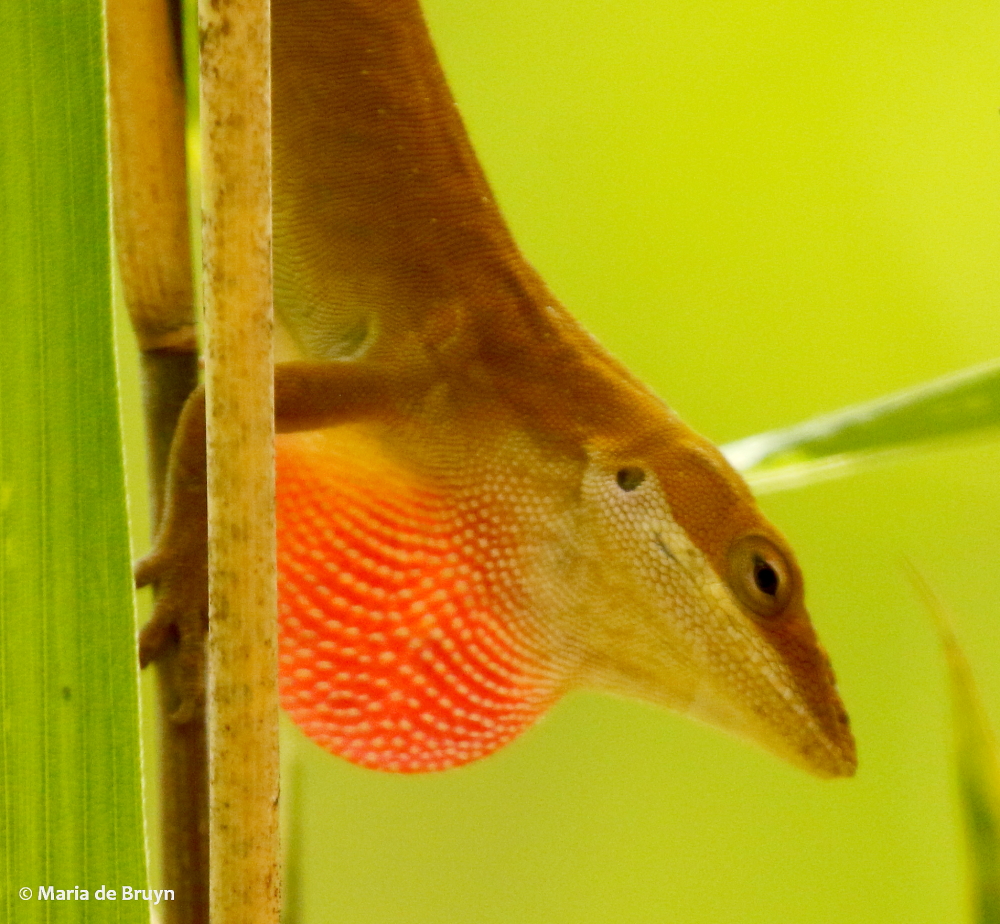
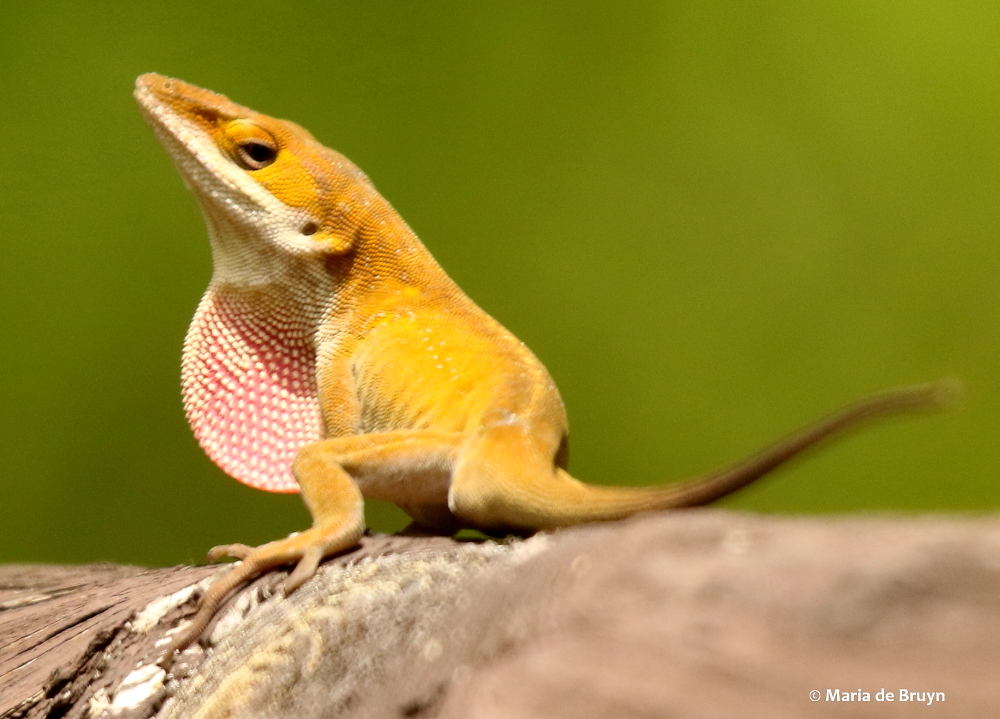
2018 was a good year for my observations of reptiles, too. Seeing a Carolina anole (Anolis carolinensis) flash its red dewlap (also known as a throat fan) was not a new experience but the fact that it was only a foot away from me doing it was a surprise.


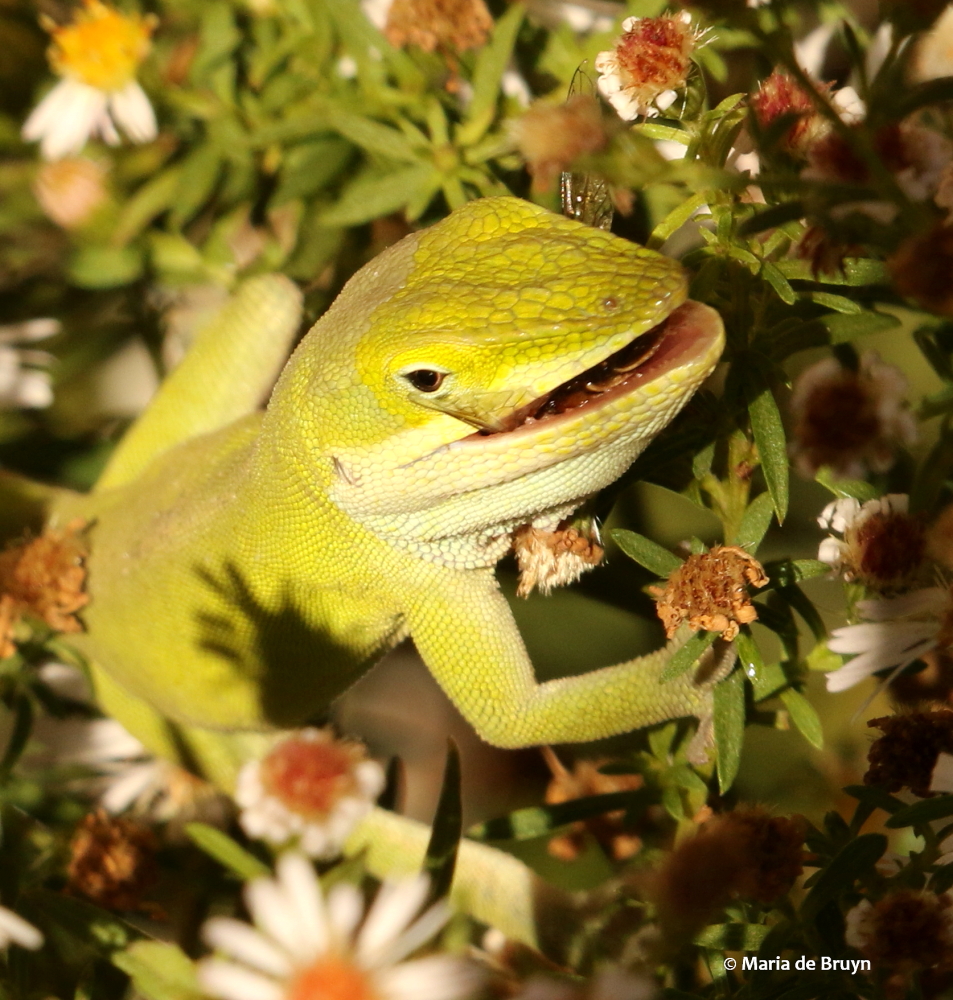
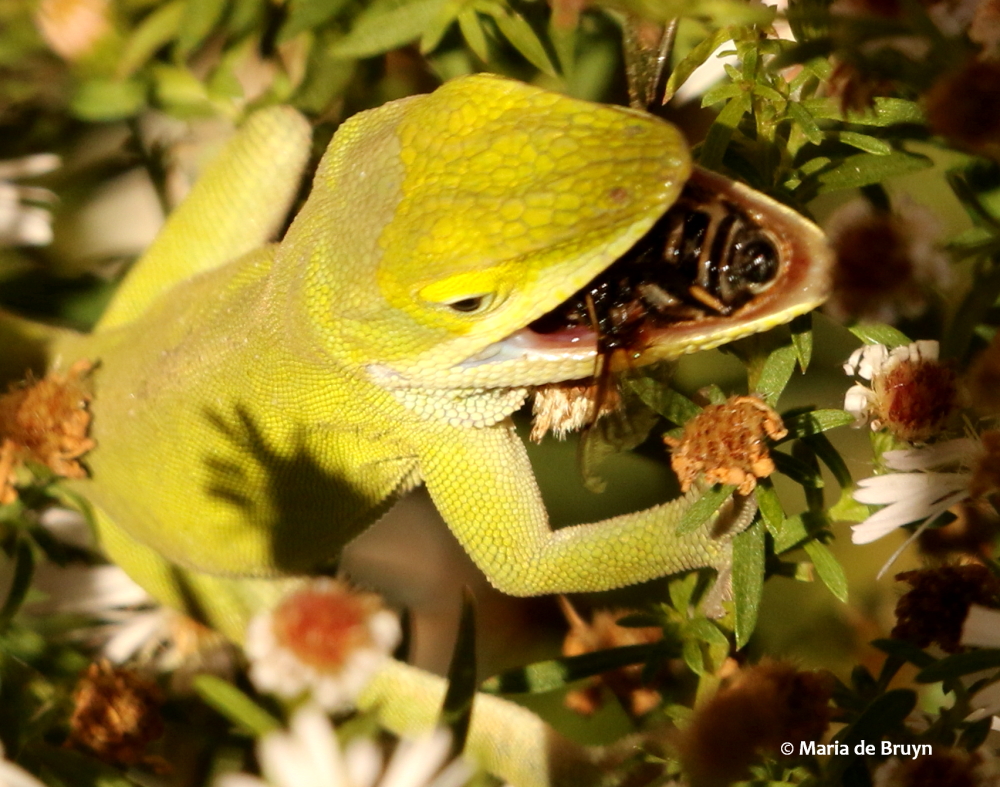
Seeing one of these anoles jump from one small flower twig to another in order to catch a bee for supper was a surprise – I didn’t know they eat bees. I felt a little sad that we lost a pollinator that way, but the anoles have to eat, too.


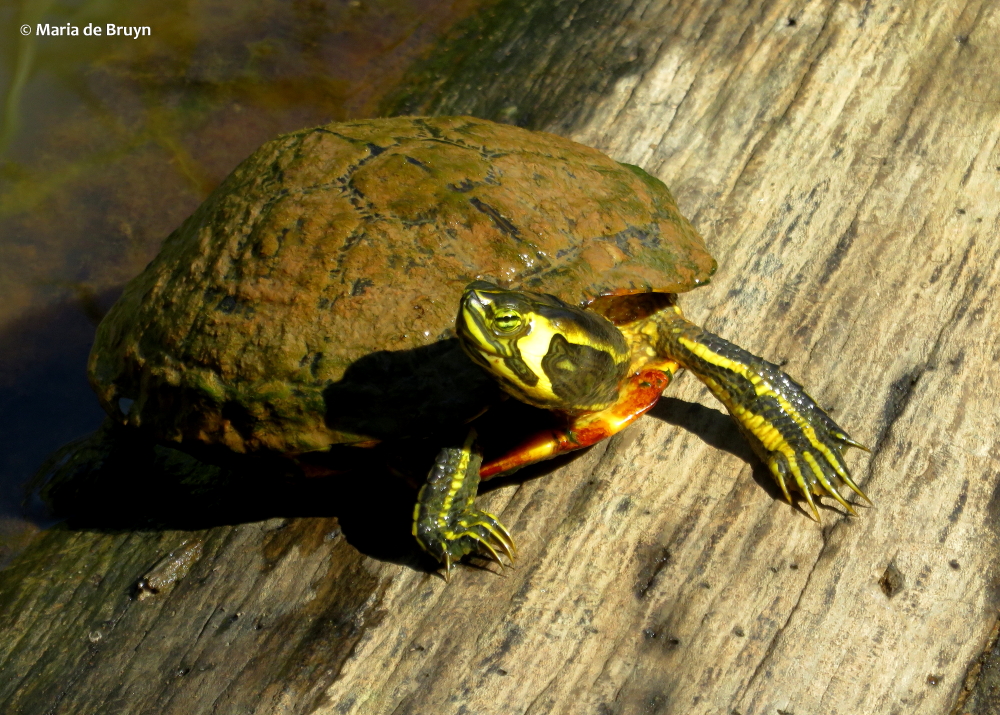
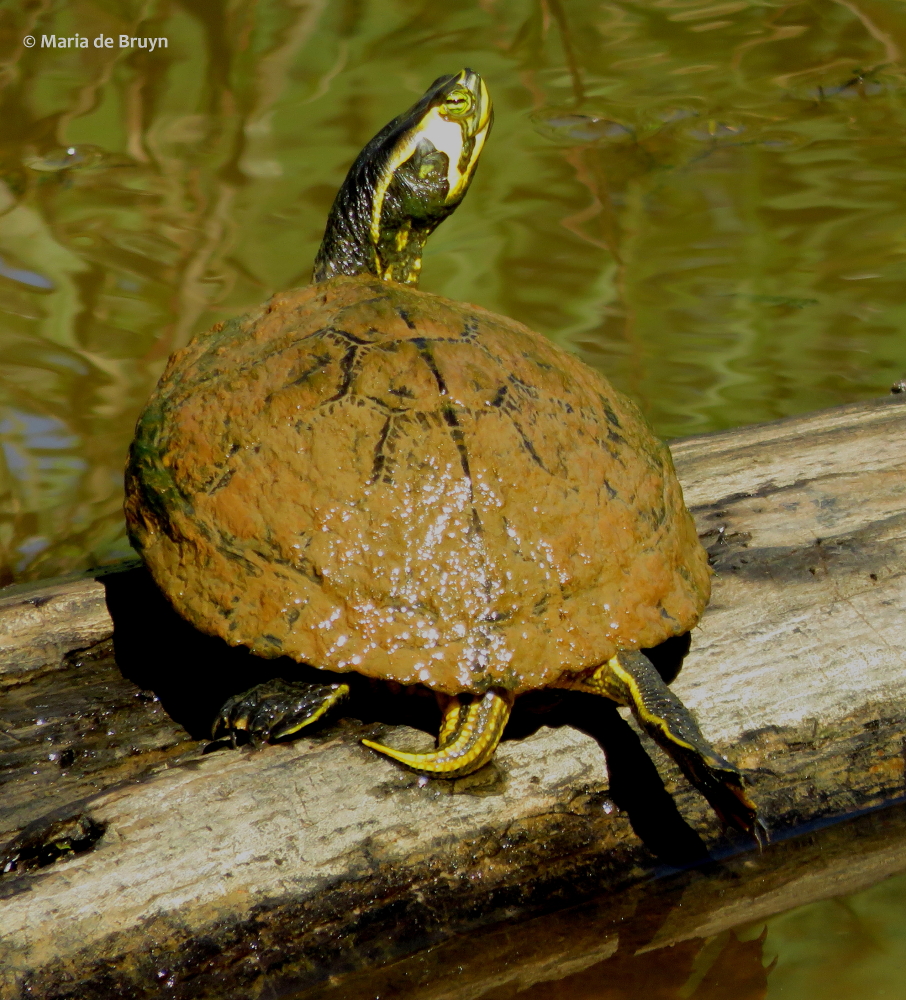
One day, when walking at the same wetlands where the anole hung out I came across some beautifully colored turtles. The yellow-bellied slider (Trachemys scripta) had a beautiful pattern on its face.


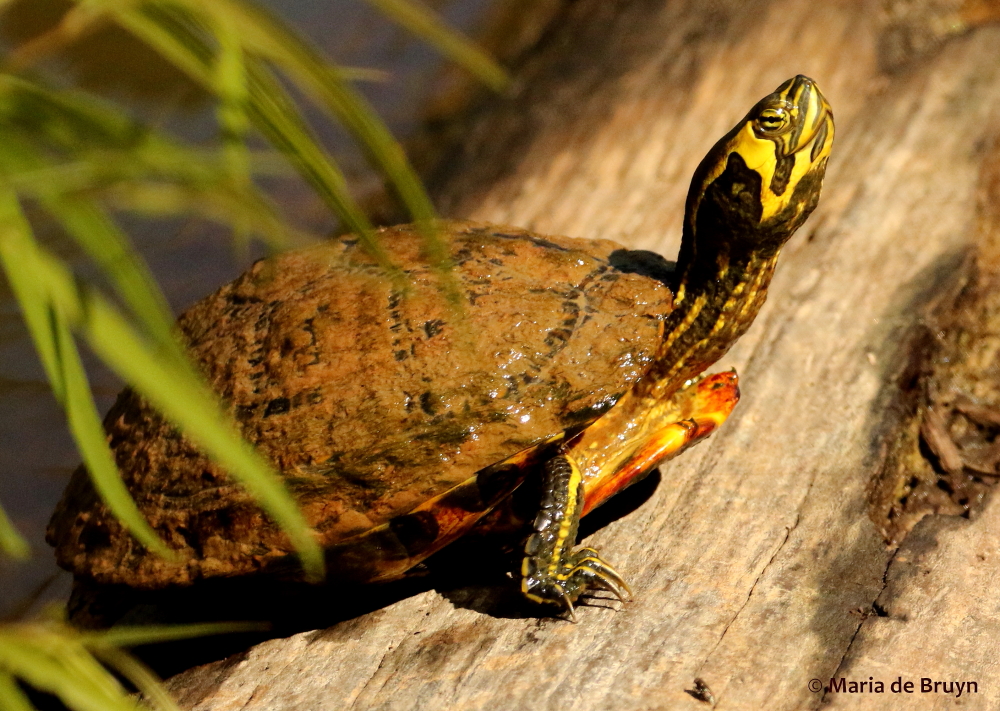
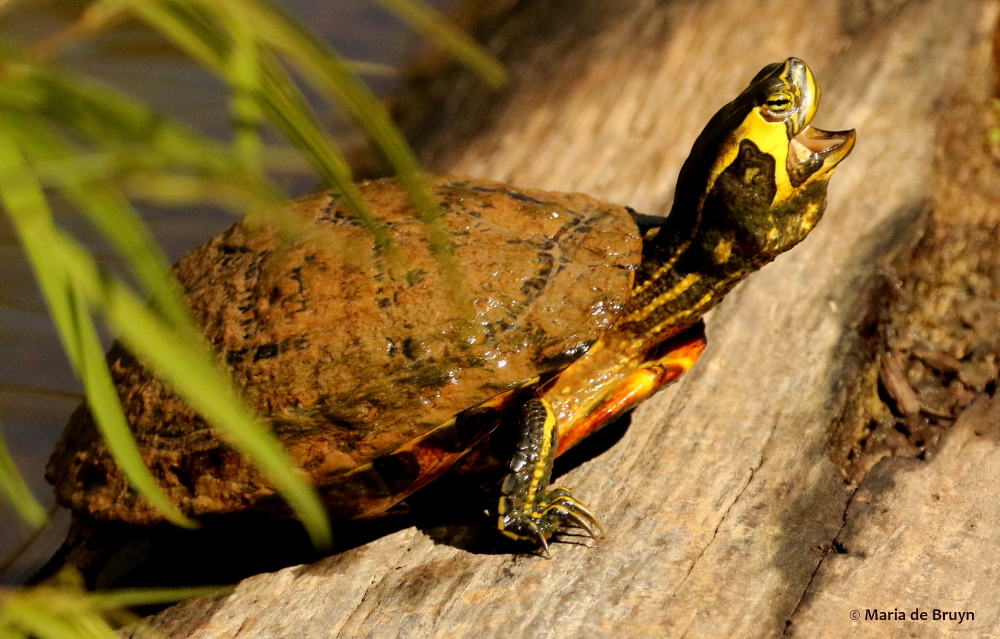
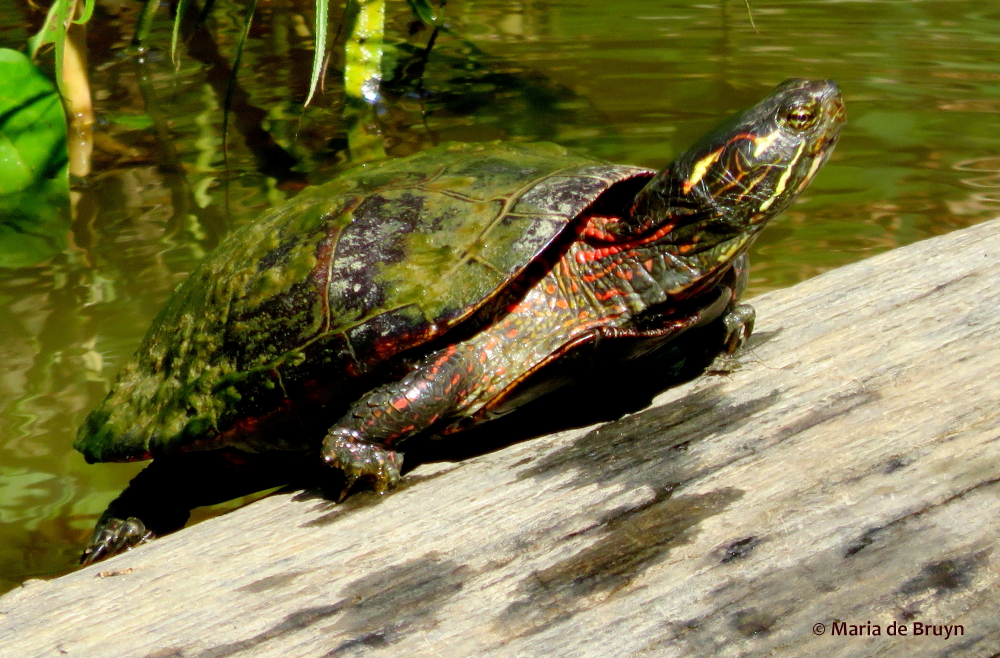
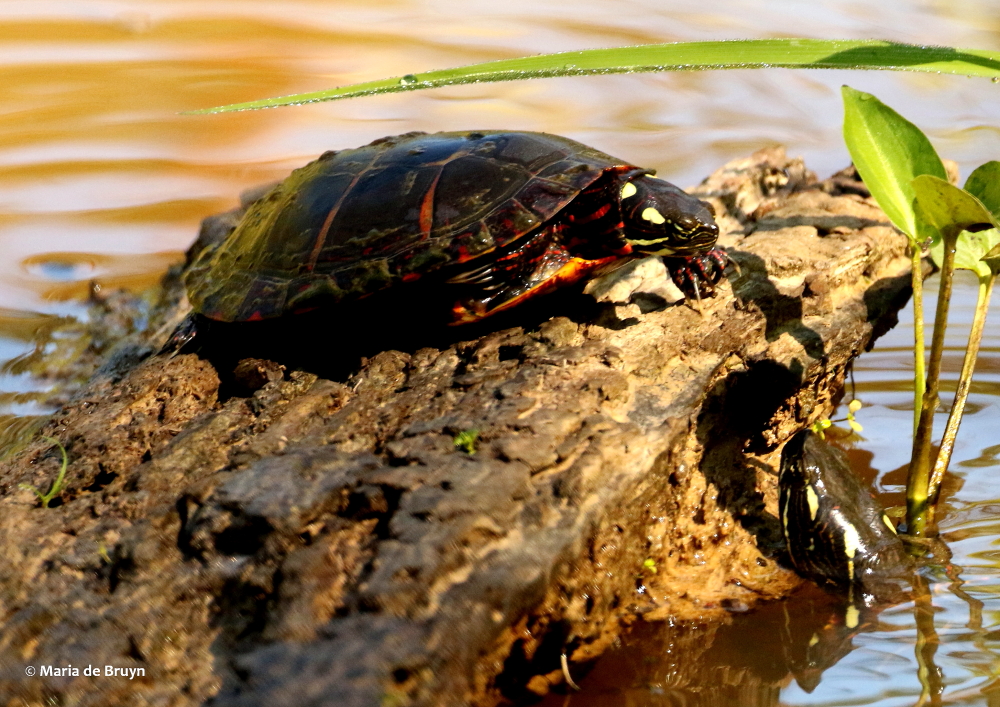
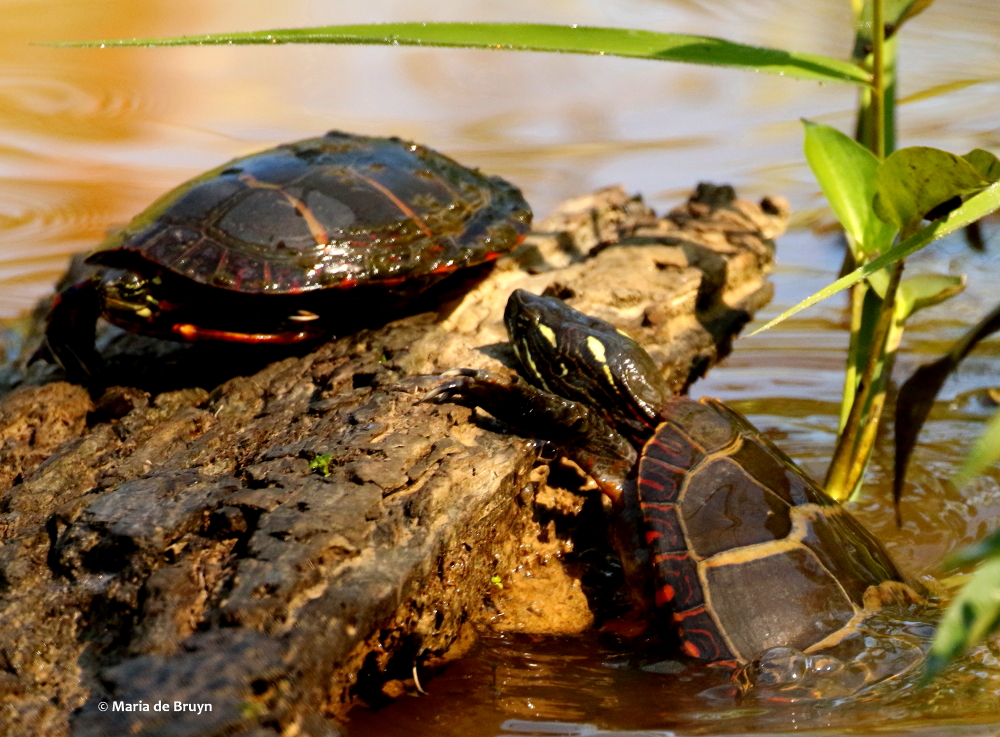
The painted turtle (Chrysemys picta picta) with its long claws had some beautiful bright red striping. It had gotten a prime sunning spot on a log that another turtle wanted for itself; the first turtle held it off.


The second turtle circled around and tried to get on board from the other side but turtle No. 1 kept it at bay.


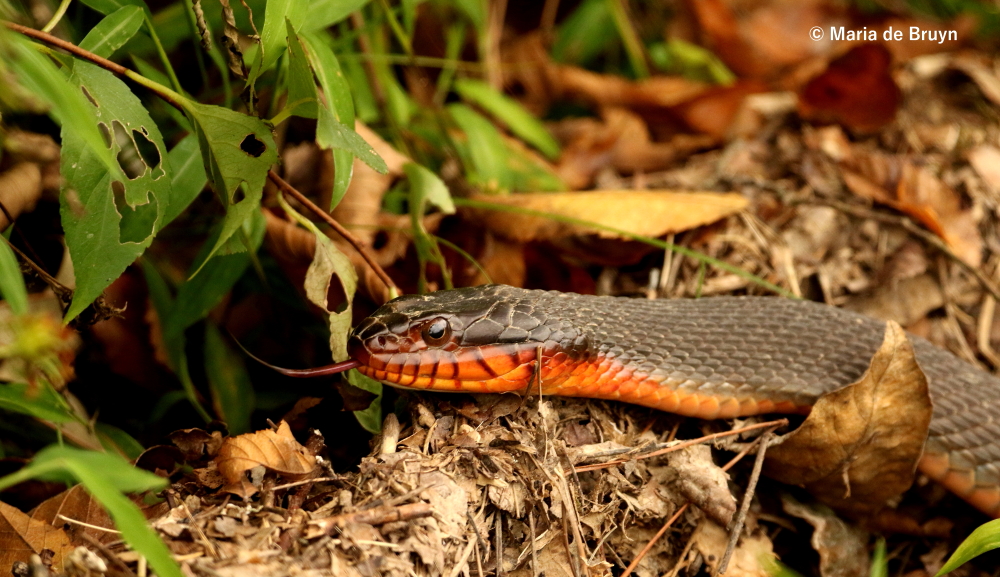
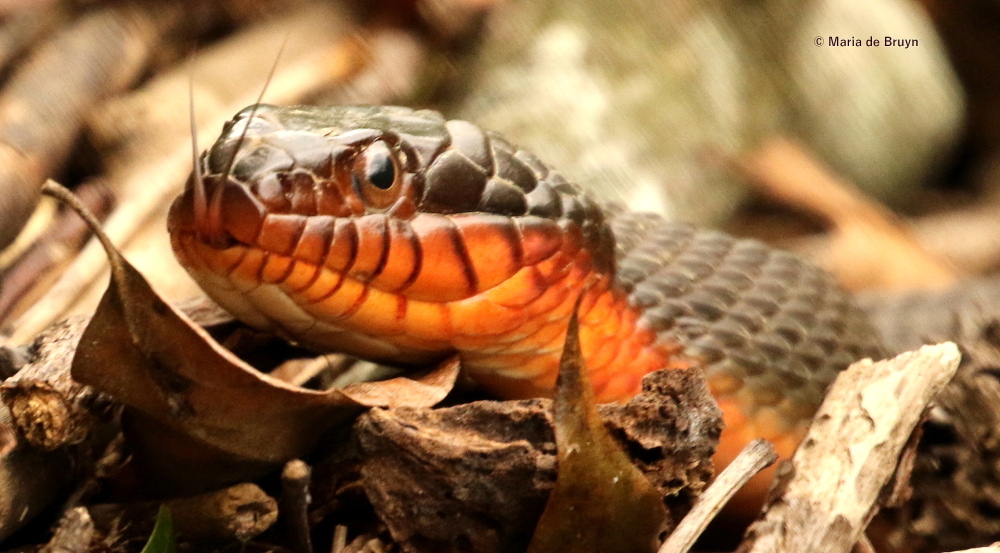
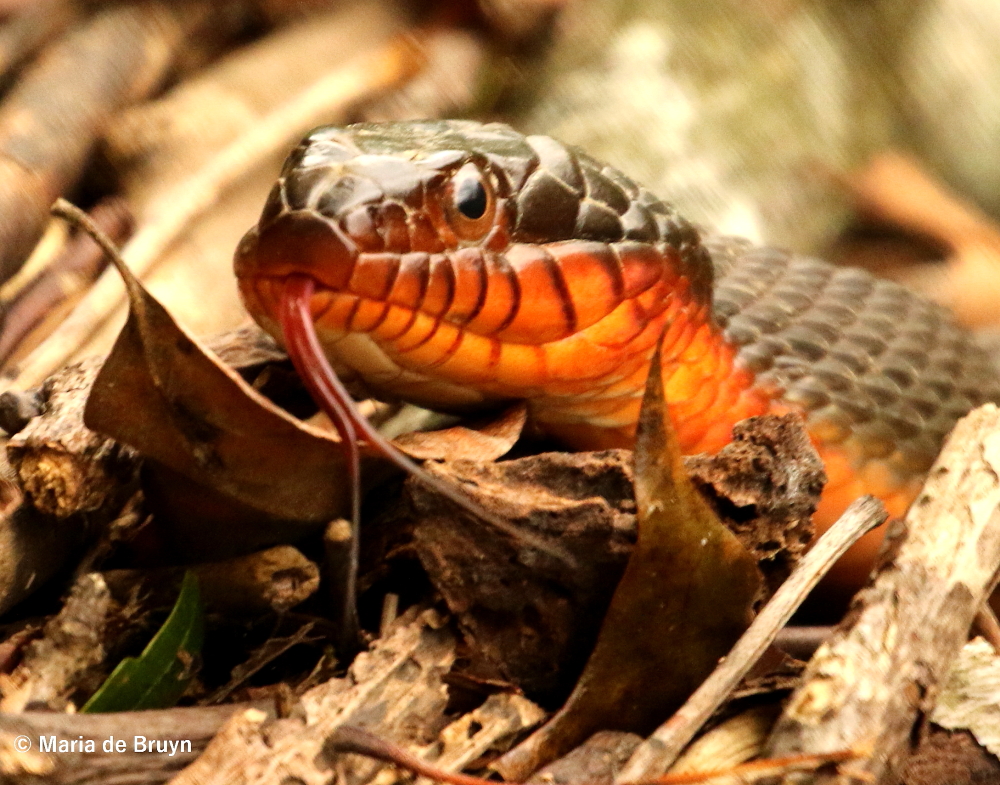
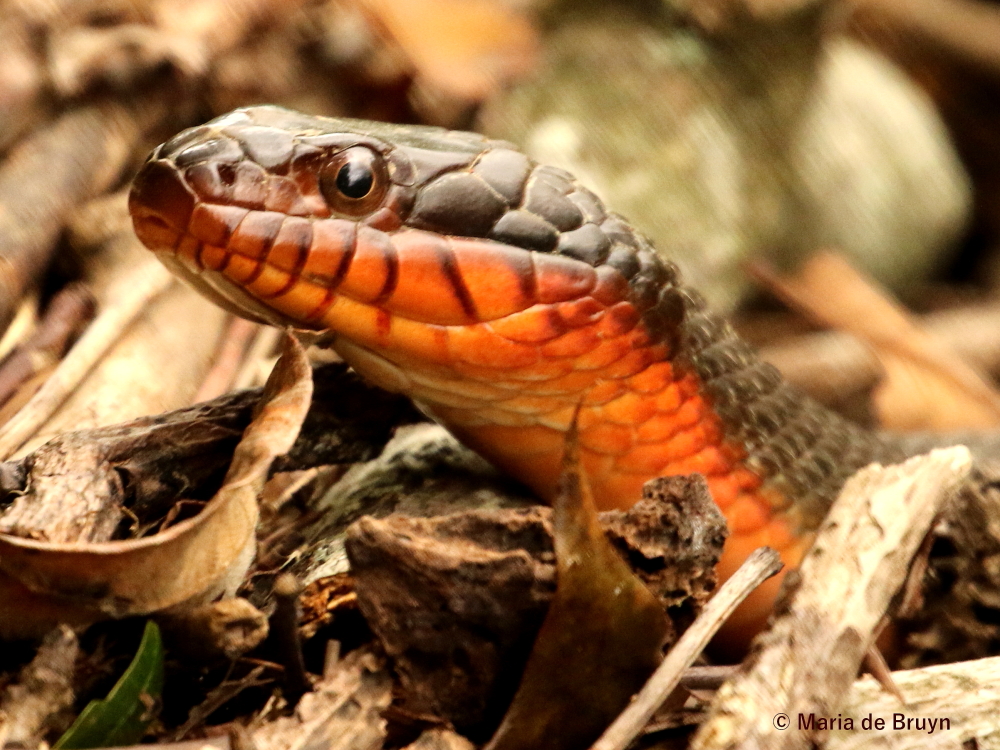
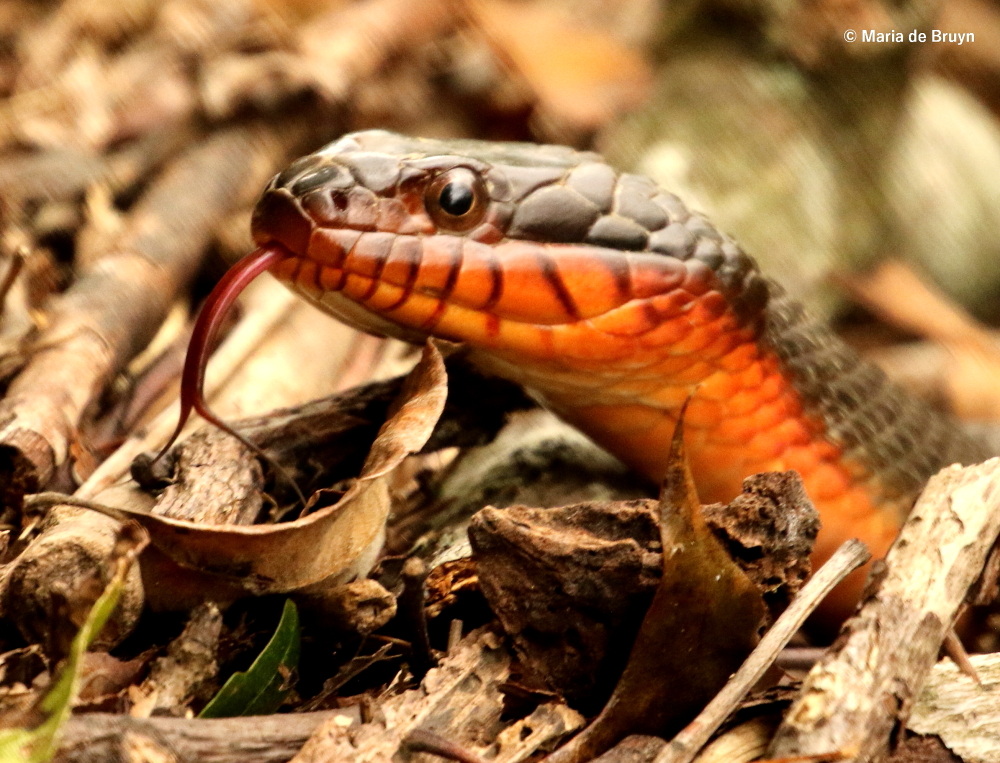
My snake encounters included seeing Northern water snakes and rat snakes. It was a beautiful red-bellied water snake (Nerodia erythrogaster) that caught me by surprise when it suddenly veered off its course toward me. I backed up and the reptile stopped approaching, flicking its tongue out as it explored what was going on.

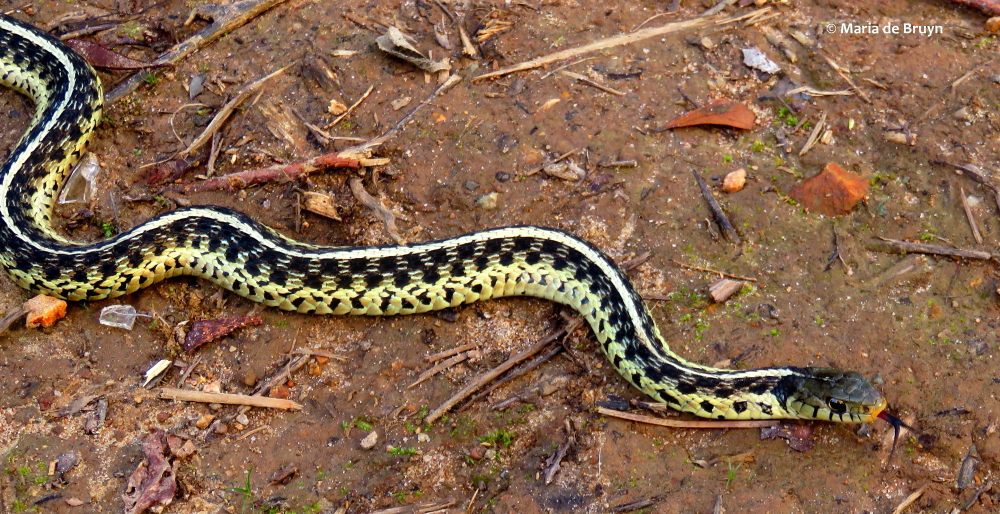
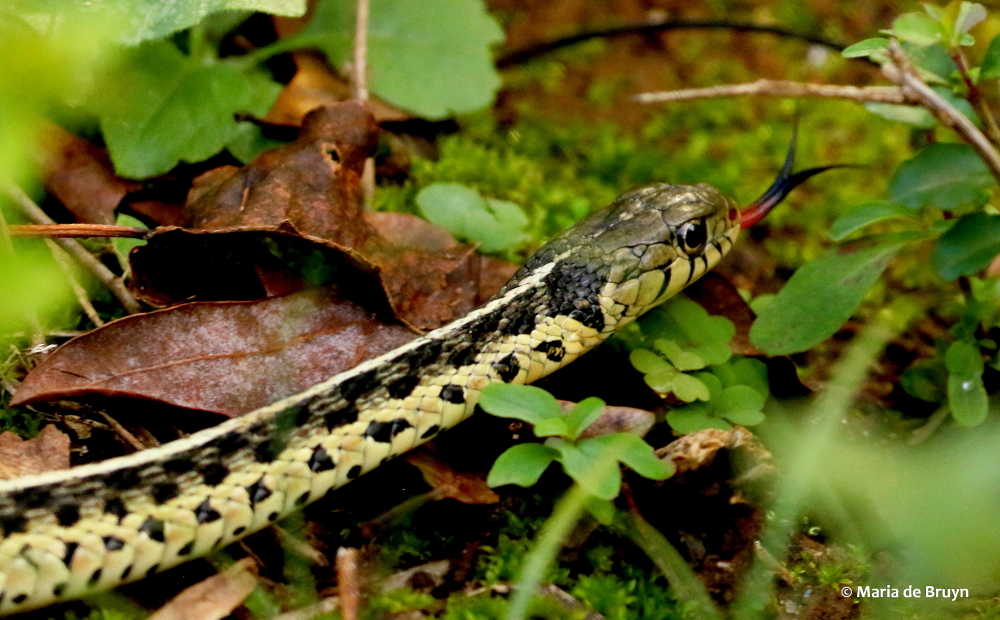
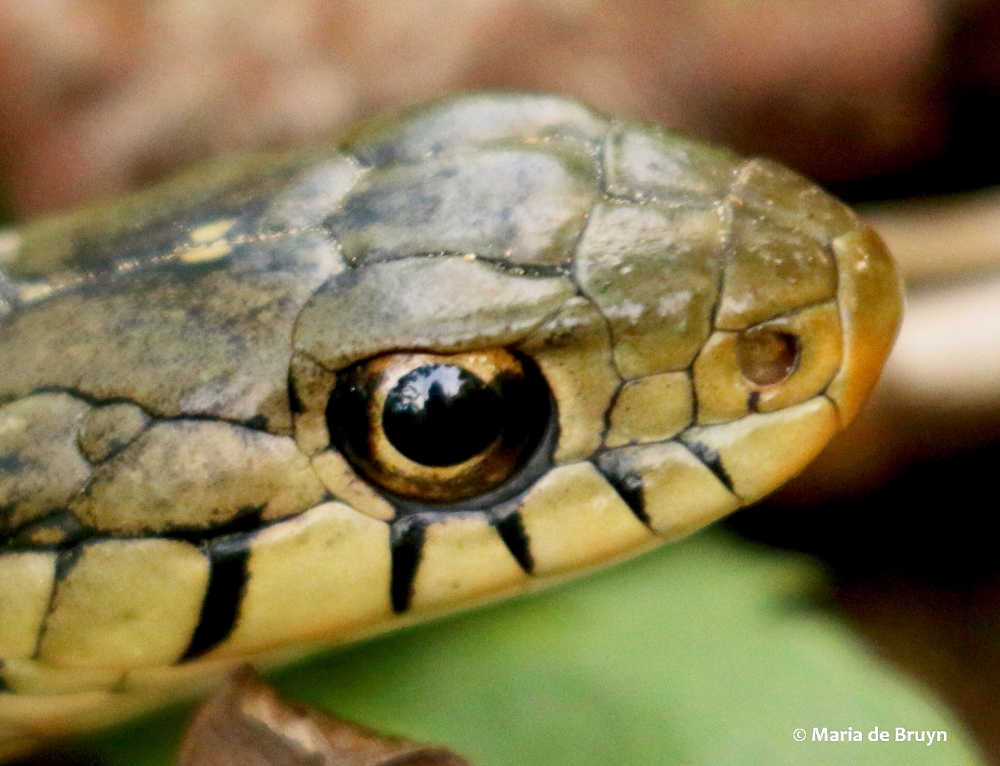
My final spotting to share with you today is another gorgeous snake – a common garter snake (Thamnophis sirtalis). It had been a long time since I had encountered one and this individual had quite vivid colors.

Next up – some beautiful raptors.