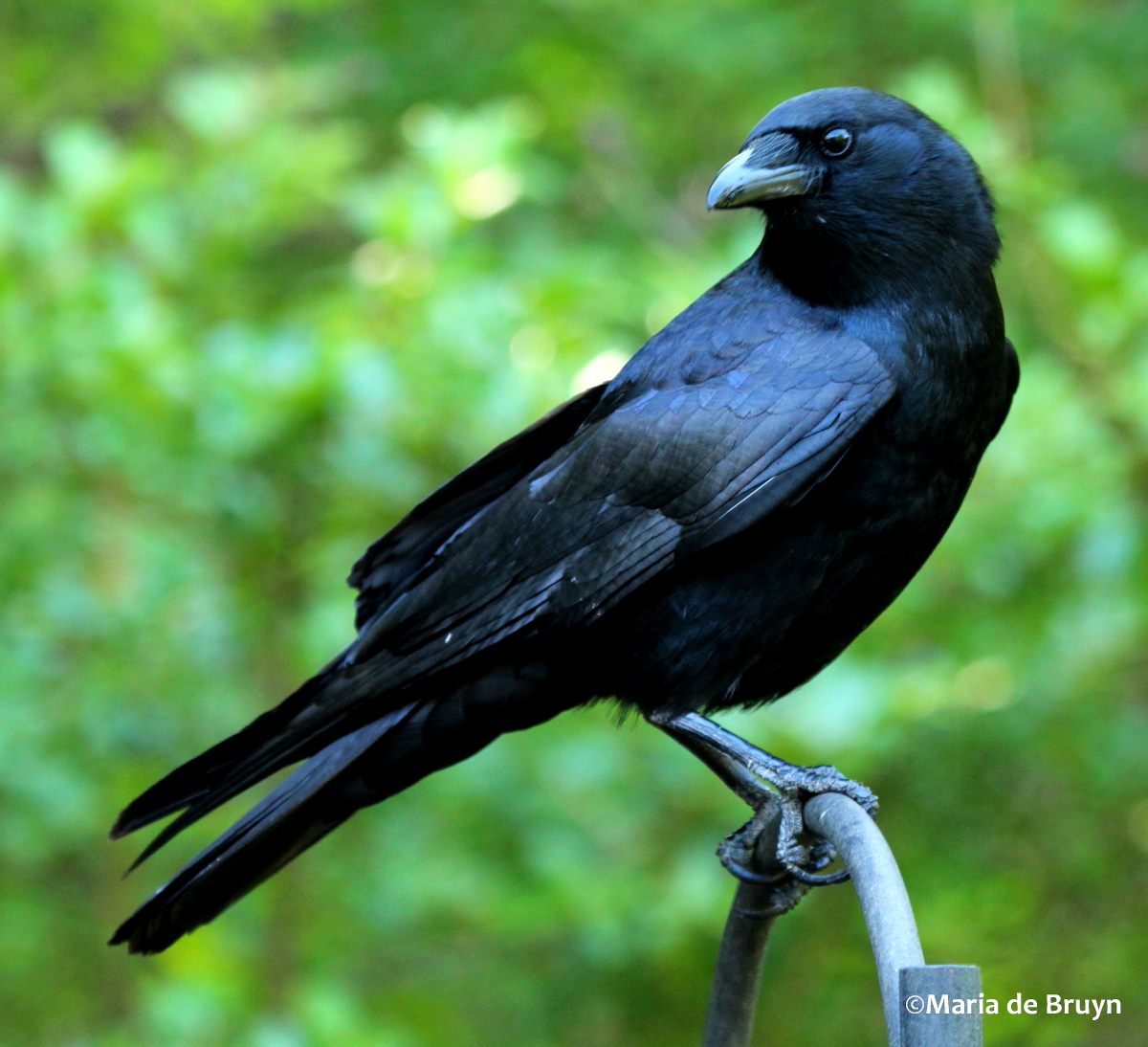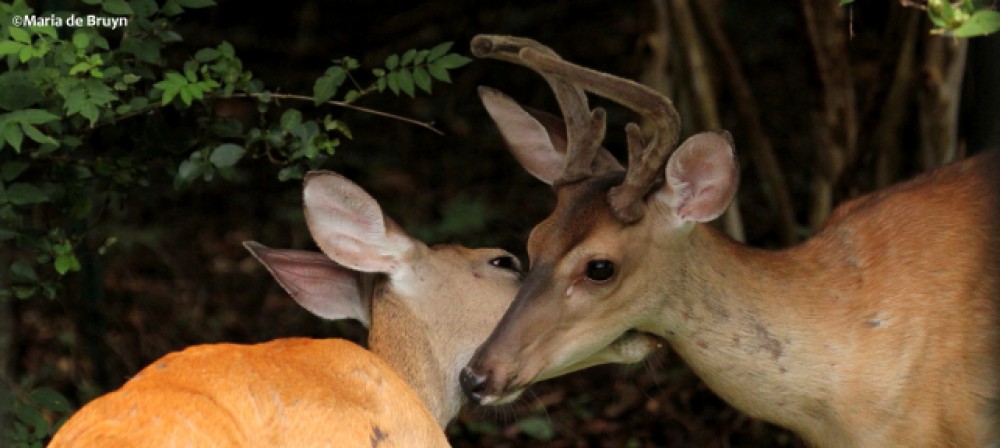
Winter mornings at Jordan Lake

Mist on the lake I77A5266© Maria de BruynSpending two cold early mornings at Jordan Lake the past couple weeks reinforced my conviction that getting out into nature is a restorative and calming activity. And it doesn’t need to be warm. Although a doctor pronounced me healed after my recent hospitalization and home treatment, it turns out that I’m not completely healthy after all. Starting a new treatment was a bit stressful, but seeing the birds at the lake was a joy.

snag I77A6203© Maria de Bruyn res

Mind you, I’d love to see other wildlife there, but the mammals, reptiles and amphibians have been hiding out or keeping away from areas frequented by people. The fact that it is still hunting season probably makes some of them somewhat shy, too. I did manage to see a fly on one morning though.

fly I77A2979© Maria de Bruyn

The animals do leave behind signs of their presence, however. Tracks in the sand is one give-away that they passed by.

animal tracks I77A2998© Maria de Bruyn res

The beavers (Castor canadensis) leave behind distinctively gnawed tree stumps – and here you can also see one tree that they haven’t quite finished felling yet.

beaver tree I77A2933© Maria de Bruyn res beaver tree I77A2950© Maria de Bruyn res

The shoreline vegetation was decorated with gull feathers in various areas of the lake.

bird feather I77A2711© Maria de Bruyn res bird feather I77A2697© Maria de Bruyn res

heron track I77A2924© Maria de Bruyn res


A sandy track of what I assumed was a great blue heron (Ardea herodias) didn’t produce a bird at that site, but I saw these beauties in flight at two other sites.


great blue heron I77A3926© Maria de Bruyn res

great blue heron I77A2558© Maria de Bruyn res

At one area, I spotted a bird that seemed unfamiliar just as it was turning to take off. Friendly birders online identified it as an American pipit (Anthus rubescens), the first time I had seen this species (known as a “lifer” among the birding crowd). The next week I saw a killdeer (Charadrius vociferous) in the same spot but got a better shot.

American pipit I77A2526© Maria de Bruynkilldeer I77A5908© Maria de Bruyn

The killdeer didn’t hang around too long either, but I was able to get a couple of nice flight photos this time.

killdeer I77A5933© Maria de Bruyn res killdeer I77A5931© Maria de Bruyn res

American crow I77A2810© Maria de Bruyn res


The American crows (Corvus brachyrhynchos) were foraging in the shoreline woods, while the song sparrow was looking for food among the woody detritus left at lakeside.


song sparrow I77A5877© Maria de Bruyn res song sparrow I77A5866© Maria de Bruyn res

In another place, the crows were very loudly making their presence known – it turned out that a red-tailed hawk (Buteo jamaicensis) was perched nearby and they were making sure everyone knew the hawk was there.

red-tailed hawk I77A3850© Maria de Bruyn resAmerican crow I77A3878© Maria de Bruyn res

In the trees near the lake, various birds could be seen: the ruby-crowned kinglet (Regulus calendula) was very busy as usual, flying from a sweet gum (Liquidambar styraciflua) to other trees in rapid succession.

ruby-crowned kinglet I77A5662© Maria de Bruyn ruby-crowned kinglet I77A6049© Maria de Bruyn

At one site, there were many dark-eyed juncos foraging on the ground and taking pauses in the trees and shrubs around. Juncos are actually a type of sparrow and a group of sparrows is known by several names: a crew, a flutter, a meinie, a quarrel and an ubiquity.

dark-eyed junco I77A2838© Maria de Bruyn dark-eyed junco I77A2379© Maria de Bruyn

The downy woodpeckers (Dryobates pubescens) and red-bellied woodpeckers (Melanerpes carolinus) were in evidence at various lake sites.

downy woodpecker I77A2504© Maria de Bruyn resRed-bellied woodpecker I77A5384© Maria de Bruyn res

Overhead, the double-crested cormorants (Phalacrocorax auritus) flew by; they would land and share space with the ring-billed gulls (Larus delawarensis).


double-crested cormorant I77A2731© Maria de Bruyn resring-billed gull I77A3558© Maria de Bruyn res

ring-billed gull I77A2389© Maria de Bruyn res


The ring-billed gulls were numerous and occasionally one swooped down to fish not too far from shore.

ring-billed gull I77A5489© Maria de Bruyn resring-billed gull I77A5497© Maria de Bruyn res

While I was watching, the horned grebes (Odiceps auritus) were more successful in getting meals as they dove into the cold water.

Horned grebe I77A3662© Maria de Bruynhorned grebe I77A3094© Maria de Bruyn

belted kingfisher I77A4014© Maria de BruynA couple times I was very surprised by a bird that suddenly seemed to emerge out of nowhere to fly over my head or just in front of me. That was the case with a beautiful male wood duck (Aix sponsa) and a belted kingfisher (Megaceryle alcyon).


wood duck I77A3719© Maria de Bruyn res wood duck I77A3718© Maria de Bruyn res

bald eagle I77A3030© Maria de BruynAn adult bald eagle (Haliaeetus leucocephalus) soared by just as I was approaching an observation platform in one area; the distance and height were considerable but I managed a shot. A Bonaparte’s gull (Chroicocephalus philadelphia) flew by a little lower, while a Carolina chickadee (Poecile carolinensis) sat still for a portrait.


Bonaparte's gull I77A3962© Maria de Bruyn


Carolina chickadee I77A5806© Maria de Bruyn res

My last avian companions during my latest lake walk were a white-throated sparrow (Zonotrichia albicollis) and a lovely hermit thrush (Catharus guttatus).

white-throated sparrow I77A6115© Maria de Bruynhermit thrush I77A6165© Maria de Bruyn

I returned home on both occasions a satisfied birder!


Corvid courtship – something to crow about

American crow DK7A7017©Maria de Bruyn res

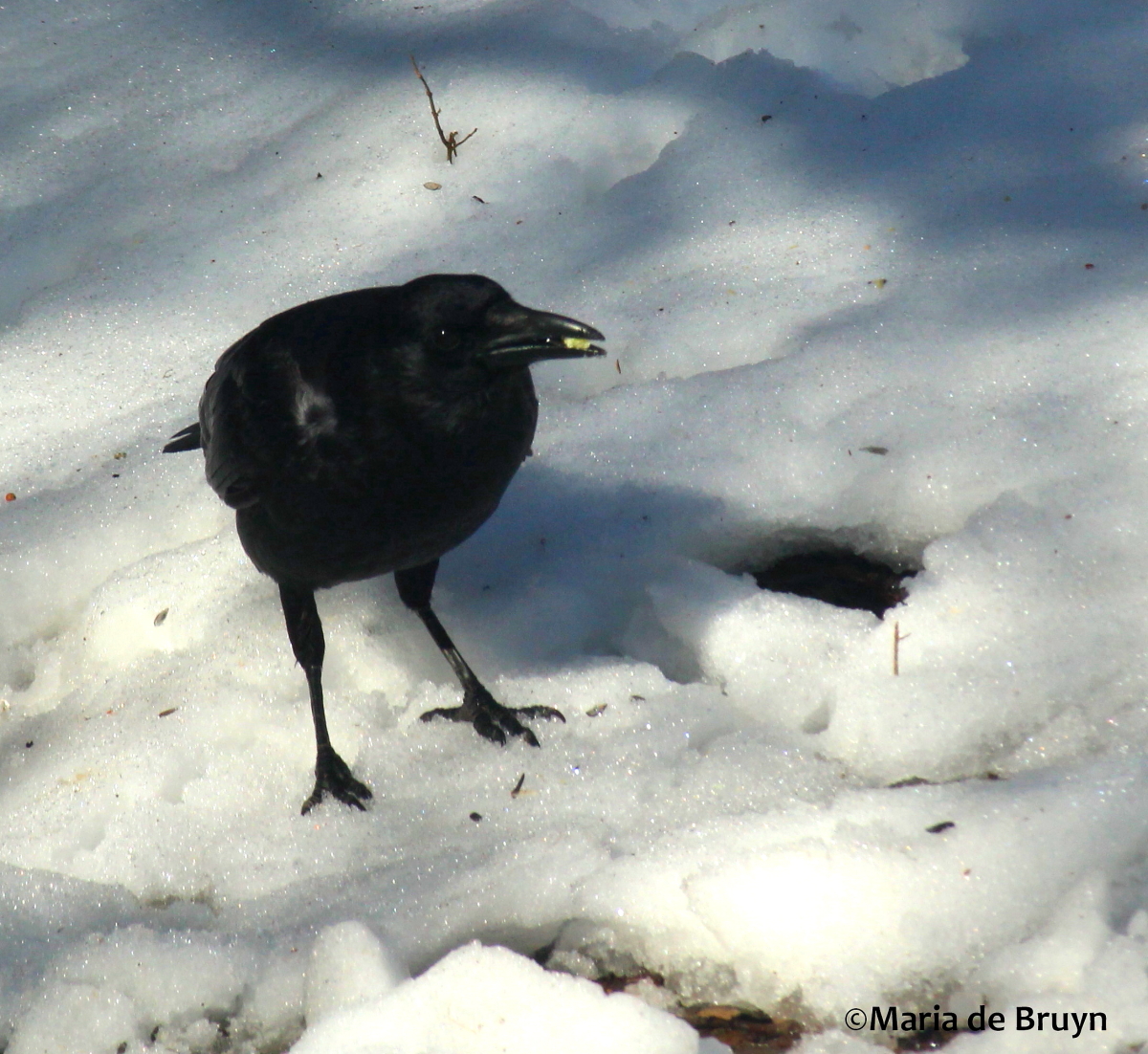
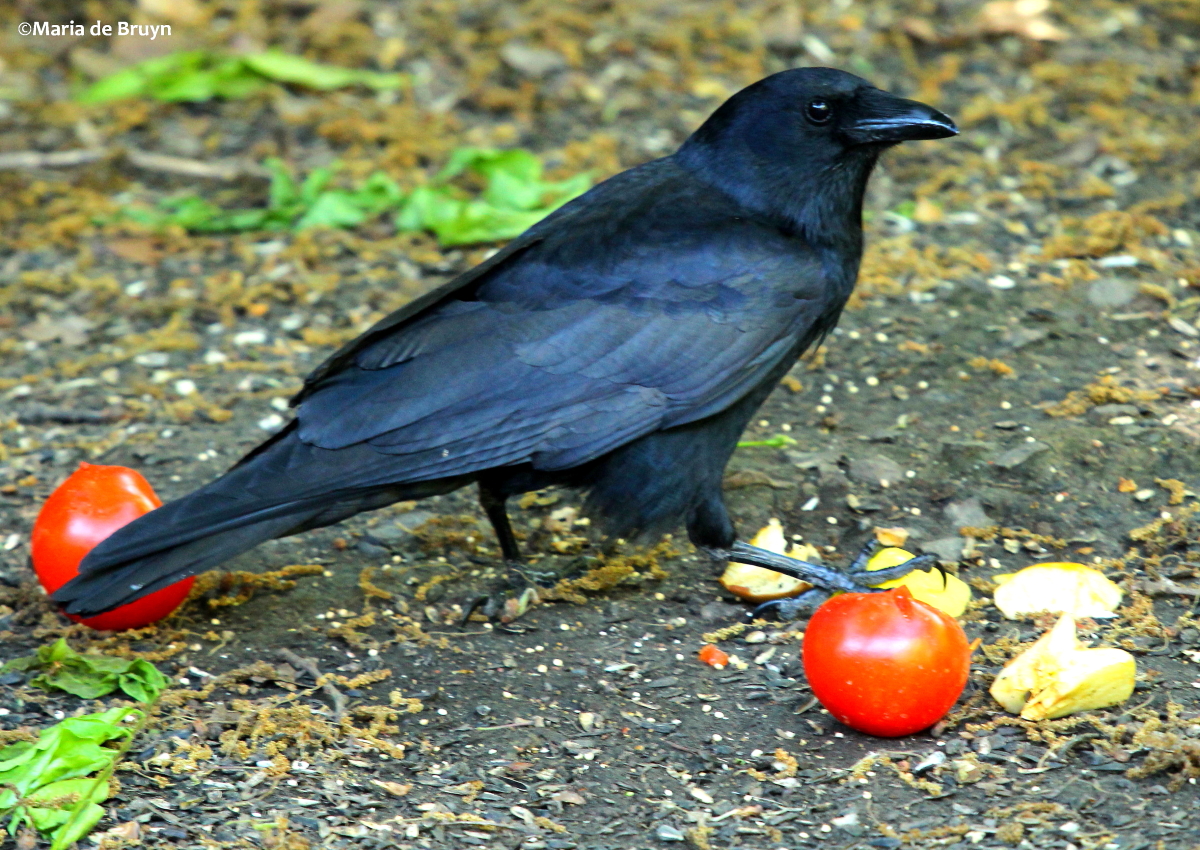
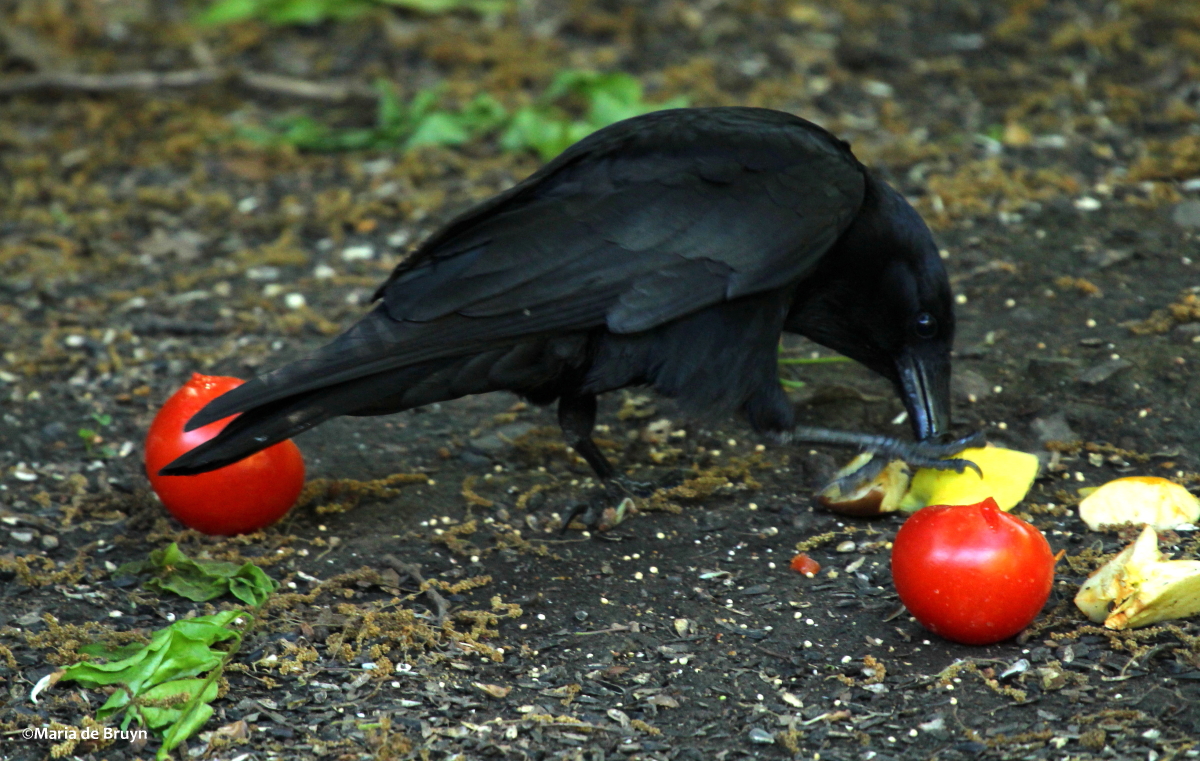
American crow DK7A5544© Maria de Bruyn resAs I was sorting out photos of birds in our recent snow and sleet storm, my attention was drawn by the raucous cawing of one of our neighborhood crows. He had found some apple slices that I had put out with the bird seed and was one happy bird. He spent a lot of time calling, presumably to alert family members to the presence of this desired food source. And his enthusiasm made me decide to post a blog about corvid courtship now, since this late winter/early springtime ritual may be coming sooner than I thought.

Depending on geographic location and weather conditions, some birds begin nest building quite early in the year and American crows (Corvus brachyrhynchos) are among the early mating pairs and nest builders. Last year, a male crow who visited my home discovered and enjoyed both grape jelly and apple slices around early March.American crow DK7A7423©Maria de Bruyn res

American crow DK7A0779© Maria de Bruyn


American crow DK7A5569© Maria de Bruyn resHe even tried to add the homemade suet to his diet but he was a bit large to balance well on the small feeder.

Last year, he only had to visit my yard a few times before he was accompanied by his mate. She would sit on a branch or on the ground and caw loudly like him, but she was demanding that he feed her.

American crow DK7A7678©Maria de Bruyn res

He met her demands but was not about to just give up his treats. He would often grab a piece of apple, fly up to a branch near her but then first eat about half of it himself as she continued her raucous cries for food.

American crow DK7A7321©Maria de Bruyn res

American crow DK7A4616© Maria de Bruyn res

American crow DK7A7022©Maria de Bruyn res


She could have easily flown down to the ground to grab a piece of apple but refused. On a few occasions, she did fly down but just refused to pick up the apple herself, waiting for him to stuff it down her throat.


American crow DK7A8031© Maria de Bruyn res


He fed her in the trees and on the ground, pushing the food way down her throat.


American crow DK7A7655©Maria de Bruyn (2) res

American crow DK7A7672©Maria de Bruyn res

Some preening went on as they perched in the backyard oak tree, too.

American crow DK7A8104© Maria de Bruyn res

American crow DK7A7504©Maria de Bruyn (2) resAmerican crow DK7A7530©Maria de Bruyn res


.I learned that offspring will remain with their parents up to five years. These “helpers” will assist in feeding the female as she incubates eggs and also bring food to their new siblings.

American crow DK7A5642© Maria de Bruyn res

It seems that our warm days in December and January this year may be getting my faithful crow in a romantic mood a bit sooner this year.The crows are loud, especially when three or more show up at a time, but I do enjoy their visits and look forward to watching the corvid courtship again this spring.

American crow DK7A8461©Maria de Bruyn res

Citizen science in my backyard!

Gray-headed catbird DK7A8986© Maria de Bruyn resIt’s been a while since I’ve blogged – not for lack of ideas and photos but due to a dearth of time and energy that was absorbed by multiple troubles with a few cool happenings in between. But now I’m back with some new observations about the beauty and happenings of interest in my natural world and I hope to share some wildlife sightings on a regular basis again.

One activity that I have managed to fit in amid the other goings-on was enrollment in two new (for me) citizen science projects for the Smithsonian Institute. I’m participating in an eMammal project run by the North Carolina Museum of Natural Science and in a multi-year observational study of some common birds. The mammal project is time-limited, so I will report on that in about a month’s time.

Northern mockingbird DK7A8859©Maria de BruynThe bird project will involve tracking visits to my yard by banded birds for several years to come. The target species include American robins (Turdus migratorius), Carolina chickadees (Poecile carolinensis), Carolina wrens (Thryothorus ludovicianus), house wrens (Troglodytes aedon), gray-headed catbirds (Dumetella carolinensis), Northern cardinals (Cardinalis cardinalis) and Northern mockingbirds (Mimus polyglottos, at the right), all of which come to my yard. Song sparrows are the 8th target species but I haven’t seen them at my house. However, I discovered that there is a great crested flycatcher in my trees, although I’ve never seen him (or her) either, so who knows if one will come in the future? In any case, the target birds can live from about 6-10 years on average, so I’ll have an ongoing activity for as long as my eyesight remains reasonable!

bird banding IMG_3291© Maria de Bruyn resmist net IMG_3290© Maria de Bruyn

So how does the bird banding proceed? We (the bird bander and I) set up one 12-foot and one 6-foot mist net in two parts of the yard, after the bander laid out her equipment for the banding process. Within a very short time, we caught three birds in the large net! The first was a gray-headed catbird that I recognized (photo above), because he had molted all his tail feathers at once and looks a bit odd with no tail. This bird, whom I have named Corey, has been the most vocal catbird at my feeders and he was extremely vocal about having been caught as well.

gray-headed catbird IMG_3294© Maria de Bruyn bird banding IMG_3295© Maria de Bruyn

After being disentangled – very carefully – from the net, he was put in a bag while the bander got the other two birds out of the net. Corey was measured, weighed, and banded with a combination of aluminum and colored bands. Sex was determined (I now know he is a he!) and then he was let go.

gray-headed catbird IMG_3301© Maria de Bruyn bird banding IMG_3304© Maria de Bruyn res

Northern cardinal IMG_3311© Maria de Bruyn resBird 2 was a beautiful male Northern cardinal, who appeared to have good fat reserves. He was a bit vocal and bit the bander to show his displeasure at the treatment he was receiving.

Bird 3 was a male American robin. Sex was determined partly by looking at the cloacal region (outside breeding season, other markers besides brood patches and this area are examined). If a bander is unsure of the sex, this is also marked on the data sheet. The robin was more sedate during handling than his predecessors.


American robin IMG_3314 © Maria de Bruyn resAmerican robin IMG_3315© Maria de Bruyn res

The house wrens had been calling loudly during the banding and flitted about in the trees and to the feeders,but they always flew just above the nets and were not caught. A male Carolina wren with a nice eye stripe did not escape.

house wren DK7A4794© Maria de Bruyn Carolina wren IMG_3316© Maria de Bruyn

American crow IMG_3359© Maria de BruynThe chickadees and Northern mockingbird flew about but did not really come too close to the nets. Non-target species were at or near the feeders, too, such as courting bluejays, an American crow (Corvus brachyrhynchos, right) who came to eat jelly and take some apple to his mate, downy woodpeckers, white-breasted and brown-headed nuthatches, a house finch, Eastern towhees and a male cowbird.

red-bellied woodpecker IMG_3344© Maria de Bruyn resOther non-target birds flew into the large mist net, however, such as a brown thrasher, a tufted titmouse, a red-bellied woodpecker (Melanerpes carolinus, right), a chipping sparrow (Spizella passerina), a female common yellowthroat (Geothlypis trichas, below) and a common grackle. I’d not seen these birds up so close before, so that was really a nice experience.

Common yellowthroat IMG_3339© Maria de Bruyn res


bird banding IMG_3340© Maria de Bruyn resTo get more target species, a loudspeaker that played bird calls and some model birds were placed in the grass by the largest net. Eventually, two more catbirds were caught – with other catbirds in a nearby tree puffing themselves up to show their shared distress. These were the first catbirds banded for the project so far, so that was a nice way to end the exercise.

Cope's tree frog IMG_3293© Maria de Bruyn resA tour of the yard to see if there were any nests that could be followed for the Nest Watch project revealed a couple wren nests in boxes that were built up so high it was not possible to see if they had eggs in them. The bluebirds’ nest has five eggs that I will follow through fledging (hopefully); a catbird nest is too high up for me to see how many eggs she is sitting on but I will watch for her fledglings, too. And a Cope’s tree frog (Hyla chrysoscelis) had taken up residence in the nest box that the downy woodpecker uses to rest at night. The wrens had begun building a nest in that box last night and the frog was gone this afternoon.

The banding took place yesterday in the morning and in the afternoon, the banded birds had not returned. I wonder how long it will take most of these individuals to come again. Corey already returned this afternoon, instantly recognizable not only because of his very short tail feathers growing in but because of the red and silver bands on his little legs. I was so glad to see he was none the worse for wear!
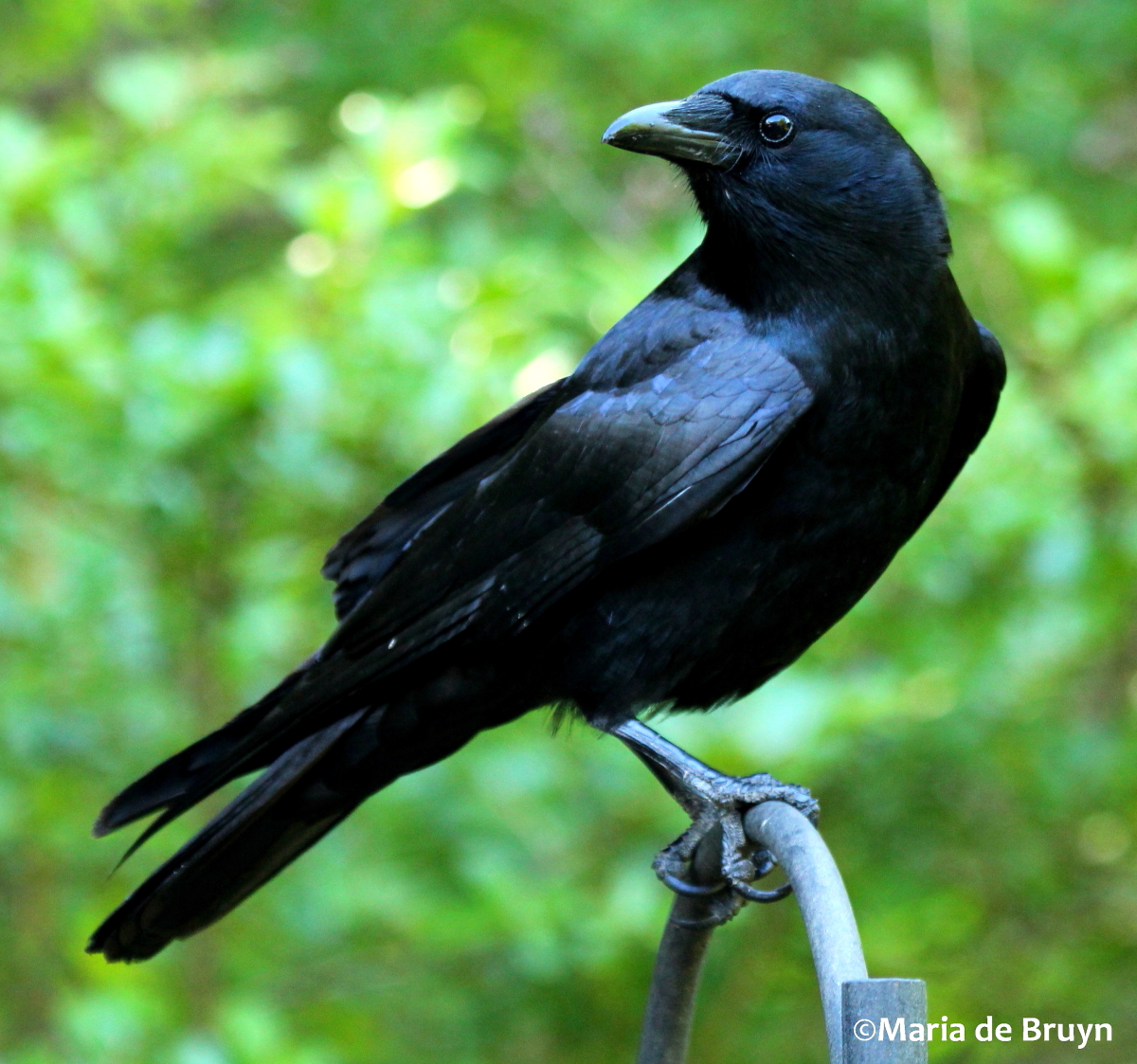
Casey Crow adopts a home

American crow IMG_3544©Maria de BruynresIn years past, I have had the occasional American crow (Corvus brachyrhynchos) visit my yard. For example, this past spring when it was snowing, a few came to eat fruit but they never really hung around – except for one that flew in with a half-eaten squirrel (or rabbit) that it was reluctant to leave behind.American crow IMG_9437© Maria de Bruyn res


Now, however, it seems that the one of these fine-feathered friends has decided to adopt my residence as a temporary home – or at least as a spot for some occasional R & R.

american crow IMG_3459©Maria de Bruyn res

Since I don’t know if this crow is female or male, I’ve named “it” Casey, a nice gender-neutral name. Casey is quite large and has grown bolder as time progresses. At first, Casey would alight on a branch and observe for quite a while before venturing toward a feeder; if I appeared, Casey would leave.

american crow IMG_3466©Maria de Bruynres

Now Casey flies in to perch on the roof, a nearby tree or a feeder not far from the back door, balancing as well as possible. S/he often announces his/her arrival with a few loud caws and sometimes what seems to be irritation when grackles decide to carry out a little harassment.

American crow IMG_8668©Maria de Bruyn resOne of my old plastic seed feeders broke, leaving only a bit of skeletal structure. Rather than toss it out, however, I’ve recycled it to become a grape jelly holder. No orioles have visited but it appears that grape jelly has become quite the treat for Casey, who balances in odd and sometimes contorted ways to be able to snag some.

Casey is much too large to balance at other feeders but has obviously been searching for some additional food. A short while ago, I learned that Casey can be quite fond of apples.

american crow IMG_3425©Maria de Bruynresamerican crow IMG_3421©Maria de Bruyn res

Casey is quite the handsome bird and sometimes seems to be posing for portraits. I assume that it is the same crow that is visiting from day to day, but haven’t been able to figure out any real distinguishing marks yet to be sure. No other crows appear willing to remain near feeders if I go outside, though, so I guess it is always Casey who remains.

american crow IMG_3456©Maria de Bruyn res

I enjoy Casey’s visits but am glad now that the robin pair decided not to re-use their nest on the downspout from last year. Though there wasn’t much room for Casey to perch, I did see her/him fly to that nest and examine it, obviously investigating if there were some nestlings there to serve as a meal. I was quite happy there weren’t any in residence!
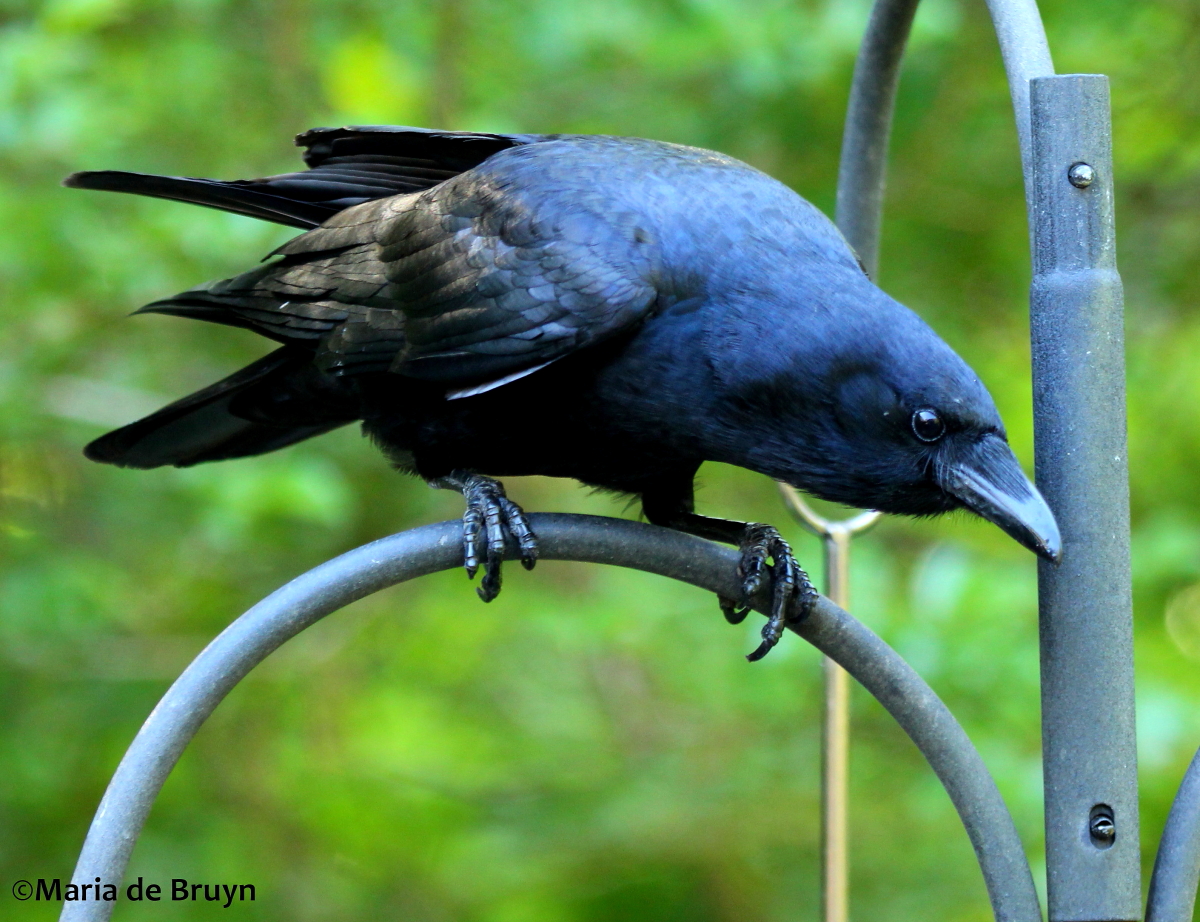
I don’t know how much longer Casey will be a regular visitor but it will be interesting to learn more about his/her likes and dislikes as time goes by!