Bluebird young’uns – take 2!

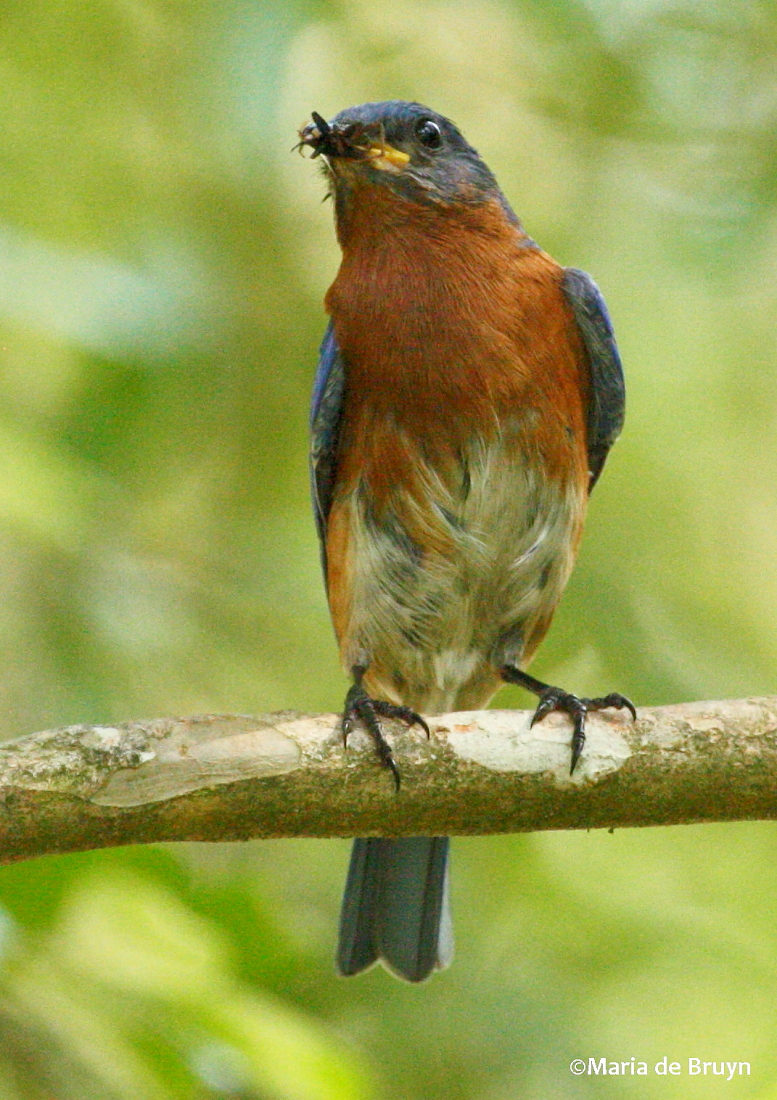
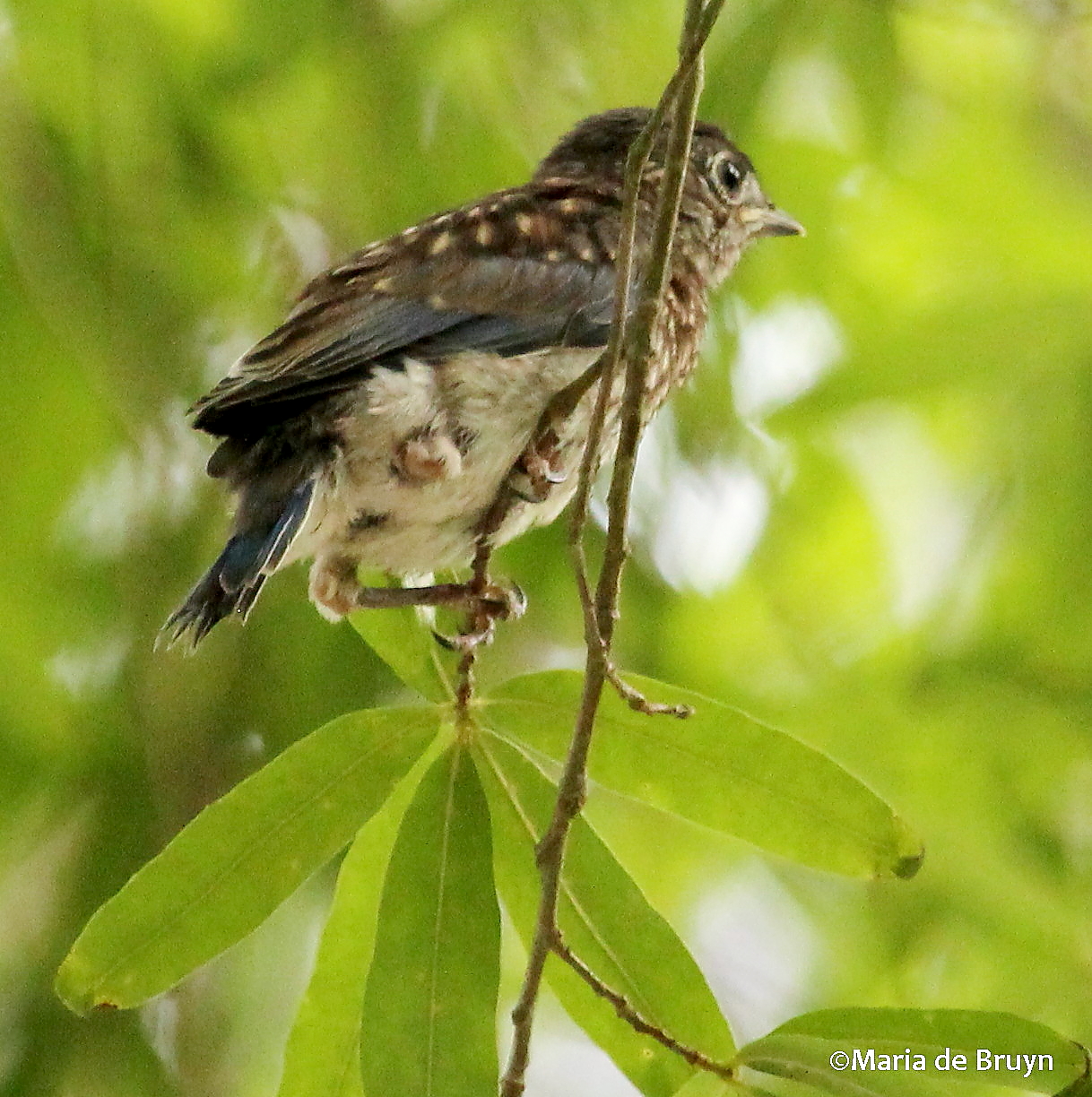
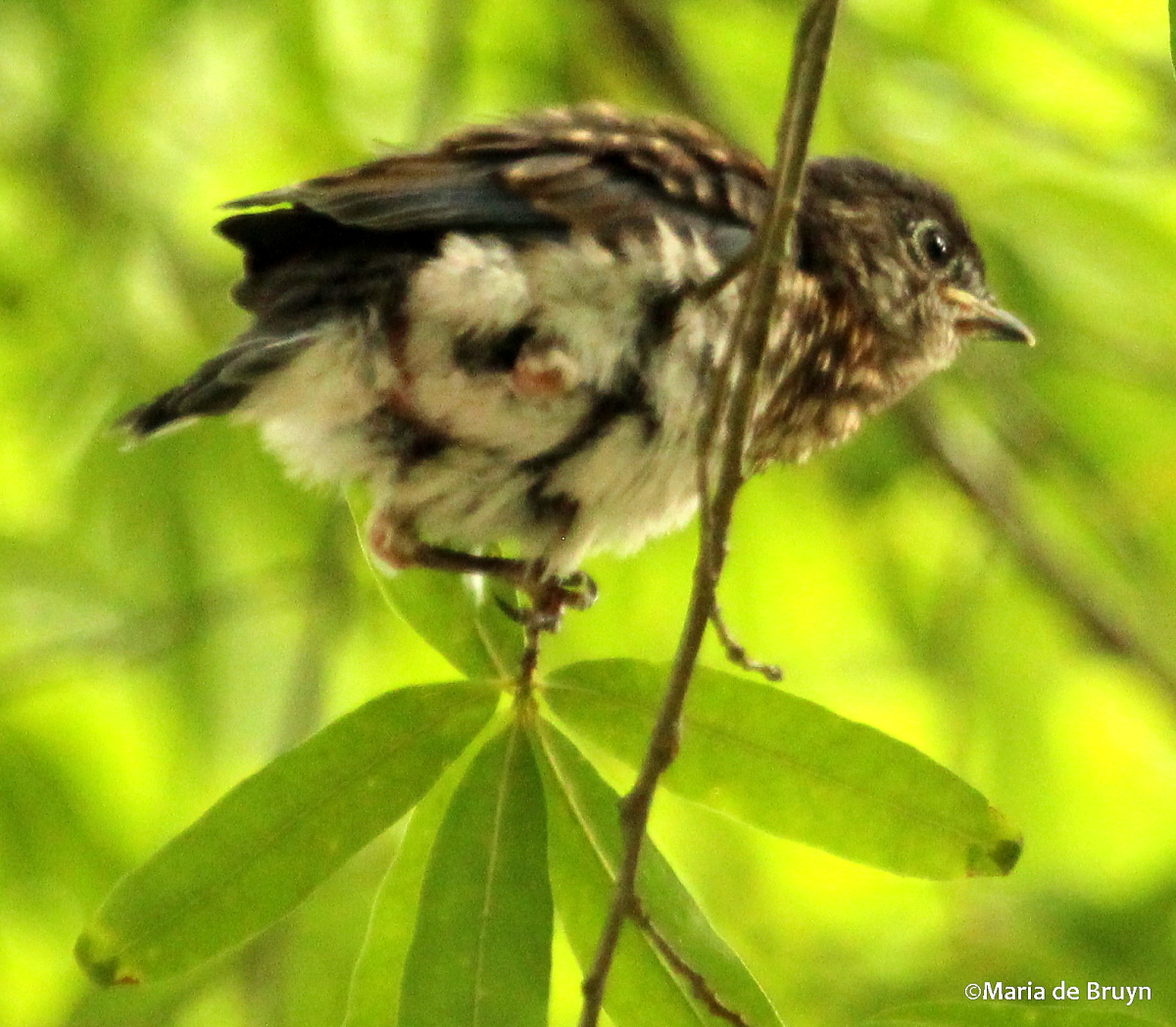
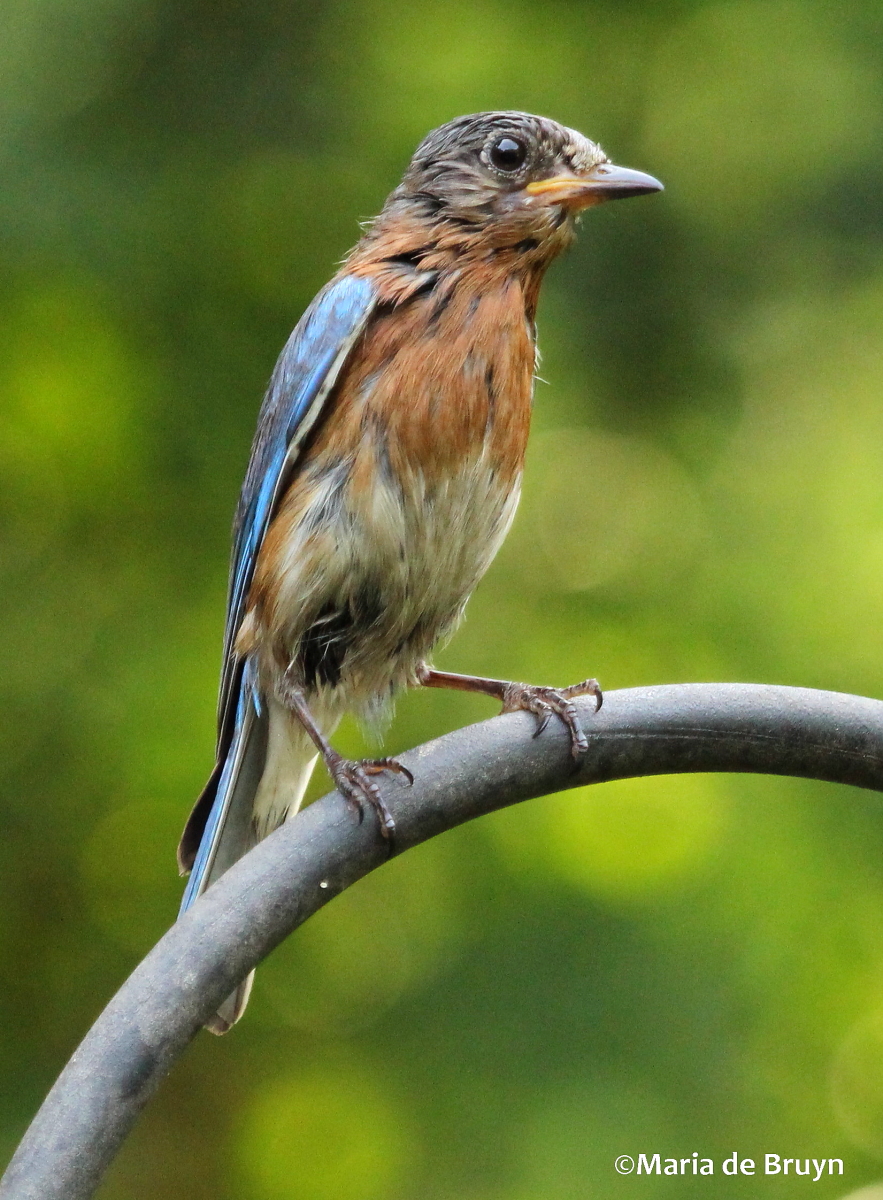
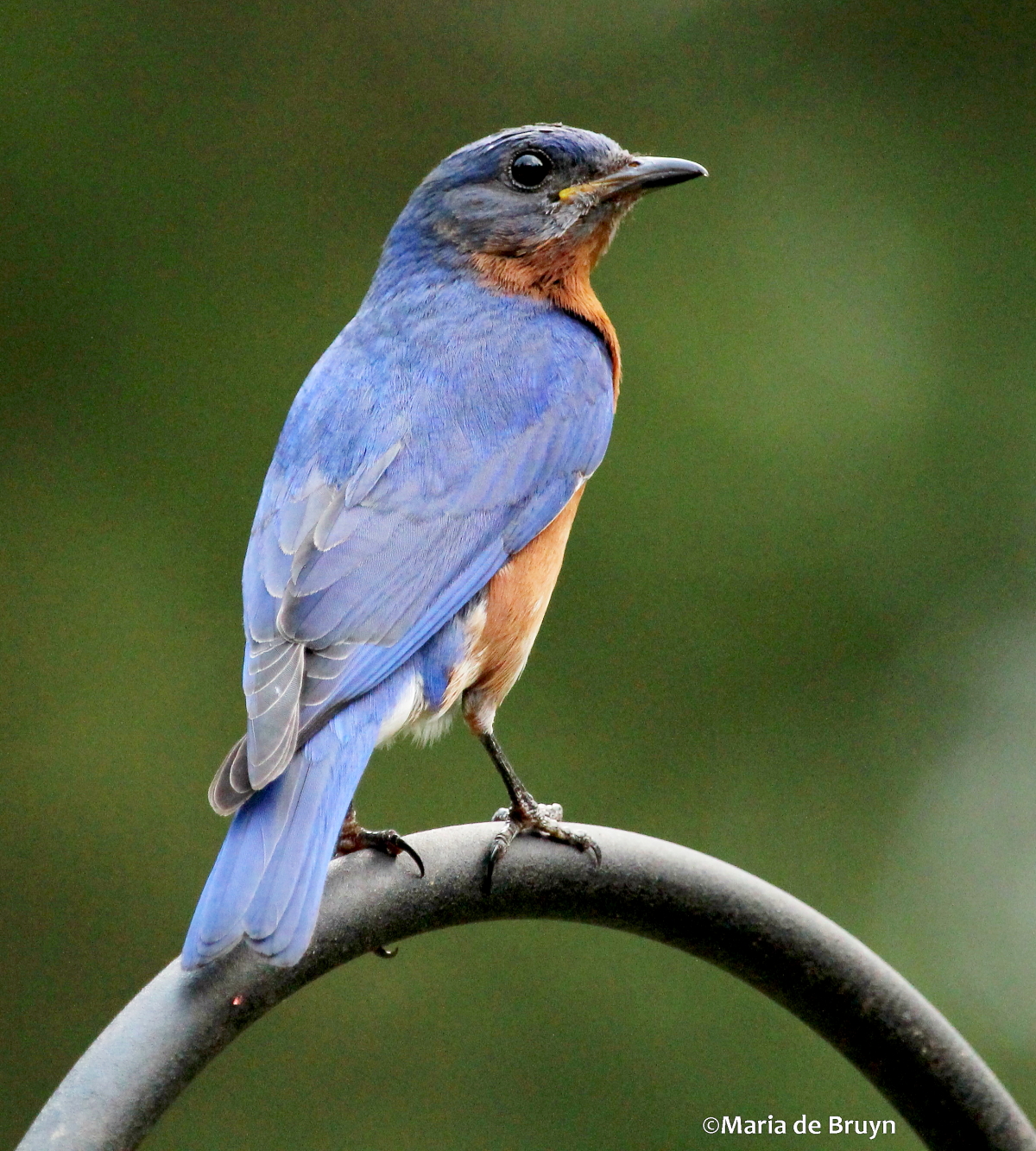
Eastern bluebird IMG_1285©Maria de Bruyn resThe first week after they fledged, I didn’t see the baby Eastern bluebirds (Sialia sialis), although their parents were frequent visitors to the suet/meal worm feeders. I hoped that they had made it and not fallen prey to a neighborhood cat or other predator. When I decided to take photos at the time of the summer solstice, however, I discovered they are all doing quite well and keeping mama and papa quite busy!

Eastern bluebird IMG_1248©Maria de Bruyn res


Sometimes they perched nearby and waited for a parent to come to them with a meal. Other times they waited in nearby trees.

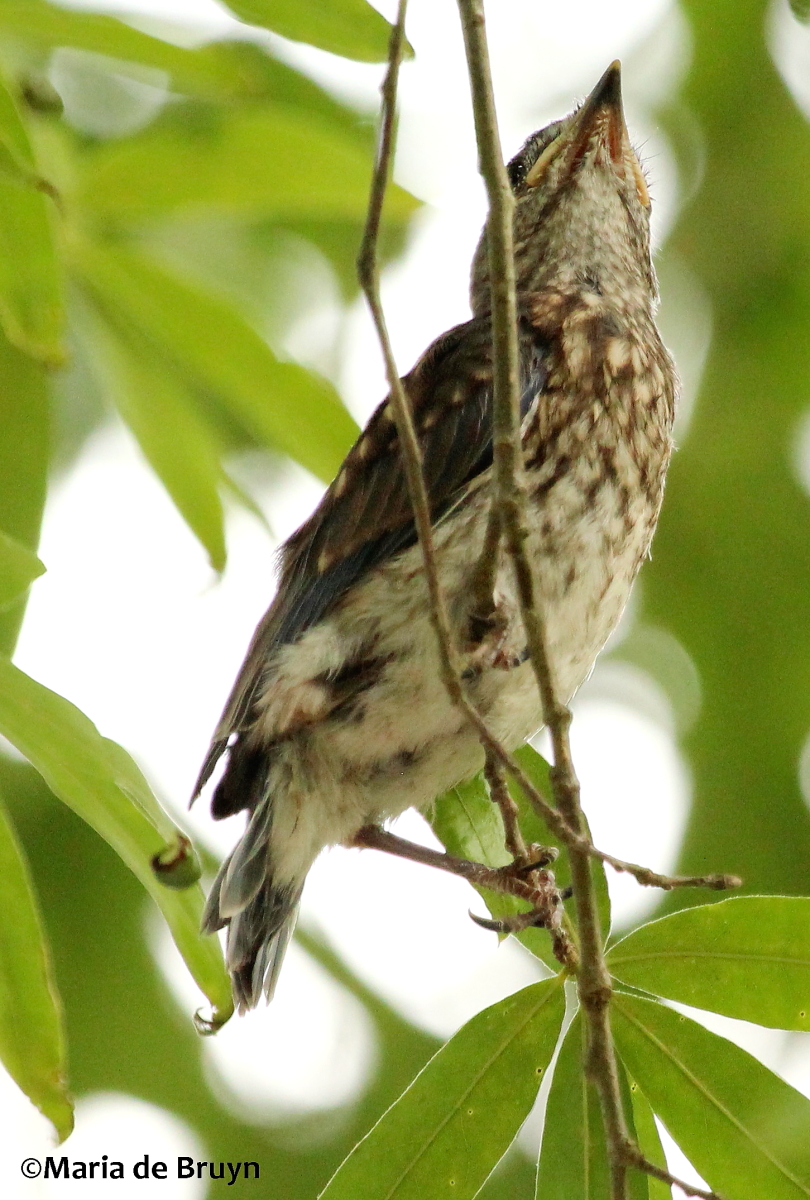
They also followed their parents to the feeder, perching on a bamboo stem or feeder pole, waiting and calling to make their hungry desires known.


Eastern bluebirds IMG_1123©Maria de Bruyn res

They could be quite demanding, which may account for the parents stuffing their mouths quite full of meal worms.

Eastern bluebirds IMG_1243©Maria de Bruyn res

Eastern bluebird IMG_1662©Maria de Bruyn res
I guess those wide open mouths make it quite obvious what they are after.

Eastern bluebird IMG_1254©Maria de Bruyn res

I don’t know whether there was some rivalry in play here or one baby misjudging its landing coordinates on the pole very badly. Good thing those claws missed its sibling’s eye!

Eastern bluebird IMG_1696©Maria de Bruyn resEastern bluebird IMG_1696©Maria de Bruyn close-up
Not every juvenile was just expecting waiter service from dad or mom, though. One young’un (“Southern” for young one) began practicing meal worm gleaning from the feeder him (or her)self, successfully I might add.

Eastern bluebird IMG_1275©Maria de Bruyn res

As his or her siblings learn this, it will be nice for their parents, who probably will want to distance themselves from the constant nagging for food. It will be interesting to see if they decide to nurture a second brood this year!

Eastern bluebird IMG_1262©Maria de Bruyn res

Eastern bluebird IMG_1697©Maria de Bruyn res


Yay for the bluebirds!

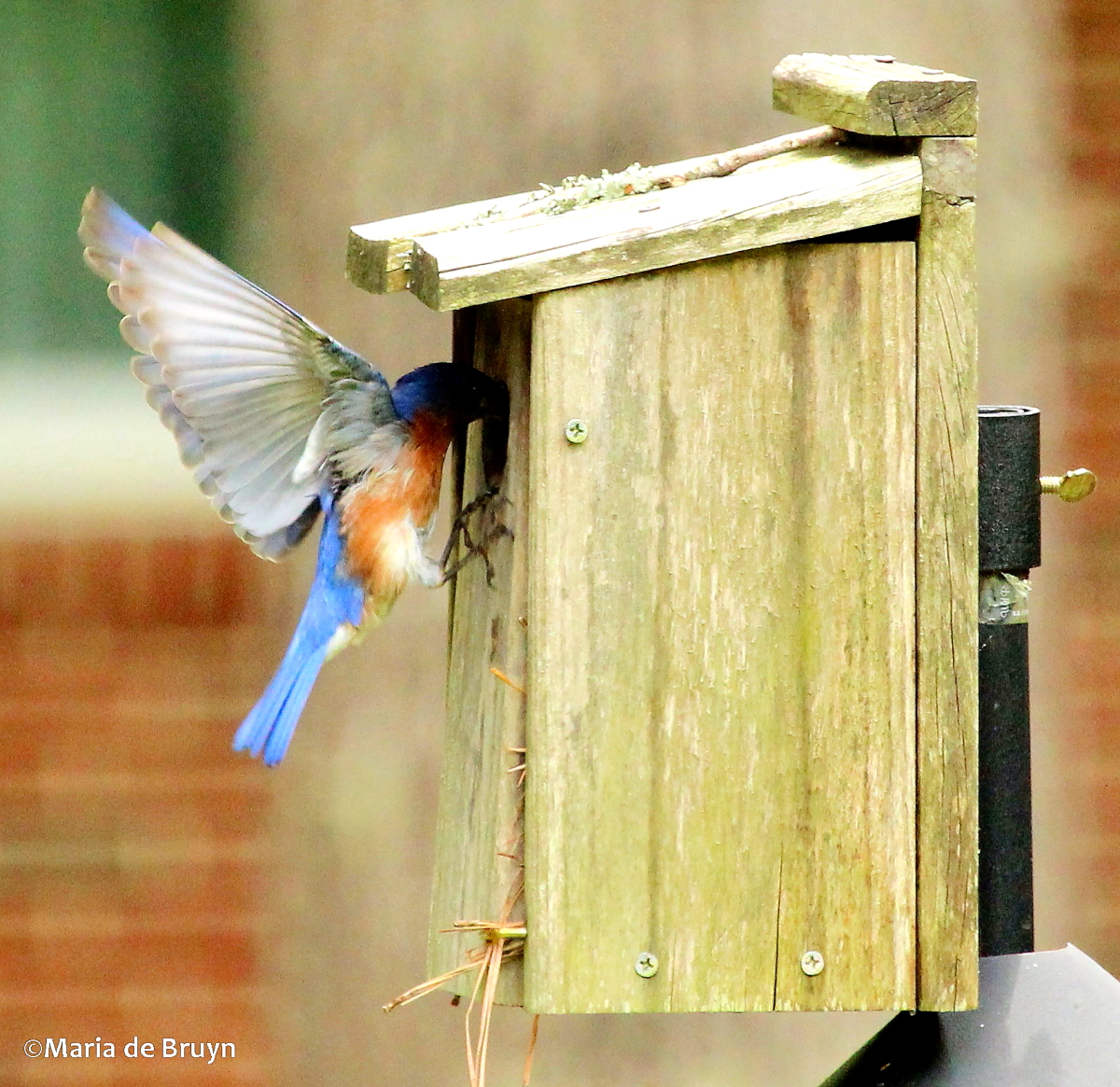
Eastern bluebird Eastern bluebird IMG_9836©Maria de Bruyn resLast year was a disappointment for the bluebirds (Sialia sialias) and me when a cowbird (Molothrus ater) laid her egg in their front-yard nest. The cowbird hatched first and when I looked a few days later, the bluebird eggs were gone. The bluebirds dutifully cared for the foster child but had none of their own.

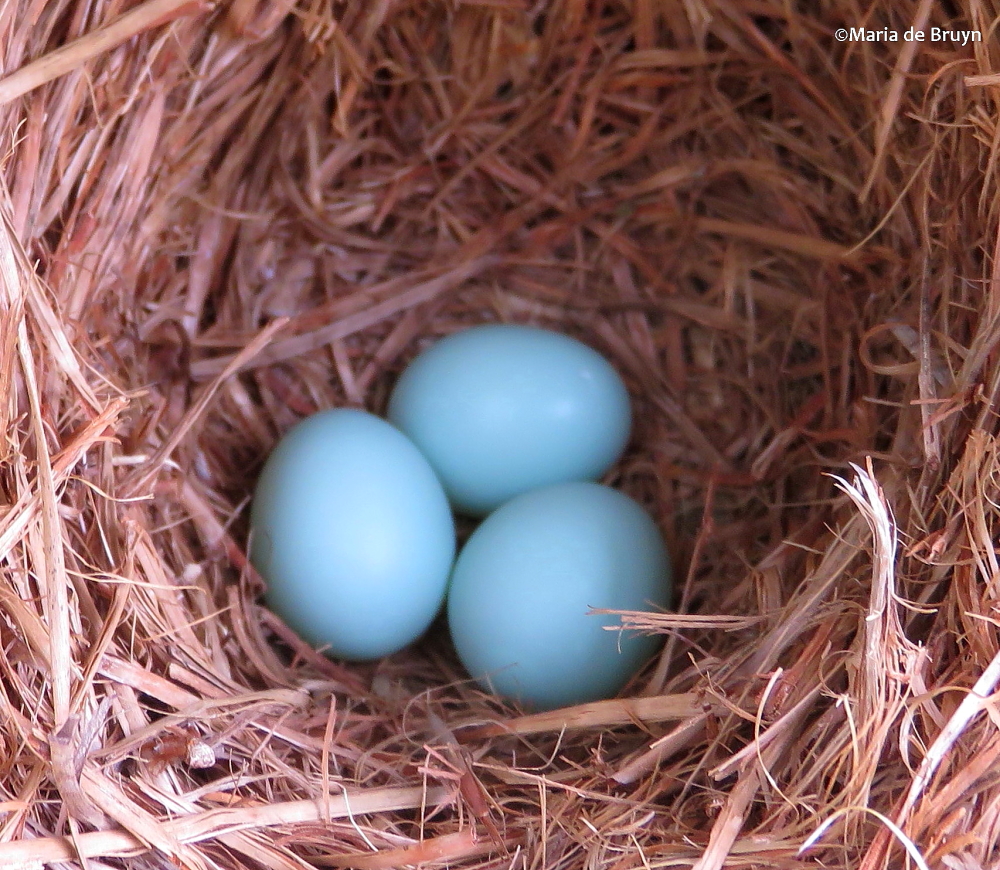
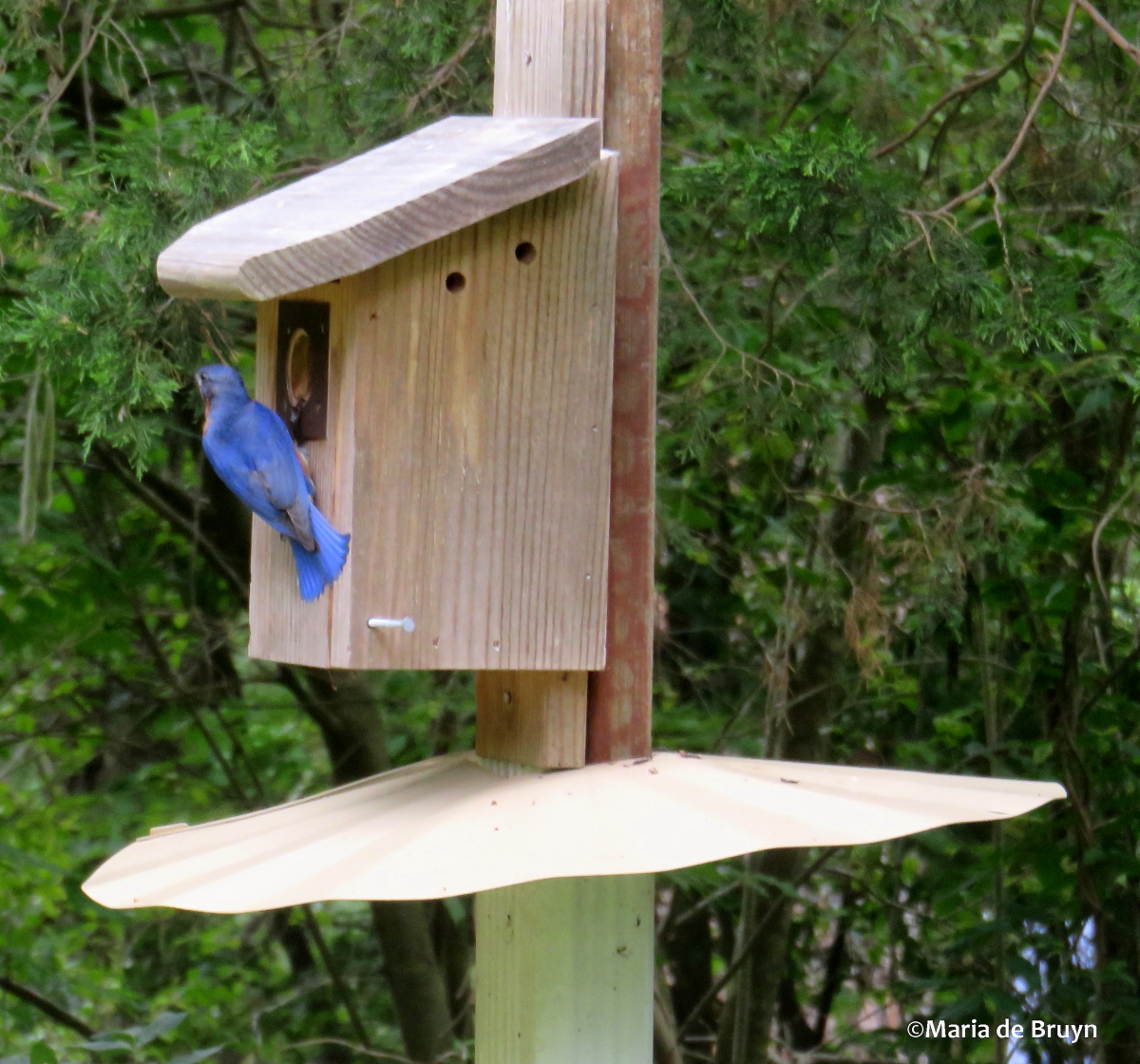
This year, they returned to the same nesting box and despite there being whole flocks of cowbirds around, they were able to avoid being surrogate parents this year. On 2 May, there were three eggs and by 5 May there were four.

Eastern bluebird IMG_5902©Maria de Bruyn resEastern bluebird IMG_4819©Maria de Bruyn resEastern bluebird IMG_4985©Maria de Bruyn res

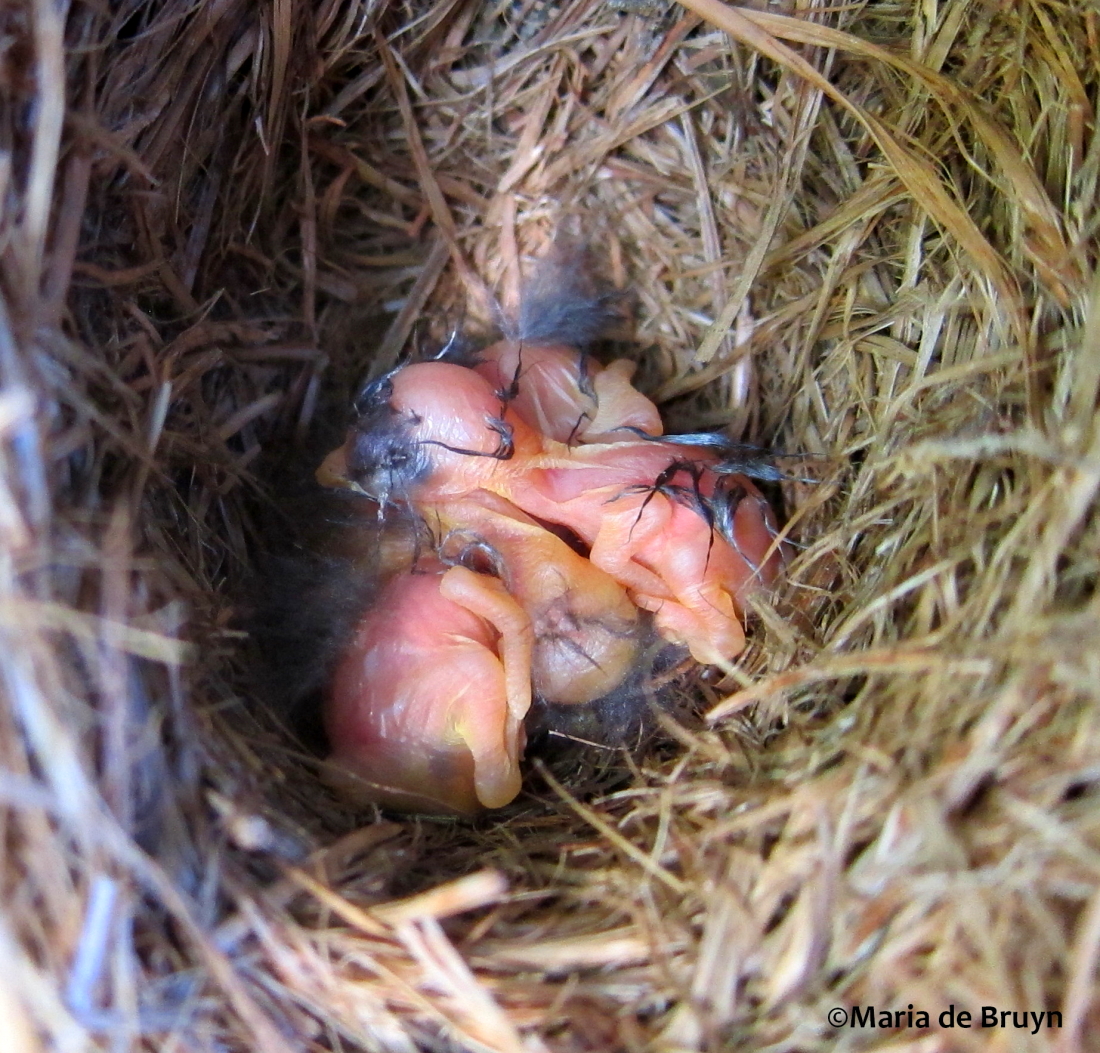
On 17 May, after mama and papa left the vicinity of the nest, I peeked in and saw the hatched babies, very naked newborns indeed! Mama was often with the babies and papa came to bring food, but mama left from time to time. They both visited the feeders to replenish themselves.

Eastern bluebird Eastern bluebird IMG_9753©Maria de Bruyn resEastern bluebird IMG_8753©Maria de Bruyn res

I set up a canopy chair to observe at what I thought was a good distance but discovered I was too close. The parents would arrive in the tree fronting the nest but if I was too close in their opinion, they would not go to the nest or only after I had been still for quite a long time. It was interesting to see that they were feeding the hatchlings dried meal worms along with other insects that they had caught.
Eastern bluebird IMG_3538©Maria de Bruyn resEastern bluebird IMG_3498©Maria de Bruyn res

Eastern bluebird IMG_3657©Maria de Bruyn resEastern bluebird IMG_3620©Maria de Bruyn  res

They also seemed to be feeding the babies fruit – wild raspberries from what I could tell!

Eastern bluebird IMG_4994©Maria de Bruyn resBy 28 May, the babies were much larger and feathered. Mama and papa were kept busy ensuring they were well fed! And house cleaning to remove their brood’s fecal sacs was also a definite necessity!

Eastern bluebird IMG_5129©Maria de Bruyn res

Eastern bluebird IMG_5371©Maria de Bruyn resThe parents remained very vigilant – not only keeping an eye on me but also other too curious visitors. On 1 June, a gray catbird (Dumetella carolinensis) suddenly descended to the nesting box, fluttering its wings furiously to remain suspended in front of the hole while it looked in. It then flew up on top of the box but the bluebird adults chased it away VERY quickly!


Eastern bluebird IMG_5008©Maria de Bruyn res


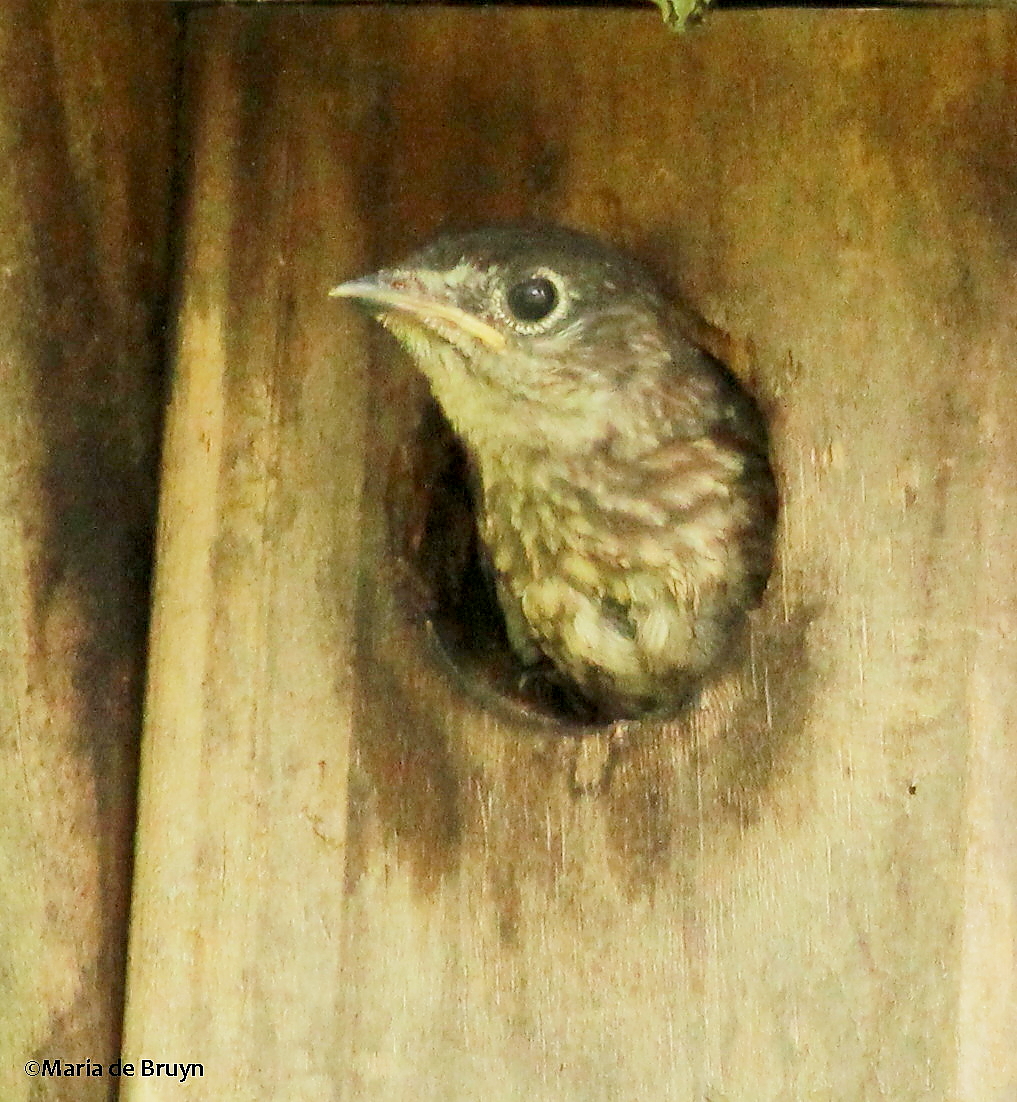
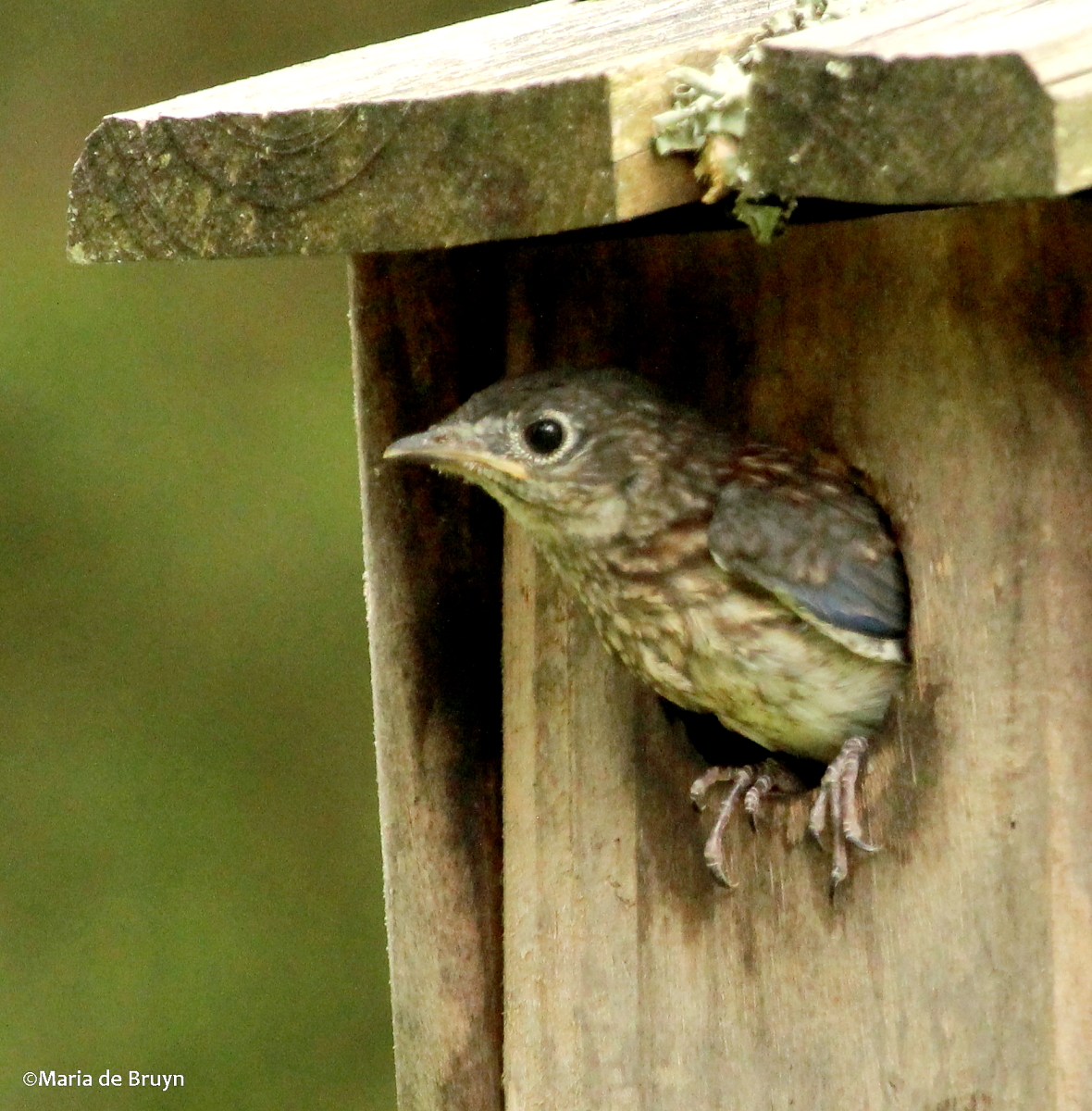
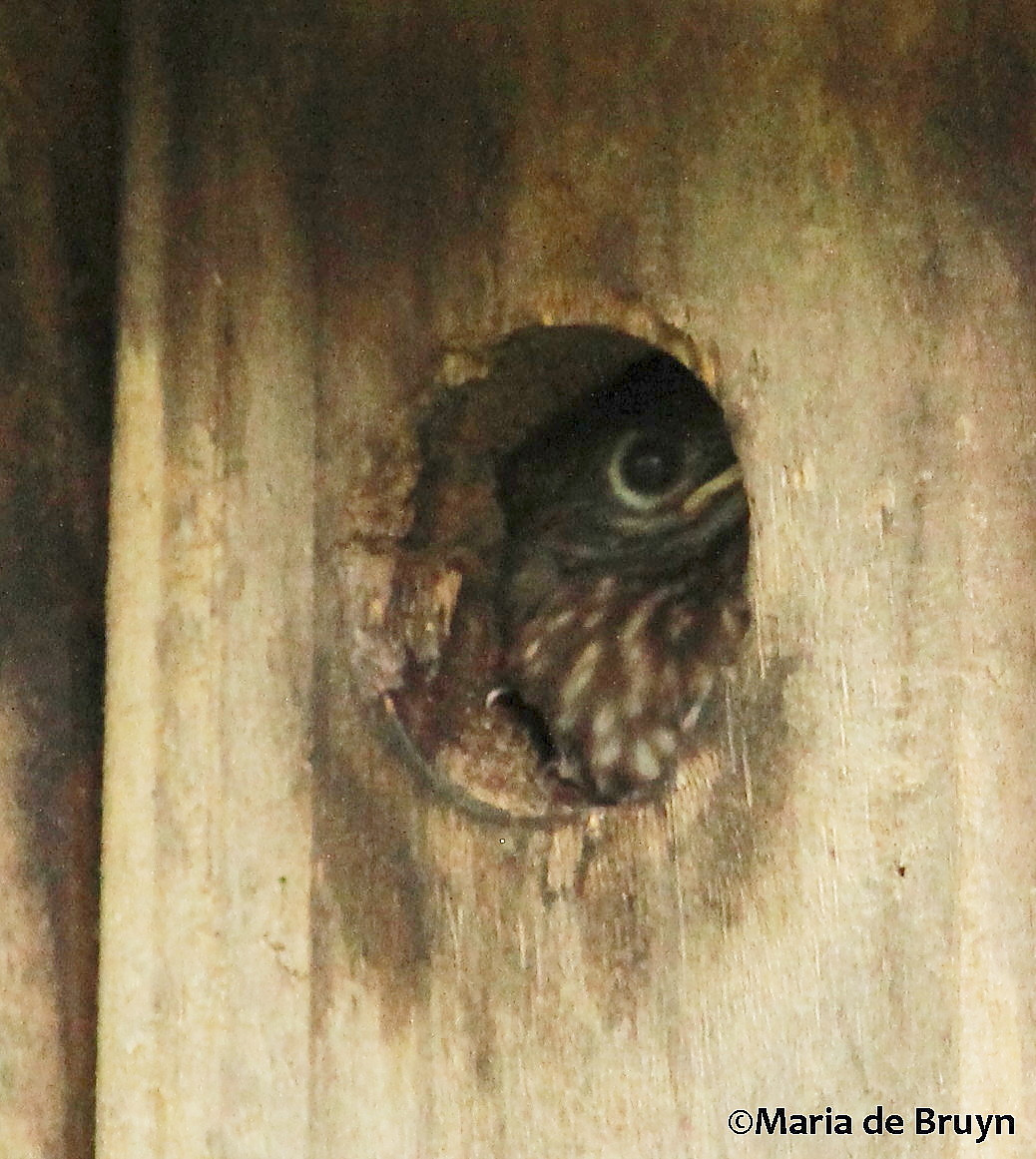
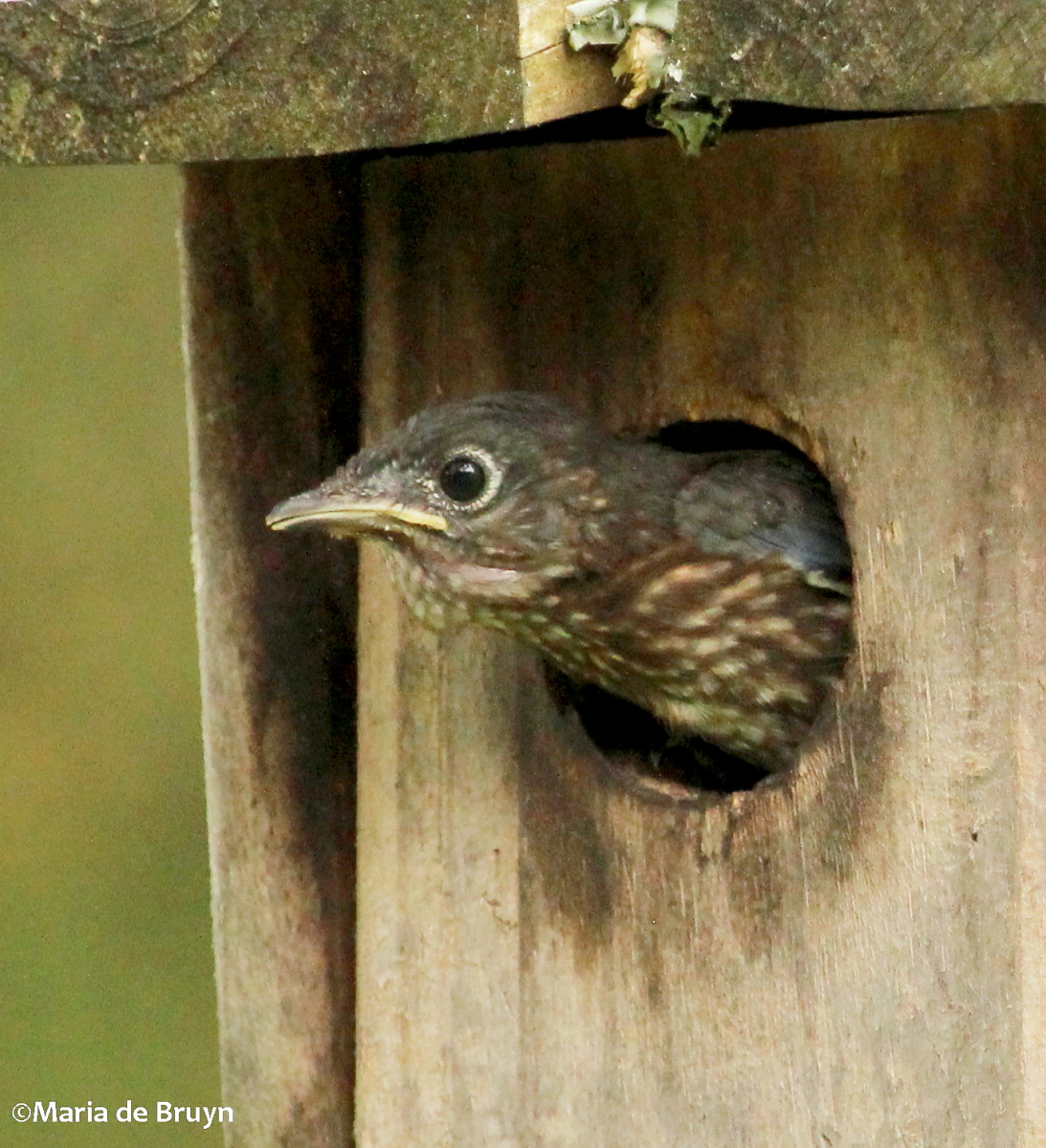
By 2 June, the babies were looking ready to fledge. The next day, I had time to watch the box and saw a baby repeatedly looking out (but not really calling much).


Eastern bluebird IMG_6267©Maria de Bruyn resEastern bluebird IMG_6330©Maria de Bruyn res

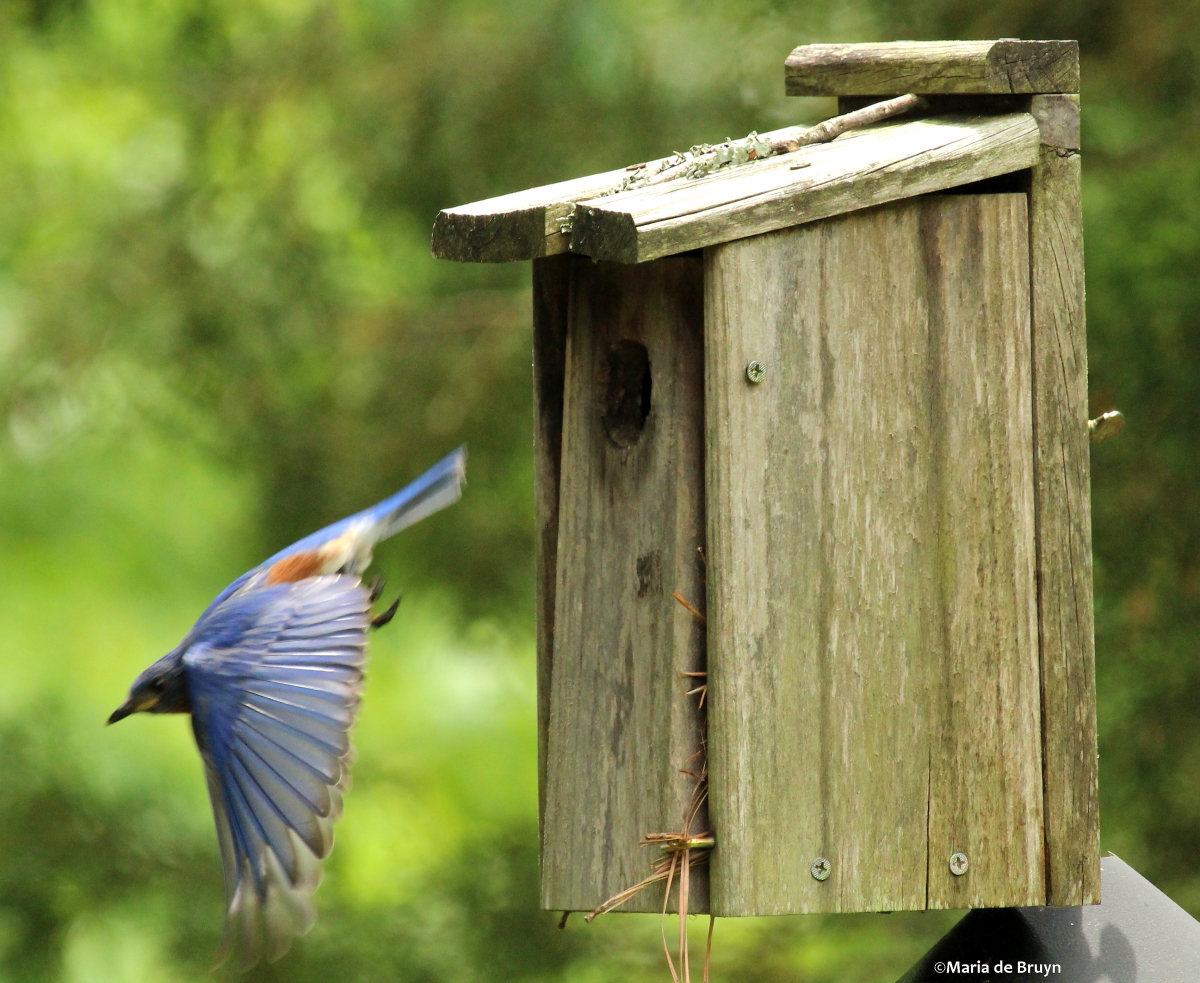
Sure enough, I saw it leap and swoop up to perch on a nearby branch.

Eastern bluebird IMG_6347©Maria de Bruyn resEastern bluebird IMG_6369©Maria de Bruyn res

Eastern bluebird IMG_6361©Maria de Bruyn resEastern bluebird IMG_6379©Maria de Bruyn res

The next baby soon began peeping out, too, although this one also retreated inside the box now and again. Eventually, this baby swooped out as well, but s/he flew all the way across the street to a neighbor’s yard. When I carefully looked inside the next box, I saw that they were the last two to fledge – the others had gone before.

Eastern bluebird IMG_6452©Maria de Bruyn trdEastern bluebird IMG_6458©Maria de Bruyn res

Oddly, I haven’t seen the babies at the feeders although I see the parents there.

Eastern bluebird IMG_8743©Maria de Bruyn resEastern bluebird IMG_7504©Maria de Bruyn res


Eastern bluebird IMG_8749©Maria de Bruyn resThey or another bluebird couple were checking out a nest box in the backyard. They didn’t use this one (Carolina wrens have moved in with a nest there in the last few days) but they have constructed a new nest in another backyard box today. So I hope to witness another fledging in a few weeks! Yay for the bluebirds!


A blended bird family!

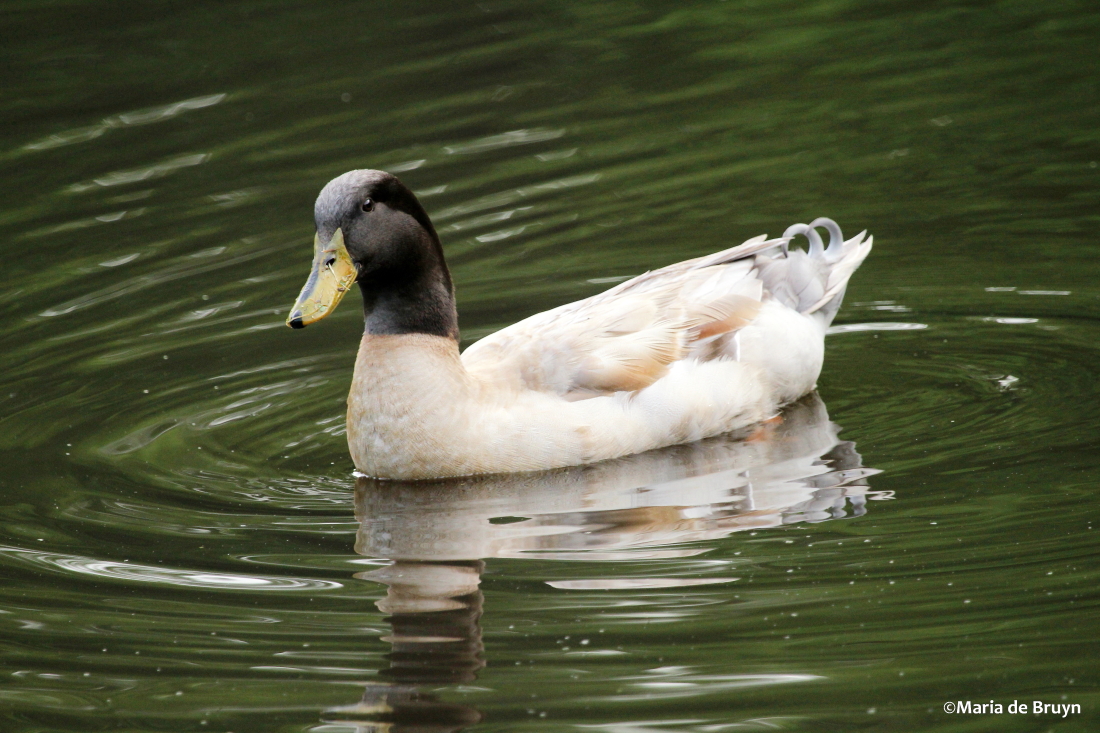
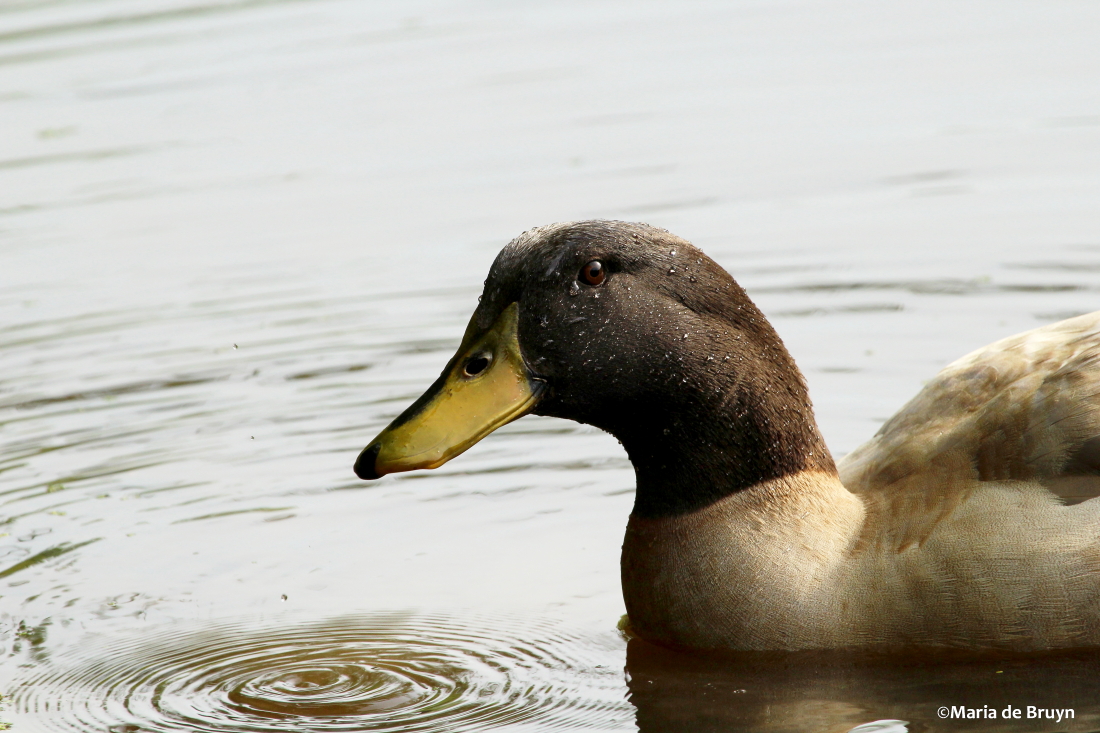
Mallard-pekin duck IMG_0922©Maria de Bruyn resA mixed-parentage duck at one of our local ponds lost a companion recently, leaving him sad and bereft. A fellow wildlife photographer mentioned that this bird, who I am calling Harry, is the offspring of a mallard and a pekin duck (Anas platyrhynchos x Anas platyrhynchos domestica). Harry stayed by the body of the duck who died for a while, clearly distressed.

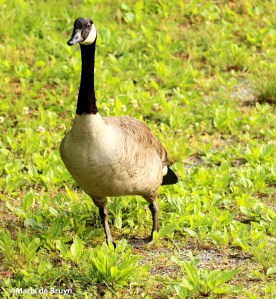
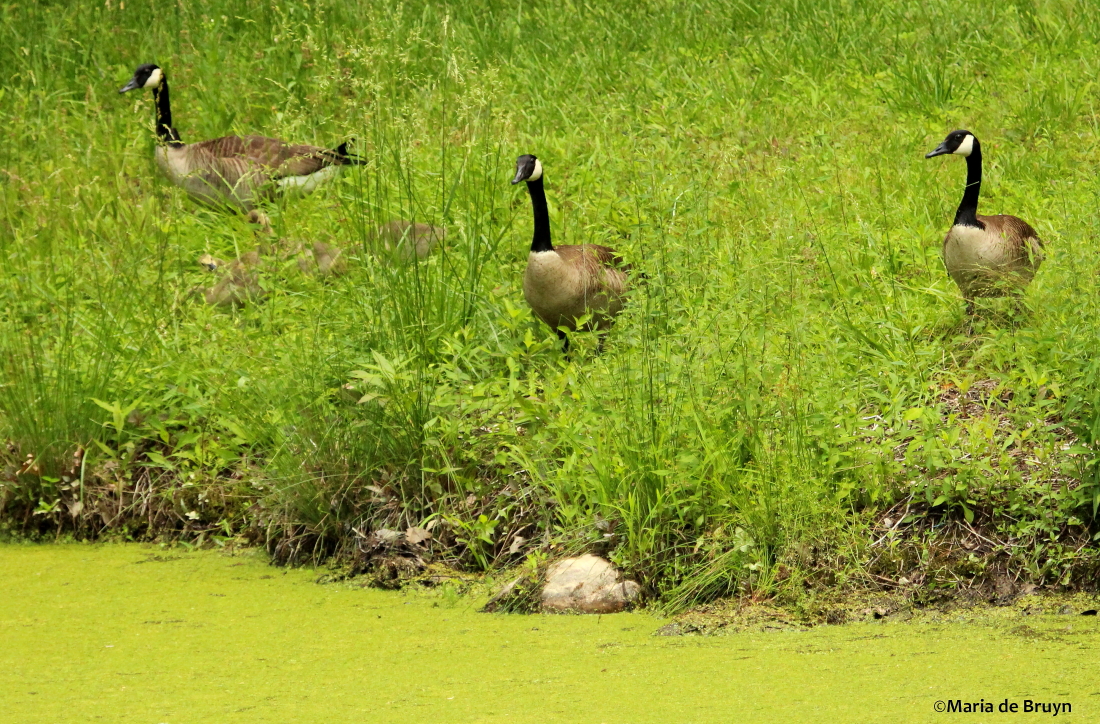
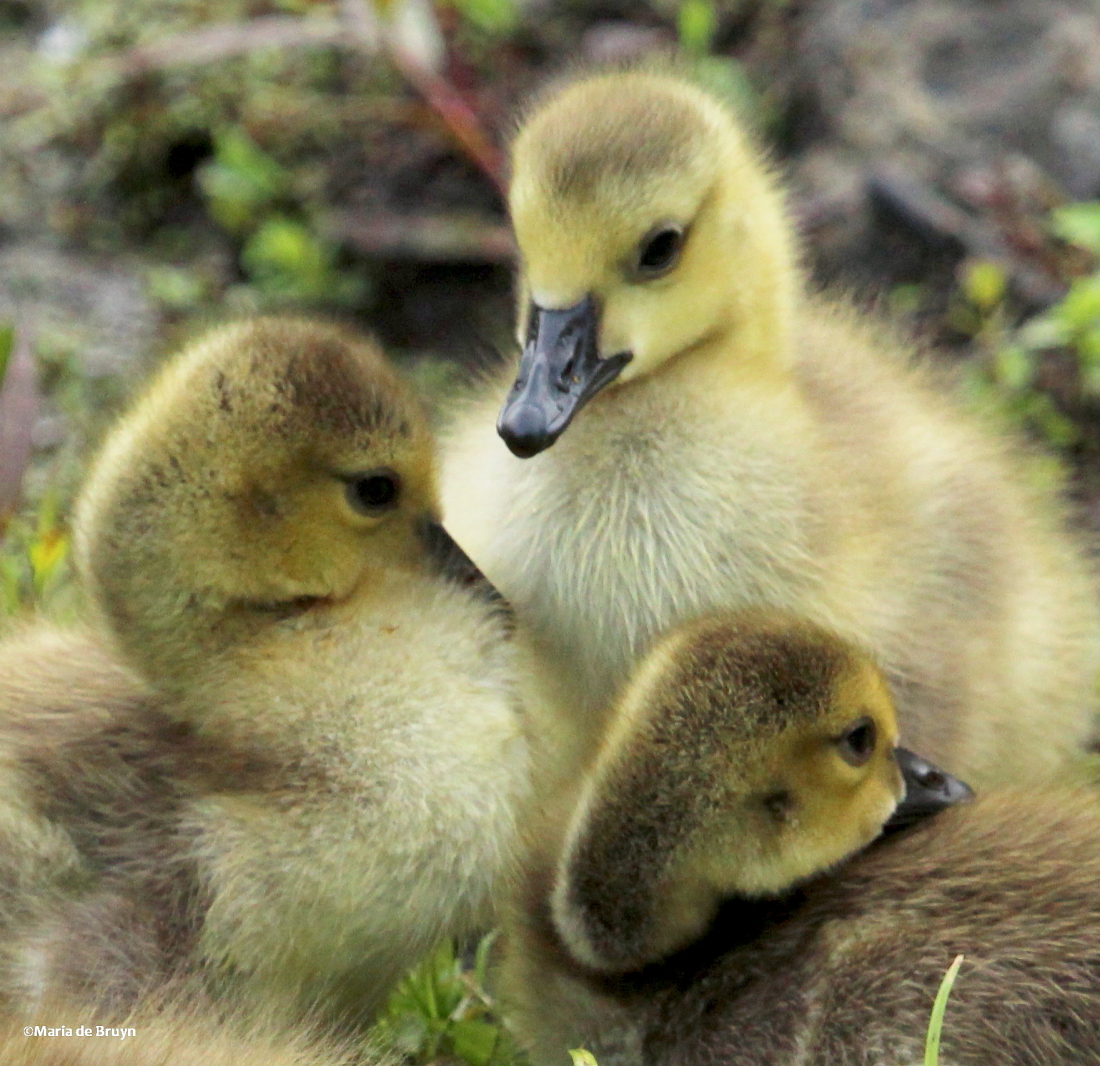
Another pond resident is a female Canada goose (Branta canadCanada goose IMG_0563©Maria de Bruyn resensis), who I have named Clara; she is currently raising four goslings. Canada geese are monogamous and the fathers help raise the young, but Clara appears to be a single mom. At least, she doesn’t have a male goose partner.

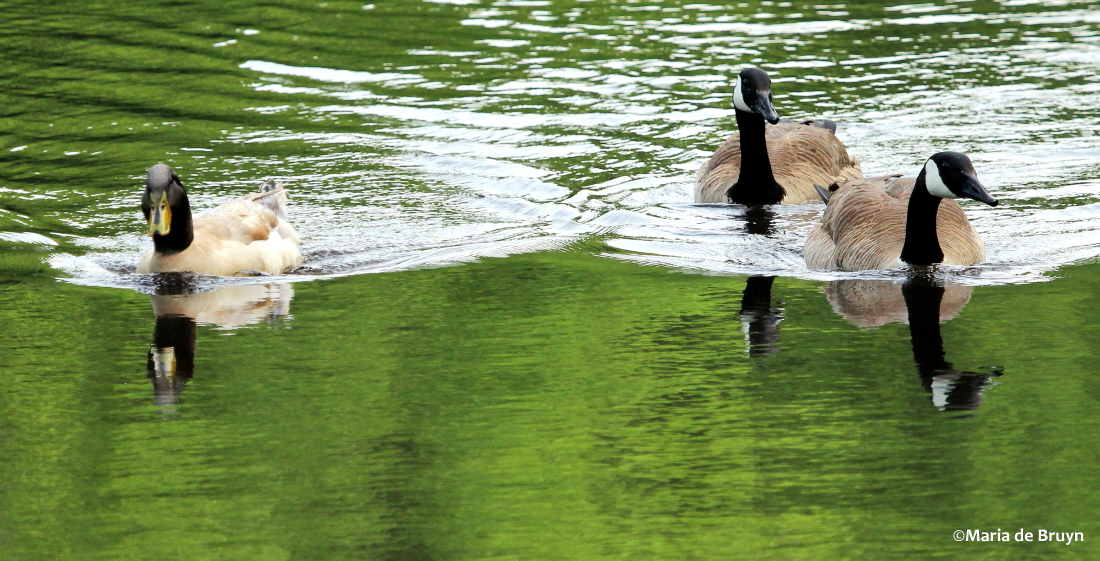
However, Clara is not alone. It appears that Harry has attached himself to the goose family, keeping close to them in the water and on land. He swims with them and follows them onshore when Mama leads the brood to vegetation to feed for a while.

Mallard-Pekin duck IMG_0633©Maria de Bruyn res

Whereas Canada geese that are not habituated to humans will threaCanada goose IMG_0865©Maria de Bruyn resten and even attack people who come too close to their babies, they become pretty mellow when they are often around humans who have shown they will not harm them. Mama kept an eye on all the people taking a stroll around the pond, but she simply shepherded the goslings aside when a person came too close. Harry also kept an eye on the people wandering about.
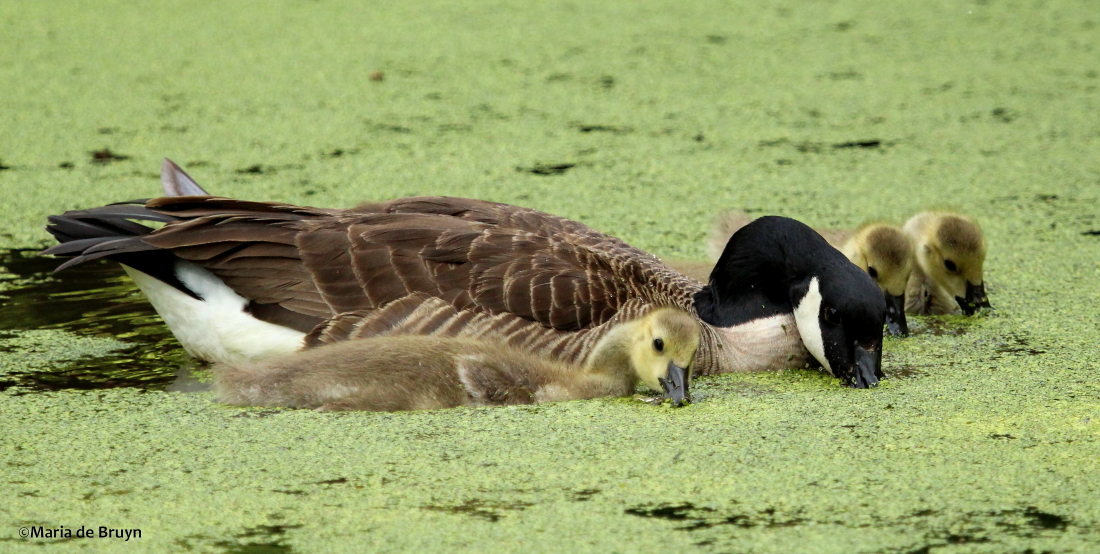
Goslings are able to feed themselves as soon as they are hatched. They will eat grasses and sedge and also grain if it is available.

Canada goose IMG_0765©Maria de Bruyn resCanada goose IMG_4364©Maria de Bruyn res

They follow Clara’s eCanada goose IMG_4483©Maria de Bruyn resxample when foraging in water, tipping forward and extending their necks and heads underwater to scoop up vegetation and even the occasional fish.

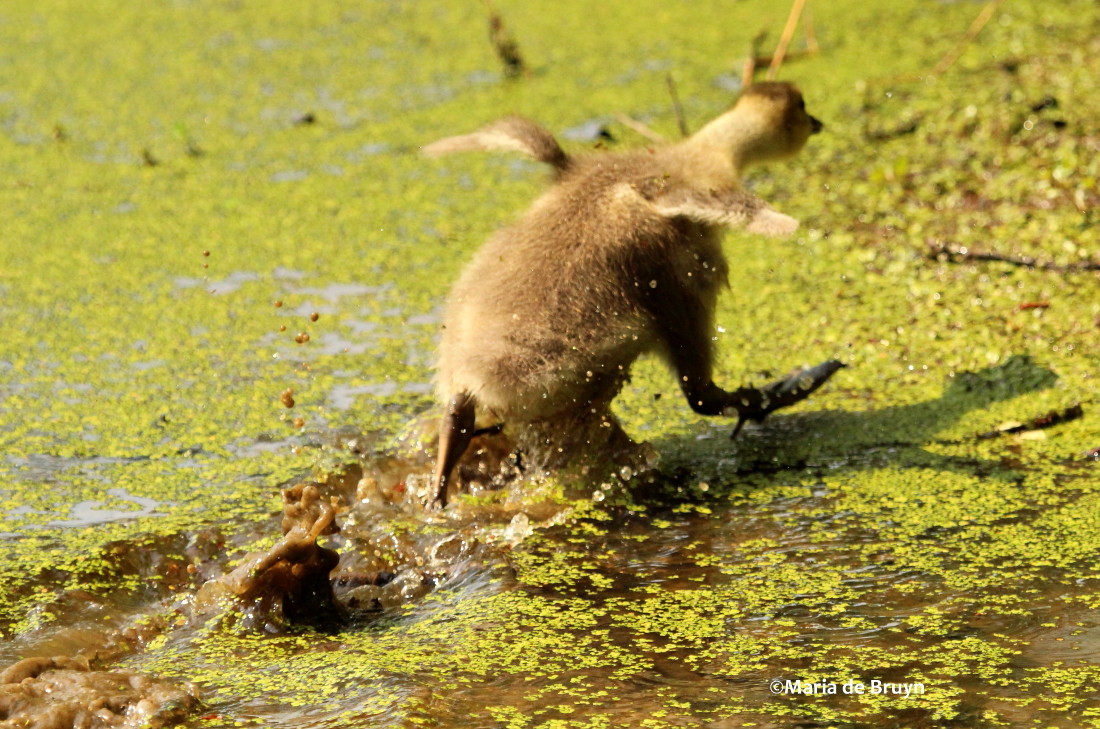
 

Canada goose IMG_0772©Maria de Bruyn res
The goslings can walk and swim right after birth and manage to run, flapping their stubby wings to keep balanced.

Canada goose IMG_0572©Maria de Bruyn resCanada goose IMG_4487©Maria de Bruyn res

On 21 May, some other Canada geese flew overhead and one pair descended to the pond. Harry flew over to meet them, quacking a greeting, and led them back to Clara and the brood where they kept the blended family company for a time.

Mallard-Pekin duck IMG_1031©Maria de Bruyn resCanada goose IMG_1089©Maria de Bruyn res

On 27 May, I saw Clara and children foraging at the pond with the two visitor geese but Harry was nowhere in sight. I feared that something had happened to him.

Canada goose IMG_3945©Maria de Bruyn resgreat blue heron IMG_4309©Maria de Bruyn res

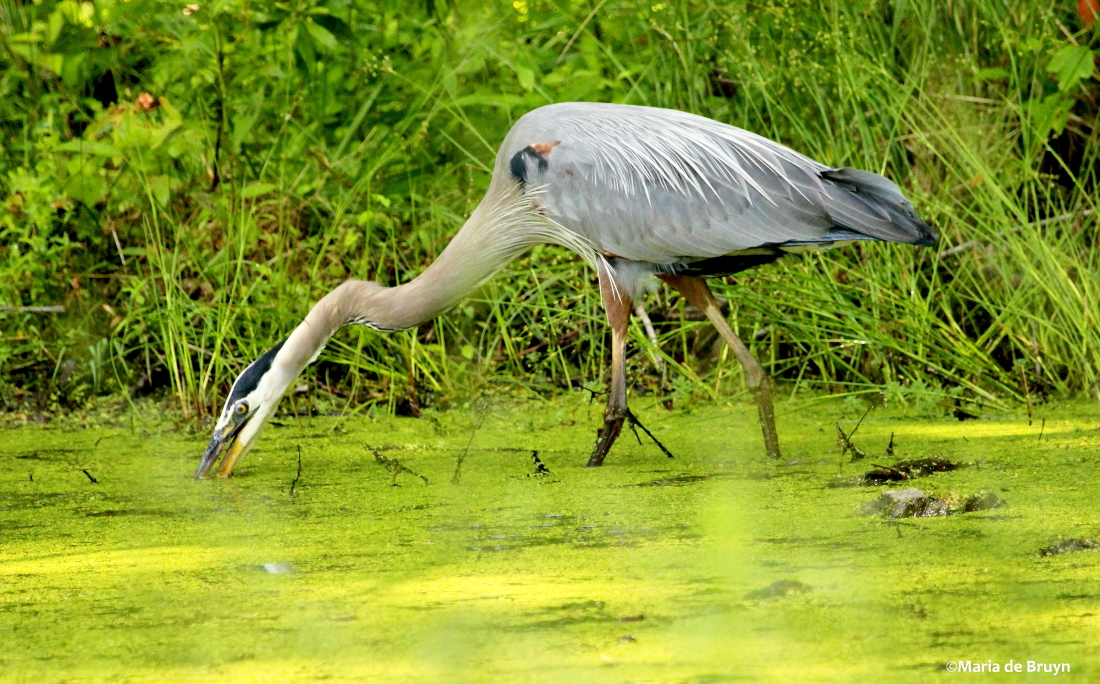
Later, when I visited in the early morning, Clara and the kids were resting and then foraging while a great blue heron (Ardea herodias) fished nearby; Harry was nowhere to be seen. I felt a twinge of sadness.

My feelings were unfounded, however. As Clara and brood swam toward the other end of the pond and I accompanied them walking along the shore, I suddenly saw a brown-headed duck with twin curls by his tail swimming near shore. As Clara came into sight with the four babies swimming in line behind her, Harry began quacking and quacking as he watched them approach.

Mallard-pekin duck IMG_1424©Maria de Bruyn resMallard-Pekin duck IMG_0909©Maria de Bruyn res


Canada goose IMG_4403©Maria de Bruyn res

Canada goose IMG_0988©Maria de Bruyn resClara began honking in response and veered toward Harry, who swam out to meet the family. They were obviously both quite pleased to have each other’s company again. I hope this blended bird family continues to enjoy their inter-species companionship throughout the summer!


Baby bird quiz!

Springtime is always fun when you are lucky enough to be able to watch avian parents raise a brood successfully to fledgling status. My previous two blogs about watching brown-headed nuthatches and Carolina chickadees conscientiously keep their hatchlings well-fed was going to be followed by some new observations on bird parents – either the Carolina wrens or a tufted titmouse, who had laid eggs in two of my bluebird boxes.

Titmouse nest IMG_7210©Maria de BruynThe wrens are very circumspect about feeding when I am in the vicinity but I had seen the titmouse coming and going to the nest. When I looked in one day, I saw that one egg had hatched and three others were still there. Then, I went away for the Memorial Day weekend and returned home to find the nest had been pulled from the box and the fledgling and eggs were gone. (A loose piece of the roof had been removed; there were squirrel and raccoon baffles on the pole; I surmise a squirrel dropped down from a branch overhead.) So there likely won’t be a blog on those species.

But I thought you might like to try your identification skills on the baby and juvenile birds in this blog. Some are fairly easy and others not so much. I will number the photos and hope that you will make guesses in the comments section of the blog. Then I will post the answers in a comment when I publish my next blog, so check back to see how you did. Good luck!

cardinal baby 3 MdBNo. 1Baby mockingbird IMG_4799 ©Maria de BruynNo. 2

Baby American robin IMG_9188sNo. 3Baby Gray catbird IMG_4654©Maria de BruynNo. 4

Baby thrasher baby©Maria de BruynNo. 5Baby chipping sparrow 8 MdB signed No. 6Baby Eastern towhee IMG_9845 ©Maria de BruynNo. 7   baby cardinal 21  MdB No. 8

Baby Gray catbird ©Maria de BruynNo. 9  Eastern Bluebird juvenile IMG_5187© Maria de BruynNo. 10

Baby Canada goose MG_0573©Maria de Bruyn No. 11