Yay for the bluebirds!

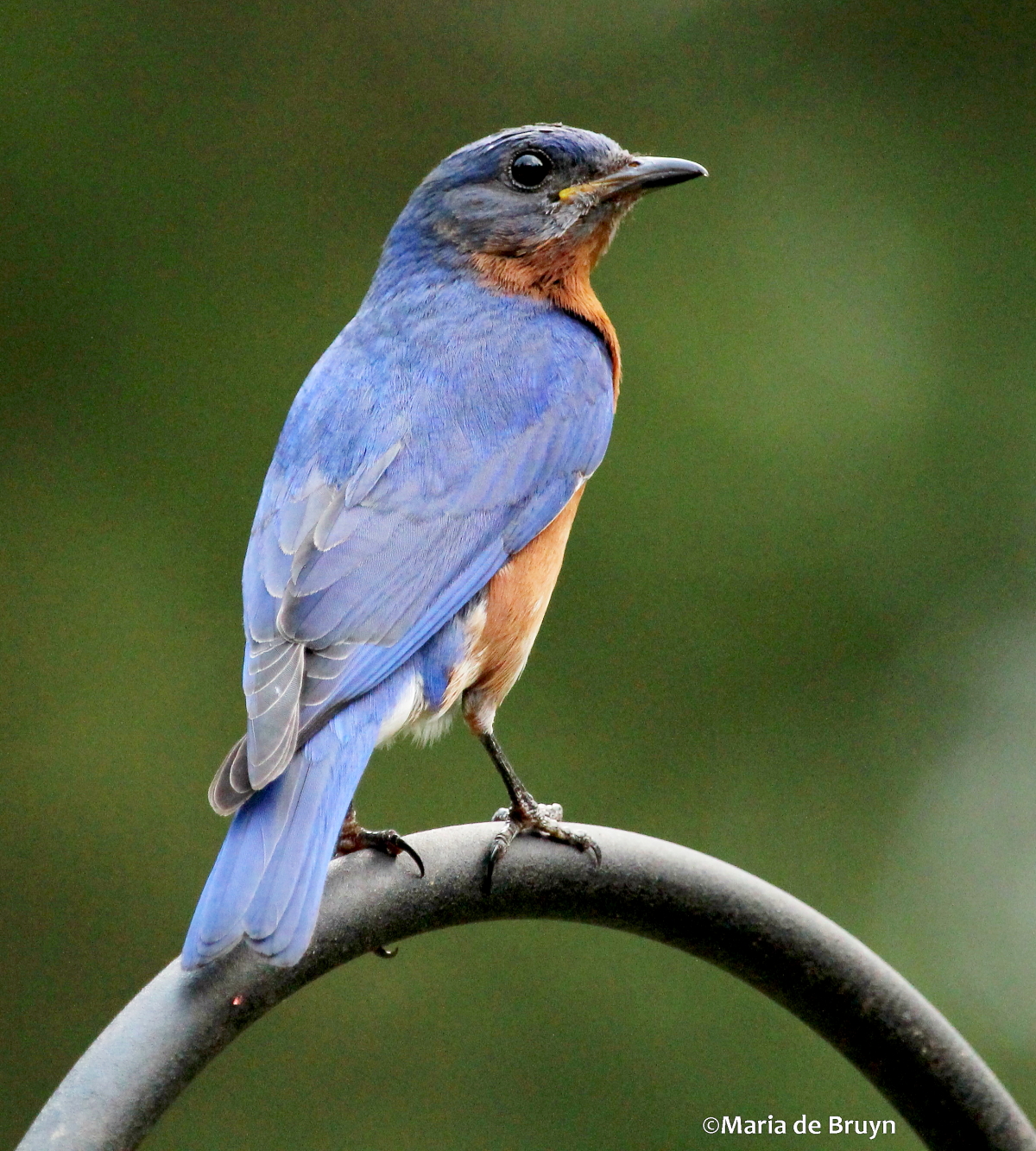
Eastern bluebird Eastern bluebird IMG_9836©Maria de Bruyn resLast year was a disappointment for the bluebirds (Sialia sialias) and me when a cowbird (Molothrus ater) laid her egg in their front-yard nest. The cowbird hatched first and when I looked a few days later, the bluebird eggs were gone. The bluebirds dutifully cared for the foster child but had none of their own.

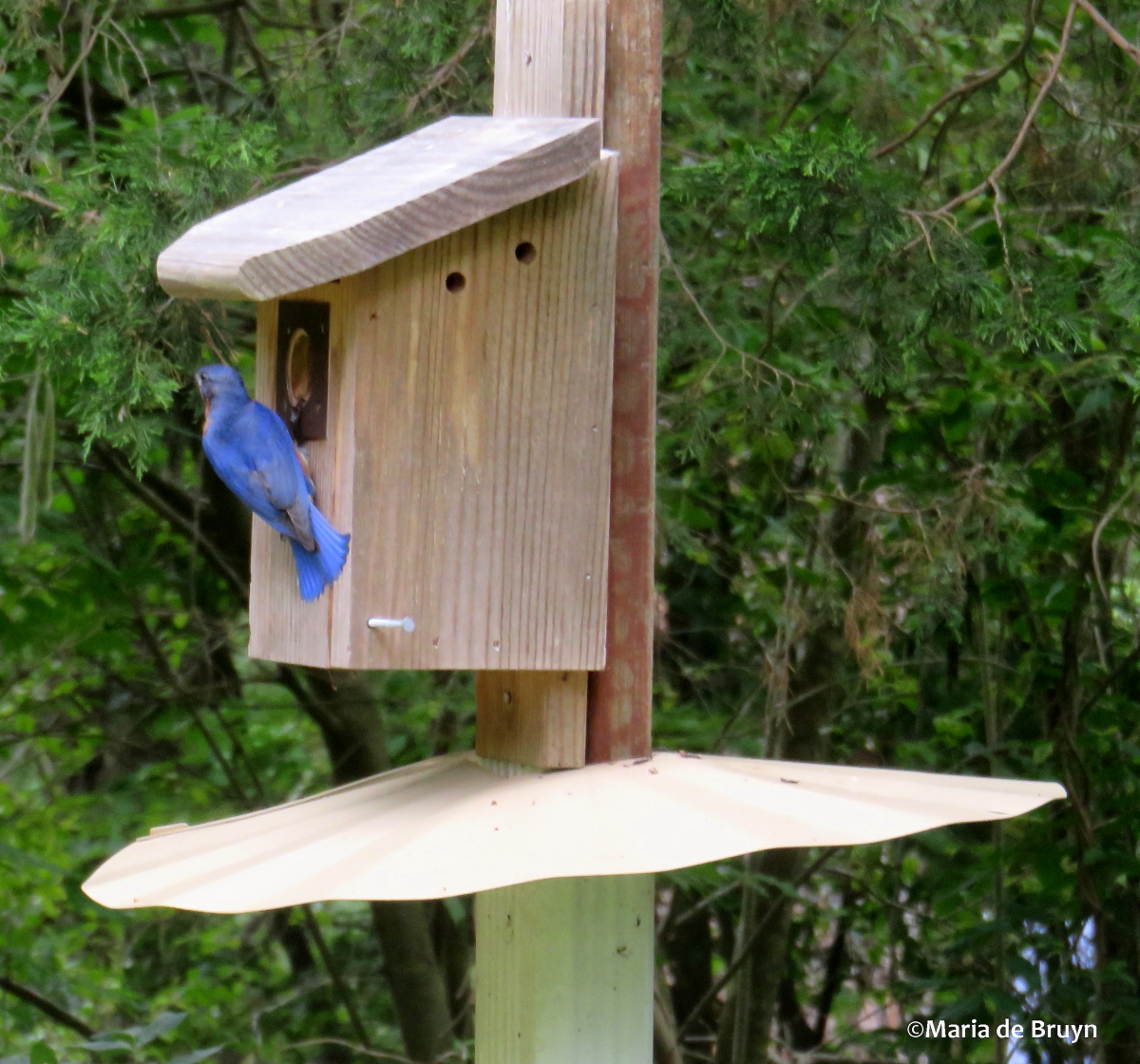
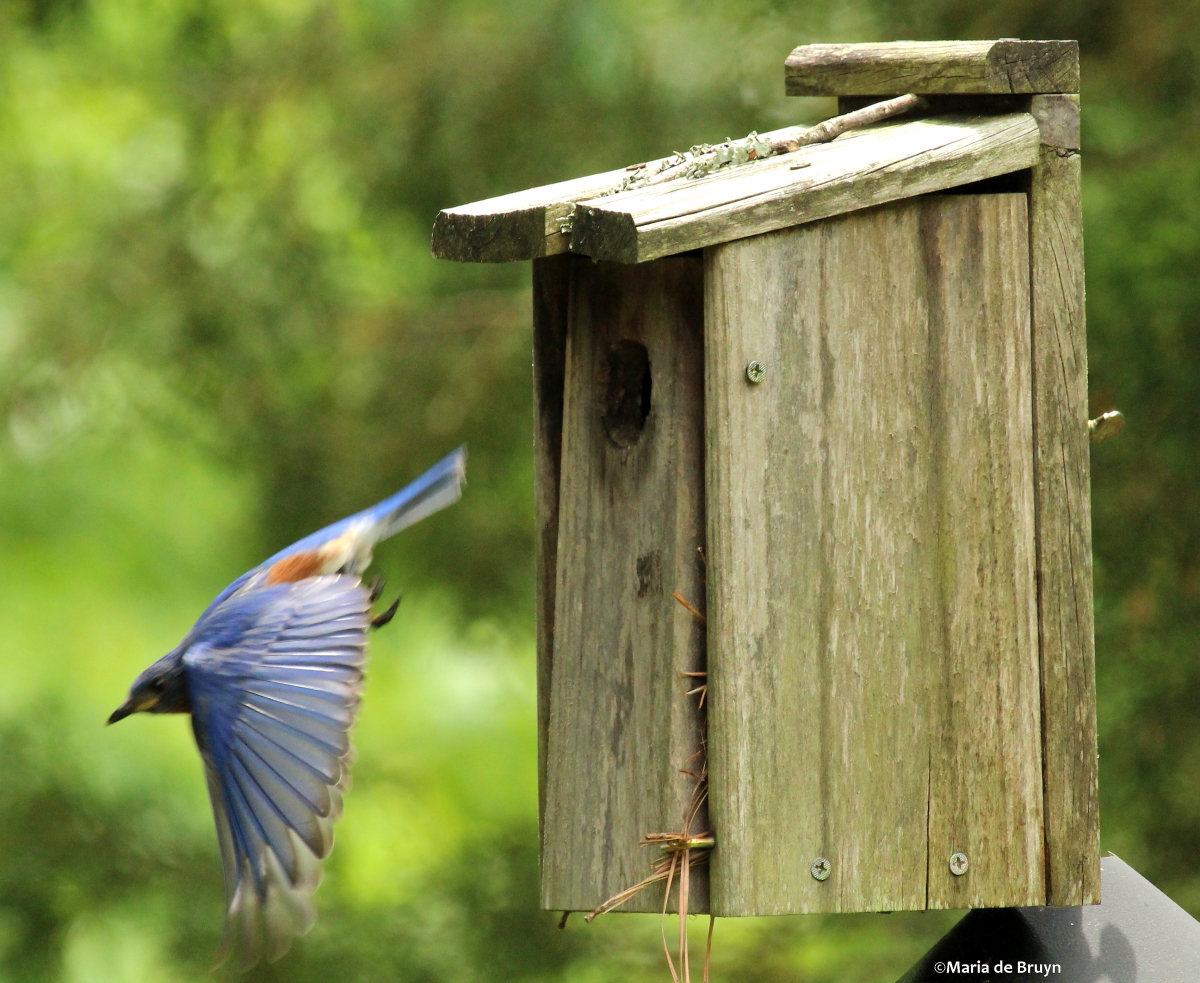
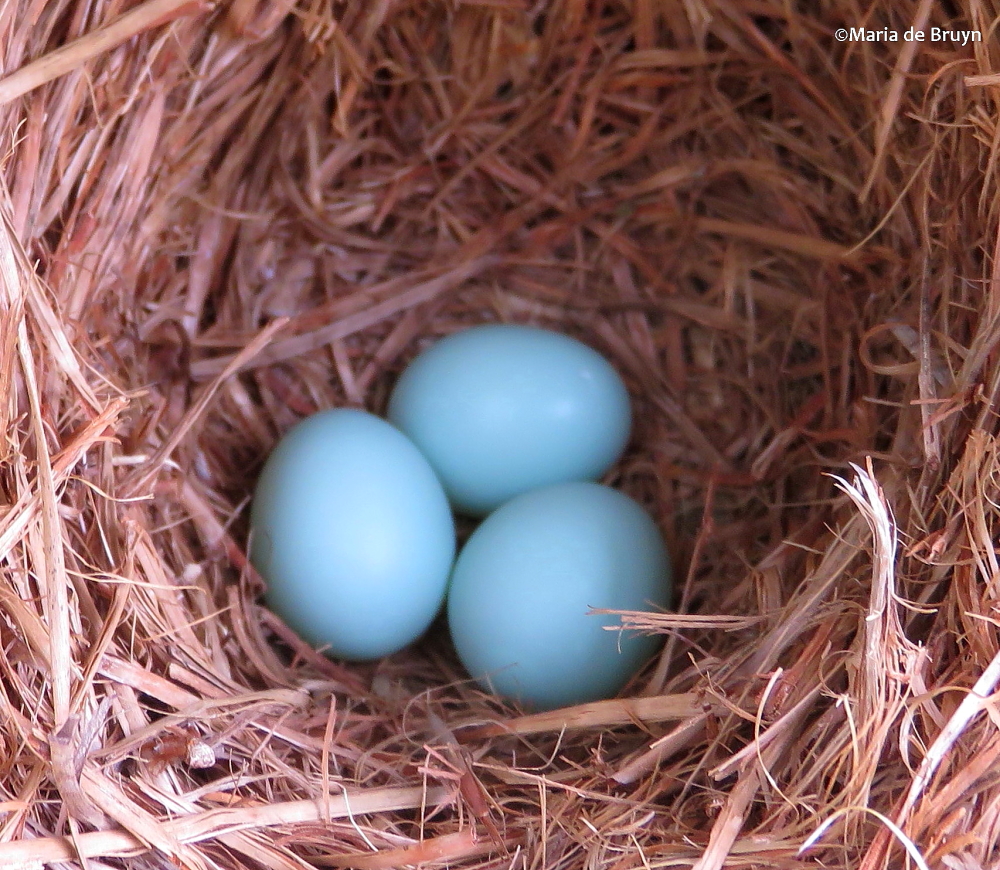
This year, they returned to the same nesting box and despite there being whole flocks of cowbirds around, they were able to avoid being surrogate parents this year. On 2 May, there were three eggs and by 5 May there were four.
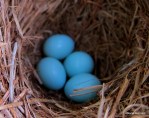
Eastern bluebird IMG_5902©Maria de Bruyn resEastern bluebird IMG_4819©Maria de Bruyn resEastern bluebird IMG_4985©Maria de Bruyn res

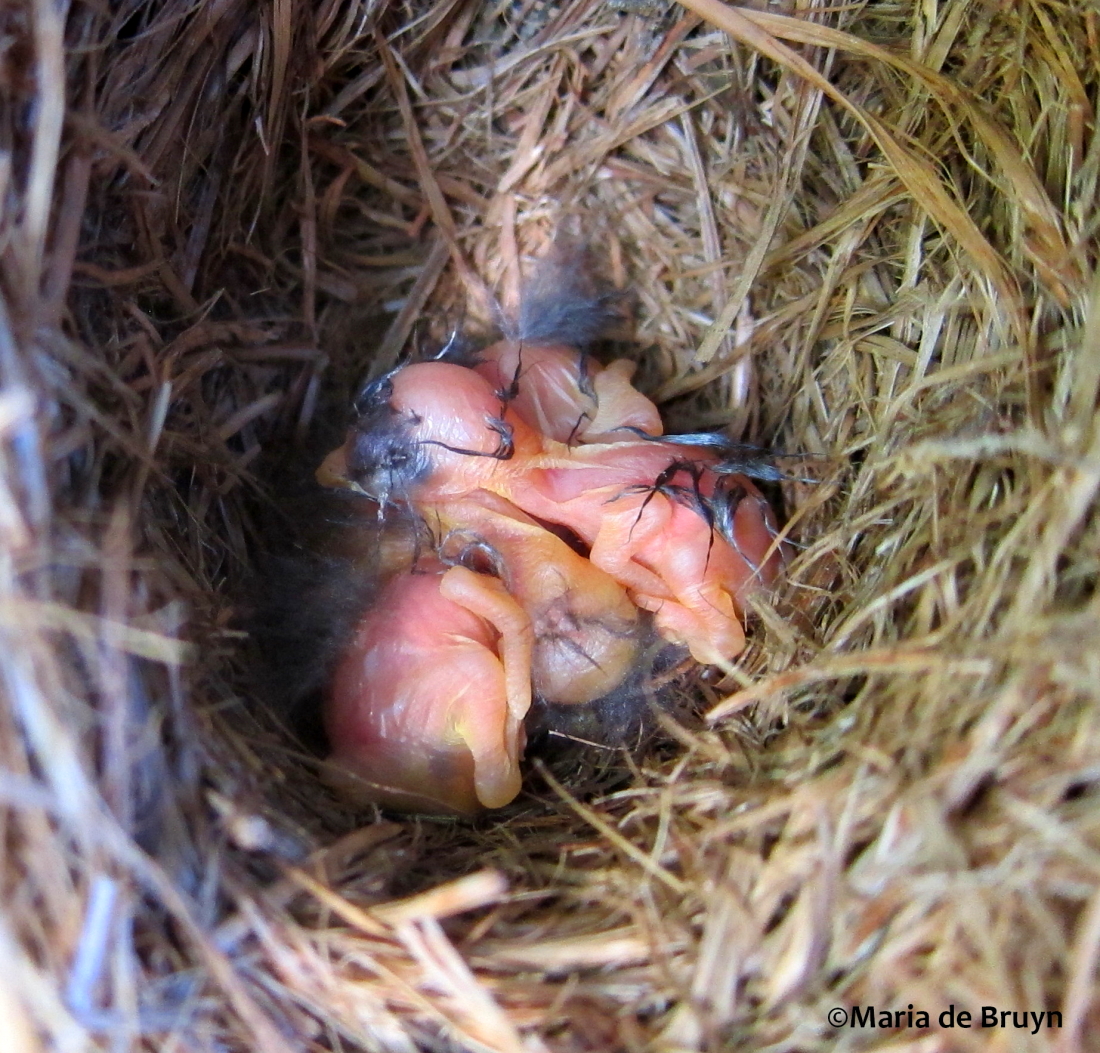
On 17 May, after mama and papa left the vicinity of the nest, I peeked in and saw the hatched babies, very naked newborns indeed! Mama was often with the babies and papa came to bring food, but mama left from time to time. They both visited the feeders to replenish themselves.
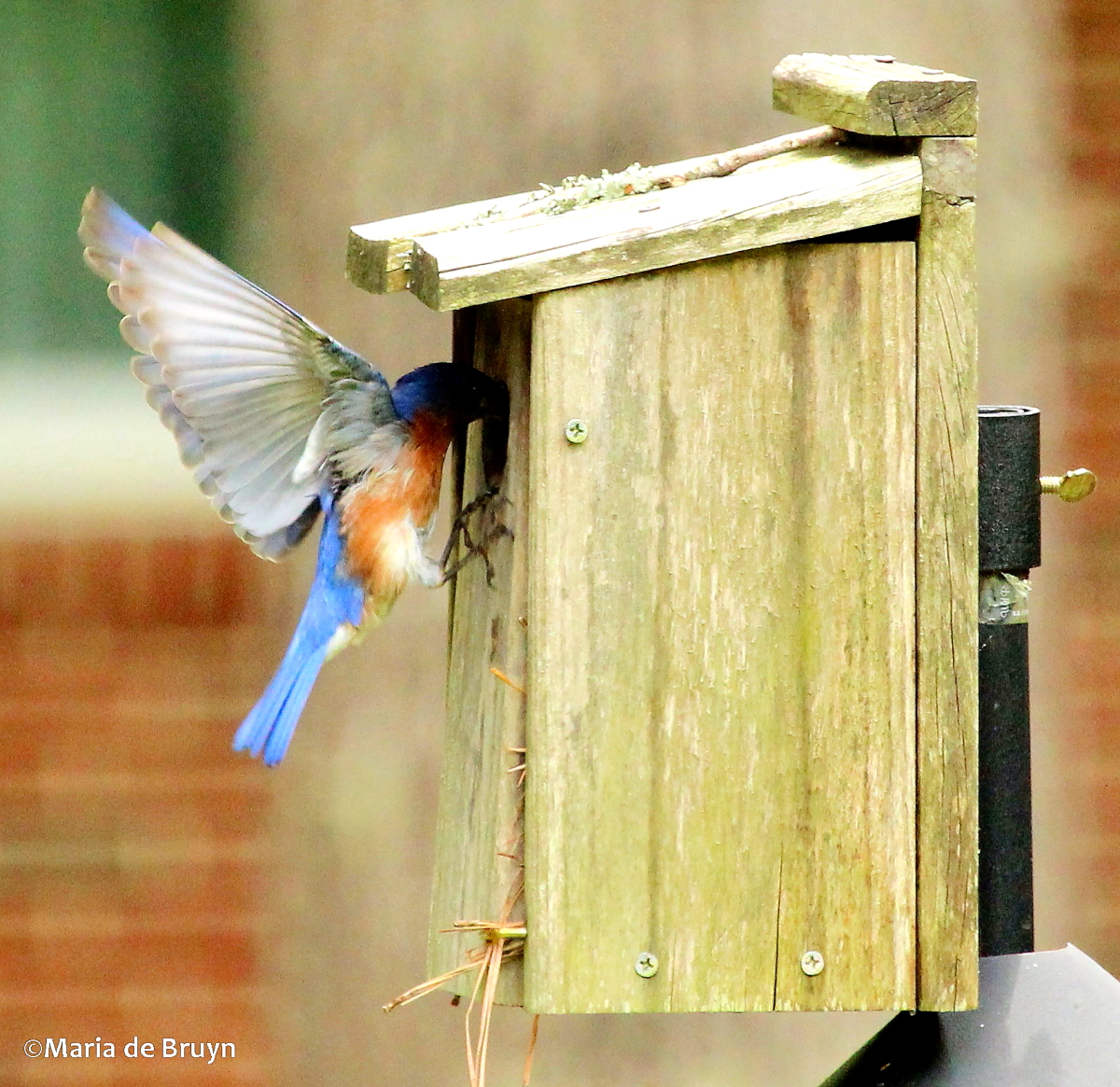
Eastern bluebird Eastern bluebird IMG_9753©Maria de Bruyn resEastern bluebird IMG_8753©Maria de Bruyn res

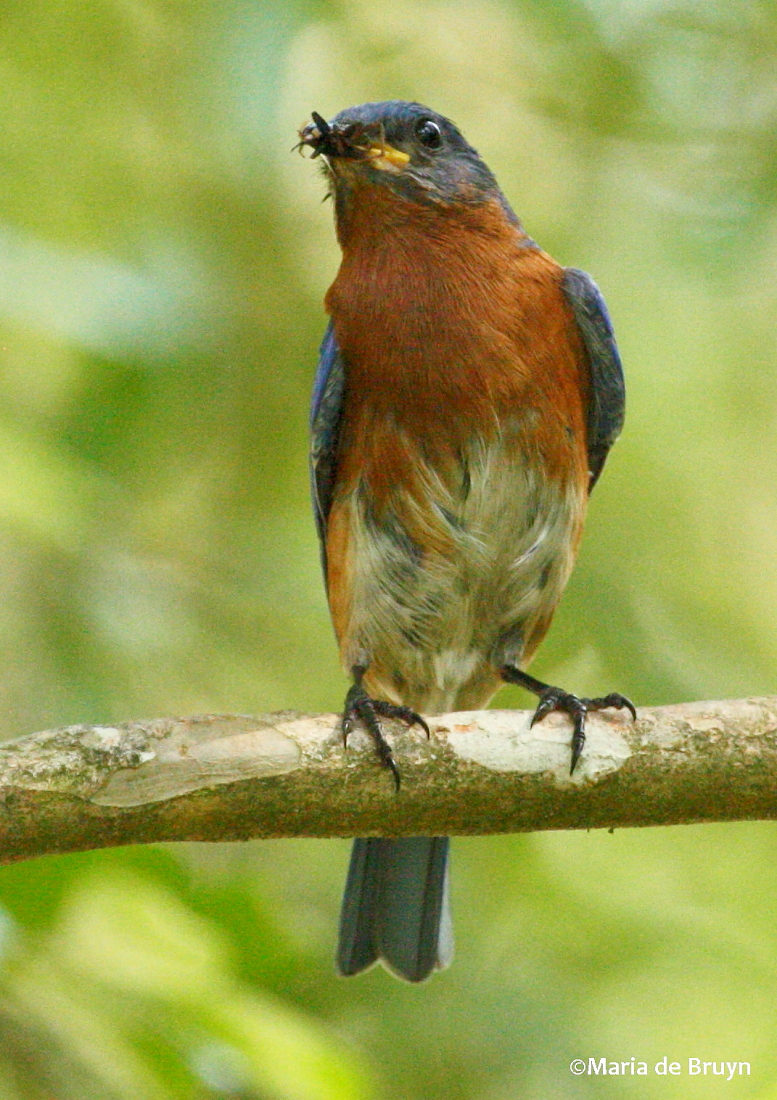
I set up a canopy chair to observe at what I thought was a good distance but discovered I was too close. The parents would arrive in the tree fronting the nest but if I was too close in their opinion, they would not go to the nest or only after I had been still for quite a long time. It was interesting to see that they were feeding the hatchlings dried meal worms along with other insects that they had caught.
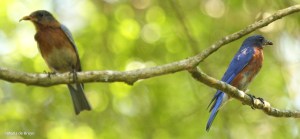
Eastern bluebird IMG_3538©Maria de Bruyn resEastern bluebird IMG_3498©Maria de Bruyn res

Eastern bluebird IMG_3657©Maria de Bruyn resEastern bluebird IMG_3620©Maria de Bruyn  res

They also seemed to be feeding the babies fruit – wild raspberries from what I could tell!

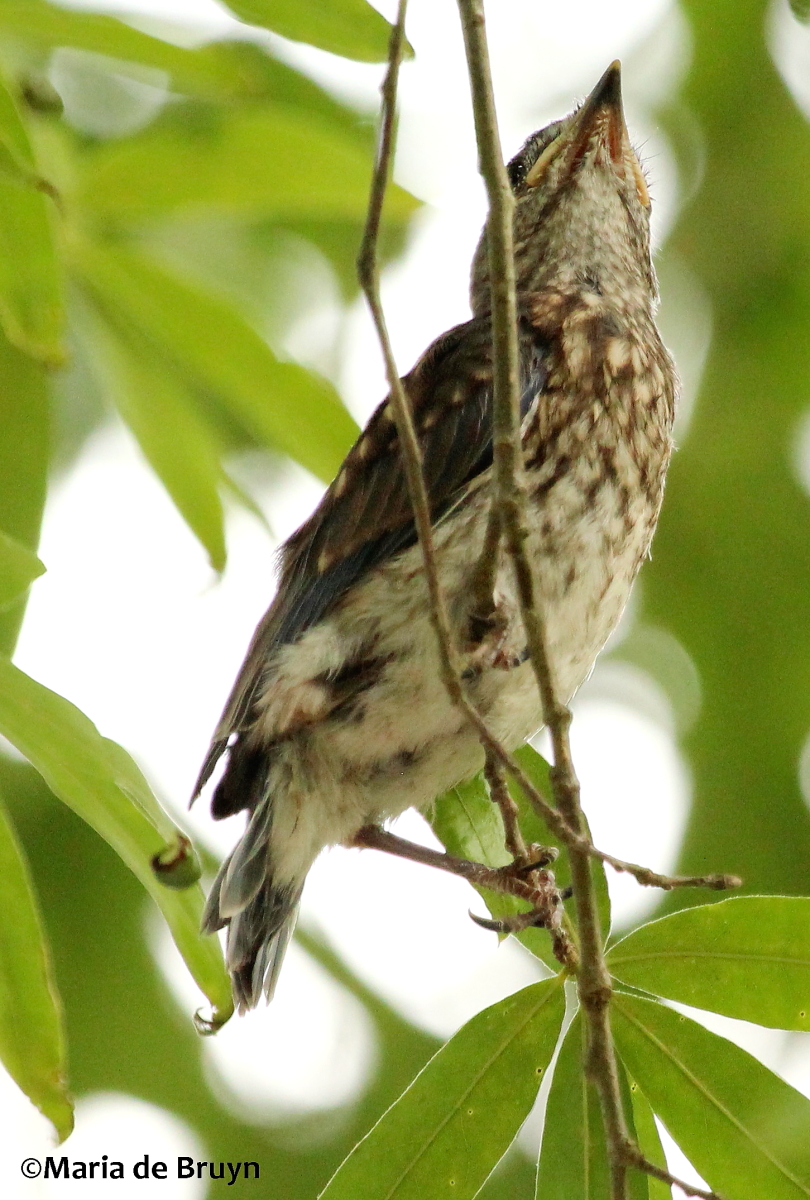
Eastern bluebird IMG_4994©Maria de Bruyn resBy 28 May, the babies were much larger and feathered. Mama and papa were kept busy ensuring they were well fed! And house cleaning to remove their brood’s fecal sacs was also a definite necessity!

Eastern bluebird IMG_5129©Maria de Bruyn res

Eastern bluebird IMG_5371©Maria de Bruyn resThe parents remained very vigilant – not only keeping an eye on me but also other too curious visitors. On 1 June, a gray catbird (Dumetella carolinensis) suddenly descended to the nesting box, fluttering its wings furiously to remain suspended in front of the hole while it looked in. It then flew up on top of the box but the bluebird adults chased it away VERY quickly!
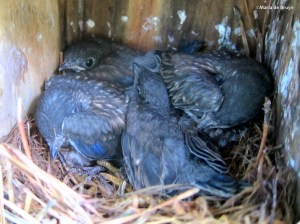
 

Eastern bluebird IMG_5008©Maria de Bruyn res


By 2 June, the babies were looking ready to fledge. The next day, I had time to watch the box and saw a baby repeatedly looking out (but not really calling much).
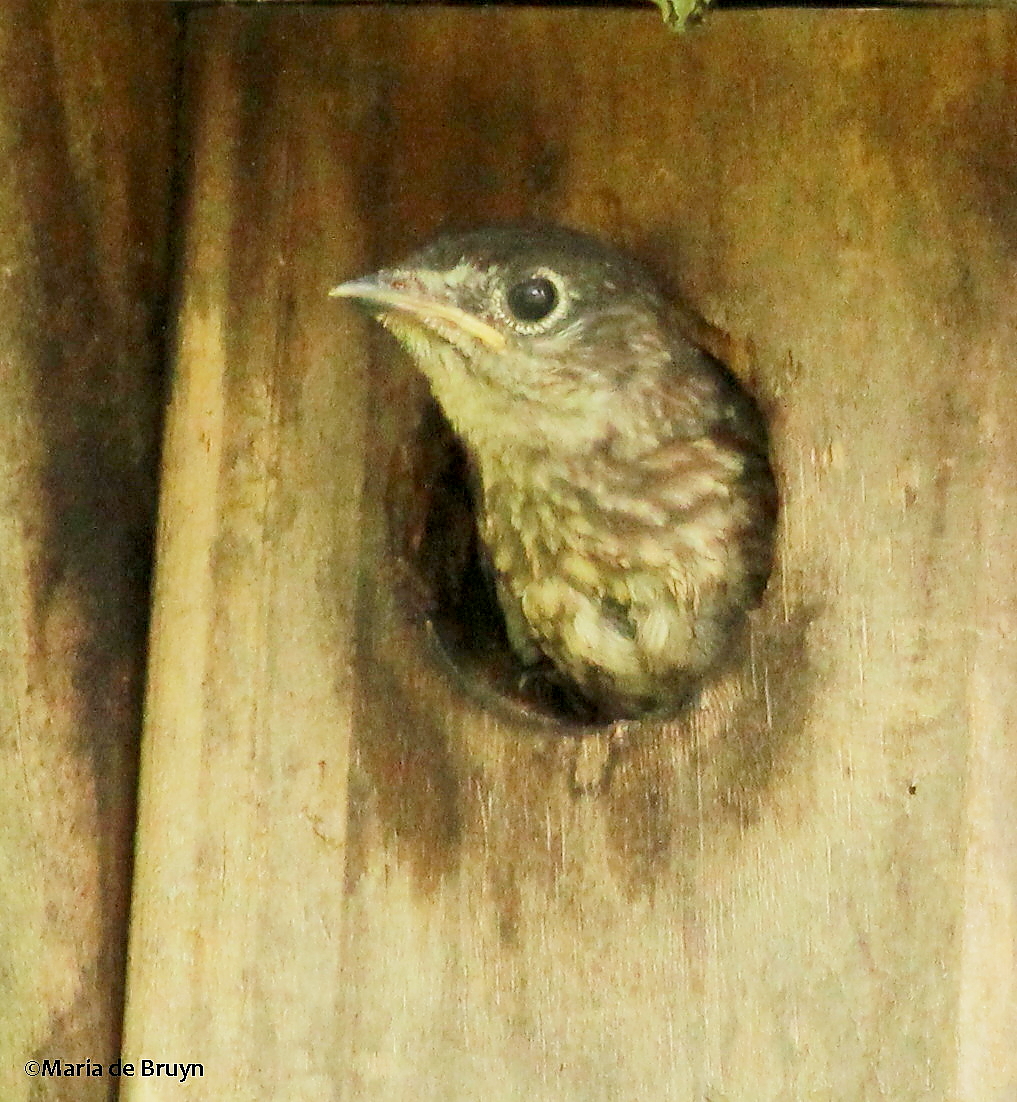
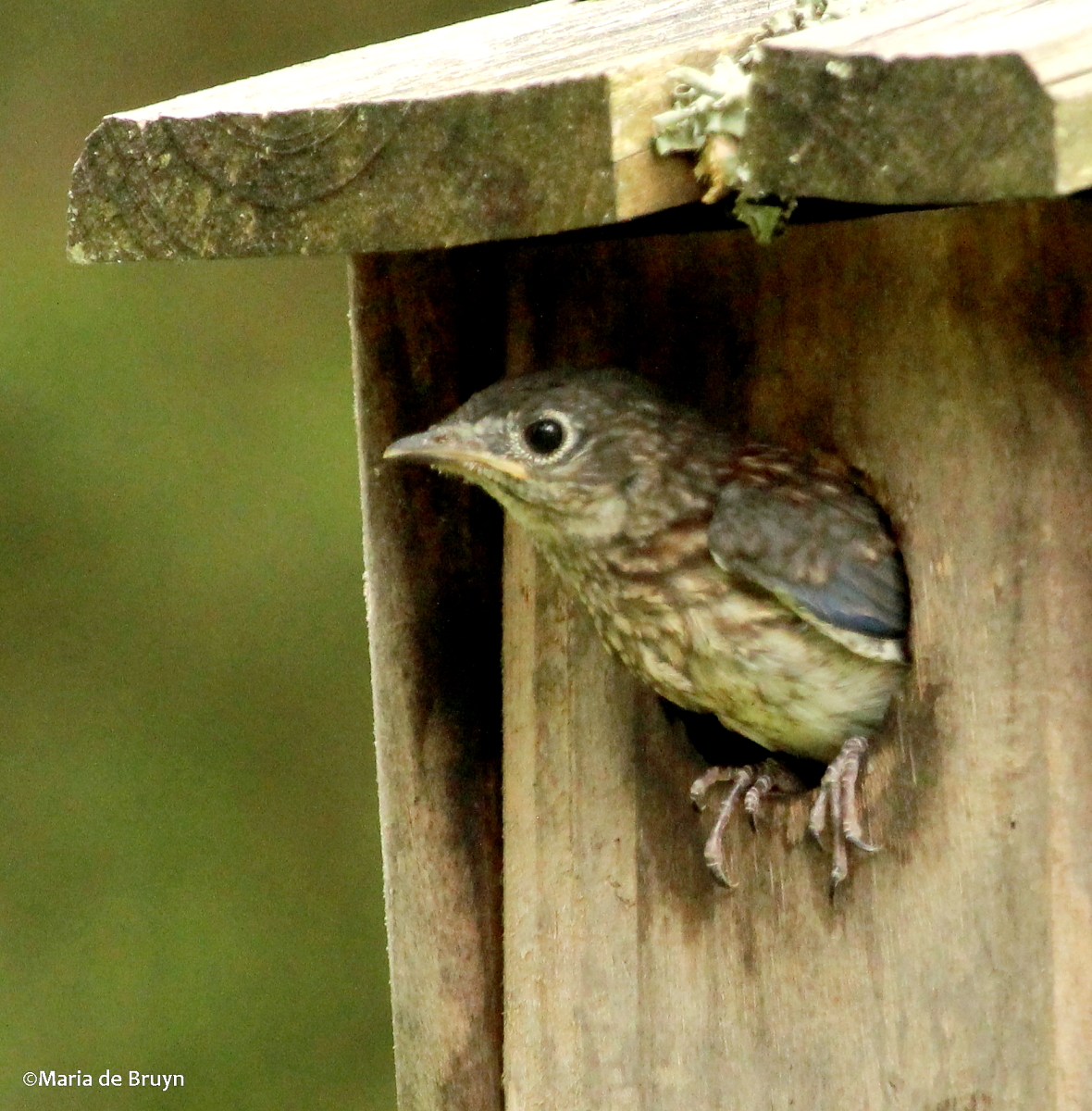


Eastern bluebird IMG_6267©Maria de Bruyn resEastern bluebird IMG_6330©Maria de Bruyn res

Sure enough, I saw it leap and swoop up to perch on a nearby branch.
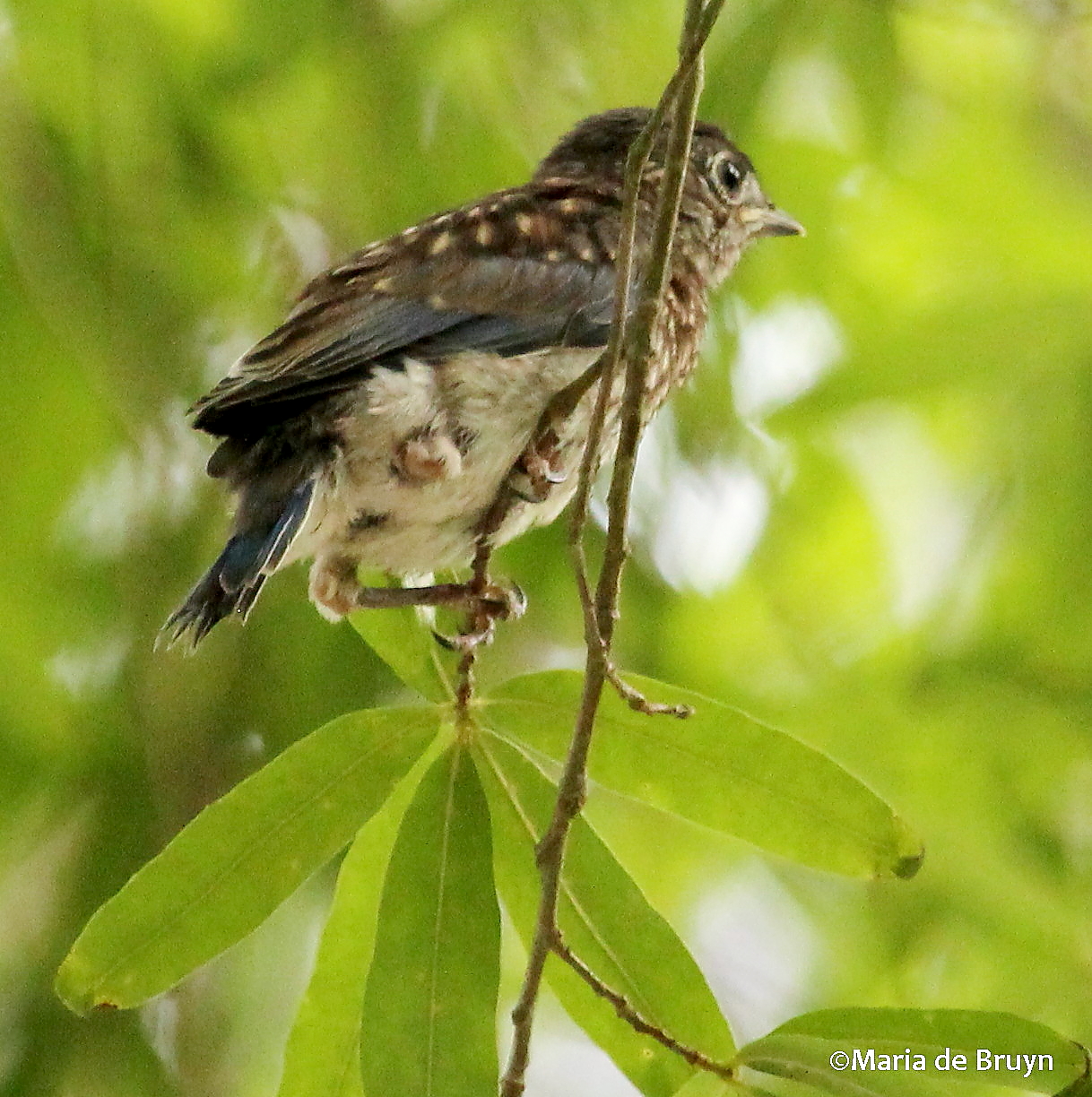
Eastern bluebird IMG_6347©Maria de Bruyn resEastern bluebird IMG_6369©Maria de Bruyn res

Eastern bluebird IMG_6361©Maria de Bruyn resEastern bluebird IMG_6379©Maria de Bruyn res

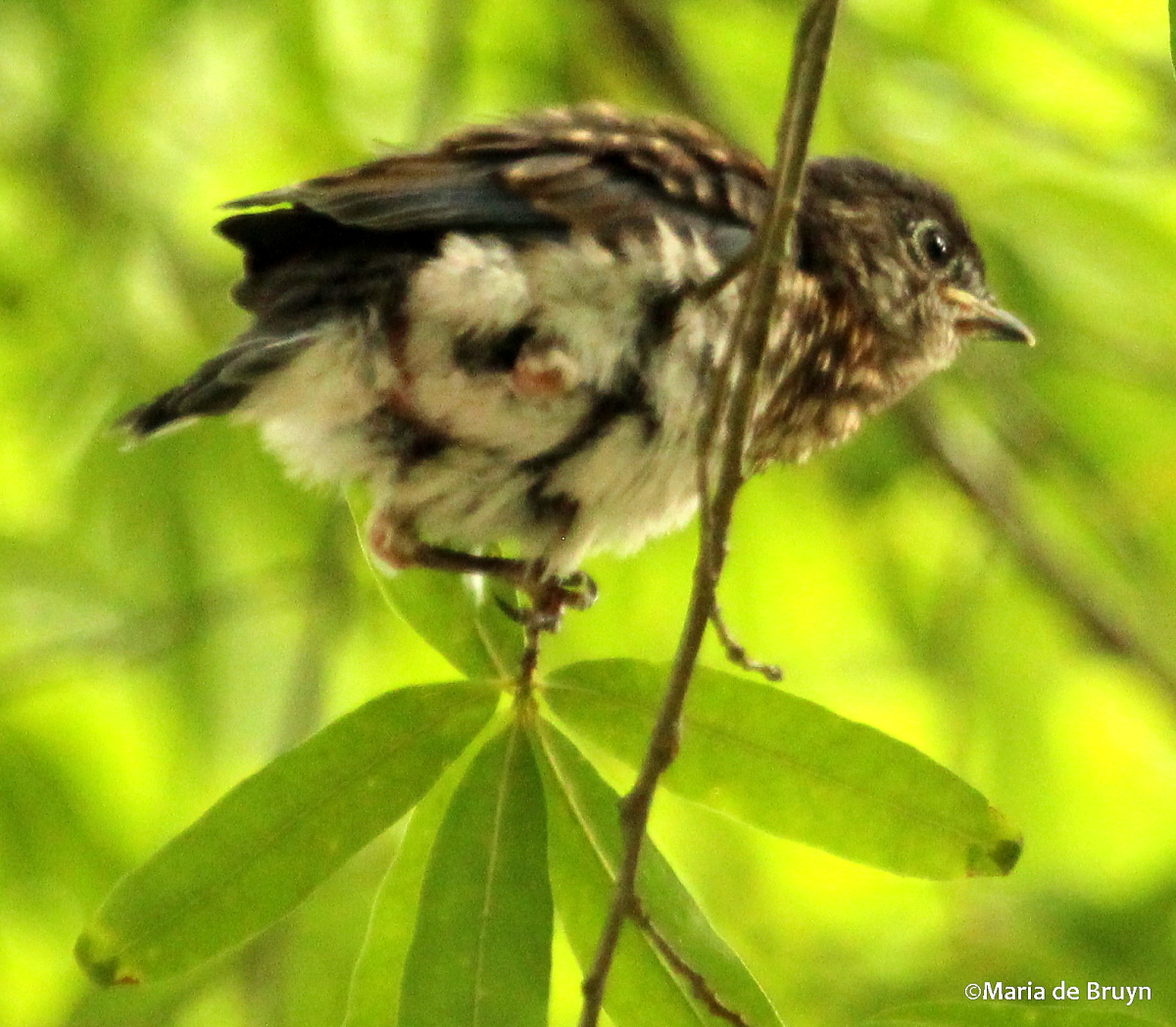
The next baby soon began peeping out, too, although this one also retreated inside the box now and again. Eventually, this baby swooped out as well, but s/he flew all the way across the street to a neighbor’s yard. When I carefully looked inside the next box, I saw that they were the last two to fledge – the others had gone before.
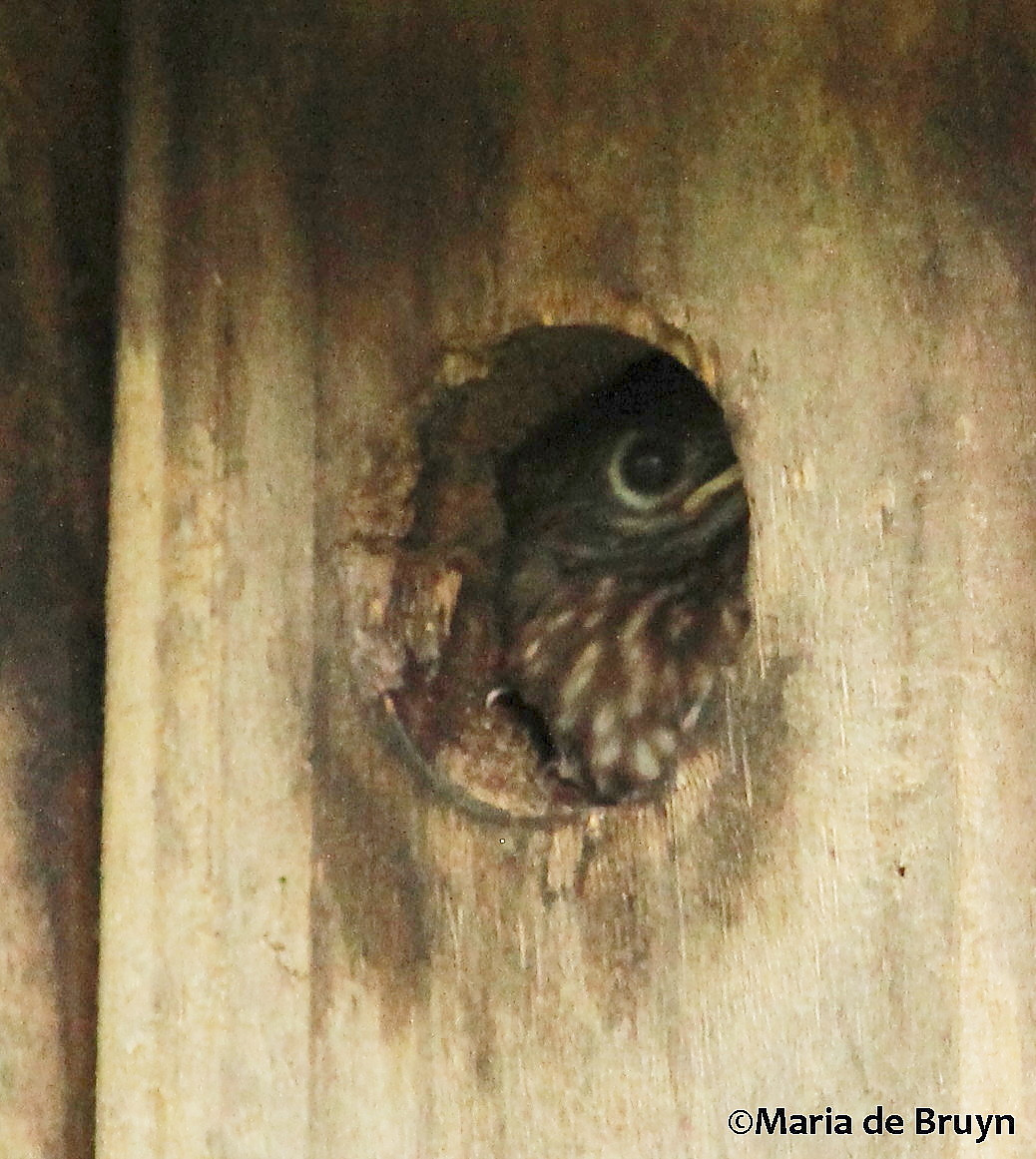
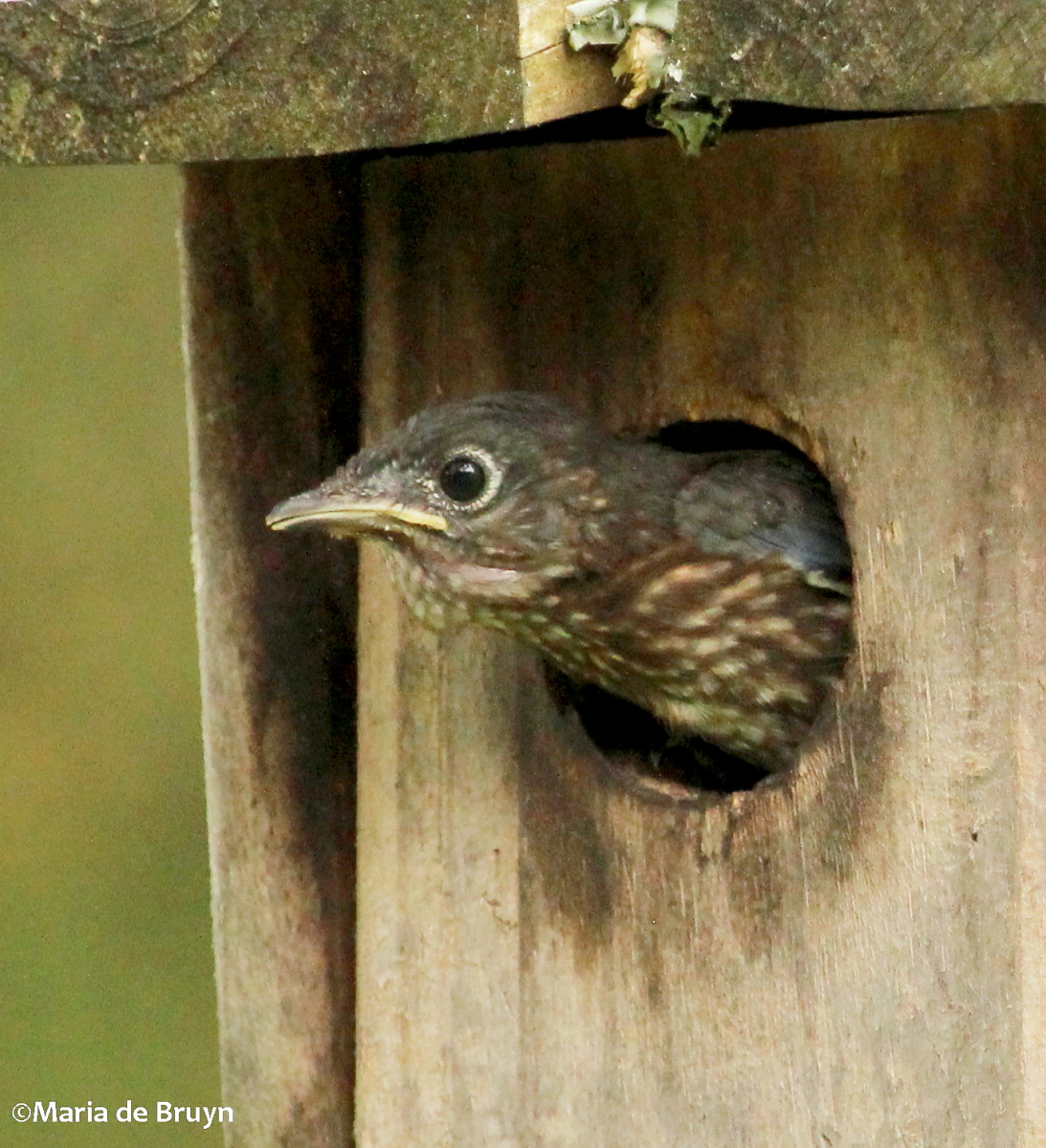
Eastern bluebird IMG_6452©Maria de Bruyn trdEastern bluebird IMG_6458©Maria de Bruyn res

Oddly, I haven’t seen the babies at the feeders although I see the parents there.
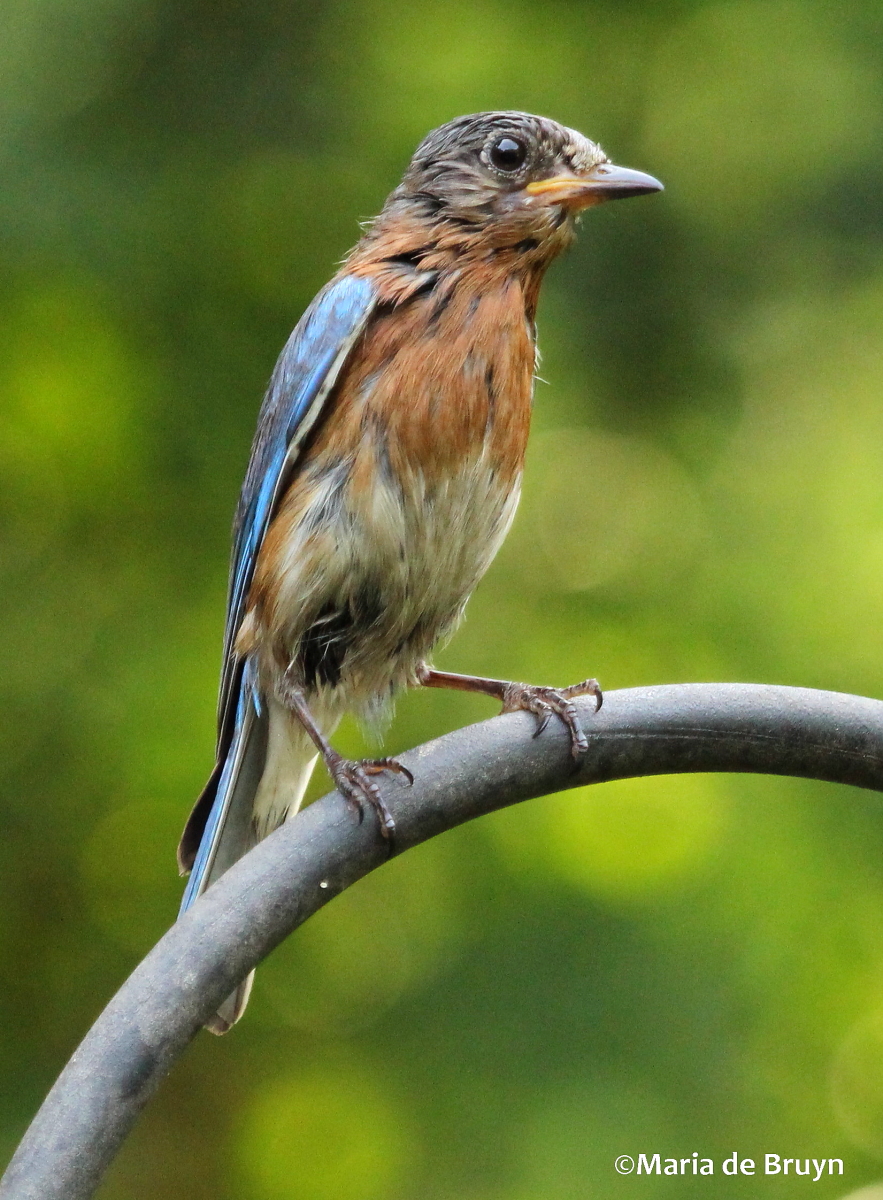
Eastern bluebird IMG_8743©Maria de Bruyn resEastern bluebird IMG_7504©Maria de Bruyn res


Eastern bluebird IMG_8749©Maria de Bruyn resThey or another bluebird couple were checking out a nest box in the backyard. They didn’t use this one (Carolina wrens have moved in with a nest there in the last few days) but they have constructed a new nest in another backyard box today. So I hope to witness another fledging in a few weeks! Yay for the bluebirds!


A fruity buffet for the birds!

summer tanager profile IMG_4040©Maria de BruynIn front of a dog park in the small town of Carrboro, NC, there stands a small serviceberry tree, also known as a shadbush or sarvisberry (Amelanchier). This particular specimen has several trunks and was heavily laden with pretty white flowers in the early spring. These turned into bright red berries in late spring, forming a very bountiful buffet for the resident birds and some other wildlife, too!

The variety of species visiting this tree was delightful and led me to go back on several mornings and evenings to observe.

cedar waxwing IMG_1675©Maria de Bruyn2 rescedar waxwing IMG_2159©Maria de Bruyn res

The cedar waxwings (Bombycilla cedrorum) were there in pairs and groups, some of them sweetly feeding one another!

Northern cardinal IMG_4073©Maria de Bruyn2 resNorthern cardinal IMG_2078©Maria de Bruyn2 res

The male and female Northern cardinals (Cardinalis cardinalis) were also huge fans of this tree, returning over and over to have their fill.

Eastern bluebird IMG_4543©Maria de Bruyn reschipping sparrow IMG_2268©Maria de Bruyn2 res

A couple birds seemed only to alight in the tree, not really partaking, like the Eastern bluebirds (Sialia sialis) and chipping sparrows (Spizella passerina). However, those sparrows, like the American robin (Turdus migratorius), might have been just checking out the wares before they dropped to the ground under the tree to enjoy a few berries. That surprised me – especially, the robins whom I have considered to be mainly insectivores and worm-eaters.

chipping sparrow IMG_1626©Maria de Bruyn2 res American robin IMG_4531©Maria de Bruyn res

One day, a trio of Eastern gray squirrels (Sciurus carolinensis) arrived. I thought for sure that they would be stripping the branches clean but they hopped around the tree, sampling here and there. During several visits to the serviceberry, that was the only time I saw them climb into the tree for a snack.

Eastern gray squirrel IMG_2191©Maria de Bruyn2 resEastern gray squirrel IMG_2116©Maria de Bruyn2 res

Other birds seemed to visit only briefly, like the Northern mockingbird (Mimus polyglottos) and the tufted titmouse (Baeolophus bicolor).

Northern mockingbird IMG_4164©Maria de Bruyn2 res tufted titnouse IMG_2122©Maria de Bruyn res

red-bellied woodpecker IMG_1633©Maria de Bruyn2 resThe red-bellied woodpecker (Melanerpes carolinus), on the other hand, was a very frequent visitor – coloring oh so nicely with the host tree! This bird seemed to be also storing some berries for later consumption in the bark of a tree?

red-bellied woodpecker IMG_2094©Maria de Bruyn2 res

red-bellied woodpecker IMG_2007©Maria de Bruyn2 res

Serviceberries are promoted for gardens as a source of delicious fruit for human beings. They are said to be wonderful in jam, pies, ice cream, syrup for pancakes and or in alcoholic drinks. Raw, they taste a little like blueberries with a nice sweet tang.


They were obviously a great hit with a pair of summer tanagers (Piranga rubra). The male colored nicely with the fruit he was eating; he is an example of the only bird in North America that is entirely red!

Summer tanager IMG_1643©Maria de Bruyn res summer tanager IMG_4112©Maria de Bruyn res

The yellow female stood out as she ate berry after berry.

Summer tanager IMG_1955©Maria de Bruyn res summer tanager IMG_4041©Maria de Bruyn res


Cedar apple rust IMG_9380© Maria de BruynAfter watching this spectacle, I have now decided to find one of these shrubs for my own yard. They are unfortunately susceptible to cedar apple rust (Gymnosporangium juniperi-virginianae) which I have in neighboring cedar trees; it doesn’t seem to hurt the cedars but may account for the fact that the apples in my apple tree stay very small even if I haven’t seen signs of the rust on the apple tree leaves. Hopefully, it won’t be a problem as it would be really nice to see the birds at a serviceberry buffet here at home in years to come!


A blended bird family!

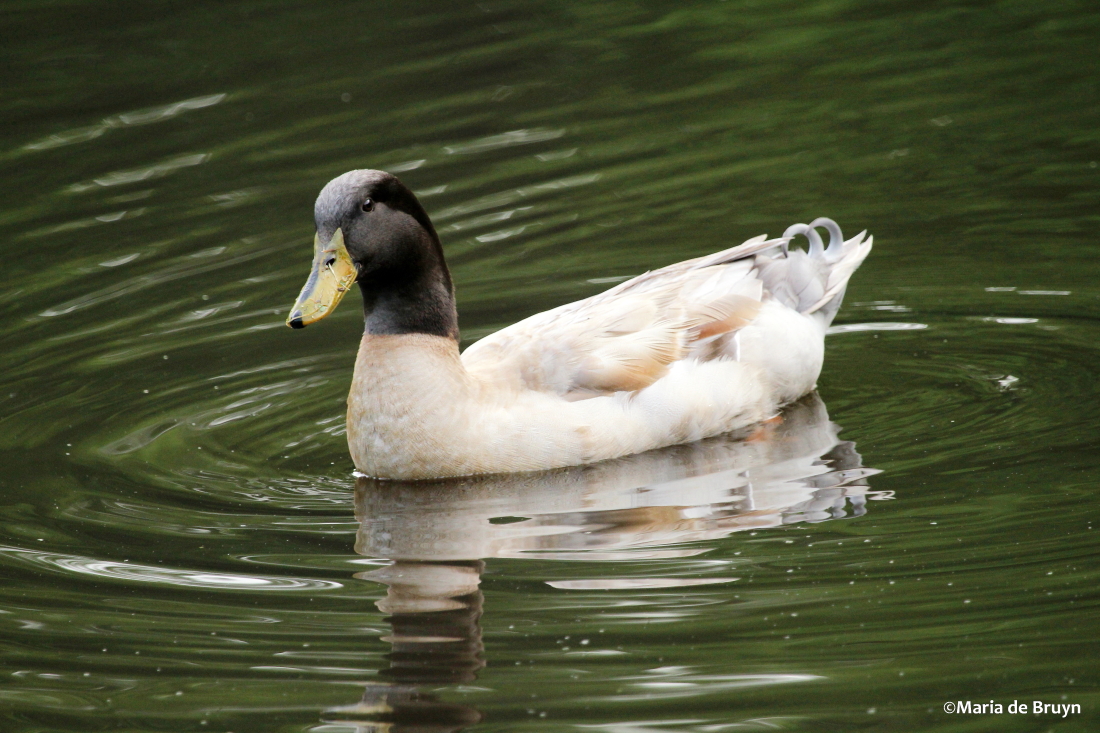
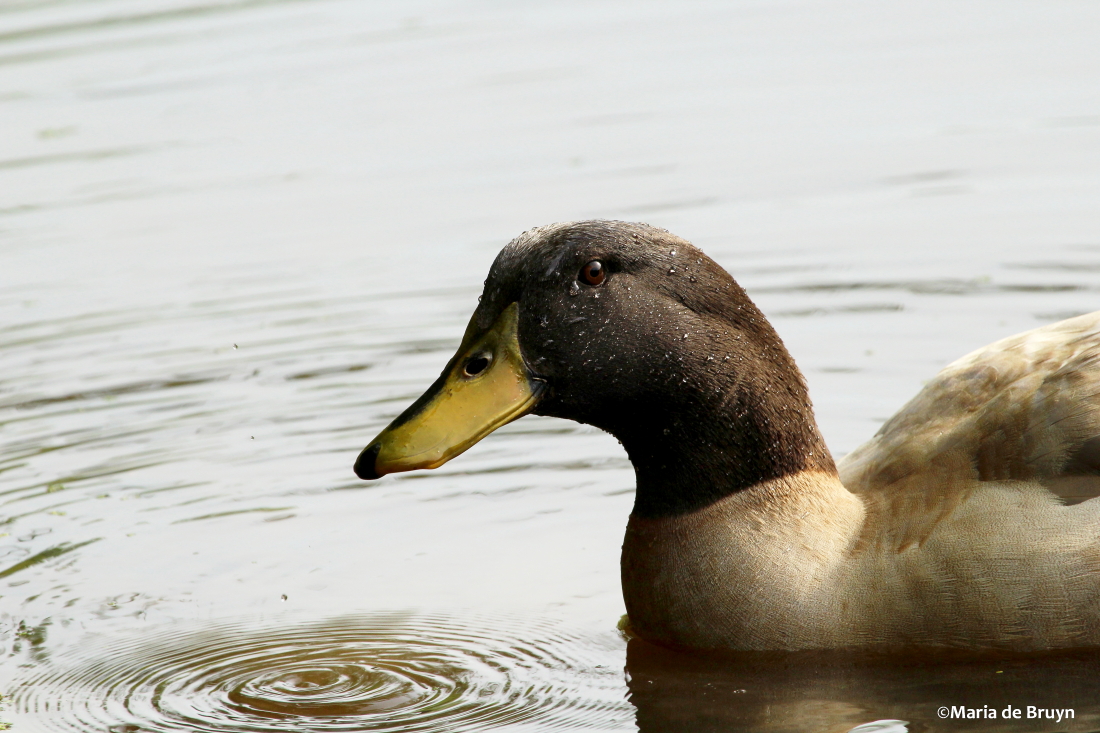
Mallard-pekin duck IMG_0922©Maria de Bruyn resA mixed-parentage duck at one of our local ponds lost a companion recently, leaving him sad and bereft. A fellow wildlife photographer mentioned that this bird, who I am calling Harry, is the offspring of a mallard and a pekin duck (Anas platyrhynchos x Anas platyrhynchos domestica). Harry stayed by the body of the duck who died for a while, clearly distressed.

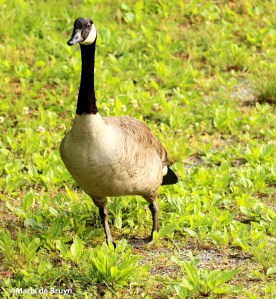
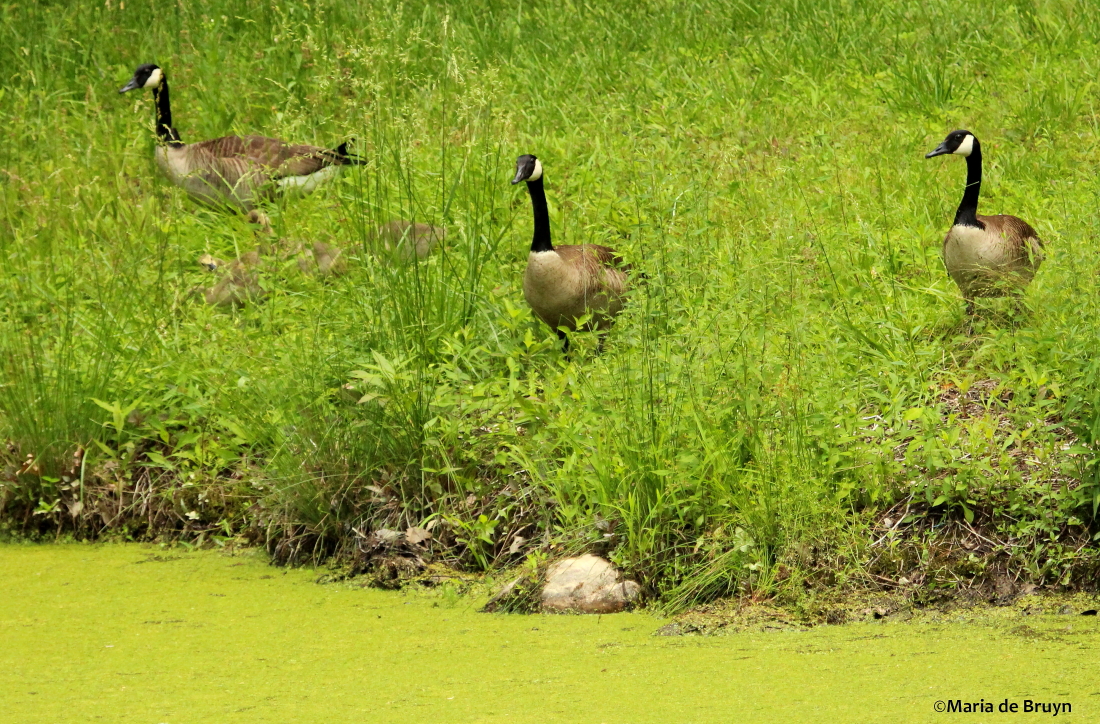
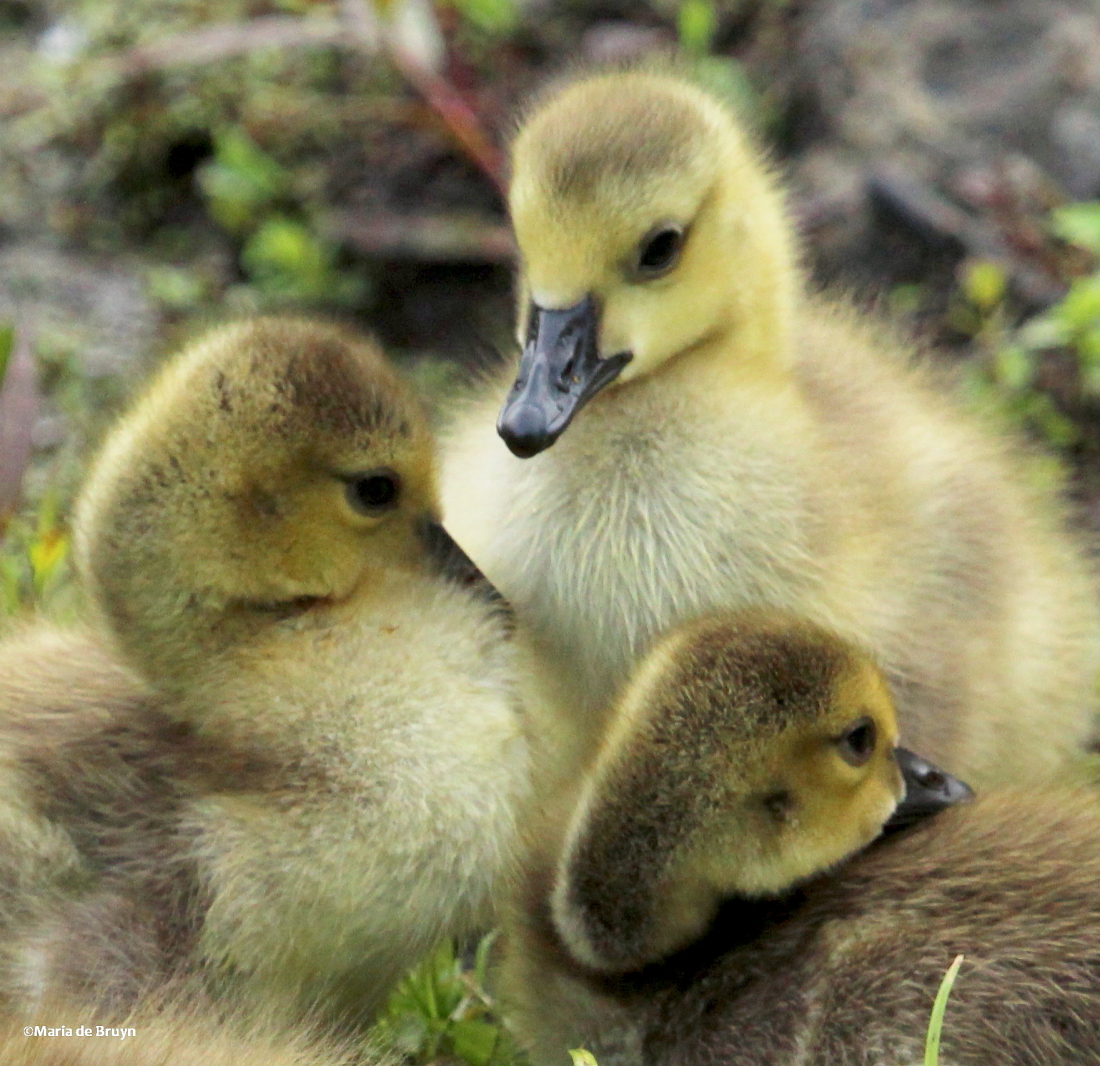
Another pond resident is a female Canada goose (Branta canadCanada goose IMG_0563©Maria de Bruyn resensis), who I have named Clara; she is currently raising four goslings. Canada geese are monogamous and the fathers help raise the young, but Clara appears to be a single mom. At least, she doesn’t have a male goose partner.

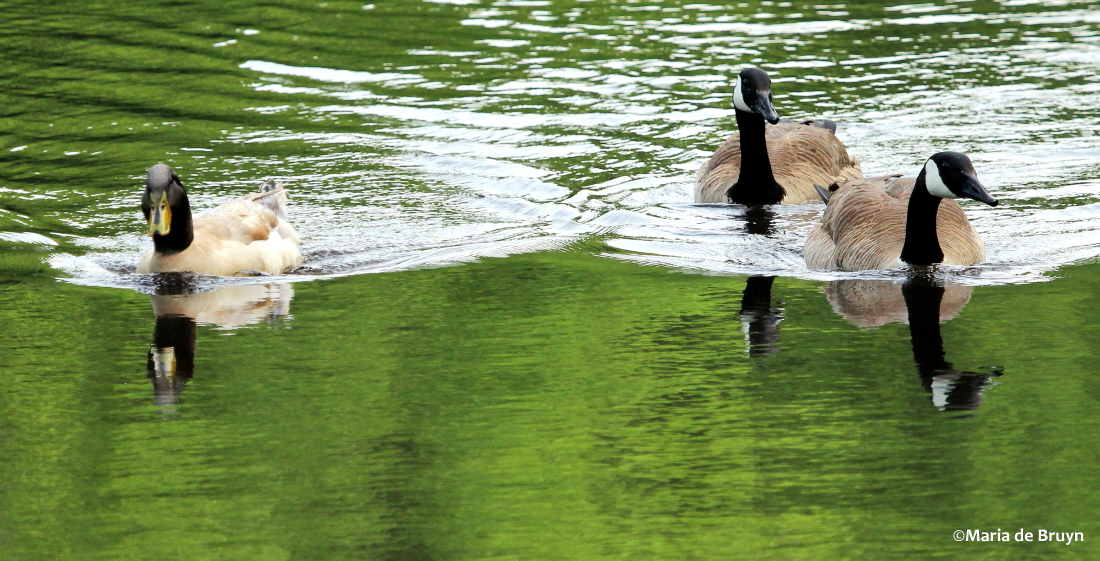
However, Clara is not alone. It appears that Harry has attached himself to the goose family, keeping close to them in the water and on land. He swims with them and follows them onshore when Mama leads the brood to vegetation to feed for a while.

Mallard-Pekin duck IMG_0633©Maria de Bruyn res

Whereas Canada geese that are not habituated to humans will threaCanada goose IMG_0865©Maria de Bruyn resten and even attack people who come too close to their babies, they become pretty mellow when they are often around humans who have shown they will not harm them. Mama kept an eye on all the people taking a stroll around the pond, but she simply shepherded the goslings aside when a person came too close. Harry also kept an eye on the people wandering about.
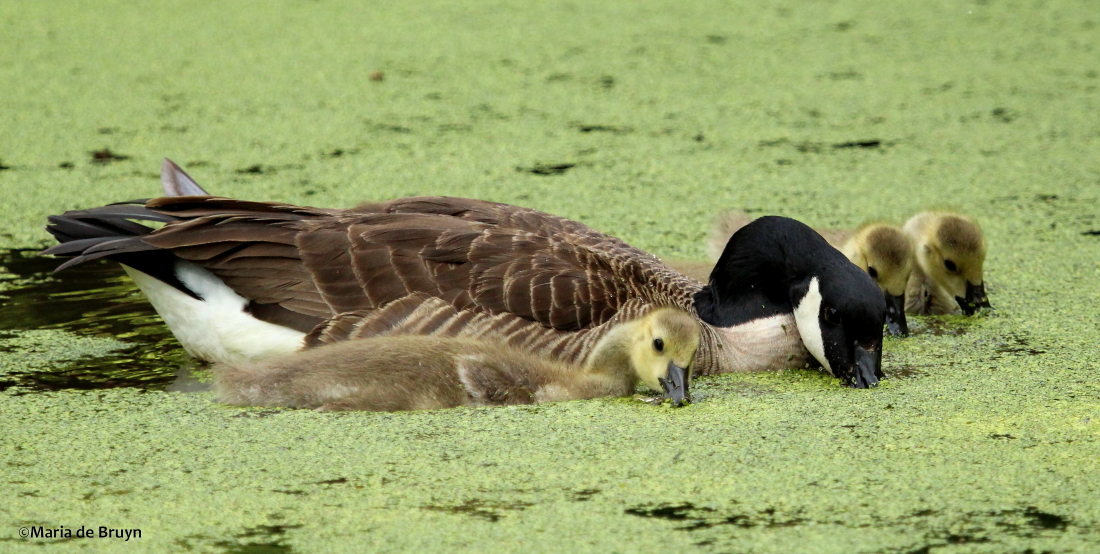
Goslings are able to feed themselves as soon as they are hatched. They will eat grasses and sedge and also grain if it is available.

Canada goose IMG_0765©Maria de Bruyn resCanada goose IMG_4364©Maria de Bruyn res

They follow Clara’s eCanada goose IMG_4483©Maria de Bruyn resxample when foraging in water, tipping forward and extending their necks and heads underwater to scoop up vegetation and even the occasional fish.

 

Canada goose IMG_0772©Maria de Bruyn res
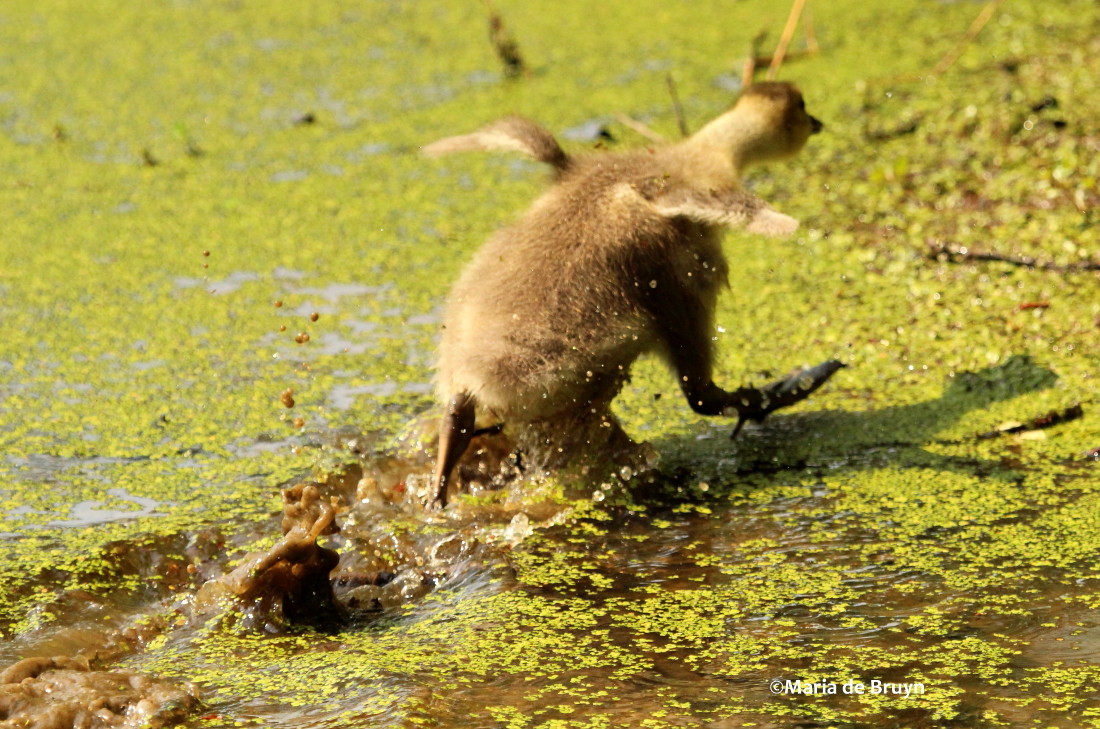
The goslings can walk and swim right after birth and manage to run, flapping their stubby wings to keep balanced.

Canada goose IMG_0572©Maria de Bruyn resCanada goose IMG_4487©Maria de Bruyn res

On 21 May, some other Canada geese flew overhead and one pair descended to the pond. Harry flew over to meet them, quacking a greeting, and led them back to Clara and the brood where they kept the blended family company for a time.

Mallard-Pekin duck IMG_1031©Maria de Bruyn resCanada goose IMG_1089©Maria de Bruyn res

On 27 May, I saw Clara and children foraging at the pond with the two visitor geese but Harry was nowhere in sight. I feared that something had happened to him.

Canada goose IMG_3945©Maria de Bruyn resgreat blue heron IMG_4309©Maria de Bruyn res

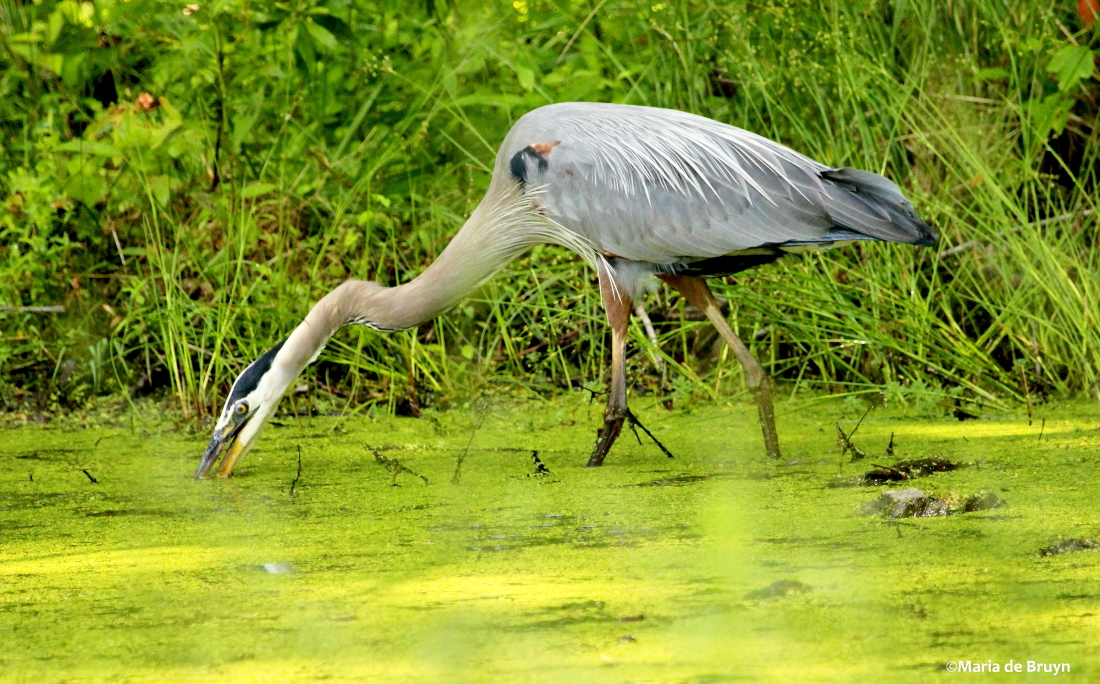
Later, when I visited in the early morning, Clara and the kids were resting and then foraging while a great blue heron (Ardea herodias) fished nearby; Harry was nowhere to be seen. I felt a twinge of sadness.

My feelings were unfounded, however. As Clara and brood swam toward the other end of the pond and I accompanied them walking along the shore, I suddenly saw a brown-headed duck with twin curls by his tail swimming near shore. As Clara came into sight with the four babies swimming in line behind her, Harry began quacking and quacking as he watched them approach.

Mallard-pekin duck IMG_1424©Maria de Bruyn resMallard-Pekin duck IMG_0909©Maria de Bruyn res


Canada goose IMG_4403©Maria de Bruyn res

Canada goose IMG_0988©Maria de Bruyn resClara began honking in response and veered toward Harry, who swam out to meet the family. They were obviously both quite pleased to have each other’s company again. I hope this blended bird family continues to enjoy their inter-species companionship throughout the summer!


Baby bird quiz!

Springtime is always fun when you are lucky enough to be able to watch avian parents raise a brood successfully to fledgling status. My previous two blogs about watching brown-headed nuthatches and Carolina chickadees conscientiously keep their hatchlings well-fed was going to be followed by some new observations on bird parents – either the Carolina wrens or a tufted titmouse, who had laid eggs in two of my bluebird boxes.

Titmouse nest IMG_7210©Maria de BruynThe wrens are very circumspect about feeding when I am in the vicinity but I had seen the titmouse coming and going to the nest. When I looked in one day, I saw that one egg had hatched and three others were still there. Then, I went away for the Memorial Day weekend and returned home to find the nest had been pulled from the box and the fledgling and eggs were gone. (A loose piece of the roof had been removed; there were squirrel and raccoon baffles on the pole; I surmise a squirrel dropped down from a branch overhead.) So there likely won’t be a blog on those species.

But I thought you might like to try your identification skills on the baby and juvenile birds in this blog. Some are fairly easy and others not so much. I will number the photos and hope that you will make guesses in the comments section of the blog. Then I will post the answers in a comment when I publish my next blog, so check back to see how you did. Good luck!

cardinal baby 3 MdBNo. 1Baby mockingbird IMG_4799 ©Maria de BruynNo. 2

Baby American robin IMG_9188sNo. 3Baby Gray catbird IMG_4654©Maria de BruynNo. 4

Baby thrasher baby©Maria de BruynNo. 5Baby chipping sparrow 8 MdB signed No. 6Baby Eastern towhee IMG_9845 ©Maria de BruynNo. 7   baby cardinal 21  MdB No. 8

Baby Gray catbird ©Maria de BruynNo. 9  Eastern Bluebird juvenile IMG_5187© Maria de BruynNo. 10

Baby Canada goose MG_0573©Maria de Bruyn No. 11


Casey Crow adopts a home

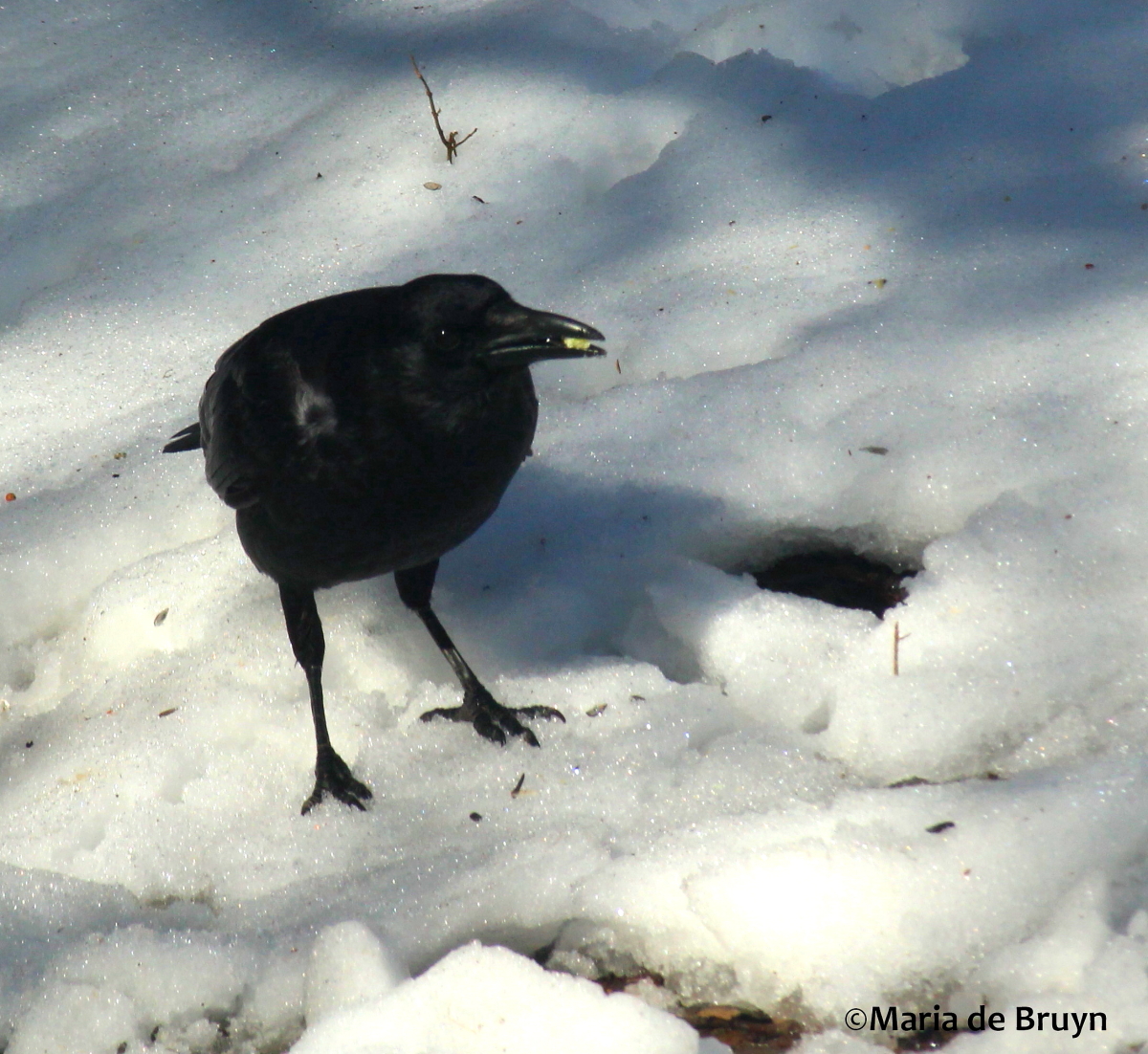
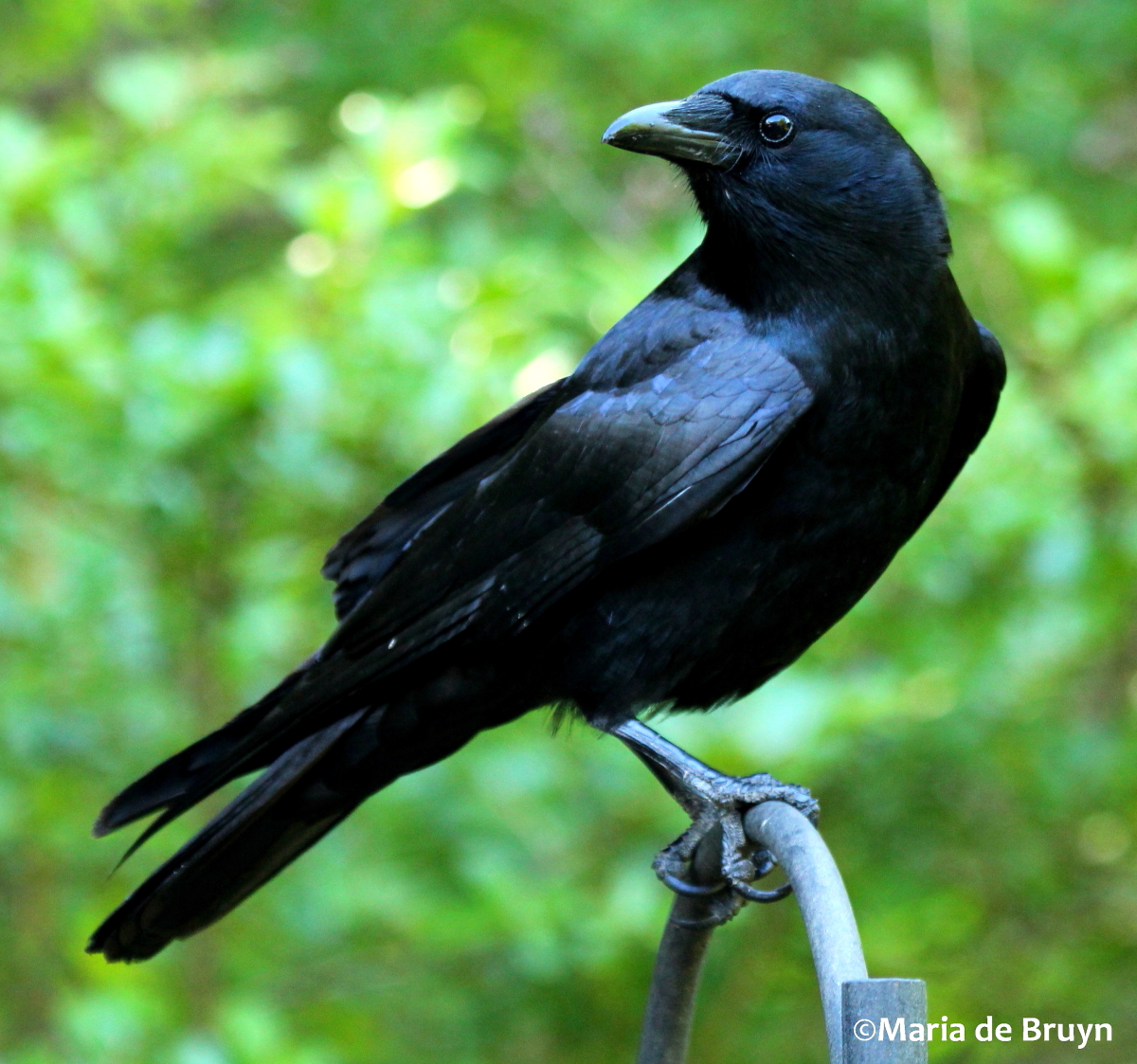
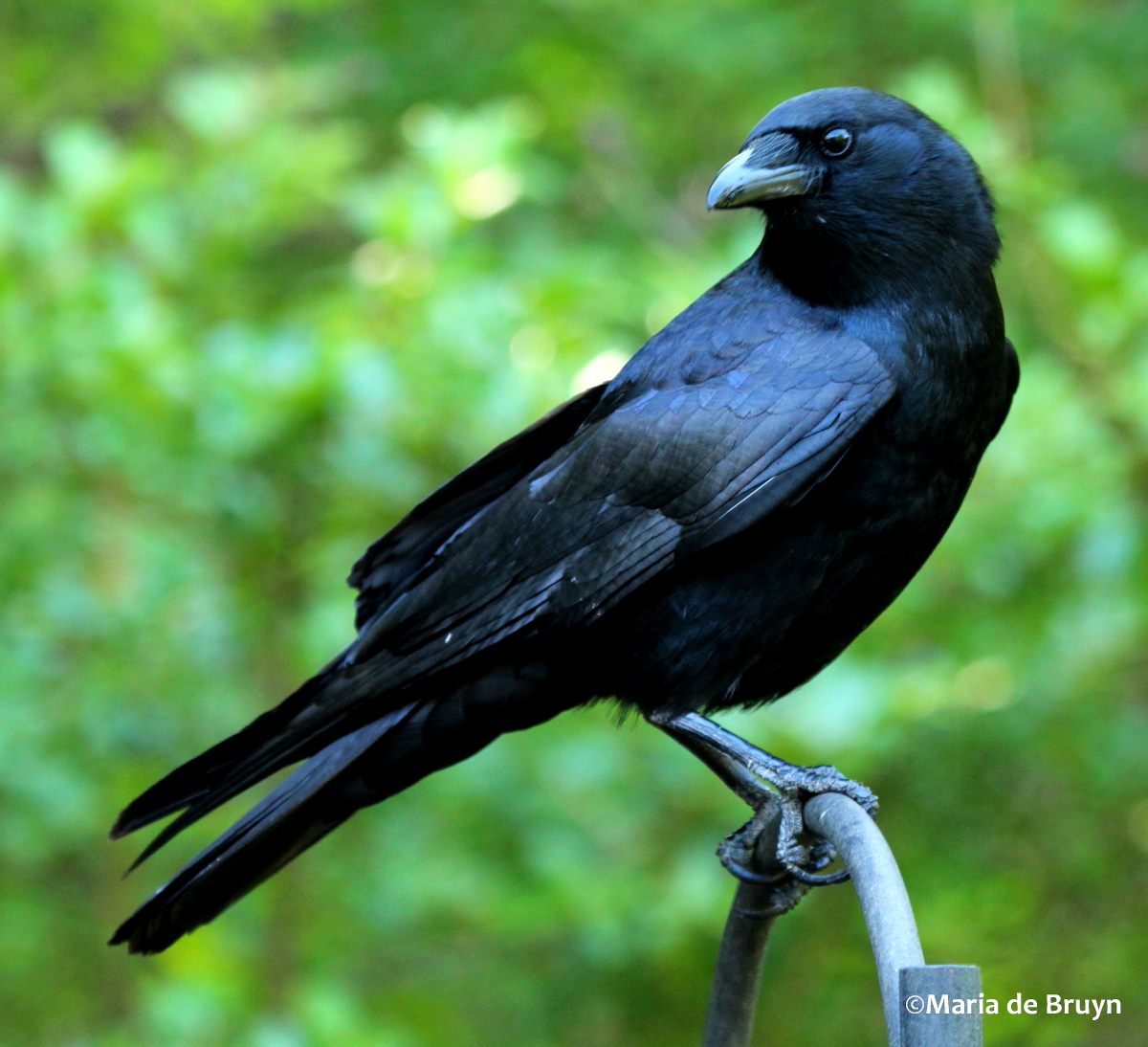
American crow IMG_3544©Maria de BruynresIn years past, I have had the occasional American crow (Corvus brachyrhynchos) visit my yard. For example, this past spring when it was snowing, a few came to eat fruit but they never really hung around – except for one that flew in with a half-eaten squirrel (or rabbit) that it was reluctant to leave behind.American crow IMG_9437© Maria de Bruyn res


Now, however, it seems that the one of these fine-feathered friends has decided to adopt my residence as a temporary home – or at least as a spot for some occasional R & R.

american crow IMG_3459©Maria de Bruyn res

Since I don’t know if this crow is female or male, I’ve named “it” Casey, a nice gender-neutral name. Casey is quite large and has grown bolder as time progresses. At first, Casey would alight on a branch and observe for quite a while before venturing toward a feeder; if I appeared, Casey would leave.

american crow IMG_3466©Maria de Bruynres

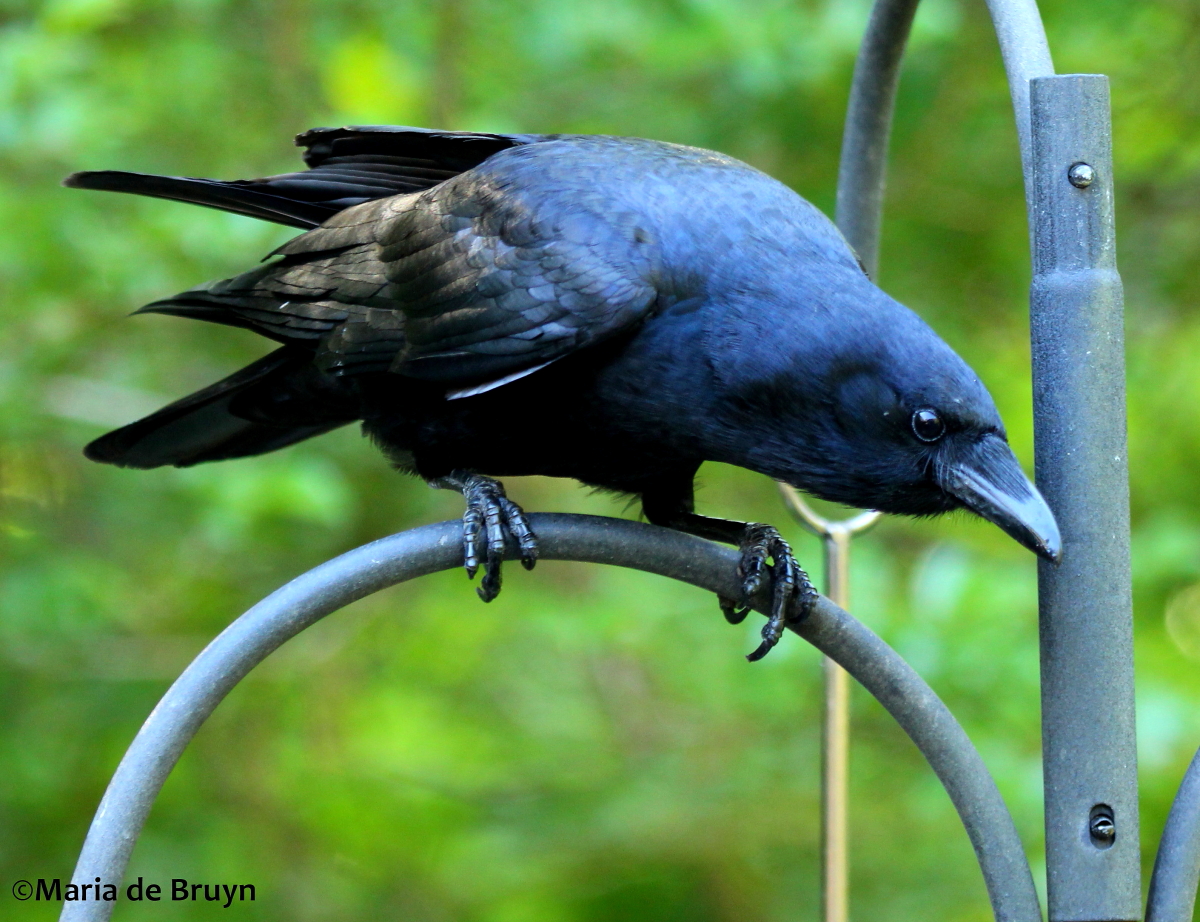
Now Casey flies in to perch on the roof, a nearby tree or a feeder not far from the back door, balancing as well as possible. S/he often announces his/her arrival with a few loud caws and sometimes what seems to be irritation when grackles decide to carry out a little harassment.

American crow IMG_8668©Maria de Bruyn resOne of my old plastic seed feeders broke, leaving only a bit of skeletal structure. Rather than toss it out, however, I’ve recycled it to become a grape jelly holder. No orioles have visited but it appears that grape jelly has become quite the treat for Casey, who balances in odd and sometimes contorted ways to be able to snag some.

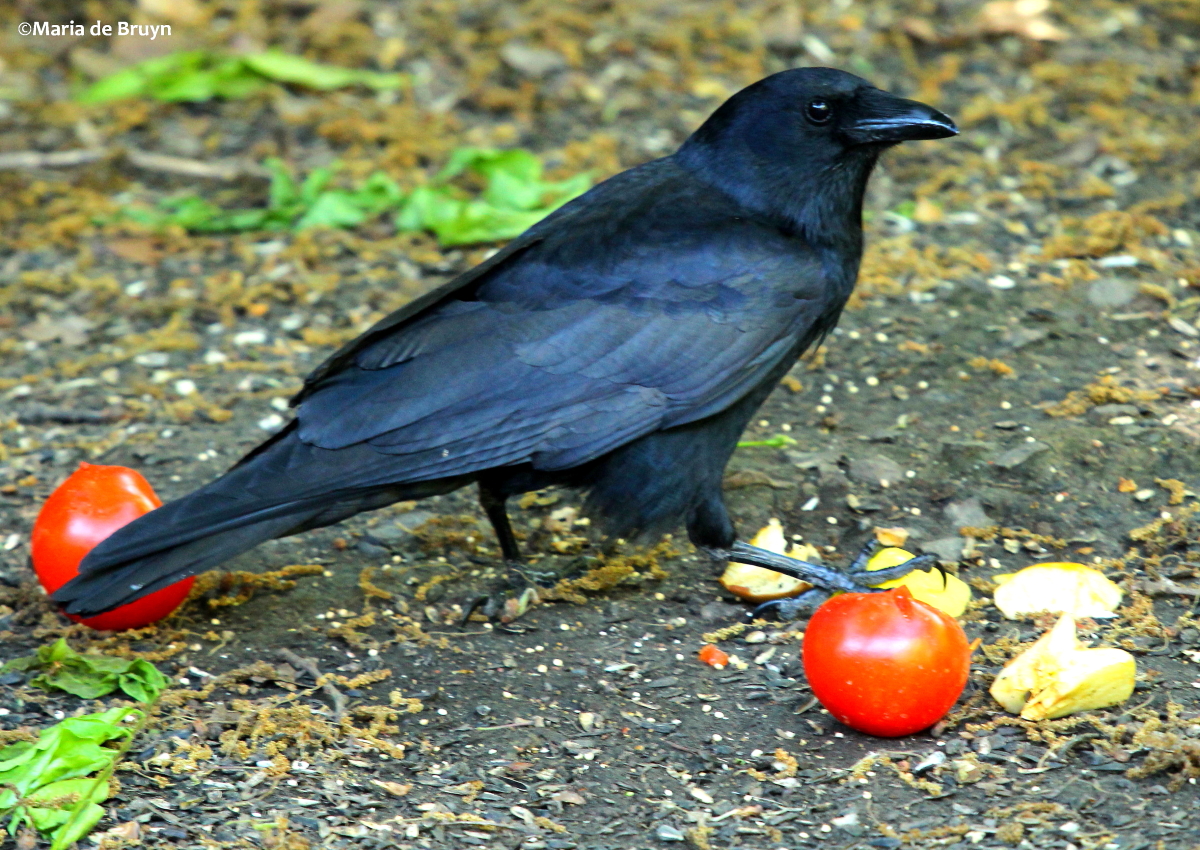
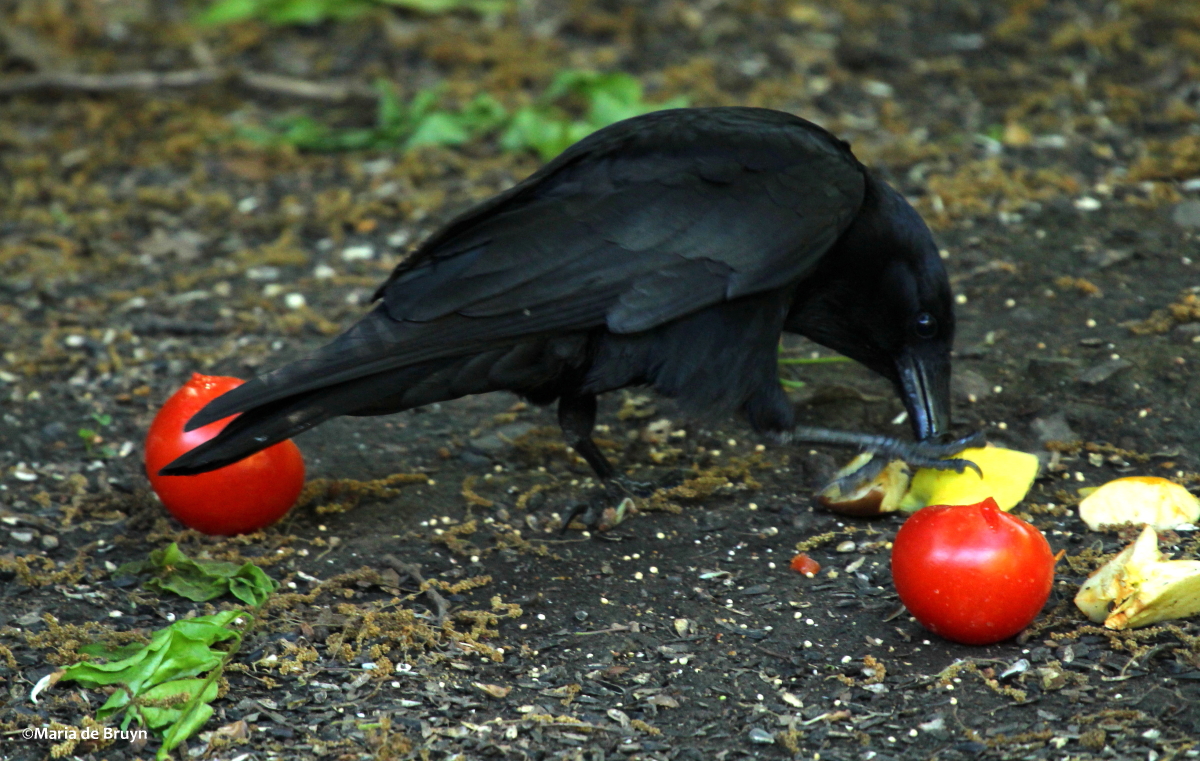
Casey is much too large to balance at other feeders but has obviously been searching for some additional food. A short while ago, I learned that Casey can be quite fond of apples.

american crow IMG_3425©Maria de Bruynresamerican crow IMG_3421©Maria de Bruyn res

Casey is quite the handsome bird and sometimes seems to be posing for portraits. I assume that it is the same crow that is visiting from day to day, but haven’t been able to figure out any real distinguishing marks yet to be sure. No other crows appear willing to remain near feeders if I go outside, though, so I guess it is always Casey who remains.

american crow IMG_3456©Maria de Bruyn res

I enjoy Casey’s visits but am glad now that the robin pair decided not to re-use their nest on the downspout from last year. Though there wasn’t much room for Casey to perch, I did see her/him fly to that nest and examine it, obviously investigating if there were some nestlings there to serve as a meal. I was quite happy there weren’t any in residence!

I don’t know how much longer Casey will be a regular visitor but it will be interesting to learn more about his/her likes and dislikes as time goes by!