Corvid courtship – something to crow about

American crow DK7A7017©Maria de Bruyn res

American crow DK7A5544© Maria de Bruyn resAs I was sorting out photos of birds in our recent snow and sleet storm, my attention was drawn by the raucous cawing of one of our neighborhood crows. He had found some apple slices that I had put out with the bird seed and was one happy bird. He spent a lot of time calling, presumably to alert family members to the presence of this desired food source. And his enthusiasm made me decide to post a blog about corvid courtship now, since this late winter/early springtime ritual may be coming sooner than I thought.

Depending on geographic location and weather conditions, some birds begin nest building quite early in the year and American crows (Corvus brachyrhynchos) are among the early mating pairs and nest builders. Last year, a male crow who visited my home discovered and enjoyed both grape jelly and apple slices around early March.American crow DK7A7423©Maria de Bruyn res

American crow DK7A0779© Maria de Bruyn


American crow DK7A5569© Maria de Bruyn resHe even tried to add the homemade suet to his diet but he was a bit large to balance well on the small feeder.

Last year, he only had to visit my yard a few times before he was accompanied by his mate. She would sit on a branch or on the ground and caw loudly like him, but she was demanding that he feed her.

American crow DK7A7678©Maria de Bruyn res

He met her demands but was not about to just give up his treats. He would often grab a piece of apple, fly up to a branch near her but then first eat about half of it himself as she continued her raucous cries for food.

American crow DK7A7321©Maria de Bruyn res

American crow DK7A4616© Maria de Bruyn res

American crow DK7A7022©Maria de Bruyn res


She could have easily flown down to the ground to grab a piece of apple but refused. On a few occasions, she did fly down but just refused to pick up the apple herself, waiting for him to stuff it down her throat.


American crow DK7A8031© Maria de Bruyn res


He fed her in the trees and on the ground, pushing the food way down her throat.


American crow DK7A7655©Maria de Bruyn (2) res

American crow DK7A7672©Maria de Bruyn res

Some preening went on as they perched in the backyard oak tree, too.

American crow DK7A8104© Maria de Bruyn res

American crow DK7A7504©Maria de Bruyn (2) resAmerican crow DK7A7530©Maria de Bruyn res


.I learned that offspring will remain with their parents up to five years. These “helpers” will assist in feeding the female as she incubates eggs and also bring food to their new siblings.

American crow DK7A5642© Maria de Bruyn res

It seems that our warm days in December and January this year may be getting my faithful crow in a romantic mood a bit sooner this year.The crows are loud, especially when three or more show up at a time, but I do enjoy their visits and look forward to watching the corvid courtship again this spring.

American crow DK7A8461©Maria de Bruyn res

Growing up to be a redhead

Red-headed woodpecker IMG_9062© Maria de Bruyn (2)In the past month or so, I’ve been seeing red-headed woodpeckers (Melanerpes erythrocephalus) almost everywhere I go — except my own neighborhood! Jordan Lake’s woods in two different areas and various sections of the Mason Farm Biological Reserve have all provided me with multiple spottings of, and concerts by, these lovely birds.

I’m not very good at recognizing birds by their calls. Having listened to loud rock music as a teenager left me with some hearing problems. But the red-heads have a loud, unique, warbling territorial call that they emit frequently, regardless of whether another of their species is close by or not. I’ve become quite good at recognizing that call!

The juveniles begin life looking quite different from their parents. They have mostly gray-brown heads and backs and the part of their feathers that will later be entirely white are marked by black splotches and dots.

Red-headed woodpecker IMG_0654© Maria de BruynRed-headed woodpecker IMG_0700© Maria de Bruyn


Red-headed woodpecker IMG_0742© Maria de Bruyn res


Like their parents, they show a variety of prey-hunting and food-gathering behaviors. You will hear them pecking at trees in their quest for insects but they also look for insects on the ground and can catch them during flight in mid-air.


Red-headed woodpecker IMG_0612© Maria de BruynThey also eat fruit, seeds and nuts like acorns and beechnuts, with plant materials making up about two-thirds of their diet. They will store food in caches so that they can find it again later during times of more nutritional scarcity. And in places far apart, they appear to be good at finding the same orangey cubes that are not nuts but some other, obviously delicious, substance.


Red-headed woodpecker IMG_8082© Maria de BruynRed-headed woodpecker IMG_8096© Maria de BruynRed-headed woodpecker IMG_8788© Maria de Bruyn resred-headed woodpecker IMG_1880© Maria de Bruyn


Red-headed woodpecker IMG_9470© Maria de BruynTheir food storage habits help birders find them more easily. Both at Jordan Lake and Mason Farm, I’ve discovered a couple trees where certain birds have their food stash and if I wait long enough, a red-head is more than likely going to appear.


Unfortunately, due to habitat loss and changes to its usual food supply, this species has declined considerably in numbers. That is why it is so nice to see the juveniles among these various groups.

Red-headed woodpecker IMG_0574© Maria de BruynRed-headed woodpecker IMG_0576© Maria de Bruyn

Red-headed woodpecker IMG_8625© Maria de Bruyn


As they age, the brown feathers begin giving way to red ones, first around the nape and back of the neck. The black markings on the tail feathers begin to fade as well as they grow older.


Red-headed woodpecker IMG_9202© Maria de Bruyn resRed-headed woodpecker IMG_8734© Maria de Bruyn res

When they reach maturity, the birds have brilliant red heads, glossy black and pure white flight and tail feathers.

Red-headed woodpecker IMG_8345© Maria de Bruyn resRed-headed woodpecker IMG_9104© Maria de Bruyn

Red-headed woodpecker IMG_1587© Maria de Bruyn resRed-headed woodpecker IMG_8332© Maria de Bruyn res

As these birds need dead trees for their nesting and storage cavities, it’s great that our area has some preserved forests where they currently appear to be thriving. And I can continue going out in the hopes of one descending from treetops to a lower and nearer perch so that I can finally get the stunning shots I’ve been wishing for!
Red-headed woodpecker IMG_0605© Maria de BruynRed-headed woodpecker IMG_0707© Maria de Bruyn


Patient fishers of the bird world

great blue heron IMG_8830© Maria de Bruyn resIt’s not uncommon for visitors to our ponds, lakes and rivers to see what look like tall, statuesque bird sculptures on shorelines. The great blue herons (Ardea herodias) – North America’s largest heron species – can stand for long periods without moving or only slightly tilting their heads as they exercise extreme patience in their quest for a morning, midday or evening meal.

If they have a chance for easy pickings, these herons will certainly take advantage of it, as I discovered when the koi and goldfish in my pond were disappearing. But in their natural habitat they will scan the water intently to find their prey.

great blue heron IMG_4336©Maria de Bruyn resgreat blue heron IMG_8910© Maria de Bruyn rea

If you have the time and inclination to watch them for a lengthier period of time, you will note how they hunch down and stretch up as they position themselves to get good views of the water around them.

great blue heron IMG_4174©Maria de Bruyn (2) resgreat blue heron IMG_4242©Maria de Bruyn

great blue heron IMG_8791© Maria de Bruyn resThey stare downwards and to the side, following the movements of fish, frogs and crayfish. When the wind blows, their plumed neck and tail feathers sway gently and beautifully in the breeze.

great blue heron IMG_4343©Maria de Bruyn resIf nothing seems nearby, they will move with quiet and slow deliberation to another spot, often quite nearby. Unlike the snowy egrets, they don’t stir up the mud with their feet or flap their wings to create movement in the water.

When a fish does swim by, they burst into very fast motion, plunging their long beaks and whole heads down to grab what they have spotted.


great blue heron and egret IMG_8470© Maria de Bruyn resgreat blue heron IMG_8811© Maria de Bruyn res

They are not always successful, sometimes coming up empty beaked!

great blue heron IMG_8878© Maria de Bruyn resgreat blue heron IMG_8879© Maria de Bruyn resBut their patience obviously does pay off, too.

Great blue heron IMG_9578©Maria de BruynGreat blue heron IMG_9530©Maria de Bruyn

Once caught, they need to work the fish or other prey around so that they can swallow it down smoothly. As they swallow their meal whole, this is important. (And they can eat a very large meal; there is a film on the Internet showing a heron swallowing a groundhog!!)

great blue heron IMG_8813© Maria de Bruyn resgreat blue heron IMG_8816© Maria de Bruyngreat blue heron IMG_8477© Maria de Bruyn res

great blue heron IMG_8483© Maria de Bruyn  resgreat blue heron IMG_8482© Maria de Bruyn

great blue heron IMG_8818© Maria de Bruyn great blue heron IMG_8825© Maria de Bruyn res

If you look carefully, you can see the meal slide down their long necks.

great blue heron IMG_8826© Maria de Bruyn resgreat blue heron IMG_8484© Maria de Bruyn

Great blue heron IMG_0554©Maria de Bruyn resThis fishing strategy works well for the great blues as they can continue to hunt even when injured. This bird had a very badly damaged wing and apparently couldn’t fly anymore but it could stalk slowly in the lake as it looked for food.

The bird below had had some kind of encounter – either with a man-made obstacle or some form of wildlife that left it with an injured wing and broken leg. Bald eagles are one of the few predators of adult herons and this great blue lives at Jordan Lake which has a group of such eagles in residence. Despite the handicap, the heron could fly from spot to spot and then stand in wait for meals to swim by.

great blue heron IMG_9244© Maria de Bruyn resgreat blue heron IMG_9247© Maria de Bruyn res

If disturbed, these birds emit a very loud and harsh squawk or croaking sound and then often take off. They certainly wouldn’t win any singing contests with their definitively non-melodious calls.

great blue heron IMG_8516© Maria de Bruyn resgreat blue heron IMG_8940© Maria de Bruyn resgreat blue heron and egret IMG_5083© Maria de BruynThey prefer to fish in solitude and don’t care for other birds invading their territory. This great blue and great egret wanted the same spot and the great blue made some efforts to chase off its white competitor. However, the egret refused to leave and eventually they shared the spot with some meters of space between them.

Watching the herons fish has not only given me an appreciation for their innate patience but has also enhanced my own patience as well as I stand and wait with them until it’s finally mealtime.


Plenty of persimmon pleasure!

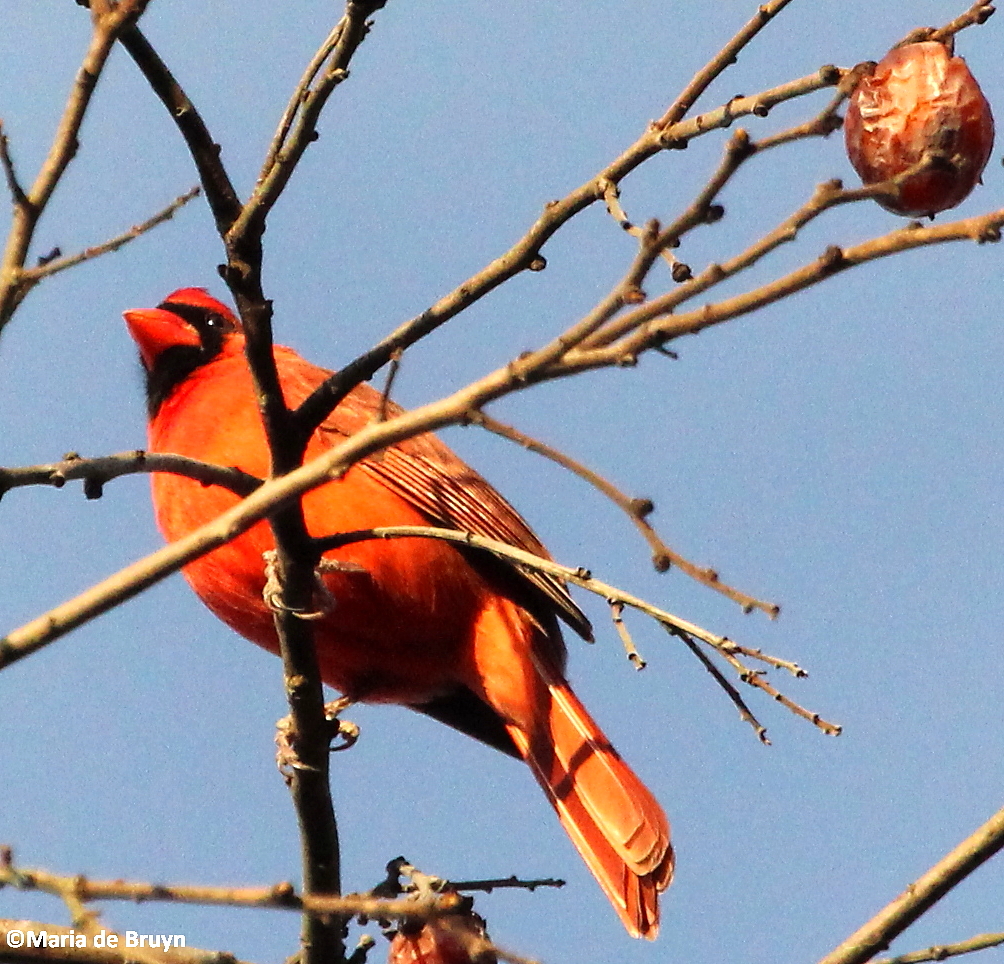
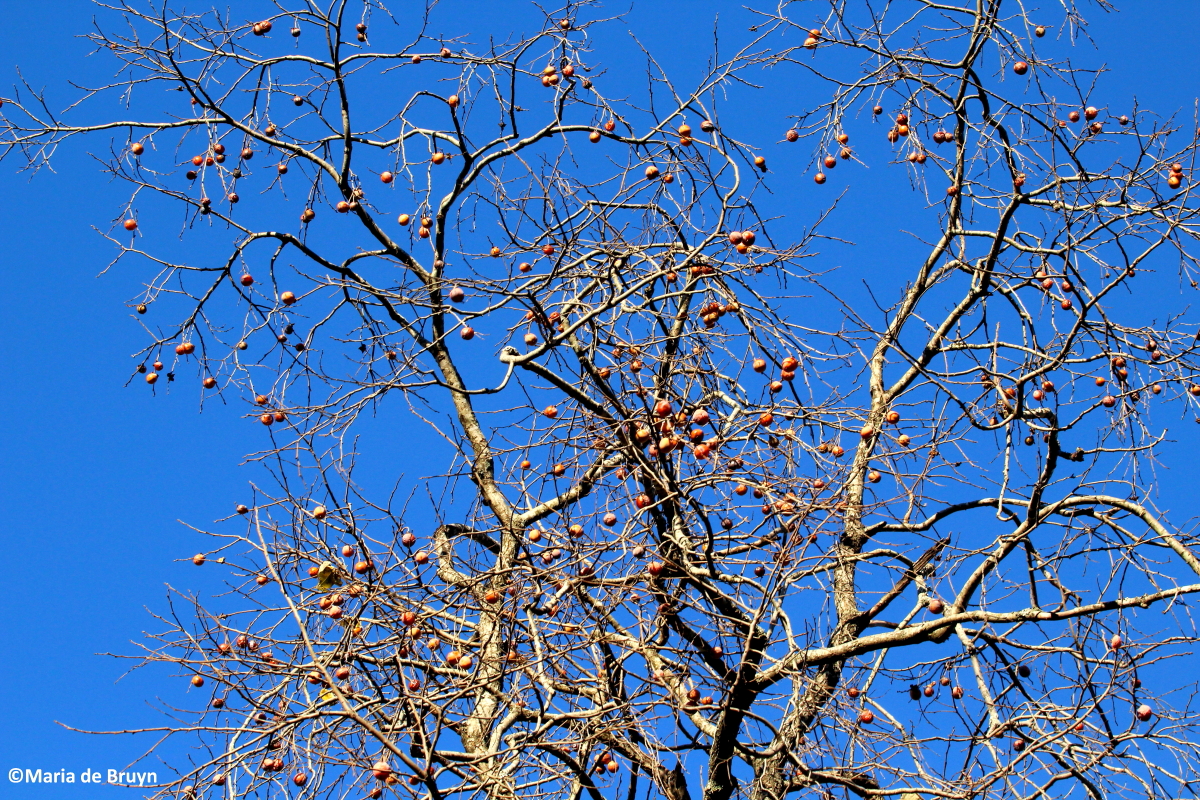
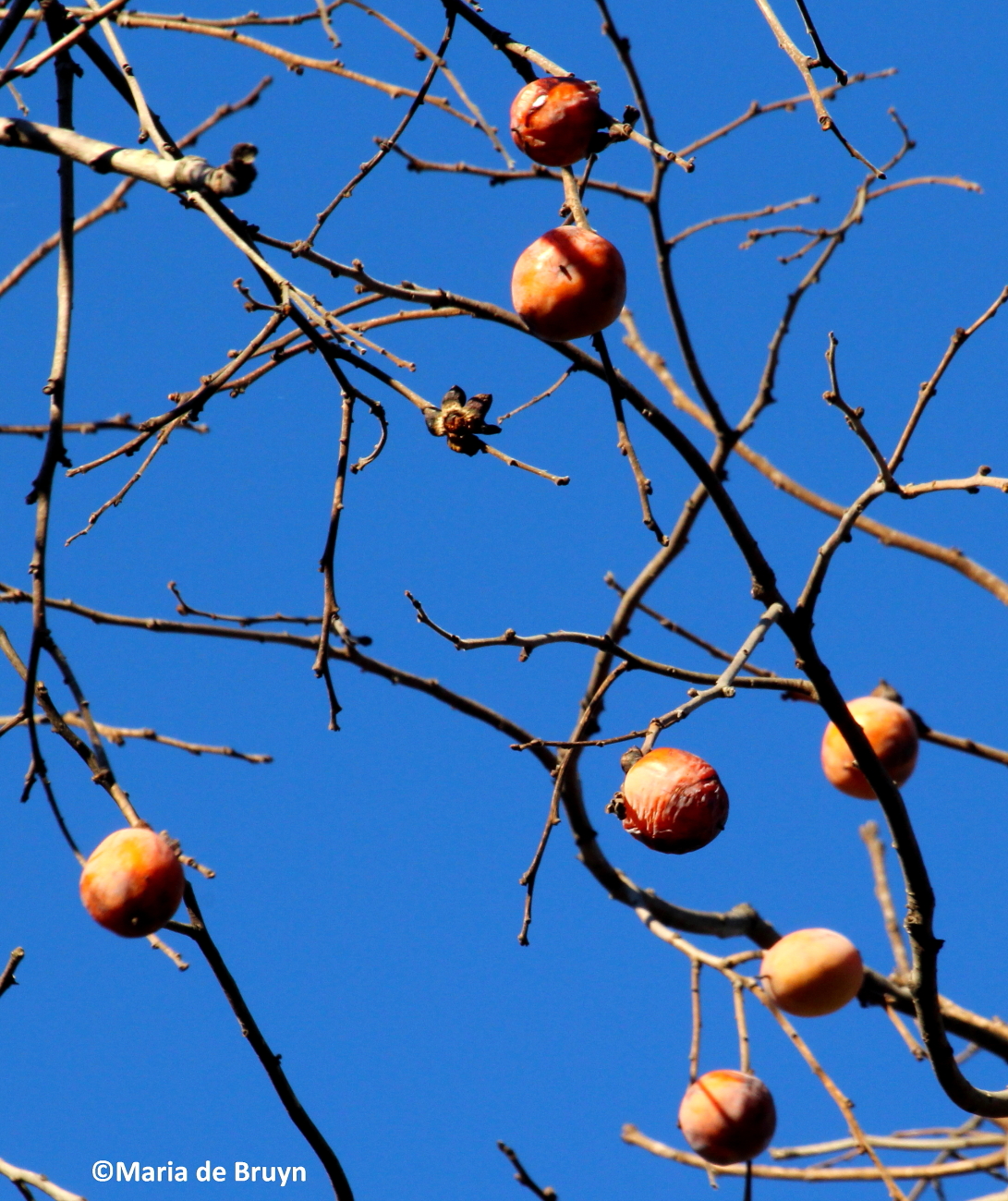
Northern cardinal  IMG_7335© Maria de BruynMy side- and backyards are both blessed with a persimmon tree (Diospyros virginiana) but the one out back only produces small hard fruit for some reason. The large persimmon at the side of my house, however, is the exact opposite. Each year it is laden with fruit; much of it begins falling while the persimmons are still unripe or only half-ripe but plenty remains on the tree through the first frost. You need to have both male and female plants for the fruit to grow, but I don’t know where the male trees are – likely in a neighbor’s yard.

Persimmon tree IMG_6996© Maria de Bruyn resPersimmon tree IMG_6993© Maria de Bruyn res

I’d been warned that an unripe or only partly ripe persimmon would not be tasty and, when I tried one, that advice turned out to be very true. I later tried a really ripe persimmon as so many North Carolinians find it a wonderful fruit, especially in pudding, but I can’t say that it is much to my liking. You won’t find me using persimmons to make tea, wine, beer or bread.

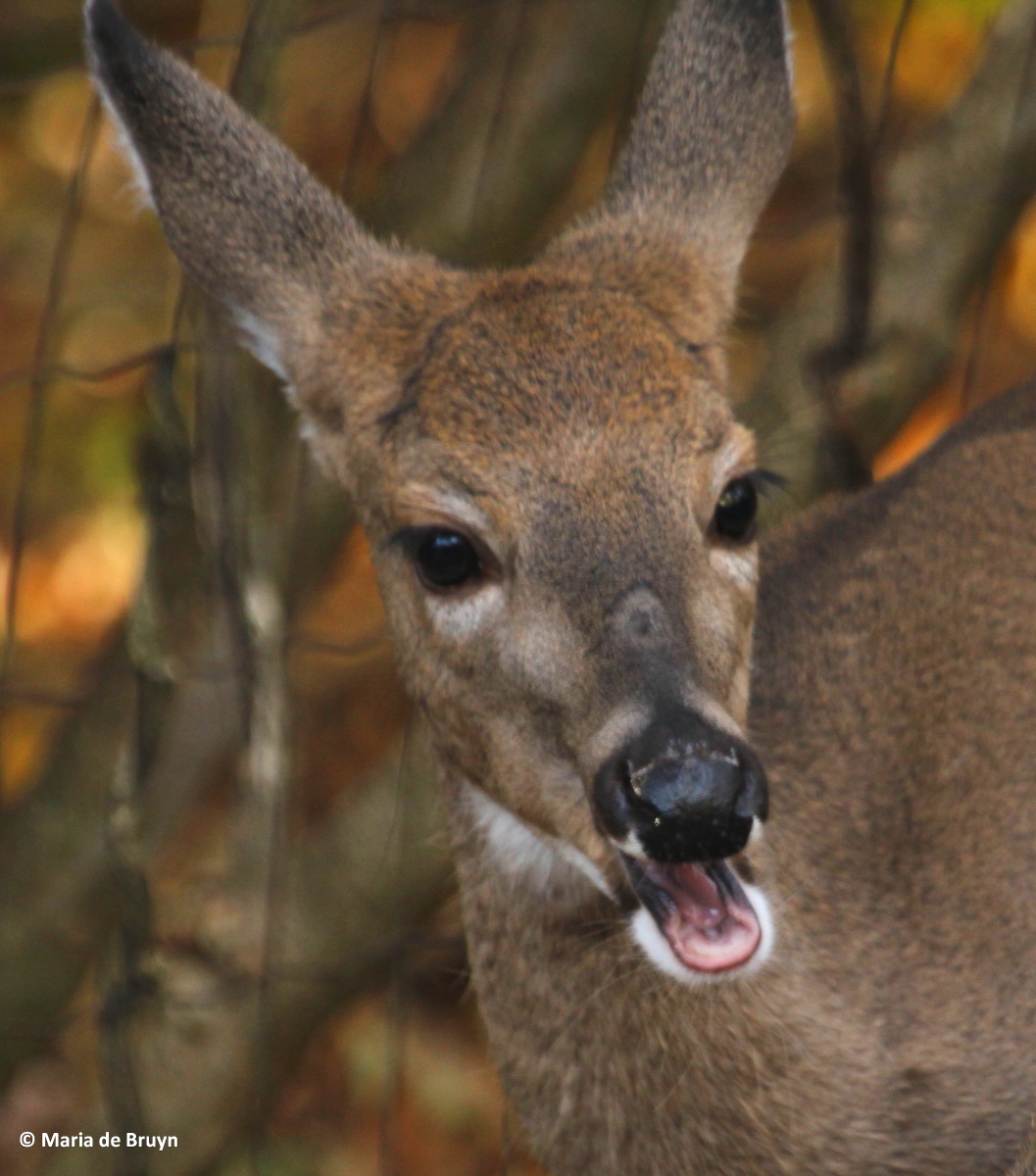
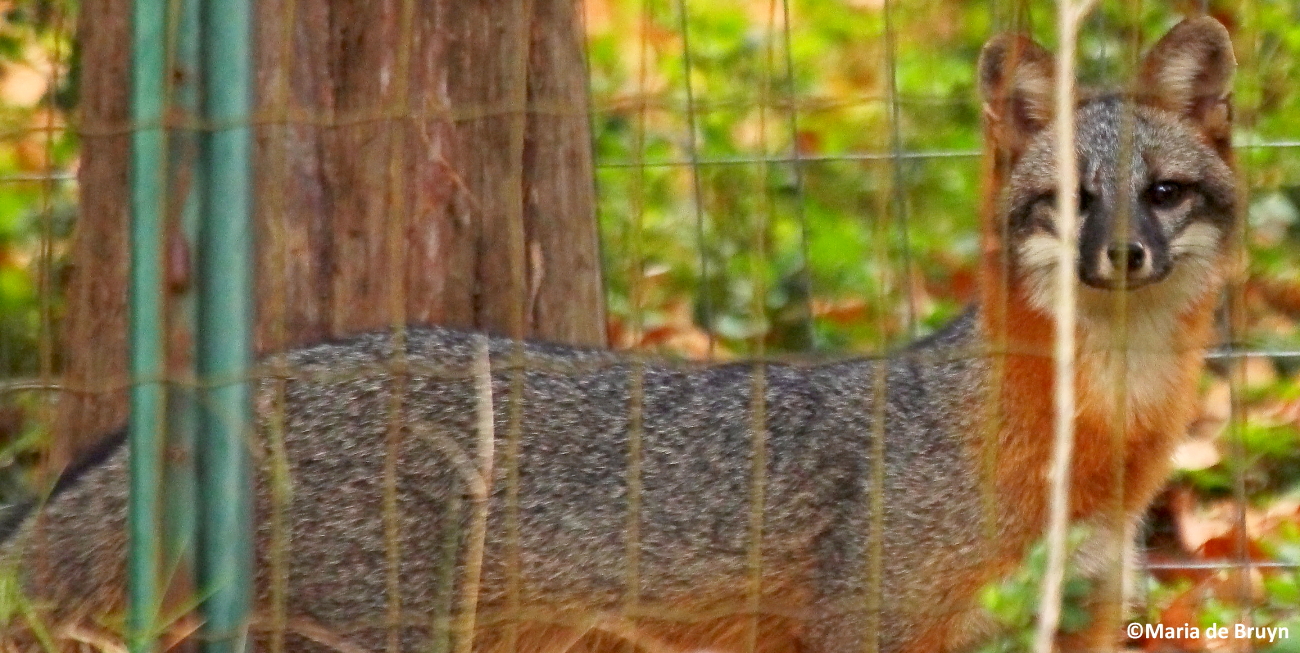
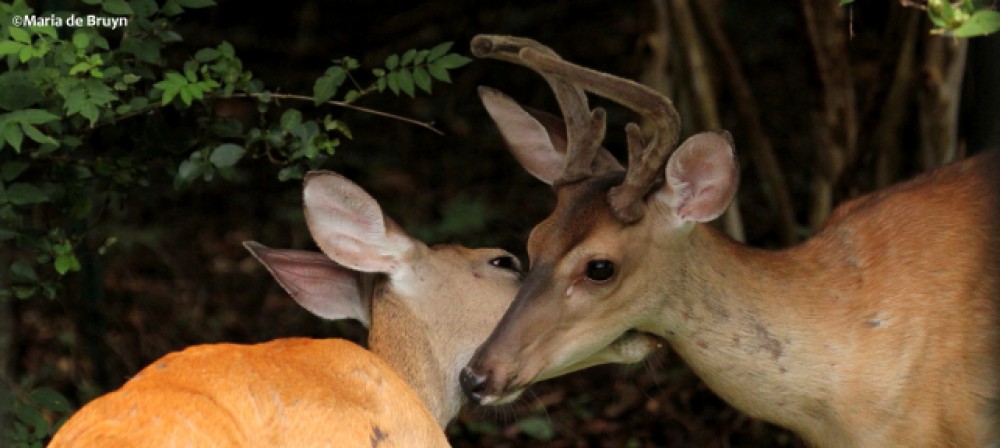
white-tailed deer IMG_9971© Maria de Bruyn resIt is, however, VERY popular with the wildlife that is around my house. The first fallen persimmons are gobbled up by the white-tailed deer (Odocoileus virginianus), who don’t seem to mind a bit of astringent fruit. Our neighborhood has opossums, raccoons, coyotes and gray foxes (Urocyon cinereoargenteus) , but I haven’t seen their persimmon seed-filled scat – I think the deer get the fruit before they have a chance. (Too bad the stem was in front of the fox’s face; I don’t use Photoshop, but you can still see its beauty.)

Gray fox IMG_1124 MdB res

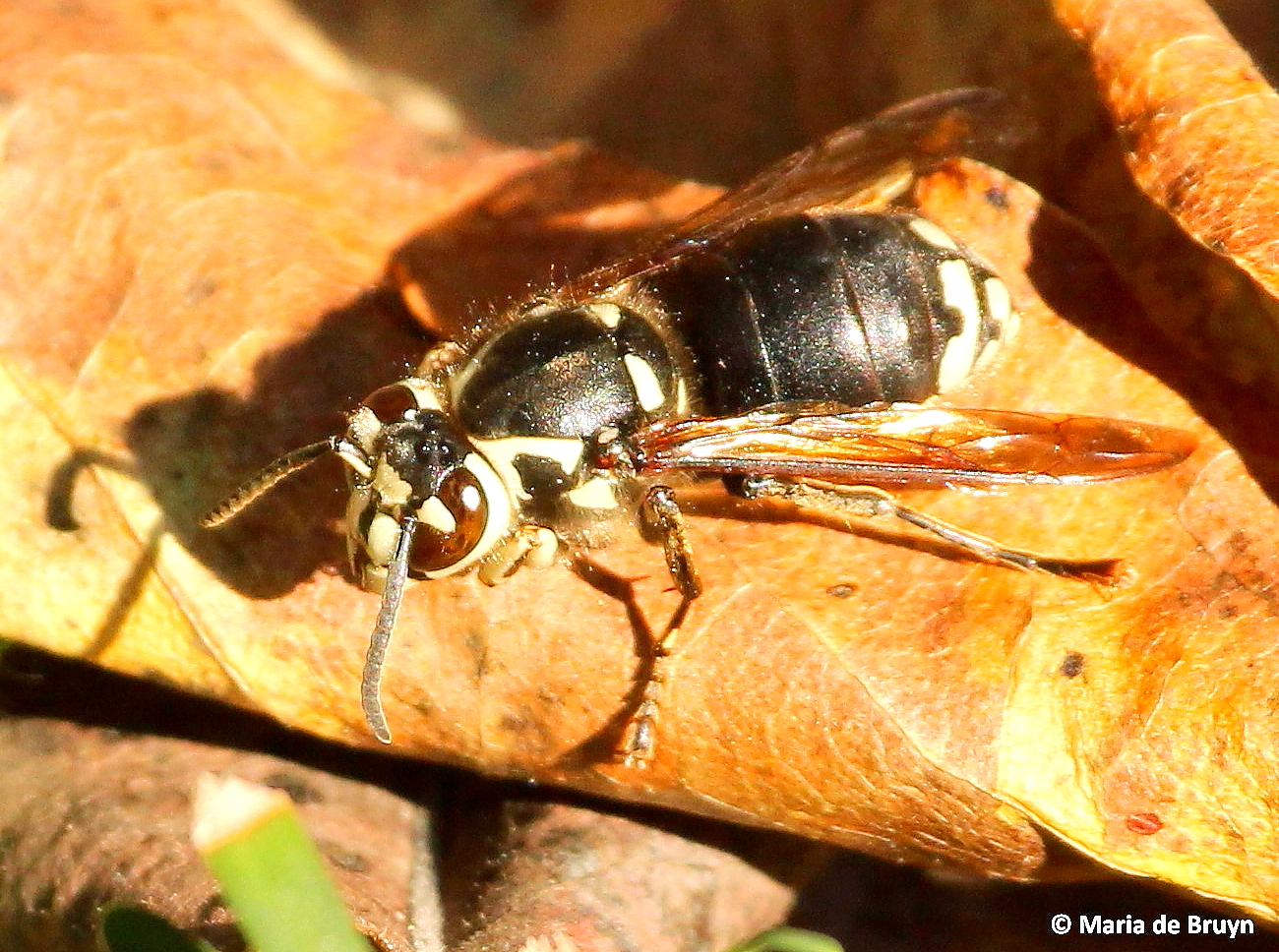
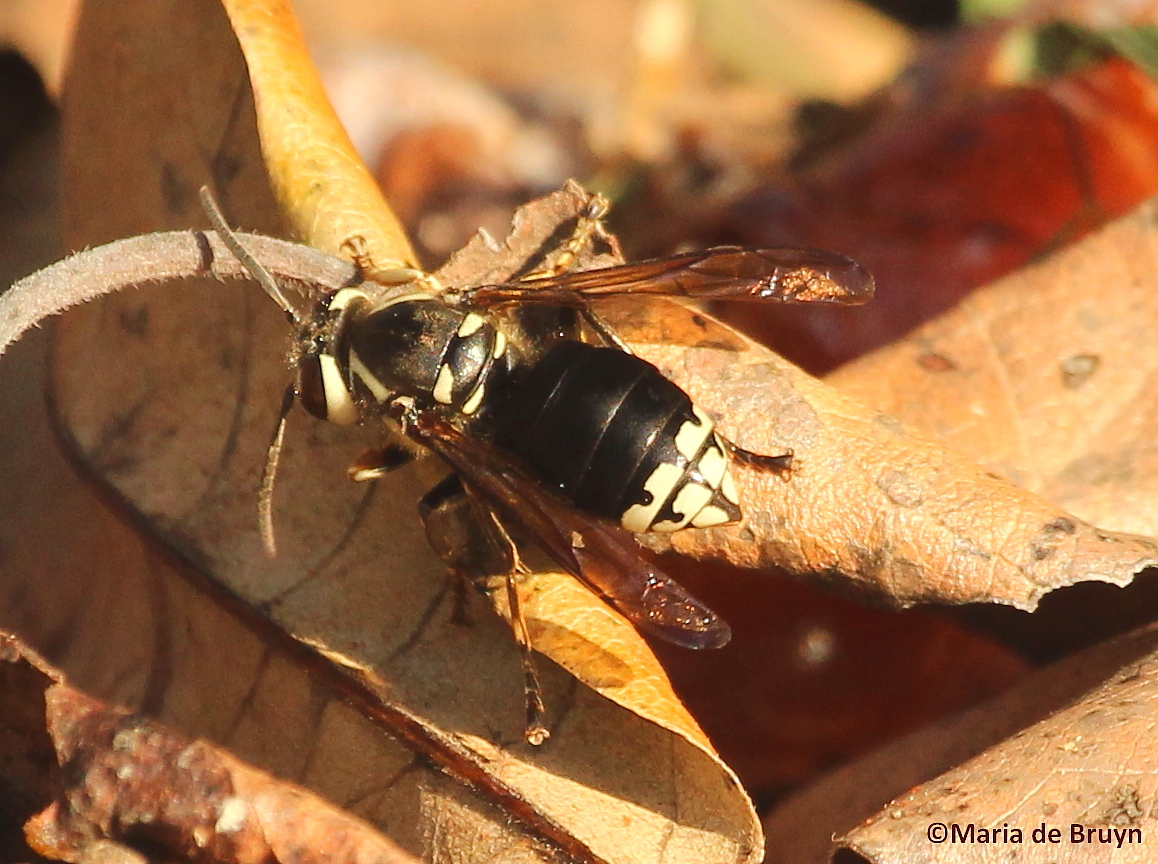
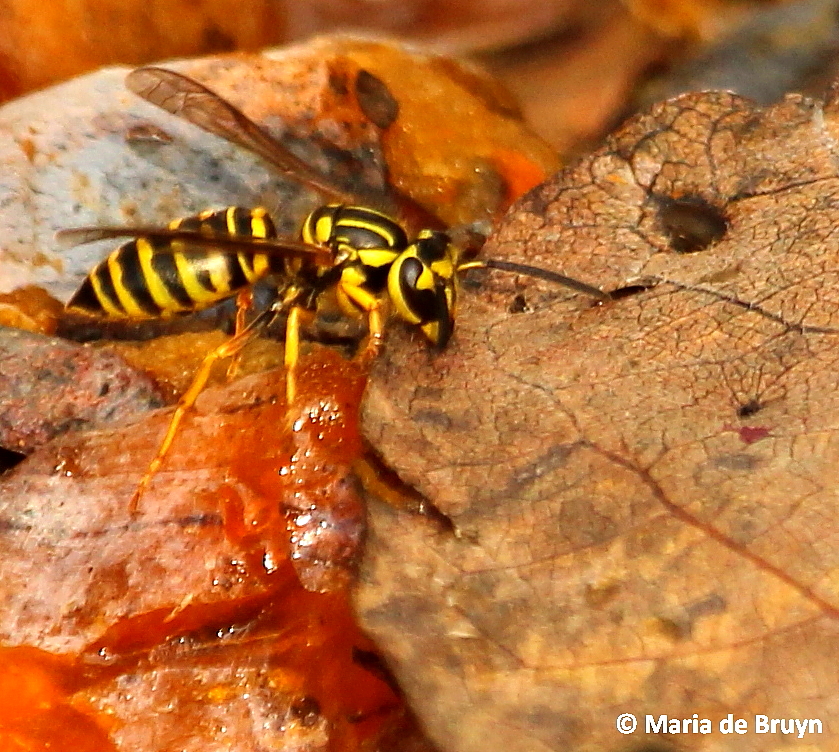
When the large orange berries begin falling on the ground in an ever riper state, the first diners include the bald-faced hornets (Dolichovespula maculata), whose beautiful large nest must be in a neighbor’s tree.

bald-faced hornet IMG_3348©Maria de Bruynbald-faced hornet IMG_3486©Maria de Bruyn

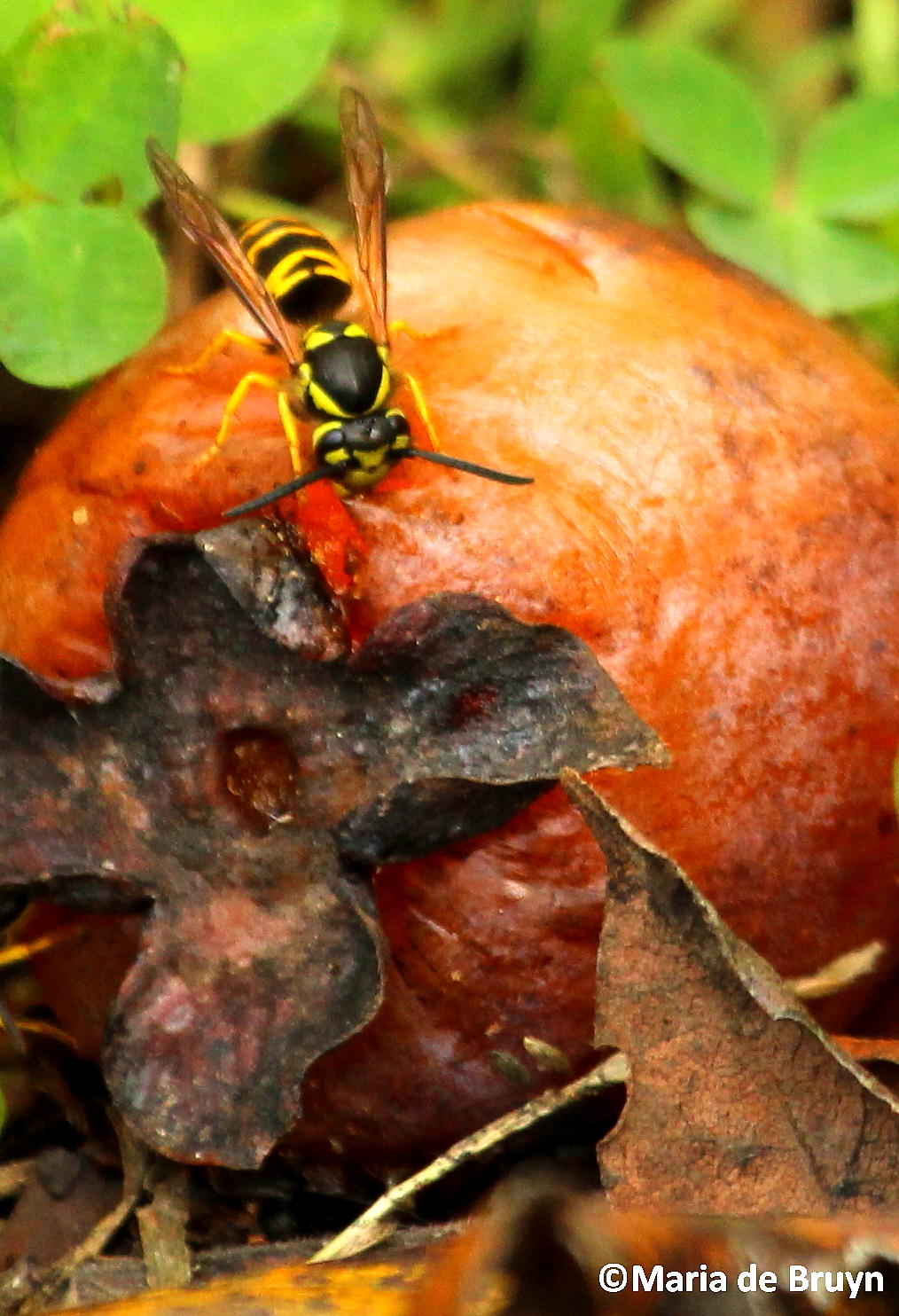
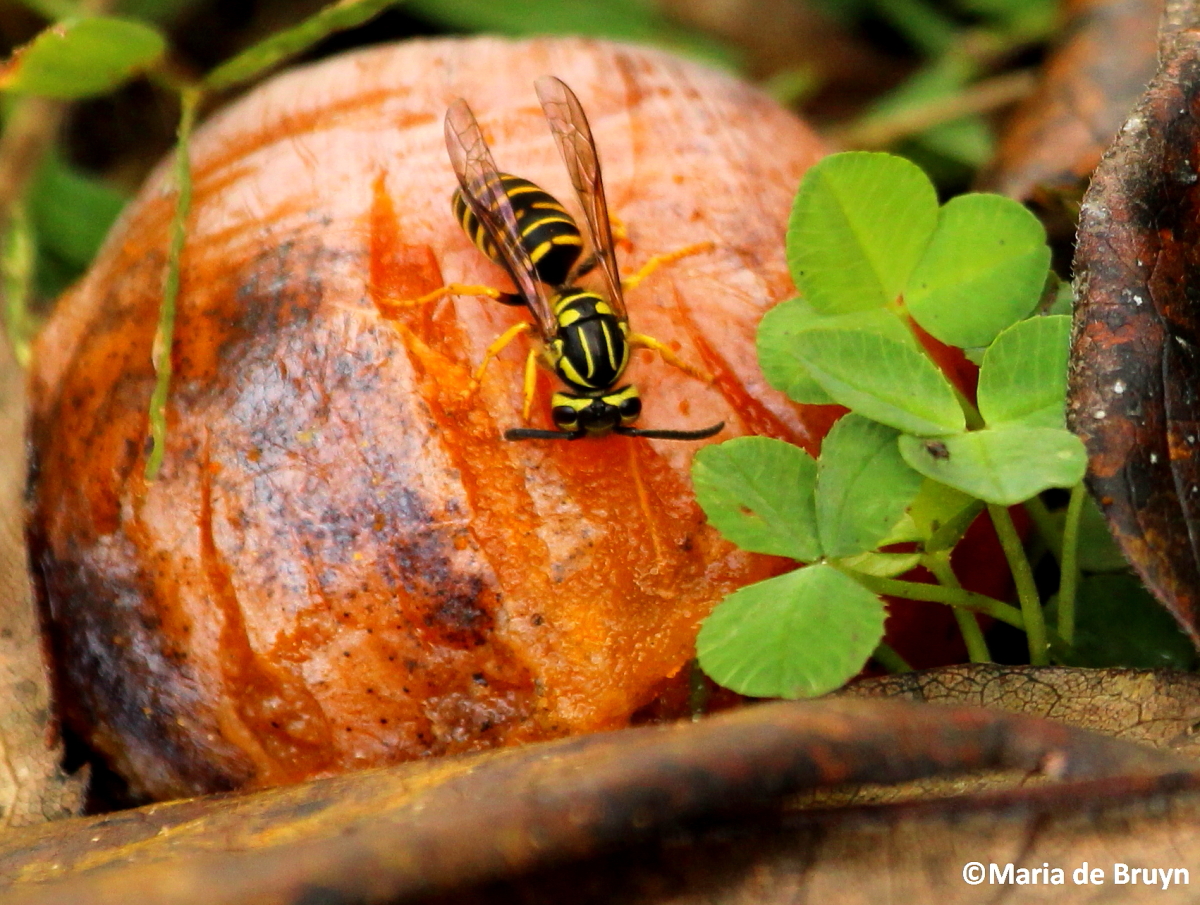
Eastern yellowjacket IMG_2502©Maria de BruynEastern yellowjacket wasps (Vespula maculifrons), which can deliver a very nasty sting, show no interest in a human hovering over the persimmons to get a shot – they are totally engrossed in getting a piece of juicy fruit.

Southern yellowjackets (Vespula squamosa), also painful stingers, act likewise – their focus is entirely on the orange pulp.


Southern yellowjacket IMG_2473©Maria de BruynSouthern yellowjacket IMG_2507©Maria de Bruyn res

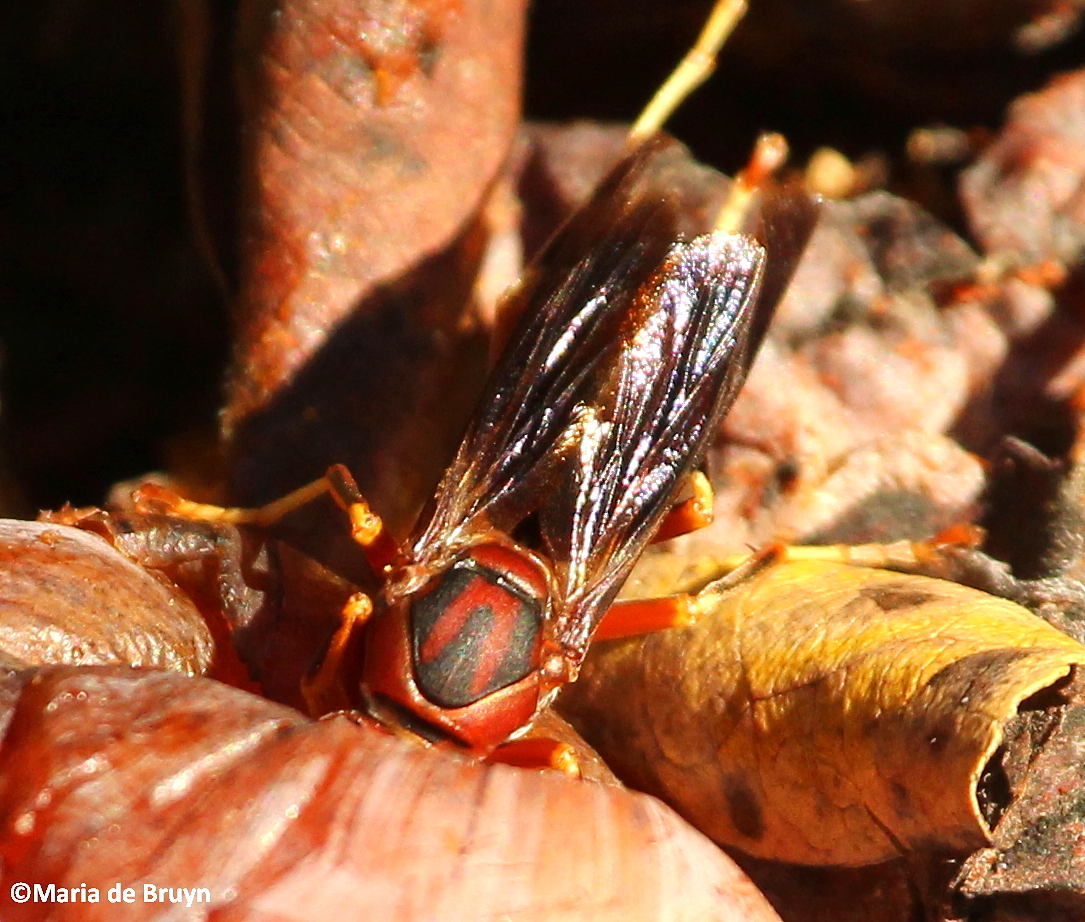
Paper wasp polistes metricus IMG_4359©Maria de BruynThe paper wasps (Polistes metricus) dig deep into the persimmon to extract some sweetness.

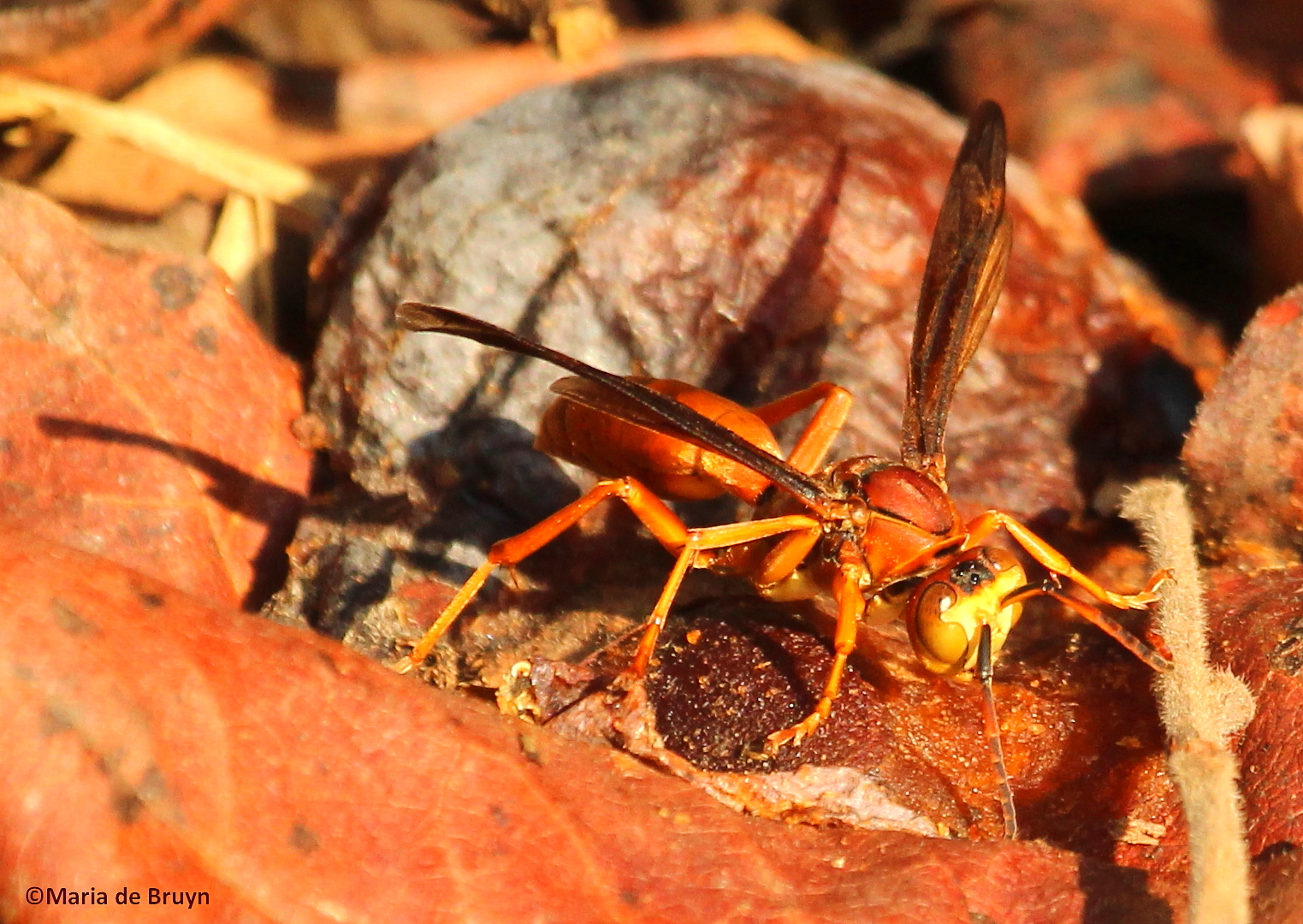
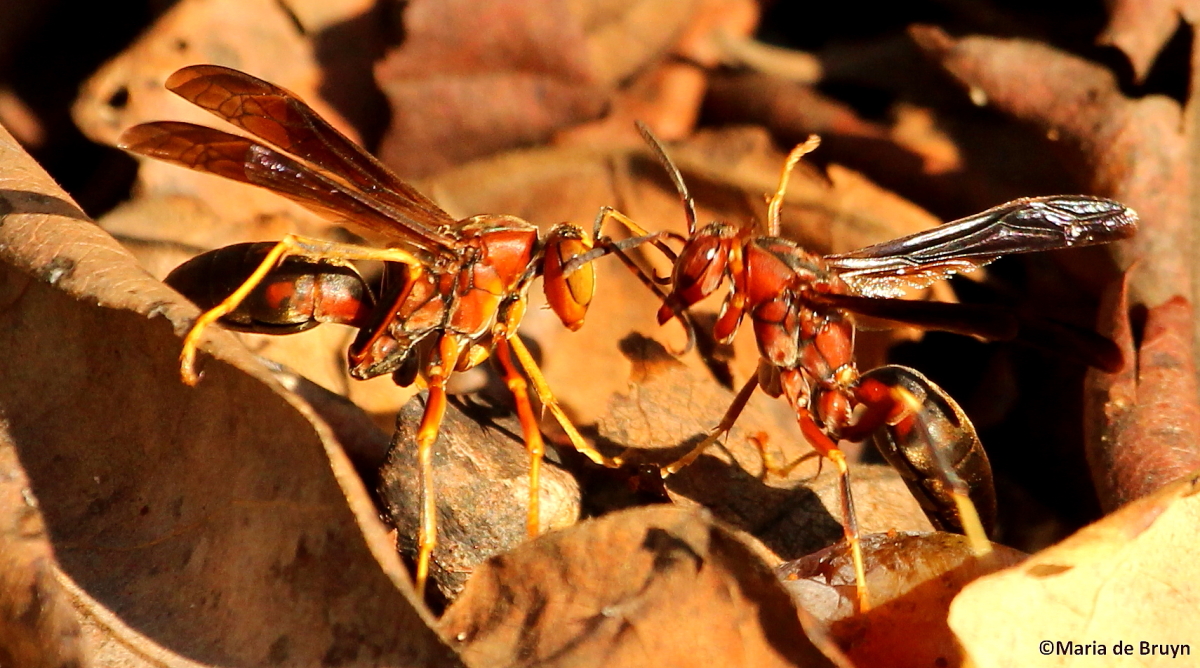
The red wasps (either Polistes carolina or rubiginosus; entomologists can only tell by examining the insect) also enjoy flitting from one fallen fruit to another in search of the sweetest bits. Sometimes they and the paper wasps challenge one another for territory.

Red wasp P carolina IMG_3495©Maria de Bruyn

Paper wasp polistes metricus IMG_3513©Maria de Bruyn res

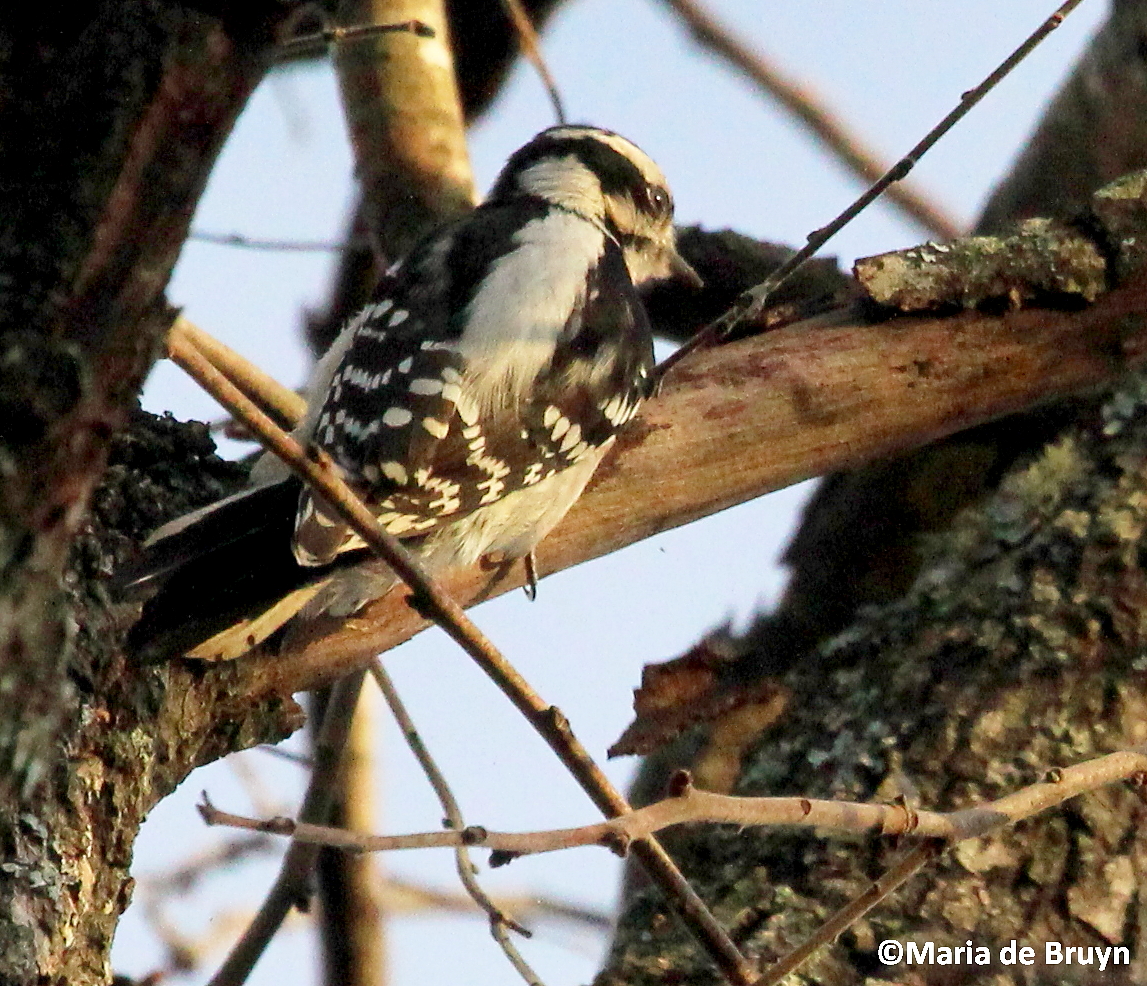
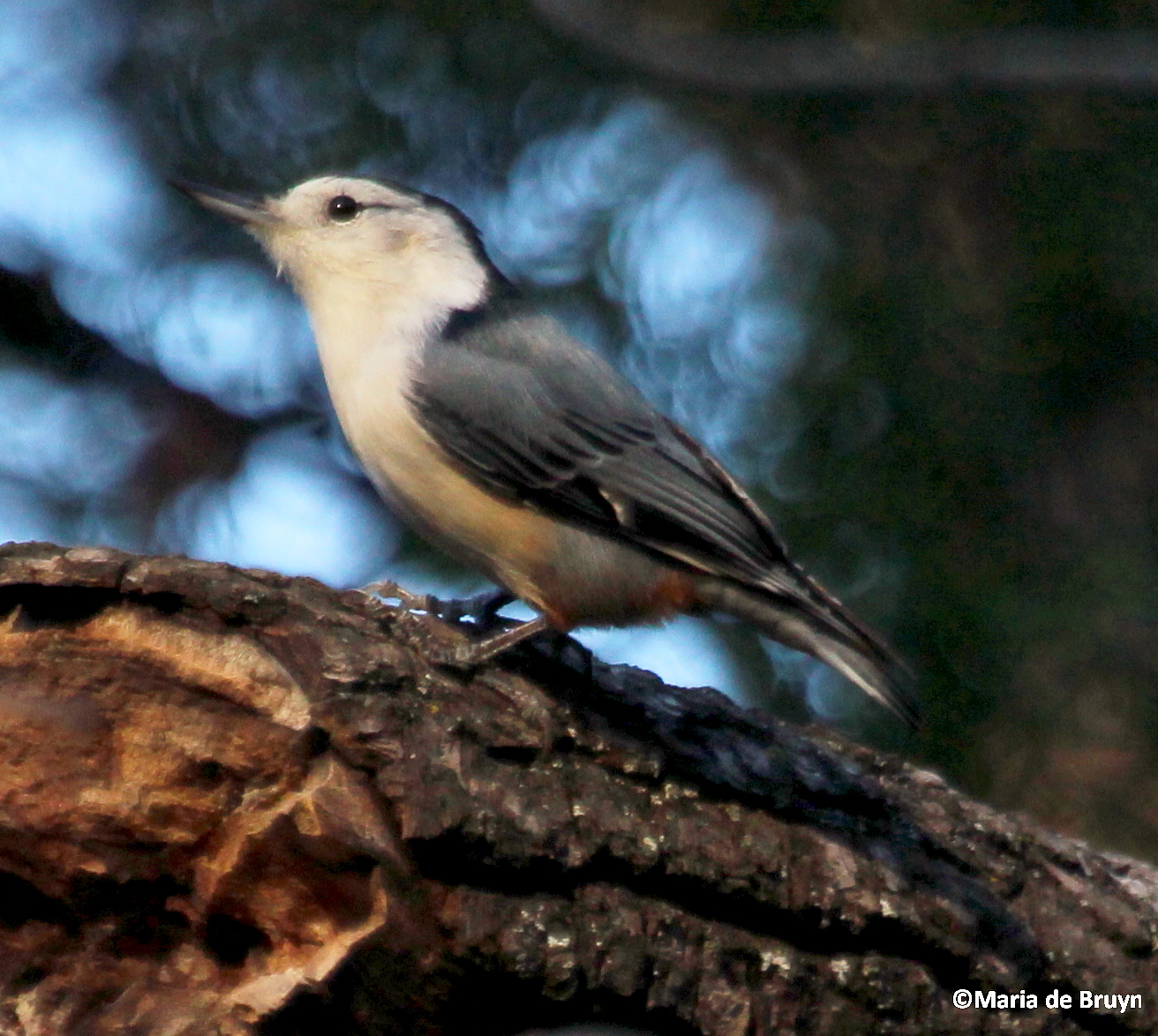
Downy woodpecker IMG_7248© Maria de BruynThe next group of persimmon pickers are the birds. Some birds only visit the tree to rest or look for insects, like the downy woodpecker (Picoides pubescens) and the white-breasted nuthatch (Sitta carolinensis).

White-breasted nuthatch IMG_5997© Maria de Bruyn


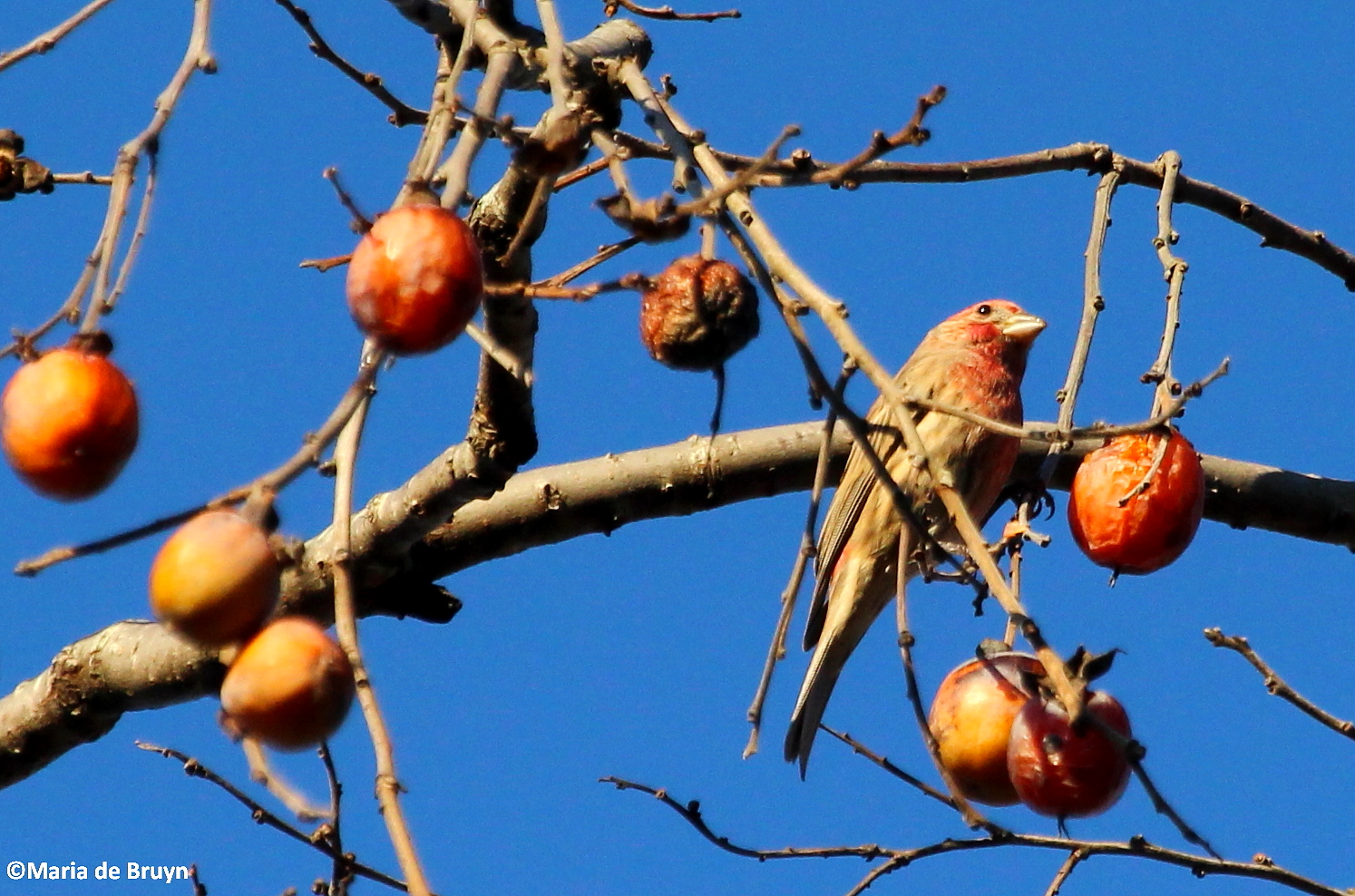
A few birds just rest in the tree and others rest and occasionally peck at a berry, like the house finches (Haemorhous mexicanus).


House finch IMG_5956© Maria de Bruyn

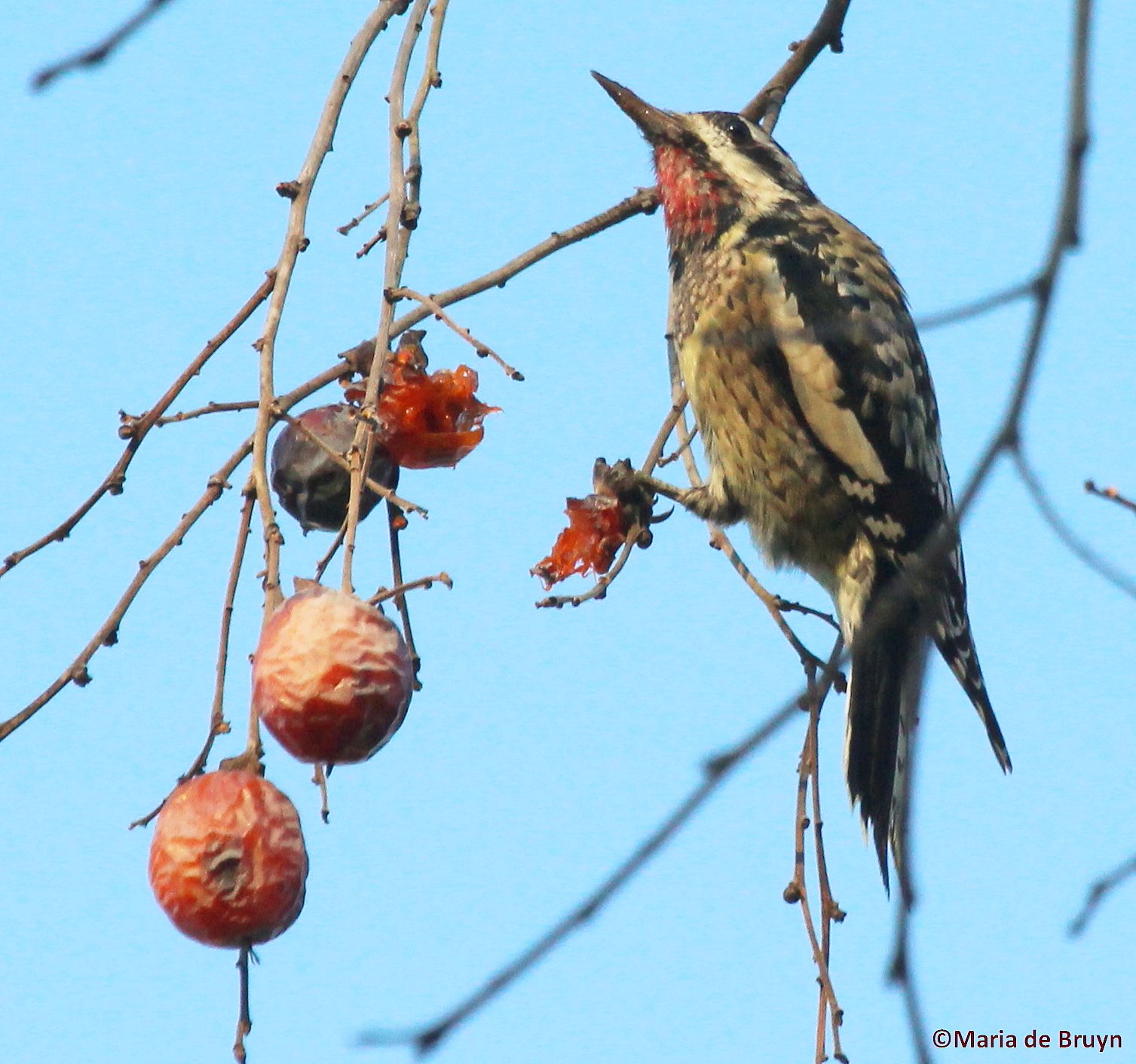
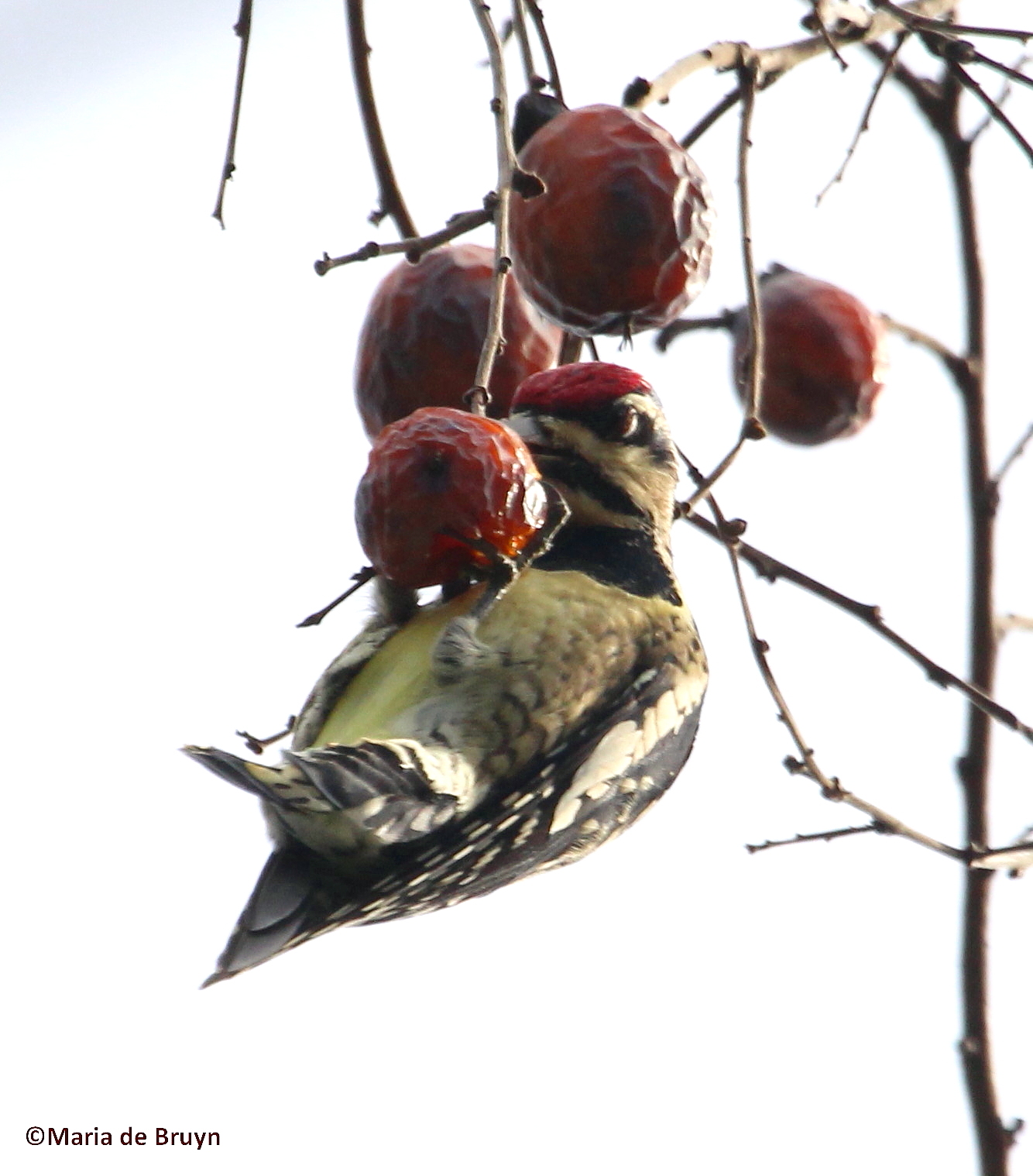
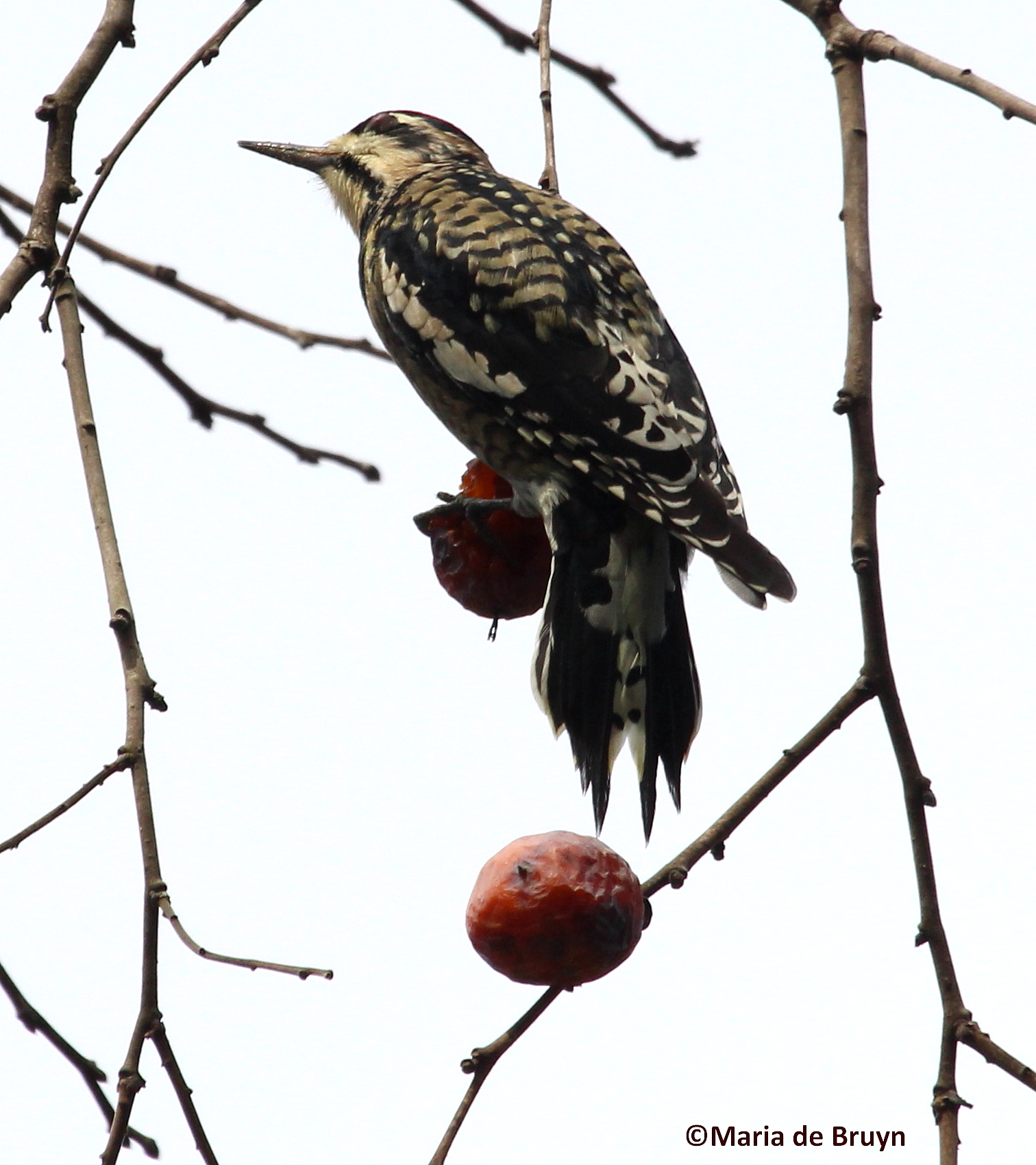
Yellow-bellied sapsucker IMG_8379© Maria de Bruyn The yellow-bellied sapsucker (Sphyrapicus varius) though is a woodpecker that is highly attracted by the fruit. A few of these attractive birds – both adults and juveniles – have been visiting the tree every day for weeks now to enjoy a sweet treat.


Yellow-bellied sapsucker IMG_8263© Maria de BruynYellow-bellied sapsucker IMG_8233© Maria de Bruyn

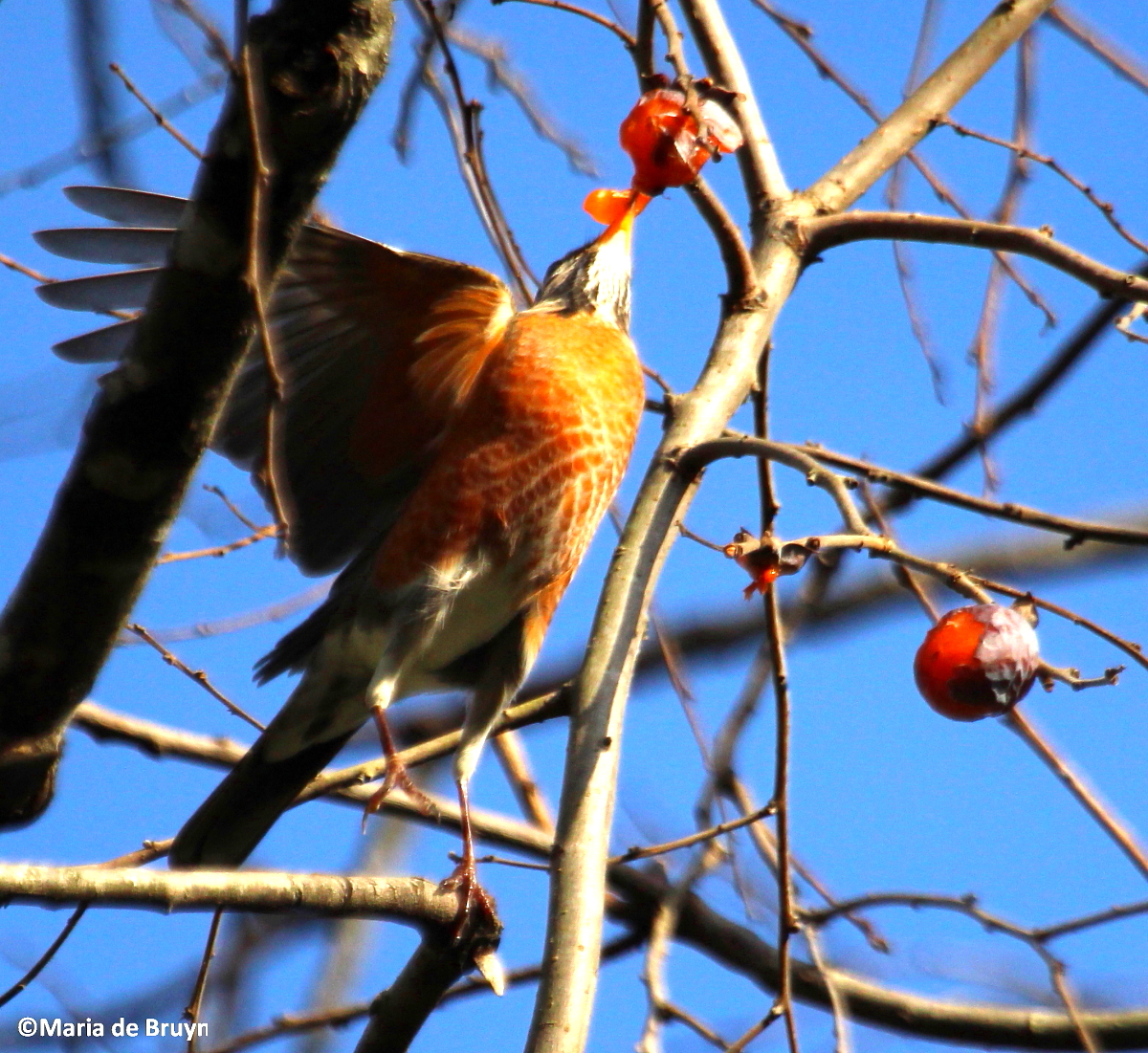
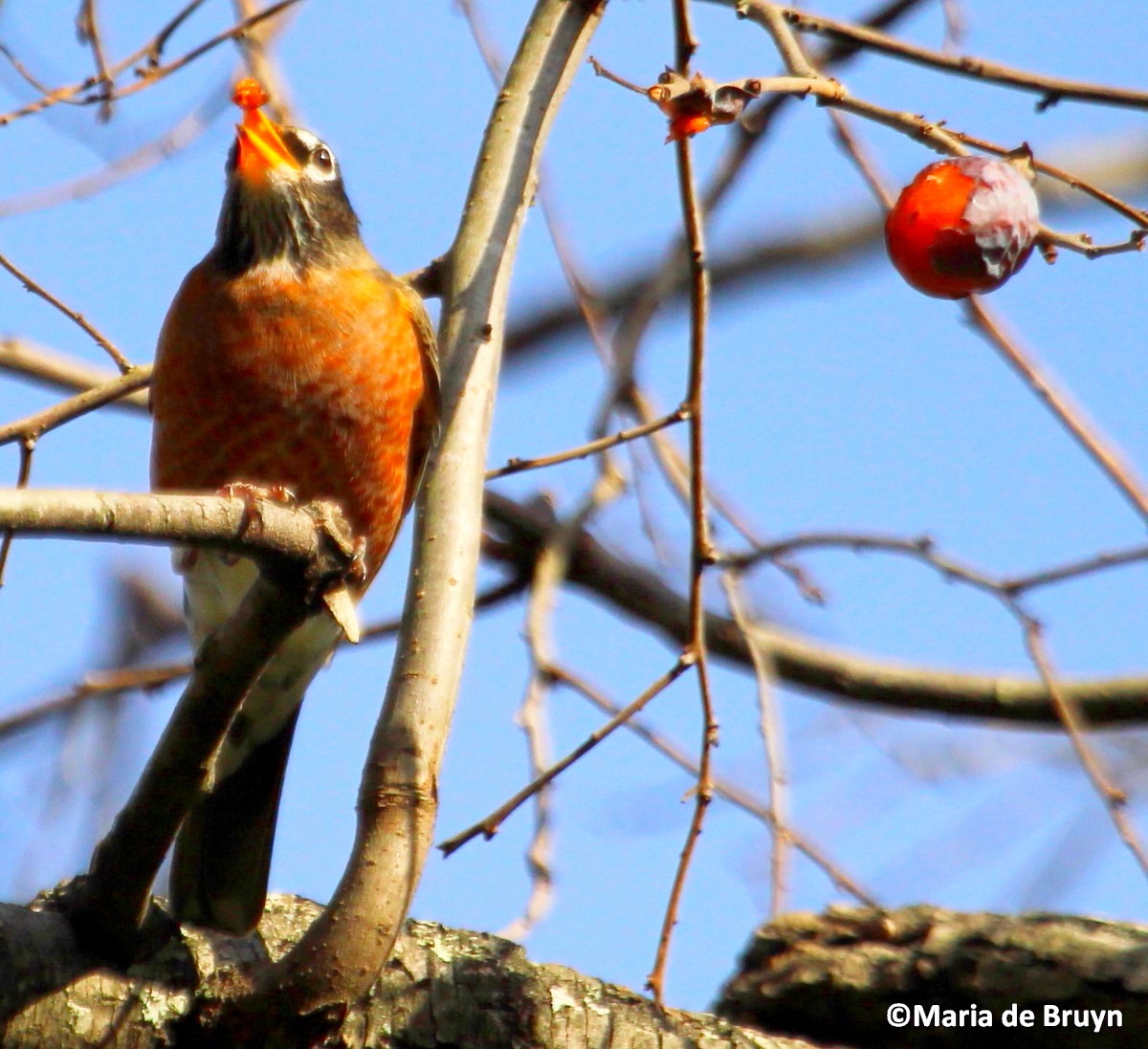
The American robin (Turdus migratorius) will not turn up its beak at a piece of persimmon either. Perhaps next year I should take a leaf from their books and collect a few fruits to try a pudding??

American robin IMG_9826©Maria de Bruyn resAmerican robin IMG_9813©Maria de Bruyn res


Delight in small packages

ruby-throated hummingbird M de Bruyn signed (2) res

Ruby-throated hummingbird IMG_6085©Maria de BruynOne bird that seems to almost universally delight people and bring smiles to their days are the hummingbirds. These wonderful little fliers now only live in the Western hemisphere of our earth, but two 30-million-year-old hummingbird fossils were discovered in Germany so they did live elsewhere.

There are more than 300 species – some very, very colorful and some with gorgeous long tails or long curved beaks. Central and South America have spectacular species and one of the Nazca line drawings in Peru depicts a hummingbird. Only eight species breed in the United States.

Here in Chapel Hill, I’ve had the pleasure to see two species – the ruby-throated hummingbird (Archilochus colubris) and the rufous hummingbird (Selasphorus rufus). The ruby-throated (named for the male’s brilliant neck feathers) are here in spring, summer and fall and then they migrate further south, crossing the 500 miles (800 km) of the Gulf of Mexico in one non-stop flight!

Ruby-throated hummingbird IMG_8991©Maria de Bruyn resRuby-throated hummingbird IMG_4837©Maria de Bruyn

The rufous species migrates here from further up north in the wintertime; they will go as far as Alaska to spend the winter and can tolerate below freezing temperatures.rufous hummingbird IMG_1789 M de Bruynrufous hummingbird IMG_2022 MdB

Ruby-throated hummingbird IMG_7541©Maria de BruynRESThe smallest bird species is the Bee hummingbird, which weighs less than a cent coin. On average, the ruby-throated hummingbird weighs less than a US five-cent coin.

They flap their little wings about 50 times per second but increase this to as much as 200 wing beats per second. This rapid motion makes a humming sound, which varies according to the species. Their quick flight allows them to hover as well as fly backwards and upside down.


ruby-throated hummingbird IMG_3498Ruby-throated hummingbird male IMG_5433©Maria de Bruyn res


ruby-throated hummingbird IMG_3293 MdBTheir little feet help them perch but they cannot hop or walk on them.

These little birds need to eat about half their weight in sugar every day, which is why you see them returning to feeders quite often. When there is not enough food, they can go into a hibernation-like state, slowing their metabolism to 1/15th of its normal rate.

Their hearts can beat as quickly as 1260 beats per minute and they take 250 breaths per minute, even when they are sitting still!

Ruby-throated hummingbird IMG_1482©Maria de Bruynres


Hummingbirds do not suck up nectar but quickly lap it up with tIMG_5526©Maria de Bruynheir tongues, which have tubes running down their lengths.

To ensure they have enough food, they can sometimes defend their feeding areas vigorously against other hummers that they consider intruders. This happens a lot at my feeders but they are so fast that it’s very difficult to get good shots of it.


ruby-throated hummingbirds IMG_0729 MdB resRuby-throated hummingbird IMG_2379©Maria de Bruynres2

ruby-throated hummingbirds IMG_0728 MdB res

They eventually will tolerate others in their vicinity (sometimes). They live 3-12 years and perhaps the ones they don’t mind having around are related.

Ruby-throated hummingbird IMG_2742©Maria de Bruynres

It is better not to put food dyes into nectar and brown or raw sugar should not be used to prepare it as these types of sugar contain iron, which can kill hummingbirds if they get too much over a certain period of time. They like sugar water with 25% sugar, although apparently nectar with 35% sugar is even more to their liking.

Ruby-throated hummingbird IMG_7711©Maria de Bruyn resRuby-throated hummingbird IMG_5921©Maria de Bruyn res2

I have yet to find a hummingbird nest made with spider silk and lichens in my yard but hope to see one in the future so that I can say I’ve not only seen the biggest bird egg (ostrich) but also the smallest!

Ruby-throated hummingbird IMG_5925©Maria de Bruyn (2) res