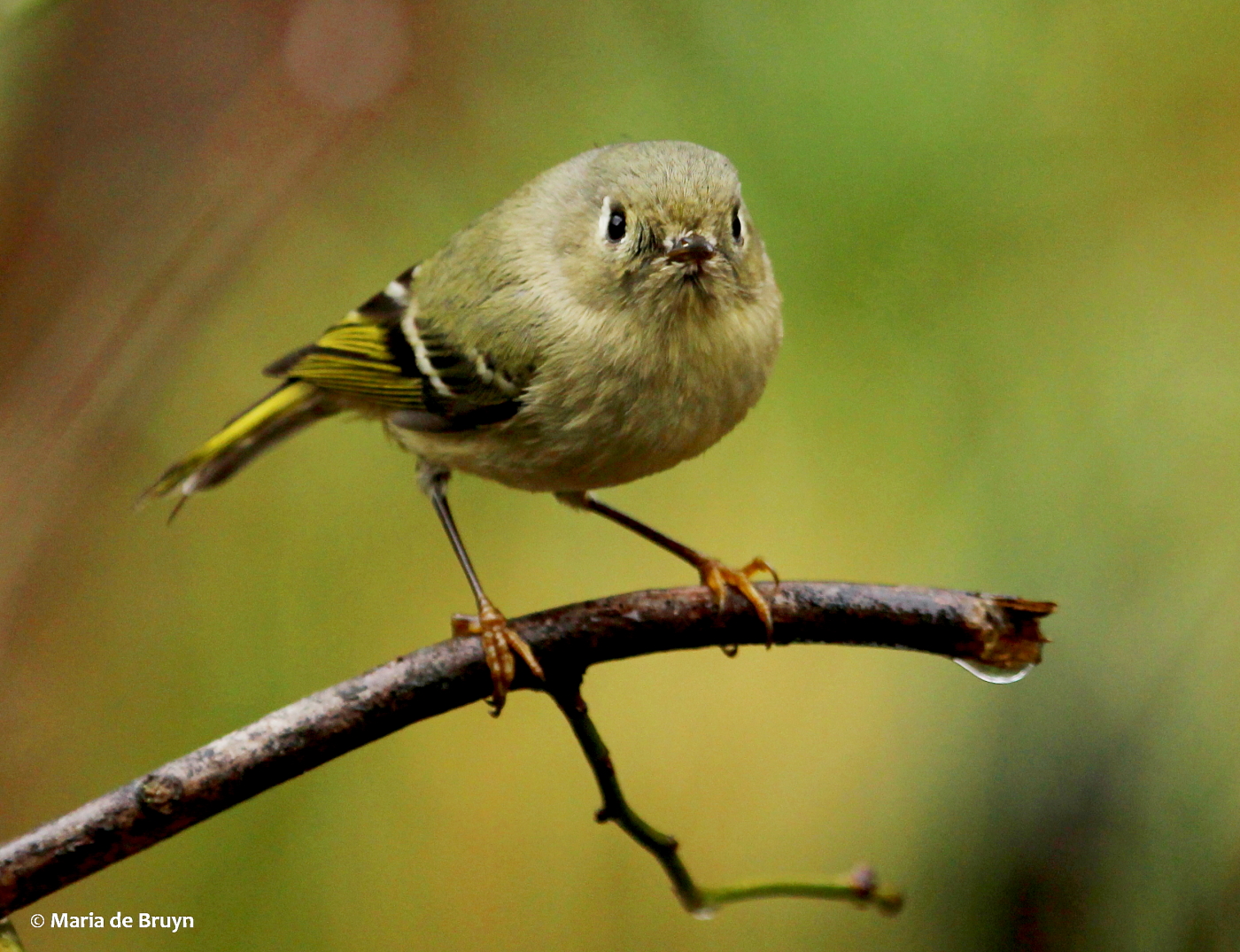
 As I mentioned in November, ruby-crowned kinglets (Regulus calendula) are one of my favorite bird species. These tiny, yellowish bundles of energy are fascinating to watch as they perch on twigs, hover in mid-air by feeders and branches, and generally look delightful when they stop to catch a breath for a minute.
Adjusting your camera to be able to photograph them with the best speed and lighting can be quite challenging as their constant motion leads them in and out of the sun and above and below branches.


 On a rainy day, they may sit still for a tiny bit longer but their flight is not impeded though they may look waterlogged.
This has been a good autumn and winter for my being able to photograph these adorable avians, not only in my yard at the feeders but also in venues such as the Jordan Lake woods, Mason Farm Biological Reserve and Sandy Creek Park. This blog will focus on some of the portraits I’ve been able to capture.
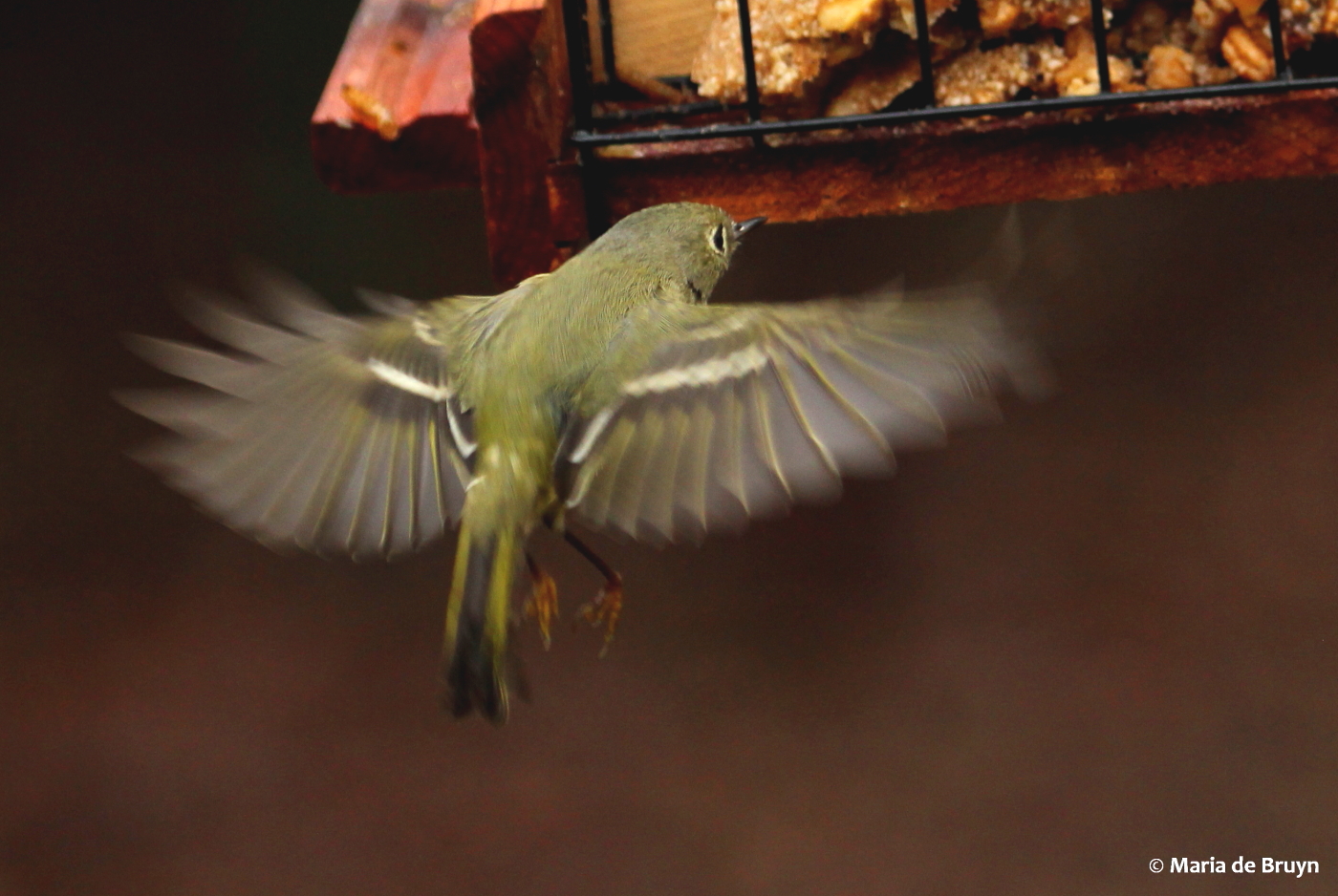 When they are flying around rapidly, you could mistake them for first-year, less brightly hued blue-winged warblers (Vermivora cyanoptera). That happened to me in South Carolina where I thought I had gotten a shot of a blue-winged warbler and instead saw a kinglet in the photo.

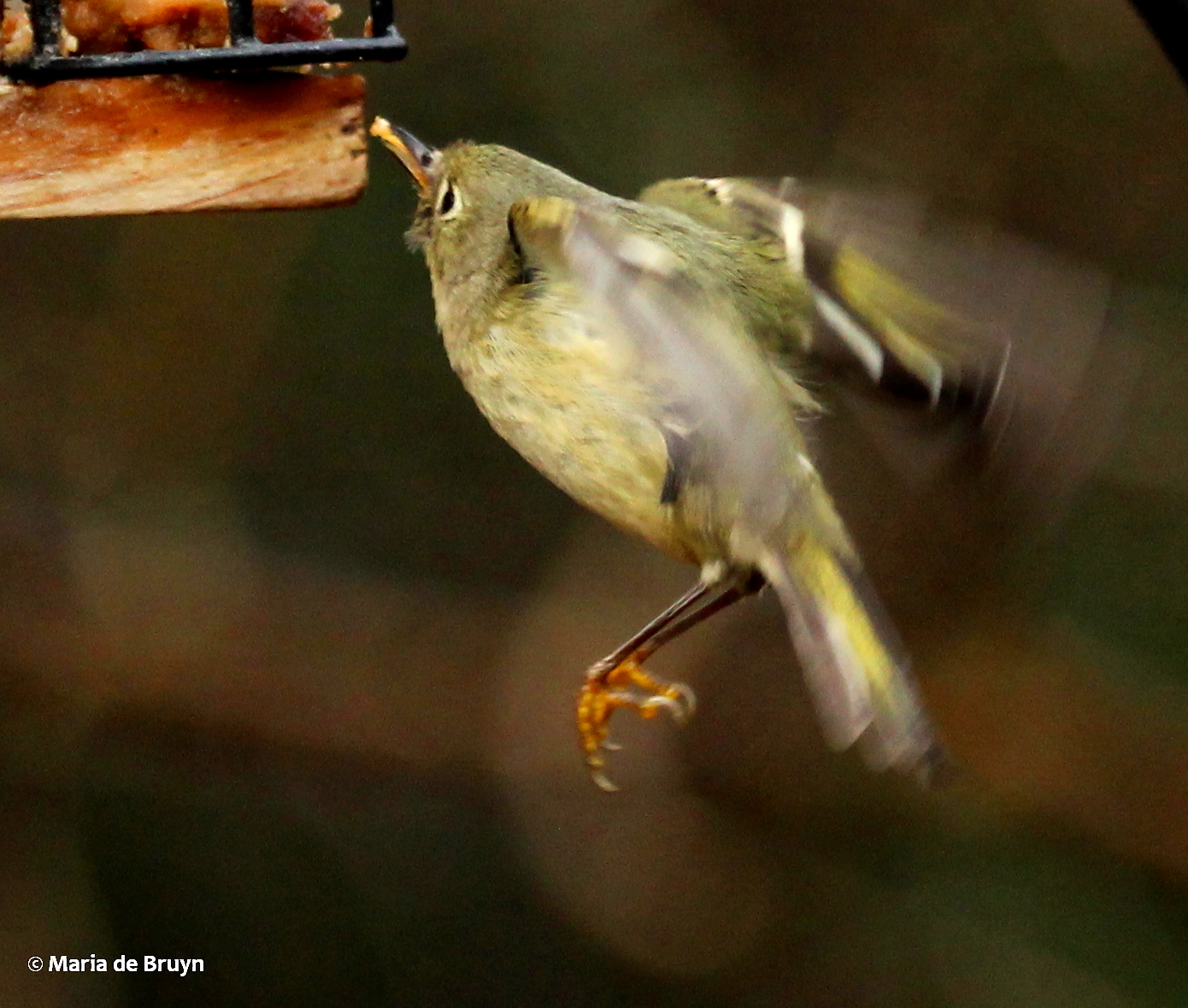
The kinglets’ yellow-olive color, white wing bars, broken white ring around their eyes and fluttering flight help identify them. Very occasionally, you catch sight of the red crown or get a peek at a couple of the normally hidden red feathers.

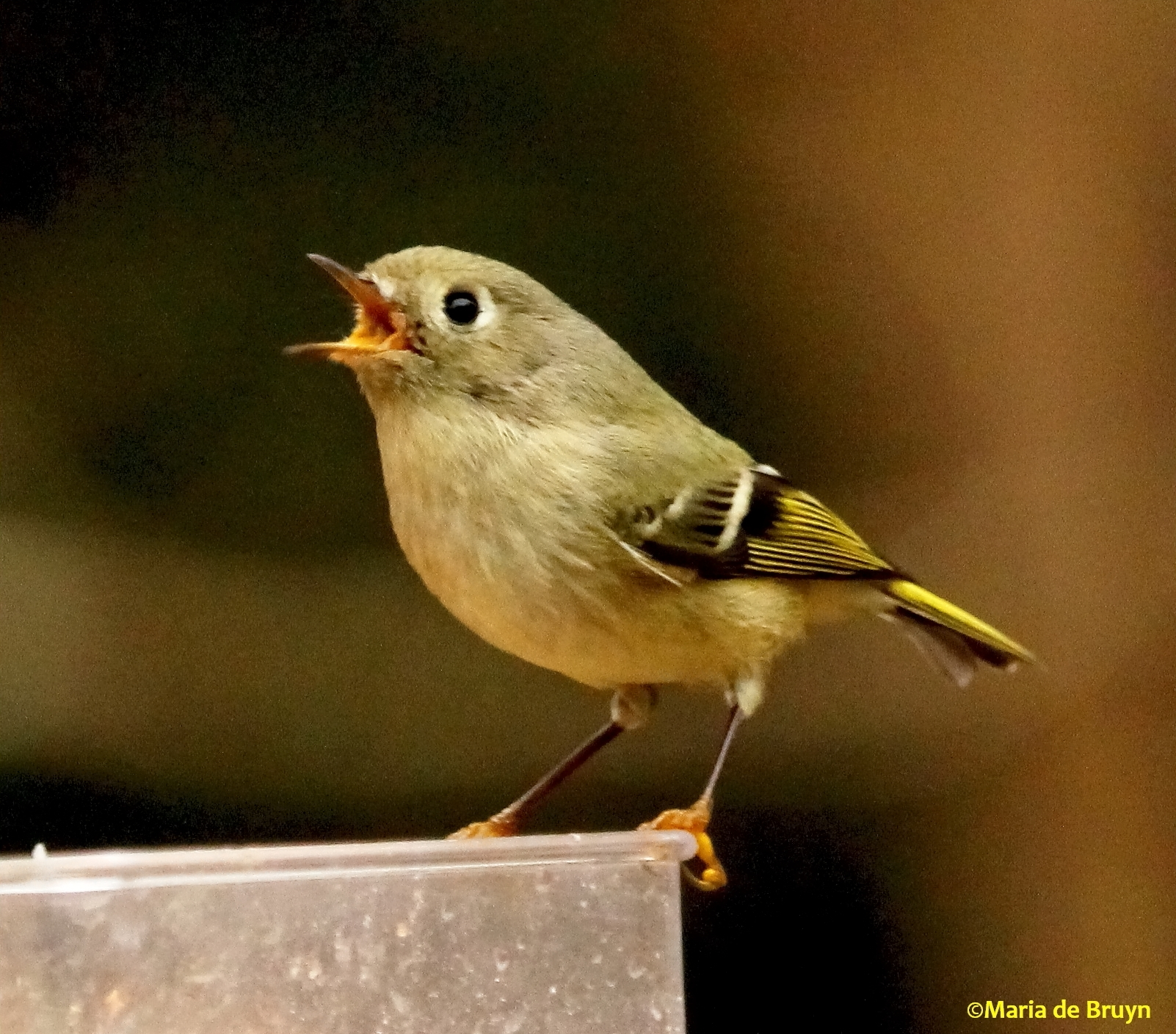
The Latin species name, which means little king, has led to a number of “royal” terms for a group of kinglets: a castle, a court, and a princedom. My favorite, however, is a dynasty – a grand description for a collection of these tiny fliers.
 I think I might have a particular fondness for birds with black or dark legs and yellow feet. I love snowy egrets (Egretta thula) with their large feet resembling yellow rubber gloves and melt at the sight of those dainty kinglet feet.
It’s amazing to think of these small birds migrating to North Carolina from as far North as Canada and Alaska. Just think about how many wing-beats and how much energy this demands of these birds! I’m glad they make the trip though!
 a”?
a”?
 I hope you have found these photos as cute as I did – have a great day!


 While ospreys are one of my favorite large birds, the gorgeous ruby-crowned kinglet (Regulus calendula) has won my heart among my tinier feathered friends. Today I’m sharing some portraits of kinglets made the past couple months (in my yard and at Bolin Creek greenway in Chapel Hill, Jordan Lake woods, Sandy Creek Park in Durham).
 hes or 10-11 cm long), this kinglet is in almost constant motion, which makes getting good portraits a bit of a challenge. Despite this high level of activity, however, research has shown that the ruby-crowned kinglet only uses up to 10 kcal a day in energy. (Sometimes I think this holds true for me as well as the weight I want to lose just stays in place.)
 Their main diet consists of insects, including spiders, ants, wasps, beetles and aphids. They will also occasionally eat seeds, fruit and sap.


 Most of the time, the male’s beautiful little red crest (which gives the species its name) remains hidden unless it gets excited about something.


 In my pursuit of portraits, I’ve found that just as I think I have the bird in focus, it has disappeared from my viewfinder and I need to look up and around to locate it again..Given its diminutive size, one wouldn’t expect that the female lays up to 12 – twelve! – eggs in its nest, which is elastic and can expand as the brood grows. The male and female stay together until the chicks fledge at about 2 months and they will defend the nest against intruders.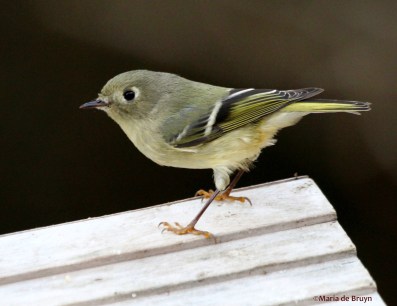
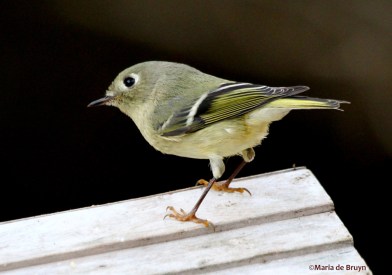
 Sometimes, I hear the chittering call before I see the tiny wonder and only very rarely get to enjoy its longer
  What is very cool for me is that my visitor can become very friendly indeed. Last year, on two occasions, I was carrying a replenished suet feeder outside when the kinglet flew in to perch on it as I held the feeder in my hands – giving me a great close-up view. I look forward to seeing if the kinglet will favor me with an up-close-and-personal meeting again this coming winter!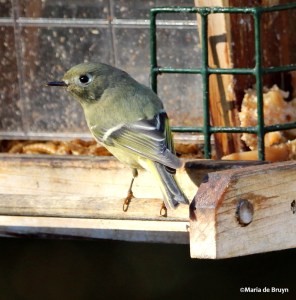
 We usually don’t know who gave a bird species its common name and sometimes may scratch our heads wondering how and why someone ended up choosing a particular name. But birders faithfully learn to identify birds with those names, even when they may seem illogical. For example, many people would have chosen to call red-bellied woodpeckers red-headed woodpeckers since the reddish belly feathers are much less obvious than the red on the back of their heads.


 My beautiful world