My nemesis birds!

european-starling-dk7a5386-maria-de-bruyn-resIn the birding world, a “nemesis bird” often refers to a species of bird that is eluding a birder intent on adding to their life list of bird species seen in person. For me, however, a nemesis bird is one that is emptying my feeders and depriving other birds of their bit of nutritional goodness because it descends in such great numbers that no one else has a chance. Which bird is this? It’s the European starling (Sturnus vulgaris), a bird which I admittedly find visually beautiful but rather unattractive as far as temperament goes.

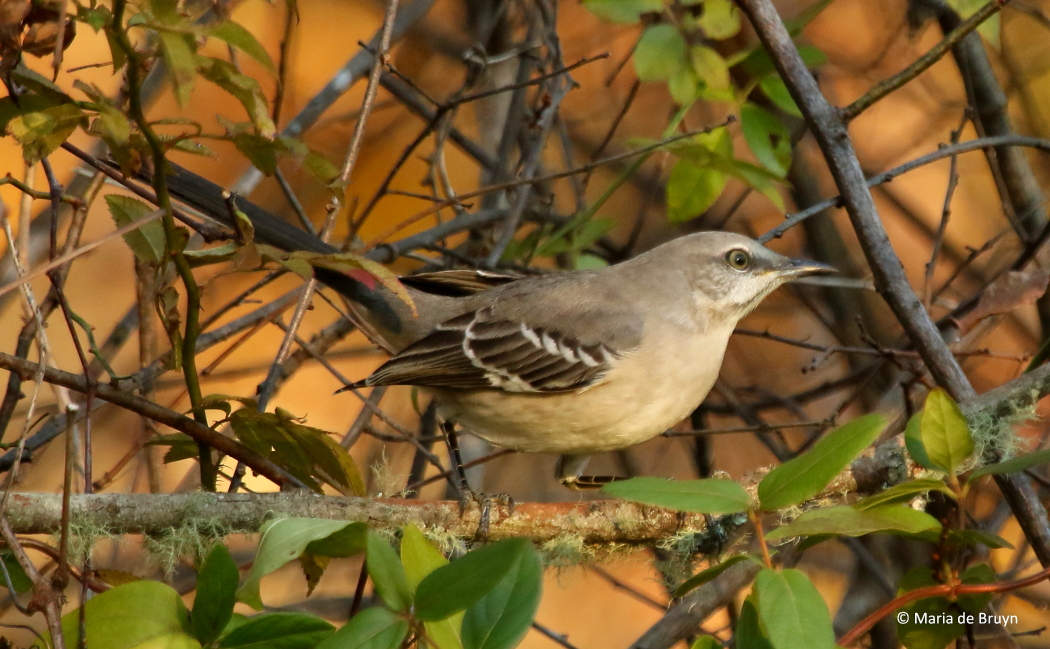
northern-mockingbird-i77a9648-maria-de-bruyn-resOther birders who spend time attracting birds to their yards often comment on how Northern mockingbirds (Mimus polyglottos) chase other birds away – those in my yard feed quite happily alongside other species, however, and even wait their turn for the suet feeders. Another large bird, the brown thrasher (Toxostoma rufum), does the same. In fact, most of the species that visit my yard are content to share feeder space and/or wait their turn.

brown-thrasher-img_9913-maria-de-bruyn-res     sharing-feeders-i77a9154-maria-de-bruyn-res

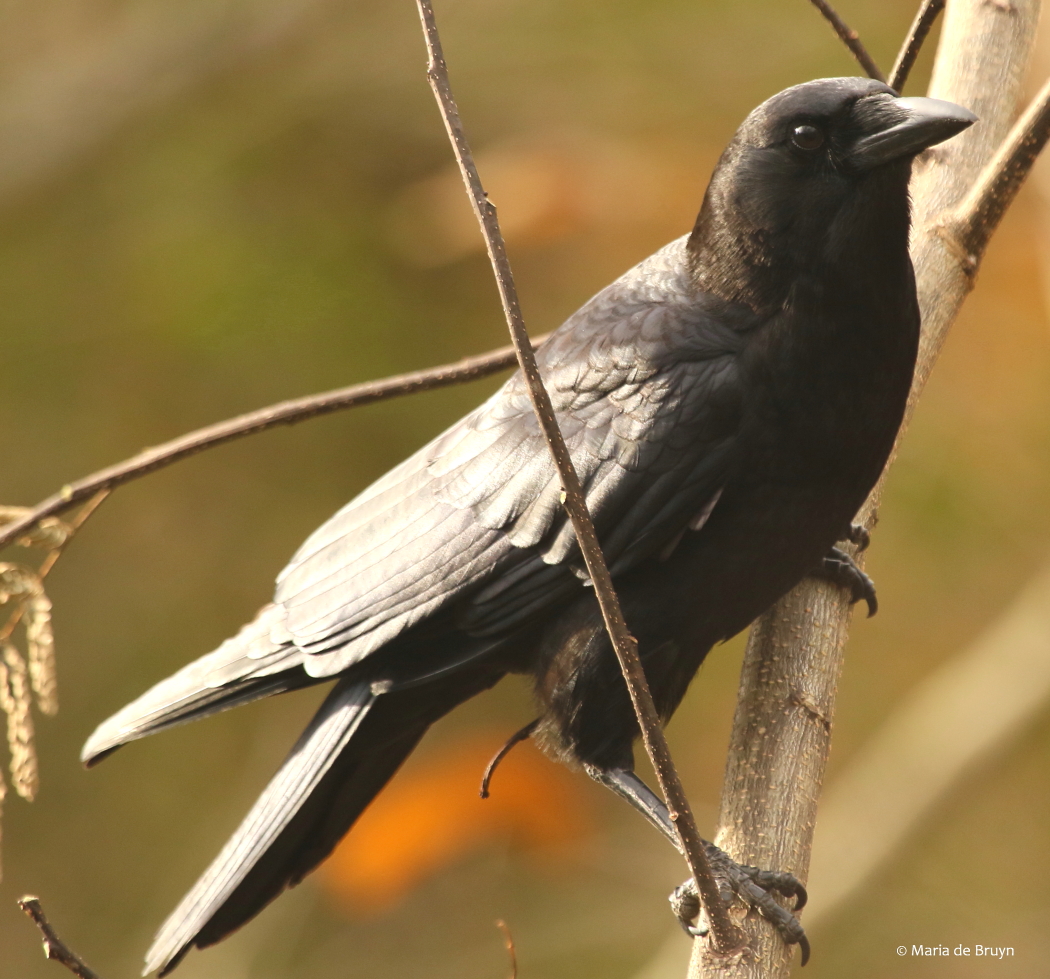
american-crow-dk7a2281-maria-de-bruyn-resOther species that are called “bully birds” include common grackles (Quiscalus quiscula, below), who can look quite beautiful with iridescent feathers, blackbird species and house sparrows. The grackles and red-winged blackbirds (Agelaius phoeniceus) in my yard have not been too dominant; they do sometimes come in numbers but let other birds near. I haven’t had crowds of grackles lately and when they’ve come, their main concern was to attempt to drive away the American crows (Corvus brachyrhynchos, above), so my main foe has been the starlings.

common-grackle-dk7a2236-maria-de-bruyn-res   common-grackle-i77a1447-maria-de-bruyn-res

They discovered my yard as a buffet about a year ago and introduced their young to the feasting area this past summer.

european-starling-dk7a3396-maria-de-bruyn-res  european-starling-dk7a3404-maria-de-bruyn-res


european-starling-dk7a5233-maria-de-bruyn-res


What is striking to me is the fact that they not only will “yell” at other species to go away but also compete vigorously with one another for a spot at the platform and other feeders, indicating a rather nasty disposition.

european-starling-dk7a5130-maria-de-bruyn-res   european-starling-dk7a0871-maria-de-bruyn-res

european-starling-i77a7396-maria-de-bruyn-res

The young starlings pick up on this behavior quickly.

If I come outside, they quickly fly off and roost high up in the tallest trees; sometimes, they will actually fly off to another place in the neighborhood. Clapping my hands and banging on the window will also get them to leave. However, they stick around to assess whether I will appear and if I don’t come out, they are back in short order.

european-starling-i77a1048maria-de-bruyn-res

pine-warbler-dk7a0358-maria-de-bruyn-res


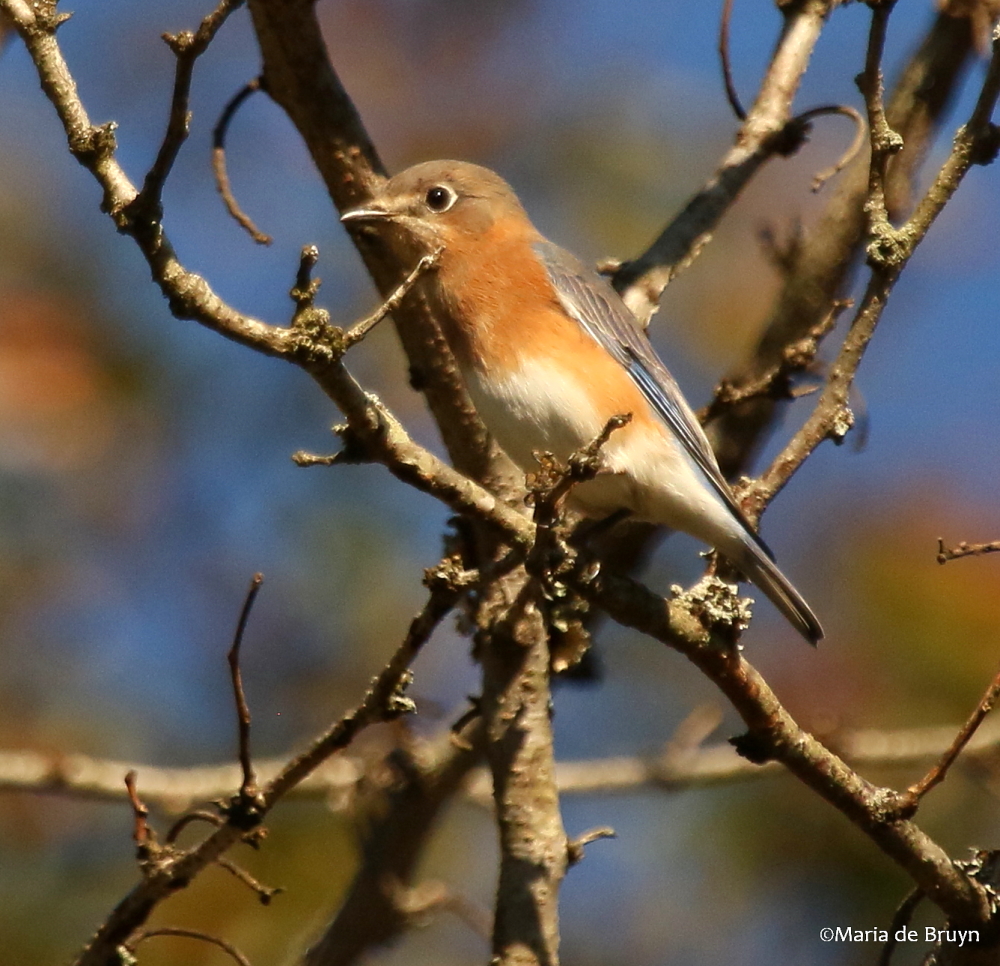
Their first love turned out to be the dried mealworms, which are a big hit with the Eastern bluebirds (Sialia sialis), tufted titmice (Baeolophus bicolor), Carolina chickadees (Poecile carolinensis), Carolina wrens (Thryothorus ludovicianus) and pine warblers (Setophaga pinus, left) among other species.

eastern-bluebird-i77a6862-maria-de-bruyn-res  eastern-bluebird-i77a9596-maria-de-bruyn-res

tufted-titmouse-img_4143-maria-de-bruyn-res   tufted-titmouse-i77a9678-maria-de-bruyn-res

carolina-chickadee-i77a9738-maria-de-bruyn-res   carolina-wren-i77a7312-maria-de-bruyn-res

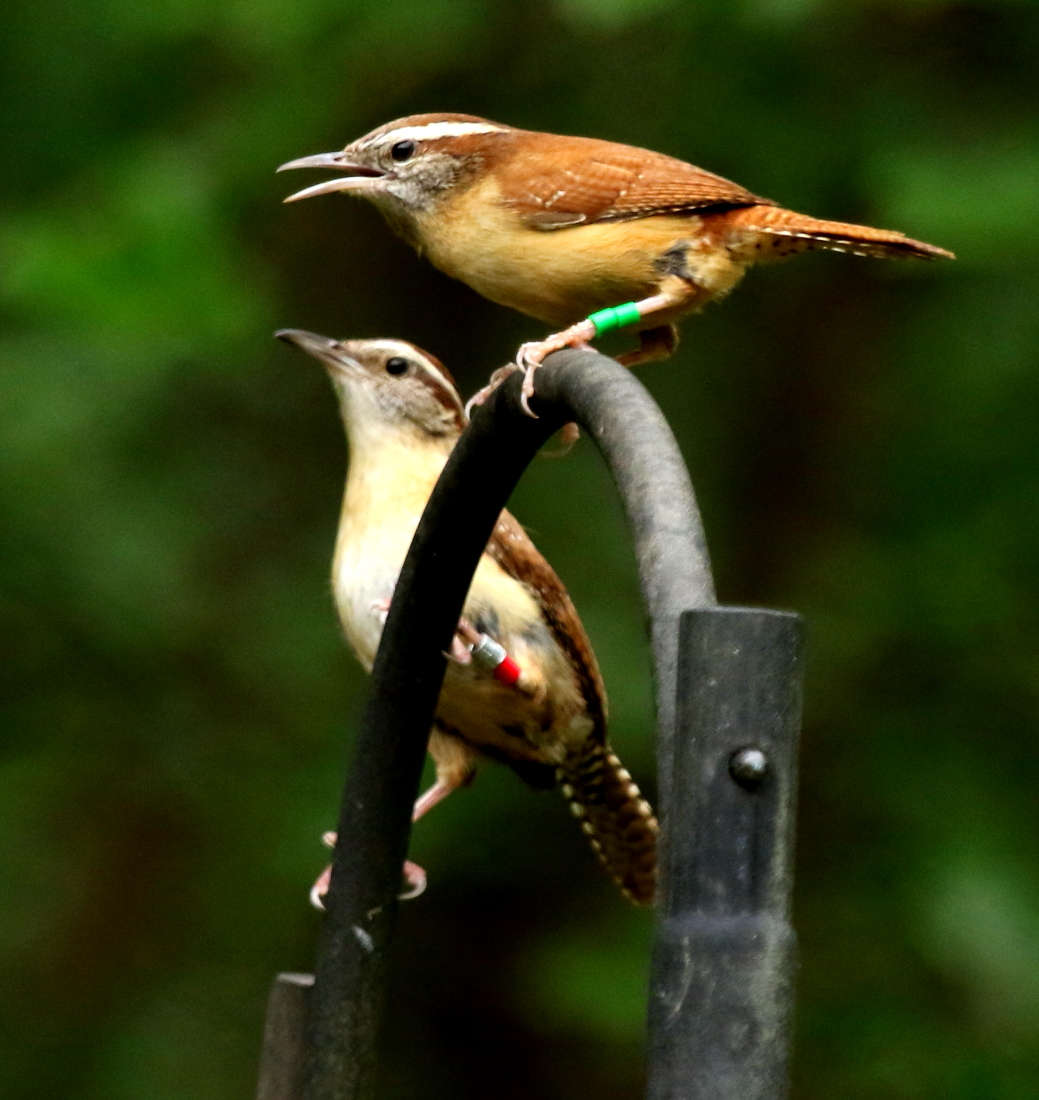
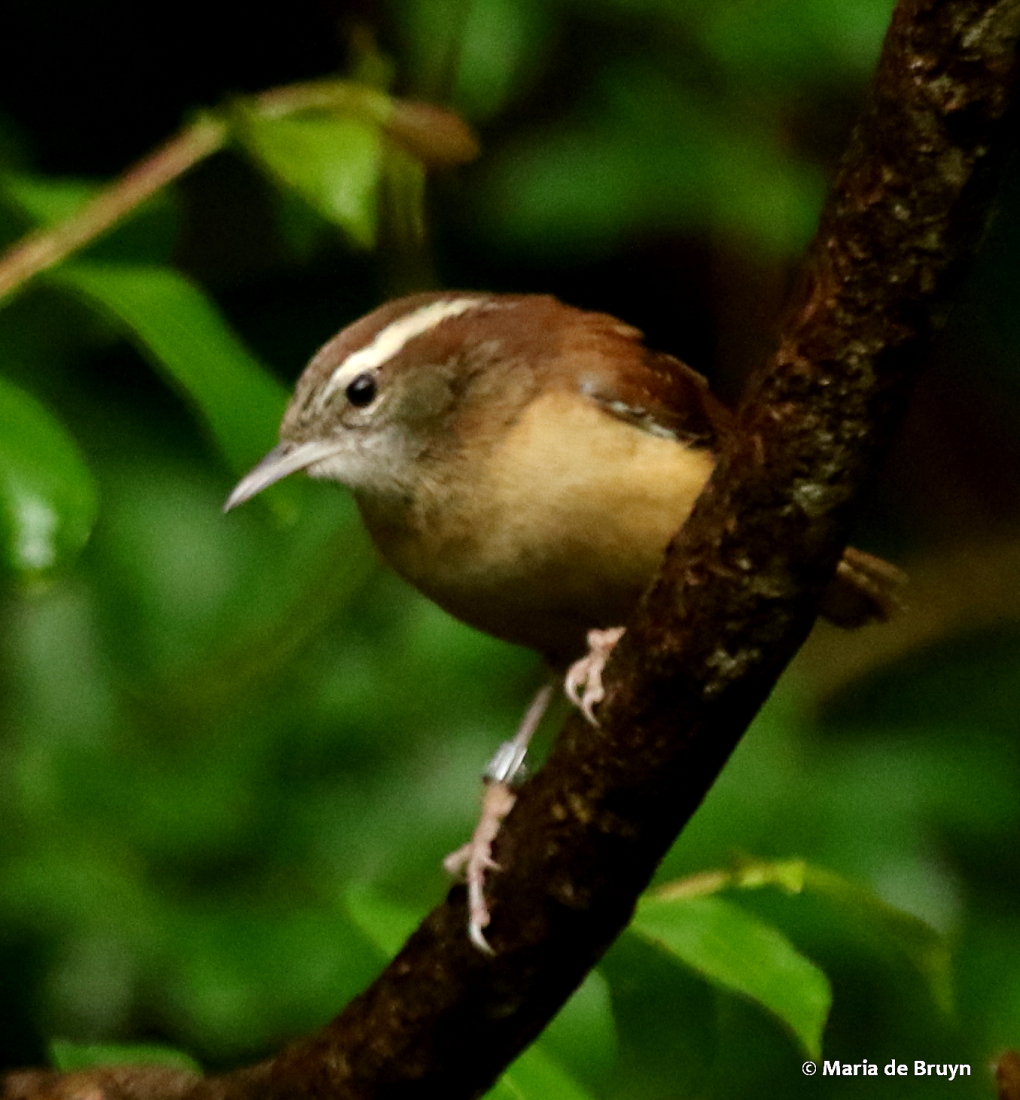
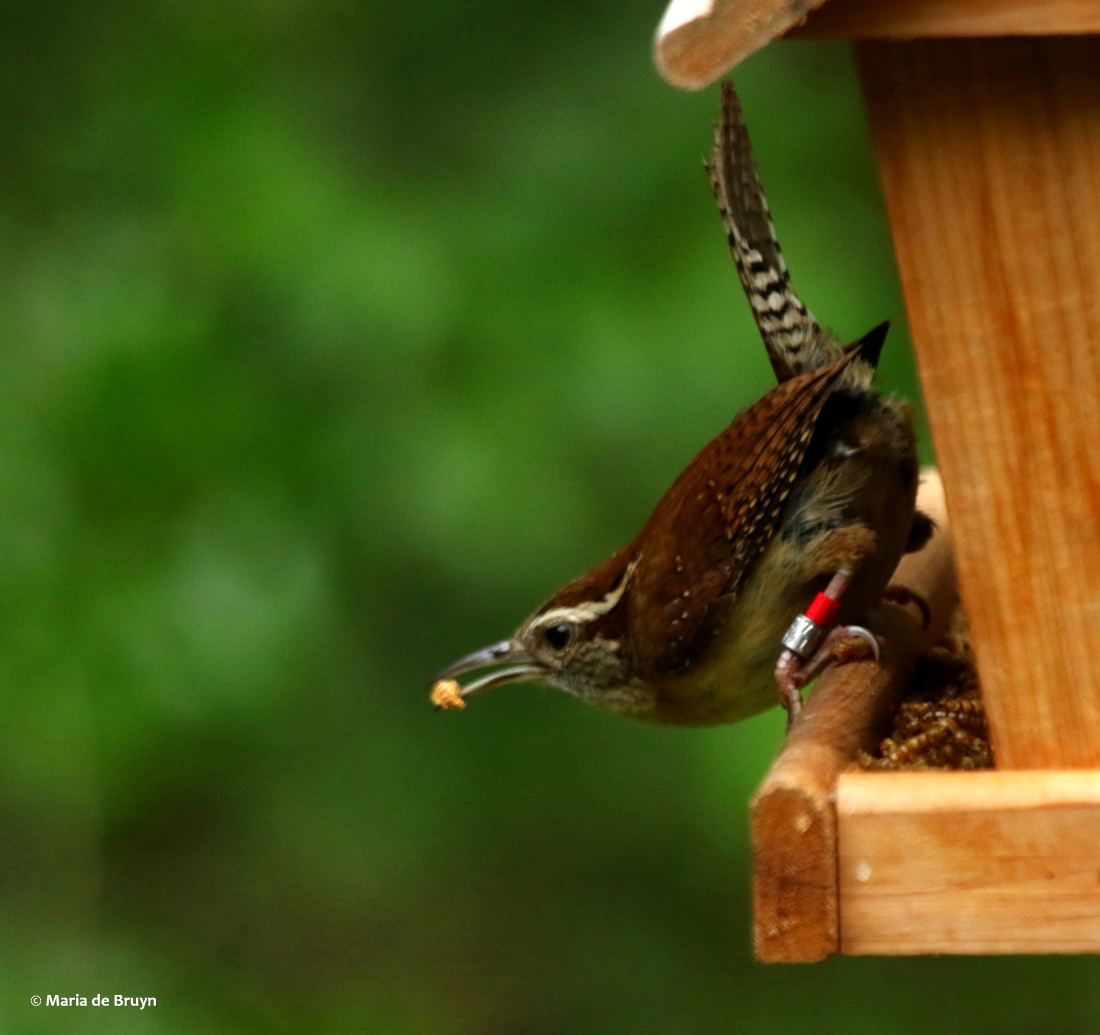
It’s always a pleasure to see the banded birds return, like the Carolina wren below.

carolina-wren-i77a9548-maria-de-bruyn-res   carolina-wren-i77a9547-maria-de-bruyn-res

When five or more starlings gather around a feeder, they literally gulp the mealworms down, making short shrift of a good-sized supply.

european-starling-dk7a0937-maria-de-bruyn-res   european-starling-dk7a2433-maria-de-bruyn-res

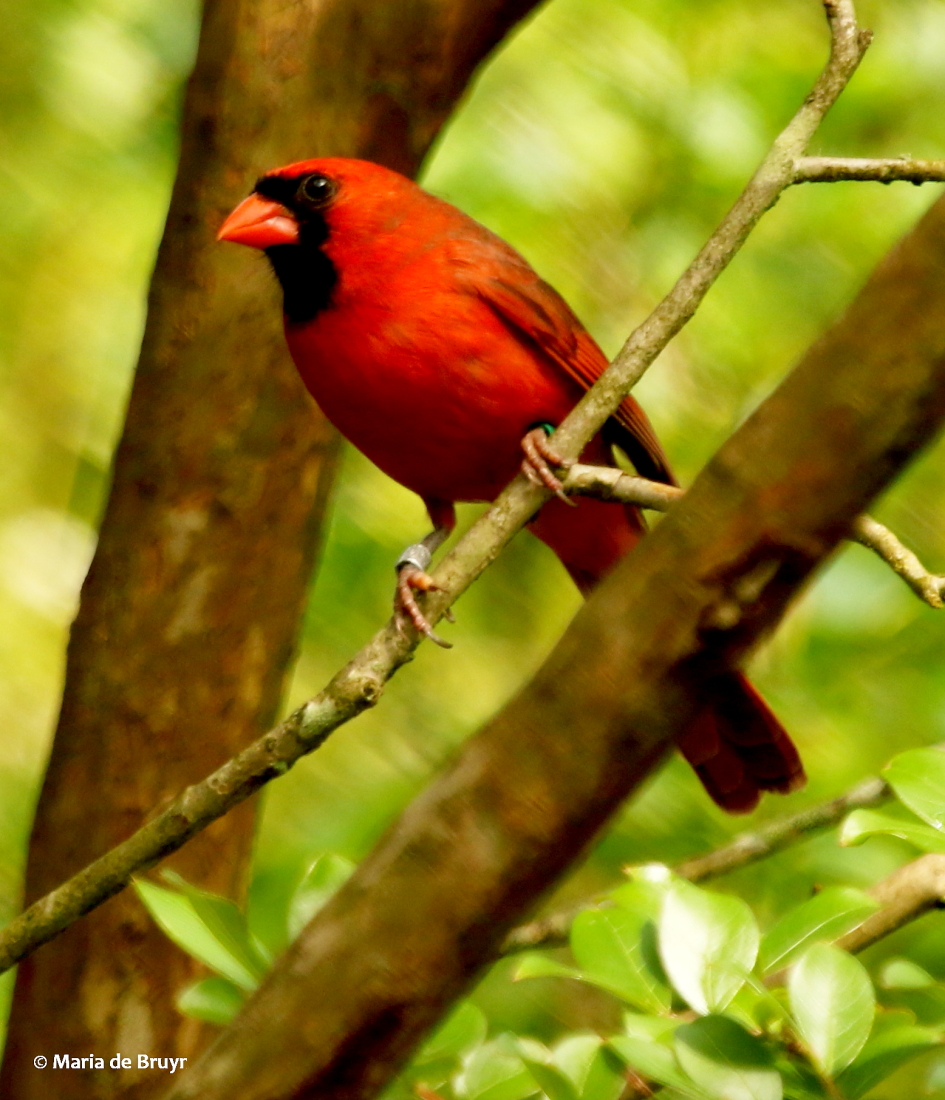
northern-cardinal-i77a2061-maria-de-bruyn-resI began putting out only mixed seed, sunflower seeds (Helianthus annuus) and my home-made vegetarian suet, the latter being a favorite for many species: the bluebirds, chickadees, wrens, titmice, yellow-rumped warblers (Setophaga coronata), brown-headed nuthatches (Sitta pusilla), Northern cardinals (Cardinalis cardinalis, left), and downy and red-bellied woodpeckers (Picoides pubescens and Melanerpes carolinus).

yellow-rumped-warbler-i77a9778-maria-de-bruyn-res

brown-headed-nuthatch-i77a6423-maria-de-bruyn-res

downy-woodpecker-dk7a1967-maria-de-bruyn-res   downy-woodpecker-dk7a1961-maria-de-bruyn-res

red-bellied-woodpecker-i77a4258maria-de-bruyn-res red-bellied-woodpecker-dk7a0440-maria-de-bruyn-res

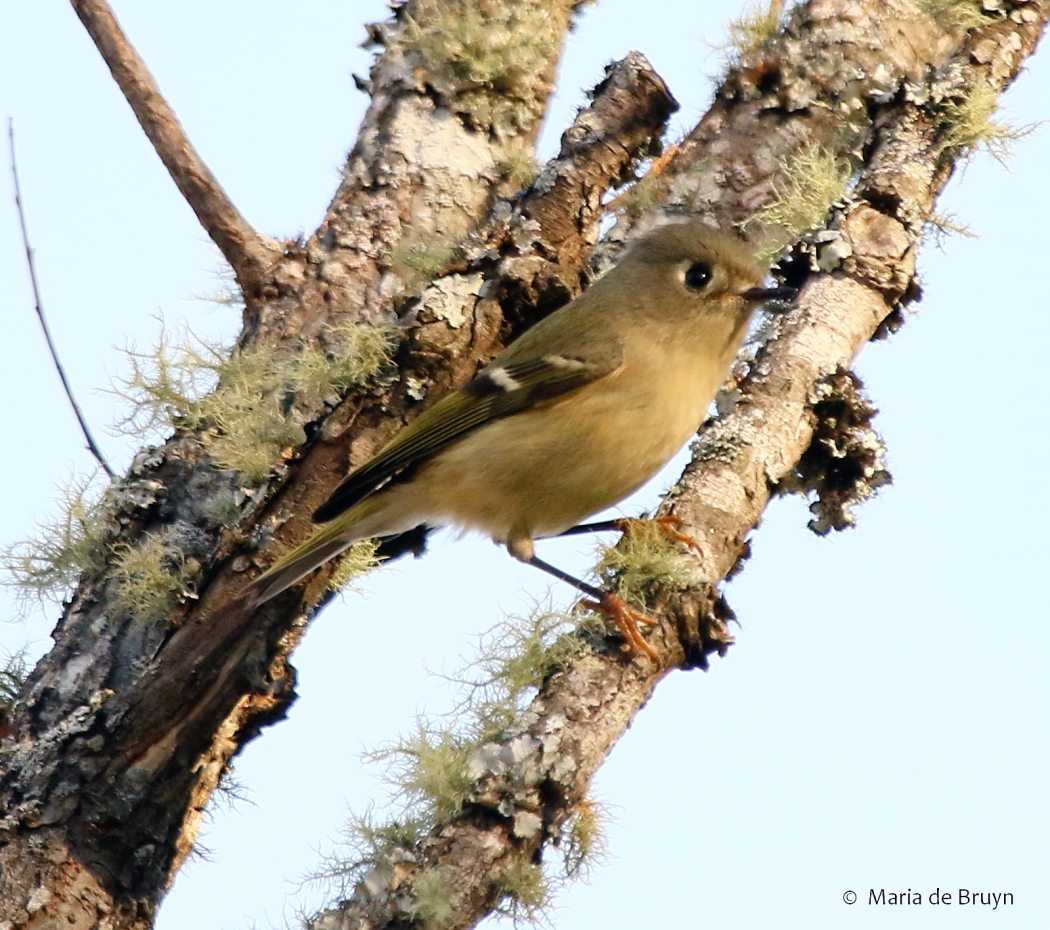
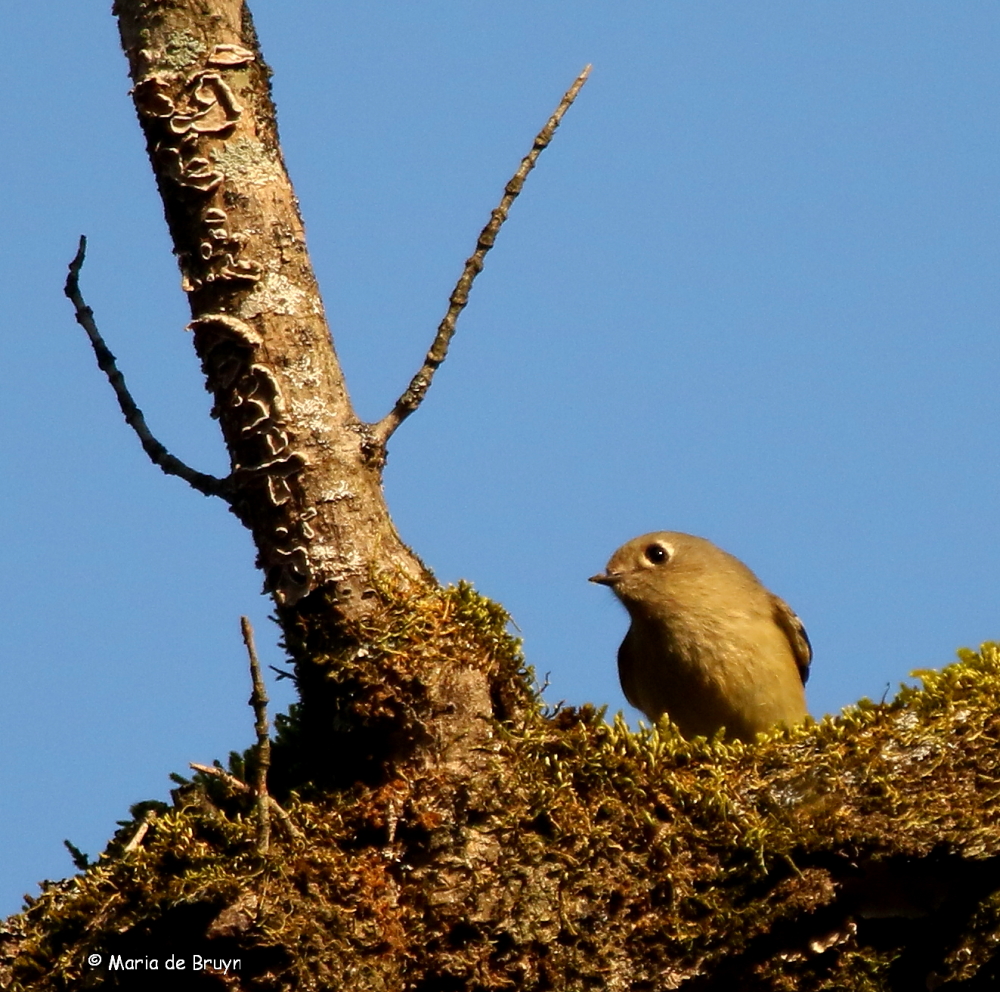
My resident ruby-crowned kinglet (Regulus calendula) hasn’t returned this winter (though I hope he is just late), so he doesn’t have to compete with the much, much larger starlings for his beloved meals.

ruby-crowned-kinglet-img_1776-maria-de-bruyn-res  ruby-crowned-kinglet-dk7a0538-maria-de-bruyn-res

european-starling-dk7a5647-maria-de-bruyn-resTo my dismay, when the starlings discovered no mealworms were available, they decided that suet could be a nice substitute. Oy vey! They manage to empty the suet holders in record time.

I waited to put out the suet until I saw no starlings in any of the tall trees surrounding the yard.

european-starling-img_0035-maria-de-bruyn-res

european-starling-i77a7189-maria-de-bruyn-resThe smaller birds came but this lasted only a little while. Soon the starlings showed up, leading me to think that either “scout” or “watch birds” were left behind to warn the flock when preferred food arrived, or they had a tremendous sense of smell that led them to my yard. It does turn out that starlings use their sense of smell to identify plants for their nests, so who’s to say they don’t use it to find food, too?


red-bellied-woodpecker-dk7a1833-maria-de-bruyn-resOne bird advice website recommends avoiding sunflower seeds as “bully birds” prefer them. Well, so far, the starlings have assiduously avoided any seeds. So a couple days ago, I filled all the feeders with seed except for the suet feeders – and I stood outside next to them so that the songbirds could have a go at the suet without their bigger avian neighbors chasing them away. It was gratifying to see the little ones enjoy a bit of suet while the starlings perched high above, unwilling to come down in my presence. Today, it was raining persistently but the songbirds were flying to and fro among the feeders so I put suet in three holders and some mealworms in one.

For an hour or so, they had the dried worms and peanut butter-based treat to themselves; then a starling appeared. I went outside but this particular bird didn’t seem to mind. When three of its compatriots arrived and saw me, they swooped away so the little birds still could grab some suet and mealworms.

european-starling-i77a9669-maria-de-bruyn-res

Now I’ll wait to see if the starlings begin eating the seed or finally move on or stay away for longer periods. I’m guessing as long as there is occasional suet, they will leave their scouts in place to warn them when a tasty meal is available. And I do want to put out some mealworms now and again so I don’t disappoint the chickadees and wrens who greet me with loud twittering when I approach empty feeders. Non-birders probably think that’s silly (to put it mildly) but I think bird lovers will understand….
Soothing my spirit, seeking solace for the soul

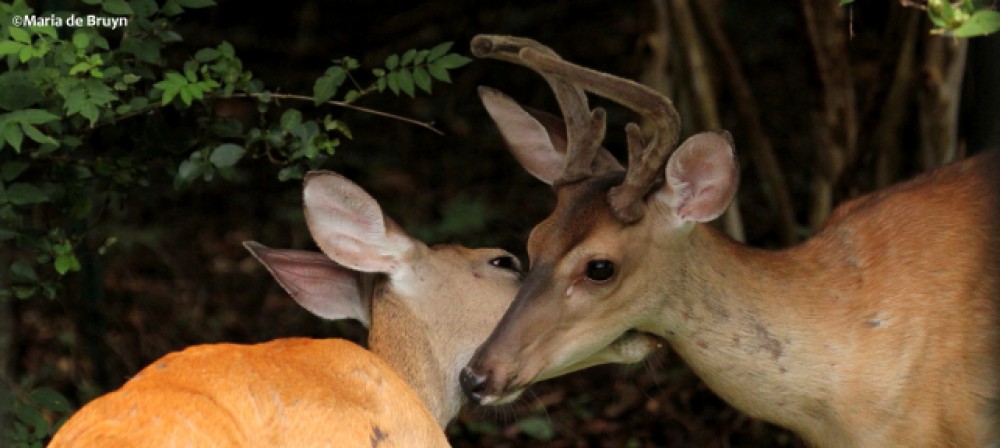
leaf-i77a2875-maria-de-bruyn-resAlthough more people in the USA voted for the Democratic ticket than the Republican one, the electoral college system will likely lead to the installation of a Republican presidency unless election re-counts affect those designated votes. This distresses me greatly given the persons who have been announced as top administration advisers and cabinet members. My work on social issues and on behalf of vulnerable people will continue and is increasing. But in the meantime, to keep from going into a 100% depressed mode, I have sought solace in nature walks and spiritual strengthening in the flora and fauna I see.
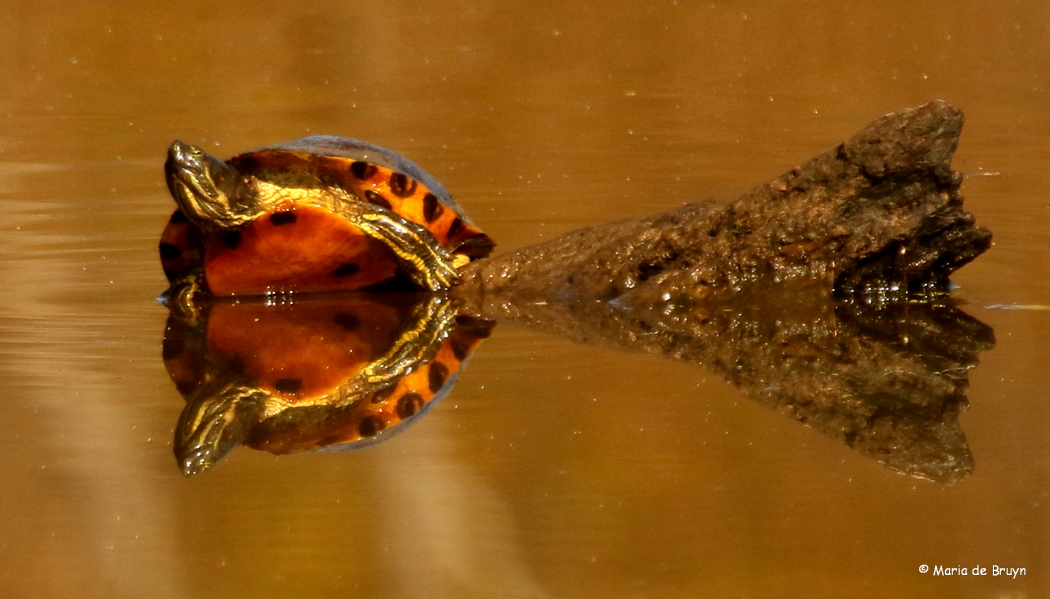
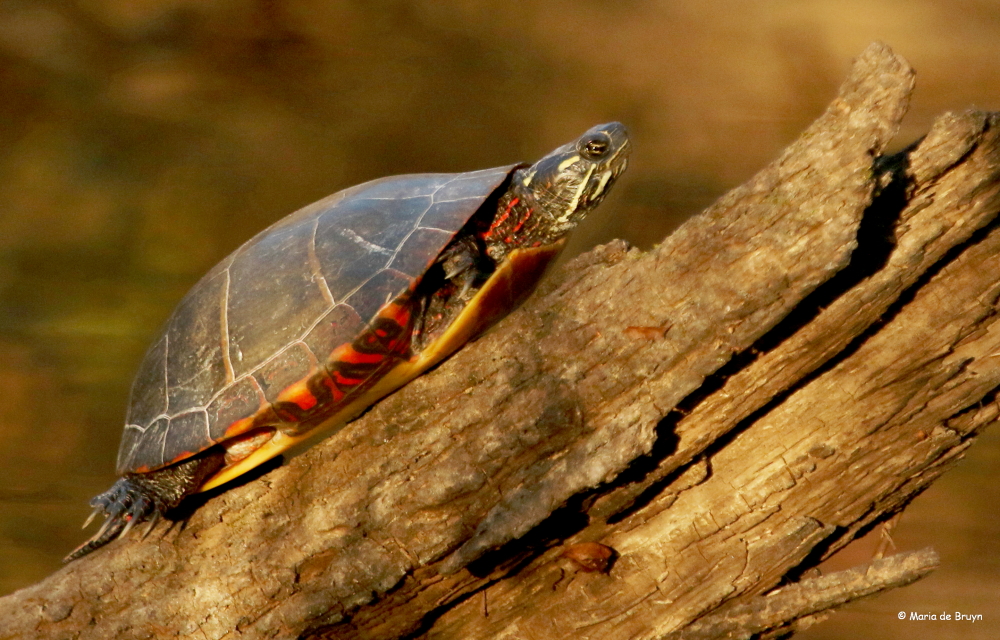
painted-turtle-i77a2277-maria-de-bruyn-resToday, I will share some of words of wisdom from a conscientious spiritual leader with you, along with some photos of nature’s beauties seen during my walks at the Cane Creek Reservoir, Sandy Creek Park and Mason Farm Biological Reserve just before and since the November election. It’s a bit of a long blog but offers some visual sustenance to ponder, like the painted turtle (Chrysemys picta, above) at Mason Farm and the yellow-bellied slider (Trachemys scripta scripta) at Sandy Creek sunning in the morning sun despite chilly temperatures. (From a distance, the slider looked a bit as if there was something with open jaws in the pond!)

yellow-bellied-slider-i77a2954-maria-de-bruyn-res

flower-77a1303maria-de-bruyn-res


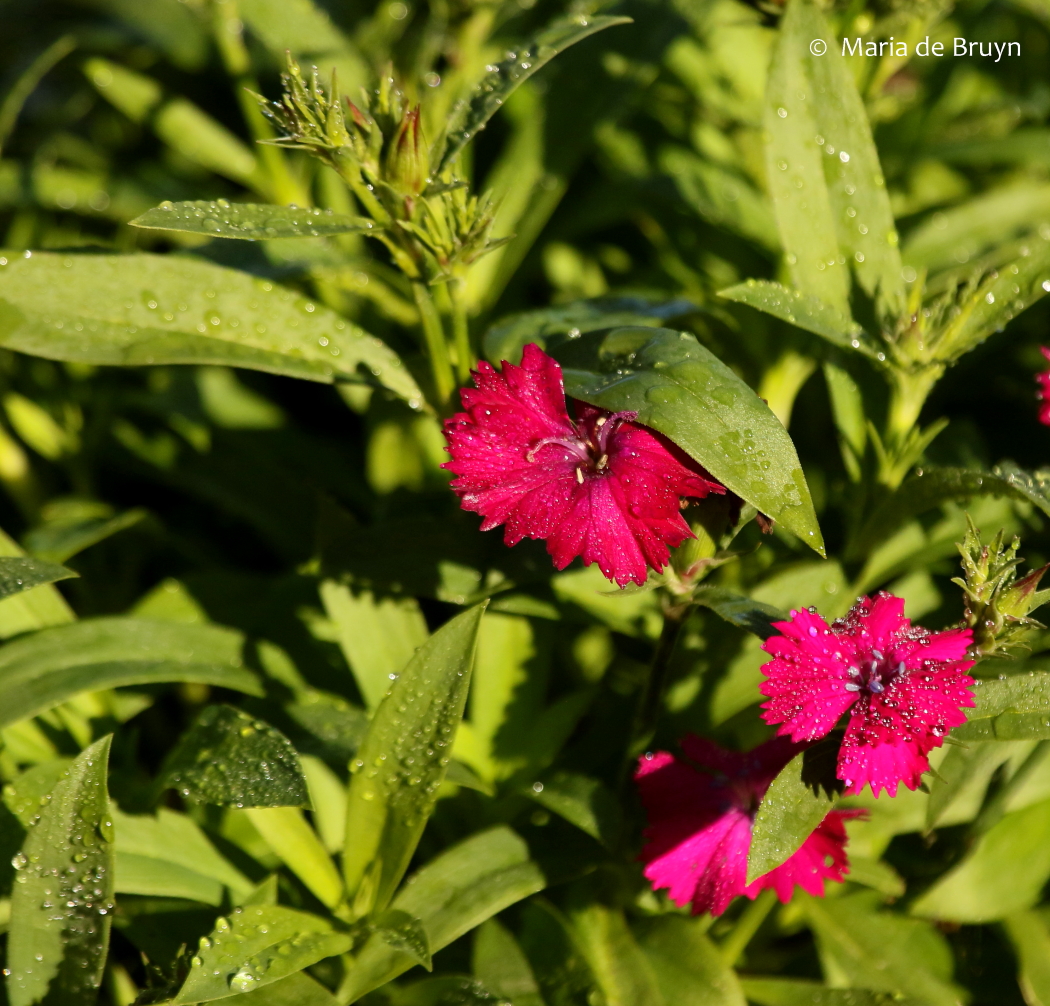
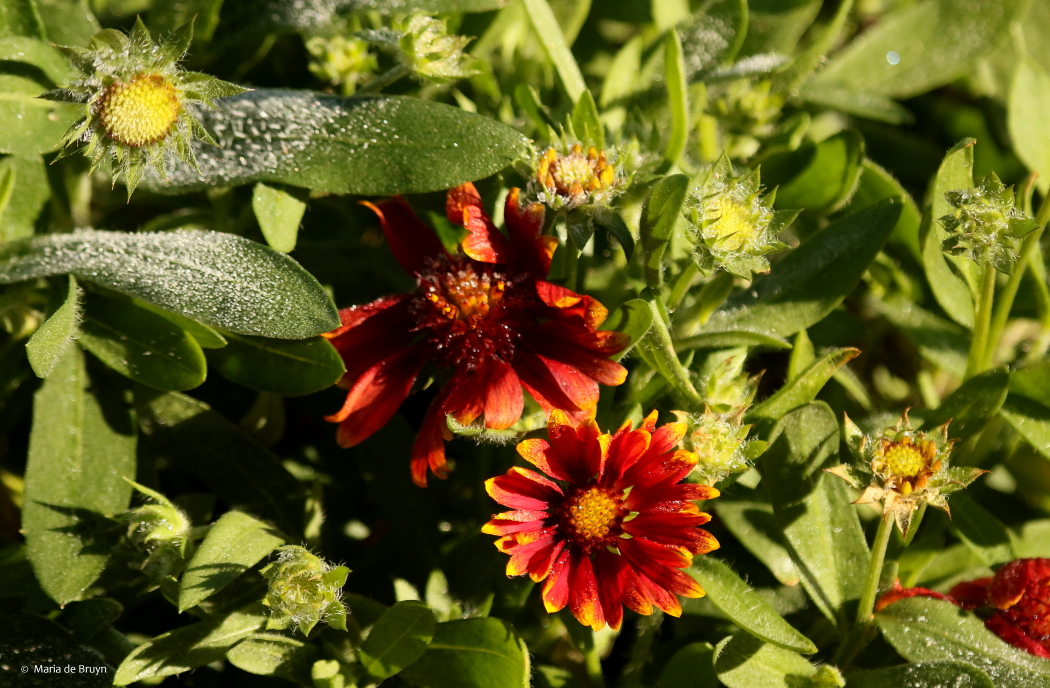
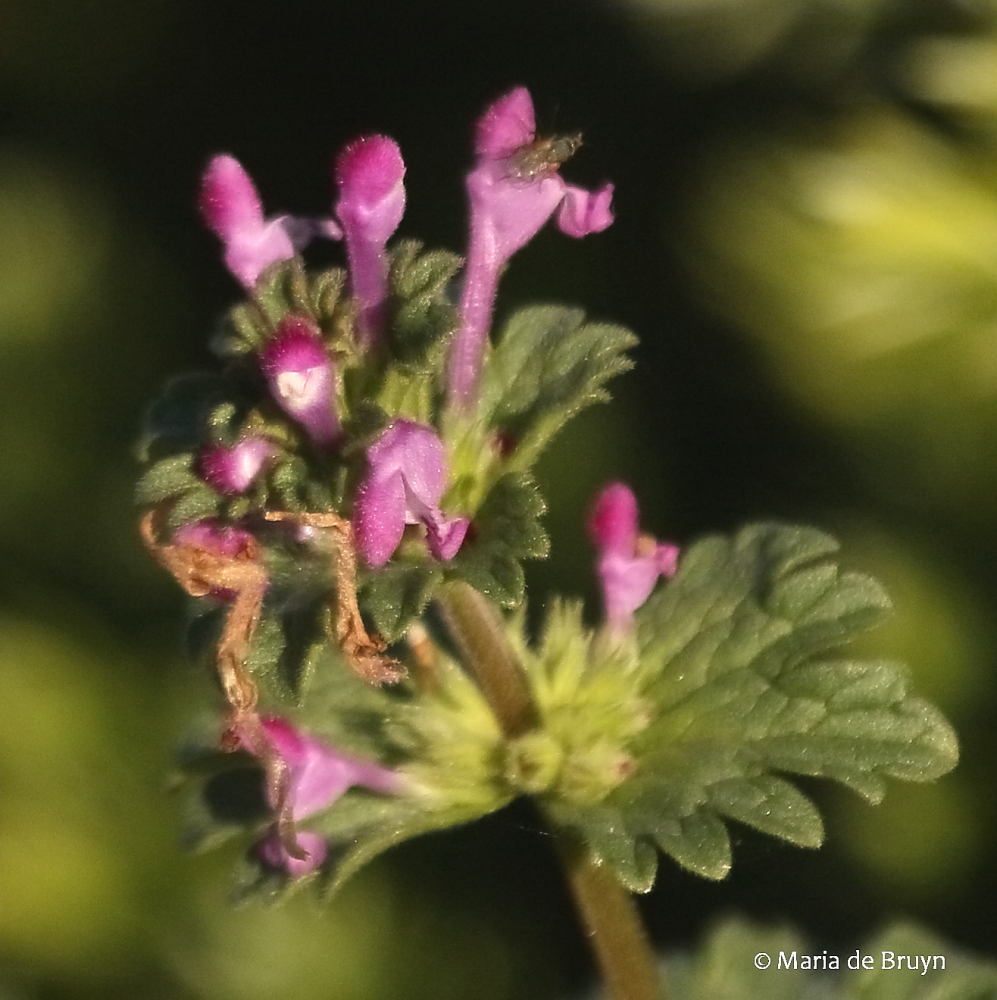
Early in the morning, you can find frost- and dew-covered plants and a few remaining flowers glistening in the sun.


blanket-flower-i77a1309maria-de-bruyn-res  henbit-i77a0825maria-de-bruyn-res

Blanket flower (Gaillardia)                           Henbit (Lamium amplexicaule)

leaf-bird-i77a2906-maria-de-bruyn-res


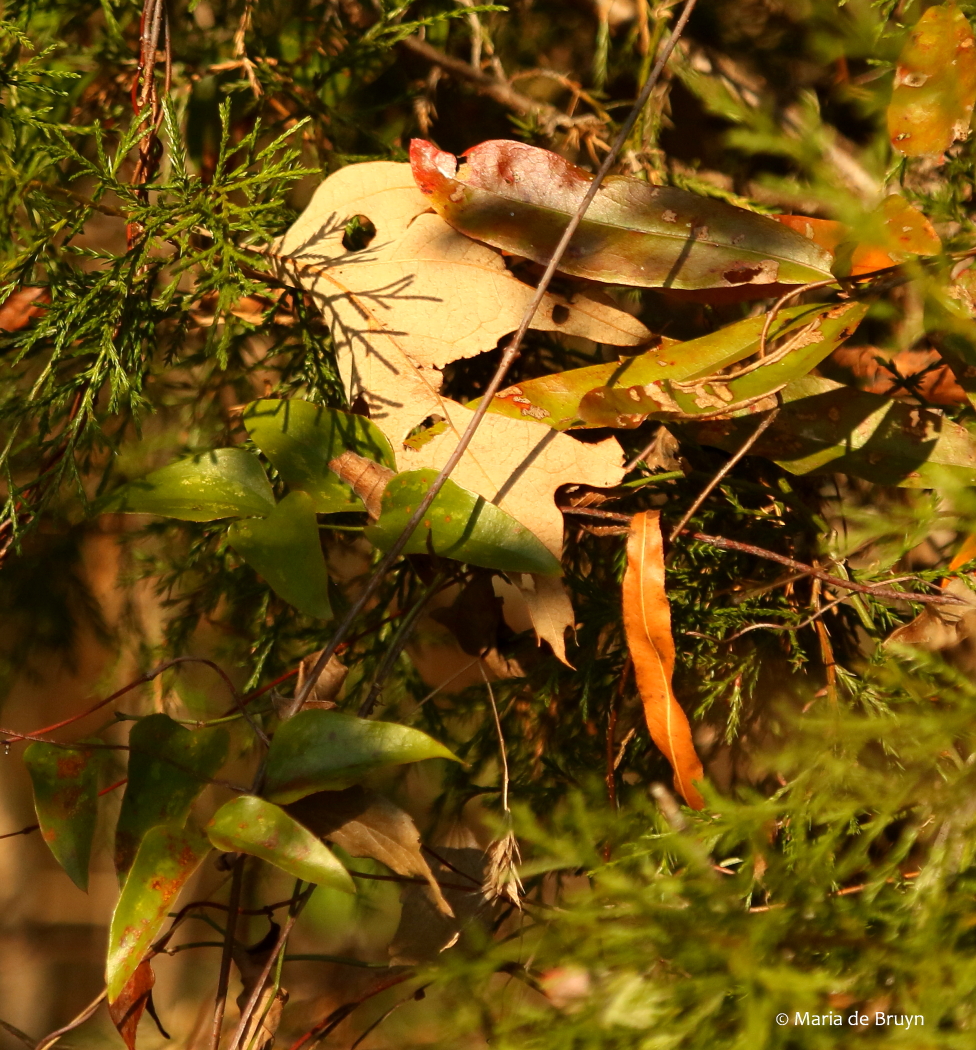
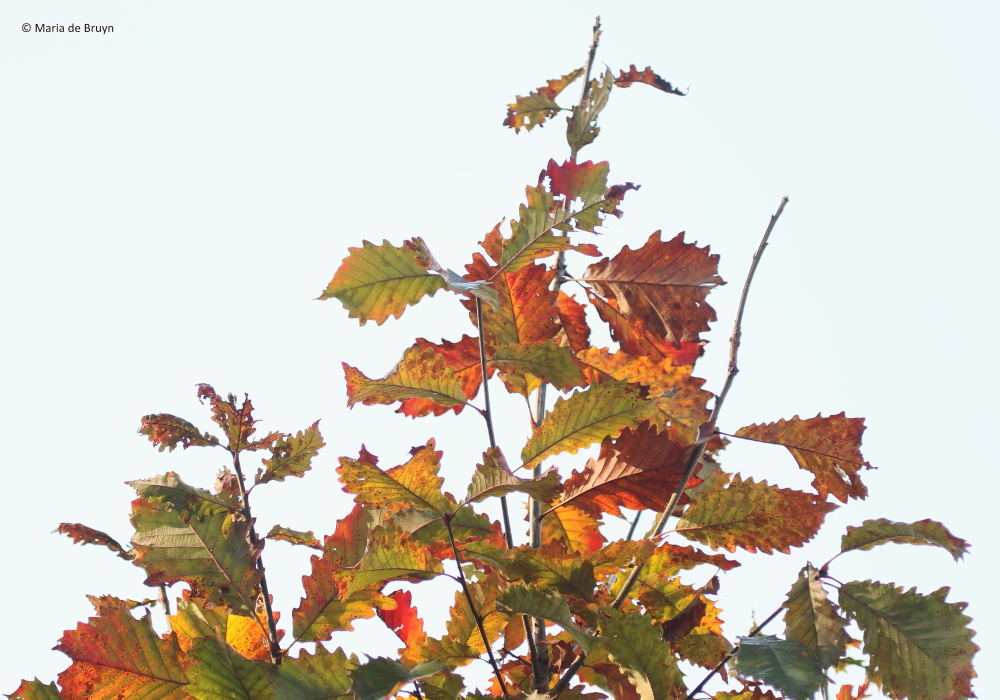
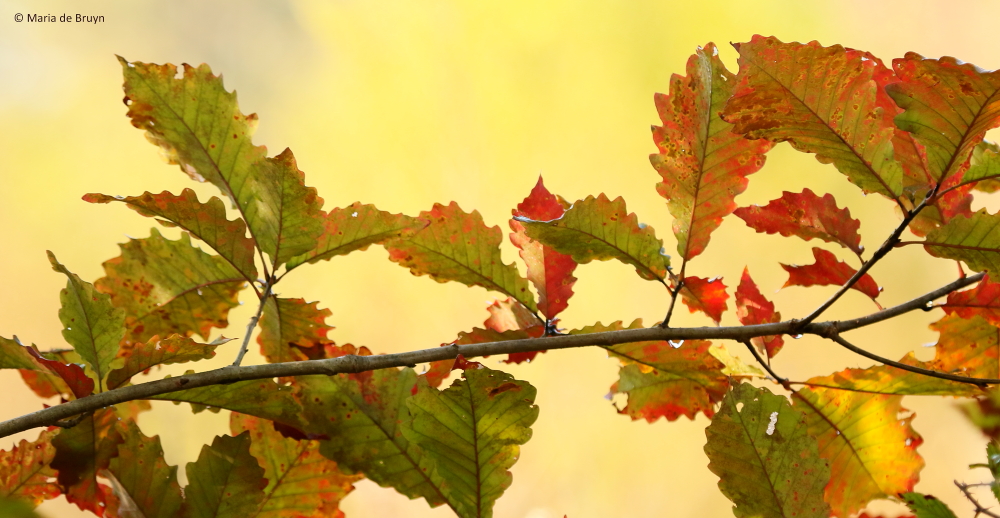
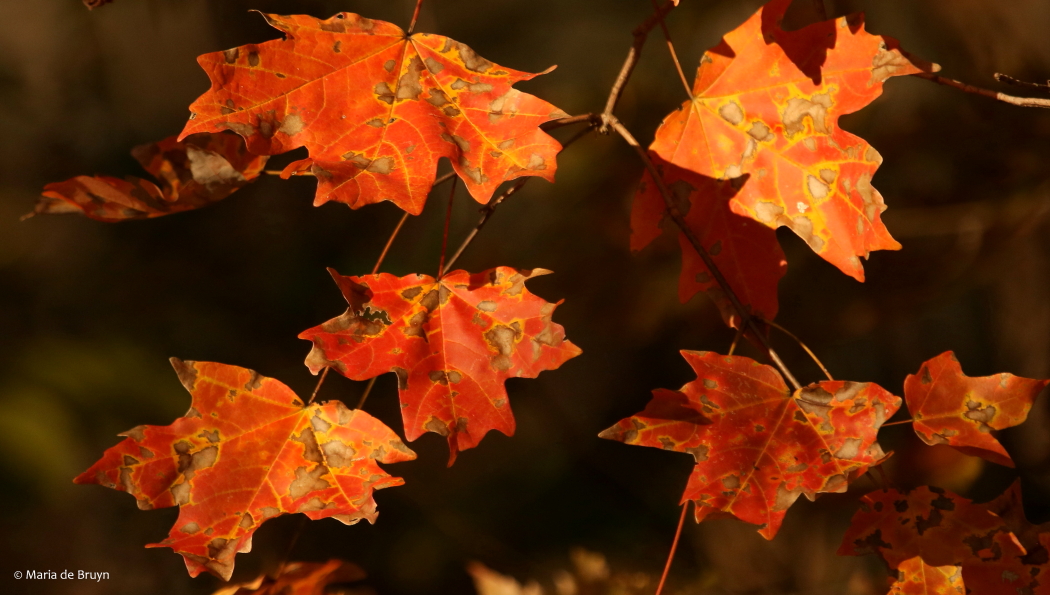
Later in the morning, the autumn-colored leaves make nice patterns as you search for birds high and low. And occasionally you get to see the fabled “leaf bird”.


leaves-i77a2893-maria-de-bruyn-res   leaves-i77a2882-maria-de-bruyn-res

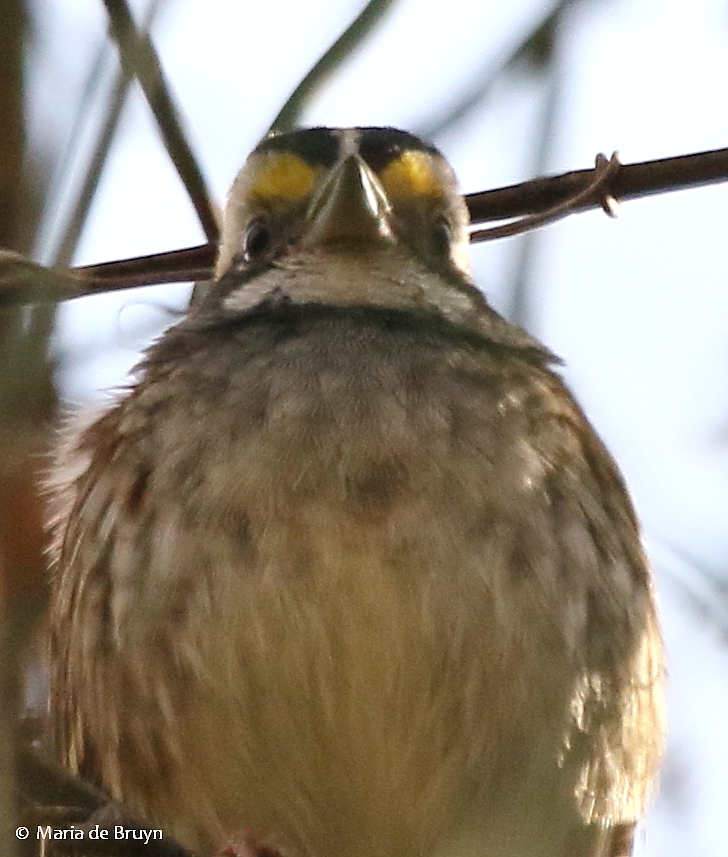
When looking high, you may find the birds looking down on you; face-level stares as you gaze straight ahead may also occur!

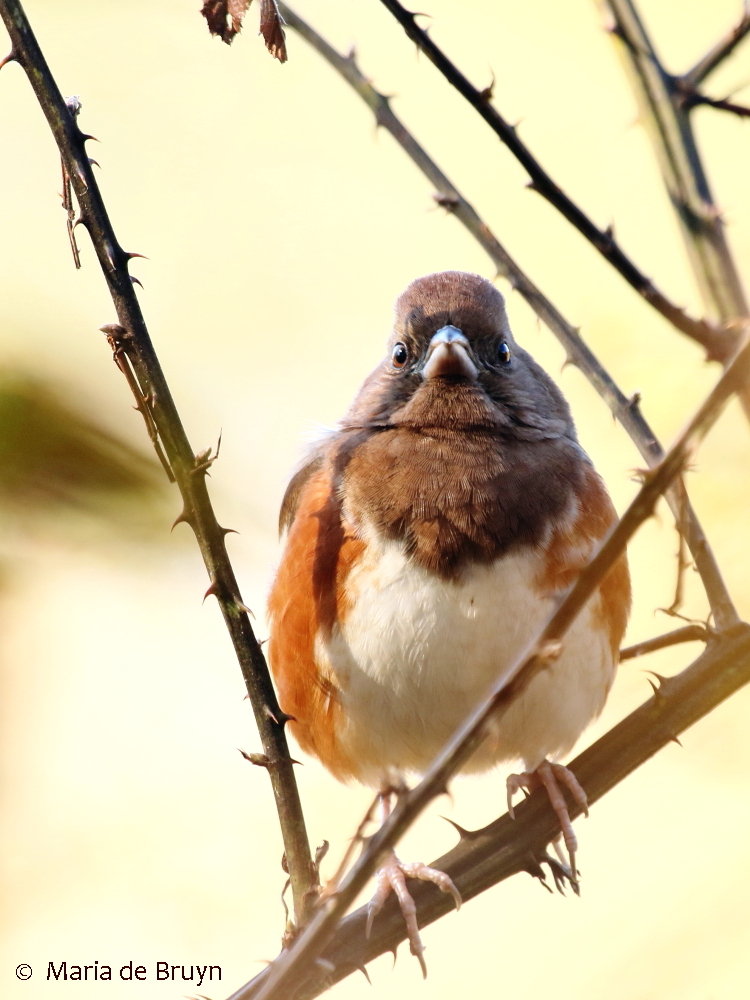
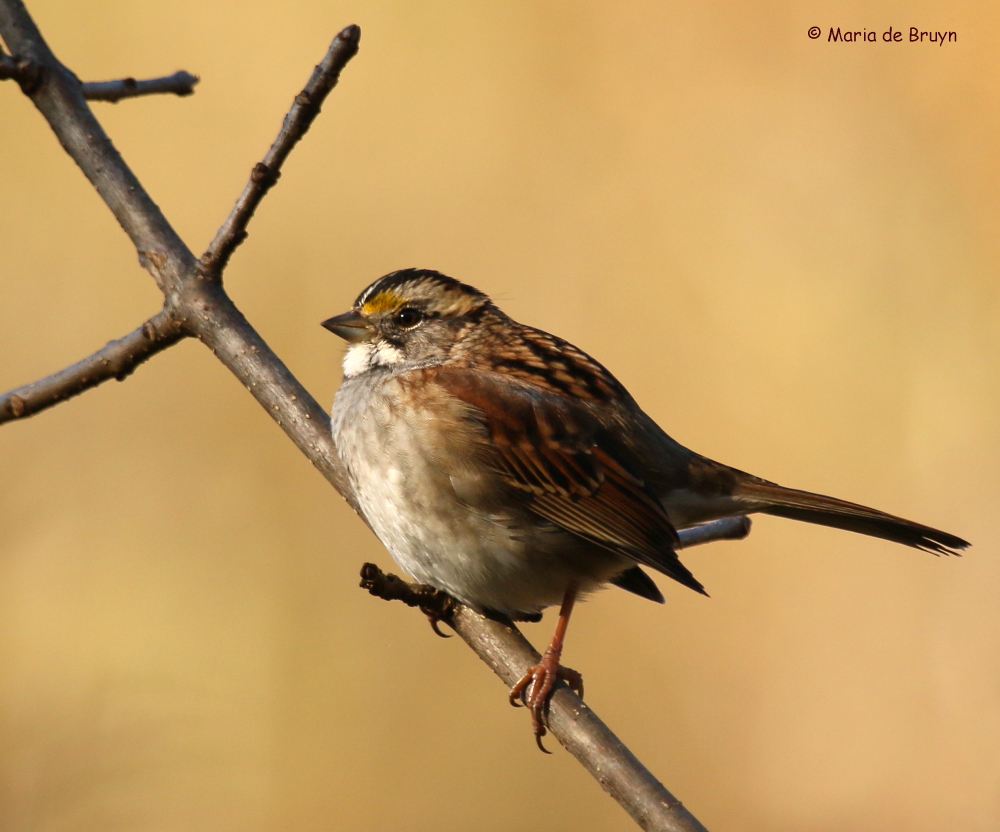
white-throated-sparrow-i77a6365-maria-de-bruyn-res                     eastern-towhee-i77a1659maria-de-bruyn-res

White-throated sparrow (Zonotrichia albicollis)  Eastern towhee (Pipilo erythrophthalmus)

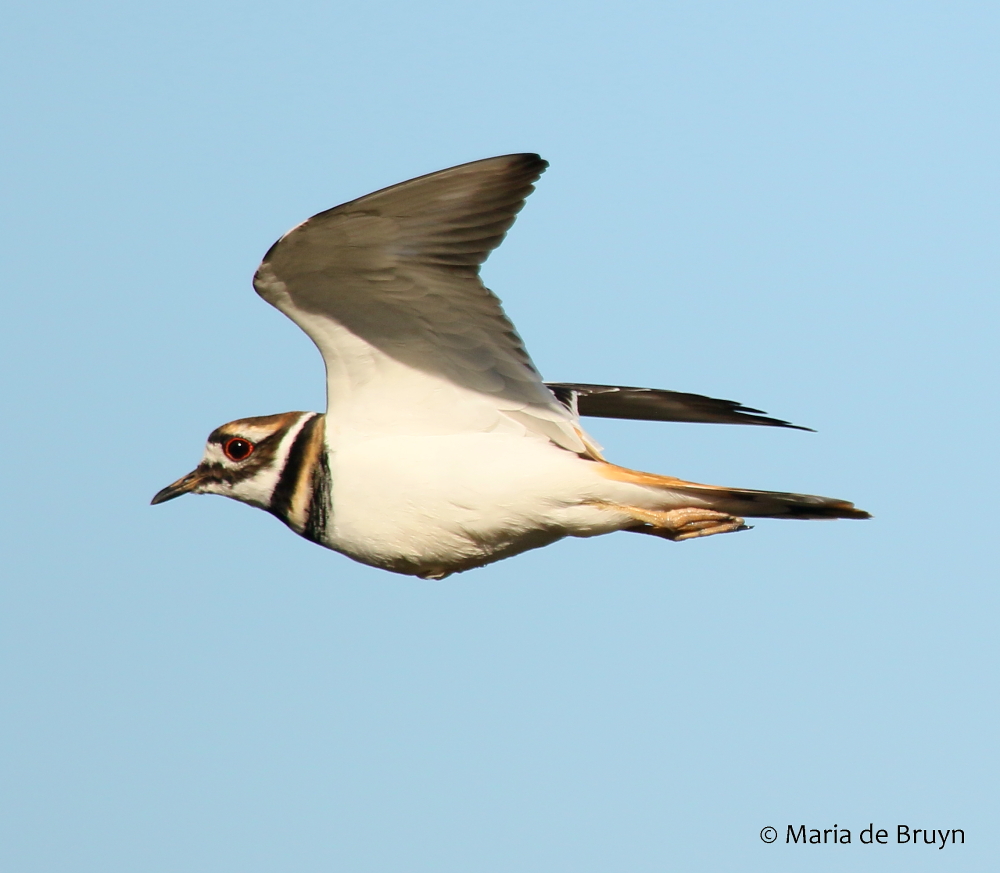
killdeer-i77a0916maria-de-bruyn-res


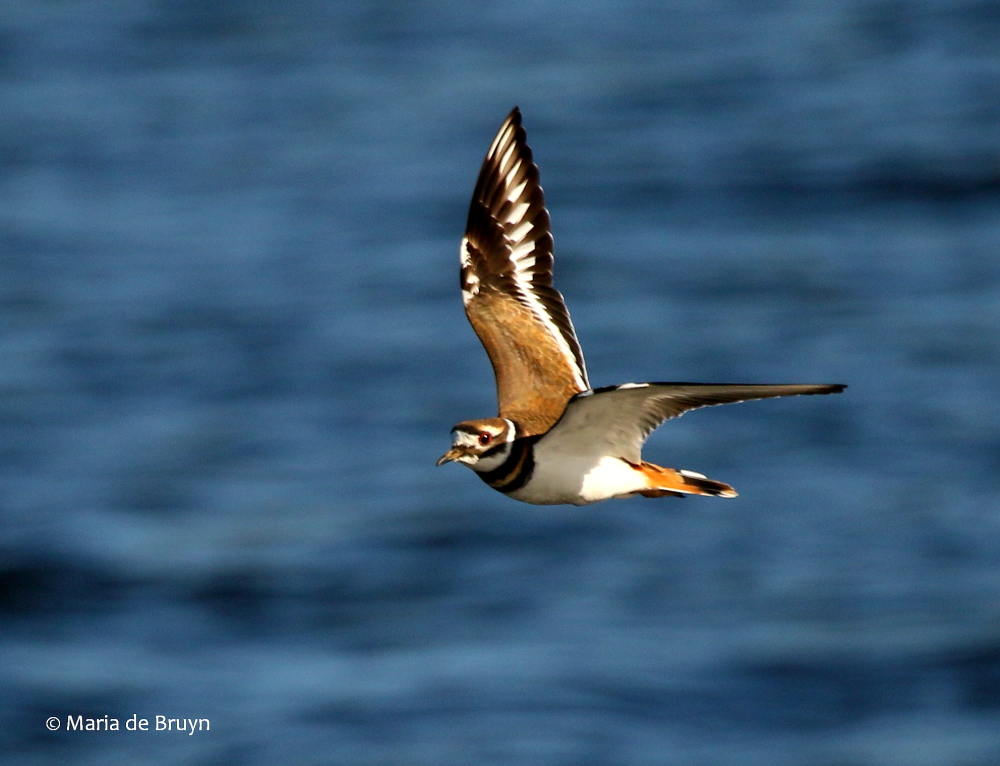
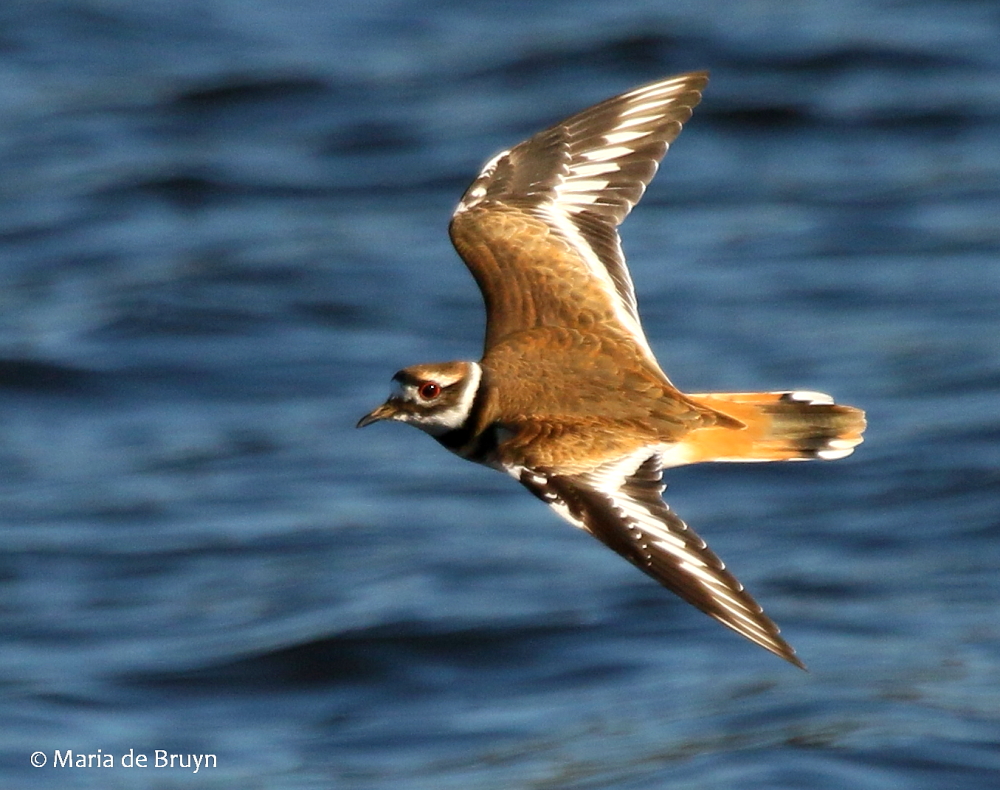
At Cane Creek, the killdeer (Charadrius vociferous) make their presence known by their distinctive calls and you can enjoy their gorgeous appearance as they fly over the lake.


killdeer-i77a0913maria-de-bruyn-res  killdeer-i77a0911maria-de-bruyn-res

Taking care of our planet is like taking care of our houses. Since we human beings come from Nature, there is no point in our going against Nature, which is why I say the environment is not a matter of religion or ethics or morality. These are luxuries, since we can survive without them. But we will not survive if we continue to go against Nature.  – Dalai Lama

red-bellied-woodpecker-i77a2988maria-de-bruyn-res


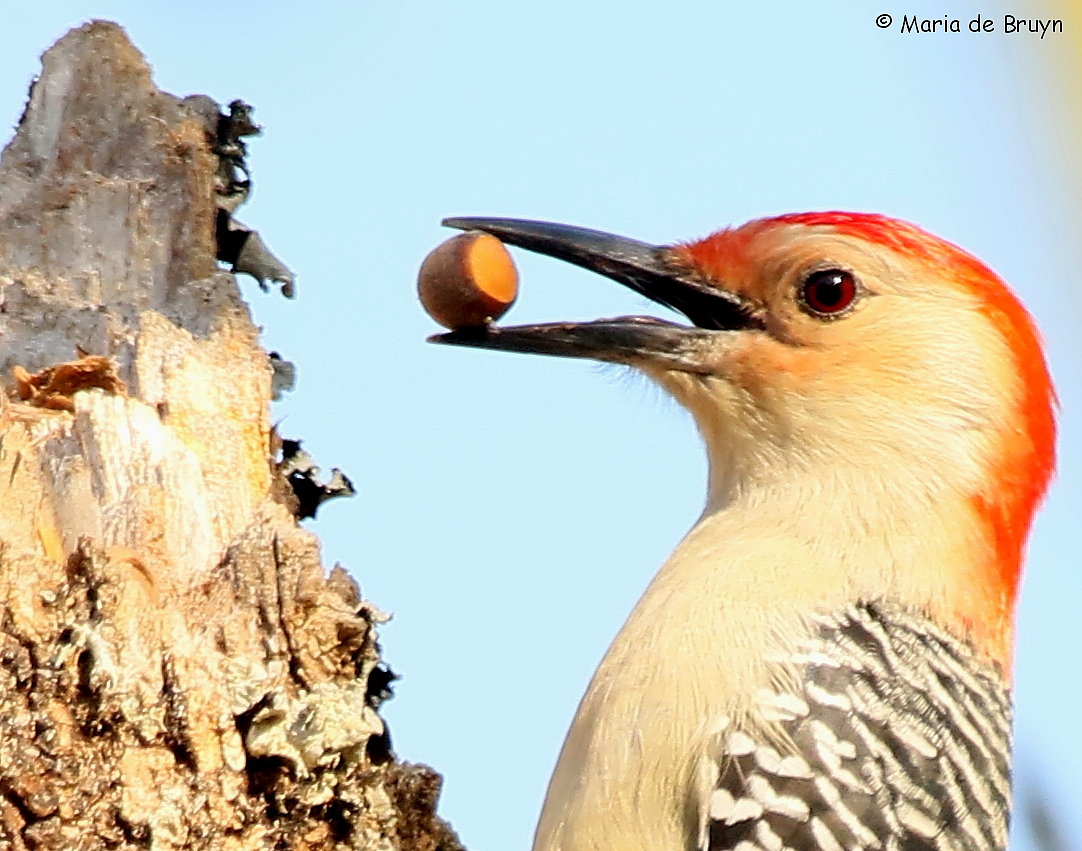
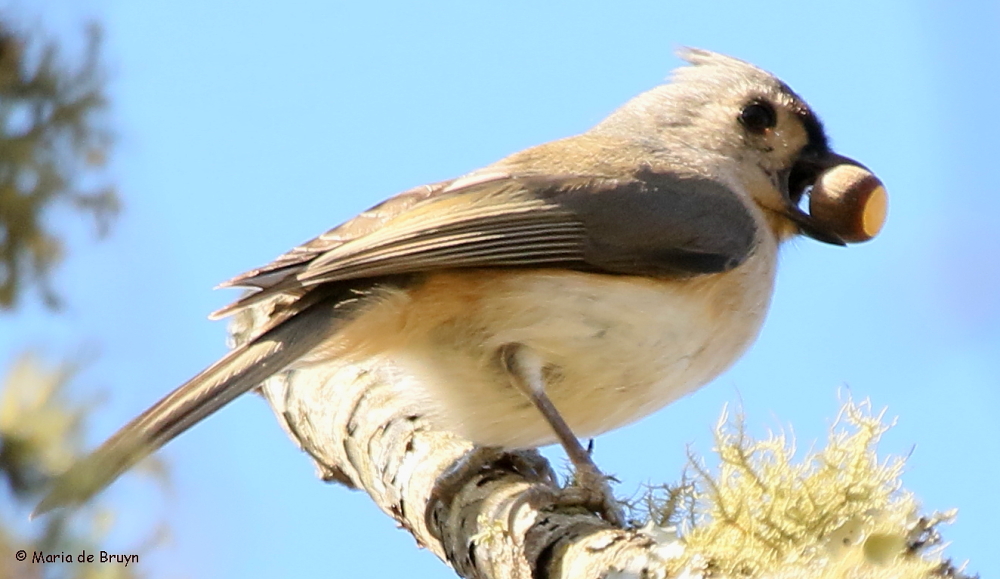
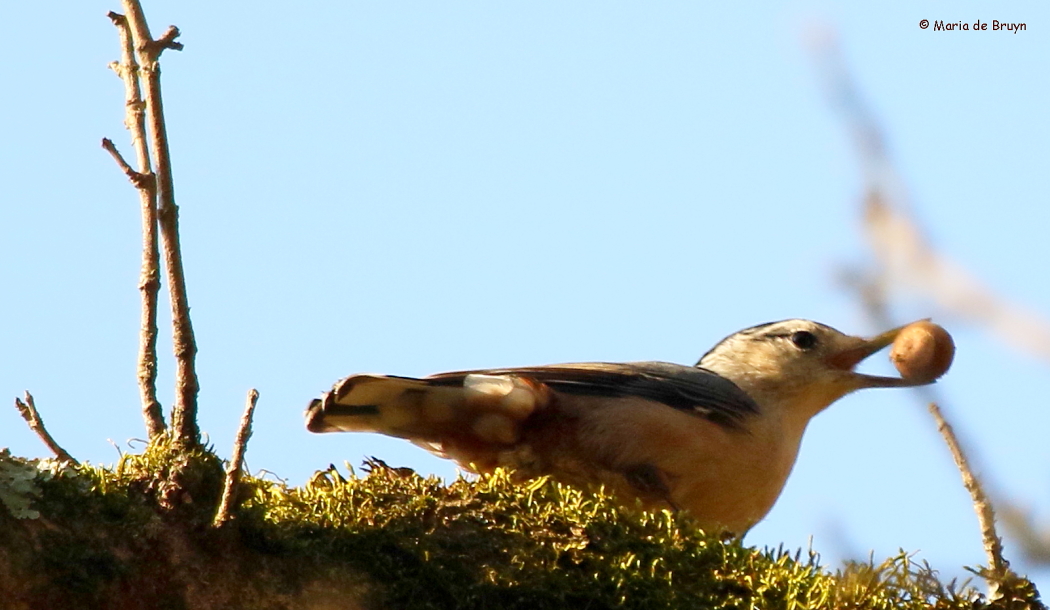
Many birds, like this red-bellied woodpecker (Melanerpes carolinus), are busy finding seeds and nuts for their meals.


tufted-titmouse-i77a1965maria-de-bruyn-res  white-breasted-nuthatch-i77a2671maria-de-bruyn-res

Tufted titmouse (Baeolophus bicolor)          White-breasted nuthatch (Sitta carolinensis)

song-sparrow-i77a1499maria-de-bruyn-res   carolina-chickadee-i77a8444-maria-de-bruyn-res

Song sparrow (Melospiza melodia)                 Carolina chickadee (Poecile carolinensis)

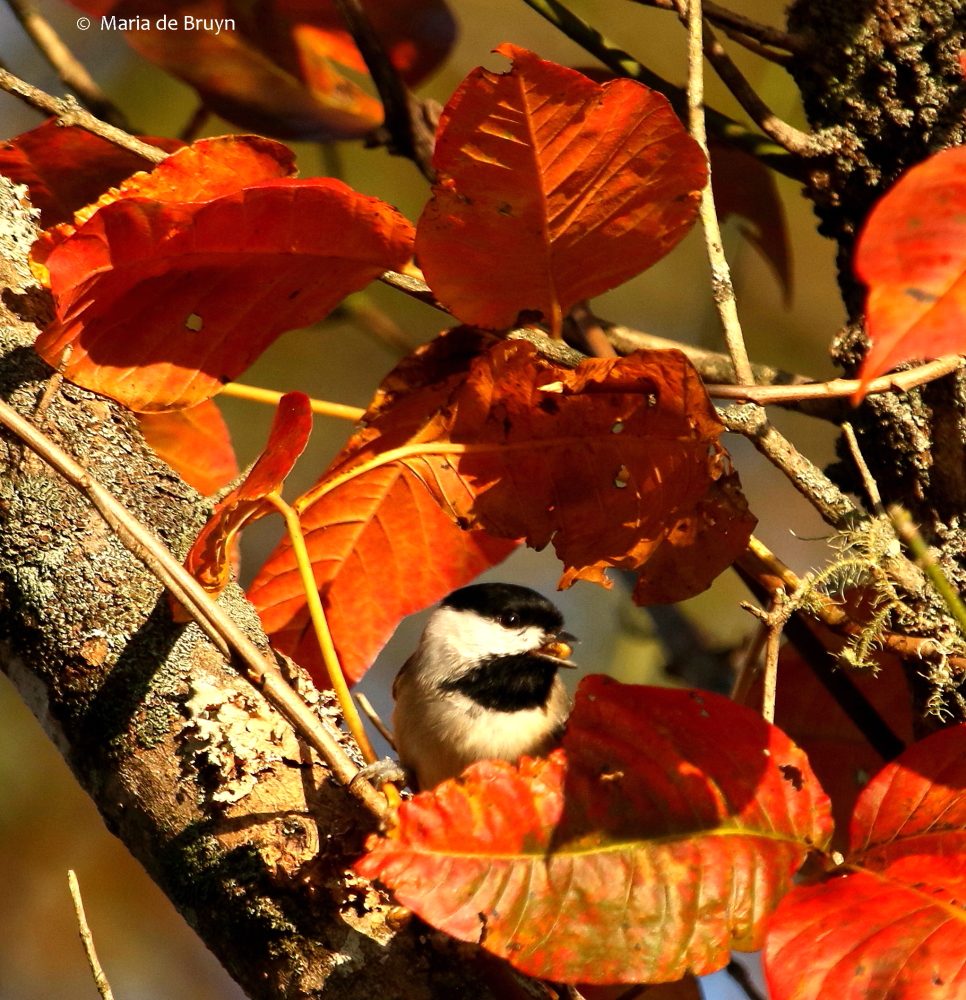
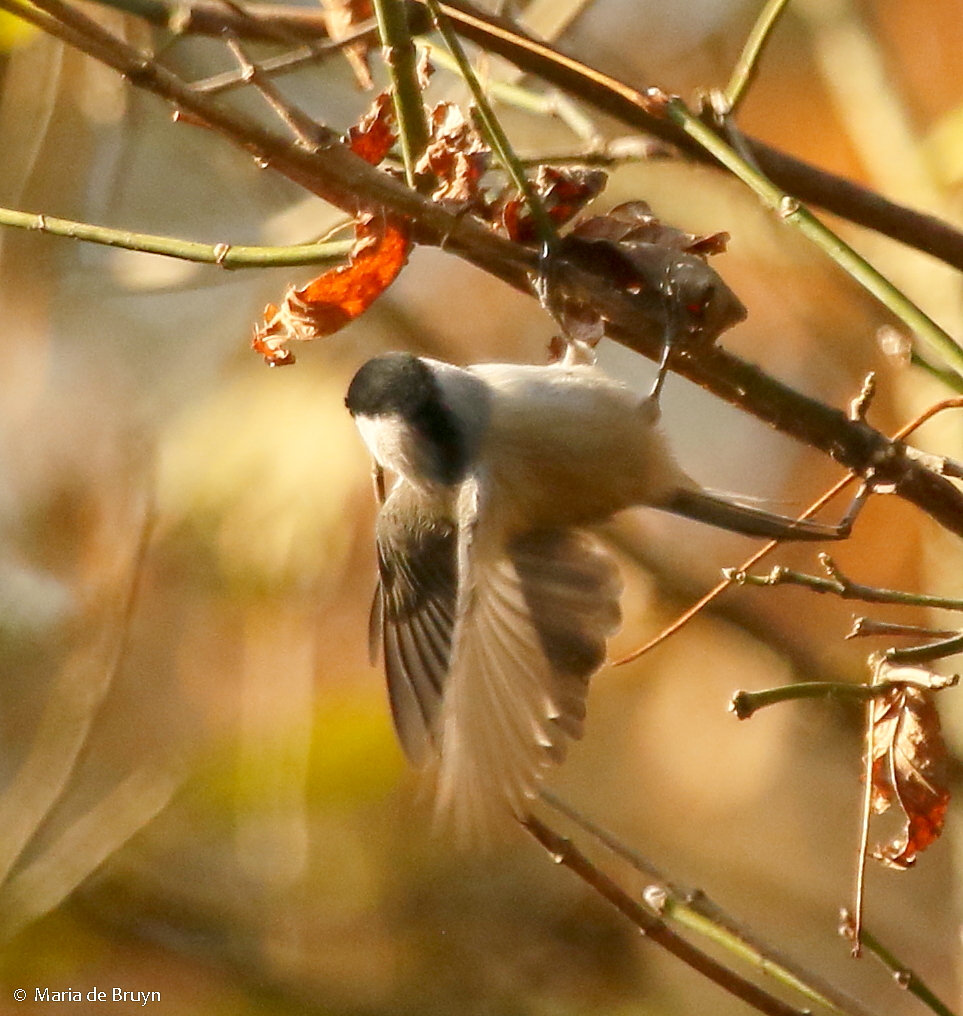
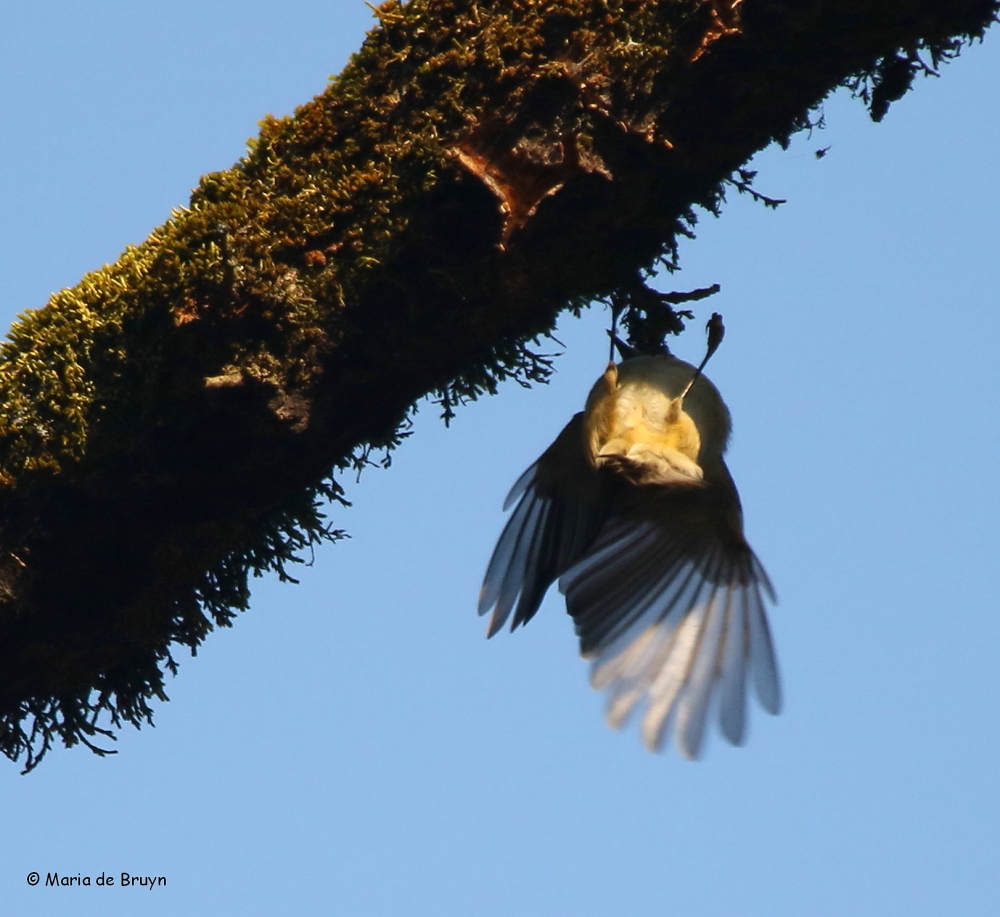
Sometimes, it involves hanging upside down to snag a tasty morsel and their wings help in balancing.

carolina-chickadee-i77a2699maria-de-bruyn    ruby-crowned-kinglet-i77a2565-maria-de-bruyn-res

Carolina chickadee                                    Ruby-crowned kinglet (Regulus calendula)

If we unbalance Nature, humankind will suffer. Furthermore, as people alive today, we must consider future generations: a clean environment is a human right like any other. It is therefore part of our responsibility towards others to ensure that the world we pass on is as healthy, if not healthier, than when we found it. – Dalai Lama

american-crow-i77a6327-maria-de-bruyn-res


At Sandy Creek, a group of American crows (Corvus brachyrhynchos) flew down to investigate what had dropped to the ground from an overflowing garbage can but they soon flew off to seek more normal food elsewhere.


great-blue-heron-i77a1936maria-de-bruyn-res


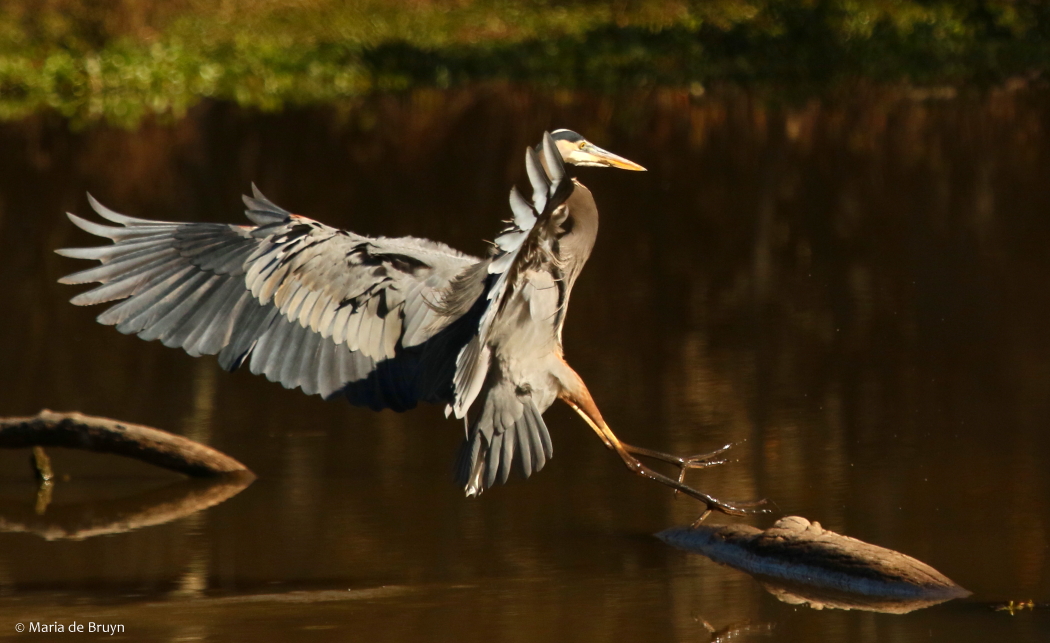
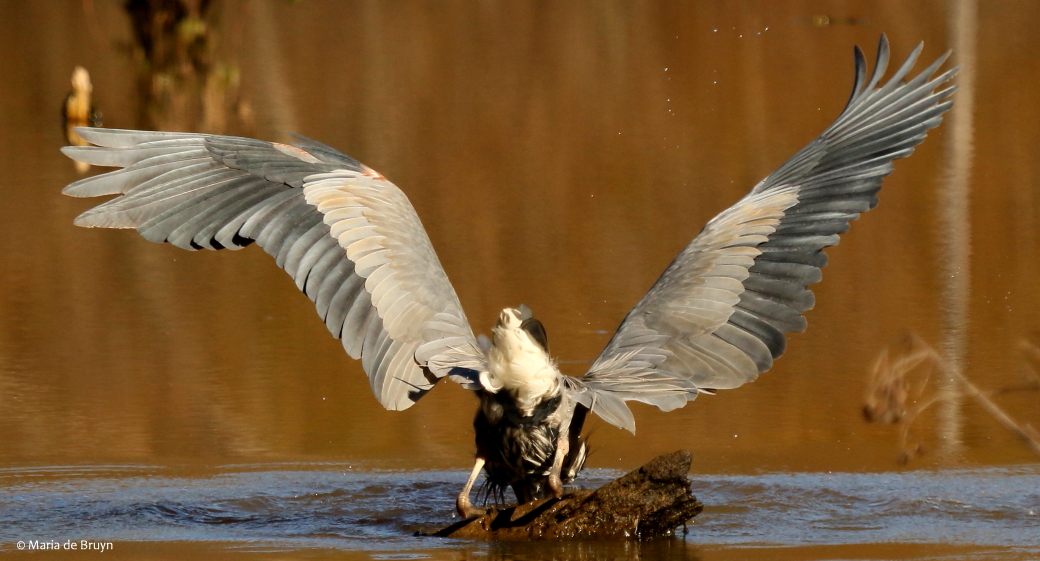
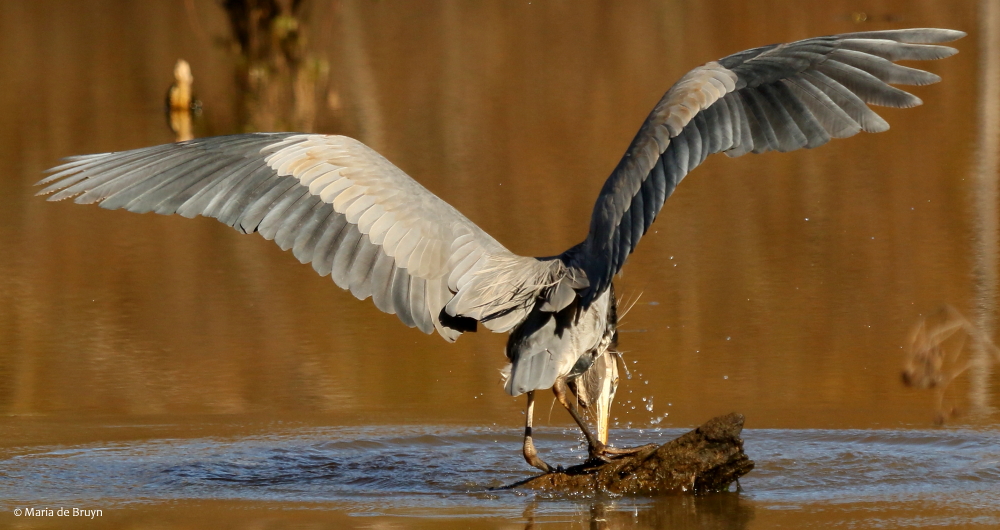
A great blue heron (Ardea herodias) was stalking the pond for fish; after I saw him (or her) snag a medium-sized fish, he turned his back so I saw the fishing technique from the rear.

great-blue-heron-i77a1438maria-de-bruyn-2-res  great-blue-heron-i77a1440maria-de-bruyn-res

flowering-dogwood-i77a0882maria-de-bruyn-res


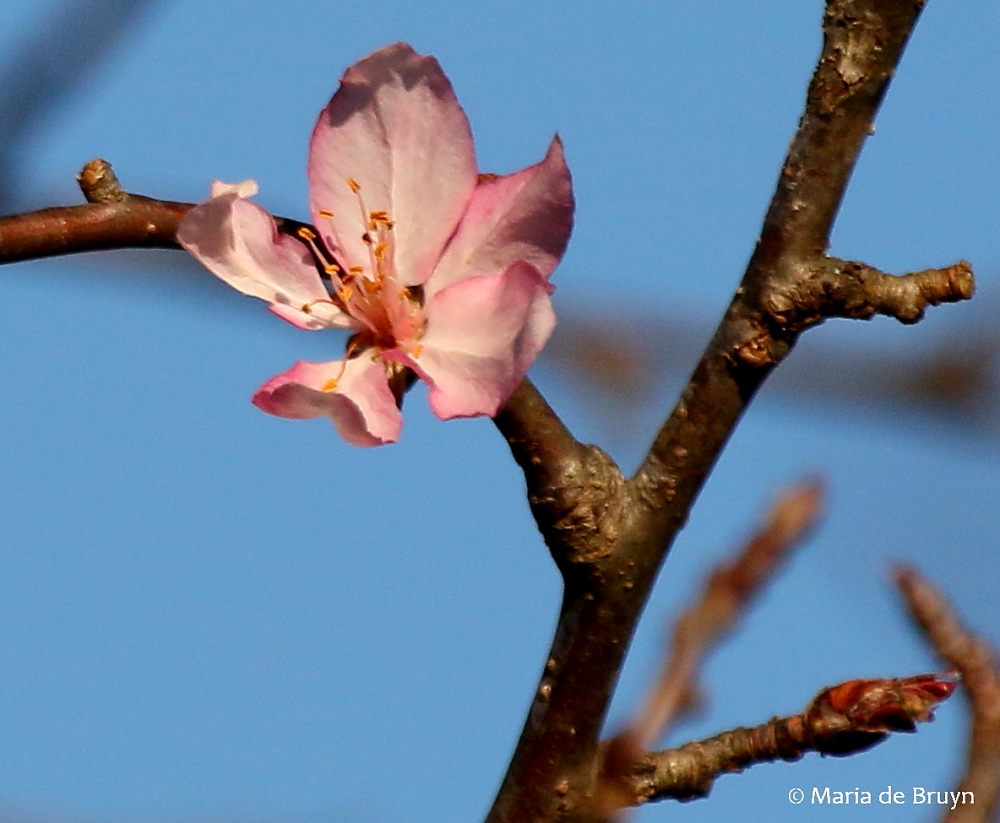
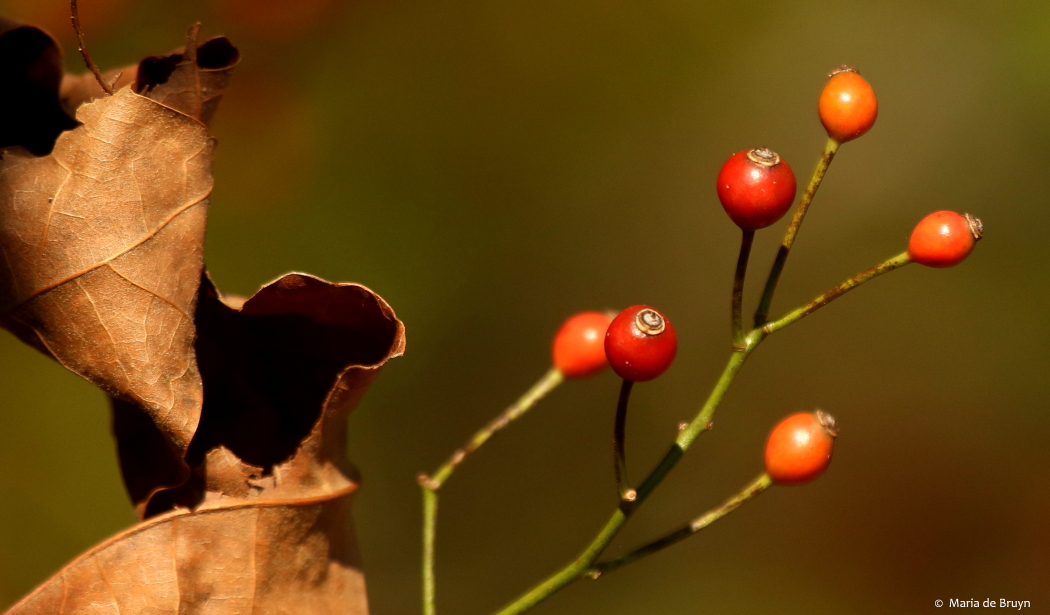
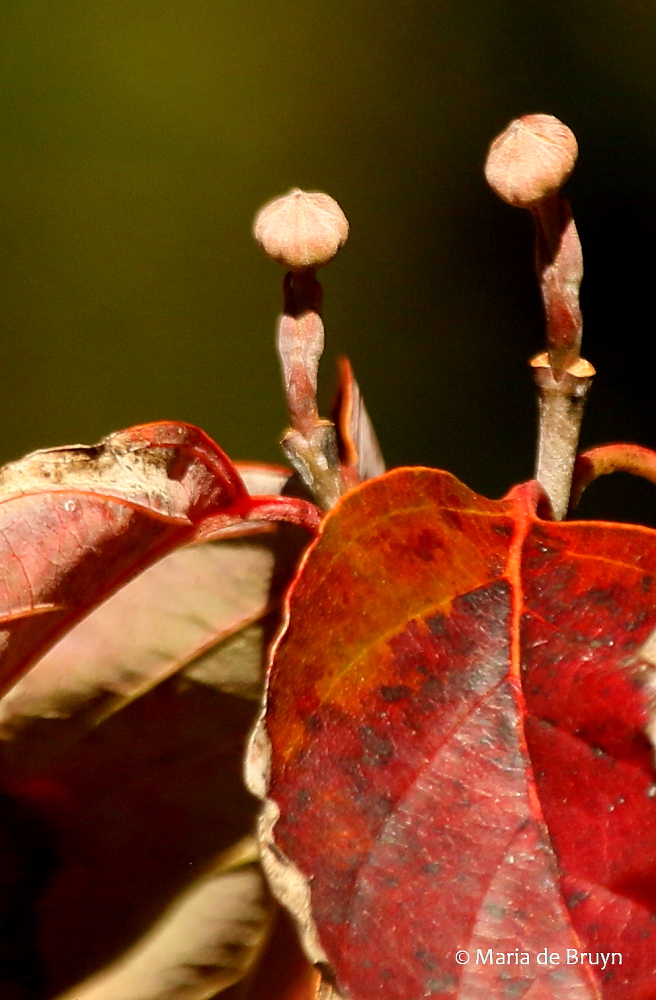
The flowering dogwoods (Cornus florida) at Cane Creek still had a few blossoms; at Sandy Creek and Mason Farm, they offered bright berries. On one tree, they made me think of a movie-inspired alien peeking out of the branches with eyes on stalks.


flowering-dogwood-i77a5820-maria-de-bruyn-res       flowering-dogwood-i77a1012maria-de-bruyn-res

Destruction of nature and nature resources results from ignorance, greed and lack of respect for the earth’s living things. – Dalai Lama

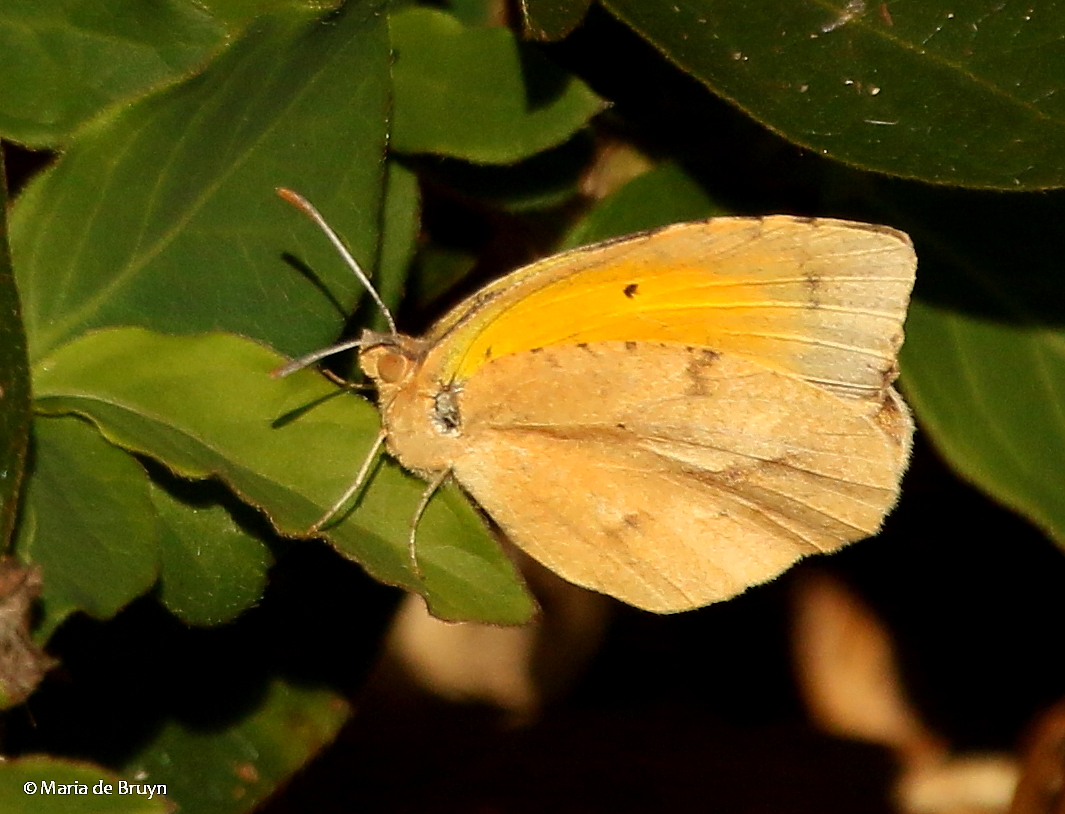
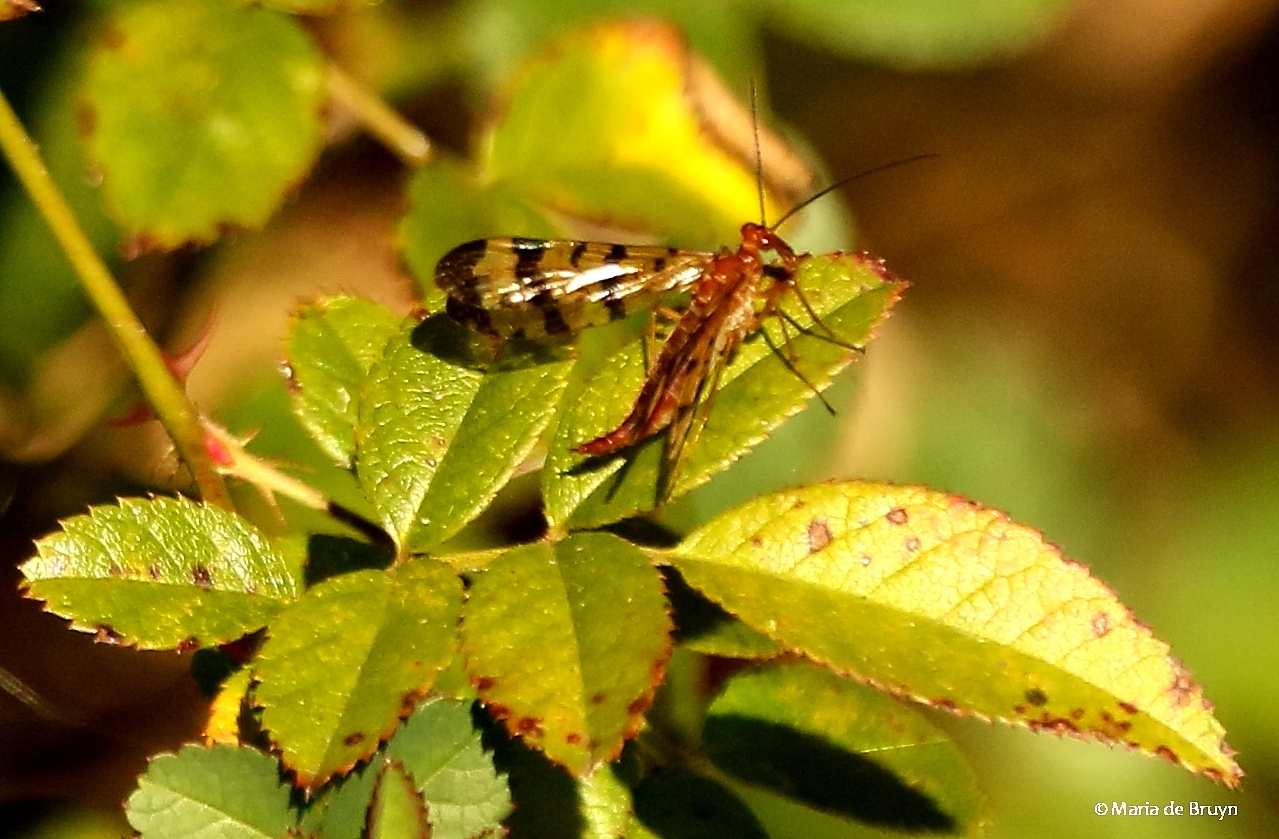
Up until the first morning frost this autumn, butterflies were still around, like this sleepy orange (Eurema nicippe); now that we have had several mornings of below-freezing temperatures, the butterflies are mostly gone as are the majority of bees. A scorpion fly (Panorpa) was in evidence at Cane Creek to my surprise.

sleepy-orange-i77a1003maria-de-bruyn-res  scorpion-fly-i77a0991maria-de-bruyn-res

eastern-gray-squirrel-i77a2505-maria-de-bruyn-res


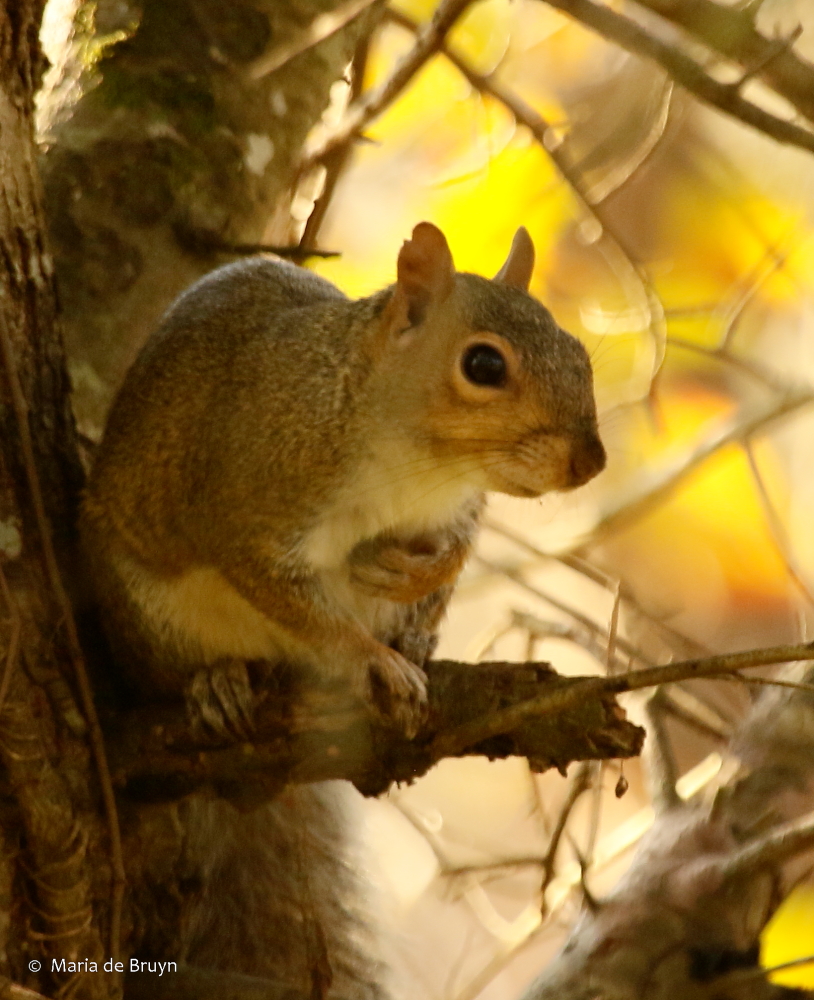
In between bird spottings, Eastern gray squirrels (Sciurus carolinensis) chittered at me at all three parks. And I was pleased to see some ruby-crowned kinglets since the one that has enjoyed the suet at my house the past three years hasn’t appeared yet.


ruby-crowned-kinglet-i77a6241-maria-de-bruyn-res     ruby-crowned-kinglet-i77a2574-maria-de-bruyn-res

…until now, Mother Earth has been able to tolerate our sloppy house habits. However, the stage has now been reached where she can no longer accept our behaviour in silence. The problems caused by environmental disasters can be seen as her response to our irresponsible behaviour. She is warning us that there are limits even to her tolerance. –  Dalai Lama

Some of the birds common in my yard are welcome sights at the nature reserves, too.

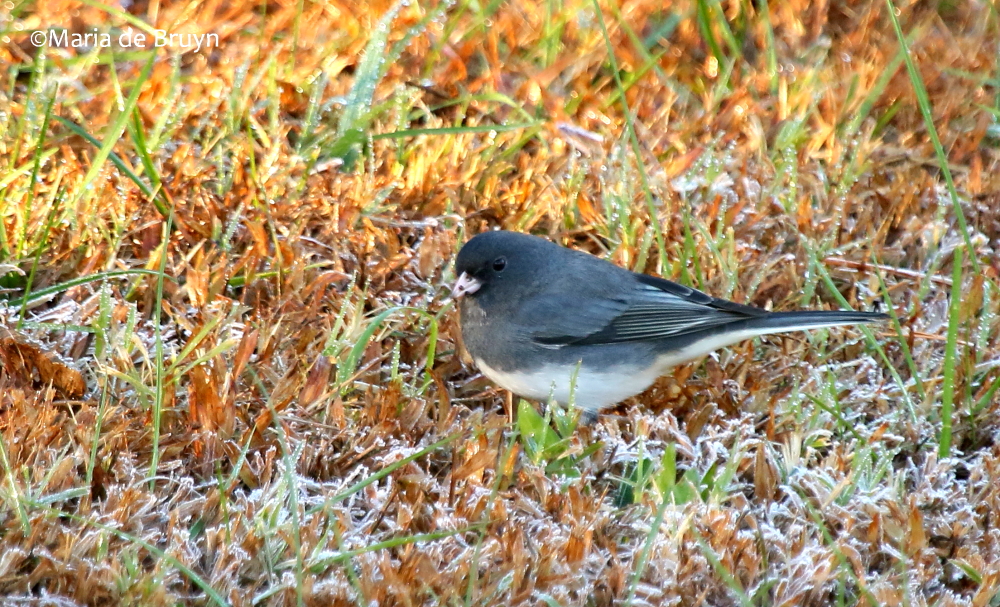
northern-mockingbird-i77a2312-maria-de-bruyn-res    dark-eyed-junco-i77a0624maria-de-bruyn-res

Northern mockingbird (Mimus polyglottos)         Dark-eyed junco (Junco hyemalis)

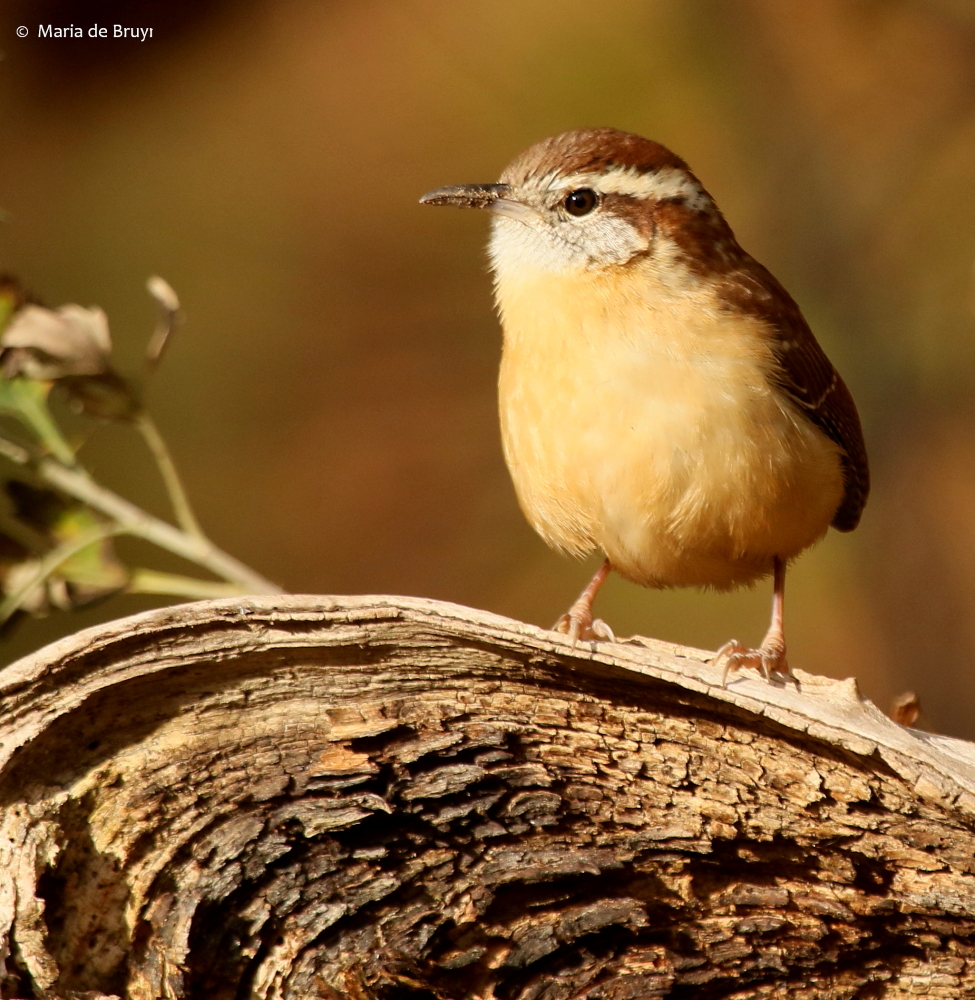
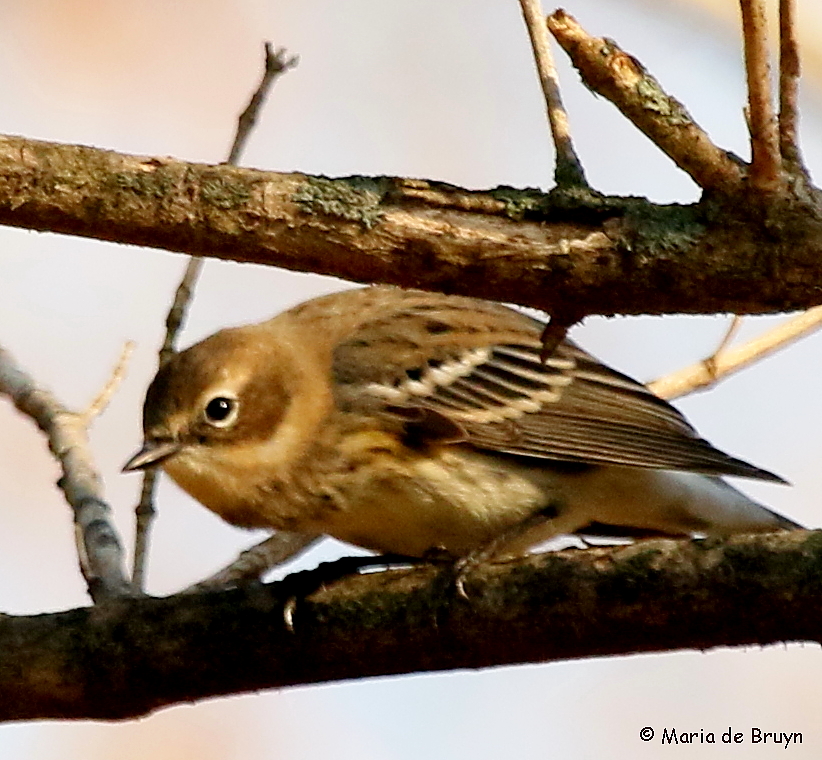
carolina-wren-i77a6358-maria-de-bruyn-res   yellow-rumped-warbler-i77a2780maria-de-bruyn-res

Carolina wren (Thryothorus ludovicianus)   Yellow-rumped warbler (Setophaga coronata)

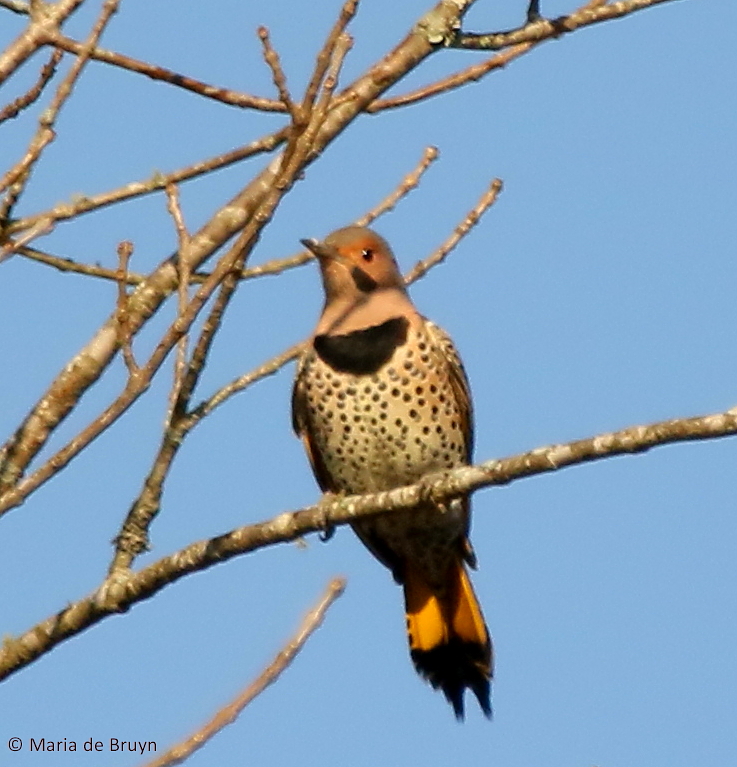
northern-flicker-i77a2485-maria-de-bruyn-res          eastern-bluebird-i77a0688maria-de-bruyn-res

Northern flicker (Colaptes auratus)               Eastern bluebird (Sialia sialis)

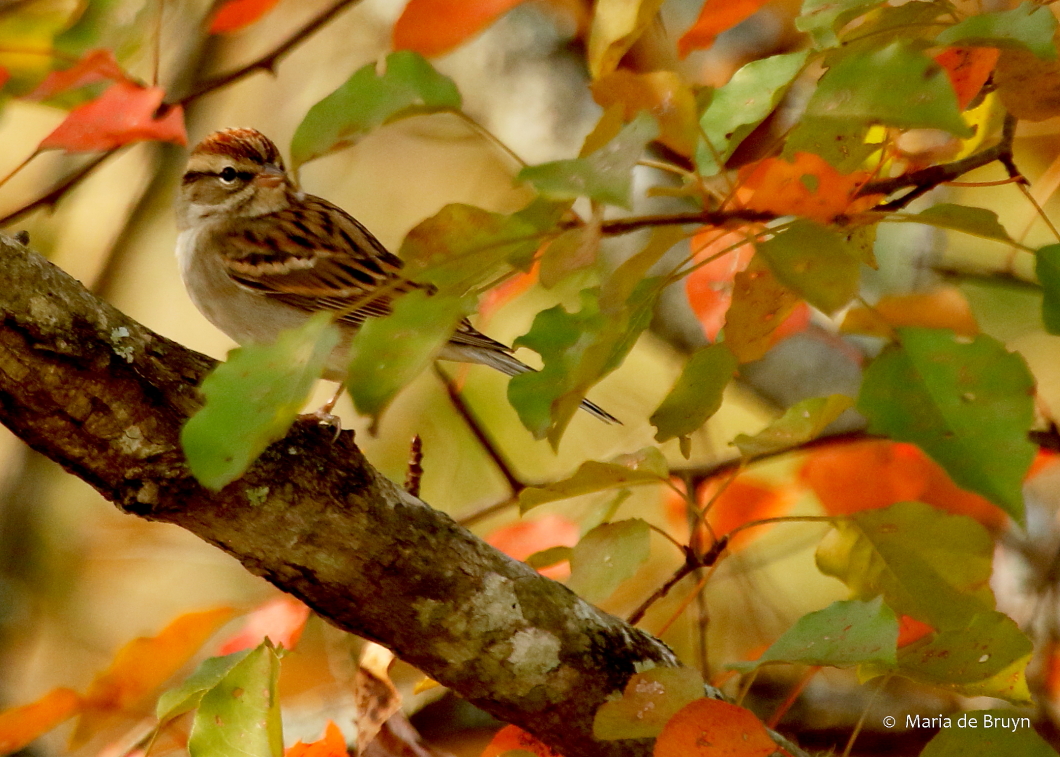
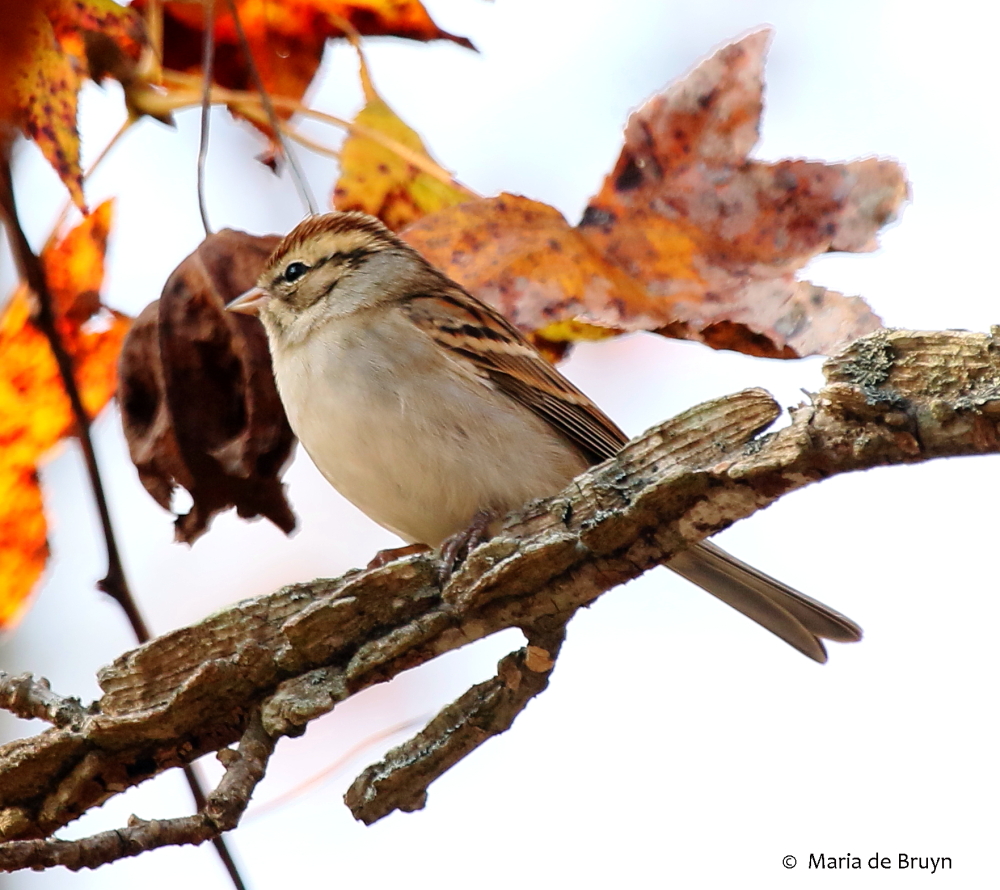
chipping-sparrow-i77a2915-maria-de-bruyn-res    chipping-sparrow-i77a2925-maria-de-bruyn-res

Chipping sparrow (Spizella passerina)

Many of the earth’s habitats, animals, plants, insects, and even microorganisms that we know of as rare or endangered, may not be known at all by future generations. We have the capacity, and the responsibility. We must act before it is too late.    Dalai Lama

And the occasional or rare visitors to my yard are appreciated in the woods and fields, too!

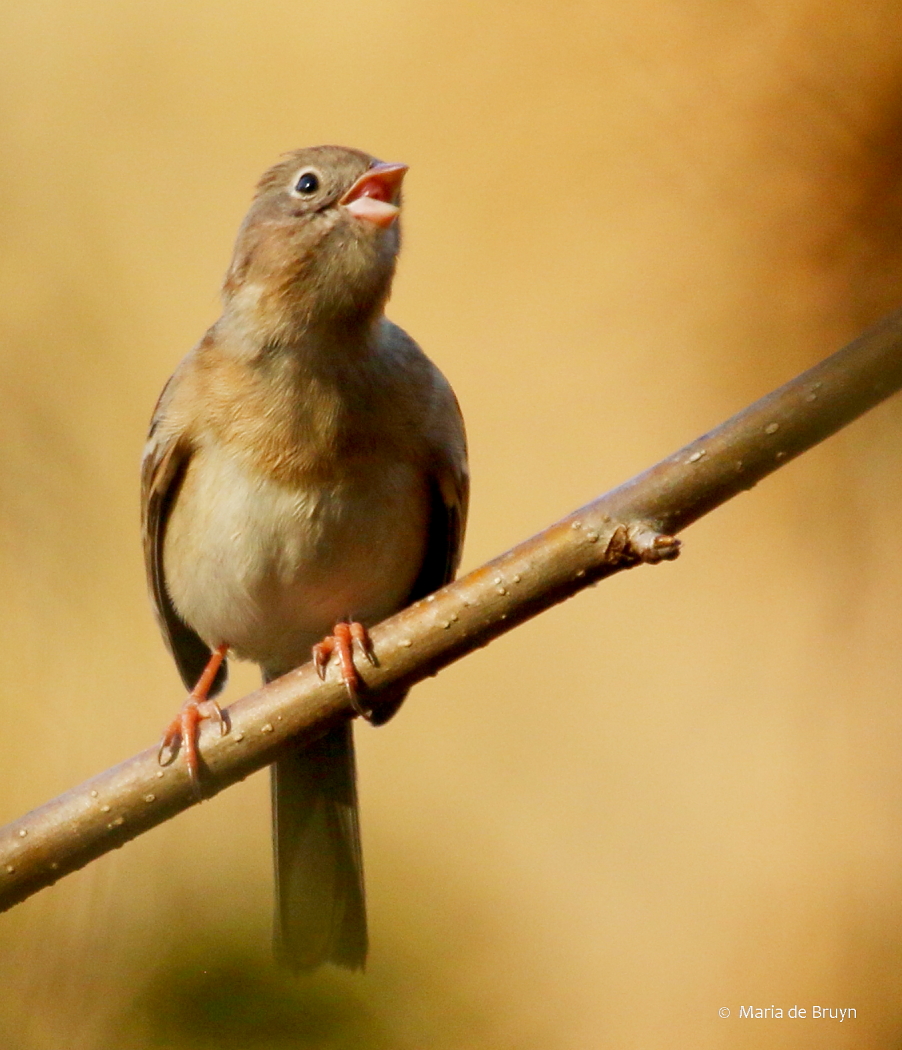
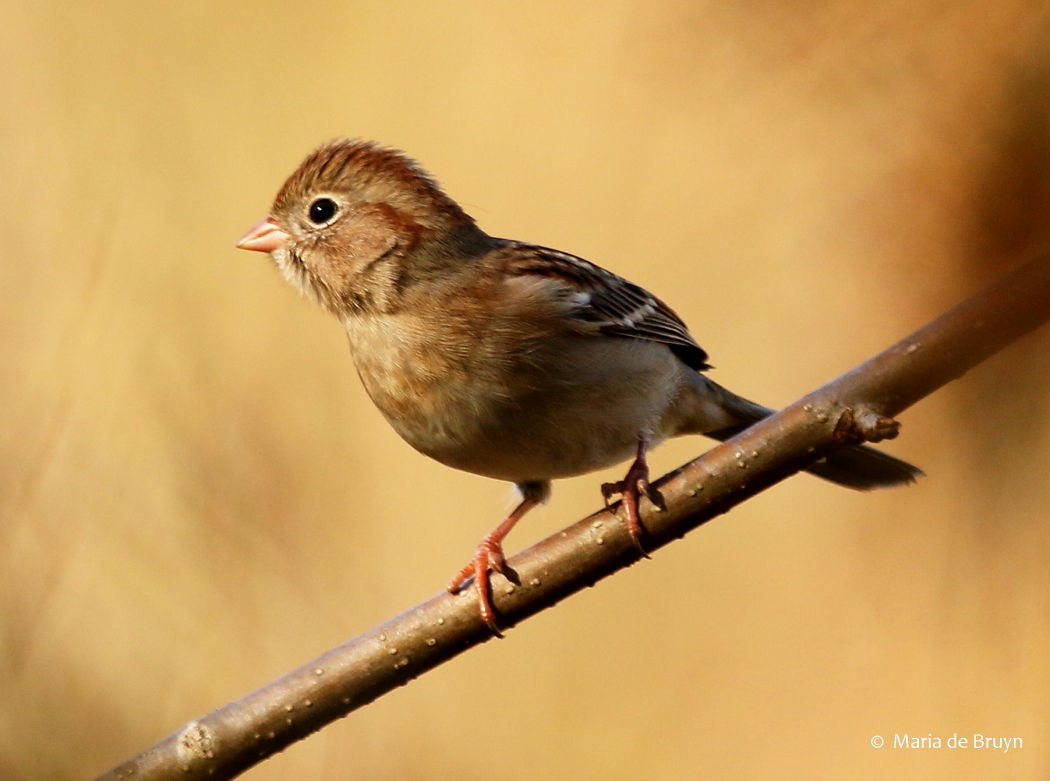
field-sparrow-i77a1587maria-de-bruyn-res      field-sparrow-i77a1634maria-de-bruyn-res

Field sparrow (Spizella pusilla)

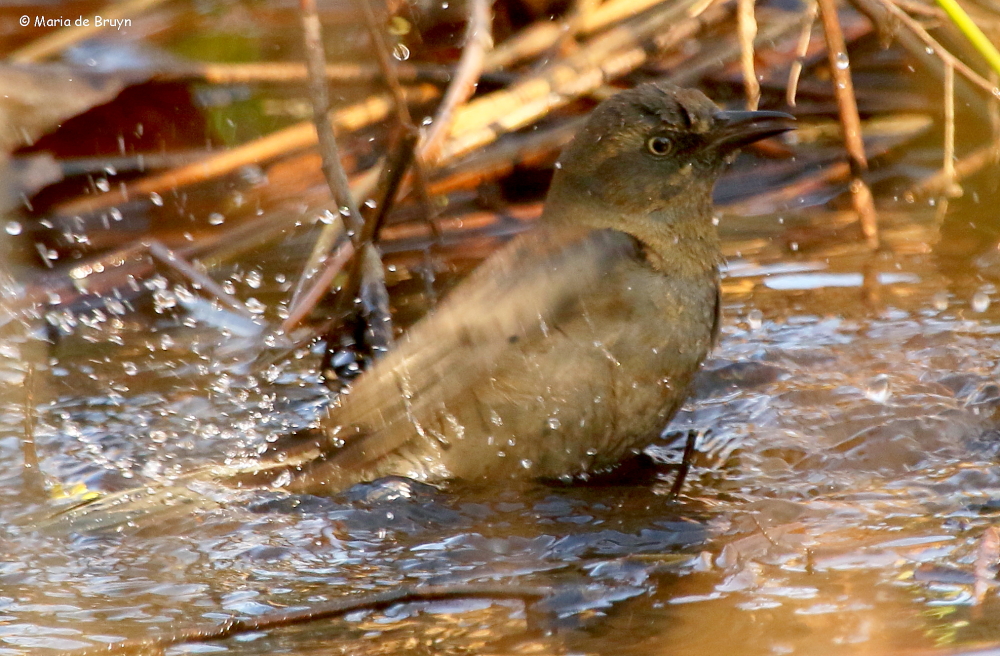
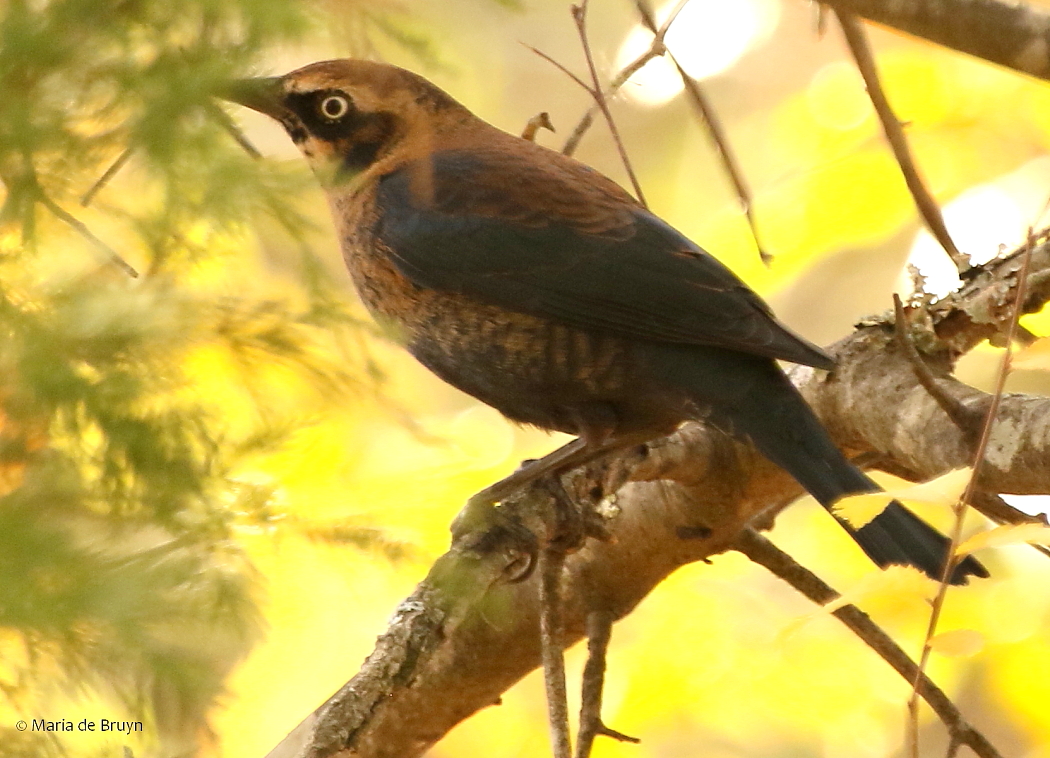
rusty-blackbird-i77a3199-maria-de-bruyn-res rusty-blackbird-i77a3110maria-de-bruyn-res

Rusty blackbird (Euphagus carolinus)

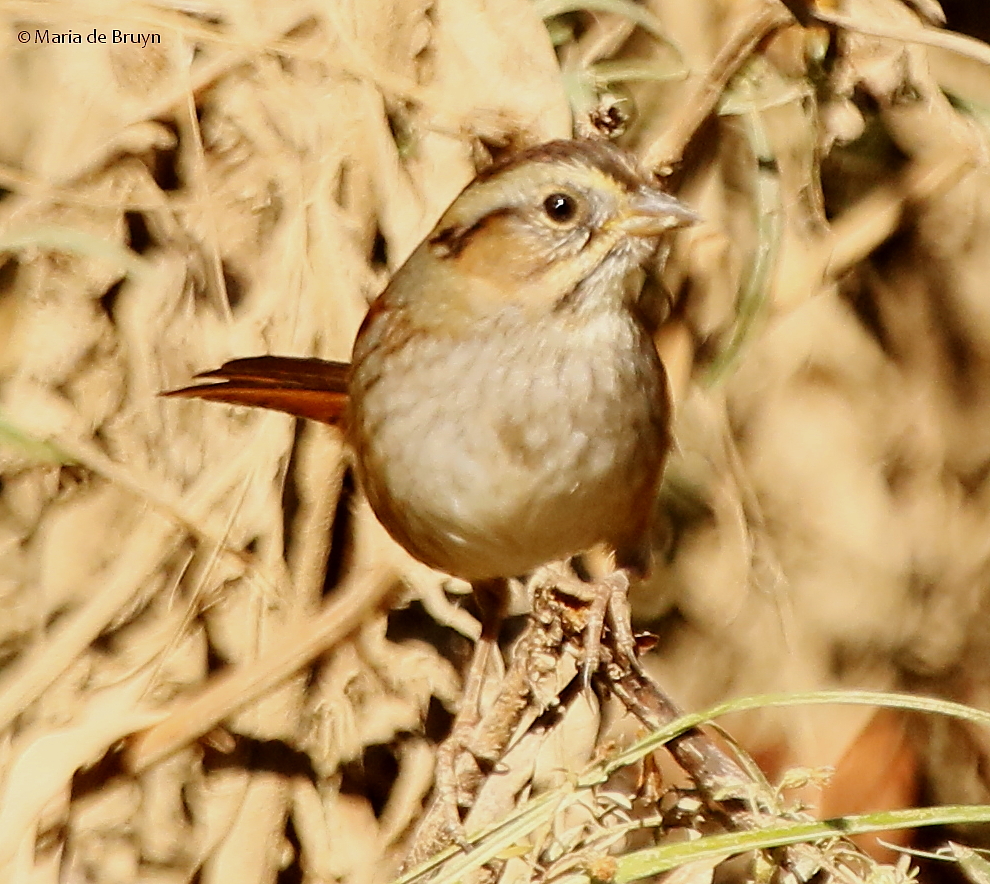
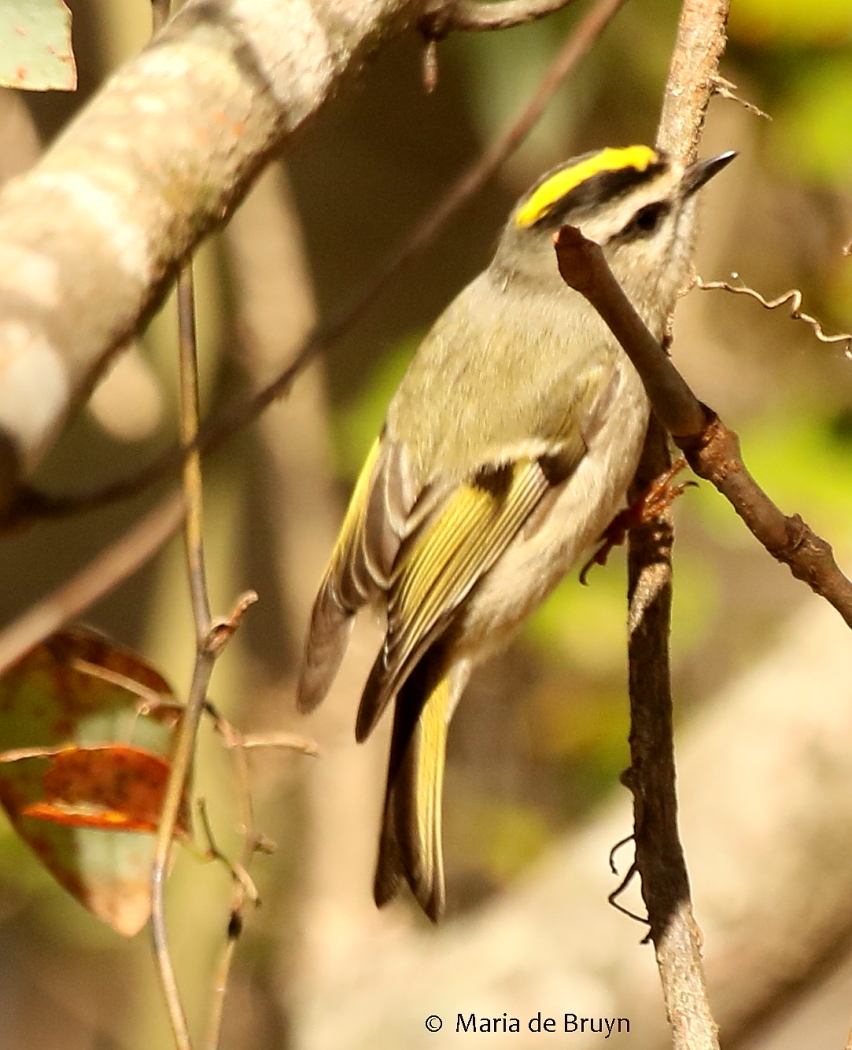
swamp-sparrow-i77a6063-maria-de-bruyn-res      golden-crowned-kinglet-maria-de-bruyn-i77a1711maria-de-bruyn-res

Swamp sparrow (Melospiza georgiana)             Golden-crowned kinglet (Regulus satrapa)

I feel that it is extremely important that each individual realize their responsibility for preserving the environment, to make it a part of daily life, create the same attitude in their families, and spread it to the community. – Dalai Lama

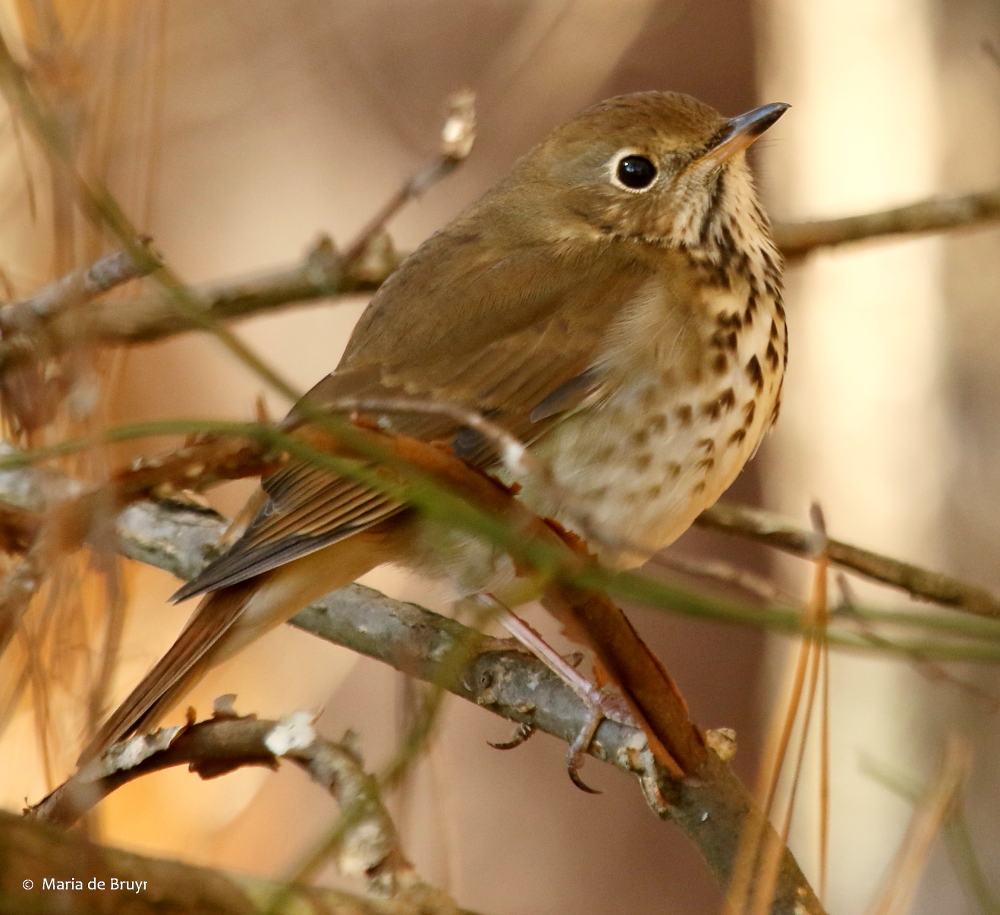
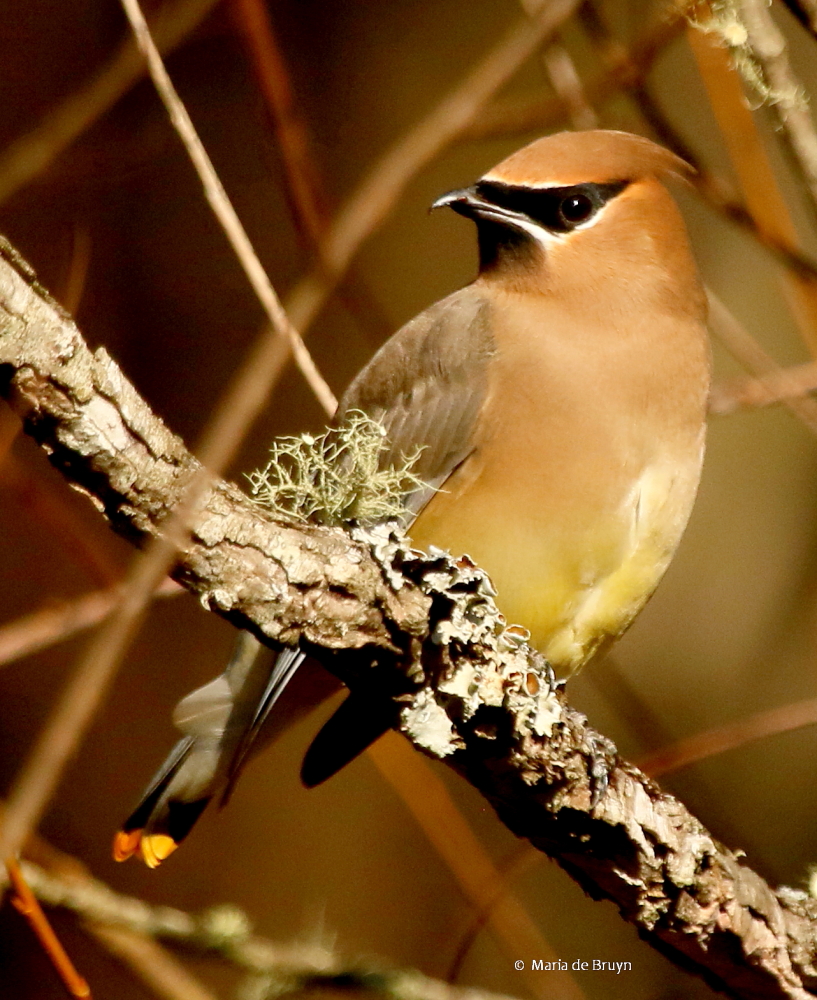
hermit-thrush-i77a6034-maria-de-bruyn-res  cedar-waxwing-i77a5945-maria-de-bruyn-res

Hermit thrush (Catharus guttatus)                          Cedar waxwing (Bombycilla cedrorum)

white-throated-sparrow-i77a1564maria-de-bruyn-res


What a great quote and slogan material:


Preserve the environment, make it part of your daily life and spread it to the community!

Birds and blooms at Sandy Creek Park – more of the “good ones”

moon I77A9993© Maria de Bruyn res

Birds are a favorite photographic subject of mine, even though catching them in late spring and summer is challenging when the lush foliage offers them many places to hide. Their songs and calls and warbles tell me that they are there, but often I need to wait quite a while until I finally catch a flutter of movement out of the corner of my eye to locate them.


white-eyed vireo I77A0007©Maria de Bruyn

One early morning, when the moon was still in the sky, I was fortunate enough to see a lot of fluttering in trees near the park’s parking lot – and I discovered an immature white-eyed vireo (Vireo griseus) with a parent who looked as if she or he was really practicing forbearance.

white-eyed vireo I77A0010©Maria de Bruyn      white-eyed vireo I77A0006©Maria de Bruyn

Carolina wren I77A0188©Maria de Bruyn res

Nearby, a Carolina wren (Thryothorus ludovicianus) was singing loudly; these little avians have an outsized voice so that you can hardly miss them even when they are hidden behind leaves.

A handsome male goldfinch (Spinus tristis) was in a field, while a female was visiting the coneflowers (Echinacea), of which there were various species in the cultivated butterfly garden.


American goldfinch I77A0382©Maria de Bruyn res American goldfinch I77A0177©Maria de Bruyn res

coneflower I77A7325© Maria de Bruyn res      coneflower I77A6365© Maria de Bruyn res   coneflower I77A6250© Maria de Bruyn res

Eastern bluebird I77A6188© Maria de Bruyn res


Other birds were busy finding insect meals, like the male, female and immature Eastern bluebirds (Sialia sialis).


Eastern bluebird I77A6022© Maria de Bruyn res    Eastern bluebird I77A5558© Maria de Bruyn res

Common grackle I77A6377© Maria de Bruyn res


The common grackle (Quiscalus quiscula) scored a meal, while the pine warbler (Setophaga pinus) and blue-gray gnatcatcher (Polioptila caerulea) were busy in the trees searching for caterpillars and insects.

Other birds (and mammals, I think) had been getting crayfish from the ponds but I guess there were so many that they only ate the tastiest parts.

Pine warbler I77A5605© Maria de Bruyn res   Pine warbler I77A5598© Maria de Bruyn


blue-gray gnatcatcher I77A0302©Maria de Bruyn res     crayfish IMG_4926©Maria de Bruyn res

The American robins (Turdus migratorius) were looking for earthworms on the ground, and the song sparrows (Melospiza melodia) alternated between the ground and shrubs in their search for food.

American robin IMG_0550© Maria de Bruyn res     song sparrow I77A6195© Maria de Bruyn

The male red-winged blackbirds (Agelaius phoeniceus) were calling and flying from shrub to shrub, showing off their handsome black plumage with a red highlight.

red-winged blackbird I77A6090© Maria de Bruyn res  red-winged blackbird I77A6126© Maria de Bruyn res

Over at a nearby pond, the Northern rough-winged swallows (Stelgidopteryx serripennis) were swooping over the water and then sharing space on a snag; meanwhile, a mother wood duck (Aix sponsa) led her brood along the shoreline.

rough-winged swallow I77A0234© Maria de Bruyn res    wood duck I77A7225© Maria de Bruyn

In a tree beside another pond, the immature great blue herons (Ardea herodias) were still at their nest at the start of June; later in the month, they were no longer hanging out there.

great blue heron IMG_0430© Maria de Bruyn res   great blue heron IMG_0402© Maria de Bruyn res

milkweed I77A0079©Maria de Bruyn res


Botanists can have a great time at Sandy Creek, too. The milkweed plants in the butterfly garden attract both butterflies and bees.

Carolina horsenettles (Solanum carolinense) are common but pretty little plants, while the orange jewelweed (Impatiens capensis) enjoys a good reputation as having stem juice that relieves the pain caused by poison ivy for many people.

Carolina horsenettle I77A5581© Maria de Bruyn res      orange jewelweed I77A0511© Maria de Bruyn res

The fairywand (Chamaelirium luteum) grows profusely on the edges of Sandy Creek ponds and the swamp rose (Rosa palustris) sprouts near them as well.

fairywand I77A7293© Maria de Bruyn res      swamp rose Rosa palustris I77A5621© Maria de Bruyn res

Japanese honeysuckle I77A5711© Maria de Bruyn res


Japanese honeysuckle (Lonicera japonica), an invasive plant, attracts pollinators but so does the more vibrant and native coral honeysuckle (Lonicera sempervirens L.).


coral honeysuckle I77A0159© Maria de Bruyn res      coral honeysuckle I77A0127© Maria de Bruyn 2 res

In the fields, you can see lovely brown-eyed Susans (Rudbeckia) and coreopsis.

Brown-eyed Susan IMG_0504© Maria de Bruyn res  brown-eyed Susan IMG_0497© Maria de Bruyn res


coreopsis flower IMG_0494© Maria de Bruyn res   coreopsis flower IMG_0486© Maria de Bruyn res

Stoke's aster I77A6353© Maria de Bruyn resThe cultivated garden in the park gets plenty of color from the Stoke’s asters (Stokesia laevis) and red bee balm (Monarda didyma), which is a real magnet for hummingbirds. I recently bought a couple for my home garden and was rewarded with seeing the hummers visit them within 2 days.


red bee balm I77A7307© Maria de Bruyn res    red bee balm I77A6390© Maria de Bruyn res

What makes my walks so interesting is discovering new species. A native grass (Bromus) was lovely; helpful facebook group members gave me suggestions for possible species but we couldn’t narrow it down. The group also helped me identify a plant that I hadn’t seen before, a Germander (Teucrium canadense).

grass Bromus IMG_4811© Maria de Bruyn res   Germander Teucrium canadense I77A0544© Maria de Bruyn res

I managed to find an ID myself for a common flower that seems to grow all over the place – the Asiatic dayflower (Commelina communis). It is considered an invasive plant and is on the watch list for North Carolina, but I have to say that I find it quite attractive. Each flower blooms for only one day and to me they look like little faces and make me smile. And so I continue learning as each new walk invariably ends up teaching me something new. Enjoy your day!

Asiatic dayflower Commelina communis I77A0667© Maria de Bruyn res    Asiatic dayflower I77A0677© Maria de Bruyn res

Nest Watch citizen science – 2016 edition

Carolina wren Renee and Riley I77A9074© Maria de Bruyn resLast year, I became a Nest Watch volunteer, which involves having birds banded in your yard so that you can follow and report to researchers the birds’ presence over time as they visit and leave your yard.

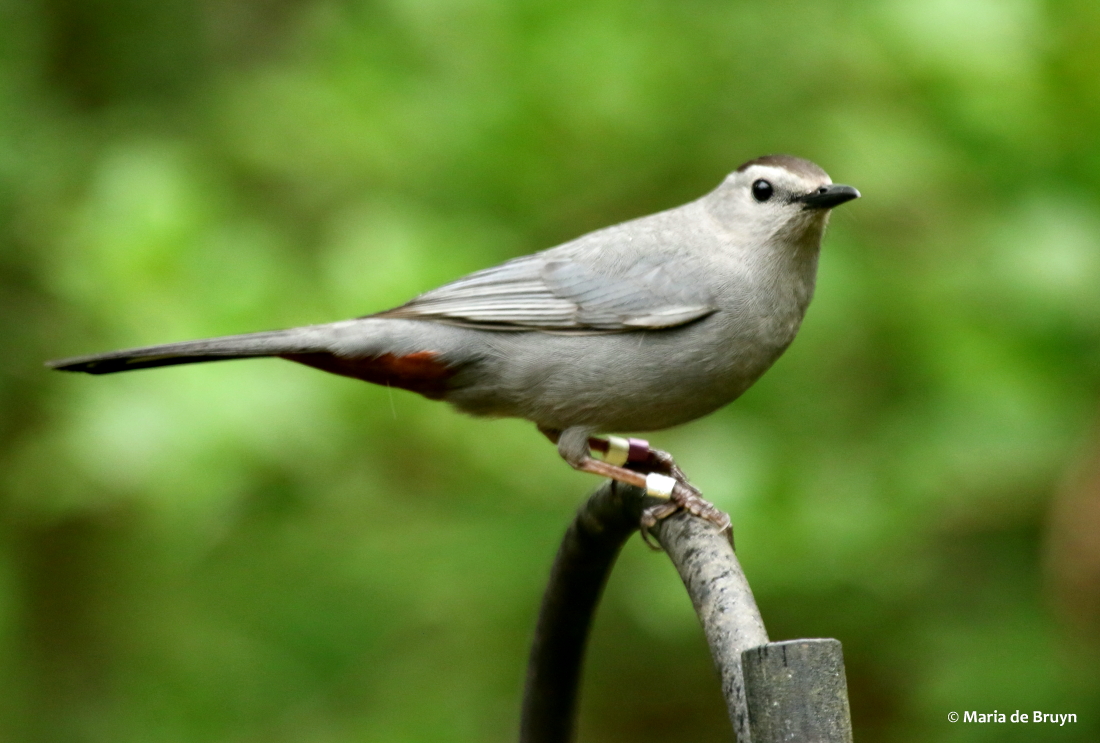
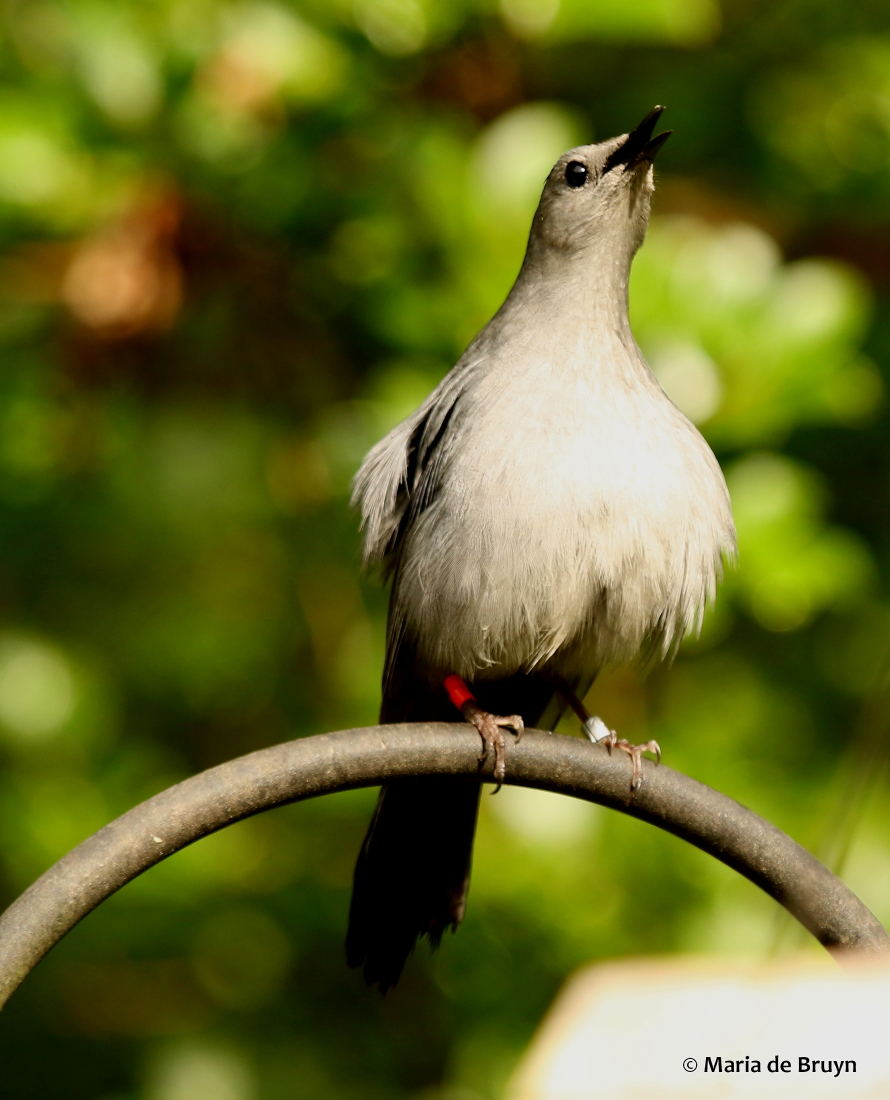
In 2015, we banded six birds. If a bird is only a temporary visitor or if it died outside the yard due to disease, old age or predation, you just won’t see it again and have no idea what became of it. The American robin (Turdus migratorius) that was banded last year never returned. If the birds stick around, however, you have the enjoyment of observing birds you get to know. The three gray-headed catbirds (Dumetella carolinensis) stayed around all summer and fall, and two of them – Camden and Corey – returned to my yard from winter migration a few days ago. They have been accompanied by females whom they appear to be assiduously courting.
gray-headed catbird Camden I77A8990© Maria de Bruyn res

gray-headed catbird Corey I77A8083© Maria de Bruyn res

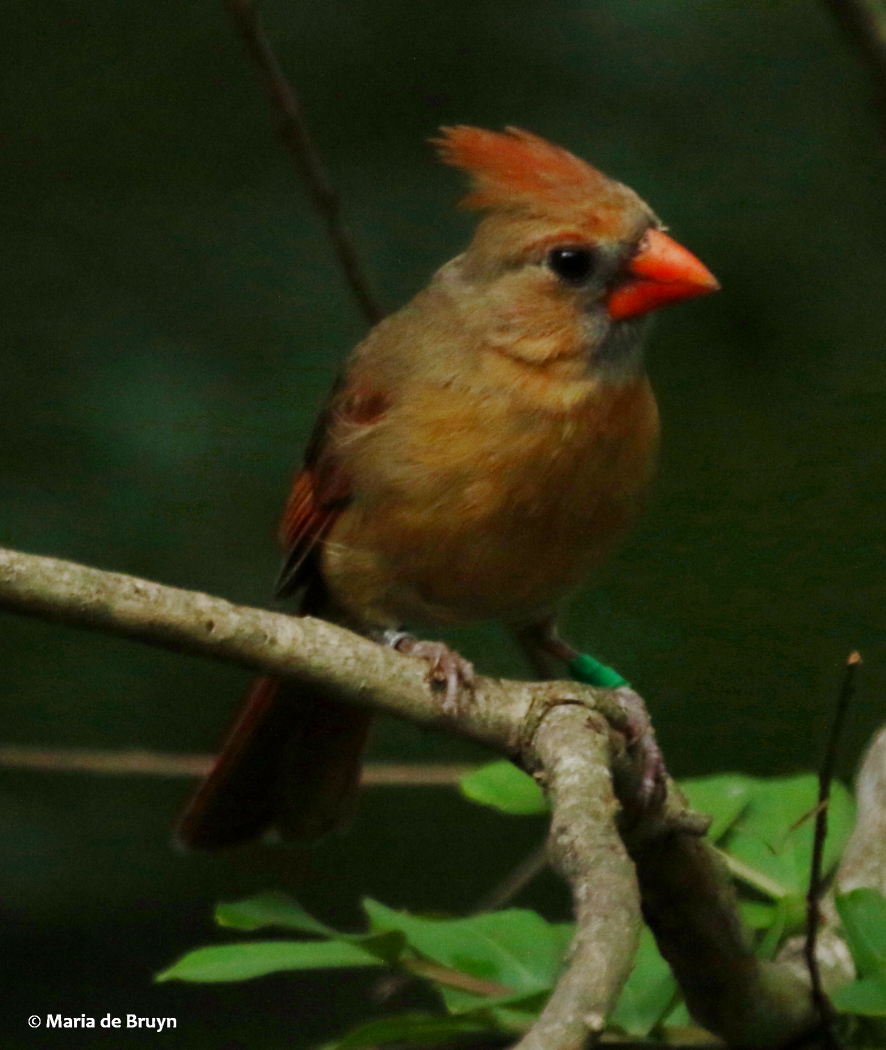
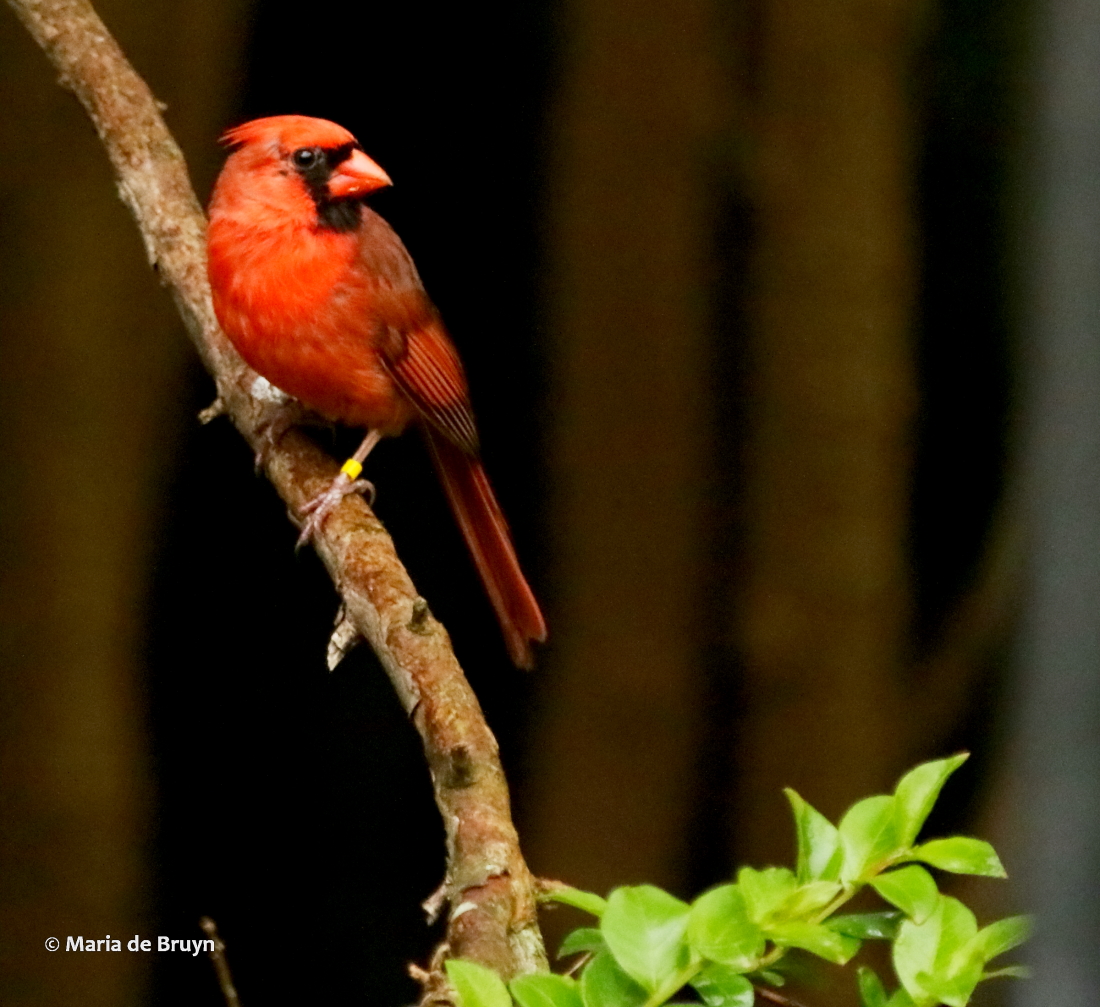
Northern cardinal Clancy I77A8123© Maria de Bruyn resOne Northern cardinal (Cardinalis cardinalis) was banded last year, but Clancy only stayed a few days and then disappeared for the rest of the summer, fall and winter. He suddenly appeared yesterday – perhaps encouraged to spend time at the feeders by the other birds with bracelets.

Three days ago, a second round of banding was done and we put the colorful anklets on a total of 10 birds. They were caught in two mist nets – one near my back garden and one near the backyard feeders.

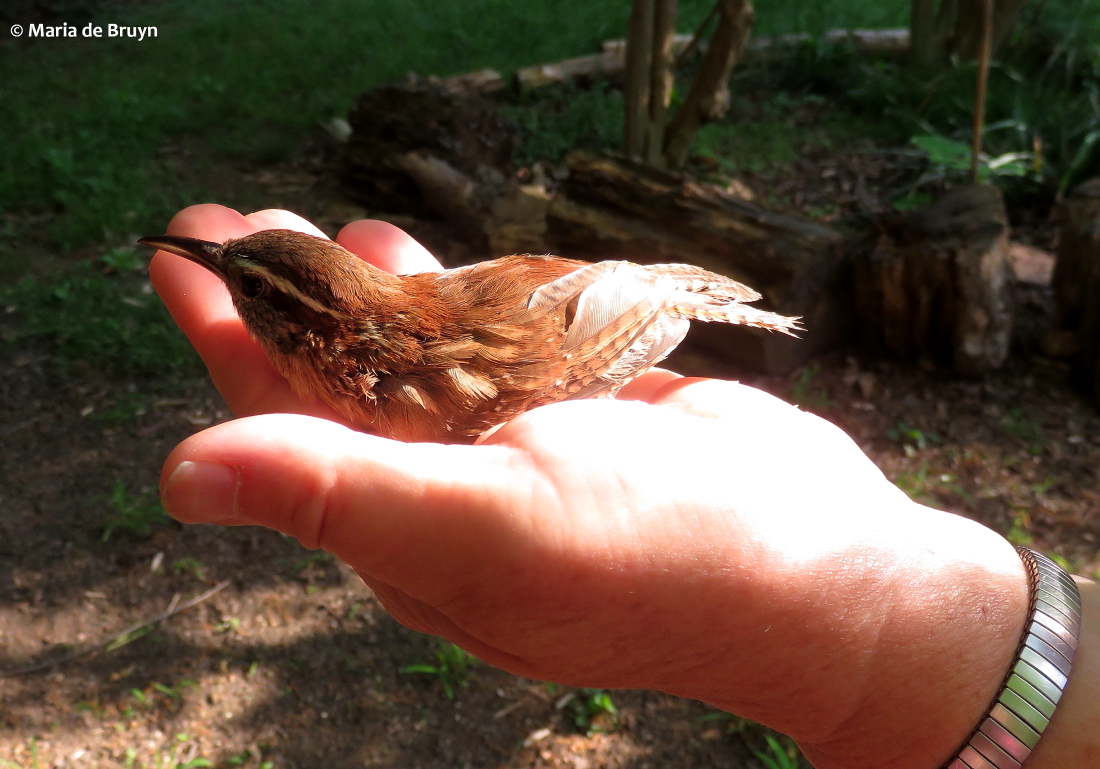
Northern cardinal Camilla I77A9127© Maria de Bruyn resThe nets had just been installed when our first visitor, a female Northern cardinal, was caught. She was not happy and when put in a bag until she could be banded, weighed, examined and measured, she did not remain still and calm. She had a little wait, however, as a female Carolina wren (Thryothorus ludovicianus) flew into the other net at just about the same time, followed by her mate within seconds. As the cardinals can tolerate being in a bag better than the smaller birds, the two wrens were banded first. Alicia let the first one go and then I released the second one, who rested on my palm for a bit. He felt so nice and soft!

Carolina wren Riley IMG_3832© Maria de Bruyn res

Forty-five minutes later, playback of a house wren’s song (Troglodytes aedon) led to the capture of a male who immediately came to investigate who was invading his territory. His mate, who was busy putting the finishing touches on a nest in a box near the mist net, didn’t go near the net.

house wren Hans IMG_3842© Maria de Bruyn reshouse wren Hans IMG_3844© Maria de Bruyn res

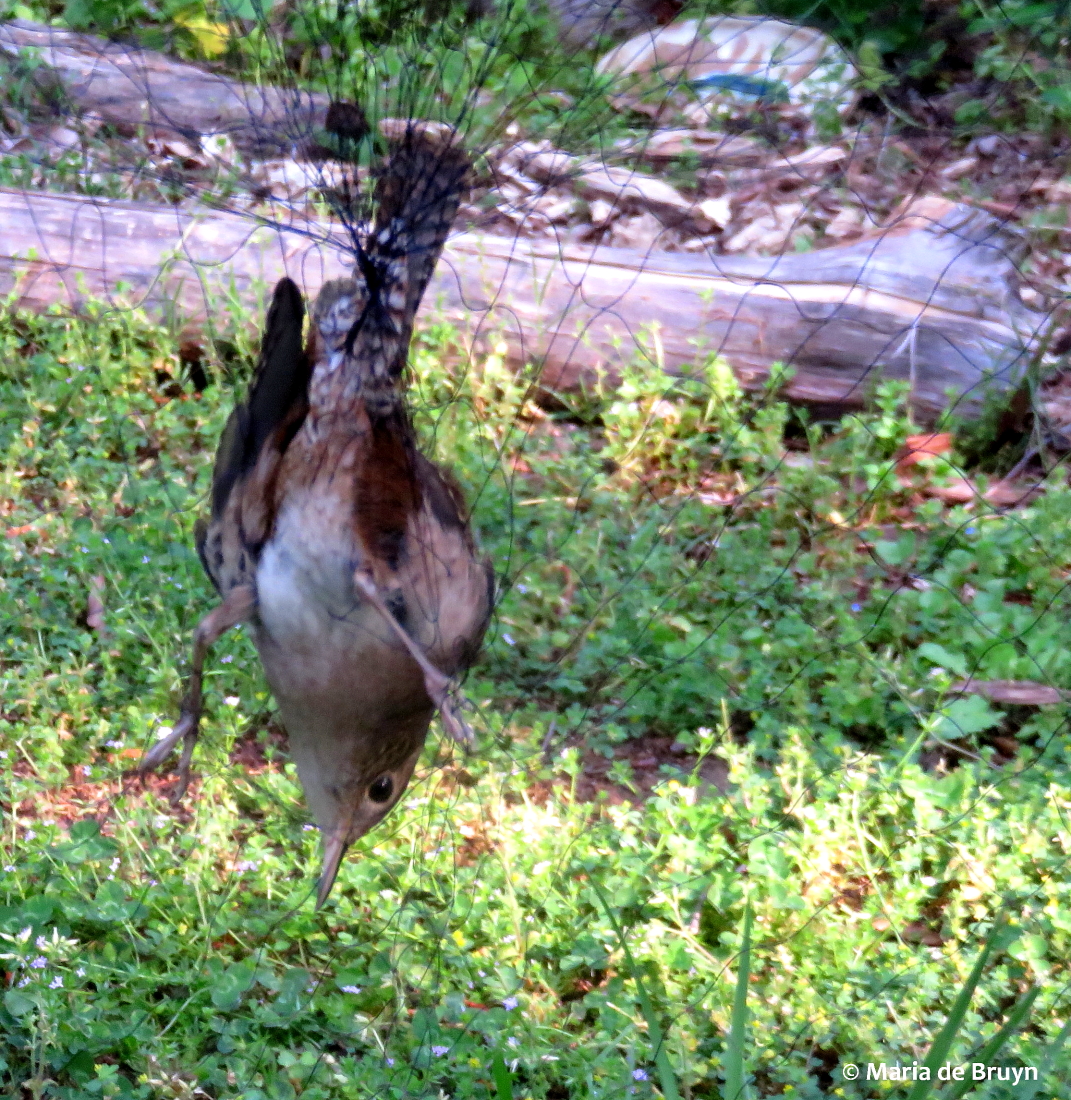
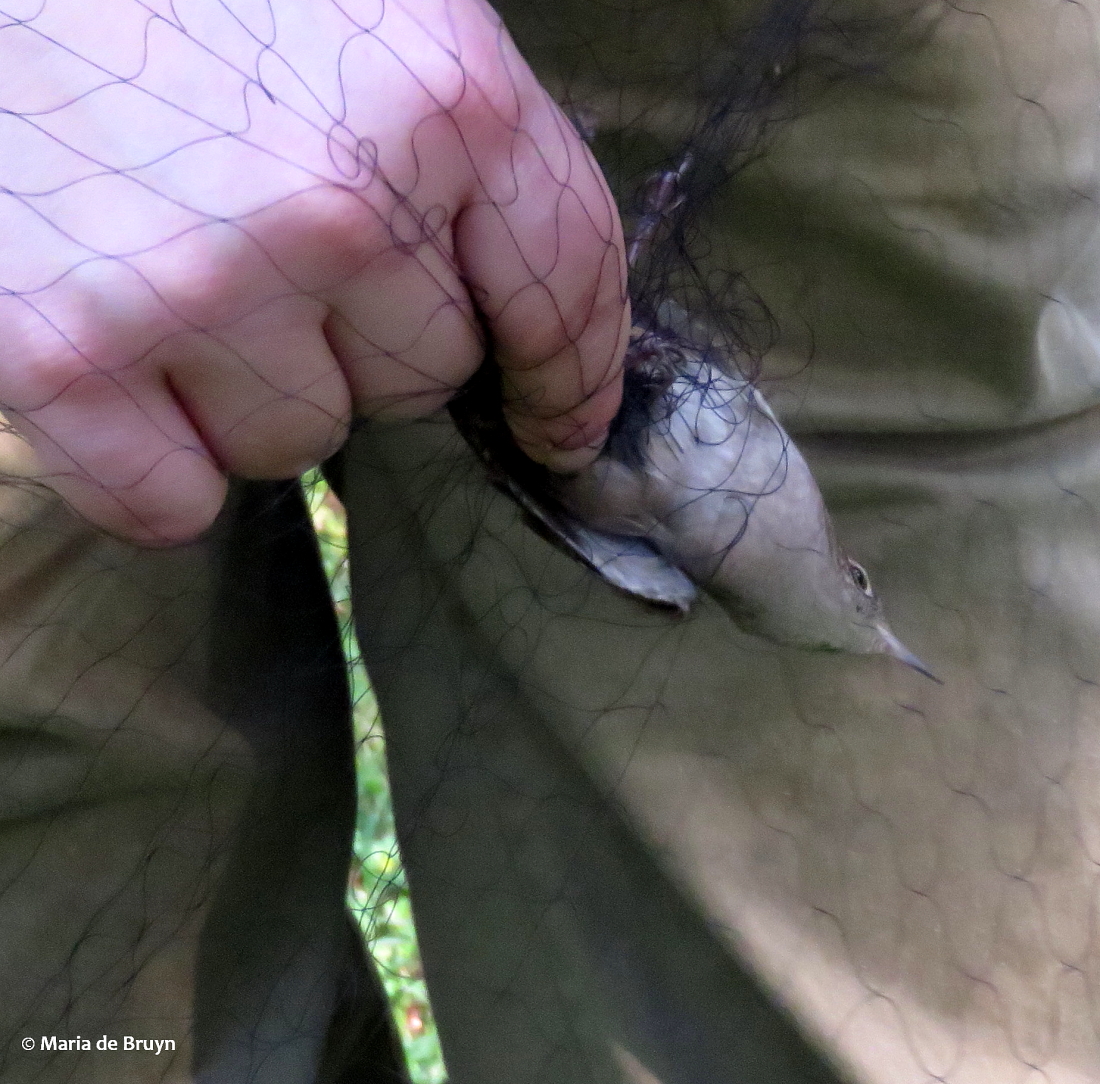
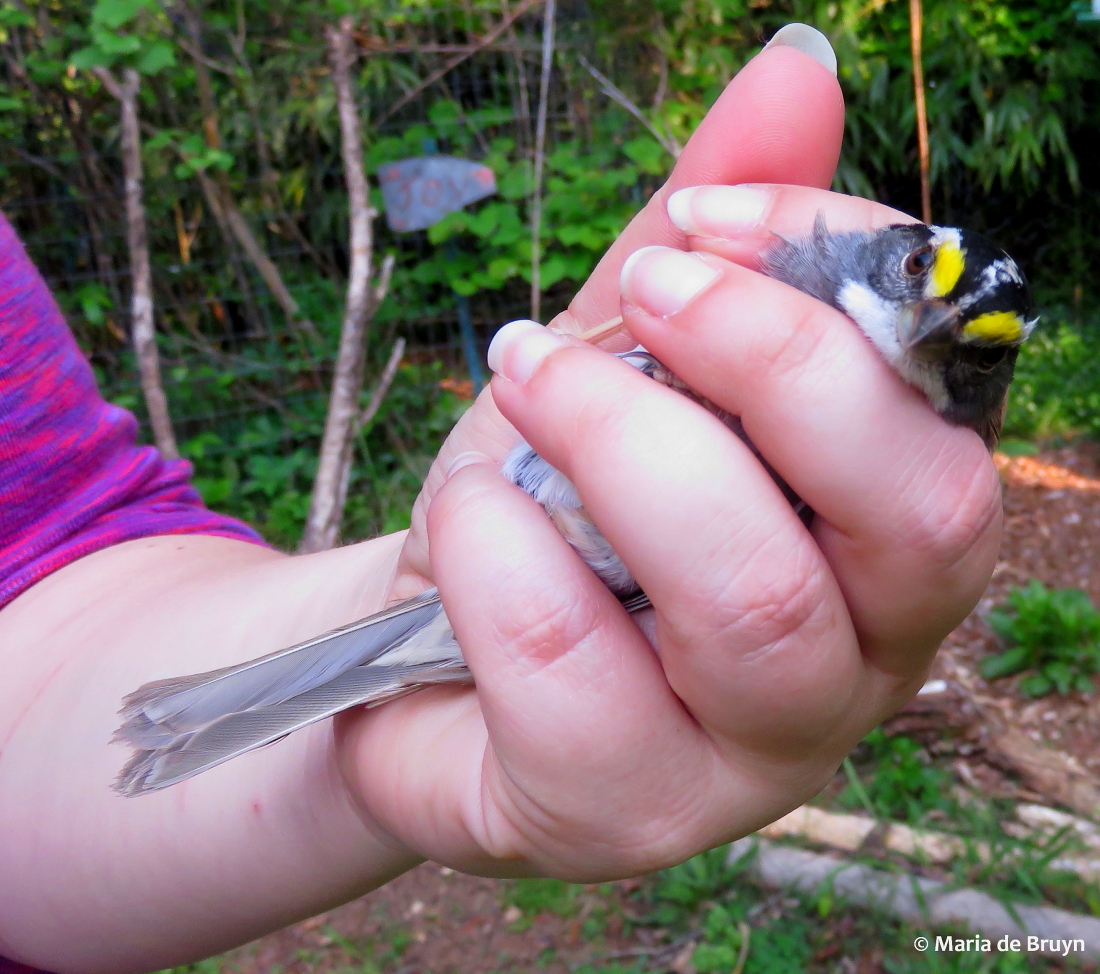
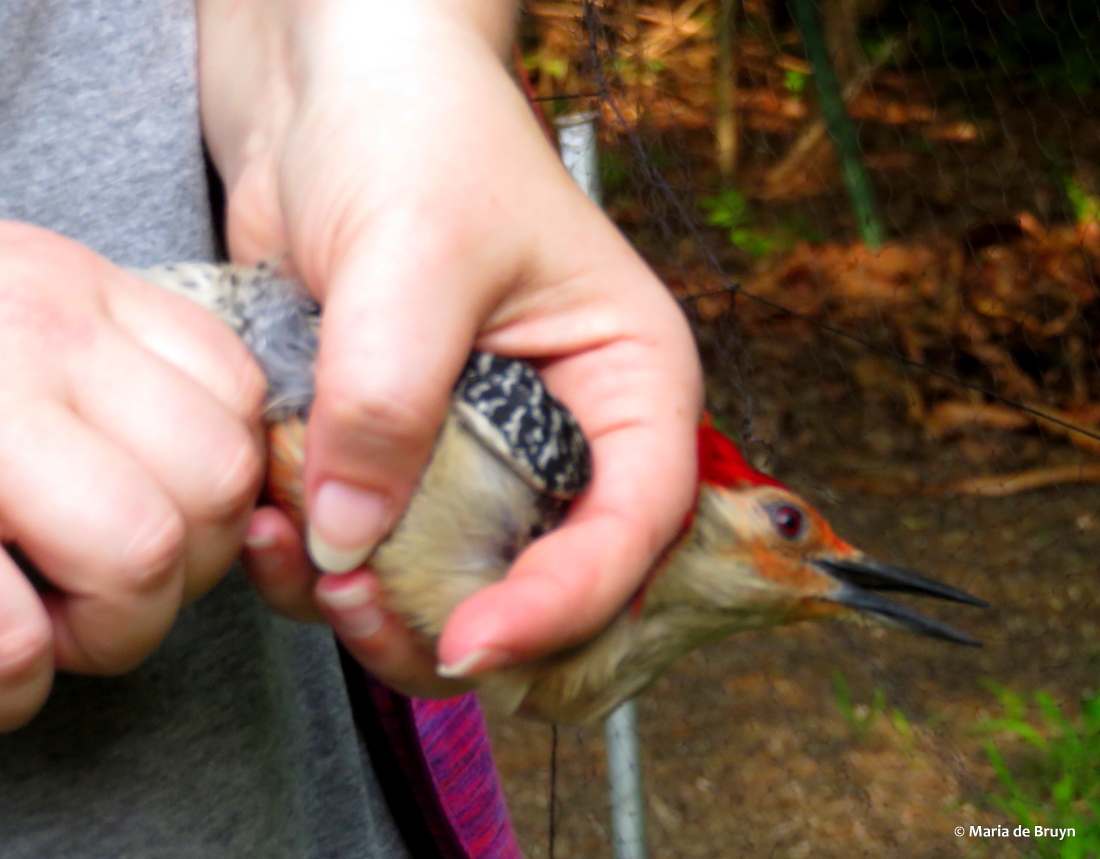
A few birds not targeted for the study ended up tangled in a net. A white-throated sparrow (Zonotrichia albicollis) had beautiful vivid breeding colors on his head. A red-bellied woodpecker (Melanerpes carolinus) was not calm like the sparrow, fluttering his wings constantly as Alicia, the bird bander, got him loose.

white-throated sparrow IMG_3837© Maria de Bruyn res red-bellied woodpecker IMG_3822© Maria de Bruyn res

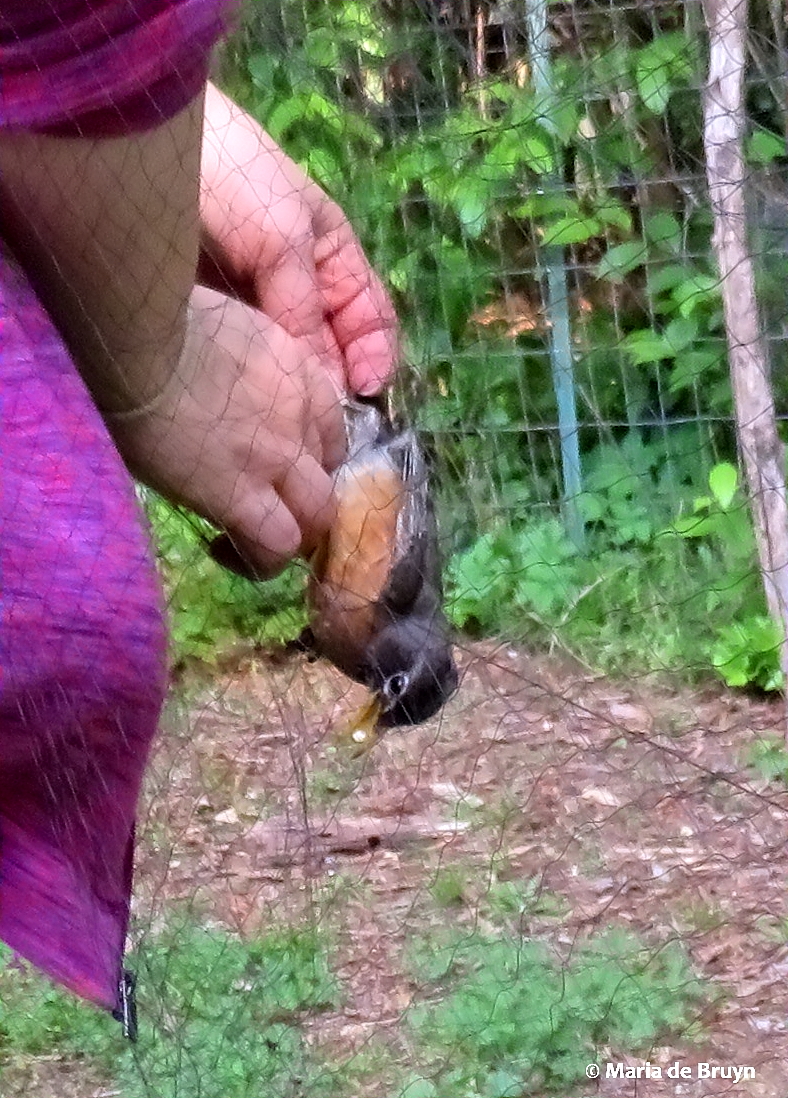
Next up were a male cardinal and a female American robin. Like last year, the birds were measured and weighed. Although about the same length, the weight difference between the heaviest Northern cardinal we banded (41.2 oz) and the American robin was striking (79.6oz). The robin’s fondness for worms and other dietary preferences helps account for this. When I let her go, she didn’t feel very heavy in my hand as she rested a second before flying off.

American robin Raisin IMG_3854© Maria de Bruyn

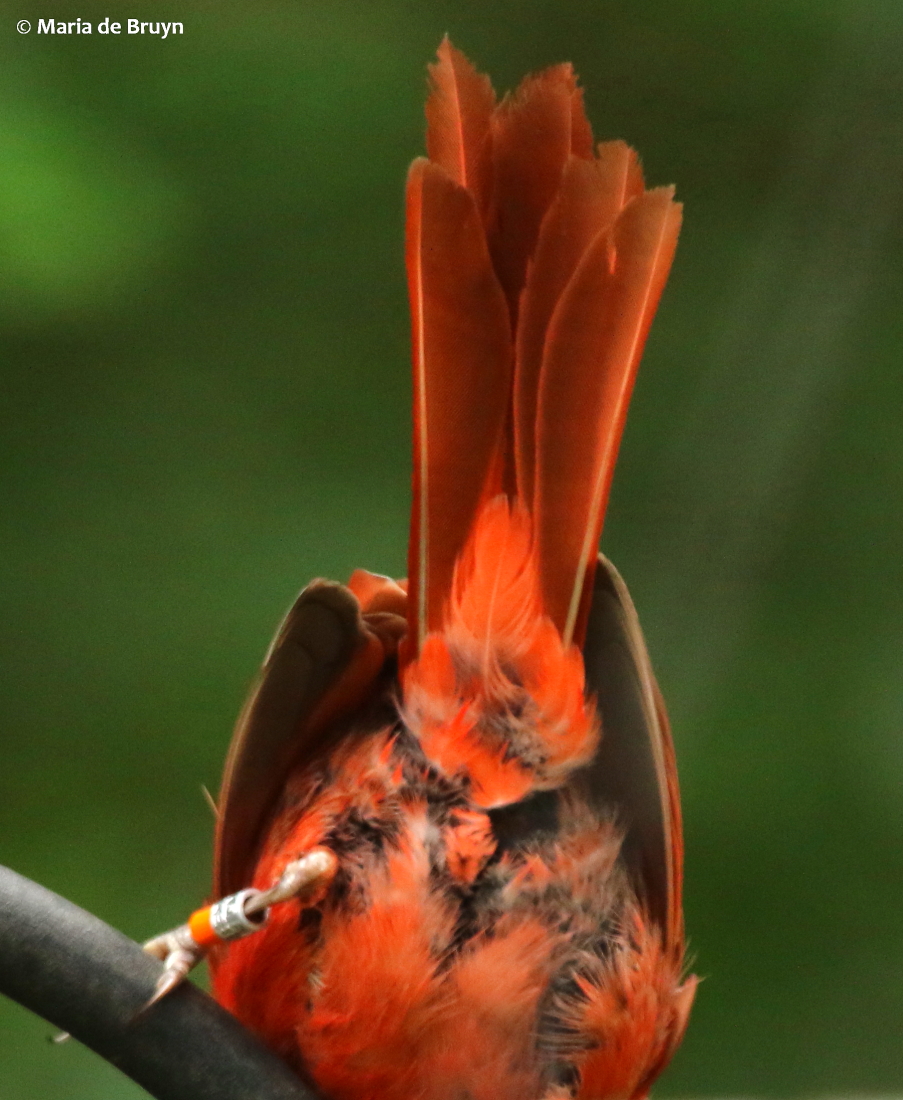
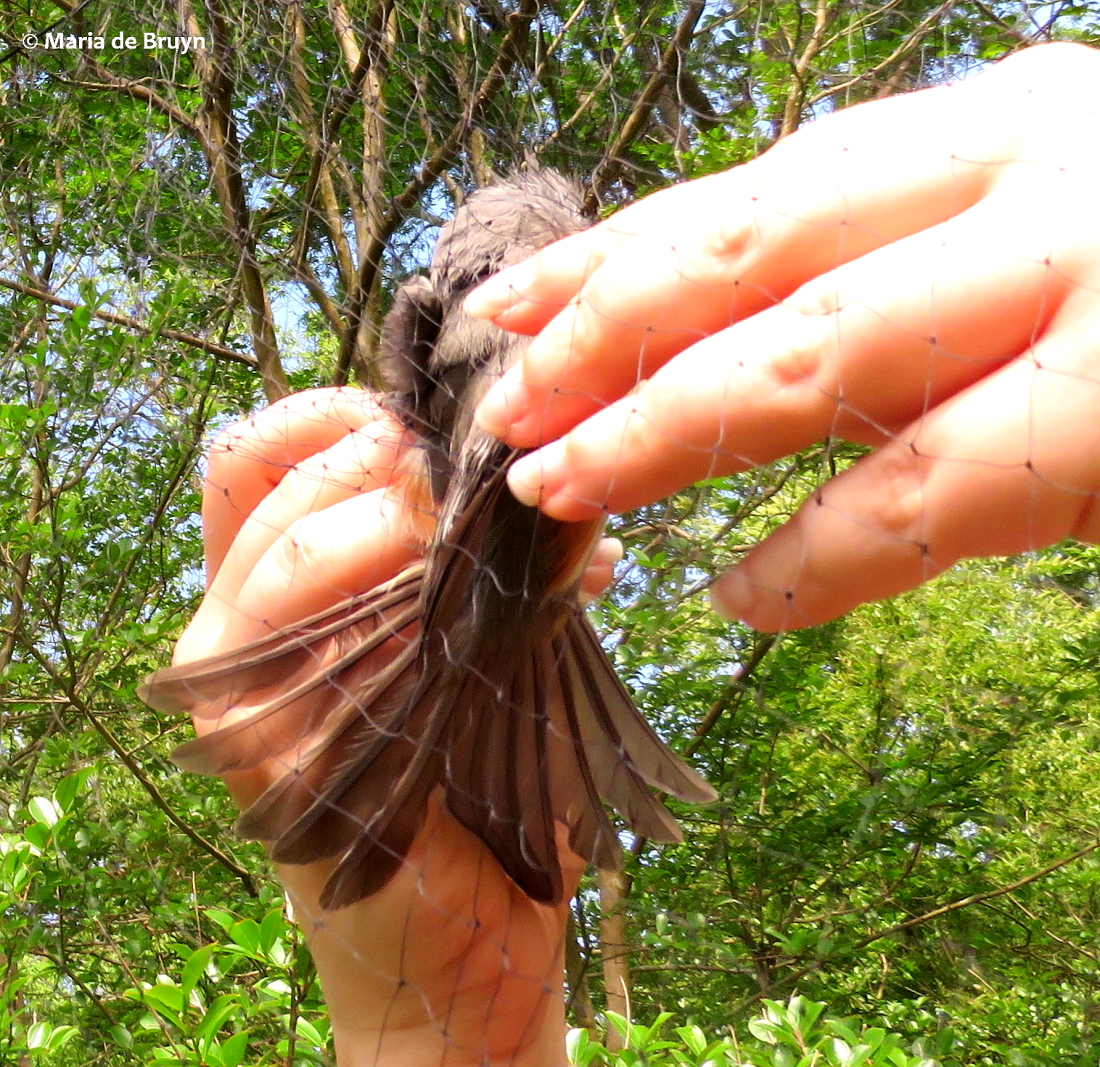
Except for birds that were molting their tail feathers, Alicia also removed the third left tail feather; this is done primarily for stable isotope analysis, which allows a researcher to estimate where the bird was when that feather was grown.

Northern cardinal Crake I77A0559© Maria de Bruyn res

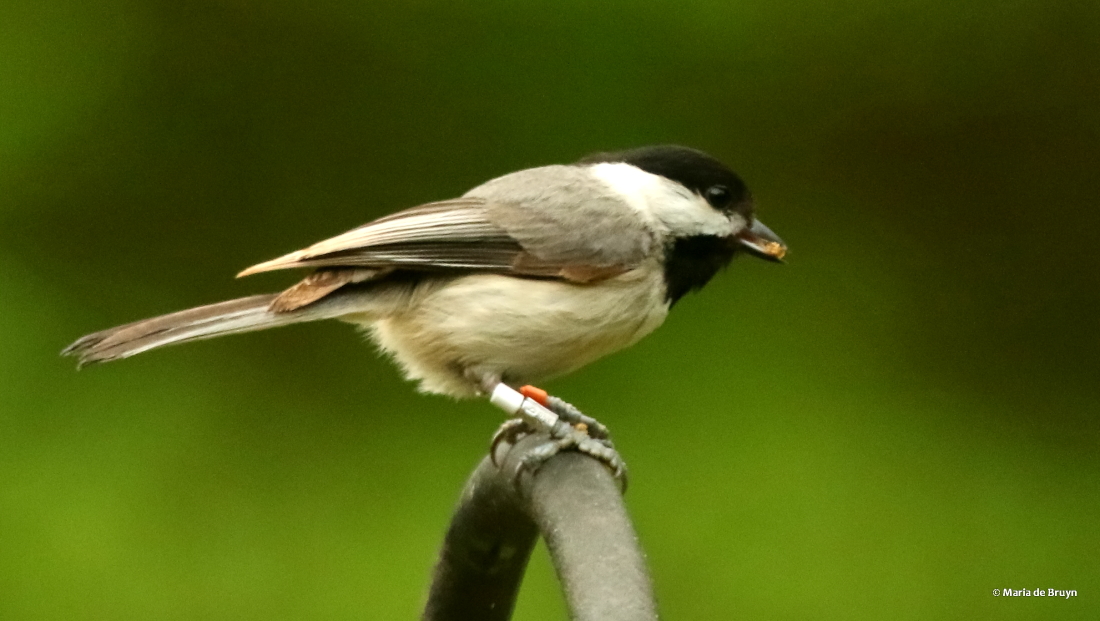
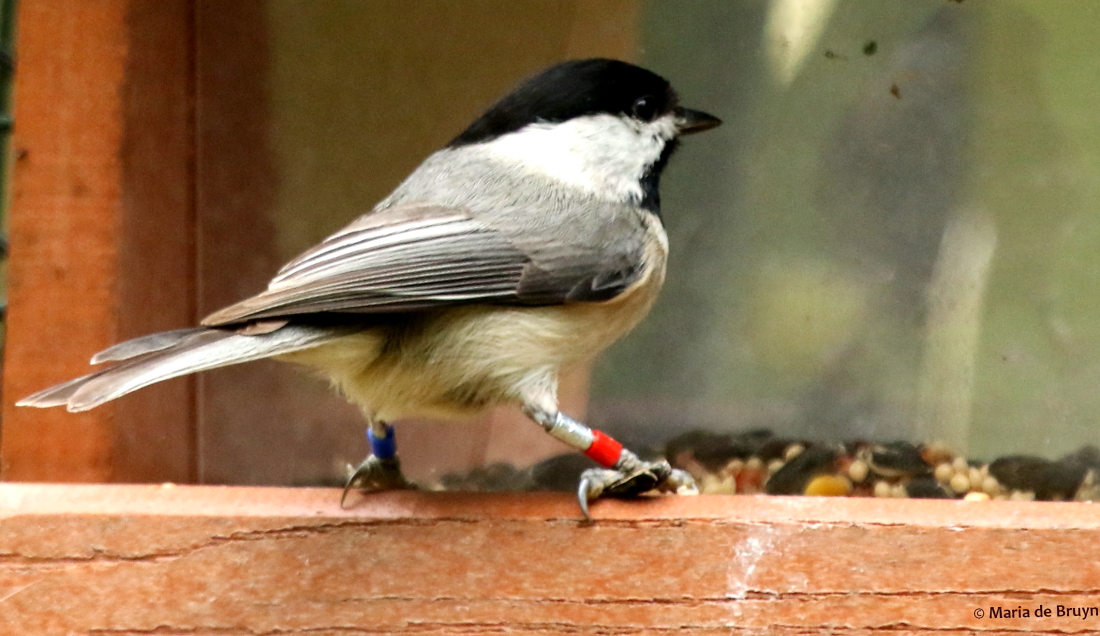
Carolina chickadee Chancey I77A7762© Maria de Bruyn resThe catbirds avoided the mist nets skillfully this year. Playback of their songs drew them to the vicinity but the two pairs visiting the feeders were more interested in chasing each other away from the territory. Alicia hoped that we could get a Carolina chickadee (Poecile carolinensis); with playback we got a male and then, 45 minutes later after banding another cardinal, we got a pair of them.

Carolina chickadee Chase I77A0348© Maria de Bruyn res Carolina chickadee Chantal I77A9525© Maria de Bruyn res

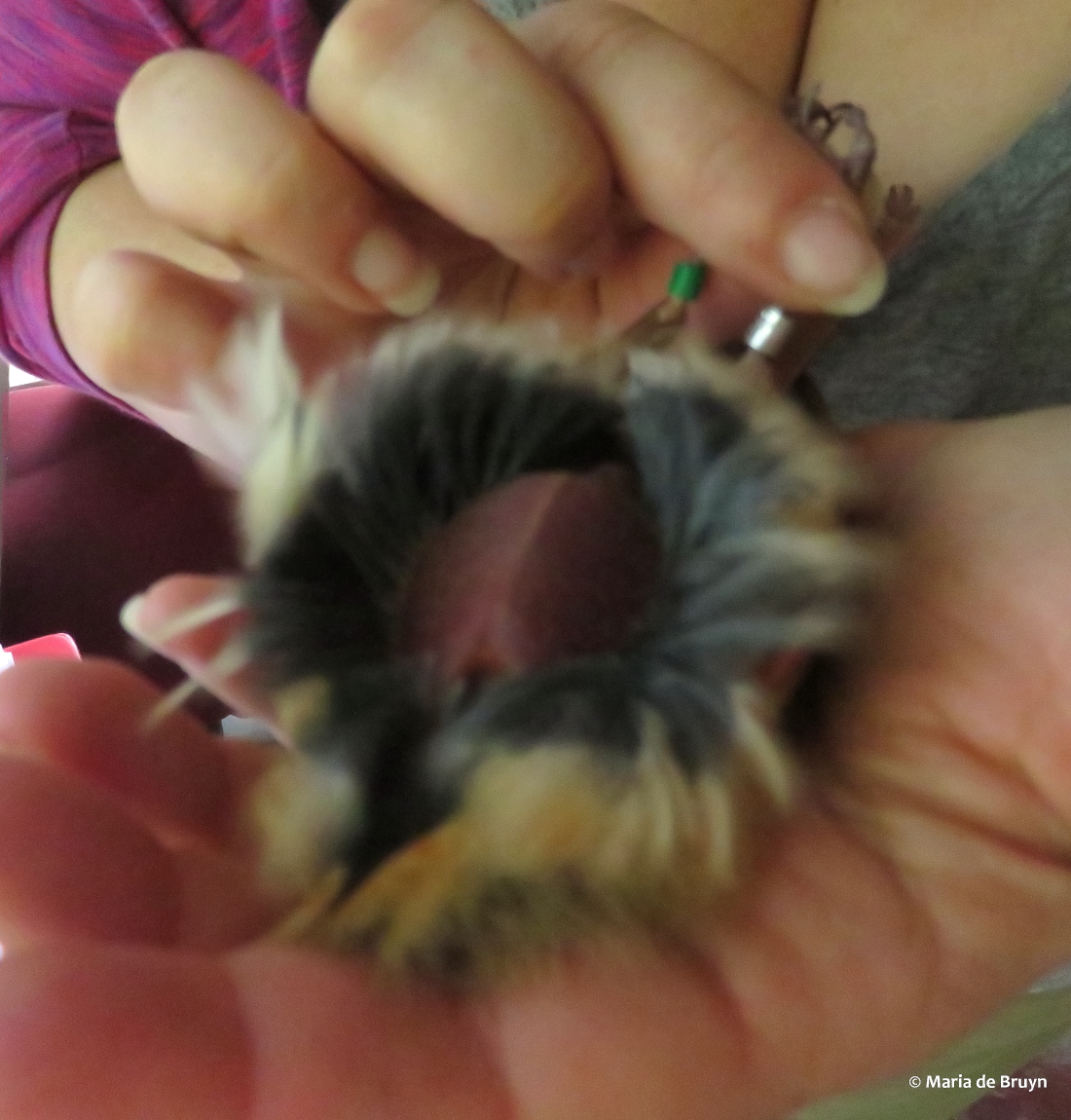
Alicia blew on the birds’ undersides (forgive the blurry photo) to assess fat reserves, which are stored along the flanks and up near the furcula by the collar bone. She could also determine sex that way and thought that one chickadee might be developing an egg – hopefully, one of the females who lost a nest to predators in my yard a week ago. The last male chickadee released was out of sorts after the experience; before leaving my hand to fly off rapidly, he turned and bit me as a parting shot.

Carolina wren Renee IMG_3813© Maria de Bruyn res Carolina chickadee IMG_3856© Maria de Bruyn res

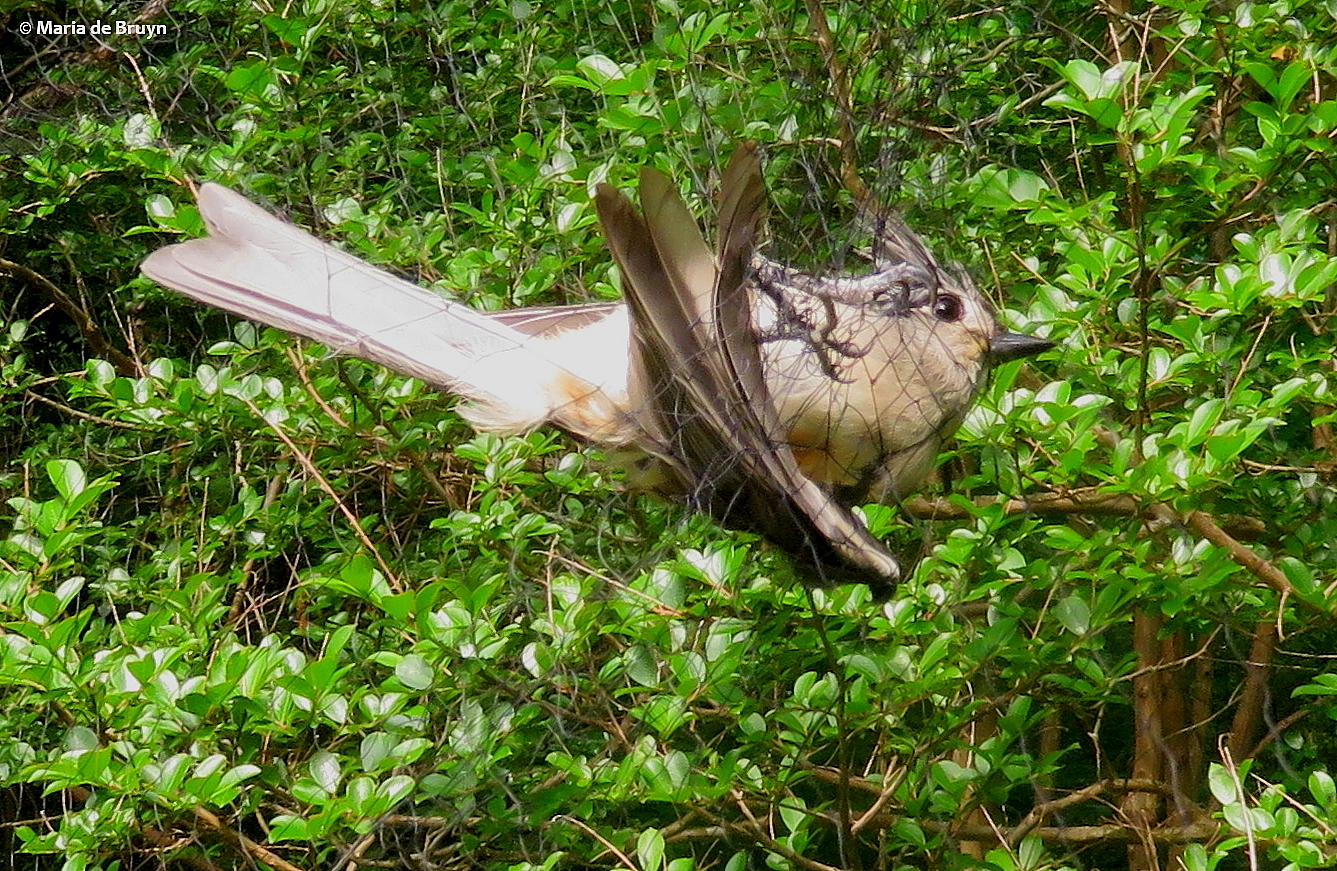
Alicia had remarked that she hoped no tufted titmouse (Baeolophus bicolor) would be caught; they are not part of the study and she said they are so feisty that their bites can be a bit painful like those of the cardinals. Unfortunately, one leaving a feeder did end up in a net and lived up to its reputation as a feisty bird. A chipping sparrow (Spizella passerina), who was the last bird in a net remained fairly calm as the net was removed from its claws.

tufted titmouse IMG_3858© Maria de Bruyn res

Tufted titmouse IMG_3861© Maria de Bruyn res

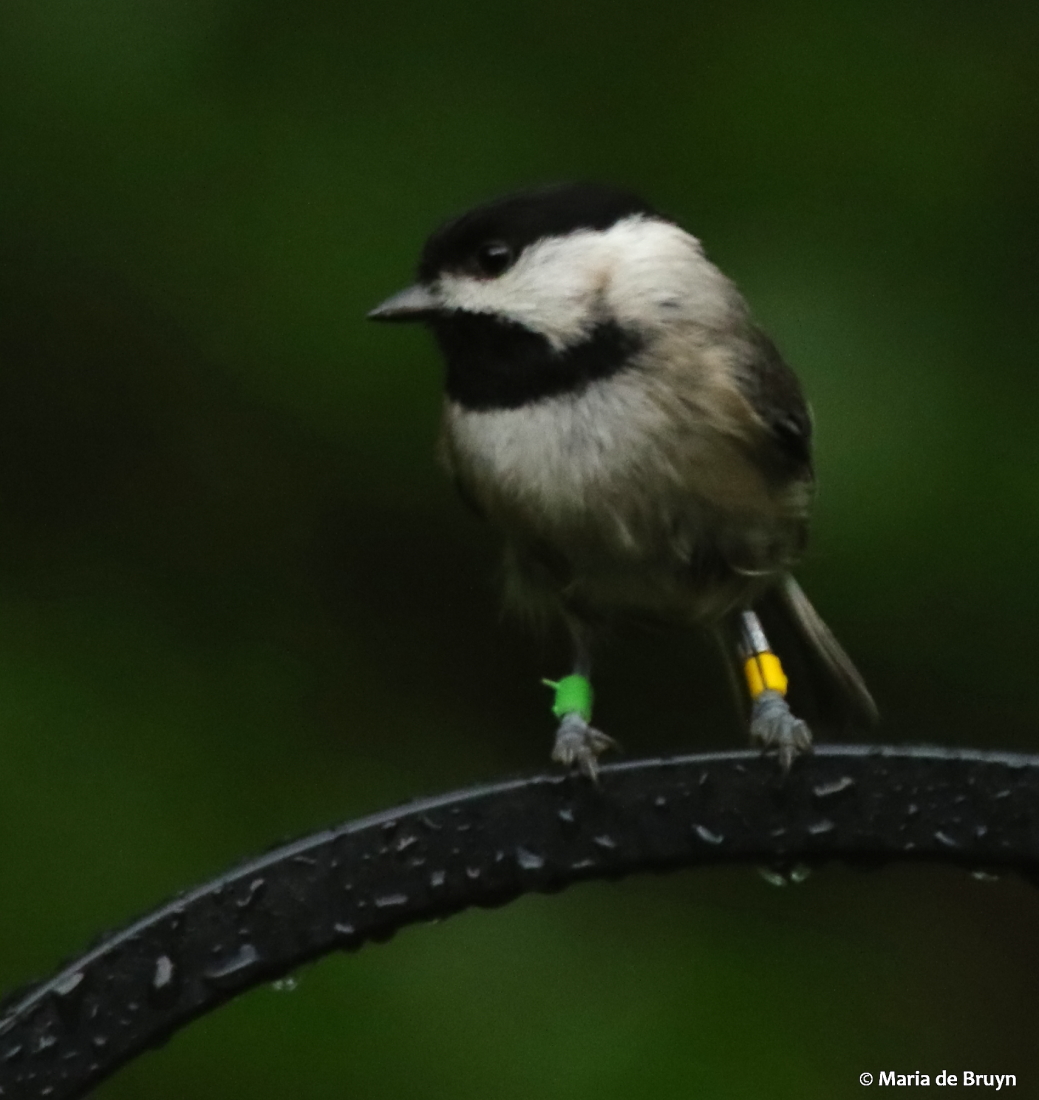
Yesterday, I spent some time watching the feeders and yard to see if all the banded birds had left. Luckily, some of them showed up and were here again today. So here are a few of “my birds” with bling – this is a truly enjoyable citizen science project. 🙂

Northern cardinal Clarence I77A0124© Maria de Bruyn res Northern cardinal Crake I77A0593© Maria de Bruyn res

Clarence                                                                       Crake

Carolina wren Renee I77A9354© Maria de Bruyn resCarolina wren Riley I77A0508© Maria de Bruyn res

Renee and Riley Carolina wrens


Water-logged and soggy birds

Carolina wren I77A2794© Maria de Bruyn resMy original intent was to write only one more blog this year, but our current weather has induced me to write two (the other will follow on the last day of 2015). During the past week, our region has had more than our “fair share” of rain. Fortunately, the house is not downstream or downhill of flowing water so that flooding is not a concern (and having helped my parents when their home was flooded with about 5 feet of water, I know that is a real pain to say the least). But the yard is so water-logged that small pools of water are scattered in many places and the ground cover squishes when we walk on it. Combined with very high temperatures for this time of year, it seems that El Niño is really making itself known – and the birds like this Carolina wren (Thryothorus ludovicianus) must be getting tired of being water-logged as well!

Sayings such as “like water off a duck’s back” imply that birds don’t really get bothered by water pouring from the heavens, but that is probably only partly true. During recent downpours, I saw – through the back porch screen – a Carolina wren and Northern cardinal (Cardinalis cardinalis) hanging out on a downspout under the house eaves, while a brown-headed nuthatch (Sitta pusilla) clung to the brick wall under the roof overhang to get out of the rain.

brown-headed nuthatch I77A0090© Maria de BruynNorthern cardinal I77A0101© Maria de Bruyn res

Birds that regularly dive underwater do have denser feathers, which helps prevent water from penetrating through to their skin, as is the case for this Canada goose (Branta canadensis).

Canada goose I77A1169© Maria de Bruyn res

But birds’ feathers are not inherently waterproof – when we see water droplets beading on their backs and tails, as in the case of this brown thrasher (Toxostoma rufum) and blue jay (Cyanocitta cristata), it’s because the birds have made them water-resistant to some extent.

Blue jay I77A3141© Maria de Bruyn resbrown thrasher I77A9881© Maria de Bruyn res

This happens in two ways. On the one hand, birds such as pigeons, herons, hawks and owls have special feathers called “powder downs” or “pulviplumes”, which are covered in a dusty powder containing keratin that disintegrates and becomes a waterproof coating. They spread the powder to other feathers while preening.

Great blue heron I77A1220© Maria de Bruyn res

Great blue heron (Ardea herodias)

brown-headed nuthatch I77A0090© Maria de Bruyn resOther birds have a uropygial (preen) gland located at the base of their tails. It produces a substance containing oil and wax that the birds spread on their feathers when they groom. Often, they will rub their head against the preen gland and then spread the oil by rubbing their head against other feathers, a behavior that this female red-winged blackbird (Agelaius phoeniceus) seemed to be doing when she was grooming. The wax then helps make the feathers more flexible and water-resistant, which explains the water beads we see on their feathers when it rains.

dark-eyed junco I77A4085© Maria de Bruyndark-eyed junco I77A9650© Maria de Bruyn res

Dark-eyed junco (Junco hyemalis)

Eastern towhee I77A9682© Maria de Bruyn res Pine warbler I77A9921© Maria de Bruyn res

Eastern towhee (Pipilo erythrophthalmus)

     Pine warbler (Setophaga pinus)

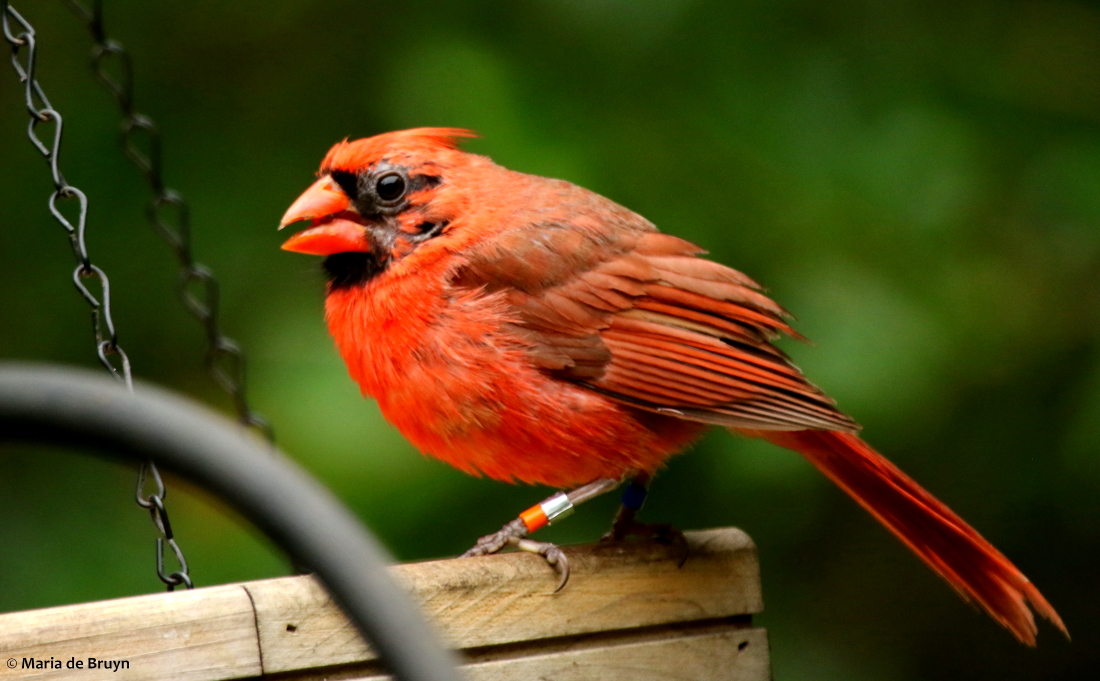
It may be that some birds are less successful in spreading the powder and wax to their head feathers, or they rub all the oil or powder off their heads onto other feathers. This may account for the “bad hair day” look some of them get when it rains for hours on end. These spiky “Mohawks” often appear in Northern cardinals and Eastern bluebirds (Sialia sialis).

Northern cardinal I77A9734© Maria de Bruyn res Northern cardinal I77A9870© Maria de Bruyn res

Eastern bluebird I77A9717© Maria de Bruyn resEastern bluebird I77A9710© Maria de Bruyn res

Other birds seem to especially get soggy feathers on the crowns of their heads just above their eyes. This may be why we see so many of them shaking their heads vigorously to get rid of the dampness on their pates.

Pine warbler I77A9942© Maria de Bruyn res White-throated sparrow I77A2980© Maria de Bruyn res

Pine warbler                                              White-throated sparrow (Zonotrichia albicollis)

Red-bellied woodpecker I77A9724© Maria de Bruyn res


And some birds just get an overall scruffy look when it rains hard, like this red-bellied woodpecker (Melanerpes carolinus).


Eastern bluebird I77A0155© Maria de Bruyn resThe water-logged look does seem to give some birds an angry or disgruntled appearance; I can certainly sympathize since endless days of rain – even in warmer temperatures – is one of my least favorite types of weather. It seems that overcast days and showers are continuing in our local forecast for some time to come. So the poor birds have to put up with the wet weather a while longer. We’ll all appreciate the sunlight when it comes back in force – hopefully soon!