Maintaining culture through plants

Burmese farmer IMG_5217© Maria de Bruyn resChapel Hill’s largest refugee community comprises three ethnic groups who fled the country of Myanmar (Burma); a number of them lived in refugee camps in Thailand before they came to the USA. Some 30 of these families have been receiving assistance since 2010 at the Transplanting Traditions Community Farm, through which they are able to grow many of the plants on which they relied as farmers in their home country. The gardens they maintain not only help feed members of their families and community, but also enable them to maintain some of their original culture through dietary customs. The farm also helps the families earn an income through the crops they sell via farmers’ markets and a community supported agricultural (CSA) project wherein customers commit to buying a box of vegetables from them every week.

IMG_5230© Maria de BruynThis evening, the Community offered the general public a chance to tour their gardens and sample some of their traditional dishes, a delightful experience to be sure. When I arrived for the event, I first toured one of the plots with shared vegetable gardens. What first struck me was the large number of birds that were in the garden, including American goldfinches (Spinus tristis), chipping sparrows (Spizella passerina), ruby-throated hummingbirds (Archilochus colubris) and great-crested flycatchers (Myiarchus crinitus) among others.

American goldfinch IMG_5117© Maria de Bruyn res

chipping sparrow IMG_5063© Maria de Bruyn res flycatcher IMG_5075© Maria de Bruyn res

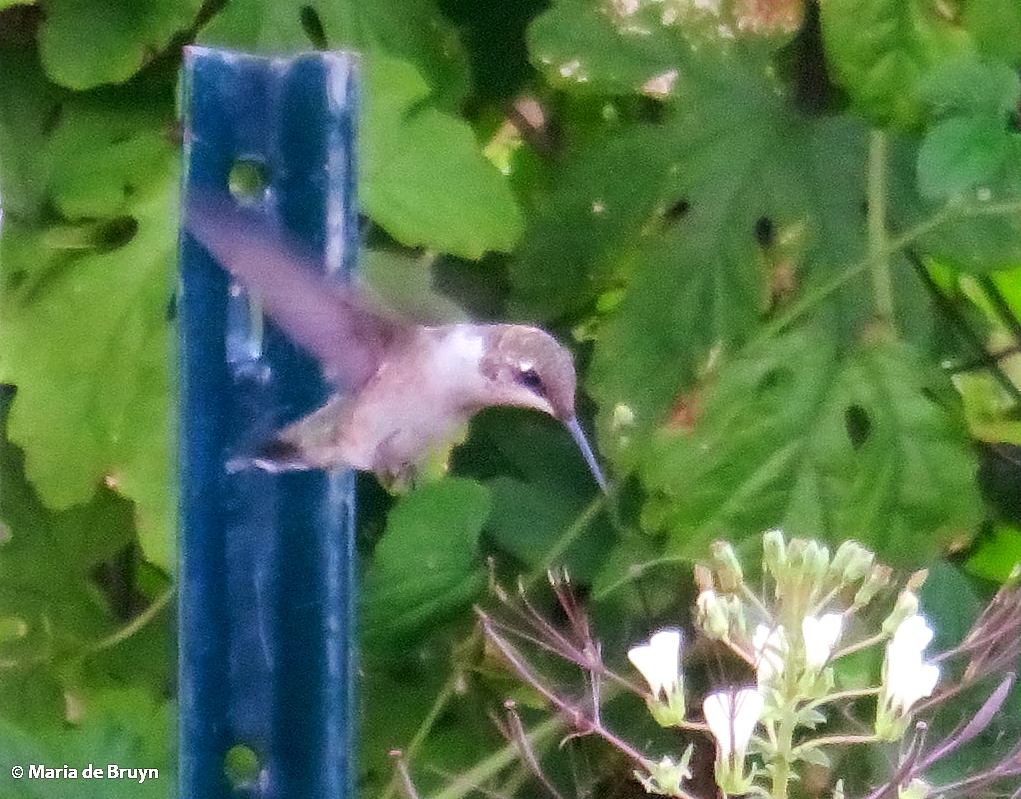
ruby-throated hummingbird IMG_5088© Maria de BruynThe air was alive with bird calls and song and as dusk fell, you could see the birds flitting from ground to plant to plant. Butterflies, like this red-spotted purple (Limenitis arthemis astyanax), were also flying about the garden, which had a mix of full-grown vegetables and blossoms promising more crops to come.

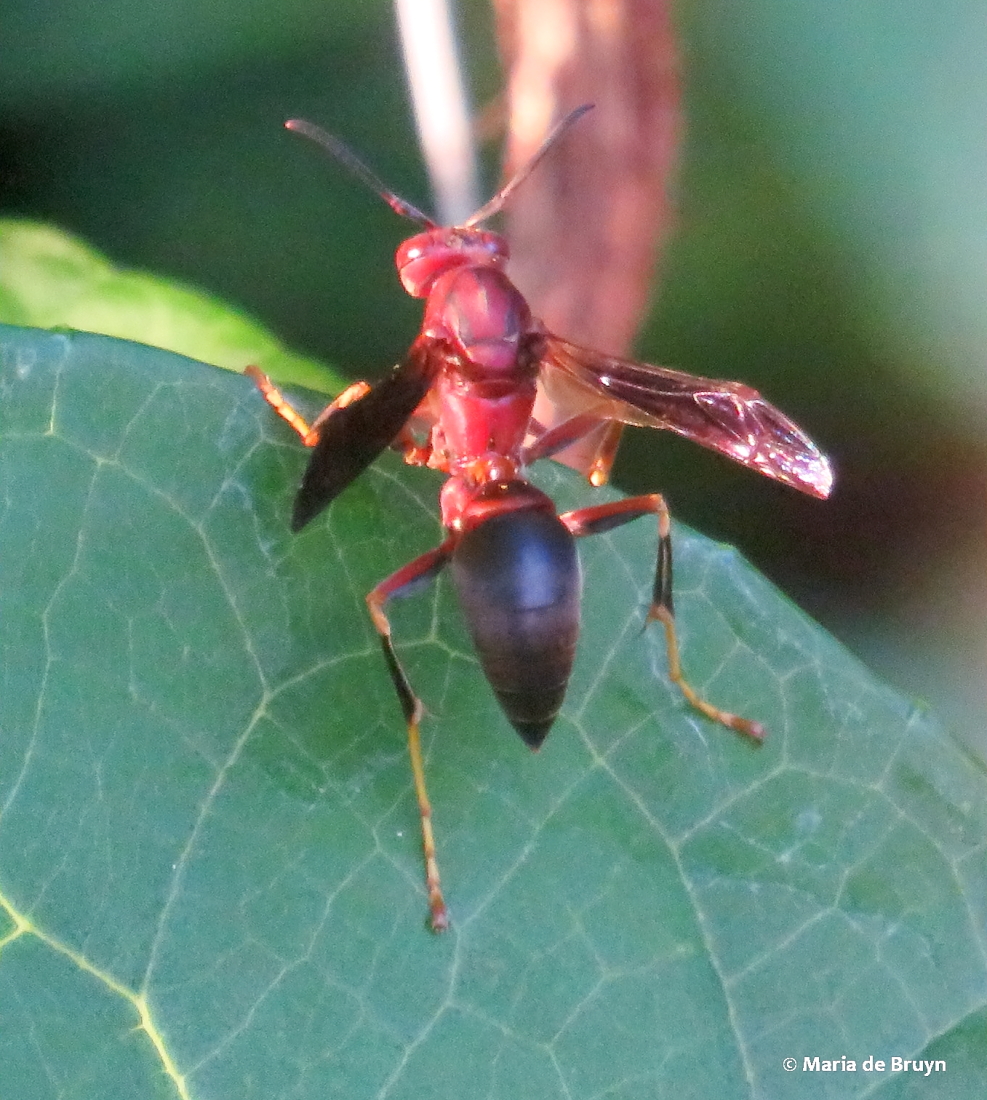
Paper wasps (Polistes) and other insects were also plentiful.
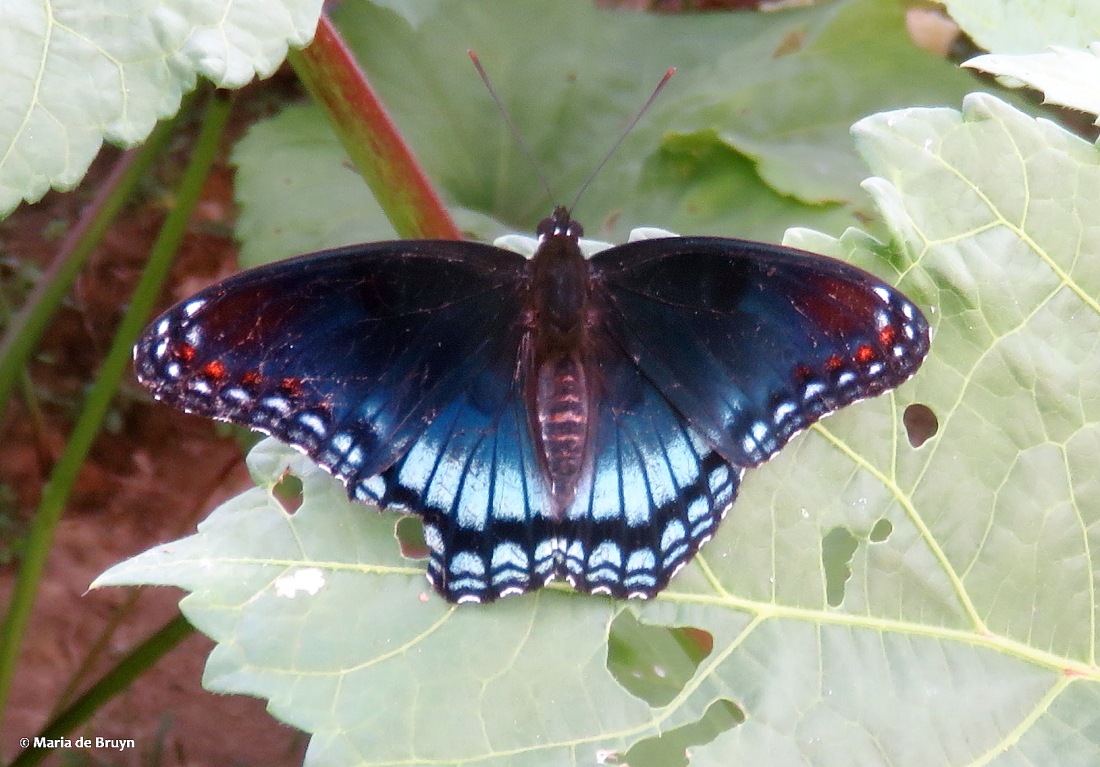
red-spotted purple IMG_5151© Maria de Bruyn res Paper wasp IMG_5182© Maria de Bruyn res

squash IMG_5095© Maria de Bruyn res vegetable blossom IMG_5065© Maria de Bruyn res

The event was co-sponsored by The Conservation Trust for North Carolina, Orange County Partnership for Young Children, and Triangle Land Conservancy, which provided the Community Farm with space in its Irvin Nature Preserve. Representatives of the organizations said a few words about their work and then we were led on a guided tour of a newer part of the Community Farm by Kelly Owensby, the Project Director, and one of the Karen teenagers participating in the project, Joe.

IMG_5194© Maria de Bruyn

We had some tasty beer, provided by a donor, and were given a bit of the Farm’s history as we walked along the path to the new section.  The 5-acre Farm is on land in the rural outskirts of Chapel Hill and, while it is a wonderful site on this 269-acre Preserve, it is not served by public transportation, a circumstance that has made it impossible for some refugee families to participate in the project. The 30 families that have managed to get there daily, in addition to their regular jobs, have made over $125,000 over the past three years with their produce sales.
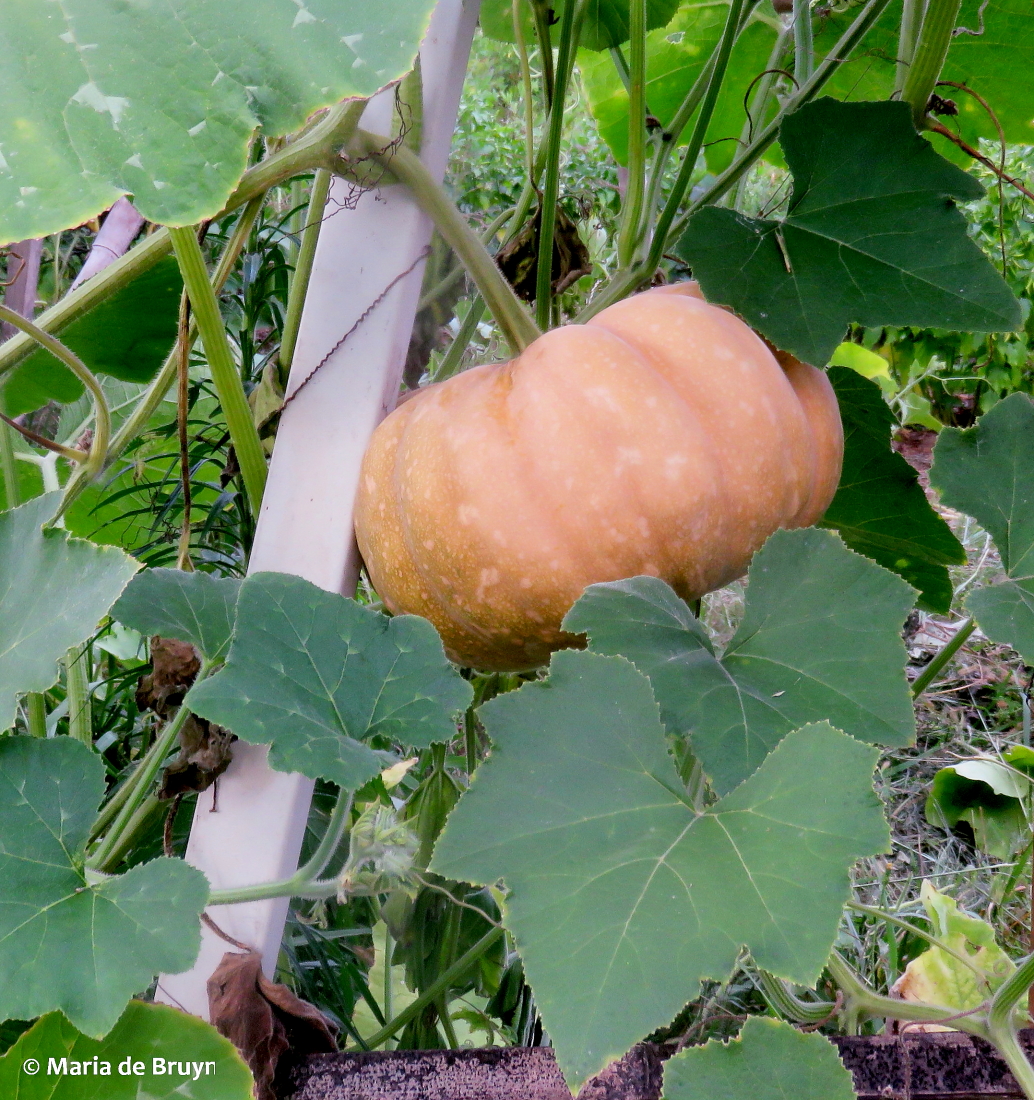
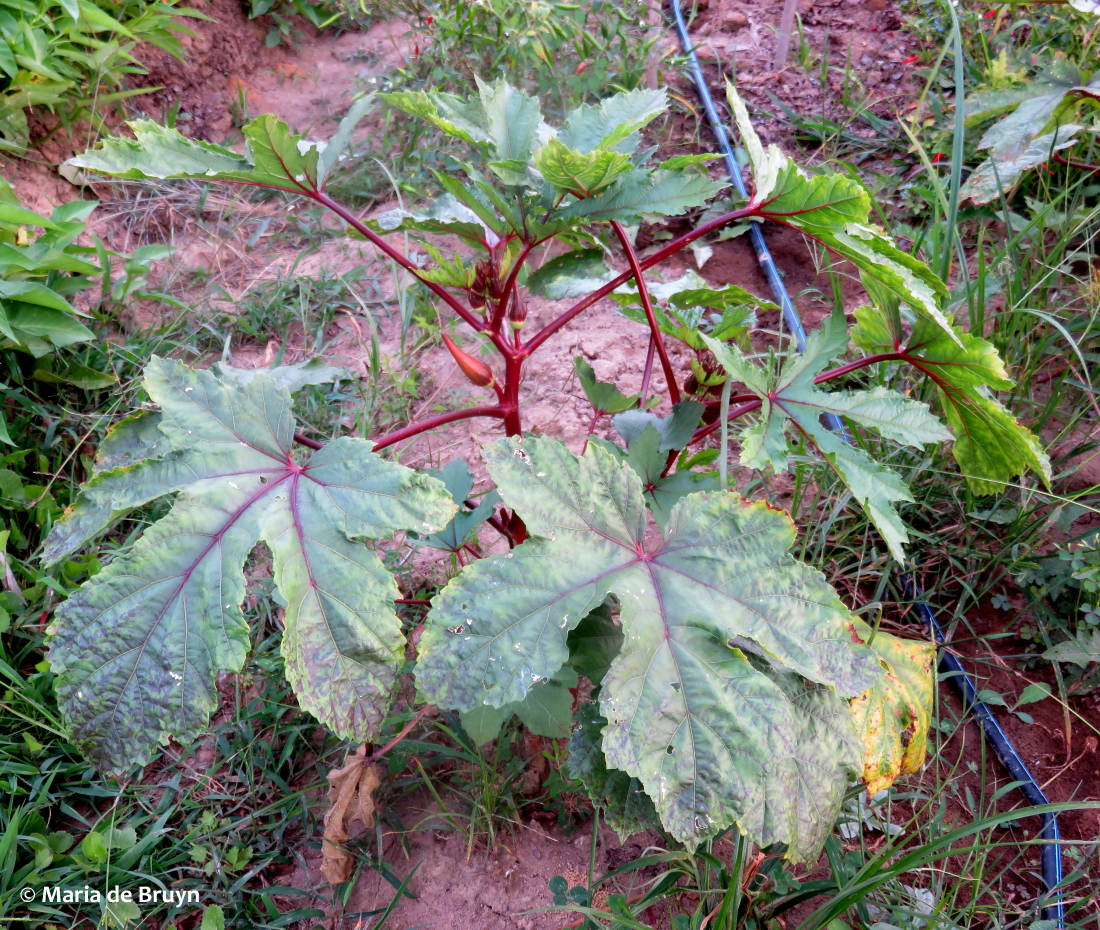
pumpkin IMG_5070© Maria de Bruyn resKaren plant IMG_5139© Maria de Bruyn res

Joe told us about a Karen holiday that are celebrated by these ethnic families here in North Carolina. The wrist-tying ceremony recalls how the Karen people fled through Mongolia a long time ago; elders bind the wrists of young people by winding white thread around them three times wound three times with white string, which wards off misfortune and evil.

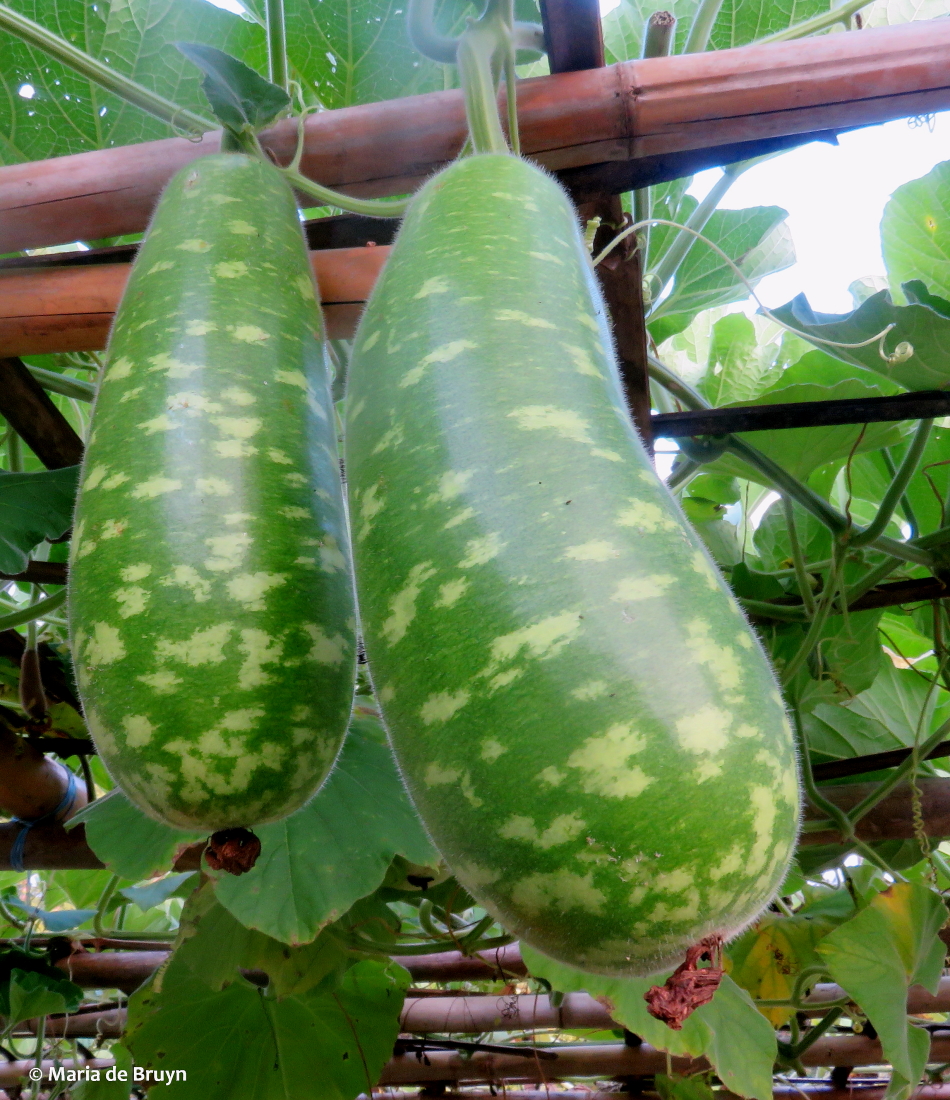
Papaya IMG_5176© Maria de BruynThe farmers grow some 40 plants native to Burma. These plants need to be re-planted from seeds each year since the North Carolina climate is too cold in winter for them to survive as perennials. The papayas don’t bear fruit but the Burmese refugees use their leaves in various dishes. Some of the native plants include gourds, turmeric, bitter melons, ginger, taro root, medicinal herbs and lemongrass. Plain green gourds could be seen hanging near spotted water gourds.
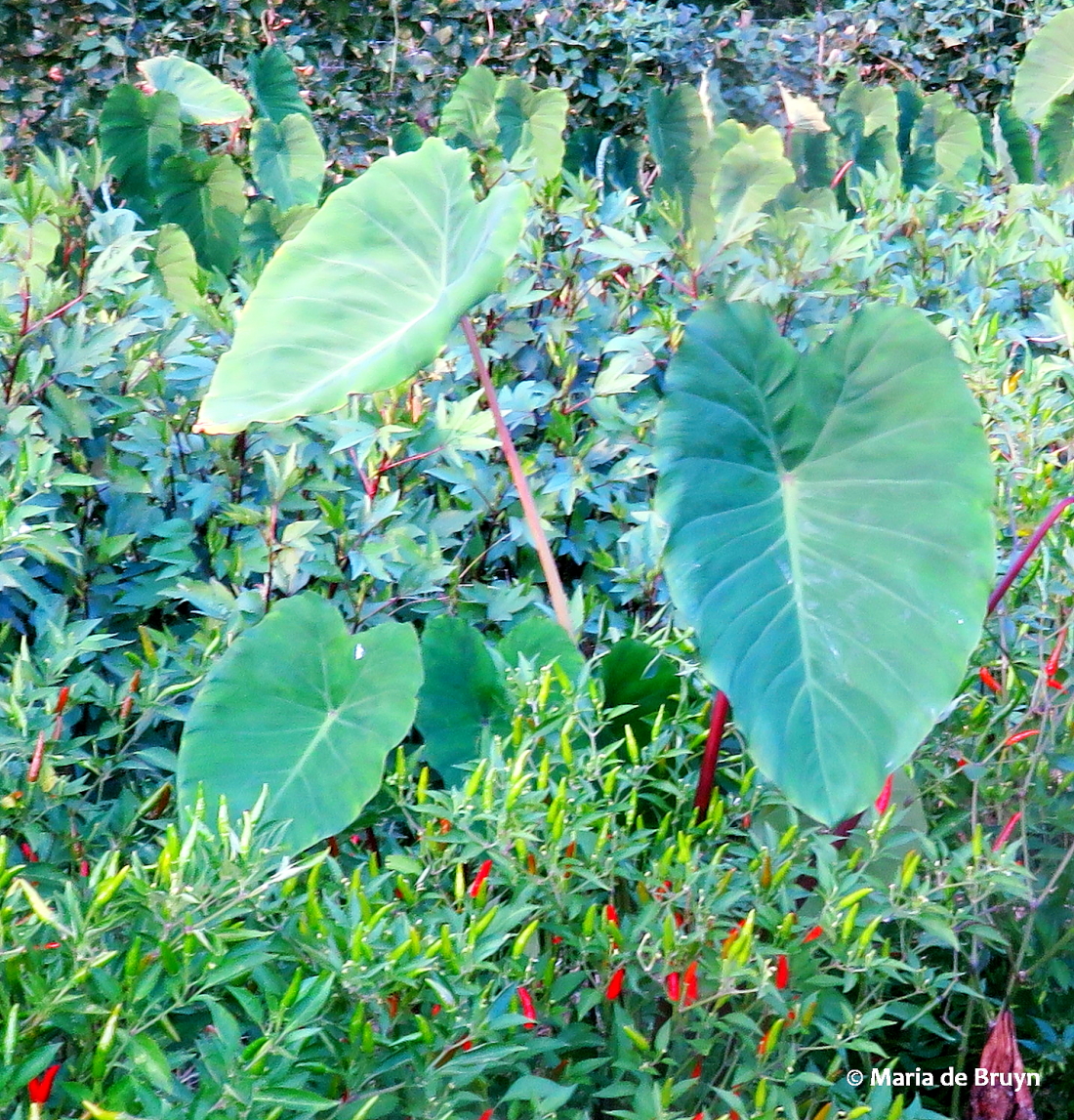
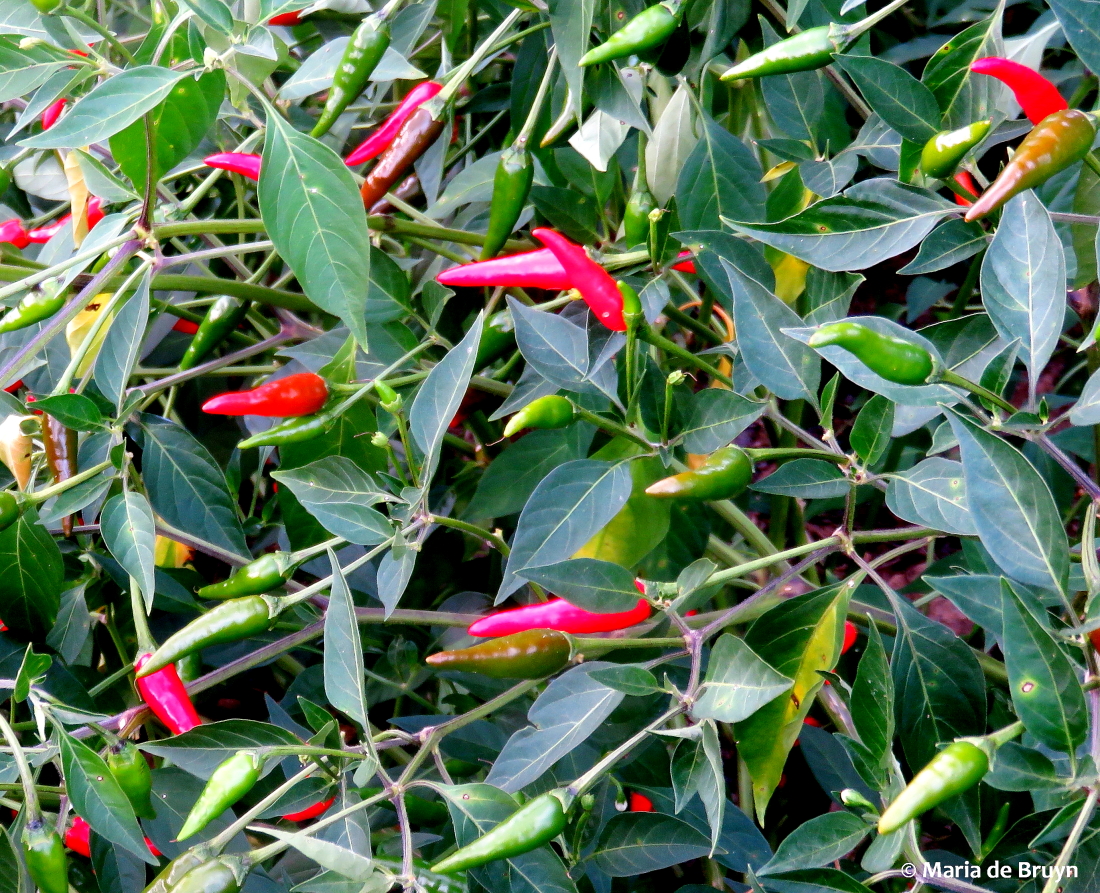
taro IMG_5201© Maria de Bruyn respepper IMG_5115© Maria de Bruyn res

gourd IMG_5211© Maria de Bruyn res water gourd IMG_5204© Maria de Bruyn res

Sesame IMG_5187© Maria de Bruyn resOne female farmer had begun growing sesame seed, a crop she had had in her native country and which she was very glad to be growing here. The bamboo trellises are commonly used to suspend gourds and provide shade for crops that need protection from constant sun such as ginger and turmeric.


The farmers are also growing plants native to North Carolina, such as okra.

okra IMG_5199© Maria de Bruyn res

IMG_5231© Maria de Bruyn


Burmese vegetables IMG_5219© Maria de Bruyn resBurmese meal IMG_5229© Maria de Bruyn res

The okra featured alongside water gourd and ridge gourd as part of our meal appetizer of vegetable tempura. We were also treated to a delicious soup incorporating okra along with lemon grass and shitake mushrooms, a delicious and slightly spicy pumpkin curry and a salad with some bitter elements that went well with the other dishes.

gourd IMG_5113© Maria de Bruyn res Karen plant IMG_5156© Maria de Bruyn res

I had told four people about this opportunity to sample Karen and other Burmese cuisine but none of them came; they missed a really delicious meal! I hope many more people attend the evening next year.

Communal nesting – the rookery at Sandy Creek Park

great blue heron DK7A5496© Maria de BruynUnlike Eastern bluebirds (Sialia sialis) and other songbirds, great blue herons (Ardea herodias) like to build their nests near one another, forming what is called a rookery, or colony of nests. The nests are often seen in the tops of tall trees and comprise large twigs and branches that surround grass, leaves and moss. As many as 135 nests have been counted in a rookery, but the one at Sandy Creek Park that I visited this spring had three nests.

The herons return to the nests for several years running. Each year, the males re-furbish the nests in order to attract a mate.

great blue heron DK7A7297©Maria de Bruyn great blue heron DK7A7367©Maria de Bruyn

You can see the nests well with binoculars from a walking path, but as I have no binoculars and rely on my camera’s zoom lens, I slogged through forest and marshy terrain on numerous occasions to get close to the pond that had their rookery pine trees on the other side. They were still a bit out of range for my lens, but occasionally I managed to get a half-way decent shot, which encouraged me to return often to follow the nestlings’ progress.I followed them from 8 March through 26 June.

great blue heron DK7A5924© Maria de BruynGreat blue heron DK7A3689© Maria de BruynThe top nest in an open-to-the sky tree appeared to have four babies, while the nest below it had three.

A nest in a tree to the right, which had much more dense foliage, seemed to be occupied by only one or two babies.

great blue heron DK7A6005© Maria de Bruyn

There were always 1-4 adults around, including both parents on the nest and “guards”, who took up posts atop nearby trees to watch the nearby skies. This is one reason for the rookeries; the herons want to ensure that there are adults around to protect the nestlings from predators, which include raccoons, crows and hawks, such as this red-shouldered hawk (Buteo lineatus) that was hanging around the nests one day.

red-shouldered hawk DK7A7354© Maria de Bruyn red-shouldered hawk DK7A7371© Maria de Bruyn

great blue heron DK7A6601© Maria de BruynGreat blue heron DK7A3495© Maria de Bruyngreat blue heron DK7A8238© Maria de Bruyn resThe parents feed their young by regurgitating food and the young birds get excited when a parent returns after being away for a time.

The nestlings make quite a lot of noise squawking loudly while they jostle to get first in line for the meal.

great blue heron DK7A3743© Maria de BruynThe young herons appear to “argue” with one another with loud calls and it seemed that they “jousted” with one another using their beaks.

great blue heron DK7A3735© Maria de Bruyn

Weaker chicks may miss out on getting enough food and can die of starvation, but that didn’t happen at the Sandy Creek rookery. Some chicks were obviously larger and stronger than others, but even the smallest fledglings survived.As they grew, the babies began standing tall and walking around the nest.

great blue heron DK7A8283© Maria de Bruyn Great blue heron DK7A3638© Maria de Bruyn

great blue heron DK7A9348© Maria de BruynWhen they were close to fledging, they stood near the edge of the nest and practiced spreading and flapping their wings. Sixty days after hatching (much longer than smaller birds!), the young herons were ready to fly and began taking short flights to nearby trees, before venturing out on farther trips. great blue heron DK7A8960©Maria de BruynThe young ones will not breed until they are two years old.

Watching events unfold at the rookery was a new past-time for me this year and likely one I’ll repeat in the future. If you have time and the opportunity, I’d recommend the experience!

New bird generations emerge in my yard!

This spring and summer, I’ve had the pleasure of watching various species of birds in my yard care for new offspring until they have fledged (left the nest). My most recent observations came today as I watched three hatchlings jump bravely into their wide new world. This blog will introduce you to some of my new neighbors; two blogs to follow will go back in time to spring and early summer to describe some nesting I witnessed in local parks and reserves.

gray catbird IMG_3888© Maria de BruynA dense privet tree next to my carport offered a pair of gray catbirds (Dumetella carolinensis) space to construct a well-hidden nest. I discovered it was there because the parents suddenly began yelling at me loudly whenever I left the carport to walk into the yard and then a bird bander who was visiting managed to locate the nest, which was about 8 feet up so I couldn’t see the eggs in it.

I kept an eye on the shrub and saw the parents were flying in with insects and emerging empty-beaked, so I knew the eggs had hatched. One day, I ventured close and peered through the privet branches and saw a couple little heads sticking up above the nest.

gray catbird IMG_3933© Maria de Bruyn res gray catbird IMG_3903© Maria de Bruyn res

A short time later, the baby birds hopped out of the nest and they stayed in the large shrub for several days as their parents continued bringing them a variety of insects.  As I mentioned in a previous blog, the parents were good providers, sometimes bringing more than one type of insect home in their beaks.

gray catbird DK7A2939© Maria de Bruyn res gray catbird DK7A2937© Maria de Bruyn res

Eastern bluebird IMG_3881© Maria de Bruyn resA pair of Eastern bluebirds (Sialia sialis) laid five eggs in a nest box in my front yard and I was able to record when all the eggs had been laid. Information provided online about time to hatching (12 to 14 days) alerted me as to when I might see newborns.  Only four of the five eggs hatched; the fifth one was broken. I also checked how long it takes for hatchlings to develop until they leave the nest – that can take 16-21 days but usually 17-18 days.

Eastern bluebird DK7A3842© Maria de Bruyn res


The bluebird parents were diligent about bringing food, mostly caterpillars and insects but supplemented by wild raspberries and dried meal worms that I had made available. It turned out this brood wasn’t too interested in the meal worms; I found a layer of them in the nest when the babies fledged.


Eastern bluebird DK7A3411© Maria de Bruyn resEastern bluebird DK7A8706© Maria de Bruyn res


Eastern bluebird DK7A3210© Maria de Bruyn resEastern bluebird DK7A8685© Maria de Bruyn res

Eastern bluebird DK7A3137© Maria de Bruyn RESClose to fledging, the parents began showing protective behavior – chasing squirrels out of the large tree in front of the nest box, flying at other birds that came too close, keeping an eye on me as I sat near the box. Mama and papa removed fecal sacs frequently, flying off with them to a considerable distance from the nest. Only once did I see a parent actually swallow the fecal sac.


Eastern bluebird DK7A3081© Maria de Bruyn resMama investigated something odd at the edge of the box one day, flying down to look closely at the gap between the box wall and door. When I looked, I didn’t see anything. She also would occasionally hover in front of the nest box opening, as if she was demonstrating to the babies what they had to do.

Eastern bluebird DK7A3149© Maria de Bruyn res Eastern bluebird DK7A3174© Maria de Bruyn res

I was lucky enough to see all four babies leave the nest. Two of them were definitely stronger than the other two, who couldn’t fly as well and who didn’t seem to have feathers that were so well developed. When I moved close to take photos, the cautious parents dive-bombed me and the young eventually moved across the street. I never saw the young ones at my feeders.

Eastern bluebird DK7A4306© Maria de Bruyn resEastern bluebird DK7A4281© Maria de Bruyn res

Eastern bluebird DK7A4489© Maria de Bruyn res Eastern bluebird DK7A4386© Maria de Bruyn res

These past few weeks, some bluebirds raised a second brood in my backyard. This nest had some history. First, three eggs were laid, with a pair of bluebirds visiting the nest occasionally. Unfortunately, one day I saw a Cooper’s hawk (Accipiter cooperii) swoop in and it looked like the raptor had caught one of the bluebirds. In any event, the eggs were abandoned. After a few weeks, I had just decided to clean out the nest with eggs when I suddenly saw another pair of bluebirds building a new nest on top of the old one. They, Eastern bluebird DK7A7145© Maria de Bruyn restoo, laid three eggs.

Using the guidance given to me by the Smithsonian Institute’s Backyard Nestwatch Project, I checked the box every three days until the eggs hatched and then every two days to check on the nestlings’ well-being.

I was surprised that the mother was not sitting on the eggs much of the time, but the local Audubon chapter president told me that when the weather is very hot, the parent will not brood because it could become too warm inside the box.

The parents were quite diligent in bringing food to the hungry babies. They occasionally visited my mealworm and suet feeders but mostly just to feed themselves. They appeared to be feeding their babies an exclusive diet of caterpillars and insects and a little bit of suet – no mealworms though.

Eastern bluebird DK7A7038© Maria de Bruyn resEastern bluebird DK7A8265© Maria de Bruyn res

Eastern bluebird DK7A8265© Maria de Bruyn res Eastern bluebird DK7A8041© Maria de Bruyn res

They were busy removing fecal sacs as well and I discovered that the baby birds actually present the sac to the parent by sticking up their behinds so the parent can pull out the sac. That made for a couple unusual photos!

Eastern bluebird DK7A8089© Maria de BruynEastern bluebird DK7A8106© Maria de Bruyn res


Eastern bluebird DK7A8351© Maria de Bruyn res

Eastern bluebird DK7A8316© Maria de Bruyn resI had calculated that today or tomorrow would likely be fledging day so after a doctor’s appointment and grocery shopping, I settled into a canopy chair to observe the box. The parents were very busy bringing food but also taking time to sit in the crepe myrtle tree across from the box to call to their little ones. The nestlings were now sticking their heads out of the box so I figured that fledging was imminent.

As I watched the parents and nestlings for an hour, I also looked around at the other bird activity in the yard. Suddenly, I saw an immature red-bellied woodpecker (Melanerpes carolinus) take interest in the nestlings and it swooped over to the box. I feared for the little ones but one of the parents descended on the larger bird to drive it away from their temporary home.

red-bellied woodpecker DK7A8468© Maria de Bruyn resred-bellied woodpecker DK7A8472© Maria de Bruyn res

Eastern bluebird DK7A8532© Maria de BruynAfter a while, I thought bird No. 1 was going to jump but at the last minute s/he crawled back inside. I was occasionally turning my head to observe other birds at feeders and just as I turned my head again, action erupted.

Eastern bluebird DK7A8660© Maria de Bruyn resI was warned because the bluebird parents swooped down from the crepe myrtle tree to fly straight at my head under the canopy of my chair – they were not taking any chances! It turned out that bird No. 1 had flown by me and landed on the side of my screened-in porch, which was where I had been looking.

Eastern bluebird DK7A8714© Maria de BruynEastern bluebird DK7A8715© Maria de Bruyn res

The parents continued to fly at me, perhaps 6 or 7 times coming very close to my face, so I went on the porch so that they could calm down. Then they began chasing other birds as their young one had flown from the porch to a tree. While they were occupied, I went back to the chair and was able to see babies 2 and 3 jump from the nest box.

Eastern bluebird DK7A8864© Maria de Bruyn resEastern bluebird DK7A8865© Maria de Bruyn res

Eastern bluebird DK7A9056© Maria de Bruyn resEastern bluebird DK7A9058© Maria de Bruyn res

Eastern bluebird DK7A9059© Maria de Bruyn res

It was a partly cloudy, partly sunny morning for the fledging today and then a few hours after the bluebird young flew, the rain began. There has only been a little thunder and no lightning so perhaps this will just be a nice steady rain that we can use and not severe weather. I do feel a little sorry for the new members of our local bluebird society, however, as they have to face getting sodden on their first day outdoors. The parents are visiting the mealworm feeder now; I hope I get to see the babies at my feeders the coming days. In any event, they made my morning very enjoyable indeed and I have a third nesting report to add to Backyard Nestwatch!


P.S. I have higher-resolution photos for sale as prints or photo cards; let me know if you ever want a particular one!


The banded birds are back!

gray catbird DK7A2255© Maria de Bruyn resIn a previous blog, I described how six birds were banded in my backyard so I could track them over time. Bird banding has been done for decades, indicating that it is a practice that truly works for monitoring lifespans and locations of individual birds. But it still seemed to me that being caught in a net, having someone hold you as they extricated your legs and wings from the clinging threads, then putting rings on your legs and sticking you into a container (for weighing) would be a traumatic enough experience for you to decide that this geographical area was not where you wanted to be. Anthropomorphizing the banded birds’ reactions meant that I wouldn’t have been surprised (albeit very disappointed) if I had not seen the six birds again.

gray catbird DK7A2210© Maria de Bruyn resMy expectation was almost immediately proved wrong, however, confirming that birds do not stay away from sites where they were given their ankle bracelets. Corey, my tail-less gray catbird (Dumetella carolinensis) was the first one I spotted again, the very next day after the banding. He has an aluminum band on one leg and 2 red bands on the other.

Since the bands are such different colors, I decided to name the birds as that is easier to note down for sightings. The gray catbird with an aluminum band (they all have this color as it contains their registration number) and white and purple bands became Camden. The catbird with the lovely yellow and green bands was dubbed Clarissa. All three have been very regular visitors to the feeders, proving that a little discomfort was not enough to dissuade them from visiting the always available buffet of mealworms and other delights.

gray catbird Camden DK7A2085© Maria de Bruyn res gray catbird Clarissa DK7A2091© Maria de Bruyn res

The catbirds have a fondness for sweets and like both apples and blueberries. Grape jelly is a real treat, for which they will return again and again.

gray catbird Clarissa DK7A2647© Maria de Bruyn resgray catbird Camden DK7A2198© Maria de Bruy resn gray catbird Camden DK7A1965© Maria de Bruyn resCorey’s return visits have shown how his tail feathers grew in again nicely over time. gray catbird Corey DK7A2472© Maria de Bruyn resI named the Northern cardinal (Cardinalis cardinalis) Clancy and I first spotted him again 2 days after the banding. He has not been a regular visitor, however – or I just haven’t caught sight of him among the bevy of other male cardinals that flit around the trees. However, a few days ago he turned up among the apples!

Northern cardinal Clancy  DK7A7771© Maria de Bruyn res northern cardinal Clancy  DK7A7753© Maria de Bruyn res

Carolina wren Willow DK7A2608© Maria de Bruyn resWillow, the Carolina wren (Thryothorus ludovicianus), has been a very infrequent returnee. When he comes, he tries to stay out of sight, choosing the side of the feeder away from me and only lingering a short while in plain sight. At least I know he is ok.

The one bird I have not yet seen is Rusty, the American robin (Turdus migratorius). I’ve been staring at the legs of every robin that hops around the yard but have yet to see one with leg jewelry. Perhaps he was just a stray visitor the day of the banding? I will certainly keep a look-out for him.

My first re-sighting data were entered into the Nestwatch site on 1 June 2015; it will be interesting to see how long I can maintain this input. Clarissa is a very frequent visitor so I think she will be in many entries. Or perhaps she is just busy right now feeding young ones.

gray catbird Clarissa DK7A2504© Maria de Bruyn res gray catbird Clarissa DK7A2503© Maria de Bruyn res gray catbird Clarissa DK7A2498© Maria de BruynEastern bluebird IMG_3881© Maria de Bruyn resIn the meantime, I am monitoring two nests for data entry; one for Eastern bluebirds (Sialia sialis), who have babies in a nest box, and one for gray catbirds, who have a nest in the middle of a shrub next to my carport.

The catbird parents are ever so vigilant and call out warnings to me whenever I approach the shrub. They hesitate to go into the shrub with food when I am near, even though those babies must be hungry. I finally got a view of them through the twigs when they were close to fledging. They are now hopping around on twigs in the shrub near the nest. Yesterday, when I came too close, Mama catbird dive-bombed, actually grazing my head!

Gray catbird IMG_3887© Maria de Bruyn res gray catbird IMG_3873© Maria de Bruyn

The parents in both pairs are very diligent about bringing the babies meals, working as a team. One catbird parent seems to be good at collecting a variety of foods, in one case bringing three different insects at once (presumably one for each baby). I will look forward to seeing the young ones out and about and sincerely hope my neighbor’s cat doesn’t get them.

gray catbird DK7A2939© Maria de Bruyn res gray catbird DK7A2937© Maria de Bruyn res

Bird watching is an enjoyable way to spend time; doing it and contributing to scientific data collection is even cooler!

Backyard citizen science – take 2

As I mentioned a few weeks ago, as part of an eMammal citizen science project, a motion trap camera was placed in my yard for three weeks. I am used to a variety of wildlife passing through and living here, including: white-tailed deer (Odocoileus virginianus), Eastern chipmunks, Eastern cottontail rabbits (Sylvilagus floridanus), opossums, raccoons, Eastern gray squirrels (Sciurus carolinensis), field and house mice and the occasional vole. My hope was that the camera would capture the gray fox that has been wandering our neighborhood lately or maybe even a coyote visiting at night.

The project started with the placement of a camera at knee level on a crepe myrtle tree facing a path through which animals enter and leave my back yard. The objective was to record all the mammal species that visit (or at least those passing in front of the camera) for three weeks.

Jonahay eMammal camera IMG_2971© Maria de Bruyn resAs neighborhood cats come to the yard, I was sure to get some photos of them, if nothing else. My senior deaf cat, who is now suffering from some dementia, only goes out when I accompany him (the other two family cats must stay inside). He checked out the camera right away and I wondered if he was going to pee on it to mark it as a new part of his territory. Instead, he went off to mark another part of the yard.

It was with great anticipation that I looked at the photos on the card after it was taken down, only to discover that the camera may have been aimed too high.

Eastern gray squirrel EK000016© Maria de Bruyn It seems that a squirrel may have been captured one evening, and in another case, it seems an opossum was entering the yard. However, the main captures (and there were not that many) were glimpses of deer.

A rabbit had decided to have a lie-down in front of the camera one day, perhaps 1½ feet away. It was not photographed and the project coordinator told me that the camera has a large blind spot right in front of it extending out roughly 3 feet.

Eastern cottontail DK7A2749© Maria de Bruyn res

unknown EK000547© NCSU


Staring at the night shots made me think in a few instances that some creature had been photographed but I wasn’t really sure if that was it or just my imagination running amok.


white-tailed deer EK000425© Maria de Bruyn res


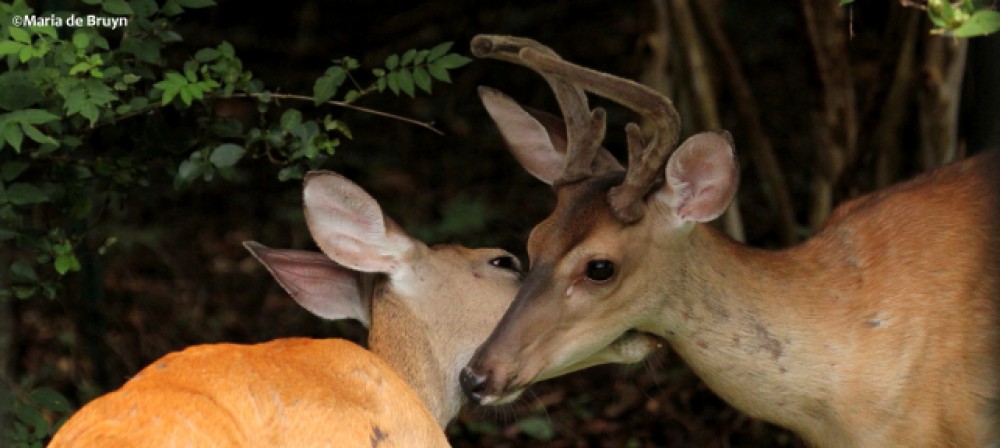
A few times a deer stopped and the camera got a portrait shot, occasionally with a gesture that in humans might equate to thumbing their noses at something.


white-tailed deer DK7A1403© Maria de Bruyn reswhite-tailed deer EK000212© Maria de Bruyn res

white-tailed deer EK000514© Maria de Bruyn res


A few shots were close-ups.

Other times, we see an ear or the deer’s behind as she moves out of range.


white-tailed deer EK000548© Maria de Bruyn res white-tailed deer EK000073© Maria de Bruyn res

One day, I caught a doe giving the camera a good look; this led to a few blank photos as her face or tongue covered the lens area.

white-tailed deer DK7A3136© Maria de Bruyn res white-tailed deer DK7A3120© Maria de Bruyn resdoe EK000010© NCSUwhite-tailed deer EK000472© Maria de Bruyn res

Despite the paucity of cool camera captures, I enjoyed participating in the project and will consider taking their 30-minute course so I can have a camera placed here for a longer period. And if it is aimed lower, who knows what we may see then!