North Carolina is known among birders as a destination for “hawk watches,” i.e., gatherings of people to see groups of hawks that are migrating south (for winter) or north (for summer). The Blue Ridge and Smoky mountains offer wind currents that birds can use to speed their journeys and many raptor fans travel to Grandfather Mountain’s Linville Peak to see the spectacle in autumn. Some also go to the hawk watch at Pilot Mountain State Park. The birds on view at the two sites include bald and golden eagles, peregrine falcons, kestrels, merlins, broad-winged hawks, Northern harriers, sharp-shinned and red-tailed hawks (Buteo jamaicensis) like the one below.

As October progresses and migration is winding down, however, we continue to see resident raptors roaming in our area.
The red-shouldered hawks (Buteo lineatus) are looking for easy meals. Their favored foods, in addition to smaller birds and mammals, include amphibians. My yard contains a couple small ponds, which have become favored habitats for local bullfrogs and green frogs (Lithobates clamitans).

This year, the green frogs predominated; the largest ones especially drew my attention with their loud croaking. In between vocalizations, they looked like they were wrestling. Together they contributed to a bounty of frog eggs.
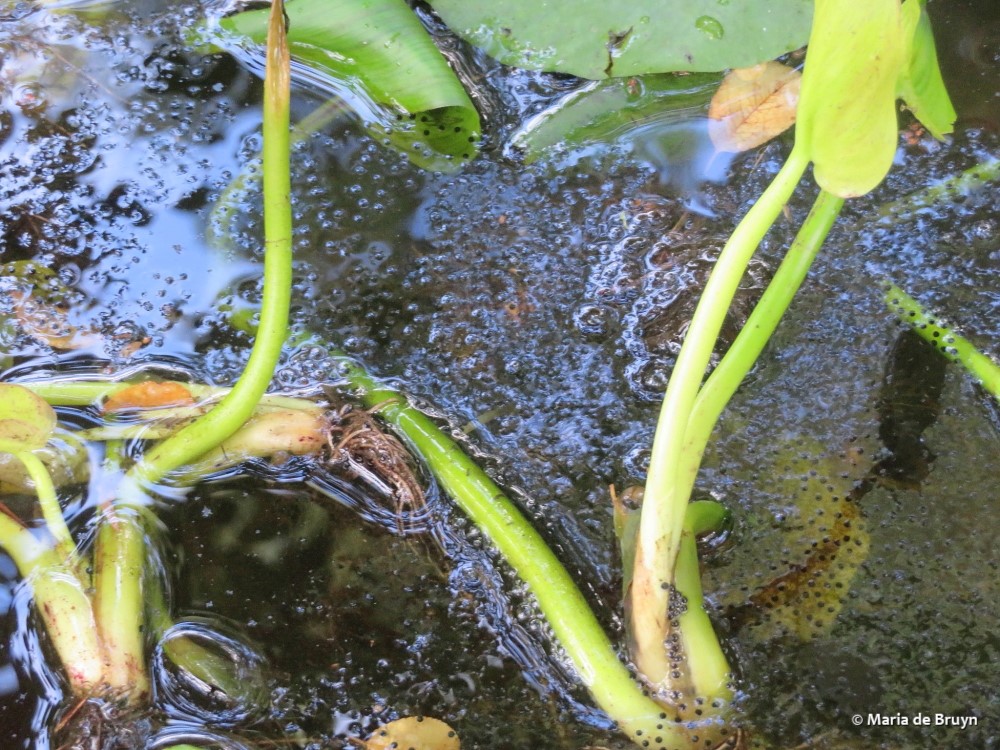

Their amorous calling also attracted one of the neighborhood red-shouldered hawks, whom I spotted sitting on a tree branch overhanging the smaller pond. S/he was patient in watching and a couple days later I noticed a lack of croaking and then found a hawk feather in the water.
 Some weeks later, I saw a belted kingfisher (Megaceryle alcyon) fly by quickly with a frog dangling from its beak at a city park, but the bird was too far away for a good photo. I had had better photographic luck on another morning when I happened upon a red-shouldered hawk pursuing frogs at nature reserve pond.
At first, I didn’t realize what the bird was doing. I saw the raptor intently peering down at the muddy pond’s edge and walking back and forth along the water.


Then, suddenly, I saw the hawk plunging its claws into the ground, apparently trying to dig something up.

It used its wings for balance as it clawed at the wet sand.


I felt sorry for the frogs that were caught. Their final life moments must have been spent in terror and pain as they were dismembered.


It seems to me that the great blue heron’s propensity to swallow its food whole must ultimately be a quicker death for the prey.


The hawks must also eat, however, and this is the poor frogs’ fate in many cases.

And I must admit that it was interesting – if also rather uncomfortable – for me to see how the hawk was hunting.

Next up – another local raptor keeps me watching in fascination.

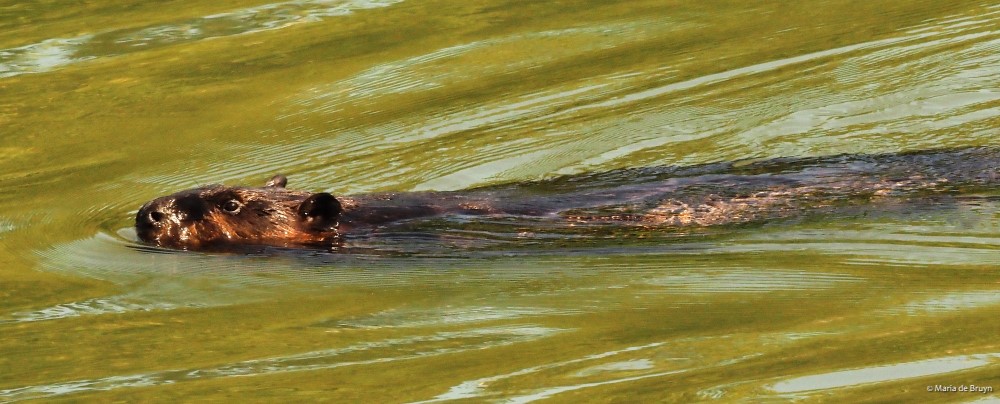
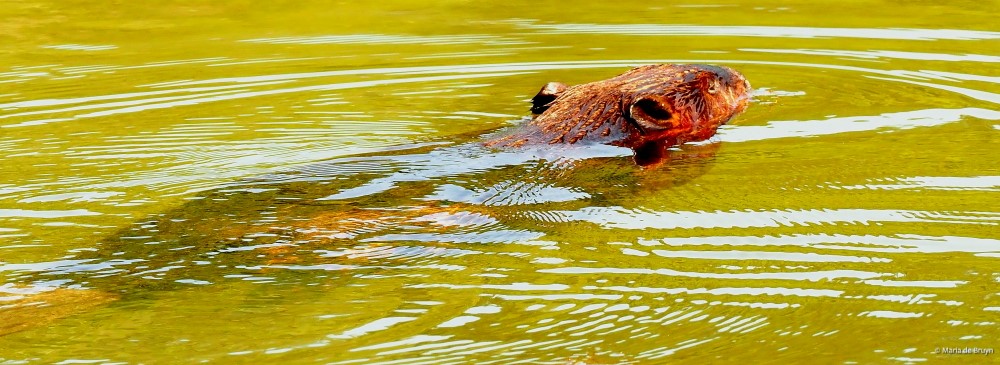
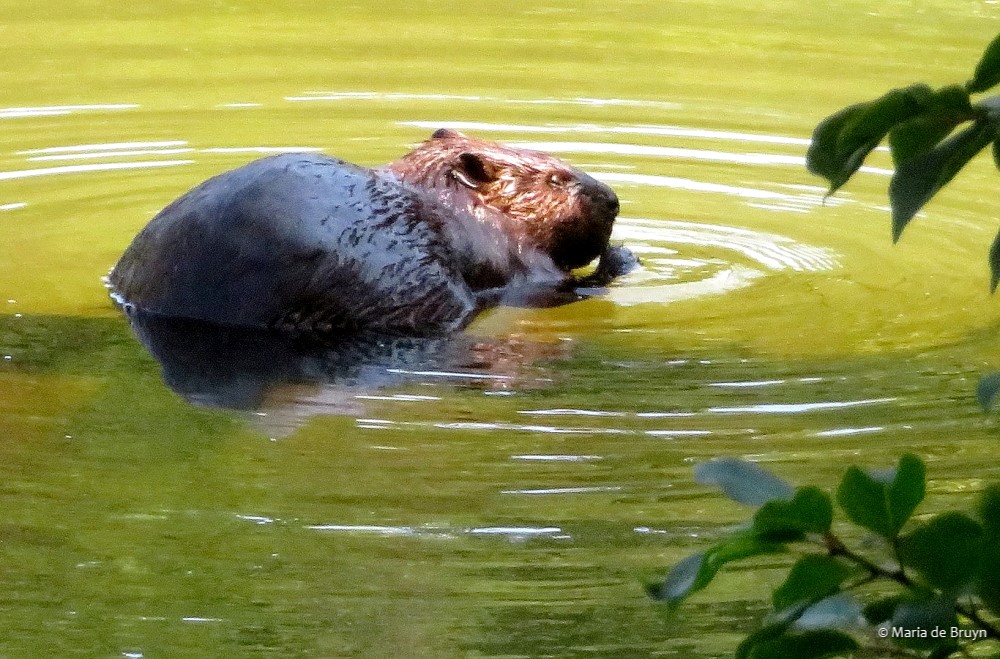

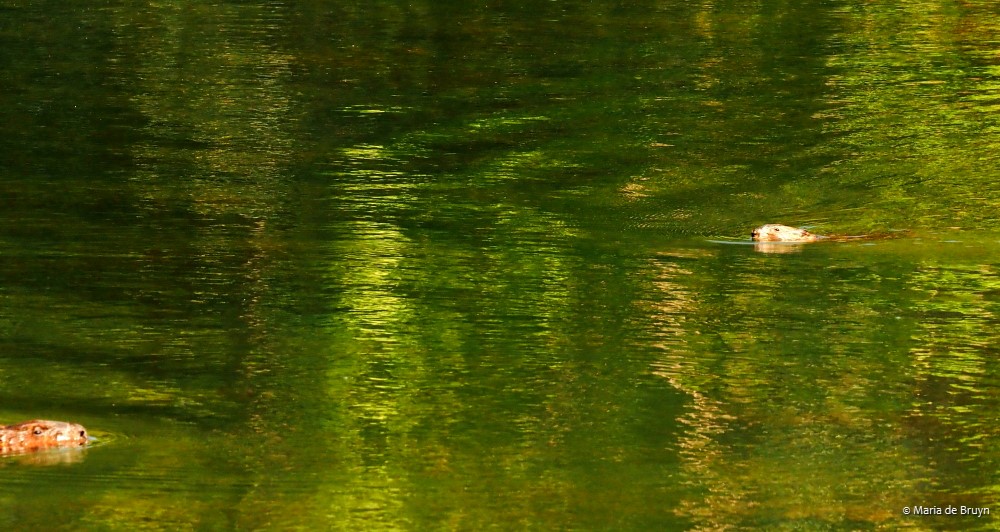

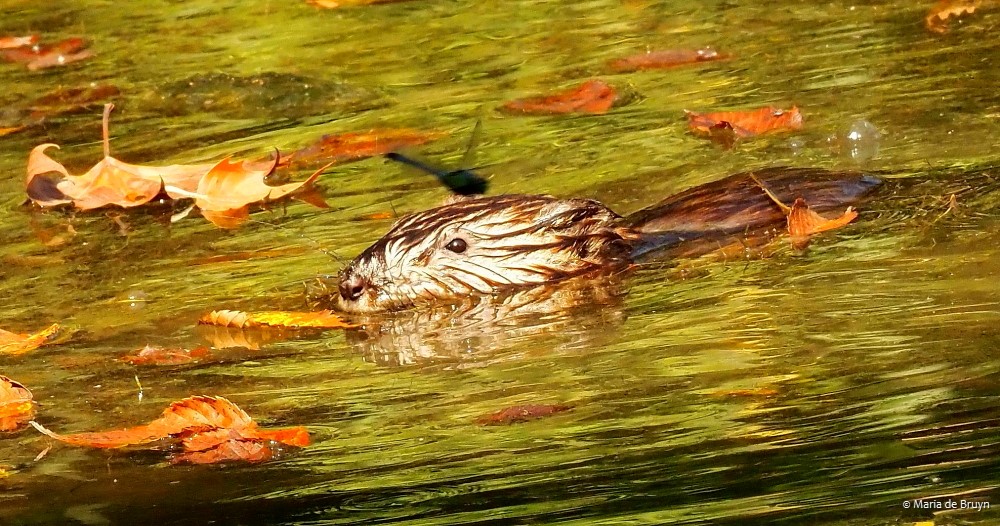
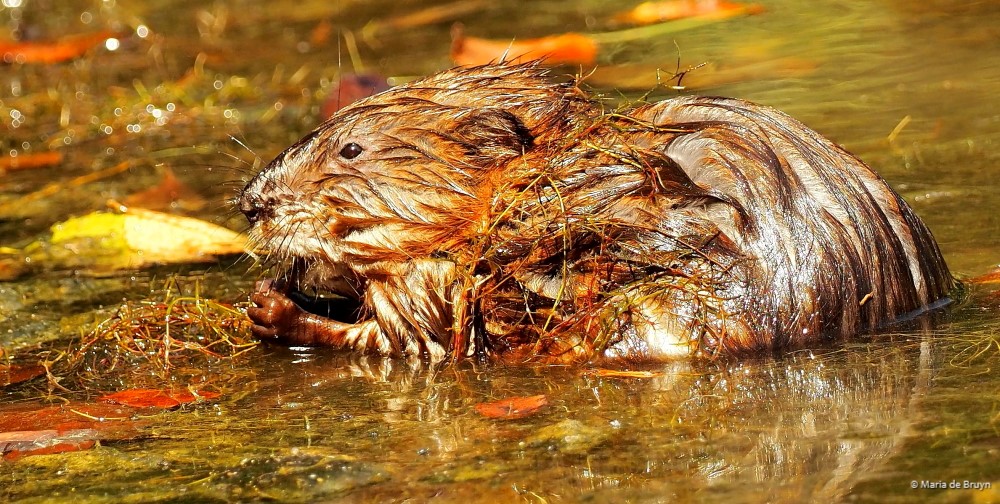
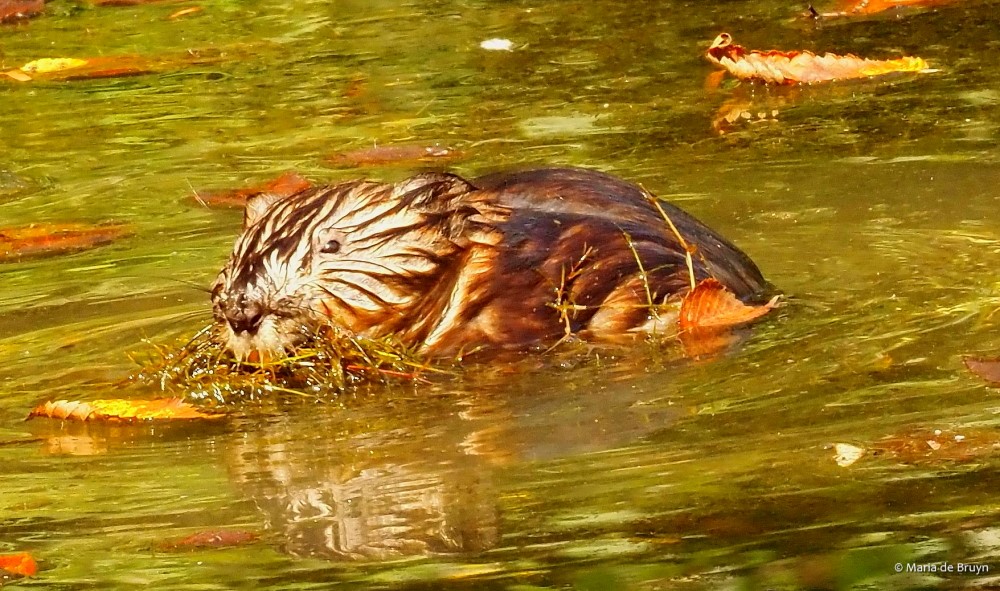
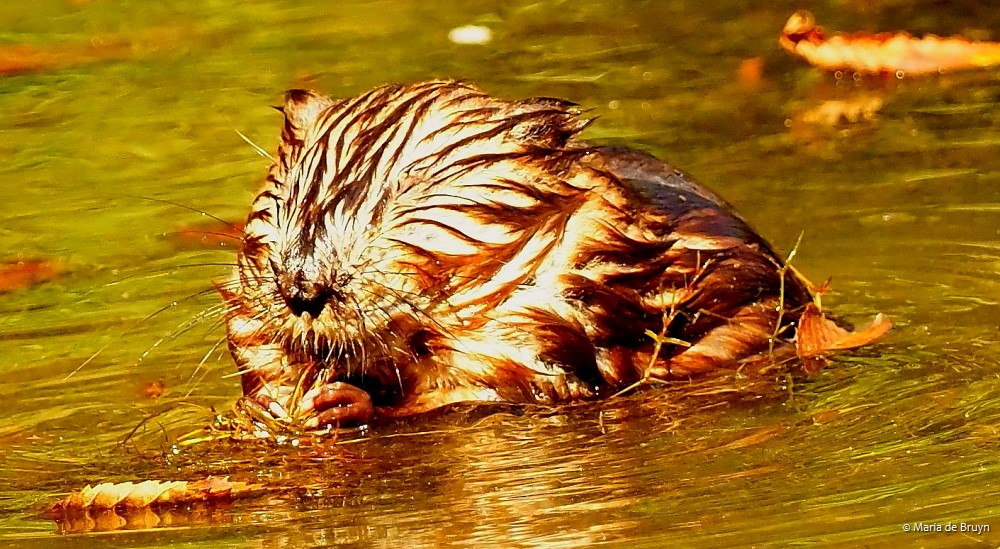
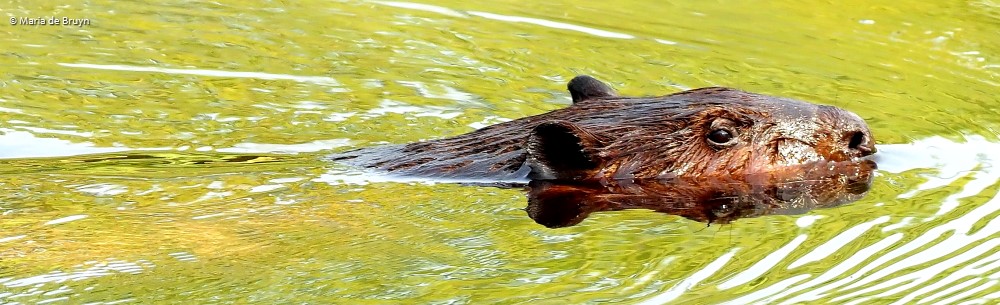
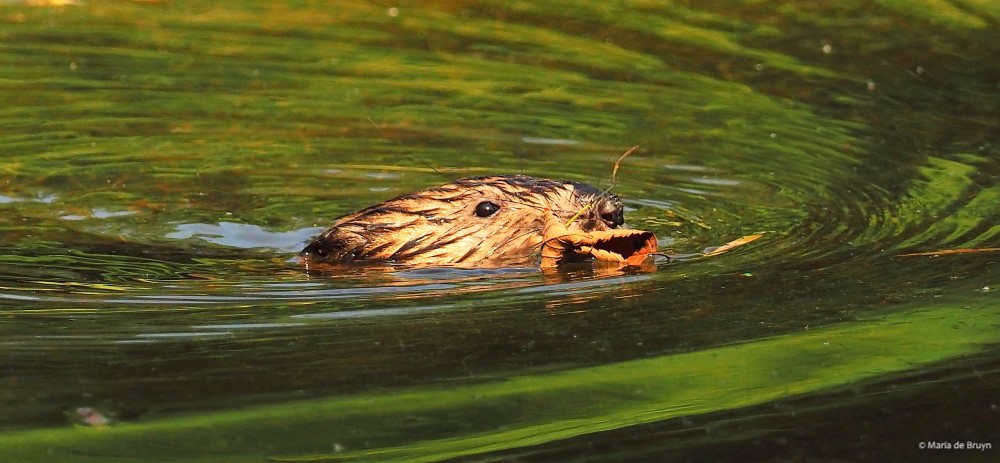
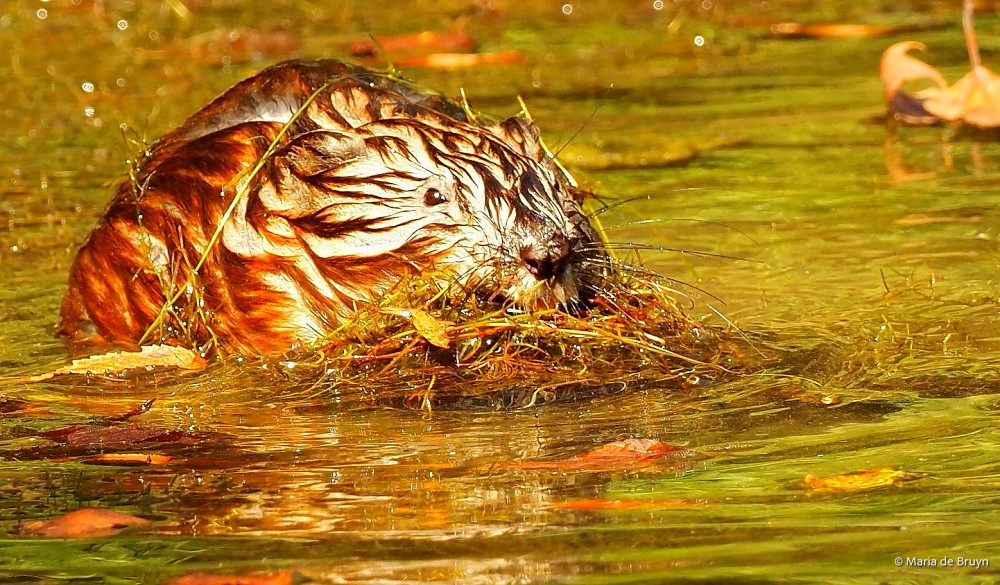
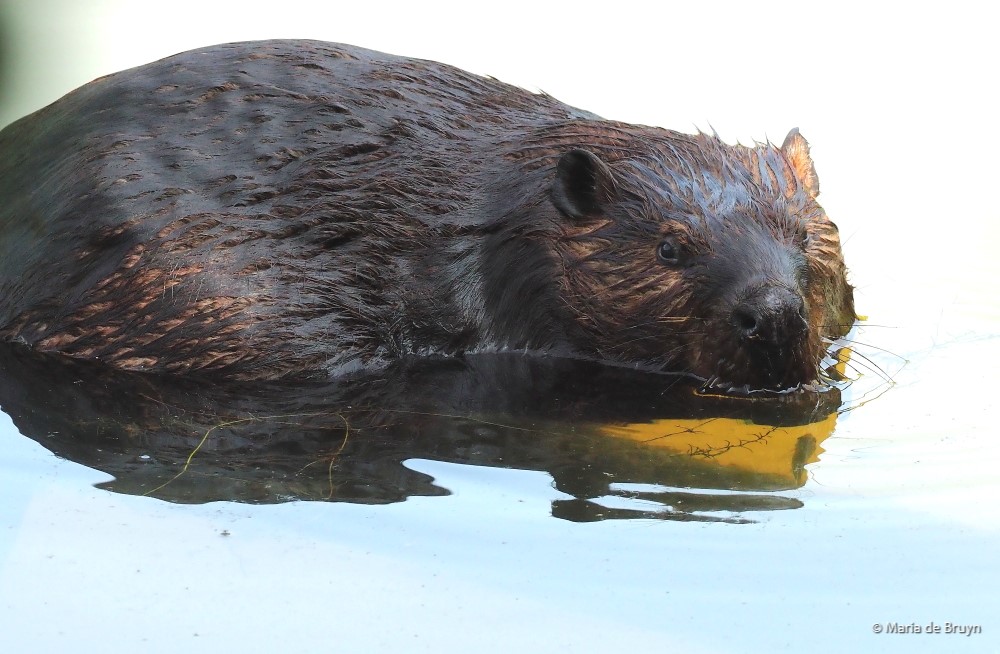
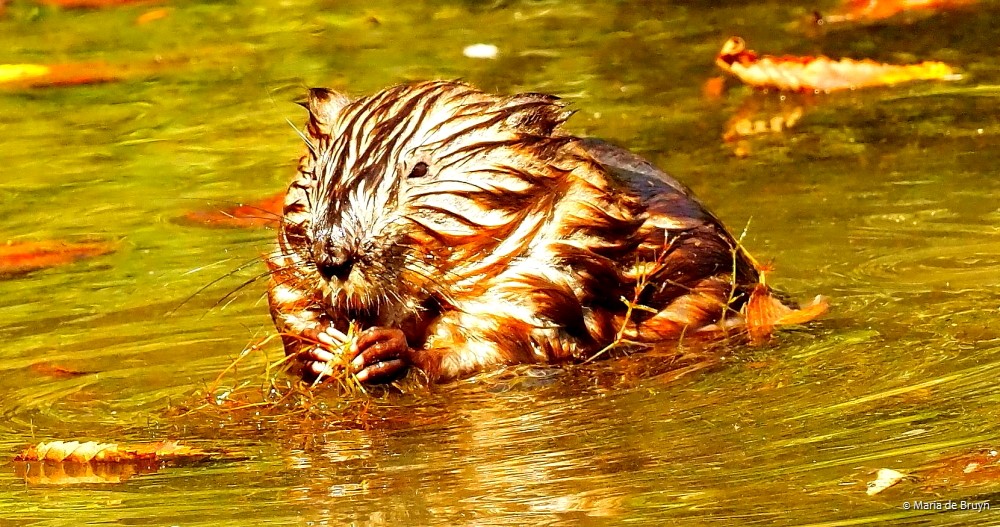 While the beaver’s fur remained sleek on its head and back after being submerged a while, the little one’s fur stuck together in clumps all over its head and body. To me it looked a bit like a punk teenager — an analogy that undoubtedly came to mind because I was thinking of it as a baby or adolescent beaver.

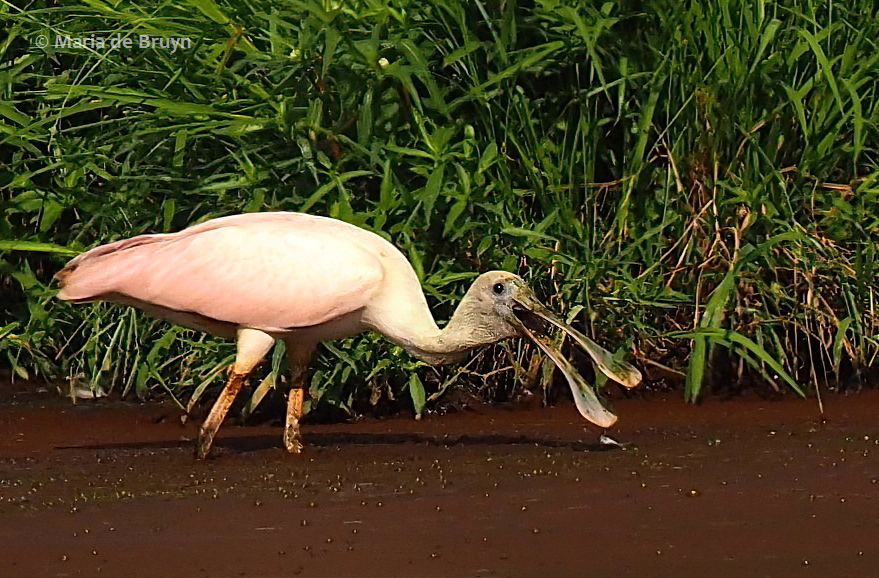
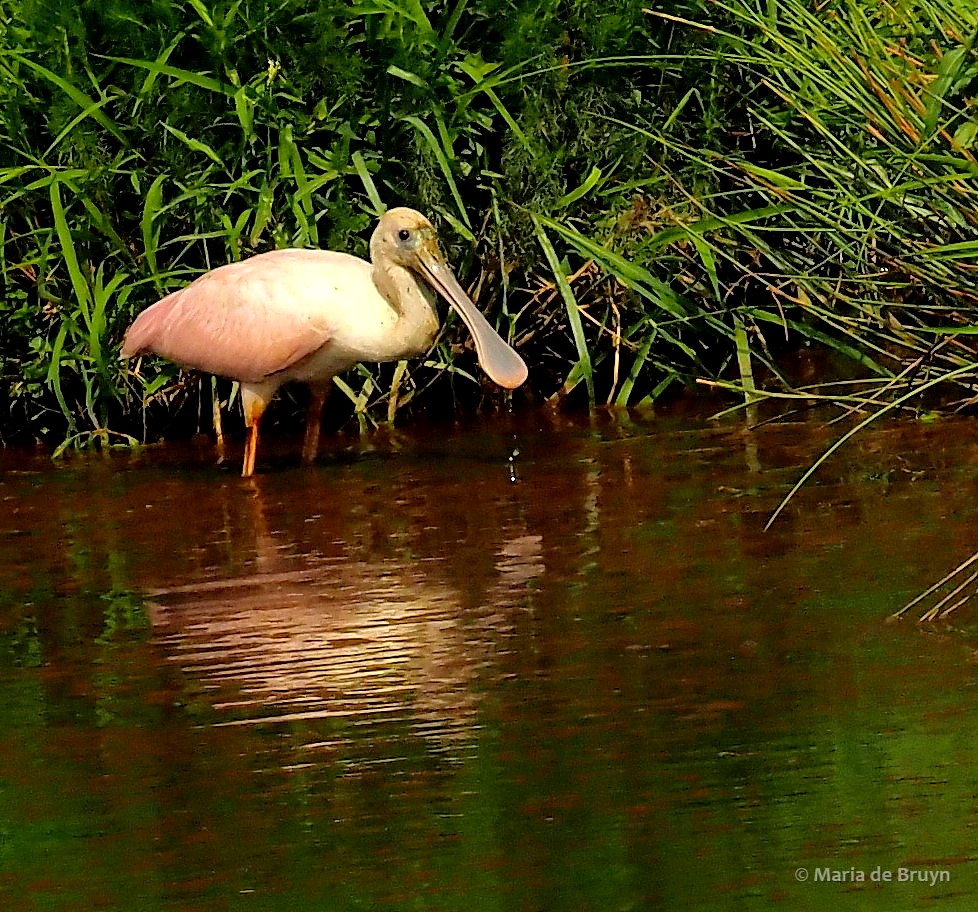
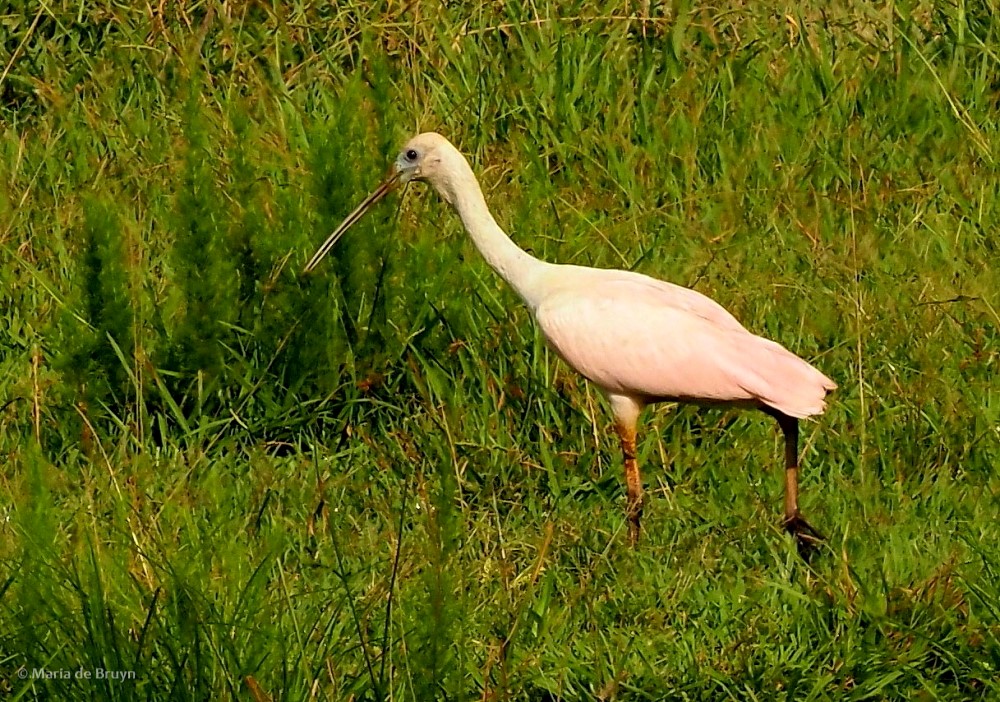 In contrast to other birds, spoonbills do not vocalize much except for some low grunts made while they are feeding. I didn’t hear any bird sound and after some 20 minutes or so, I thought perhaps the young spoonbill had decided to move on. Then suddenly s/he emerged from grasses bordering the pond and I was able to observe the bird for quite some time.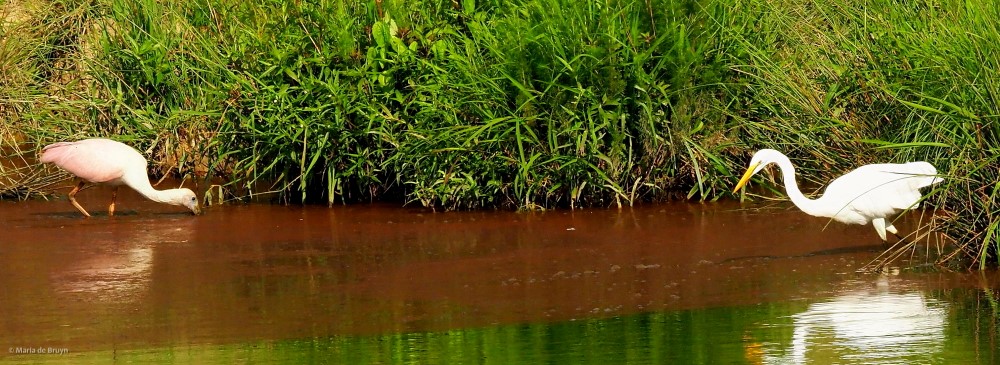
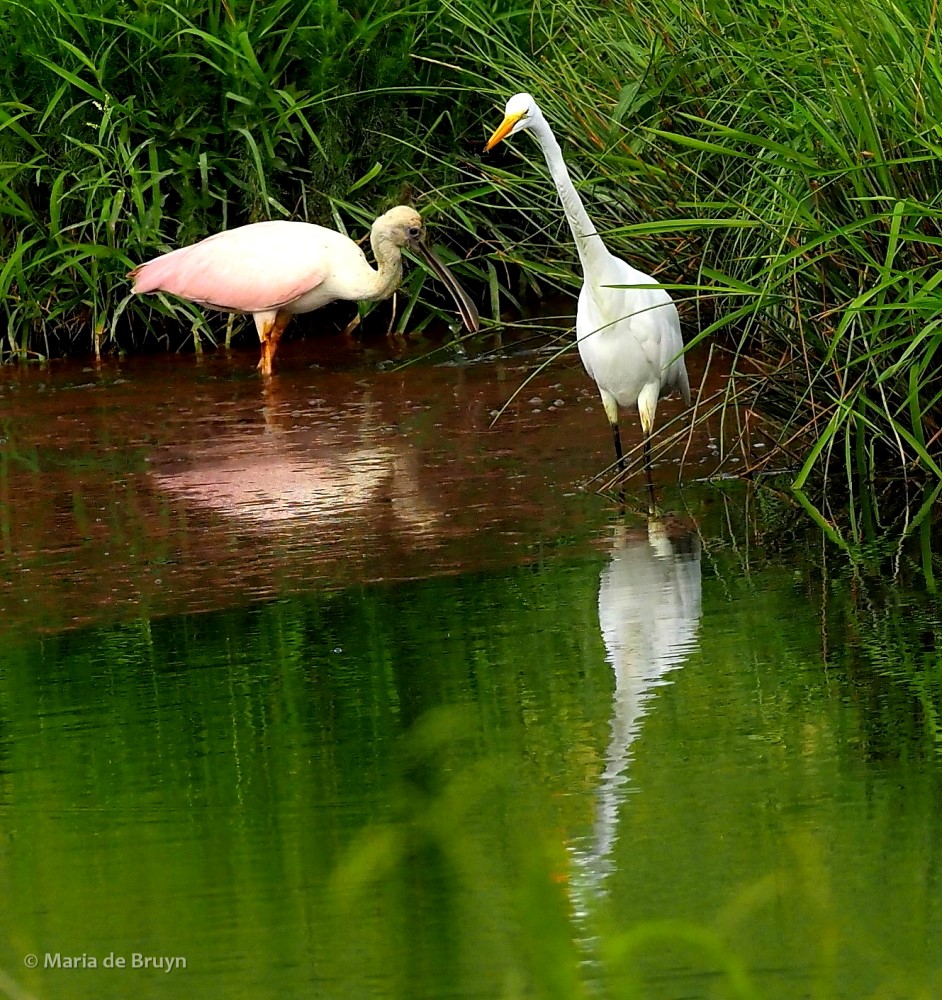 There are six spoonbill species worldwide; the roseate spoonbill lives in North, Central and South America. The other five species have white plumage, while the roseate spoonbill adults have a white neck, bare head, bright pink back and rump feathers and a greyish bill. The immature birds have feathered heads their first three years and pale pink feathers. The color on our county’s visitor showed up more brightly when the sky was overcast rather than sunny.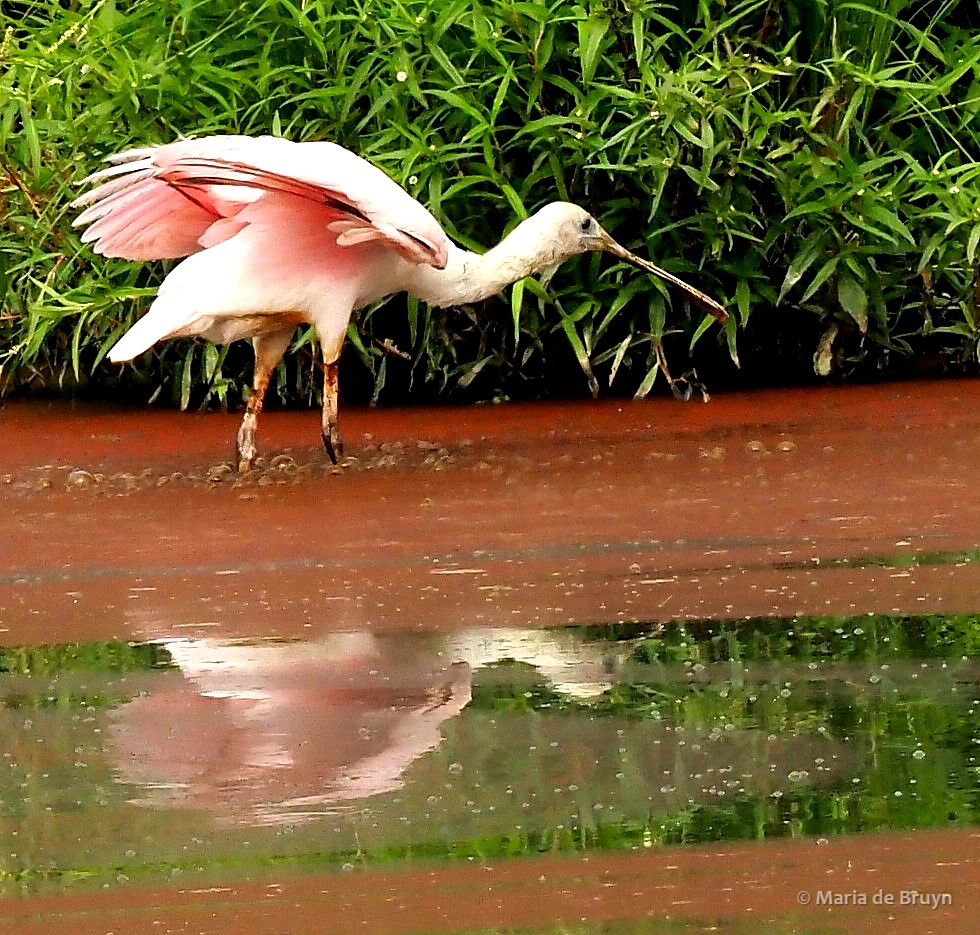
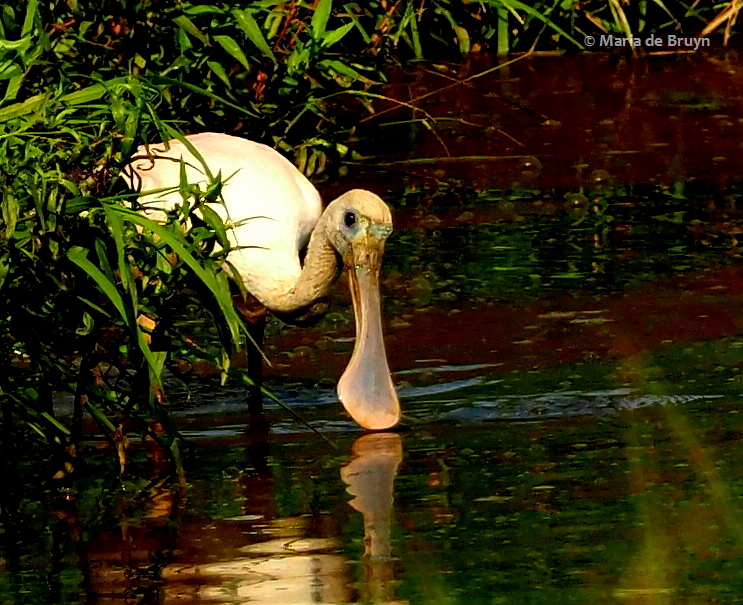
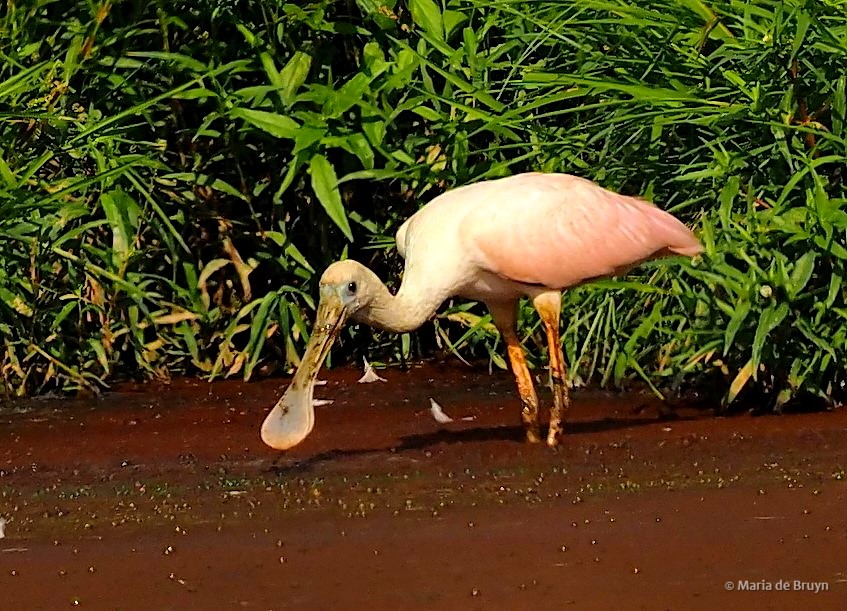
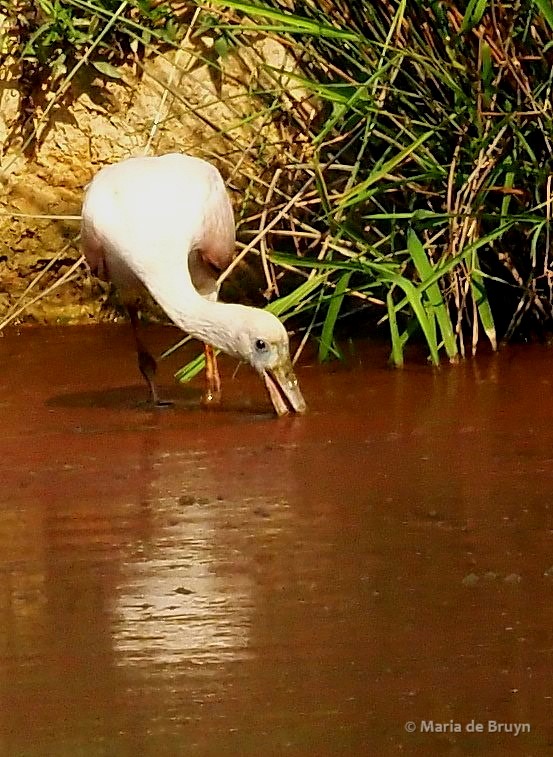 When chicks are born, they do not yet have a spoon-shaped bill; it only begins to flatten out when they are 9 days old; the final shape is achieved by 39 days. The bill can be 5.7 to 7.1 inches long (14.5-18 cm). It is about an inch wide just beneath the birds’ eyes and then widens to about 2 inches at the end.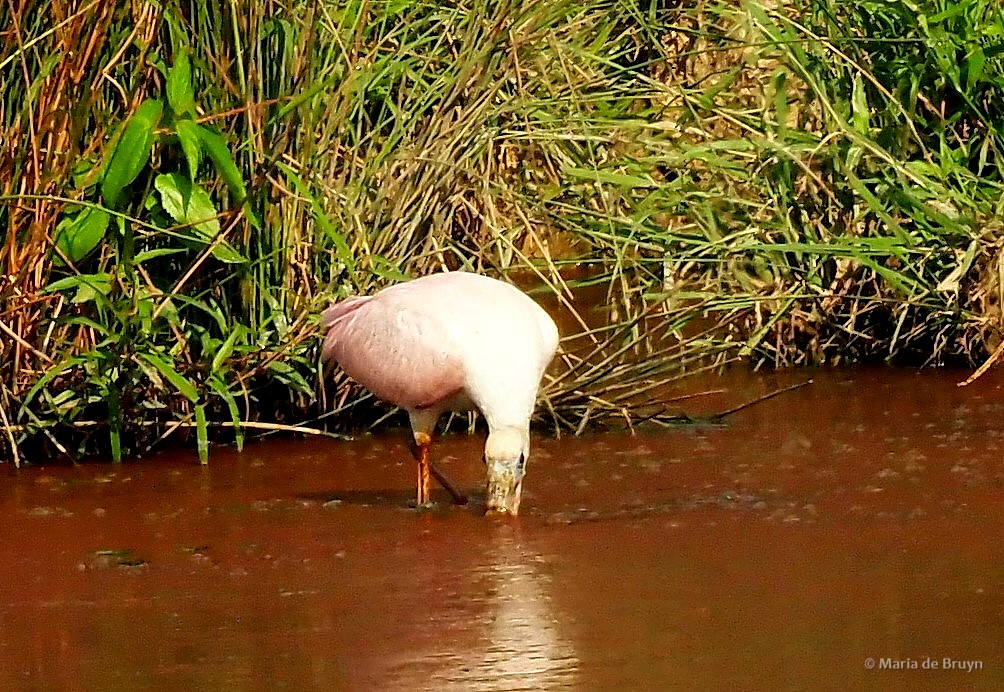

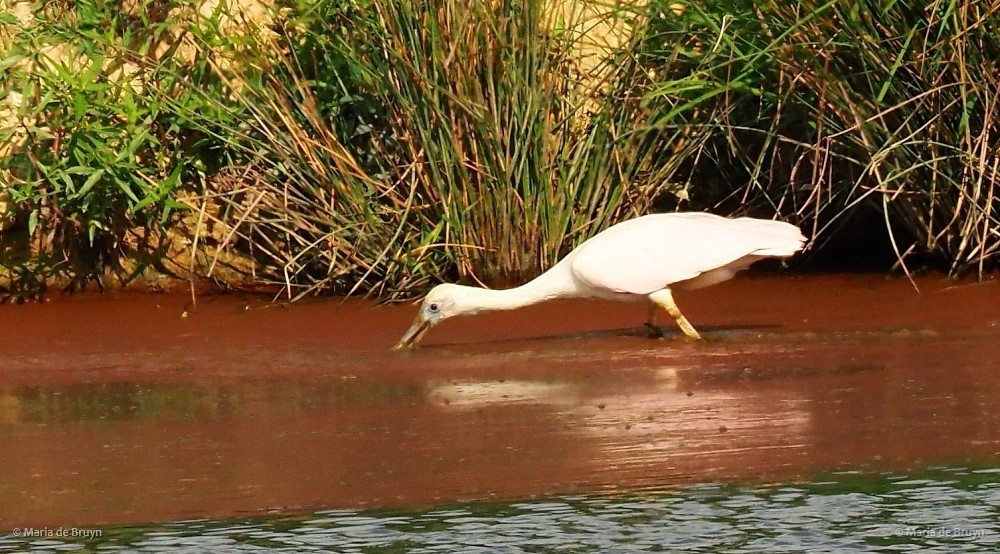
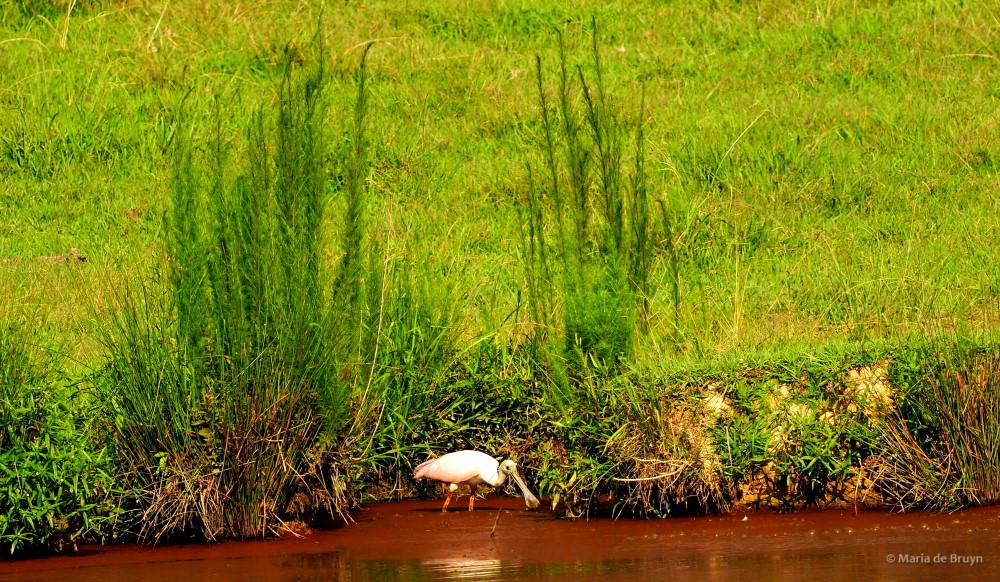
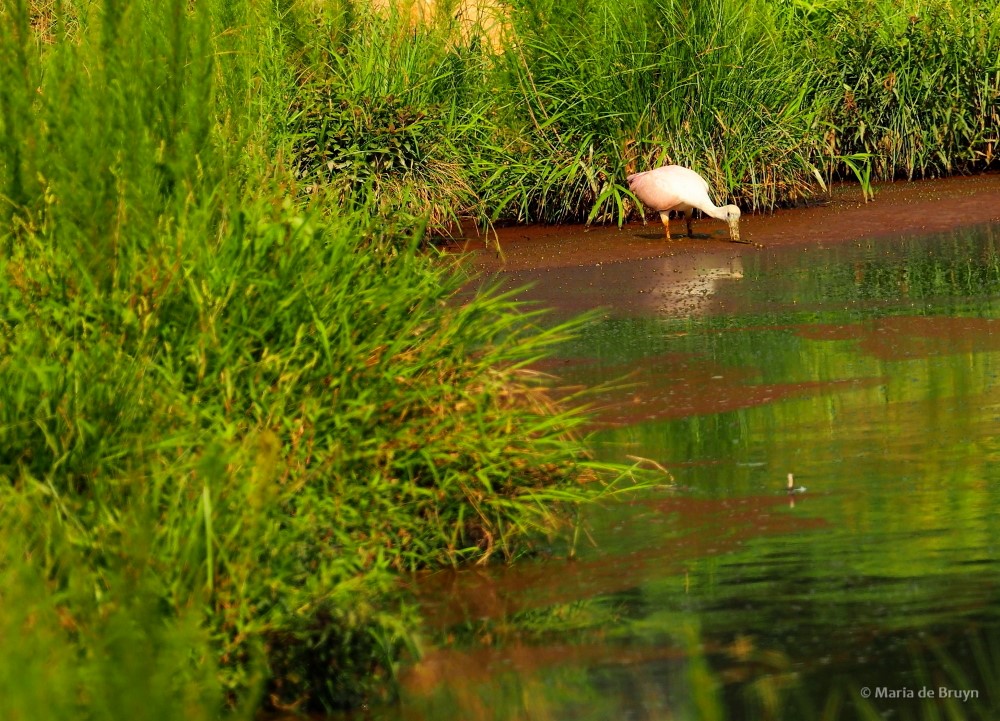
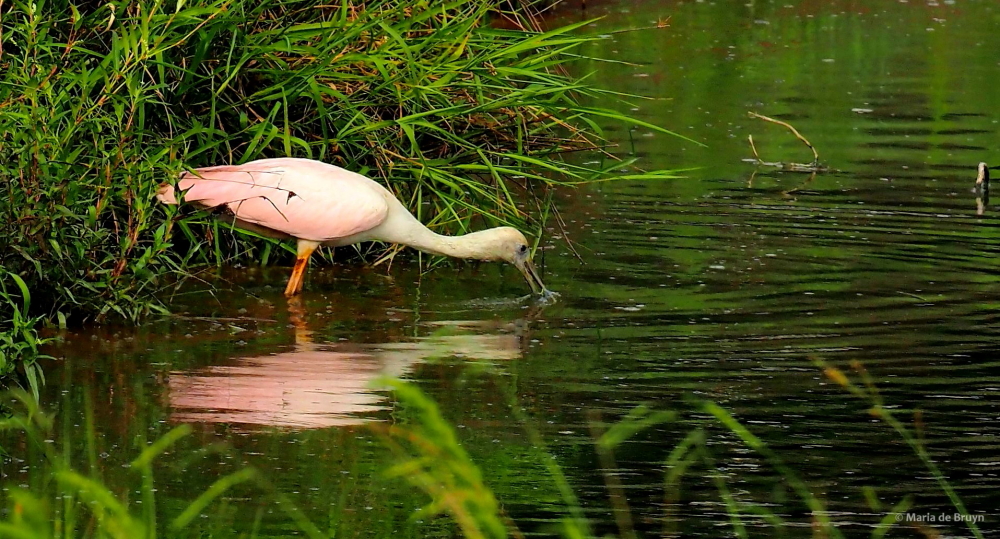
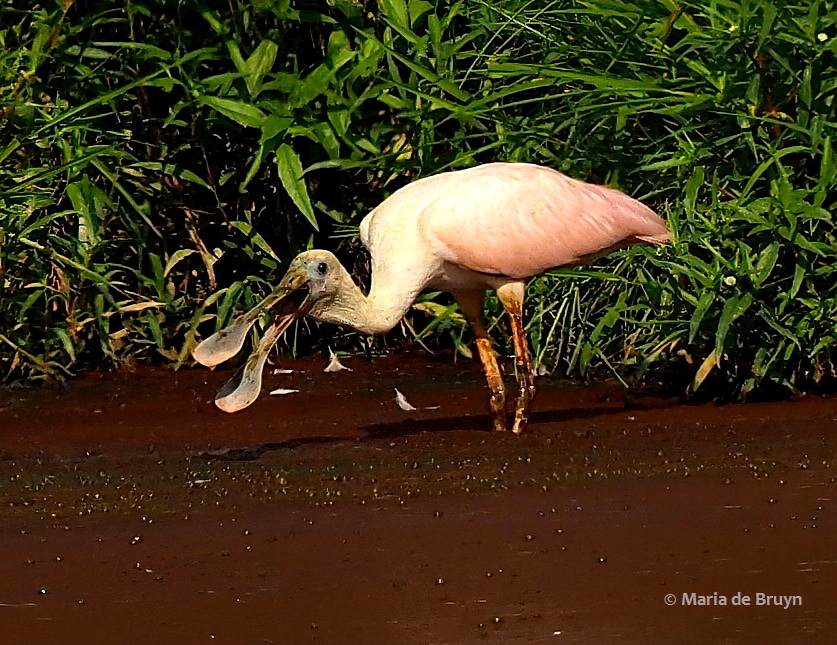
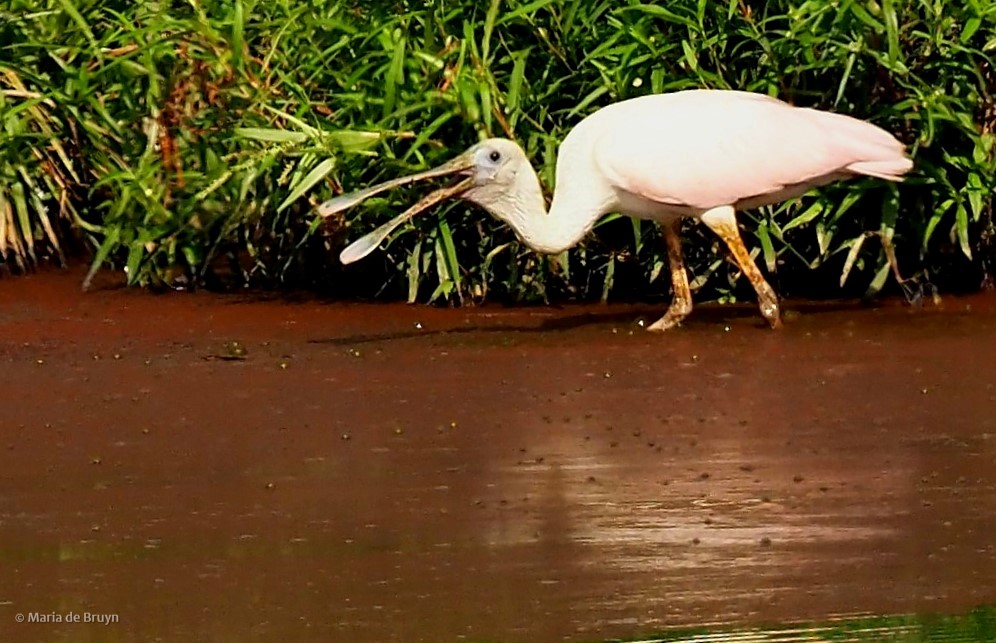
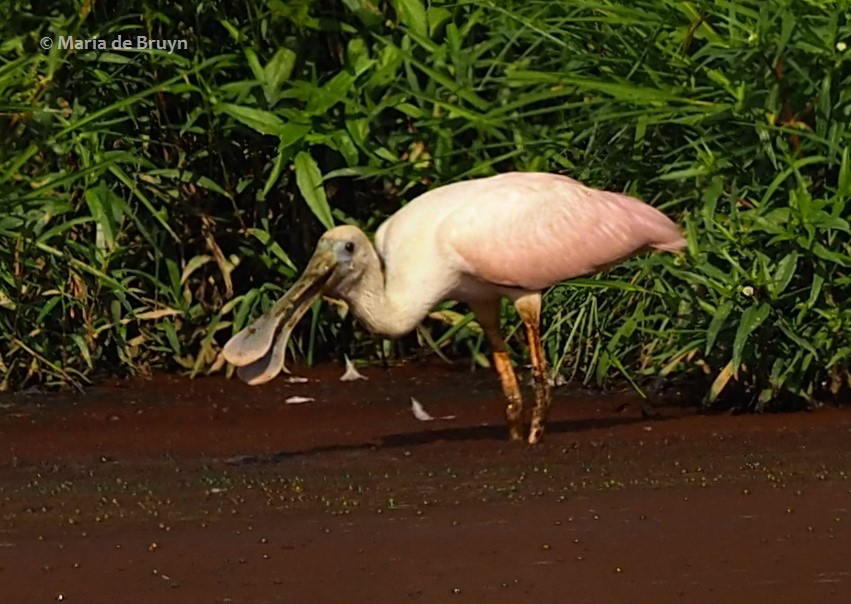
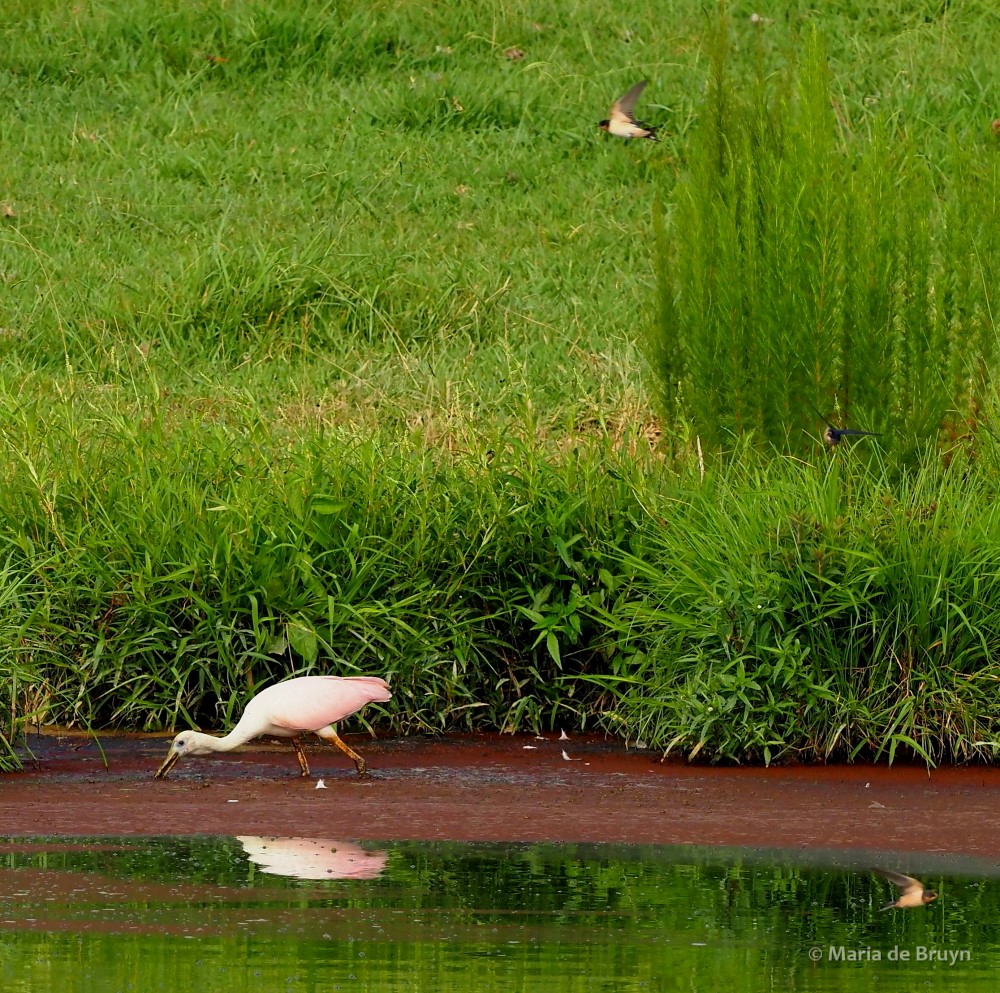 In the USA, spoonbills have traditionally bred in Florida, Louisiana and Texas. After breeding, they disperse. It is especially year-old birds who are increasingly being seen along the Eastern coast. To find them further inland had been more unusual but in recent years they seem to be moving away from the coast as well. This year several spoonbills have been spotted in the Piedmont region in addition to our Orange County visitor.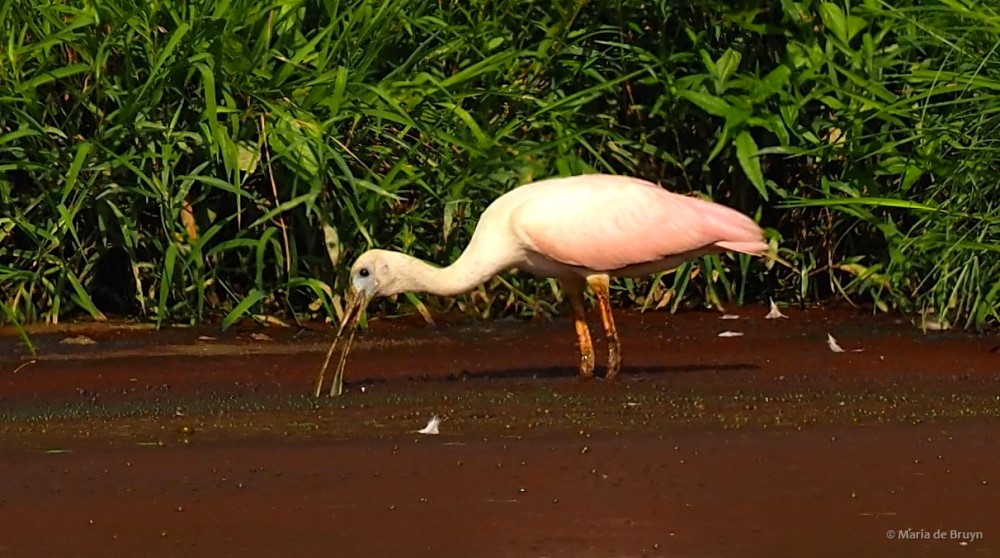
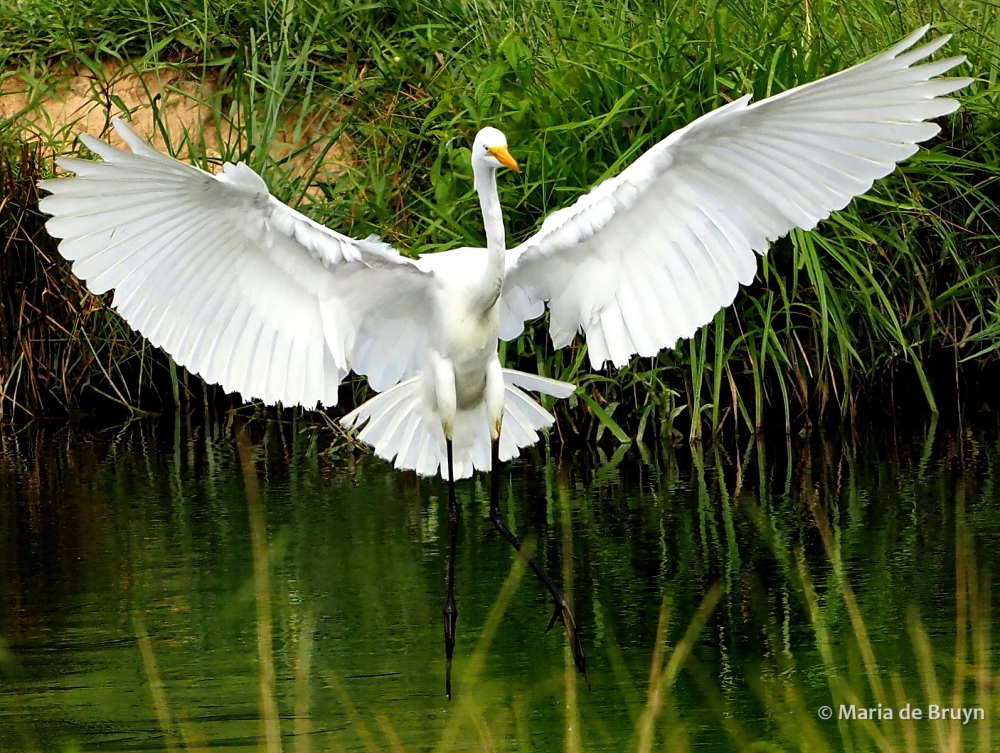
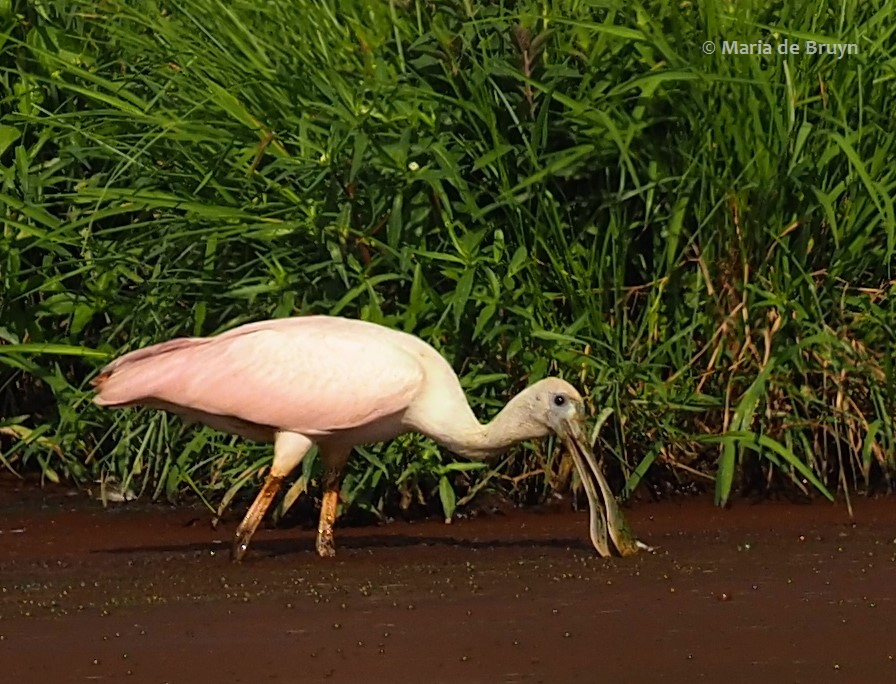 By the late 1800s, the roseate spoonbill was endangered in North America because the birds were either killed for their feathers (to make decorative screens, fans and hats) or they abandoned their nests because they were near great egrets who were being killed for the millinery trade. When that trade ended, their numbers rebounded but rising sea levels, degradation of water quality and loss of wetlands has now decreased their breeding sites. The spoonbills are still listed as a species of concern in Florida and Louisiana.

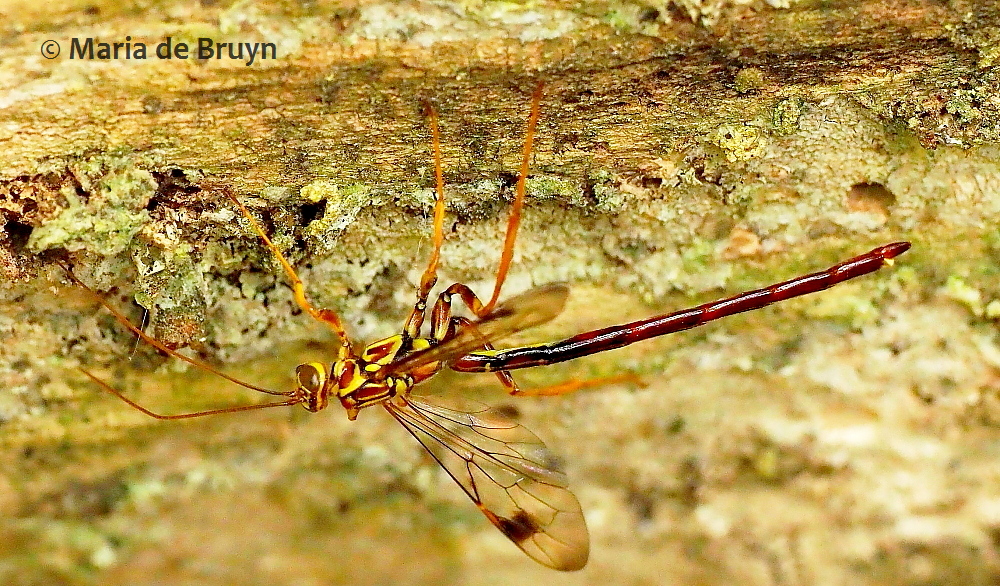
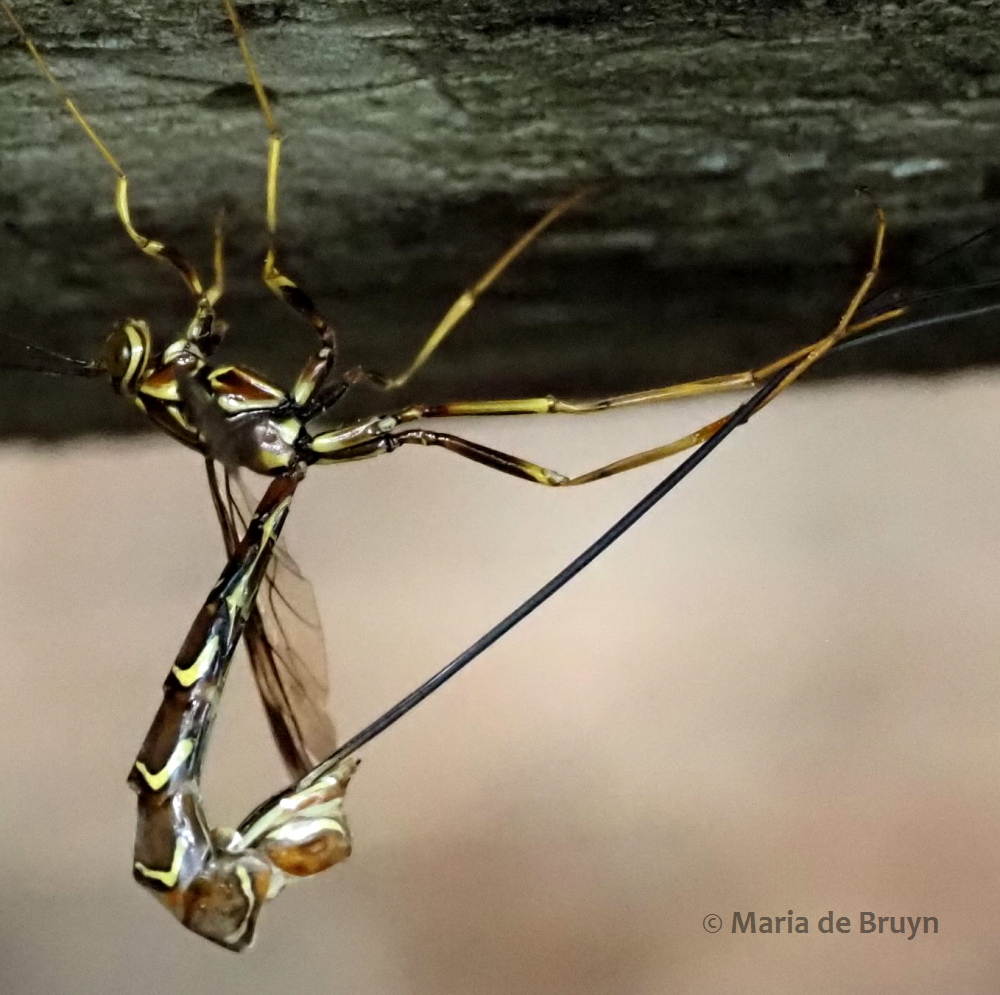
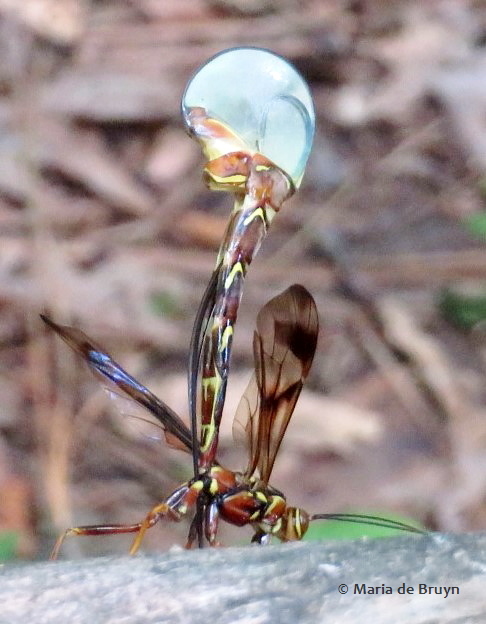
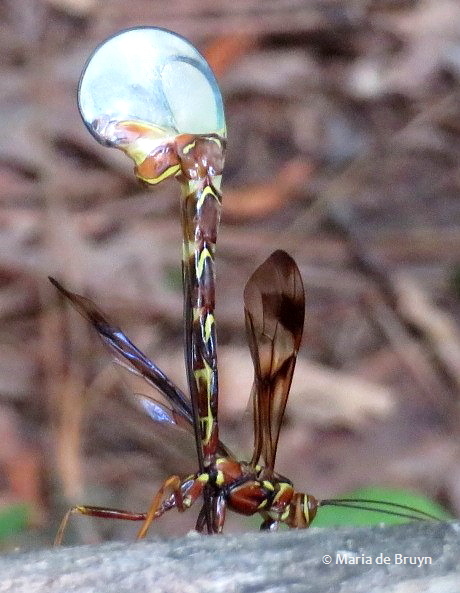
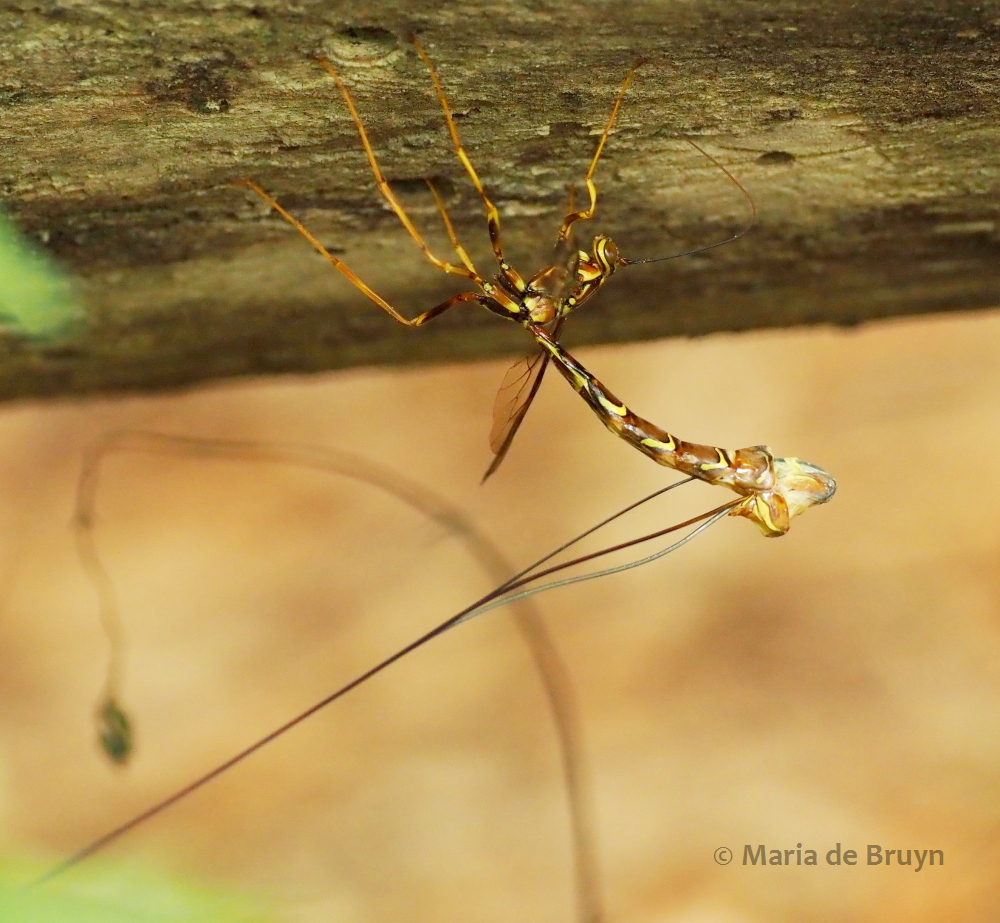
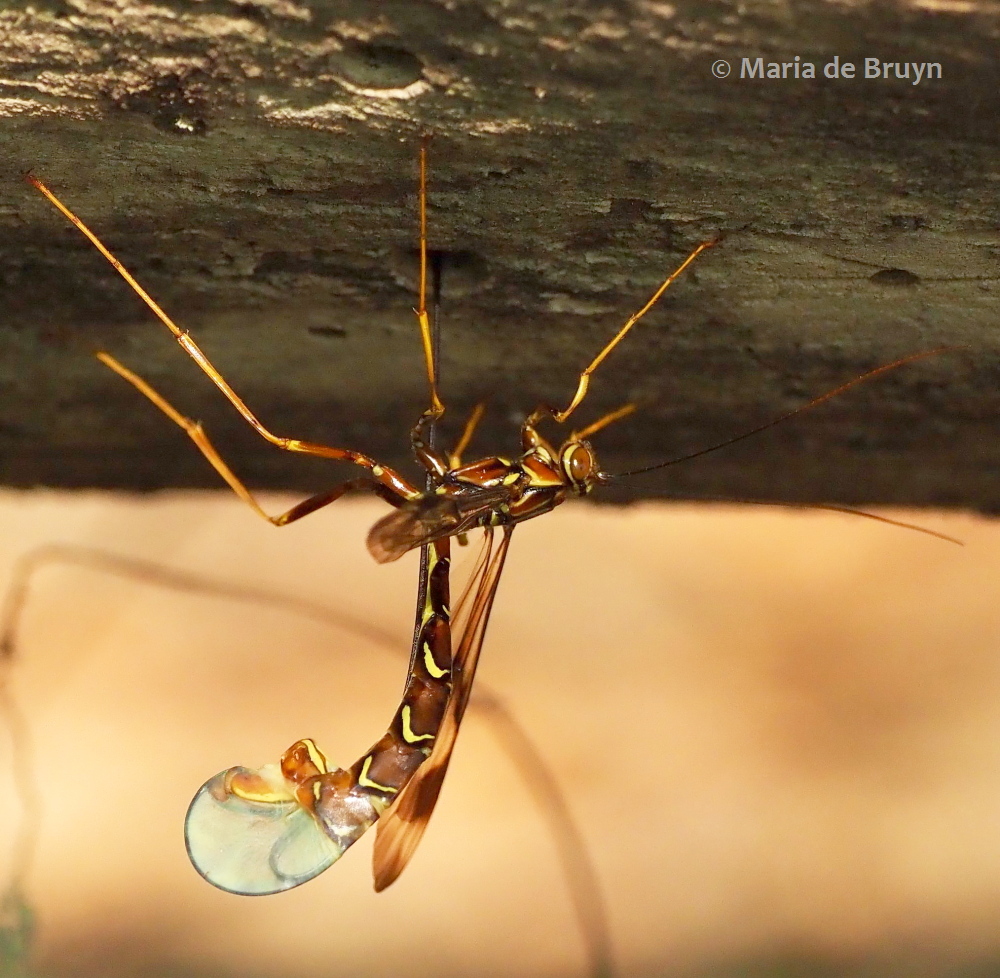
 The month of May brought me two especially awe-inspiring events. The first was seeing long-tailed giant ichneumon wasps (Megarhyssa macrurus) preparing for reproduction on a nature trail in Chatham County. It was easy to distinguish the females (right) from the males (above) because they had very long ovipositors (a tubular organ through which a female insect lays stored eggs). In the species I saw, the ovipositor can be 4 inches long!’




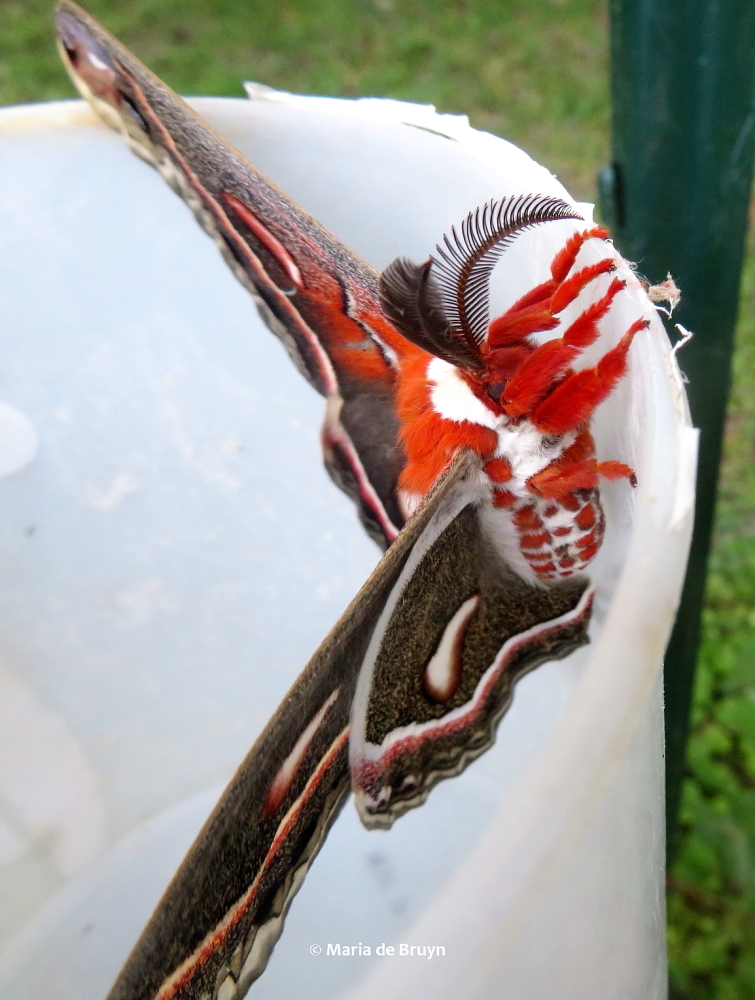
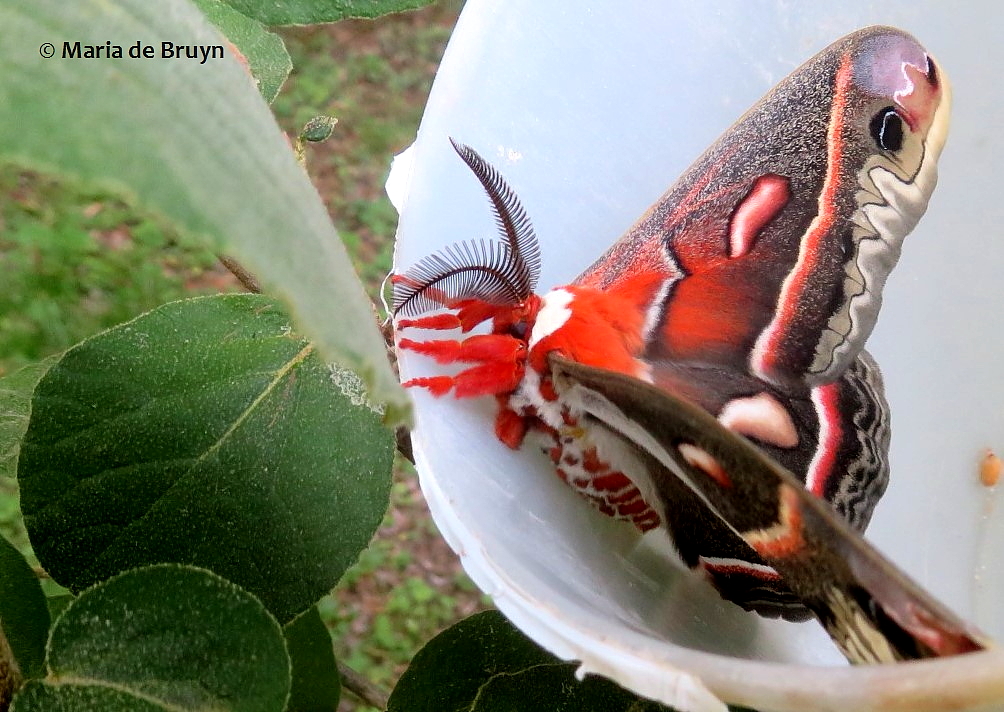
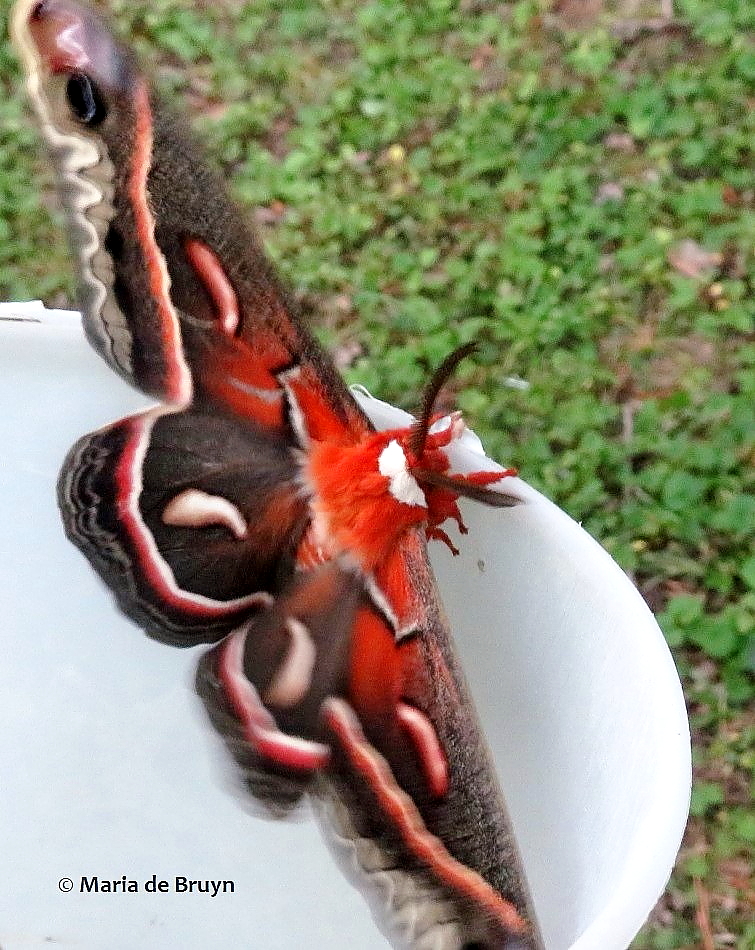
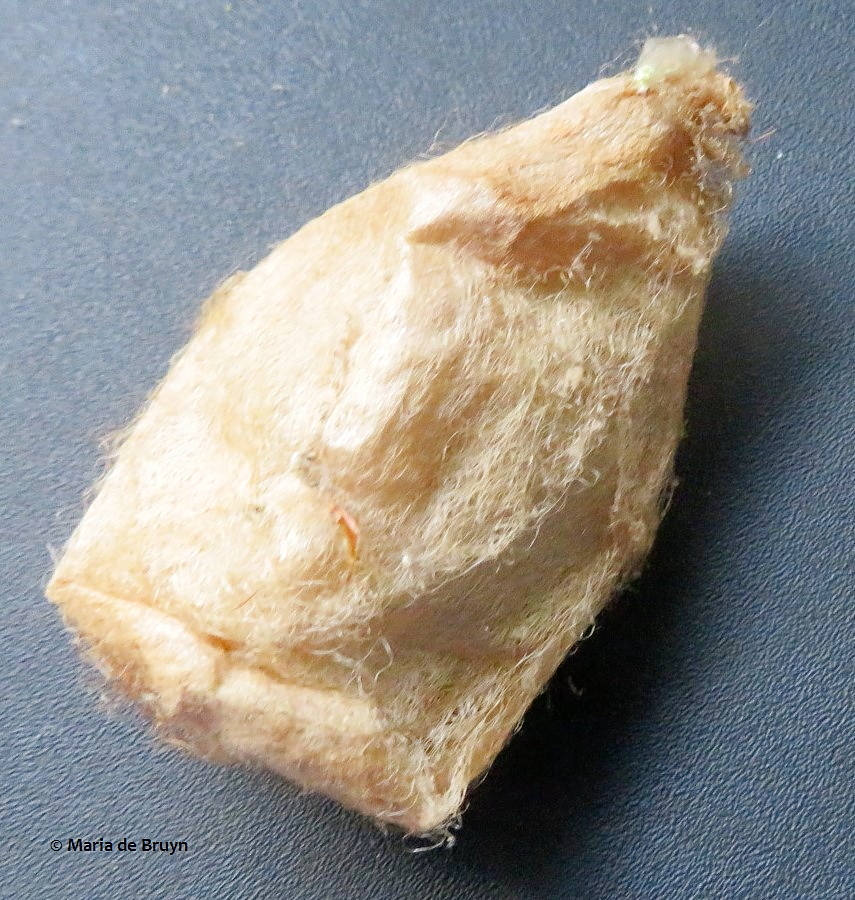 My other exciting insect event involved a moth. Last fall, a cecropia moth (Hyalophora cecropia) positioned its cocoon on the door jamb of the women’s restroom at Cane Creek Reservoir. The reservoir’s manager feared that it would be damaged there and asked if I would be willing to care for it over the winter. I took the cocoon home and kept it safe during the fall, winter and much of this spring.
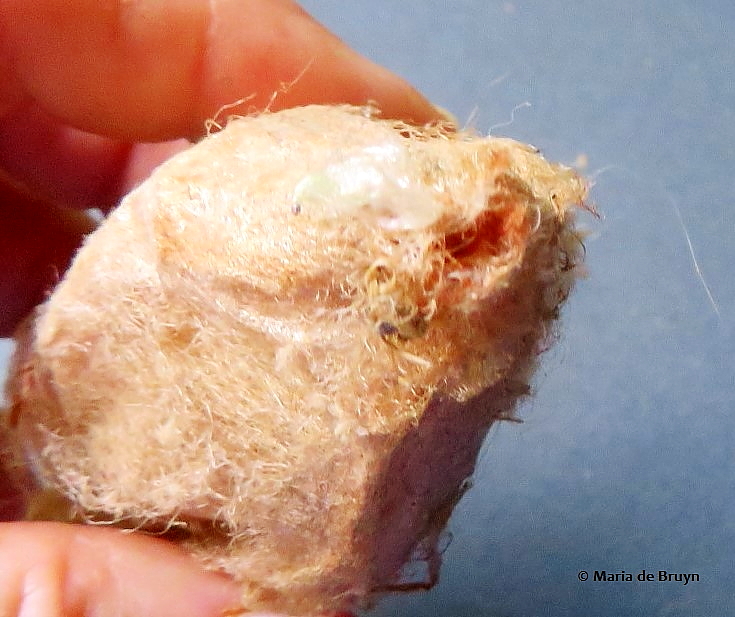 Periodically, I would check on it and it seemed to be ok. This was important as these moths are “univoltine” — they only have one generation of offspring per year. Out in nature, the caterpillars may fall victim to parasitic wasps and flies that lay their eggs on them. So it was fortunate that we were able to “rescue” this cocoon.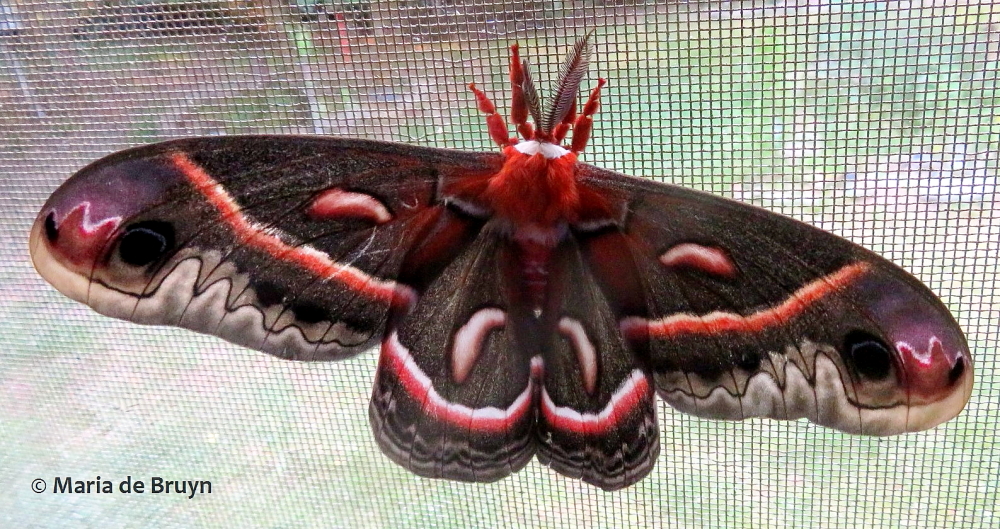




 My beautiful world